

Irezumi Tattoo Ideas

Are you dragon your feet across the internet on your hunt for the Perfect Tattoo Clues? Worry not, shed your doubts, and make a splash with us as we outfox the algorithm to bring some of the best Irezumi Tattoos straight from the ashes.
What is Irezumi
Irezumi (入れ墨 or 入墨) is the traditional art of Japanese tattooing, a centuries-old art form that combines mythology, folklore, spirituality, nature, and personal symbolism into large, cohesive body compositions. Unlike many Western tattoos that stand alone, Irezumi is designed to tell a story, with each element contributing to a unified masterpiece.
The word “Irezumi” literally means “inserting ink”, referring to the traditional practice of tattooing pigment beneath the skin.
The origins of Irezumi date back thousands of years. Early tattoos in Japan may have been used for spiritual protection, tribal identification, or decoration. However, during the Edo period (1603–1868), Irezumi developed into the elaborate style recognised today.
Much of its popularity came from woodblock prints (ukiyo-e), particularly illustrations of legendary heroes from the Chinese novel Suikoden (Water Margin). These heroes were often depicted with dramatic full-body tattoos, inspiring labourers, firefighters, merchants, and eventually the wider public to adopt similar designs.
Traditional Japanese tattooing was historically created using a hand-poking technique called tebori, where ink is manually inserted into the skin using a set of needles attached to a bamboo or wooden handle. Although many modern artists use tattoo machines, some still practise tebori to preserve the tradition.
Top Irezumi Tattoo Artists


oriental zyn
Saigon based Vietnamese Tattoo Artist specialising in Japanese Traditional Tattoos.


dima taylor Tattoo
Krakow based Tattoo Artist specialising in Irezumi, Neo-Japanese, and Blackwork Tattoos.
Best Irezumi Tattoo Designs
Now that we know a little about Irezumi, let’s take a look at some of the best Irezumi Tattoo designs the internet has to offer.
Dragon Irezumi Tattoo
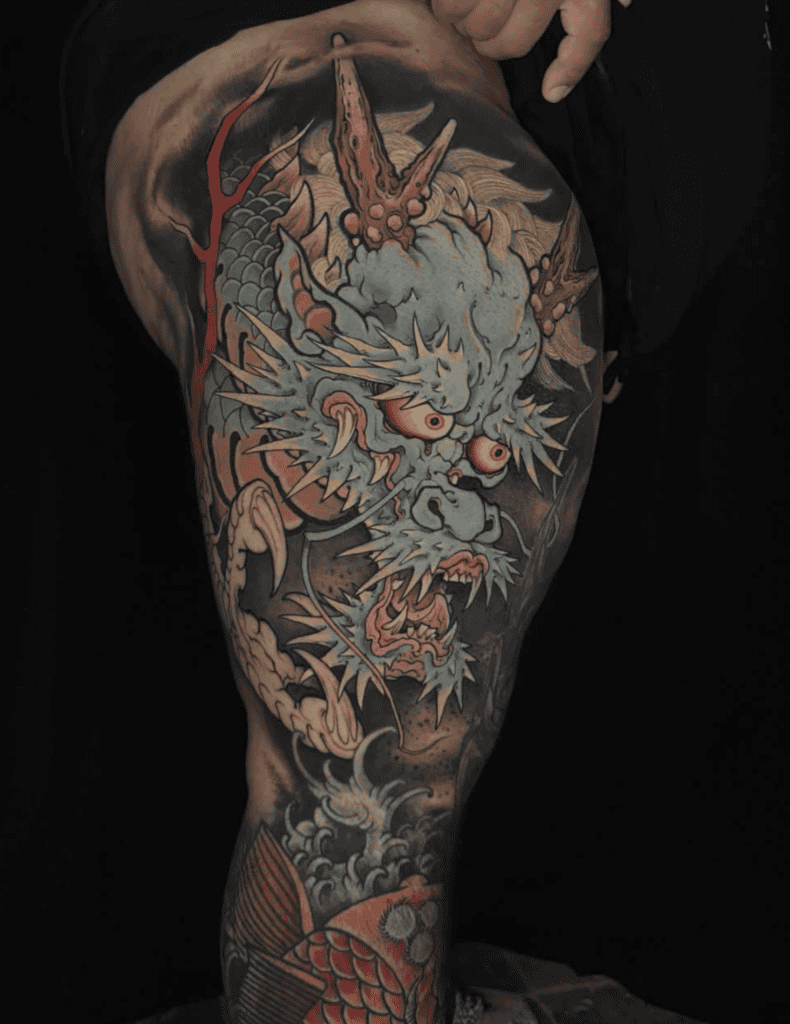
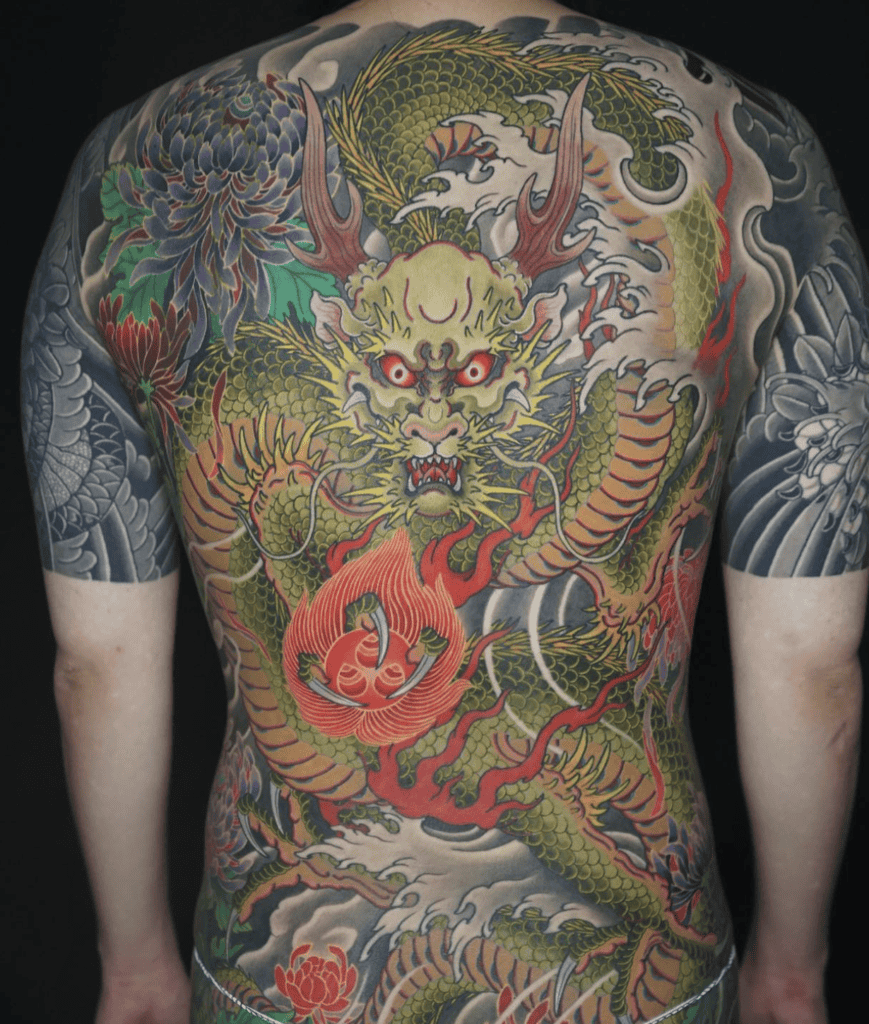
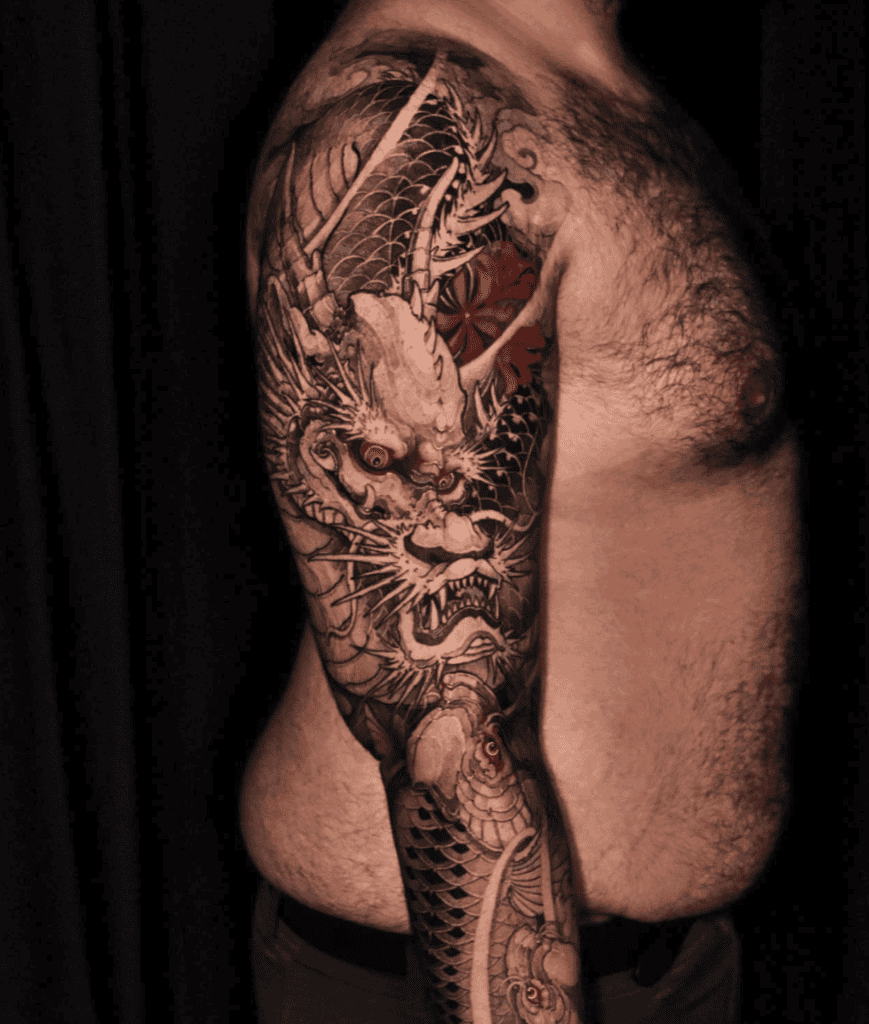
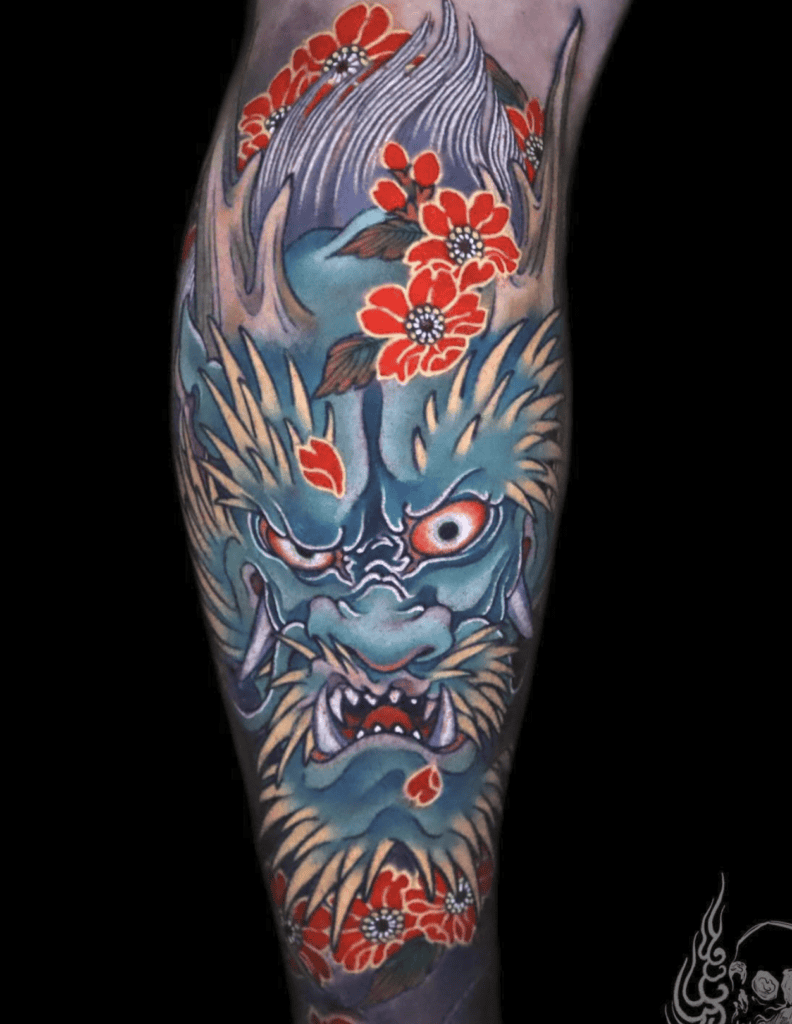
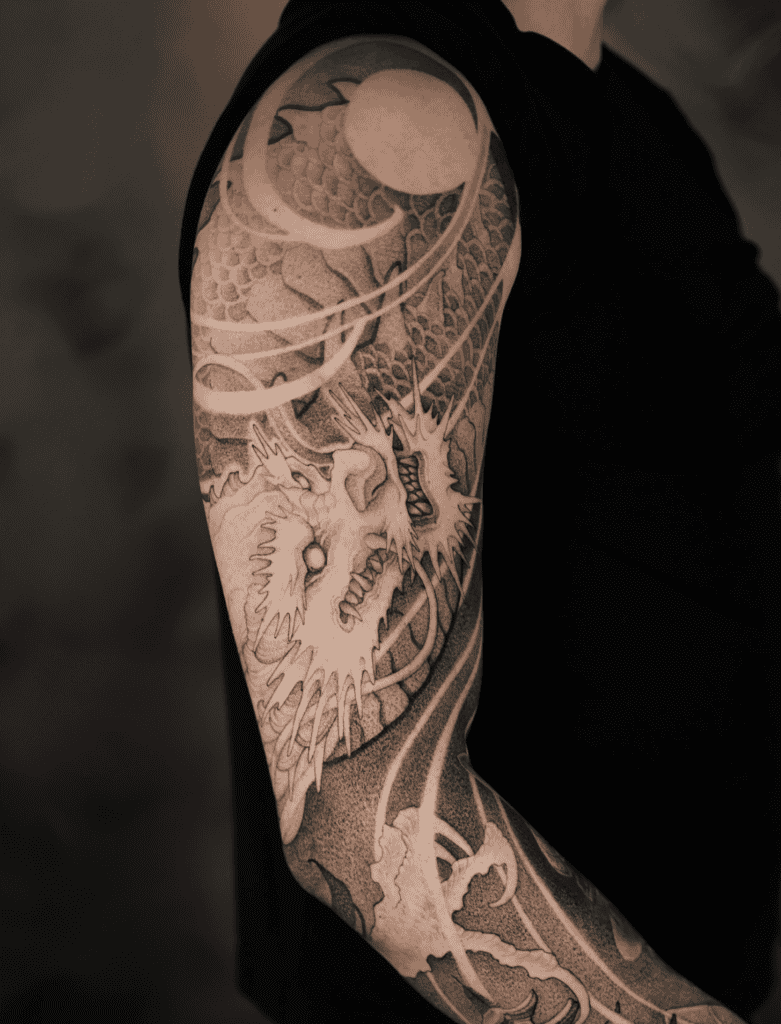
XThe Dragon (Ryū, 龍 or 竜) is one of the most iconic and respected subjects in Irezumi. Unlike many Western depictions, Japanese dragons are not fearsome beasts, but benevolent guardians who embody strength, wisdom, and protection.
In Japanese folklore, dragons are believed to dwell in rivers, oceans, lakes, and the heavens, where they command the weather and maintain the balance of nature. A Dragon Irezumi can represent many admirable qualities, including wisdom and intelligence, strength without aggression, protection from misfortune, control over water and storms, balance and harmony, personal growth and transformation, good fortune and prosperity, nobility and leadership.
Different dragon colours can add another layer of symbolism to an Irezumi design, and while these meanings are widely recognised, many artists also personalise colour choices to reflect the wearer’s story.
Tiger Irezumi Tattoo
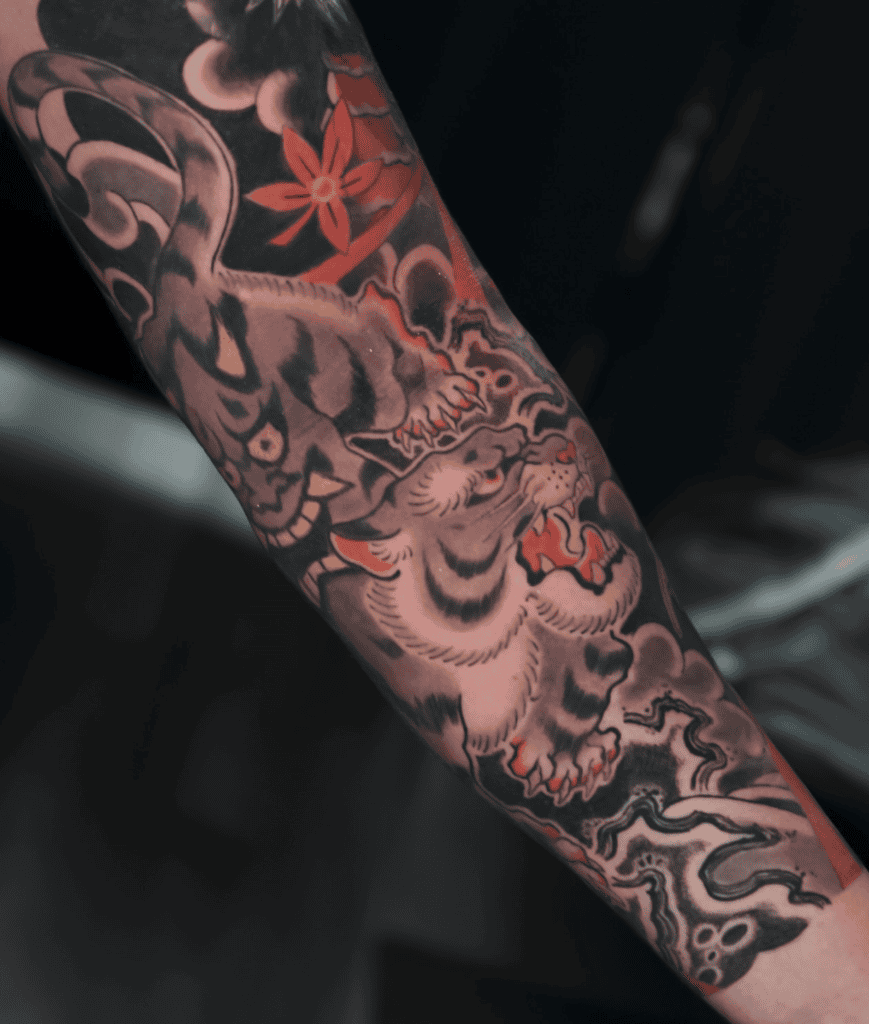
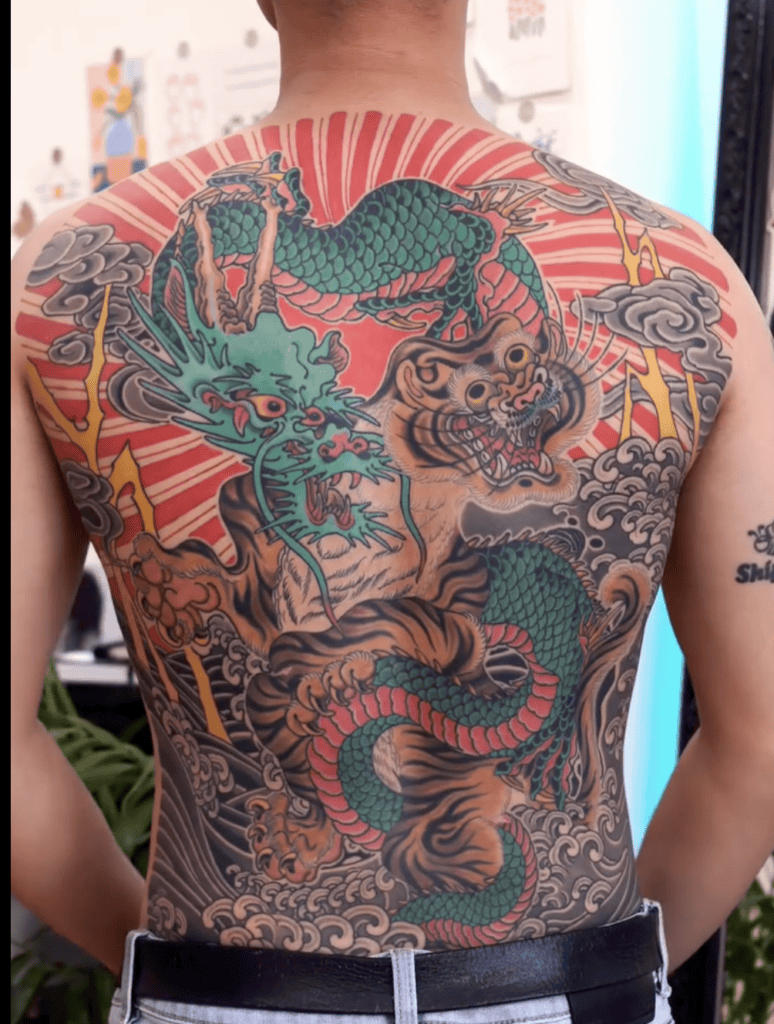
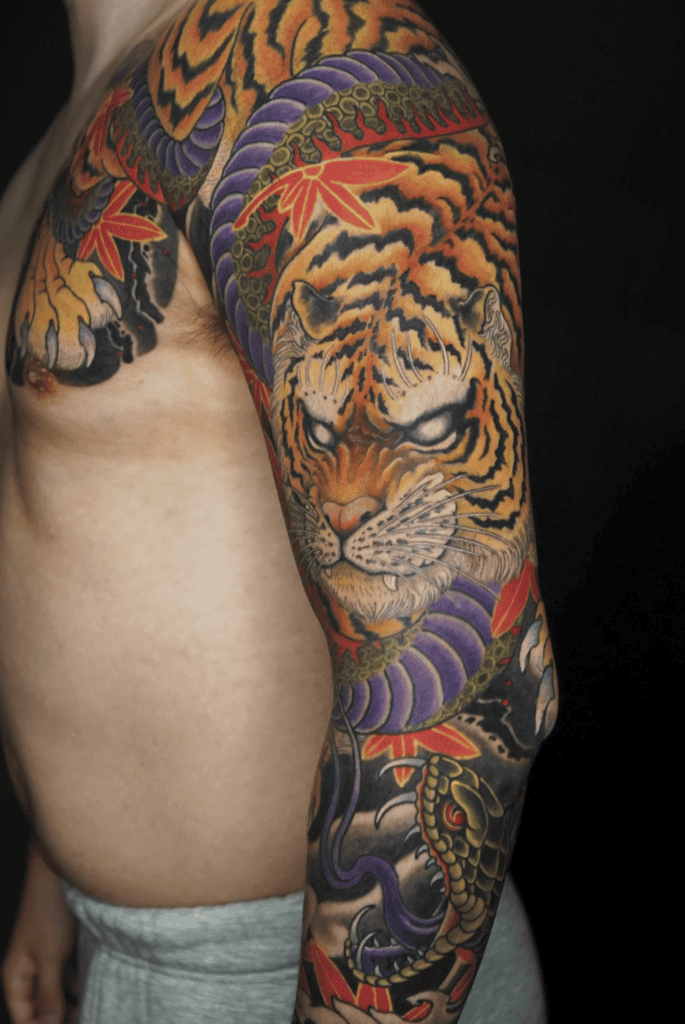
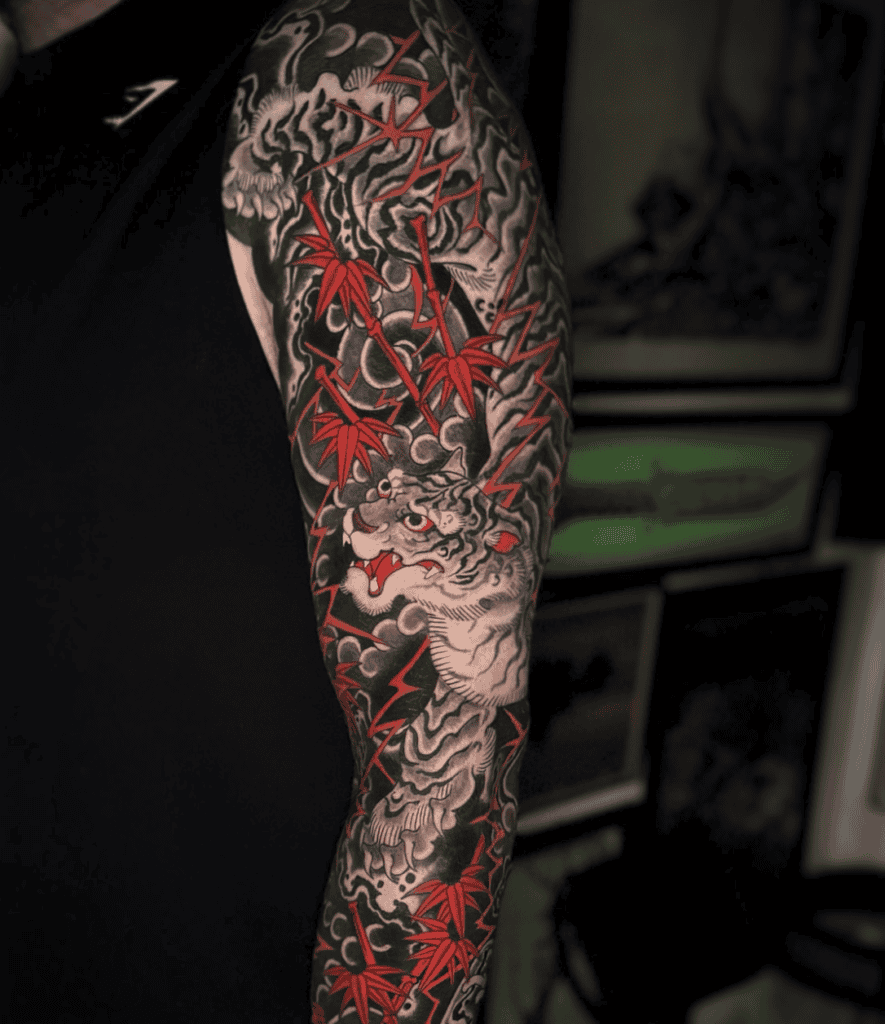
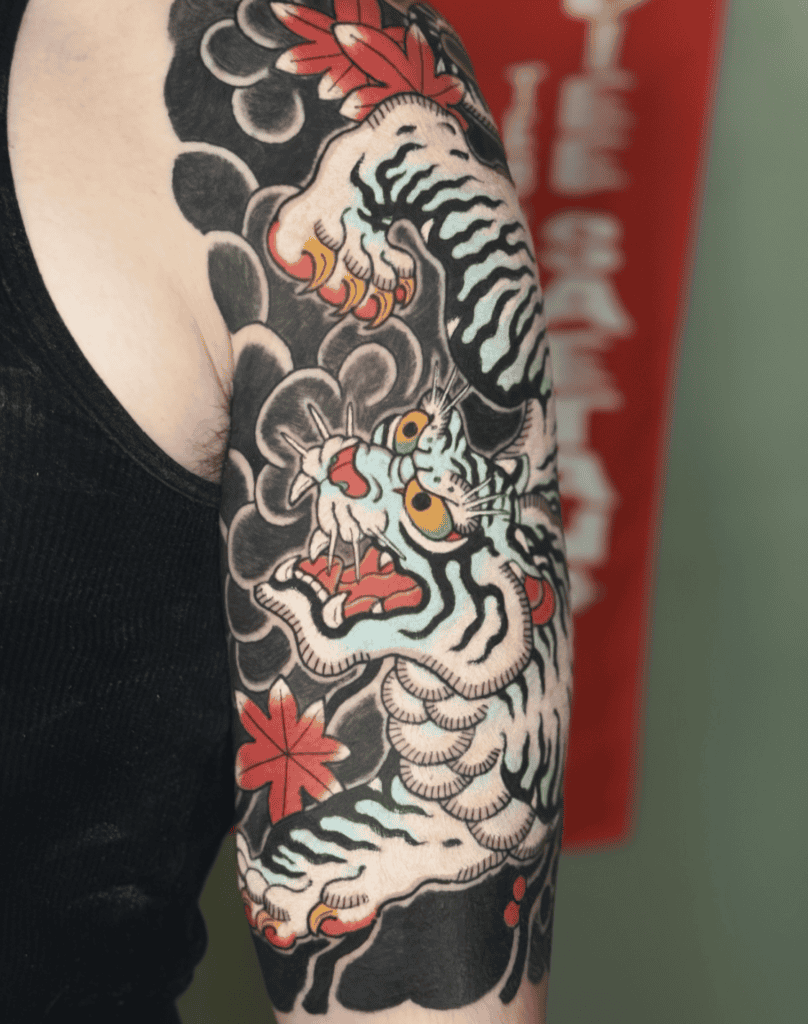
The Tiger (Tora, 虎) is one of the most powerful and respected animals in Irezumi. Known for its fearlessness, determination, and commanding presence, the tiger symbolises strength, courage, protection, and perseverance. In Japanese folklore, it is also believed to ward off evil spirits, illness, and bad luck, making it a popular choice for those seeking both beauty and spiritual protection.
Unlike dragons, which rule the heavens and seas, the tiger is considered the king of the land. This contrast makes it a natural counterpart to the Dragon, with the two creatures often representing balance between earthly strength and celestial wisdom.
A Tiger Irezumi can represent many admirable qualities, including courage and bravery, physical and mental strength, protection from evil spirits, resilience through adversity, balance and self-control, perseverance and endurance, leadership and confidence, and good fortune. Many people choose a Tiger tattoo as a reminder to face life’s challenges head-on while remaining calm, disciplined, and resilient.
Phoenix Irezumi Tattoo
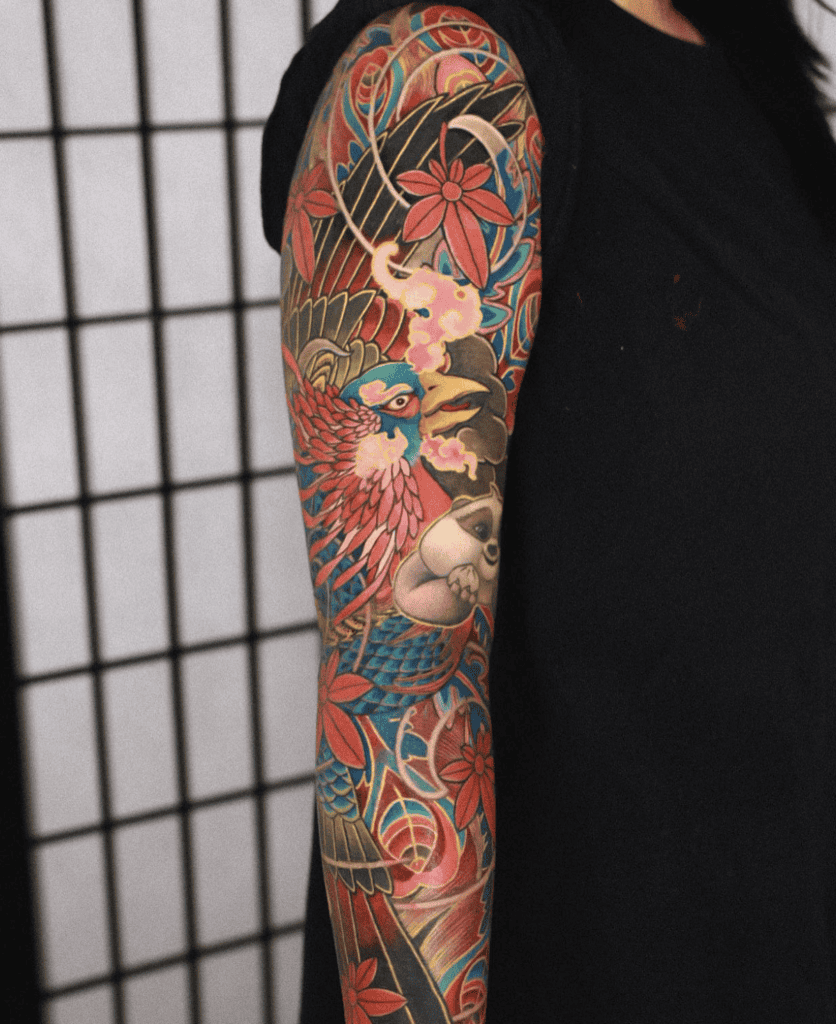
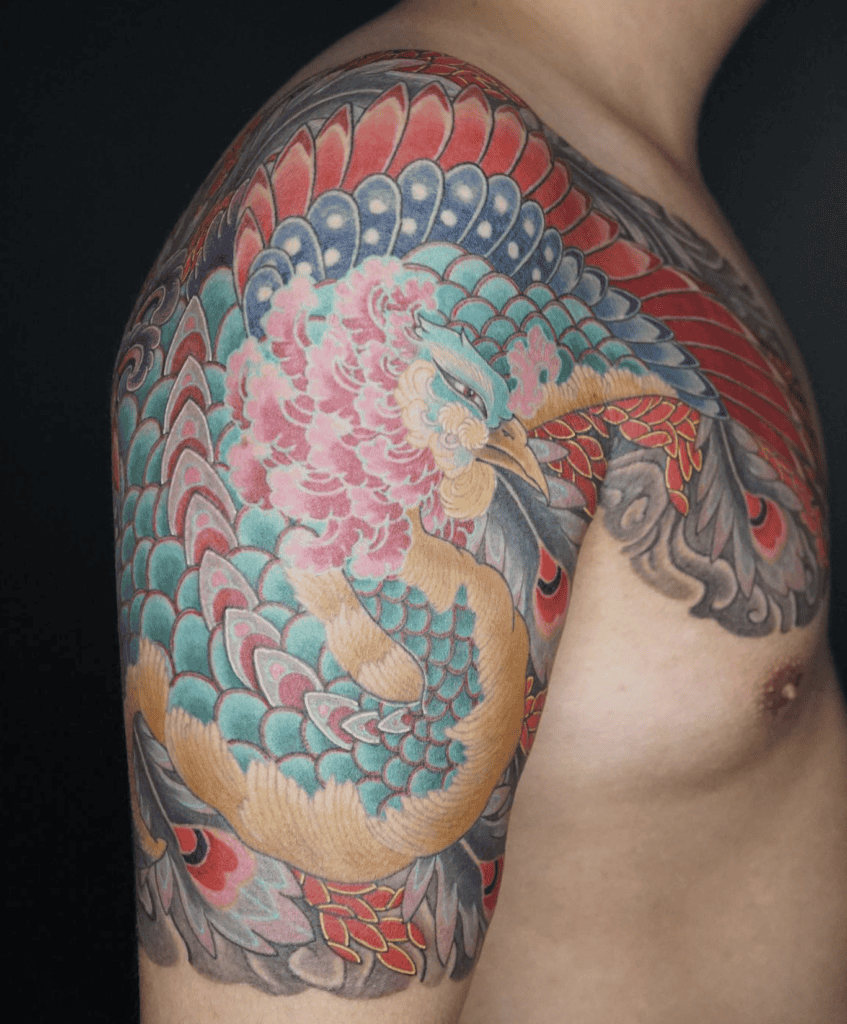
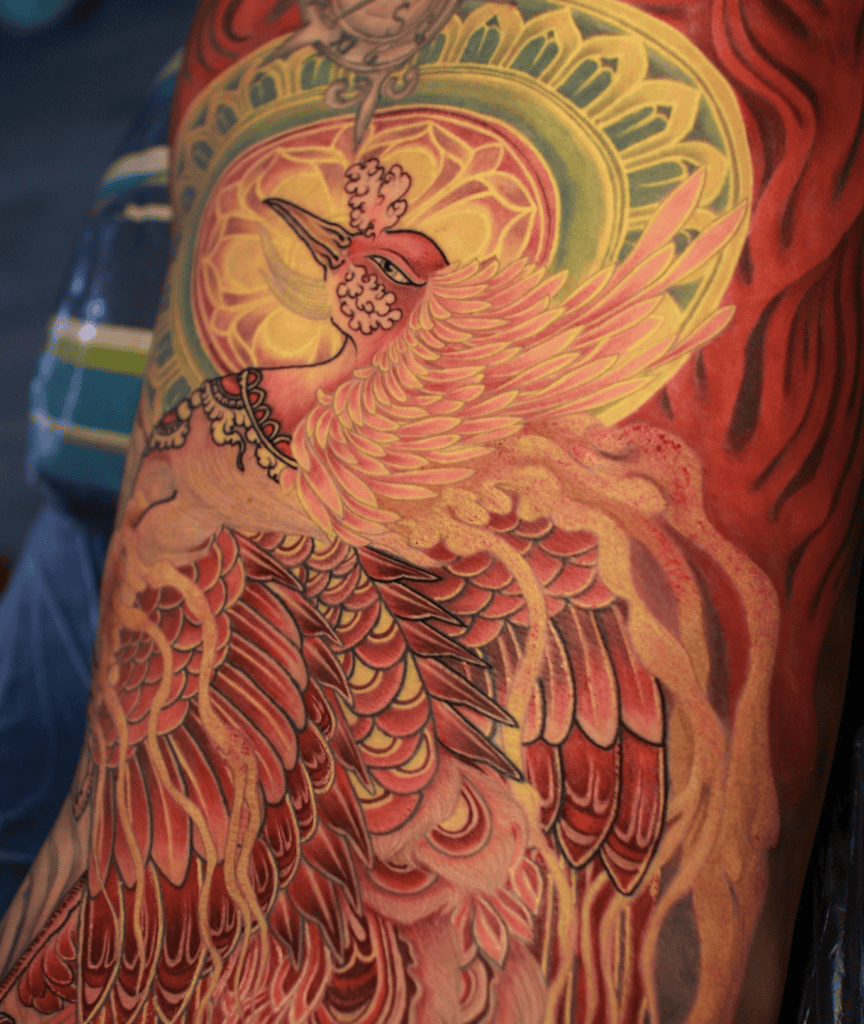
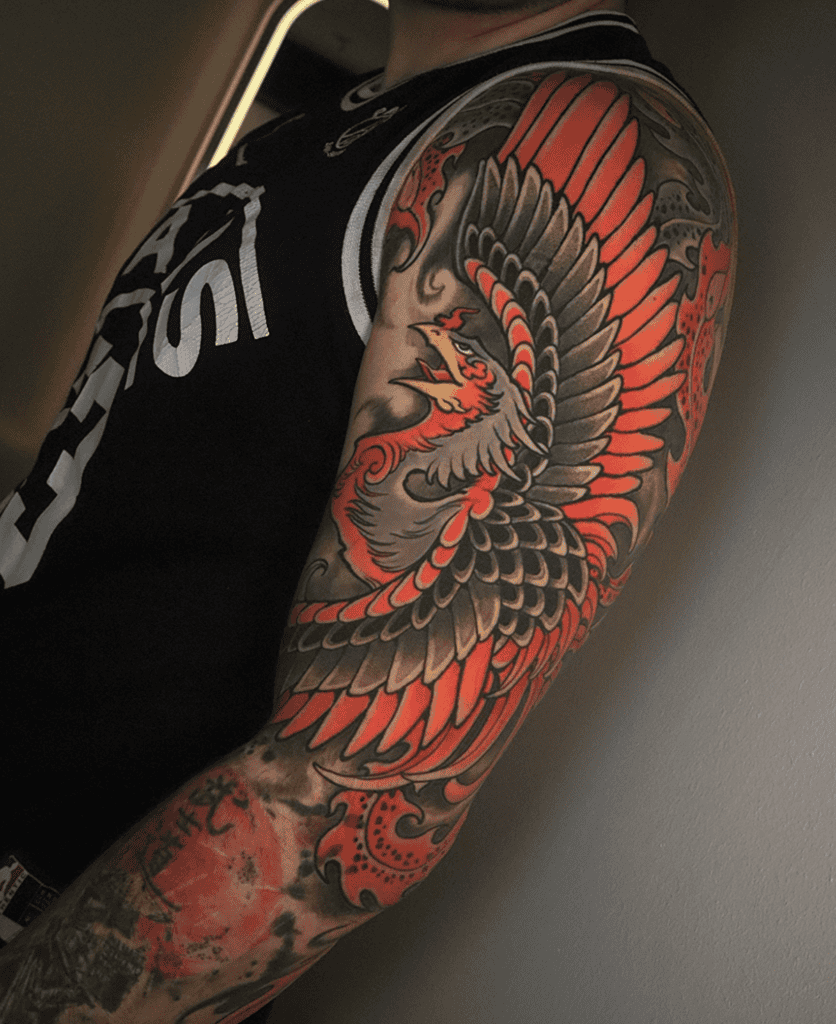
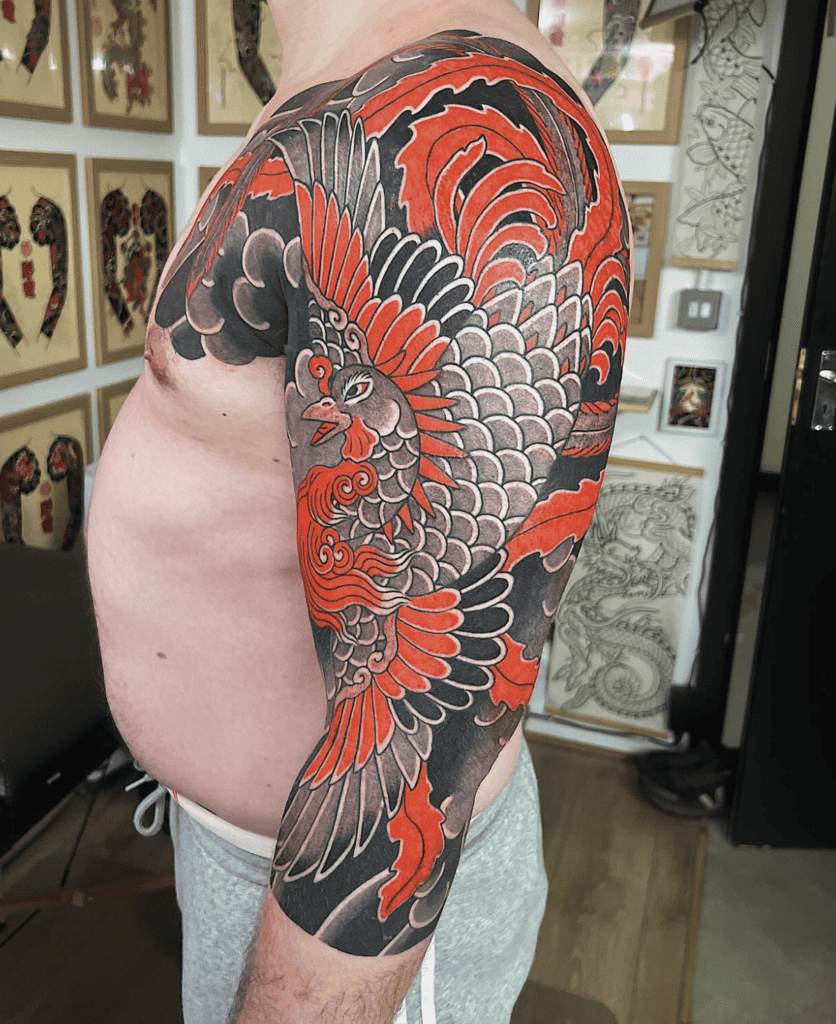
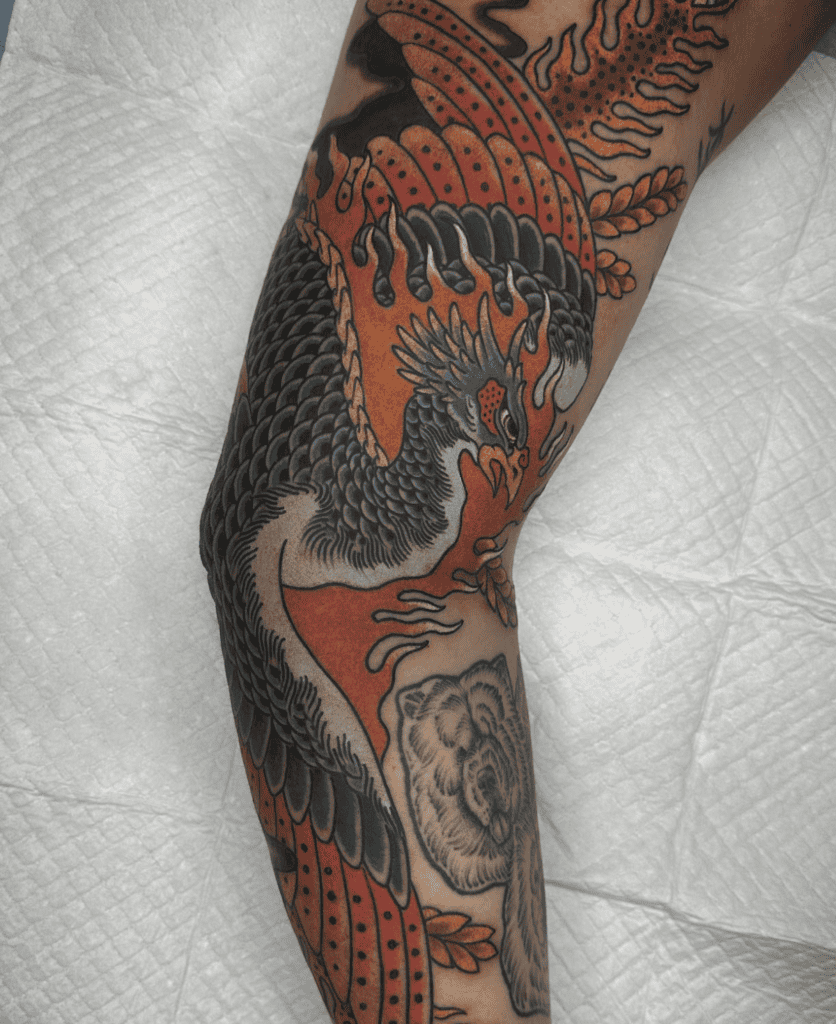
The Phoenix, known in Japan as the Hō-ō (鳳凰), is one of the most elegant and meaningful subjects in Irezumi. Unlike the phoenix of Greek mythology, the Japanese Hō-ō is a divine bird believed to descend from the heavens during times of peace, prosperity, and just leadership. As a result, Phoenix Irezumi symbolises renewal, harmony, virtue, and the triumph of hope over adversity.
A Phoenix Irezumi can represent many uplifting qualities, including rebirth and renewal, new beginnings, strength through hardship, peace and harmony, virtue and compassion, beauty and grace, prosperity and good fortune, or hope after difficult times.
Kirin Irezumi Tattoo
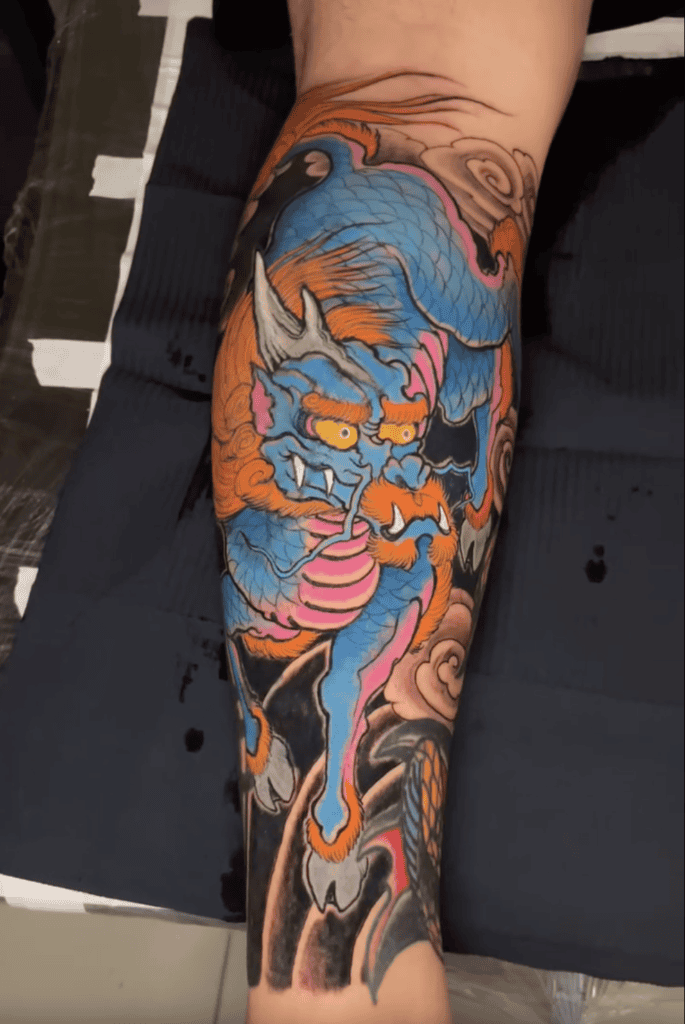
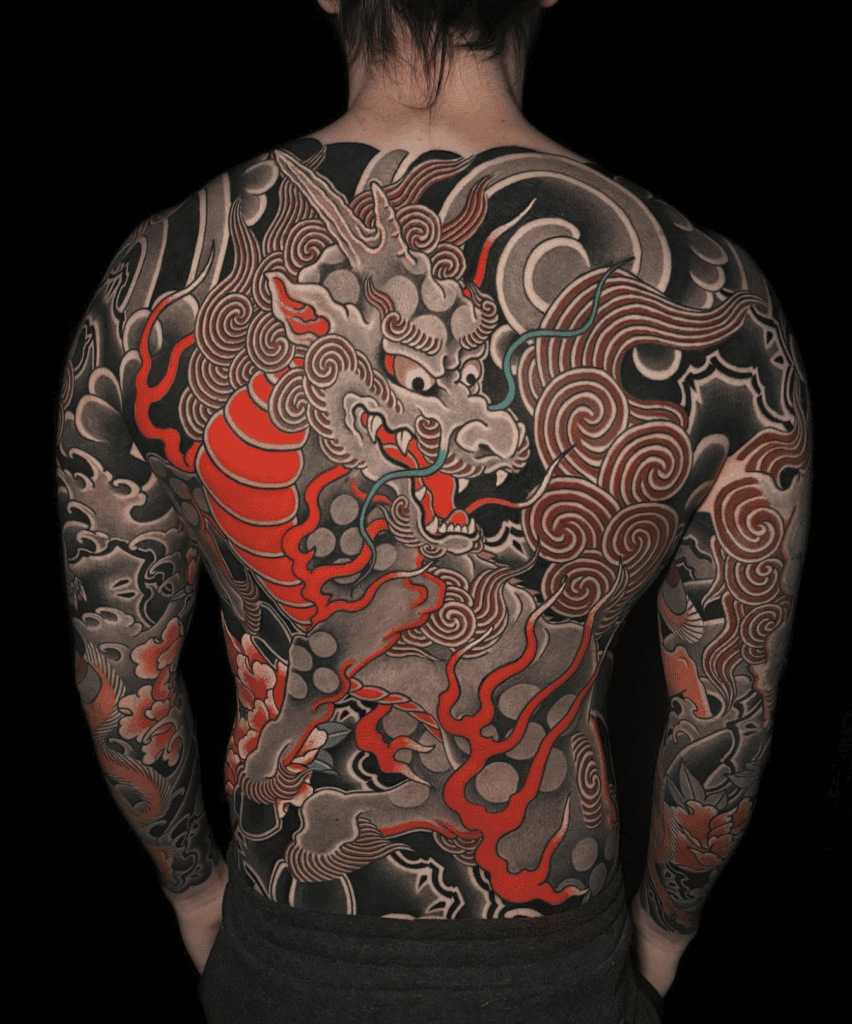
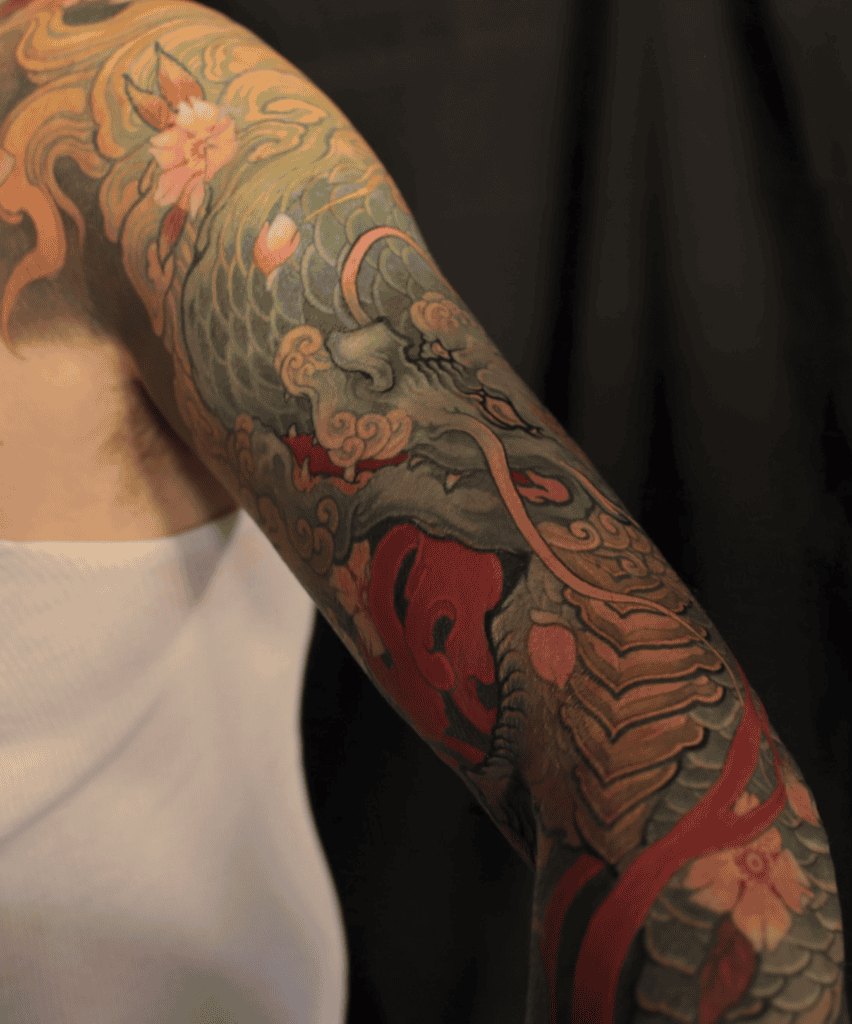
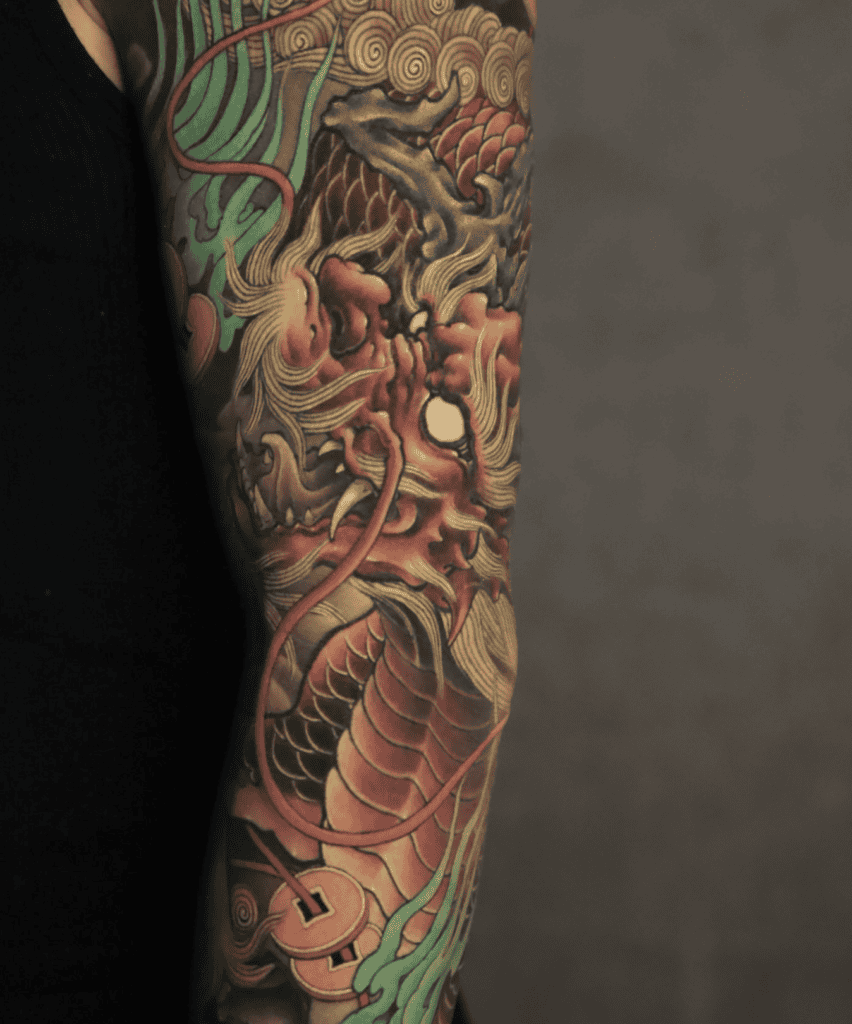
The Kirin (麒麟) is a legendary creature in Japanese mythology that symbolises prosperity, justice, wisdom, and divine protection. Often described as one of the most sacred beasts in East Asian folklore, the Kirin is said to appear only during times of great peace or to herald the arrival of a wise and virtuous leader.
It is a magnificent chimaera with the body of a deer or horse, the scales of a dragon, the tail of an ox or lion, cloven hooves, and a single horn. Many depictions also surround it with flames or clouds, emphasising its celestial nature.
A Kirin tattoo can represent many noble qualities, including wisdom and intelligence, justice and righteousness, divine protection, peace and harmony, noble leadership, prosperity and good fortune, compassion and kindness, or purity of spirit.
Baku Irezumi Tattoo
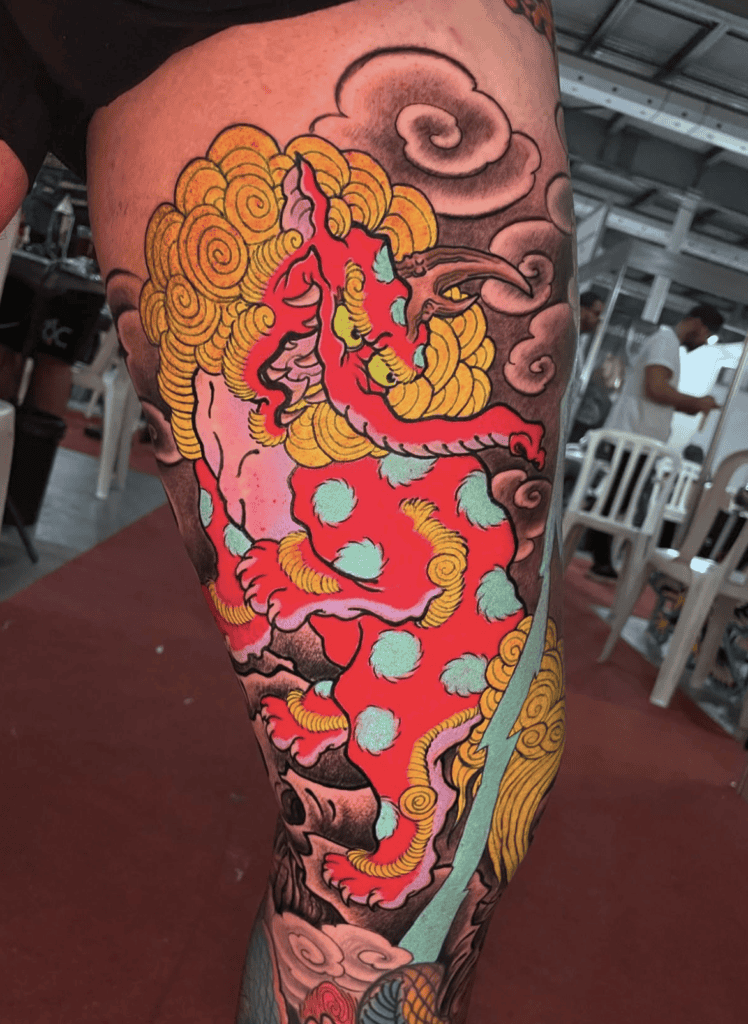
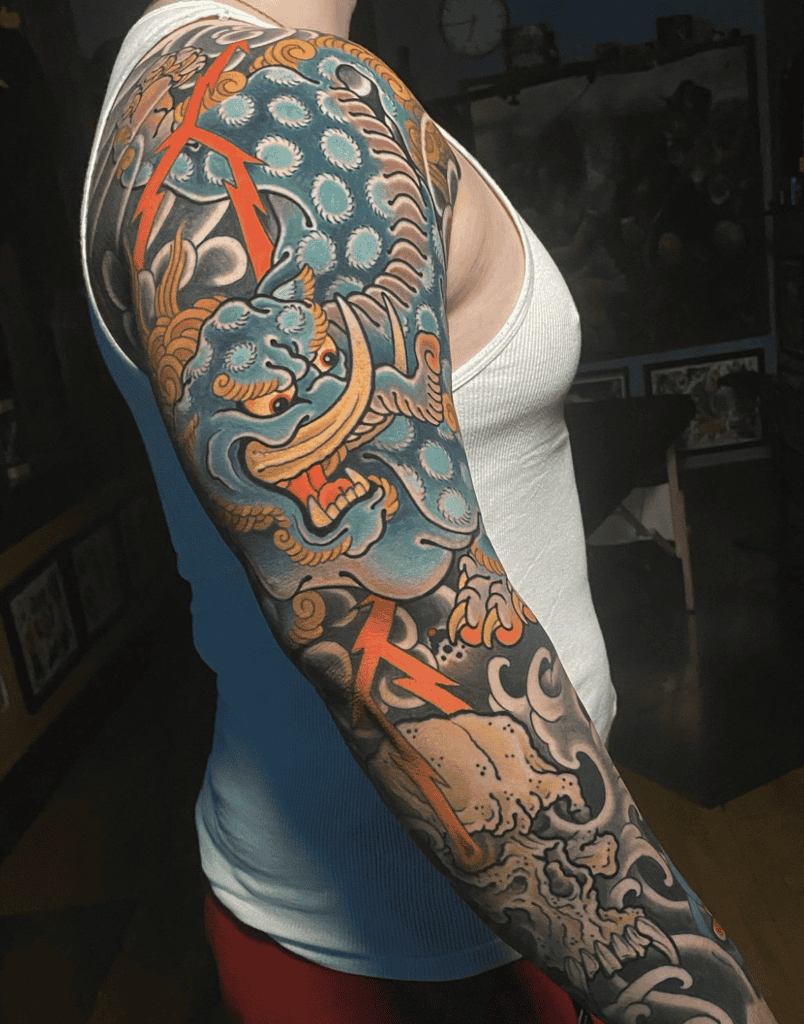
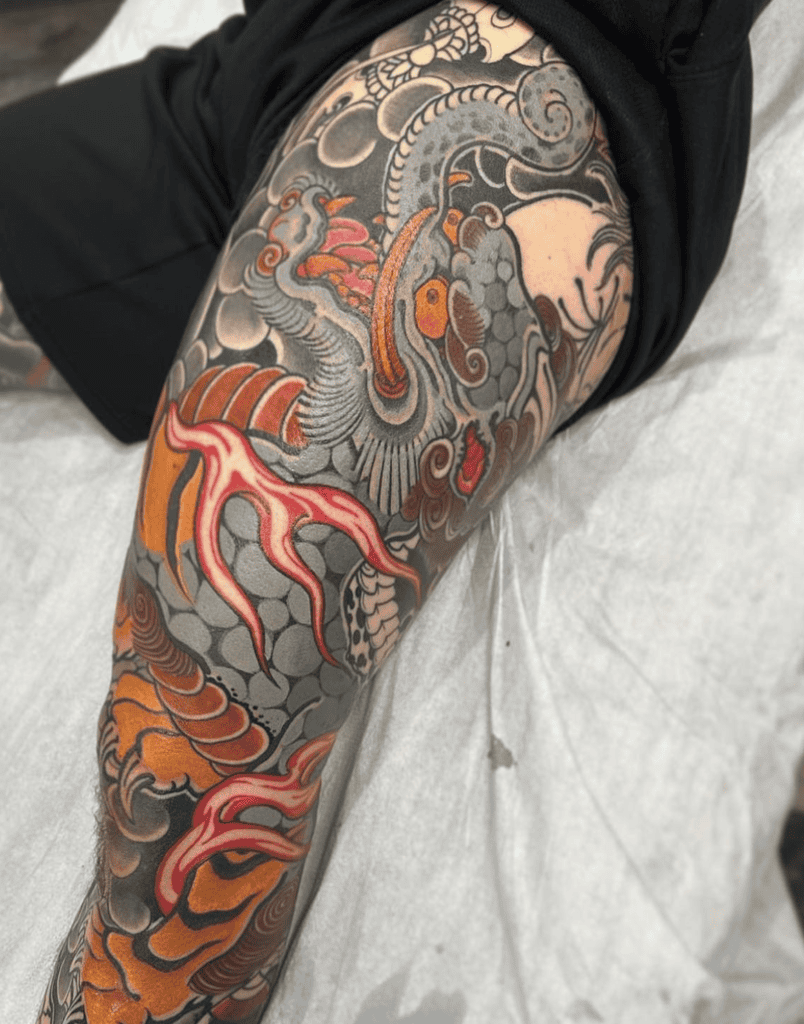
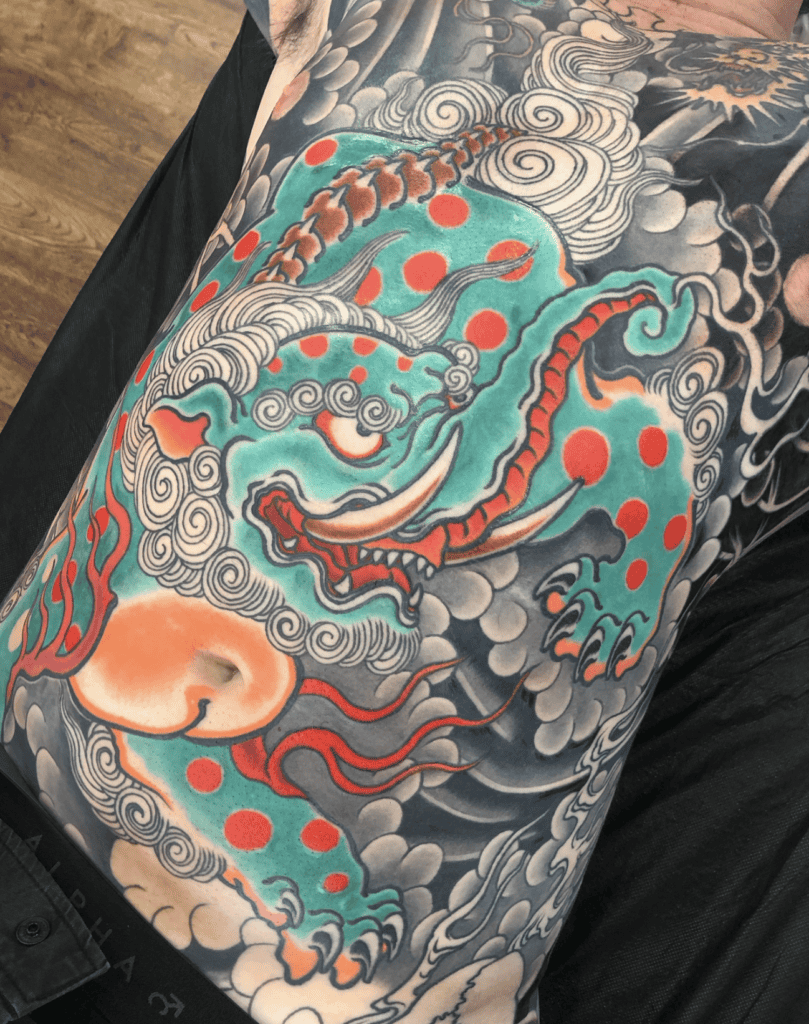
The Baku (獏) is a legendary creature from Japanese folklore, best known as the Dream Eater. According to tradition, the Baku has the supernatural ability to devour nightmares, protecting people from frightening dreams and negative spiritual influences. In Irezumi, the Baku symbolises protection, peace of mind, good fortune, and overcoming fear.
The Baku is often depicted as a chimaera with the trunk of an elephant, the eyes of a rhinoceros, the body of a bear, the tail of an ox, and the paws of a tiger. This unusual appearance reflects its mythical origins, as it is said to have been created from the leftover pieces of animals after the gods had finished creating the world.
A Baku tattoo can represent many comforting and empowering qualities, including protection from nightmares, warding off evil spirits, peace of mind, good fortune, courage in overcoming fears, emotional balance, spiritual protection, healing and renewal.
Nine-tailed Fox Irezumi Tattoo
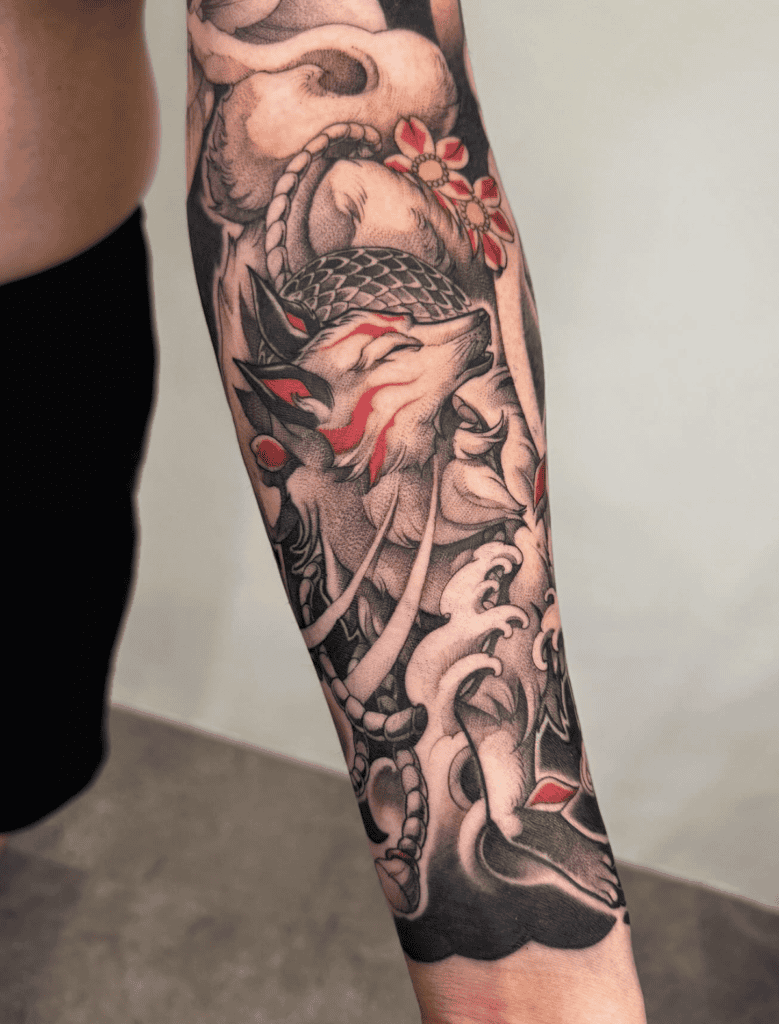
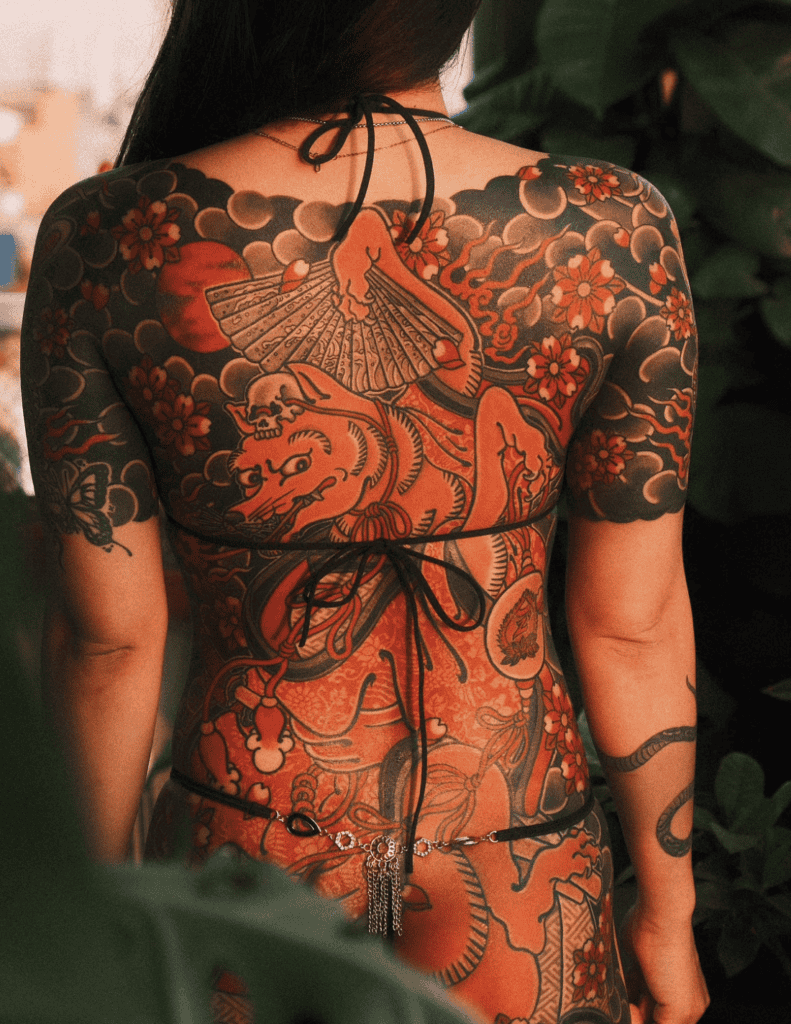
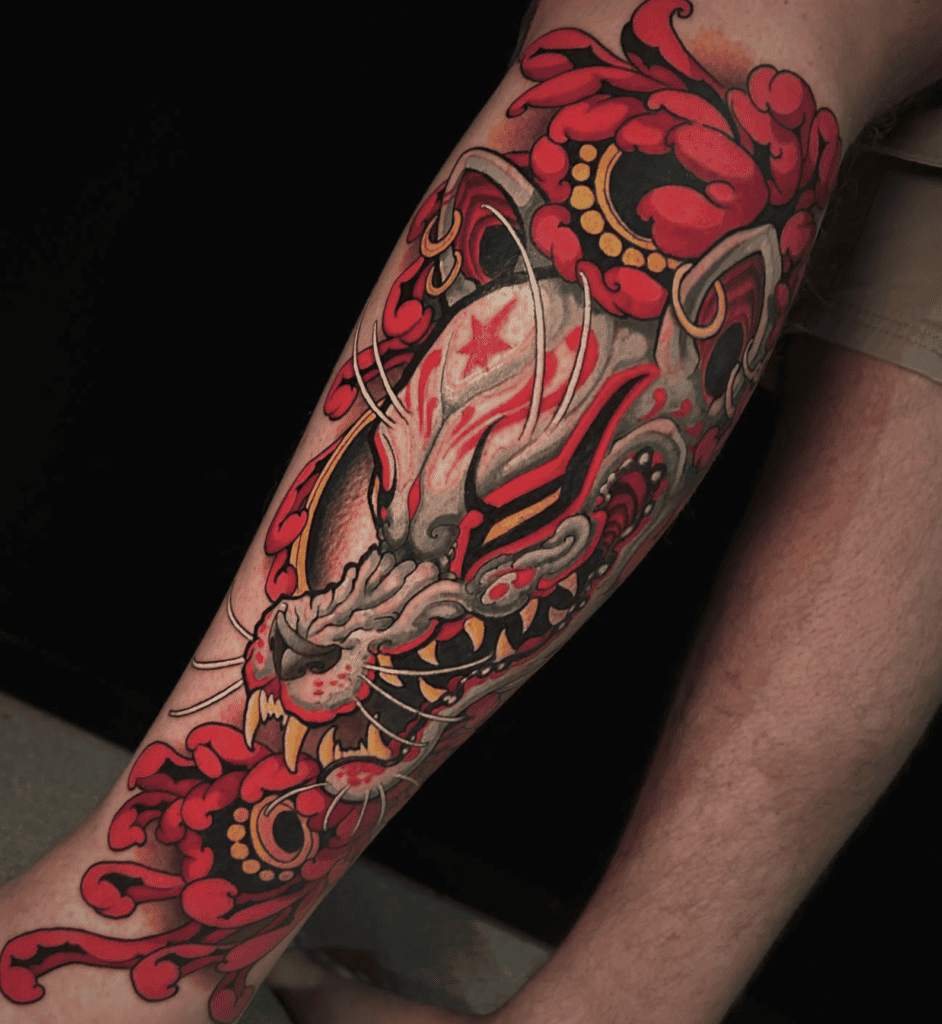
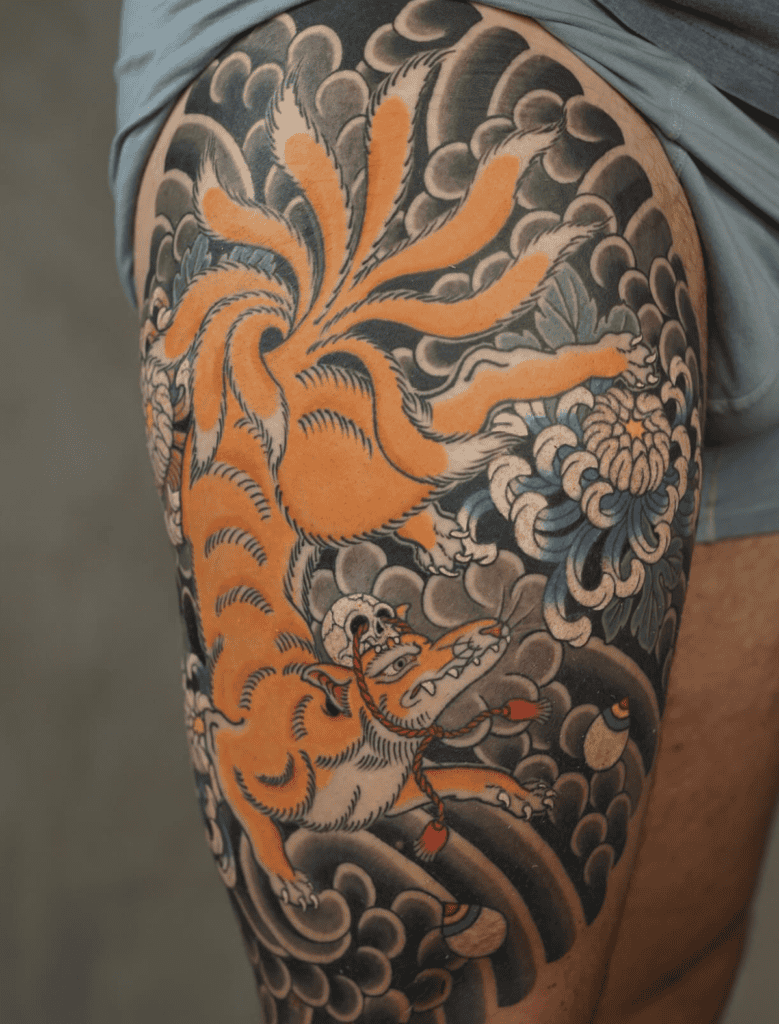
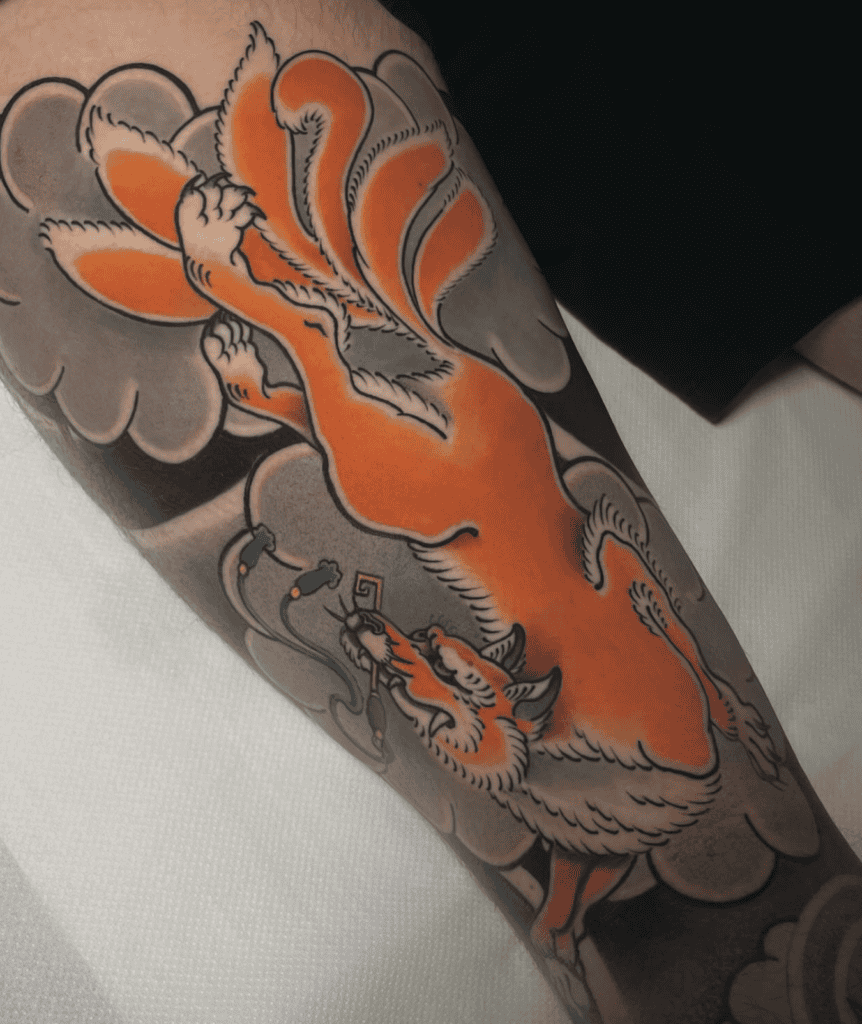
The Nine-Tailed Fox, known as the Kyūbi no Kitsune (九尾の狐), is one of the most powerful yōkai in Japanese mythology. A Kitsune gains an additional tail as it grows older, wiser, and more spiritually powerful. Upon reaching its ninth tail, it becomes a celestial being possessing extraordinary intelligence, magical abilities, and near-limitless wisdom.
In Irezumi, the Nine-Tailed Fox symbolises wisdom, transformation, intelligence, longevity, protection, and the balance between illusion and reality. Its flowing tails and elegant posture create stunning tattoo compositions that wrap naturally around the body, making it a favourite for sleeves, back pieces, and bodysuits.
A Kyūbi no Kitsune tattoo can represent many powerful qualities, including wisdom and intelligence, spiritual growth, transformation and adaptability, protection from evil, mystery and magic, loyalty and devotion, prosperity and good fortune, longevity and experience.
Shishi Irezumi Tattoo
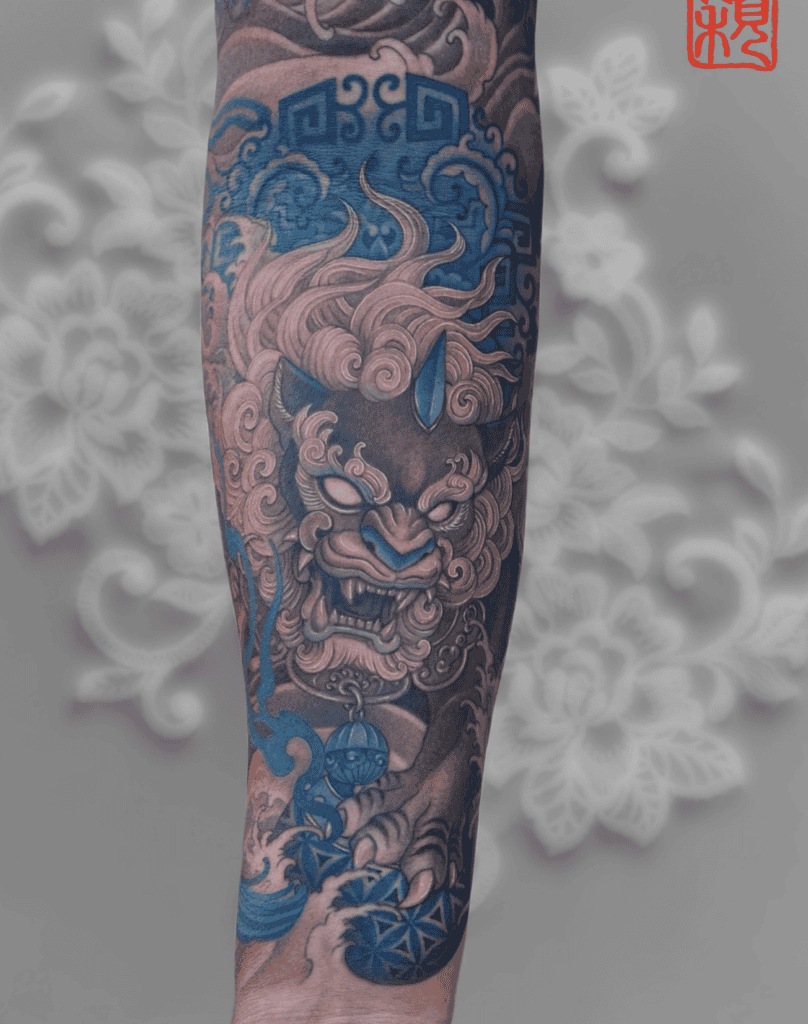
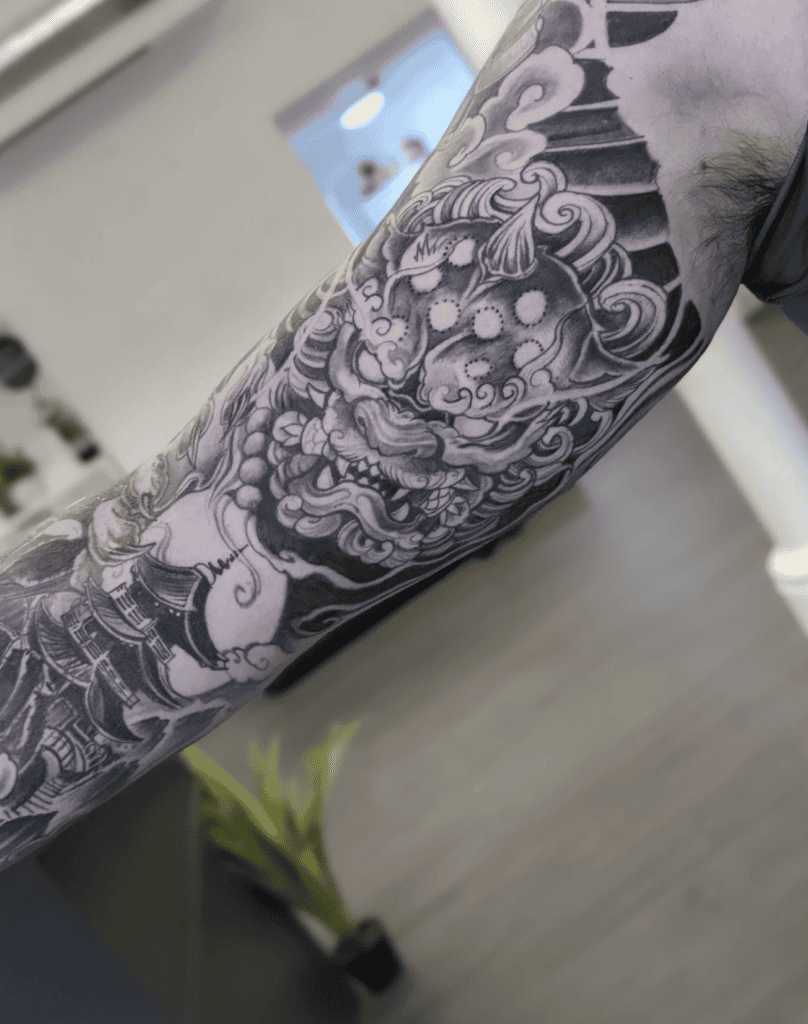
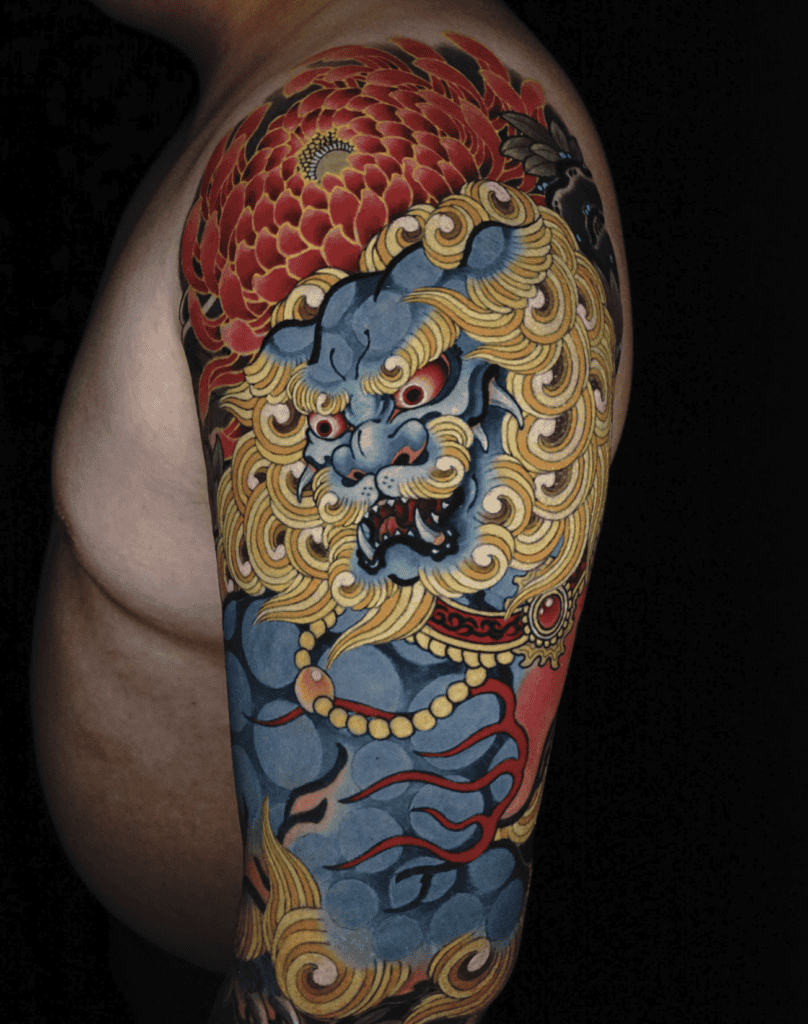
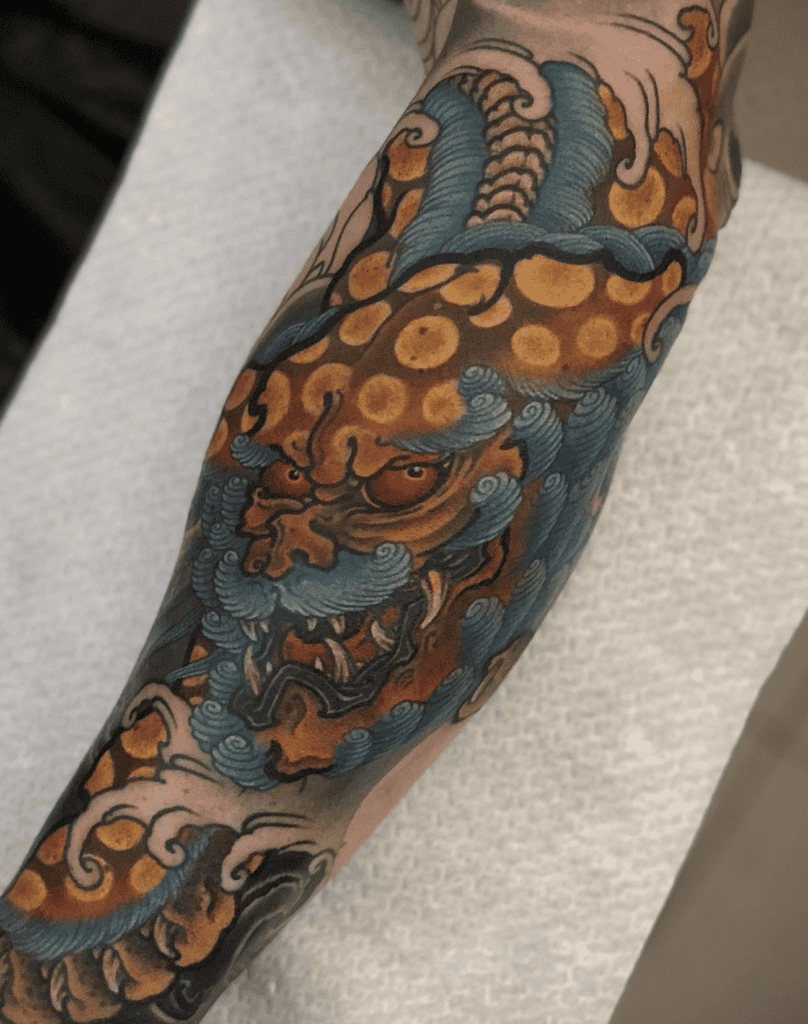
The Shishi (獅子), often called the Lion Dog or Foo Dog in the West, is a legendary guardian creature in Japanese and Chinese mythology. Neither a true lion nor a dog, a Shishi is a mythical beast that combines the noble qualities of both animals, representing protection, courage, prosperity, and the triumph of good over evil.
For centuries, Shishi statues have stood at the entrances of temples, shrines, palaces, and important buildings throughout Japan, silently guarding against evil spirits and misfortune. In Irezumi, this protective role is carried onto the skin, making the Shishi a popular choice for those seeking a tattoo that symbolises resilience, guardianship, and inner strength.
A Shishi tattoo can represent many admirable qualities, including protection from evil, strength and courage, nobility and honour, good fortune, justice and righteousness, loyalty and devotion, and prosperity.
Snake Irezumi Tattoo
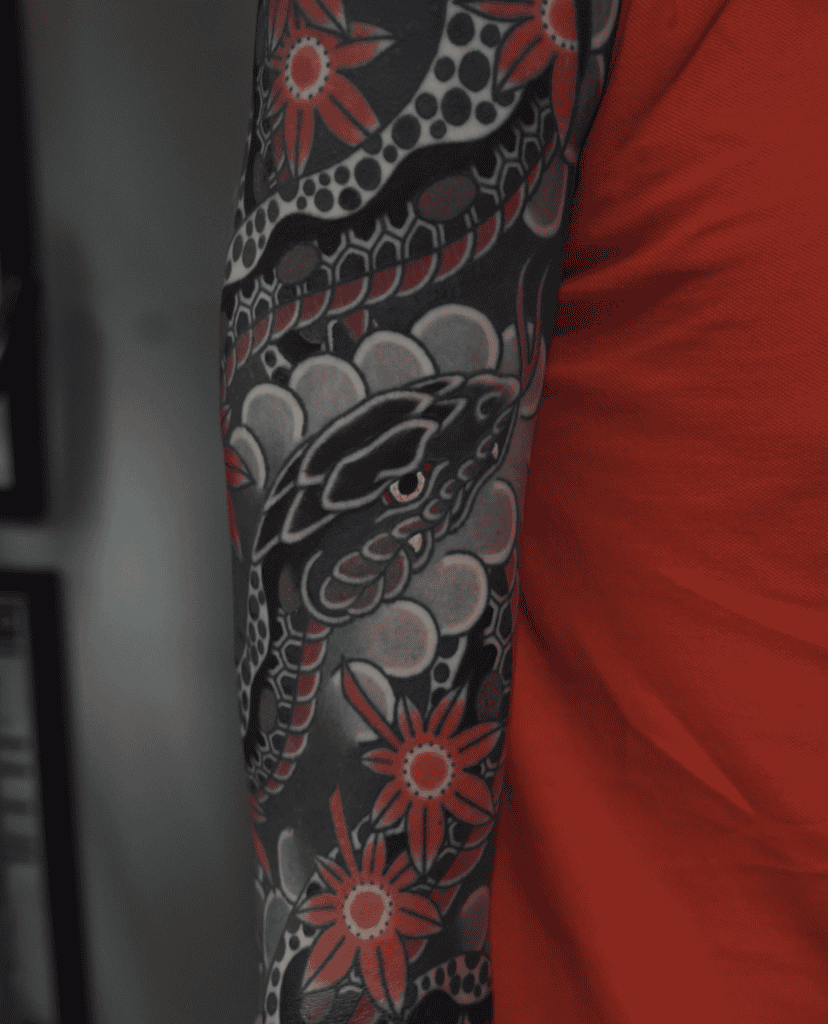
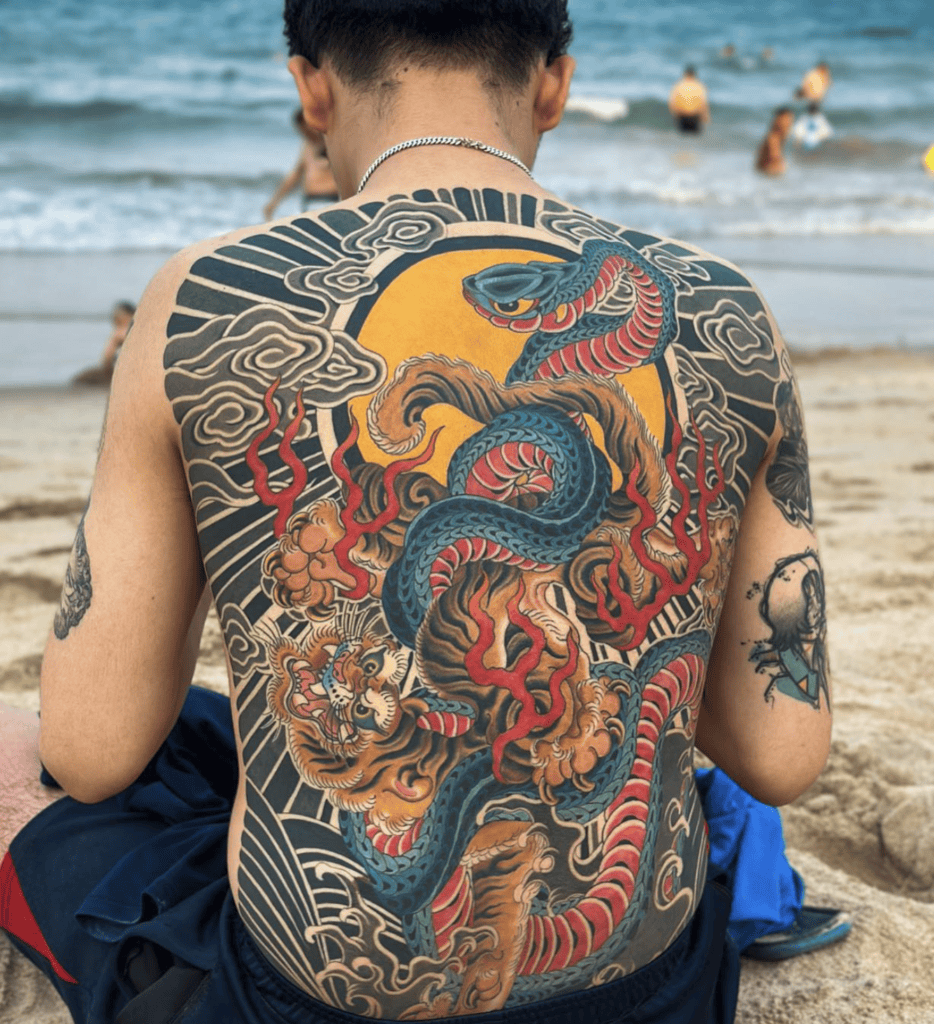
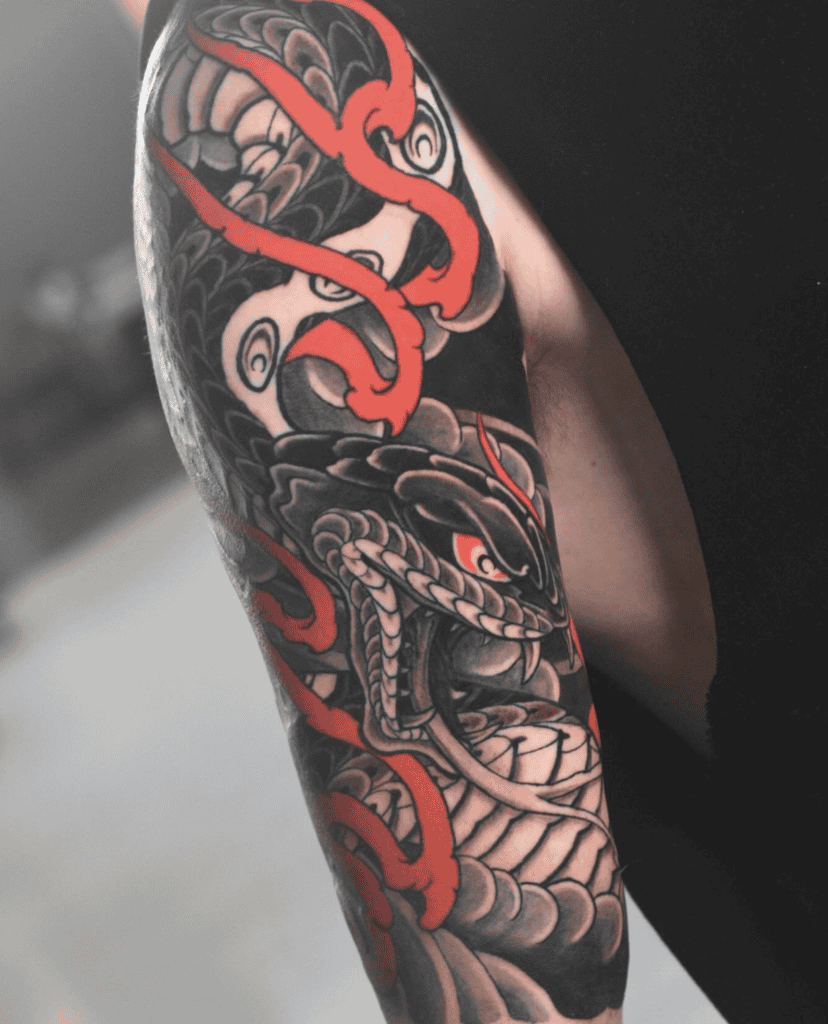
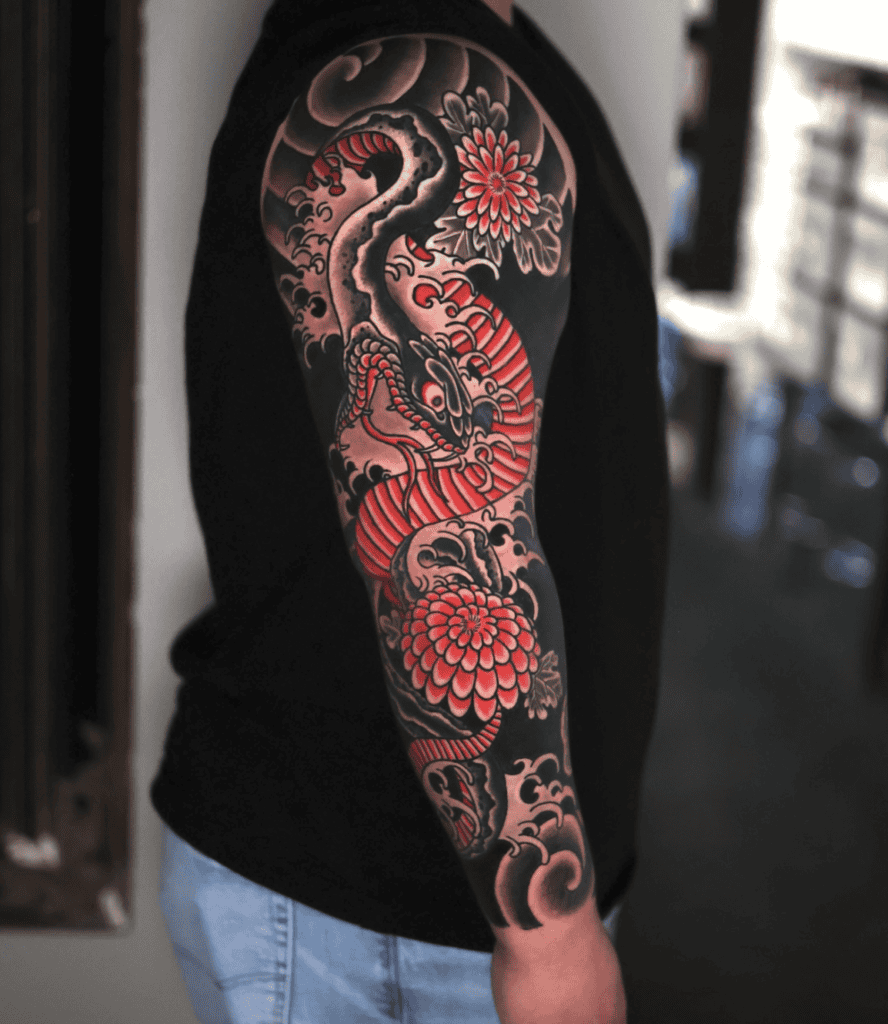
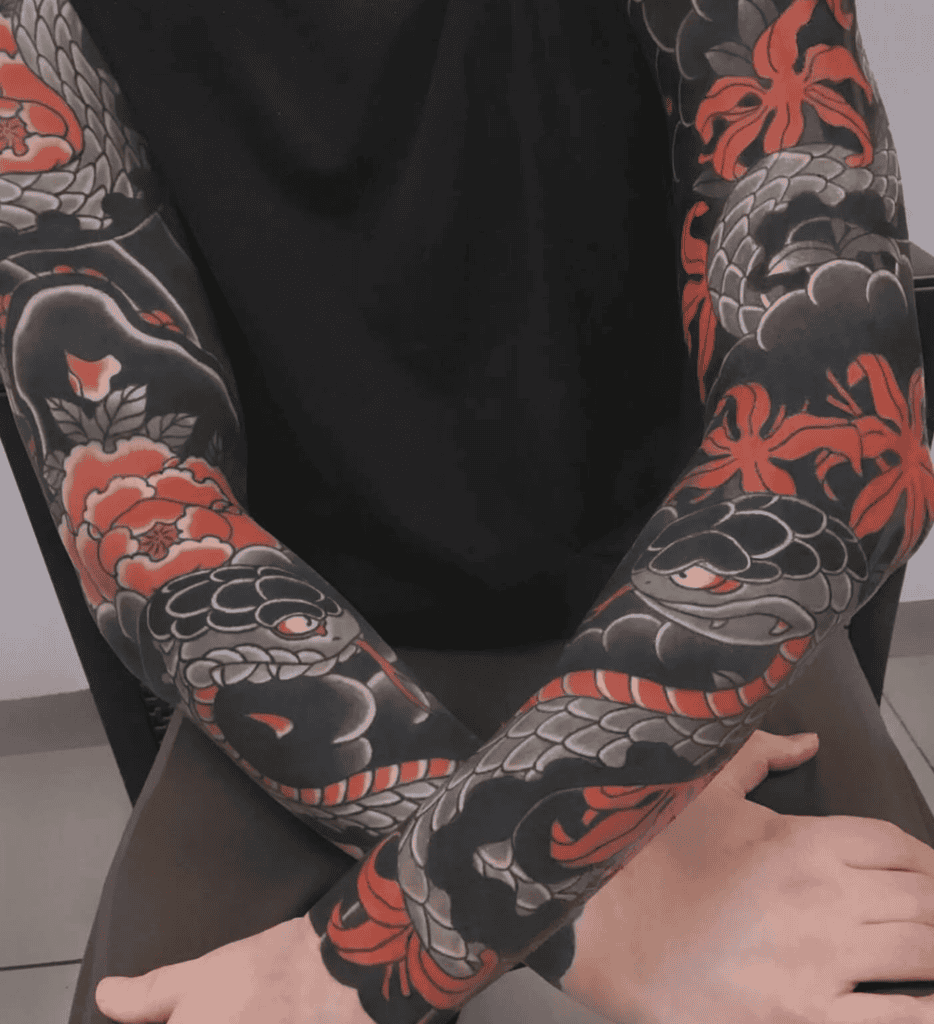
The Snake (Hebi, 蛇) is one of the most symbolic and versatile subjects in Irezumi. Revered for its ability to shed its skin, the snake represents transformation, rebirth, wisdom, protection, and good fortune. In Japanese folklore, snakes are often viewed as sacred messengers of the gods and guardians of treasures, water, and the natural world.
A Snake Irezumi can represent many meaningful qualities, including transformation and renewal, personal growth, wisdom and knowledge, protection from evil, healing and good health, good fortune and prosperity, or eternity and the cycle of life.
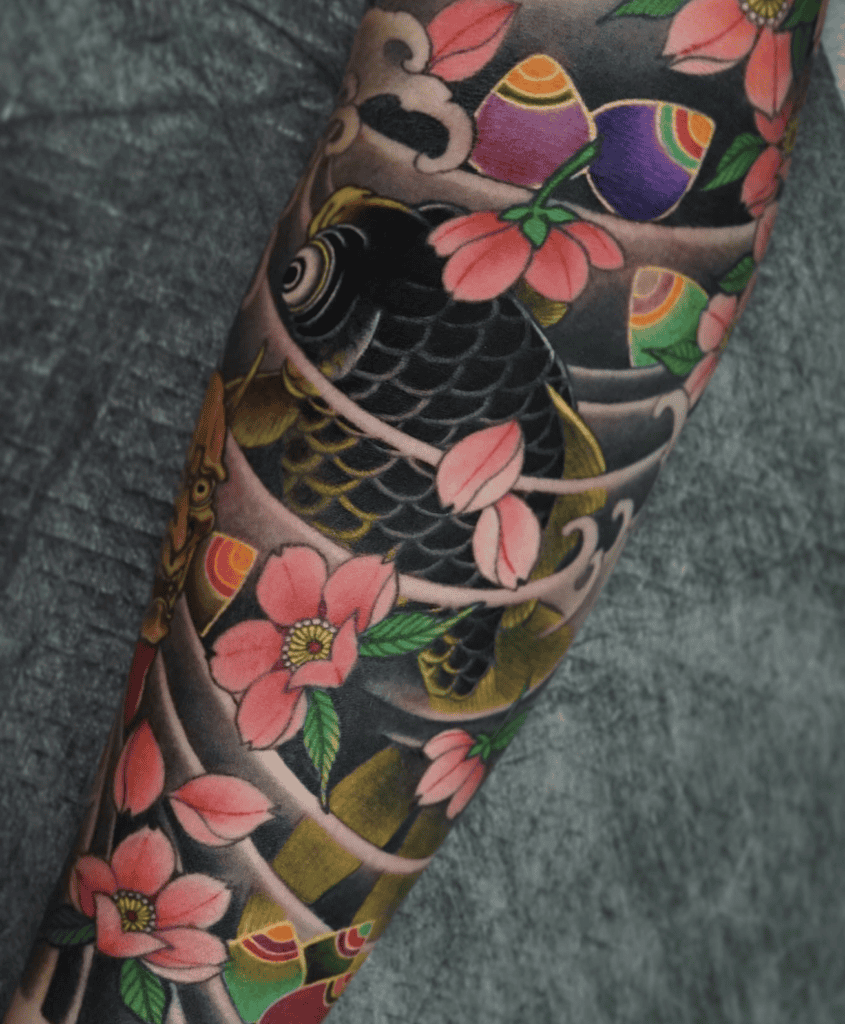
Koi Irezumi Tattoo
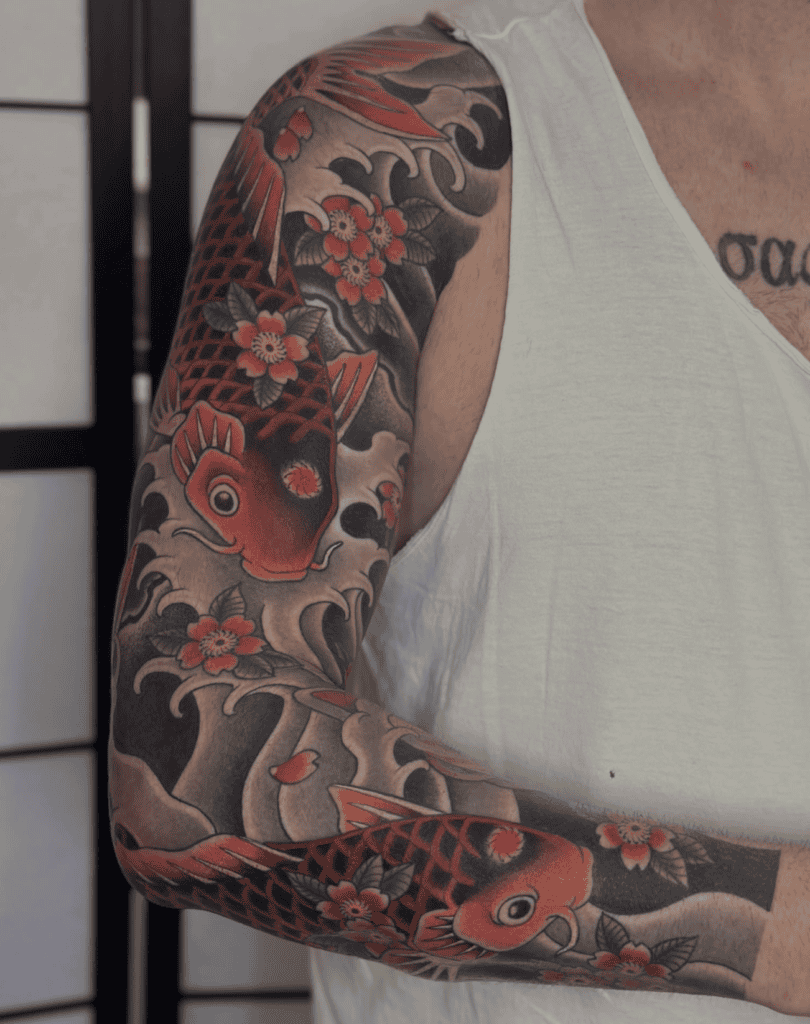
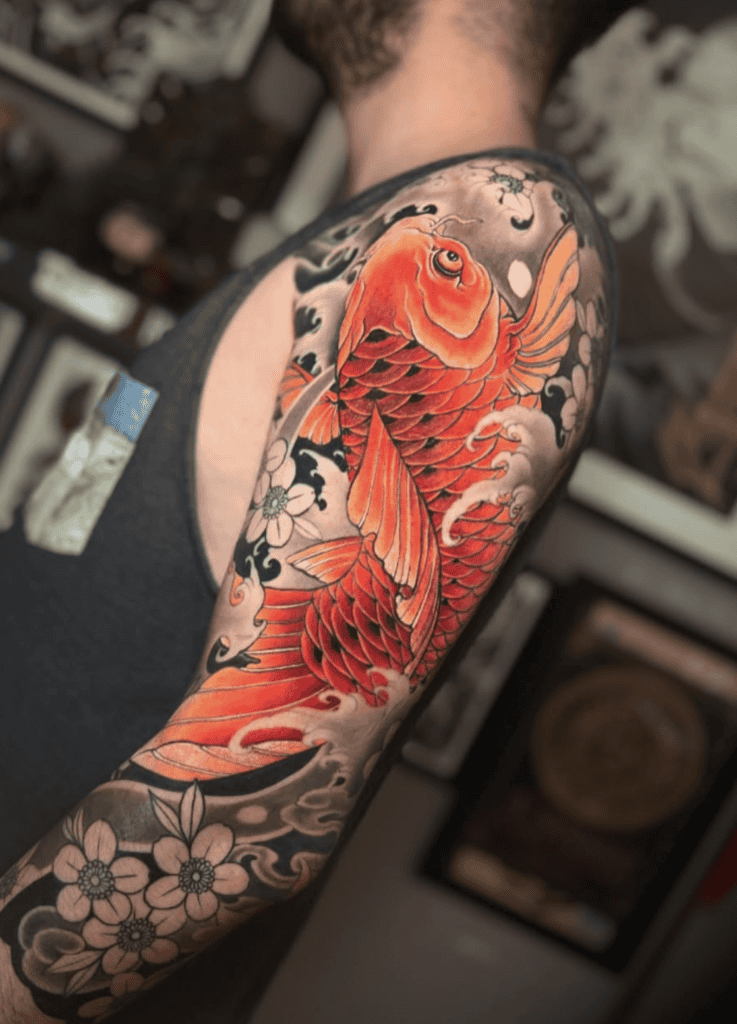
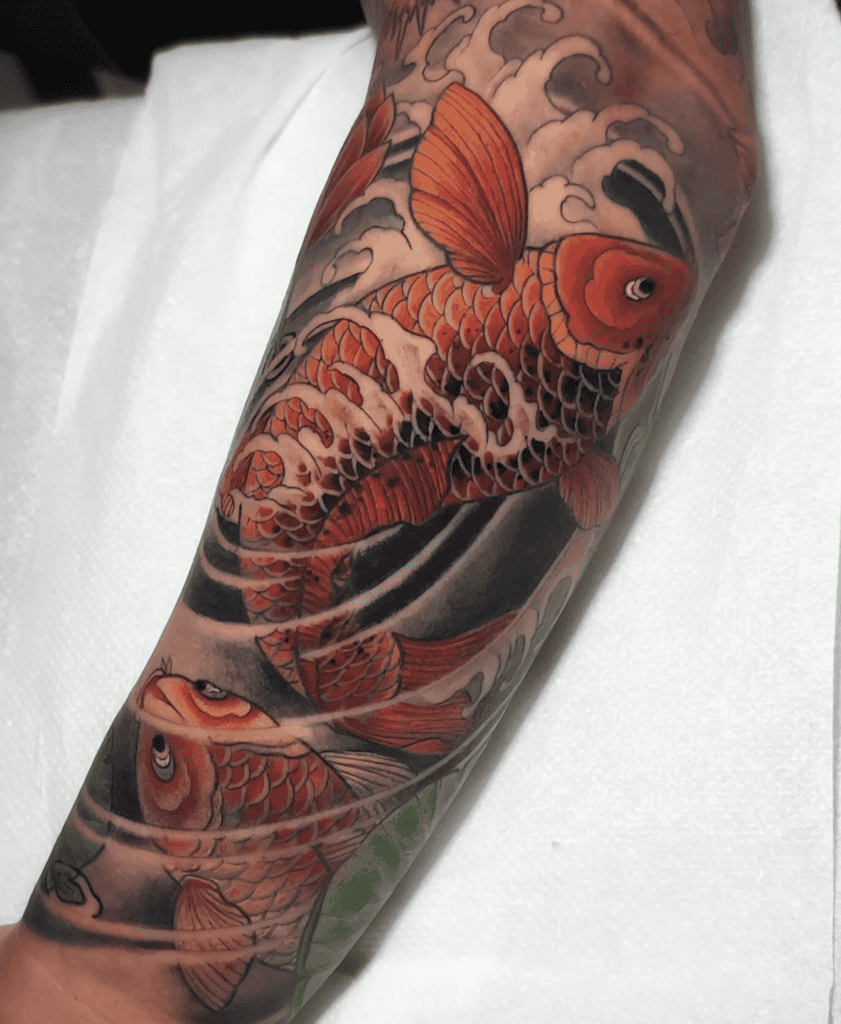
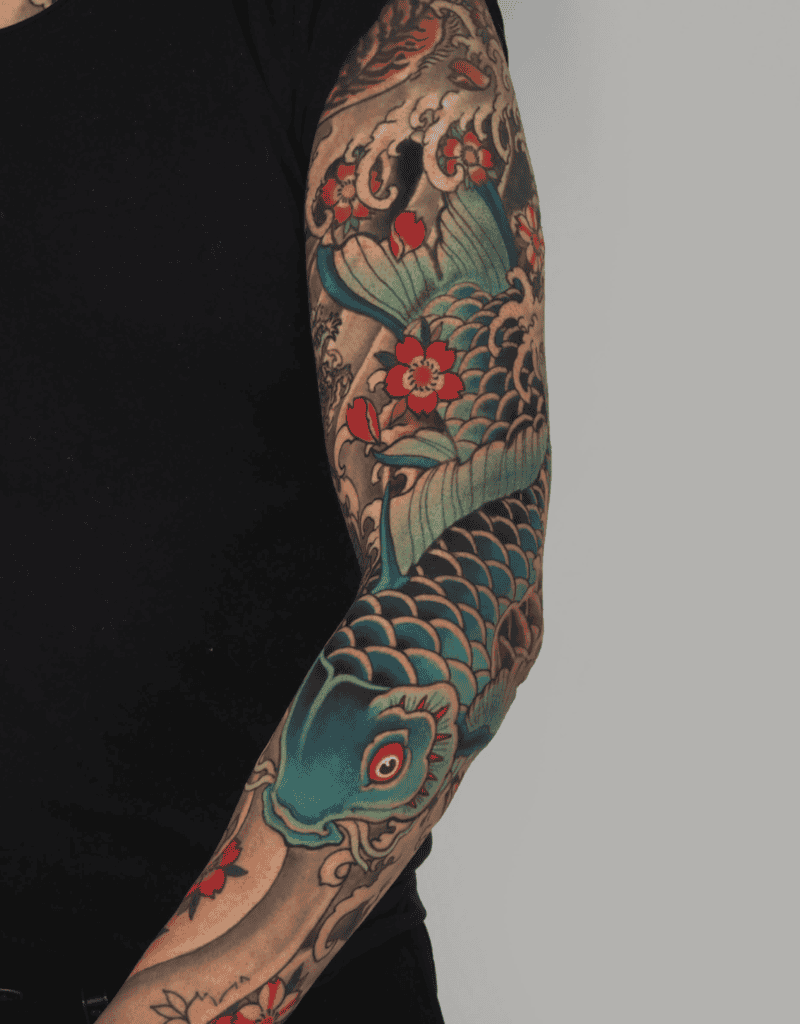
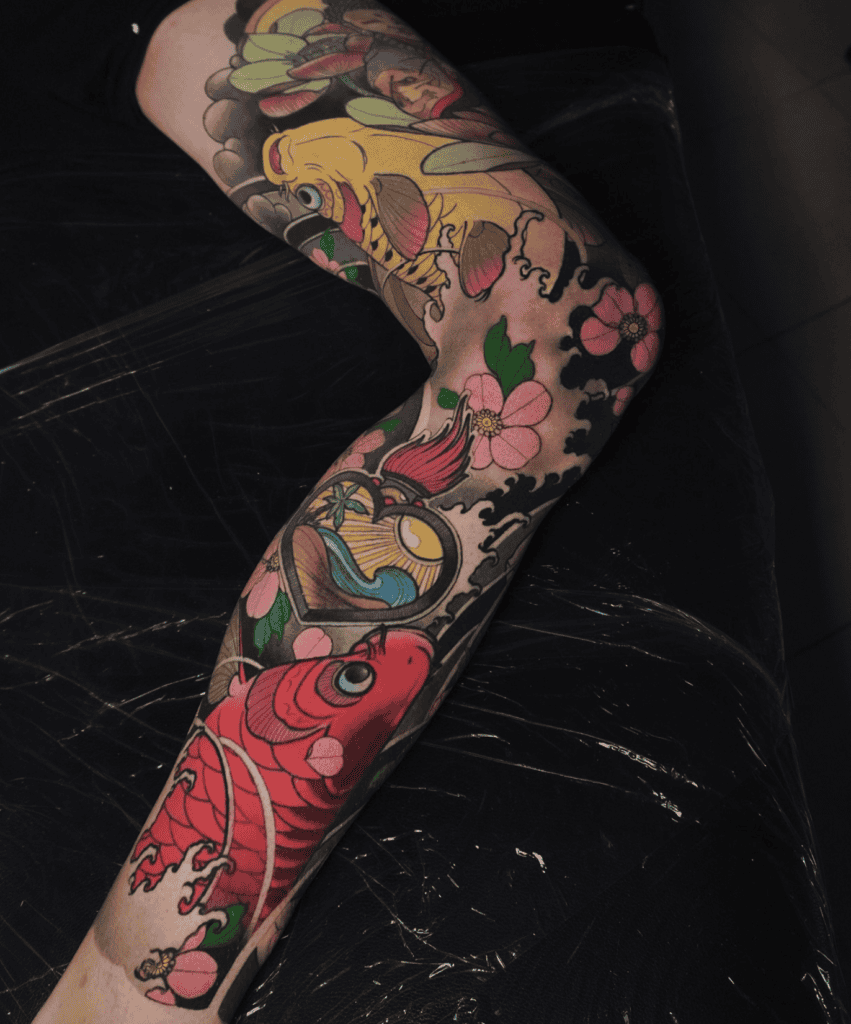
The Koi (鯉), or Nishikigoi (錦鯉) when referring to ornamental koi, is one of the most iconic symbols in Irezumi. Admired for its beauty and determination, the koi represents perseverance, courage, ambition, transformation, and success through adversity. Its legendary journey upstream has made it a timeless reminder that even the greatest obstacles can be overcome through persistence and resilience.
A Koi Irezumi can represent many inspiring qualities, including perseverance and determination, strength through adversity, resilience and endurance, personal growth and transformation, ambition and achievement, good fortune and prosperity, courage in the face of challenges, or balance and harmony.
Dragonfish Irezumi Tattoo


The Dragonfish (Ryūgyo, 龍魚) is a mythical creature that combines the body of a koi with the head, horns, whiskers, or claws of a dragon. In Japanese tattooing, it represents transformation, ambition, perseverance, and the pursuit of greatness. The Ryūgyo symbolises someone who has overcome immense challenges and is on the verge of achieving their full potential. Unlike a fully transformed dragon, the Dragonfish exists in a transitional state. It embodies the journey between who we once were and who we are becoming, making it one of the most inspiring motifs in Irezumi.
A Dragonfish tattoo can represent many uplifting qualities, including personal transformation, perseverance through hardship, ambition and determination, growth and self-improvement, strength earned through experience, untapped potential, good fortune, and achieving long-term goals. Many people choose a Dragonfish Irezumi to represent a major turning point in their lives, recognising that while they may not have reached their destination, they are no longer the person they once were.
The Dragonfish is closely connected to the famous legend of the Koi and the Dragon Gate. According to the story, countless koi attempted to swim upstream against powerful currents to reach the Dragon Gate waterfall. Most gave up before reaching the summit, but one determined koi persevered and leapt over the falls. As a reward, the gods transformed it into a mighty dragon.
Goldfish Irezumi Tattoo
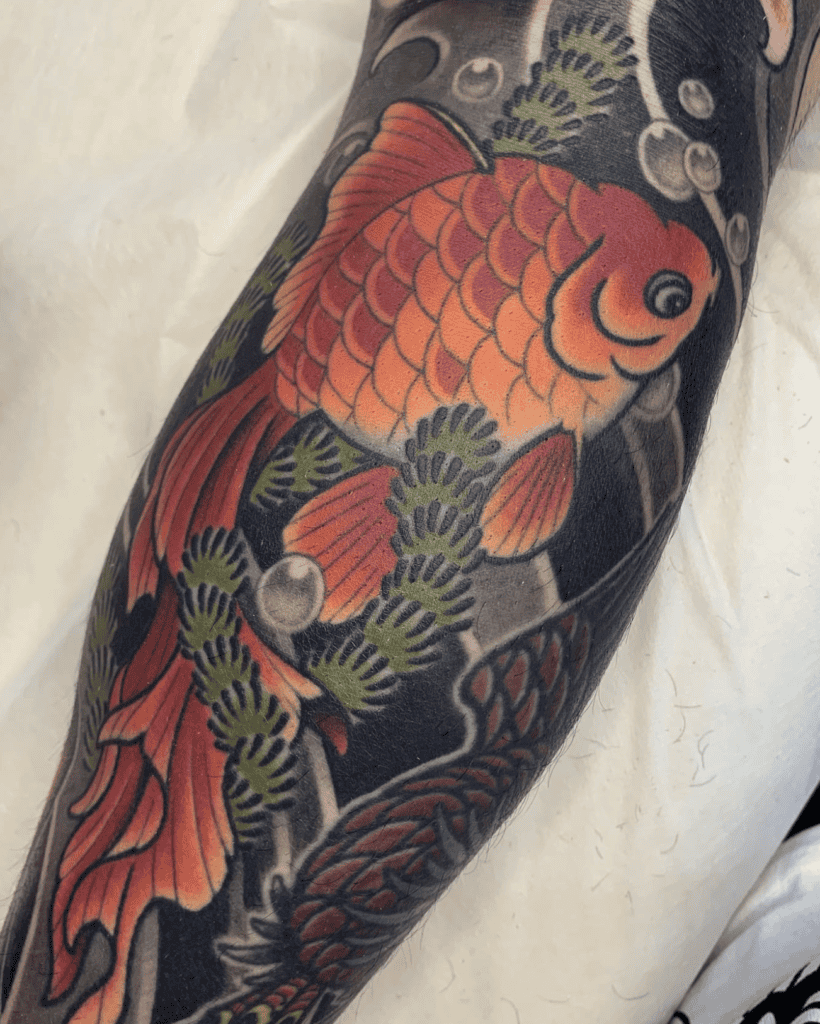
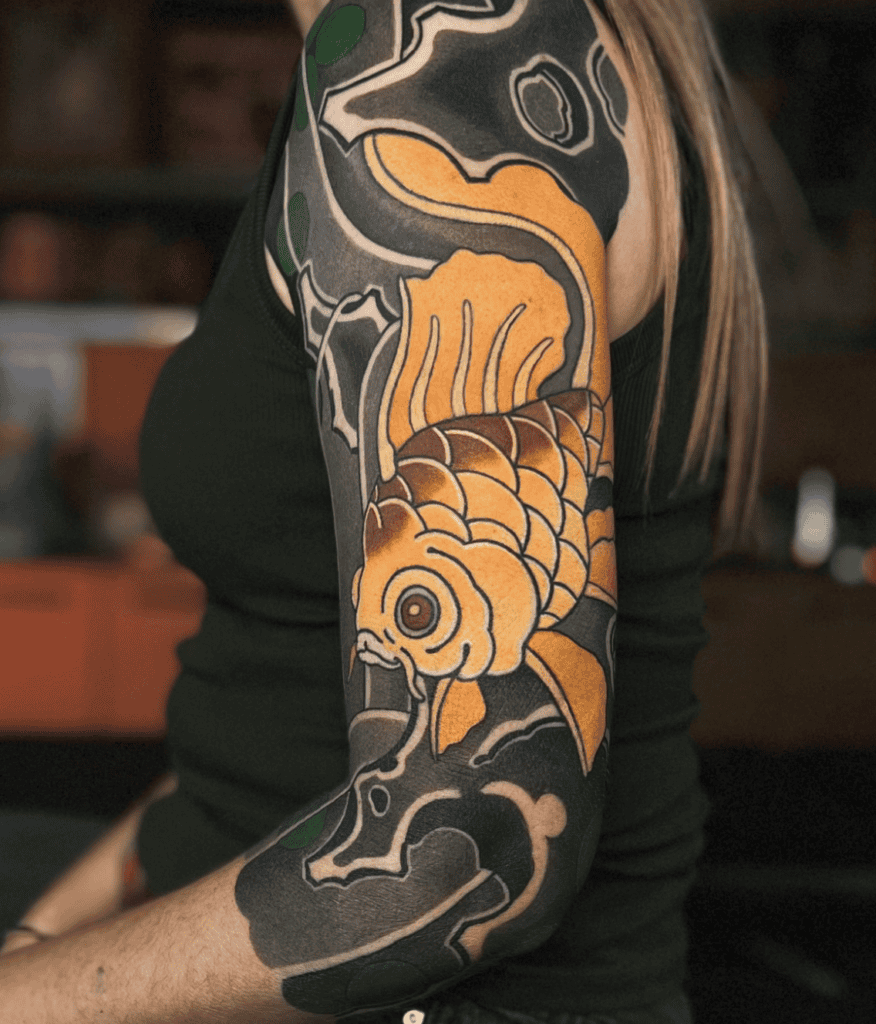
The Goldfish (Kingyo, 金魚) is one of the most graceful subjects in Japanese tattooing. Admired for its delicate fins, brilliant colours, and elegant movement, the Goldfish symbolises good fortune, prosperity, abundance, beauty, and happiness. Unlike the Koi, which represents overcoming adversity, the Kingyo reminds us to appreciate the peace, joy, and rewards that follow hard work.
Introduced to Japan from China several centuries ago, ornamental goldfish quickly became treasured symbols of wealth and refinement. Their flowing fins and vibrant colours make them a beautiful choice for Irezumi, particularly when combined with water, flowers, and seasonal motifs.
A Goldfish tattoo can represent many uplifting qualities, including prosperity and abundance, good fortune, happiness and joy, love and harmonious relationships, peace and tranquillity, beauty and elegance, growth and positive change, or wealth and success.
Hawk Irezumi Tattoo
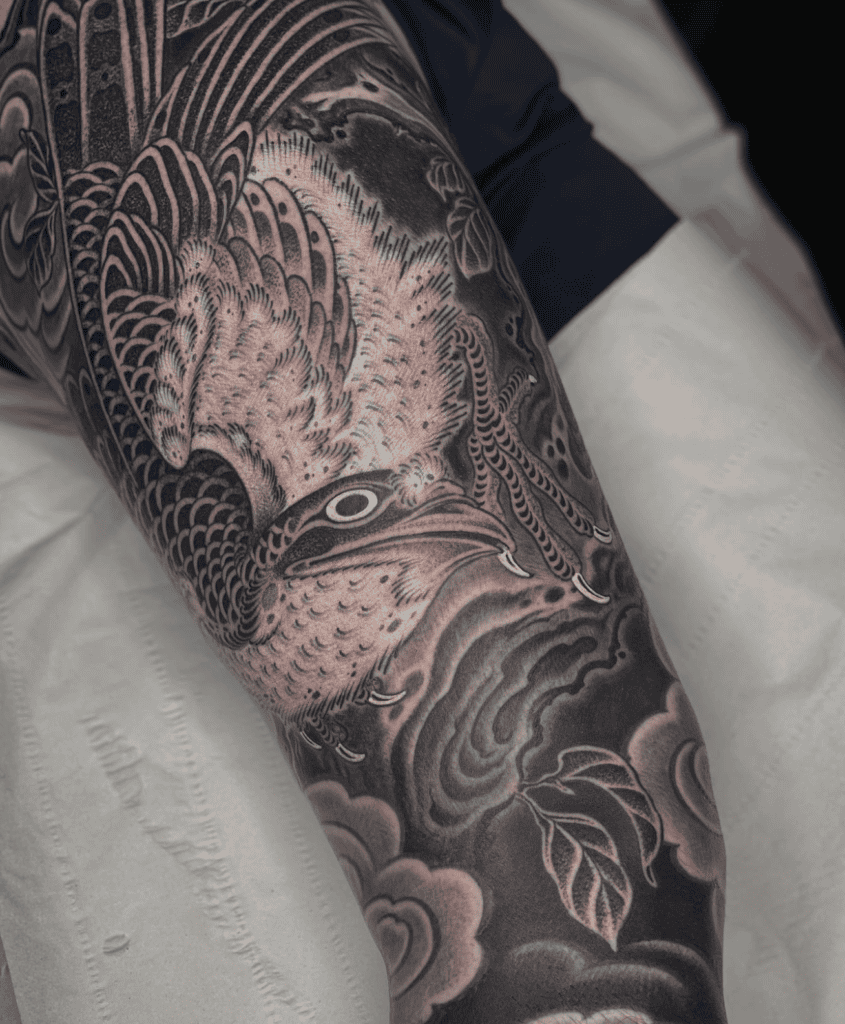
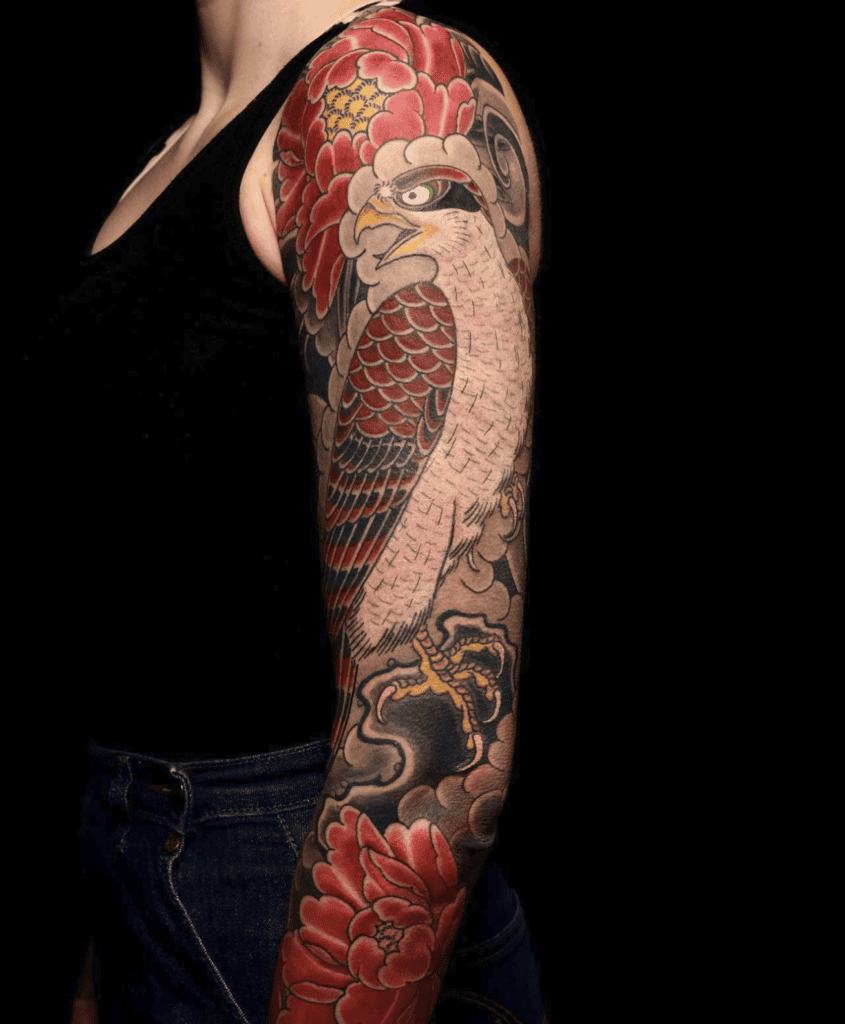
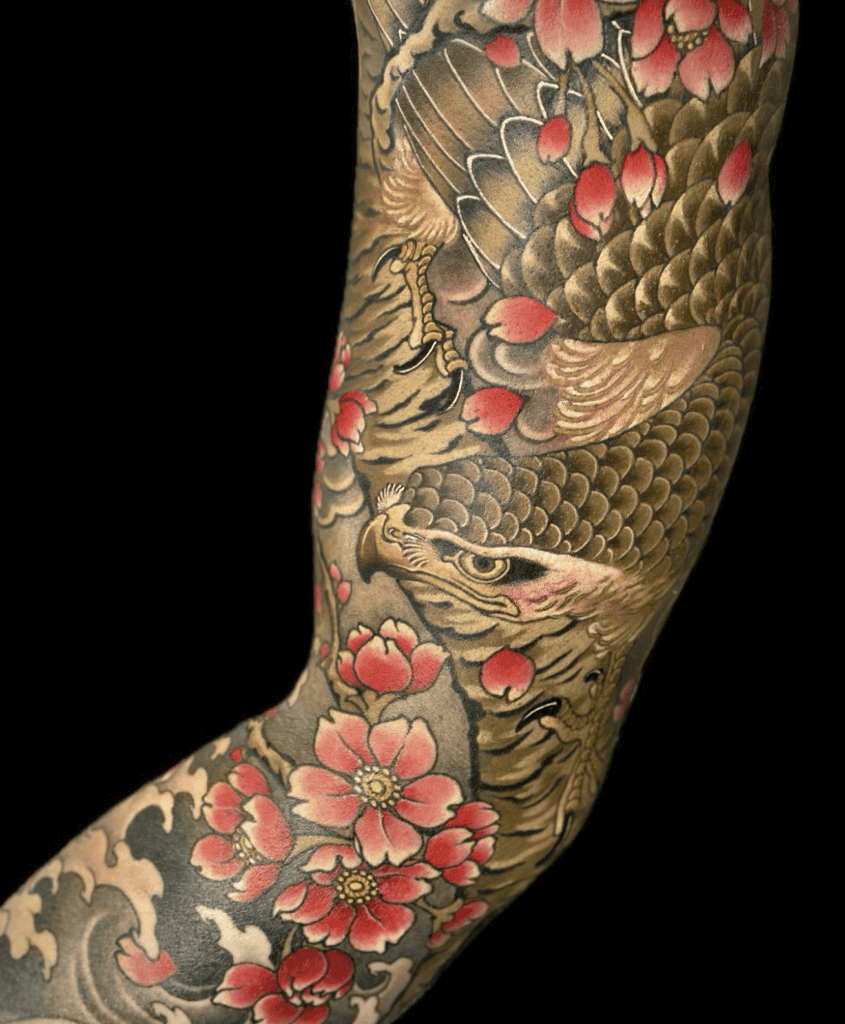
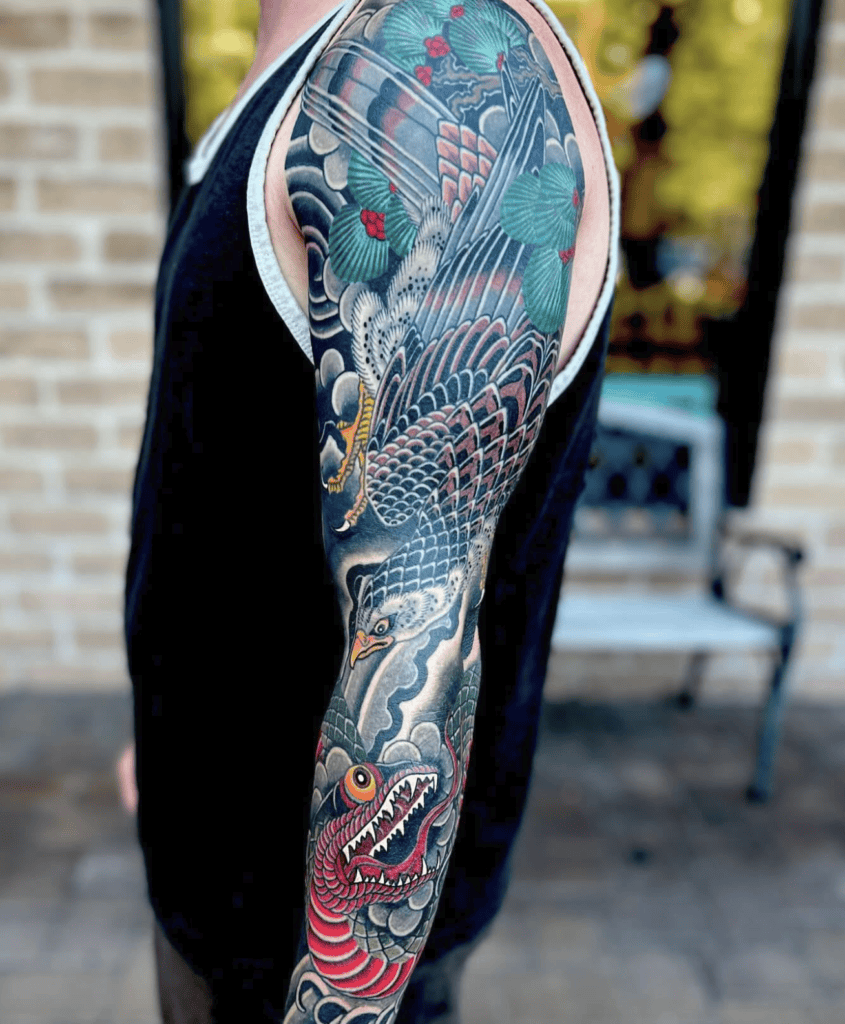
The Hawk (Taka, 鷹) is a powerful symbol in Japanese culture, representing strength, courage, vision, ambition, and victory. As one of nature’s most skilled hunters, the hawk is admired for its sharp eyesight, patience, and ability to strike with incredible speed and precision. In Irezumi, the Taka symbolises the importance of remaining focused on your goals while having the confidence to act when the right opportunity arises.
Unlike mythical creatures such as dragons or phoenixes, the hawk is a real animal, making it a grounded symbol of discipline, self-control, and mastery through skill rather than supernatural power.
A Hawk tattoo can represent many admirable qualities, including sharp vision and foresight, focus and determination, strength and confidence, intelligence and strategy, courage and fearlessness, success and achievement, good fortune, or freedom and independence.
Crane Irezumi Tattoo
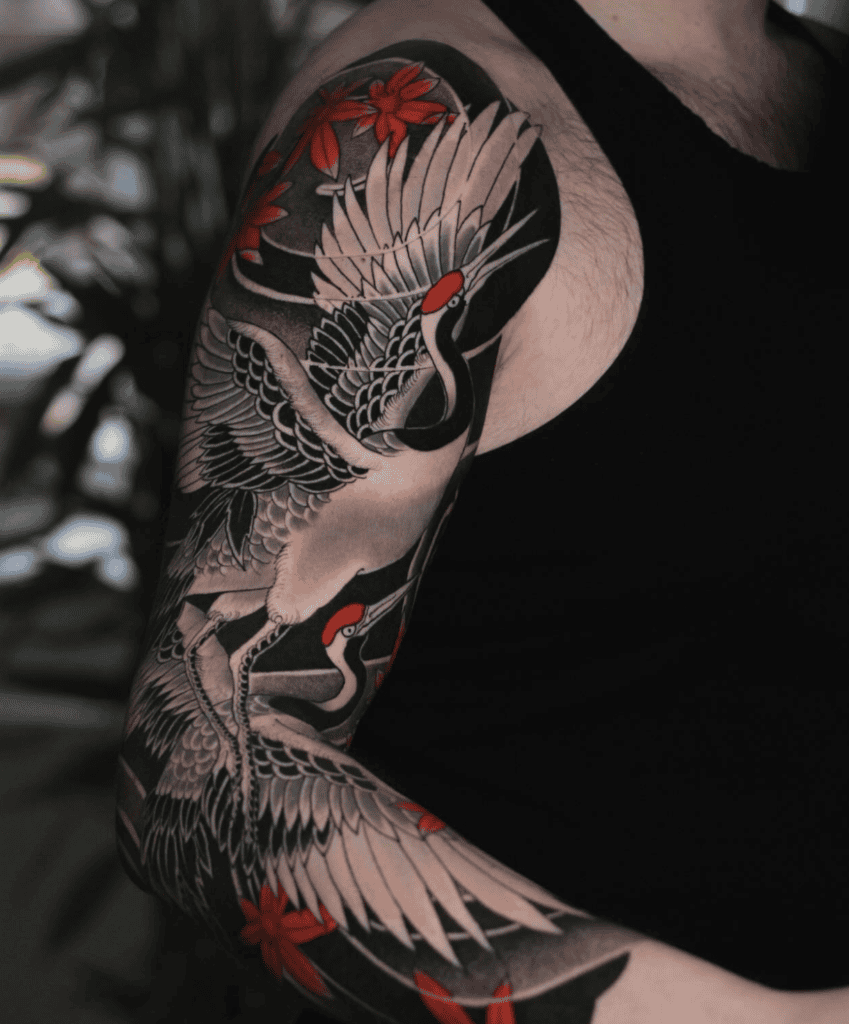
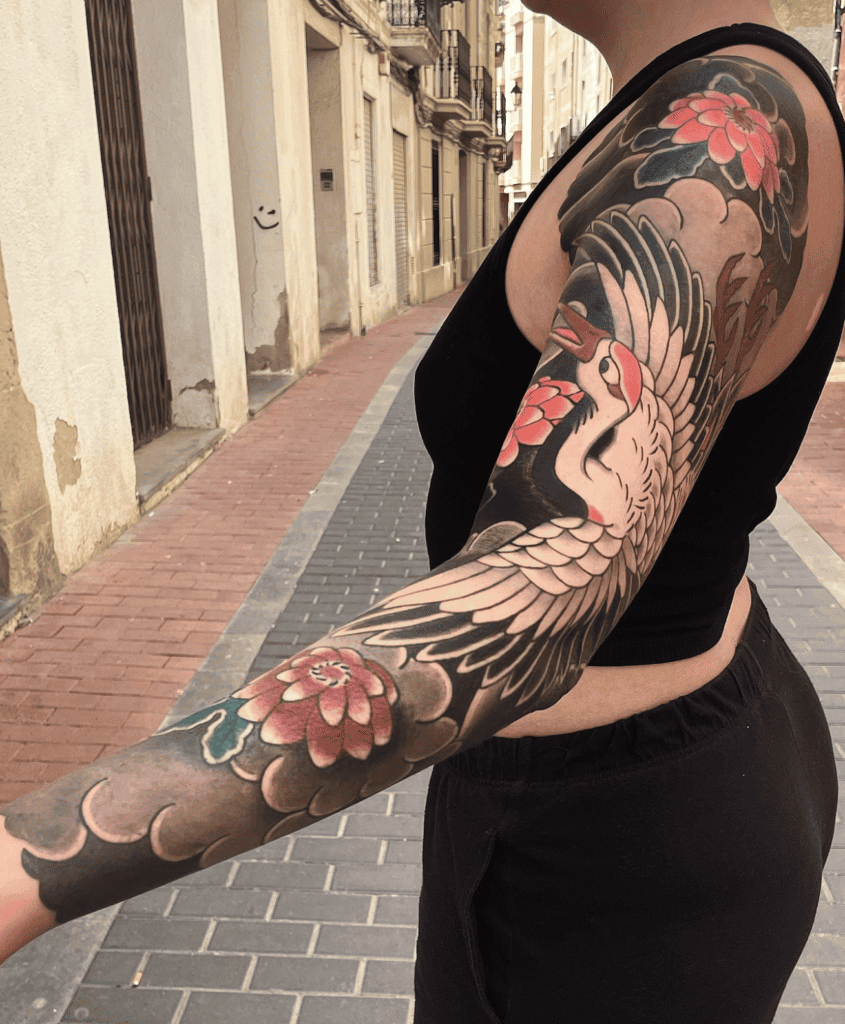
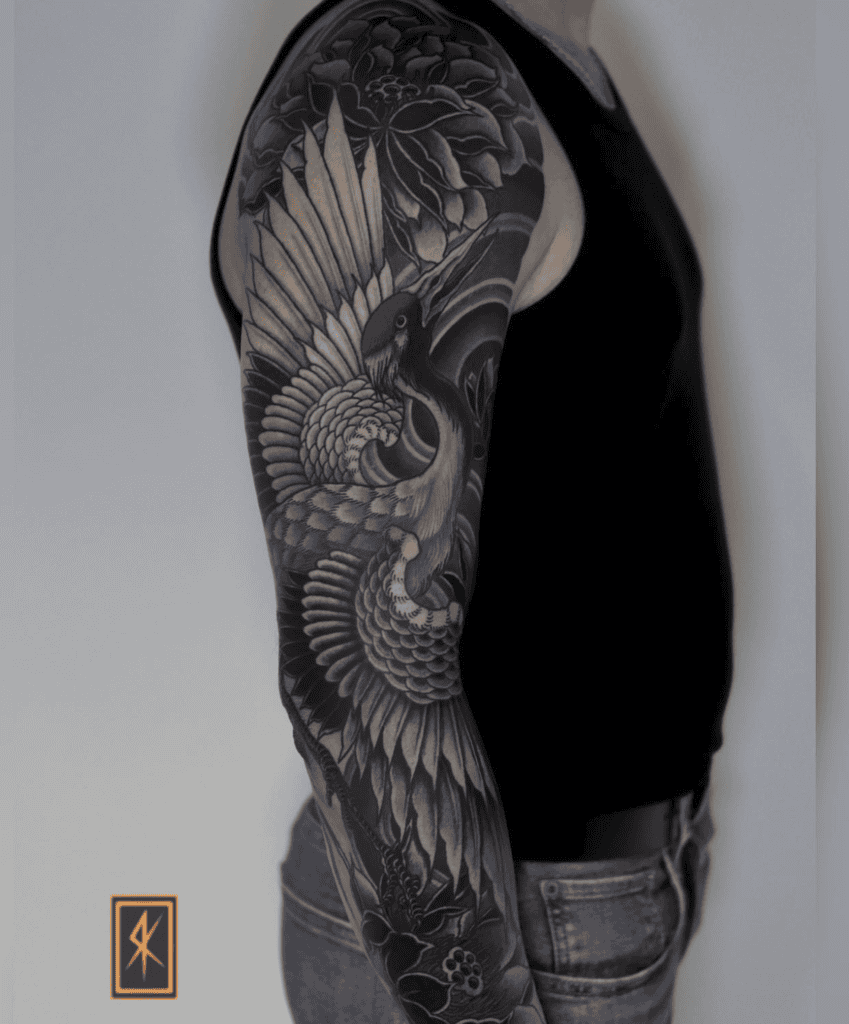
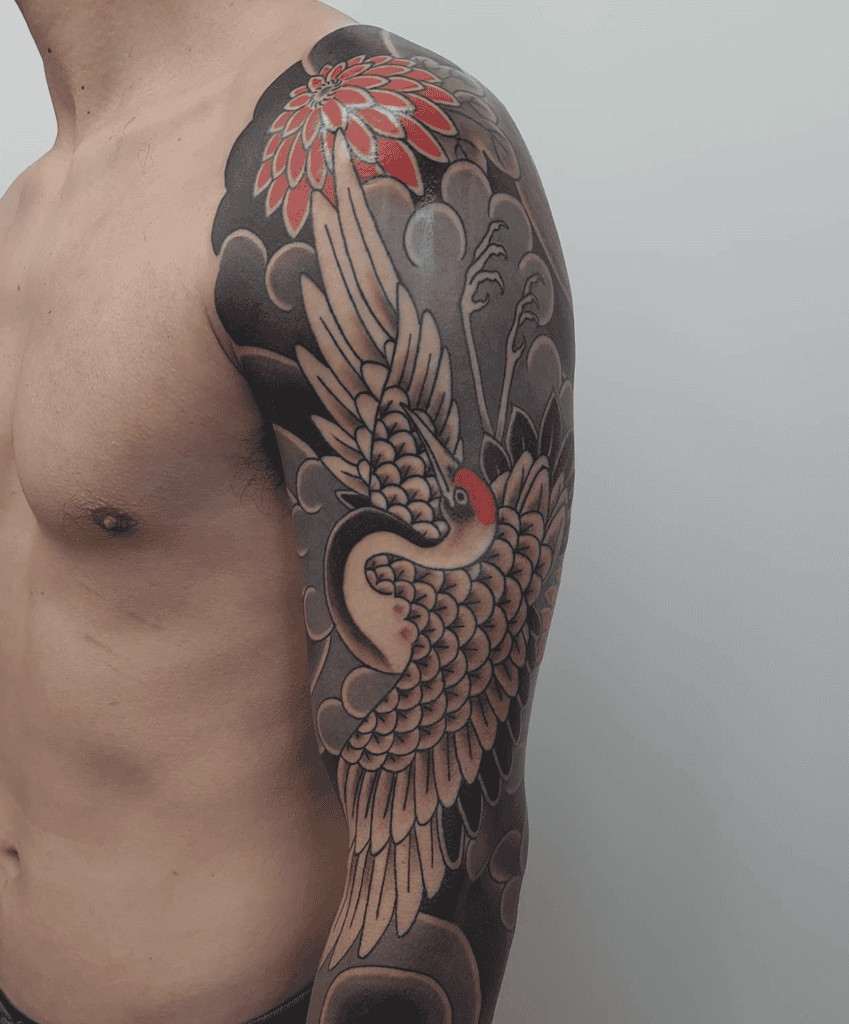
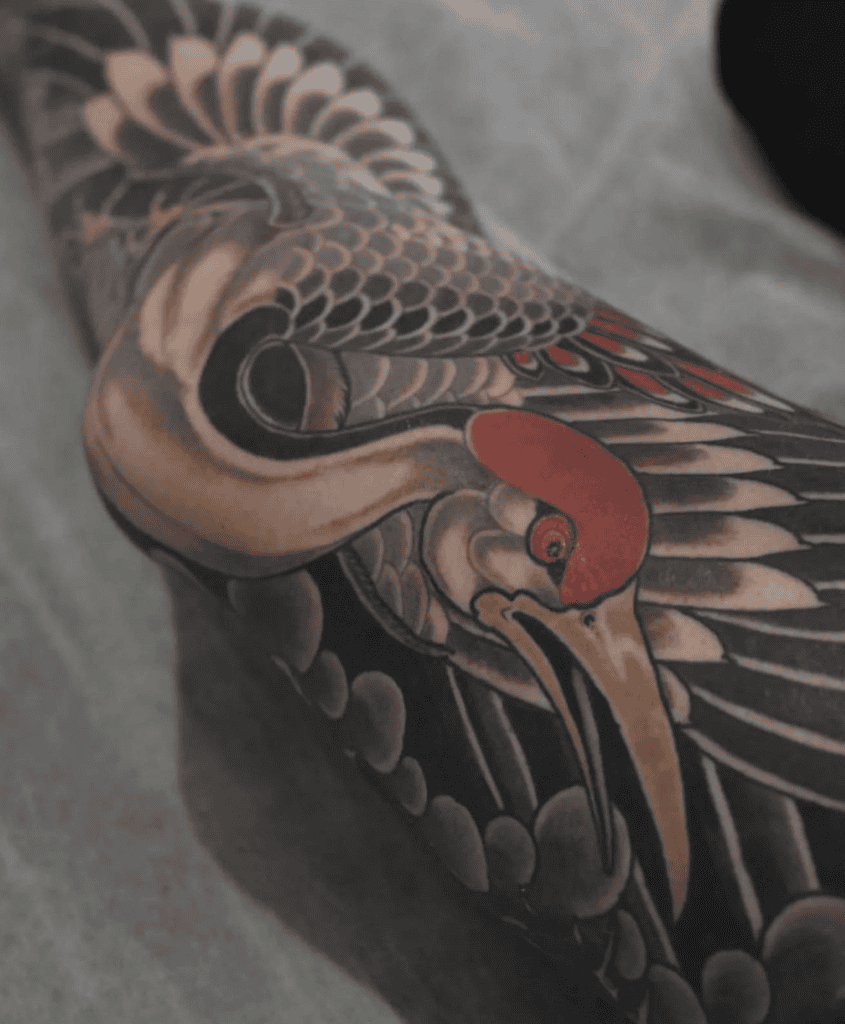
The Crane (Tsuru, 鶴) is one of Japan’s most cherished symbols of longevity, peace, wisdom, fidelity, and good fortune. Known for its graceful movements and elegant appearance, the crane has long been regarded as a sacred bird that bridges the earthly and heavenly realms. In Irezumi, the Tsuru represents a long, fulfilling life built on harmony, perseverance, and enduring relationships.
A Crane tattoo can represent many uplifting qualities, including peace and harmony, longevity and a long life, love and lifelong devotion, wisdom and maturity, good fortune and prosperity, hope and new beginnings, spiritual protection, grace and elegance.
Crow Irezumi Tattoo


The Crow (Karasu, 烏 or カラス) is a powerful symbol in Japanese folklore, representing wisdom, adaptability, guidance, and transformation. Renowned for its intelligence and resourcefulness, the crow is admired for thriving in almost any environment. In Irezumi, it serves as a reminder to remain observant, embrace change, and trust your instincts when navigating life’s challenges.
Perhaps the most revered crow in Japanese mythology is the Yatagarasu (八咫烏), a legendary three-legged crow sent by the heavens to guide and protect. This divine messenger has elevated the crow from an ordinary bird to one of Japan’s most spiritually significant creatures.
A Crow tattoo can represent many meaningful qualities, including wisdom and intelligence, guidance and direction, transformation and new beginnings, adaptability and resilience, awareness and foresight, divine protection, or balance between light and darkness.
Turtle Irezumi Tattoo
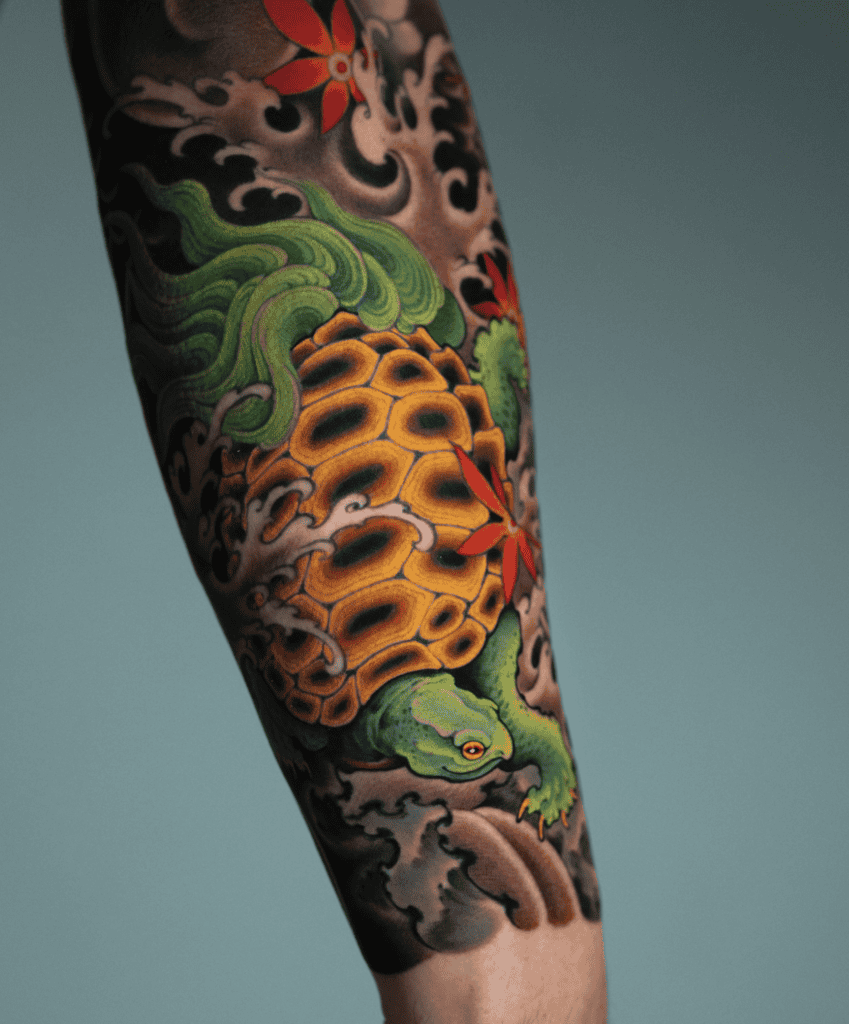
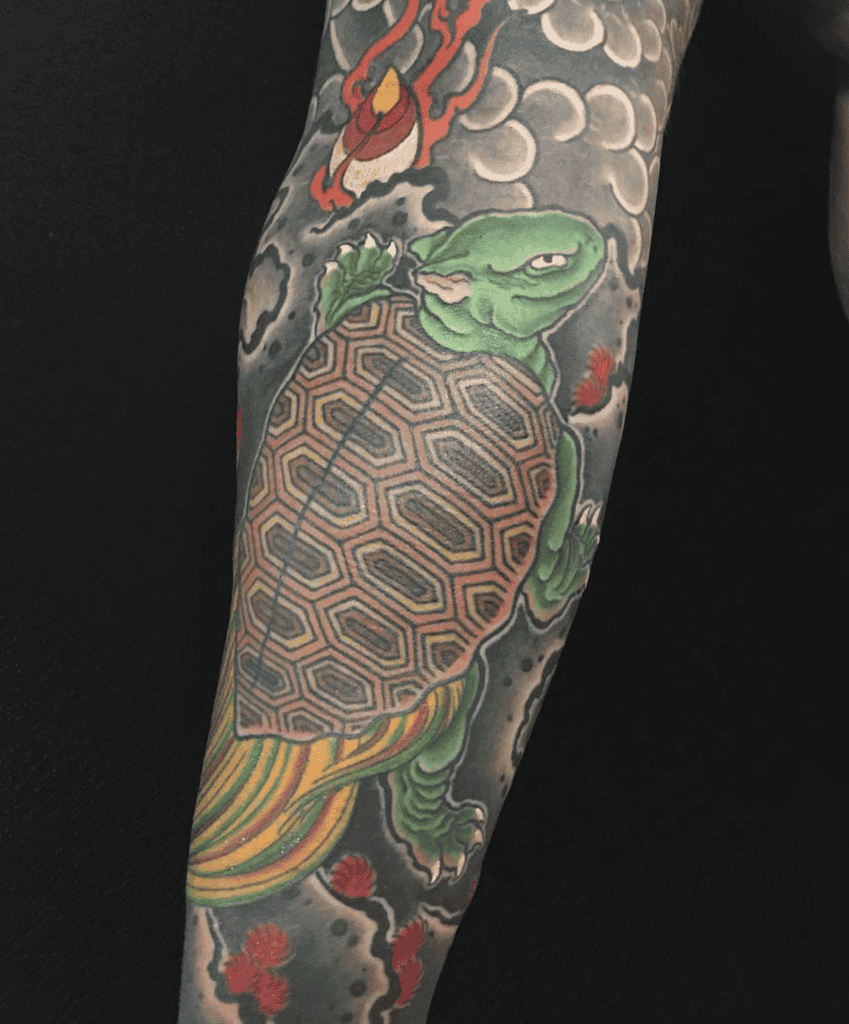
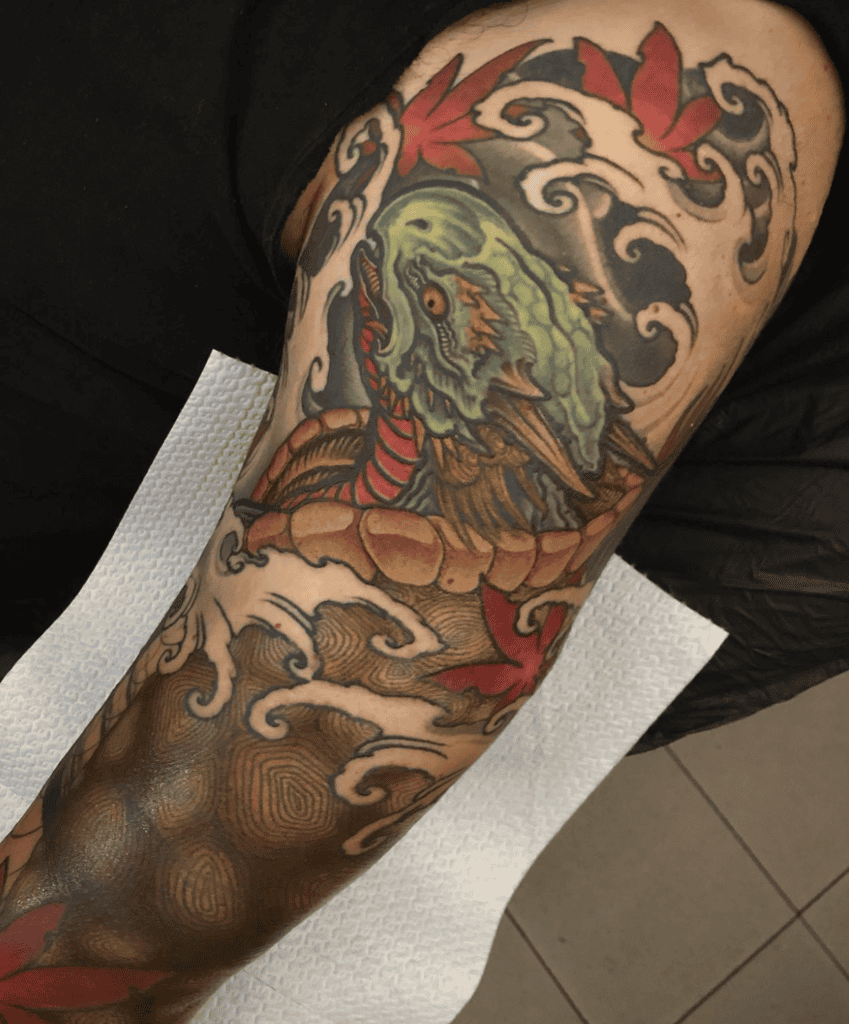
The Turtle (Kame, 亀) is a revered symbol of longevity, wisdom, perseverance, protection, and prosperity in Japanese culture. Admired for its long lifespan and patient nature, the turtle reminds us that life’s greatest achievements often come through persistence rather than speed. In Irezumi, the Kame is a symbol of resilience, encouraging the wearer to remain steady through life’s changing tides.
One of the most celebrated mythical forms of the turtle is the Minogame (蓑亀), an ancient sea turtle whose shell and tail are covered in long strands of green seaweed. According to legend, this seaweed has grown over centuries, making the Minogame a powerful emblem of exceptional longevity and good fortune.
A Turtle Irezumi can represent many admirable qualities, including longevity and a long life, wisdom and experience, endurance and perseverance, protection and security, stability through life’s challenges, good fortune and prosperity, patience and balance, or a strong foundation.
Frog Irezumi Tattoo
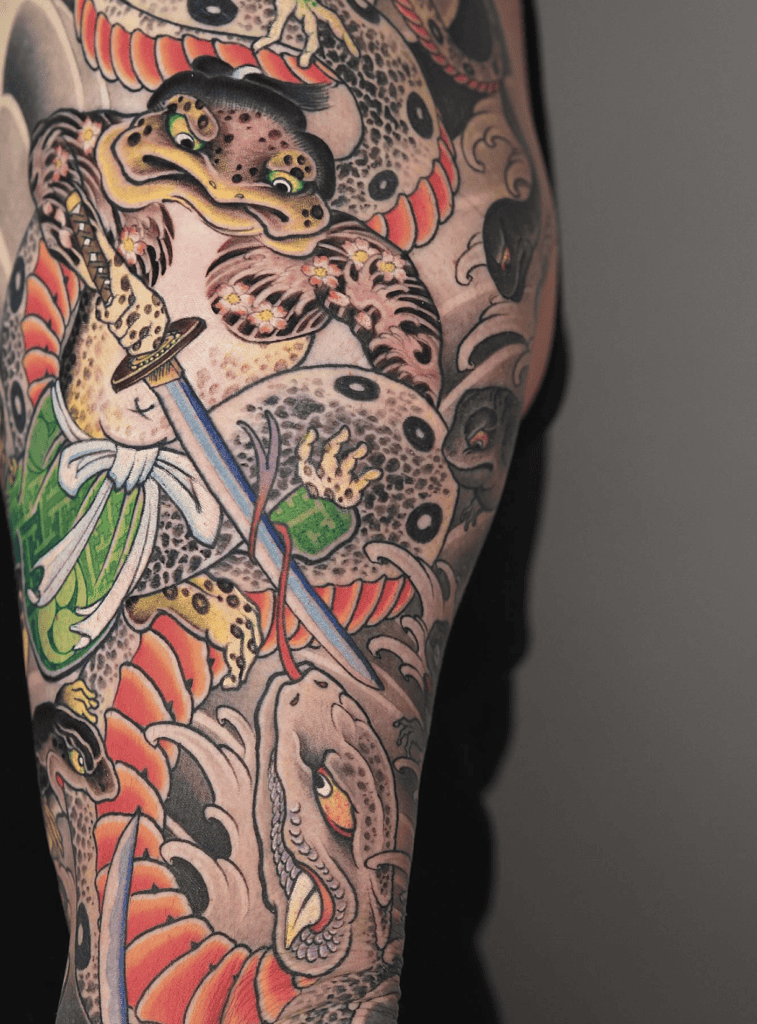
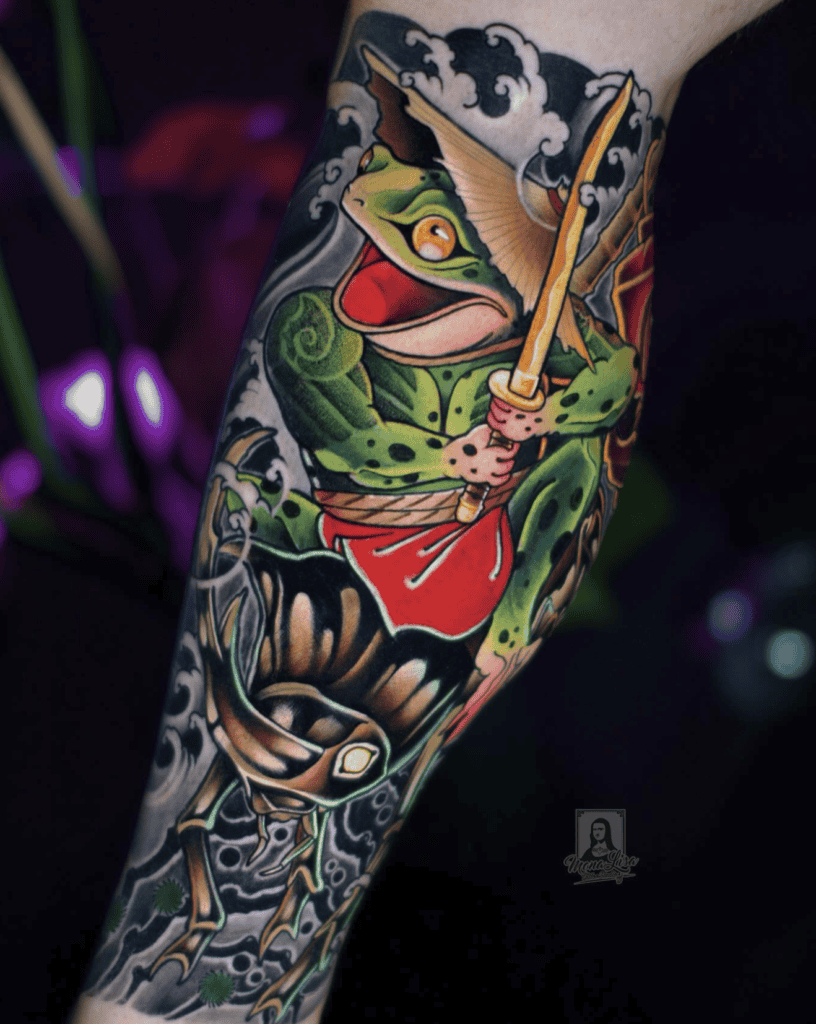
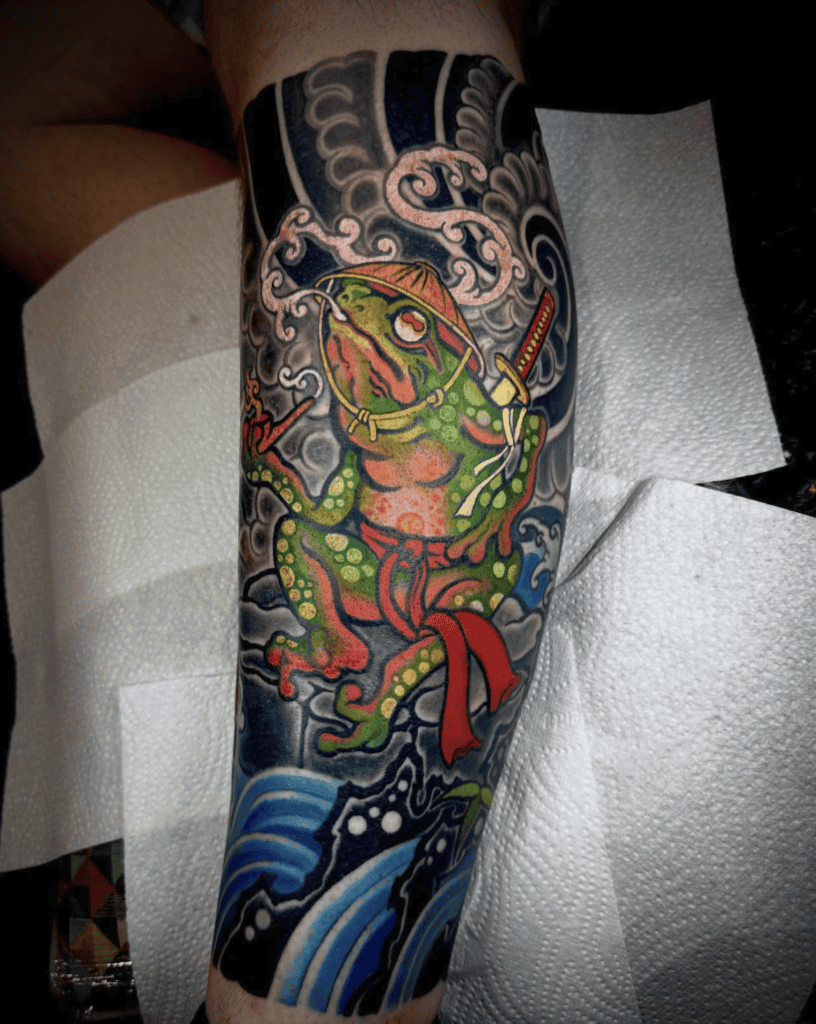
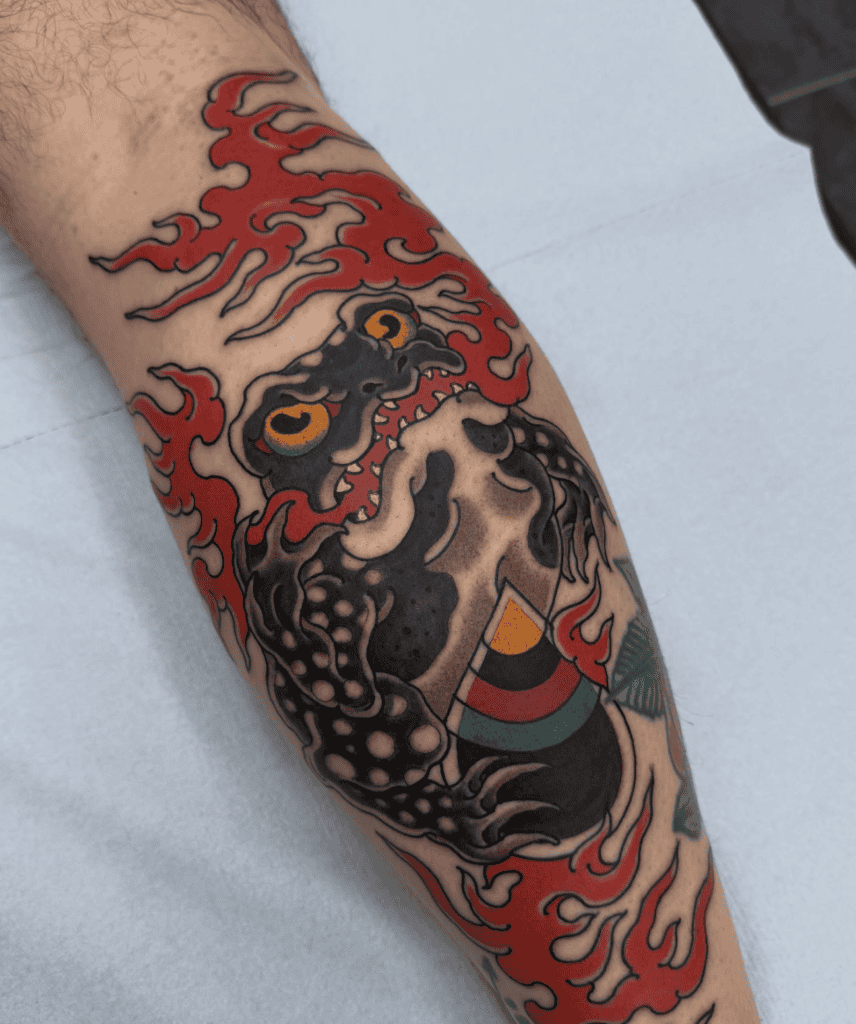
The Frog (Kaeru, 蛙 or カエル) is a popular symbol of good luck, prosperity, safe travel, renewal, and transformation in Japanese culture. Known for its remarkable life cycle and ability to thrive on both land and water, the frog represents adaptability and the courage to embrace change. In Irezumi, the Kaeru reminds us that every journey, no matter how challenging, can lead to growth and a safe return.
A Frog Irezumi can represent many positive qualities, including good fortune, safe return home, renewal and transformation, prosperity and financial success, adaptability and resilience, safe travel, new beginnings, or a balance between change and stability.
The frog’s symbolism comes largely from a famous Japanese wordplay. The Japanese word for frog is Kaeru (蛙), which sounds the same as the verb kaeru (帰る), meaning “to return”. Travellers often carry small frog charms in the hope of arriving home safely, while business owners may keep frog figurines to encourage money to “return” to them.
Octopus Irezumi Tattoo
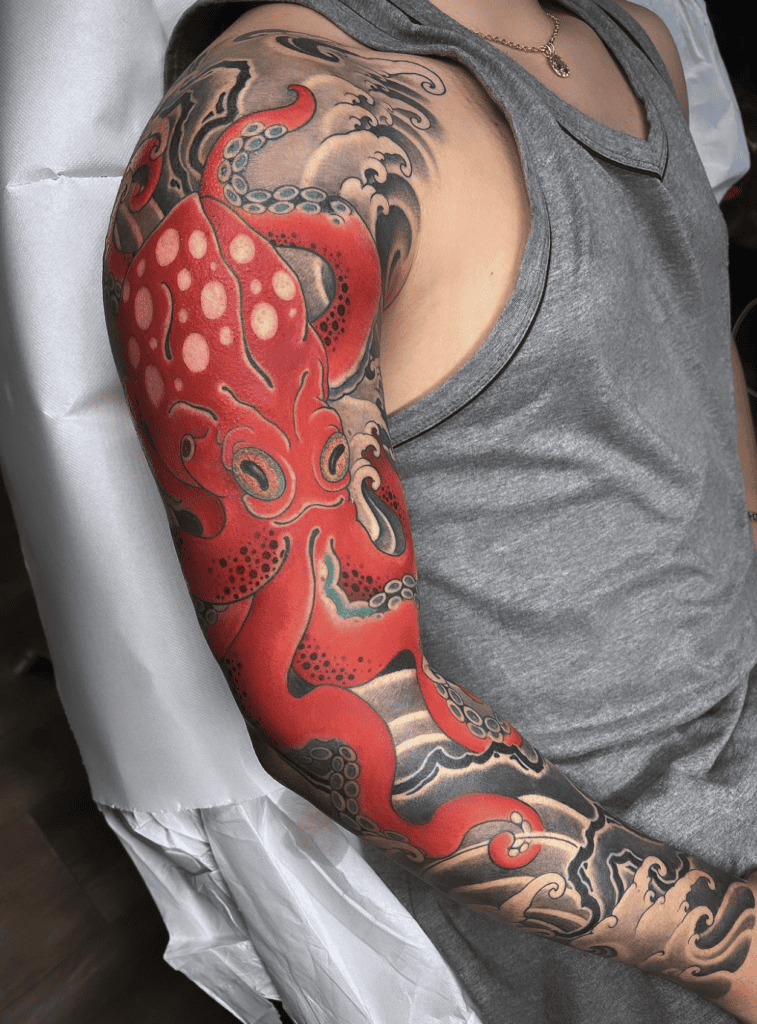
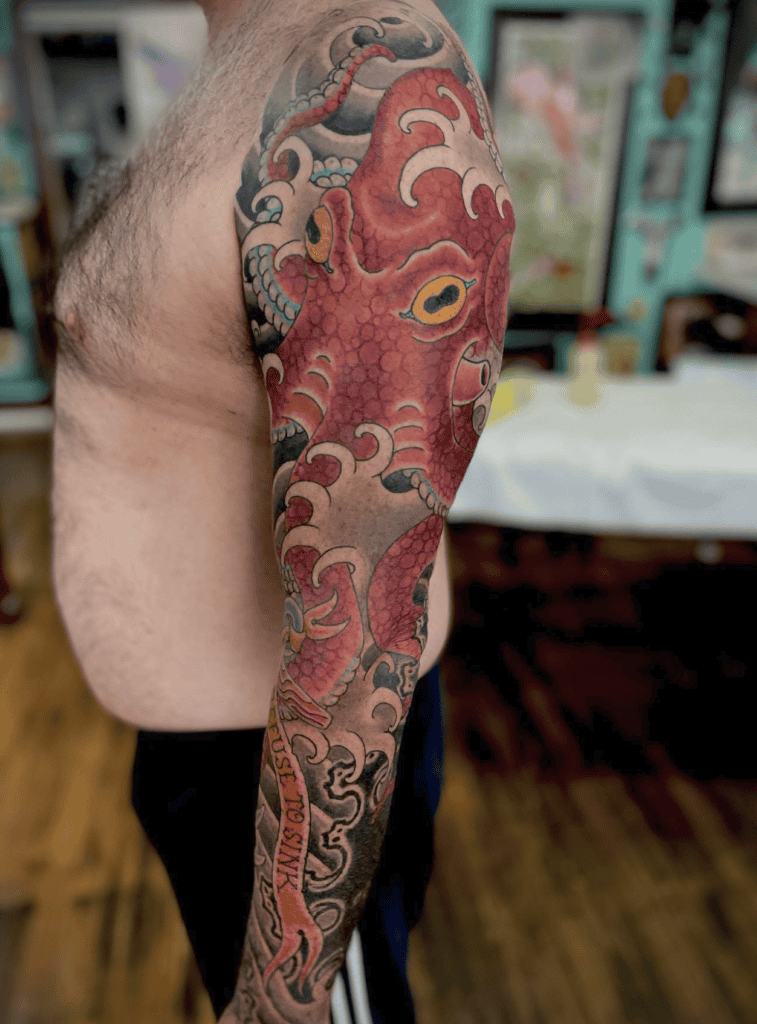
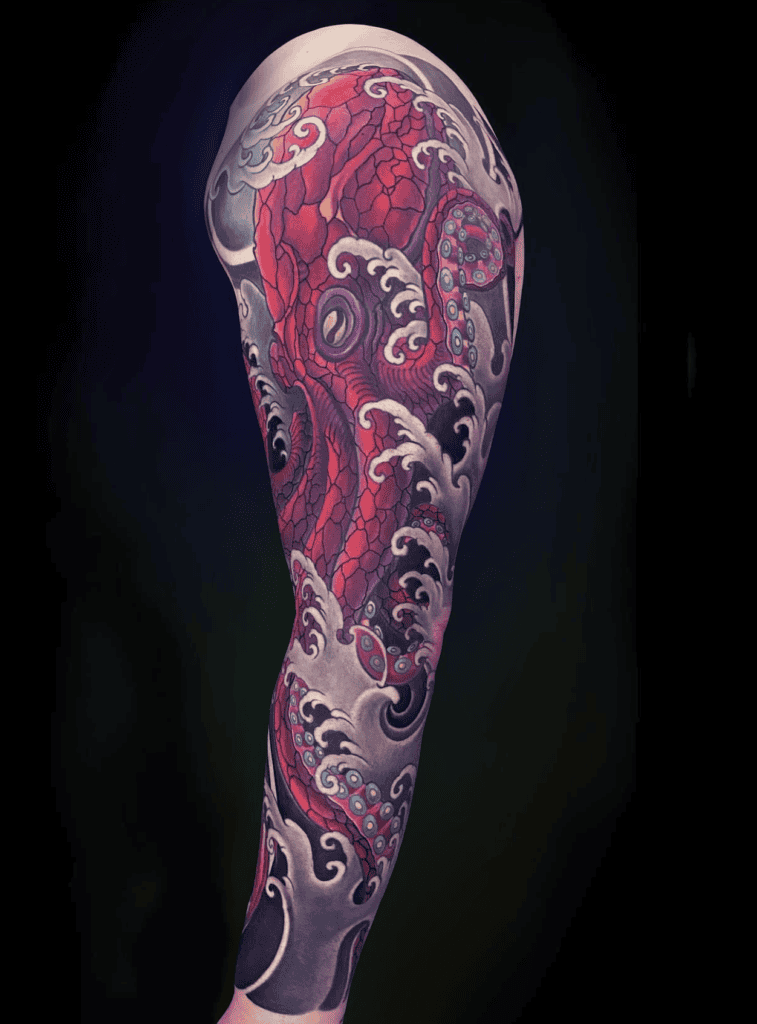
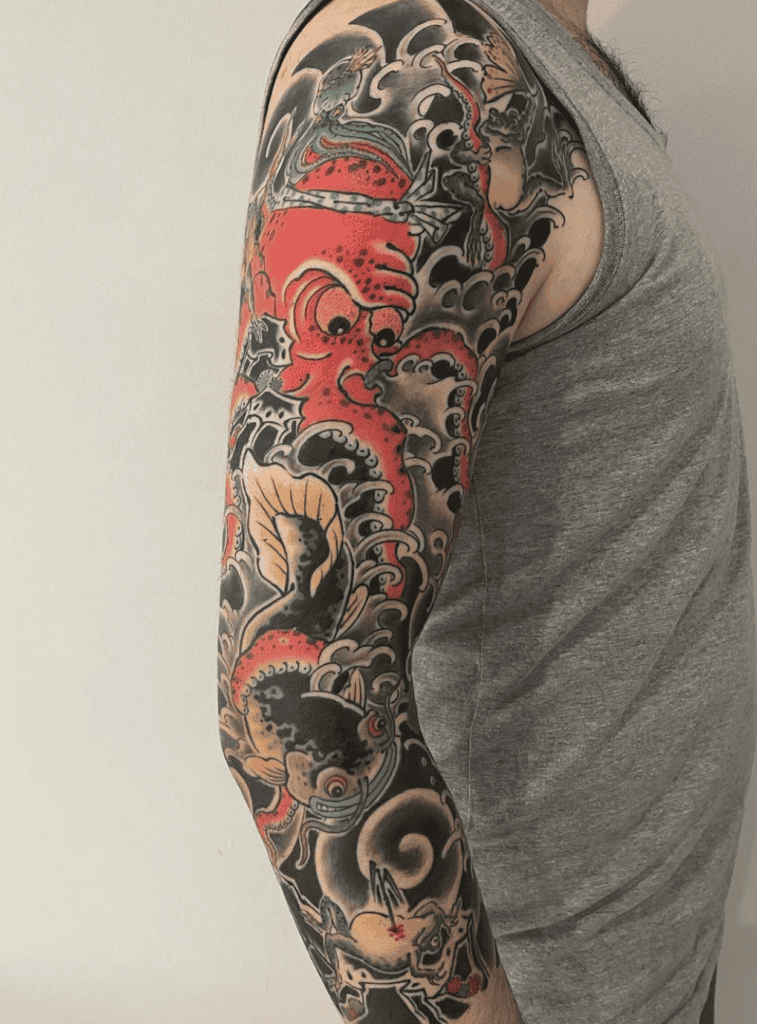
The Octopus (Tako, 蛸 or タコ) is a fascinating subject in Irezumi, admired for its remarkable intelligence, flexibility, and ability to survive in challenging environments. Living in the depths of the ocean, the octopus symbolises adaptability, wisdom, creativity, resilience, and mystery. In traditional Japanese tattooing, it serves as a reminder that true strength often comes from intelligence and the ability to adjust to changing circumstances.
An Octopus Irezumi can represent many meaningful qualities, including intelligence and wisdom, adaptability and flexibility, resilience through adversity, creativity and problem-solving, protection and self-defence, mystery and the unknown, transformation and regeneration, balance between strength and patience.
Monkey Irezumi Tattoo
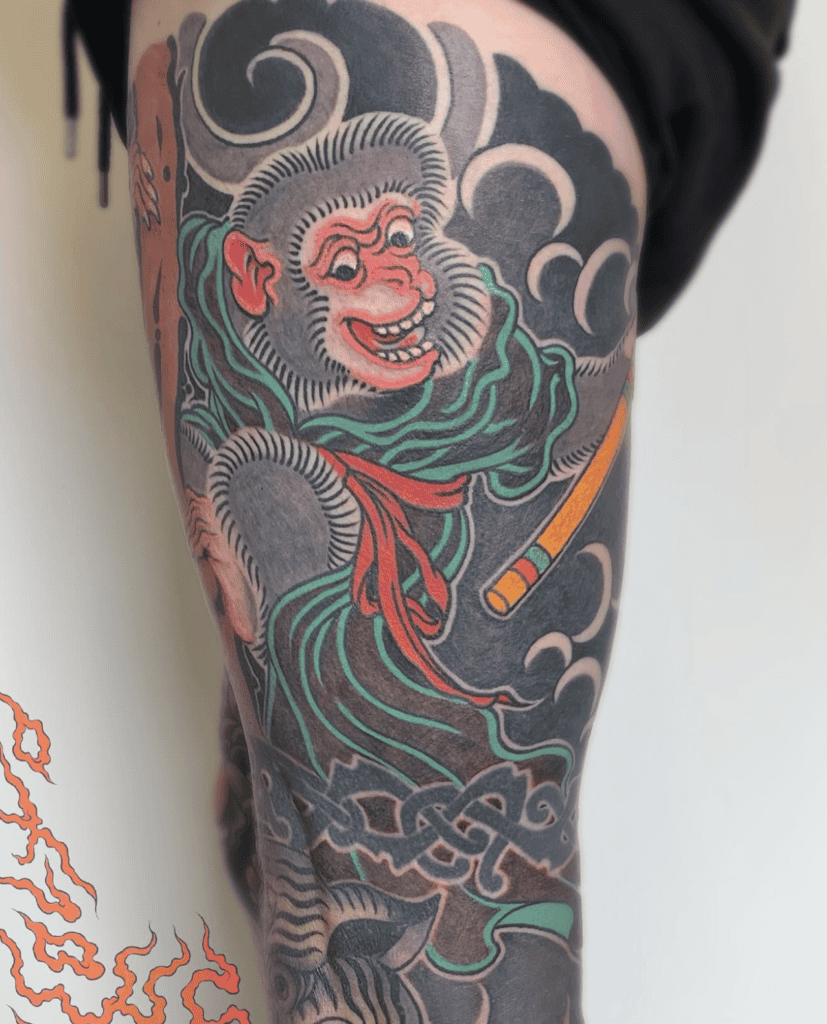
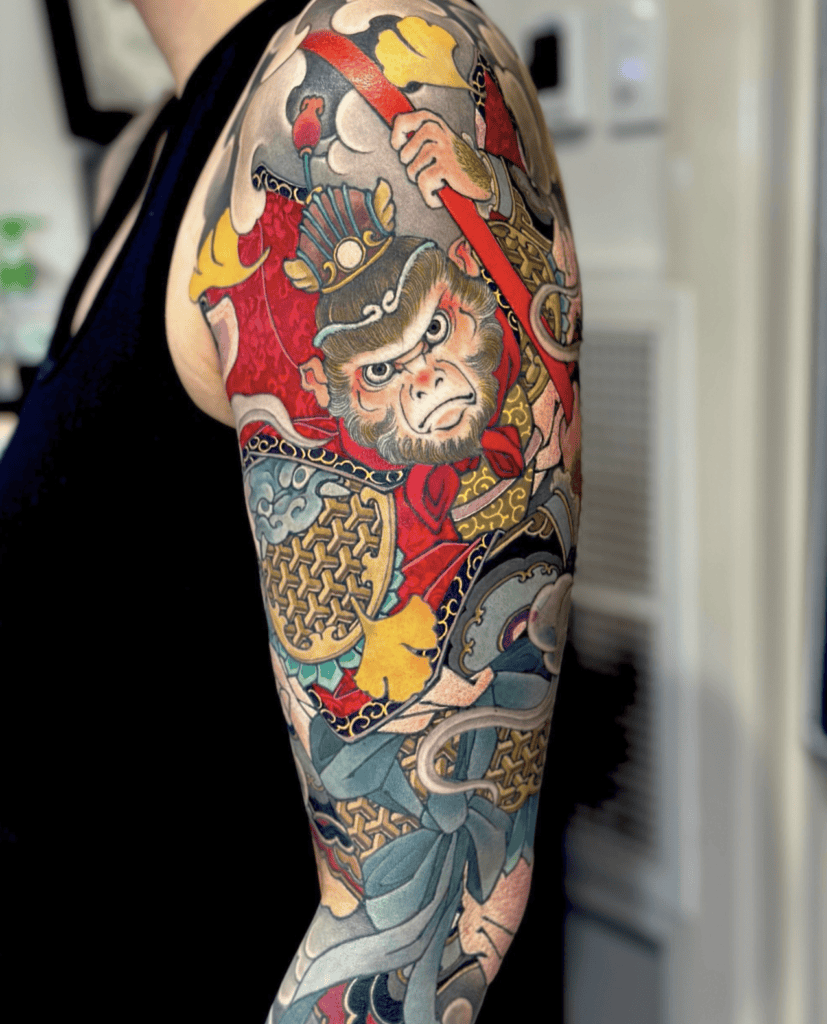
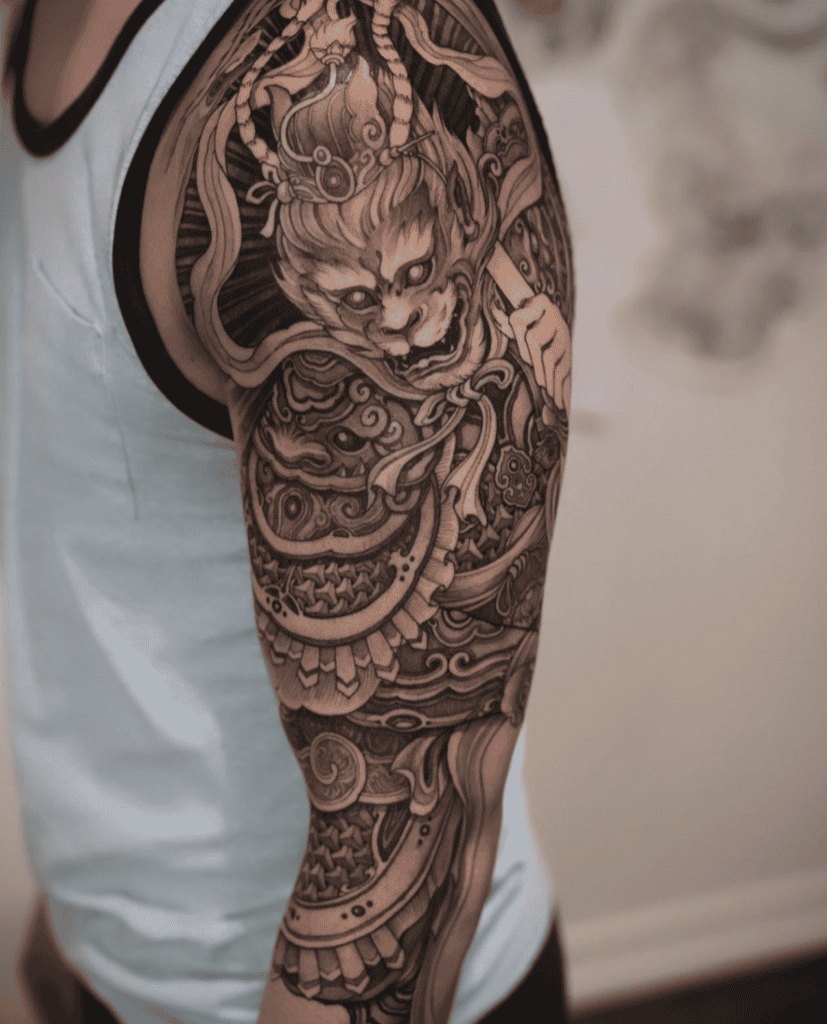
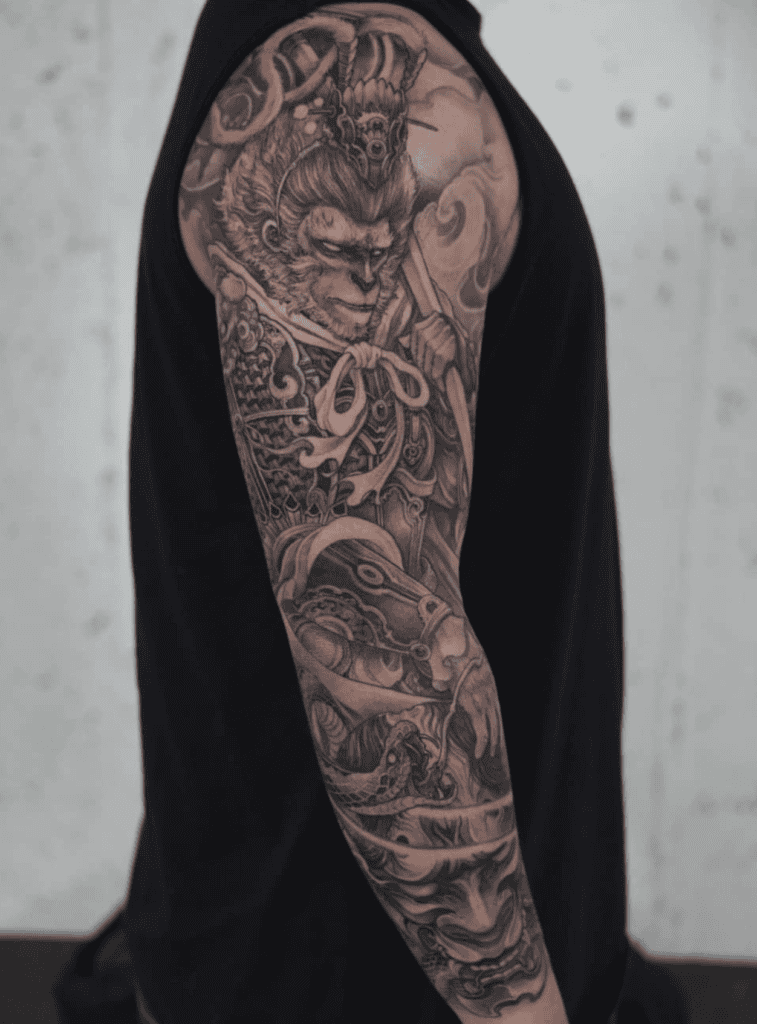
The Monkey (Saru, 猿) is a symbol of intelligence, curiosity, agility, protection, and playful mischief in Japanese culture. Monkeys are seen as clever survivors with quick wits who can adapt to any situation. In Irezumi, the Saru often represents human nature itself, being clever, emotional, and constantly learning through experience.
Sun Wukong (孫悟空), the legendary Monkey King from the Chinese epic Journey to the West, is a popular choice in Irezumi. Sun Wukong is a rebellious immortal, warrior, trickster, and eventually an enlightened protector. In tattoo form, he represents freedom, defiance, transformation, and spiritual evolution through struggle.
A Monkey tattoo can represent intelligence and cleverness, mischief and humour, quick thinking and problem-solving, adaptability and survival, protection and awareness, energy and agility, and personal growth through experience. Monkeys are often used in more playful or symbolic compositions, sometimes to reflect human flaws in a light-hearted way.
Oni Irezumi Tattoo
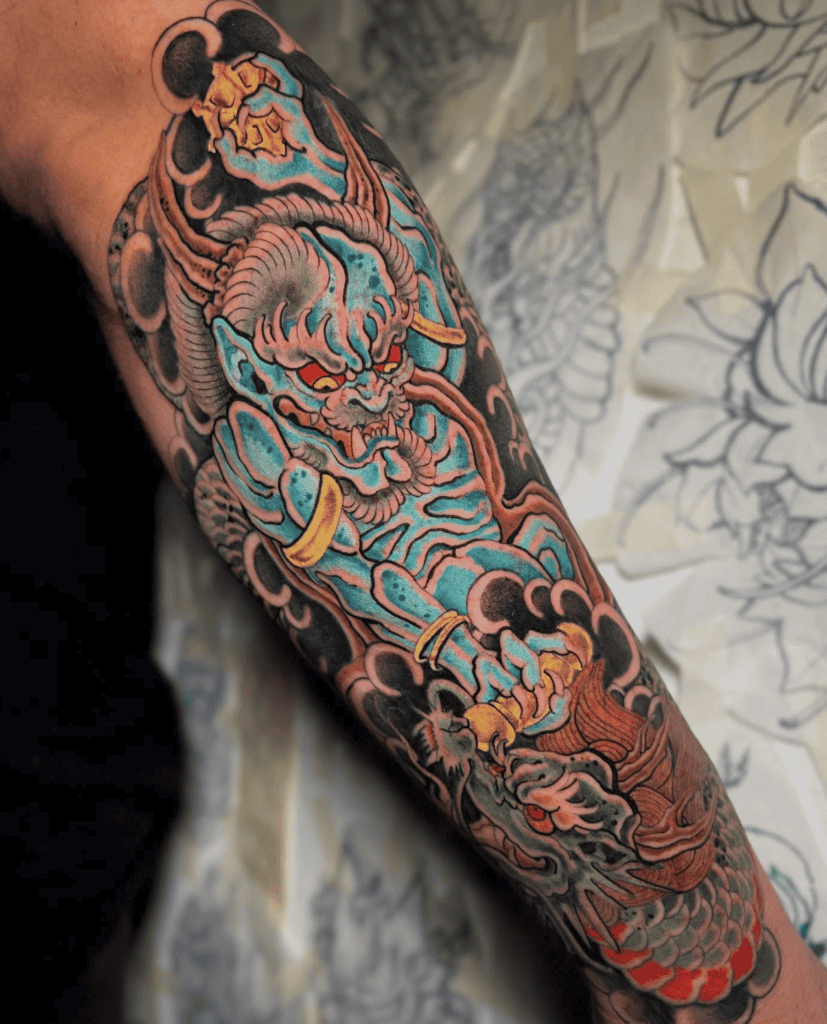
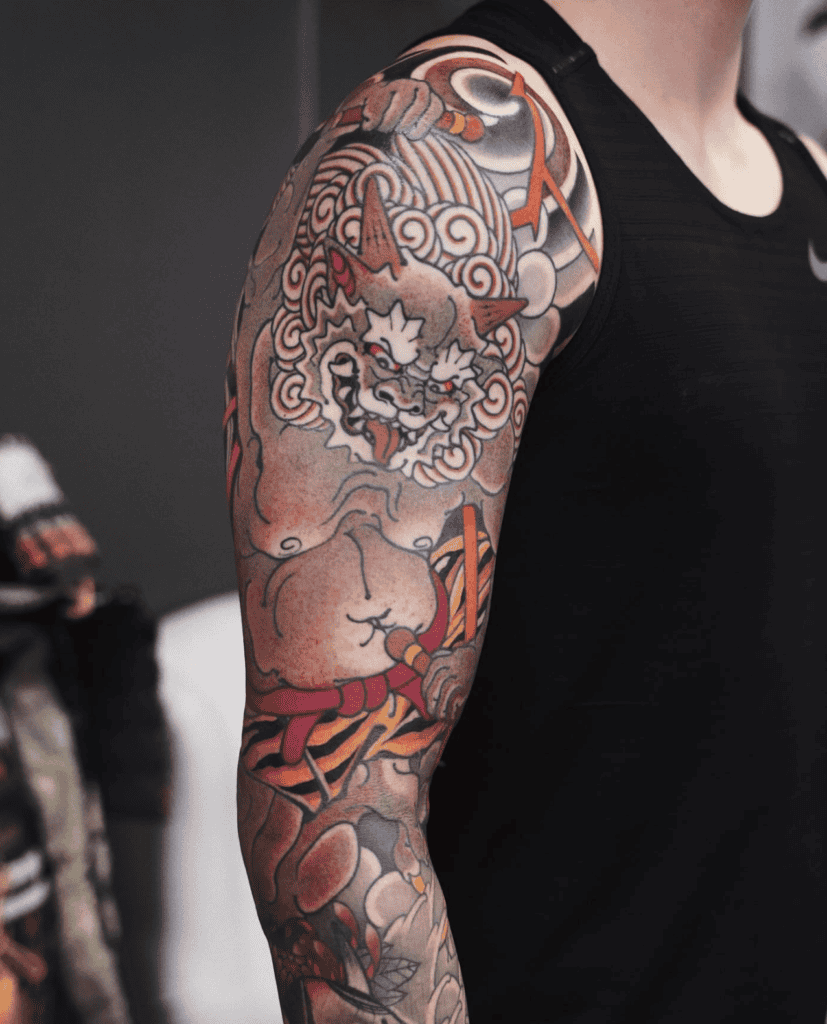
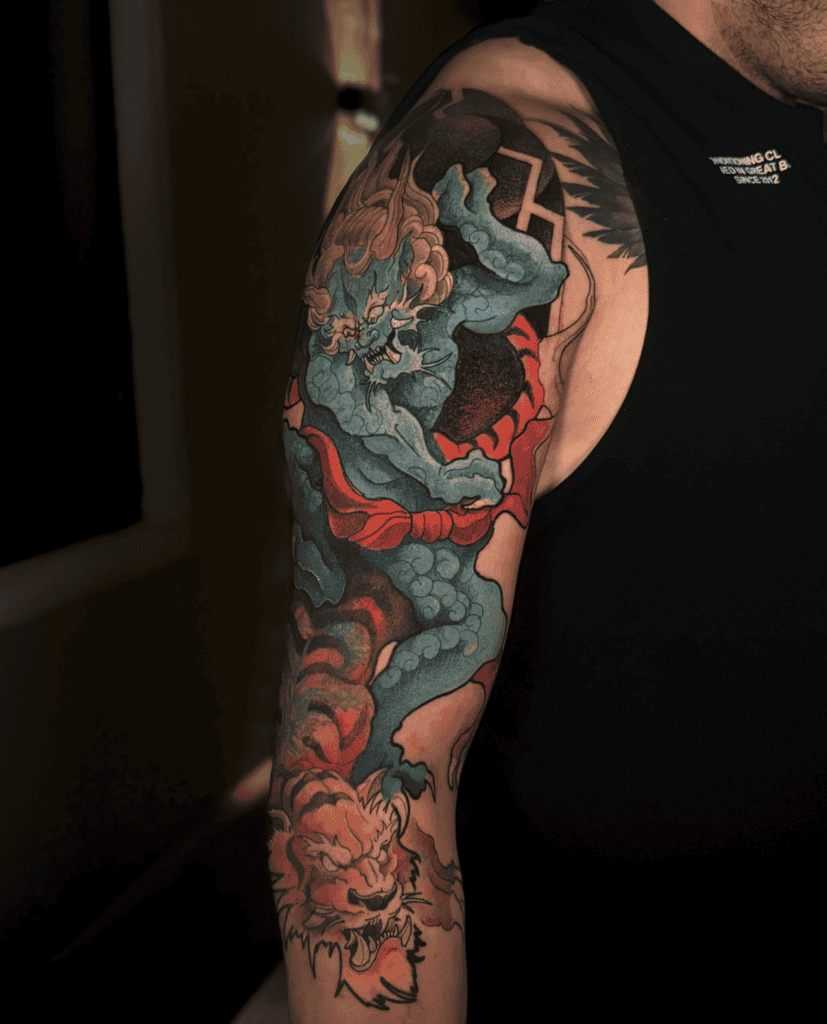
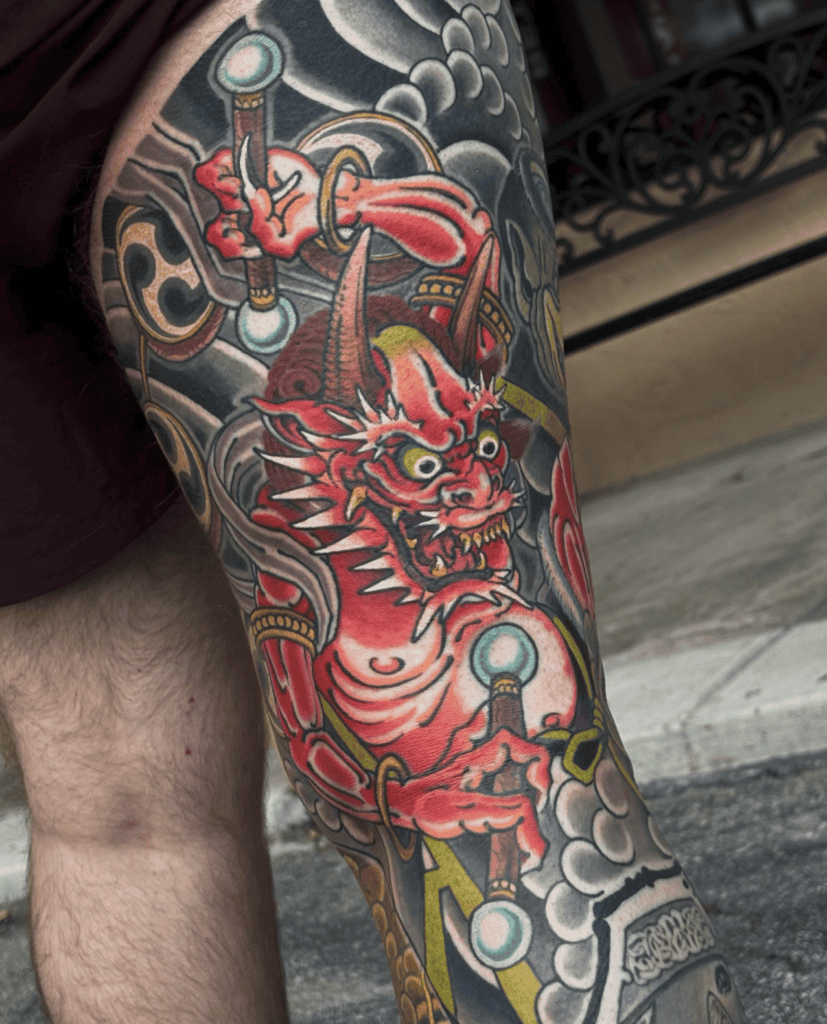
The Oni (鬼) are supernatural beings from Japanese folklore often translated as “demons” or “ogres,” but their meaning is much deeper than simple evil. In traditional stories, Oni are both fearsome punishers of wrongdoing and protective forces that ward off greater evil. In Irezumi, the Oni represents the raw, untamed aspects of human emotion such as anger, jealousy, and fear, but also the strength needed to face and overcome them.
Far from being purely negative, Oni tattoos often symbolise personal transformation, discipline, and the triumph over inner struggles.
An Oni tattoo can represent a wide range of powerful meanings, including, inner demons and personal struggles, strength through adversity, protection from evil spirits, justice and punishment for wrongdoing, controlled rage and raw power, self-awareness and emotional mastery, chaos and transformation, or resilience after hardship.
Tengu Irezumi Tattoo
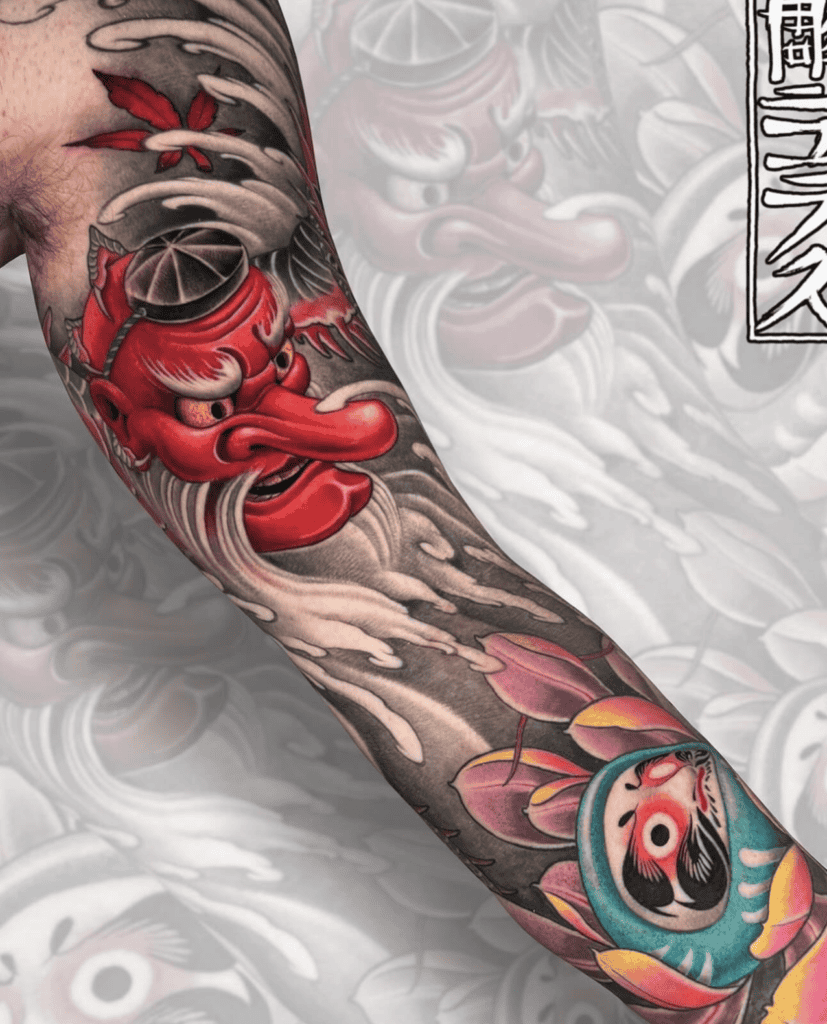
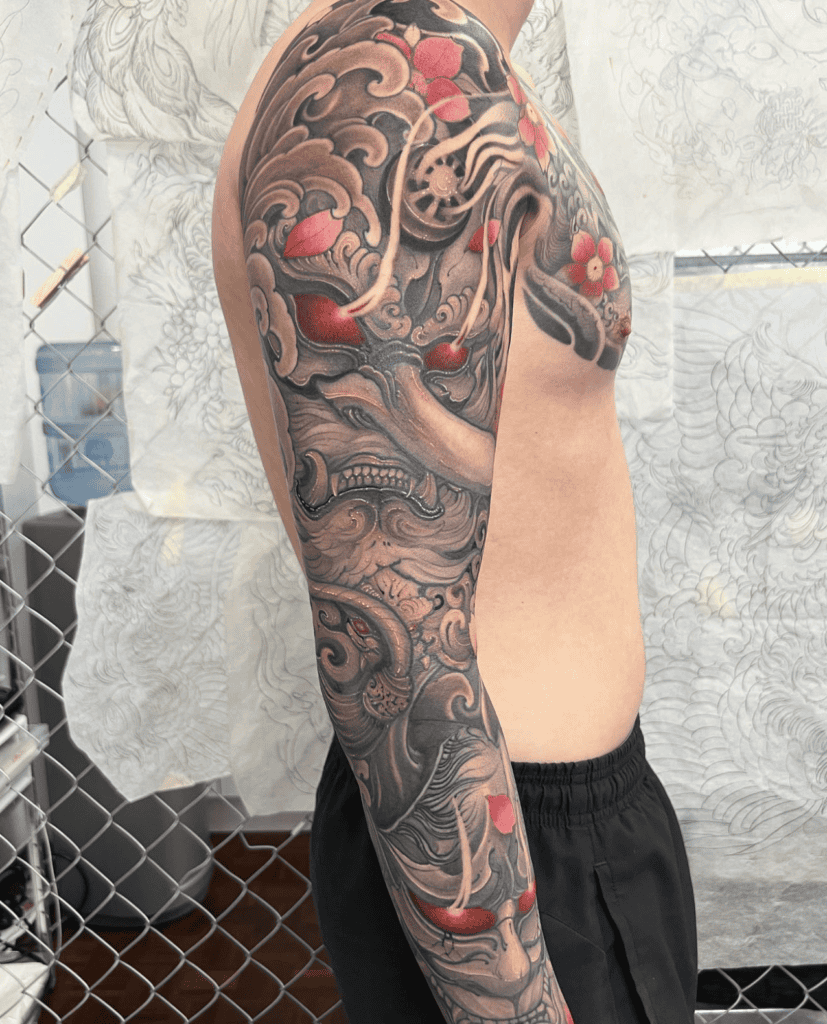
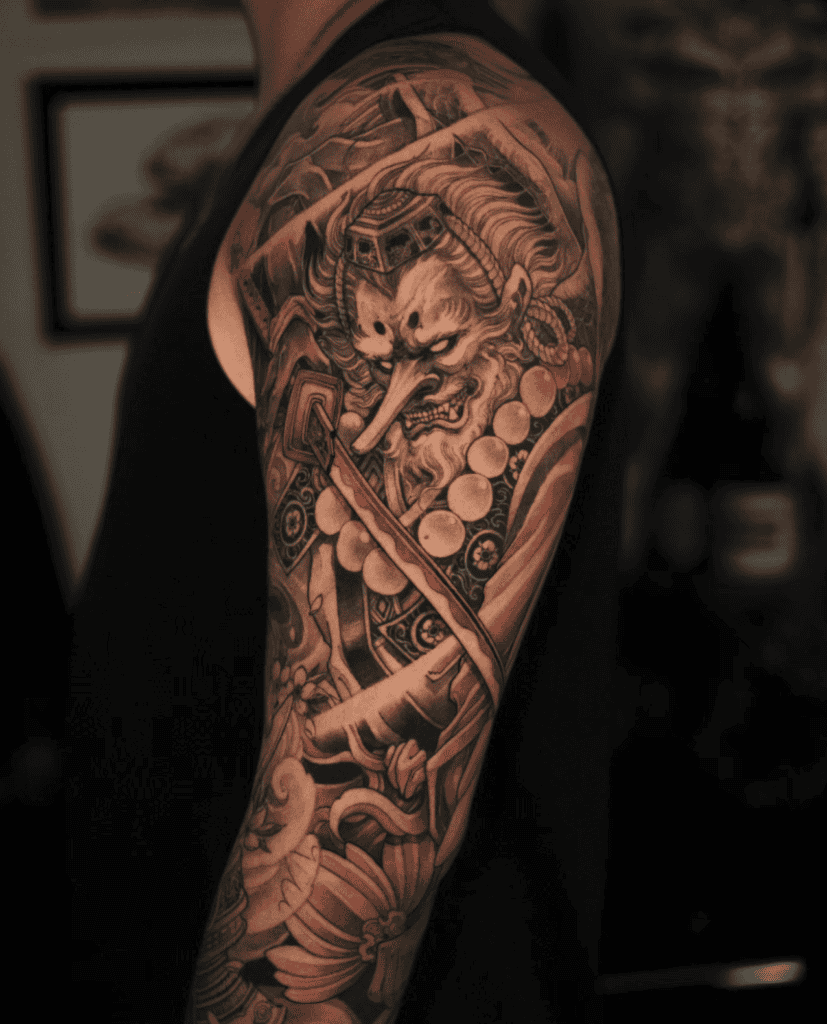
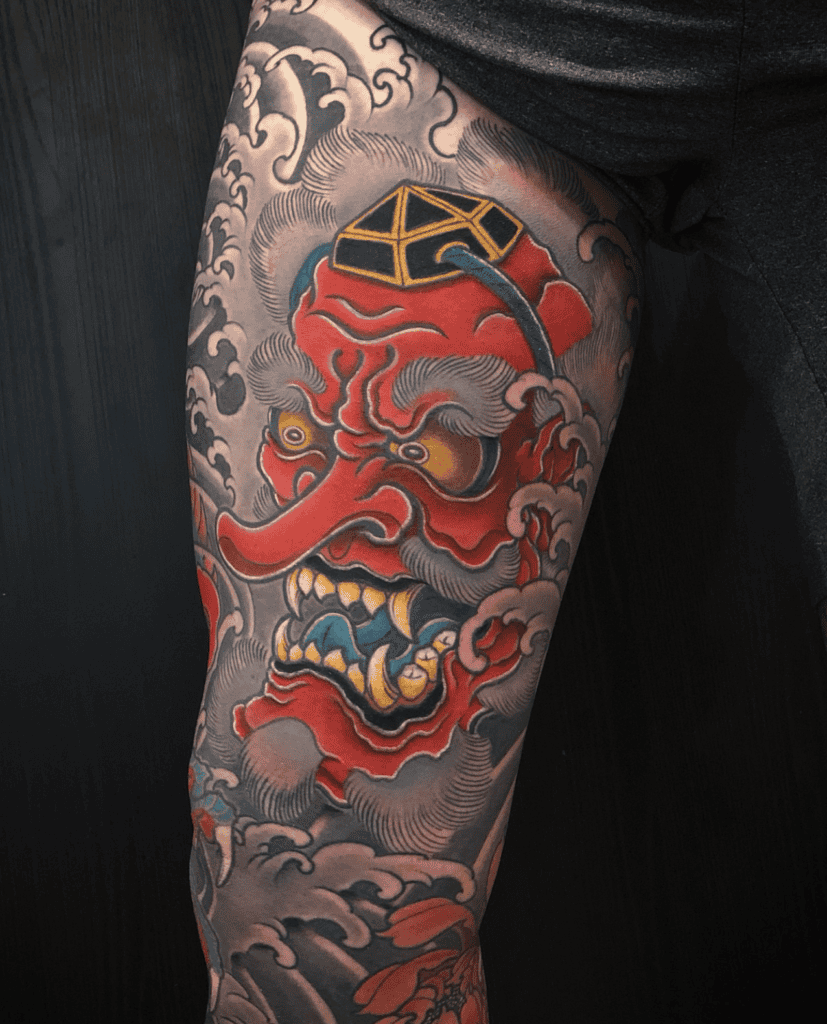
The Tengu (天狗) are supernatural beings in Japanese mythology associated with mountains, ascetic monks (yamabushi), martial arts, and spiritual discipline. They are often portrayed as powerful protectors of sacred mountains, but also as prideful beings who punish arrogance and teach humility through harsh lessons.
A Tengu tattoo can represent many layered meanings such as spiritual discipline and mountain training, martial skill and warrior spirit, wisdom gained through hardship, pride and ego (and the consequences of it), protection from evil or negative forces, wild, untamed spiritual energy, transformation through self-awareness, or balance between strength and humility.
Karasu Tengu Irezumi Tattoo


The Karasu Tengu (烏天狗) is a mythological creature in Japanese folklore that blends the traits of a crow and a supernatural warrior spirit. It embodies instinct, unpredictability, spiritual power, and raw intelligence. In Irezumi, the Karasu Tengu represents the untamed side of human nature, the part of us that acts on instinct before discipline takes over.
While the more human Yamabushi Tengu symbolises refined training and martial discipline, the Karasu Tengu reflects the wild origins of wisdom and power.
A Karasu Tengu tattoo can represent instinct and primal intelligence, chaos and unpredictable power, sharp perception and awareness, spiritual connection to mountains and nature, warrior energy in its raw form, protection through fear and dominance, transformation from chaos to discipline, or insight beyond ordinary understanding.
Kappa Irezumi Tattoo
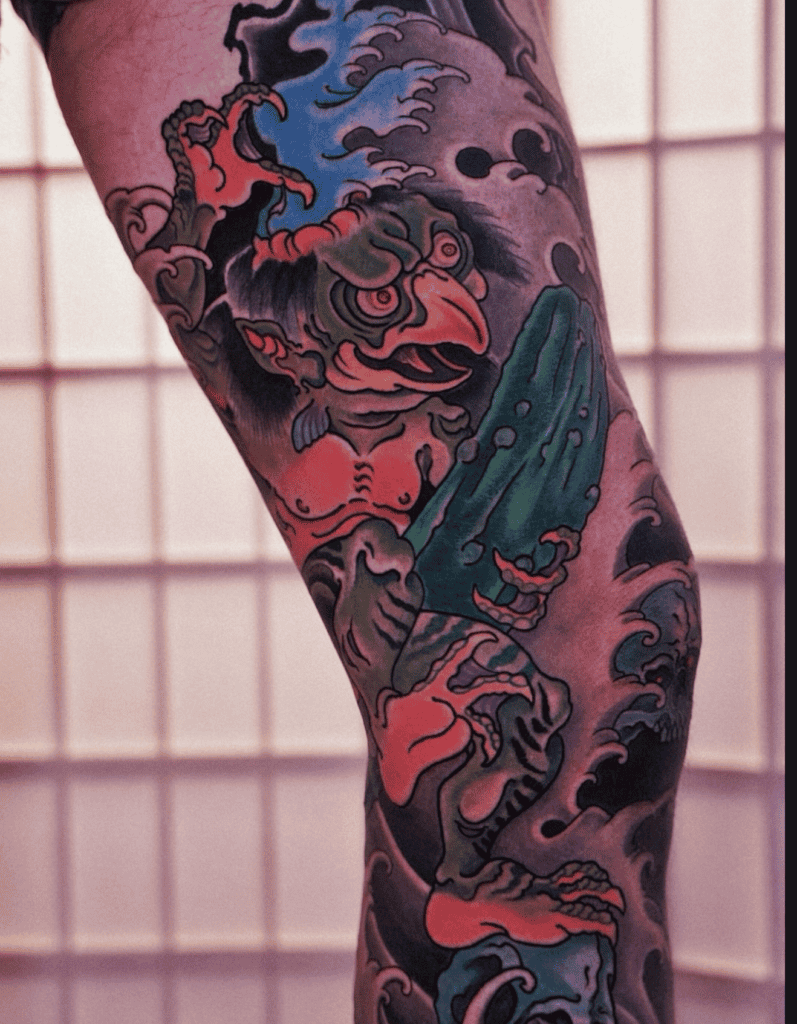
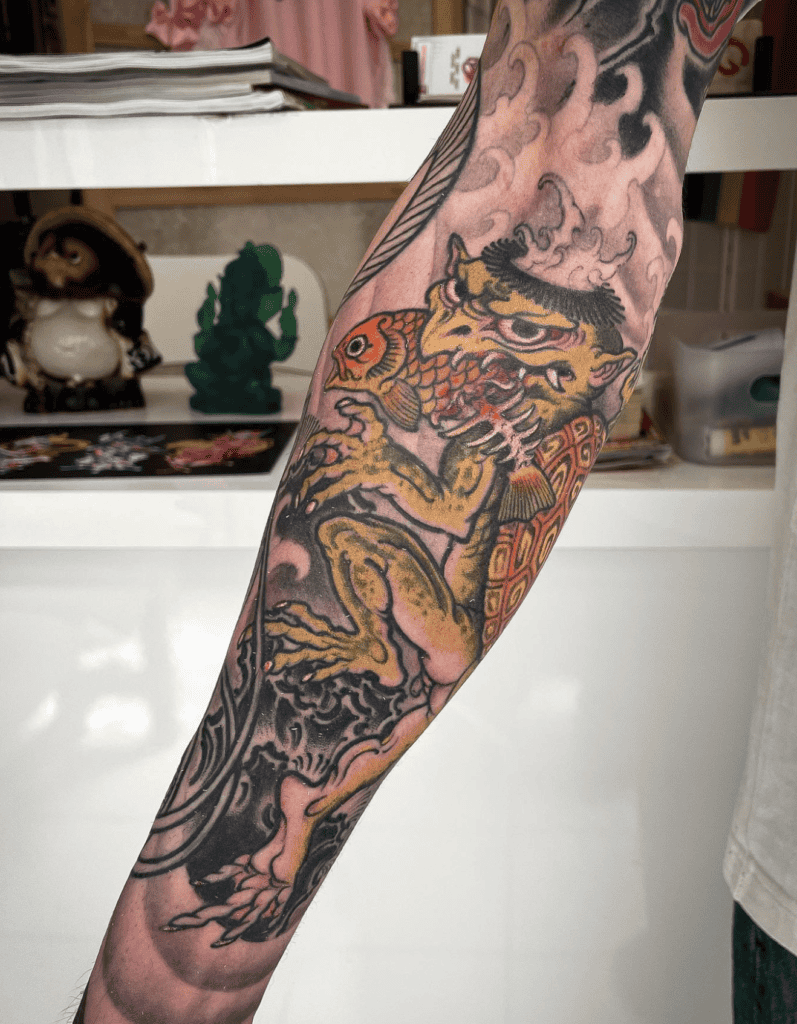
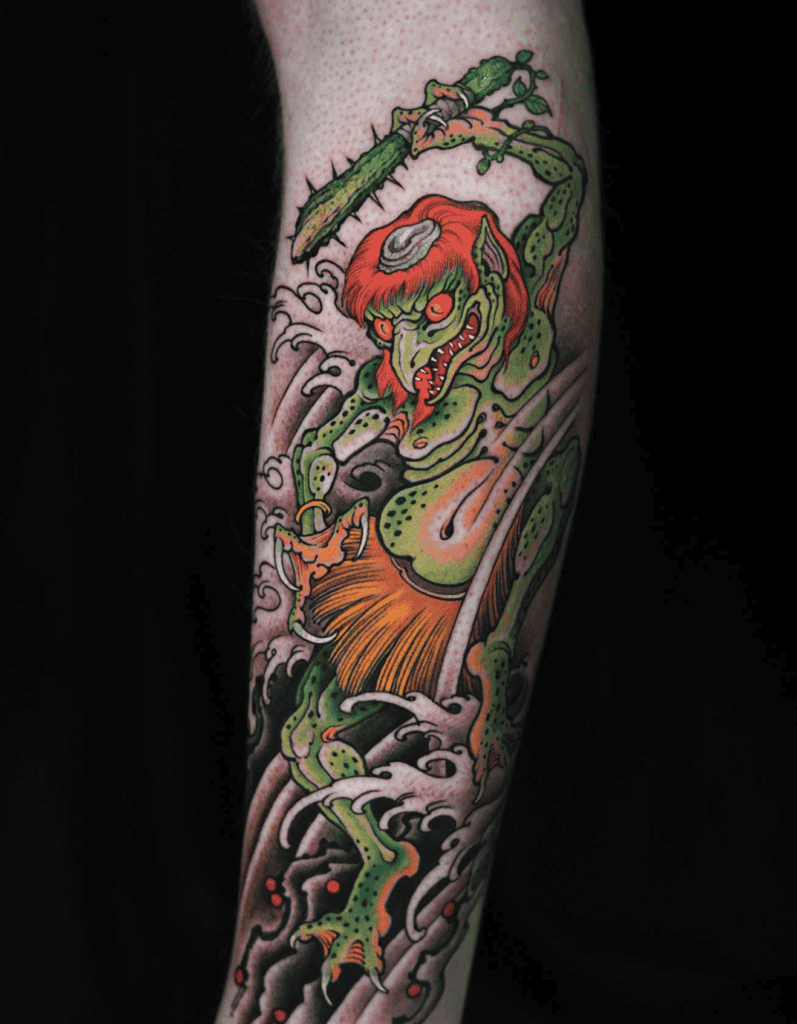
The Kappa (河童) is a water-dwelling yokai from Japanese folklore, usually described as a small, amphibious creature with a humanoid body, a turtle-like shell, and a water-filled dish (called a sara) on its head. In Irezumi, the Kappa symbolises water, adaptability, trickery, humour, danger, and respect for natural forces.
Although often portrayed as playful or comedic, Kappa are also known for being dangerous if disrespected. This dual nature makes them a fascinating subject in tattoo art.
A Kappa tattoo can represent intelligence and cunning, mischief and humour, danger and playfulness, survival and adaptability, protection from drowning or respect for nature and boundaries.
Gashadokuro Irezumi Tattoo
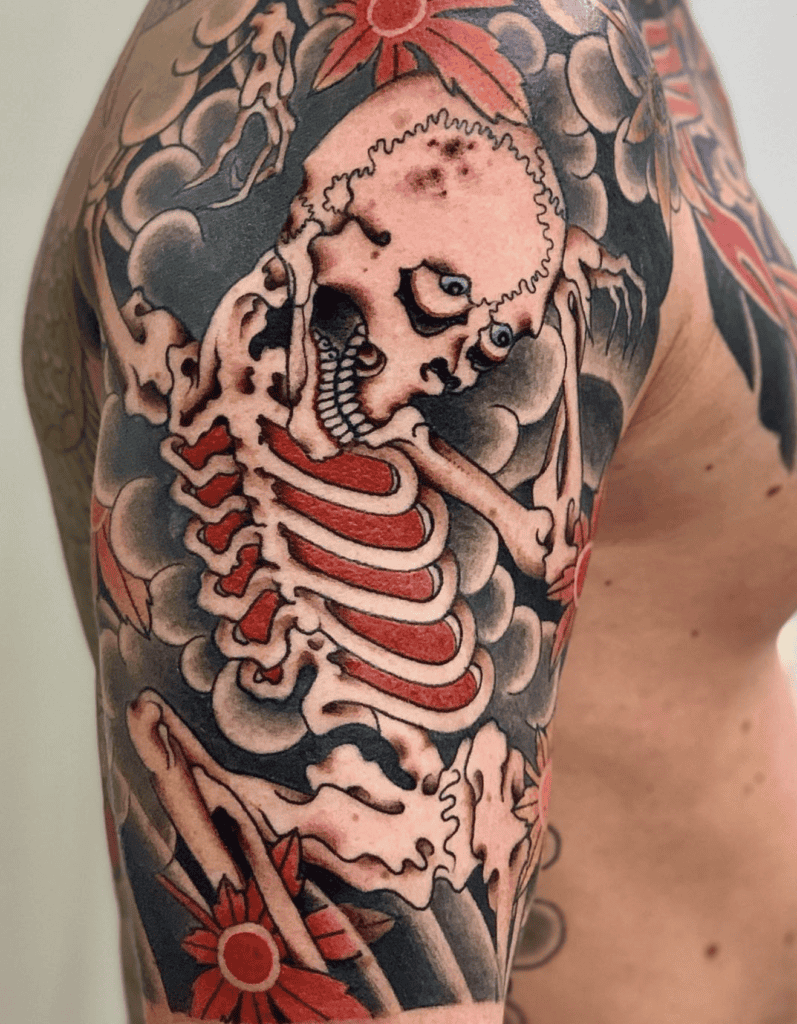
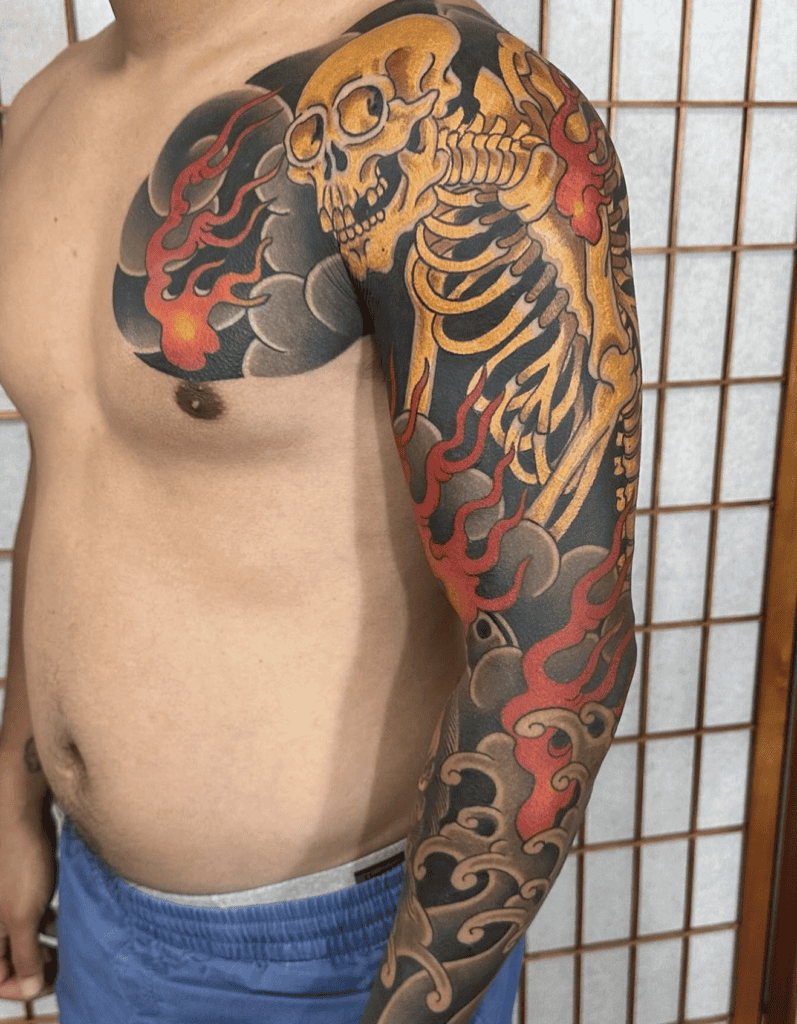
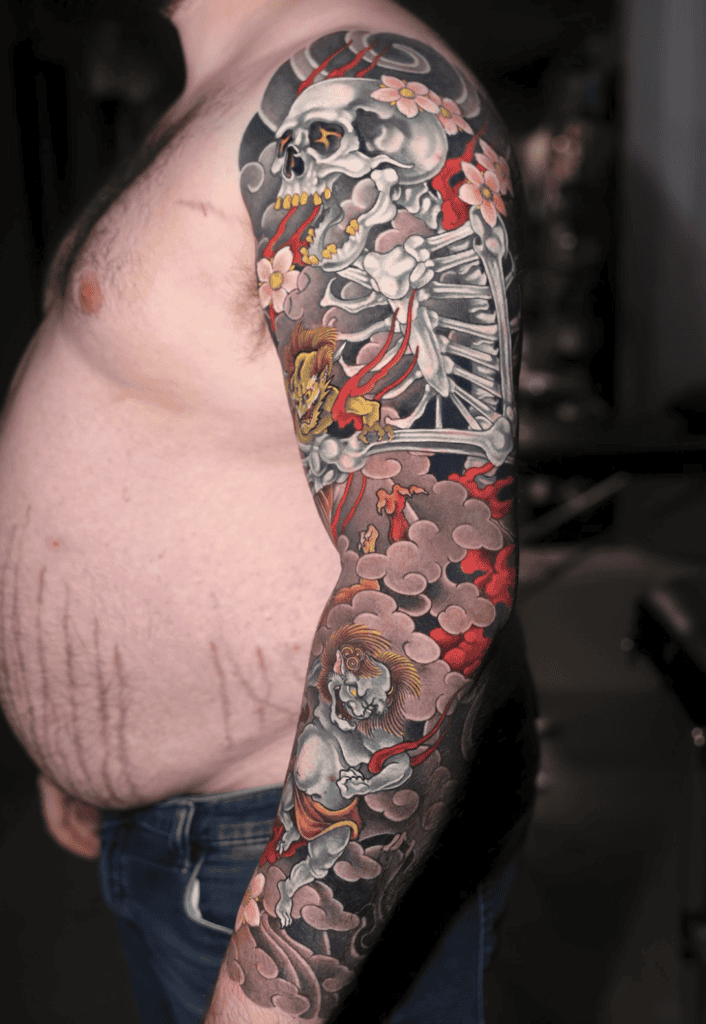
The Gashadokuro is a giant skeletal spirit from Japanese folklore said to be formed from the bones of people who died in battle or famine and were never properly buried. These spirits accumulate resentment over time until they fuse into a towering skeleton, said to be invisible until it is very close, when the sound of rattling teeth can be heard.
In Irezumi, the Gashadokuro represents death on a massive scale, unresolved suffering, karmic consequence, and the lingering energy of violence and neglect.
A Gashadokuro tattoo can also represent mortality and the inevitability of death, the aftermath of war and violence, unresolved trauma and collective suffering, awareness of impermanence, karmic consequence and imbalance, forgotten or unacknowledged lives, or destruction and overwhelming force.
Fudō Myō-ō Irezumi Tattoo


Fudō Myō-ō (不動明王), meaning “The Immovable Wisdom King,” is one of the most important figures in Japanese esoteric Buddhism (Mikkyō). He is a protector deity who appears fierce and intimidating, but his wrath is compassionate, directed at ignorance, ego, and destructive desires rather than at people.
In Irezumi, Fudō Myō-ō is a symbol of unshakable resolve, spiritual discipline, and protection against both external and internal evil. He is often depicted surrounded by flames, holding a sword and rope, representing the cutting of delusion and the binding of negative forces.
A Fudō Myō-ō tattoo can represent spiritual strength and purification, discipline and inner control, cutting through ignorance and illusion, protection from harm and evil influences, unshakable willpower, transformation through hardship, balance between wrath and compassion, and mastery over ego and desire.
Benzaiten Irezumi Tattoo


Benzaiten (弁才天 / 弁財天) is one of the Seven Lucky Gods (Shichifukujin) in Japanese mythology and the only female deity among them. She originates from the Hindu goddess Saraswati and was adapted into Japanese Buddhism and Shinto belief systems. She is the goddess of music, knowledge, art, beauty, eloquence, and everything that flows, especially water and creativity.
A Benzaiten tattoo can represent music, art, and creative expression, flow, emotion, and adaptability, wisdom and intellectual clarity, beauty and harmony, communication and eloquence, transformation and protection, good fortune and prosperity, or spiritual balance and enlightenment.
Ebisu Irezumi Tattoo
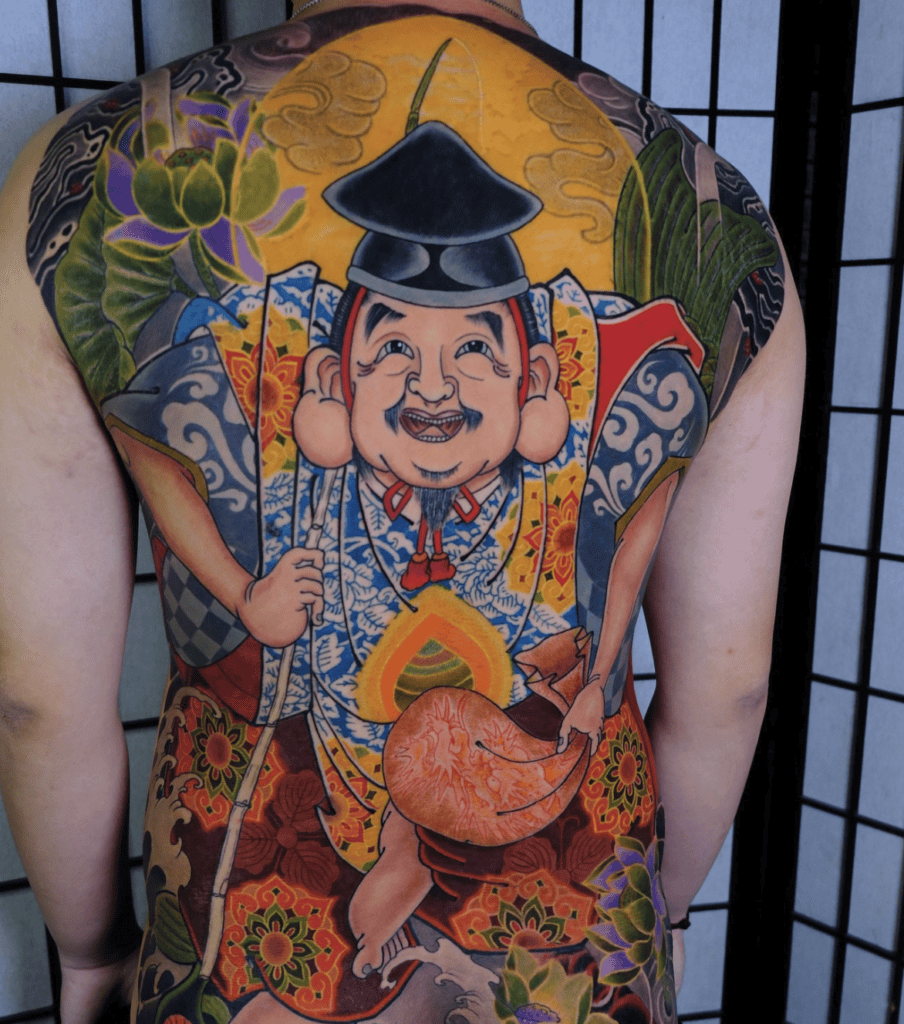
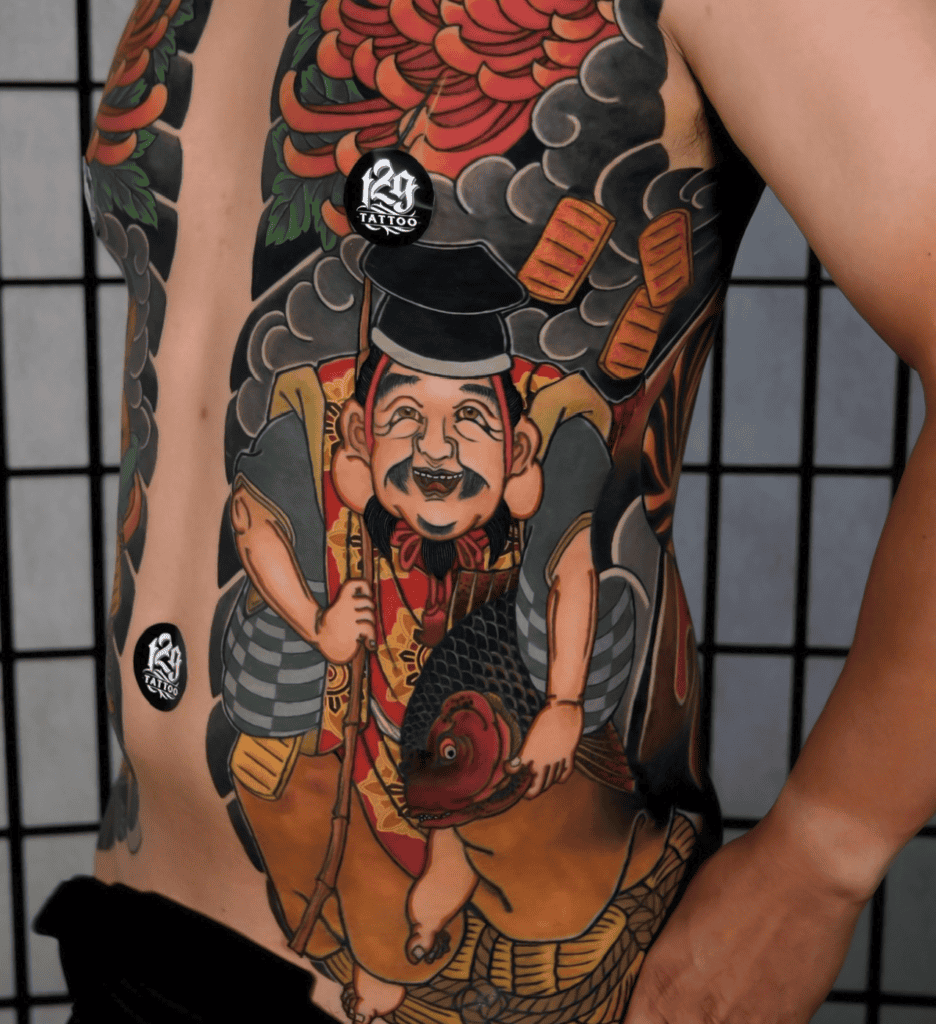
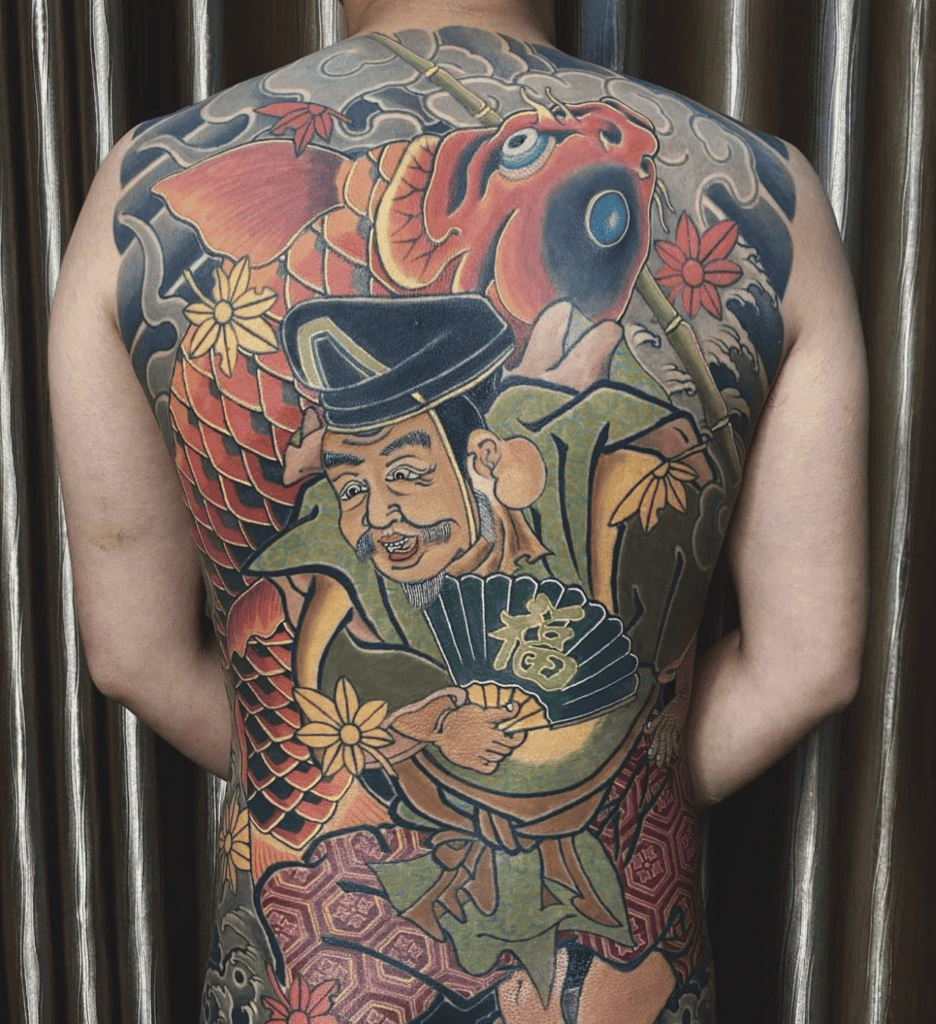
Ebisu (恵比寿) is one of the Seven Lucky Gods (Shichifukujin) in Japanese mythology and is known as the god of fishing, commerce, luck, and honest prosperity. He is often depicted as a cheerful figure holding a fishing rod in one hand and a sea bream (tai) in the other, symbolising abundance and success.
An Ebisu tattoo can represent good fortune and luck, prosperity through honest work, success connected to the sea and travel, happiness and positivity, gratitude and humility, abundance and successful harvests, stability and everyday well-being, or balance between effort and reward. Ebisu is often seen as a reminder that fortune comes not just from destiny, but from hard work and a good heart.
Daikokuten Irezumi Tattoo

Daikokuten (大黒天) is one of the Seven Lucky Gods (Shichifukujin) and is widely regarded as the god of wealth, farming, commerce, and abundance. He is often shown standing on rice bags, holding a large mallet (the uchide no kozuchi), and accompanied by mice or rats, which are symbols of plenty rather than decay.
A Daikokuten tattoo can represent wealth and financial prosperity, abundance from agriculture and harvest, stability and security, smart business and resourcefulness, reward from hard work and persistence, good fortune and luck, fulfilment of wishes, or balance between effort and reward.
Susanoo Irezumi Tattoo


Susanoo-no-Mikoto (須佐之男命) is one of the most important Shinto deities, known as the god of storms, seas, and chaos. He is the younger brother of the sun goddess Amaterasu, and his mythology is filled with conflict, exile, redemption, and heroic feats.
A Susanoo tattoo can represent chaos and uncontrollable emotion, courage in the face of overwhelming odds, transformation through struggle, mastery over storms and adversity, victory over inner or external demons, emotional intensity and growth, protection and warrior spirit, or redemption after failure.
Raijin Irezumi Tattoo
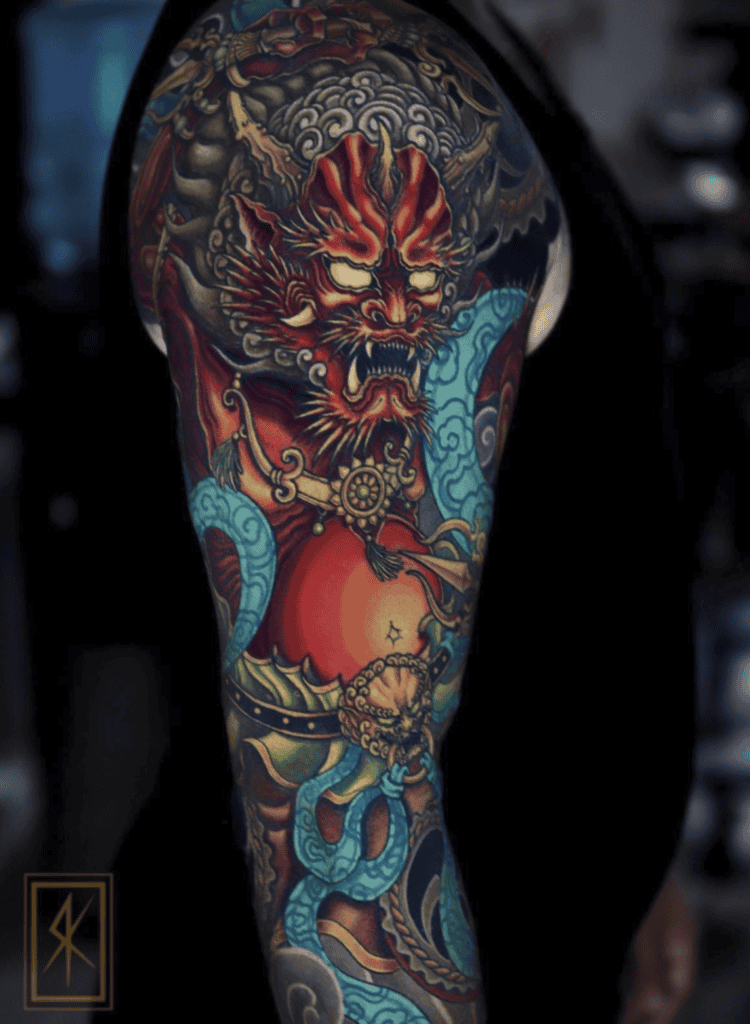
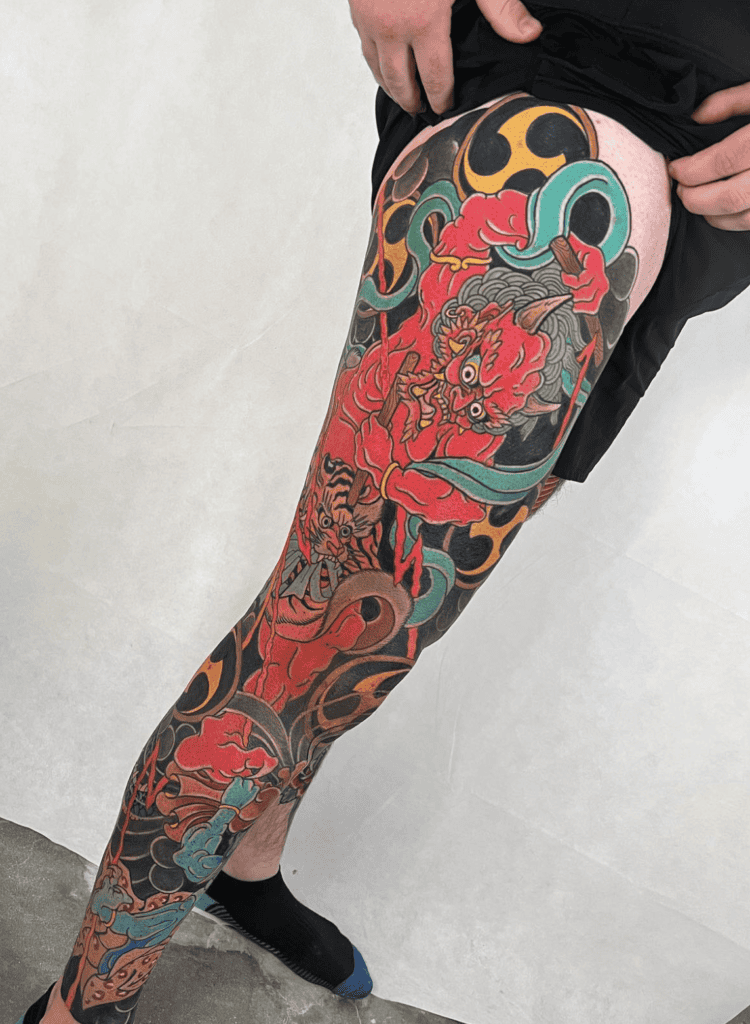
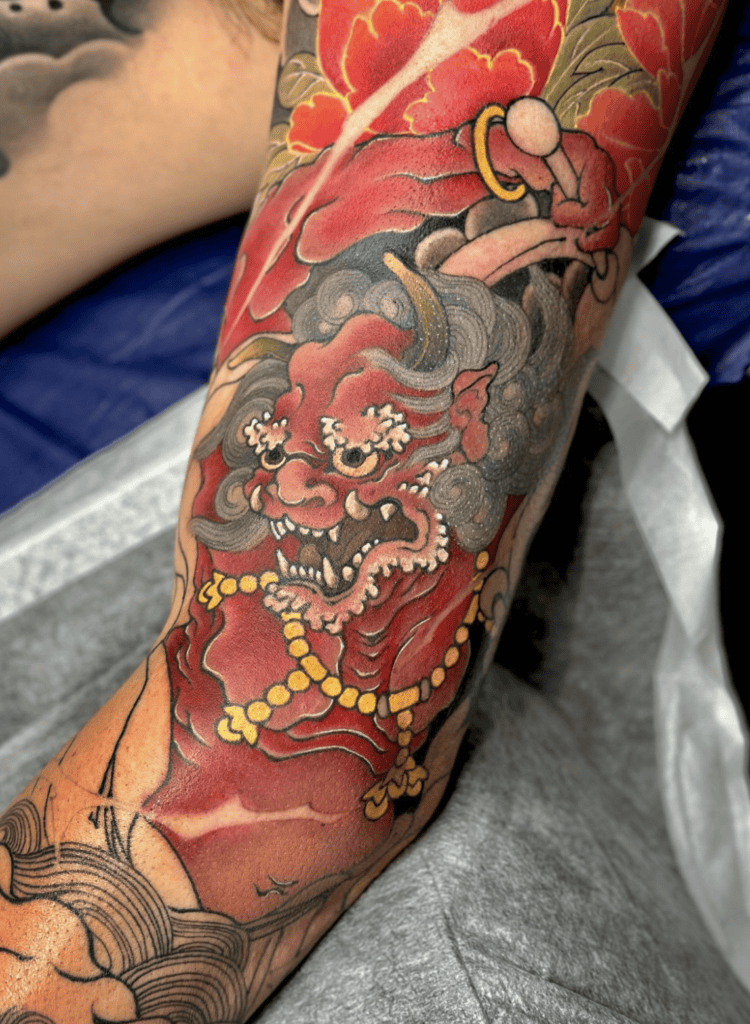
Raijin (雷神) is the Shinto god of thunder and lightning, often depicted surrounded by drums that he beats to create storms. Alongside his companion Fūjin (god of wind), Raijin is part of a powerful natural duo that controls the forces of the weather.
A Raijin tattoo can represent raw power and energy, lightning, storms, and natural force, sudden change or transformation, mental strength and intensity, destruction that leads to renewal, protection through overwhelming force, or balance between chaos and order.
Fūjin Irezumi Tattoo
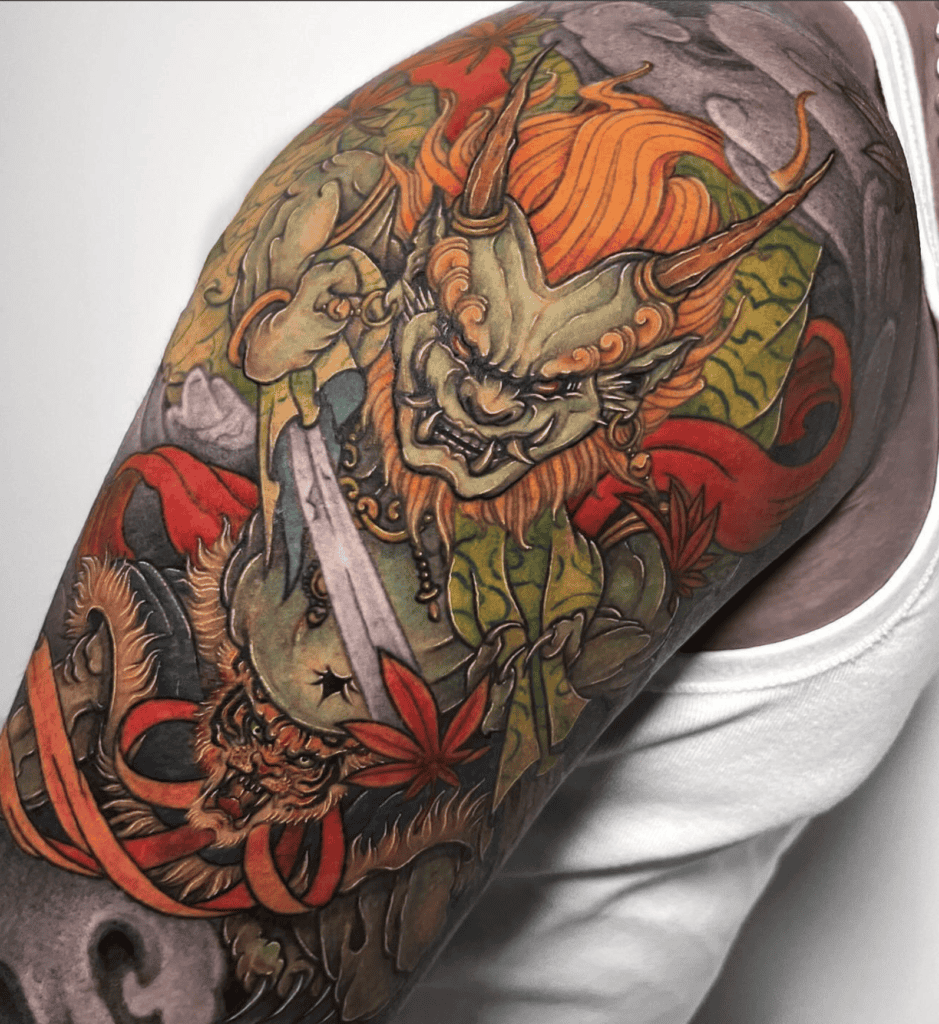
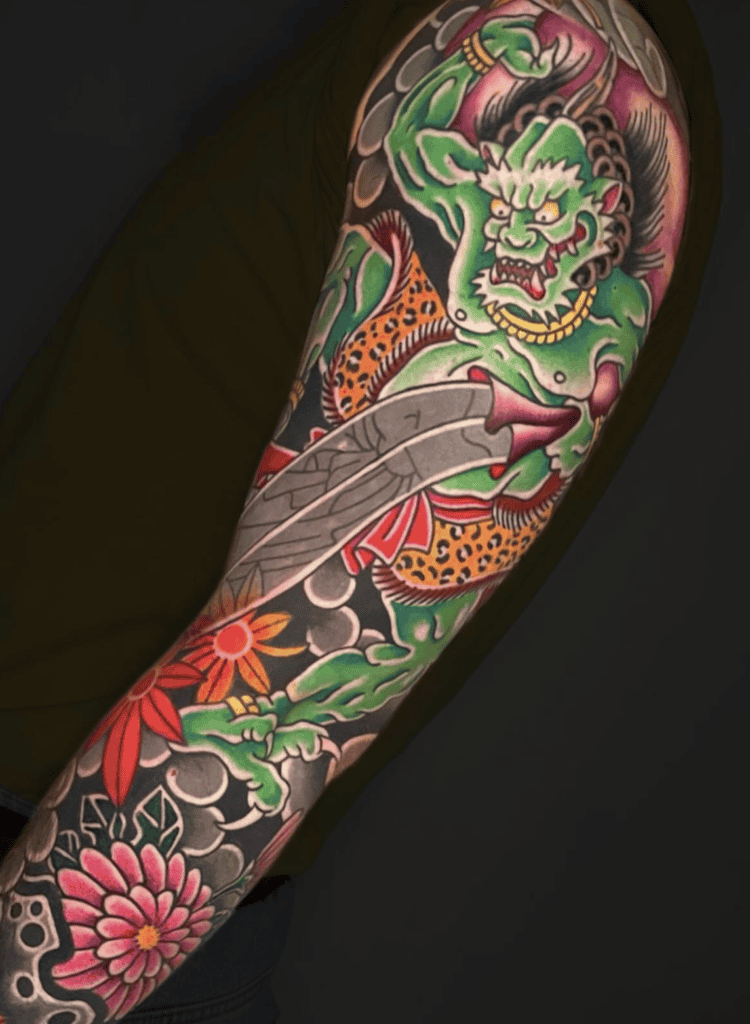
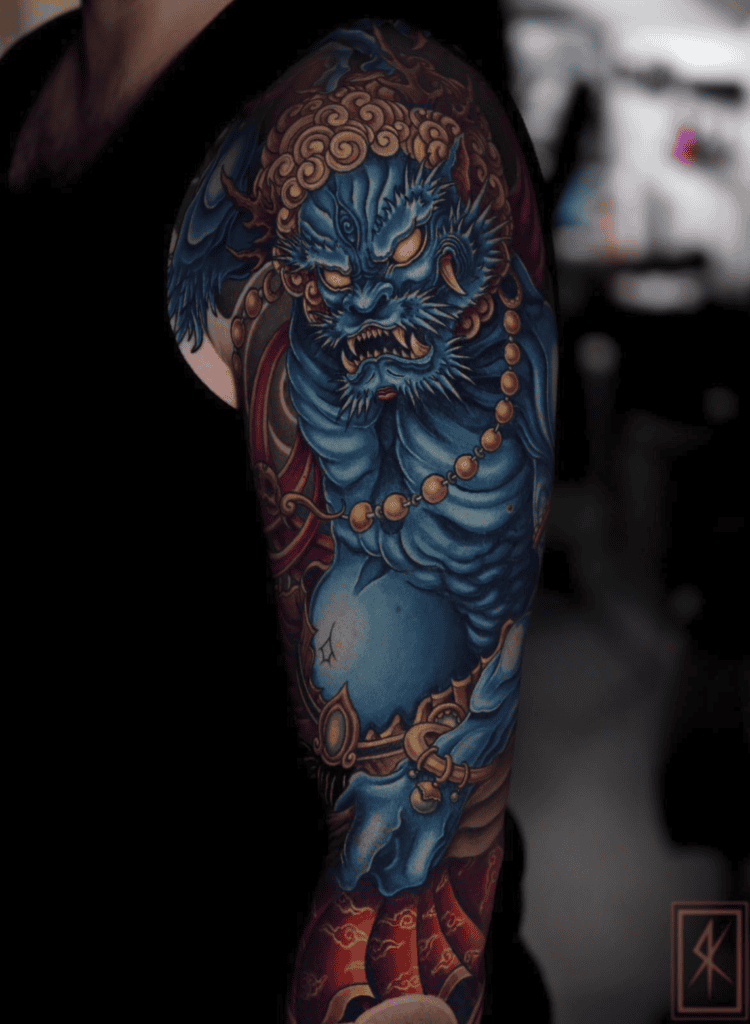
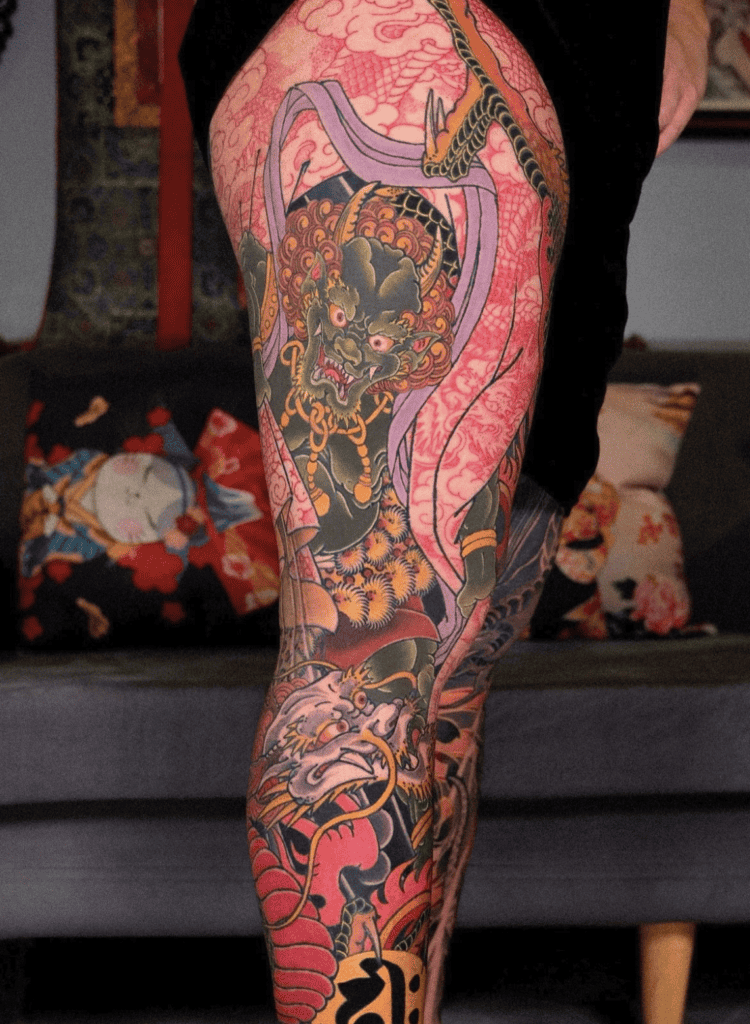
Fūjin (風神) is the Shinto god of wind, often depicted as a wild, otherworldly figure carrying a large wind bag from which he releases gusts across the world. Alongside Raijin (the god of thunder), Fūjin forms a divine duo that controls storms and weather.
In Irezumi, Fūjin symbolises change, freedom, unpredictability, and the invisible forces that shape destiny. His presence is always dynamic, representing movement rather than stillness.
A Fūjin tattoo can represent freedom and independence, change and transformation, unpredictable natural forces, movement and life direction, mental clarity and insight, constant evolution, power over unseen forces, or balance between chaos and flow.
Momotarō Irezumi Tattoo


Momotarō (桃太郎), meaning “Peach Boy,” is a legendary hero born from a giant peach floating down a river. He is raised by an elderly couple and later sets out on a quest to defeat a group of oni (demons) terrorising nearby islands. Along the way, he gains loyal animal companions: a dog, a monkey, and a pheasant.
A Momotarō tattoo can represent courage and heroism, strategy and intelligence, loyalty and teamwork, protection of the weak, purity of intention, victory over evil or hardship, life journey and personal growth, or strength through unity.
Kintarō Irezumi Tattoo
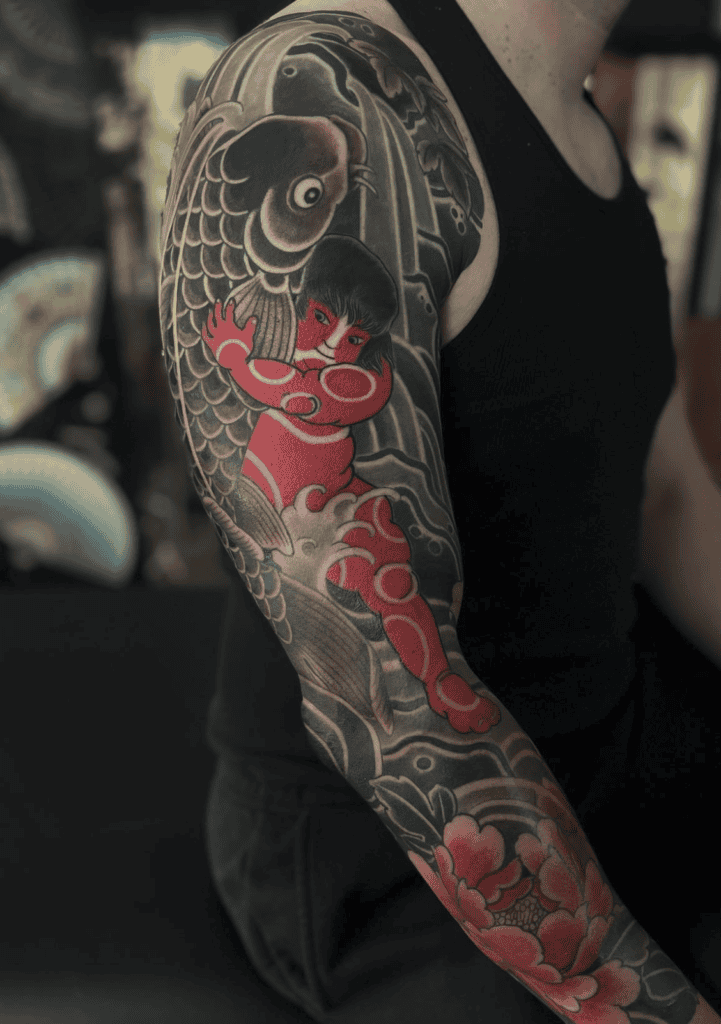
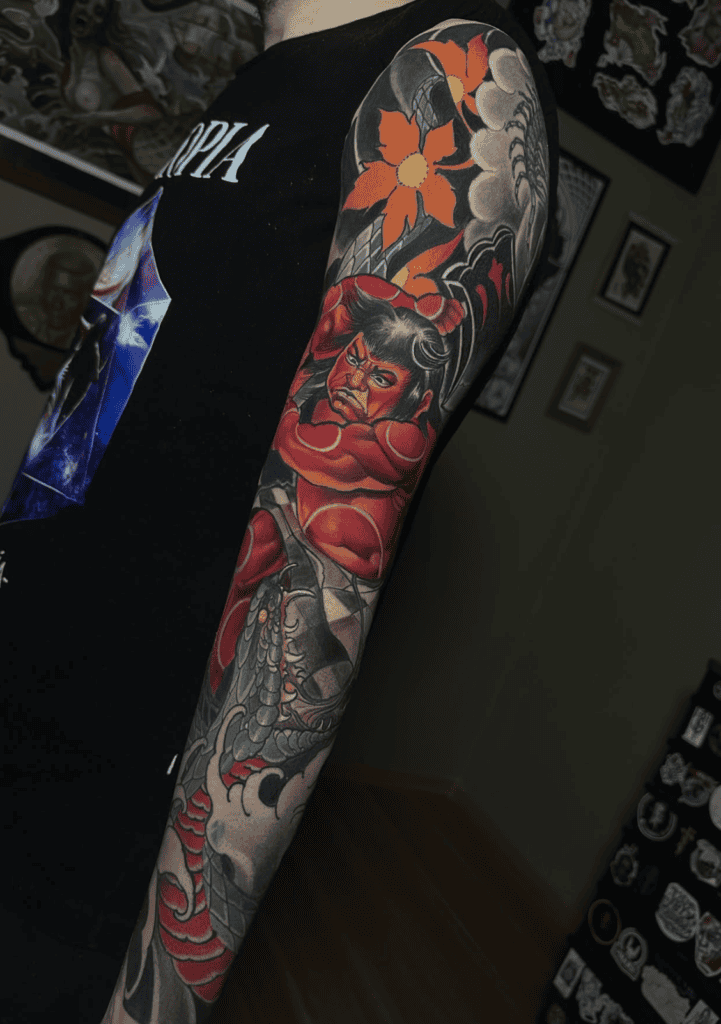
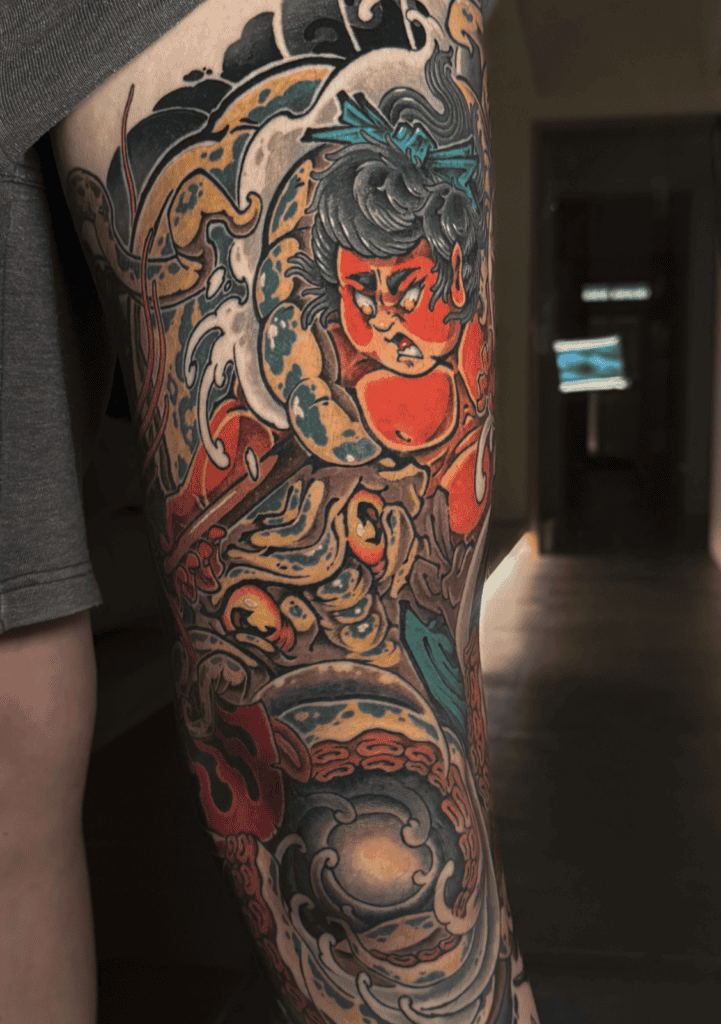
Kintarō (金太郎), meaning “Golden Boy,” is a legendary child hero in Japanese folklore said to possess superhuman strength from birth. Raised in the mountains, he grows up among animals and becomes a symbol of pure strength, innocence, and harmony with nature.
A Kintarō tattoo can represent raw strength and physical power, harmony with nature and wildlife, innocence and pure intention, fearlessness in the face of challenge, friendship with animals and natural balance, growth through natural experience rather than society, untamed potential and vitality, or heroic destiny from a young age. He is often seen as the embodiment of natural-born strength and pure-hearted courage.
Hannya Mask Irezumi Tattoo


The Hannya Mask (般若) originates in Japanese Noh theatre and represents a woman consumed by jealousy, grief, and emotional suffering, who transforms into a demon-like being. Unlike many yokai, Hannya is not born a monster, but becomes one through intense human emotion.
A Hannya tattoo can represent heartbreak and emotional pain, jealousy and obsession, transformation through suffering, the duality of love and hatred, loss of control over emotion, hidden danger beneath beauty, protection from evil spirits, or inner turmoil and psychological struggle.
Oni Mask Irezumi Tattoo


The Oni Mask (鬼面) represents the face of an Oni, a supernatural ogre-like being from Japanese folklore. Unlike the Hannya, which is rooted in human emotion and transformation, the Oni is more external, representing punishment, chaos, divine retribution, and protective force.
An Oni mask tattoo can represent strength and raw power, justice and punishment, protection from evil spirits, controlled rage and discipline, consequences of wrongdoing, chaos and natural force, overcoming fear and adversity, or mastery of inner darkness. It is often chosen as a symbol of fearlessness and spiritual protection.
Tengu Mask Irezumi Tattoo
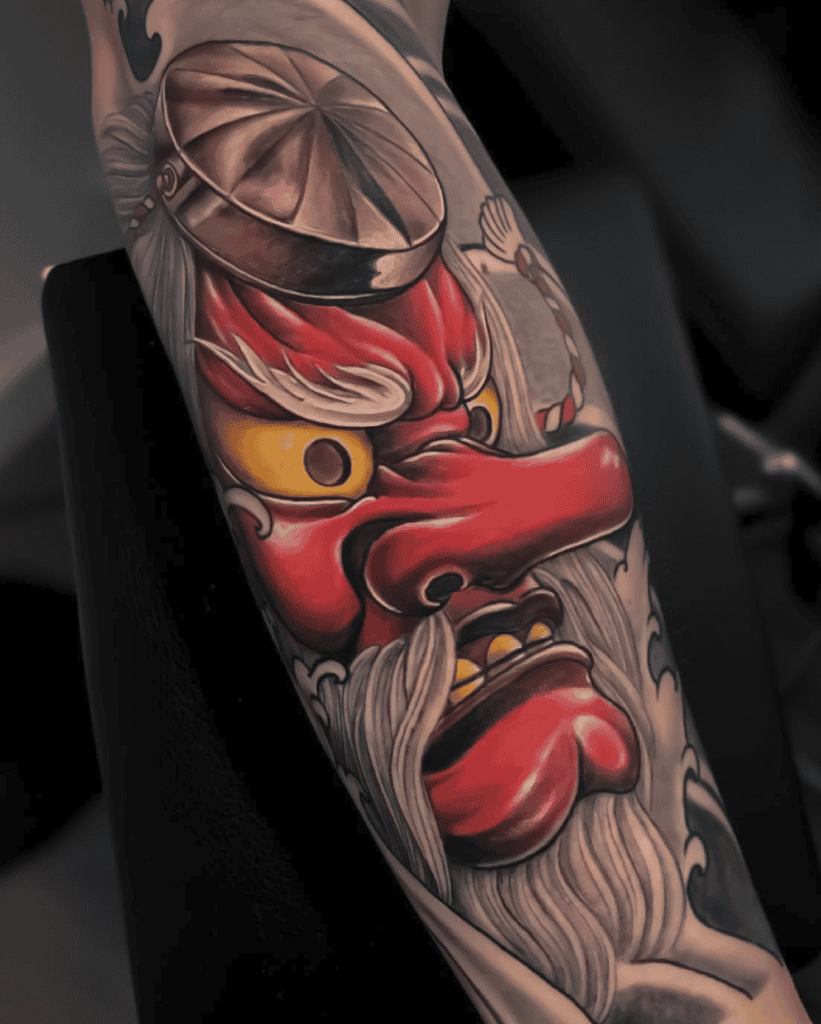
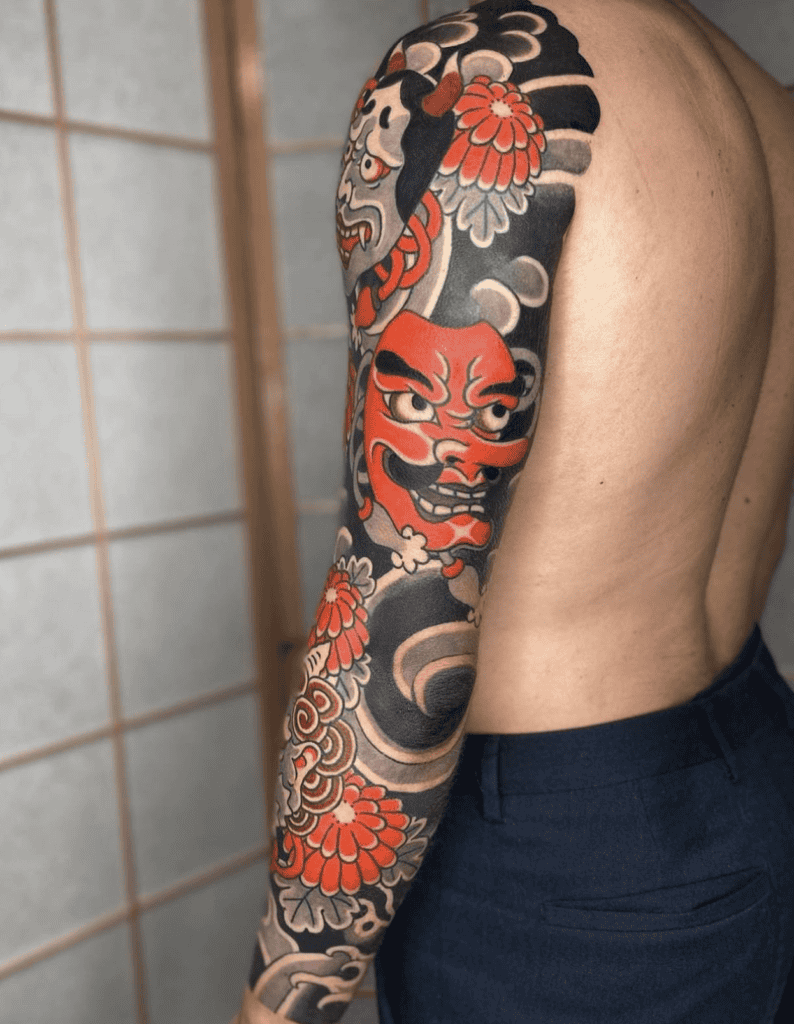
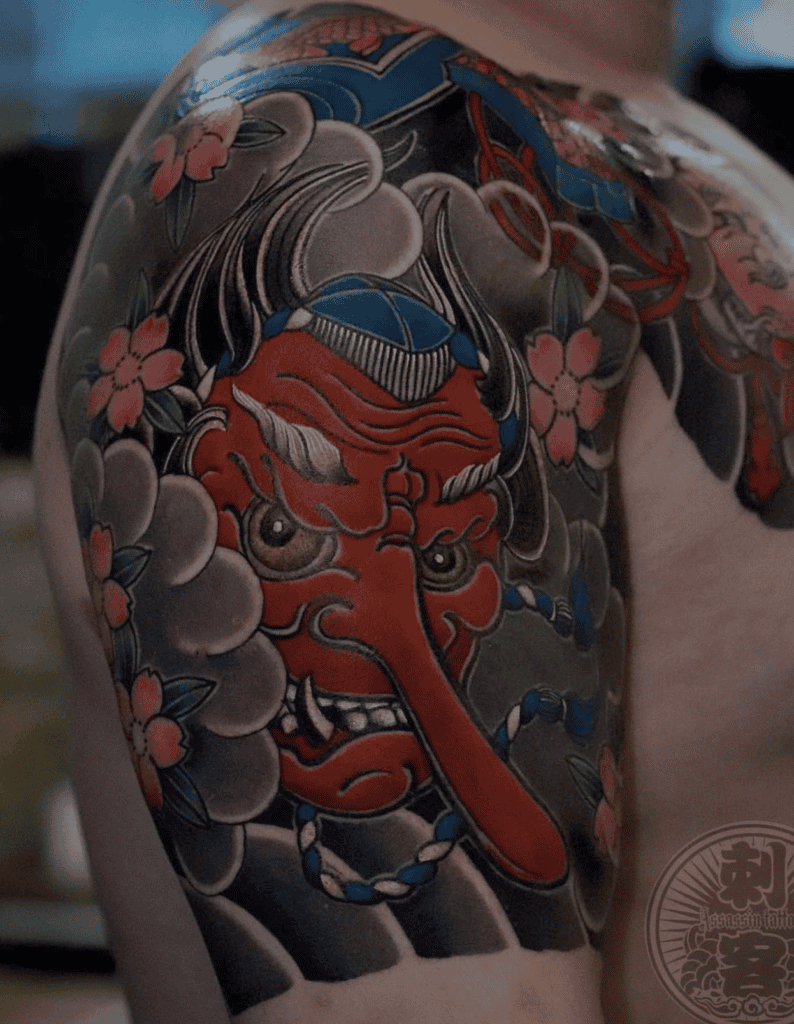
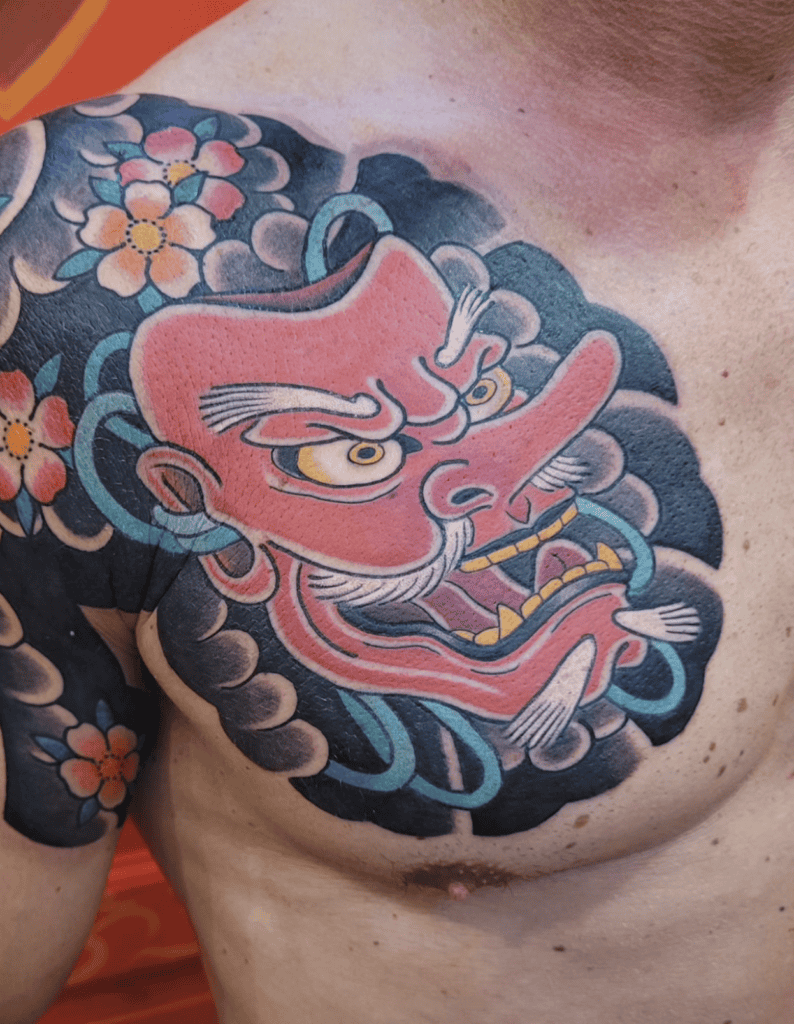
The Tengu Mask (天狗面) represents the face of a Tengu, a supernatural being from Japanese folklore associated with mountains, martial arts, and spiritual training. In tattoo culture, the mask often depicts the Yamabushi Tengu (human-like, long nose) or sometimes the Karasu Tengu (crow-like).
A Tengu mask tattoo can represent martial skill and warrior discipline, intelligence and strategic thinking, spiritual training and mountain asceticism, pride and ego, protection from evil forces, wild, untamed spiritual energy, transformation through self-awareness, or strength gained through hardship.
Daruma Irezumi Tattoo

The Daruma (達磨) is based on Bodhidharma, the Indian monk who is said to have brought Zen Buddhism to China and Japan. Over time, he became stylised into the famous round, limbless Daruma doll, which is now a powerful symbol of perseverance and good fortune. In Irezumi, Daruma represents the idea of “fall down seven times, get up eight” (七転び八起き), a core philosophy of endurance and success through persistence.
A Daruma tattoo can represent perseverance and resilience, goal setting and achievement, determination through hardship, mental strength and discipline, balance between failure and success, spiritual focus and endurance, protection against giving up, or growth through struggle.
Conclusion
Thanks for joining us on this ink-credible journey through the mythical world of the Irezumi Tattoo design. We hope you’ve found a design that suits you on your next tattooing adventure. But before you’re off with Fūjin’s wind, why not stick around and check out these Persian Mythology Tattoo Designs, these Egyptian Mythology Tattoo Ideas, or these Mayan Mythology Tattoos.
- Bear Tattoo Ideas - October 22, 2026
- Lion Tattoo Ideas - October 19, 2026
- Persona Tattoo Ideas - October 15, 2026