

Tiger Tattoo Ideas

Are you prowling over the internet on your hunt for the perfect Tattoo Clues? Worry not, we’re about to satiate your hunger as we pounce our way through these incredible Tiger Tattoo ideas that won’t leave you snarling.
What does a Tiger Tattoo Mean
Tiger tattoos represent many different meanings, but they are commonly associated with strength, courage, power, and confidence. As apex predators, they are often seen as symbols of someone who refuses to back down from challenges, reflecting inner strength, resilience, or overcoming difficult periods in life.
Among the strongest big cats in the world, Tiger Tattoos are often connected to physical or mental strength, symbolising someone who is fierce, determined, and hard to intimidate.
A tiger is known for being bold and fearless, representing bravery, independence, and the willingness to face danger or uncertainty head-on. In several Asian cultures, tigers were believed to ward off evil spirits and bad luck, with people getting tattoos of tigers to help ward off evil spirits.
Tigers are also often associated with raw emotion, instinct, and untamed energy, reflecting freedom, passion, rebellion, or a strong personality. Despite their power, tigers are careful hunters that wait for the right moment to strike, therefore symbolising patience, control, and calculated thinking. Tigers are frequently viewed as kings of the jungle in Asian symbolism, making them represent leadership, pride, authority, or ambition.
top Tiger Tattoo Artists


Best Tiger Tattoos Designs
Now that we know a little about Tiger Tattoo meanings, let’s take a look at some of the best Tiger Tattoos the jungle has to offer.
Bengal Tiger Tattoo
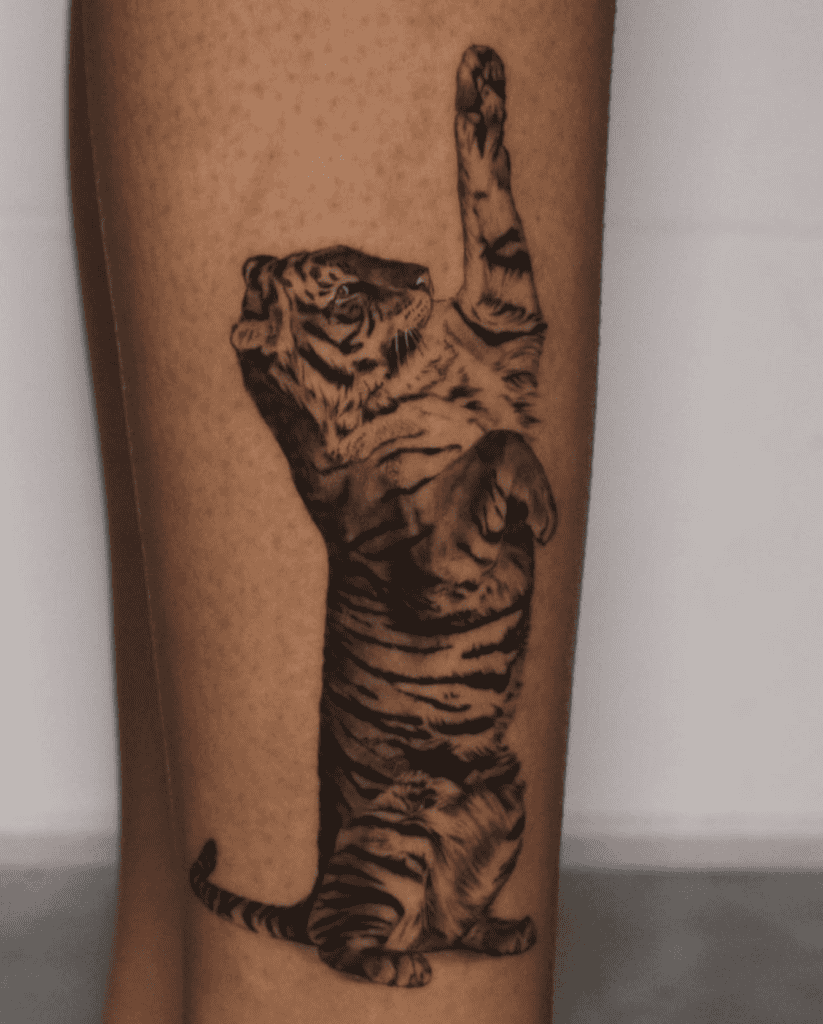
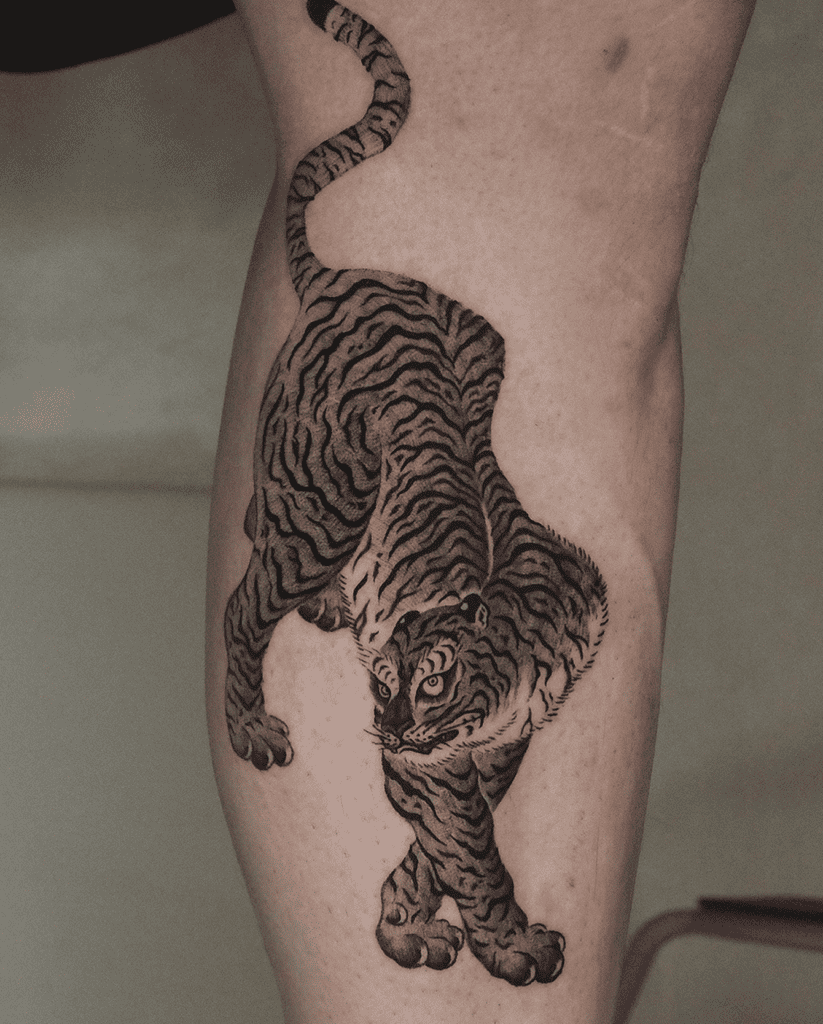
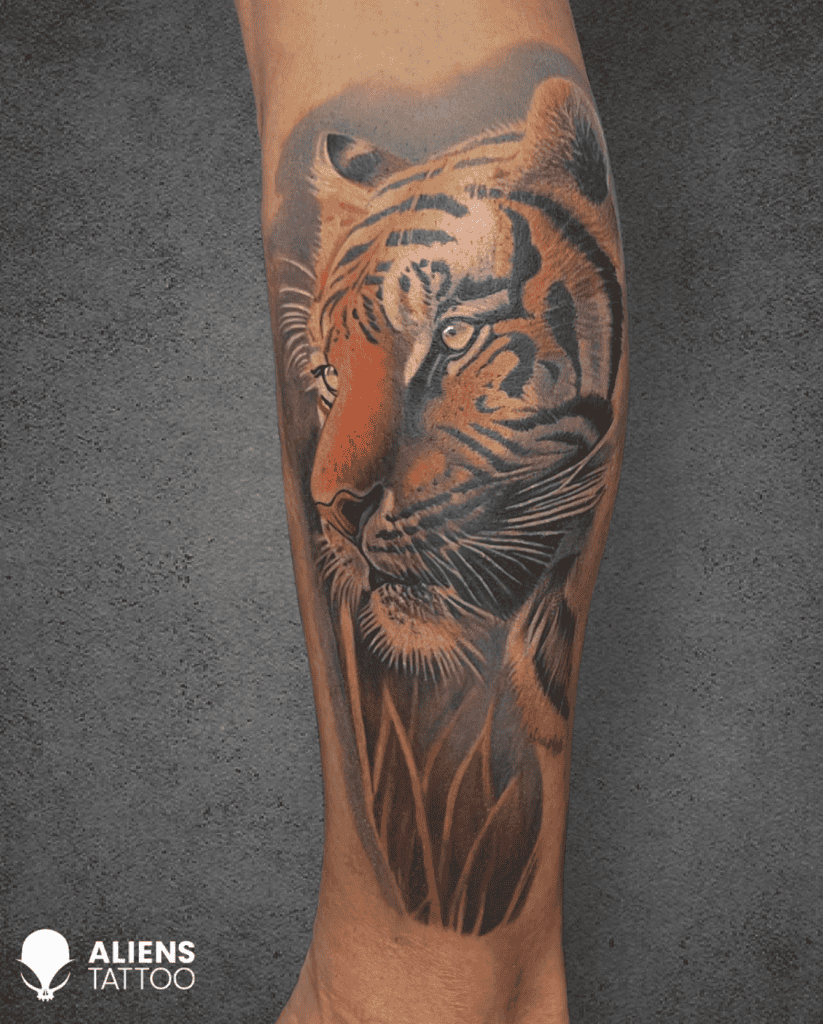
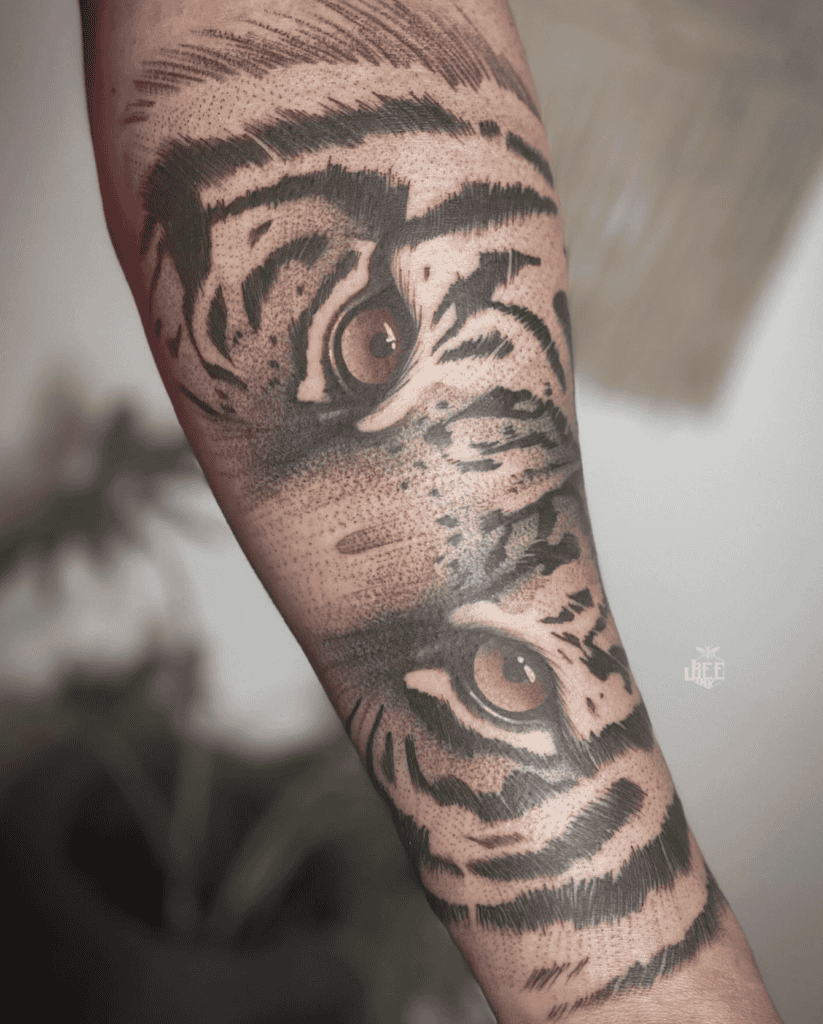
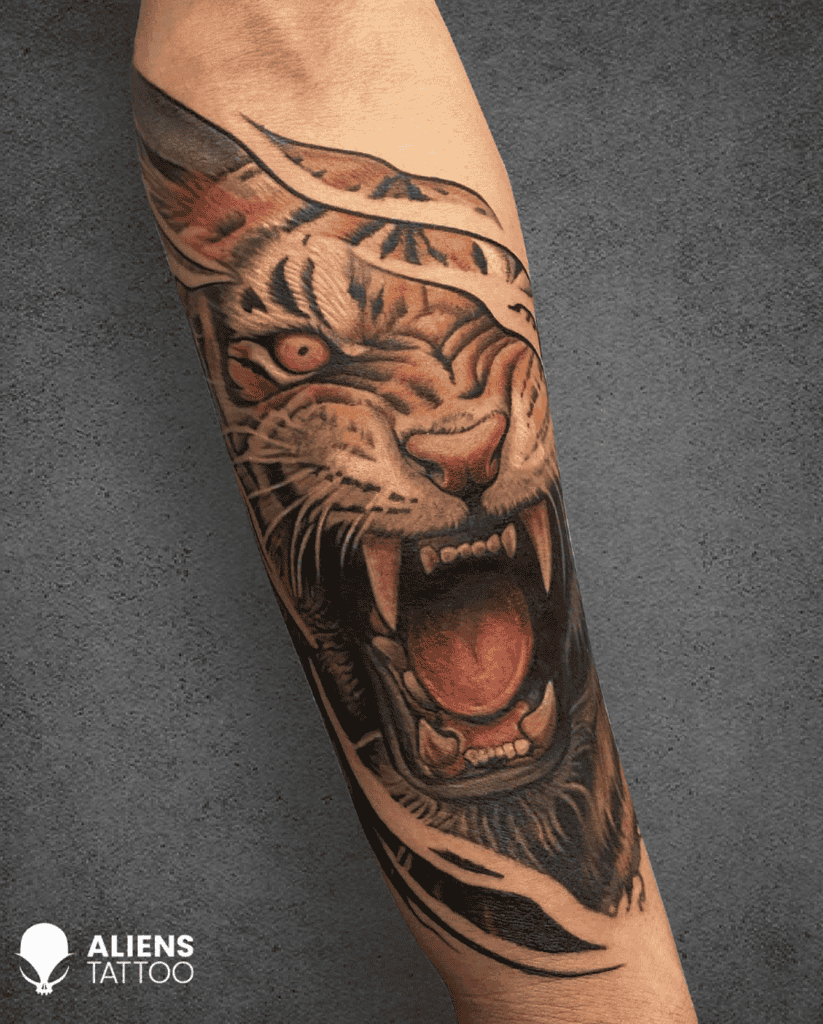
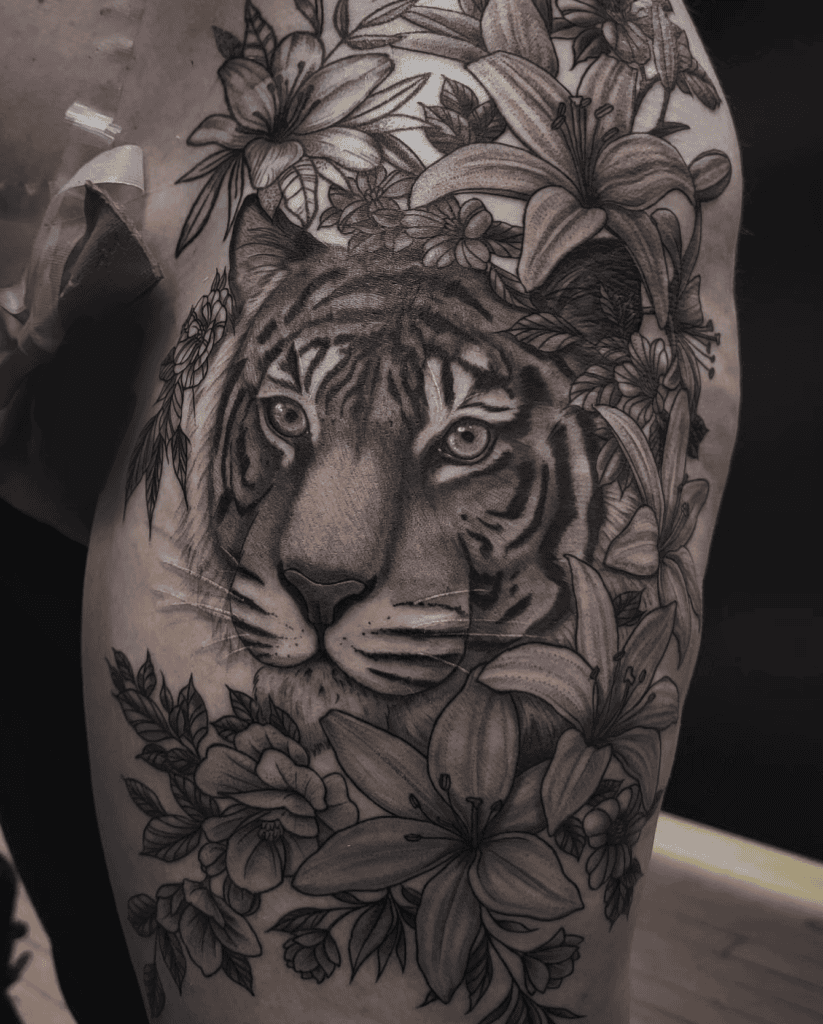
The Bengal Tiger is the most famous and numerous tiger subspecies in the world, considered the “classic” tiger that people picture when they think of one. Found in India, Bangladesh, Nepal, and Bhutan, they live in the forests, mangroves, grasslands, and jungles.
Currently endangered, these massive cats can weigh over 200 kg (440 lbs) for the males, while females are usually smaller. Bengal Tigers are solitary hunters, usually hunting alone, relying on stealth rather than speed. They slowly stalk prey before launching a sudden ambush attack, with a diet consisting of deer, wild boar, buffalo, monkeys, and occasionally crocodiles or smaller predators.
Amur Tiger Tattoo
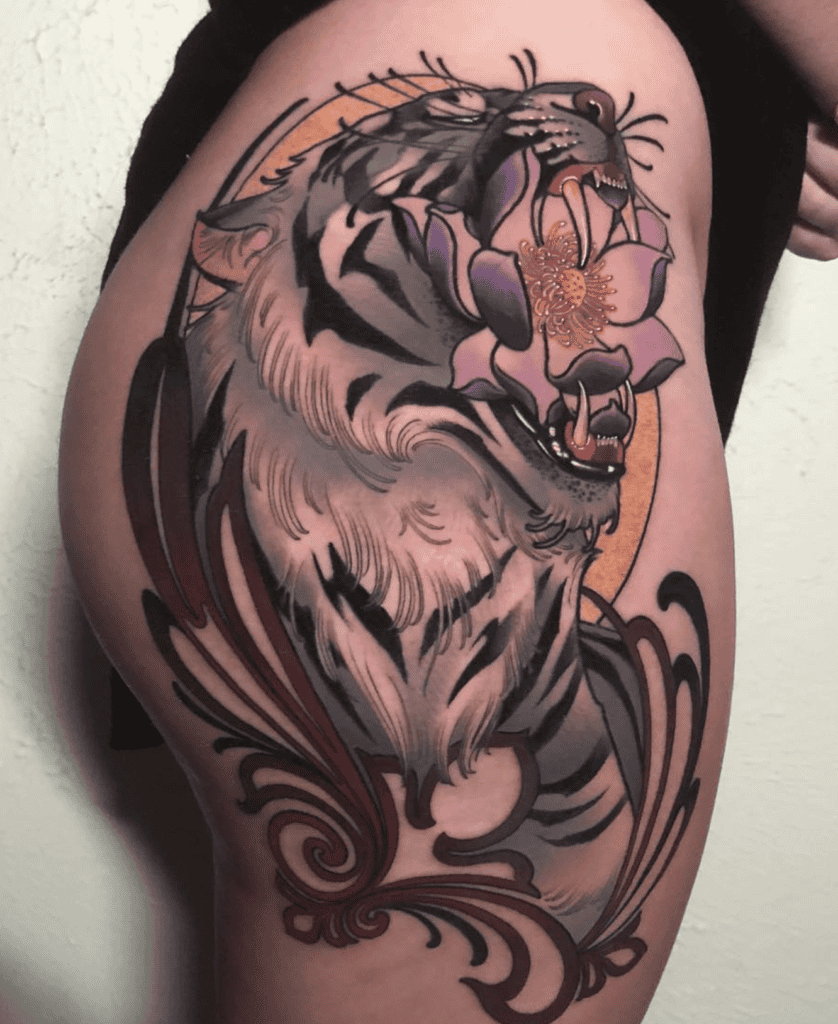
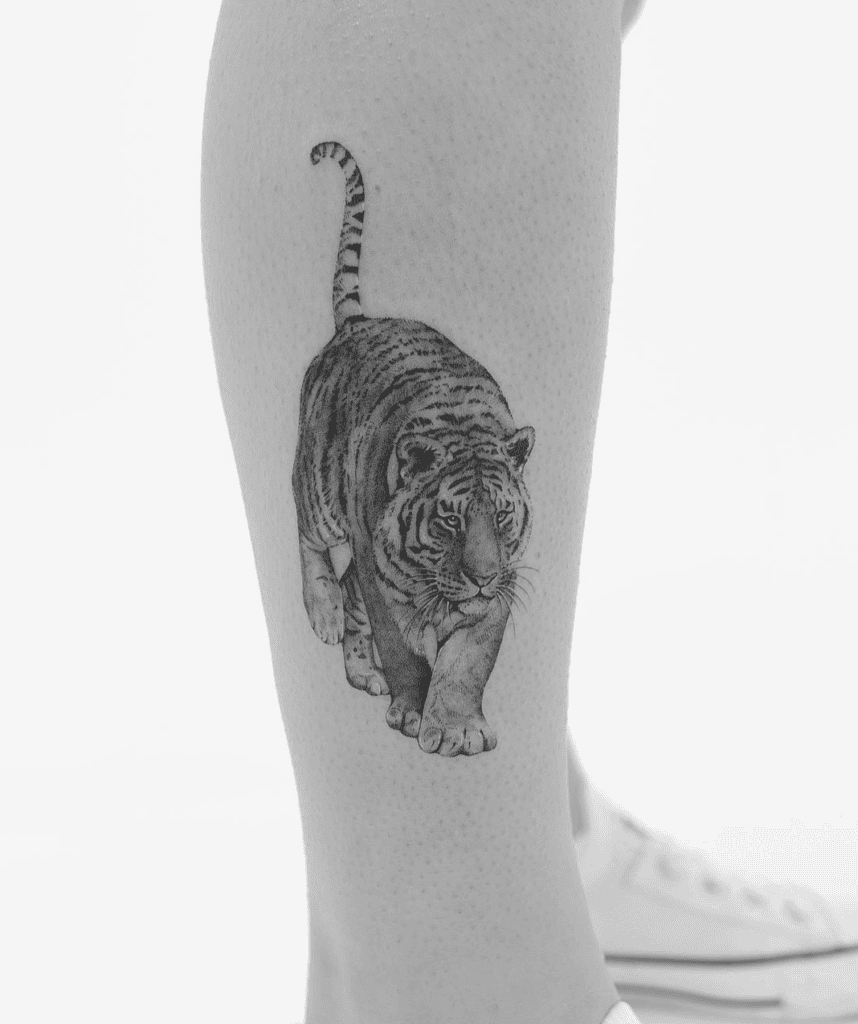
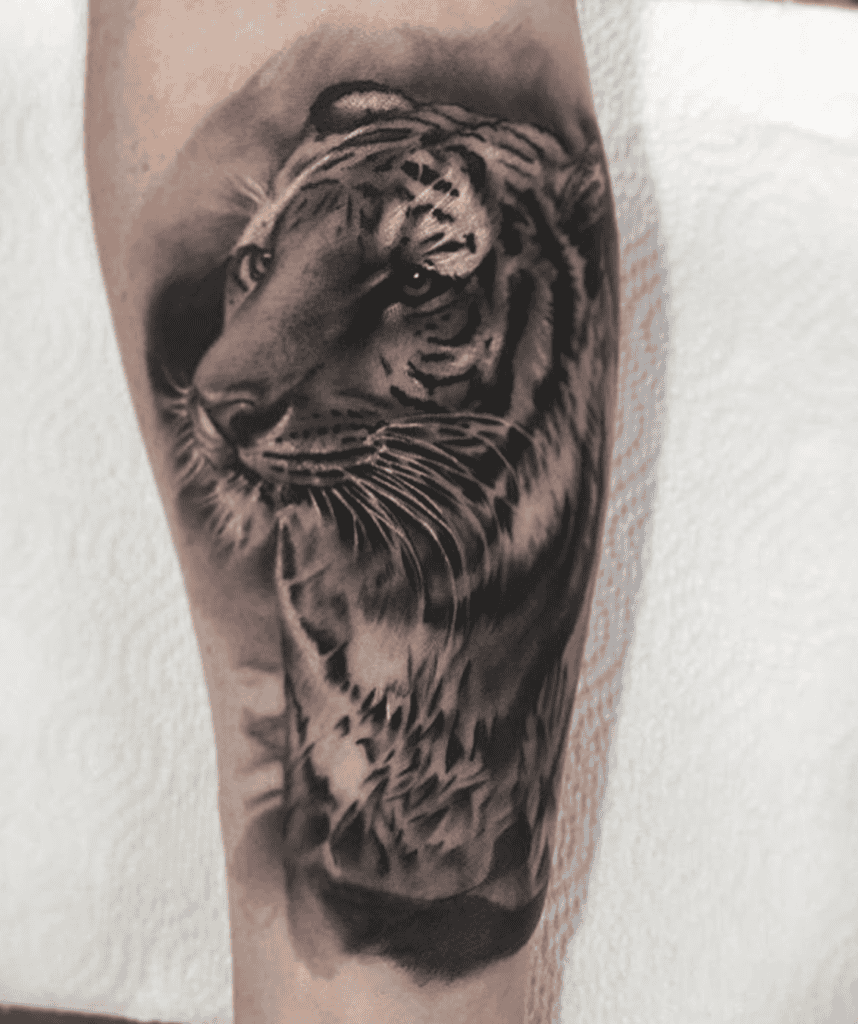
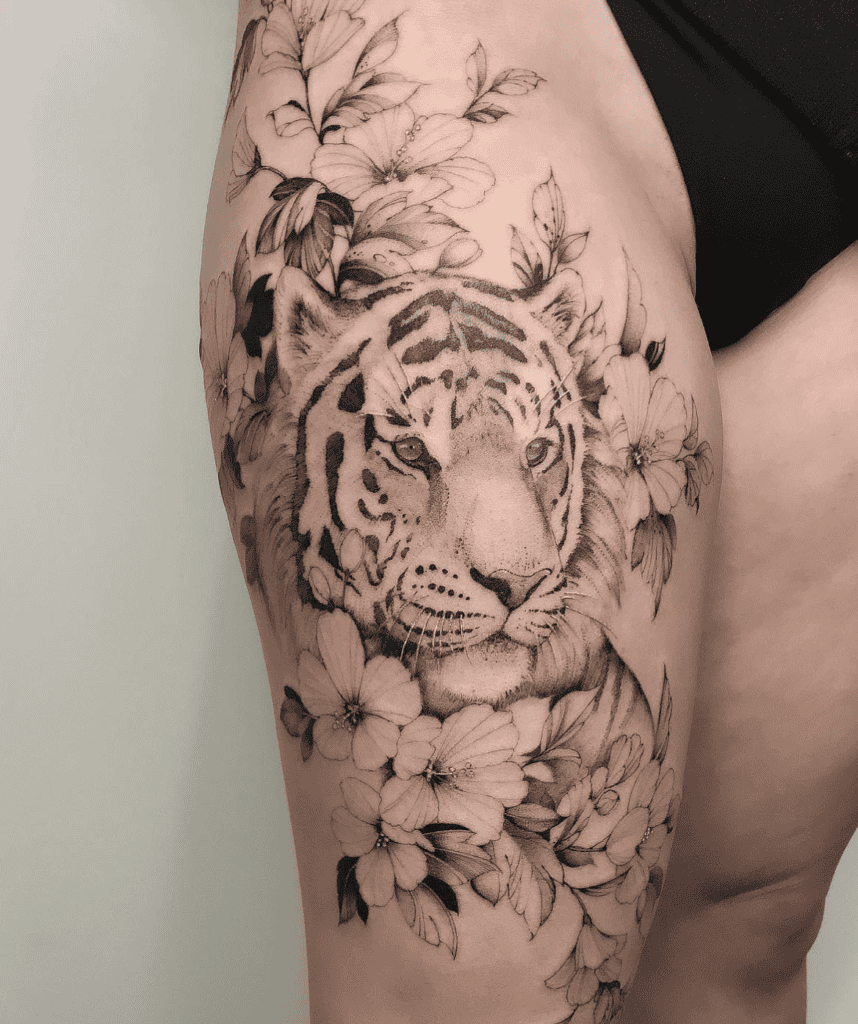
The Amur Tiger, also known as the Siberian Tiger, is the largest tiger subspecies in the world, famous for its immense size, thick fur, and ability to survive freezing temperatures.
Found in Eastern Russia and small parts of northeastern China, these endangered cats live in old forests and mountainous regions. Amur Tigers are huge, muscular cats built for survival in icy climates, and compared to their Bengal cousins, they usually have thicker fur, paler orange colouring, fewer, wider stripes, larger bodies, and extra fat layers for insulation. Their winter coat becomes extremely thick and fluffy, helping them survive temperatures that can drop below -30°C (-22°F).
Male Amur Tigers can weigh over 300 kg (660 lbs), making them the largest living cat species alongside some large lions, and their massive paws help them walk across snow more easily.
South China Tiger Tattoo
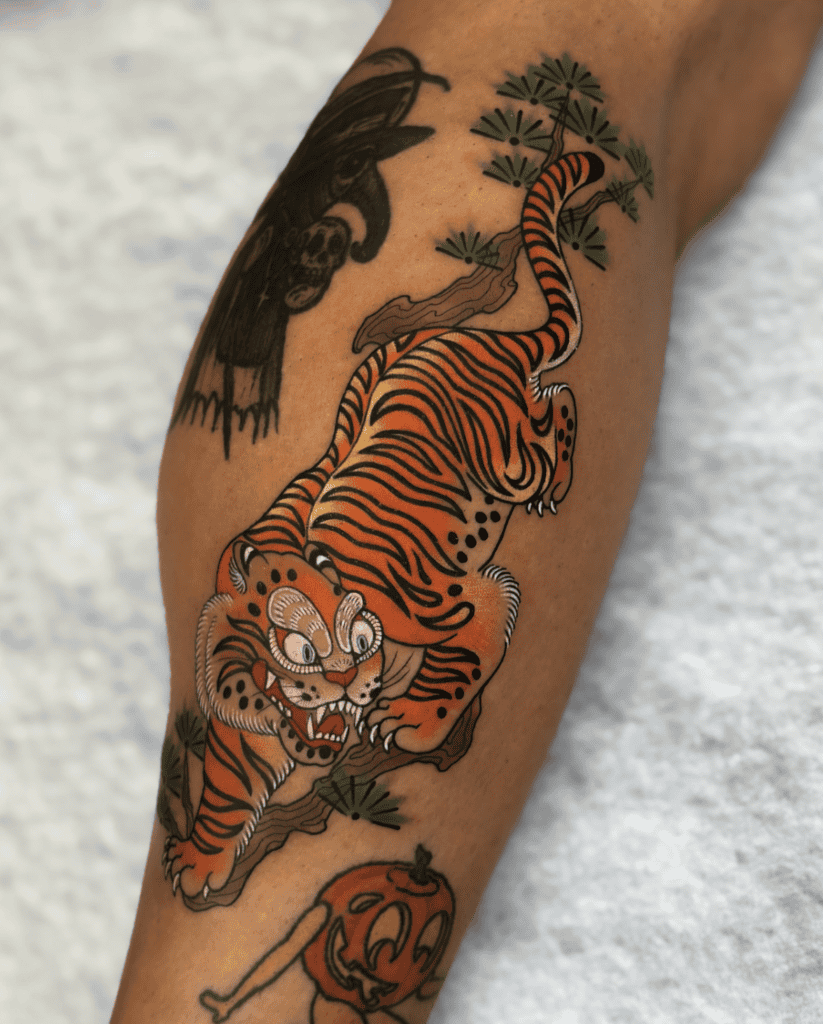
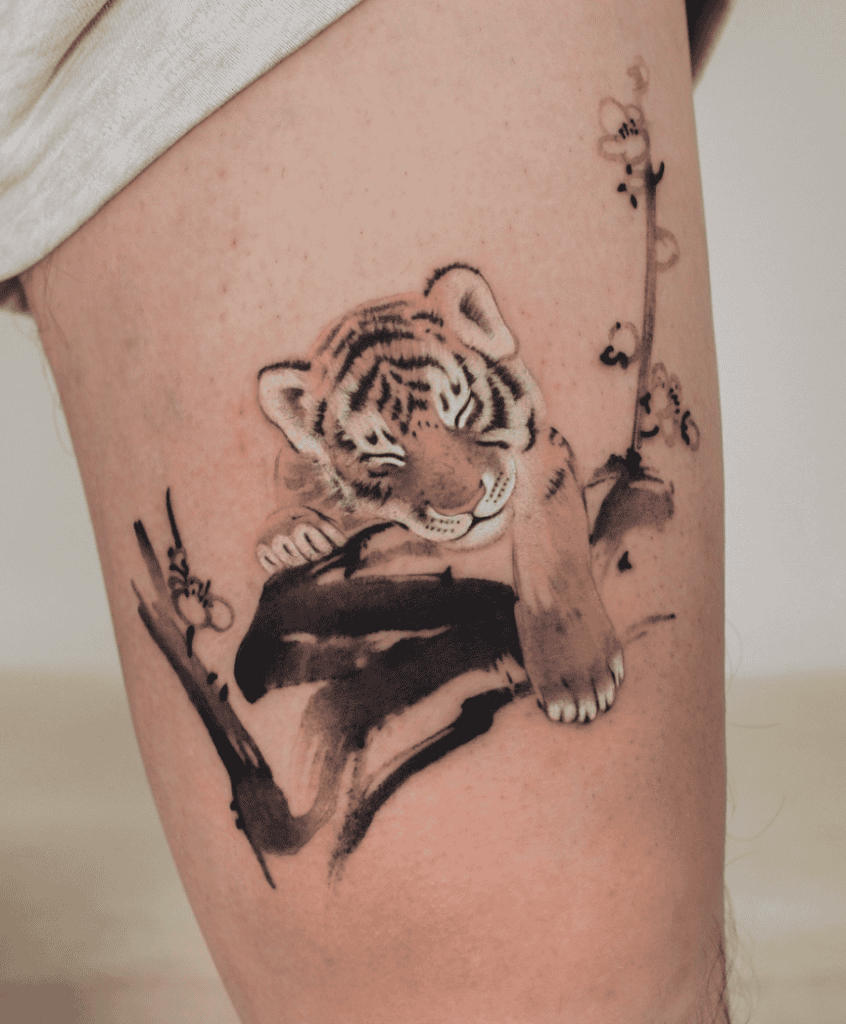
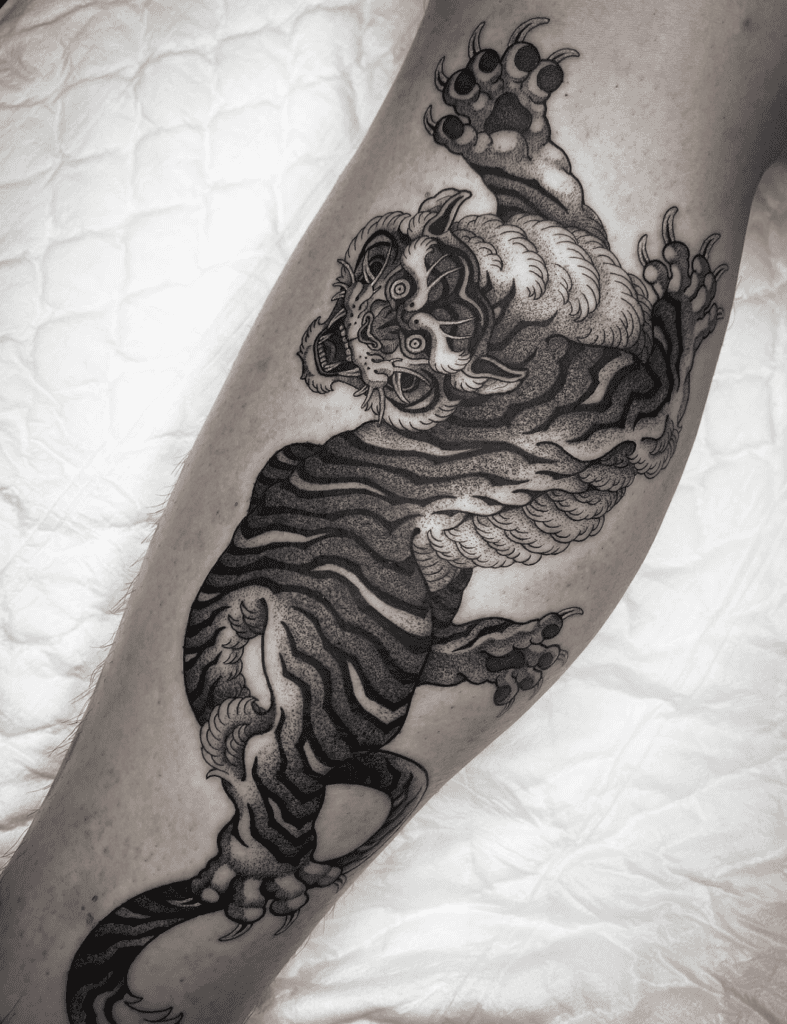
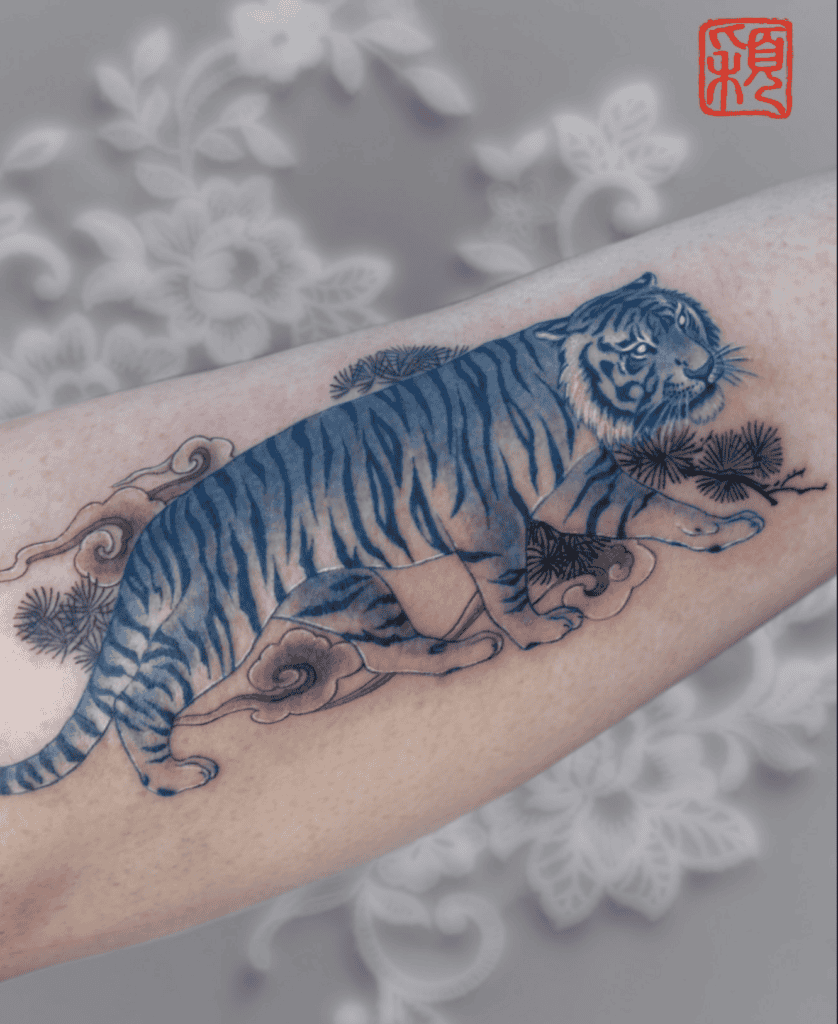
Tattoos not representative of the South Chinese Tiger*.
The South China Tiger is one of the rarest and most mysterious tiger subspecies in the world, often called a “ghost tiger” because it may already be extinct in the wild, with no confirmed wild sightings in decades
Native to Southern China, this species is critically endangered, possibly extinct in the wild, only kept alive in captivity. There have been occasional unconfirmed reports and alleged sightings, but no solid scientific proof of a surviving wild population has been accepted.
South China Tigers are generally smaller than Bengal or Amur Tigers, with bright orange fur, relatively narrow skulls and an agile, athletic build.
Maltese Tiger Tattoo
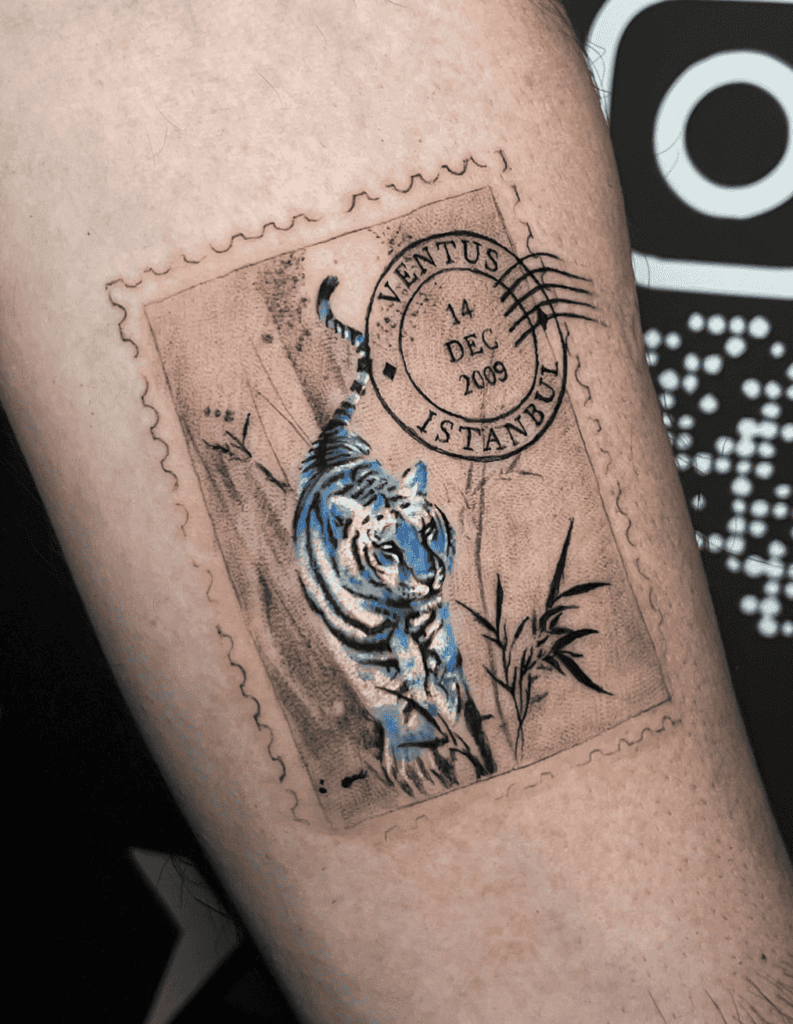
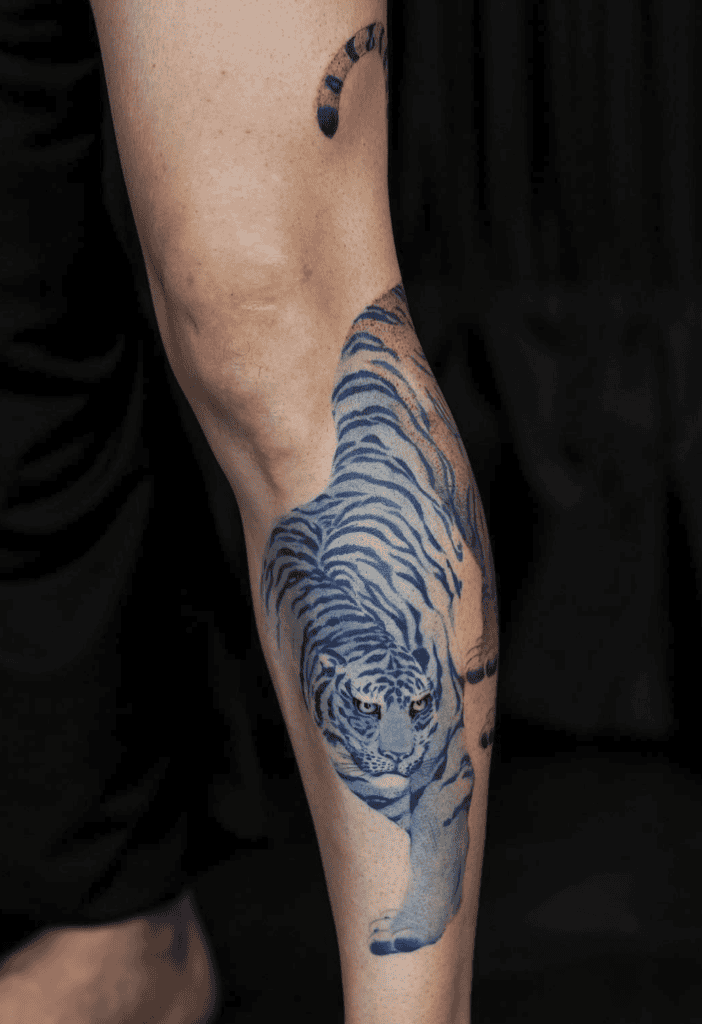
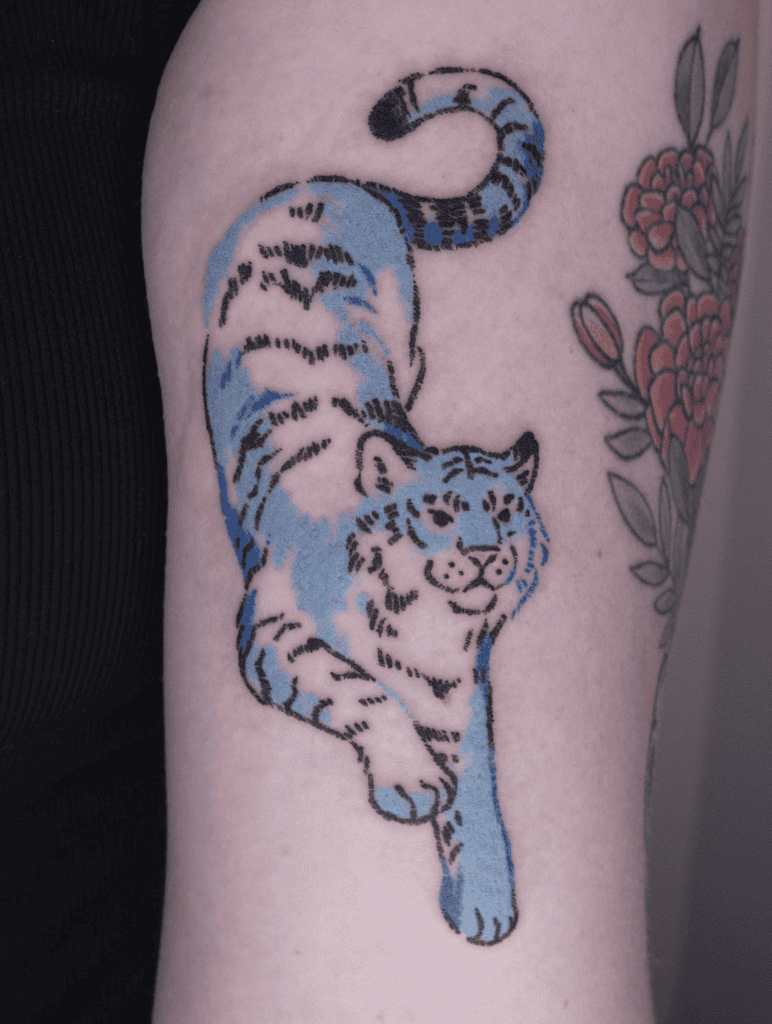
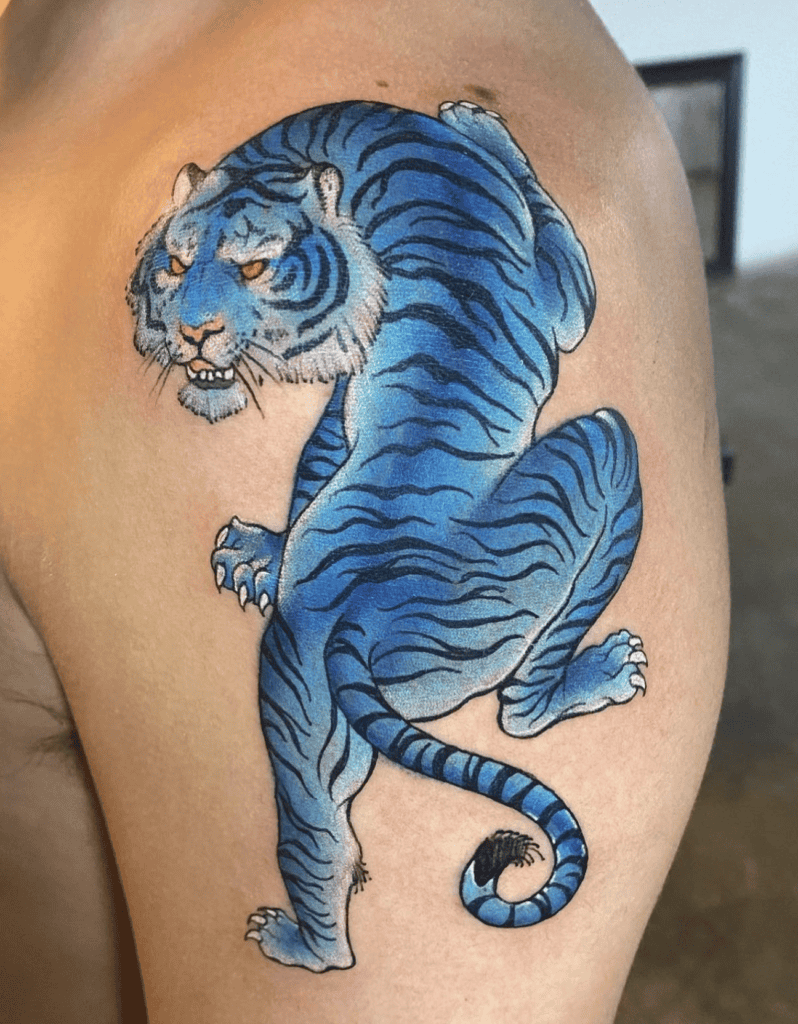
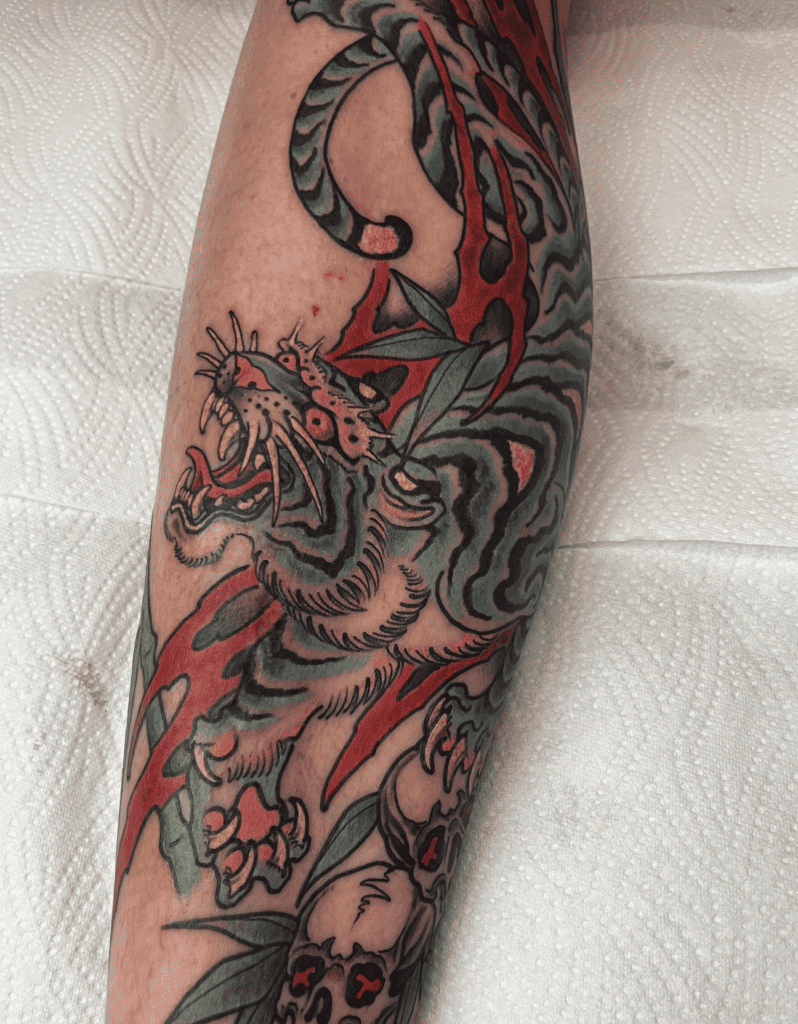
The Maltese Tiger is a legendary tiger variant, considered a cryptid or unconfirmed colour morph, famous for supposedly having blue-grey fur with dark charcoal stripes. The term “Maltese Tiger” refers to reports of unusually blue-coloured tigers, mostly connected to parts of China and Korea in older stories and hunting accounts.
People described them as having blue-grey fur, dark blue or black stripes, pale undersides, and a smoky or misty appearance. The name “Maltese” comes from the old term “Maltese blue,” which was historically used to describe grey-blue colouring in animals like cats or dogs.
There has never been a scientifically confirmed Maltese Tiger, with most experts believing the reports may have been caused by rare genetic colour mutations, optical illusions in foggy forests, or exaggerated hunting stories. However, some scientists think a blue-toned tiger colour mutation could theoretically exist, much like white tigers or melanistic big cats.
Many of the old stories about blue tigers came from regions where the South China Tiger once lived. Because of this, some people speculate that if Maltese Tigers ever existed, they may have been rare colour variations of South China Tigers.
Indochinese Tiger Tattoo


The Indochinese Tiger is a rare and elusive tiger subspecies native to Southeast Asia. Smaller and more secretive than Bengal Tigers, these tigers are famous for living deep within dense forests and mountainous jungles where humans rarely see them.
Found in Thailand, Myanmar, Laos, and nearby parts of Southeast Asia, this endangered species lives in tropical forests, mountains, and jungles. Indochinese Tigers are generally smaller and leaner than Bengal Tigers, with darker orange fur, narrower black stripes, more compact builds, and a strong athletic body suited for rough terrain.
Malayan Tiger Tattoo
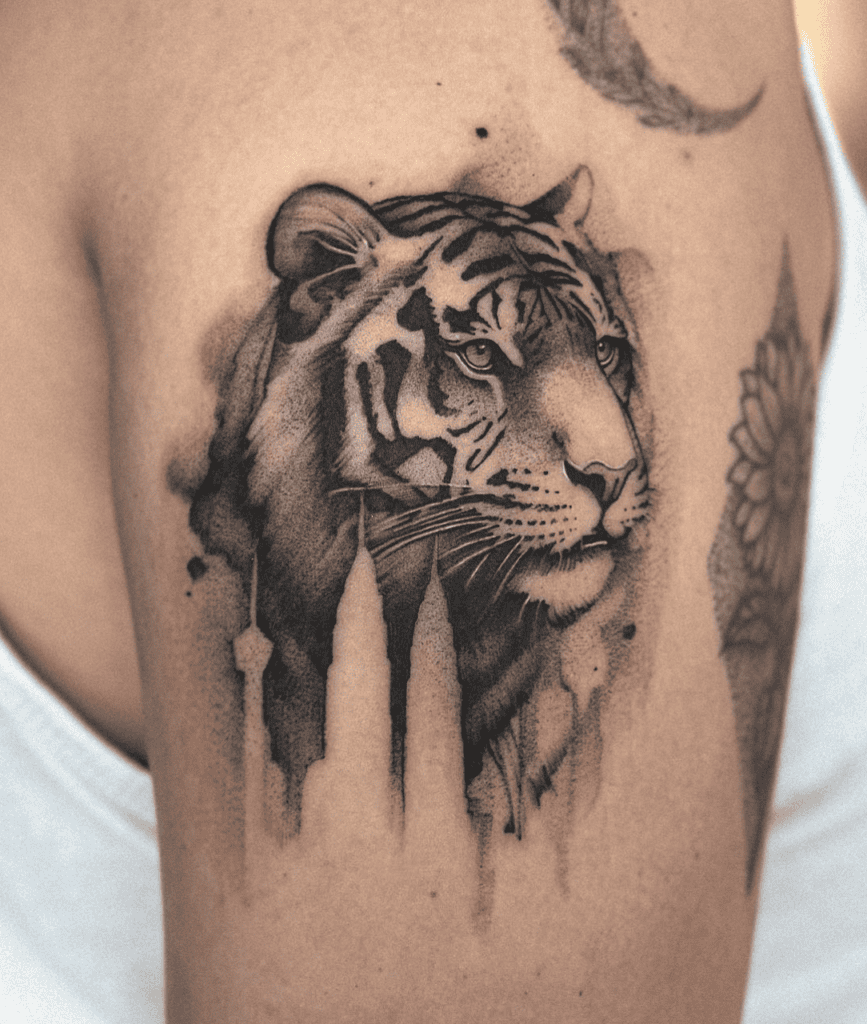
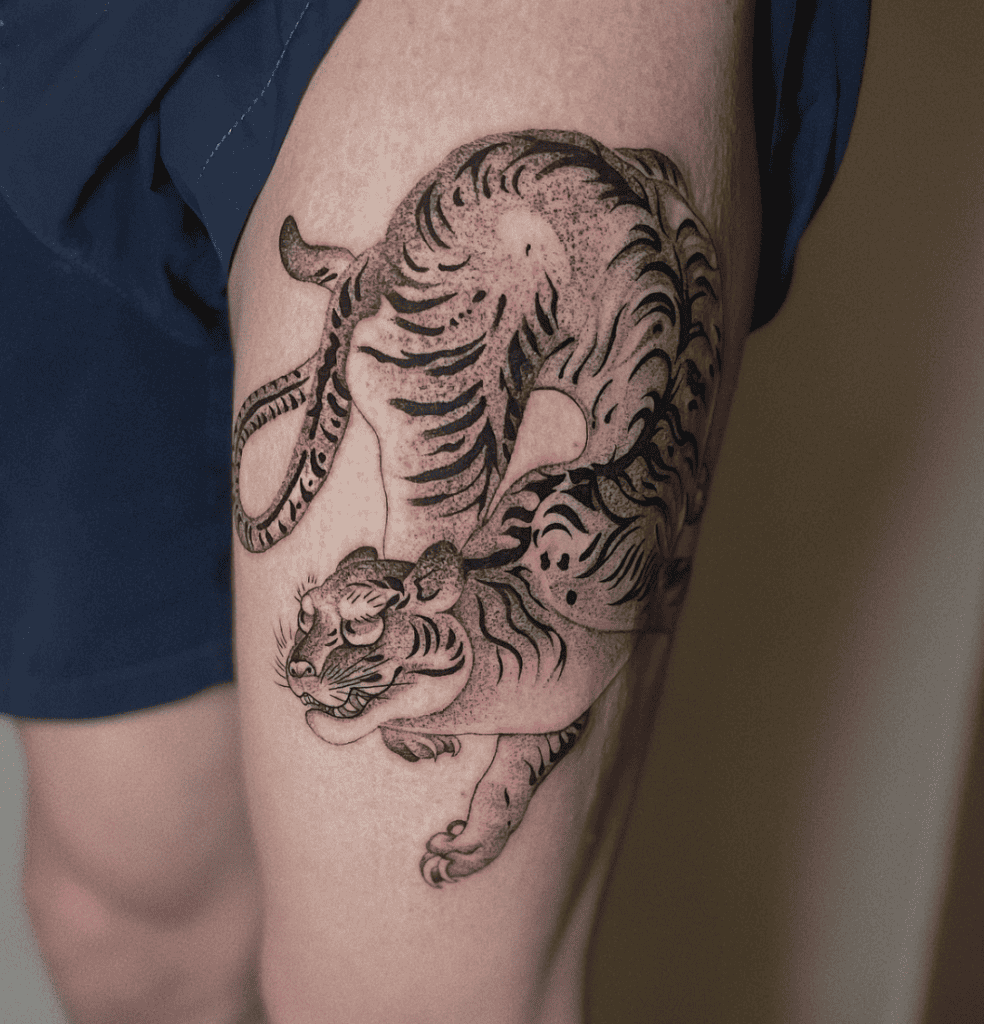
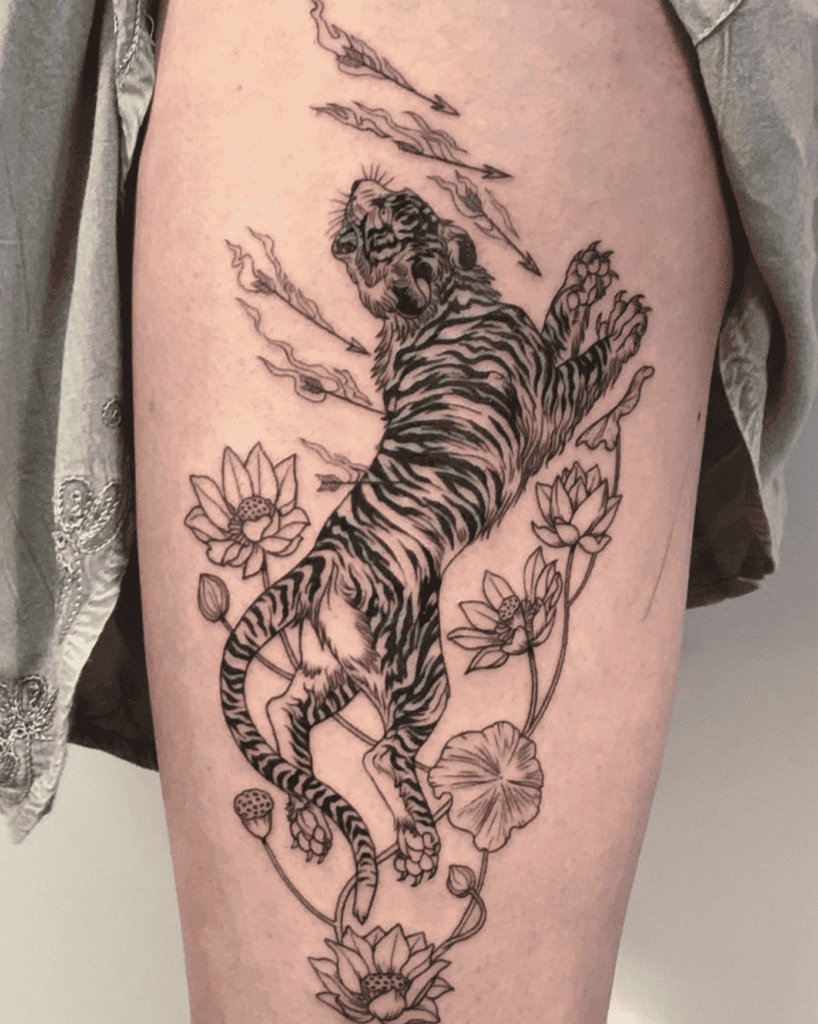
The Malayan Tiger is a critically endangered tiger subspecies native to the tropical forests of the Malay Peninsula. Smaller than Bengal or Amur Tigers but incredibly agile and powerful, the Malayan Tiger is one of the rarest big cats alive today.
Native to Peninsular Malaysia, this critically endangered species can be found in tropical rainforests and dense jungle. The Malayan Tiger was only officially recognised as a separate tiger subspecies in the early 2000s after genetic studies showed it differed from the Indochinese Tiger. Its scientific name, ‘Panthera tigris jacksoni’, honours conservationist Peter Jackson, a major figure in tiger conservation.
Malayan Tigers are generally smaller than many other tiger subspecies, with rich orange coats, thin black stripes, athletic builds, and strong limbs adapted for dense jungle terrain.
Sumatran Tiger Tattoo
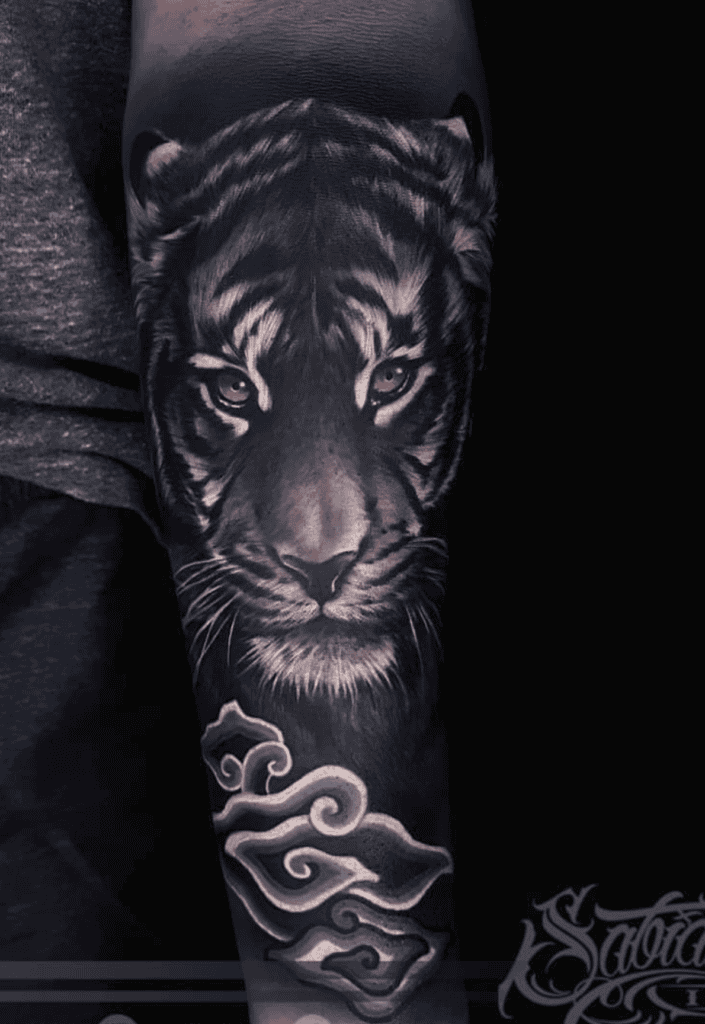
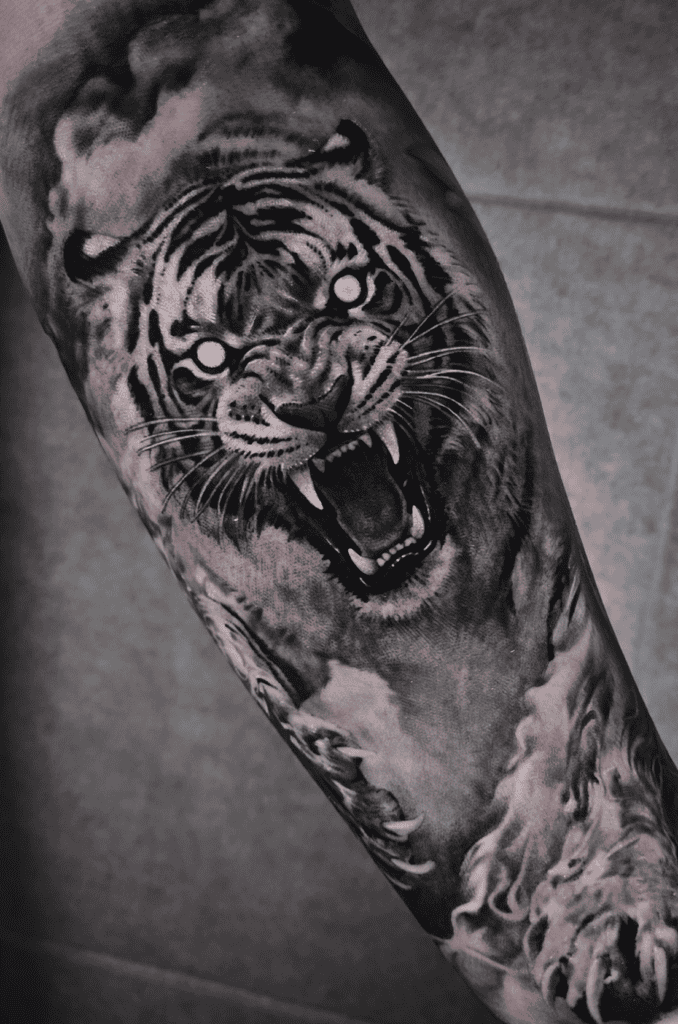
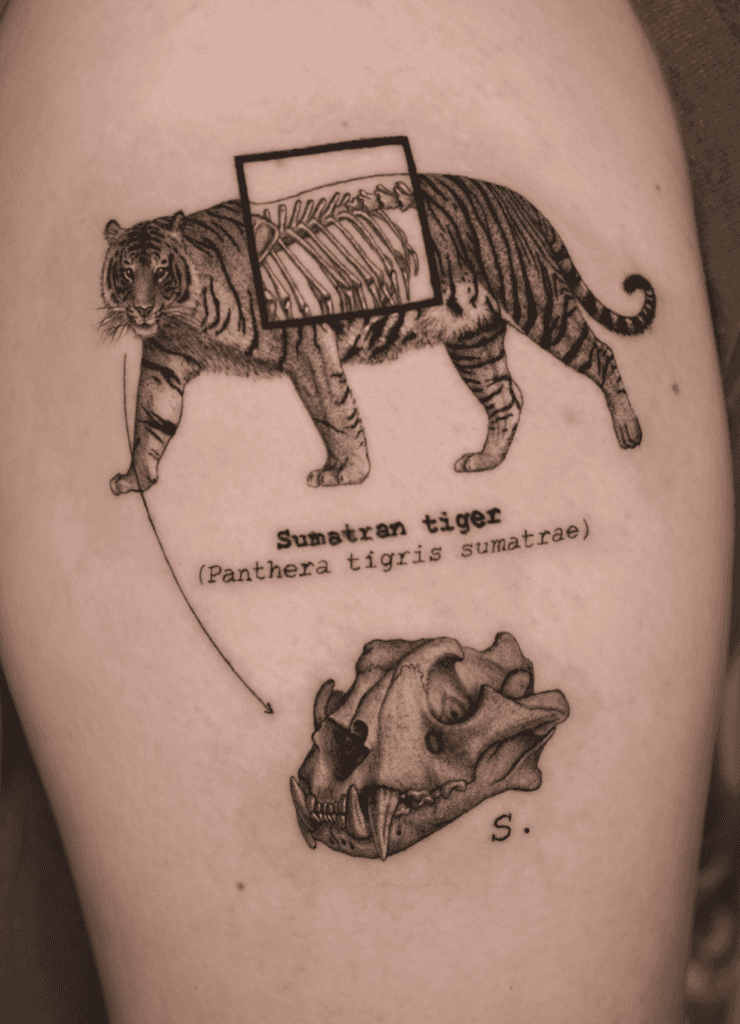
The Sumatran Tiger is the smallest surviving tiger subspecies and one of the rarest big cats in the world. Native only to the Indonesian island of Sumatra. Native only to Sumatra, Indonesia, this critically endangered species lives in tropical rainforests, swamps, and mountainous jungles.
Smaller than Bengal or Amur Tigers, these cats have dark orange coats, very close, narrow black stripes, thick fur around the neck and face and muscular but compact builds. Male Sumatran Tigers often develop a noticeable mane-like ruff around their cheeks and neck, giving them a particularly fierce appearance.
Bali Tiger Tattoo

Tattoos not representative of the Bali Tiger*.
The Bali Tiger was the smallest known tiger subspecies and one of the first tiger subspecies driven to extinction in modern history. Native only to the Indonesian island of Bali, this tiger became extinct during the 20th century.
Native to Bali, this extinct species once lived in the forests and grasslands. Because of the island’s small size, the Bali Tiger naturally had a limited population even before humans heavily impacted its habitat.
The last officially recorded Bali Tiger is believed to have been killed in the 1930s, and after that, no confirmed sightings remained. Because Bali is an island, there was no nearby tiger population to naturally restore their numbers once they vanished.
Javan Tiger Tattoo


Tattoos not representative of the Javan Tiger*.
The Javan Tiger was a tiger subspecies native to the Indonesian island of Java. Known for its deep colouring and dense jungle habitat, the Javan Tiger became extinct during the late 20th century and is now remembered as one of the great lost predators of Southeast Asia.
Native to Java, Indonesia, this extinct species once roamed the islands’ tropical forests and mountainous jungles. Possible sightings of Javan Tigers continued into the 1970s and 1980s, but no confirmed evidence has emerged for many years.
Today, the Javan Tiger is considered extinct; however, occasional rumours and unconfirmed reports still appear from remote forest areas, adding an air of mystery around the subspecies.
Caspian Tiger Tattoo


Tattoos not representative of the Caspian Tiger*.
The Caspian Tiger, sometimes called the “Persian Tiger” or “Hyrcanian Tiger, was one of the largest and most legendary tiger subspecies ever known. Once roaming across Central Asia, the Middle East, and areas surrounding the Caspian Sea, this powerful tiger became extinct during the 20th century.
Formerly found in Turkey, Iran, Iraq, Central Asia, and areas near the Caspian Sea, this extinct species once roamed the river forests, reed beds, wetlands, and grasslands, having one of the largest historical ranges of any tiger subspecies.
A massive and heavily built tiger, it had long limbs, thick winter fur, narrow, closely packed stripes, a large, muscular body and a pale golden-orange colouring, with some rivalling the size of large Amur Tigers.
Modern genetic studies revealed that the Caspian Tiger and the Amur Tiger were extremely closely related, possibly even nearly identical genetically. Because of this, some conservationists have discussed whether Amur Tigers could one day help restore tiger populations to parts of Central Asia.
Liger Tattoo

A Liger is a hybrid big cat created by breeding a male lion with a female tiger. Famous for their enormous size, ligers are among the largest cats ever known and combine traits from both lions and tigers.
Because they are hybrids, ligers do not naturally exist in the wild and are almost entirely found in captivity. They usually inherit a mix of features from both parents, having a lion-like body shape, faint tiger stripes, sandy or golden fur, and a massive size.
Some ligers can grow larger than both lions and tigers because of unusual genetic growth factors inherited from their parents. Large ligers may exceed 3.5 metres (11+ feet) in length, and 400 kg (880+ lbs) in weight, making them some of the biggest cats ever recorded.
White Tiger Tattoo
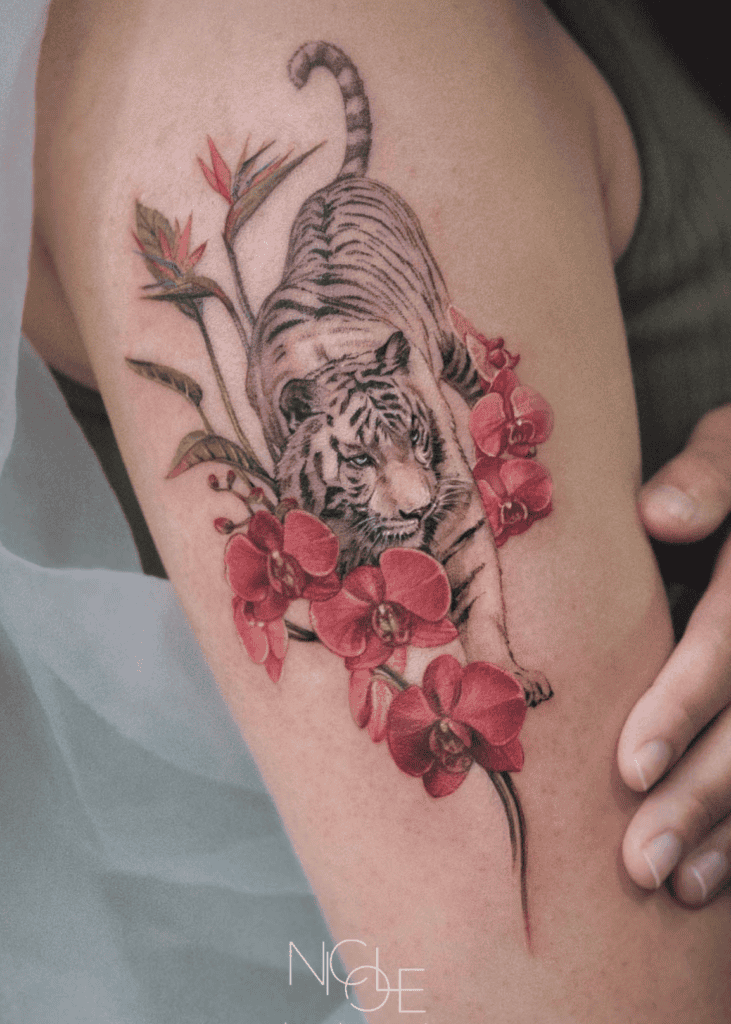
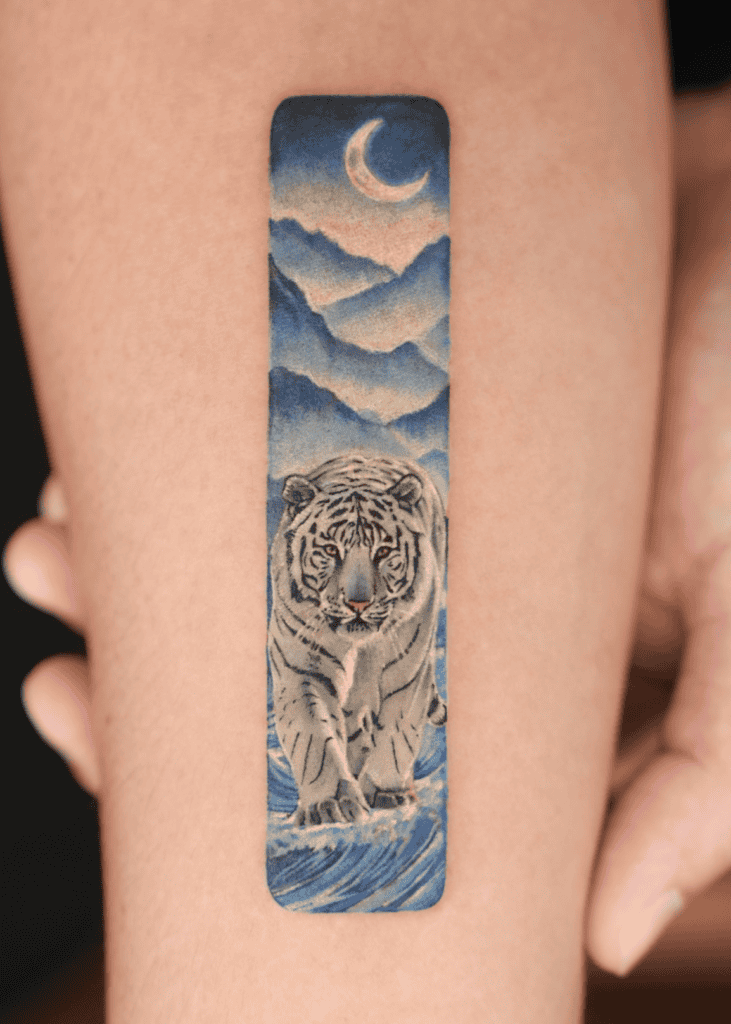
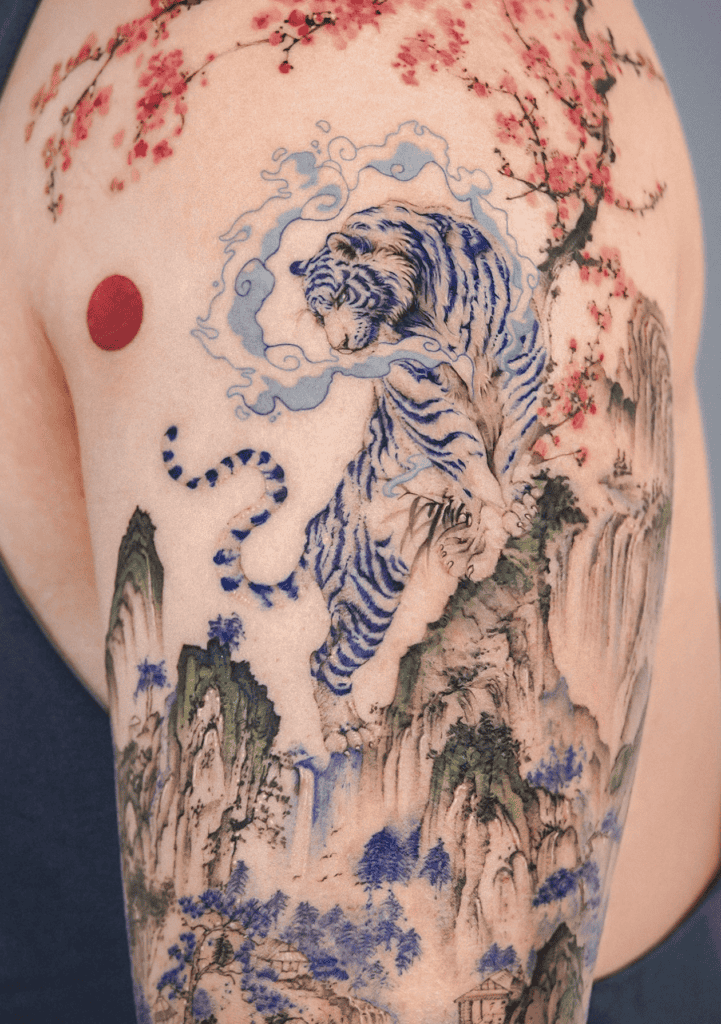
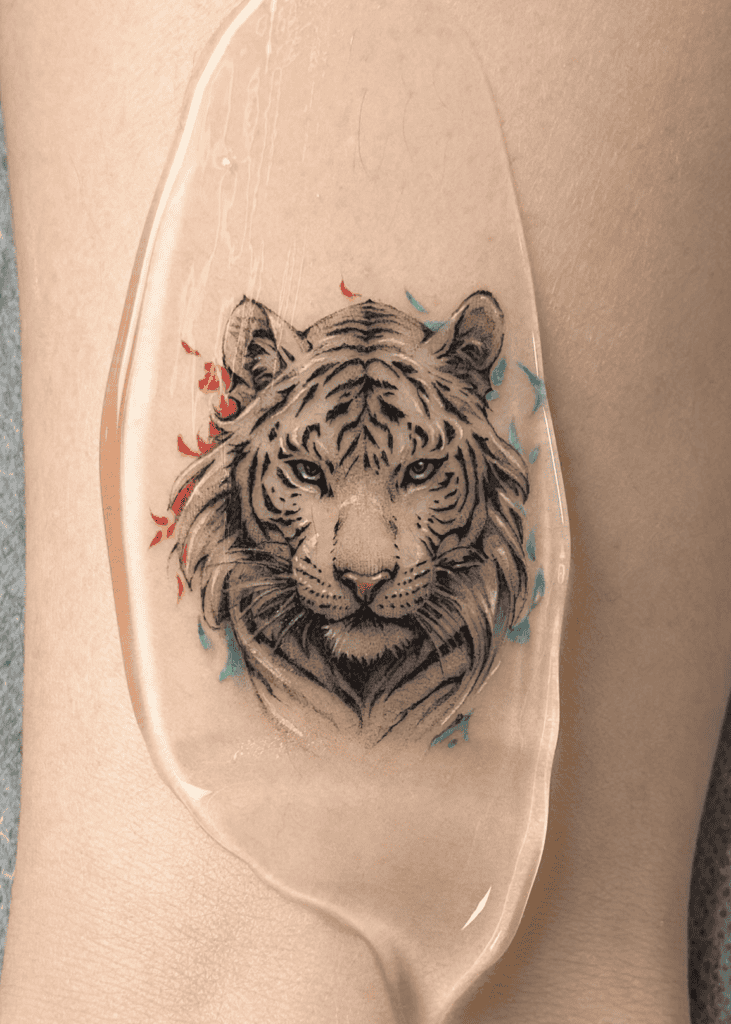
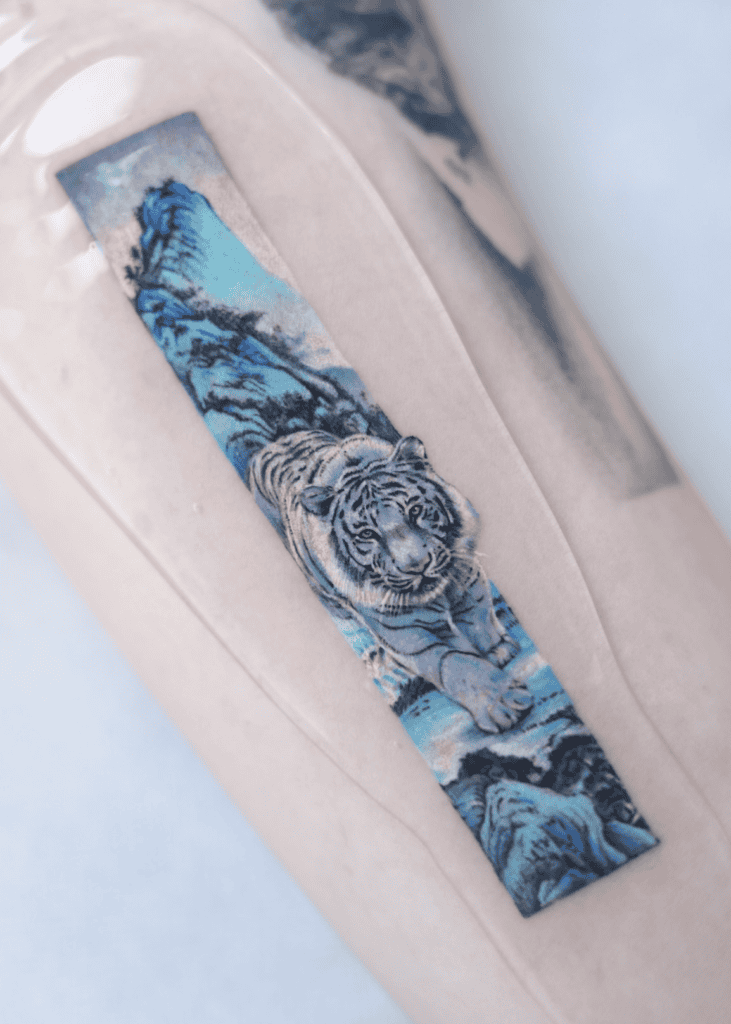
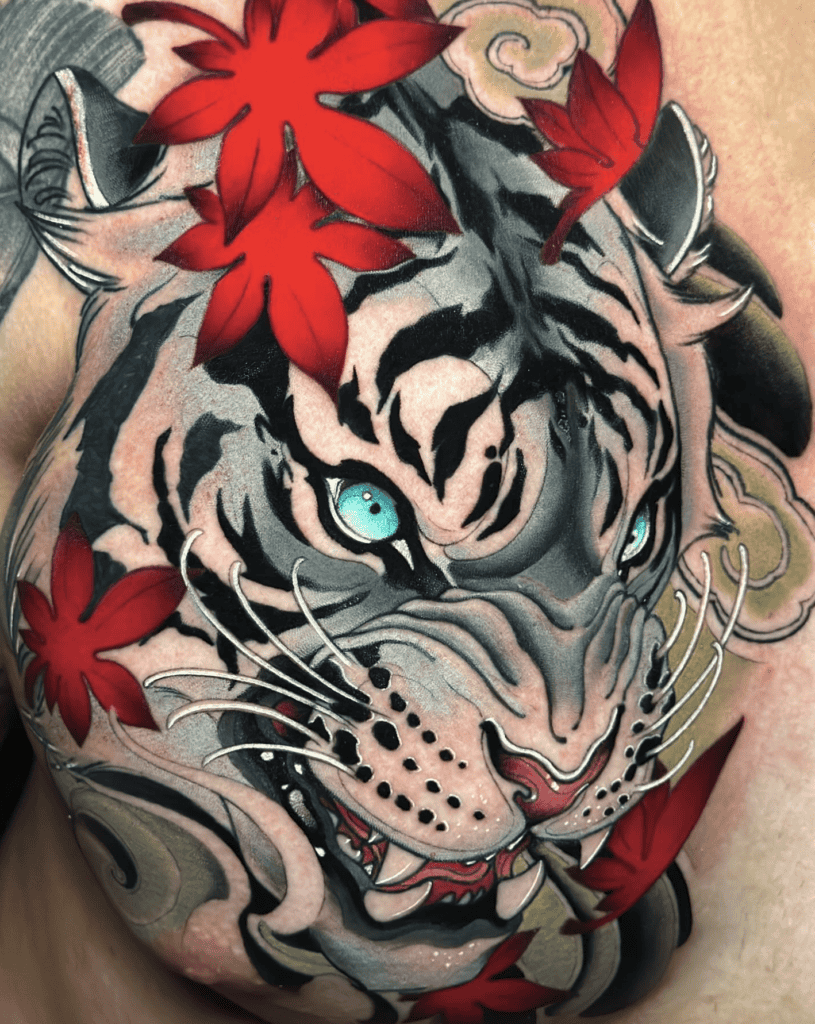
White Tigers are a rare colour variant of the Bengal Tiger caused by a genetic condition called leucism. White Tigers inherit this rare recessive gene, reducing orange pigmentation in their fur.
Leucism is different from albinism, meaning these cats still have black or dark brown stripes, their eyes are usually blue, their noses are pink, and they are not completely pigment-free. If two tigers carrying the rare gene reproduce, there is a chance their cubs may be white.
The most famous modern White Tiger lineage began with a tiger named Mohan, captured in India in the 1950s. Many captive White Tigers today are descendants of this single tiger. Because of this limited bloodline, many White Tigers were heavily inbred in captivity to preserve the white coat trait.
Sabertooth Tiger Tattoo
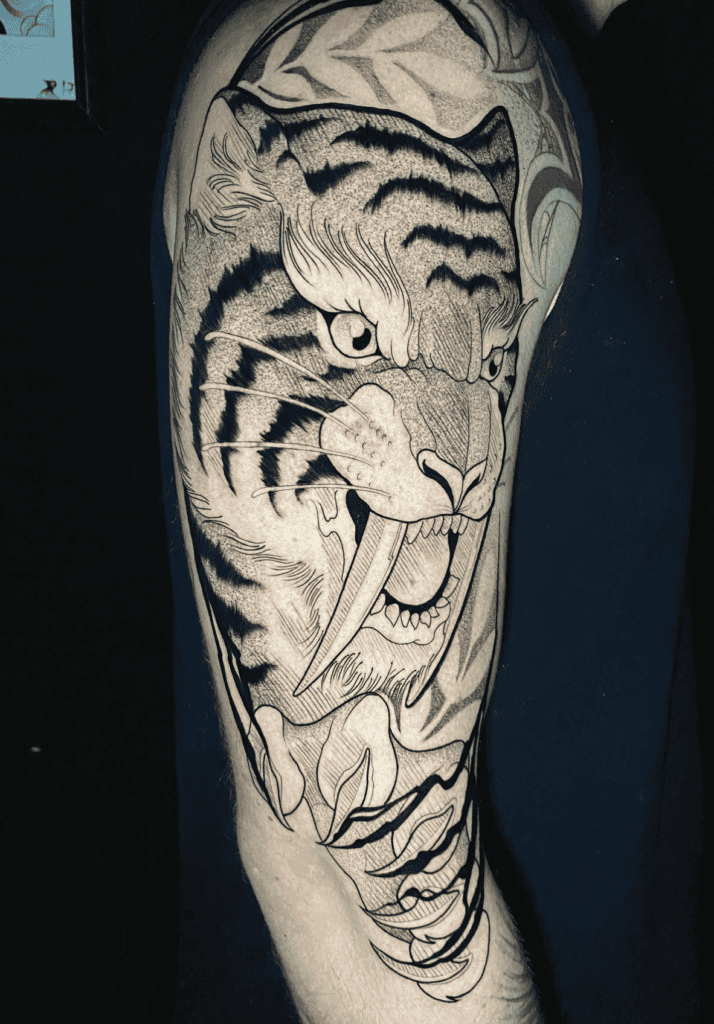
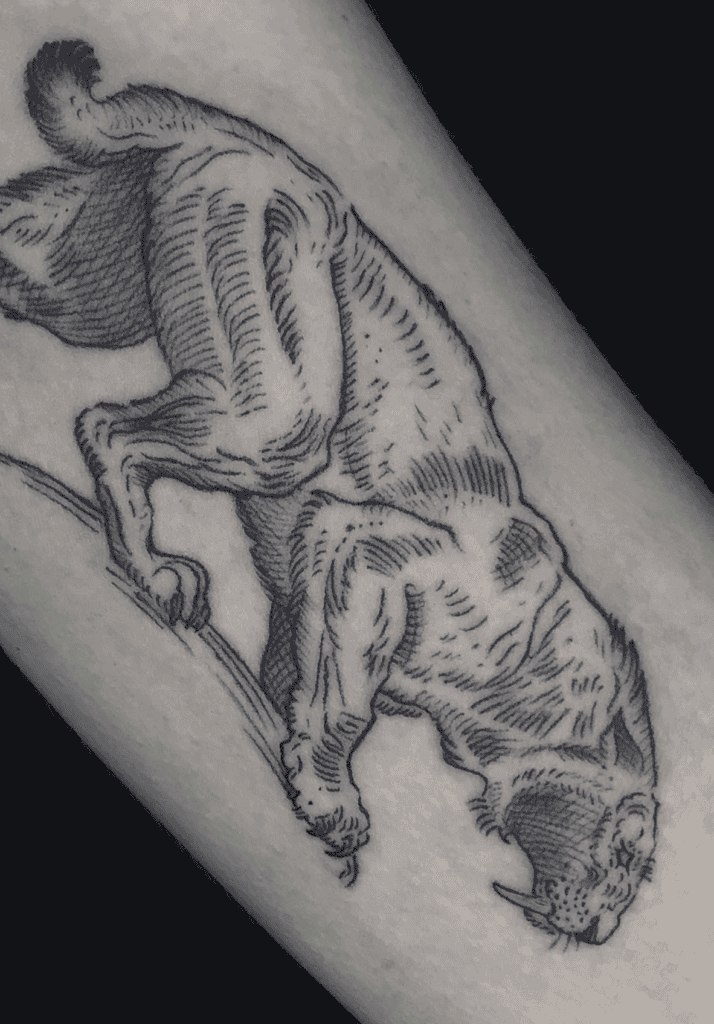
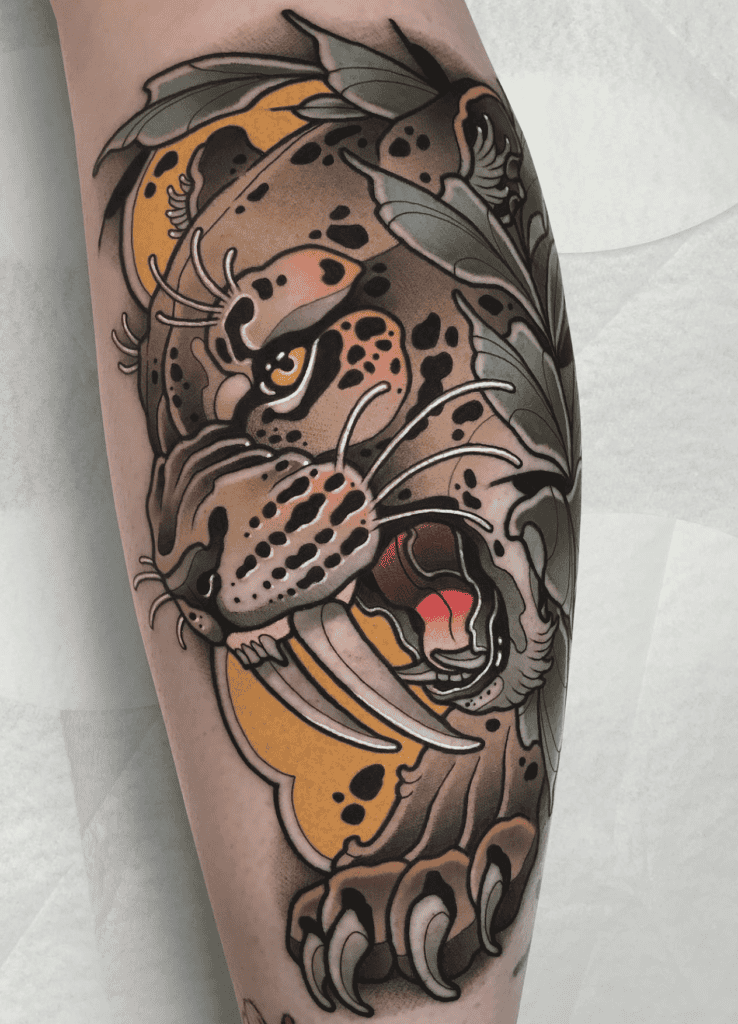
The Sabertooth Tiger is one of the most famous prehistoric predators ever discovered, but despite its name, it wasn’t actually a true tiger predecessor. The creature most people call the Sabertooth Tiger was a prehistoric big cat called Smilodon, famous for its enormous curved canine teeth that could grow over 20 cm (8 inches) long.
The Sabertooth Tiger was a prehistoric predator that lived during the Ice Age, belonging to a group called sabre-toothed cats, which were distant relatives of modern big cats but evolved separately from true tigers.
Sabretooth cats disappeared around the end of the Ice Age, roughly 10,000 years ago, possibly due to climate change, loss of large prey animals, competition with humans, and ecosystem changes. As giant Ice Age animals disappeared, Smilodon may have struggled to adapt.
Byakko Tiger Tattoo


Byakko is the legendary White Tiger of the West in Japanese mythology and East Asian cosmology, one of the Four Symbols, four divine guardian beasts connected to the heavens, directions, seasons, and elements.
Byakko (白虎) literally means “White Tiger” in Japanese. It originates from Chinese mythology, where it is known as Baihu, before becoming an important figure in Japanese, Korean, and other East Asian traditions.
In some traditions, Byakko only appears when the world is at peace, a virtuous ruler governs, or great balance exists. Because of this, the White Tiger became associated not only with war and power but also with righteous leadership and harmony.
Durgha’s Tiger Tattoo
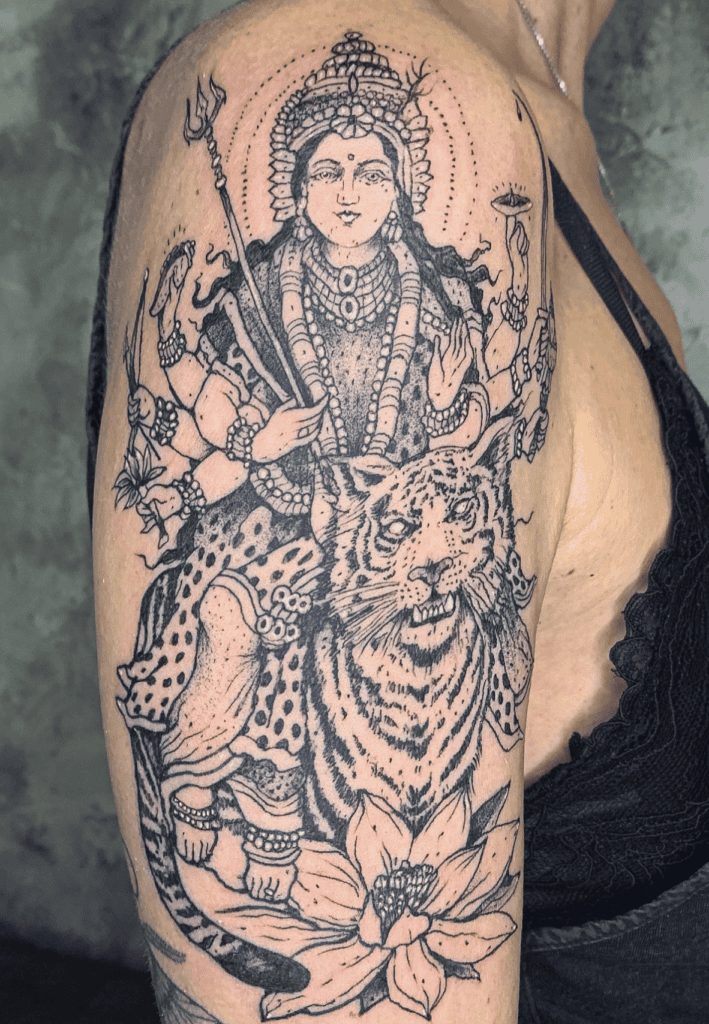
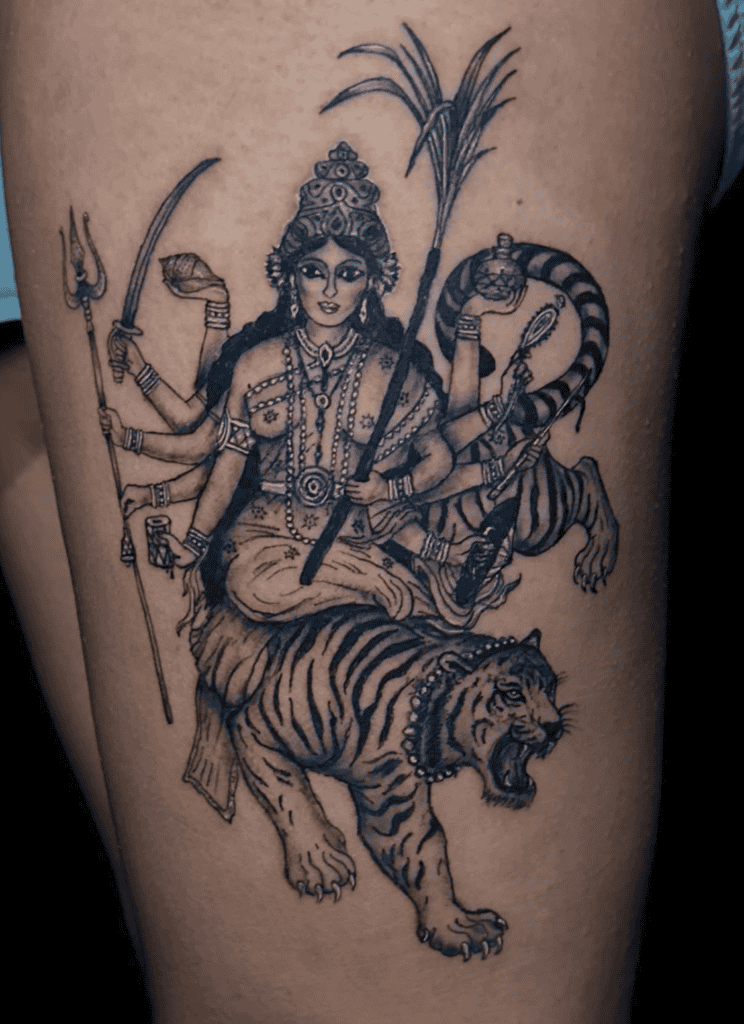
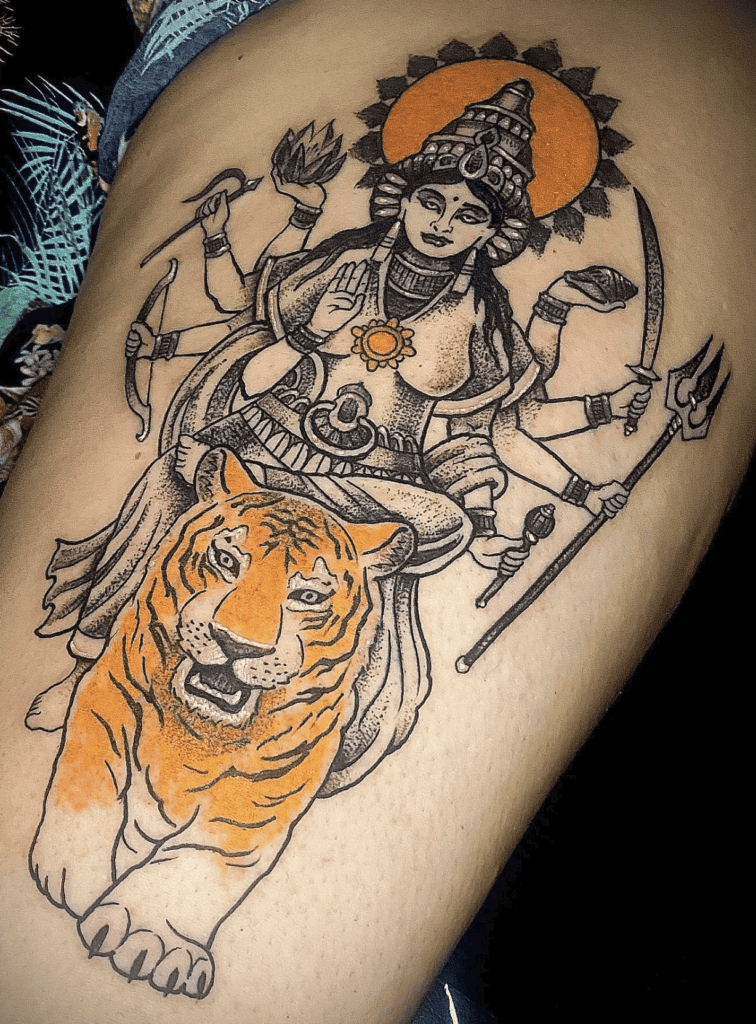
Durga’s Tiger is the powerful sacred tiger associated with the Hindu goddess Durga, one of the most important and revered deities in Hindu mythology. The tiger represents her immense strength, divine power, fearlessness, and mastery over chaos.
In many depictions, Durga is shown riding either a tiger or a lion while carrying divine weapons in her many arms. The tiger symbolises many of Durga’s divine qualities, including raw power, fearlessness, determination, control over animal instincts, victory over evil and courage during hardship. By riding the tiger, Durga demonstrates mastery over both inner and outer chaos.
Taiwan Tiger Tattoo
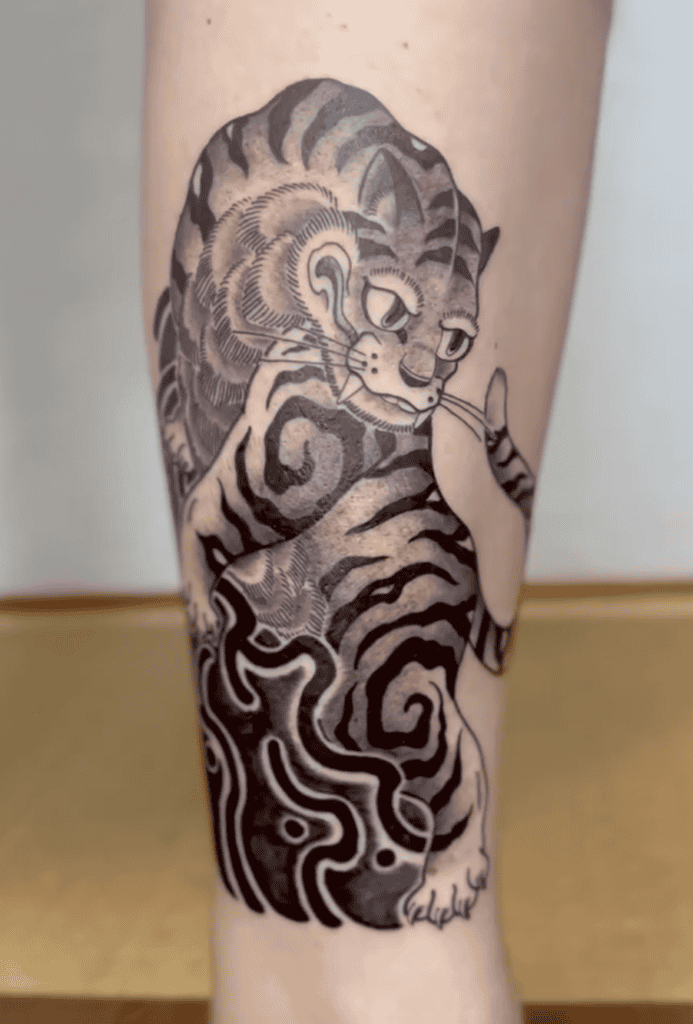
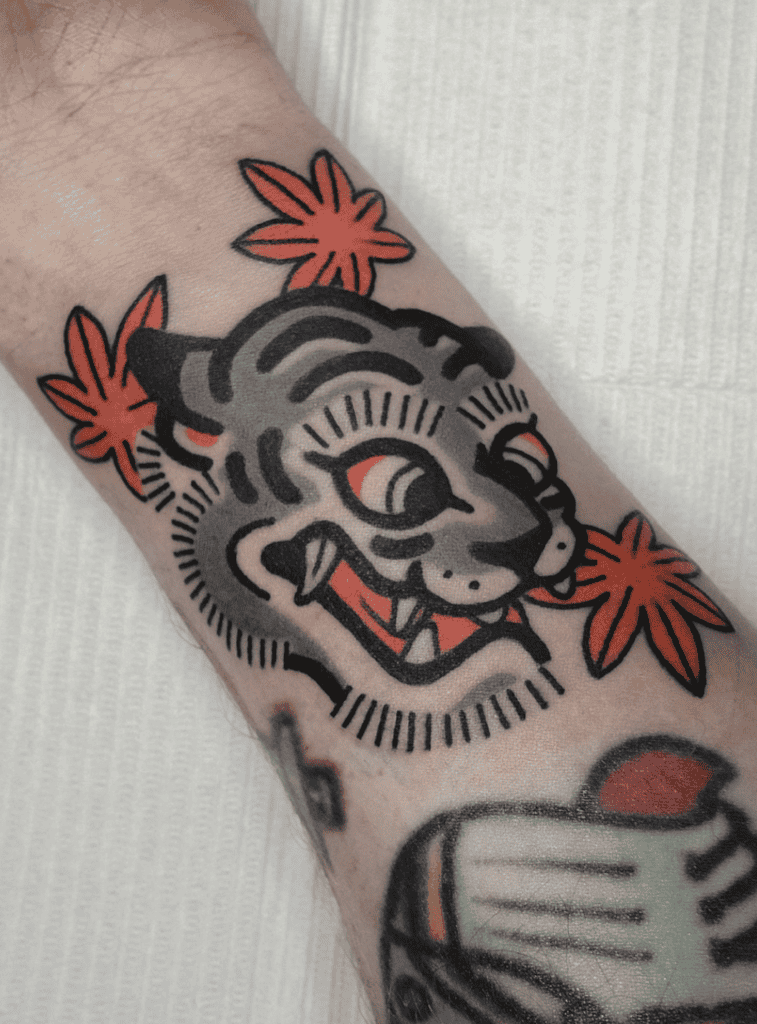
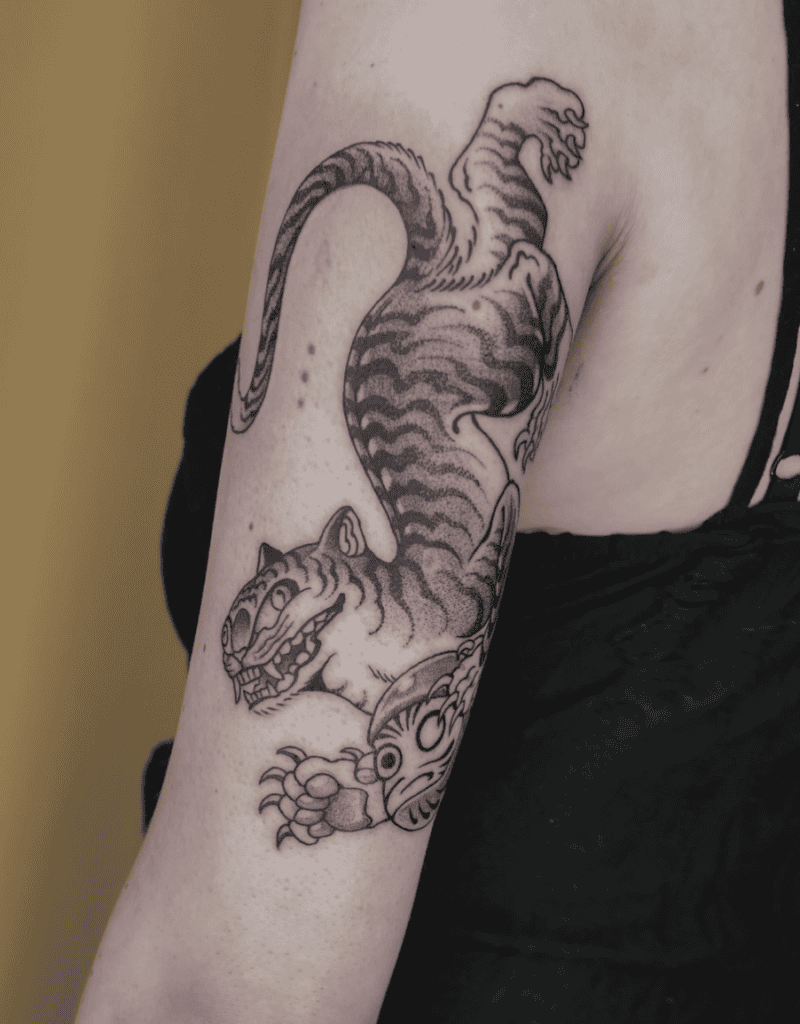
Tigers have a fascinating role in Taiwanese mythology and folklore, where they are often seen as powerful spiritual creatures connected to protection, mountains, danger, and the supernatural.
Taiwanese tiger legends are influenced by a mix of Indigenous Taiwanese beliefs, Chinese mythology, Taoist traditions, and Folk religion. Because Taiwan is mountainous and once had wild big cats nearby in the surrounding regions of Asia, tigers became symbols of both fear and respect.
In Taiwanese folk religion, tigers are often viewed as protective spiritual beings, symbolising protection against evil spirits, courage, military power, good fortune, and strength over chaos, and can be commonly found in temples, talismans, folk paintings, and religious carvings. Some Taoist temples in Taiwan feature tiger guardians alongside dragons, representing balance between different cosmic forces.
Korean Tiger Tattoo
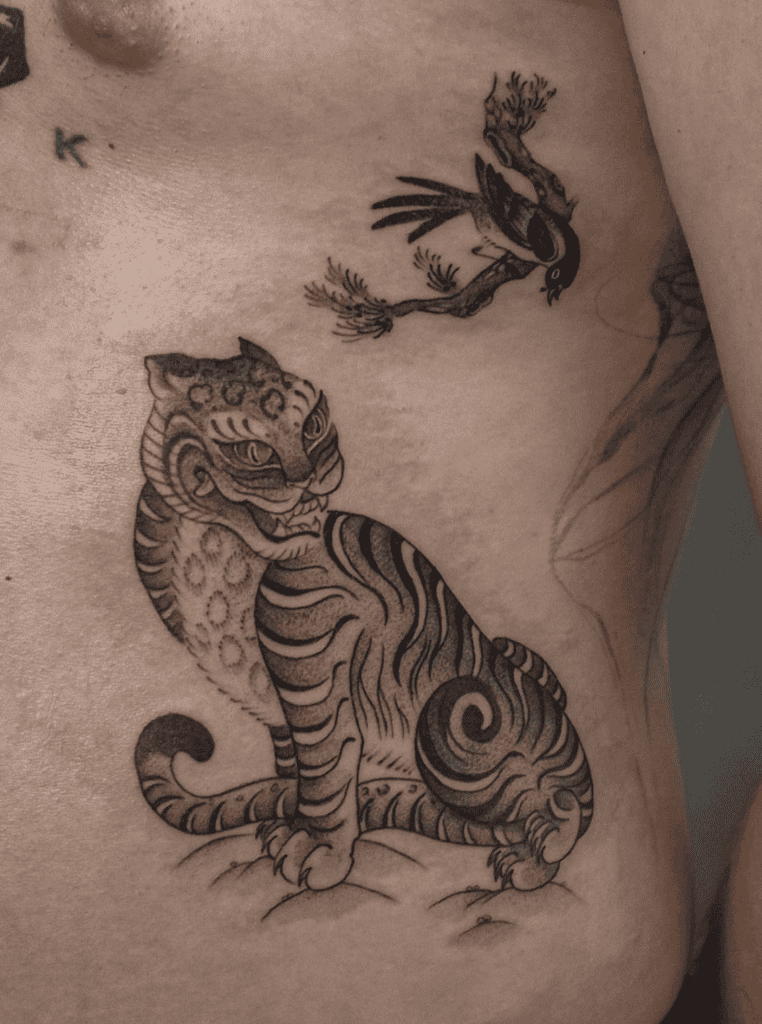
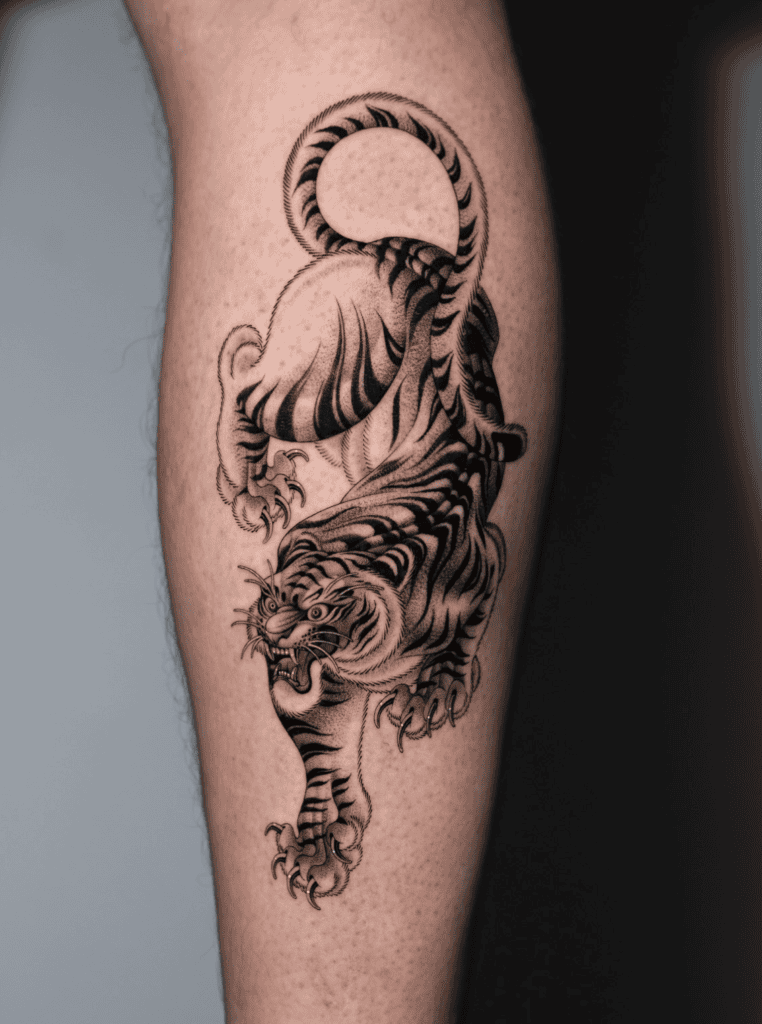
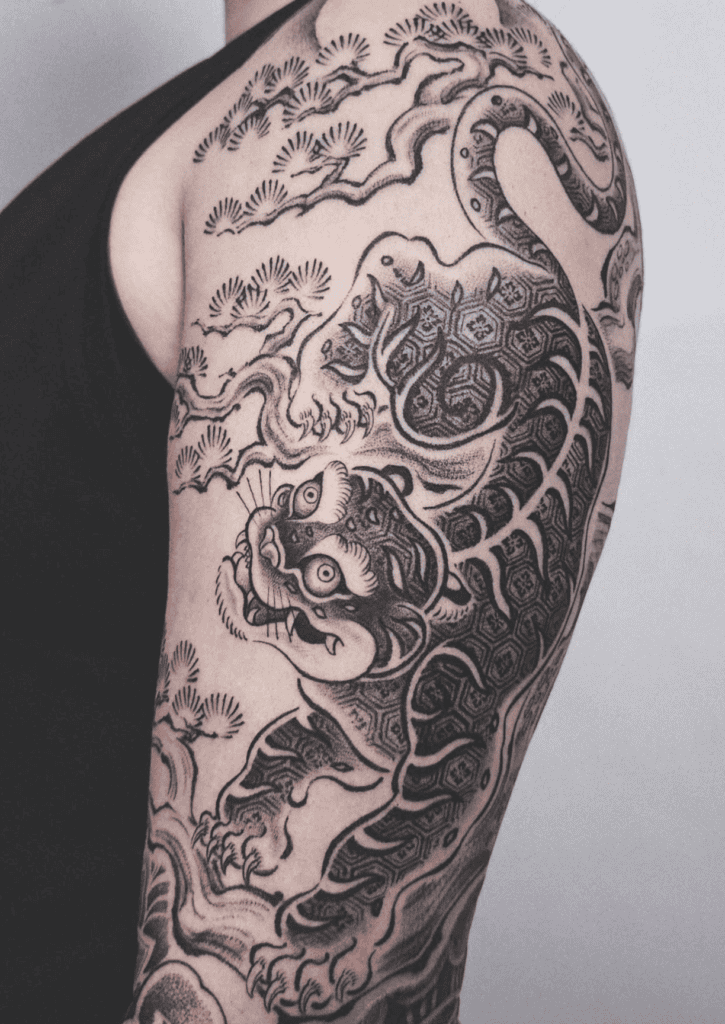
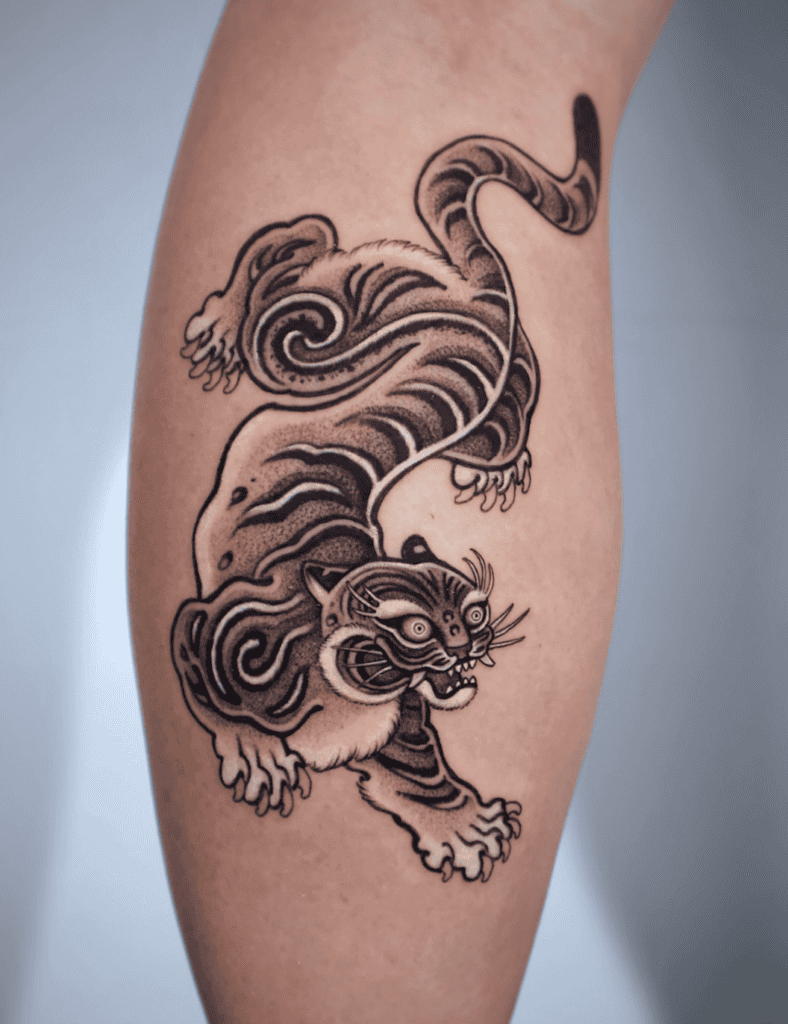
Tigers hold an incredibly important place in Korean mythology, folklore, and national identity, often considered one of Korea’s most iconic animals, symbolising strength, protection, courage, and even humour. Unlike many cultures where tigers are only feared, Korean folklore often portrays tigers as both majestic guardians and foolish or playful creatures, depending on the story.
Historically, Korea was home to real wild tigers, especially the Siberian/Amur-type tigers that once roamed the Korean Peninsula. Because people lived close to these powerful predators, tigers became deeply embedded in Korean culture.
In Korean shamanism and folk belief, mountains are sacred places filled with spiritual power. Tigers became linked to mountain guardian spirits and were believed to protect sacred lands from evil forces.
One unique part of Korean folklore is that tigers are not always portrayed as terrifying monsters. In many old Korean folk tales, tigers are clumsy, easily tricked, curious, and comedic, with humans, rabbits, or magpies often outsmarting them.
Lunar Zodiac Tiger Tattoo
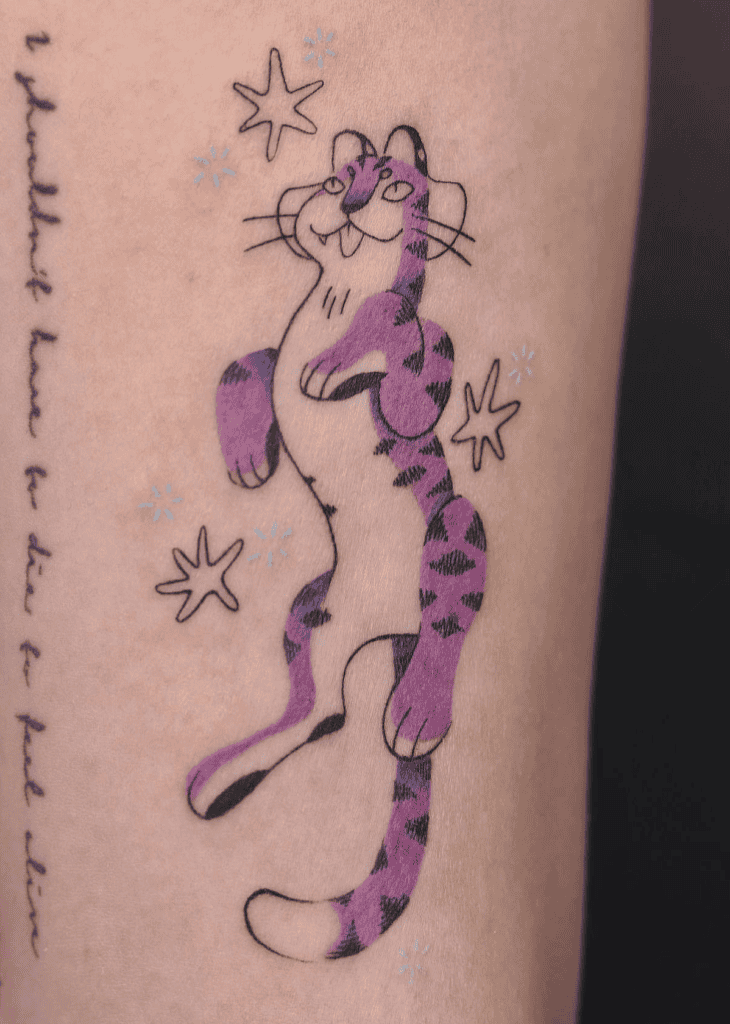
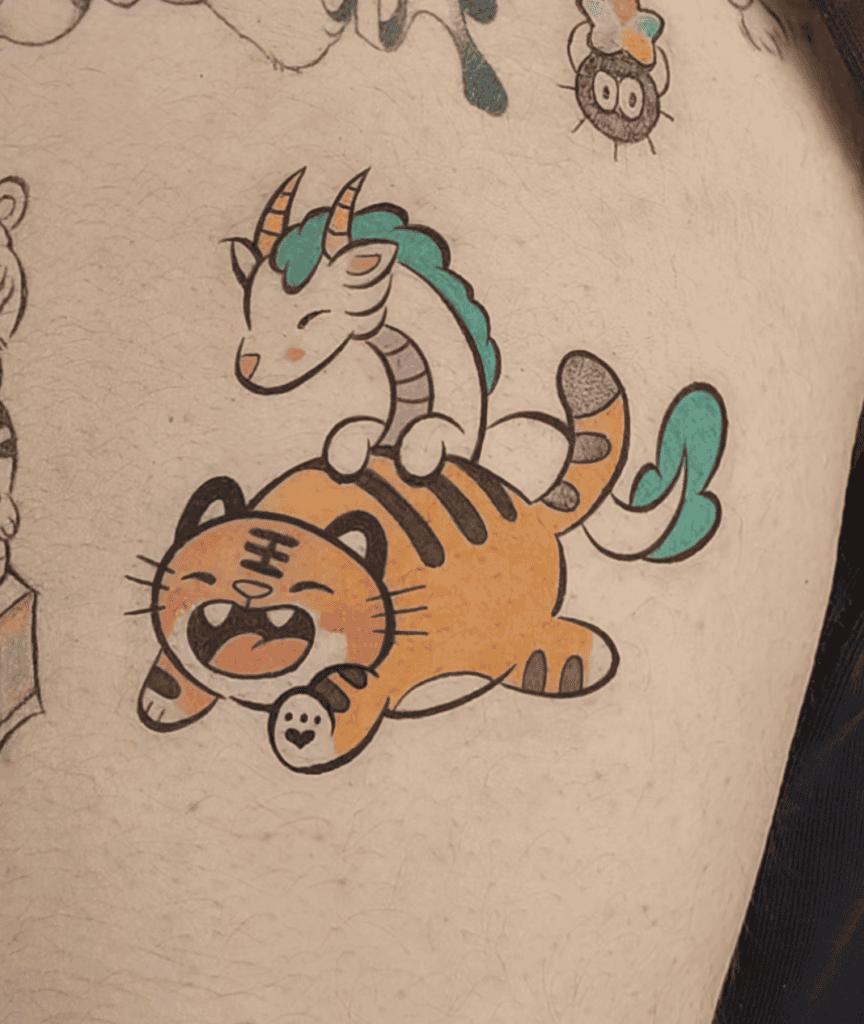
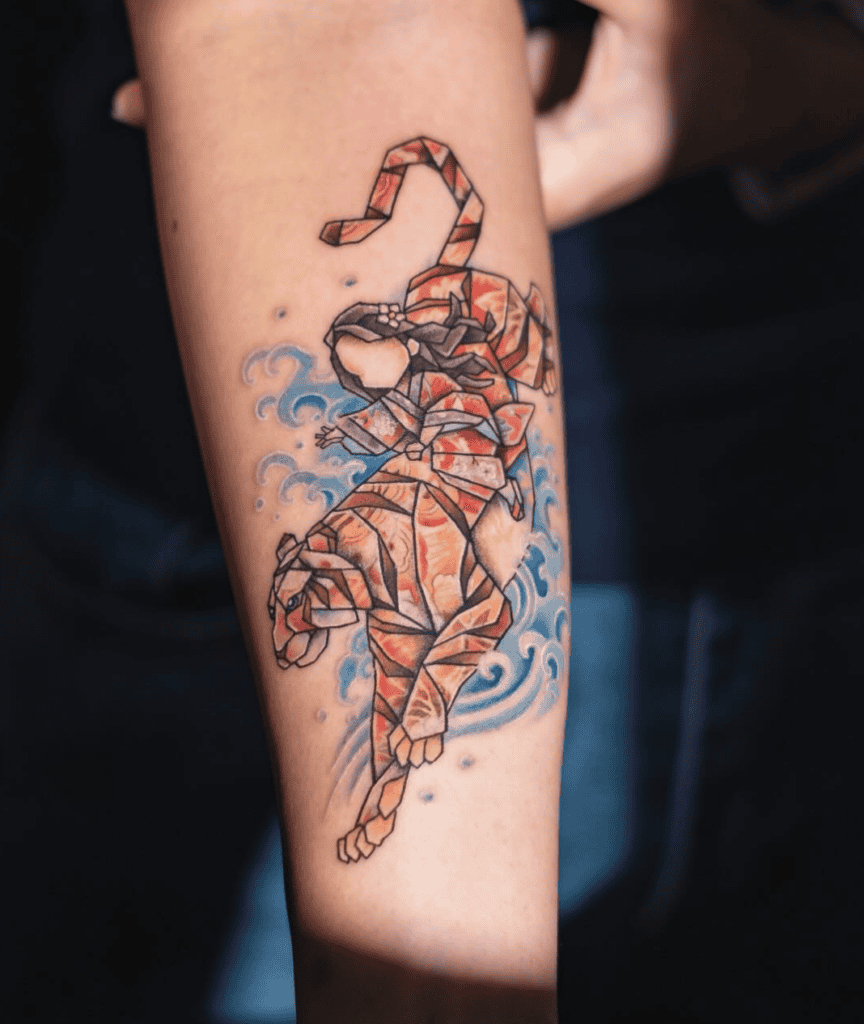
The Tiger is one of the twelve animals of the Lunar Zodiac and is traditionally associated with courage, strength, passion, and fearless energy. In the Chinese Zodiac, the Tiger is considered a powerful and charismatic sign, often linked to people who are bold, competitive, adventurous, and difficult to control.
The Tiger is the third animal in the 12-year Lunar Zodiac cycle, with people connected to the Tiger zodiac often described as brave, independent, passionate, competitive, charismatic, protective, and energetic, but also impulsive, rebellious, stubborn, and quick-tempered.
Phoenix Tiger Tattoo


A Phoenix Tiger combines the tiger’s raw strength and fearless nature with the phoenix’s rebirth, transformation, and immortality. Together, they usually represent rising stronger after hardship, inner strength through transformation, power balanced with renewal, surviving destruction and becoming something greater, and courage during major life changes. It is a symbol of someone who has faced struggles, pain, or failure, but came back stronger, wiser, and more powerful.
Snake Tiger Tattoo
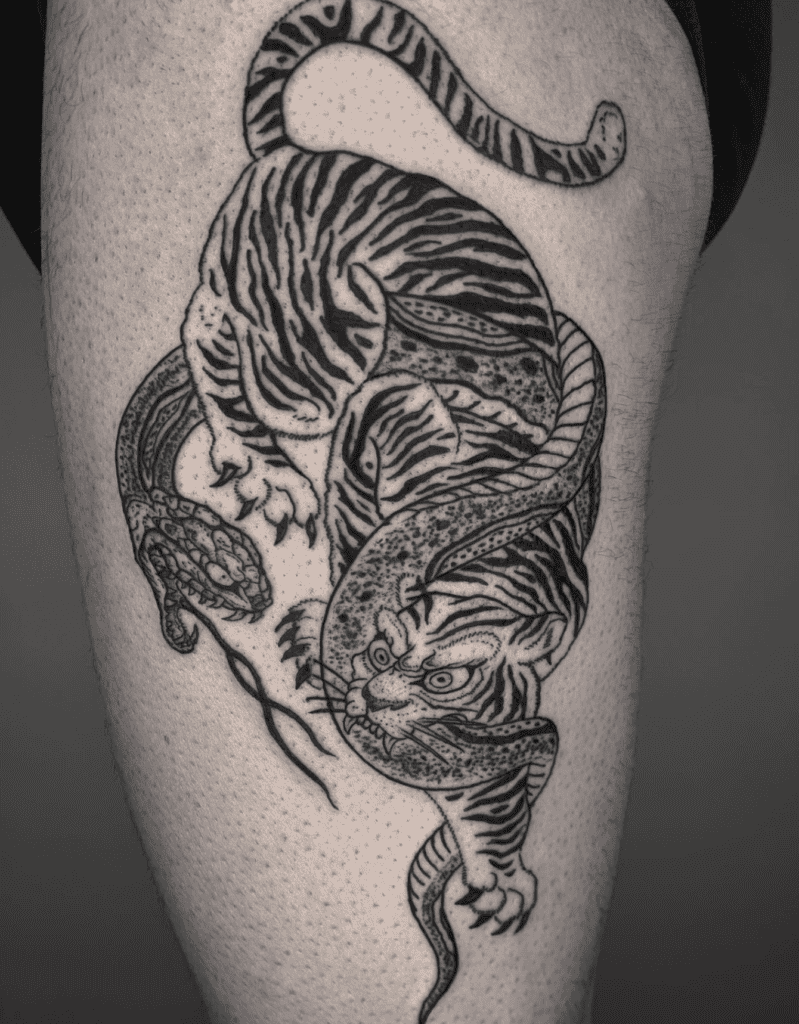
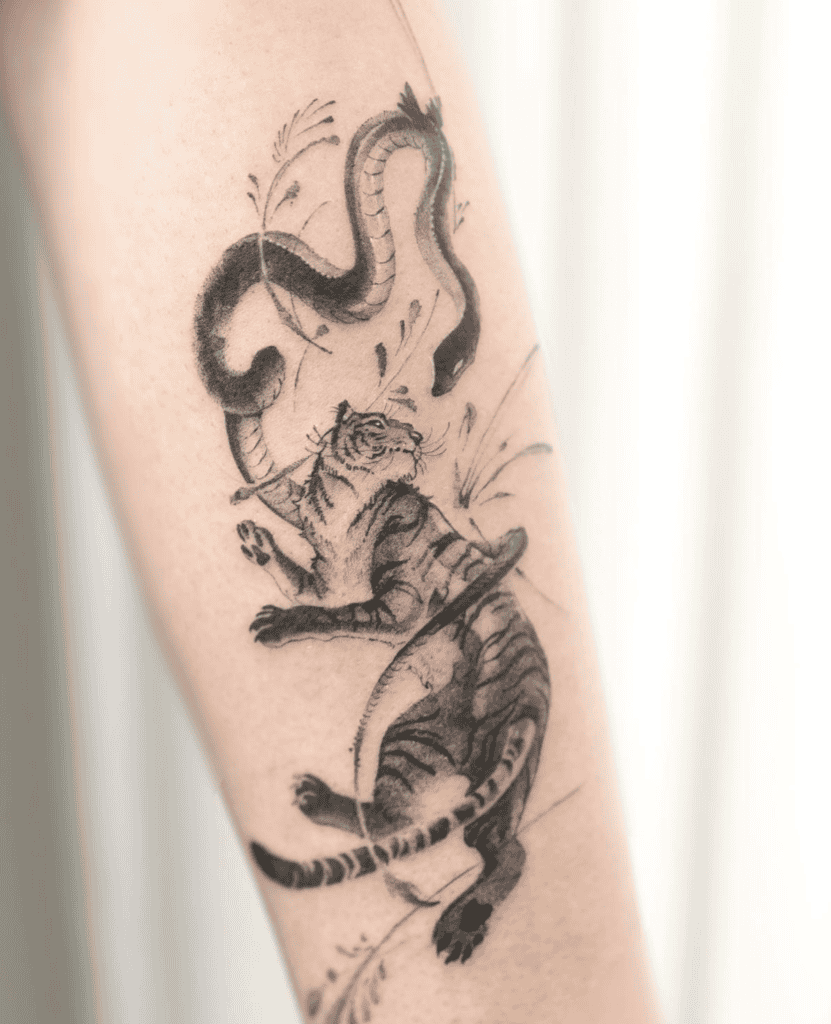
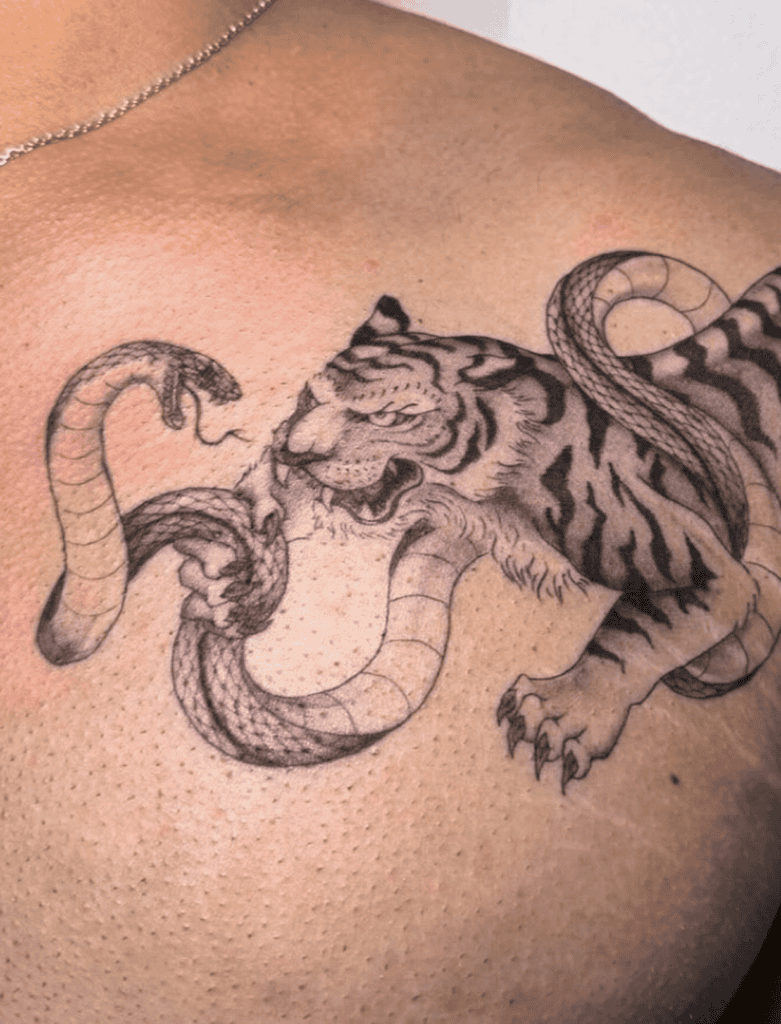
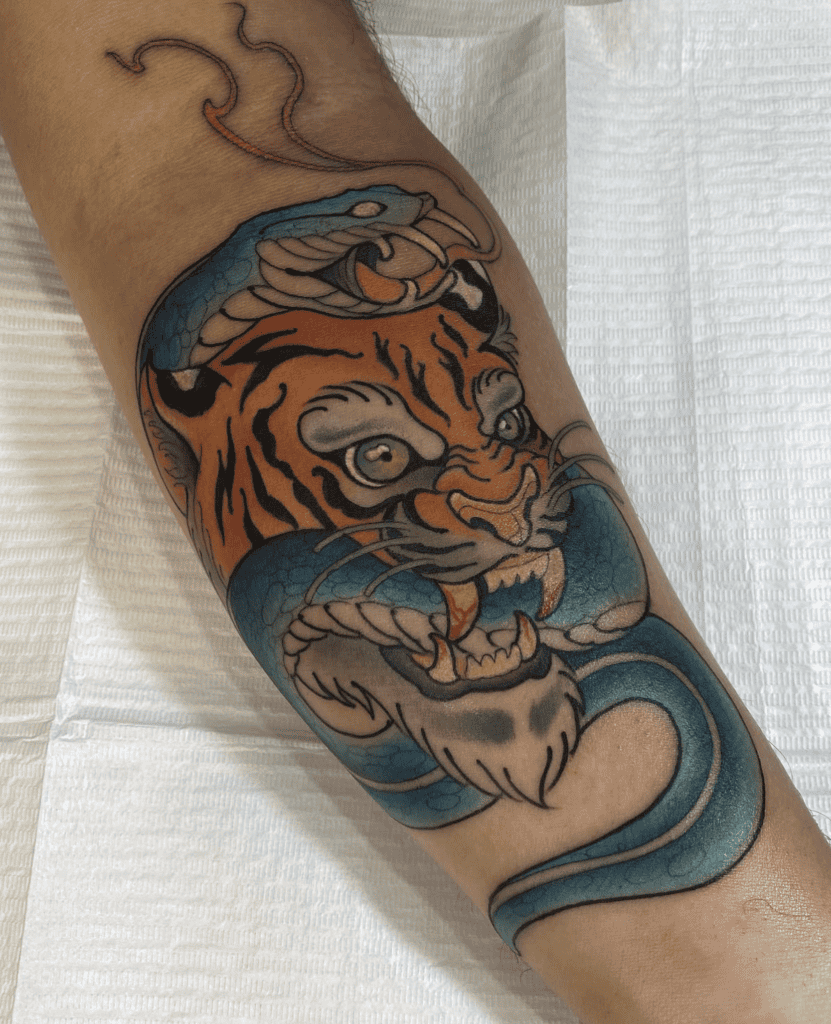
A Snake Tiger combines the tiger’s fierce strength and fearless energy with the snake’s intelligence, transformation, and mystery. Together, they can symbolise power balanced with wisdom, instinct combined with strategy, beauty mixed with danger, transformation through strength, or a calm but deadly personality. This pairing often represents someone who is both emotionally powerful and mentally calculating.
Shere Khan Tiger Tattoo
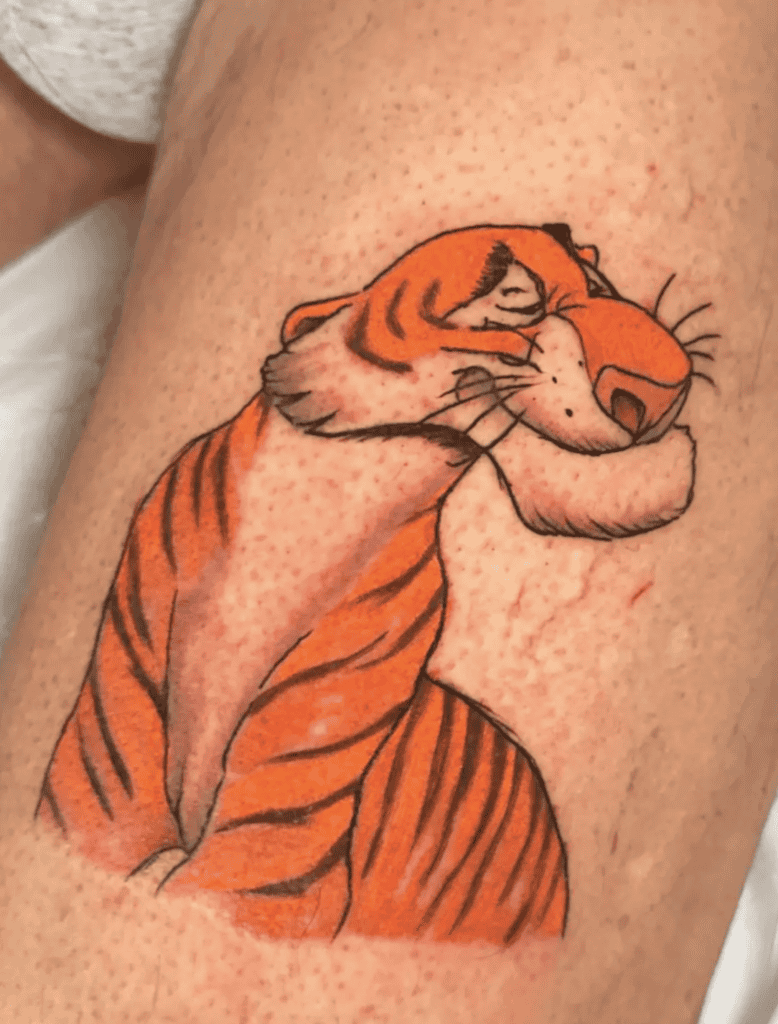
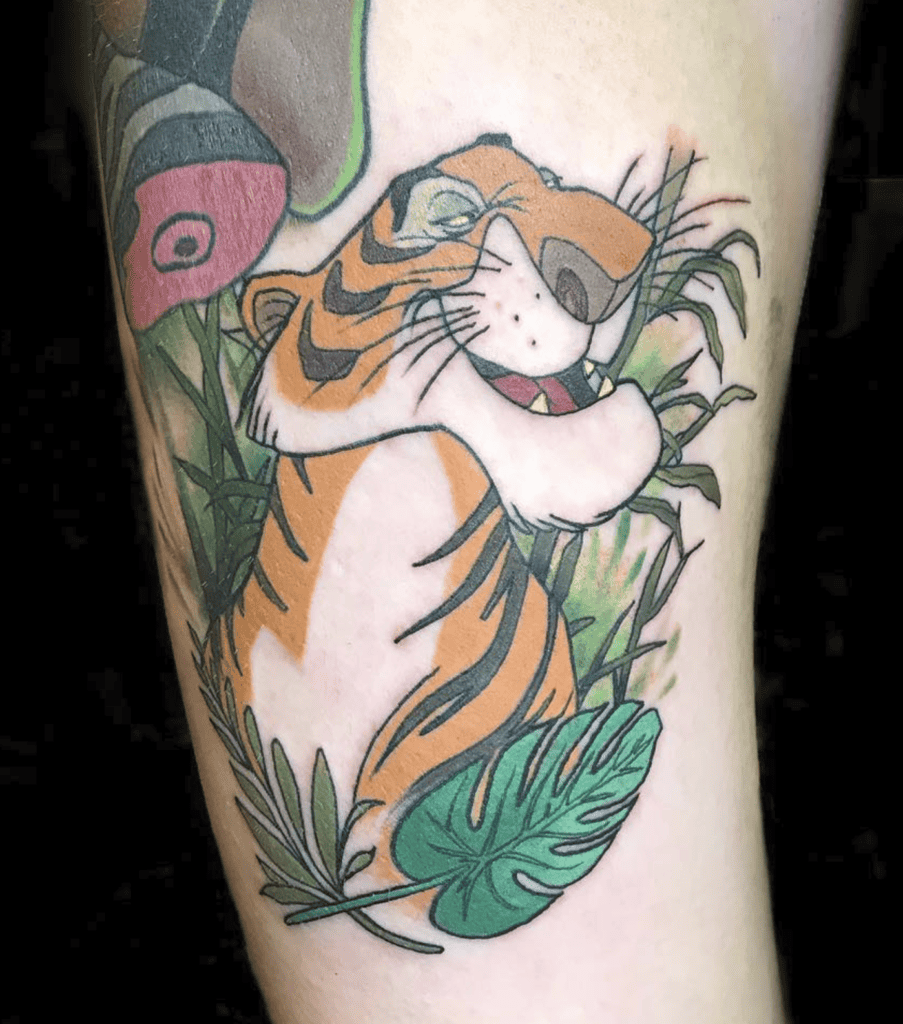
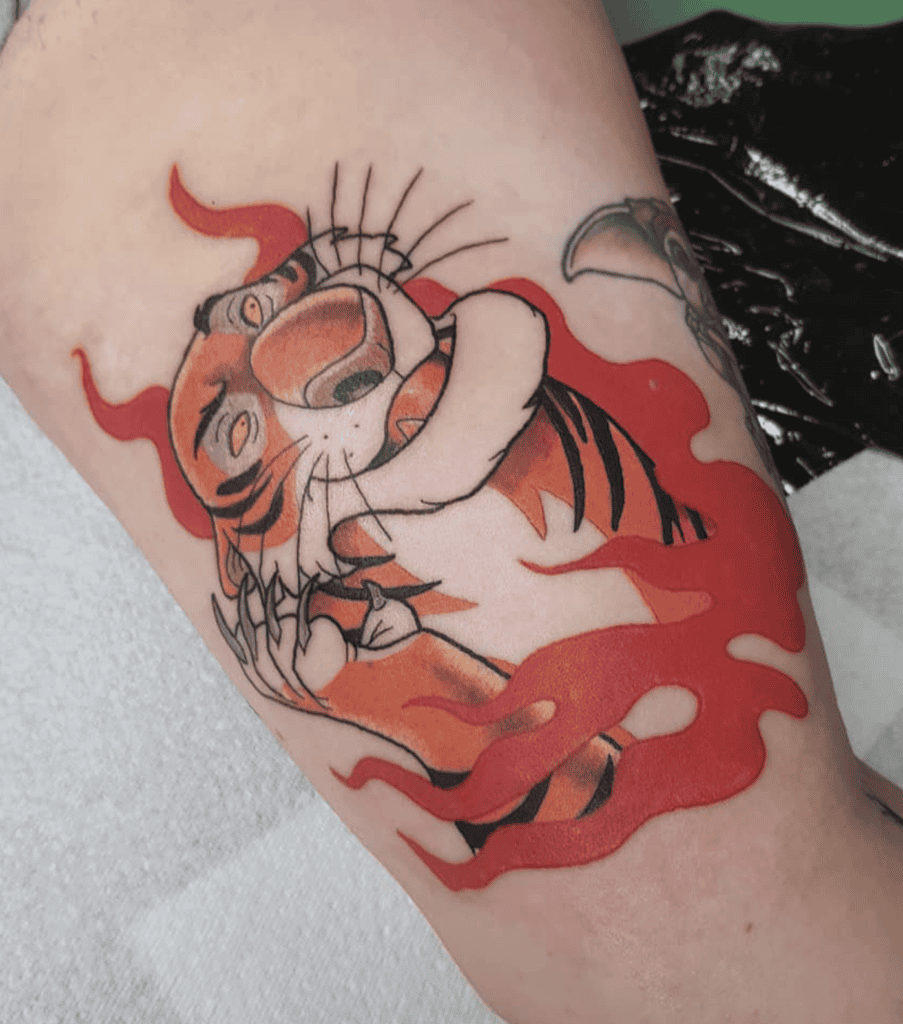
Shere Khan is the primary antagonist of The Jungle Book, known for his intelligence, pride, and terrifying presence, becoming one of the most iconic villainous tigers in pop culture.
Shere Khan is a Bengal tiger who rules through fear in the jungles of India. He is most famous for hunting and despising humans, especially the man-cub Mowgli. In many versions of the story, Shere Khan sees humans as dangerous threats to the jungle and believes Mowgli does not belong there.
In the original stories, Shere Khan is often described as having a crippled or weakened leg from birth. His injury influences his personality and behaviour, as he cannot hunt as effectively as other tigers, developing bitterness and arrogance, leading to him targeting easier prey, including humans.
The Disney version of Shere Khan became especially iconic thanks to his calm, sophisticated personality, deep, threatening voice, and elegant movements, portrayed as cool and refined rather than constantly raging.
Tigger Tattoo
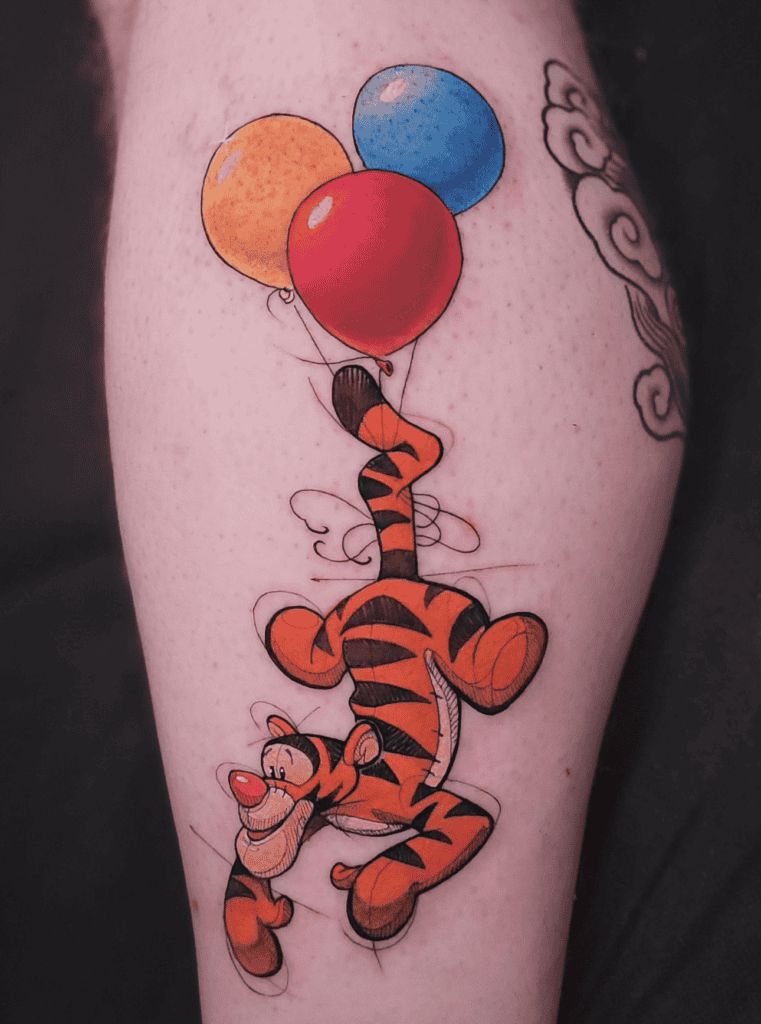
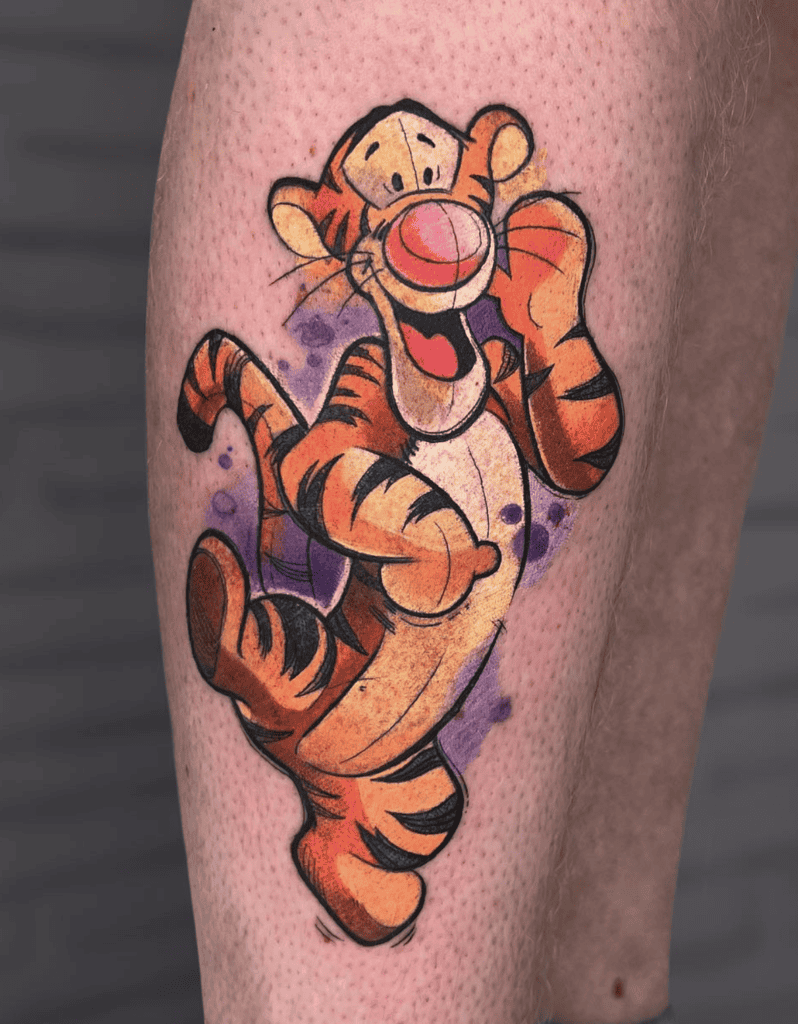
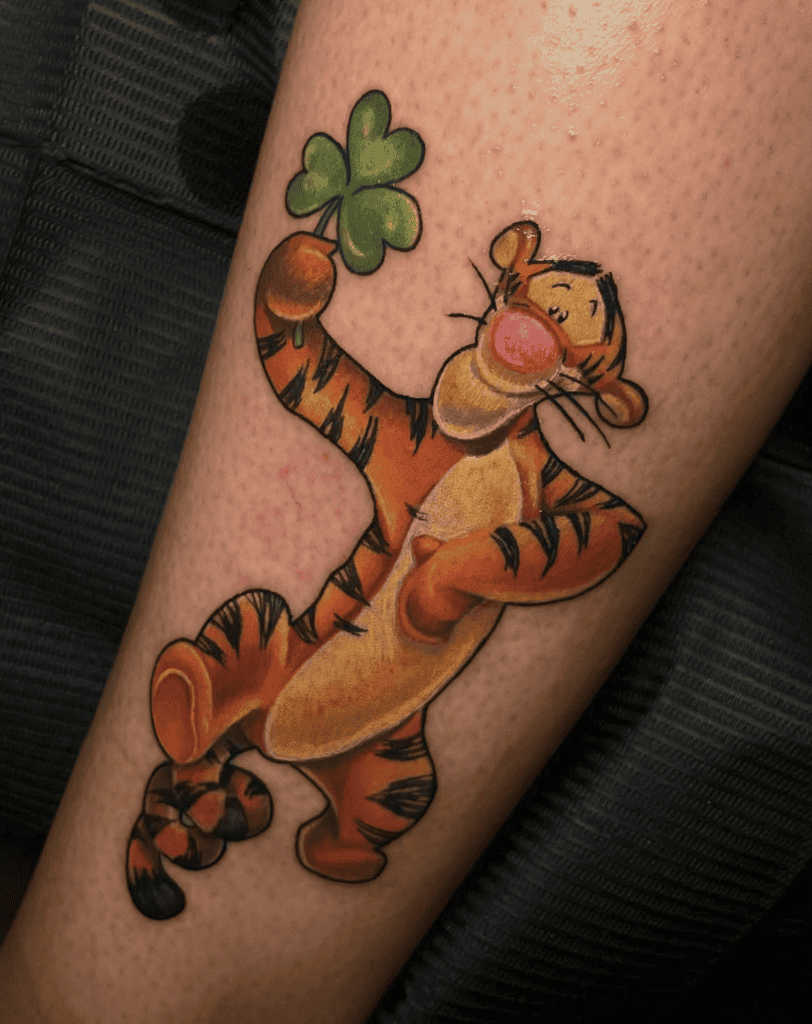
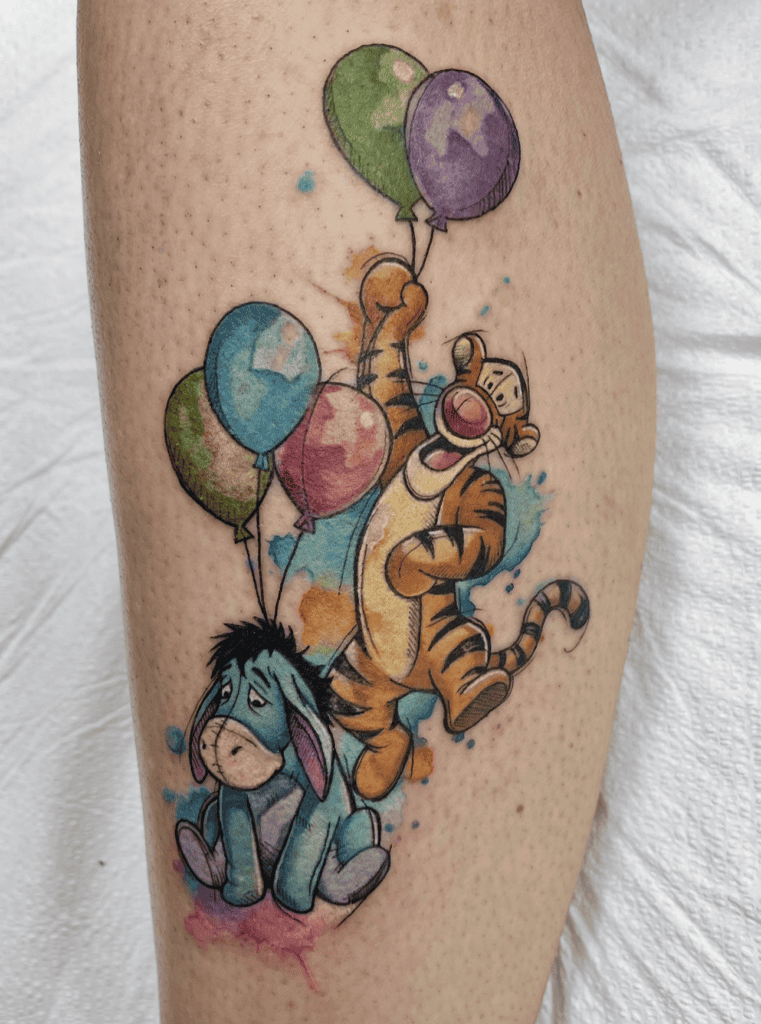
Tigger is the energetic, bouncy, and lovable tiger from the Winnie-the-Pooh series. Famous for his endless enthusiasm and confidence, Tigger is one of Disney’s most recognisable animated characters with his iconic catchphrase, “The wonderful thing about Tiggers is I’m the only one!”
Tigger lives in the Hundred Acre Wood alongside Winnie-the-Pooh, Piglet, Eeyore, and Rabbit. He is known for constantly bouncing on his tail and bringing chaotic energy wherever he goes.
Even when things go wrong, Tigger rarely stays sad for long, with his energetic personality often contrasting with calmer or more anxious characters like Piglet and Eeyore.
Rajah Tiger Tattoo
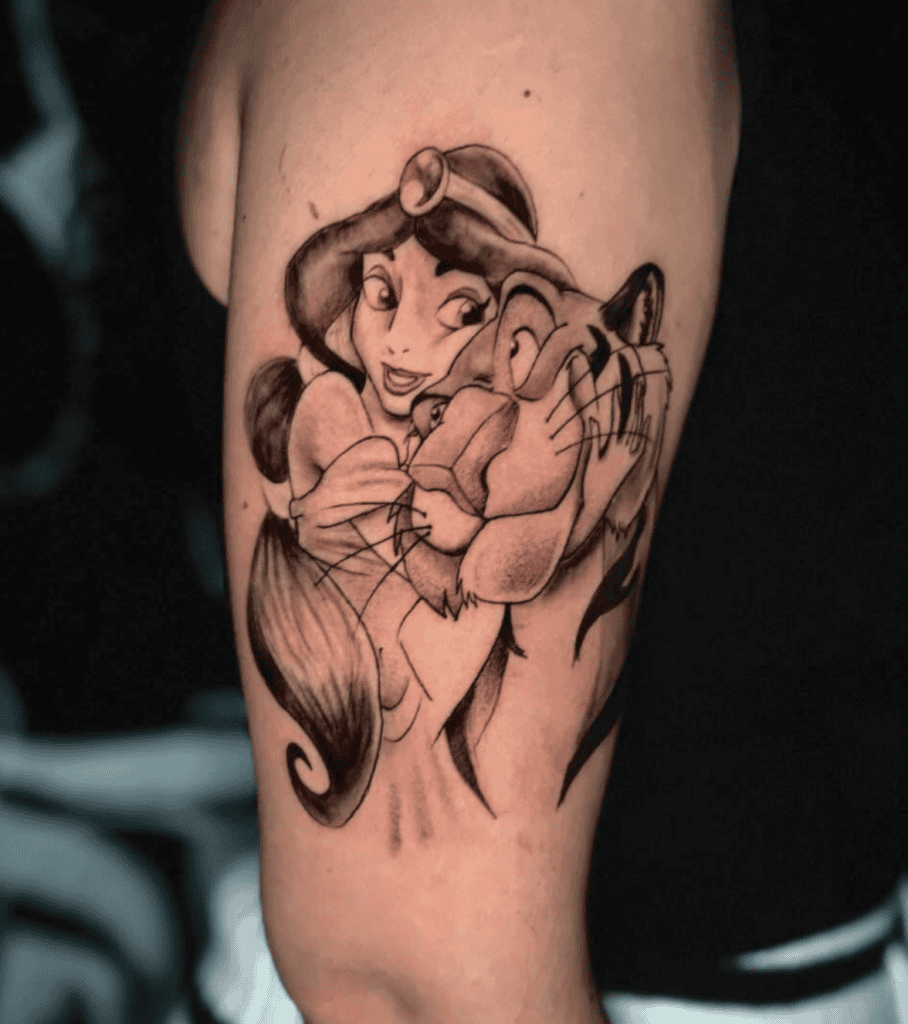
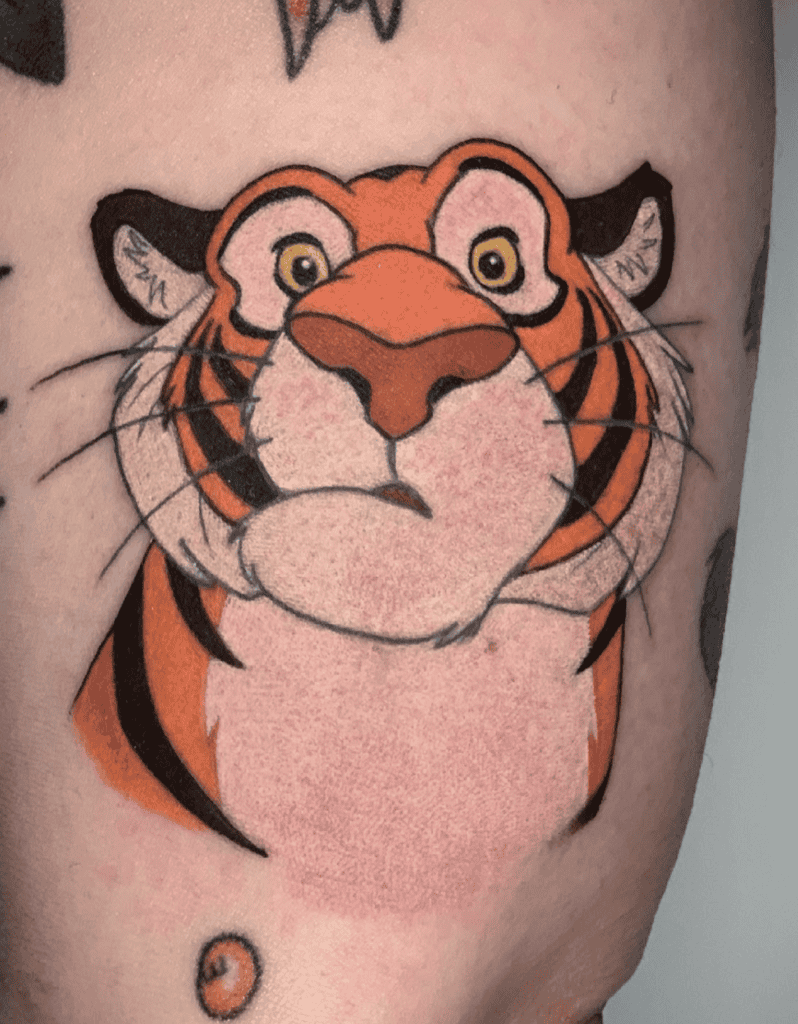
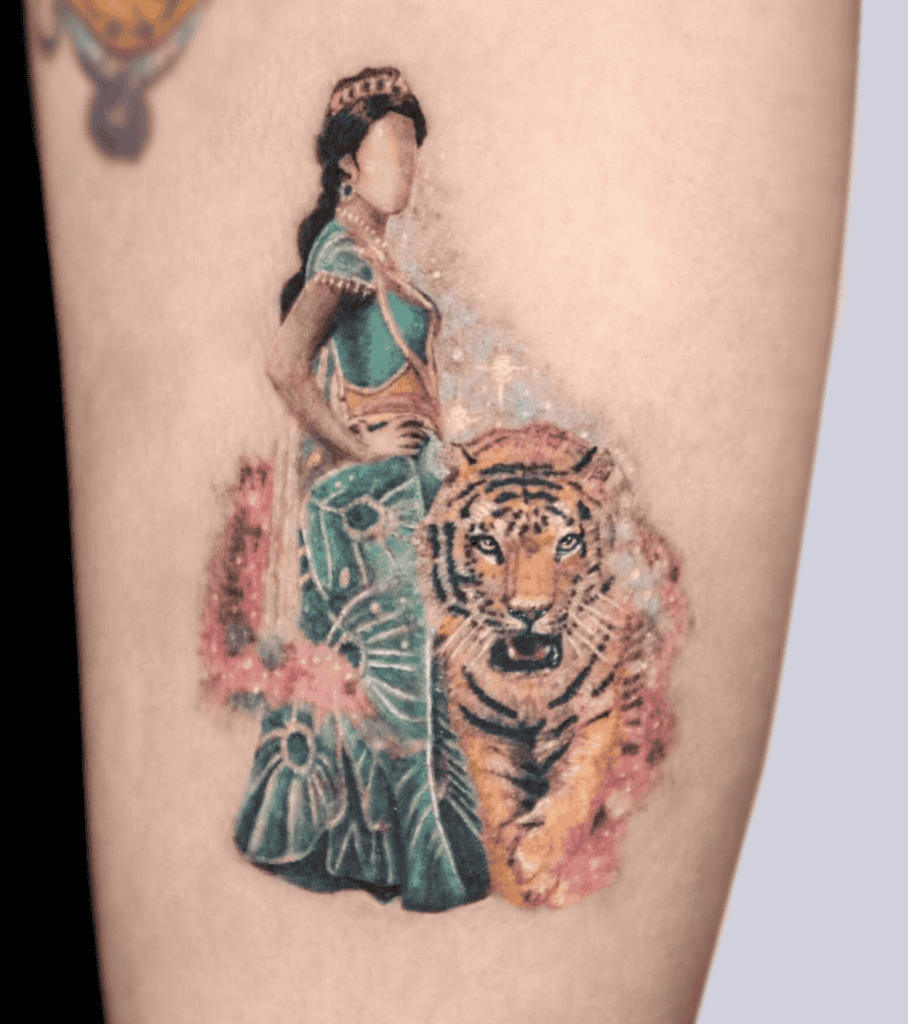
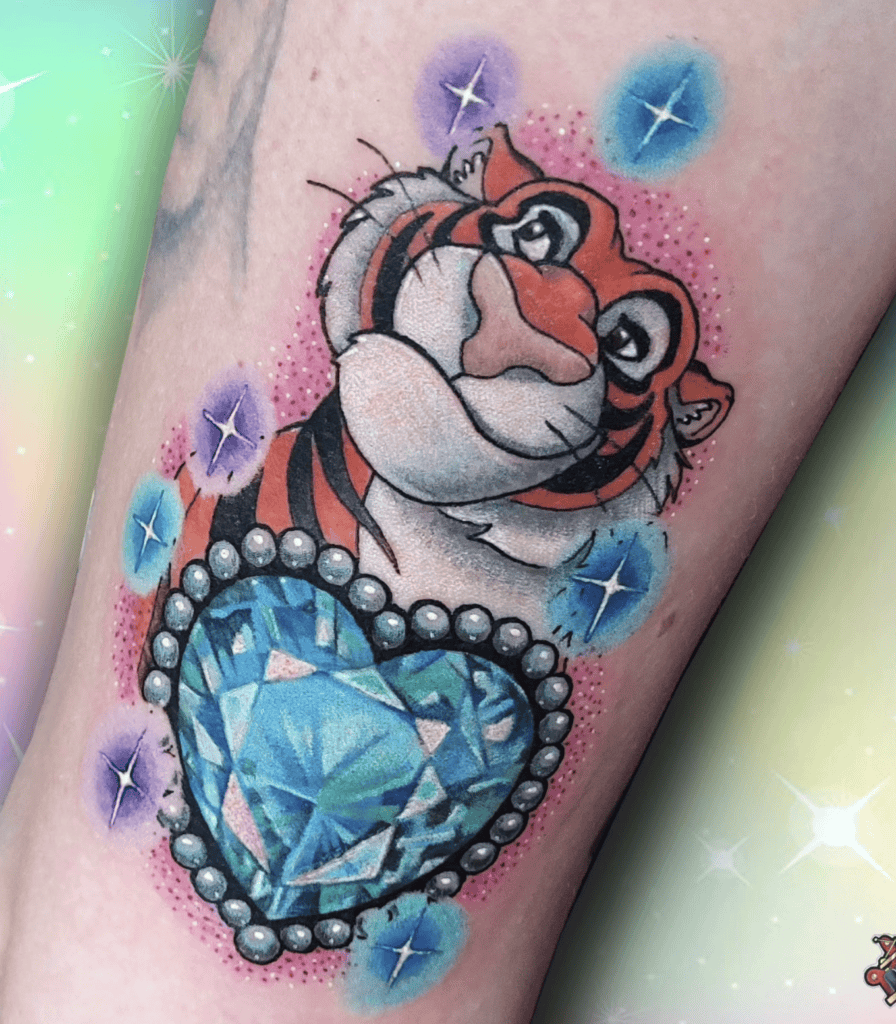
Rajah is the loyal pet tiger and companion of Princess Jasmine in Aladdin. Gentle with those he trusts but fiercely protective of Jasmine, Rajah became one of Disney’s most beloved animal side characters.
Rajah lives in the Sultan’s palace alongside Princess Jasmine, Aladdin, and Genie, behaving as a giant protective cat around Jasmine. He is one of her closest companions and is often shown comforting or guarding her.
Diego Tiger Tattoo


Diego is the sarcastic but heroic sabre-toothed cat from the Ice Age franchise. He is a Smilodon who travels alongside Manny, Sid, and Scrat, evolving from a feared hunter into a loyal protector and close friend.
In the first Ice Age film, Diego starts as part of a sabre-tooth tiger pack planning to capture a human baby. However, after travelling with Manny and Sid, he begins to question his violent life and eventually protects the group instead, with his redemption arc becoming one of the emotional cores of the franchise.
Hobbes Tiger Tattoo
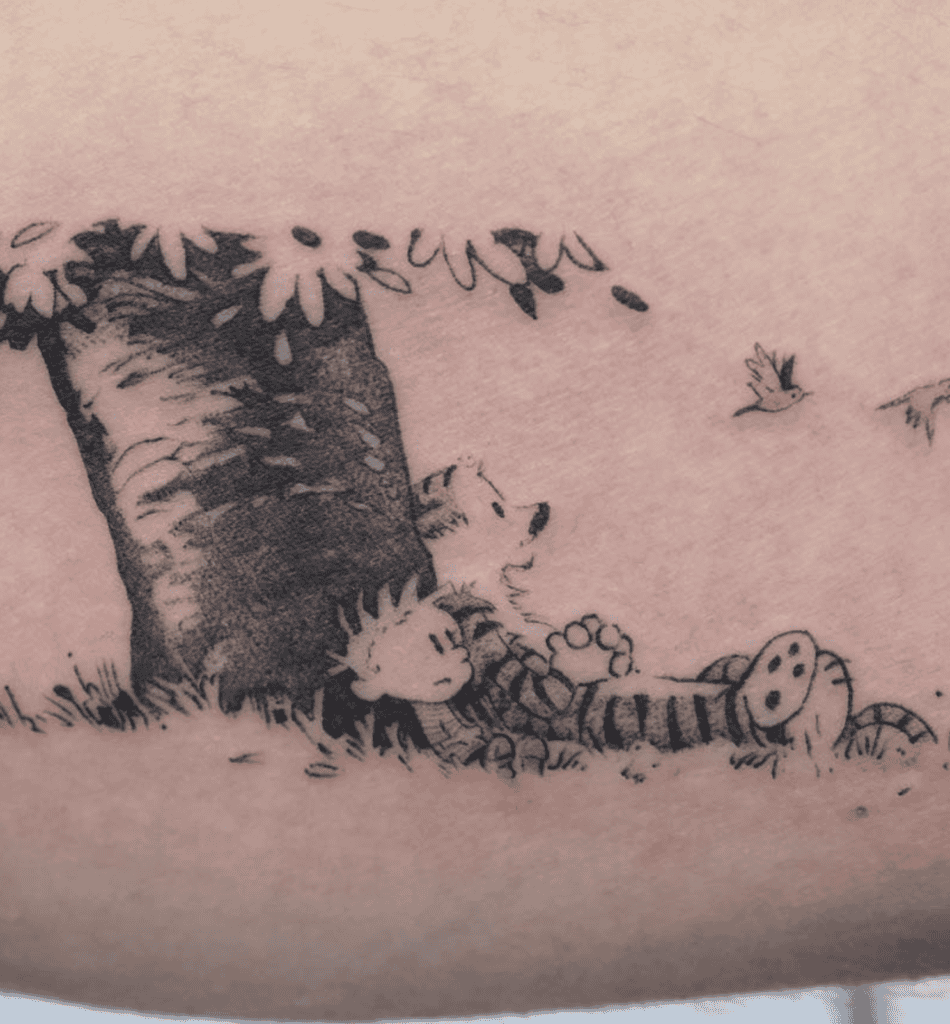
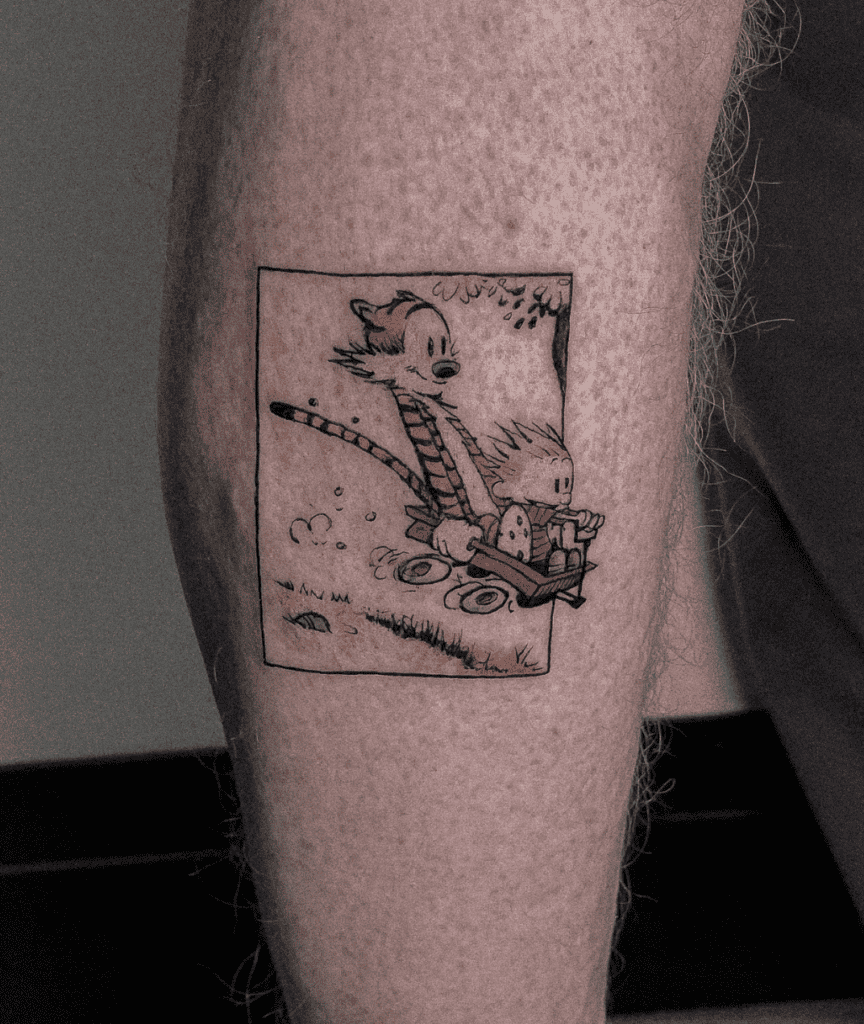
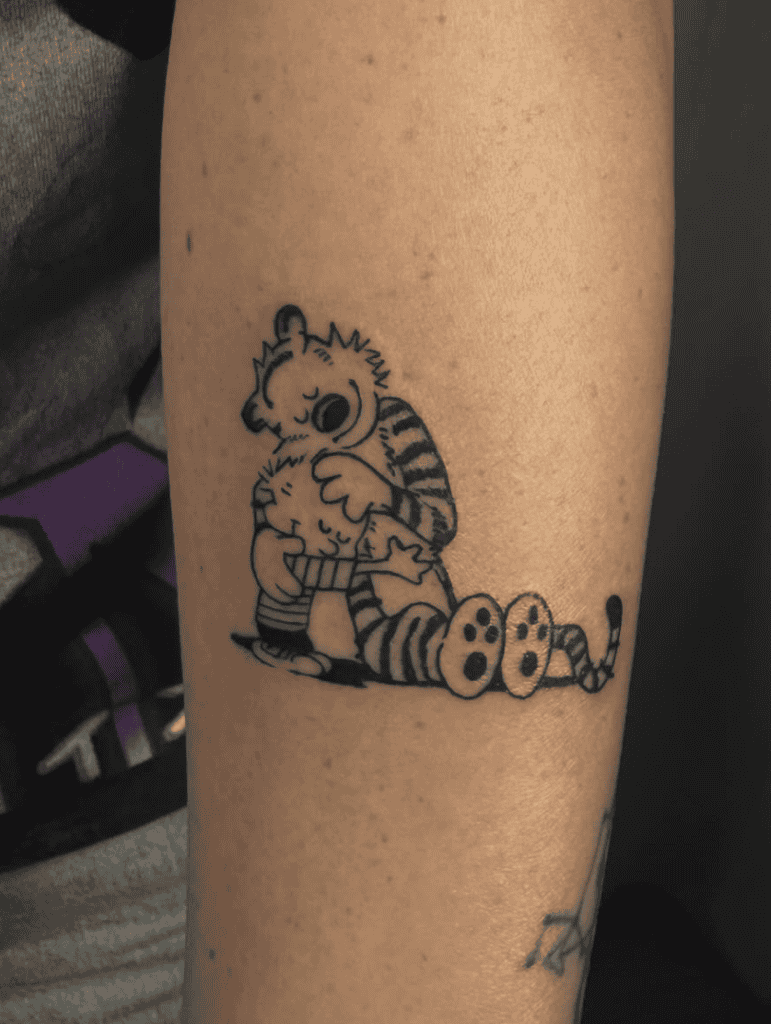
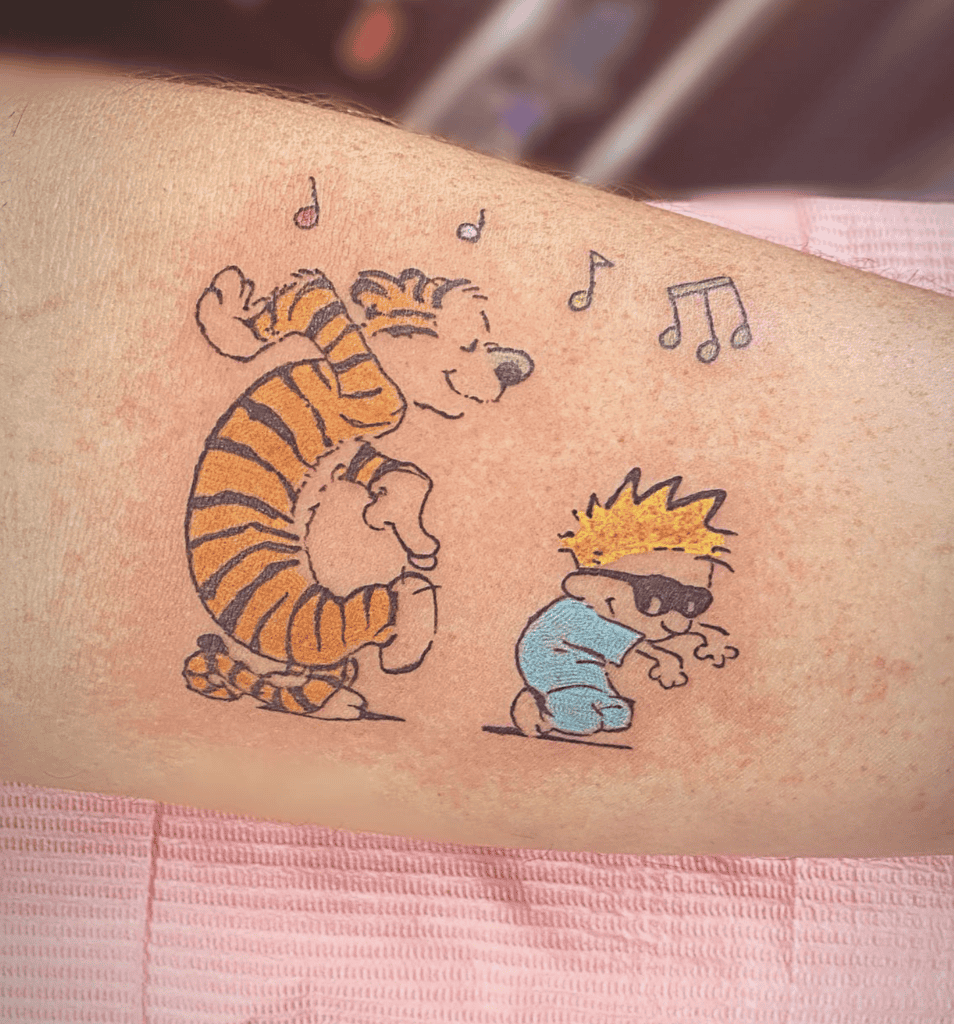
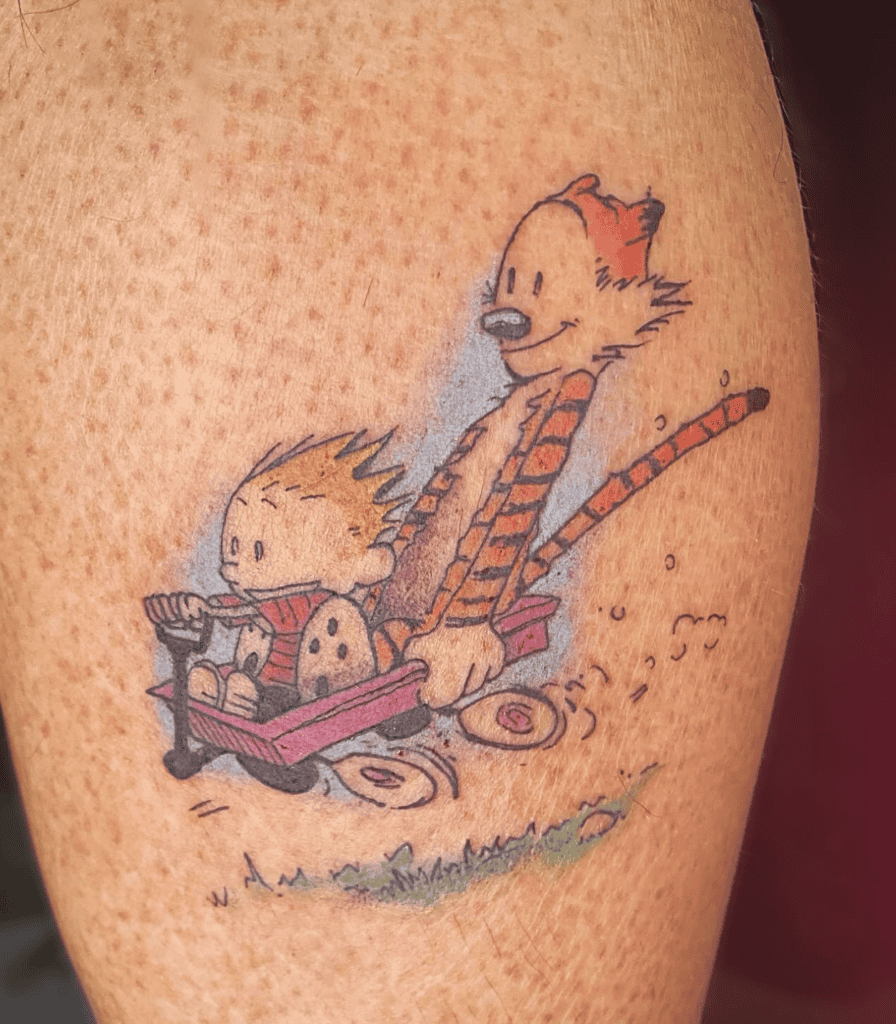
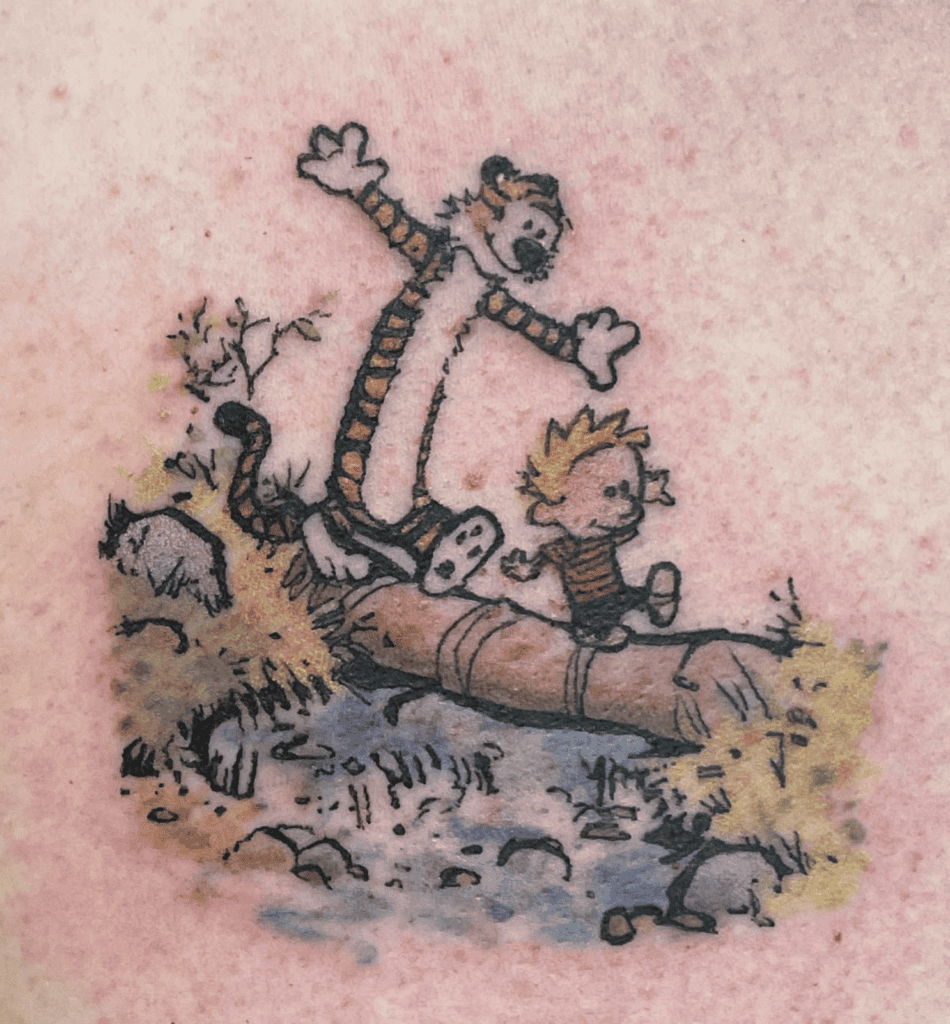
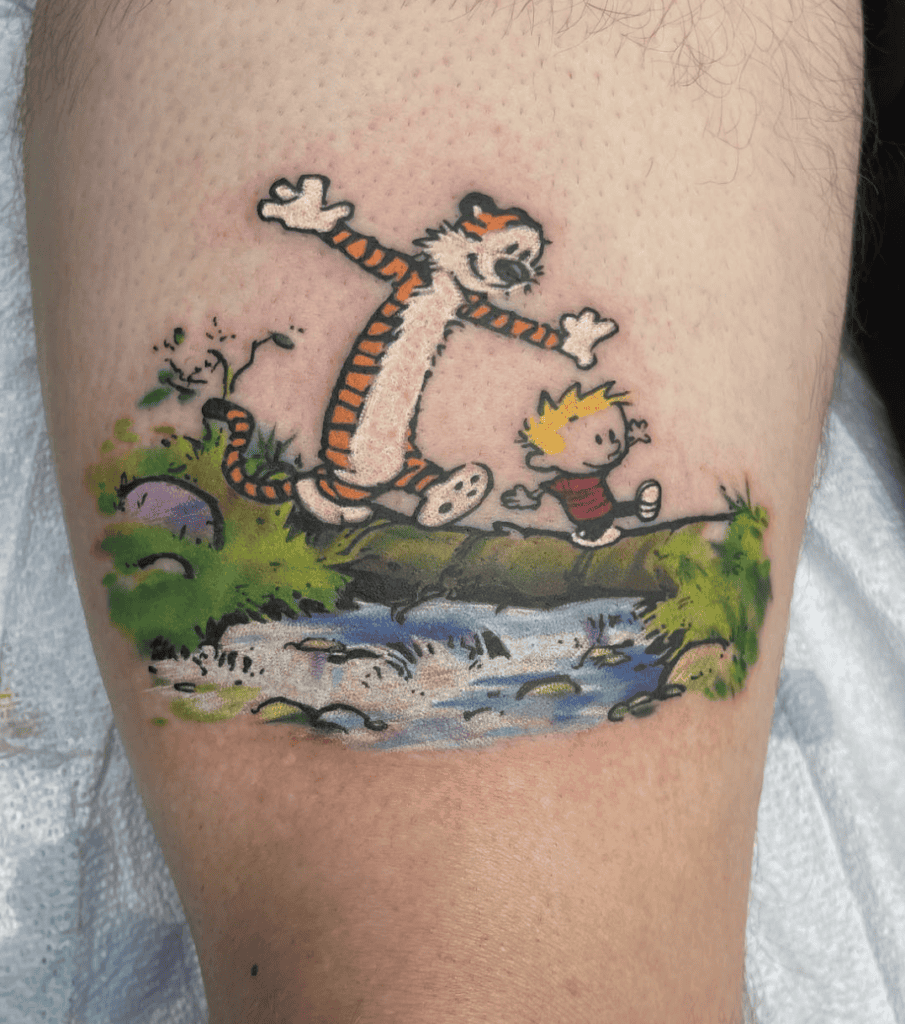
Hobbes is the wise, playful, and lovable tiger from the legendary comic strip Calvin and Hobbes. To adults, he appears to be an ordinary stuffed tiger, but to Calvin, he is fully alive.
Hobbes spends most of his time alongside Calvin, going on imaginative adventures involving space travel, dinosaurs, time machines, monsters, and deep philosophical conversations.
Richard Parker Tiger Tattoo

Richard Parker is the Bengal tiger from Life of Pi. He is one of the most symbolic and emotionally complex animal characters in modern fiction. Stranded on a lifeboat in the middle of the ocean alongside a boy named Pi Patel, Richard Parker becomes both a terrifying threat and an unexpected companion.
Richard Parker is a Bengal tiger originally living in a zoo owned by Pi’s family. After a shipwreck leaves Pi stranded at sea, the tiger ends up trapped on a lifeboat with him, with the story following their incredible struggle for survival across the ocean.
The tiger’s name comes from a clerical mistake, as a hunter accidentally swapped the names of the tiger with the human who captured him, resulting in the tiger ending up being called Richard Parker.
Tony the Tiger Tattoo
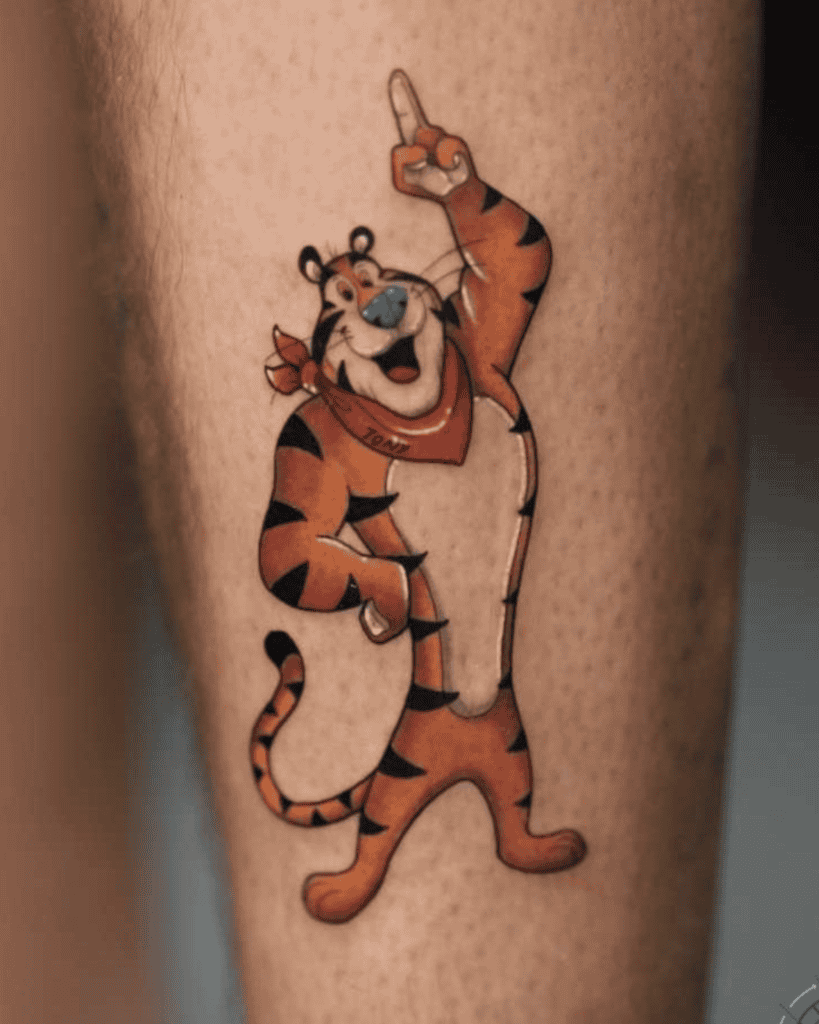
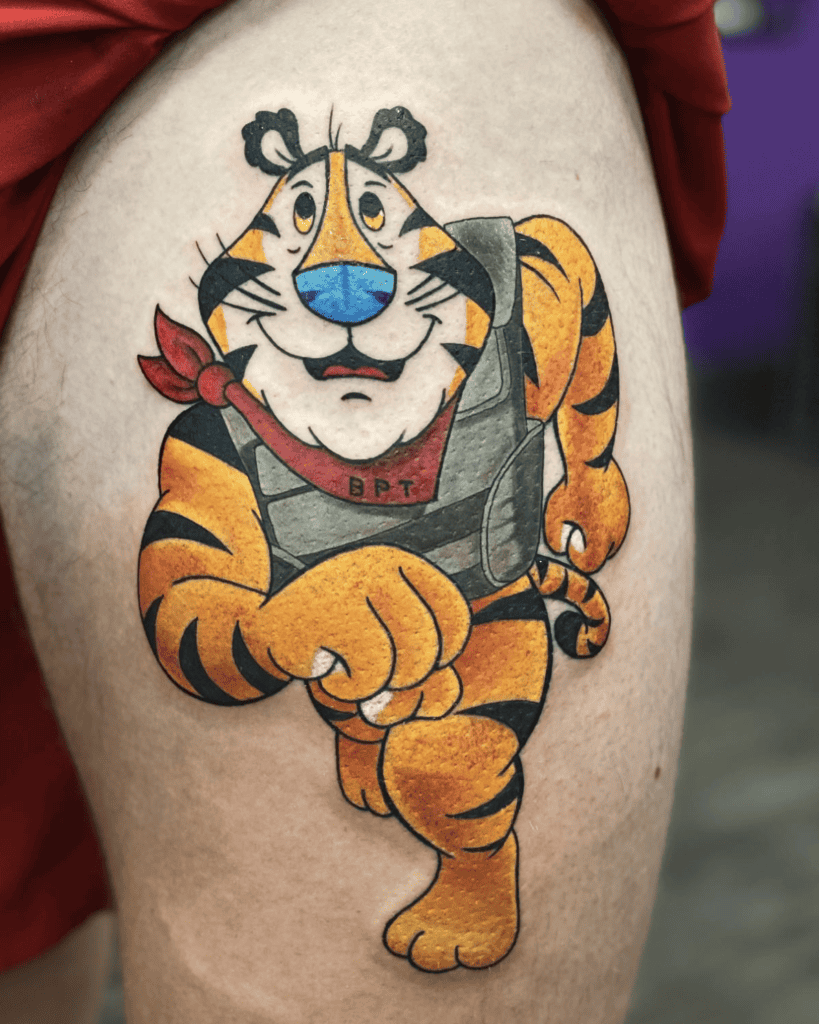
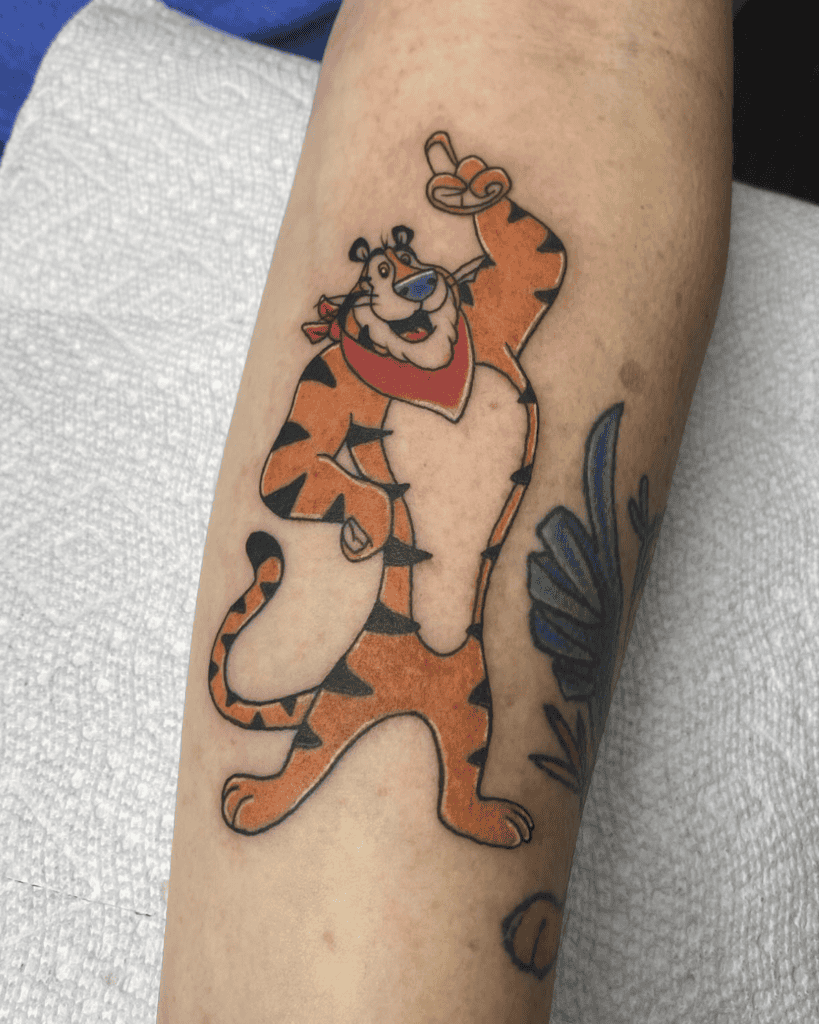
Tony the Tiger is the famous mascot of Kellogg’s Frosted Flakes cereal, known for his huge smile, deep voice, and endless enthusiasm, famous for the catchphrase: “They’re Grrreat!”
Tony was created in the early 1950s as part of a marketing campaign for Frosted Flakes cereal. Over time, he became the main mascot and face of the brand thanks to his friendly personality, memorable voice, energetic attitude, and instantly recognisable design. He is usually portrayed as a cheerful anthropomorphic tiger who encourages confidence, positivity, and sportsmanship.
Hodori Tiger Tattoo


Hodori is the cheerful tiger mascot of the 1988 Seoul Olympics and one of the most beloved mascots in Olympic history, helping introduce Korean culture to the world during the Seoul Olympics.
The name “Hodori” comes from “Ho” (호) meaning tiger in Korean, and “Dori,” a friendly masculine suffix often used affectionately, making his name roughly means “Friendly Tiger.”
Tigress Tiger Tattoo
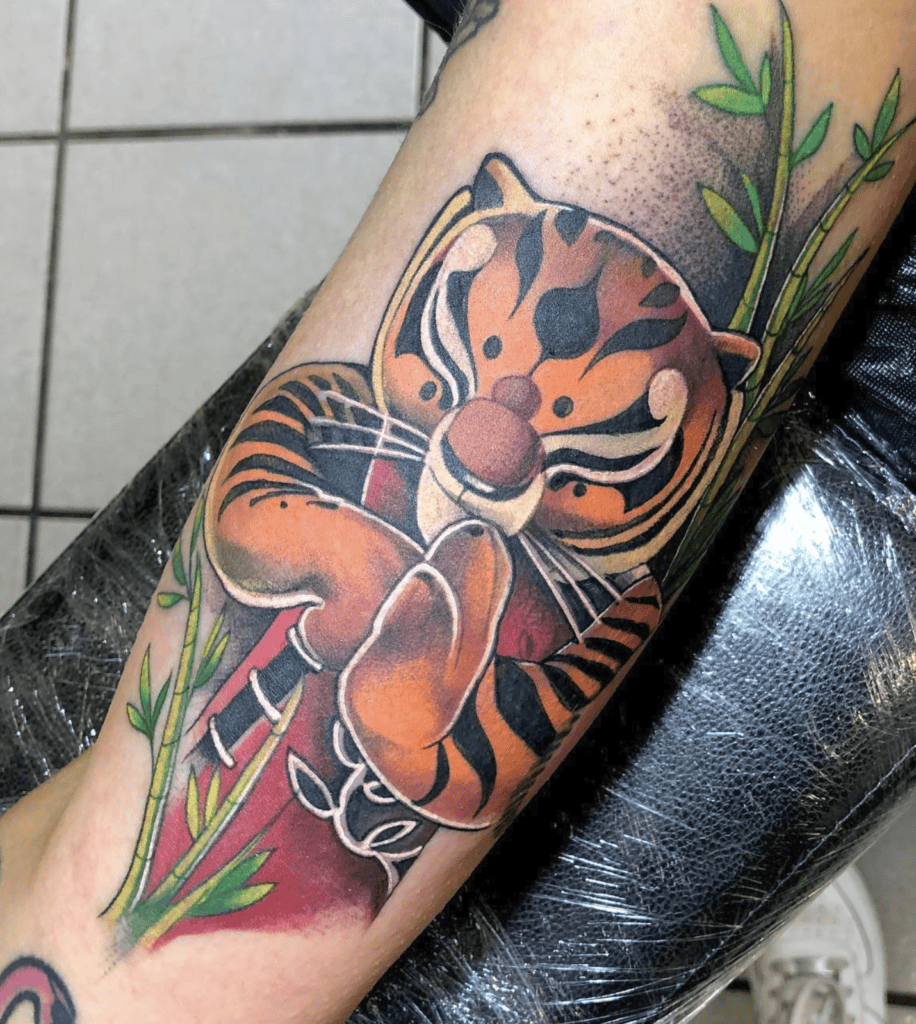
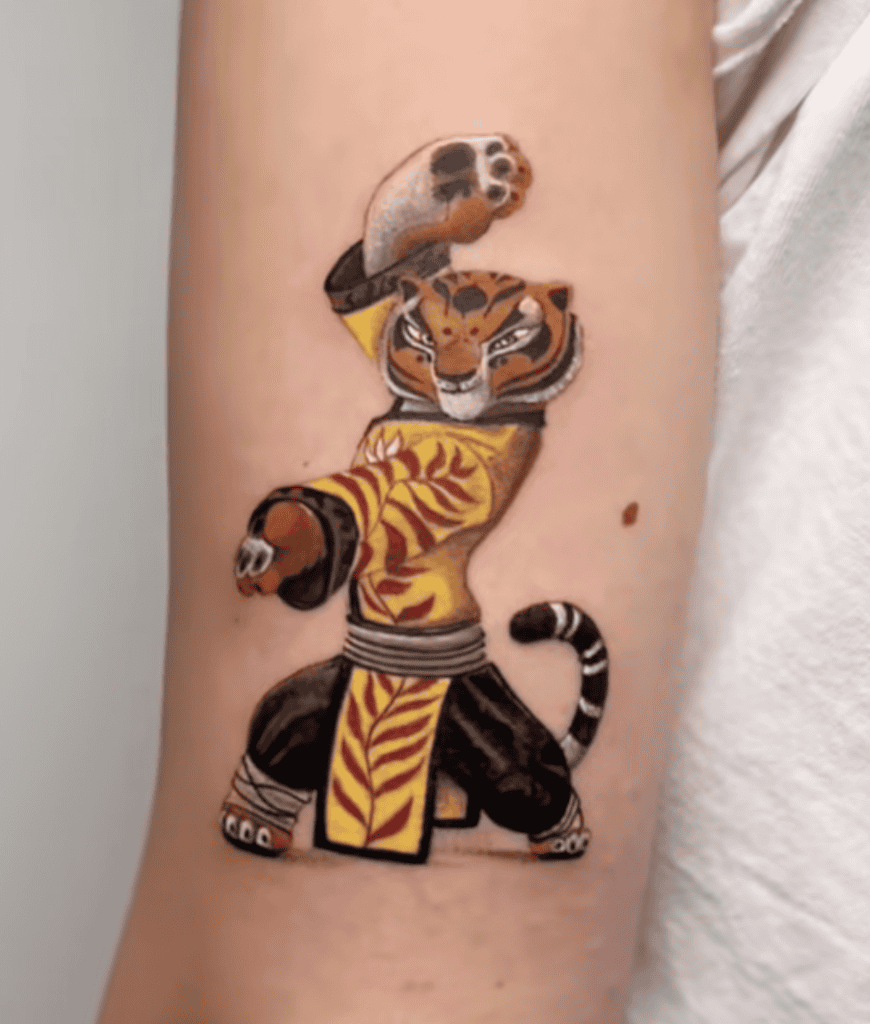
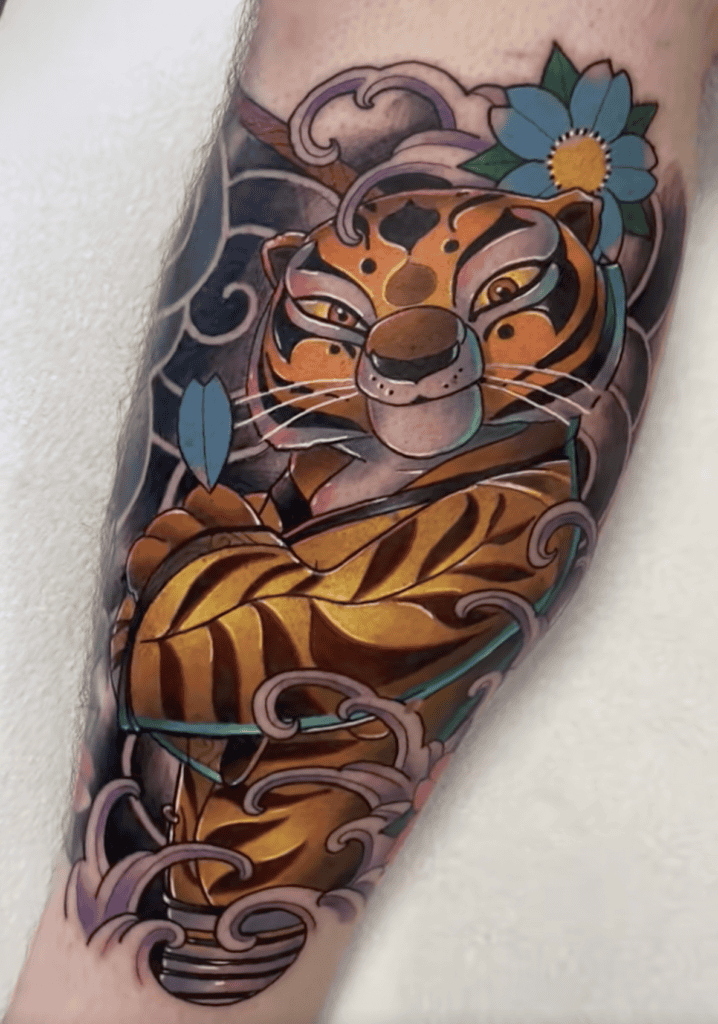
Tigress is the fierce, disciplined, and highly skilled warrior from the Kung Fu Panda franchise. Known for her incredible martial arts abilities and serious personality, Tigress represents strength, discipline, and emotional control.
Tigress is one of the Furious Five alongside Po, Monkey, Viper, Crane, and Mantis. She was trained by Master Shifu and is often considered the strongest and most disciplined member of the group.
While she can seem intimidating and cold, when you get deeper into the series she reveals a caring and compassionate side. One reason Tigress became such a beloved character is her emotional backstory. As a child, her strength frightened others, causing her to grow up emotionally isolated.
Master Shifu eventually taught her discipline and emotional control, helping her channel her power positively, explaining why Tigress often struggles with vulnerability and trust.
Pishacha Tiger Tattoo

In Berserk, the Pishacha are horrifying demonic creatures associated with the Kushan Empire during the later parts of the story. These familiars are created from spiritually infused animals and controlled by Kushan sorcerers.
One of the most memorable Pishacha forms resembles monstrous tiger-like beasts. These creatures hide in fog and are used to overthrow towns and cities, so the Kushan can increase the scope of their empire.
Tiger Mask Tiger Tattoo

Tiger Mask is one of the most legendary wrestling characters in Japanese pop culture, a heroic masked wrestler who became famous through manga, anime, and real professional wrestling.
Tiger Mask originally began as a manga and anime character created in the late 1960s. The most famous version is Naoto Date, a professional wrestler who once trained under a brutal organisation called Tiger’s Den.
After rejecting their cruelty, he becomes the heroic masked wrestler Tiger Mask and fights against evil wrestlers while protecting children and innocent people. Several actual Japanese wrestlers performed under the Tiger Mask persona, including Satoru Sayama.
Incineroar Tiger Tattoo


Incineroar is a fiery tiger-like Pokémon known for its wrestling theme and explosive personality, first introduced in Pokémon Sun and Moon. The Pokédex states that “When its fighting spirit is set alight, the flames around its waist become especially intense”.
Though many Pokémon fans were annoyed by yet another bipedal fire-type final evolution starter. Incineroar gained fame for its interpretation when it was introduced in Super Smash Bros. Ultimate. Roster in 2018.
Liger Zero Tiger Tattoo
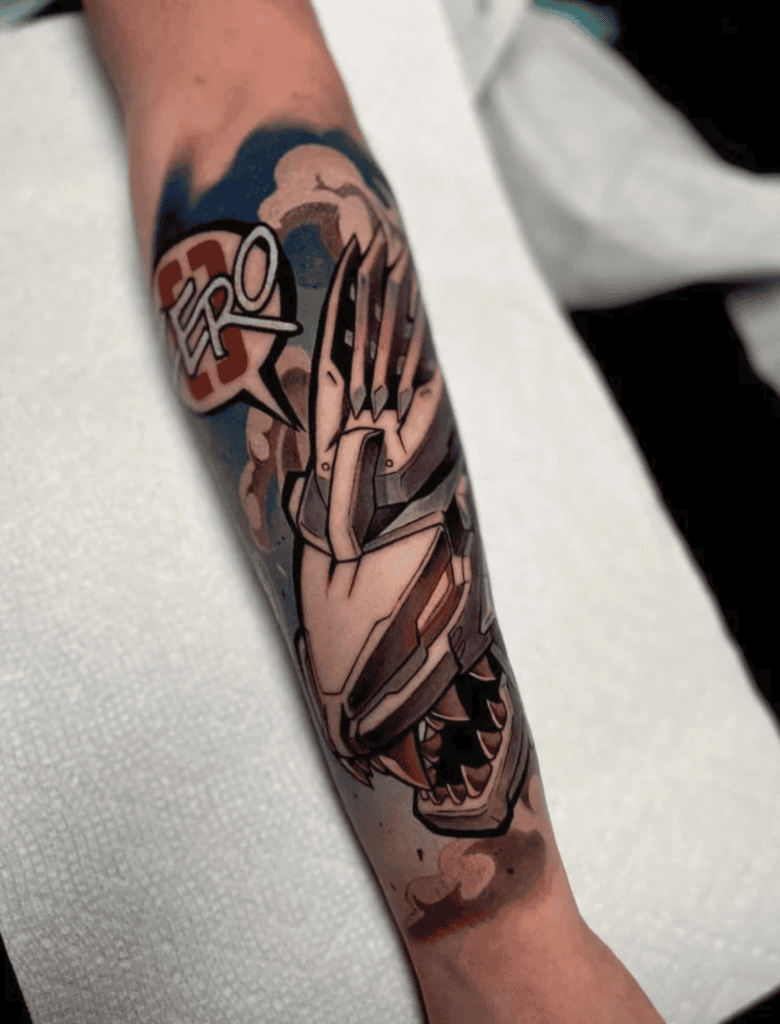
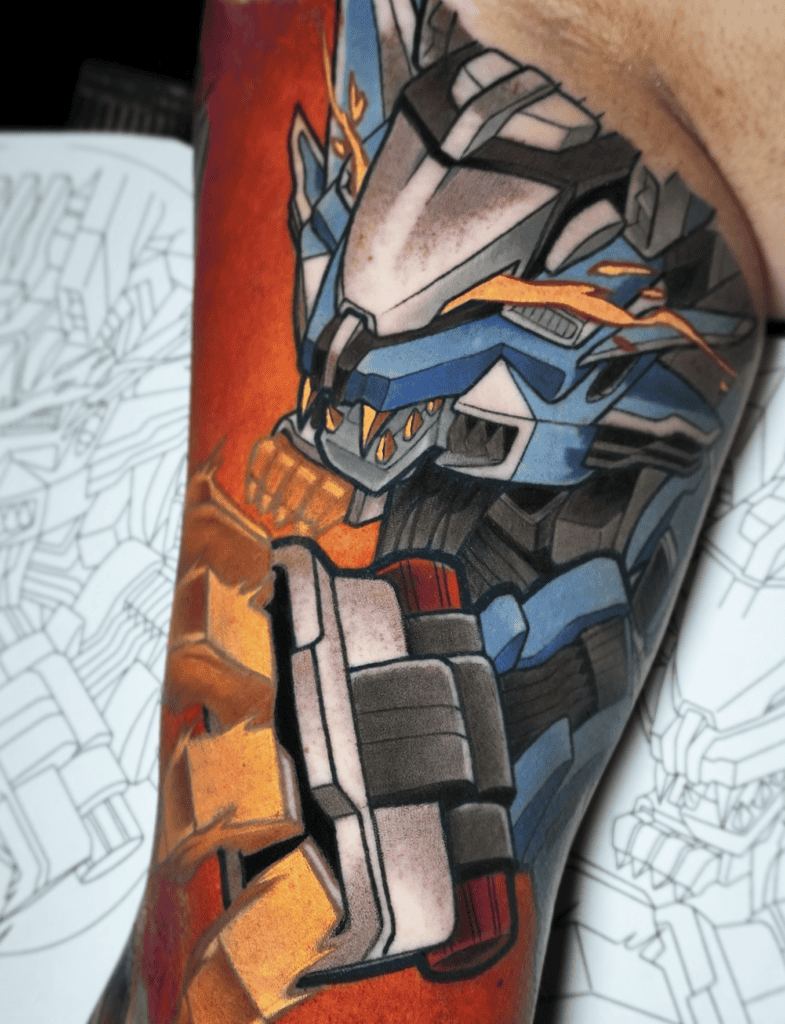
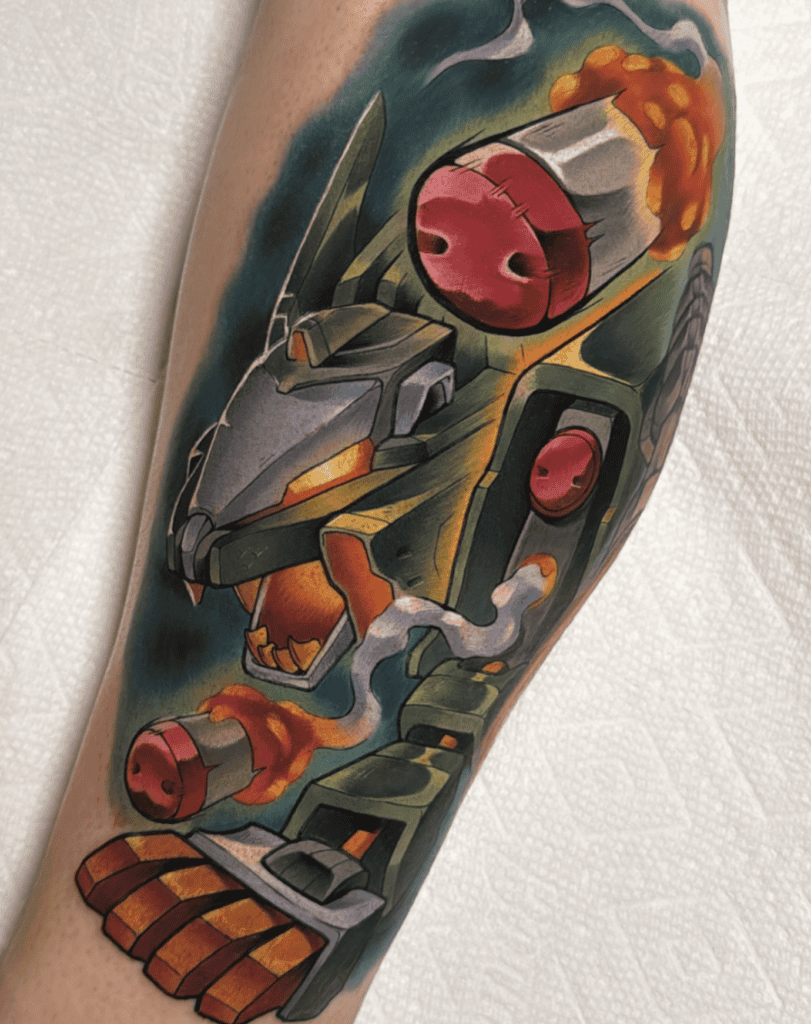
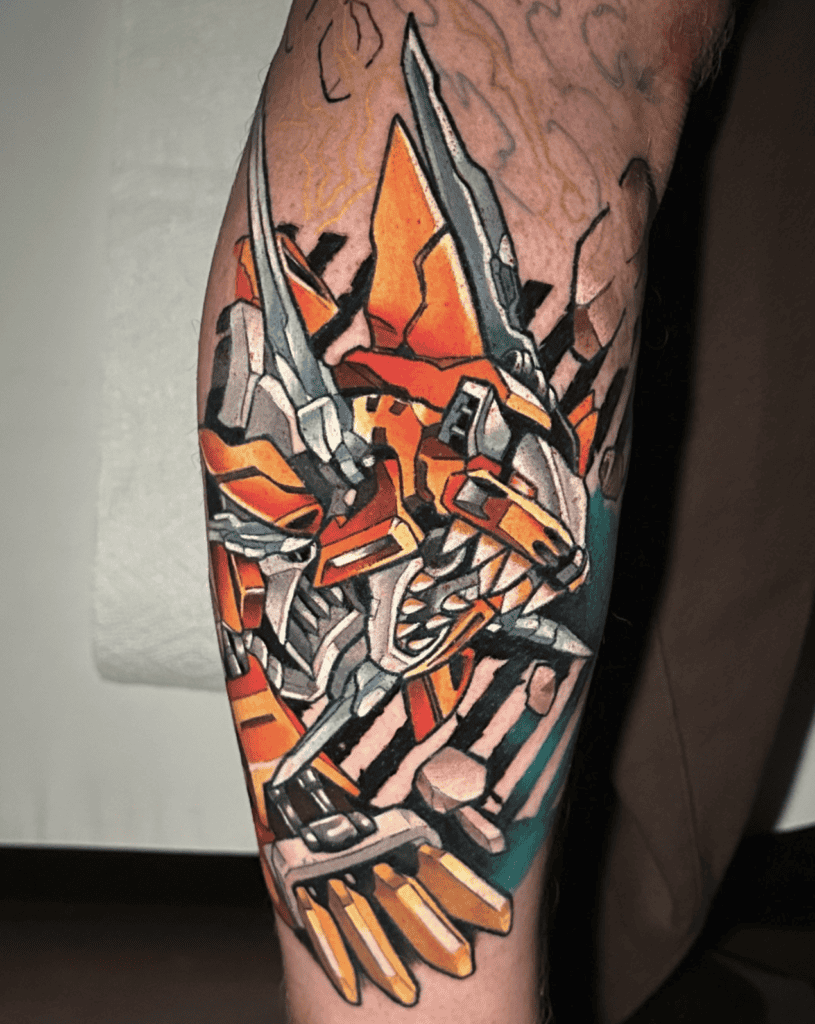
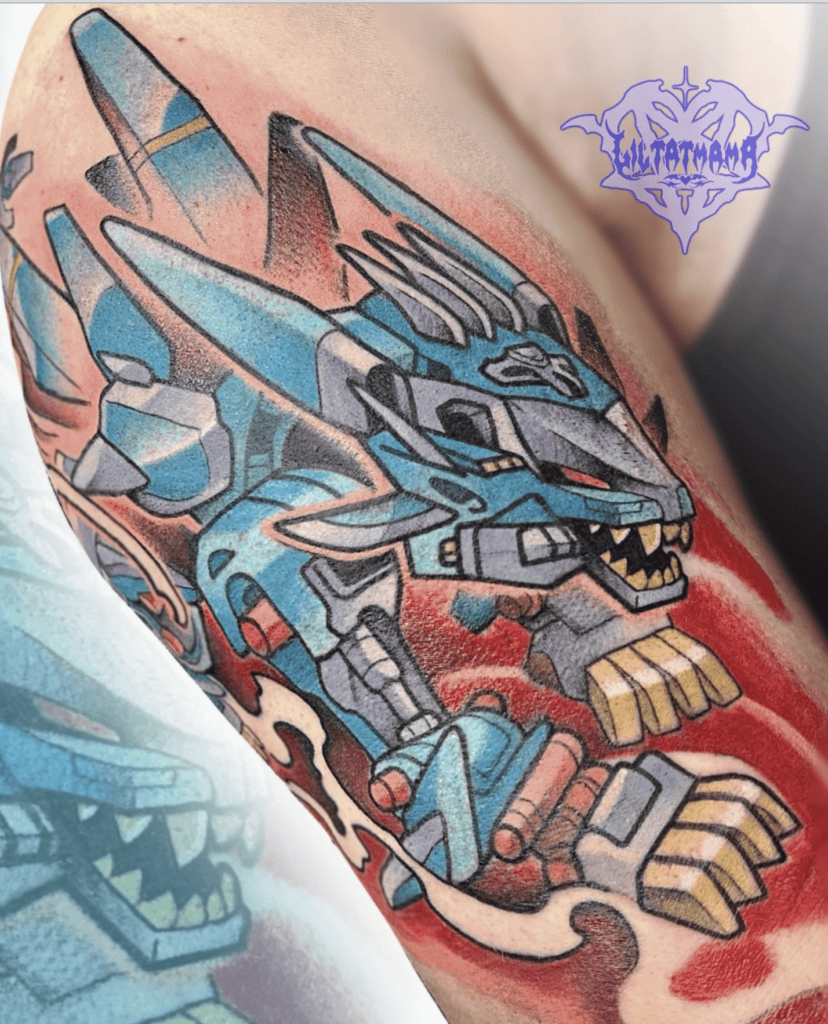
Liger Zero is one of the most famous and beloved Zoids in the entire Zoids franchise. Designed as a futuristic mechanical big cat inspired by a liger, Liger Zero became iconic for its speed, adaptability, and incredible transformation system.
Best known for its portrayal in Zoids: New Century, where it was piloted by Bit Cloud, Liger Zero is famous for its flexibility and ability to swap armour systems for different battle situations.
The Liger Zero’s CAS (Changing Armor System), allows it to equip different armour types depending on the battle. The most famous forms are: Liger Zero Jager, a high-speed blue armour focused on speed and agility, Liger Zero Schneider, an orange armour focused on blades and melee combat, and Liger Zero Panzer, a green heavy artillery armour packed with massive weapons.
White Tigerzord Tiger Tattoo

The White Tigerzord is one of the most iconic Zords in the history of Mighty Morphin Power Rangers, piloted by Tommy Oliver. The White Tigerzord is a giant mechanical tiger used by the White Ranger during battles against giant monsters.
In Warrior Mode, the Tigerzord gains a humanoid combat form, martial arts fighting style and enhanced power attacks. The Tigerzord reflects many traits of Tommy Oliver: discipline, leadership, calm confidence, spiritual power, and heroism.
Battle Cat Tiger Tattoo
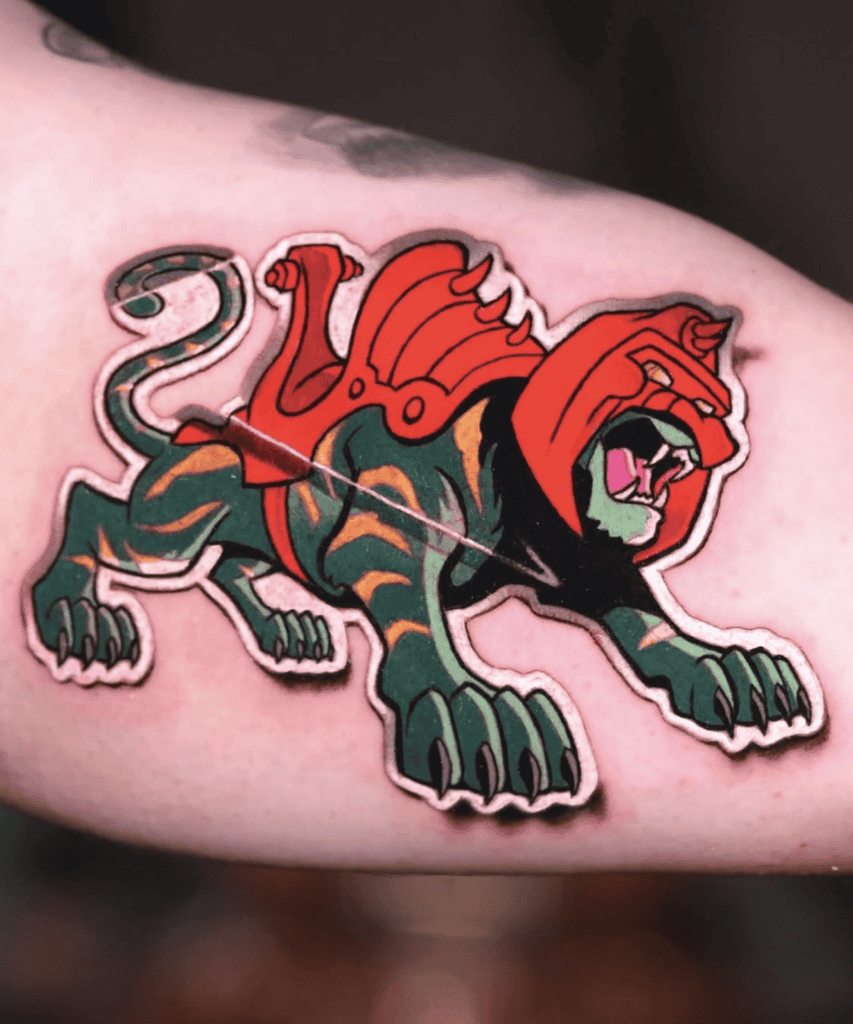
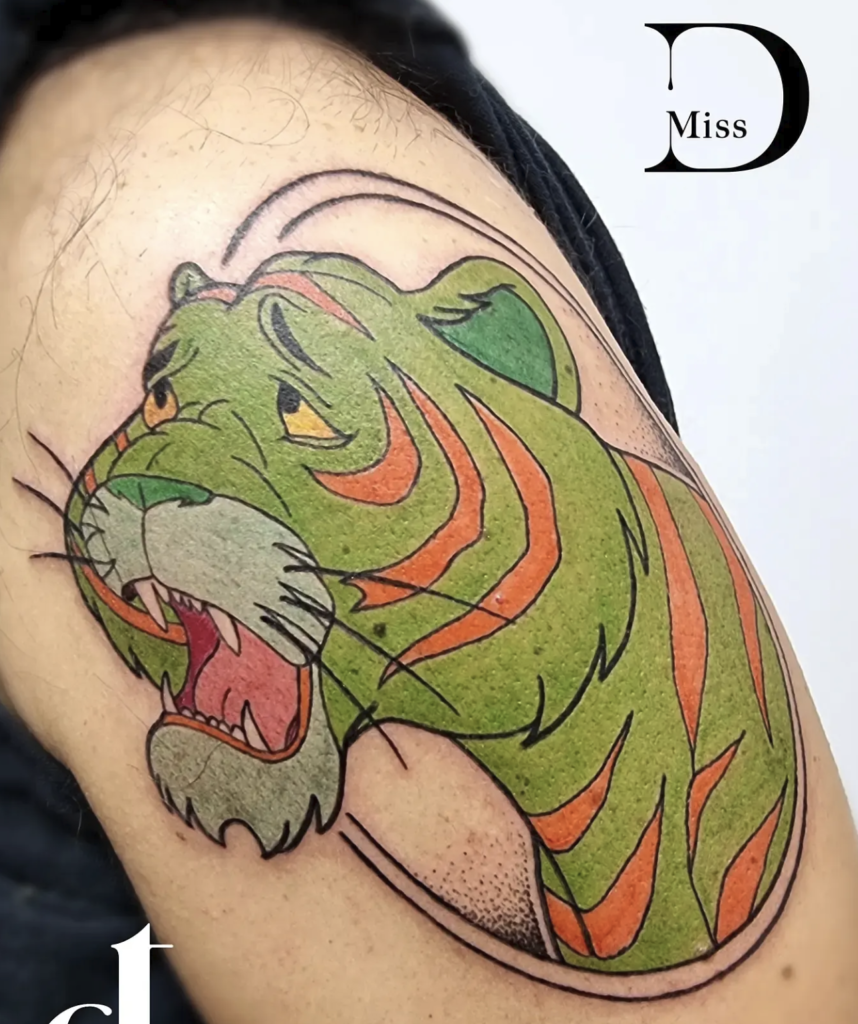
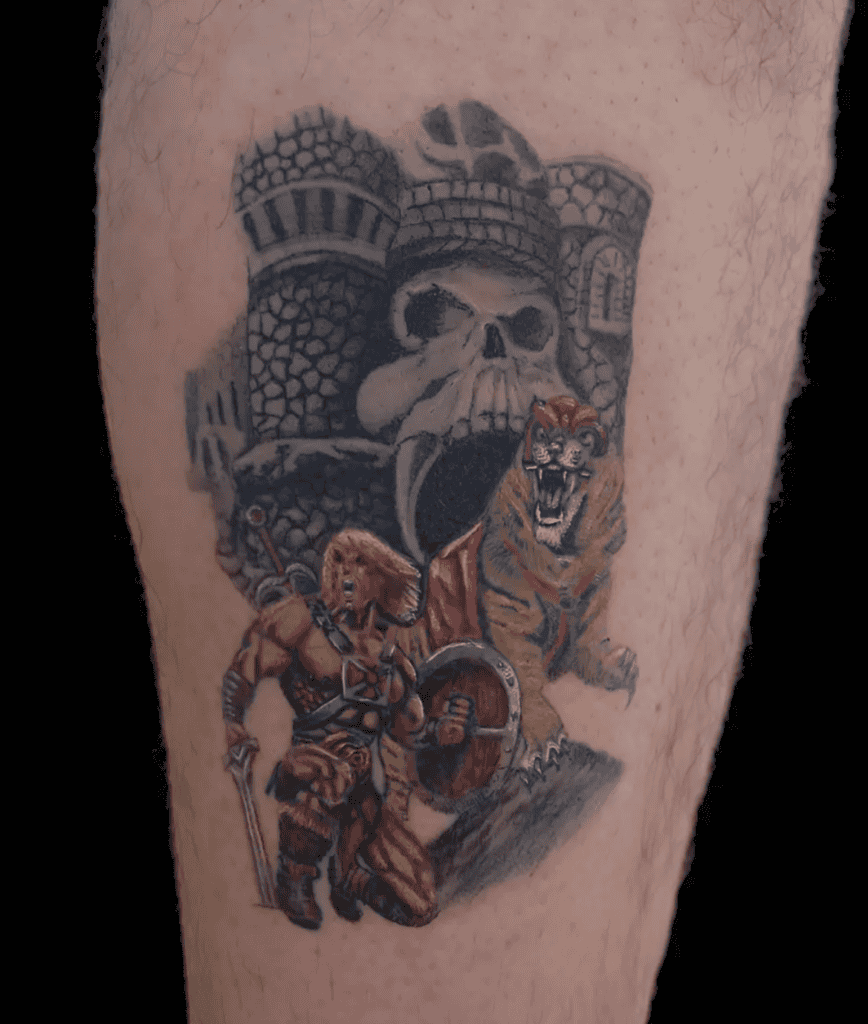
Battle Cat is He-Man’s mighty feline companion in the Masters of the Universe franchise, serving as both a loyal steed and a fierce ally in the battle against evil. Usually depicted as a massive green tiger wearing red armour, Battle Cat is actually Cringer, Prince Adam’s timid pet cat, who transforms into a fearless warrior whenever Adam uses the Power Sword to become He-Man. Despite Cringer’s cowardly personality in his everyday form, Battle Cat charges fearlessly into combat against Skeletor and his minions. Their partnership highlights the power of friendship, loyalty, and finding courage when it matters most!
Conclusion
Thanks for joining us on this purr-fect journey through the fierce and protective world of the Tiger Tattoo. We hope we’ve helped you find your stripes on your tattoo hunt. But before you vanish into the brush, why not pounce your way into these Dragon Tattoo Ideas, these Monkey Tattoo Designs, or these Chicken Tattoos.
- Bear Tattoo Ideas - October 22, 2026
- Lion Tattoo Ideas - October 19, 2026
- Persona Tattoo Ideas - October 15, 2026