

Cow Tattoo Ideas

Do you feel like you’re moving slowly as you graze your way across the internet on your search for the perfect Tattoo Clues? Well, worry not, we’re about to change your strut into a charge as we share with you some of the most udderly fascinating Bovine Tattoo Ideas that will make you see red.
What does a Cow Tattoo mean?
A bovine tattoo can carry a variety of meanings depending on the specific Bovine depicted, but in general, bovines are often associated with strength, resilience, abundance, stability, and a deep connection to nature.
Throughout history, bovines played a vital role in human civilisation, providing food, labour, transportation, and companionship for thousands of years, making them powerful symbols of hard work, endurance, and reliability.
Bovine tattoos can symbolise strength and determination, as large bovines such as bison, buffalo, and bulls are renowned for their physical power and ability to withstand harsh environments, representing overcoming challenges, standing one’s ground, and facing life with courage.
Bovines are also closely linked to prosperity and abundance. In many cultures, owning cattle was a sign of wealth and status. Sacred cows and bulls appear in numerous mythologies and religions, where they are associated with fertility, nourishment, and good fortune.
Best Bovine Tattoos
Now that we know a little about Bovine Tattoos, let’s take a look at some of the best Bovine Tattoos the internet has to offer.
Holstein Friesian Cow Tattoo
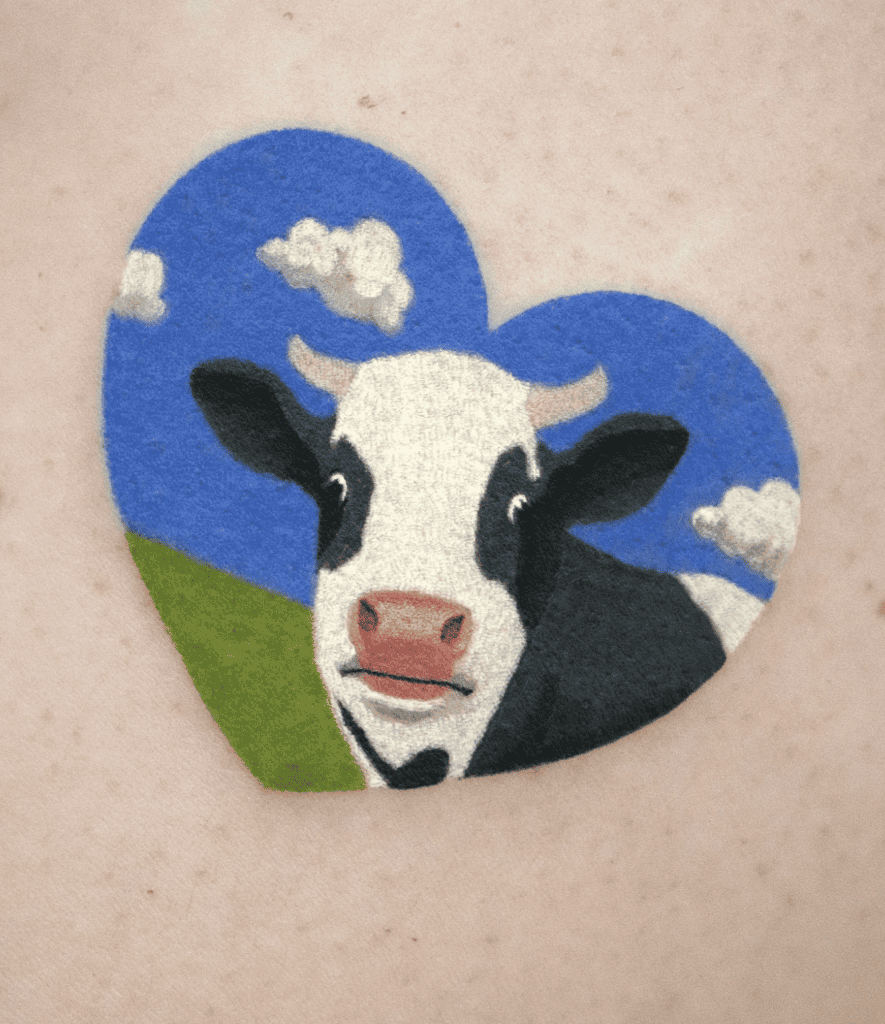
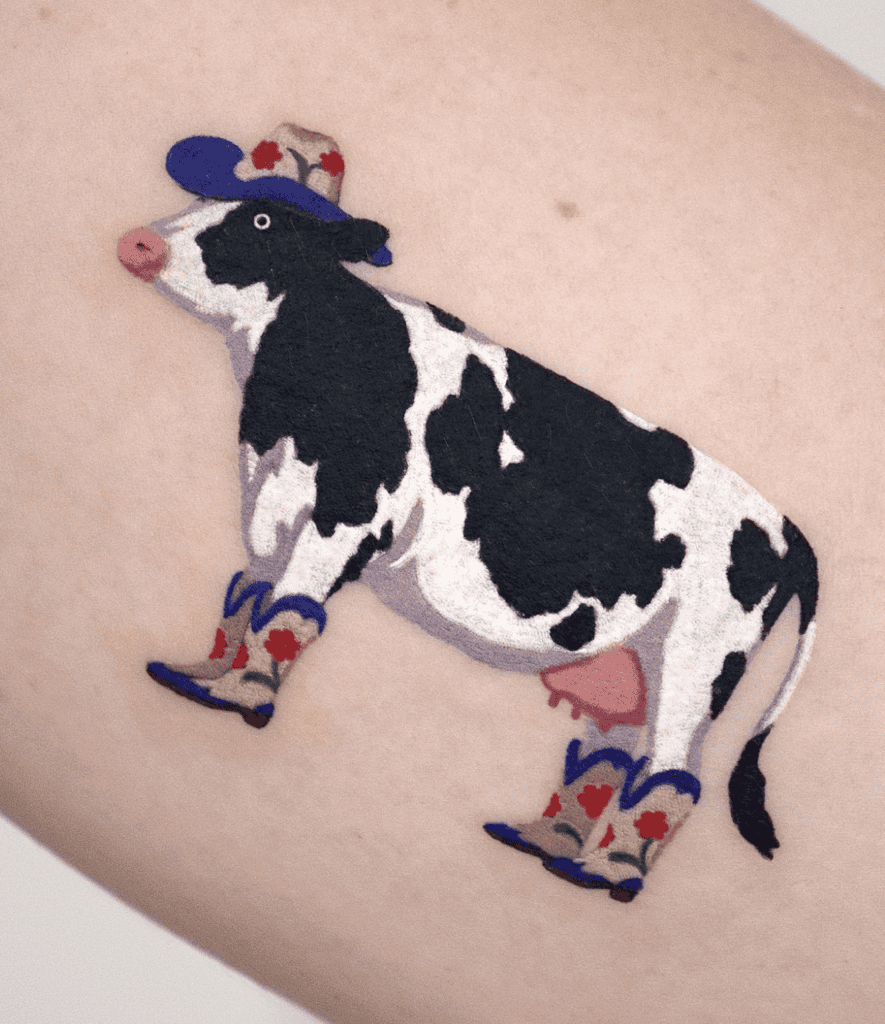
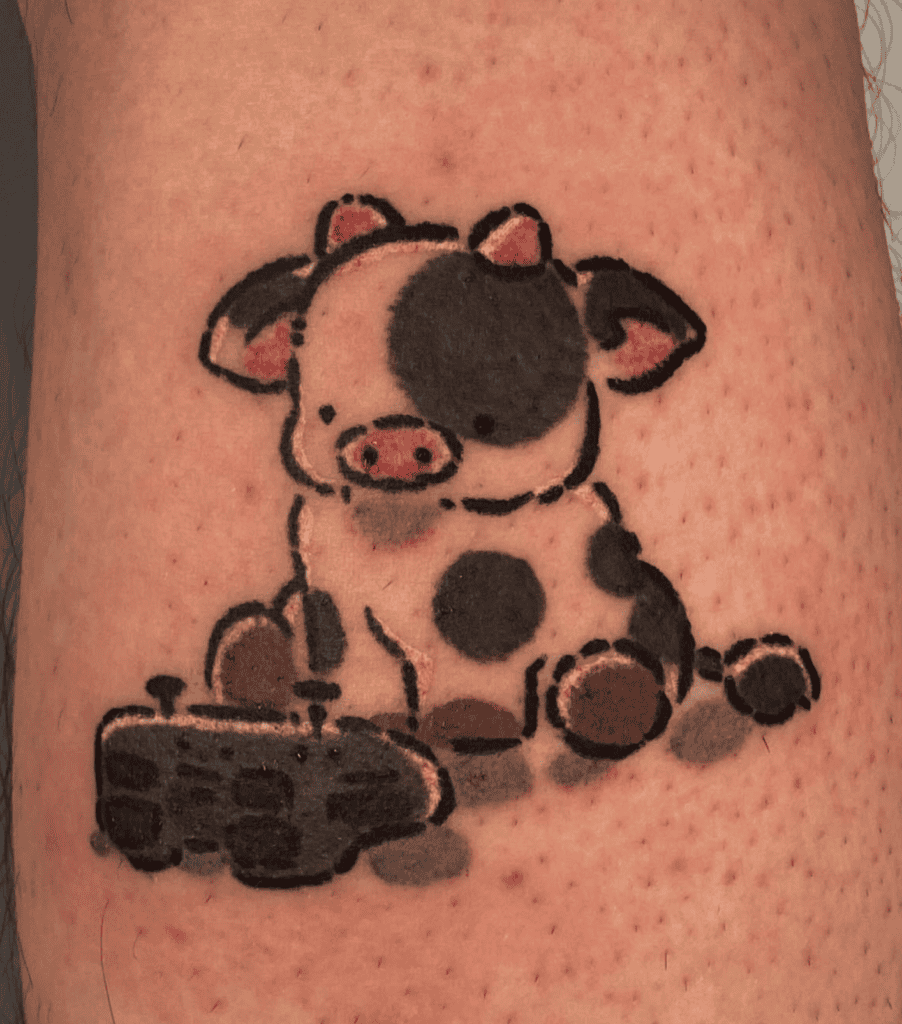
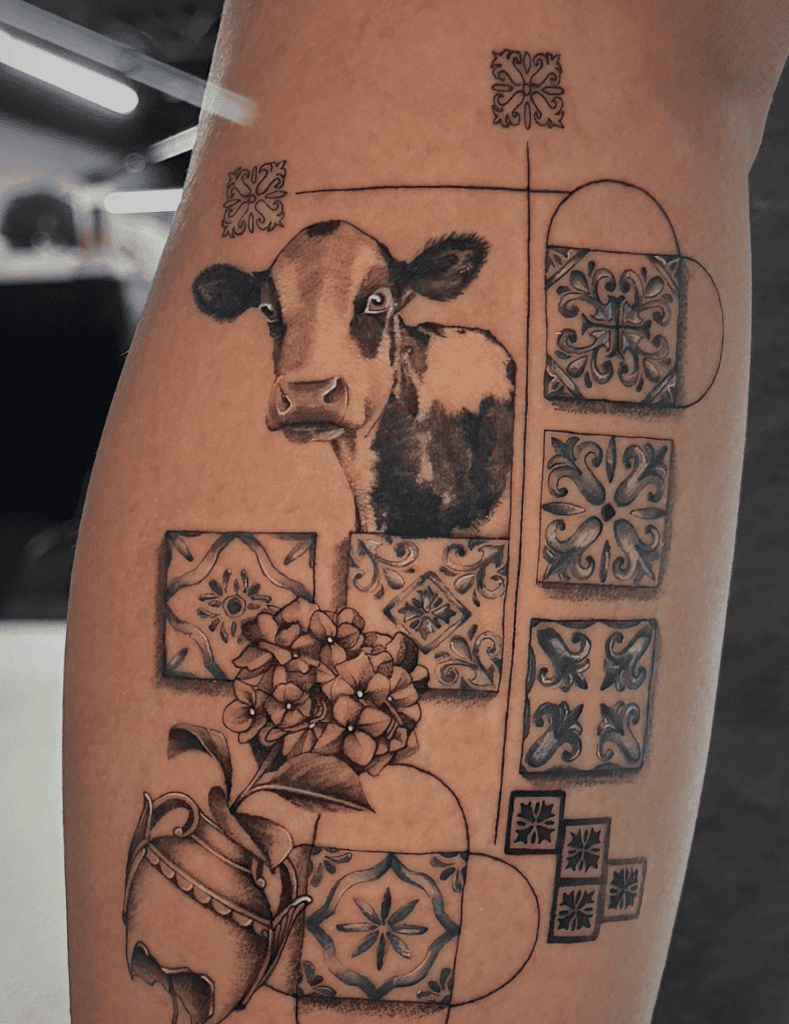
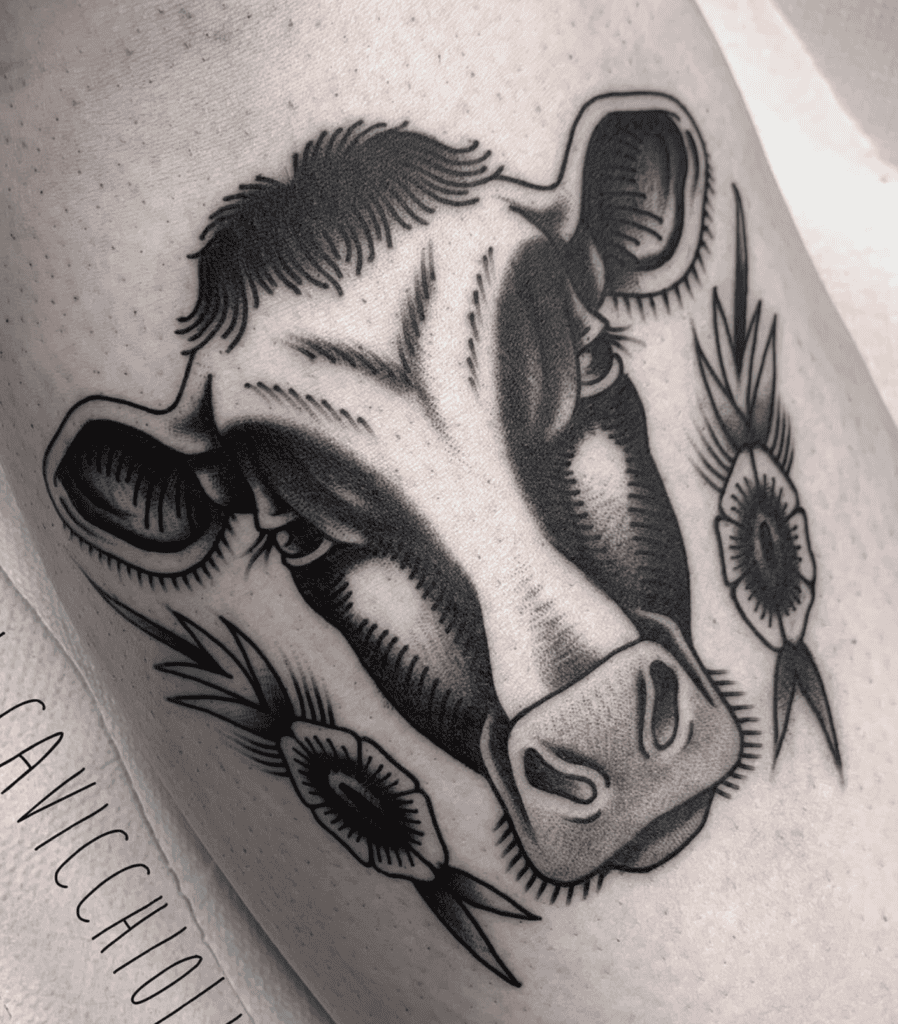
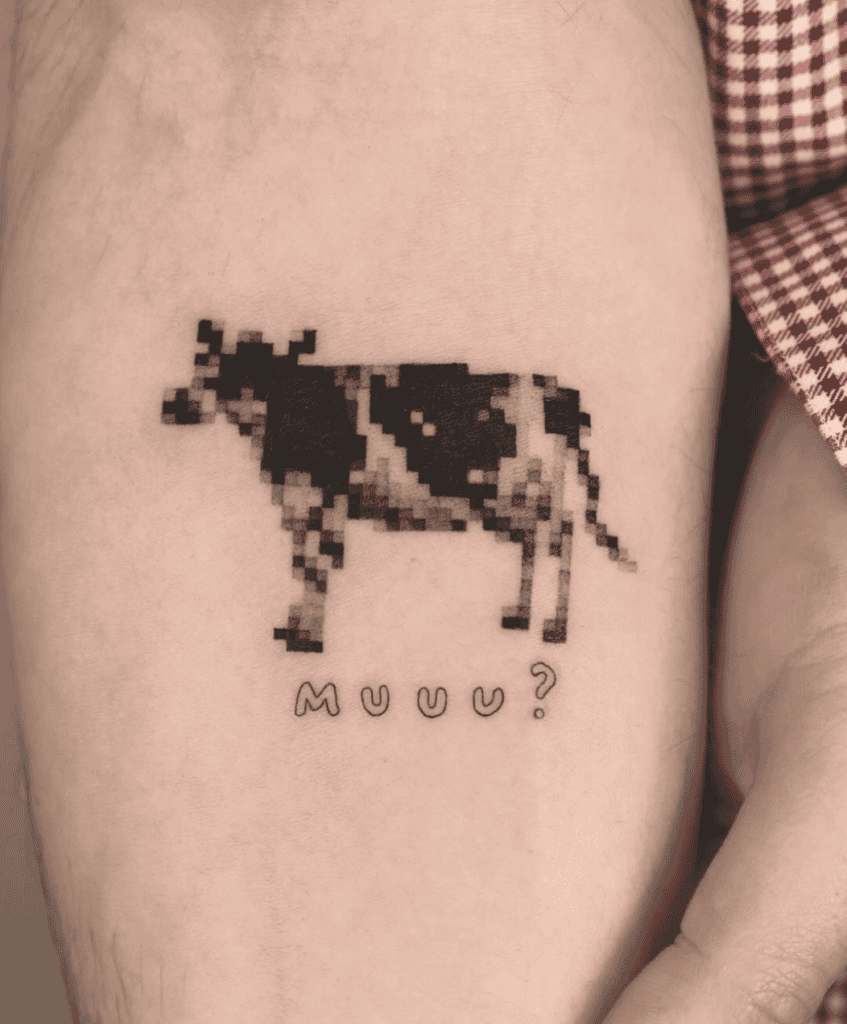
The Holstein Friesian is the most recognisable dairy cattle breed in the world, famous for its striking black-and-white coat and exceptional milk production. This species has become the face of the modern dairy industry and can be found on farms across nearly every continent.
The breed originated in the regions of North Holland and Friesland in the Netherlands, where farmers selectively bred cattle for their ability to produce large quantities of milk. Over centuries, these cattle developed into one of the most productive dairy breeds ever created, producing significantly more milk than many other dairy breeds.
Jersey Cattle Cow Tattoo
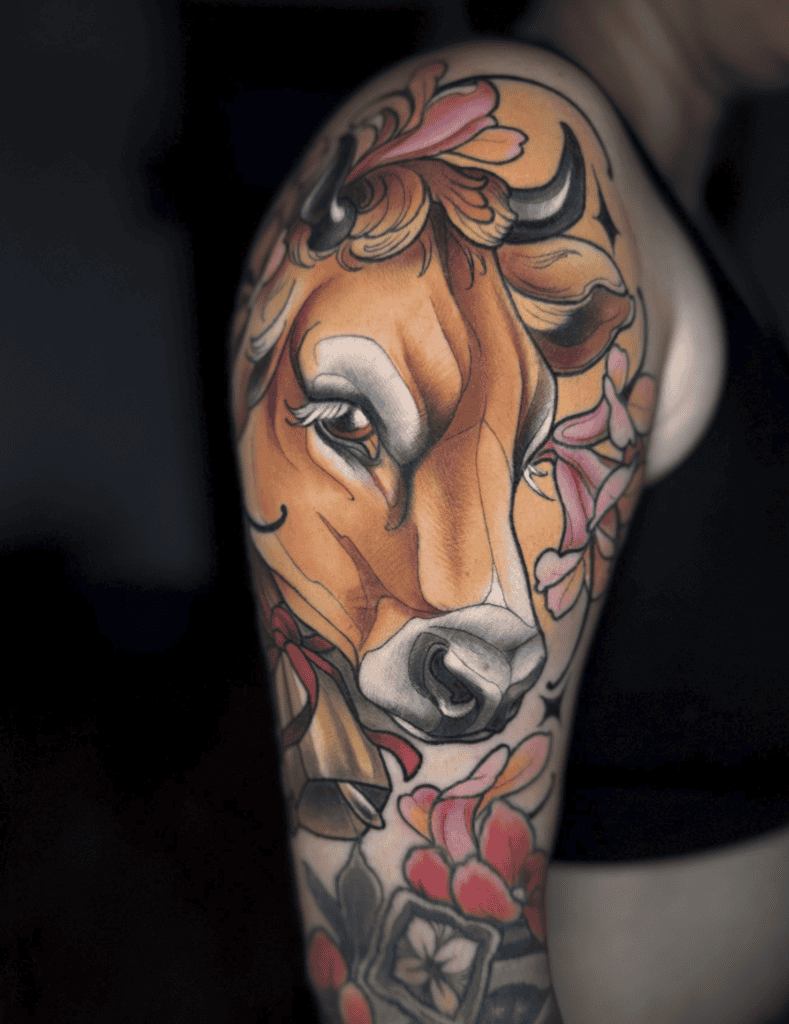
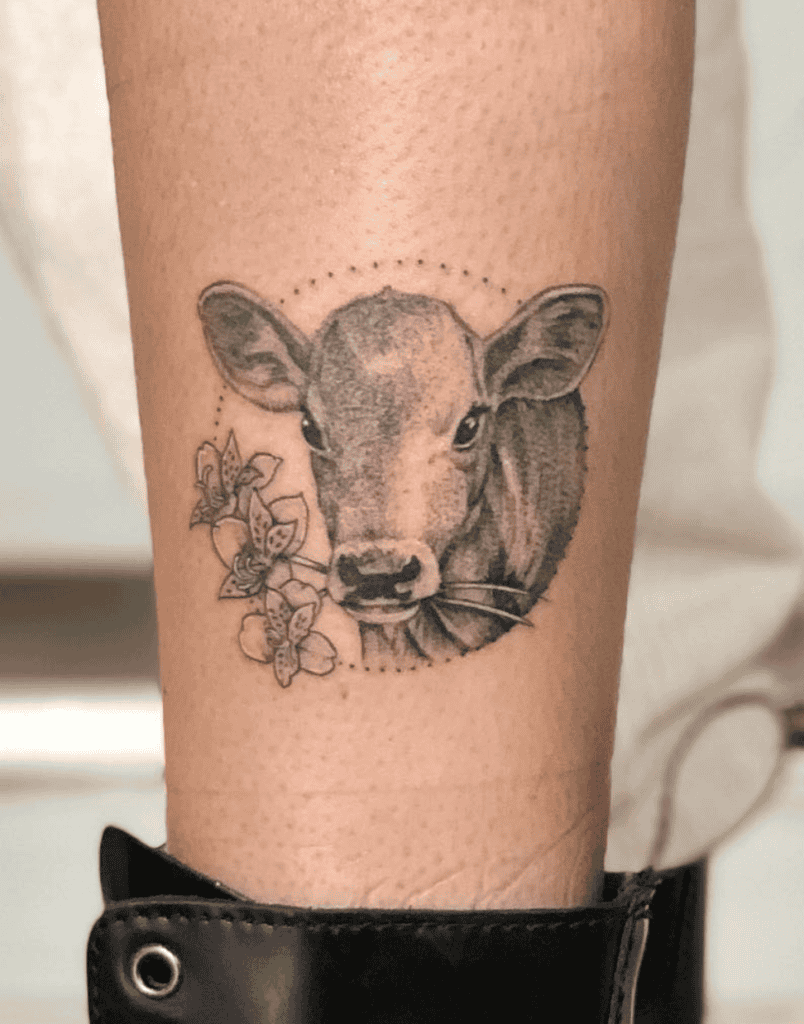
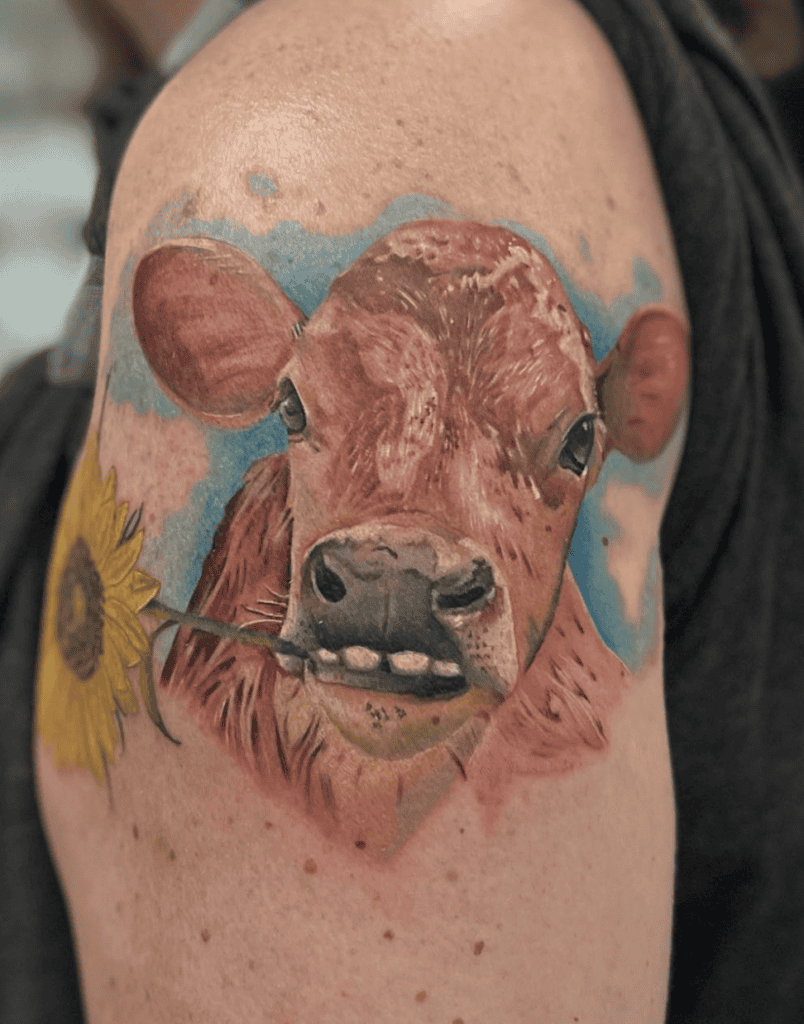
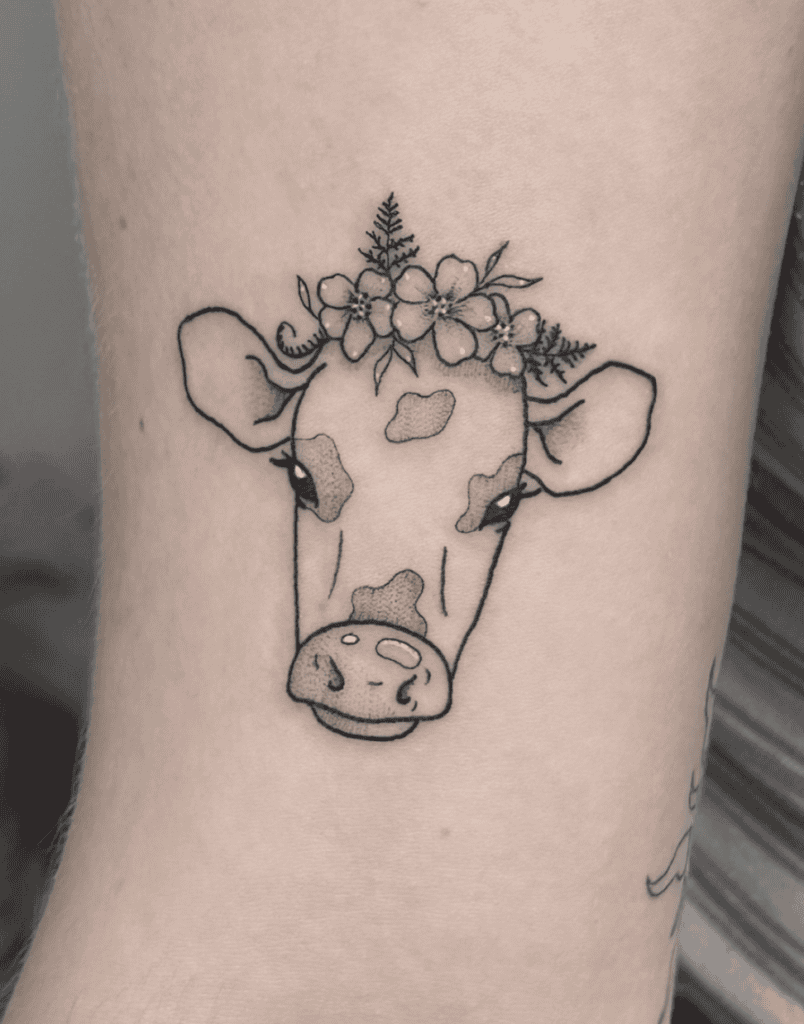
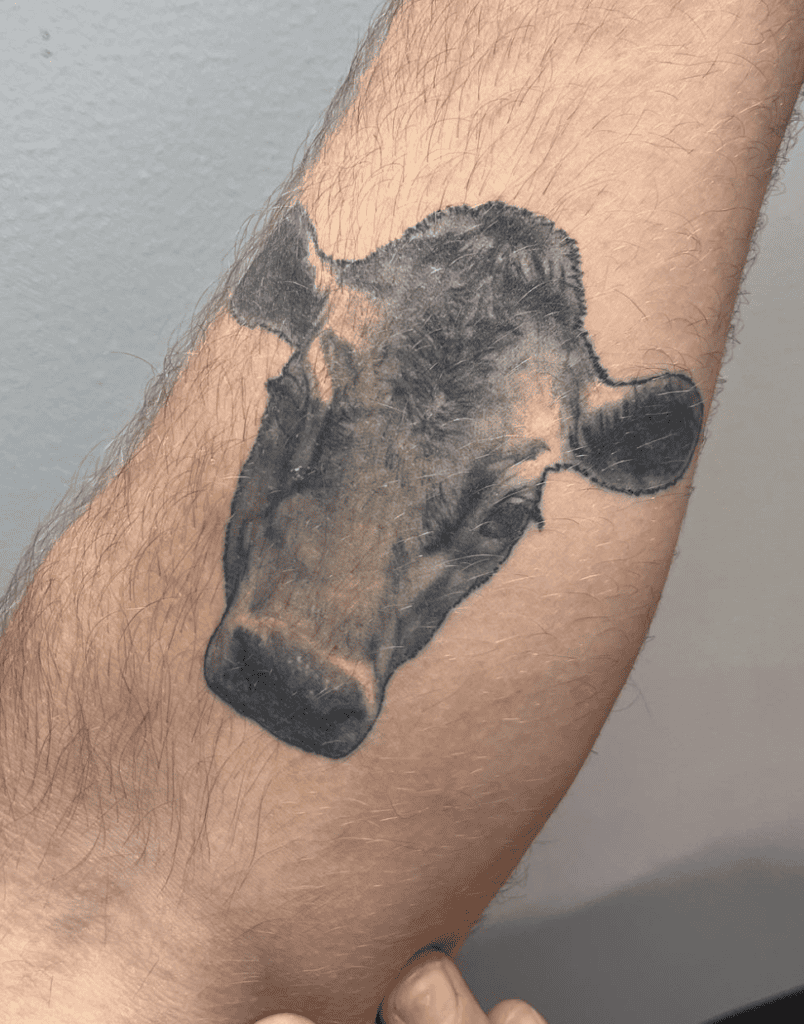
The Jersey Cattle is one of the most beloved dairy breeds in the world, known for its gentle nature, beautiful fawn-colored coats, and exceptionally rich milk. Jersey cattle may be smaller than many other dairy breeds, but they have earned a reputation as some of the finest milk producers on the planet.
Originating from the Jersey island in the English Channel, these cattle have been carefully bred for centuries to produce high-quality milk. Today, Jerseys can be found on dairy farms across the globe and are especially valued for the butterfat and protein content of their milk.
Angus Cattle Cow Tattoo


The Angus Cattle, often called Aberdeen Angus, is one of the most popular and influential beef cattle breeds in the world, renowned for its high-quality meat, hardiness, and adaptability. Angus cattle have become the gold standard for beef production in many countries, valued for their excellent marbling, tender texture, rich flavour, and consistent quality.
The breed originated in the historic counties of Aberdeenshire and Angus in northeastern Scotland during the 18th and 19th centuries. Through careful breeding, farmers developed cattle that were naturally hornless, robust, and capable of producing excellent beef.
Hereford Cattle Cow Tattoo
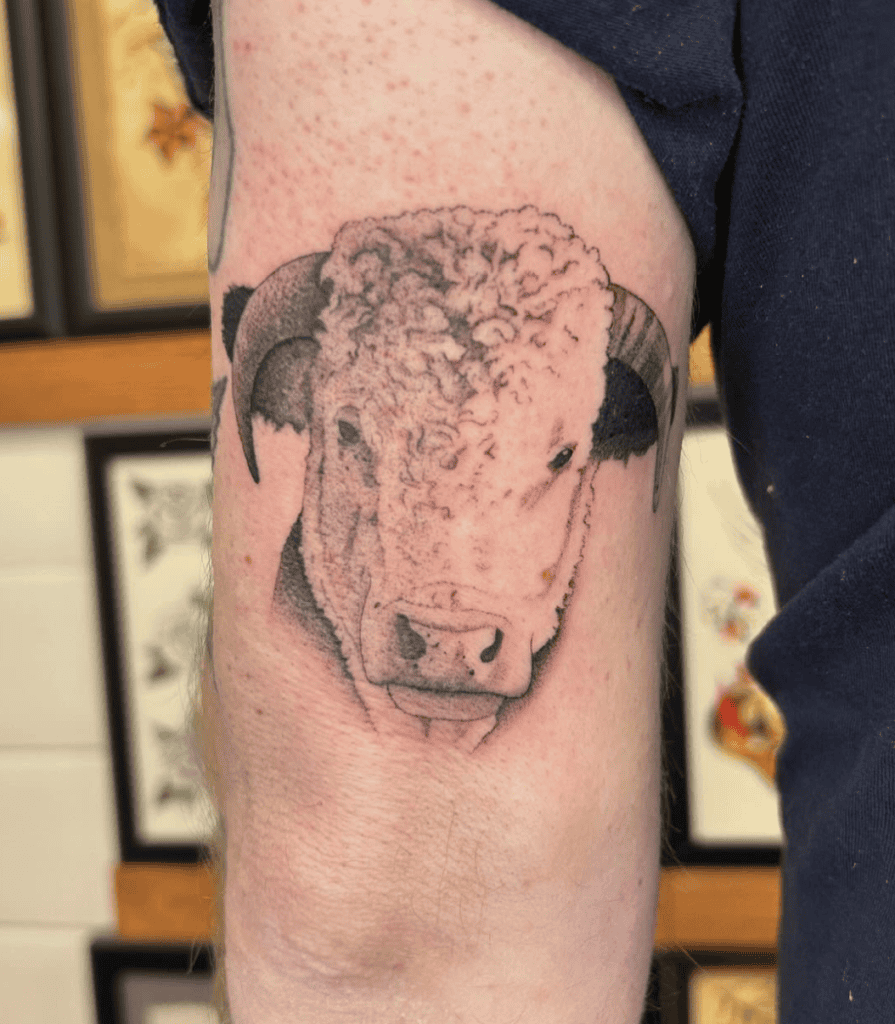
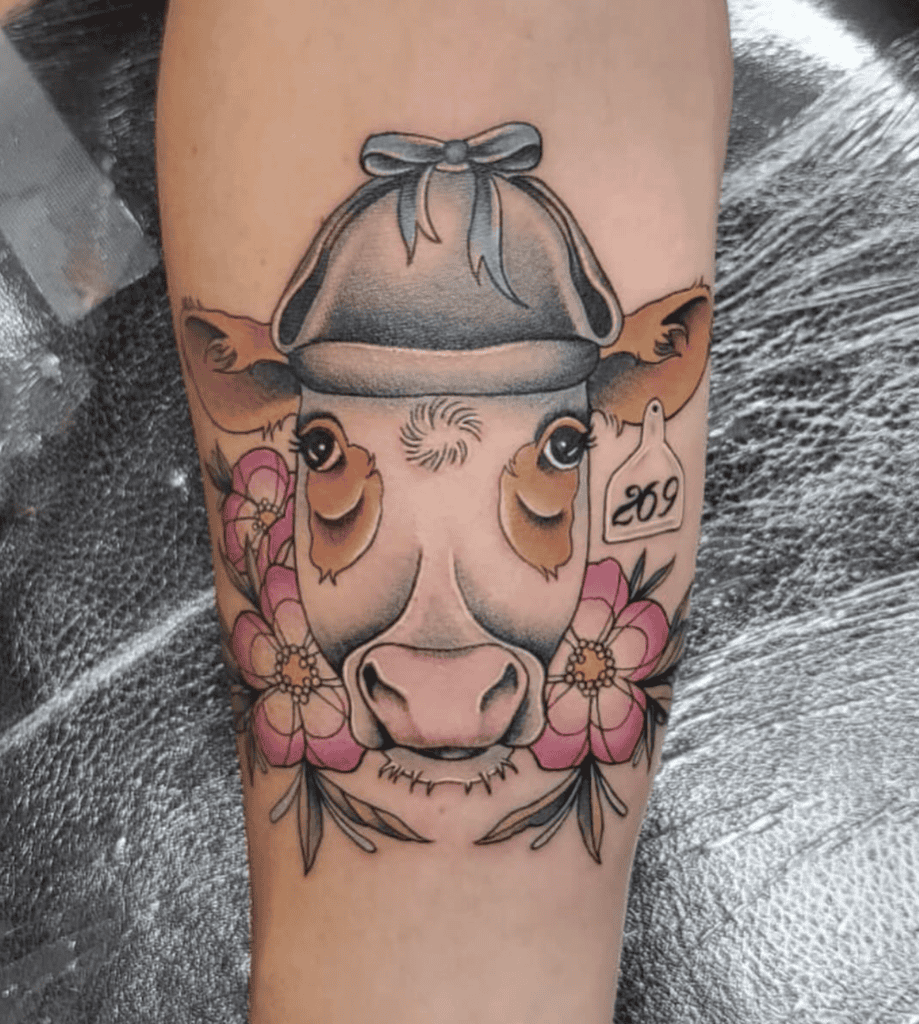
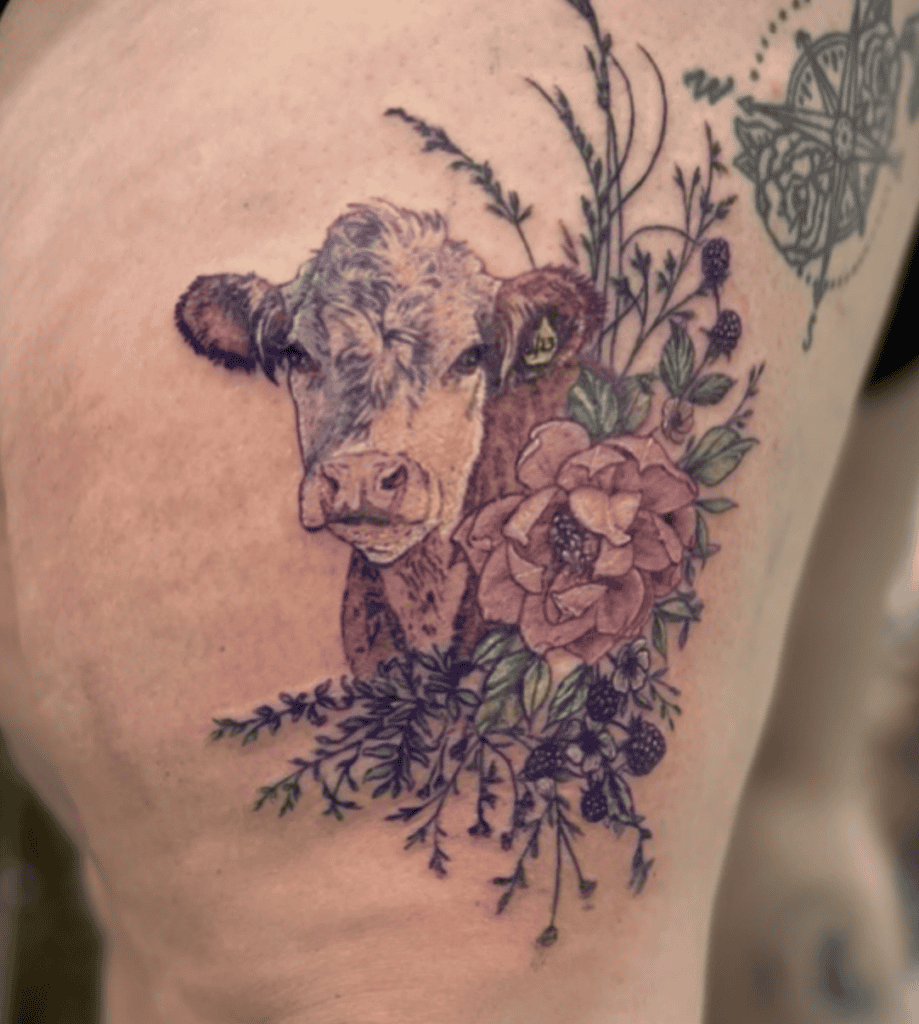
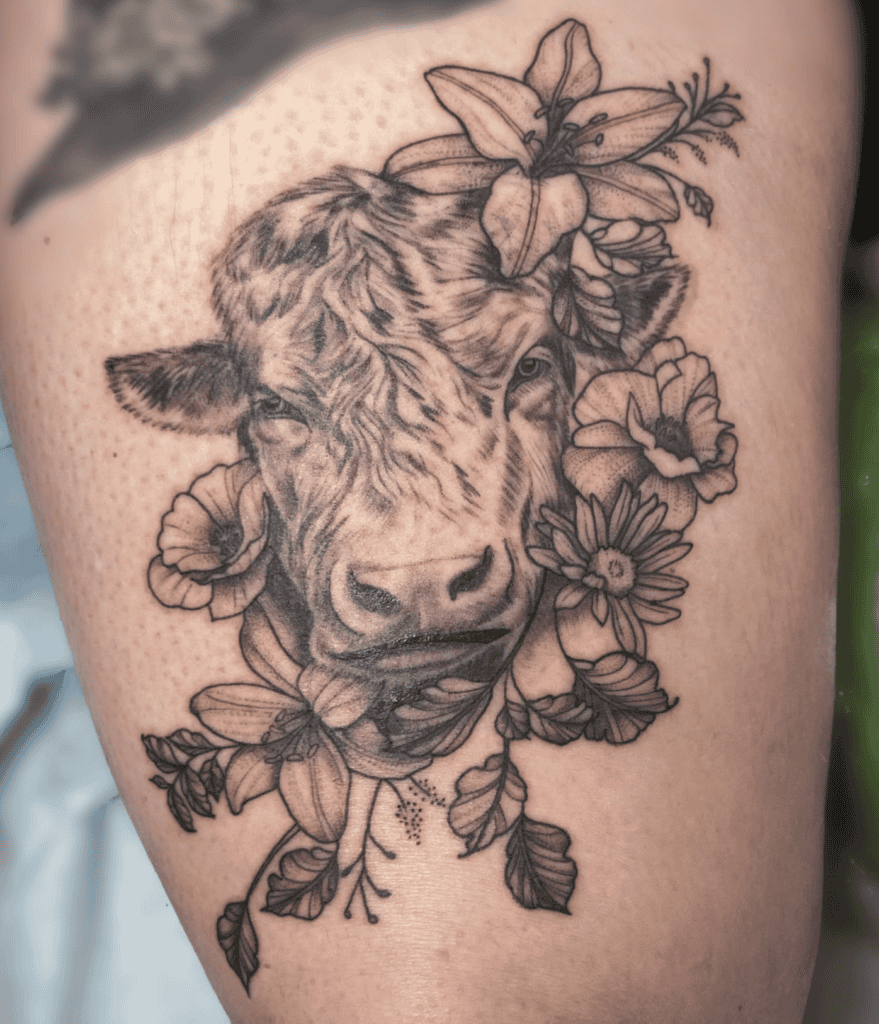
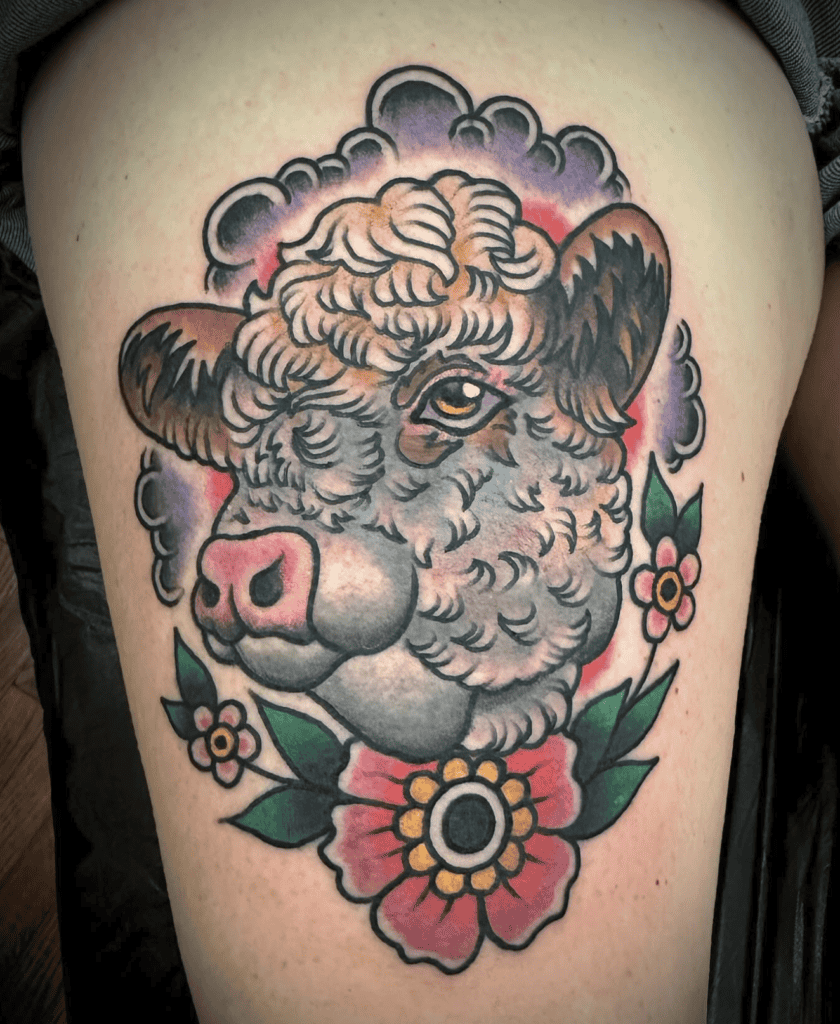
The Hereford Cattle is one of the world’s most recognisable and successful beef cattle breeds, famous for its distinctive red body and white face. The Hereford has become a symbol of ranching and cattle farming across many countries, having earned a reputation for producing tender meat, good marbling, consistent quality, and efficient growth.
Originating in the county of Herefordshire during the 18th century, Hereford cattle were developed to thrive on grass-based diets while producing high-quality beef. Their hardiness, adaptability, and calm temperament helped them spread across the globe, making them one of the most influential cattle breeds ever created.
Highland Cattle Cow Tattoo
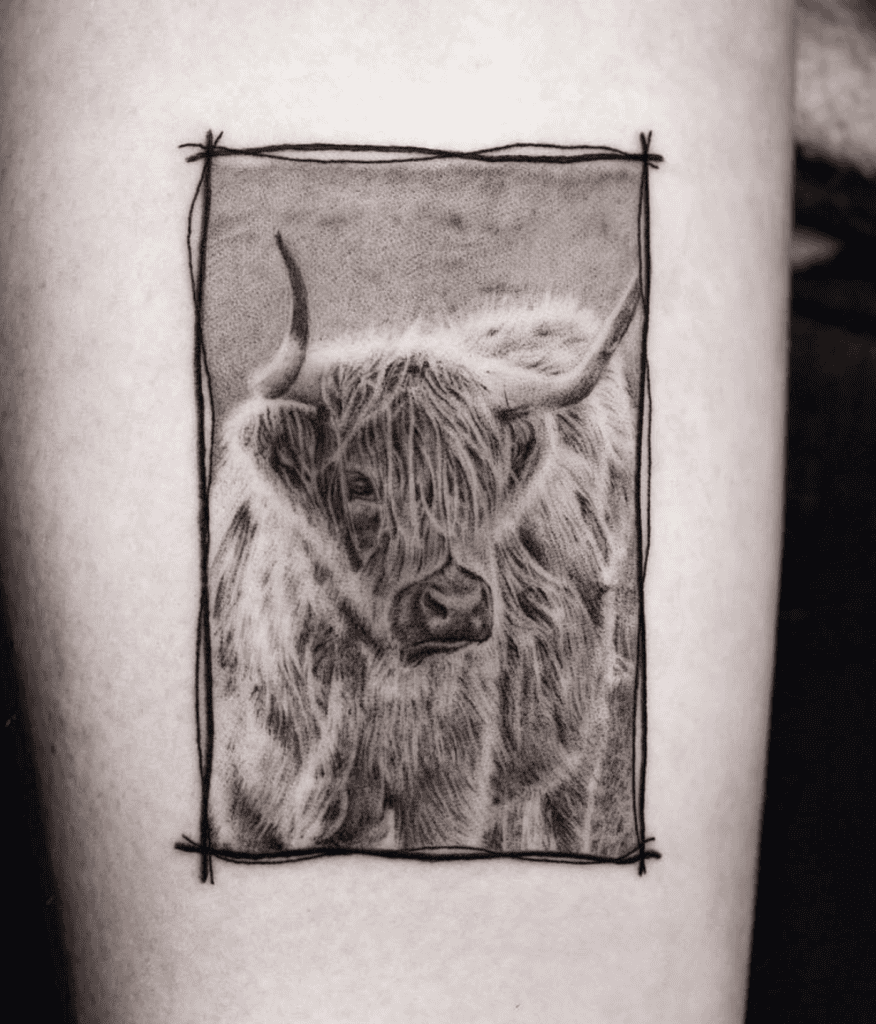
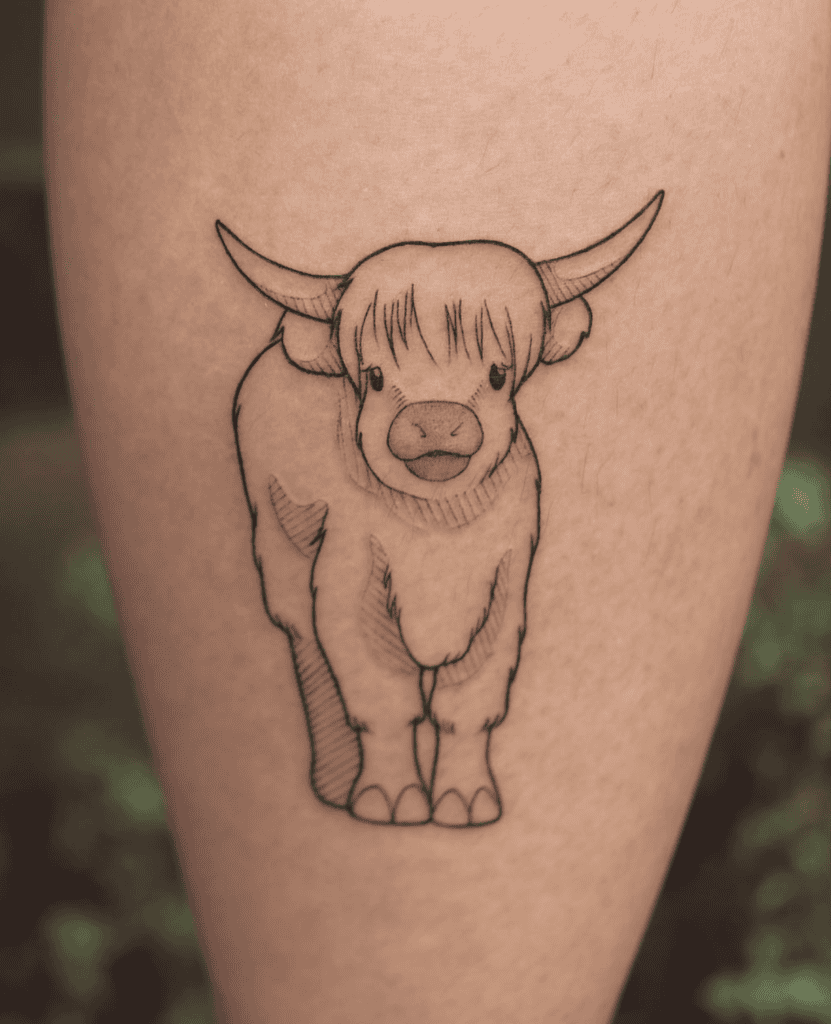
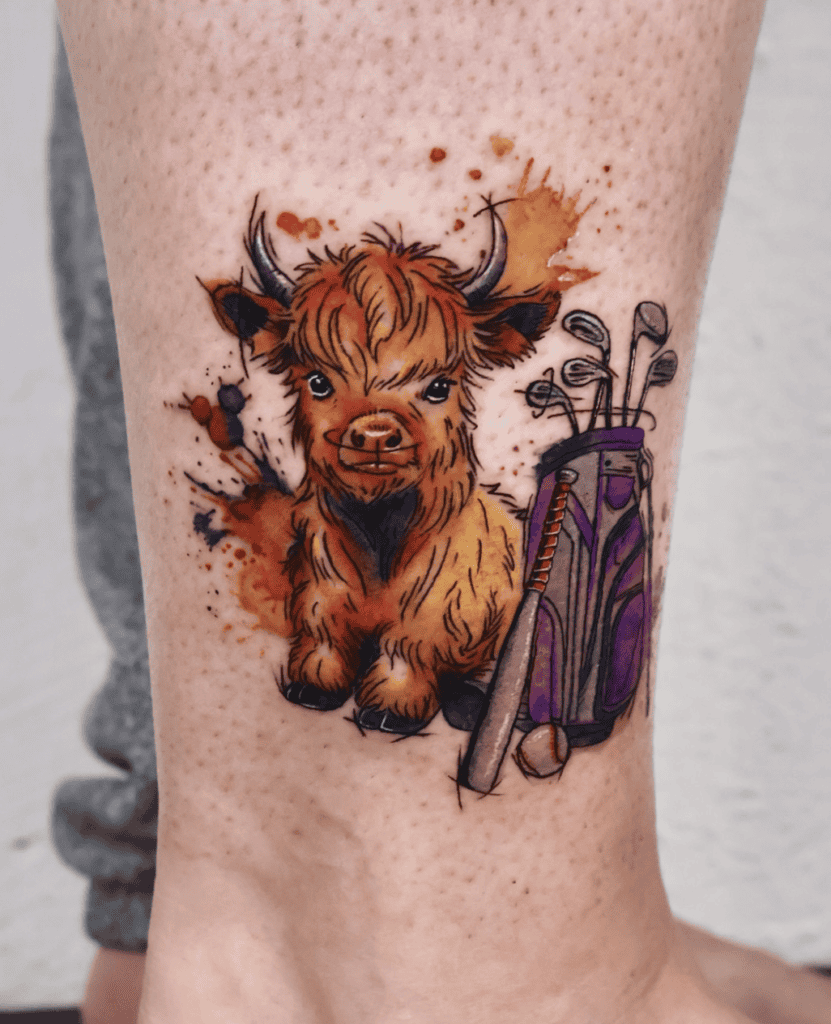
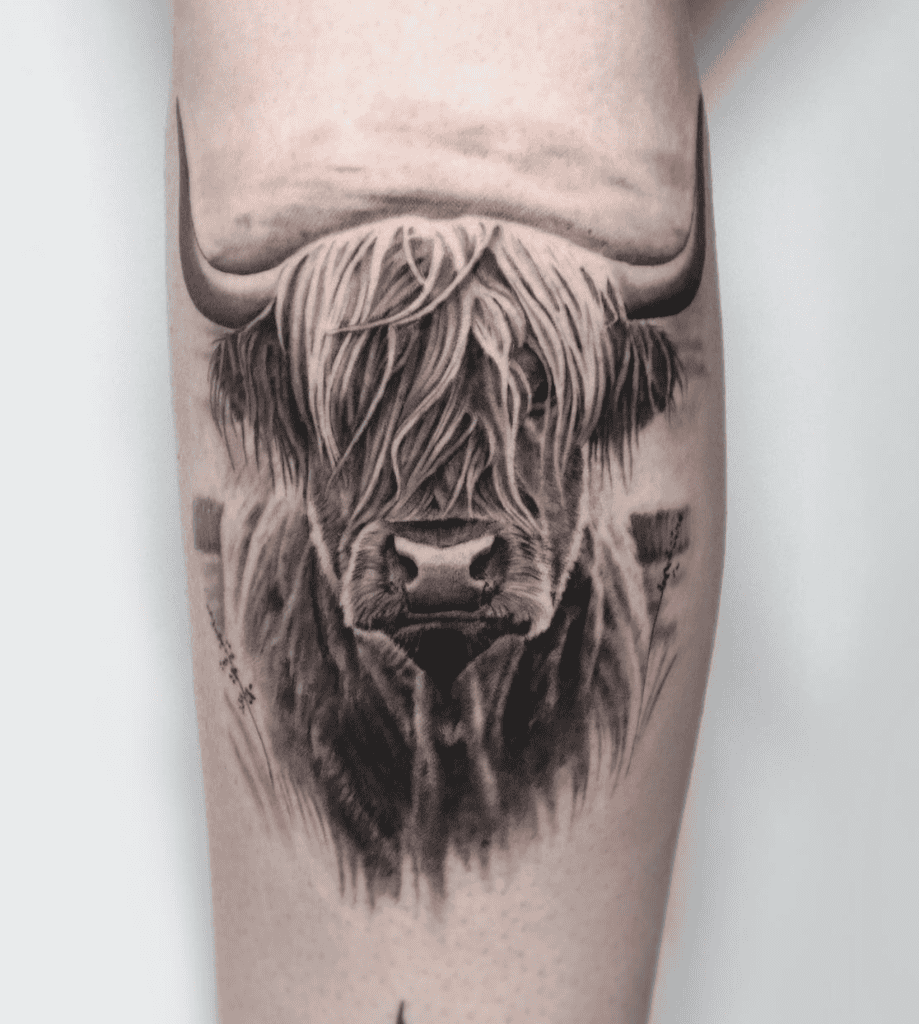
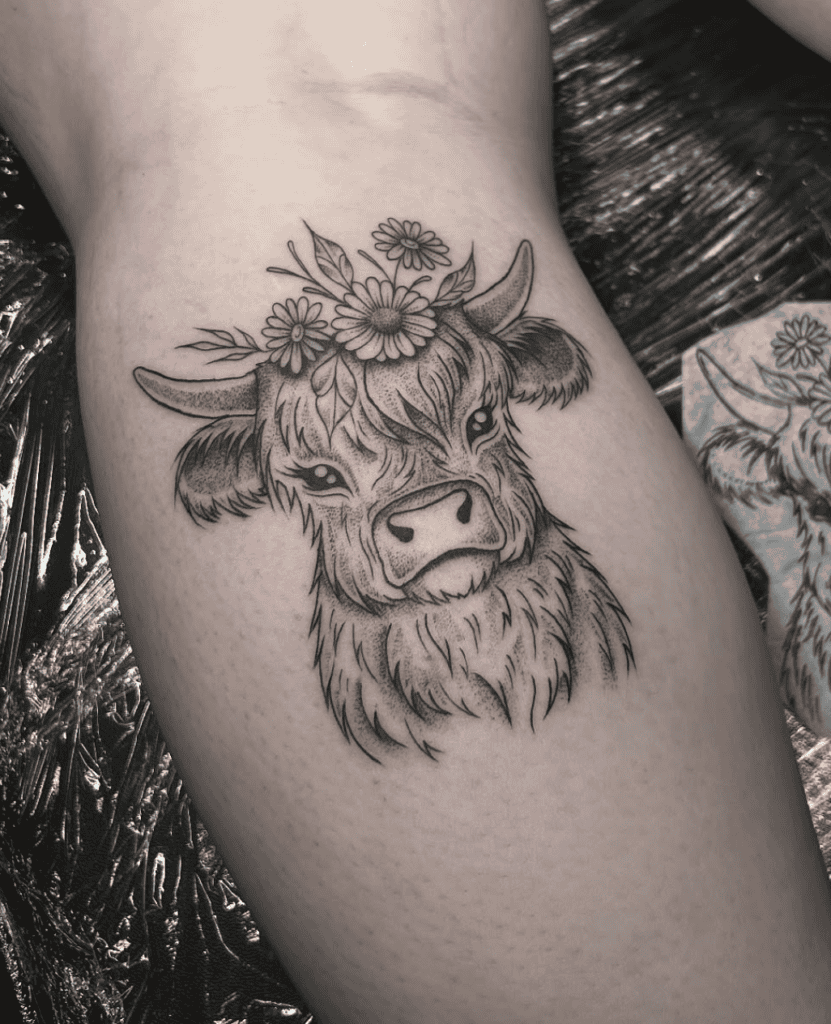
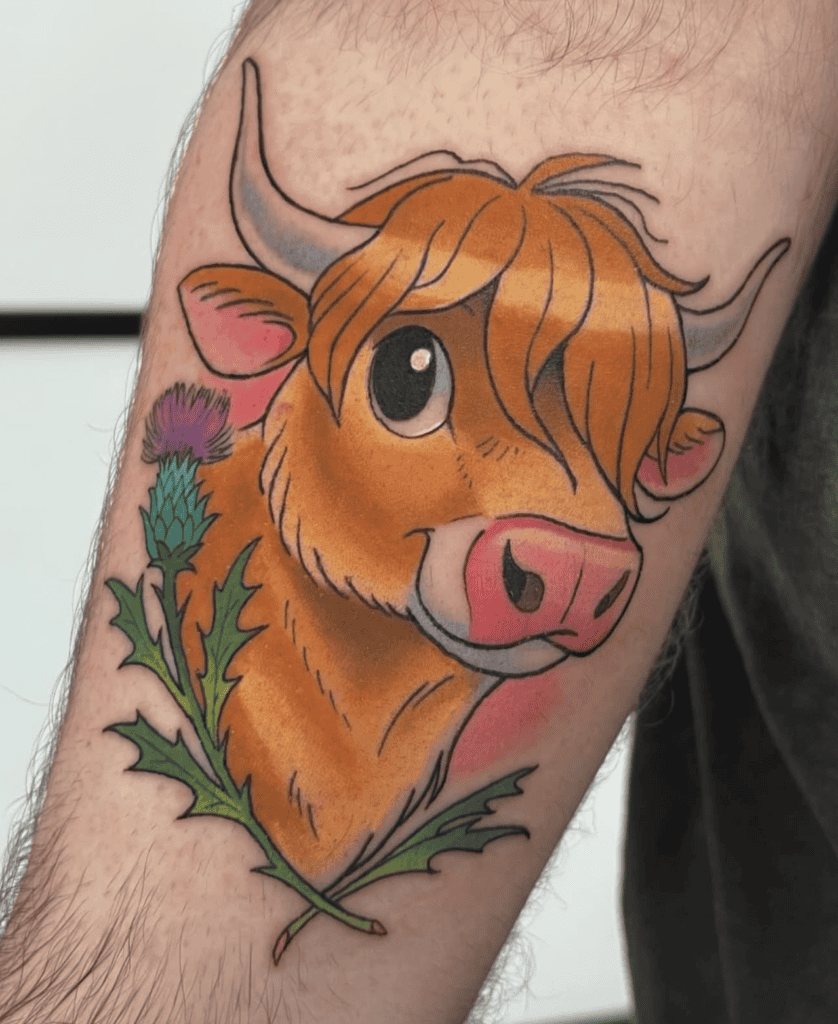
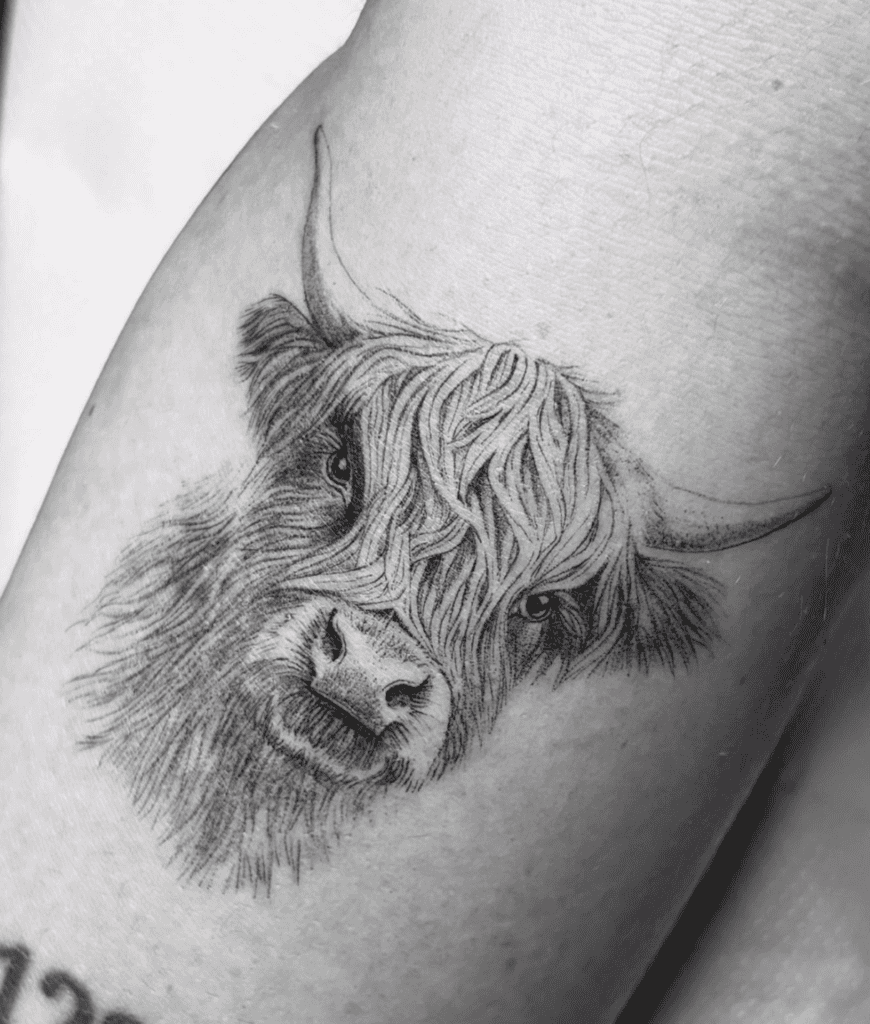
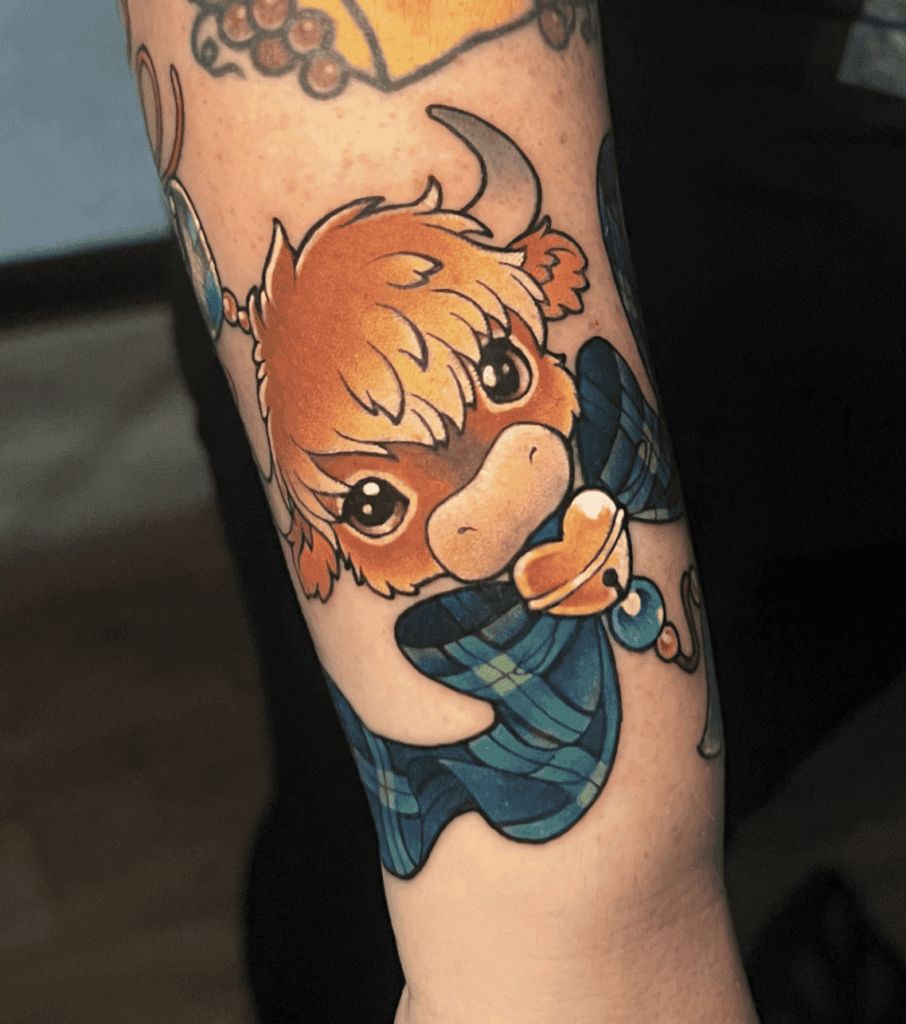
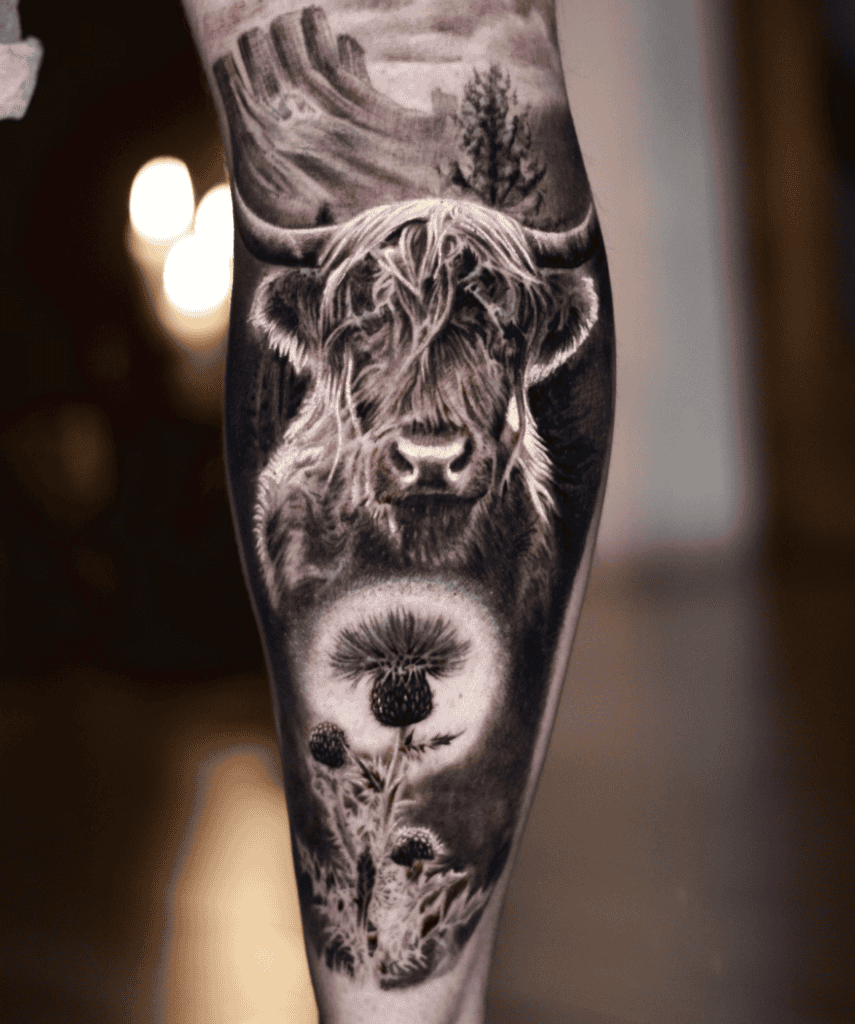
The Highland Cattle is one of the most distinctive and beloved cattle breeds in the world, famous for its long, shaggy coat and impressive sweeping horns. The Highland is often considered the iconic symbol of the Scottish Highlands, with its rugged appearance, gentle nature, and ability to thrive in harsh conditions that have made it popular far beyond its native homeland.
The breed originated in the Scottish Highlands, where strong winds, cold temperatures, heavy rain, and rough terrain shaped the development of a remarkably hardy animal. For centuries, Highland cattle helped sustain rural communities by providing meat, milk, and hides.
Texas Longhorn Cow Tattoo
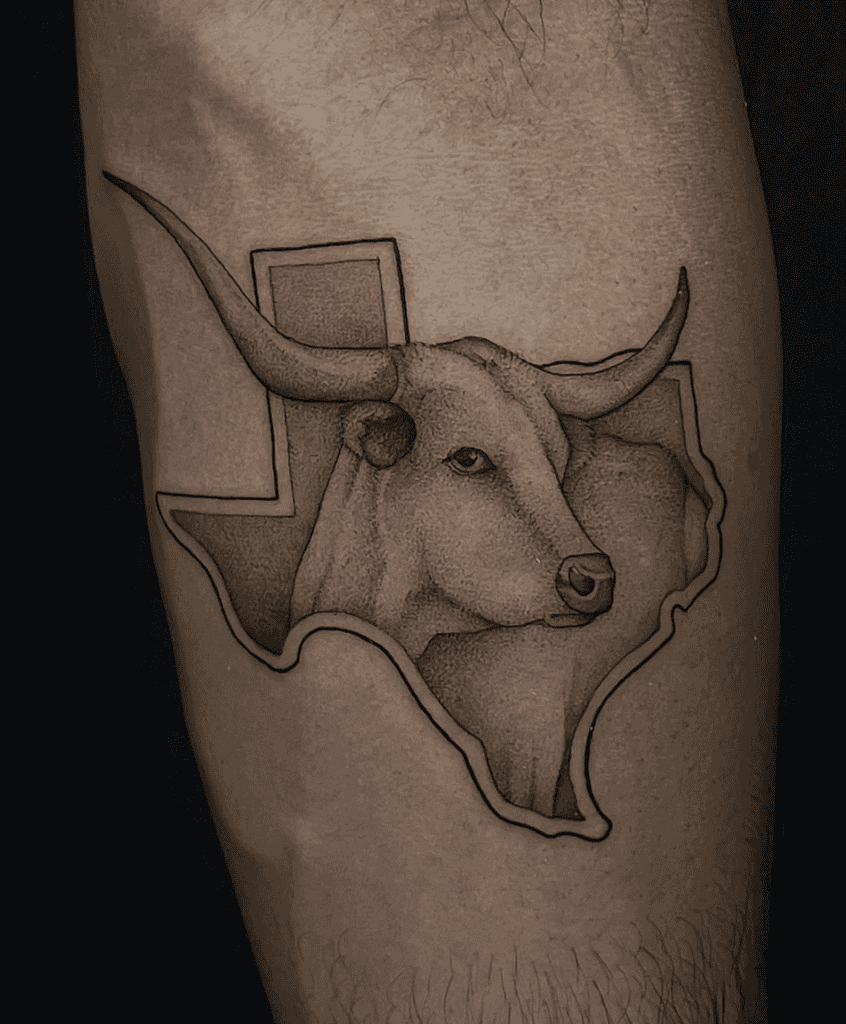
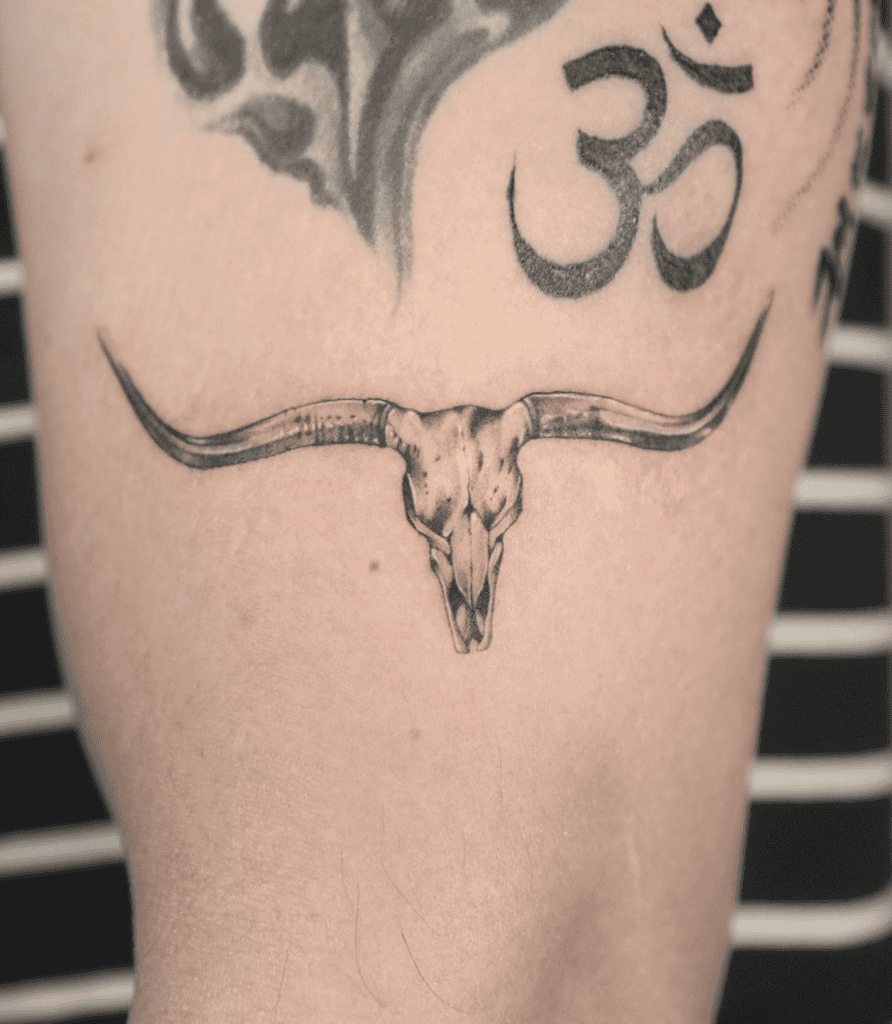
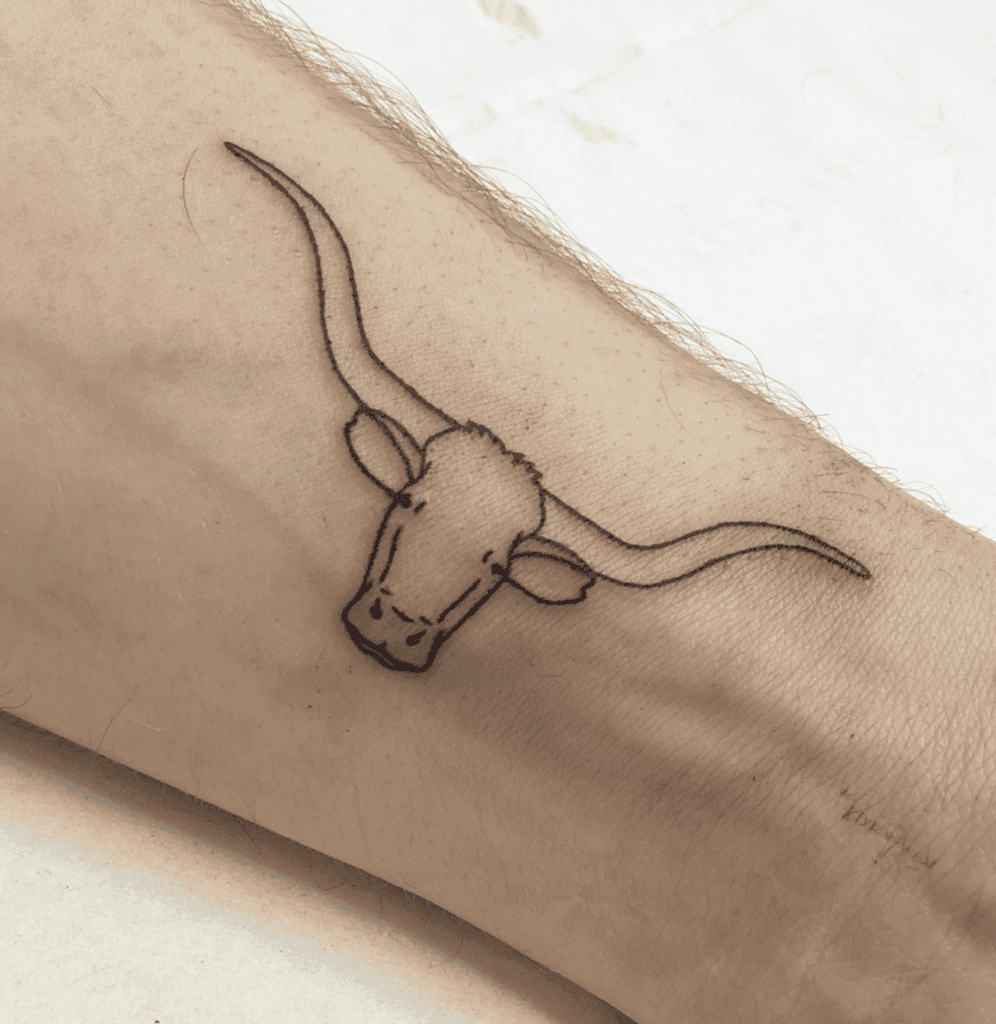
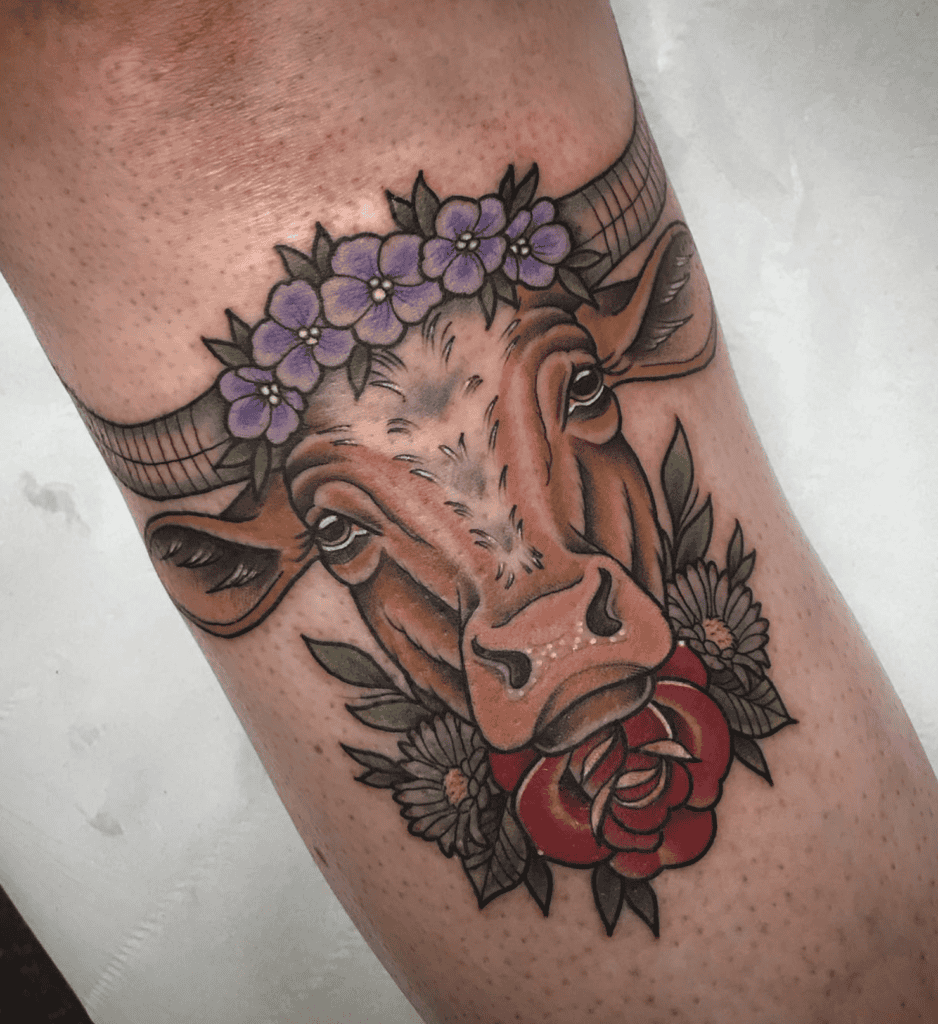
The Texas Longhorn is one of the most iconic cattle breeds in the world, famous for its enormous horns and deep connection to the history of the American frontier. The Texas Longhorn has become a symbol of independence, resilience, and the spirit of the Wild West, earning a reputation for surviving in some of North America’s toughest environments.
The breed traces its ancestry back to cattle brought to the Americas by Spanish explorers during the 15th and 16th centuries. Over hundreds of years, these cattle adapted to the harsh conditions of the American Southwest, eventually developing into the hardy and distinctive breed known today as the Texas Longhorn.
Brahman Cattle Cow Tattoo
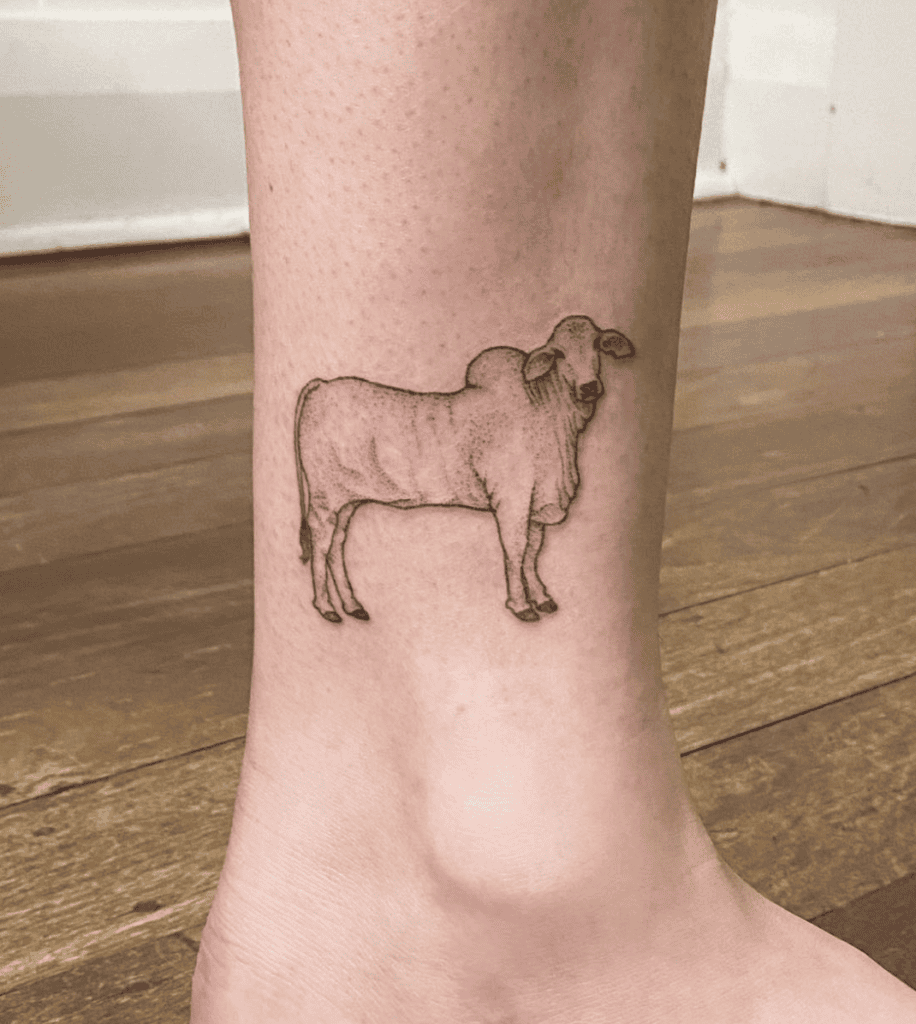
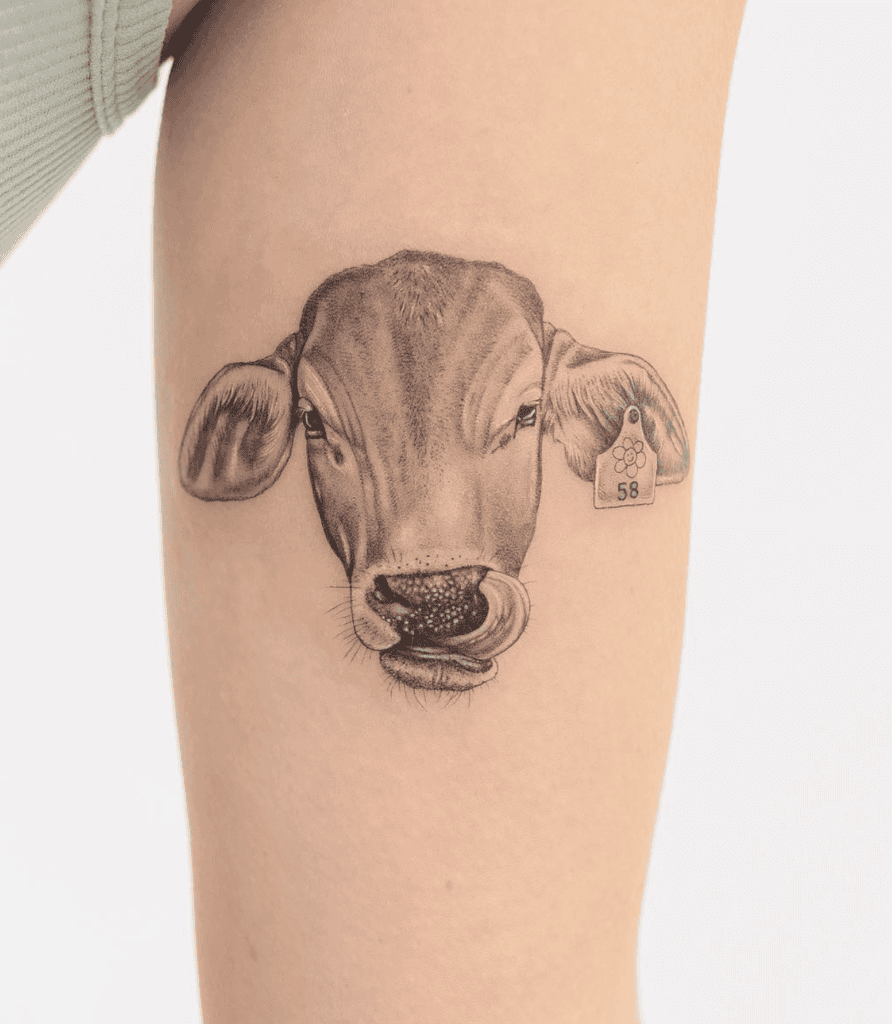
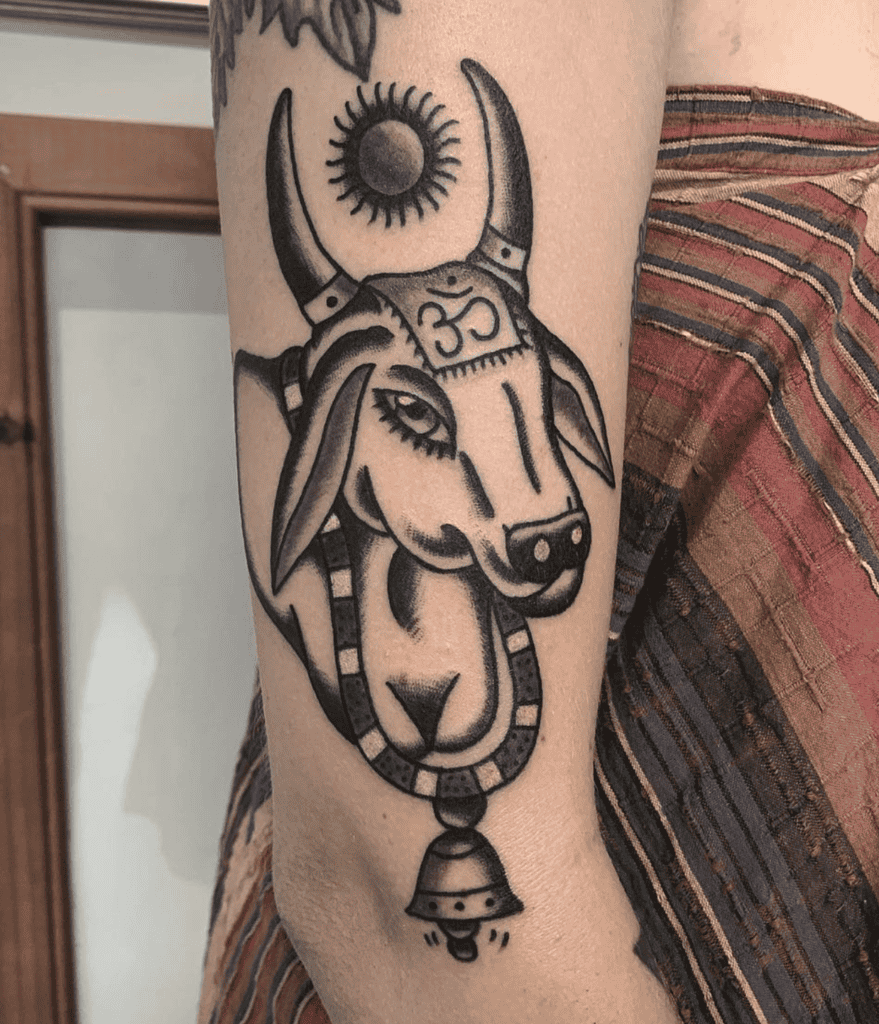
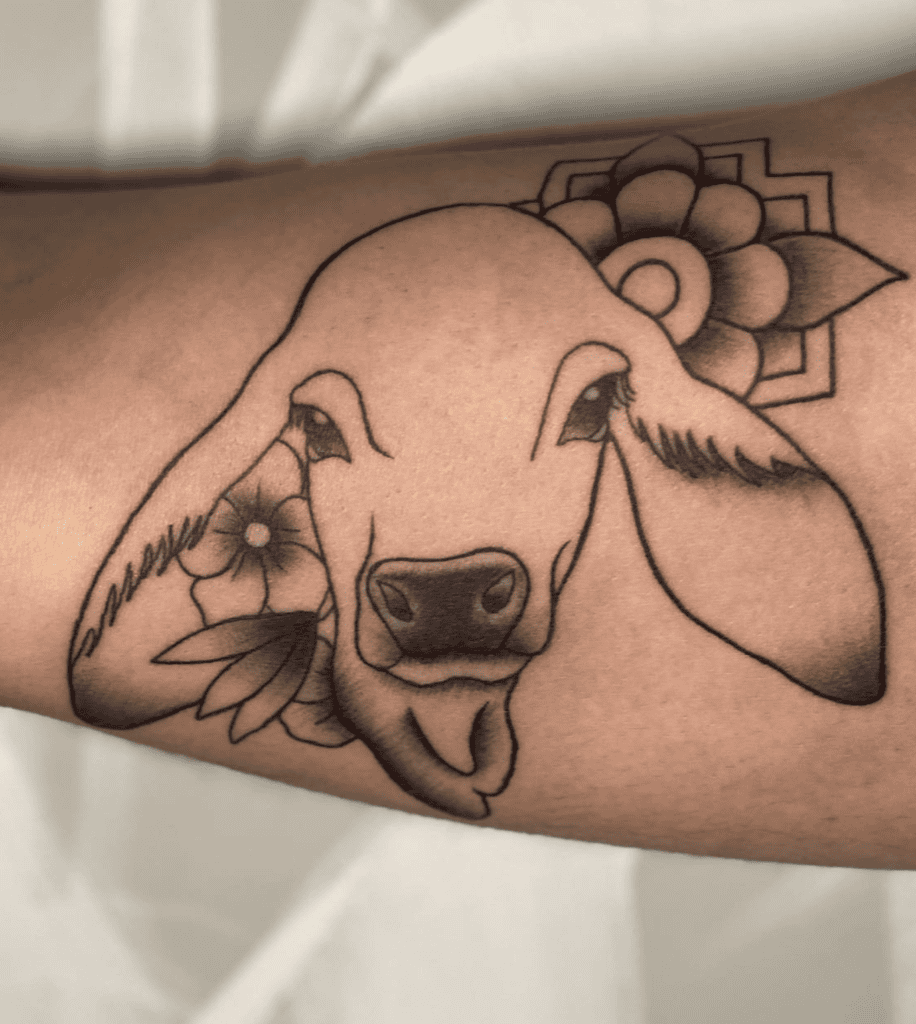
The Brahman Cattle is one of the most important and recognisable cattle breeds in tropical and subtropical regions around the world, famous for its loose skin, distinctive shoulder hump, and remarkable heat tolerance. Brahman cattle are prized for their toughness and adaptability in harsh climates, highly valued for their heat tolerance, resistance to insects and parasites, ability to handle humidity, drought resistance, and tough skin that helps repel biting insects.
The breed was developed in the United States during the late 19th and early 20th centuries using cattle descended from several Indian zebu breeds. Their name comes from the word “Brahman,” inspired by India’s sacred cattle traditions and the Brahmin social class.
Charolais Cattle Cow Tattoo

The Charolais Cattle is one of the largest and most respected beef cattle breeds in the world, known for its impressive size, muscular build, and distinctive white or cream-colored coats. Charolais cattle have become a cornerstone of beef production across many countries, known for their rapid growth rates, excellent muscle development, high meat yields, and efficient feed conversion.
The breed originated in the Charolles region of central France, where farmers spent centuries developing cattle that were strong, hardy, and capable of producing large amounts of high-quality beef. Originally used for both draft work and meat production, Charolais cattle eventually became renowned primarily as a beef breed.
Ankole-Watusi Cow Tattoo

The Ankole-Watusi is one of the most spectacular and recognisable cattle breeds in the world, famous for its enormous, sweeping horns. The Ankole-Watusi is often called the “King of Cattle” or the “Cattle of Kings,” as it has been treasured in Africa for centuries, admired for both its beauty and resilience.
The breed traces its ancestry to ancient long-horned cattle that migrated through northeastern Africa thousands of years ago. Over time, these cattle became closely associated with the peoples of regions that now include Uganda, Rwanda, Burundi, and parts of the Democratic Republic of the Congo.
Spanish Fighting Bull Cow Tattoo
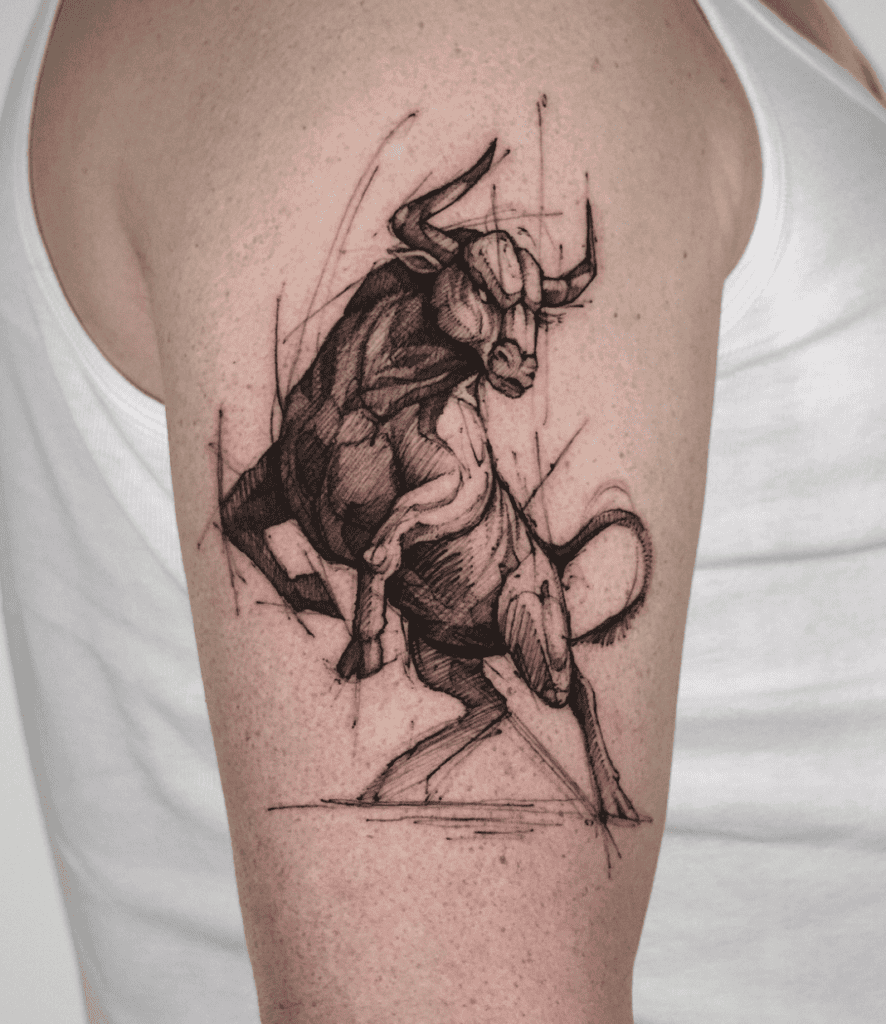
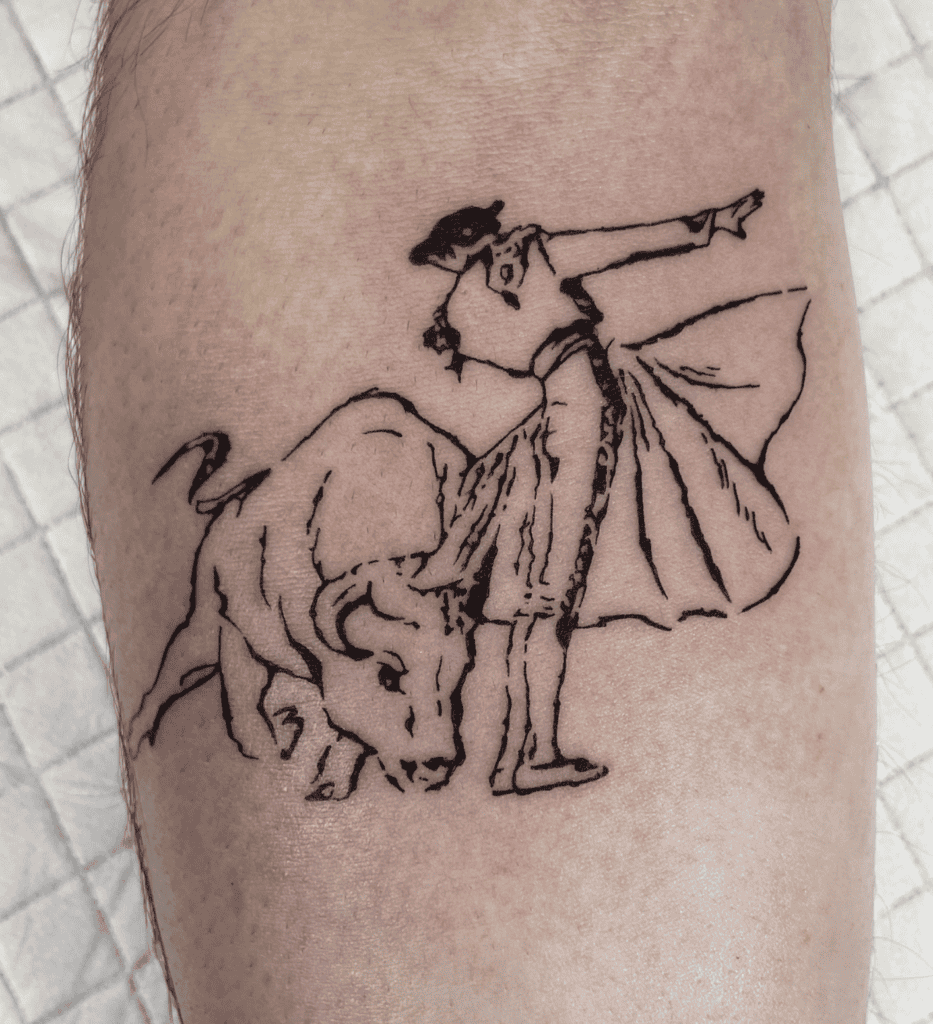
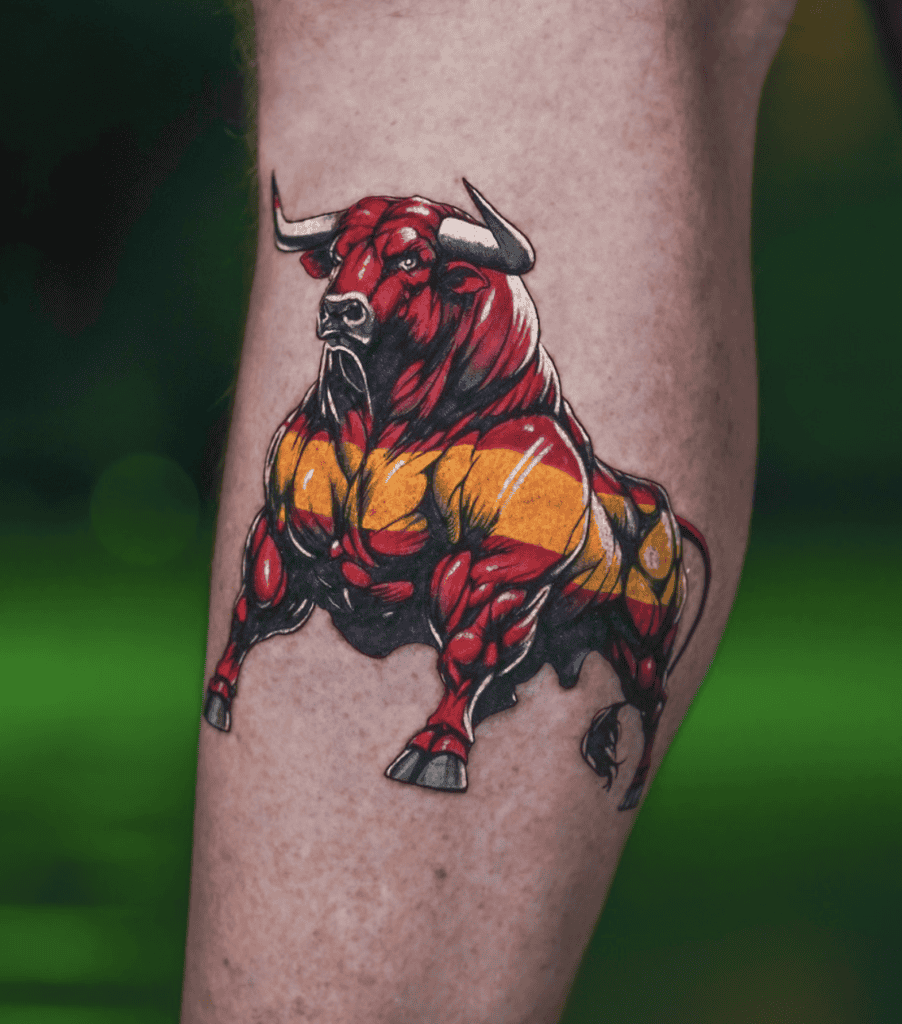
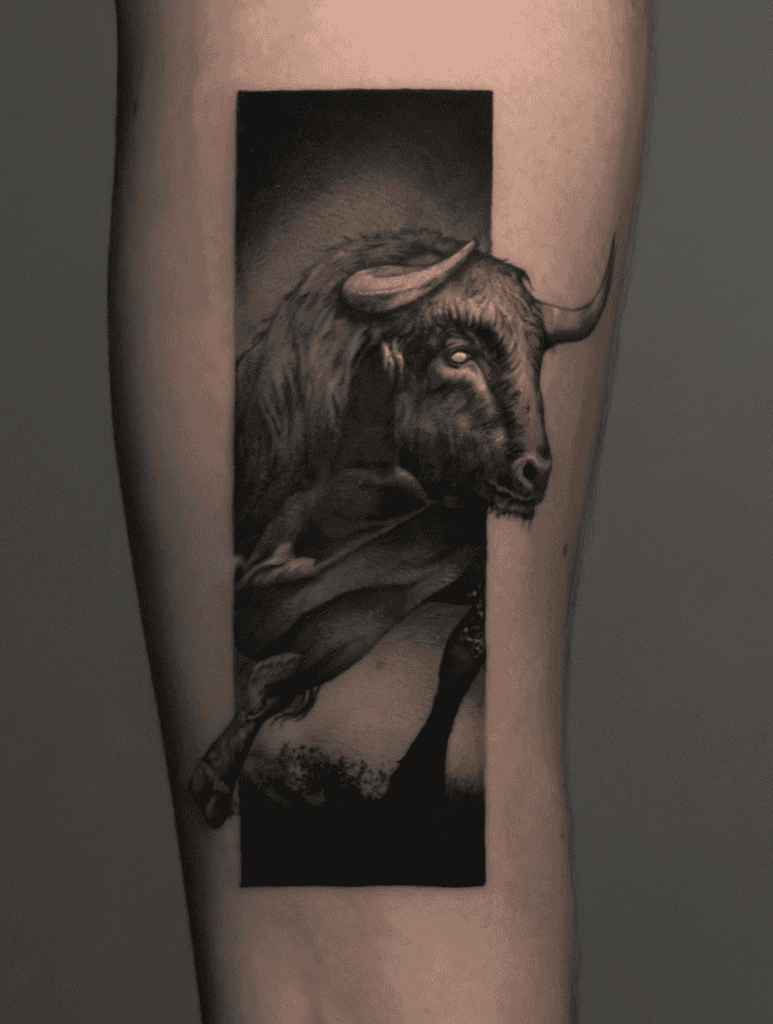

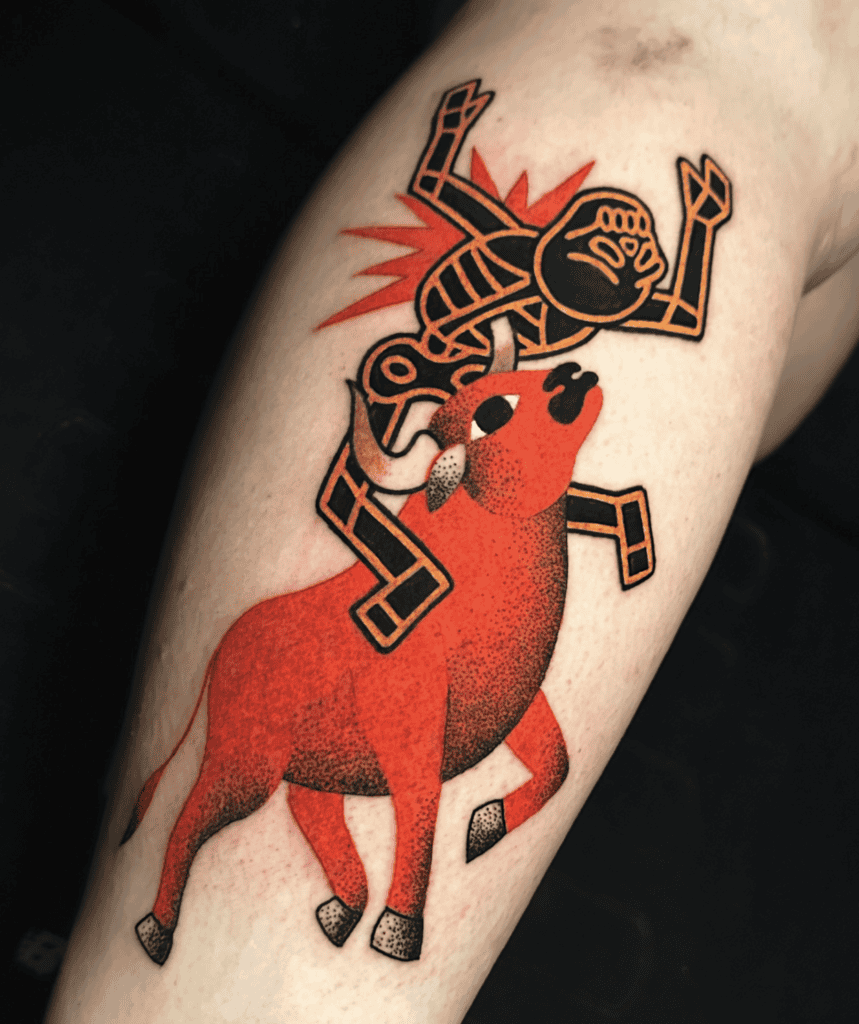
The Spanish Fighting Bull, also known as the Toro Bravo or Toro de Lidia, is one of the most famous and iconic cattle breeds in the world. Renowned for its power, athleticism, and fiery temperament, the Spanish Fighting Bull has become a symbol of strength, courage, and Spanish cultural heritage.
The breed originated on the Iberian Peninsula, where it was selectively bred over centuries for its bravery, endurance, and fighting spirit. While closely associated with bullfighting, the breed itself is admired for its unique history, impressive appearance, and role in shaping the identity of rural Spain.
Bison Cow Tattoo
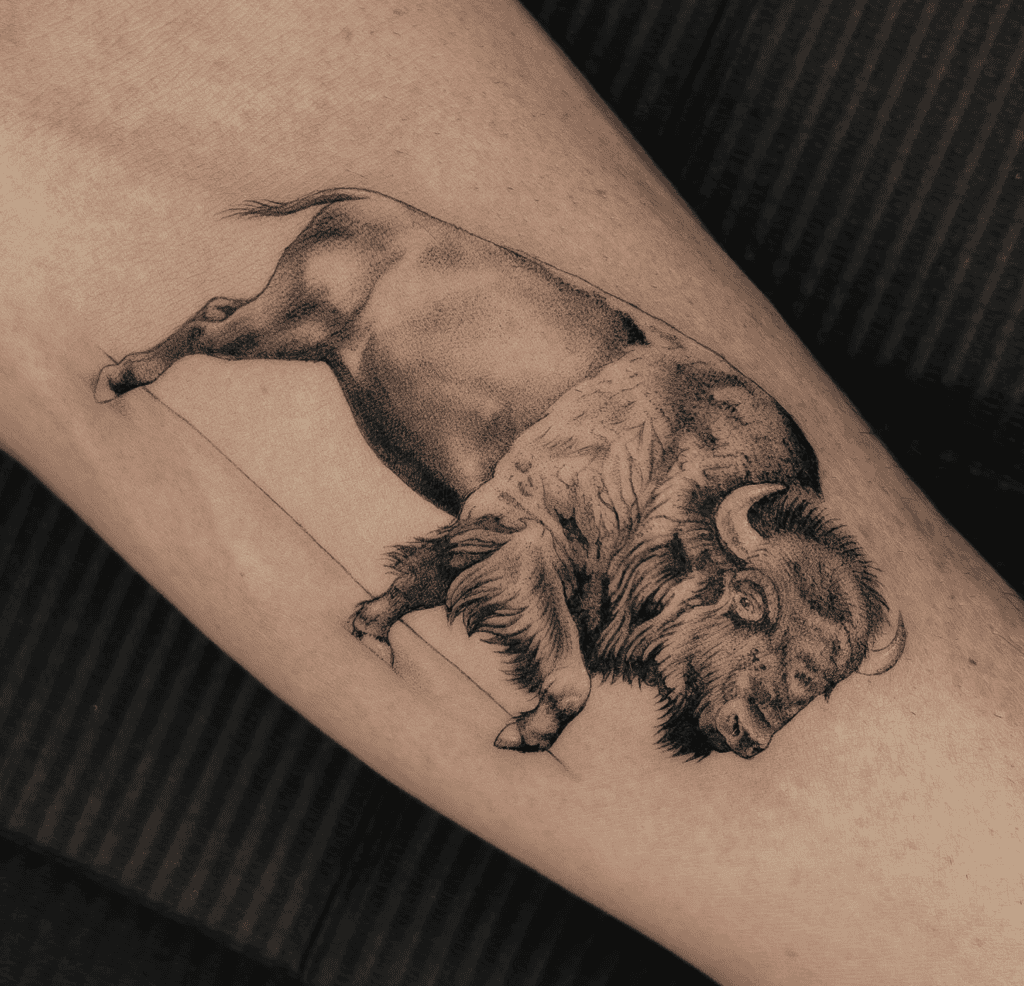
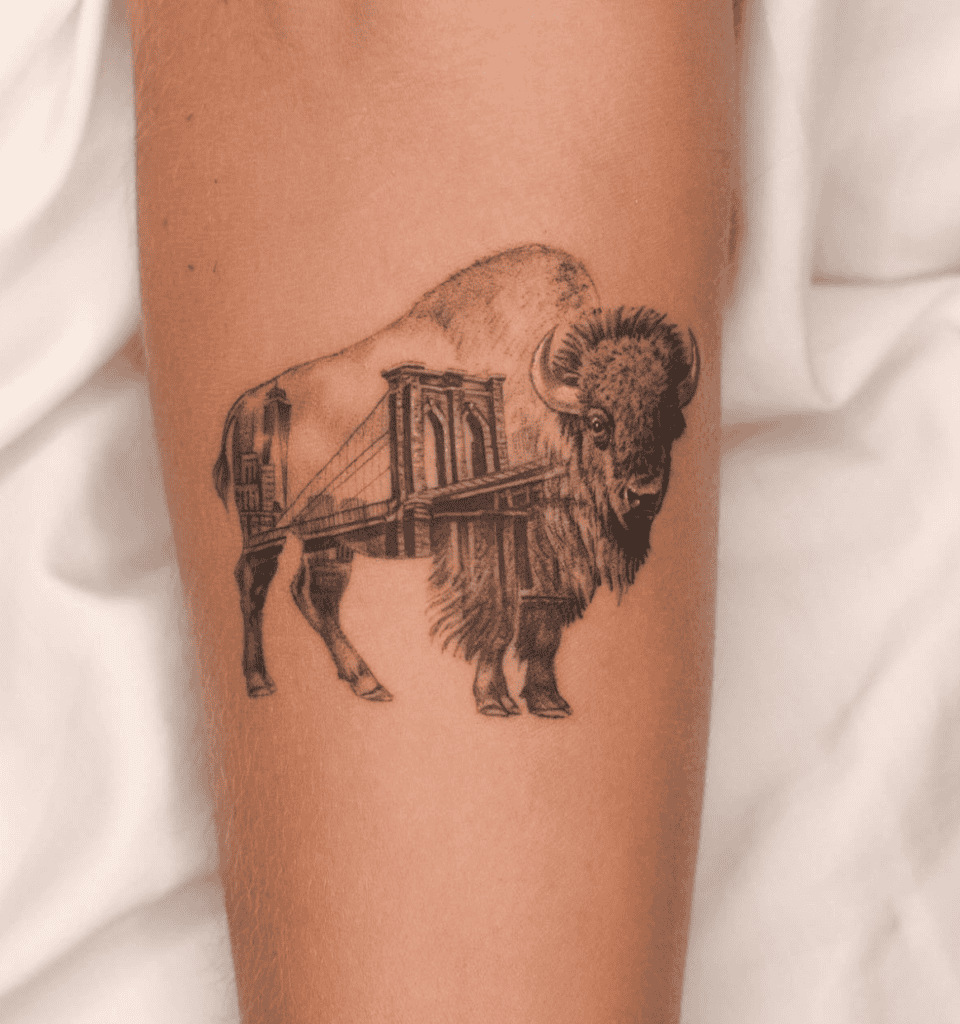
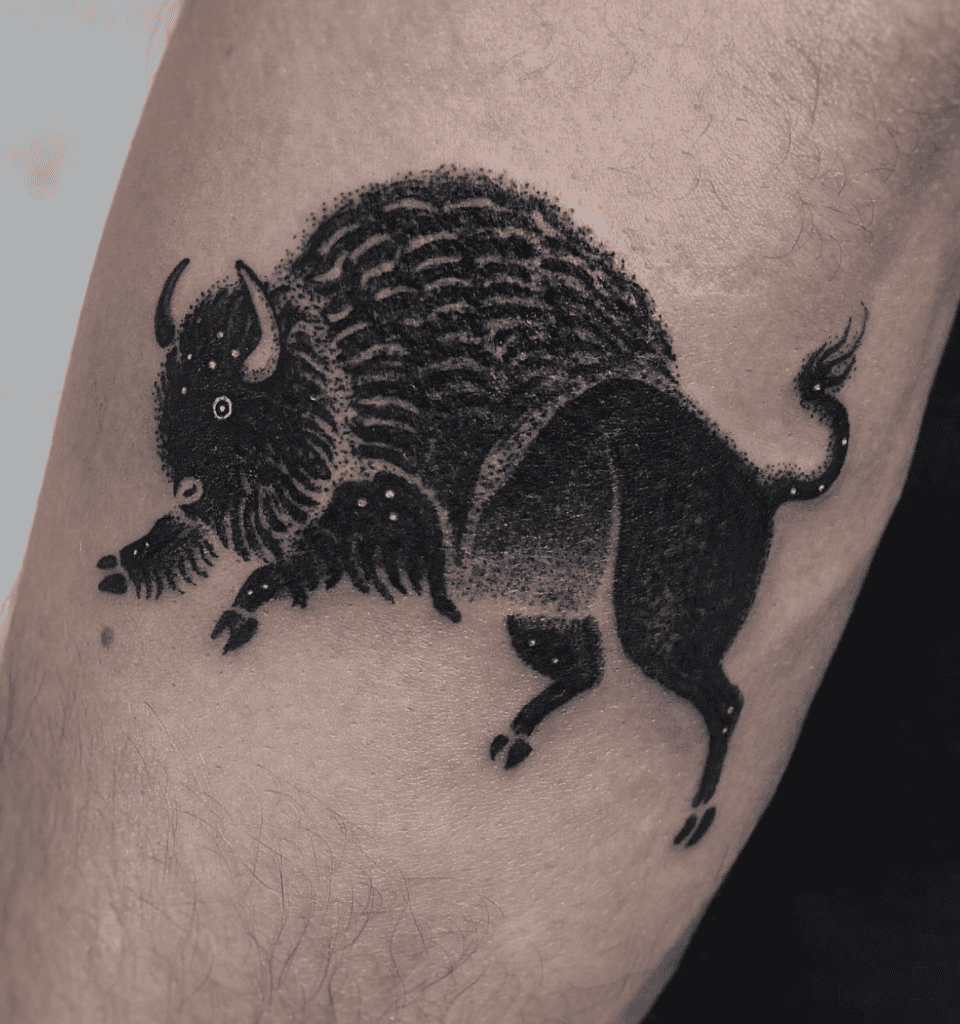
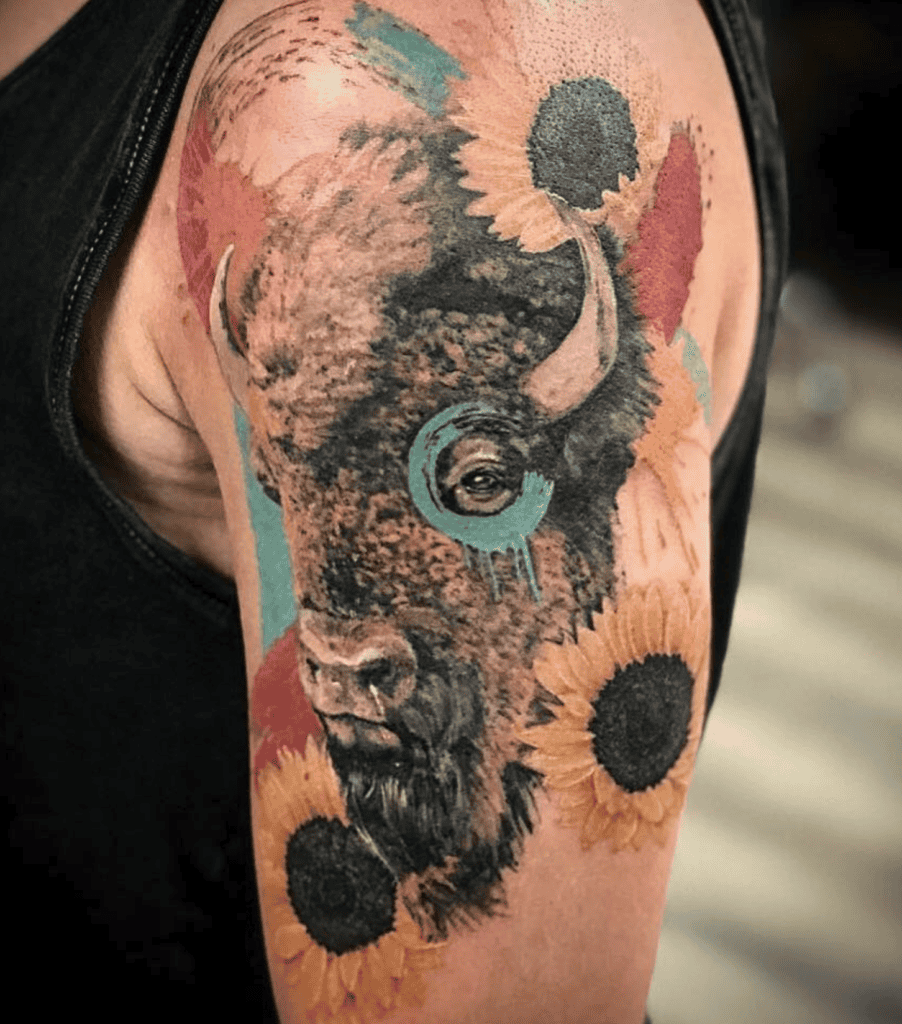
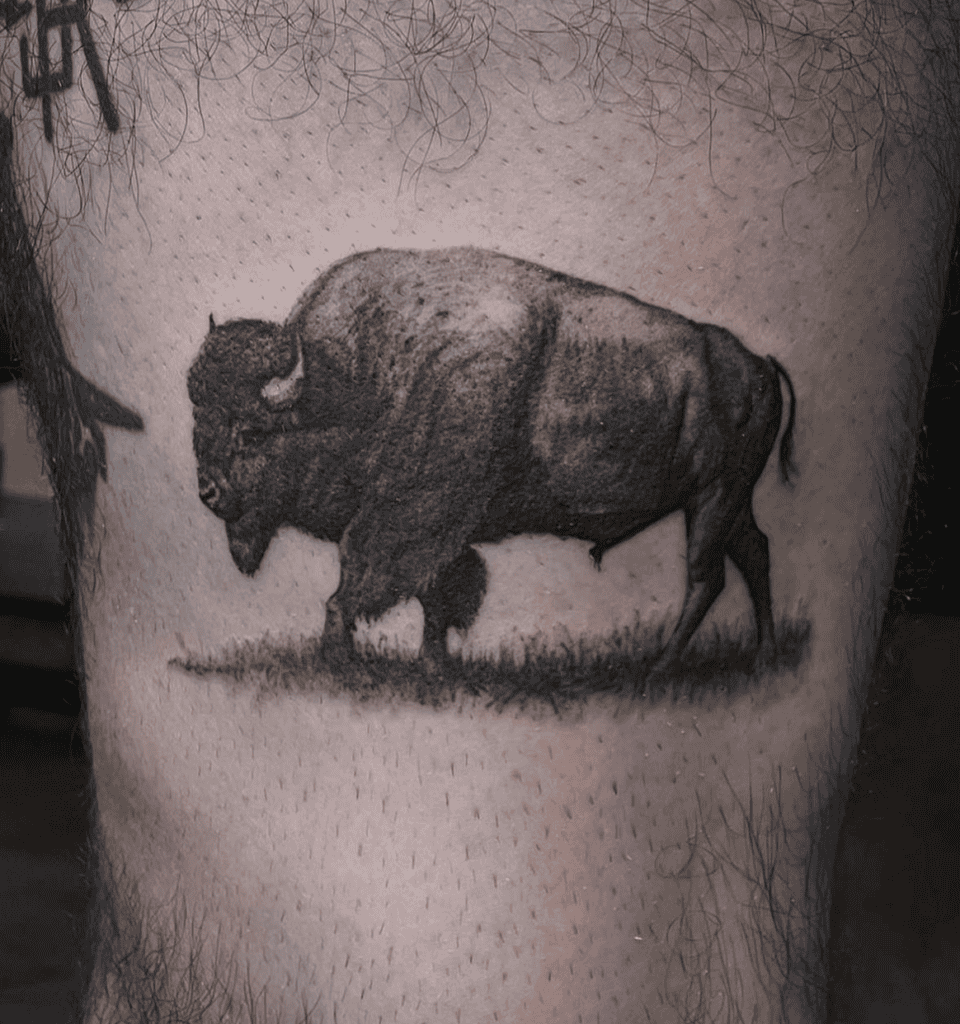
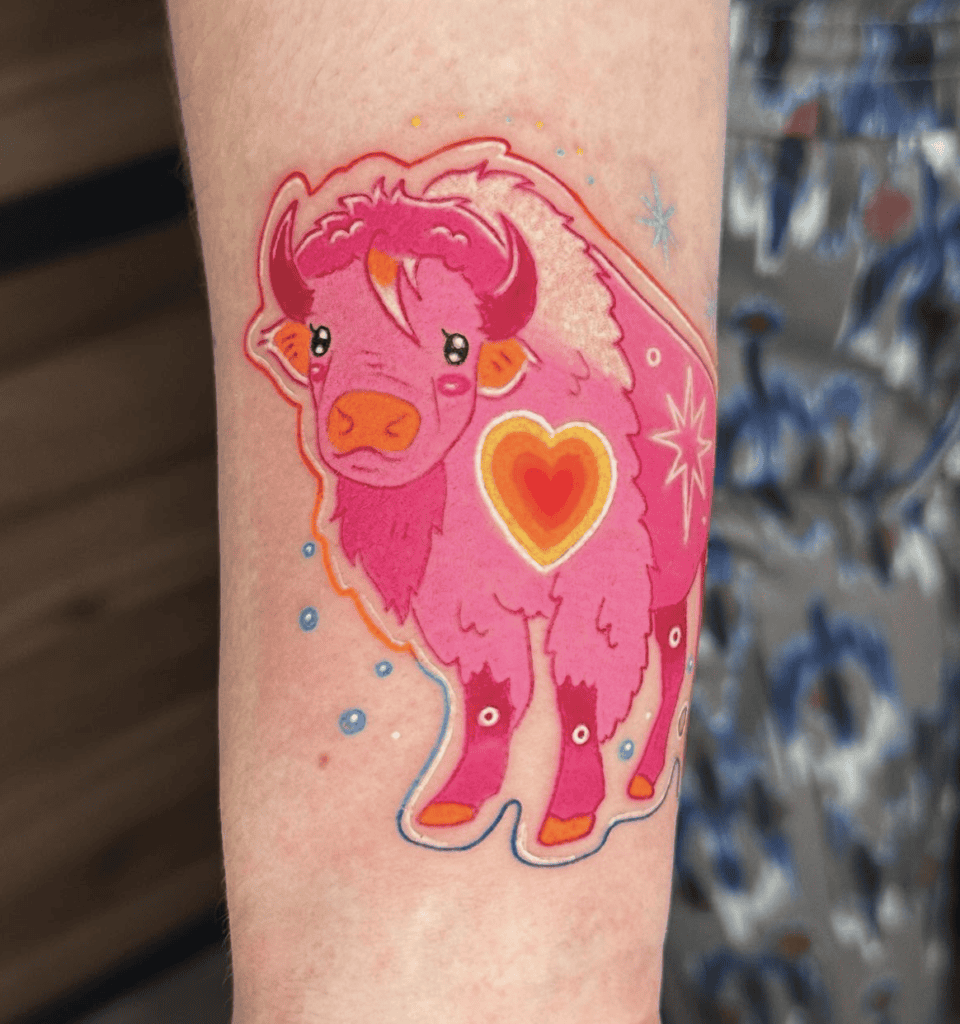
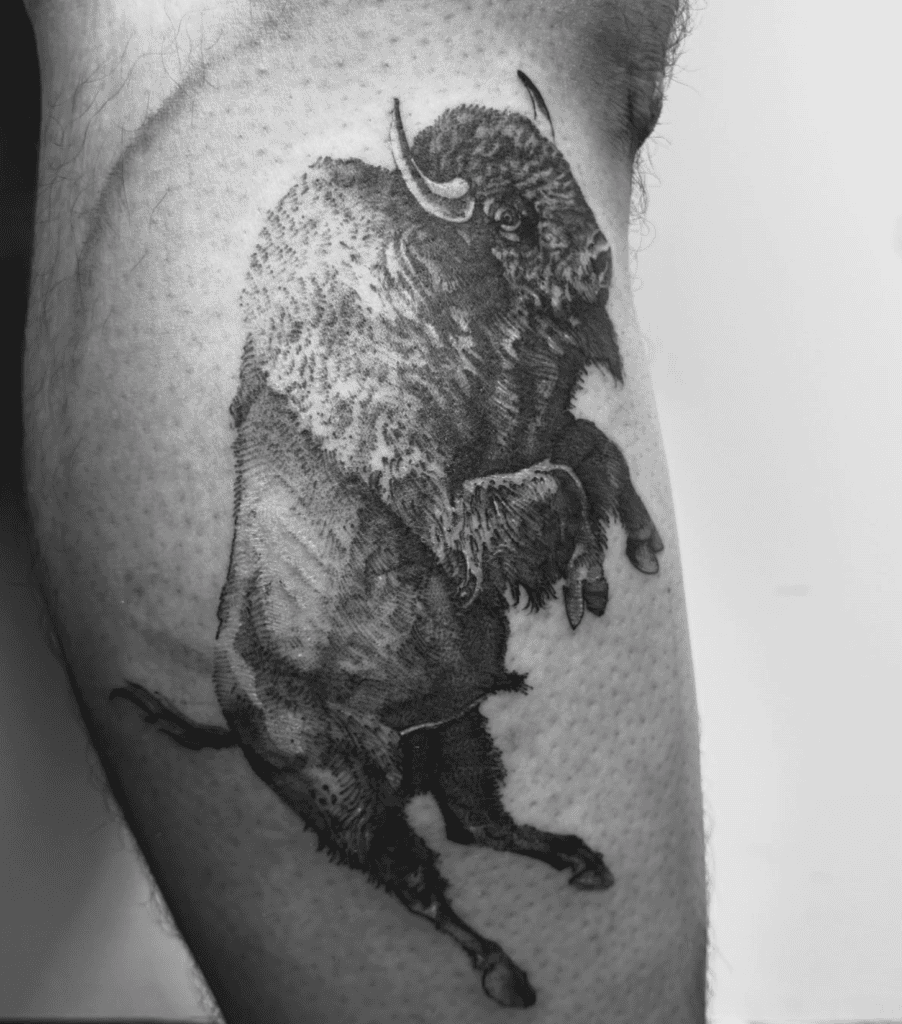
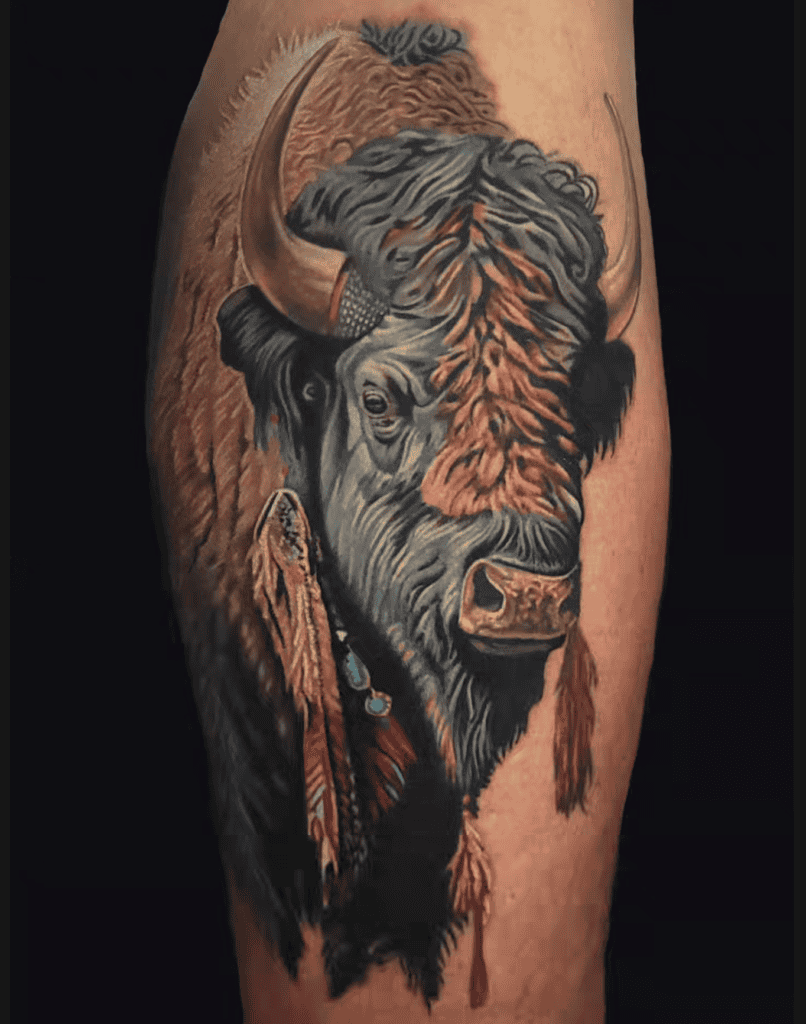
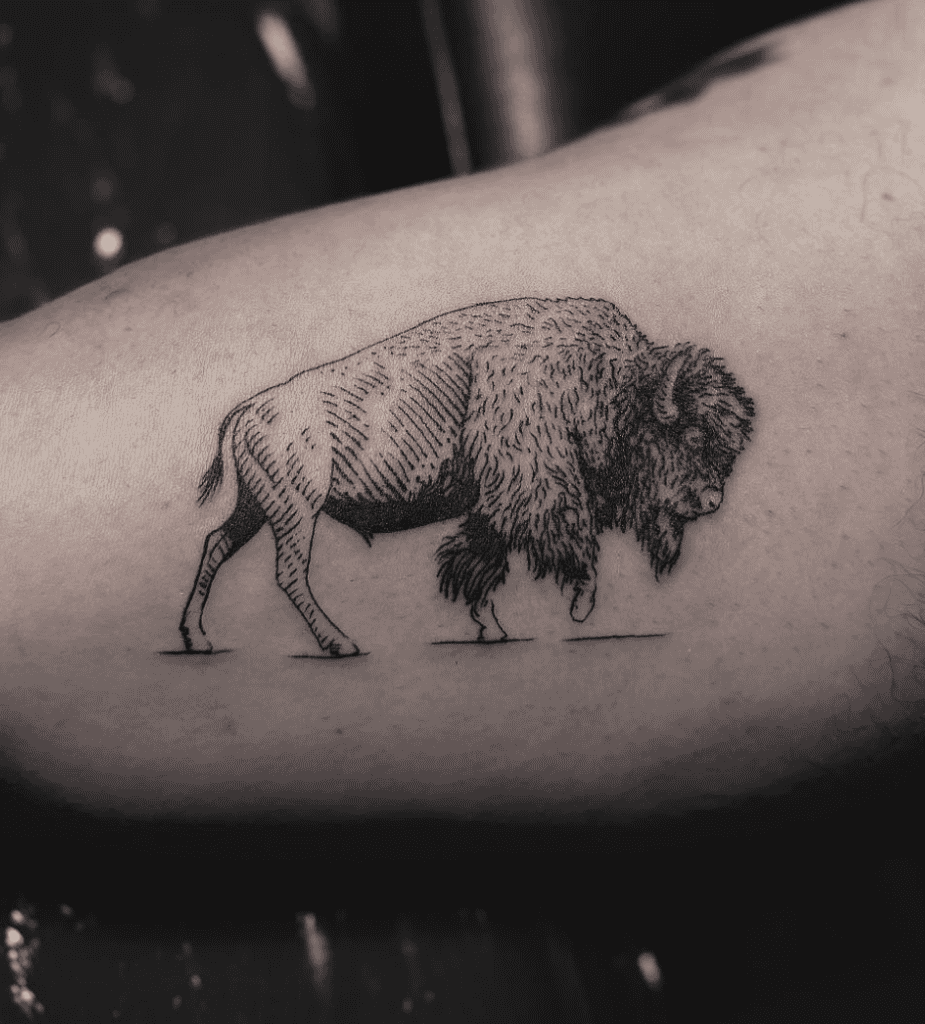
The Bison is one of the largest and most powerful land mammals in the Northern Hemisphere, famous for their massive head, shaggy coat, and incredible resilience. Bison have roamed the grasslands and forests of North America and Europe for thousands of years, and are among the hardiest large mammals on Earth, surviving blizzards, extreme cold, droughts, heat waves, and deep snow.
Often mistakenly called “buffalo,” true bison belong to their own genus and are distinct from African and Asian buffalo. Today, there are two living species: the American Bison and the European Bison.
Water Buffalo Cow Tattoo
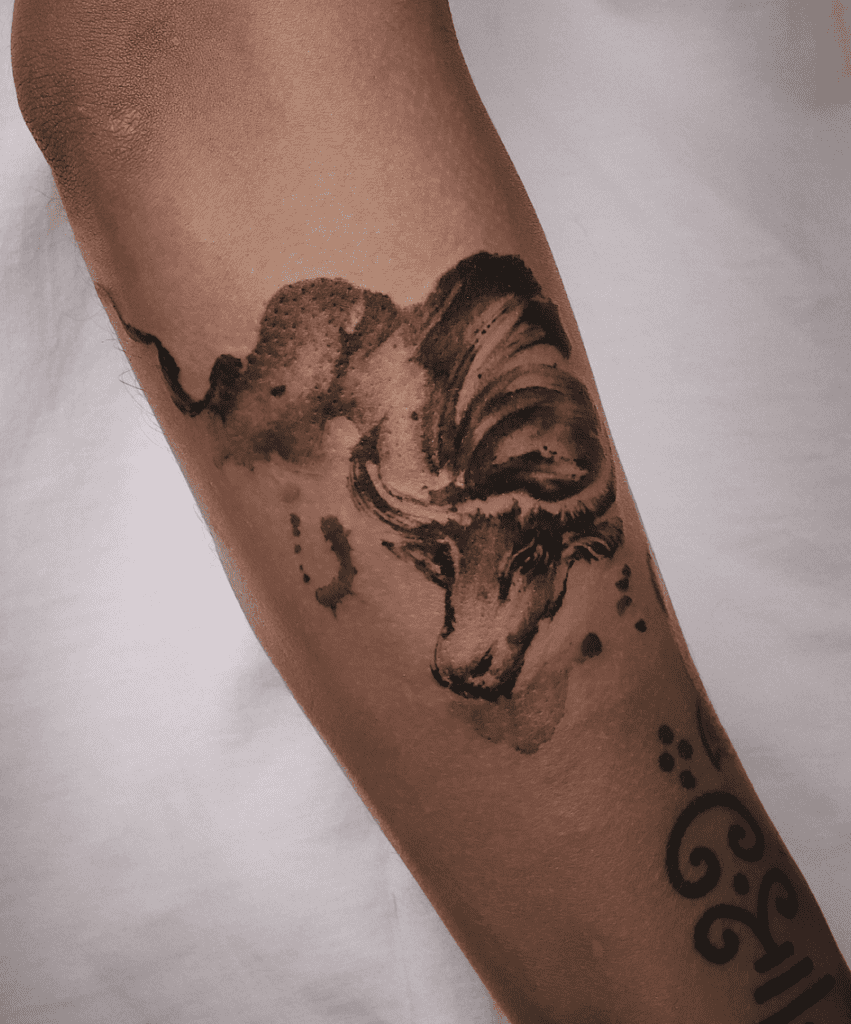
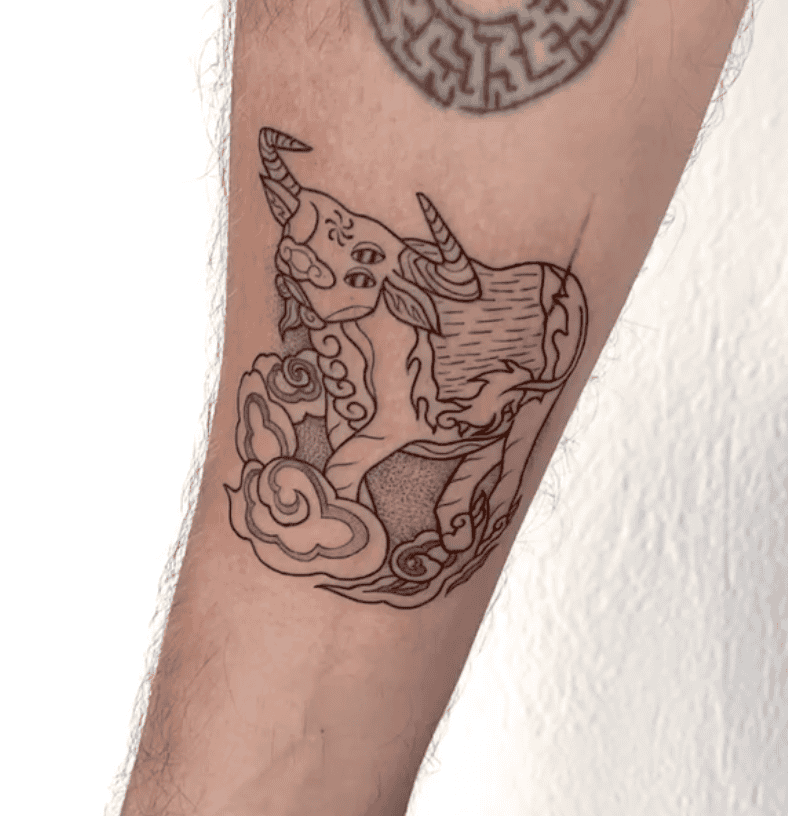
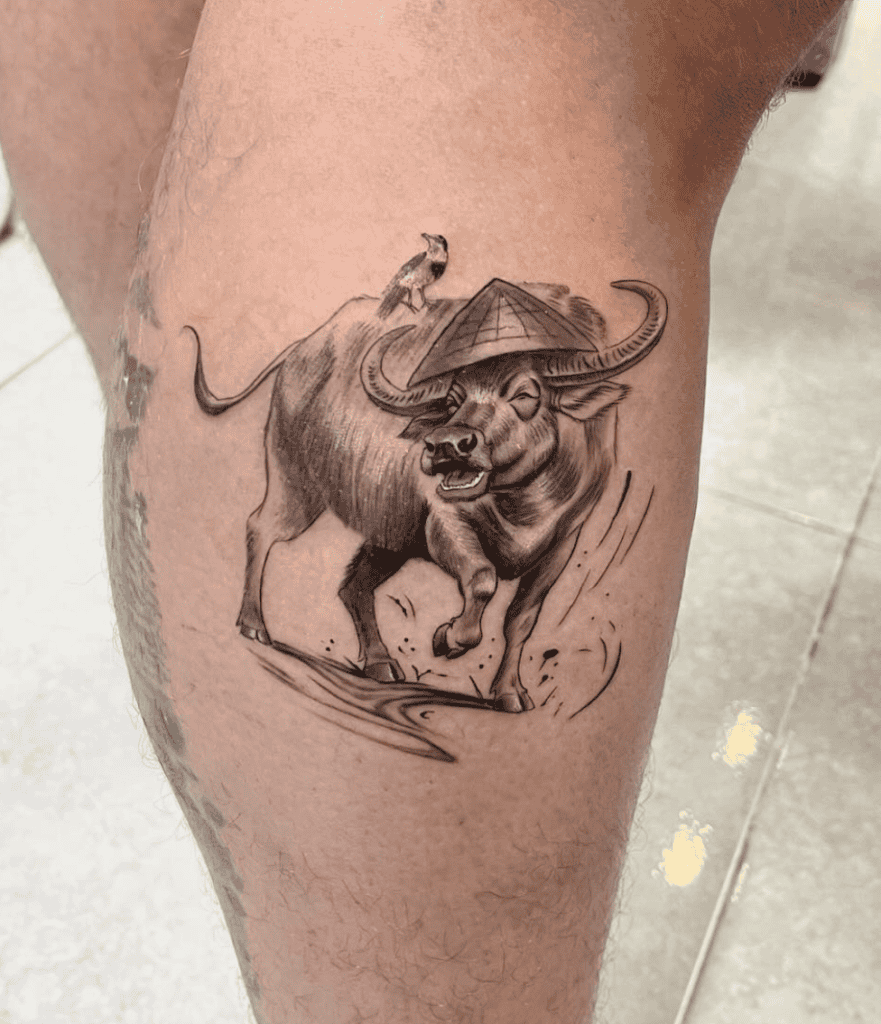
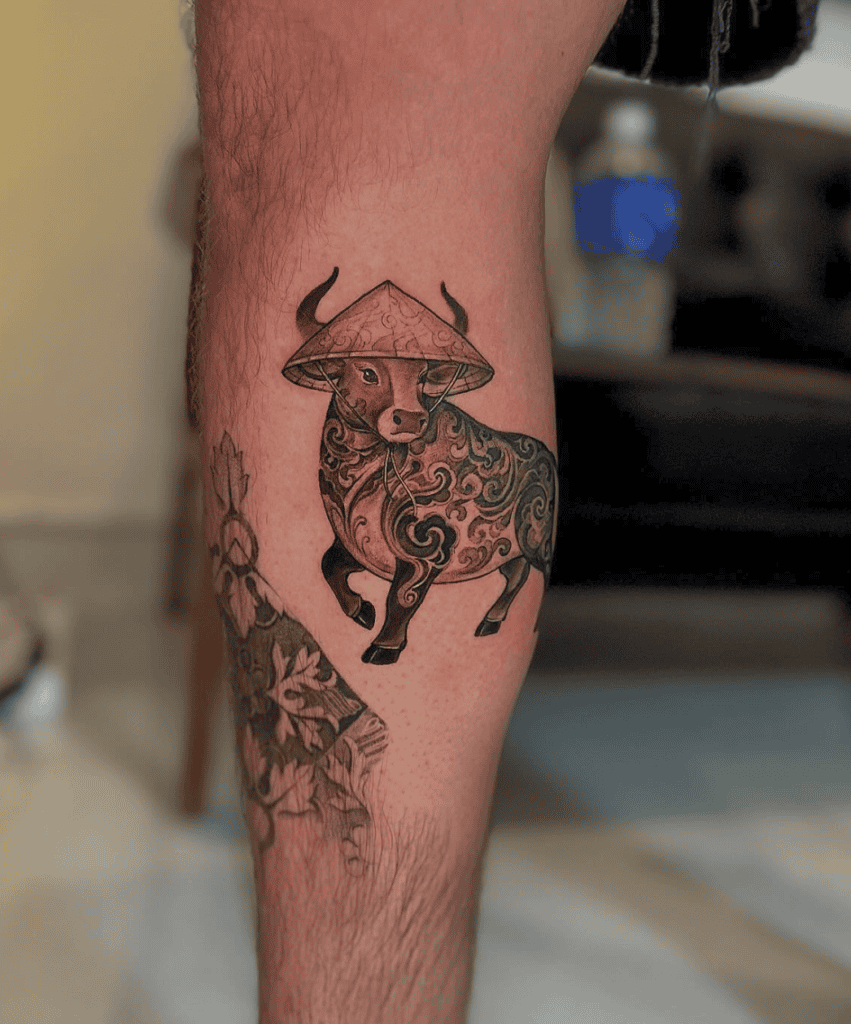
The Water Buffalo is one of the most important domesticated animals in human history. Renowned for its strength, endurance, and gentle nature, the water buffalo has helped farmers cultivate fields, transport goods, and produce milk for thousands of years.
Native to Asia, the water buffalo has become an essential part of agricultural life across much of the world. In many regions, it is affectionately known as the “living tractor” because of its ability to perform heavy work in muddy environments where machines often struggle.
Today, hundreds of millions of water buffalo live across Asia, Europe, South America, and parts of Africa, making them one of the most successful bovines on Earth.
African Buffalo Cow Tattoo


The African Buffalo, often called the Cape Buffalo, is one of Africa’s most powerful and formidable animals. Known for its immense strength, unpredictable nature, and willingness to stand its ground against predators, the African buffalo has earned a reputation as one of the toughest mammals on the continent.
Unlike the domesticated water buffalo of Asia, the African buffalo has never been successfully domesticated, remaining a truly wild animal and considered one of Africa’s most iconic species.
The African buffalo is also a member of the famous Big Five, a group of animals historically regarded as the most challenging and dangerous for hunters to track on foot.
Tamaraw Cow Tattoo
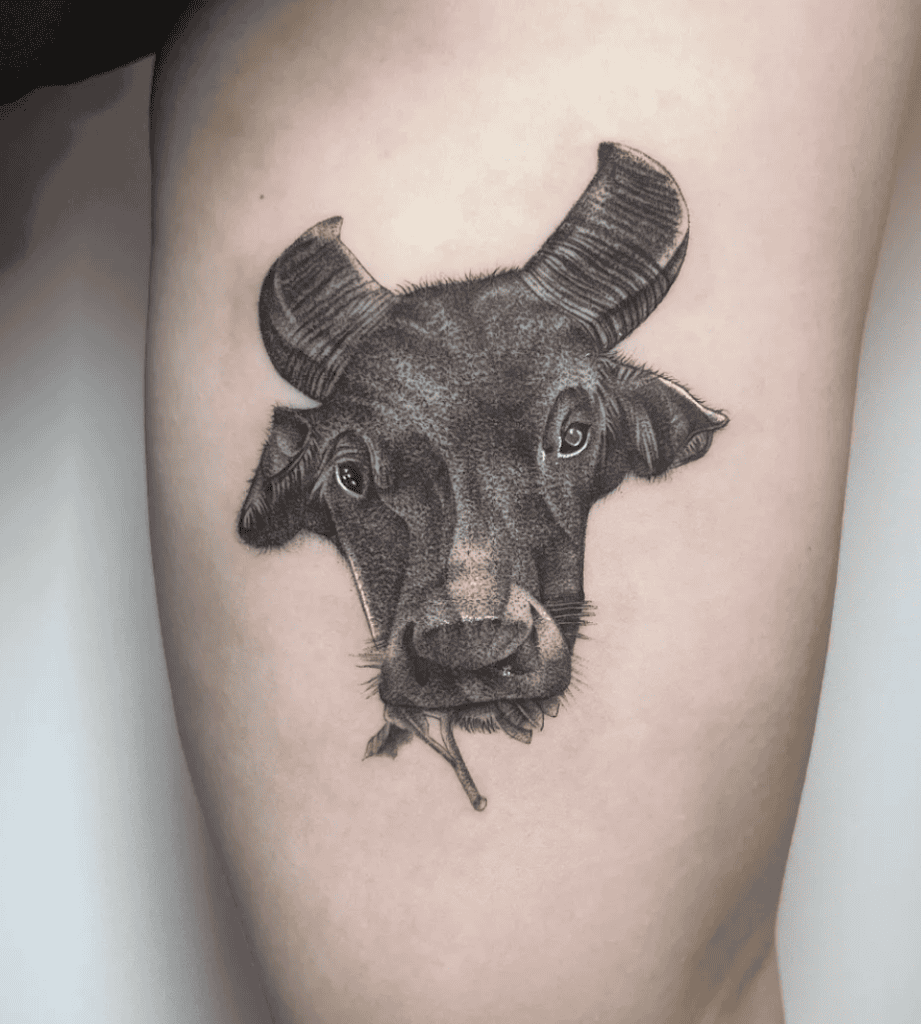
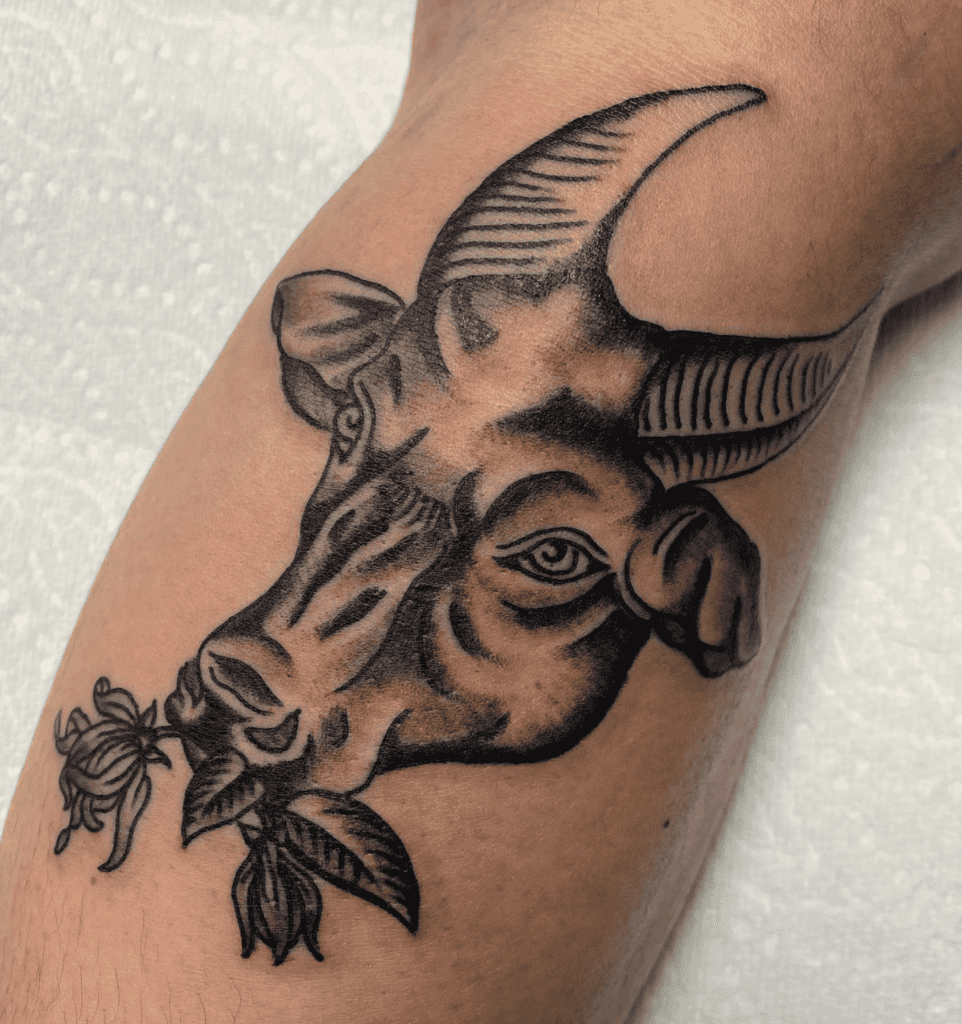
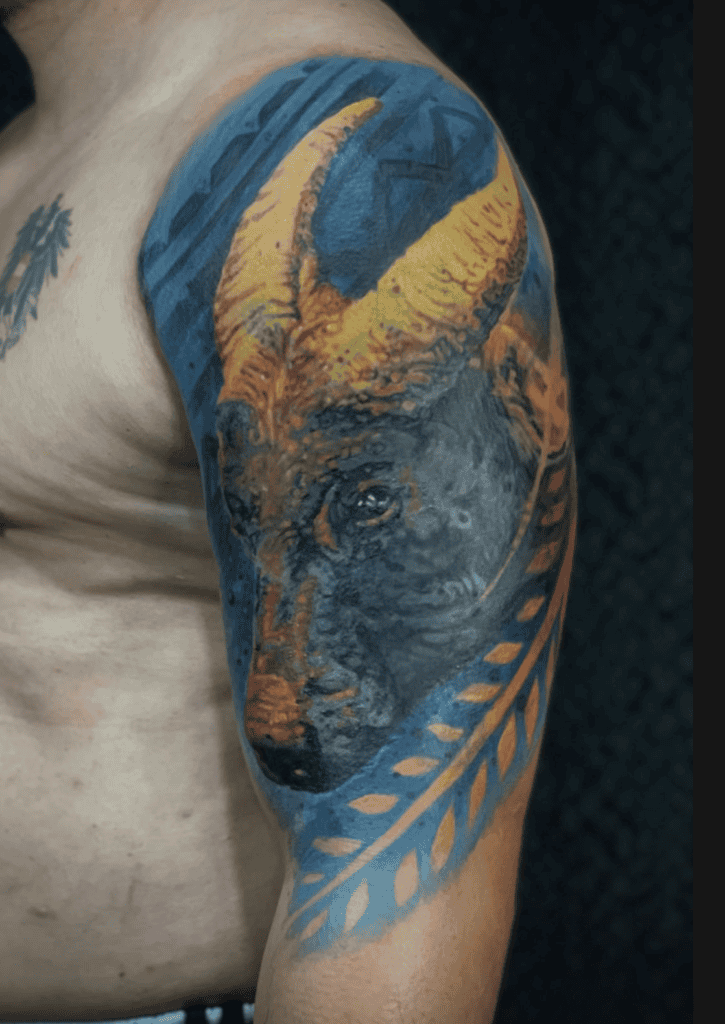
The Tamaraw is one of the rarest and most unique bovines in the world. Native to the island of Mindoro, the tamaraw is a small species of wild buffalo found nowhere else on Earth.
Often called the “Mindoro Dwarf Buffalo,” the tamaraw is much smaller than the familiar water buffalo, but it makes up for its size with its toughness, independence, and remarkable ability to survive in rugged environments. Today, it is considered one of the Philippines’ most treasured wildlife species and a powerful symbol of national pride and conservation.
Unlike the highly social African buffalo, tamaraws are generally more solitary. Adult males are often found alone, while females and younger animals may form small groups. The tamaraw is one of the world’s most endangered bovines, and while conservation programs have helped stabilise the population, the species remains vulnerable.
Yak Cow Tattoo
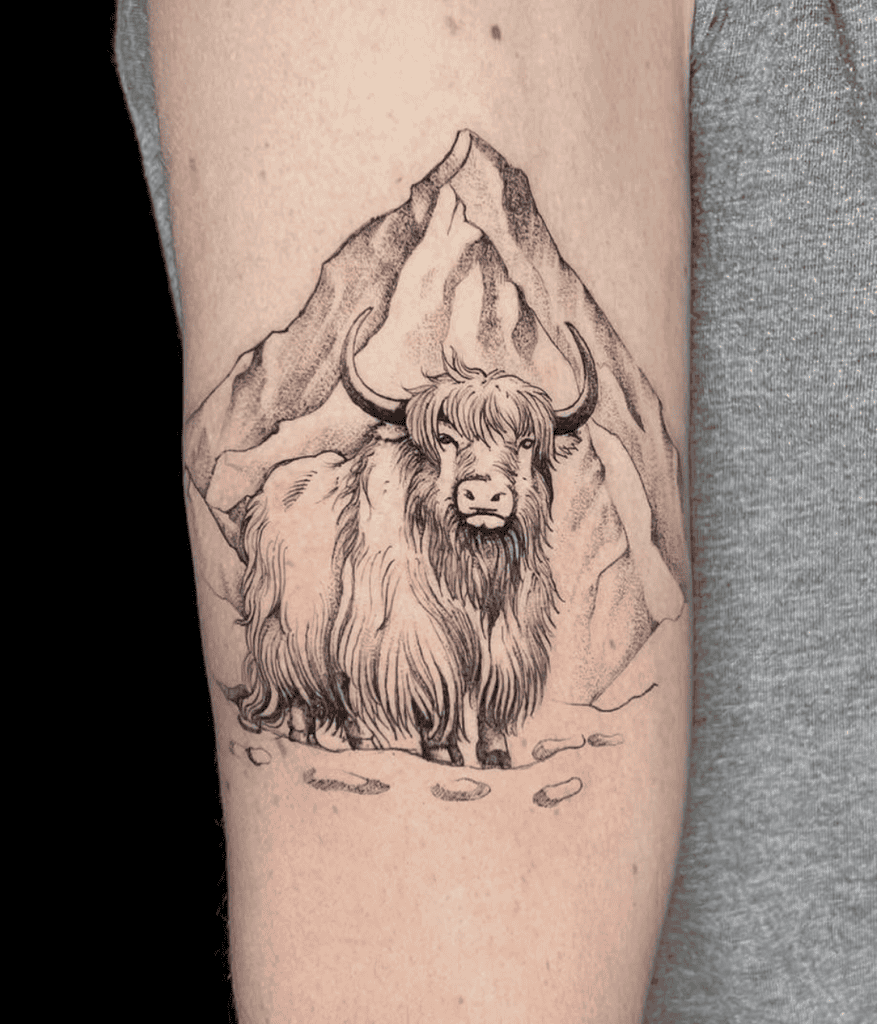
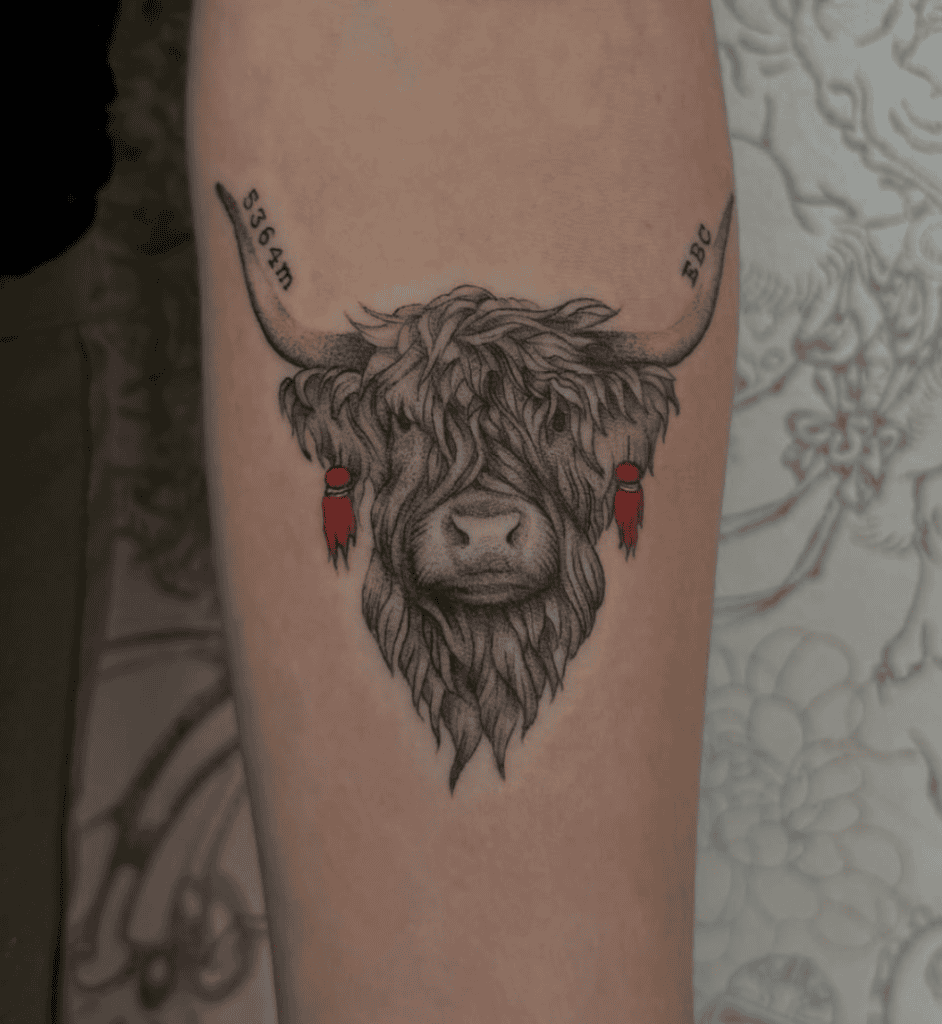
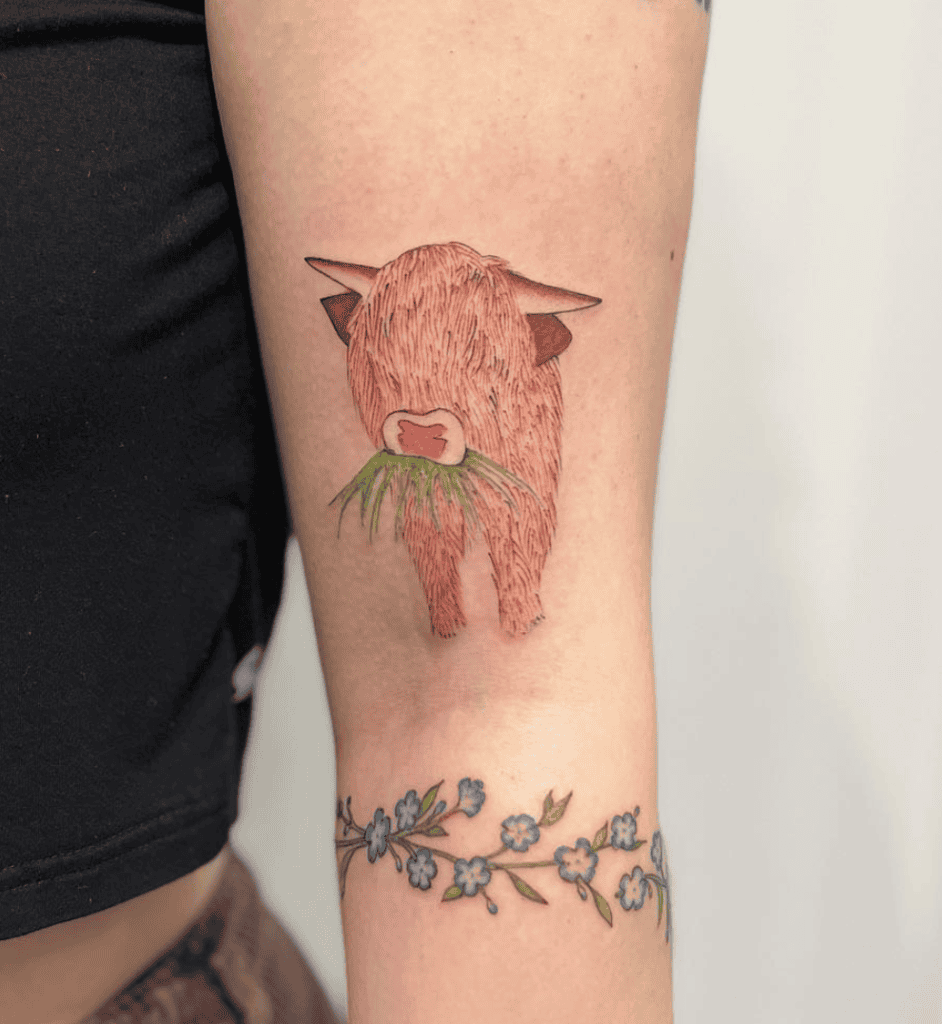
The Yak is a bovine species famous for its long, shaggy coat and ability to thrive at extreme altitudes, which helped it become an essential companion to people living in the mountains of Central Asia for thousands of years.
Found primarily across the Tibetan Plateau, the Himalayas, and surrounding high-altitude regions, yaks are perfectly adapted to conditions that would challenge most other large mammals. They provide food, clothing, fuel, transportation, and companionship to many mountain communities, earning them a reputation as one of the most valuable animals in the world.
For centuries, yaks have been indispensable to people living in remote mountain regions. They provide milk, meat, wool, leather, transportation and fuel from its dried dung. In many parts of the Himalayas and Tibet, entire communities have traditionally depended on yaks for survival, and their ability to carry heavy loads across rugged terrain makes them invaluable pack animals.
Gaur Cow Tattoo

The Gaur is the largest wild bovine in the world and one of the most impressive mammals found in Asia. Sometimes called the Indian Bison (though not a true bison), the gaur is a towering giant renowned for its immense strength, muscular build, and commanding presence.
Native to the forests and grasslands of South and Southeast Asia, the gaur has long been respected as one of the region’s most formidable animals. Despite its peaceful nature, few predators willingly challenge a healthy adult gaur due to its size and power.
Adult bulls can stand over 2 metres at the shoulder and weigh up to 1,500 kilograms or more, making them the largest wild cattle species alive today.
Banteng Cow Tattoo


The Banteng is one of the most beautiful and graceful wild cattle species in the world. Native to the forests and grasslands of Southeast Asia, the banteng is known for its striking appearance, athletic build, and distinctive white markings that make it stand out among wild bovines.
Although less famous than the gaur or bison, the banteng has played an important role in both nature and human history. The domesticated banteng, often known as Bali cattle, has been raised by humans for centuries and remains an important livestock animal in parts of Southeast Asia, making the banteng one of the few wild cattle species whose descendants continue to contribute directly to agriculture today.
Kouprey Cow Tattoo


The Kouprey is one of the most mysterious bovines ever discovered. Often called the “Ghost of the Forest” or the “Phantom Ox of Cambodia,” the kouprey is a wild cattle species that may already be extinct, making it one of the rarest and most enigmatic large mammals in modern history.
First scientifically described in 1937, the kouprey was once found in parts of Southeast Asia, particularly in Cambodia, with possible populations extending into Thailand, Laos, and Vietnam. Despite decades of searches, no confirmed sightings have occurred for many years, and many scientists fear that the species may have disappeared entirely.
Gir Cow Tattoo

The Gir Cattle is one of the most famous and respected cattle breeds in India. Renowned for its excellent milk production, distinctive appearance, and gentle temperament, the Gir has become one of the world’s most influential dairy cattle breeds.
The breed originated in the Gir Forest, a region better known as the last stronghold of the Asiatic Lion. For centuries, farmers in this area carefully bred Gir cattle for their resilience, adaptability, and dairy qualities. Today, Gir cattle are found not only throughout India but also in countries such as Brazil, where they have become highly valued for dairy farming in tropical climates.
Zebu Cow Tattoo
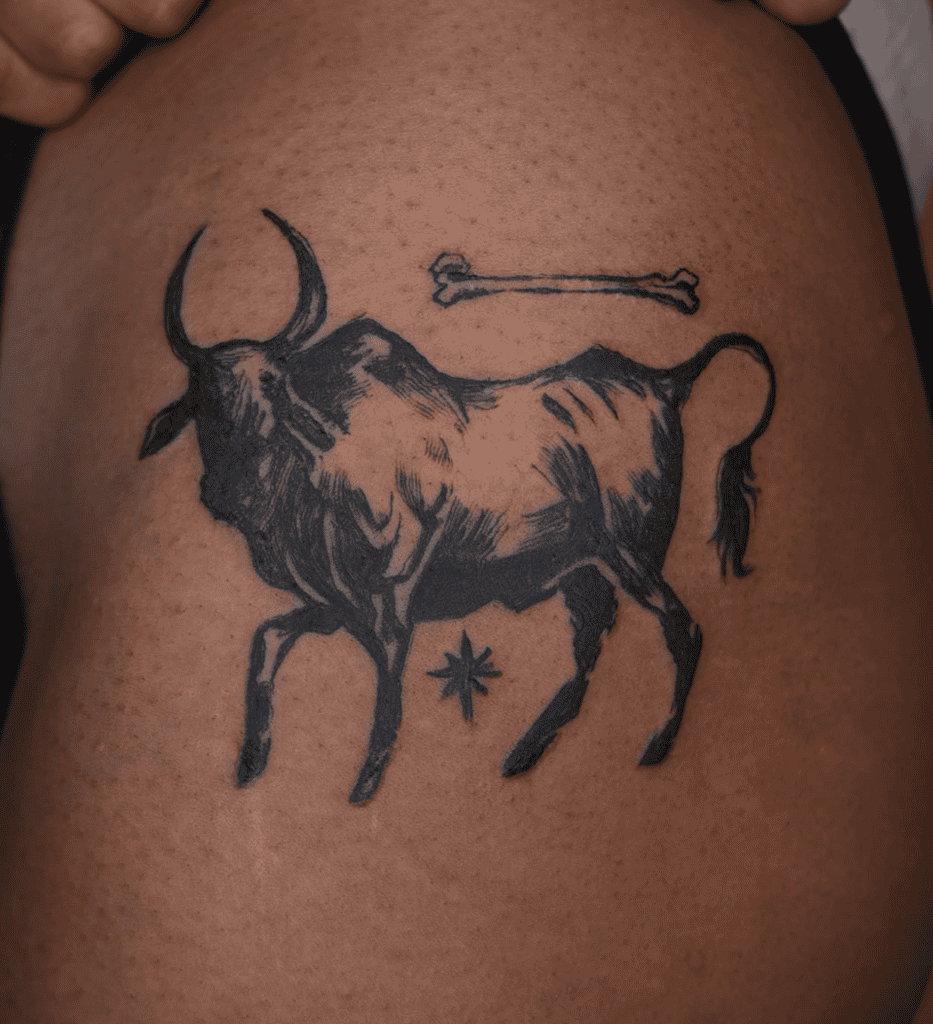
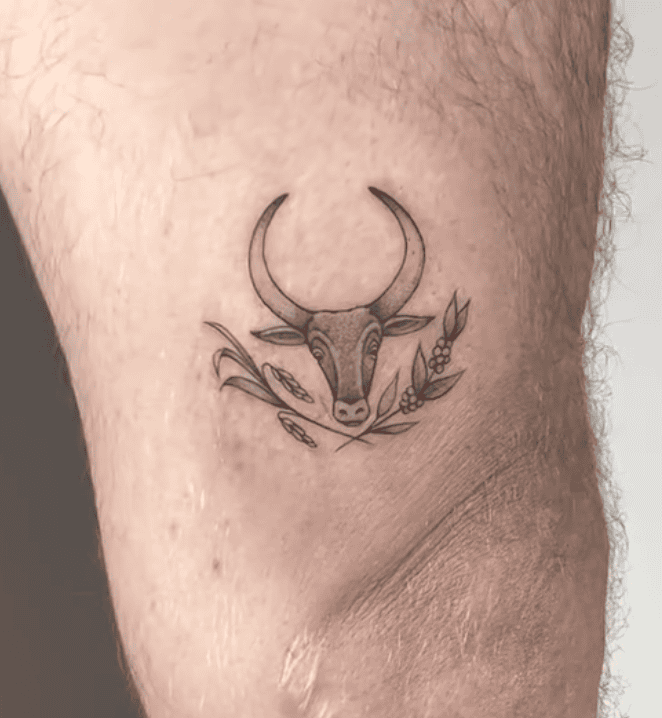
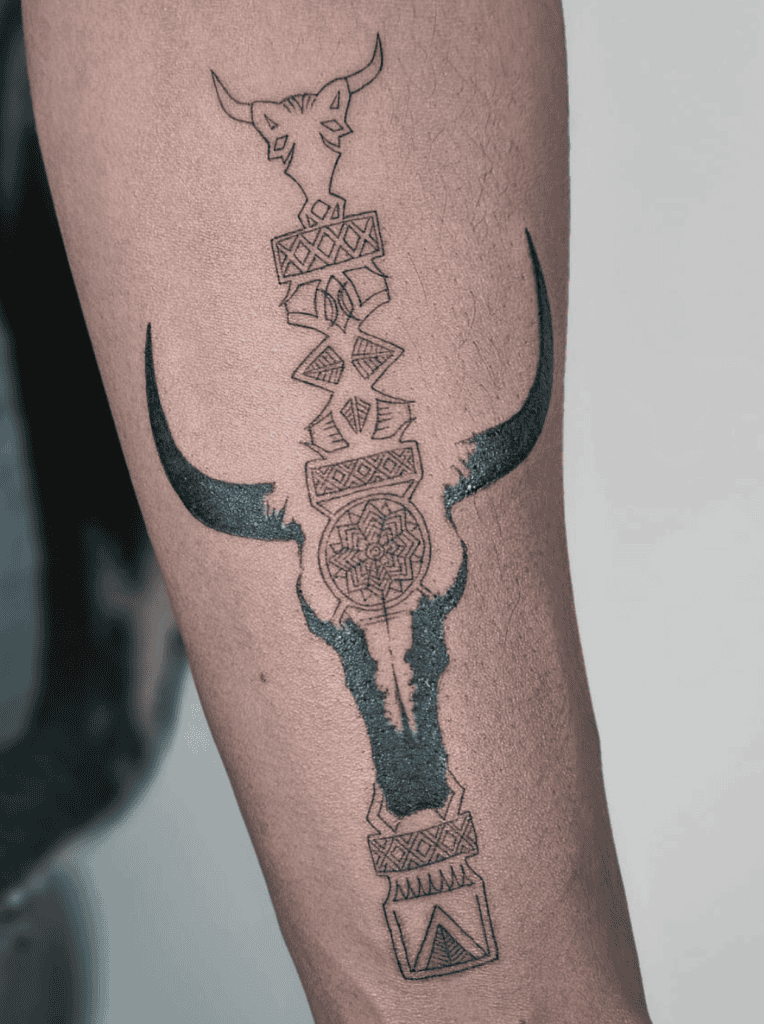
The Zebu is one of the oldest and most important groups of cattle in the world, instantly recognisable by the prominent hump on its shoulders. The zebu has been helping people farm, travel, and produce food for thousands of years, thanks to its ability to survive where many other cattle struggle.
Originating in the Indian subcontinent, zebu cattle spread throughout Asia, Africa, and eventually the Americas. Today, they are among the most numerous cattle in the world and form the foundation of many famous breeds, including the Brahman Cattle, Gir Cattle, and Nelore. Their remarkable ability to thrive in hot, dry environments has made them indispensable to millions of people across the globe.
Aurochs Cow Tattoo
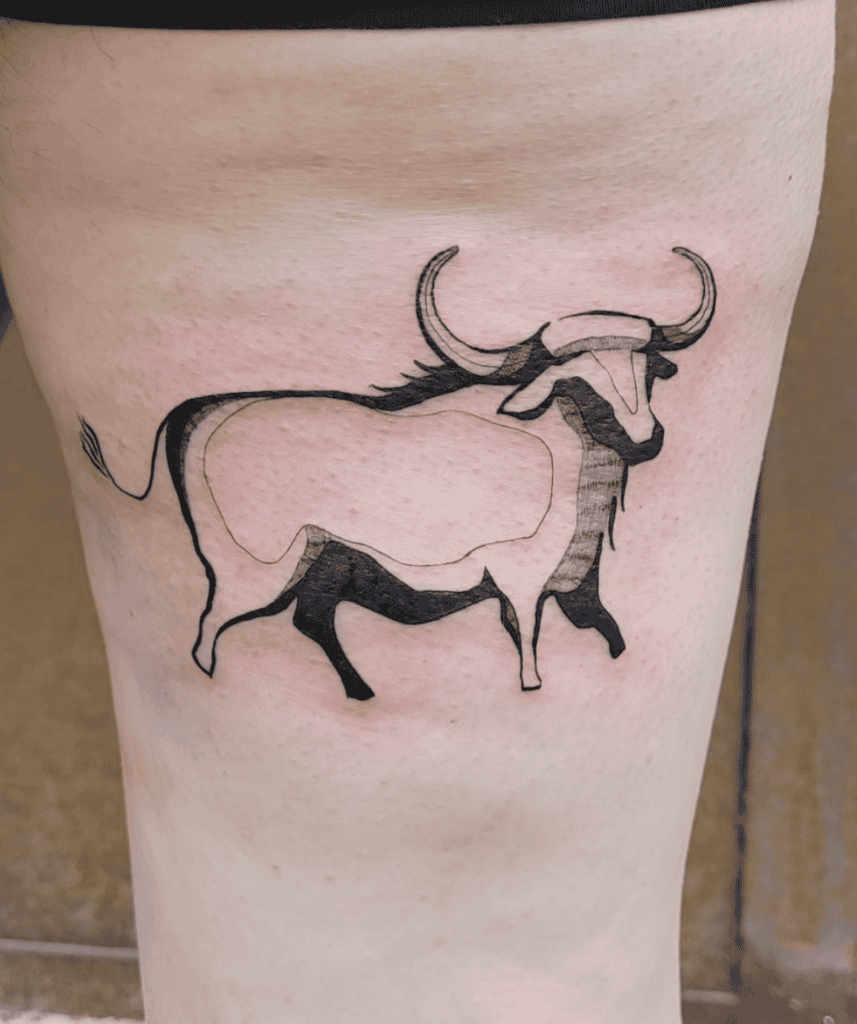
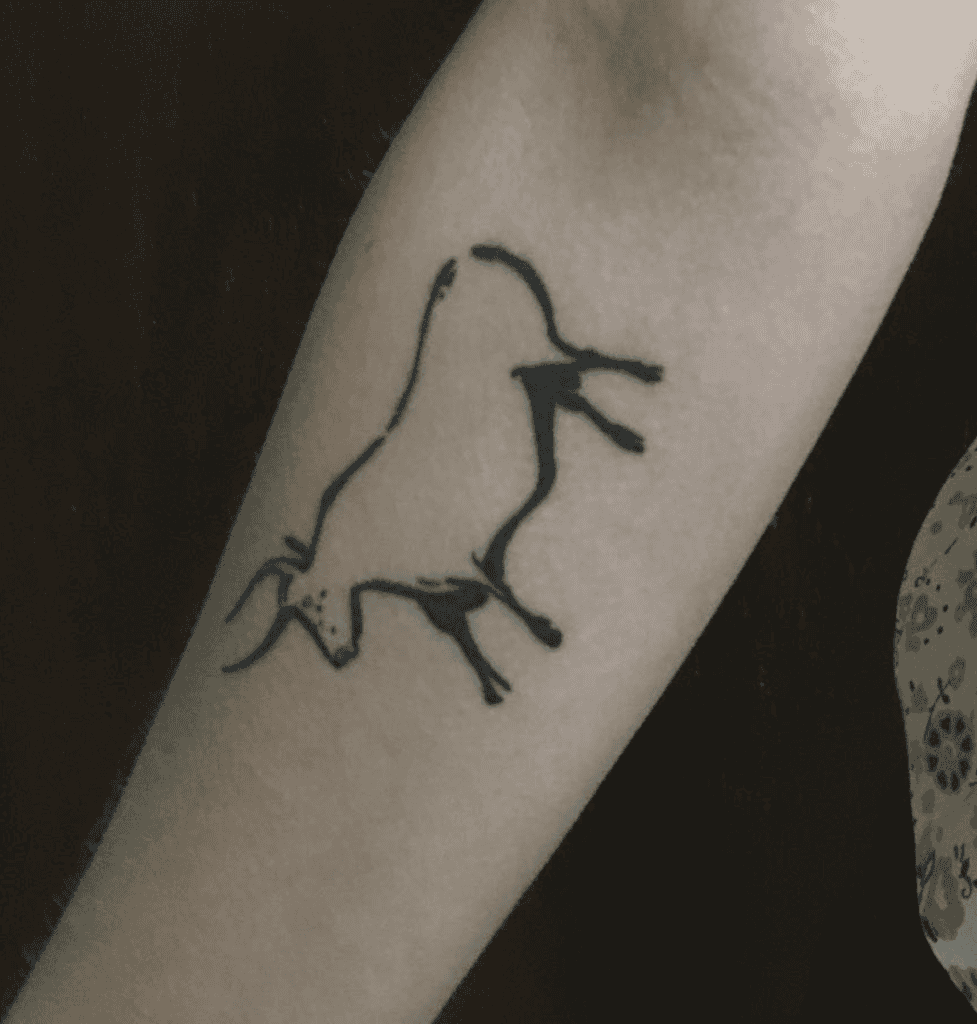
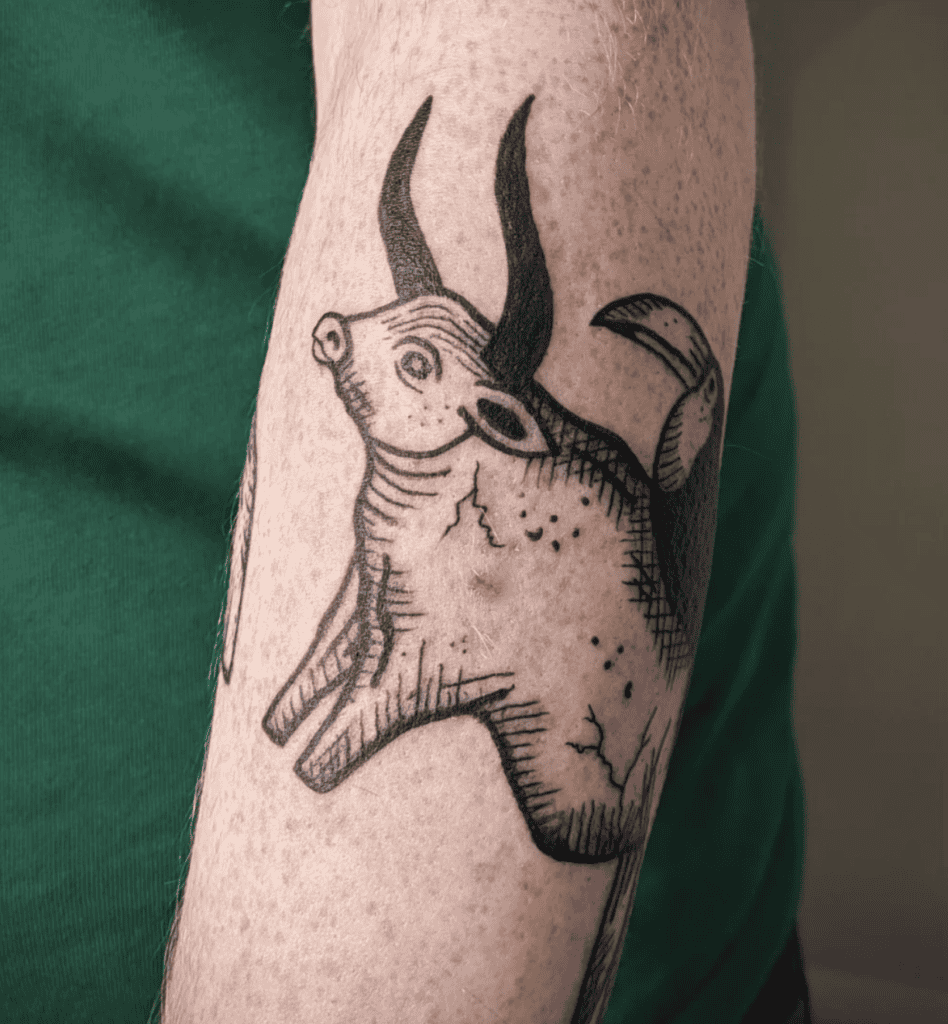
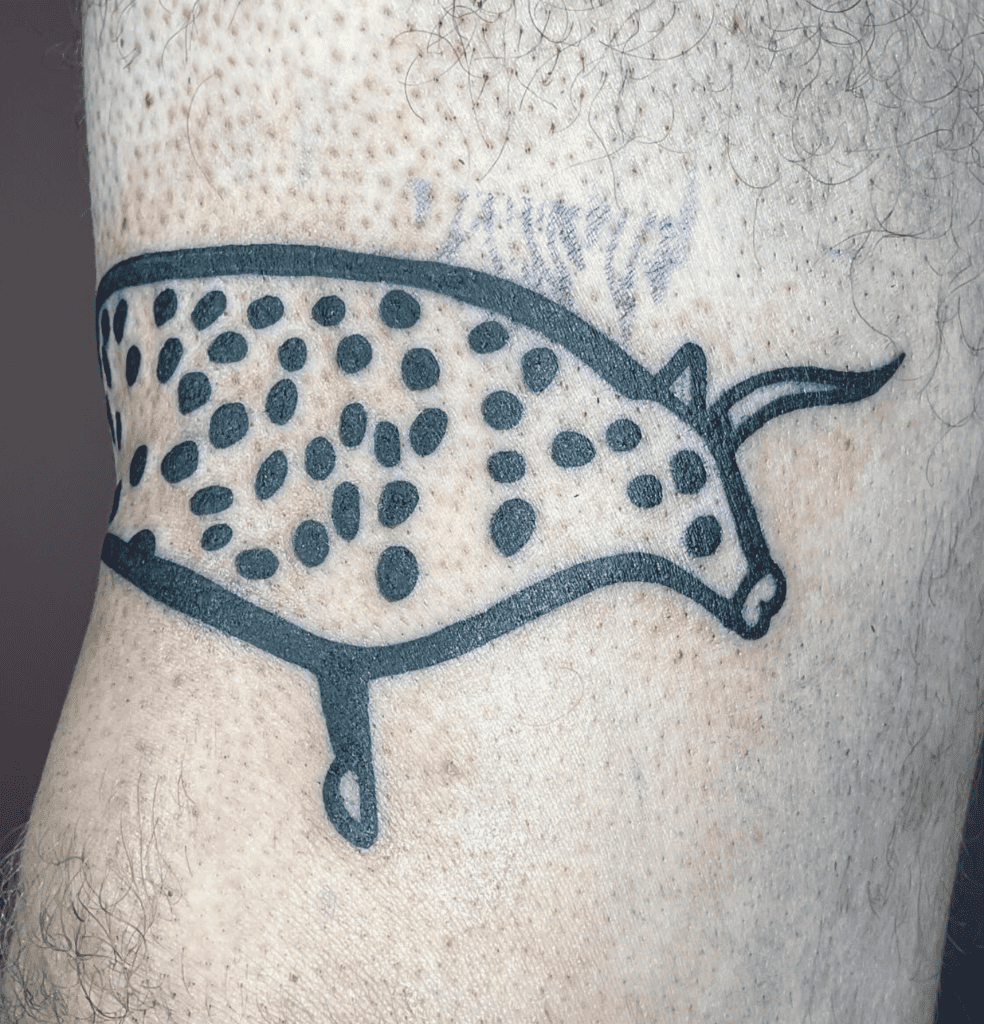
The Aurochs was one of the most powerful and influential bovines ever to walk the Earth. As the wild ancestor of nearly all modern domestic cattle, the aurochs helped shape human history, agriculture, and civilisation itself.
For hundreds of thousands of years, aurochs roamed across vast areas of Europe, Asia, and North Africa. These enormous wild cattle were renowned for their size, strength, and fierce temperament, earning a place in ancient myths, cave paintings, and royal hunting traditions. Although the species became extinct in 1627, its legacy lives on in every cow, bull, and cattle breed alive today.
Muskox Cow Tattoo
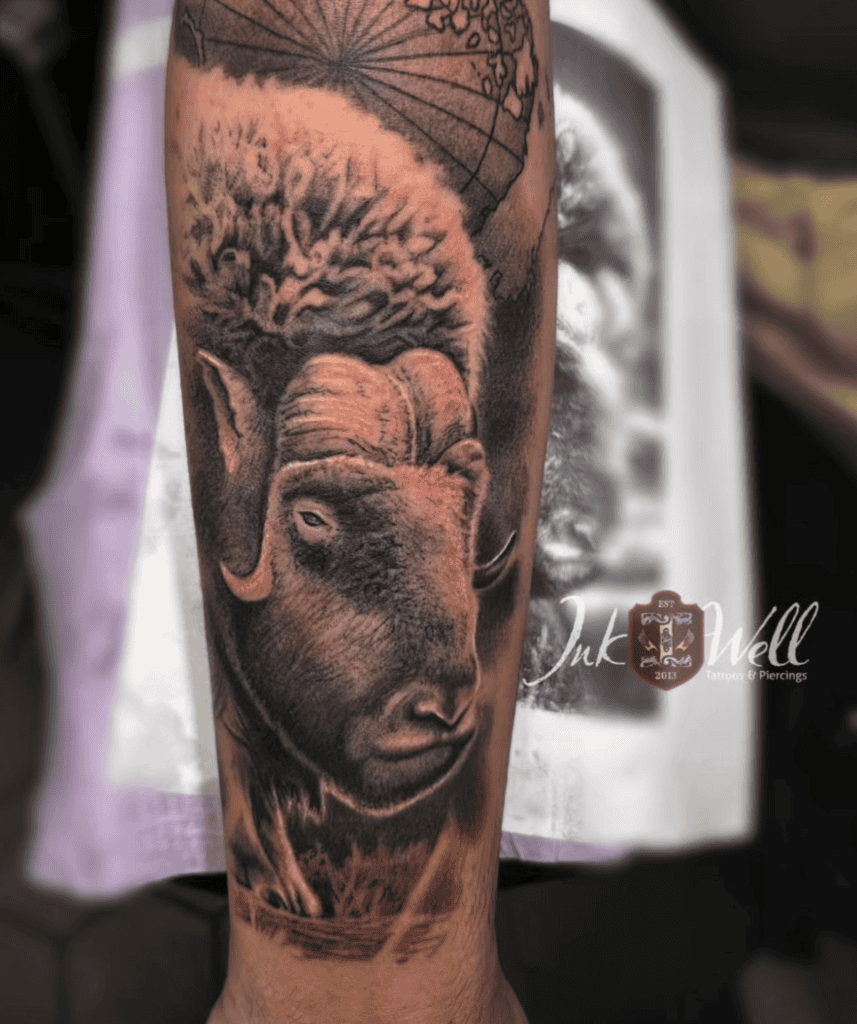
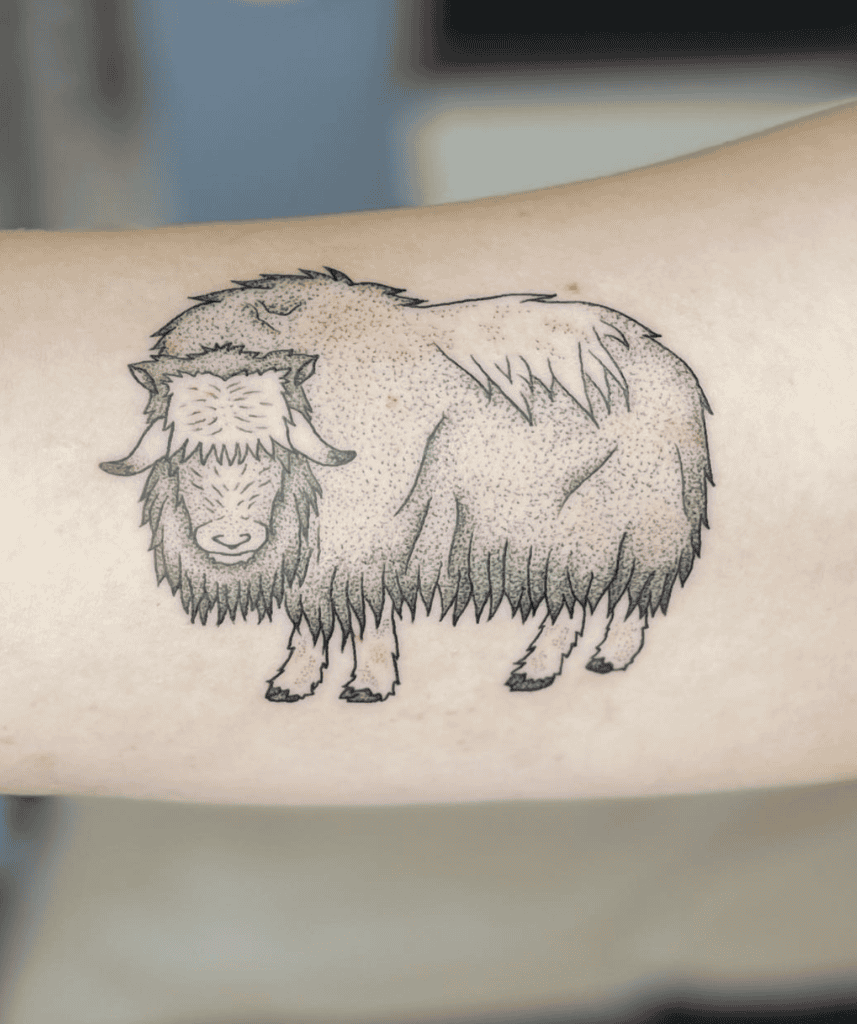
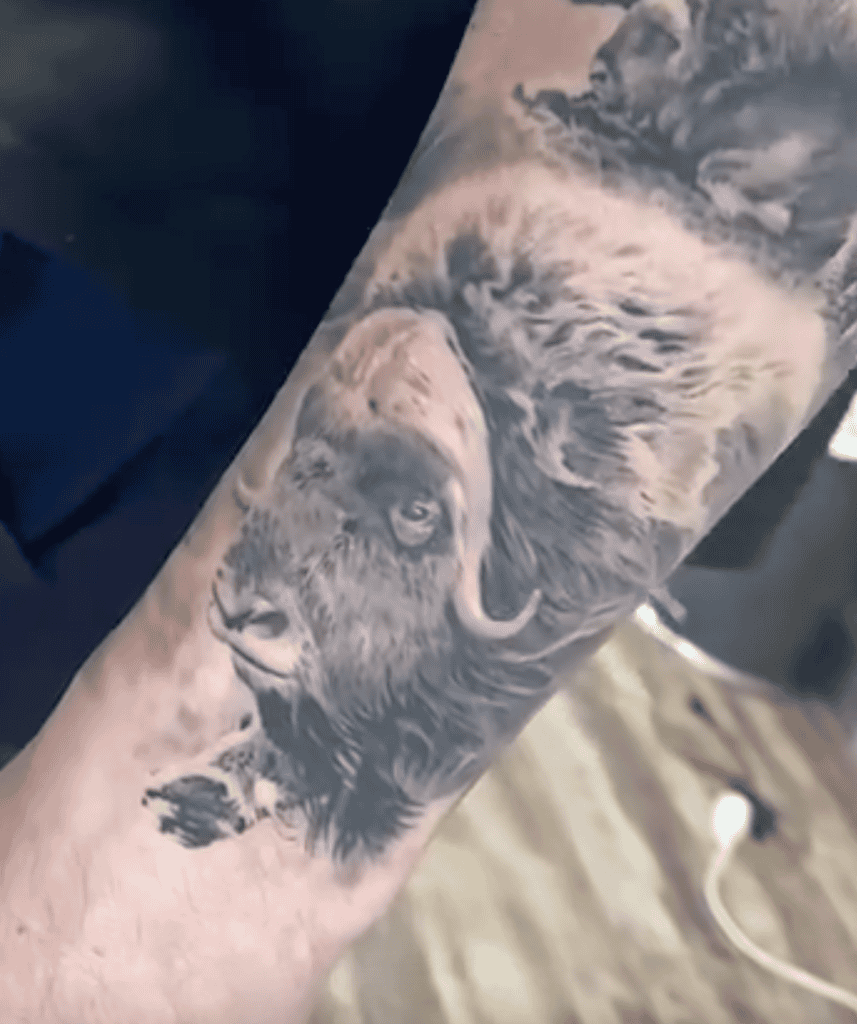
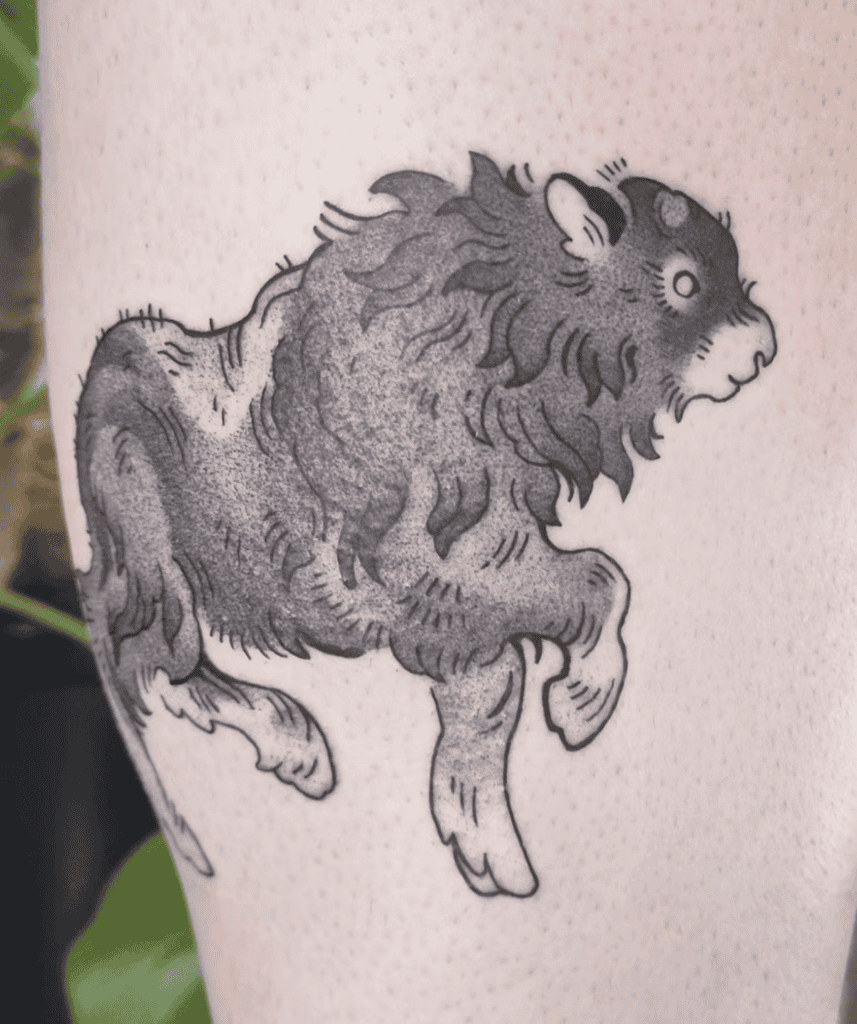
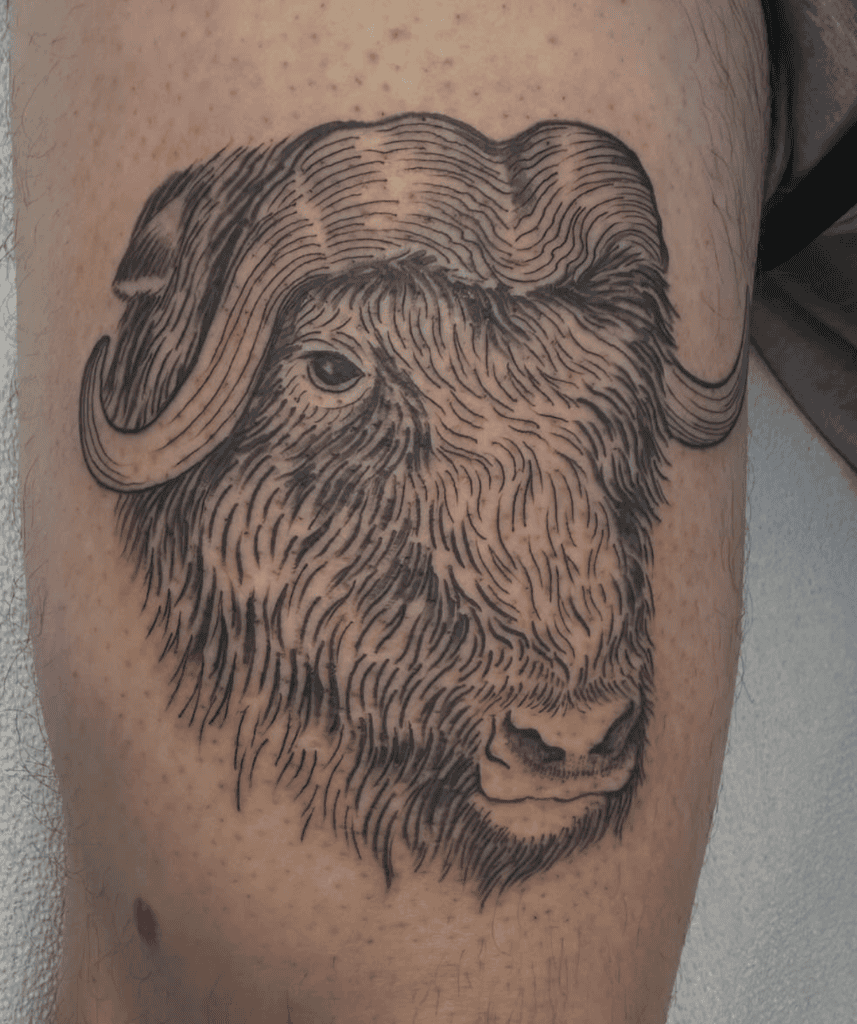
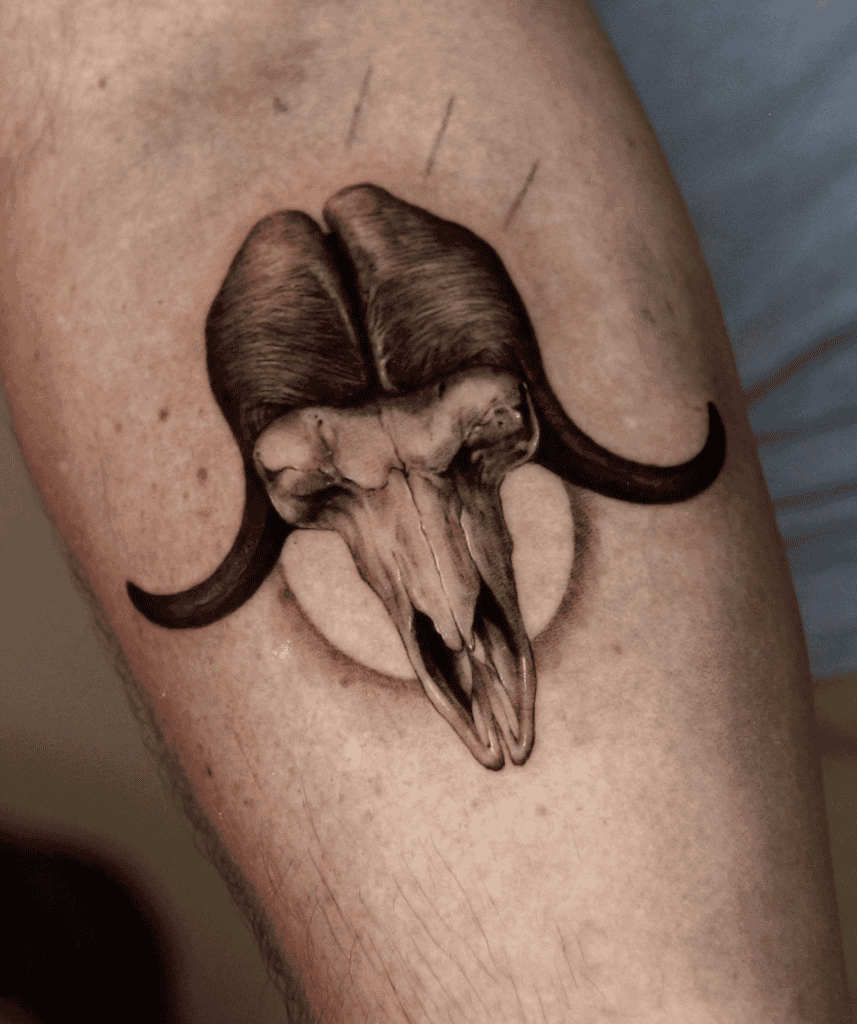
The Muskox is one of the toughest and most resilient mammals on Earth. With its thick shaggy coat, powerful build, and ability to withstand some of the harshest climates imaginable, the muskox is often described as a living relic of the Ice Age.
Despite its name, the muskox is neither a true ox nor a member of the cattle genus. It belongs to the bovine family and is more closely related to sheep and goats than to domestic cattle. Nevertheless, its appearance and immense strength have earned it a place among the world’s most iconic bovines.
For thousands of years, muskoxen have survived in the frozen landscapes of the Arctic, enduring conditions that few large mammals could tolerate.
The Cow Jumped Over the Moon Tattoo

The Cow That Jumped Over the Moon is one of the most famous bovines in folklore and children’s literature, coming from the classic English nursery rhyme Hey Diddle Diddle.
In the rhyme, several absurd and magical events occur: A cat plays a fiddle, a cow jumps over the moon, a little dog laughs, and a dish runs away with a spoon. Unlike many folktales, there is no explanation for why any of these events happen, with the charm coming from their sheer silliness and imagination.
Rodeo Cow Tattoo
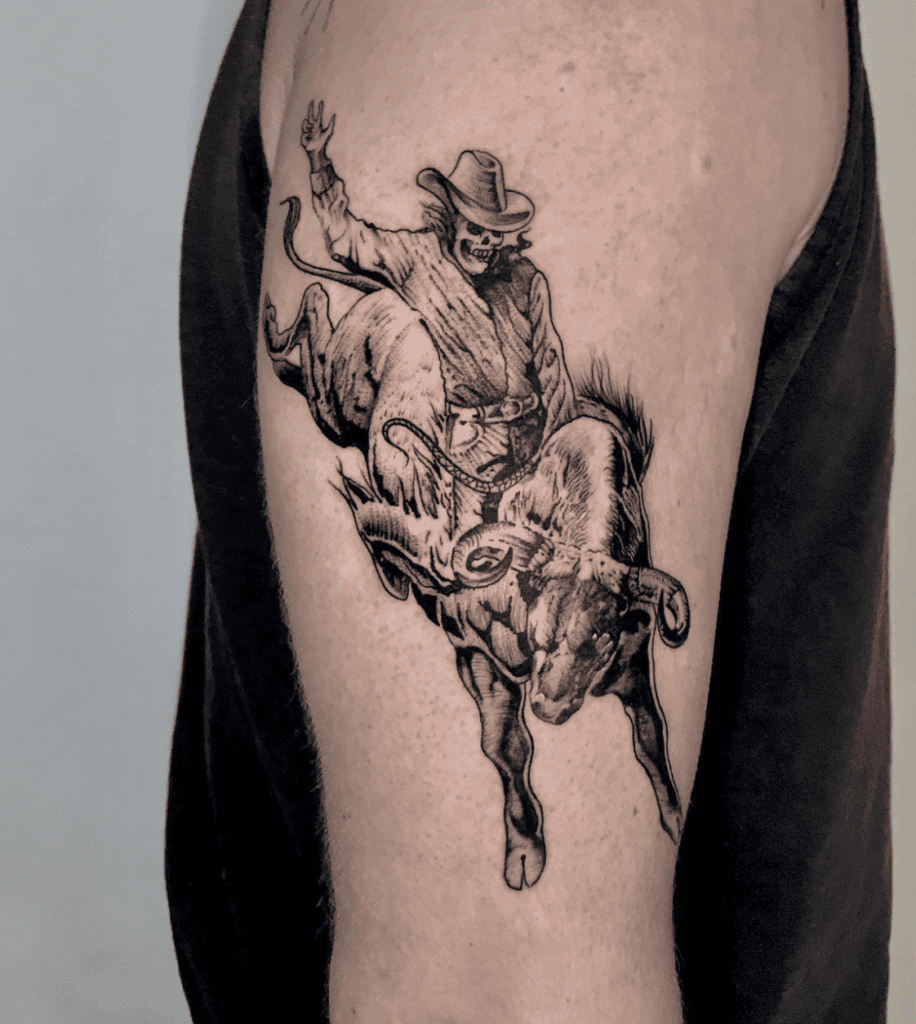
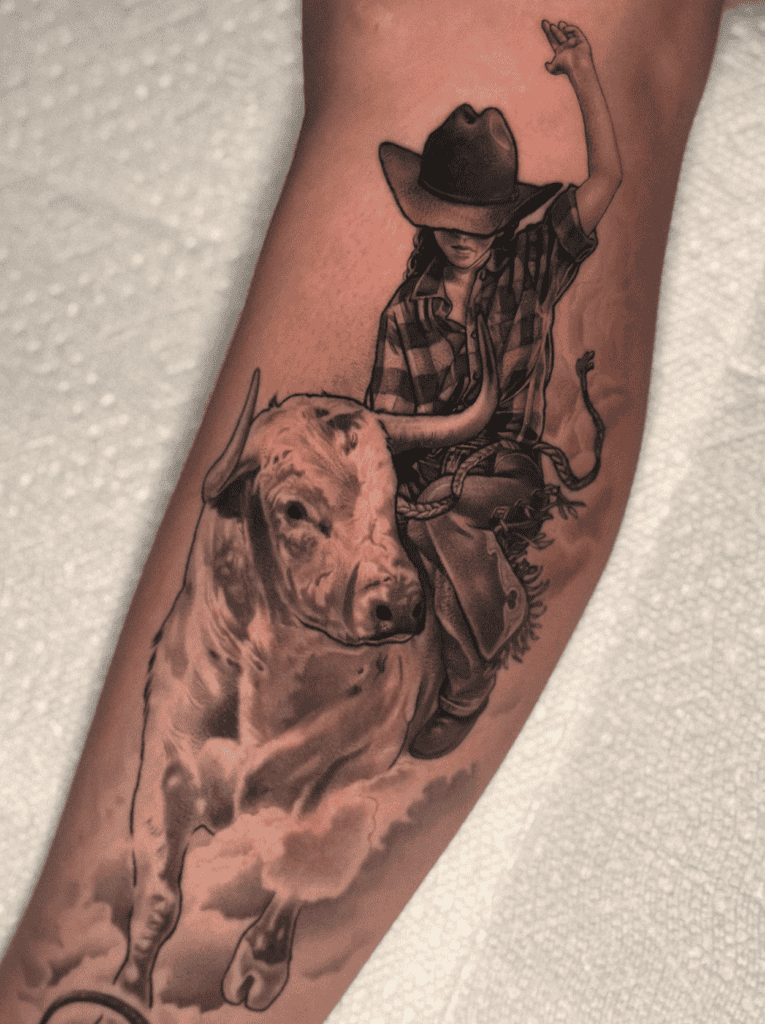
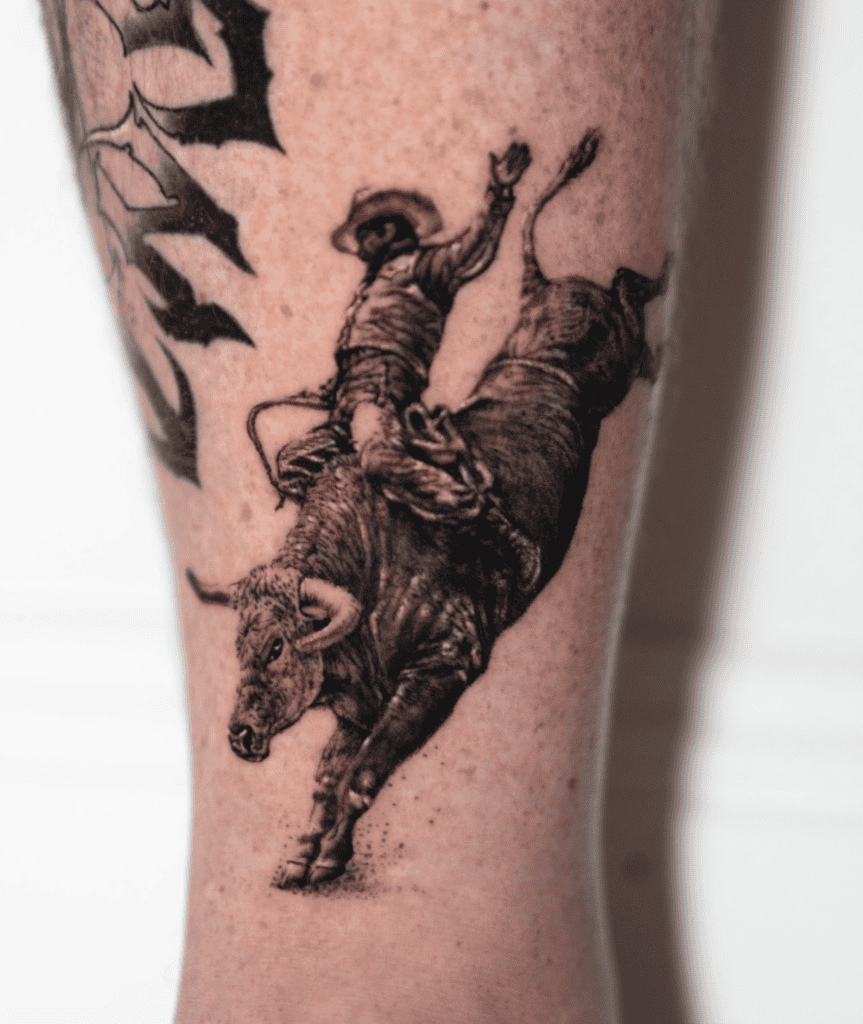
A “Rodeo bovine” is a general term used to describe cattle (especially bulls) that are part of rodeo sports, most famously bull riding and bucking events. These animals are selected for their strength, athleticism, and natural bucking behaviour, making them central stars of rodeo culture.
In modern rodeo, the most iconic performers are bucking bulls, many of which come from powerful cattle lineages like Brahman Cattle, Texas Longhorn, and other athletic beef breeds. Some even carry genetics from wild or heritage cattle lines to enhance stamina and agility.
Minotaur Cow Tattoo
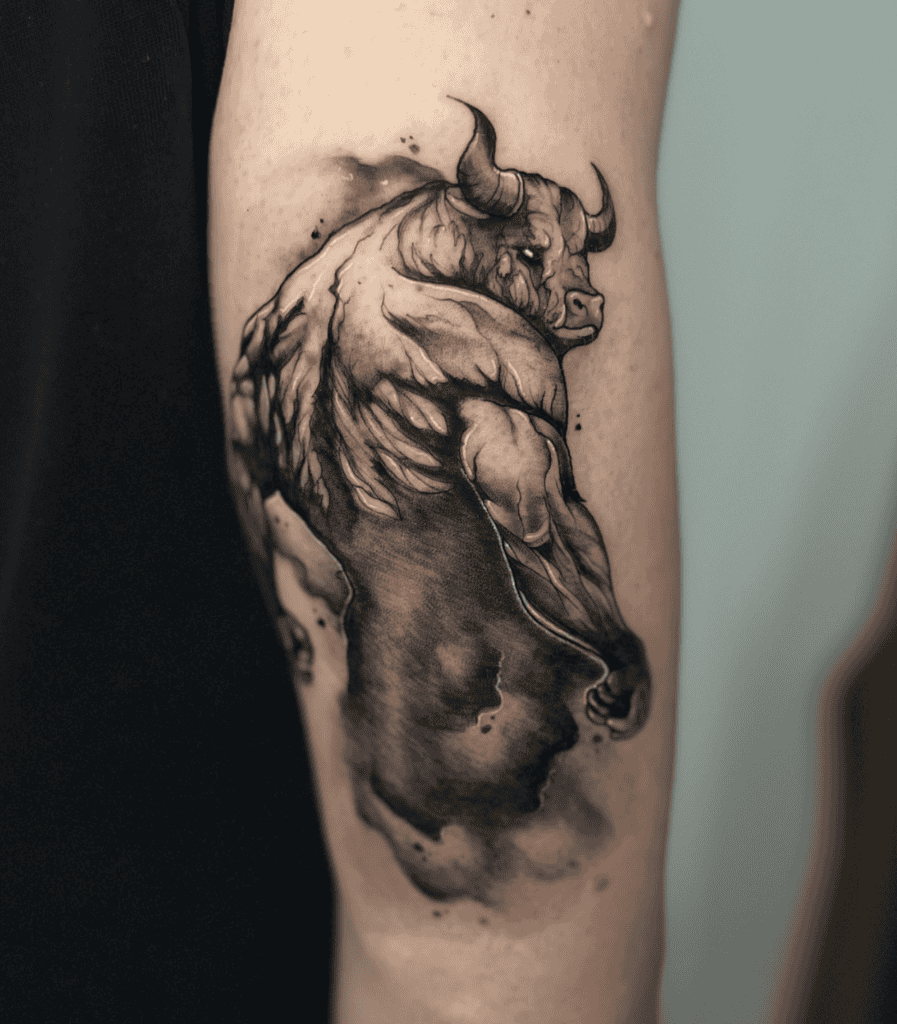
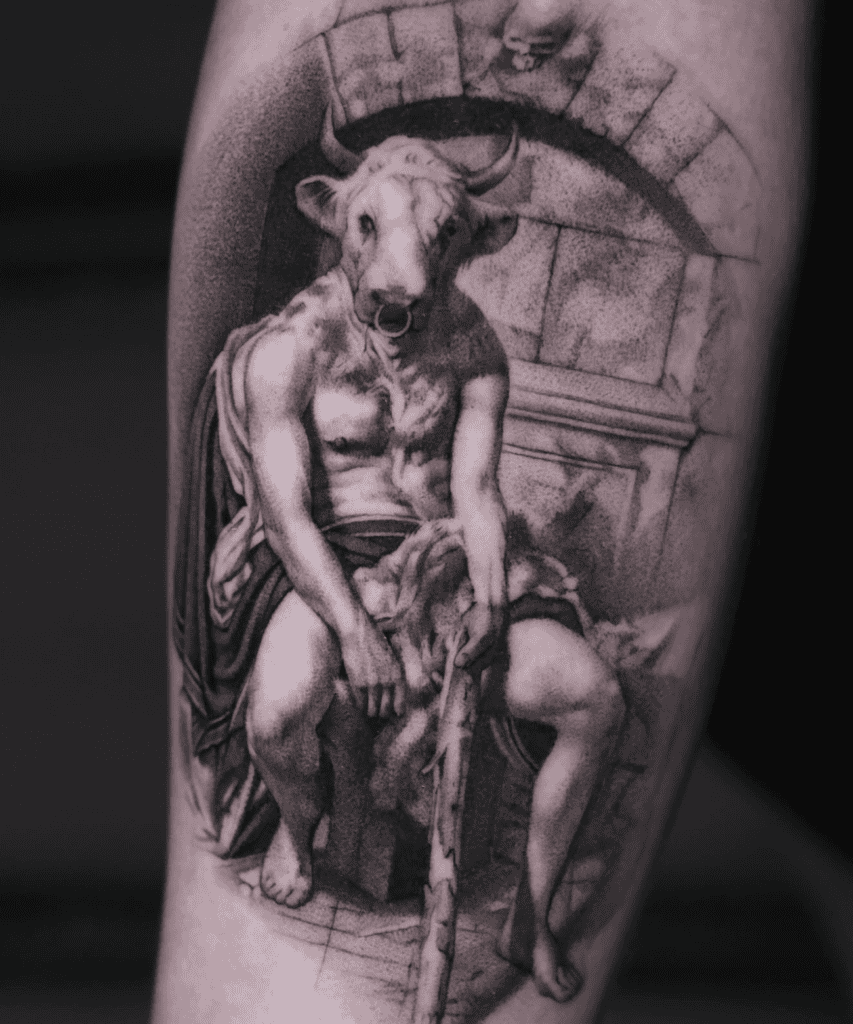
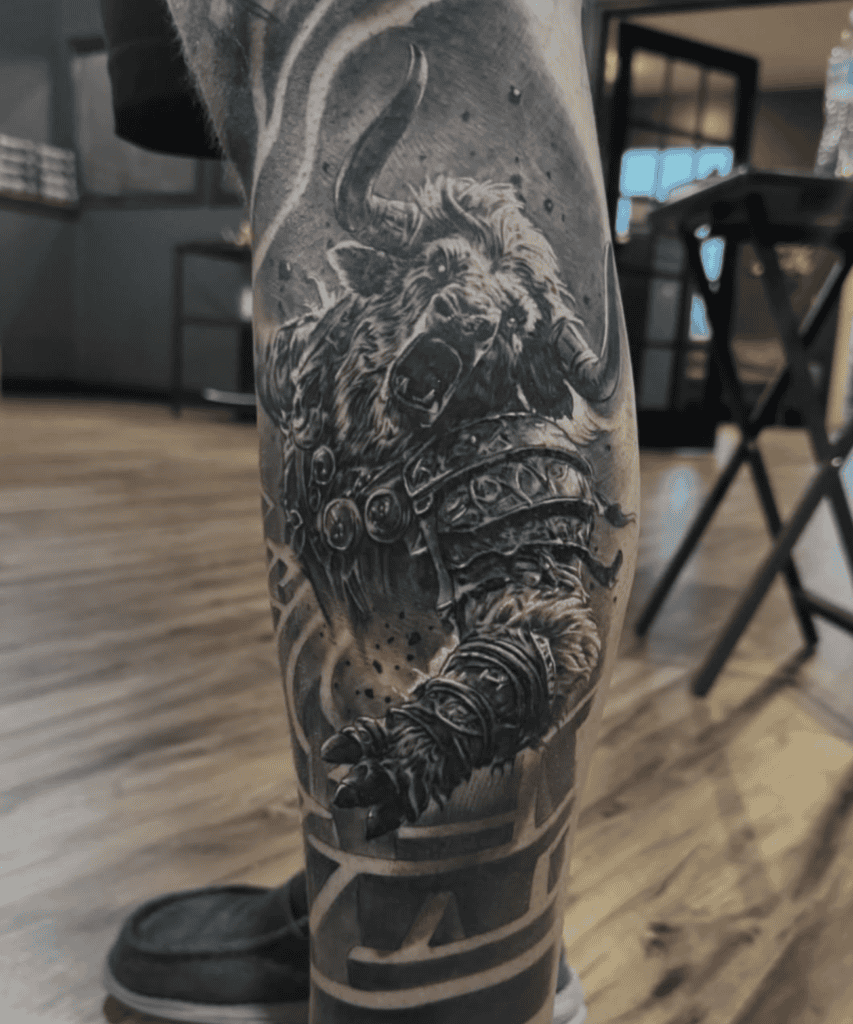
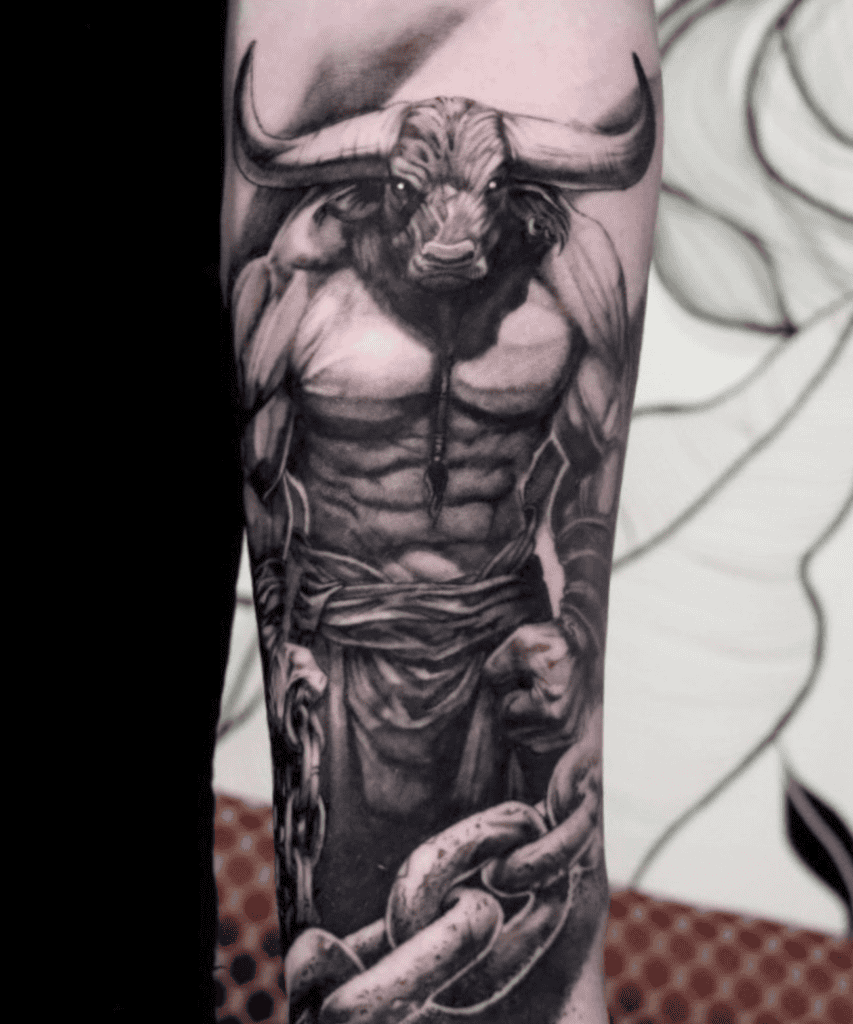
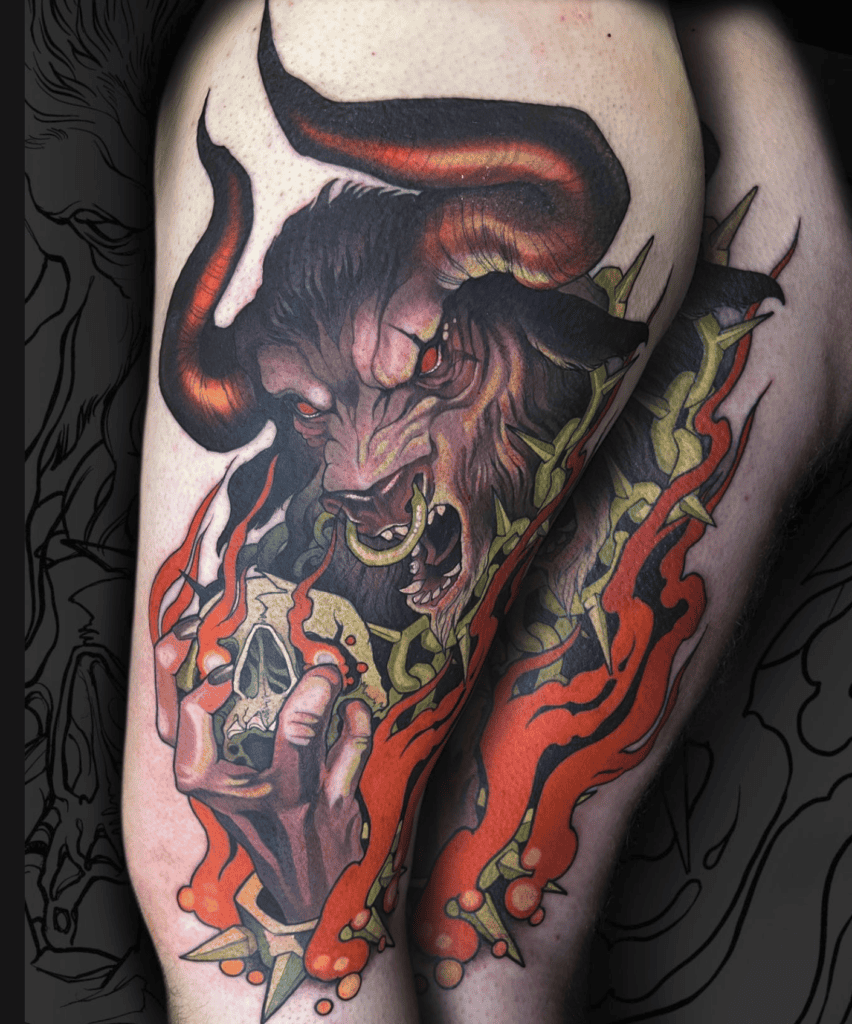
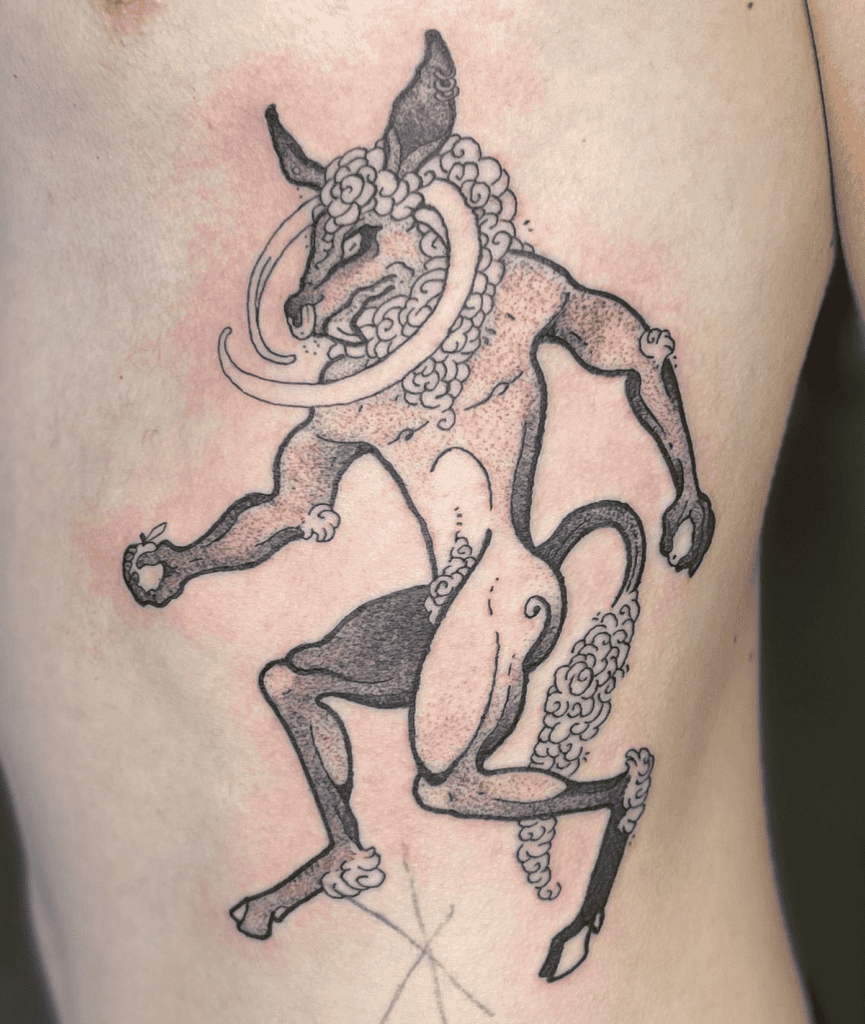
The Minotaur comes from Greek Mythology, where it is described as a terrifying creature with the body of a man and the head of a bull. Its name literally means “Bull of Minos”, referring to King Minos of Crete. The Minotaur lived at the centre of a vast labyrinth and became a symbol of chaos, punishment, and the consequences of pride and divine anger.
When King Minos prayed to the sea god Poseidon for a sign of legitimacy to rule Crete. Poseidon sent a magnificent white bull, expecting it to be sacrificed in his honour. However, Minos kept the bull because of its beauty, and as punishment, Poseidon caused Minos’s wife, Queen Pasiphaë, to fall in love with the bull. From this unnatural union, the Minotaur was born.
To contain the Minotaur, King Minos commissioned the famous labyrinth built by the craftsman Daedalus. This maze was so complex that no one who entered could escape without guidance. The Minotaur was fed human sacrifices sent into the labyrinth, becoming a prisoner as much as a monster.
Cretan Bull Cow Tattoo


The Cretan Bull is a famous creature from Greek Mythology, known for its strength, beauty, and connection to divine punishment and heroic quests. The Cretan Bull is usually portrayed as a powerful living bull, famously linked to one of the labours of Heracles, where capturing the bull became a test of strength and courage.
Minoan Bull Cow Tattoo

The Minoan Bull is one of the most important symbols from the ancient civilisation of Crete, specifically the Minoan Civilisation (around 3000–1100 BCE). Unlike mythological bulls such as the Minotaur or the Cretan Bull, the Minoan bull represents real cultural beliefs, rituals, and artistic traditions from one of Europe’s earliest advanced societies.
Apis Cow Tattoo


The Apis was one of the most important sacred animals in ancient Egypt, believed to be a living bull on Earth that embodied divine power and acted as a physical manifestation of the god Ptah. Worship of Apis lasted for thousands of years, making it one of the longest-running animal cults in human history.
Apis was not just any bull, but a specific bull that was born with sacred markings. That bull was identified as the living Apis and was worshipped as a divine incarnation. When it died, a new sacred bull was chosen, so Apis was both an individual animal and a continuous divine role passed from bull to bull.
To be recognised as Apis, a bull had to have specific markings, including a black coat, a white triangle on the forehead, a scarab-shaped mark under the tongue (in some traditions), and distinct patterns on the body. These markings were seen as signs from the gods, and because of this, Apis bulls were extremely rare and carefully selected.
Nandi Cow Tattoo
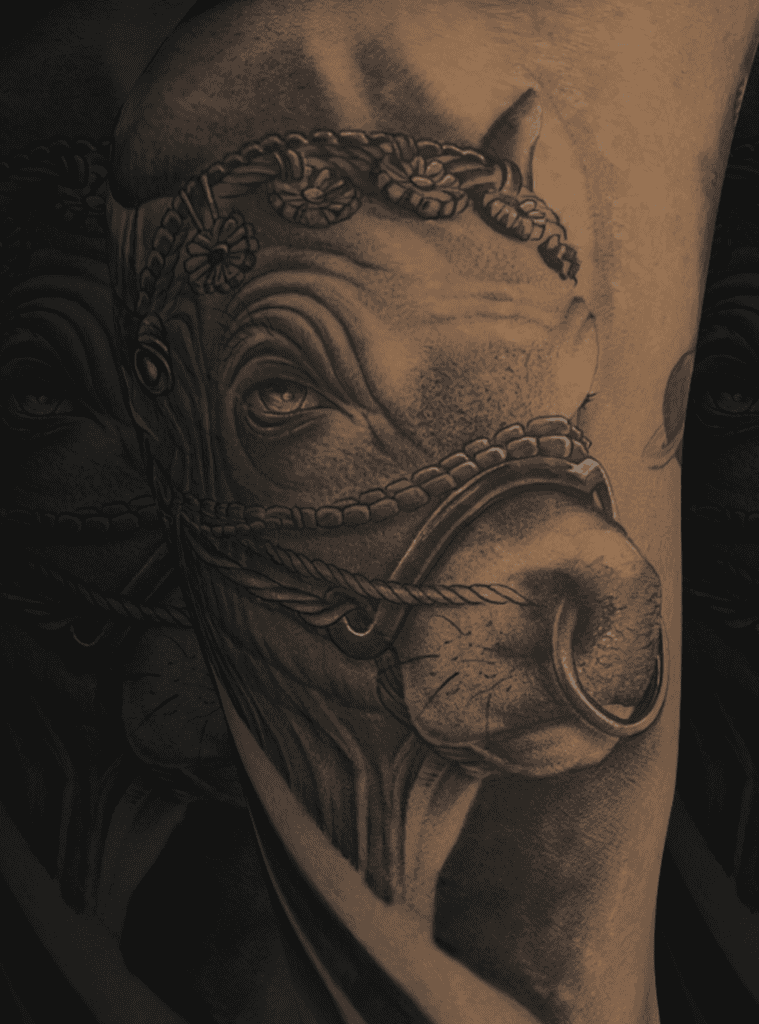
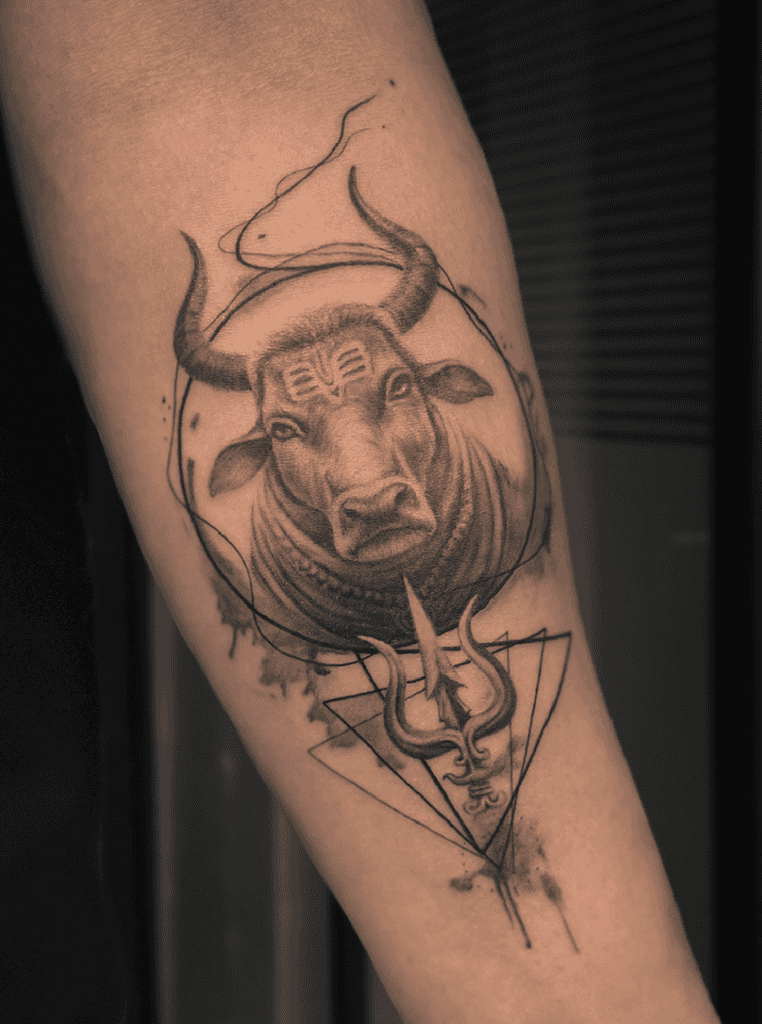
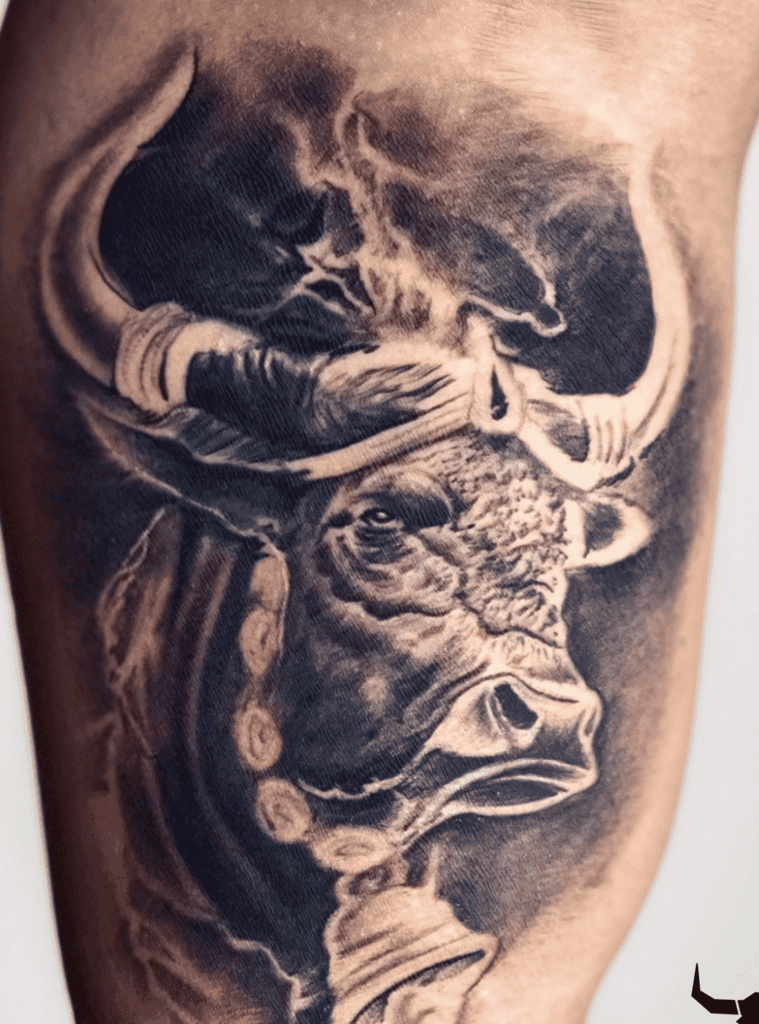
The Nandi, known as the devoted mount and gatekeeper of the god Shiva, is not just a bull, but a symbol of devotion, strength, discipline, and spiritual focus. You’ll often see Nandi statues at the entrance of Shiva temples across India, always seated calmly and facing the inner shrine.
Nandi is considered the sacred bull of Lord Shiva, being his loyal guardian and servant and a spiritual guide for devotees. In many traditions, Nandi is also seen as a teacher of sacred wisdom, not just a mount.
Surabhi Cow Tattoo

The Surabhi, more commonly known as Kamadhenu, is the sacred “mother of all cows” in Hinduism. She is a celestial, wish-fulfilling bovine believed to have emerged during the universe’s cosmic creation. Surabhi represents abundance, nourishment, purity, and the idea that the universe itself can provide everything needed for life, often described as the divine source from which all cows and bovines originate.
Surabhi (Kamadhenu) is considered the divine celestial cow, the mother of all cattle, a wish-fulfilling being, a symbol of cosmic abundance, and a companion of sages and gods. One of the most famous stories places Surabhi’s emergence in the Samudra Manthan, where gods and demons churned the cosmic ocean to obtain divine treasures.
Auðumbla Cow Tattoo

The Auðumbla is one of the oldest beings in Norse mythology, a cosmic, primordial cow who existed at the very beginning of creation, long before the world of humans, gods, or animals as we know them.
In Norse creation myth, the universe began in a vast void called Ginnungagap, where fire and ice met. From this chaos emerged the giant Ymir and the cosmic cow Auðumbla. Ymir fed on the milk of Auðumbla, and from his body the world was eventually shaped by the gods.
Donn Cuailnge Cow Tattoo

The Donn Cuailnge is one of the most famous animals in Celtic Mythology. Known as the Brown Bull of Cooley, he plays a central role in the epic tale Táin Bó Cúailnge, one of the greatest stories in early Irish literature.
The epic centres around a conflict between the kingdoms of Ulster and Connacht. Queen Medb wanted to possess the greatest bull in Ireland to match her husband’s wealth and power. Though she already owned a magnificent bull, she was jealous that Ulster possessed an even greater one: Donn Cuailnge.
To obtain him, she launched a massive raid to capture the bull, in an event known as the legendary Cattle Raid of Cooley. Donn Cuailnge was considered the most powerful bull in Ireland, said to be enormously strong, fiercely territorial and a symbol of kingship and power.
The story reaches its climax when Donn Cuailnge is brought into conflict with another legendary bull owned by Queen Medb. The two bulls eventually fight, symbolising rival kingdoms, pride and jealousy, the cost of ambition, and the destruction caused by greed. Donn Cuailnge ultimately survives the conflict but is left mortally weakened, marking the tragic tone of the epic.
Bull Demon King Cow Tattoo
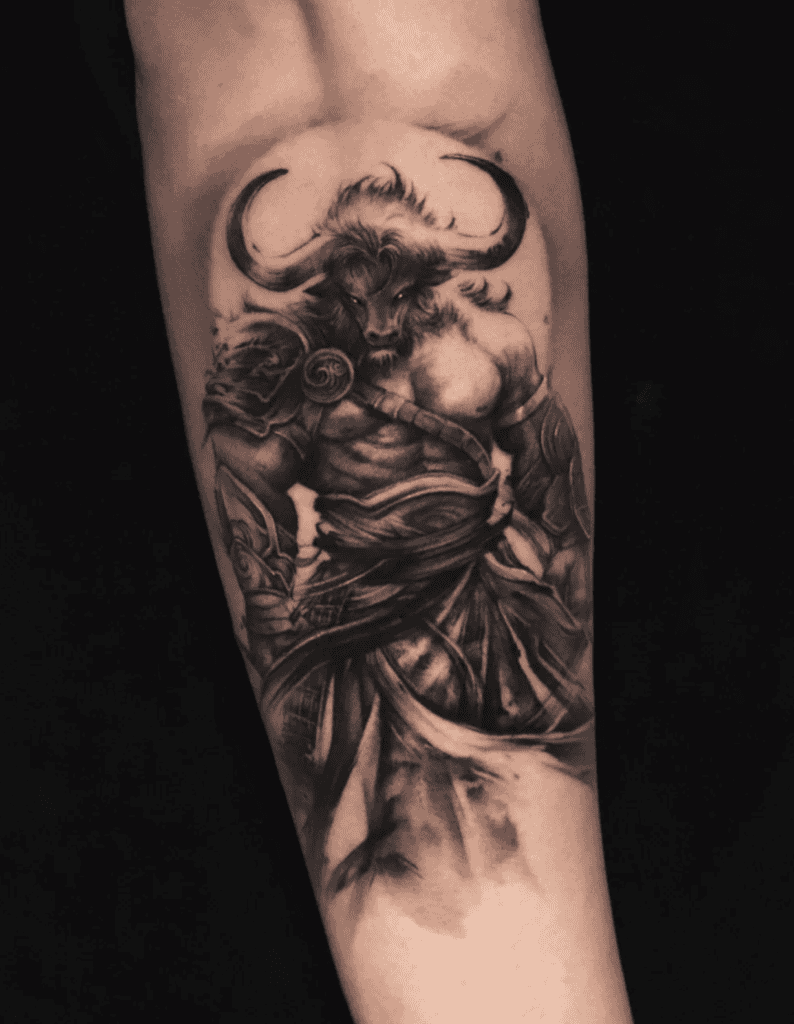
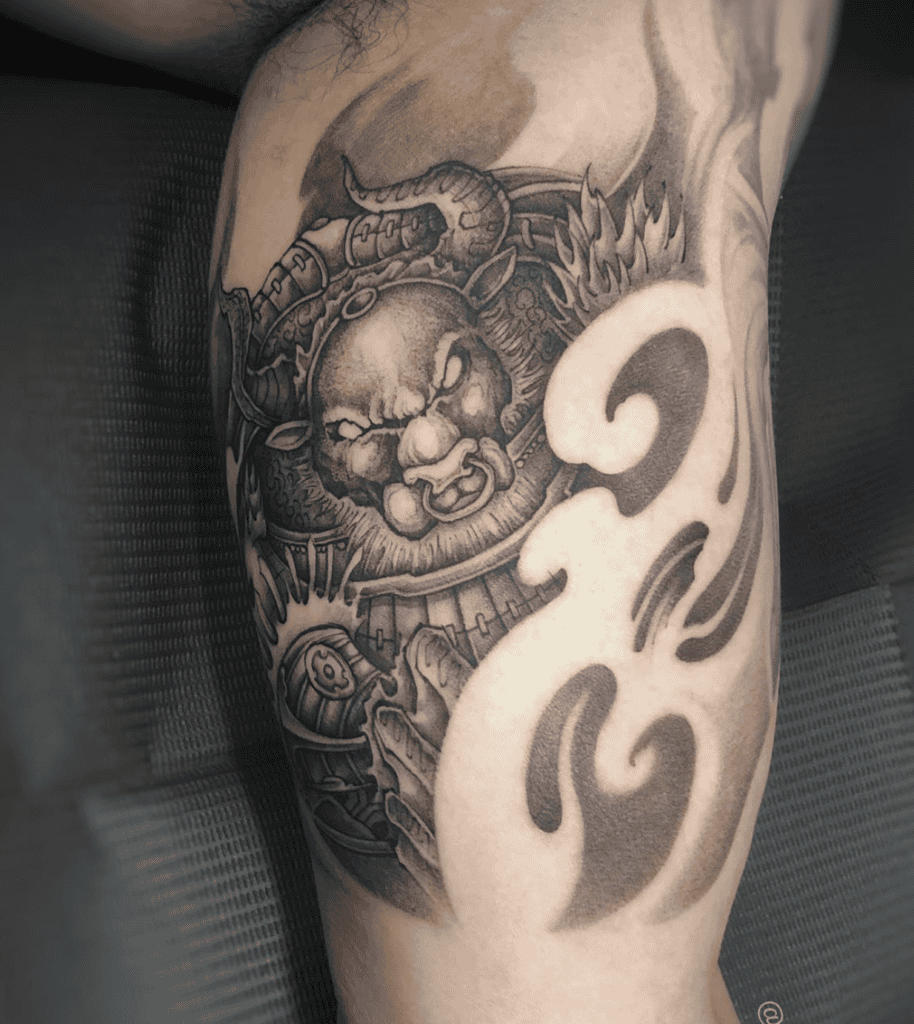
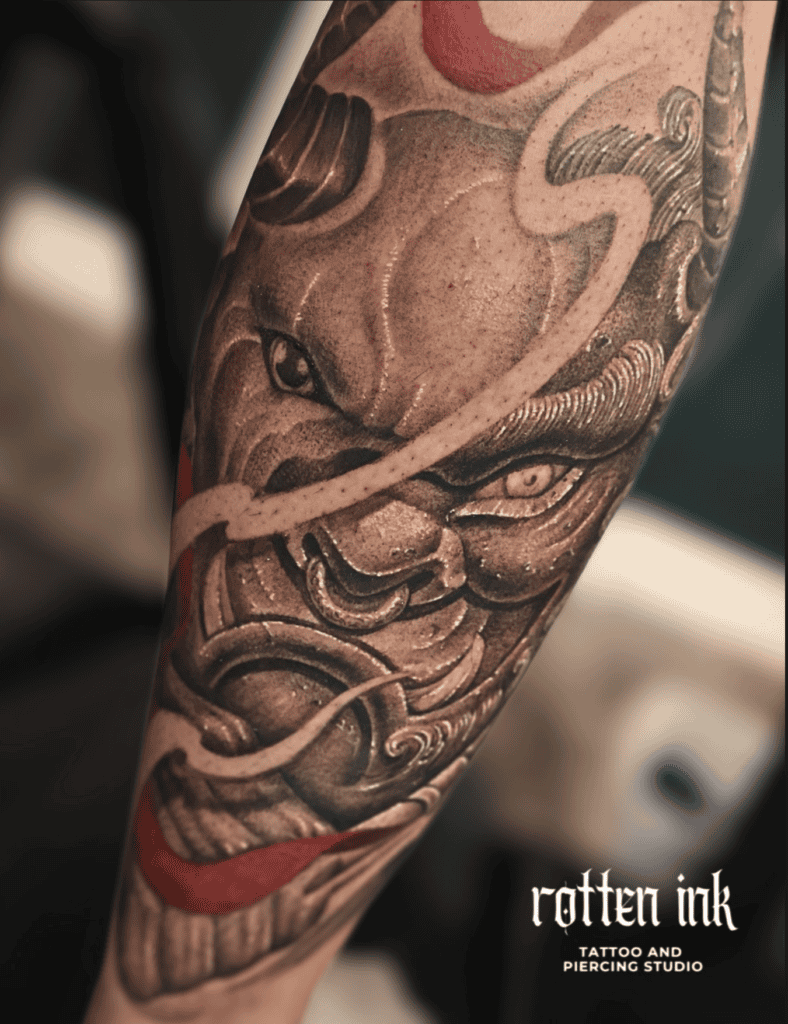
The Bull Demon King, also known as Niu Mowang (牛魔王) or the Ox Demon King, is one of the most powerful and memorable figures in Journey to the West and Chinese mythology-inspired folklore. He is a giant, shape-shifting demon king with the strength of a bull, ruling over vast lands and commanding fear and respect across the spirit world.
Despite being a “demon,” he is often portrayed with complex personality traits, honourable in some moments and arrogant or destructive in others. In Journey to the West, the Bull Demon King is not purely a villain. He is a former friend of Sun Wukong (Monkey King), has a marriage to Princess Iron Fan, conflicts with both gods and heroes, and battles over power, loyalty, and pride.
Taurus Cow Tattoo
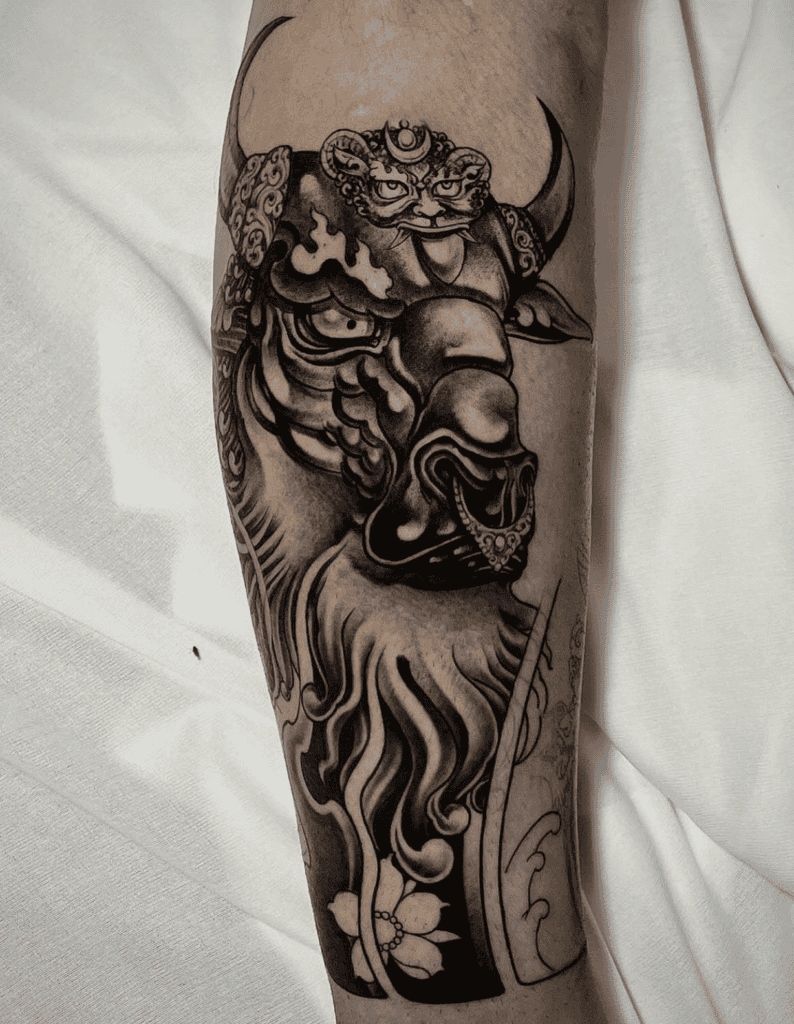
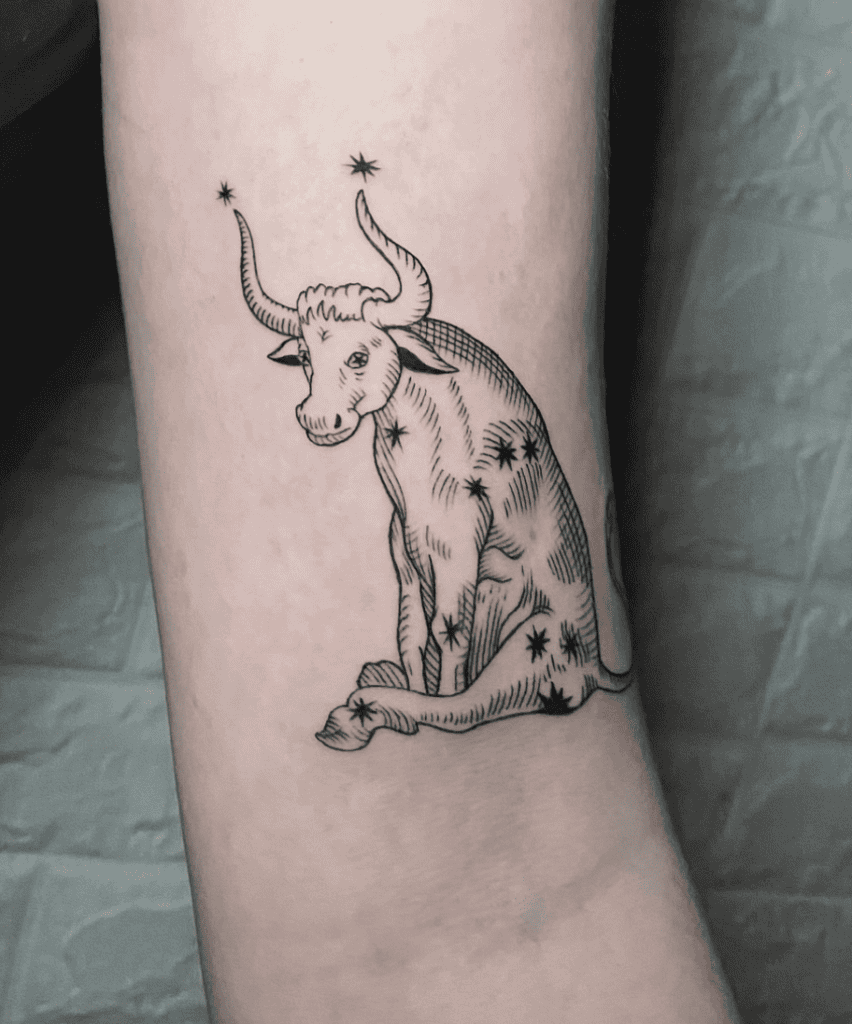
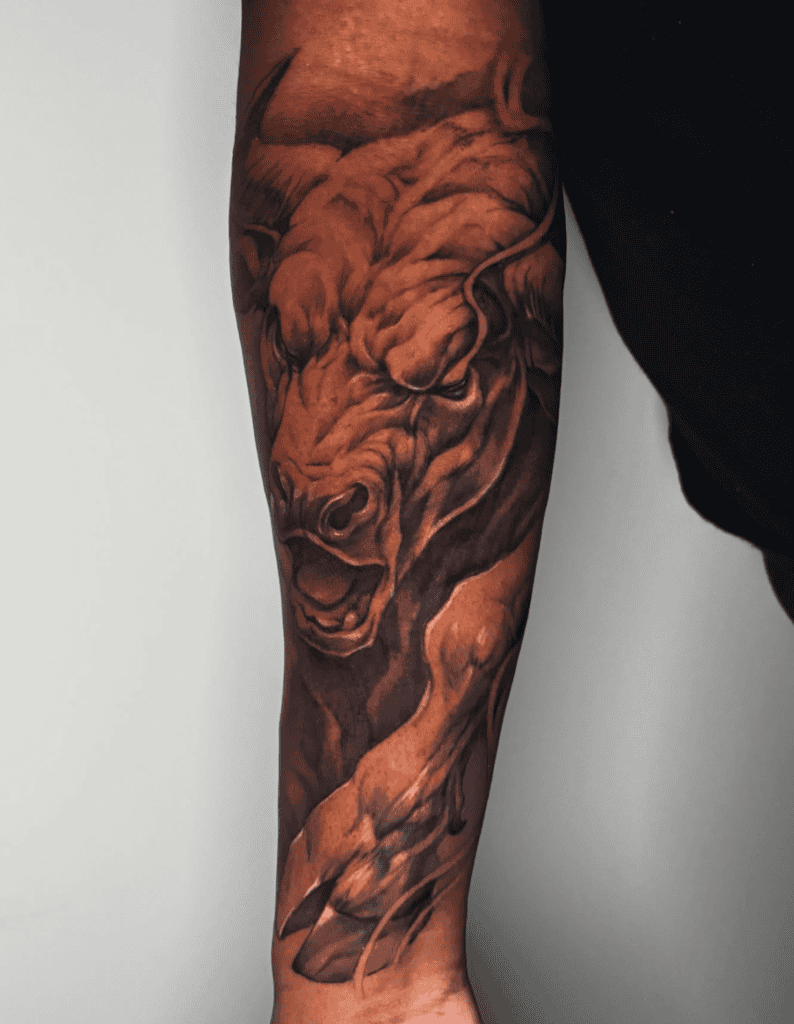
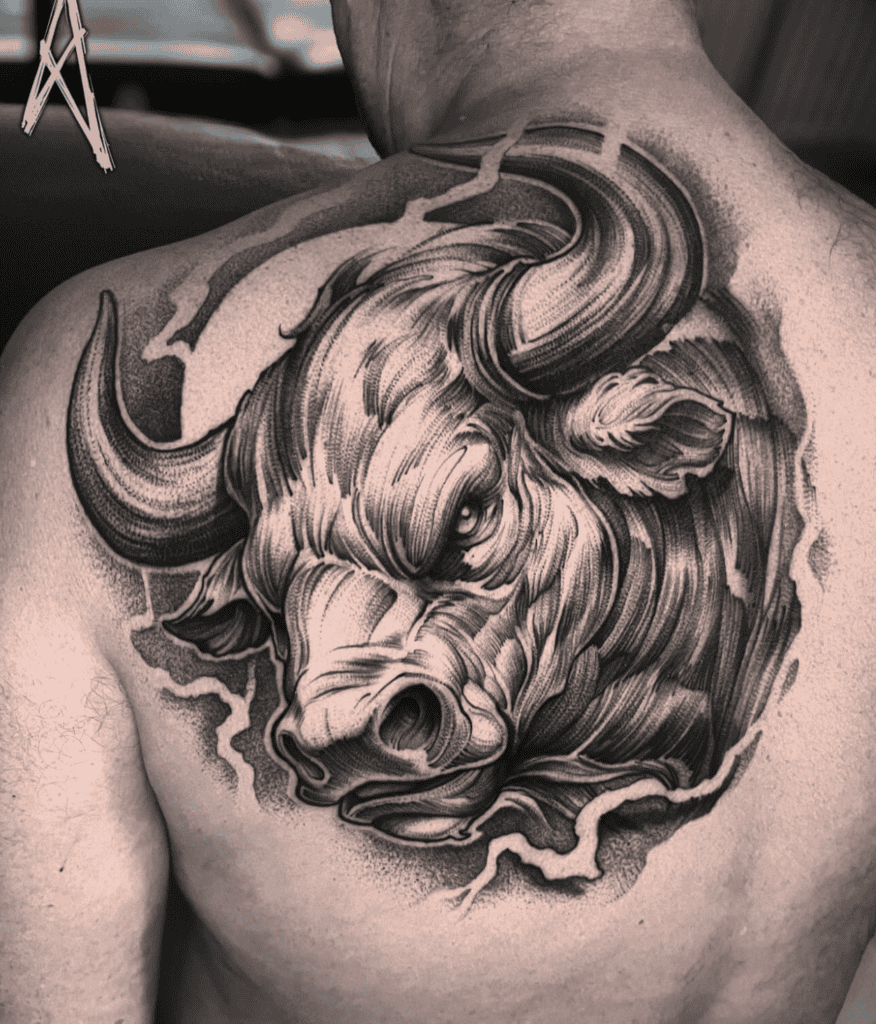
Taurus is the second sign of the zodiac and is represented by the Bull. Traditionally associated with people born between approximately April 20 and May 20. In astrology, Taurus is linked to stability, determination, patience, and a strong connection to the physical world. While astrology is a cultural and symbolic tradition rather than a science, Taurus has remained popular for thousands of years as a symbol of strength and reliability.
Lunar Zodiac Ox Tattoo
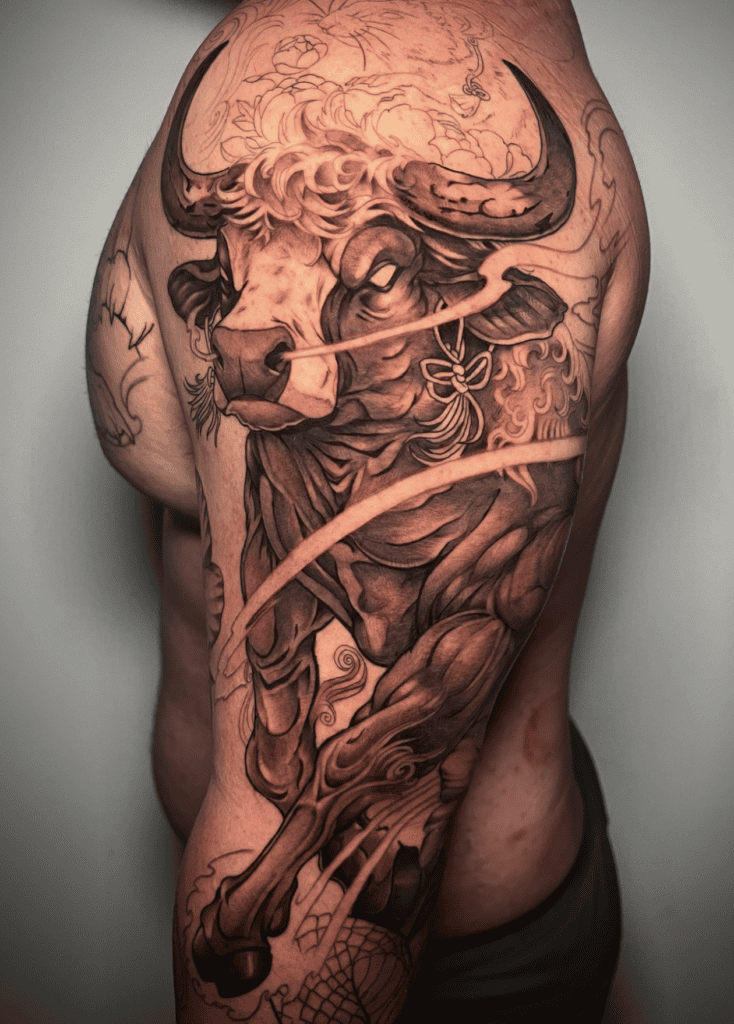
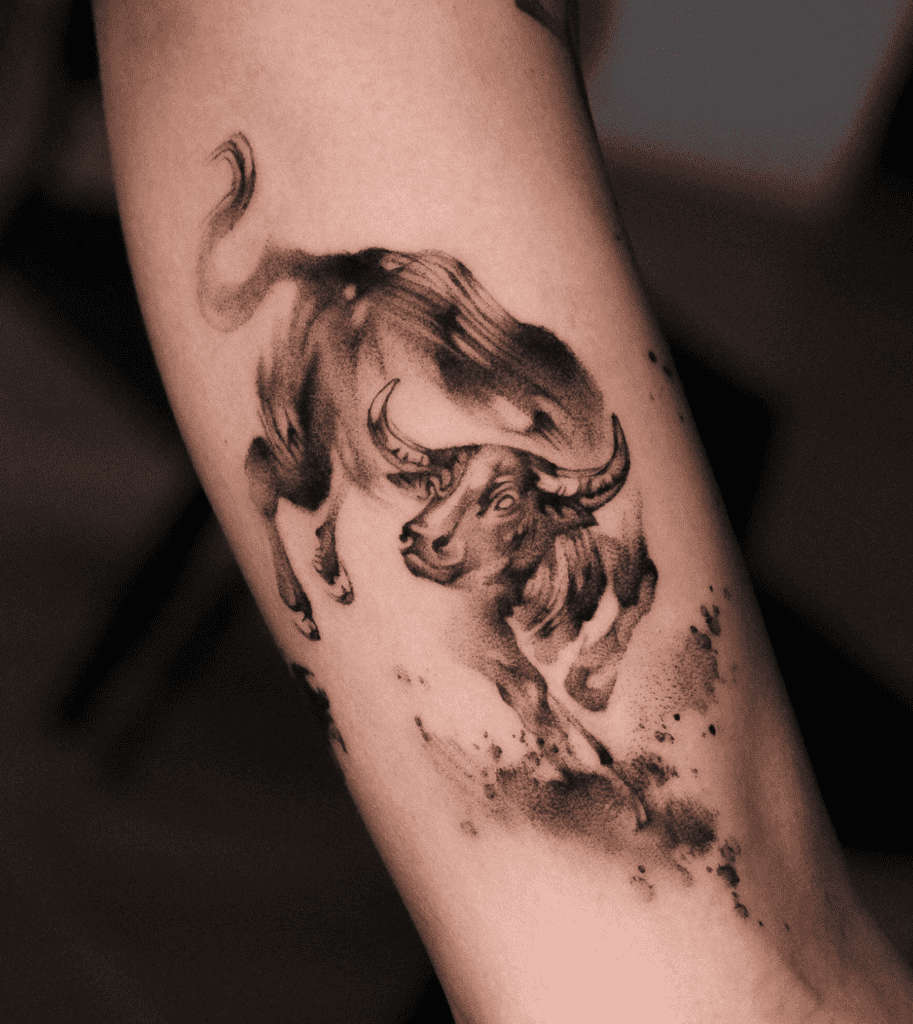
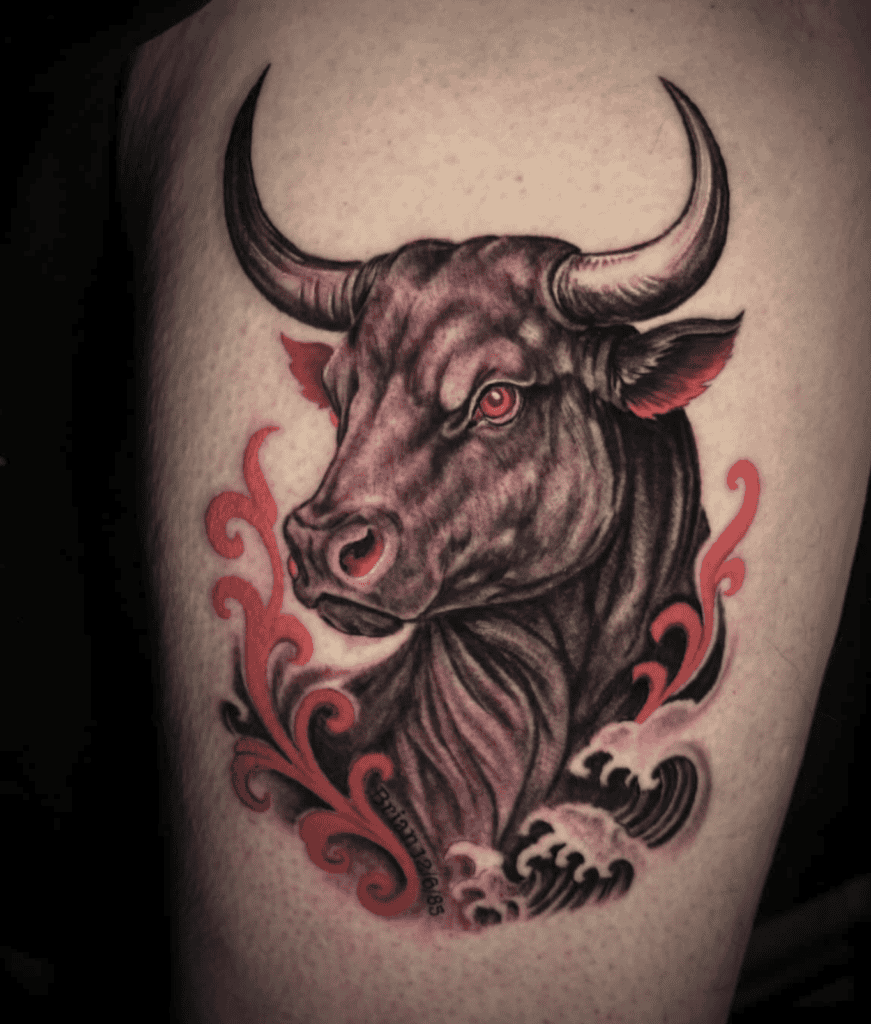
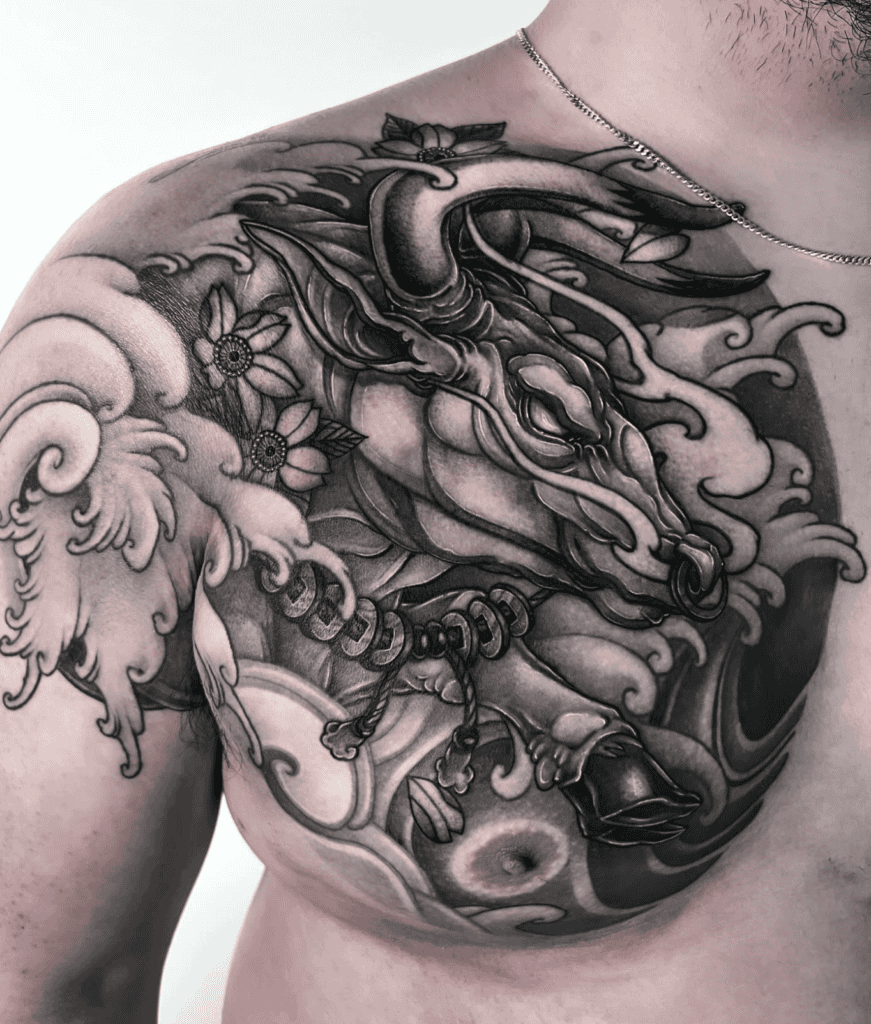
The Ox is the second animal in the Chinese Zodiac and one of the most respected symbols in East Asian culture. Representing diligence, perseverance, honesty, and strength, the Ox is admired not for flashy heroics but for its unwavering commitment to hard work and responsibility. In the Lunar Zodiac, the Ox embodies the idea that steady effort and determination can achieve great things over time.
According to one of the most famous zodiac legends, the Ox nearly became the first animal of the zodiac. The story tells that the Jade Emperor organised a race to determine the zodiac order. The Ox, being strong and dependable, crossed rivers and obstacles with ease. However, the clever Rat secretly rode on the Ox’s back and just before the finish line, the Rat jumped off and crossed first. Despite finishing second, the Ox accepted the result with humility.
Ferdinand Cow Tattoo
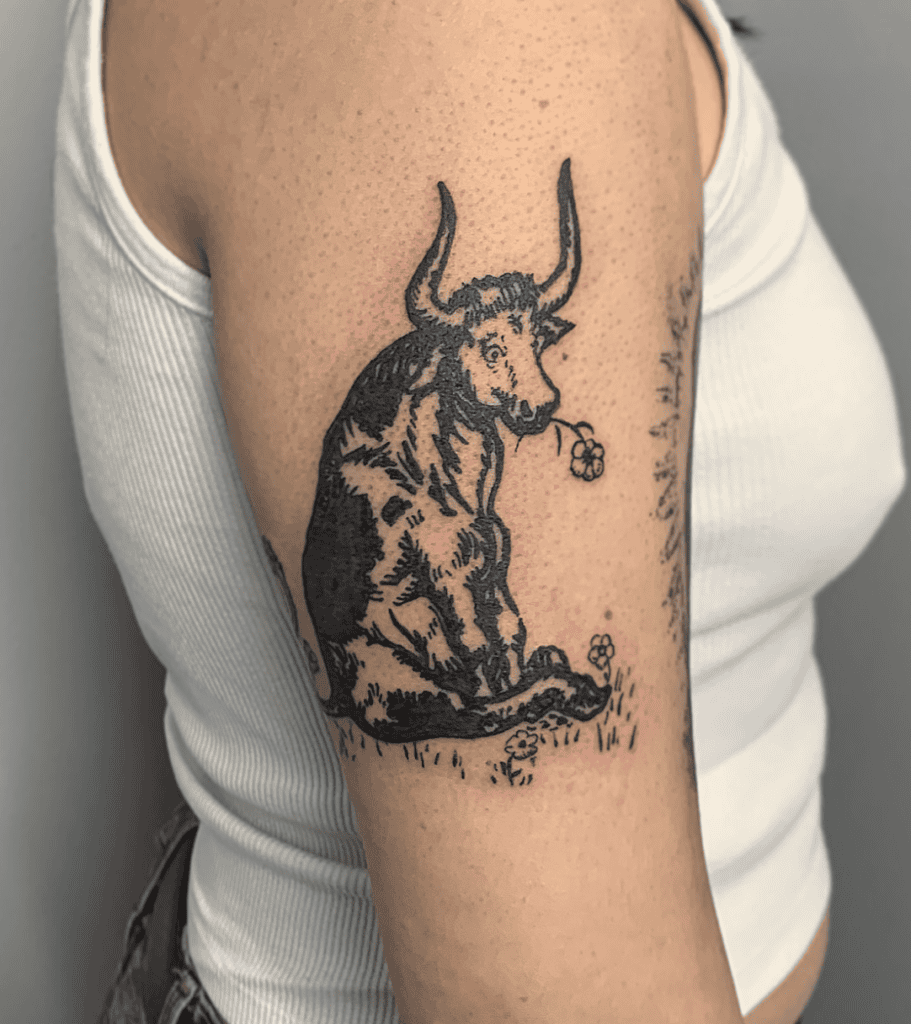
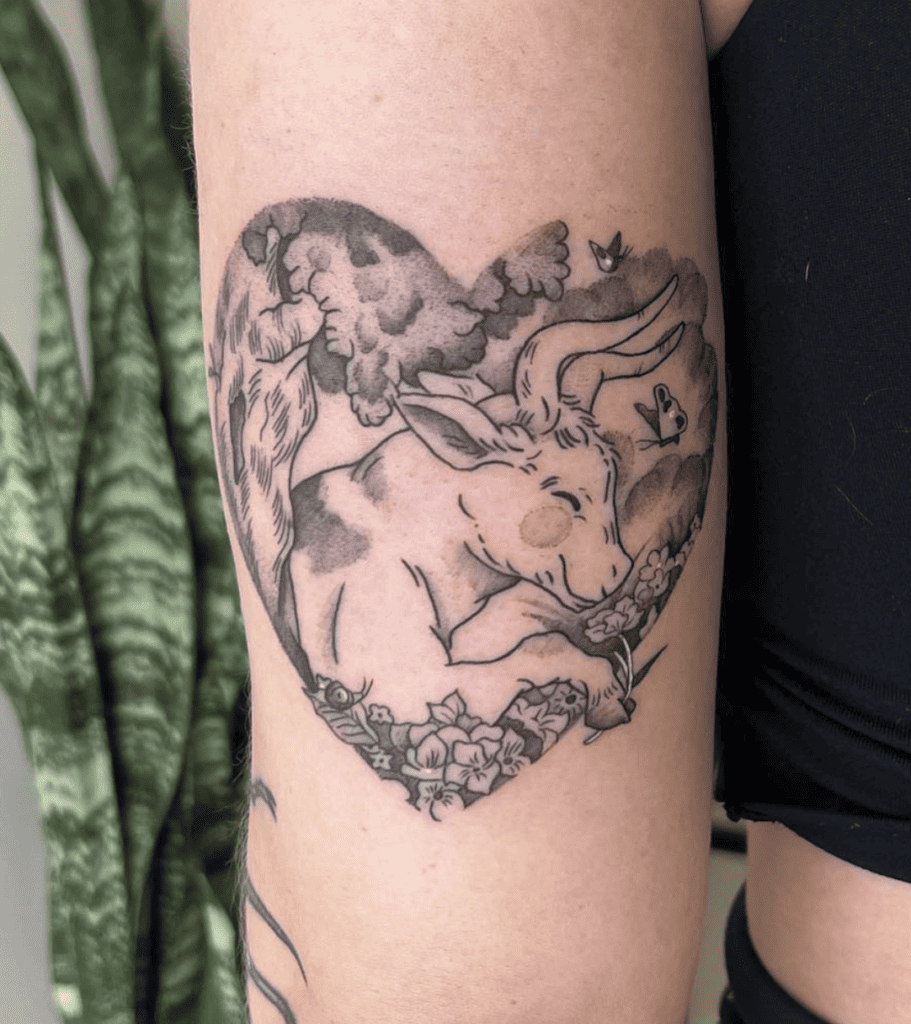
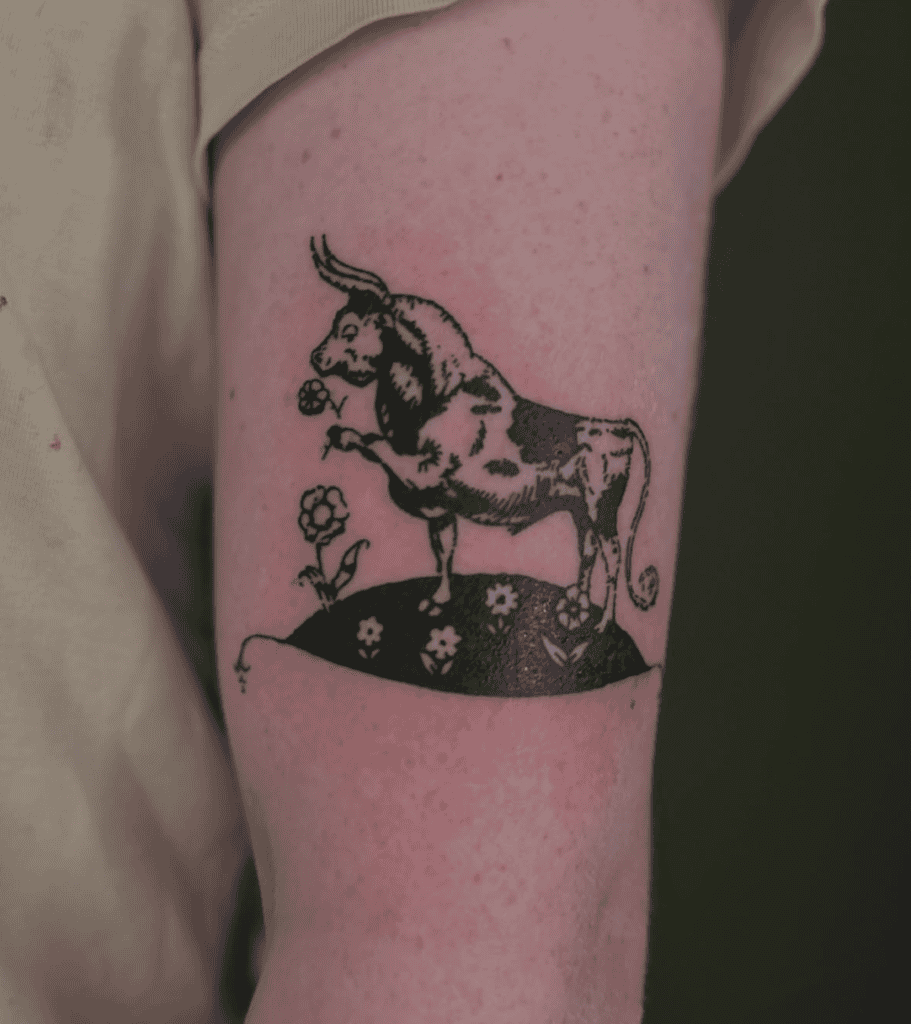
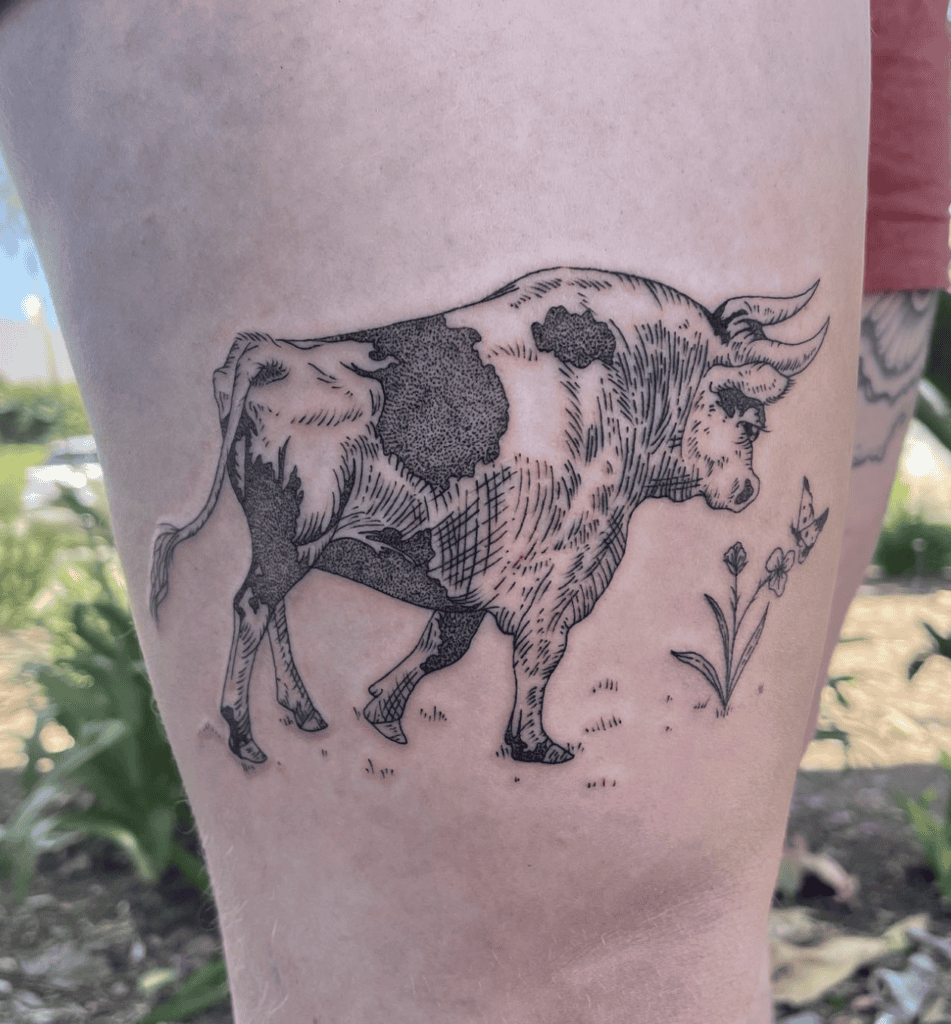
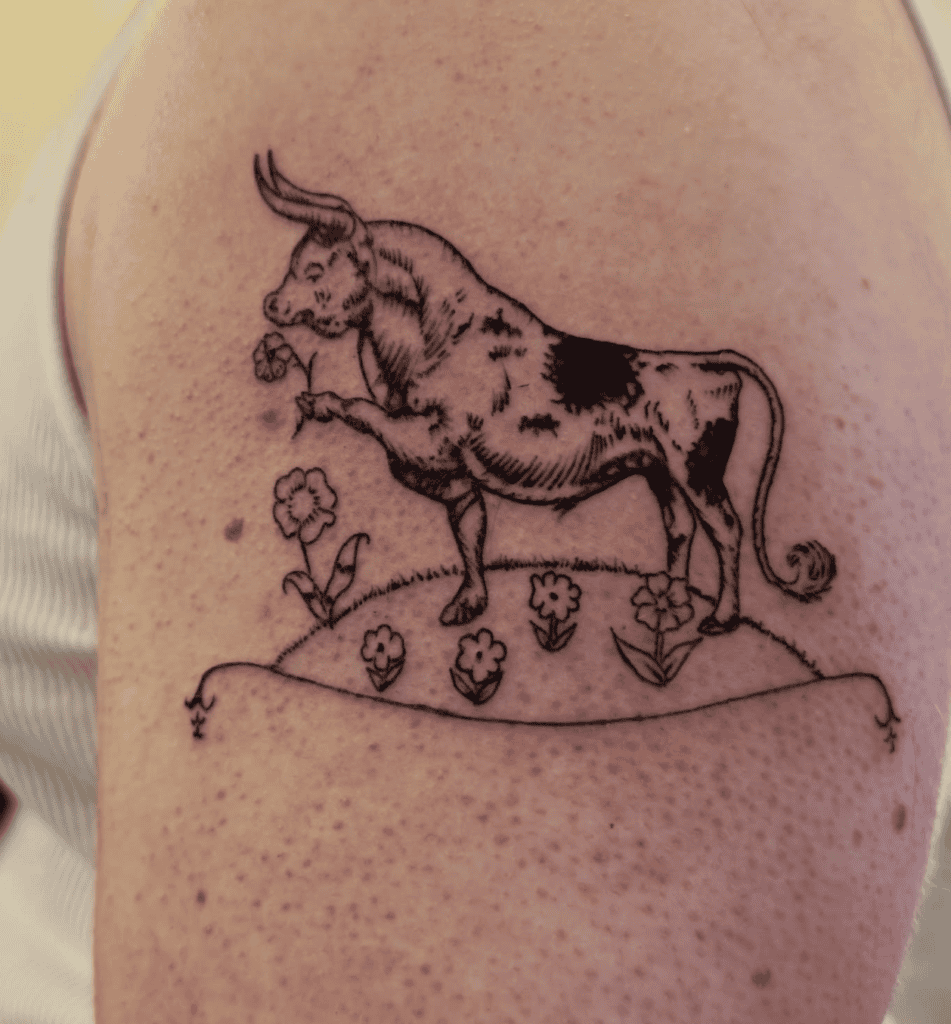
Ferdinand the Bull is the beloved main character of The Story of Ferdinand, one of the most famous children’s stories ever written, who isn’t powerful because of strength or violence, but because he chooses calmness, kindness, and peace.
Ferdinand is a young bull who lives in Spain in a peaceful countryside filled with flowers and cork trees. While the other bulls dream of fighting in bullfights, Ferdinand is different, preferring to sit quietly under his favourite tree, smell flowers, and avoid conflict completely.
Ferdinand’s life changes when he is accidentally chosen to go to Madrid for a bullfight. Even though he is taken from his peaceful home, Ferdinand does not become violent or angry. Instead, he sits quietly in the bullring, refusing to fight, and simply smelling flowers placed in the arena.
Clarabelle Cow Tattoo

Clarabelle Cow is one of the oldest and most enduring characters in the Disney universe. She is a friendly, anthropomorphic cow who has appeared in cartoons, comics, and modern shows for nearly a century. First introduced in the late 1920s, Clarabelle is part of the original “Mickey Mouse” cast and remains a recognisable figure in Disney’s classic lineup.
Sky Bison Cow Tattoo

The Sky Bison from Avatar: The Last Airbender are one of the most beloved fictional bovine-inspired creatures in animation, with the most famous of them being Appa, the loyal companion of Aang.
Sky Bison are massive, six-legged, flying animals that serve as the traditional mounts of the Air Nomads. They are deeply connected to Air Nomad culture, spirituality, and identity. Sky Bison don’t “fly” like birds, but use air currents and natural bending-like instincts to glide and soar.
Cow Tattoo
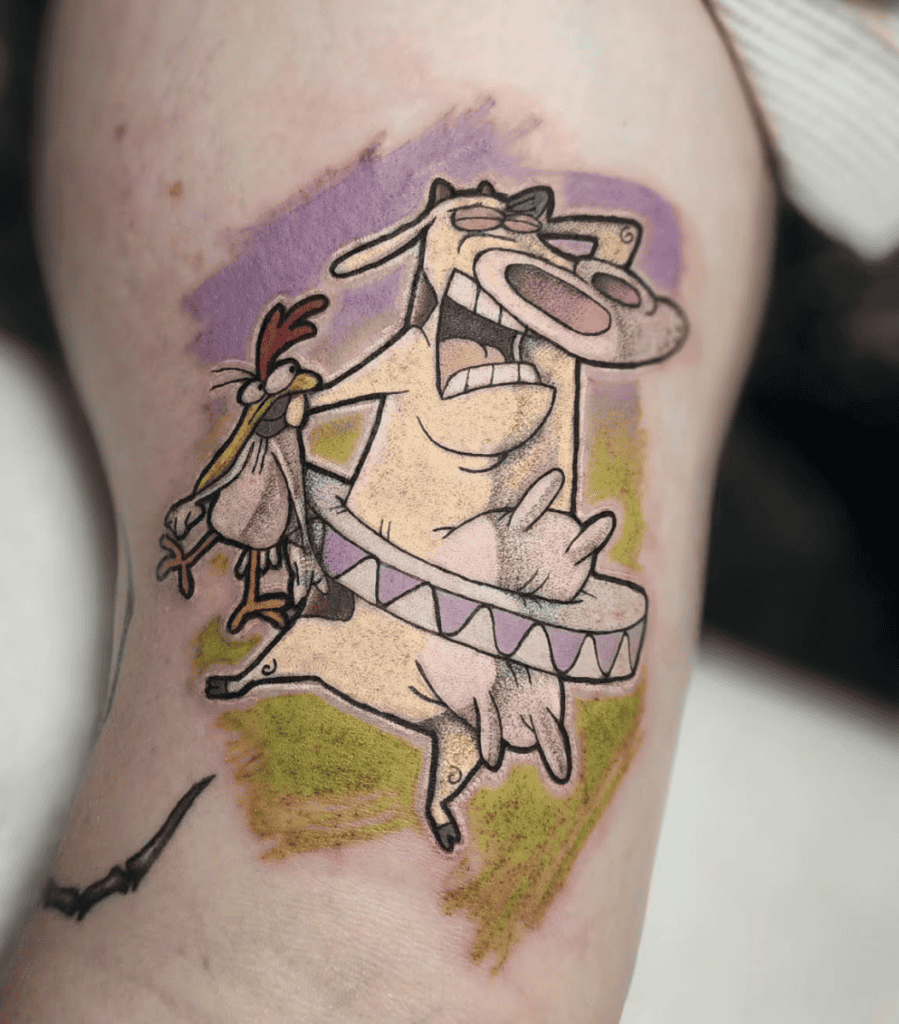
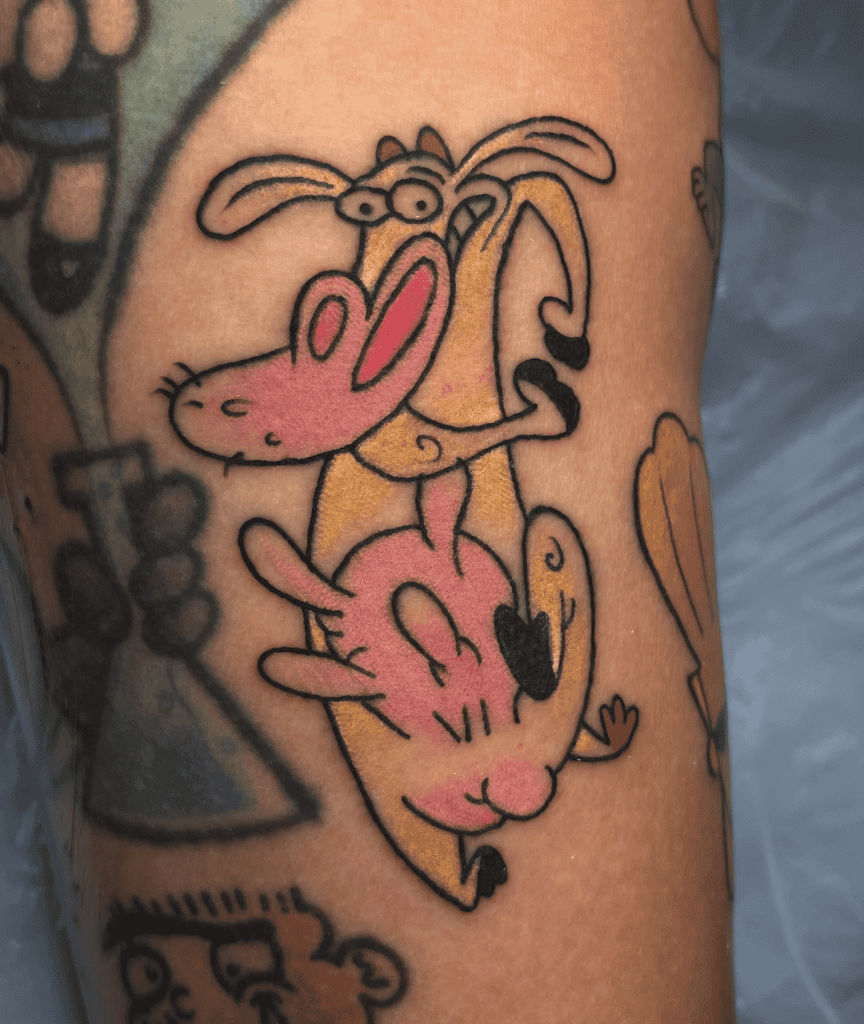
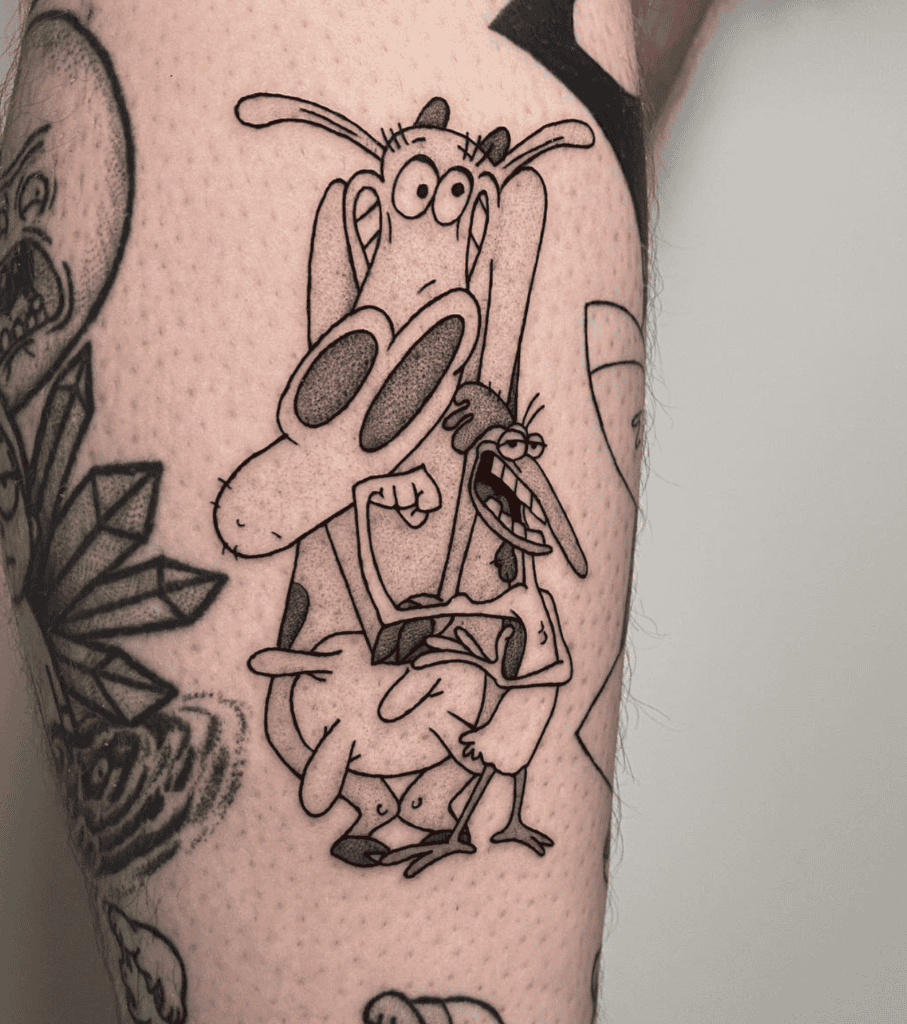
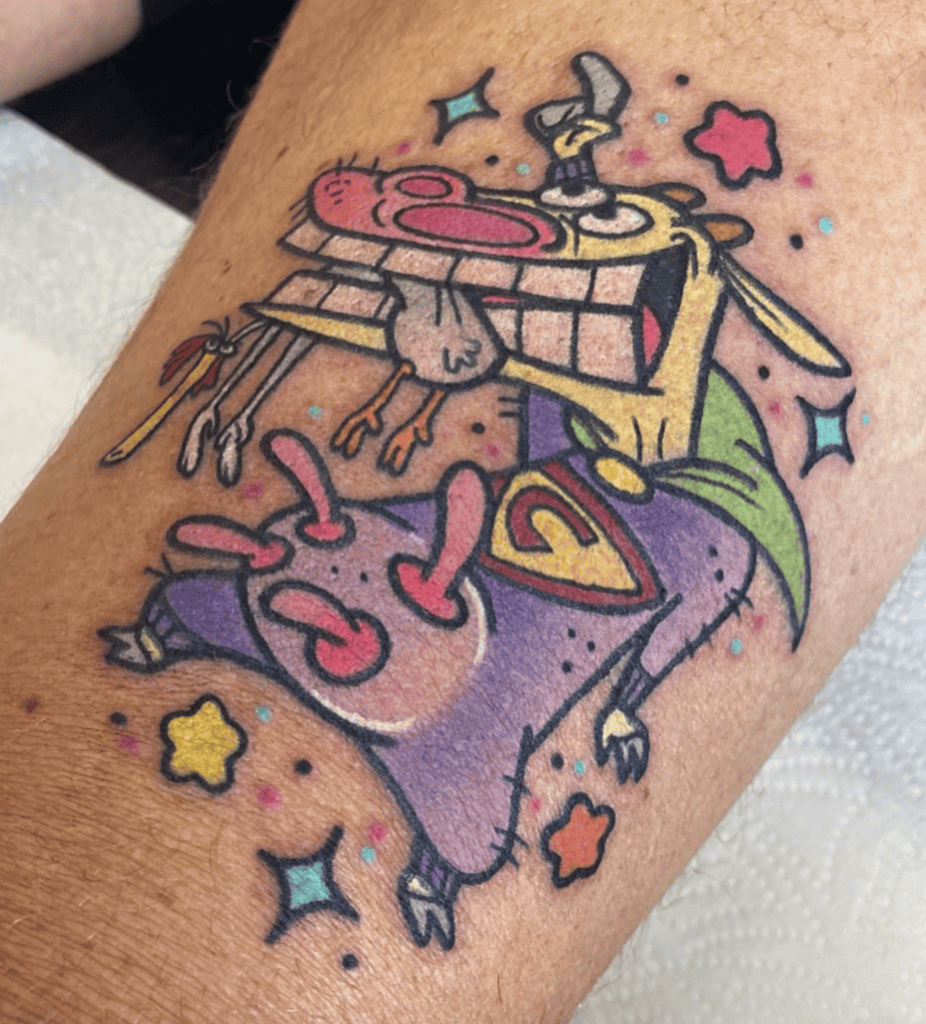
Cow is one of the two main characters in the surreal animated series Cow and Chicken, created by David Feiss for Cartoon Network. Cow is an unusual, energetic, and often chaotic bovine who contrasts sharply with her more grounded brother, Chicken. The show is known for its absurd humour, surreal situations, and exaggerated cartoon physics, with the sibling relationship being the emotional core beneath the chaos.
Moo Moo Bovine Tattoo

The Moo Moo Farm cows come from the classic racing track Mario Kart 64 Moo Moo Farm, one of the most memorable early tracks in the entire Mario Kart series. These cows are not just background decoration, but active hazards that racers need to avoid colliding with. In Mario Kart World, the Moo Moo Cows rose to fame by being included as a playable character, sparking memes upon the game’s announcement.
Pokémon Cow Tattoos
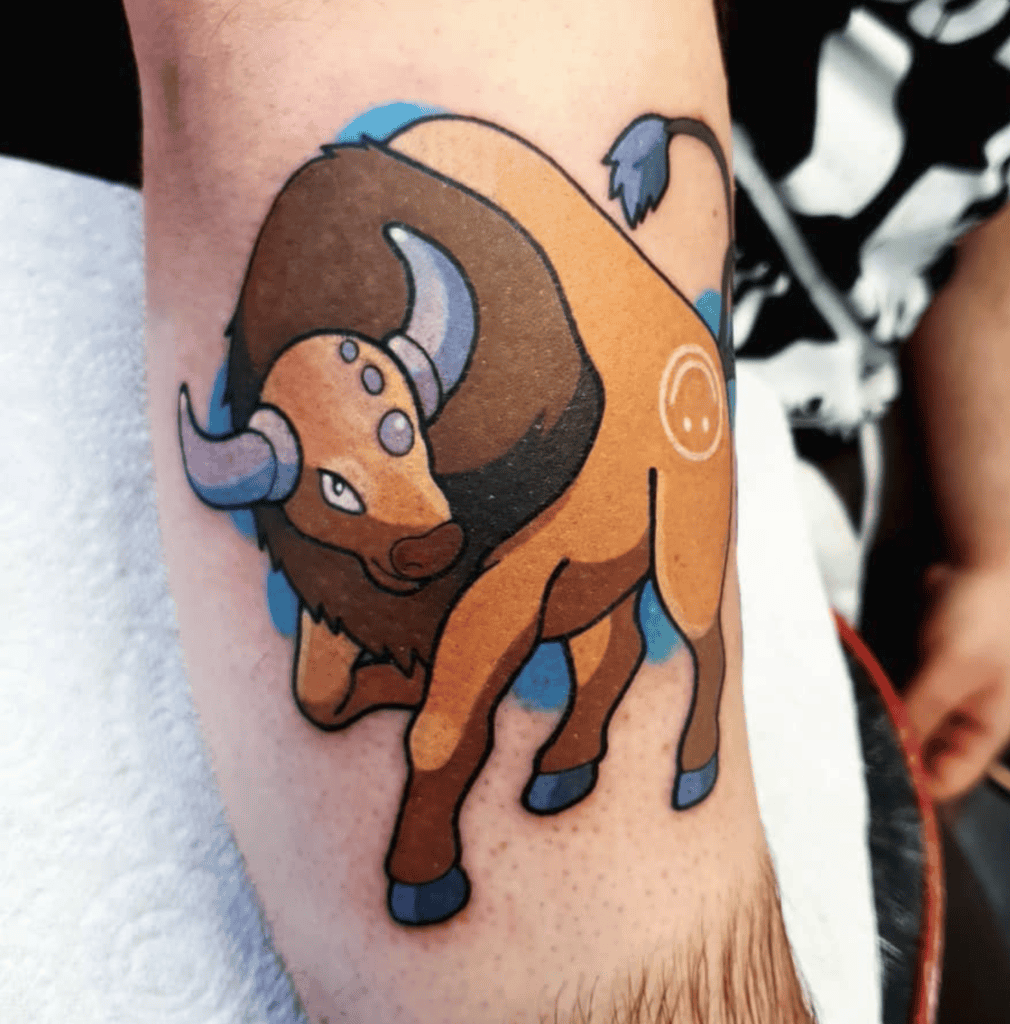
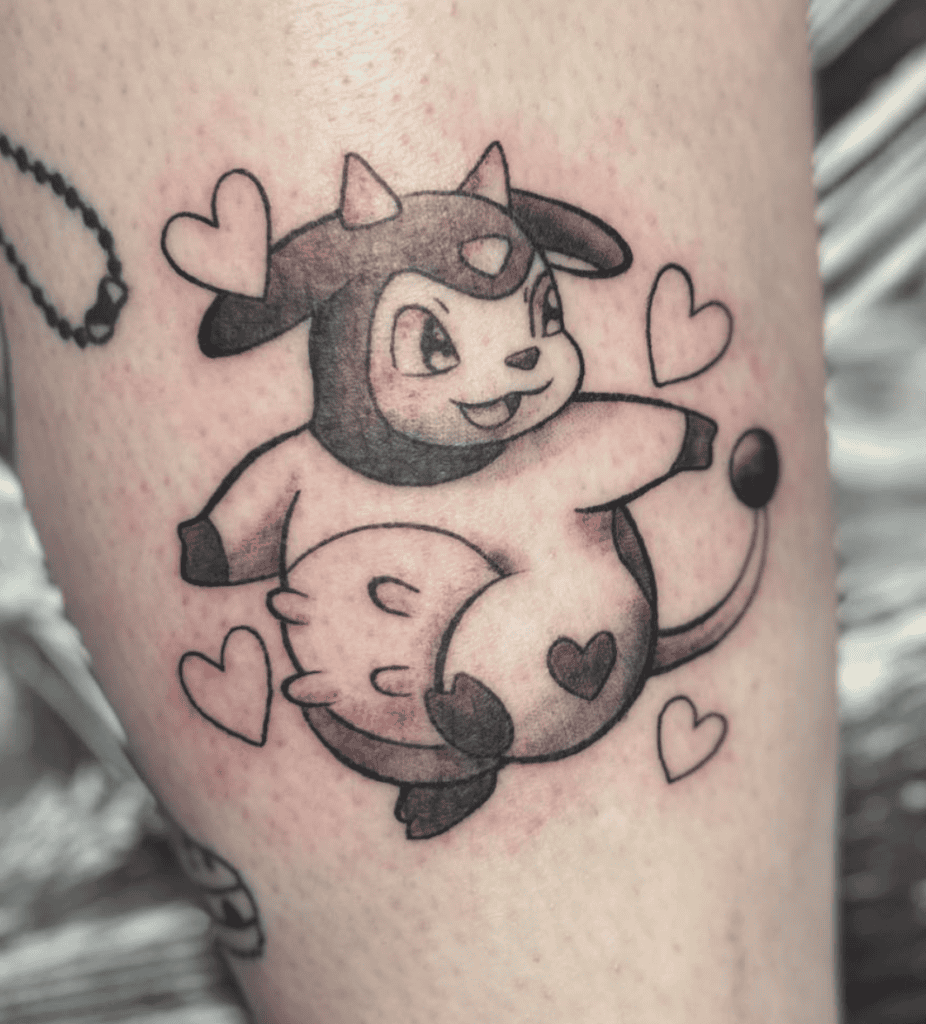
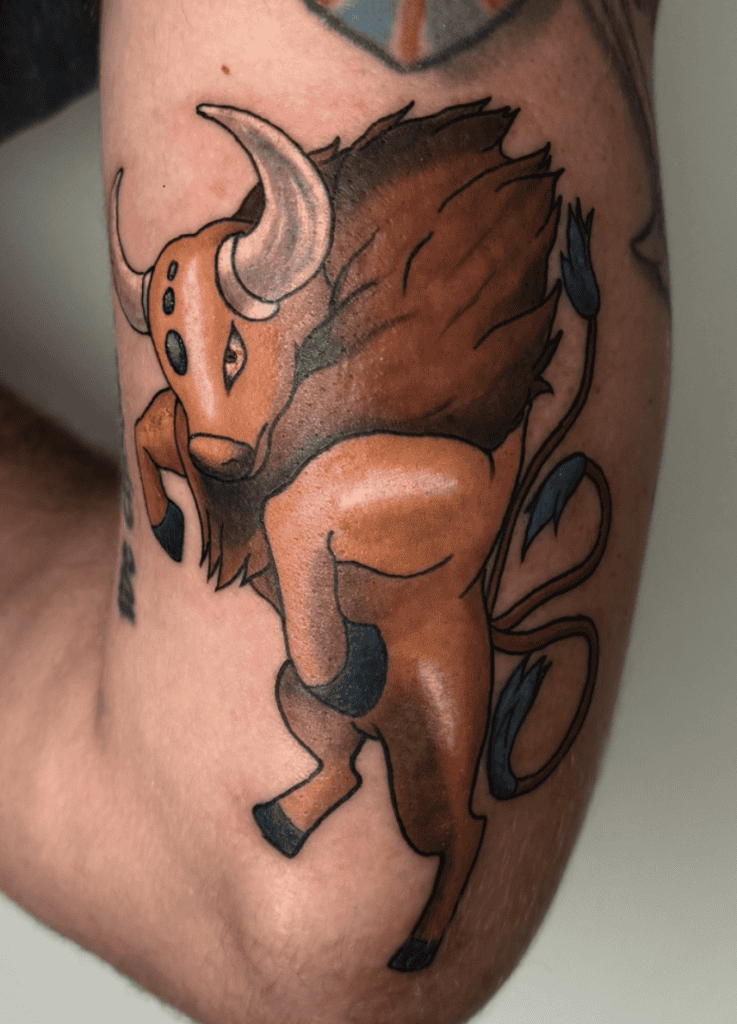
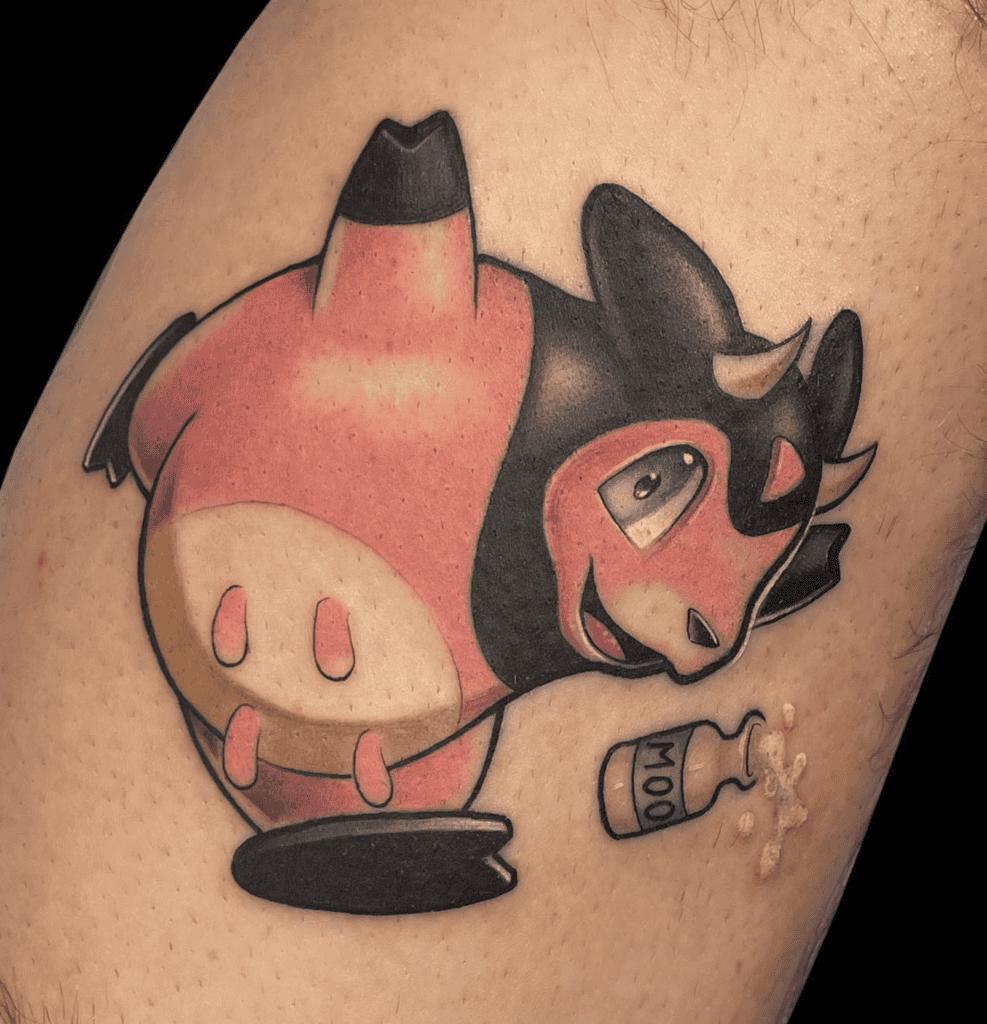
Pokémon has several iconic bovine-inspired creatures, with the most notable being Tauros, Miltank, and Bouffalant. Tauros is one of the most iconic bull-like Pokémon, known for its powerful, aggressive nature and herd-based behaviour, with Ash Ketchum catching 30 Tauros in a banned episode of the animated series, leading to confusion amongst young fans when they appeared in Professor Oak’s farm.
Miltank is the most recognisable dairy-themed Pokémon, with many players remembering Miltank from the Johto games, especially Whitney’s infamous Miltank battle, known for its difficulty due to Rollout and self-healing.
Lastly, Bouffalant is inspired by the American bison, and is the American equivalent to Tauros, following the theme in from Unova of most of the Pokémon being American versions of their original Japanese counterparts.
Baine Bloodhoof Cow Tattoo

Baine Bloodhoof is the chieftain of the Tauren and one of the major leaders in the World of Warcraft universe. He is a massive, bull-like humanoid warrior known for his wisdom, honour, and commitment to peace, even in a world constantly driven by war.
As the son of the legendary Cairne Bloodhoof, Baine carries a powerful legacy, but he is known for forging his own path as a more diplomatic and thoughtful leader. Baine leads the Tauren from the city of Thunder Bluff, and his responsibilities include guiding his people spiritually and politically, protecting Tauren lands, representing the Tauren within the Horde, and making decisions in global conflicts.
The Laughing Cow Tattoo

The Laughing Cow (French: La Vache qui rit) is one of the most recognisable bovine mascots in the world, a smiling red cow featured on the packaging of a popular processed cheese spread made by the French company Bel Group.
The French name “La Vache qui rit” translates directly to “The Cow Who Laughs.” The brand was created in 1921, and the idea behind the name was to make cheese feel fun instead of formal, friendly instead of industrial, and memorable for families and children.
Conclusion
Thanks for grazing through the udderly wonderful world of the Bovine Tattoo Ideas with us. We hope you’ve found the moo-mentum you need to go on your own Bovine Tattoo adventure. But before you charge headfirst out of here, why not instead leap your way into these Tiger Tattoo Ideas, fly your way through these Dragon Tattoo Designs, or swing your way into these Monkey Tattoos.
- Bear Tattoo Ideas - October 22, 2026
- Lion Tattoo Ideas - October 19, 2026
- Persona Tattoo Ideas - October 15, 2026