
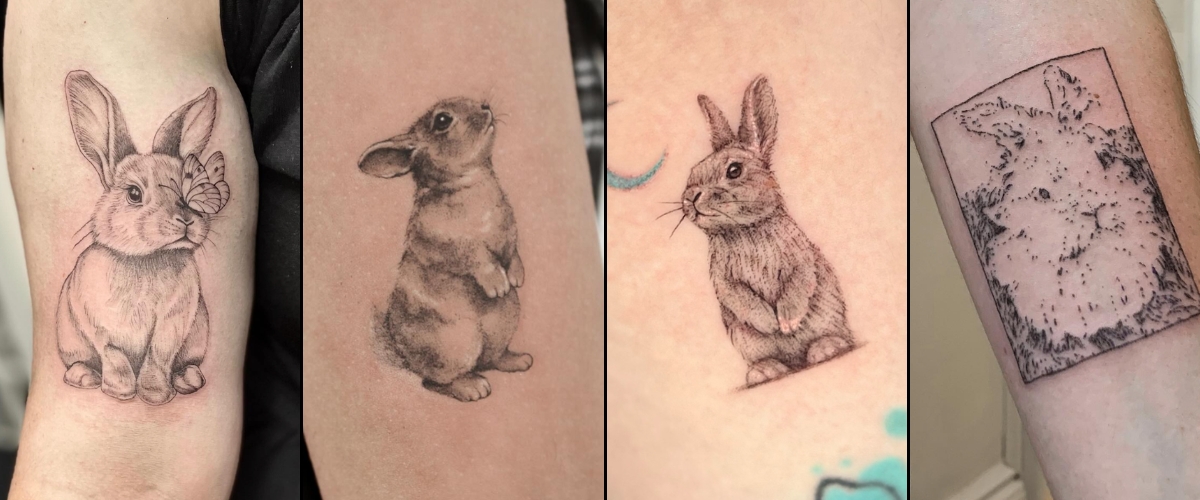
Rabbit Tattoo Ideas

Are you feeling unhop-timistic on your search for the perfect Tattoo Clues? Worry not, we’ve got some of the most ear-resistible Rabbit Tattoos that every bunny is sure to love!
What Does a Rabbit Tattoo Mean
A rabbit tattoo can have many meanings, depending on the design and culture behind it. However, in general, rabbits are associated with fertility and new life due to being famous symbols of fertility, abundance, and reproduction.
Rabbit Tattoos also symbolise luck and good fortune, cleverness and intelligence, gentleness and innocence, and speed and agility. Rabbits can symbolise new beginnings, personal growth, and moving forward in life, and in many Asian traditions, the Moon Rabbit represents the Moon, immortality, mystery, and spiritual symbolism. Rabbits are also sometimes connected with courtship, passion, and affection.
A hare tattoo has some meanings in common with a rabbit tattoo, but hares often carry a wilder, more independent, mystical, and energetic symbolism.
As wild animals known for roaming open landscapes, they symbolise freedom and an independent spirit. Their incredible speed and quick movements can represent fast thinking, adaptability, and escaping life’s challenges and in folklore, hares are often clever tricksters who survive through intelligence rather than strength. Despite being prey animals, hares can symbolise bravery, alertness, and the instinct to keep moving forward.
Best Rabbit Tattoo Ideas
Now that we know a little about Rabbit Tattoo meanings, let’s take a look at some of the best Rabbit Tattoos the internet has to offer.
Note: Some tattoos are not exact representatives of each Rabbit species
Eastern Cottontail Rabbit Tattoo
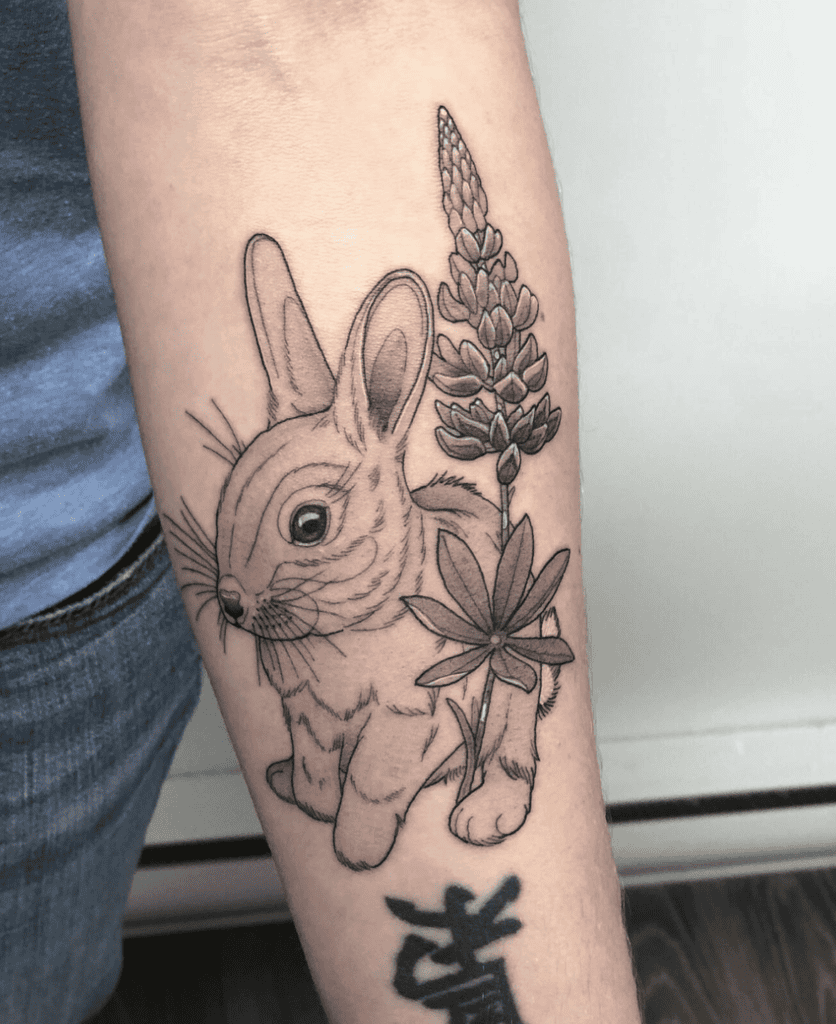
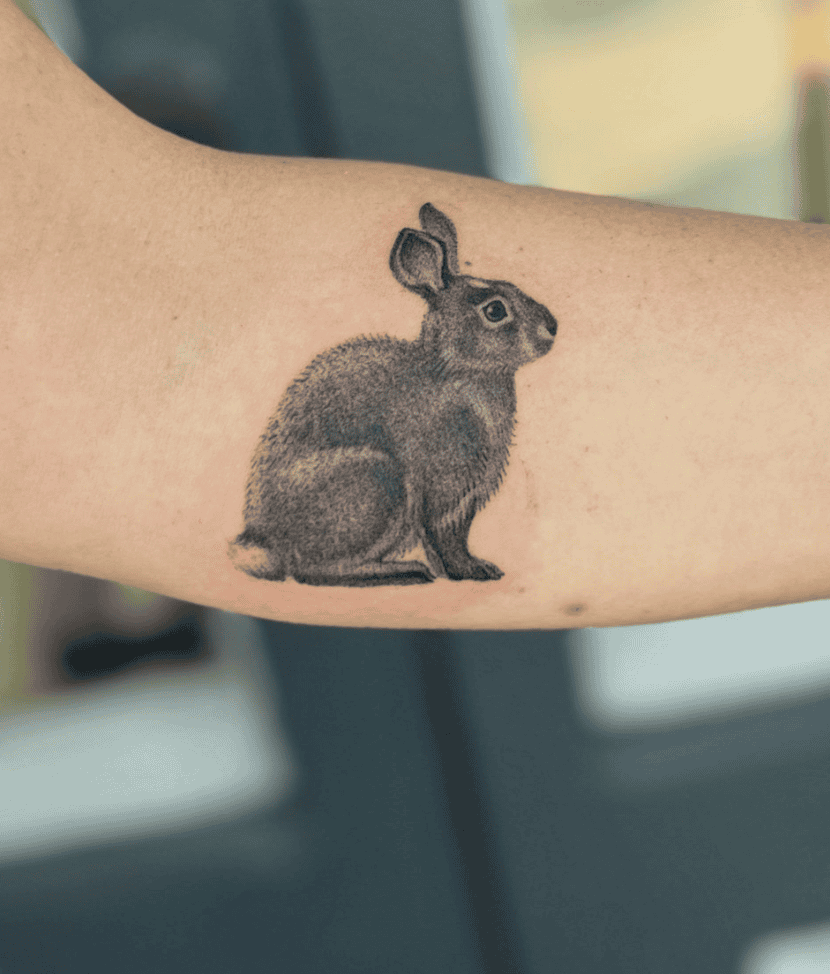
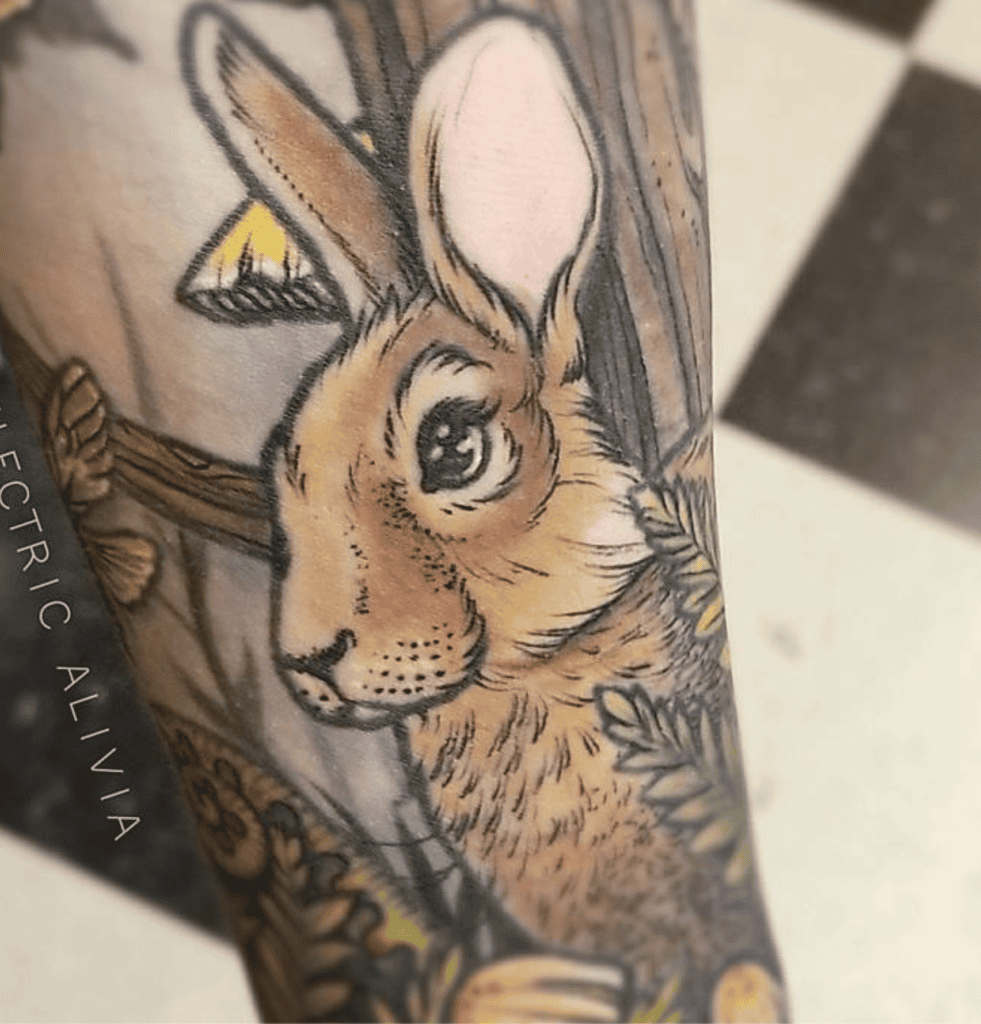
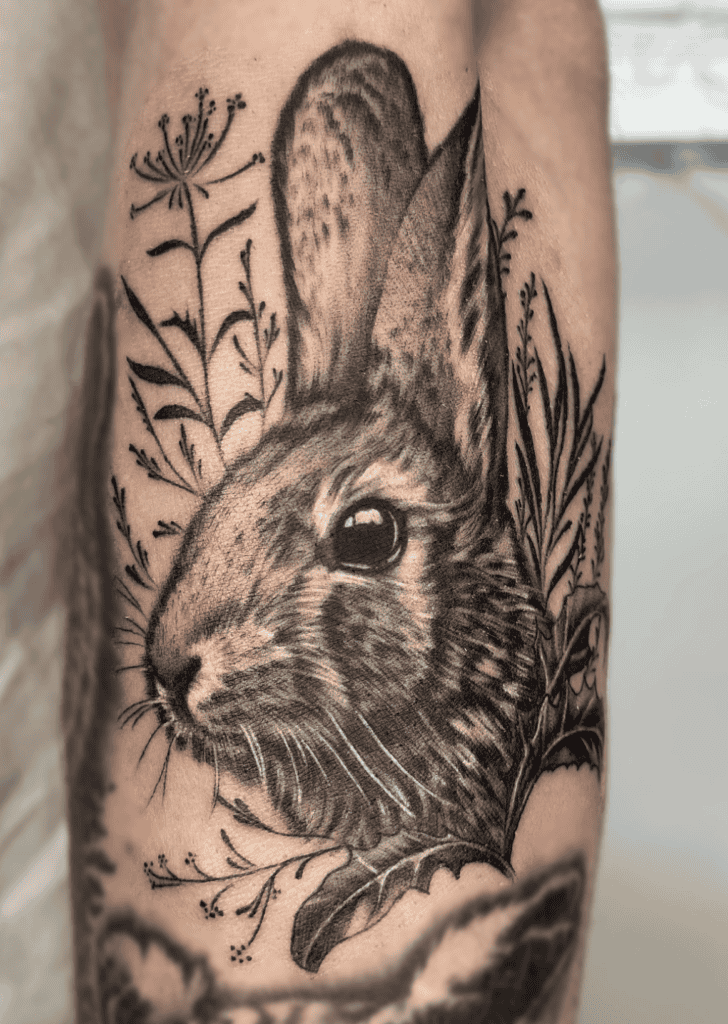
The Eastern Cottontail is a common wild rabbit found throughout much of the eastern and central United States, southern Canada, and parts of Mexico and Central America. It’s most recognisable thanks to its fluffy white tail, which gives cottontails their name.
Eastern Cottontails are primarily crepuscular, meaning they’re most active around dawn and dusk. They’re generally solitary outside of breeding periods and spend much of their time eating, grooming, and watching for predators. When threatened, they can suddenly sprint away at impressive speeds, often zigzagging to make themselves harder for predators to catch.
European Rabbit Tattoo
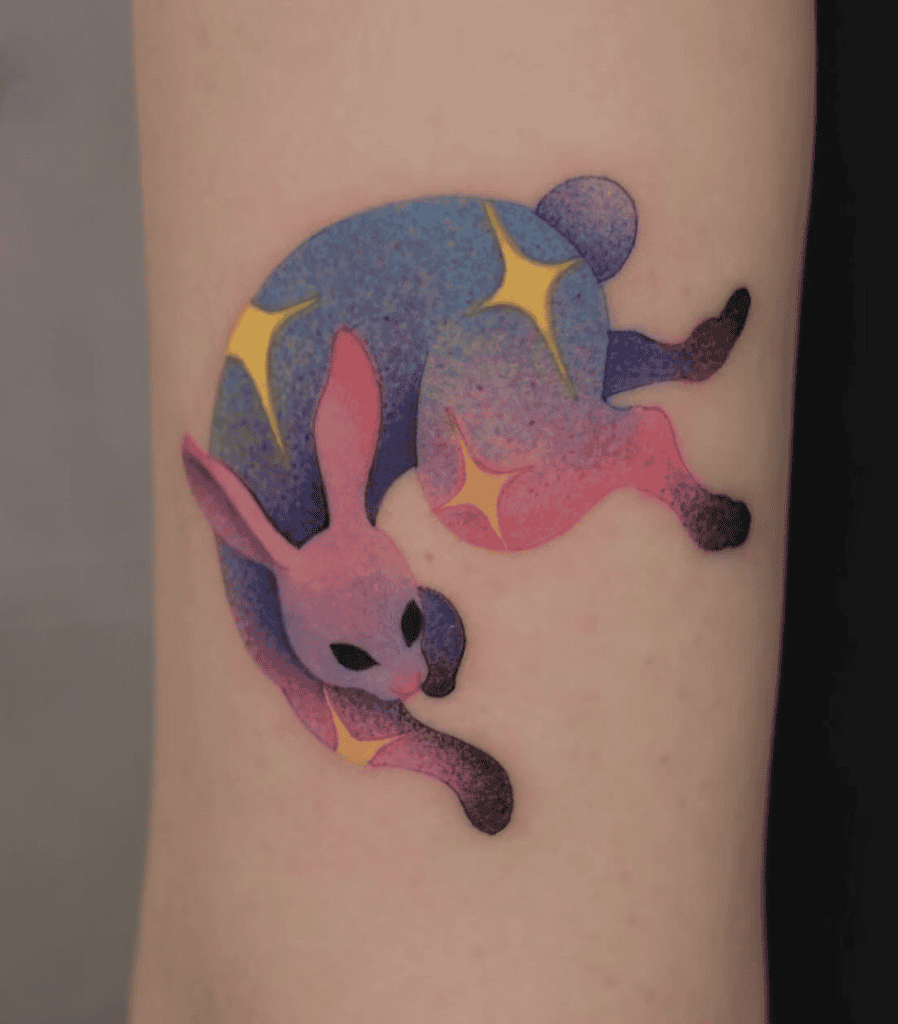
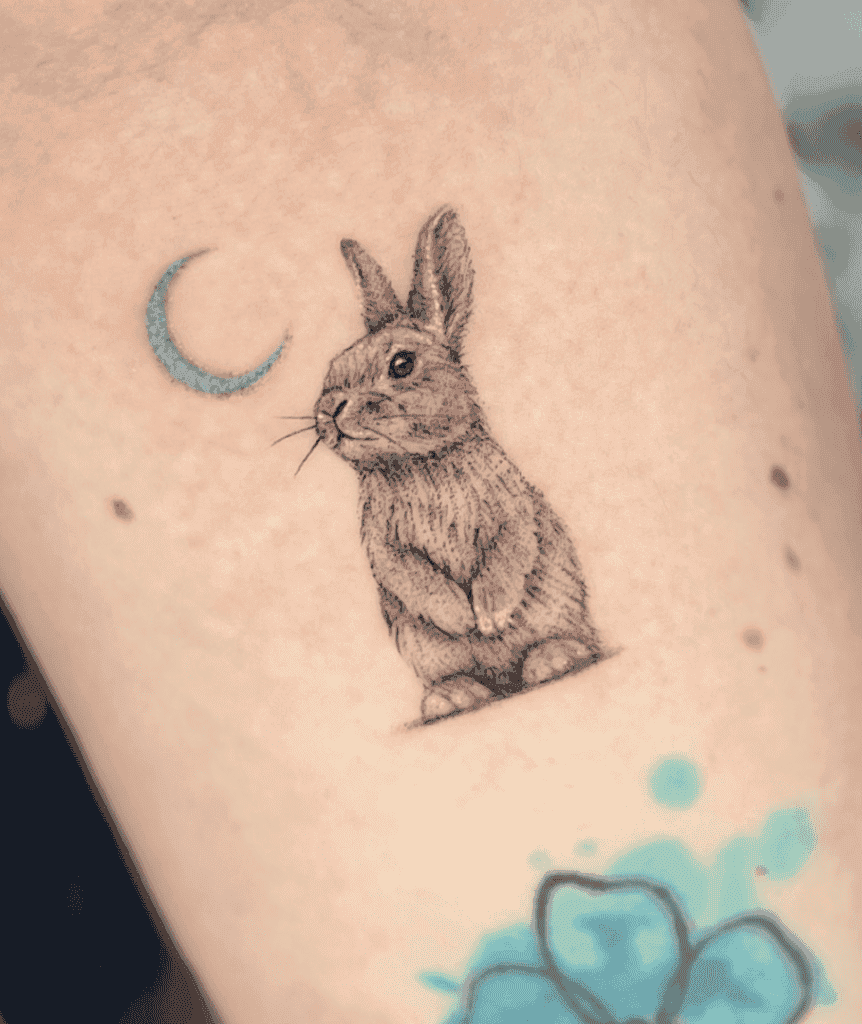
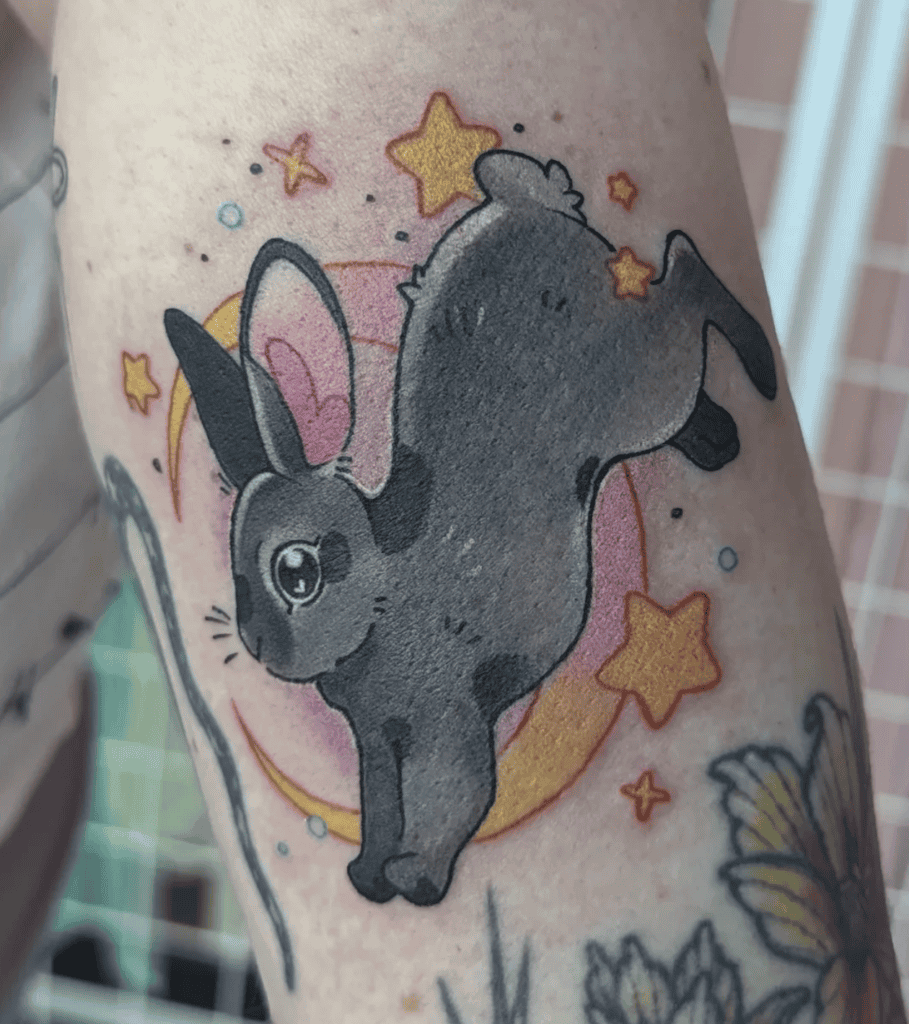
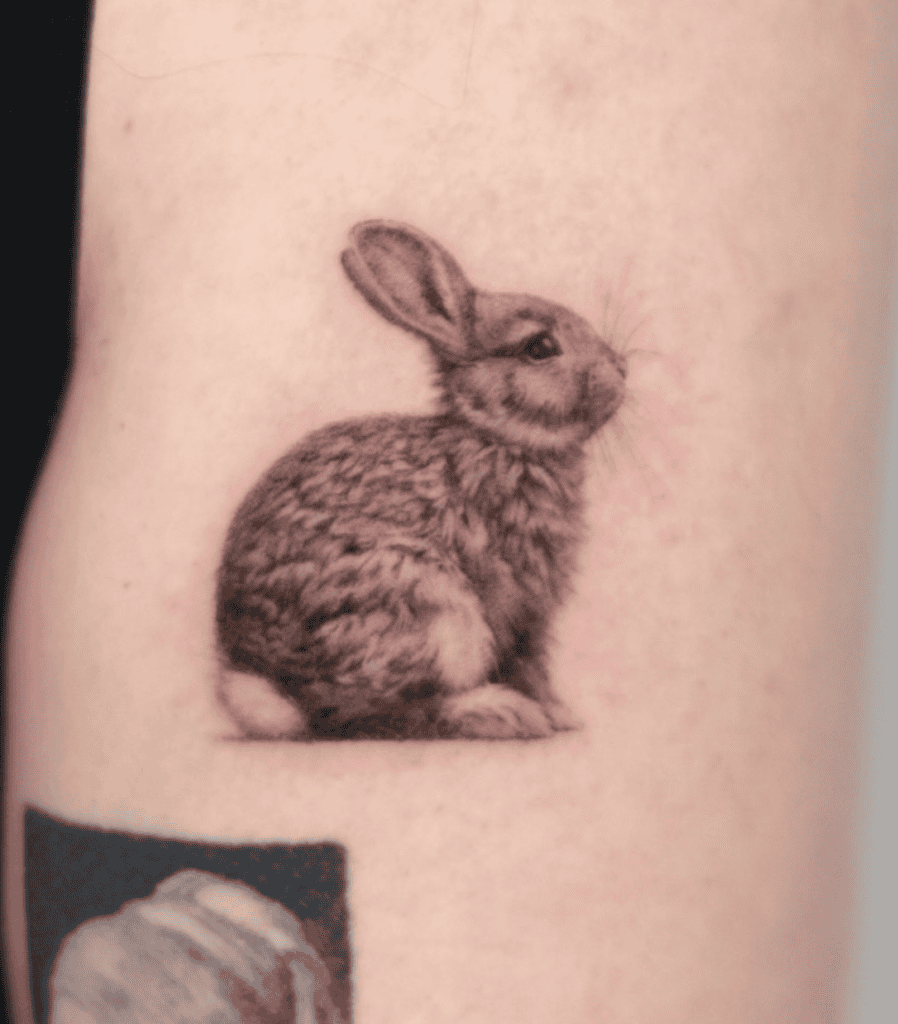
The European Rabbit is one of the world’s most important rabbit species because it is the ancestor of virtually all modern domestic rabbit breeds. Originally native to parts of southwestern Europe and northwestern Africa, it has since been introduced to many other parts of the world.
European Rabbits are highly social animals. They often live in groups and create extensive underground tunnel systems called warrens. These burrows provide shelter and protection from predators and harsh weather.
Desert Cottontail Rabbit Tattoo
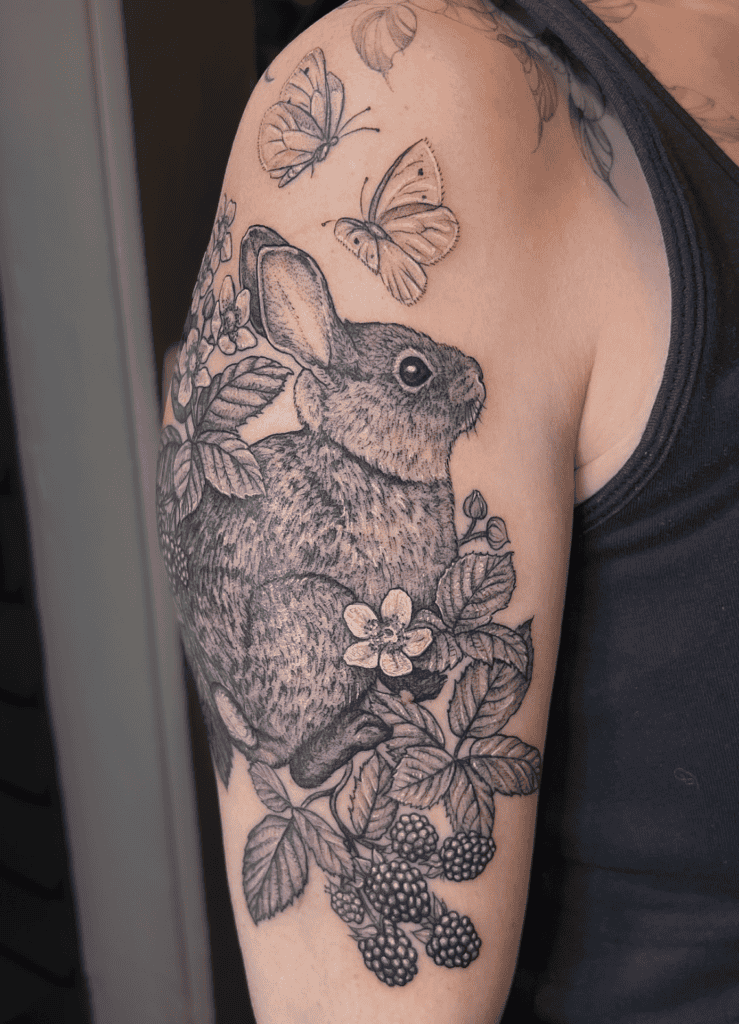
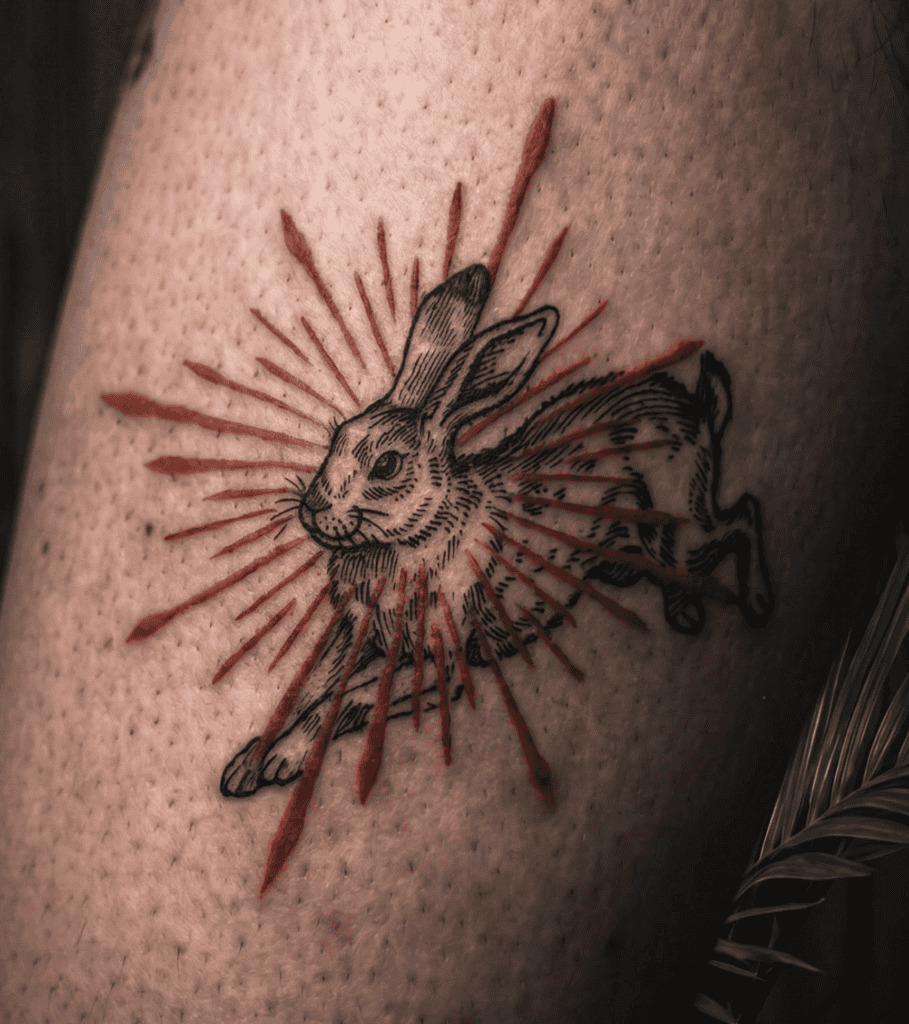
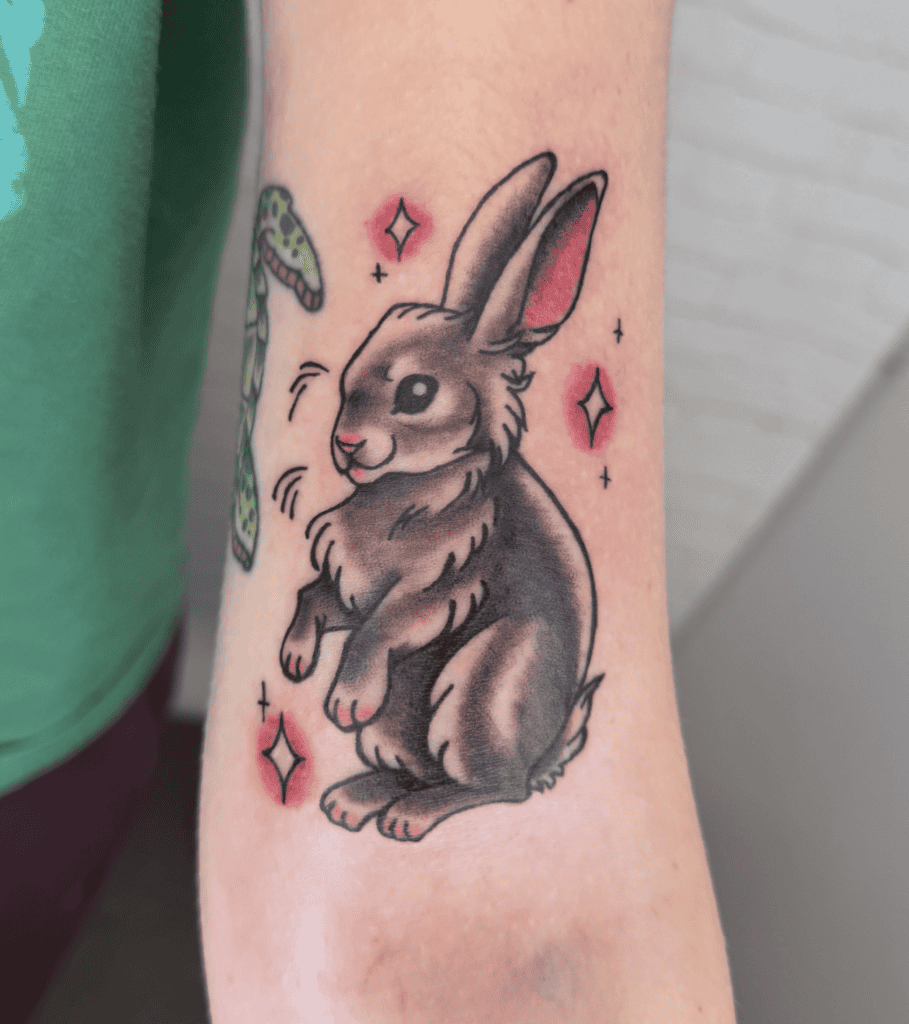
The Desert Cottontail is a small wild rabbit found throughout much of the southwestern United States and northern Mexico. Despite its name, it isn’t restricted to true deserts, living also in grasslands, scrubland, rocky areas, and open woodland.
Desert Cottontails are mainly crepuscular, being most active around dawn and dusk. During the hottest parts of the day, they often remain hidden beneath vegetation. They’re generally solitary, although several individuals may occupy the same general area. When startled, they can suddenly bolt through the vegetation, using their speed and agility to escape predators.
Mountain Cottontail Rabbit Tattoo
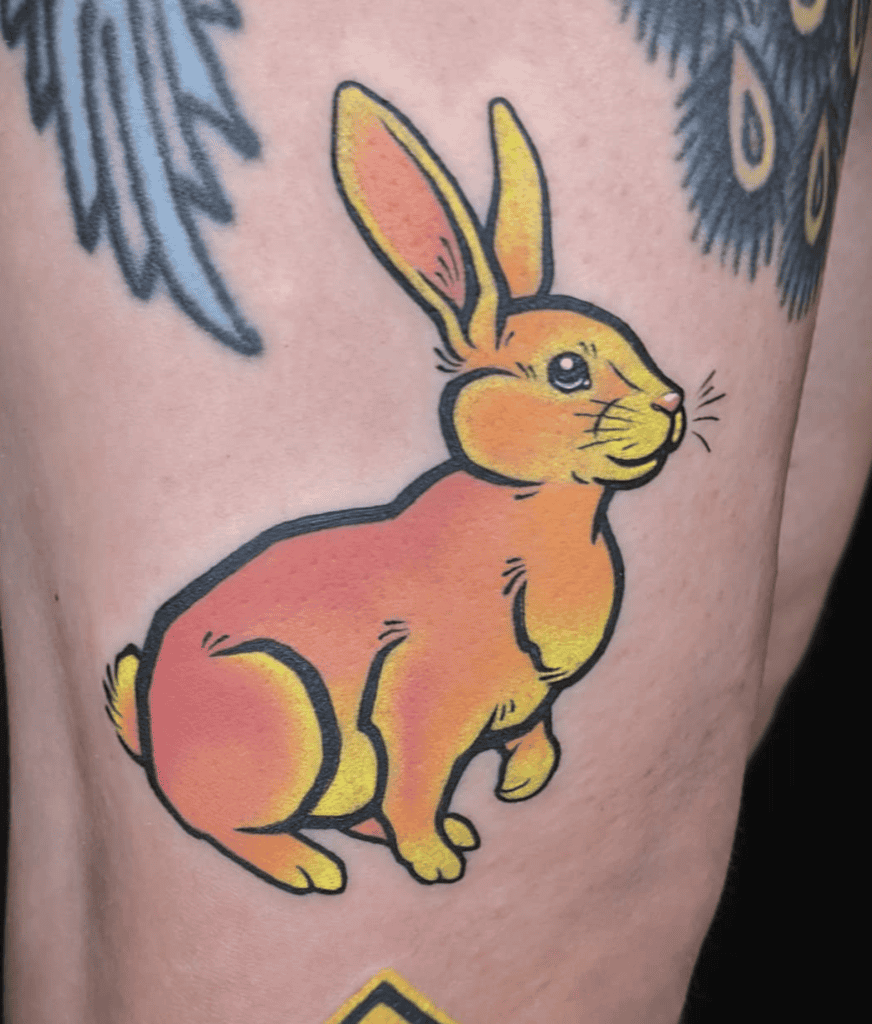
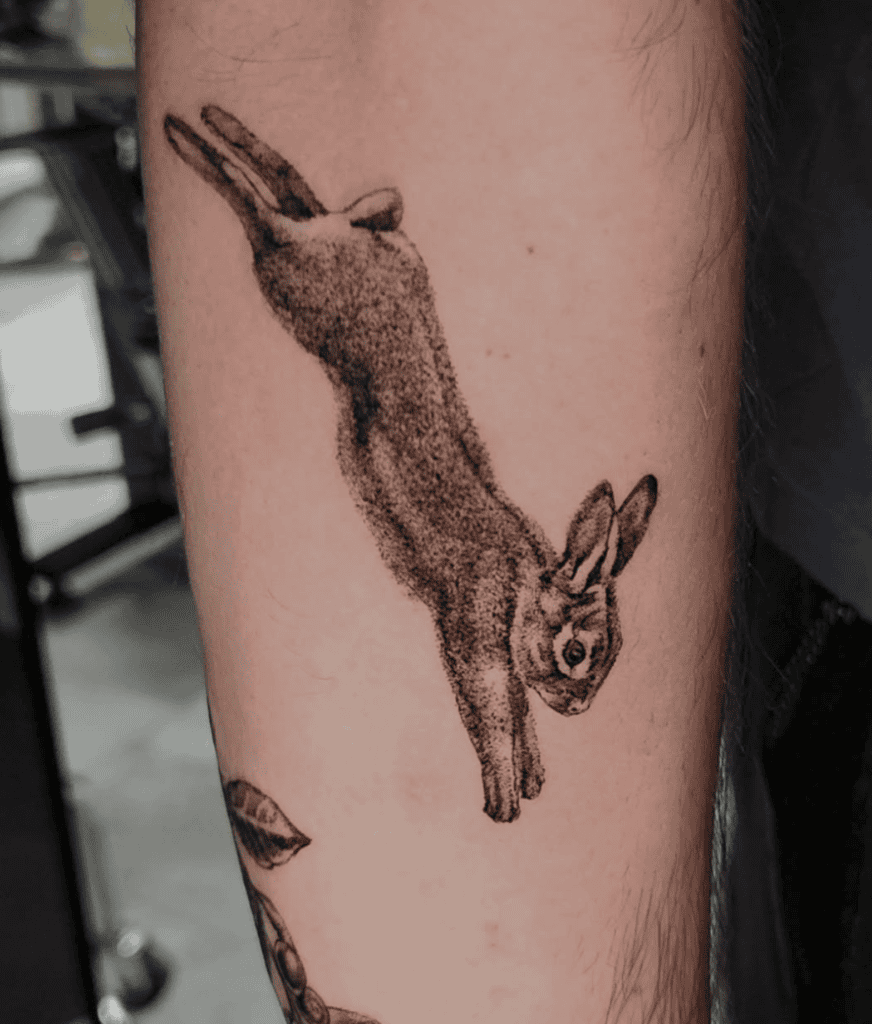
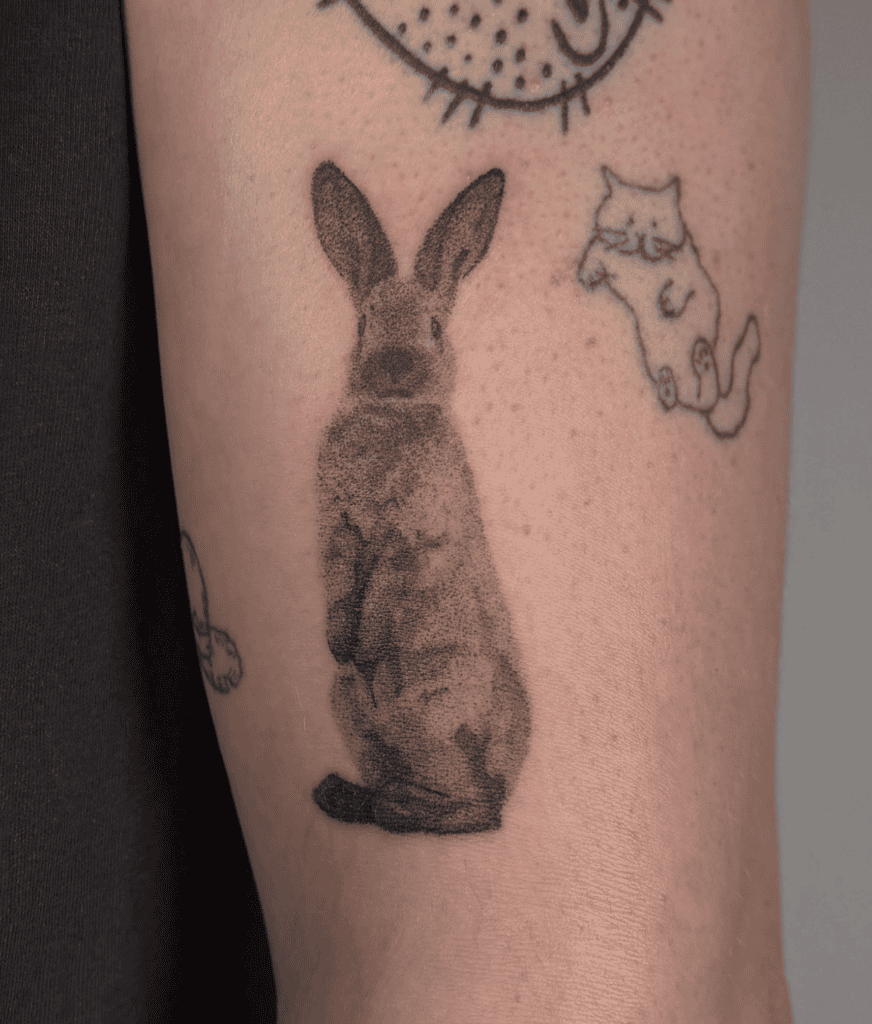
The Mountain Cottontail is a North American wild rabbit found primarily in the western United States and parts of southwestern Canada. It’s especially associated with mountainous and high-elevation environments, although it also occurs in valleys and open woodland.
Mountain Cottontails are primarily crepuscular, being most active around dawn and dusk. They’re generally solitary and spend much of their time hidden among vegetation. When threatened, they rely on their excellent hearing and camouflage before suddenly sprinting away in a zigzagging escape.
Marsh Rabbit Rabbit Tattoo
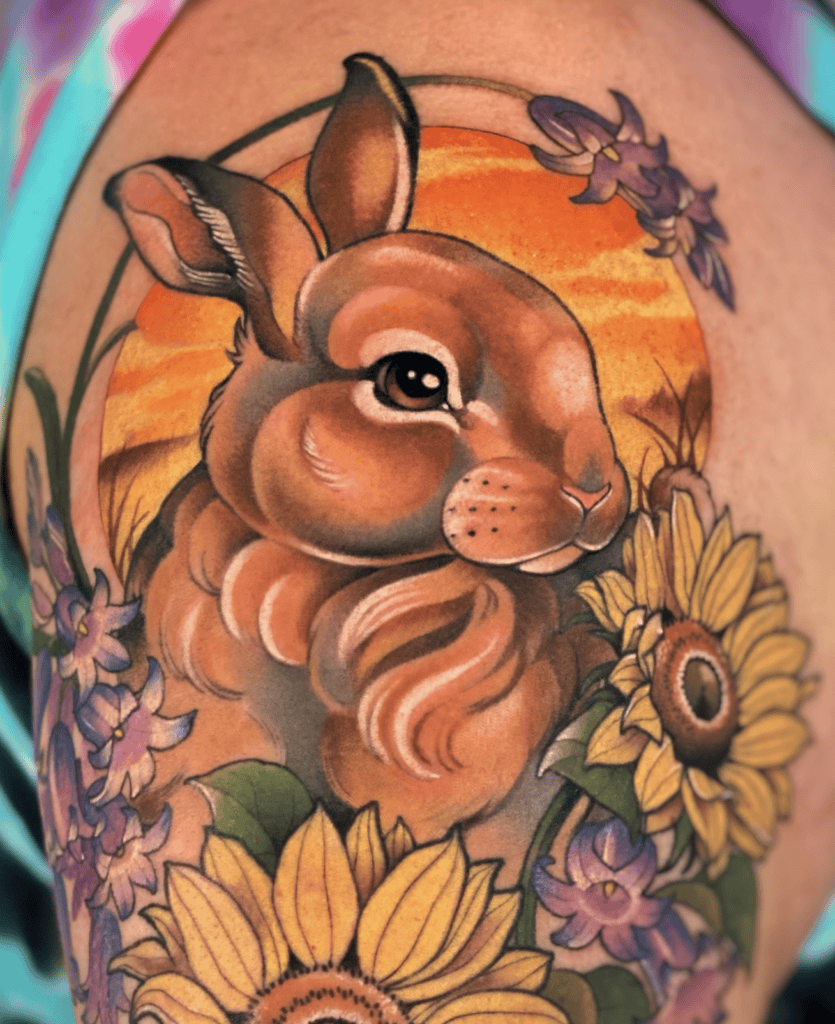
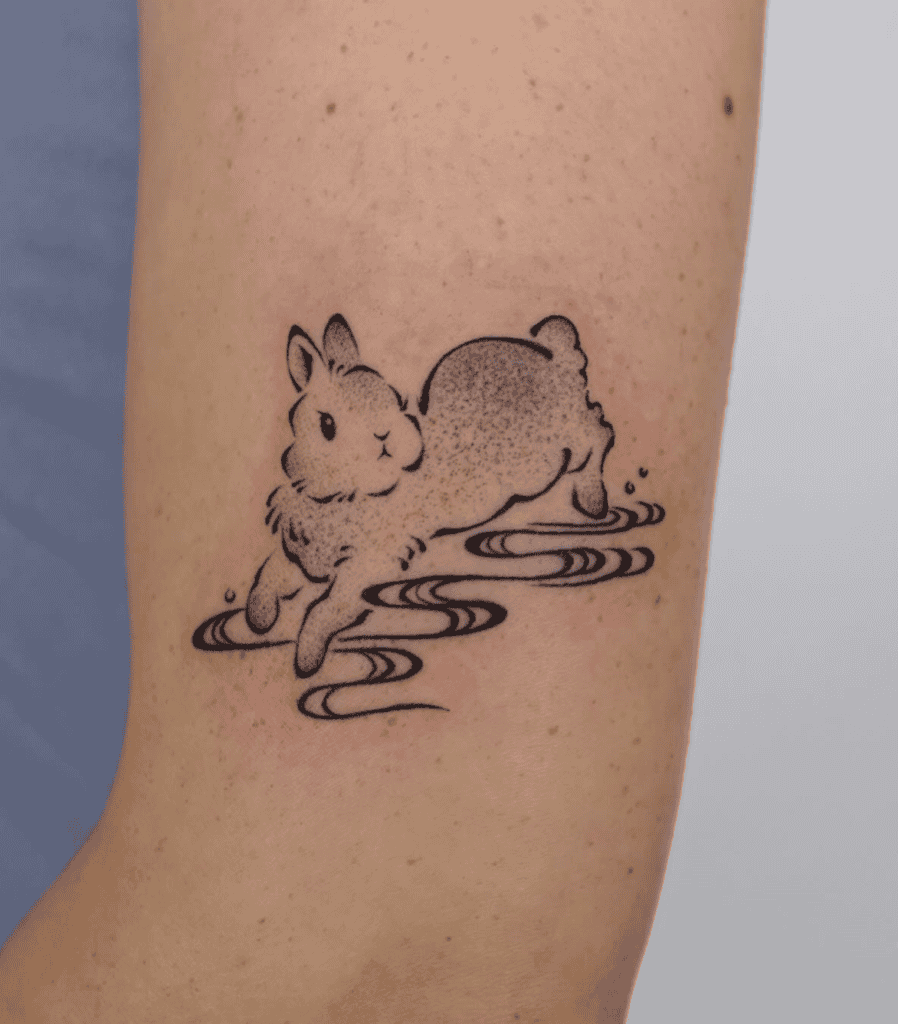
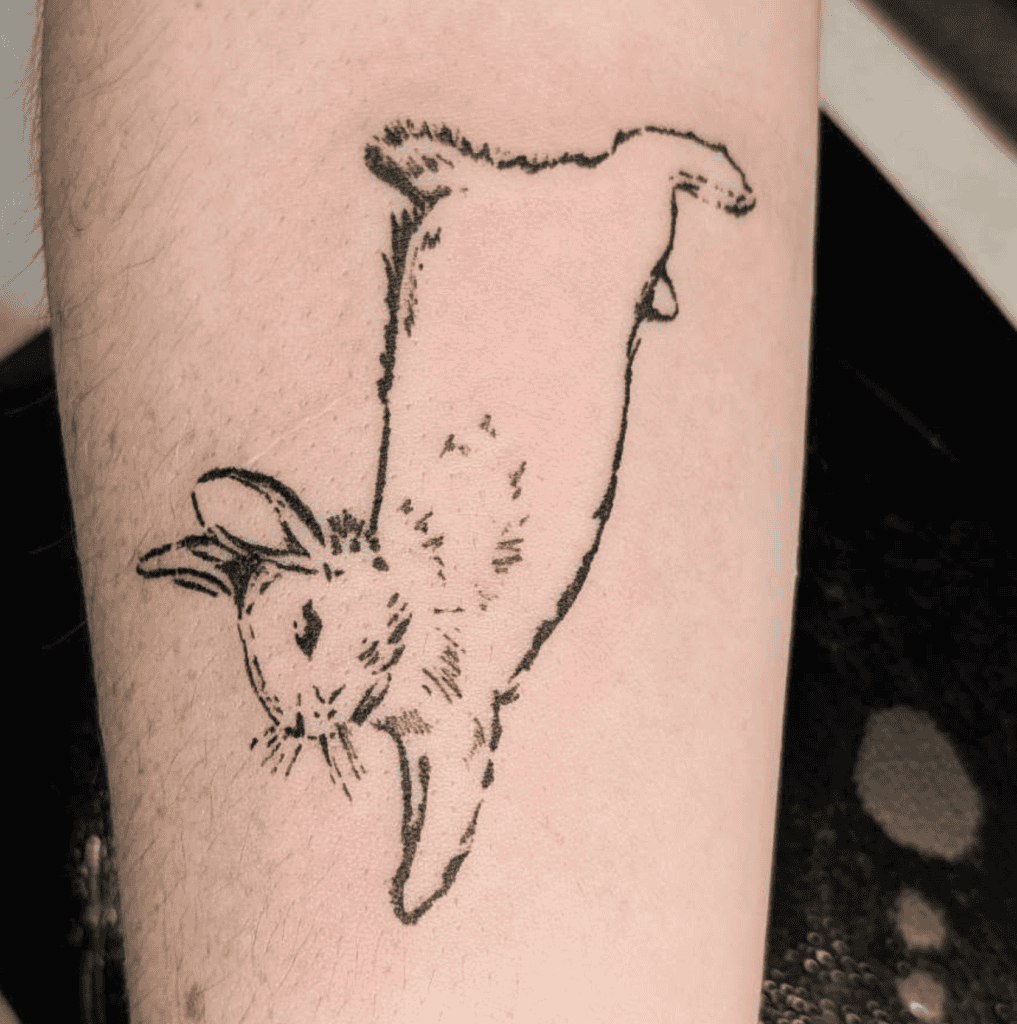
The Marsh Rabbit is a semi-aquatic rabbit native to the wetlands and coastal regions of the southeastern United States. Unlike many rabbits, it’s an excellent swimmer and is strongly associated with marshes, swamps, wetlands, and dense vegetation near water. It has dark brown fur, relatively short ears, and large hind feet that help it navigate its watery environment.
Marsh Rabbits are primarily nocturnal, becoming most active after sunset. They spend much of their time around water, often entering water to escape predators or travel between patches of vegetation. They feed on grasses, aquatic plants, leaves, and other vegetation growing around wetlands. Unlike the burrowing European Rabbit, Marsh Rabbits generally rely on dense vegetation and natural cover rather than extensive underground warrens.
Swamp Rabbit Tattoo
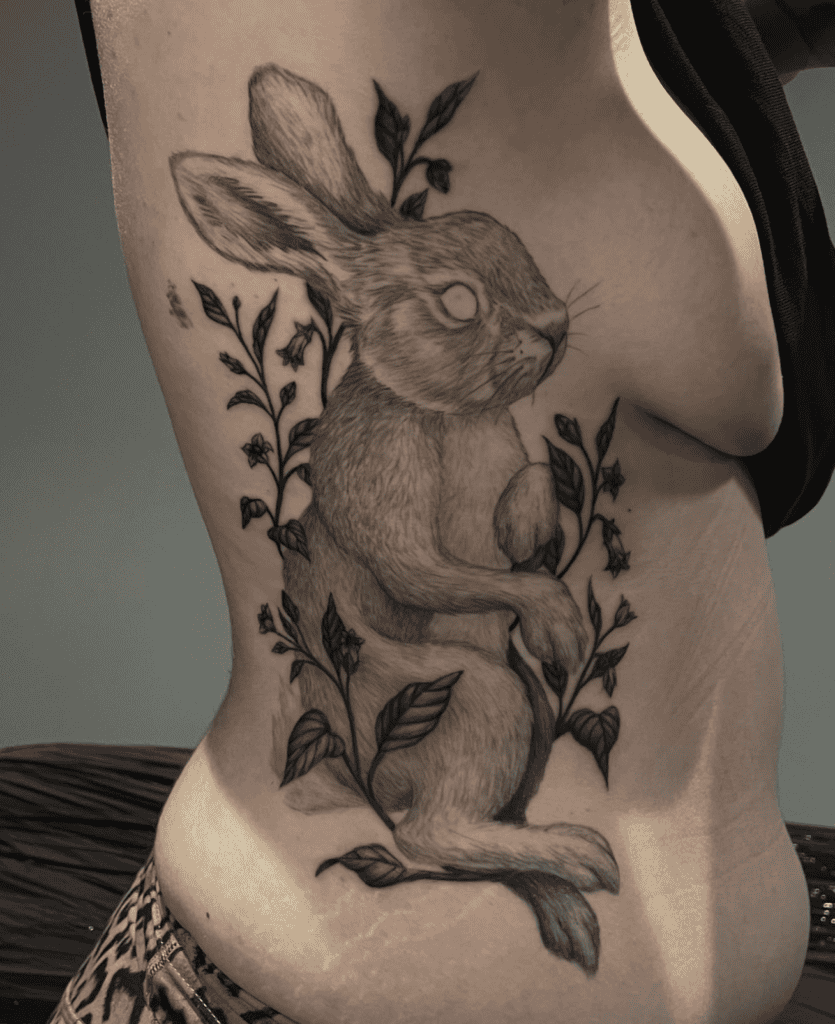
The Swamp Rabbit is a large, semi-aquatic rabbit native to the southeastern United States. It is closely associated with swamps, marshes, floodplains, and other wet habitats, and is one of North America’s largest cottontail species. It has dark brown fur, relatively short ears, and large hind feet that help it move through muddy and wet terrain.
Swamp Rabbits are primarily nocturnal, spending the daytime hidden among dense vegetation. They’re excellent swimmers and may jump into water to escape predators, sometimes swimming surprisingly long distances. They feed on grasses, aquatic vegetation, leaves, and other plants. They usually stay close to wetlands and use dense vegetation, fallen logs, and natural shelters rather than digging extensive burrow systems.
Brush Rabbit Tattoo
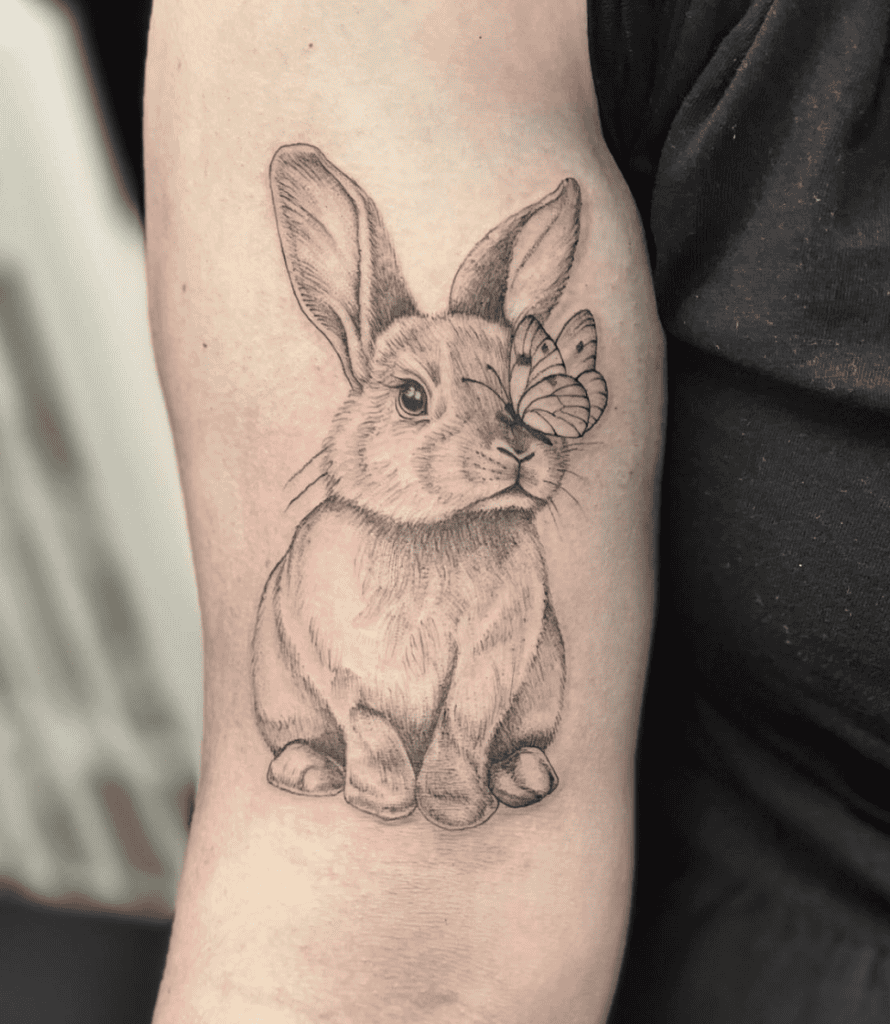
The Brush Rabbit is a small wild rabbit native to the western United States, particularly California, Oregon, and parts of Baja California. It gets its name from its preference for dense brush, shrubs, chaparral, and tangled vegetation. Compared with many cottontails, it has a relatively small body, short ears, and a less conspicuous tail.
Brush Rabbits are mainly crepuscular and nocturnal, becoming most active around dusk, dawn, and nighttime. They’re generally solitary and spend much of their time hidden within dense vegetation, where they can quickly disappear from predators. They feed on grasses, leaves, shoots, and other vegetation, and may create small trails through thick brush. Unlike the European Rabbit, they don’t construct large communal warrens, instead relying heavily on natural cover for shelter and protection.
Pygmy Rabbit Tattoo
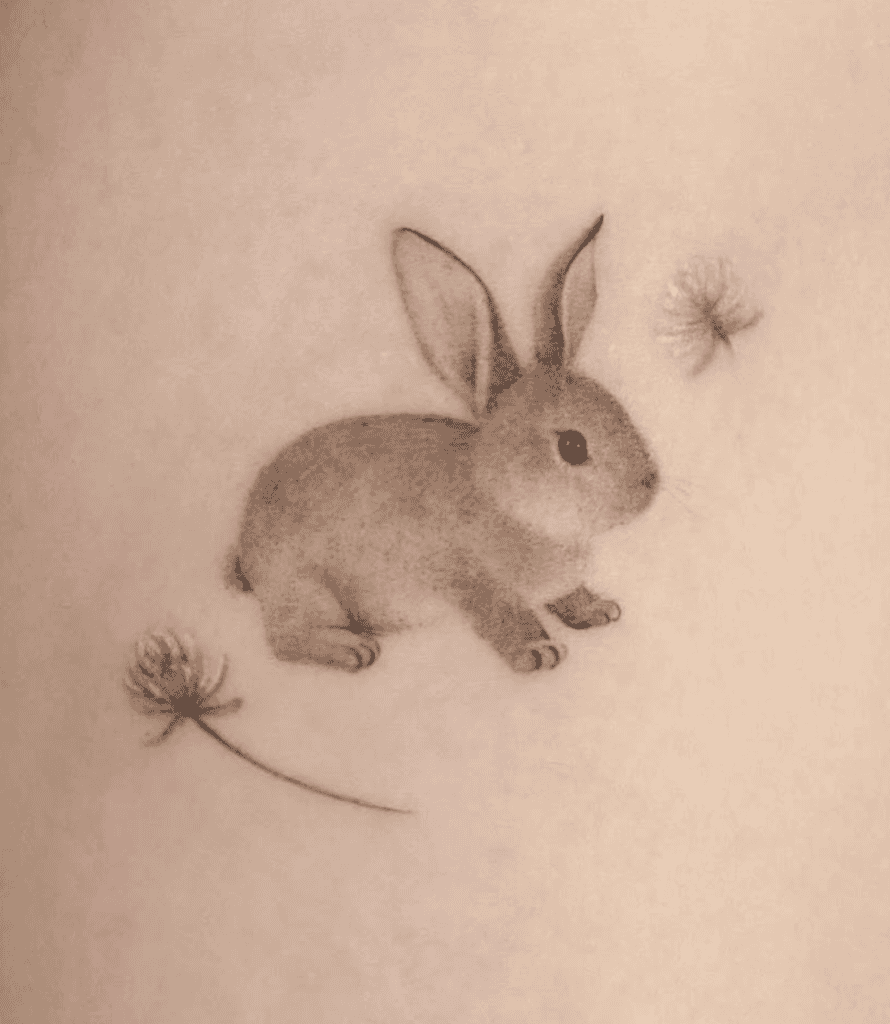
The Pygmy Rabbit is the smallest rabbit species in North America, native to the sagebrush landscapes of the western United States. It’s particularly dependent on big sagebrush, which provides both food and cover.
Pygmy Rabbits are primarily crepuscular, with activity concentrated around dawn and dusk, though they can also be active during the day. Unlike most cottontails, they’re notable for digging and using burrows, which they use for shelter from predators, extreme temperatures, and winter conditions. They feed heavily on sagebrush, especially during winter, along with grasses and other plants during warmer months. They’re generally solitary and rely on their camouflage and knowledge of their burrow networks to evade predators.
Volcano Rabbit Tattoo
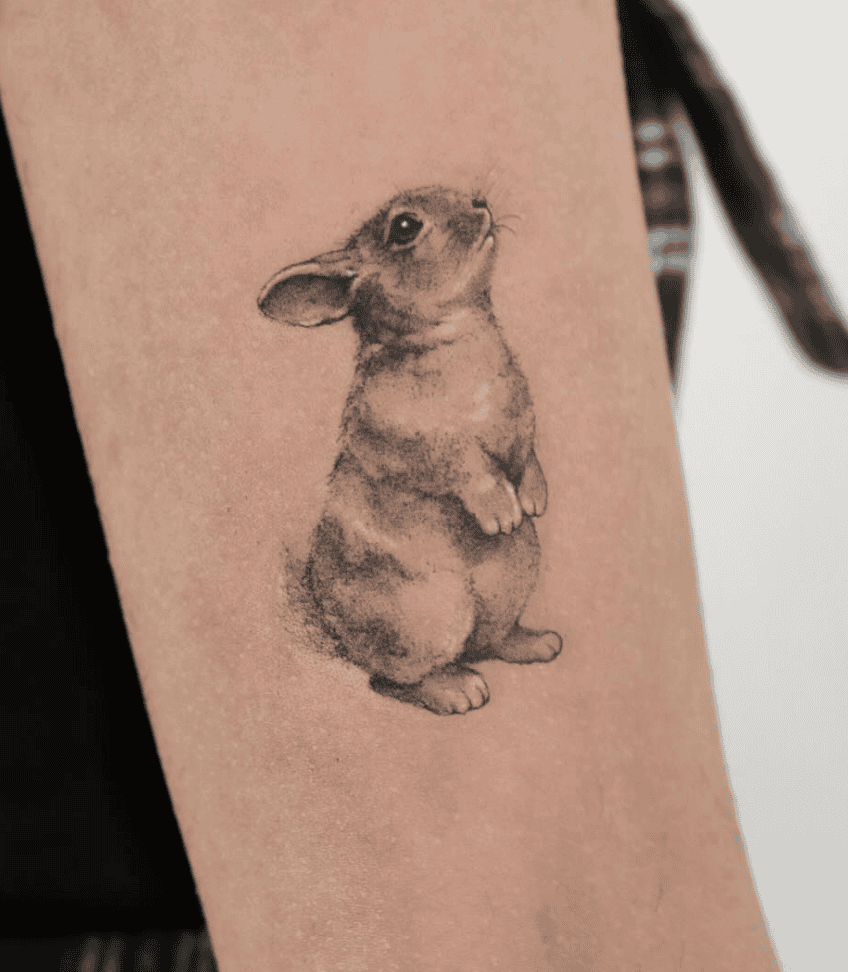
The Volcano Rabbit is one of the world’s smallest and rarest rabbit species, found only in the high-altitude volcanic mountains surrounding Mexico City, Mexico. It has a compact body, short ears, tiny tail, and dark brown fur. Its name comes from its habitat among the volcanic mountains of central Mexico.
Volcano Rabbits are mainly crepuscular, being most active around dawn and dusk. They live in small groups or family groups among bunchgrass and dense highland vegetation, using tunnels and paths through the grass for shelter and movement. Their diet consists largely of bunchgrasses, which also provide protection from predators. They’re unusually vocal for rabbits and can communicate with high-pitched squeaks and other sounds.
Riverine Rabbit Tattoo
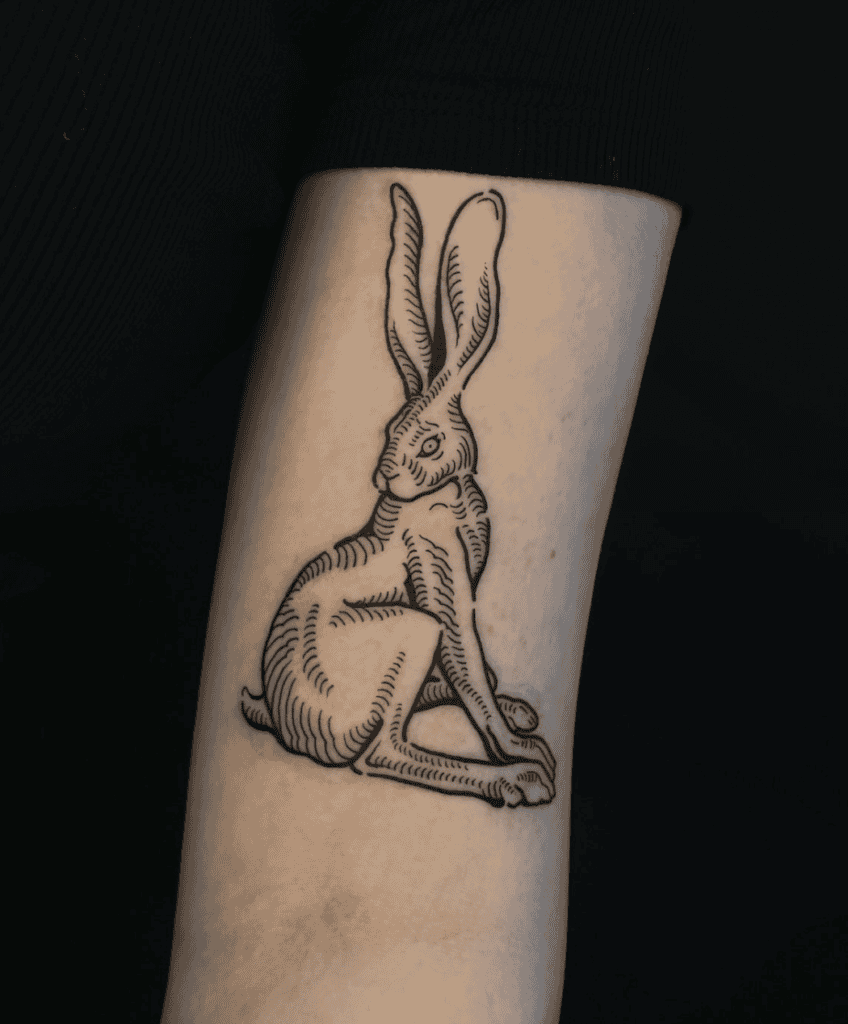
The Riverine Rabbit is one of the rarest and most endangered rabbits in the world, found only in a small region of South Africa’s central and southern Karoo. It has distinctive dark markings around its eyes, a brown-gray coat, and a long, fluffy tail. Despite its name, it isn’t truly aquatic, but is named for its strong association with riverine vegetation and seasonal river valleys.
Riverine Rabbits are primarily nocturnal, spending the daytime sheltering in dense vegetation. They’re largely solitary and depend heavily on thick riverbank shrubs and vegetation for food and protection. They feed on grasses, leaves, flowers, and other plants, and are unusual among rabbits in that they typically produce only one young per pregnancy, making population recovery especially difficult. Habitat loss from agriculture and changes to river ecosystems have contributed heavily to their endangered status.
Hispid Rabbit Tattoo
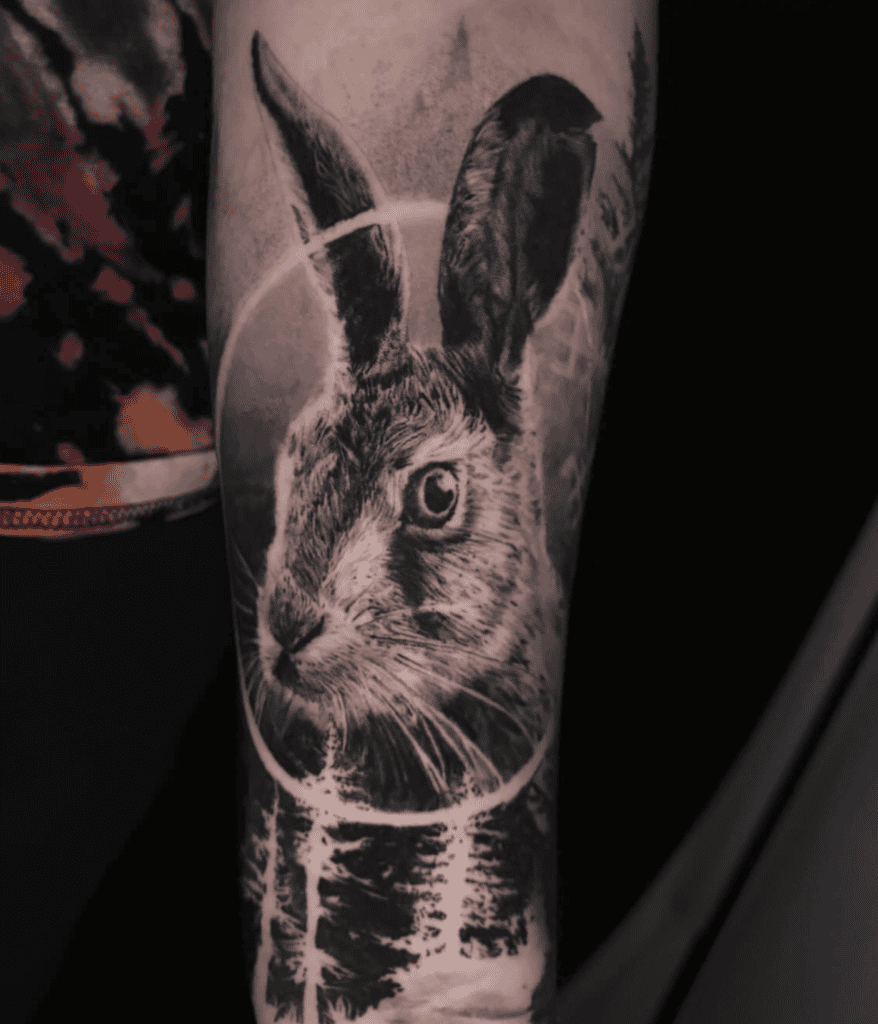
The Hispid Rabbit, also known as the Hispid Hare or Assam Rabbit, is a rare rabbit native to the grasslands and floodplains of South Asia, particularly parts of India, Nepal, Bangladesh, and Bhutan. It has a distinctive coarse, bristly coat, short ears, and a stocky body, with rough fur that gives it a rather rugged look.
Hispid Rabbits are primarily crepuscular and nocturnal, spending much of the day hidden within dense, tall grasses. They’re generally solitary and rely on thick vegetation for both food and protection. Their diet consists mainly of grasses, roots, bark, and other vegetation. They are particularly dependent on tall grassland habitats and can be vulnerable when these areas are converted to agriculture or otherwise disturbed.
American Rabbit Tattoo
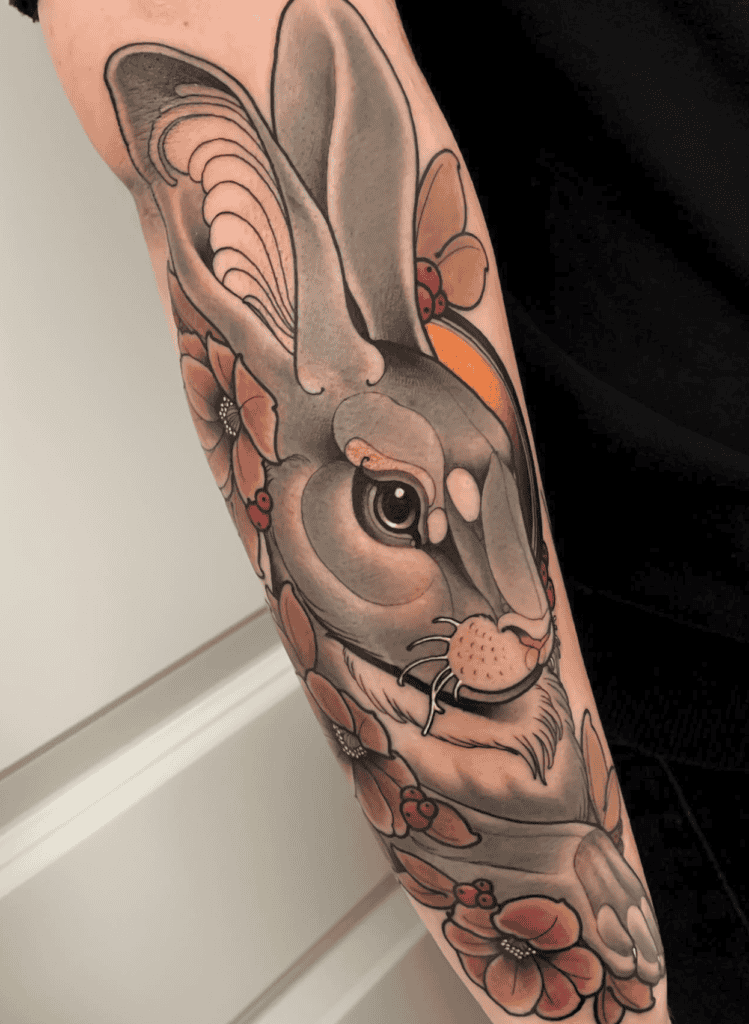
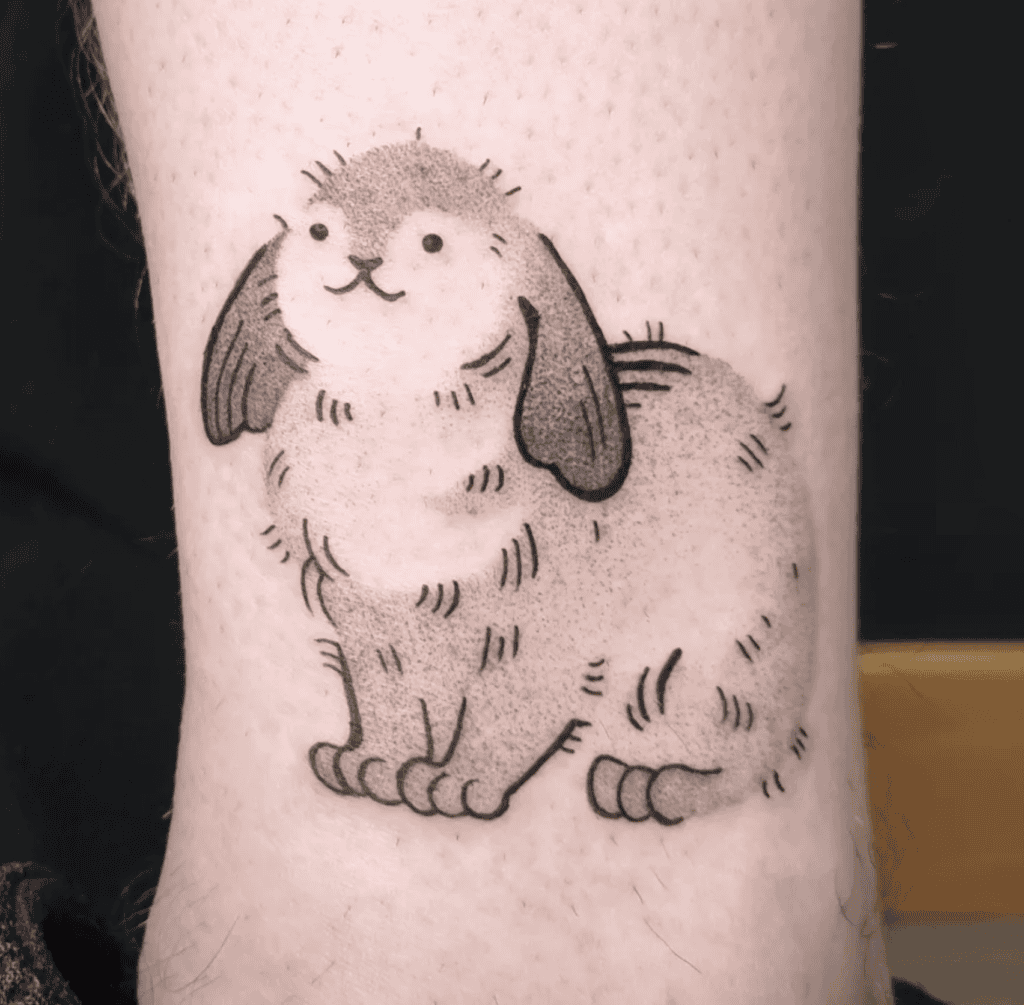
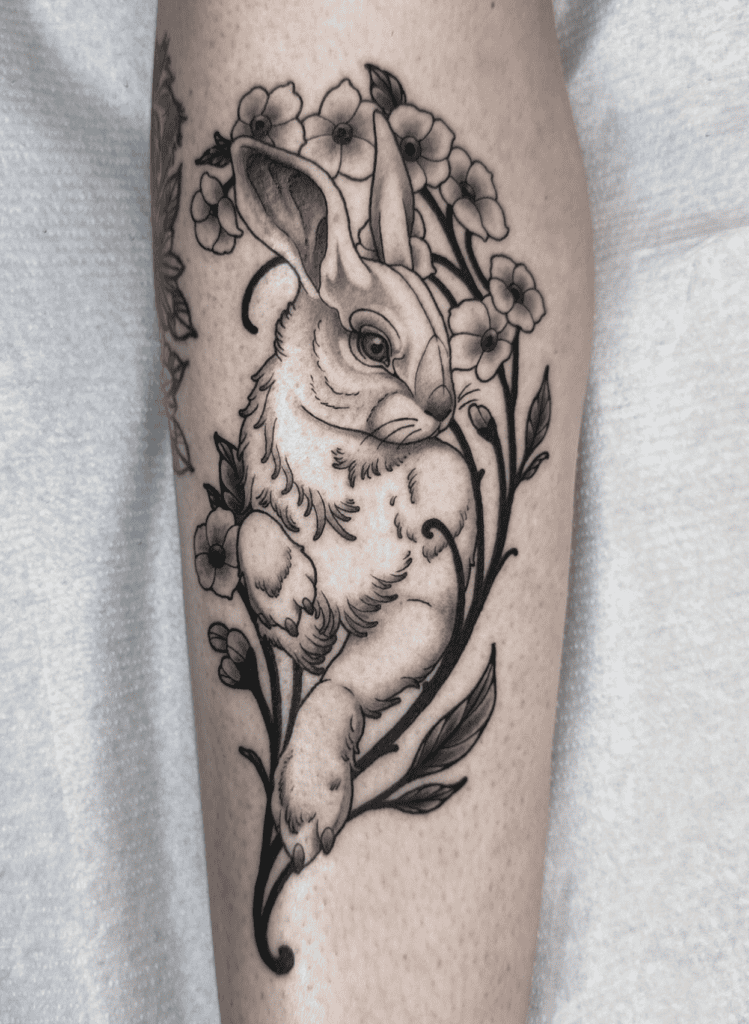
The American Rabbit is a domestic rabbit breed developed in the United States in the early 20th century. It is known for its distinctive mandolin-shaped body, soft fur, and traditionally blue or white coat varieties. The breed was originally developed for meat and fur production, but today it is also kept as a companion and exhibition rabbit.
American Rabbits are generally calm, gentle, and docile, making them well suited to life as companion animals. They’re active and curious, enjoying plenty of space to hop, explore, and forage. Like other domestic rabbits, they are herbivores and thrive on a diet centred around hay, supplemented with leafy greens and appropriate pellets. With proper care, they can form strong bonds with their human companions and enjoy a relatively relaxed indoor or outdoor lifestyle.
Angora Rabbit Tattoo
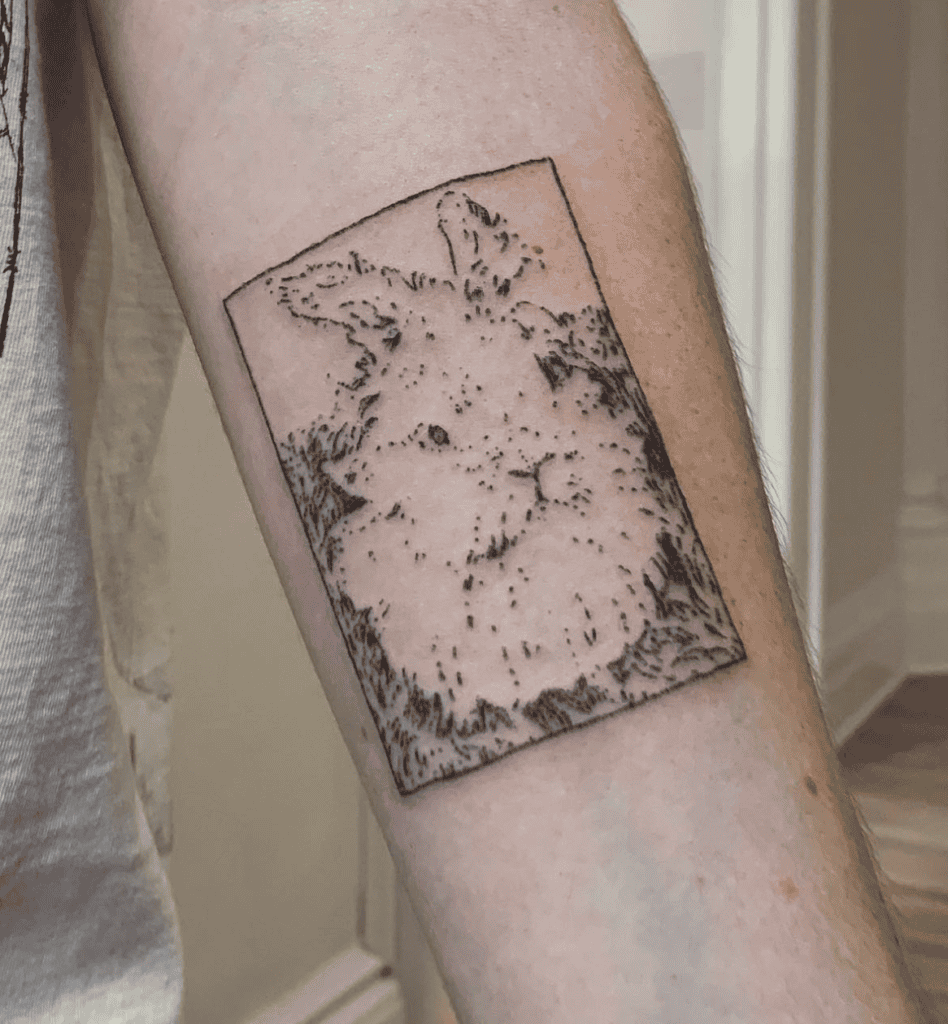
The Angora Rabbit is a group of domestic rabbit breeds famous for their incredibly long, soft, woolly fur. Originally developed for wool production, Angoras are among the fluffiest rabbit breeds in the world! Several varieties exist, including the English, French, Giant, and Satin Angora.
Angora Rabbits are generally gentle, calm, and sociable, but their luxurious coats require considerably more care than those of ordinary rabbits. They need regular brushing and grooming to keep their wool from tangling or matting. Their diet is especially important too, as good-quality hay and plenty of fibre help reduce the risk of digestive problems caused by accidentally ingesting their own wool during grooming. With proper care, Angoras can make affectionate and rewarding companion animals.
Beveren Rabbit Tattoo
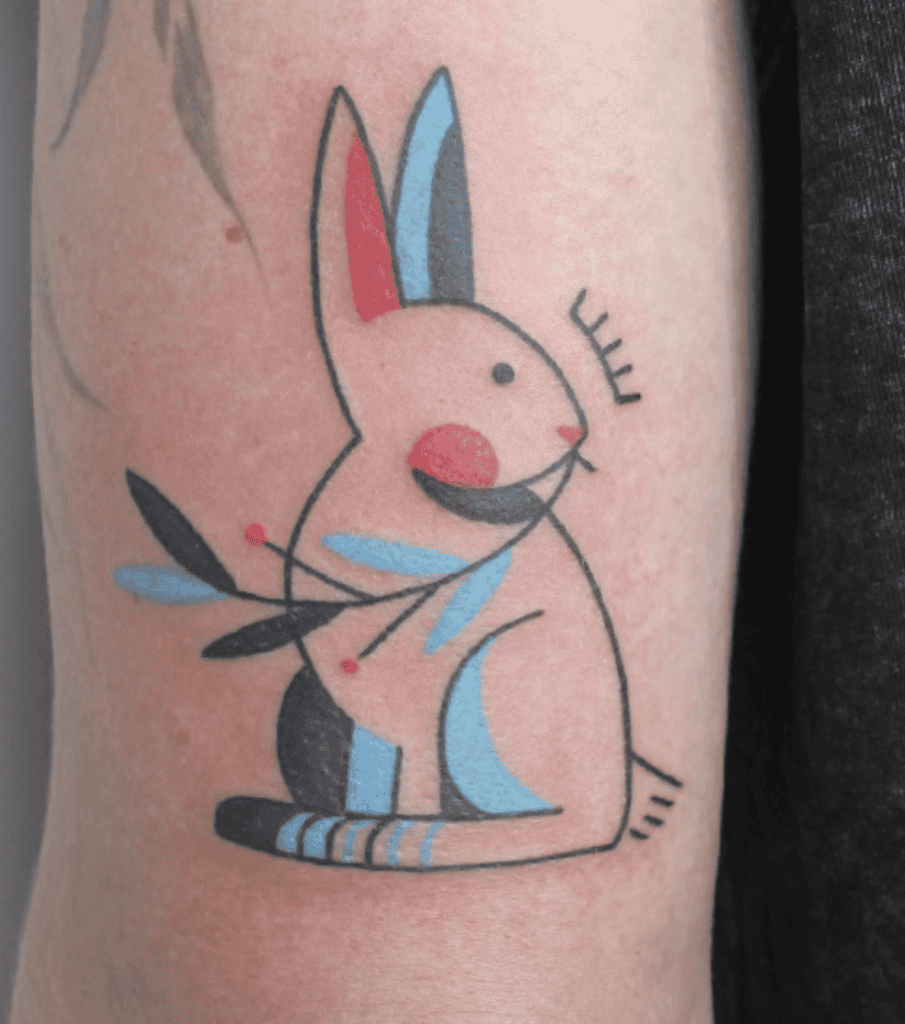
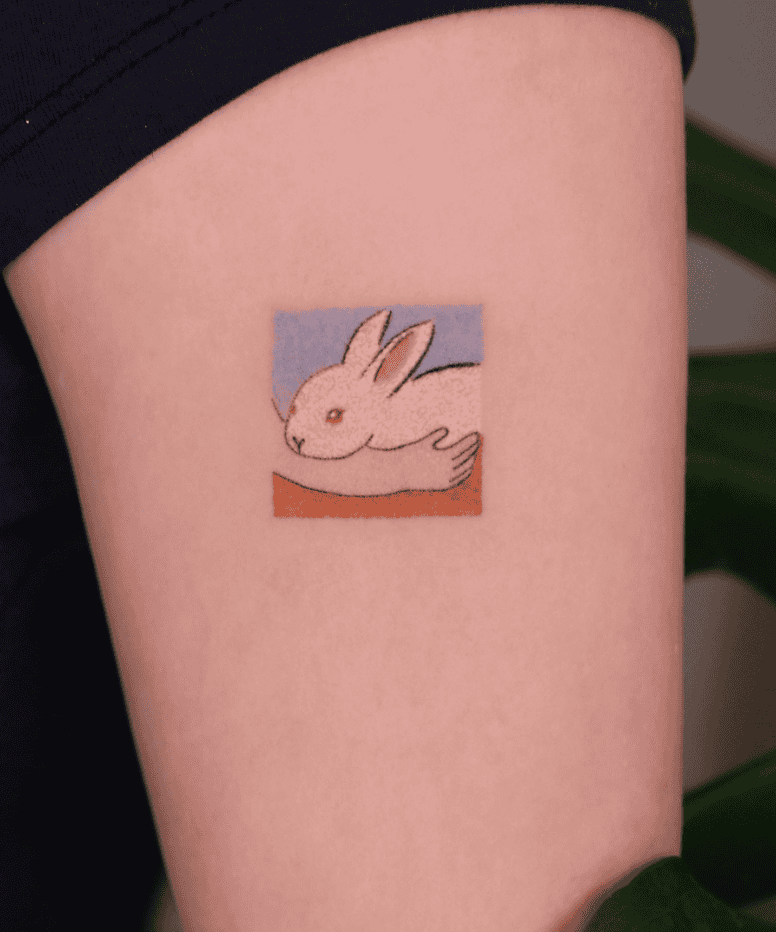
The Beveren Rabbit is a large domestic rabbit breed that originated in Beveren, Belgium. It is one of the older fur breeds and is especially known for its dense, glossy coat, long body, and distinctive blue-grey colouring, although other colour varieties exist.
Beveren Rabbits are generally calm, friendly, and fairly easygoing, making them suitable as both exhibition rabbits and companions. They’re active animals that enjoy plenty of room to hop, explore, and forage. Like other domestic rabbits, they need a fibre-rich diet centred around hay, along with fresh greens and suitable pellets. Their relatively laid-back temperament makes them a pleasant breed for experienced rabbit keepers.
Dutch Rabbit Tattoo
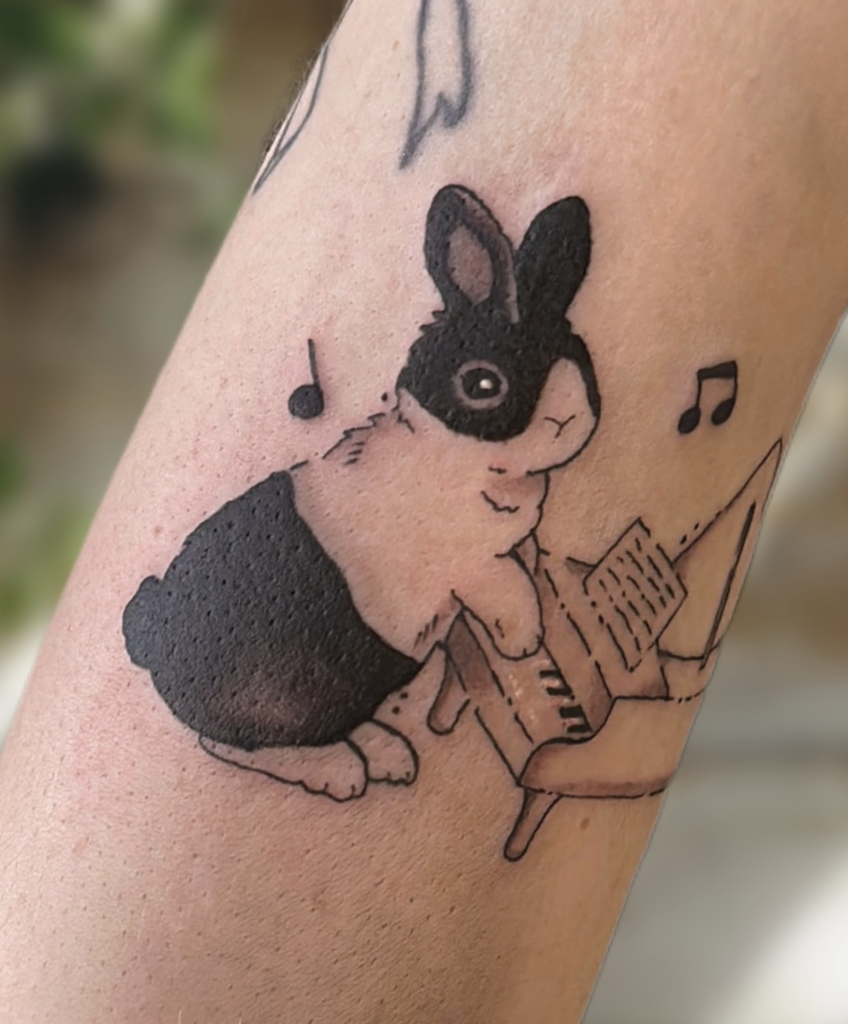
The Dutch Rabbit is a classic domestic rabbit breed that originated in the Netherlands, despite later becoming especially popular in Britain. It’s instantly recognisable by its striking two-tone coat pattern, usually featuring a dark rear half and colored ears and face, separated from a white front section by distinctive markings.
Dutch Rabbits are generally friendly, intelligent, and sociable, with an energetic and playful personality. They enjoy having space to hop, explore, dig, and play, and can become quite affectionate with regular gentle interaction. Like other domestic rabbits, they need a fibre-rich diet based primarily on hay, fresh greens, and appropriate pellets.
English Lop Rabbit Tattoo
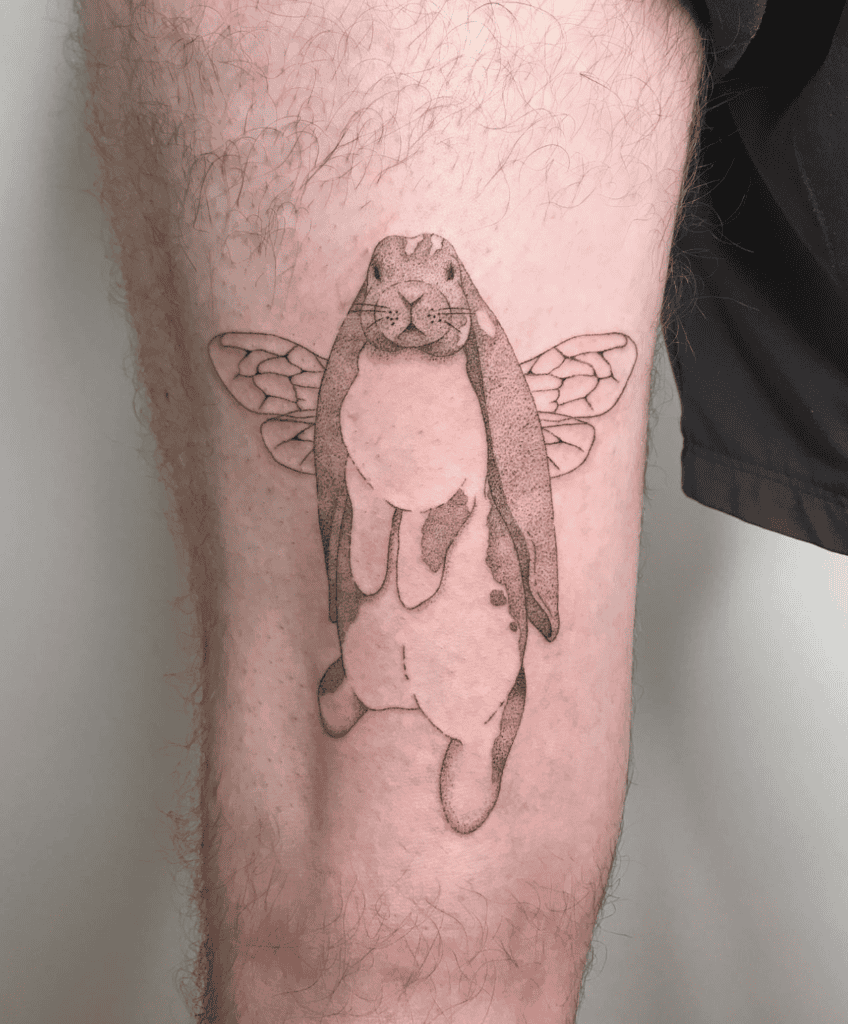
The English Lop is a distinctive domestic rabbit breed known for its exceptionally long, floppy ears, among the longest of any rabbit breed. It originated in England and is one of the oldest lop-eared breeds. It has a medium-to-large body, a broad head, and ears that can extend dramatically along its sides.
English Lops are generally calm, friendly, and laid-back, although they can still be playful and curious. Their enormous ears need special care because they can be easily injured or stepped on, and they also need regular checking and cleaning. They enjoy plenty of space to hop, explore, and stretch out, and can become affectionate companions when handled gently.
Flemish Giant Rabbit Tattoo
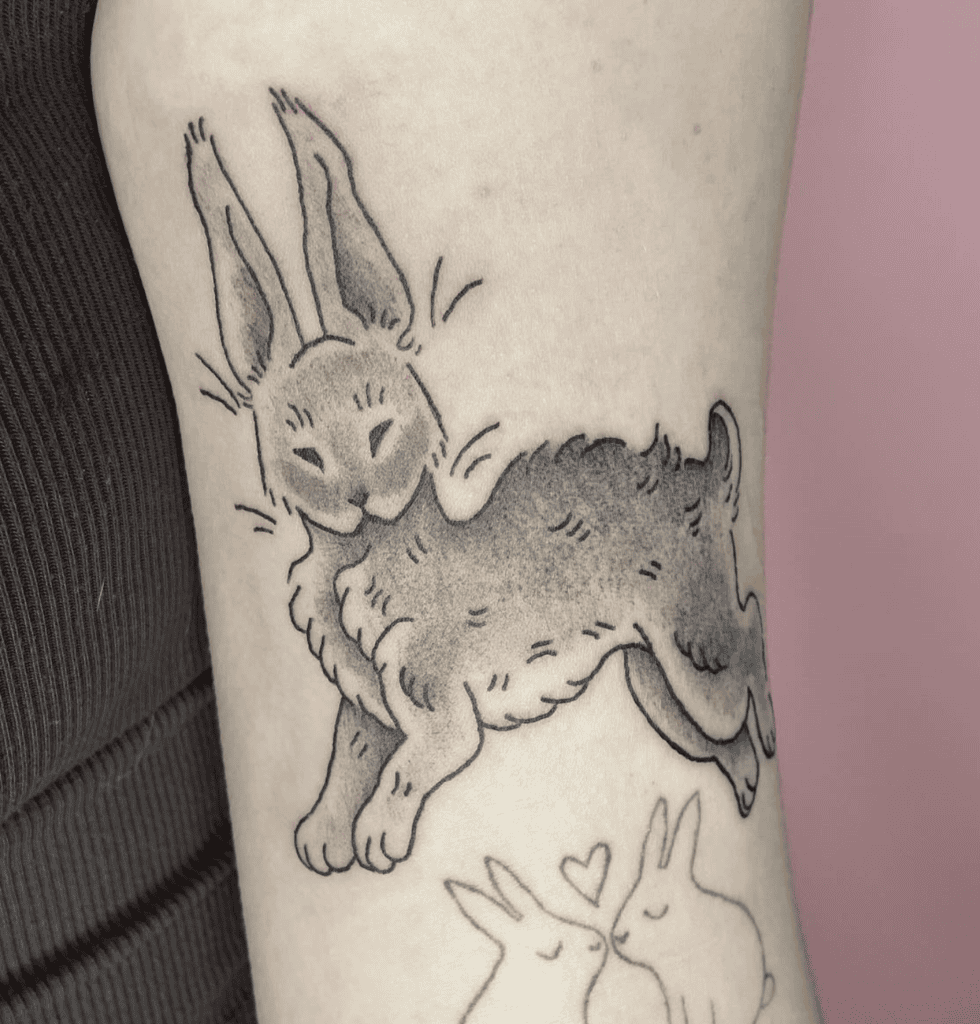
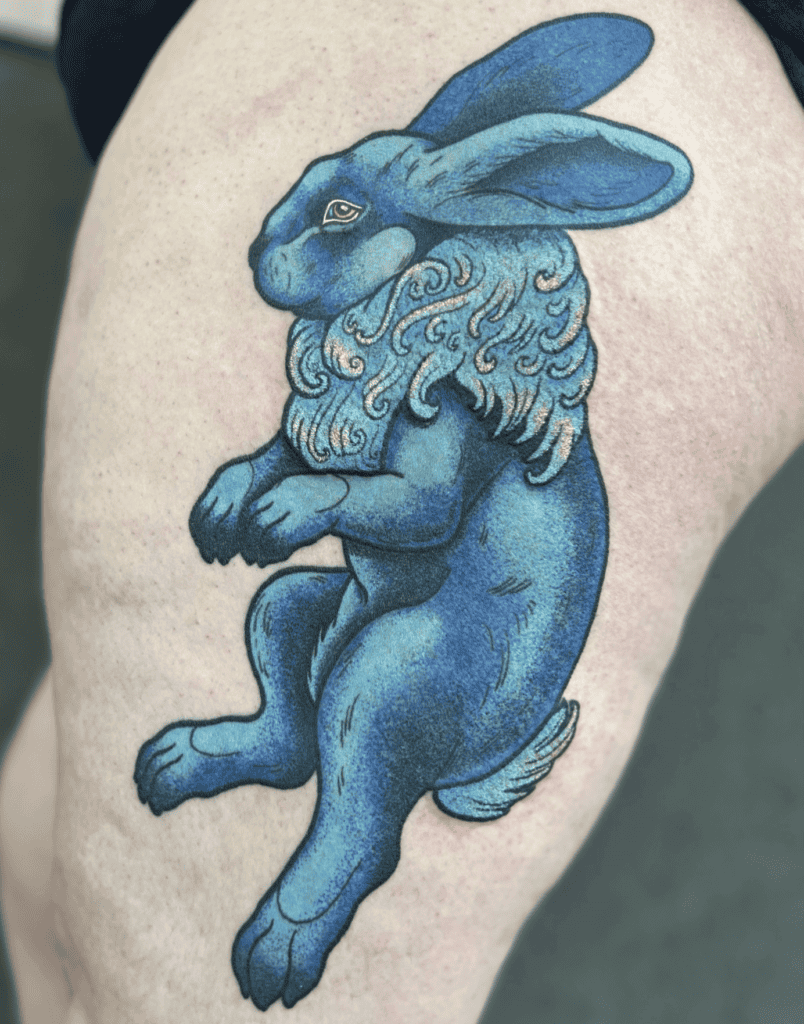
The Flemish Giant is one of the largest domestic rabbit breeds in the world, originally developed in the region of Flanders in Belgium. They have a long, powerful body, large upright ears, and can reach impressive sizes, with some individuals weighing over 10 kg (22 lb).
Flemish Giants are generally gentle, calm, and docile, earning them the affectionate nickname “gentle giants.” They’re typically less energetic than smaller breeds and enjoy relaxing, stretching out, and leisurely exploring their surroundings. Because of their size, they need substantially more space, food, and sturdy equipment than ordinary rabbits.
French Lop Rabbit Tattoo
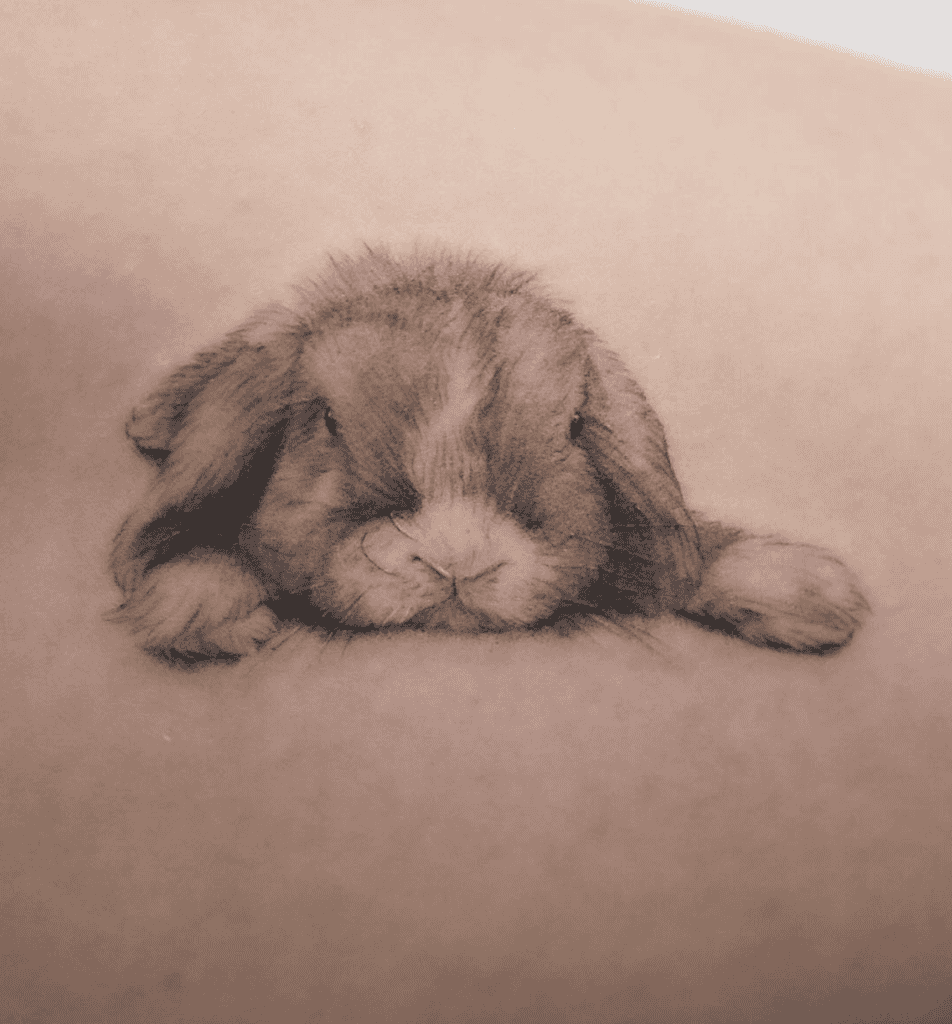
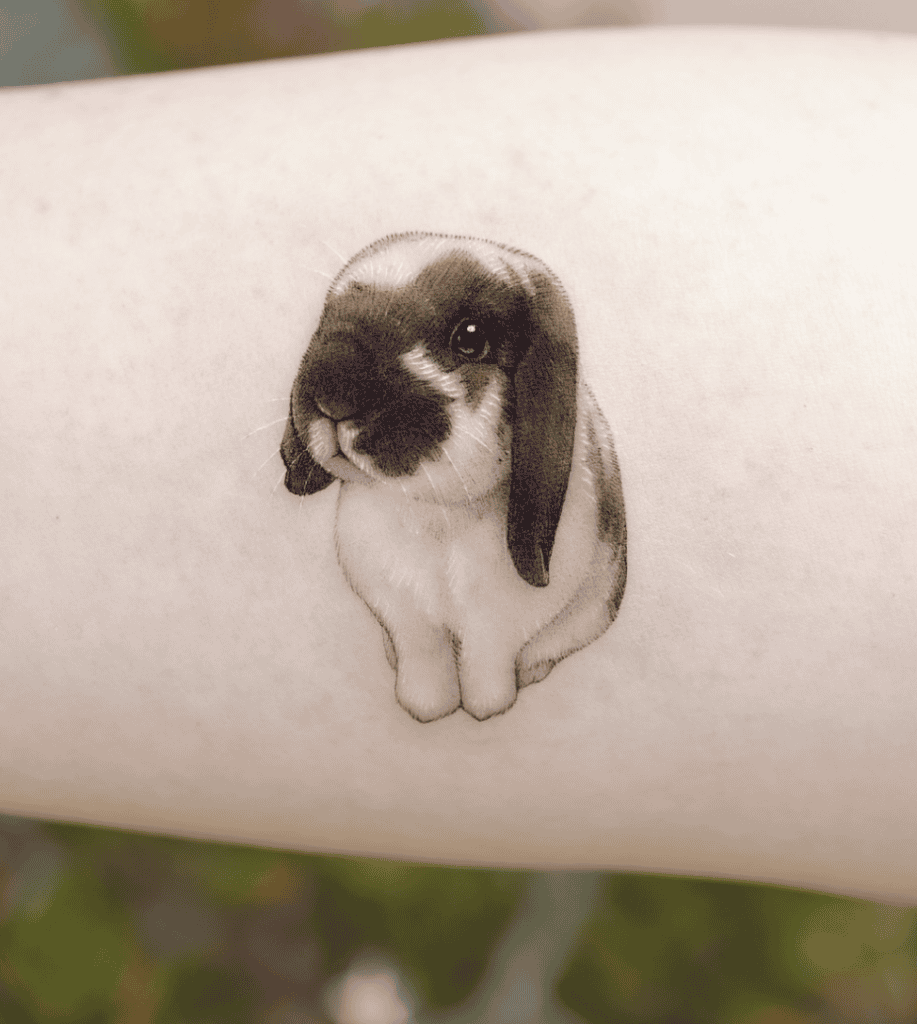
The French Lop is a large domestic rabbit breed developed in France, known for its massive size, broad body, and enormous floppy ears. It was developed through crosses involving the English Lop and large French breeds, resulting in a much heavier, sturdier rabbit.
French Lops are generally calm, friendly, and affectionate, with a relaxed personality that makes them popular companion rabbits. Despite their size, they can be playful and enjoy exploring, but they don’t usually need as much frantic exercise as smaller breeds. They require plenty of living space, sturdy housing, and careful handling because of their weight. Their large floppy ears also need regular checks to keep them healthy.
Holland Lop Rabbit Tattoo
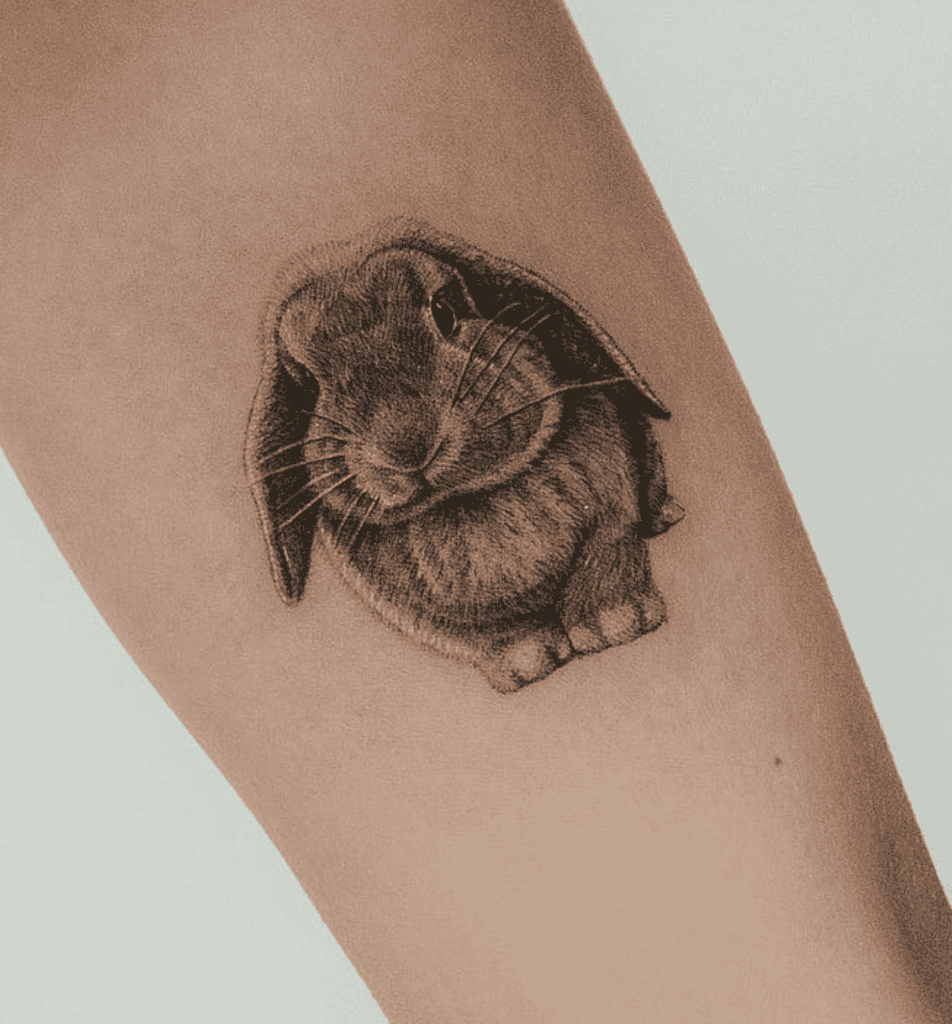
The Holland Lop is a small domestic rabbit breed developed in the Netherlands, famous for its adorable drooping ears, compact body, and rounded head. It was developed by Dutch breeder Adriann de Cock by crossing Netherland Dwarfs with larger Lop breeds.
Holland Lops are generally friendly, playful, curious, and affectionate. They enjoy exploring, hopping around, and playing with toys, while many also enjoy relaxing alongside their owners. Their small size makes them easier to house than larger lop breeds, but they still need plenty of exercise and enrichment. Their floppy ears should be checked regularly for wax, irritation, or other problems, and they benefit from a high-fibre diet centred on hay.
Lionhead Rabbit Tattoo
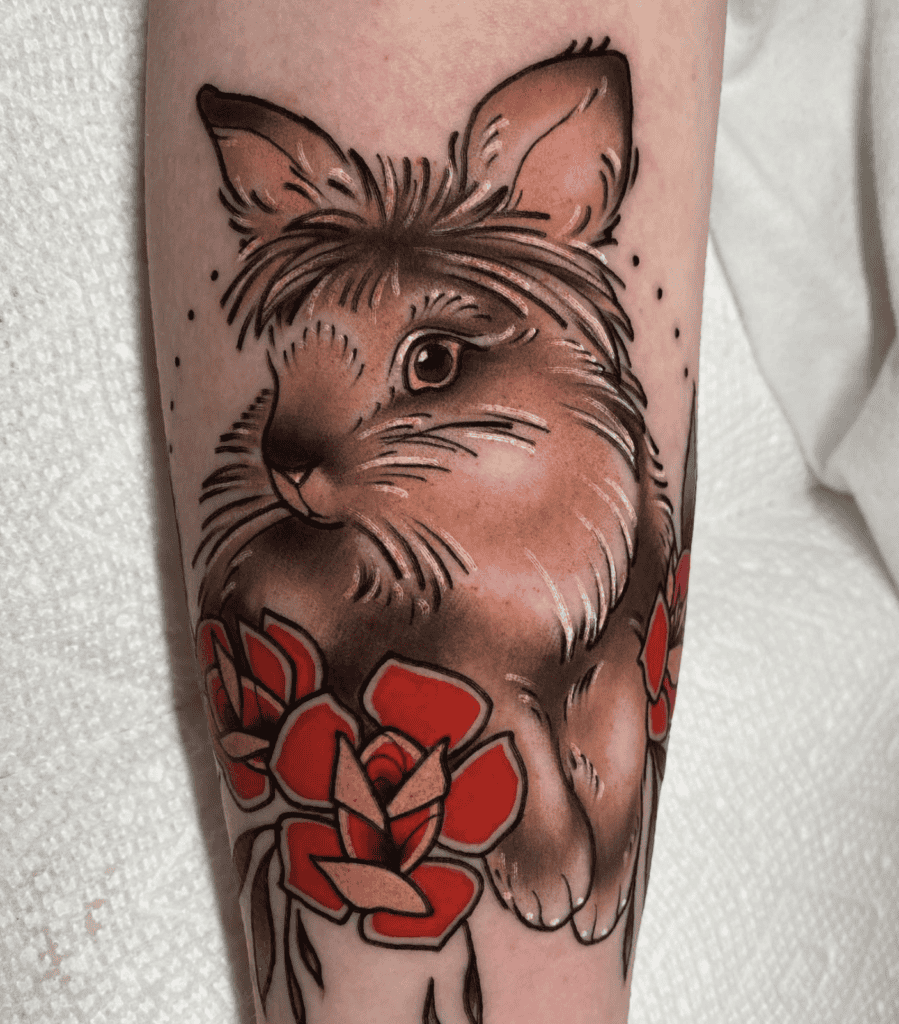
The Lionhead Rabbit is a small domestic breed famous for its distinctive fluffy mane of longer fur around its head and neck, giving it a lion-like appearance. Lionheads originated in Europe, with their exact development somewhat debated, and they became especially popular as companion and show rabbits.
Lionheads are generally friendly, curious, playful, and sociable. They enjoy exploring, hopping around, and playing with toys, and many become affectionate with regular gentle interaction. Their mane requires regular grooming to prevent tangles and excessive ingestion of loose fur while grooming themselves. Like all rabbits, they need plenty of hay, fresh greens, exercise, and enrichment to stay happy and healthy.
Mini Rex Rabbit Tattoo
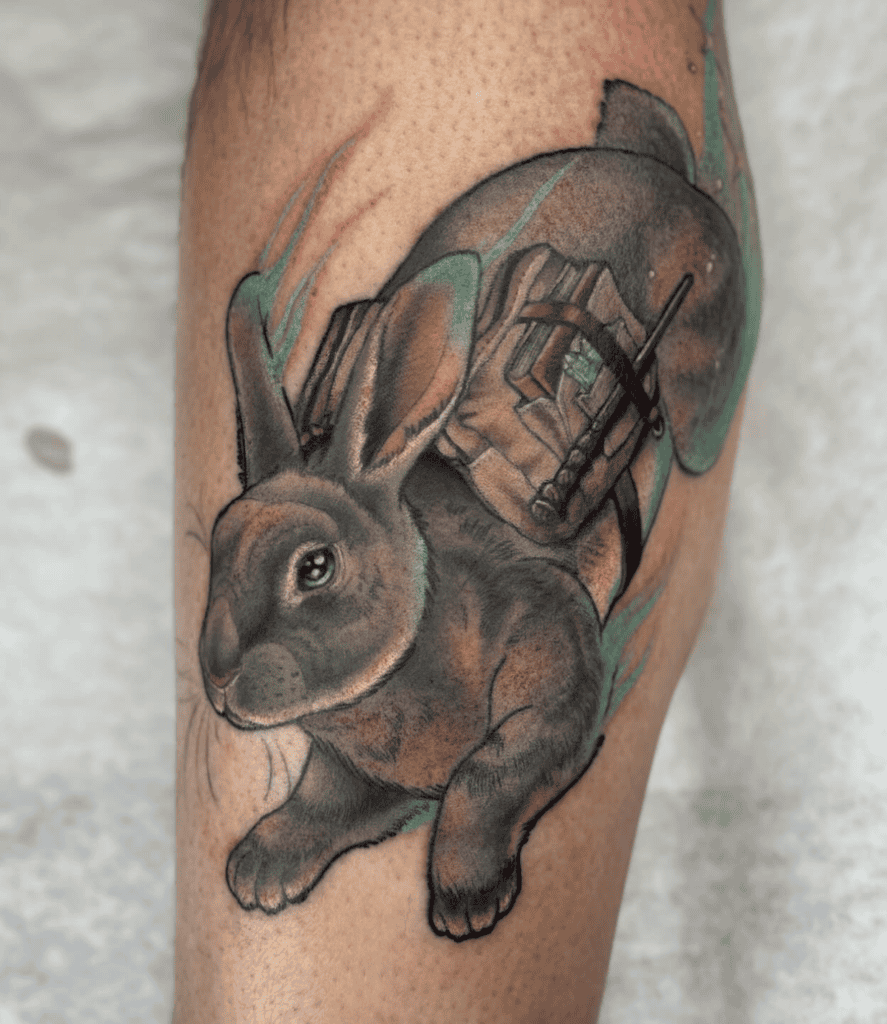
The Mini Rex is a small domestic rabbit breed famous for its incredibly soft, plush coat. Developed in the United States in the 1980s, it was created as a miniature version of the larger Rex Rabbit.
Mini Rexes are generally friendly, playful, curious, and affectionate. They enjoy exploring, hopping, and playing with toys, and many can form strong bonds with their owners. Their short, velvety coat is relatively easy to maintain and usually needs less grooming than long-haired breeds. Like other rabbits, they thrive with plenty of hay, fresh greens, exercise, and opportunities to explore and forage.
Netherland Dwarf Rabbit Tattoo
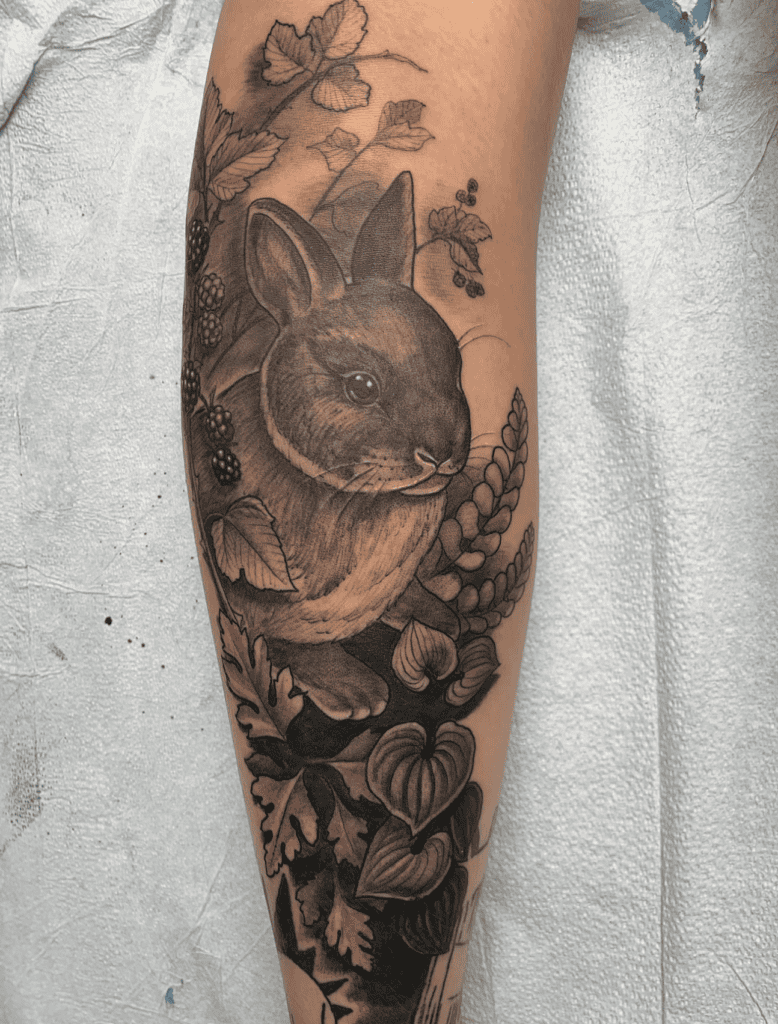
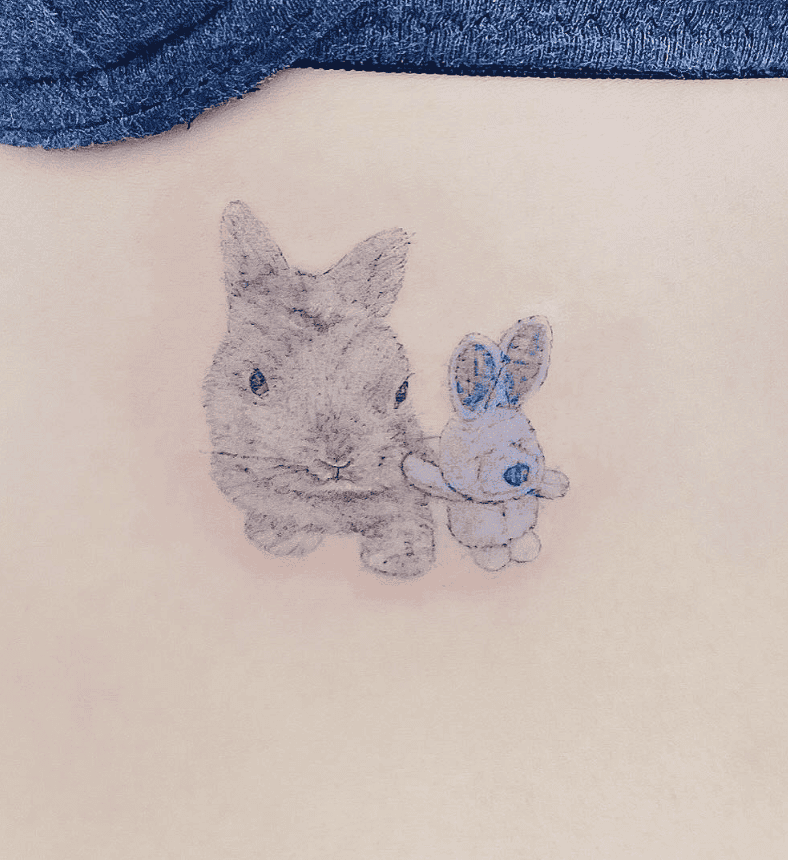
The Netherland Dwarf is one of the smallest and most popular domestic rabbit breeds in the world. Originating in the Netherlands, it is famous for its tiny body, short upright ears, round head, and large eyes.
Netherland Dwarfs are generally active, curious, playful, and intelligent, although some can be more timid or energetic than larger rabbit breeds. They love exploring, digging, chewing, and playing, so they need plenty of enrichment despite their small size. Their compact build makes them relatively easy to house, but they still require plenty of exercise and a high-fibre diet centred on hay.
Belgian Hare Tattoo
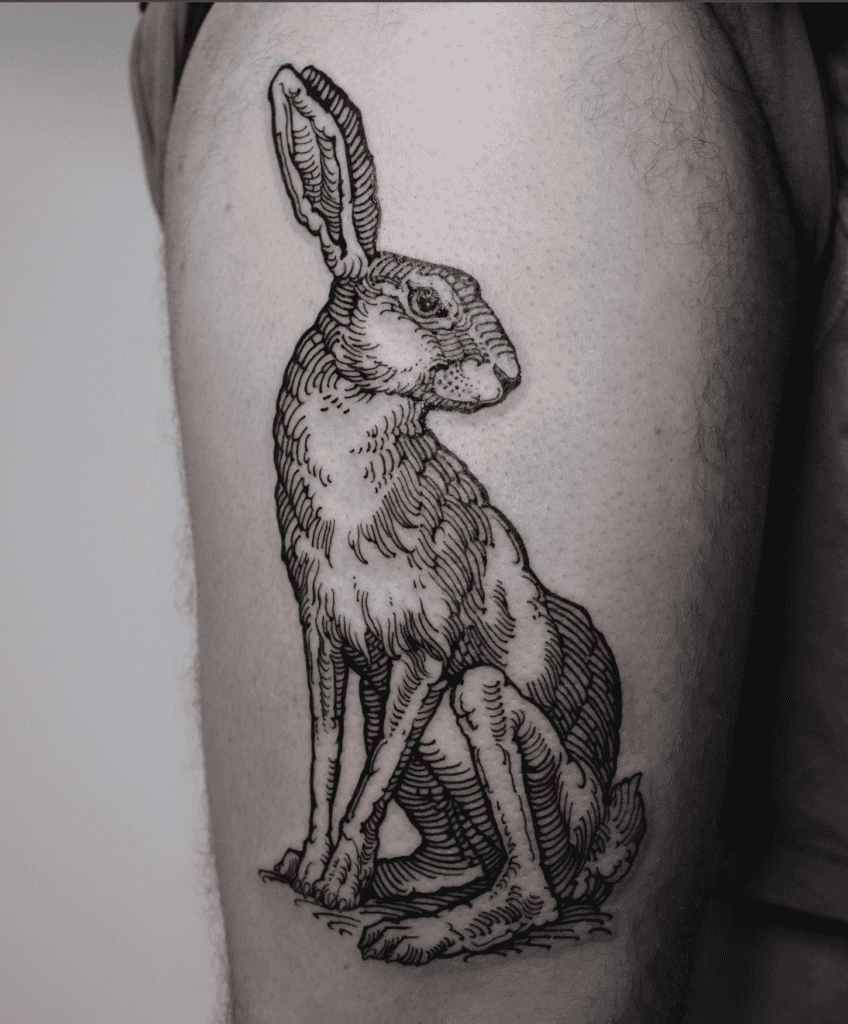
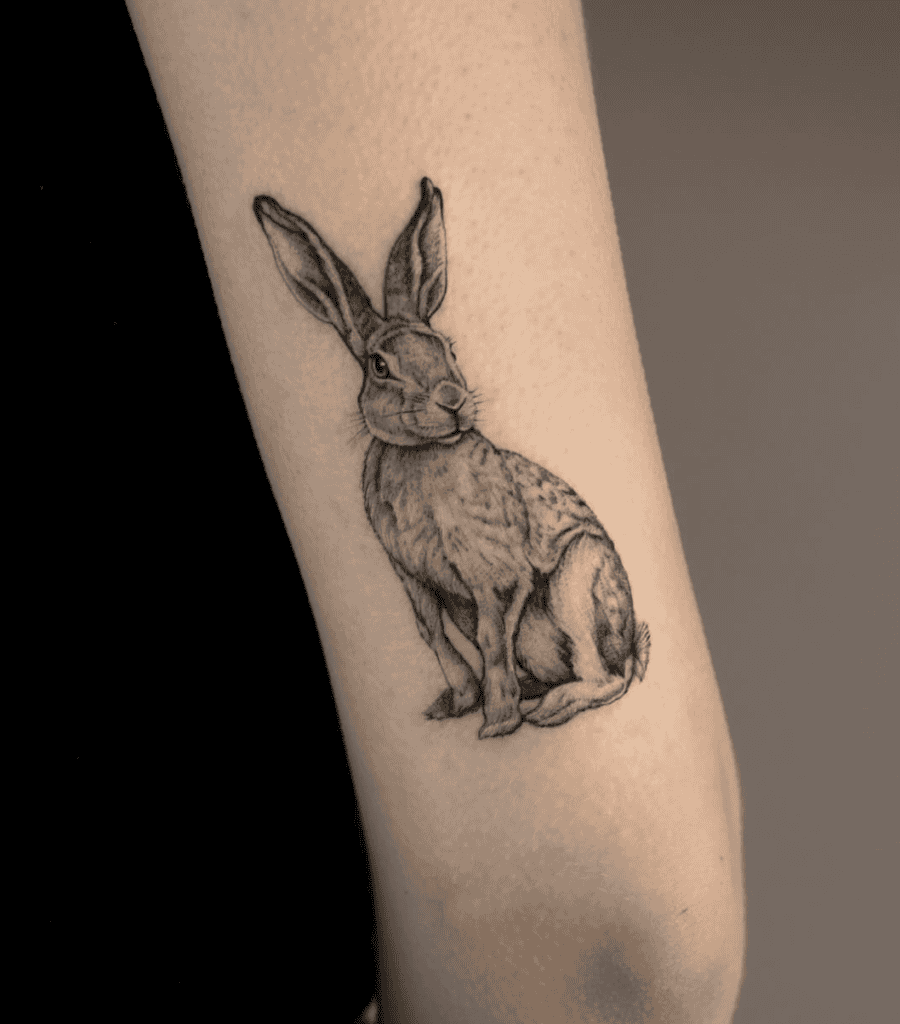
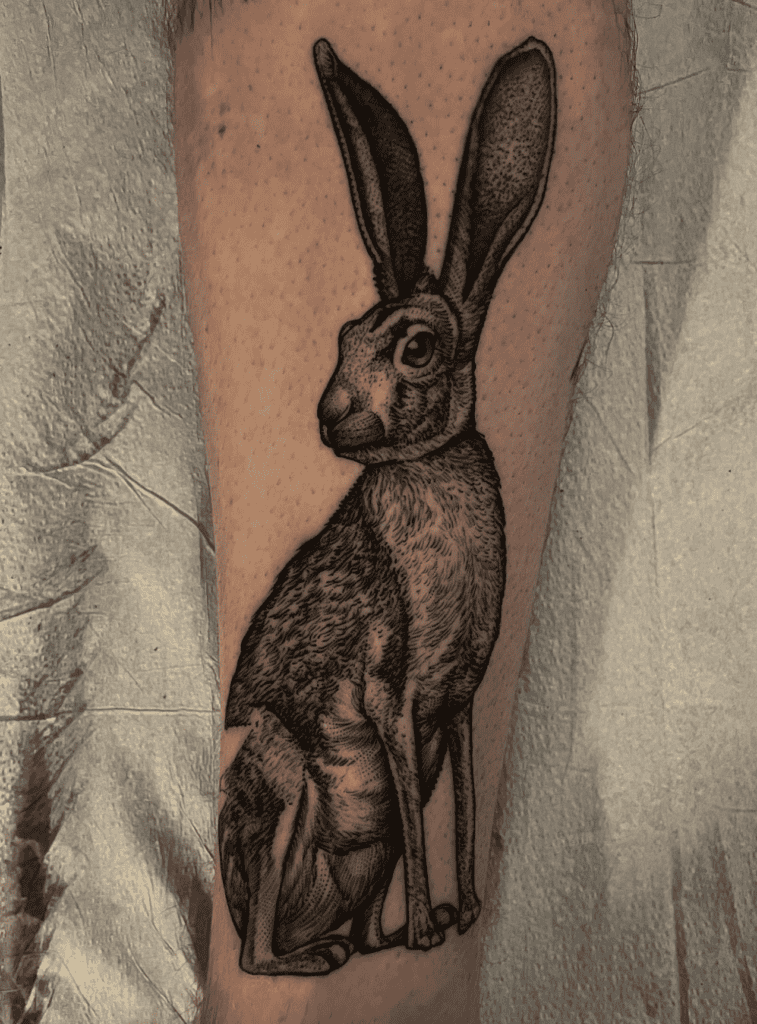
The Belgian Hare is a domestic rabbit breed bred to closely resemble the appearance of a wild European Hare. Despite its name and hare-like appearance, it is a true rabbit and not a hare at all. Developed in Belgium during the 18th–19th centuries, it has a slender, athletic body, long legs, large ears, and a reddish-brown coat. I
Belgian Hares are typically active, energetic, intelligent, and alert, with much higher exercise needs than many compact pet rabbit breeds. They enjoy plenty of space to run, jump, explore, and forage. Their energetic temperament means they can be more demanding to keep, but they can become affectionate with patient handling and socialisation.
European Hare Tattoo
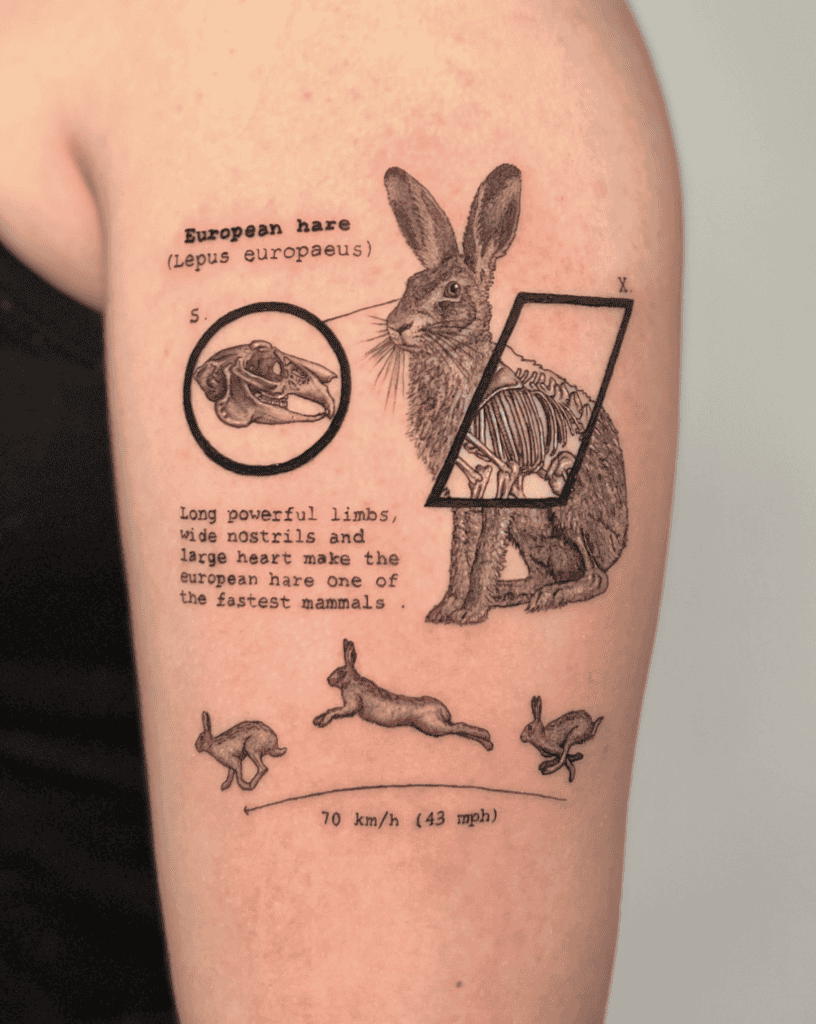
The European Hare, also known as the Brown Hare, is a large hare native to Europe and parts of western Asia. It has a slender body, long powerful hind legs, very long ears with distinctive black tips, and golden-brown to reddish-brown fur. Unlike rabbits, European Hares are born fully furred with their eyes open, allowing them to become mobile much sooner.
European Hares are mainly nocturnal and crepuscular, spending their days resting in shallow depressions called forms rather than underground burrows. They’re incredibly fast runners and can reach speeds of around 70 km/h (43 mph) when escaping predators. They feed primarily on grasses, herbs, crops, and other vegetation, and are generally solitary outside the breeding season. During spring, males may engage in famous “boxing” contests with females or rival males.
Snowshoe Hare Tattoo
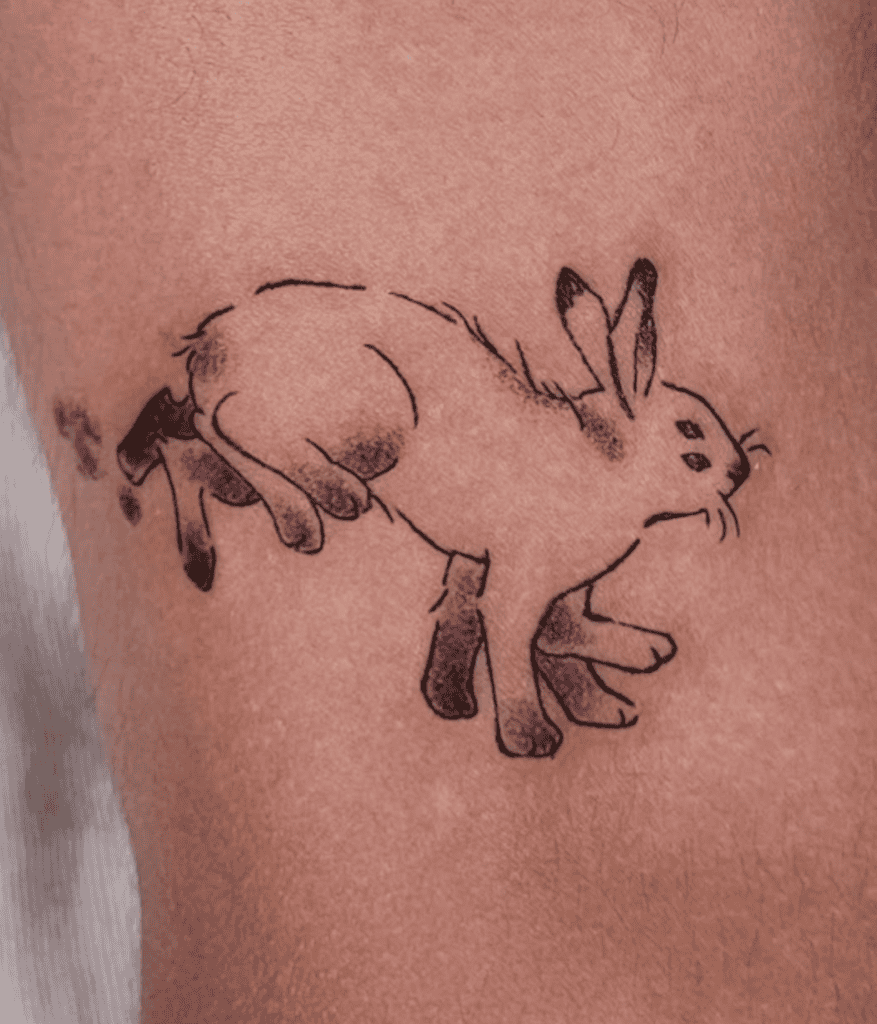
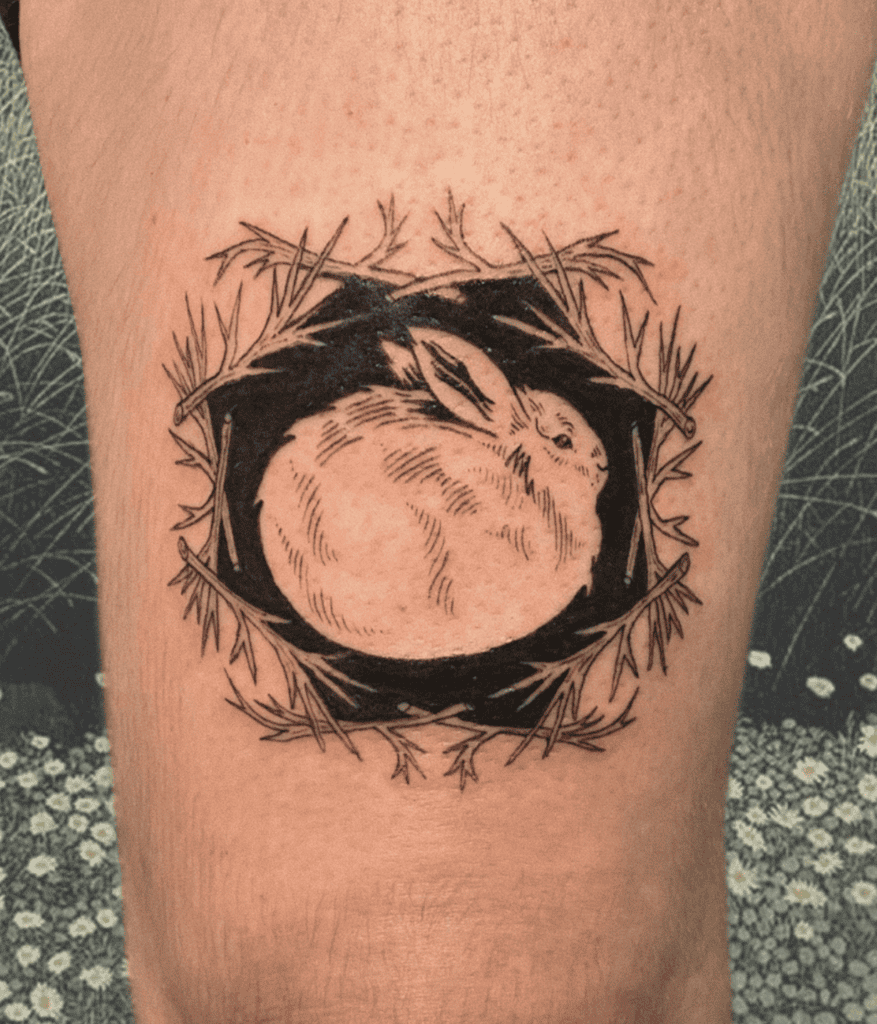
The Snowshoe Hare is a North American hare famous for its remarkable seasonal colour change. During summer, its coat is mostly brown, but as winter approaches, it moults into white fur, providing camouflage against snow. Its large hind feet are heavily furred, acting like natural snowshoes and helping it move across deep snow.
Snowshoe Hares are primarily crepuscular and nocturnal, spending the daytime sheltered beneath vegetation. They’re generally solitary and feed on grasses, leaves, twigs, bark, and buds, with woody vegetation becoming especially important during winter. Their powerful hind legs allow them to make rapid, bounding escapes from predators such as lynx, foxes, coyotes, and owls.
Arctic Hare Tattoo
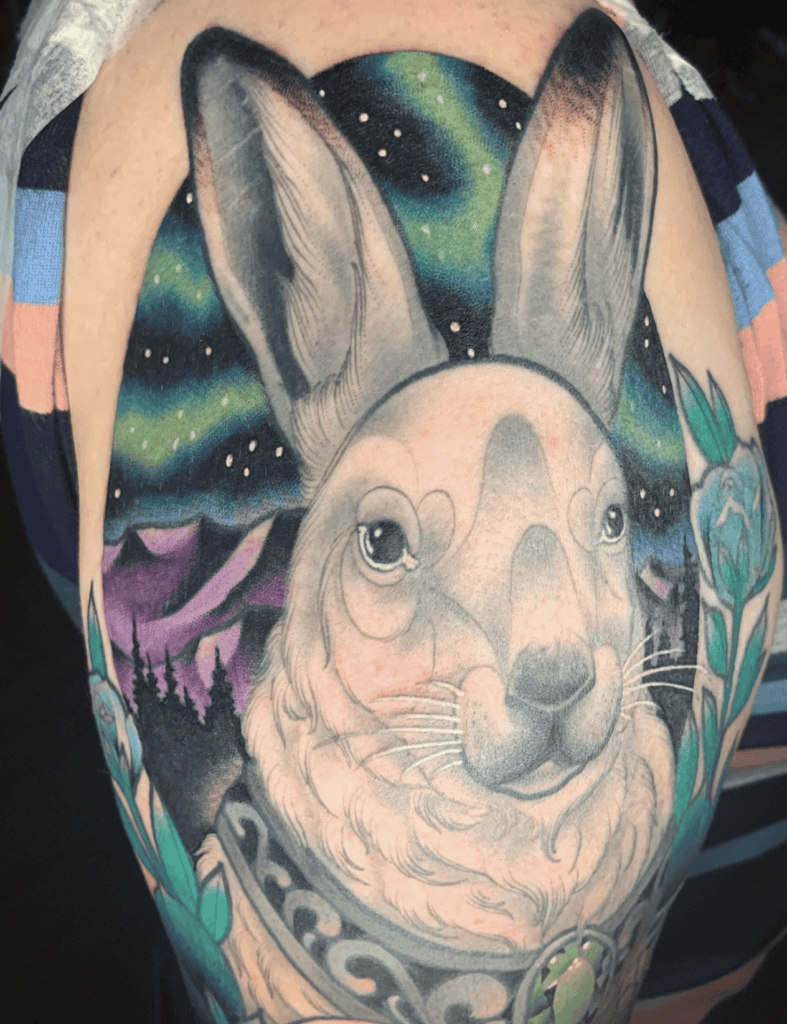
The Arctic Hare is a large hare specially adapted to the freezing Arctic environments of Canada and Greenland. It has thick, insulating fur, relatively short ears, a compact body, and enormous furry hind feet that help it move across snow. Its coat is generally white in winter, providing excellent camouflage against the snowy landscape.
Arctic Hares are mainly crepuscular and nocturnal, although they can be active at any time depending on conditions. They feed on woody plants, mosses, lichens, grasses, and other Arctic vegetation, often digging through snow to reach food. They can gather in large groups for protection, sometimes forming groups of hundreds or even thousands of hares.
White-Tailed Jackrabbit Tattoo
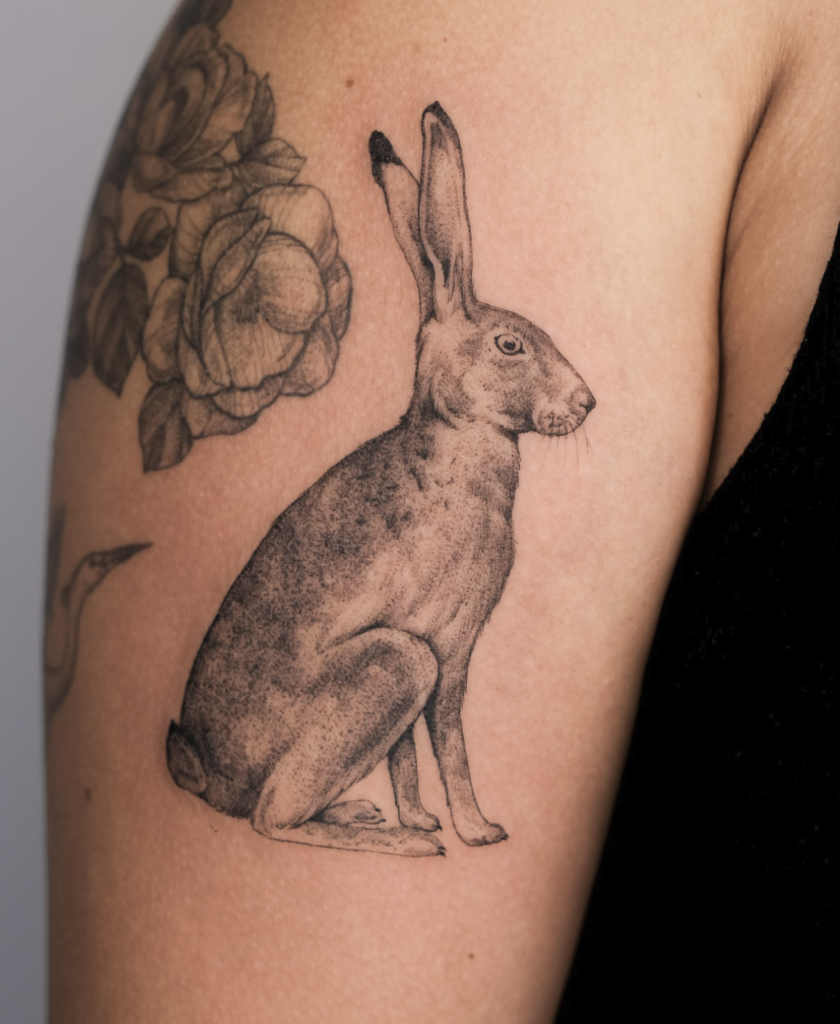
The White-Tailed Jackrabbit is a large hare native to the western and central regions of North America, particularly the Great Plains and parts of Canada and the northern United States. It has a large body, extremely long ears, powerful hind legs, and a distinctive white tail. Its coat becomes noticeably lighter in winter, helping it blend into snowy environments.
White-Tailed Jackrabbits are primarily crepuscular and nocturnal, spending much of the day resting in shallow depressions called forms. They feed on grasses, herbs, and other vegetation during warmer months, switching to twigs, bark, and buds in winter.
Desert Hare Tattoo
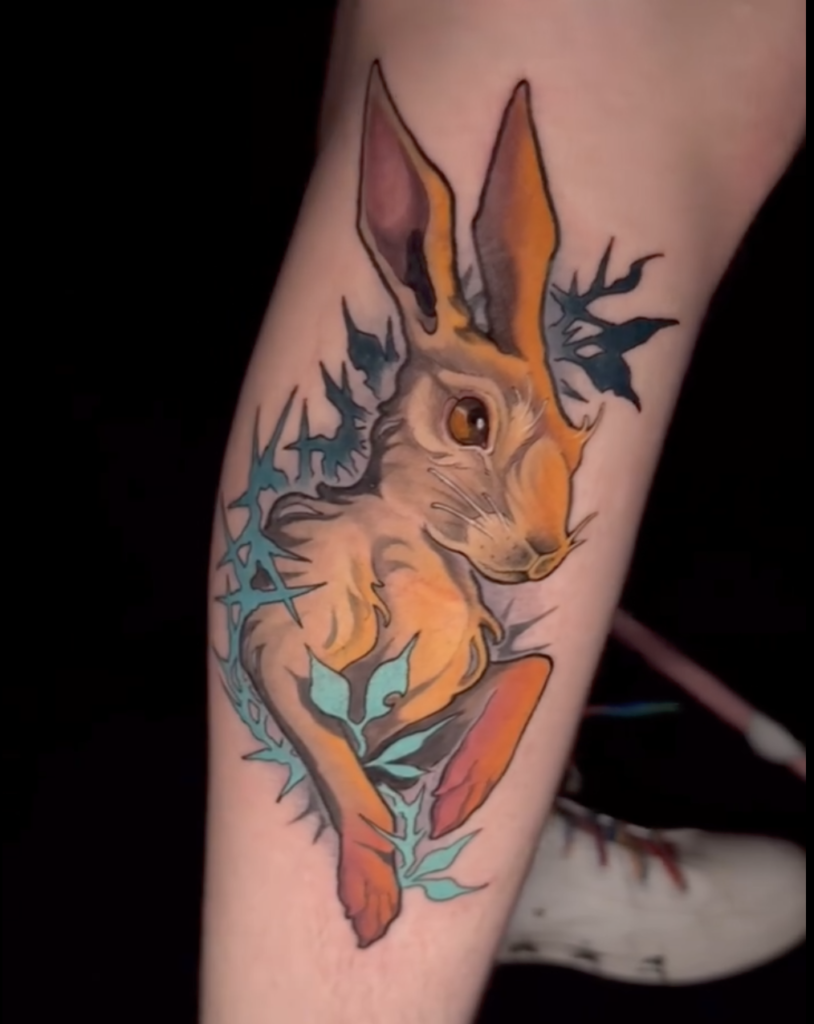
The Desert Hare is a medium-sized hare native to the dry regions of Central and East Asia, including parts of China, Mongolia, Kazakhstan, and surrounding areas. It has a slender body, long ears, powerful hind legs, and sandy-brown fur that helps it blend into rocky and desert landscapes.
Mostly crepuscular and nocturnal, the Desert Hare rests during the day in shallow depressions or sheltered spots rather than digging deep burrows. It feeds mainly on grasses, herbs, shrubs, and other desert vegetation, becoming especially active when temperatures are cooler. Its speed and camouflage help it escape predators such as foxes and birds of prey.
Cape Hare Tattoo
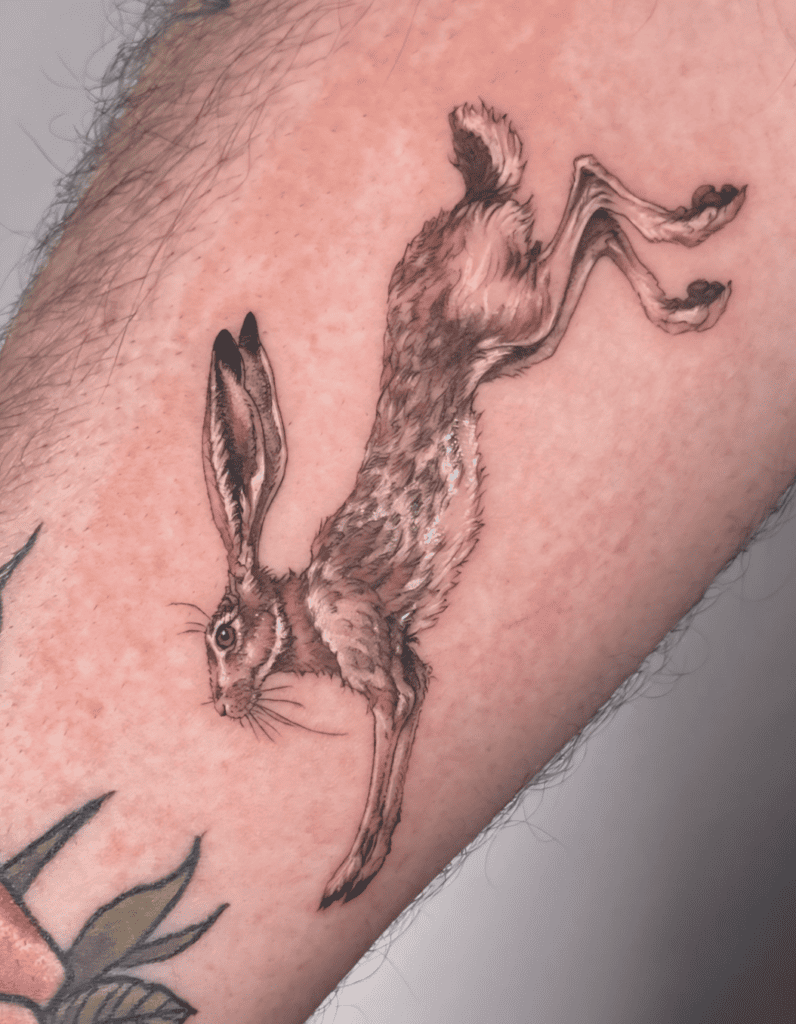
The Cape Hare is a widespread hare found across much of Africa, as well as parts of the Middle East and southwestern Asia. It has a slender body, long ears, powerful hind legs, and a brown-gray coat that provides excellent camouflage in grasslands, savannas, scrubland, and semi-arid regions.
Mostly nocturnal and crepuscular, the Cape Hare rests during the day in shallow depressions called forms. It feeds mainly on grasses, herbs, leaves, and other vegetation, and relies on its exceptional speed, agility, and camouflage to escape predators such as jackals, foxes, and birds of prey.
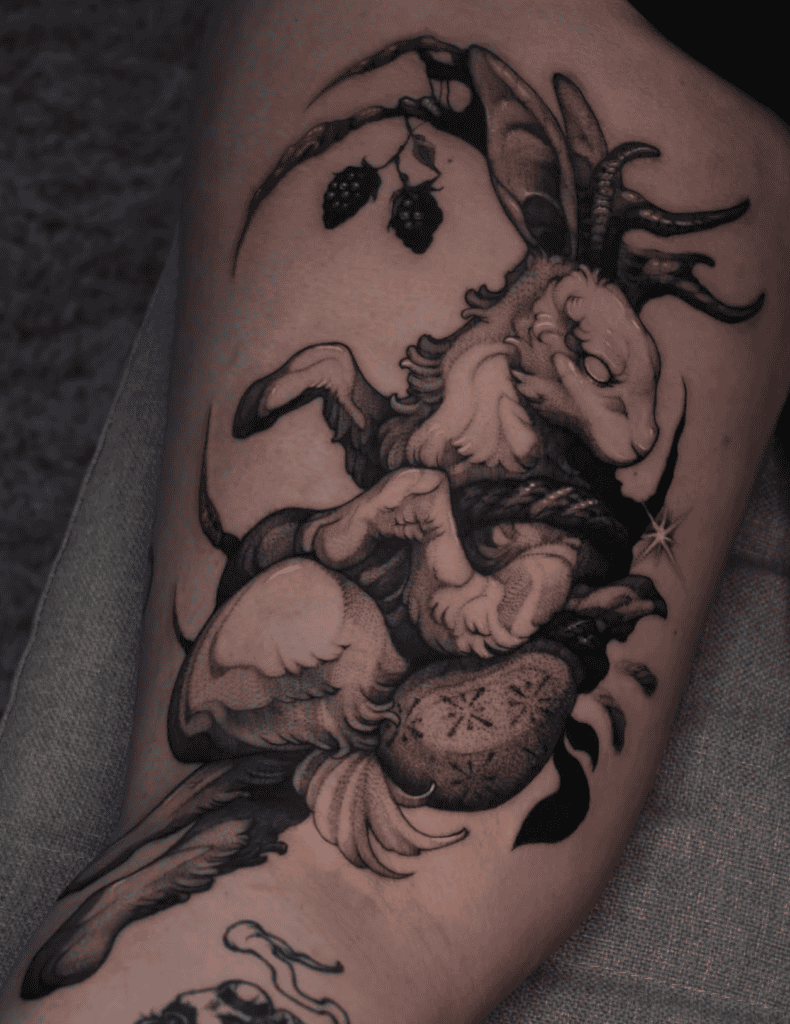
Jackalope Rabbit Tattoo
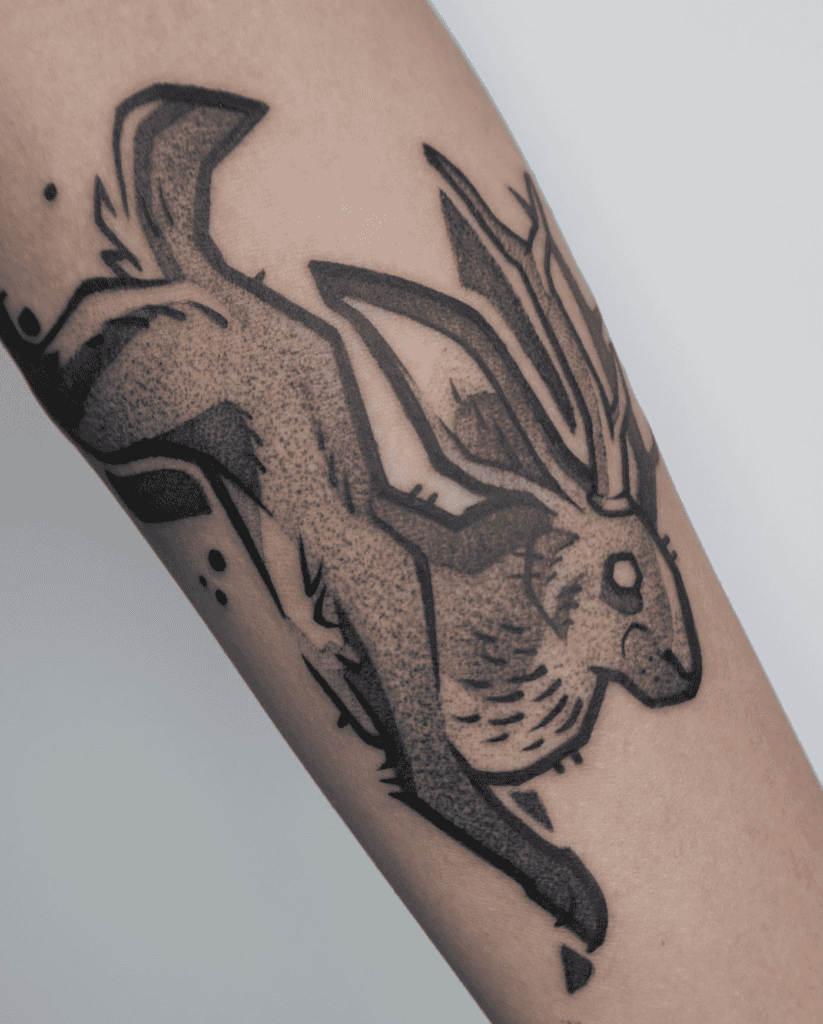
The Jackalope is a legendary creature from North American folklore, usually depicted as a jackrabbit or rabbit with antelope- or deer-like horns. The name combines jackrabbit and antelope. It became especially associated with the American West, particularly Wyoming, where it grew into a popular tall tale and cultural icon.
According to folklore, Jackalopes are shy, elusive creatures that roam deserts, plains, and mountain regions, often hiding from humans. They are sometimes said to be incredibly fast, clever, and capable of mimicking human voices. Some legends even claim that their milk has unusual properties or that they can be dangerous when threatened!
Jade Rabbit Tattoo
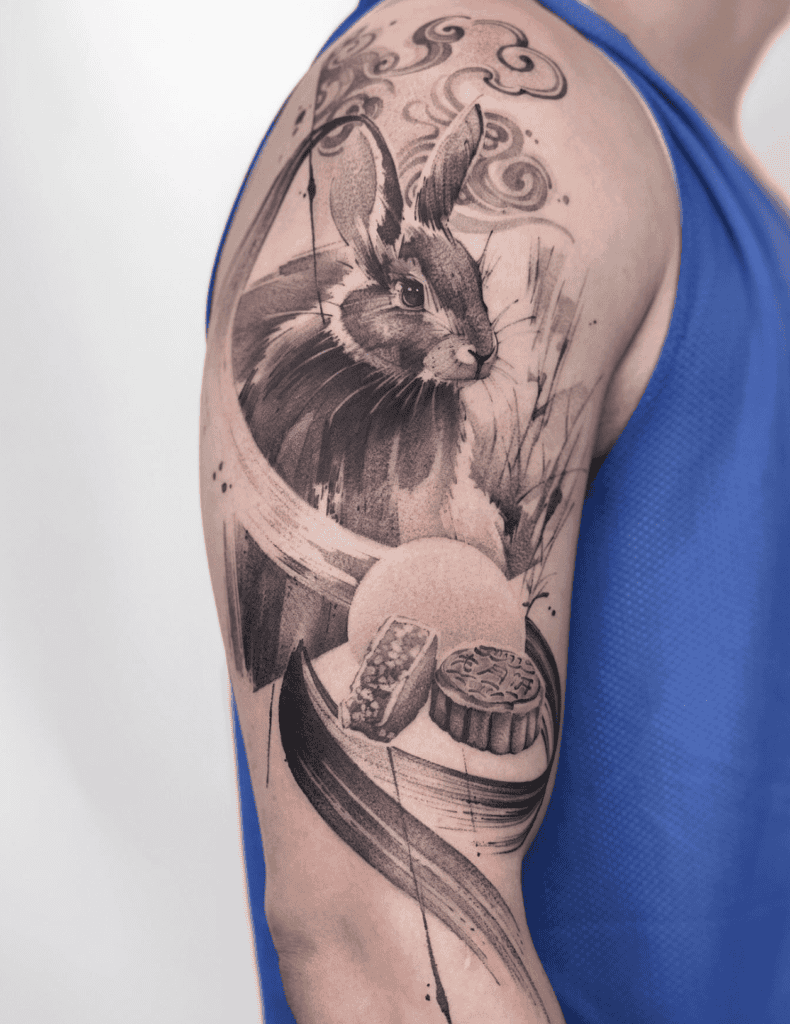
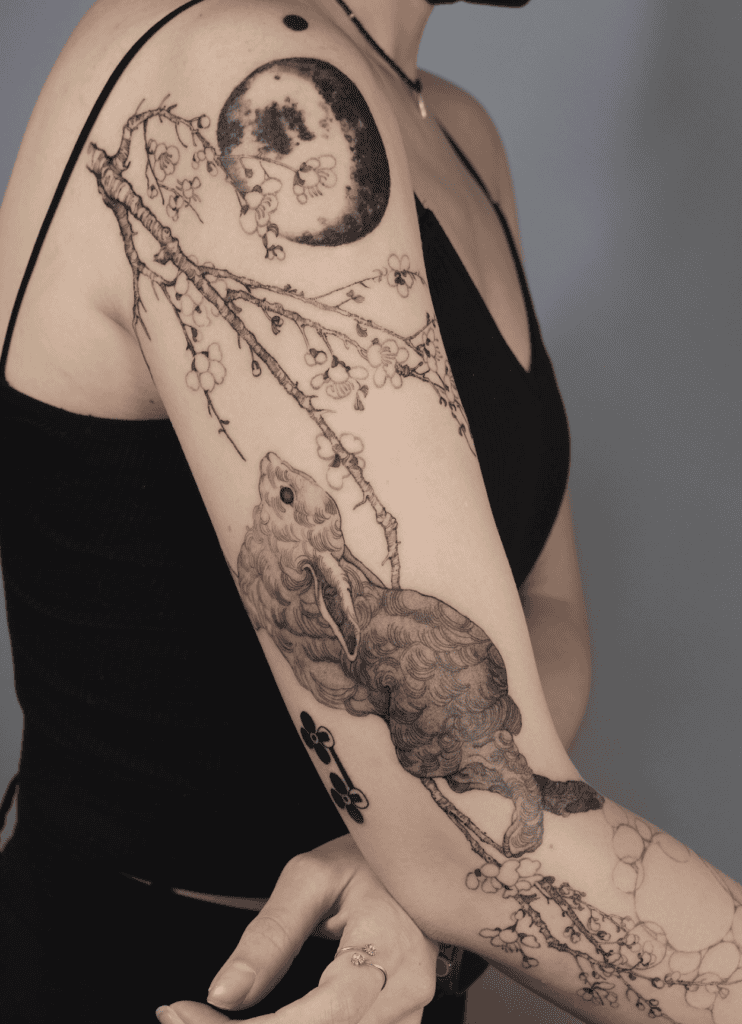
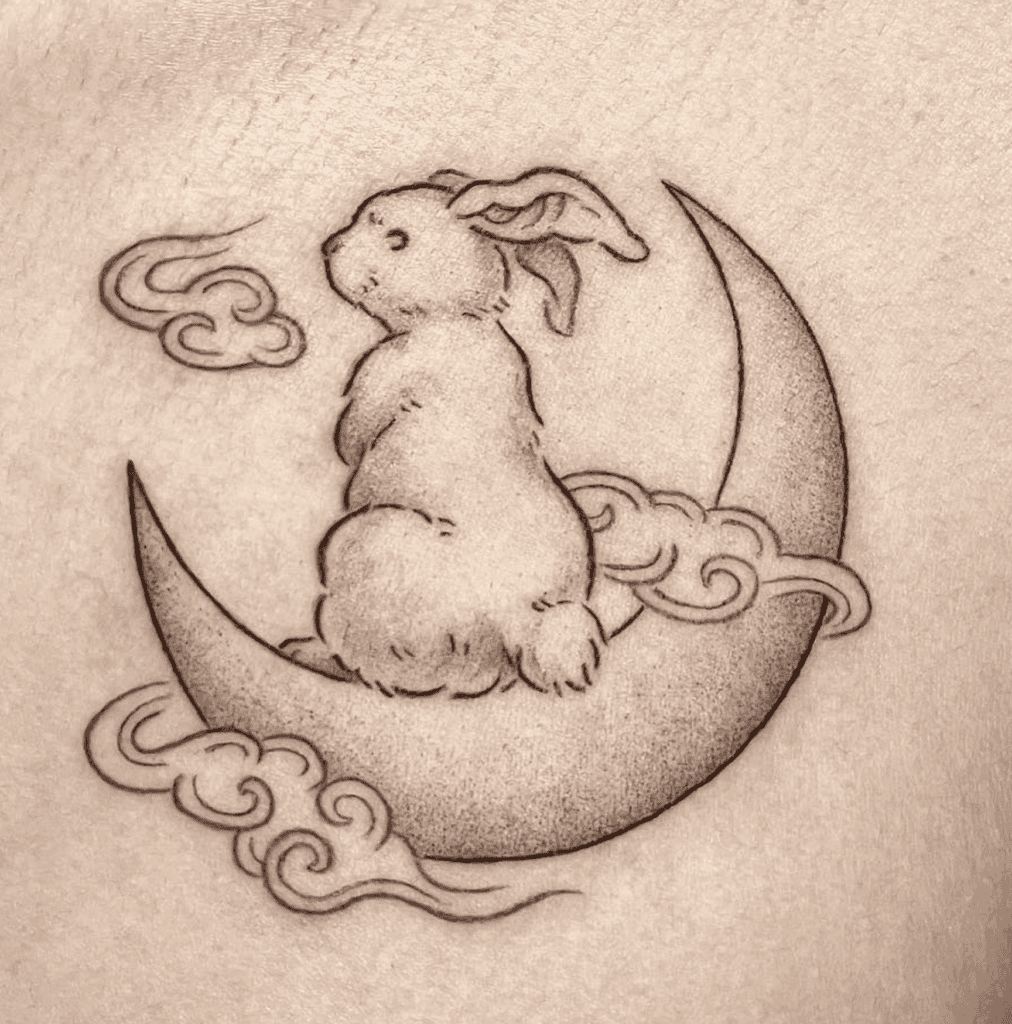
The Jade Rabbit, or Yùtù, is one of the most famous creatures in Chinese mythology, said to live on the Moon alongside the Moon goddess Chang’e. When people look at the Moon, they traditionally imagine the darker patterns on its surface as the silhouette of a rabbit.
The Jade Rabbit is often portrayed as a pure white rabbit with magical or immortal qualities, tirelessly working with a mortar and pestle. Its most famous task is pounding herbs to make the elixir of immortality for Chang’e. Because of this, the rabbit became associated with longevity, immortality, the Moon, and medicine.
Ceann Caol Rabbit Tattoo
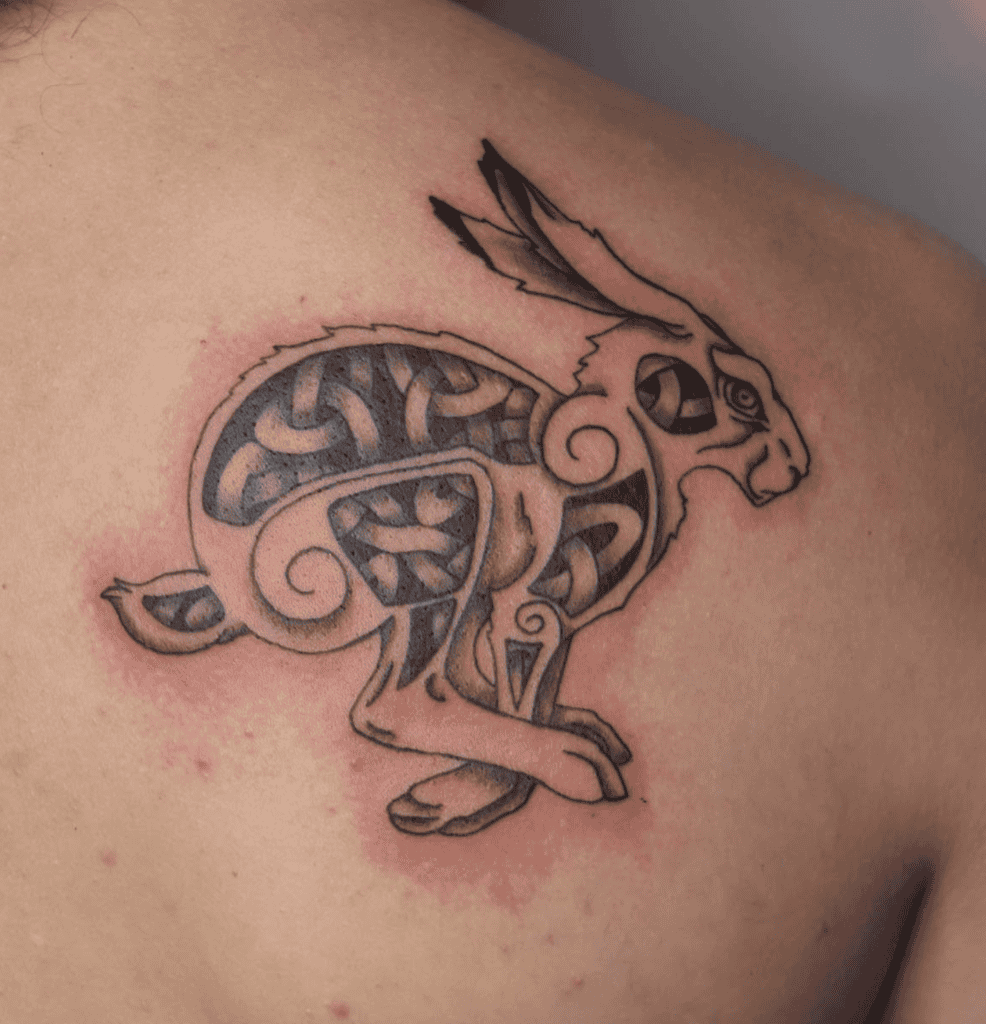
The Ceann Caol is a creature from Irish folklore, traditionally described as a strange or supernatural rabbit-like animal. The name is Irish for “narrow head,” although descriptions and folklore surrounding it can vary between sources. It is associated with the mysterious and supernatural side of the Irish countryside, fitting into the broader tradition of unusual animals, fairy creatures, and folkloric beasts found in Irish storytelling.
Because the Ceann Caol is a very obscure folkloric figure, surviving descriptions aren’t nearly as consistent as those of creatures like the púca or banshee, so it’s best treated as a regional/lesser-known piece of Irish folklore rather than a creature with one fixed mythology.
The Easter Bunny Rabbit Tattoo
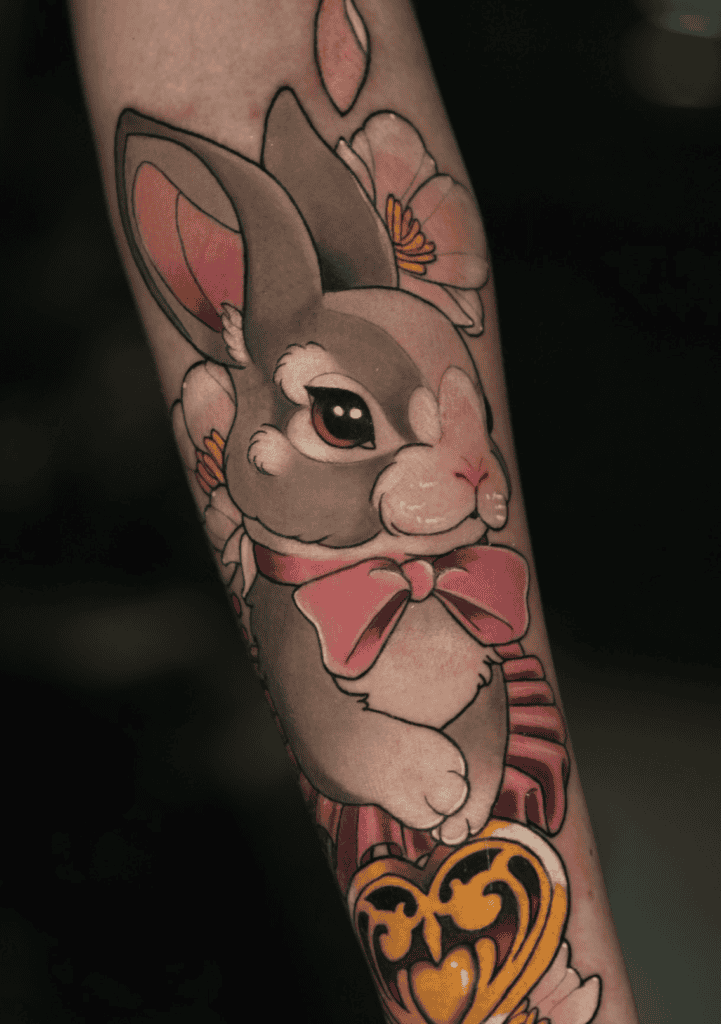
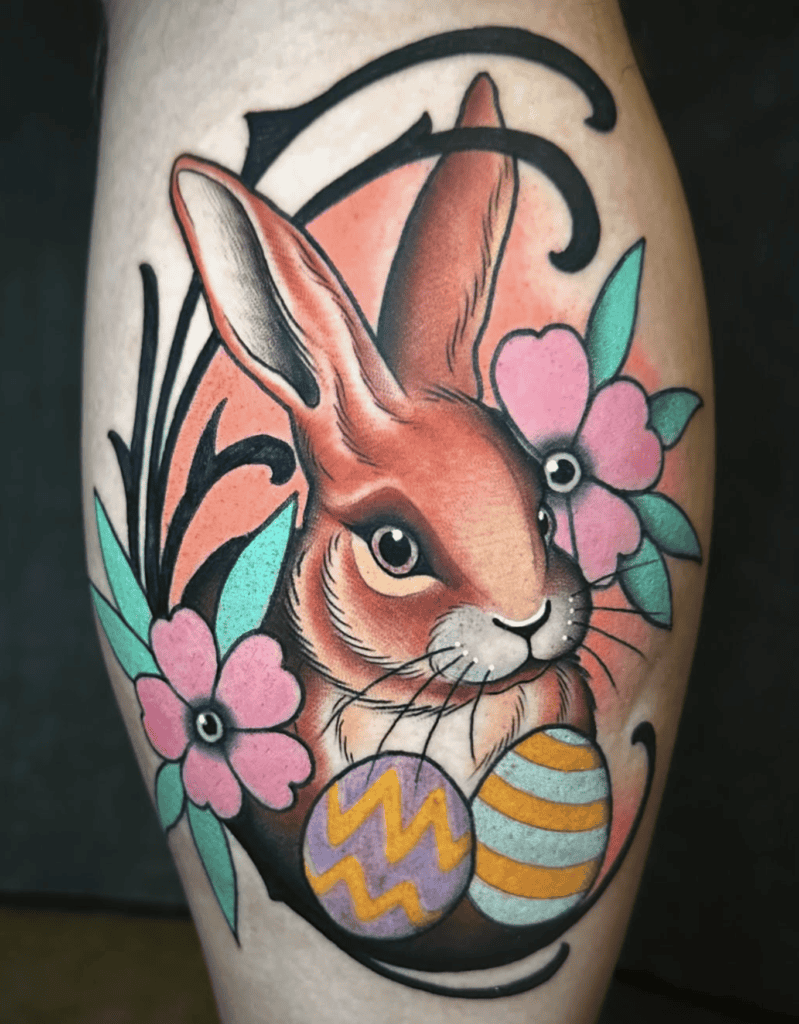
The Easter Bunny is a popular folkloric character associated with Easter, traditionally depicted as a rabbit or hare that brings colored eggs, sweets, and gifts to children.
The tradition has roots in German-speaking European folklore, where the “Easter Hare” (Osterhase) was said to bring eggs to well-behaved children. German immigrants helped bring the tradition to North America, where it gradually evolved into the familiar Easter Bunny.
Al-mi’raj Rabbit Tattoo
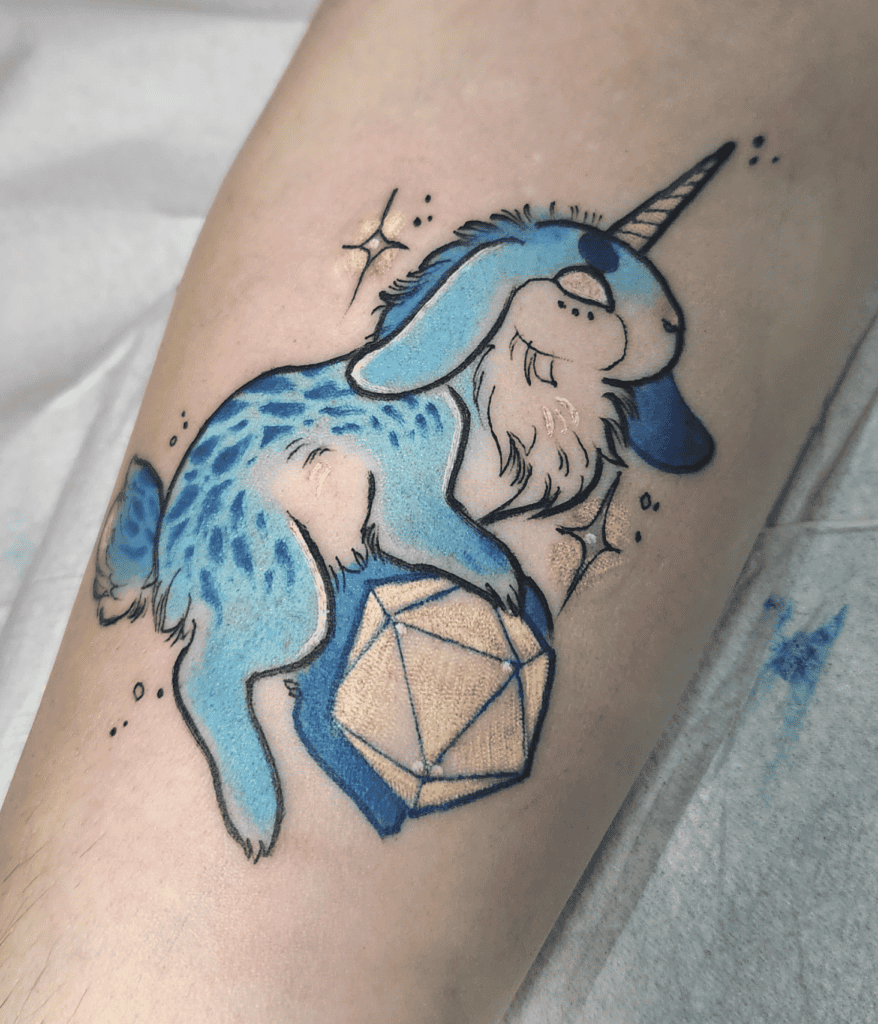
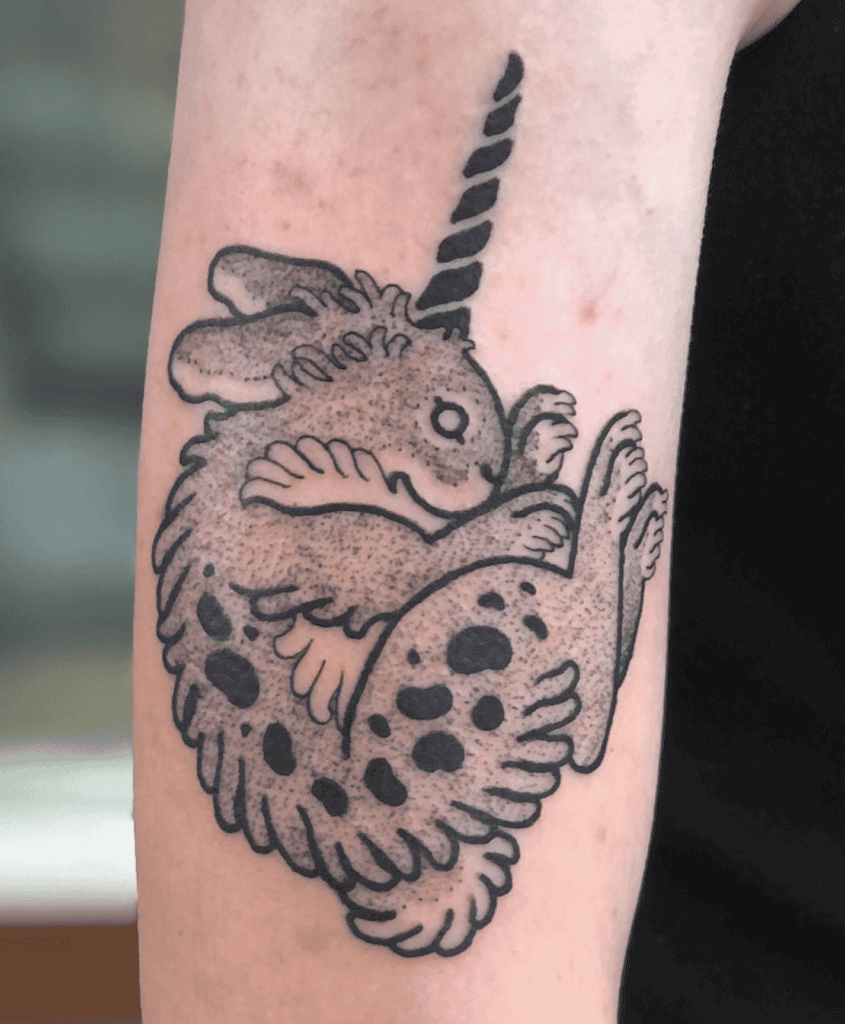
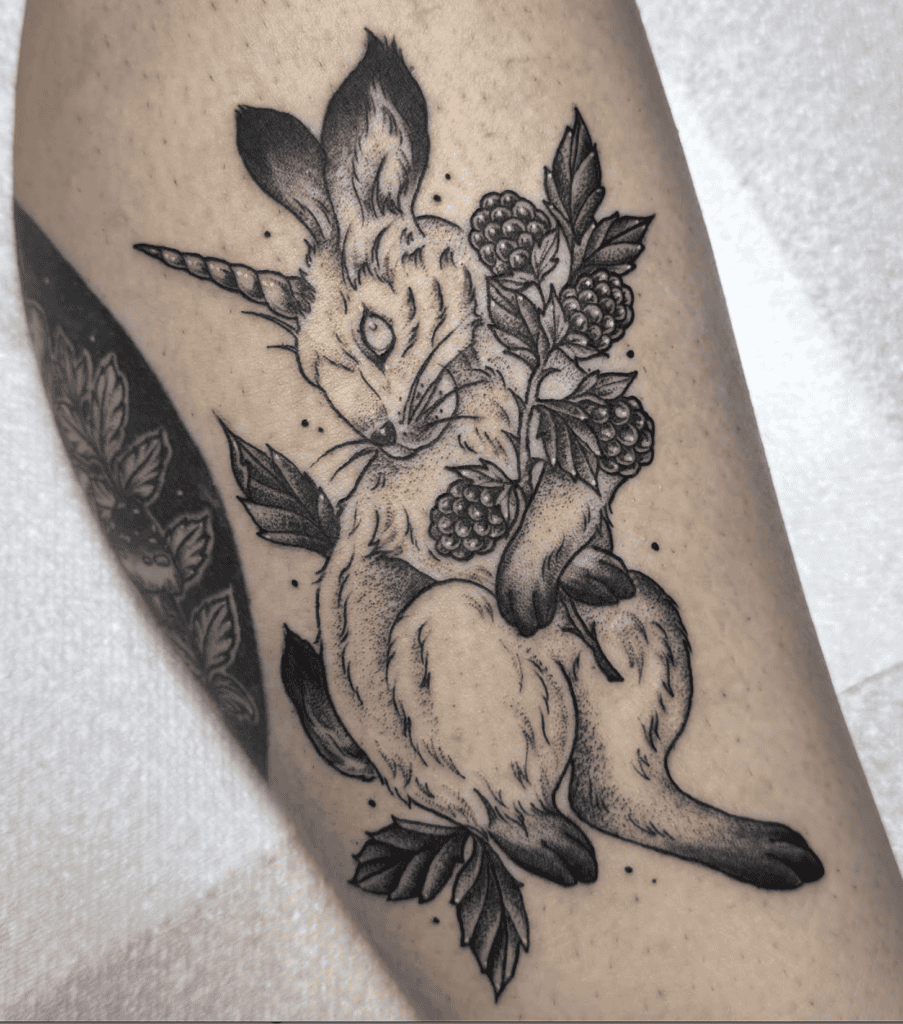
Al-mi’raj is a legendary creature from Arabian folklore, often described as a small yellow rabbit-like animal with a single black horn growing from its head. It is said to live on the mysterious island of Jazirat al-Tinnin (“Island of the Dragon”) in the Indian Ocean.
According to the legend, the Al-mi’raj is extraordinarily fast and dangerous despite its cute appearance. Its horn is said to be capable of killing much larger animals, including creatures as powerful as dragons.
B – Rabbit Tattoo
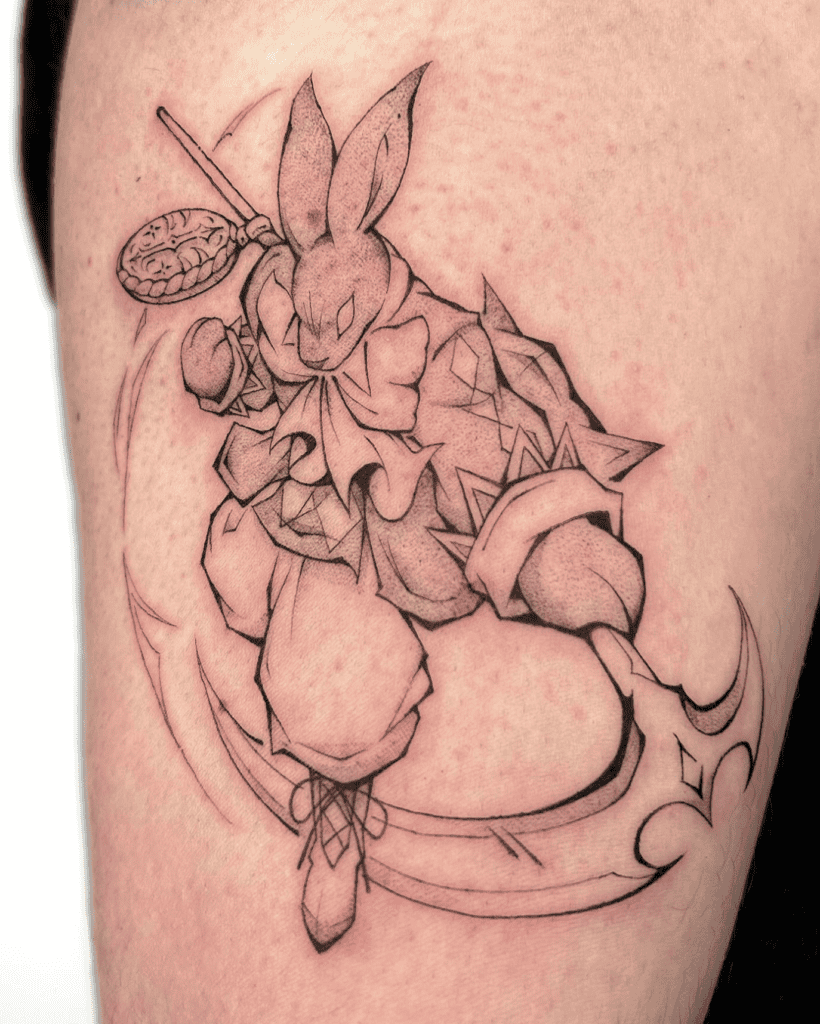
B-Rabbit (Bloodstained Black Rabbit) is one of the central Chains in Jun Mochizuki’s Pandora Hearts. She appears as a mysterious, monstrous black rabbit. B-Rabbit is closely connected to Alice, one of the story’s most important characters. Her true identity and the relationship between B-Rabbit, Alice, and the Abyss are major mysteries that gradually unravel throughout the series.
Peter Rabbit Tattoo
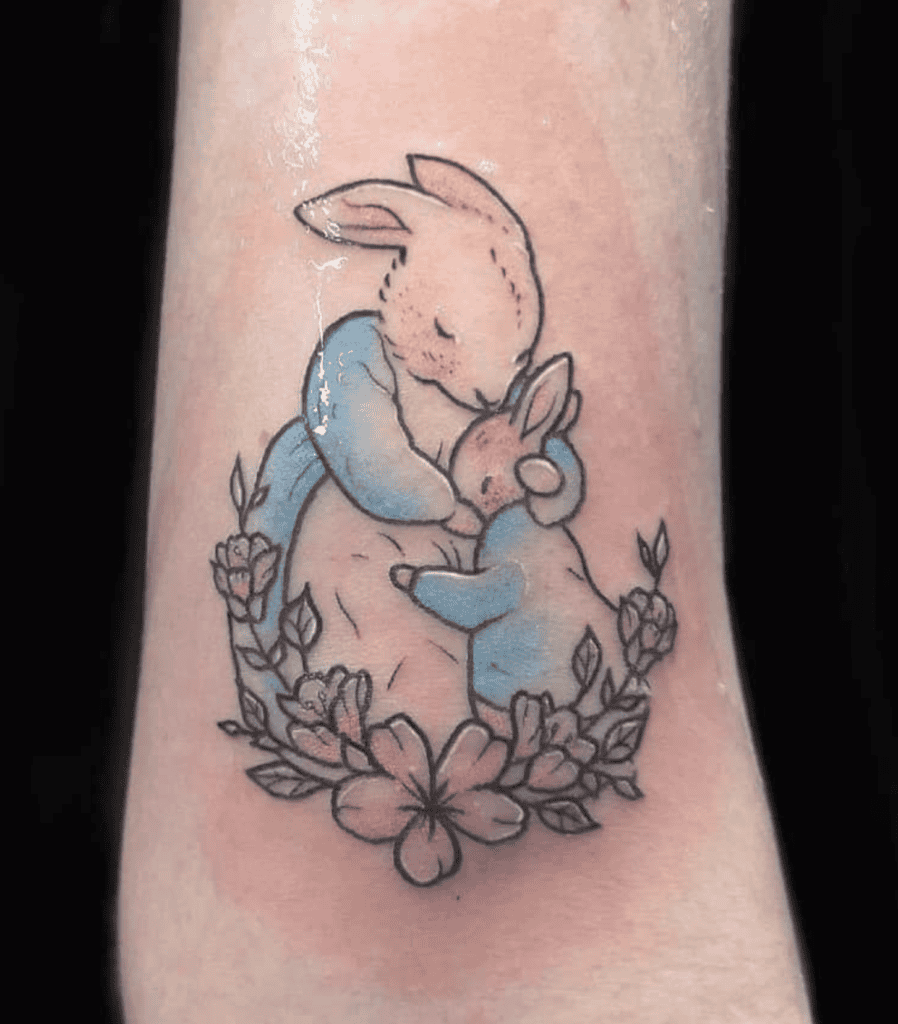
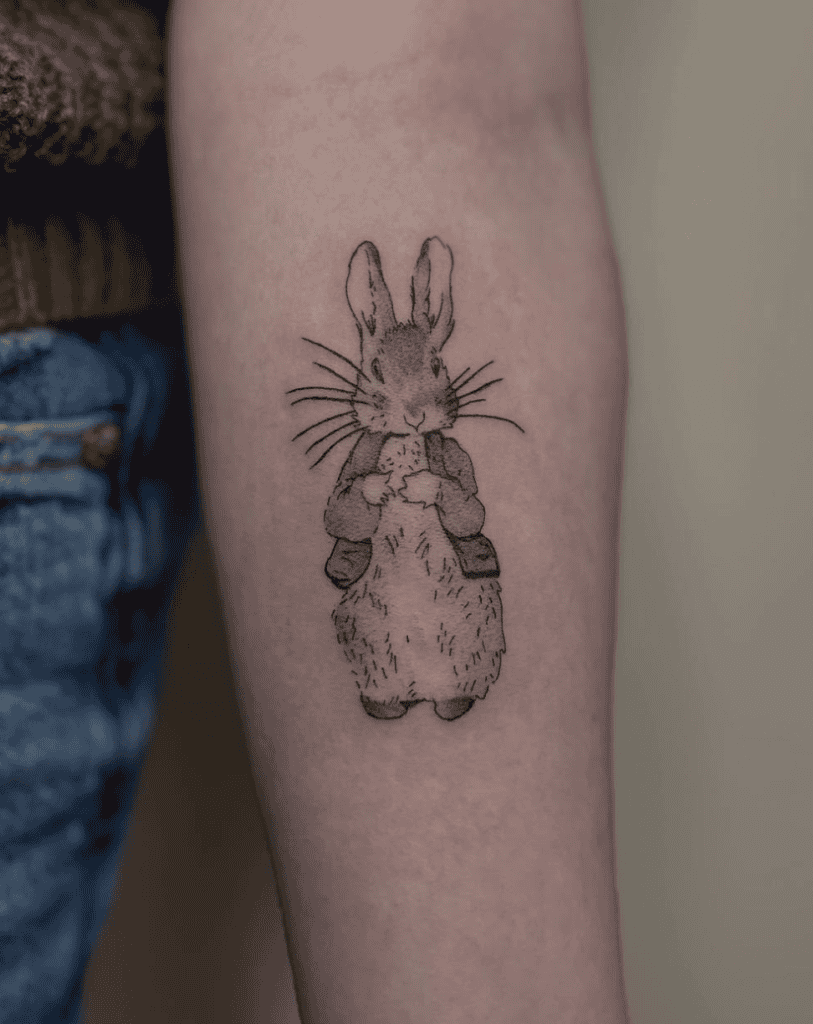
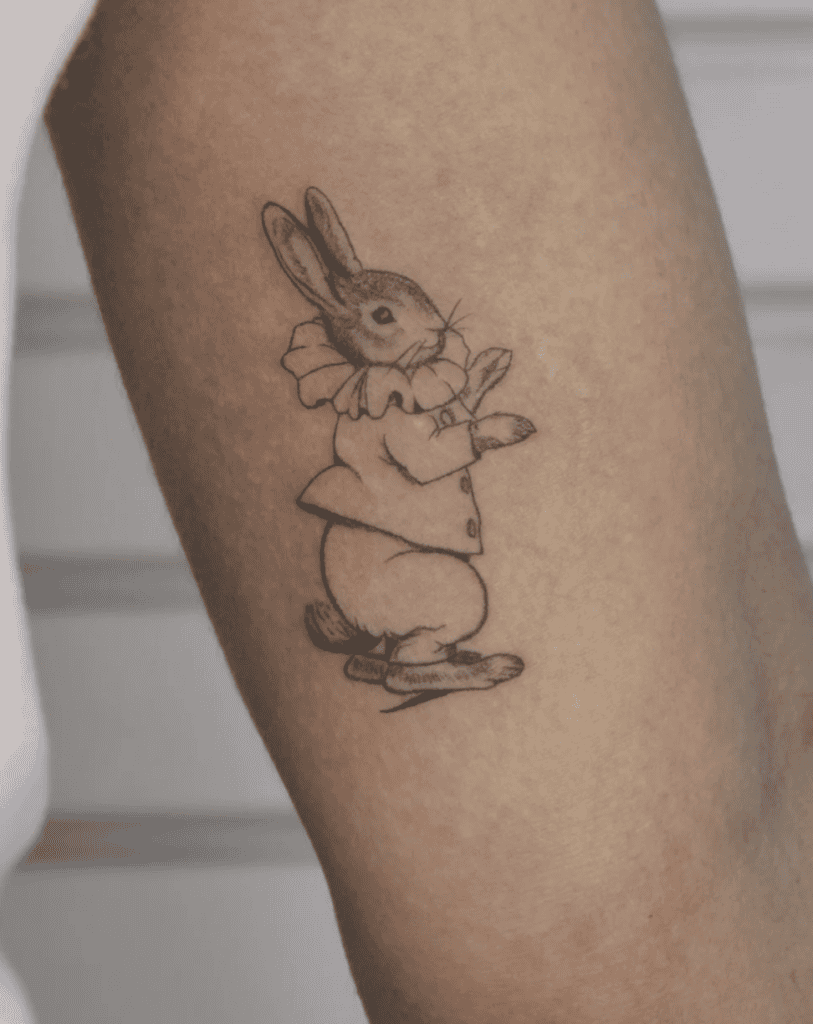
Peter Rabbit is the mischievous title character of Beatrix Potter’s beloved children’s book The Tale of Peter Rabbit, first published in 1902. He is a small, blue-jacket-wearing rabbit who is curious, adventurous, and famously bad at following instructions.
Peter lives with his mother and three siblings, Flopsy, Mopsy, and Cotton-tail. Despite being warned not to enter Mr McGregor’s garden, Peter sneaks in to eat vegetables, leading to a chaotic adventure as Mr McGregor chases him around the garden.
Watership Down Rabbit Tattoo
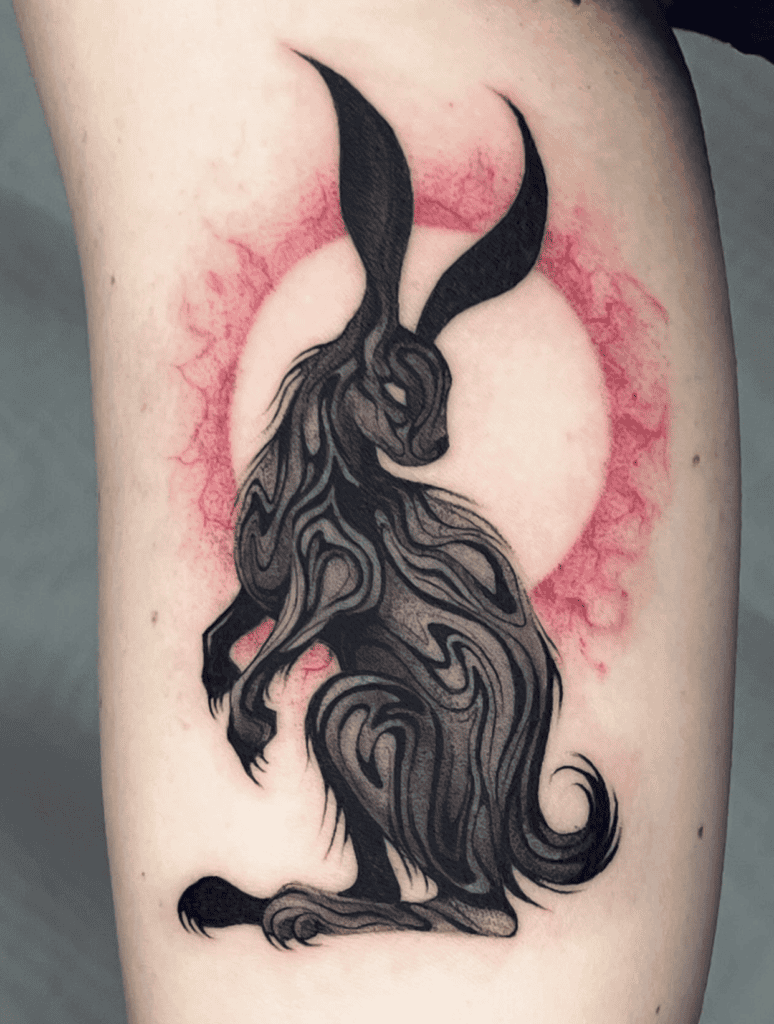
The Black Rabbit of Inlé is a mysterious and frightening figure from Richard Adams’ Watership Down. He is the legendary personification of death among the rabbits. The Black Rabbit is said to live in Inlé, the rabbit word for the dark or nighttime world. He represents the inevitable end of life and guards the natural order.
Bugs Bunny Rabbit Tattoo
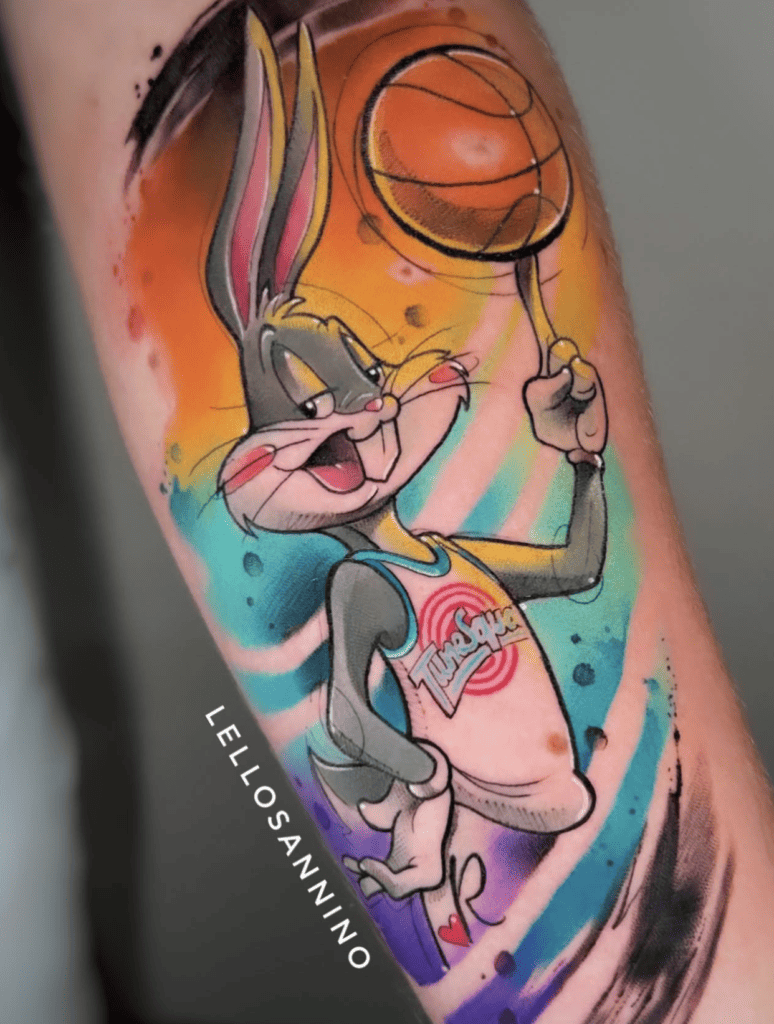
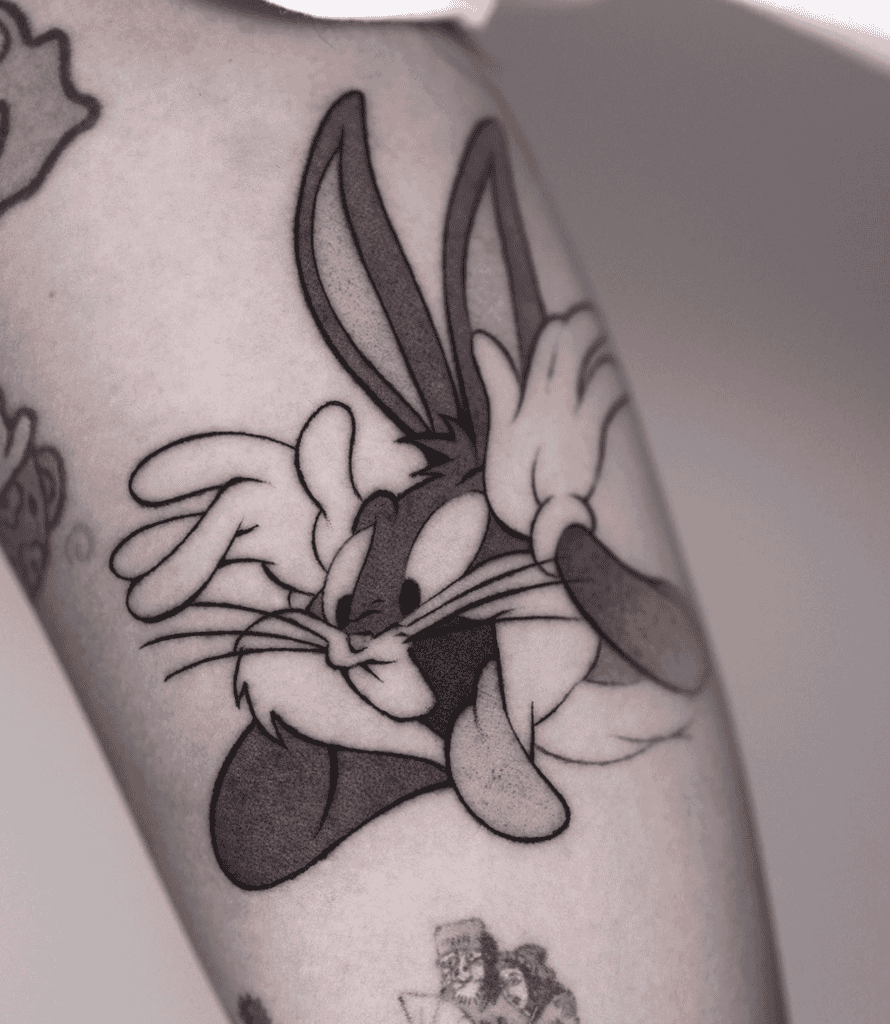
Bugs Bunny is one of the most iconic cartoon characters in animation history and the flagship character of Warner Bros. and Looney Tunes. He first appeared in his recognisable modern form in 1940 and is famous for his relaxed attitude, cleverness, and sarcasm.
Bugs is usually portrayed as a clever trickster who outsmarts anyone trying to hurt or capture him. Whether he’s dealing with Elmer Fudd, Yosemite Sam, Wile E. Coyote, or other enemies, Bugs rarely relies on brute strength, winning through wit, disguises, psychological tricks, and cartoon physics.
Pokémon Rabbit Tattoo
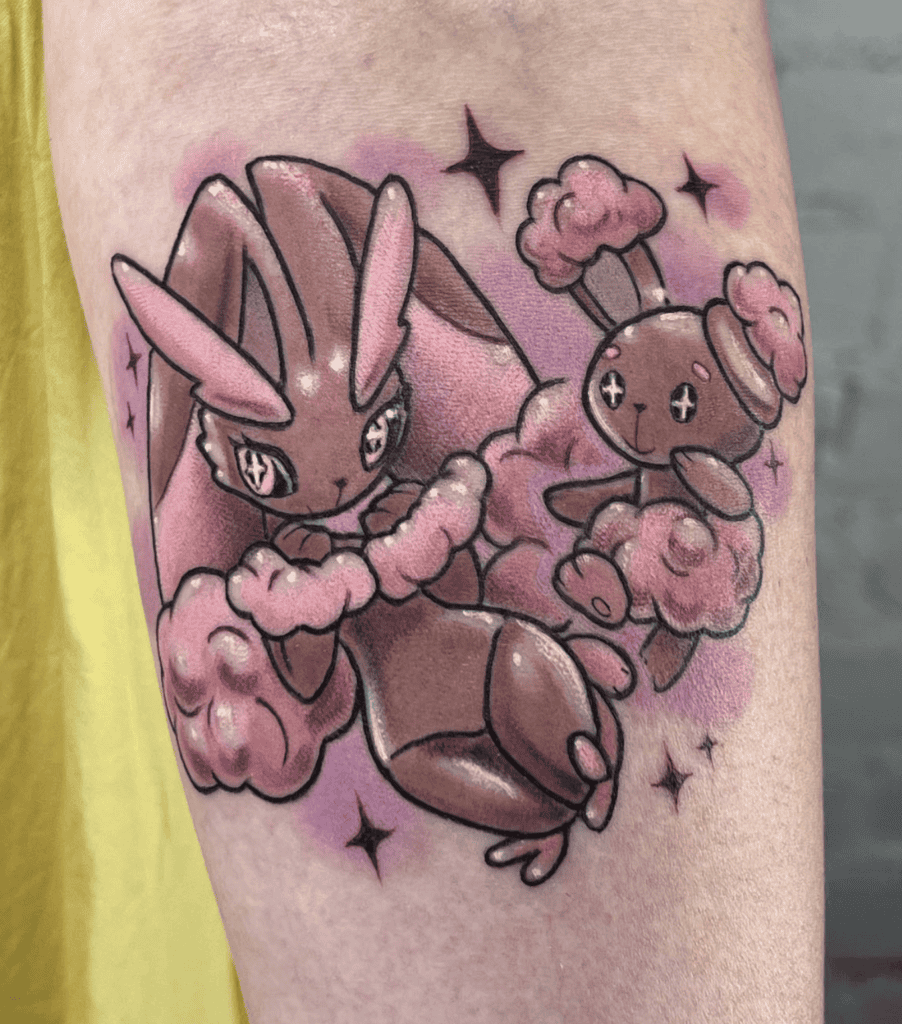
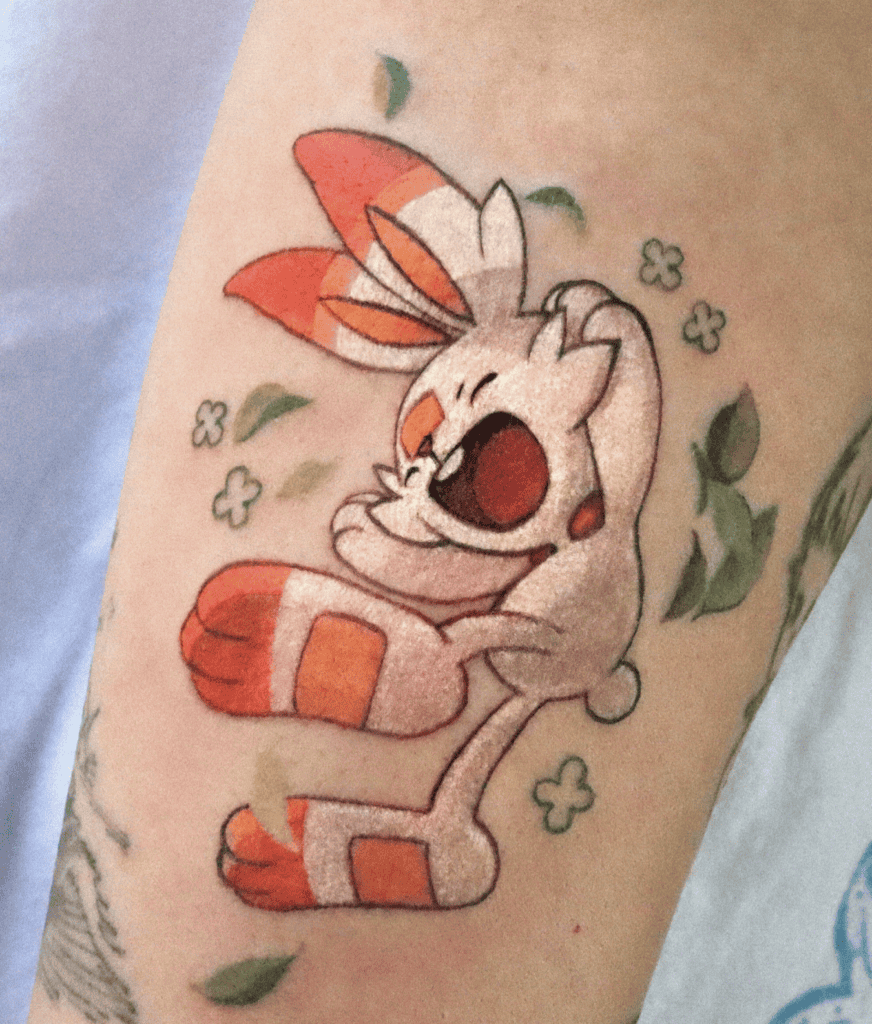
The Pokémon series has quite a few rabbit- and hare-inspired Pokémon, ranging from adorable little bunnies to powerful fighters, including Buneary, Lopunny, Scorbunny, Raboot, Cinderace, Bunnelby and Diggersby.
Roger Rabbit Tattoo
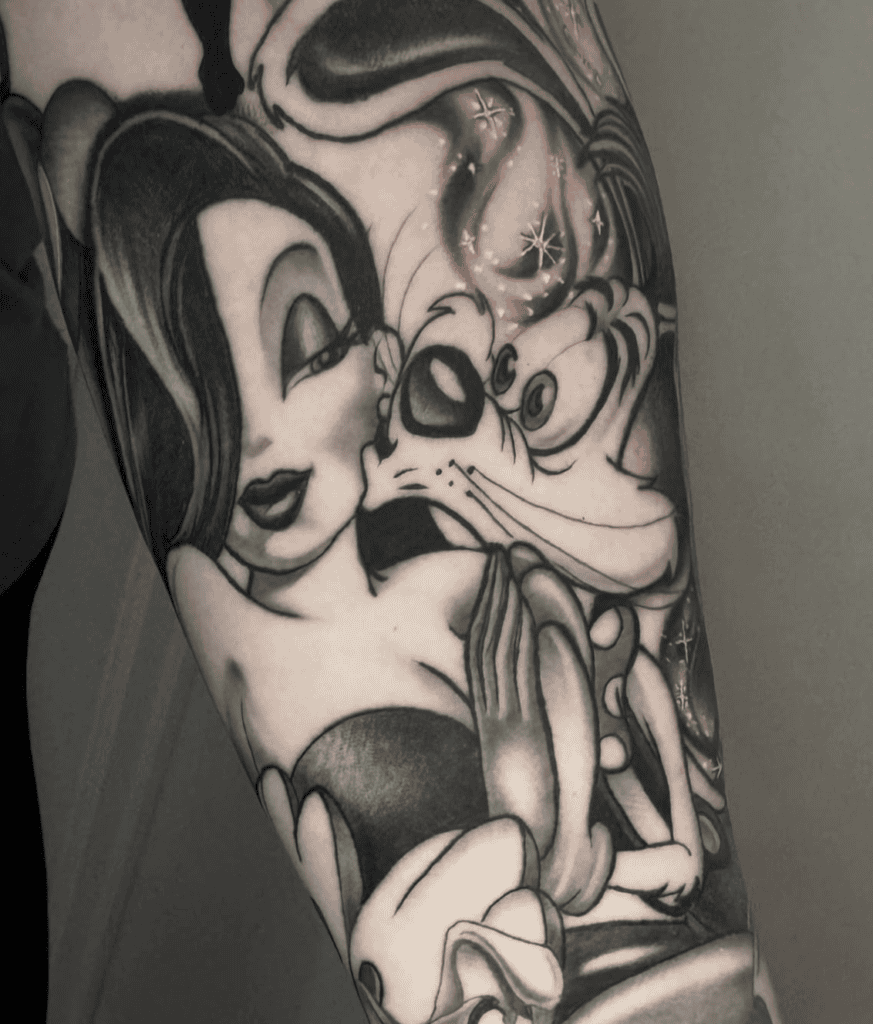
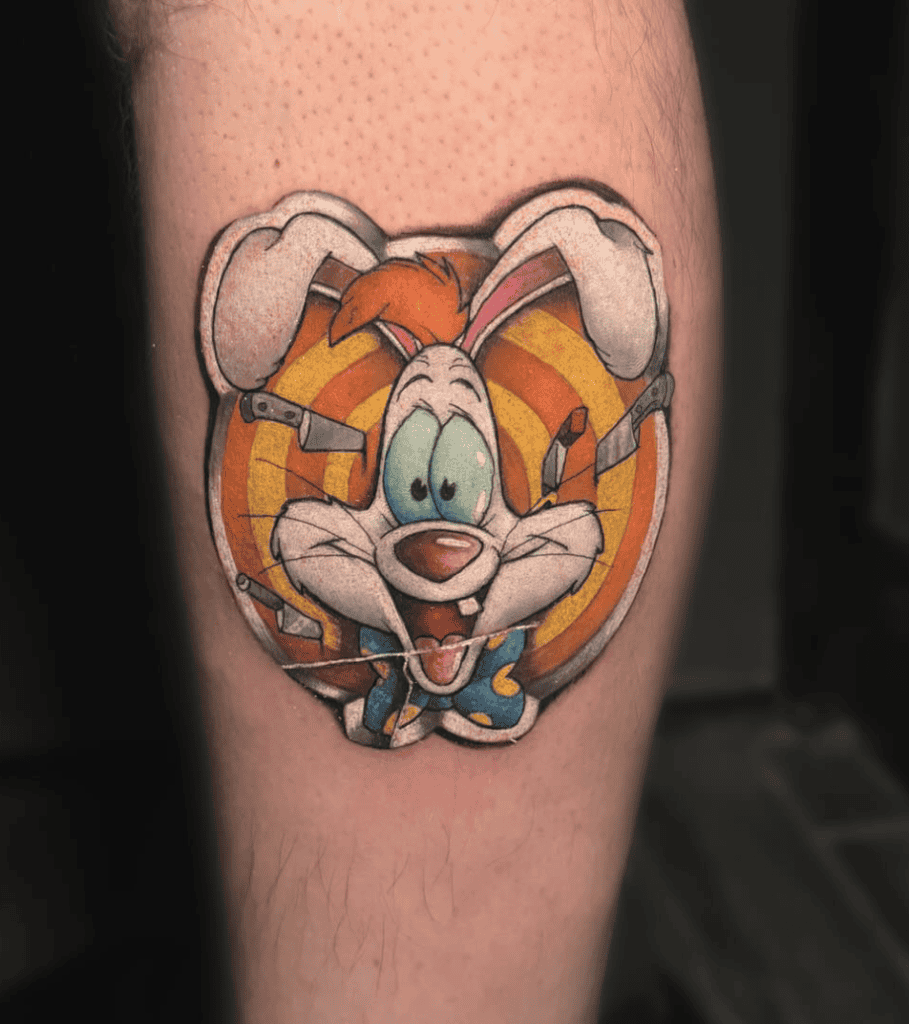
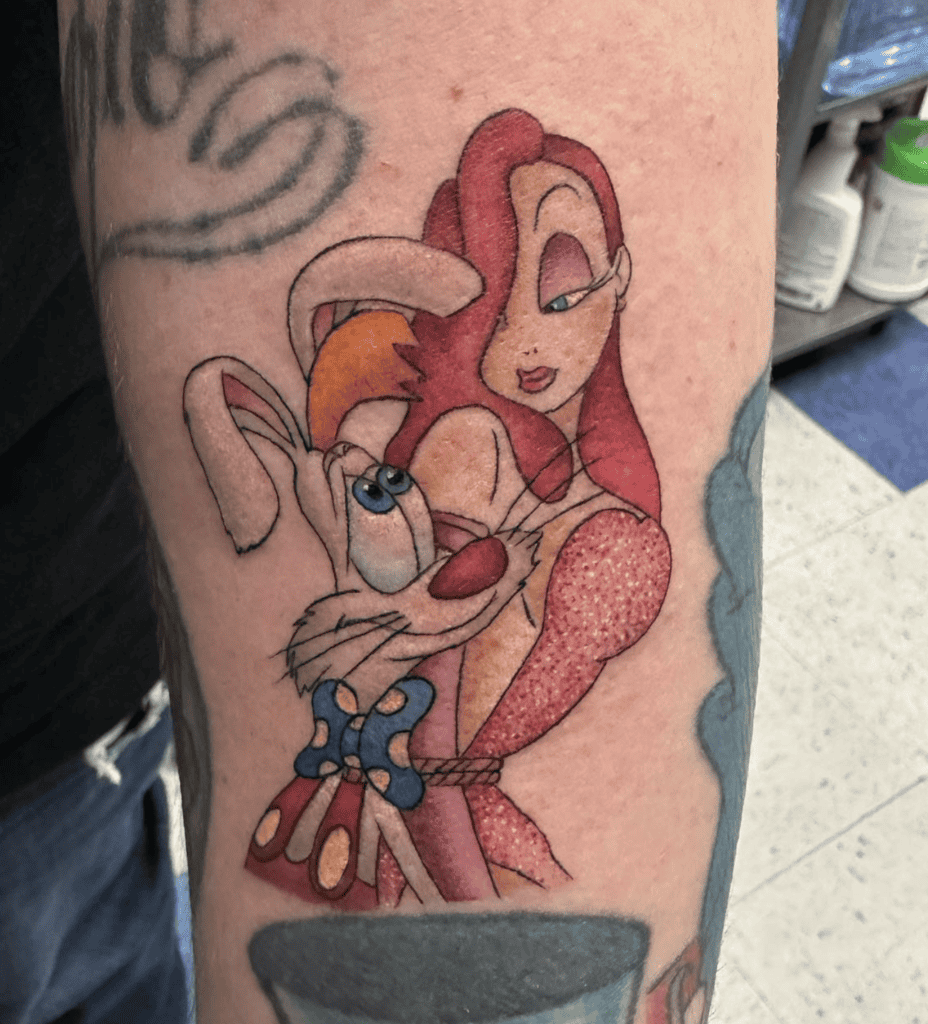
Roger Rabbit is the energetic protagonist of the 1988 film Who Framed Roger Rabbit. He is an animated white rabbit who works as a cartoon actor at Maroon Cartoon Studio and is famous for his huge ears, red overalls, gloves, and incredibly expressive personality.
Roger is goofy, nervous, affectionate, and extremely emotional, often getting himself into trouble because he acts before thinking. Despite his comedic nature, he’s deeply devoted to his wife Jessica Rabbit and becomes determined to uncover the truth when he is framed for murder.
Oswald the Lucky Rabbit Tattoo
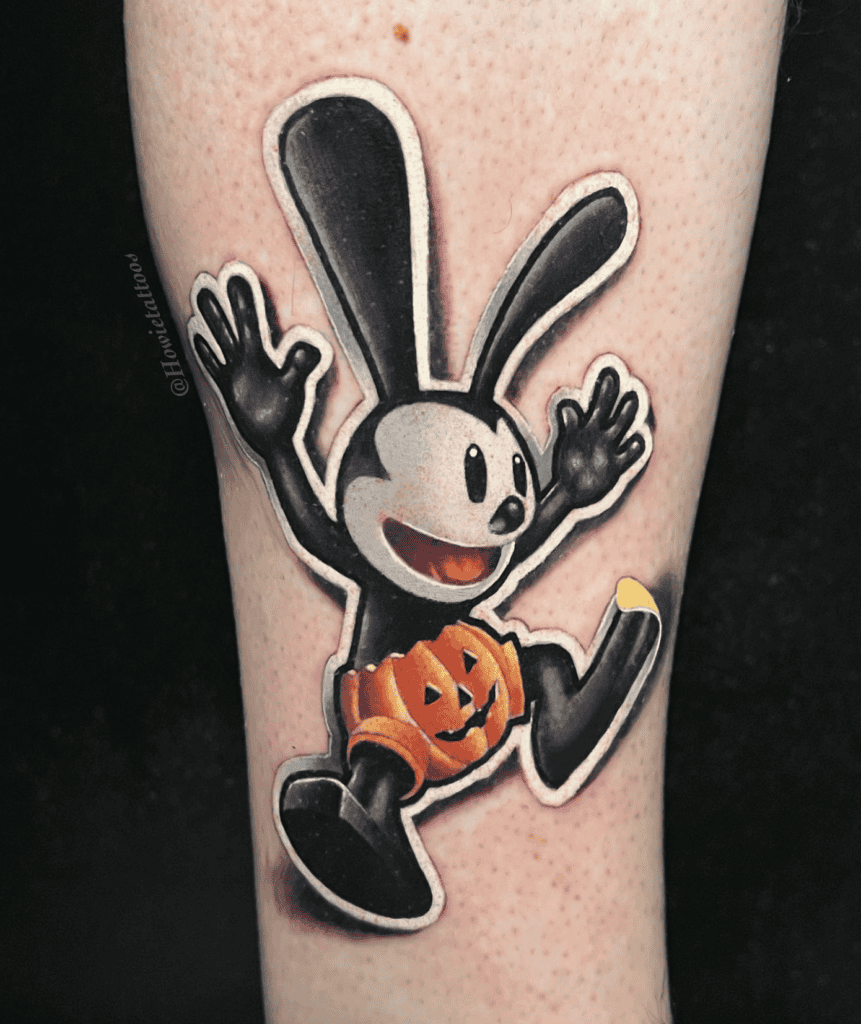
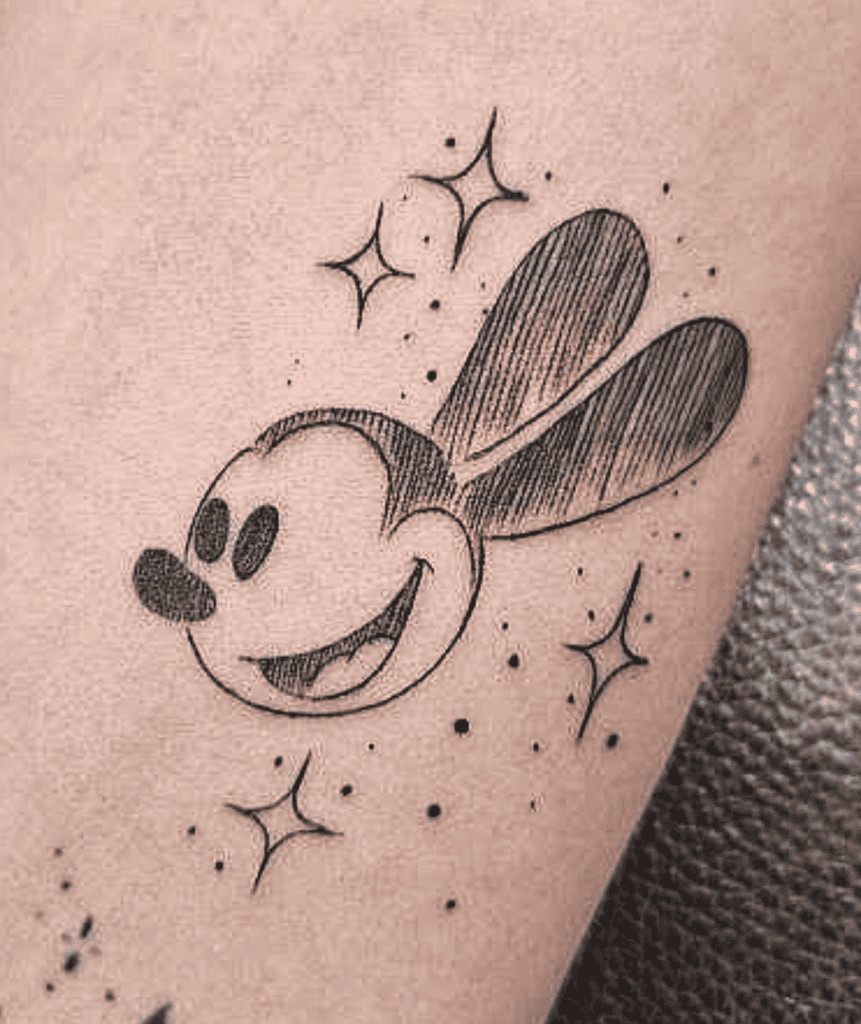
Oswald the Lucky Rabbit, created in 1927, is one of the earliest and most historically important cartoon rabbit characters. Oswald was created by Walt Disney and Ub Iwerks before the creation of Mickey Mouse. After Disney lost control of the character, this experience helped inspire him to create a new character he could retain greater control over, eventually leading to the creation of Mickey Mouse.
The White Rabbit Tattoo
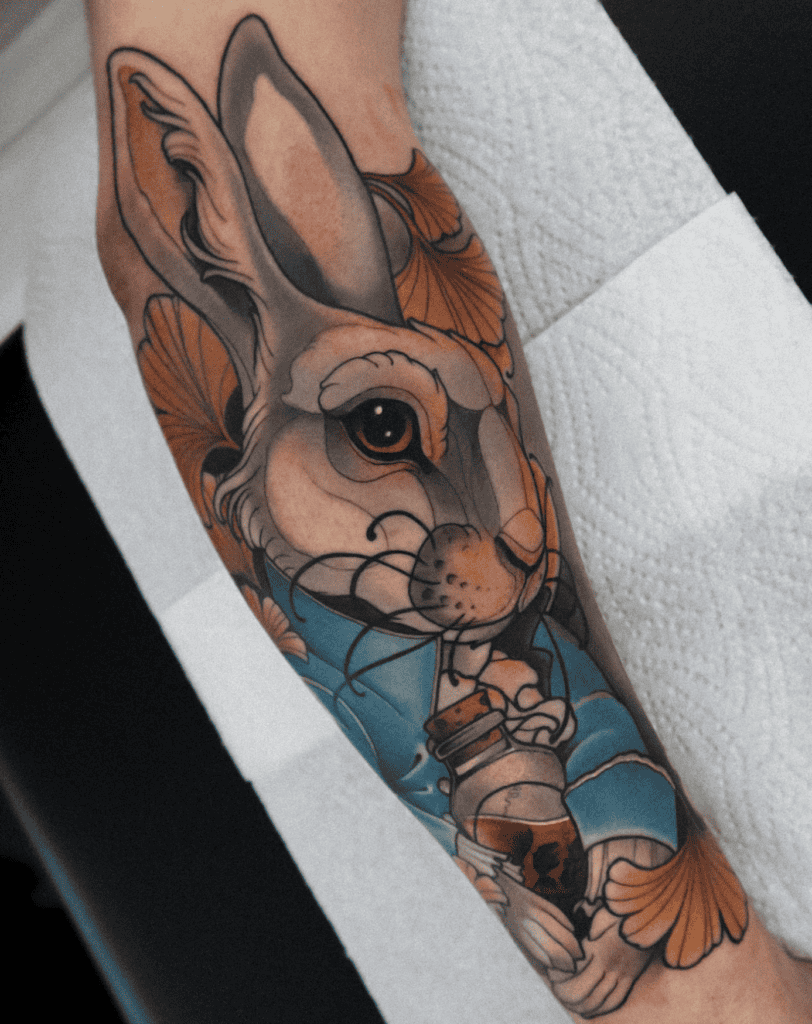
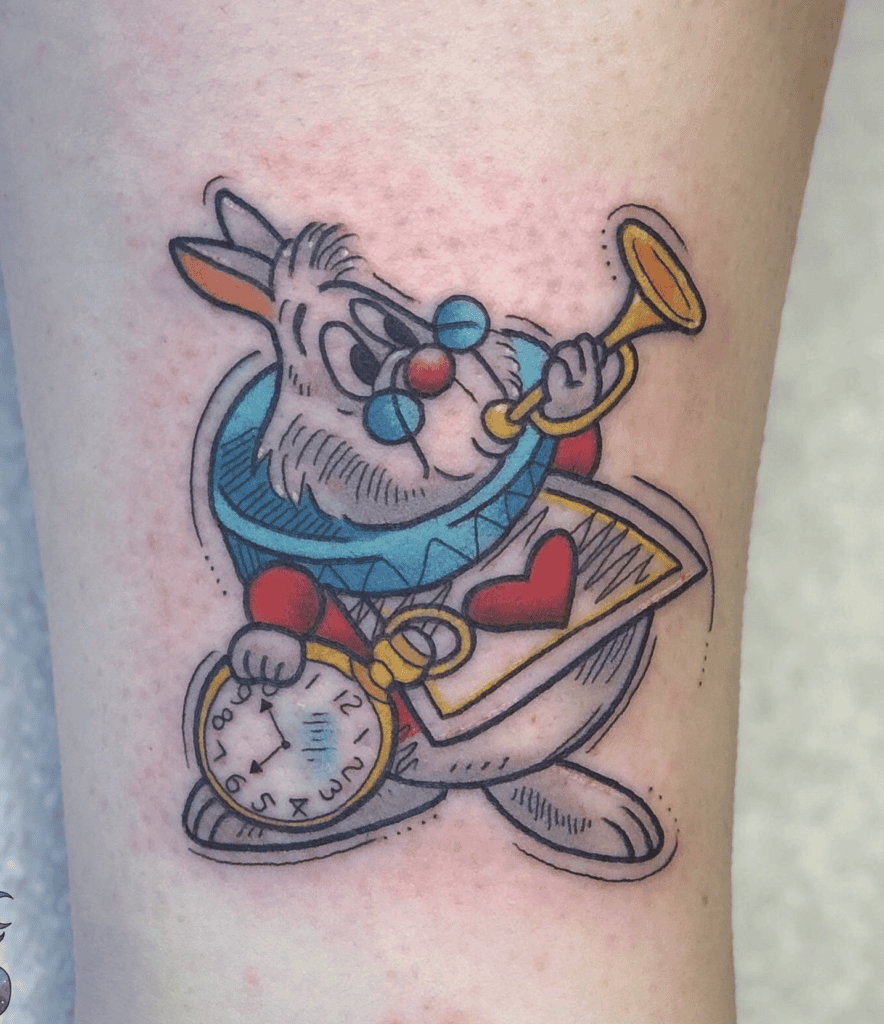
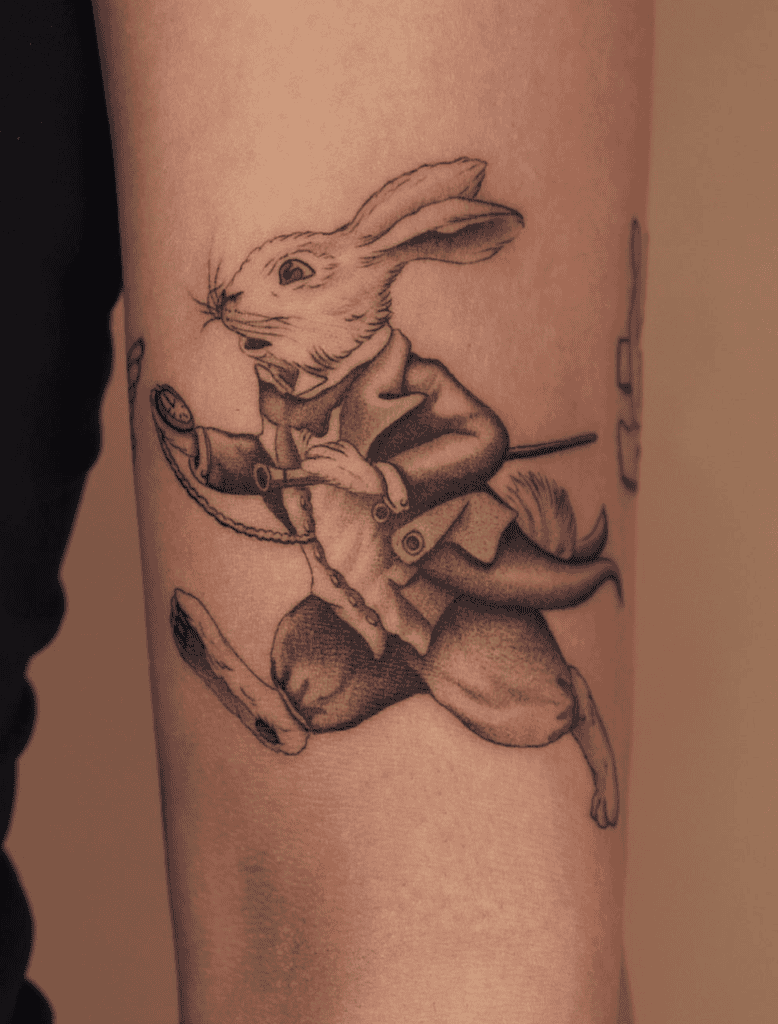
The White Rabbit is one of the most famous characters from Lewis Carroll’s Alice’s Adventures in Wonderland. He is a nervous, well-dressed white rabbit who famously carries a pocket watch and constantly worries that he’s late.
His appearance at the beginning of the story sets the entire adventure in motion. When Alice sees him rushing past and hears him worrying about being late, she follows him down a rabbit hole, leading her into the strange and magical world of Wonderland.
Thumper Rabbit Tattoo
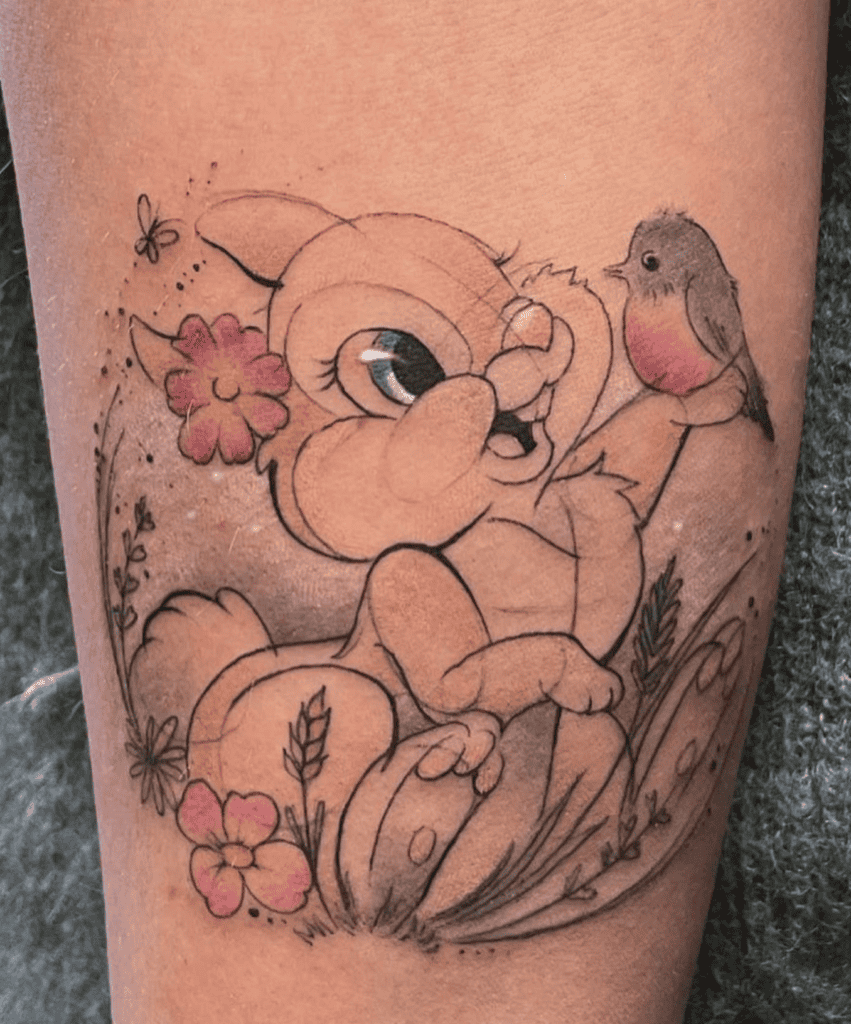
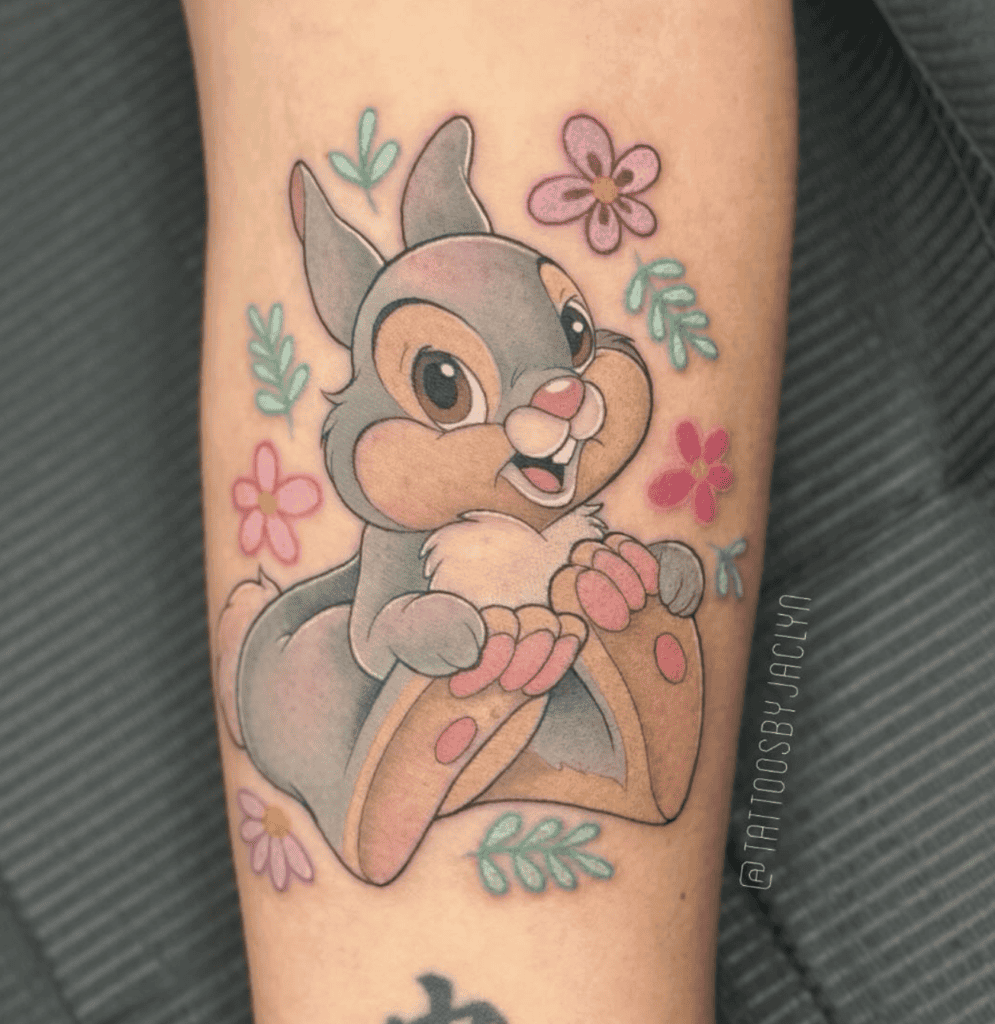
Thumper is a young rabbit and Bambi’s energetic best friend. He is loud, confident, mischievous, and talkative, often acting as a cheerful guide for the shyer and less experienced Bambi. Despite occasionally teasing him, Thumper is a loyal friend who helps introduce Bambi to the forest’s wonders and dangers.
Snowball Rabbit Tattoo
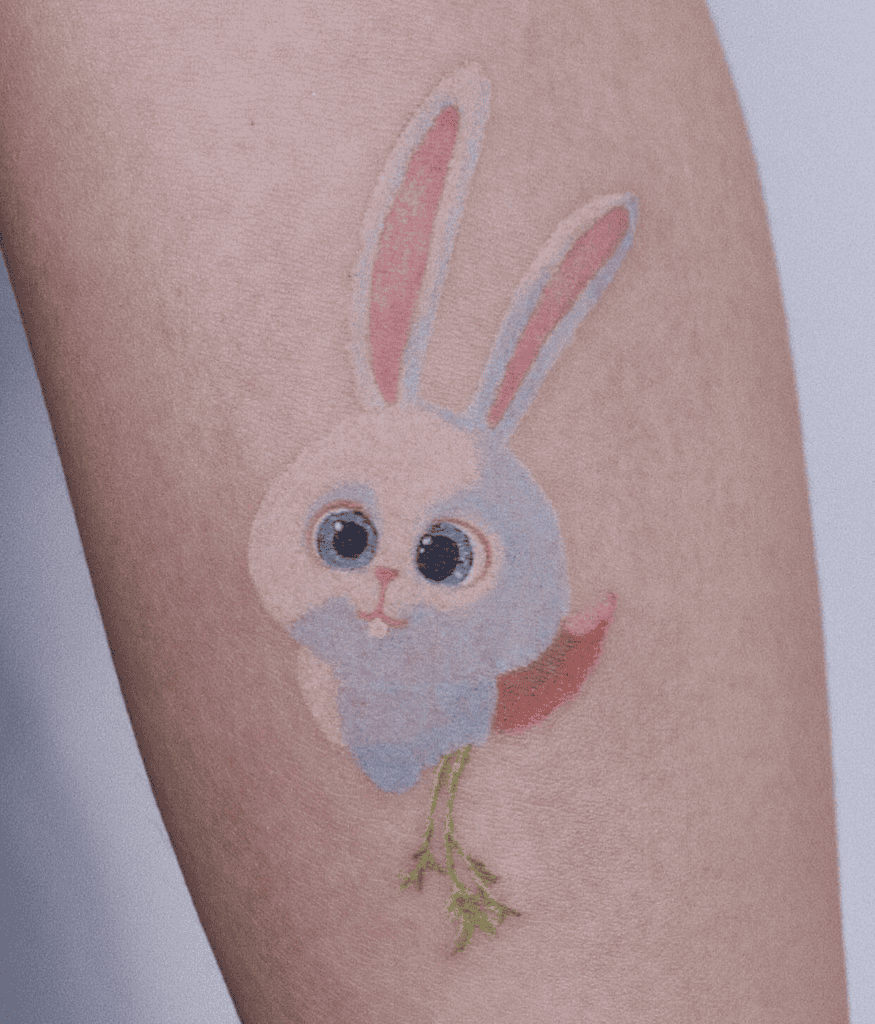
Snowball is one of the main characters in The Secret Life of Pets film series. While he looks like an adorable, fluffy white rabbit, beneath that cute appearance is a surprisingly wild, dramatic, and rebellious personality.
In the first film, Snowball is the leader of the Flushed Pets, a group of abandoned pets who resent humans and the happy lives of domesticated animals. He is initially portrayed as an antagonist, becoming obsessed with revenge against humans and their pets.
The Velveteen Rabbit Tattoo
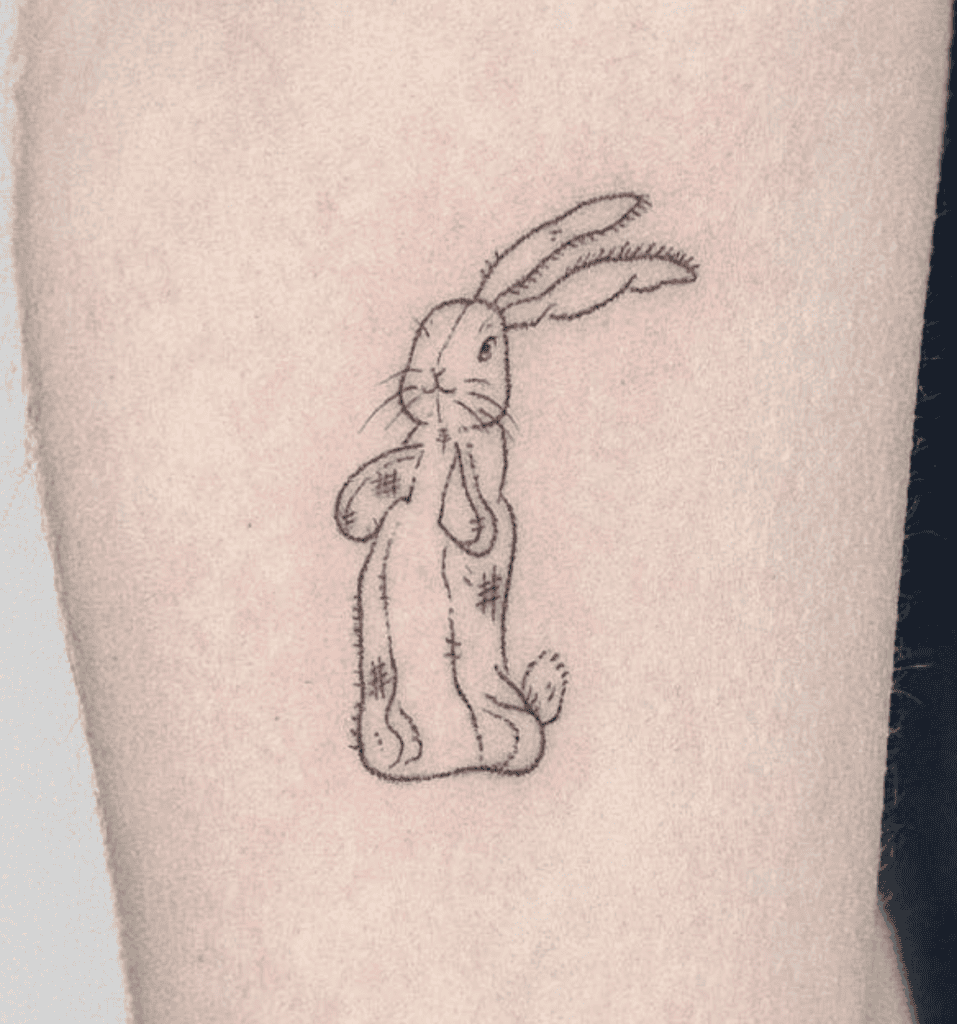
The Velveteen Rabbit is the beloved main character of The Velveteen Rabbit, a classic children’s story written by Margery Williams and first published in 1922. He begins as a stuffed toy rabbit, given to a young boy as a Christmas present.
At first, the Rabbit worries that he isn’t truly real. An older toy, the Skin Horse, explains that a toy becomes Real through the love of a child, not by how it looks, but by being loved deeply and genuinely.
Molang Rabbit Tattoo
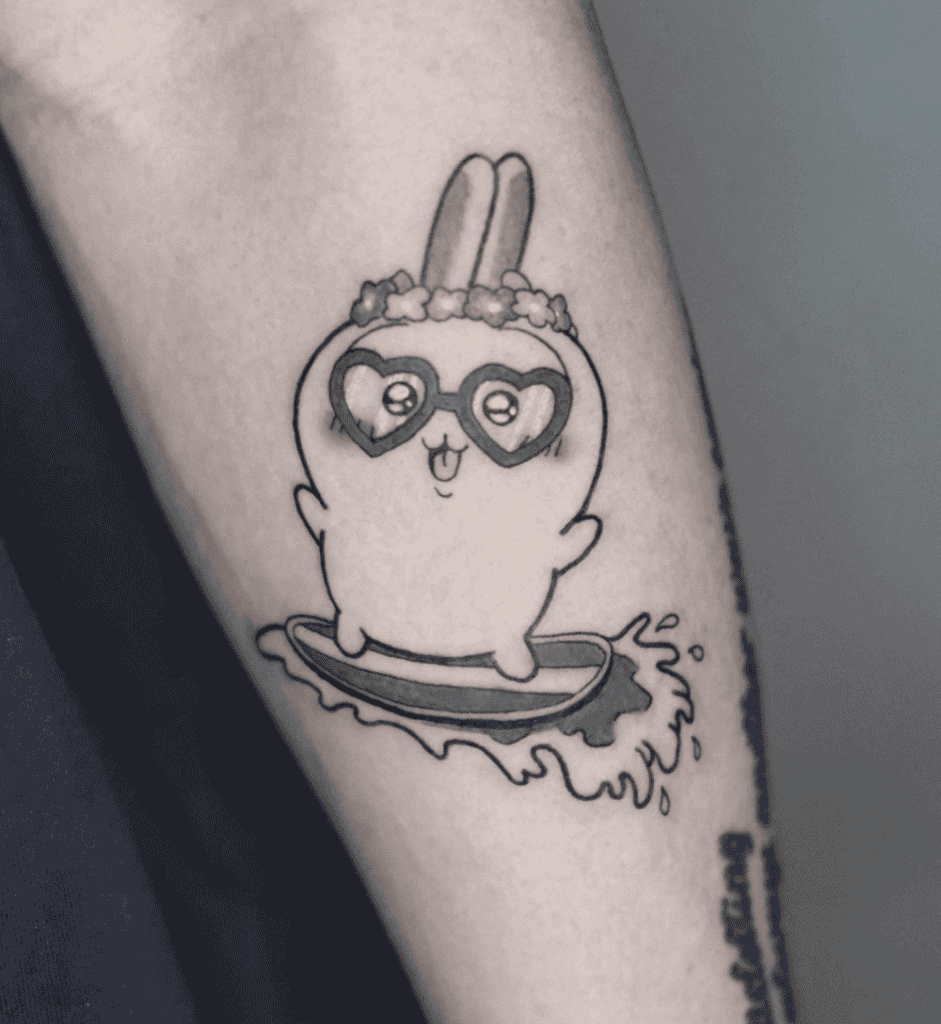
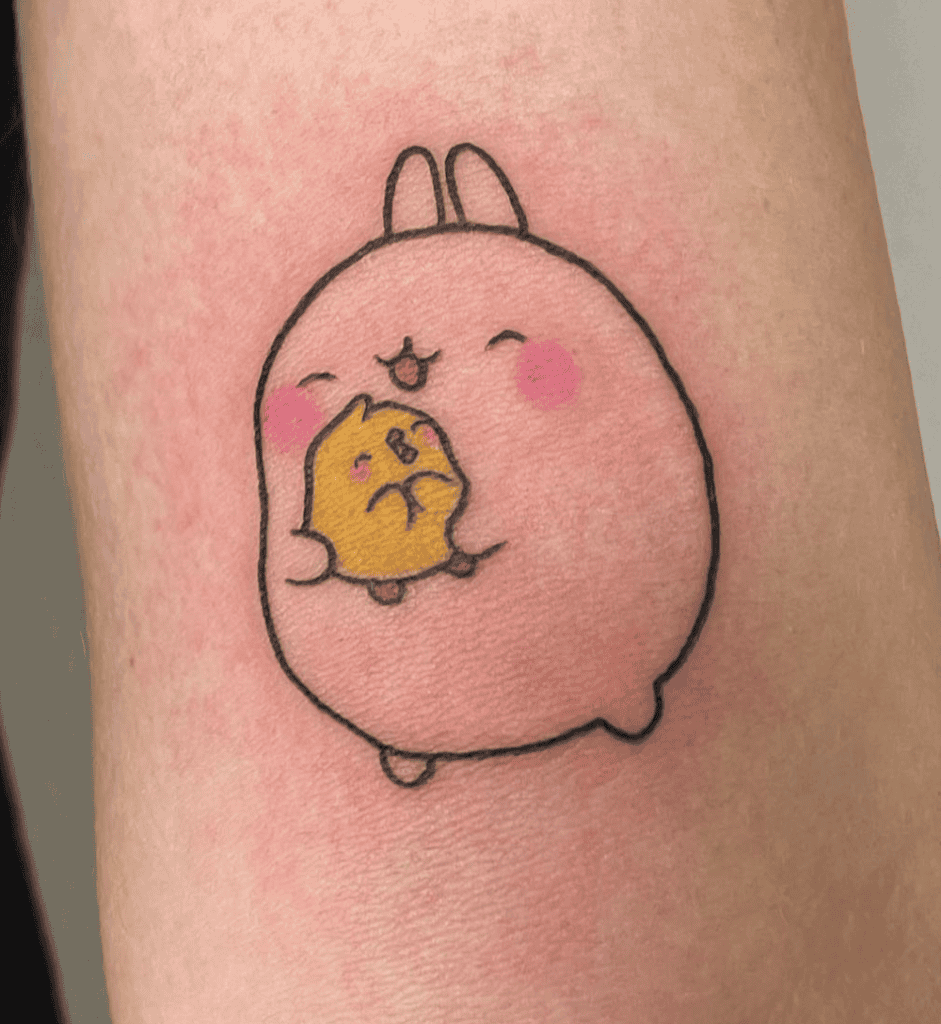
Molang is a cute, chubby white rabbit created by Yoonsoo Hyeon and developed into an animated character by the French studio Millimages. Molang is known for being cheerful, affectionate, curious, and incredibly expressive. Rather than relying heavily on dialogue, the series uses adorable sounds, gestures, and visual comedy to tell its stories.
Peppy Hare Tattoo
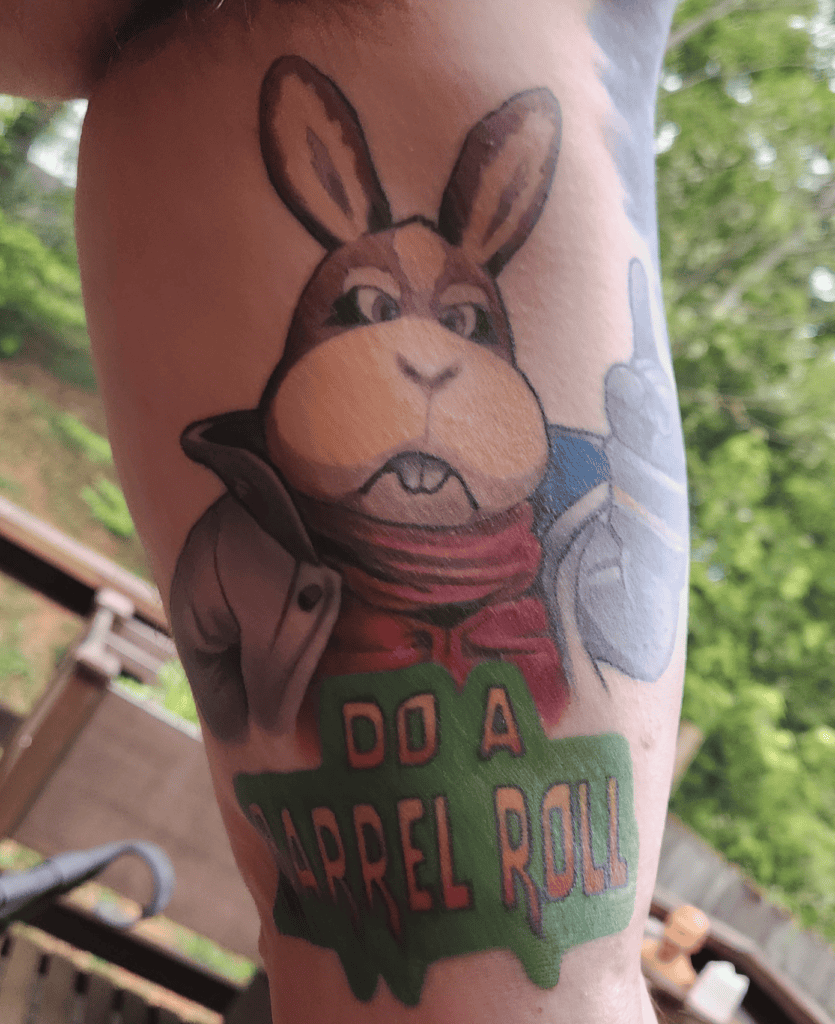
Peppy Hare is a veteran member of the Star Fox team in Nintendo’s Star Fox series. He is an anthropomorphic rabbit and serves as the team’s experienced advisor and navigator, usually flying alongside Fox McCloud and the rest of the squad.
Cream the Rabbit Tattoo
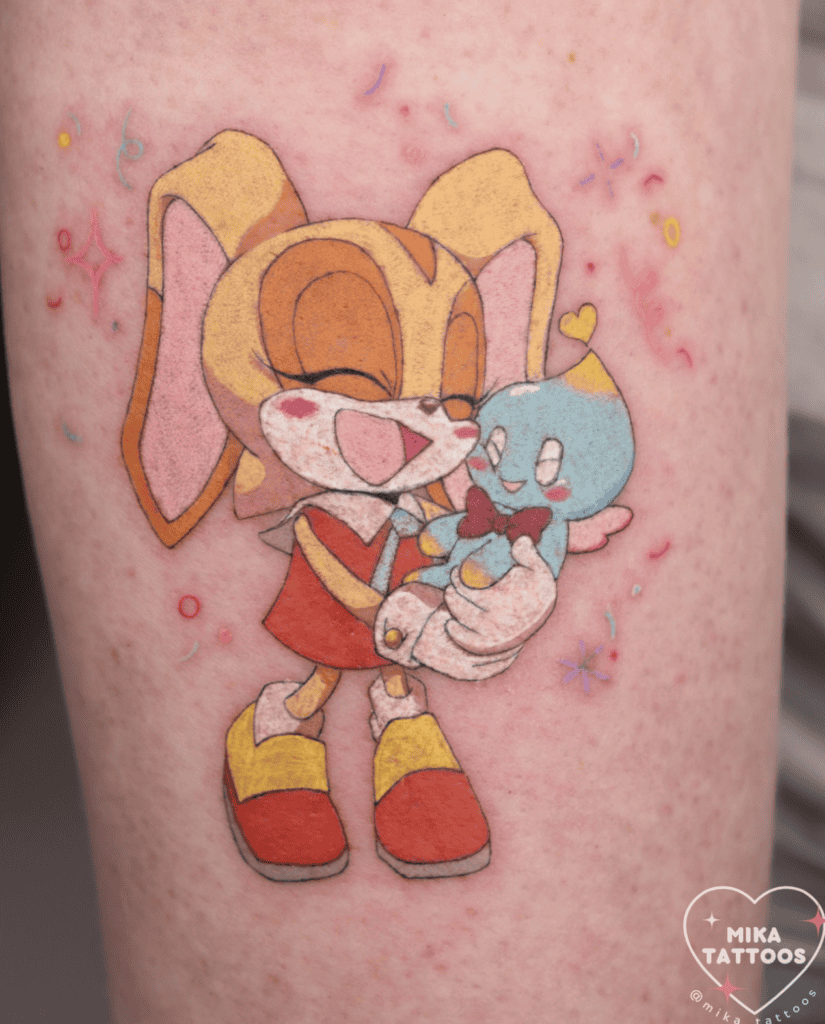
Cream the Rabbit is a sweet, young rabbit character from the Sonic the Hedgehog series. She is the daughter of Vanilla the Rabbit and is almost always accompanied by her best friend and companion, Cheese the Chao.
Cream is known for being polite, gentle, cheerful, and exceptionally well-mannered. Despite her innocent appearance, she’s brave and willing to help her friends when they’re in danger. She can also use her large ears to fly by spinning them like helicopter blades, giving her impressive aerial mobility!
Rabbids Rabbit Tattoo
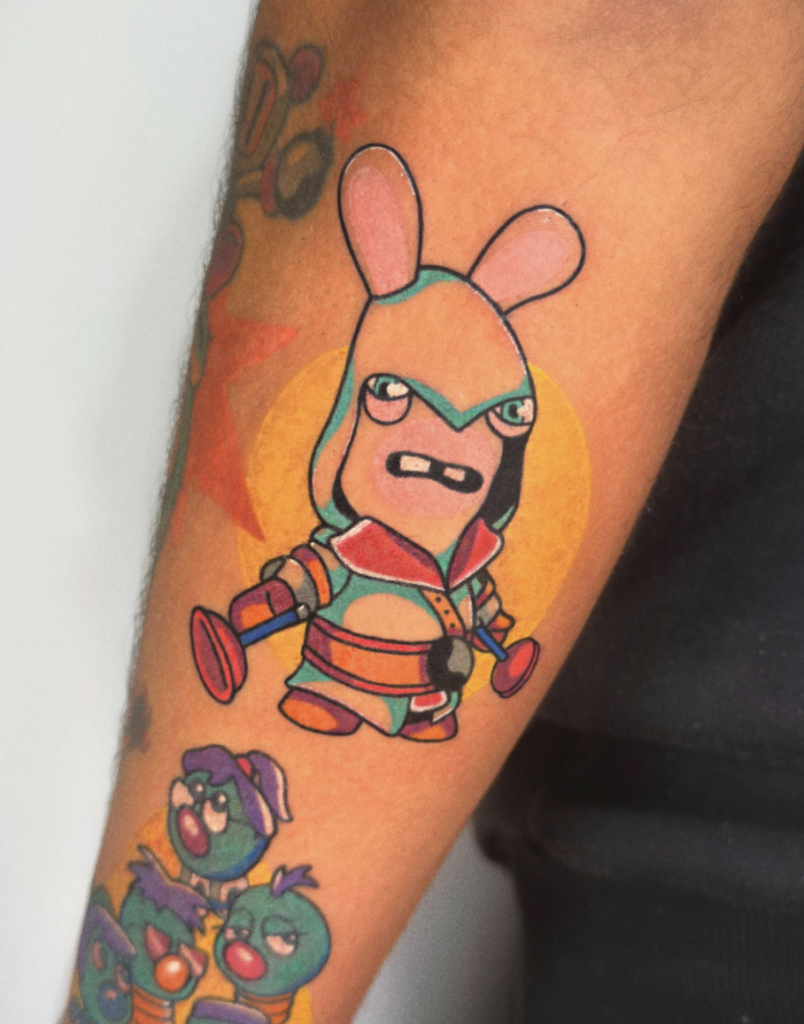
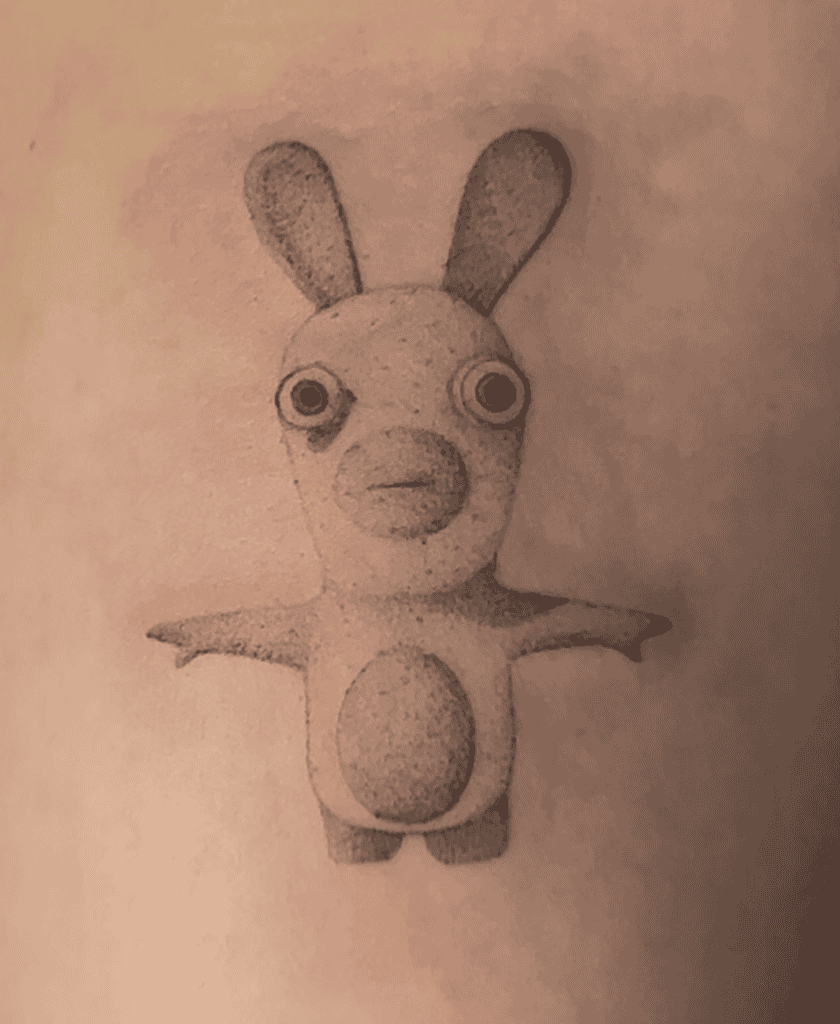
The Rabbids are a chaotic species of white, rabbit-like creatures created by Ubisoft. They first appeared as antagonistic characters in Rayman Raving Rabbids (2006), but became so popular that they eventually received their own games, animated series, and other media.
Carrot Rabbit Tattoo
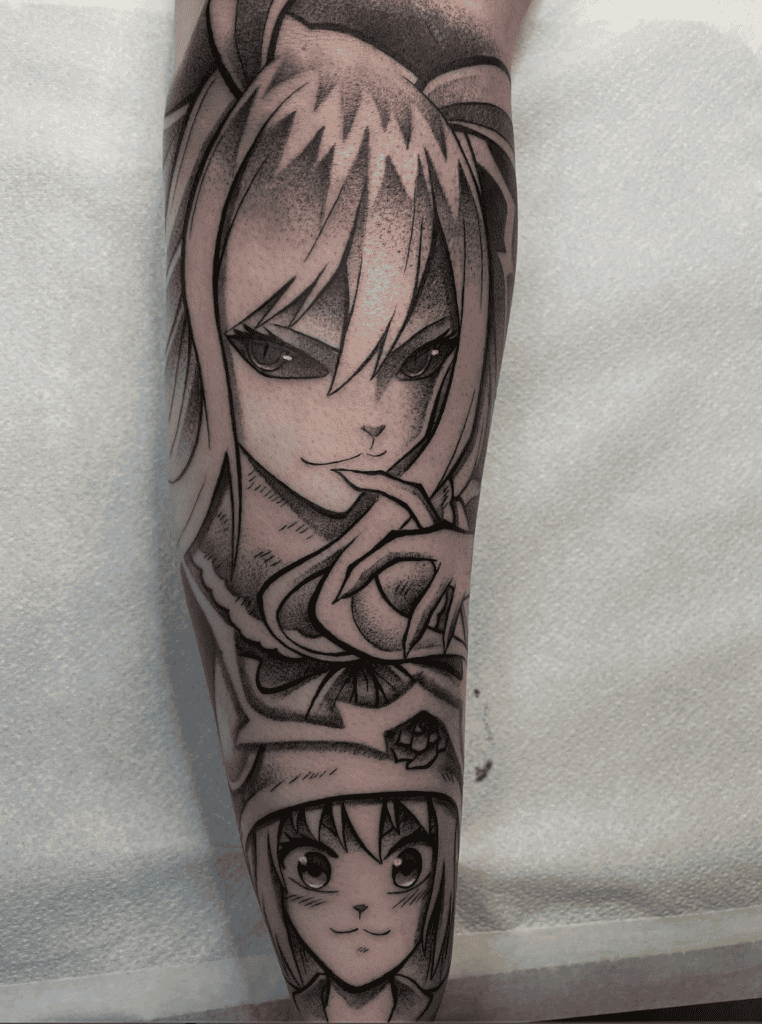
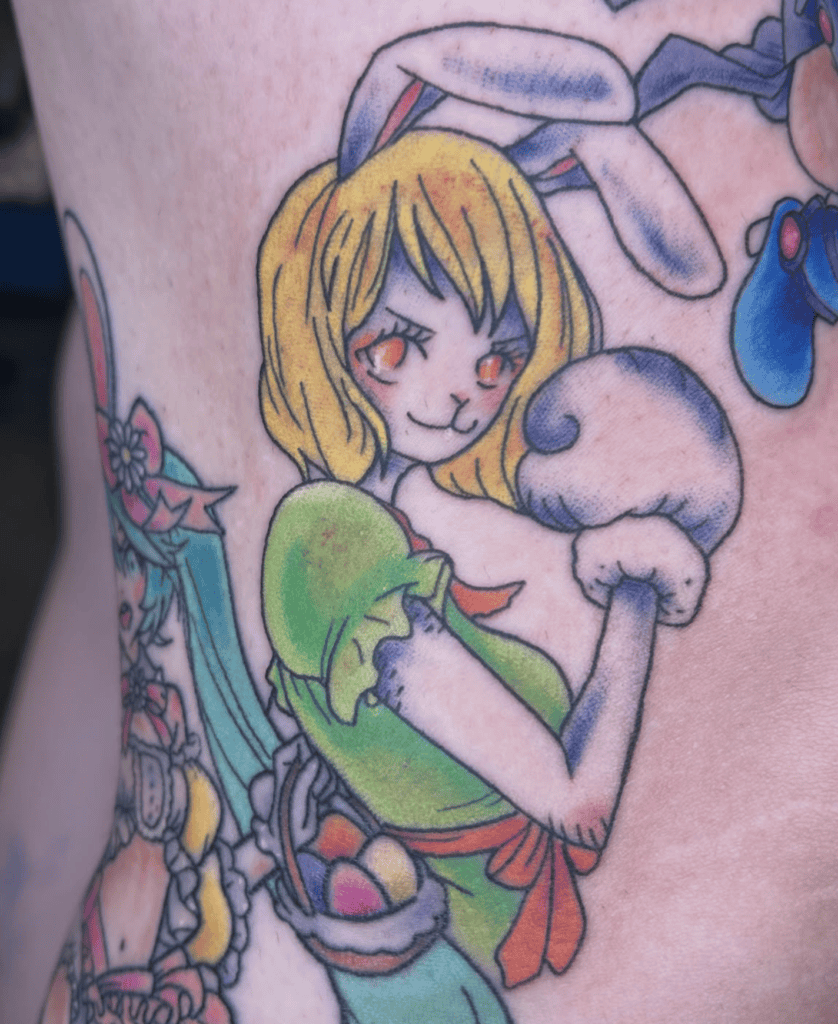
Carrot is a rabbit-like Mink from One Piece, originating from Zou. She is a member of the Mink Tribe and becomes an ally and temporary companion of the Straw Hat Pirates during their adventures.
Carrot is energetic, curious, cheerful, and playful, with a strong love of adventure. Despite her cute appearance, she’s an excellent fighter, using her enhanced Mink physical abilities and Electro, the electrical power naturally possessed by the tribe.
Mirko Rabbit Tattoo
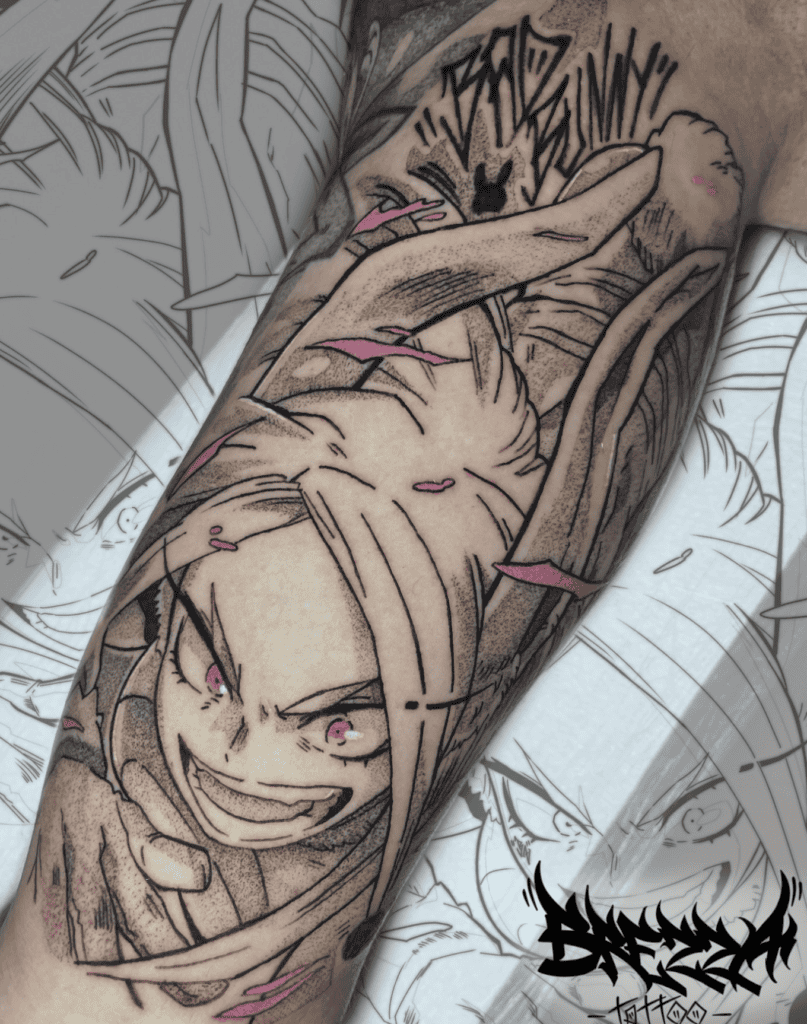
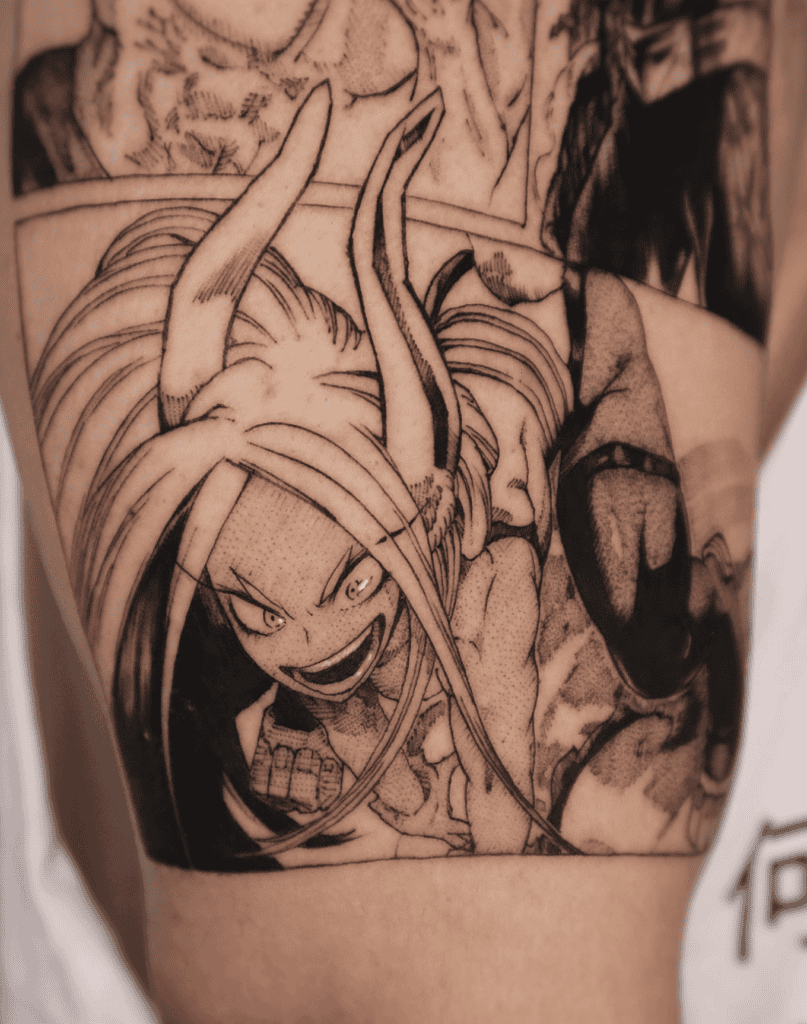
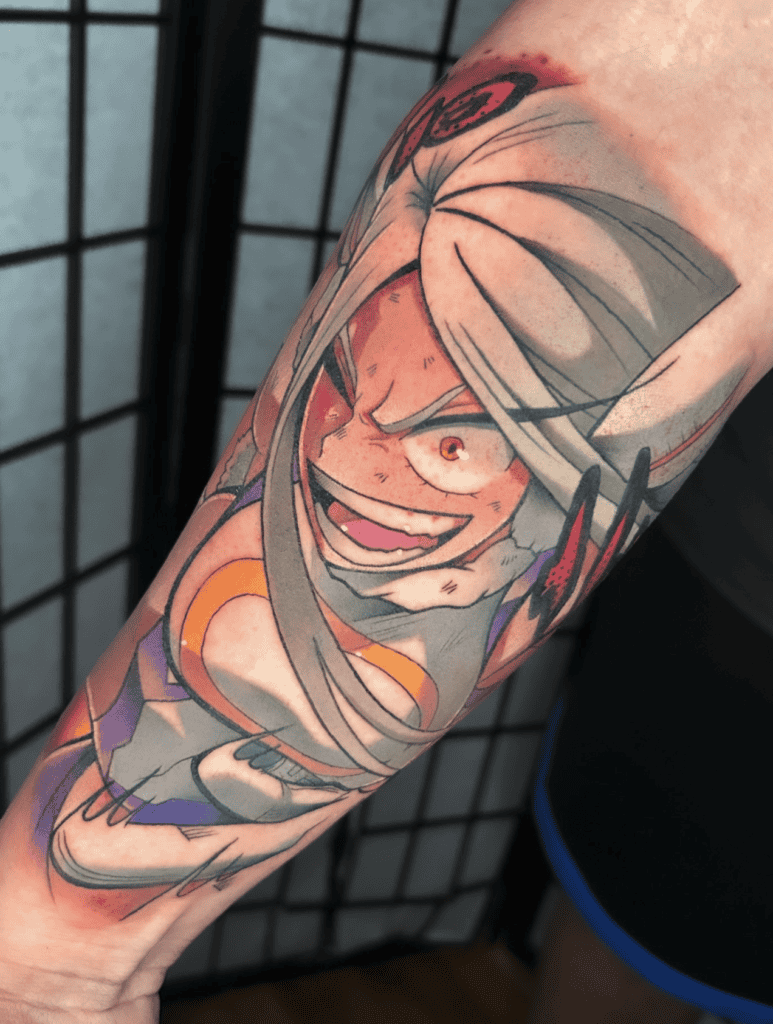
Mirko is a Pro Hero in My Hero Academia. She is one of Japan’s strongest and most famous heroes, with a rabbit-inspired appearance and the Quirk Rabbit, which gives her incredible leg strength, speed, agility, jumping ability, and heightened senses.
Mirko is bold, fearless, independent, and extremely confident. She has a very direct personality and loves charging straight into danger rather than waiting for backup. Her fighting style focuses heavily on devastating kicks, making her an exceptionally powerful close-range combatant.
Usagi Yojimbo Rabbit Tattoo
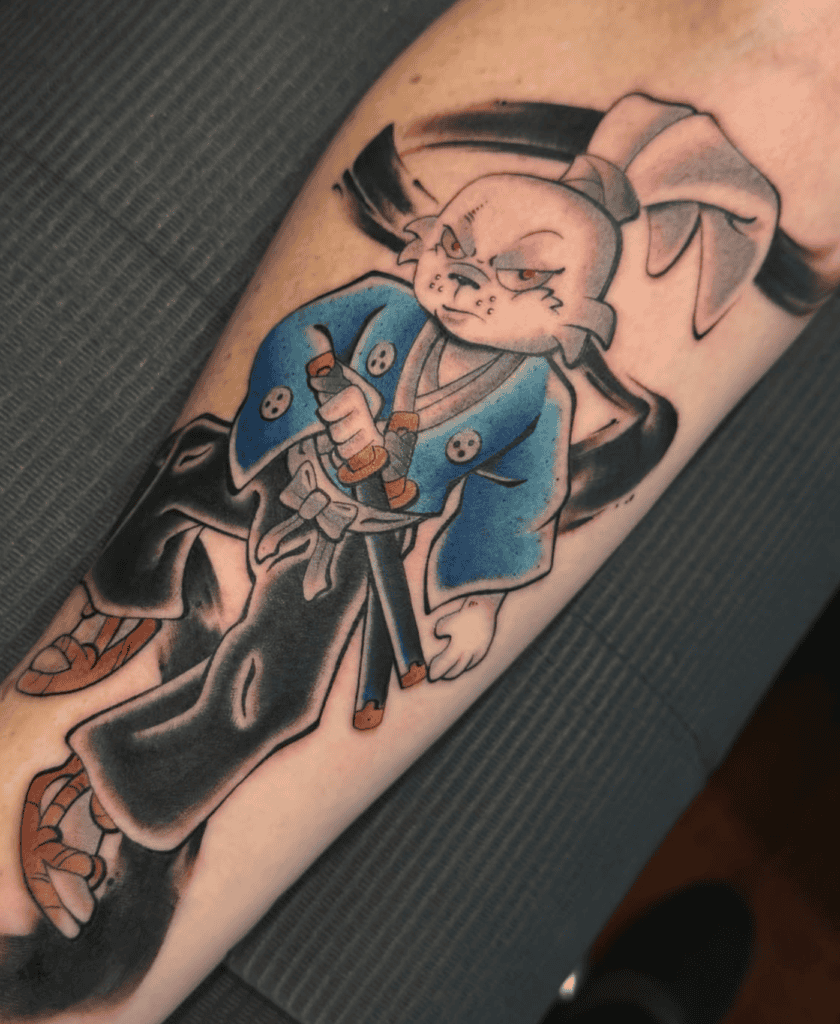
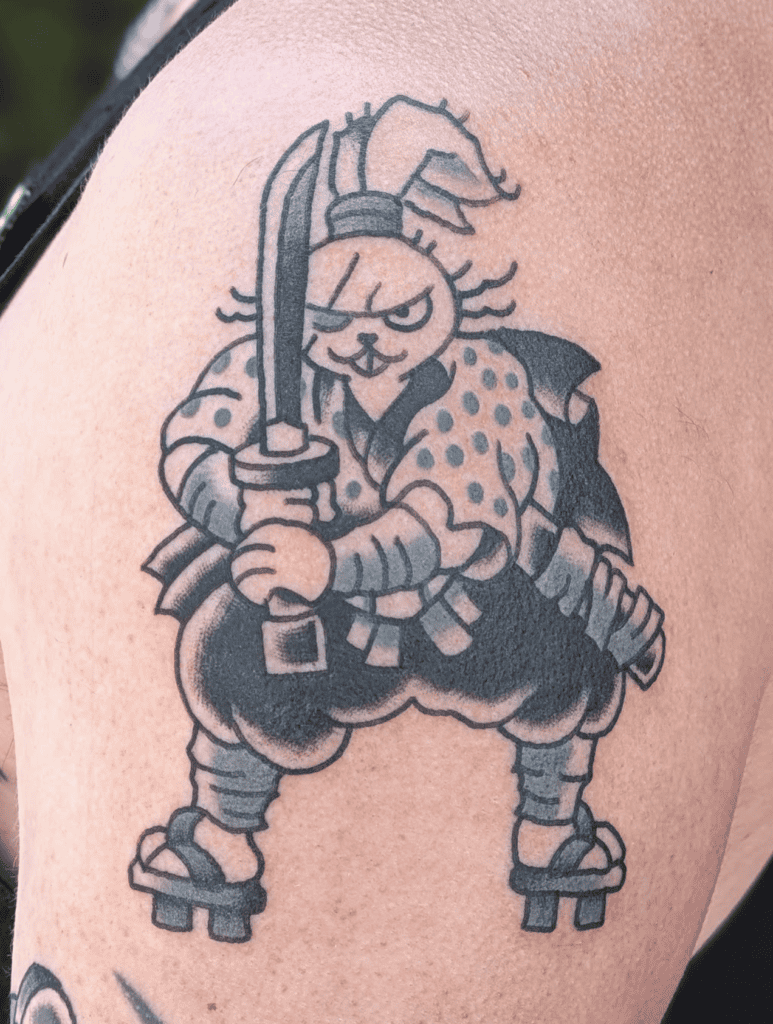
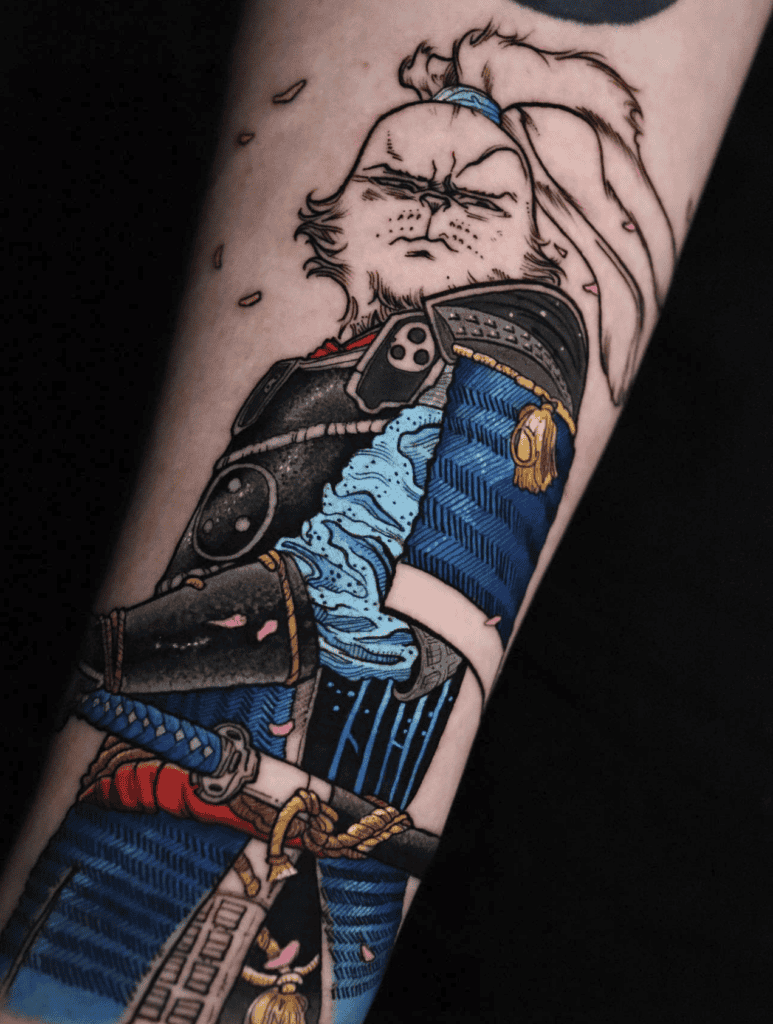
Usagi Yojimbo is the iconic rabbit samurai created by Stan Sakai, first appearing in 1984. His full name is Miyamoto Usagi, and he is an anthropomorphic rabbit inspired by the legendary Japanese swordsman Miyamoto Musashi.
Usagi is a ronin who travels through a fictionalised version of 17th-century Japan, taking on various jobs and helping people along the way. His adventures combine samurai action, Japanese history, folklore, and occasional humour.
Judy Hopps Rabbit Tattoo
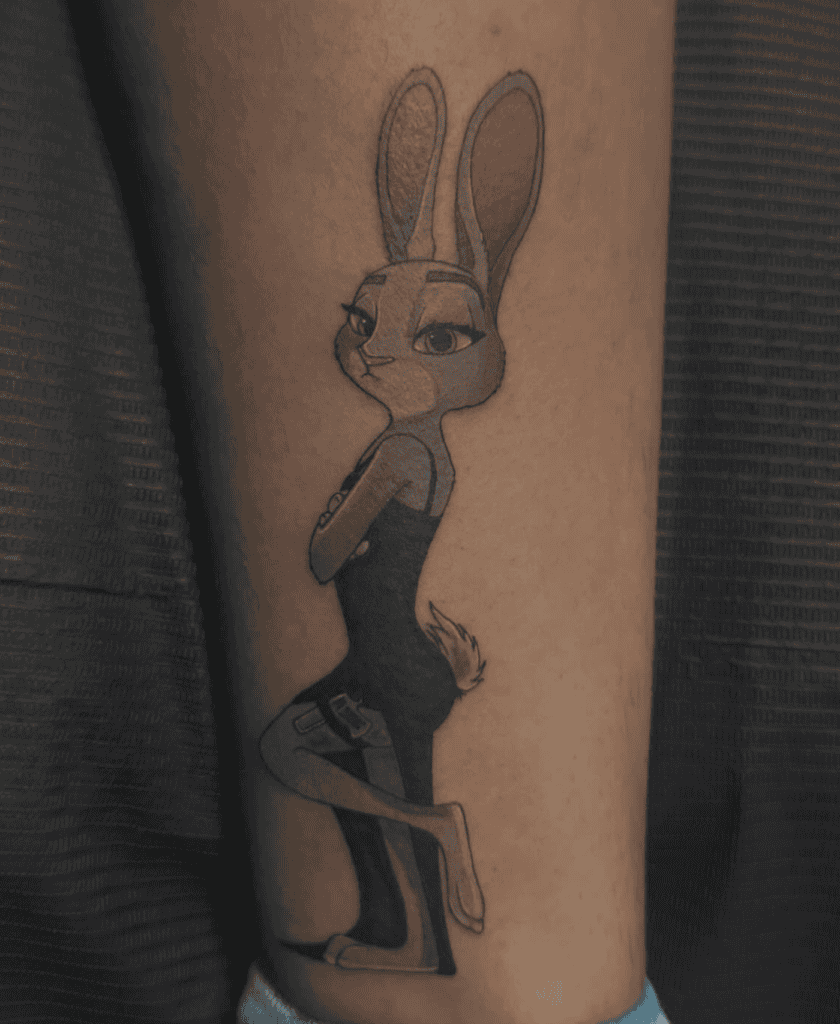
Judy Hopps is the optimistic protagonist of Disney’s Zootopia. She is a small rabbit from Bunnyburrow who dreams of becoming a police officer in the huge, animal-populated city of Zootopia.
Judy is determined, energetic, compassionate, and incredibly persistent. Despite being underestimated because she’s a rabbit, she graduates from the police academy and becomes the first bunny police officer in Zootopia.
Haru Rabbit Tattoo
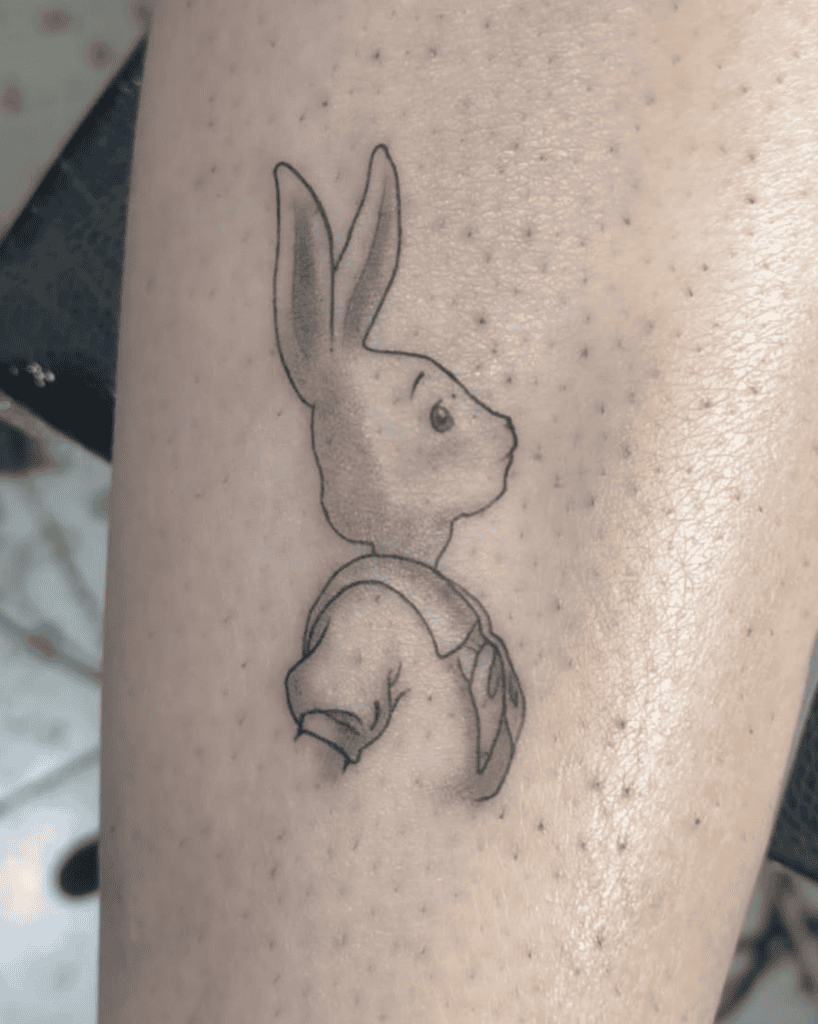
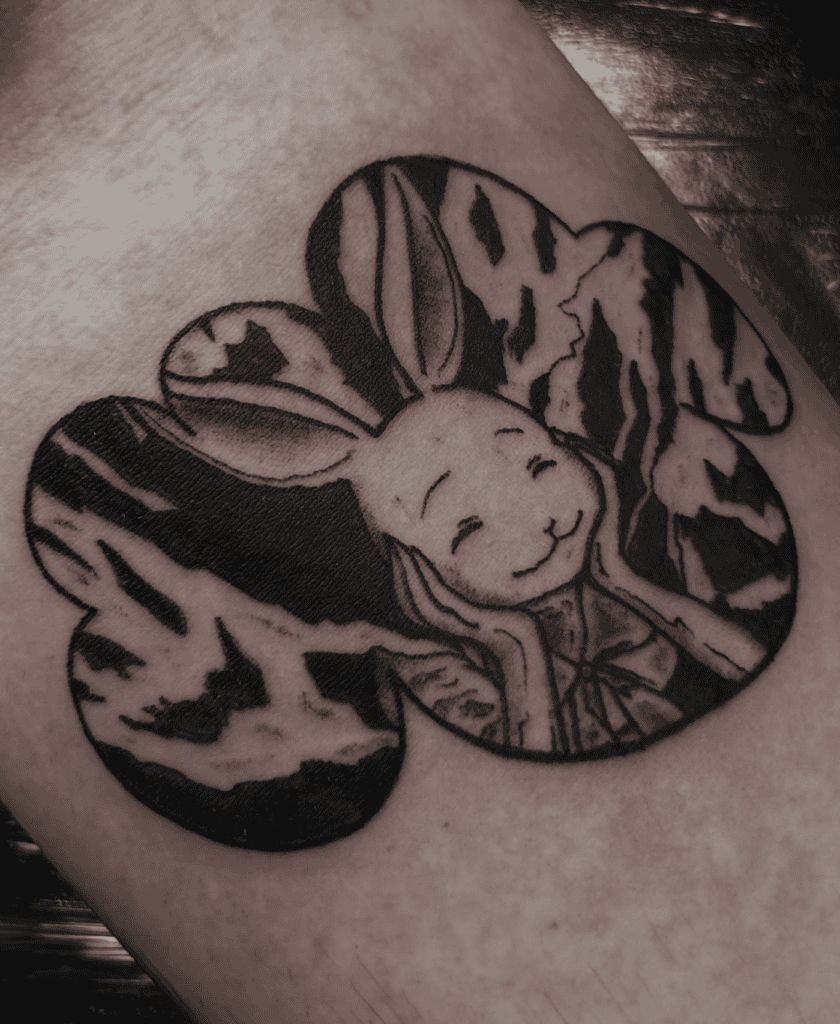
Haru is a major character in the BEASTARS manga by Paru Itagaki. She is a dwarf rabbit who attends Cherryton Academy and is known for her small size and seemingly delicate appearance.
Despite being physically vulnerable in a society dominated by larger animals, Haru is independent, outspoken, emotionally complex, and determined to live life on her own terms. She strongly dislikes being treated as helpless simply because she’s a rabbit.
The Trix Rabbit Tattoo
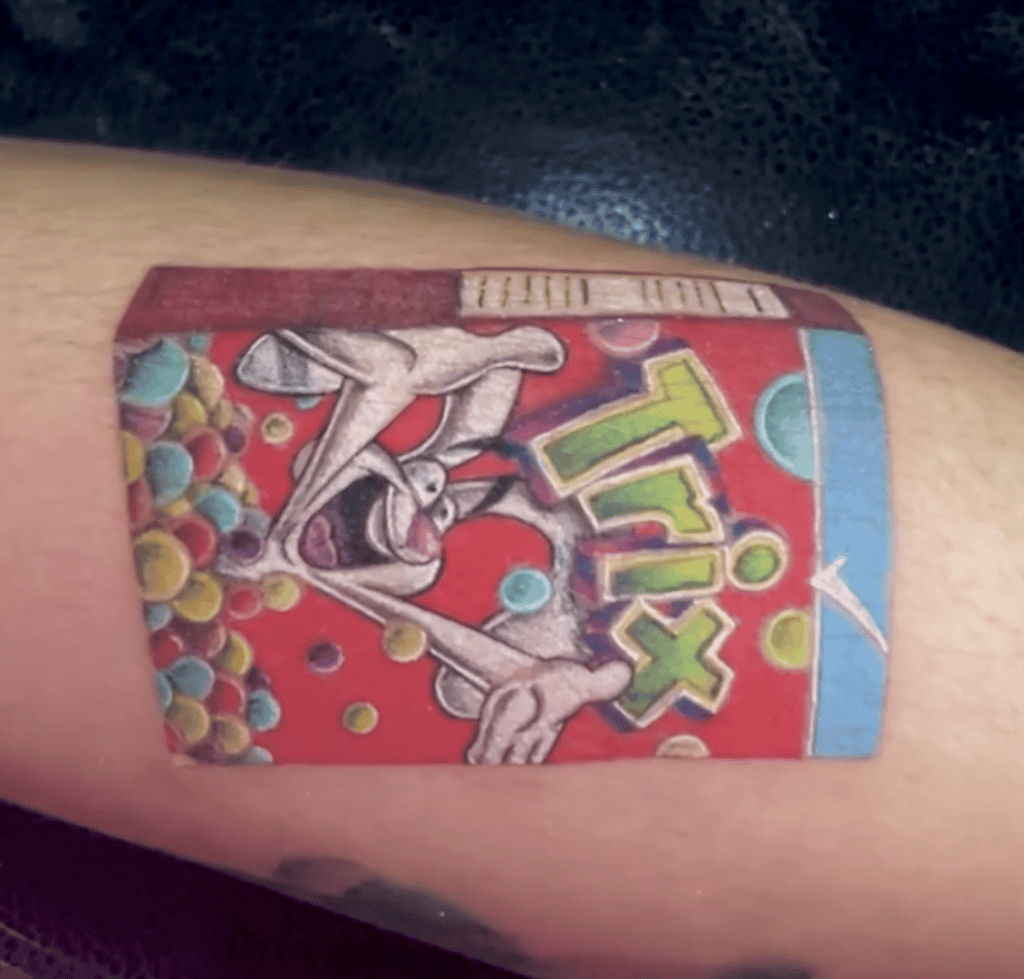
The Trix Rabbit is the mischievous mascot of General Mills’ Trix cereal. He is a white cartoon rabbit with a colourful tuft of hair, famous for desperately trying to get his paws on a bowl of Trix cereal. His trademark catchphrase is “Silly rabbit, Trix are for kids!”, usually shouted by children whenever he gets caught trying to steal their cereal.
Nesquik Bunny Rabbit Tattoo
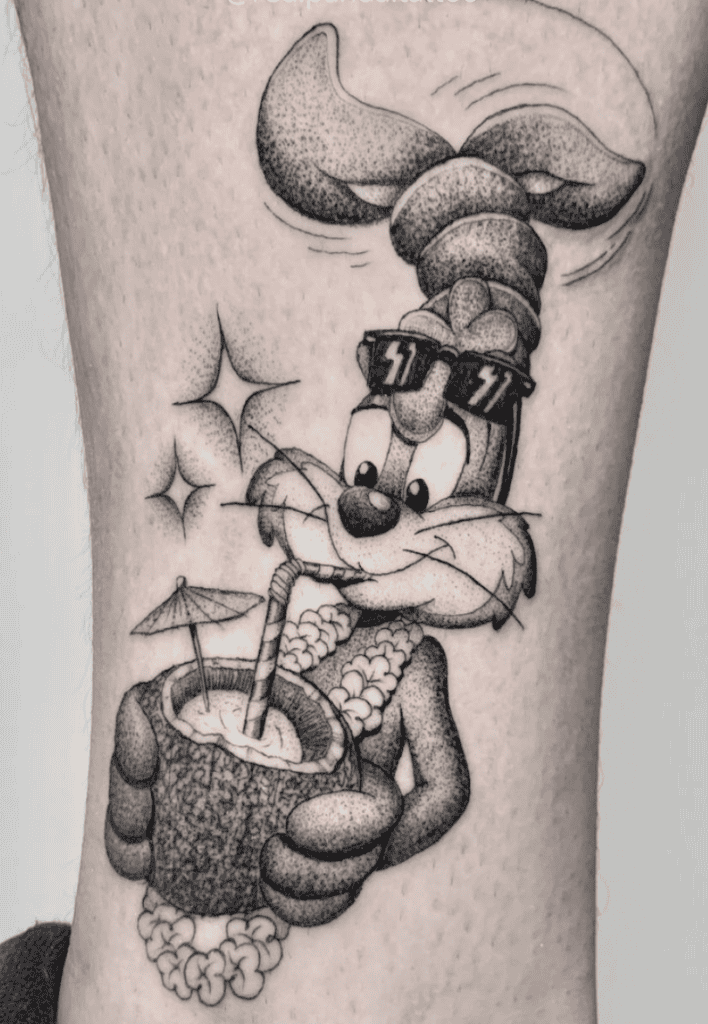
The Nesquik Bunny is the cheerful mascot of Nesquik, the chocolate-flavoured milk drink brand owned by Nestlé. He is a playful brown rabbit known for his energetic personality and love of chocolate milk. The character has appeared in Nesquik advertising, packaging, and promotional material for decades, helping give the brand a fun, child-friendly identity.
The Energizer Bunny Rabbit Tattoo
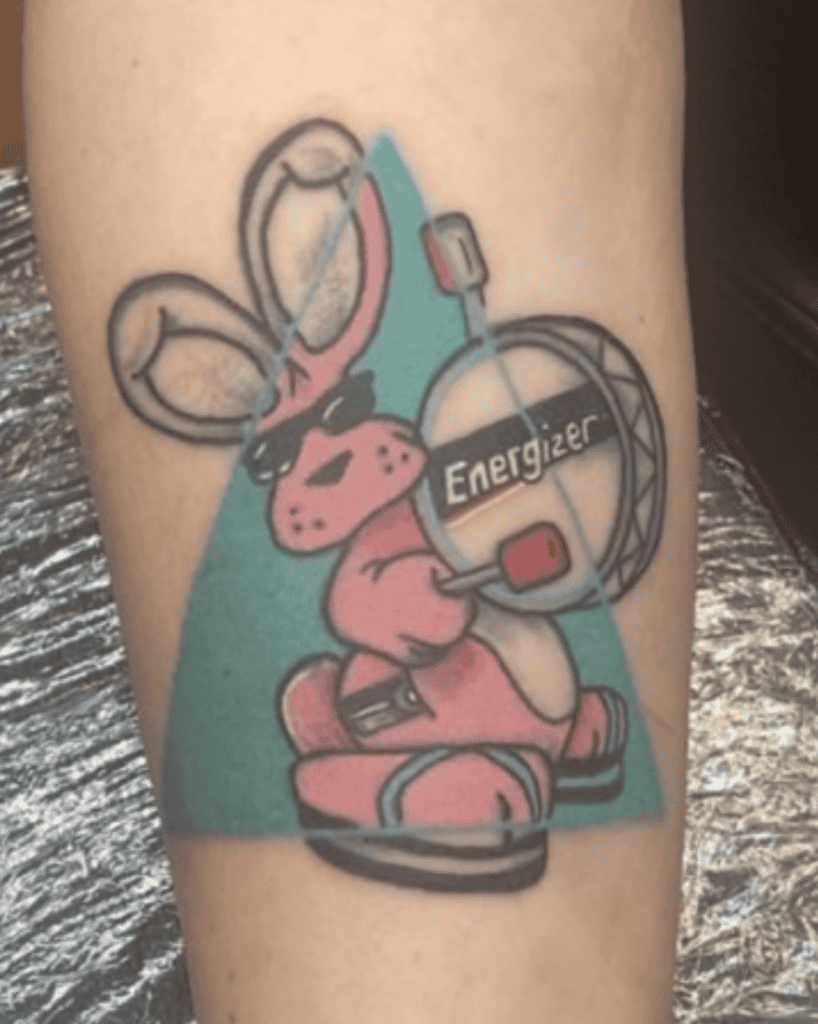
The Energizer Bunny is the iconic pink rabbit mascot of Energizer, introduced in 1988 to advertise the company’s batteries. He is famous for marching endlessly while carrying a large drum and wearing sunglasses, symbolising batteries that keep going and going.
Duracell Bunny Rabbit Tattoo
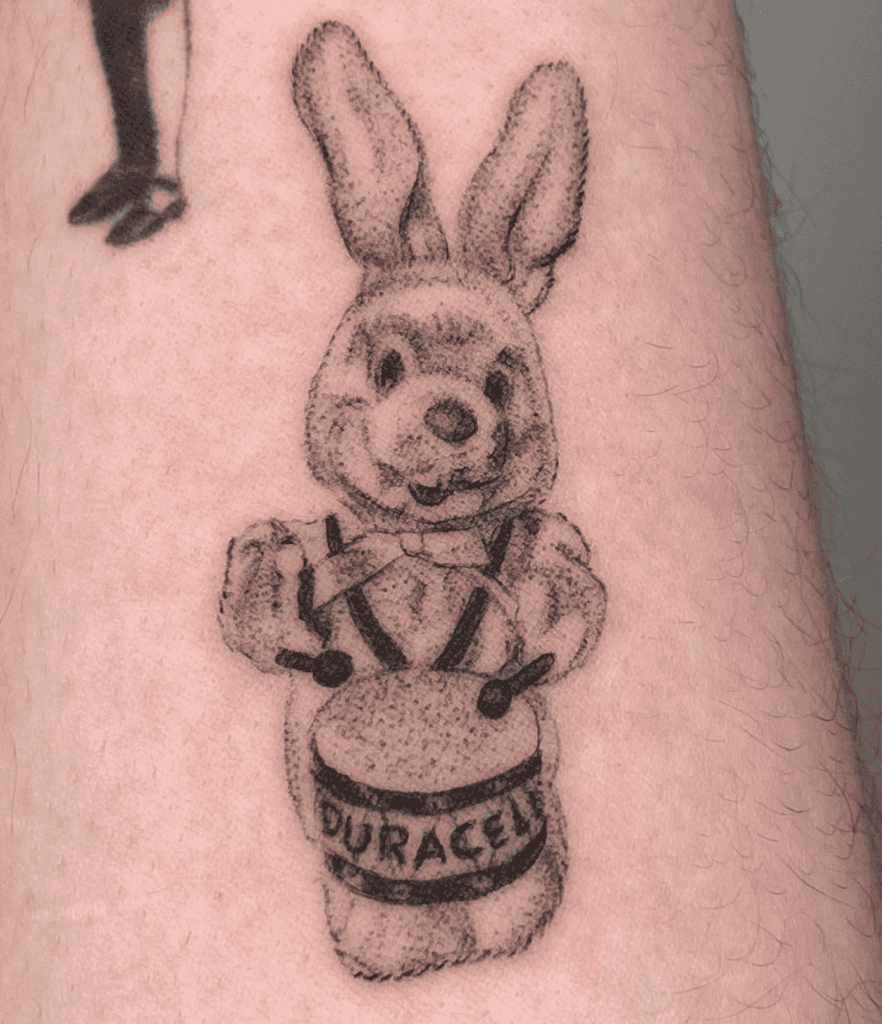
The Duracell Bunny is the iconic pink rabbit mascot of Duracell, introduced in advertising to represent the long-lasting power of its batteries. Like the Energizer Bunny, he is typically shown marching with a drum, emphasising the idea that Duracell batteries keep working for a long time.
Miffy Rabbit Tattoo
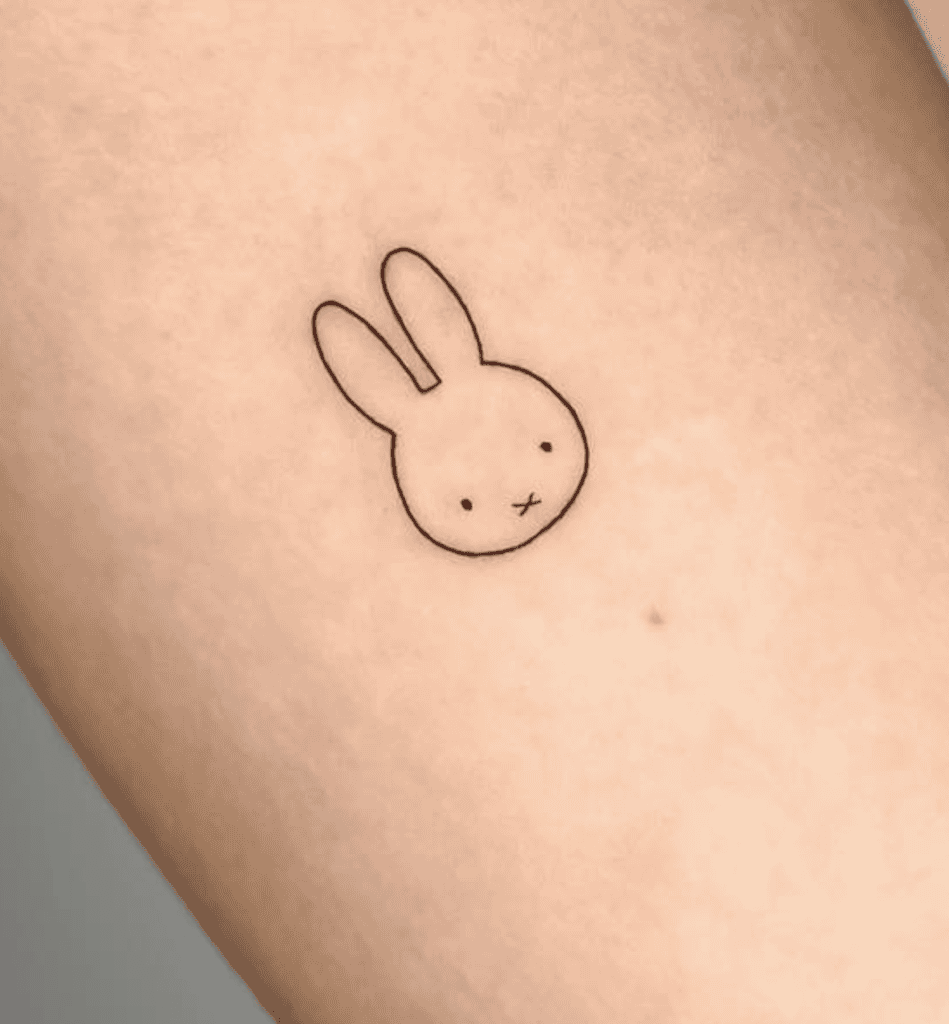
Miffy (Nijntje in Dutch) is a beloved little white rabbit created by Dutch artist and author Dick Bruna. She first appeared in 1955 in the picture book Nijntje, and has since become an internationally recognisable children’s character.
Miffy is drawn in Bruna’s distinctive, simple, minimalist style, with a round head, long ears, dot eyes, and a small X-shaped mouth. Her stories are intentionally gentle and straightforward, focusing on everyday childhood experiences such as visiting the zoo, going to school, travelling, and spending time with family.
Bunnicula Rabbit Tattoo
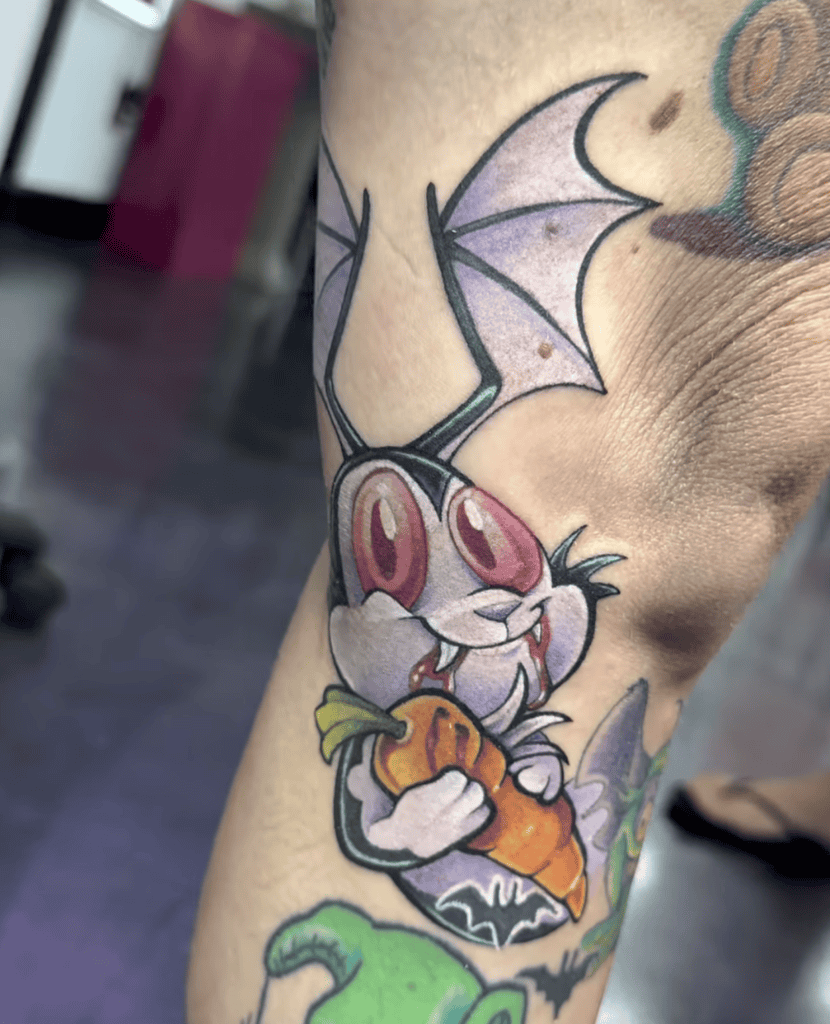
Bunnicula is the titular character of the children’s horror-comedy book series Bunnicula, created by James Howe and Deborah Howe. He is a mysterious vampire rabbit who was discovered by a family at a movie theatre and brought home as a pet.
Unlike a traditional vampire, Bunnicula doesn’t drink blood; instead, he supposedly sucks the juice out of vegetables, leaving them pale and drained! He has supernatural abilities such as floating, transforming, and using mysterious powers, though his true nature is often left deliberately ambiguous.
Conclusion
Thanks for hopping your way to the end through the wonderful world of the Rabbit Tattoo Clues. We hope these ideas have put a spring in your step to start your own tattooing adventure. But if Rabbit Tattoos still leave you nibbling for more, why not ram your way into these Goat Tattoo ideas, gallop into these Horse Tattoo designs, or slither your way through these Snake Tattoos.
- Lion Tattoo Ideas - October 19, 2026
- Persona Tattoo Ideas - October 15, 2026
- Spider Tattoo Ideas - October 8, 2026