

Horse Tattoo Ideas
Do you feel like your search for the perfect Tattoo Clues has slowed to a trot? Well, worry not! Stop being a neigh-sayer and saddle up as we start the mane event, as we rein in some of the very best Horse Tattoo Ideas to stirrup your inspiration.
What does a Horse Tattoo Mean
A Horse Tattoo is a powerful symbol of freedom, strength, endurance, and the untamed spirit. Horses have accompanied humanity throughout history as trusted companions in travel, farming, warfare, and exploration. Their intelligence, beauty, and loyalty have earned them a place in mythology, folklore, and countless cultures around the world.
Perhaps the most recognised meaning of a Horse Tattoo is freedom. Wild horses racing across open landscapes embody a life without restrictions or boundaries. Many people choose this tattoo to represent living life on their own terms, independence, breaking free from limitations, adventure and exploration, or following their own path.
As incredibly strong animals, capable of carrying heavy loads, travelling great distances, and enduring harsh conditions, horses can symbolise physical strength, mental resilience, determination, courage, or overcoming obstacles.
Throughout history, horses have formed deep bonds with humans. From knights and warriors to farmers and explorers, horses have stood beside people during both peaceful and difficult times. Because of this, Horse Tattoos can symbolise loyalty, friendship, trust, devotion, and lifelong companionship.
For centuries, horses carried soldiers into battle despite overwhelming danger. Because of this, they became symbols of bravery, fearlessness, facing adversity, or standing tall during difficult times.
Despite their immense strength, horses are renowned for their elegance. Their flowing manes, powerful movement, and proud posture make them symbols of dignity, honour, grace, confidence, and self-respect.
top horse tattoo artists

sunliner
Phoenix, Arizona, United States, Black and Grey Tattoo artist with many Horse Tattoo designs.

renunutattoo
Adams Town, New South Wales, Australia Tattoo artist specialising in Neo Traditional and Neo Japanese Tattoos.

Best Horse Tattoo Designs
Now that we know a little about Horse Tattoos, let’s take a look at some of the best Horse Tattoos the internet has to offer.
Arabian Horse Tattoo
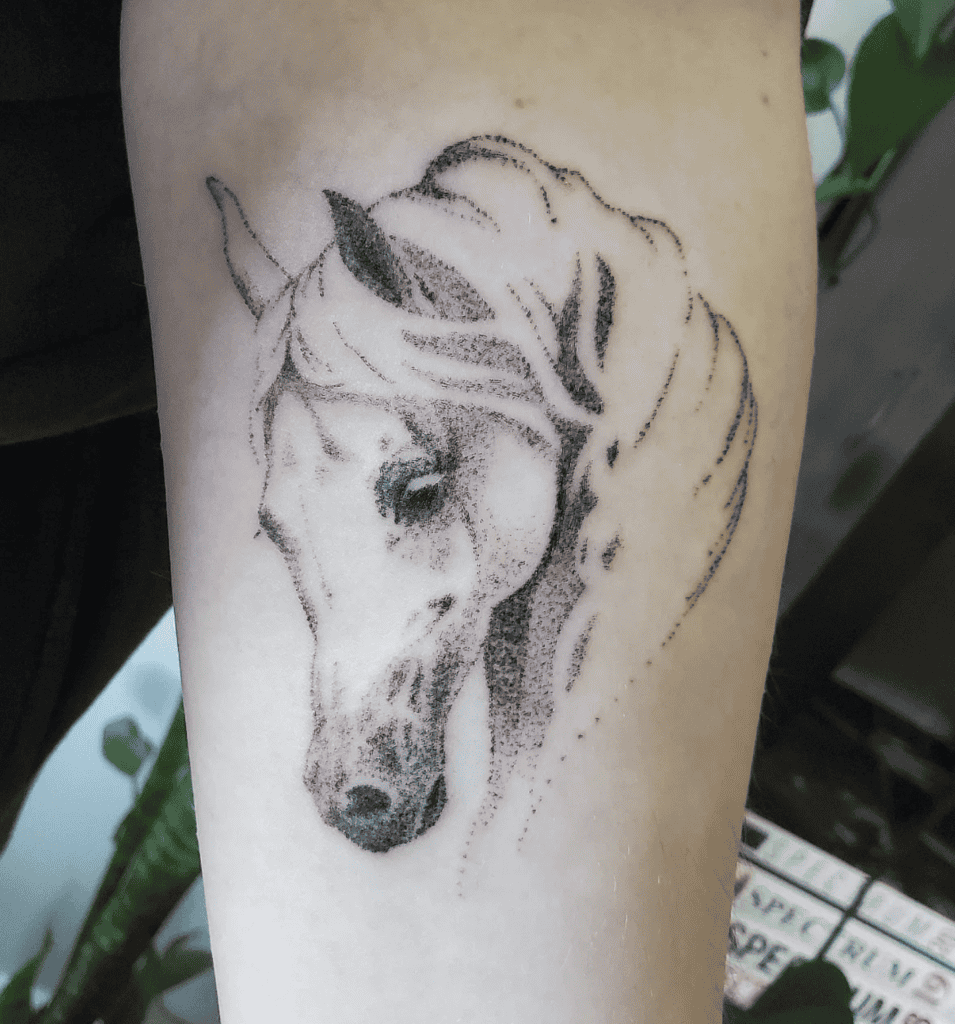
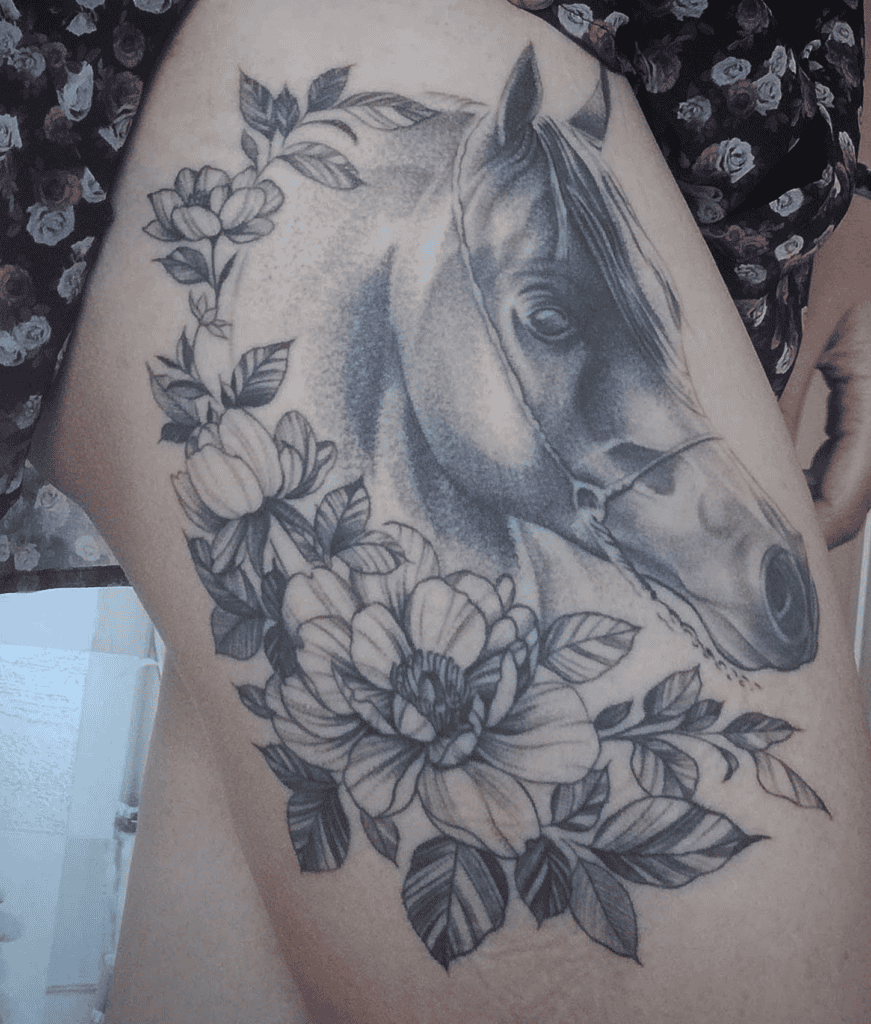
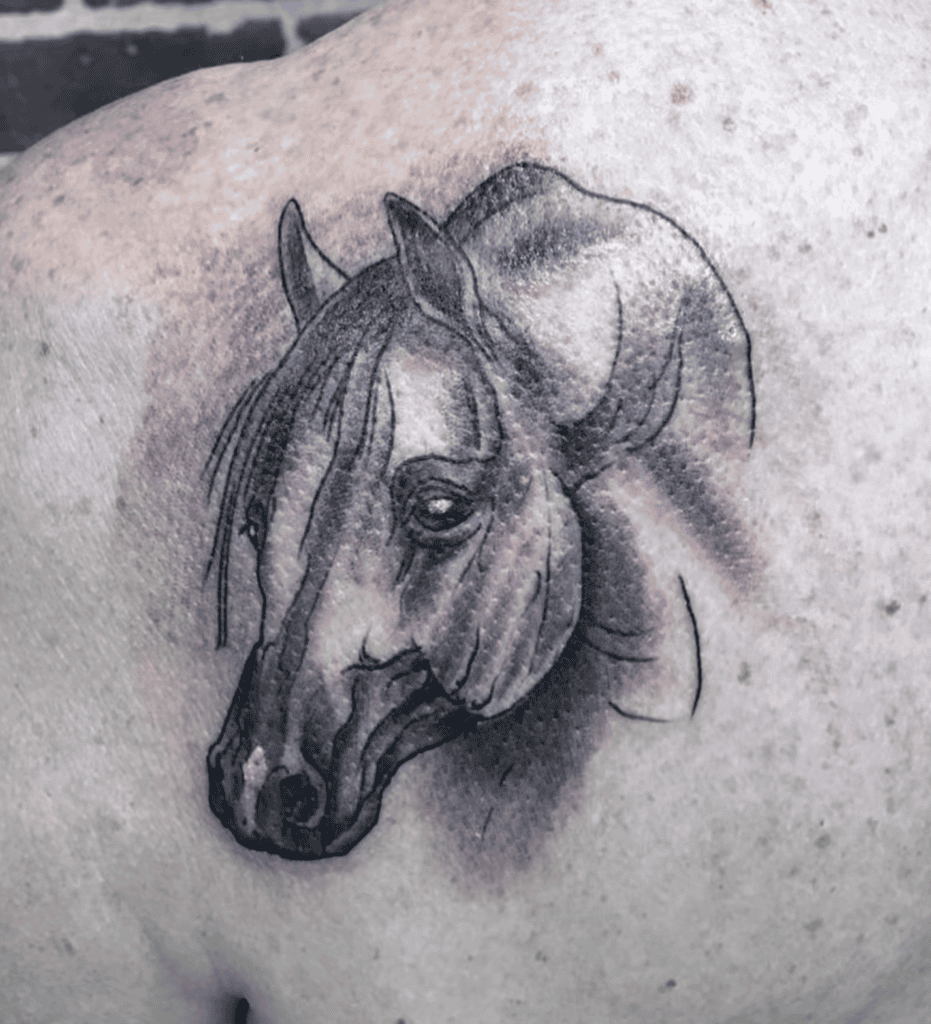
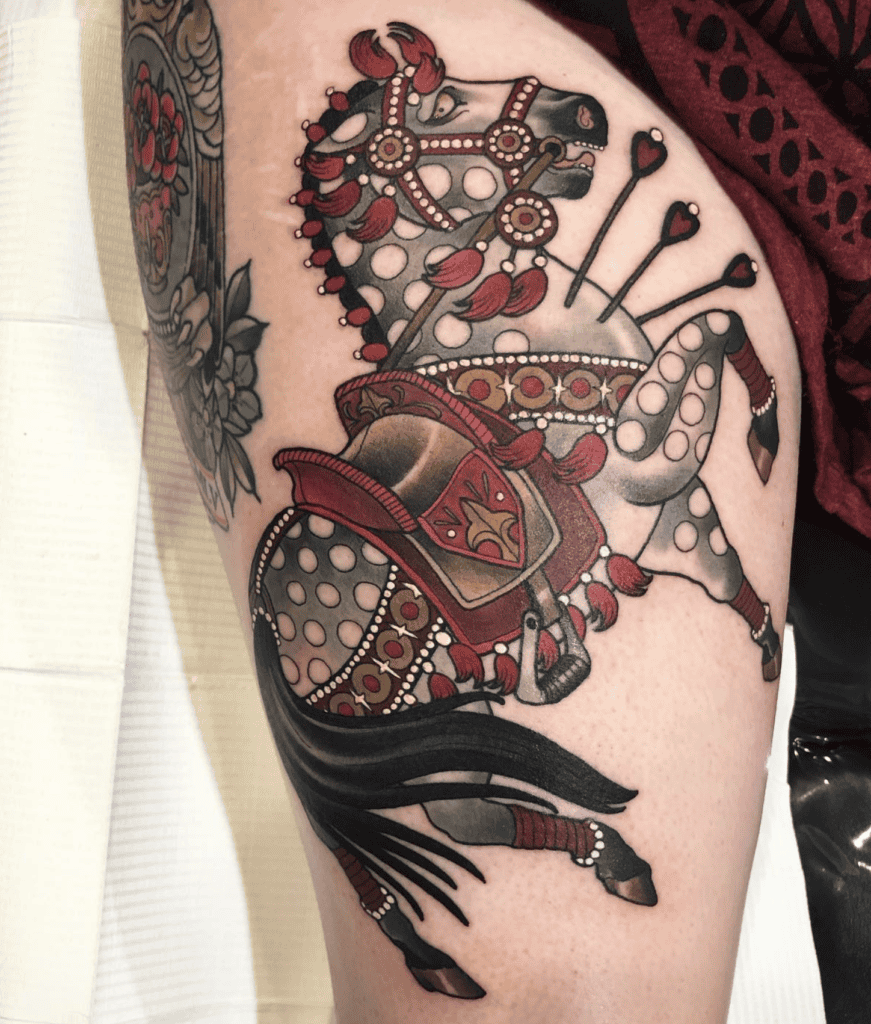
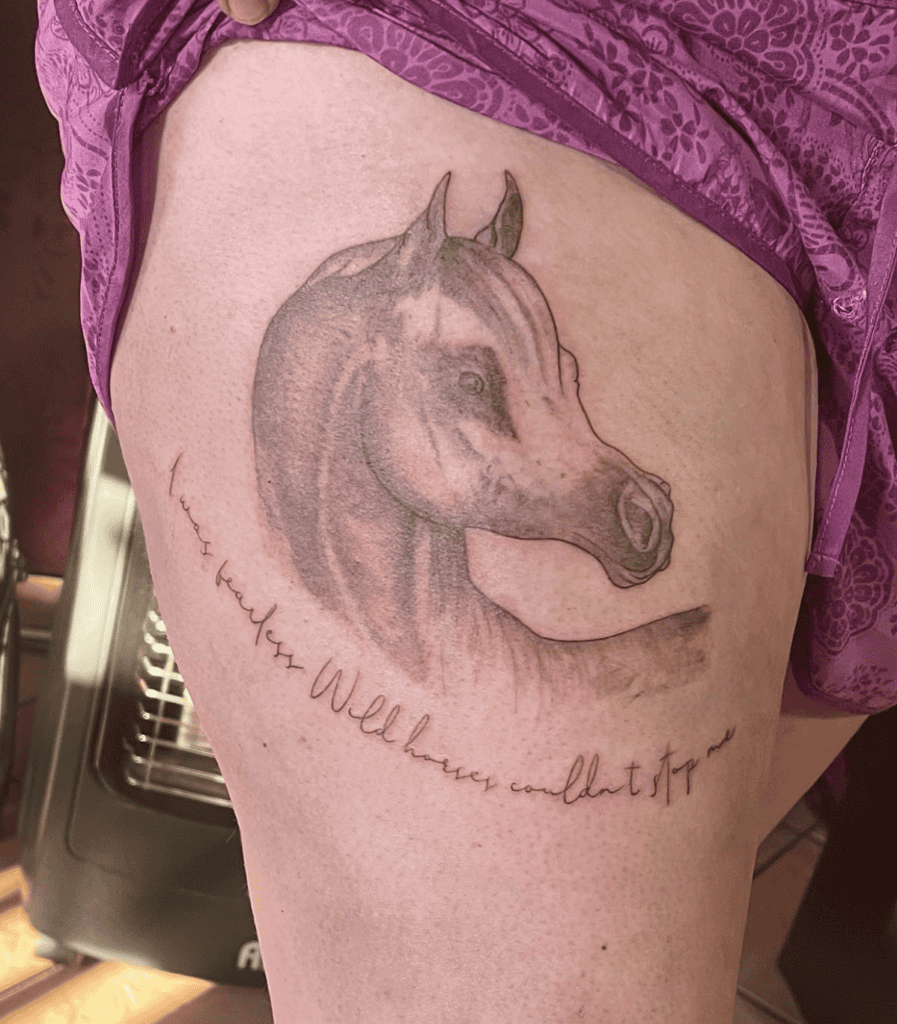
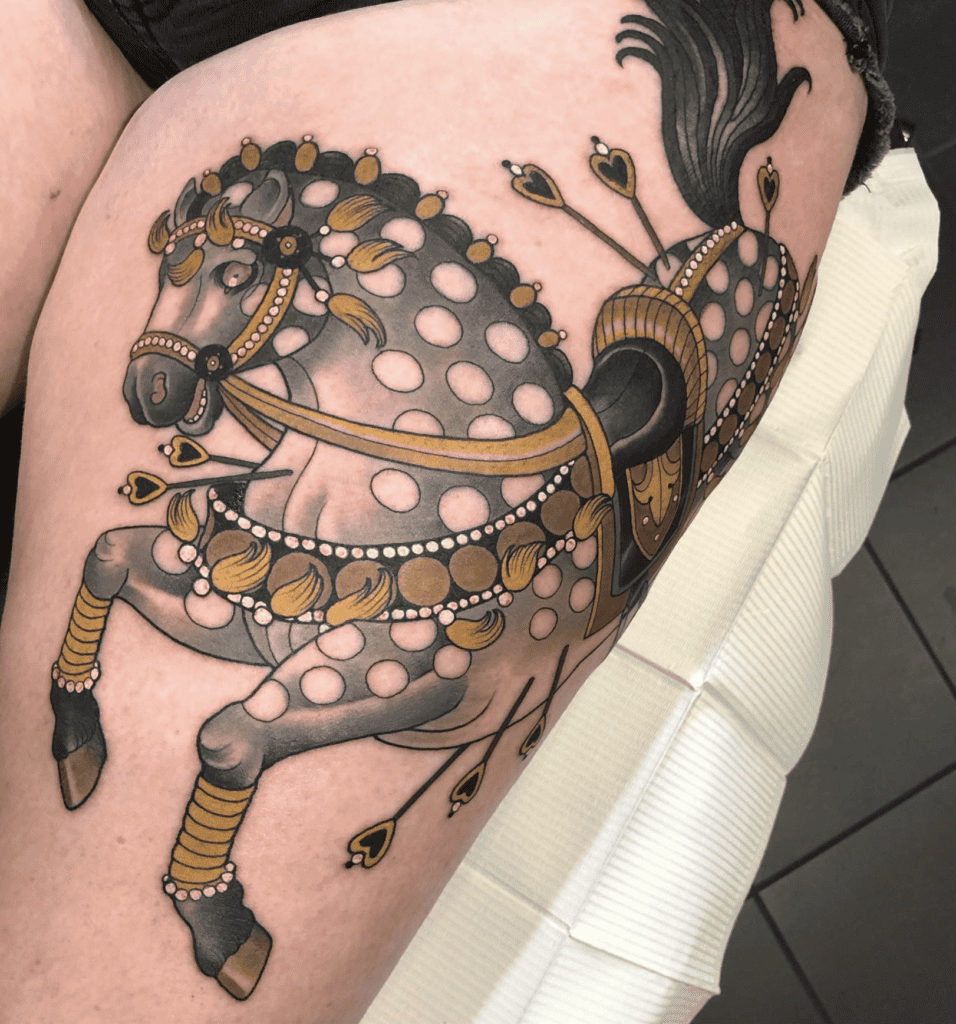
The Arabian Horse originated on the Arabian Peninsula over 4,000–5,000 years ago, where it was carefully bred by the Bedouin people to survive the harsh desert environment. Living alongside their owners in extreme conditions, these horses developed incredible stamina, loyalty, and intelligence, making them ideal companions for long journeys and warfare.
Today, the Arabian is one of the most recognisable horse breeds in the world and has contributed its bloodlines to breeds such as the Thoroughbred, Morgan, Trakehner, and many Warmbloods.
Thoroughbred Horse Tattoo
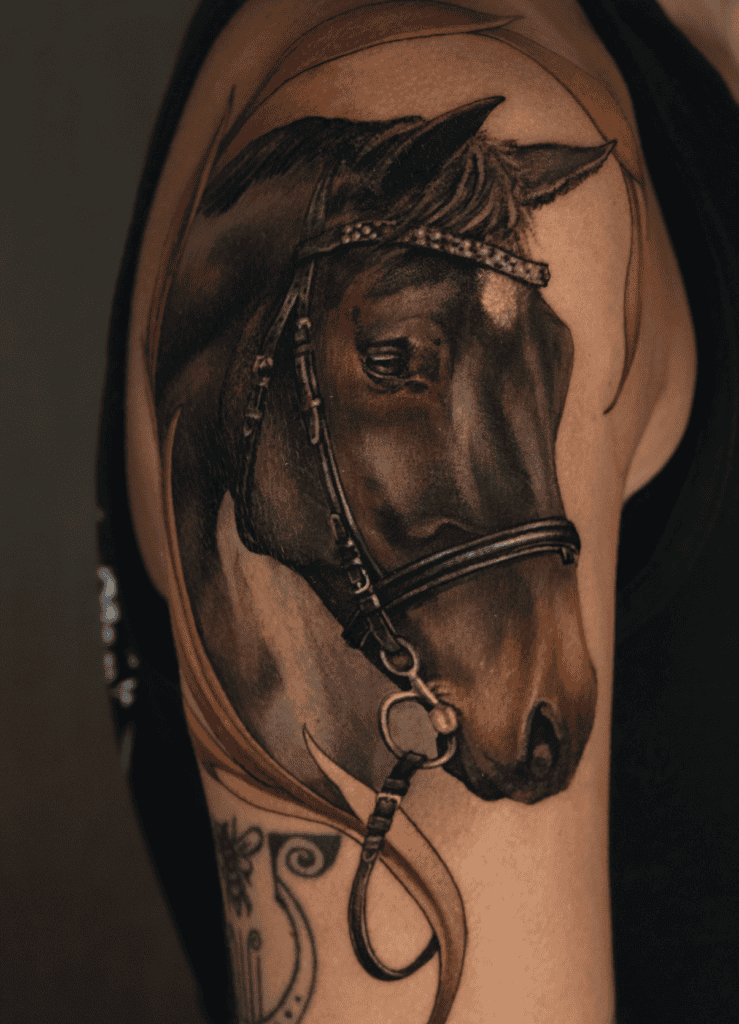
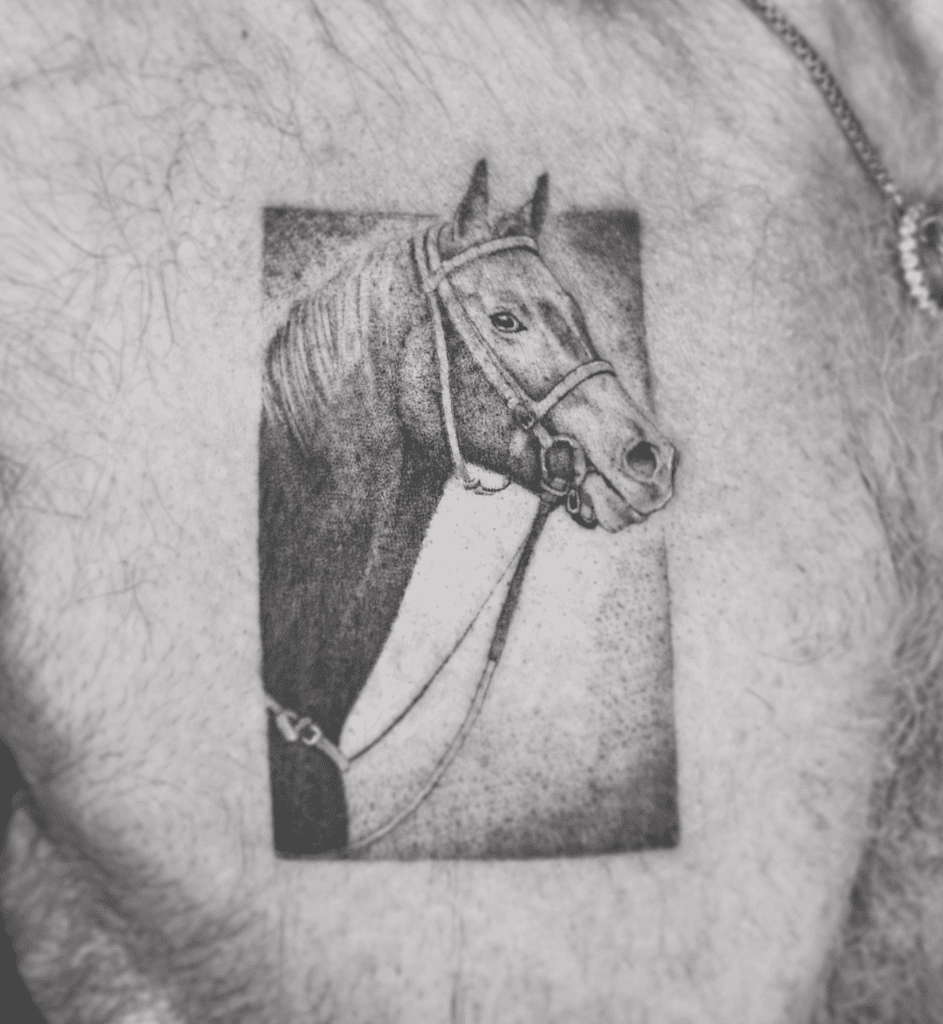
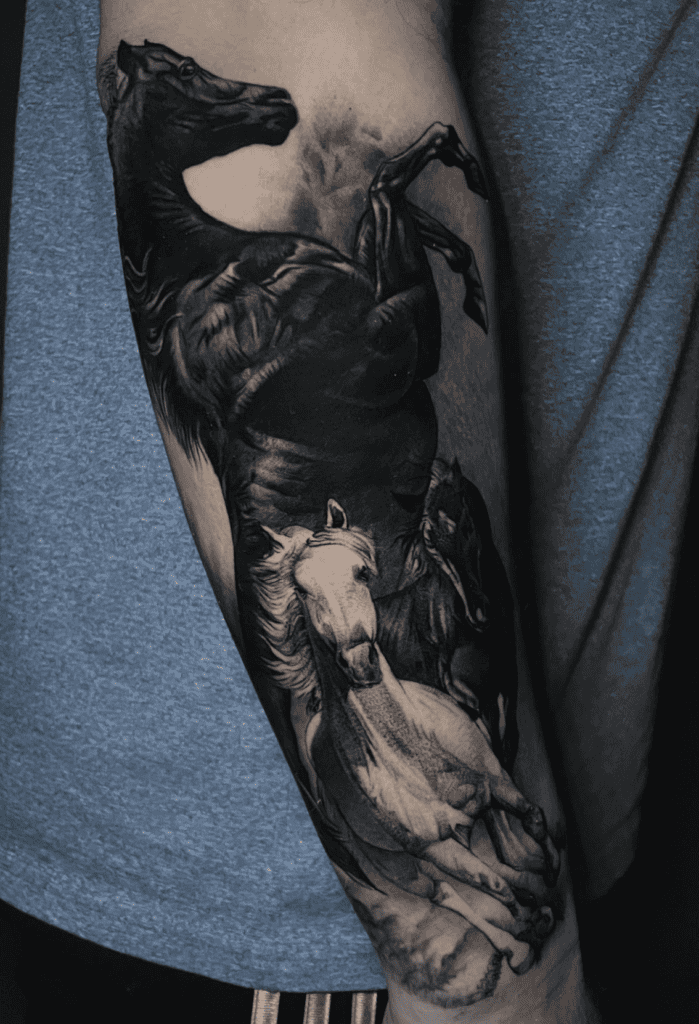
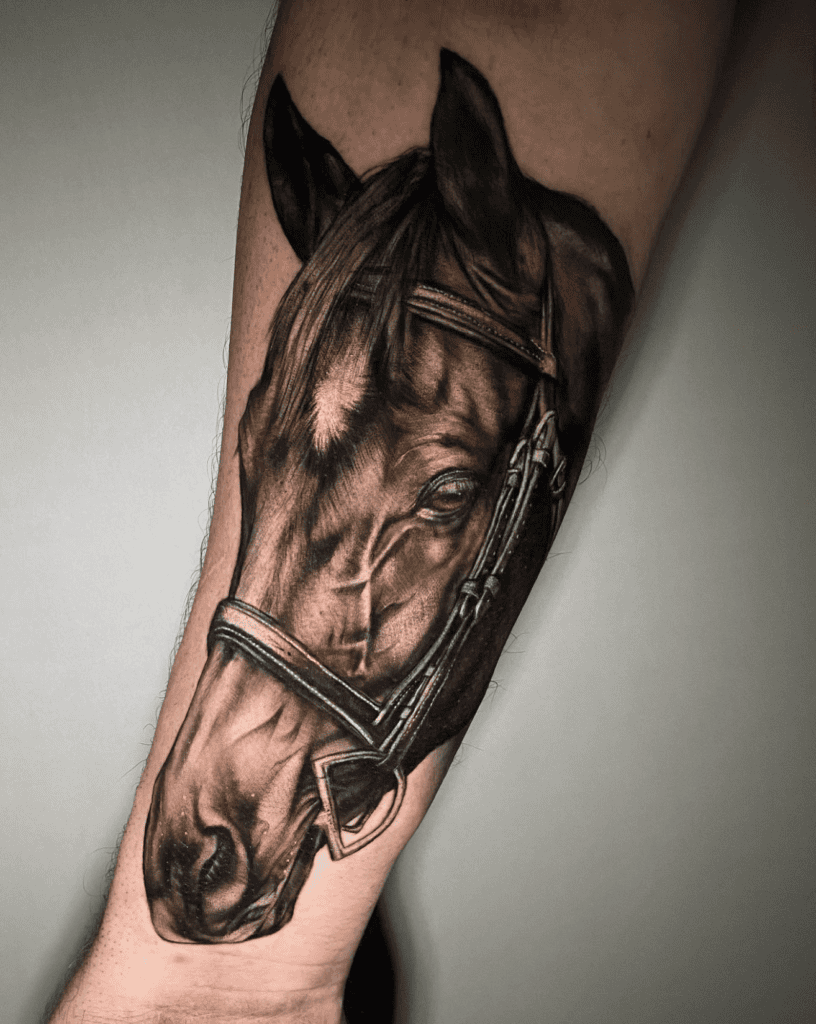
The Thoroughbred originated in England during the late 17th and early 18th centuries. The breed was developed by crossing native English mares with imported Middle Eastern stallions, primarily Arabian, Turkoman, and Barb horses, to create a horse with exceptional speed, stamina, and agility.
Virtually every modern Thoroughbred can trace its ancestry back to three legendary foundation sires, Byerley Turk, Darley Arabian, and Godolphin Arabian. Today, Thoroughbreds are bred worldwide and are the dominant breed in flat racing, while also competing successfully in many Olympic equestrian sports.
American Quarter Horse Tattoo
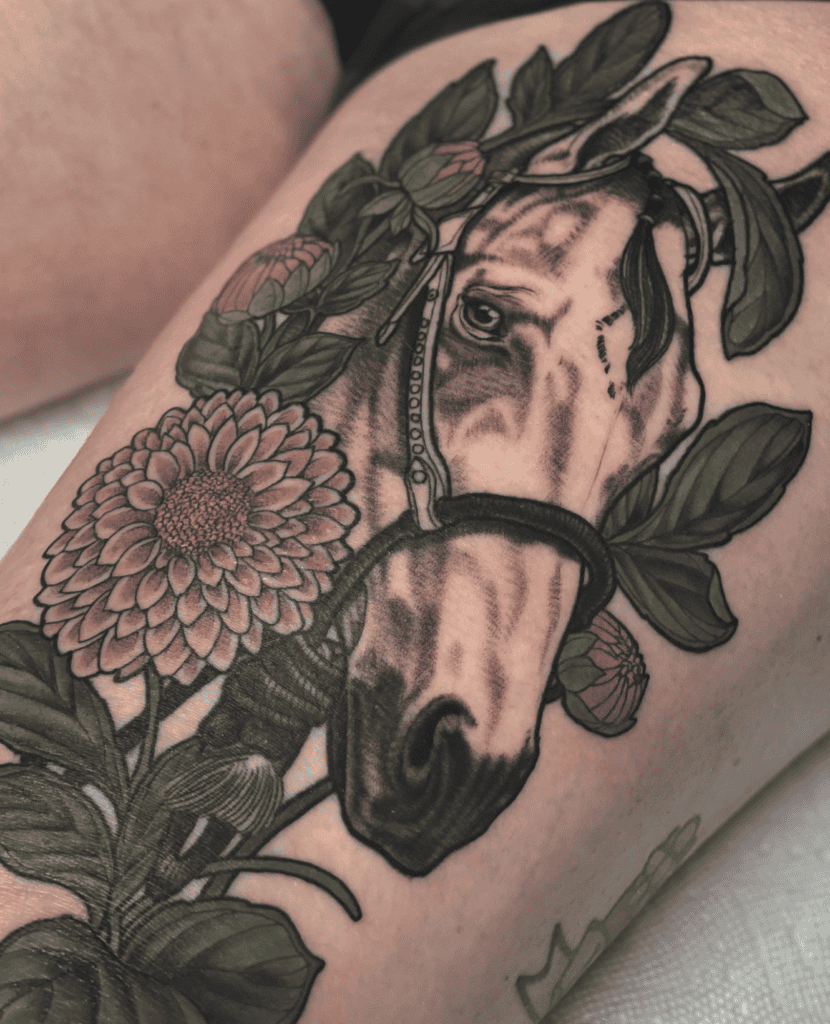
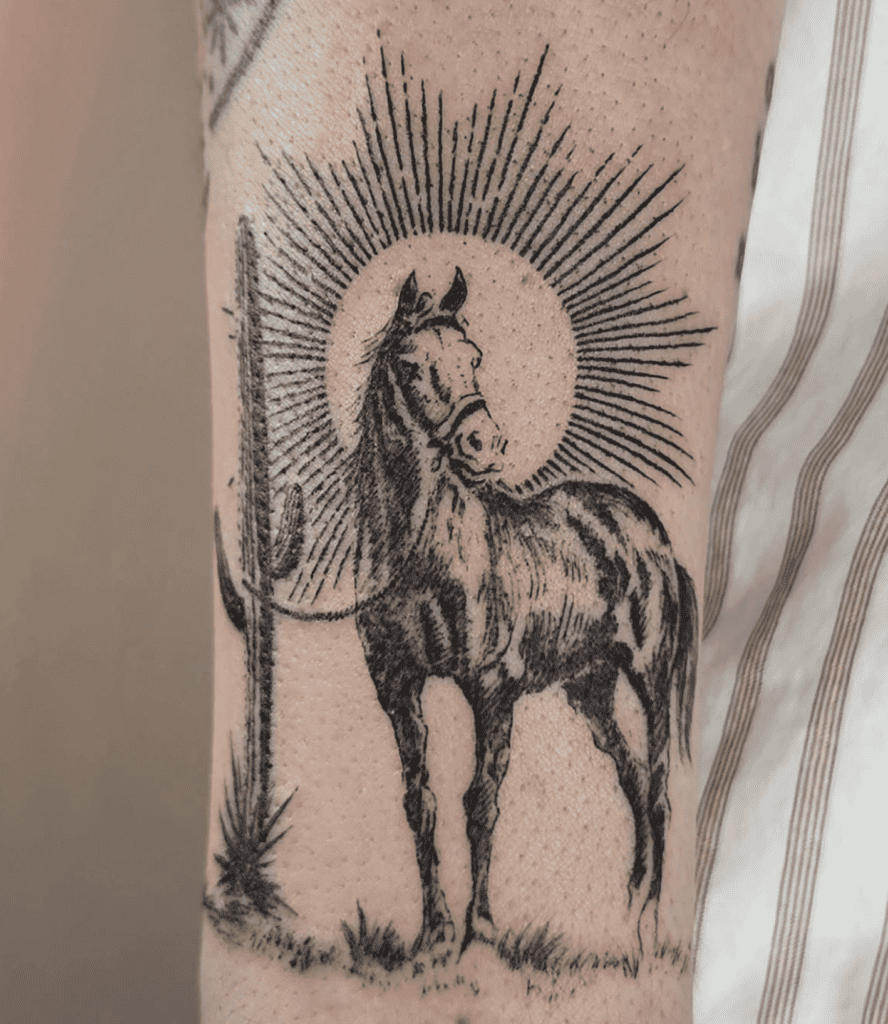
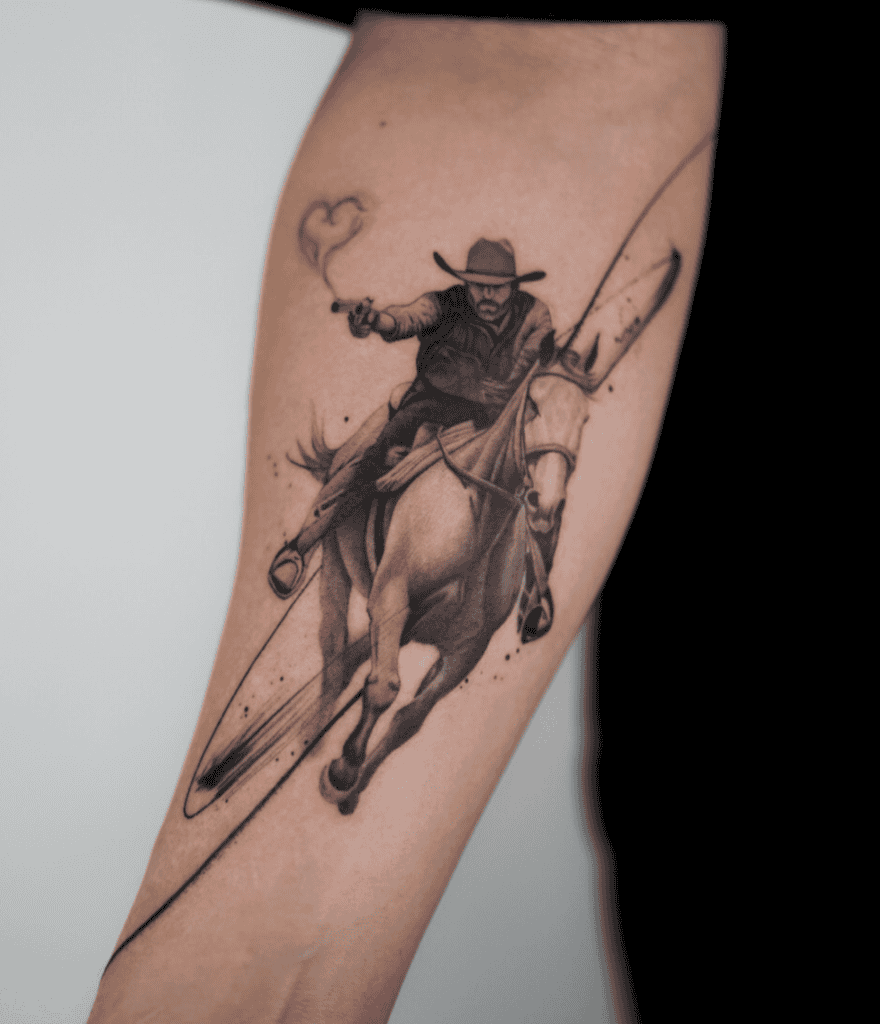
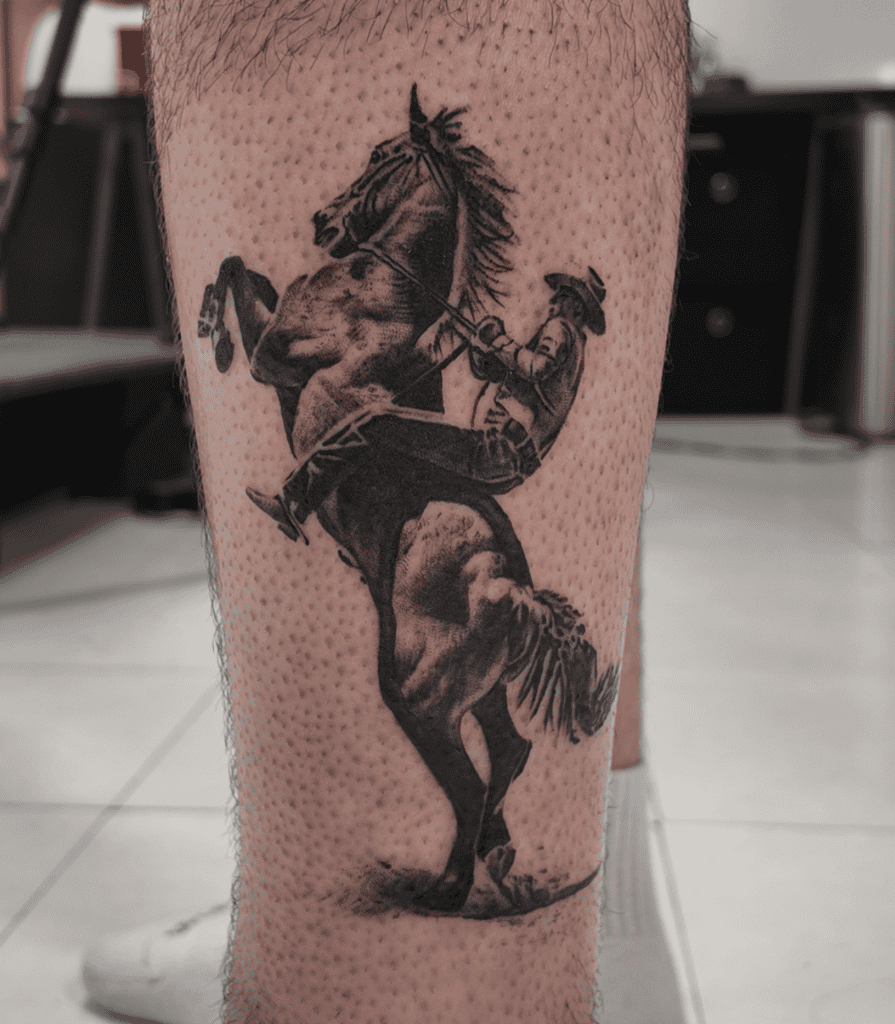
The American Quarter Horse originated in the American colonies during the 17th century. Early settlers crossed English horses with Spanish horses brought to the Americas, producing a compact, muscular horse that excelled at both ranch work and short-distance racing.
The breed earned its name from its remarkable ability to outrun all other horses in races over a quarter of a mile (0.4 km). This explosive acceleration remains one of its defining characteristics today. With more than six million horses registered, the American Quarter Horse is the world’s largest horse breed registry and is widely regarded as one of the most versatile horse breeds ever developed.
The American Quarter Horse is legendary for its natural ability to work with cattle. Many Quarter Horses possess exceptional “cow sense,” an instinctive ability to anticipate and react to the movements of livestock. This makes them invaluable for ranch work and cattle competitions.
Friesian Horse Tattoo
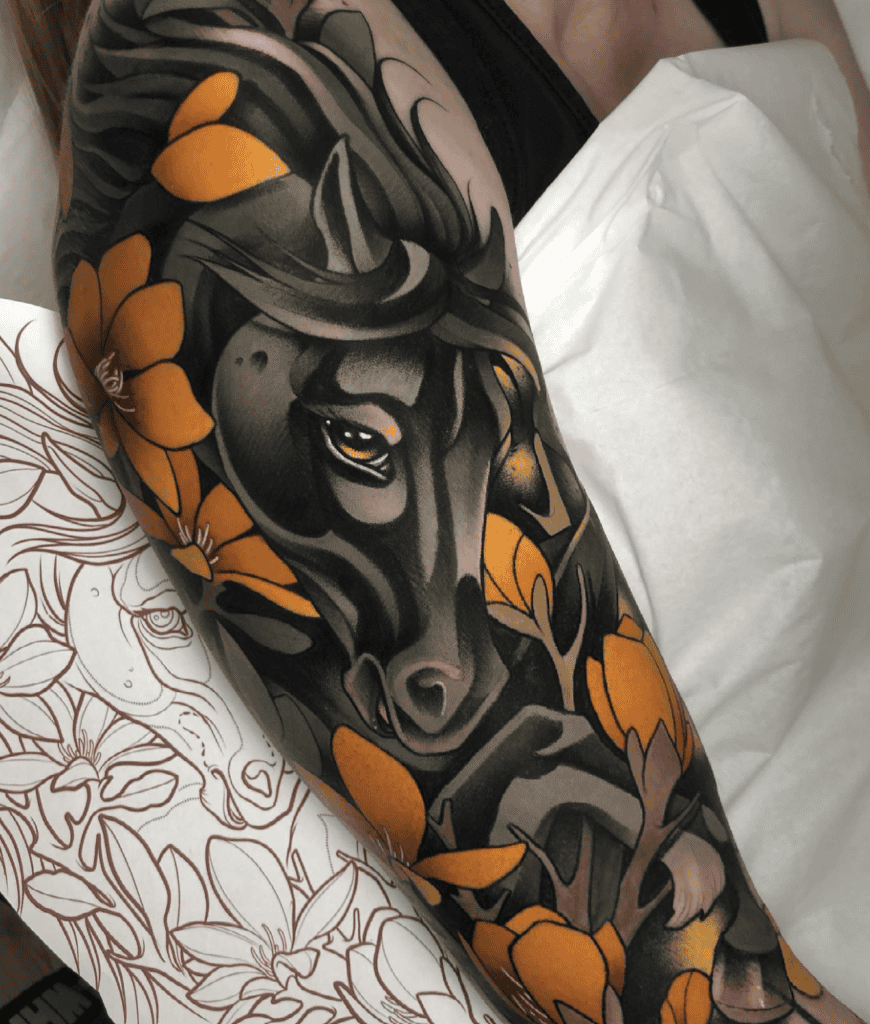
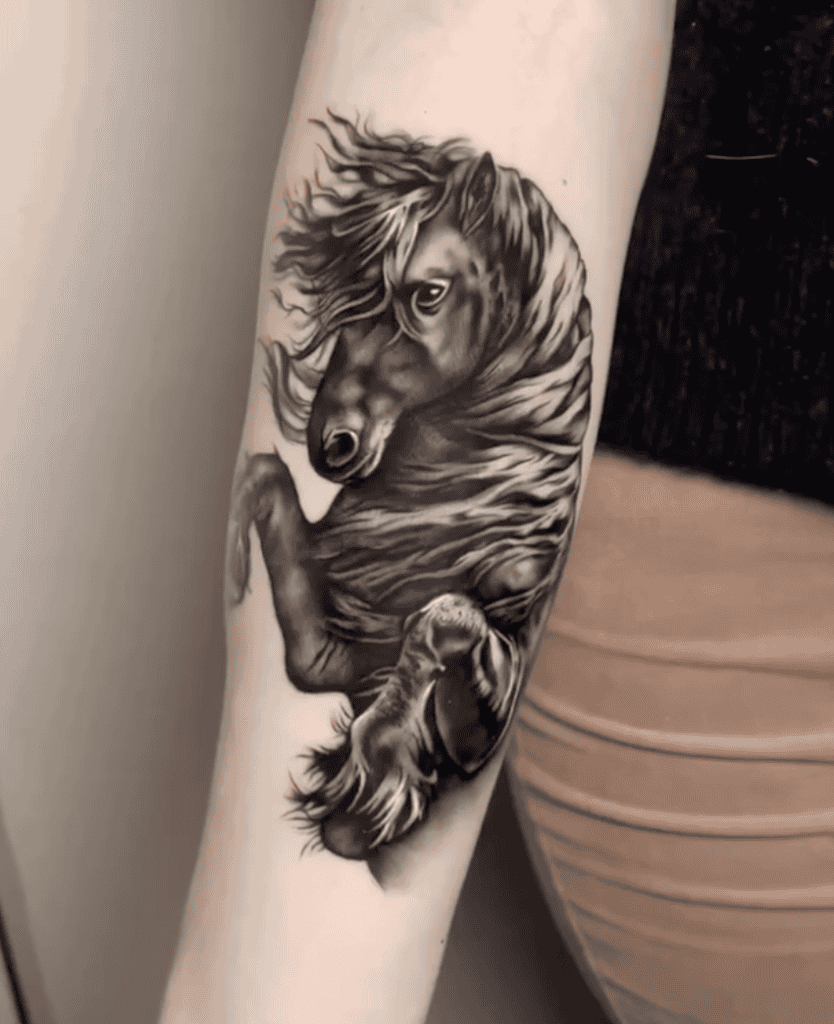
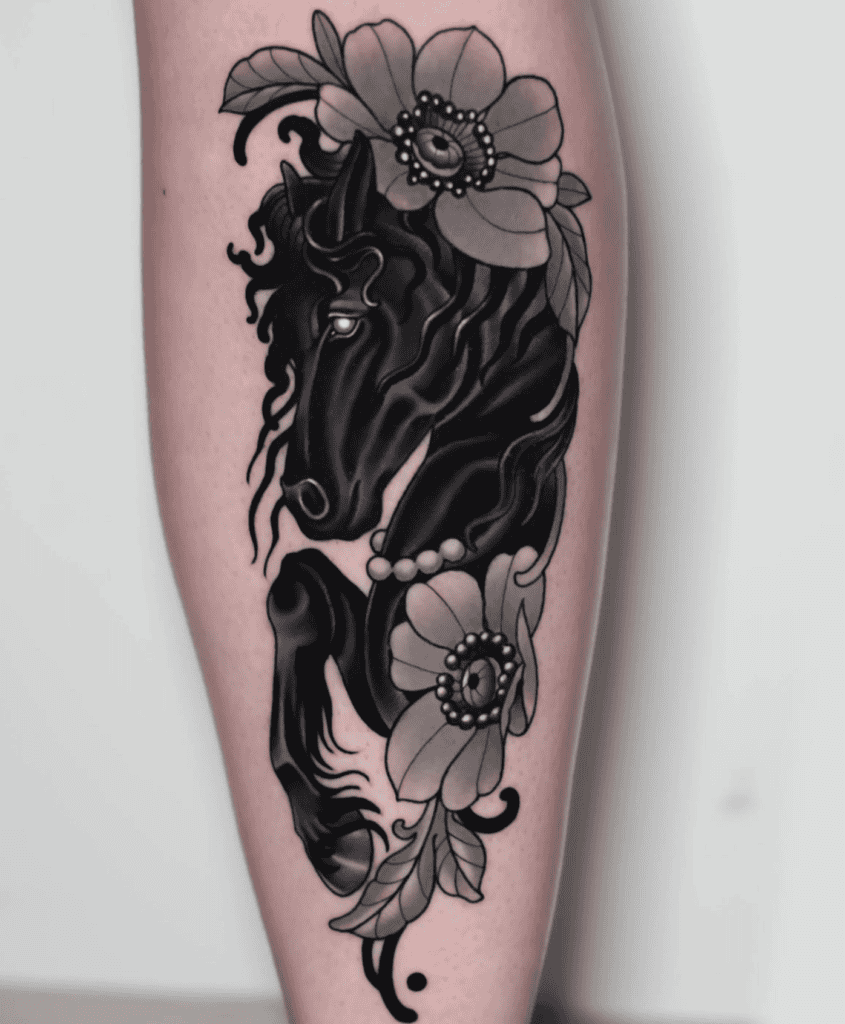
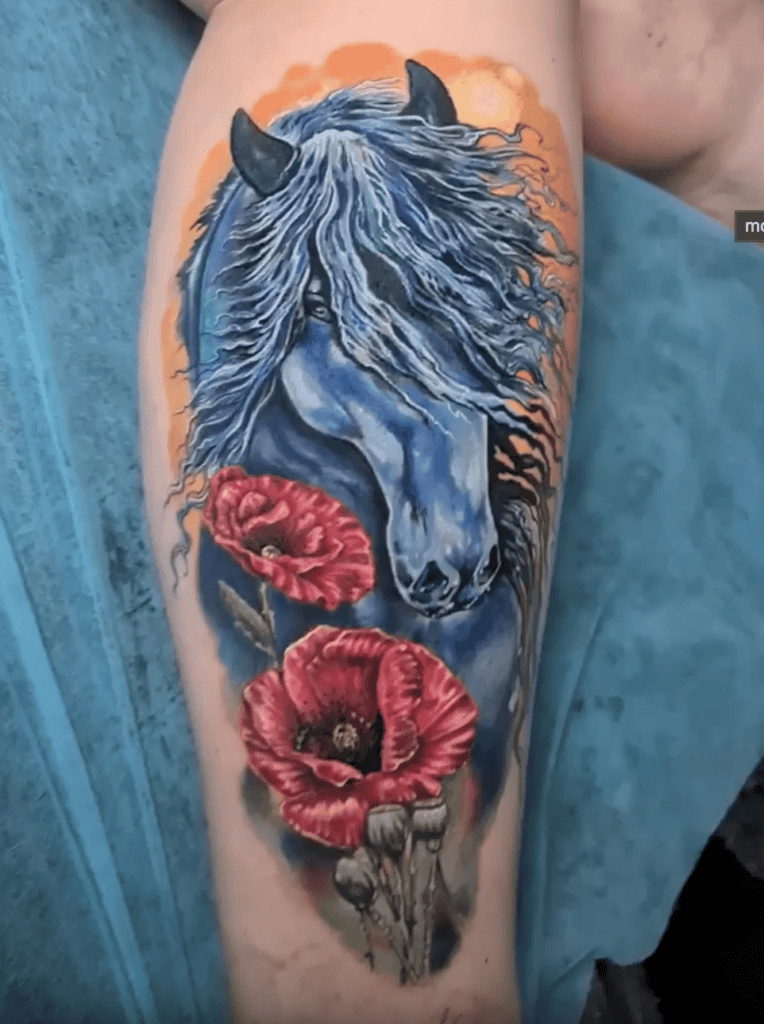
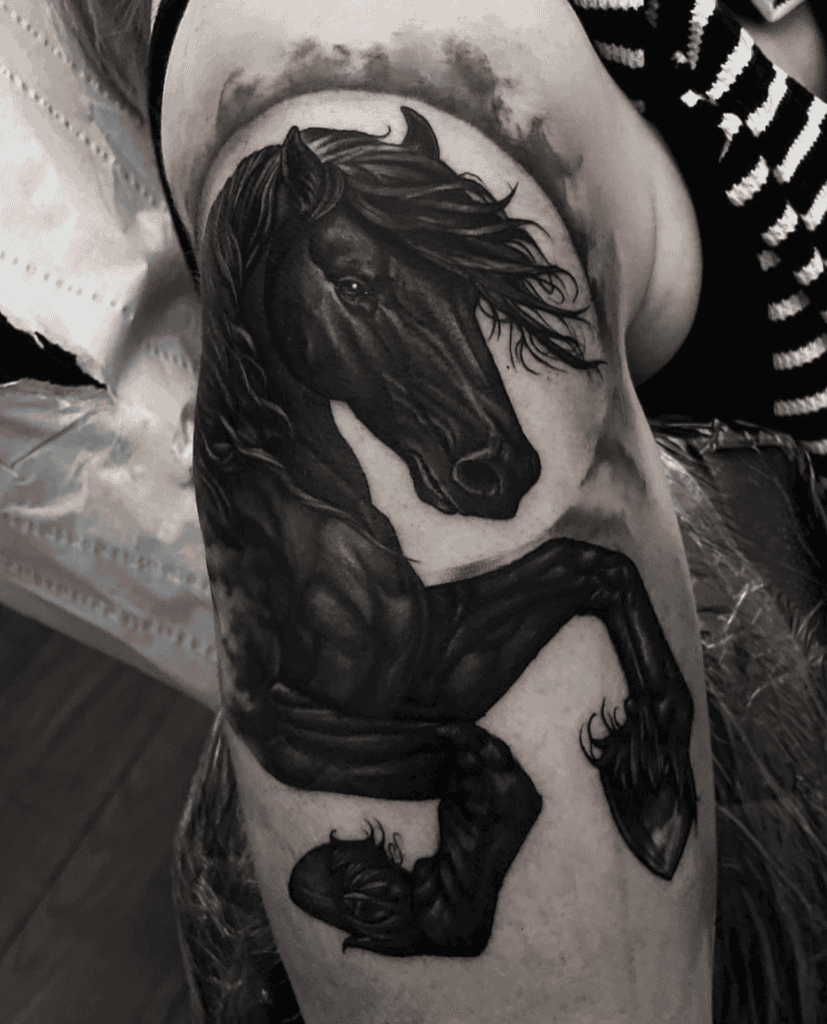
The Friesian Horse originated in the province of Friesland in the northern Netherlands, where it has been bred for more than 1,000 years. It is one of Europe’s oldest horse breeds and has served many roles throughout history, from carrying medieval knights into battle to pulling elegant carriages for royalty.
Today, Friesians are admired for their striking appearance, gentle temperament, and expressive movement, making them popular in dressage, driving competitions, film productions, and recreational riding.
Clydesdale Horse Tattoo
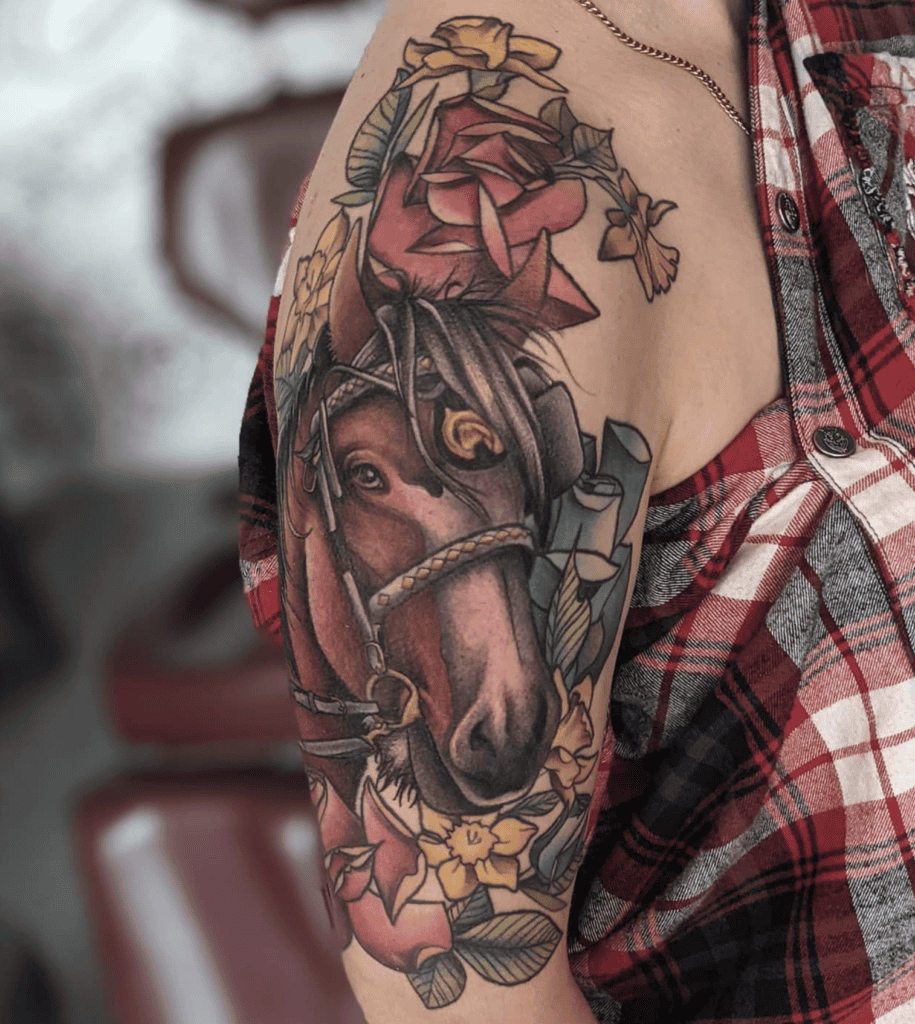
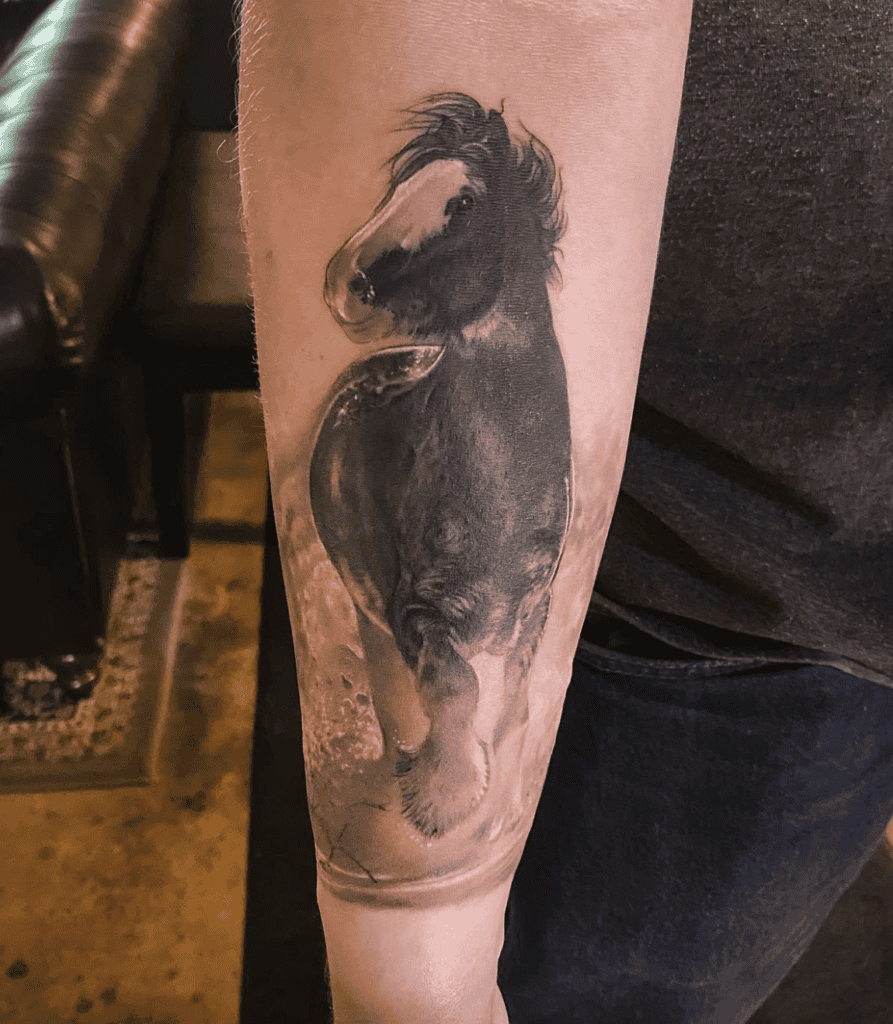
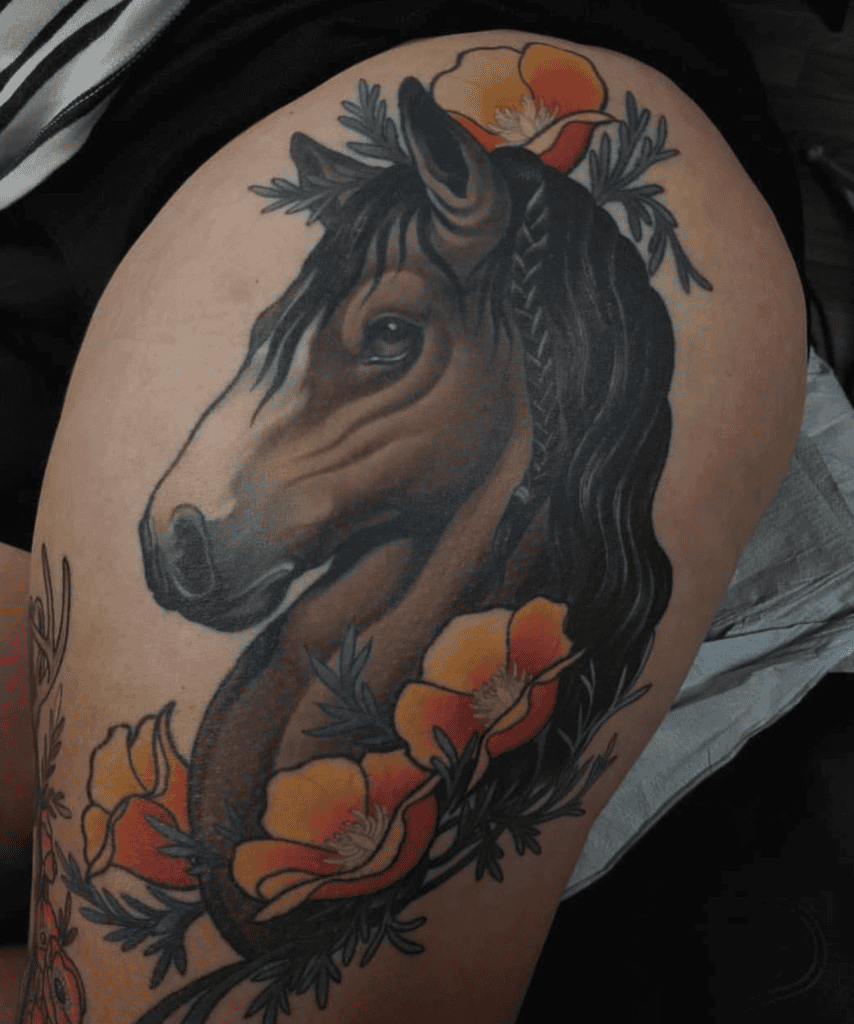
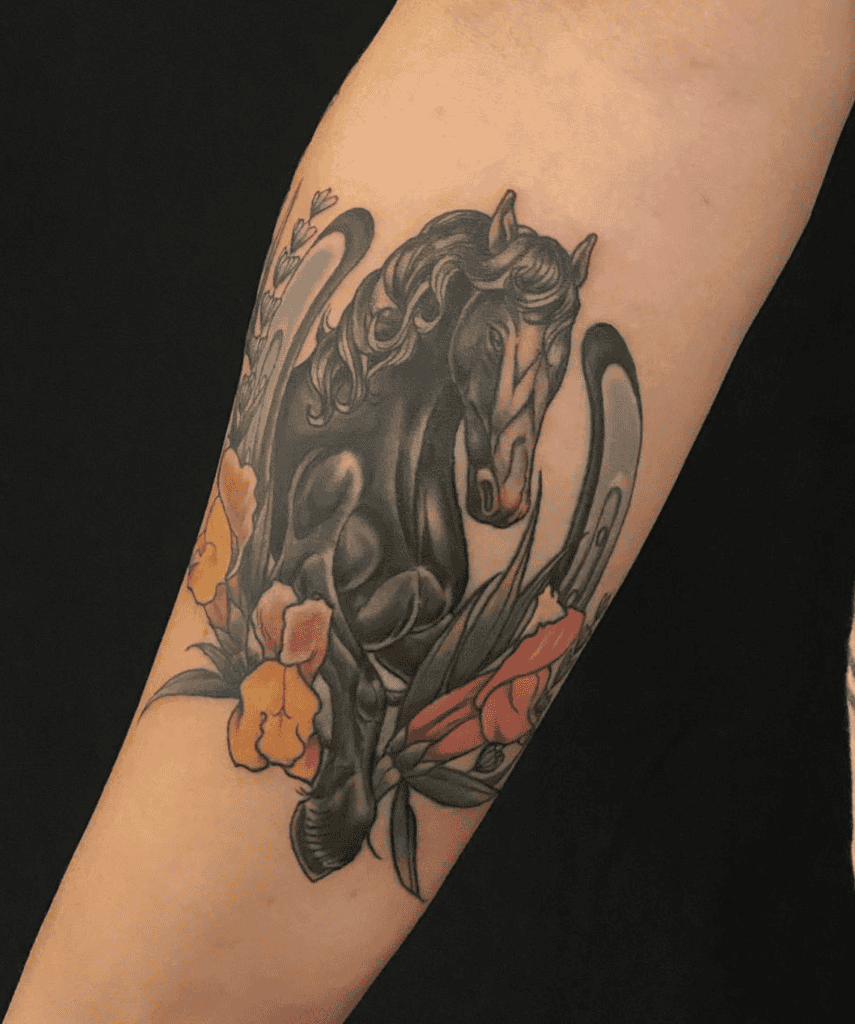
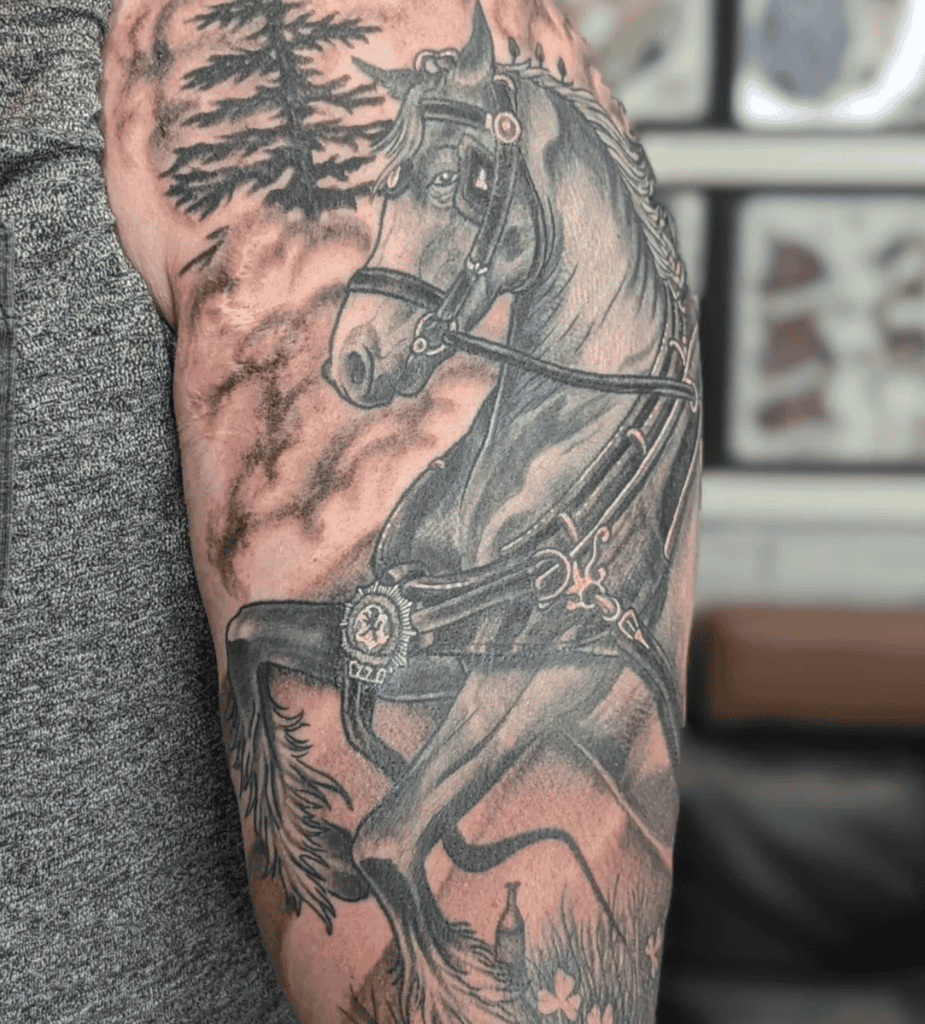
The Clydesdale Horse originated in Lanarkshire, Scotland, in the 18th century. The breed takes its name from the River Clyde, which flows through the region once known as Clydesdale.
Scottish farmers selectively bred local mares with larger Flemish stallions to create a horse powerful enough to work the land, haul timber, and transport heavy goods. The result was a strong yet surprisingly elegant draft horse that quickly gained popularity across Britain and eventually around the world. Today, the Clydesdale is admired for its impressive size, gentle temperament, and striking appearance.
Shire Horse Tattoo


The Shire Horse originated in England, where its ancestors can be traced back to the powerful “Great Horses” that carried armoured knights during the Middle Ages. As warfare changed and heavy cavalry became less important, these massive horses were selectively bred into powerful draft horses capable of pulling enormous loads.
By the 18th and 19th centuries, the Shire had become one of Britain’s most valuable working animals, helping to power the country’s farms, canals, breweries, and industries during the Industrial Revolution. Today, the Shire is celebrated for its remarkable size, gentle personality, and historical importance.
Appaloosa Horse Tattoo
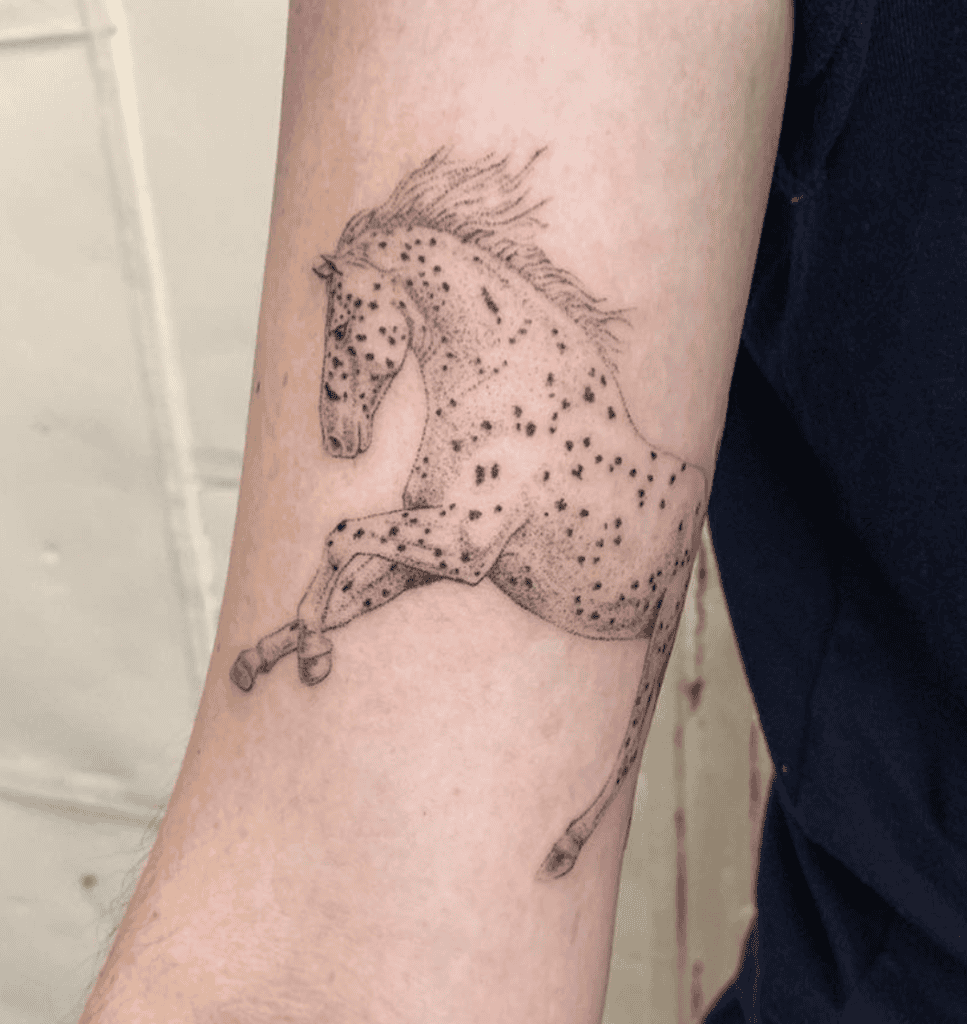
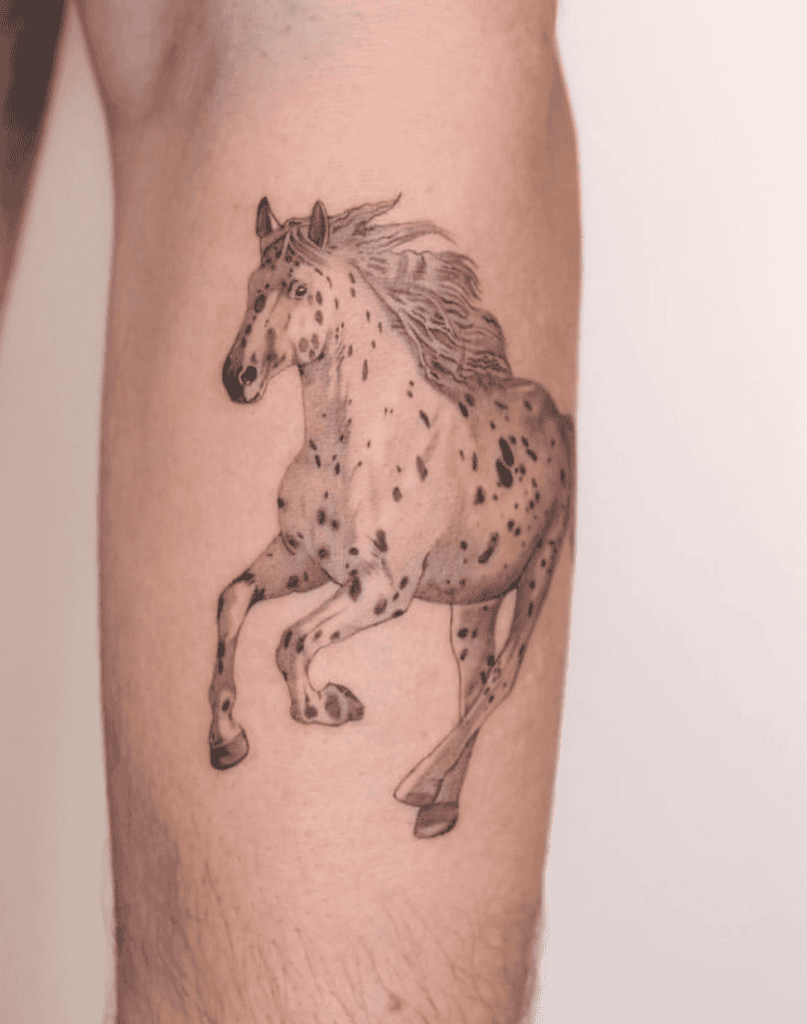
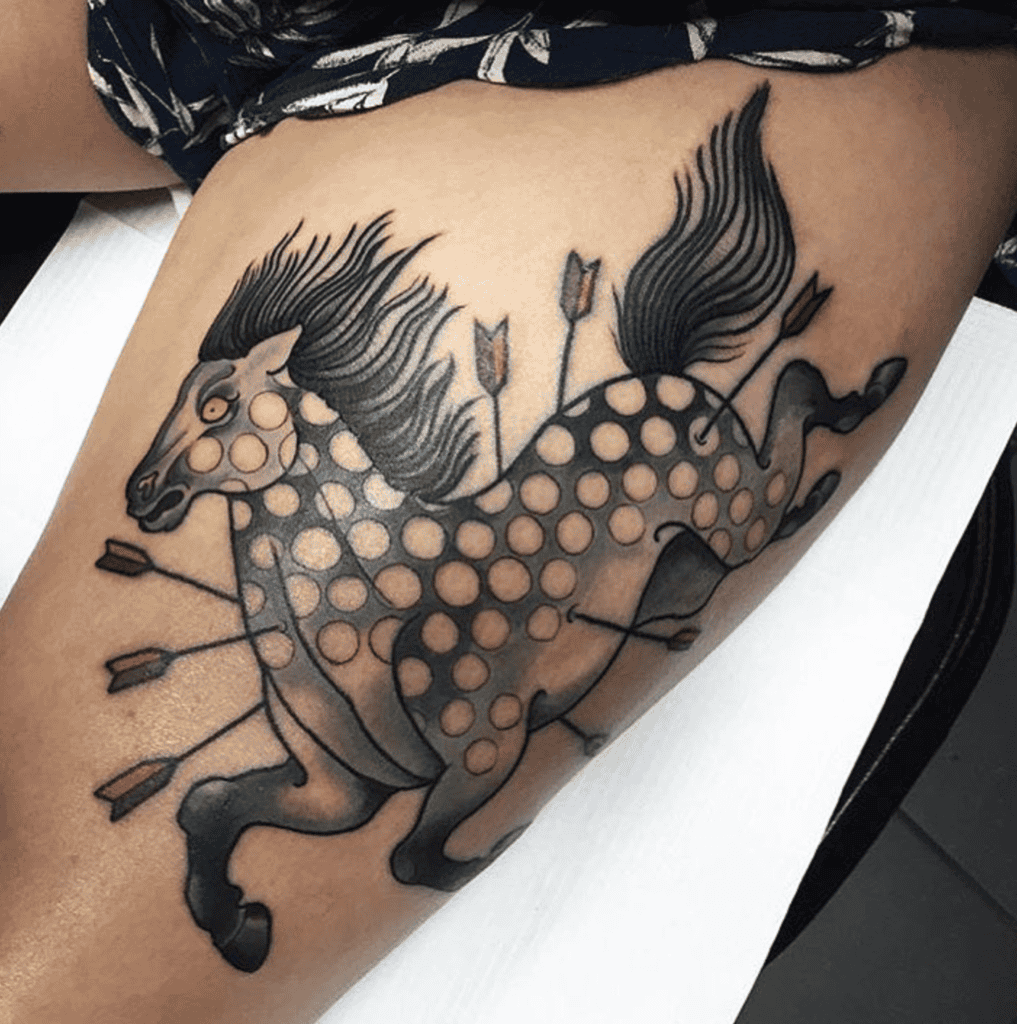
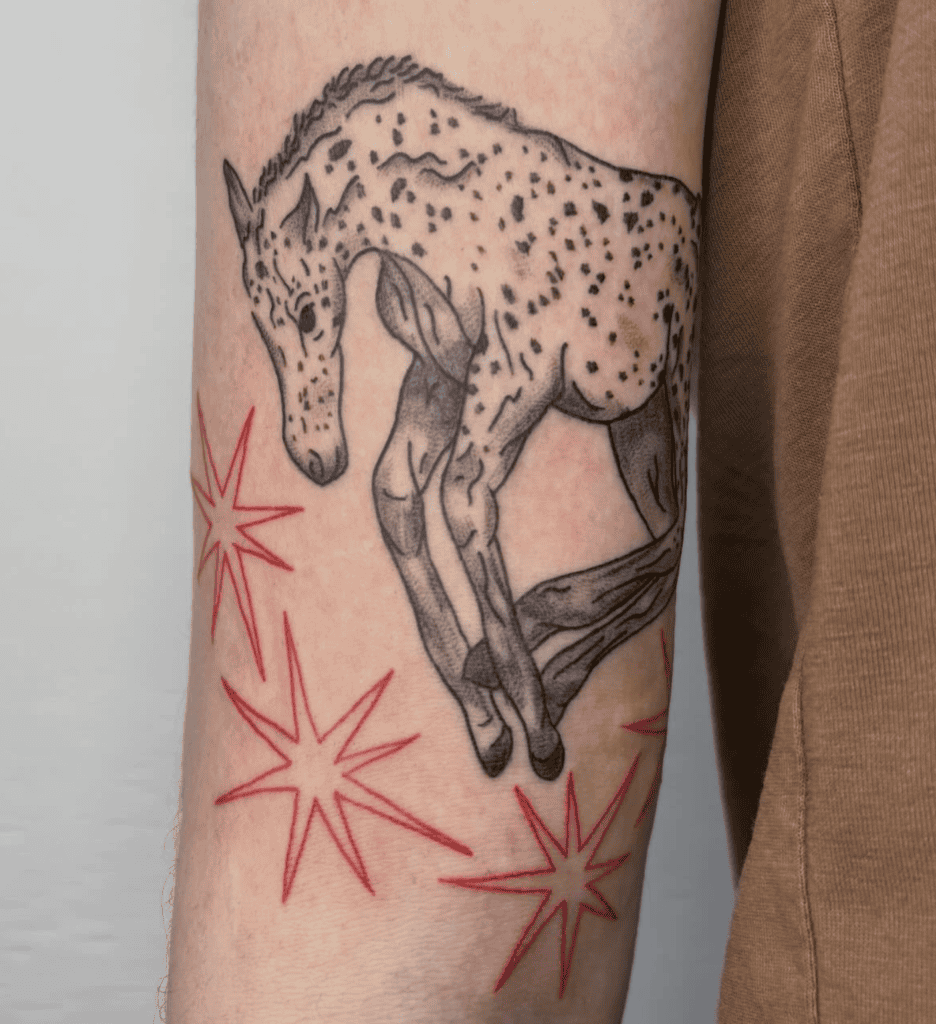
The Appaloosa originated in the northwestern United States, particularly in the region surrounding the Palouse River, which gave the breed its name. European settlers originally referred to them as “Palouse horses,” a term that gradually evolved into Appaloosa.
Although spotted horses had existed for centuries, it was the Nez Perce Tribe who developed the Appaloosa into the remarkable breed we know today. They carefully selected horses for their speed, endurance, intelligence, and distinctive coat patterns, creating one of North America’s finest riding horses.
Following the Nez Perce War, many Appaloosas were lost, and the breed nearly disappeared. Dedicated breeders revived it during the 20th century, and today it is one of the world’s most popular horse breeds.
American Paint Horse Tattoo


The American Paint Horse originated in the United States and shares much of its ancestry with the American Quarter Horse and the Thoroughbred. While horses with colourful coats had existed in North America for centuries, selective breeding focused on producing horses that combined athleticism, intelligence, and distinctive colouring.
Today, the breed is managed by the American Paint Horse Association (APHA), one of the largest horse breed registries in the world. Although its colourful appearance attracts attention, the Paint Horse is equally respected for its versatility, intelligence, and dependable temperament.
Andalusian Horse Tattoo


The Andalusian Horse originated in the region of Andalusia in southern Spain, where it has been bred for well over 2,000 years. Descended from the ancient horses of the Iberian Peninsula, the breed was refined through careful breeding by Spanish nobility and religious orders, particularly the Carthusian monks.
For centuries, the Andalusian was considered the finest horse in Europe. It was exported to royal courts across the continent and became highly sought after for warfare, ceremonial processions, and classical horsemanship. Today, the breed remains one of the world’s premier riding horses and is recognised as Spain’s national horse.
Percheron Horse Tattoo
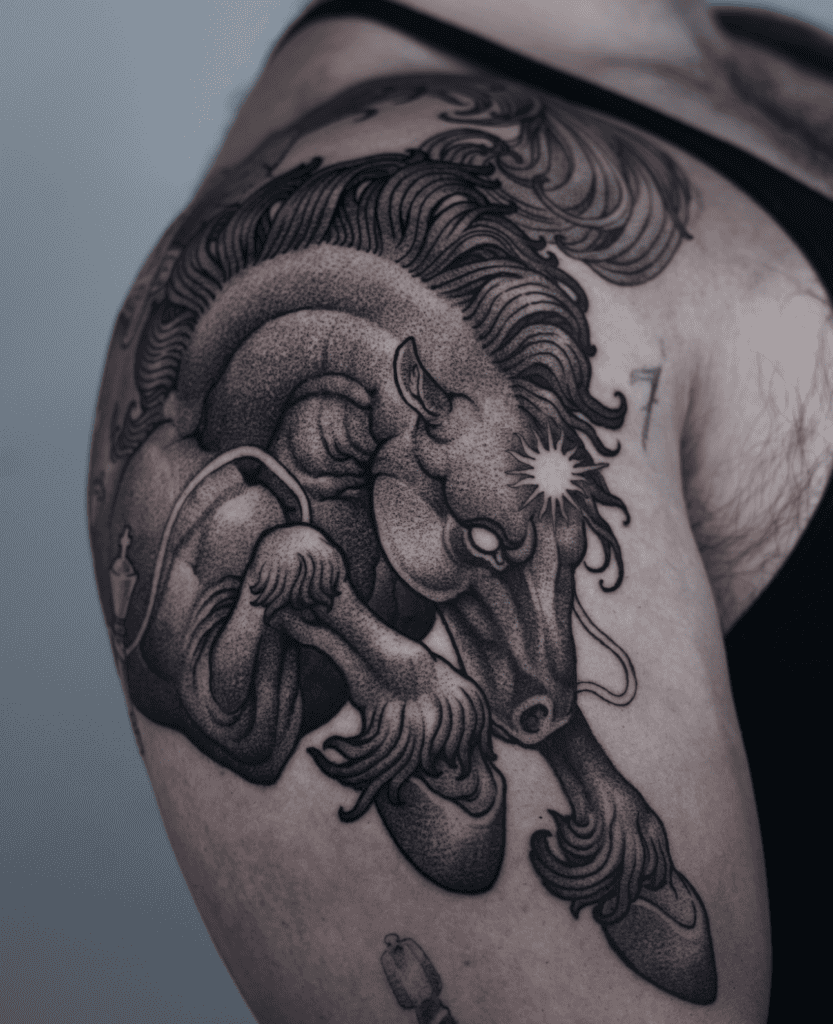
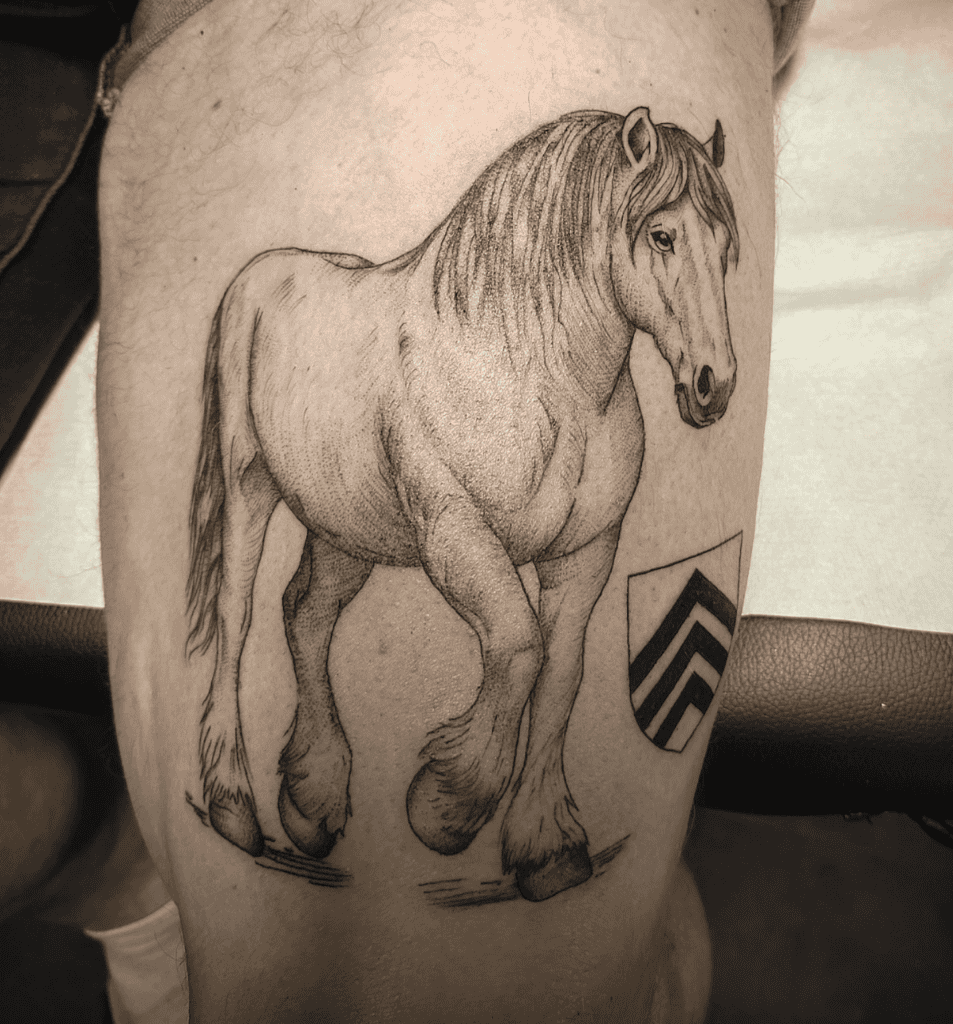
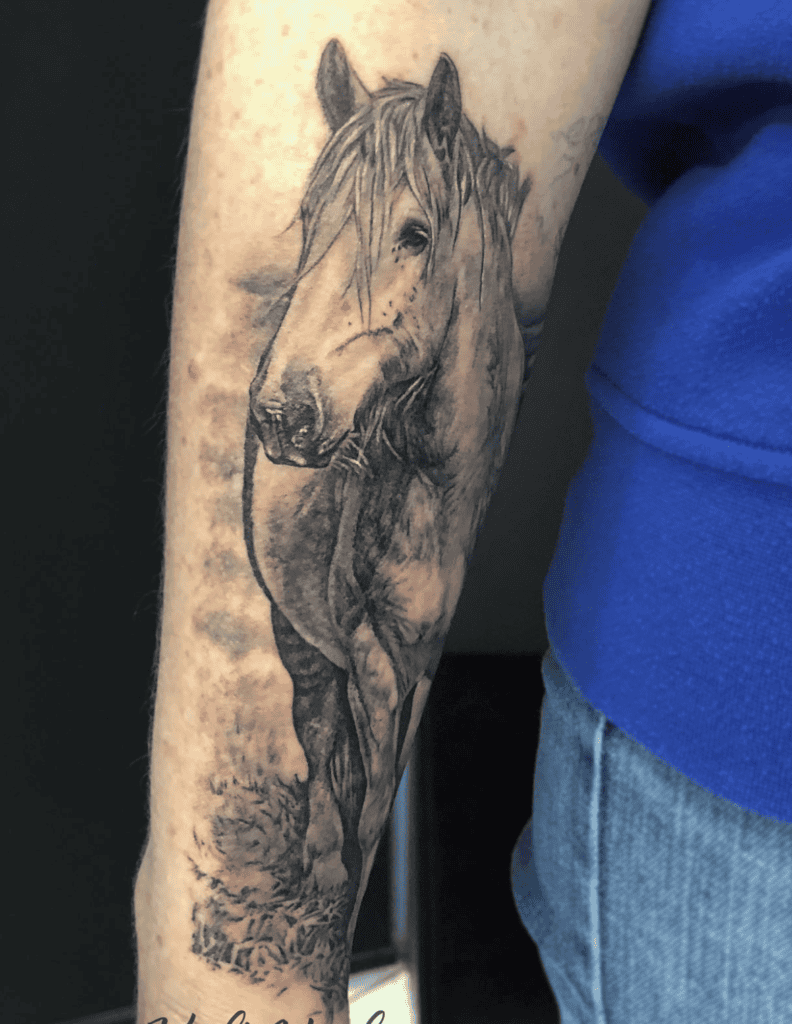
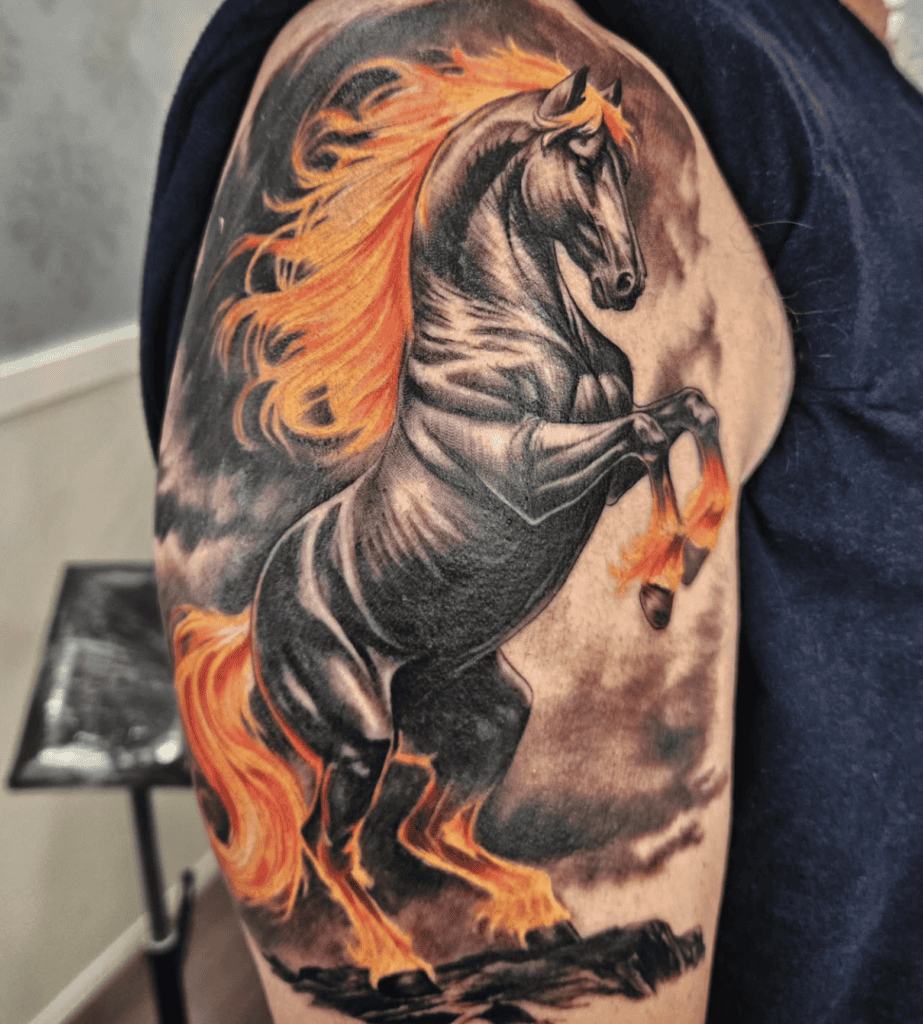
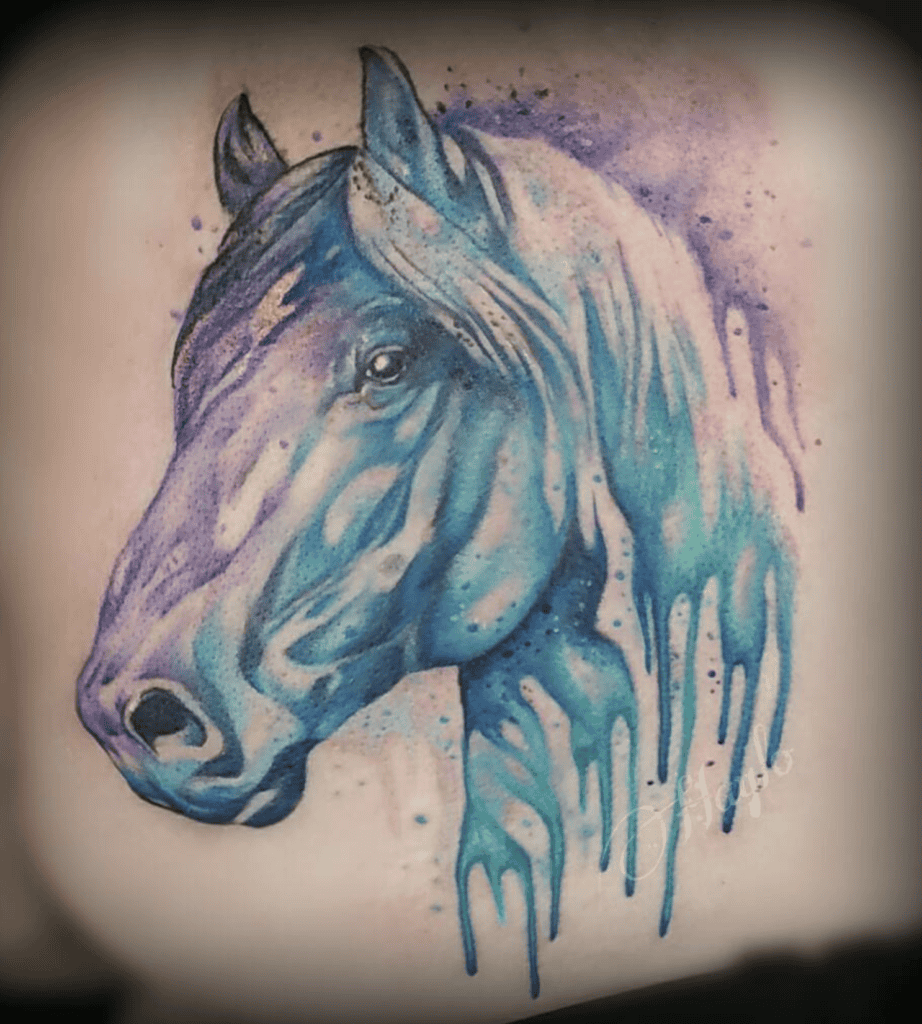
The Percheron originated in the Perche region of north-western France, where its history stretches back hundreds of years. Although its exact origins remain uncertain, the breed was influenced by both powerful European draft horses and elegant Arabian Horses, resulting in a horse that possessed both strength and refinement.
Originally bred as a medieval war horse capable of carrying heavily armoured knights, the Percheron later became one of Europe’s premier agricultural and carriage horses. During the 19th century, thousands were exported around the world, particularly to North America, where they became one of the most popular draft breeds. Today, the Percheron is celebrated for its versatility, serving as both a working horse and an elegant riding and driving horse.
Lusitano Horse Tattoo

The Lusitano originated in Portugal, where it has been bred for thousands of years on the Iberian Peninsula. The breed shares ancient ancestry with the Andalusian (Pure Spanish Horse), and for much of history they were considered the same breed before separate studbooks were established during the 20th century.
The name “Lusitano” comes from Lusitania, the ancient Roman province that covered much of modern-day Portugal. Throughout history, Lusitanos were admired by kings, generals, and noble families for their bravery, intelligence, and remarkable agility. Today, they are considered one of the world’s finest horses for classical dressage and working equitation.
Irish Sport Horse Tattoo

The Irish Sport Horse originated in Ireland, where breeders sought to combine the best qualities of the sturdy Irish Draught with the athletic Thoroughbred. Over time, additional Warmblood bloodlines were introduced, further enhancing the breed’s performance in modern equestrian sports.
Unlike many traditional breeds, the Irish Sport Horse is defined more by its performance and pedigree than by a single, fixed appearance. As a result, there is considerable variety within the breed, but all Irish Sport Horses are bred for athletic ability, trainability, and soundness. Today, they are among the most successful horses in international equestrian competition.
Fjord Horse Tattoo


The Fjord Horse originated in the mountainous regions of western Norway, where it has lived for more than 4,000 years. It is considered one of the world’s oldest domesticated horse breeds and has remained remarkably unchanged throughout its long history.
Archaeological evidence suggests that Fjord Horses were used by the Vikings, serving as riding horses, pack animals, and farm horses. They were also highly valued in battle and were celebrated for their sure-footedness across Norway’s rugged terrain. Today, the Fjord Horse remains one of Norway’s national treasures and is admired worldwide for its versatility, calm nature, and unique appearance.
Mustang Horse Tattoo
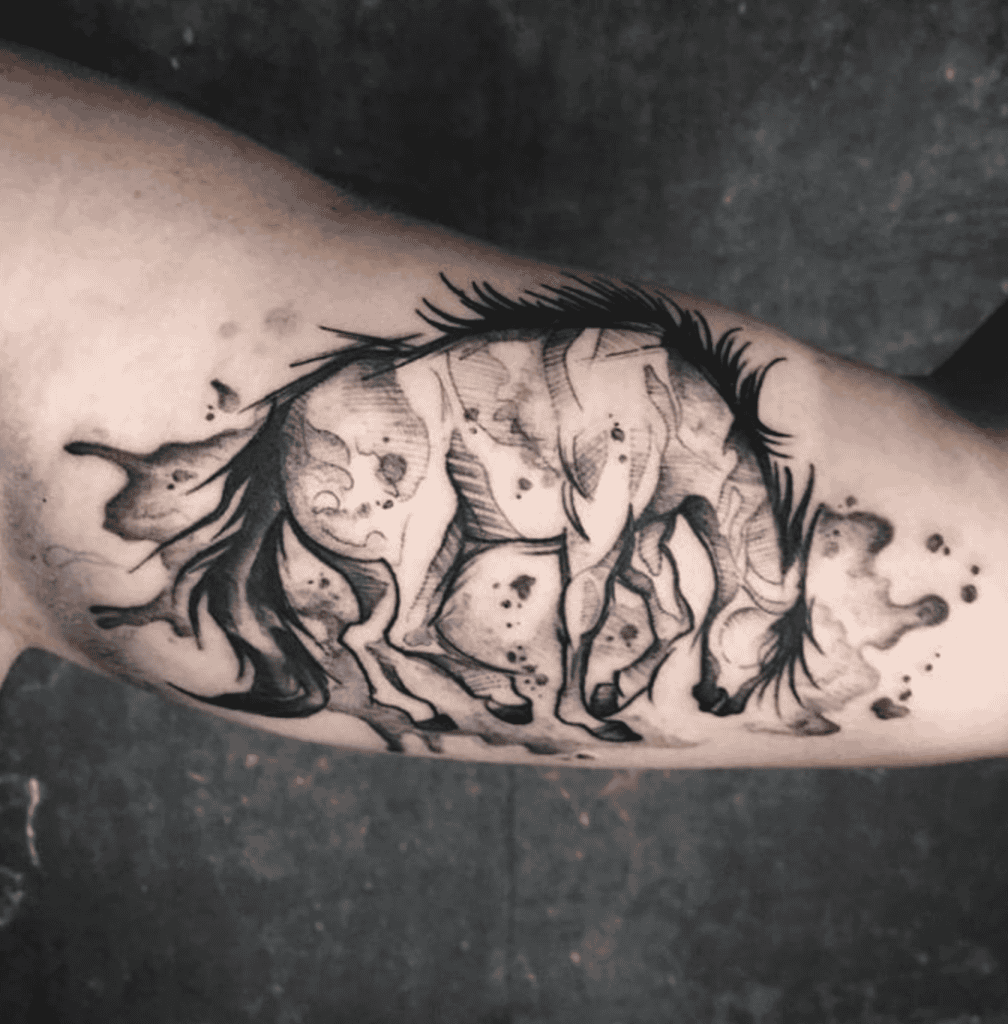
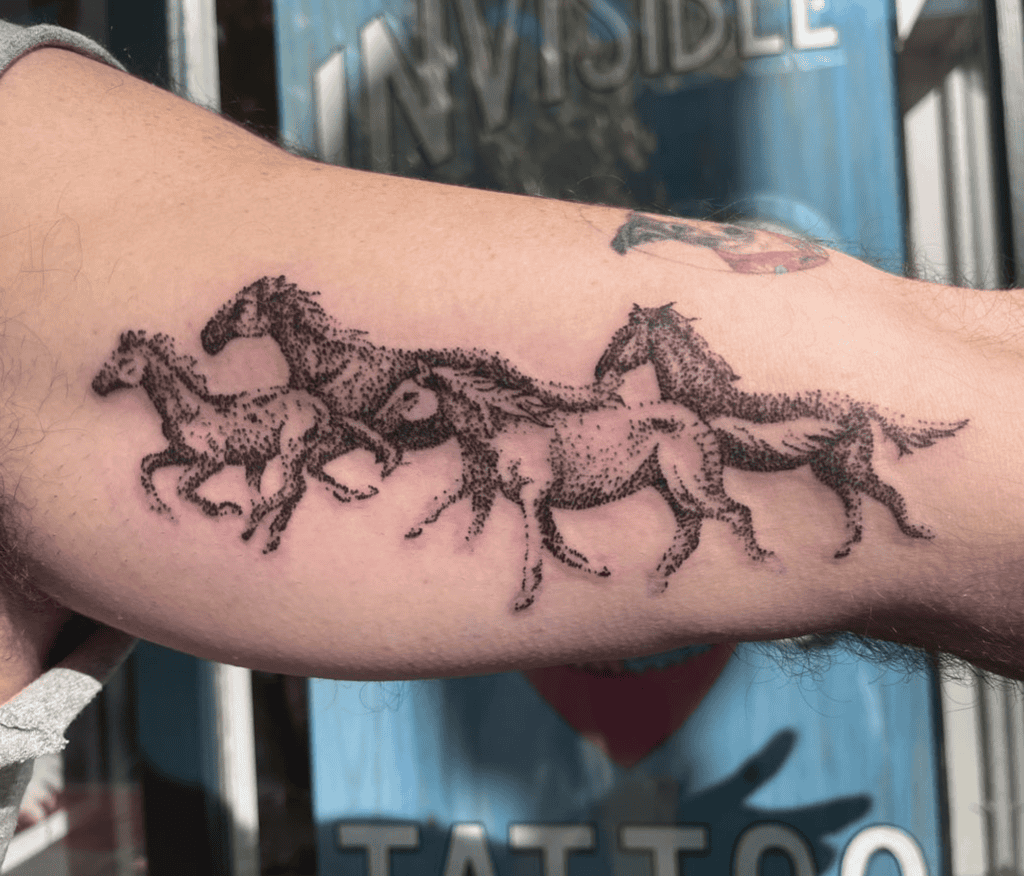
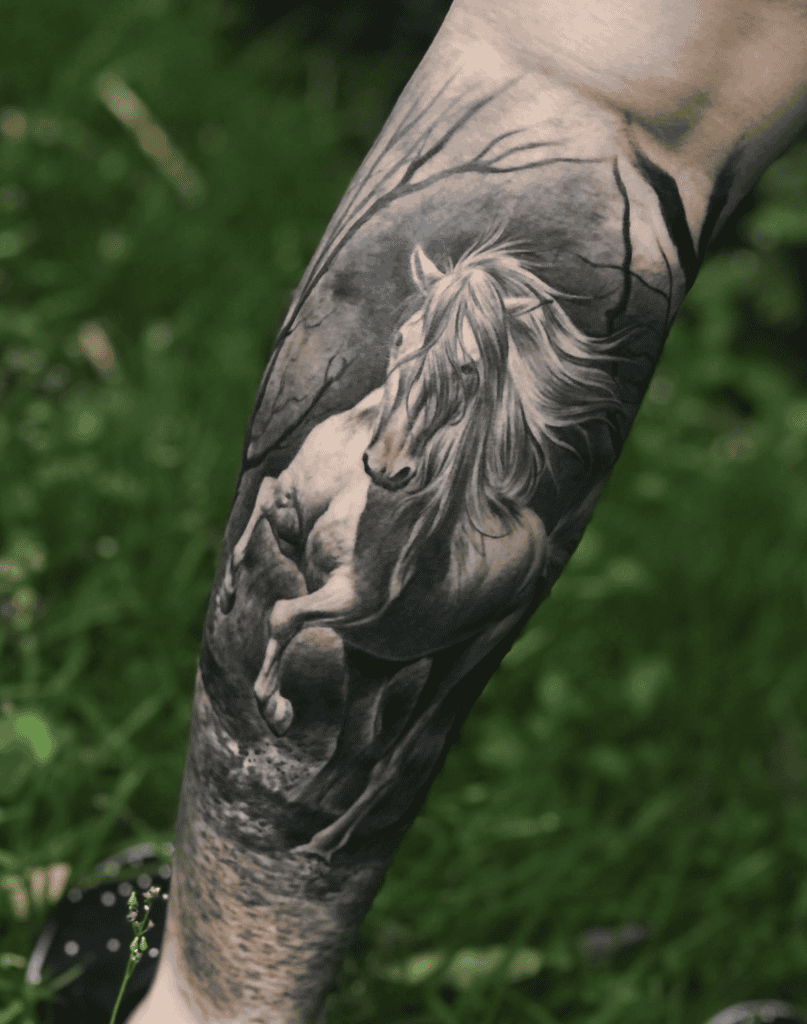
The Mustang traces its origins to horses brought to the Americas by Spanish explorers during the 16th century. Many of these horses escaped or were released, forming free-roaming herds across the plains, deserts, and mountains of North America.
Over generations, these horses adapted to harsh environments through natural selection, developing exceptional endurance, intelligence, and toughness. Native American tribes, particularly those of the Great Plains, became skilled horsemen after acquiring Mustangs, forever changing their cultures and ways of life. Today, wild Mustangs are primarily found in the western United States, where they are protected and managed on public lands.
Icelandic Horse Tattoo
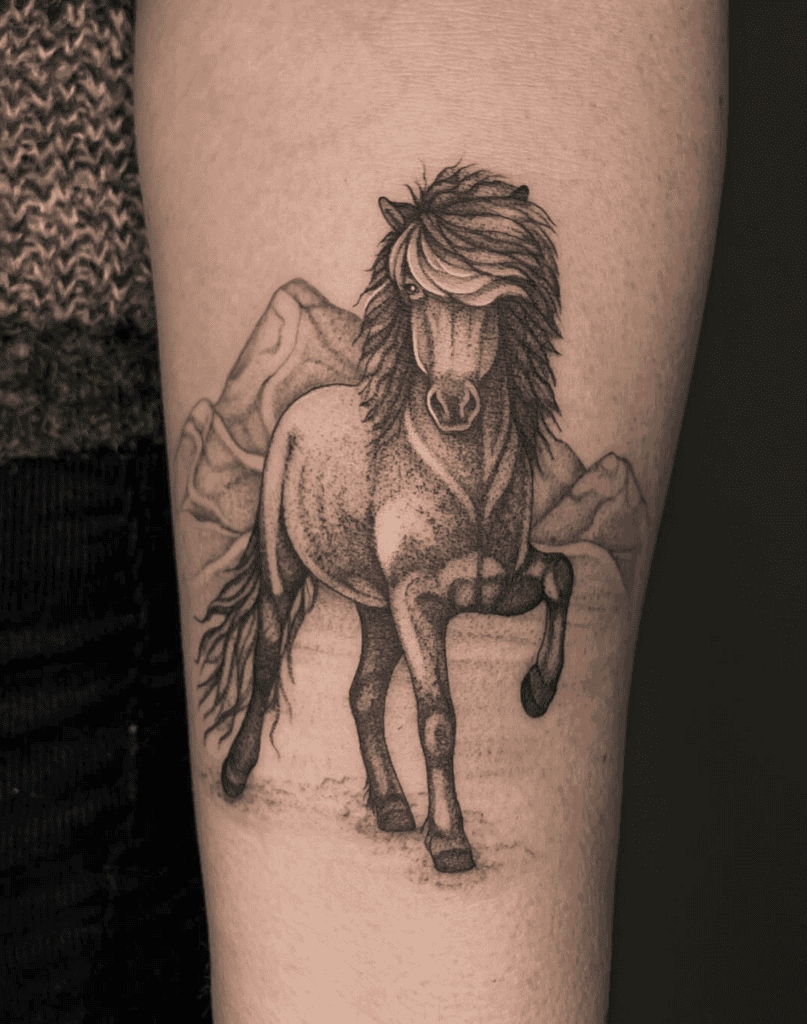
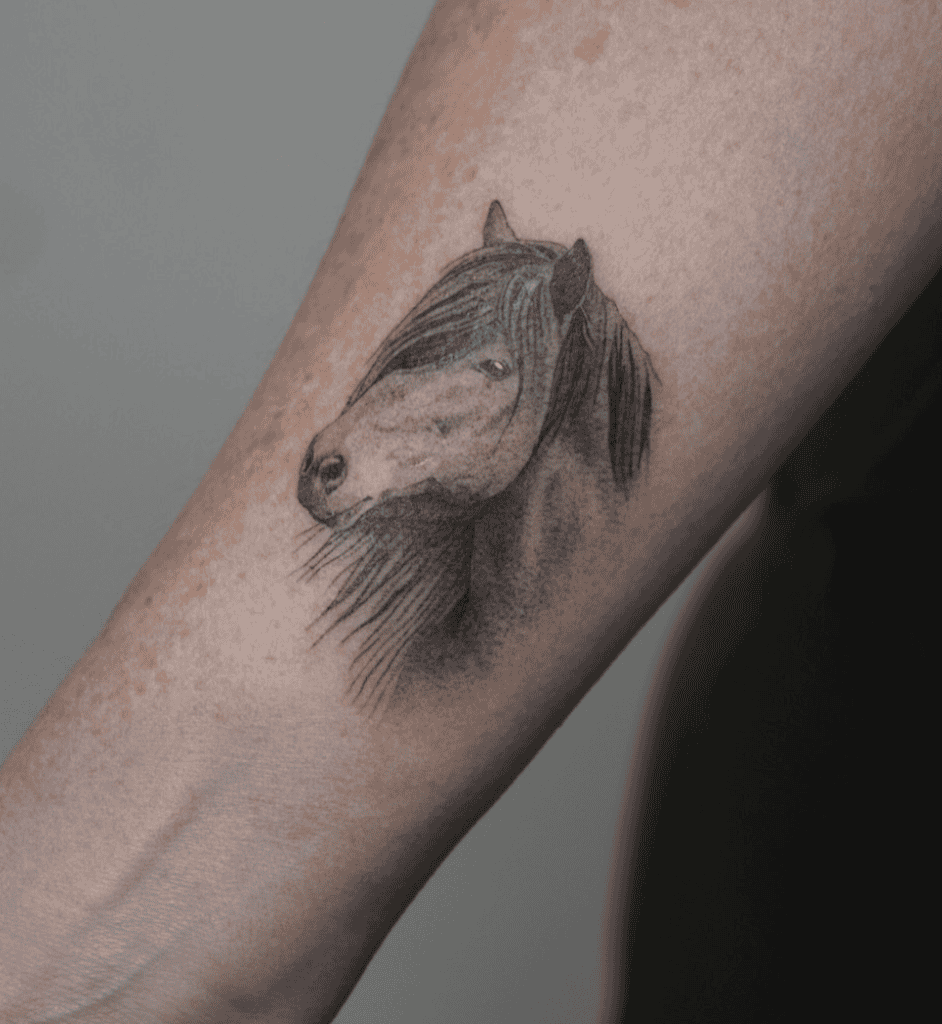
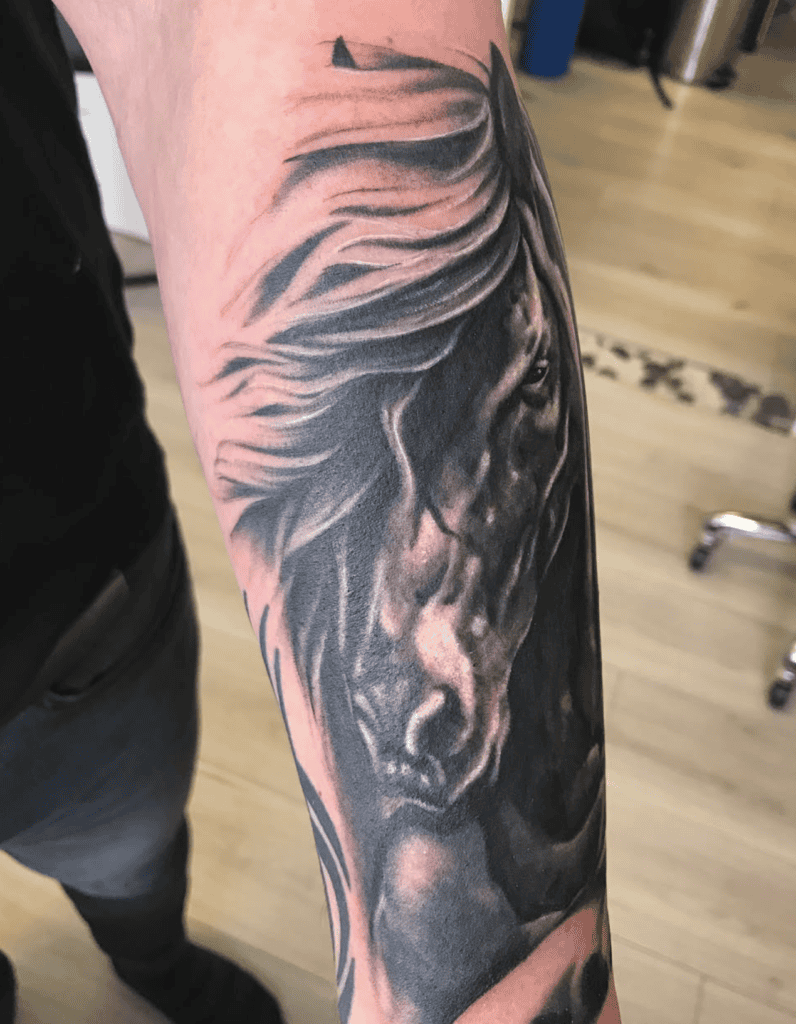
The Icelandic Horse originated in Iceland, where it was brought by Norse and Viking settlers between the 9th and 10th centuries. These settlers transported horses from Norway and the British Isles, creating the foundation of the breed.
Because Iceland remained geographically isolated, no new horses have been imported for over 1,000 years. In fact, Iceland has strict laws prohibiting the importation of horses to protect the breed from disease and preserve its genetic purity. Over centuries of surviving Iceland’s harsh climate, volcanic landscapes, and long winters, the Icelandic Horse evolved into one of the toughest and most dependable breeds in the world.
Haflinger Horse Tattoo


The Haflinger Horse originated in the Tyrolean Alps, a region that today lies between Austria and northern Italy. The breed takes its name from the village of Hafling (Avelengo) in South Tyrol.
The modern Haflinger can trace its ancestry back to a single foundation stallion named 249 Folie, born in 1874. Folie was the result of crossing a native Tyrolean mare with an Arabian stallion, producing offspring that combined mountain toughness with elegance and refinement.
For generations, Haflingers were bred to work in steep alpine terrain, carrying supplies, pulling carts, and assisting farmers in conditions where larger horses struggled. Today, they are among the world’s most versatile horse breeds.
Lipizzaner Horse Tattoo
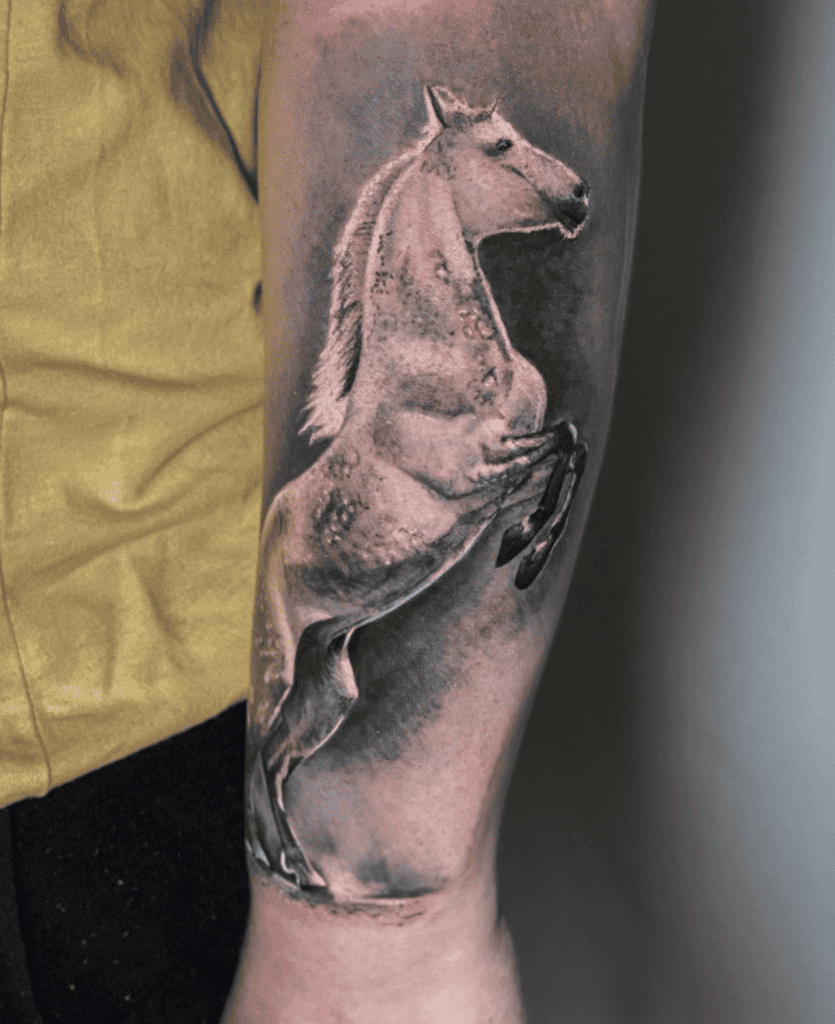
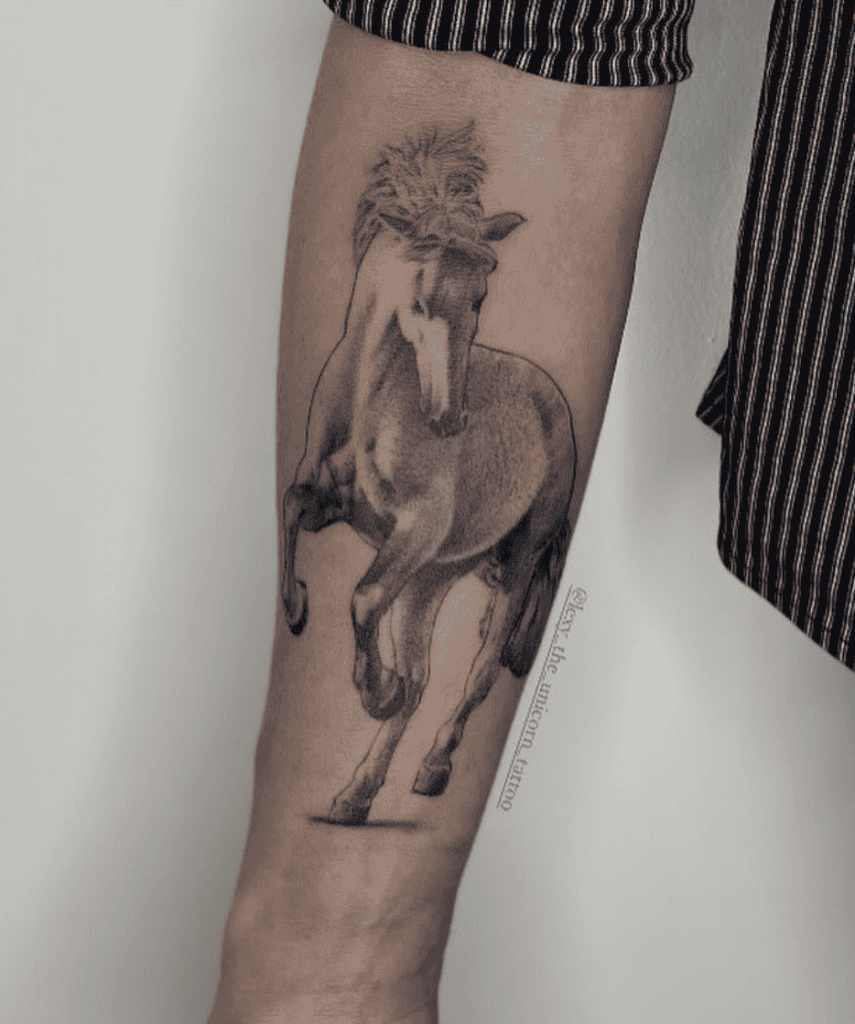
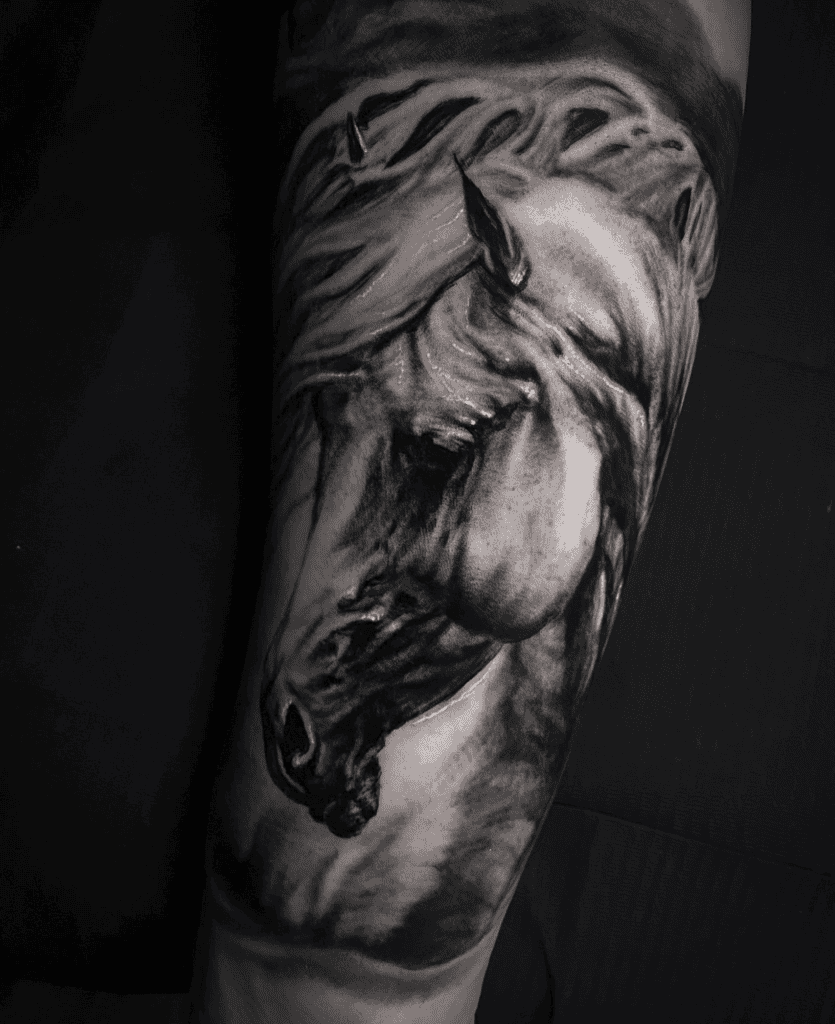
The Lipizzaner (sometimes spelt Lipizzan) originated in the 16th century at the Lipica Stud Farm, located in present-day Slovenia. The breed was developed by the Habsburg monarchy, which wanted an elegant yet powerful horse suitable for royal courts, military use, and classical riding.
Breeders crossed Spanish horses with Arabian, Barb, and local European breeds, producing a horse that combined beauty, intelligence, strength, and agility. Today, the Lipizzaner is regarded as one of the finest classical riding horses in the world and remains a living symbol of European equestrian tradition.
Akhal-Teke Horse Tattoo

The Akhal-Teke originated in present-day Turkmenistan, where it was developed by the nomadic Teke tribe living in the Akhal Oasis, from which the breed takes its name.
For centuries, these horses were bred to survive the harsh deserts of Central Asia. They travelled vast distances with minimal food or water, making them one of the toughest and most enduring horse breeds ever developed.
The Akhal-Teke is considered one of the world’s oldest pure horse breeds and is believed to have influenced many famous breeds, including the Arabian and Thoroughbred. Today, it is recognised as the national horse of Turkmenistan and remains a treasured symbol of the country’s heritage.
Standardbred Horse Tattoo

The Standardbred originated in the United States during the late 18th and early 19th centuries. The breed was developed specifically for harness racing, where horses pull a lightweight two-wheeled cart called a sulky.
The Standardbred descends primarily from the influential English Thoroughbred stallion Messenger, imported to America in 1788. Over time, breeders crossed Messenger’s descendants with other fast and durable horses, creating a breed capable of maintaining impressive speeds while trotting or pacing.
The name “Standardbred” comes from the breed’s early registration requirements; horses had to meet a specific speed standard over one mile to qualify for registration. Today, the Standardbred is one of the world’s premier harness racing horses and is also highly valued as a riding and pleasure horse after retirement.
American Saddlebred Horse Tattoo


The American Saddlebred originated in the United States during the late 18th century. It was developed by crossing the now-extinct Narragansett Pacer and the Canadian Horse with imported Thoroughbreds, Morgan Horses, and other quality riding horses.
Early American settlers wanted a horse that was comfortable to ride over long distances while also possessing the athleticism needed for farm work, hunting, and military service. The result was a refined yet versatile horse that quickly became one of America’s most admired breeds.
During the American Civil War, both Union and Confederate officers rode American Saddlebreds, with several famous military leaders favouring the breed for its endurance and comfortable gaits. Today, the American Saddlebred is recognised as one of the United States’ premier show horses and continues to excel in numerous riding disciplines.
Kathiyawadi Horse Tattoo

The Kathiyawadi Horse originated in the Kathiawar Peninsula (now called the Saurashtra region) in the state of Gujarat, western India. The breed was developed over hundreds of years by the Kathi people, renowned horsemen and warriors who selectively bred horses capable of surviving the region’s extreme heat, long journeys, and harsh terrain.
The Kathiyawadi shares ancient ancestry with the Marwari Horse, and while the two breeds are closely related, the Kathiyawadi is generally lighter in build and better suited to the coastal plains and semi-arid landscapes of Gujarat. For centuries, it was highly prized by Rajput rulers and local nobility as a dependable cavalry and ceremonial horse.
Marwari Horse Tattoo


The Marwari Horse originated in the Marwar region of Rajasthan, where it was developed by the Rajput rulers between the 12th and 16th centuries.
Bred to withstand the harsh conditions of the Thar Desert, the Marwari became one of India’s finest cavalry horses. Its endurance, agility, and fierce loyalty made it invaluable in battle, while its striking appearance earned it a place in royal courts and ceremonial processions.
The breed is believed to have descended from native Indian horses crossed with imported Arabian, Turkoman, and possibly Mongolian horses, creating a horse perfectly suited to Rajasthan’s demanding climate. Today, the Marwari is regarded as one of India’s national treasures and is celebrated for both its beauty and historical importance.
Gypsy Vanner Horse Tattoo


The Gypsy Vanner, also known as the Gypsy Cob, Irish Cob, or Tinker Horse (depending on the country and breed registry), was developed in Great Britain and Ireland by the Romani (Gypsy) and Irish Traveller communities.
Beginning in the mid-20th century, breeders selectively crossed powerful draft horses such as the Shire, Clydesdale, and native cobs to create a horse that could comfortably pull traditional living wagons known as vardos while remaining calm enough to live alongside children and families.
Unlike many breeds developed for war or sport, the Gypsy Vanner was bred first and foremost as a dependable family companion, being strong enough to work all day, yet gentle enough to be trusted around loved ones. Today, the breed has become increasingly popular around the world for its beauty, versatility, and kind nature.
Przewalski’s Horse Tattoo


Przewalski’s Horse (Equus ferus przewalskii) is native to the Central Asian steppes, particularly Mongolia. It is named after the Russian explorer Nikolai Przhevalsky, who described the horse to the Western scientific community in the late 19th century after learning of it during his expeditions.
For many years, it was believed to be the direct ancestor of all domestic horses. Modern genetic research, however, has shown that while Przewalski’s Horse and domestic horses share a common ancestor, they are separate evolutionary lineages.
By the 1960s, the species had disappeared from the wild due to hunting, habitat loss, and competition with livestock. Fortunately, captive breeding programmes saved the species from extinction, and today Przewalski’s Horses have been successfully reintroduced into protected areas across Mongolia and parts of Central Asia.
Zebra Tattoo
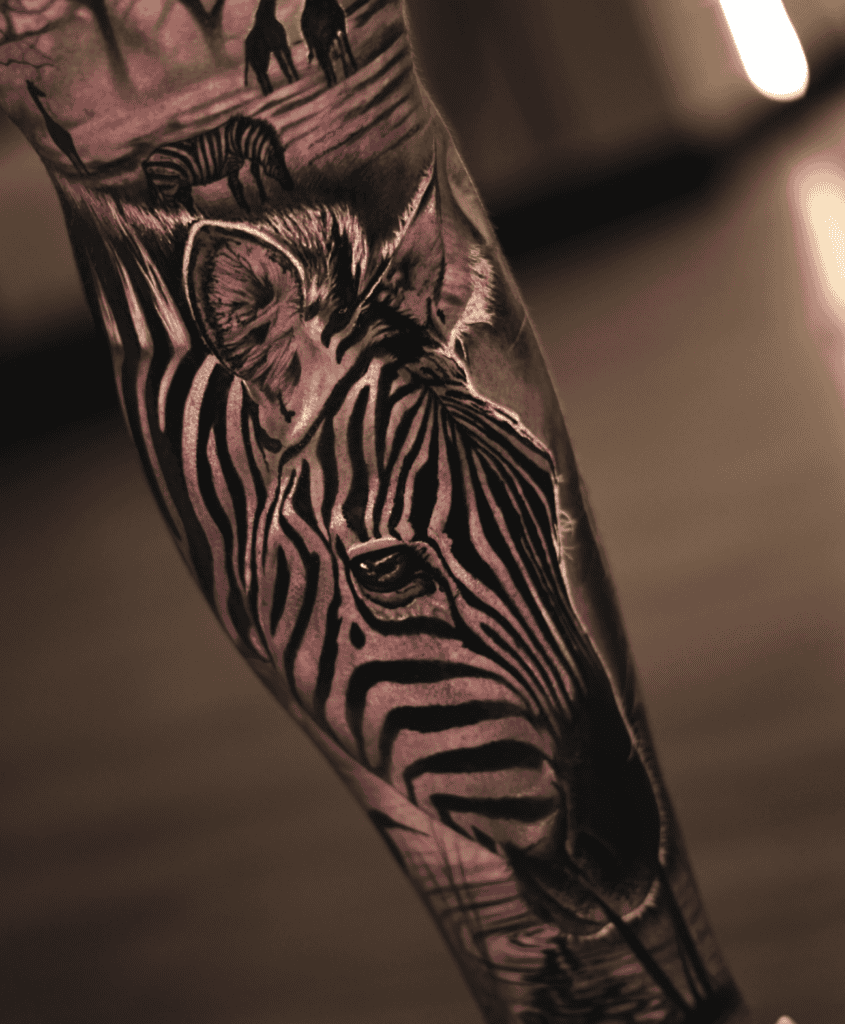
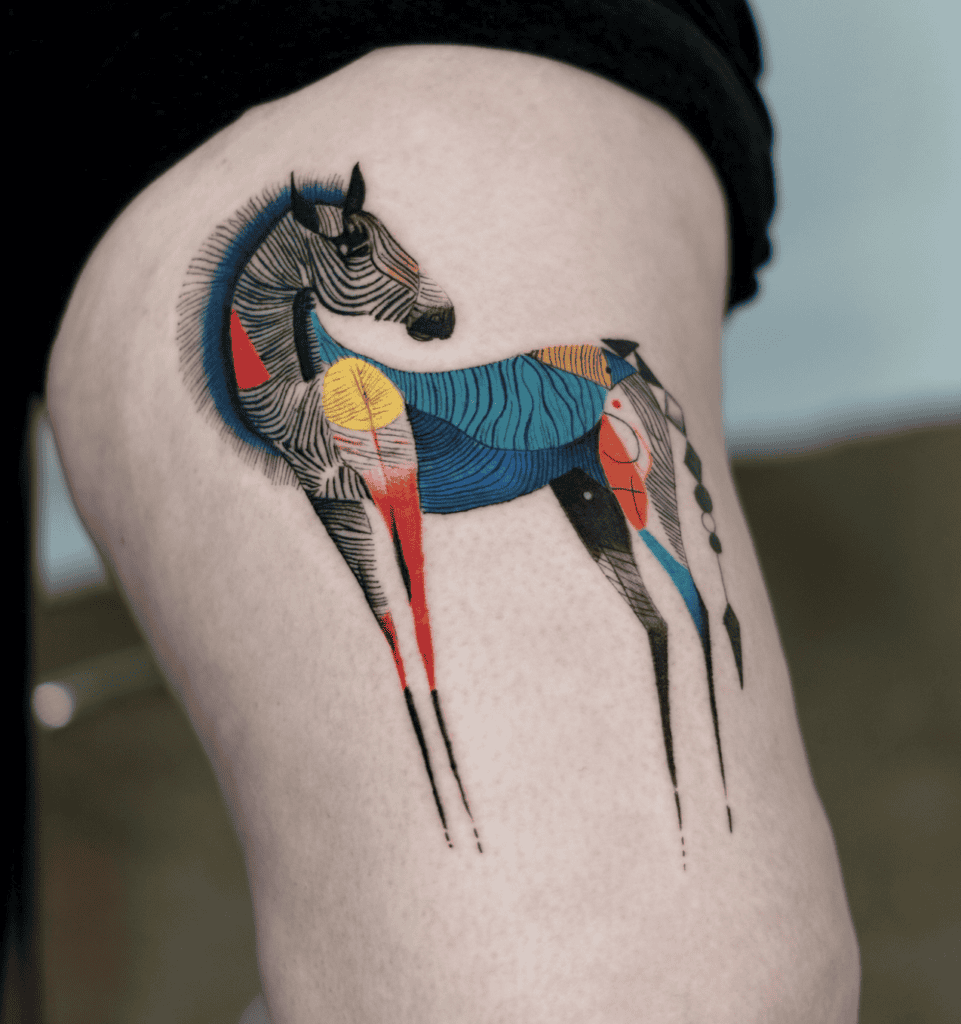
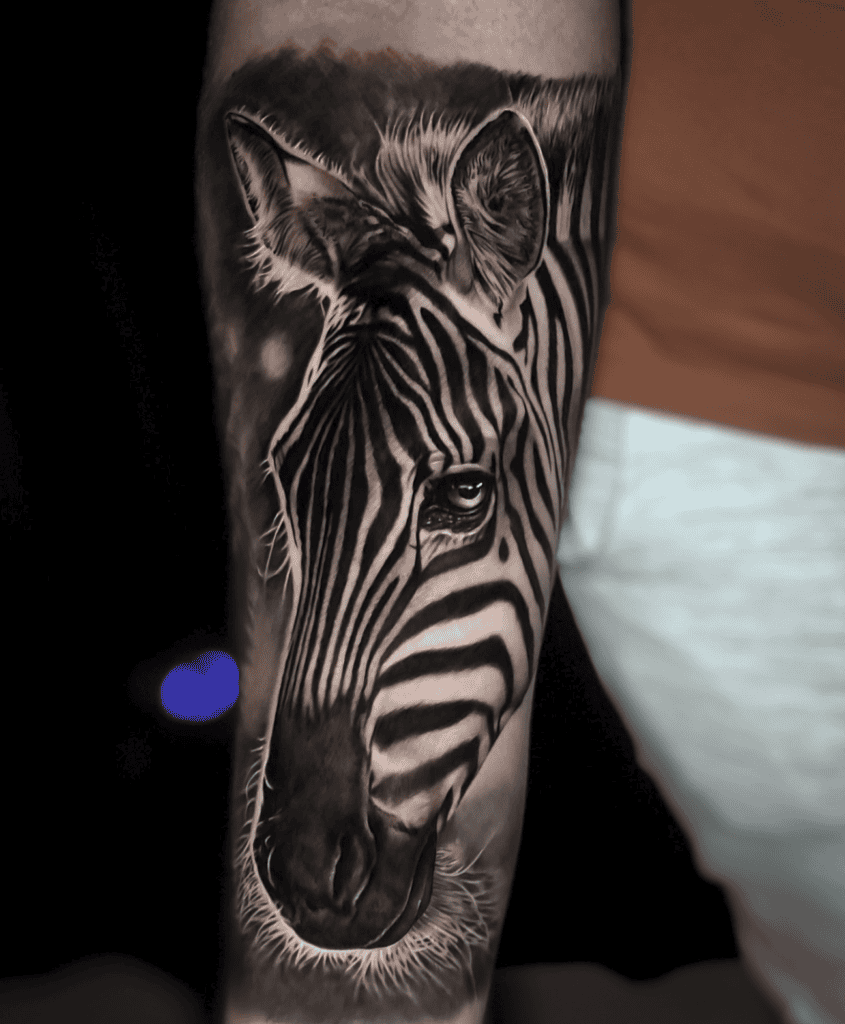
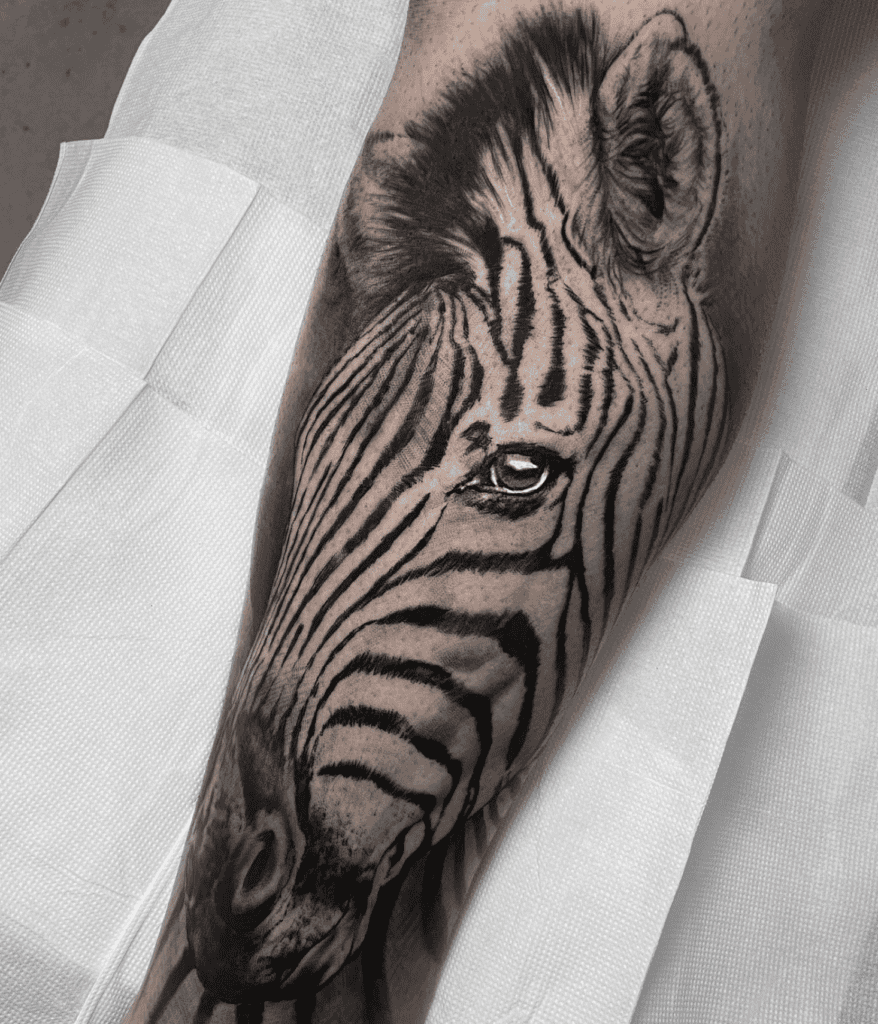
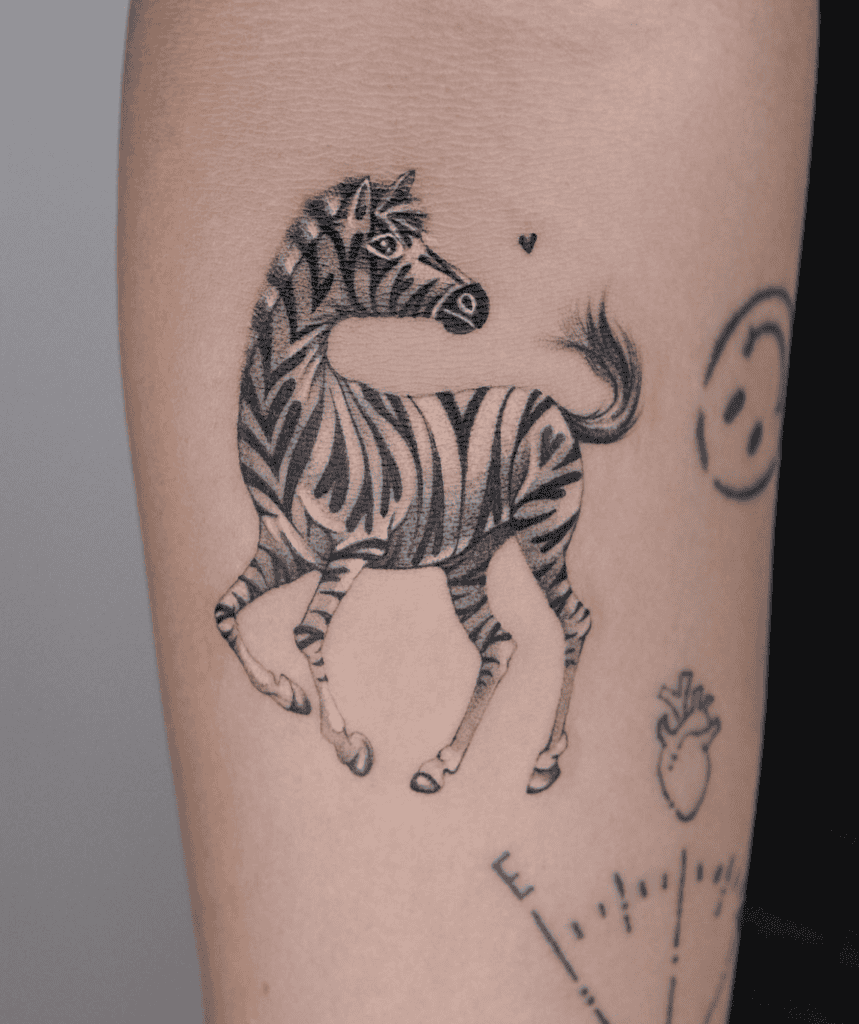
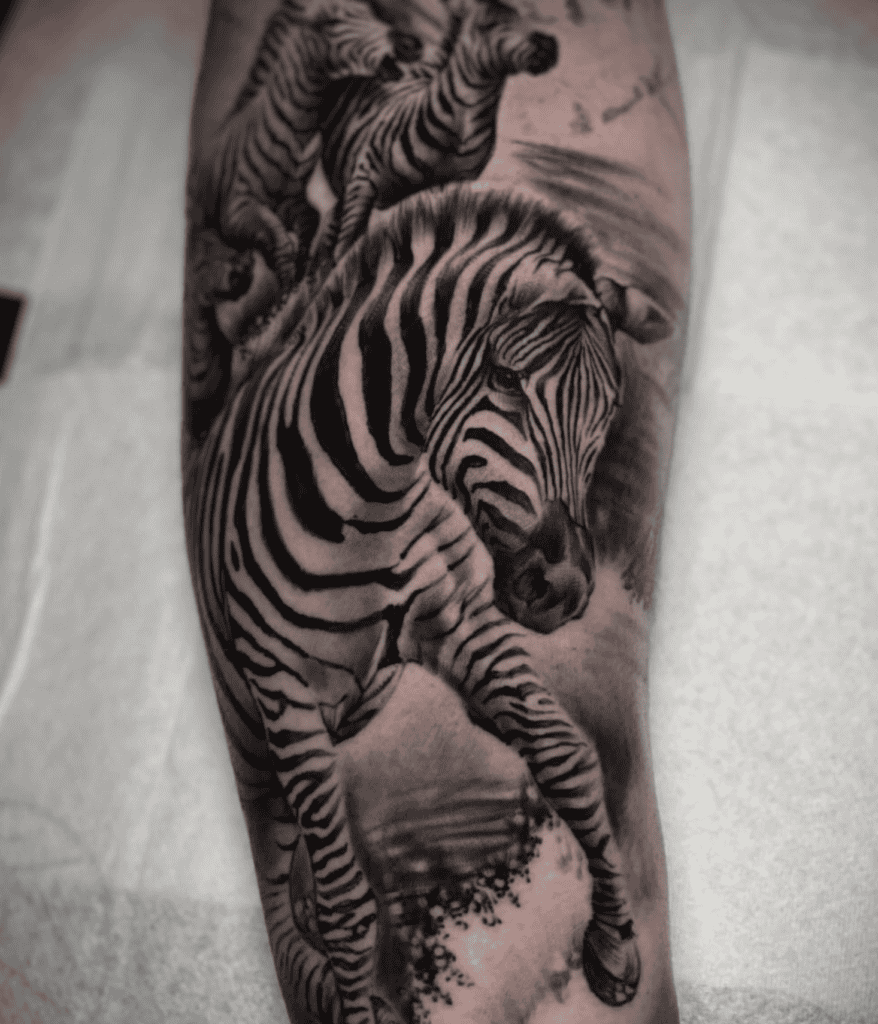
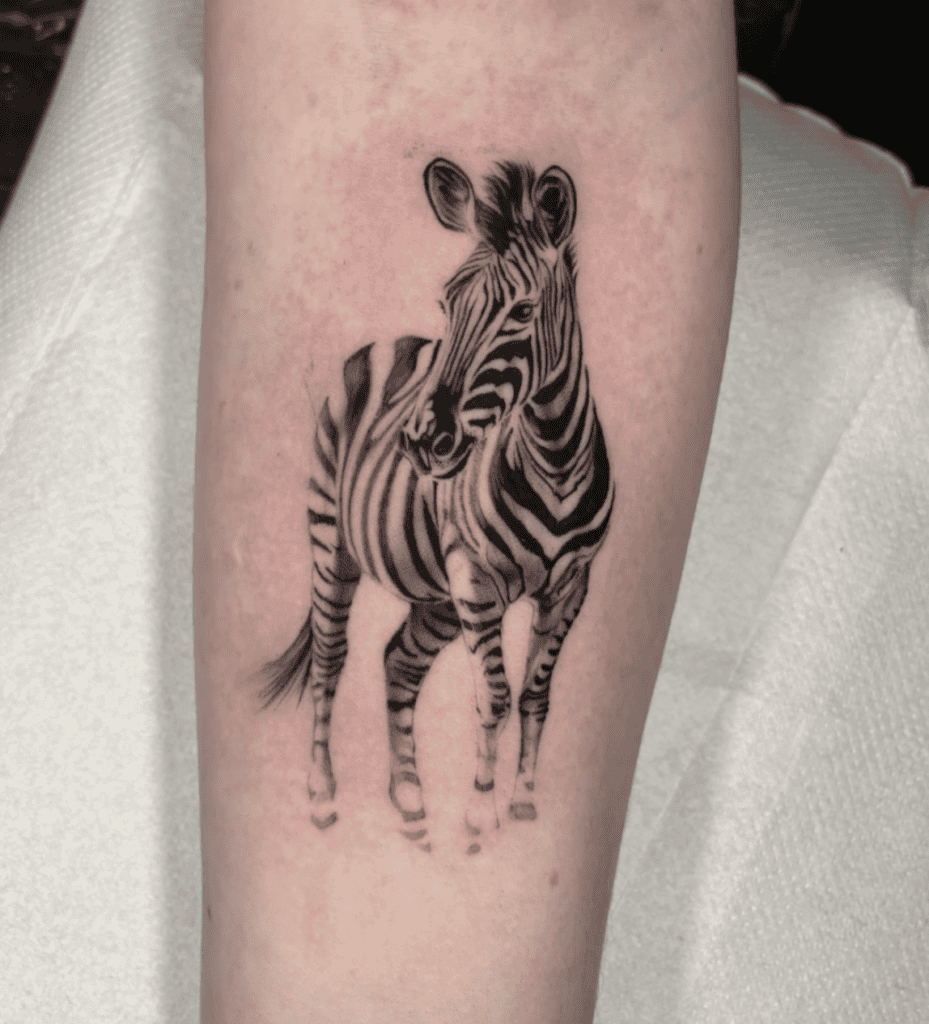
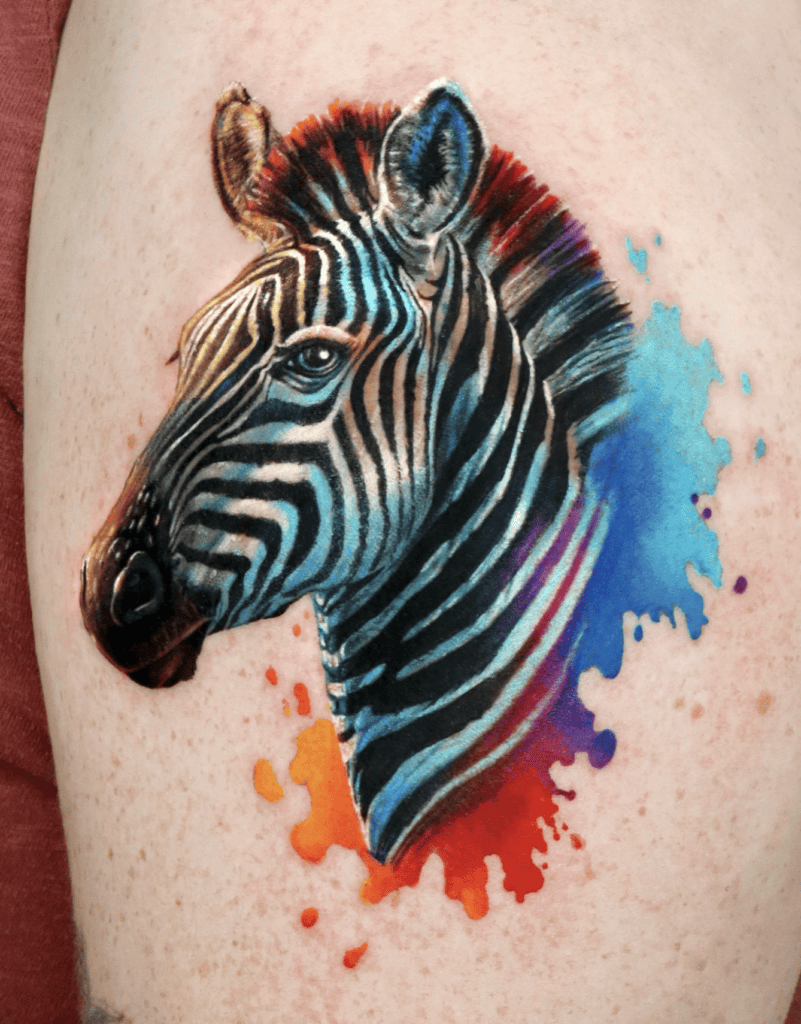
Zebras are native to Africa, where they roam grasslands, savannas, woodlands, and mountainous regions. There are three living species, each adapted to different habitats:
The Plains zebra is the most common and widespread species, found across eastern and southern Africa. The Grevy’s zebra is the largest zebra species, native to northern Kenya and southern Ethiopia, and the Mountain zebra is a smaller species adapted to the rugged mountains of southern Africa.
Zebras evolved millions of years ago alongside horses and donkeys, but unlike their domesticated relatives, they remain fully wild and are renowned for their agility, vigilance, and social behaviour.
Carousel Horse Tattoo


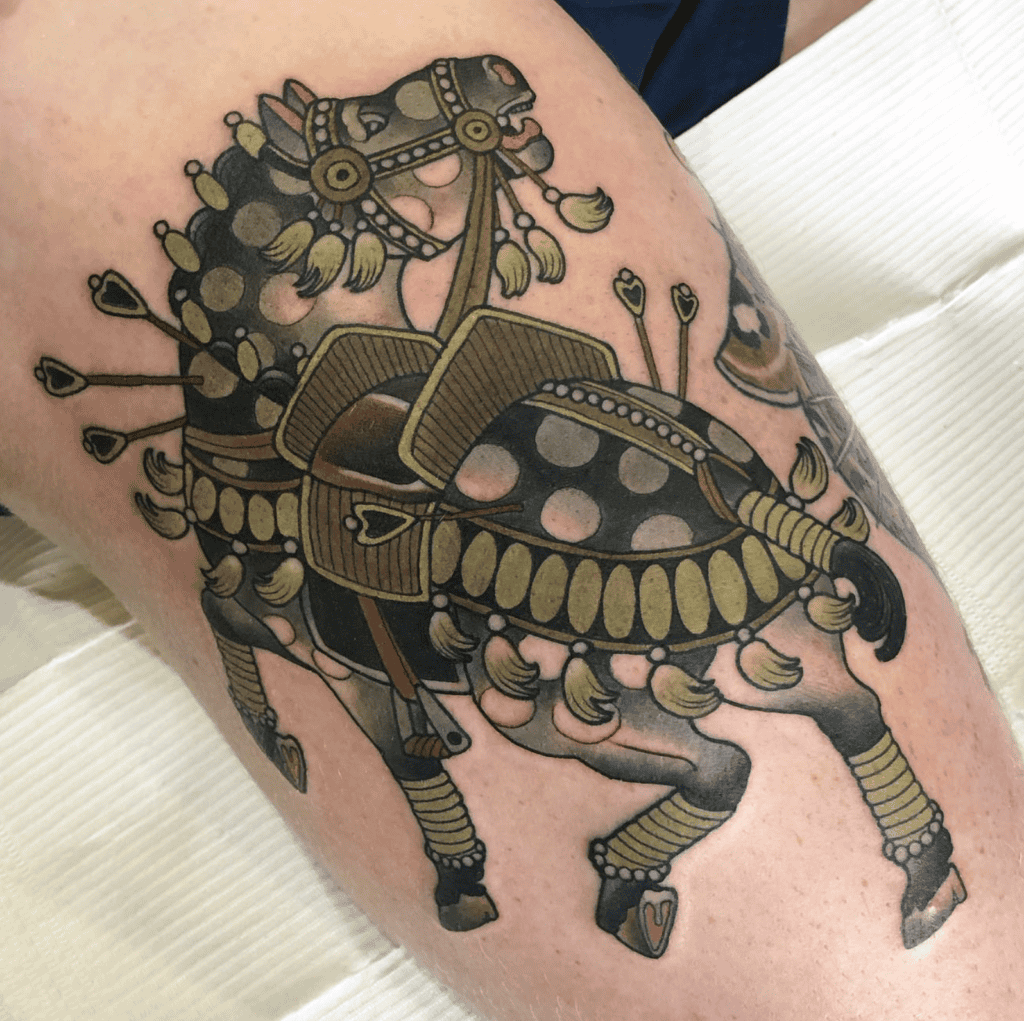
A carousel horse is a hand-carved or sculpted horse mounted on a rotating amusement ride known as a carousel or merry-go-round.
Carousels originated from medieval training exercises in which cavalry riders practised riding in circles while tossing balls or catching rings. Over time, these military exercises evolved into elaborate fairground attractions featuring beautifully decorated wooden horses.
By the late 19th and early 20th centuries, often called the Golden Age of Carousels, master craftsmen created breathtaking horses that are now considered works of art. Today, antique carousel horses are highly prized by collectors and museums.
Pegasus Horse Tattoo
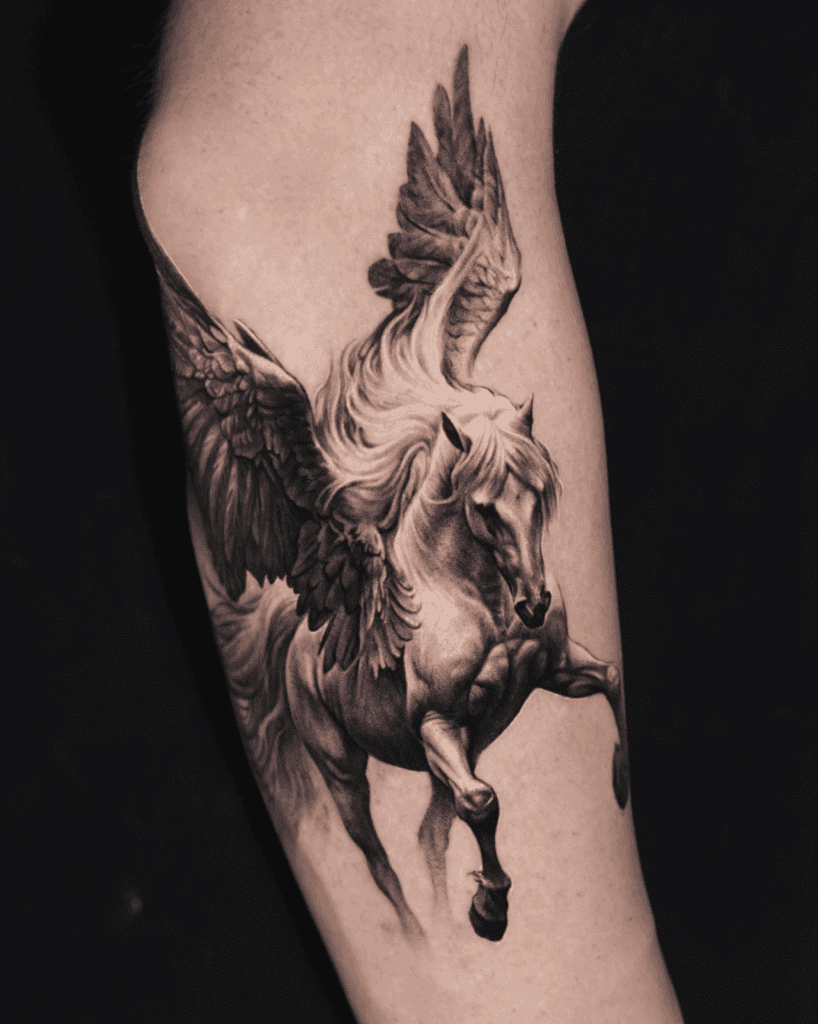
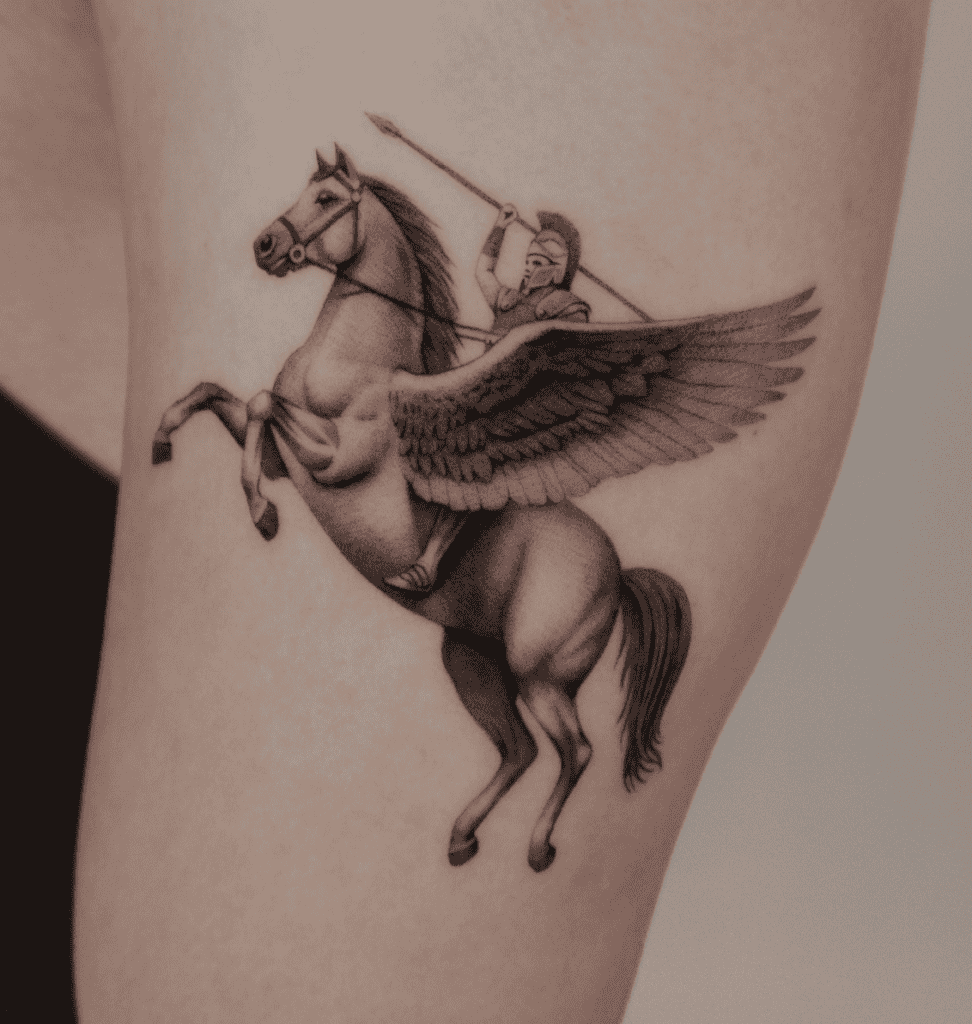
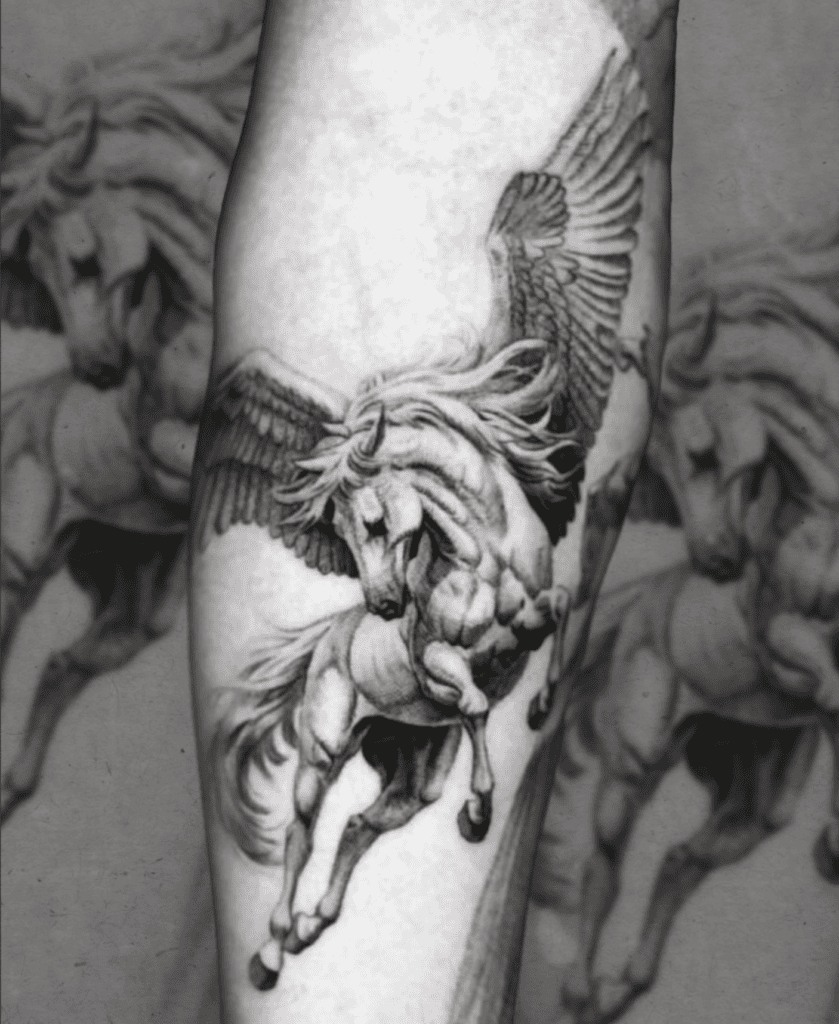
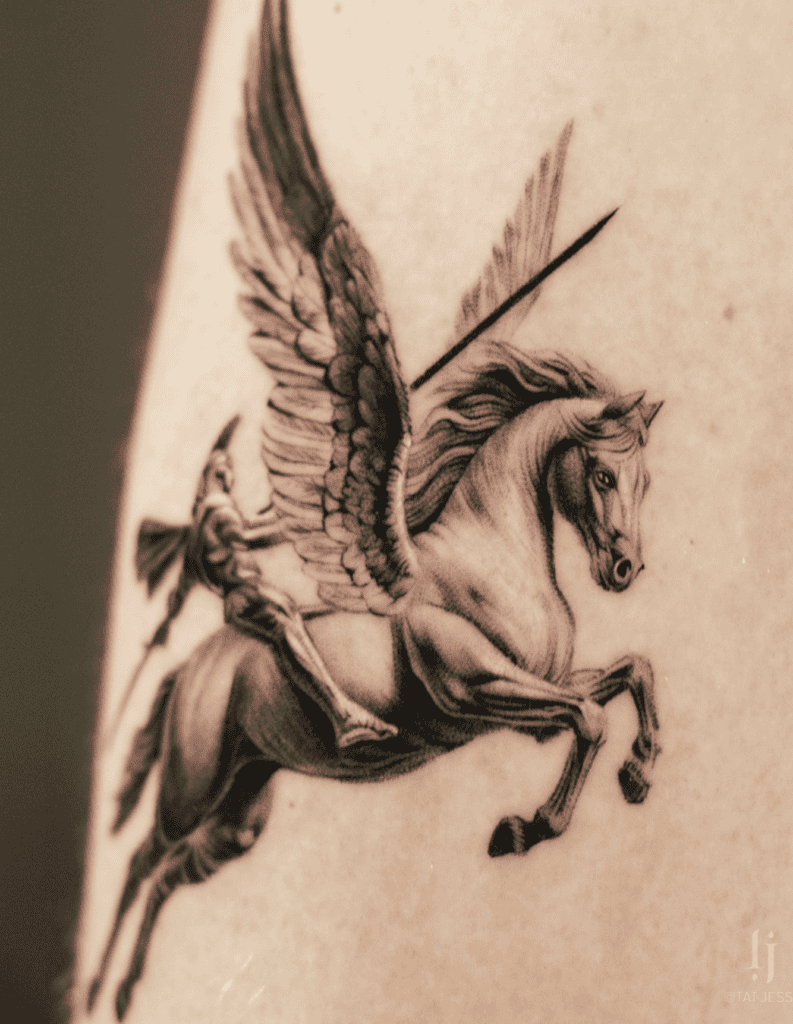
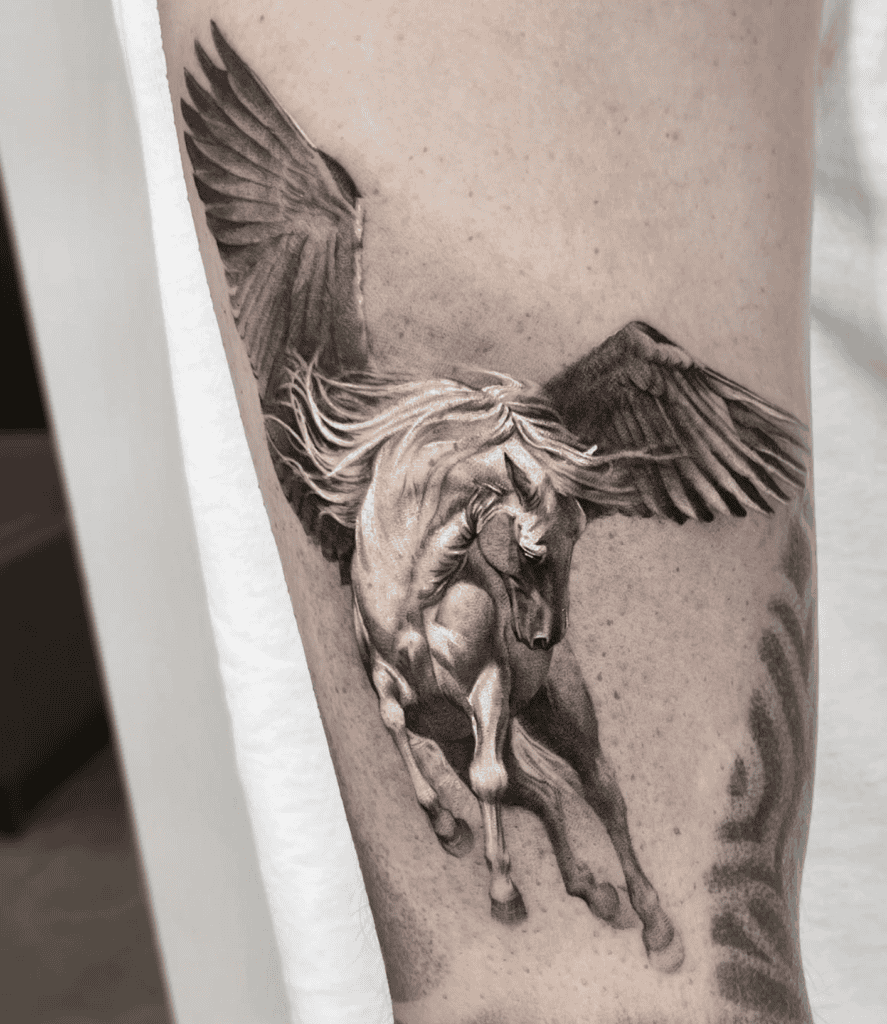
Pegasus is the legendary winged horse of Greek mythology, usually depicted as a magnificent white stallion with enormous feathered wings. Pegasus could fly effortlessly through the sky, carry gods and heroes, create springs with the strike of his hoof, and travel between Earth and Mount Olympus.
According to legend, Pegasus was born when the hero Perseus beheaded the monstrous Medusa. As Medusa’s blood touched the earth, Pegasus emerged alongside his brother Chrysaor.
Pegasus is most famous for partnering with the Greek hero Bellerophon. With the help of the goddess Athena, Bellerophon captured Pegasus using a magical golden bridle. Together they accomplished many heroic feats, including defeating the terrifying fire-breathing Chimaera, a monster with the body of a lion, the head of a goat, and the tail of a serpent.
Xanthos and Balios Horse Tattoo

Xanthos and Balios are the immortal horses that pulled Achilles’ war chariot during the Trojan War. Xanthos alone was briefly granted the power of human speech, allowing him to deliver one of the most memorable prophecies in Greek mythology. Together, they became symbols of unwavering loyalty and the tragic fate that awaited even the greatest heroes.
The two horses had divine parentage. According to The Iliad, they were born to Podarge, a swift-winged harpy and Zephyrus, the gentle west wind. As wedding gifts, they were presented to Peleus, Achilles’ father, when he married the sea goddess Thetis. Eventually, they passed to Achilles, becoming his trusted companions during the Trojan War.
After the death of Patroclus, Achilles prepared to return to battle. The goddess Hera briefly granted Xanthos the power of speech. The horse warned Achilles that although he would survive the coming battle, his death would soon follow. After delivering this prophecy, the Erinyes (the Furies) took away his voice, ensuring that fate would unfold as destined.
The Mares of Diomedes Horse Tattoo


The Mares of Diomedes were four supernatural horses owned by Diomedes, the brutal king of the Bistones, a Thracian tribe. The mares were said to be wild beyond control, enormously powerful, and chained with iron. These horses fed on human flesh and were feared throughout Thrace.
Capturing the mares became the Eighth Labour of Heracles, with King Eurystheus ordering Heracles to bring the mares back alive. When Heracles arrived in Thrace, several versions of the myth describe what happened next. The most famous tells that Heracles and his companions defeated Diomedes’ guards and seized the mares.
Diomedes pursued them with his army, leading to a fierce battle, but after defeating the king, Heracles fed Diomedes to his own mares. Once their cruel master was gone and they had consumed him, the horses became calm and obedient, allowing Heracles to lead them safely back to Eurystheus.
The Trojan Horse Tattoo
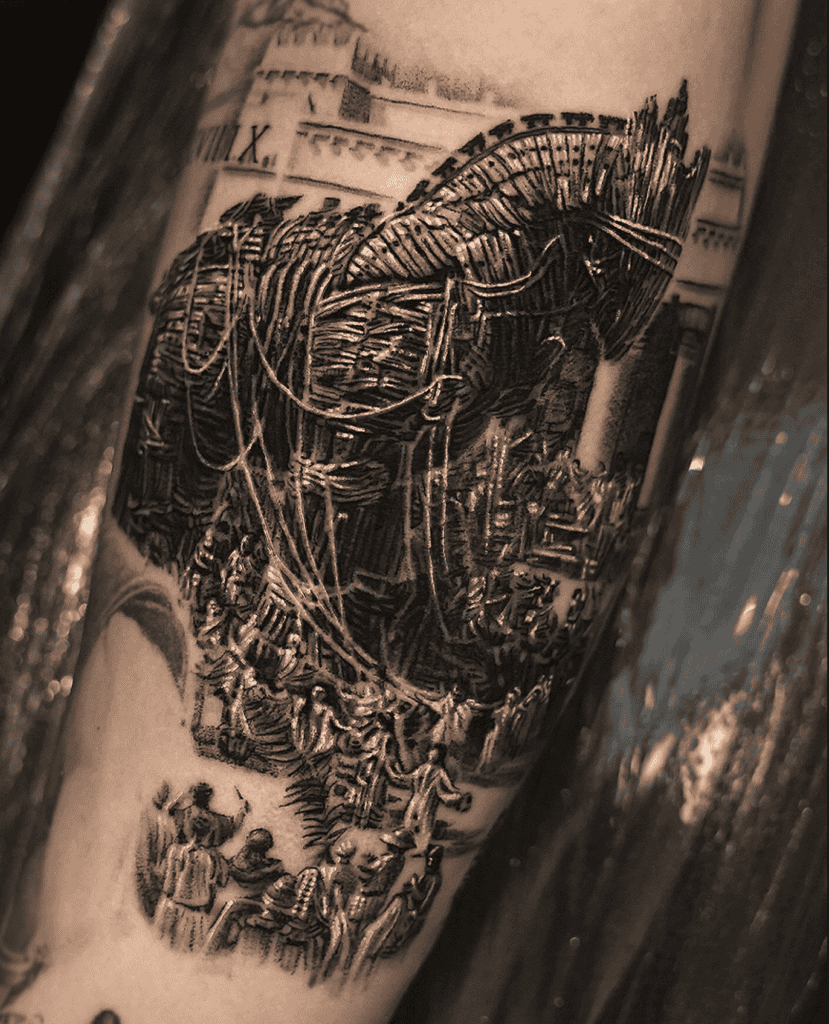
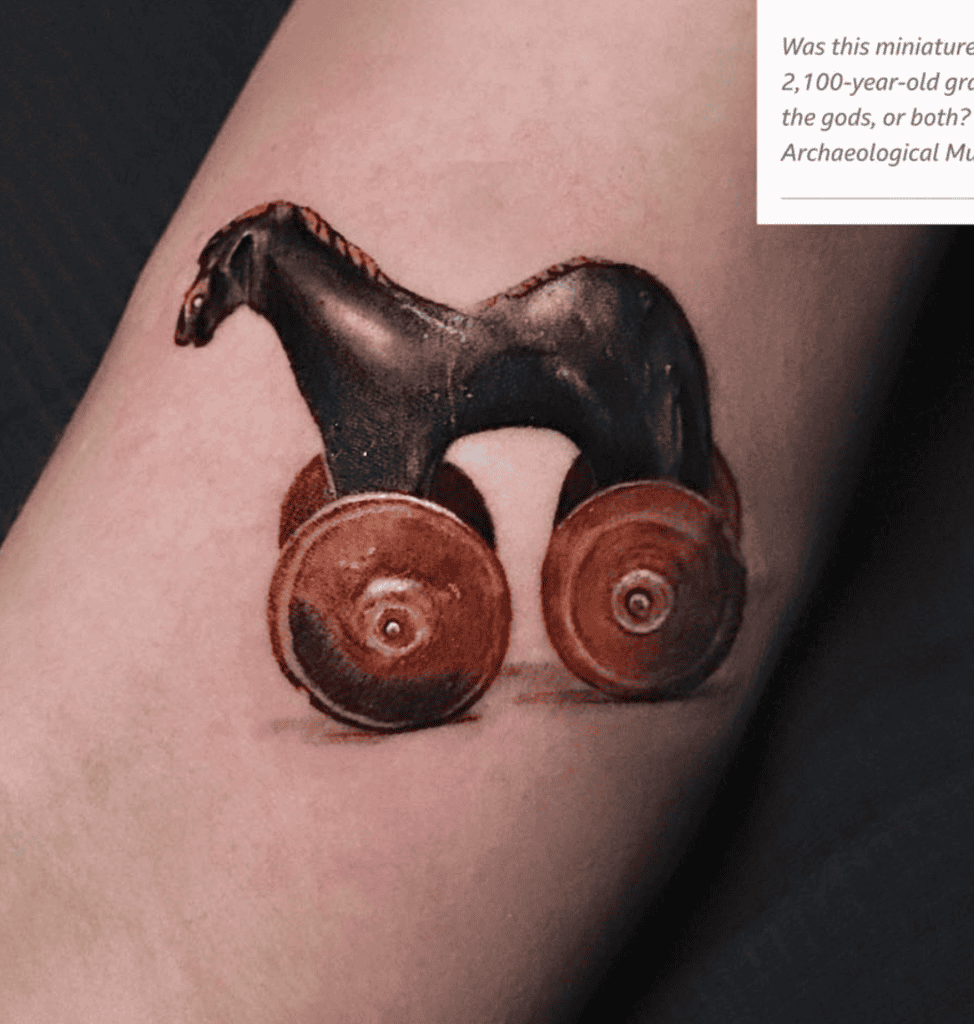
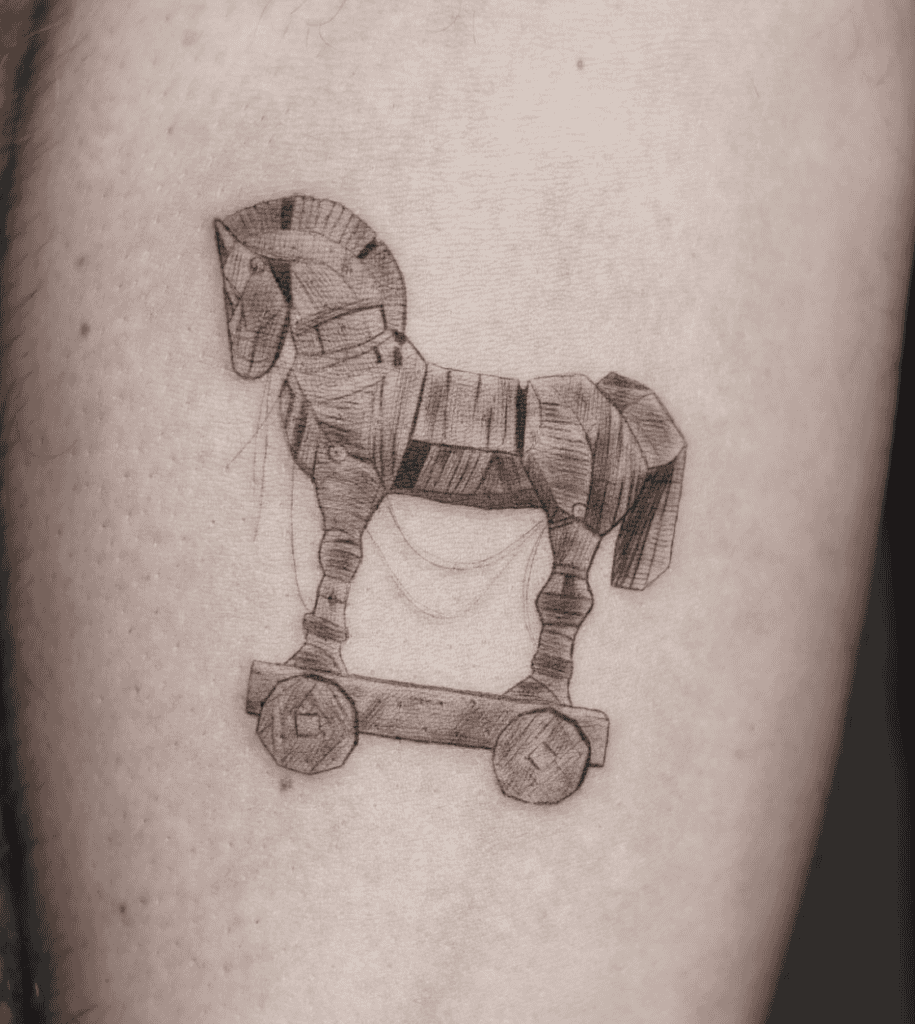
The Trojan Horse was a gigantic hollow wooden horse built by the Greek army during the final stages of the legendary Trojan War. After ten years of unsuccessful siege, the Greeks devised a plan that relied not on strength, but on deception. The horse concealed a group of elite Greek warriors inside its hollow body, allowing them to infiltrate the city of Troy.
According to later Greek tradition, particularly The Aeneid, the plan was conceived by the clever Greek hero Odysseus. The Greeks constructed an enormous wooden horse and hid selected warriors inside. They burned their camp and pretended to sail home, with the Trojans believing the war had finally ended.
When the Trojans discovered the giant horse left outside the city walls, the Trojans viewed it as a victory offering. Although some warned against bringing it inside, the warnings were ignored, and they pulled the horse into the city. That night, while Troy celebrated, the hidden Greek soldiers emerged, opened the city gates, and allowed the returning Greek army to enter.
Centaur Horse Tattoo
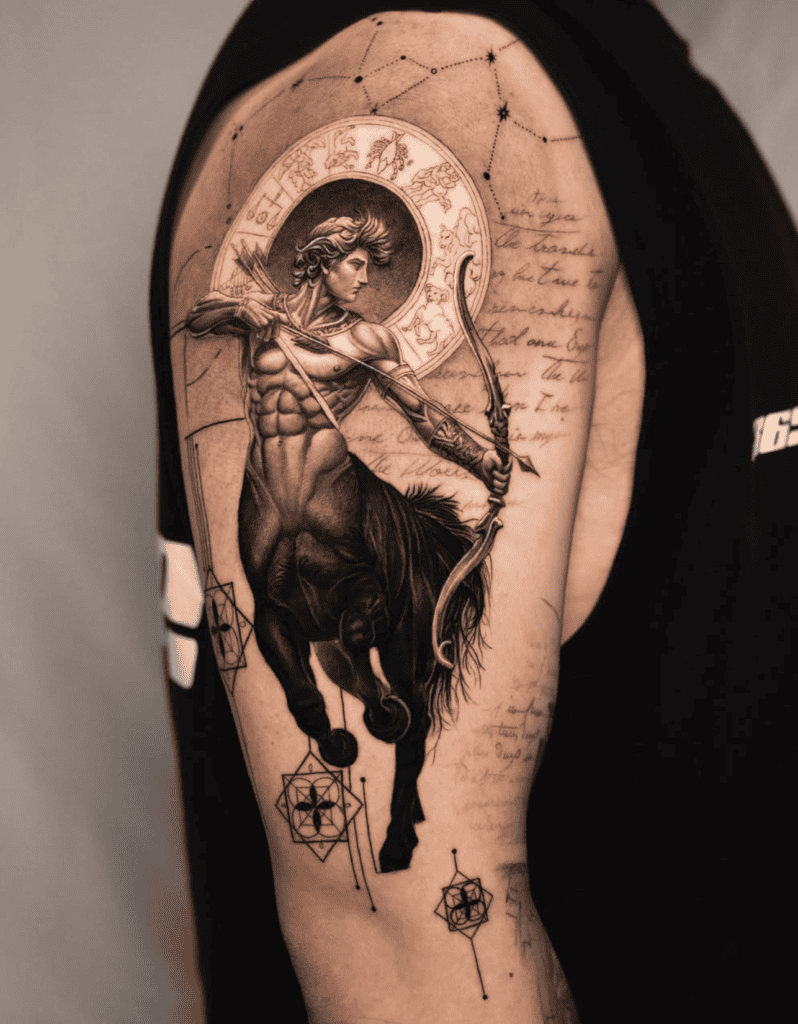
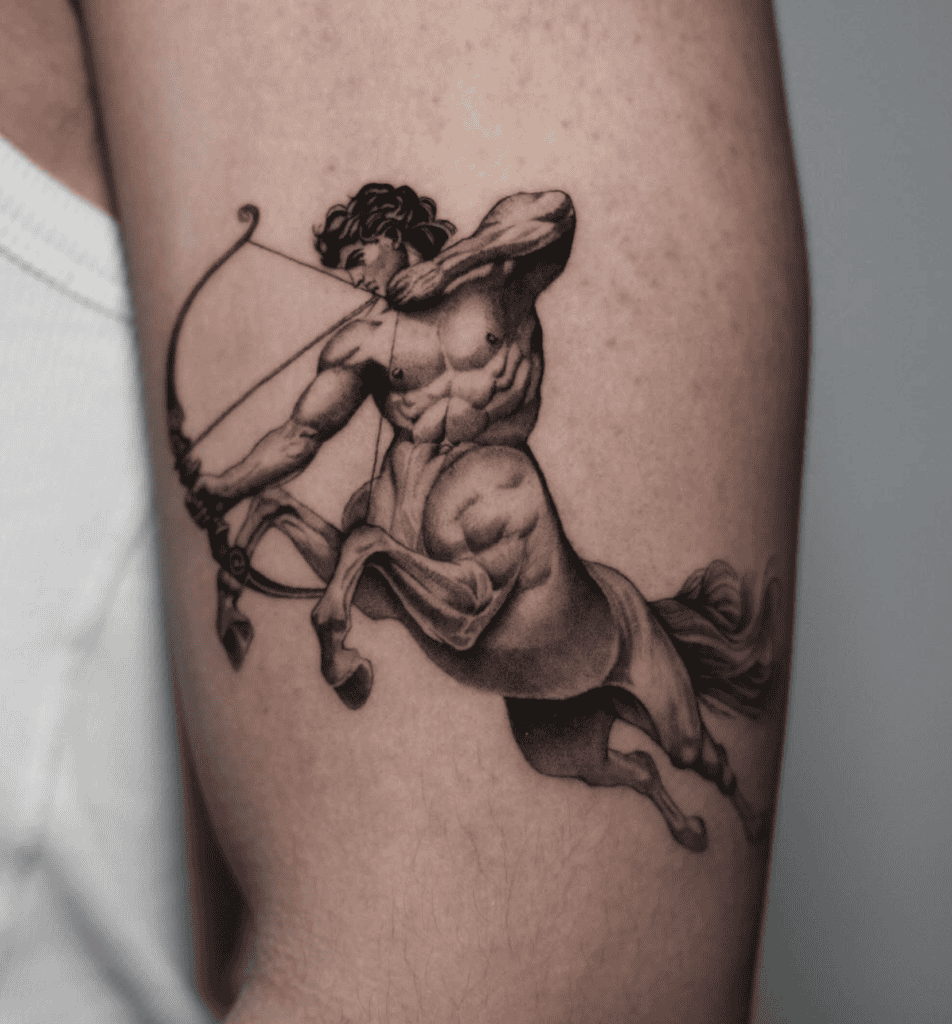
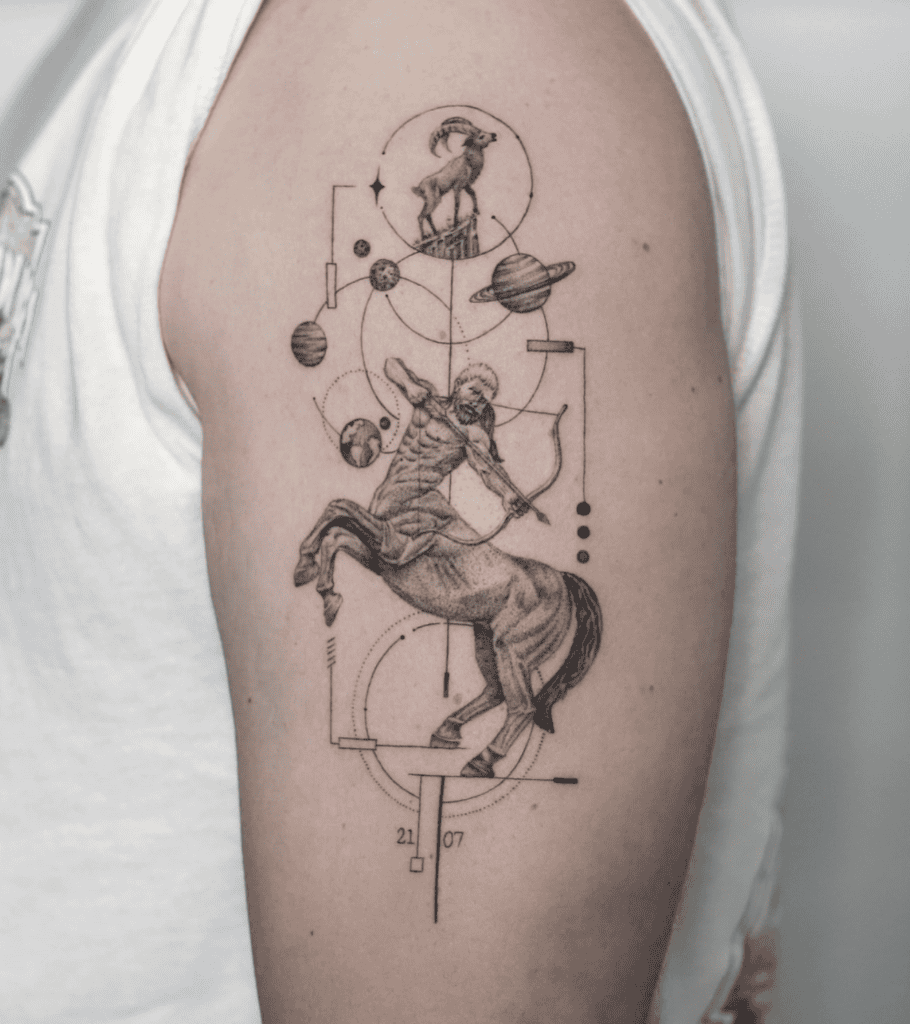
The Centaur is a legendary creature from Greek mythology which has the head and torso of a human, but the body of a horse. Centaurs are among the best-known hybrid creatures in mythology and appear throughout Greek legends, where they range from savage warriors to wise teachers.
According to the most common myth, the Centaurs descended from Centaurus, who fathered children with wild mares on Mount Pelion. These offspring became the race of Centaurs, living in forests, mountains, caves, and the wilderness regions of ancient Greece.
Hippocampus Horse Tattoo
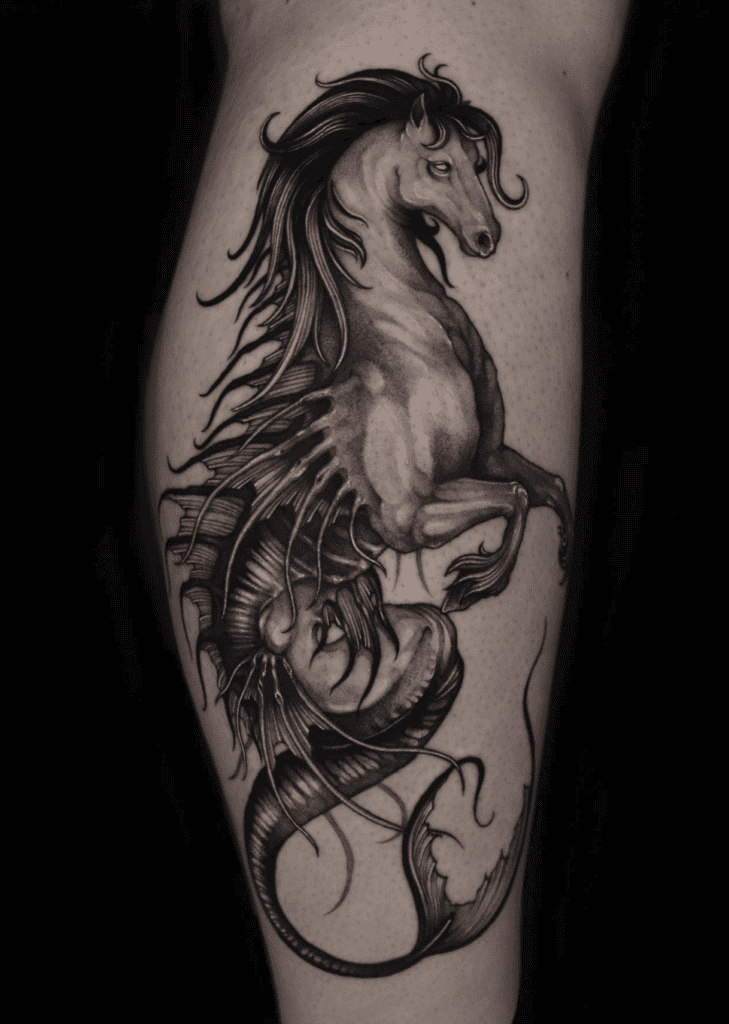
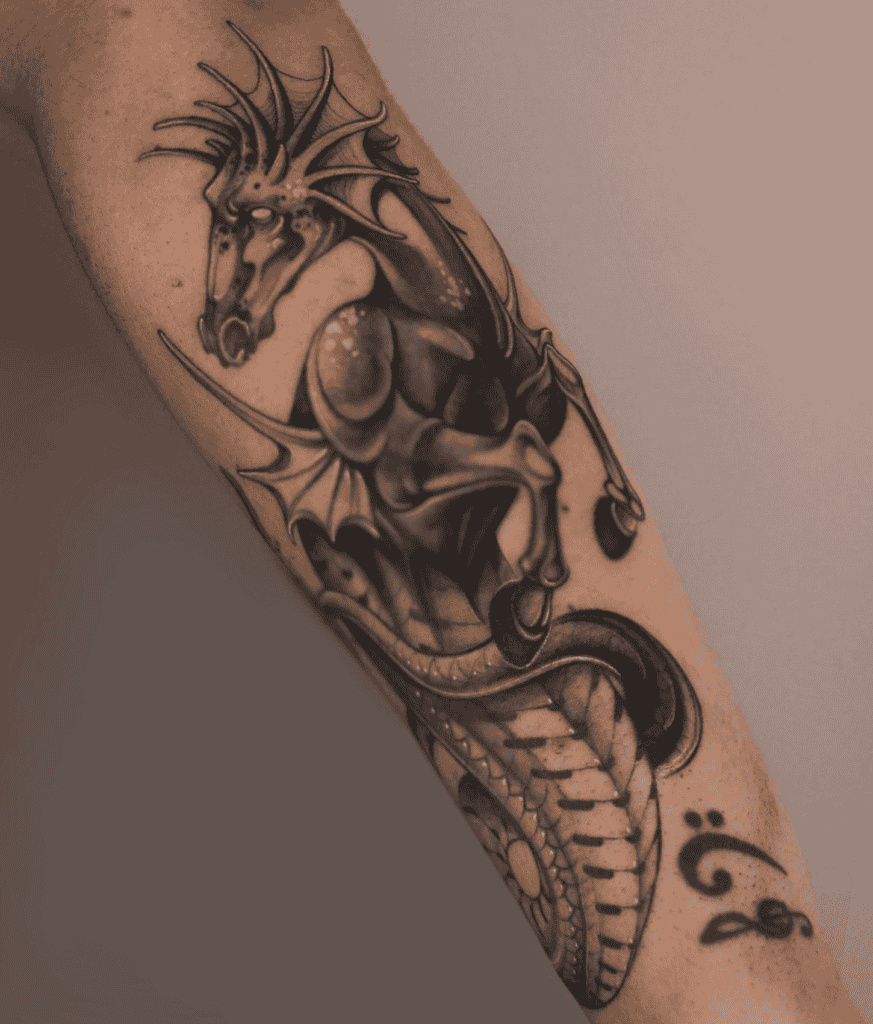
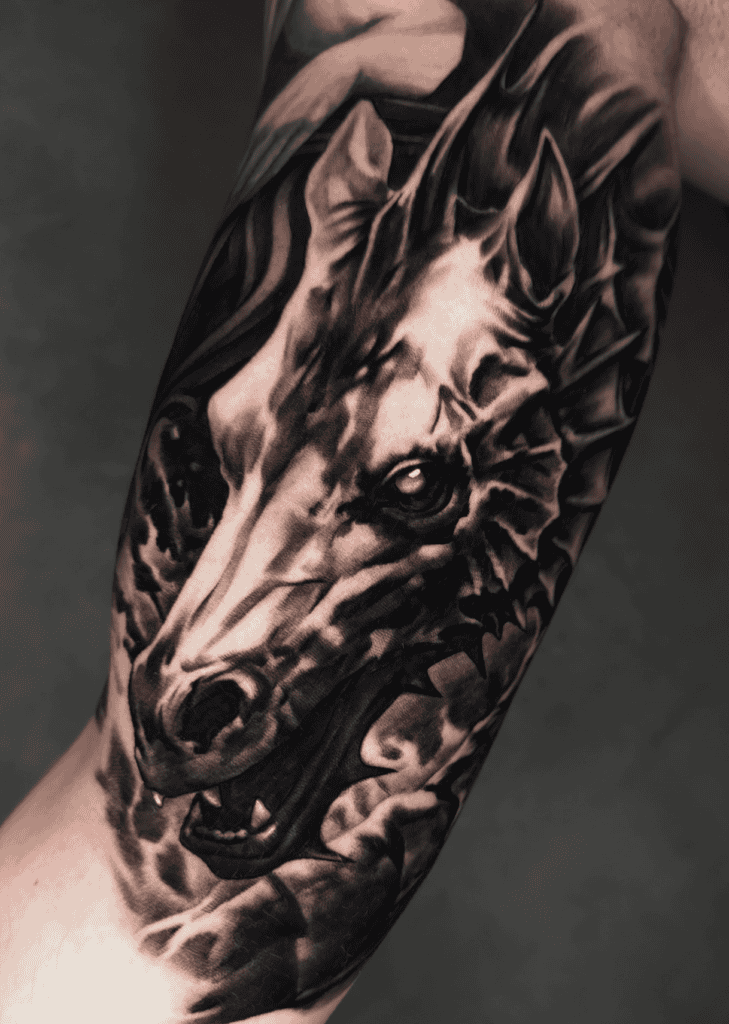
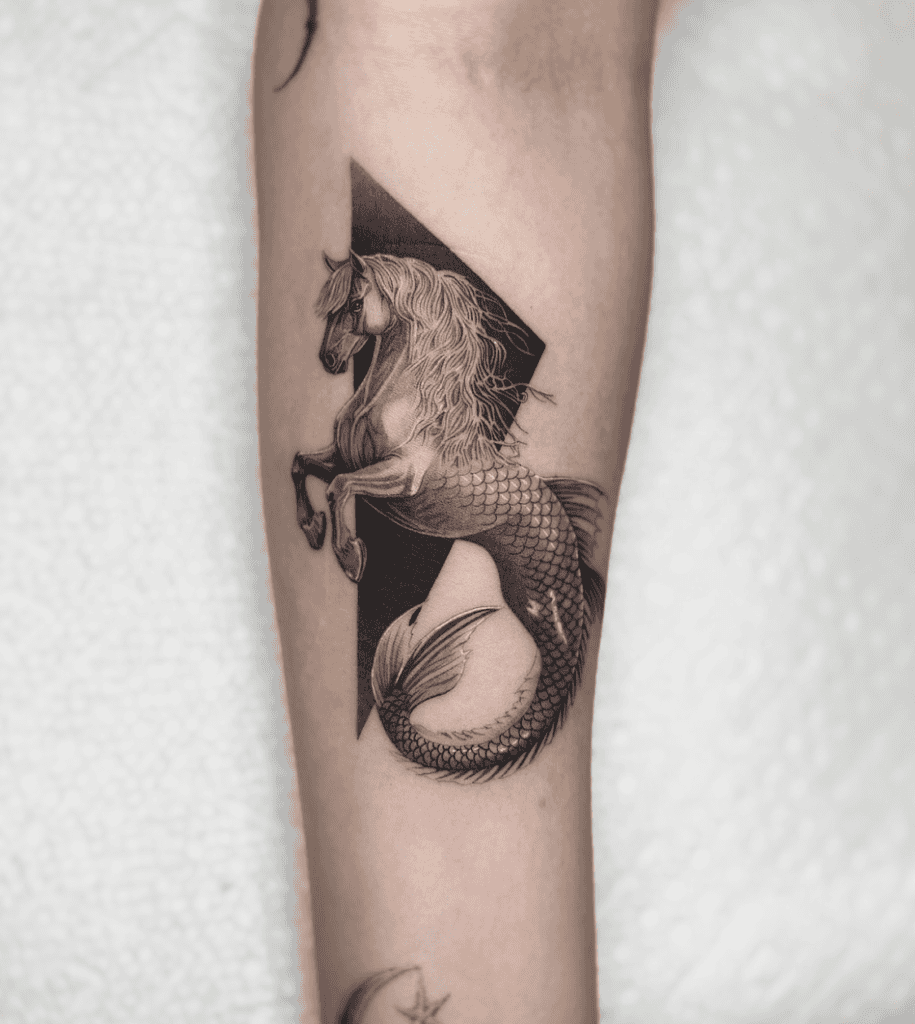
The Hippocampus is a mythical sea creature from Greek myth that has the head of a horse, neck and forelegs of a horse, but the powerful tail of a fish or dolphin. The Hippocampus is closely associated with Poseidon, the Greek god of the sea, earthquakes, and horses.
According to Greek mythology, Hippocampi pulled Poseidon’s magnificent golden chariot across the oceans. Because Poseidon was believed to have created horses, it was fitting that his divine steeds combined the strength of horses with the freedom of the sea.
Sleipnir Horse Tattoo
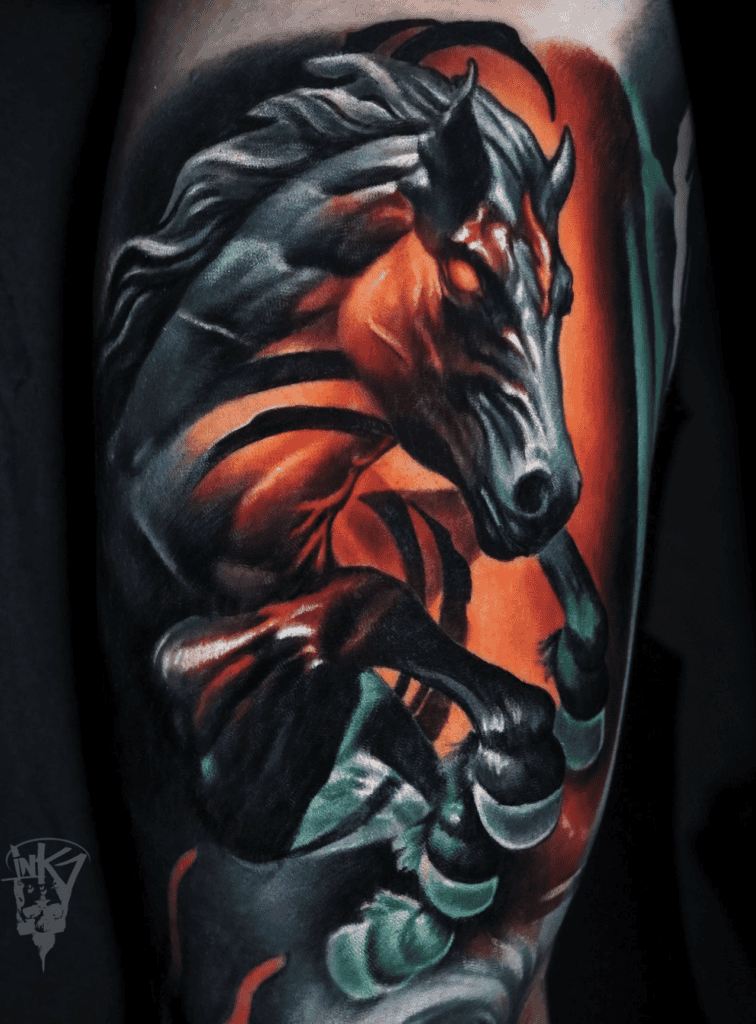
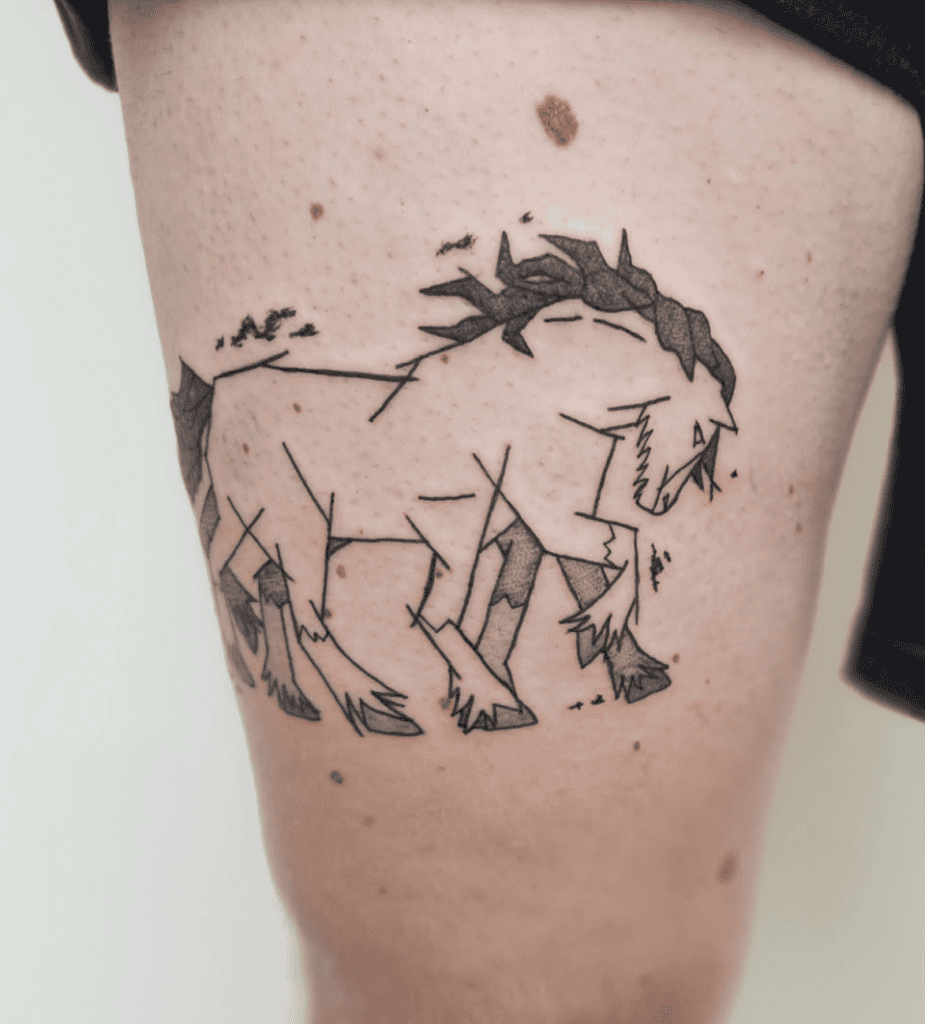
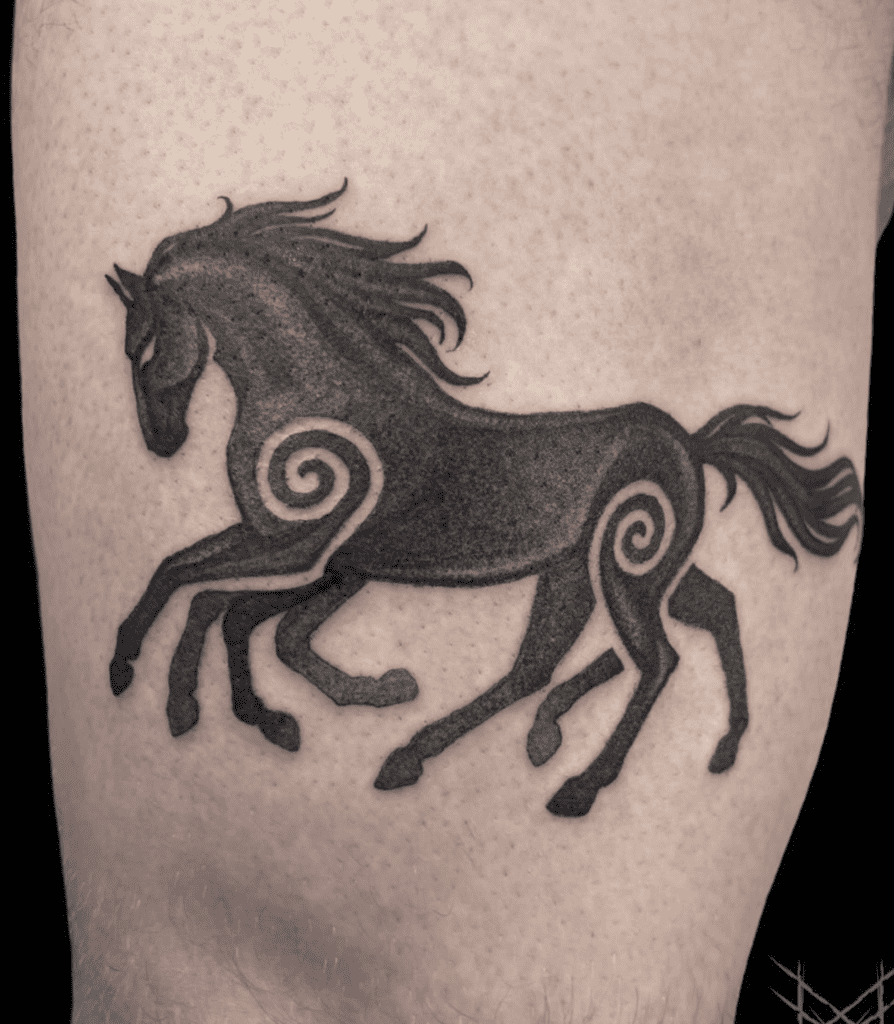
Sleipnir is the legendary eight-legged horse ridden by the All-Father, Odin. Considered the finest horse ever created, Sleipnir possesses supernatural abilities that allow it to gallop through the sky, journey between the Nine Realms and visit the world of the dead.
The name Sleipnir is often translated as “the Slipper” or “the Gliding One,” referring to its effortless, impossibly swift movement. According to the Prose Edda, the gods hired a mysterious giant to build the walls of Asgard. The giant’s powerful stallion, Svaðilfari, was doing most of the work, making it likely that the giant would complete the task and claim his reward.
To stop this from happening, the trickster god Loki transformed himself into a beautiful mare and lured Svaðilfari away from the construction site. The two horses disappeared together, and months later Loki returned having given birth to Sleipnir. Loki then presented the remarkable foal to Odin, who recognised it as the greatest horse in existence.
Skinfaxi and Hrímfaxi Horse Tattoo

Skinfaxi and Hrímfaxi are two supernatural horses described in the Poetic Edda, particularly in the poem Vafþrúðnismál. Their names reflect their celestial roles, as Skinfaxi means “Shining Mane” or “Bright Mane,” while Hrímfaxi means “Frost Mane.”
Skinfaxi pulls the chariot of Dagr (Day), while Hrímfaxi pulls the chariot of Nótt (Night), ensuring the continuous passage of time.
Kelpie Horse Tattoo
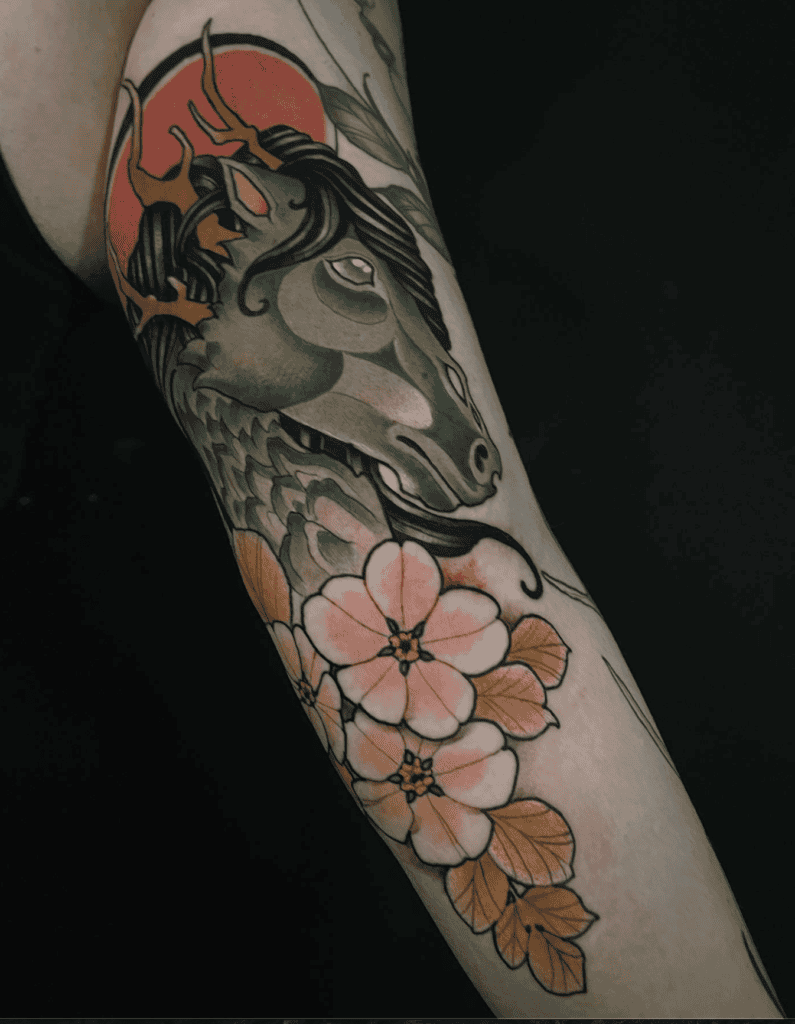
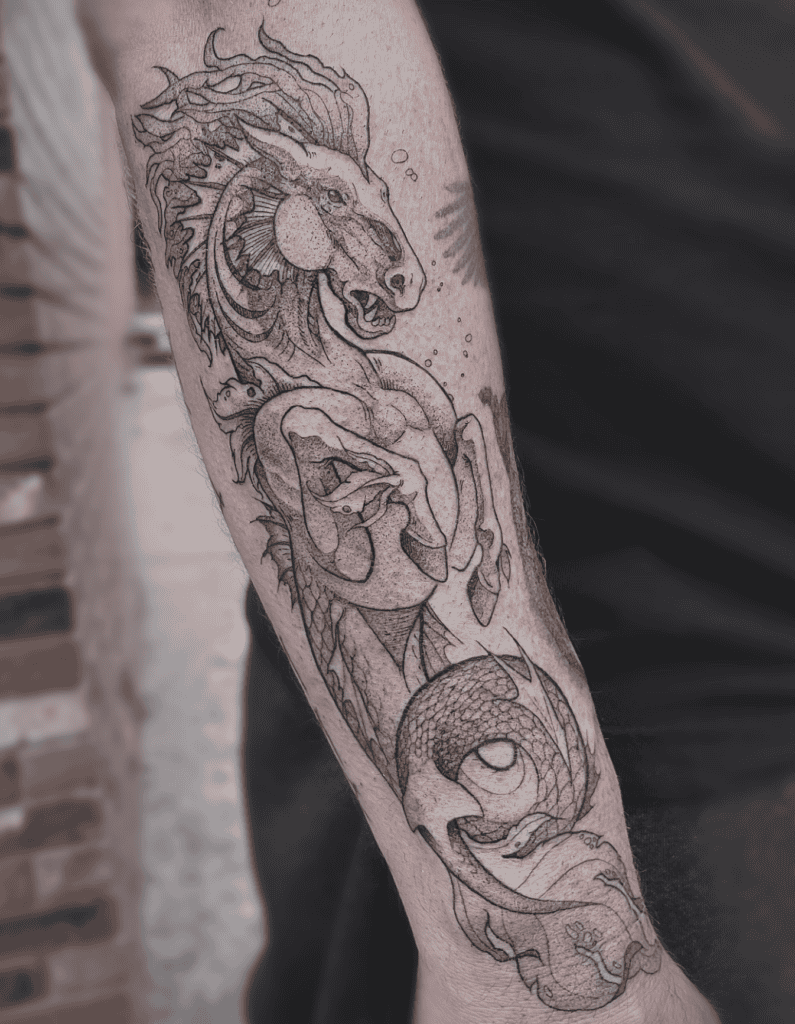
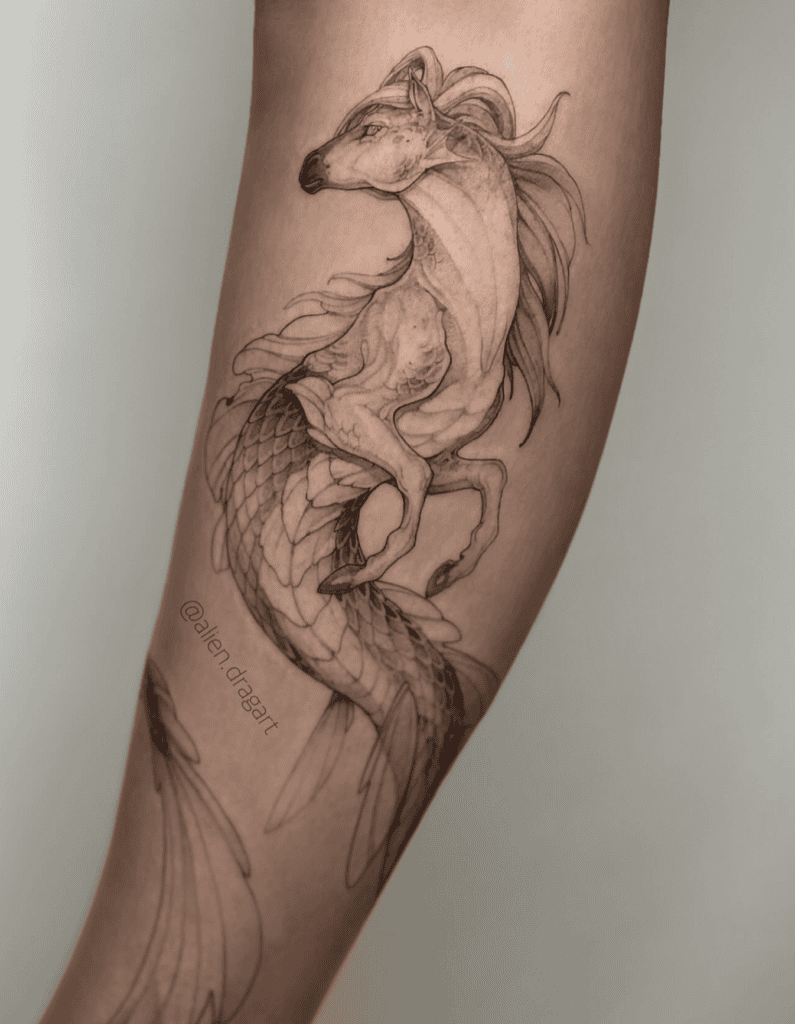
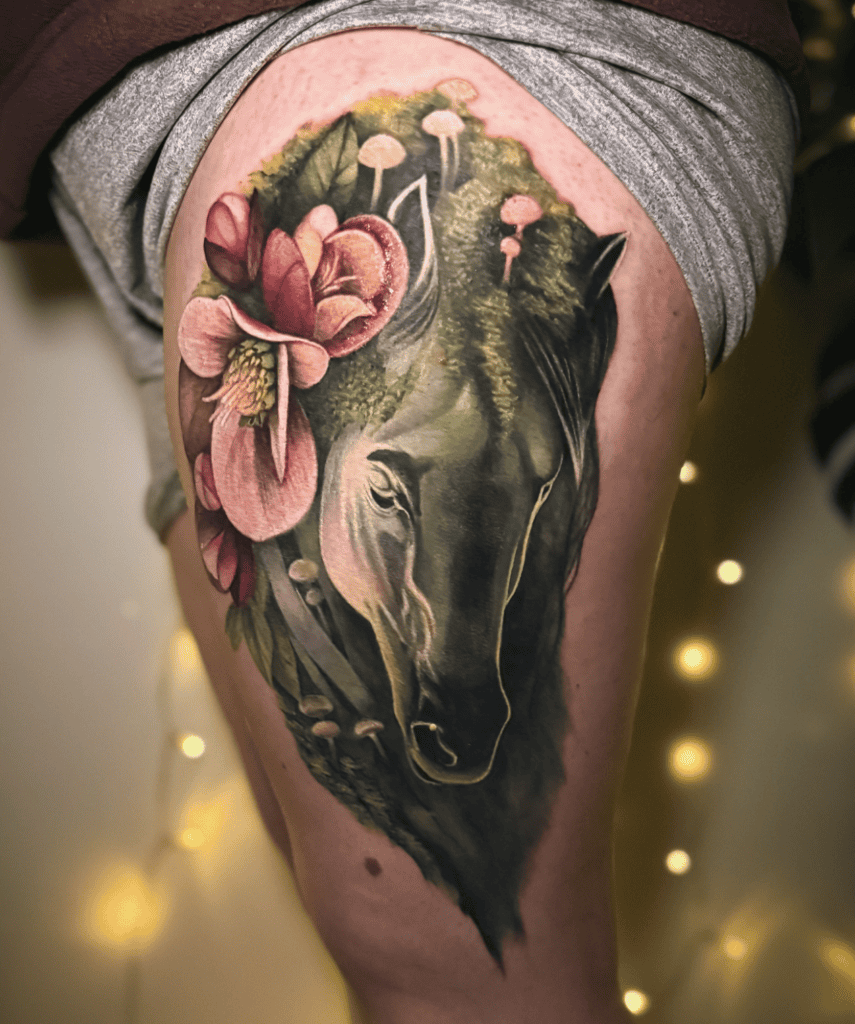
The Kelpie is a mythical water spirit from Scottish mythos that most commonly appears as a magnificent black horse near rivers, lochs, waterfalls, and streams. Although it usually takes the form of a horse, the Kelpie is a true shapeshifter and can also appear as a handsome young man, beautiful woman, pony, or occasionally other animals.
Its favourite trick is to entice people to climb onto its back. Once they do, they find themselves unable to dismount as their hands become magically stuck to the creature. The Kelpie then gallops into the nearest body of water, dragging its victims beneath the surface.
Because of these stories, the Kelpie became one of Scotland’s most famous cautionary legends, warning children and adults alike about the dangers of deep or fast-moving water.
Raksh Horse Tattoo

Rakhsh (meaning “Lightning,” “Flash,” or “Bright”) is the legendary horse of Rostam, the greatest champion of ancient Persia. According to the Shahnameh, written by the Persian poet Ferdowsi around the 10th–11th century, Rakhsh possessed extraordinary qualities that no ordinary horse could match, including incredible strength, exceptional speed, fearless courage, and high intelligence. Rakhsh accompanies Rostam through countless adventures and battles, becoming one of the most beloved horses in world mythology.
One of the most famous stories tells how Rostam searched far and wide for a horse worthy of carrying him. Many magnificent horses were presented, but each one collapsed beneath Rostam’s immense strength when he tested them by pressing down on their backs.
Eventually, a striking young stallion with a beautiful reddish-gold coat was brought before him. Unlike all the others, the horse remained standing. Recognising each other’s strength immediately, Rostam chose him as his lifelong companion and named him Rakhsh.
Tikbalang Horse Tattoo

The Tikbalang is a legendary creature from Philippine folklore, typically described as having the head of a horse, the body of a tall, thin human, with exceptionally long arms and legs, dark or shaggy hair, and glowing eyes in some stories.
Standing well over two metres tall, the Tikbalang is often said to dwell in dense forests, mountains, giant trees, remote paths, or sacred places rarely visited by humans.
The exact origins of the Tikbalang are uncertain, but the legend is believed to predate Spanish colonisation of the Philippines. Over time, Indigenous beliefs merged with later cultural influences, creating the modern image of the Tikbalang.
The Nuckelavee Horse Tattoo


The Nuckelavee is a monstrous demon-like creature from Orcadian folklore, said to emerge from the sea and terrorise the people of Orkney. The Nuckelavee is blamed for bringing disease, crop failure, drought, plagues, livestock deaths, and misfortune.
The Nuckelavee is a skinless horse with a human torso fused to its back, with a single burning eye and a gigantic mouth with foul breath. The Nuckelavee comes from the folklore of the Orkney Islands, where it was feared for centuries. Its origins are uncertain, but scholars believe it may have developed from ancient sea spirit traditions, Norse mythology brought to Orkney by Viking settlers, stories explaining epidemics and livestock disease, or folklore warning people to avoid dangerous coastlines.
Uchchaihshravas Horse Tattoo


Uchchaihshravas is the legendary celestial horse of Hindu mythology whose name is commonly translated as “High-Eared,” “Long-Eared,” or “He of Great Neighing.” Across Hindu texts, Uchchaihshravas is celebrated as the King of Horses, the noblest horse in existence, a symbol of divine majesty, and one of the greatest treasures of the heavens.
Uchchaihshravas was born during the legendary Samudra Manthana, or Churning of the Ocean of Milk. According to the myth, the Devas (gods) and Asuras (demons) worked together to churn the cosmic ocean. They used Mount Mandara as the churning rod, and the great serpent Vasuki served as the rope. Their goal was to obtain Amrita, the nectar of immortality.
As the ocean was churned, many divine treasures emerged, including Lakshmi, Kamadhenu, Airavata, and Uchchaihshravas. Because it emerged from this sacred cosmic event, Uchchaihshravas is regarded as a being of unparalleled purity and splendour.
Unicorn Horse Tattoo
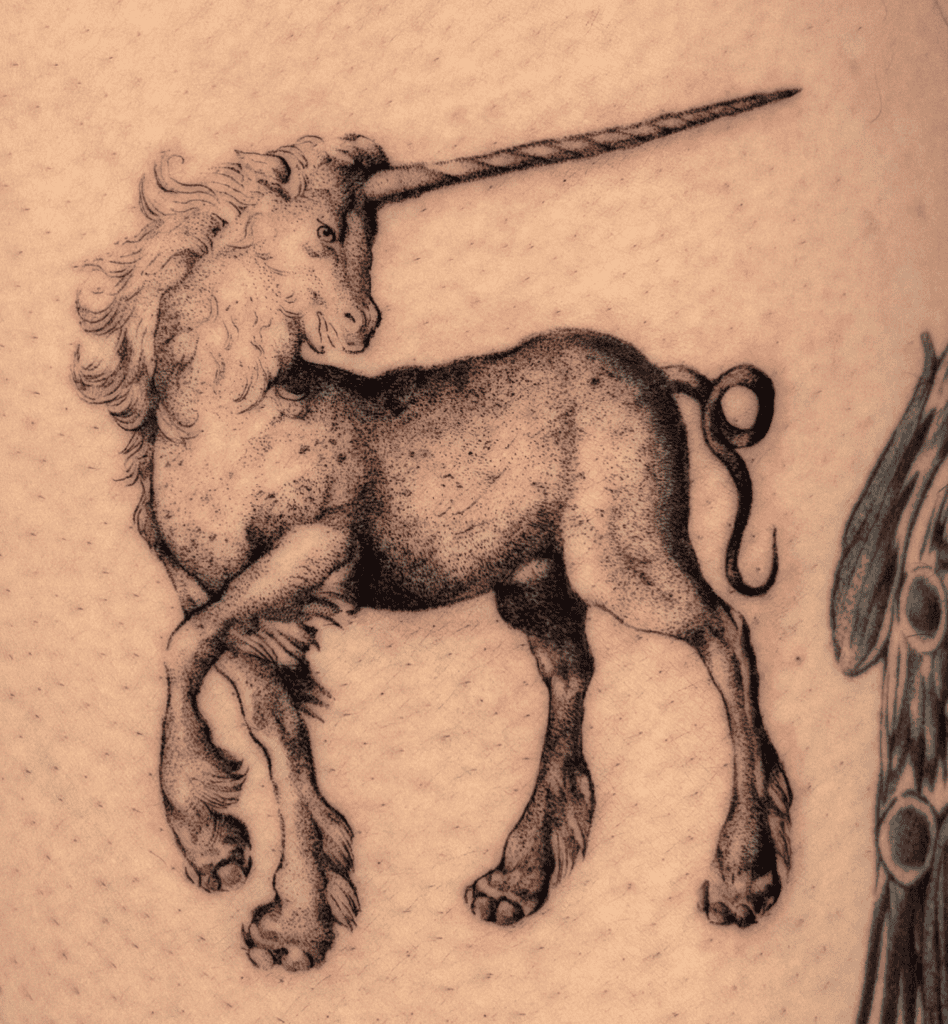
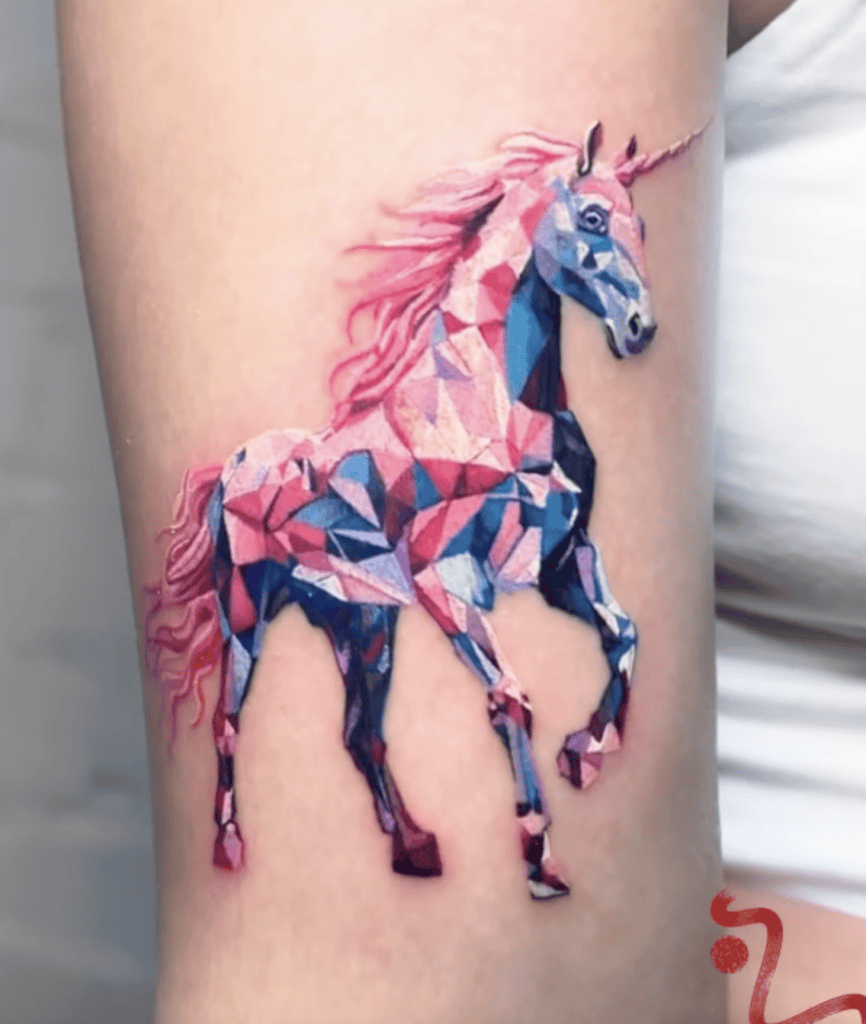
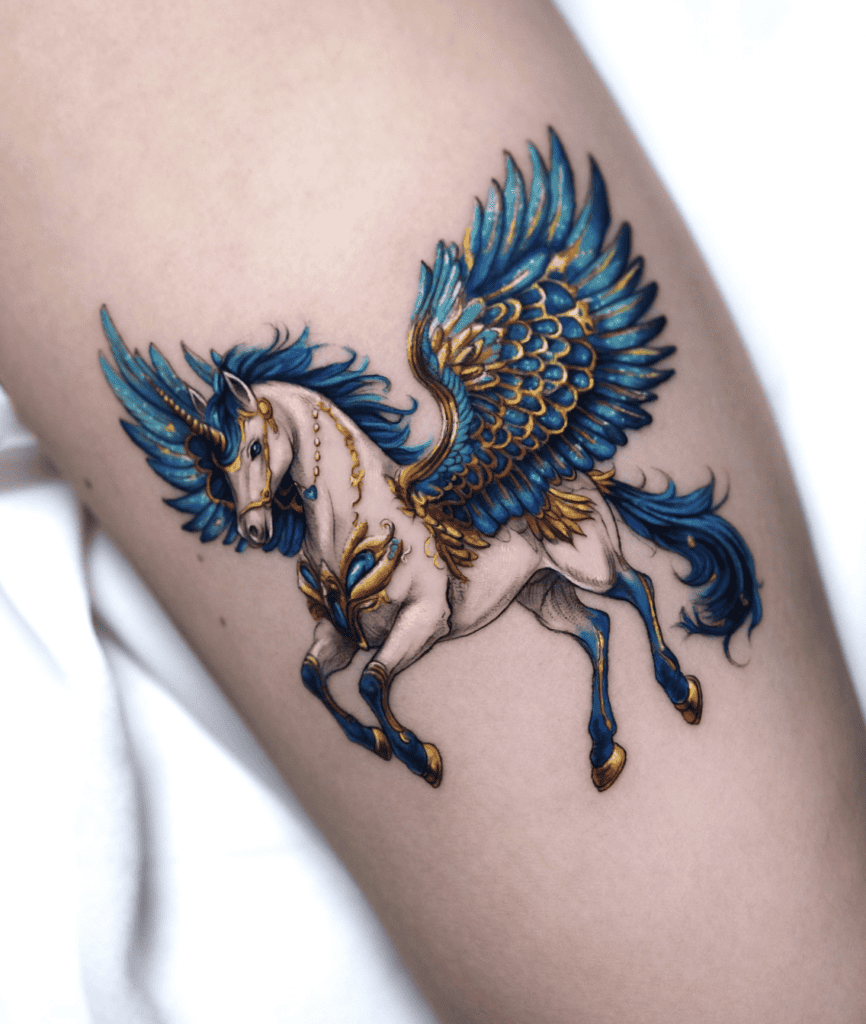
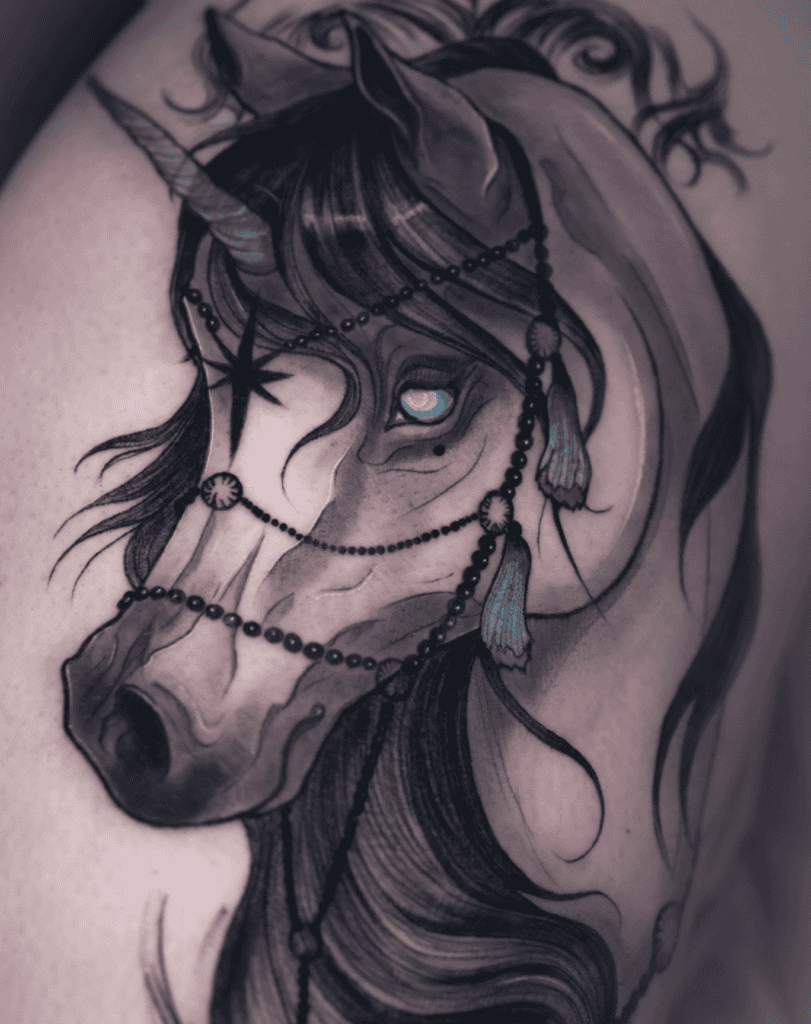
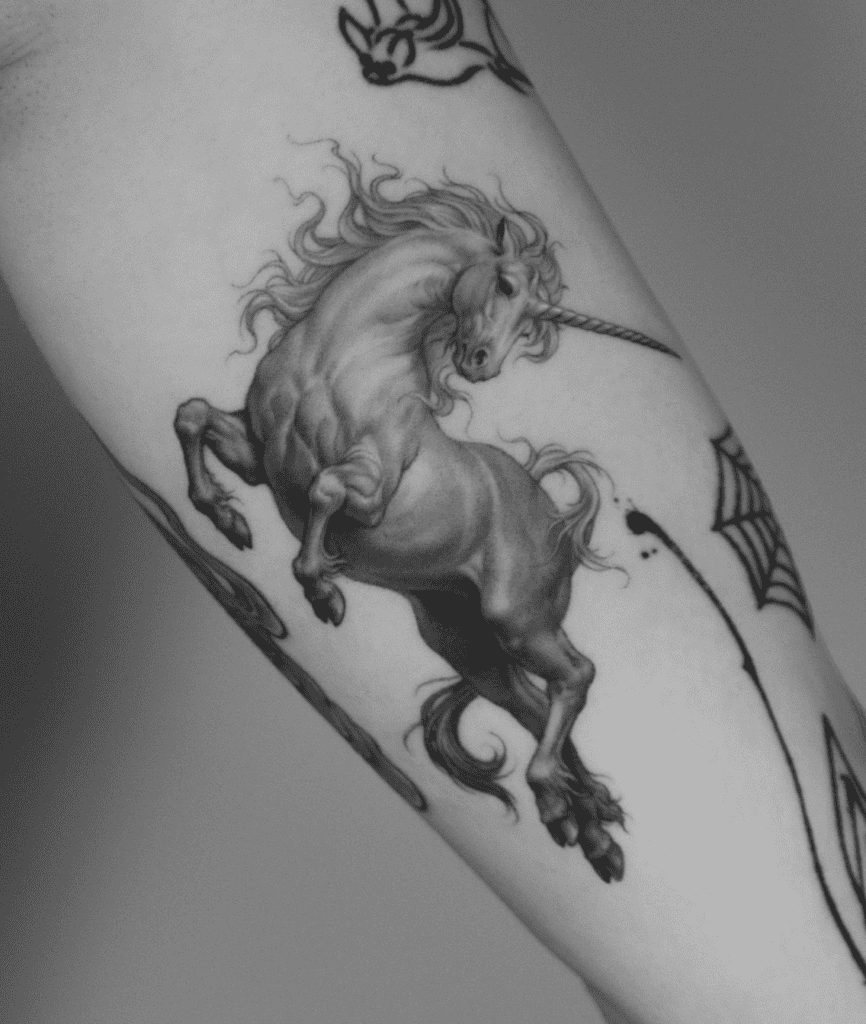
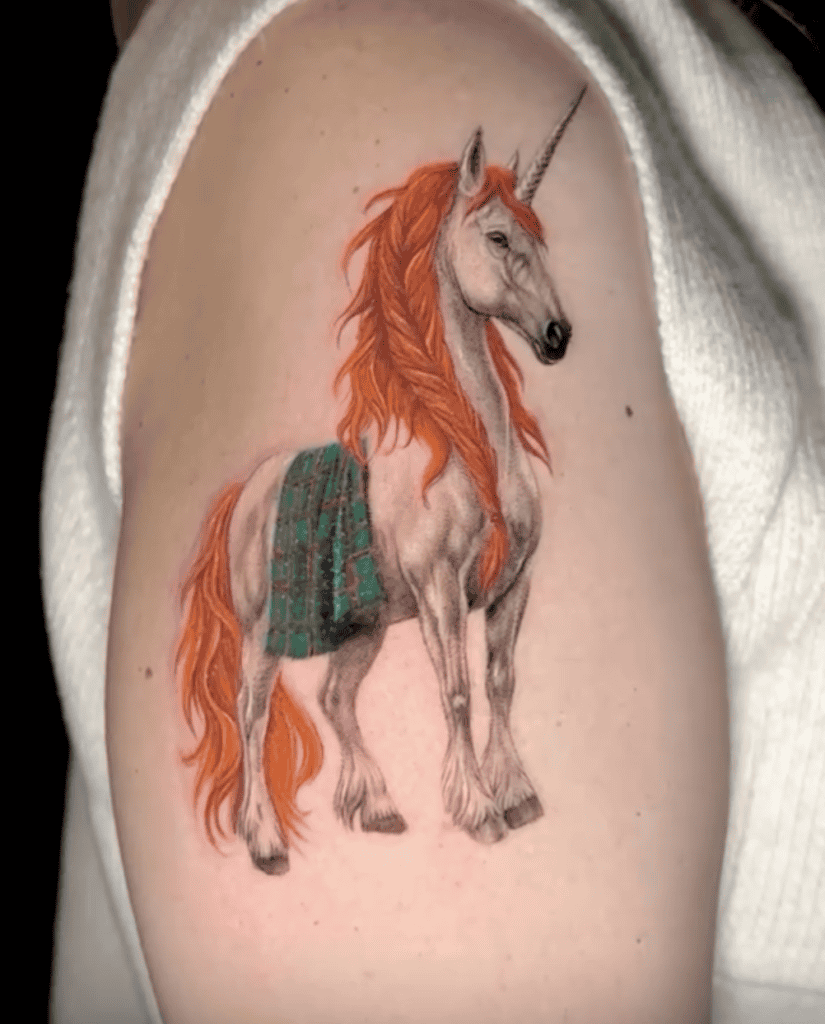
The Unicorn is one of the most famous mythical horses in the world, appearing in the folklore of Europe, Asia, and the Middle East. The Unicorn has become a timeless symbol of purity, hope, magic, innocence, and the pursuit of the impossible. Although often associated with fairy tales today, the Unicorn has a rich history stretching back over 2,000 years, during which it was regarded as a powerful and elusive creature worthy of kings, heroes, and legends.
The earliest written descriptions of Unicorn-like creatures date back to ancient history. One of the first detailed accounts came from the Greek physician Ctesias, who described a one-horned wild animal living in India. While his account was likely based on exaggerated reports of animals such as the Indian rhinoceros, it helped inspire later Unicorn legends.
Spirit Horse Tattoo
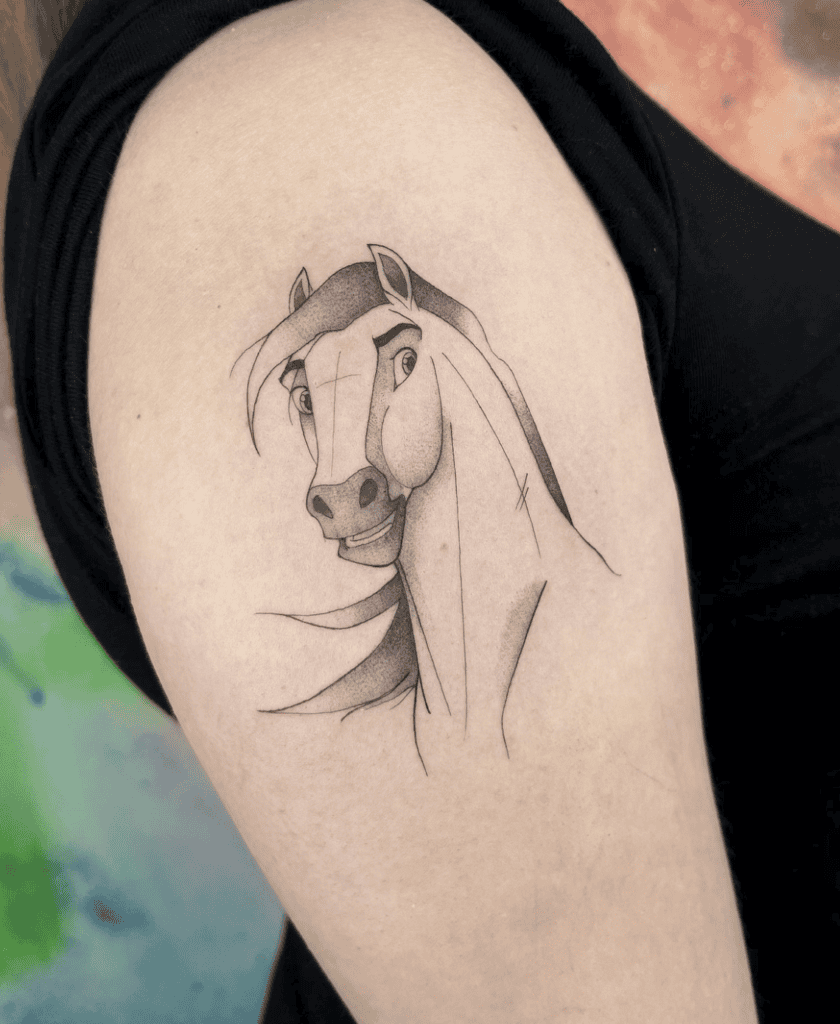
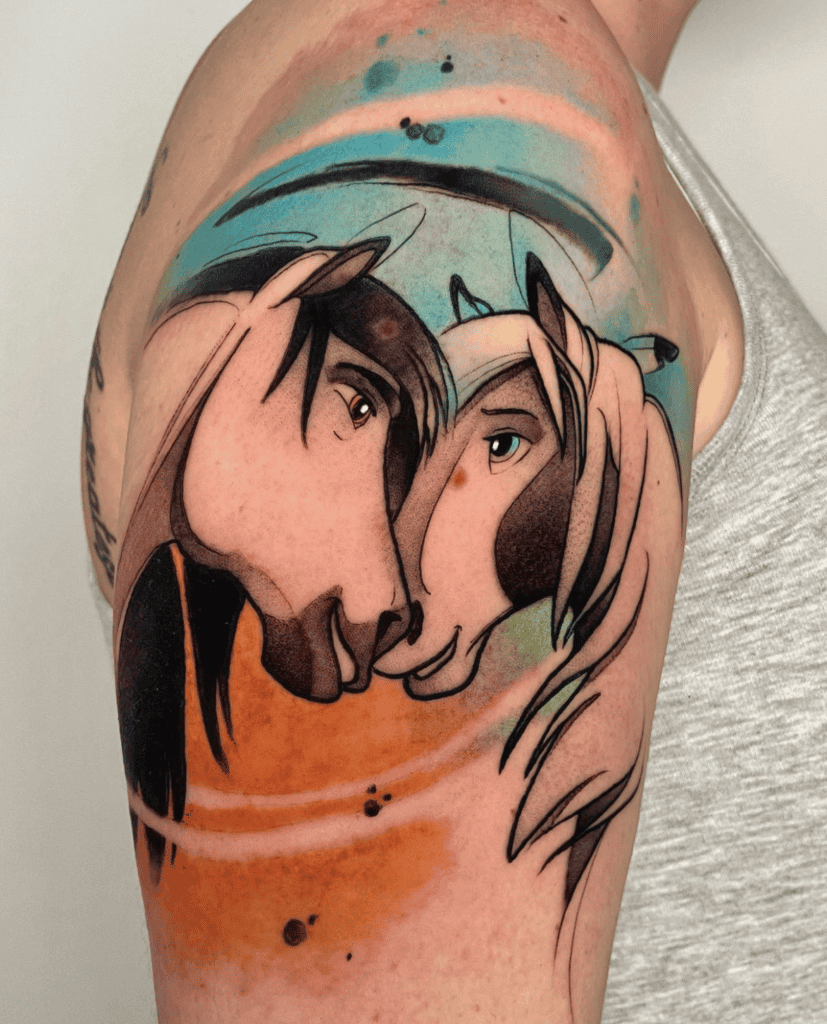
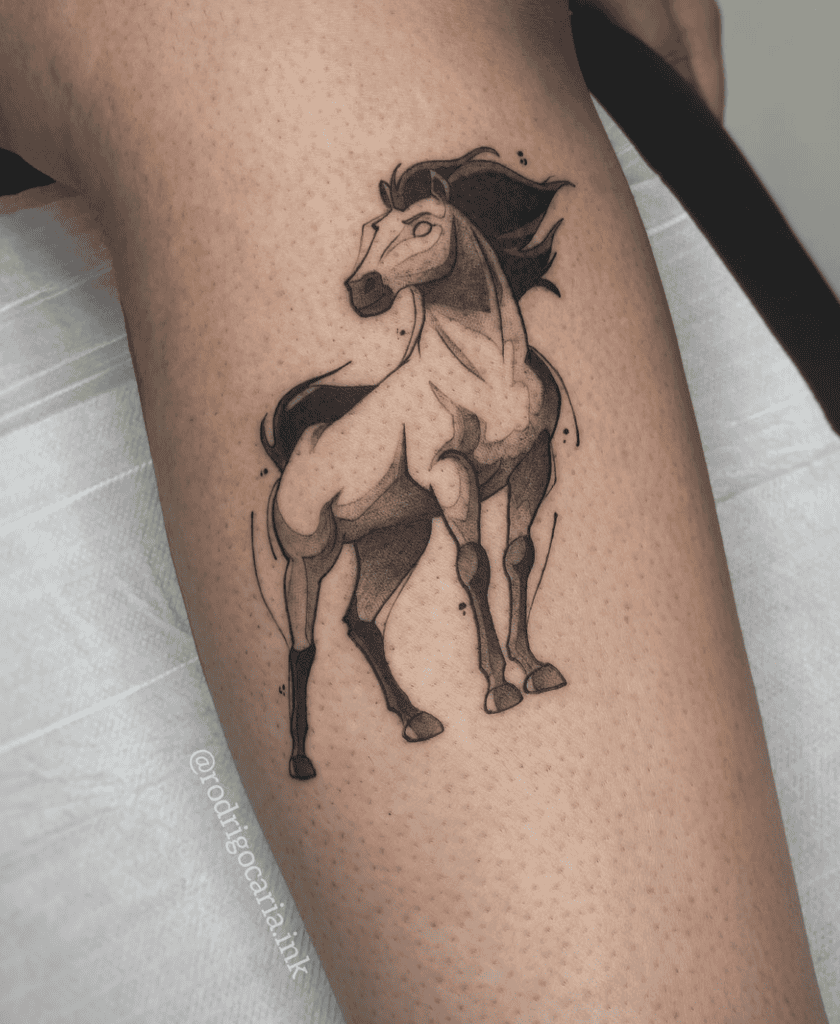
Spirit is the courageous and untameable protagonist of Spirit: Stallion of the Cimarron. Spirit has become a symbol of freedom, resilience, independence, and the unbreakable bond between nature and the wild.
Spirit begins life roaming the vast plains with his herd, but everything changes when he is captured by the United States Cavalry. Despite repeated attempts to tame him, Spirit refuses to submit.
Along the way, he befriends Little Creek, a young Lakota man, and Rain, a beautiful paint mare. Together they face danger, separation, and hardship while Spirit fights to return home and protect his herd.
Bullseye Horse Tattoo

Bullseye is Woody’s faithful horse, known for his boundless enthusiasm, unwavering loyalty, and playful personality. Although he never speaks, his expressive actions and dog-like behaviour make him one of the series’ most endearing characters.
Bullseye is the toy horse belonging to the fictional Woody’s Roundup television programme within the Toy Story universe. He is Woody’s loyal companion and one of the most energetic toys in the series. Although Bullseye never speaks, his personality shines through his actions, facial expressions, and unwavering devotion to his friends.
Nazgûl Horse Tattoo

The Nazgûl Horses are black horses which carry the Nazgûl, also known as the Ringwraiths, during the early part of The Lord of the Rings. While they were ordinary horses by nature, they were specially bred, trained, and dominated by the will of Sauron, becoming terrifying mounts capable of enduring the unnatural presence of their undead riders.
In J. R. R. Tolkien’s writings, the horses themselves were not evil creatures. Instead, they were carefully selected by Sauron’s servants and trained to withstand the Ringwraiths’ terrifying aura.
Quick Draw McGraw Horse Tattoo


Quick Draw McGraw is one of the classic cartoon horses of the golden age of television animation. Created by Hanna-Barbera, Quick Draw is a lovable, well-meaning sheriff who always tries to uphold justice. Despite his confidence often exceeding his competence, his courage, optimism, and determination have made him one of animation’s most enduring equine heroes.
Swiftwind Horse Tattoo
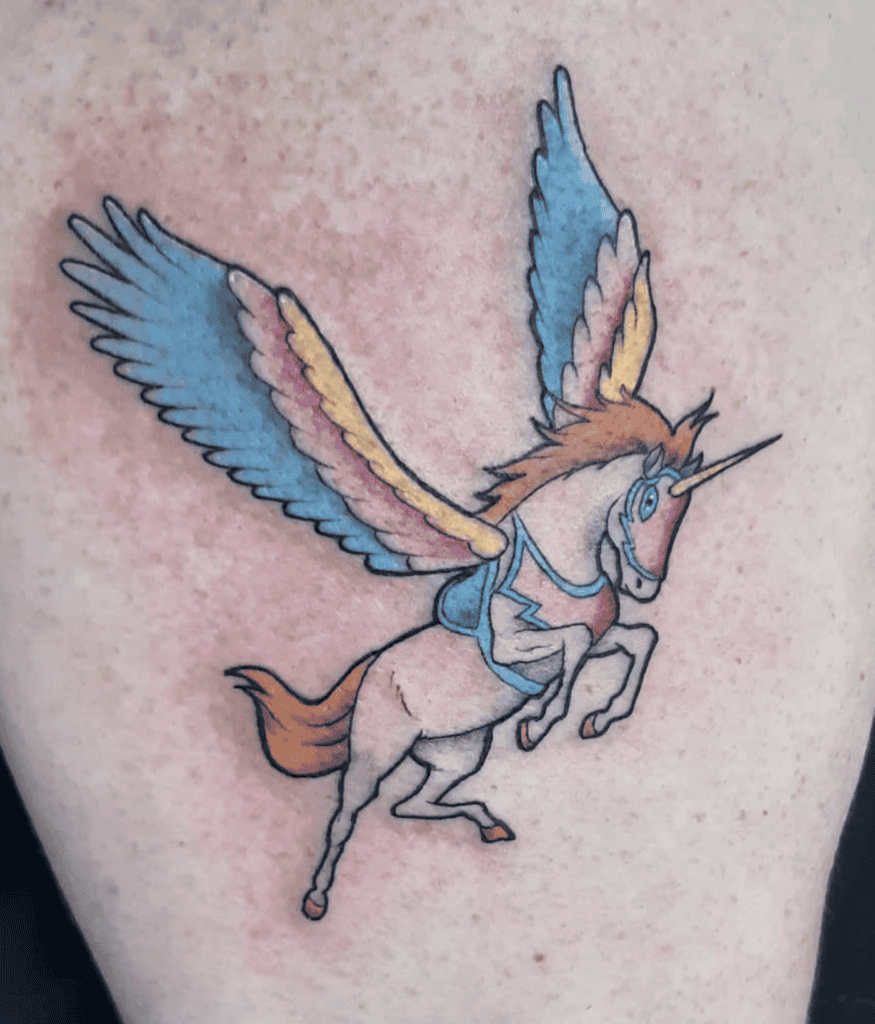
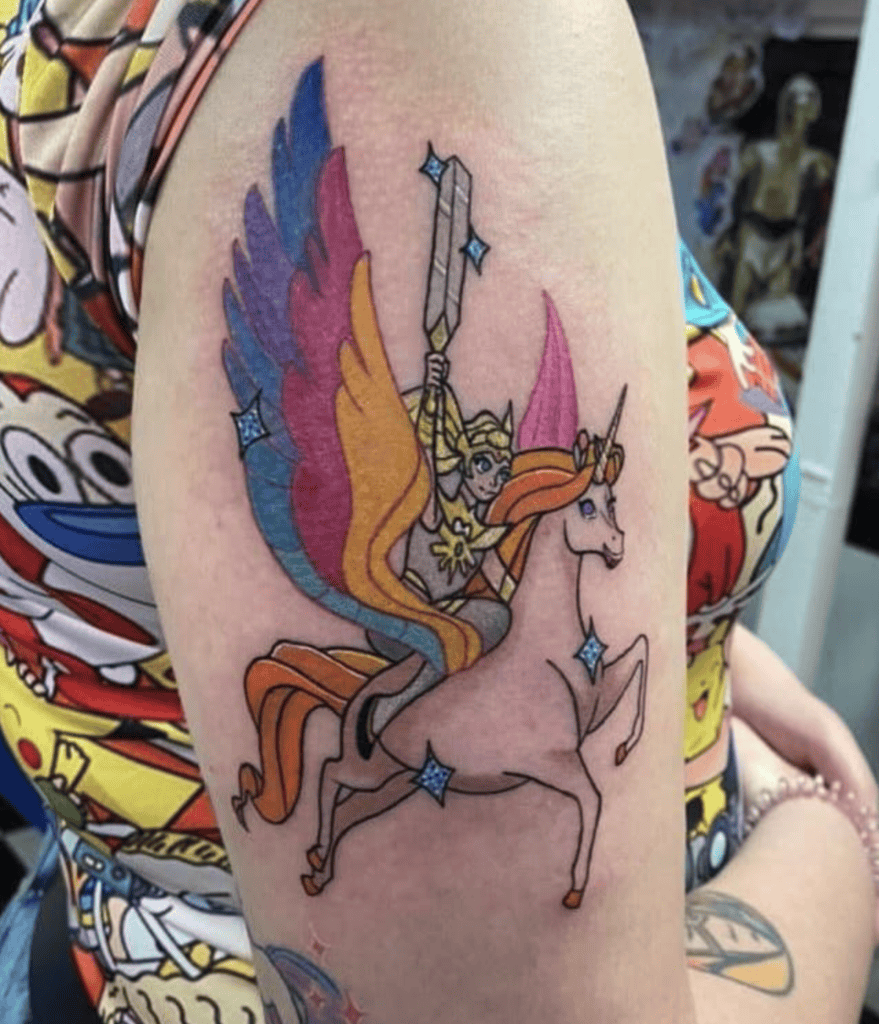
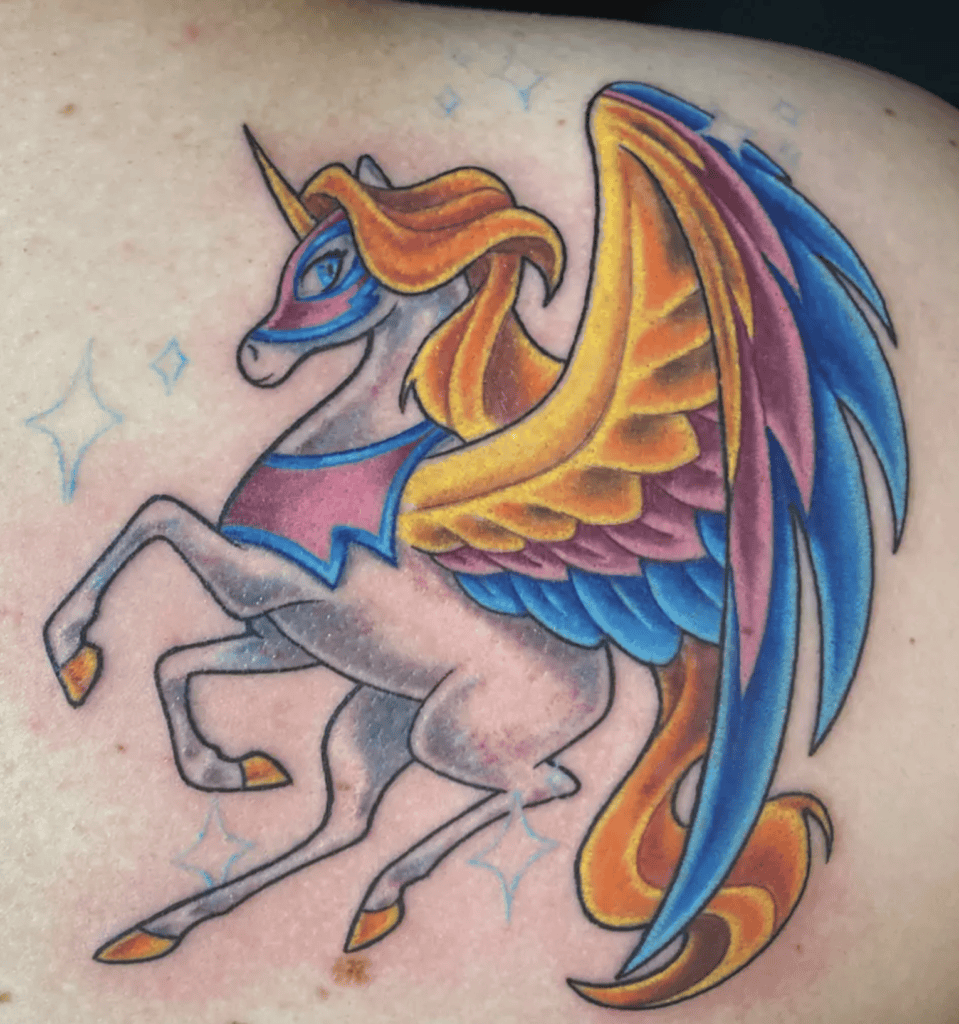
Swiftwind is best known as the loyal companion of She-Ra who transforms from an ordinary horse into a magnificent winged unicorn through the power of the Sword of Protection.
Swift Wind begins as Spirit, an ordinary horse belonging to Adora. When Adora first transforms into She-Ra using the Sword of Protection, the sword’s magic also transforms Spirit into Swift Wind, gaining wings, a unicorn horn, great intelligence, the power of speech, and magical abilities.
Butt Stallion Horse Tattoo
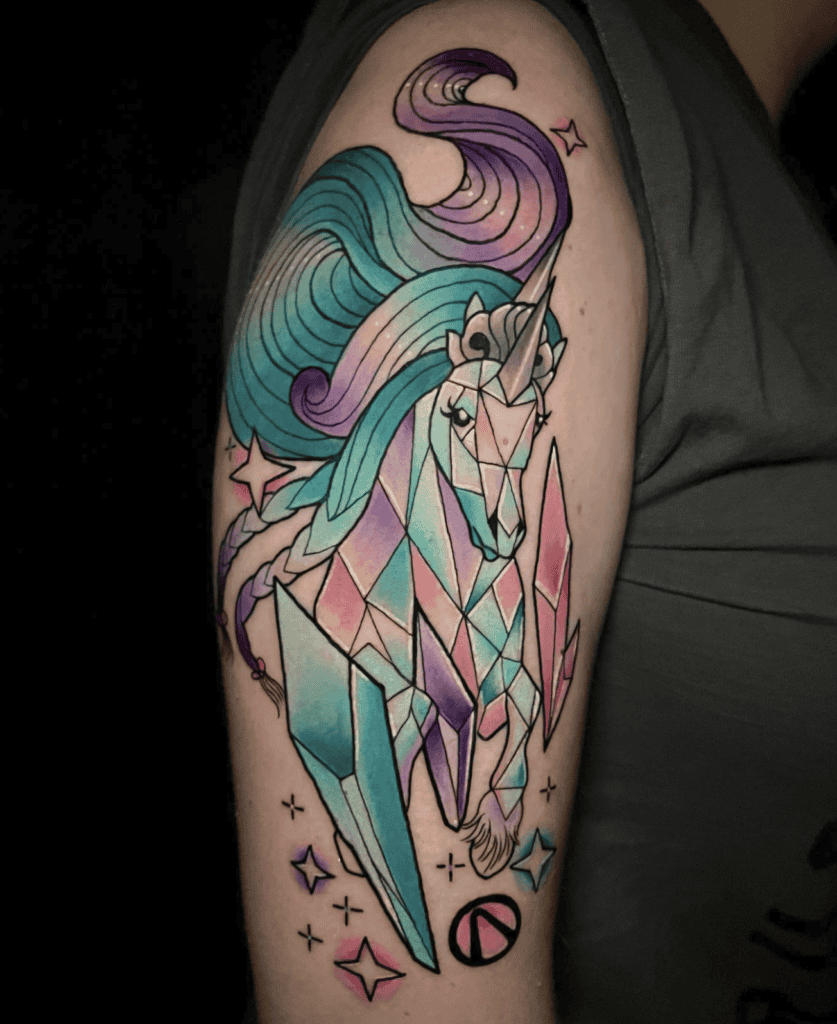
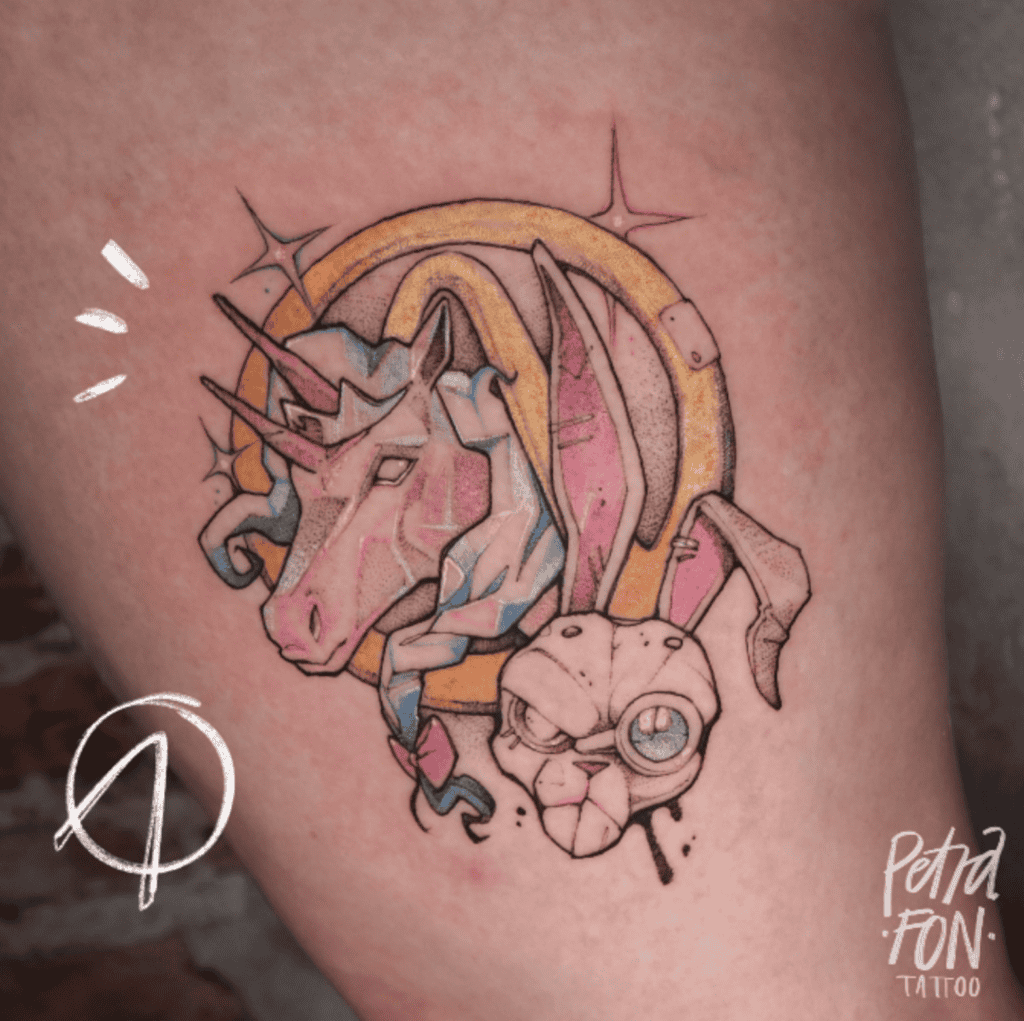
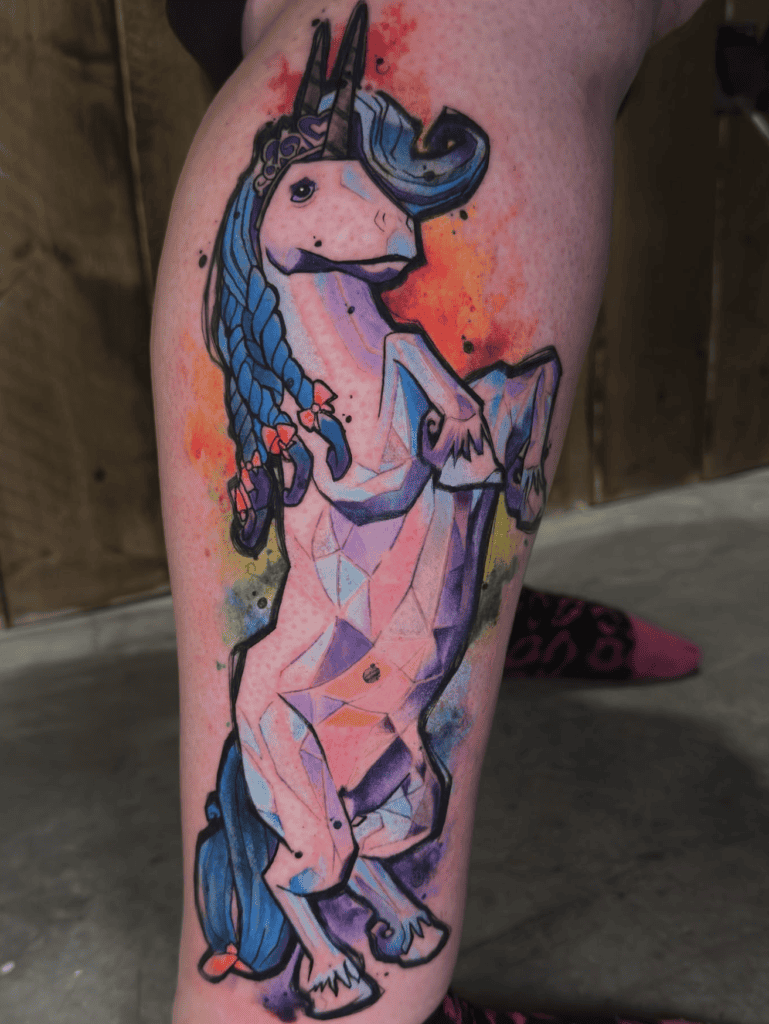
Butt Stallion is a diamond pony owned by the charismatic and unhinged villain Handsome Jack. Despite the ridiculous name, Butt Stallion has become an iconic mascot of the Borderlands franchise, perfectly capturing the series’ over-the-top humour and absurd style.
Although she plays a relatively small role in the story, Butt Stallion’s unforgettable design and hilarious interactions have earned her a lasting place in gaming culture.
Pegasusmon Horse Tattoo

Pegasusmon is a powerful and iconic flying Digimon from the Digimon Adventure 02 universe. As the Armour Digivolved form of Patamon, Pegasusmon combines the grace of a mythical winged horse with holy, light-based powers. It represents hope, protection, and the ability to rise above darkness.
Bojack Horseman Horse Tattoo
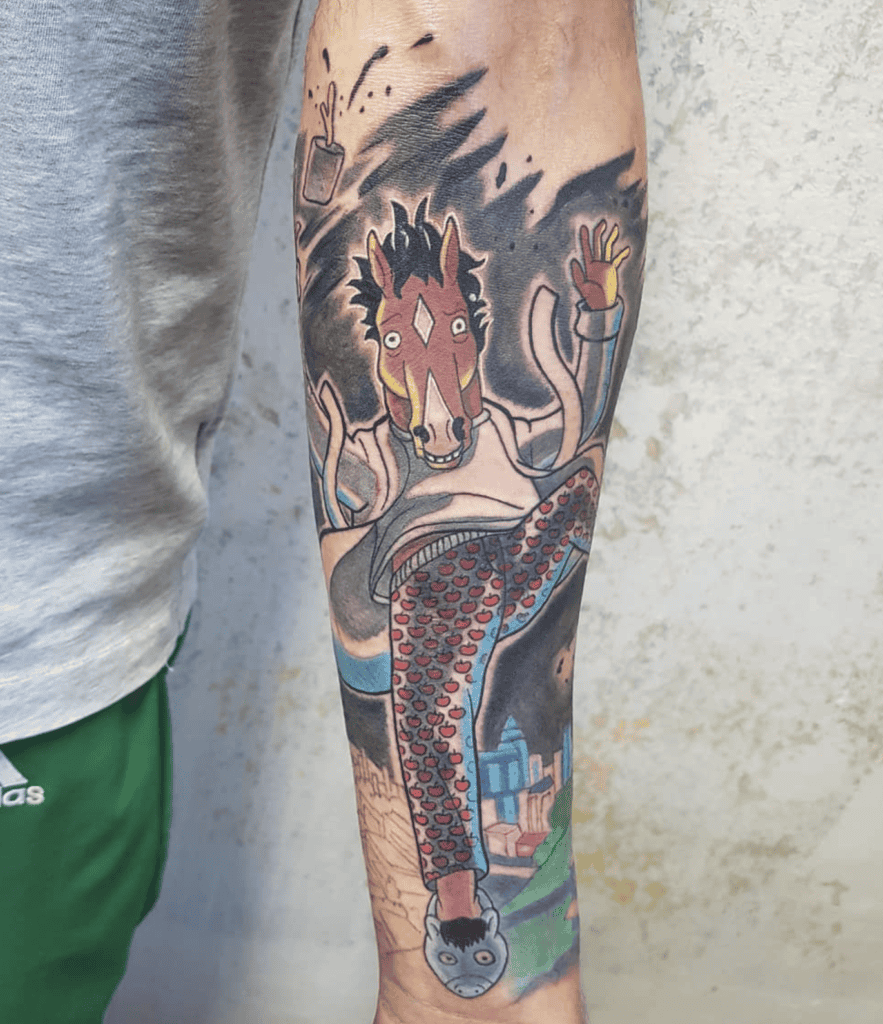
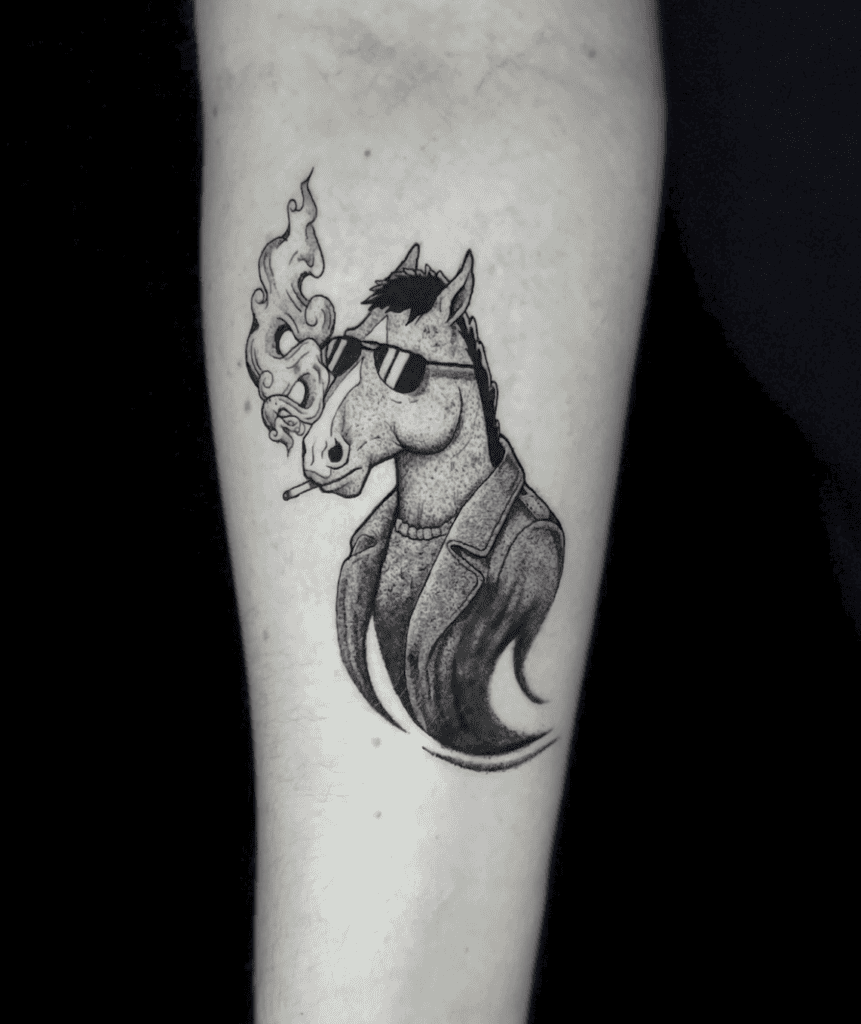
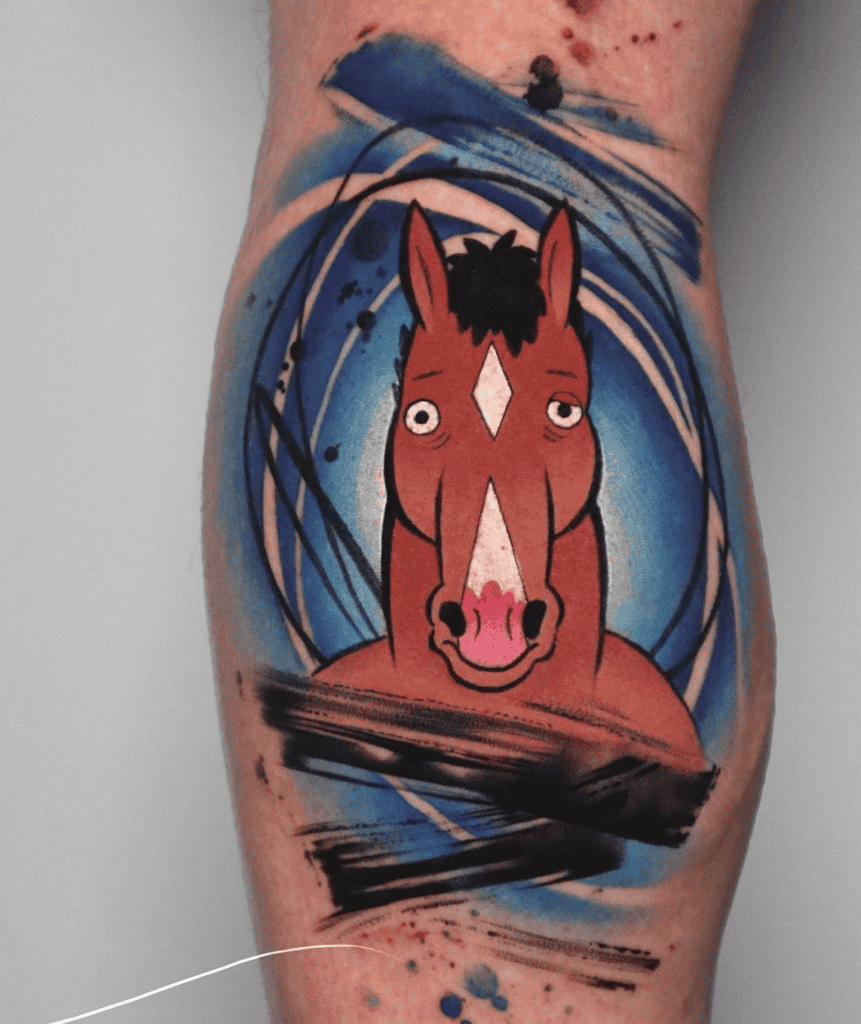
BoJack Horseman is one of the most acclaimed adult animated series ever made, and also one of the most emotionally complex.
At first glance, it looks like a satirical comedy about a washed-up talking horse celebrity. But underneath that, it’s really a deep exploration of depression, addiction, fame, trauma, and what it actually means to try (and often fail) to become a better person.
Epona Horse Tattoo


Epona is the loyal horse of Link, appearing across multiple entries in The Legend of Zelda. Unlike many mounts that exist only for travel, Epona is a true companion, symbolising trust, freedom, and emotional connection between rider and horse.
Torrent Horse Tattoo


Torrent is a spectral horse-like creature from Elden Ring, given to the player by Melina early in the game. He is known as a Spirit Steed who is a loyal companion to the Tarnished.
Shadowmere Horse Tattoo

Shadowmere is one of the most iconic horses in RPG history. Appearing in The Elder Scrolls IV: Oblivion and later The Elder Scrolls V: Skyrim, Shadowmere is a dark, supernatural horse tied to the Assassin Brotherhood known as the Dark Brotherhood. She combines extreme speed and endurance with an eerie, almost undead presence, making her both a trusted companion and a walking legend of Tamriel.
My Little Pony Horse Tattoo
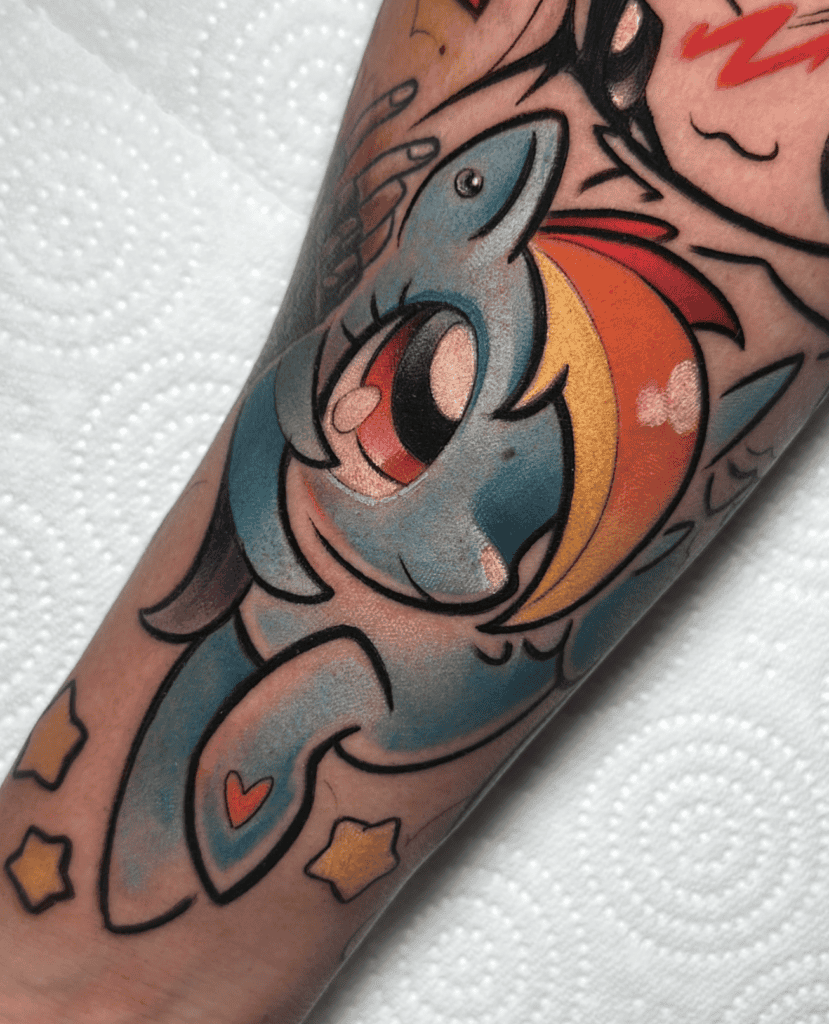
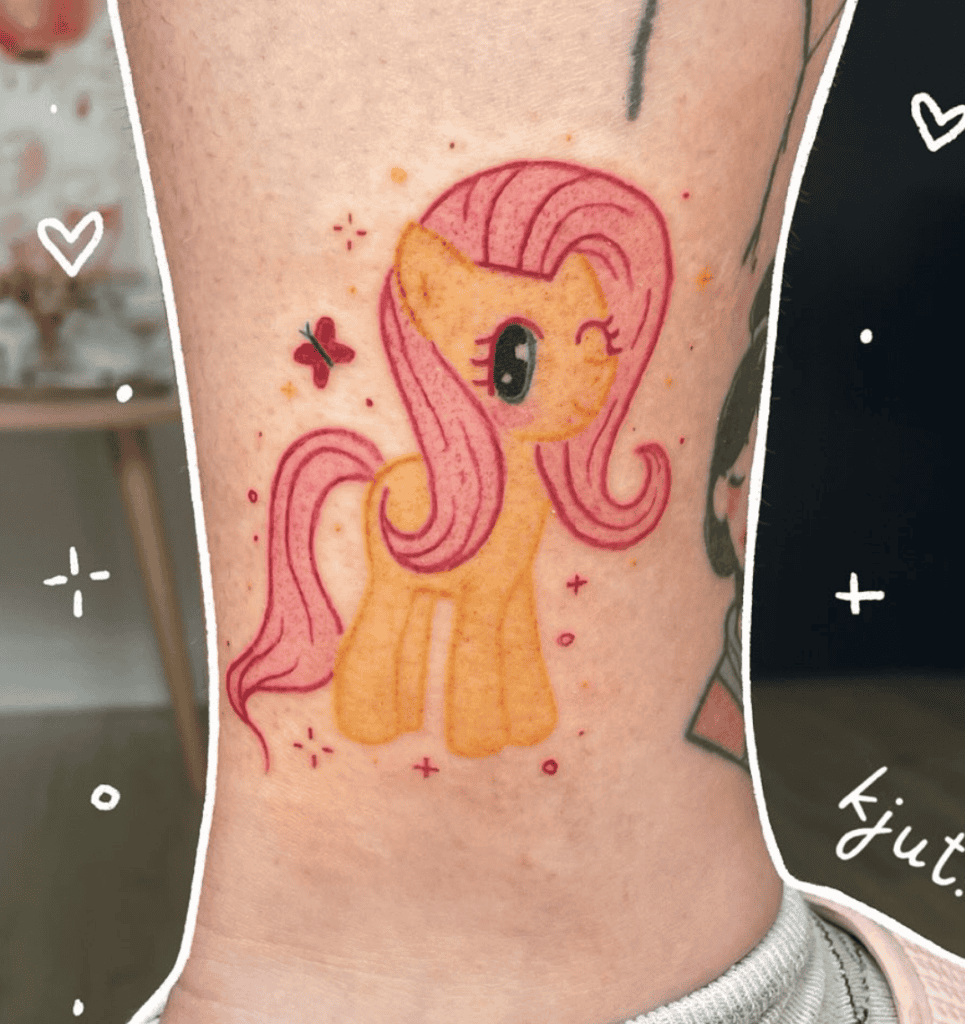
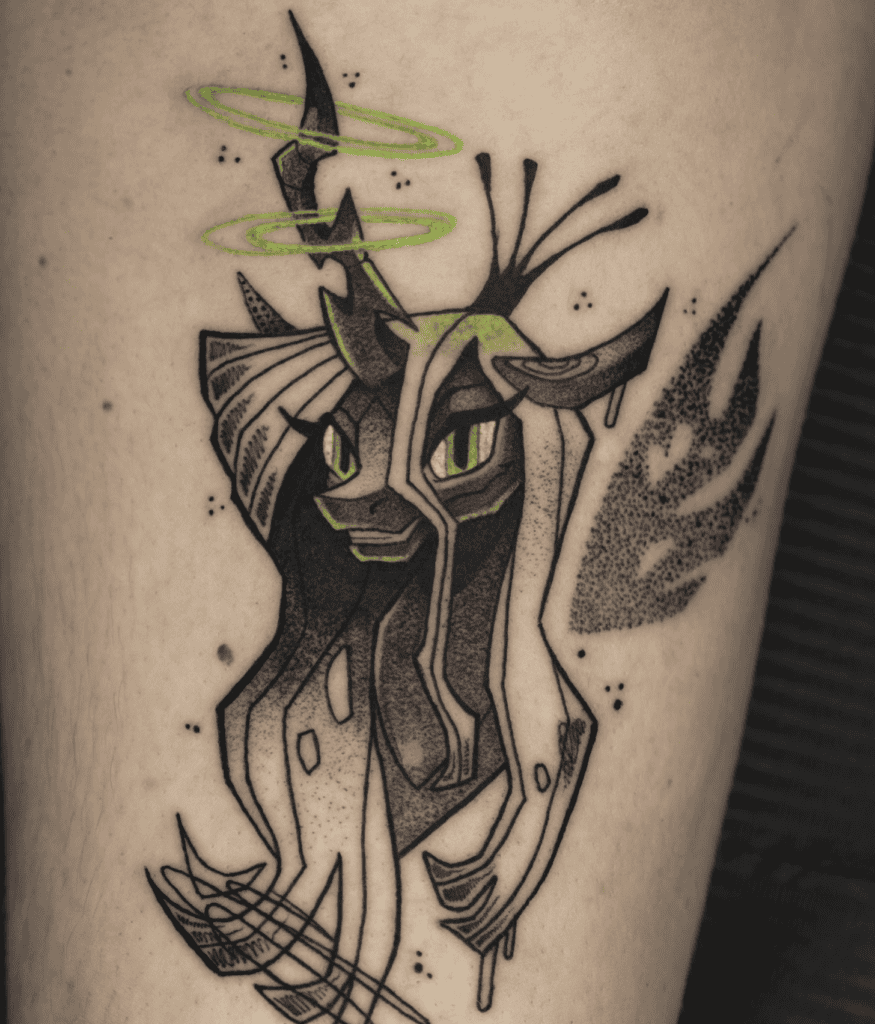
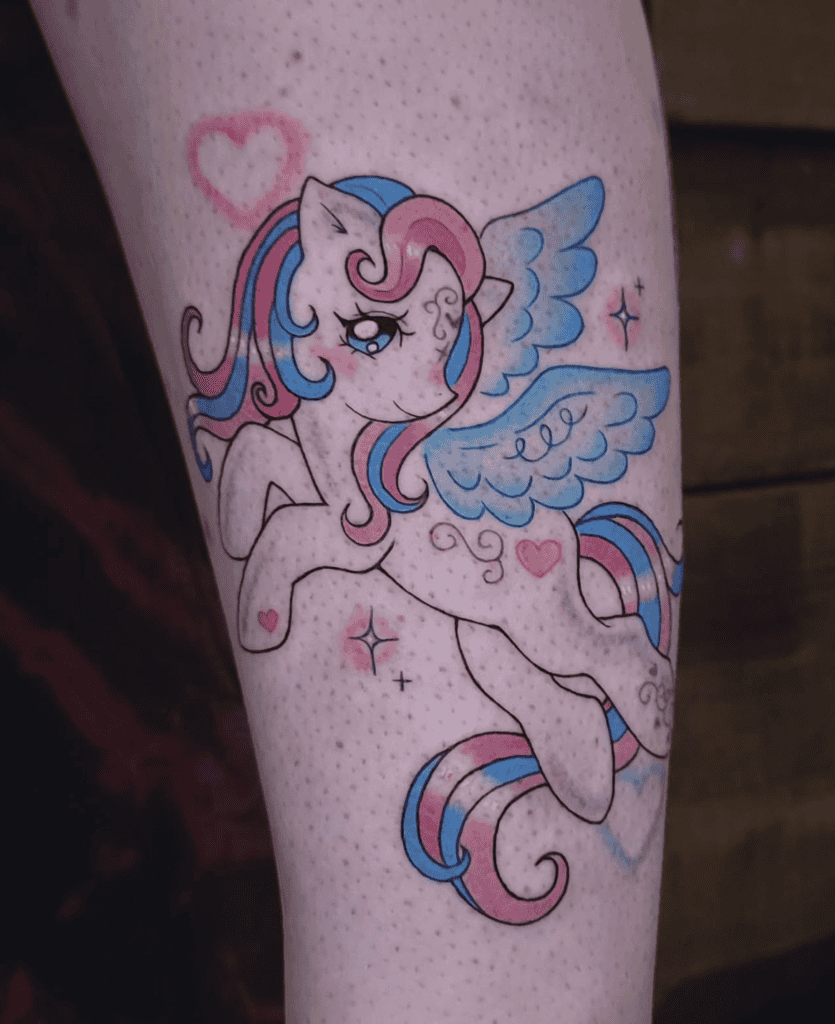
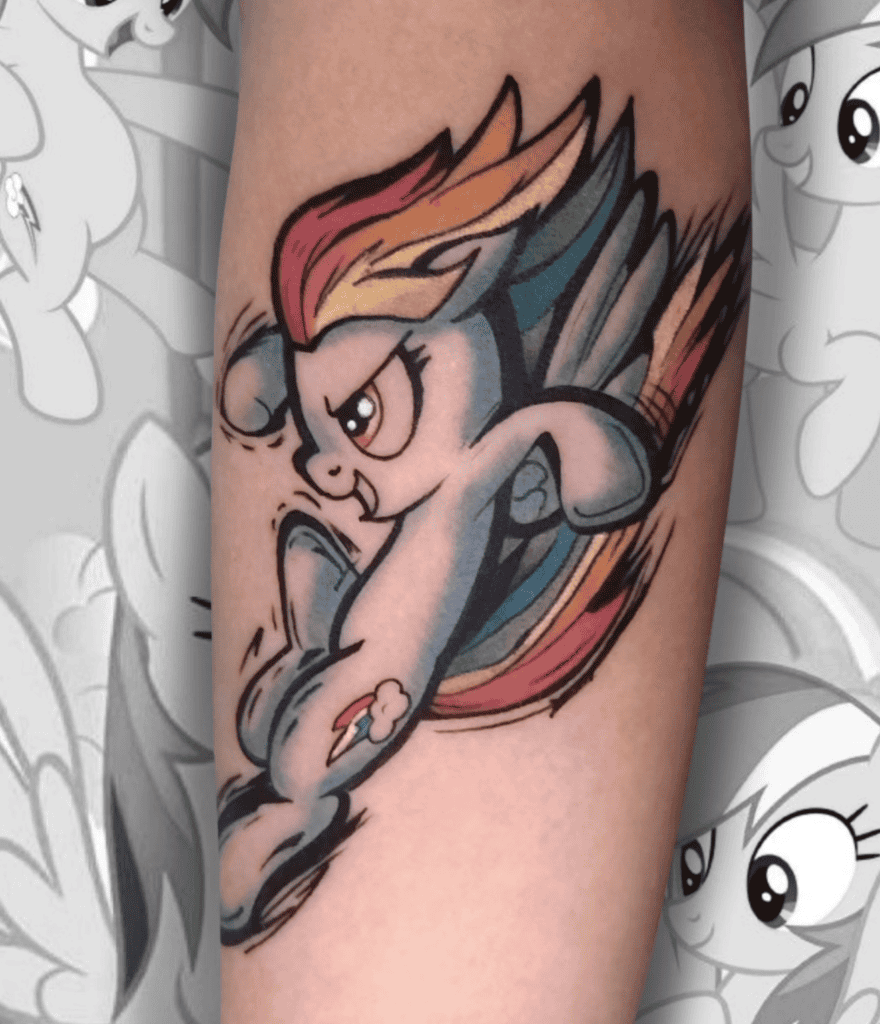
My Little Pony: Friendship Is Magic is one of the most influential modern animated franchises, known for its colourful characters, strong friendship themes, and surprisingly deep storytelling. While it started as a reboot of a toy-based children’s brand, it grew into a global cultural phenomenon with fans of all ages.
My Little Pony began as a toy line created by Hasbro, featuring colourful pony characters with unique symbols called “cutie marks.” The modern version, especially Friendship Is Magic, transformed the concept into a full storytelling universe set in the magical world of Equestria.
Pokémon Horse Tattoos
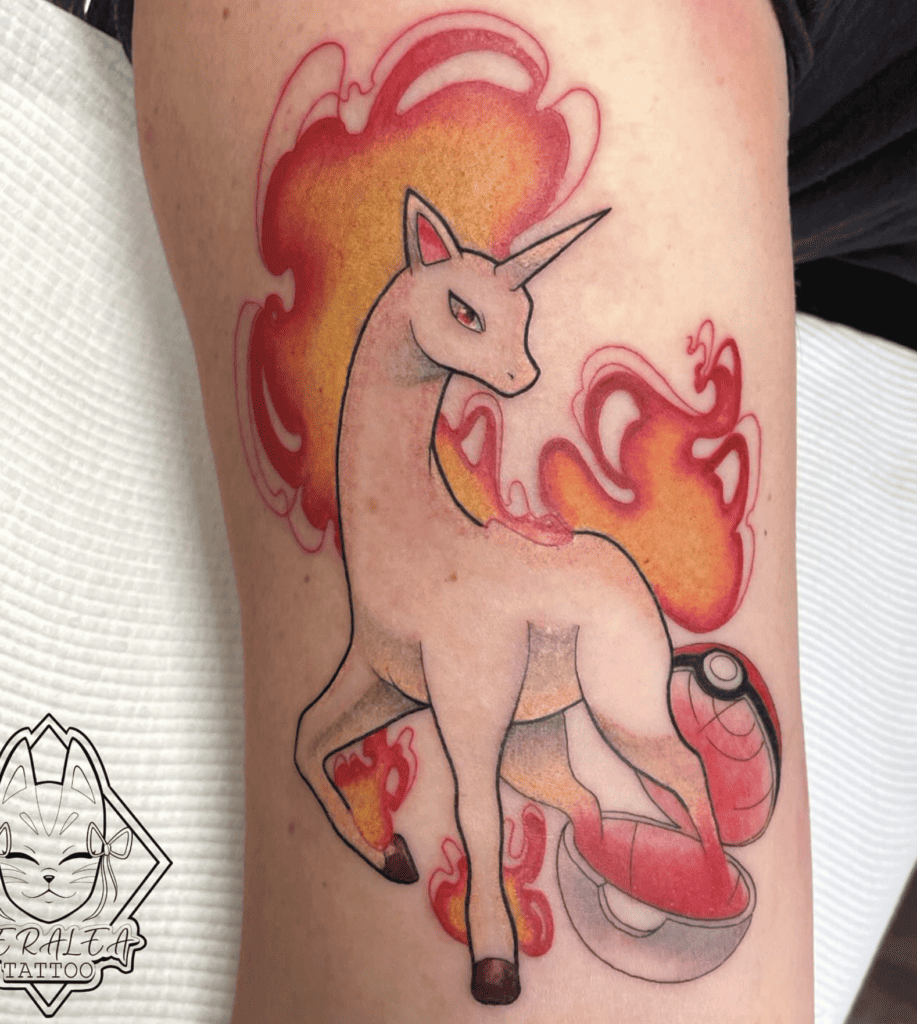
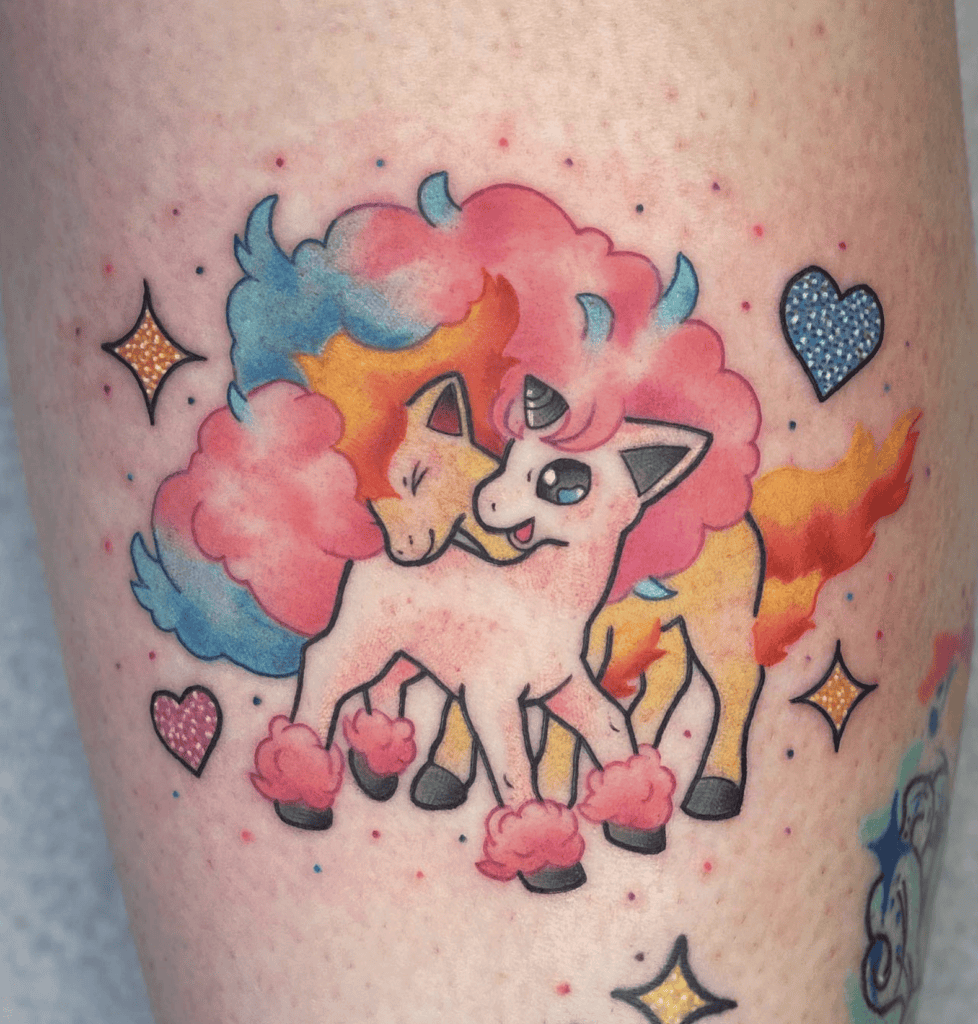
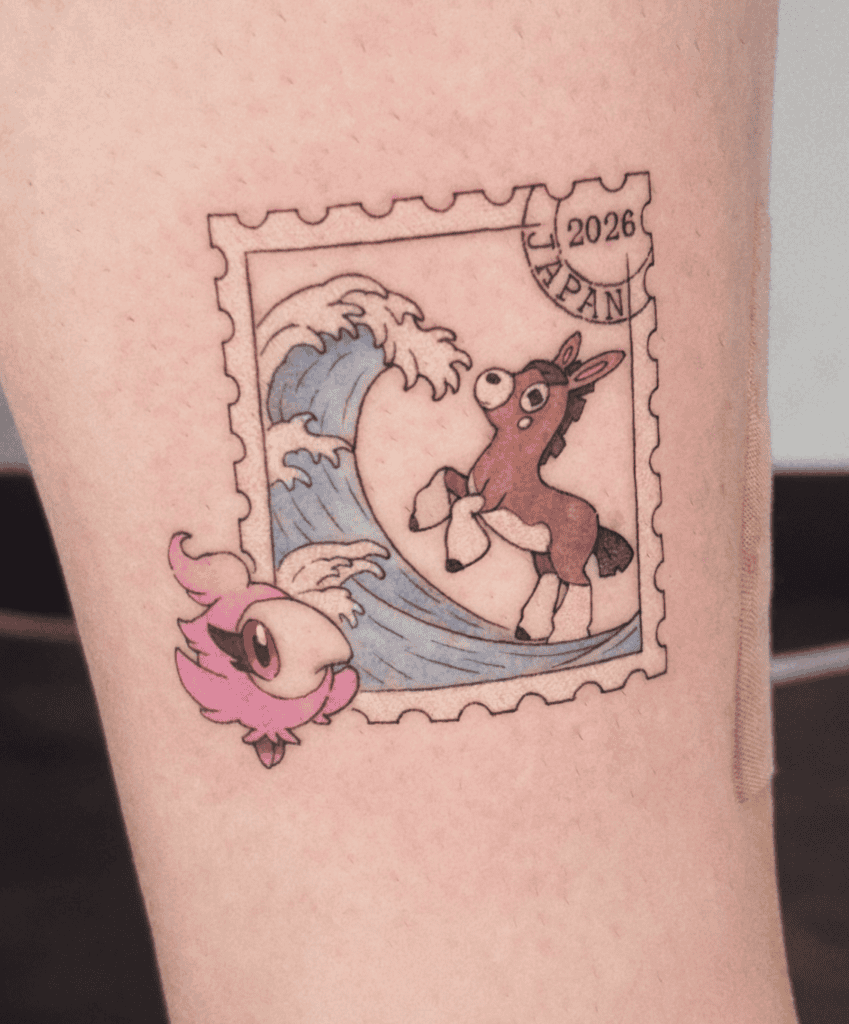
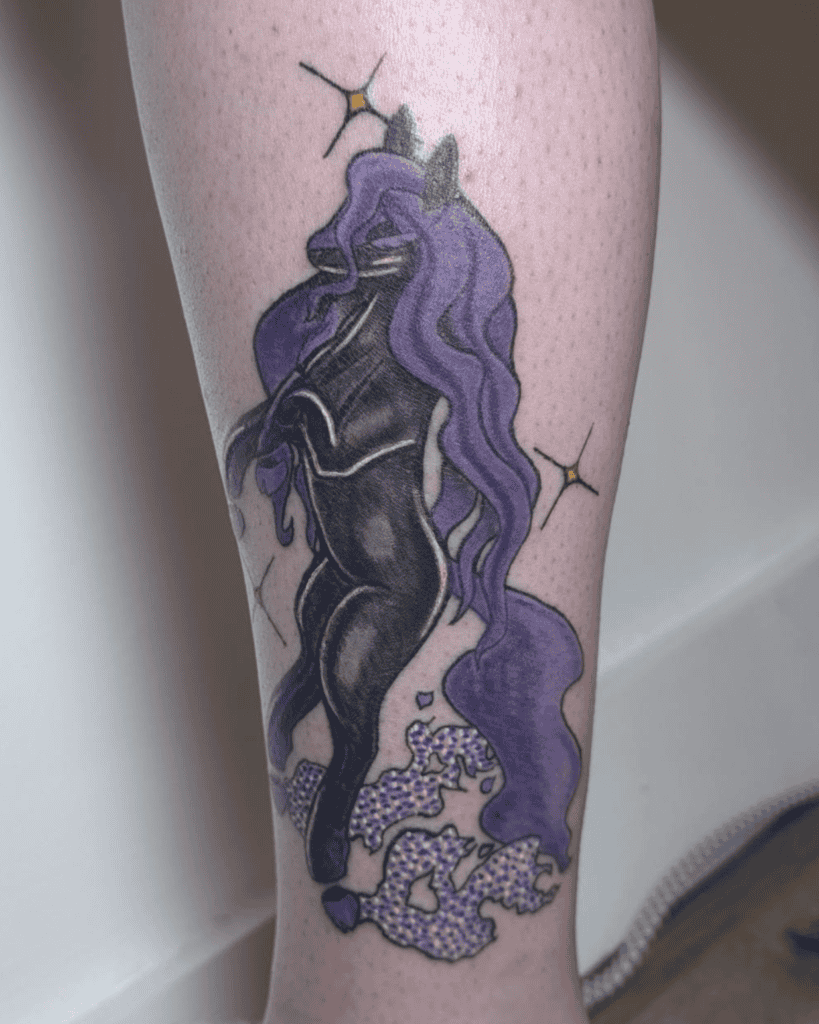
Pokémon has quite a few horse-inspired species that often symbolise speed, loyalty, courage, freedom, and power, making them some of the franchise’s most iconic designs. The Main Horse Pokémon include fire-type Ponyta and Rapidash from the very first generation, who also received regional fairy variants in Generation Eight.
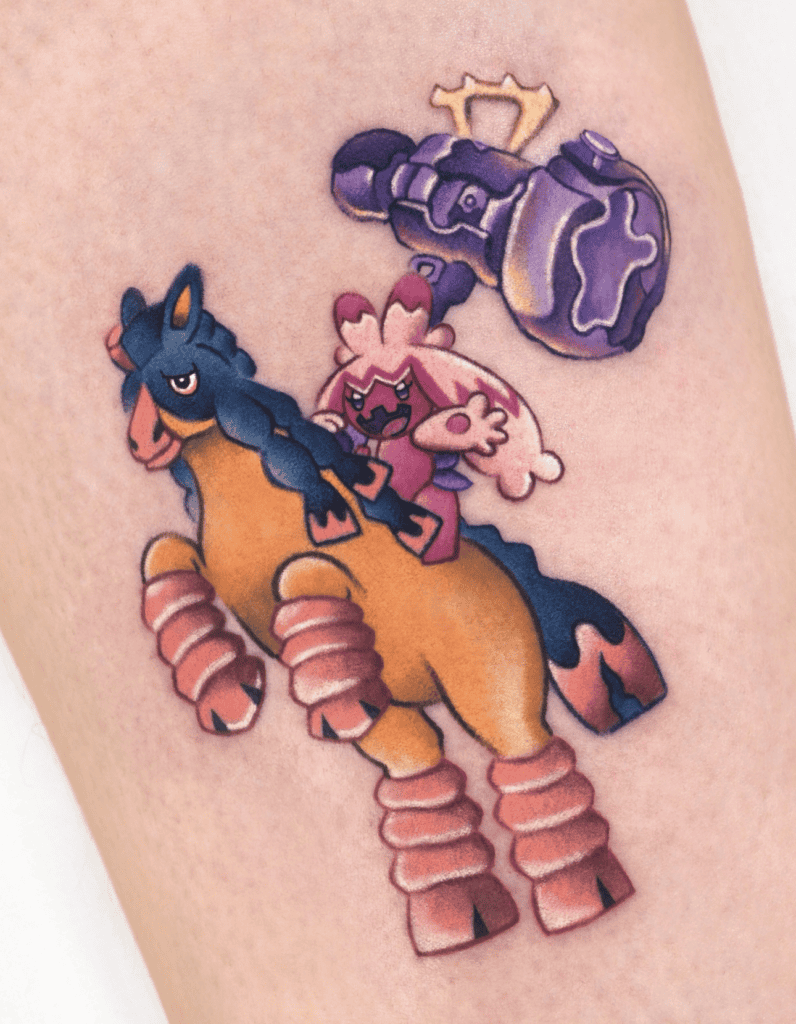
Mudbray and Mudsdale are ground-type horse Pokémon from Generation Seven, and Glastrier, an Ice-type legendary alongside Spectrier, a ghost-type Pokémon, both appeared in Generation Eight.
Miscellaneous Horse Tattoo
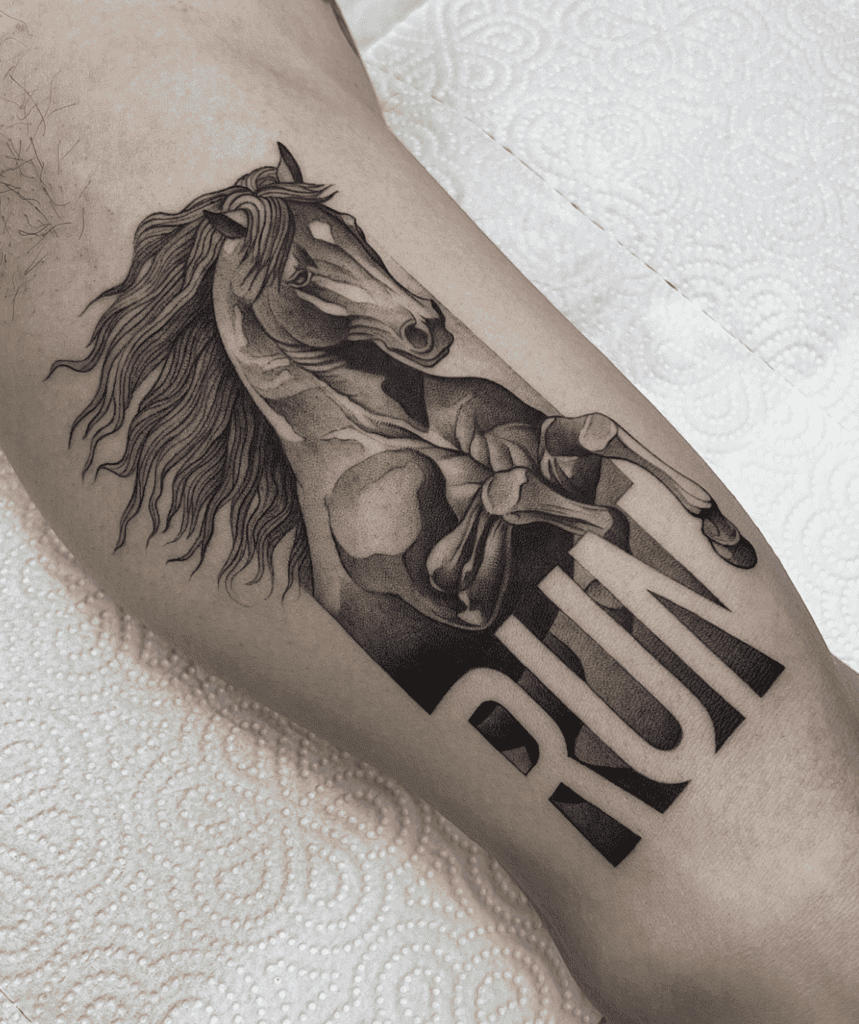
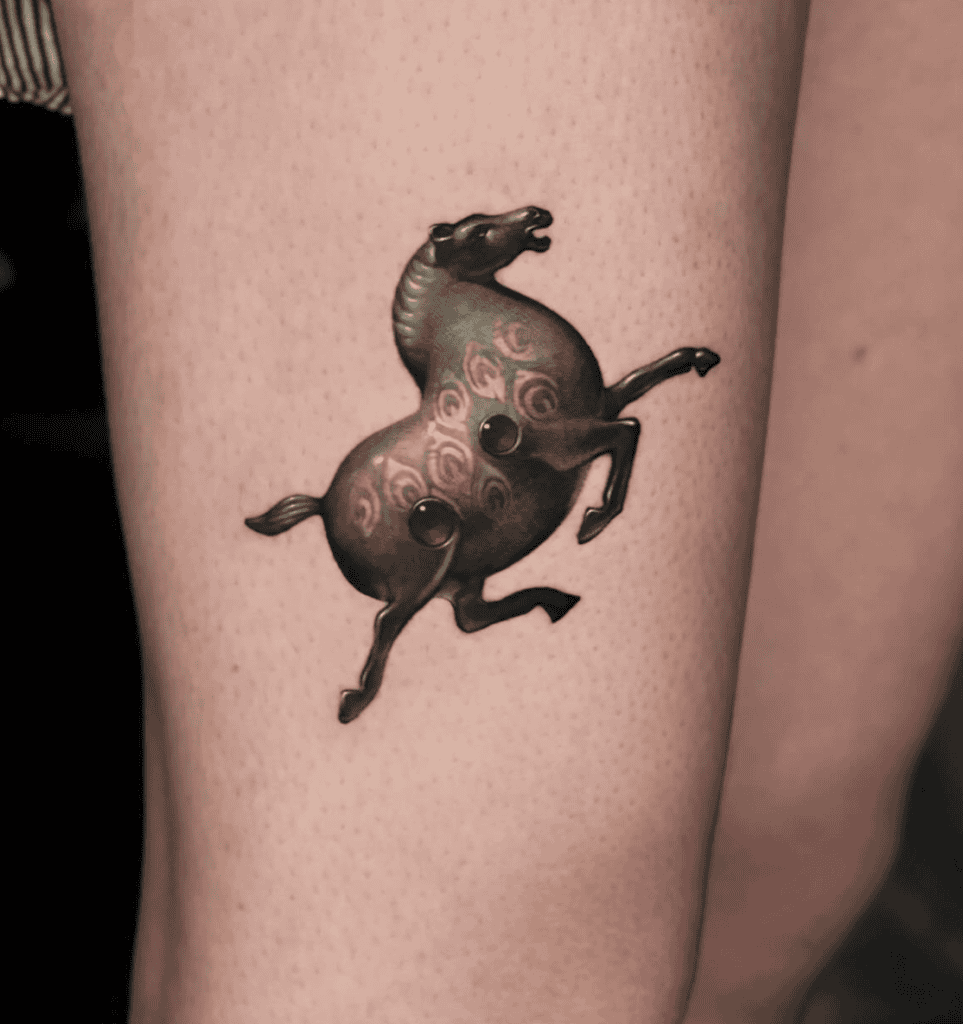
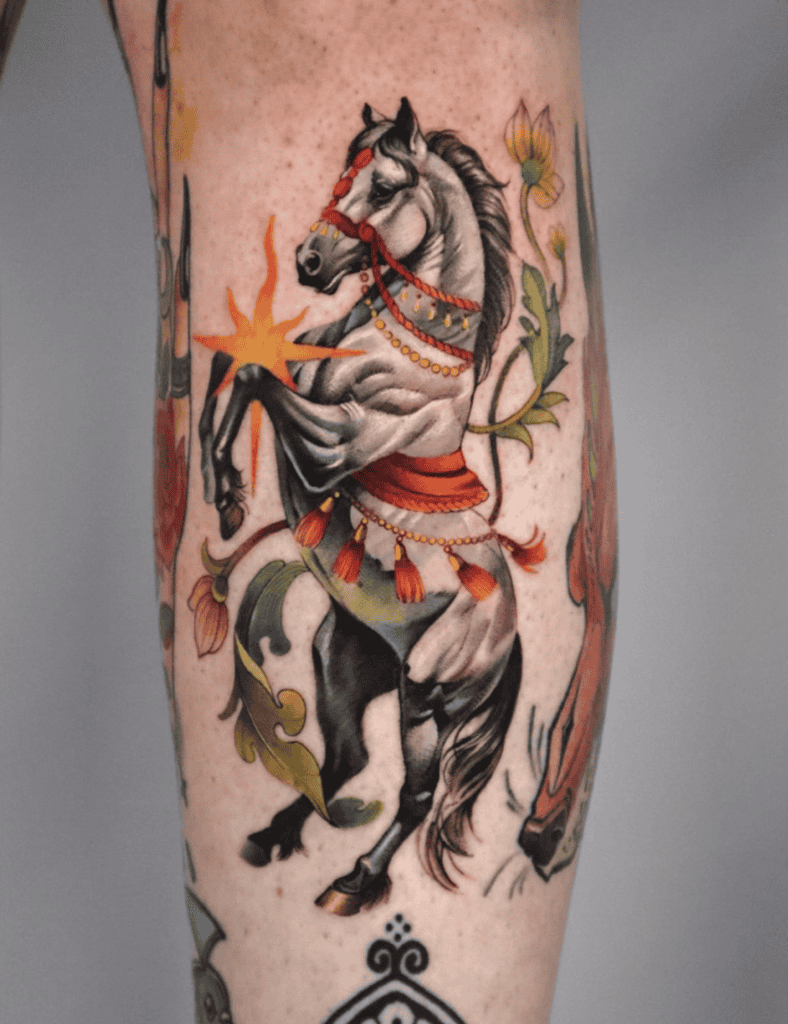
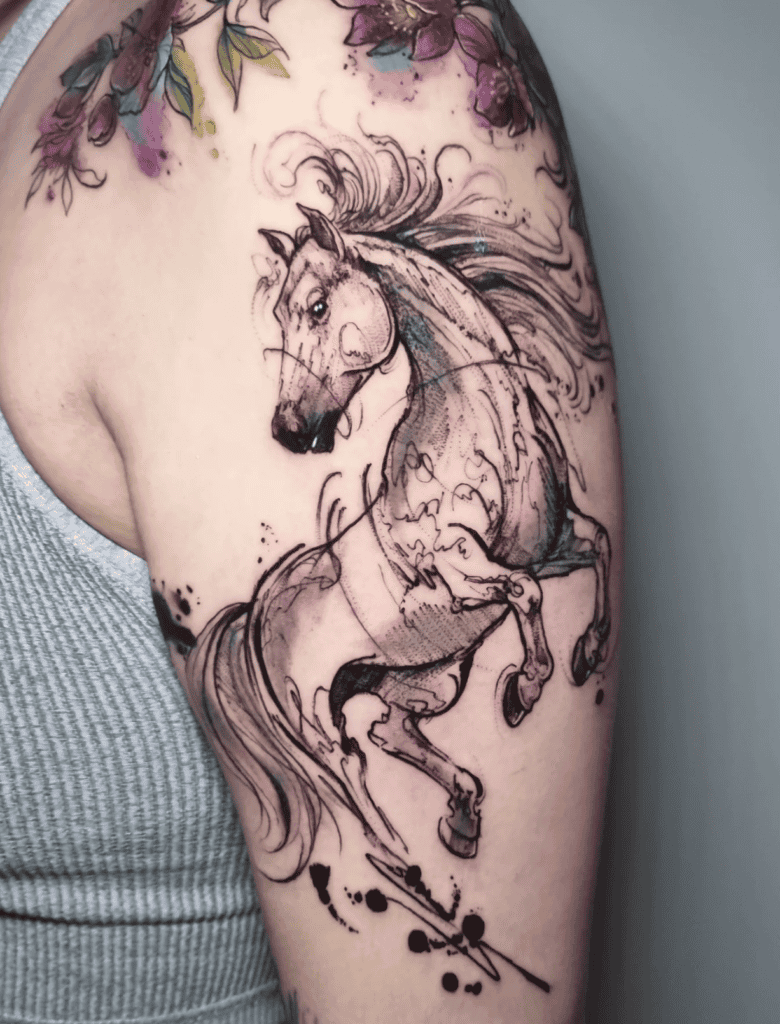
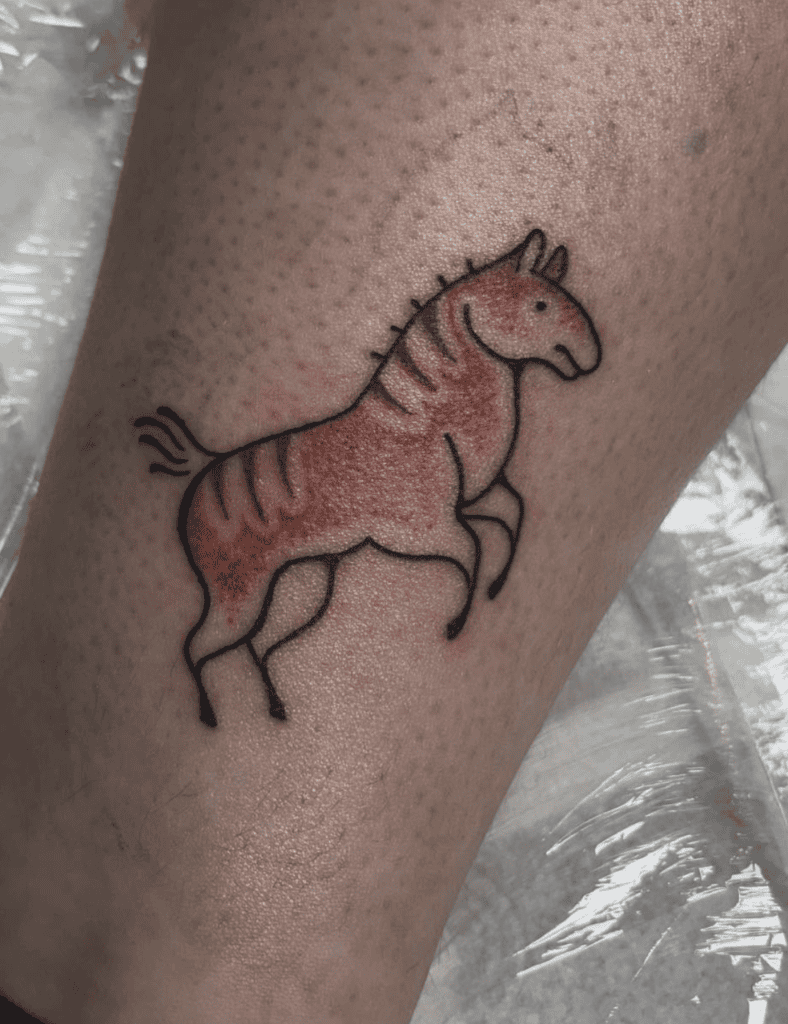
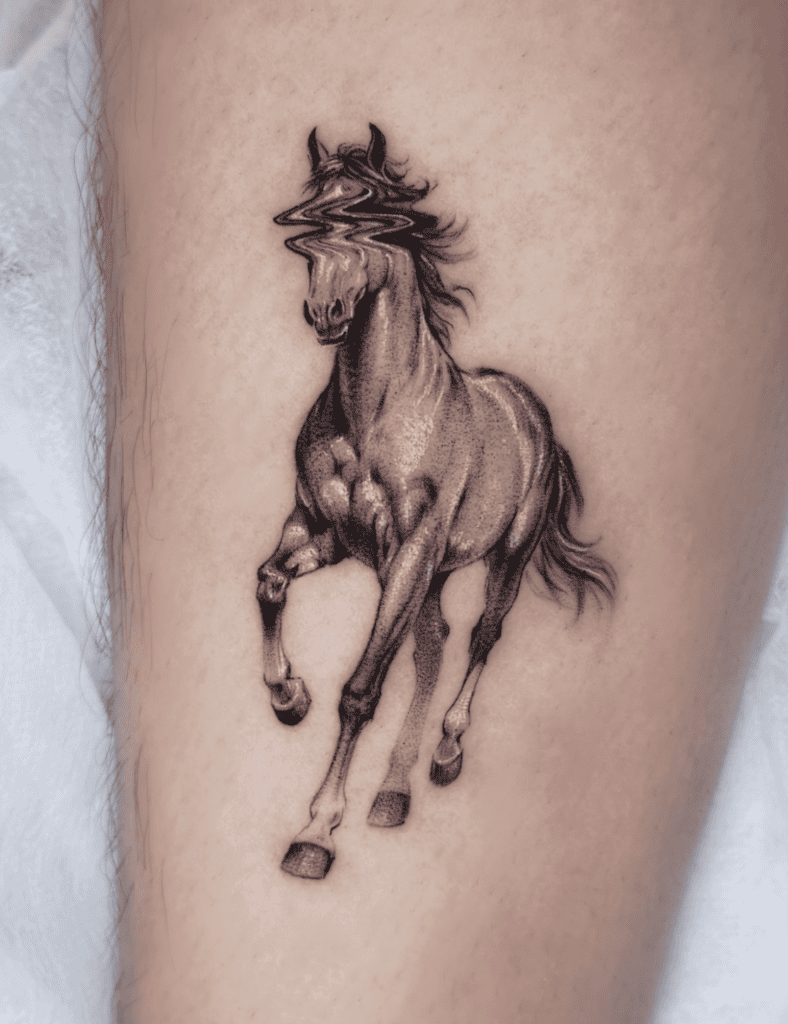
With so many horses and horse designs out there, it’s impossible to write about them all. So check out some of these miscellaneous Horse Tattoos to add a bit more inspiration.
conclusion
As our journey comes to an end, it’s time to rein it in and hold our horses. We hope you’ve found a design that gets you giddy with excitement as you gallop towards your next tattooing adventure. But before you ride off into the sunset, why not slither your way into these Snake Tattoo Ideas, charge your way into these Bovine Tattoo designs, or strut your way into these Chicken Tattoos.
- Lion Tattoo Ideas - October 19, 2026
- Persona Tattoo Ideas - October 15, 2026
- Spider Tattoo Ideas - October 8, 2026