

Dragon Tattoo Ideas

Are you soaring across the internet on your search for the perfect Tattoo Clues? Worry not, we’re about to breathe fire back into your search as we swoop through some of the best Dragon Tattoo Ideas to ignite your quest.
What Does a Dragon Tattoo Mean
Dragon Tattoos are often associated with power, strength, wisdom, and protection, as Dragons are usually seen as mighty creatures who command respect, bringing prosperity or destruction based on interpretation.
Dragon Tattoos can also represent independence and freedom, as dragons are often portrayed as untamed beings that are difficult to control. Because of their connection to fantasy and mythology, they may symbolise mystery, imagination, or a deep fascination with legendary creatures and adventure.
Some people choose Dragon Tattoos to reflect a balance between destruction and creation. Dragons are often depicted as dangerous and fierce, yet also intelligent guardians capable of protecting treasures, sacred places, or loved ones. This dual nature can represent inner strength, personal growth, or learning to control powerful emotions.
Best Dragon Tattoo Artists

Bk tattooer
Korean, Germany, and Signapore based Tattoo artist working in a blackwork tattoo style.


that dragon tattooist
High Wycombe, U.K. Tattoo artist specialising in Dragon Tattoos.

Best Dragon Tattoo Designs
Now that we know a little about Dragon Tattoo meanings, let’s see some of the best Dragon Tattoos the skies have to offer.
Chinese Dragon Tattoo
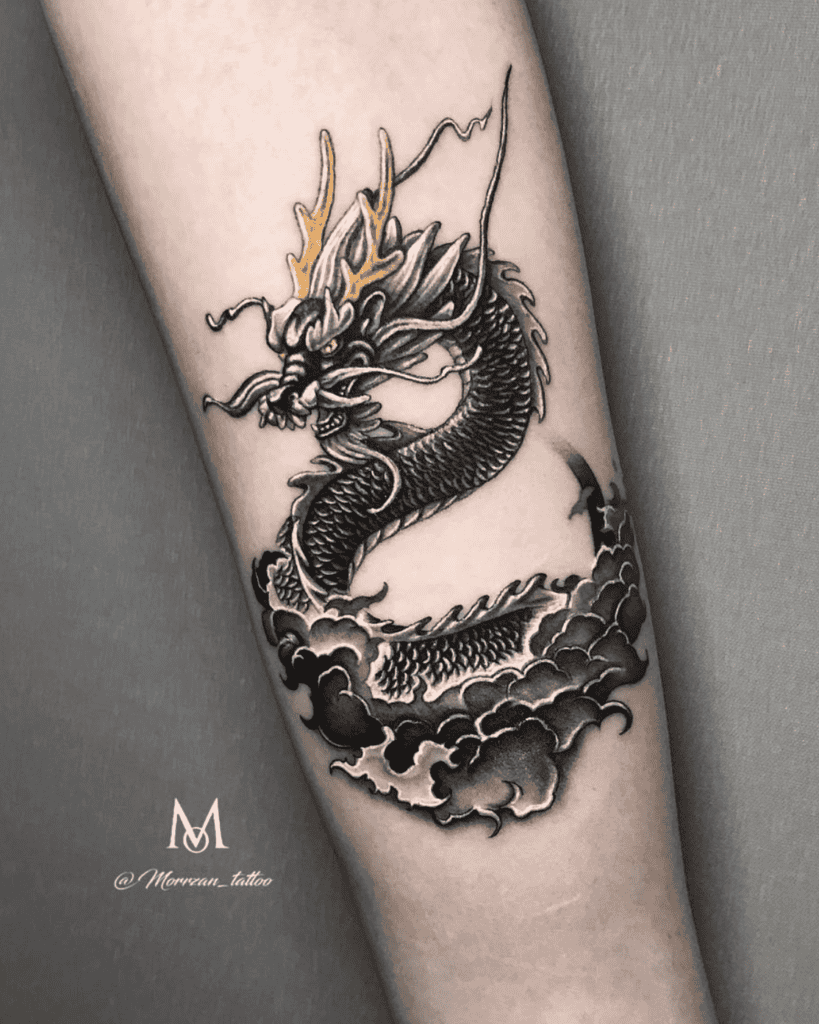
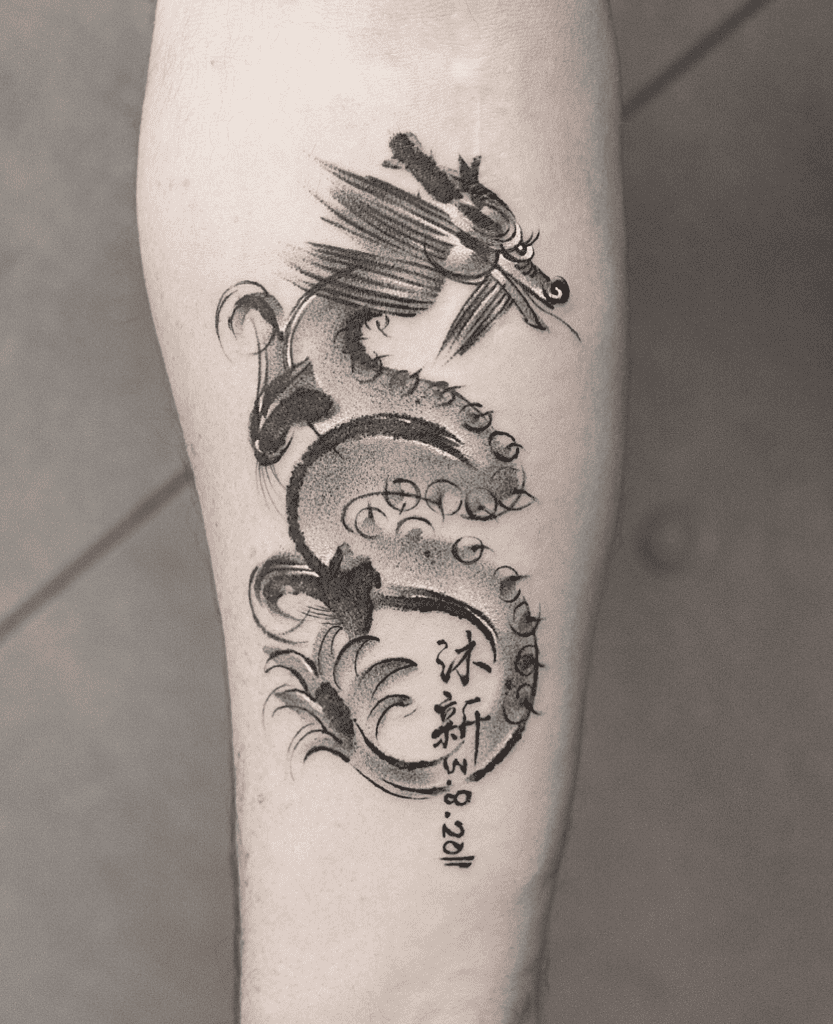
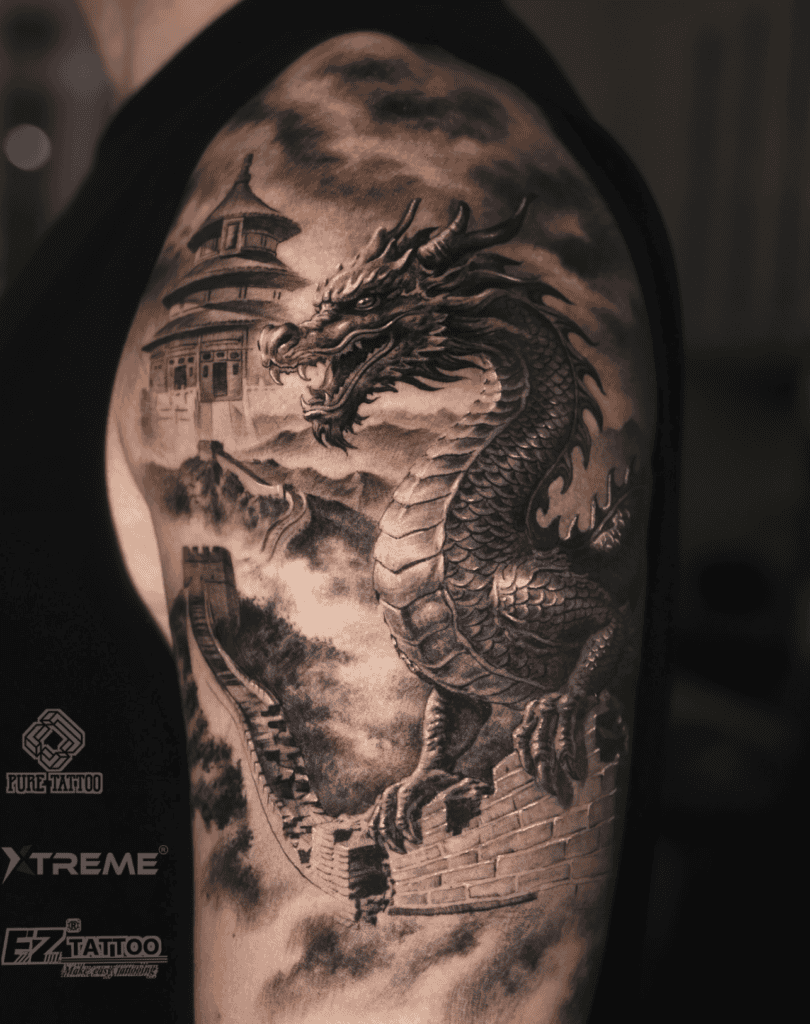
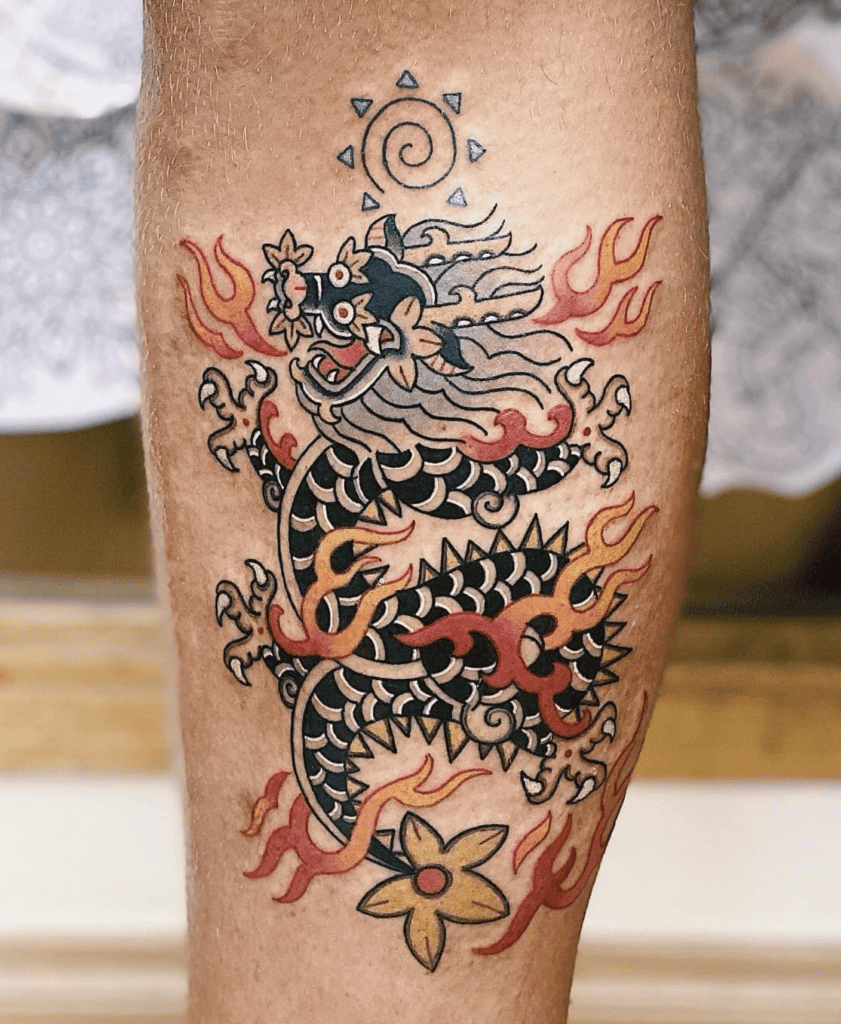
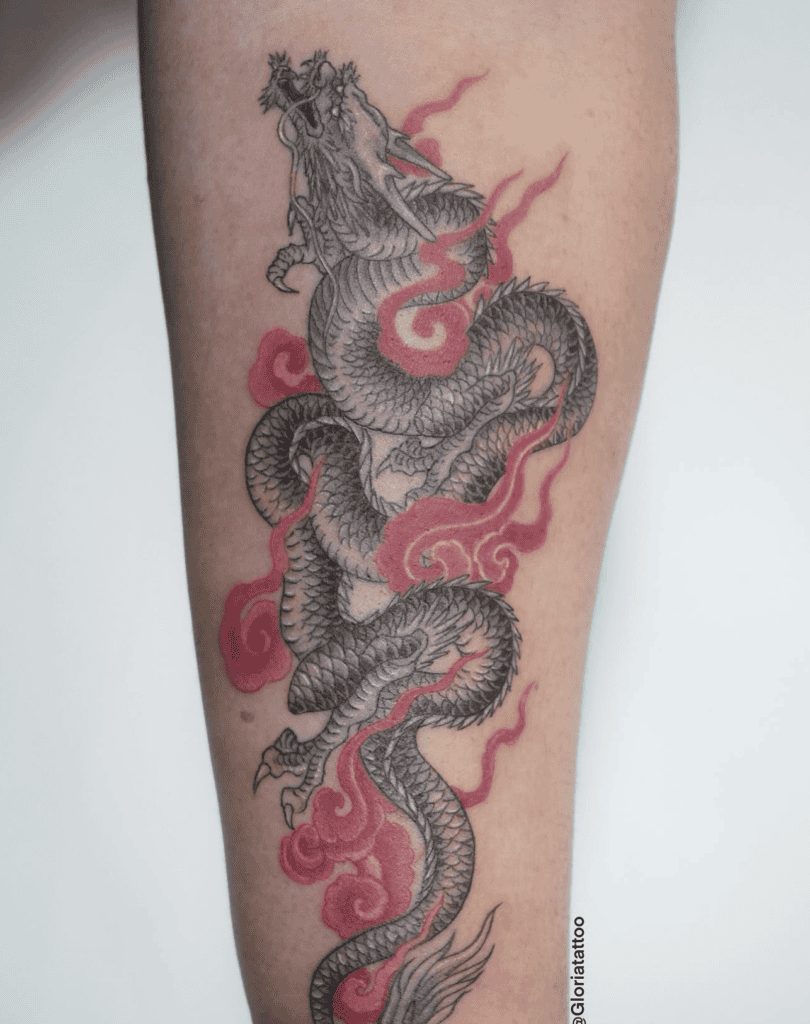
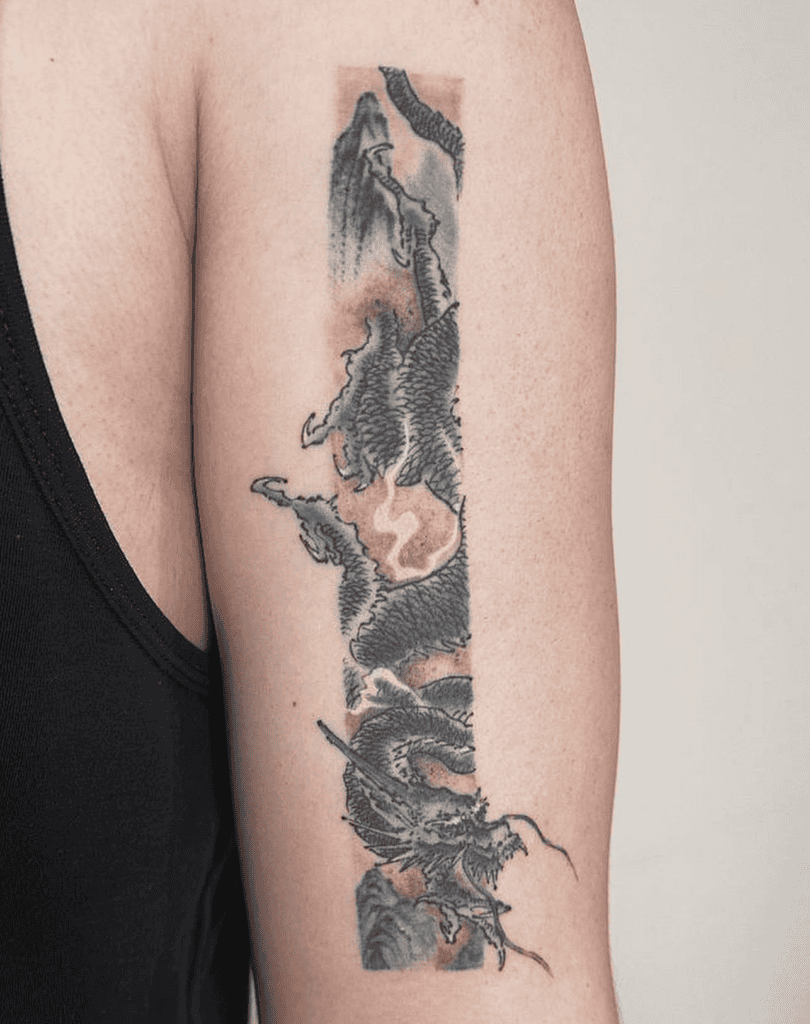
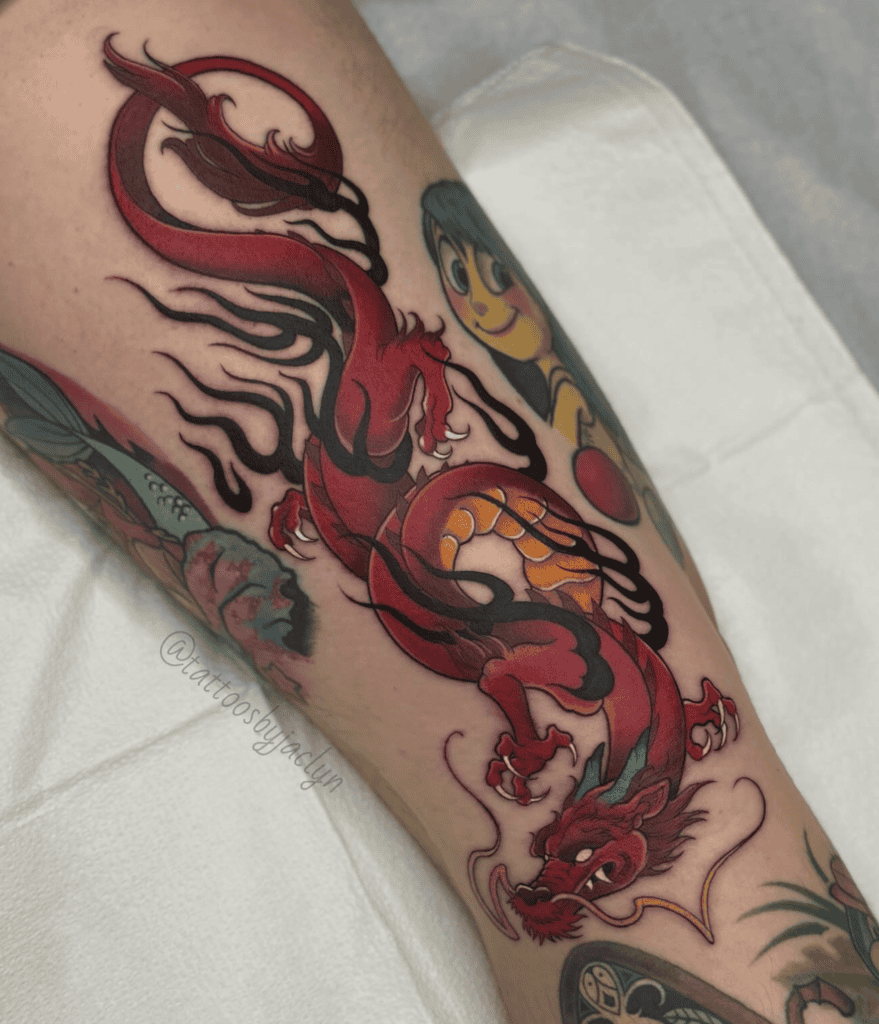
A Chinese Dragon, or long (龙/龍), is one of the most important and respected creatures in Chinese mythology and culture, usually seen as wise, noble, and benevolent beings connected to prosperity, protection, nature, and good fortune.
These Dragons are often associated with water, rain, rivers, storms, and the heavens, and are believed to control rainfall and natural balance, making them extremely important to farming and survival.
The dragon also became a symbol of imperial authority in ancient China. Emperors were often associated with dragons, and dragon imagery appeared on robes, palaces, and royal decorations to represent divine rule, strength, and wisdom.
Japanese Dragon Tattoo
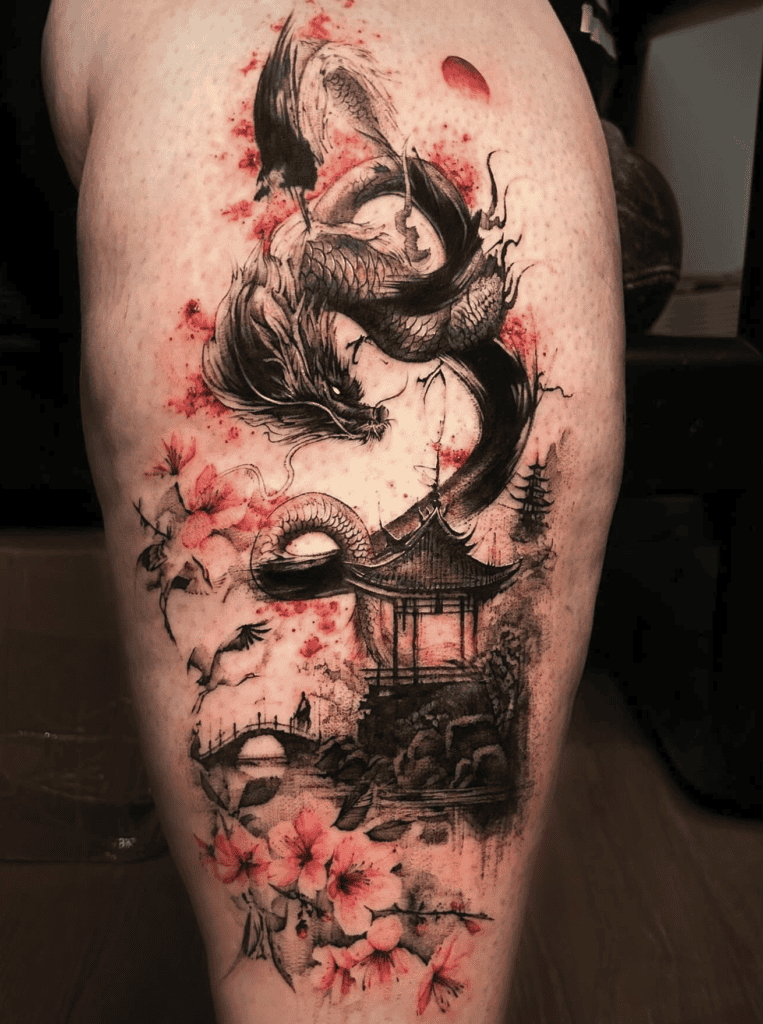
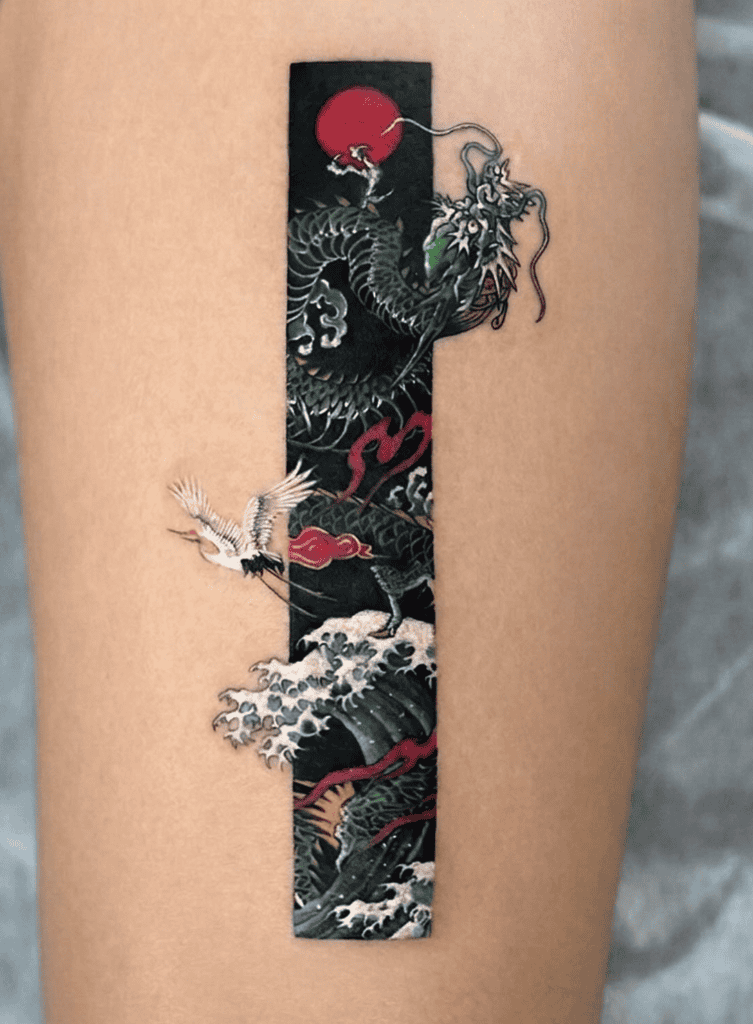
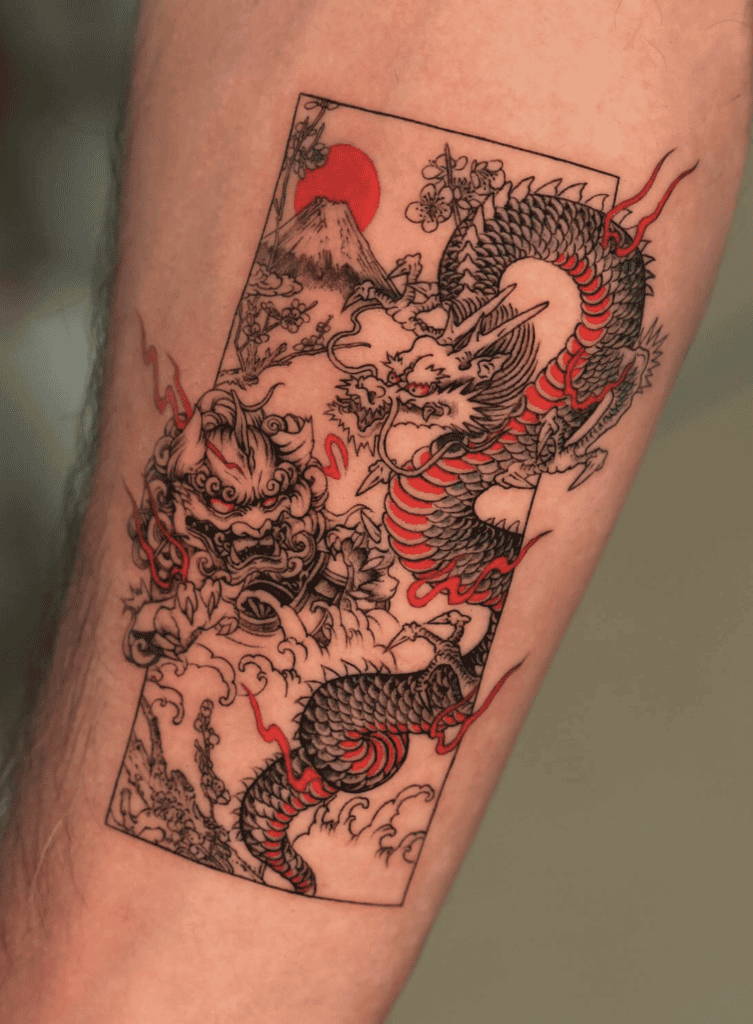
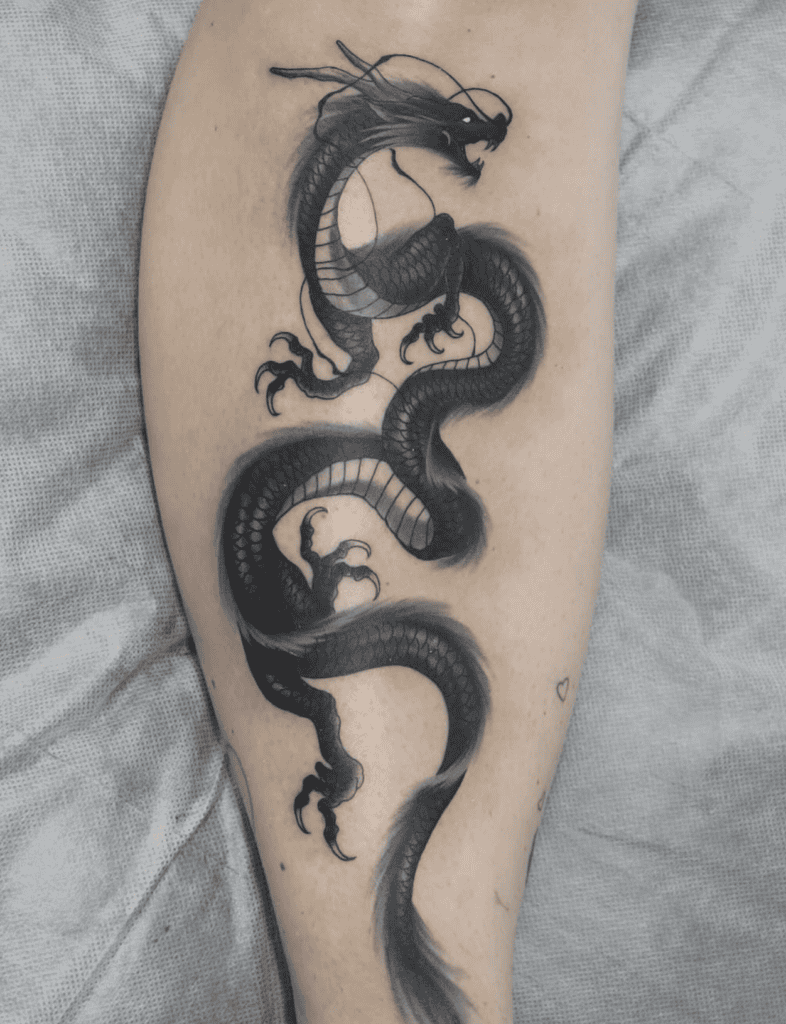
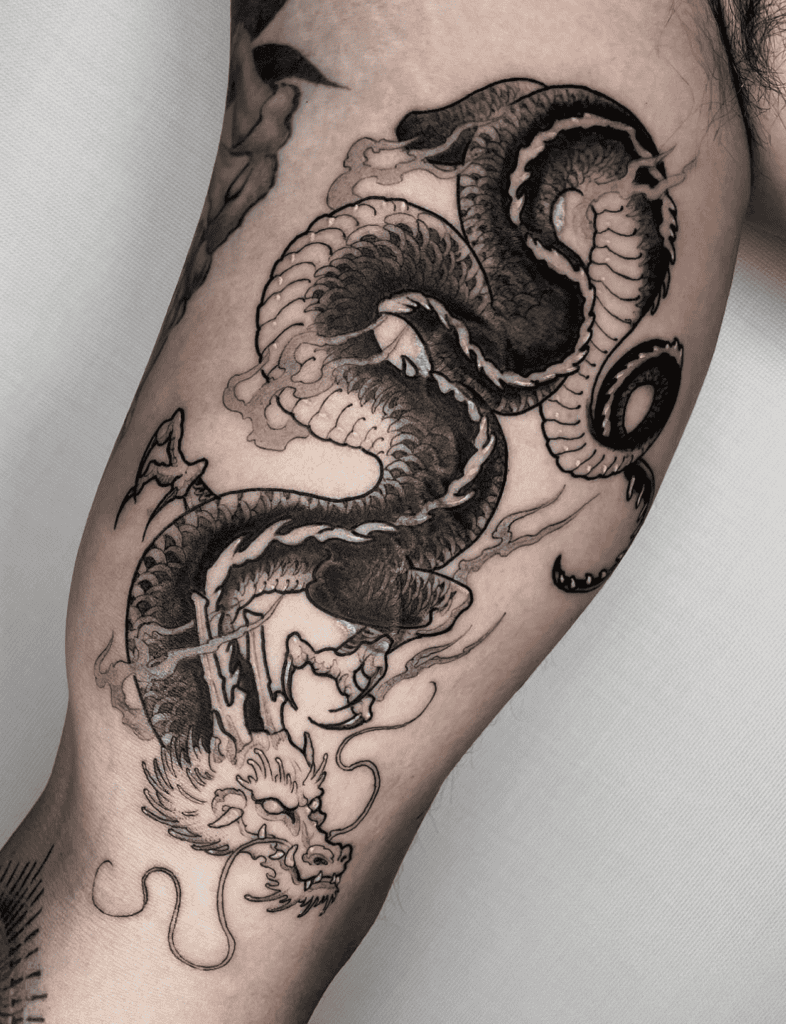
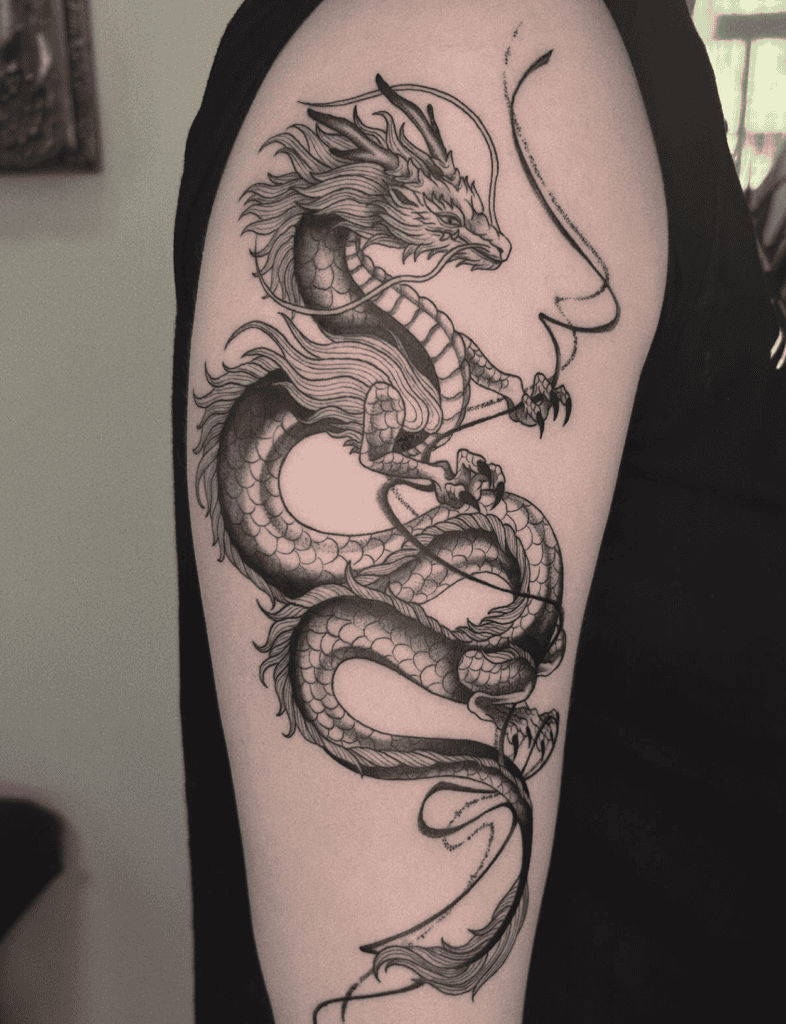
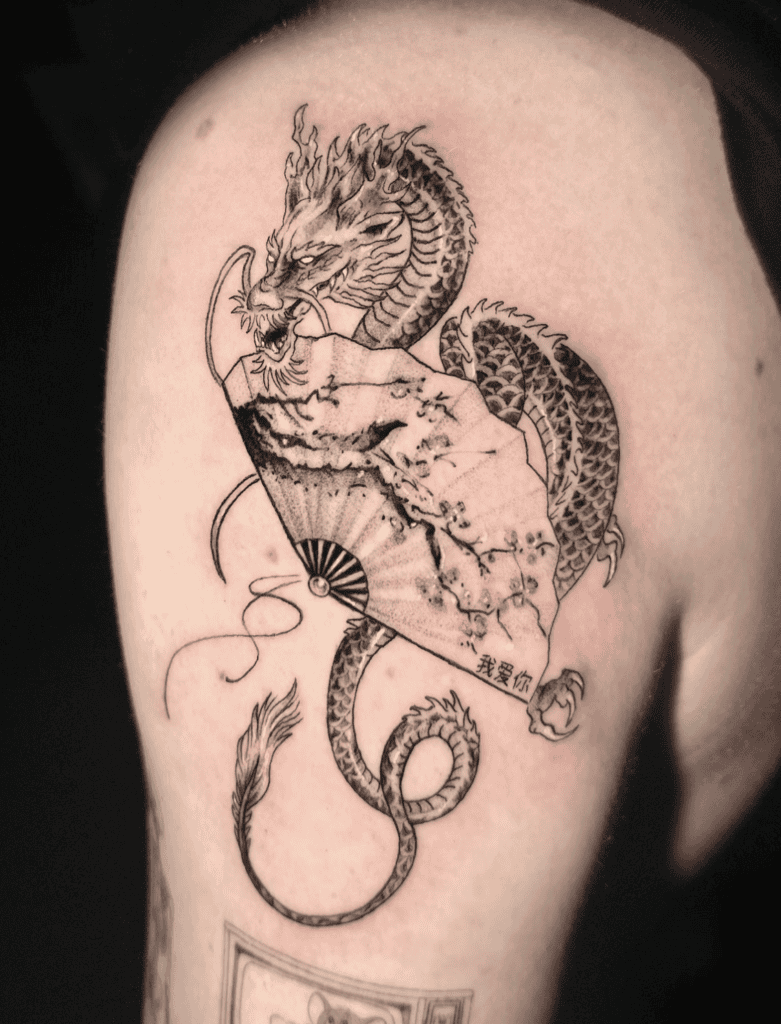
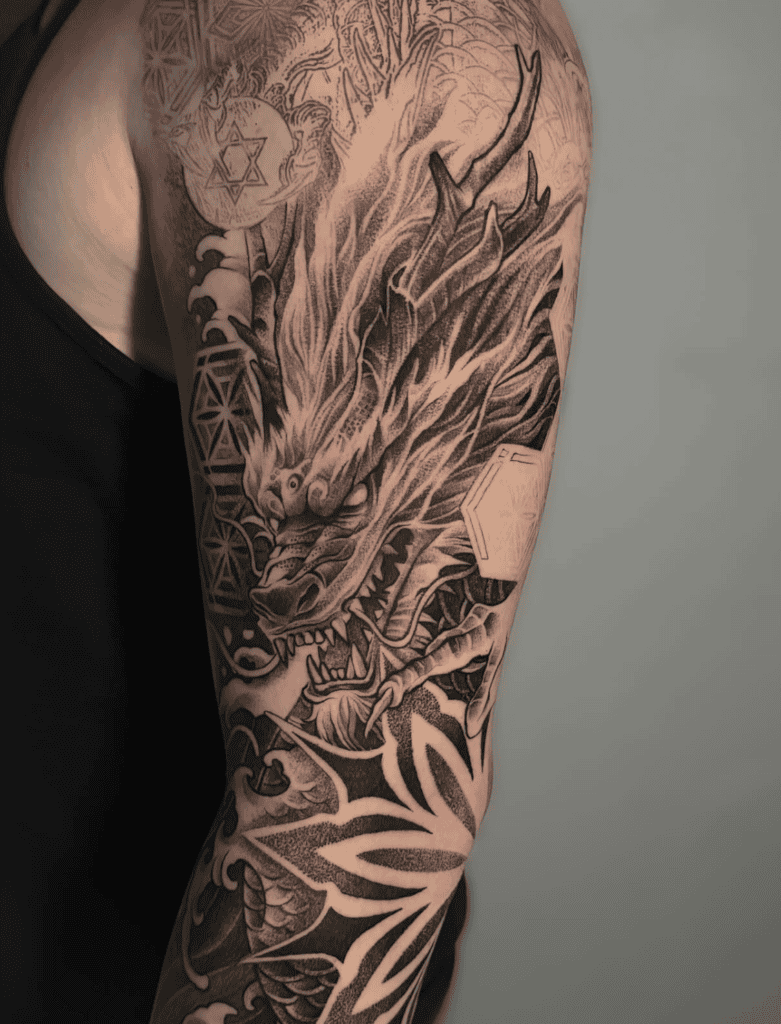
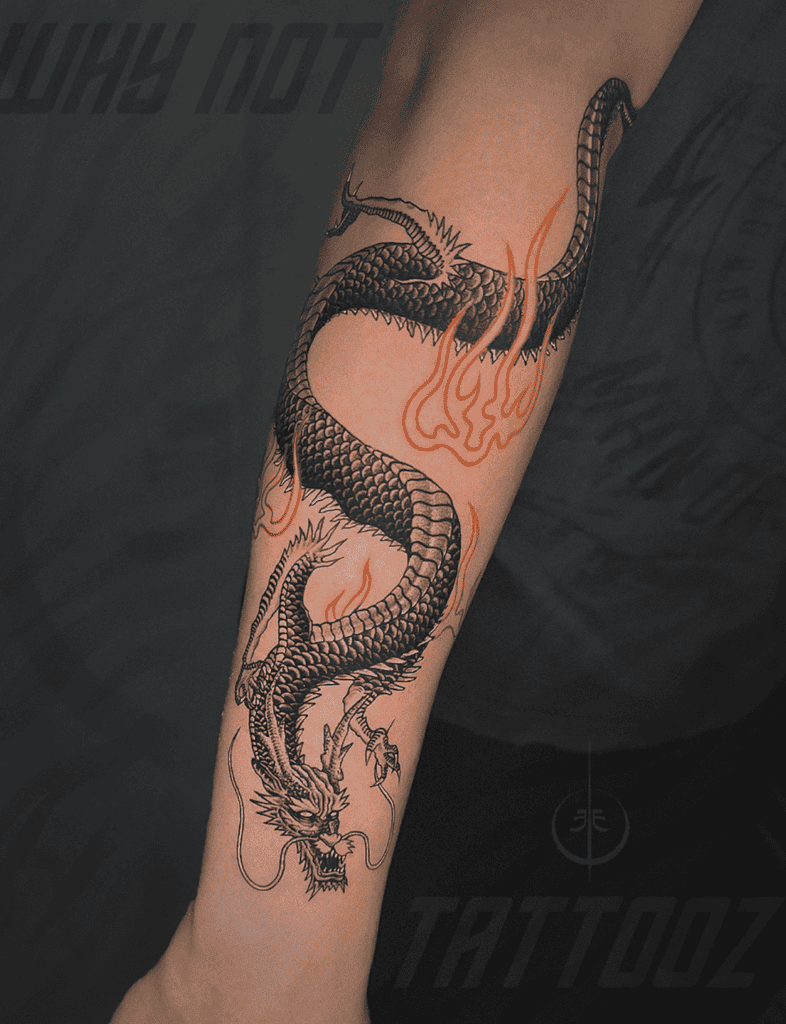
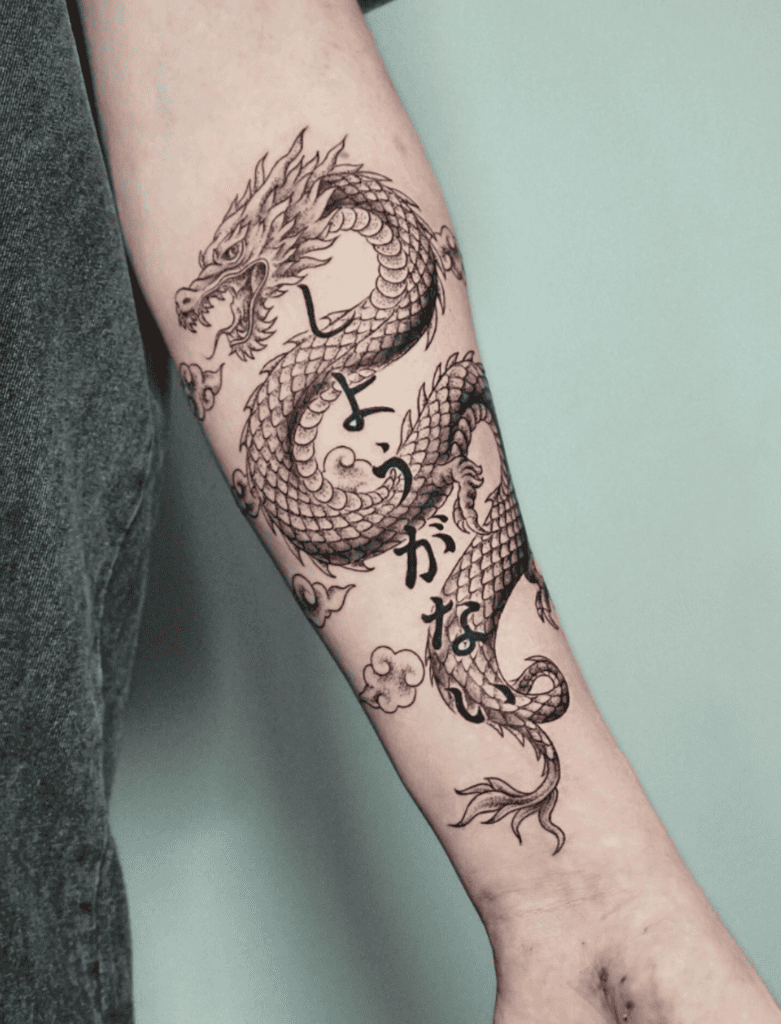
A Japanese Dragon is a powerful mythological creature found throughout Japanese folklore, legends, and traditional art. Much like Chinese Dragons, Japanese Dragons are usually seen as wise and spiritual beings, often connected to water, oceans, storms, and protection.
Many Japanese Dragon stories involve sea gods, rivers, and sacred places. One of the most famous dragon figures is Ryūjin, the dragon god of the sea who was believed to control tides and storms from an underwater palace.
European Dragon Tattoo
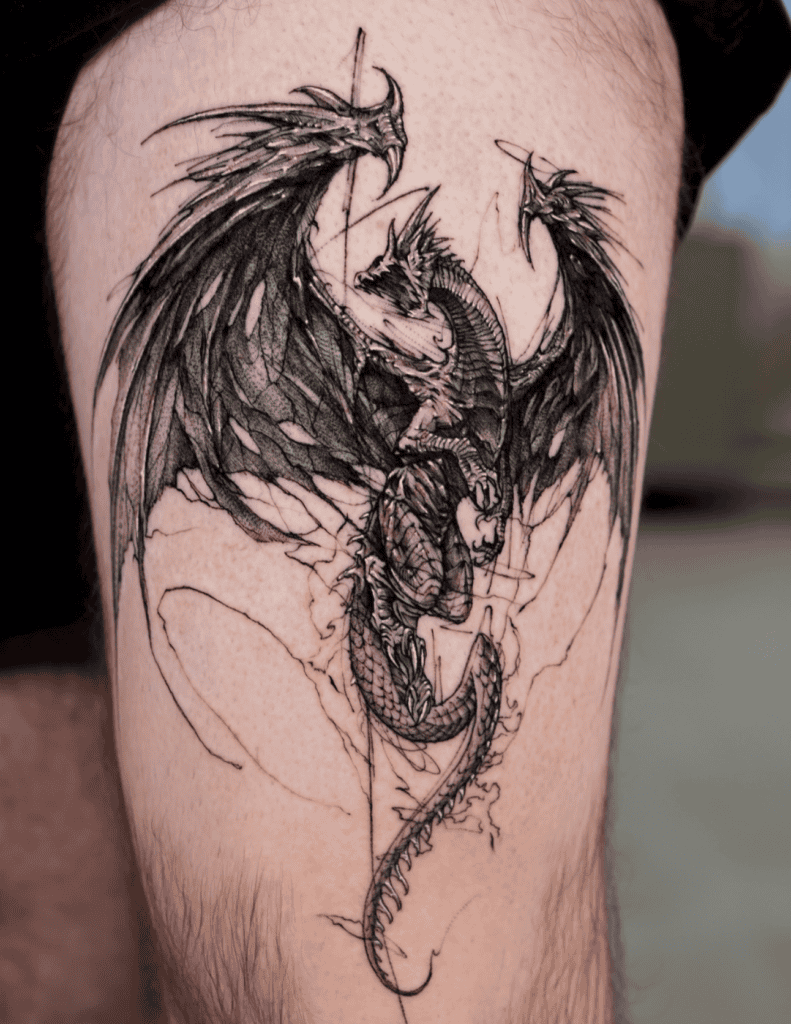
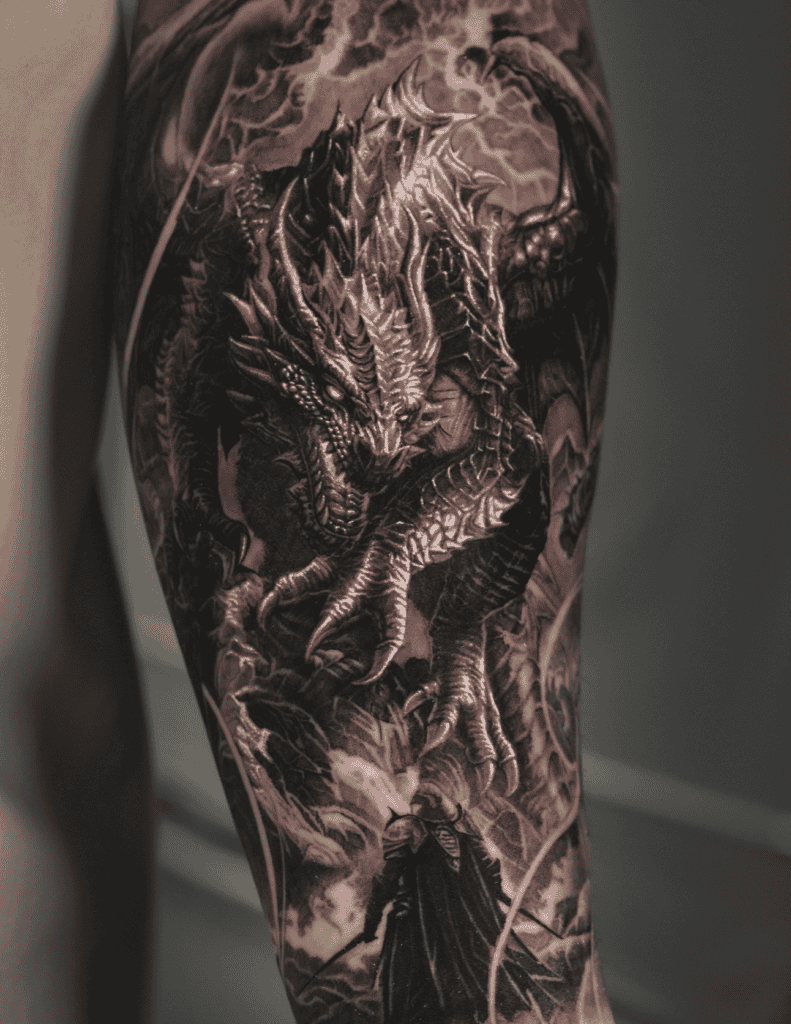
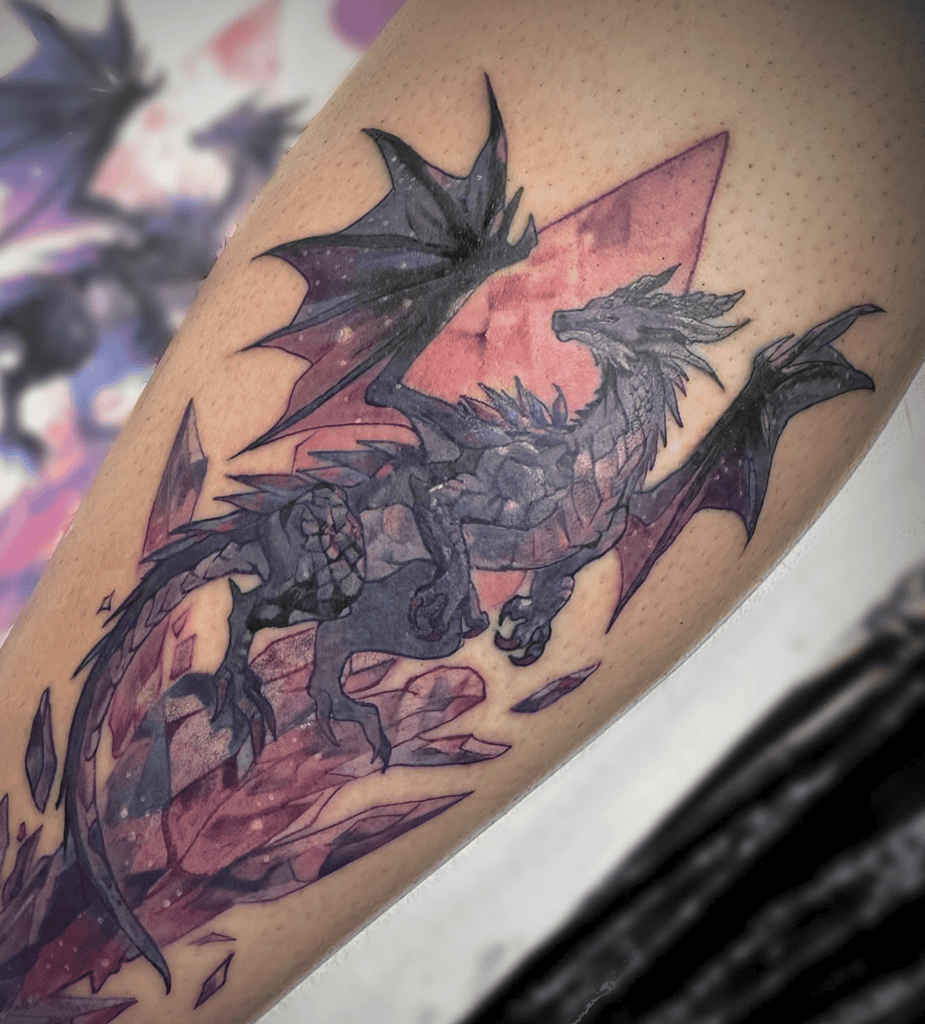
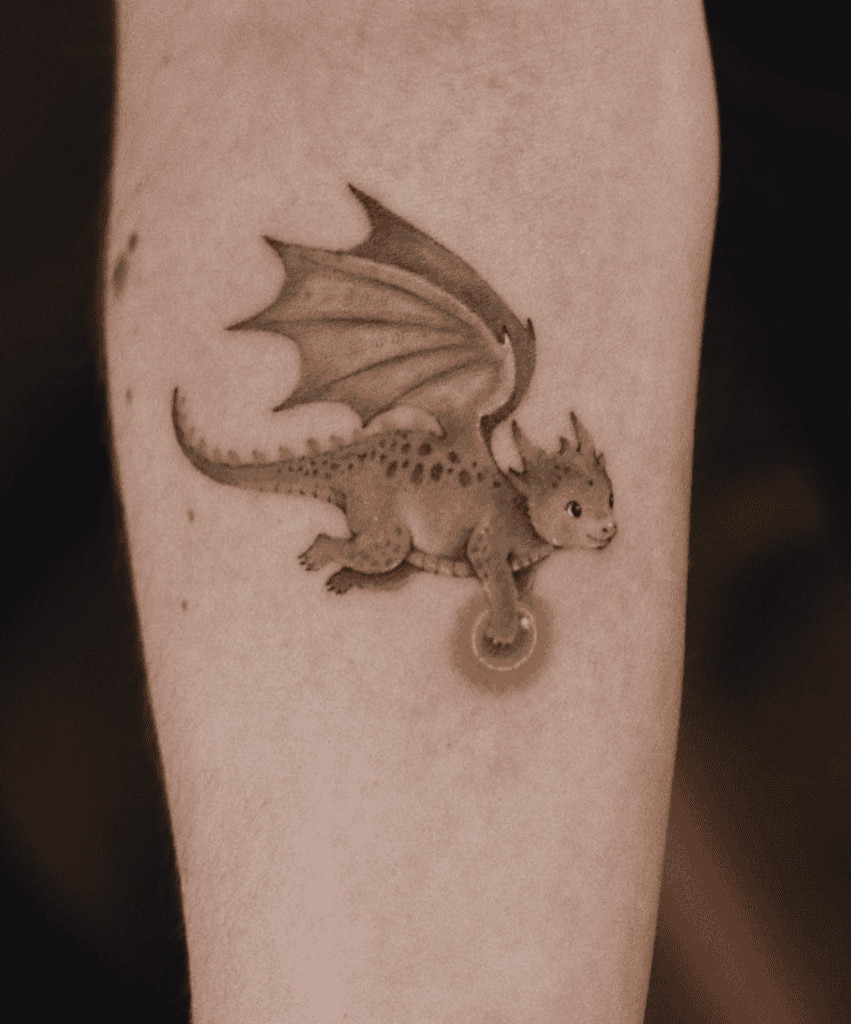
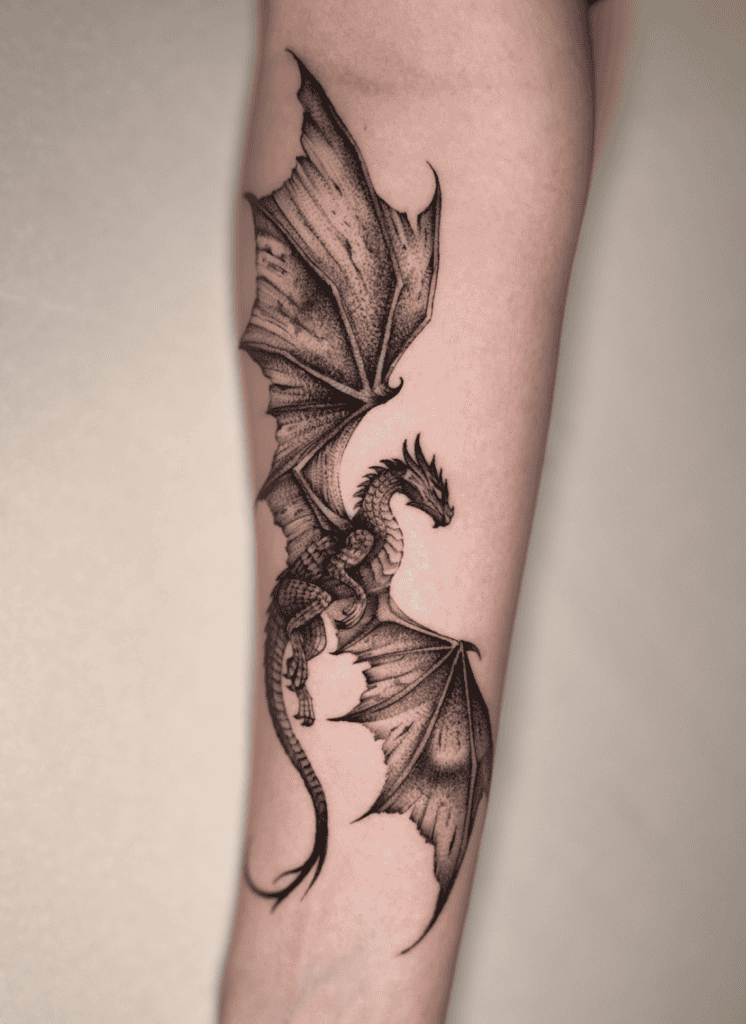
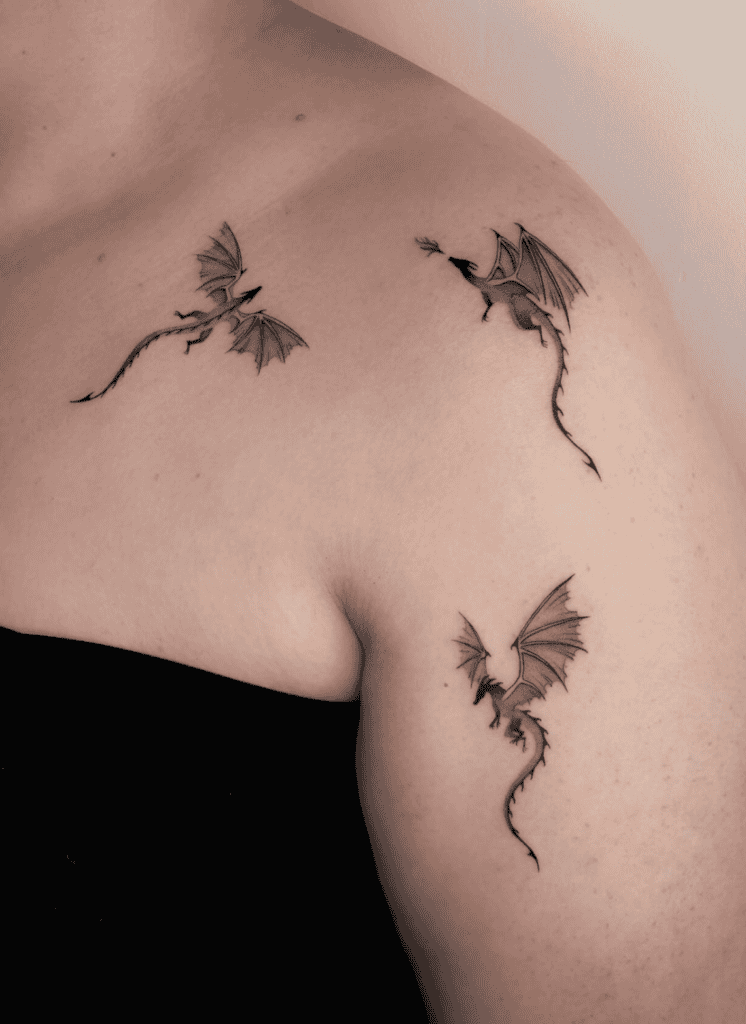
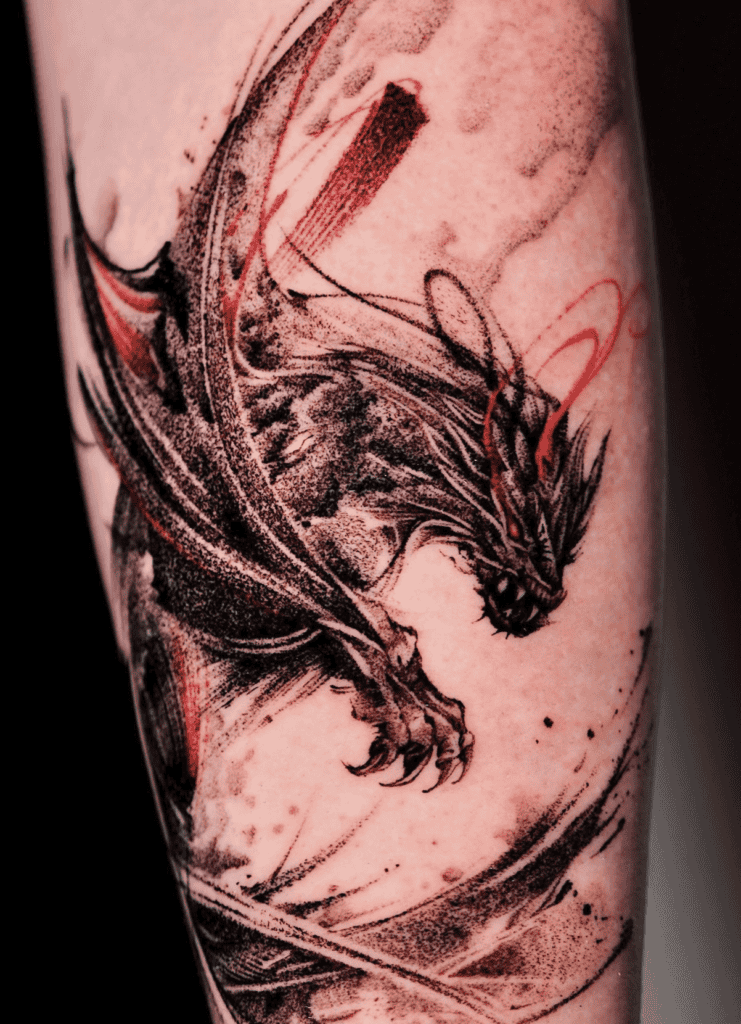
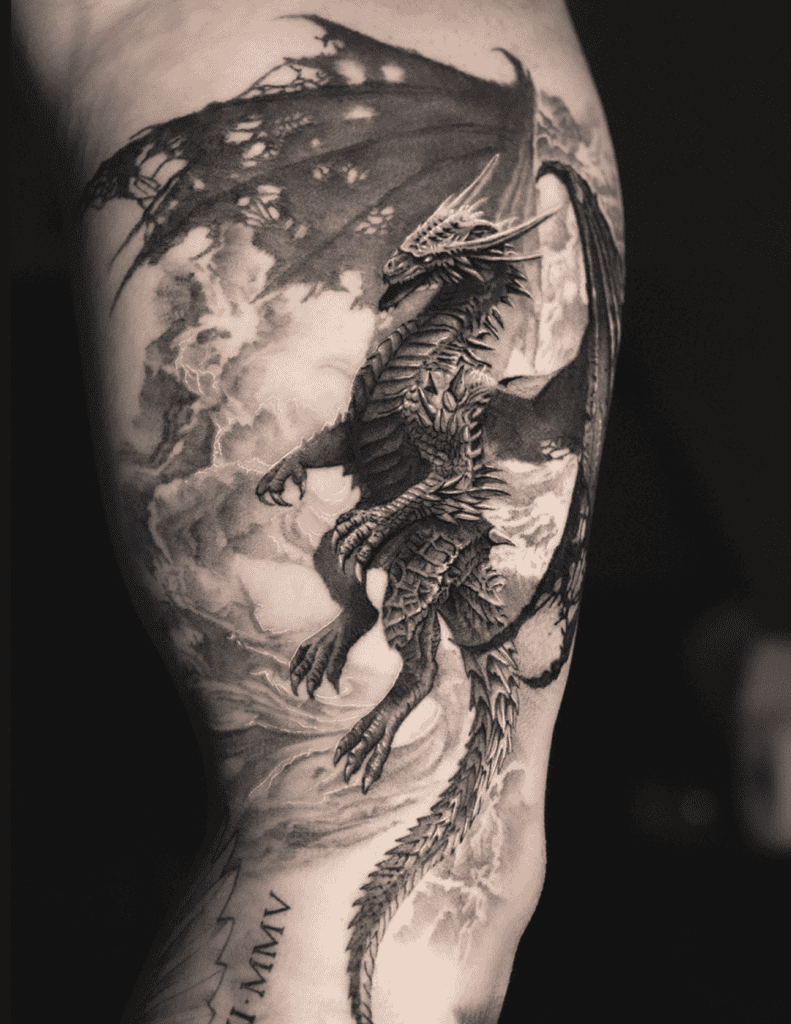
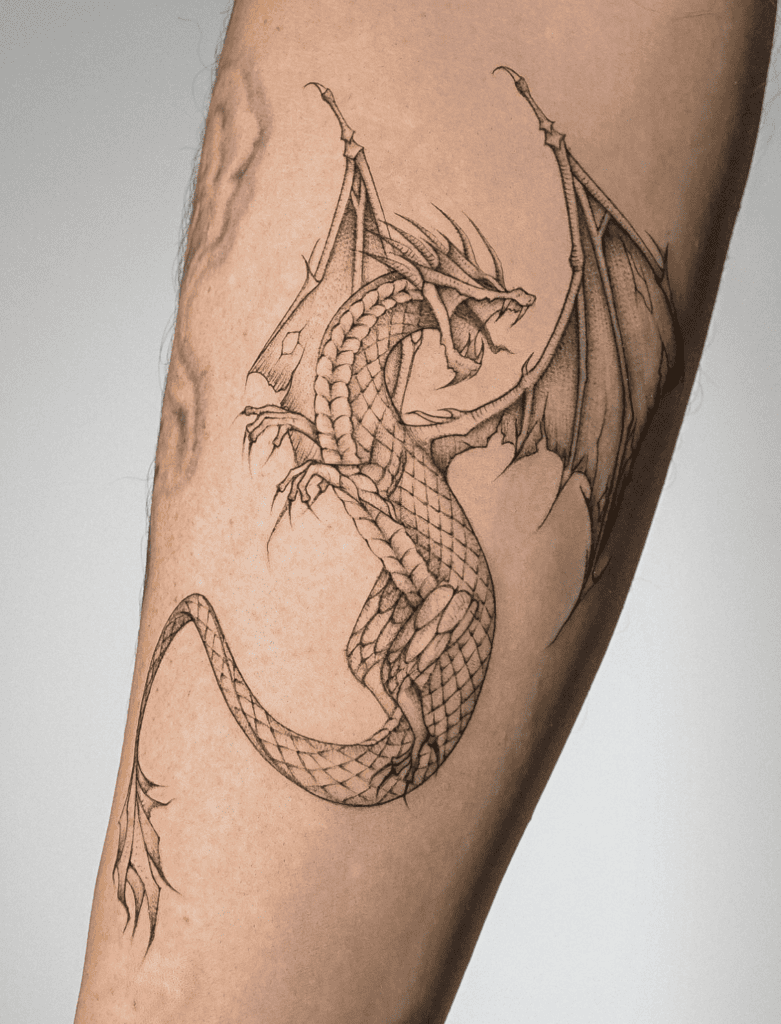
European Dragons are the most famous dragon types in fantasy and folklore, often portrayed as a massive winged reptilian creature capable of breathing fire. Unlike their Asian cousins, European Dragons are usually depicted as dangerous beasts associated with destruction, greed, chaos, or powerful ancient magic.
These dragons commonly appear in medieval legends, fairy tales, and heroic myths, where knights or heroes must battle them to save kingdoms, guard treasure, or prove their courage.
At the same time, not all European Dragons are purely evil. Some stories portray them as wise ancient beings, guardians of knowledge, or creatures deserving respect rather than destruction, with modern fantasy evolving dragons into more complex and emotional characters.
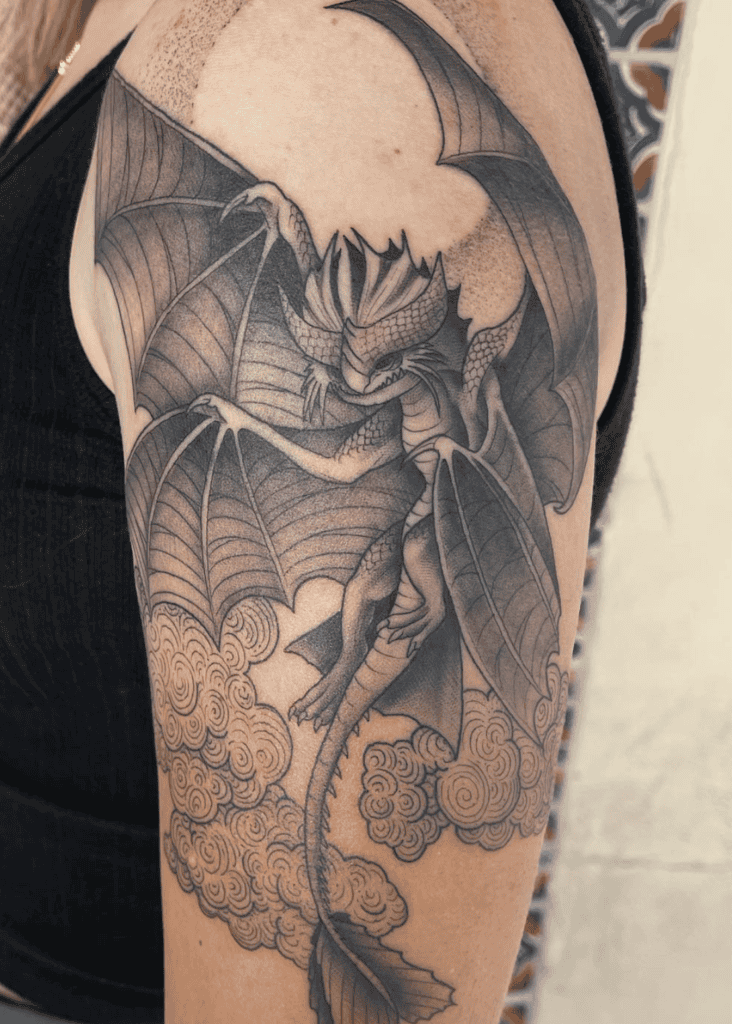
Wyvern Dragon Tattoo
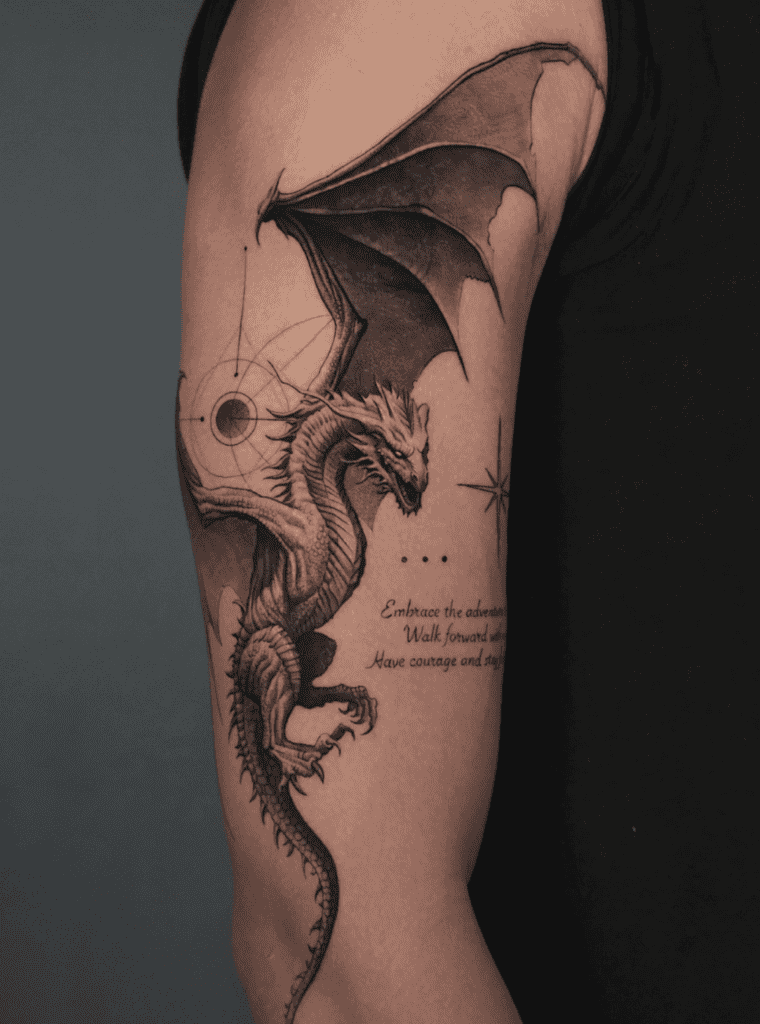
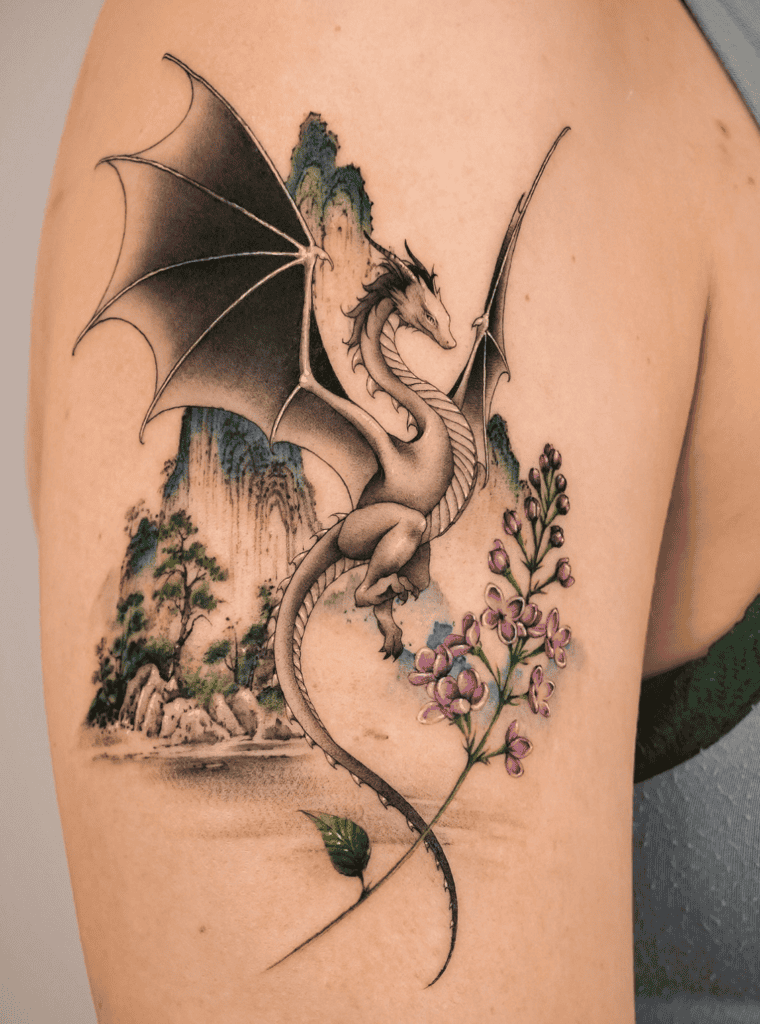
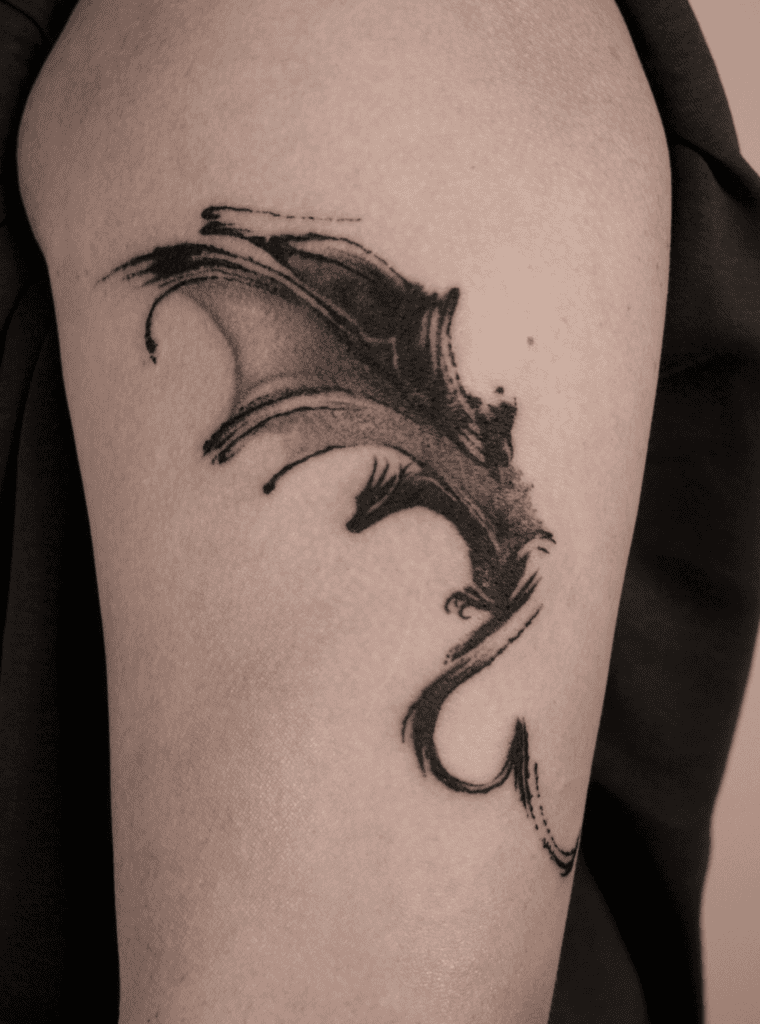
A Wyvern is a dragon-like creature commonly found in European mythology and fantasy, usually smaller and more animalistic than traditional dragons. The biggest difference between a Wyvern and a traditional European Dragon is their body structure. Wyverns typically have two legs and two wings, with the wings also functioning as their front limbs.
Wyverns are often associated with poison, aggression, and wild, untamed nature. In many stories, they are depicted as fierce beasts that attack travellers, guard territory, or terrorise villages rather than intelligent creatures that speak or hoard treasure.
Wyverns became very popular in fantasy games and heraldry, often symbolising ferocity, survival, speed, and raw power.
Celtic Dragon Tattoo
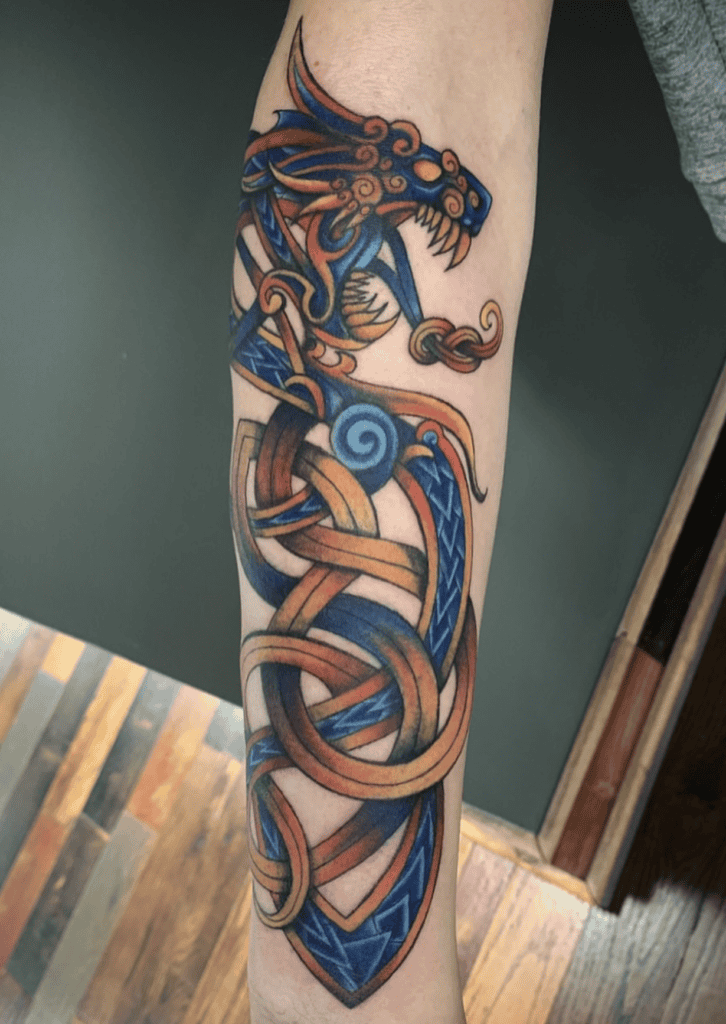
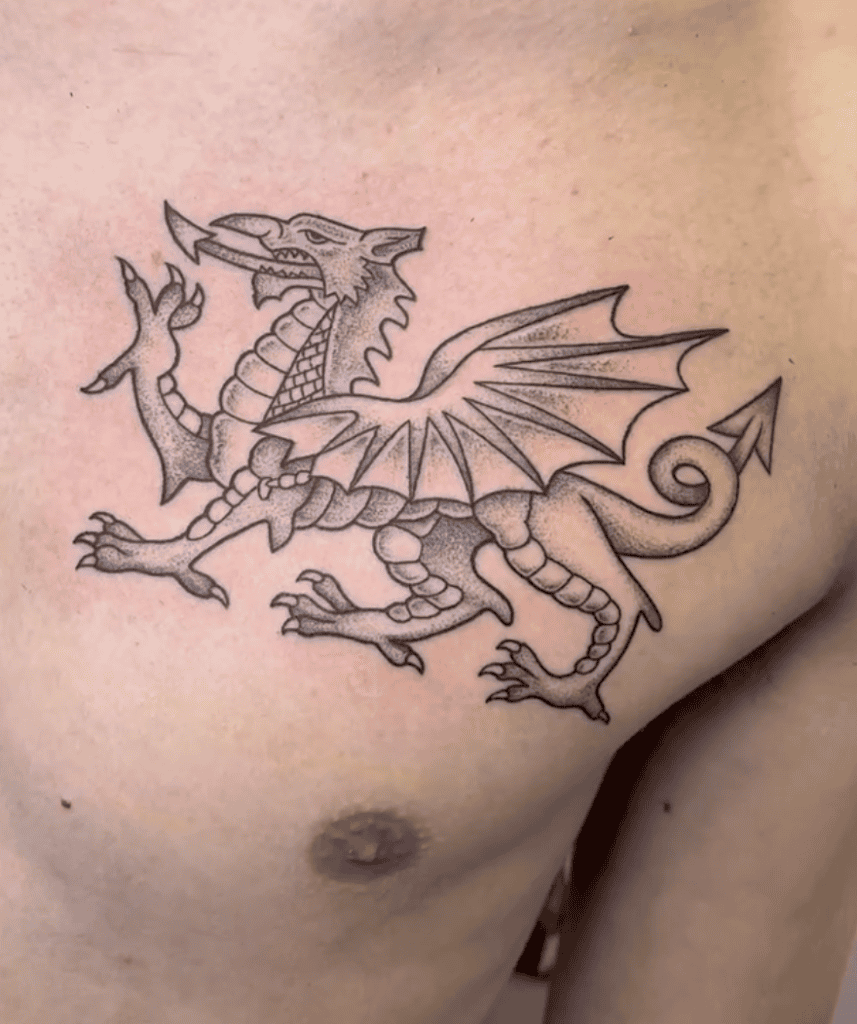
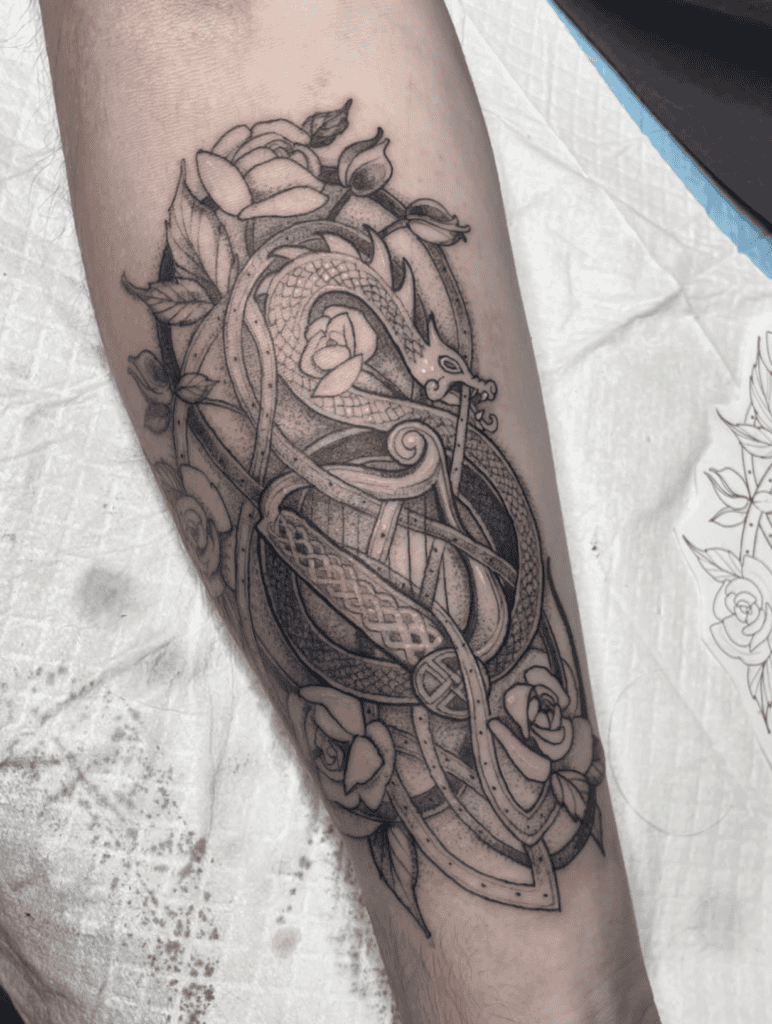
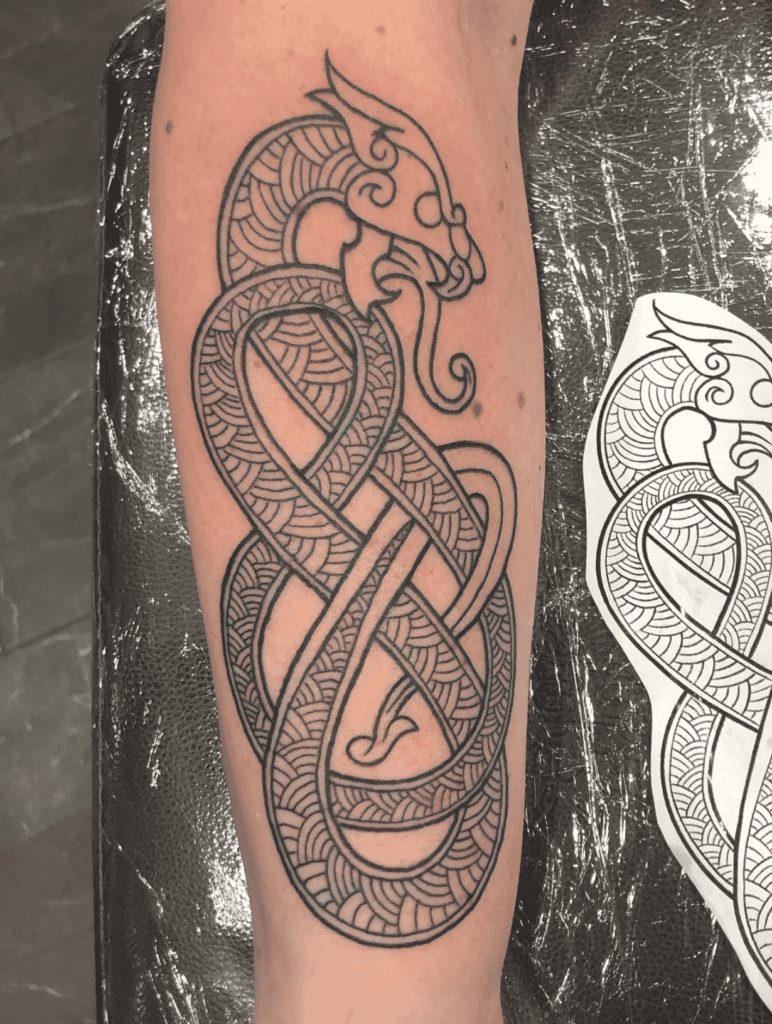
Celtic Dragons were often associated with strength, wisdom, protection, and the natural world, believed to possess ancient magical power tied to the land itself. Unlike the treasure-hoarding dragons of many later European legends, Celtic Dragons were commonly viewed as guardians of sacred places, hidden knowledge, and the balance of nature, deeply connected to the earth, forests, rivers, and spiritual energy.
In Celtic artwork, dragons are often shown with intricate knotwork patterns and looping bodies that symbolise eternity, interconnectedness, and the endless cycle of life. Celtic Dragons could also represent sovereignty and protection. In some traditions, dragons were linked to warriors, kings, and the defence of territory, with their imagery appearing on banners, carvings, and ancient symbols to inspire fearlessness and strength.
One famous dragon-related symbol connected to Welsh legend is the red dragon known as Y Ddraig Goch, which eventually became an important national symbol of Wales.
Norse Dragon Tattoo


Norse Dragons were often connected to greed, destruction, chaos, curses, and the harsh realities of fate. One of the most famous Norse dragon figures is Fafnir, who was originally a dwarf consumed by greed after gaining a cursed treasure hoard. His obsession transformed him into a dragon-like monster that guarded gold and brought ruin to those around him.
Another legendary serpent-like dragon figure is Jörmungandr, the enormous World Serpent that surrounds Midgard in the ocean. Jörmungandr is one of the children of Loki and is destined to battle Thor during Ragnarök, the end of the world.
Norse Dragons were often portrayed as ancient and dangerous creatures tied to doom, prophecy, and immense power. However, they also symbolised strength, fearlessness, and the warrior spirit, which is why dragon imagery became popular in Viking carvings, ship designs, banners, and modern tattoo art.
Red Dragon Tattoo
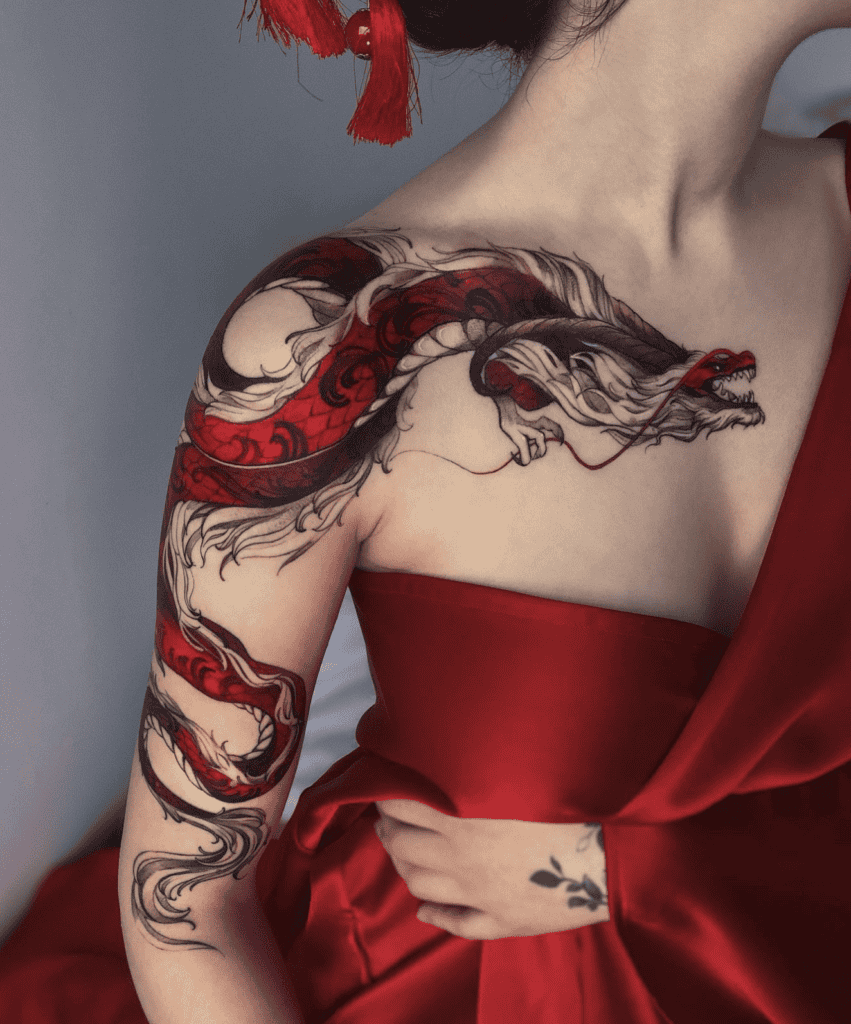
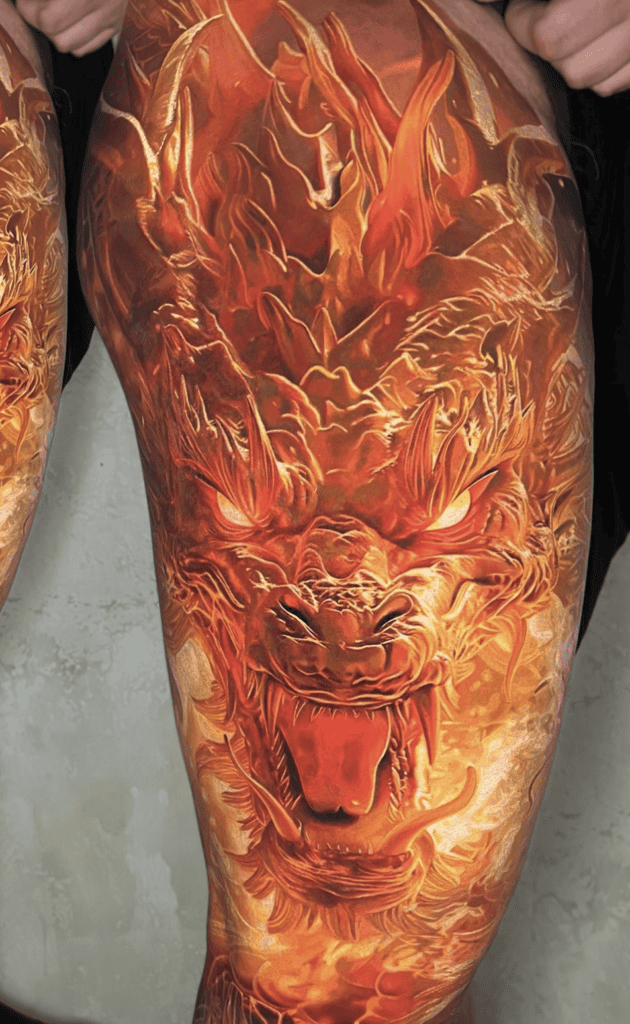
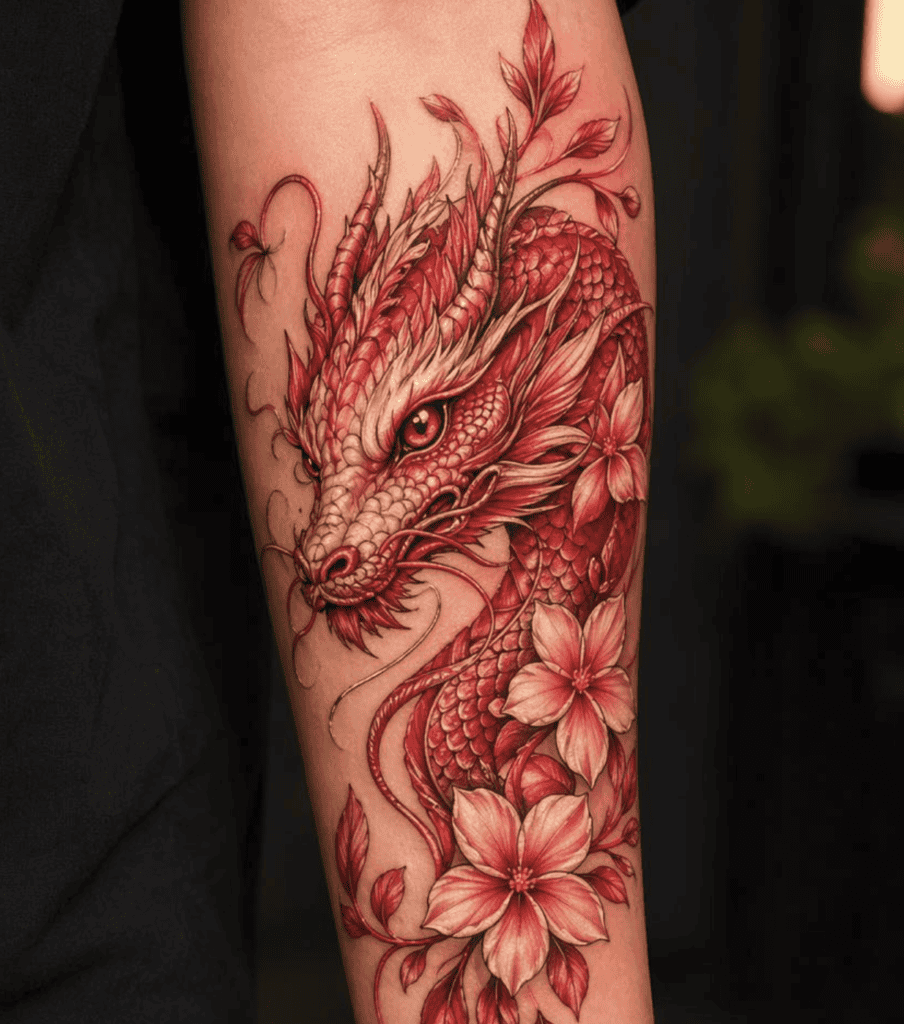
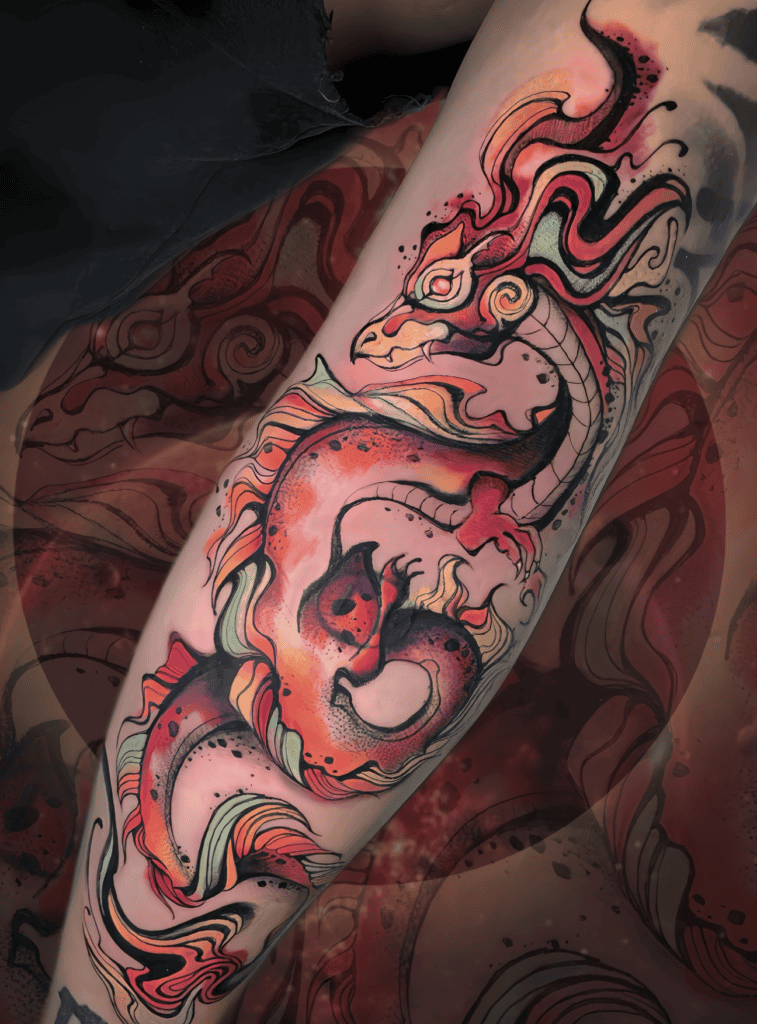
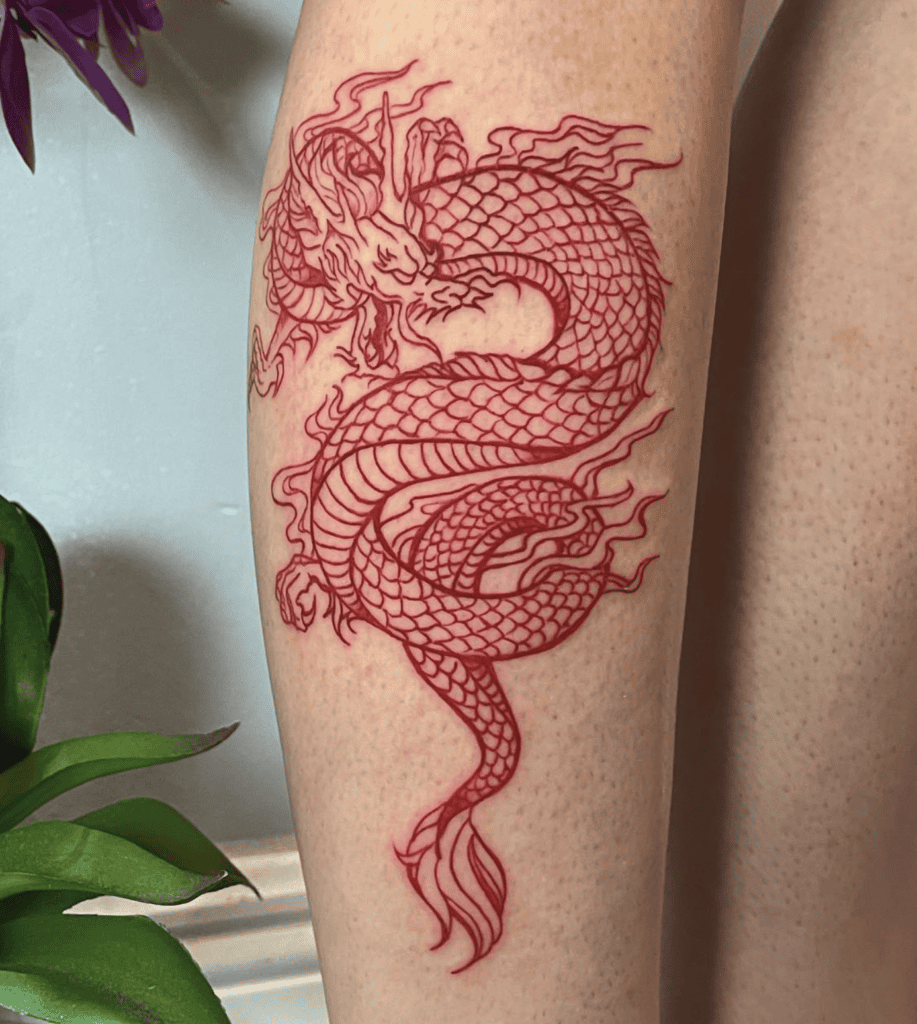
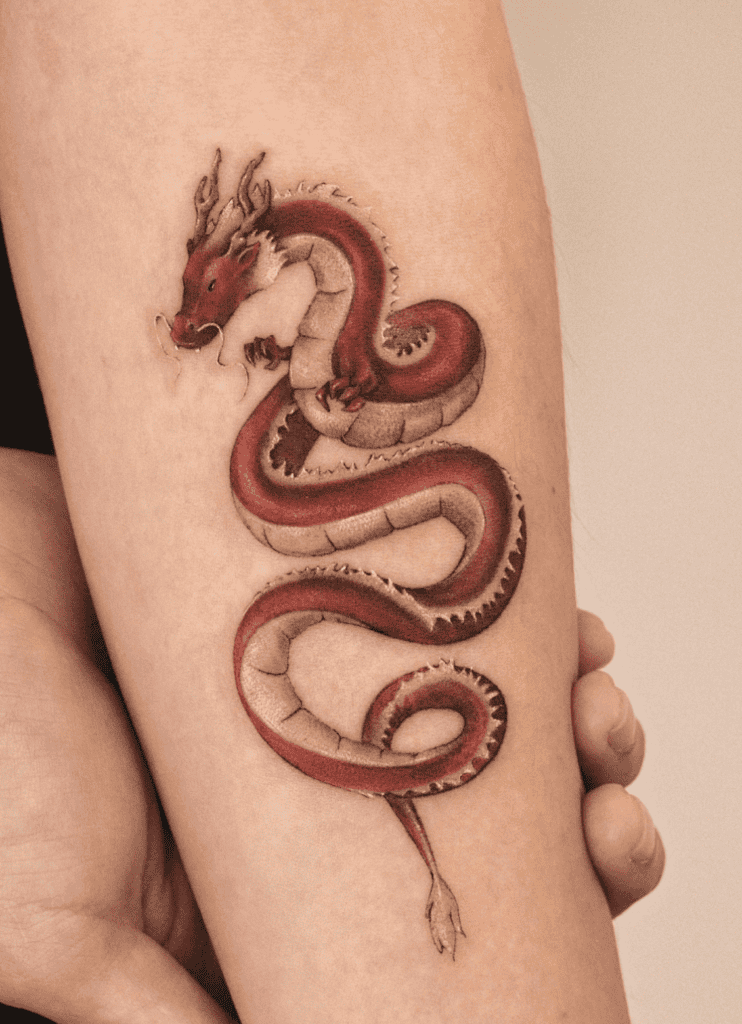
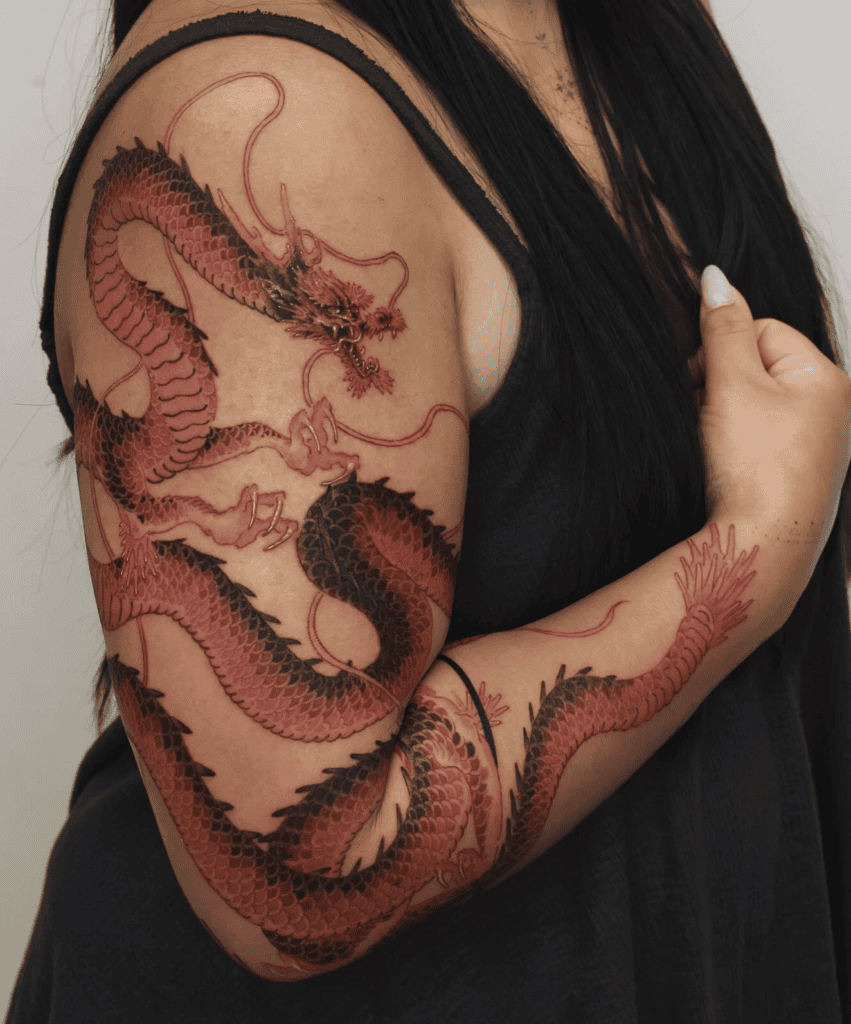
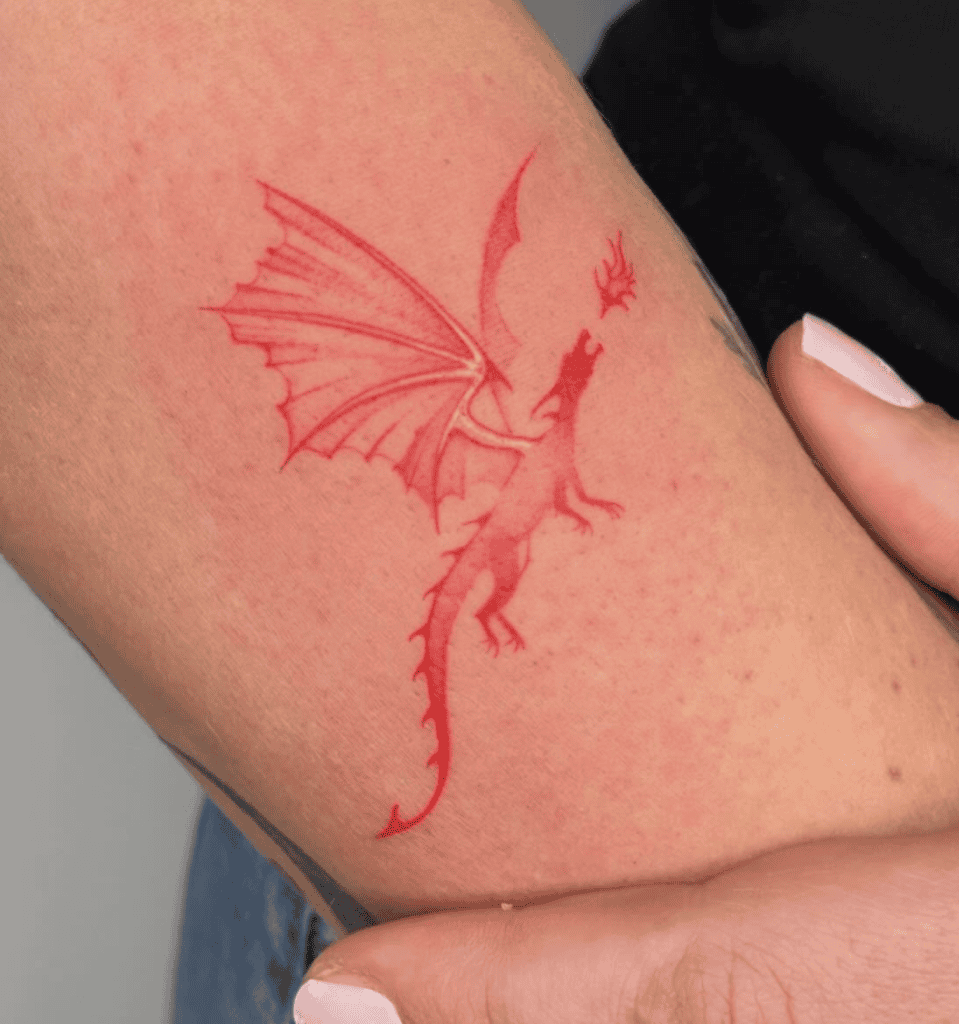
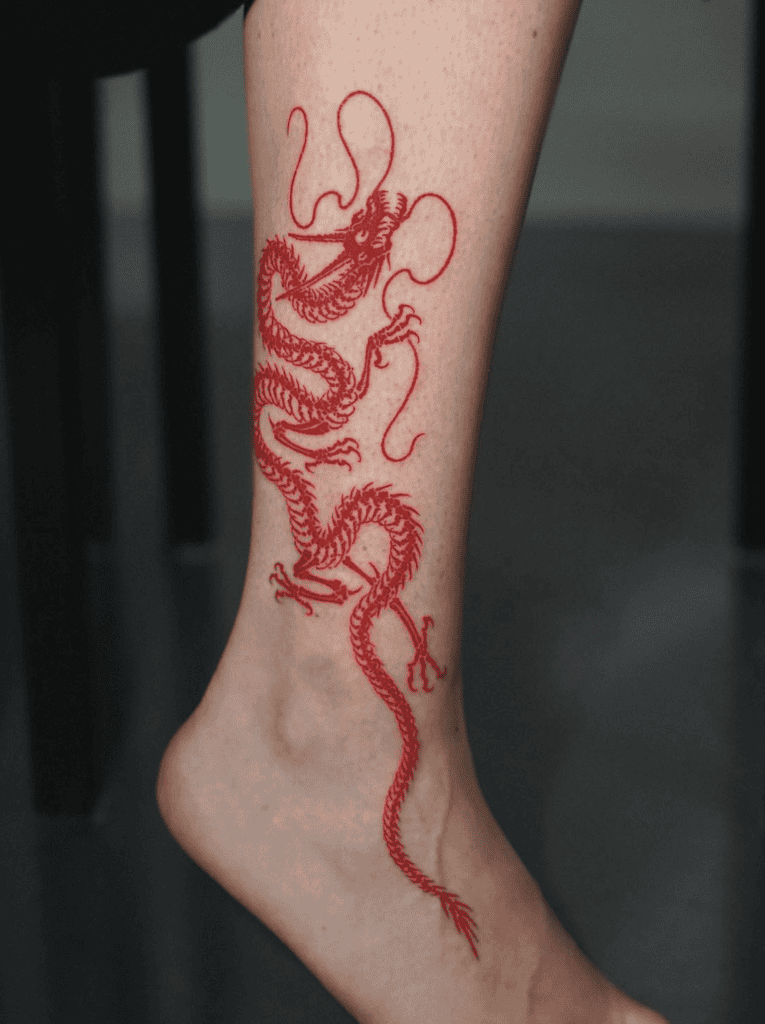
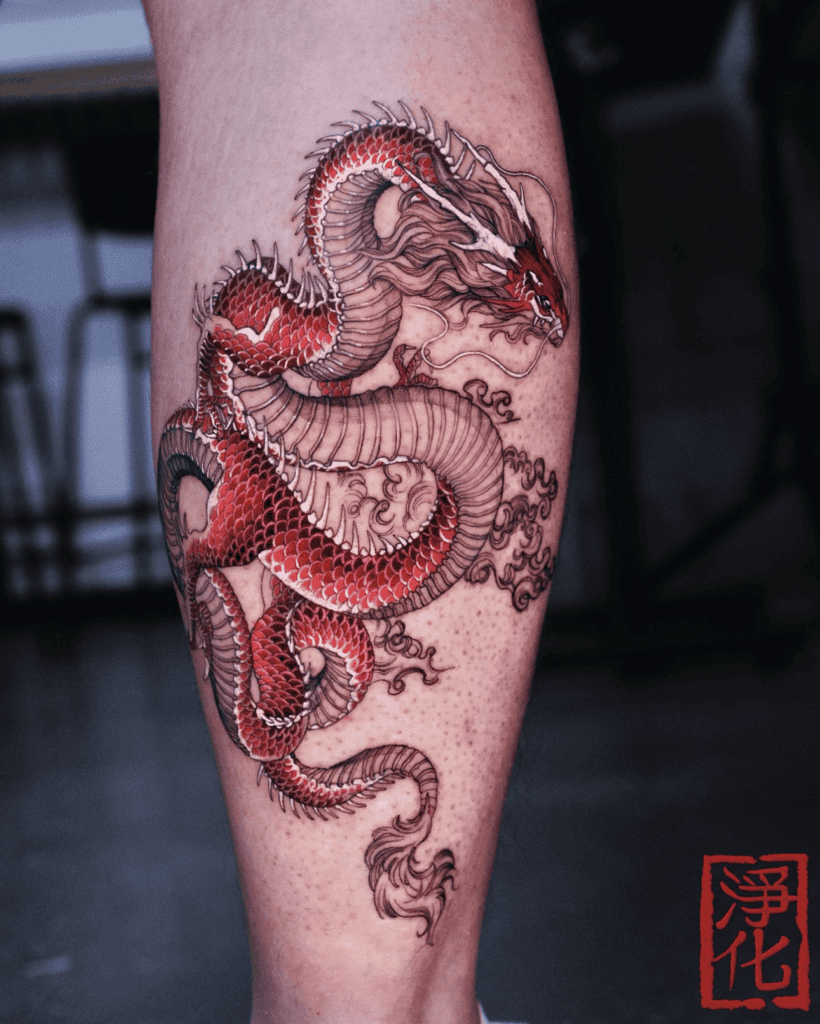
A Red Dragon is commonly associated with power, passion, fire, and intense energy. Because the colour red is often linked to strong emotions and vitality, Red Dragons are usually portrayed as some of the fiercest and most dominant dragon types in mythology and fantasy.
In Chinese mythology, the Red/Vermilion Dragon is commonly associated with the South and the element of fire. The Red Dragon symbolises passion, heat, vitality, summer, and powerful yang energy. Rather than representing mere destruction, the Red Dragon in these traditions is often associated with life force, transformation, prosperity, and the dynamic energy of nature.
In Chinese culture, the red dragon is also a symbol of good fortune, happiness, passion, and prosperity, often representing the element of fire and the south. It is widely featured in celebrations like the Lunar New Year dragon dance to usher in good luck, acting as a benevolent guardian.
Blue Dragon Tattoo
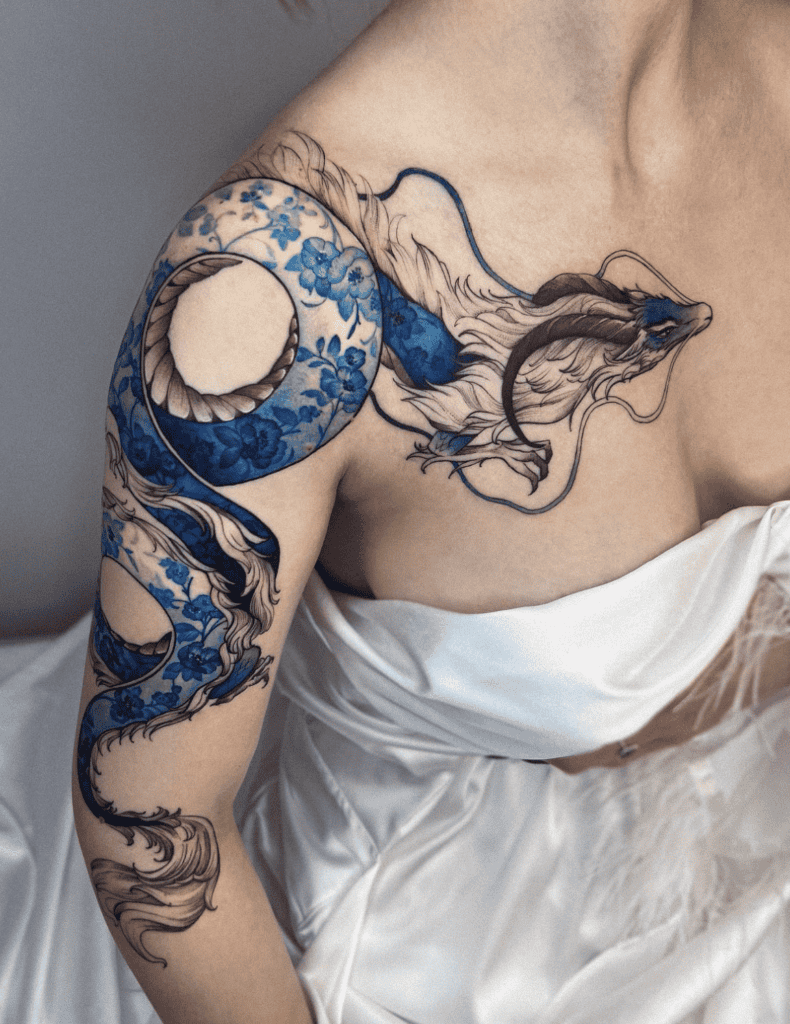
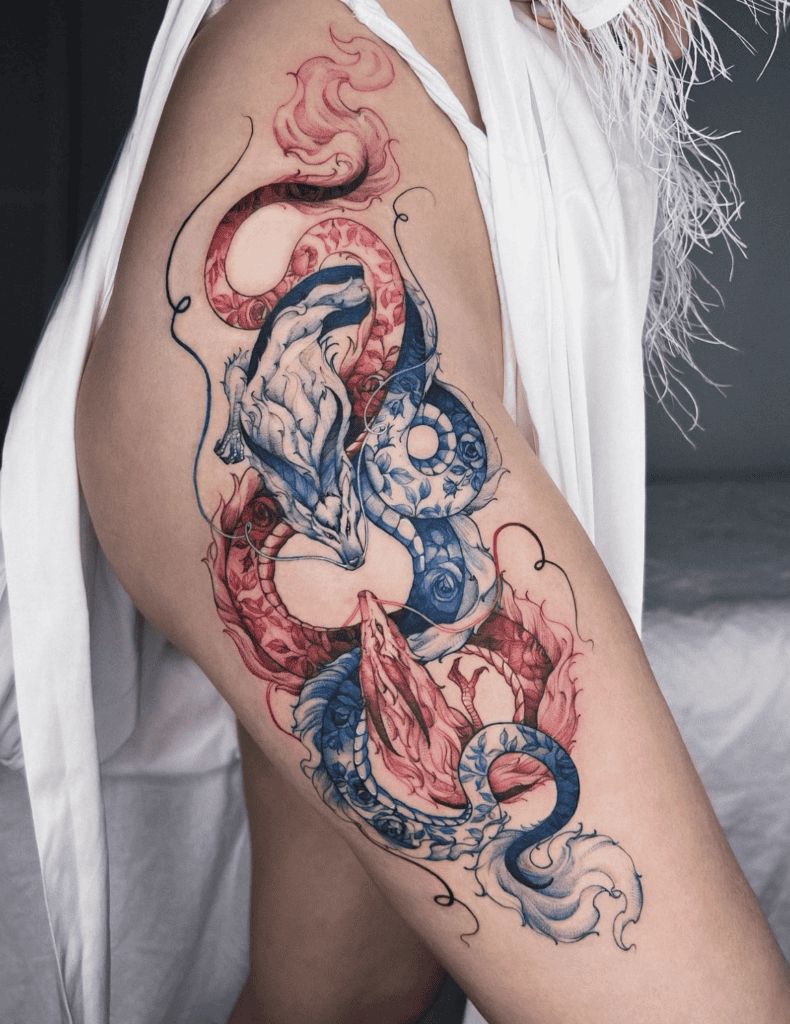
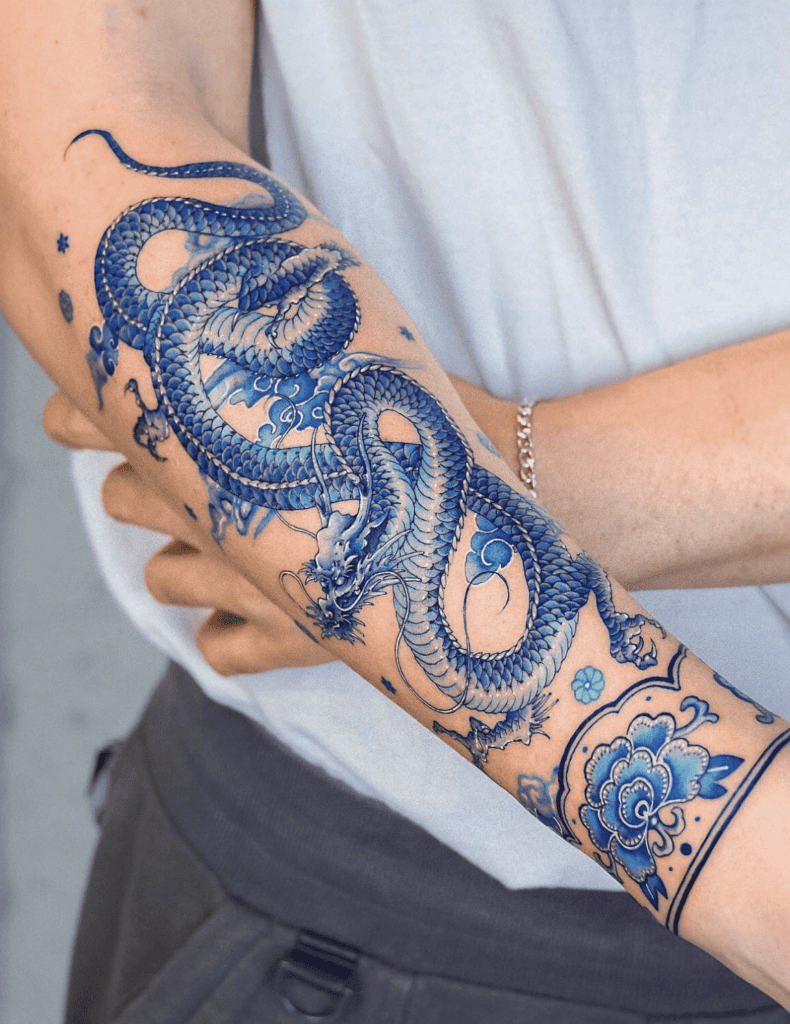
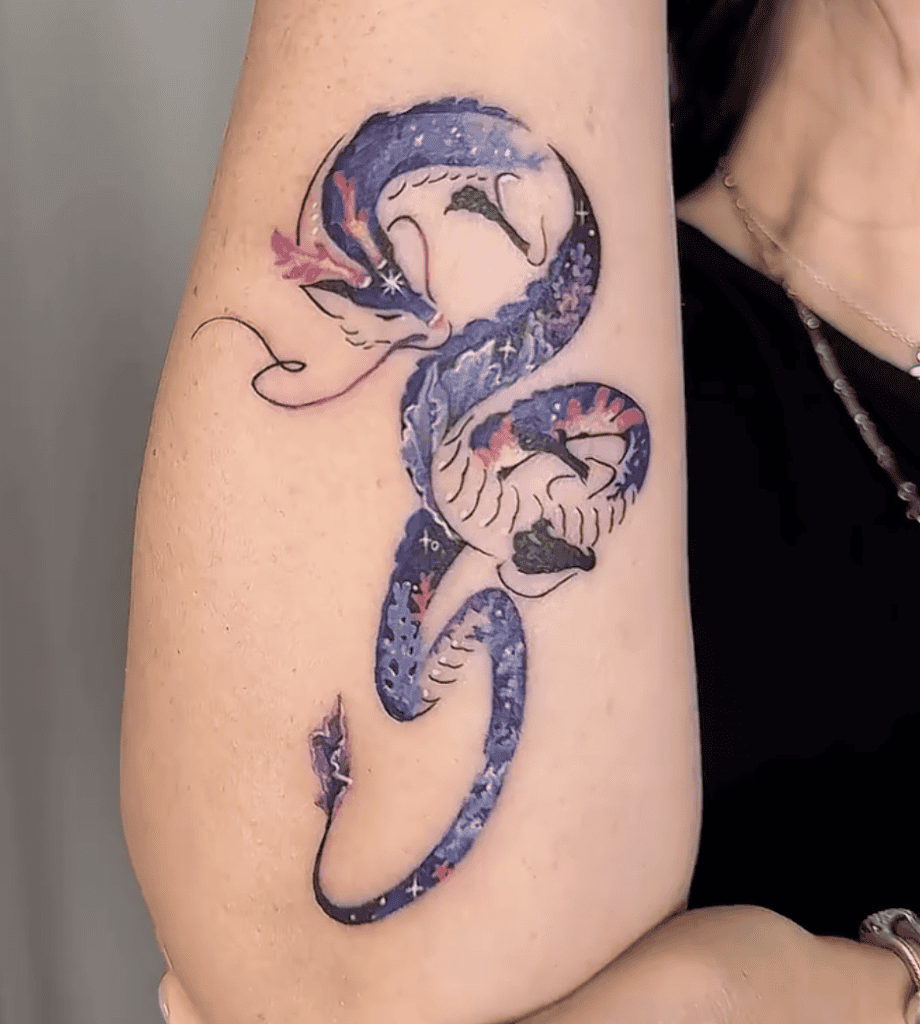
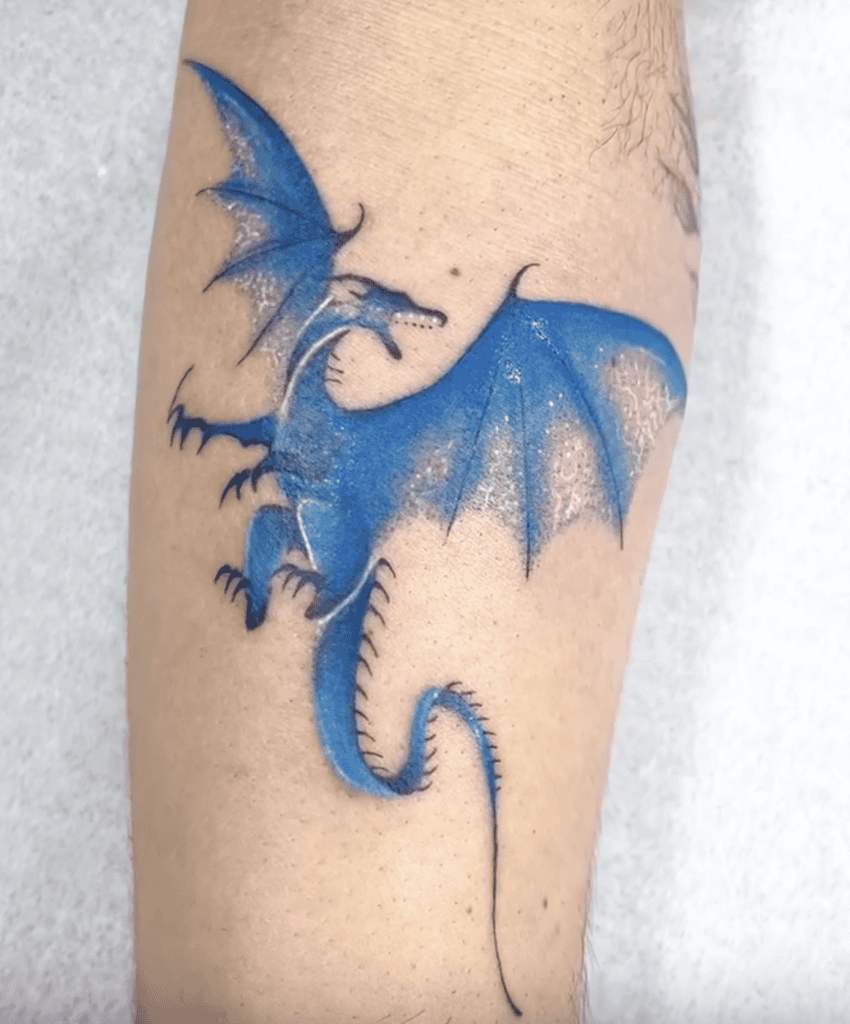
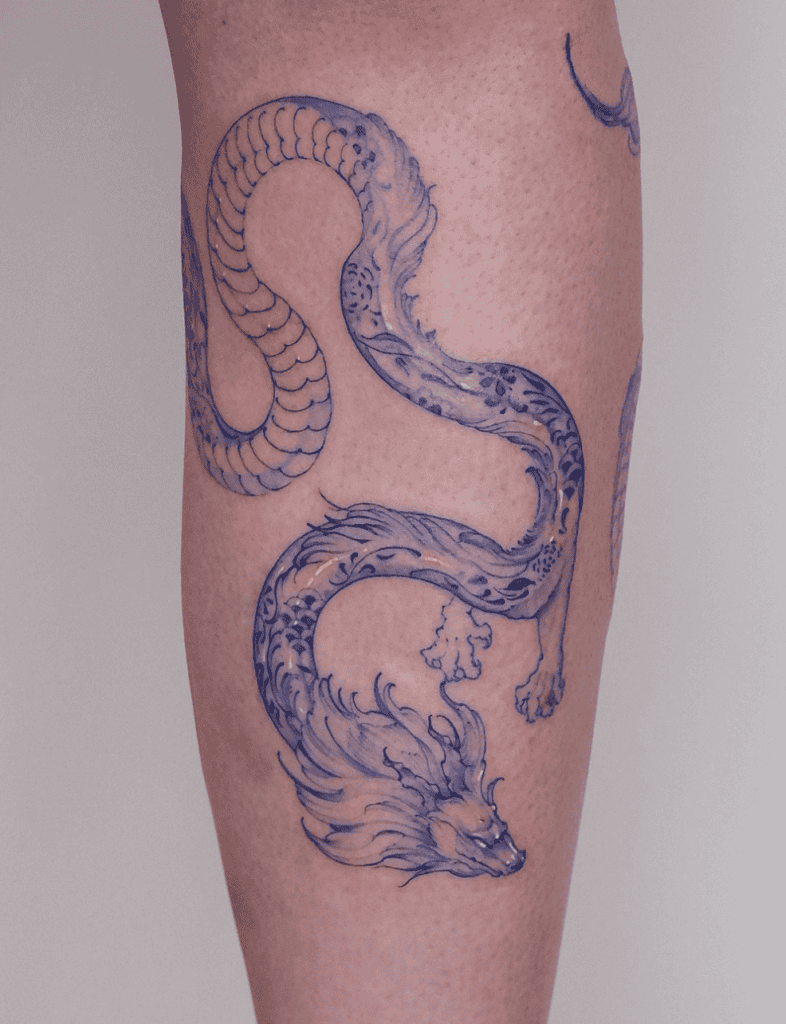
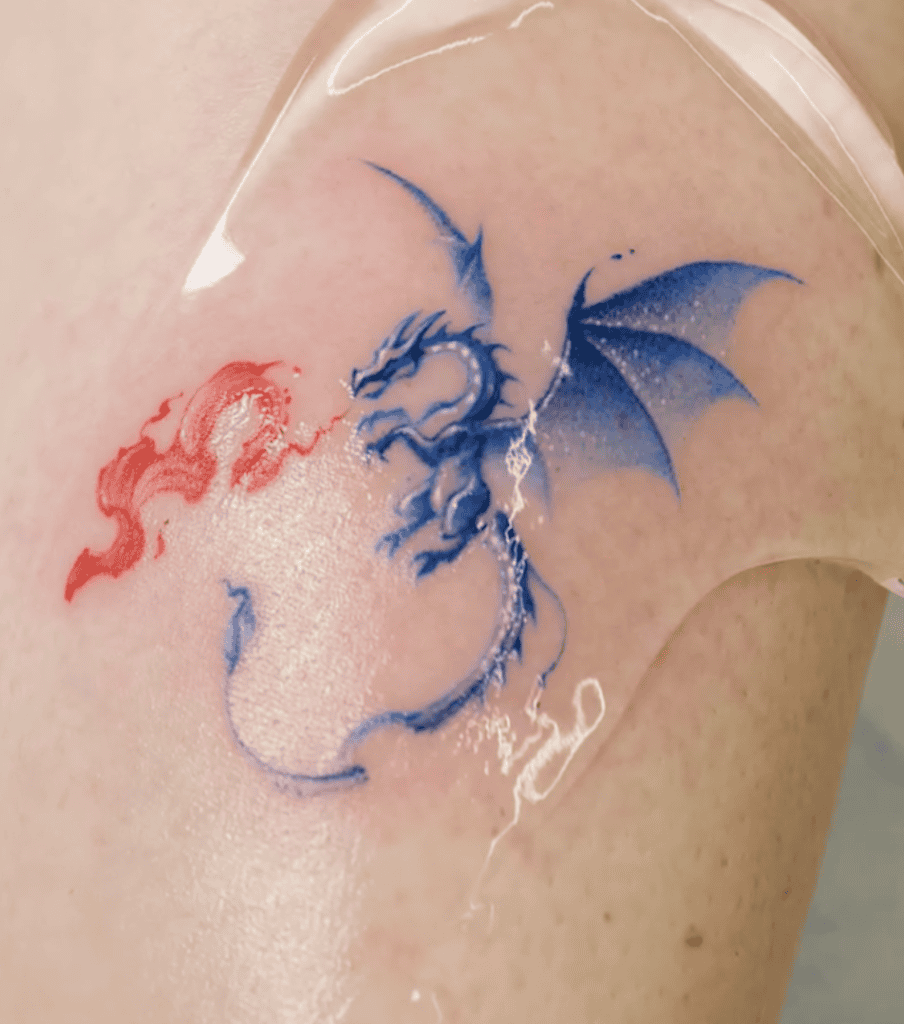
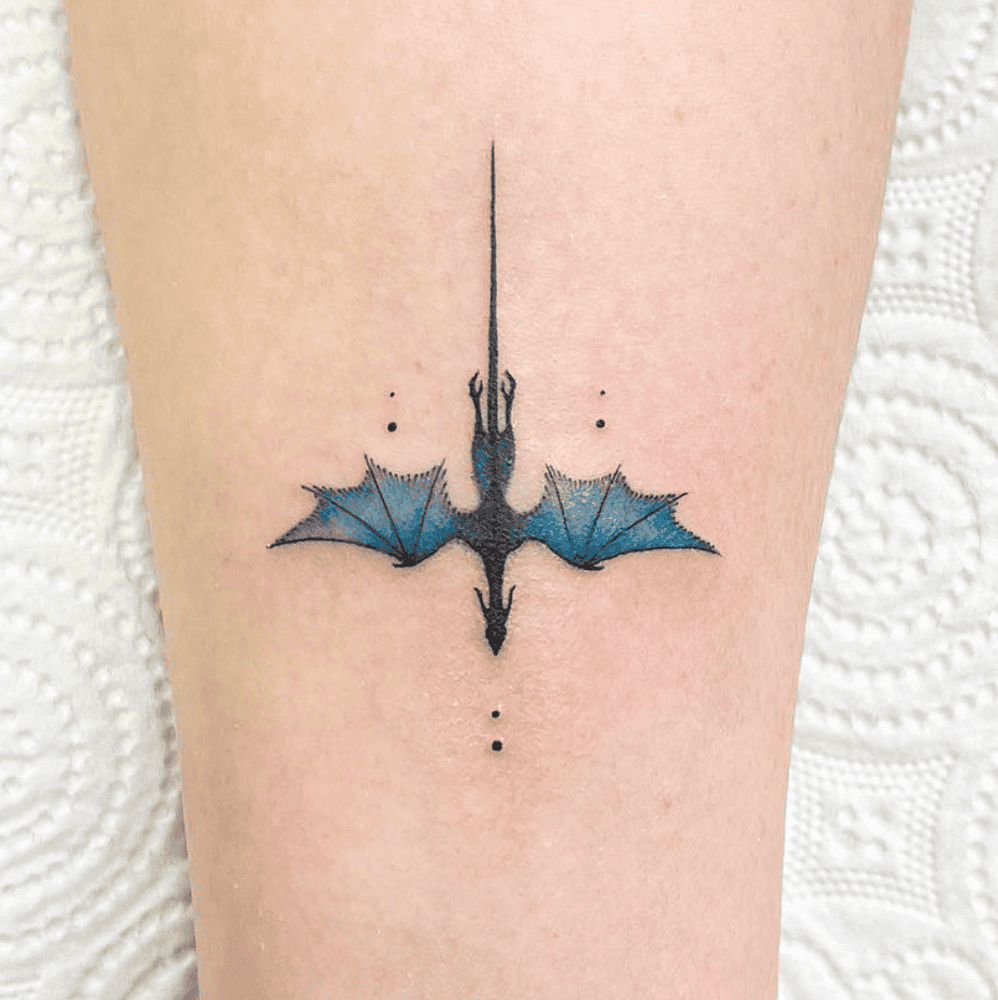
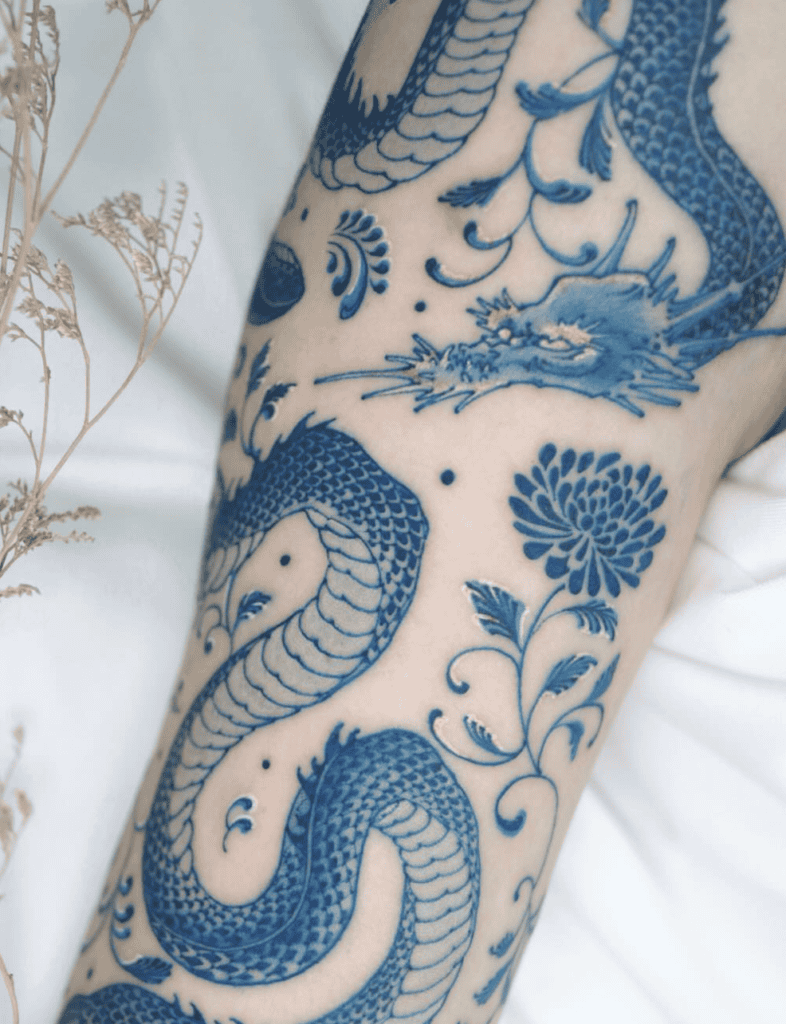
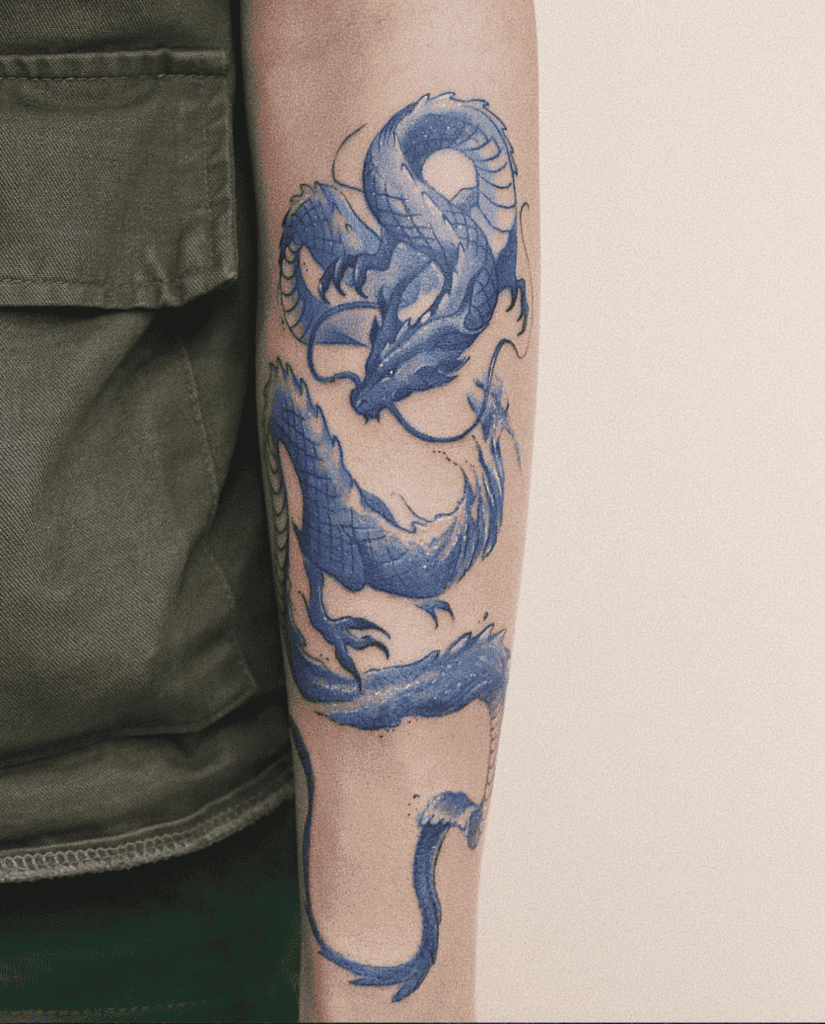
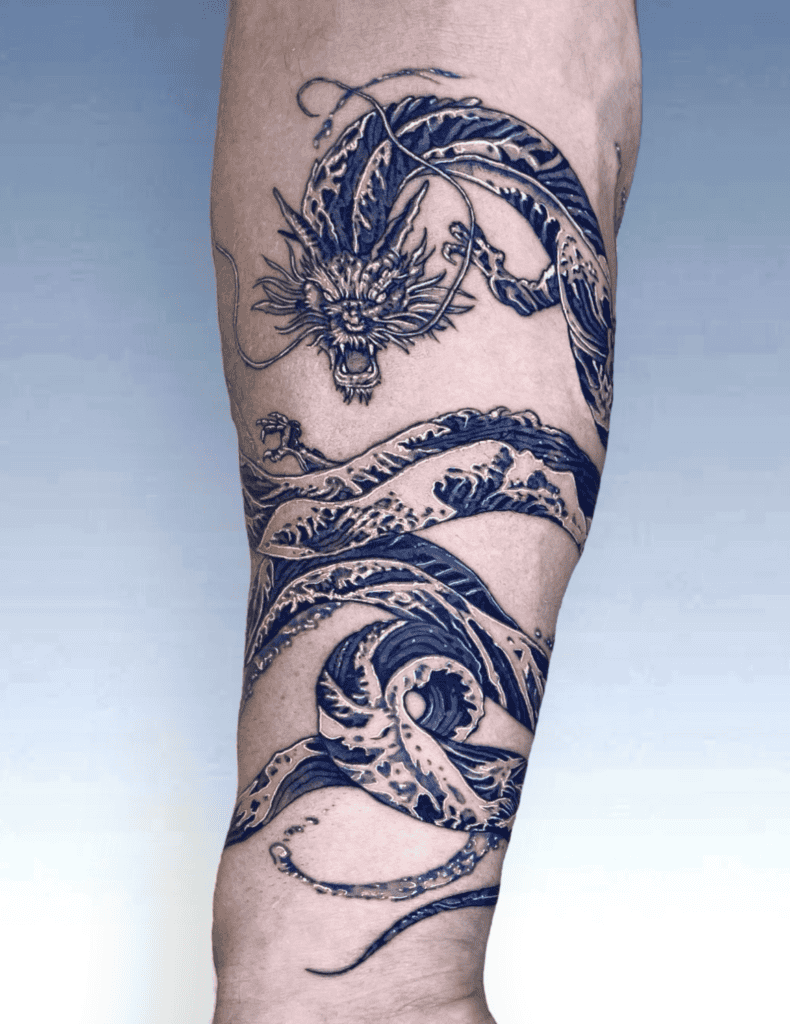
A Blue Dragon is commonly associated with wisdom, calmness, loyalty, and spiritual strength, often connected to intelligence, emotional balance, mystery, and inner peace. Because blue is strongly linked to the sky, oceans, and water, Blue Dragons can represent freedom, depth, intuition, and adaptability.
The Azure Dragon, also known as Qinglong, is one of the most important mythological creatures in Chinese cosmology and is the guardian of the East. It is part of the famous Four Symbols system, alongside the White Tiger of the West, Vermilion Bird of the South, and Black Tortoise of the North.
The Azure Dragon is associated with spring, the wood element, growth, renewal, and life energy. Its blue-green colouring reflects nature, plants, forests, and the return of life after winter. Because of this, the dragon became a symbol of prosperity, vitality, hope, and positive transformation.
Yellow Dragon Tattoo
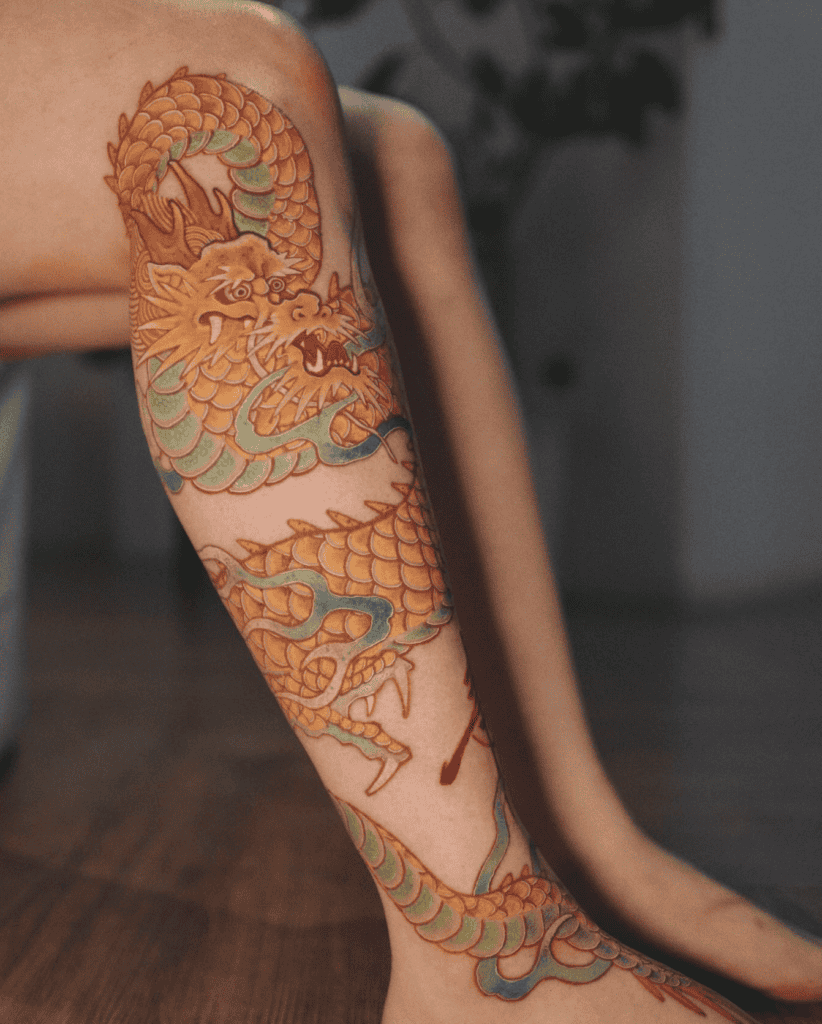
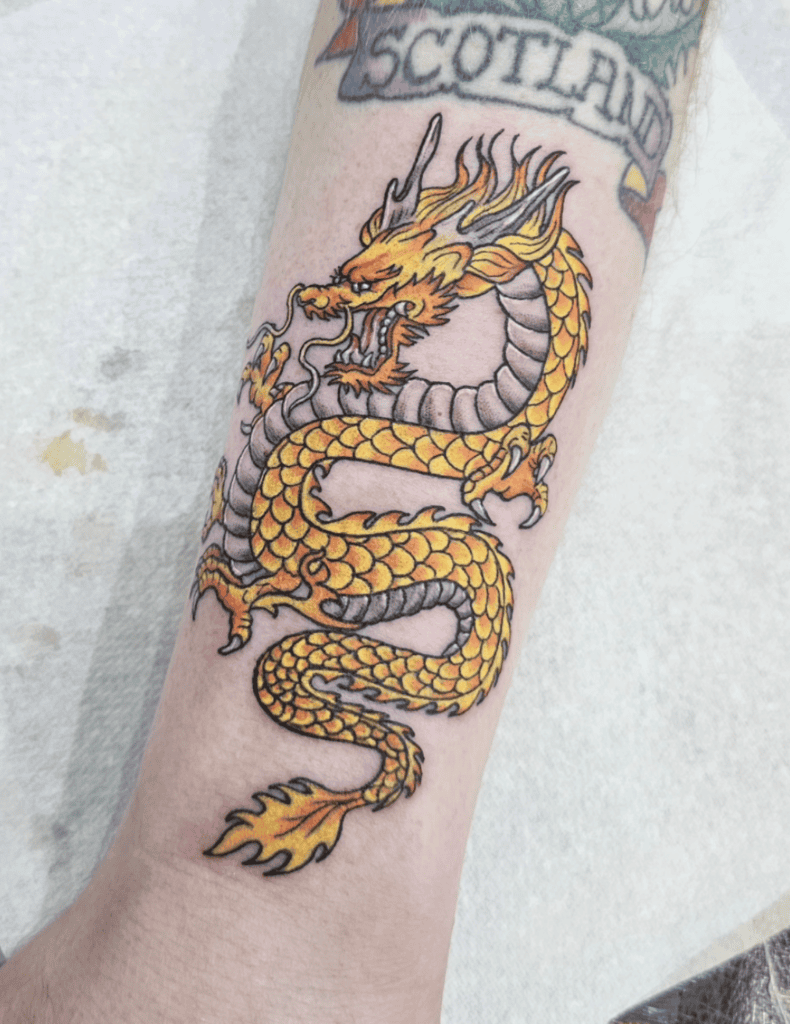
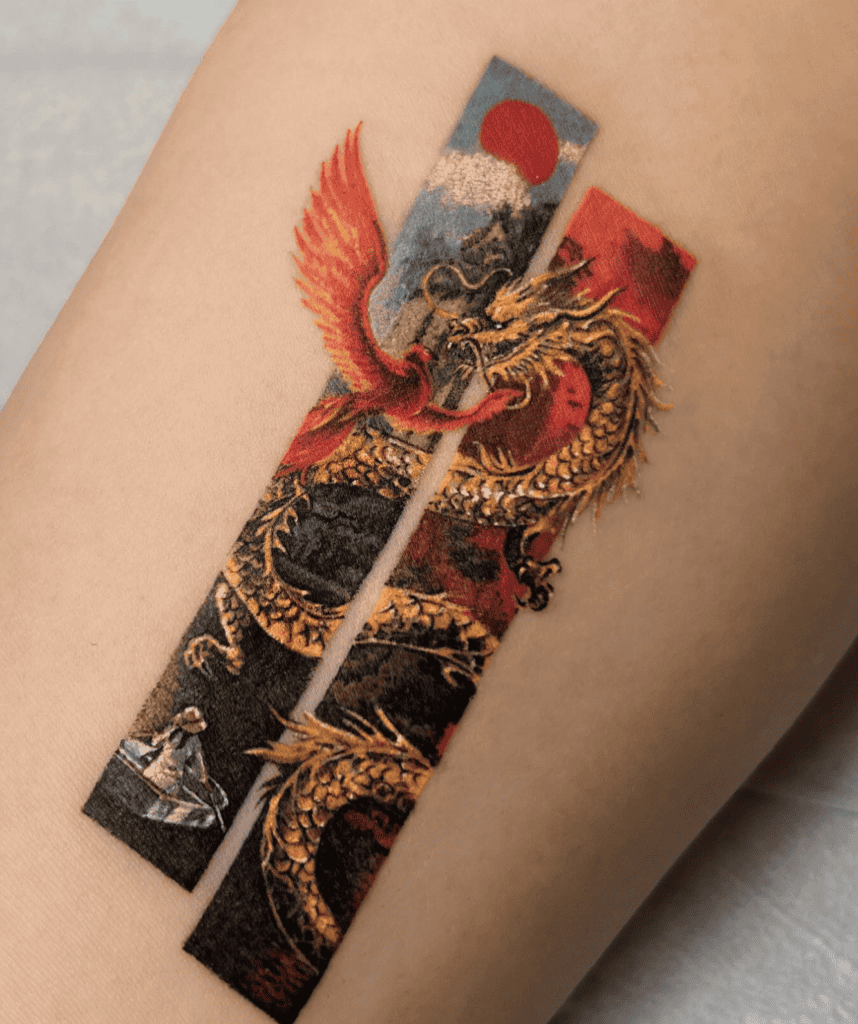
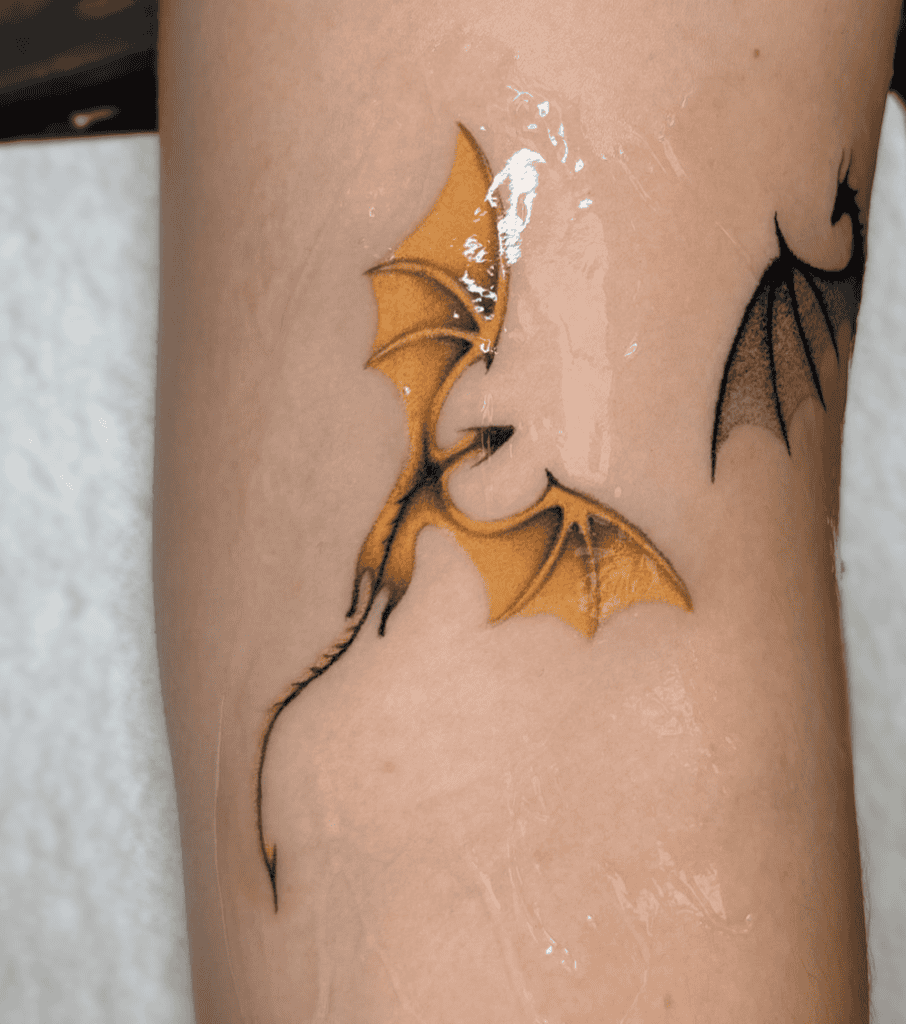
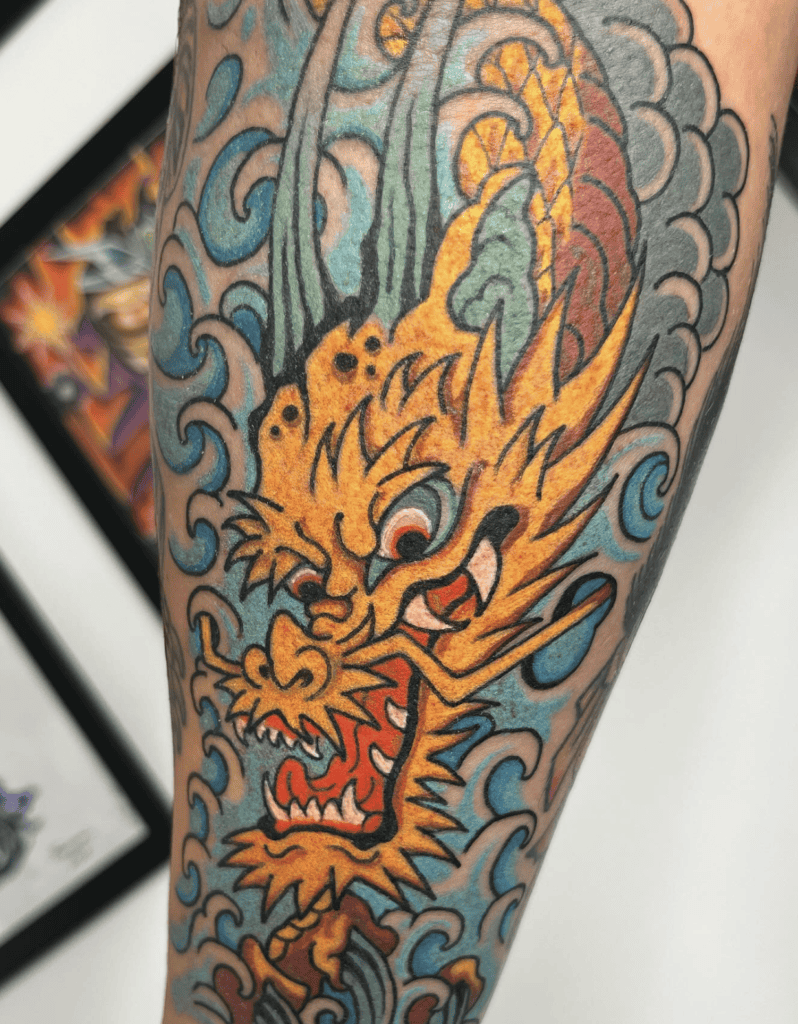
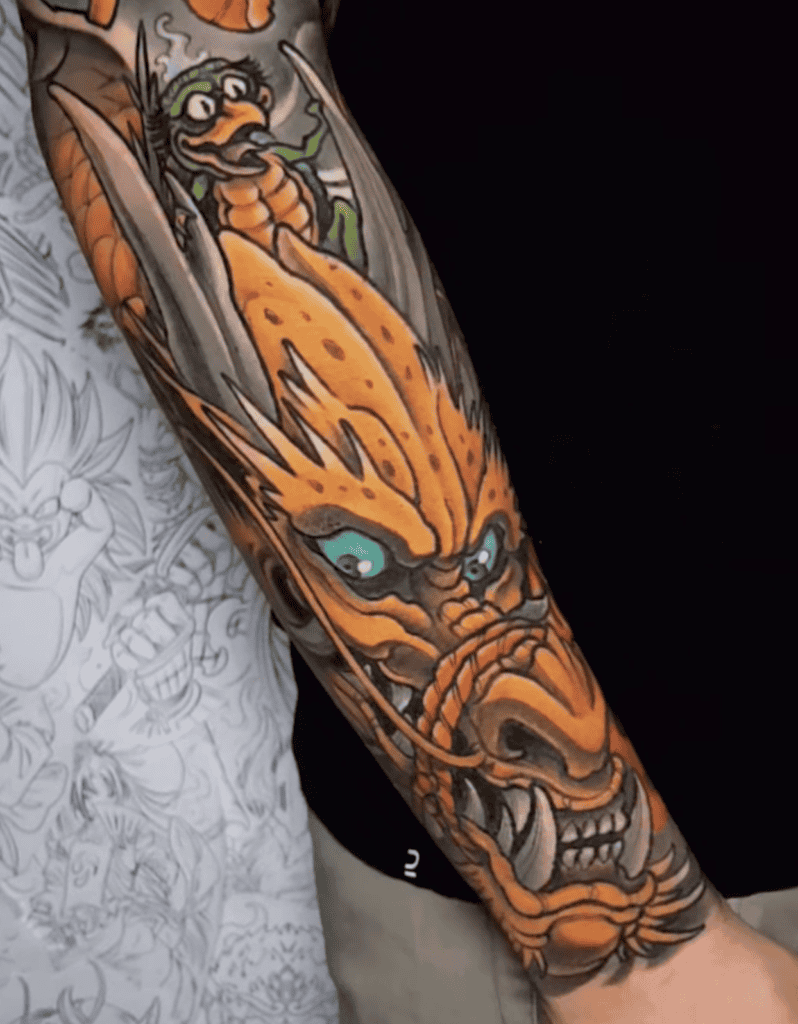
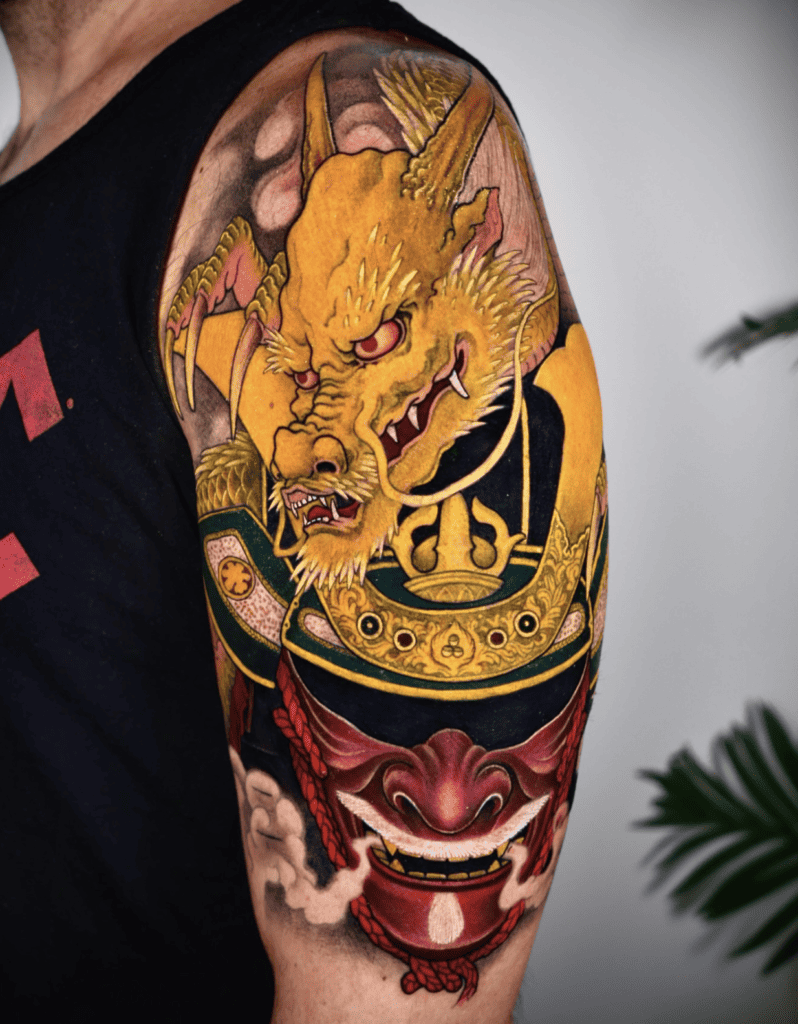
A Yellow Dragon is commonly associated with wisdom, prosperity, balance, authority, and spiritual enlightenment. Yellow or golden dragons are often portrayed as noble and majestic beings, symbolising power guided by intelligence rather than aggression alone.
Because yellow and gold are traditionally linked to royalty, sunlight, wealth, and divine energy, Yellow Dragons can represent leadership, honour, good fortune, and inner harmony, frequently depicted as calm yet immensely powerful creatures that embody stability and protection rather than chaos or destruction.
In Chinese cosmology and the directional guardian system, the Yellow Dragon represents the centre, the earth element, balance, and imperial authority. Unlike the directional dragons tied to the four seasons, the Yellow Dragon stands at the centre and symbolises harmony between all elements and regions, representing stability, order, grounding, and the balance that holds the universe together.
The earth element connects the Yellow Dragon to nourishment, support, wisdom, and equilibrium. Rather than embodying extremes, it symbolises calm authority and the ability to maintain harmony between opposing forces.
Historically, yellow became the colour of the Chinese Emperor, and the Yellow Dragon became one of the strongest symbols of imperial power and divine rule. Emperors were often believed to rule under the Mandate of Heaven, with dragon imagery reinforcing their connection to cosmic order and authority.
Black Dragon Tattoo
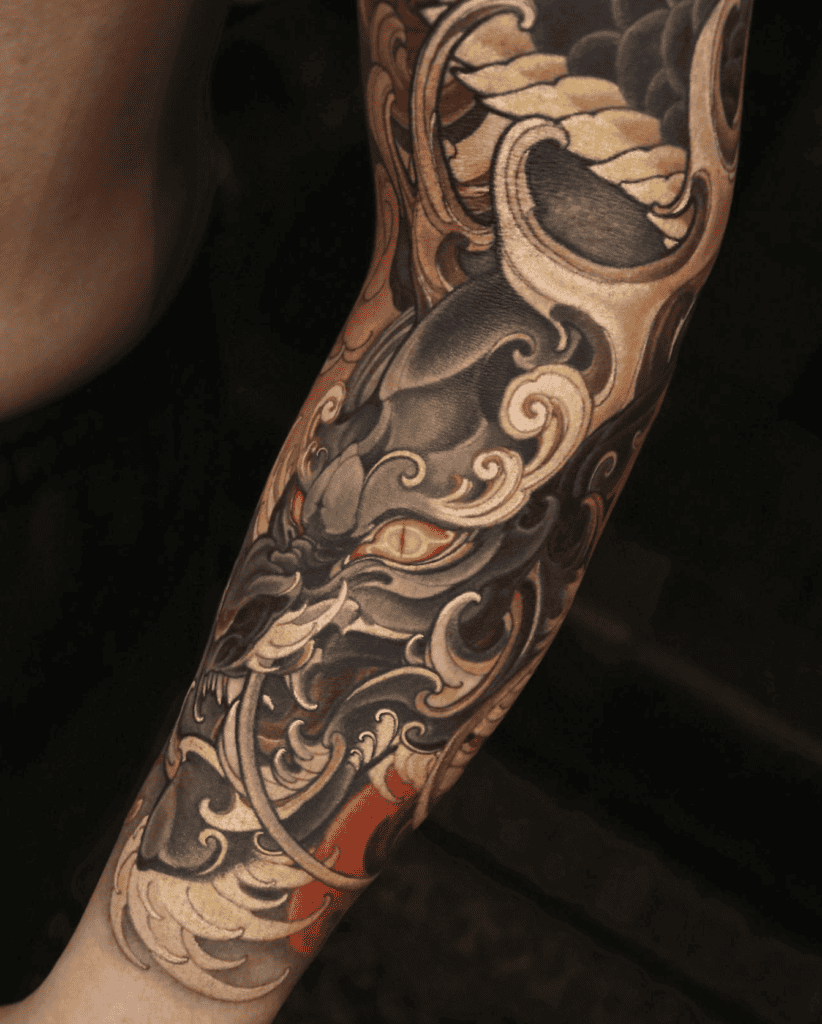
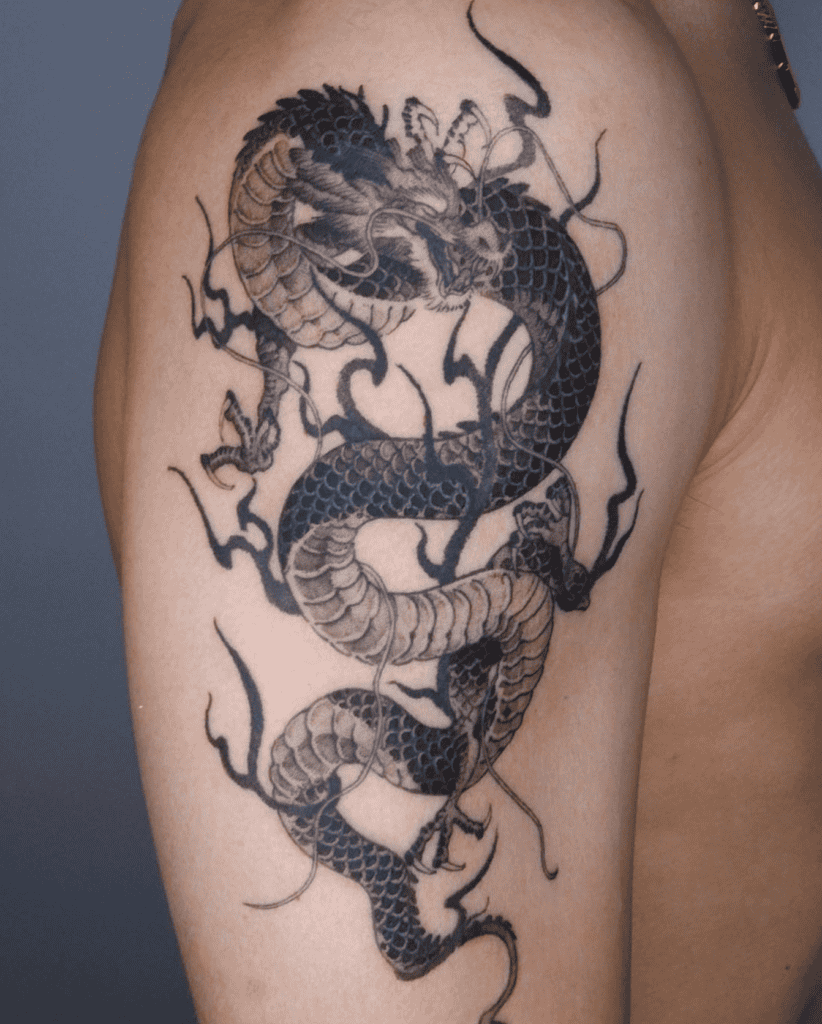
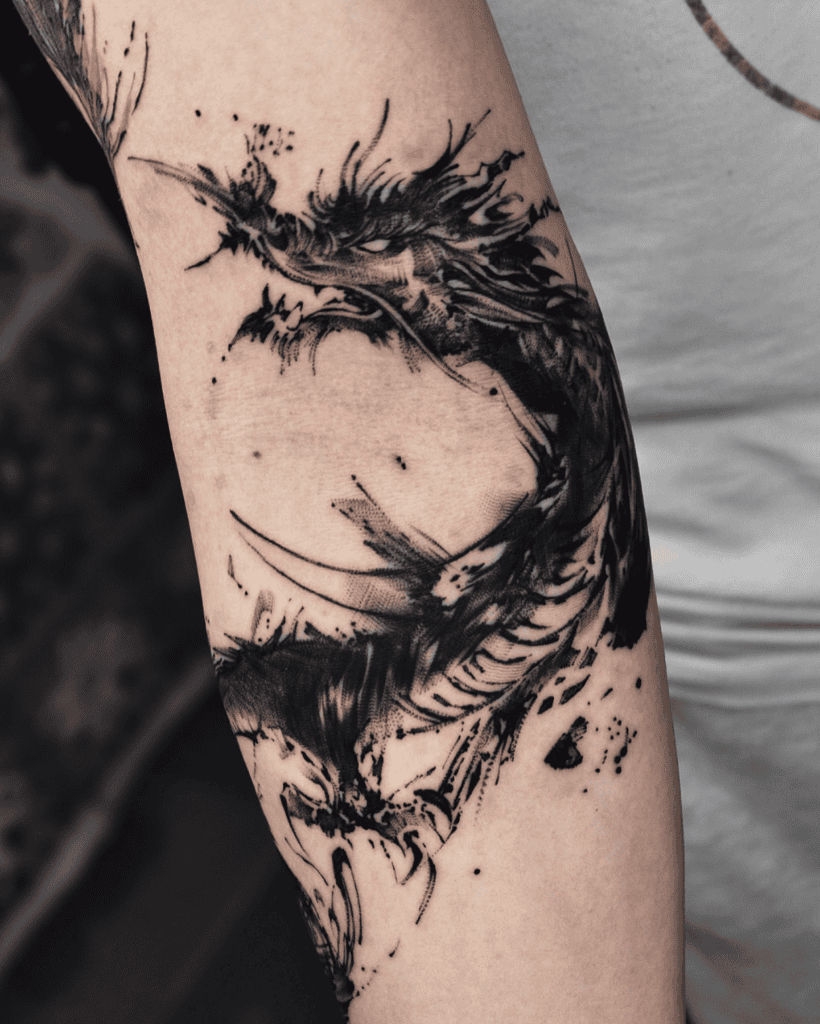
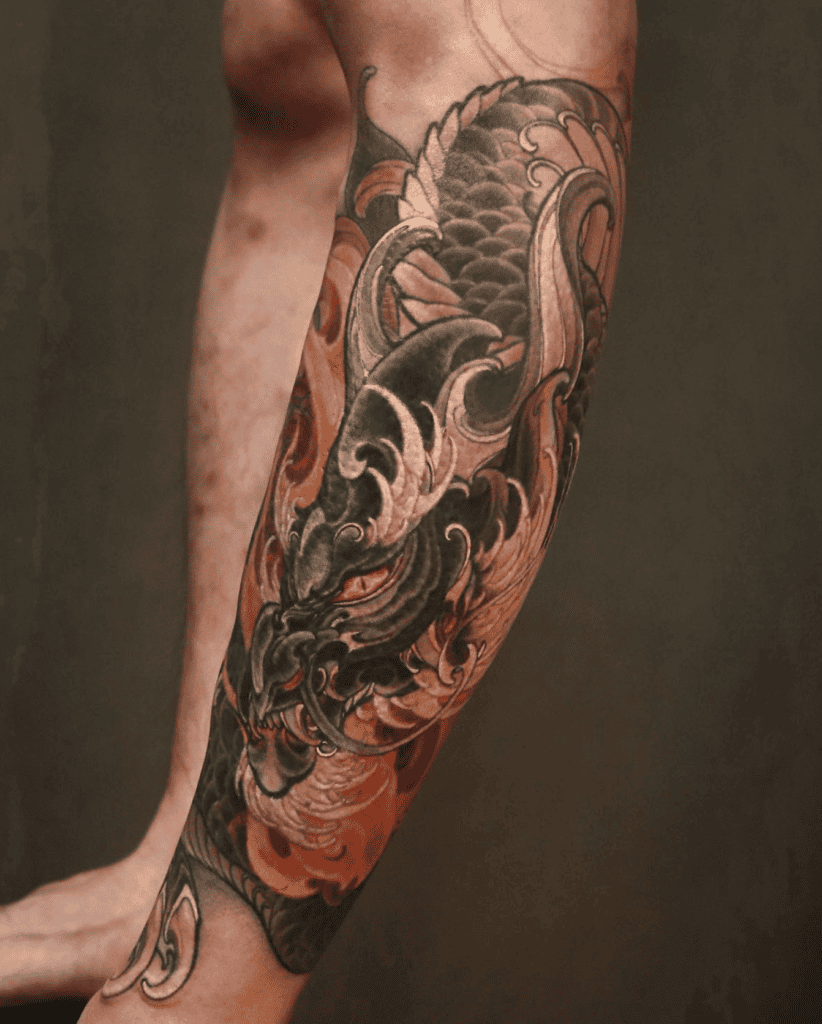
A Black Dragon is commonly associated with mystery, power, independence, and hidden strength. Black Dragons often carry an intimidating and darker presence compared to other dragon colours, symbolising authority, fearlessness, protection, and the unknown.
Because black is linked to shadows, night, and depth, and can represent transformation, resilience, and overcoming hardship. In many fantasy stories, they are portrayed as ancient and powerful beings with immense magical abilities, wisdom, or destructive force.
In Chinese cosmology and the directional guardian system, the Black Dragon is associated with the north, the water element, and winter. Winter represents stillness, rest, and endurance, rather than outward action. The Black Dragon symbolises strength that remains calm and controlled beneath the surface, much like deep water or the cold silence of winter.
The water element adds symbolism tied to adaptability, intuition, emotional depth, and hidden force. Water can appear calm yet become overwhelmingly powerful, which gives the Black Dragon a reputation for quiet authority and restrained strength.
White Dragon Tattoo
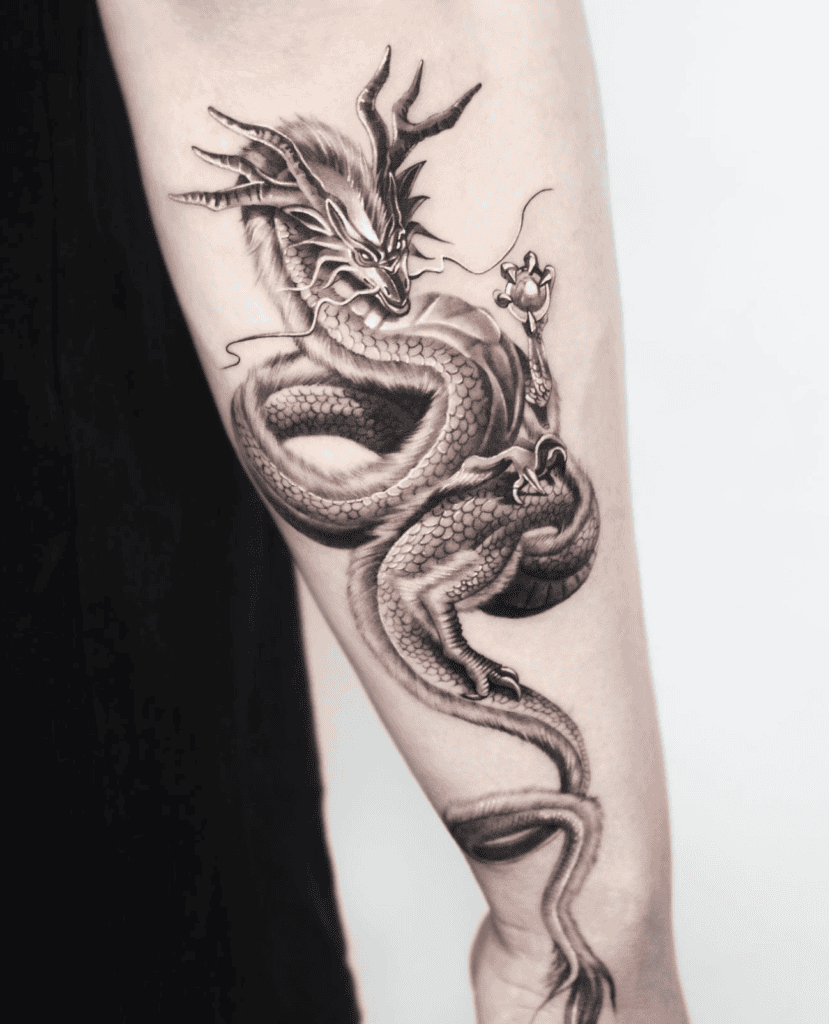
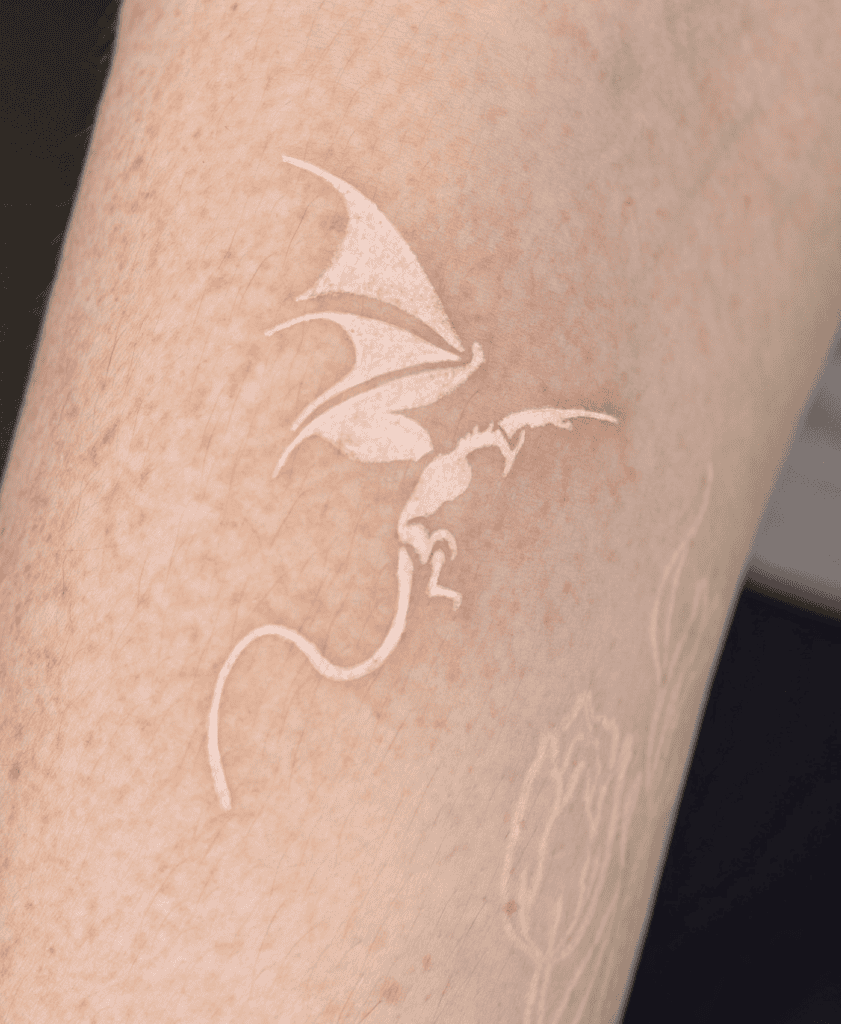
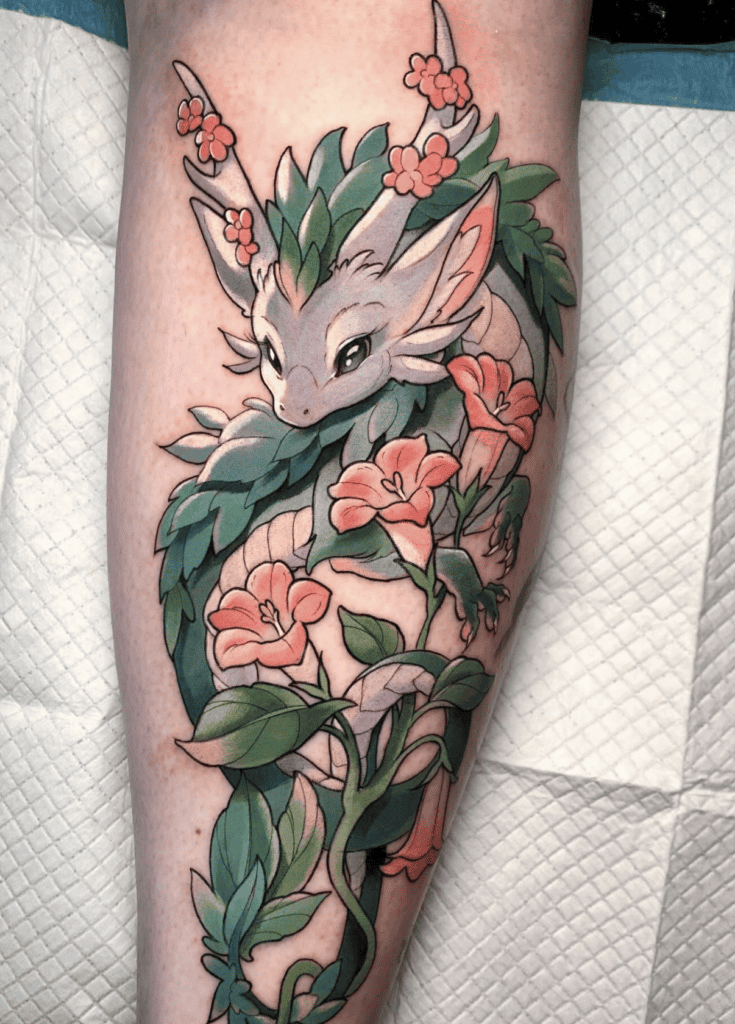
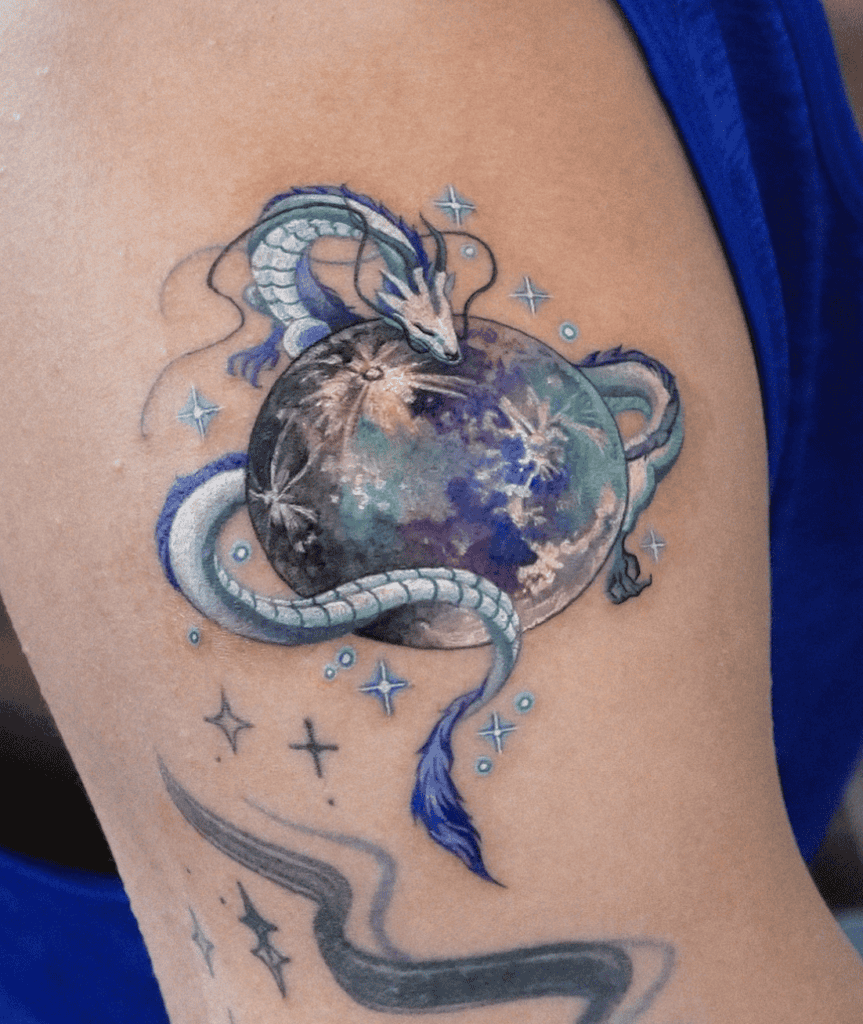
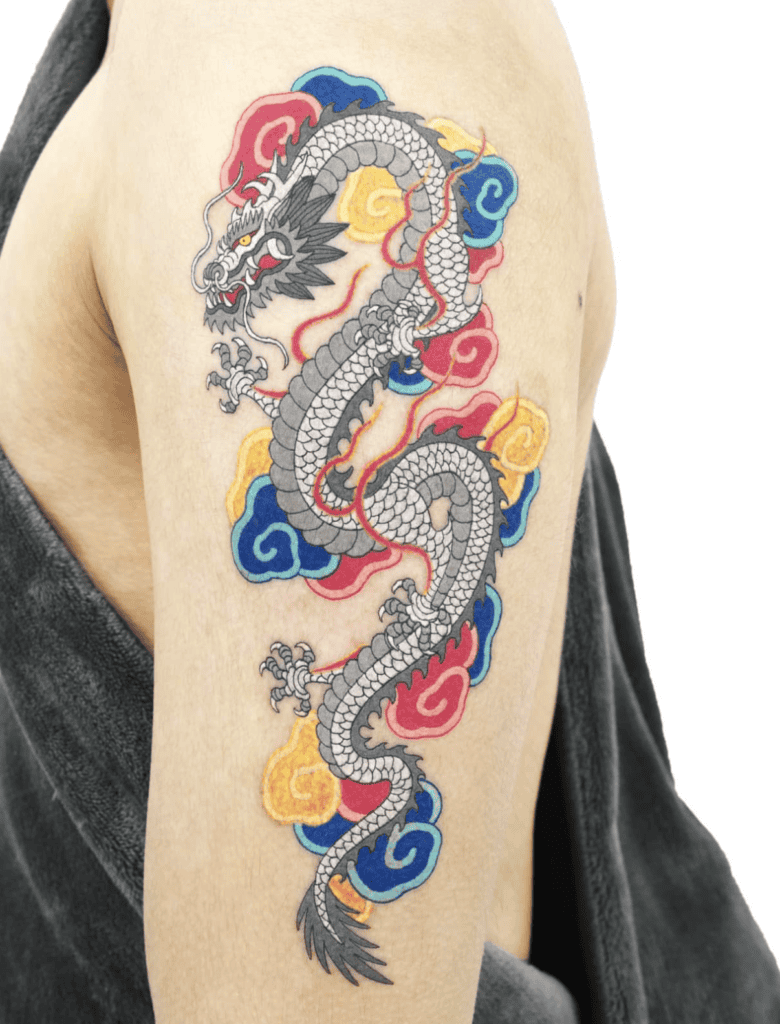
A White Dragon is commonly associated with purity, wisdom, spirituality, and transformation. White Dragons often carry a more mysterious or sacred feeling compared to other dragon colours, symbolising clarity, inner strength, and a connection to higher knowledge.
Because white is linked to light, snow, clouds, and the heavens, White Dragons can also represent peace, protection, and balance. In fantasy settings, they are often portrayed as ancient and intelligent beings connected to ice, winter, or celestial power.
In Chinese cosmology, the White Dragon is associated with the west, the metal element, and autumn. Autumn represents the end of a cycle, being the period when crops are gathered, and nature begins preparing for winter. Because of this, the White Dragon of the West symbolises maturity, reflection, and the wisdom that comes from experience.
The metal element further connects the dragon to sharpness, determination, protection, and structure. Rather than the passionate energy of fire-associated dragons, the White Dragon carries a calmer and more disciplined form of power.
Green Dragon Tattoo
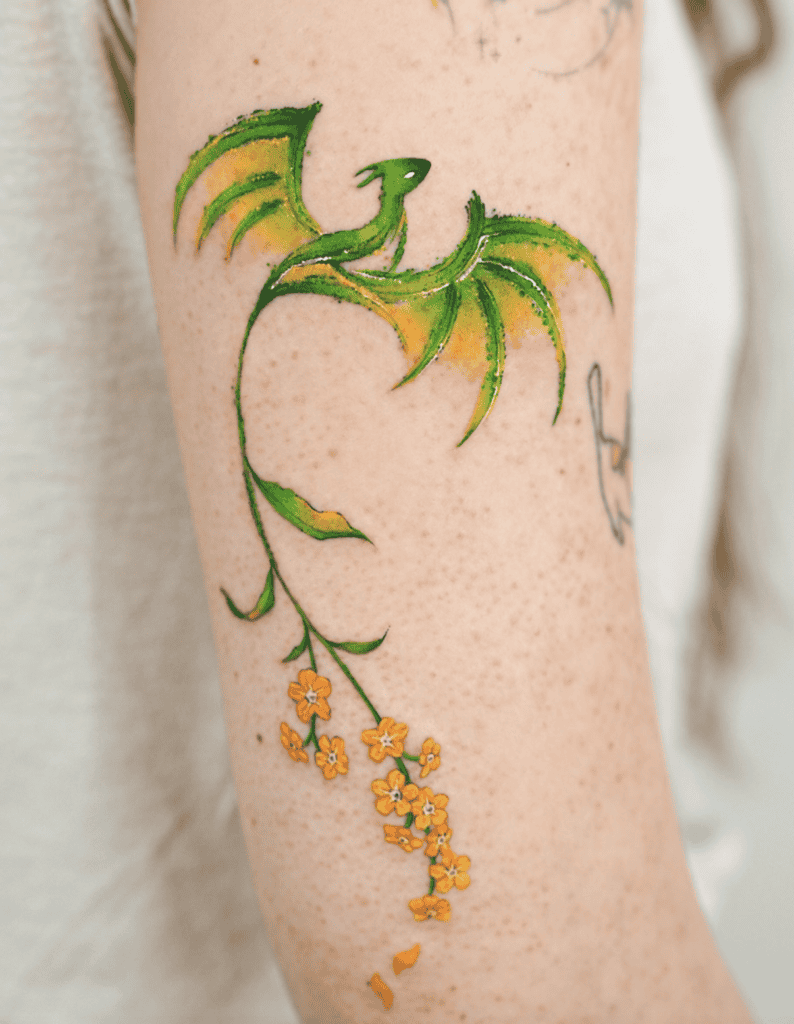
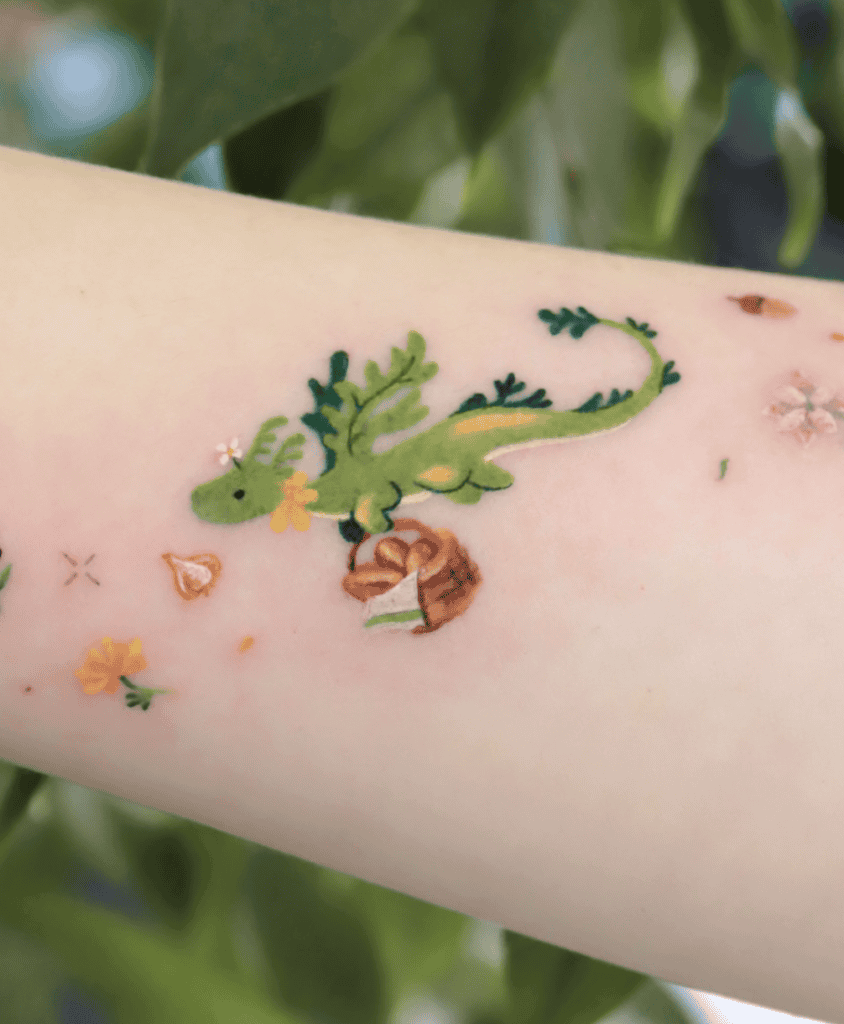
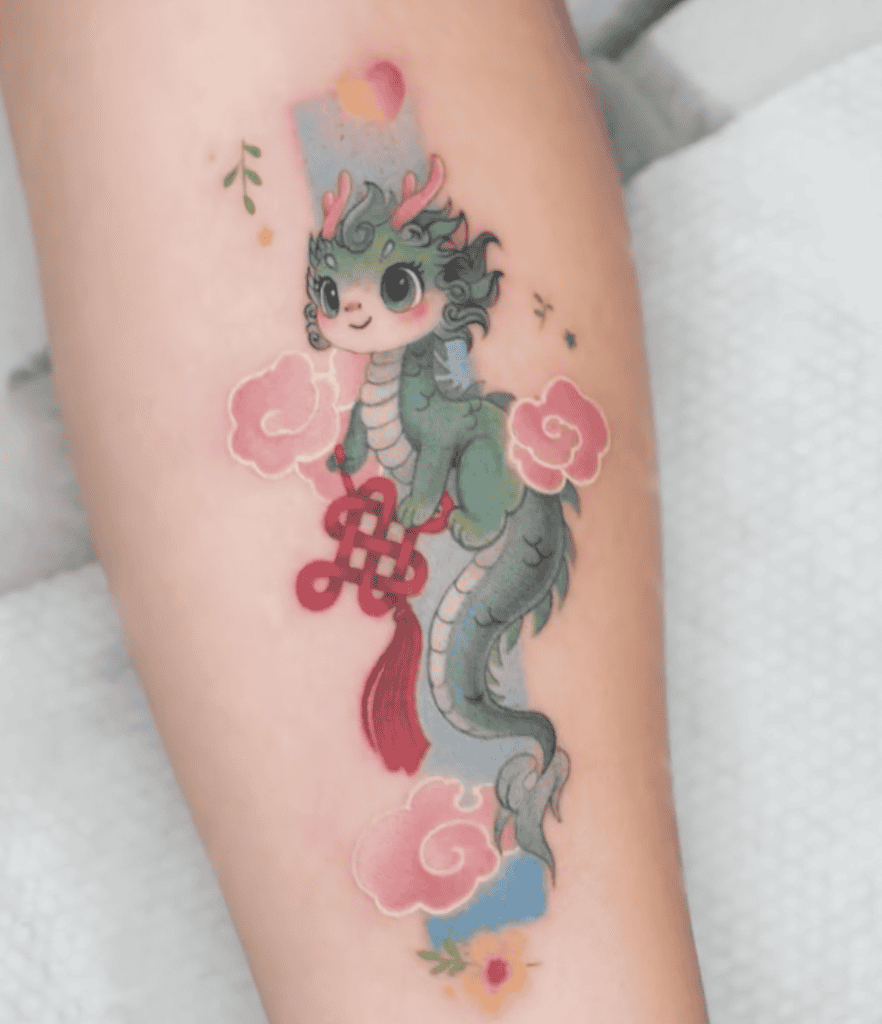
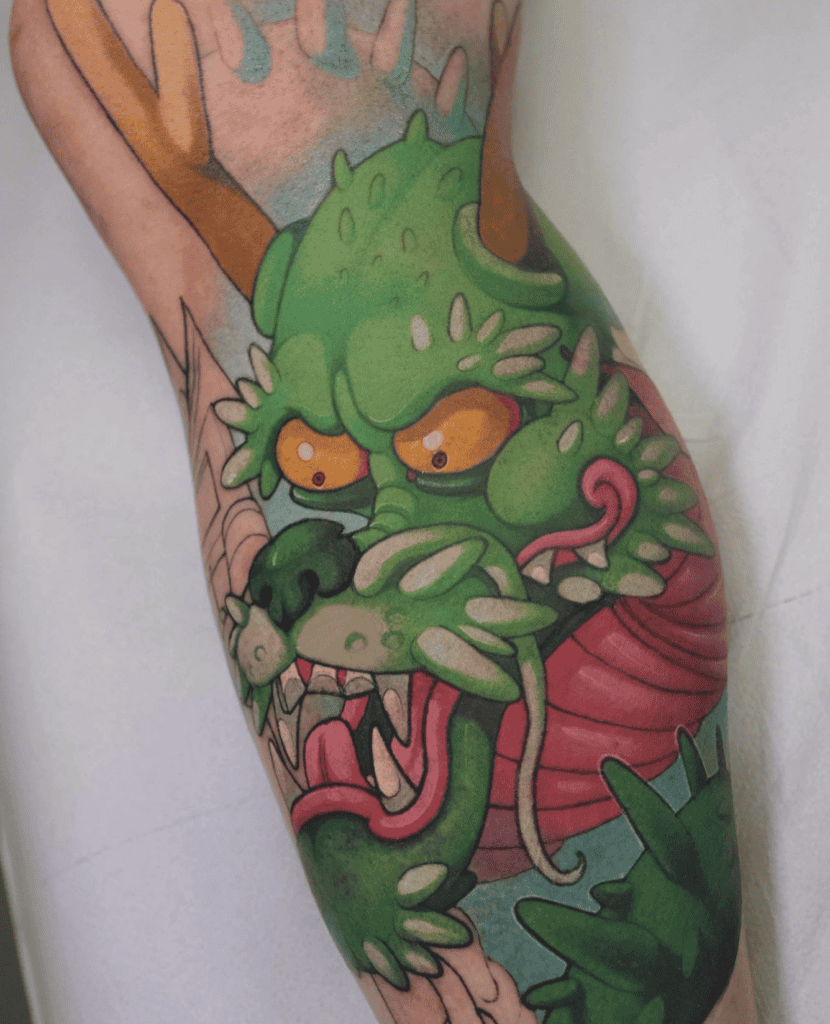
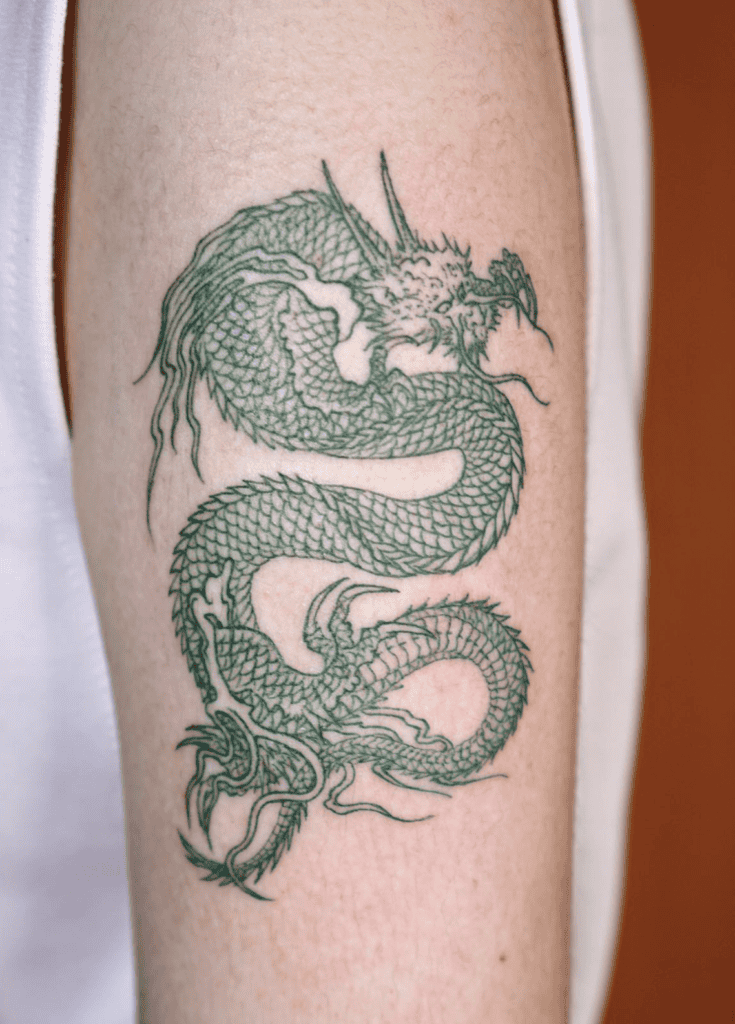
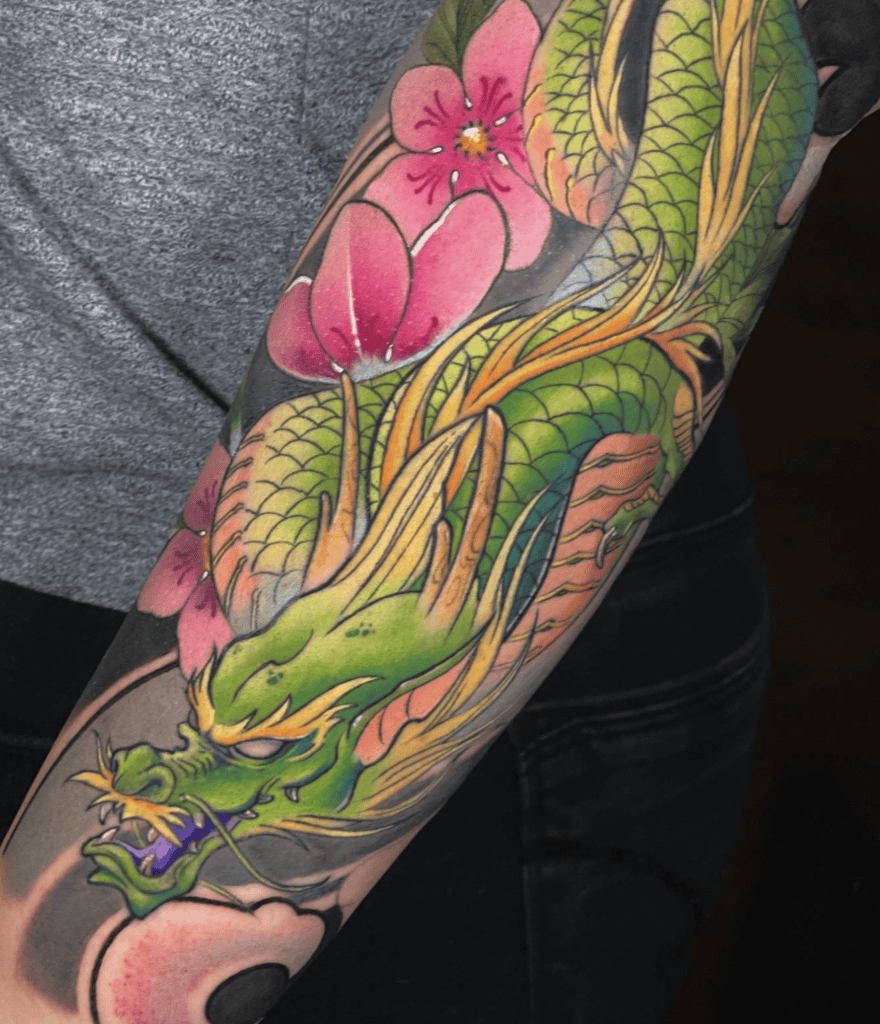
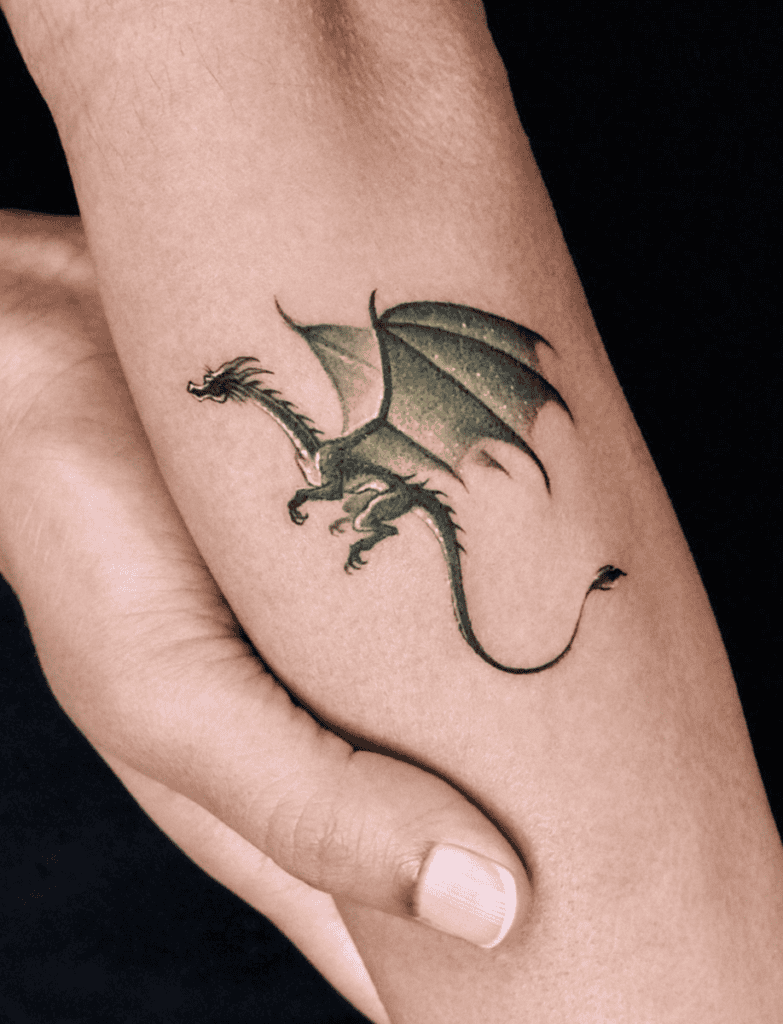
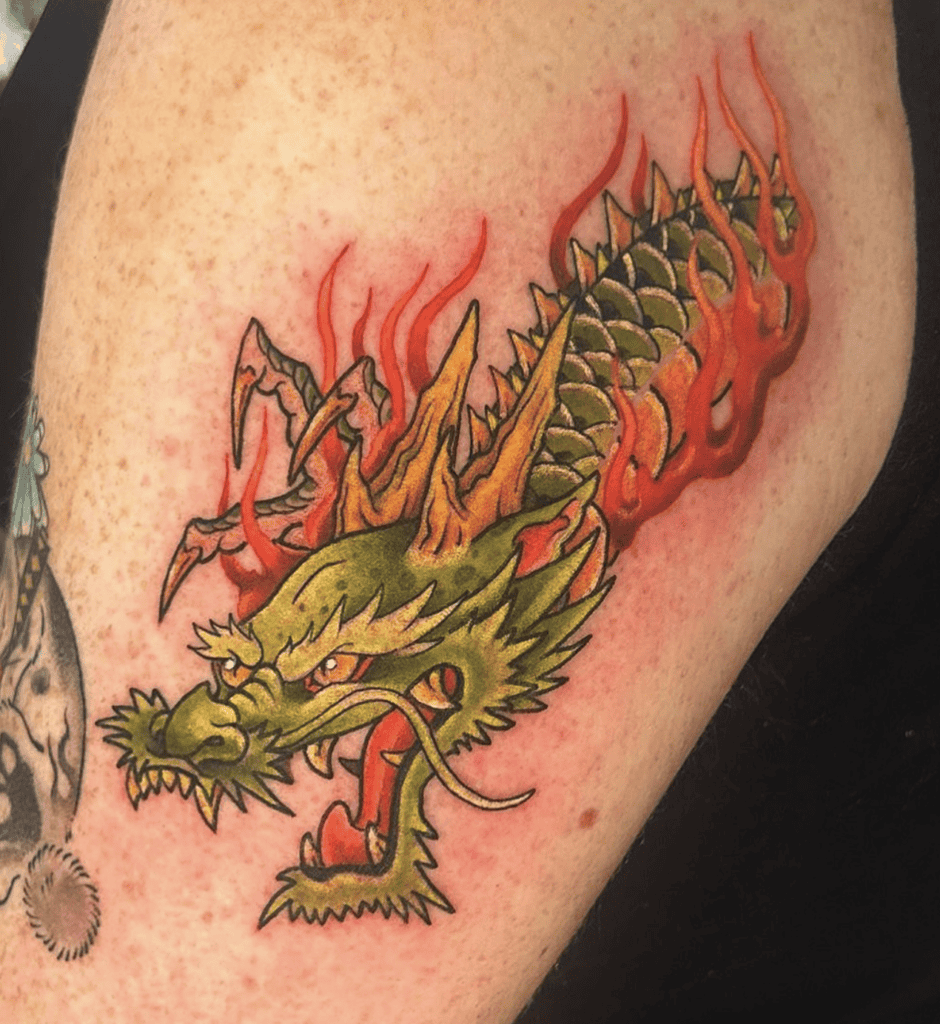
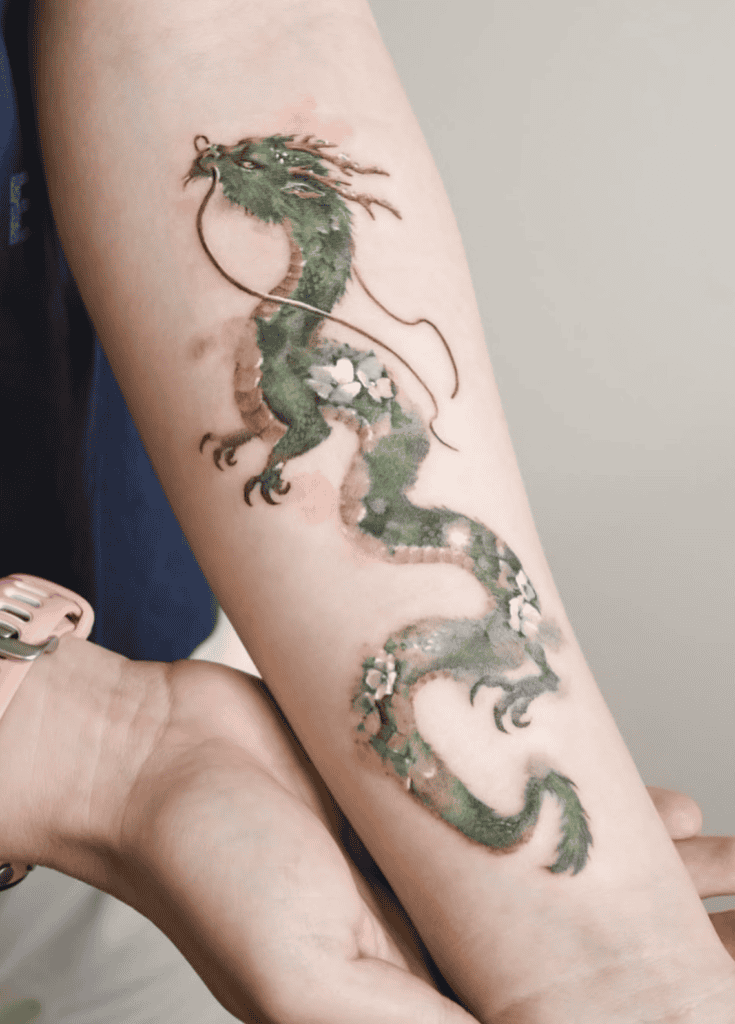
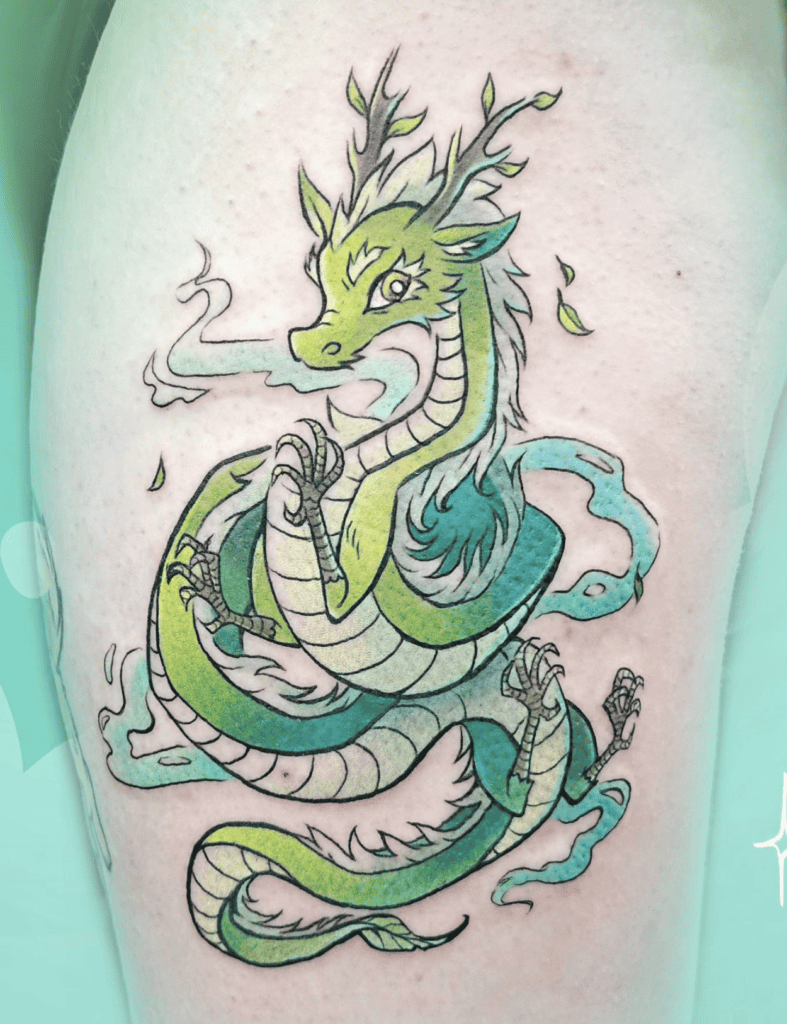
A Green Dragon is commonly associated with nature, growth, renewal, and life energy. Because green is strongly connected to forests, plants, and the natural world, Green Dragons often symbolise harmony with nature, healing, fertility, and personal growth.
Green Dragons can also represent wisdom, balance, and adaptability. In many fantasy settings, they are portrayed as ancient creatures deeply tied to forests, magic, or the earth itself. Some depictions present them as calm guardians of nature, while others portray them as cunning and territorial beings who fiercely defend their domain.
Purple Dragon Tattoo
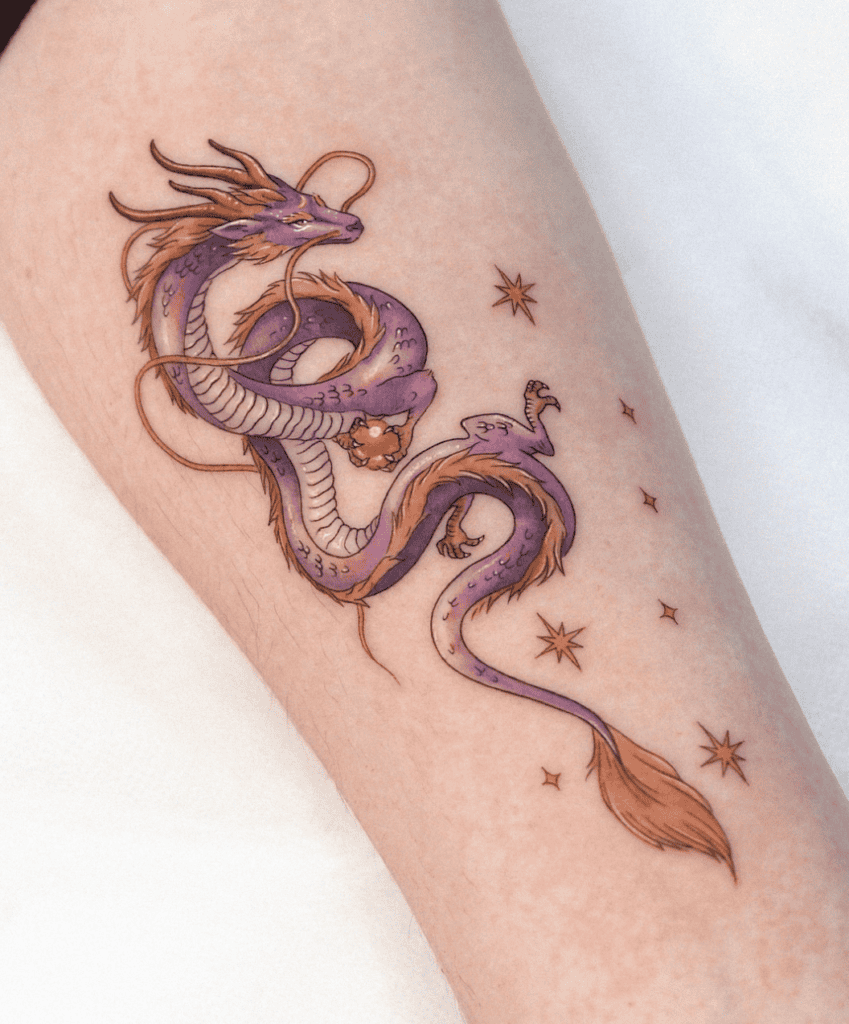
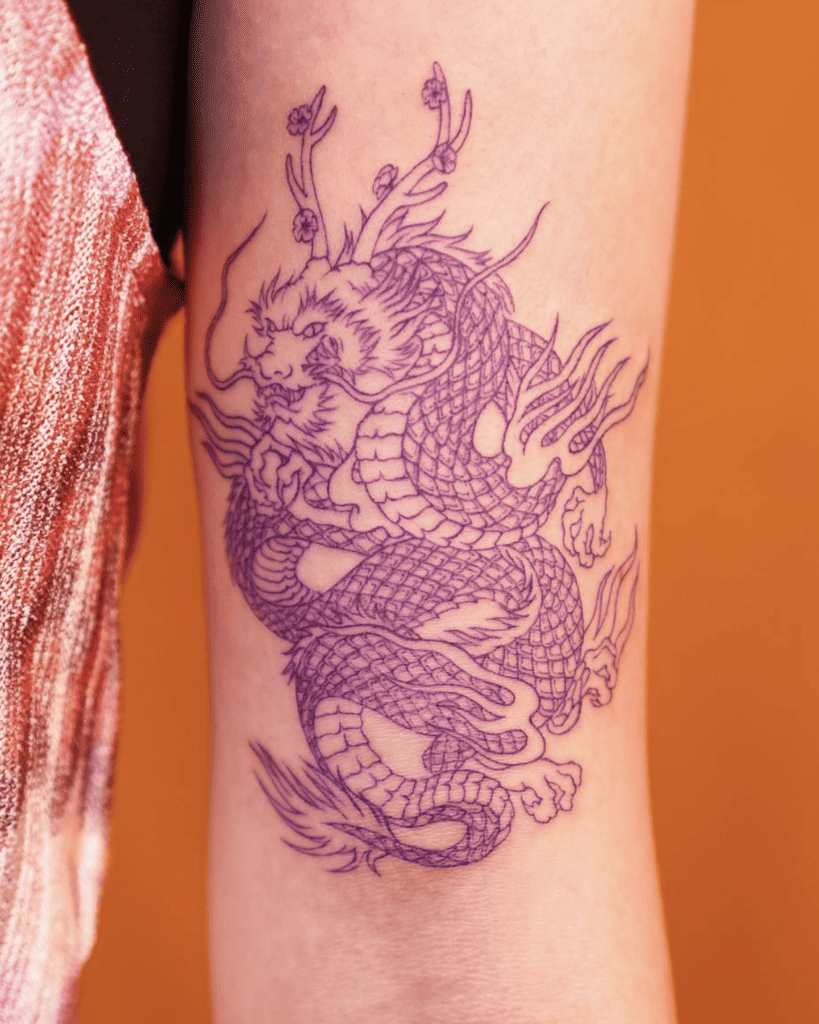
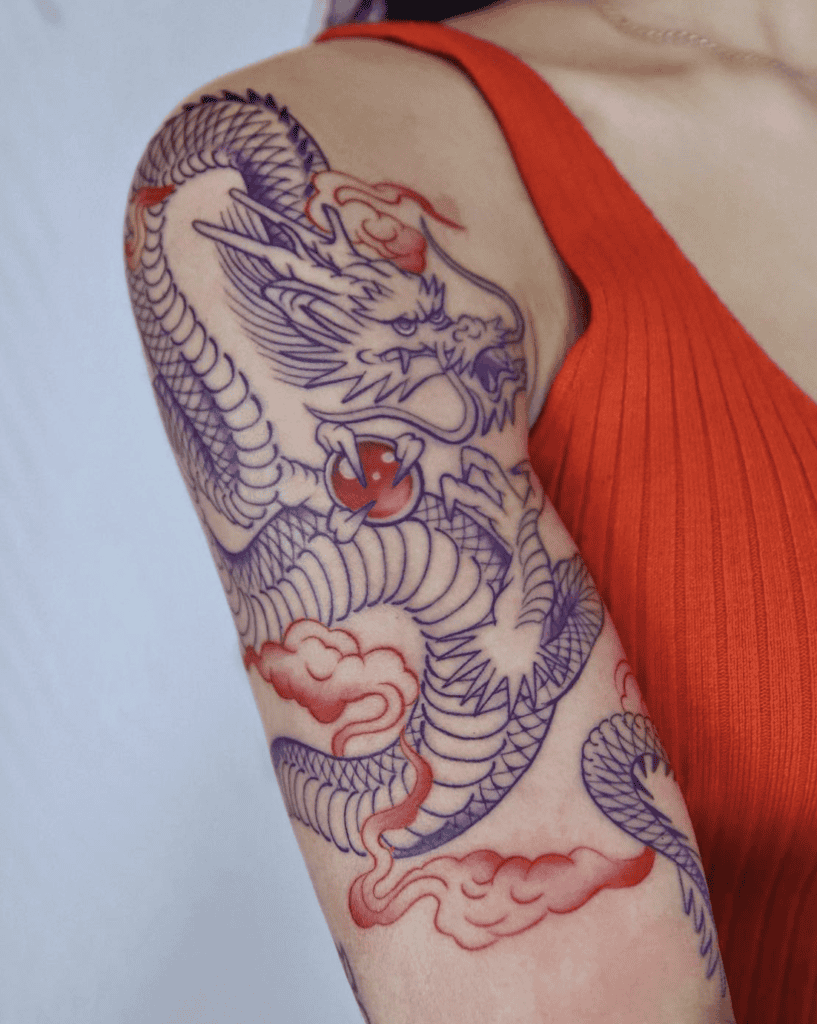
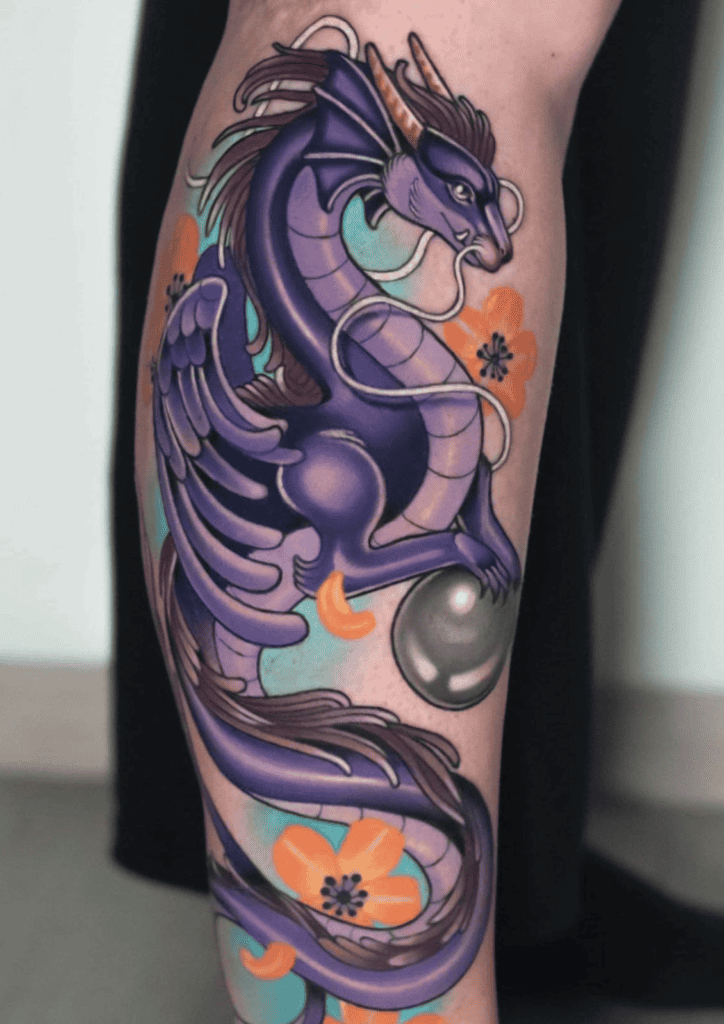
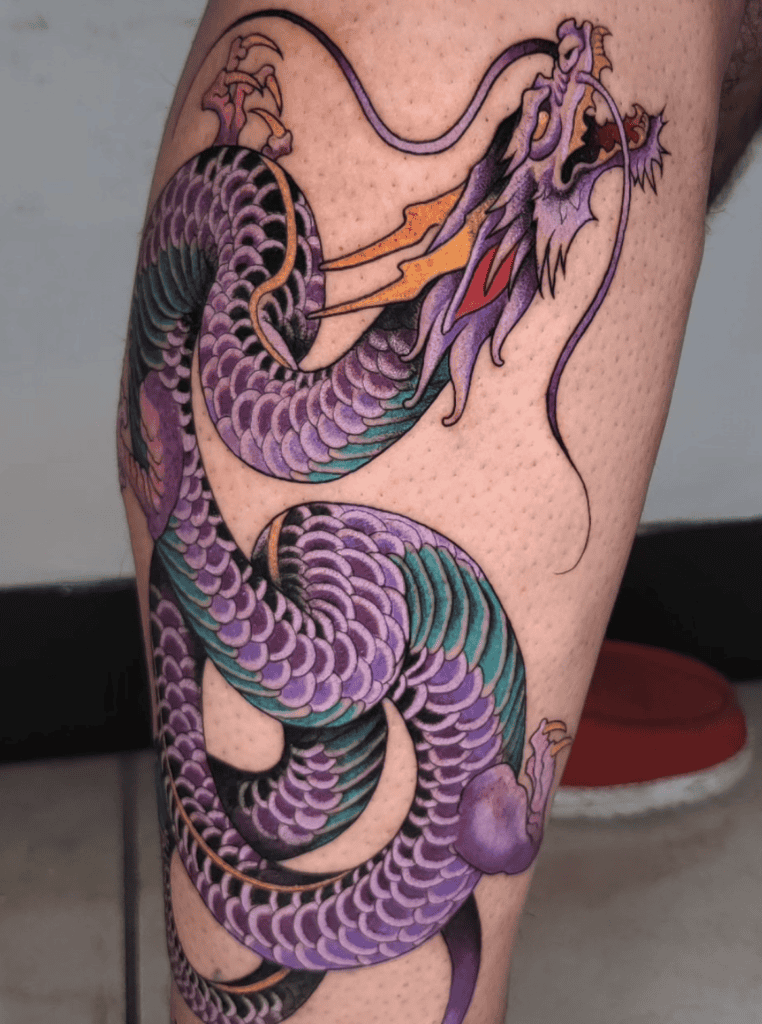
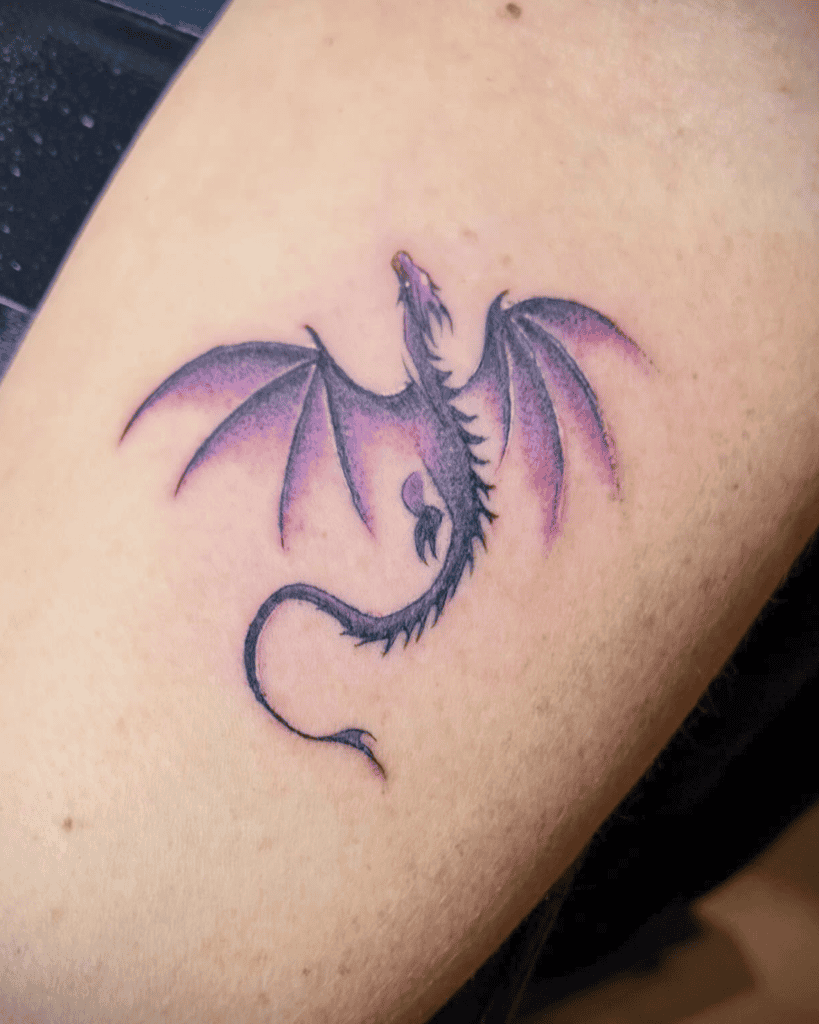
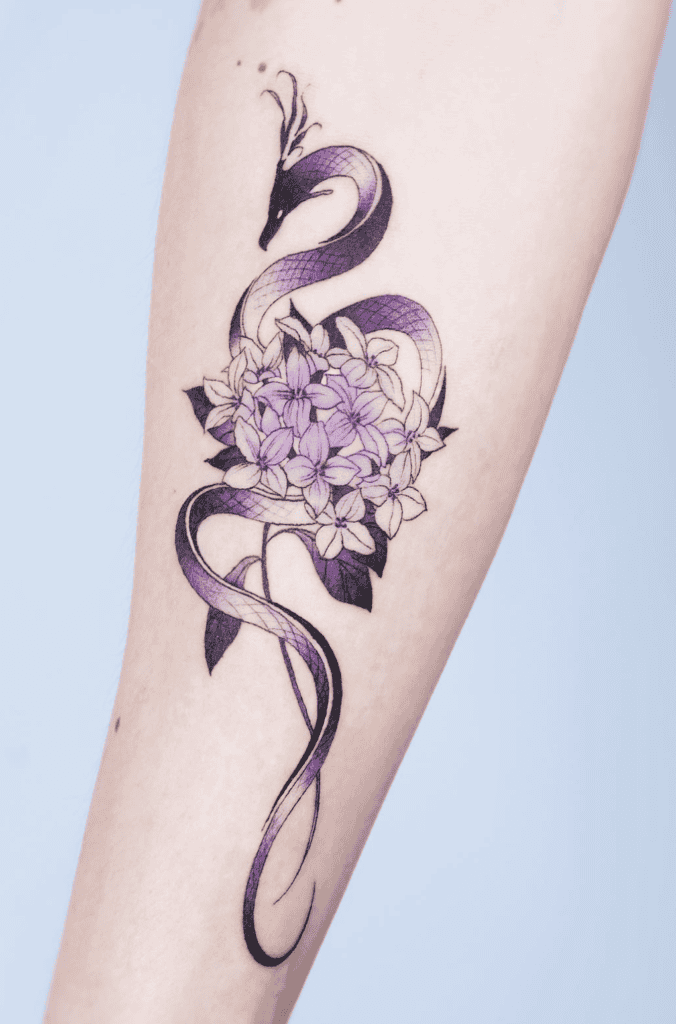
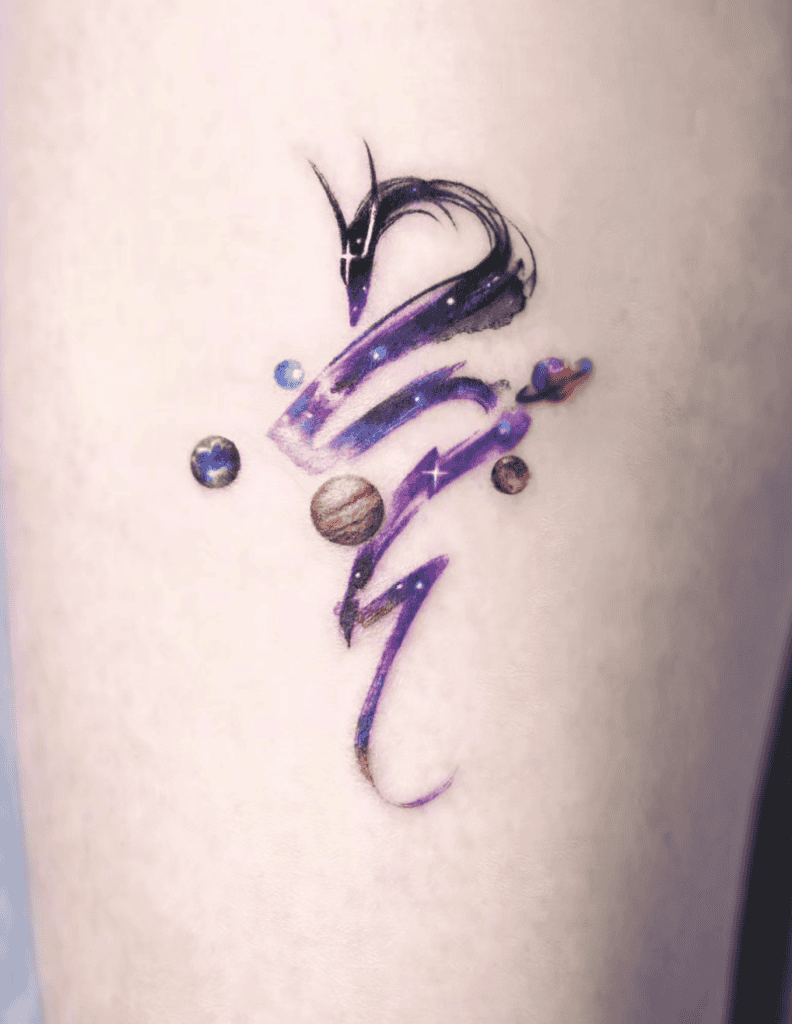
A Purple Dragon is commonly associated with mystery, magic, wisdom, and spiritual power. Because purple has long been associated with royalty, luxury, and the supernatural, Purple Dragons are often portrayed as rare, highly intelligent beings with deep mystical knowledge.
Purple Dragons can symbolise creativity, imagination, intuition, and transformation, frequently linked to psychic abilities, arcane magic, dreams, or hidden truths, giving them a more mystical and otherworldly feel than many other dragon colours.
The combination of dragon symbolism and the colour purple also creates meanings tied to ambition and inner power, balanced with wisdom. Rather than representing raw aggression, Purple Dragons often symbolise mastery, insight, and calm authority.
Pink Dragon Tattoo
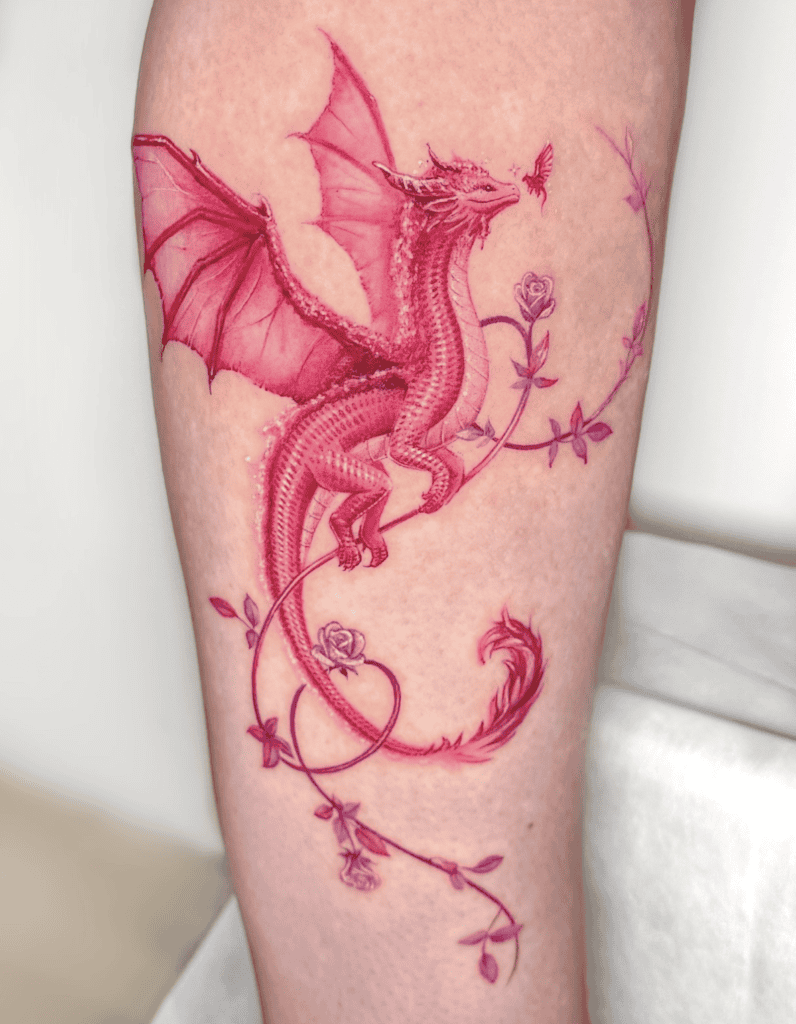
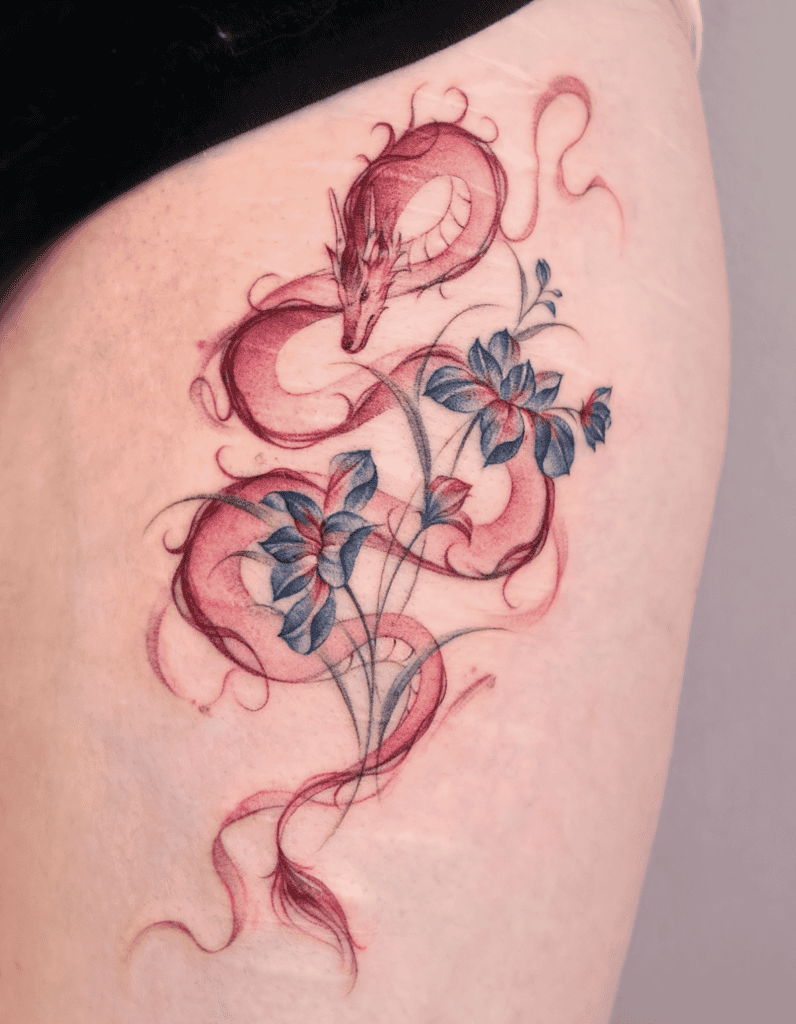
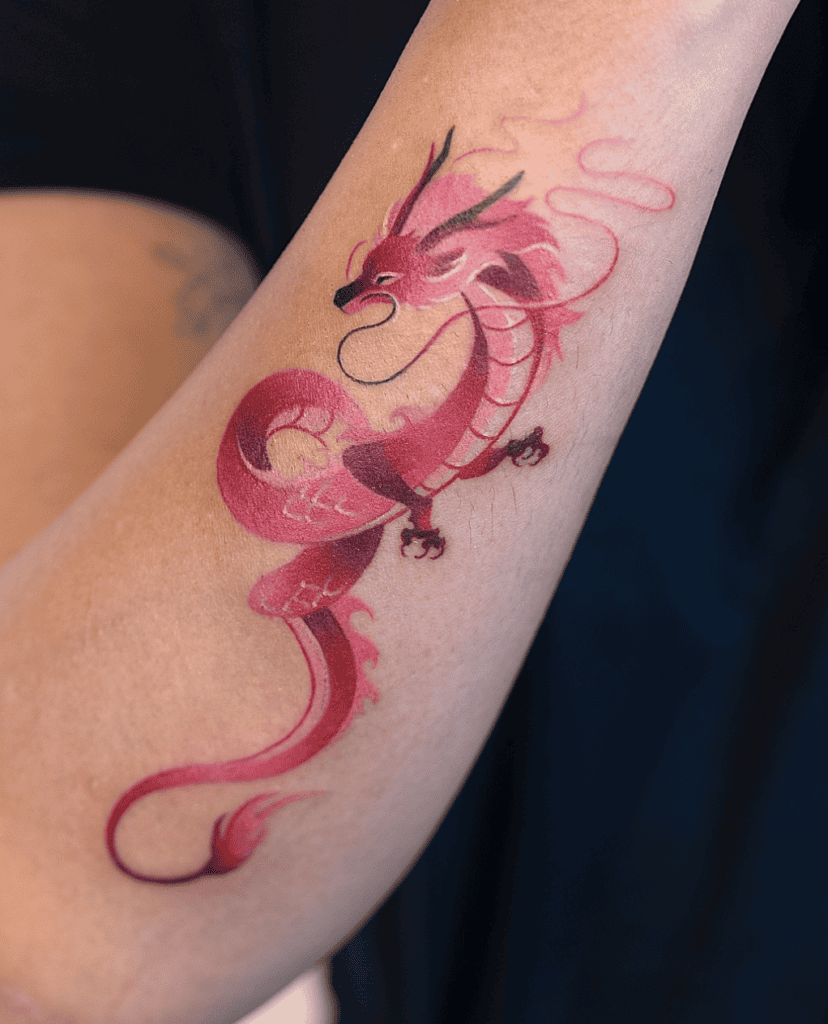
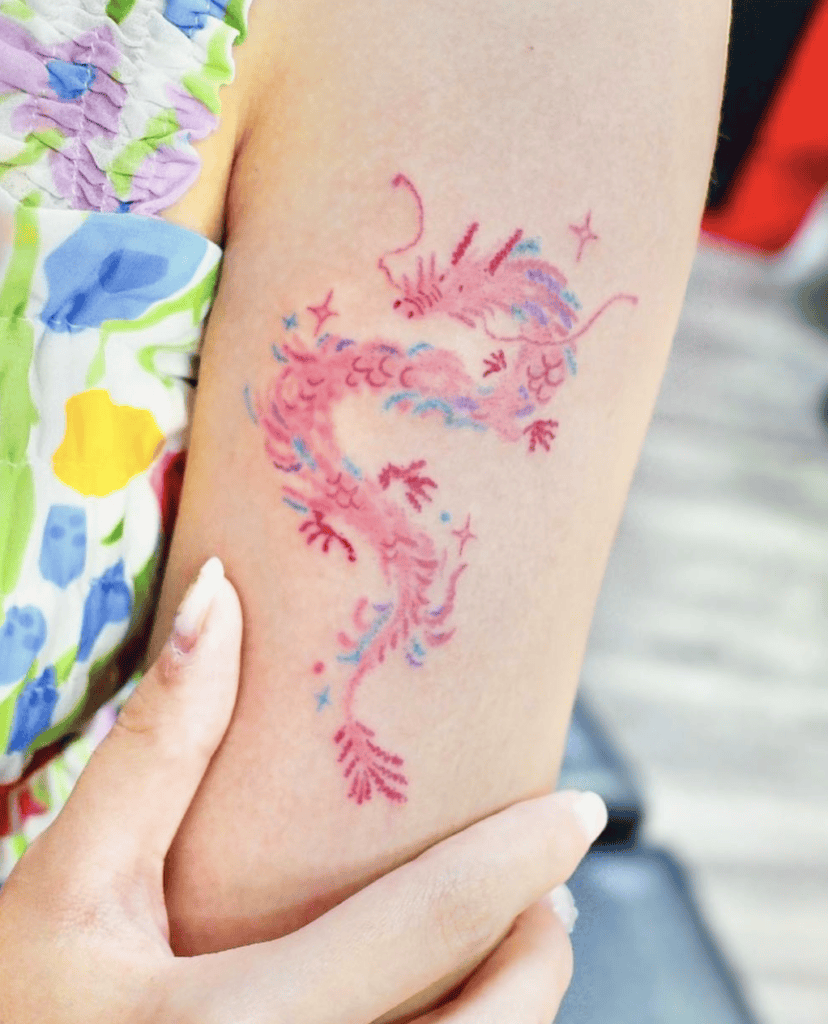
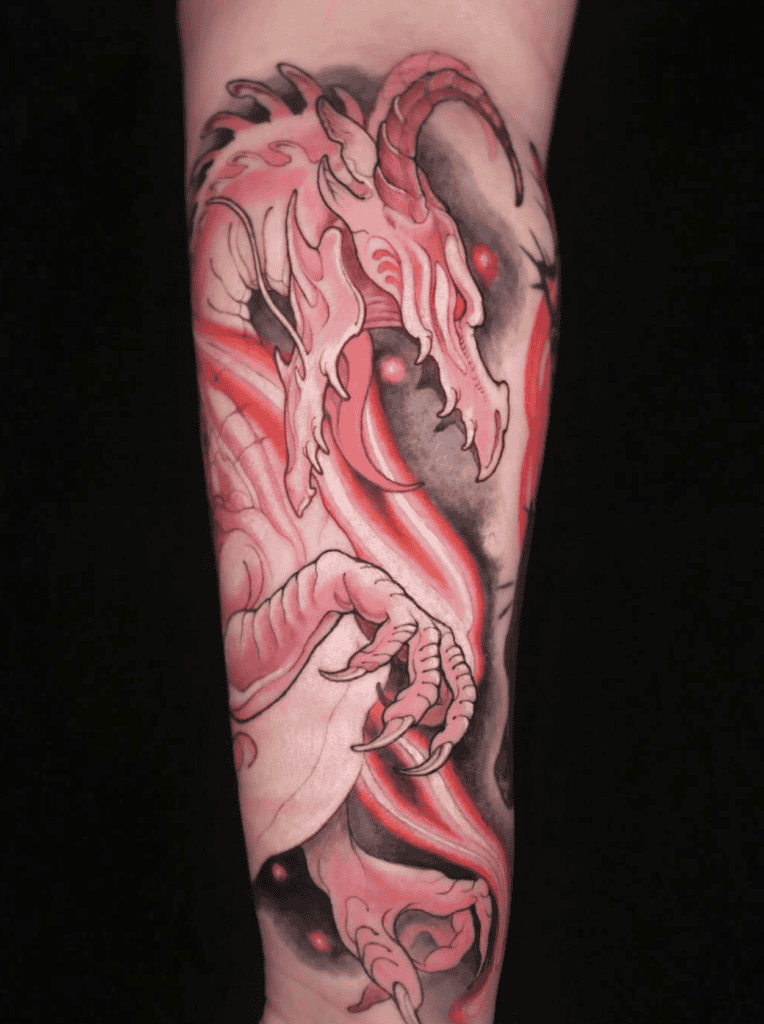
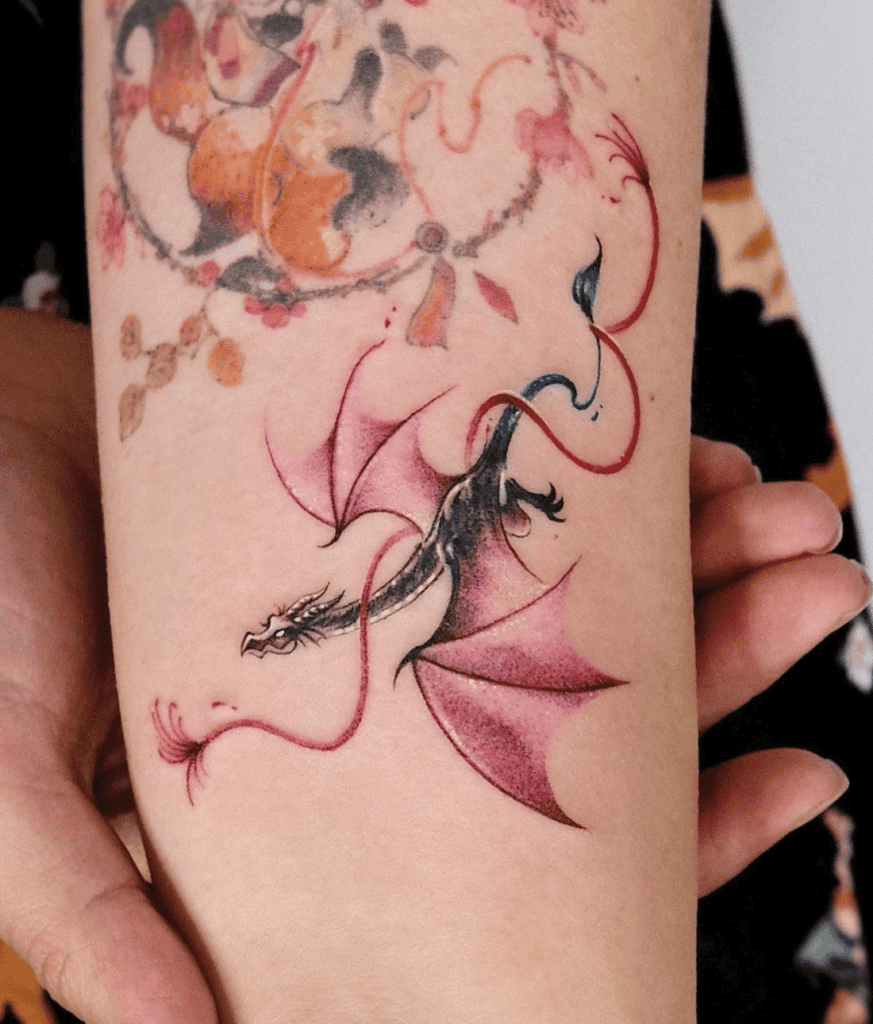
Pink Dragons are commonly associated with love, compassion, kindness, and emotional strength. While dragons are usually seen as powerful and intimidating, the colour pink softens their image, giving them symbolism tied to warmth, affection, creativity, and positivity.
Pink Dragons can represent gentle strength, how compassion and empathy can be just as powerful as aggression or force. They are often linked to friendship, romance, healing, and self-love, making them feel more approachable and uplifting than darker dragon designs.
Phoenix Dragon Tattoo
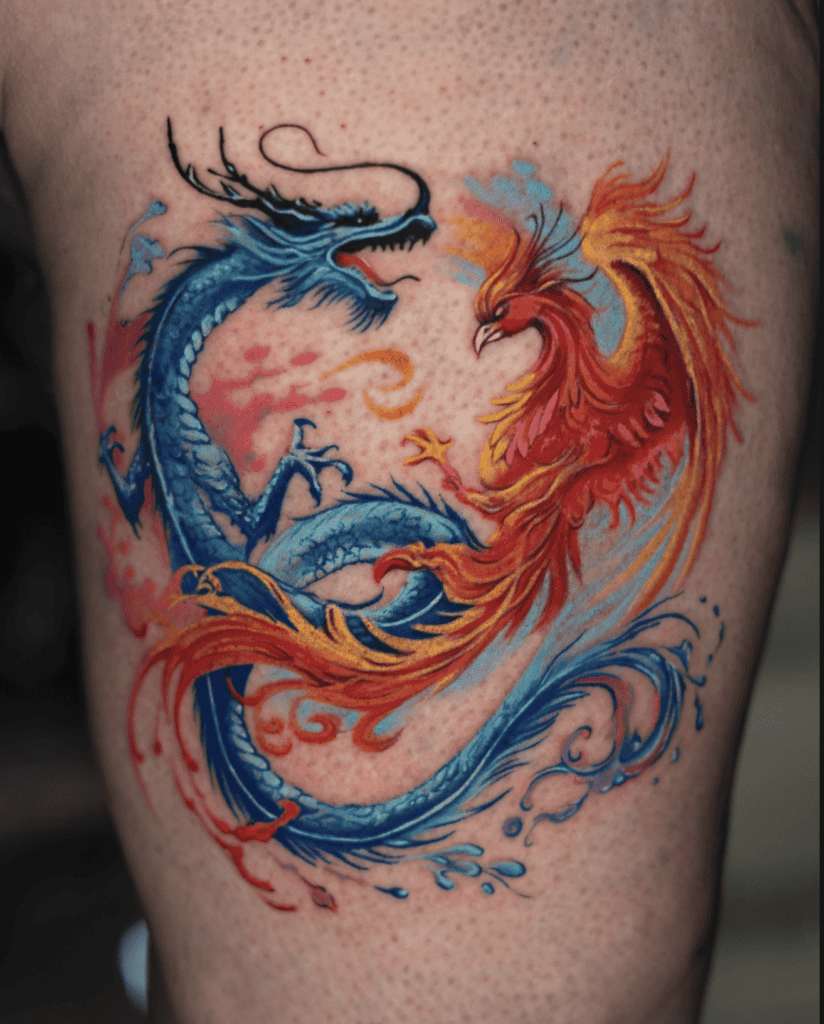
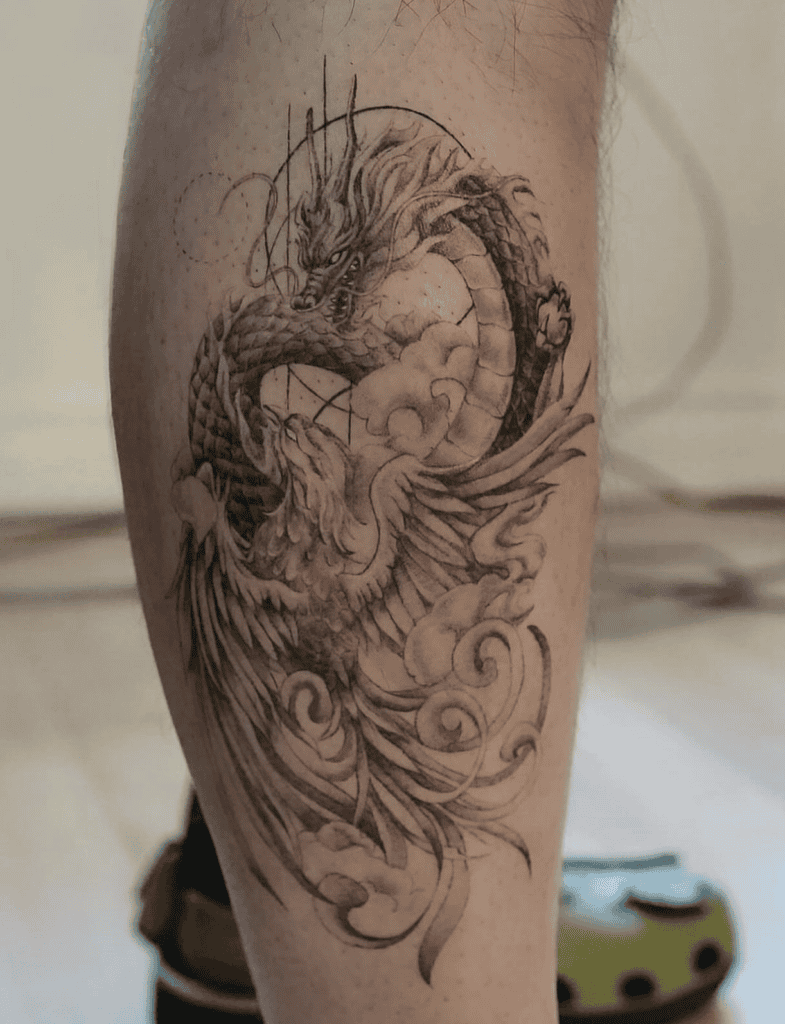
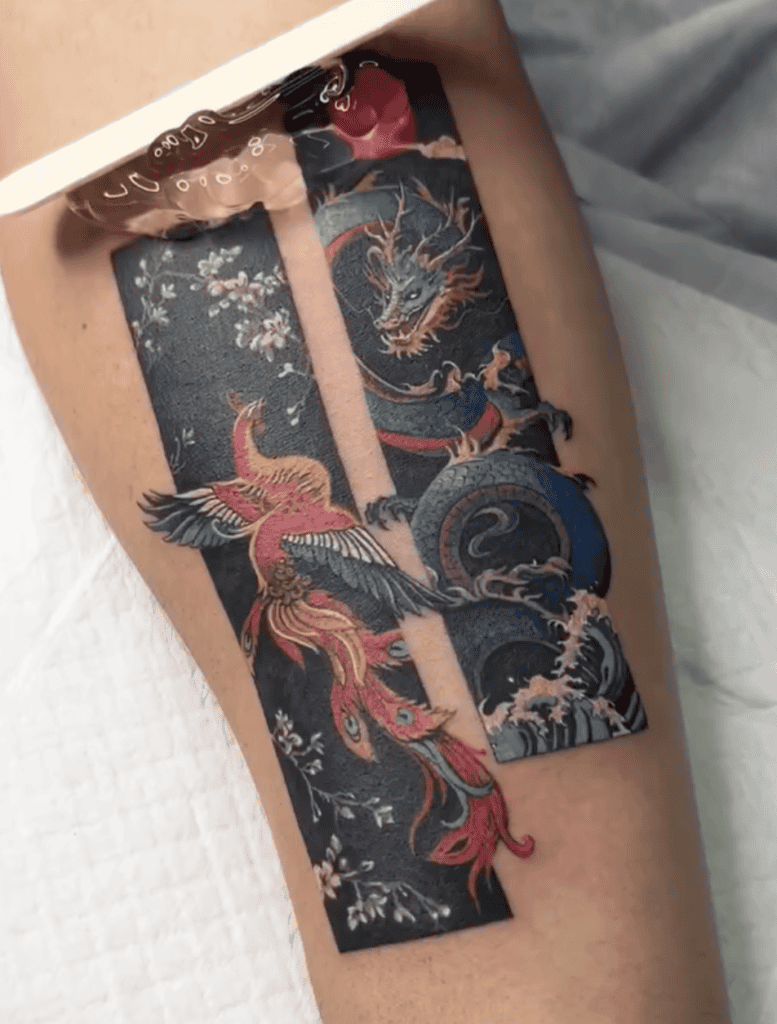
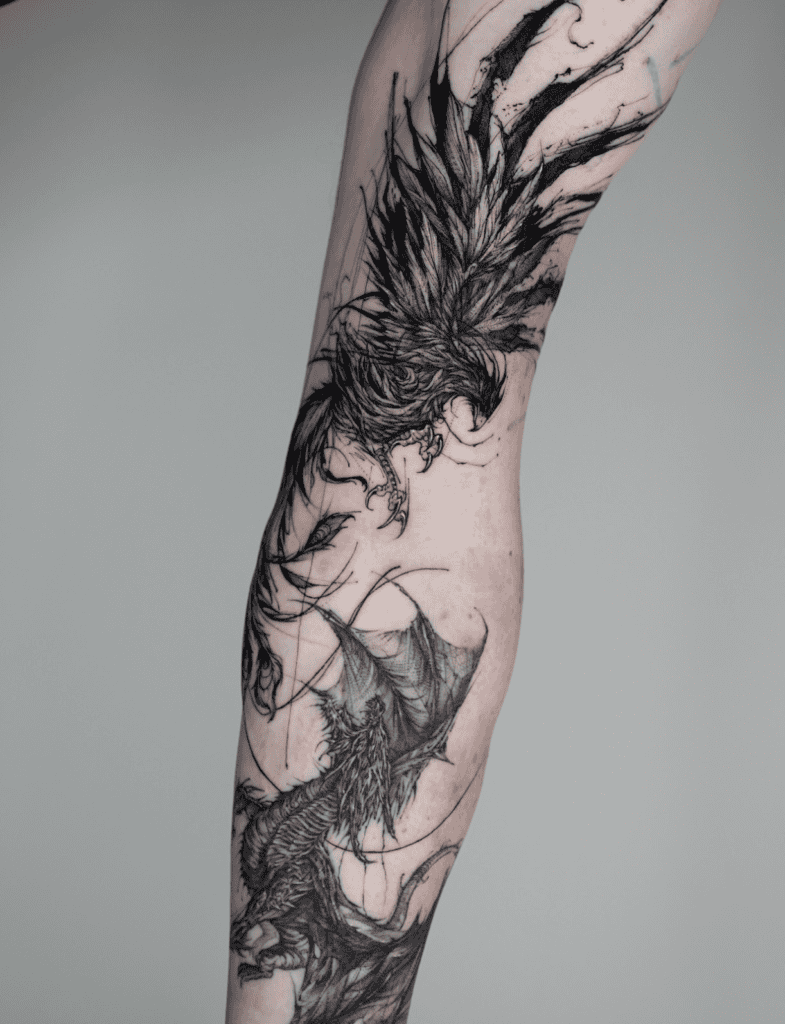
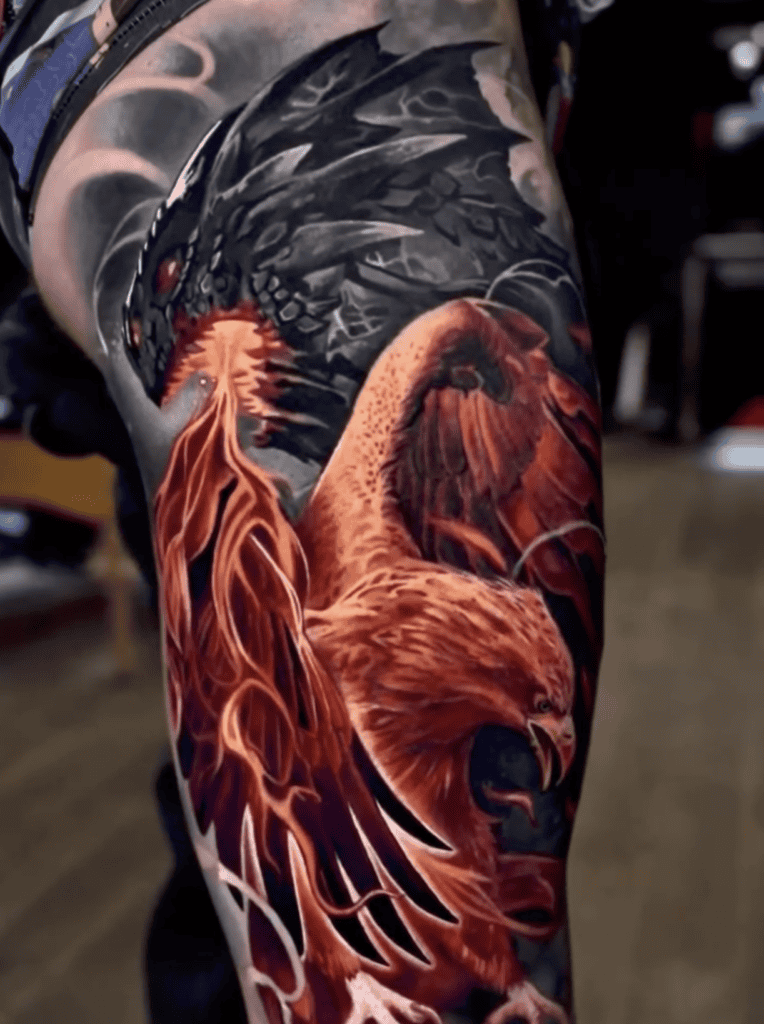
A Dragon and Phoenix pairing commonly represents balance, harmony, duality, and the union of opposing forces. The dragon is often associated with strength, power, wisdom, and masculine energy, while the phoenix symbolises rebirth, renewal, beauty, and feminine energy. When shown together, they reflect the idea that opposite forces can complement and strengthen one another rather than conflict.
This pairing is also strongly connected to love, partnership, and unity. In many Eastern traditions, the Dragon and Phoenix together symbolise an ideal balance between two people, which is why the design is often associated with marriage, soulmates, or deep emotional bonds.
The Dragon and Phoenix may also represent balance between chaos and peace, destruction and rebirth, ambition and compassion, or power and grace. Because both creatures are incredibly powerful in their own ways, the design can symbolise personal growth and achieving harmony within oneself.
Turtle Dragon Tattoo
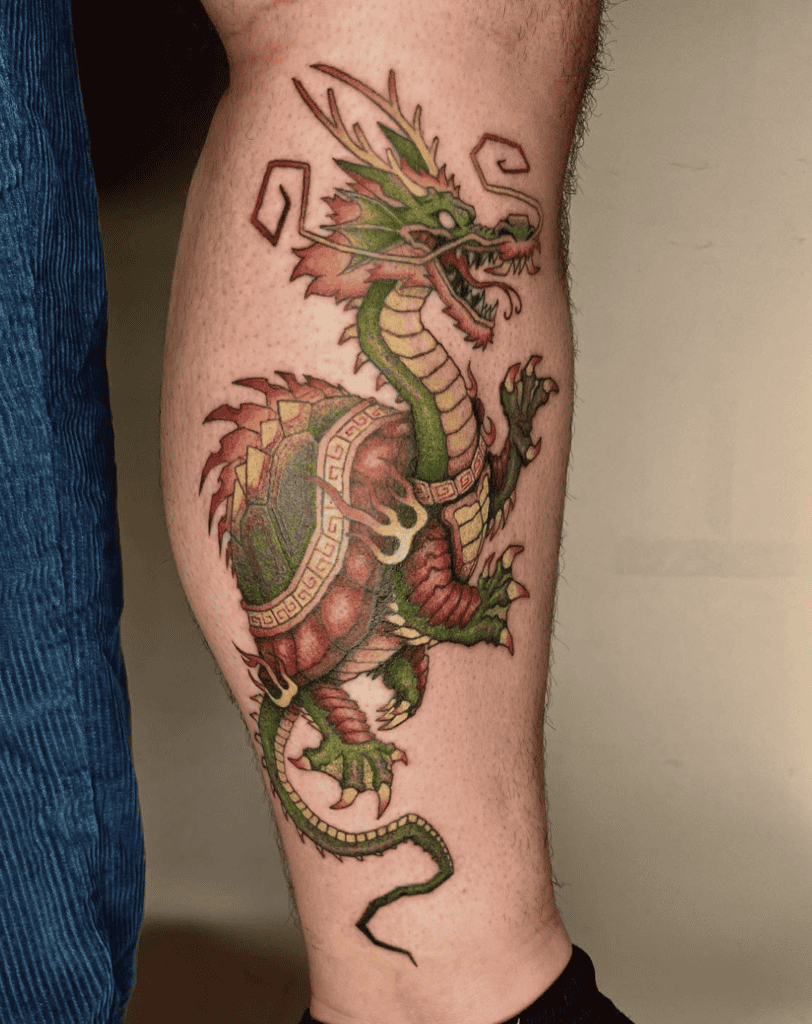
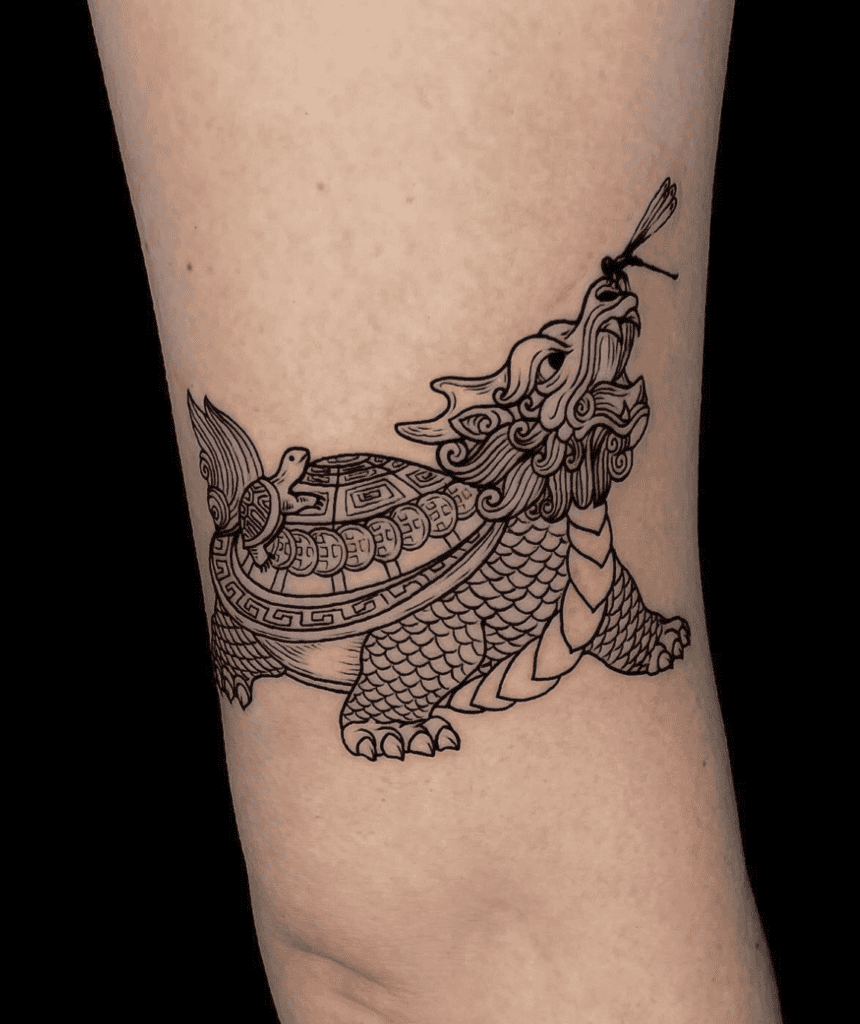
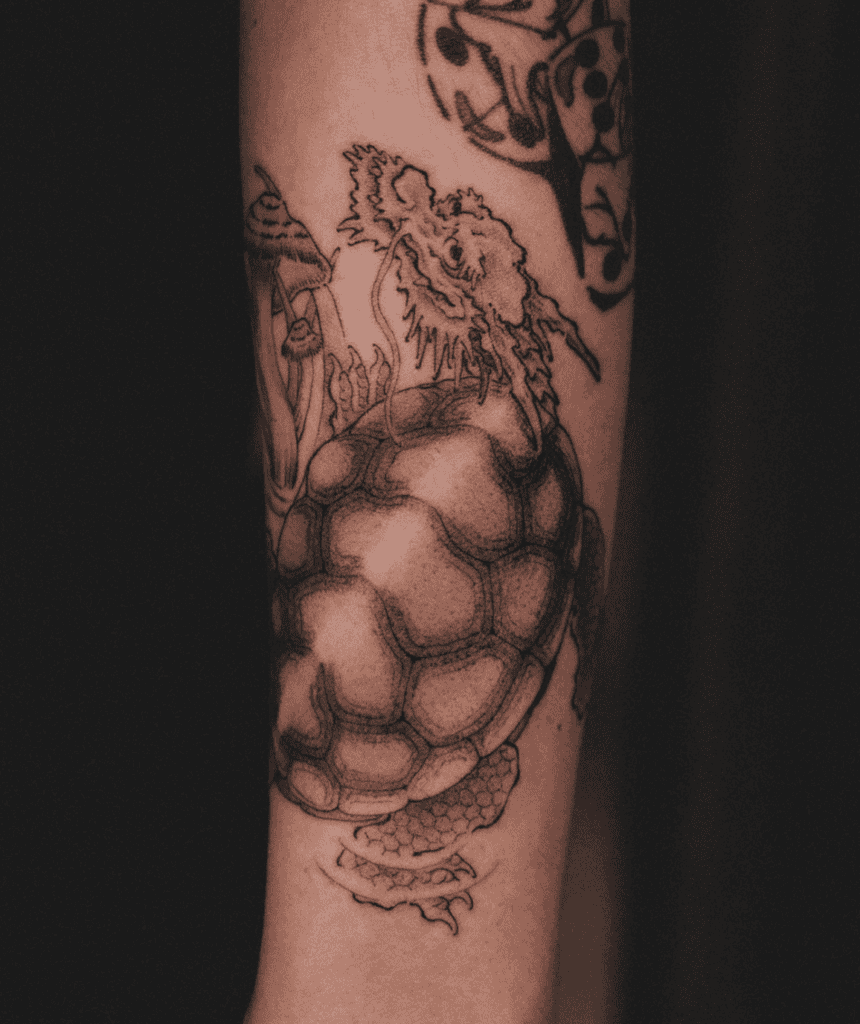
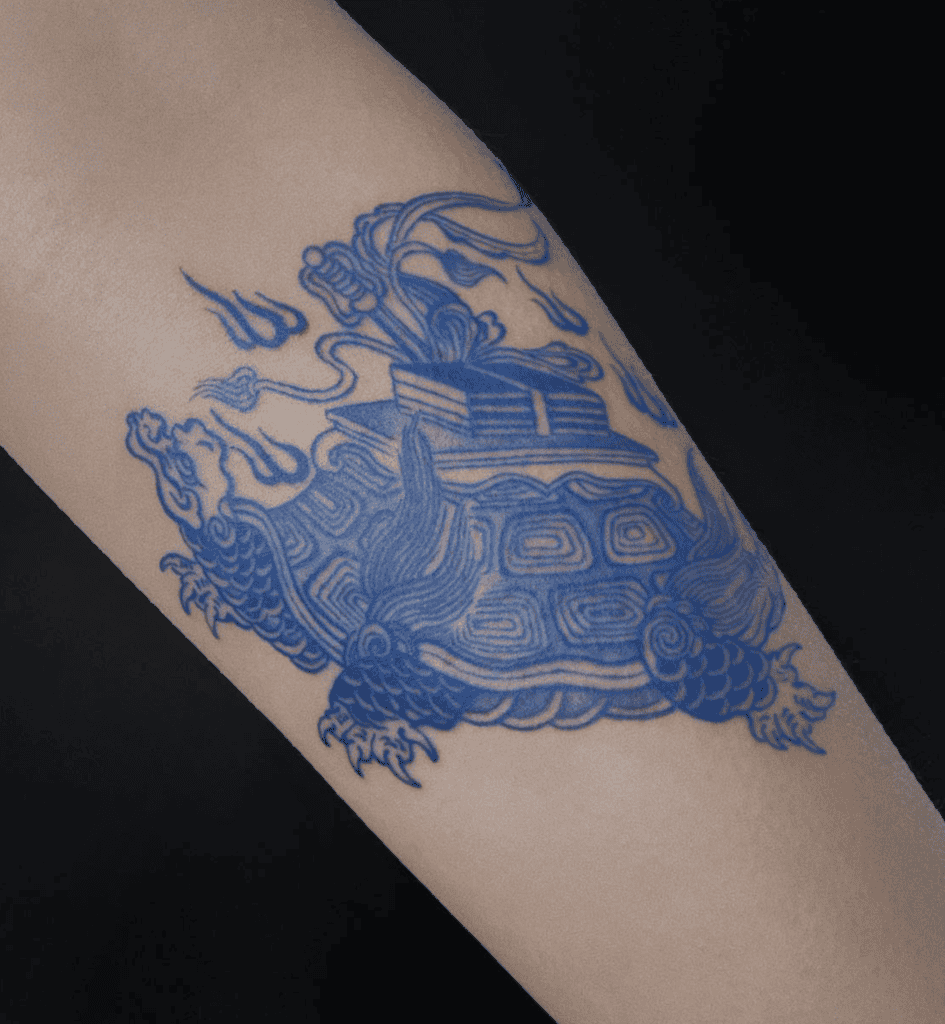
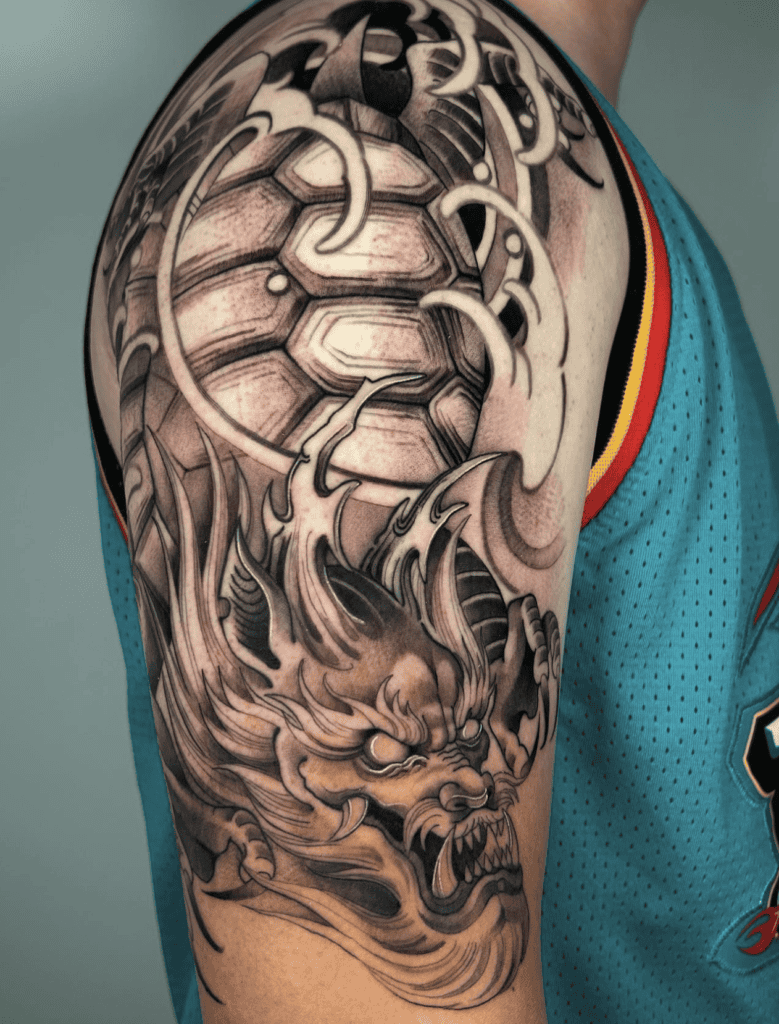
A Dragon Turtle is a legendary creature most commonly found in Chinese mythology and Feng Shui traditions, where it symbolises strength, protection, wisdom, stability, and long life.
The dragon side of the creature represents power, success, ambition, and good fortune, while the turtle symbolises endurance, grounding, patience, and longevity. Together, the Dragon Turtle is seen as a balanced creature that combines powerful energy with steady wisdom and resilience.
In Feng Shui, Dragon Turtle statues are commonly used as symbols of wealth, career success, stability, and safeguarding the home. They are believed to attract positive energy while helping ward off negativity or misfortune.
Tiger Dragon Tattoo
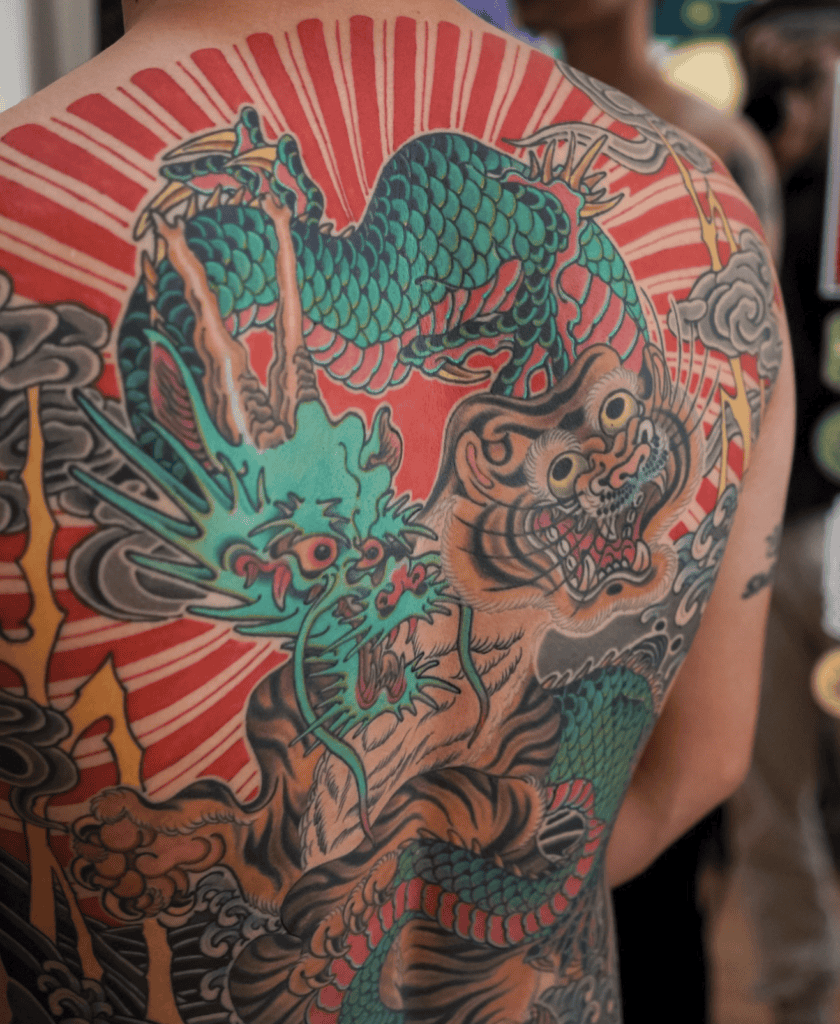
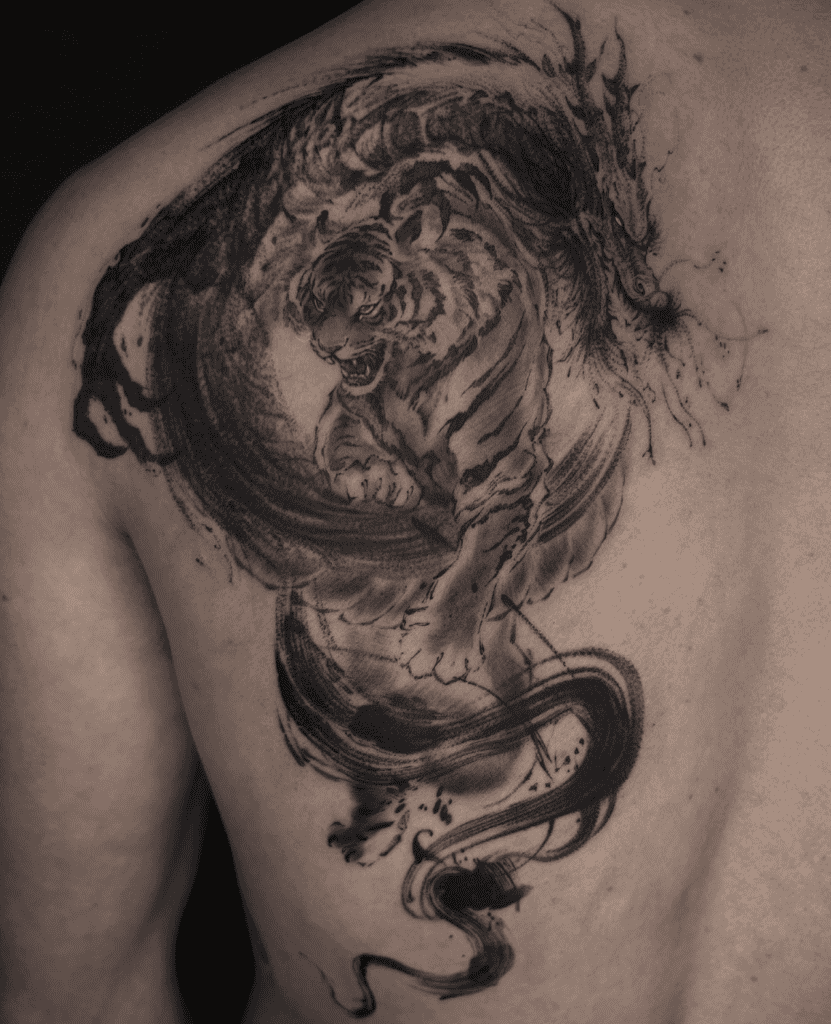
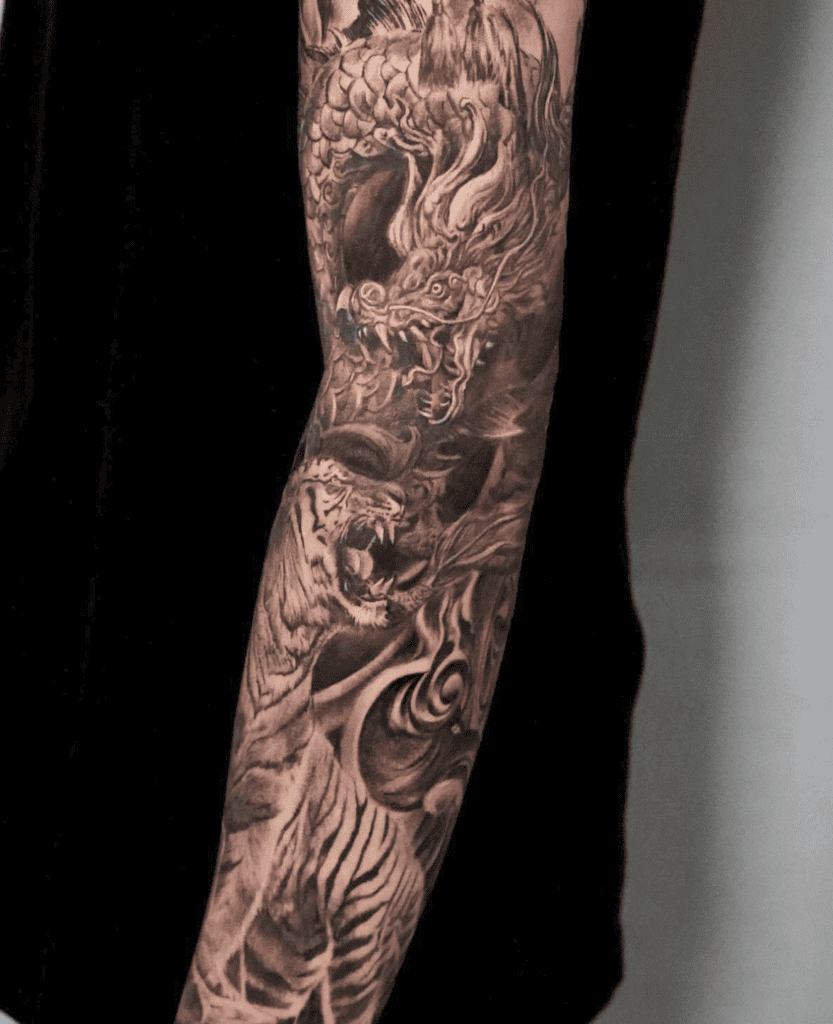
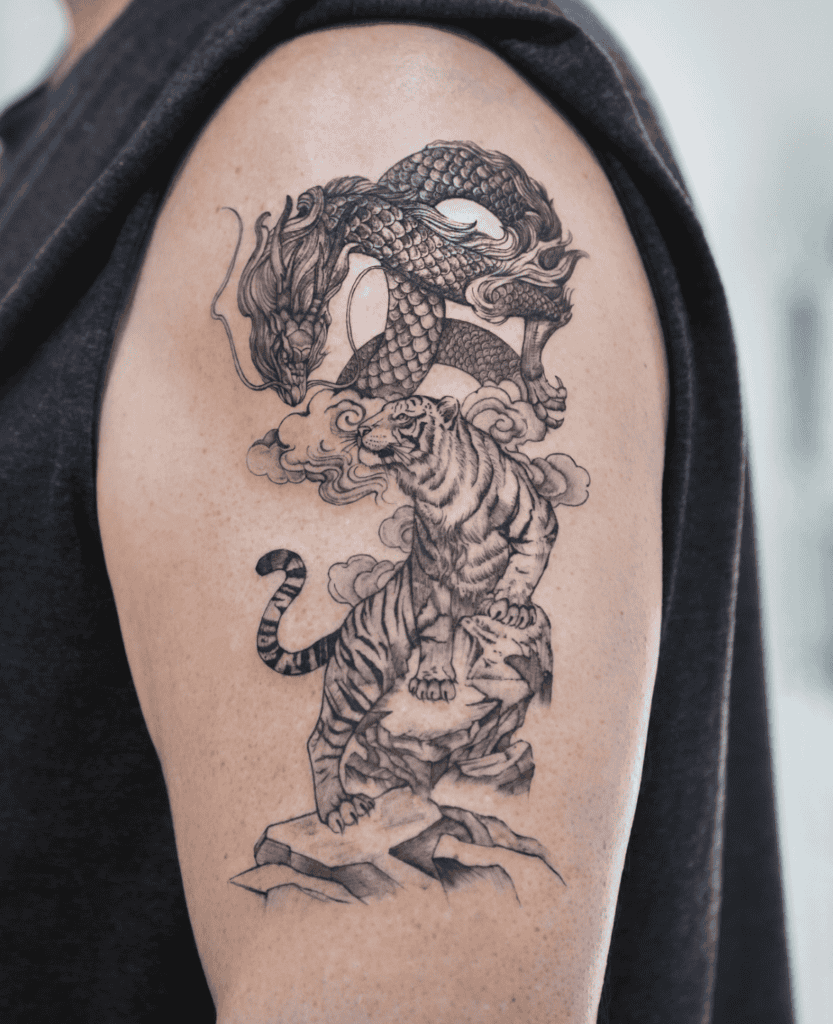
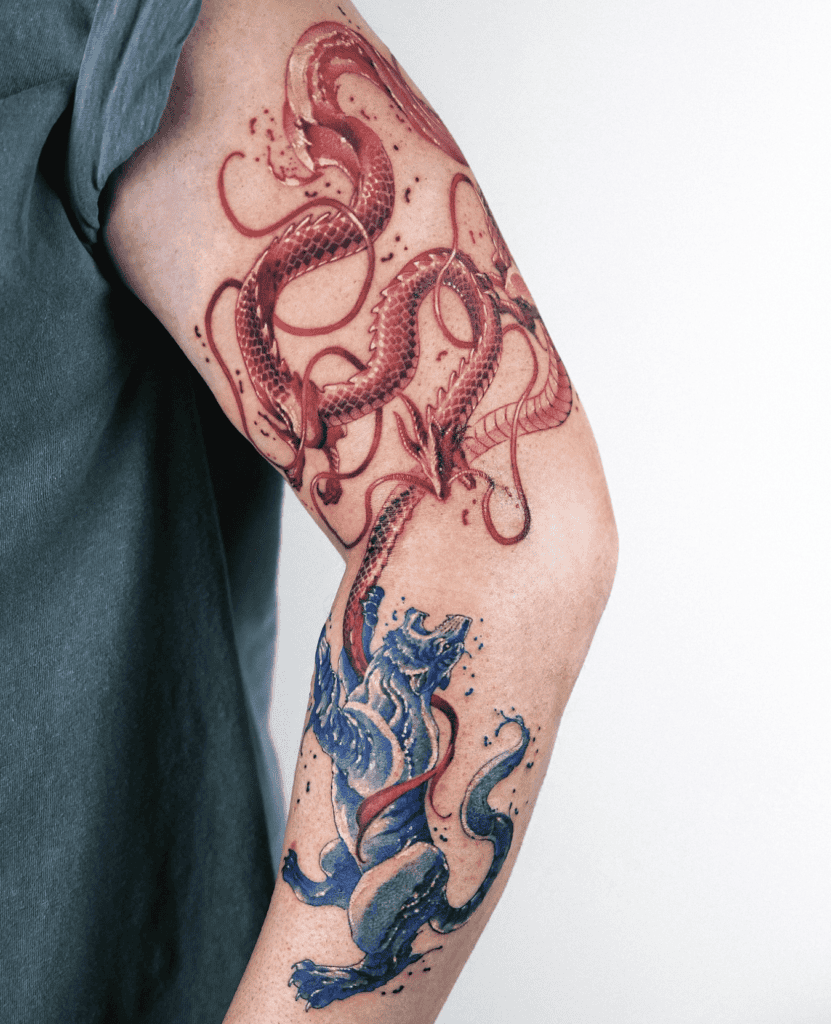
A Tiger and Dragon pairing is commonly associated with balance, duality, and the harmony between opposing forces. The Dragon and Tiger are two of the most powerful creatures in Eastern symbolism, and together they often represent the balance between strength and wisdom, instinct and intellect, or chaos and control.
The dragon is usually linked to spiritual power, wisdom, ambition, and heavenly energy, while the tiger symbolises physical strength, courage, passion, and earthly power. When combined, they create a powerful symbol of unity between mind and body or between different forms of strength.
In many traditions, the Dragon and Tiger are viewed as rivals or opposites that push against one another while remaining interconnected. This connection is often compared to yin and yang energy, not good versus evil, but complementary forces that create balance through contrast.
Koi Dragon Tattoo
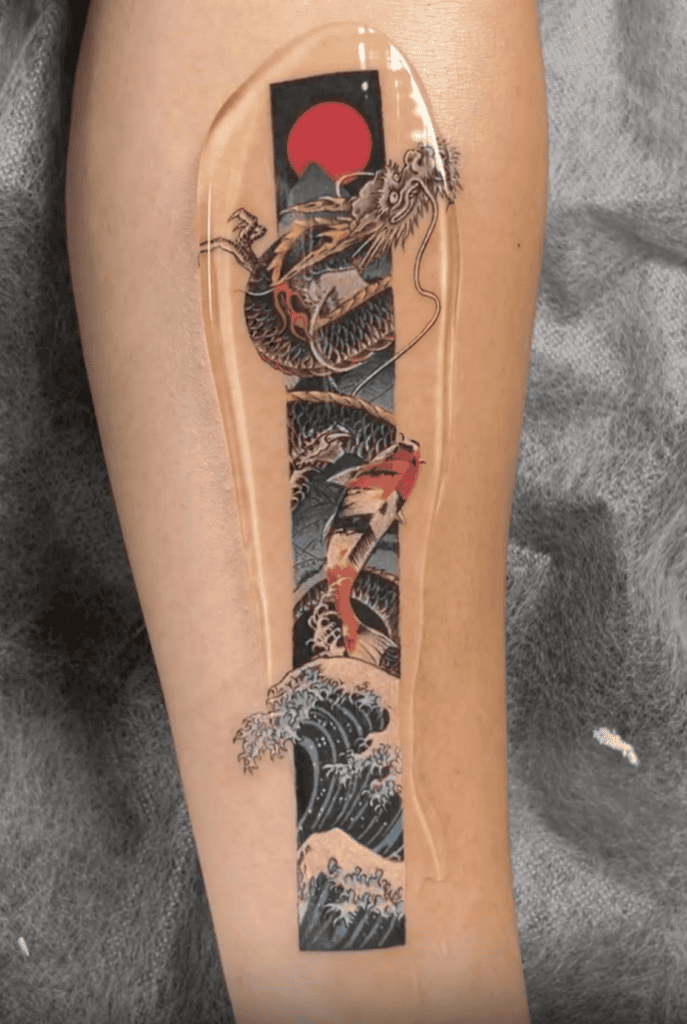
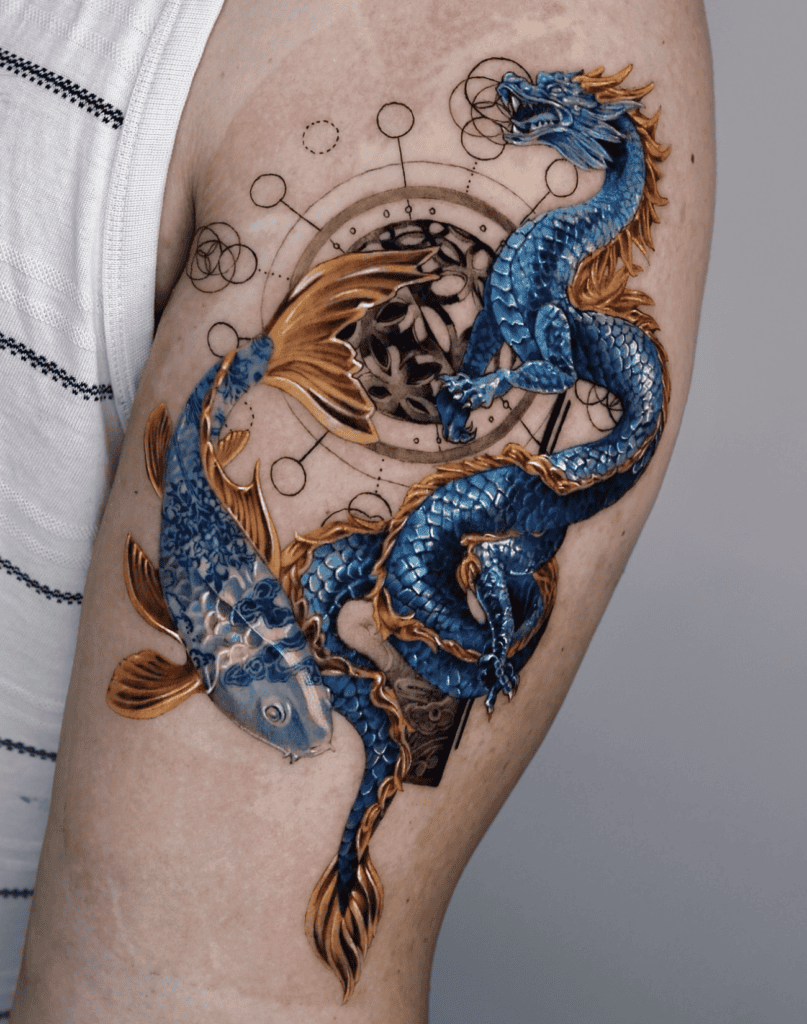
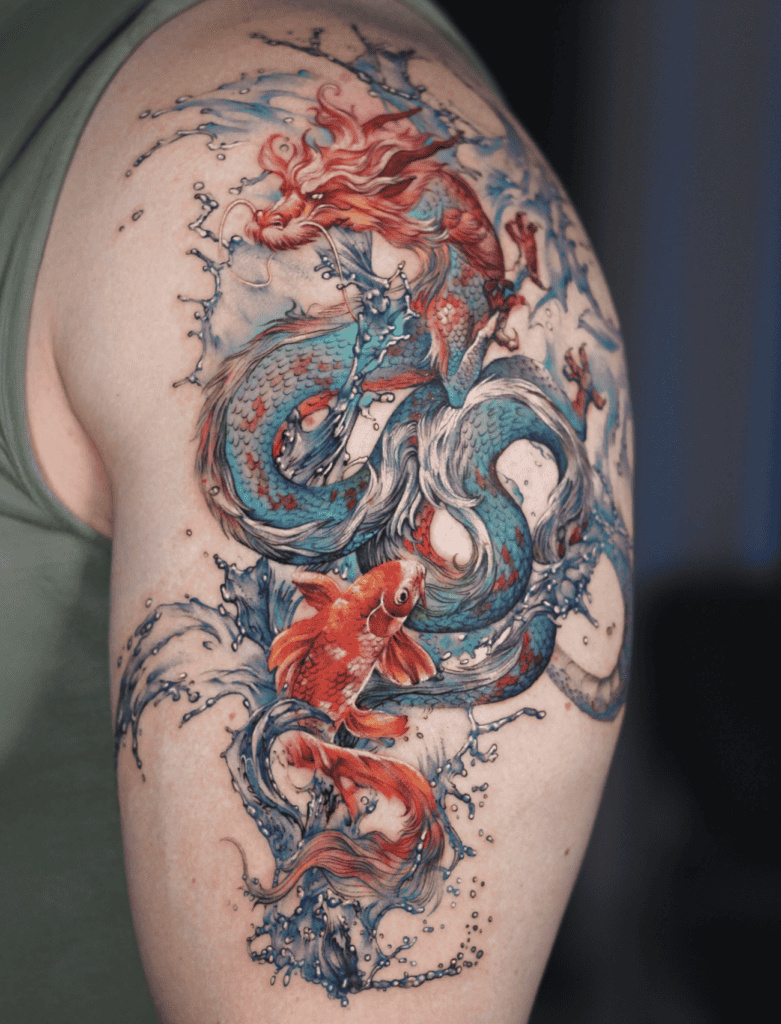
A Koi and Dragon is commonly associated with perseverance, transformation, ambition, and achieving greatness through determination. The symbolism comes from a famous East Asian legend about a koi fish that transforms into a dragon after overcoming an impossible journey.
According to the legend, thousands of koi fish swam upstream along a powerful river, navigating difficult currents and obstacles. Most turned back or failed along the way, but one koi refused to give up. After reaching the top of a great waterfall known as the Dragon Gate, the gods rewarded the koi’s determination by transforming it into a mighty dragon.
Because of this story, the Koi Dragon became a symbol of personal growth, resilience, and the pursuit of one’s highest potential. It represents the idea that true strength is earned through struggle, patience, and persistence rather than being given freely.
Irezumi Dragon Tattoo
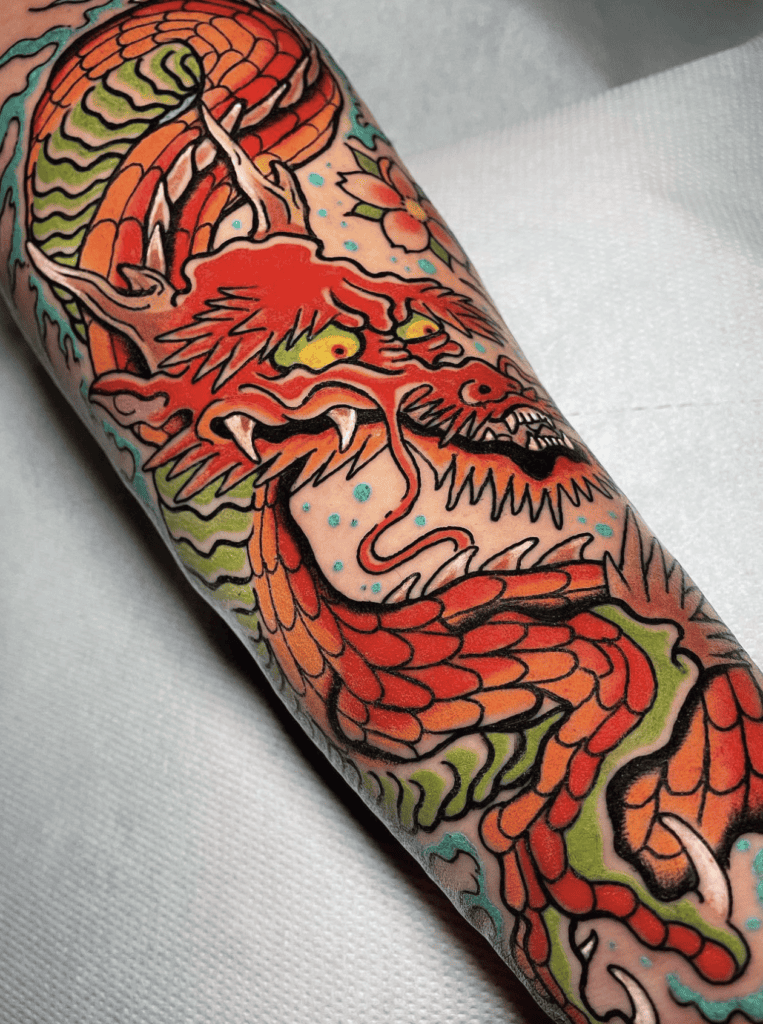
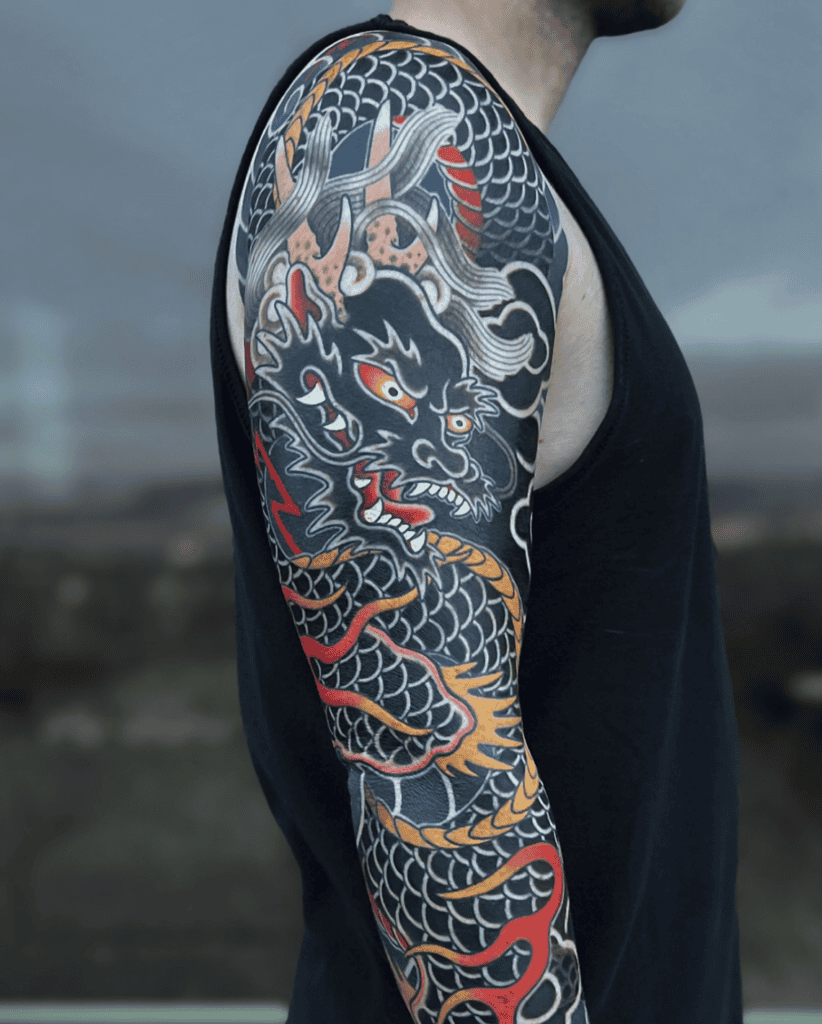
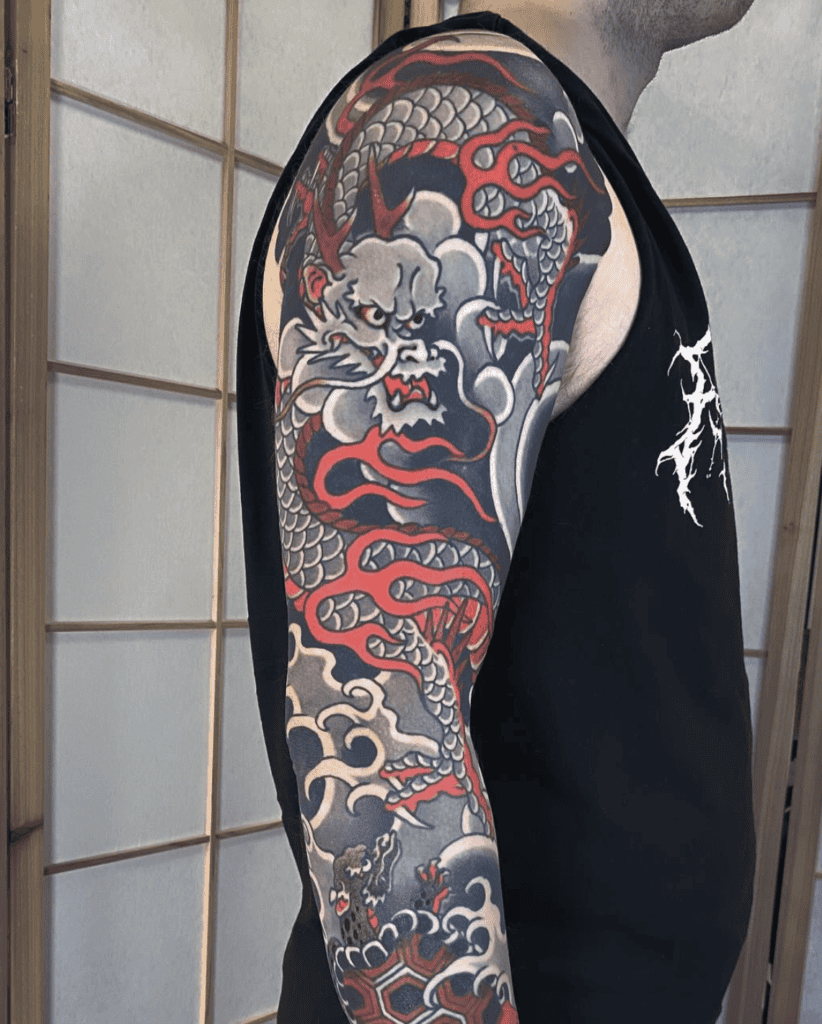
An Irezumi Dragon Tattoo is one of the most iconic designs in traditional Japanese tattooing. In Irezumi, dragons are usually seen as wise, protective, and spiritually powerful beings rather than evil monsters.
Irezumi Dragon Tattoos are often associated with personal growth and overcoming hardship. Dragons in Japanese folklore are associated with water, storms, and the heavens, carrying symbolism of natural power and adaptability. Many people choose these tattoos to represent inner strength, resilience, or becoming stronger through life’s challenges.
The design and pose of the dragon can also influence the meaning. Ascending dragons may symbolise ambition, progress, or spiritual growth, while descending dragons can represent protection, wisdom brought down from the heavens, or controlled power.
Sword Dragon Tattoo
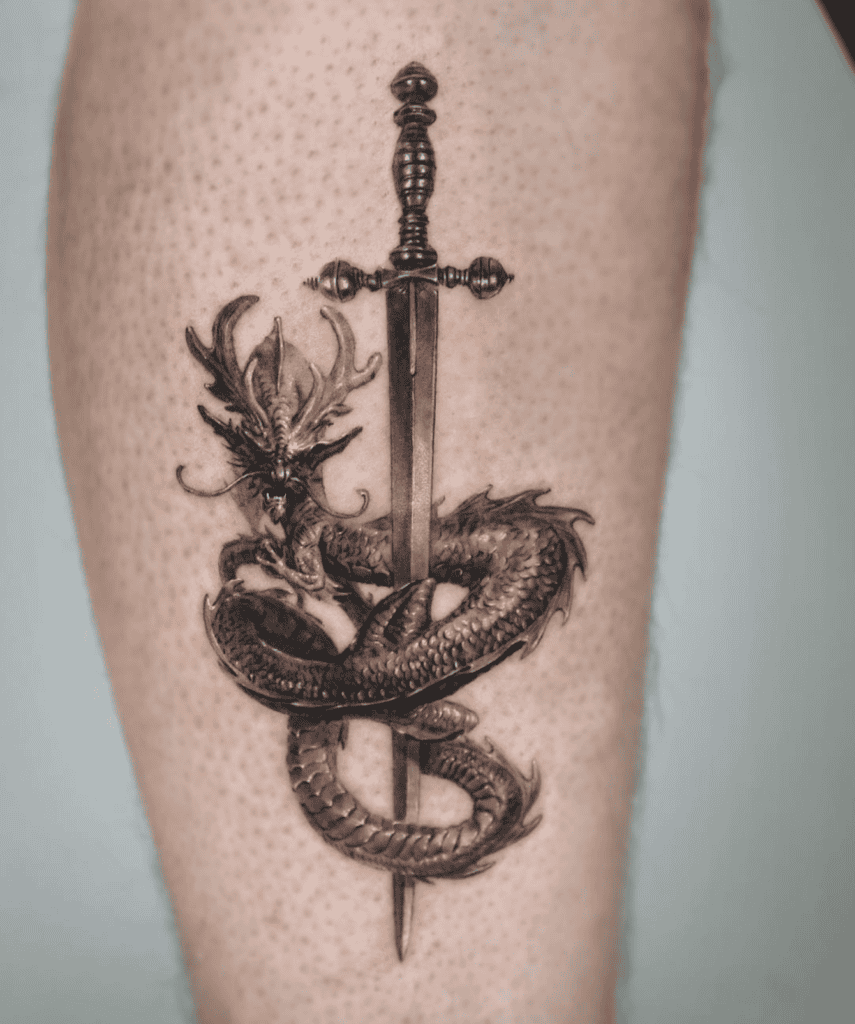
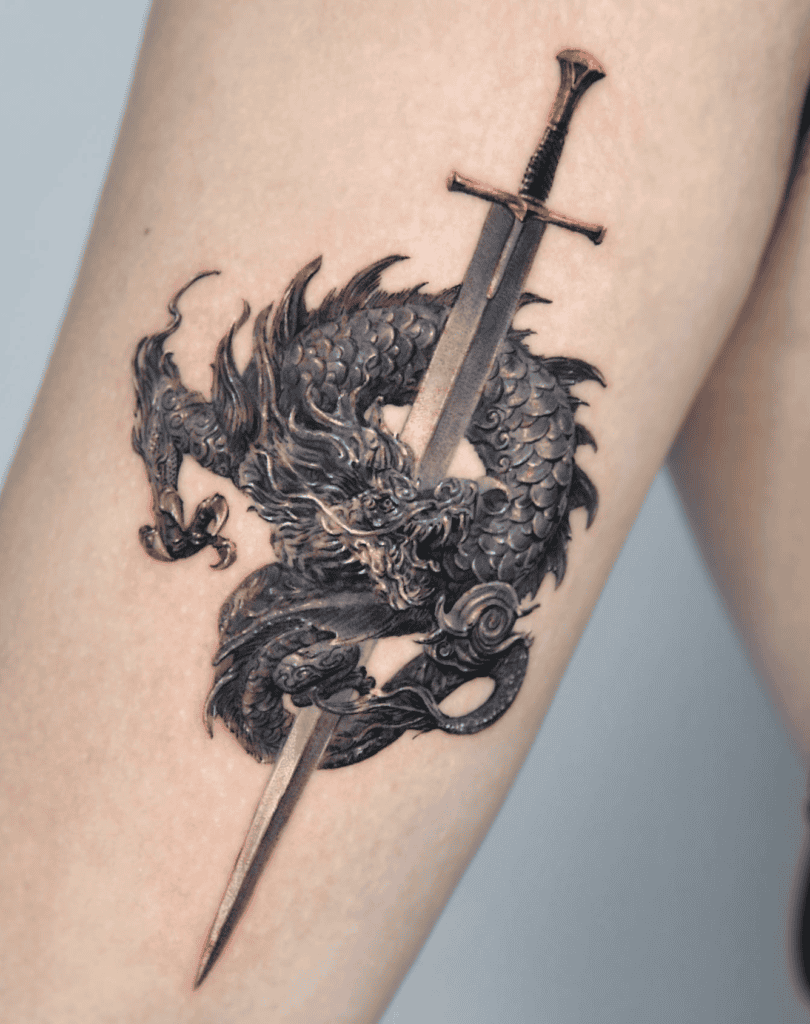
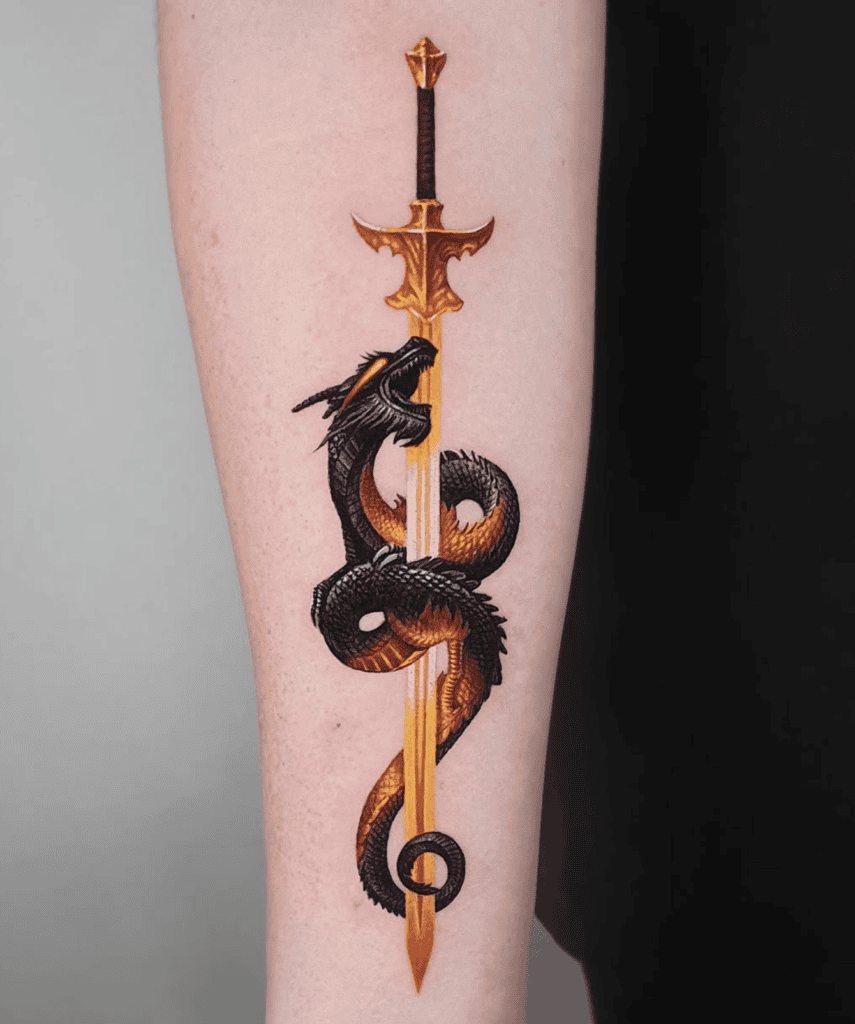
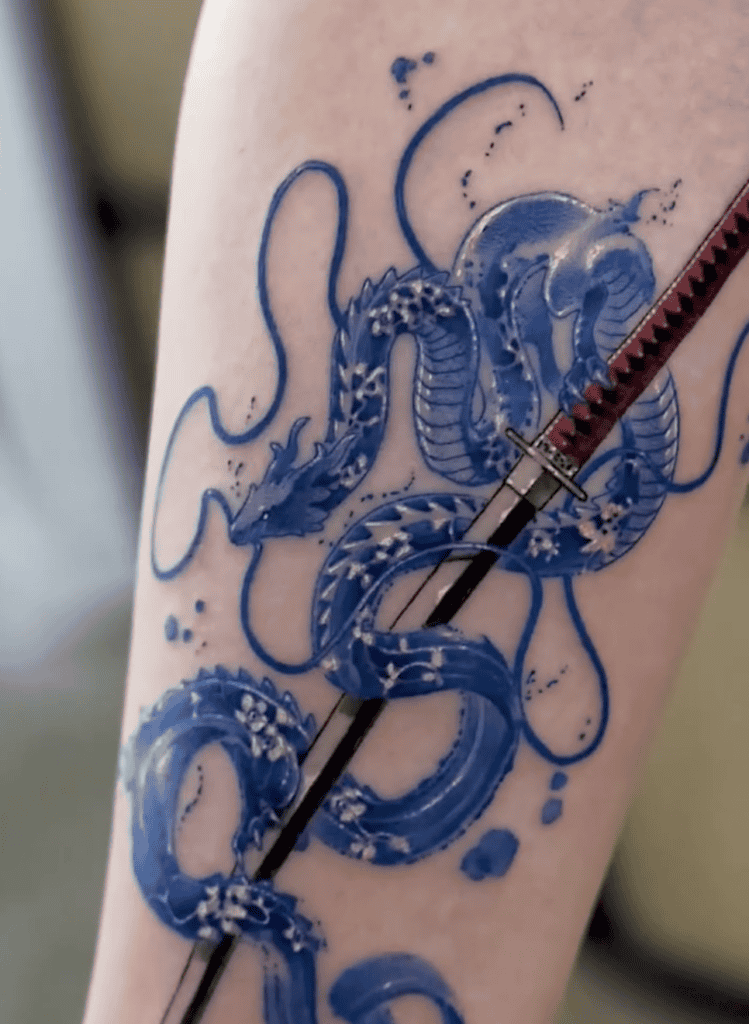
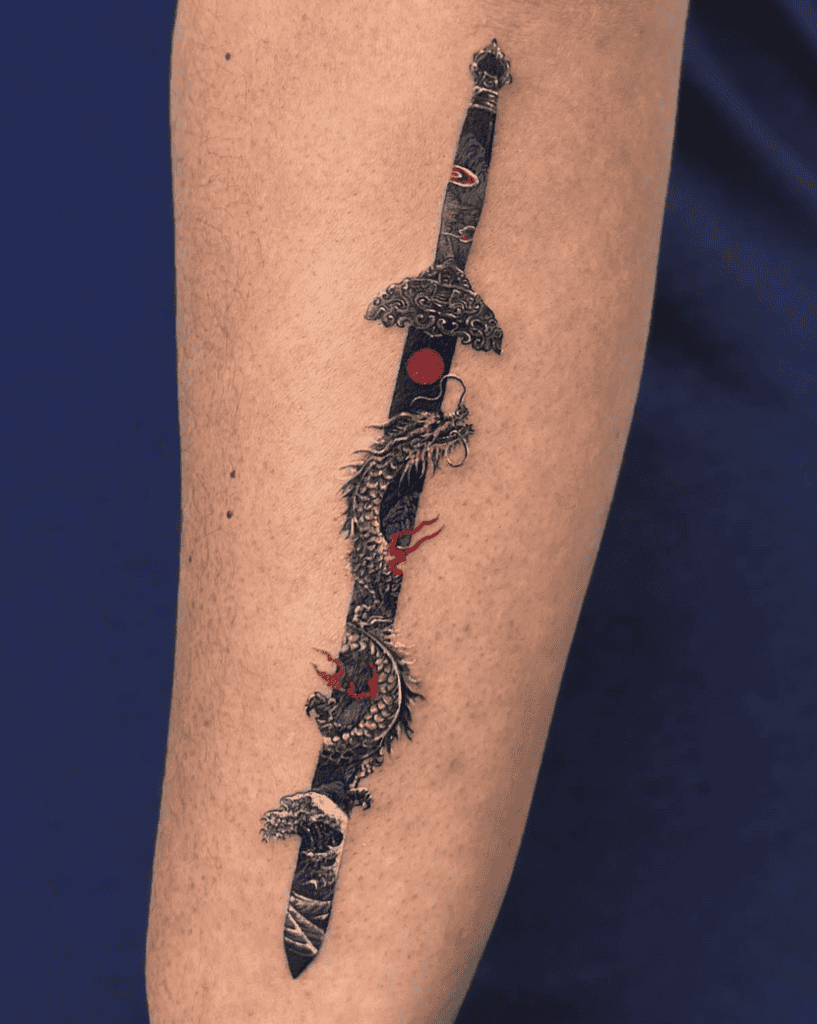
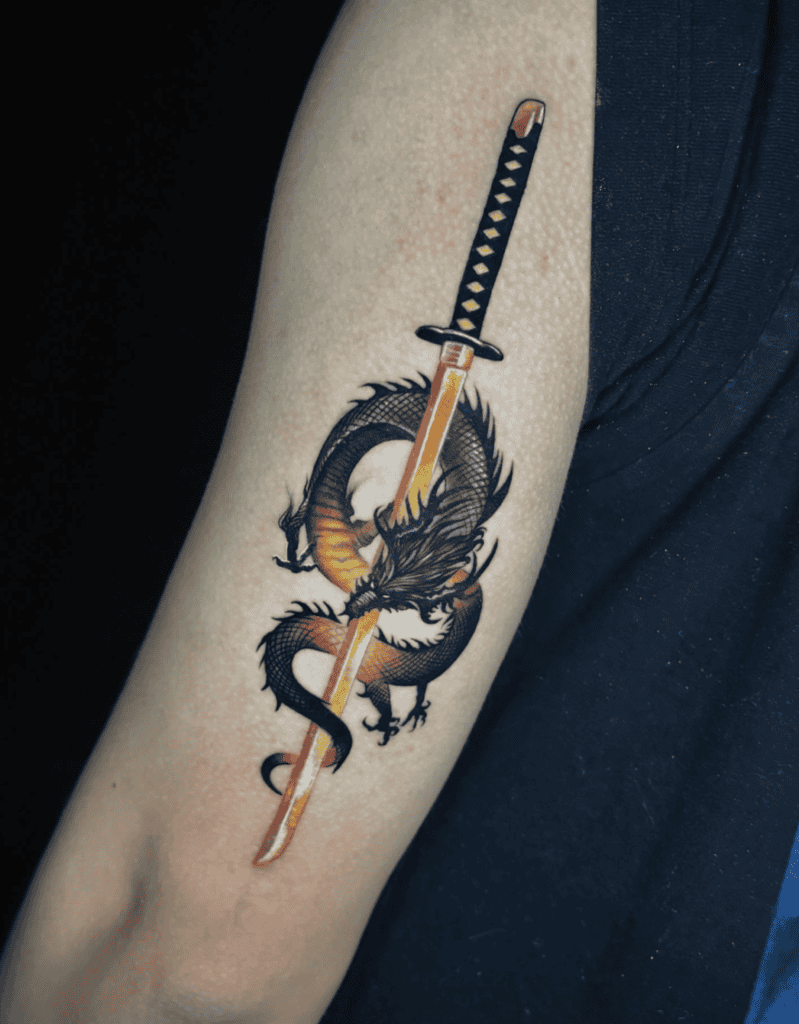
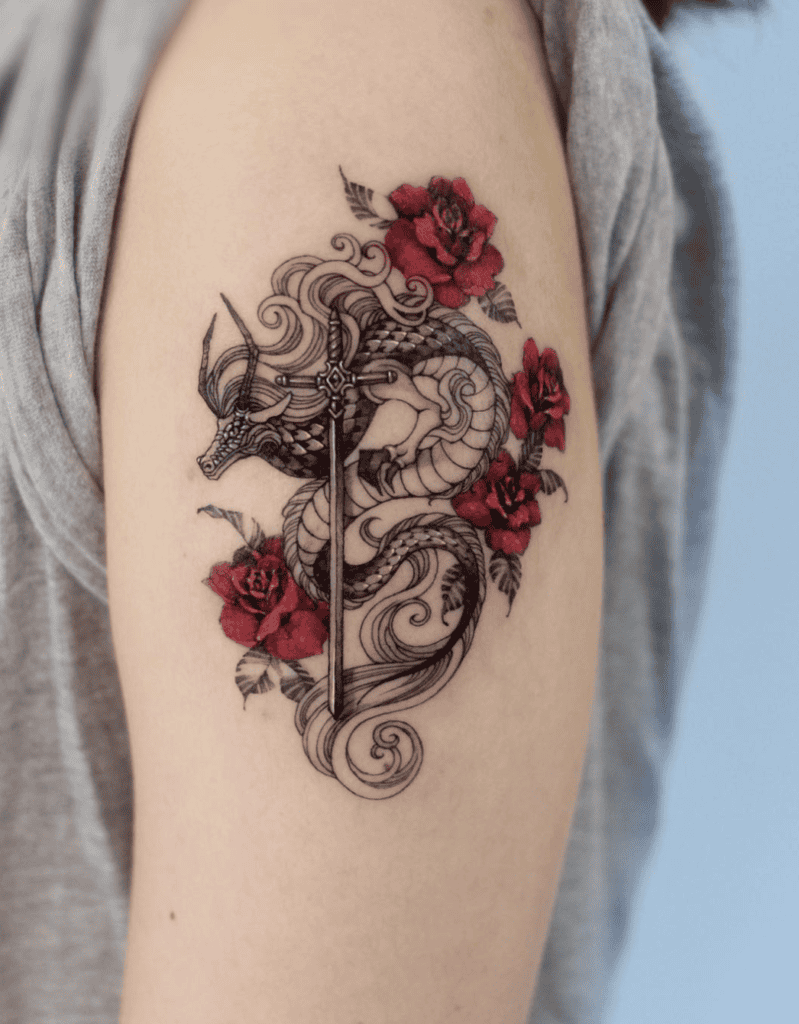
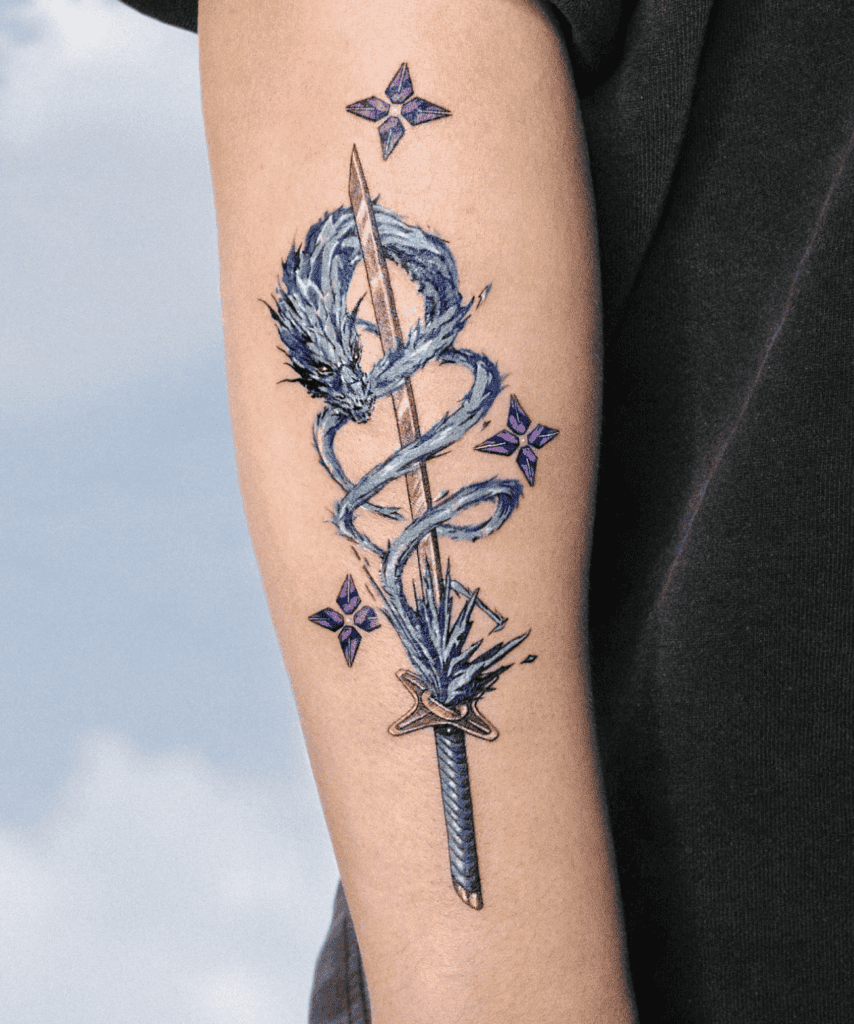
A Sword and Dragon design is commonly associated with strength, honour, protection, and the balance between wisdom and power. The dragon usually represents wisdom, spiritual power, ambition, and raw force, while the sword symbolises courage, justice, sacrifice, and the ability to cut through obstacles or deception. Combined, they can represent a warrior spirit guided by intelligence rather than reckless aggression.
Sword and Dragon tattoos may also symbolise conflict and control. A dragon wrapped around a sword can represent the control of powerful emotions or instincts, while a dragon clashing with a sword may symbolise struggle, perseverance, or overcoming hardship through determination.
In fantasy-inspired designs, the combination often represents heroism, destiny, and legendary strength. In Eastern-inspired tattoo art, a katana and dragon pairing may emphasise discipline, honour, and spiritual balance, while Western-style designs often focus more on battle, conquest, and fierce protection.
Yin-Yang Dragon Tattoo
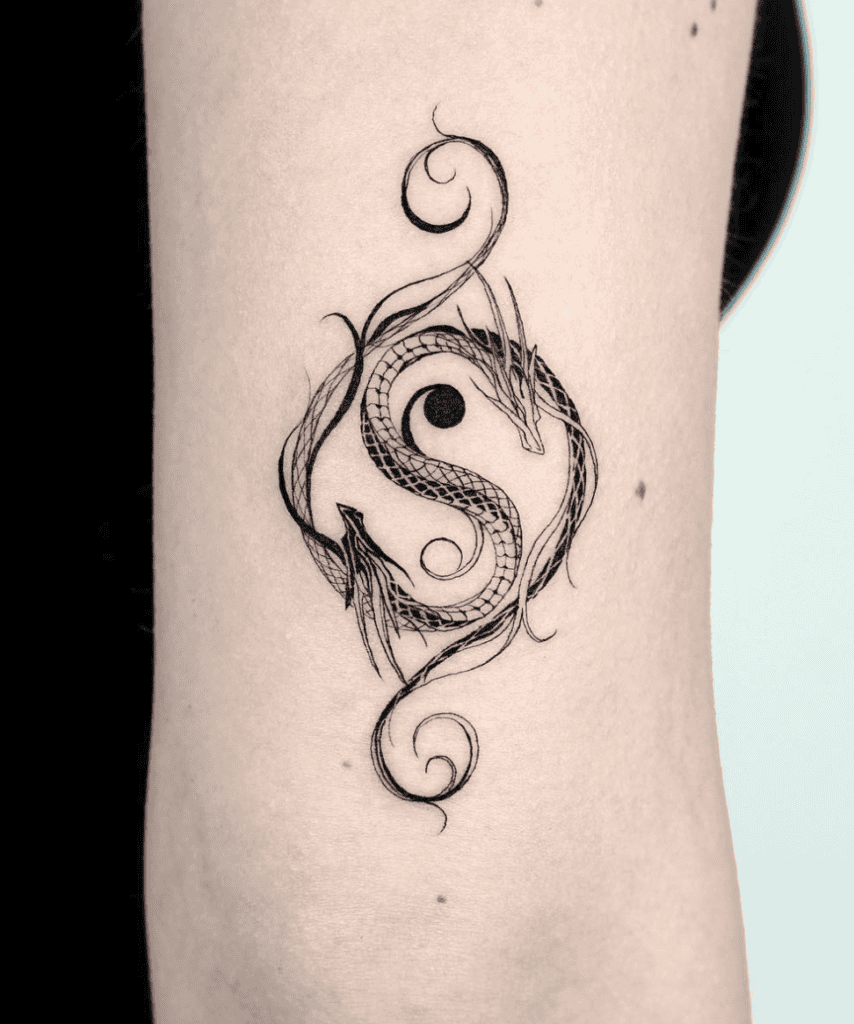
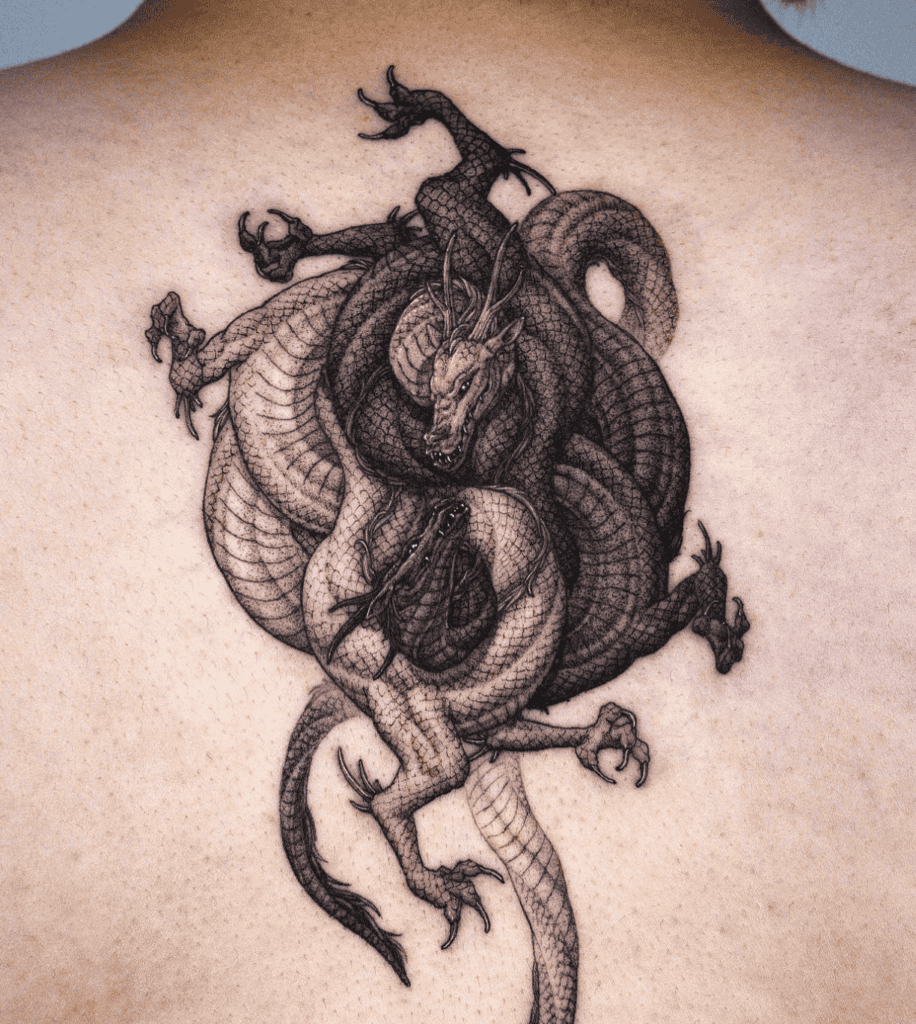
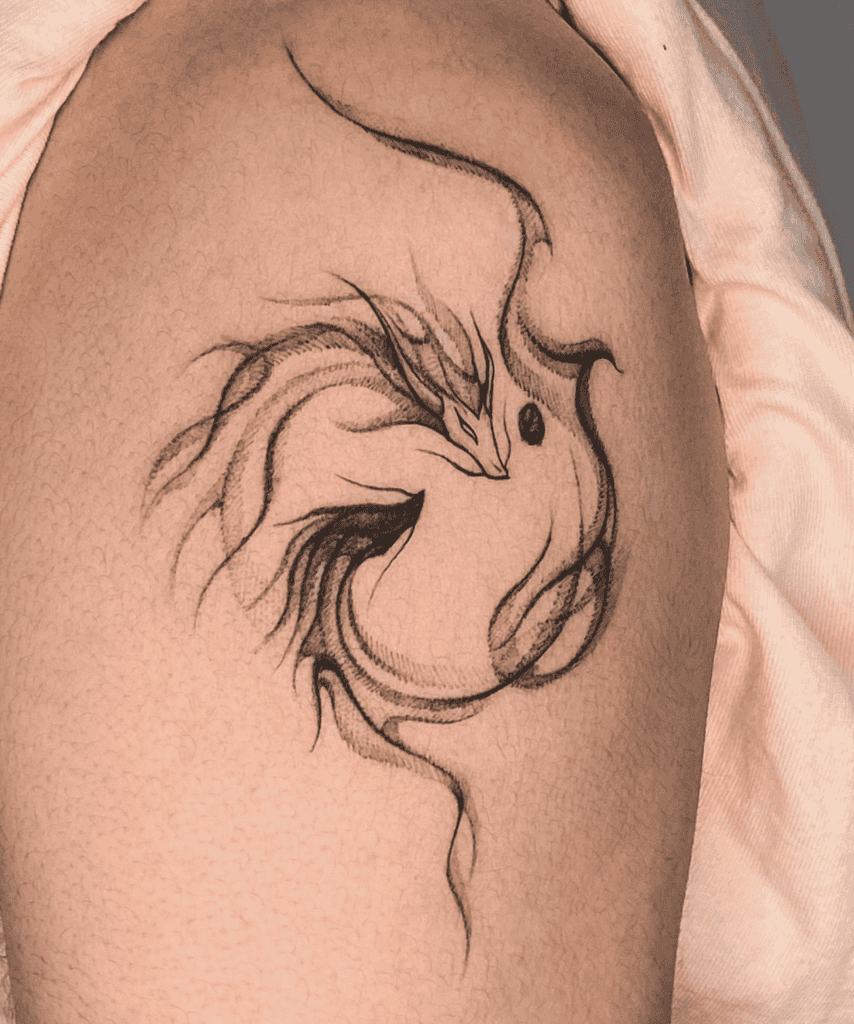
A Yin-Yang Dragon design is commonly associated with balance, duality, and harmony between opposing forces. It combines the symbolism of the dragon with the Yin-Yang concept, which represents interconnected opposites in balance rather than conflict.
When dragons are shown in a Yin-Yang formation, they represent the idea that strength requires balance. Power without wisdom becomes destructive, while peace without strength can become vulnerability. Together, the dragons symbolise harmony between emotional and physical strength, chaos and order, or instinct and discipline.
These designs can also represent personal growth and inner balance. Many people choose Yin Yang Dragon tattoos to symbolise overcoming internal conflict, balancing different aspects of their personality, or finding peace between opposing emotions and experiences.
Flower Dragon Tattoo
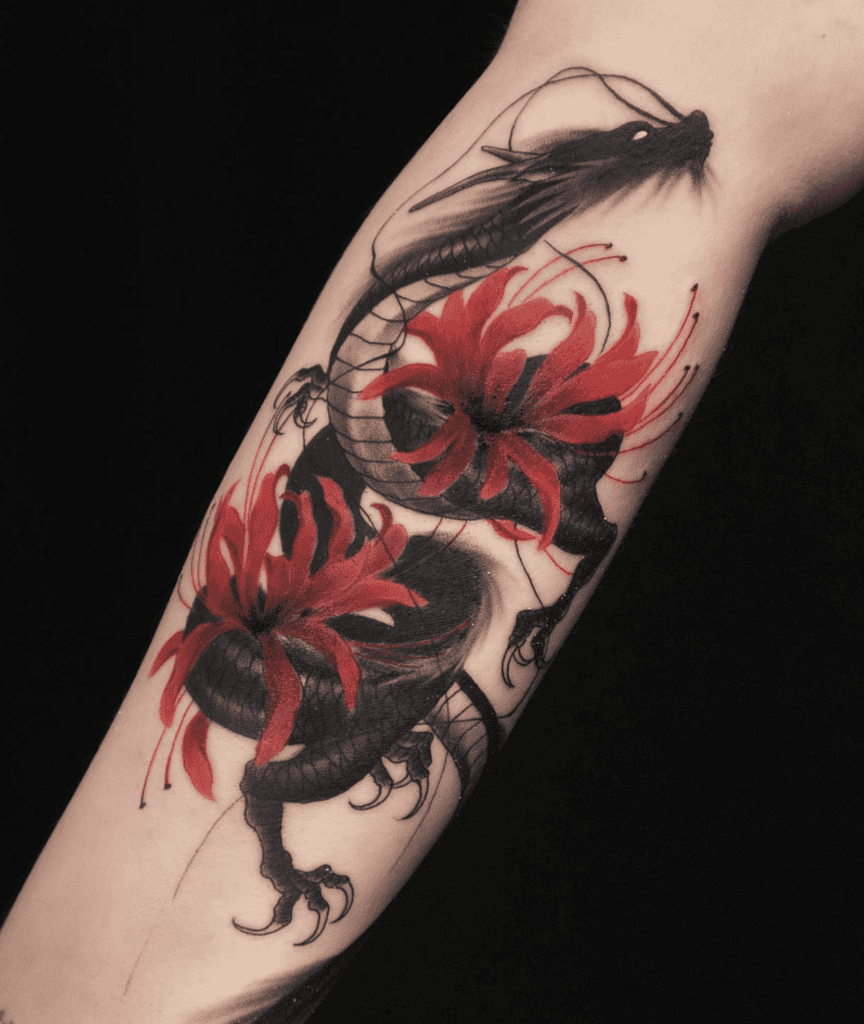
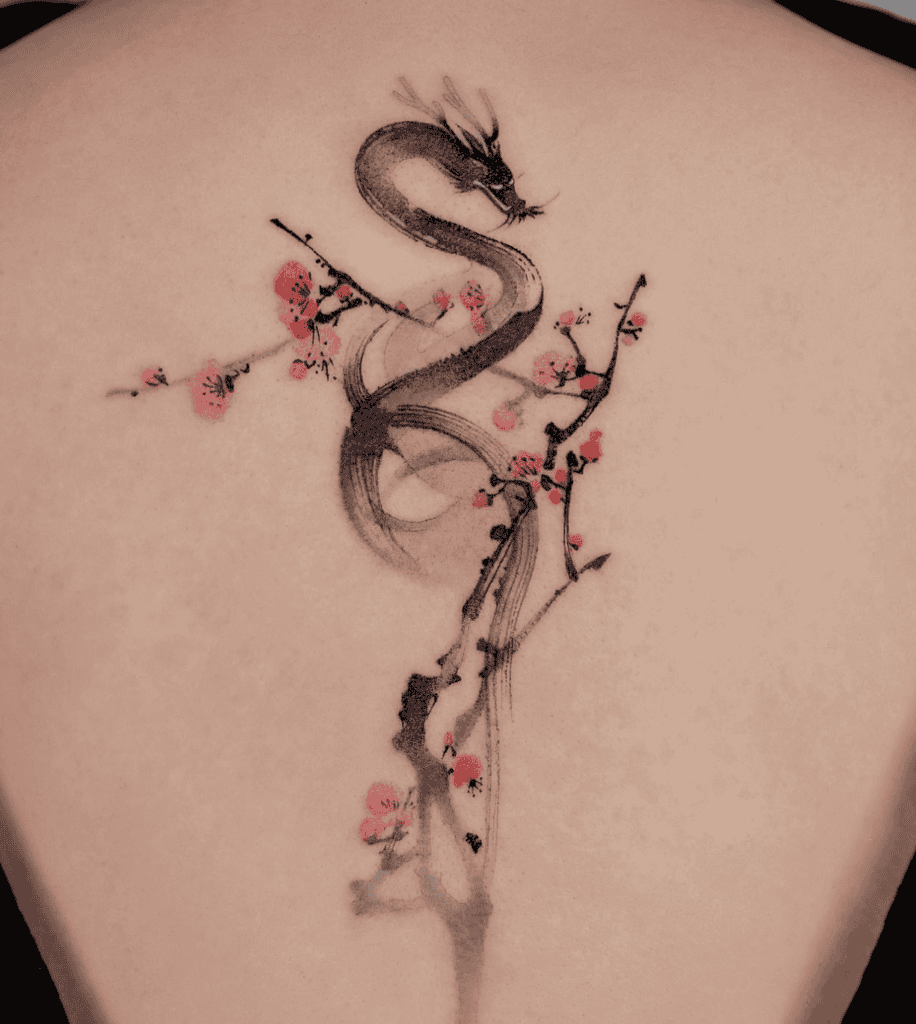
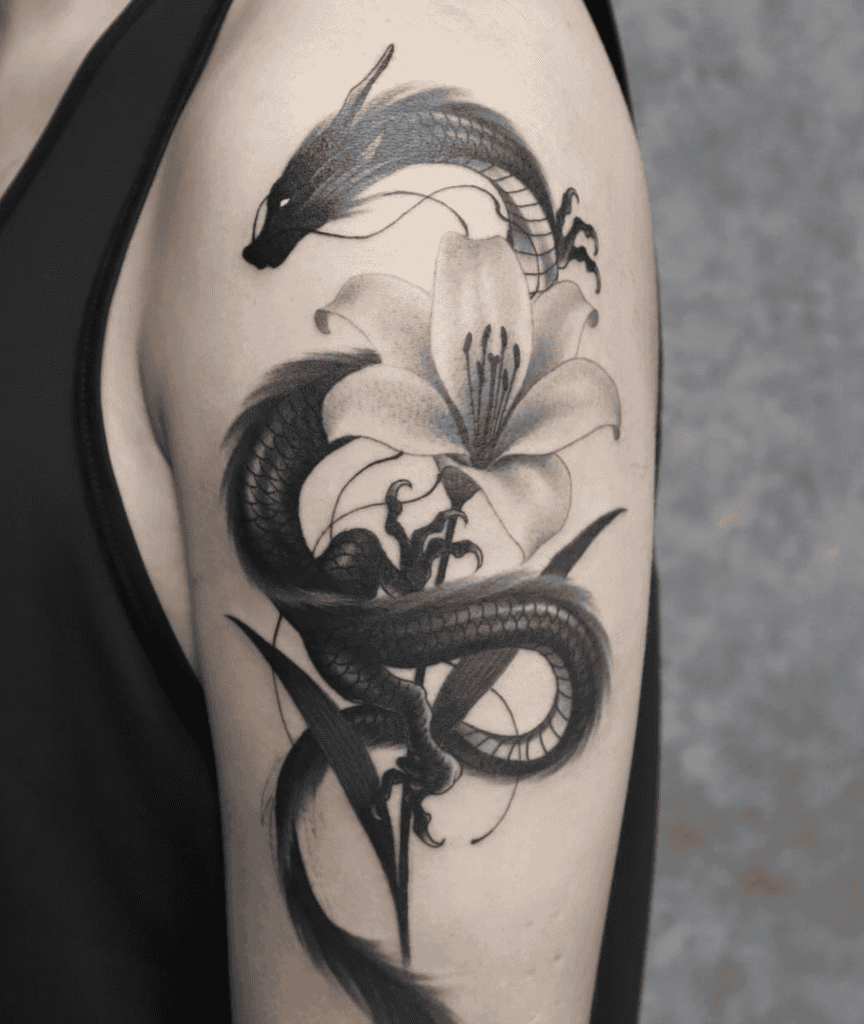
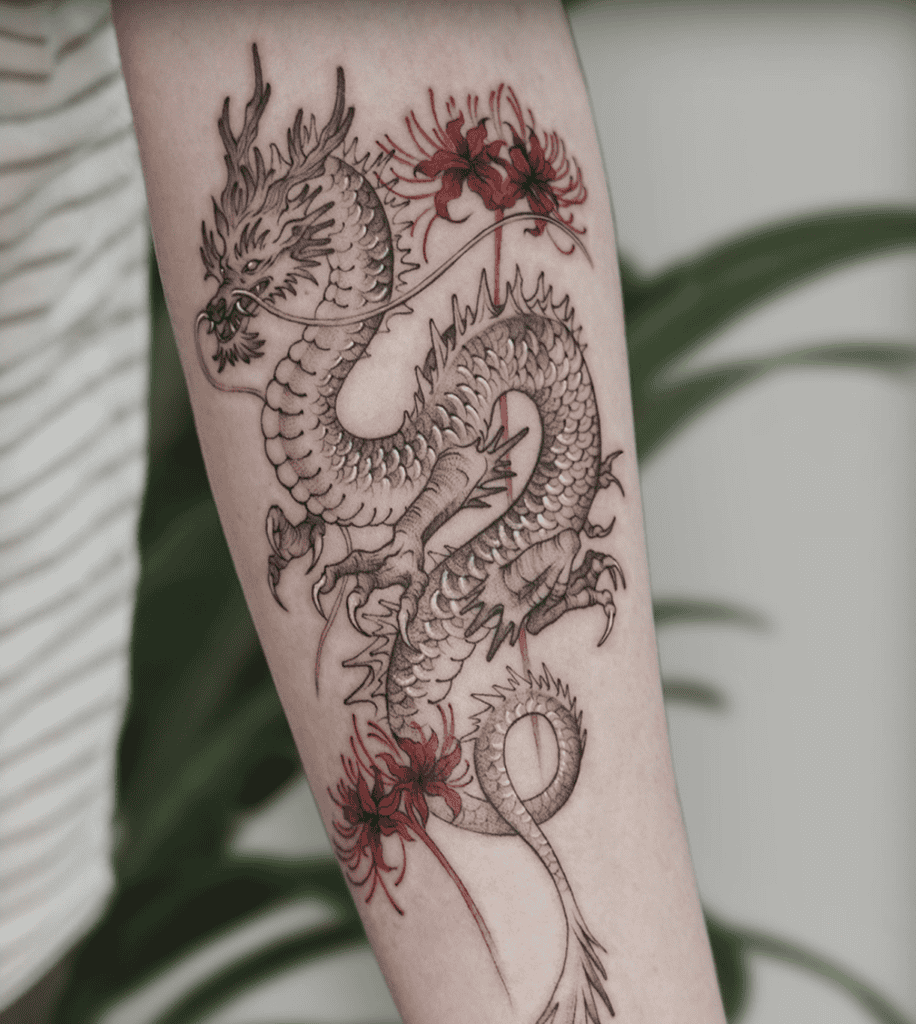
A Flower Dragon design is commonly associated with the balance between strength and beauty. By combining the fierce and powerful symbolism of a dragon with the softer symbolism of flowers, the design often represents harmony between power, gentleness, passion, and growth.
The dragon usually symbolises strength, wisdom, protection, ambition, and resilience, while flowers commonly represent beauty, life, renewal, emotions, and the fleeting nature of existence. Together, they can symbolise someone who is both strong and compassionate, or someone who has grown stronger through emotional experiences and personal transformation. Flower Dragon tattoos may also represent duality, the idea that fierce power and delicate beauty are not opposites, but can exist together.
Spyro the Dragon Tattoo
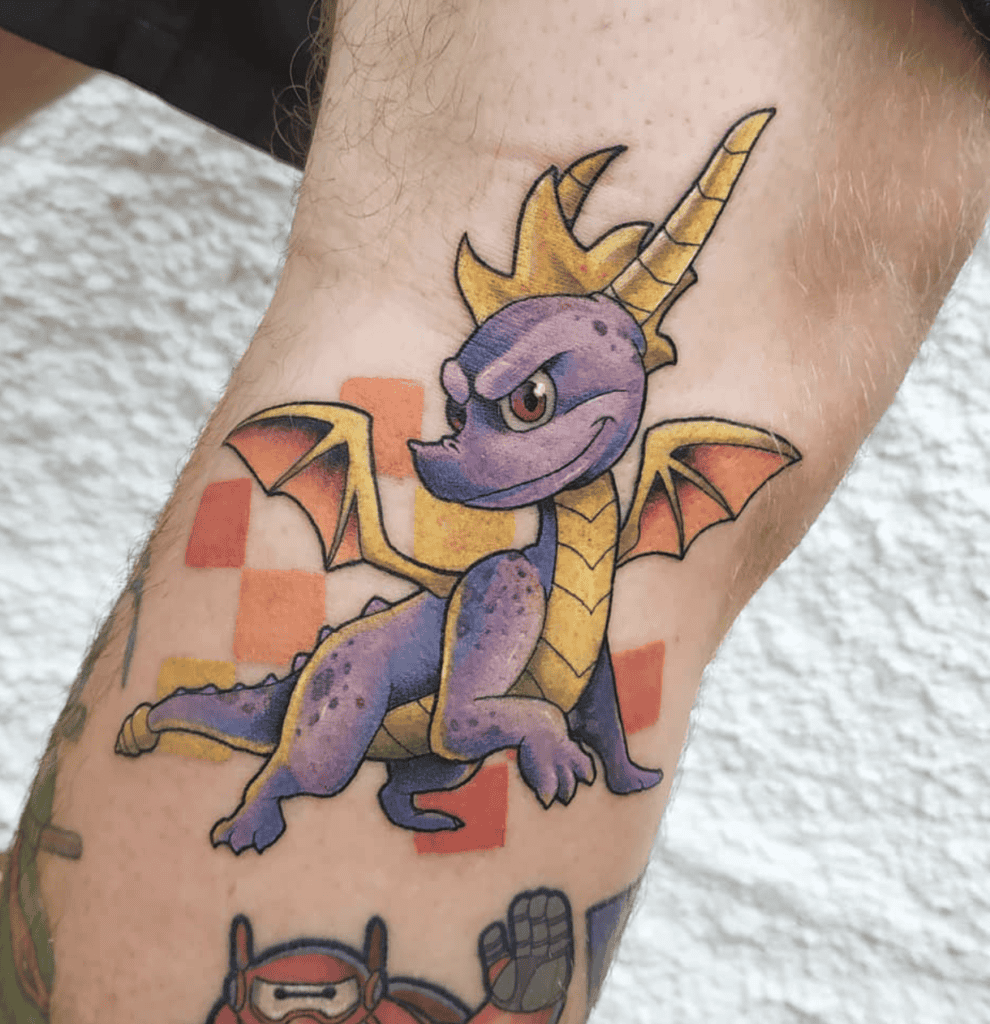
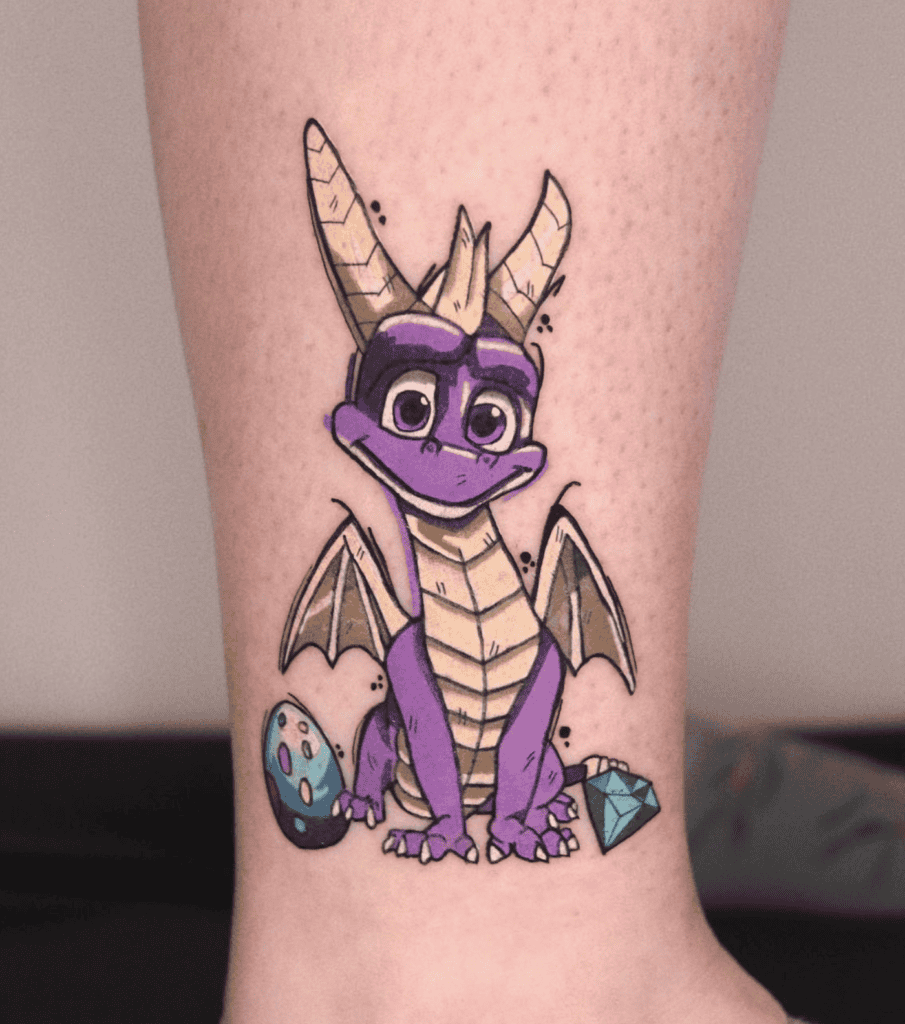
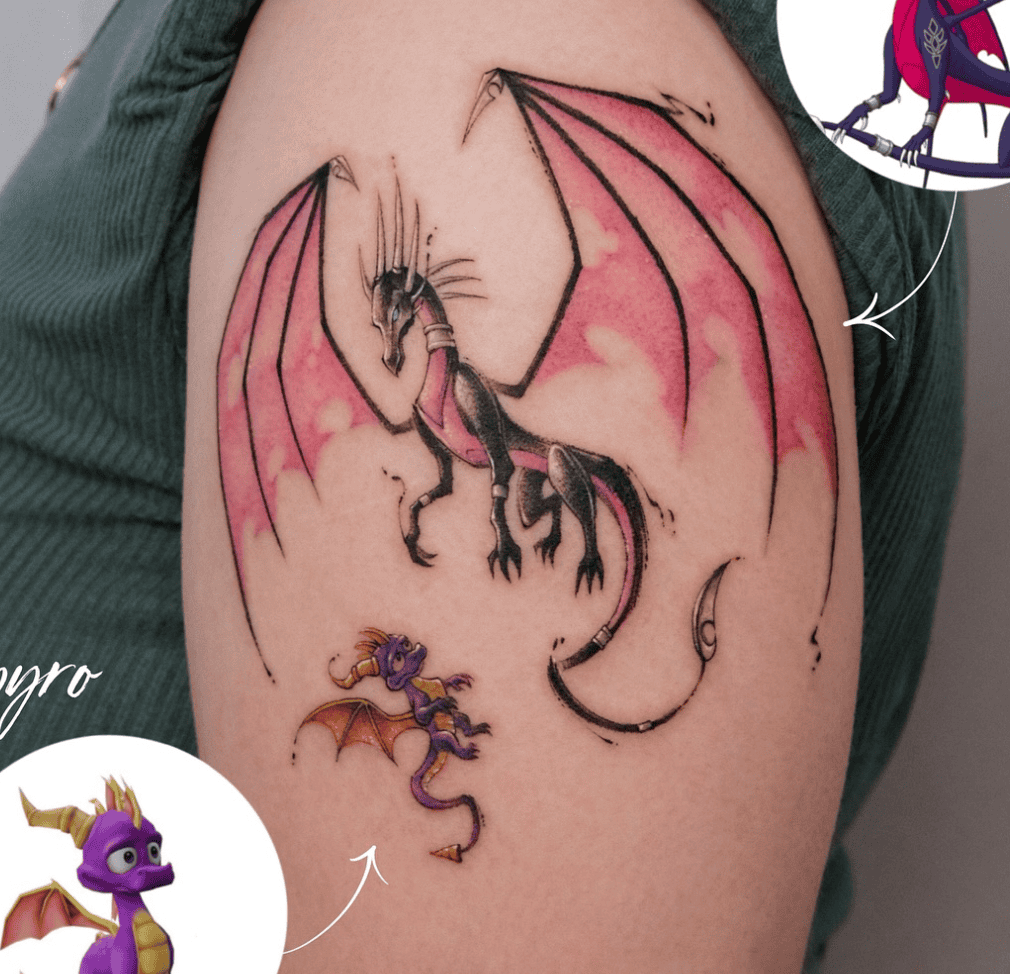
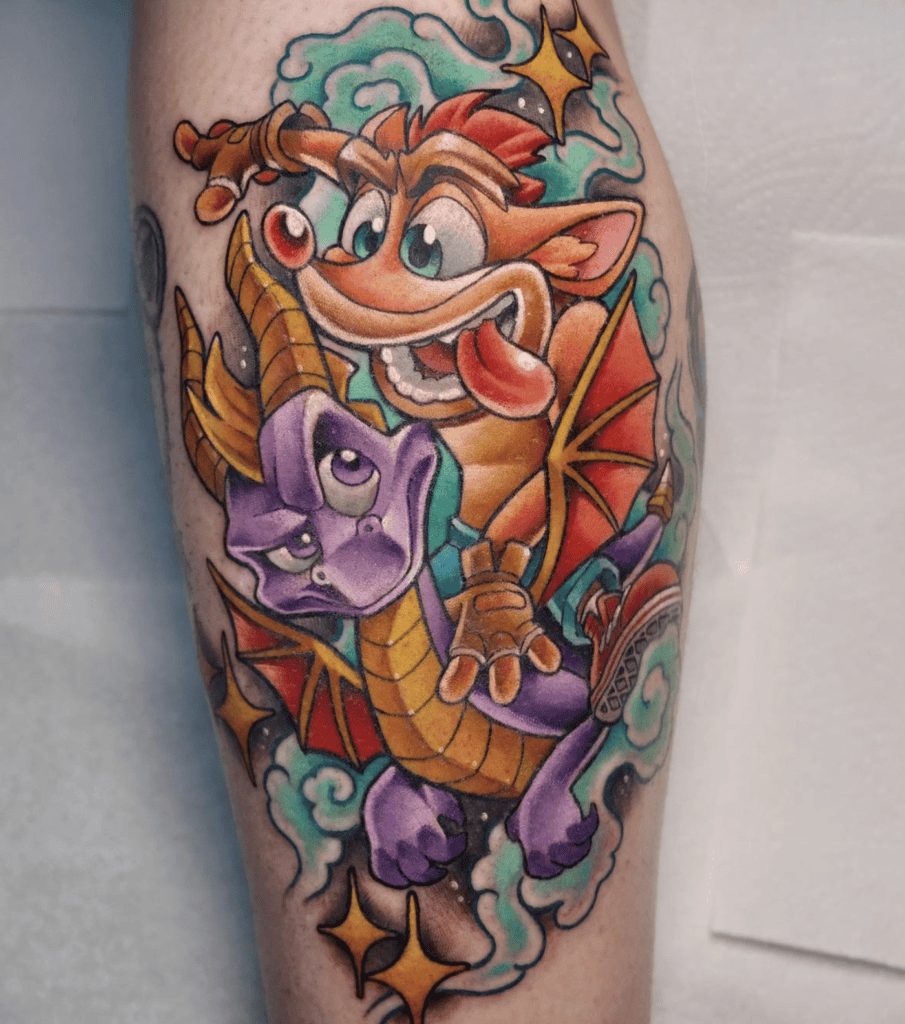
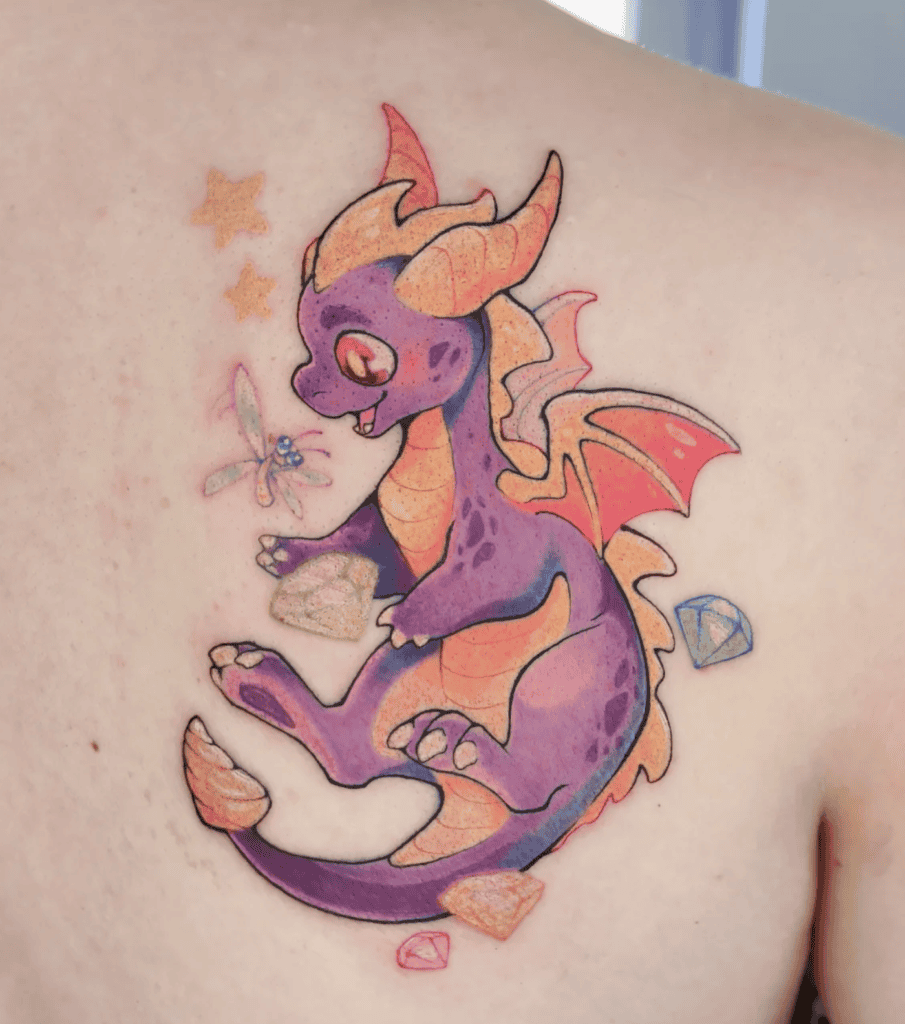
Spyro the Dragon is one of the most iconic platforming game franchises from the late 1990s, which became one of the original mascots of the PlayStation era alongside characters like Crash Bandicoot.
Spyro is a small purple dragon known for his sarcastic personality, confidence, and adventurous spirit. The original game, Spyro the Dragon (1998), was developed by Insomniac Games for the original PlayStation, following Spyro as he travels across colourful fantasy worlds to rescue dragons who were turned into crystal statues by the villain Gnasty Gnorc.
Dragon Ball Dragon Tattoo
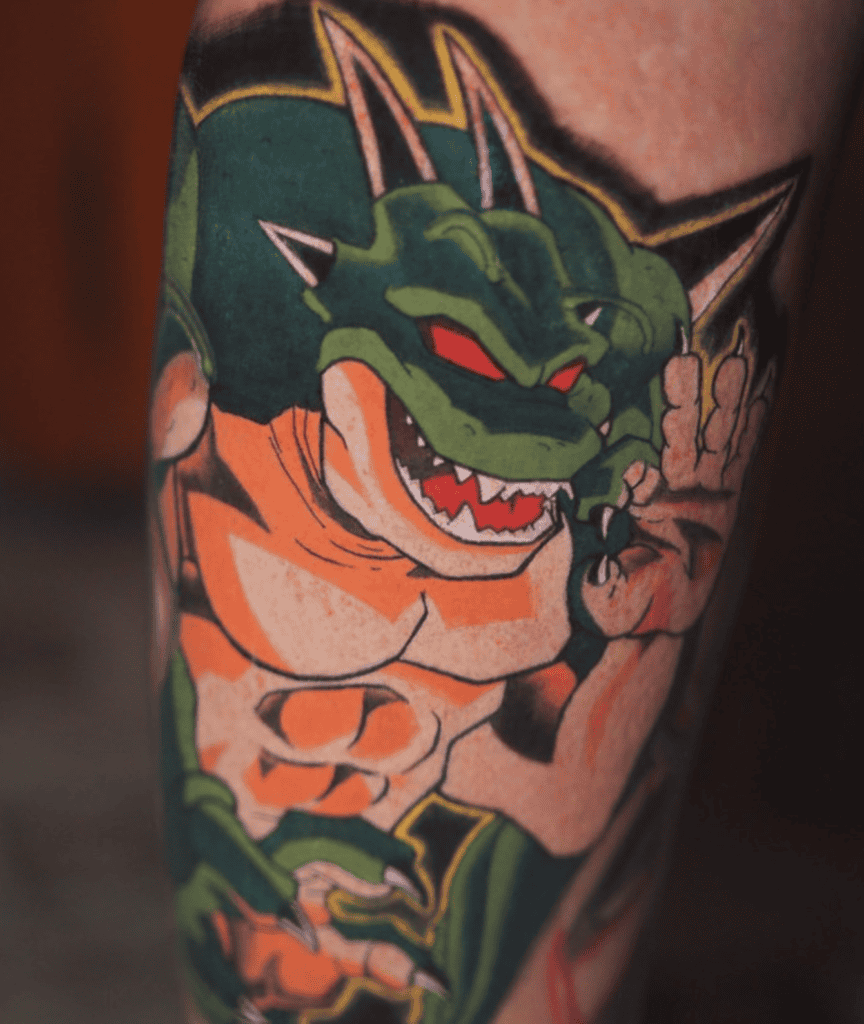
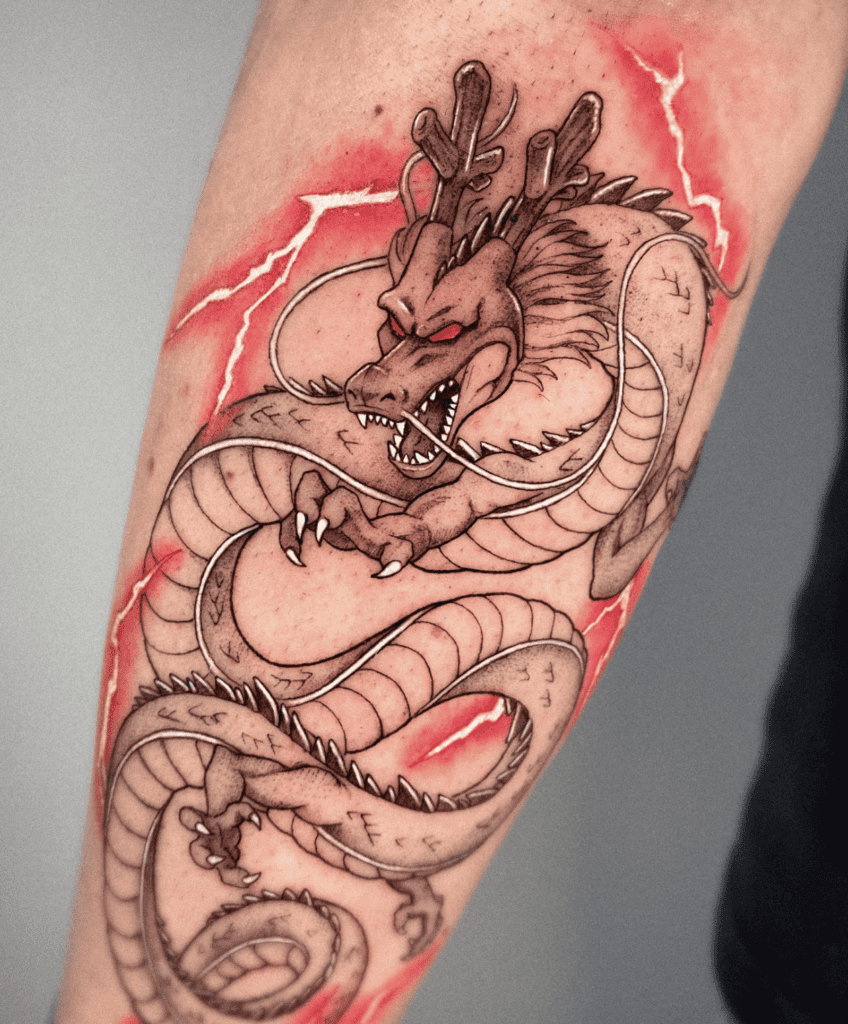
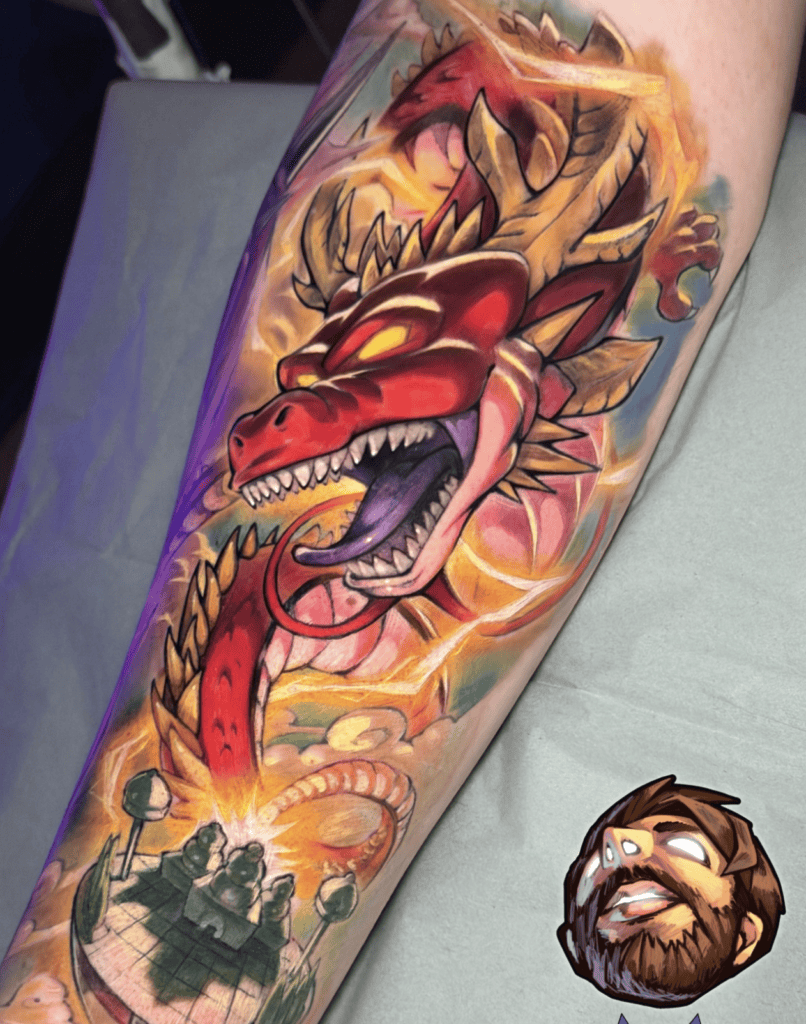
The dragons in Dragon Ball are magical wish-granting beings summoned when all of the Dragon Balls are gathered together. The most famous Dragon Ball dragon is Shenron, the long green Eastern-style dragon summoned from Earth’s Dragon Balls. Once summoned, Shenron can grant wishes ranging from reviving people to restoring entire cities, although his powers have limits depending on who created the Dragon Balls.
Another well-known dragon is Porunga from Planet Namek. Porunga is much larger and more muscular than Shenron and is capable of granting multiple wishes at once, making him one of the most powerful wish dragons in the series. Later, the Dragon Ball franchise introduced other Dragons, such as Ultimate Shenron, Black Smoke Shenron, Super Shenron, and Demon Realm Porunga.
Game of Thrones Dragon Tattoo
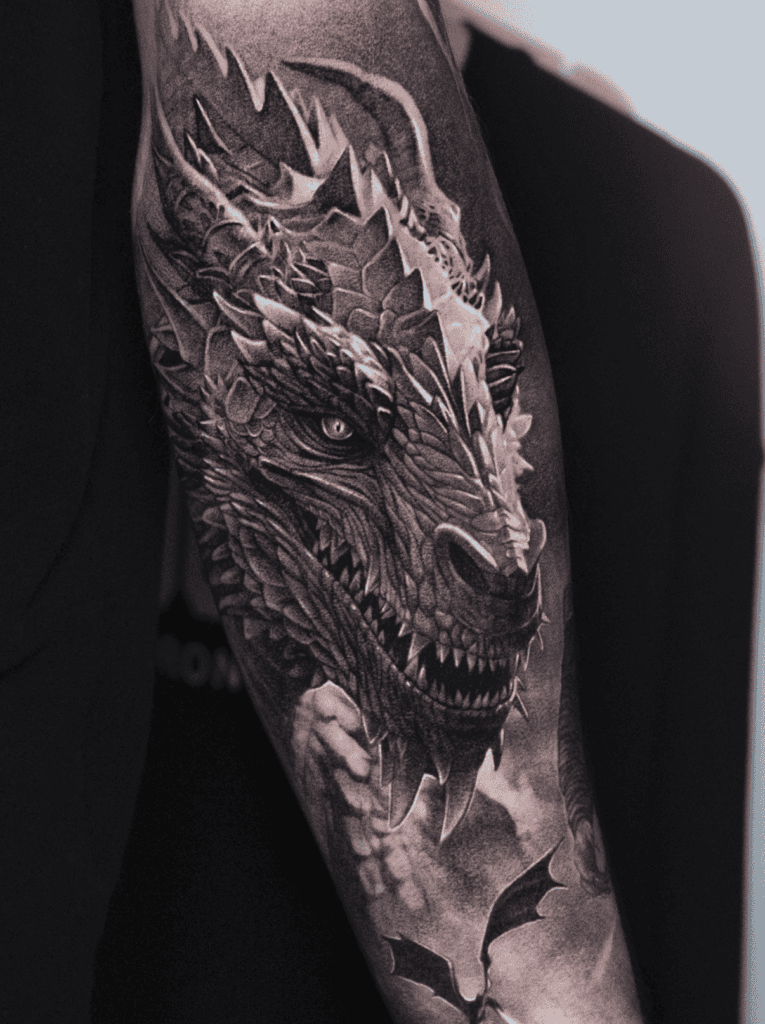
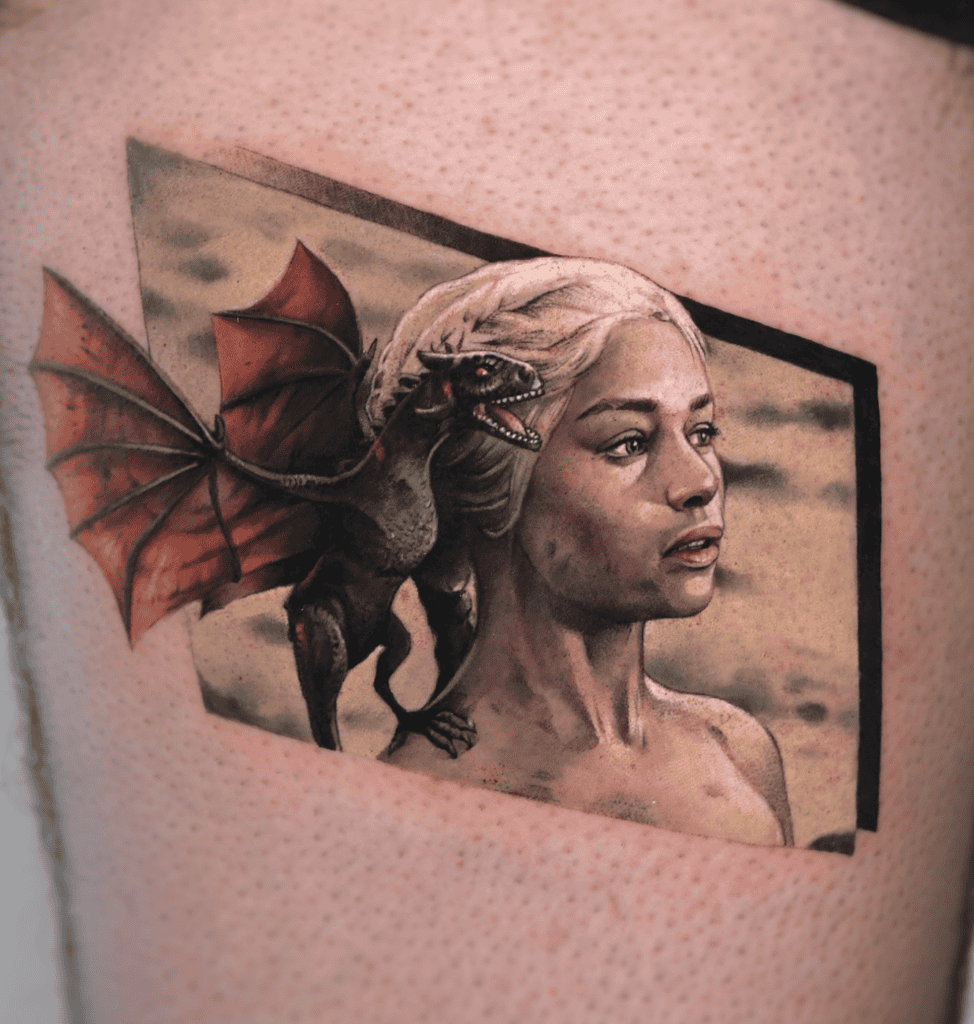
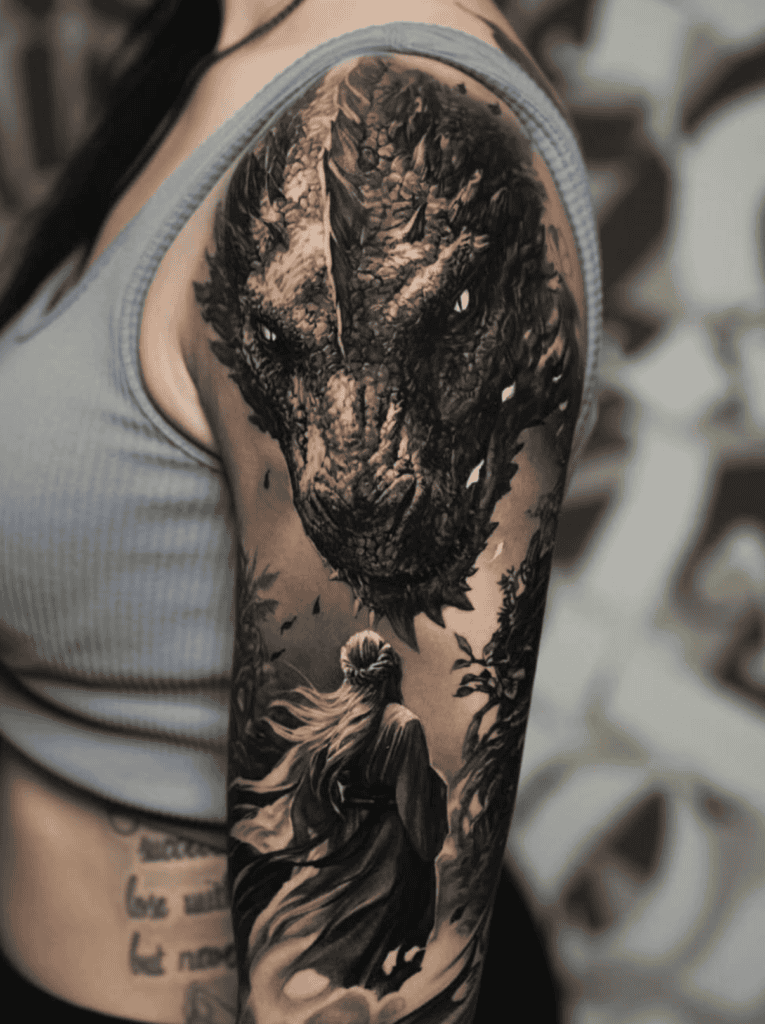
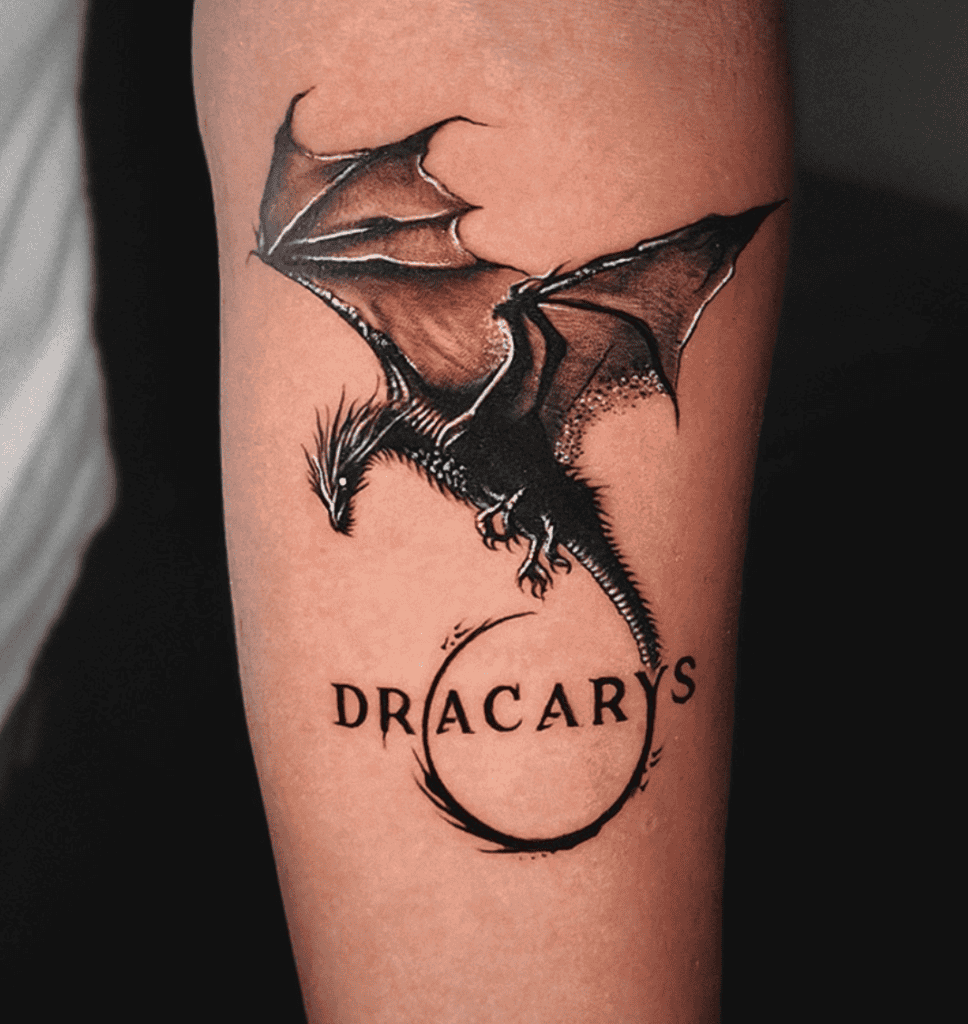
The dragons in Game of Thrones are among the most famous dragons in modern fantasy television, belonging to Daenerys Targaryen. Drogon, Rhaegal, and Viserion are named after important people in Daenerys’ life and are closely tied to the legacy of House Targaryen, a family famous for using dragons to conquer Westeros centuries earlier.
Drogon is the largest and fiercest of the three dragons, known for his black scales and red markings. He becomes Daenerys’ primary mount and represents raw power and destruction. Rhaegal, the green dragon, is named after Daenerys’ brother Rhaegar Targaryen and is often portrayed as more controlled and noble. Viserion, the cream-and-gold dragon, later becomes one of the most shocking parts of the series after being resurrected by the Night King as an undead ice dragon.
House of the Dragon greatly expanded the number of dragons seen in the world of Game of Thrones and introduced viewers to many unique dragon personalities, designs, and rider bonds. While Game of Thrones mainly focused on Daenerys’ three dragons, House of the Dragon takes place during the height of Targaryen power, when dragons were far more common in Westeros.
The Legend of Zelda Dragon Tattoo
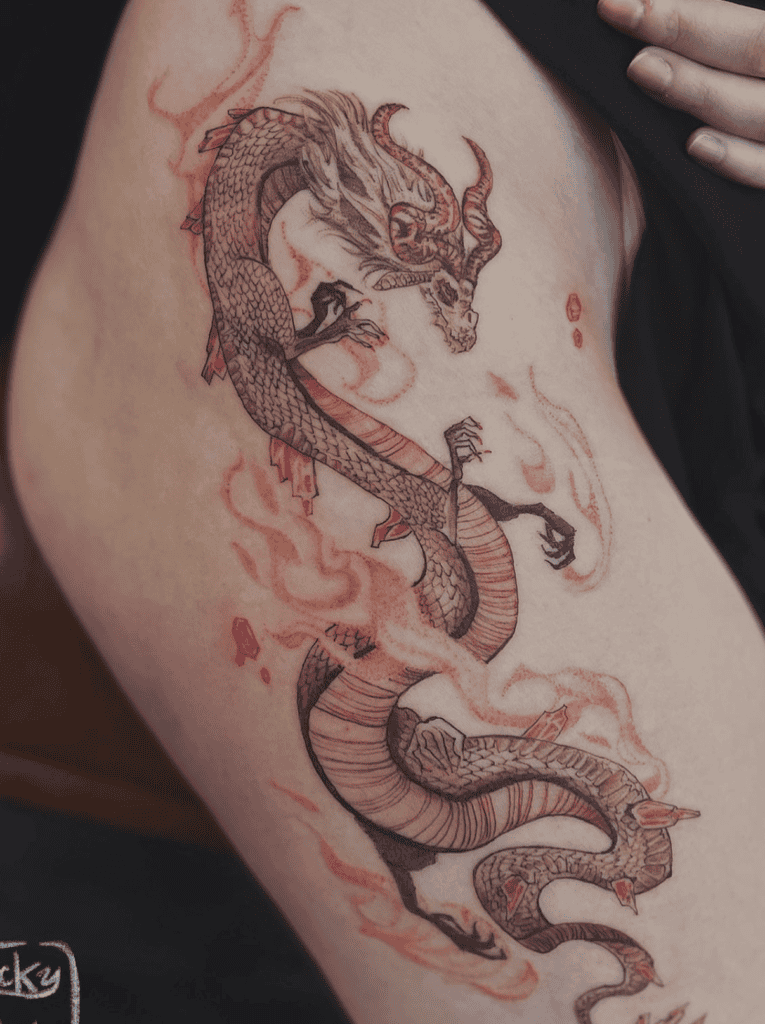
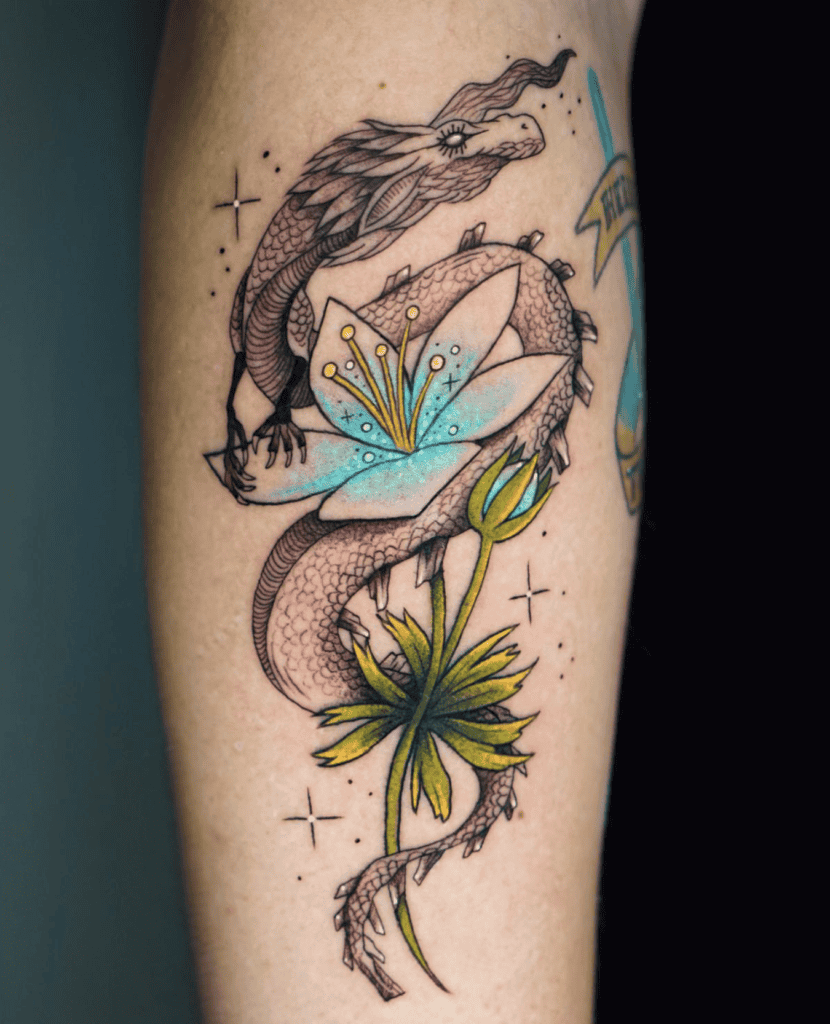
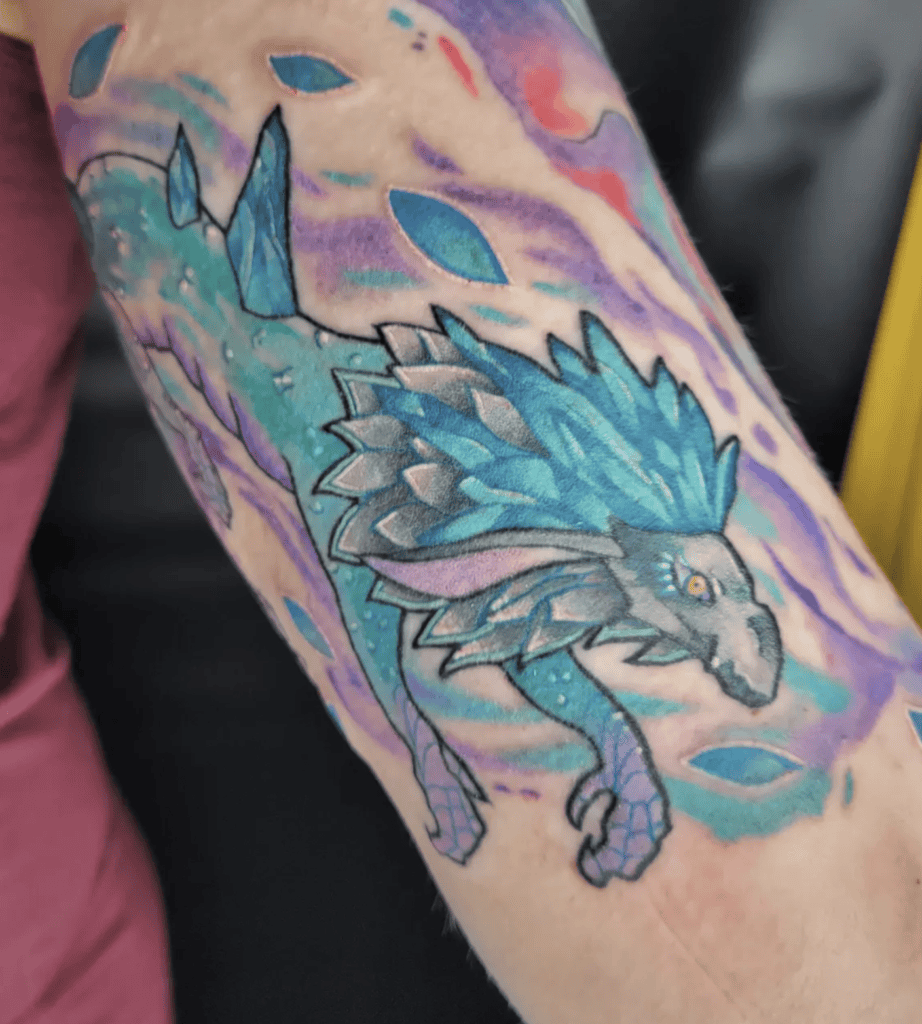
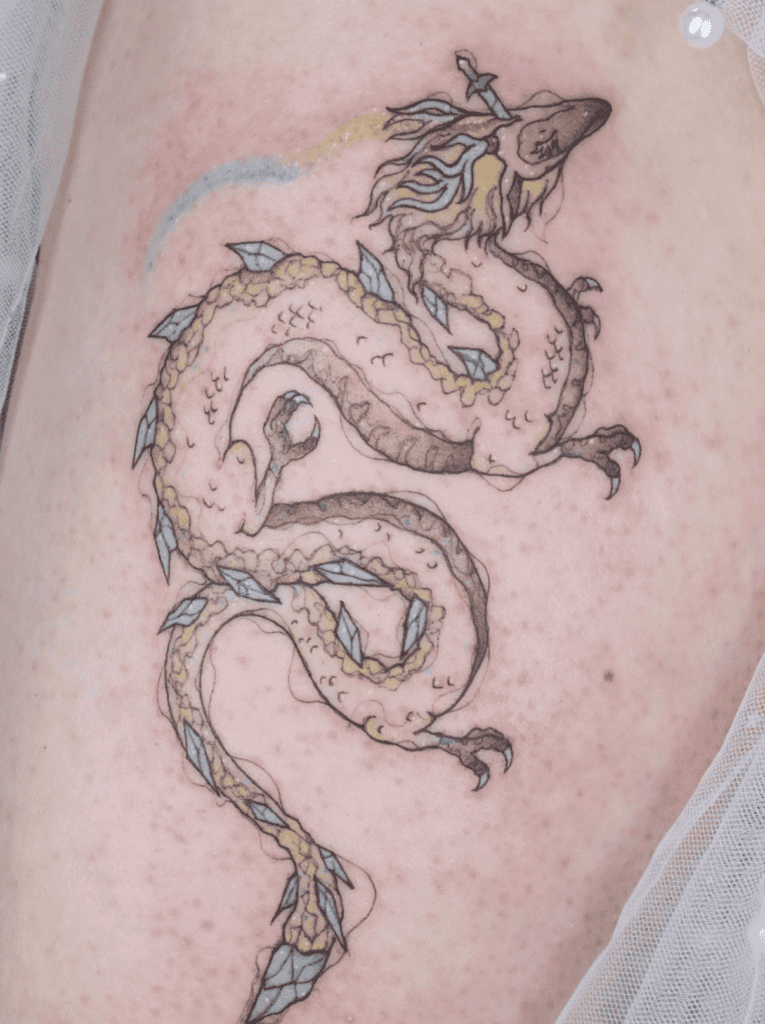
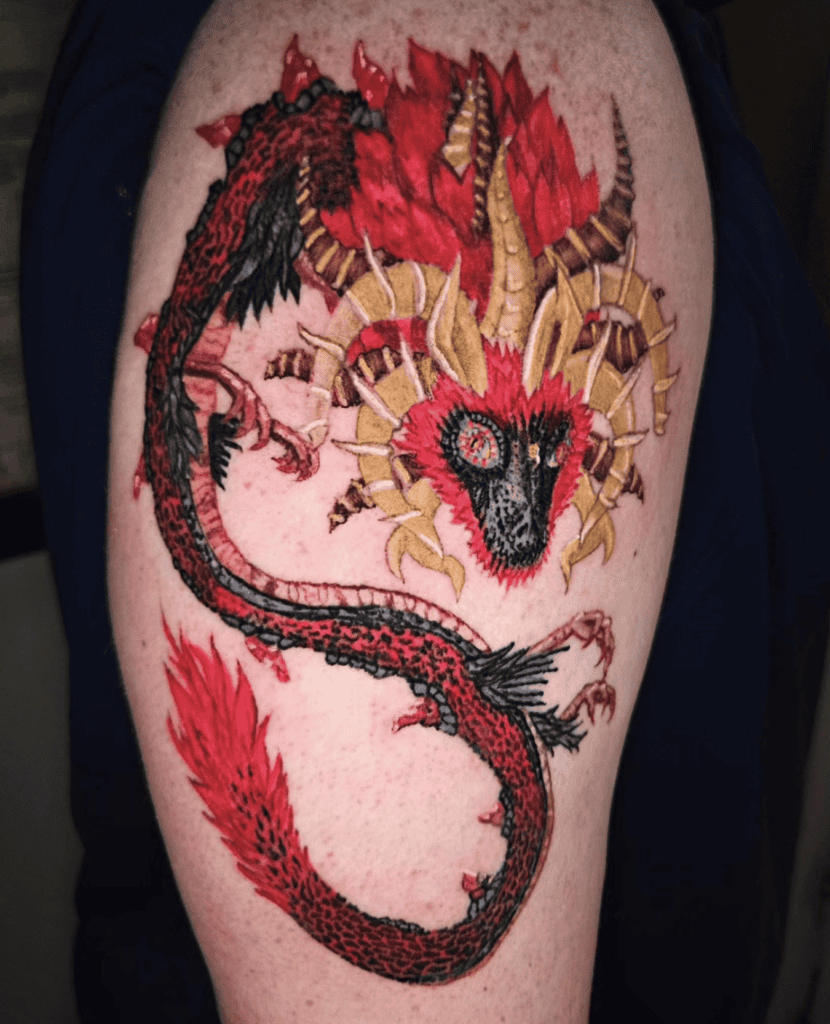
The dragons from The Legend of Zelda: Breath of the Wild and The Legend of Zelda: Tears of the Kingdom are mysterious sacred beings connected to nature, spirituality, and the balance of Hyrule. Unlike many fantasy dragons, these dragons are not usually enemies, but ancient divine creatures that peacefully travel across the skies and landscapes.
Farosh is the dragon associated with courage and lightning whose bright green scales and electric energy symbolise storms, vitality, and raw natural power. Dinraal, the fire dragon, travels through volcanic and northern regions representing heat, strength, destruction, and ancient energy, and Naydra, the ice dragon, is linked to wisdom and spiritual purity.
In Tears of the Kingdom, two more dragons were introduced: the Light Dragon, which carries a deep emotional and story connection tied to sacrifice, eternity, and protection, and the Demon Dragon, a terrifying dragon form connected to Ganondorf, who represents corruption, hatred, destruction, and overwhelming dark power.
Final Fantasy Dragon Tattoo


The dragons in Final Fantasy are some of the most iconic creatures in JRPG history, often portrayed as ancient beings connected to magic, gods, destruction, and legendary power.
Unlike some fantasy series where dragons are mostly enemies, Final Fantasy dragons appear in many different roles, from powerful summons, divine protectors, terrifying bosses, rulers of hidden lands, or tragic intelligent creatures tied deeply to the story’s lore.
Spirited Away Dragon Tattoo
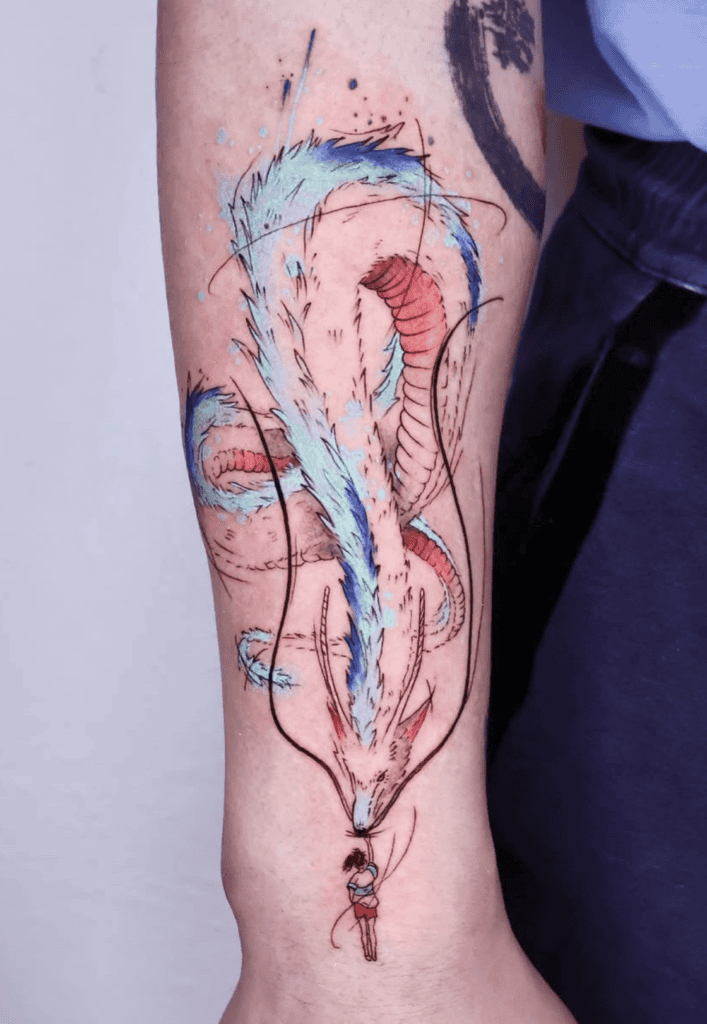
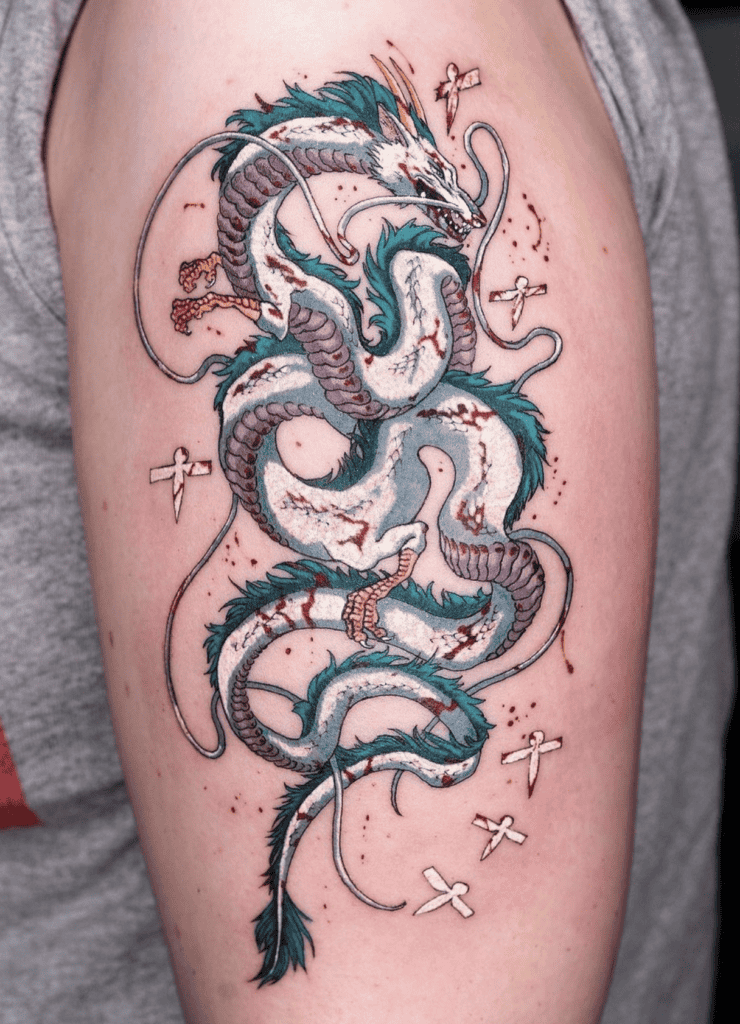
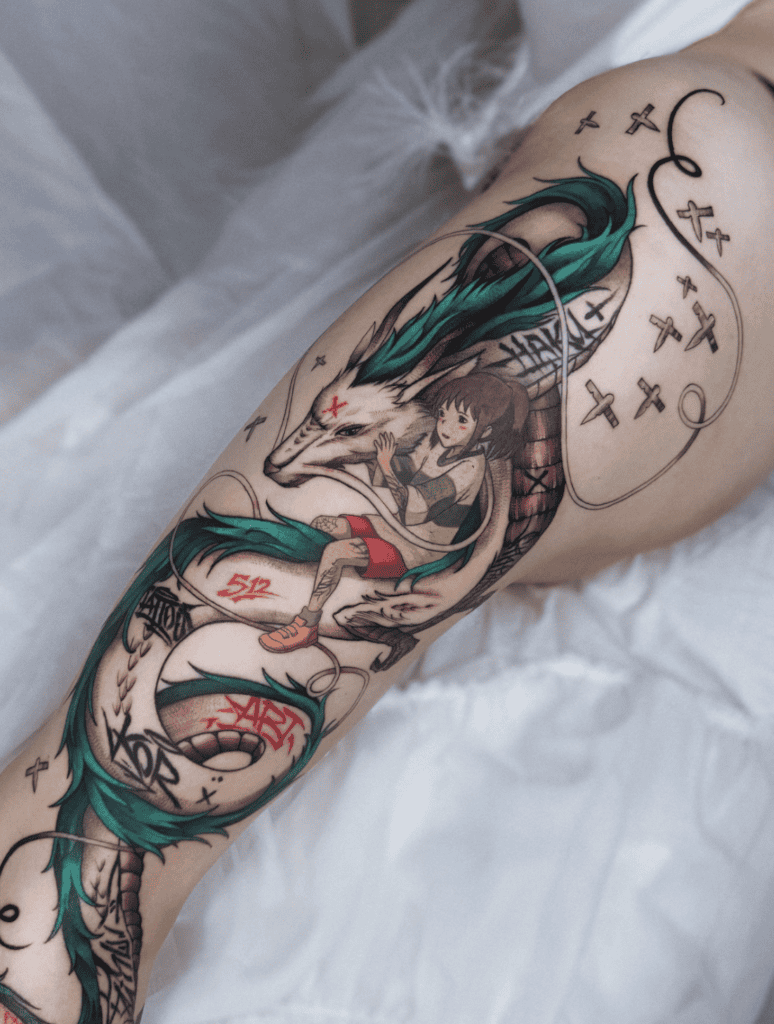
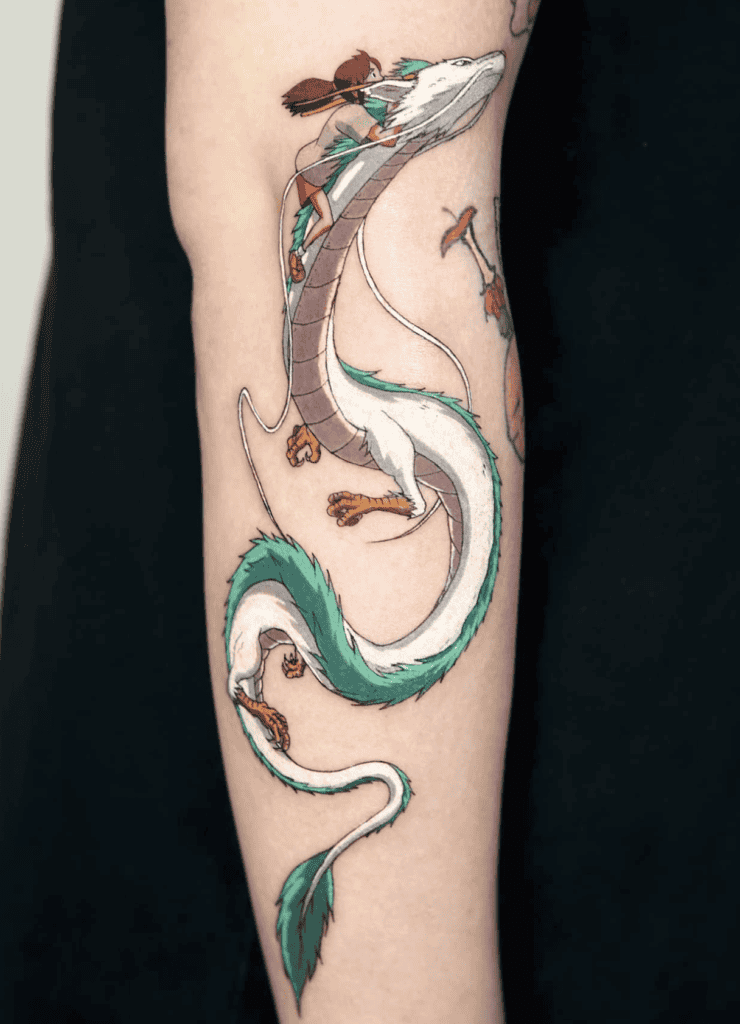
Haku is one of the main characters from Spirited Away, the famous animated film created by Hayao Miyazaki and Studio Ghibli. Haku is a mysterious spirit who can transform into a beautiful white dragon, making him one of the most iconic dragon characters in anime history.
Although Haku first appears as a calm and intelligent boy, he is actually the spirit of the Kohaku River. His dragon form is long, graceful, and serpentine, inspired more by traditional Eastern dragons than Western fire-breathing dragons. He flies through the sky surrounded by wind and clouds, giving him an elegant and almost divine presence.
Haku’s story is deeply connected to memory, identity, and freedom. Throughout the film, he struggles because he has forgotten his true name and purpose after serving the witch Yubaba. Chihiro eventually helps him remember that he was once the spirit of the river that saved her as a child, allowing him to reclaim his identity.
One Piece Dragon Tattoo
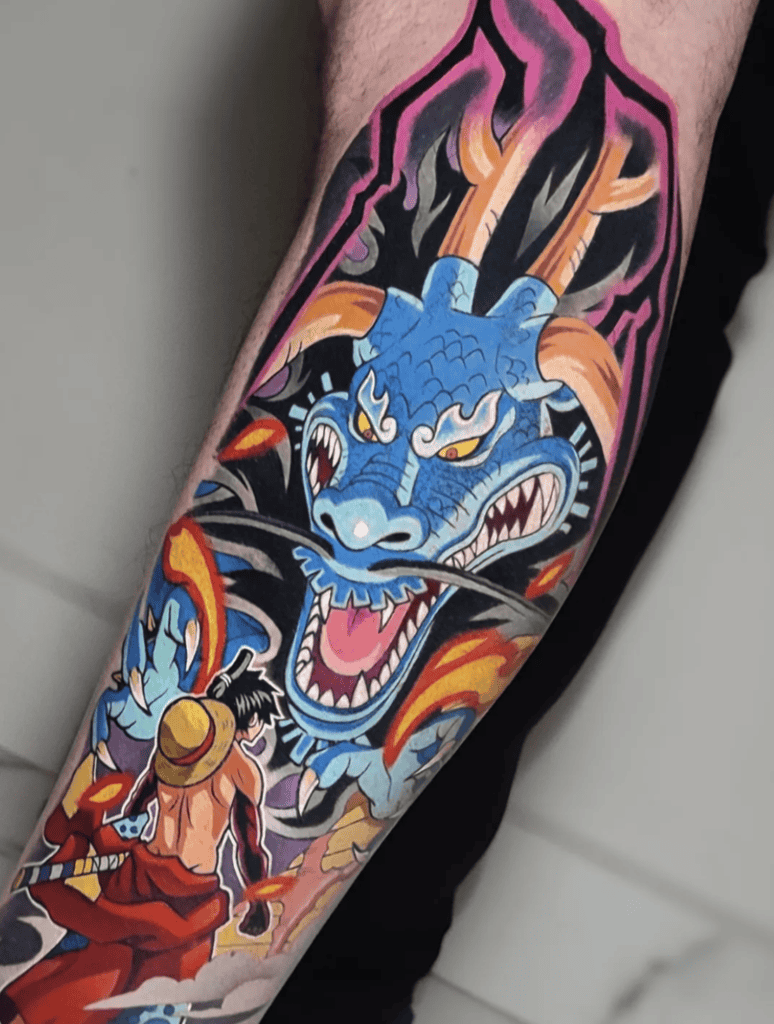
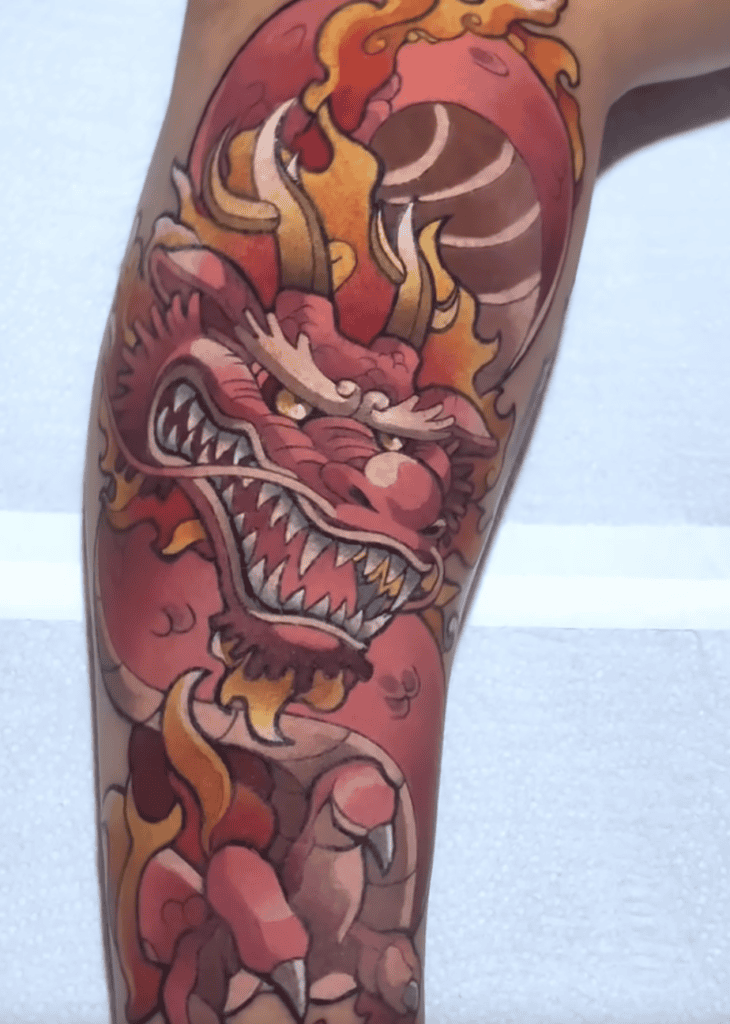
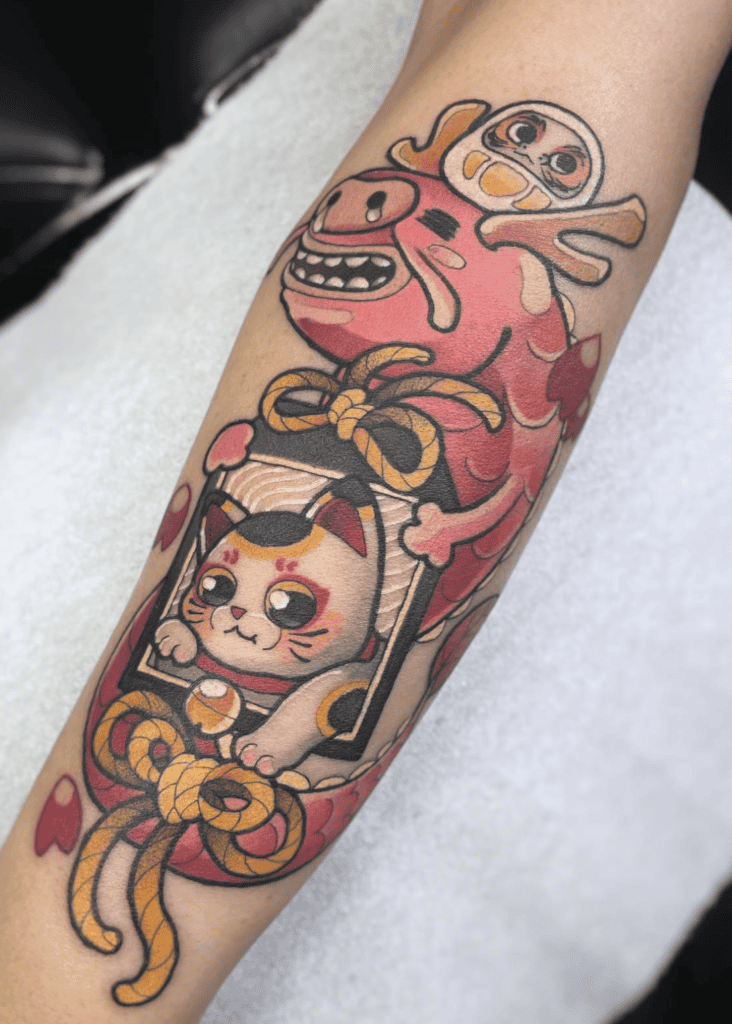
The most famous dragon figure in One Piece is Kaido, one of the Four Emperors of the Sea. Through the powers of the Uo Uo no Mi, Kaido can transform into a gigantic Eastern-style Azure Dragon capable of flying through the sky, summoning storms, breathing devastating energy blasts, and creating massive destruction.
Another important dragon character is Kozuki Momonosuke, who gains an artificial version of Kaido’s dragon powers. Unlike Kaido’s terrifying presence, Momonosuke’s dragon journey focuses more on growth, courage, responsibility, and learning to become a leader.
Ryunosuke is a small dragon from One Piece that appears during the Zou arc. He is a dragon created through the drawing powers of Kanjuro, who can bring his artwork to life. Ryunosuke was drawn to help the Straw Hat crew climb the giant elephant island of Zou, acting like a living rope-and-ladder dragon.
How to Train Your Dragon Tattoo
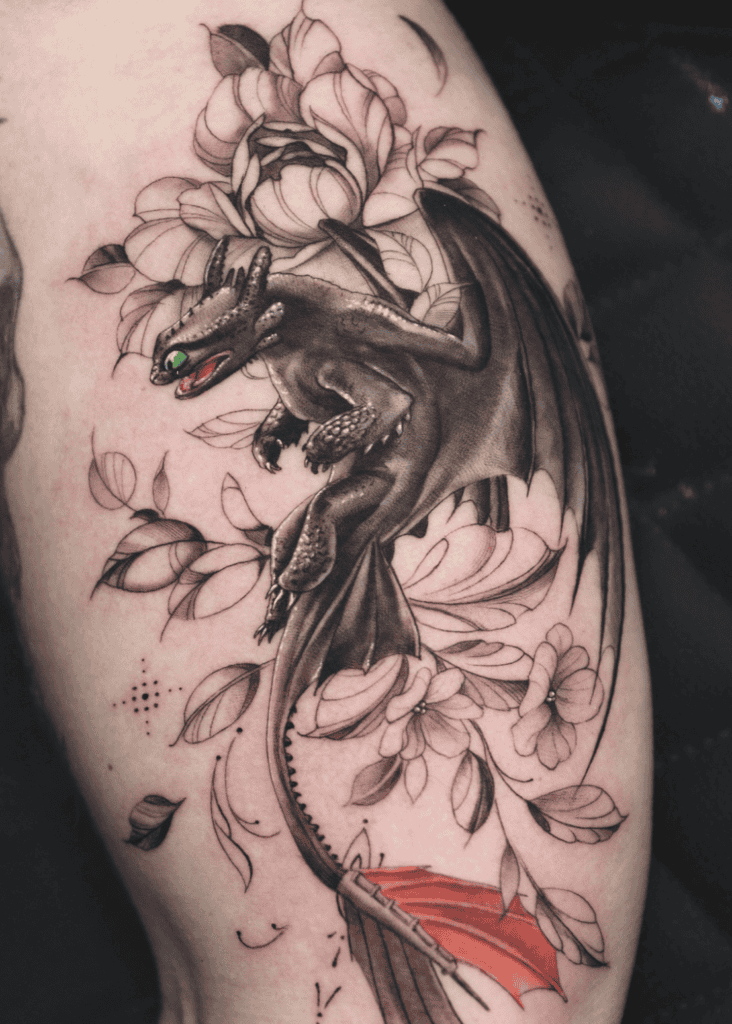
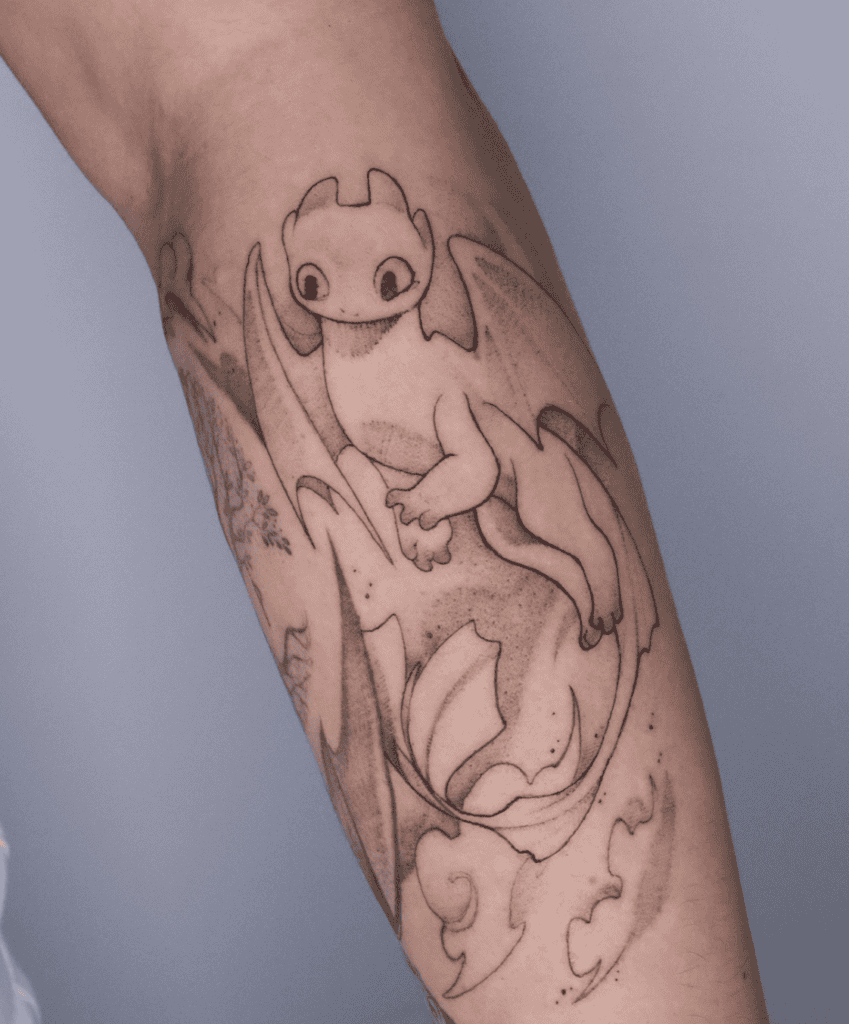
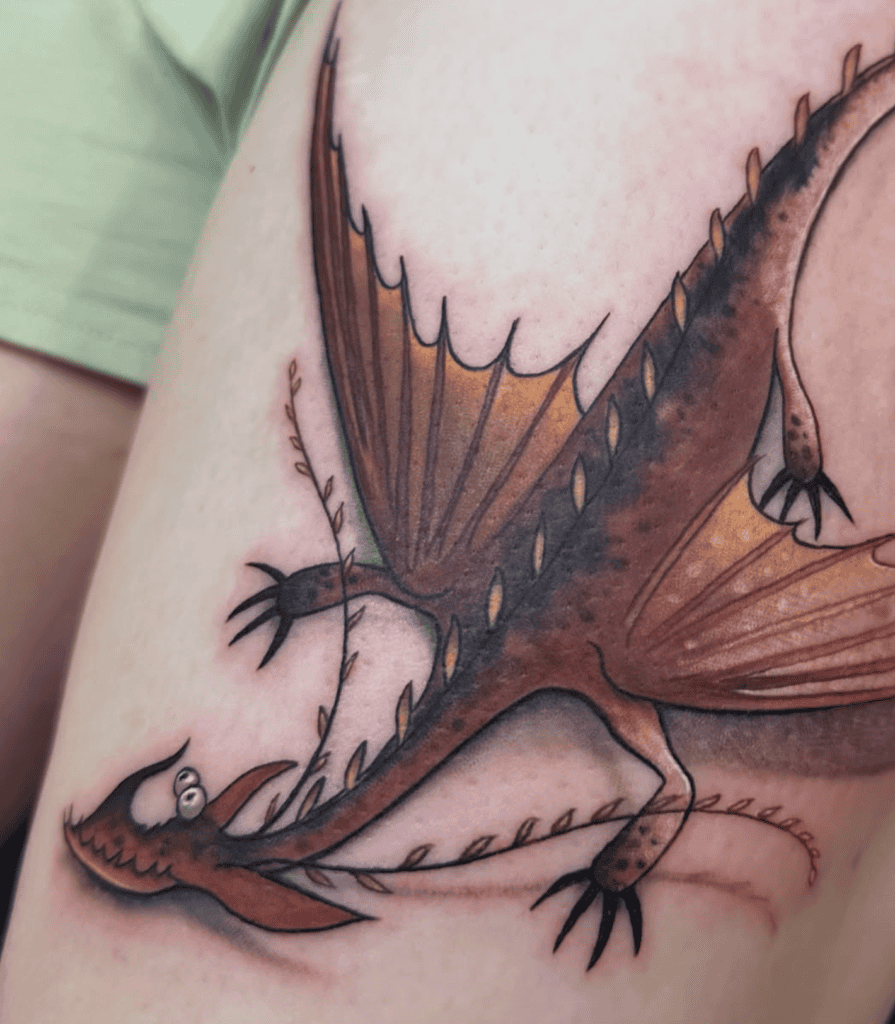
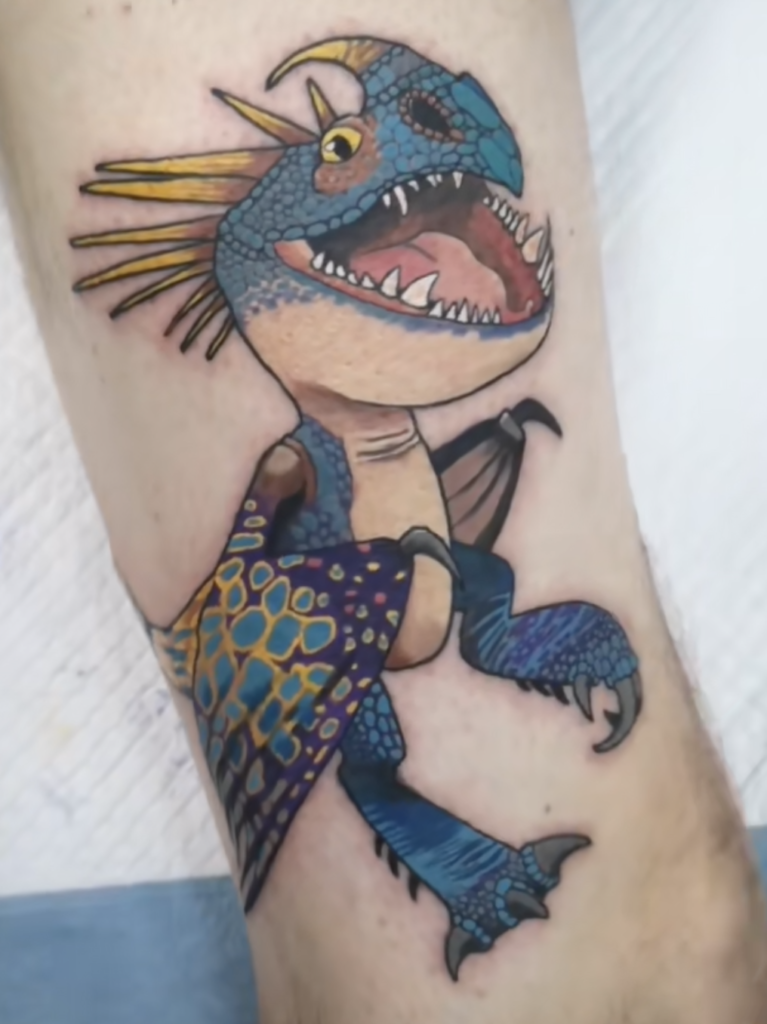
The dragons in How to Train Your Dragon are some of the most beloved dragons in modern animation. Unlike many fantasy stories where dragons are treated as monsters, this series portrays them as intelligent creatures capable of friendship, loyalty, emotion, and deep bonds with humans.
The most famous dragon is Toothless, a rare Night Fury dragon who becomes Hiccup’s closest companion. Toothless is known for his sleek black design, incredible speed, plasma blasts, and cat-like personality. The series introduced many unique dragon species, each with different abilities, appearances, and personalities.
Aludin Dragon Tattoo
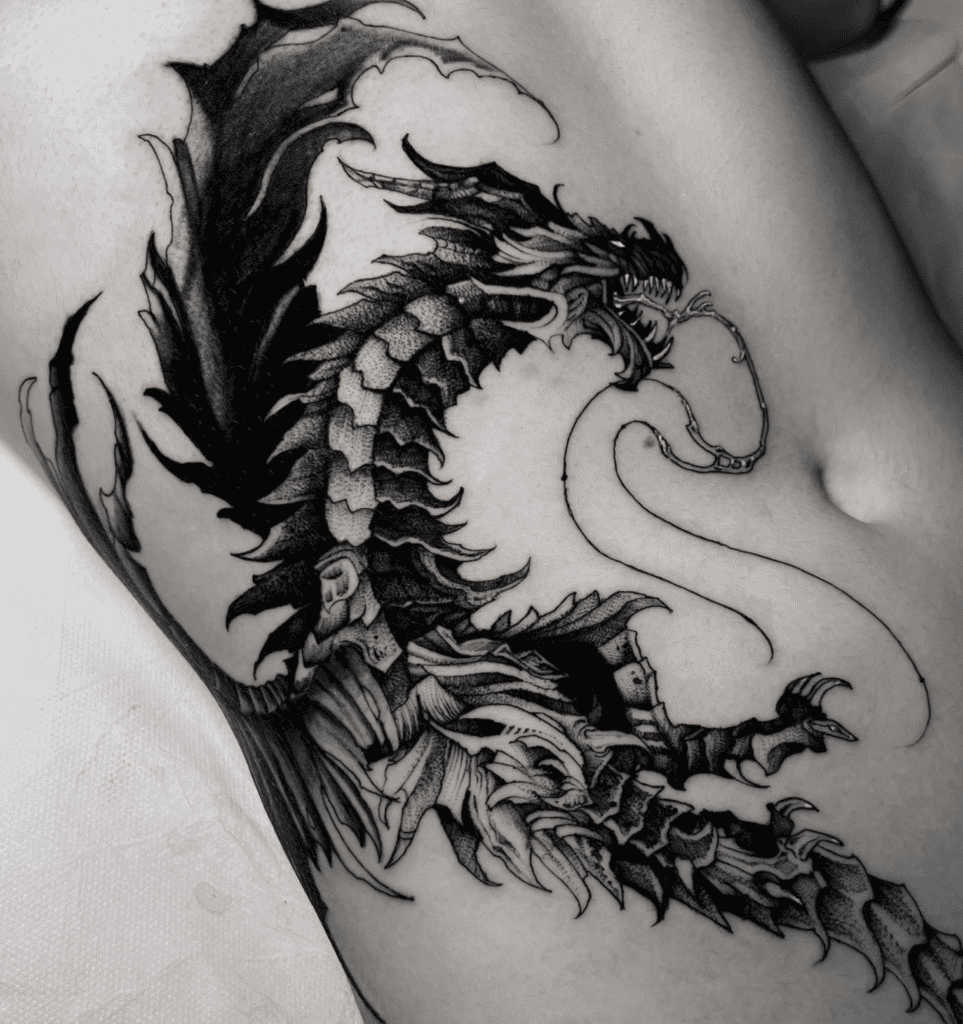
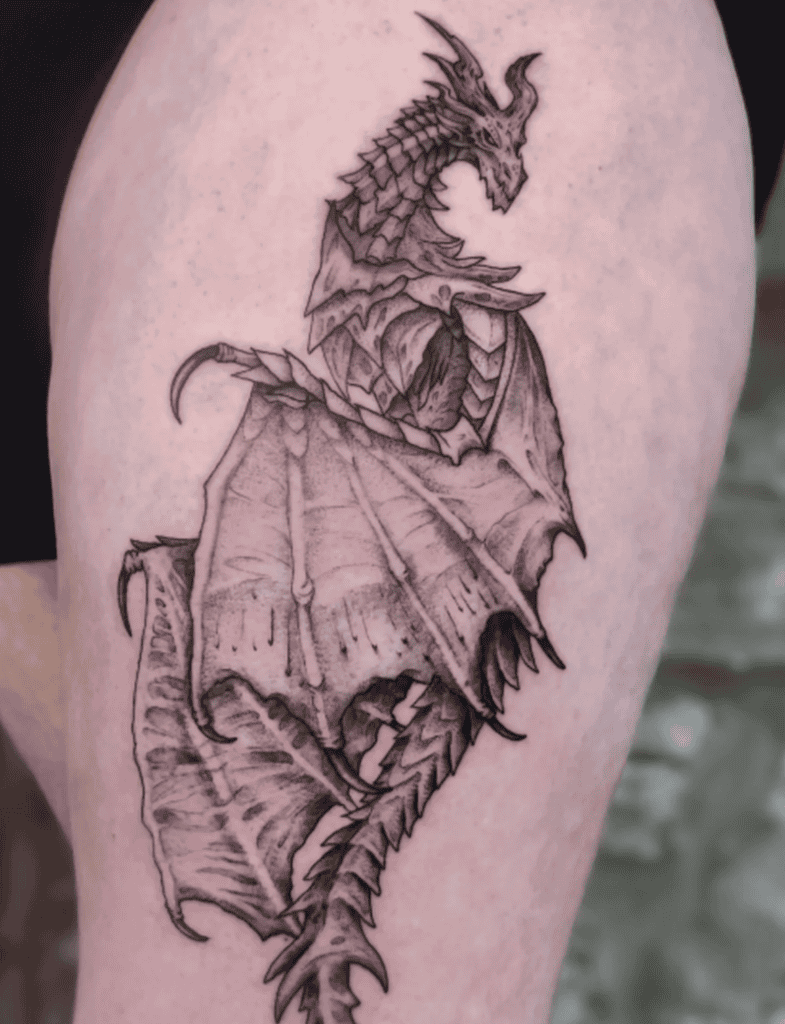
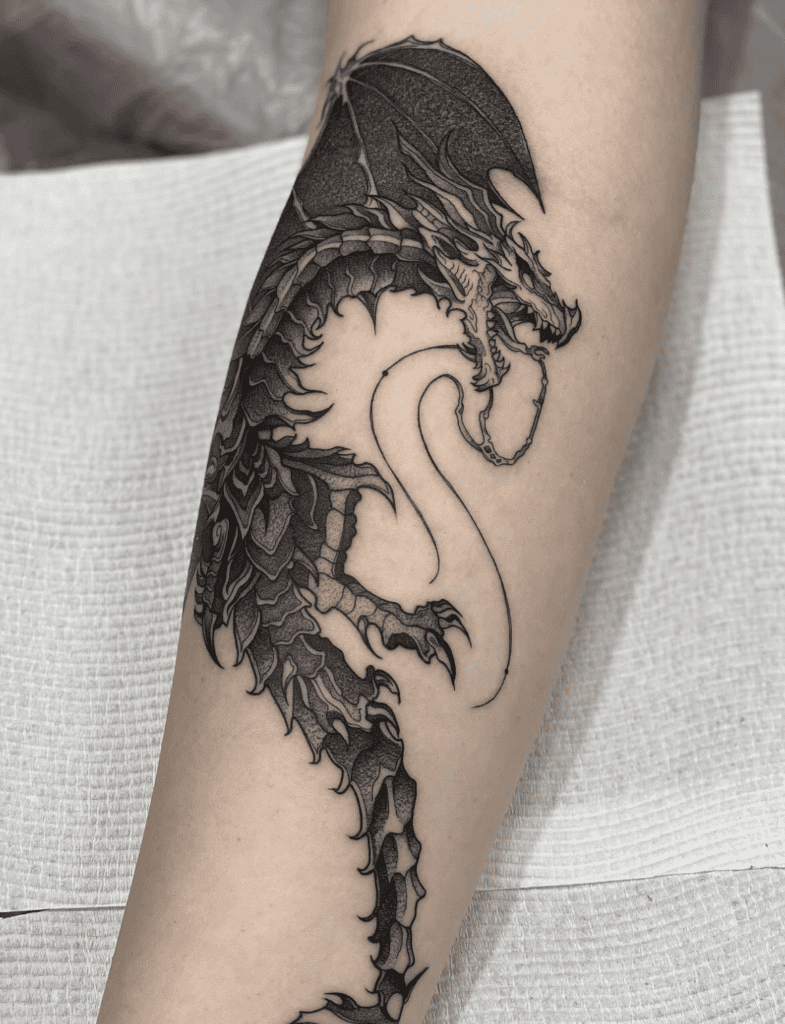
Alduin, also known as The World-Eater, is the main antagonist of The Elder Scrolls V: Skyrim and one of the most famous dragons in gaming.
He is an enormous black dragon worshipped in ancient Nordic legends as a god-like being connected to destruction, fate, and the end of the world. According to prophecy, Alduin’s purpose is to eventually consume the world so that a new one can begin.
Unlike many of the other dragons in Skyrim, Alduin is highly intelligent, proud, and commanding. He can resurrect fallen dragons from their burial sites and lead them as part of his return to power. His deep voice, massive size, and terrifying presence helped make him one of the most memorable fantasy villains in modern RPGs.
Draco Dragon Tattoo


Draco is the main dragon character from Dragonheart, a fantasy adventure film released in 1996. Draco is one of the last surviving dragons in the world and shares part of his heart with a dying prince in an attempt to save his life. However, when the prince grows into a cruel tyrant, Draco becomes burdened with guilt for helping create him.
Throughout the film, Draco forms a strong friendship with the dragon slayer Bowen. Although the two initially clash, they eventually work together and develop one of the most memorable human-and-dragon relationships in fantasy cinema.
Draco is known for his humour, intelligence, and deep sense of honour. Unlike many fierce fantasy dragons, he often acts calm and thoughtful, though he is still capable of incredible power when necessary.
Smaug Dragon Tattoo
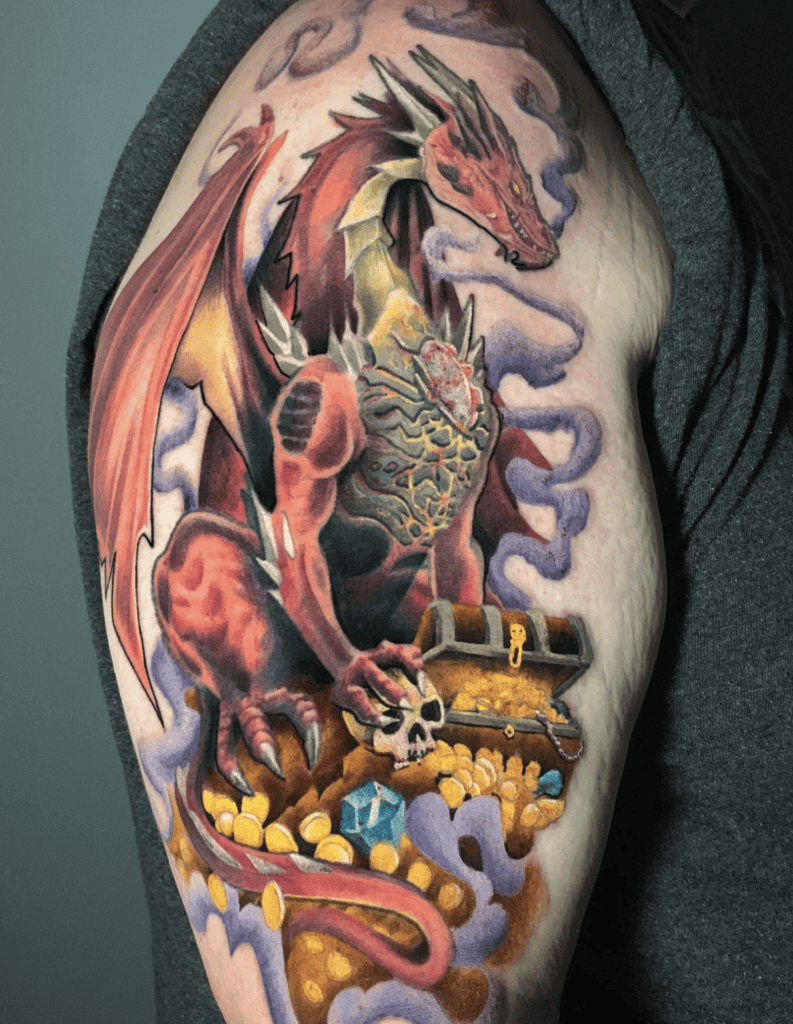
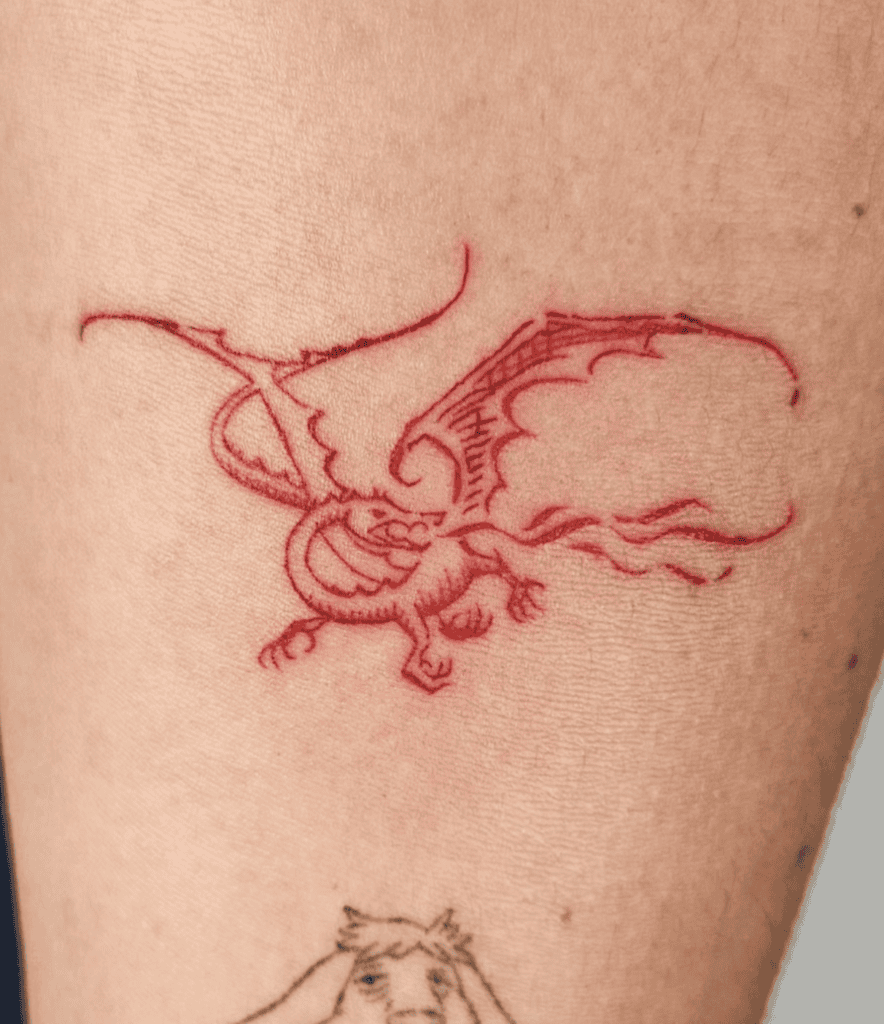
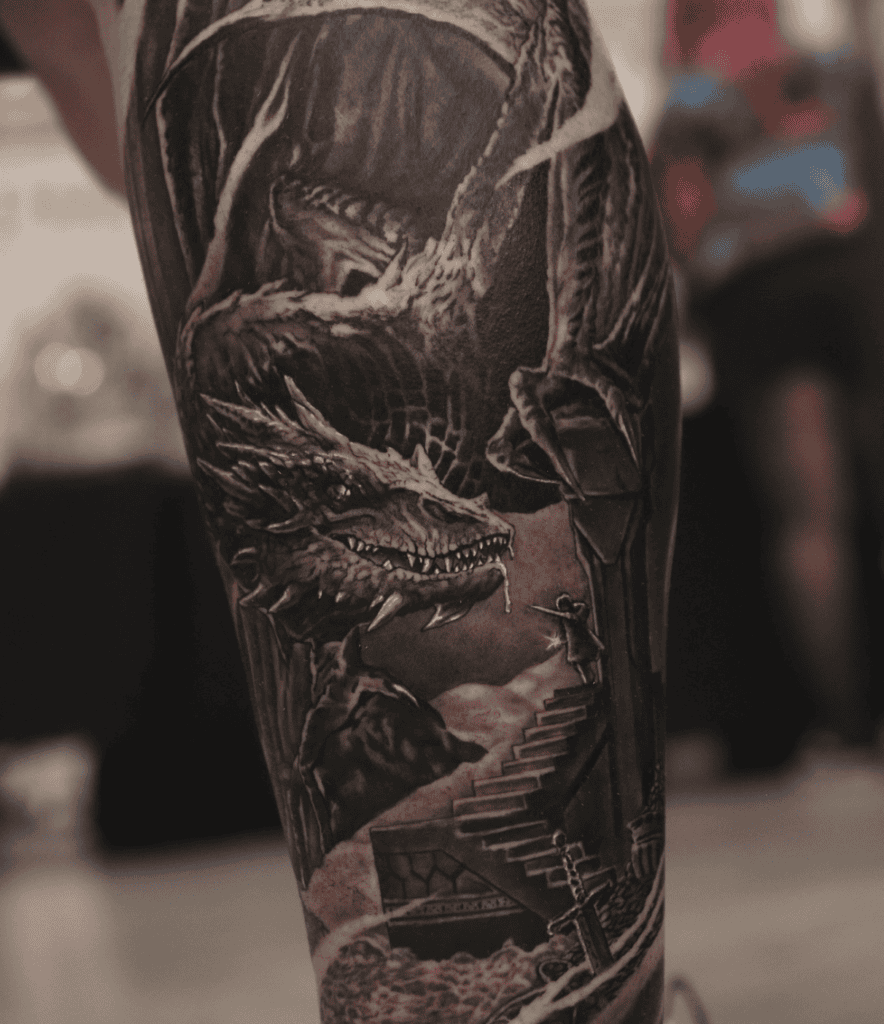
Smaug is one of the most famous dragons in fantasy literature and the main dragon antagonist of The Hobbit by J. R. R. Tolkien. He is a gigantic fire-breathing dragon who attacked the Lonely Mountain, wiping out the nearby dwarf kingdom and claiming its enormous treasure hoard for himself.
Smaug is highly intelligent, manipulative, and arrogant, speaking with elegance and confidence, often trying to psychologically intimidate his enemies rather than simply destroying them outright.
Mushu Dragon Tattoo
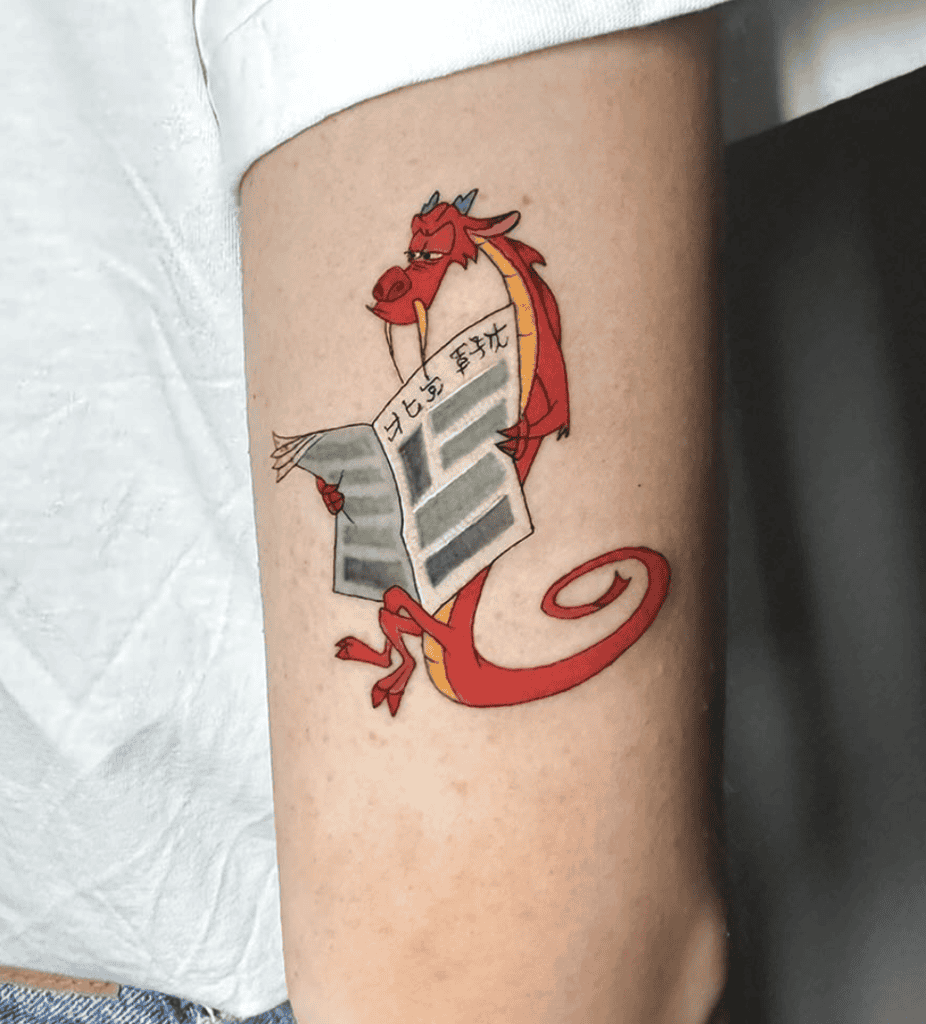
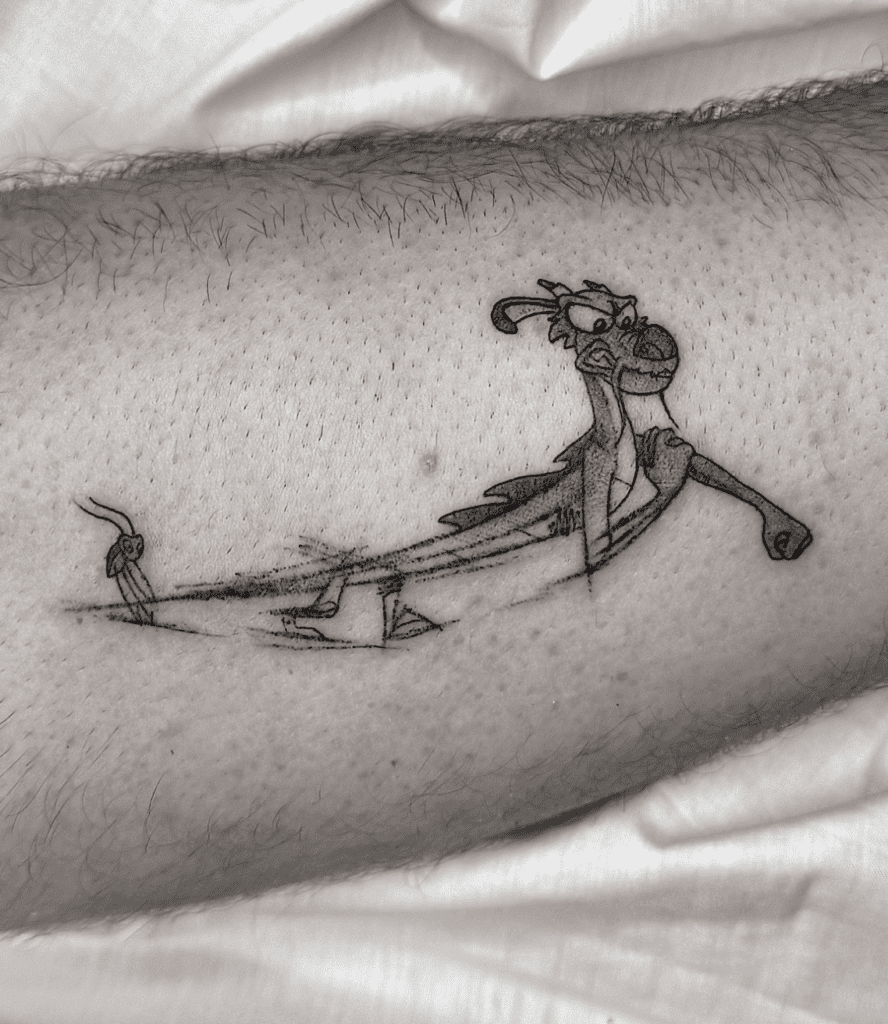
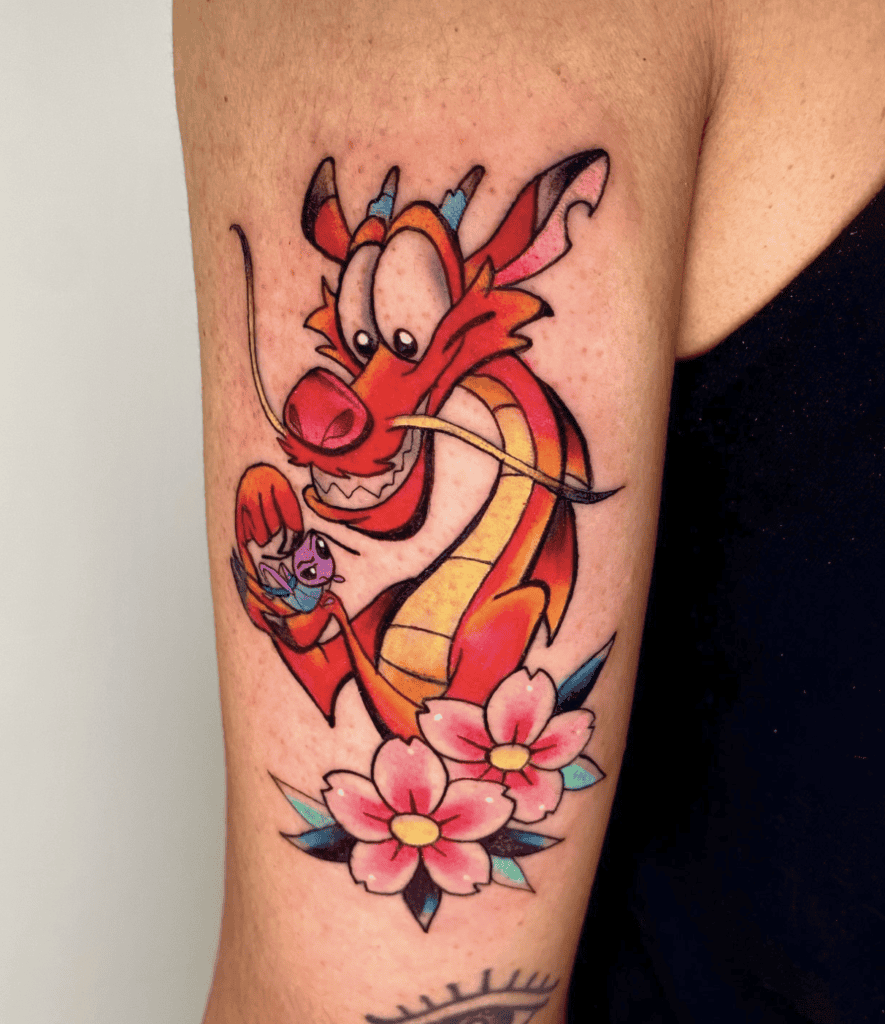
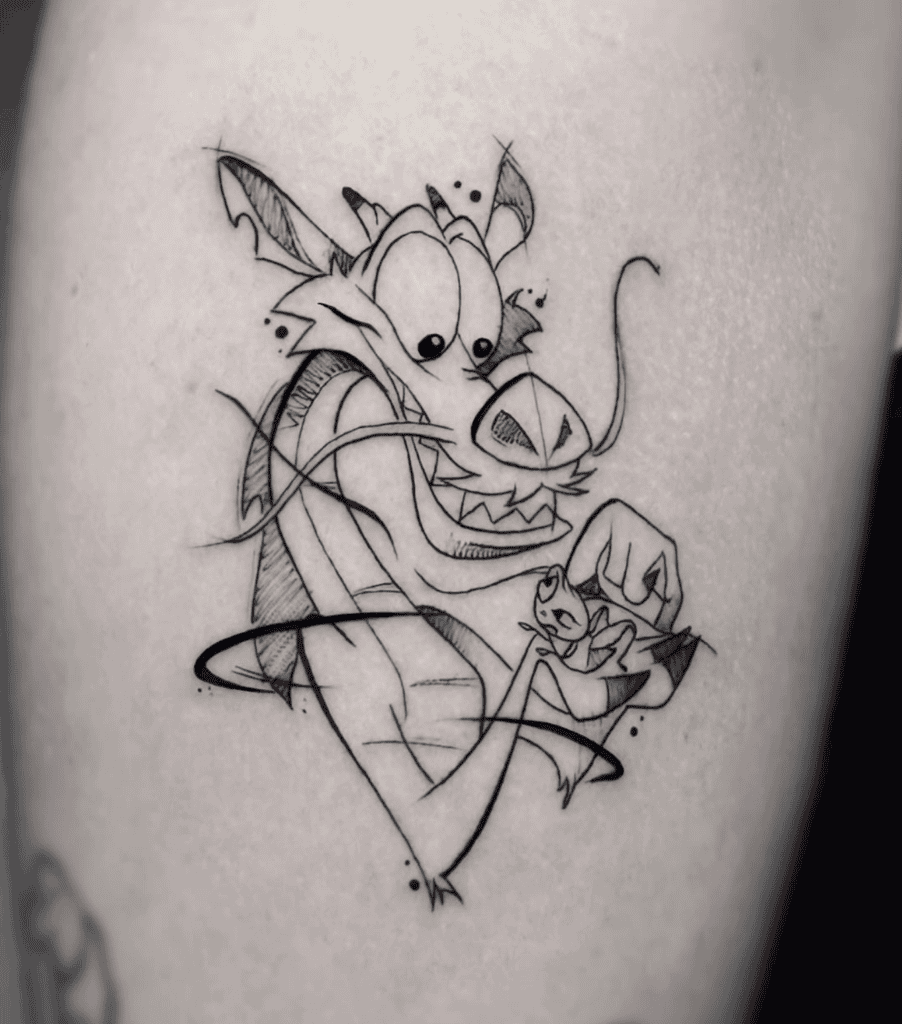
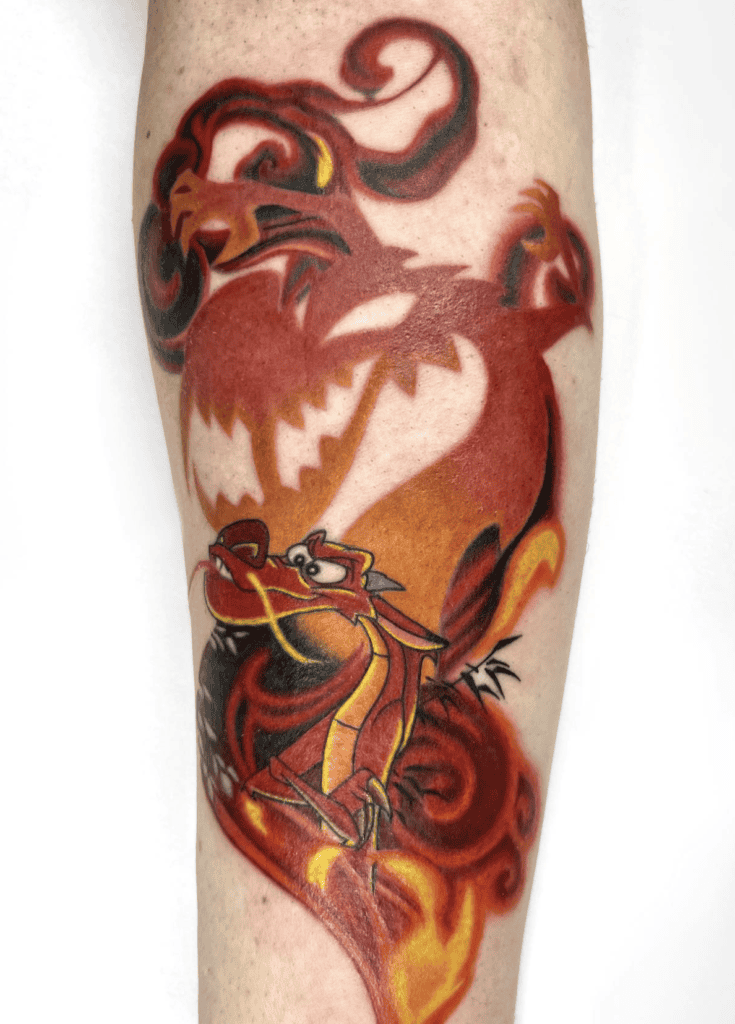
Mushu is the small red dragon companion of Mulan, a tiny, energetic, and constantly talking guardian spirit. He helps guide and encourage her during her journey, although his plans do not always go smoothly.
Mushu is known for his humour, confidence, and exaggerated personality, and despite acting cowardly or selfish at times, Mushu genuinely cares about Mulan and ultimately proves himself loyal and brave. His character adds warmth and comedy to the film while also supporting the story’s themes of identity, courage, and believing in yourself.
World of Warcraft Dragon Tattoo
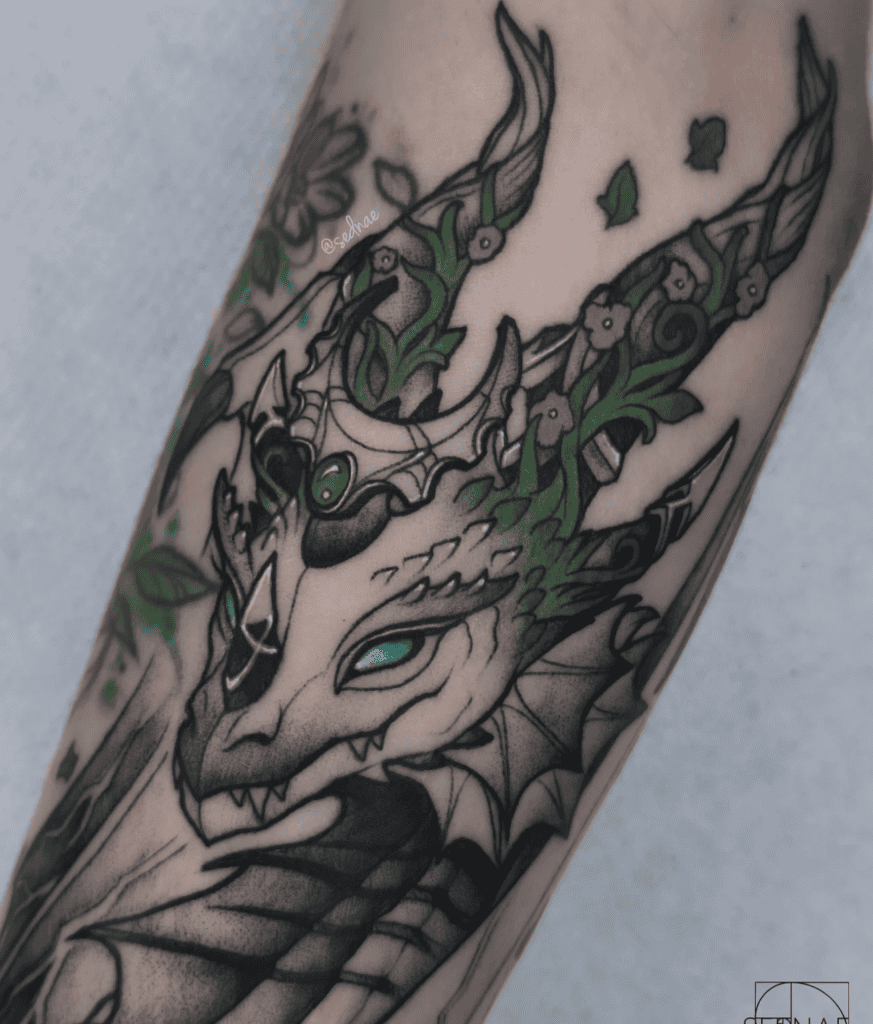
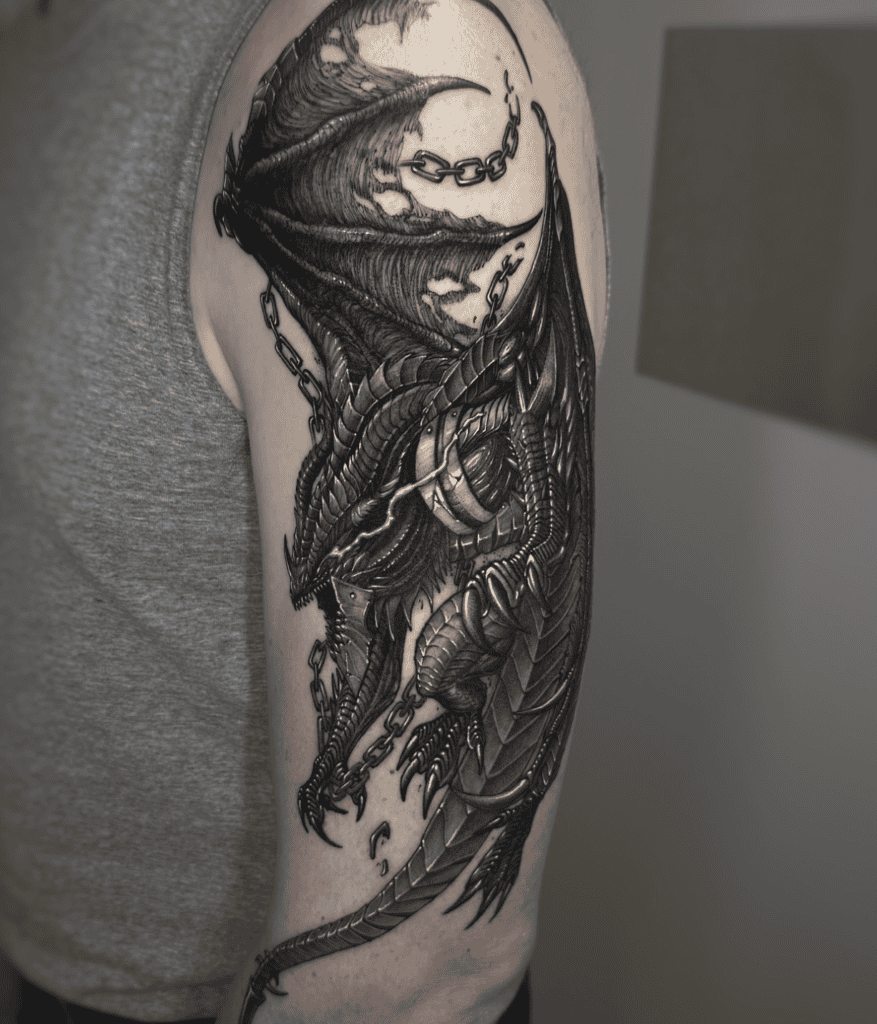
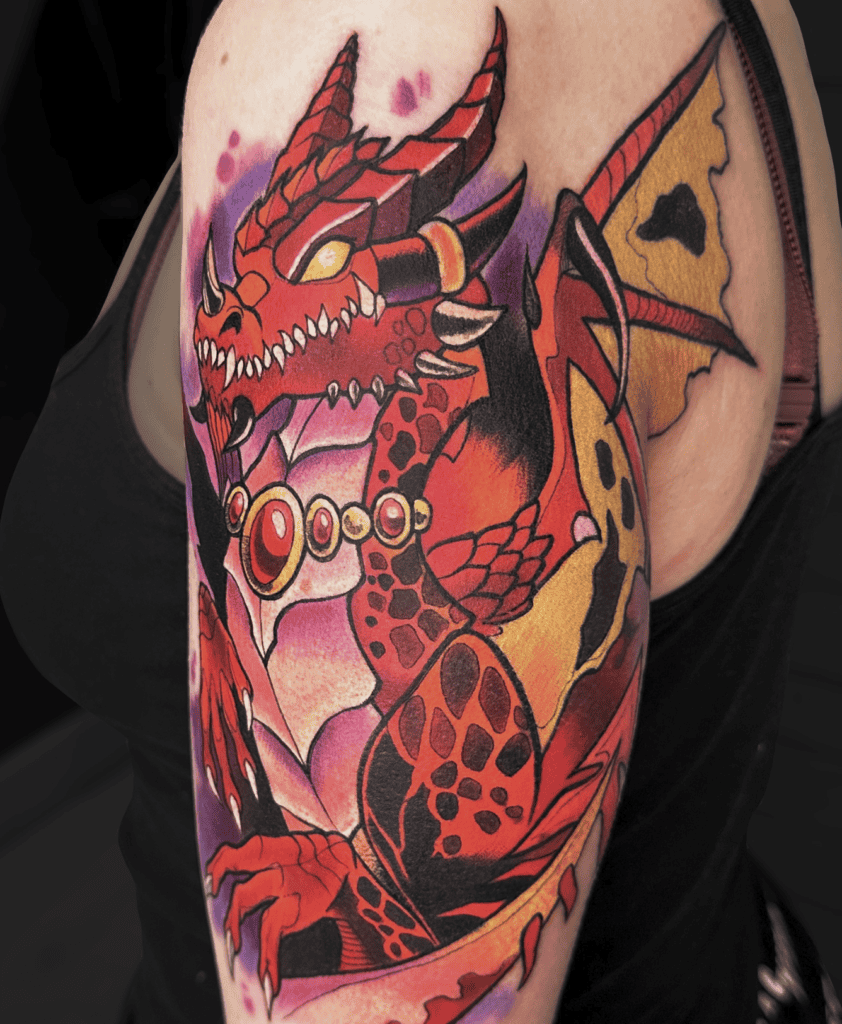
The dragons in World of Warcraft are some of the most important and powerful beings in the Warcraft universe. Rather than acting as simple monsters, many dragons in Warcraft are ancient guardians connected to magic, nature, time, dreams, life, and the balance of the world itself. The most famous dragons are the Dragon Aspects, legendary dragon leaders empowered by the Titans to protect Azeroth.
Alexstrasza, the red Dragon Aspect, is associated with life, healing, and protection, and is often called the Life-Binder. Ysera, the green Dragon Aspect, is tied to nature, dreams, and the Emerald Dream. Nozdormu, the bronze Dragon Aspect, protects time and destiny. Malygos, the blue Dragon Aspect, is connected to arcane magic and magical balance. Deathwing, originally the black Dragon Aspect Neltharion, was corrupted into one of the most destructive villains in Warcraft history.
The dragons in Warcraft range from noble protectors to terrifying raid bosses and cosmic threats. Some are wise and benevolent, while others become corrupted by madness, dark magic, or ancient gods.
Pokémon Dragon Tattoo
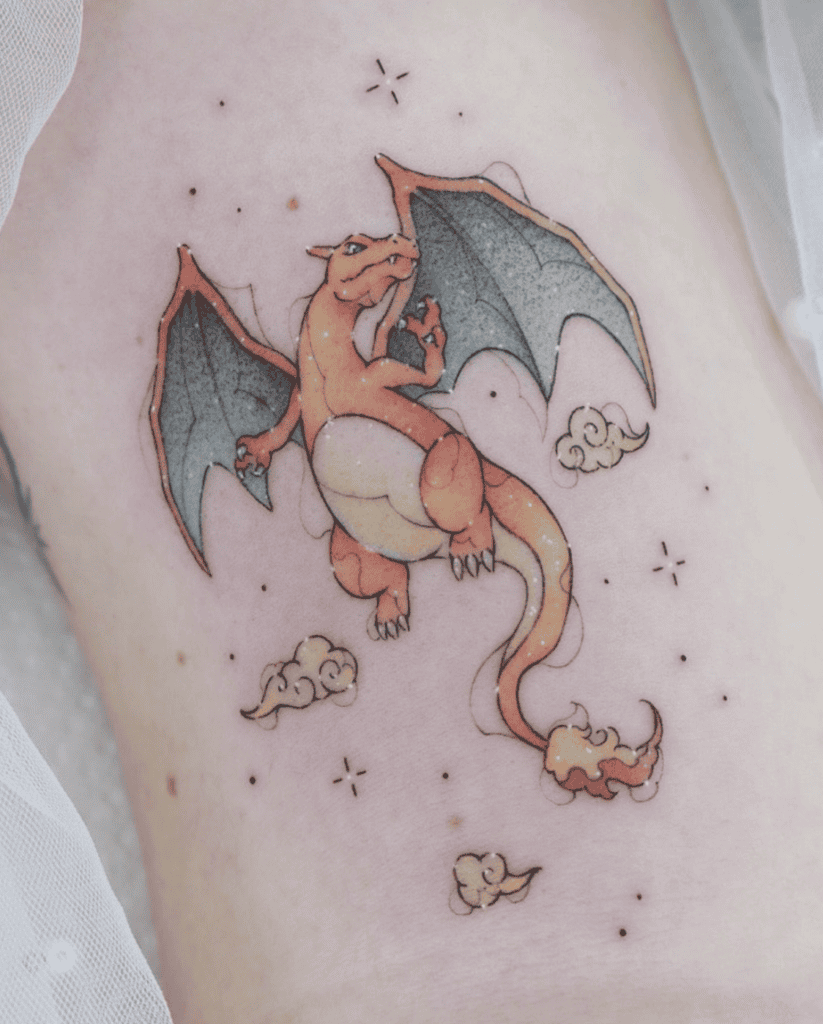
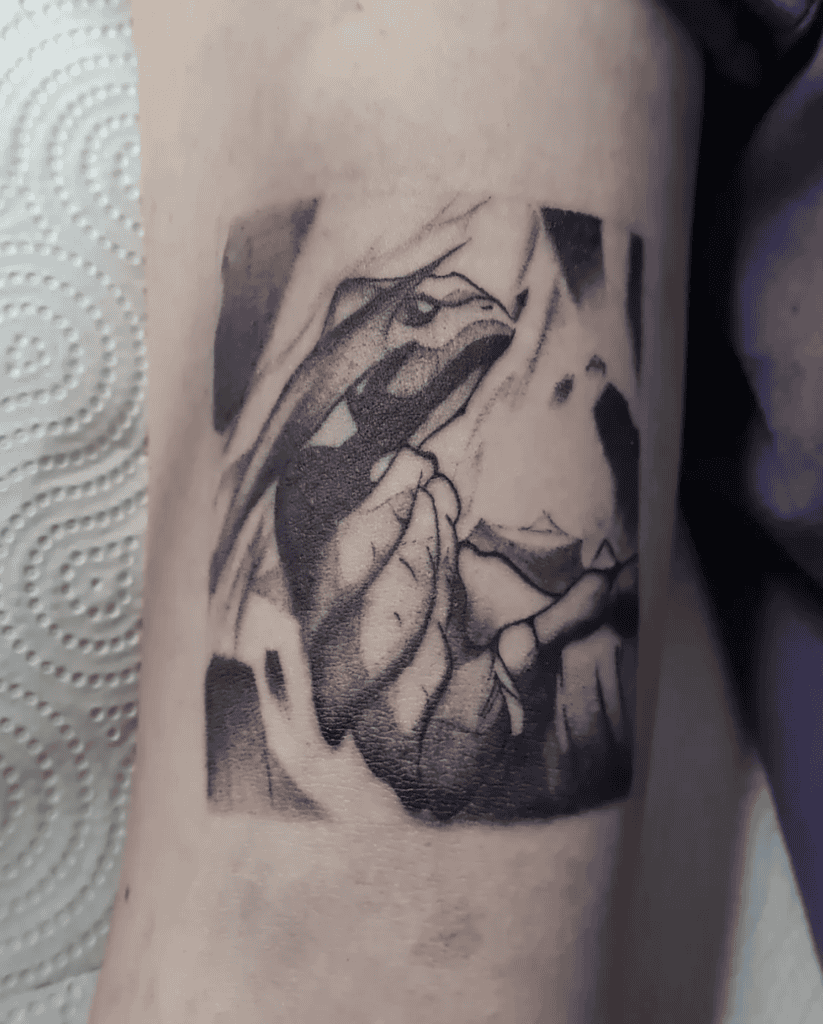
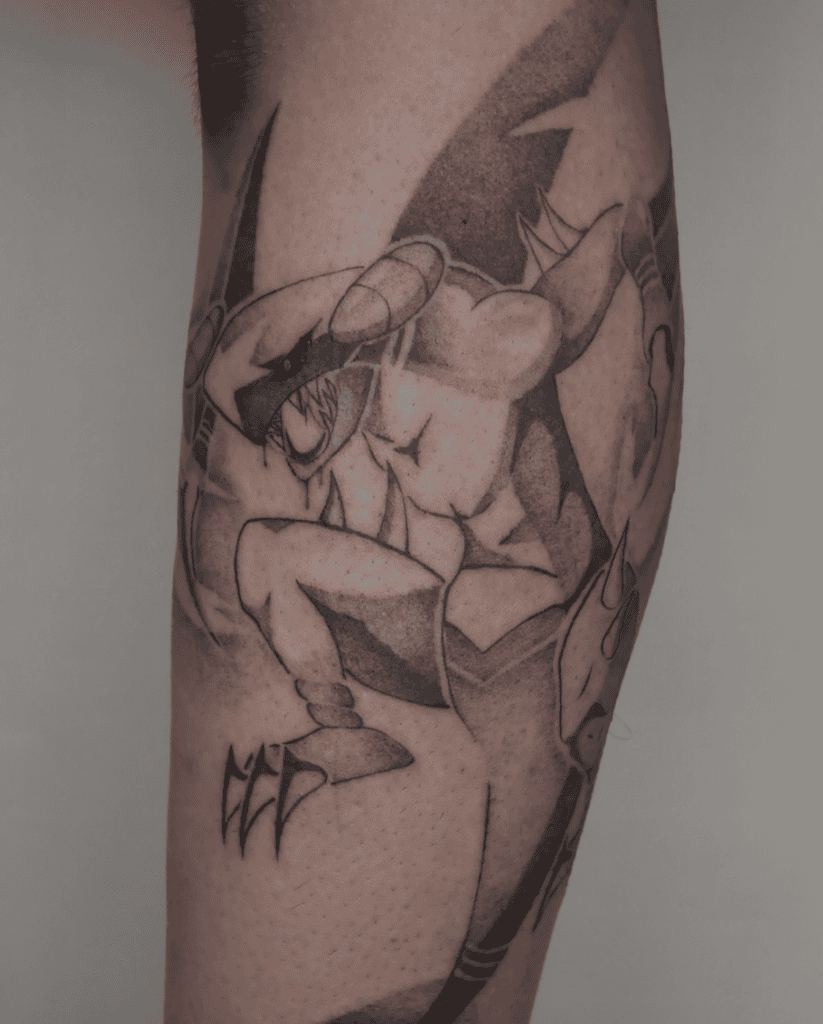
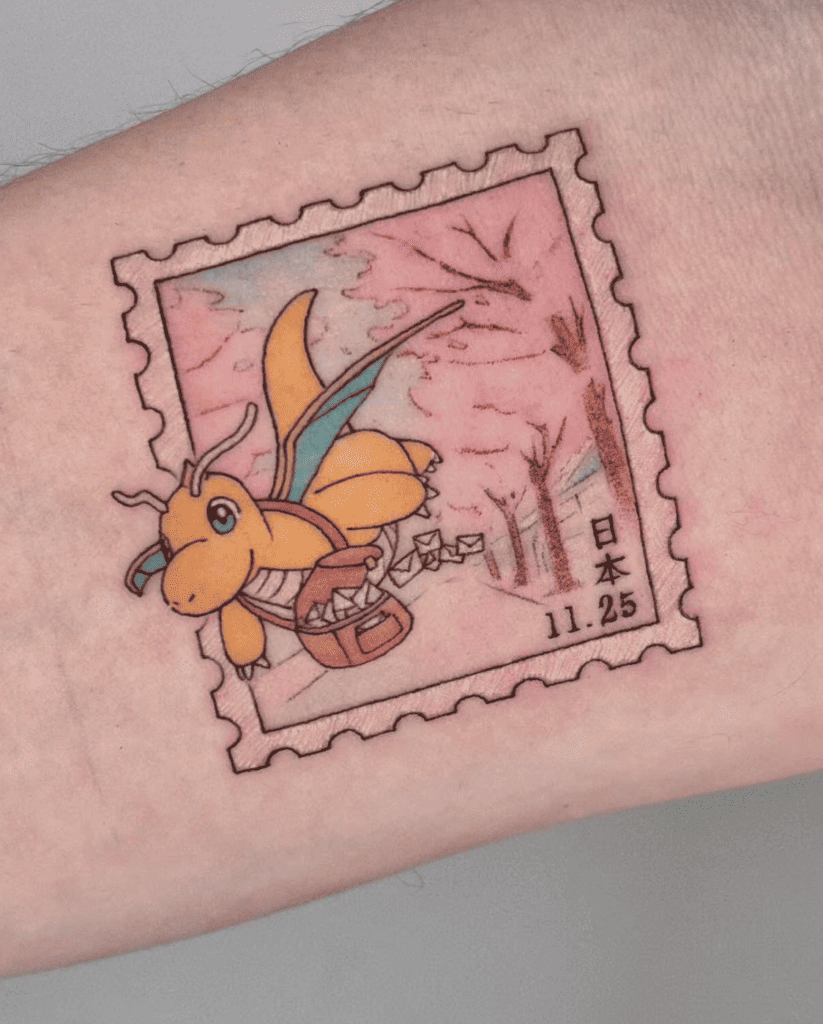
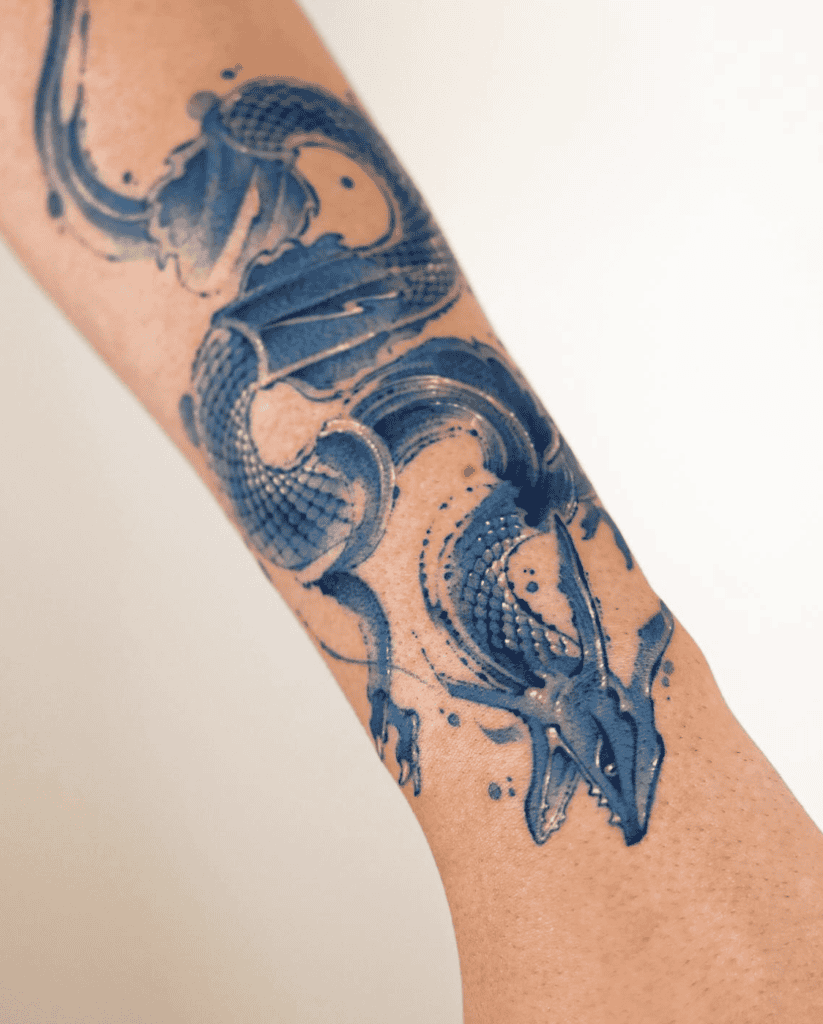
The dragon Pokémon from Pokémon are some of the most powerful, popular, and legendary creatures in the series. Dragon-type Pokémon are usually associated with strength, rarity, determination, and overwhelming power, which is why they are often used by champions, elite trainers, and major rivals throughout the games and anime.
Shrek Dragon Tattoo


Dragon is the giant pink dragon from Shrek and one of the most memorable supporting characters in the series. At first, Dragon appears as a terrifying guardian protecting Princess Fiona in her castle; however, the film quickly reveals that beneath her intimidating appearance, Dragon is emotional, affectionate, and surprisingly lovable.
One of the funniest and most iconic parts of the movie is Dragon’s unexpected romance with Donkey. Their relationship became one of the franchise’s most popular running jokes, eventually leading to the birth of their unusual dragon-donkey hybrid children known as the Dronkeys.
Soulsborne Dragon Tattoo
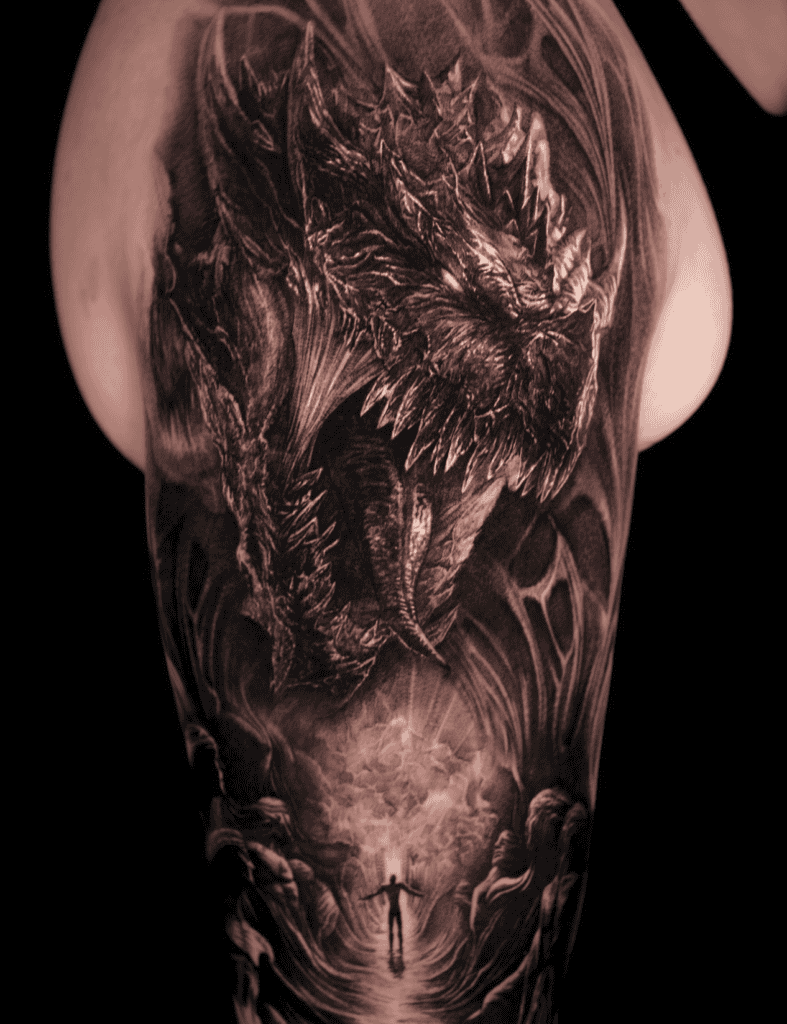
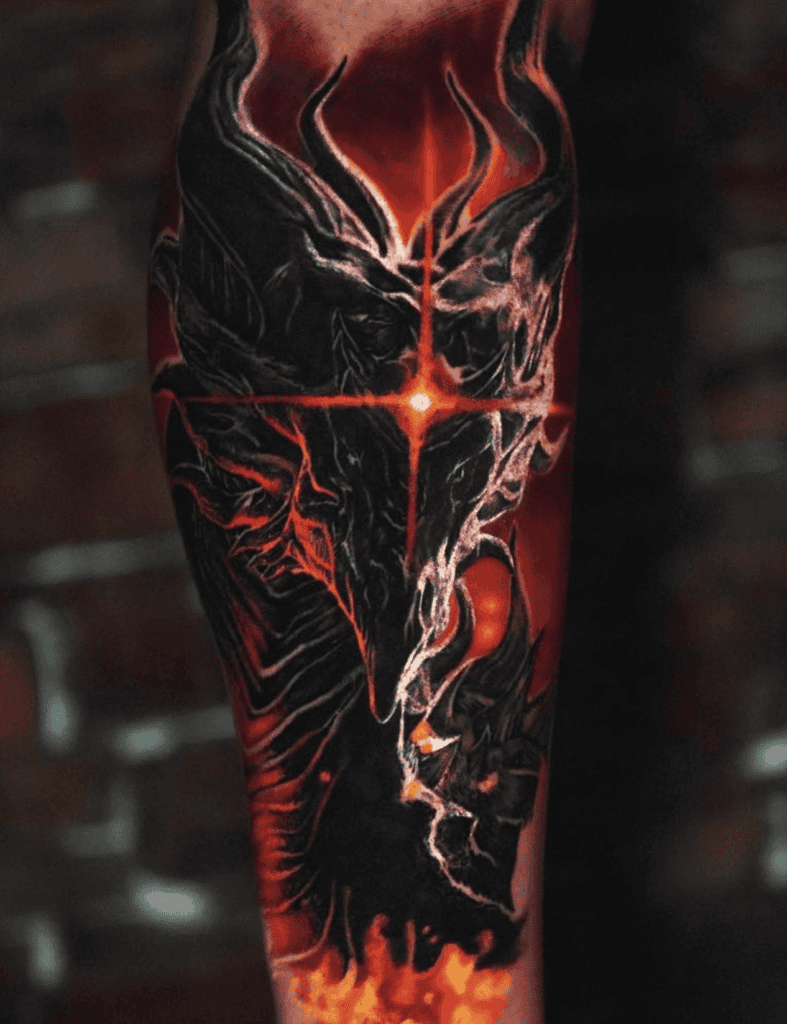
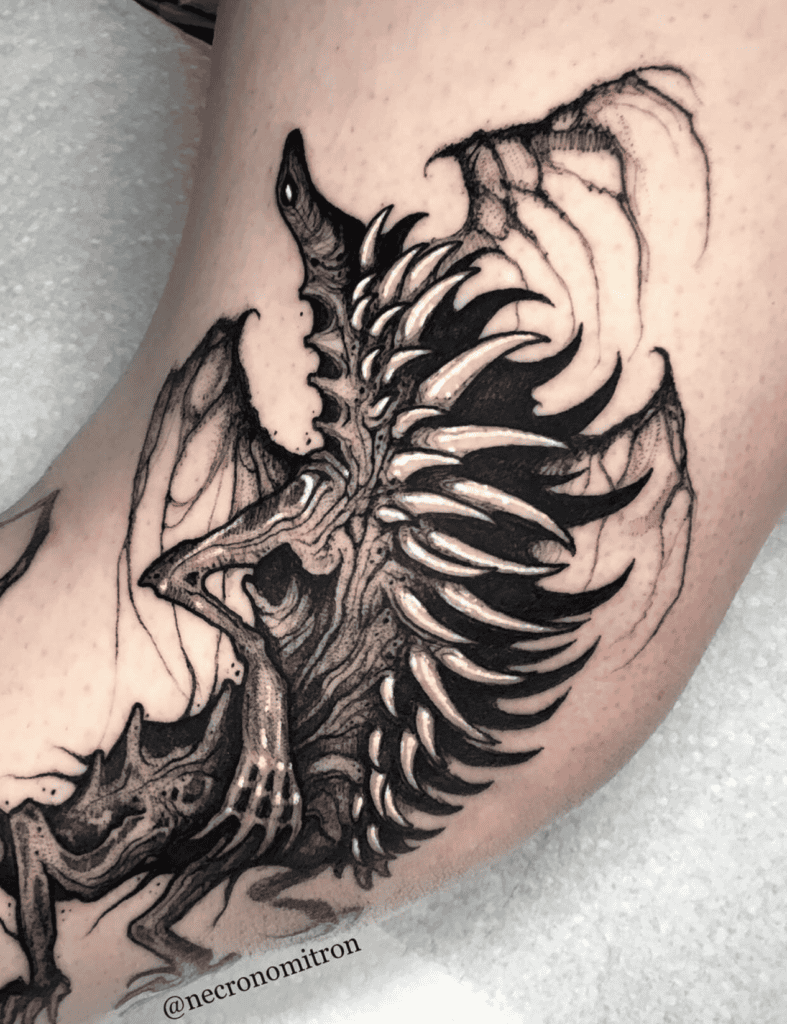
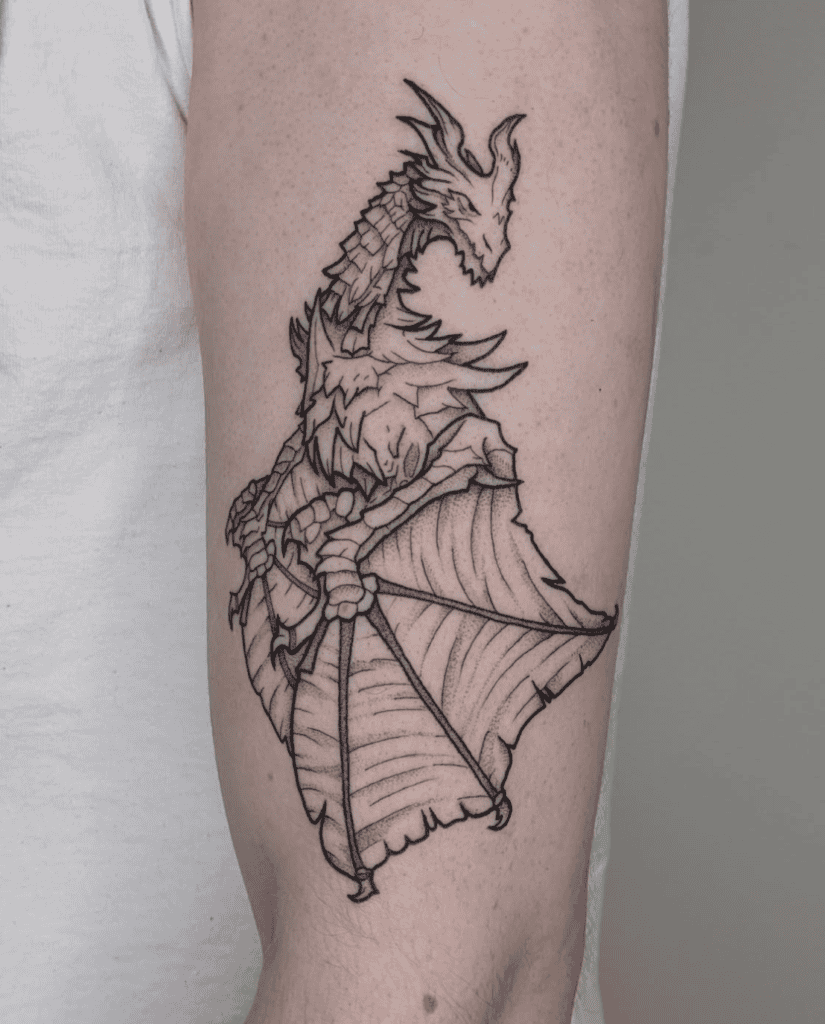
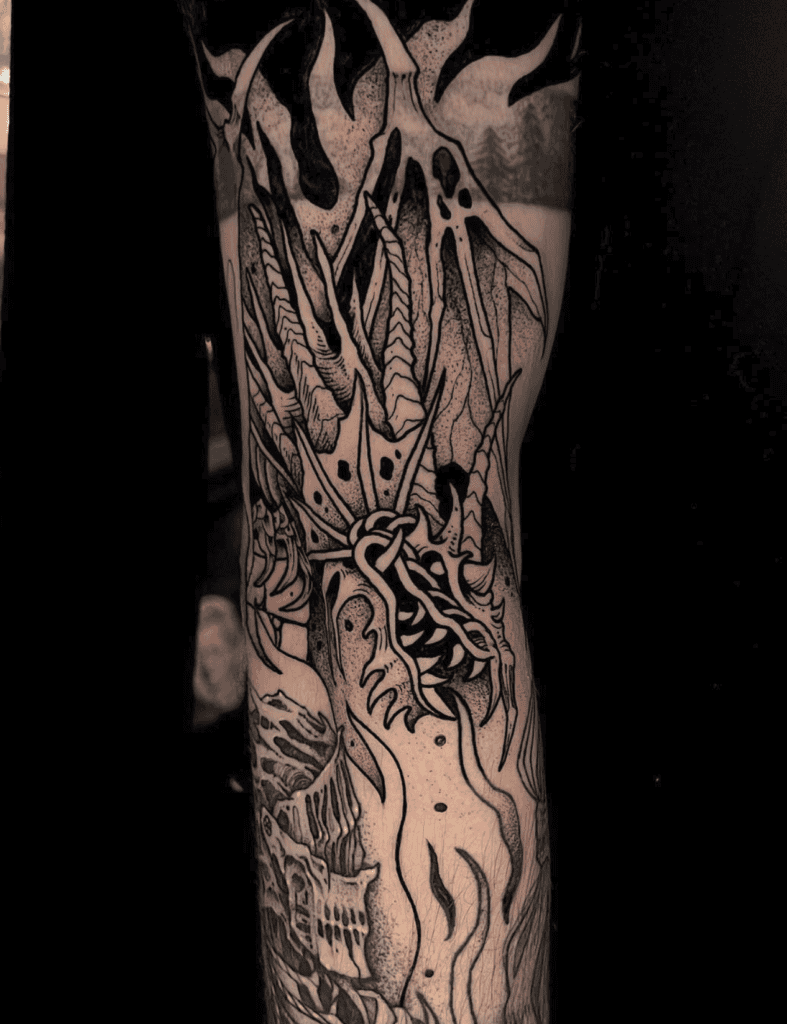
The dragons in the Dark Souls and Elden Ring worlds are some of the most mysterious, terrifying, and legendary dragons in gaming. These dragons are often portrayed as ancient god-like beings tied to the origins of the world itself, symbolising immortality, decay, forgotten history, pride, and the inevitable collapse of great civilisations.
In Dark Souls, the ancient Everlasting Dragons existed before fire, time, and disparity entered the world. Their near-immortal stone scales made them almost eternal beings until they were overthrown during a great war involving Gwyn and the Lords.
These dragons are famous for their tragic and melancholic themes, as many are remnants of ancient eras, slowly decaying or corrupted as the world itself falls apart. This gives them a mythical and almost sorrowful atmosphere compared to more traditional fantasy dragons.
Sisu Dragon Tattoo
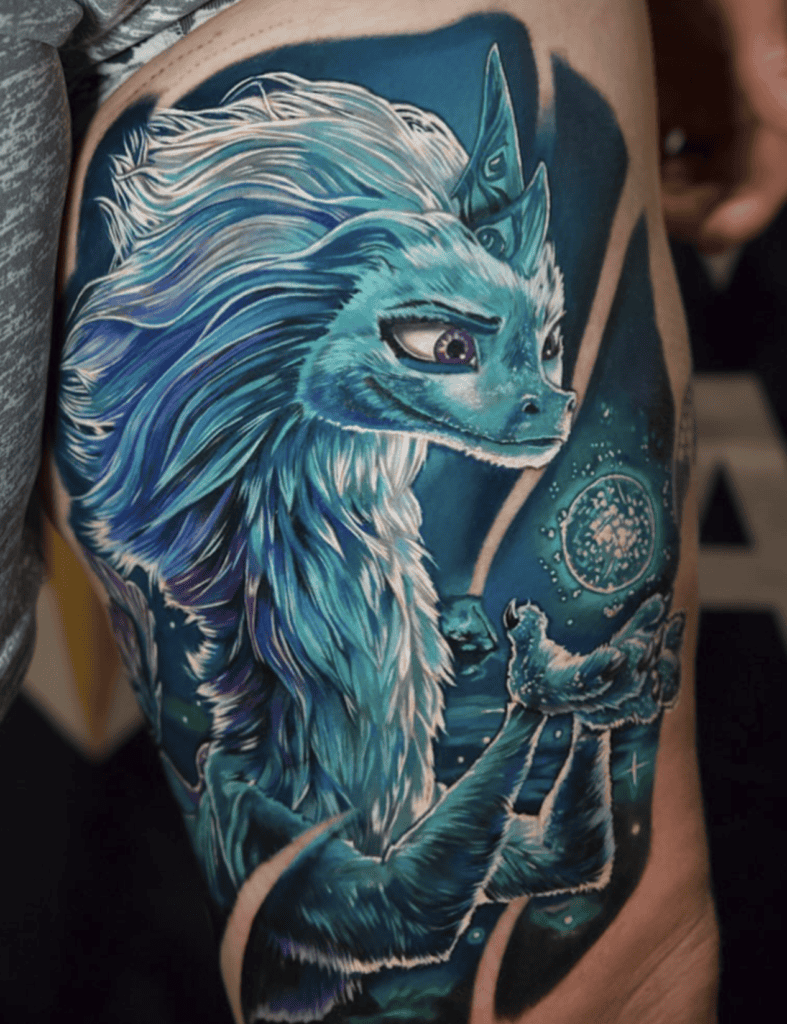
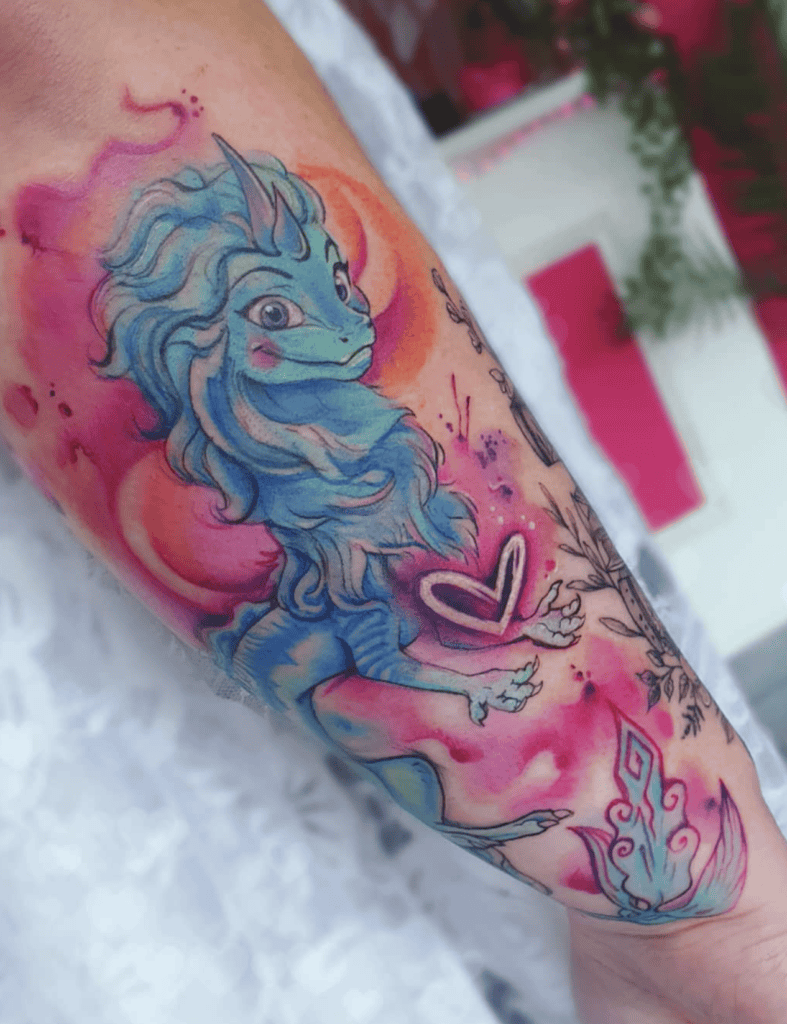
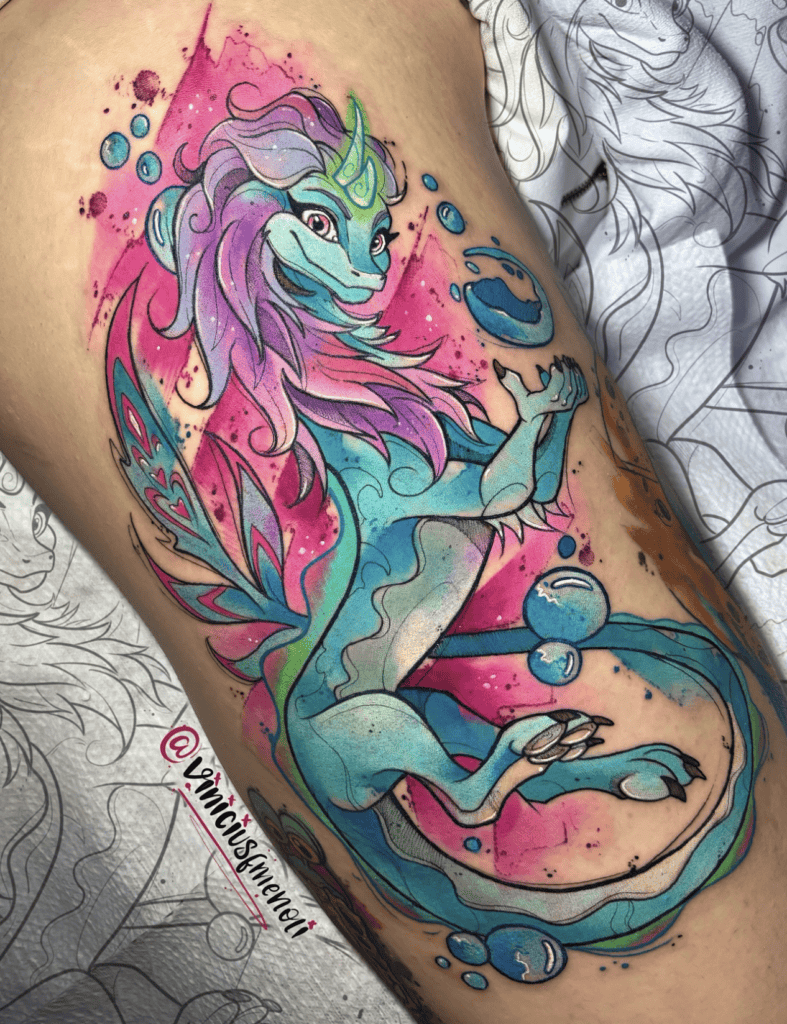
Sisu is the magical dragon from Raya, inspired by Southeast Asian dragon mythology. She has a long, serpentine body, flowing mane, bright blue colouring, and strong connections to water, rain, and spirituality.
Sisu is known for her playful, optimistic, and awkward personality. Although she is incredibly powerful, she often behaves in a humorous, down-to-earth way, which makes her feel lovable and relatable rather than intimidating.
In the story, Sisu is the last surviving dragon after the rest of dragonkind sacrificed themselves to save the world from a dark force known as the Druun. She teams up with Raya to restore peace and reunite the divided lands of Kumandra.
Yu-Gi-Oh! Dragon Tattoo
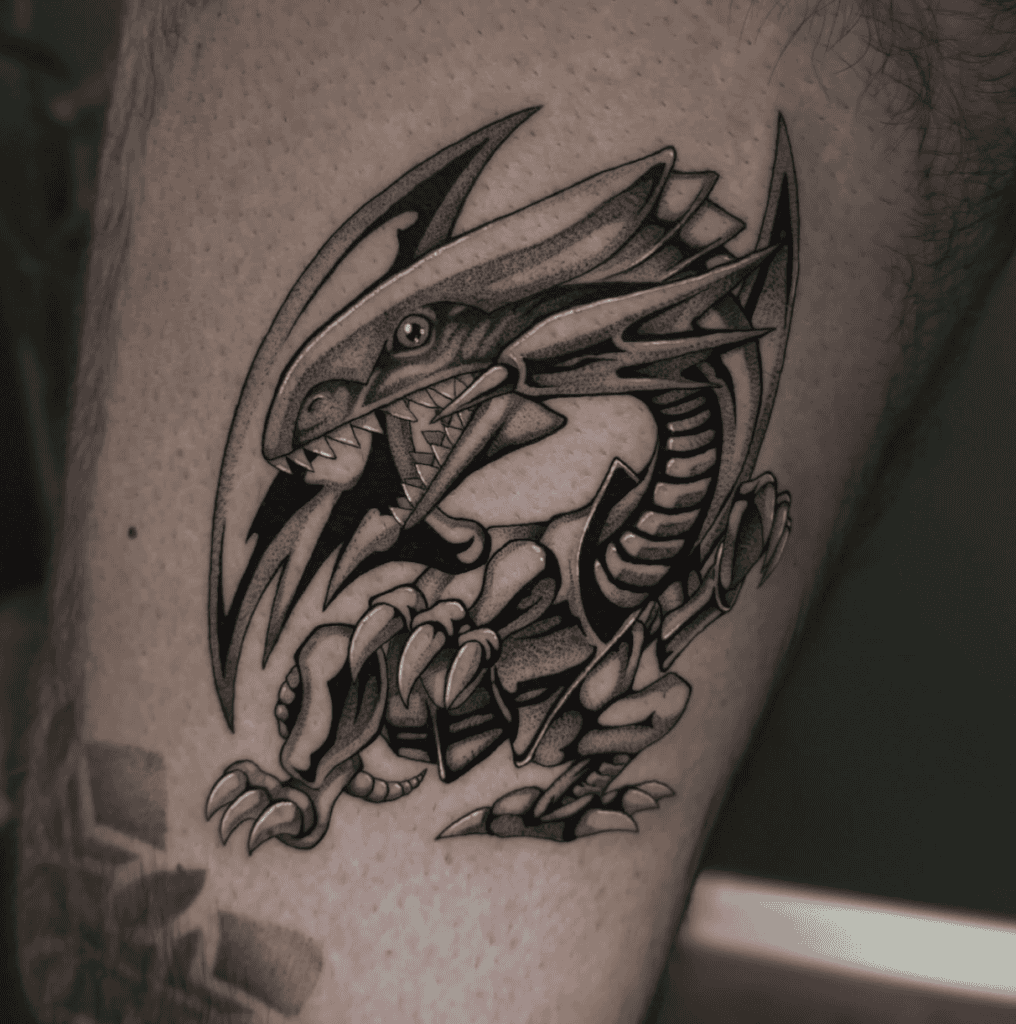
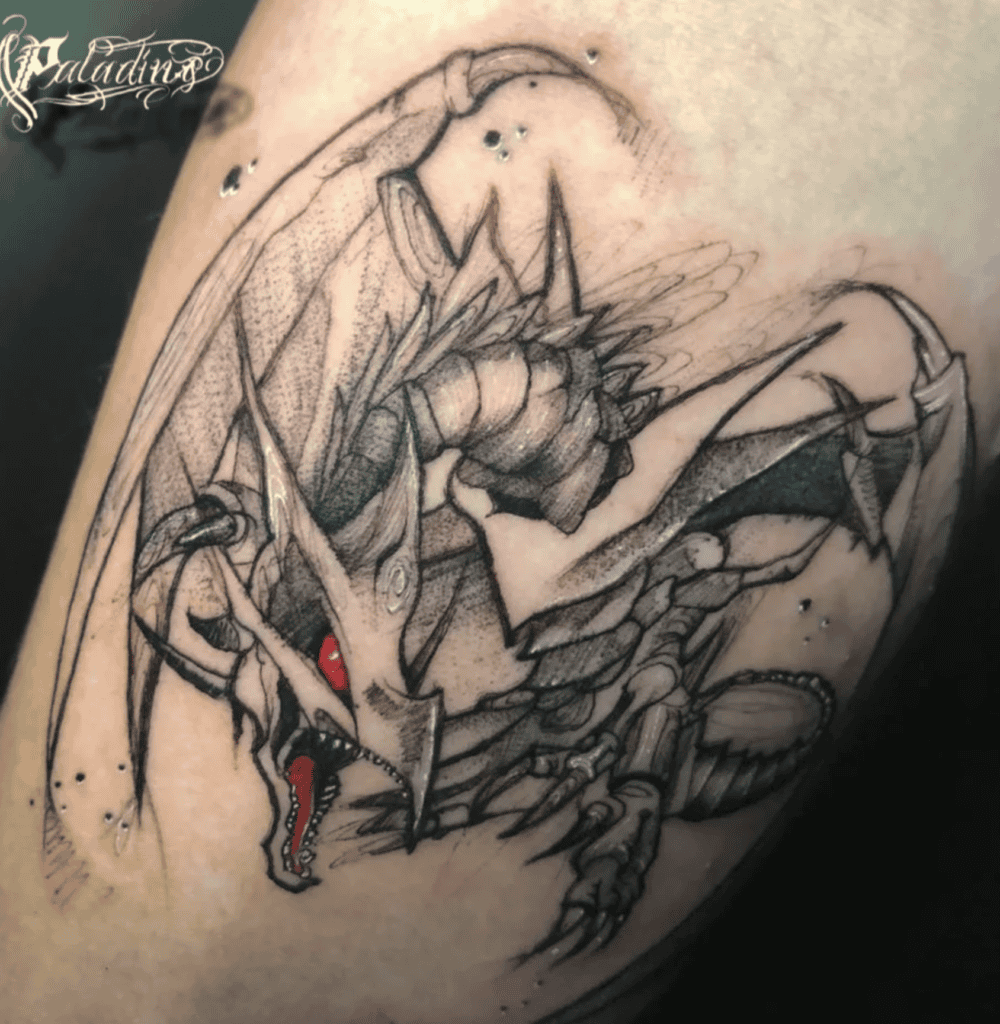
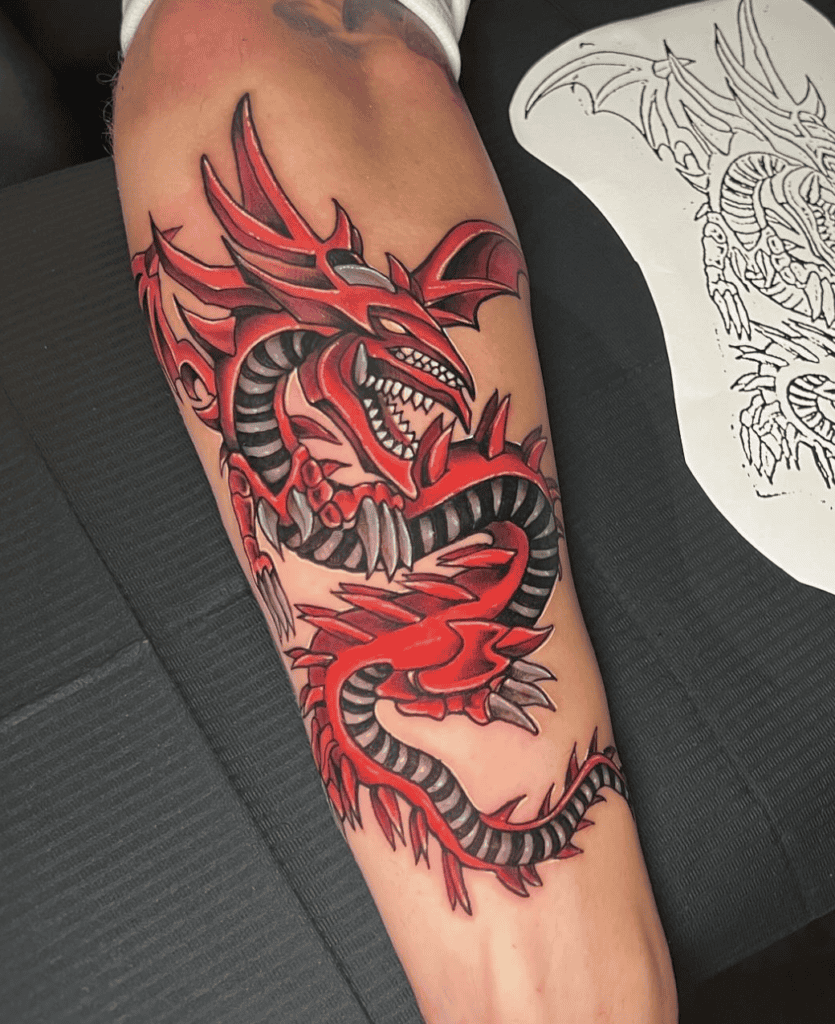
The dragons in Yu-Gi-Oh! are some of the most iconic monsters in anime and trading card game history. Dragon monsters are usually portrayed as rare, powerful, and highly respected creatures, often symbolising strength, ambition, destiny, and overwhelming power.
Digimon Dragon Tattoo
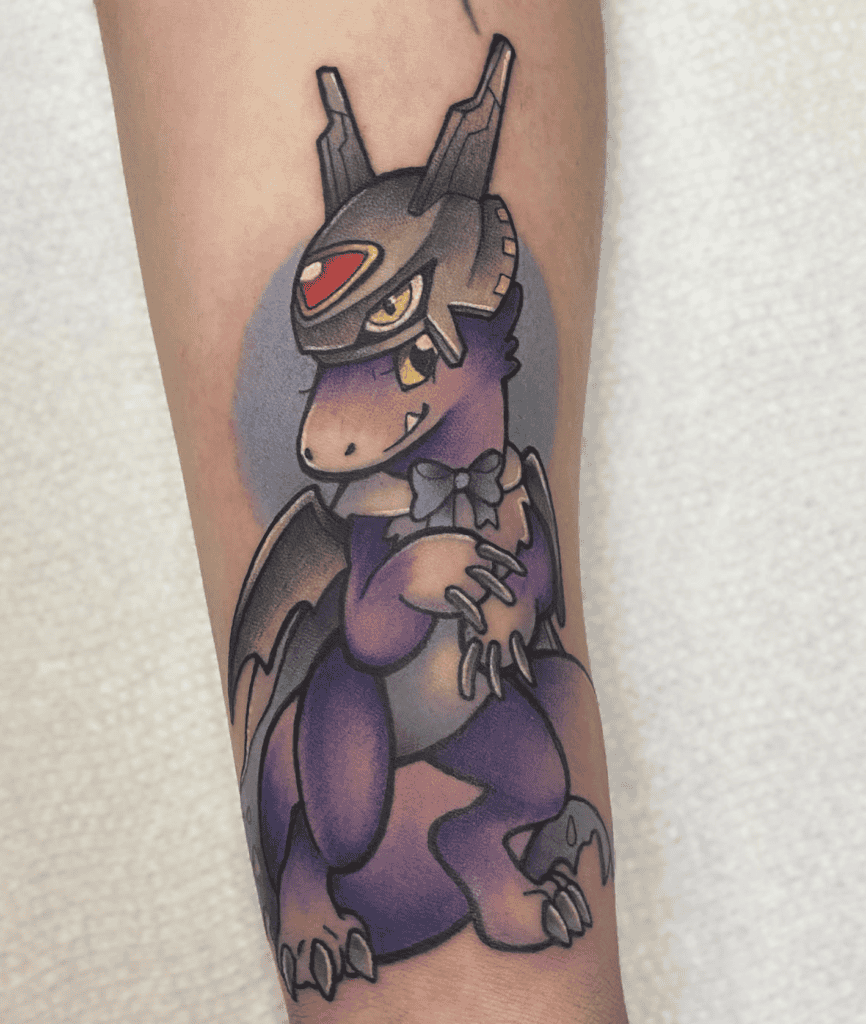
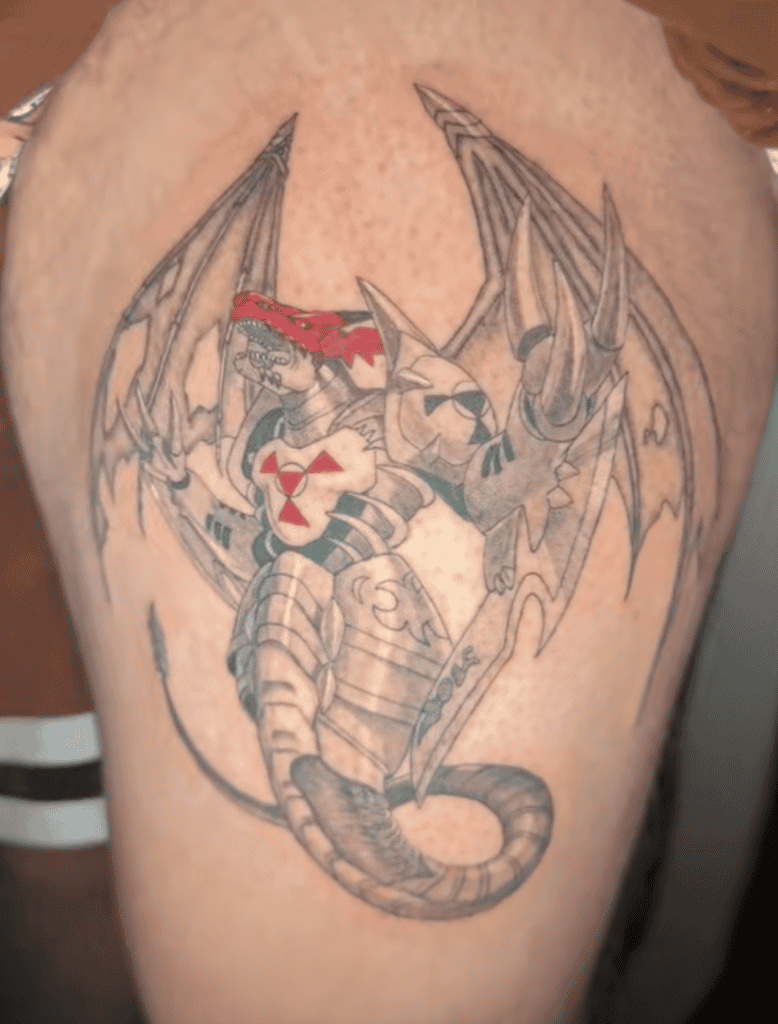
The dragons in Digimon are some of the most popular and powerful Digimon in the entire series. Dragon Digimon often symbolise evolution, power, instinct, destruction, and transformation, which fits perfectly with Digimon’s core theme of growth through evolution.
Unlike many fantasy franchises where dragons are a separate species, Digimon dragons come in many forms, from heroic warriors, ancient beasts, cybernetic monsters, holy dragons, and apocalyptic creatures. Some are noble protectors, while others are dangerously unstable or destructive.
Monster Hunter Dragon Tattoo
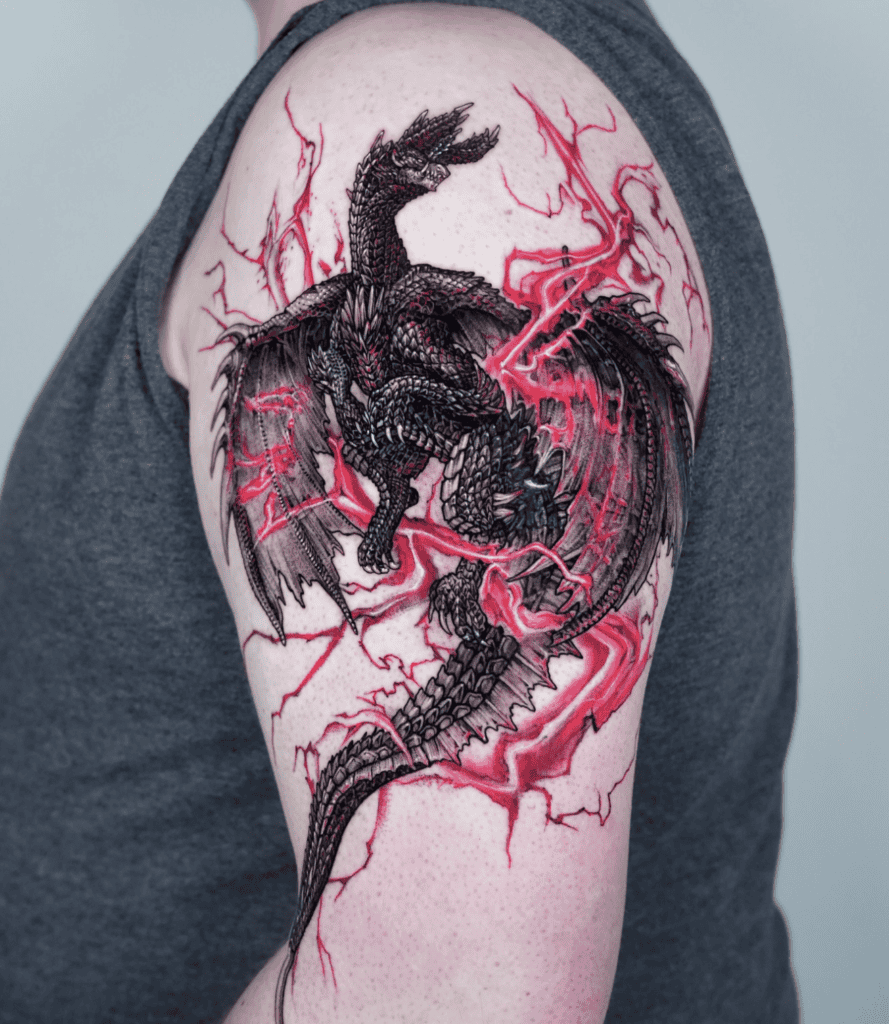
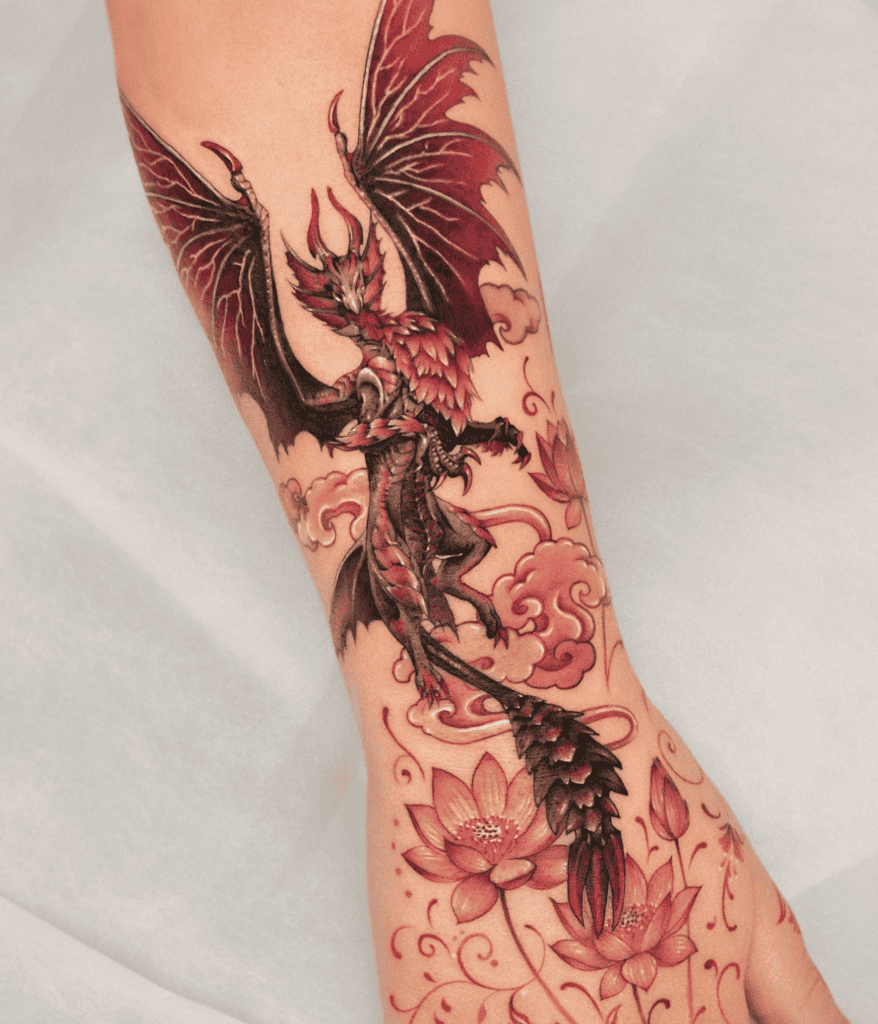
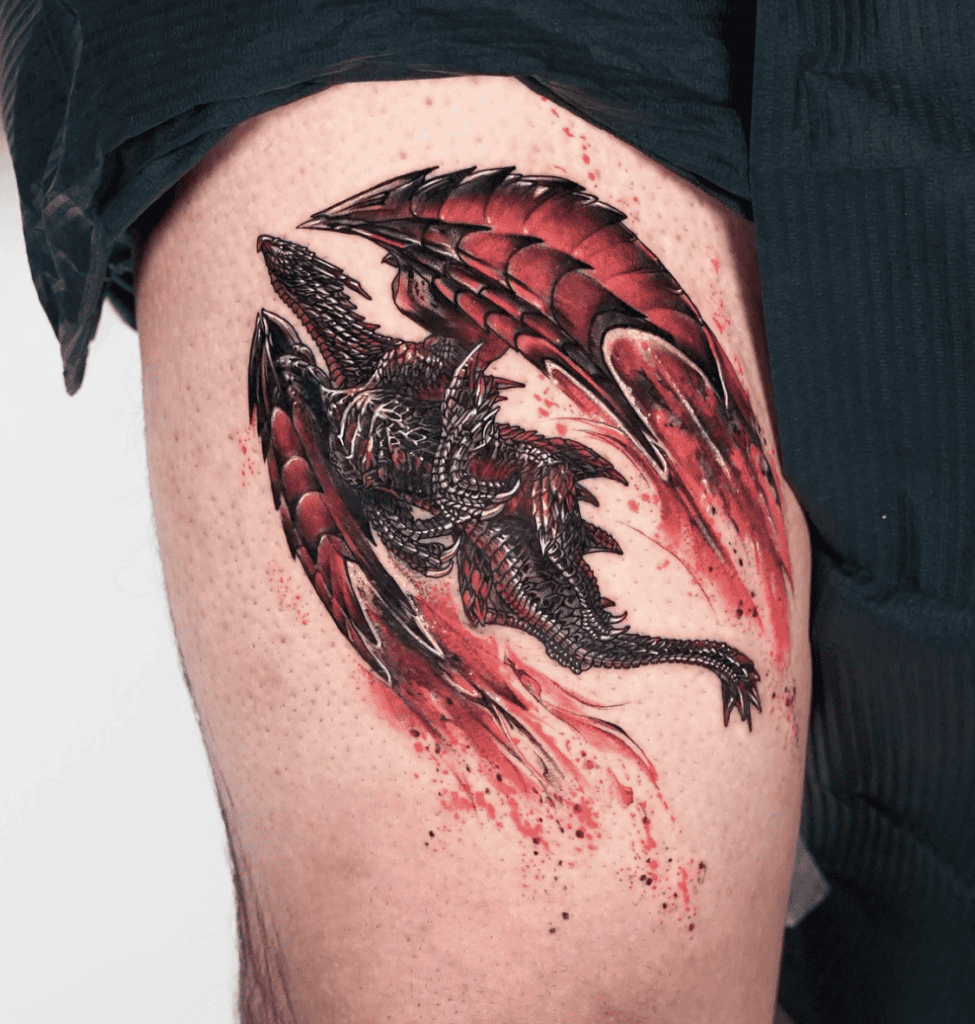
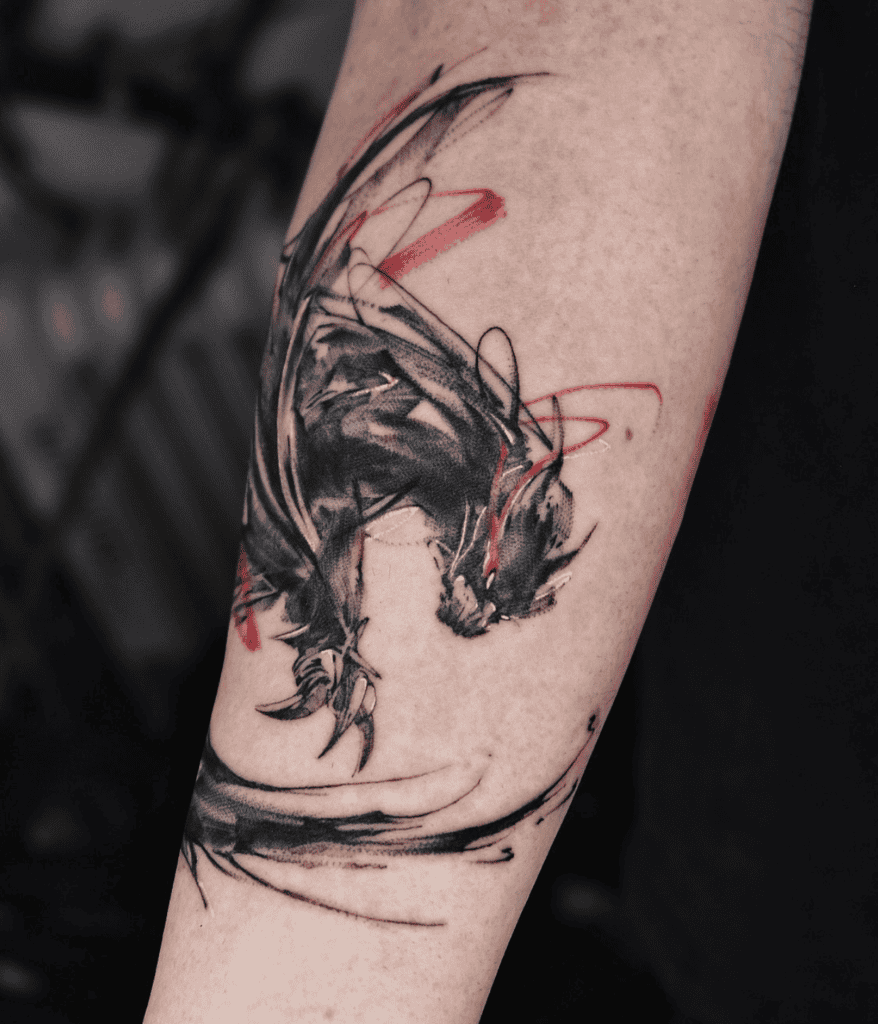
The dragons in Monster Hunter are some of the most dangerous and awe-inspiring creatures in gaming. Unlike traditional fantasy dragons that are often magical or fully intelligent, Monster Hunter dragons are usually treated more like living natural disasters, incredibly powerful creatures that dominate ecosystems and reshape the world around them.
The most famous dragon category in the series is the Elder Dragons. These monsters are so powerful and mysterious that they often cannot be fully explained by normal biology within the game world. Many are capable of controlling storms, fire, plague, earthquakes, or other catastrophic forces.
Dungeons and Dragons Tattoo


In Dungeons & Dragons, dragons are ancient intelligent beings with their own personalities, goals, magic, and entire societies. Many are incredibly powerful creatures capable of speaking, casting spells, ruling kingdoms, or manipulating history itself.
Pete’s Dragon Tattoo


Pete’s Dragon is a Disney fantasy story centred around a gentle dragon named Elliot and his friendship with a young boy named Pete. The original 1977 film portrayed Elliot as a large green dragon with a playful and mischievous personality. He could turn invisible, fly, and accidentally cause chaos wherever he went, but he was ultimately kind-hearted and protective of Pete.
Disney later released a more emotional live-action reimagining in 2016, in which Elliot was redesigned to resemble a giant, furry dragon with features inspired by animals like dogs and cats. This version focused more heavily on themes of family, loneliness, nature, and belonging.
Conclusion
Thanks for joining us on this legendary journey through the simmering world of the Dragon Tattoo. We hope we’ve helped set your inspiration ablaze as you take flight on your own tattooing adventure. But if Dragon Tattoos still don’t light your fire, why not check out these Chicken Tattoo Ideas, these Monkey Tattoo Designs, or these Lunar Zodiac Tattoos.
- Lion Tattoo Ideas - October 19, 2026
- Persona Tattoo Ideas - October 15, 2026
- Spider Tattoo Ideas - October 8, 2026