
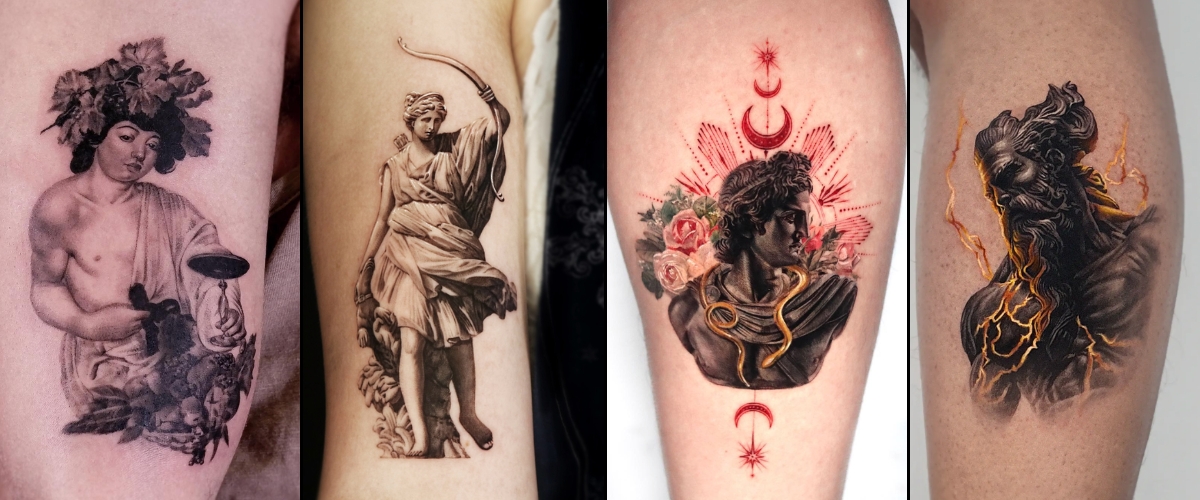
Roman Mythology Tattoo Ideas

Do you feel like you’re searching through the ruins of the Roman Empire for the perfect Tattoo Clues? Worry not; all roads will lead to your perfect style, so enter the arena as we take on the best Roman Mythology Tattoo designs.
What is Roman Mythology
Roman mythology is the collection of myths, legends, religious traditions, and stories surrounding the gods, goddesses, heroes, creatures, and supernatural beings worshipped or believed in by the people of ancient Rome. These stories helped explain everything from the origins of the world and the changing seasons to love, war, death, nature, and the legendary founding of Rome.
Roman mythology shares many characters and stories with Greek mythology, but the Romans gave many of these figures their own names, identities, and traditions. For example, Jupiter corresponds to Zeus, Juno to Hera, Neptune to Poseidon, Mars to Ares, Venus to Aphrodite, and Mercury to Hermes.
Before adopting Greek myths, early Romans worshipped numina—formless, faceless spirit-powers that controlled everyday life, nature, and the harvest.
However, Roman mythology wasn’t simply Greek mythology with Roman names. Roman religion placed particular importance on duty, family, ancestry, the state, and household traditions. Gods such as Janus, the two-faced god of beginnings and transitions, and Vesta, goddess of the hearth, were especially important in Roman religious life.
Top Roman Mythology Tattoo Artists
grey meseta tattoo
Zamora, Spain, Tattoo Artist specialising in Black and Grey Tattoos.

lai ink
Hong Kong Tattoo artist specialising in Fine-Line Black-and-Grey realism Tattoos.
eunb tt
Los Angeles based Tattoo Artist who specializes in Renaissance-inspired color and black & grey realism
Best Roman Mythology Tattoo Ideas
Now that we know a little about Roman Mythology, let’s take a look at some of the best Roman Mythology Tattoos the Colloseum has to offer.
Note: Some Tattoos may be of Greek equivalents
Jupiter Roman Mythology Tattoo
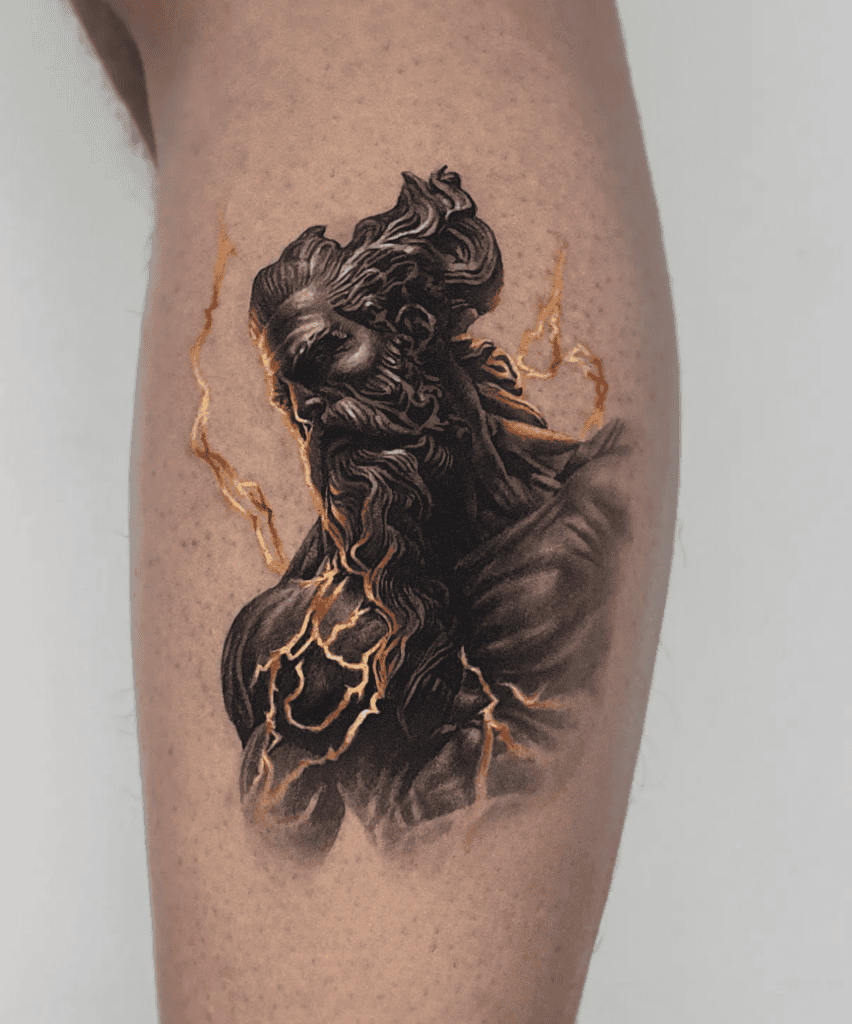
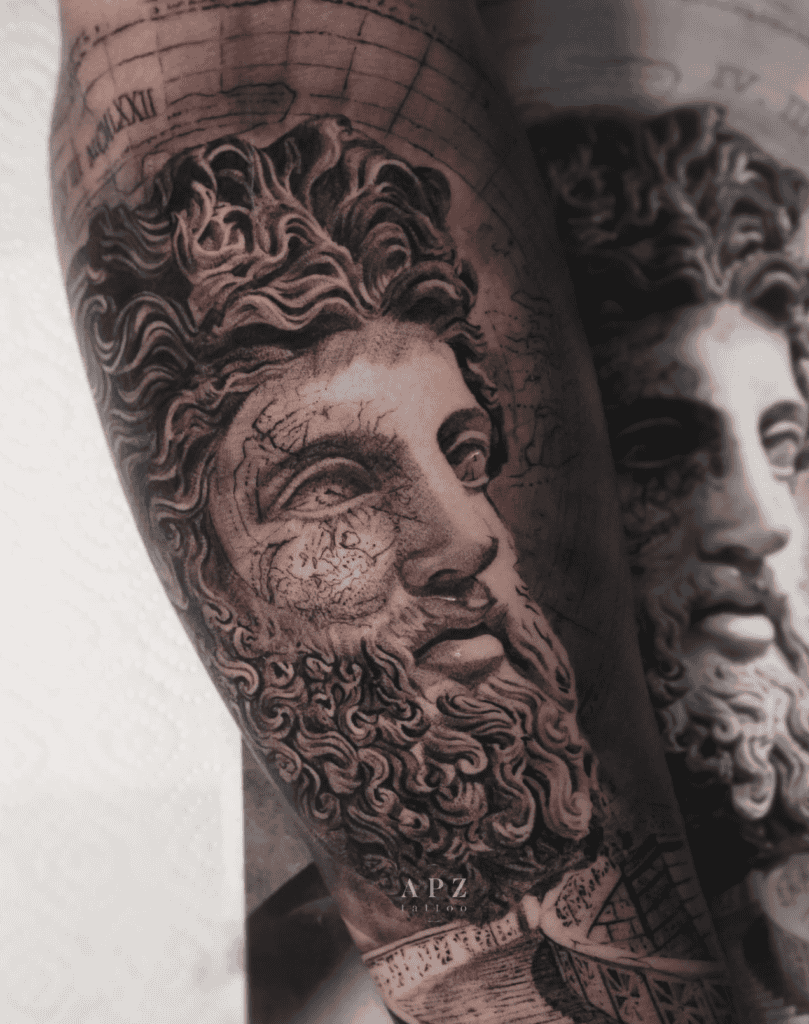
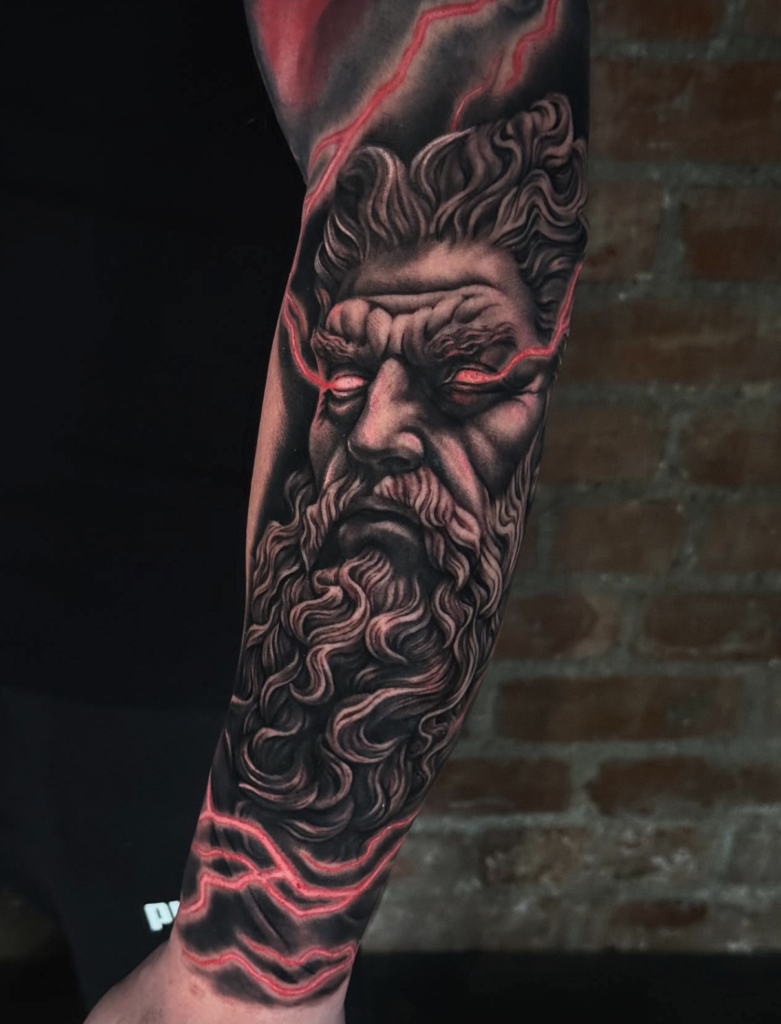
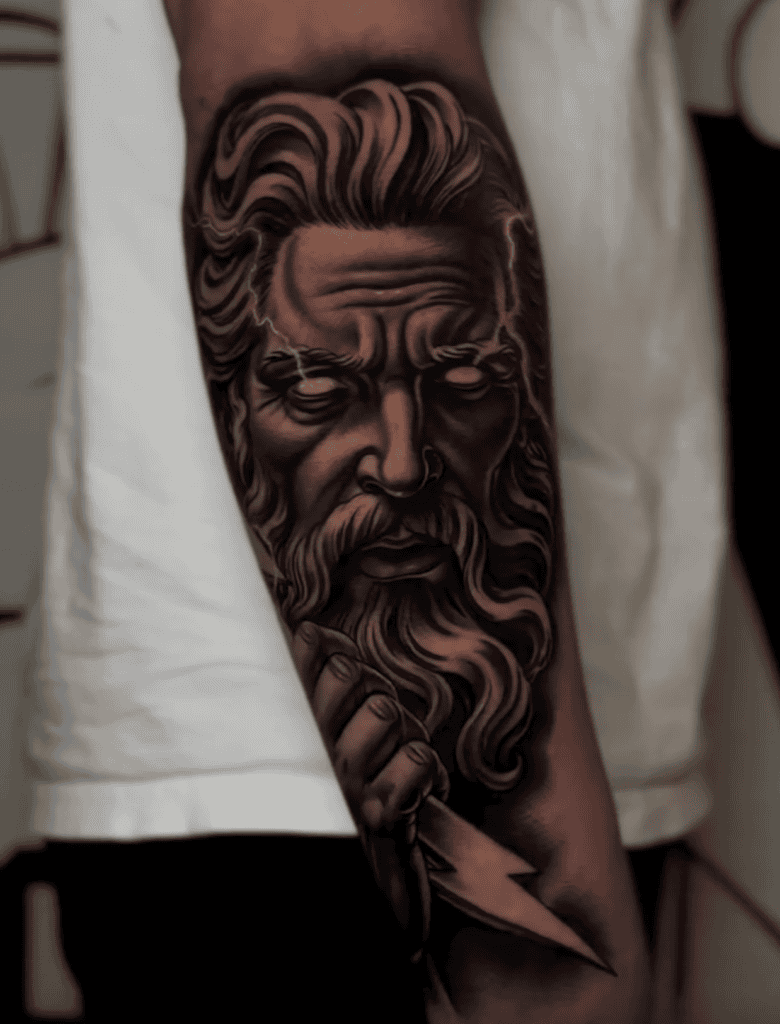
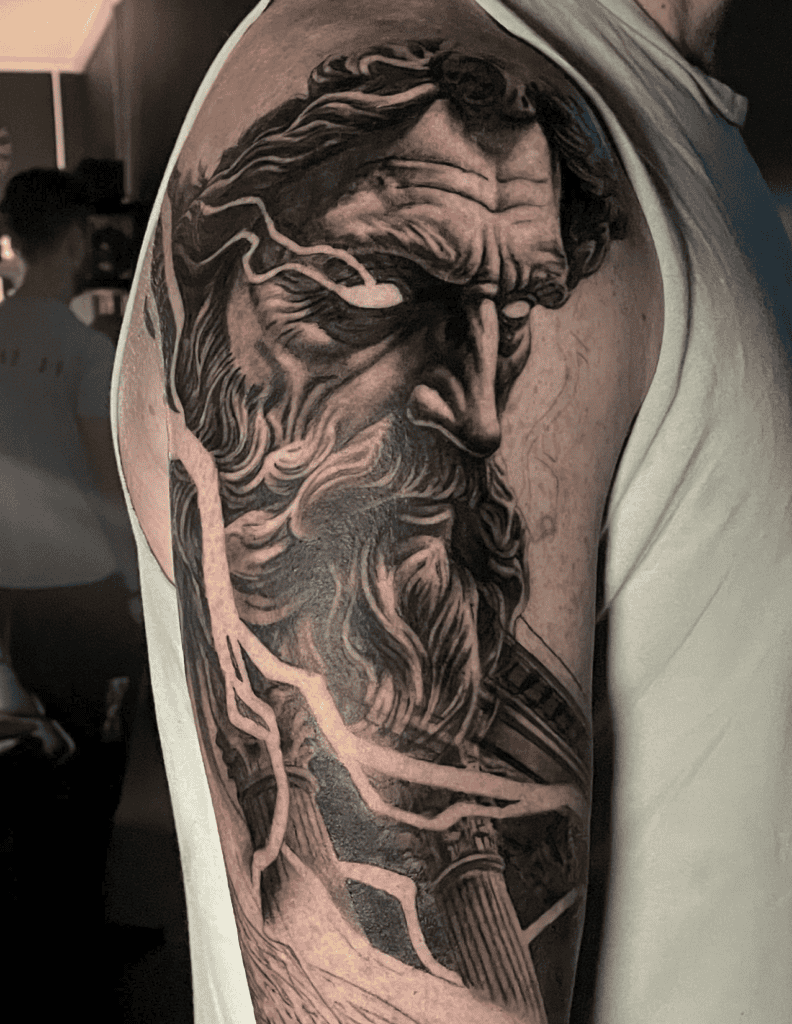
Jupiter is the king of the Roman gods and the god of the sky, thunder, lightning, and justice. He ruled from Mount Olympus and wielded the powerful thunderbolt as his signature weapon. Jupiter is the Roman counterpart of Zeus from Greek mythology and was one of the most important gods in ancient Rome, serving as the protector of the Roman state and its people.
Juno Roman Mythology Tattoo
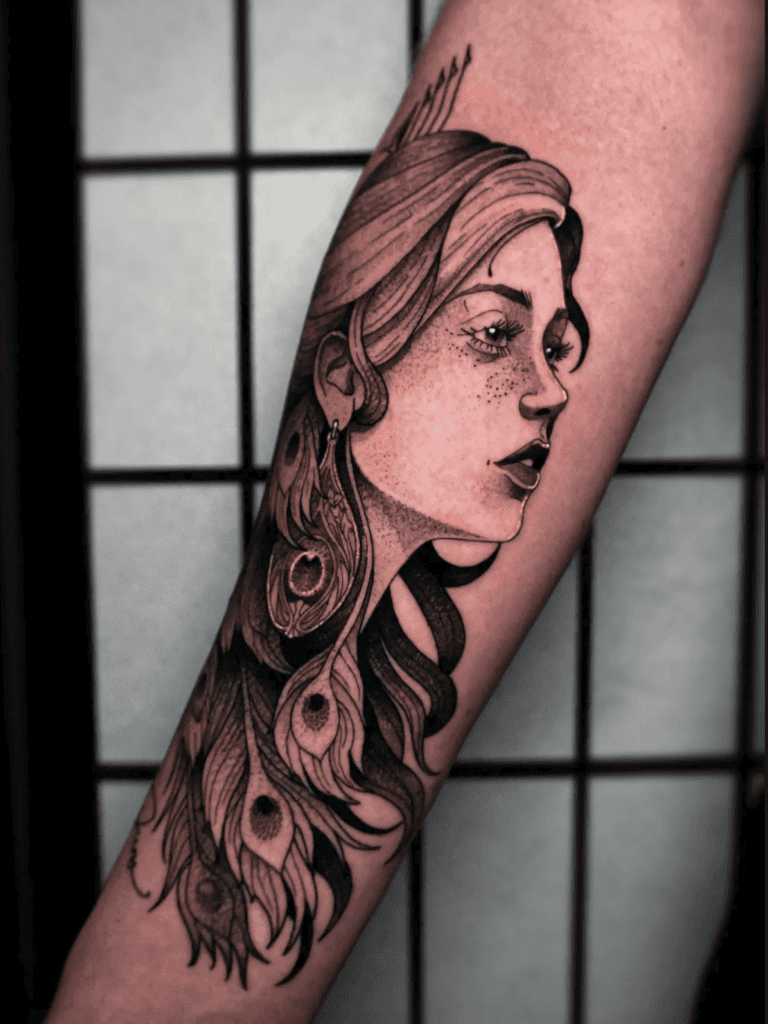
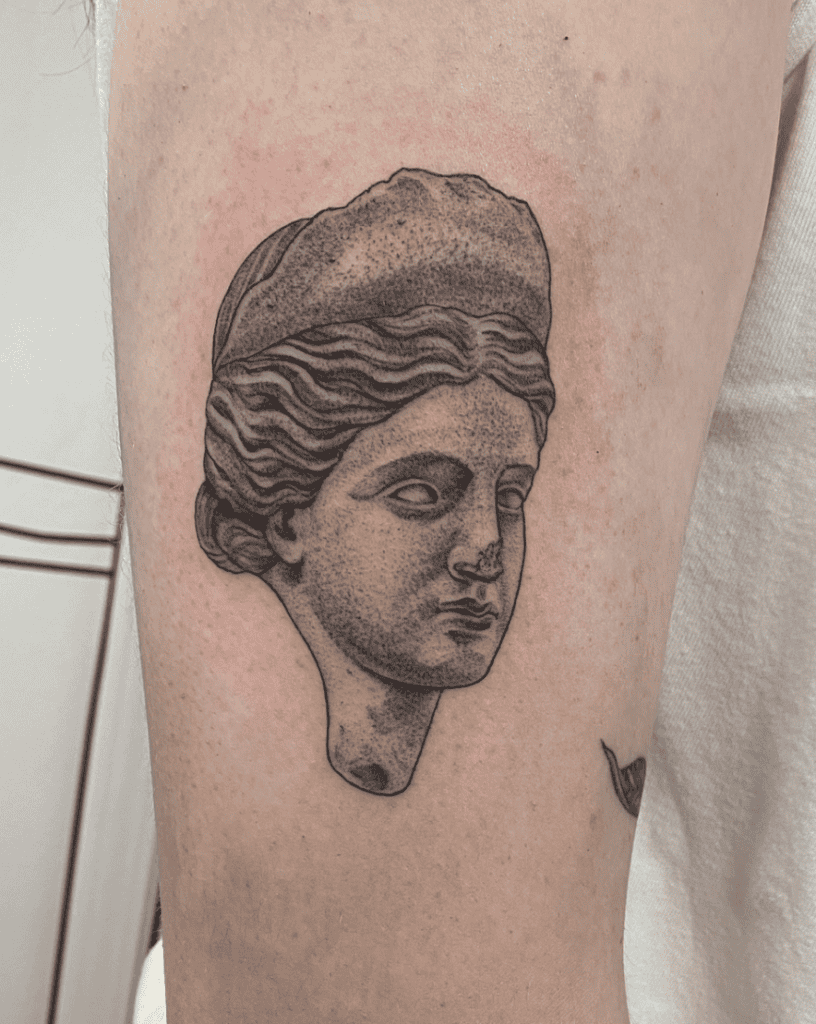
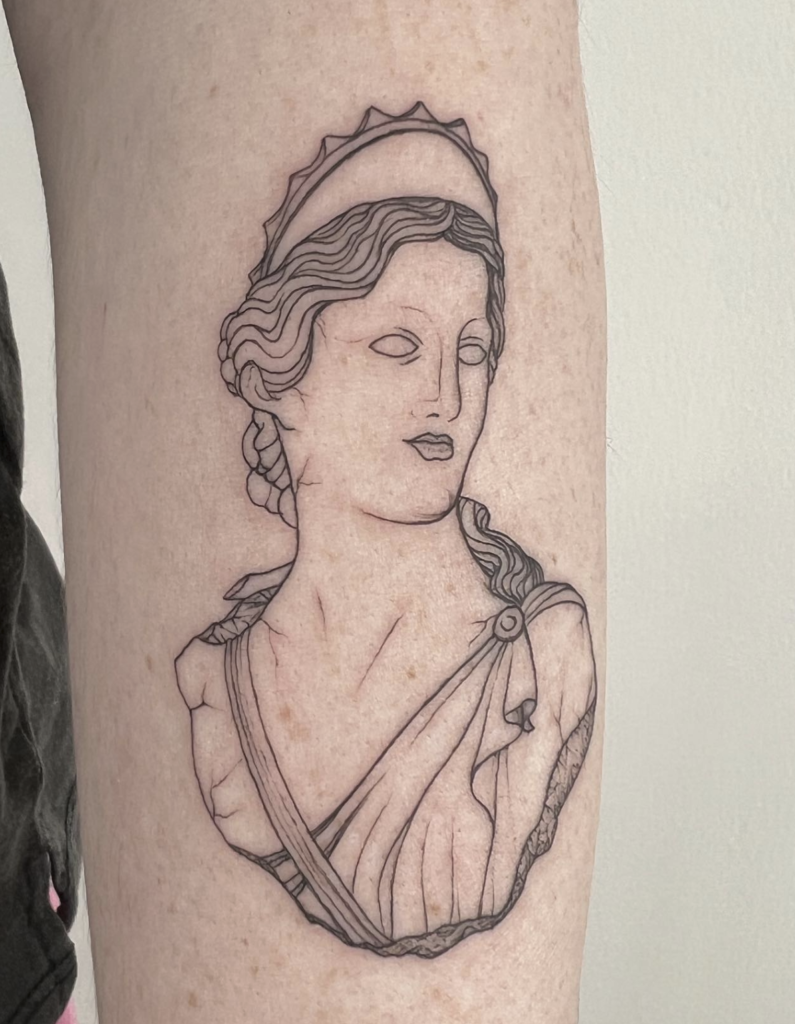
Juno is the queen of the Roman gods and the goddess of marriage, women, childbirth, and family. She is the wife of Jupiter and one of the most powerful deities in Roman mythology. Juno was also a protector of the Roman state, particularly through her role as Juno Regina, or “Queen Juno.”
Neptune Roman Mythology Tattoo
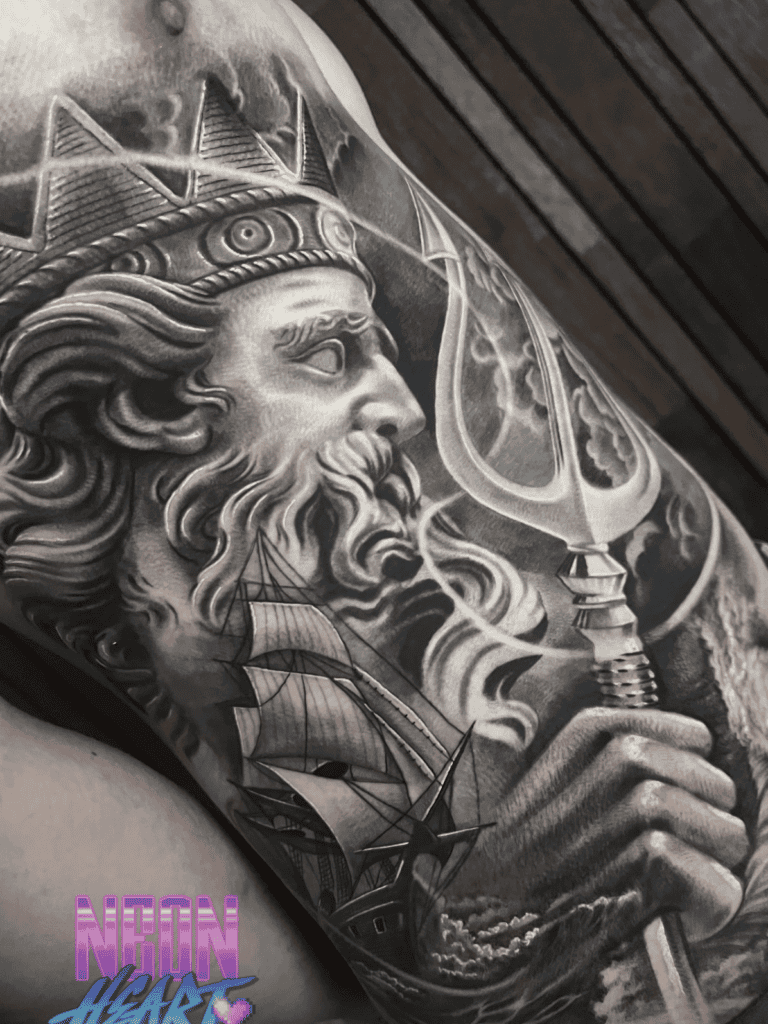
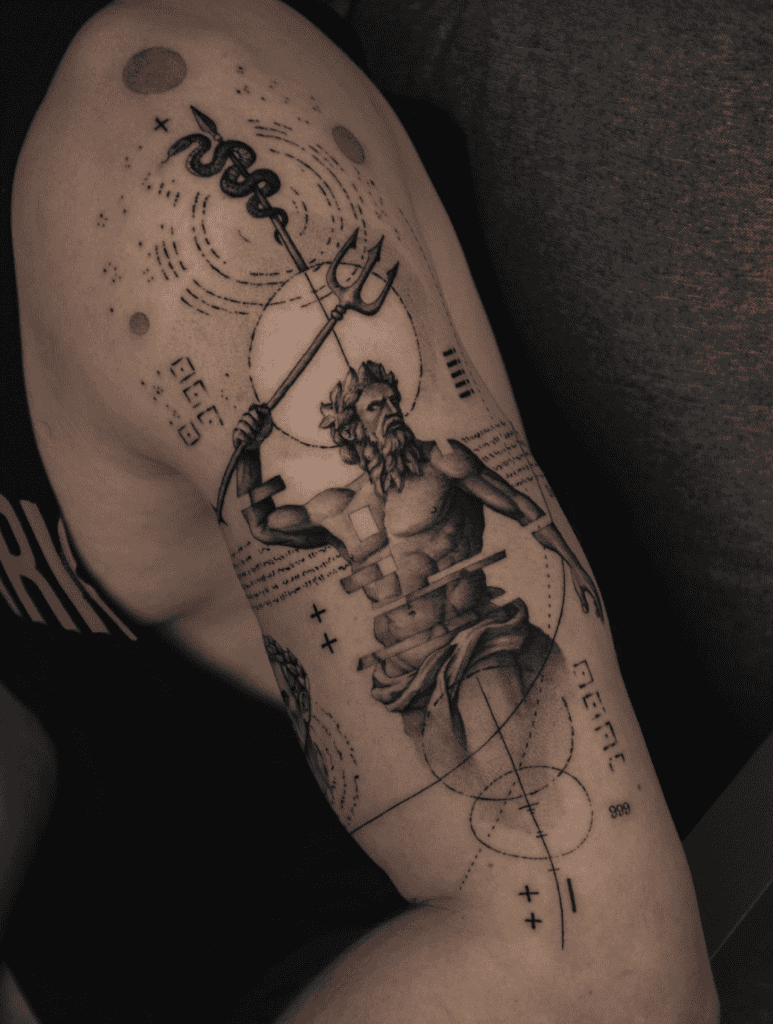
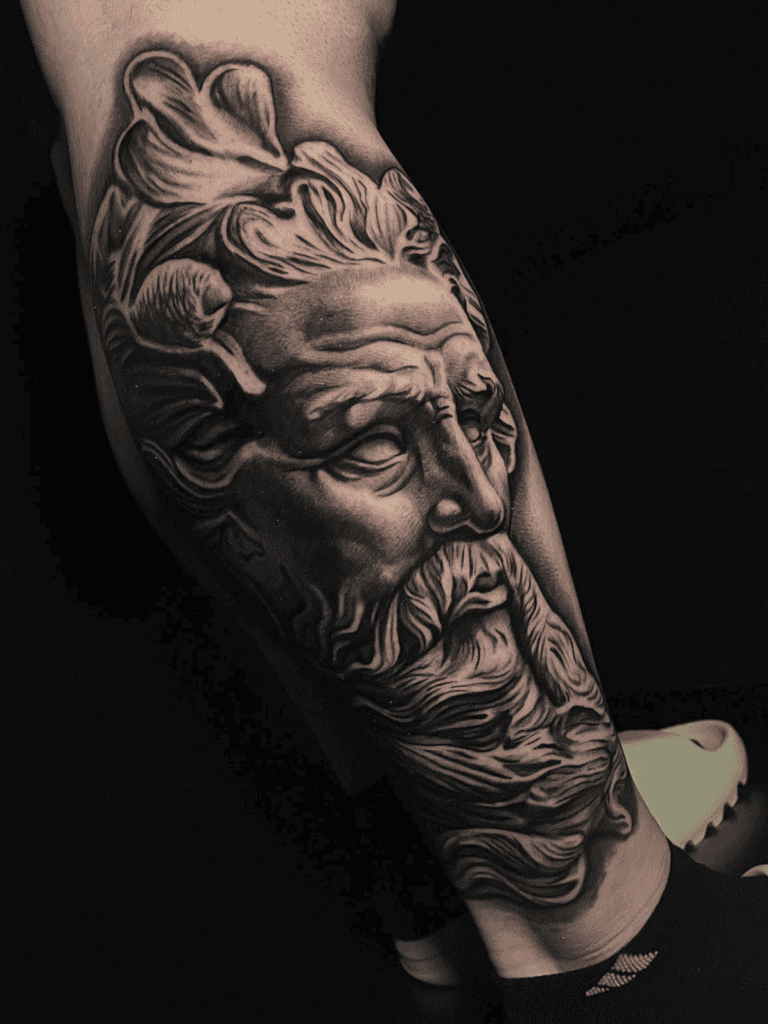
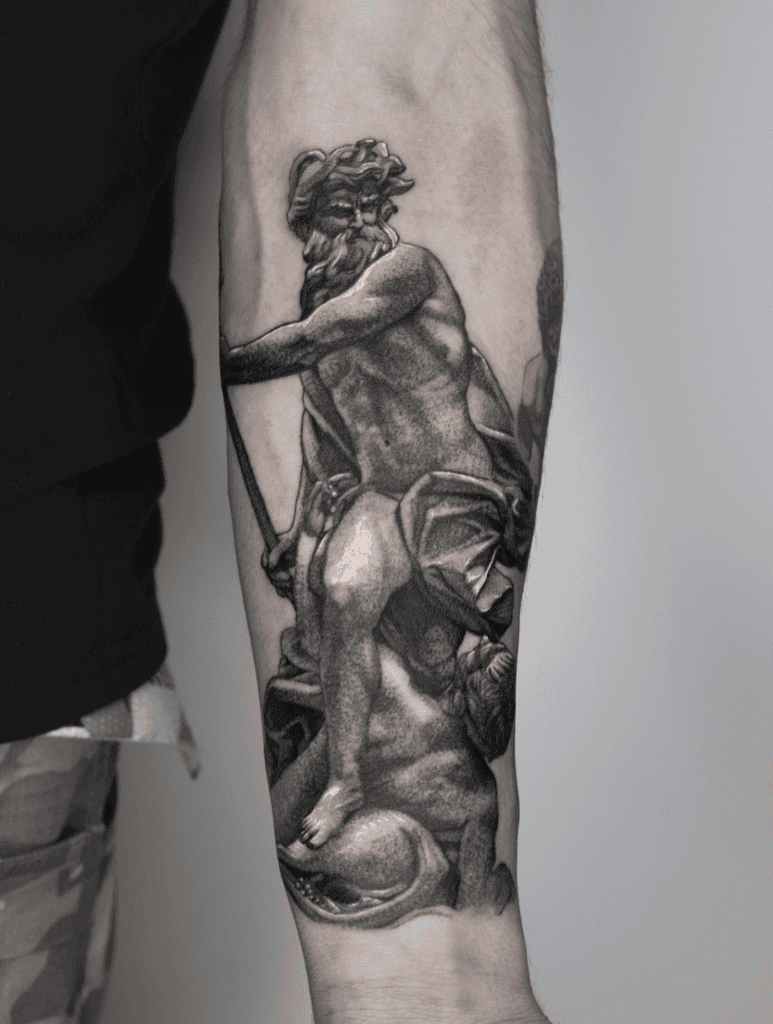
Neptune is the Roman god of the sea, freshwater, earthquakes, and horses. He is often depicted wielding his iconic trident and riding a chariot across the waves. Neptune was one of the major Roman gods and the brother of Jupiter and Pluto.
Minerva Roman Mythology Tattoo
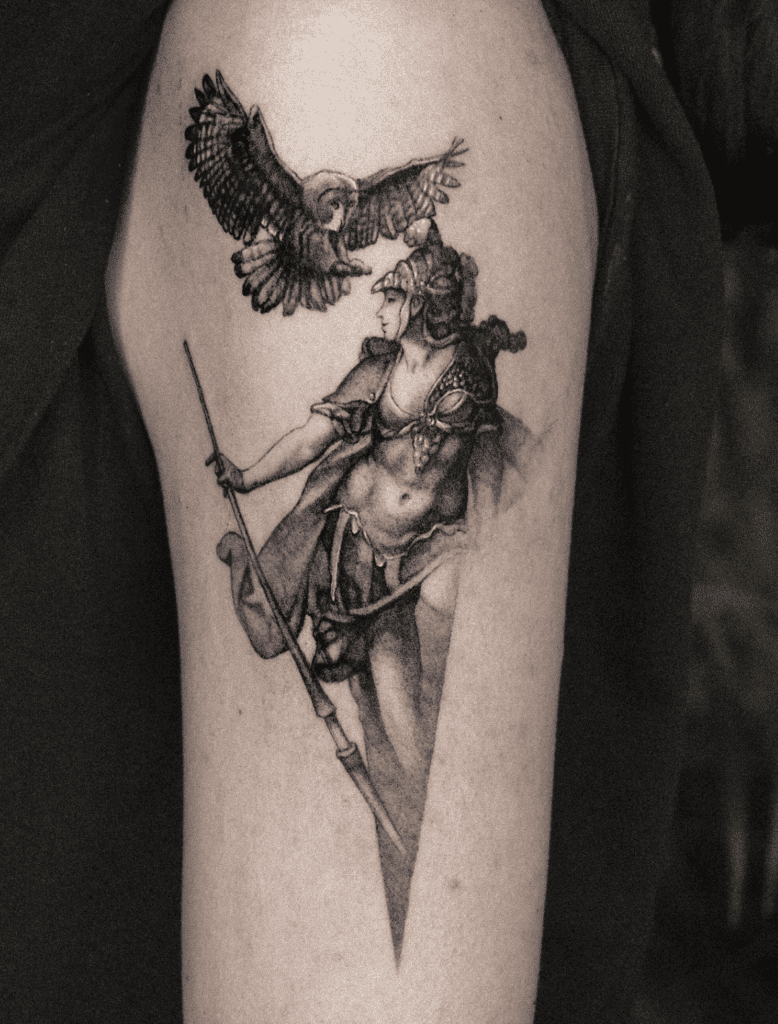
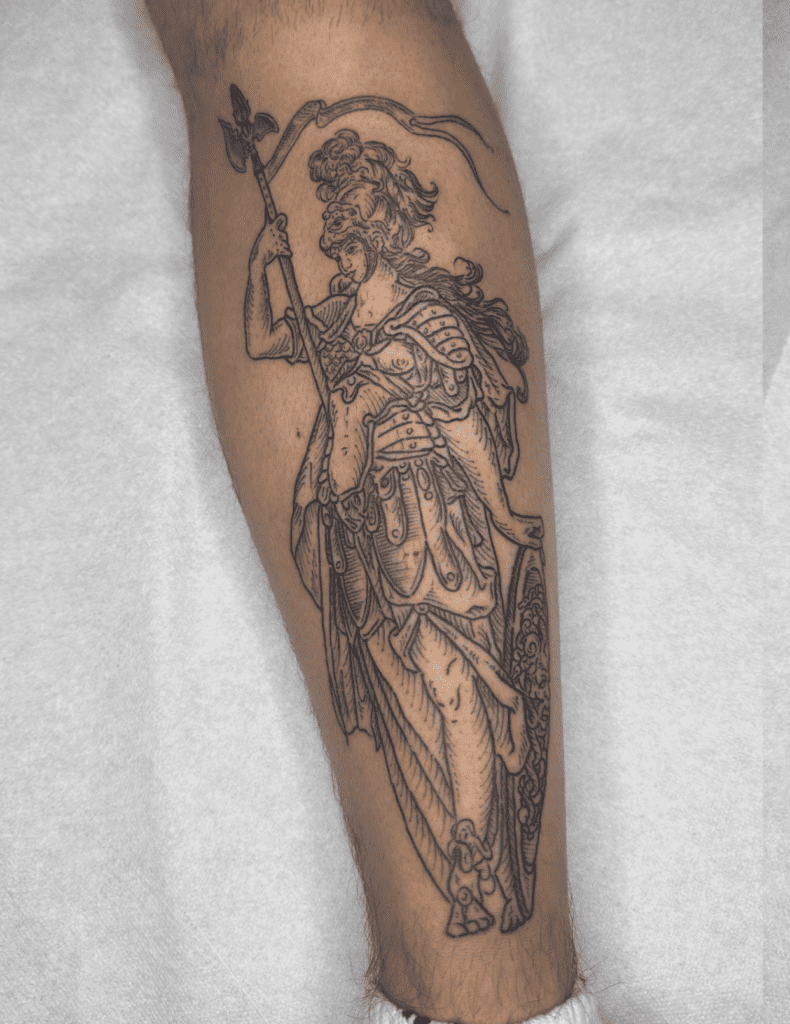
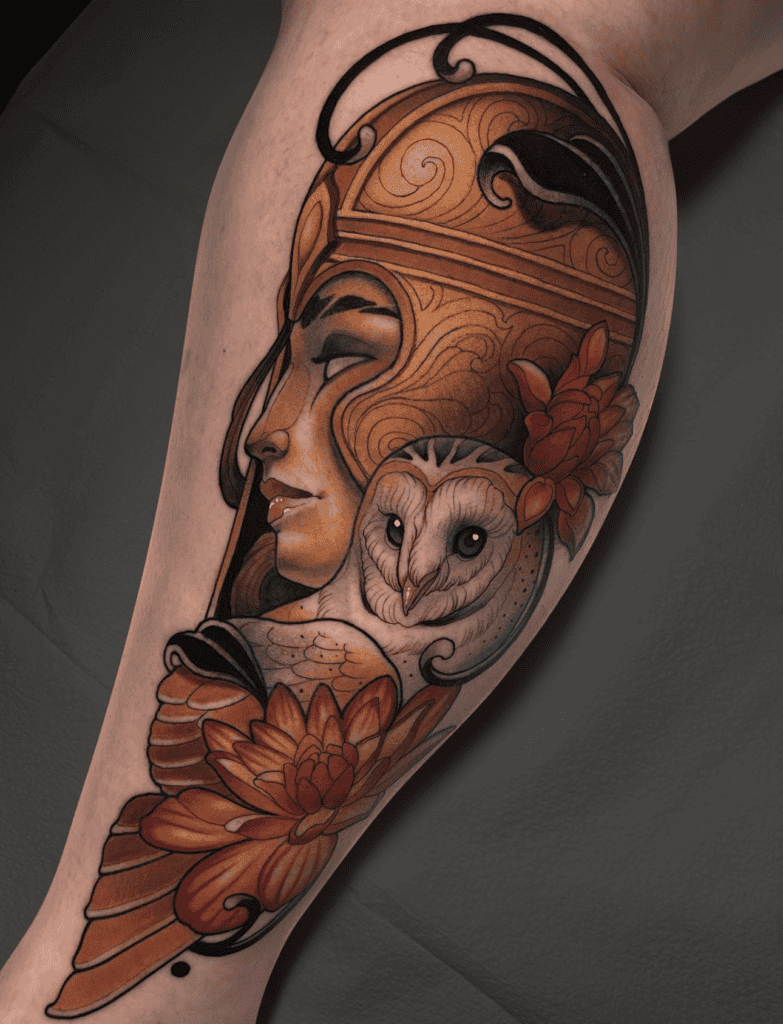
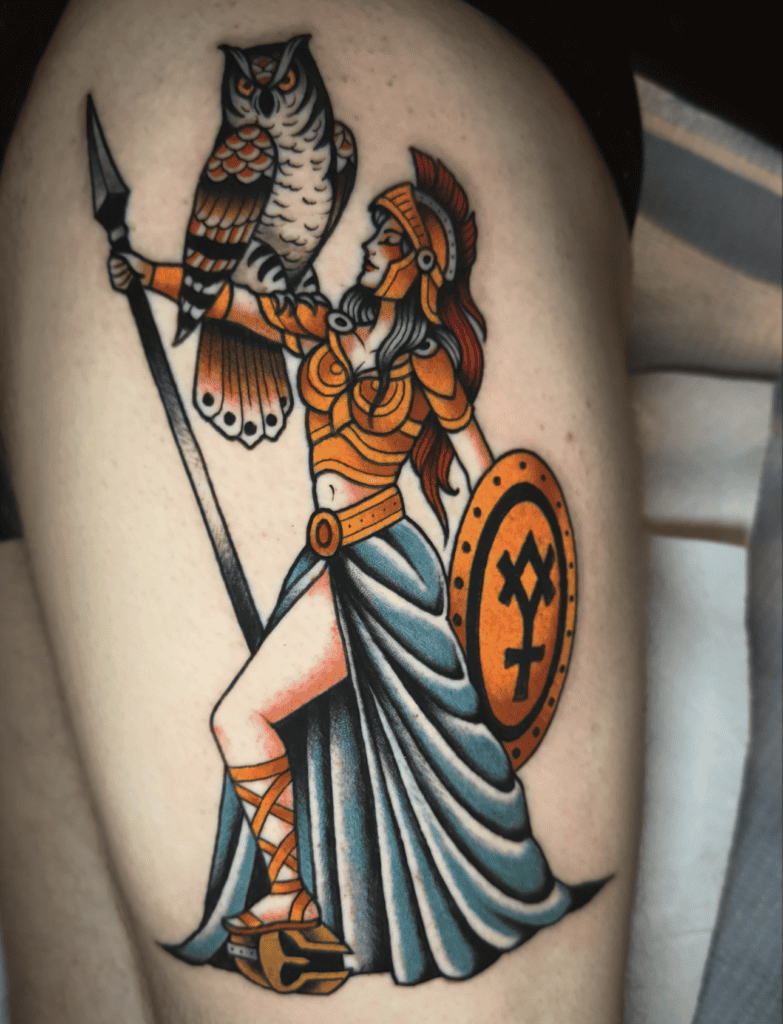
Minerva is the Roman goddess of wisdom, intelligence, strategy, crafts, and warfare. Unlike Mars, who represented the more aggressive side of war, Minerva was associated with strategic thinking and skilful tactics. She was one of Rome’s most important goddesses and was often depicted with an owl, helmet, shield, and spear.
Mars Roman Mythology Tattoo
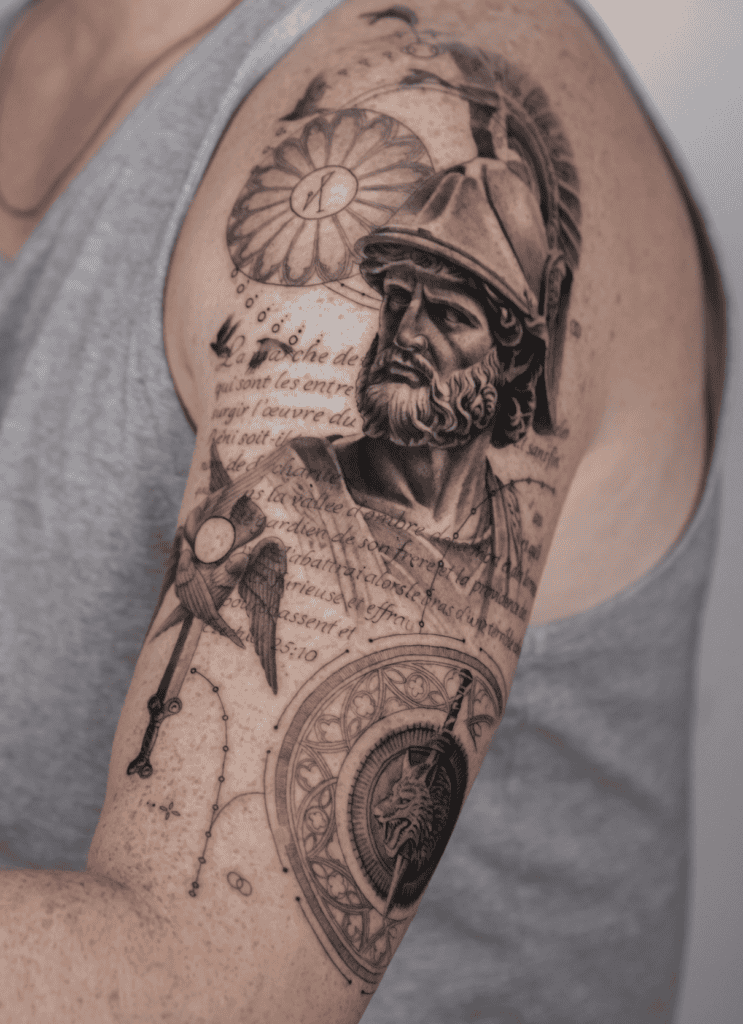
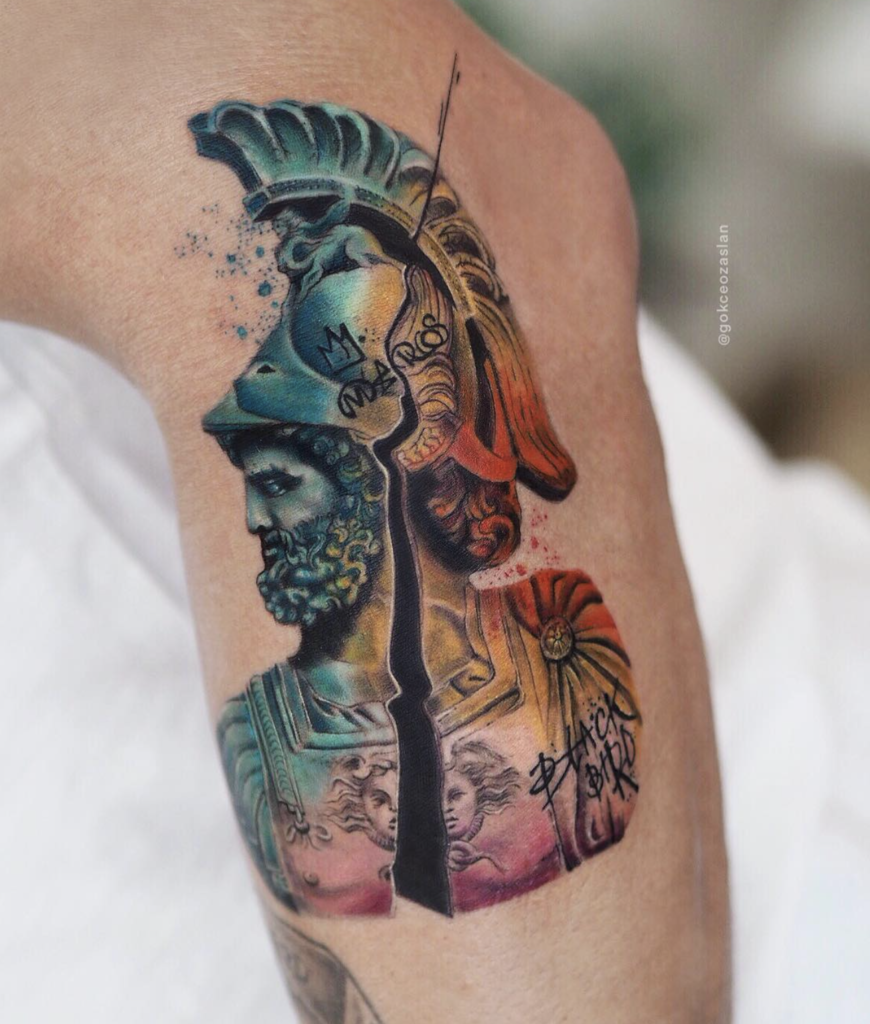
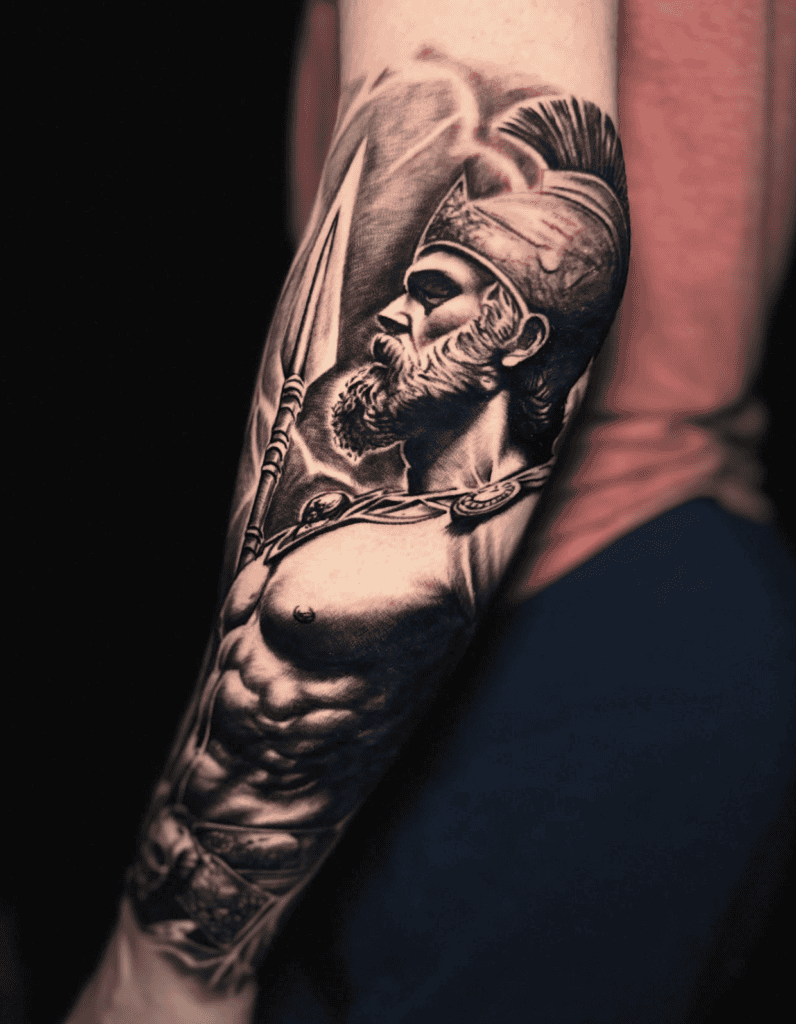
Mars is the Roman god of war, courage, and military power. Unlike his Greek counterpart Ares, Mars was one of the most important gods in Roman religion and was closely associated with Rome’s military strength and protection. He was also regarded as the father of Romulus and Remus, the legendary founders of Rome, through his union with Rhea Silvia.
Venus Roman Mythology Tattoo
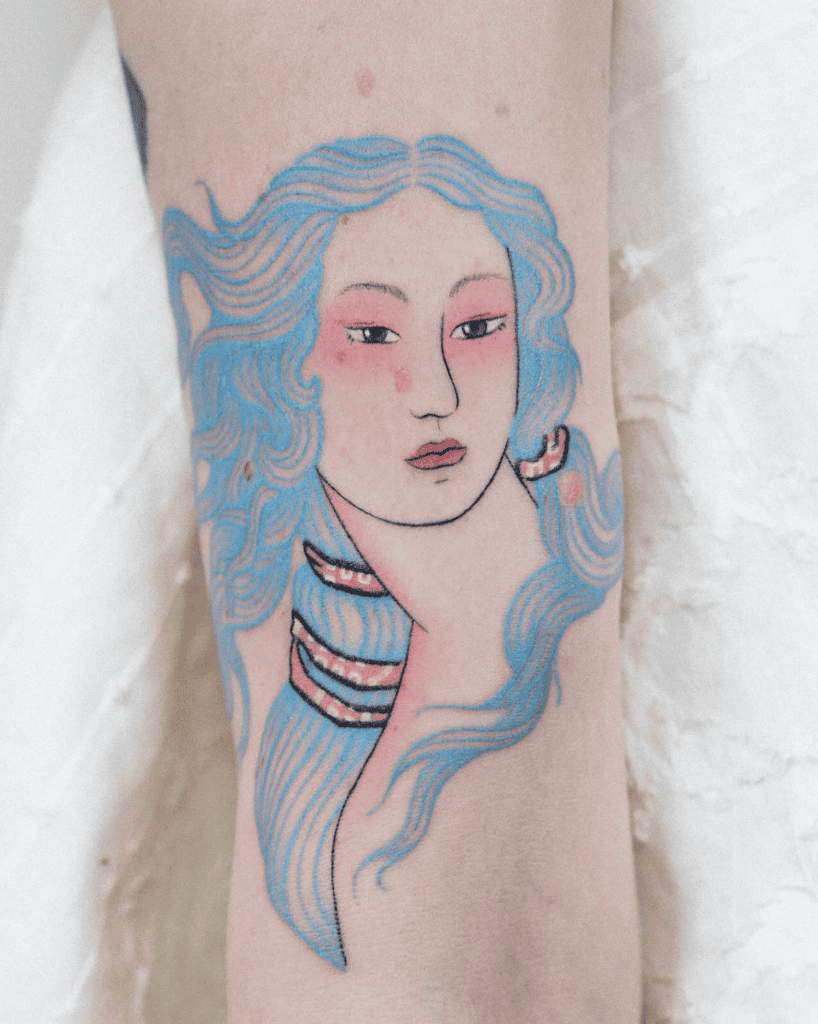
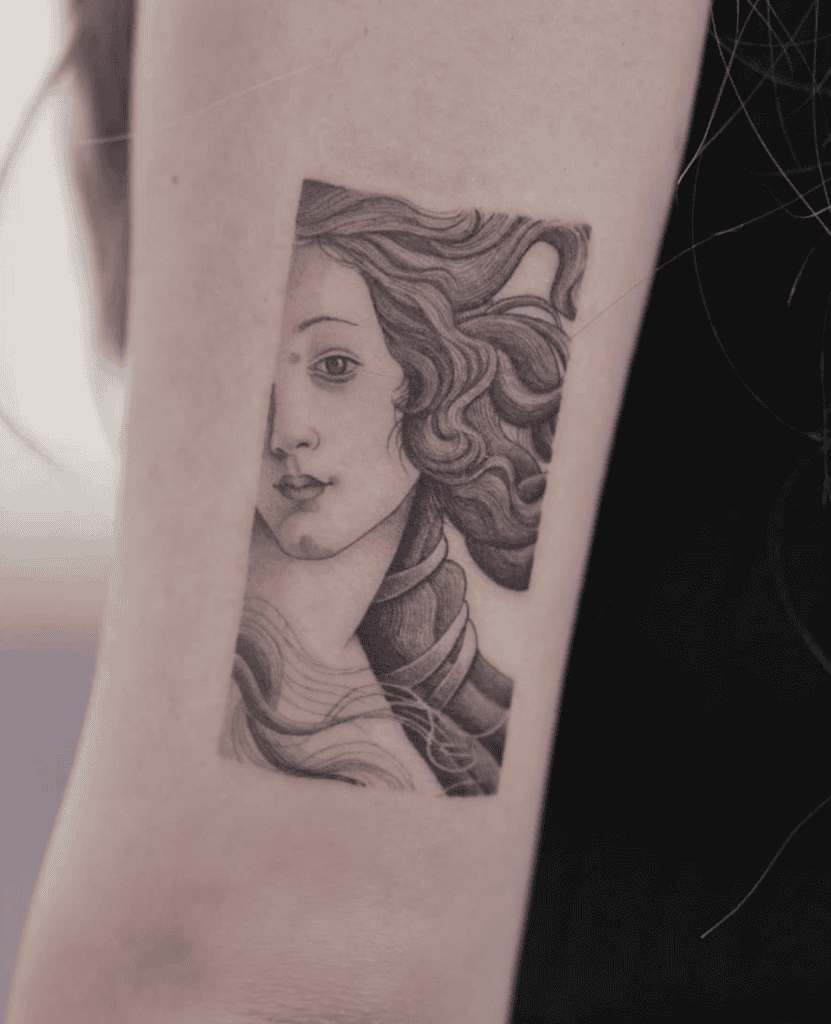
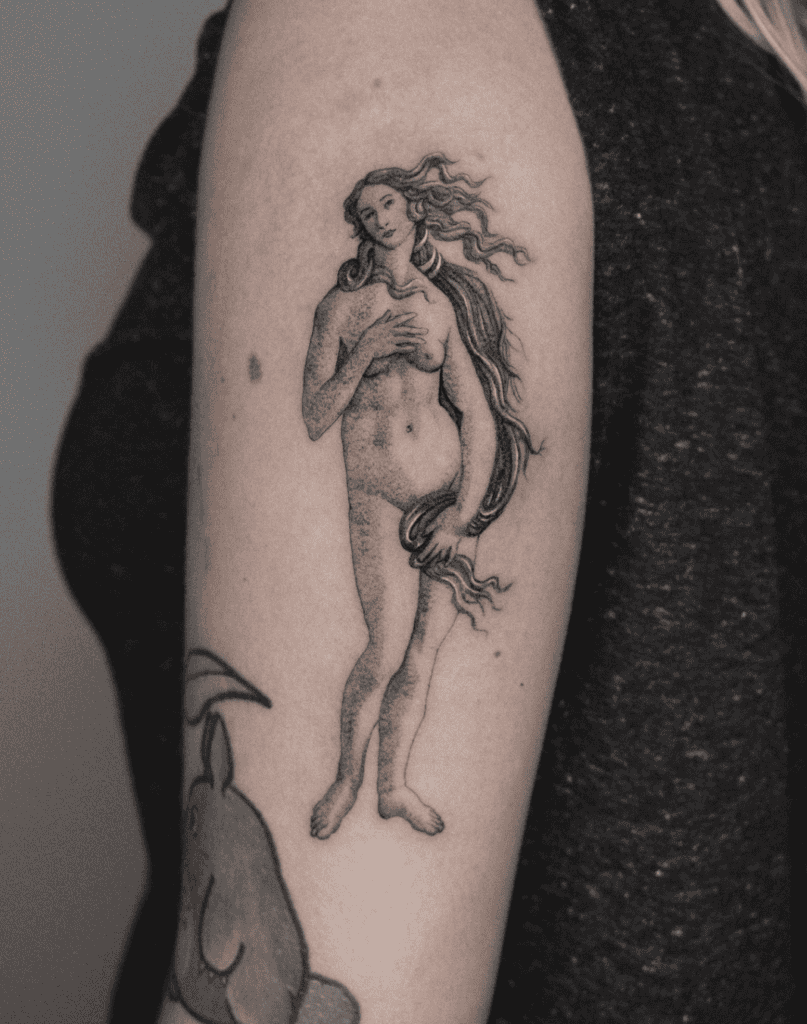
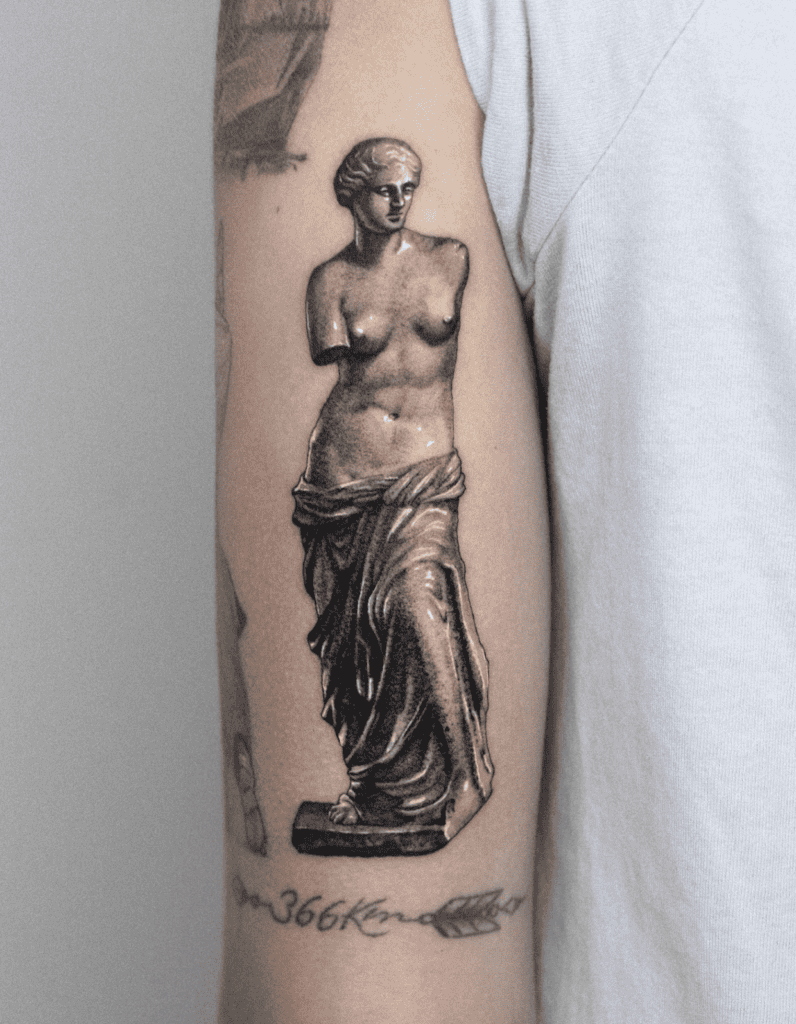
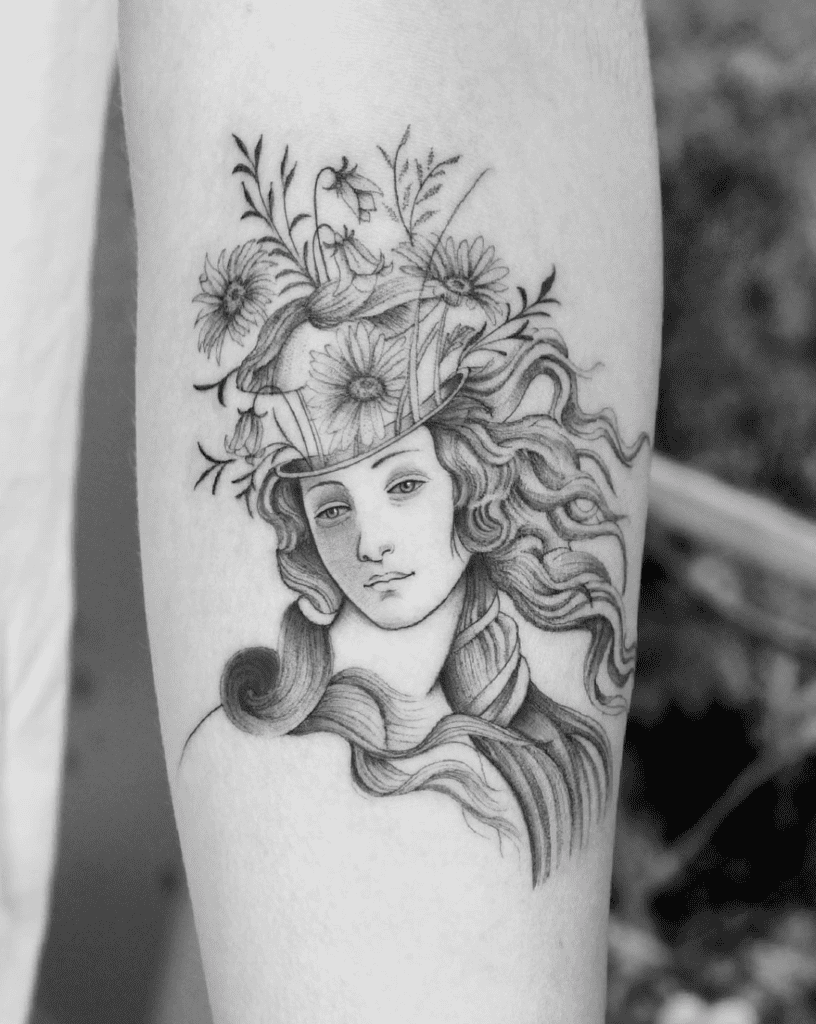
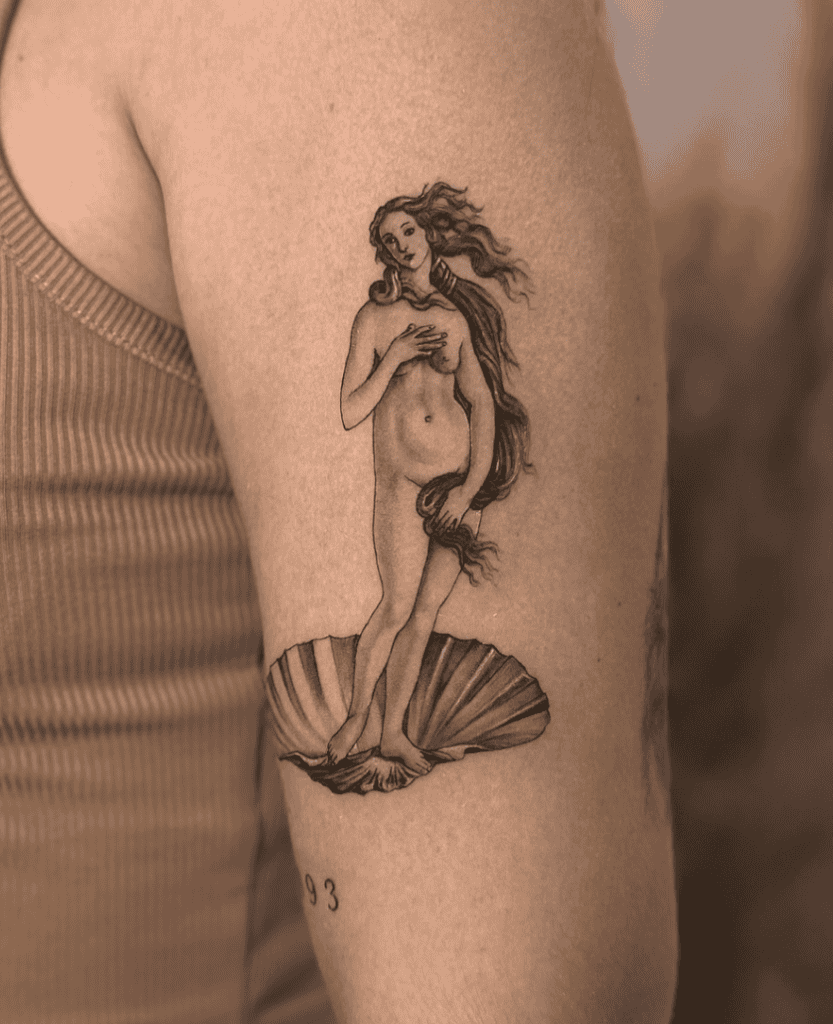
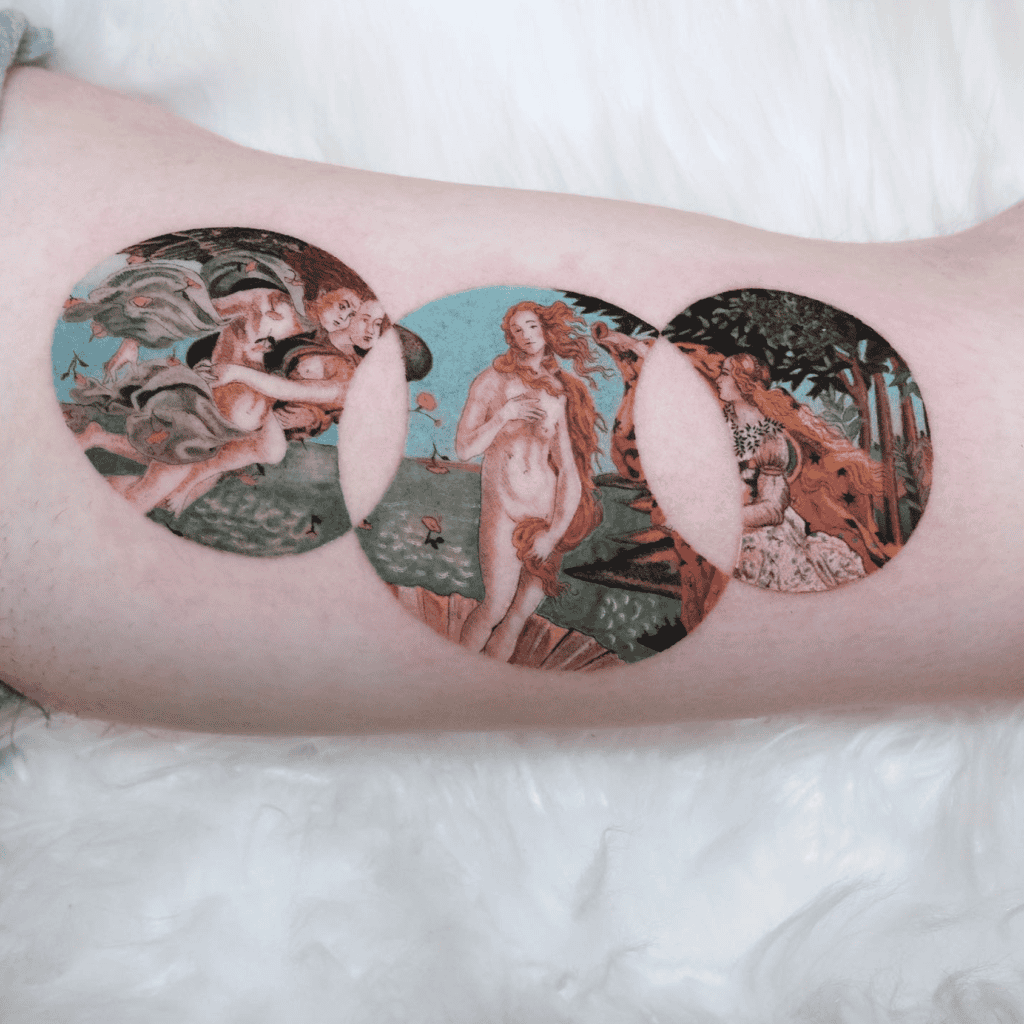
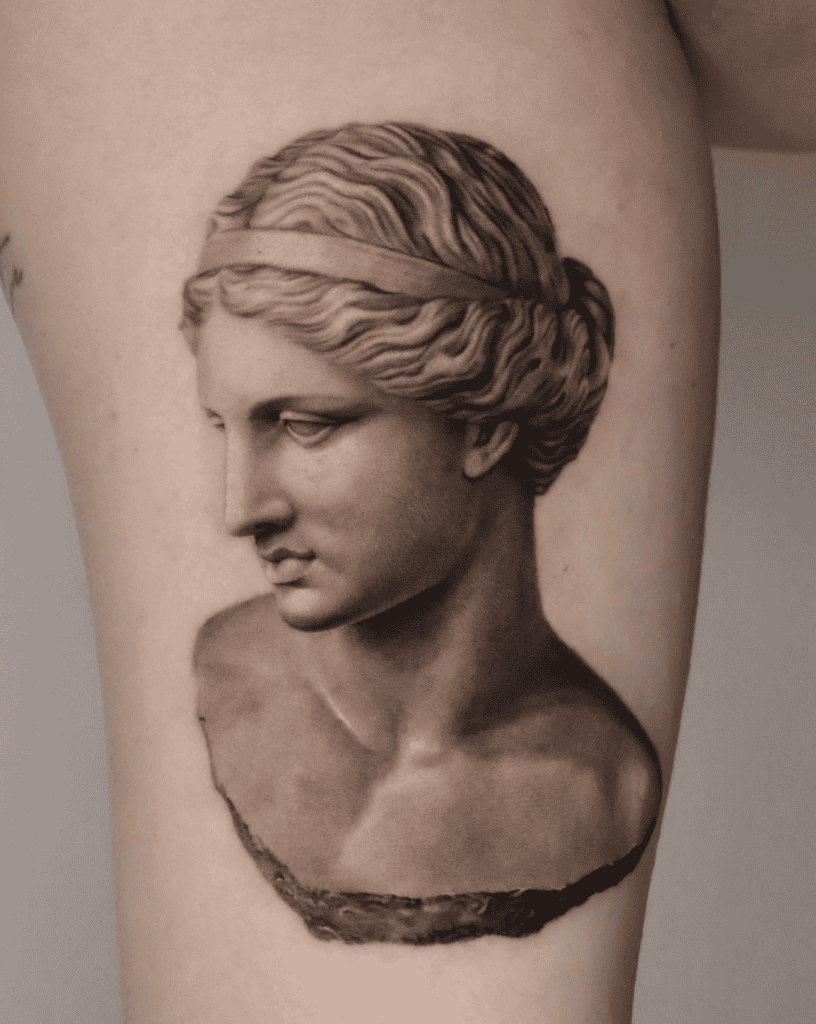
Venus is the Roman goddess of love, beauty, desire, fertility, and victory. She was one of Rome’s most important goddesses and was considered the mother of Aeneas, the legendary Trojan hero whose descendants were said to include Romulus and Remus. Venus later became an important divine ancestor of the Roman people and the Julian family.
Apollo Roman Mythology Tattoo
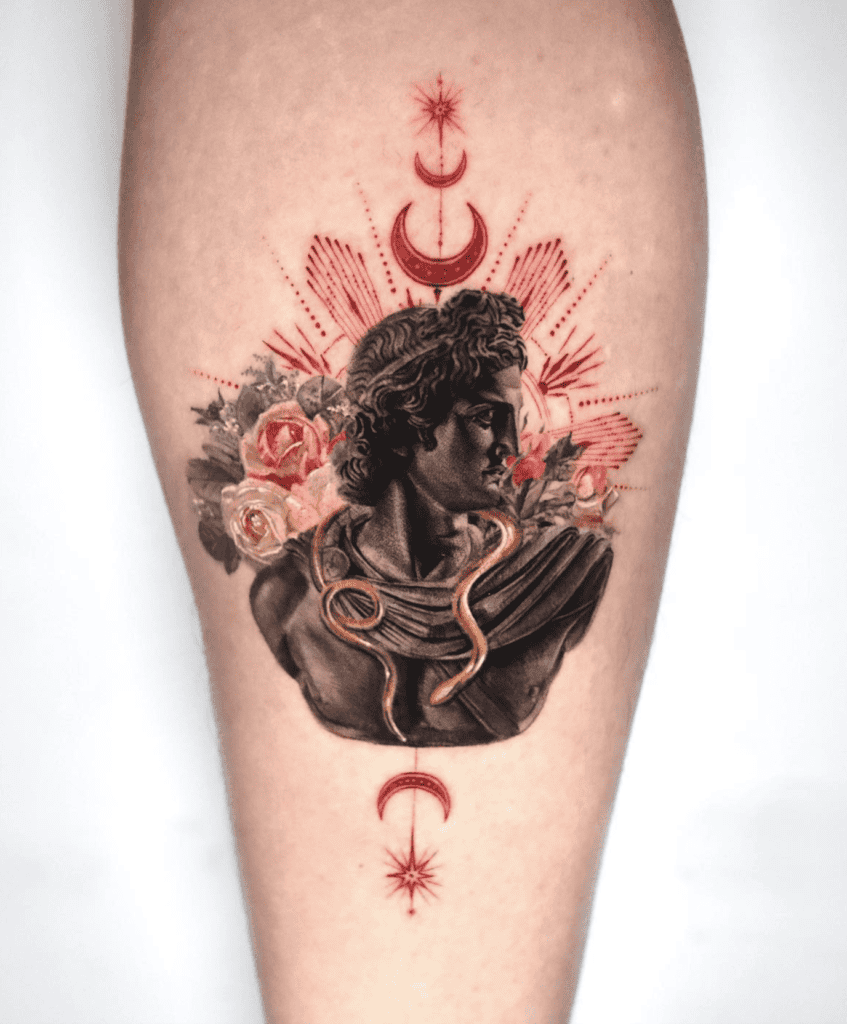
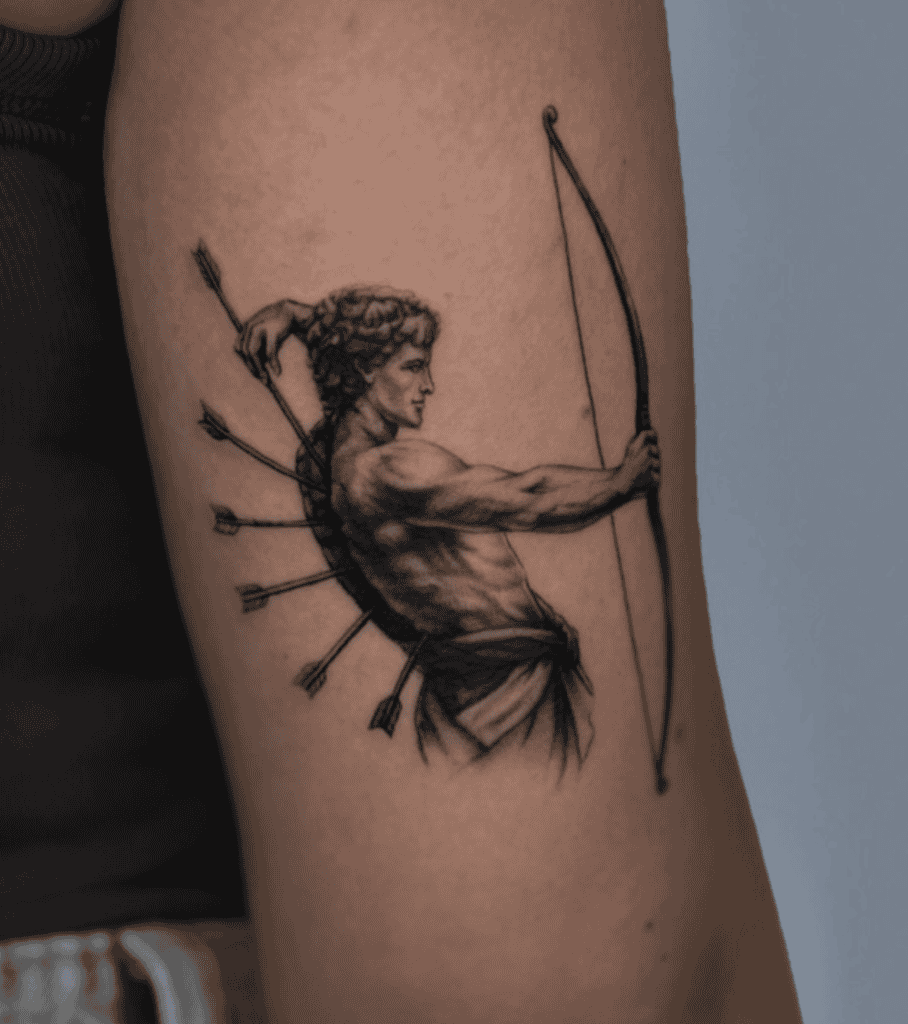
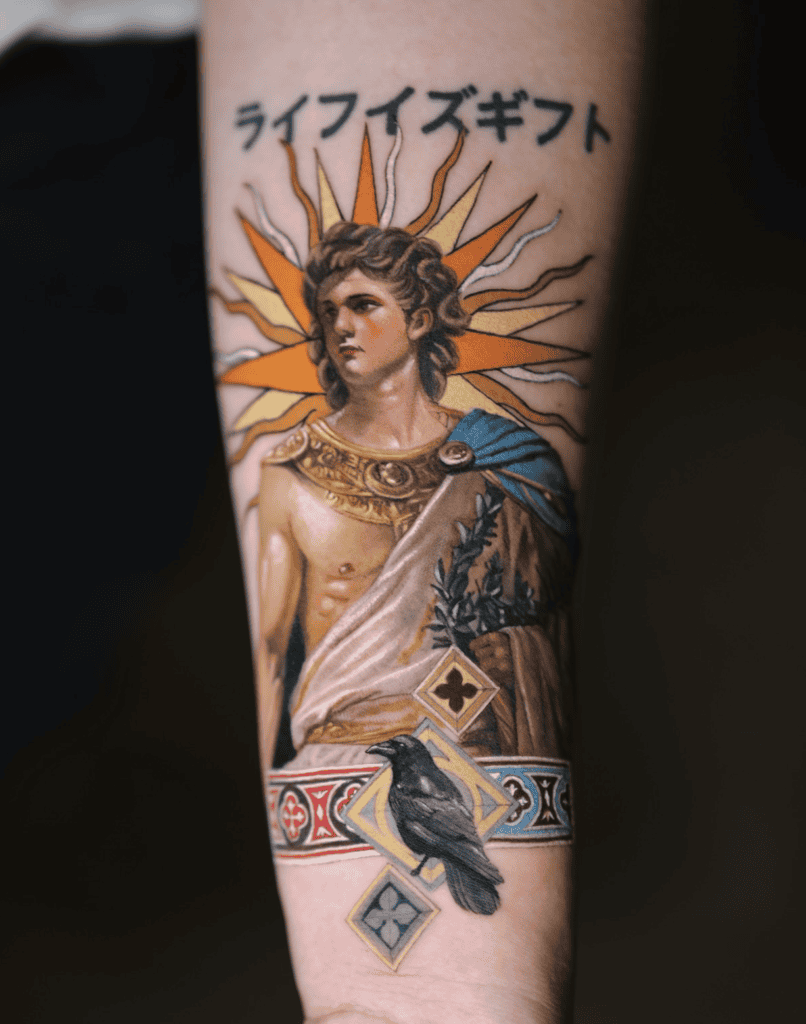
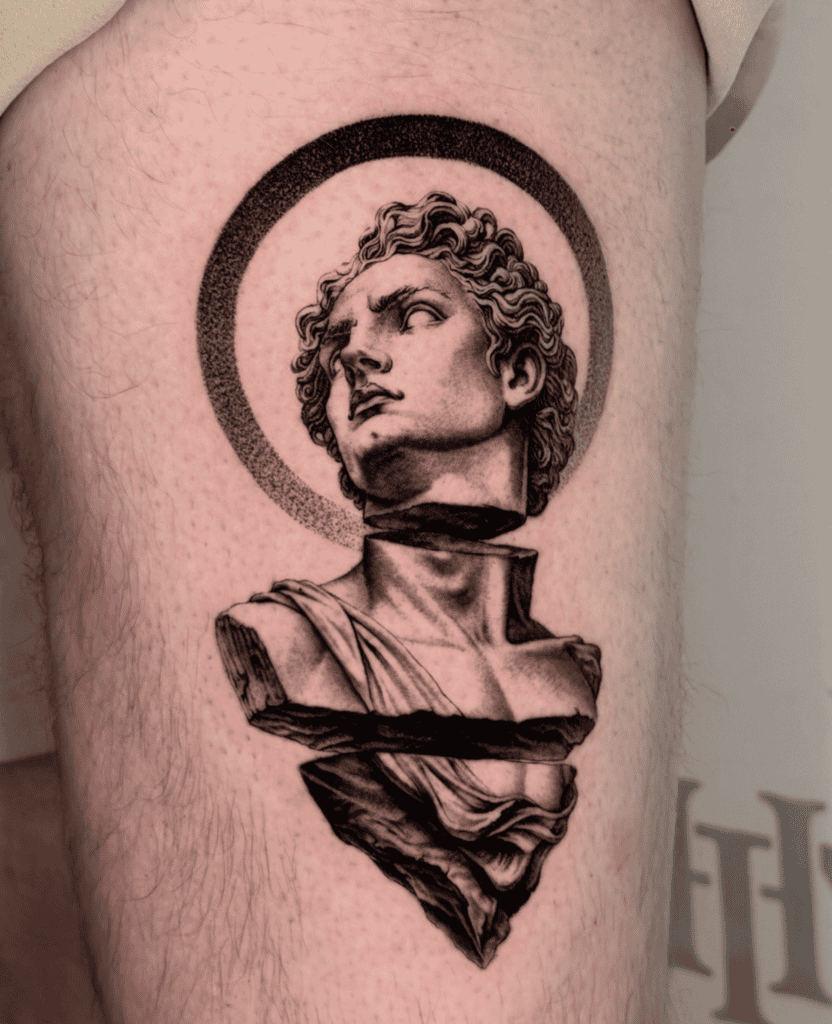
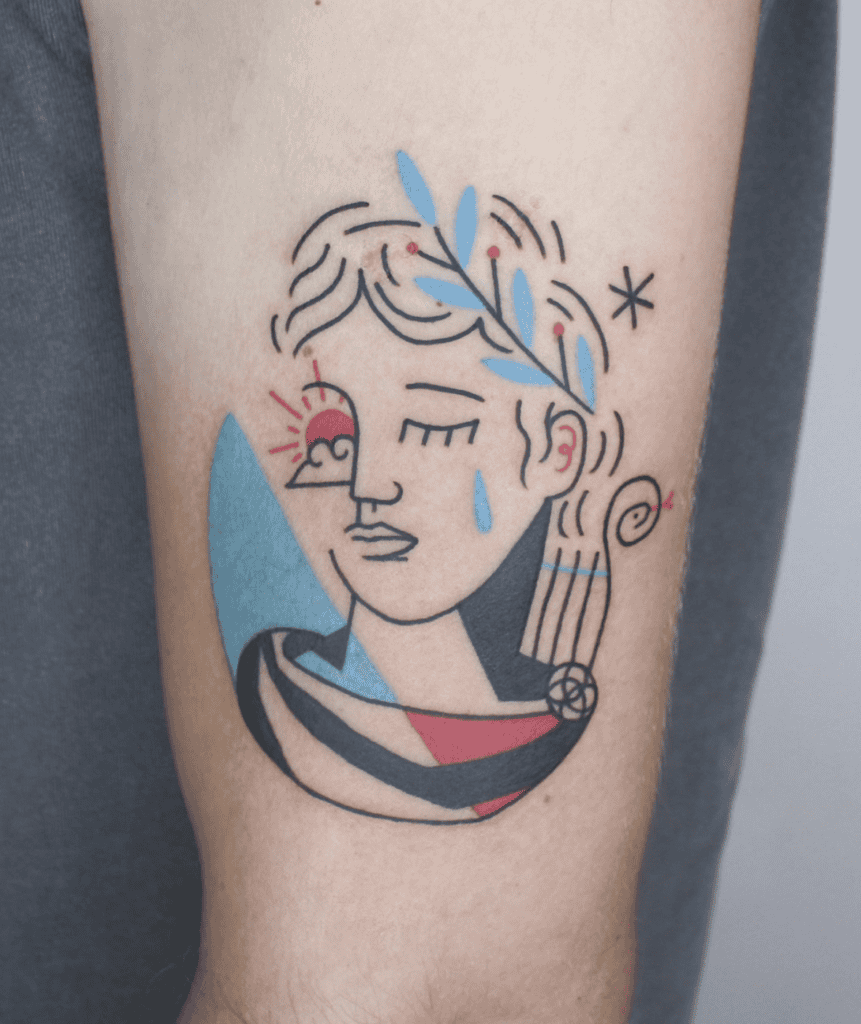
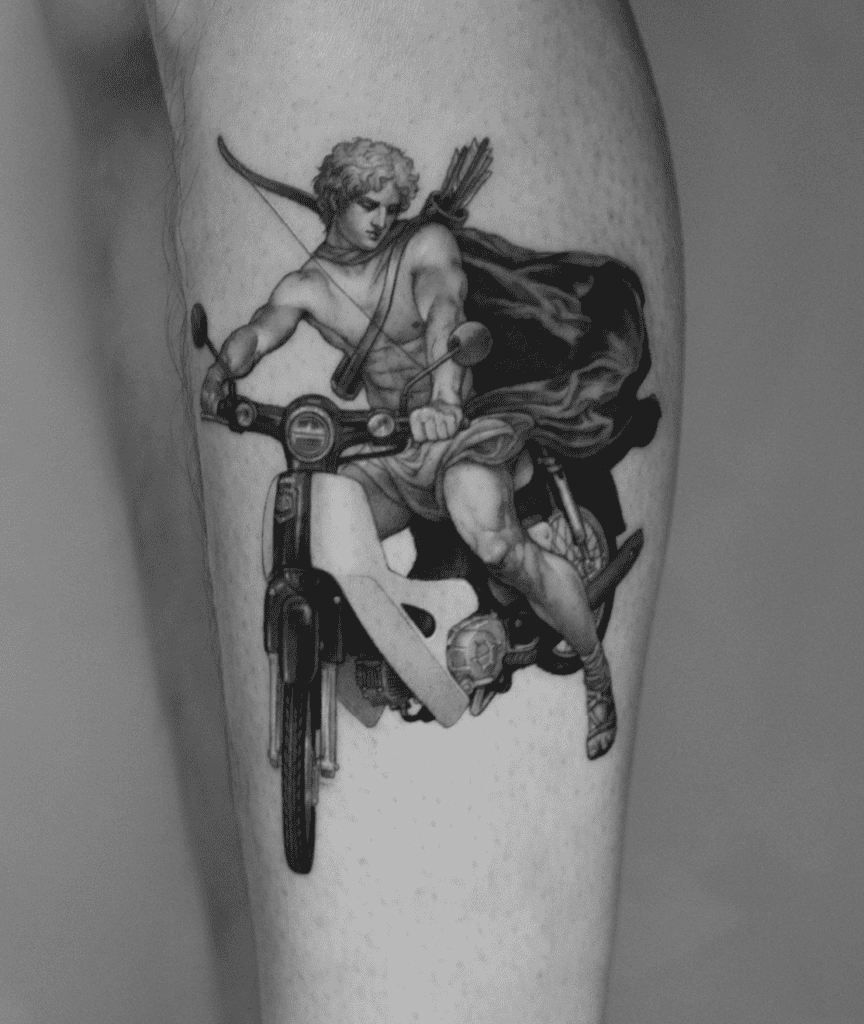
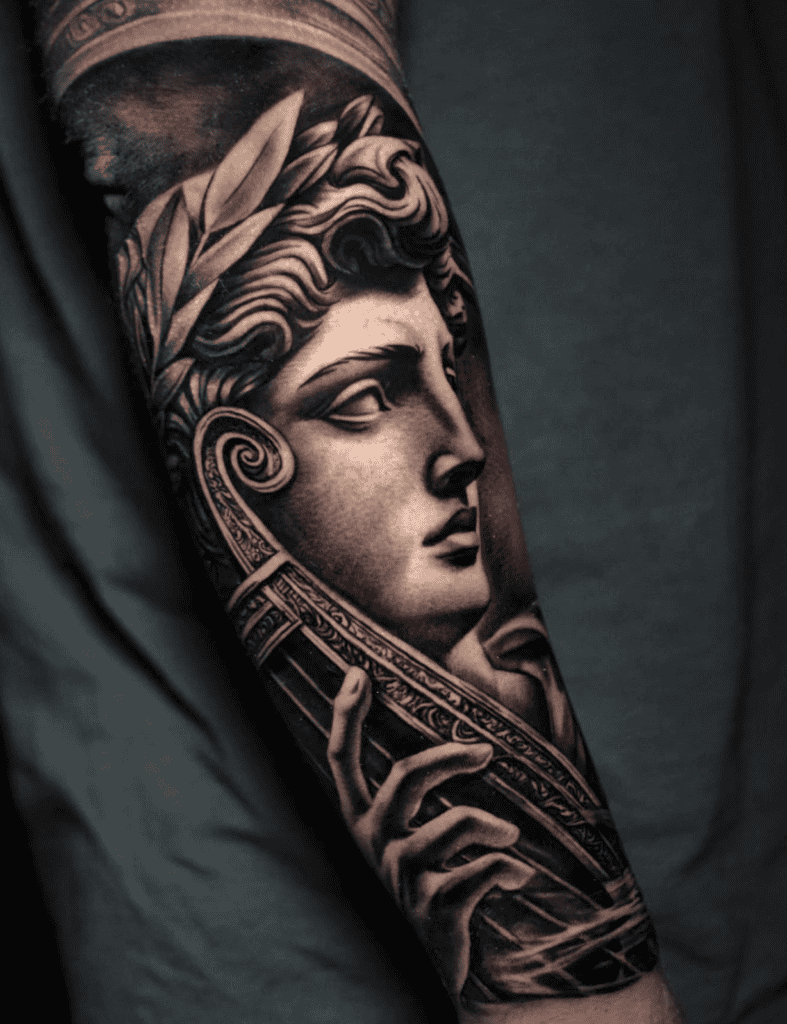
Apollo is the Roman god of the sun, music, poetry, prophecy, healing, and the arts. Unlike many other Roman gods, Apollo kept his Greek name after being adopted into Roman mythology. He was the son of Jupiter and Latona and the twin brother of Diana. Apollo was often depicted with a lyre, bow, or radiant sun imagery.
Diana Roman Mythology Tattoo
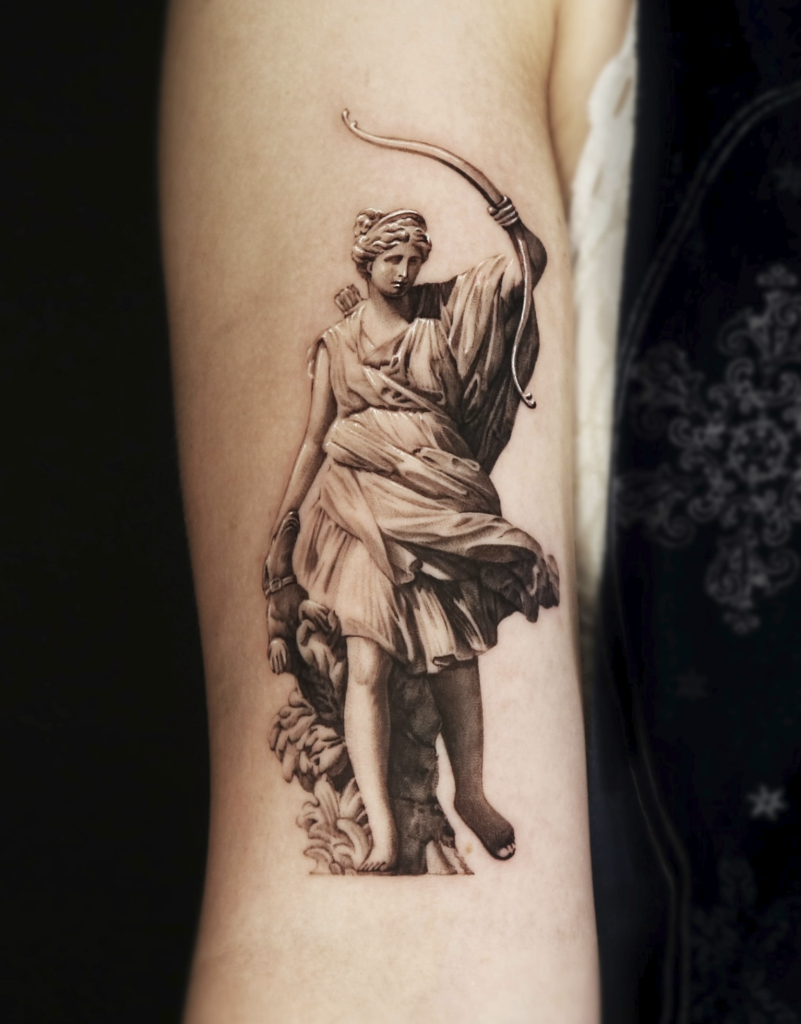
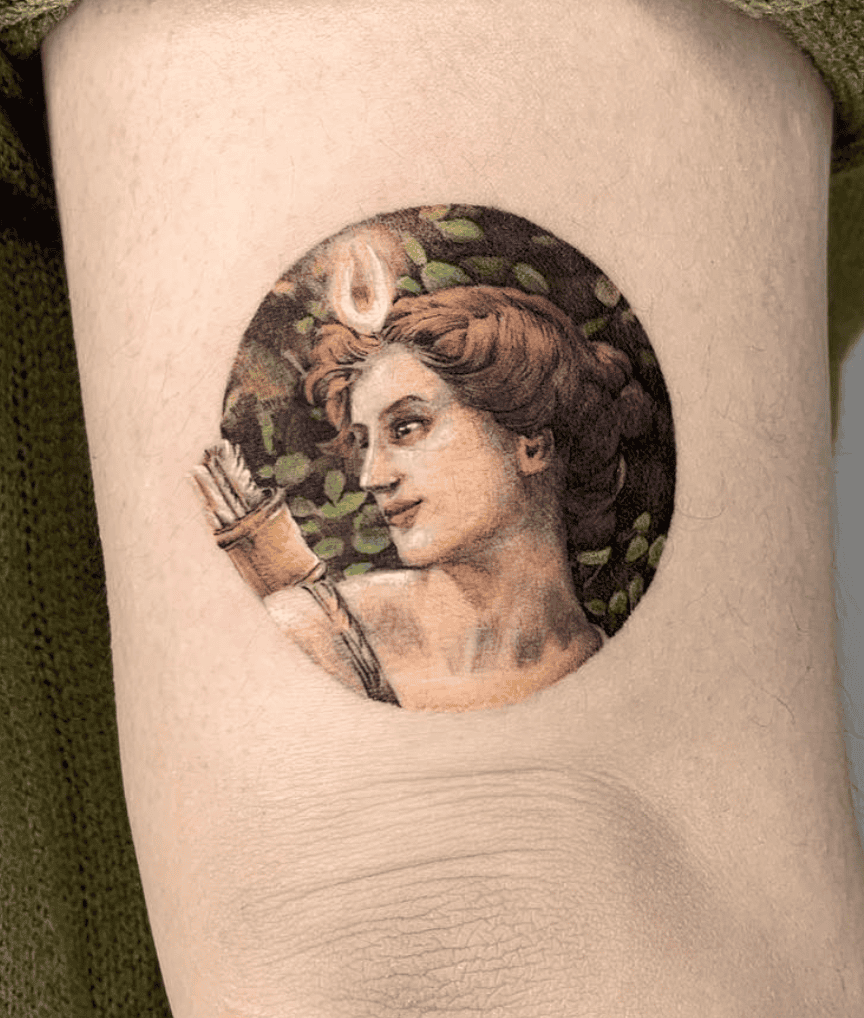
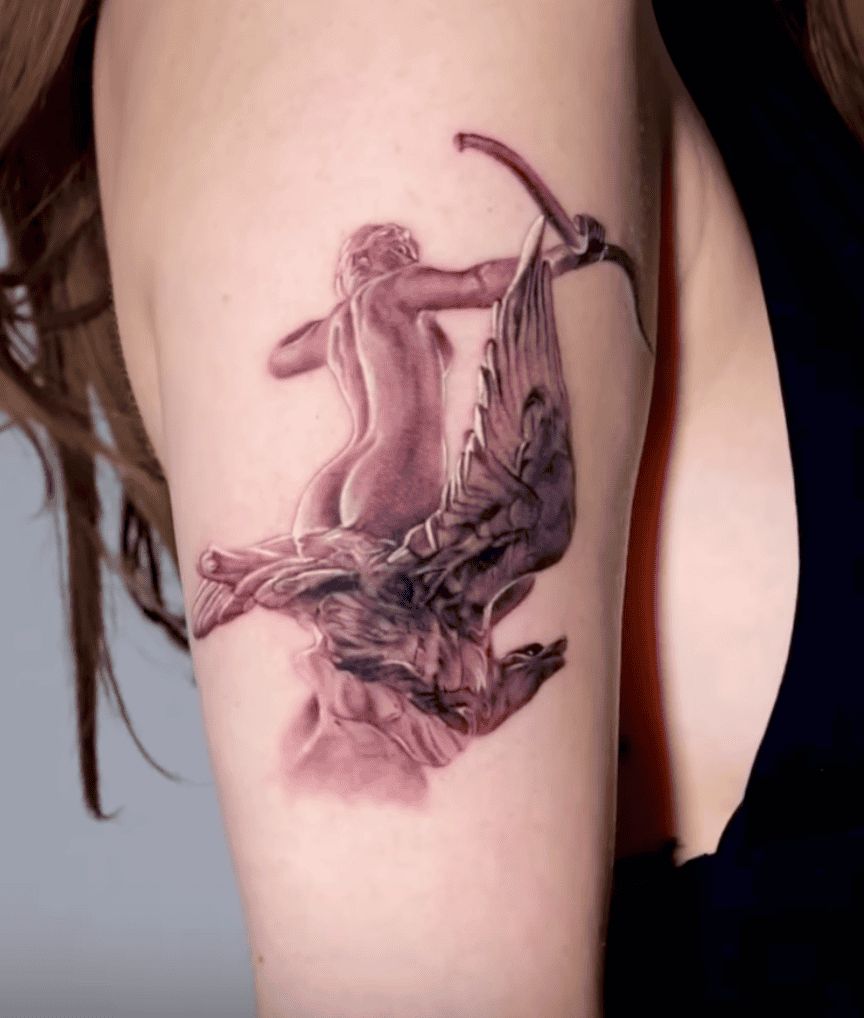
Diana is the Roman goddess of the moon, hunting, wilderness, and childbirth. She is the twin sister of Apollo and was known as a skilled and independent huntress, often depicted carrying a bow and arrows and accompanied by a deer or hunting dogs. Diana was also worshipped as a protector of women and children.
Mercury Roman Mythology Tattoo
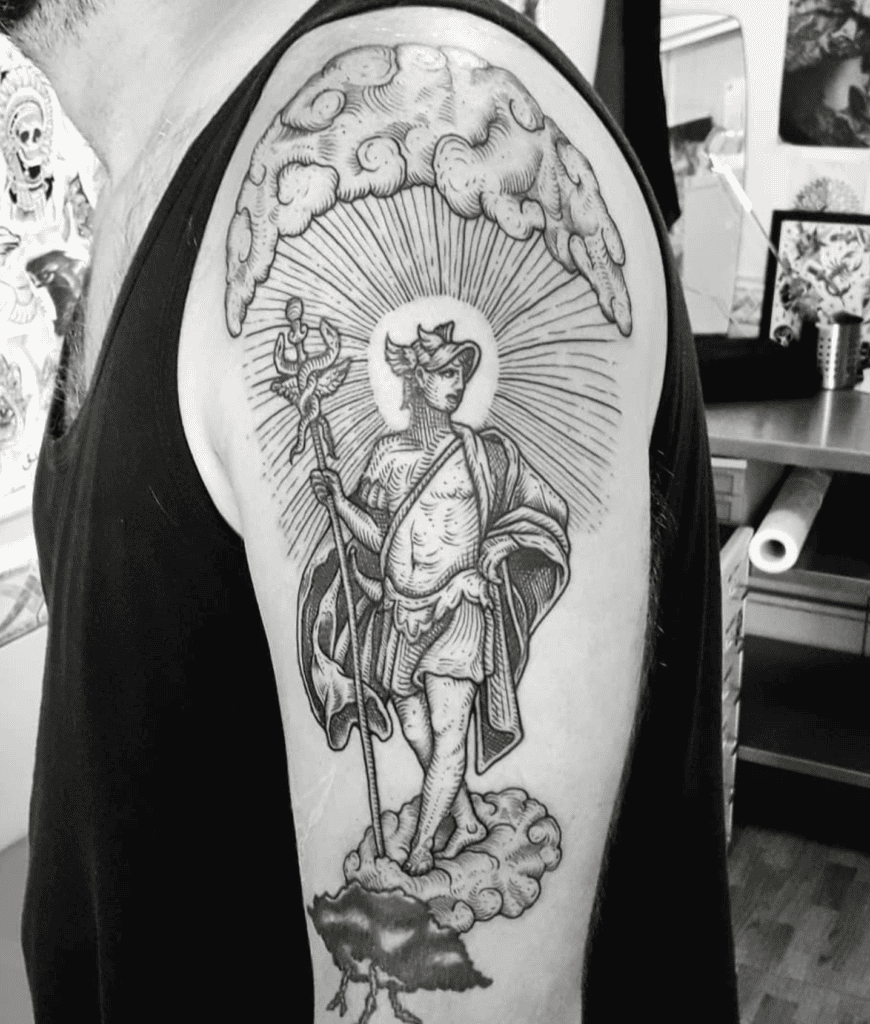
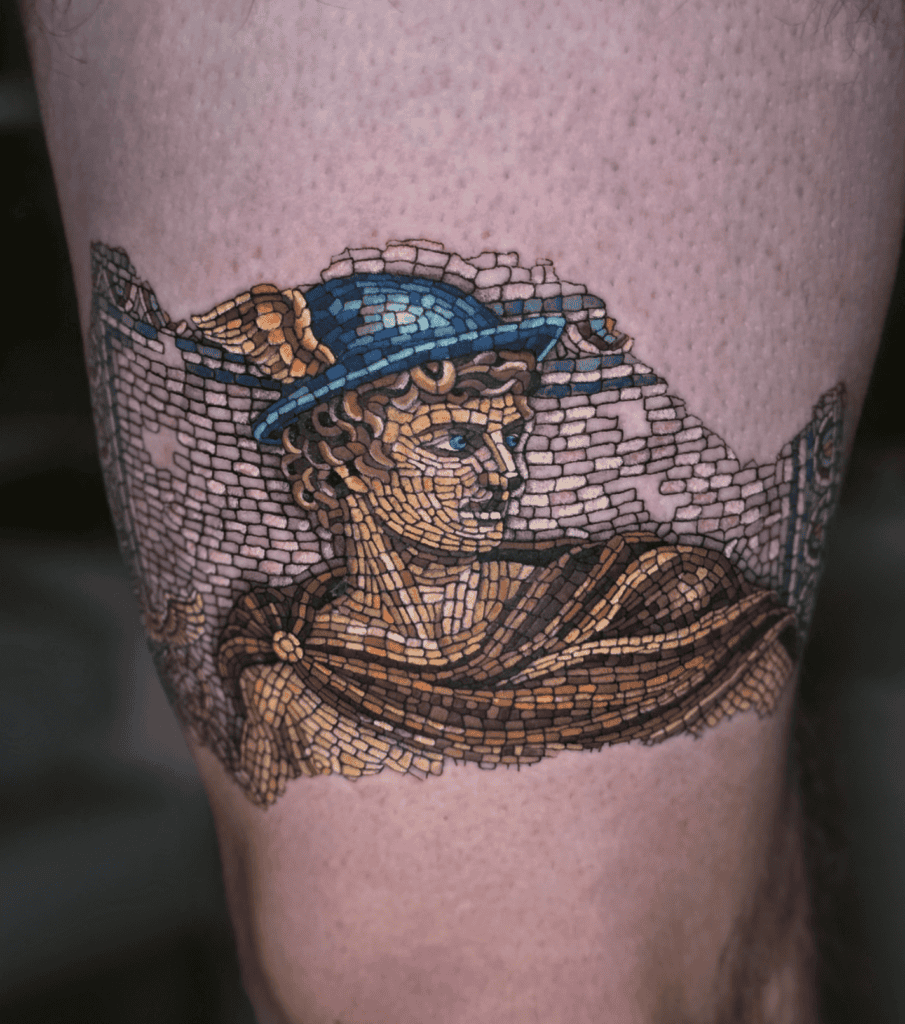
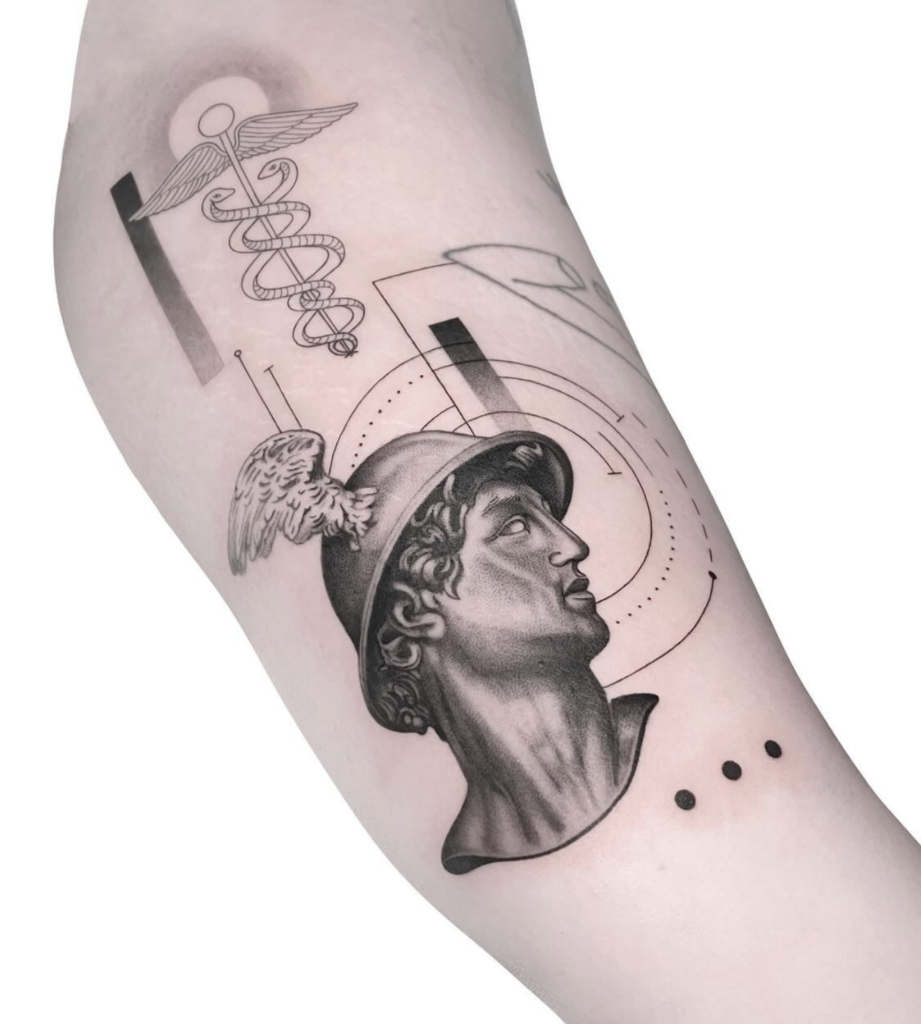
Mercury is the Roman god of communication, commerce, travellers, merchants, and thieves. He serves as the messenger of the gods, famous for his incredible speed and his winged sandals and helmet. Mercury was also a clever trickster and guide of souls to the Underworld, making him one of the more versatile gods in Roman mythology.
Vulcan Roman Mythology Tattoo
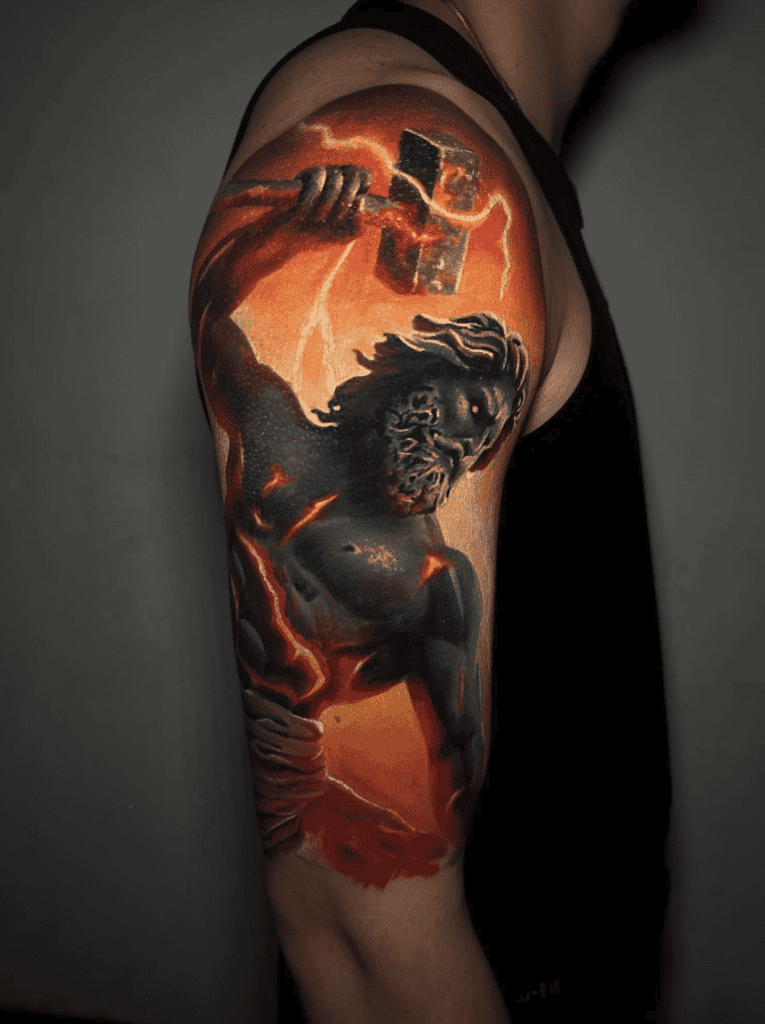
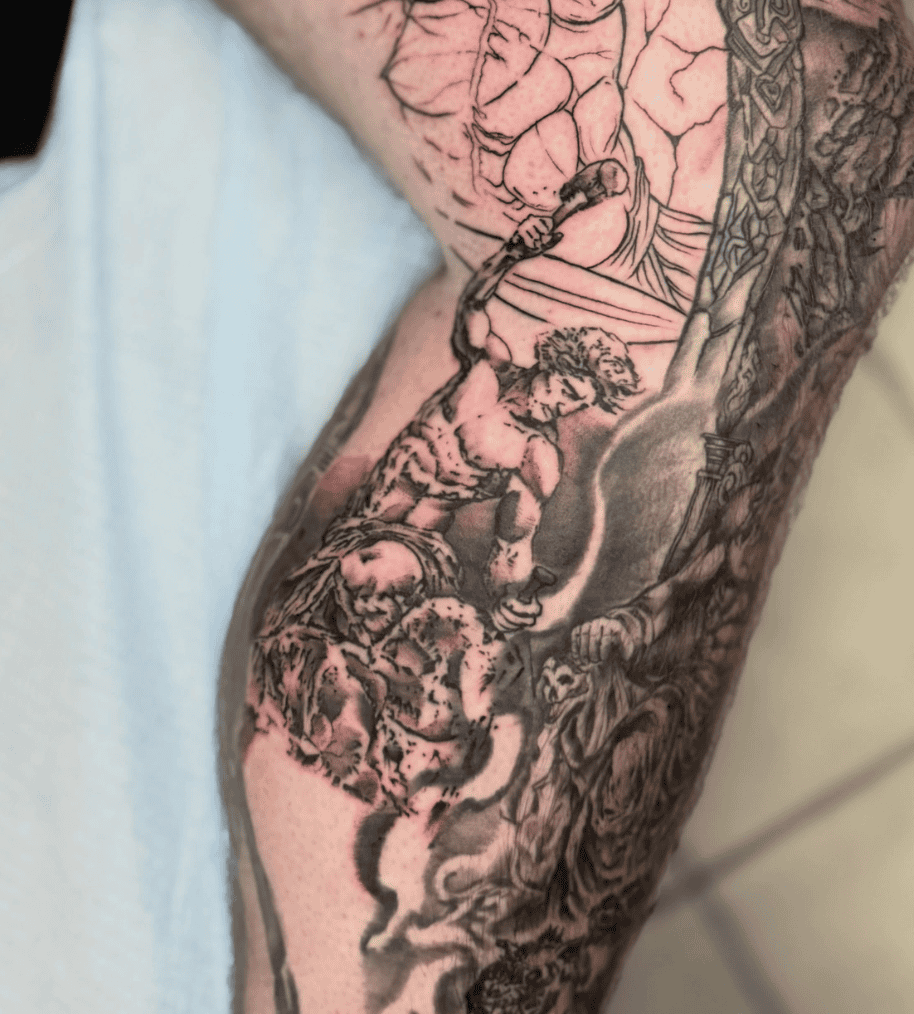
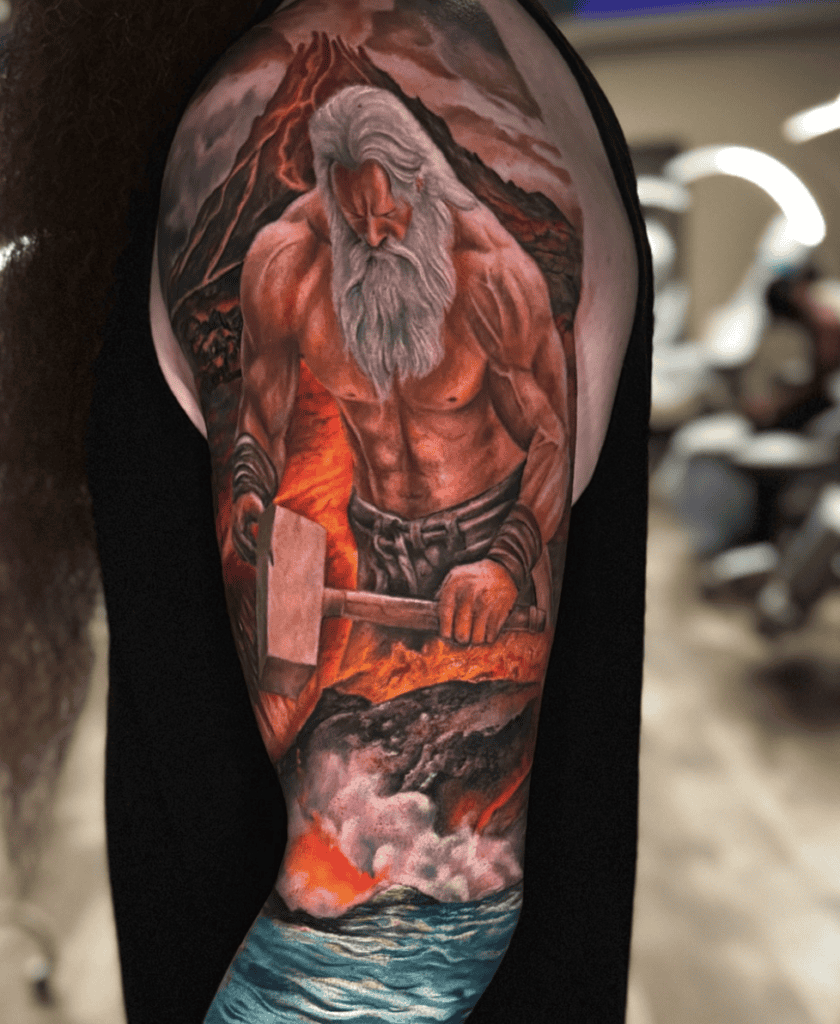
Vulcan is the Roman god of fire, volcanoes, metalworking, and forging. As the divine blacksmith, he crafted powerful weapons and magical objects for the gods, including Jupiter’s thunderbolts. Vulcan was often depicted with a hammer, anvil, and forge, symbolising his mastery of fire and craftsmanship.
Ceres Roman Mythology Tattoo
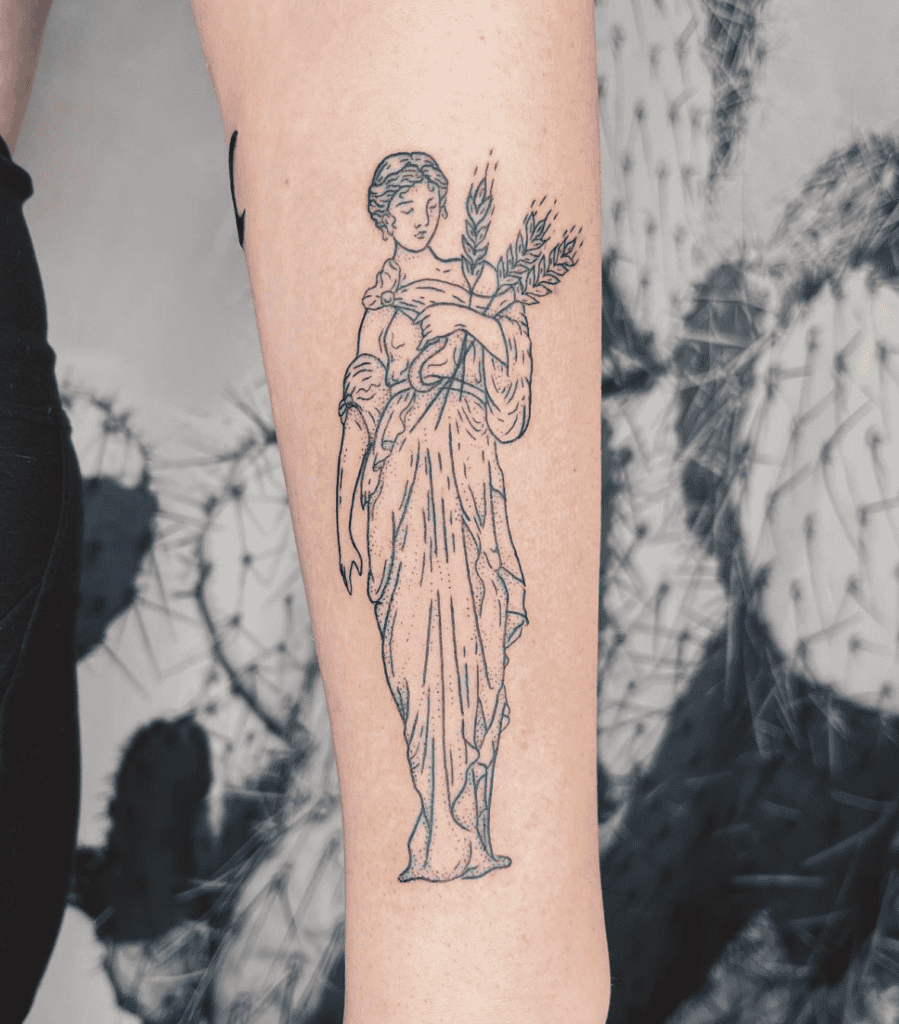
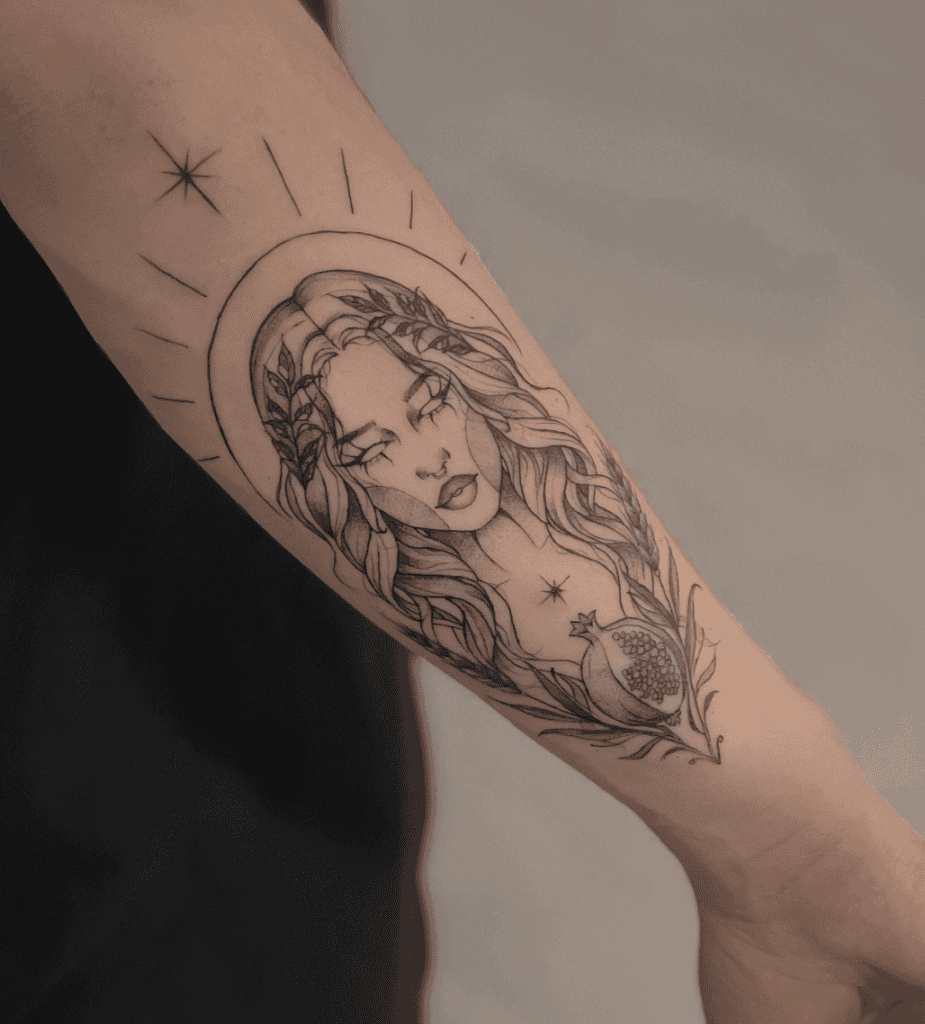
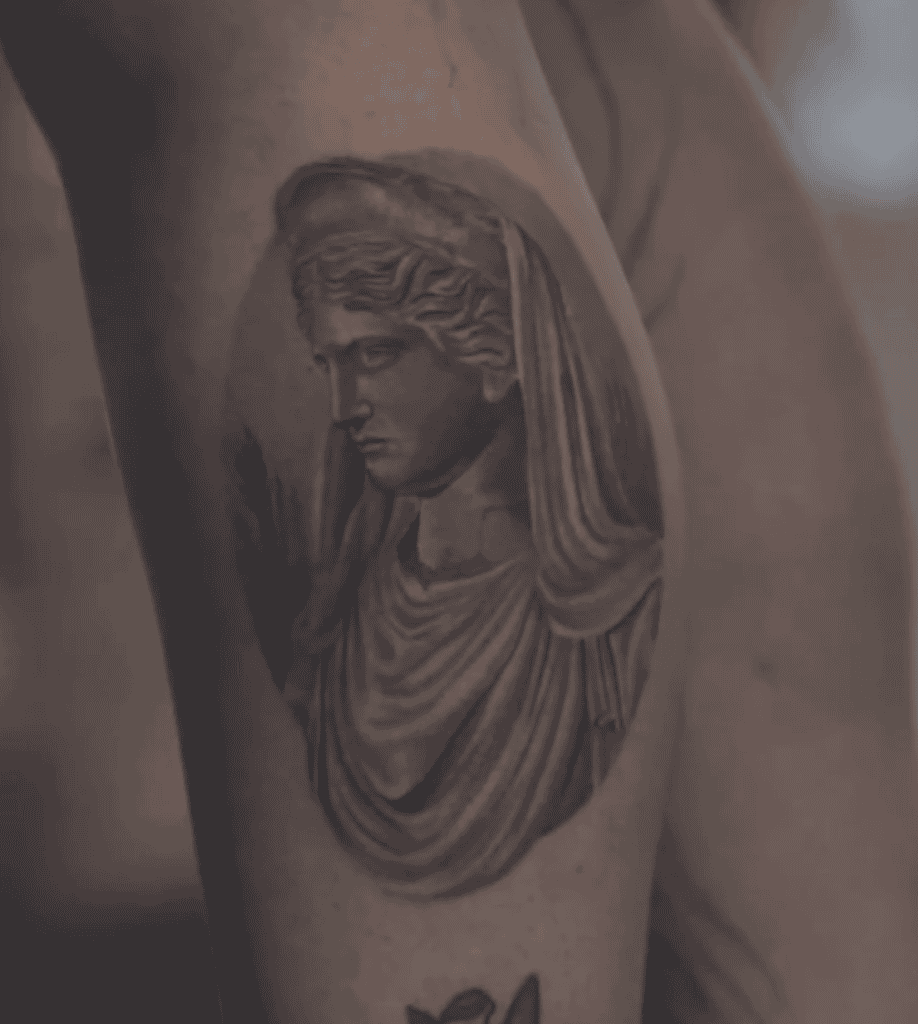
Ceres is the Roman goddess of agriculture, grain, fertility, and the harvest. She was deeply connected to the growth of crops and the nourishment of humanity, making her an important deity in Roman life. The changing seasons were also associated with her grief over the abduction of her daughter, Proserpina.
Bacchus Roman Mythology Tattoo
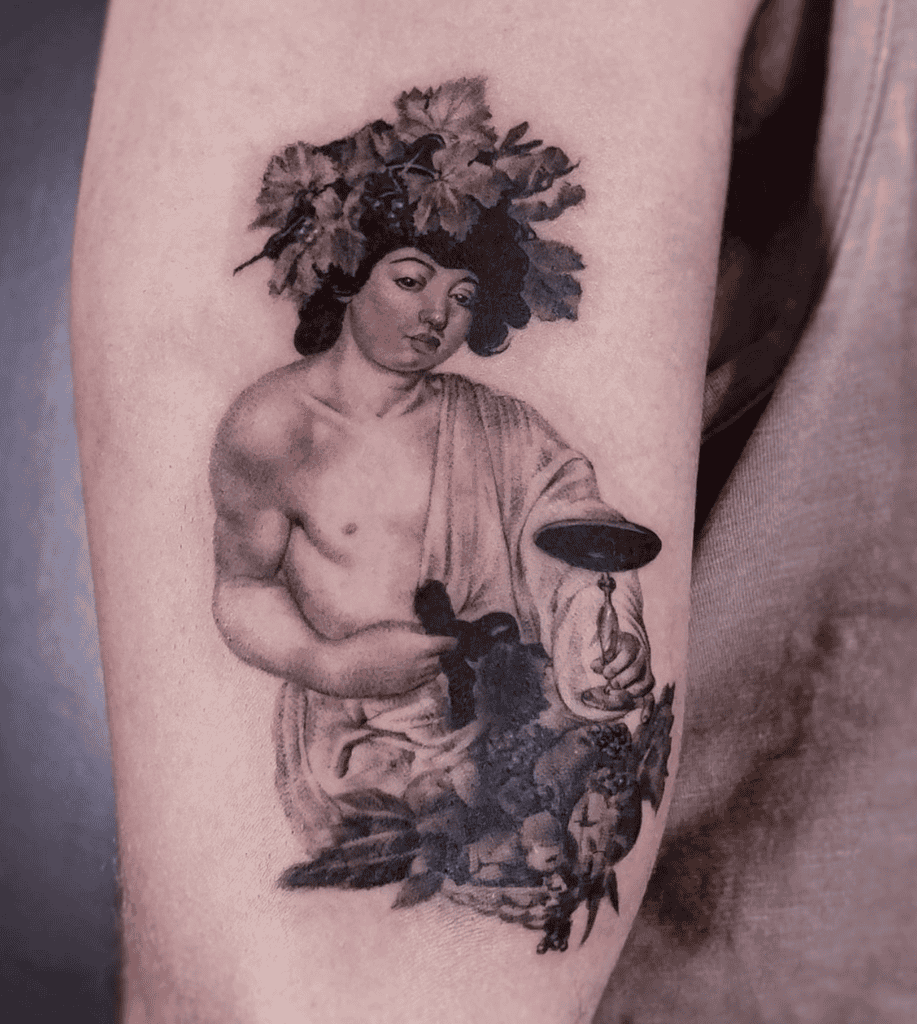
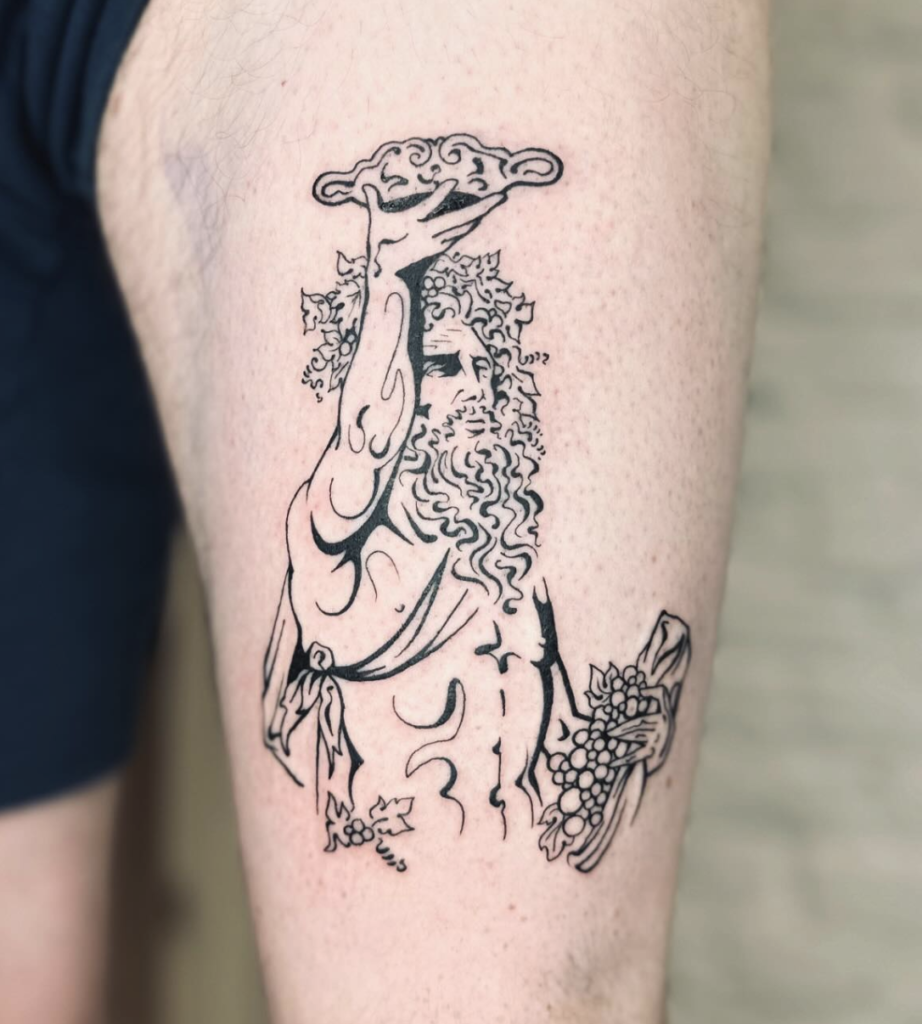
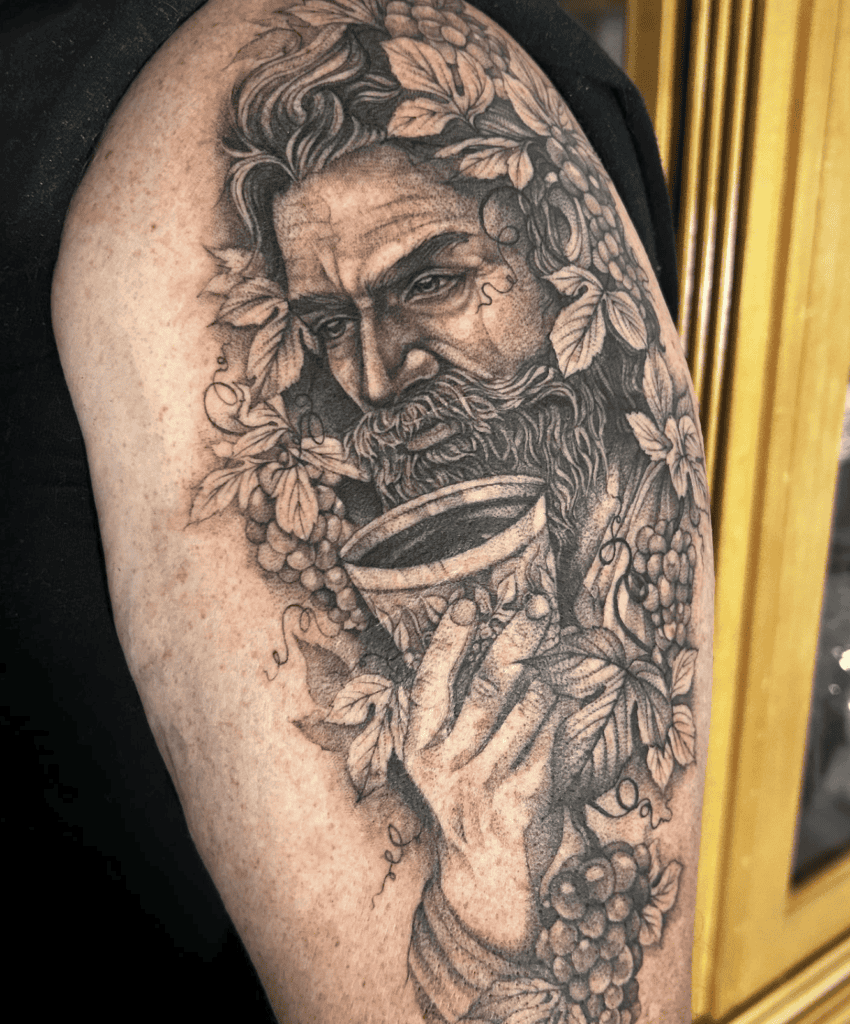
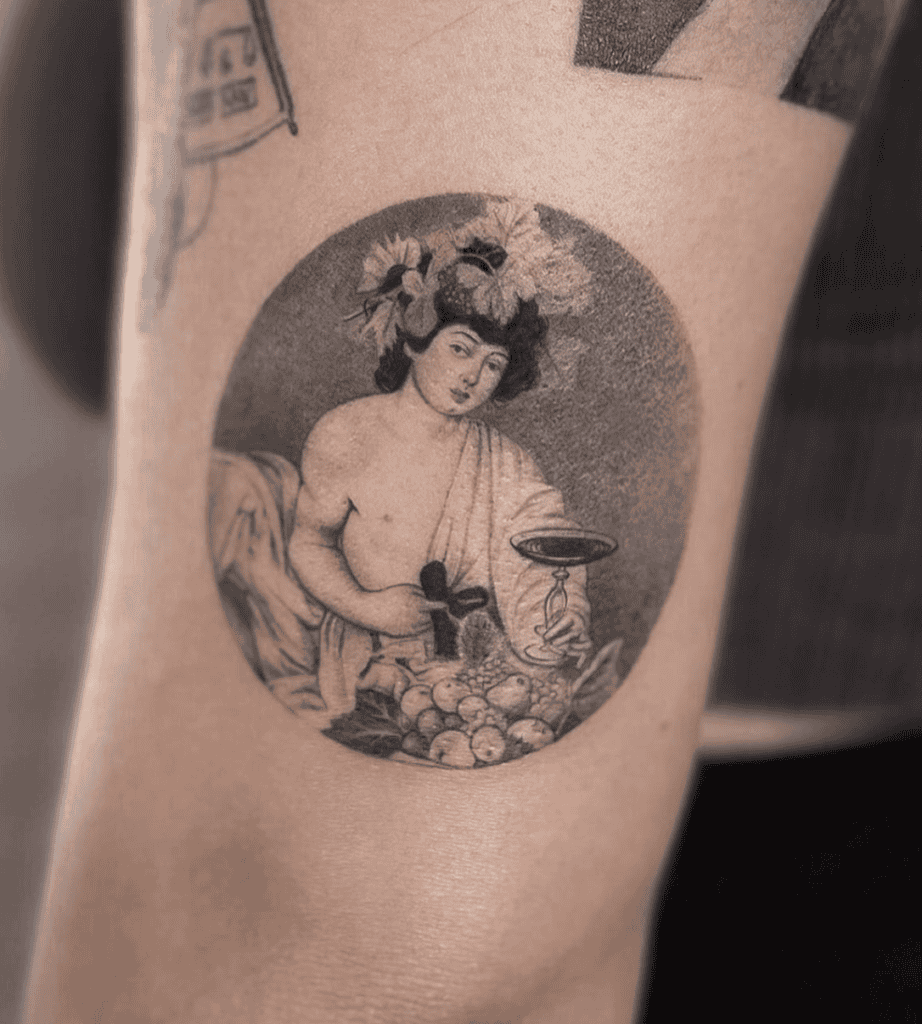
Bacchus is the Roman god of wine, celebration, fertility, theatre, and ecstatic revelry. He was known for his wild festivals, where music, dancing, and wine were central to the celebrations. Bacchus is often depicted carrying a thyrsus, a staff decorated with vines and topped with a pine cone, and accompanied by his followers.
Proserpina Roman Mythology Tattoo
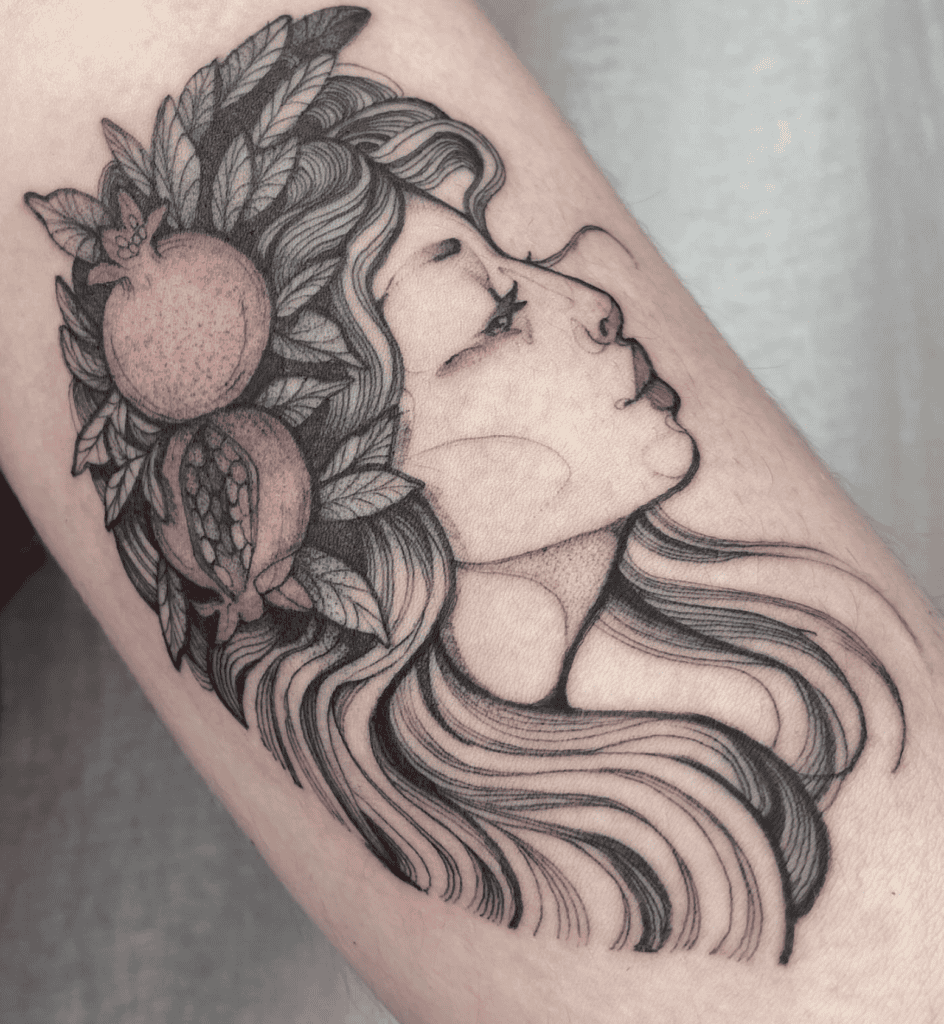
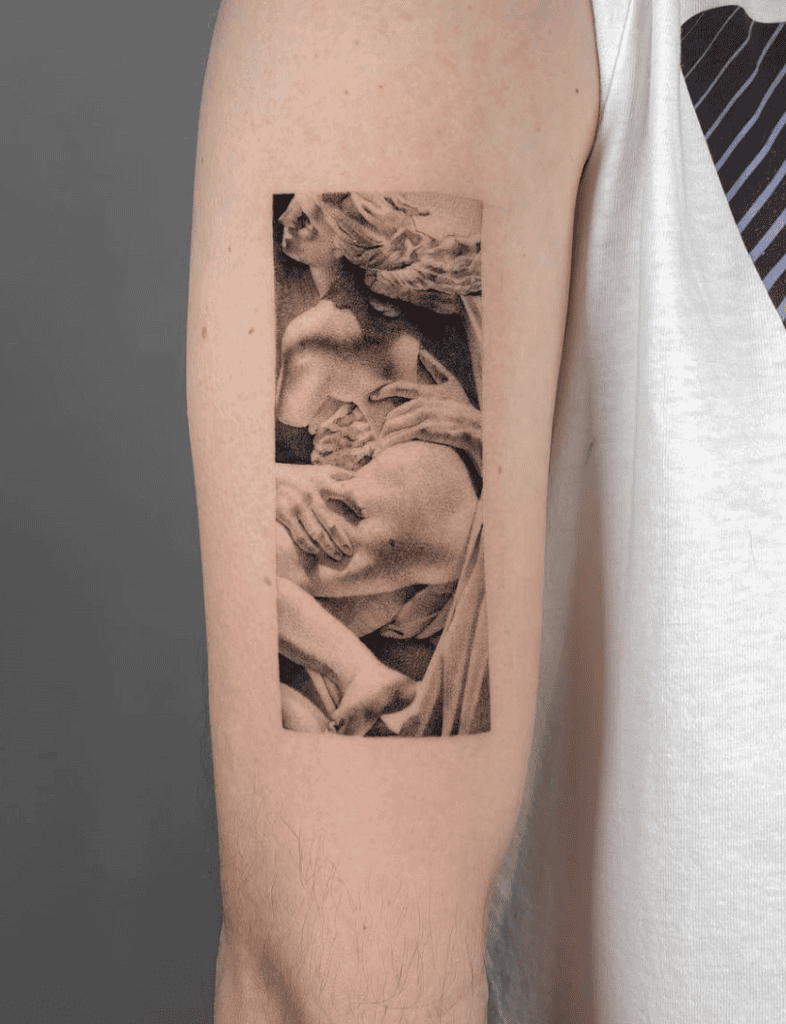
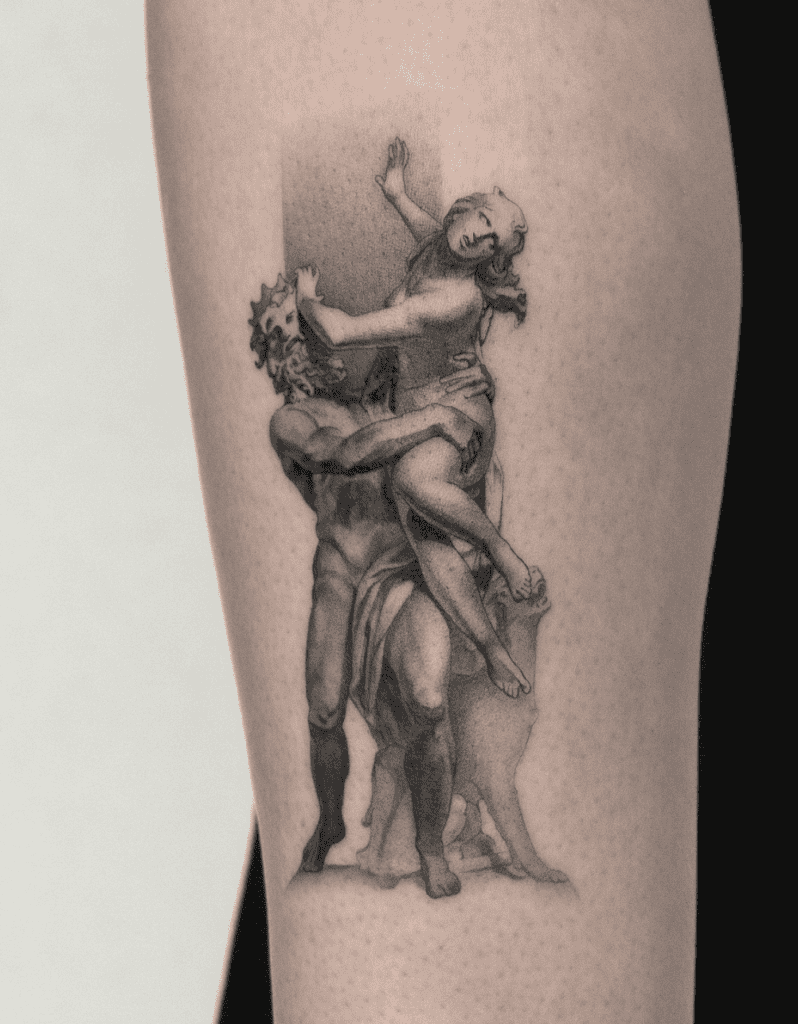
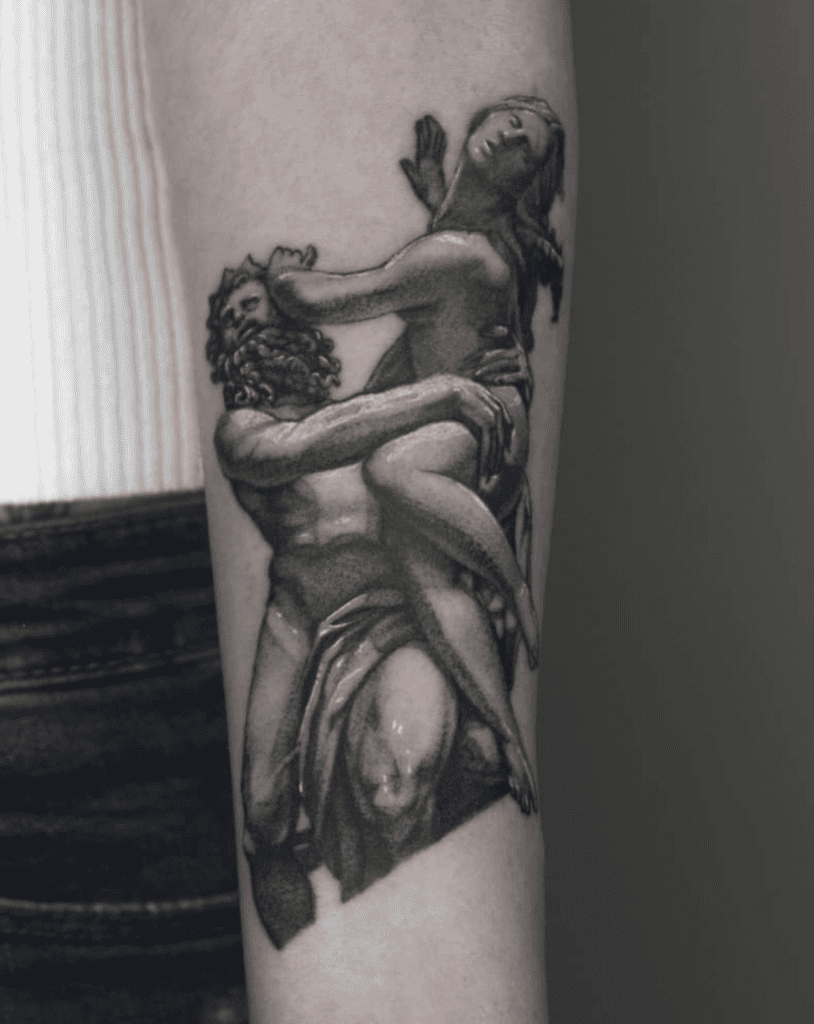
Proserpina is the Roman goddess of spring, vegetation, and the Underworld. She is the daughter of Ceres and became the wife of Pluto after being taken to the Underworld. Her return to the surface each year was used to explain the cycle of the seasons, as her reunion with Ceres brought spring and her departure brought winter.
Pluto Roman Mythology Tattoo
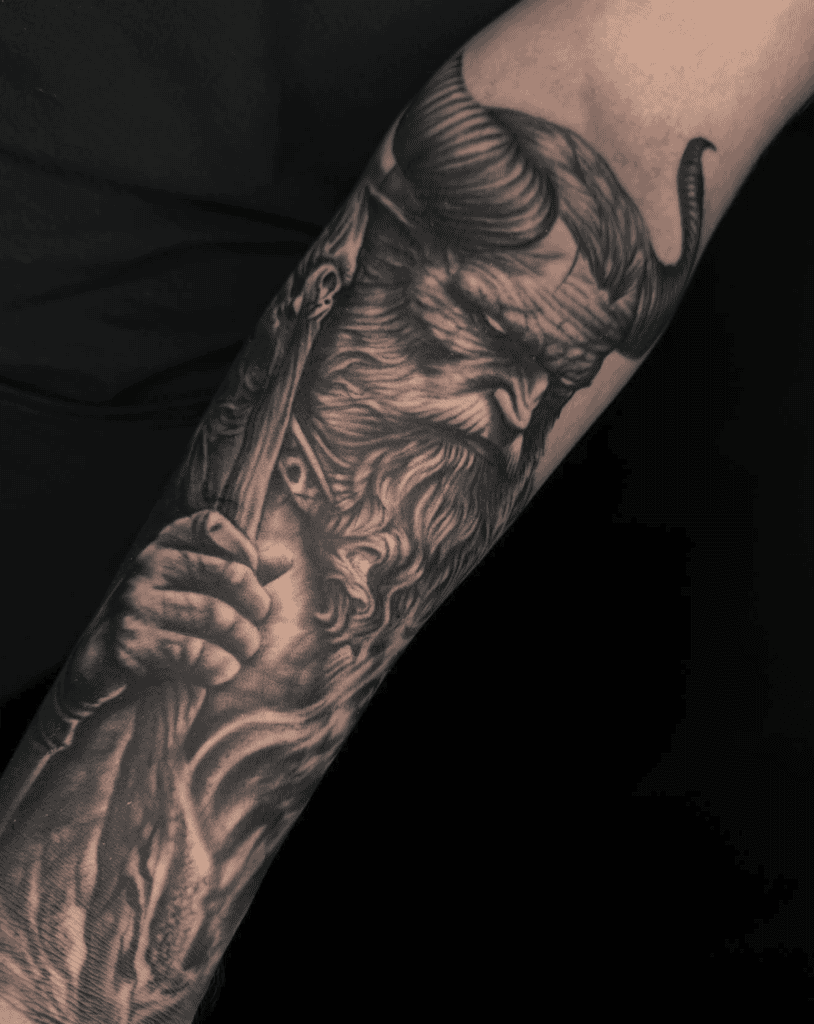
Pluto is the Roman god of the Underworld and the ruler of the dead. He is also associated with wealth and precious metals, since riches were thought to come from beneath the earth. Pluto is the husband of Proserpina and brother of Jupiter and Neptune, and he is often depicted alongside his three-headed guardian, Cerberus.
Vesta Roman Mythology Tattoo
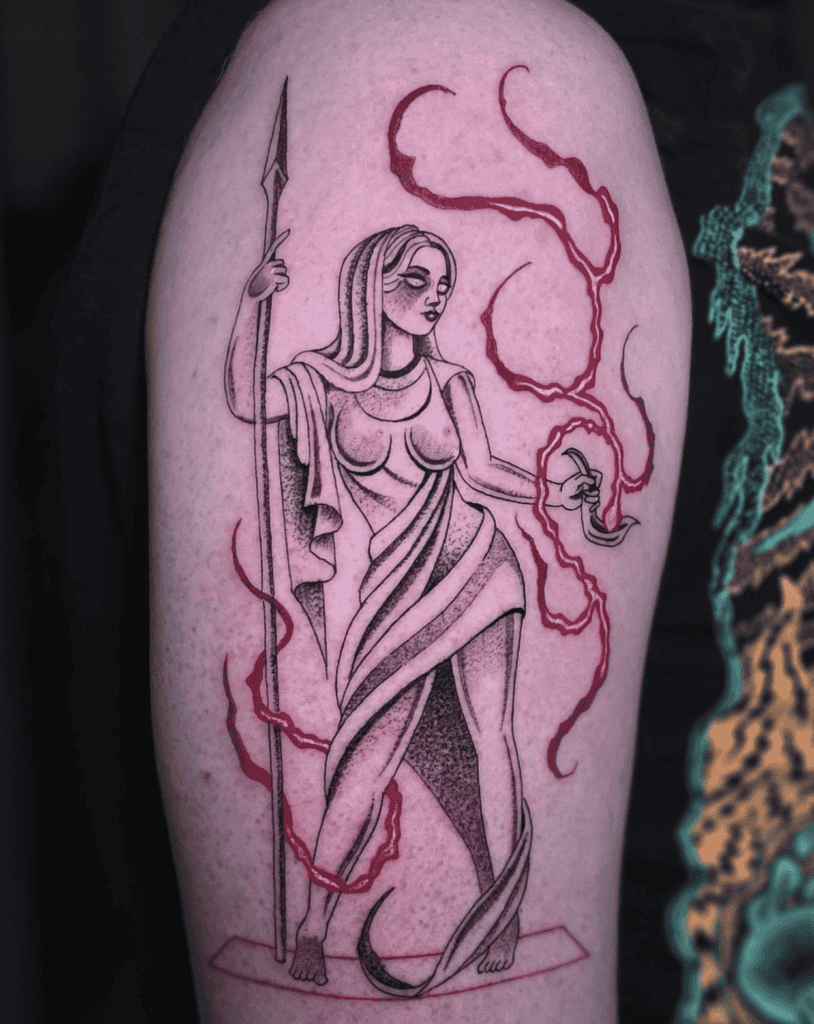
Vesta is the Roman goddess of the hearth, home, family, and sacred fire. Her eternal flame was tended by the Vestal Virgins, priestesses who served Vesta and helped protect Rome’s sacred fire. She was one of the most important household deities in Roman religion, representing warmth, security, and the heart of the home.
Janus Roman Mythology Tattoo
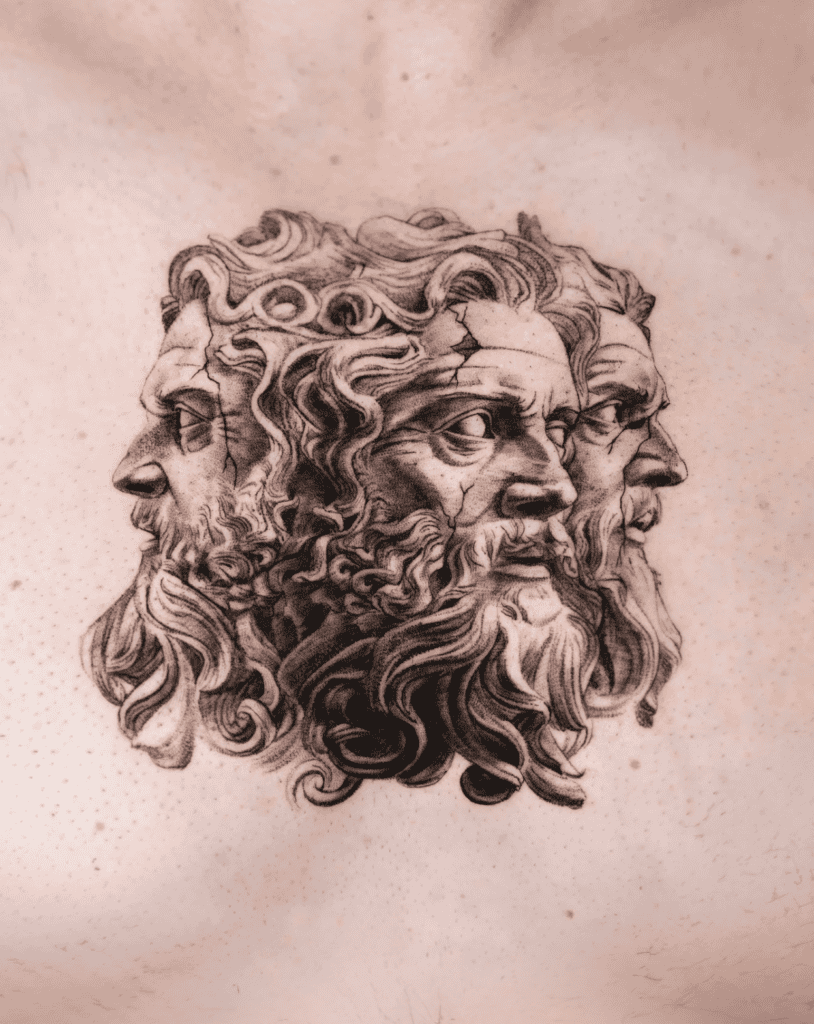
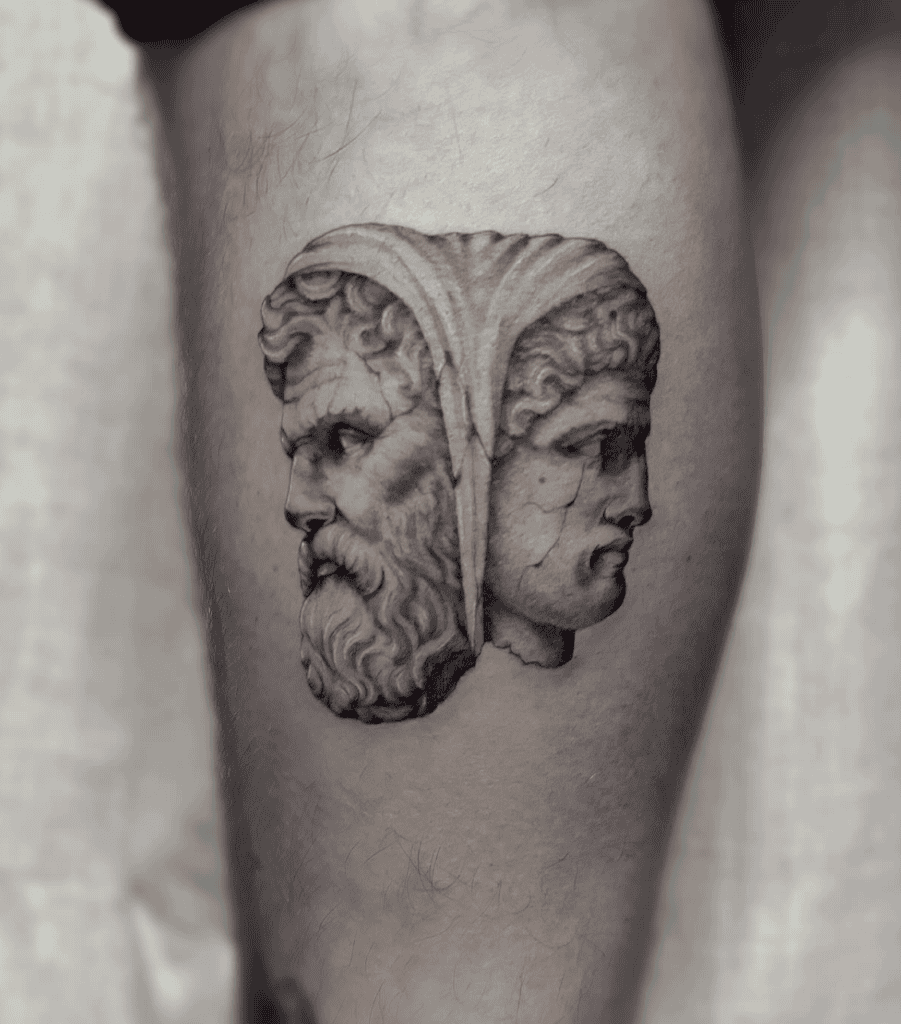
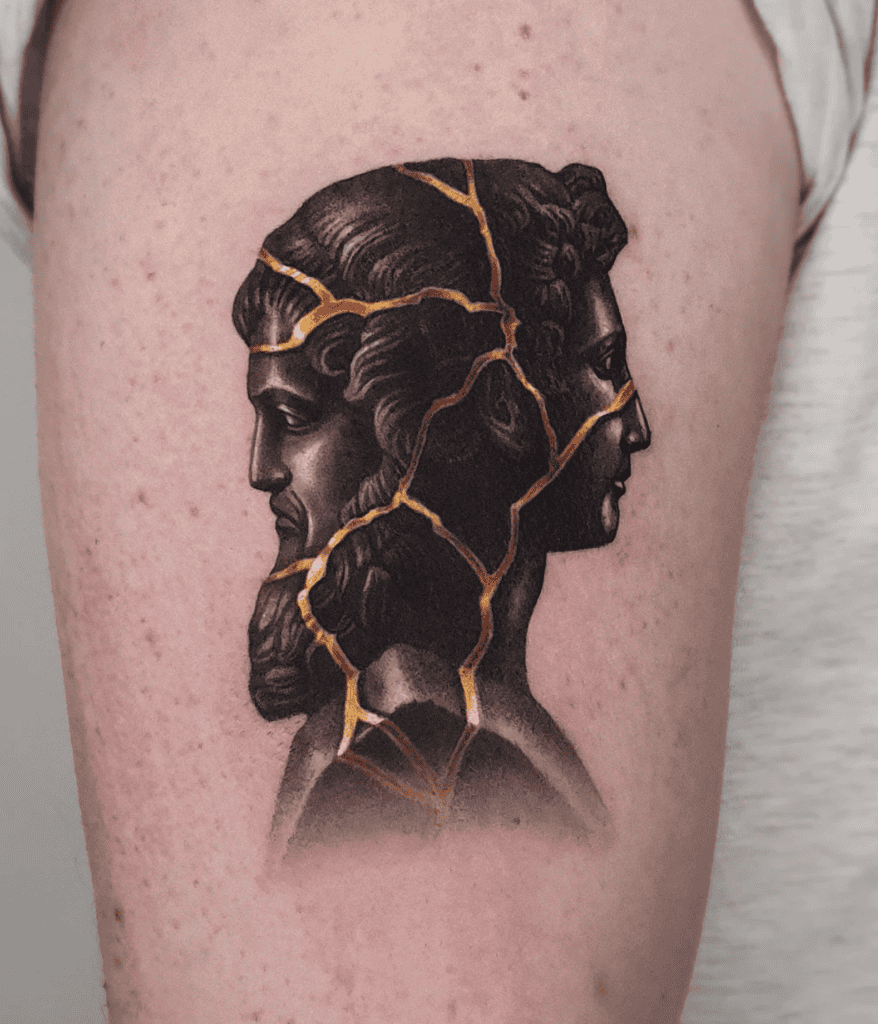
Janus is the Roman god of beginnings, endings, transitions, doorways, gates, and passages. He is famously depicted with two faces, allowing him to look toward the past and the future at the same time. As a distinctly Roman deity, Janus has no direct Greek counterpart and was especially important when starting new ventures, journeys, and periods of change.
Saturn Roman Mythology Tattoo
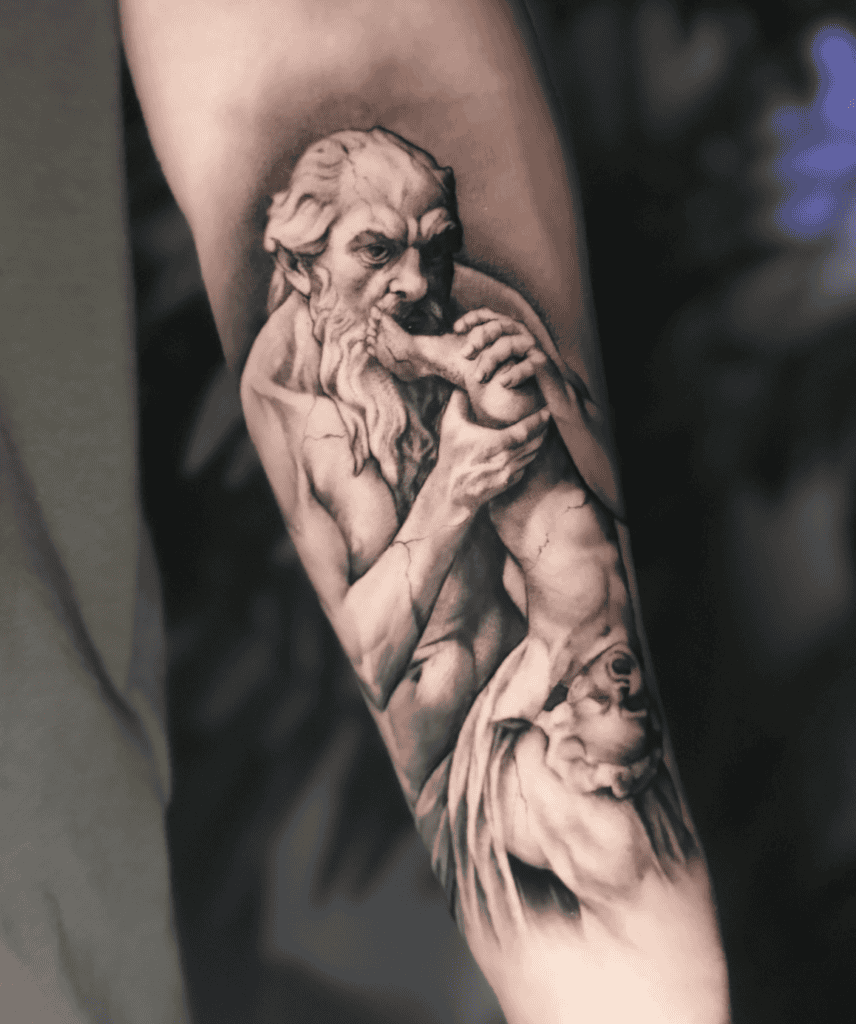
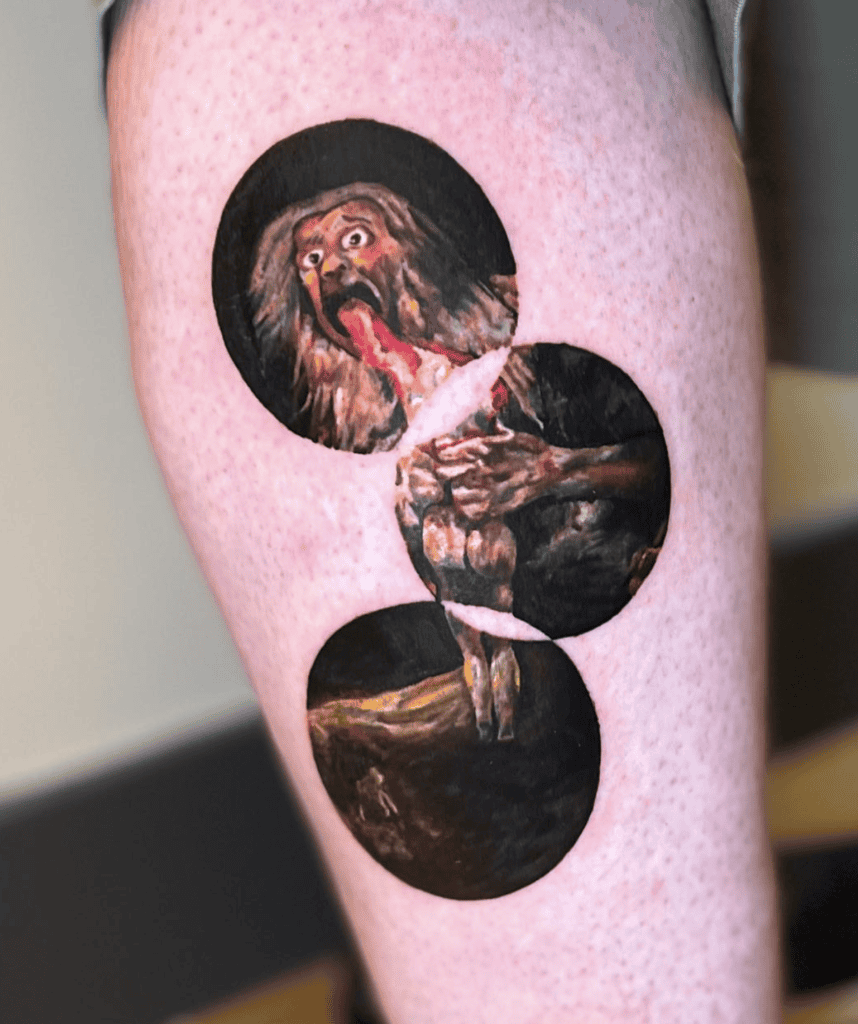
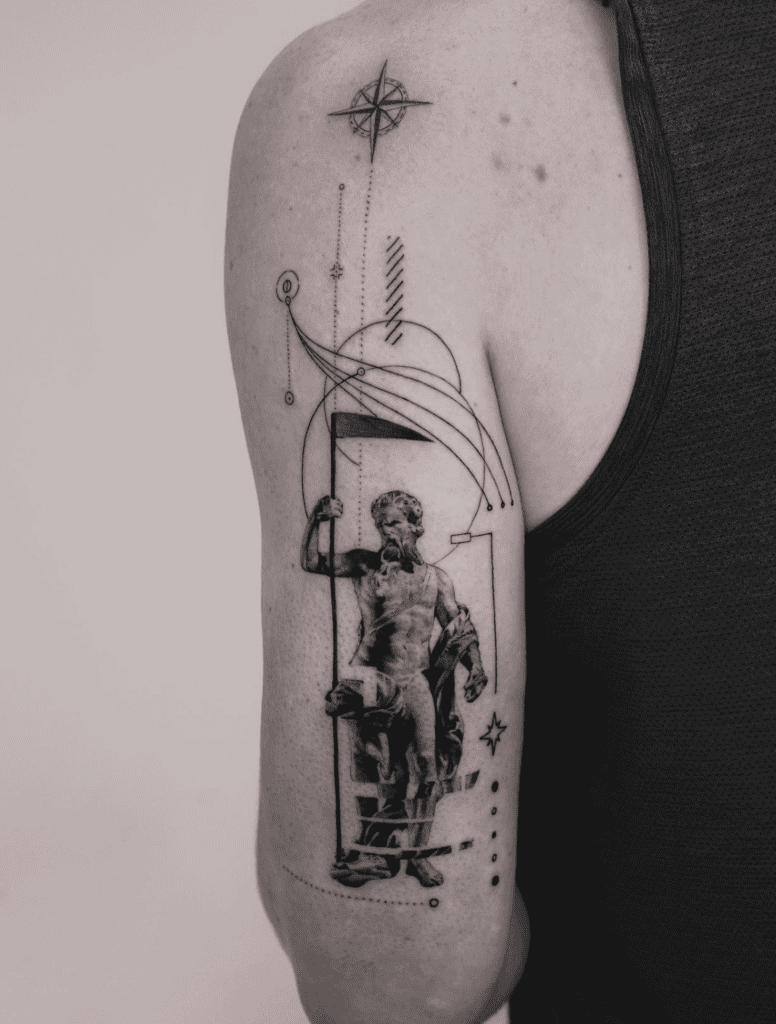
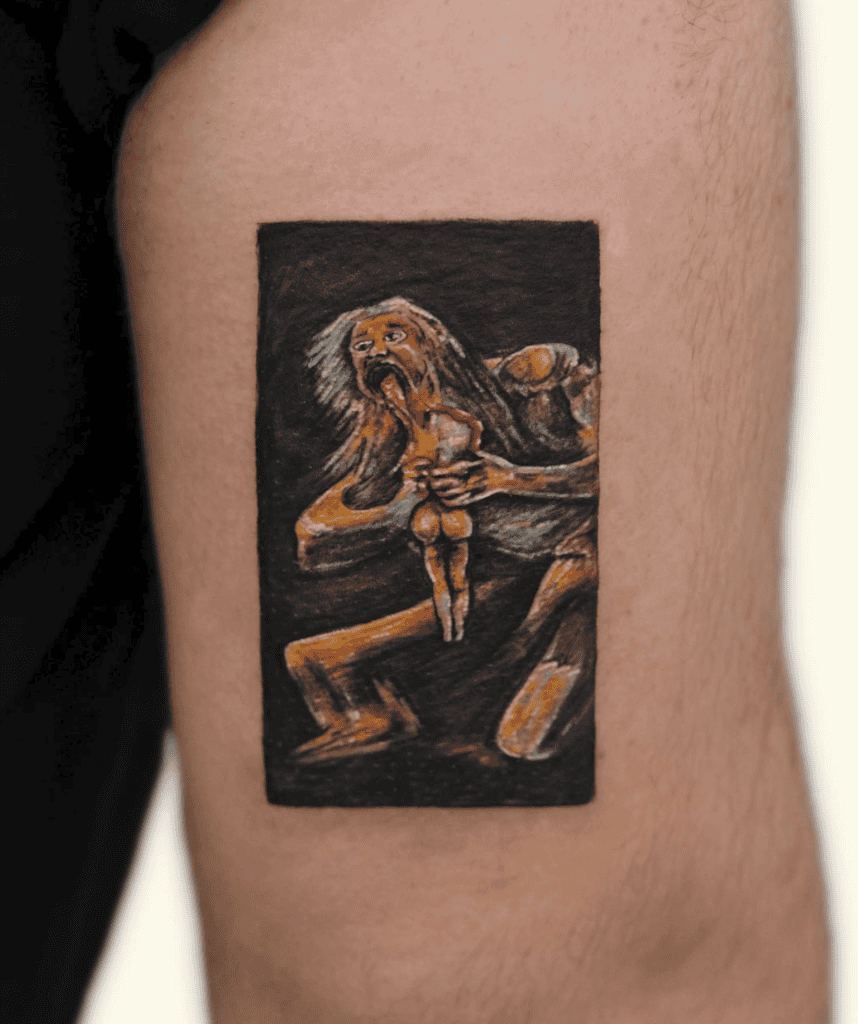
Saturn is the Roman god of agriculture, wealth, and time, and the father of Jupiter, Neptune, Pluto, Juno, Ceres, and Vesta in Roman tradition. He ruled during the legendary Golden Age, a time of peace and prosperity, before being overthrown by Jupiter. His festival, the Saturnalia, became one of ancient Rome’s most famous celebrations.
Salacia Roman Mythology Tattoo
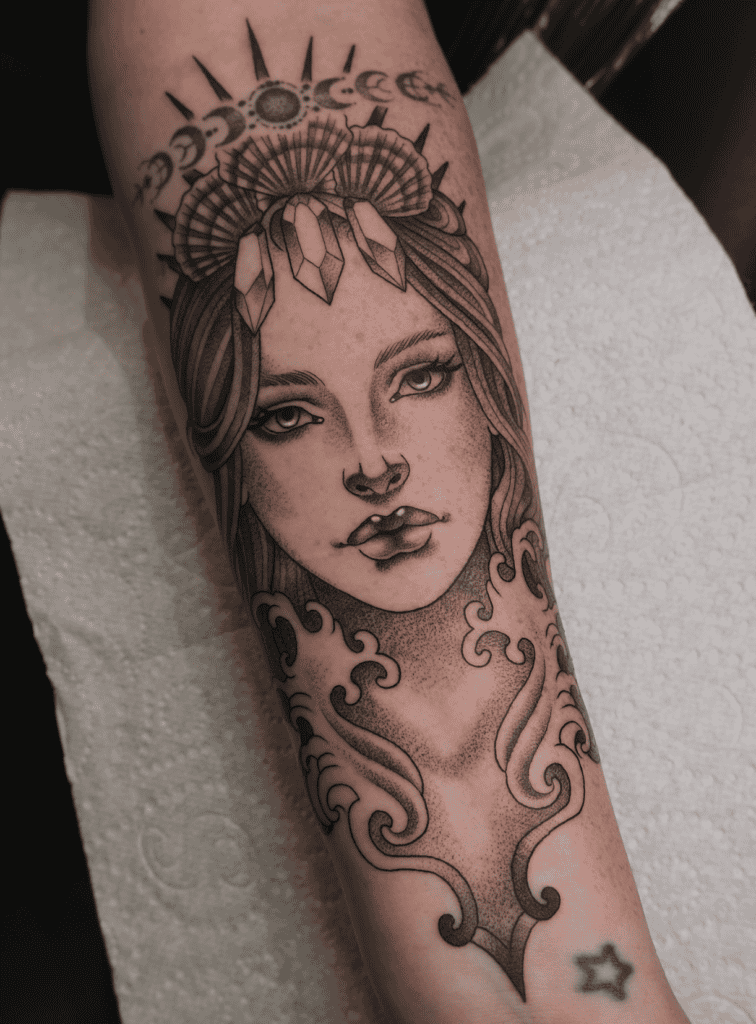
Salacia is the Roman goddess of the sea and the wife of Neptune. She represents the calm, open sea and is often associated with saltwater and the depths of the ocean. According to Roman mythology, Neptune desired Salacia as his wife, but she initially hid from him in the Atlantic before eventually returning and becoming his queen.
Flora Roman Mythology Tattoo
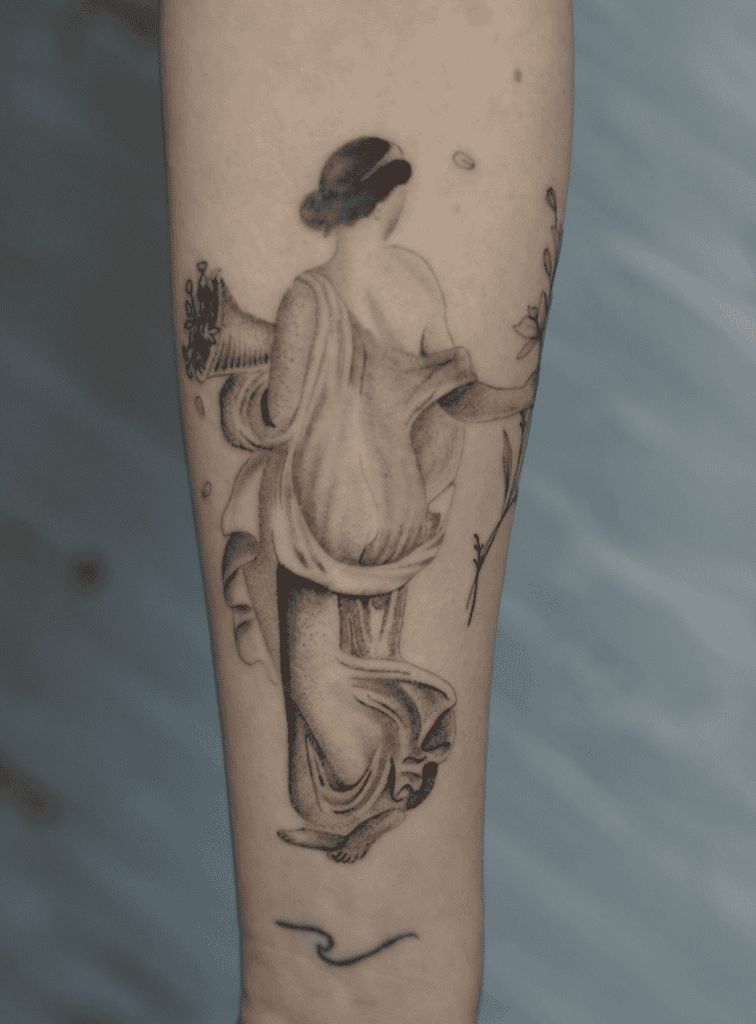
Flora is the Roman goddess of flowers, spring, and fertility. She represents the blooming and renewal of nature and was celebrated during the Floralia, a lively Roman festival filled with flowers, games, and performances. Flora is often depicted surrounded by flowers and blossoming plants, symbolising beauty, growth, and the arrival of spring.
Pomona Roman Mythology Tattoo
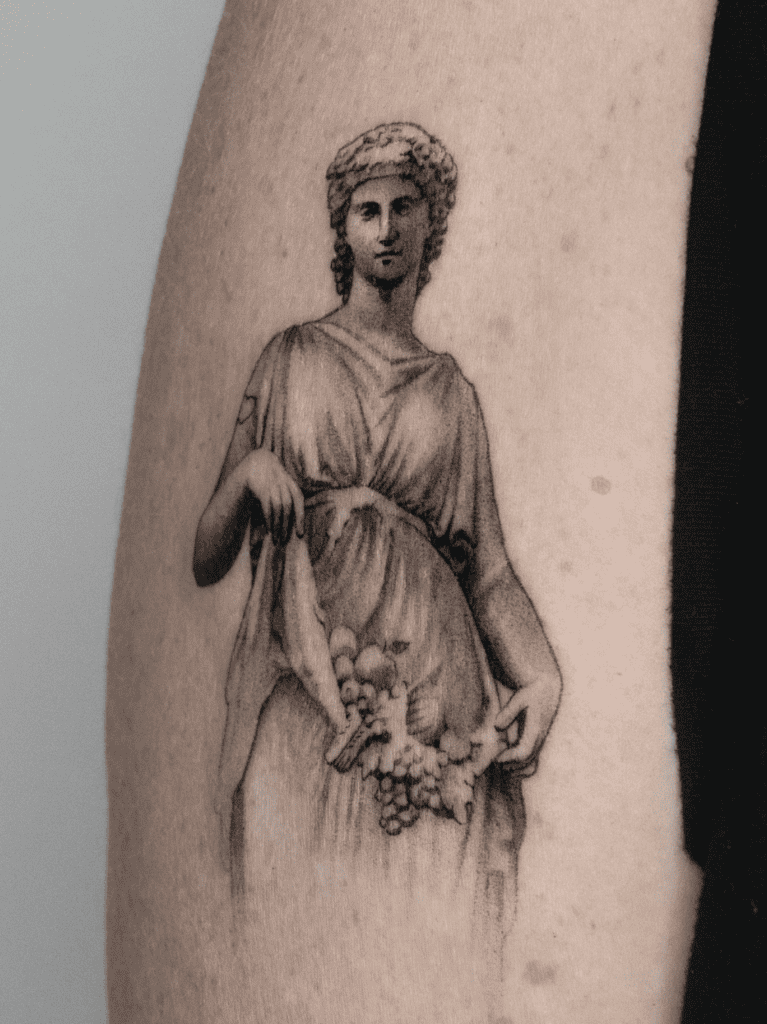
Pomona is the Roman goddess of fruit trees, orchards, gardens, and cultivation. Unlike many agricultural deities, her domain focuses specifically on fruit and the care of trees. She was known for her skill as a gardener and was often depicted carrying a cornucopia or basket overflowing with fruit.
Fortuna Roman Mythology Tattoo
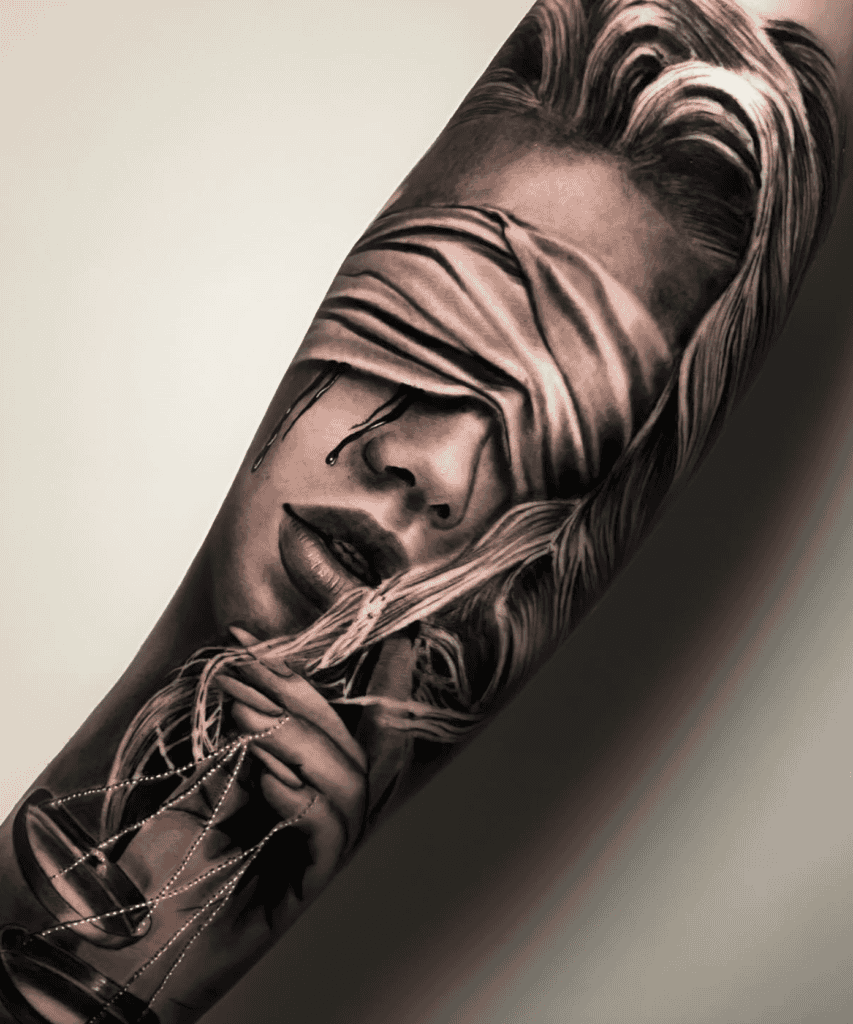
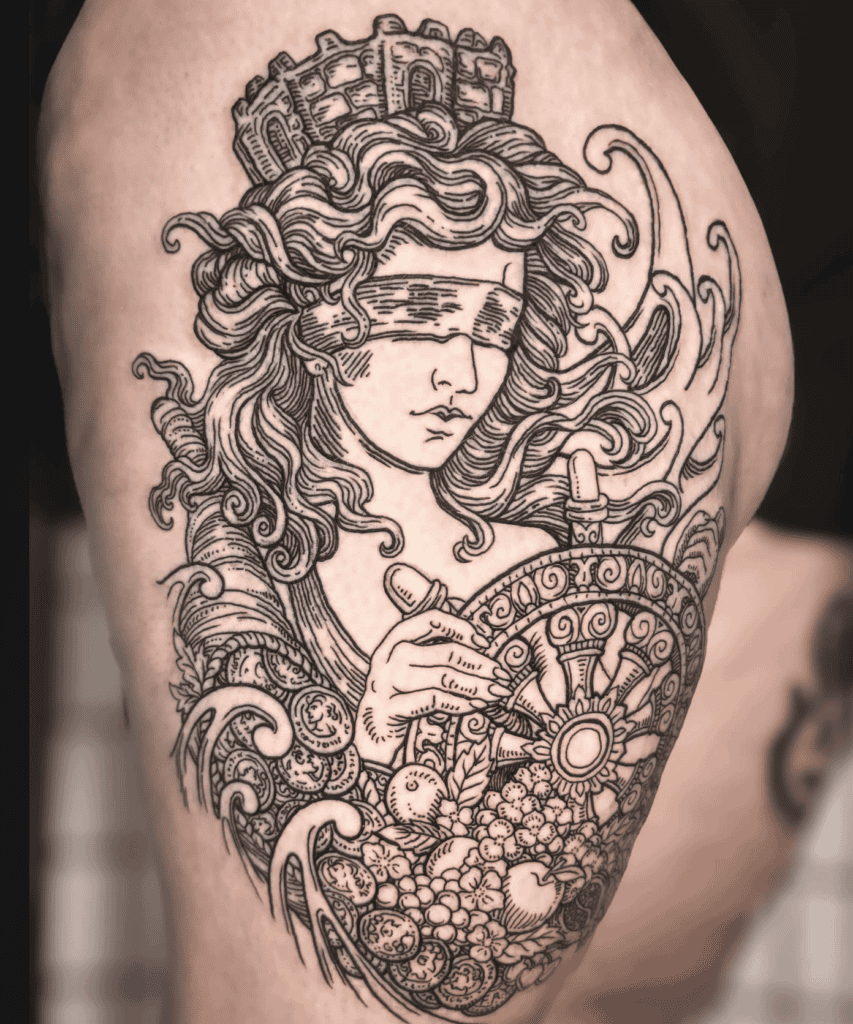
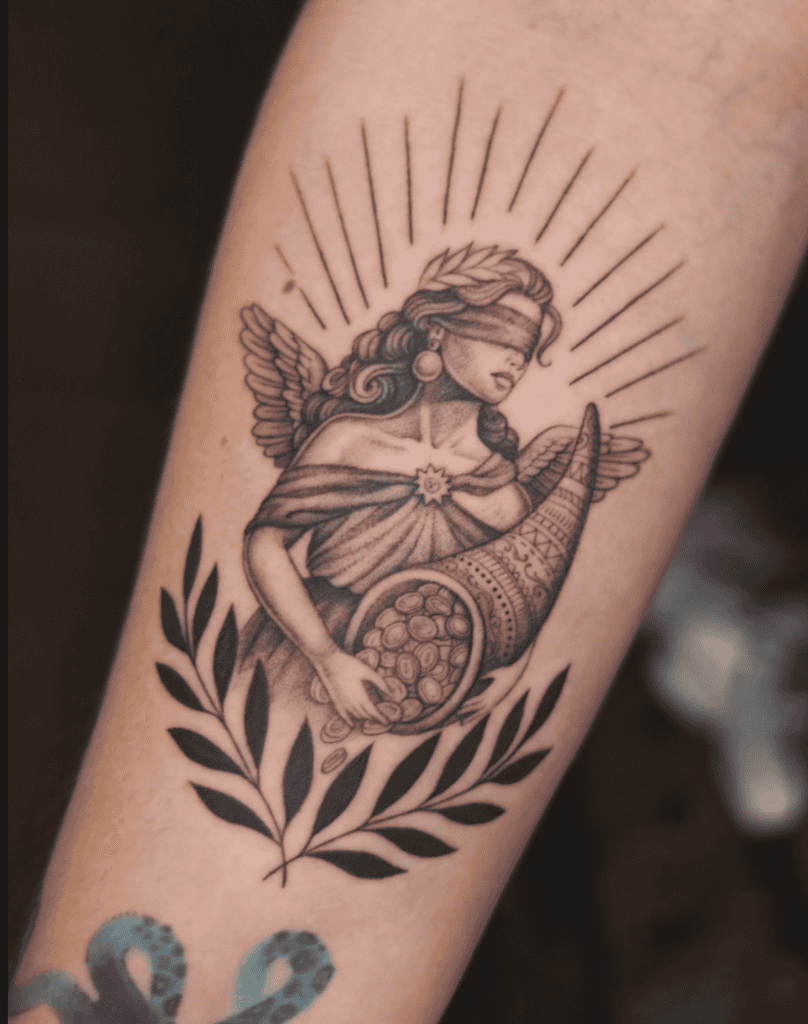
Fortuna is the Roman goddess of fortune, luck, fate, and prosperity. She was believed to influence the unpredictable twists and turns of life, bringing either good or bad fortune. Fortuna is famously associated with the Wheel of Fortune, symbolising how quickly luck can change, and she is often depicted holding a cornucopia, rudder, or wheel.
Victoria Roman Mythology Tattoo
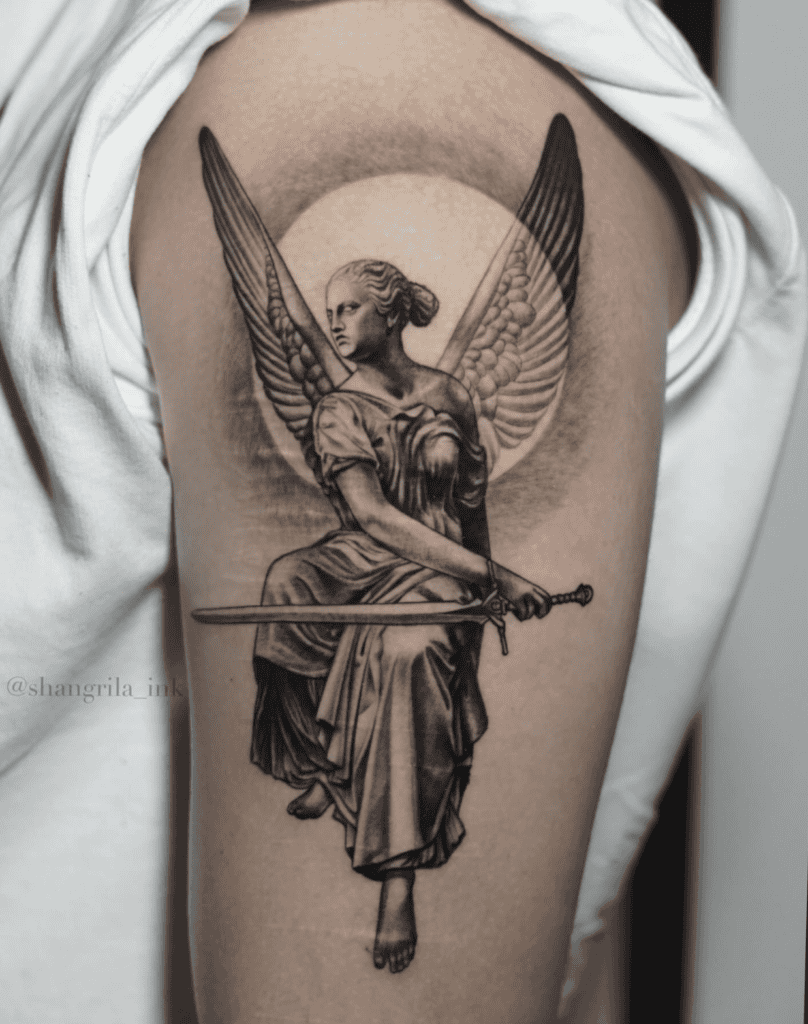
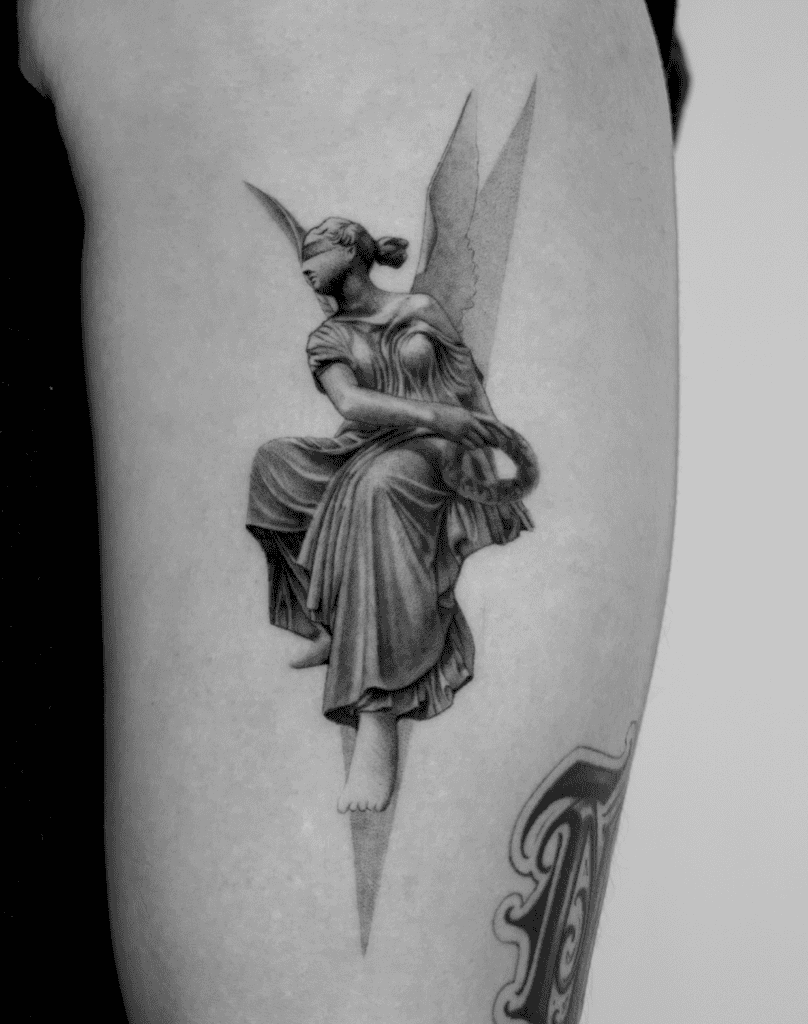
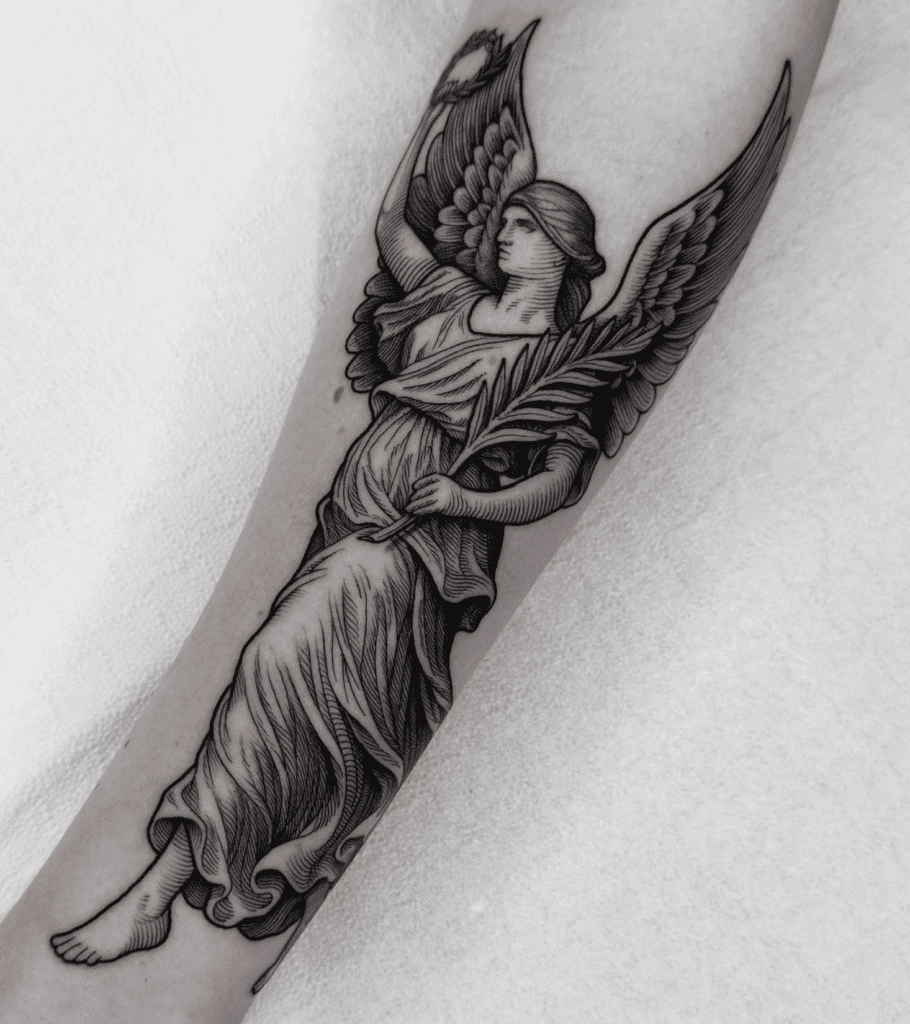
Victoria is the Roman goddess of victory, triumph, and success. She was especially associated with military victories and the glory of Rome, and her image was commonly used to celebrate victorious generals and emperors. Victoria is often depicted as a winged woman, sometimes holding a palm branch or laurel wreath to symbolise triumph.
Bellona Roman Mythology Tattoo
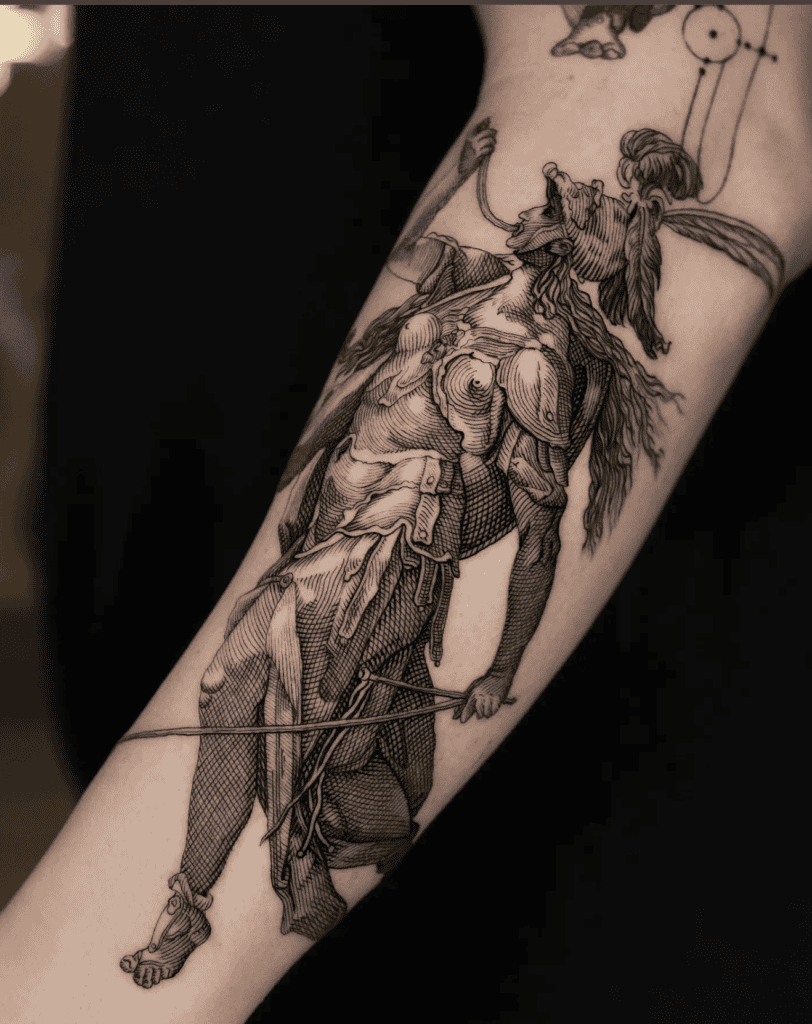
Bellona is the Roman goddess of war, battle, and military power. She represents the fierce and violent side of warfare and was often depicted wearing a helmet and armour while carrying a sword, spear, or shield. Roman generals would sometimes perform rituals in her honour before going to war.
Epona Roman Mythology Tattoo
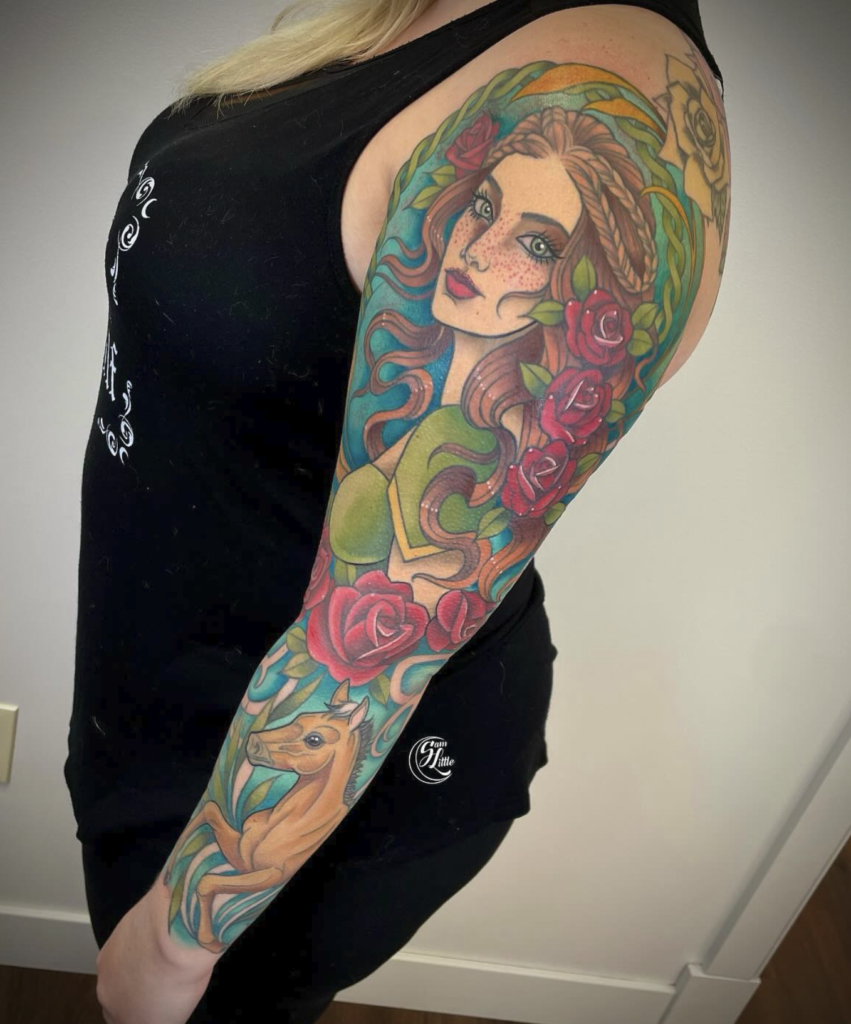
Epona is a goddess of horses, donkeys, mules, fertility, and protection. She originated among the Gaulish/Celtic peoples and was later adopted into Roman religion, becoming particularly popular among soldiers and cavalry. Epona is often depicted riding a horse or surrounded by horses and foals, symbolising her connection to and protection of these animals.
Cupid Roman Mythology Tattoo
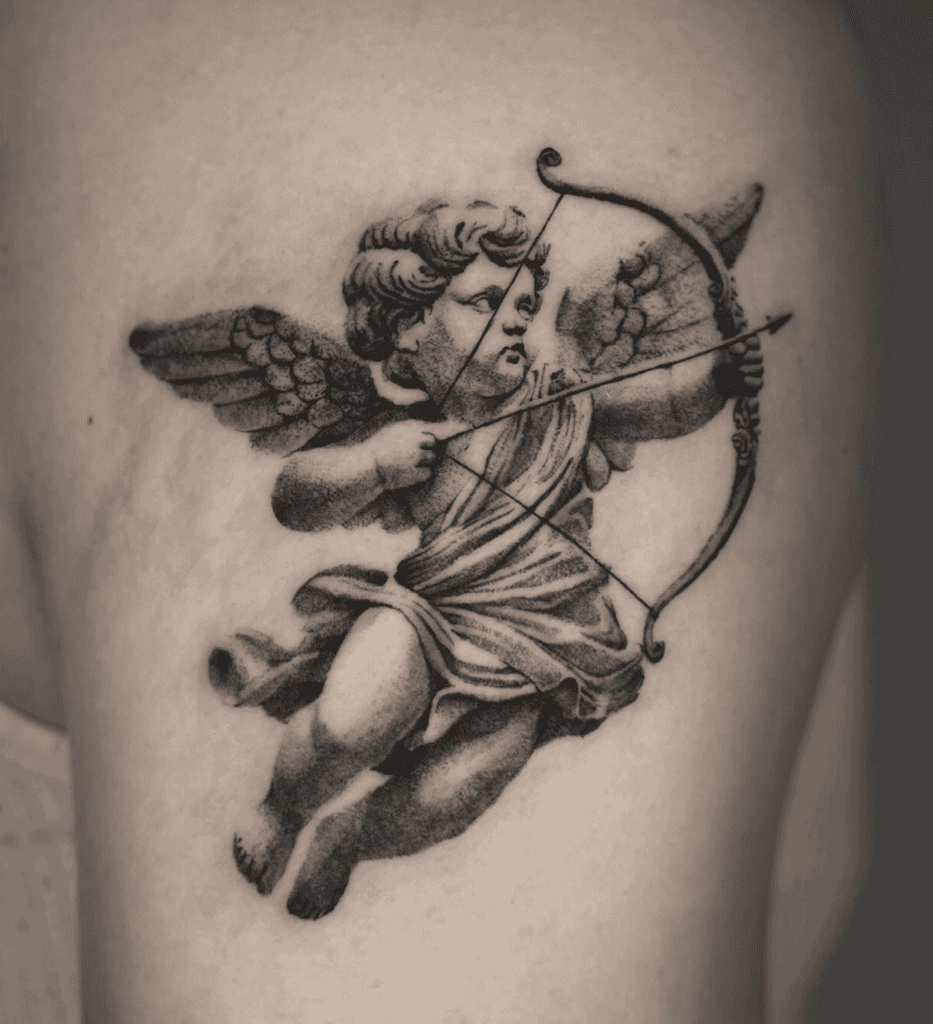
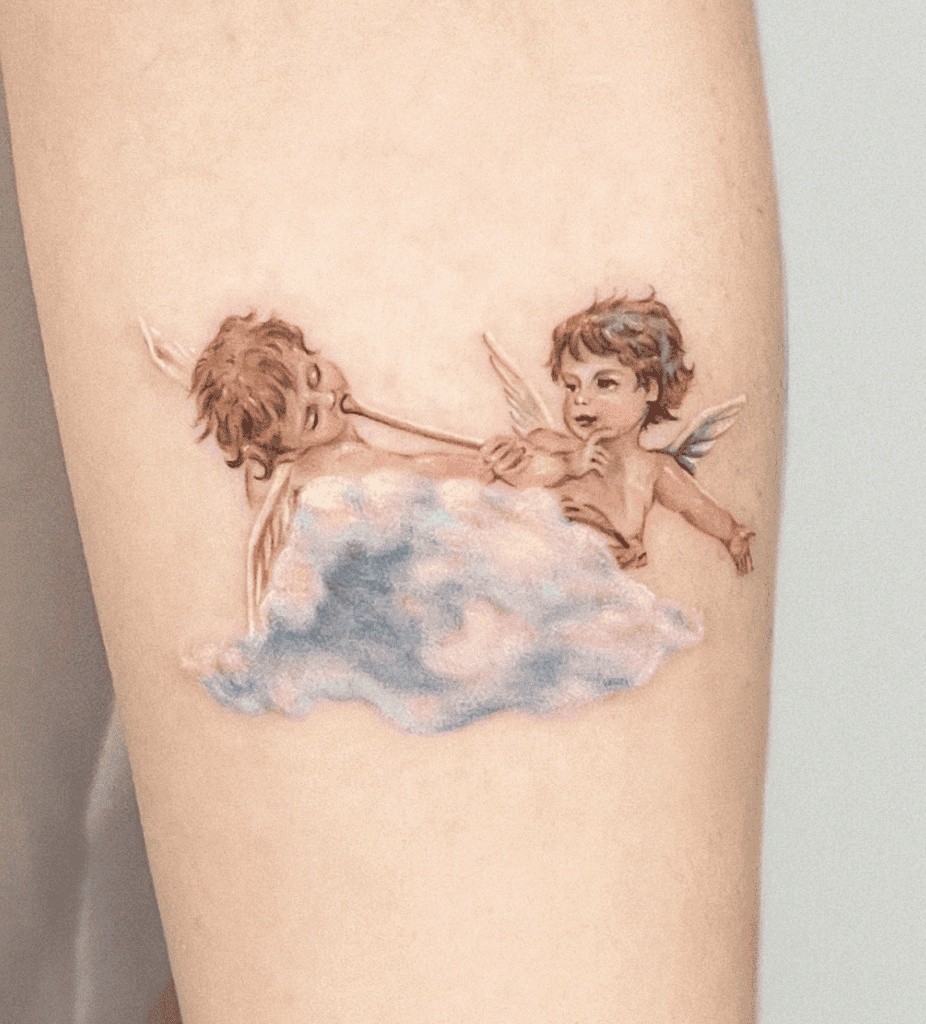
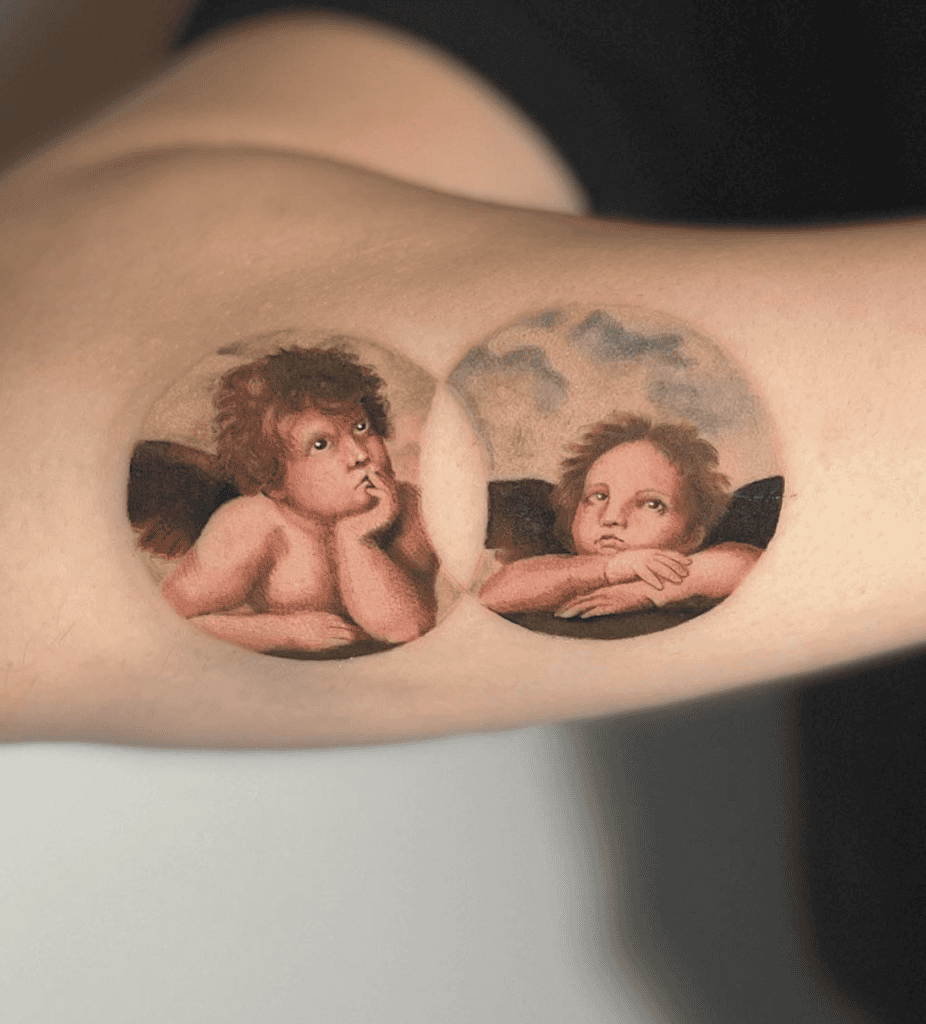
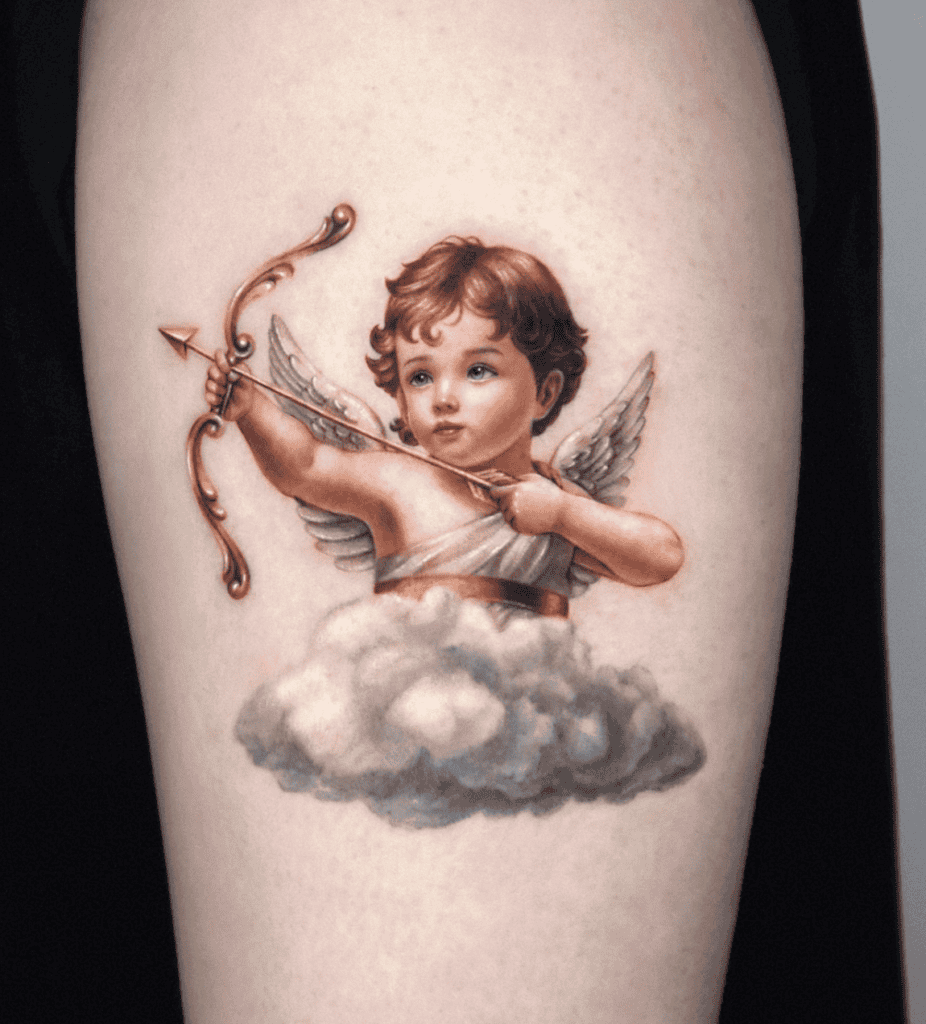
Cupid is the Roman god of love, desire, and attraction, and the son of Venus. He is famously depicted as a winged young boy carrying a bow and magical arrows, which could cause people to fall deeply in love when struck. Despite his playful appearance, Cupid’s powers could have surprisingly serious consequences for both gods and mortals.
Terminus Roman Mythology Tattoo
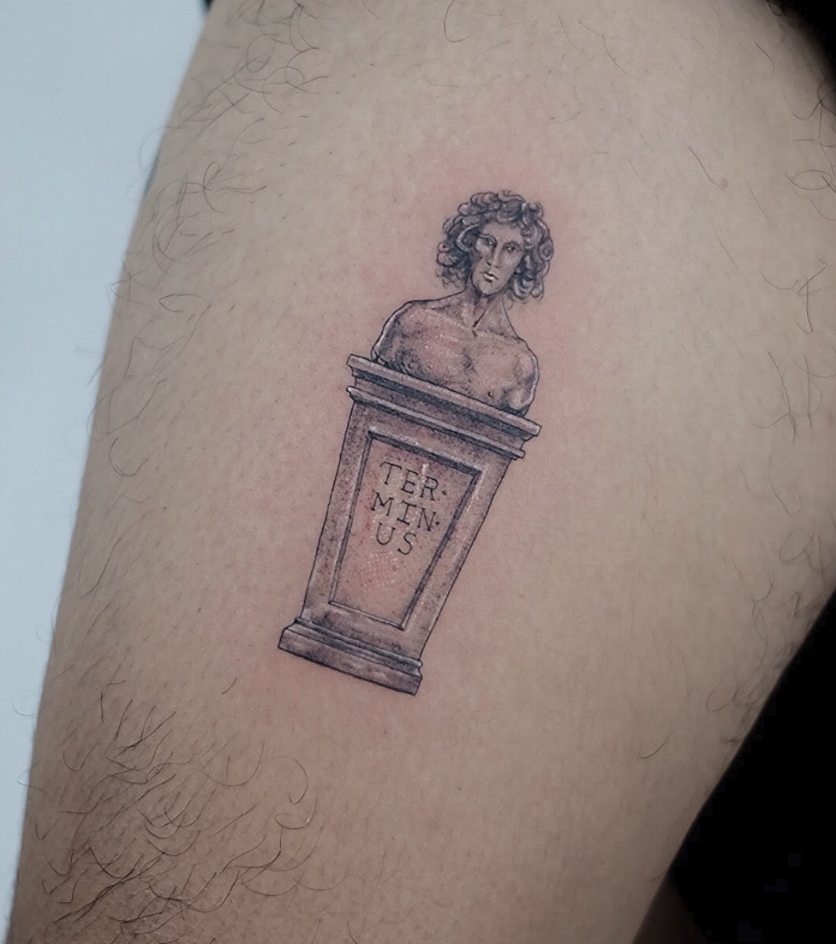
Terminus is the Roman god of boundaries, borders, and property lines. Rather than being imagined as a human-like deity, he was often represented by a boundary stone or marker that was considered sacred. Moving or damaging one of these stones was believed to violate the divine order of ownership and could bring serious consequences.
Silvanus Roman Mythology Tattoo
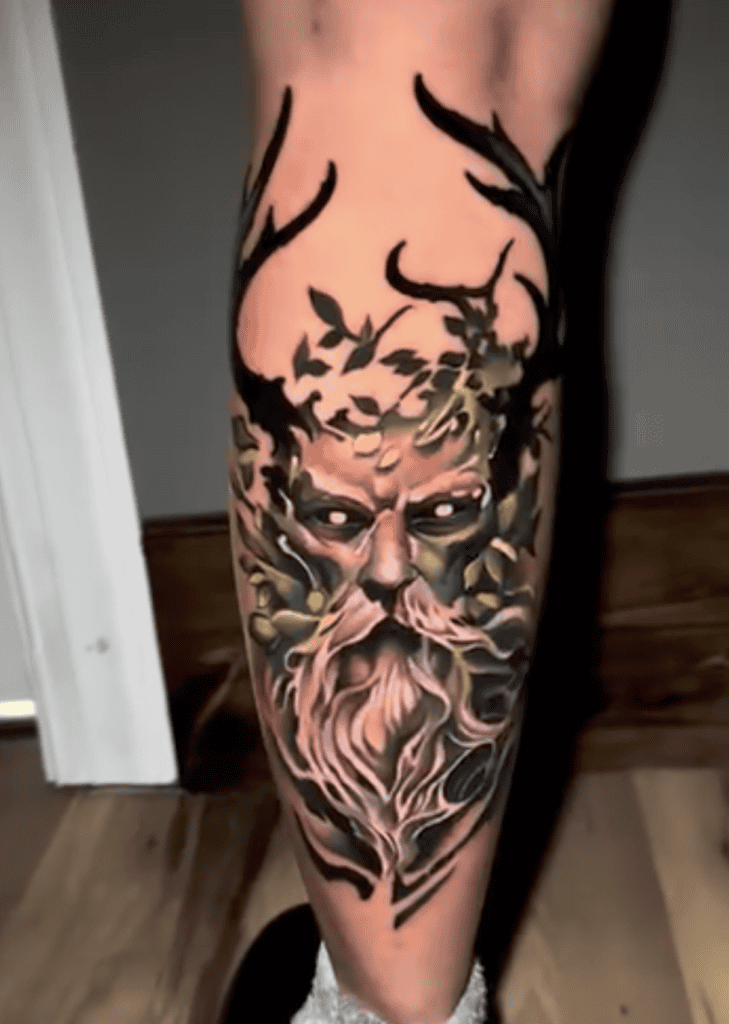
Silvanus is the Roman god of forests, woodland, wild nature, and the countryside. He was especially associated with protecting farms, boundaries, and wooded areas, making him an important deity for rural communities. Silvanus is often portrayed as a rustic figure carrying a pruning knife or branch, sometimes accompanied by a dog.
Sol Roman Mythology Tattoo
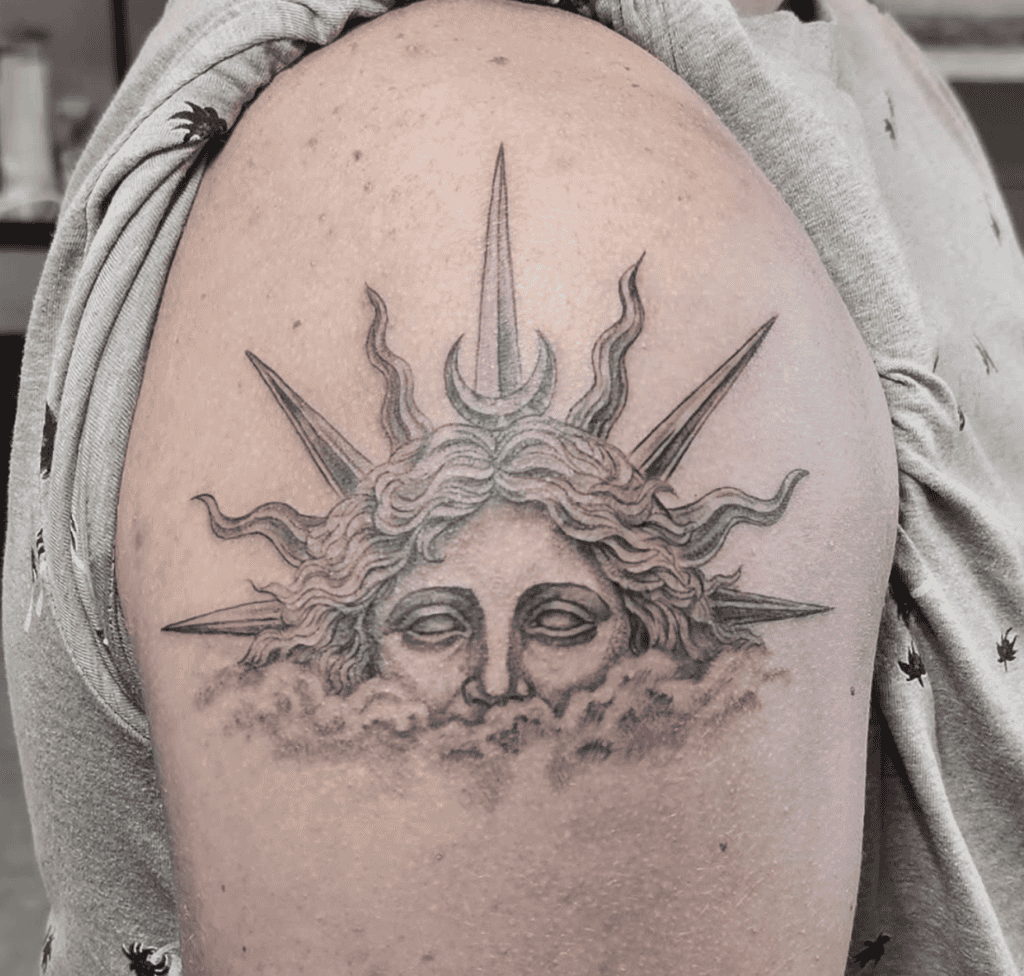
Sol is the Roman personification and god of the Sun, representing its light, warmth, and power. He was commonly depicted driving a four-horse chariot across the sky, bringing daylight to the world. Sol became particularly prominent during the Roman Empire, especially through the worship of Sol Invictus, or “the Unconquered Sun.”
Luna Roman Mythology Tattoo
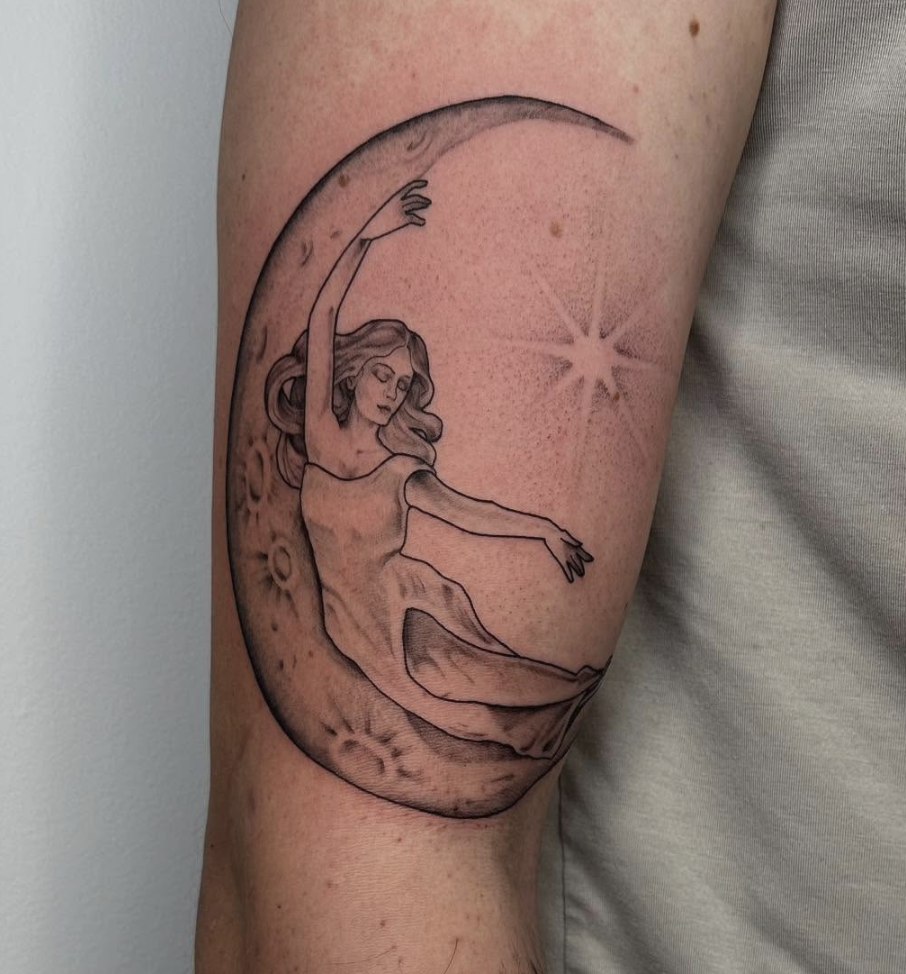
Luna is the Roman goddess and personification of the Moon, representing its light and mysterious presence in the night sky. She is often depicted driving a two-horse chariot across the heavens and is sometimes shown wearing a crescent moon as a crown. Luna was also associated with the cycles of time and the changing phases of the Moon.
Aether Roman Mythology Tattoo
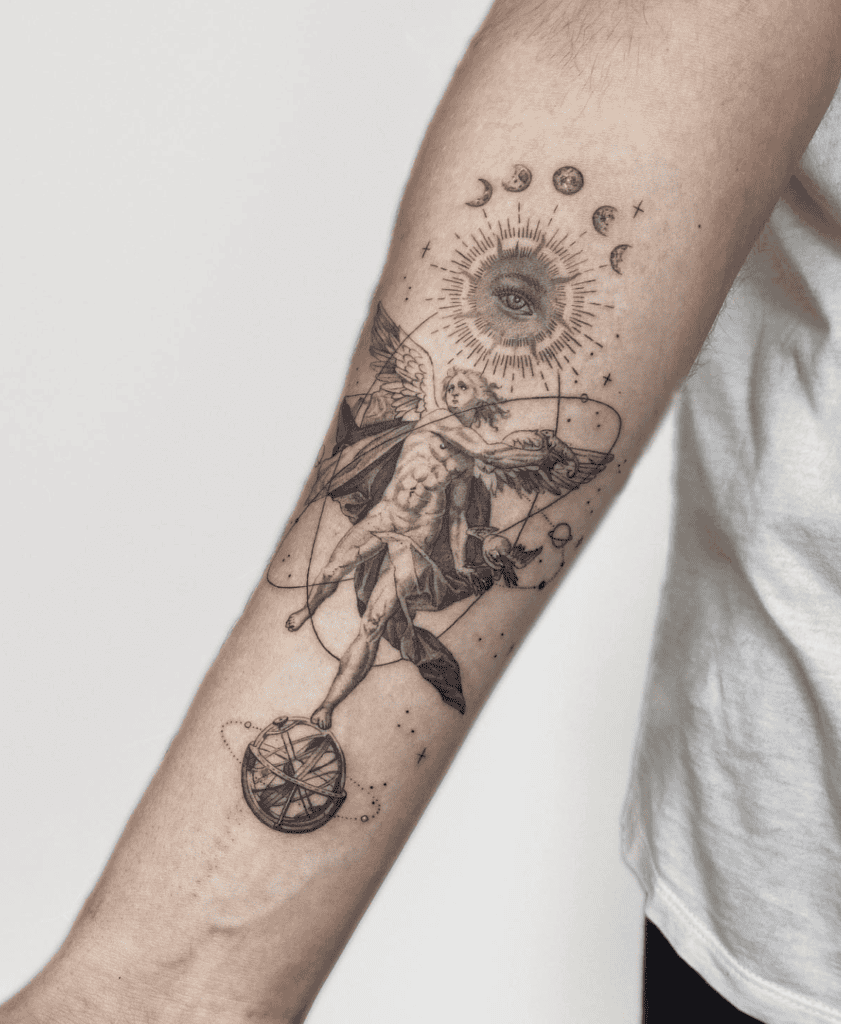
Aether is the primordial deity and personification of the upper atmosphere, heavenly light, and the bright air of the gods. Unlike the ordinary air breathed by mortals, Aether represented the pure, radiant air found in the highest reaches of the heavens. He is a primordial force rather than one of the Olympian-style gods.
Nox Roman Mythology Tattoo
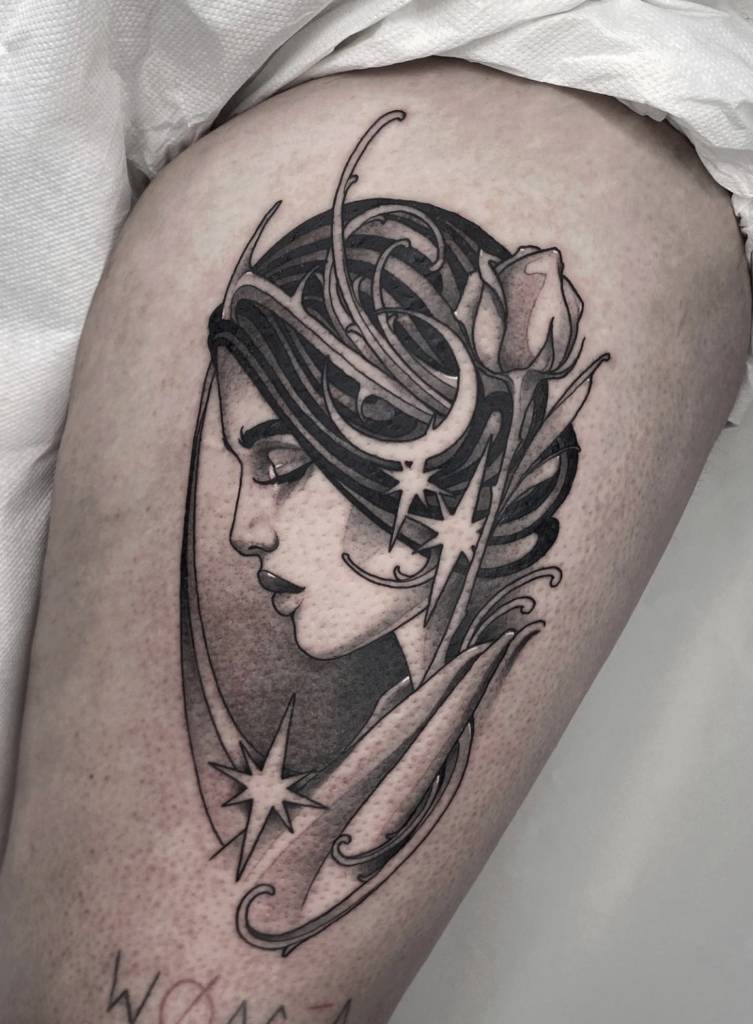
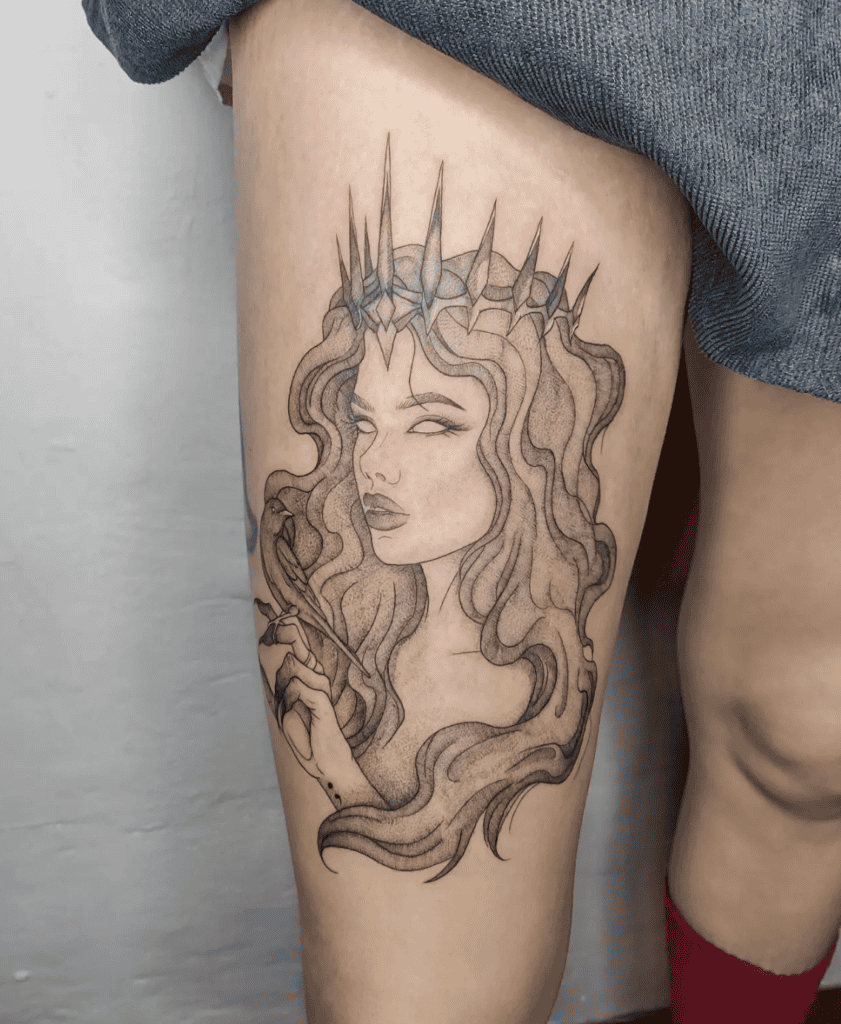
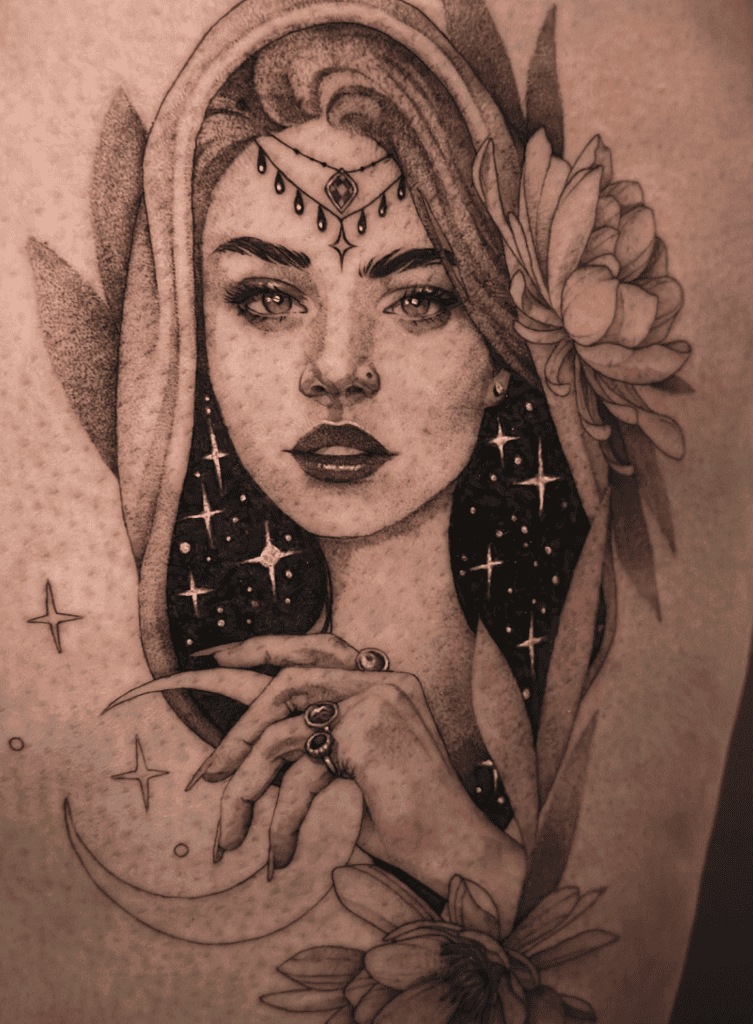
Nox is the Roman goddess and personification of night and darkness. As one of the primordial deities, she represents the darkness that existed before the ordered world and is the mother of several powerful forces, including Somnus (Sleep), Mors (Death), and the Fates in Roman tradition. She is often portrayed as a mysterious, shadowy figure emerging as daylight fades.
Somnus Roman Mythology Tattoo
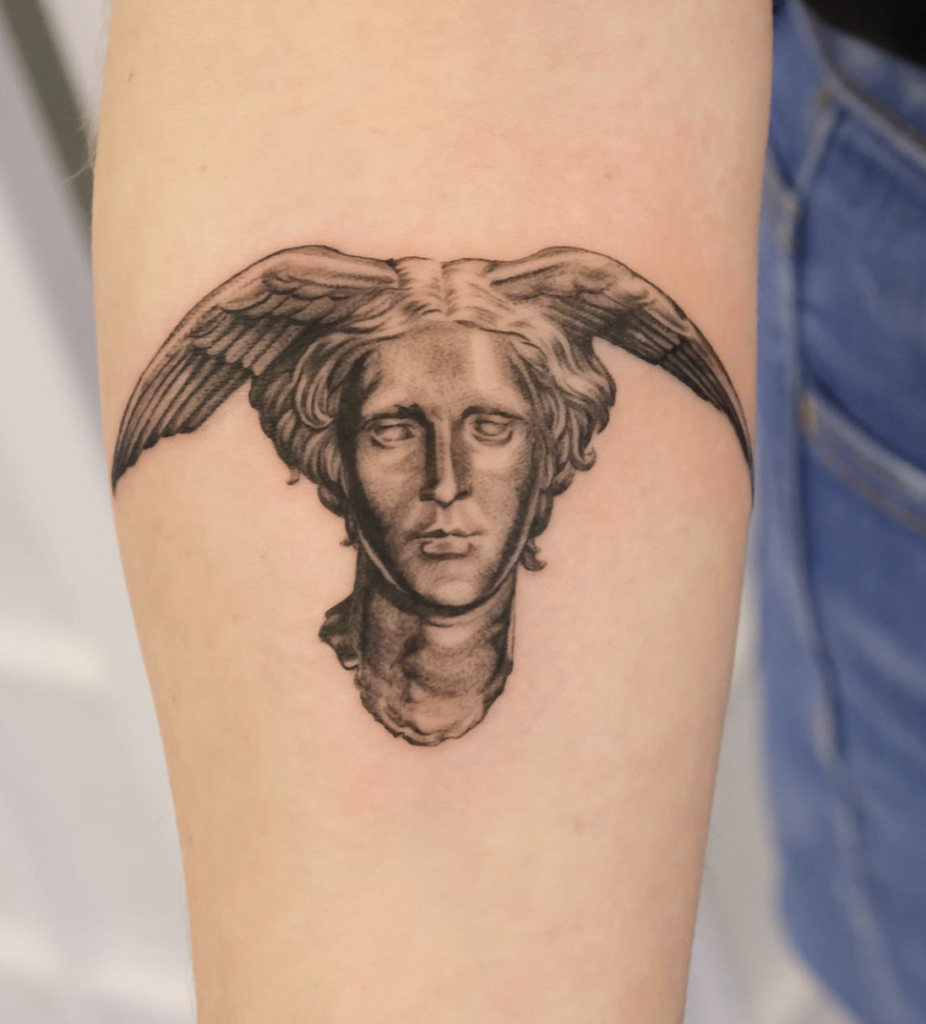
Somnus is the Roman god and personification of sleep. He is said to dwell in a dark, quiet cave where the sounds of the outside world cannot reach, allowing mortals and gods alike to fall into slumber. Somnus is often portrayed as a winged figure who brings peaceful sleep, although his influence can also leave even the most powerful gods completely helpless.
Mors Roman Mythology Tattoo
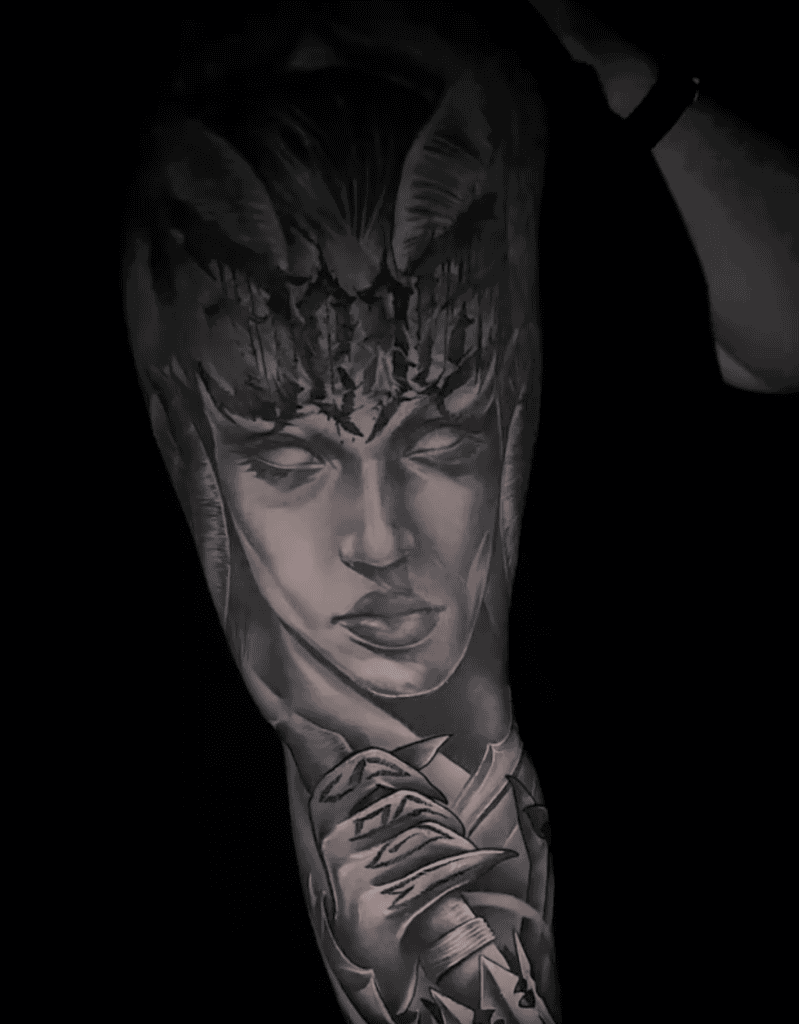
Mors is the Roman personification of death, representing the inevitable end of mortal life. Rather than being a major ruling god, Mors is a supernatural embodiment of death itself and is sometimes portrayed as a dark, ominous figure associated with the Underworld. Mors was also closely connected to Somnus, reflecting the ancient idea of sleep and death as closely related states.
Faun Roman Mythology Tattoo
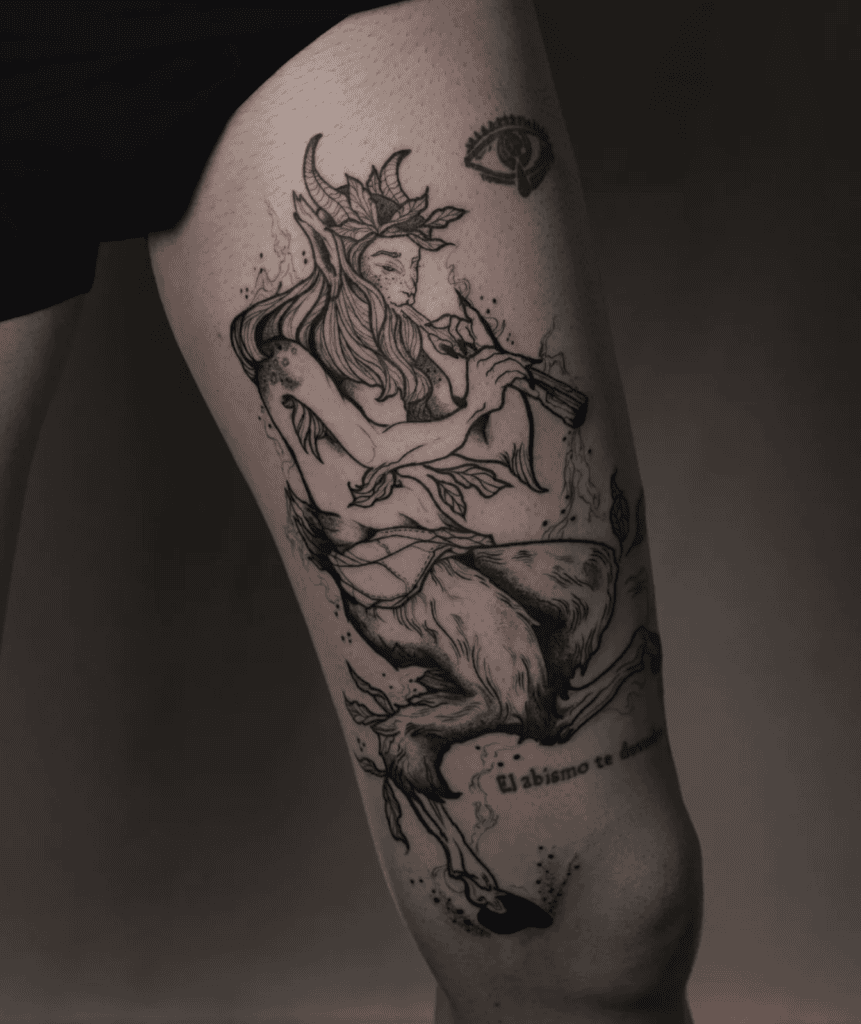
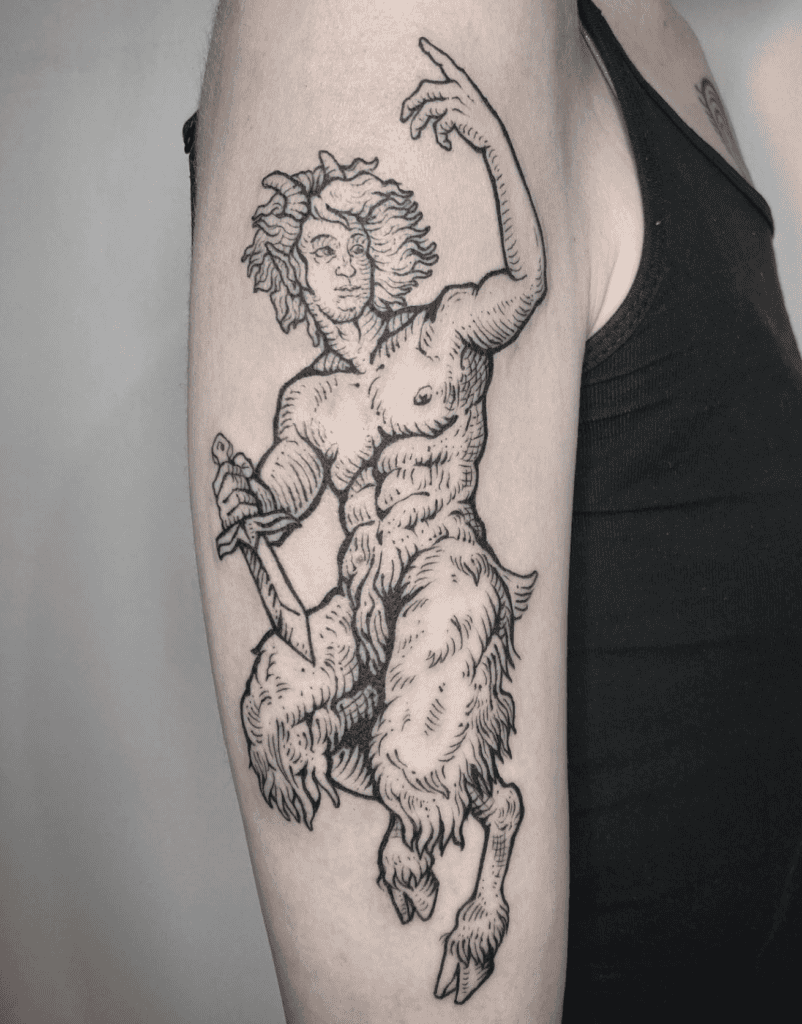
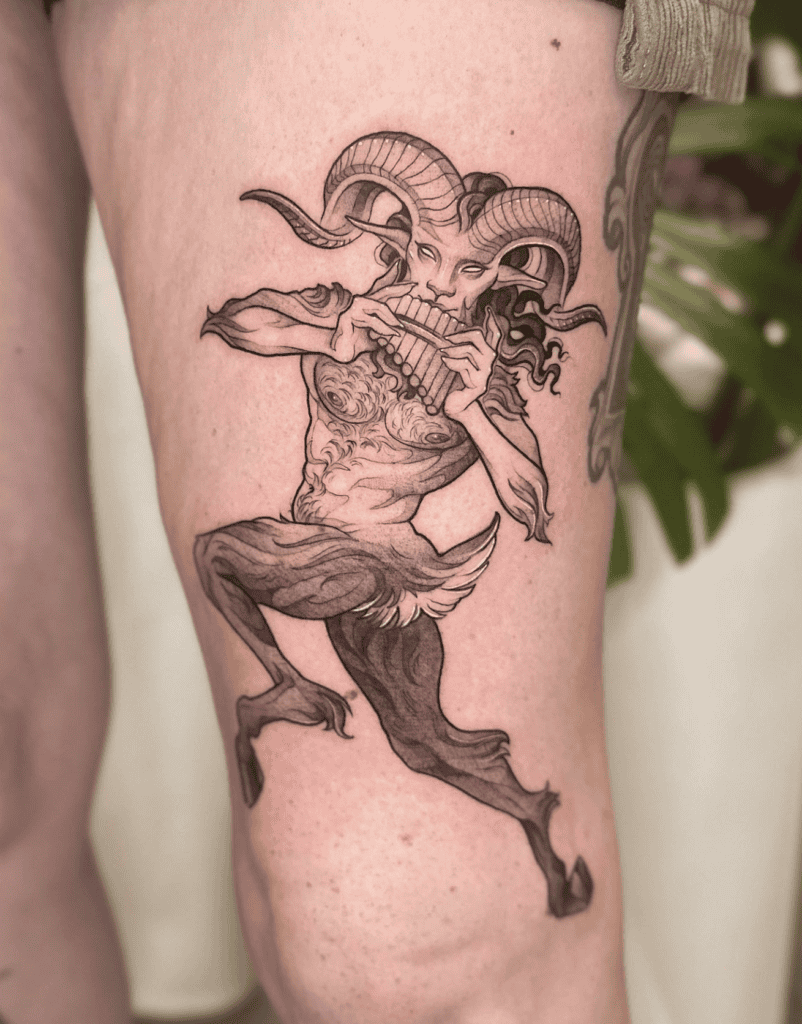
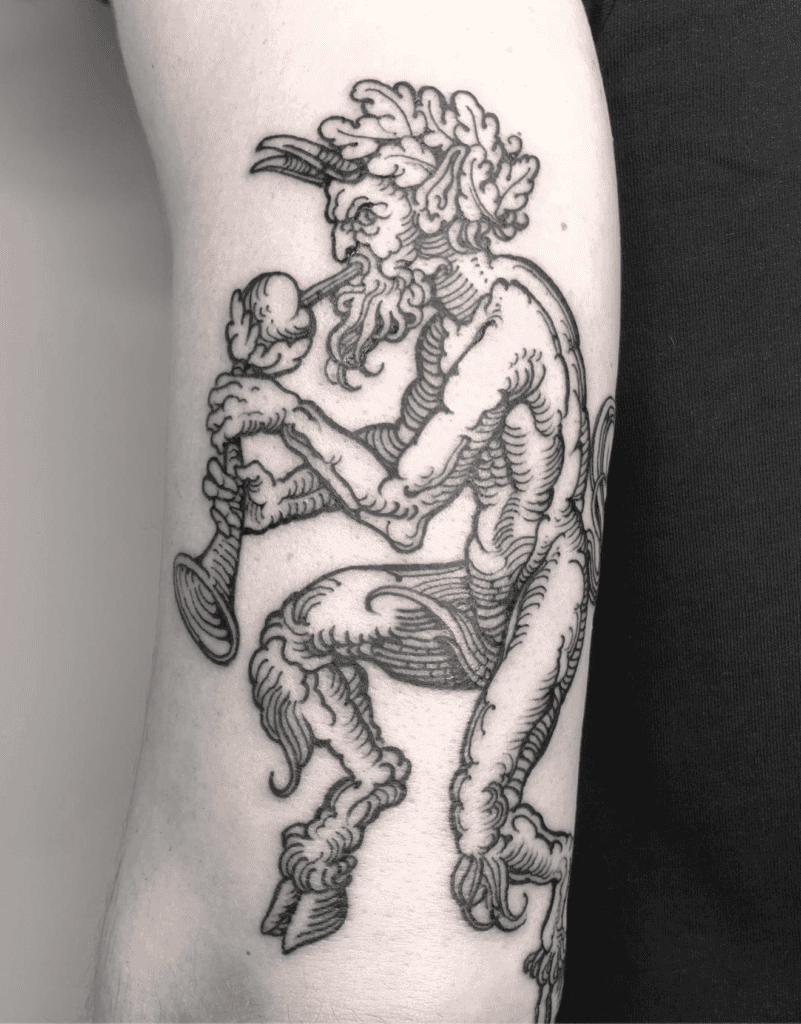
Fauns are Roman nature spirits associated with forests, fields, fertility, and the countryside. They are typically depicted with a human upper body and the legs, horns, and ears of a goat. Fauns were known for their playful and mischievous nature and were believed to inhabit the wild places beyond Roman settlements.
Centaur Roman Mythology Tattoo
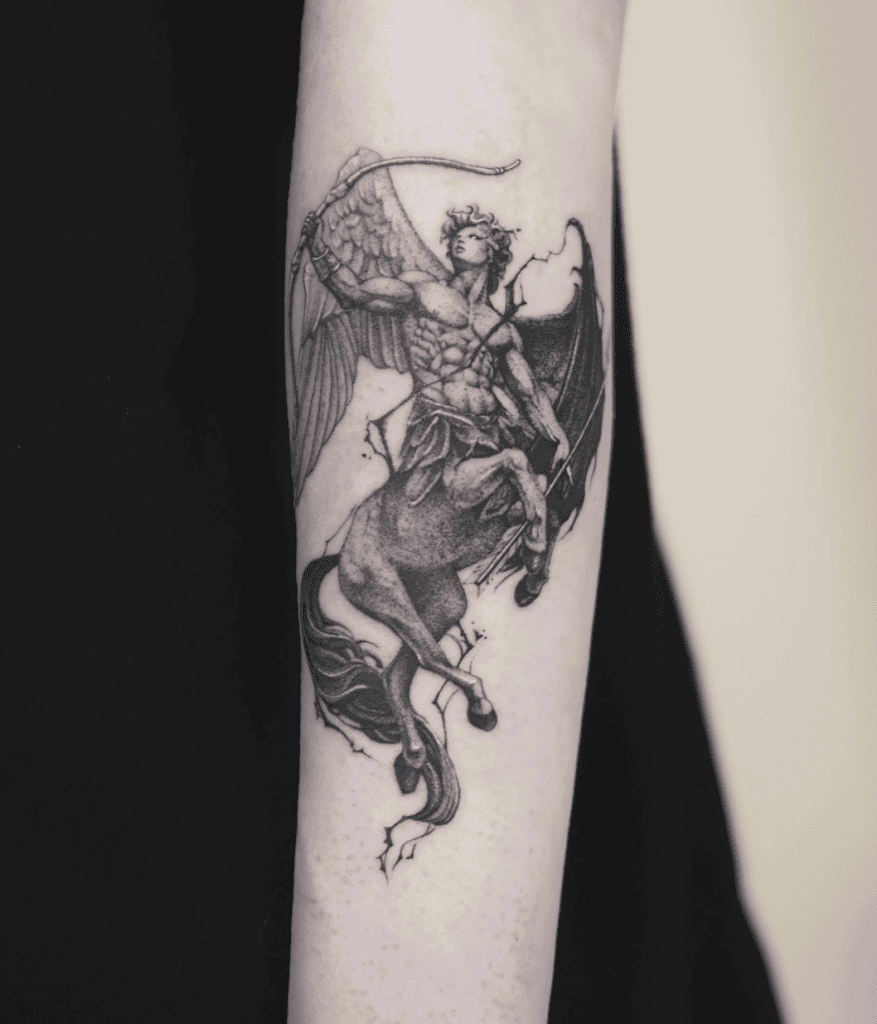
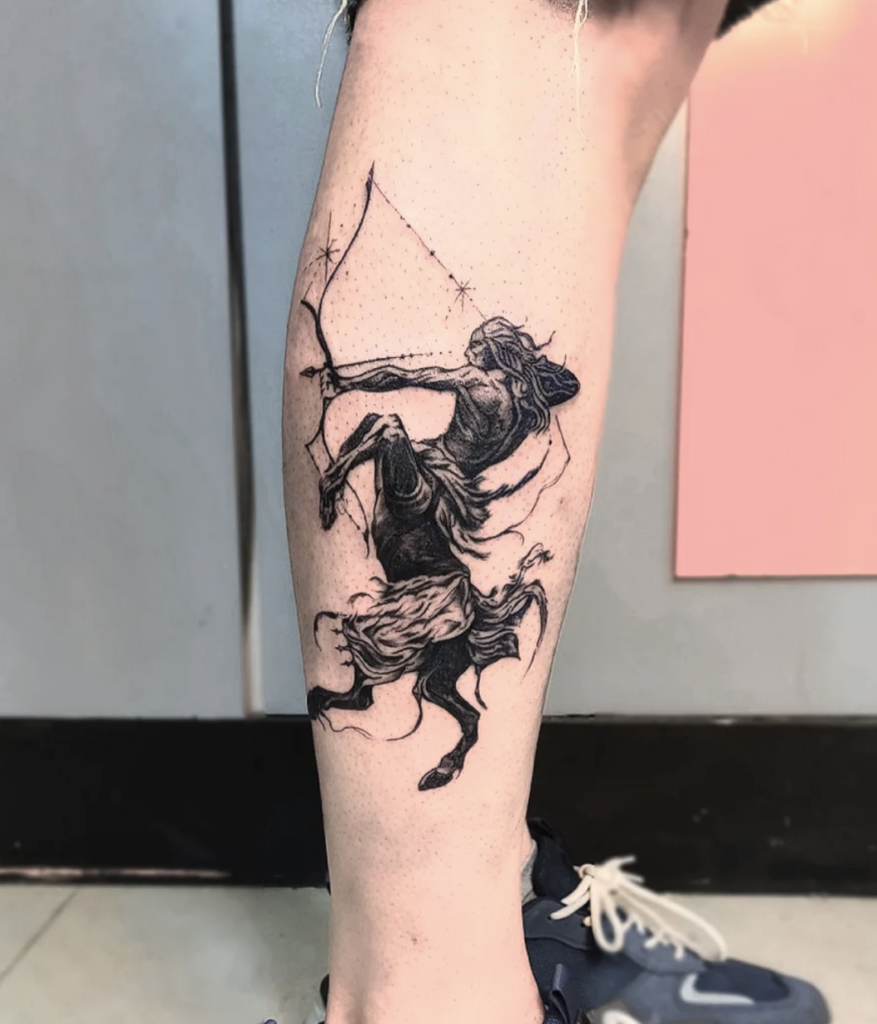
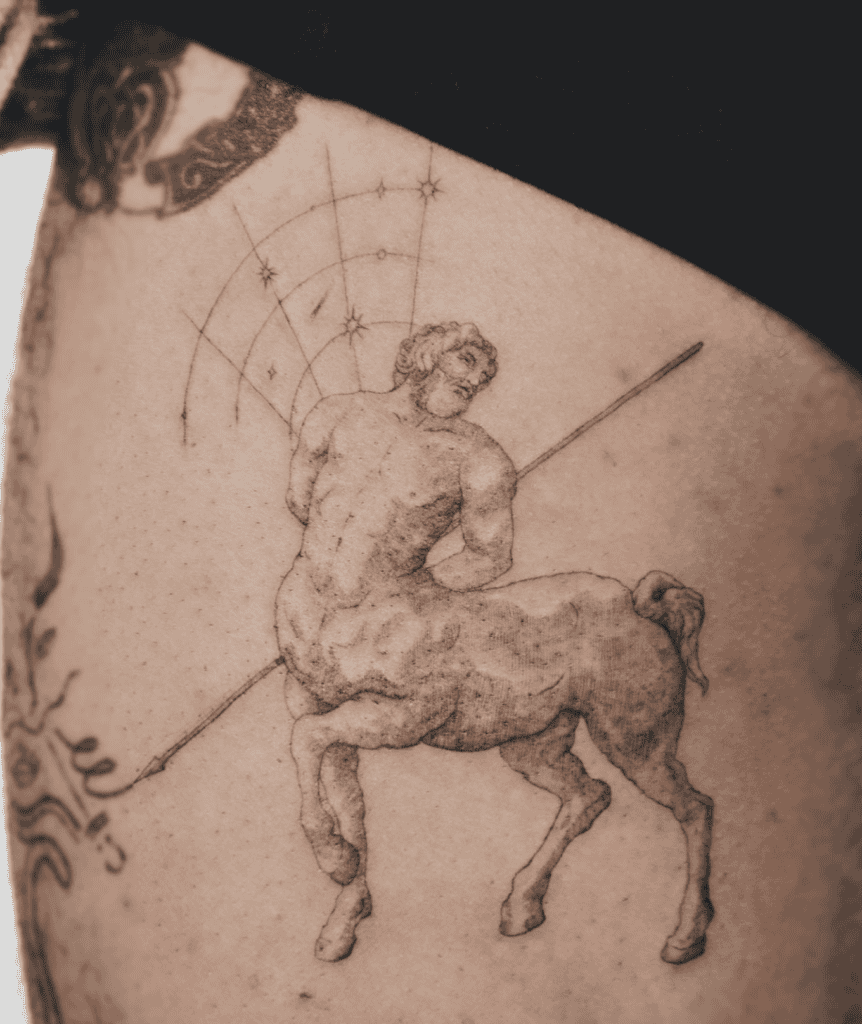
Centaurs are legendary creatures with the upper body of a human and the lower body of a horse. They are commonly associated with the wild, untamed side of nature and are often portrayed as fierce warriors, hunters, or unruly creatures. However, Chiron is a famous exception, known for his wisdom, medicine, and teaching of heroes such as Achilles and Hercules.
Sphinx Roman Mythology Tattoo
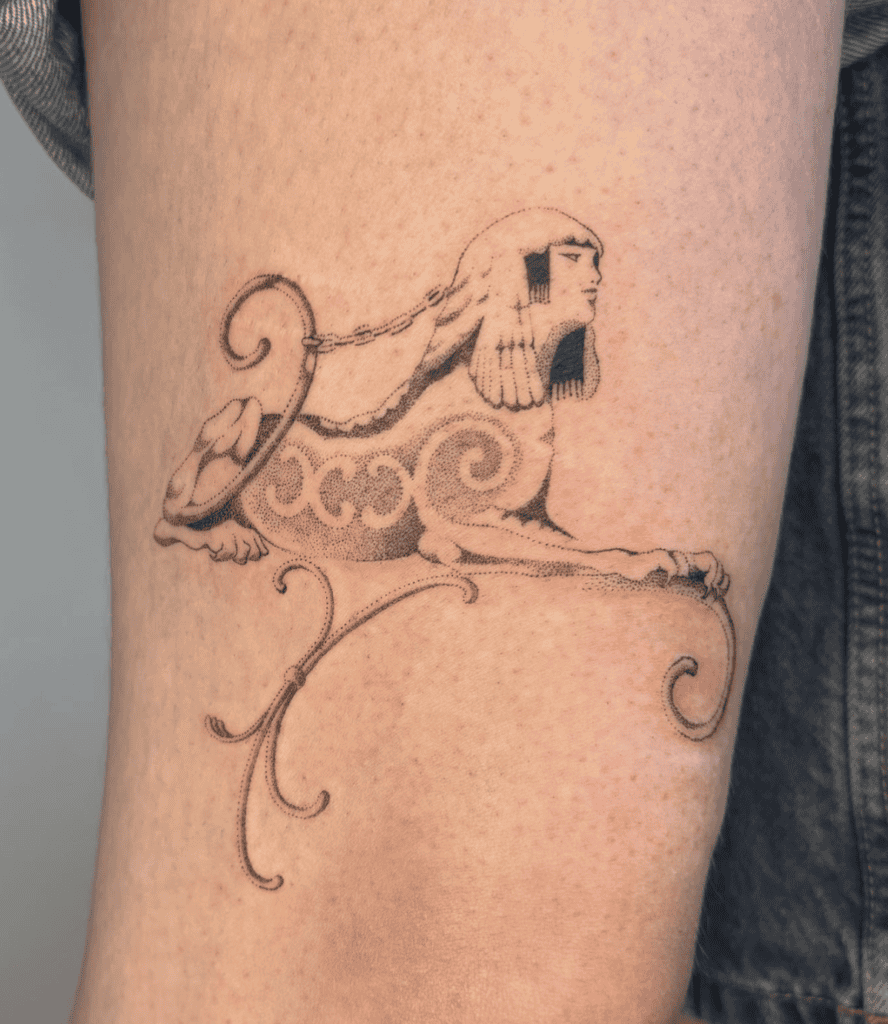
The Sphinx is a mythical creature traditionally depicted with the body of a lion and the head of a human, representing strength, mystery, and intelligence. In Greek mythology, the most famous Sphinx guarded the road to Thebes and challenged travellers with a deadly riddle. She was eventually defeated when Oedipus solved her famous riddle.
The Sphinx was adopted into Greek tradition from Egyptian traditions, and subsequently into Roman tradition. Roman art frequently features sphinxes as decorative and protective figures, making them a fascinating blend of mystery, power, and ancient symbolism.
Minotaur Roman Mythology Tattoo
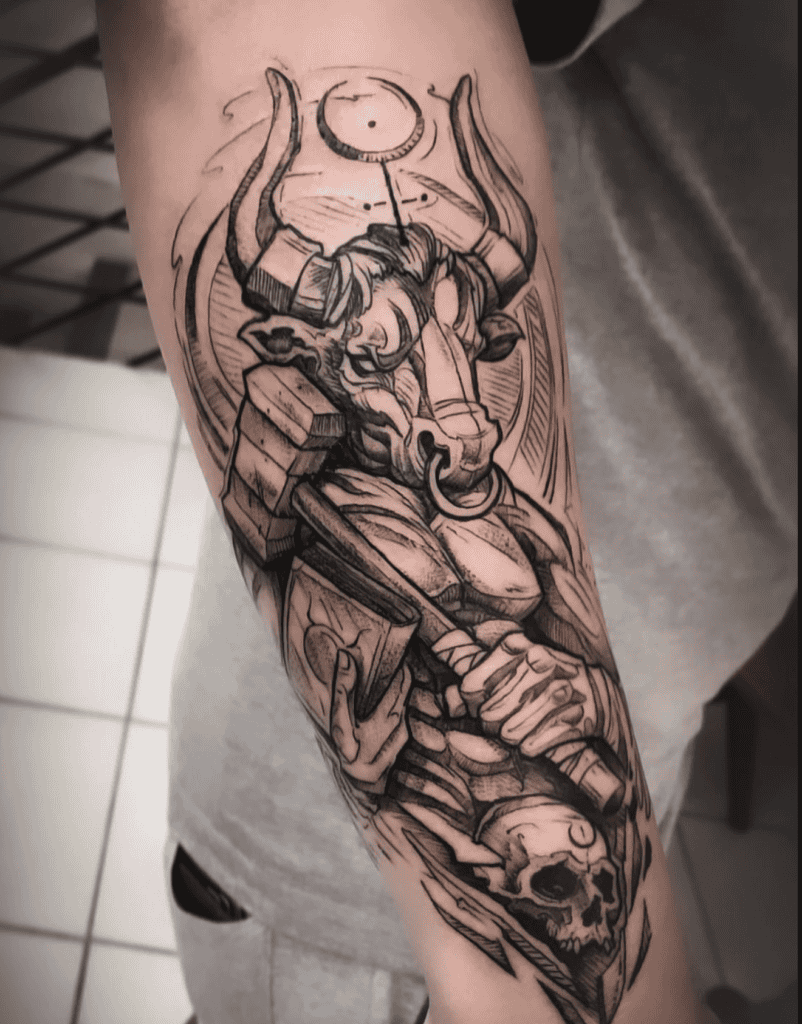
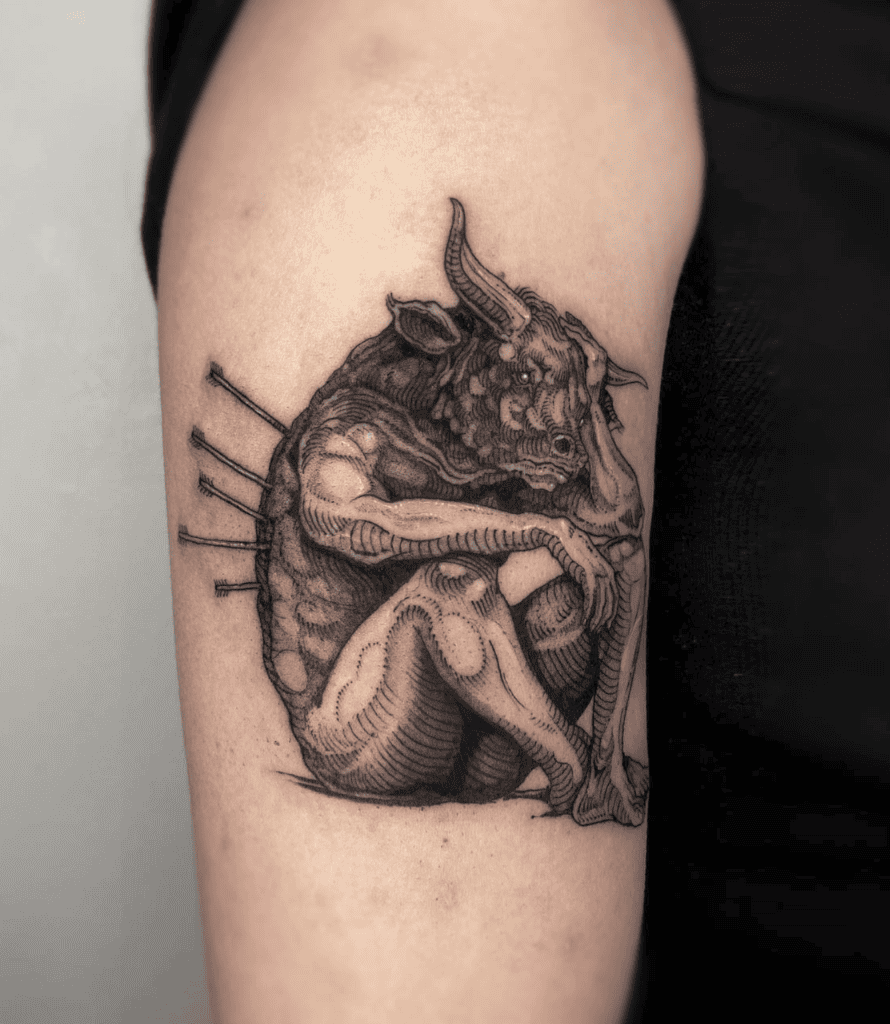
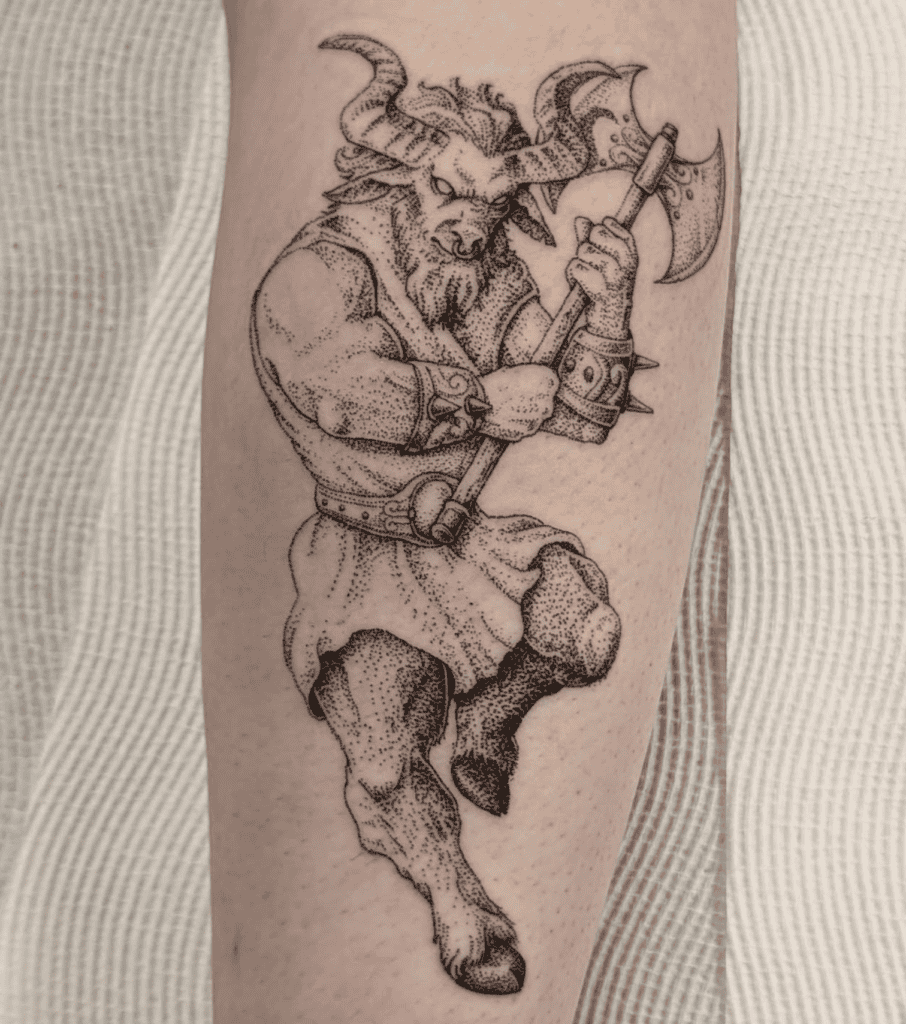
The Minotaur is a legendary creature with the body of a man and the head of a bull, born from the unnatural union of Queen Pasiphae of Crete and a divine bull. King Minos ordered the creature to be imprisoned inside the Labyrinth, where it was eventually defeated by the Greek hero Theseus, who used Ariadne’s thread to find his way back out.
Griffin Roman Mythology Tattoo
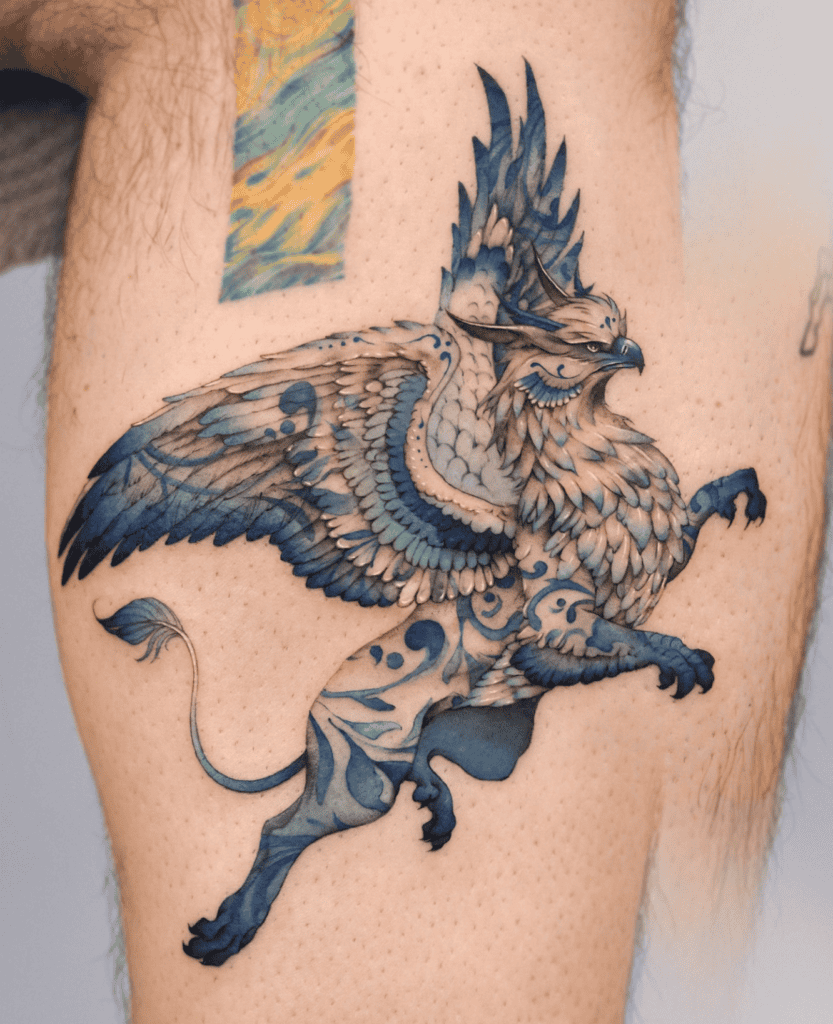
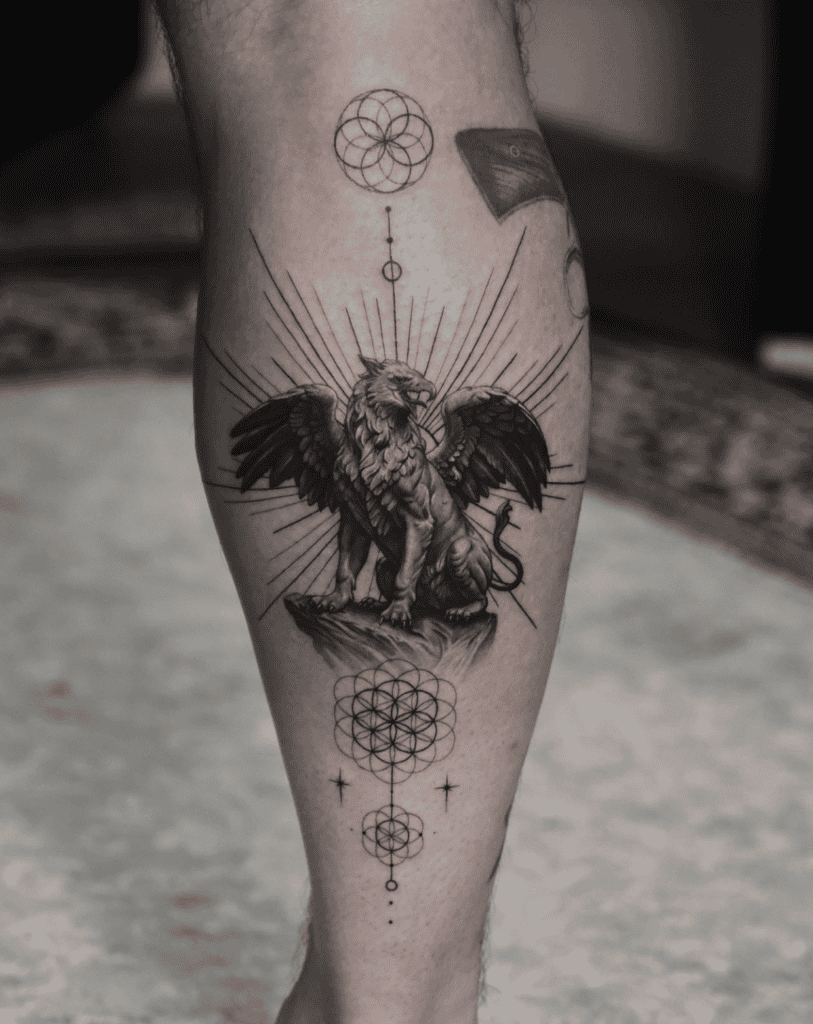
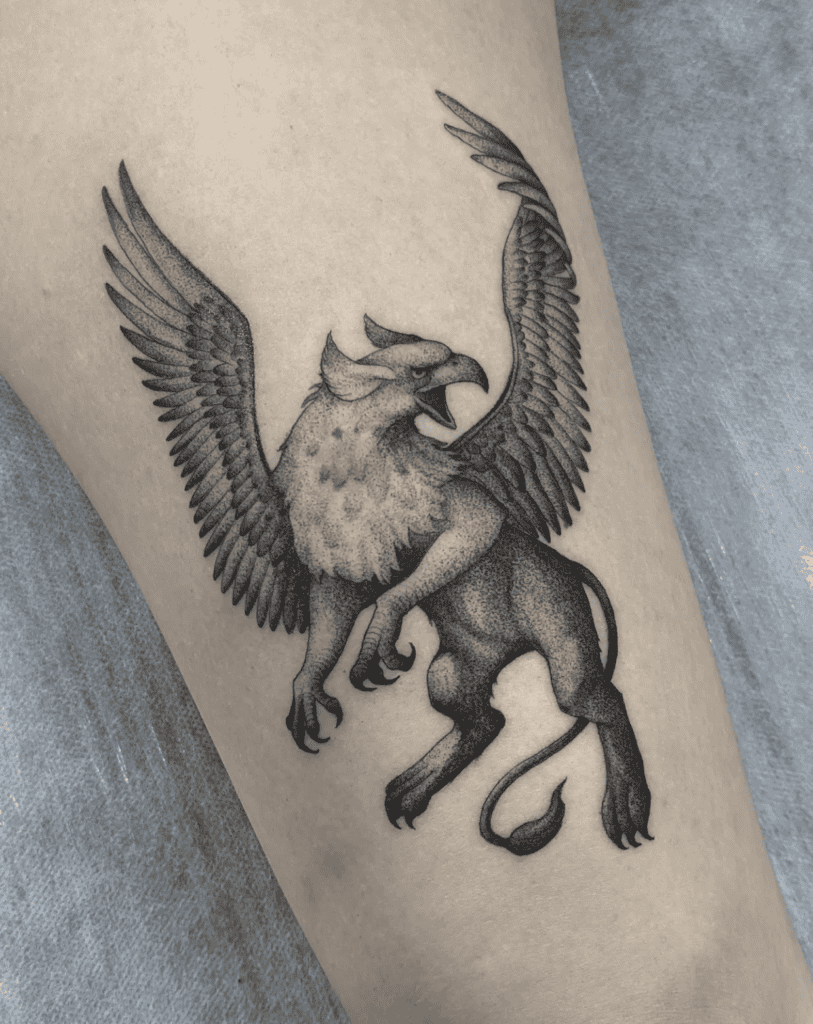
The Griffin is a legendary creature with the body and hindquarters of a lion and the head, wings, and talons of an eagle. Combining the king of beasts with the king of birds, the Griffin became a symbol of strength, courage, vigilance, and guardianship. Gryphons were often associated with guarding precious treasures and sacred places.
Pegasus Roman Mythology Tattoo
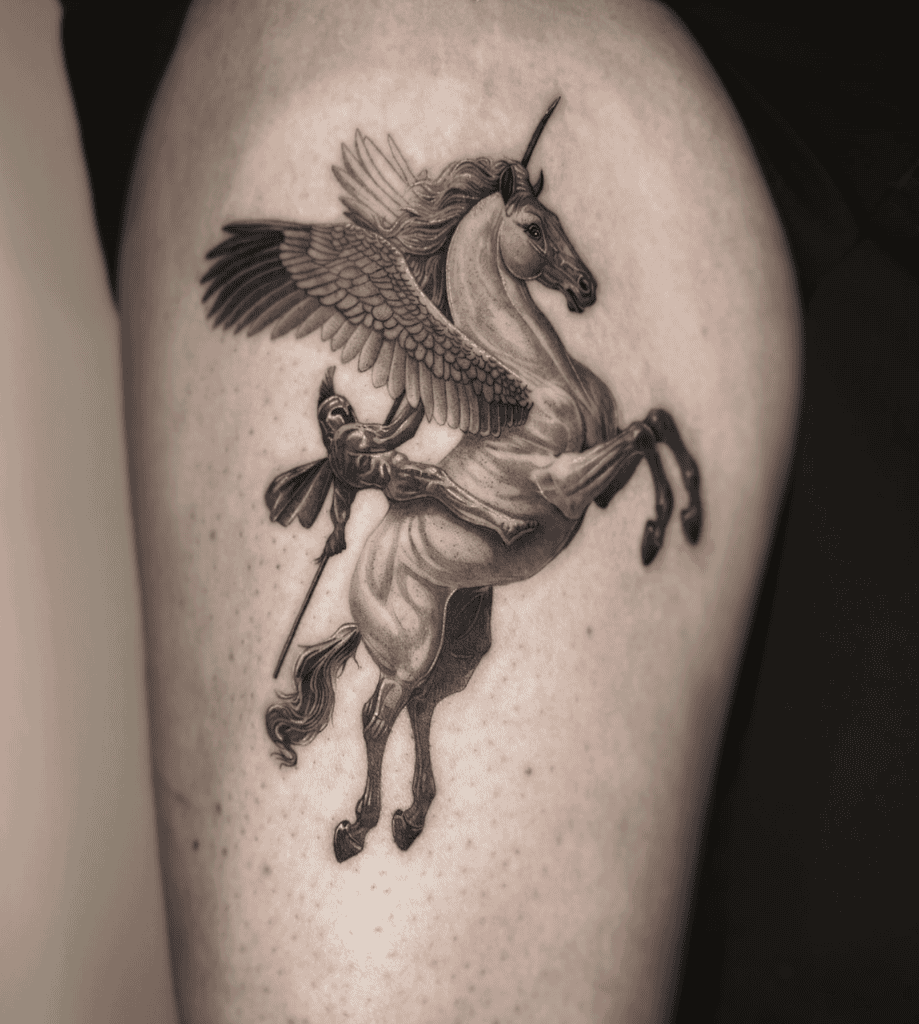
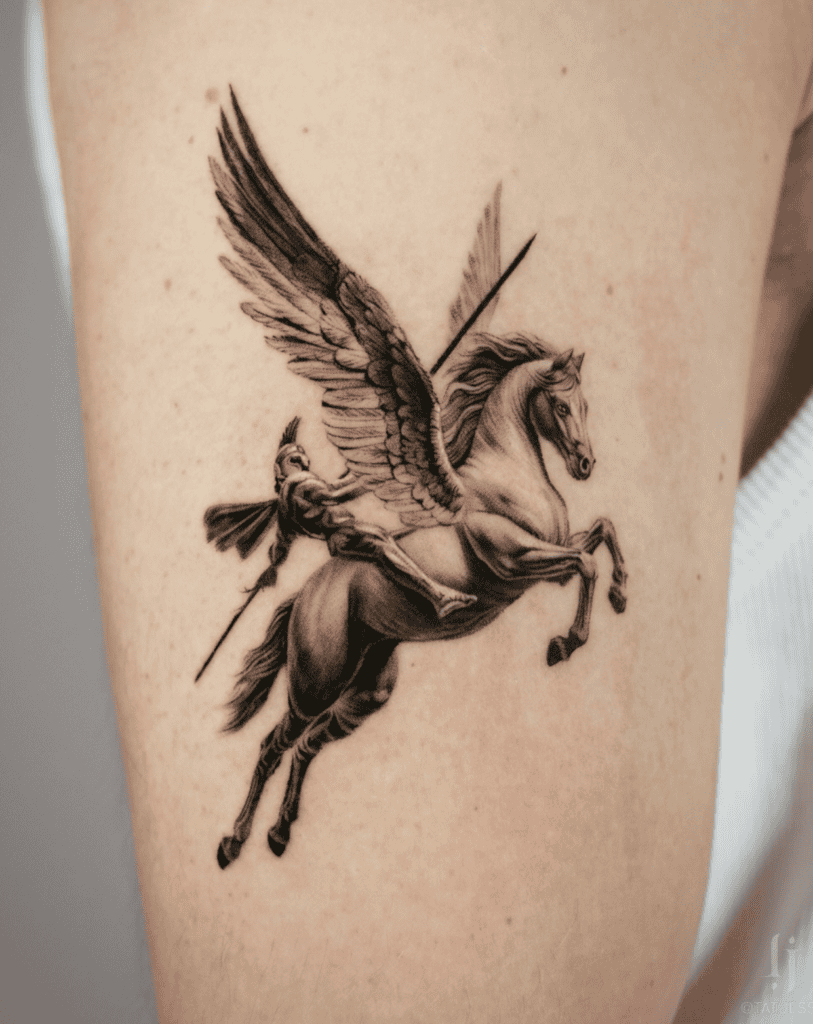
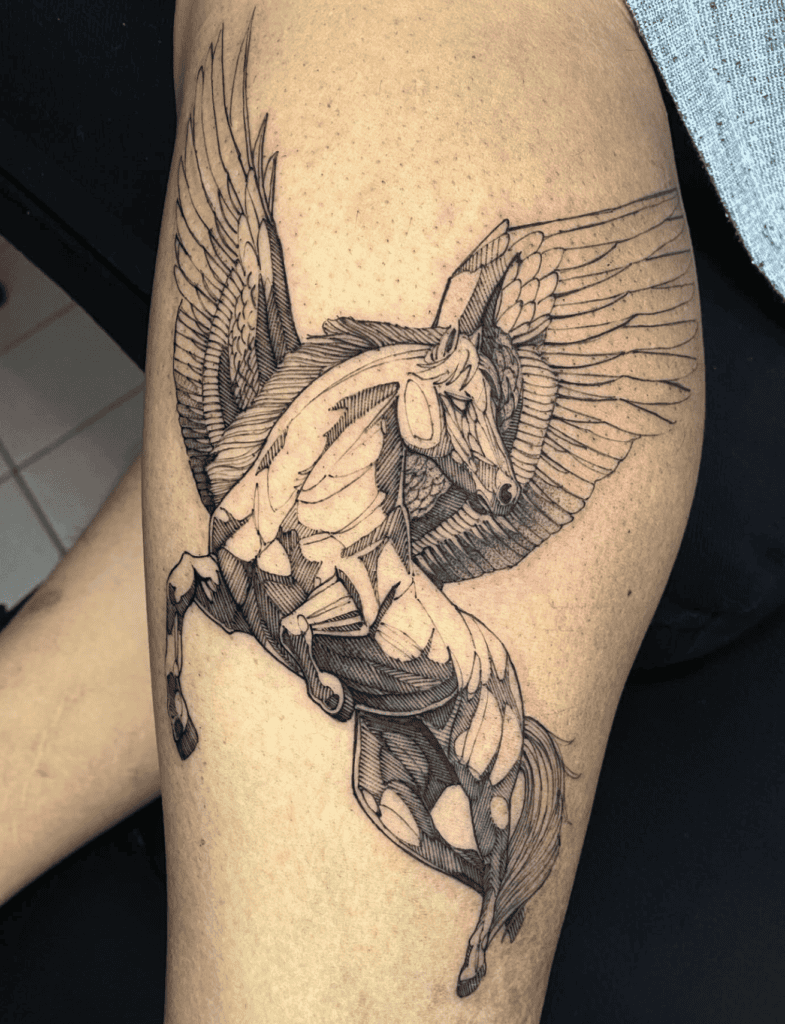
Pegasus is the legendary winged horse from Greek mythology, famous for his incredible speed and ability to fly through the heavens. He sprang from the blood of Medusa after she was slain by Perseus and later became the companion of the hero Bellerophon, who rode him while battling the monstrous Chimaera.
Chimaera Roman Mythology Tattoo
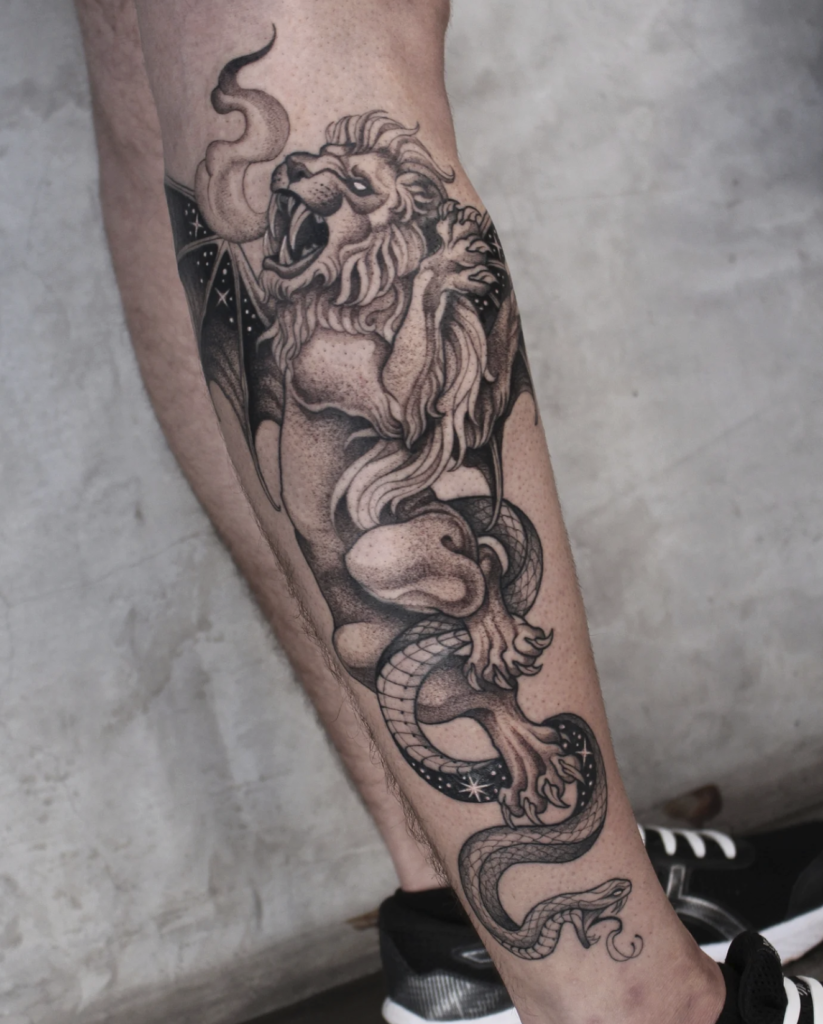
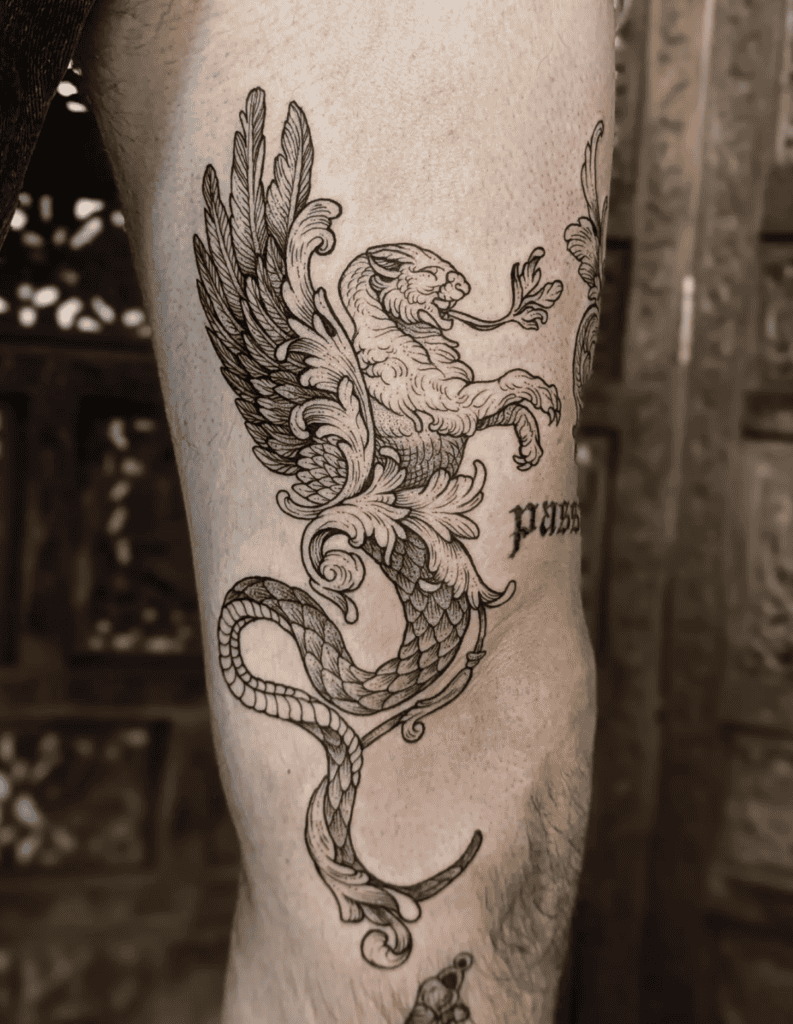
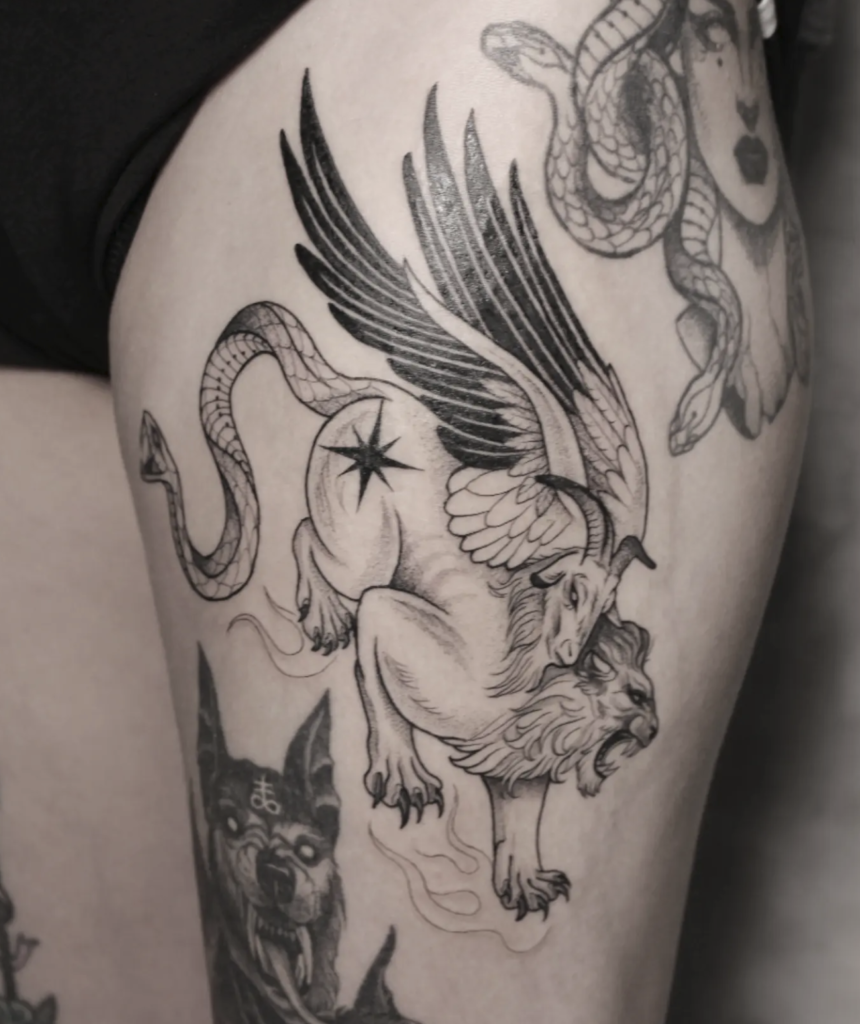
The Chimaera is a legendary hybrid monster with the body of a lion, a goat’s head emerging from its back, and a serpent-like tail. It was said to breathe fire and terrorise the land of Lycia until the hero Bellerophon, riding the winged horse Pegasus, defeated it.
Cerberus Roman Mythology Tattoo
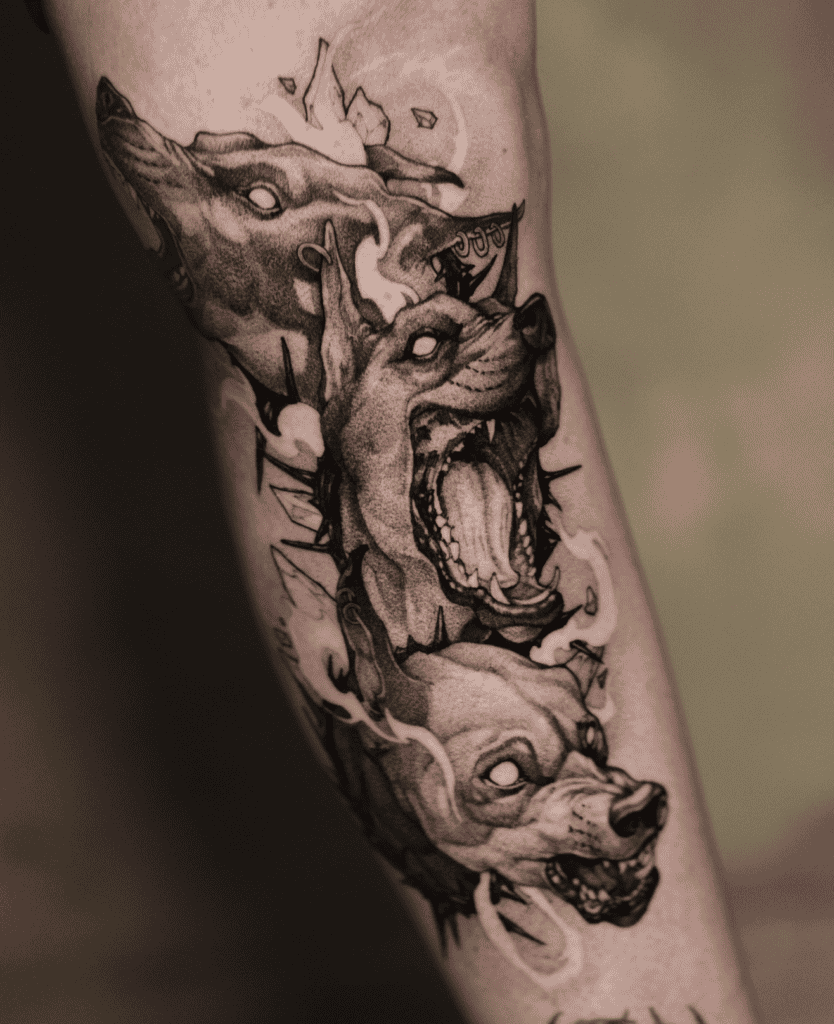
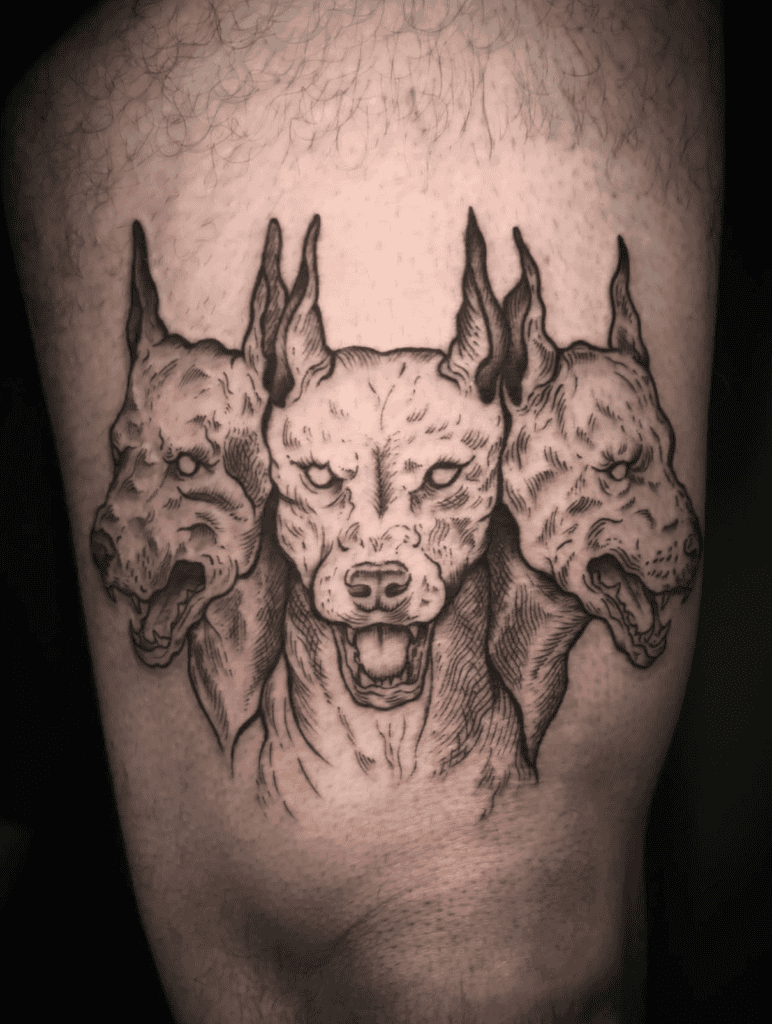
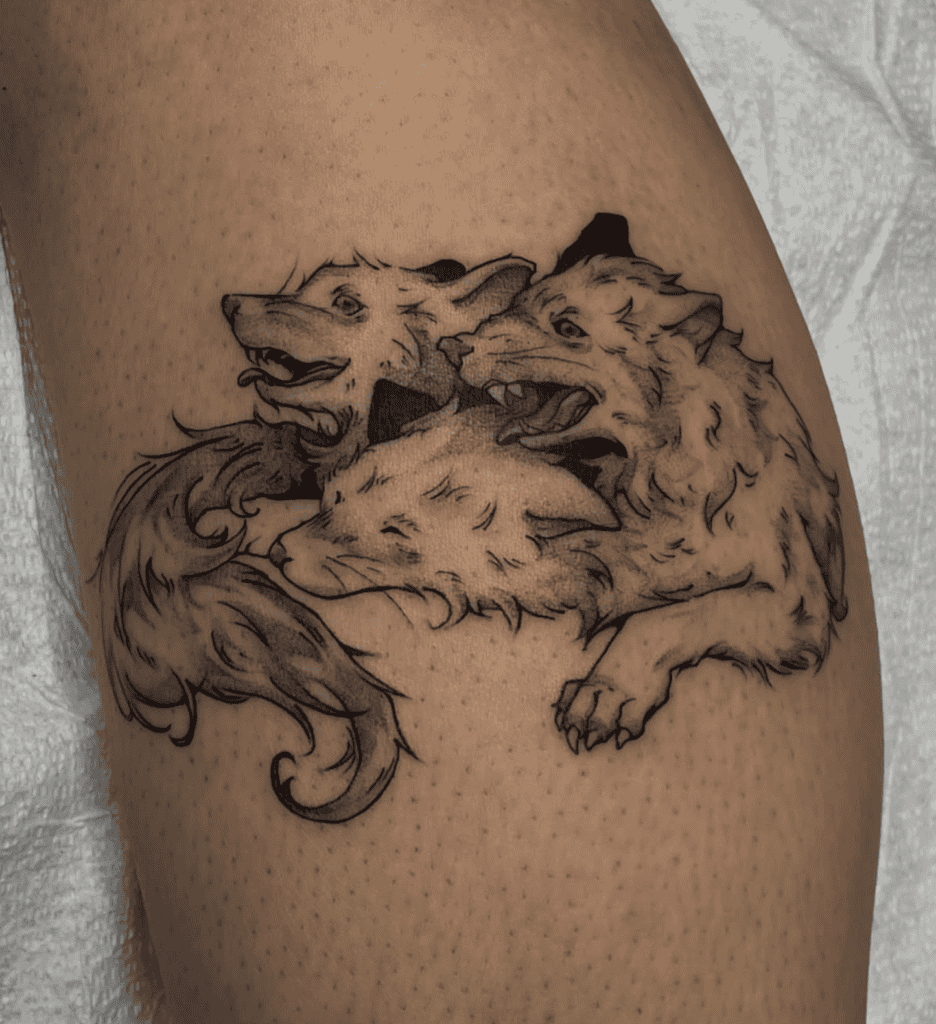
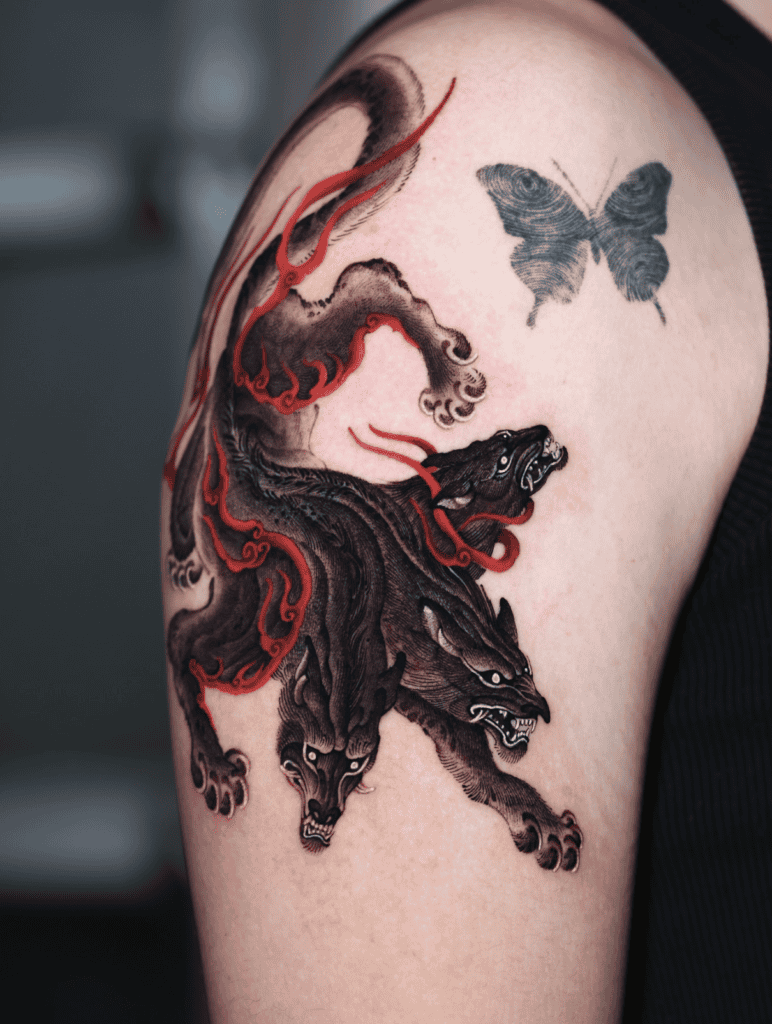
Cerberus is the monstrous three-headed guard dog of the Underworld, tasked with preventing the dead from escaping and the living from entering. He is usually depicted with three snarling heads, a serpent for a tail, and snakes around his body. Cerberus was famously overcome by Hercules during his Twelfth Labour, when the hero was ordered to capture the beast and bring him to the surface.
Hydra Roman Mythology Tattoo
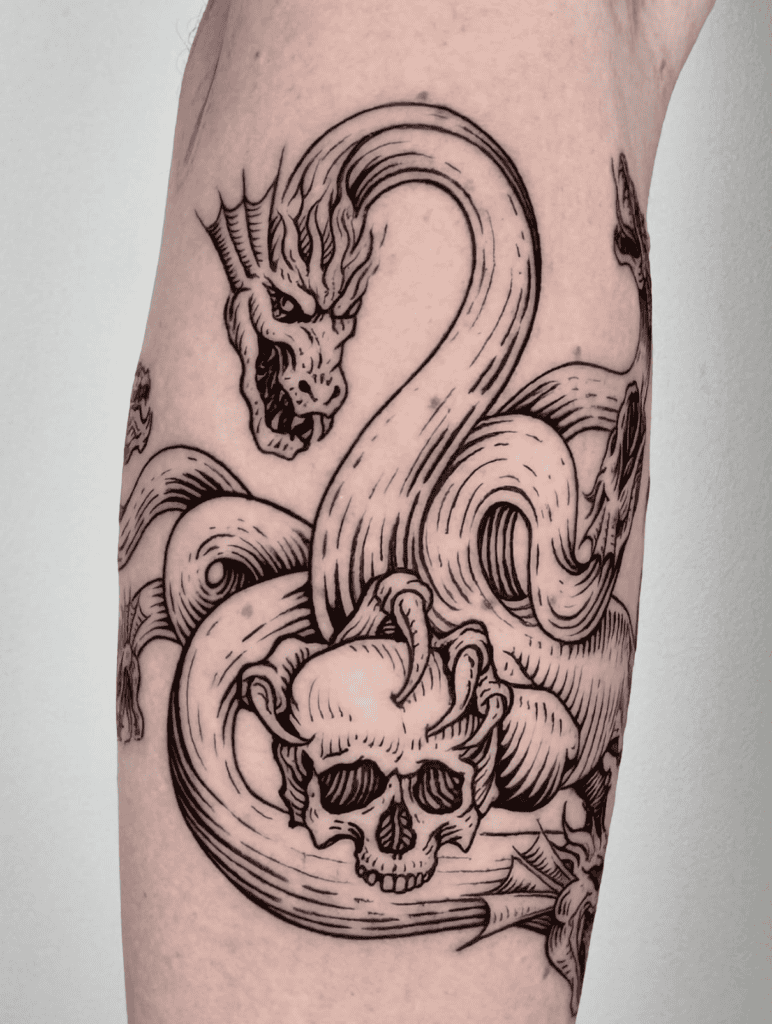
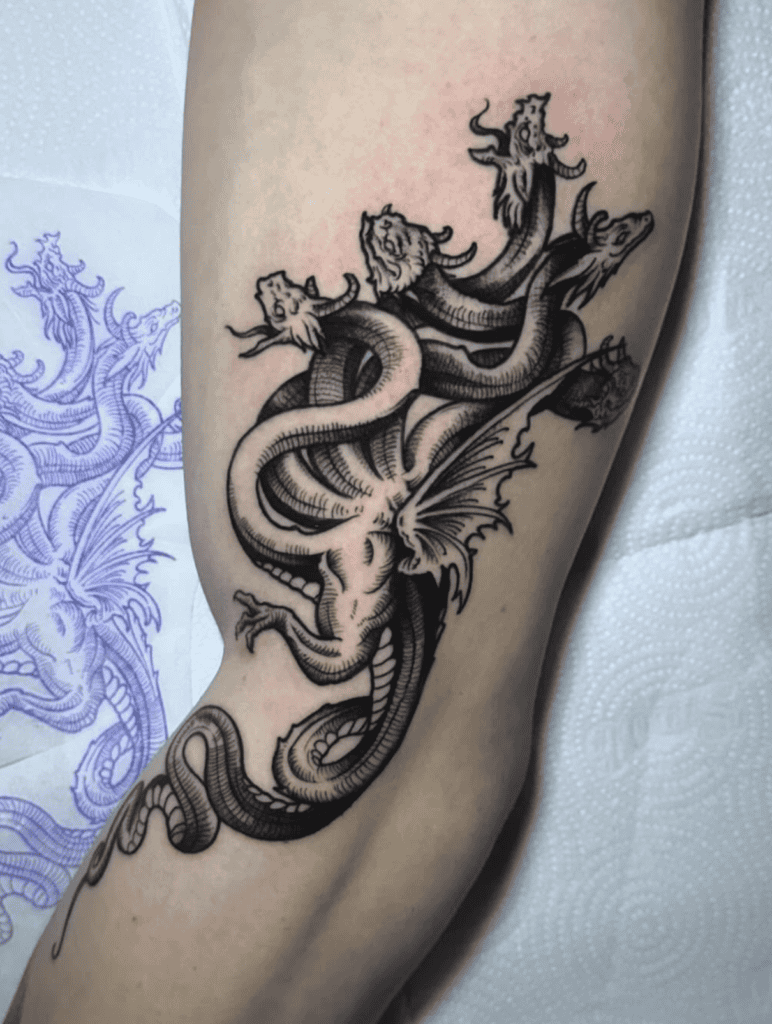
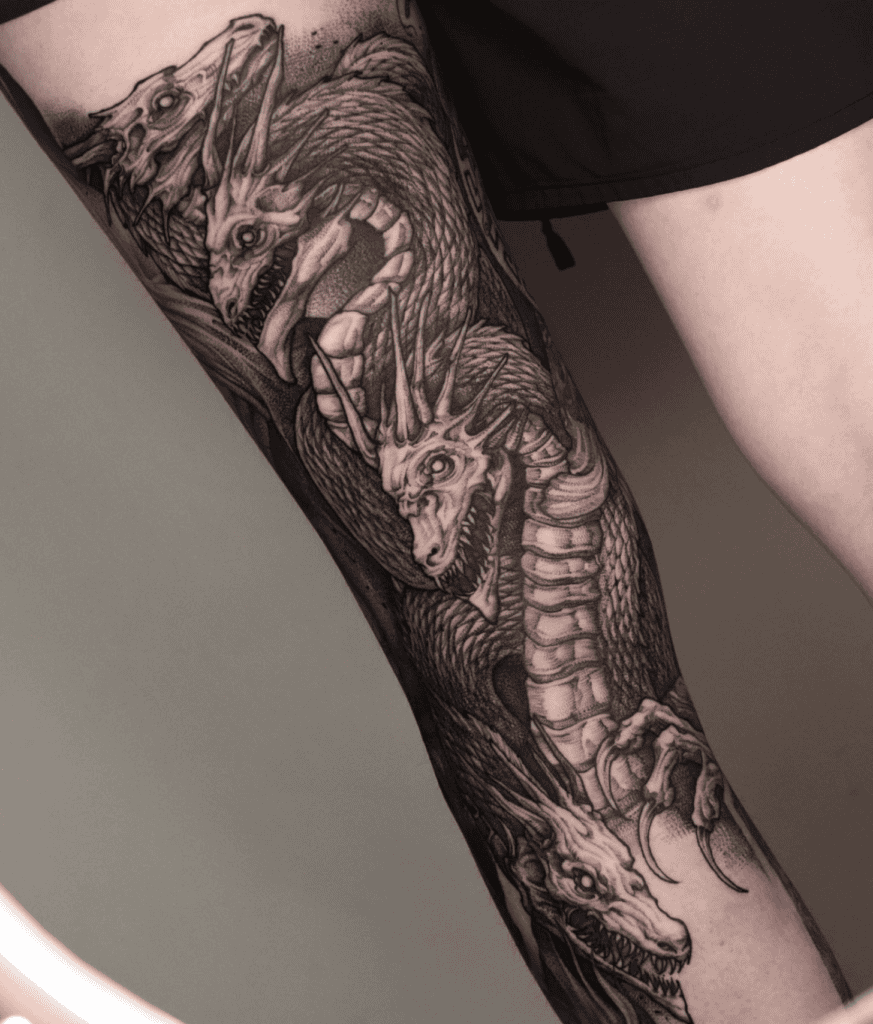
The Hydra is a gigantic multi-headed serpent that lived near the ancient Greek city of Lerna. Its most famous ability was that two heads could grow back whenever one was cut off, making it incredibly difficult to defeat. The hero Hercules eventually killed the monster during his Second Labour by burning the necks after severing each head.
Gorgon Roman Mythology Tattoo
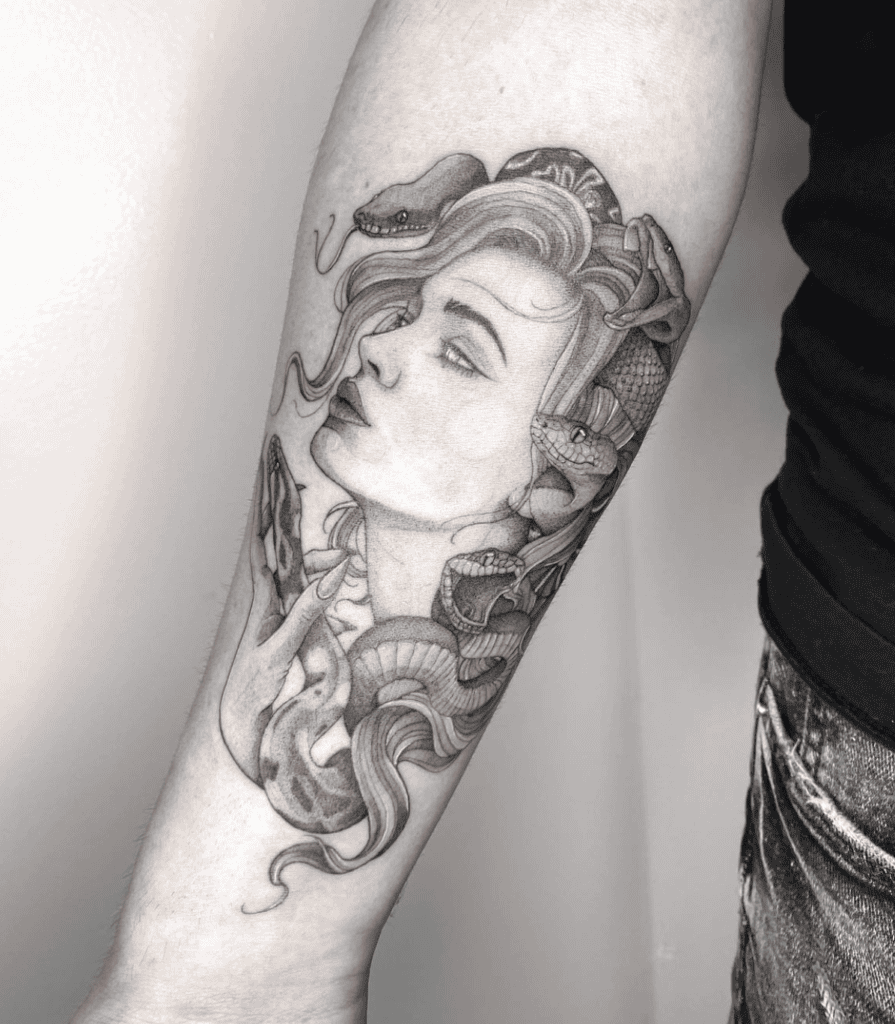
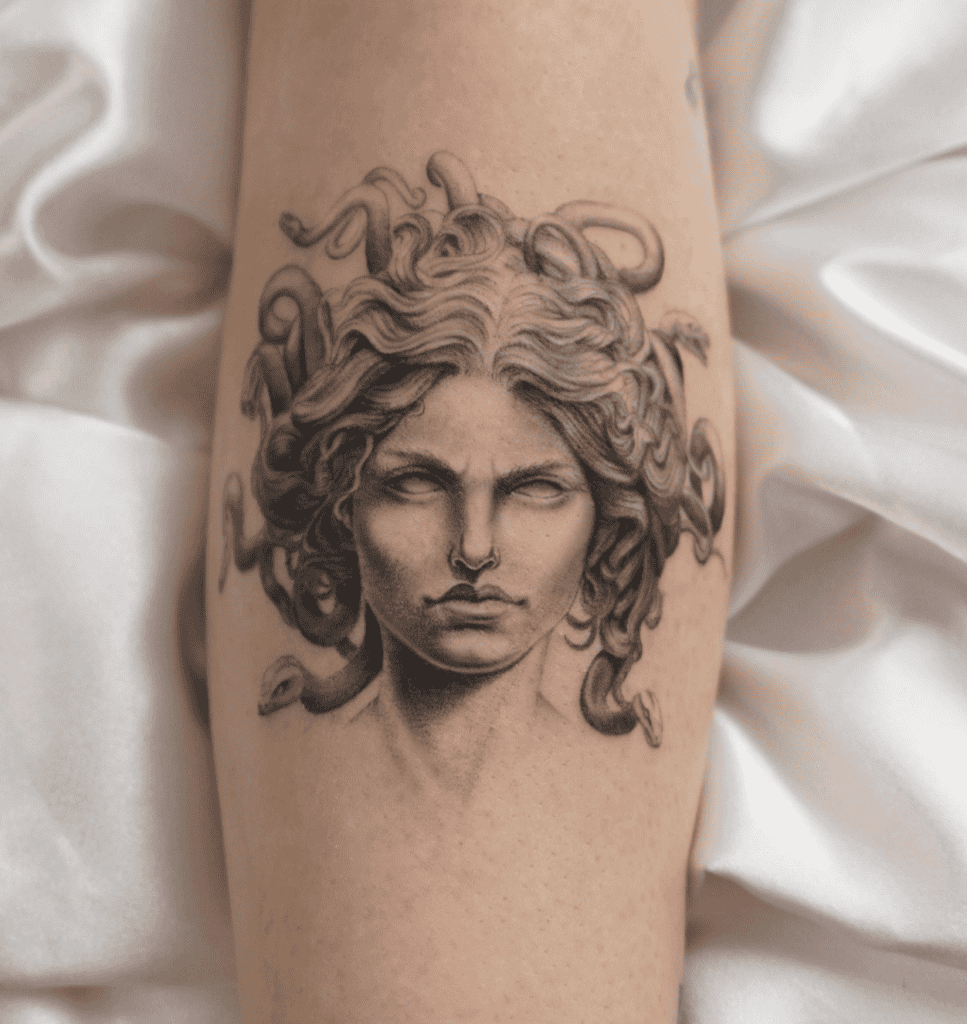
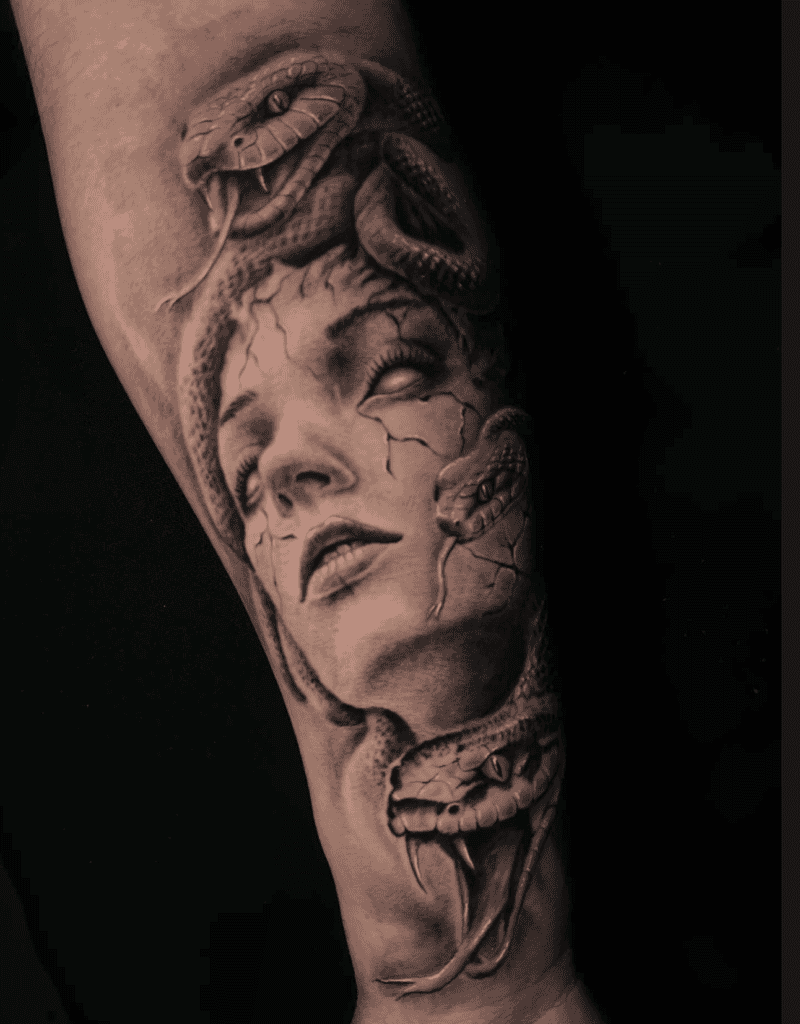
The Gorgons are a trio of monstrous sisters, Medusa, Stheno, and Euryale, from Greek mythology who were later adopted into Roman mythology. They are typically depicted as women with snakes for hair, wings, and monstrous features, with their gaze capable of turning people to stone.
Medusa is the most famous Gorgon and the only mortal one of the three sisters. According to the best-known version of her story from Greek Mythology, she was transformed into a monster with snakes for hair by Athena after Poseidon violated her in Athena’s temple. The hero Perseus eventually defeated Medusa by using her reflection in a shield to avoid looking directly at her, then used her severed head as a weapon.
Scylla Roman Mythology Tattoo
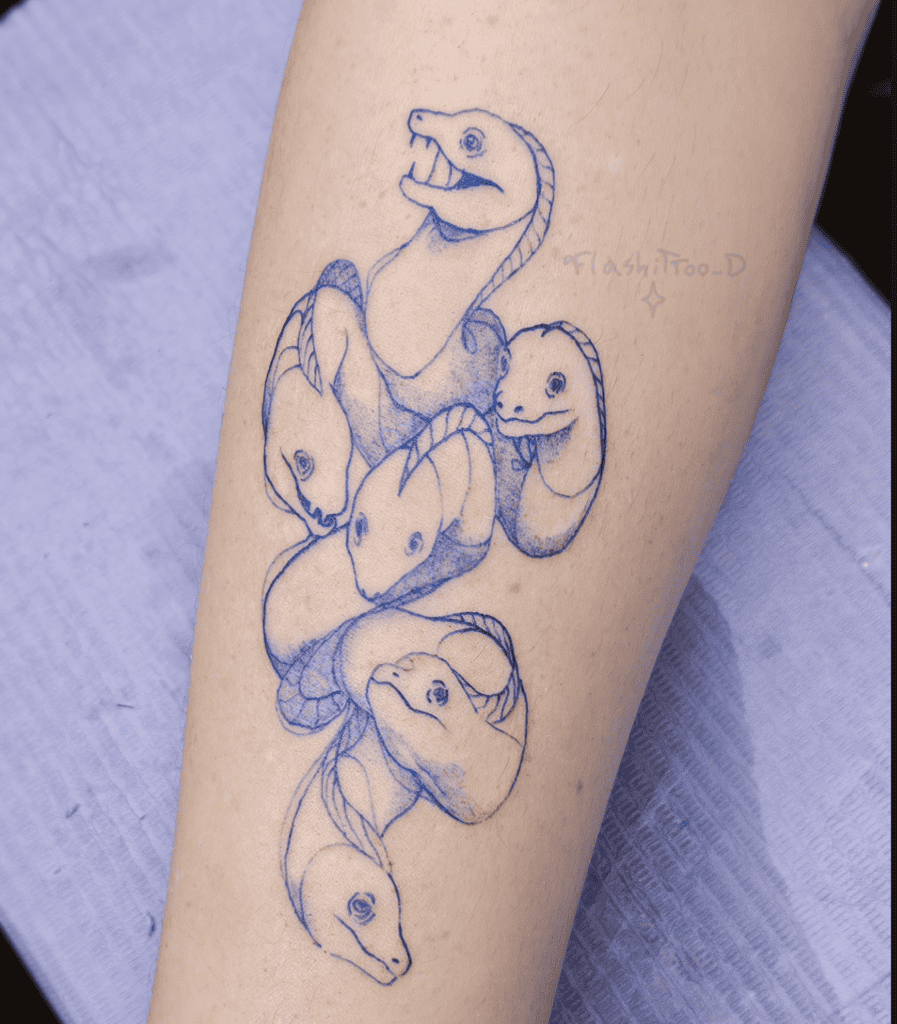
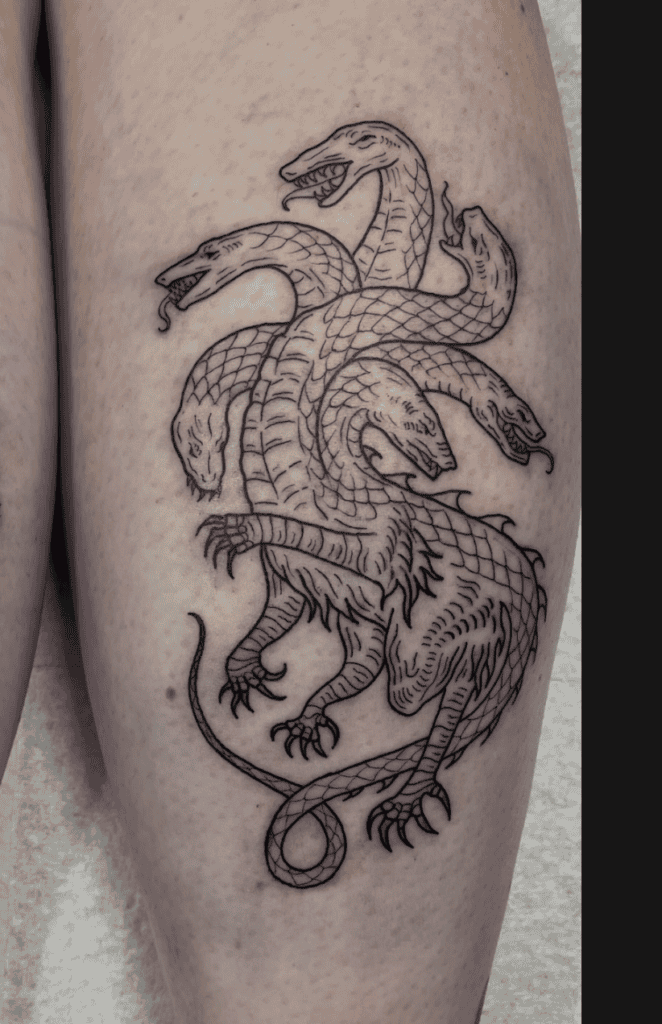
Scylla is a terrifying sea monster who lived on one side of a dangerous strait, opposite the whirlpool monster Charybdis. She is commonly depicted as a creature with a woman’s upper body, multiple serpent-like necks, and several snarling dog heads around her waist, each capable of devouring sailors. In Homer’s Odyssey, she attacks Odysseus and his crew as they attempt to sail past her.
Charybdis Roman Mythology Tattoo
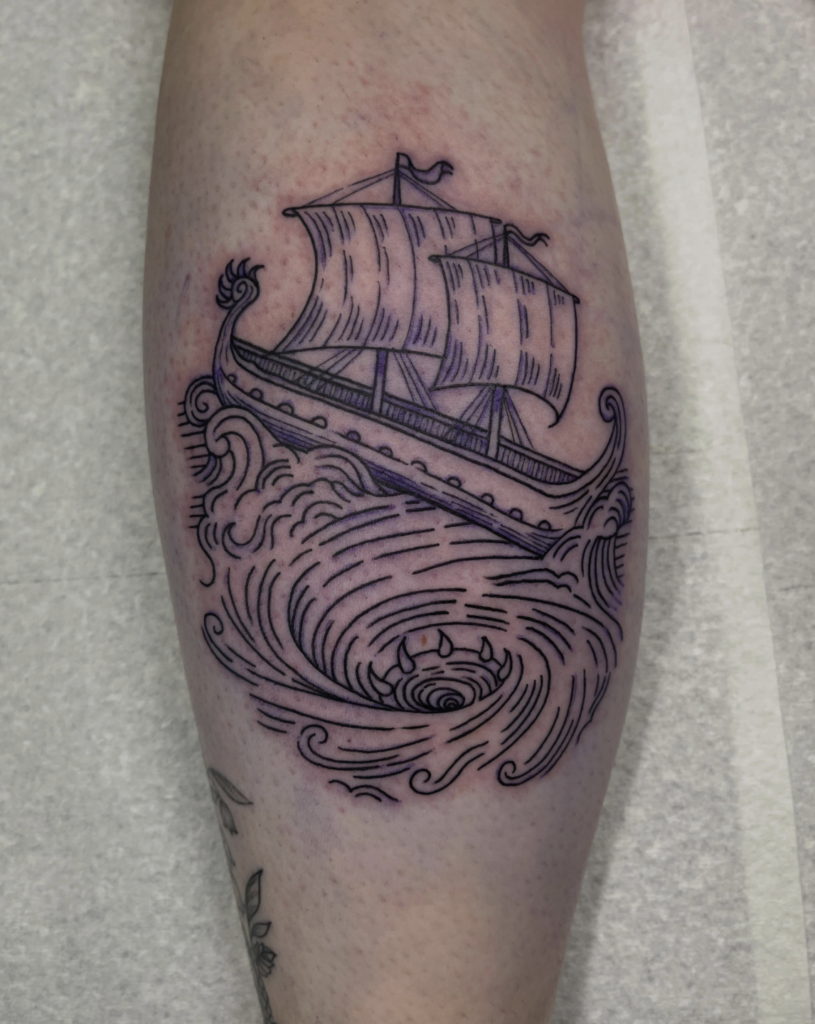
Charybdis is a terrifying sea monster and enormous whirlpool who lived beneath the sea opposite Scylla. She was said to swallow huge amounts of seawater several times a day before violently releasing it, creating a deadly whirlpool that could drag entire ships beneath the waves. In The Odyssey, Odysseus must sail between Charybdis and Scylla, facing danger from both sides.
Harpy Roman Mythology Tattoo
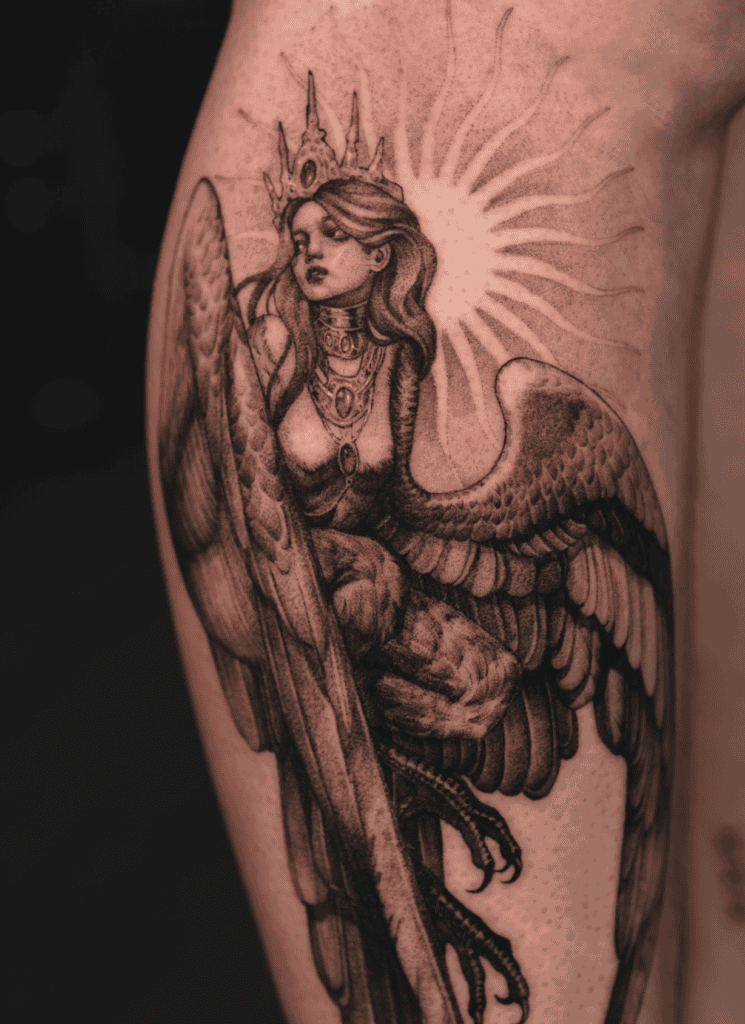
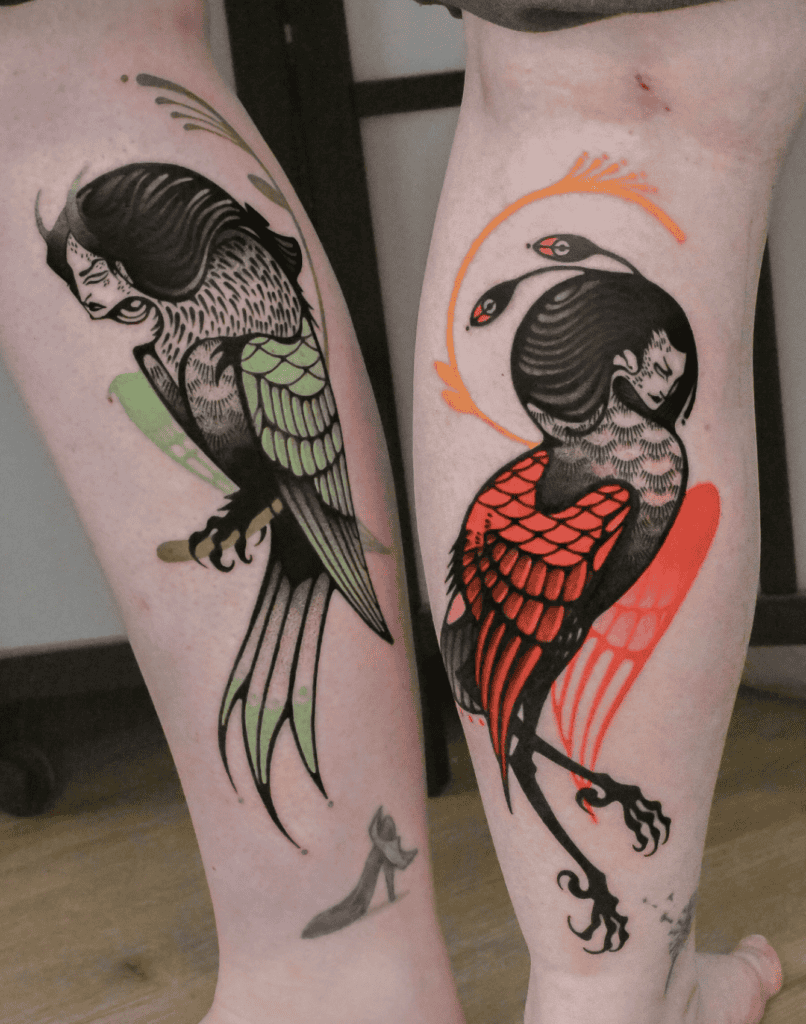
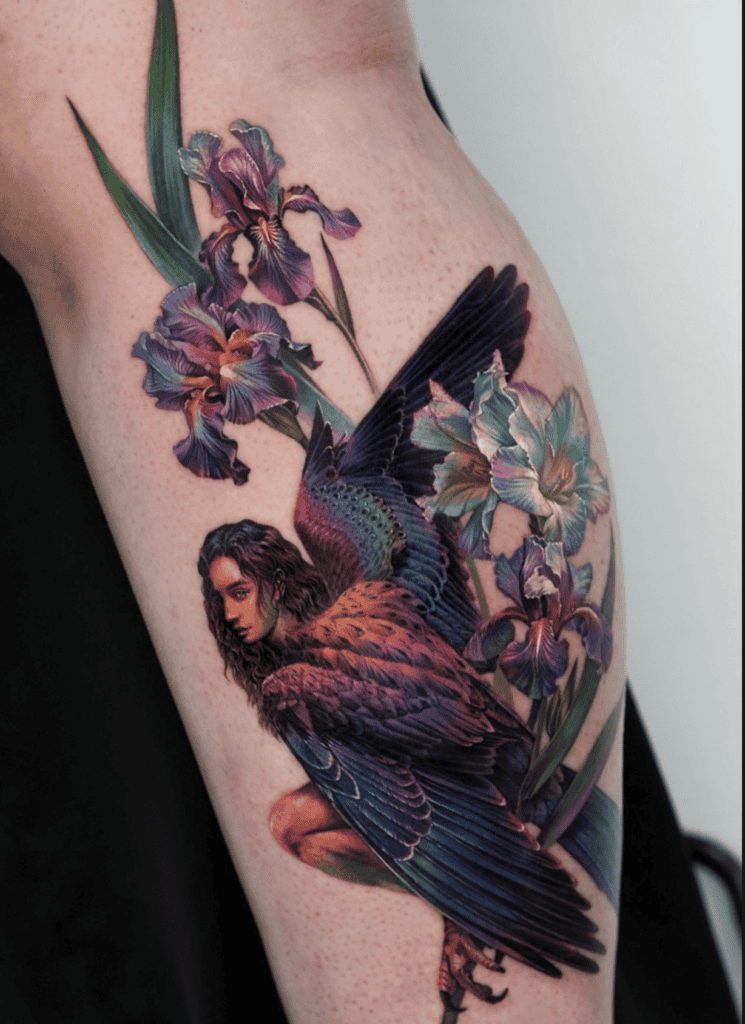
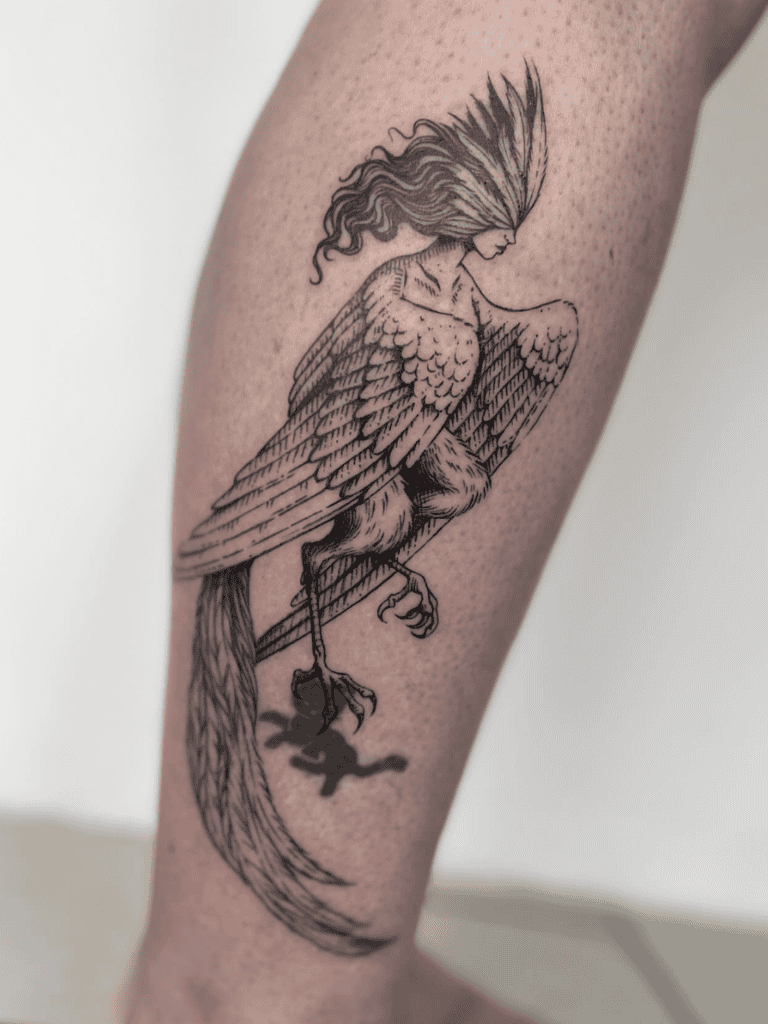
Harpies are winged female creatures from Greek mythology, traditionally depicted with the body or face of a woman and the wings, claws, and features of a bird. They were associated with sudden storms and were sometimes portrayed as agents who carried people or objects away. In the Aeneid, the Harpies torment Aeneas and his companions during their journey to Italy.
Siren Roman Mythology Tattoo
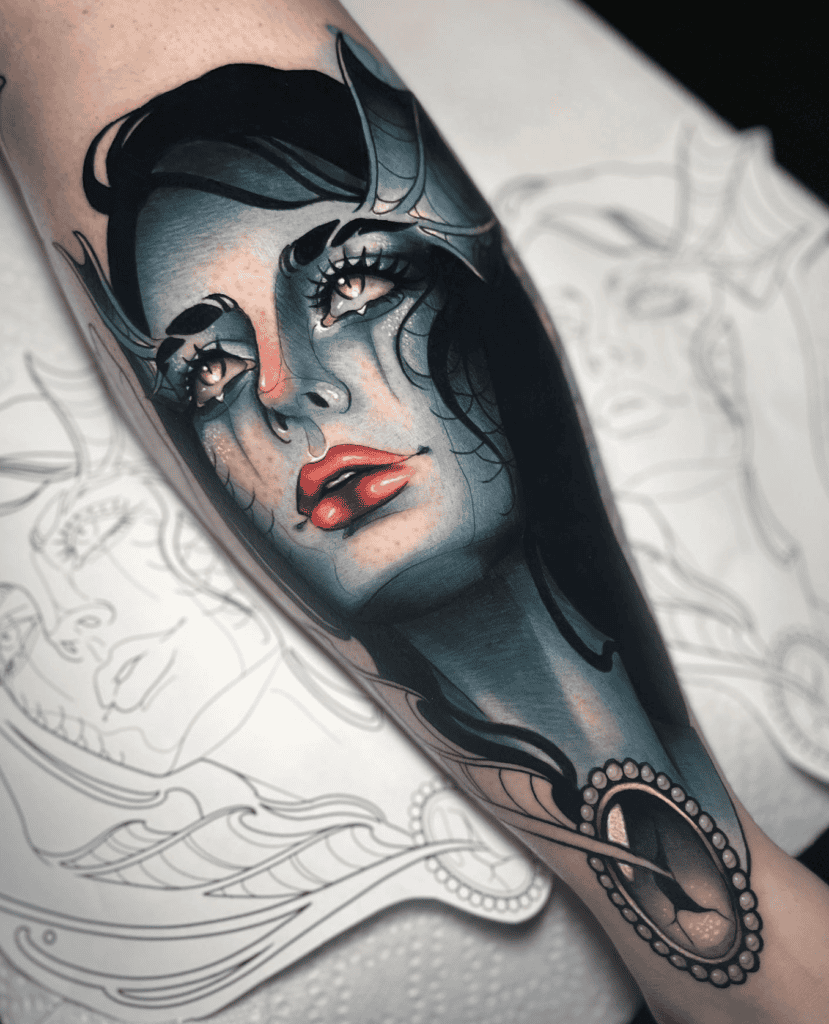
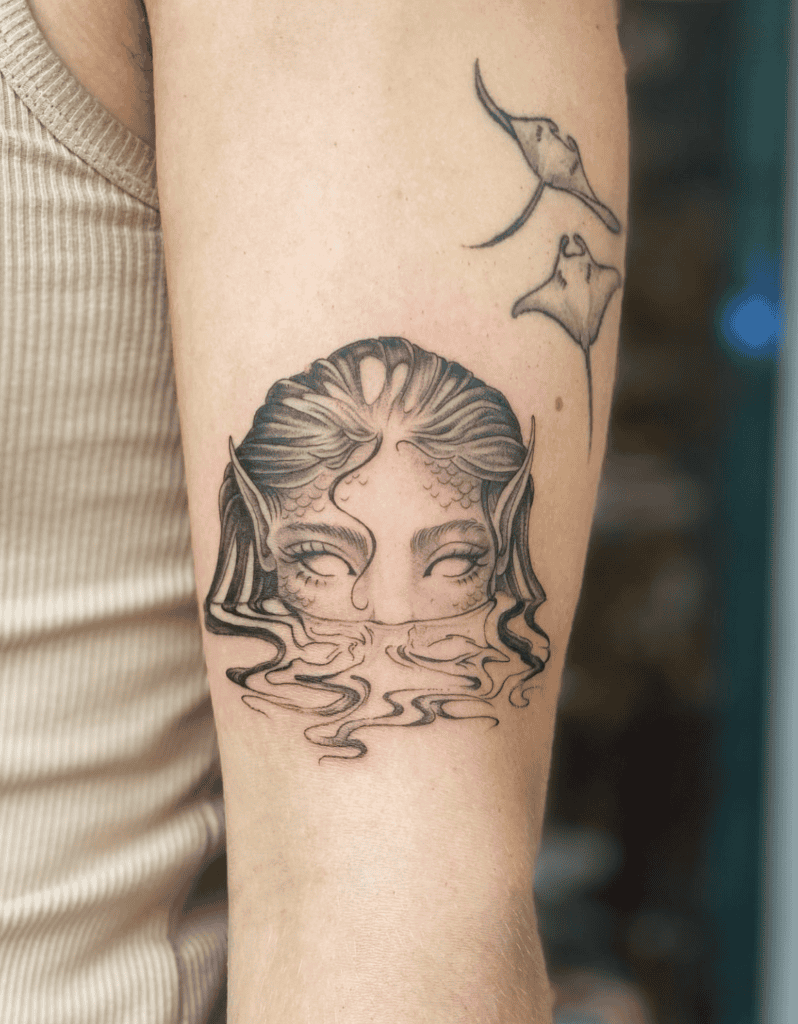
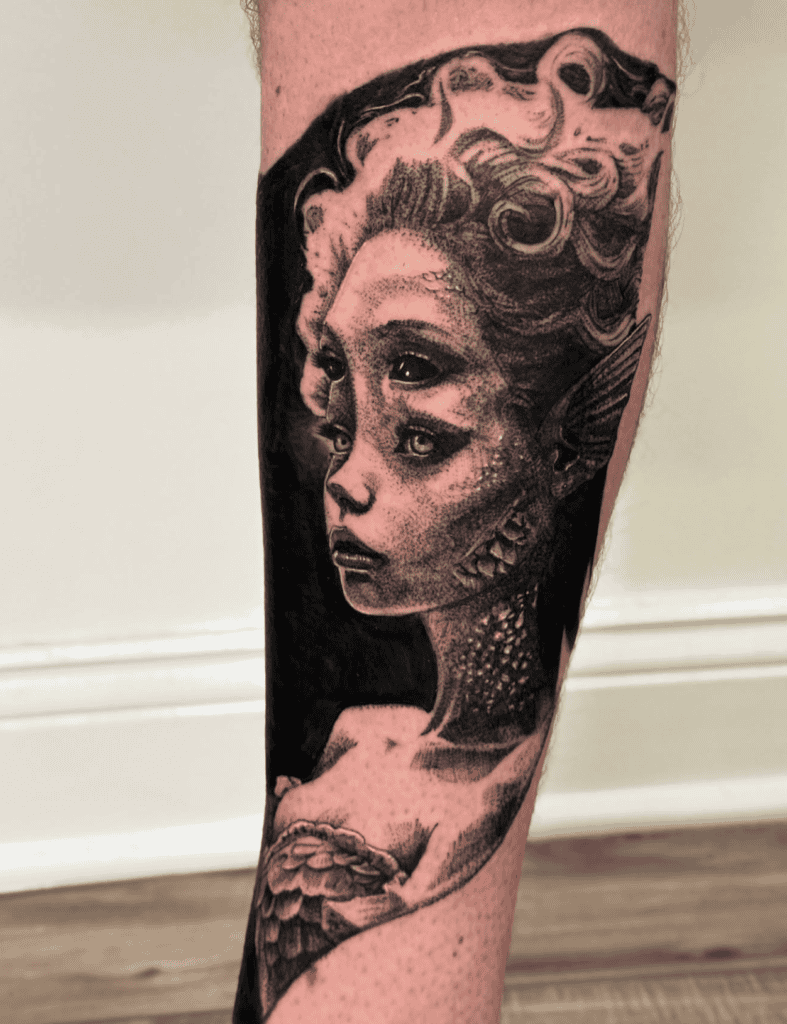
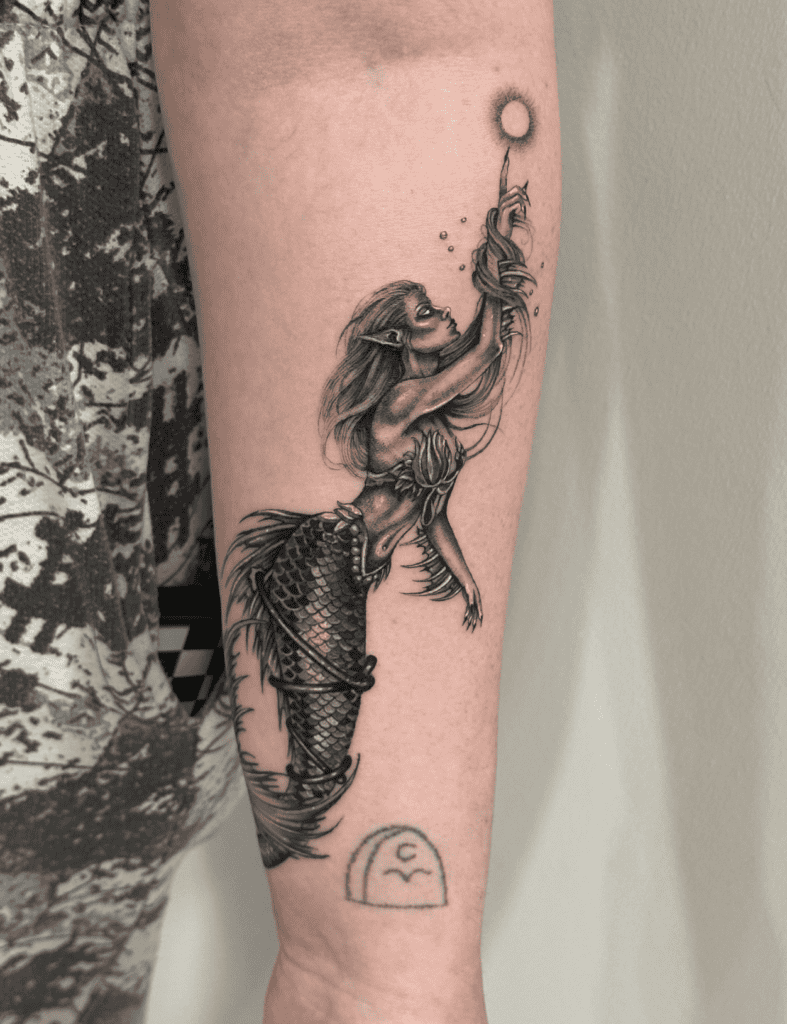
Harpies are winged female creatures from Greek mythology, traditionally depicted with the body or face of a woman and the wings, claws, and features of a bird. They were associated with sudden storms and were sometimes portrayed as agents who carried people or objects away. In the Aeneid, the Harpies torment Aeneas and his companions during their journey to Italy.
Manticore Roman Mythology Tattoo
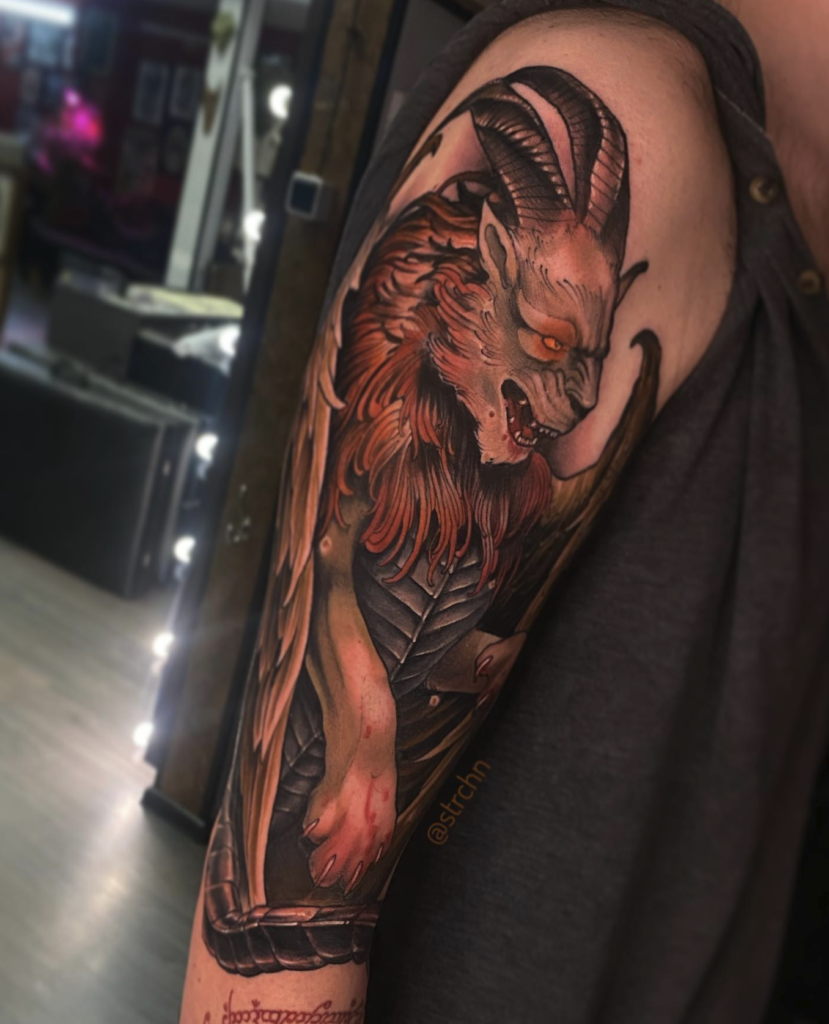
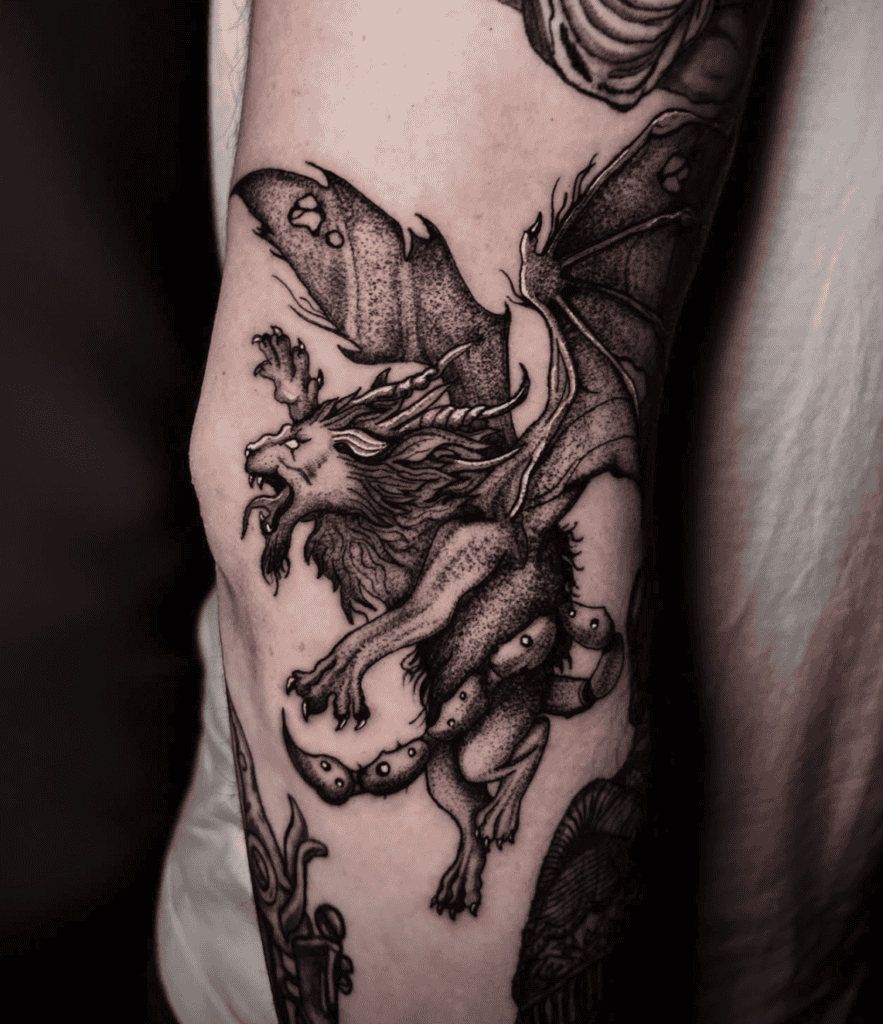
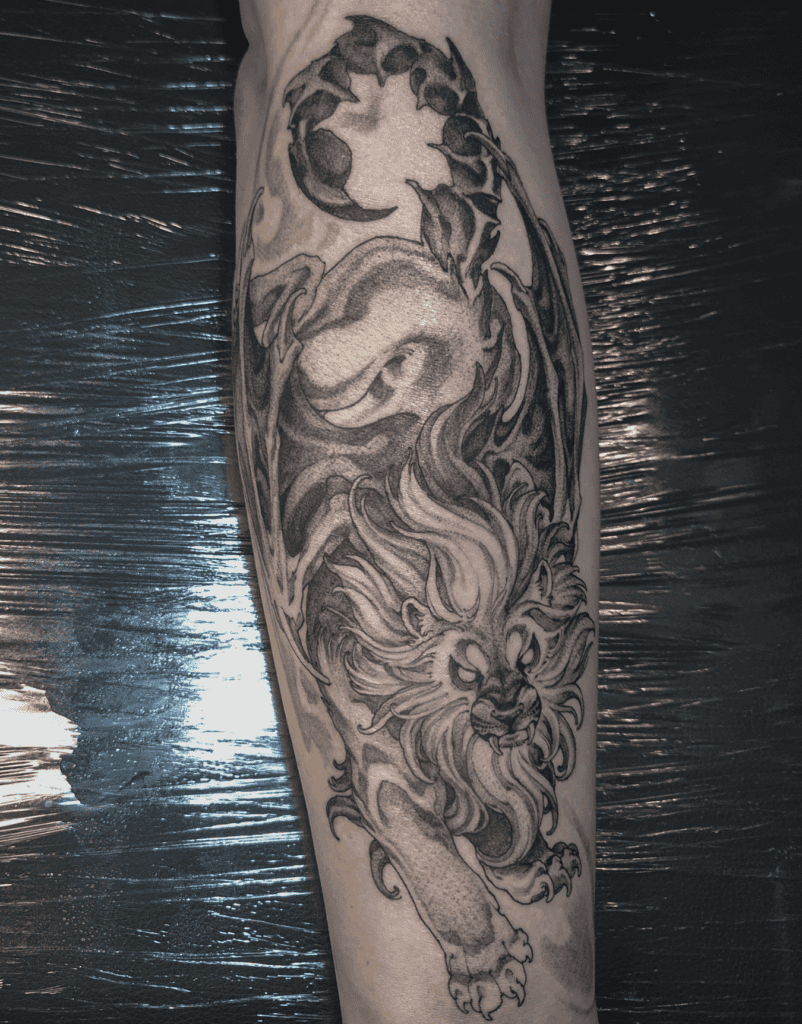
The Manticore is a legendary monster with the body of a lion, the face of a human, and a tail covered in venomous spikes. Originating in ancient Persian mythology, it was later adopted into Greek and Roman bestiaries and medieval European folklore. The Manticore was portrayed as a fierce man-eater, making it a symbol of danger, ferocity, and the unknown.
Lamia Roman Mythology Tattoo
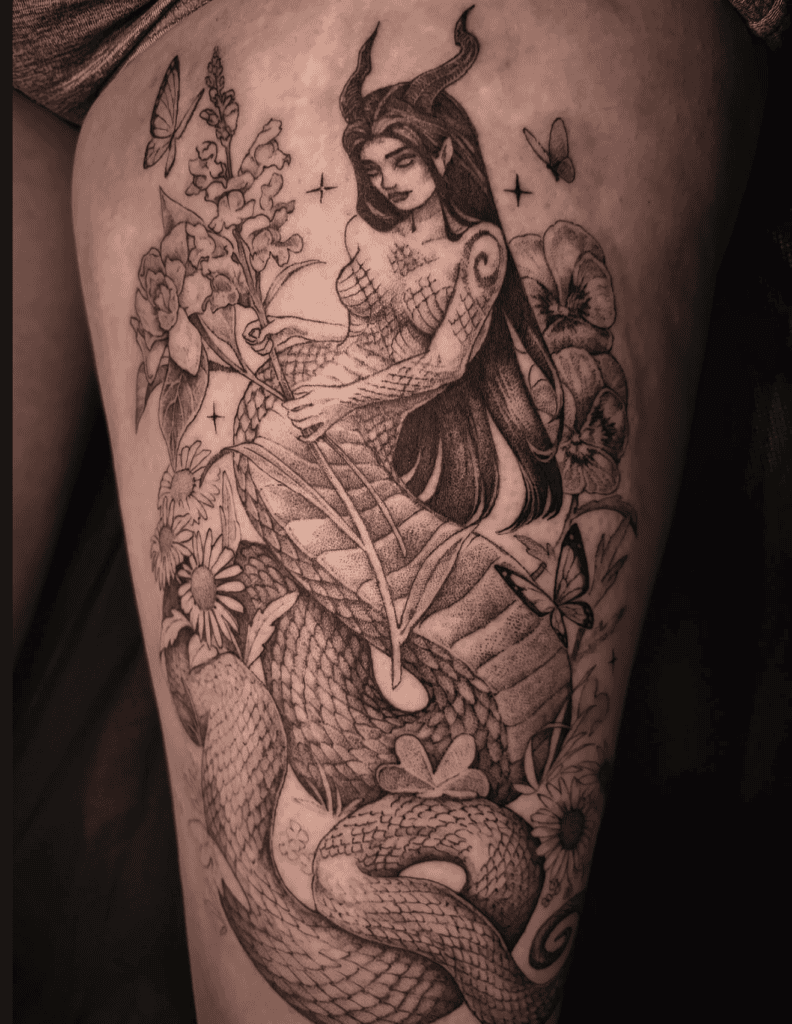
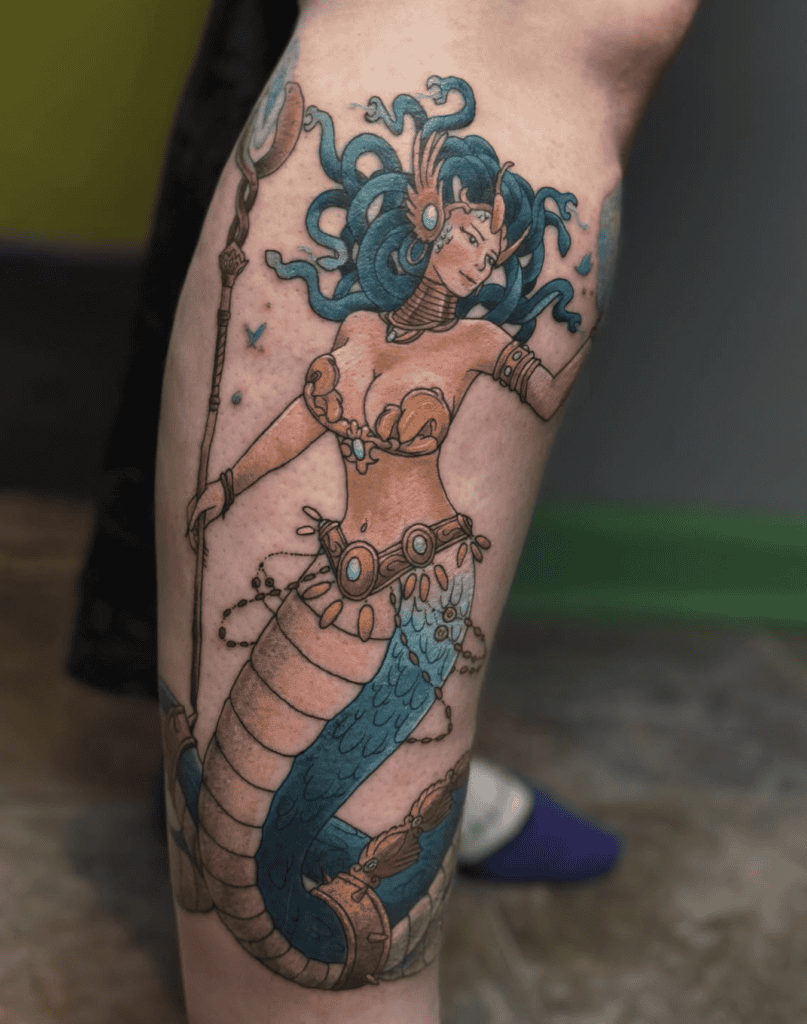
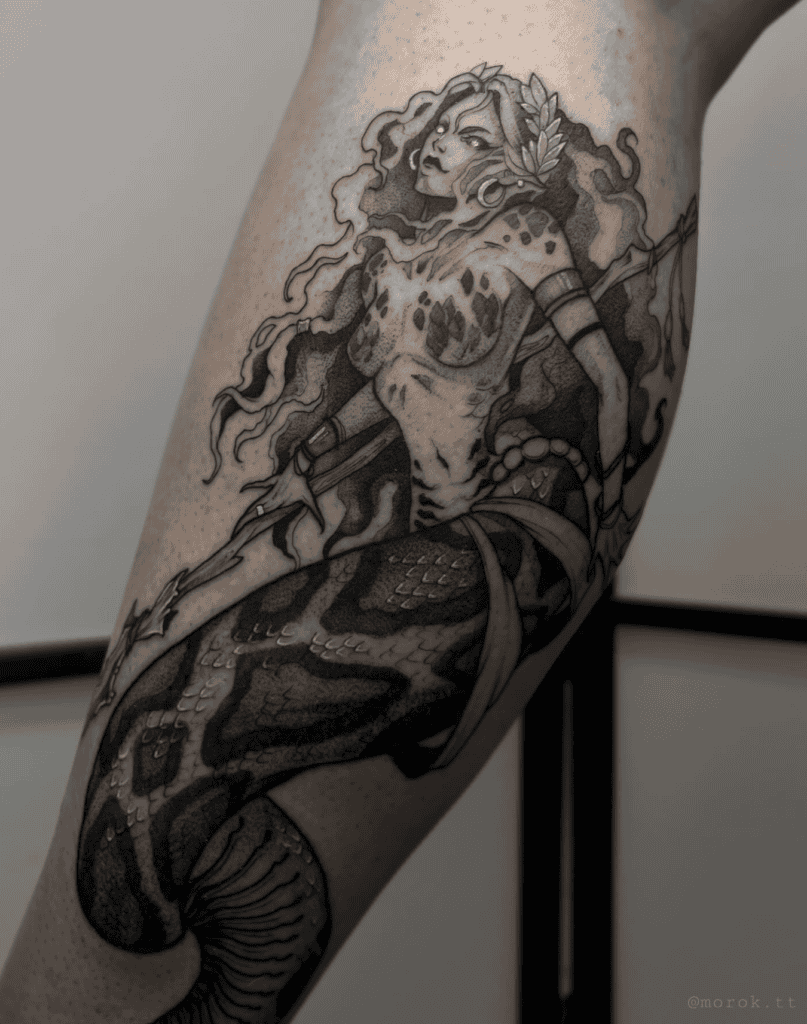
Lamia is a monstrous woman, often depicted with the upper body of a beautiful woman and the lower body of a serpent. According to legend, she was once a queen who was transformed into a monster after suffering a terrible tragedy involving her children. She became associated with child-eating, seduction, and terrifying nocturnal creatures.
Echidna Roman Mythology Tattoo
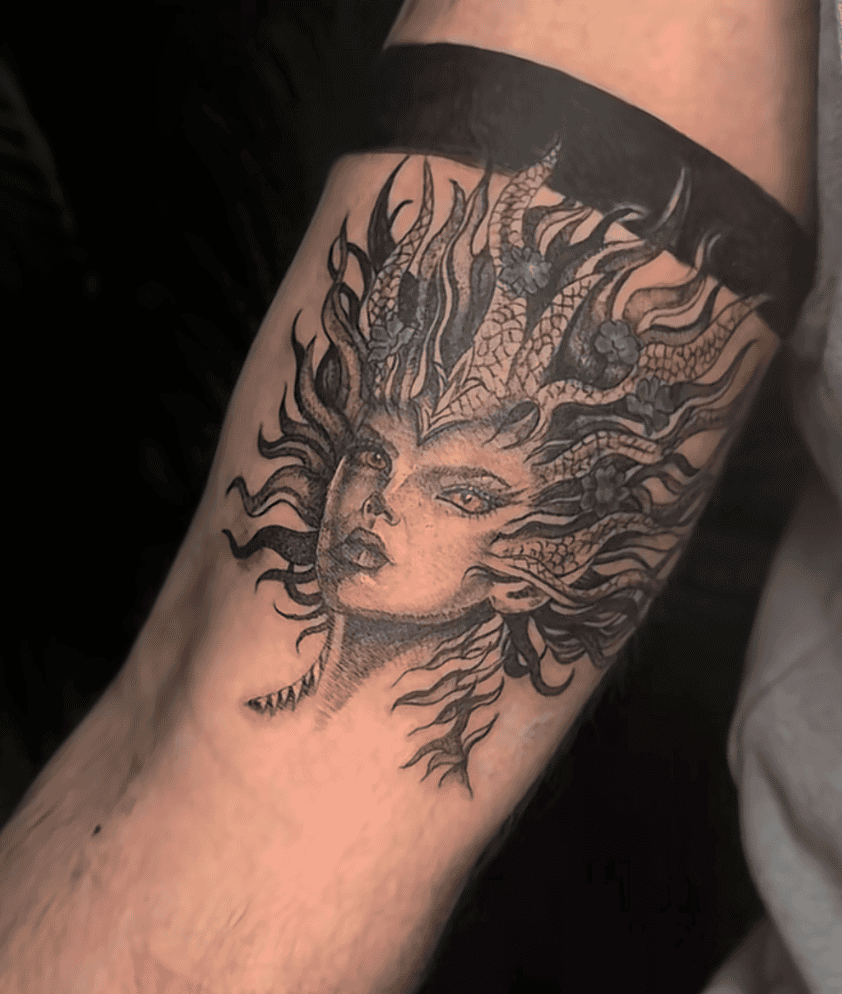
Echidna is a monstrous creature often described as half a beautiful woman and half a serpent. Known as the “Mother of Monsters,” she was the mate of Typhon and the mother of several famous monsters, including the Chimaera, Cerberus, Hydra, and Sphinx. She lived in a cave and was associated with monstrous offspring and the wild.
Orthrus Roman Mythology Tattoo
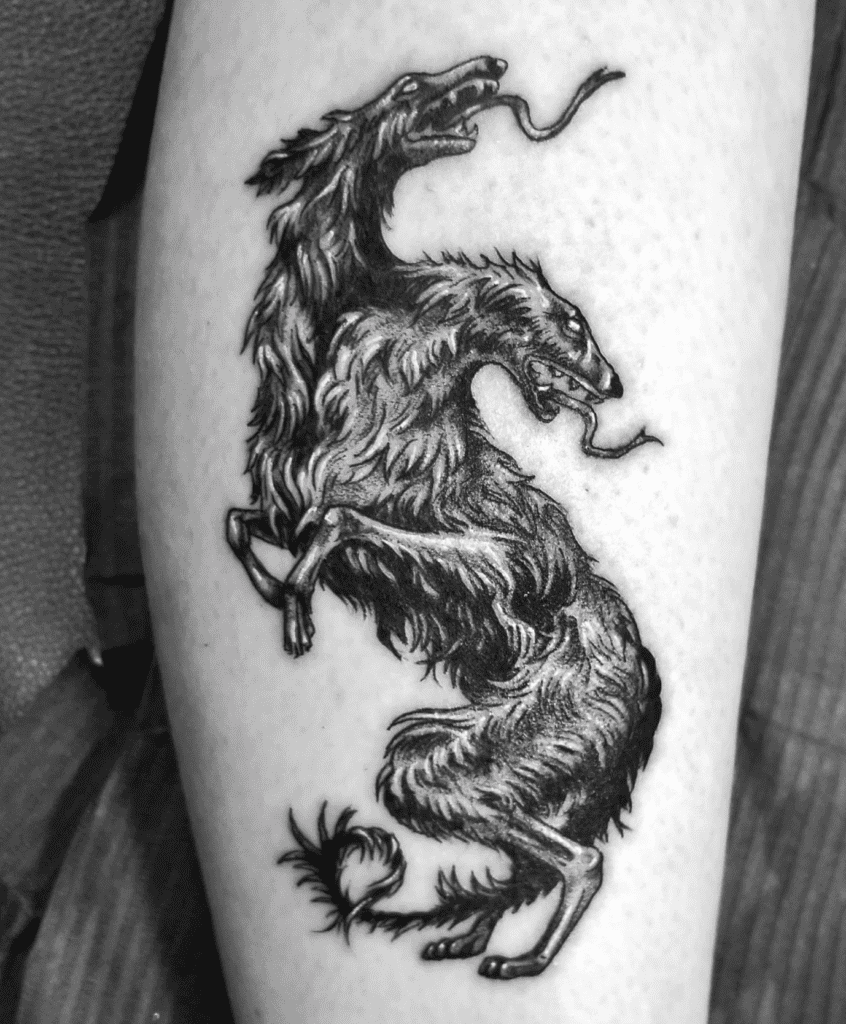
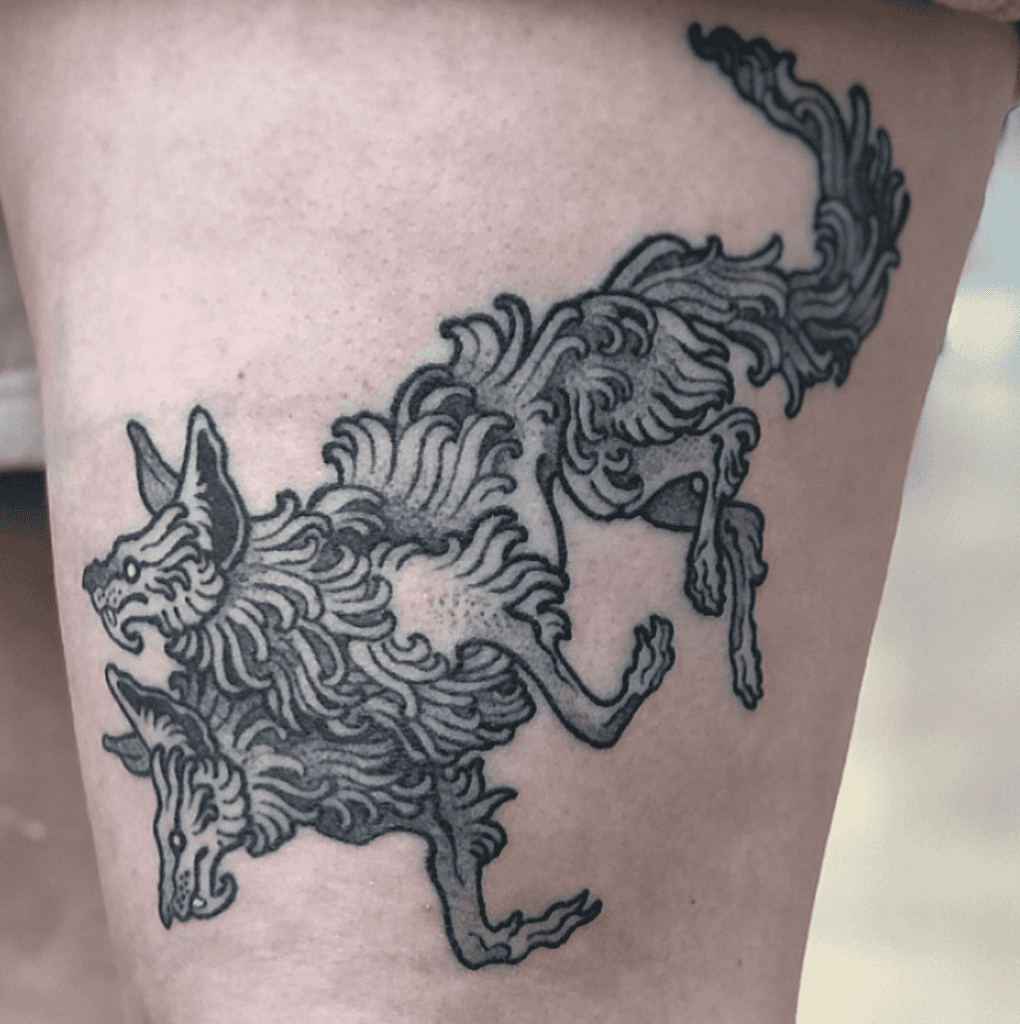
Orthrus is a monstrous two-headed dog and the brother of Cerberus. He was the offspring of Typhon and Echidna and served as the guardian of the cattle belonging to the giant Geryon. During his Tenth Labour, Hercules killed Orthrus while stealing the cattle.
Nemean Lion Roman Mythology Tattoo
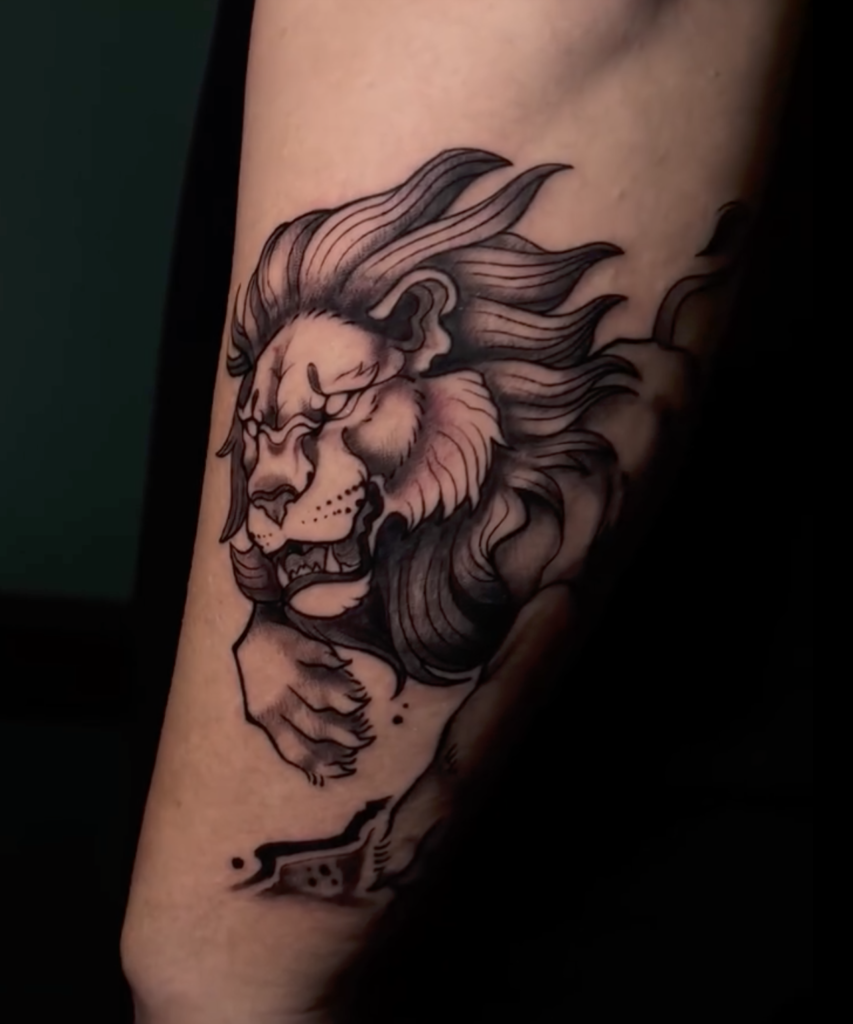
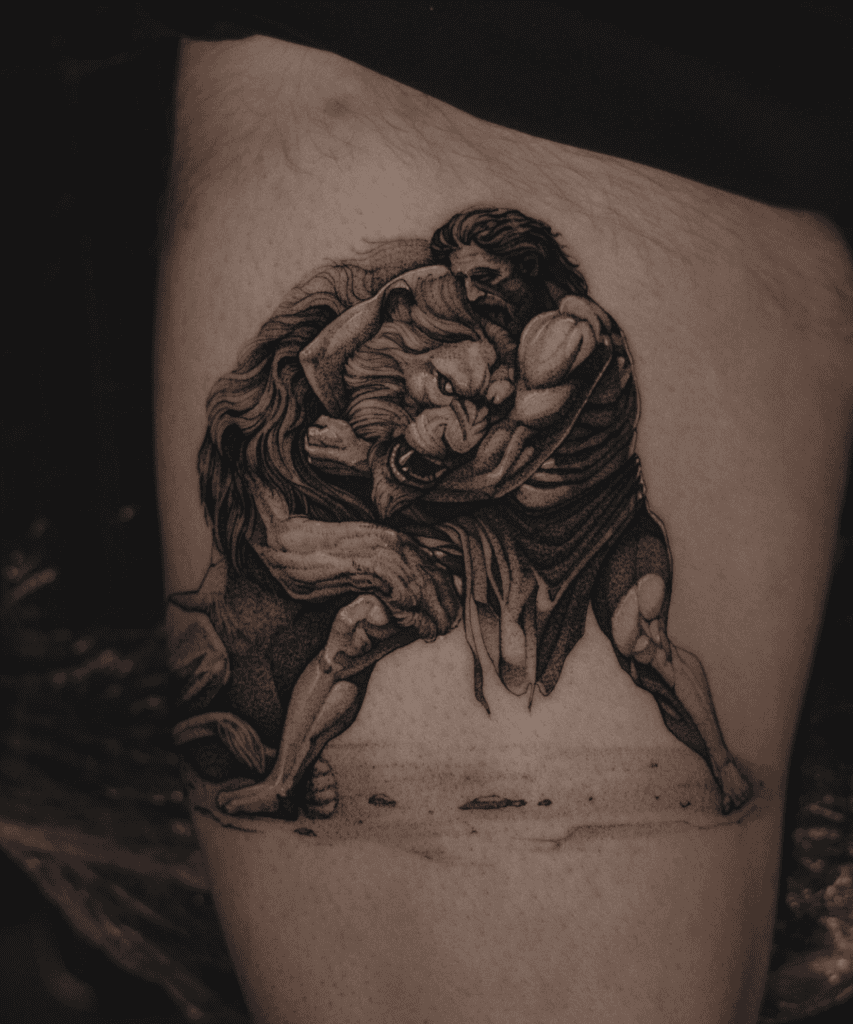
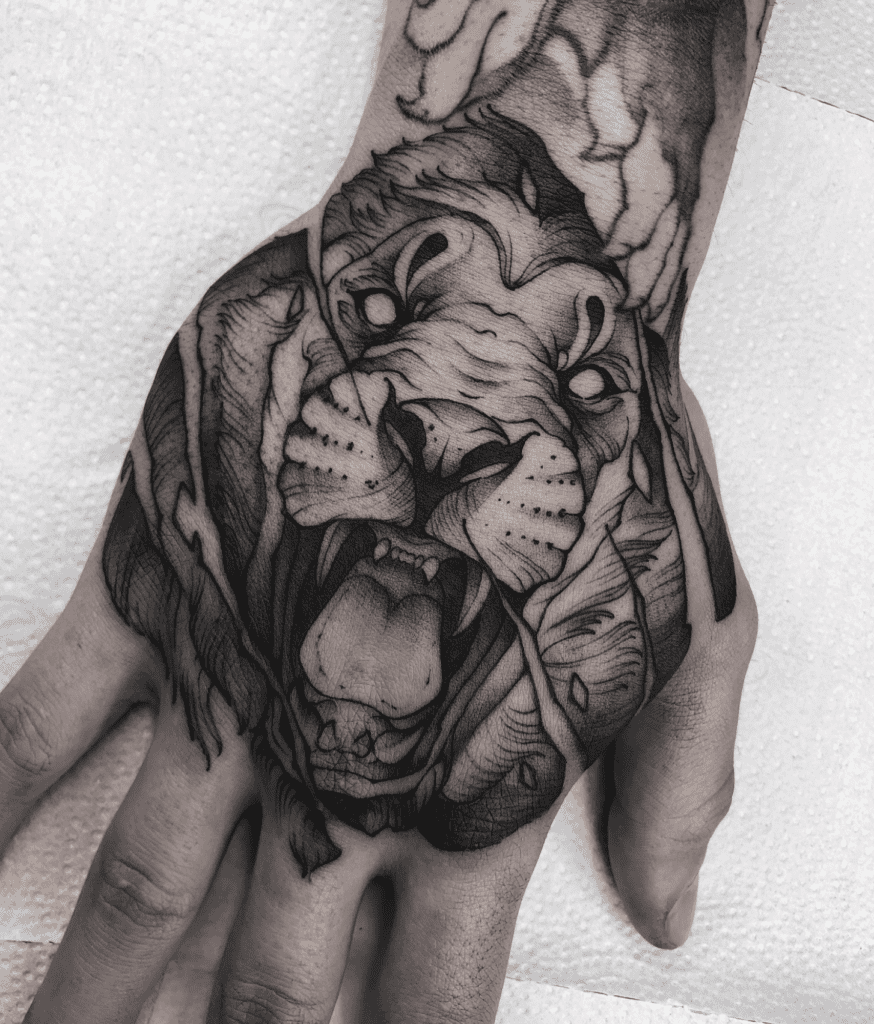
The Nemean Lion was a gigantic, monstrous lion whose impenetrable golden fur made it nearly impossible to kill with ordinary weapons. It terrorised the region of Nemea until Hercules defeated it as the First of his Twelve Labours, eventually strangling it with his immense strength. Heracles then wore its hide as armour, while its image was later associated with the constellation Leo.
Cacus Roman Mythology Tattoo
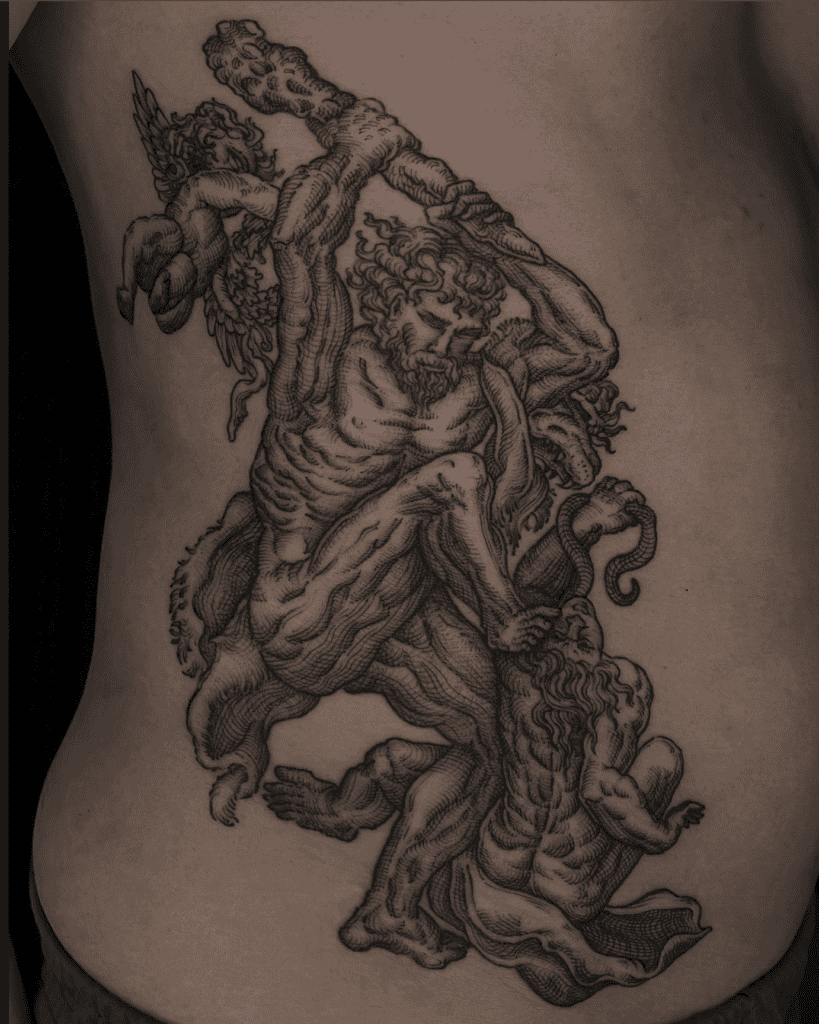
Cacus was a monstrous fire-breathing giant from Roman mythology who lived in a cave beneath the Aventine Hill. He was known for stealing cattle from Hercules and dragging them backwards into his cave to hide their tracks. Hercules eventually discovered the deception and killed Cacus in a fierce battle, making the monster a famous figure in early Roman legends.
Python Roman Mythology Tattoo
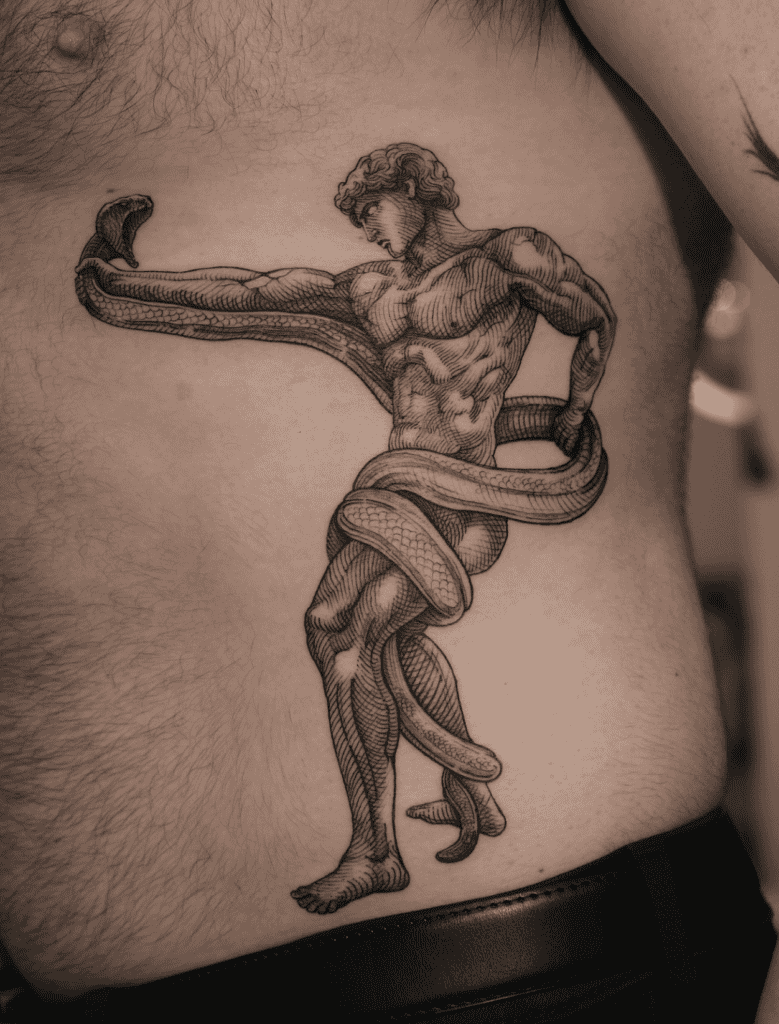
Python was a gigantic serpent or dragon-like monster who lived at Delphi and guarded the sacred oracle of Gaia. The god Apollo eventually slew Python with his arrows and claimed Delphi as his own sacred sanctuary. The Pythian Games and the title Pythia, used for Apollo’s priestess at Delphi, were named after Python.
Ladon Roman Mythology Tattoo
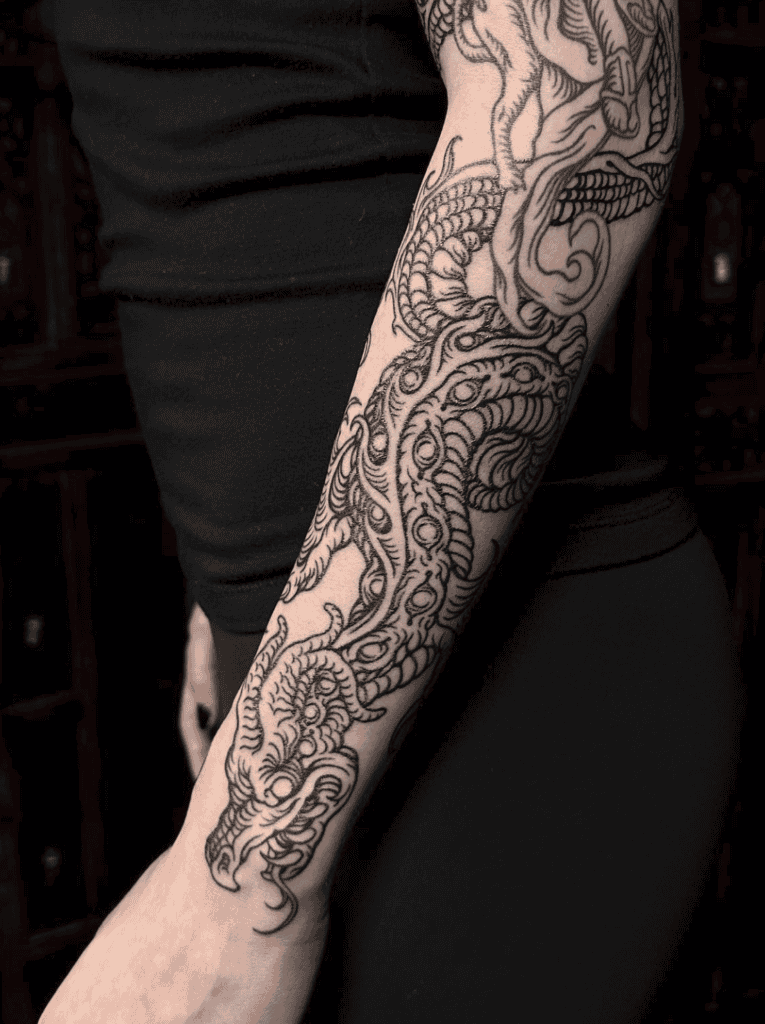
Ladon was a fearsome dragon-like serpent who guarded the Golden Apples of the Hesperides. He was often described as having many heads and never sleeping, making him a nearly perfect guardian. During his Eleventh Labour, Hercules was tasked with obtaining the Golden Apples and ultimately defeated Ladon, though some versions say Atlas retrieved the apples instead.
Hydra Roman Mythology Tattoo
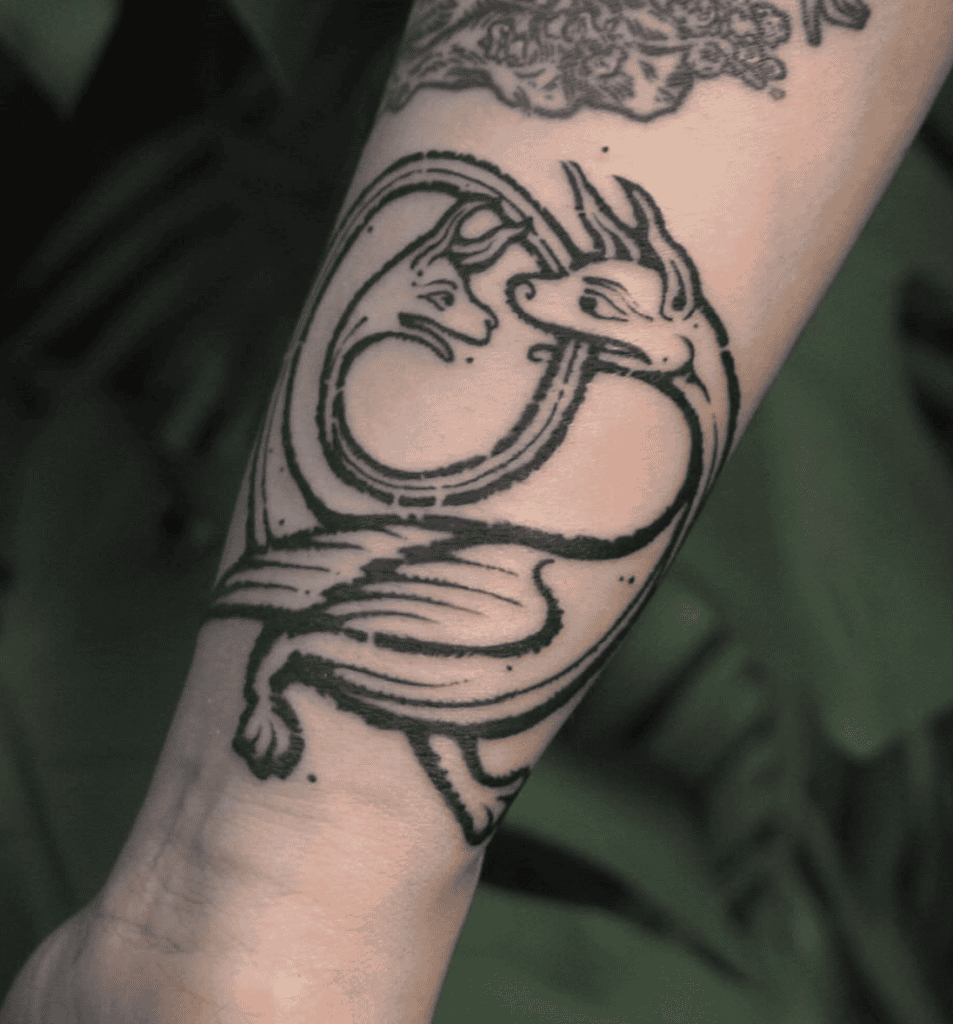
Amphisbaena is a legendary two-headed serpent from Greek and Roman mythology. One head is located at each end of its body, allowing it to move forward or backwards with equal ease. Its name comes from the Greek amphisbainein, meaning “to go both ways.” Ancient writers also associated it with unusual powers such as digging through the earth and surviving in harsh conditions.
Basilisk Roman Mythology Tattoo
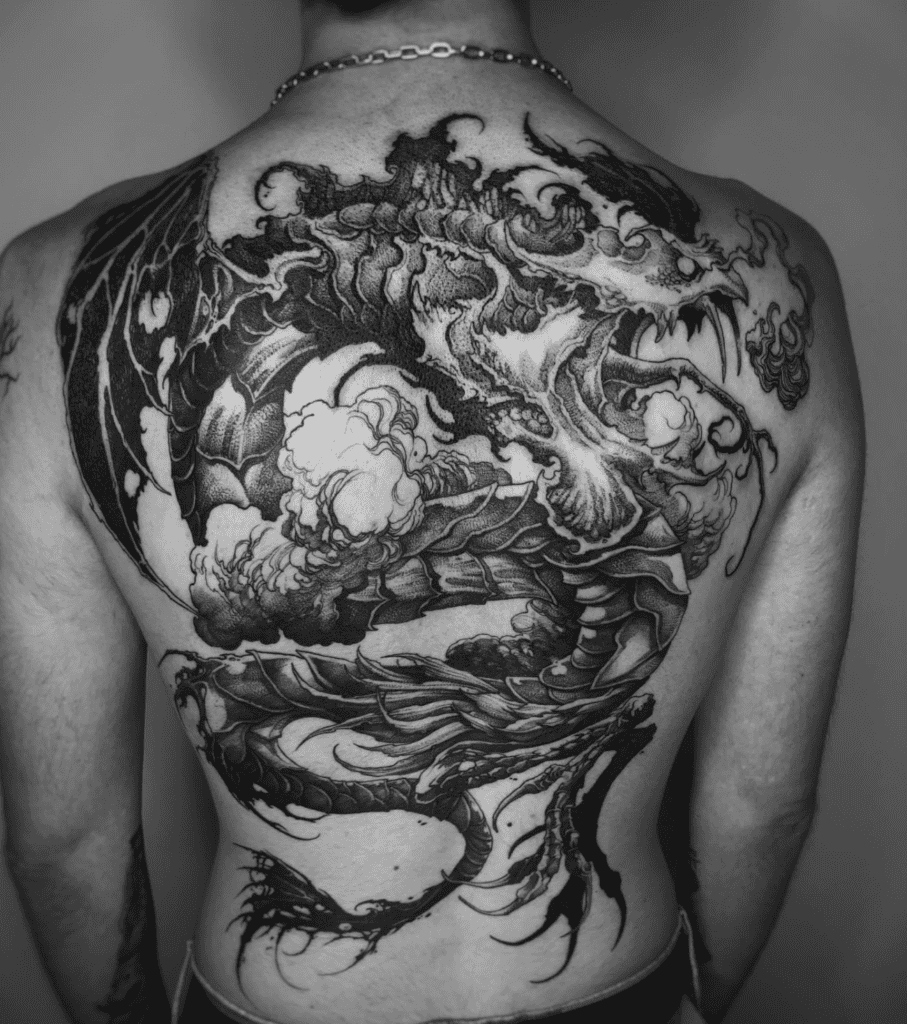
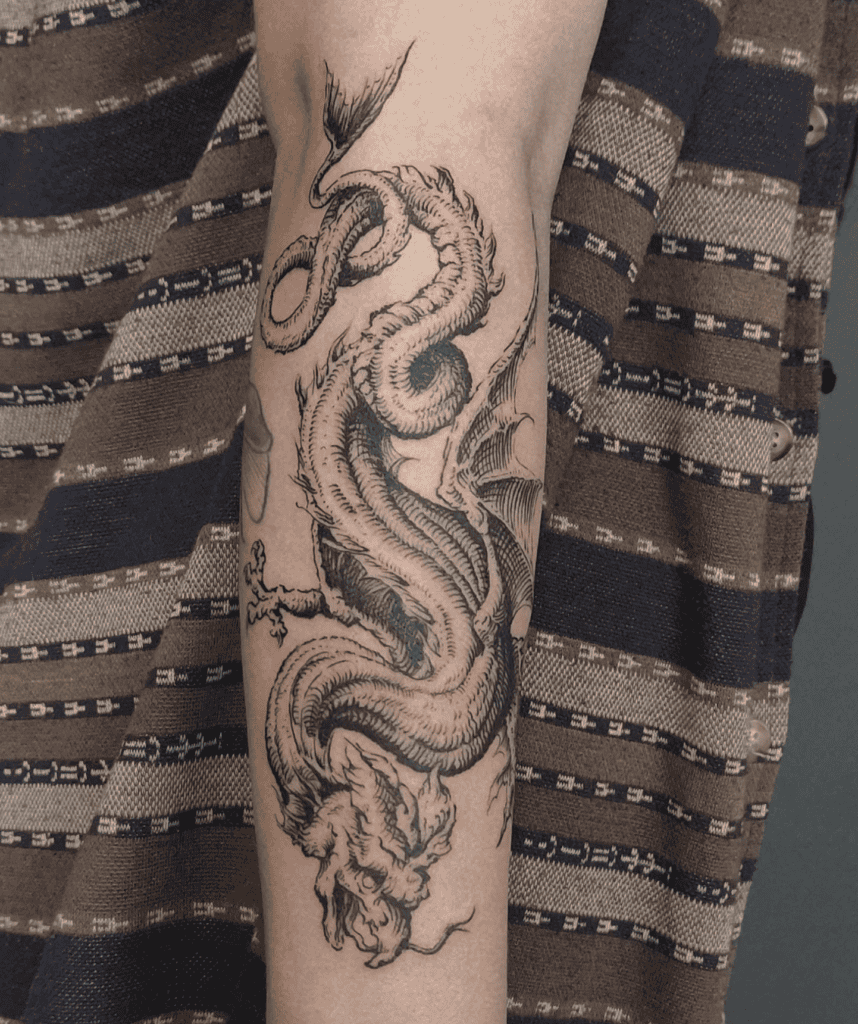
The Basilisk is a legendary serpent known as the “King of Serpents.” Ancient descriptions portray it as a small but deadly snake capable of killing with its gaze, breath, or venom. Later medieval legends transformed it into a more dragon-like creature, sometimes featuring a crown-like crest and rooster-like traits.
She-Wolf of Rome Roman Mythology TattooXX
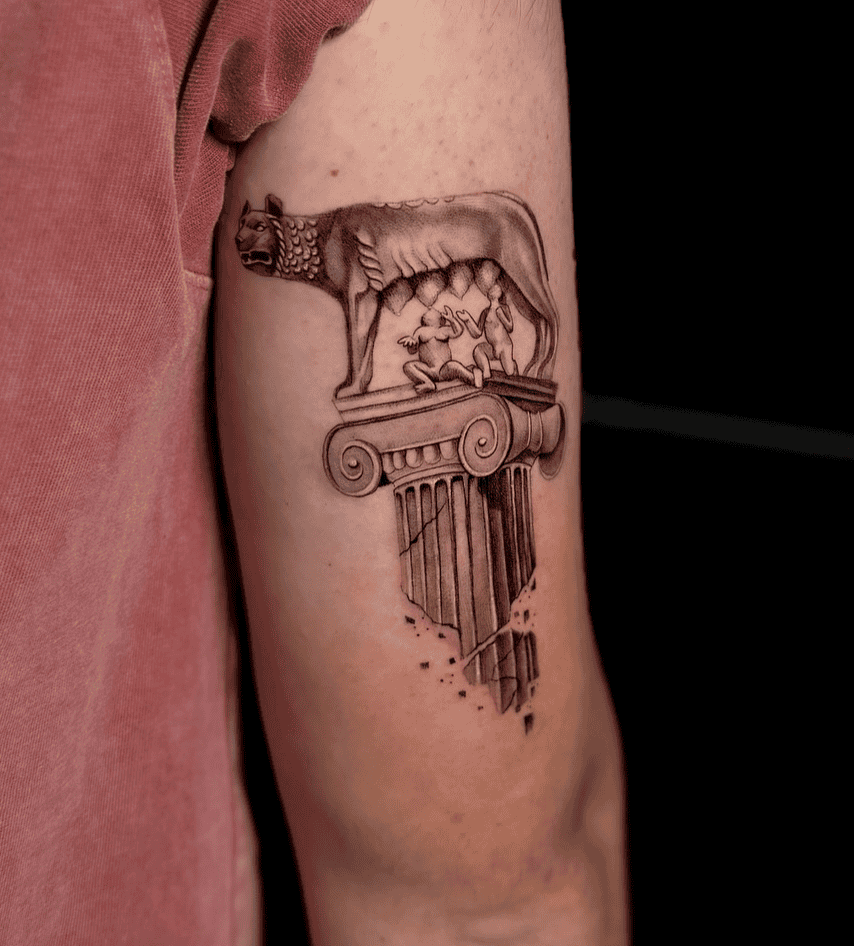
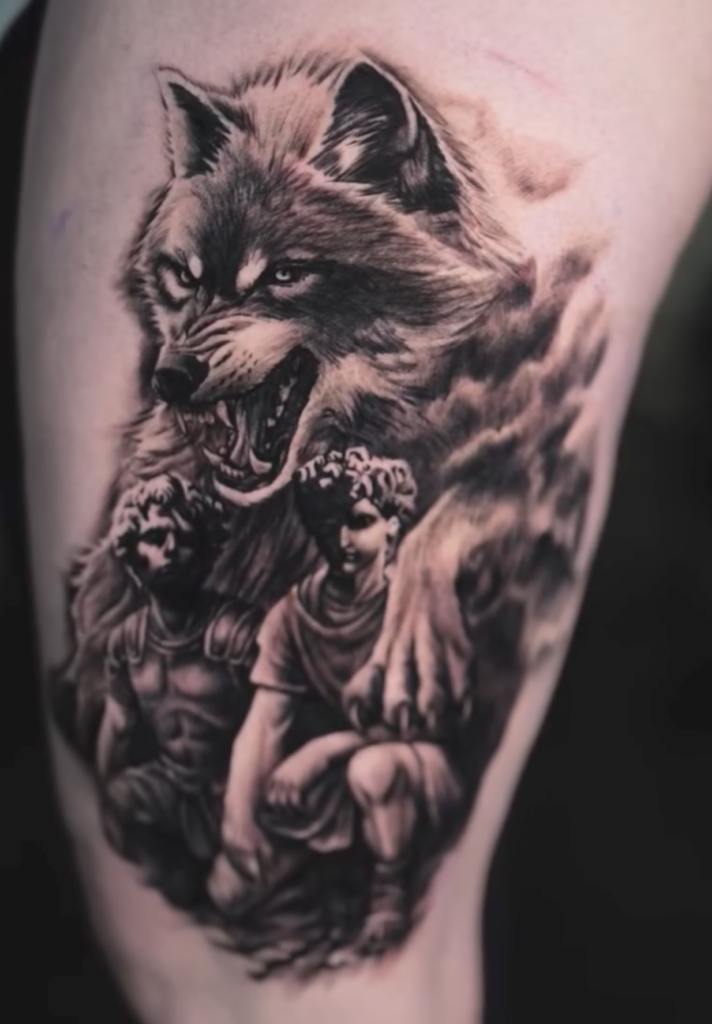
The She-Wolf of Rome, or Lupa, is the legendary wolf who nursed the abandoned twins Romulus and Remus after they were left to die near the Tiber River. The twins were eventually discovered and raised by the shepherd Faustulus. Romulus later founded Rome, making the she-wolf an enduring symbol of Rome, motherhood, protection, and the city’s legendary origins.
Phoenix Roman Mythology Tattoo
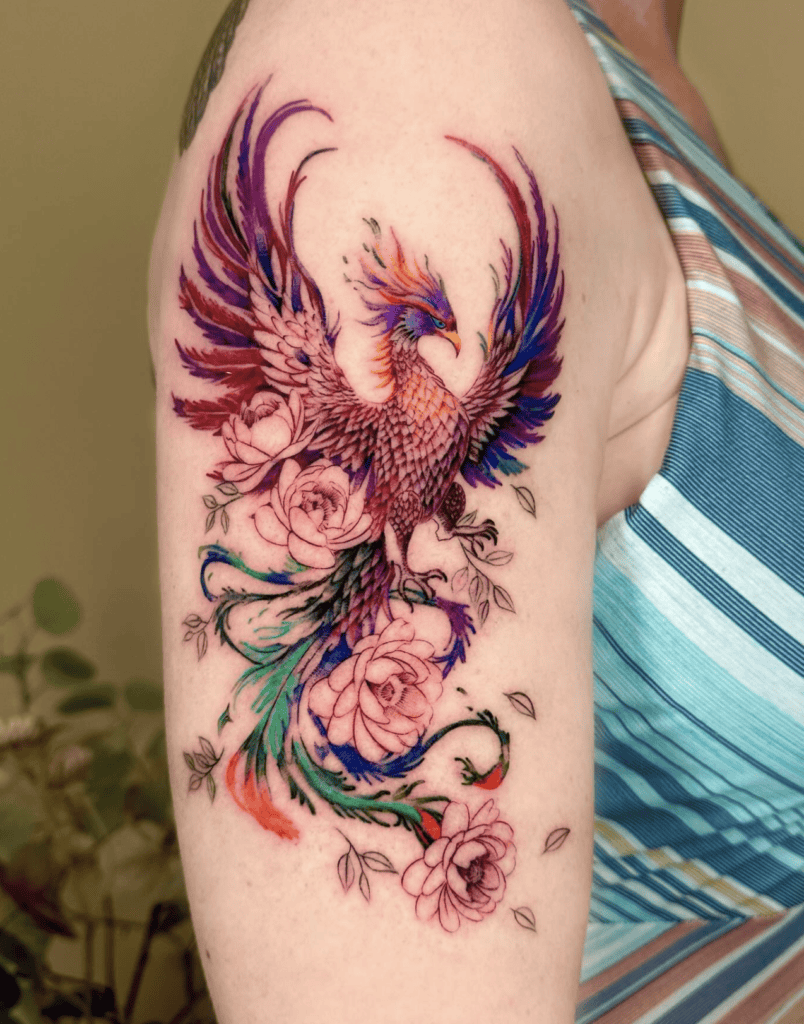
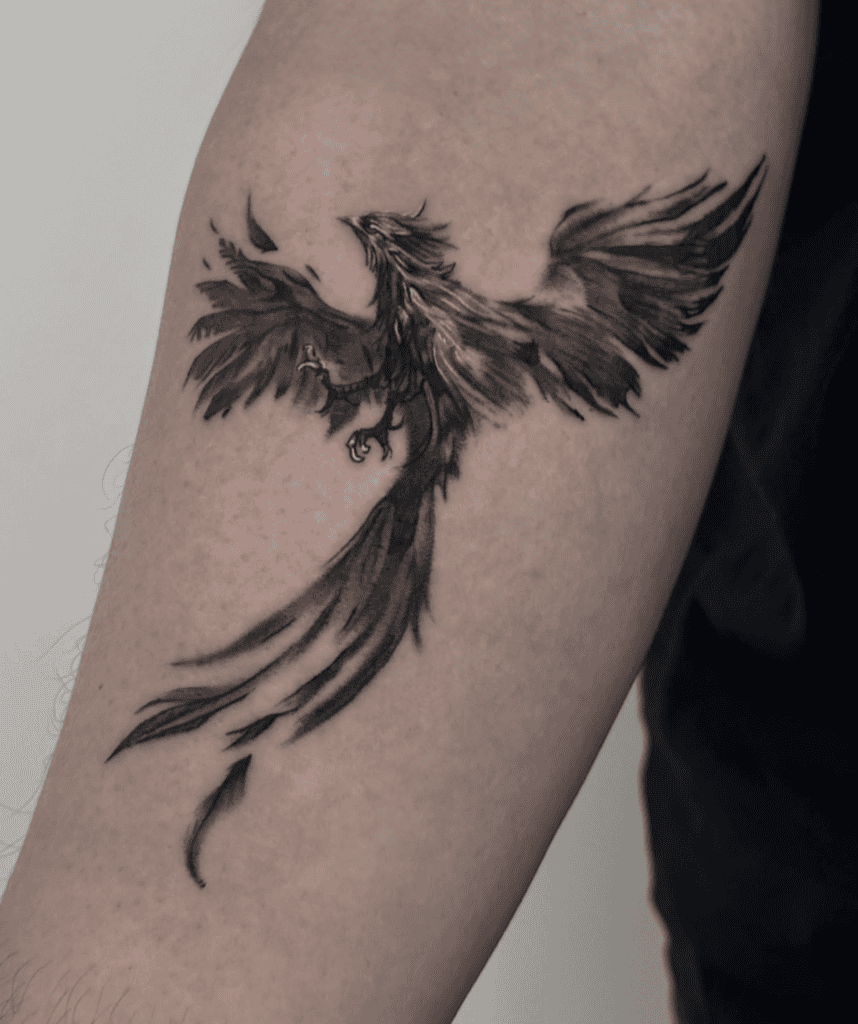
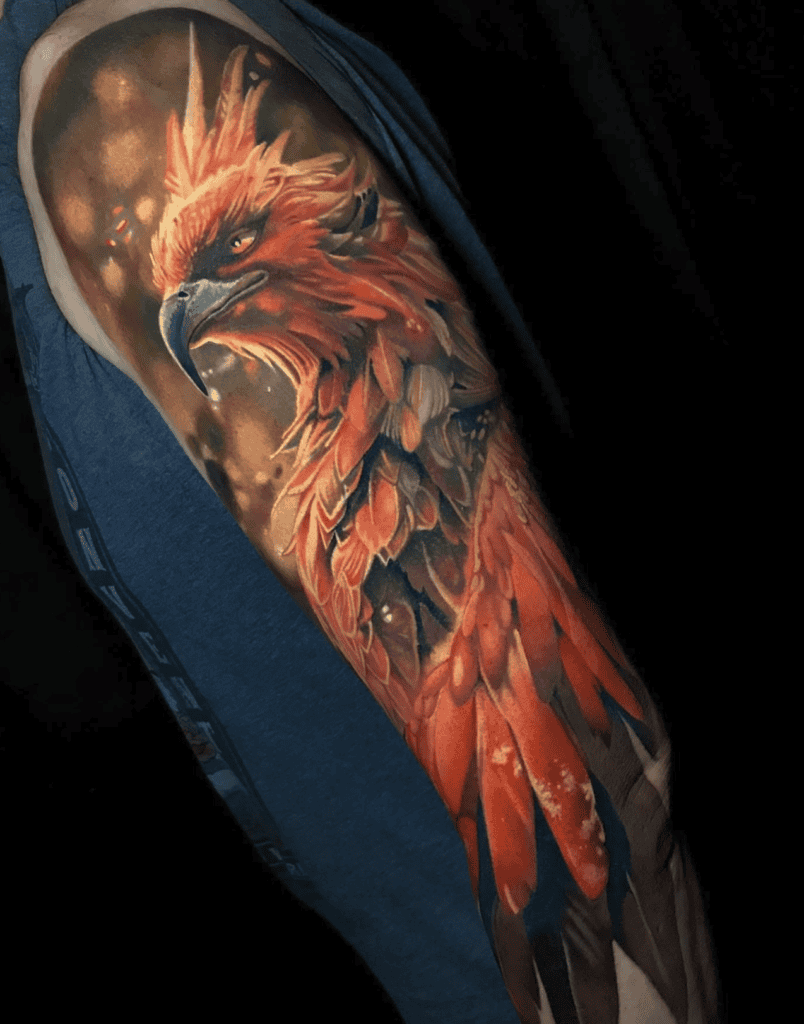
The Phoenix is a legendary bird associated with fire, death, and rebirth. In ancient traditions, it was said to live for centuries before being consumed by flames and rising again from its ashes, beginning a new life. The Phoenix became a powerful symbol of renewal, immortality, and resurrection, and its legend spread from ancient Egyptian and Greek traditions into Roman culture.
Stymphalian Birds Roman Mythology Tattoo
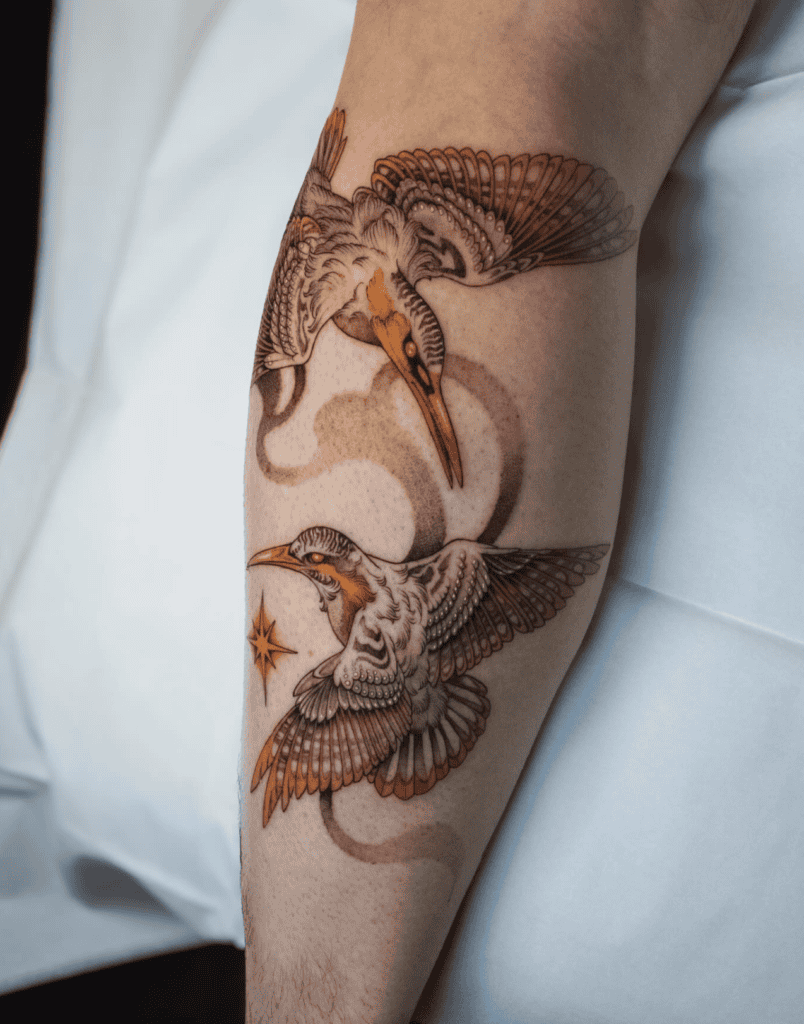
The Stymphalian Birds were a flock of monstrous birds that lived around Lake Stymphalia in Arcadia. They had sharp bronze feathers that could be launched like weapons, along with deadly beaks and claws. During his Sixth Labour, Hercules frightened the birds into the air using a magical bronze rattle given to him by Minerva, allowing him to shoot many of them down.
Chrysomallos Roman Mythology Tattoo
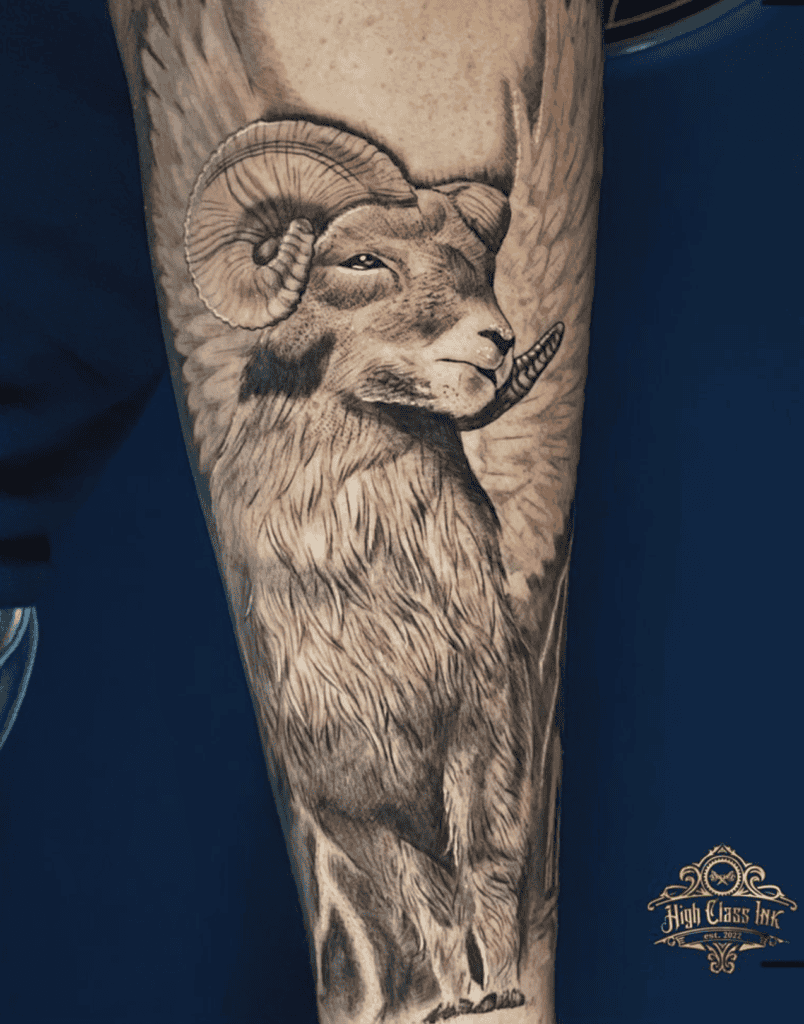
Chrysomallos was the magical Golden Ram from Roman mythology whose golden fleece became one of the most famous treasures of ancient myth. Sent by the god Mercury to rescue the children Phrixus and Helle, the flying ram carried them away from danger, though Helle fell into the sea along the way. Phrixus eventually sacrificed Chrysomallos to Jupiter and hung its fleece in Colchis, where it was guarded by a dragon and later sought by Jason and the Argonauts.
Romulus & Remus Roman Mythology Tattoo
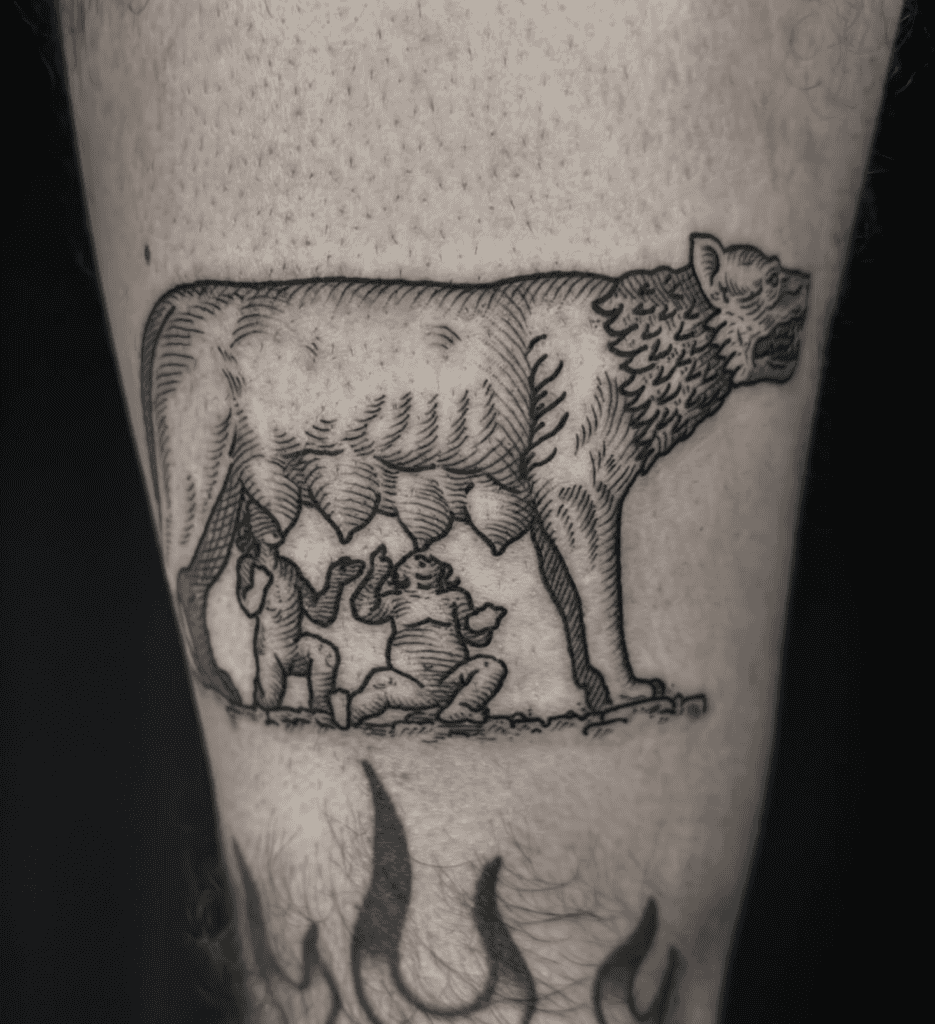
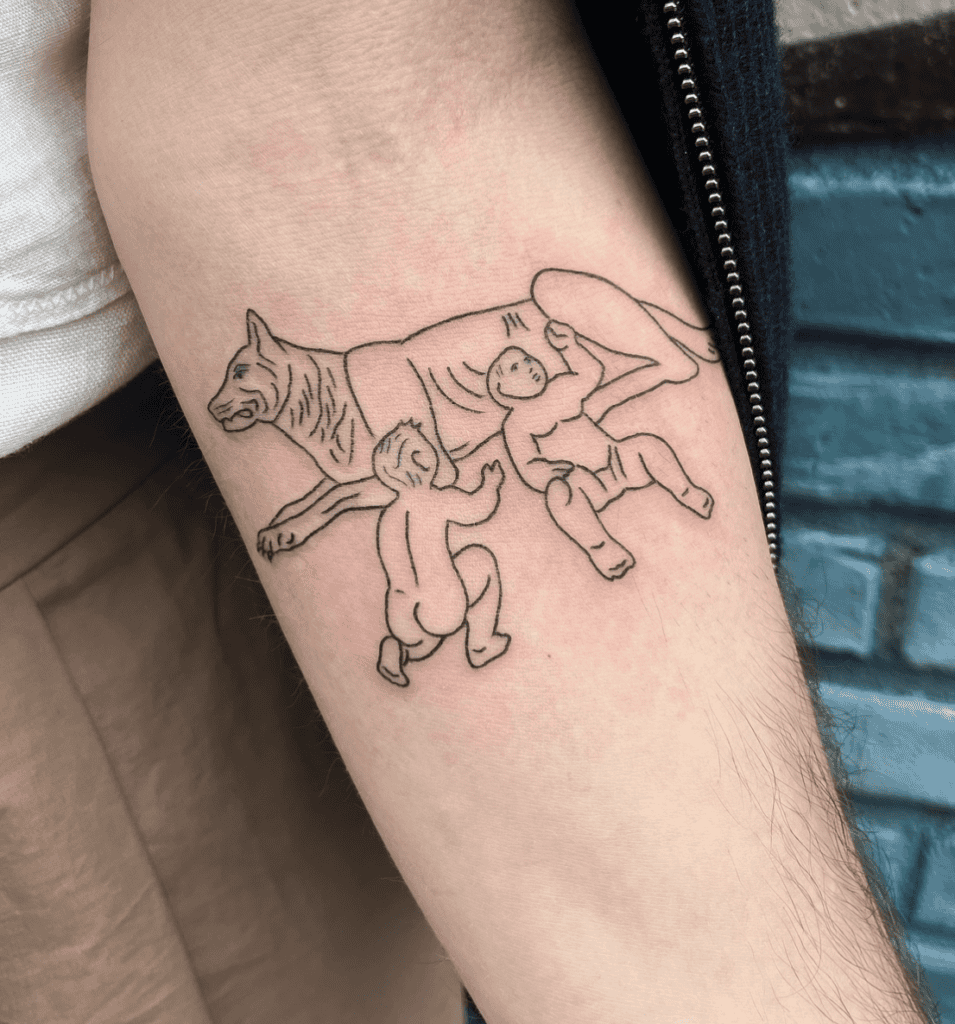
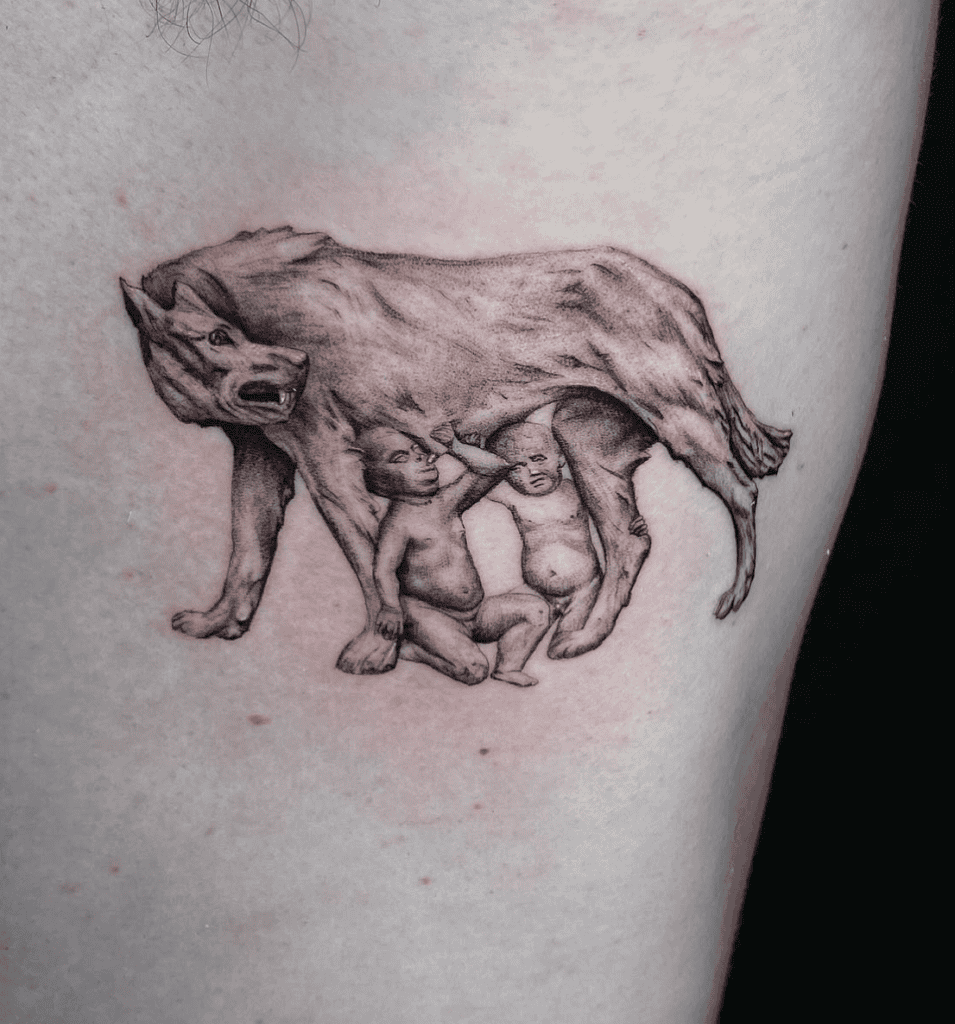
Romulus and Remus were the legendary twin brothers and founders of Rome. They were the sons of Mars and the princess Rhea Silvia, but were abandoned as infants and famously nursed by a she-wolf before being raised by the shepherd Faustulus and his wife. As adults, the brothers decided to establish a city, but a dispute over its location and leadership ended with Romulus killing Remus. Romulus became the first king of Rome, giving the city its legendary name.
Aeneas Roman Mythology Tattoo
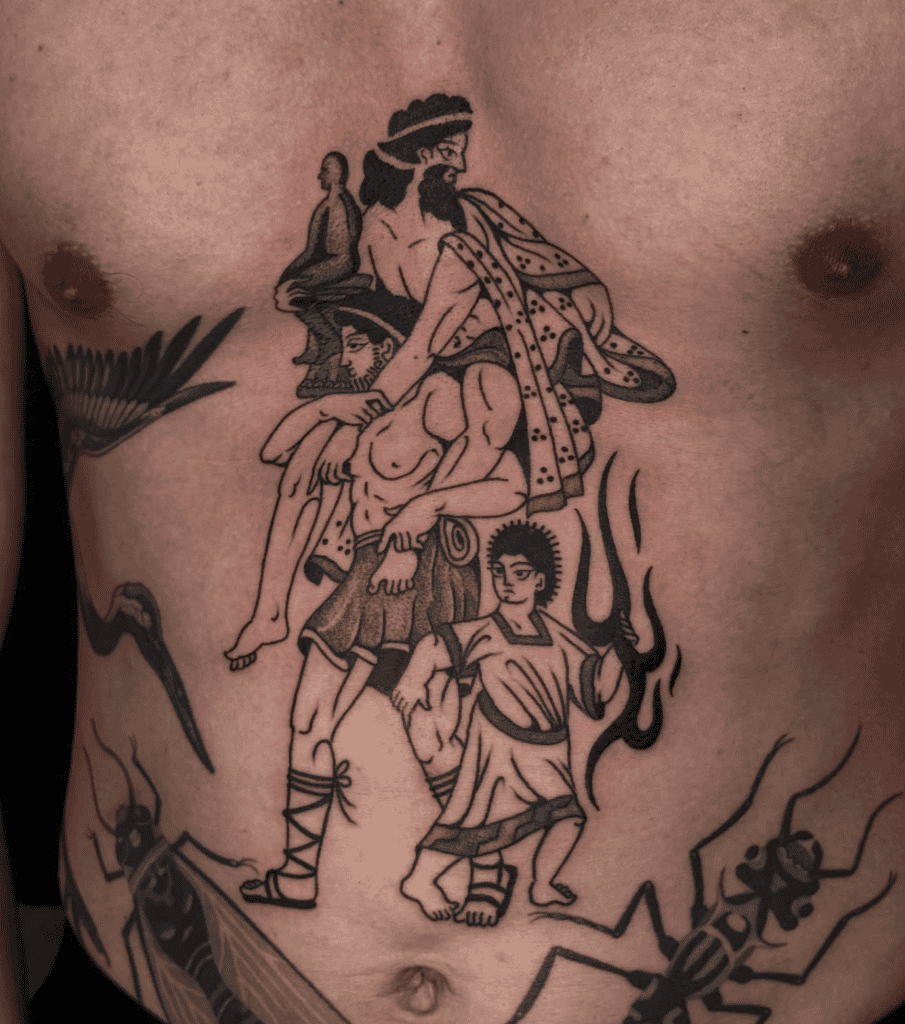
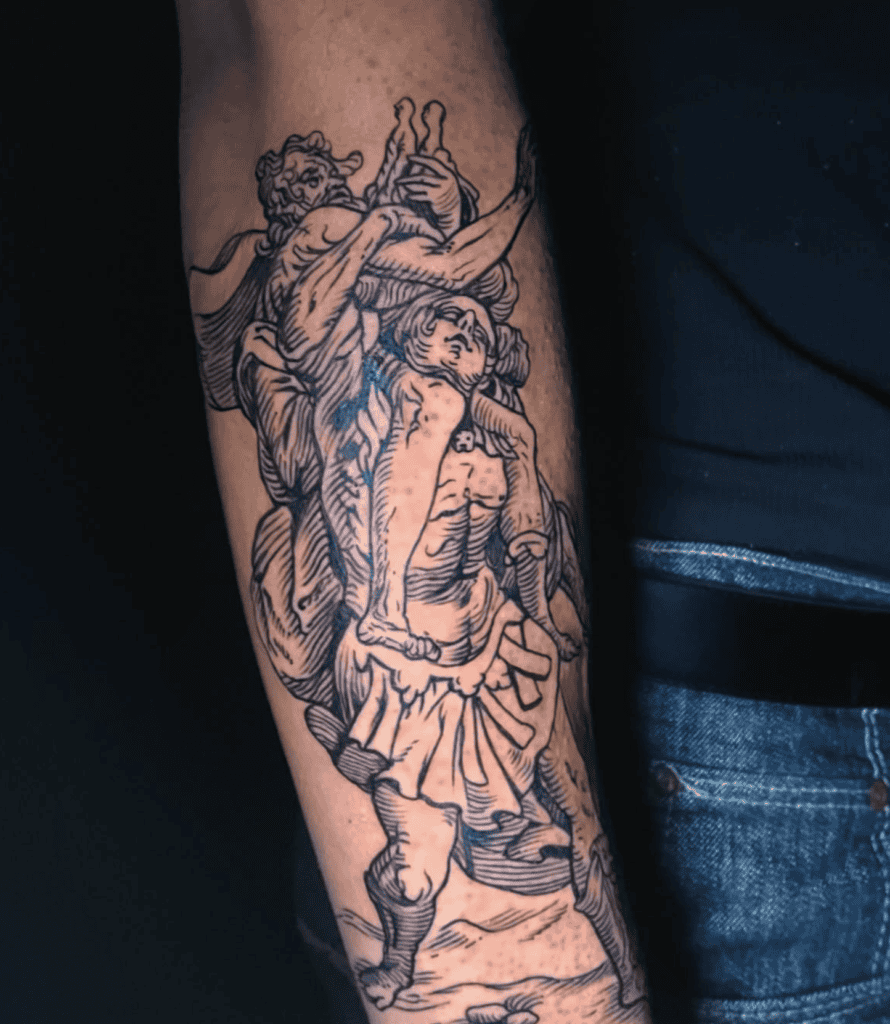
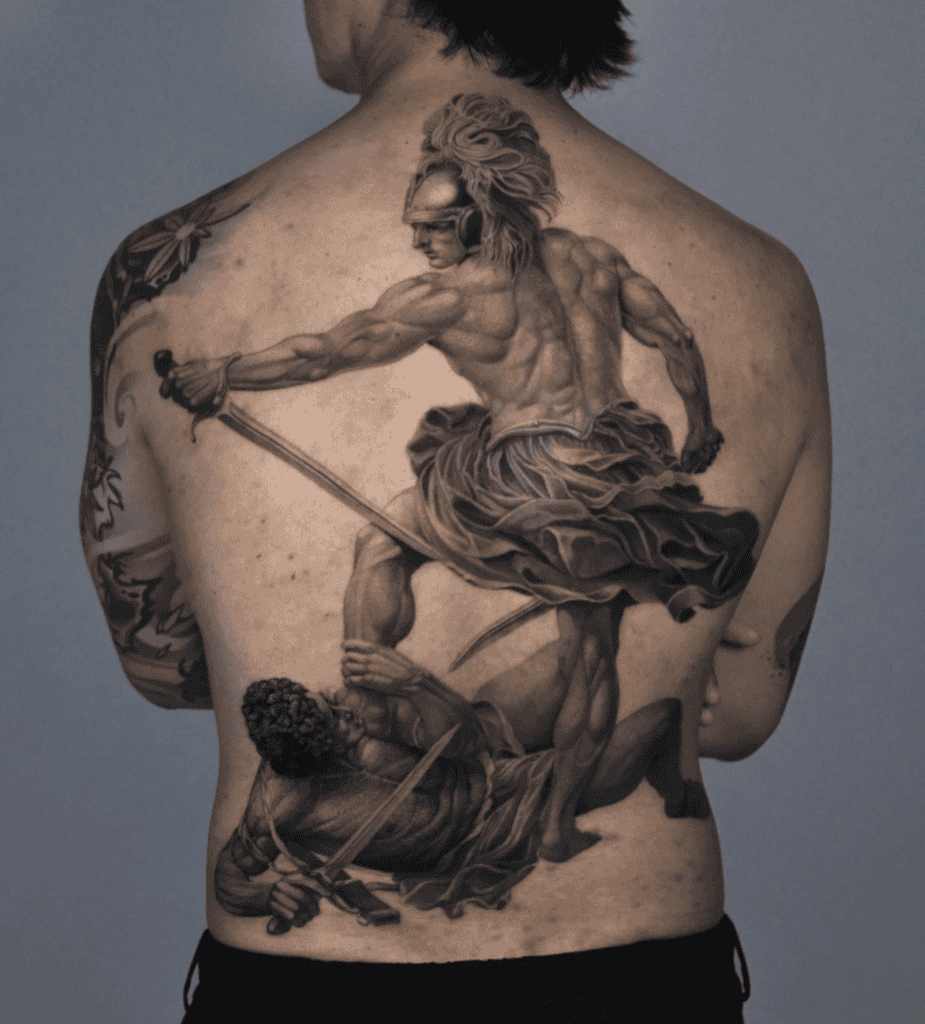
Aeneas was a legendary Trojan hero who became one of the most important figures in Roman mythology. After the fall of Troy, he escaped with his father Anchises and son Ascanius, eventually reaching Italy. According to Virgil’s Aeneid, Aeneas became an ancestor of the Romans through his son Ascanius and the later royal line that led to Romulus and Remus.
As the son of Venus and the Trojan prince Anchises, Aeneas connected Rome to both Troy and the Roman gods. His journey became a founding legend of Rome and a major symbol of duty, destiny, courage, and perseverance.
Hercules Roman Mythology Tattoo
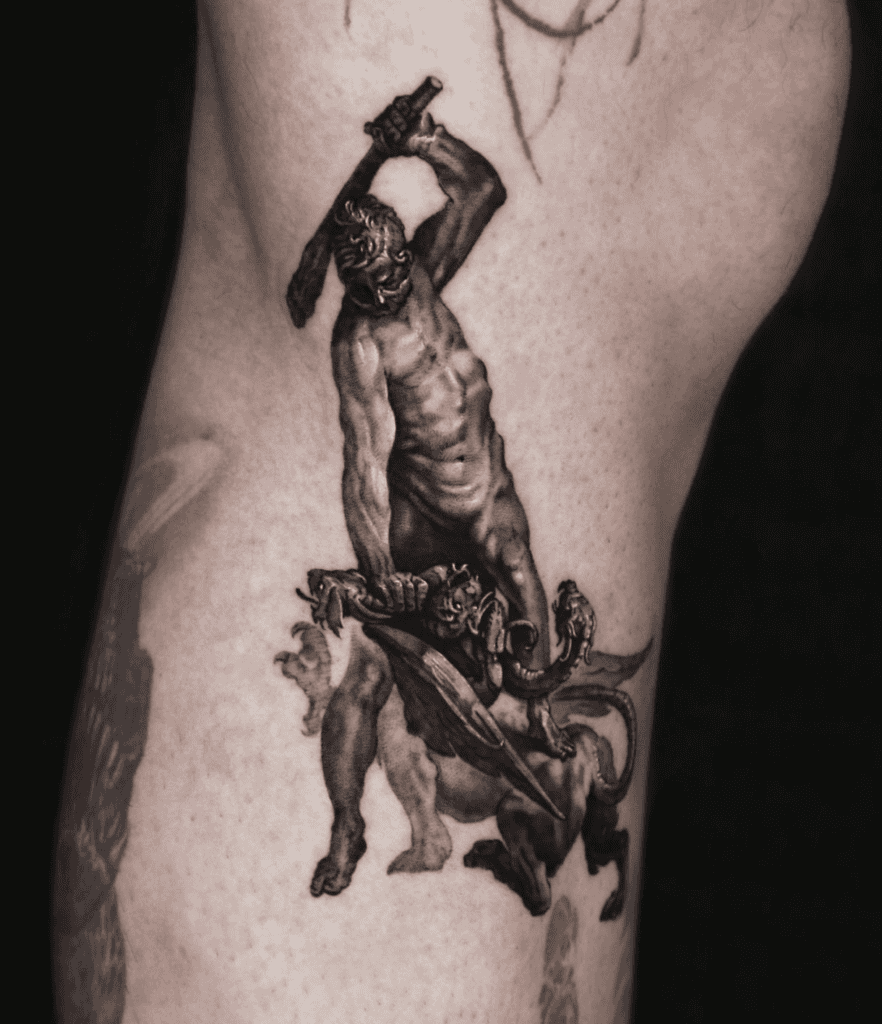
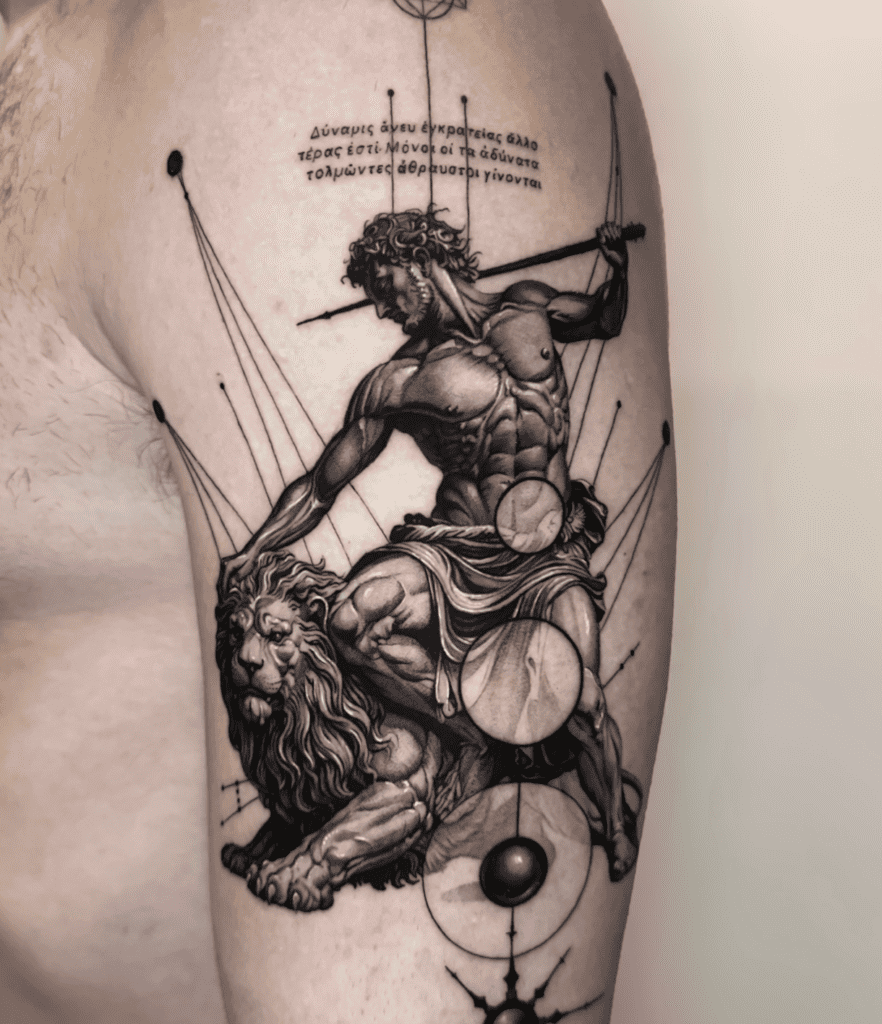
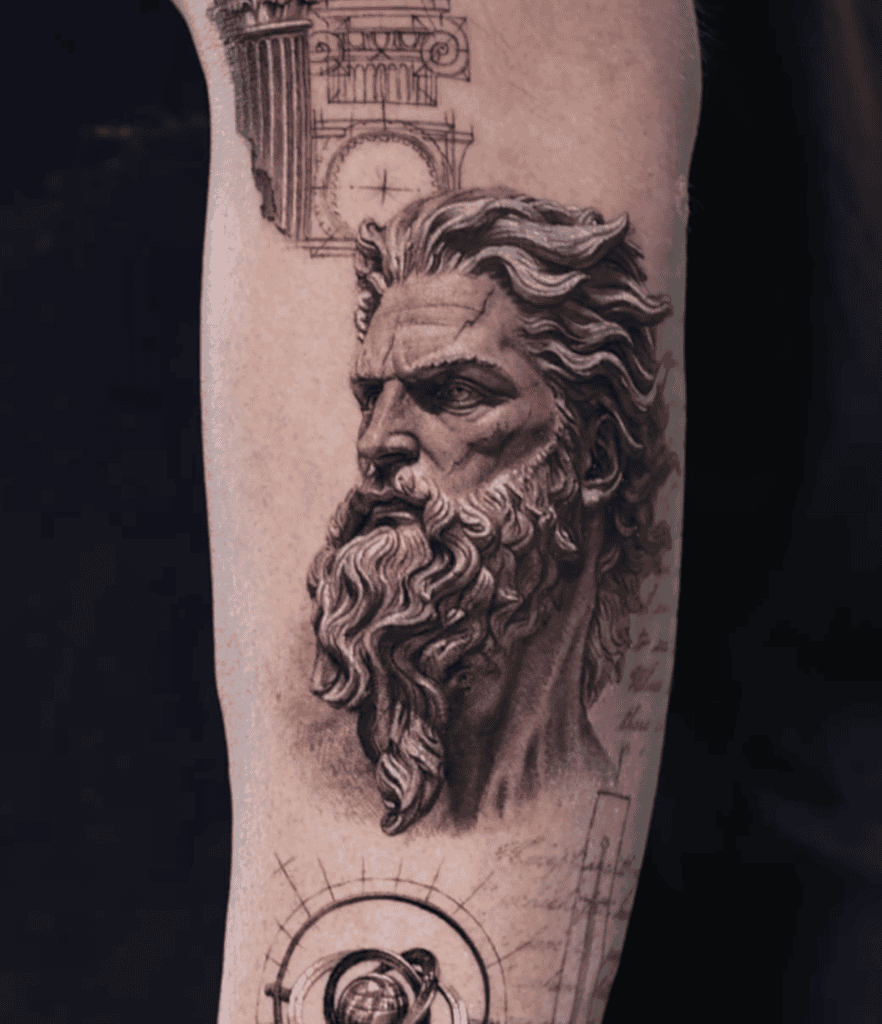
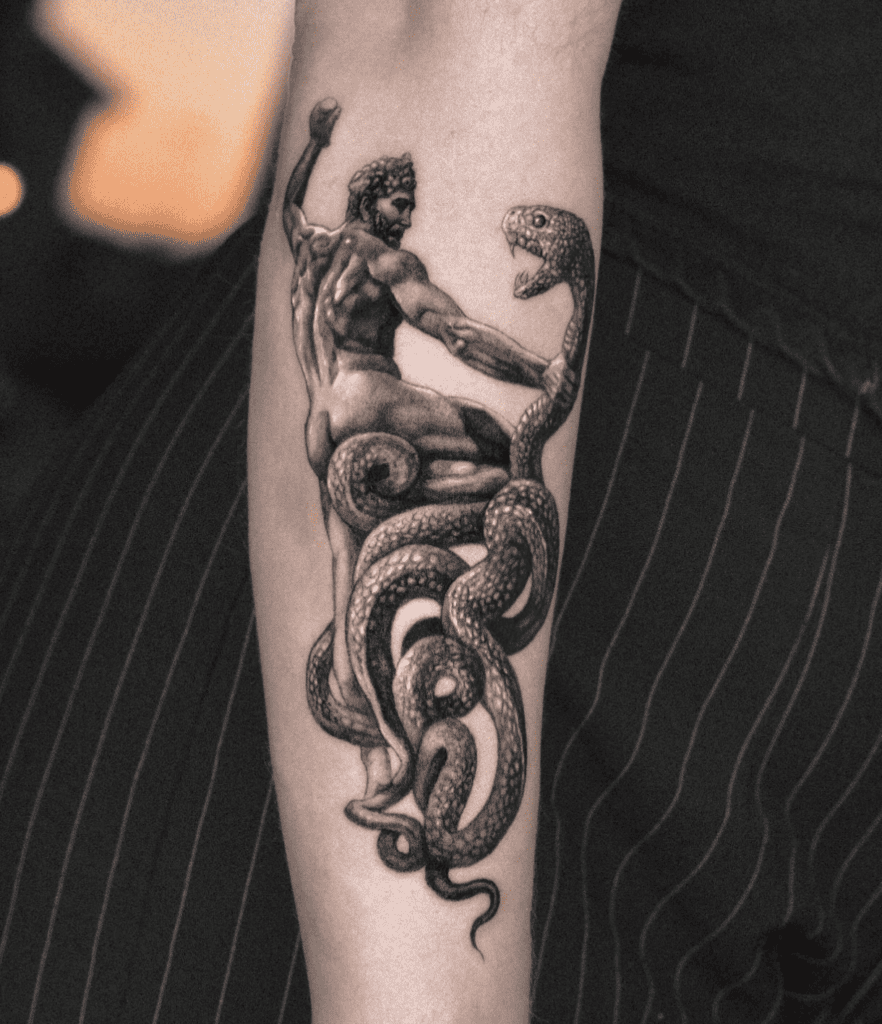
Hercules, the counterpart to Greece’s Heracles, was one of the most famous heroes of Roman mythology, renowned for his immense strength, courage, and legendary Twelve Labours. Born the son of Jupiter and the mortal woman Alcmena, he was forced to complete a series of seemingly impossible tasks, including defeating the Nemean Lion, Lernaean Hydra, and Cerberus. After completing his Labours and enduring many other trials, Hercules was granted immortality among the gods.
Despite almost always being depicted as a Greek Hero. Modern culture often uses the Roman name Herculaes, rather than the original Greek name of Heracles.
Perseus Roman Mythology Tattoo
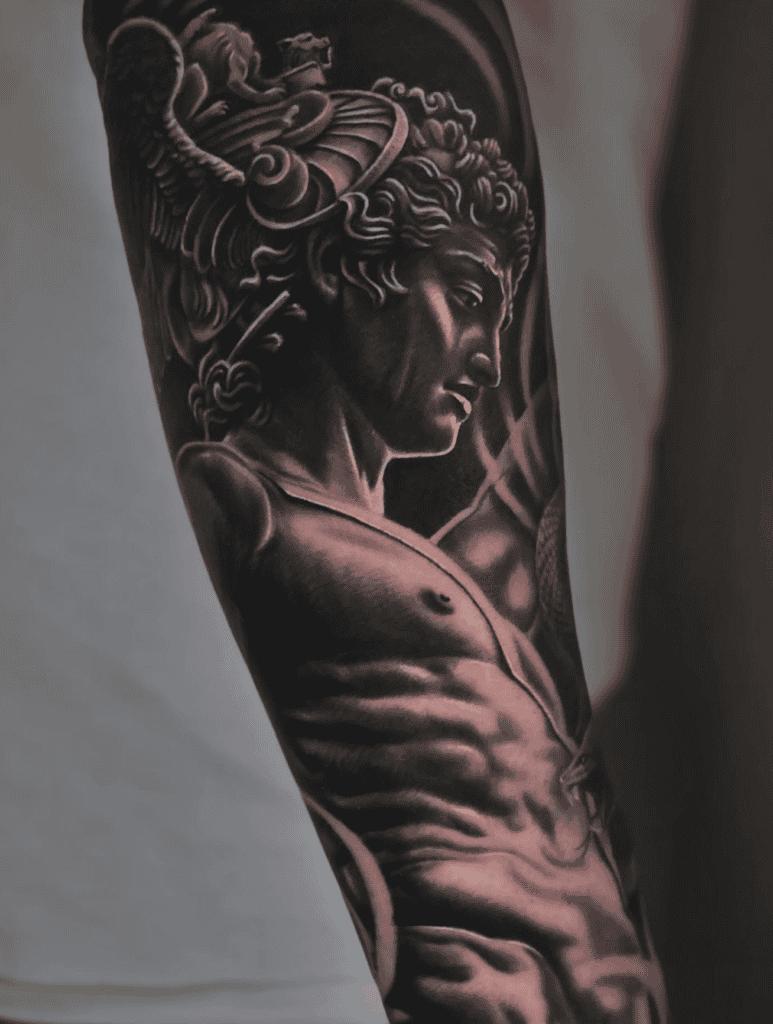
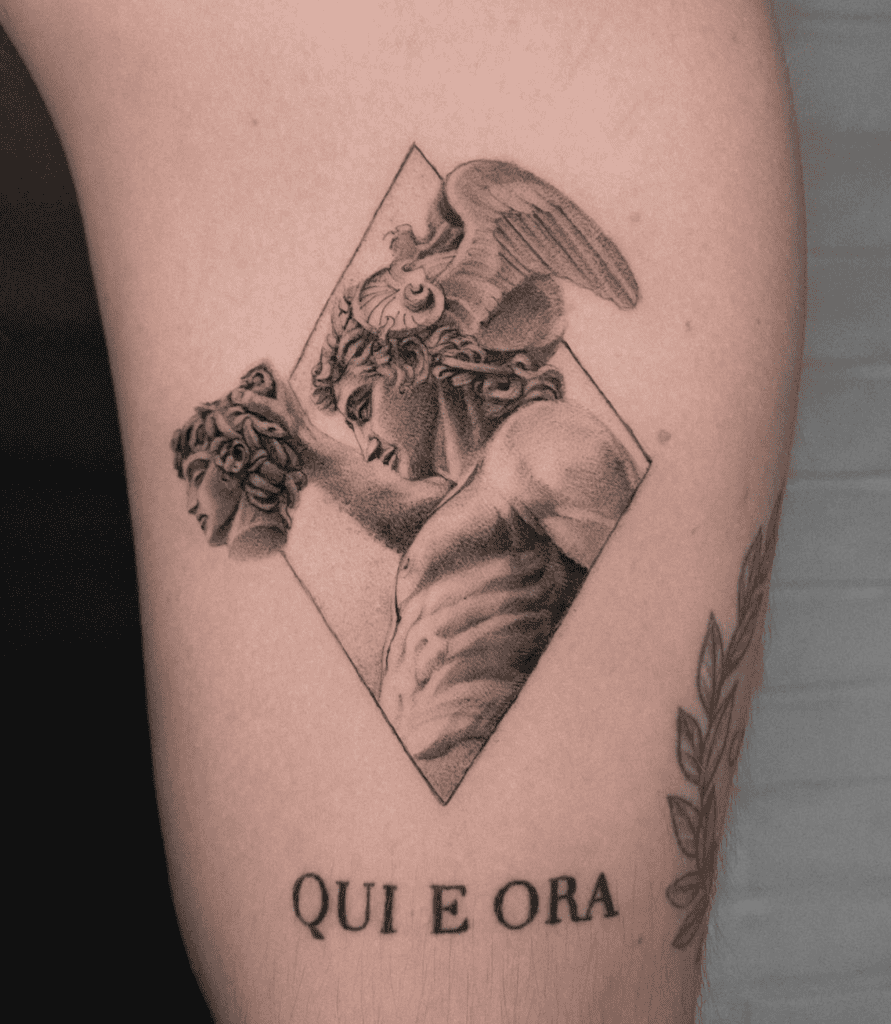
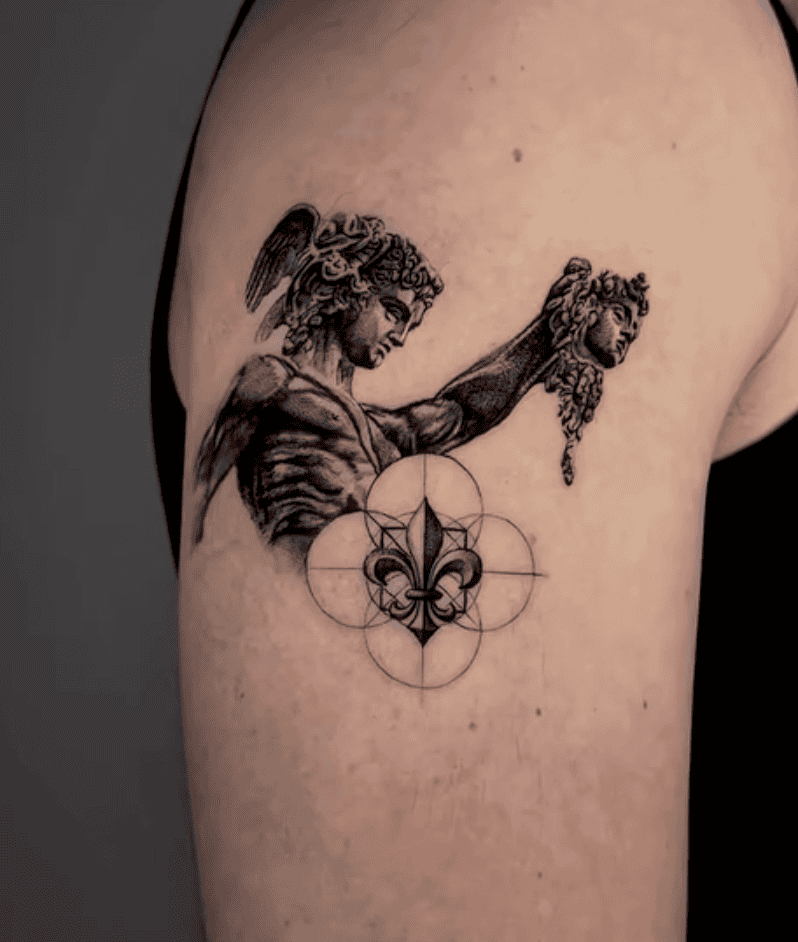
Perseus was a legendary Greek hero best known for slaying Medusa, the snake-haired Gorgon whose gaze could turn people to stone. With help from the gods, including Athena and Hermes, Perseus used a reflective shield to avoid Medusa’s gaze and successfully defeated her. He later rescued Andromeda from the sea monster Cetus and became the legendary founder of Mycenae.
Theseus Roman Mythology Tattoo
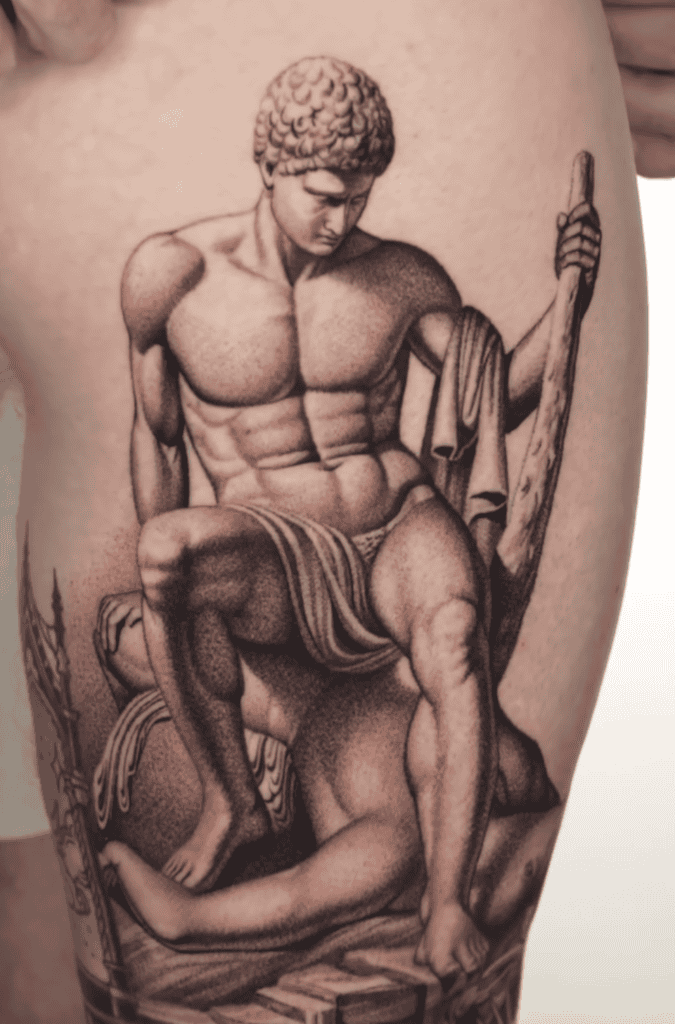
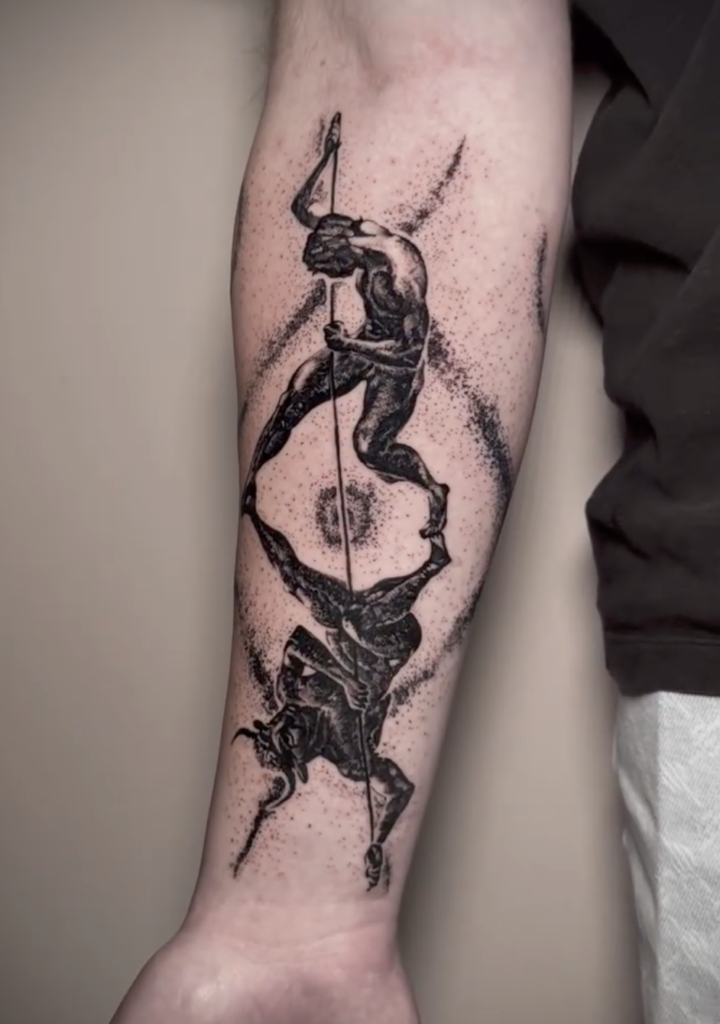
Theseus was a legendary Greek hero and king of Athens, best known for defeating the Minotaur inside the Labyrinth of Crete. With Ariadne’s help, Theseus used a thread to find his way back out after slaying the monster. He also completed several other heroic adventures and became an important legendary founder and unifier of Athens. Theseus was adopted directly into Roman mythology and retained his Greek name and legendary adventures.
Jason Roman Mythology Tattoo
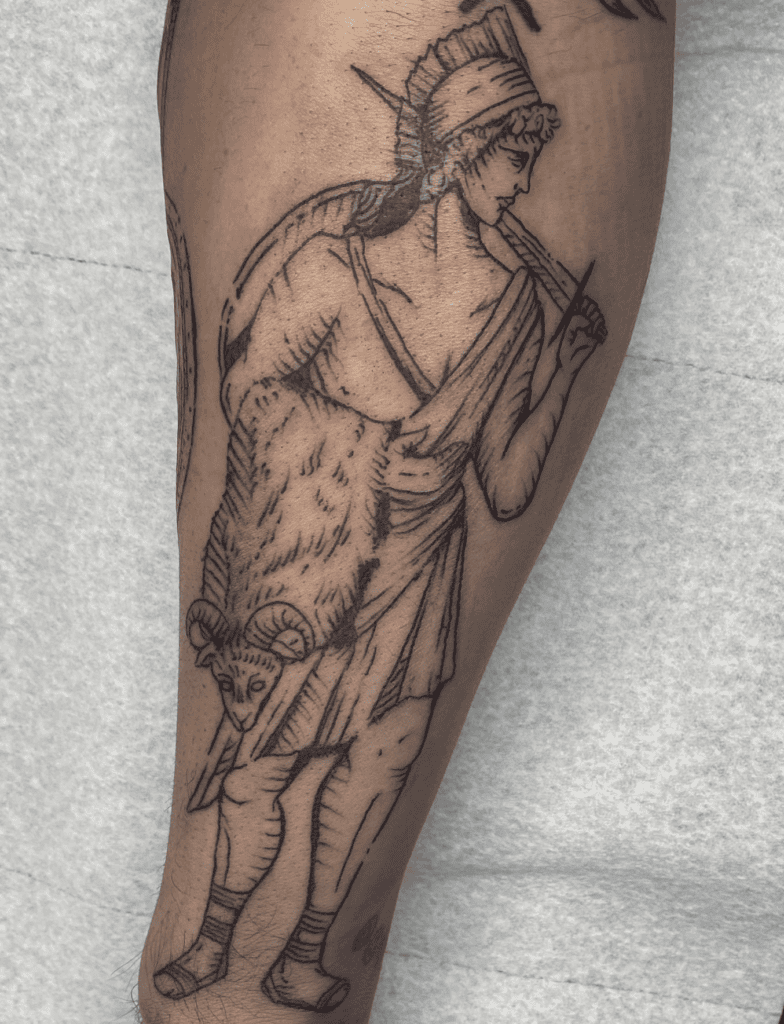
Jason was a legendary Greek hero and leader of the Argonauts, best known for his quest to obtain the Golden Fleece. Aided by Medea, Jason overcame the dangerous challenges set by King Aeëtes of Colchis, including sowing dragon’s teeth that grew into armed warriors. He eventually escaped with the Golden Fleece aboard the Argo, becoming one of Greek mythology’s most famous adventurers.
Jason was adopted directly into Roman mythology and retained his Greek name and legendary adventures, particularly through Roman retellings of the Argonautica.
Achilles Roman Mythology Tattoo
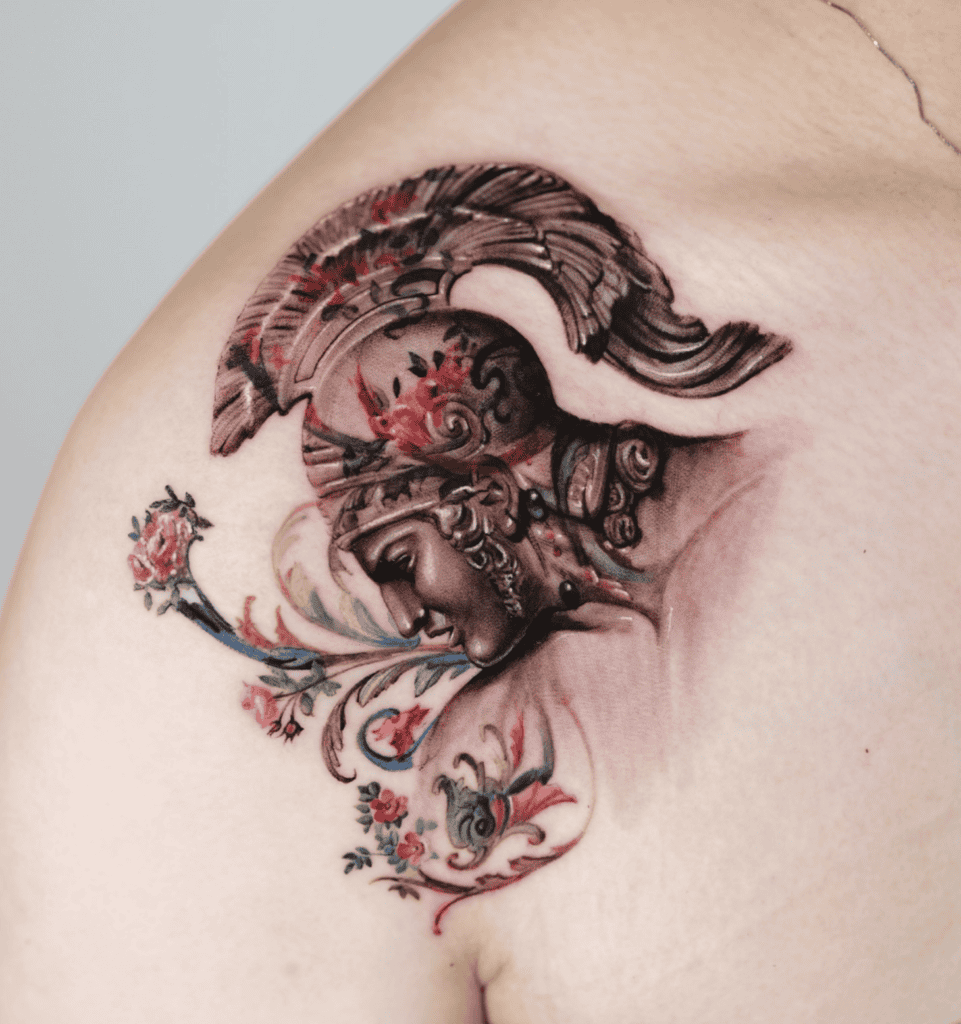
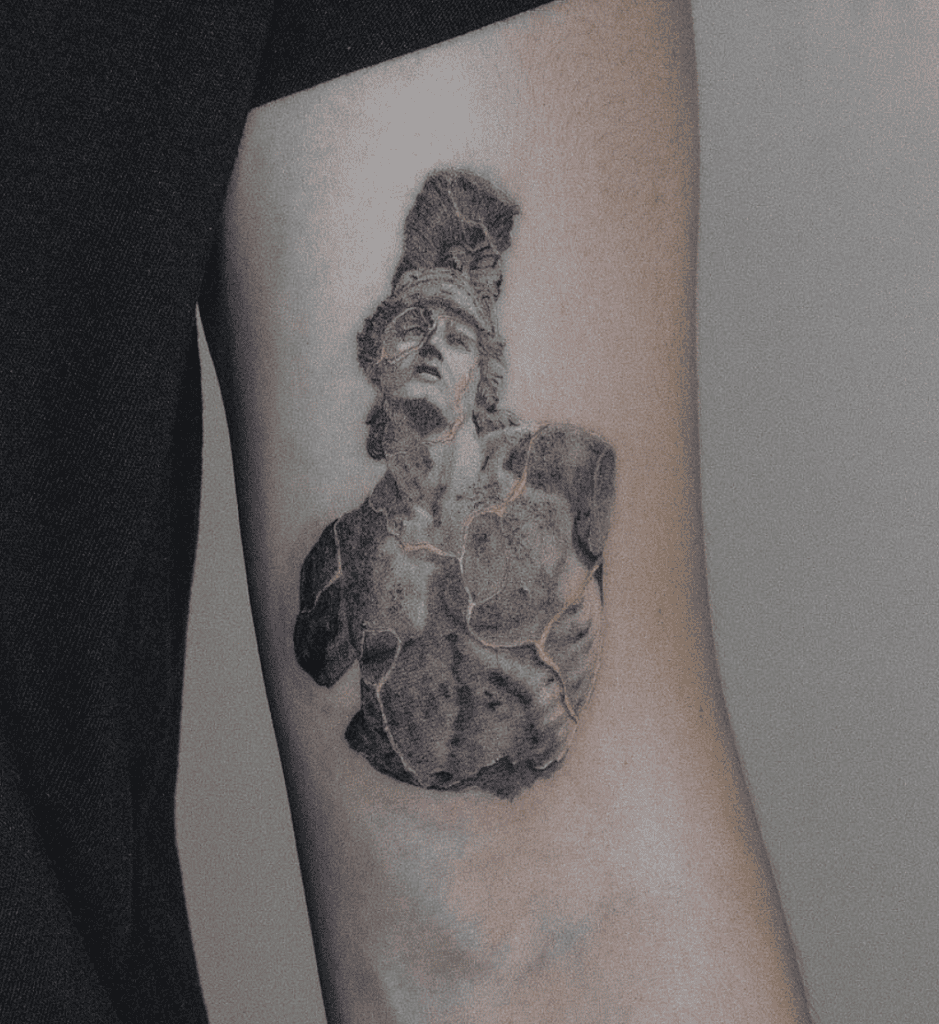
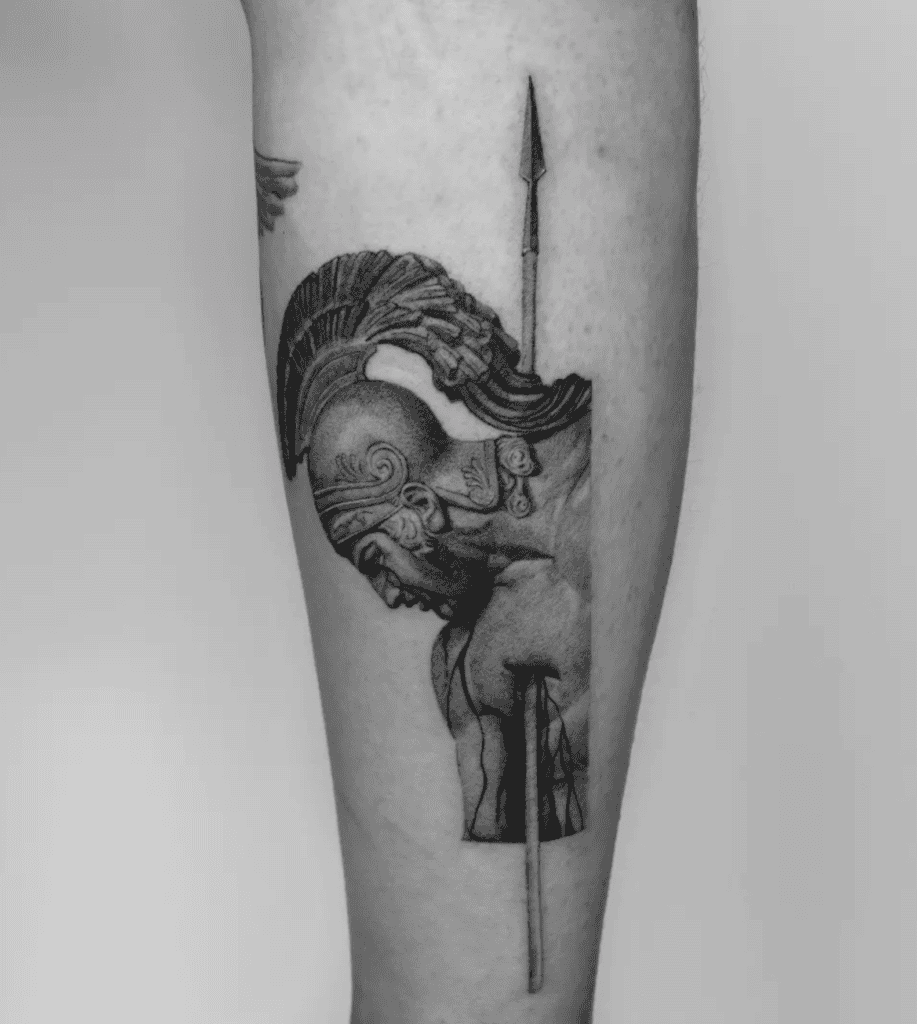
Achilles was one of the greatest warriors of Greek mythology and the legendary hero of the Trojan War. The son of the mortal Peleus and the sea goddess Thetis, he was renowned for his extraordinary strength and near-invulnerability. Achilles famously killed the Trojan prince Hector, but was eventually killed when Paris struck his vulnerable heel with an arrow.
Achilles was adopted directly into Roman mythology and retained his Greek name and legendary story, becoming an important figure in Roman retellings of the Trojan War.
Odysseus Roman Mythology Tattoo
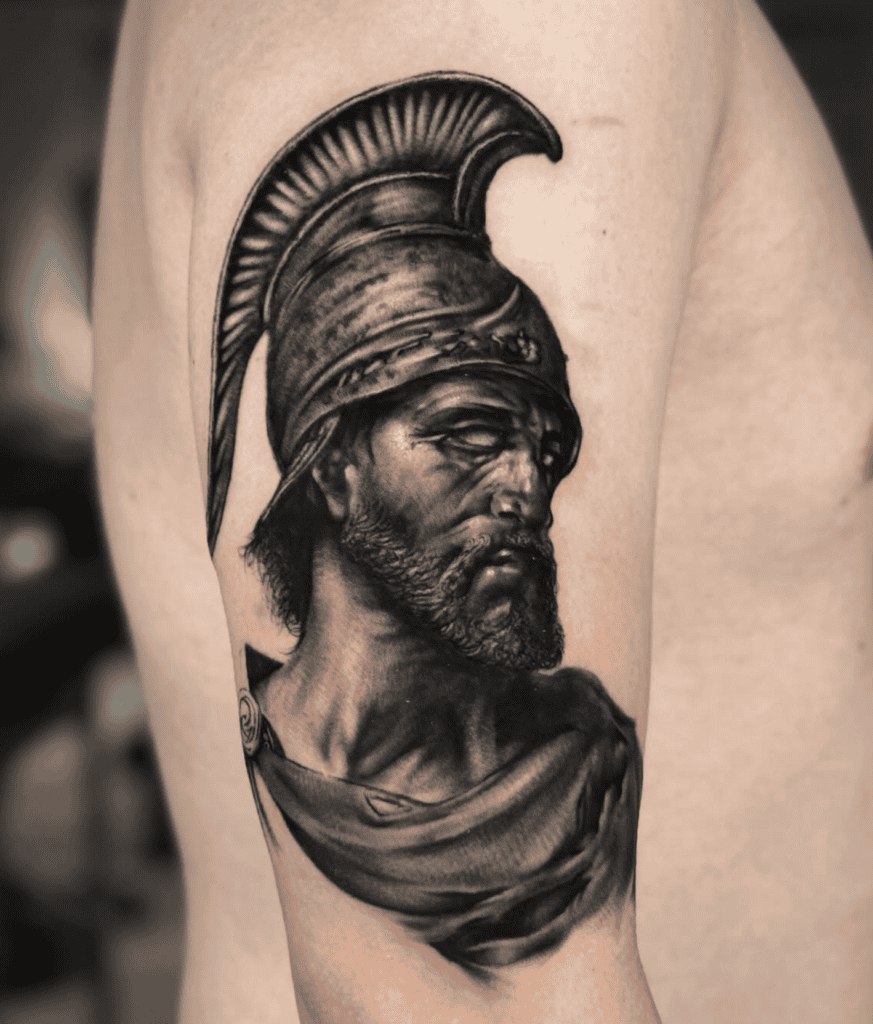
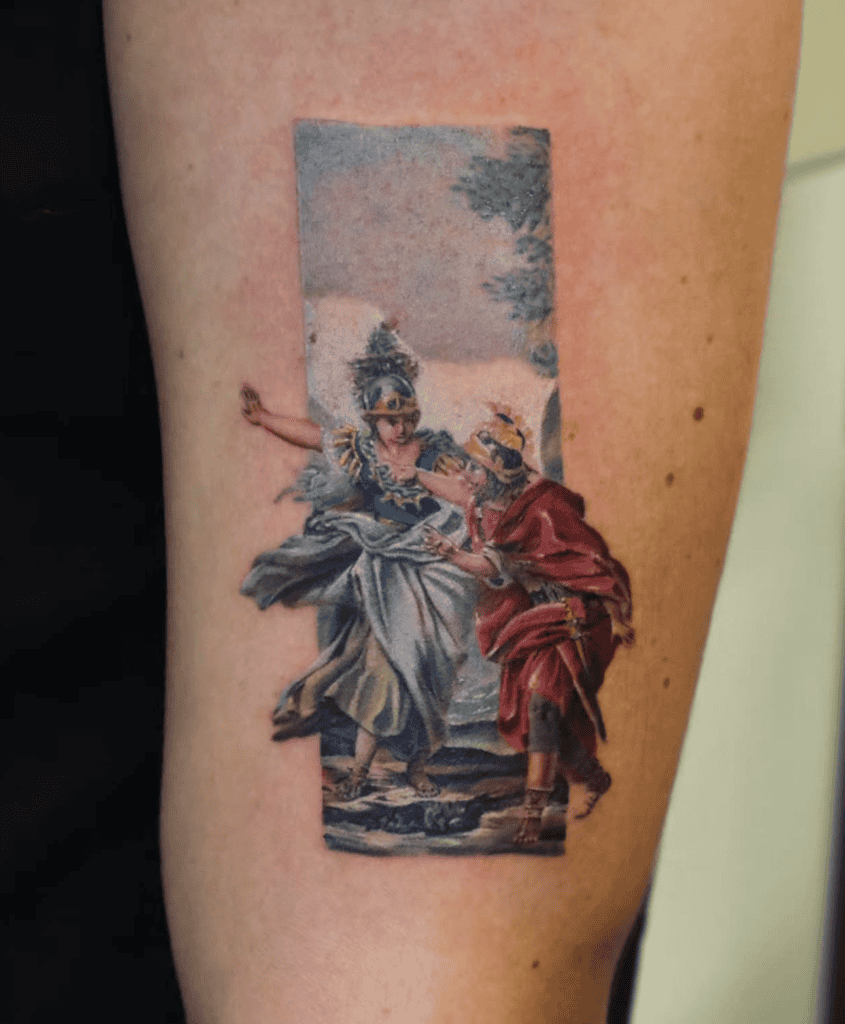
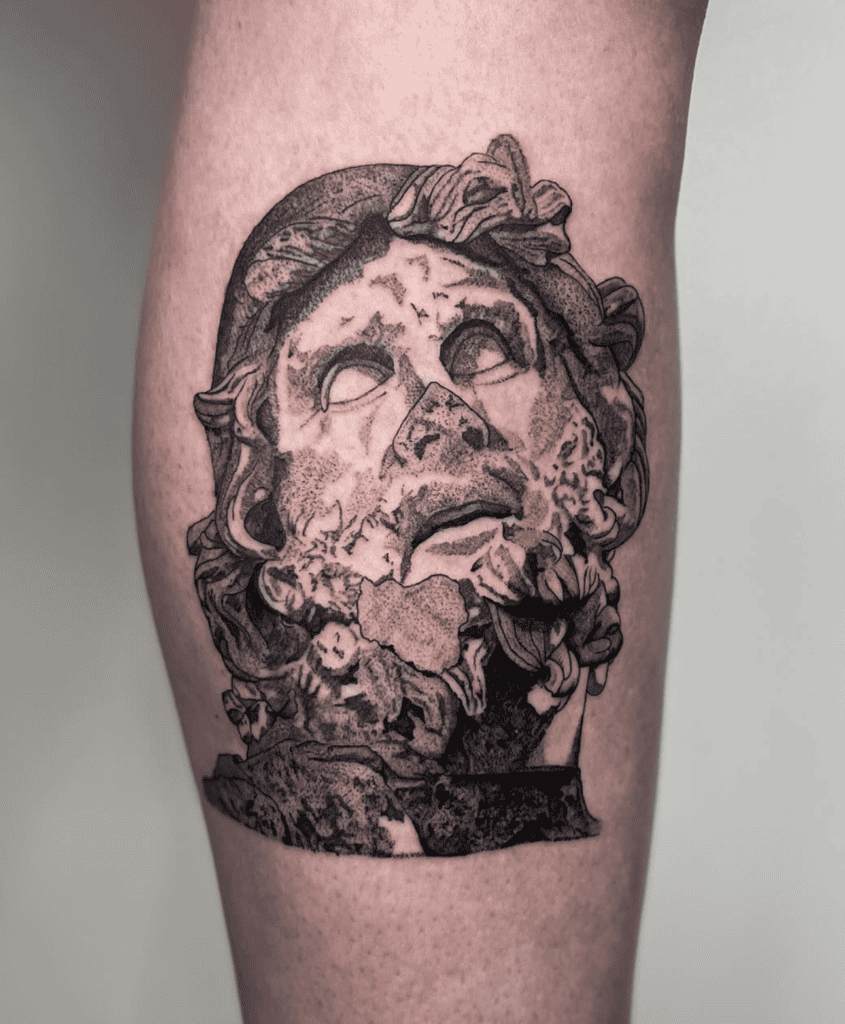
Odysseus was a legendary Greek hero and the king of Ithaca, best known for his cleverness, strategy, and ten-year journey home after the Trojan War. His adventures included encounters with the Cyclops Polyphemus, Circe, the Sirens, Scylla, and Charybdis. His long journey and eventual return to his wife Penelope are told in Homer’s Odyssey.
Odysseus was adopted directly into Roman mythology and was also known by the Latin name Ulysses. Roman writers often used Ulysses when retelling his legendary adventures.
Orpheus Roman Mythology Tattoo
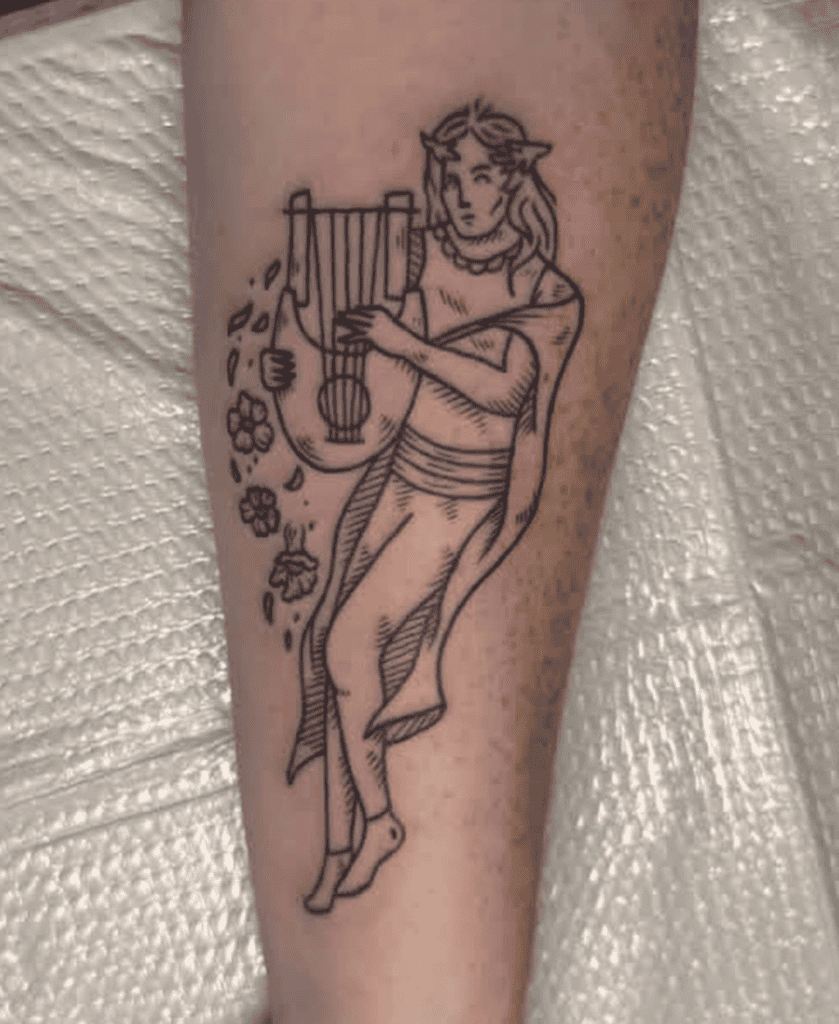
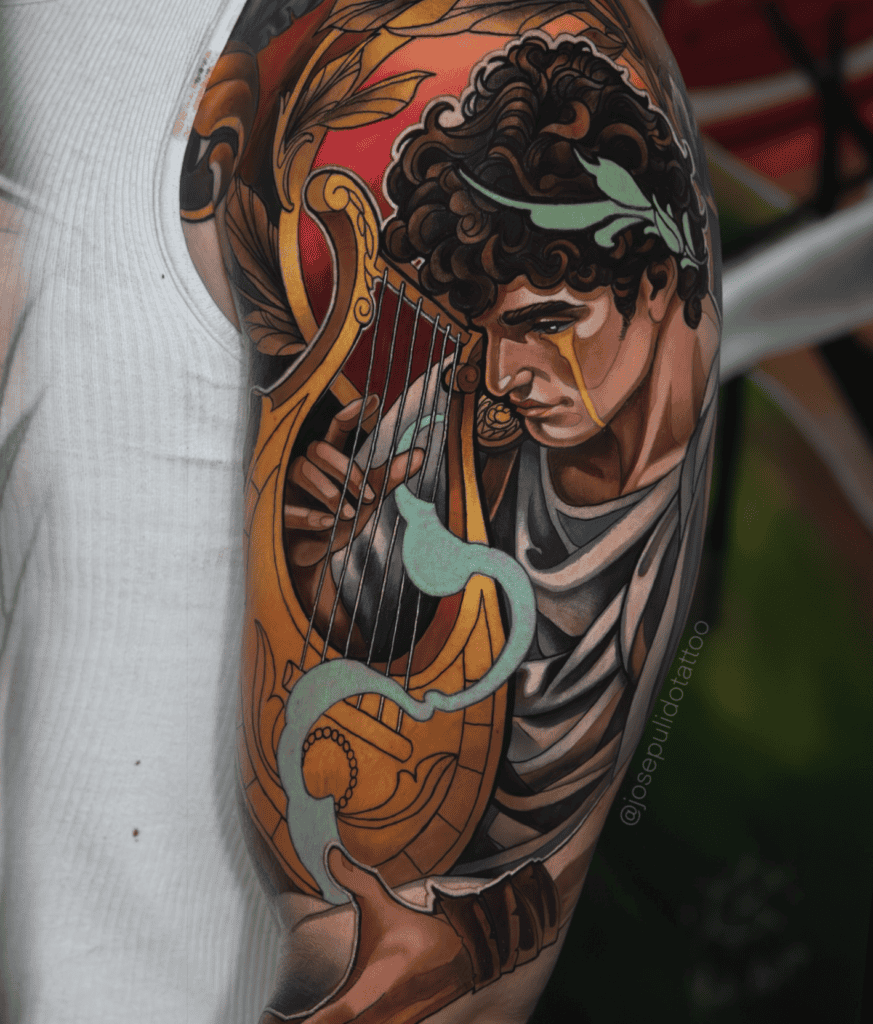
Orpheus was a legendary Greek musician and poet whose music was said to be so beautiful that it could charm animals, trees, and even the gods. After his wife Eurydice died, Orpheus journeyed into the Underworld and used his music to convince Pluto and Proserpina to let her return to the living. They agreed on the condition that he not look back at Eurydice before reaching the surface, but Orpheus looked back too soon and lost her forever.
Orpheus was adopted directly into Roman mythology and retained his Greek name and legendary story, becoming especially prominent in Roman poetry and art.
Lucretia Roman Mythology Tattoo
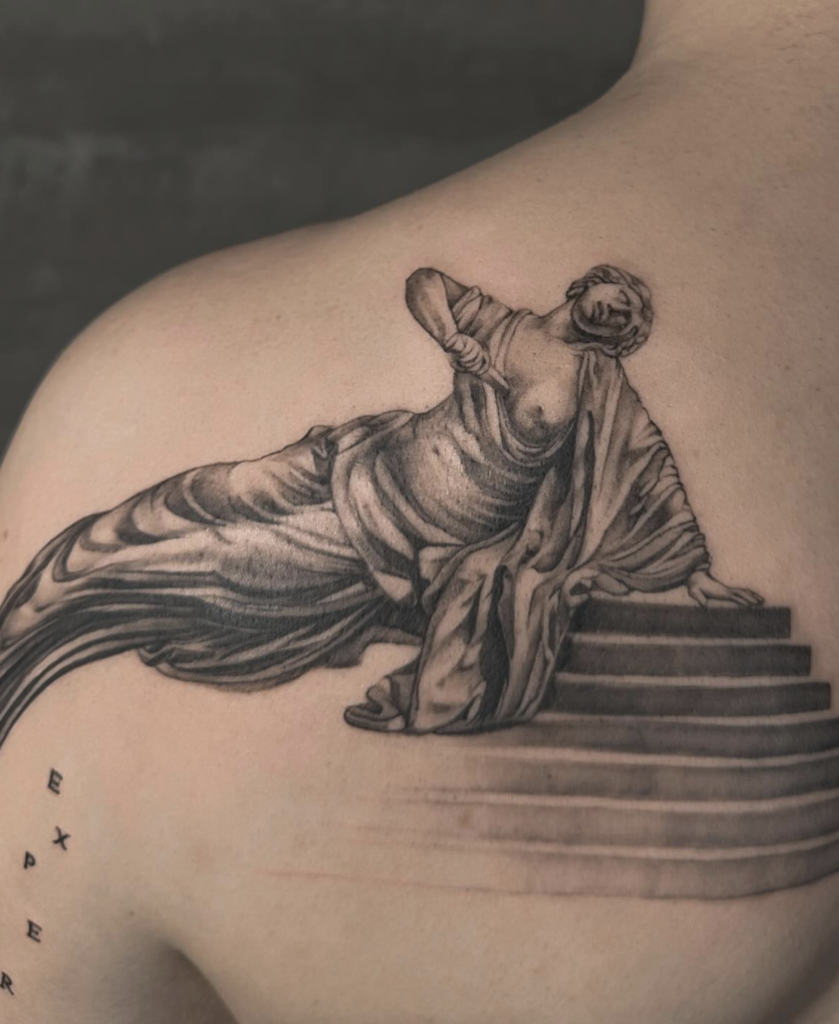
Lucretia was a legendary Roman noblewoman whose tragic story became closely connected with the overthrow of Rome’s monarchy and the founding of the Roman Republic. According to tradition, she was assaulted by Sextus Tarquinius, son of the Roman king Tarquinius Superbus. After revealing what had happened to her family and allies, Lucretia died by suicide. Her death sparked an uprising led by Lucius Junius Brutus, which eventually expelled the Tarquins and ended Rome’s monarchy.
Charon Roman Mythology Tattoo
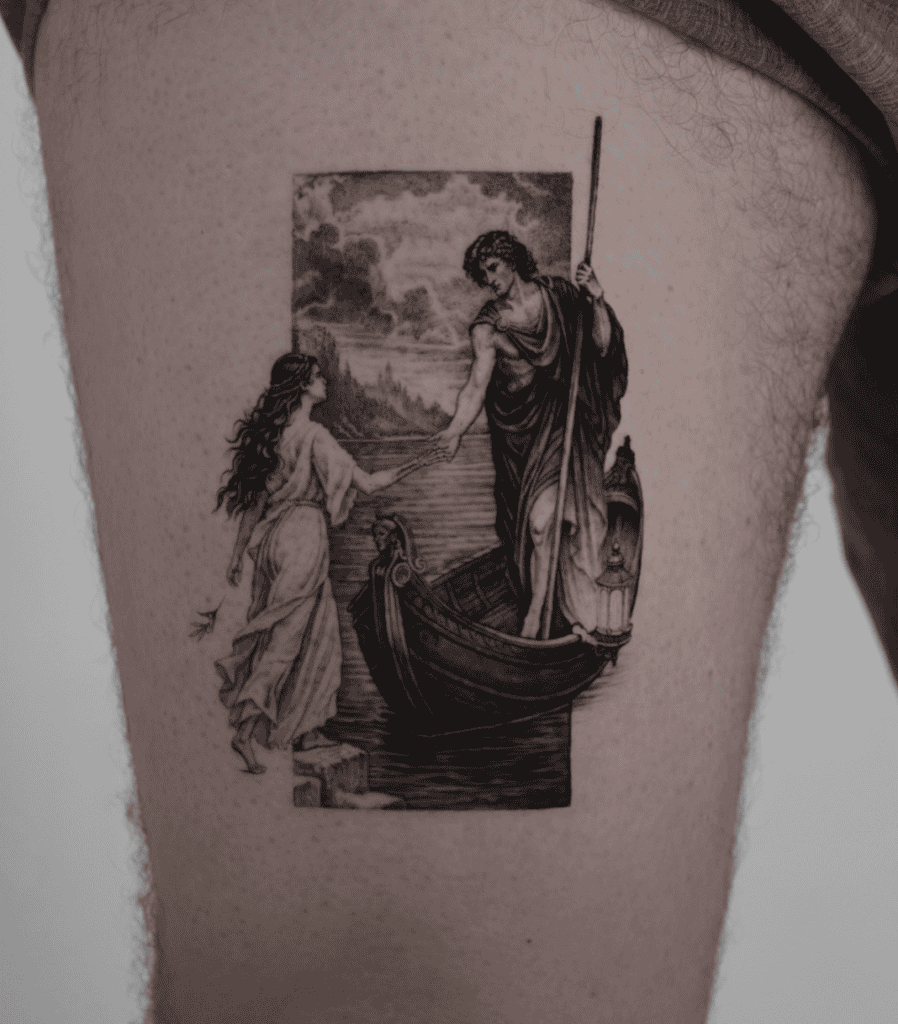
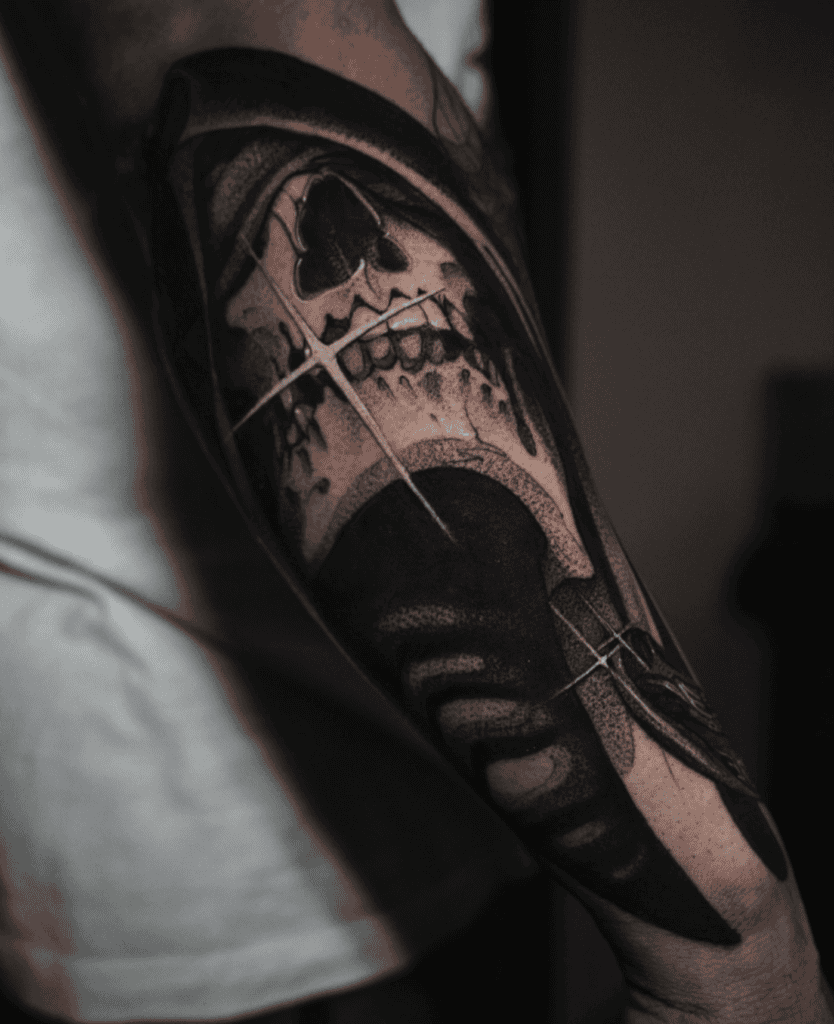
Charon was the mysterious ferryman of the Underworld who carried the souls of the dead across the rivers separating the world of the living from the realm of the dead. In Greek mythology, the deceased typically needed to provide a coin as payment for his service, which helped inspire the ancient practice of placing coins with the dead.
Charon was adopted directly into Roman mythology and retained his Greek name and role, appearing in works such as Virgil’s Aeneid, where he ferries Aeneas across the Underworld.
Dido Roman Mythology Tattoo
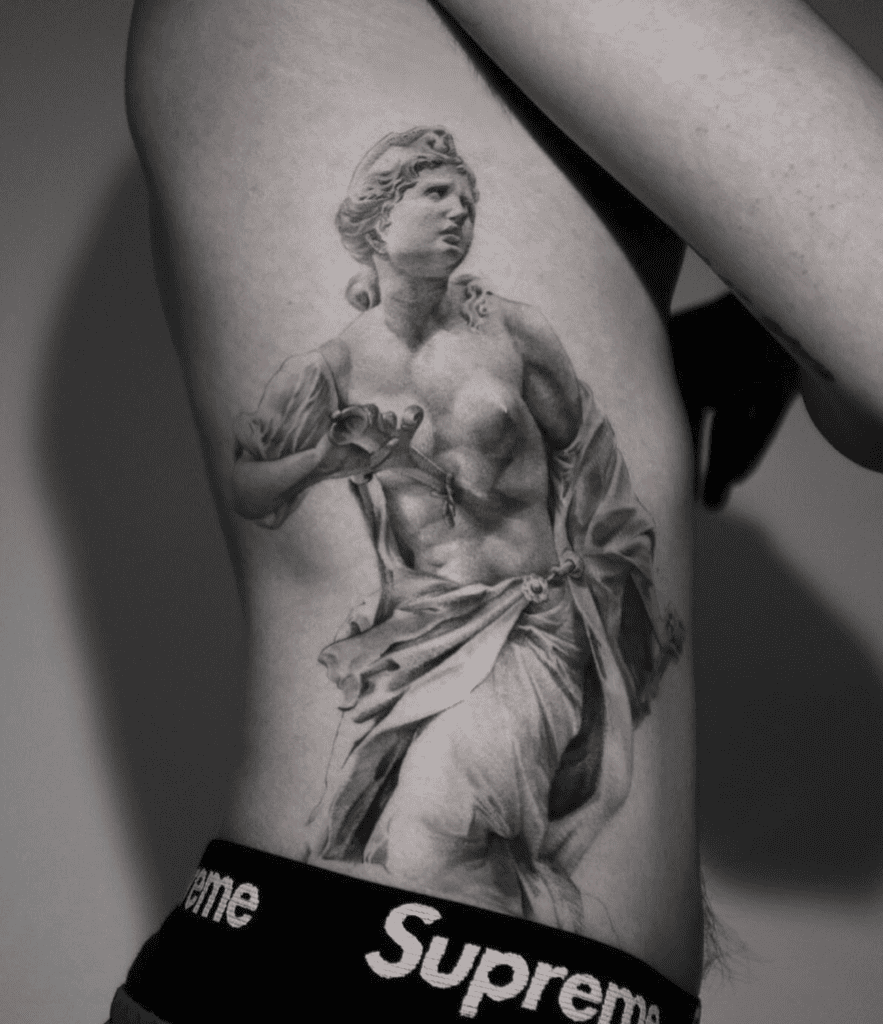
Dido was the legendary founder and first queen of Carthage, known for her intelligence, leadership, and tragic love story with Aeneas. According to Virgil’s Aeneid, Dido welcomed Aeneas to Carthage and fell deeply in love with him, but he eventually left to fulfil his destiny in Italy. Heartbroken, Dido took her own life and cursed Aeneas and his descendants, providing a legendary explanation for the later hostility between Carthage and Rome.
Circe Roman Mythology Tattoo
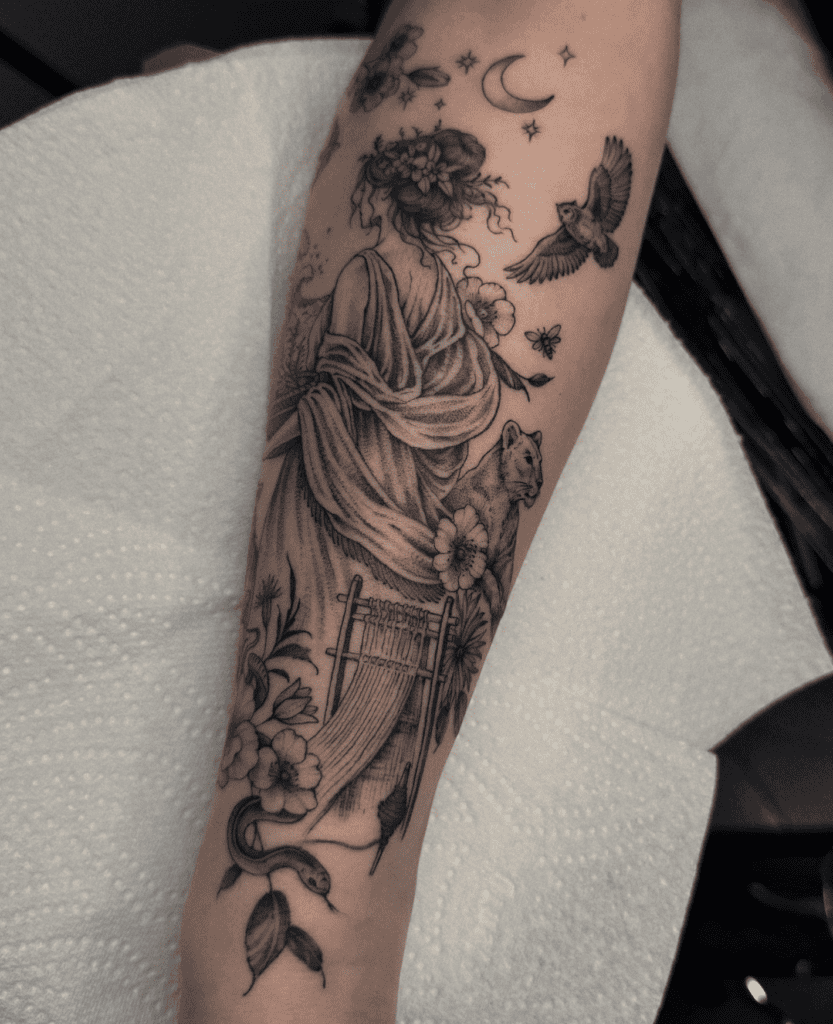
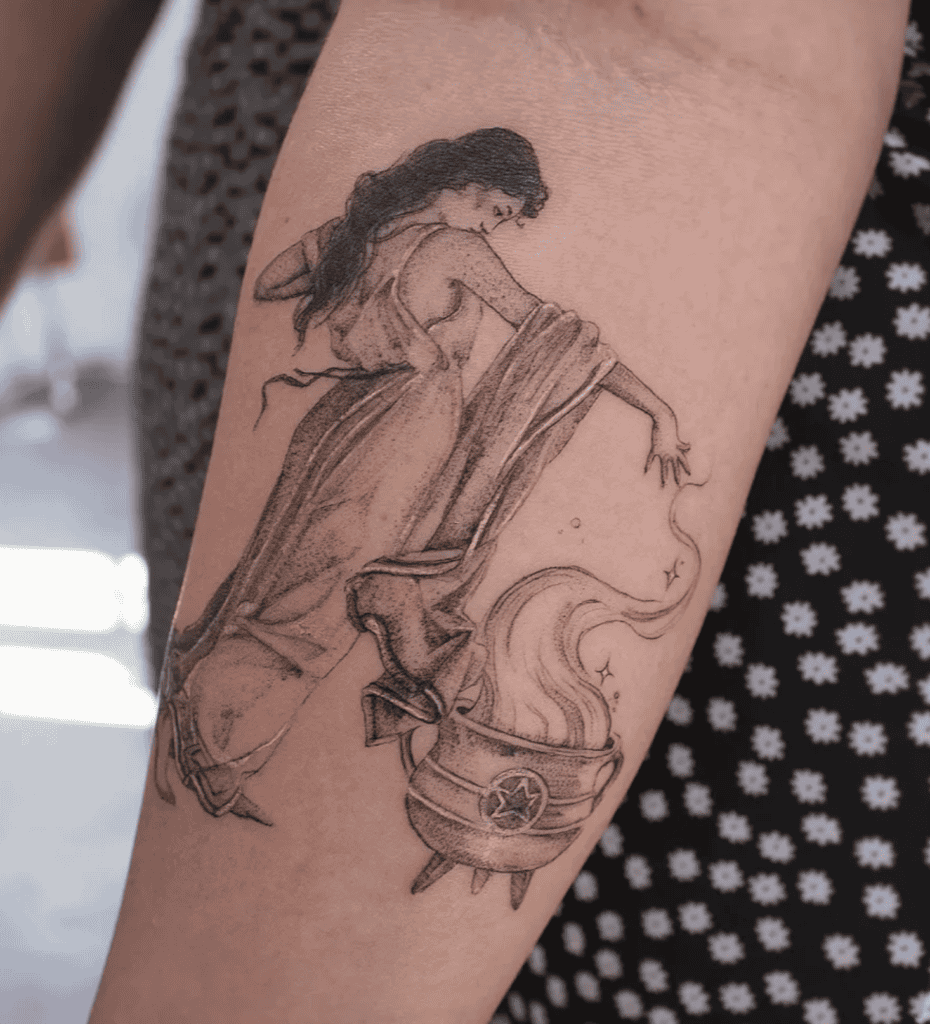
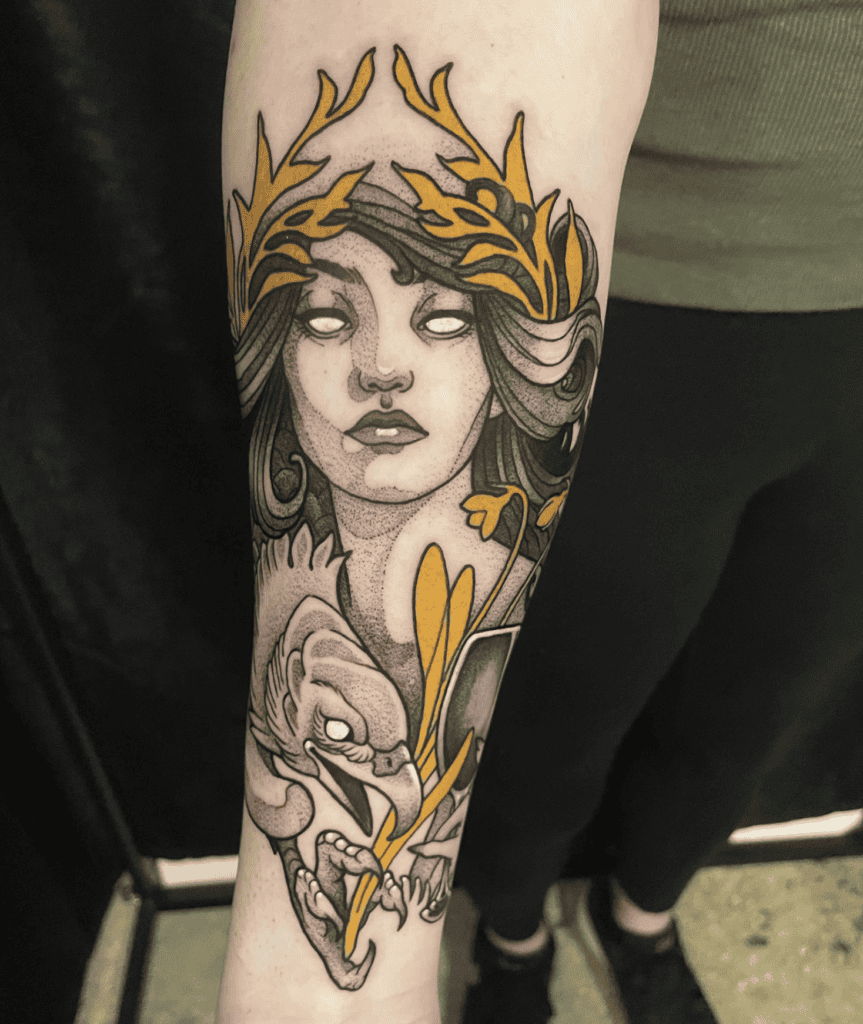
Circe was a powerful Greek goddess and enchantress best known for her appearance in Homer’s Odyssey. Living on the island of Aeaea, she used her magical potions to transform Odysseus’s crew into pigs. Odysseus resisted her magic with help from Hermes, and Circe eventually became his ally and helped guide him on his journey home.
Circe was also skilled in herbal magic, prophecy, and transformation, making her one of mythology’s most famous sorceresses. She was adopted directly into Roman mythology and retained her Greek name and magical abilities, appearing in works such as Virgil’s Aeneid.
Conclusion
As we reach the end, our odyssey is finally complete. We hope you’ve battled your way through to find your perfect Tattoo Clues design. But if Roman Mythology Tattoos still don’t inspire you, then worry not. Rome wasn’t built in a day, after all, so continue your quest by checking out these Basque Mythology Tattoo designs, these Philippine Mythology Tattoo ideas, or these Mesopotamian Mythology Tattoos.