
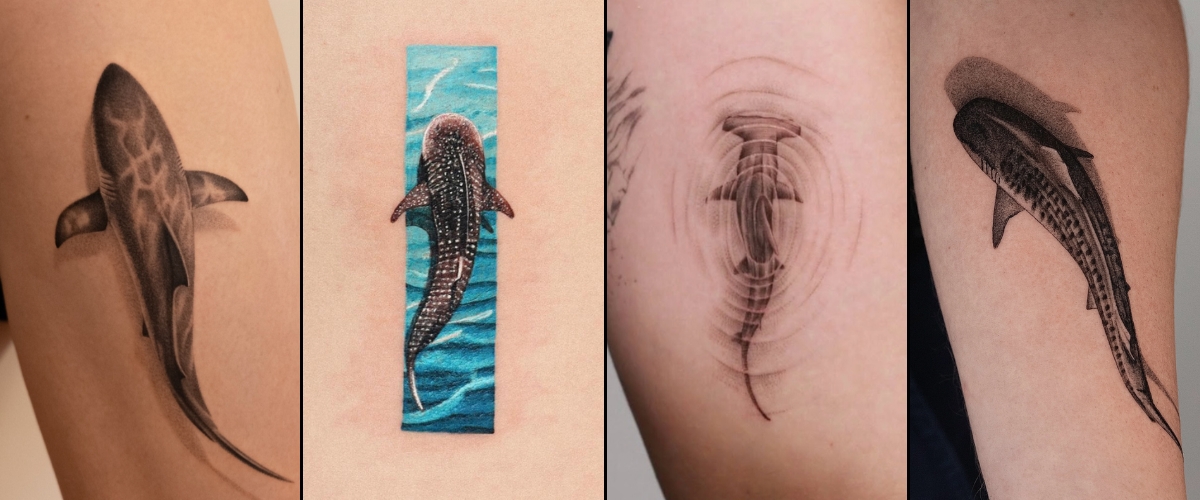
Shark Tattoo Ideas
Do you feel lost in the depths on your hunt for the perfect Tattoo Clues? Worry not! We can smell ink in the water for a quarter mile, and have sunk our teeth into some of the very best Shark Tattoo ideas that will really make some waves. Let’s dive in.
What Does a Shark Tattoo Mean
Sharks are powerful predators that have survived for hundreds of millions of years, making them a natural symbol of strength, power, and resilience. Because sharks are often portrayed as formidable ocean predators, a shark tattoo can represent bravery, confidence, and the willingness to face danger head-on.
Having existed through enormous changes in Earth’s history, sharks can therefore symbolise survival, adaptability, and perseverance through difficult times. A shark moving through the open ocean can represent freedom, independence, and living life on your own terms.
Sharks are constantly moving and searching for their next opportunity. This can give a shark tattoo associations with drive, ambition, persistence, and never giving up. A shark can also be portrayed as a guardian of the sea, making it a fitting symbol of protection, strength, and defending yourself or those you care about.
Top Shark Tattoo Artists

eklor ttt
Paris, France, Tattoo Artist specialising in Marine, Fine Line, and Microrealism tattoos.


robbee ink
London, U.K, based Tattoo Artist specialising in Scientific and Conceptual Tattoos.
Best Shark Tattoo Designs
Now that we know a little about Shark Tattoo meanings, let’s take a look at some of the best Shark Tattoo designs the depths have to offer.
Great White Shark Tattoo
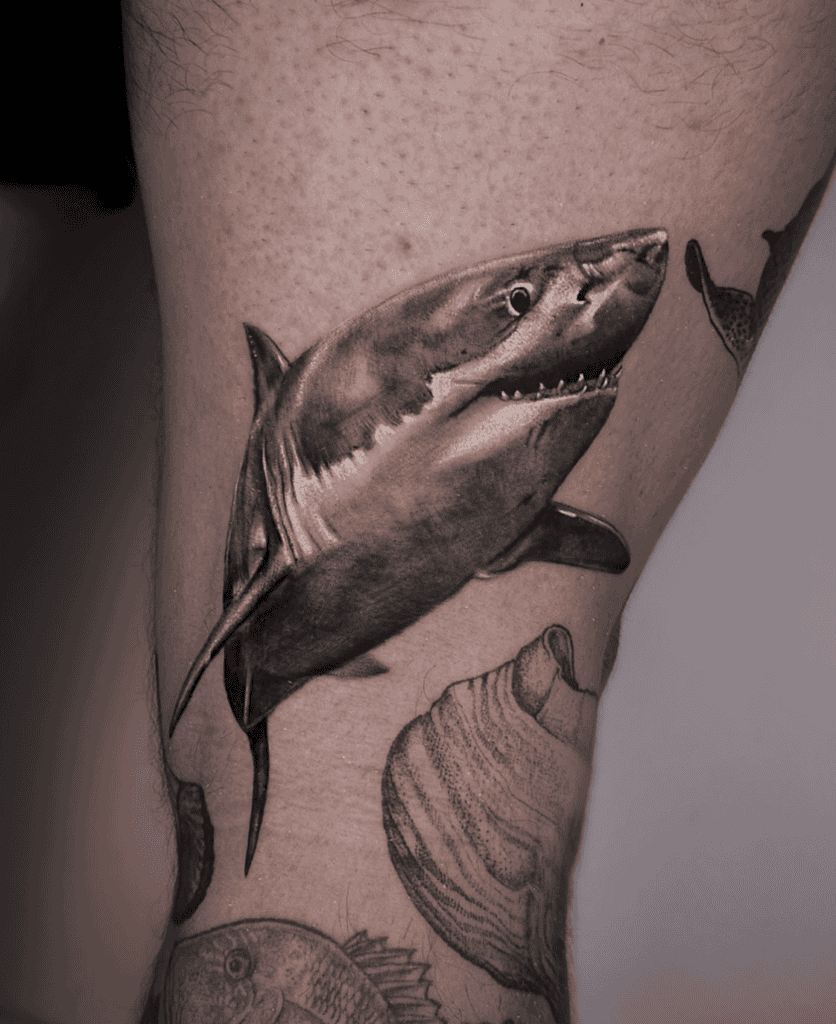
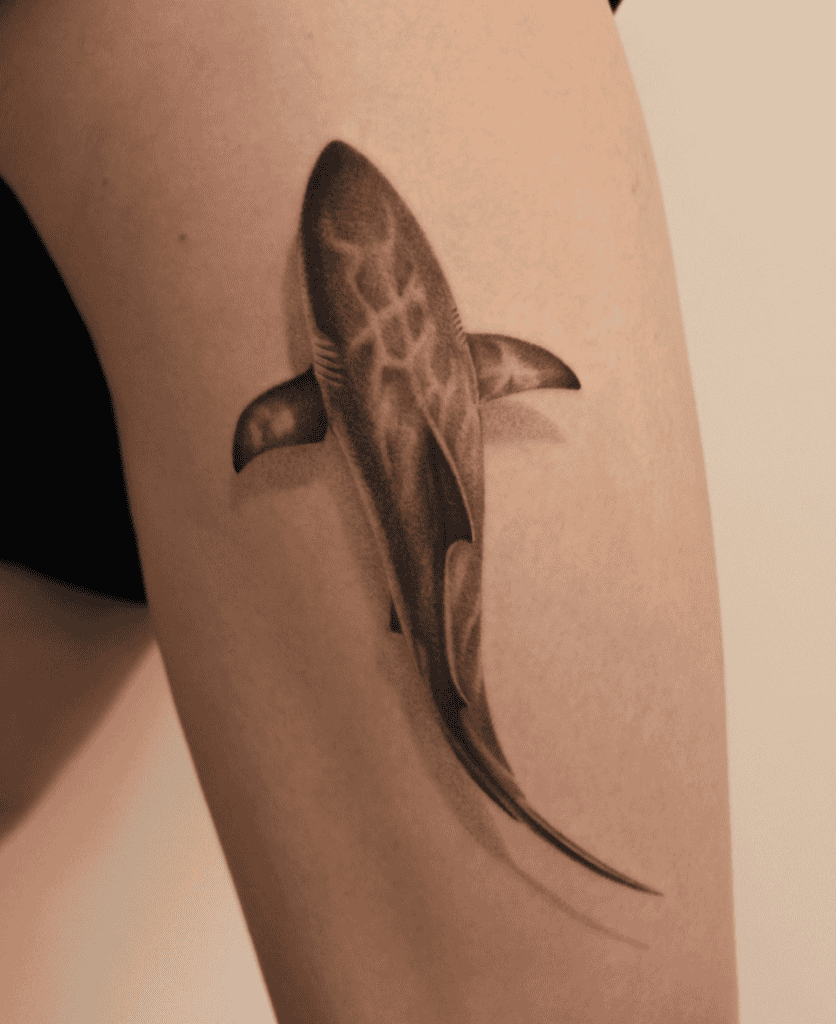
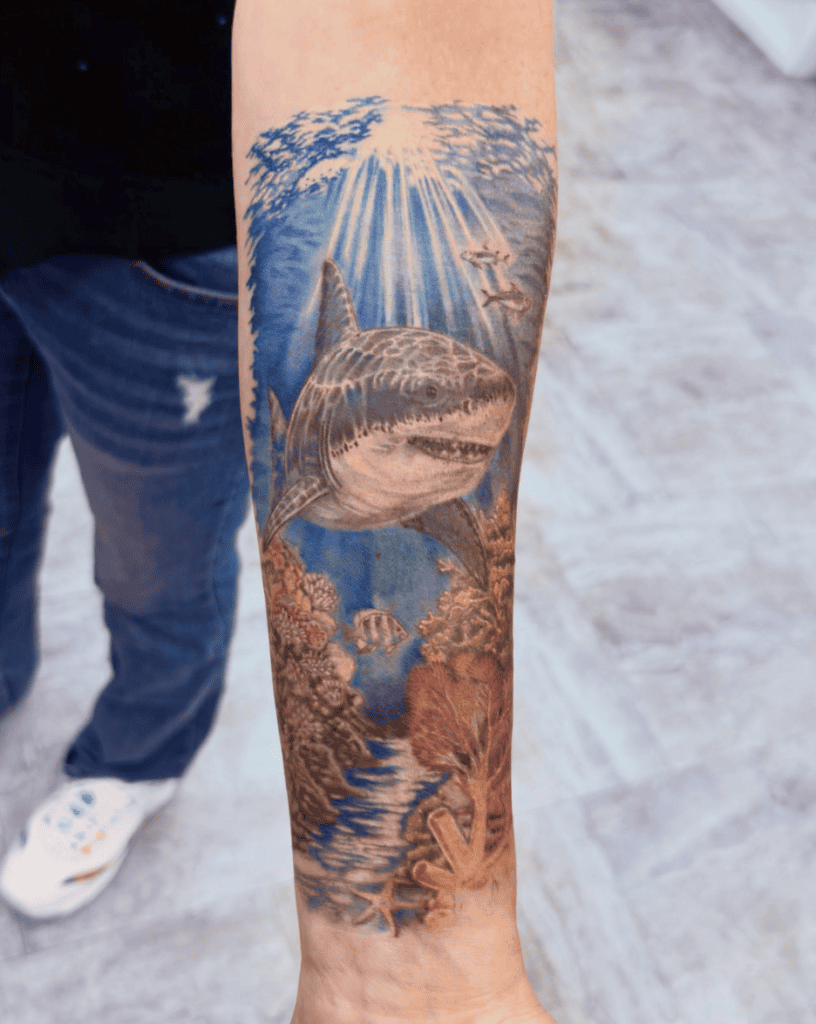
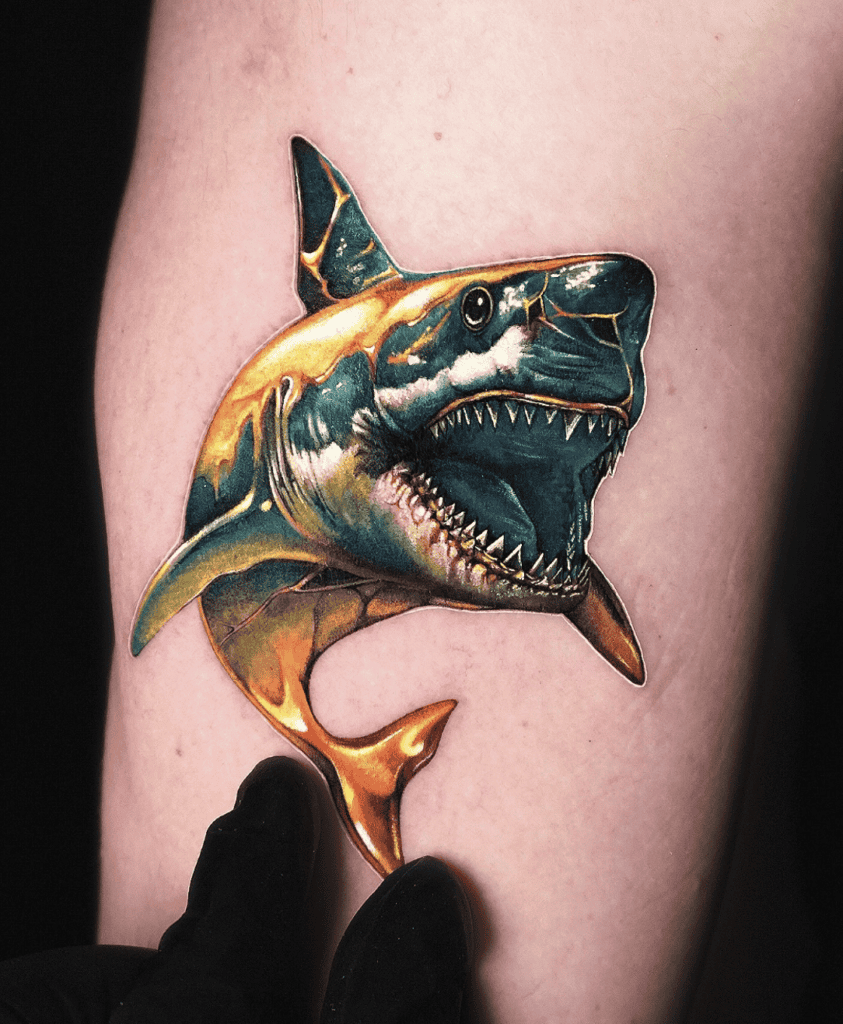
The Great White Shark (Carcharodon carcharias) is a large predatory shark found in coastal and offshore waters of many temperate and subtropical regions. It belongs to the mackerel shark family, Lamnidae, alongside mako sharks and salmon sharks.
Great whites are famous for their distinctive appearance: a grey or blue-grey back, white underside, streamlined body, pointed snout, and rows of triangular serrated teeth. Their countershading helps camouflage them from both above and below.
Tiger Shark Tattoo
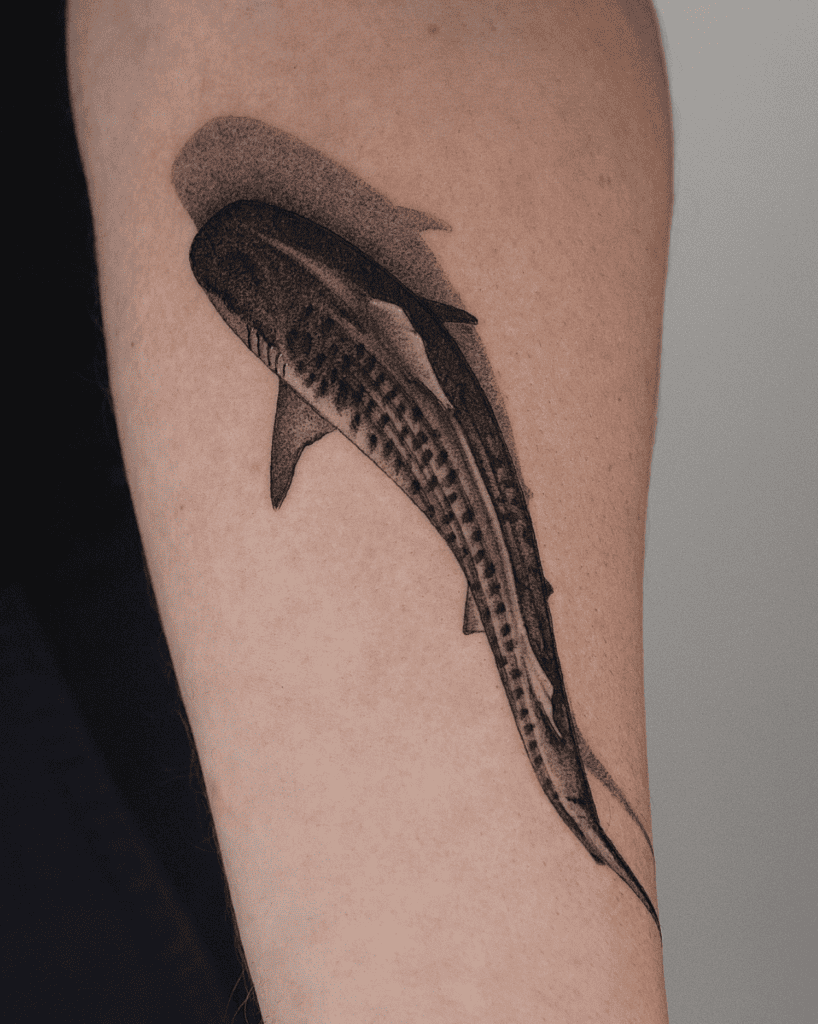
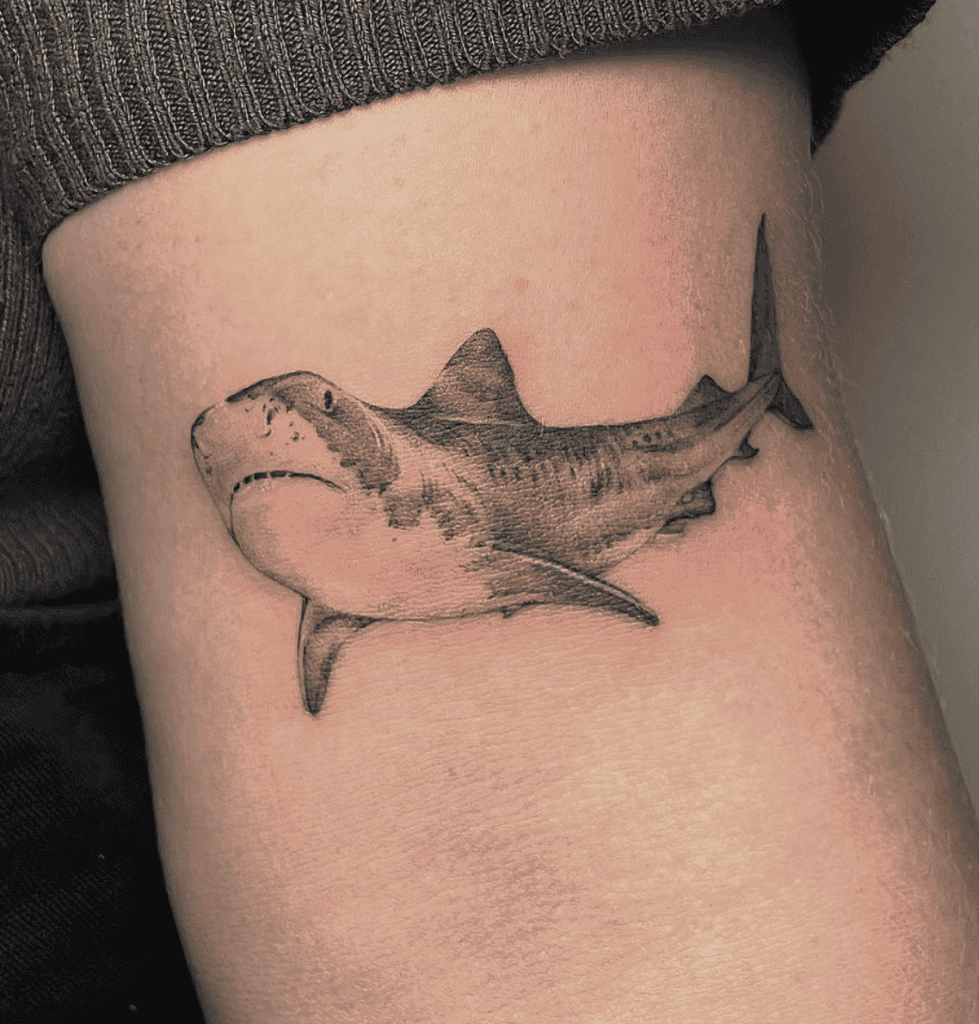
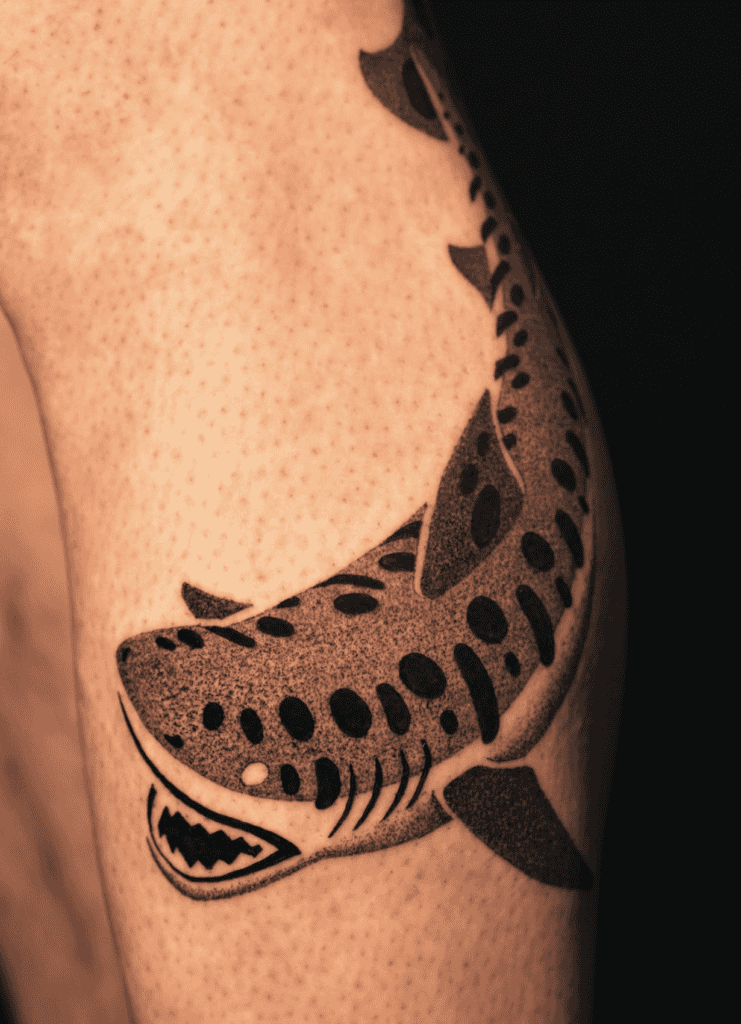
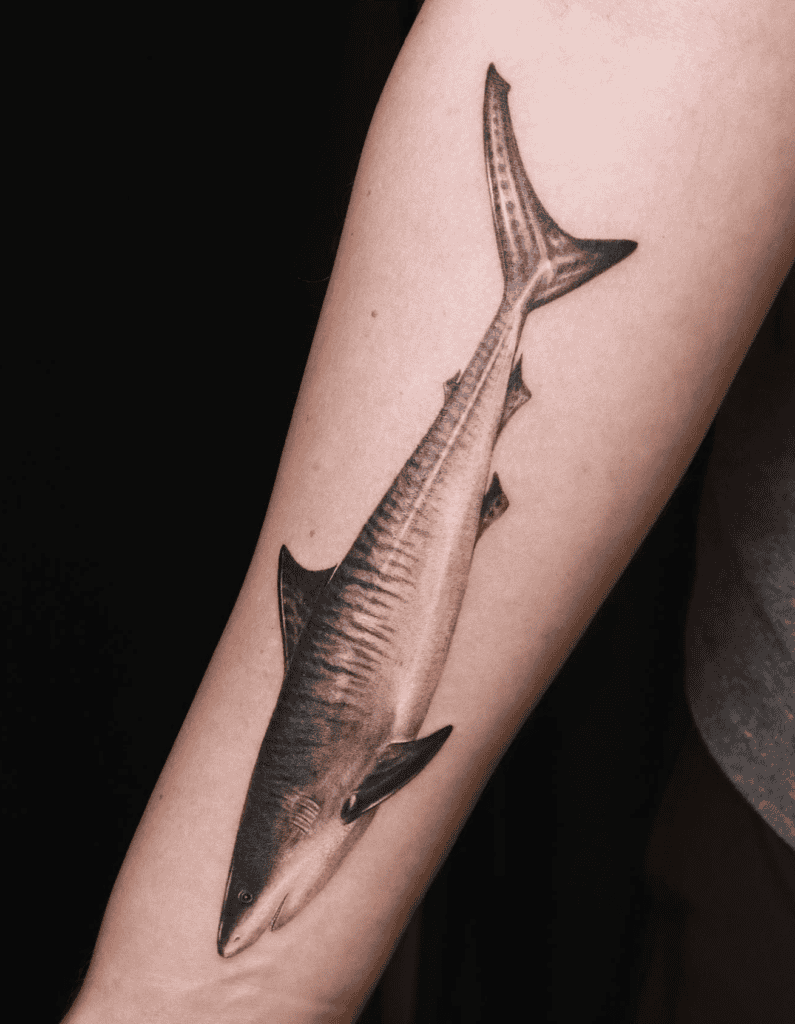
The Tiger Shark (Galeocerdo cuvier) is a large predatory shark found mainly in tropical and warm-temperate waters around the world. It gets its name from the dark vertical stripes running along its body, which are particularly noticeable in younger sharks and tend to fade as they mature.
Tiger sharks have a broad, blunt head, powerful jaws, and distinctive curved, serrated teeth. Their teeth are designed to cut through a remarkably wide range of food, giving them a reputation as one of the ocean’s most versatile predators.
Hammerhead Shark Tattoo
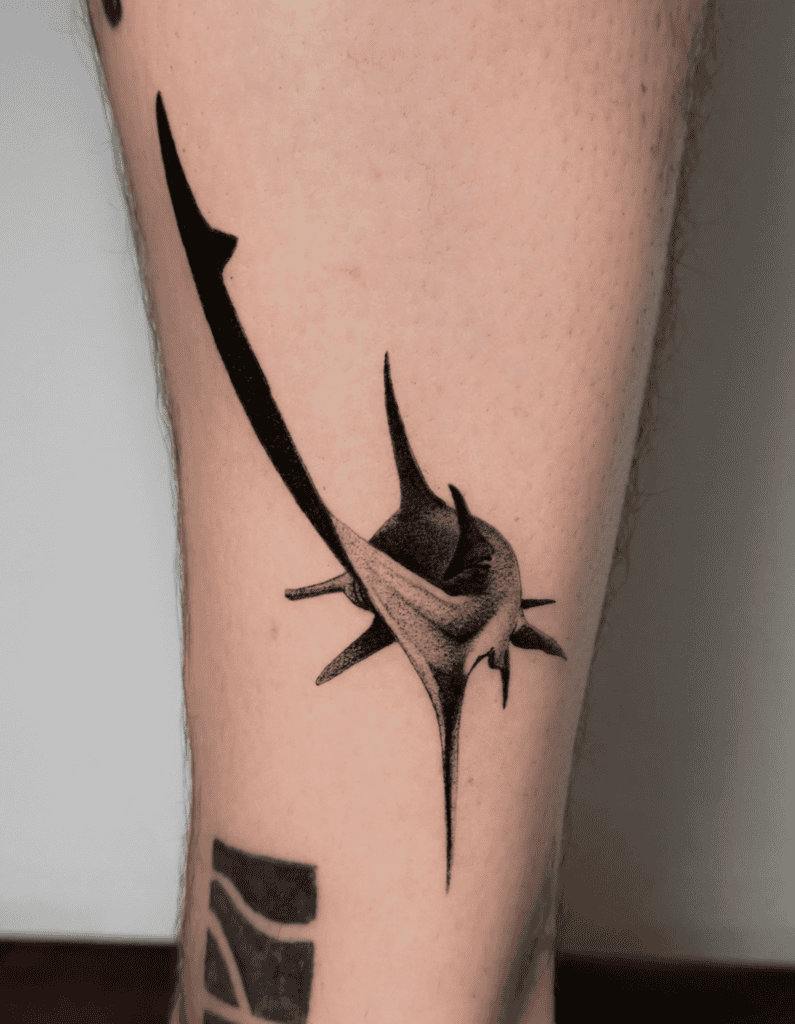
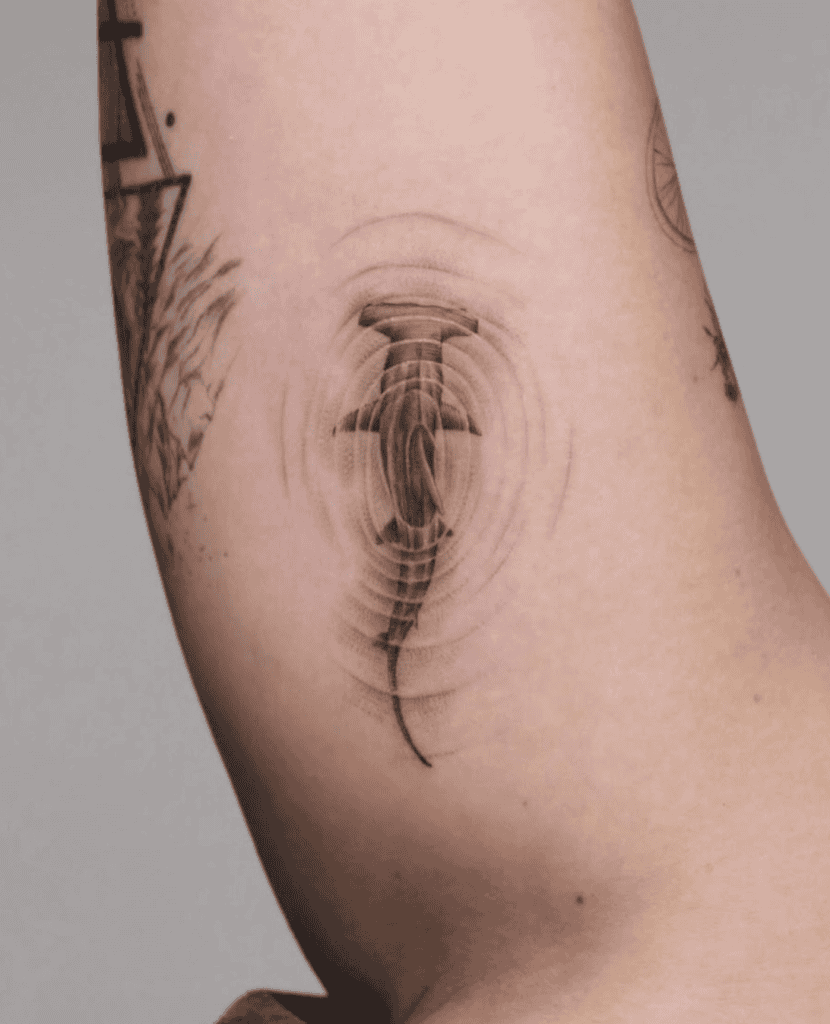
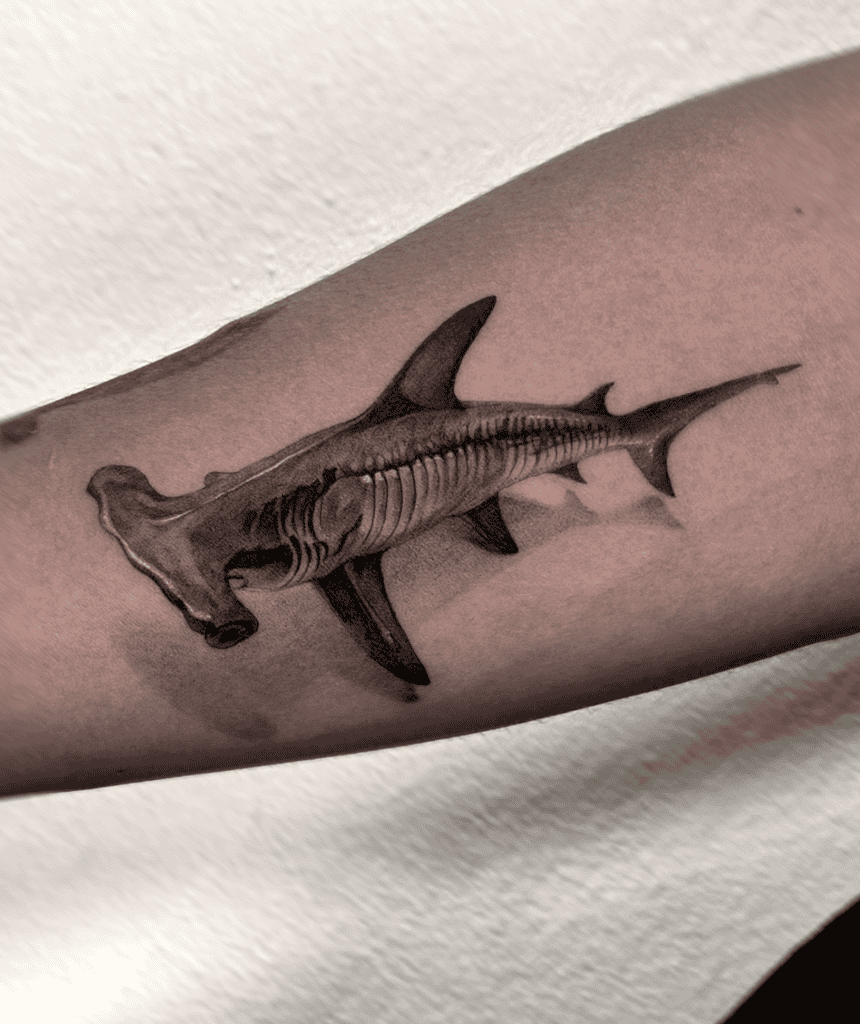
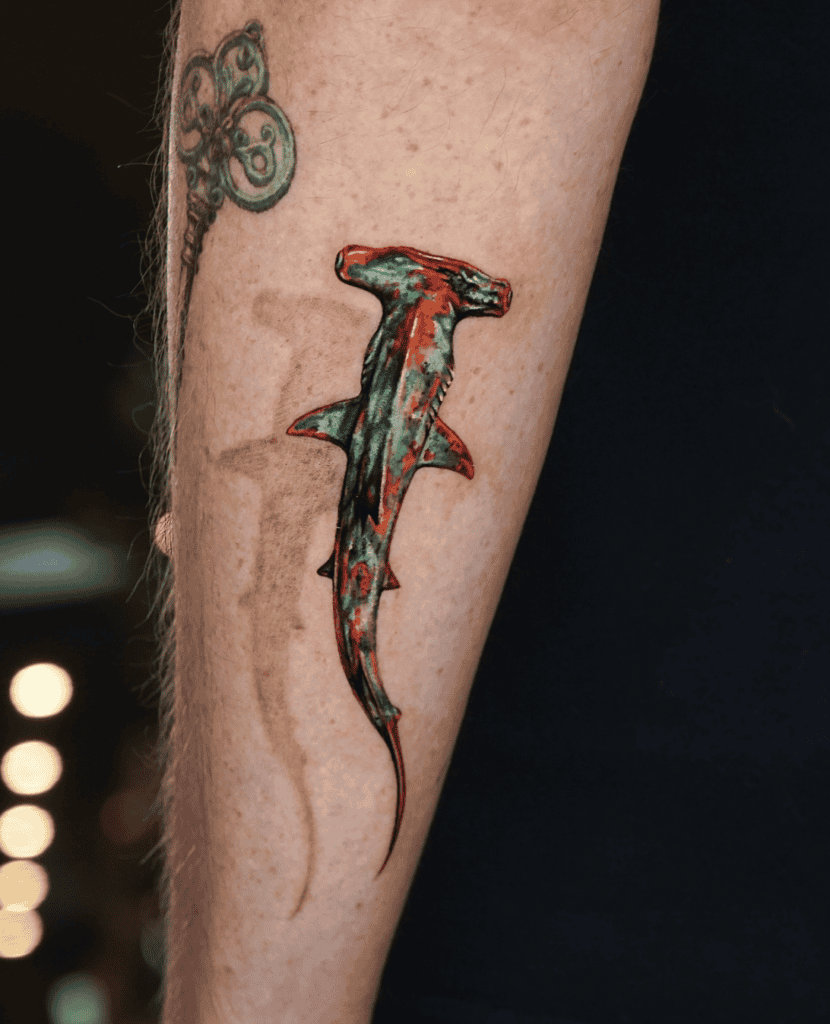
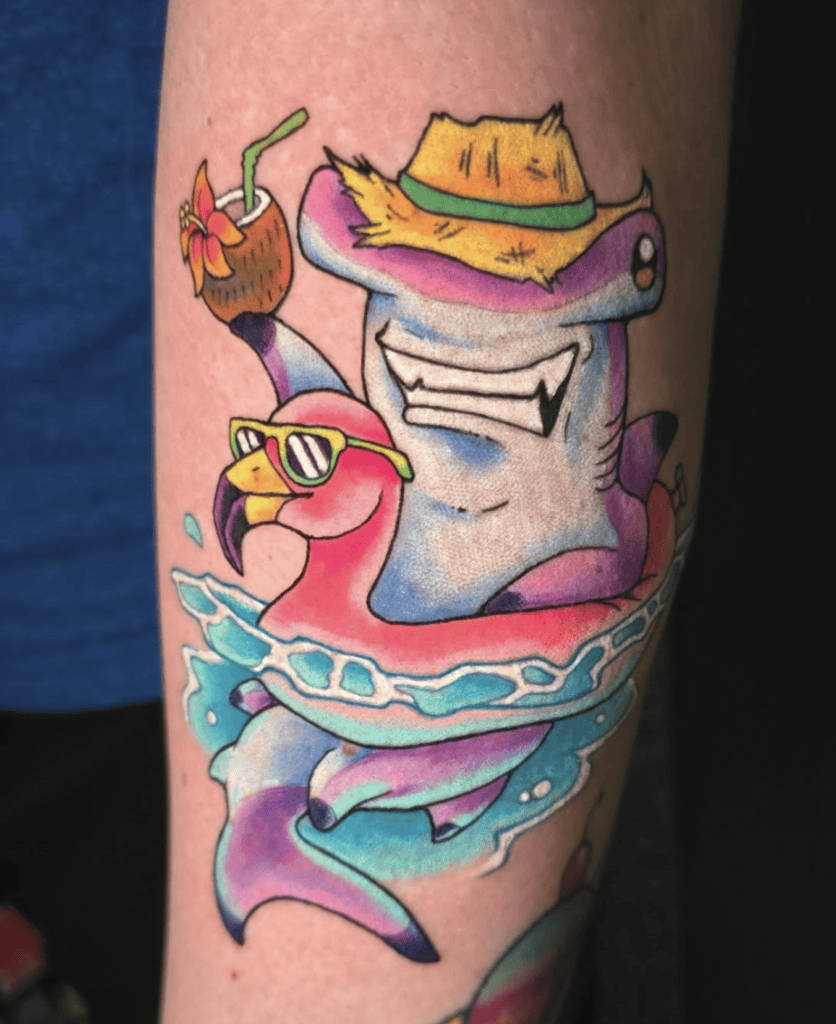
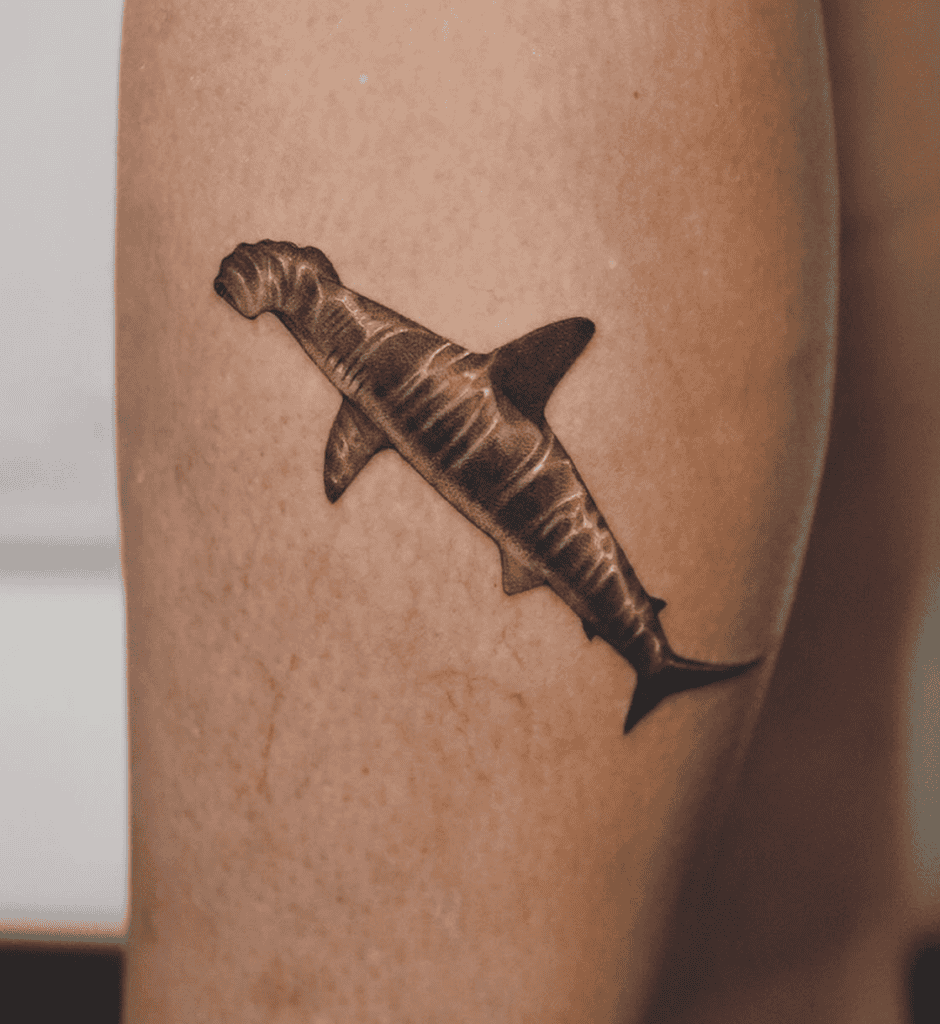
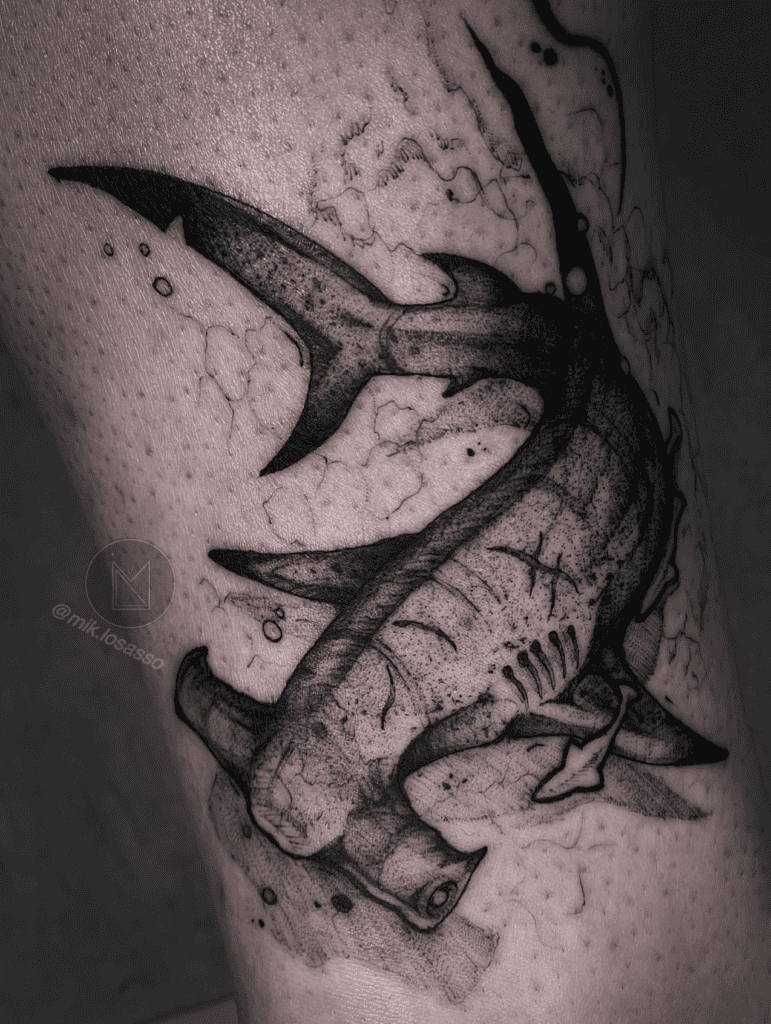
Hammerhead sharks are a group of sharks in the family Sphyrnidae, named for their distinctive flattened heads that extend sideways into two lobes. There are several species, including the Great Hammerhead, Scalloped Hammerhead, Smooth Hammerhead, and Bonnethead.
The wide shape gives hammerheads several potential advantages. Their widely separated eyes provide an exceptionally broad field of vision, while the expanded head also contains sensory organs that help them detect electrical signals produced by prey.
Whale Shark Tattoo
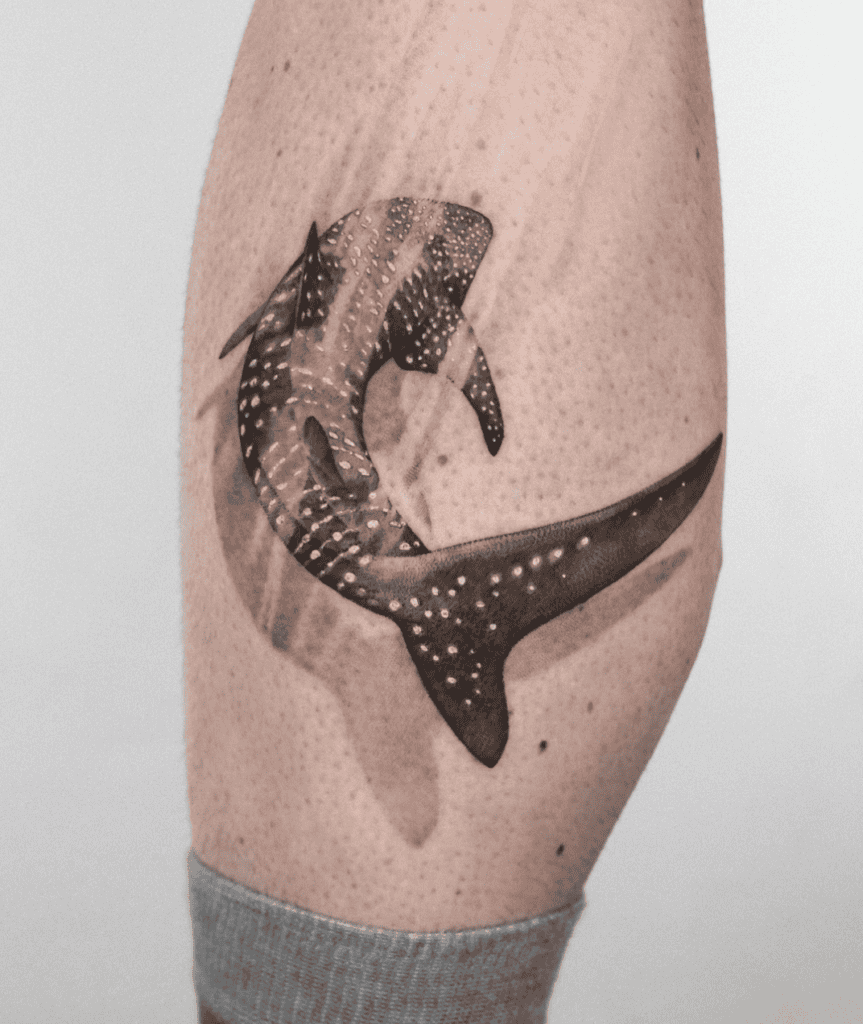
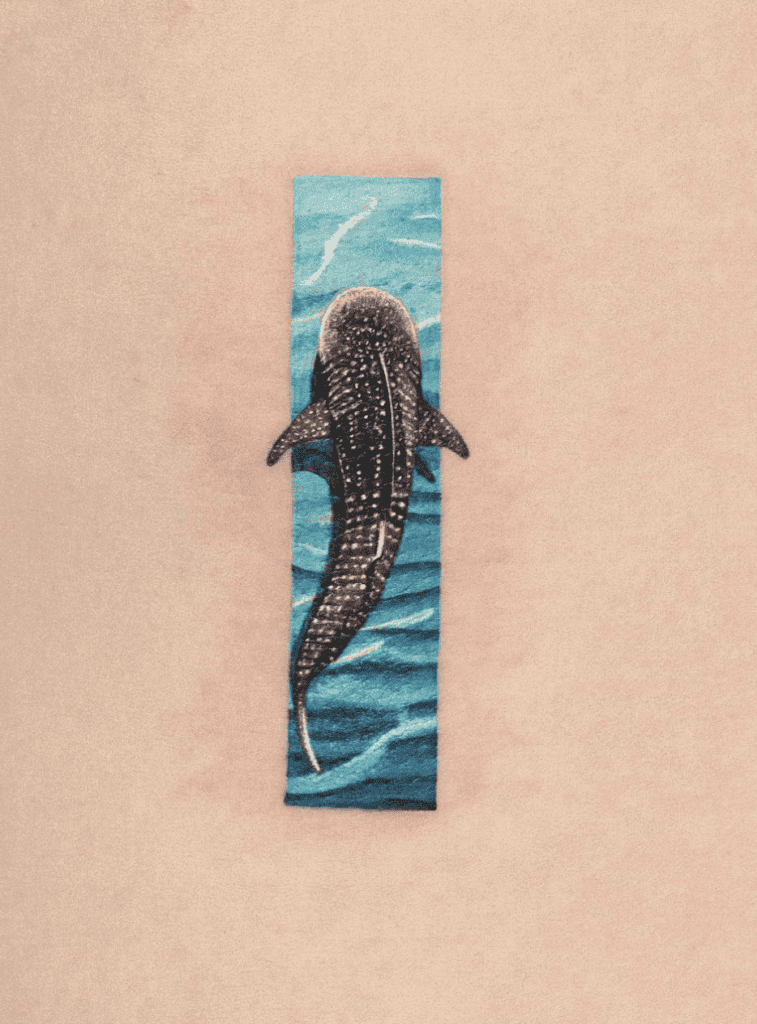
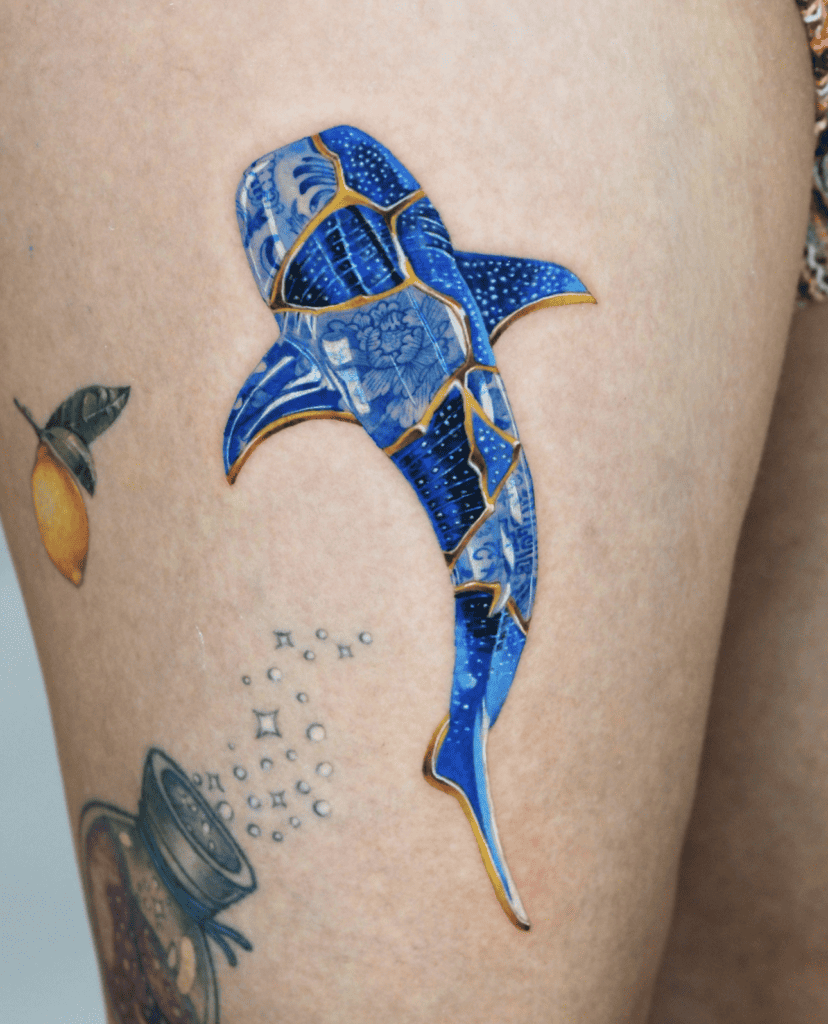
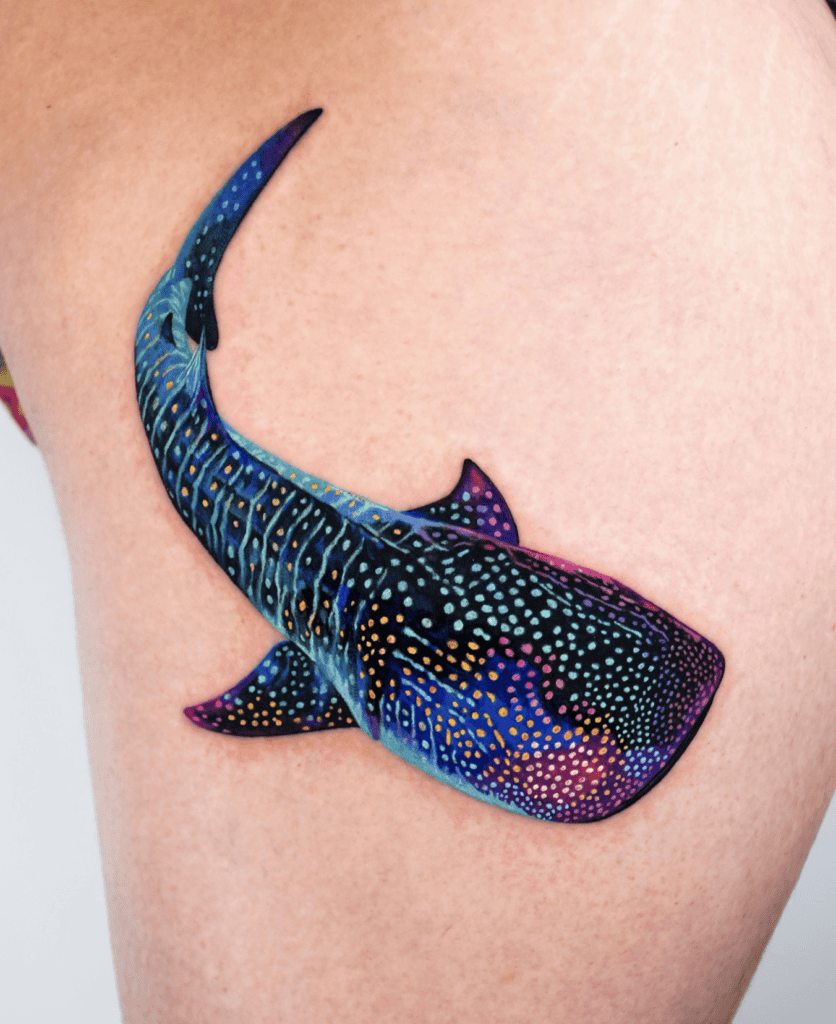
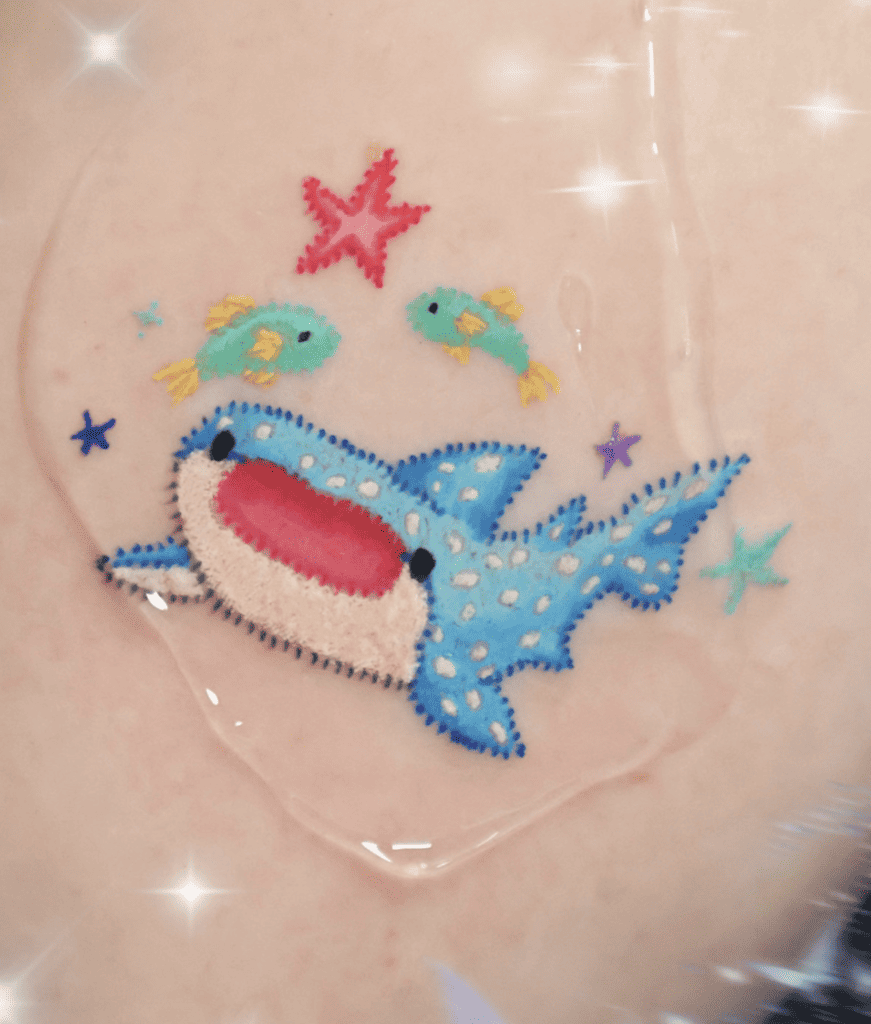
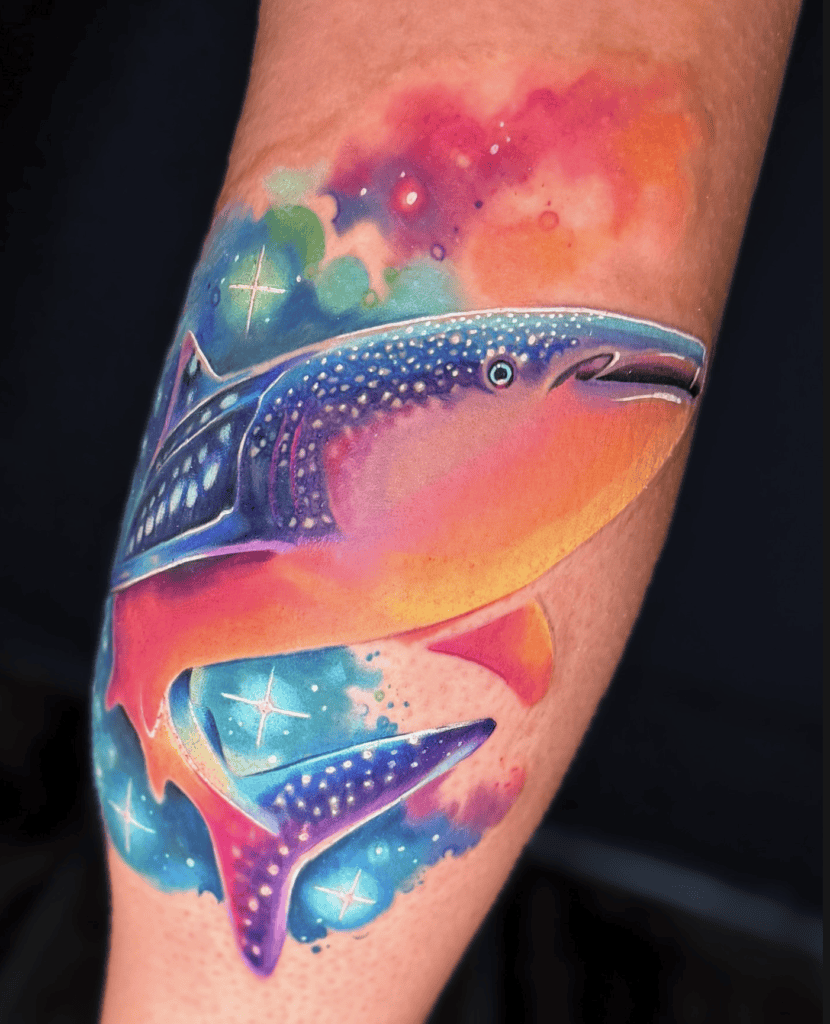
The Whale Shark (Rhincodon typus) is the largest fish in the world, with exceptional individuals reaching around 12 metres (40 feet) or more. Despite its enormous size, it isn’t a whale at all. It’s a shark, with the name coming from its whale-like size and feeding style.
Whale sharks are found in warm tropical and subtropical oceans around the world, often gathering in areas where seasonal plankton blooms provide abundant food.
Bull Shark Tattoo
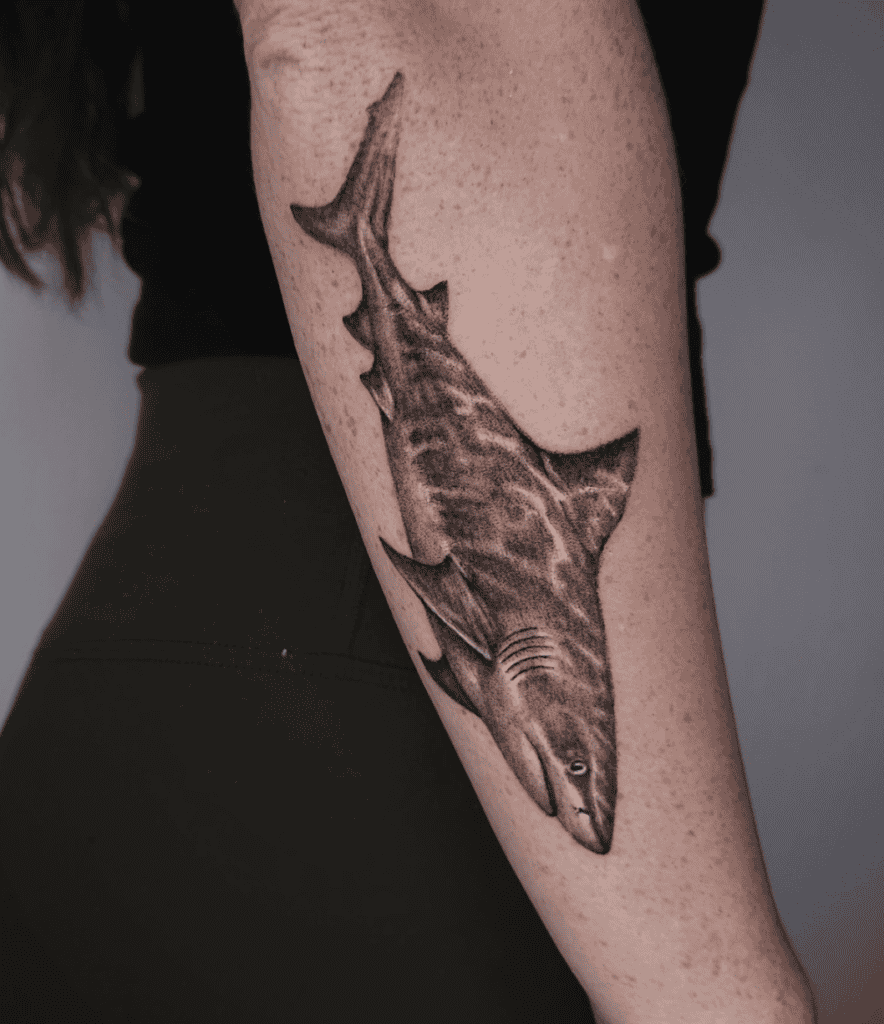
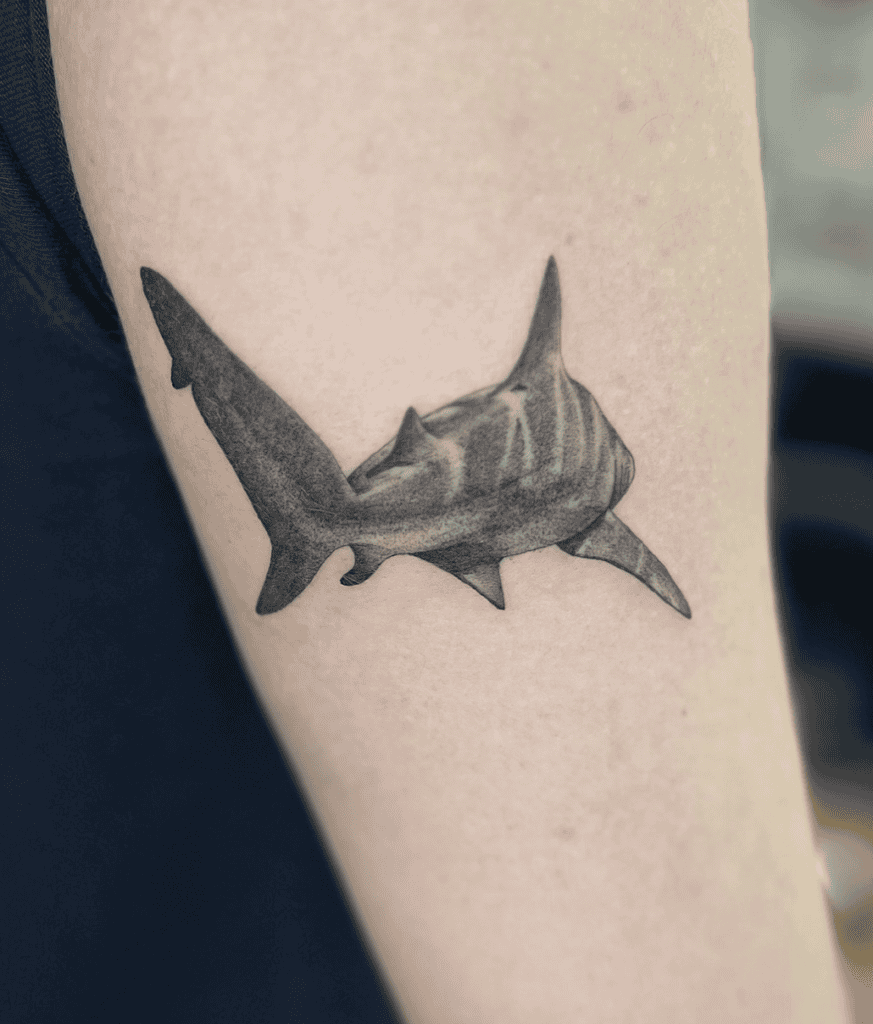
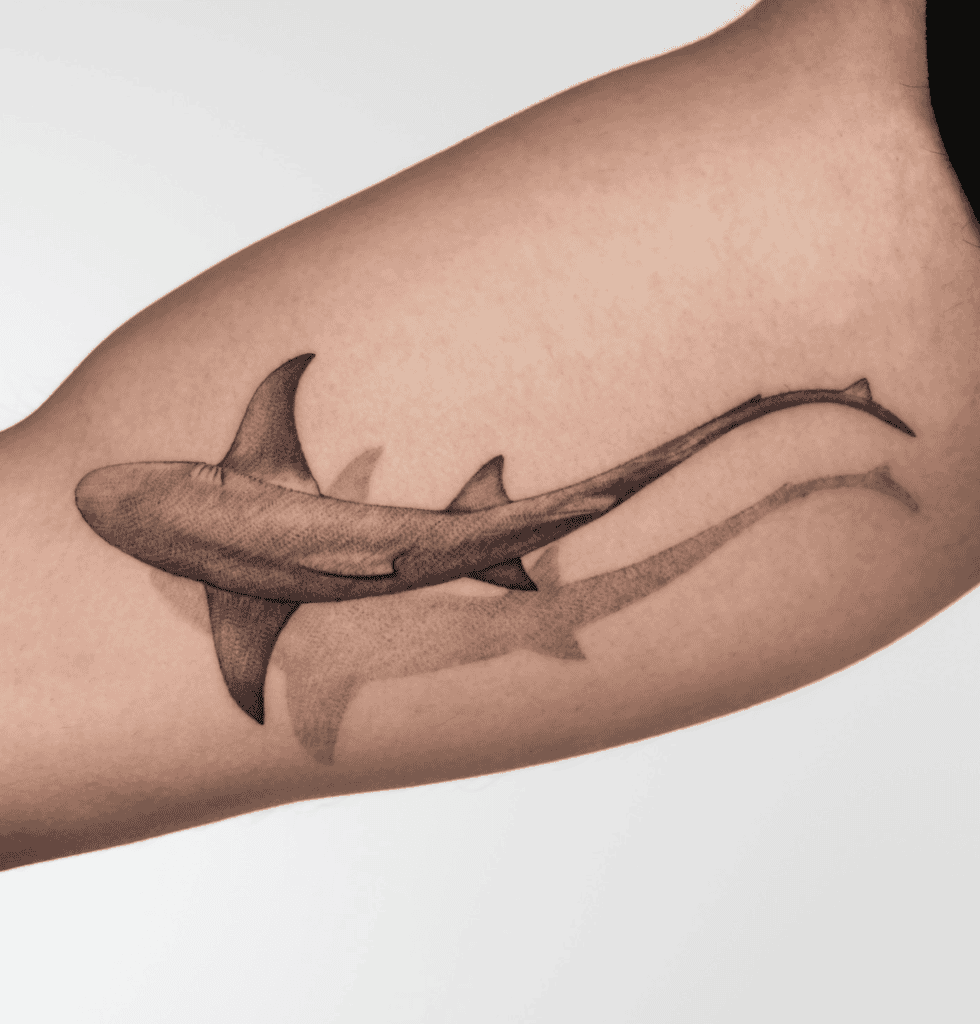
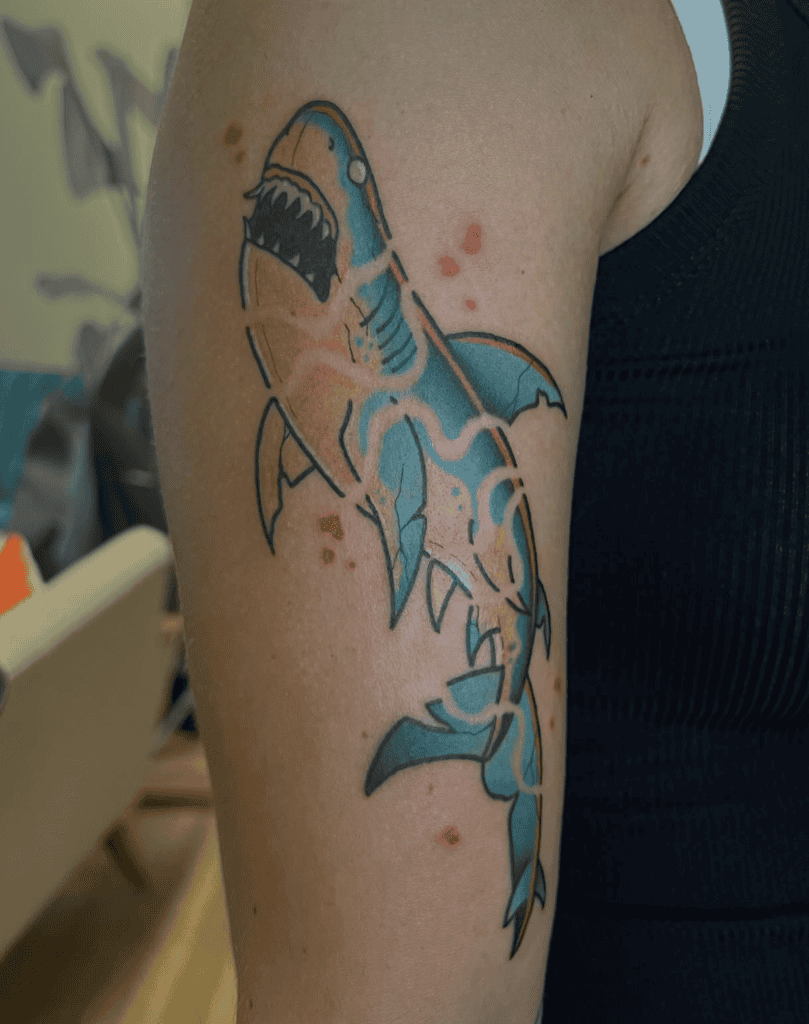
The Bull Shark (Carcharhinus leucas) is a large, powerful shark found in warm coastal waters around the world. Unlike most sharks, Bull Sharks can tolerate freshwater as well as saltwater, allowing them to travel far up rivers.
They have a stocky, muscular body, a broad, blunt snout, and relatively small eyes. Their name comes from their thick build and aggressive-looking appearance, rather than any direct connection to cattle.
Mako Shark Tattoo
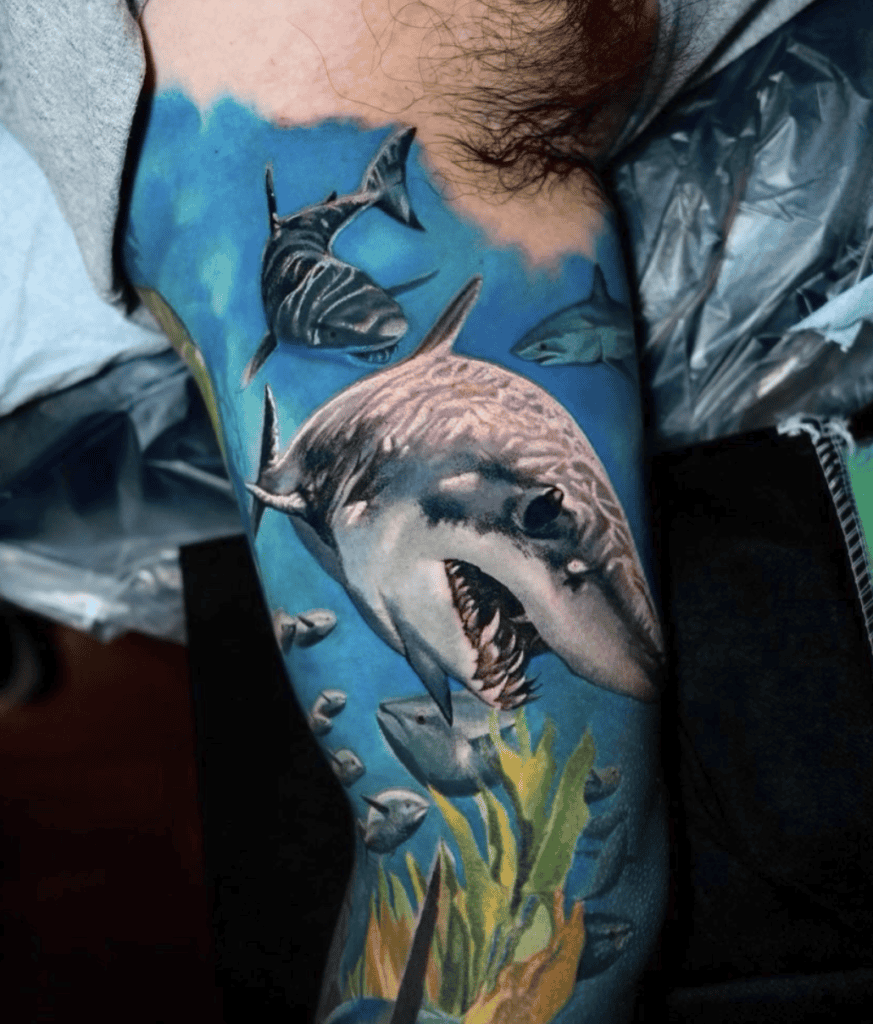
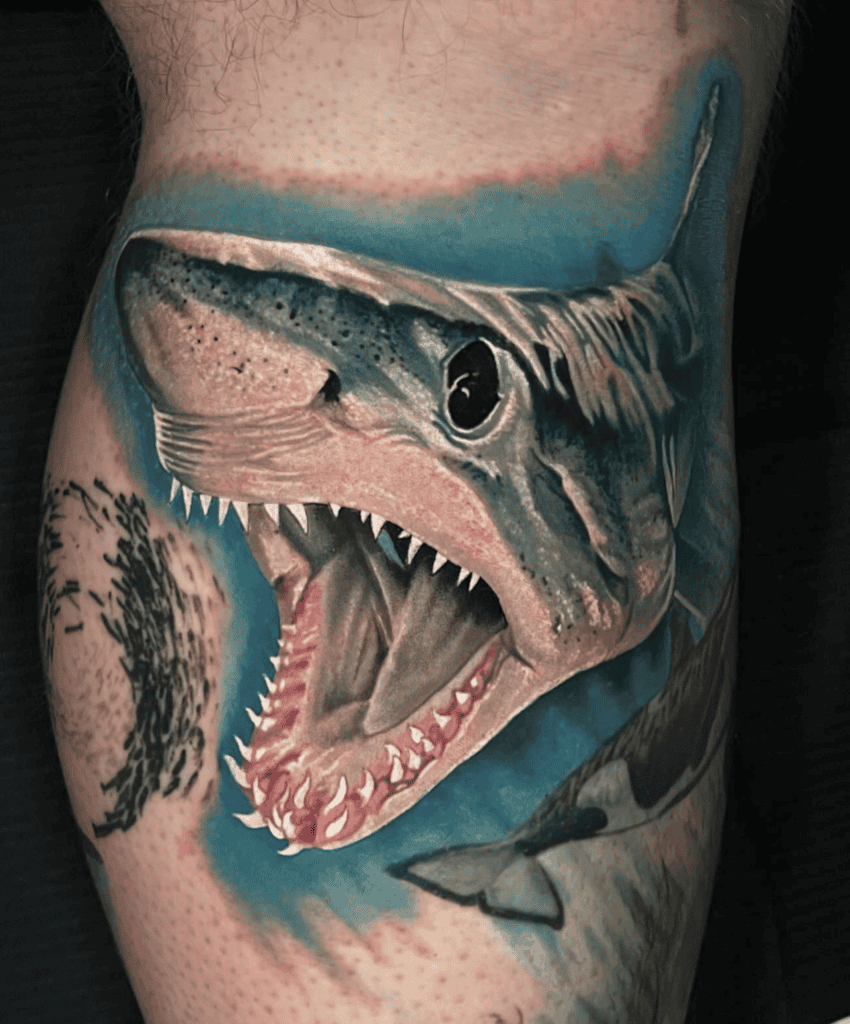
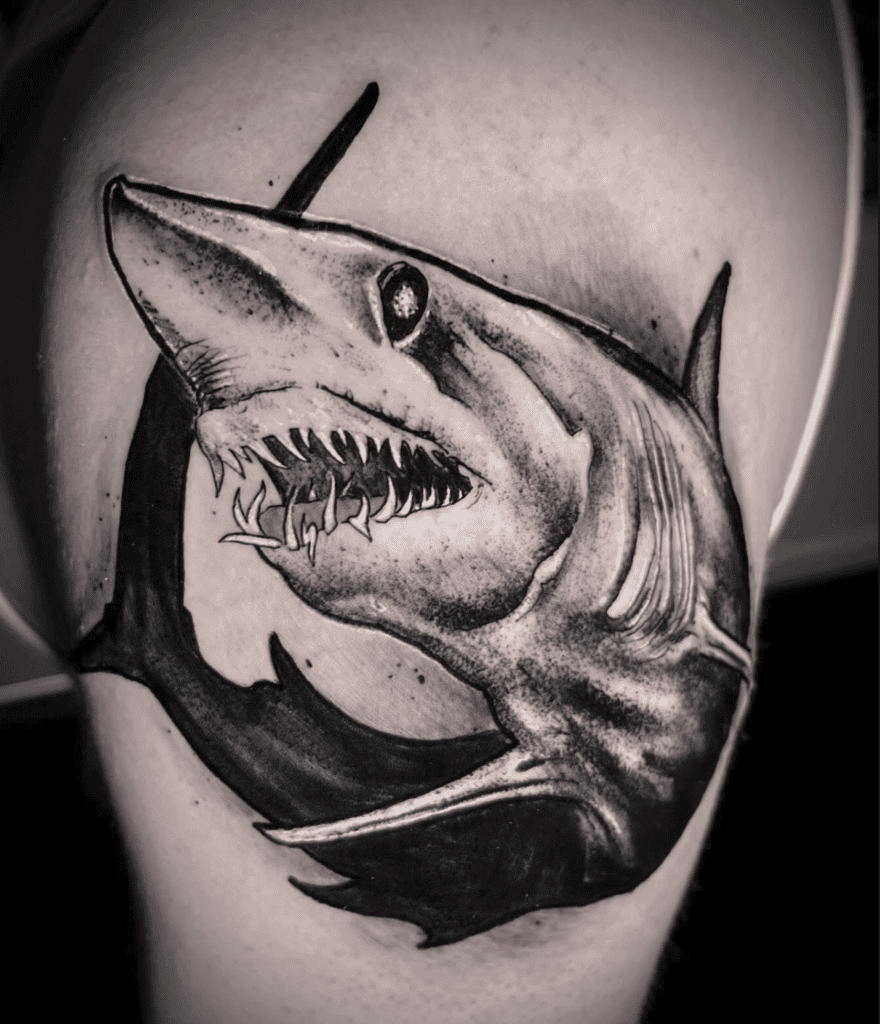
The name Mako Shark usually refers to the Shortfin Mako (Isurus oxyrinchus), although the closely related Longfin Mako (Isurus paucus) is also a member of the genus Isurus. The Shortfin Mako is a sleek, streamlined predator found in temperate and tropical oceans around the world. It has a pointed snout, dark blue-grey back, white underside, and an incredibly streamlined body built for speed.
It is widely regarded as one of the fastest sharks in the ocean, as its streamlined body, powerful muscles, crescent-shaped tail, and specialised physiology allow it to reach very high speeds. Exact maximum-speed estimates vary, but bursts of roughly 50 km/h (31 mph) are often cited.
Nurse Shark Tattoo
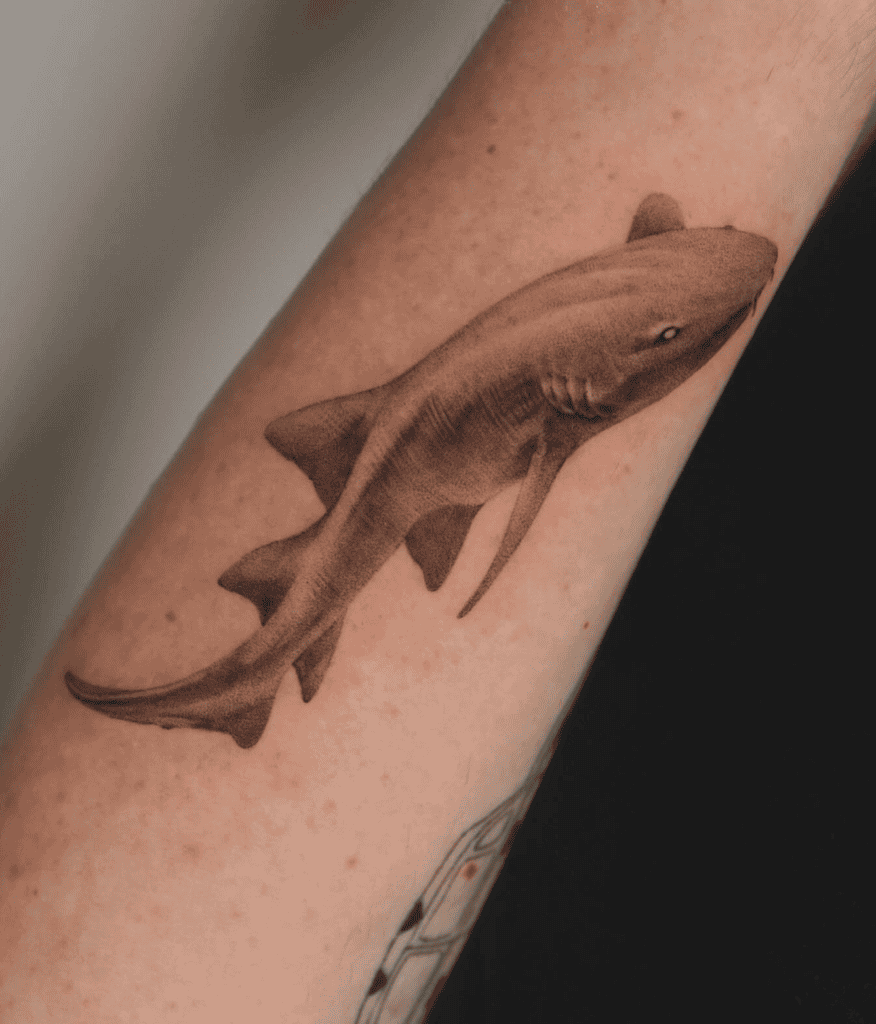
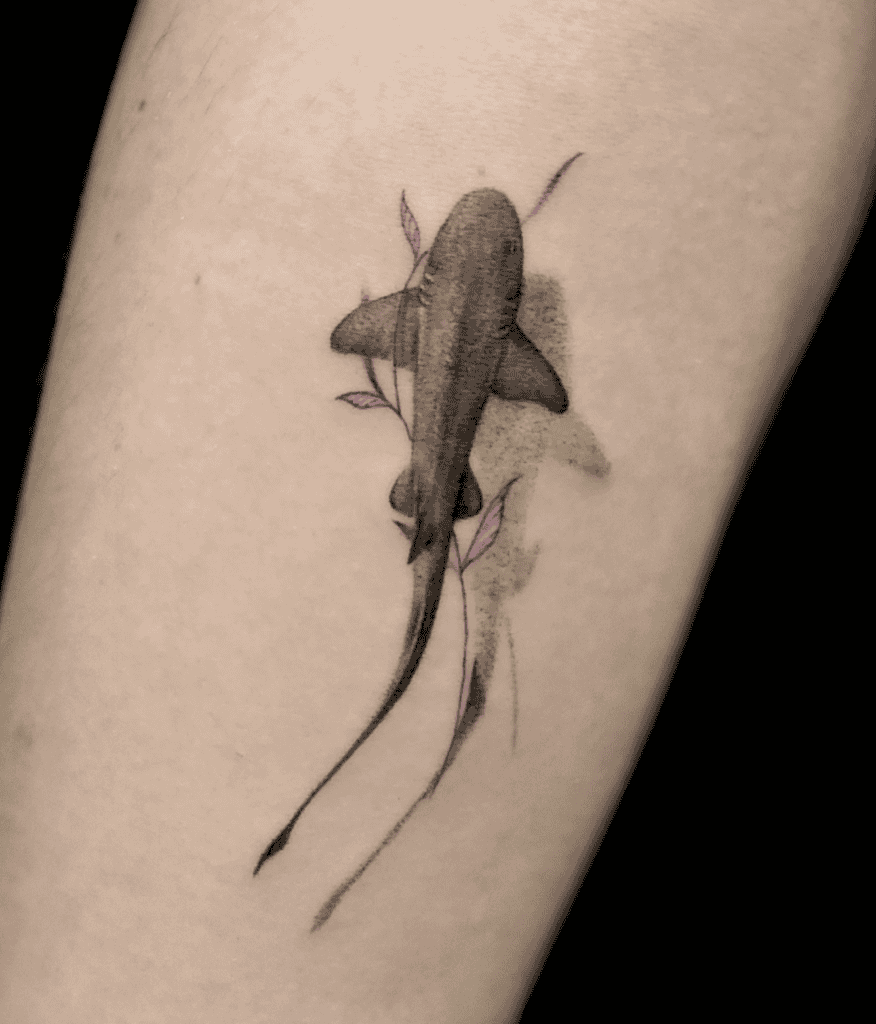
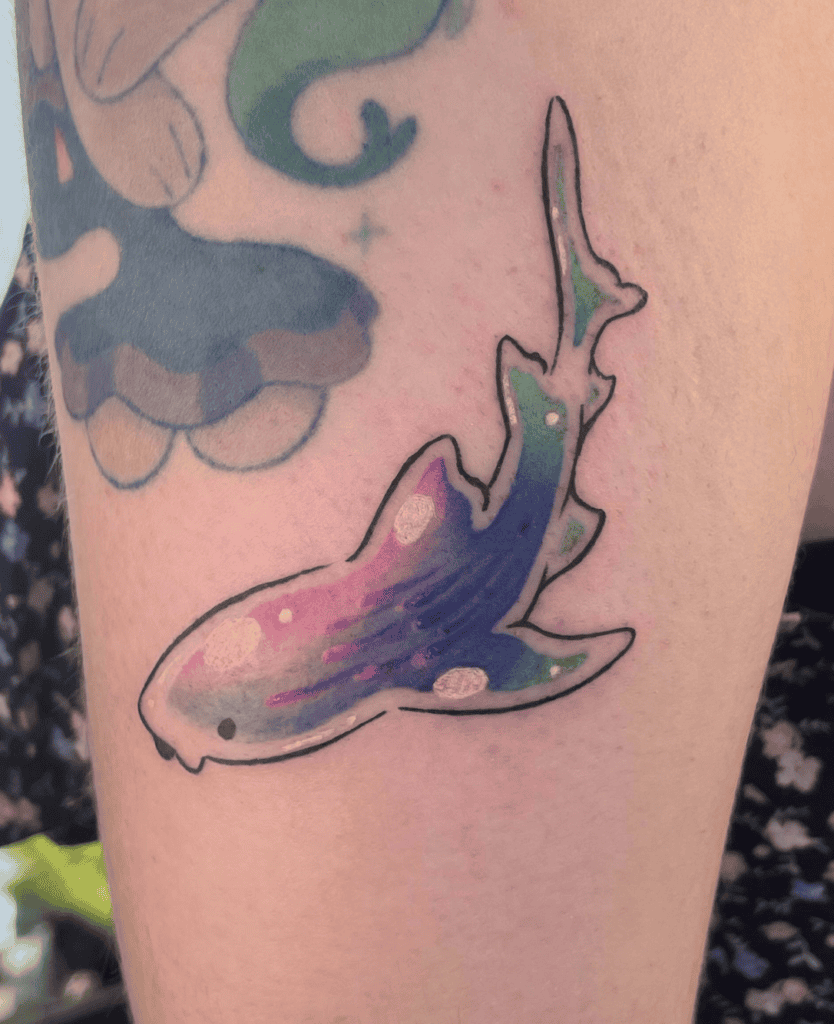
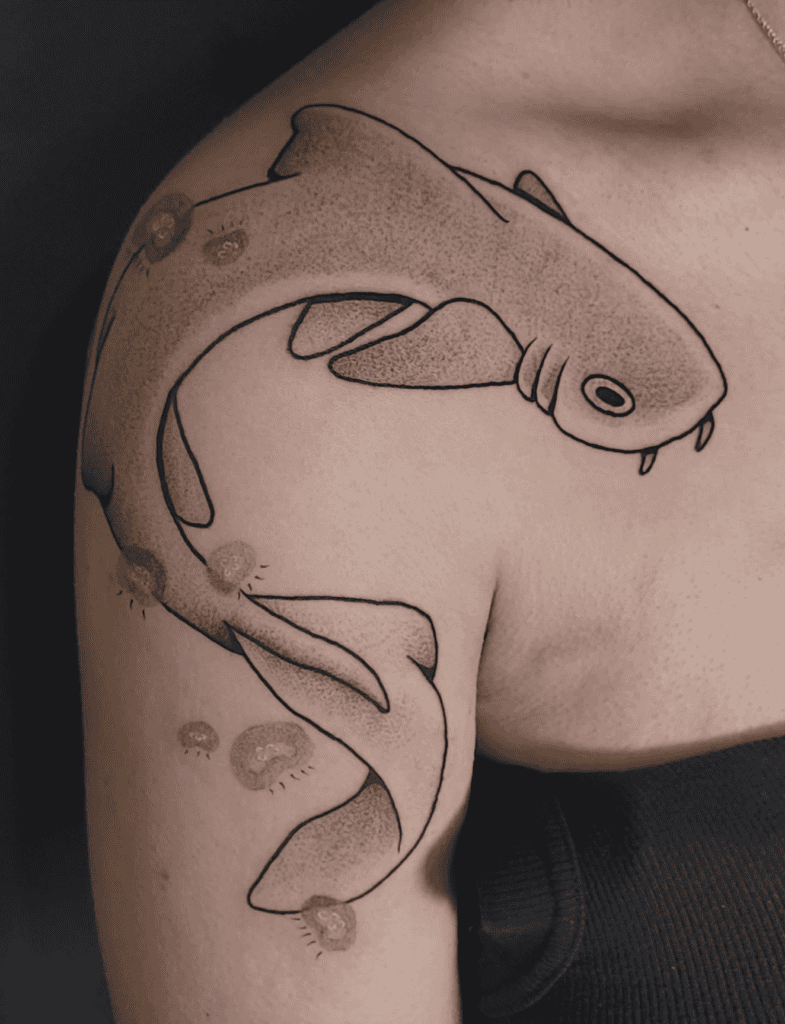
The Nurse Shark (Ginglymostoma cirratum) is a large bottom-dwelling shark found primarily in the warm coastal waters of the western Atlantic and eastern Pacific.
Unlike the sleek, constantly swimming image associated with sharks such as the Great White or Mako, Nurse Sharks spend much of their time resting on the seafloor. They’re commonly found around coral reefs, rocky areas, caves, and sandy or muddy bottoms.
Goblin Shark Tattoo
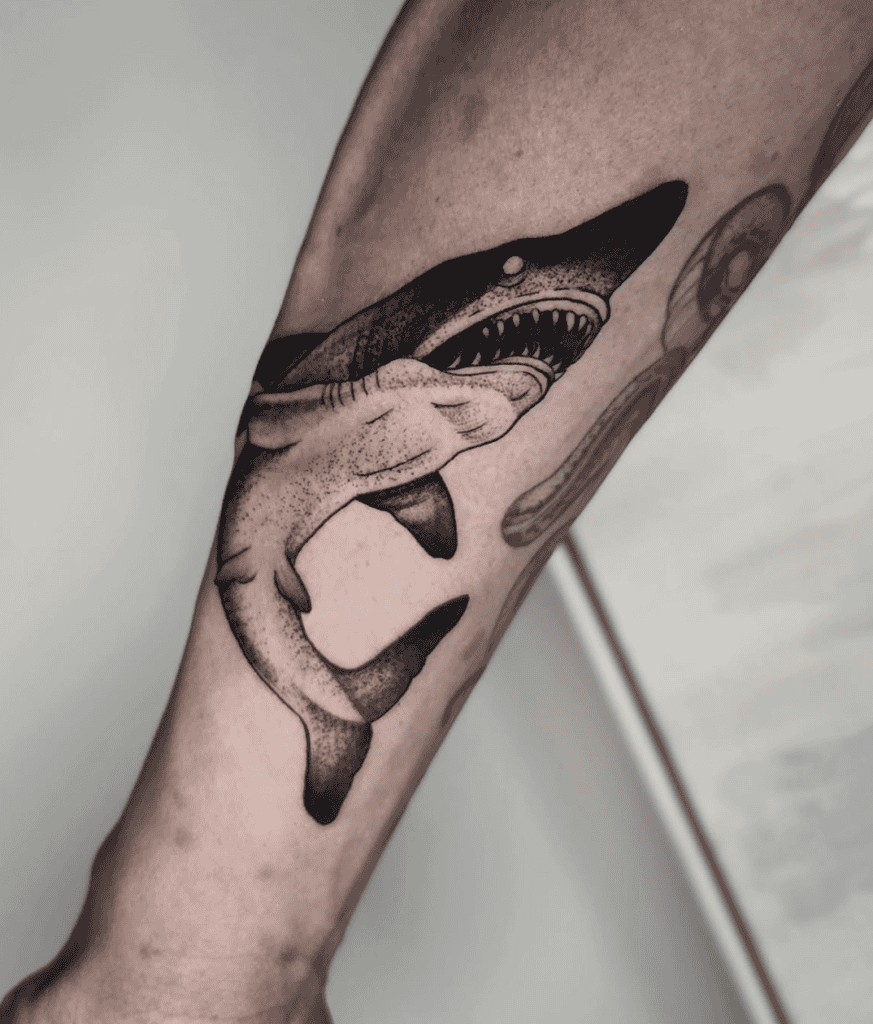
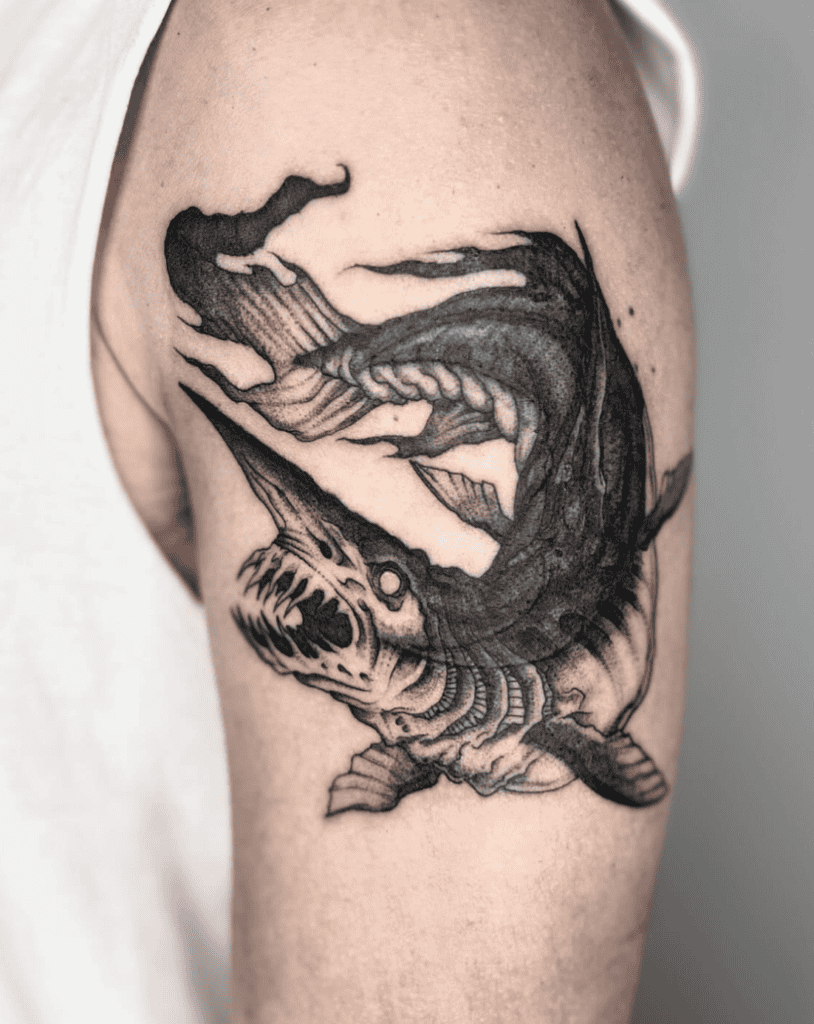
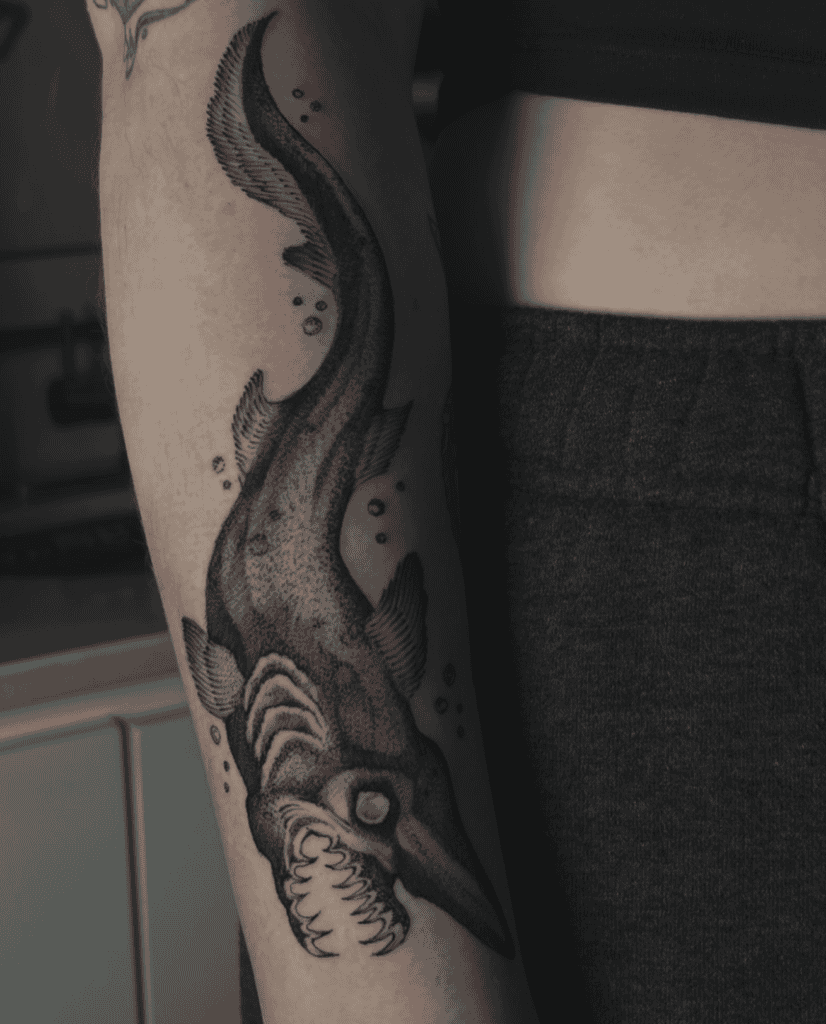
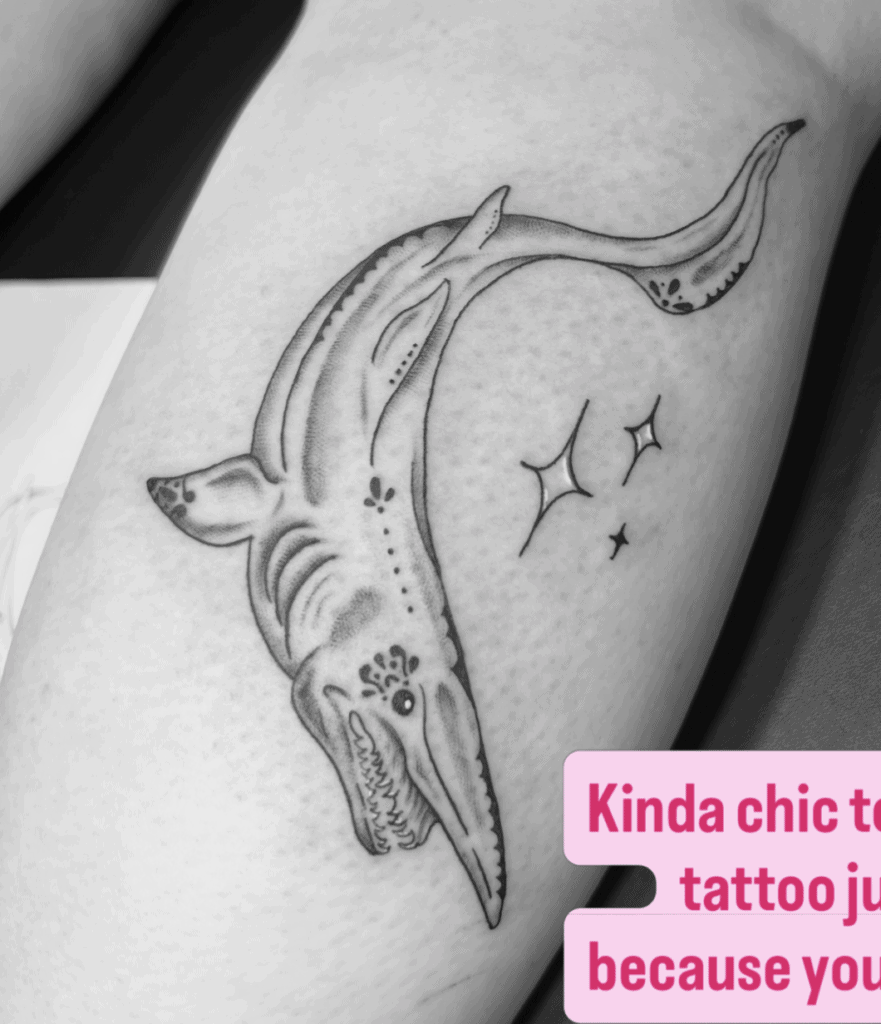
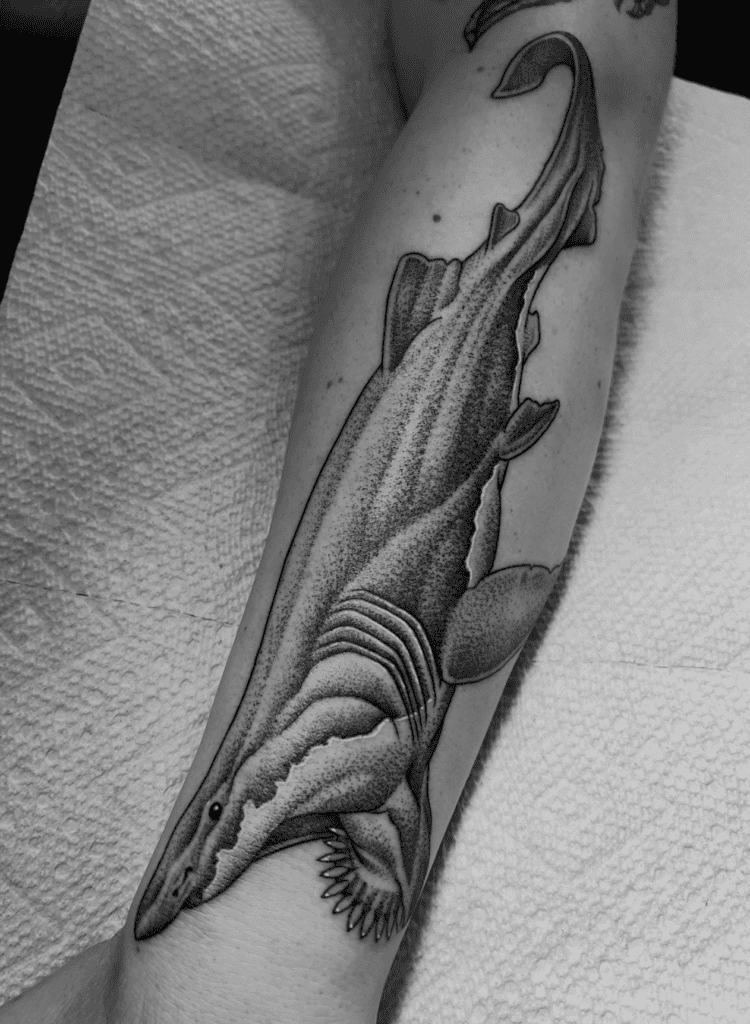
The Goblin Shark (Mitsukurina owstoni) is a rare deep-sea shark found in oceans around the world. It is the only living species in the family Mitsukurinidae, a lineage that dates back many millions of years.
This Shark has a long, flattened snout, pale pinkish-grey body, small eyes, and a highly protrusible jaw. It’s sometimes nicknamed a “living fossil” because its lineage is ancient, although that doesn’t mean individual Goblin Sharks have remained unchanged for millions of years.
Thresher Shark Tattoo
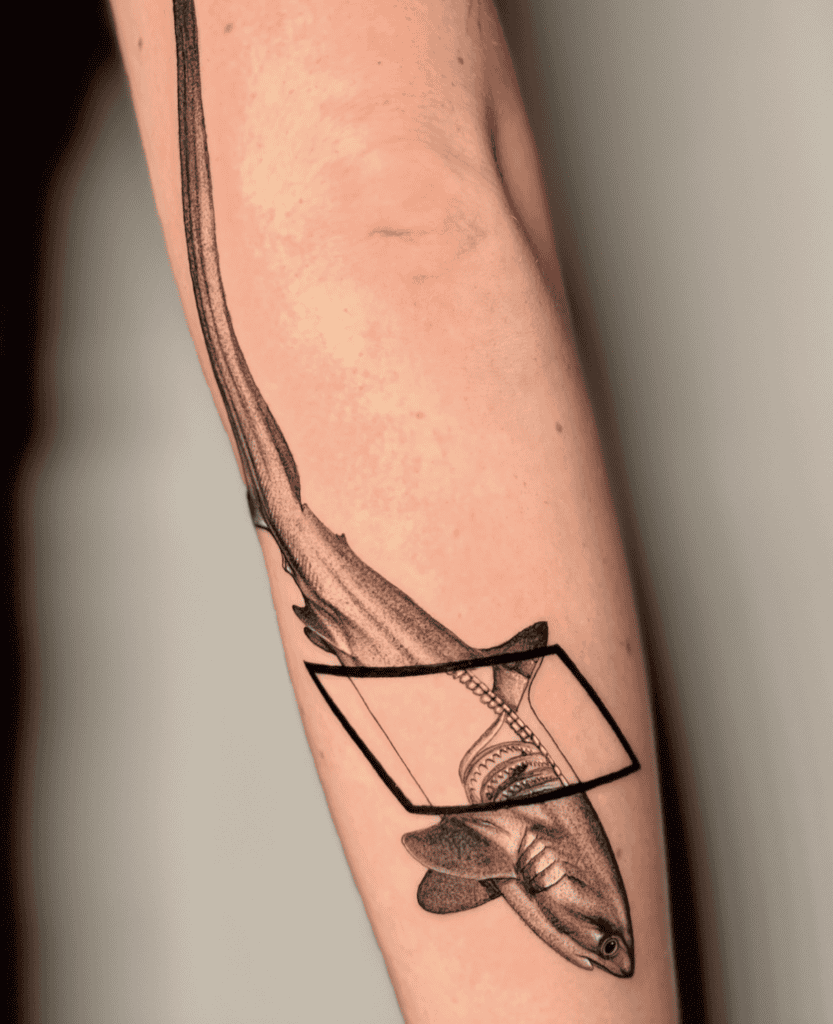
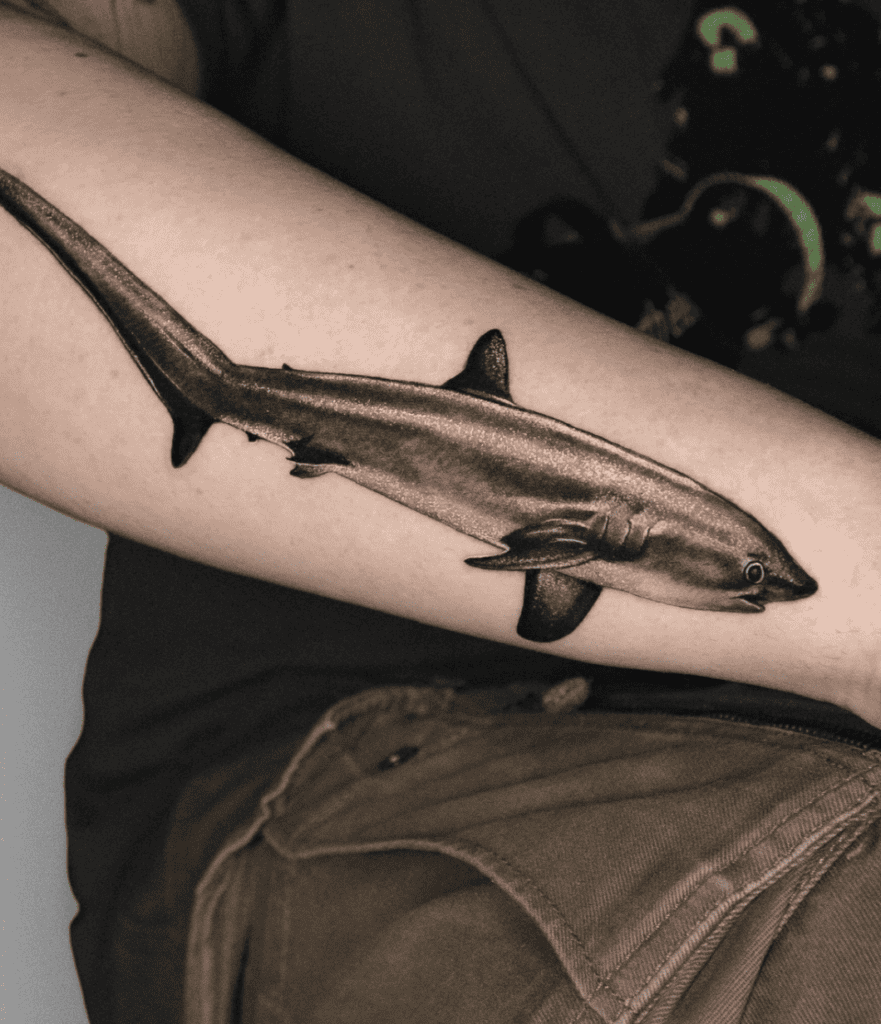
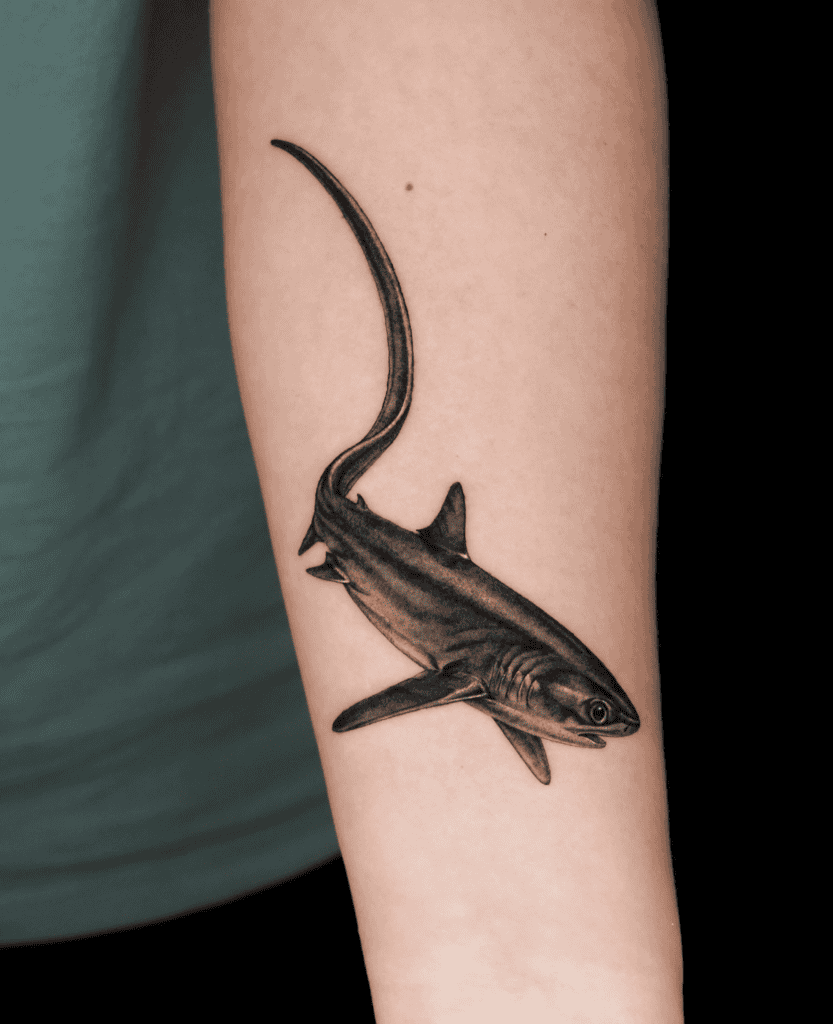
The Thresher Sharks are a group of sharks in the genus Alopias, best known for their extraordinary whip-like tails. The three living species include the Common Thresher (Alopias vulpinus), Pelagic Thresher (Alopias pelagicus), and the Bigeye Thresher (Alopias superciliosus).
Their most famous feature is the enormous upper lobe of their caudal fin, which can be almost as long as the rest of the shark’s body. The name comes from the shark’s unusual hunting technique. Threshers can use their long tail like a whip, rapidly swinging it through the water to stun or disorient schools of fish.
Basking Shark Tattoo
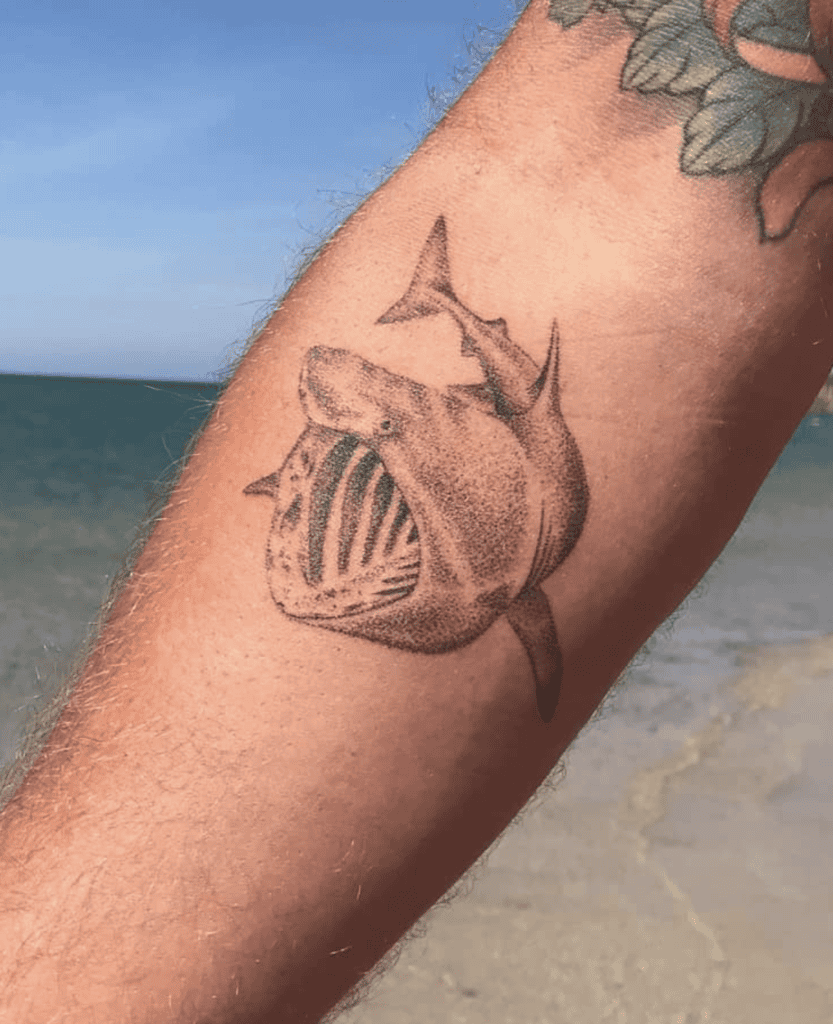
The Basking Shark (Cetorhinus maximus) is the second-largest living fish, surpassed only by the Whale Shark. Despite its enormous size and intimidating appearance, it is a filter feeder that primarily eats tiny plankton.
The name comes from its habit of swimming slowly near the surface, particularly in areas rich in plankton. From above, these huge sharks can appear to be basking in the sunlight, which is how they got their common name.
Oceanic Whitetip Shark Tattoo
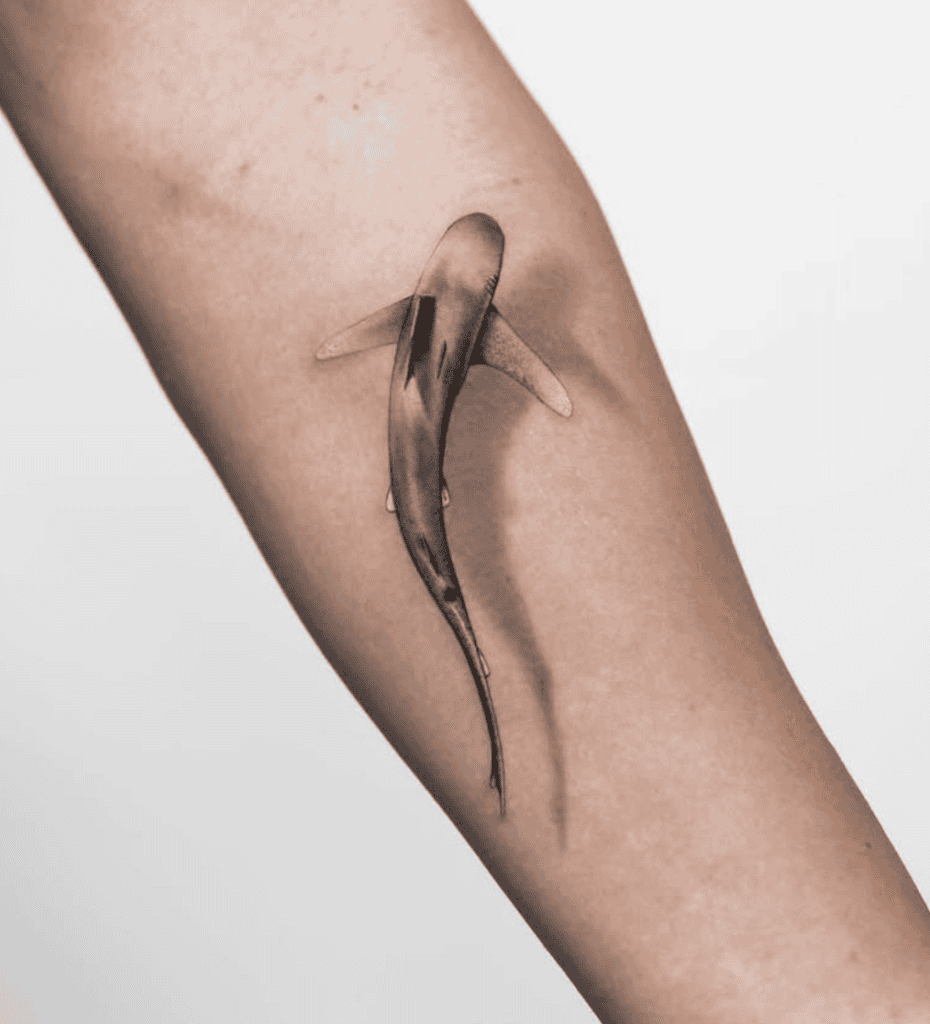
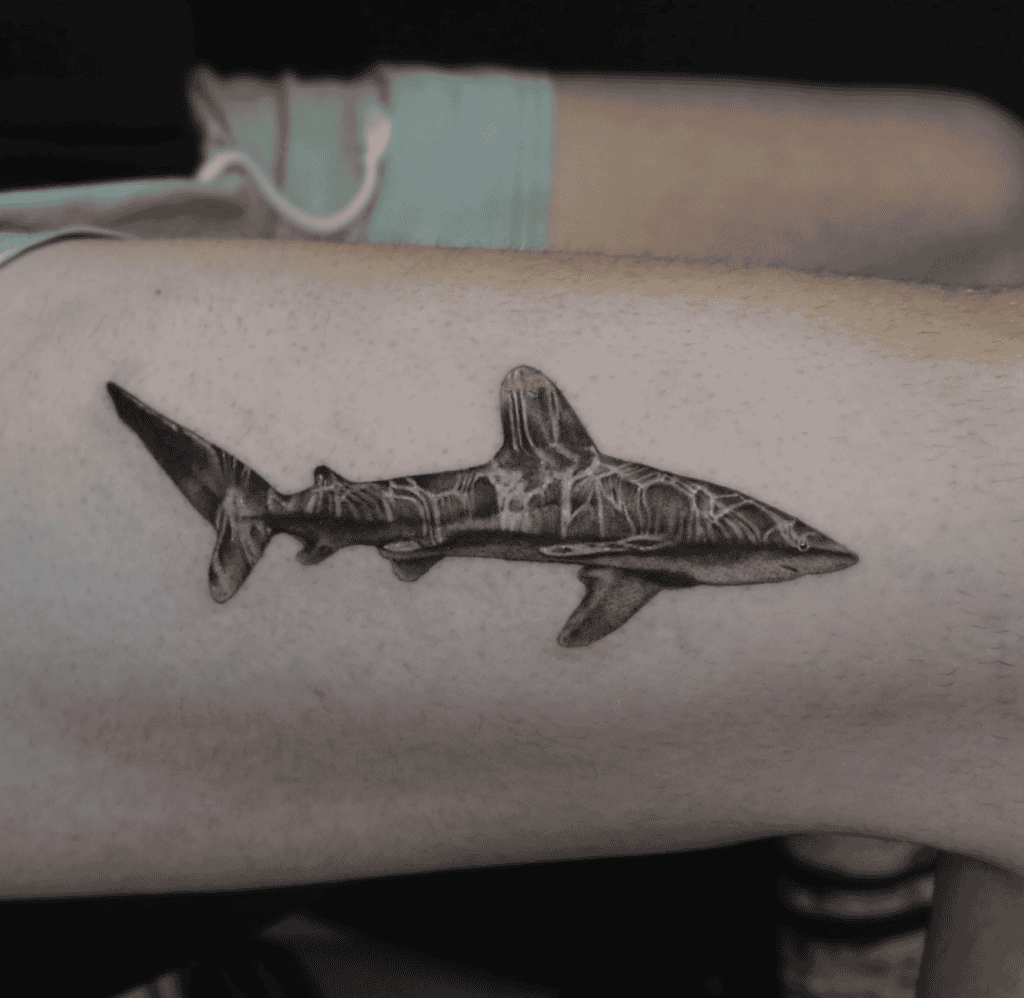
The Oceanic Whitetip Shark (Carcharhinus longimanus) is a large, powerful shark that spends much of its life in the open ocean. It’s particularly famous for its long, rounded fins, which usually have distinctive white markings on their tips. Unlike many sharks that have relatively narrow, pointed fins, the Oceanic Whitetip has broad, paddle-like pectoral and dorsal fins.
Oceanic refers to its preference for offshore, open-ocean environments, while Whitetip refers to the characteristic white markings on its fins. Those white tips can make the shark surprisingly easy to identify even when viewed from a distance.
Blacktip Reef Shark Tattoo
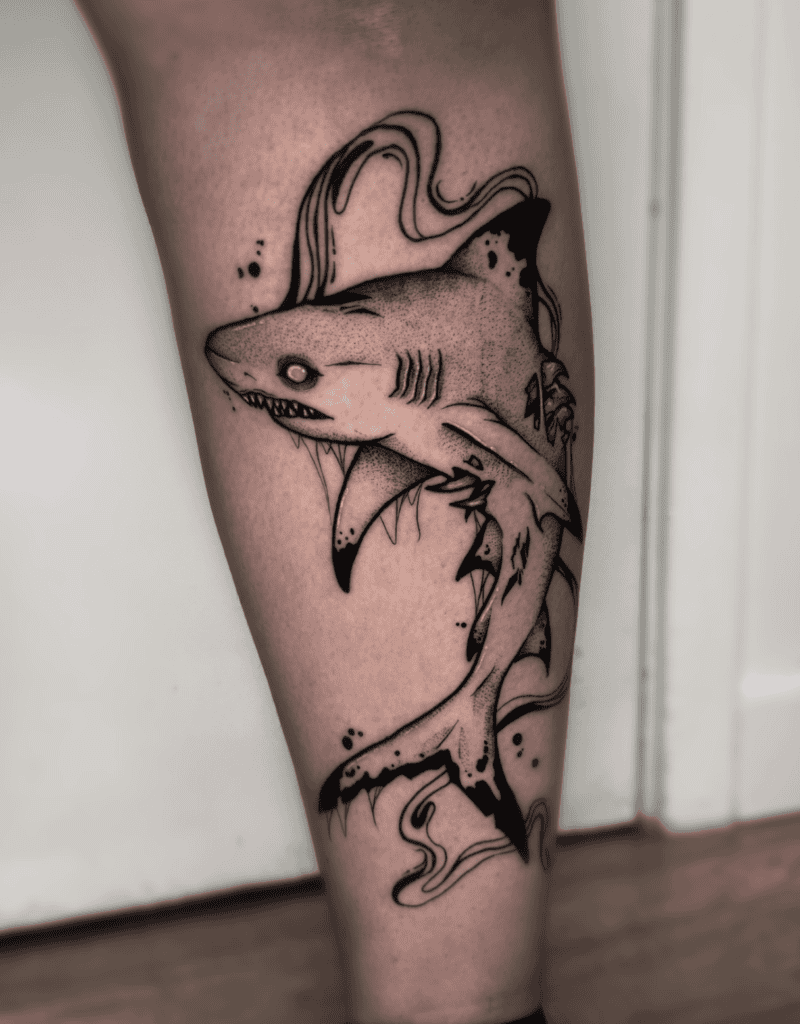
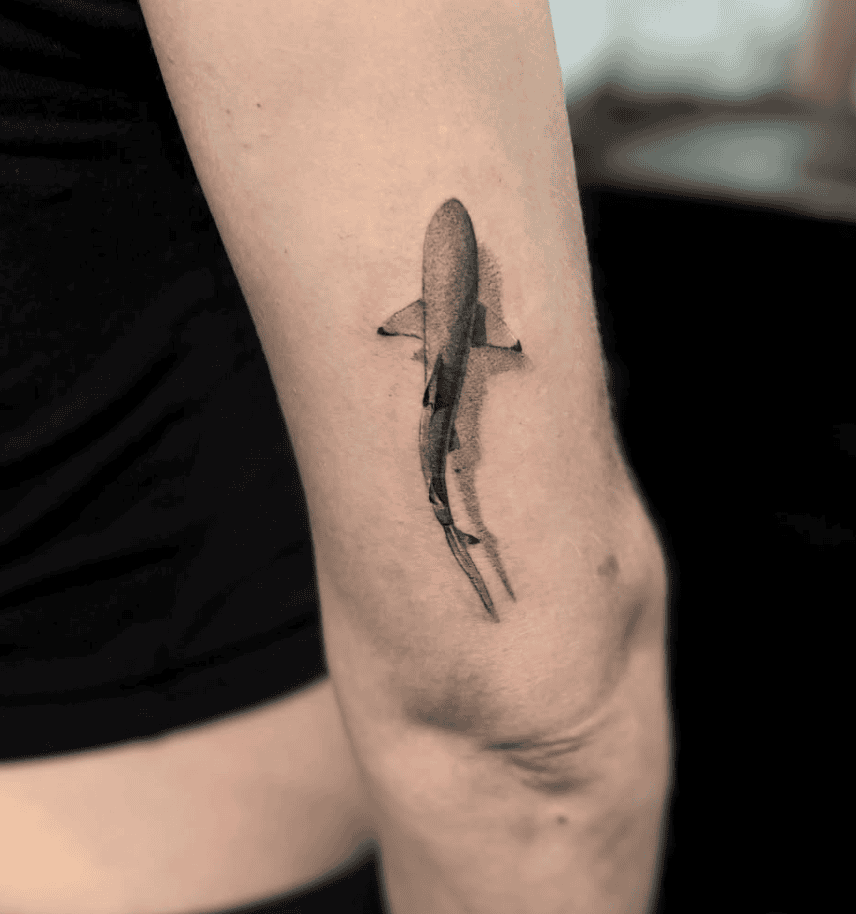
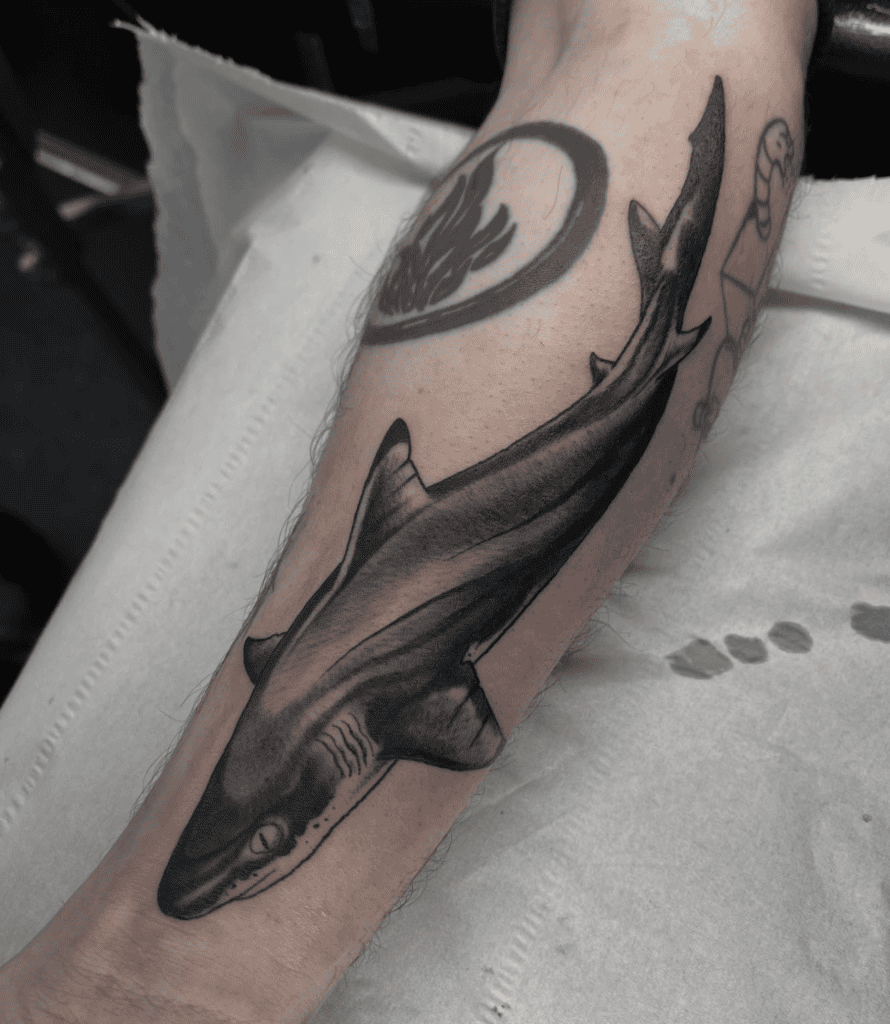
The Blacktip Reef Shark (Carcharhinus melanopterus) is a relatively small, slender shark commonly found around coral reefs and shallow tropical coastal waters. Its signature feature is the distinctive black marking on the tip of its first dorsal fin, often accompanied by dark tips on some of its other fins.
Blacktip refers to its dark or black fin markings, while Reef Shark describes its strong association with shallow reef environments. It is one of several shark species with “blacktip” in the common name, so it’s important not to confuse it with the Blacktip Shark (Carcharhinus limbatus), which is a different species.
Blue Shark Tattoo
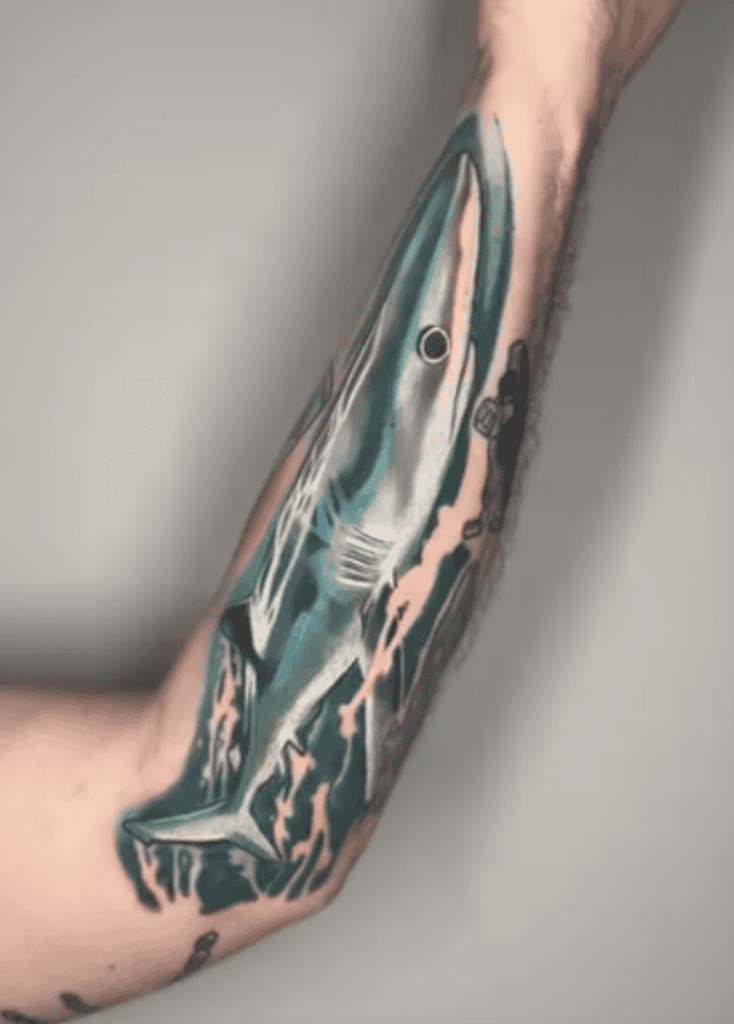
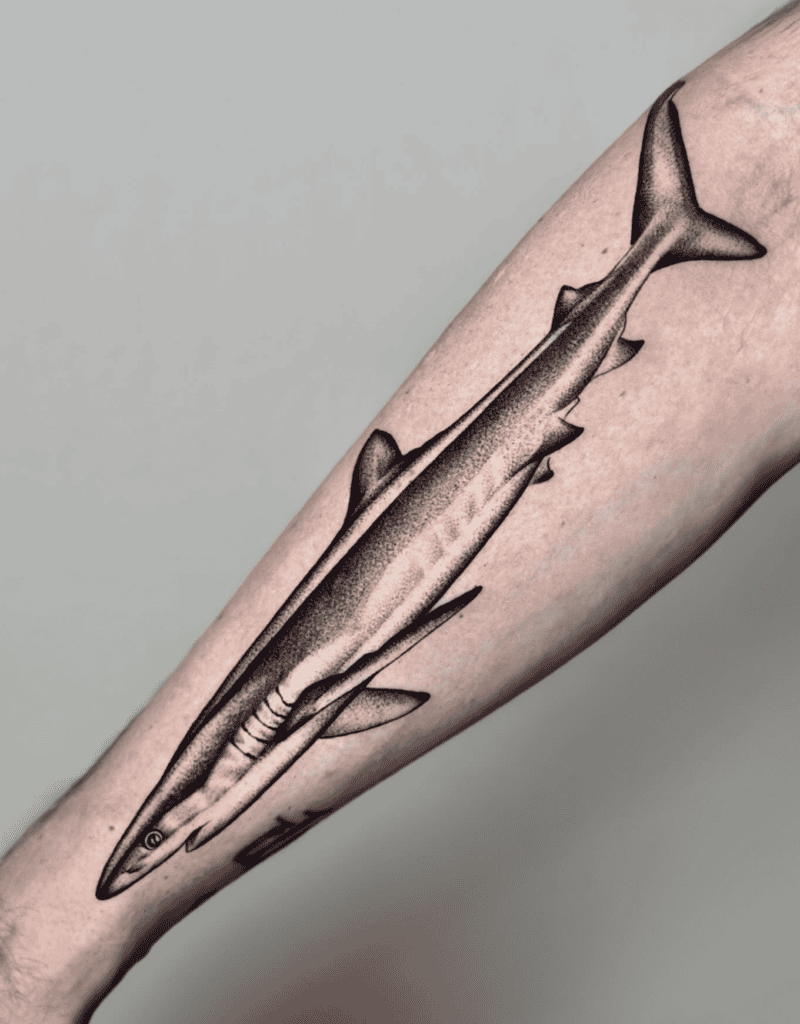
The Blue Shark (Prionace glauca) is a sleek, streamlined shark famous for its deep blue colouration and elegant body shape. Unlike reef-associated species such as the Blacktip Reef Shark, Blue Sharks are primarily open-ocean animals. They’re widely distributed throughout tropical and temperate seas and are capable of travelling enormous distances.
The name comes from its distinctive blue colouration, particularly along its back and upper sides. The colour can range from a vivid cobalt or deep blue to a more subdued greyish-blue depending on lighting and the individual shark. Its underside is generally much lighter, creating a form of countershading that helps camouflage it in open water.
Lemon Shark Tattoo
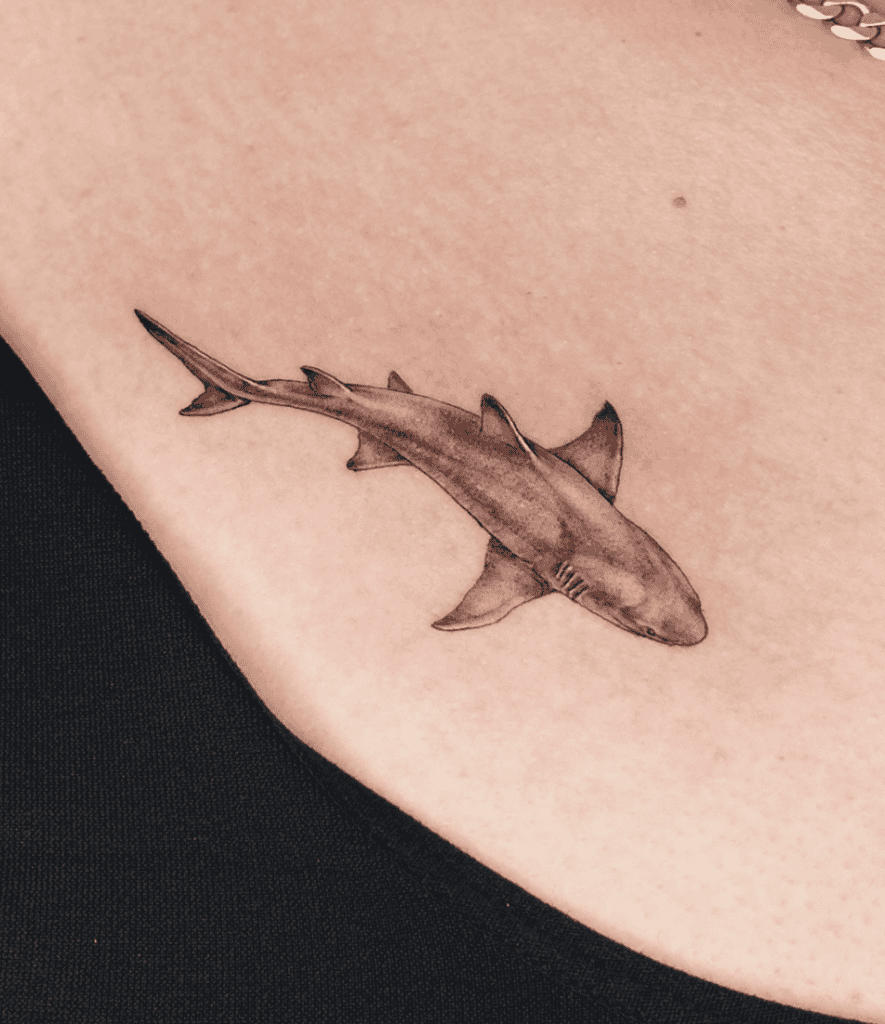
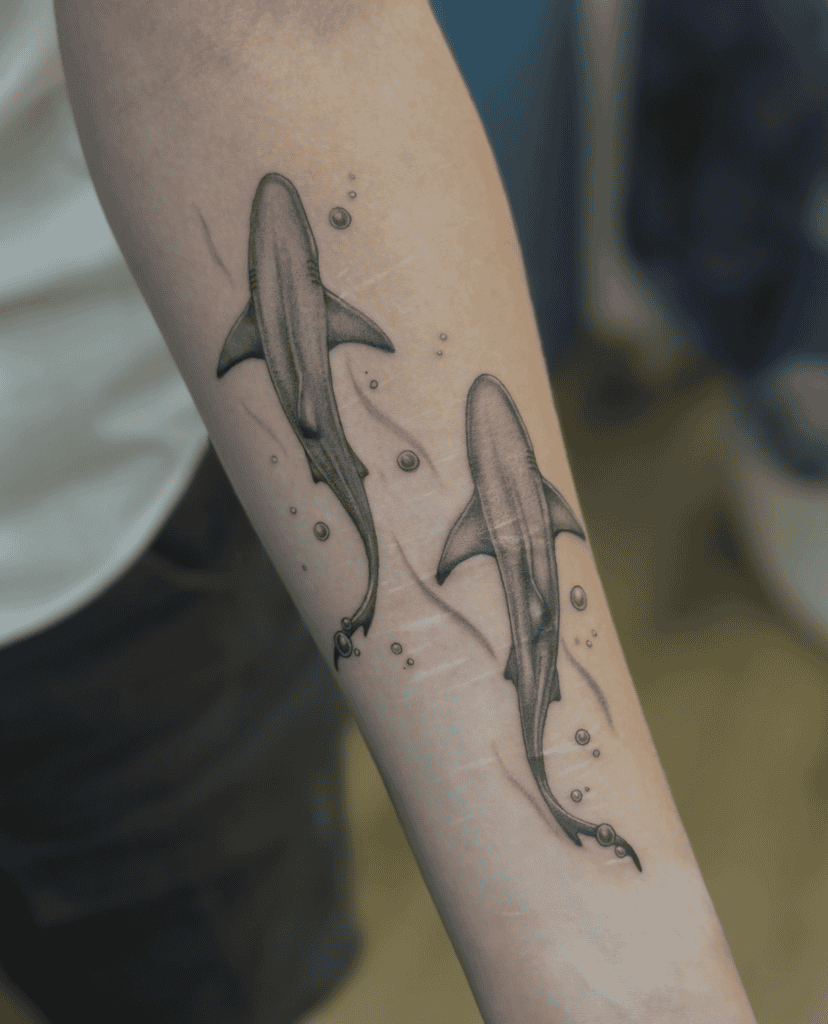
The Lemon Shark (Negaprion brevirostris) is a large coastal shark famous for its distinctive yellowish or olive-brown colouration. It is primarily found in the warm coastal waters of the western Atlantic and eastern Pacific, often around sandy bottoms, mangroves, reefs and shallow bays.
The name comes from its yellowish body colouration. That yellow-brown colouring provides useful camouflage against sandy or muddy seafloors, helping the shark blend into its surroundings.
Wobbegong Tattoo
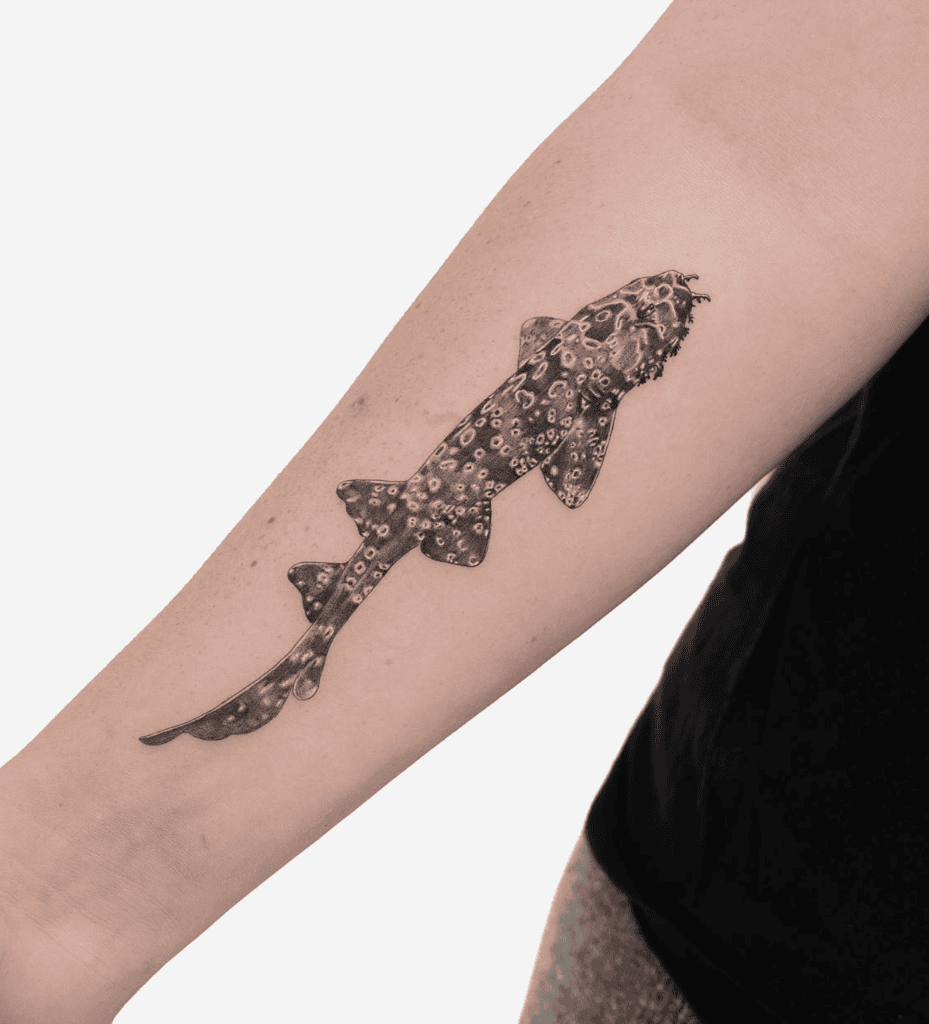
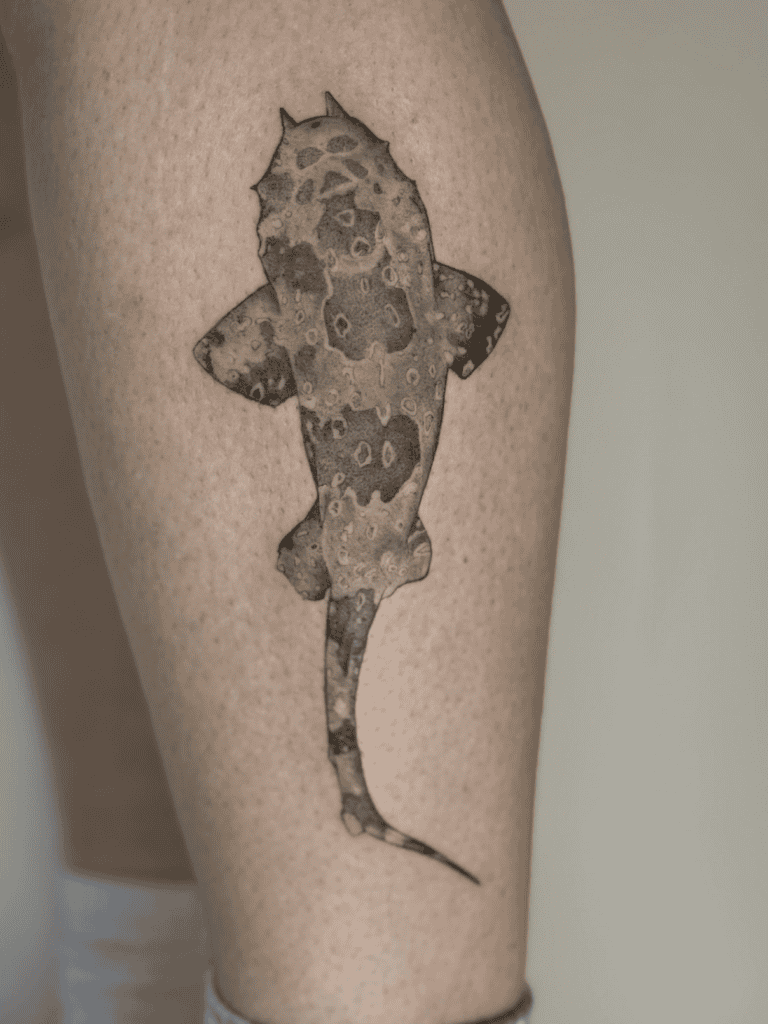
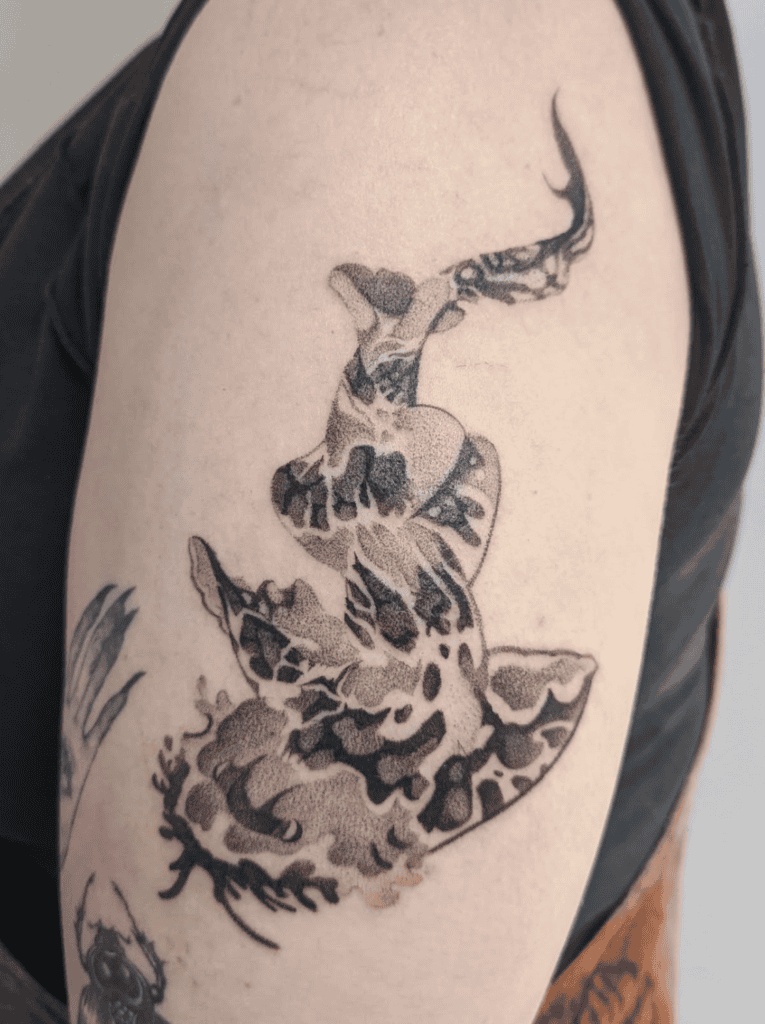
Wobbegongs are a group of bottom-dwelling sharks belonging to the family Orectolobidae. There are several recognised species, including the Tasselled Wobbegong, Ornate Wobbegong and Spotted Wobbegong.
They’re especially famous for their flattened bodies, broad heads, mottled camouflage, barbels around the mouth, and elaborate skin flaps and tassels. They’re sometimes referred to as “carpet sharks”, a name shared with several related species.
The exact origin of the word “wobbegong” isn’t completely certain, but it is generally considered to come from an Australian Aboriginal language. The name is now used for this distinctive group of Australian and Indo-Pacific carpet sharks.
Zebra Shark Tattoo
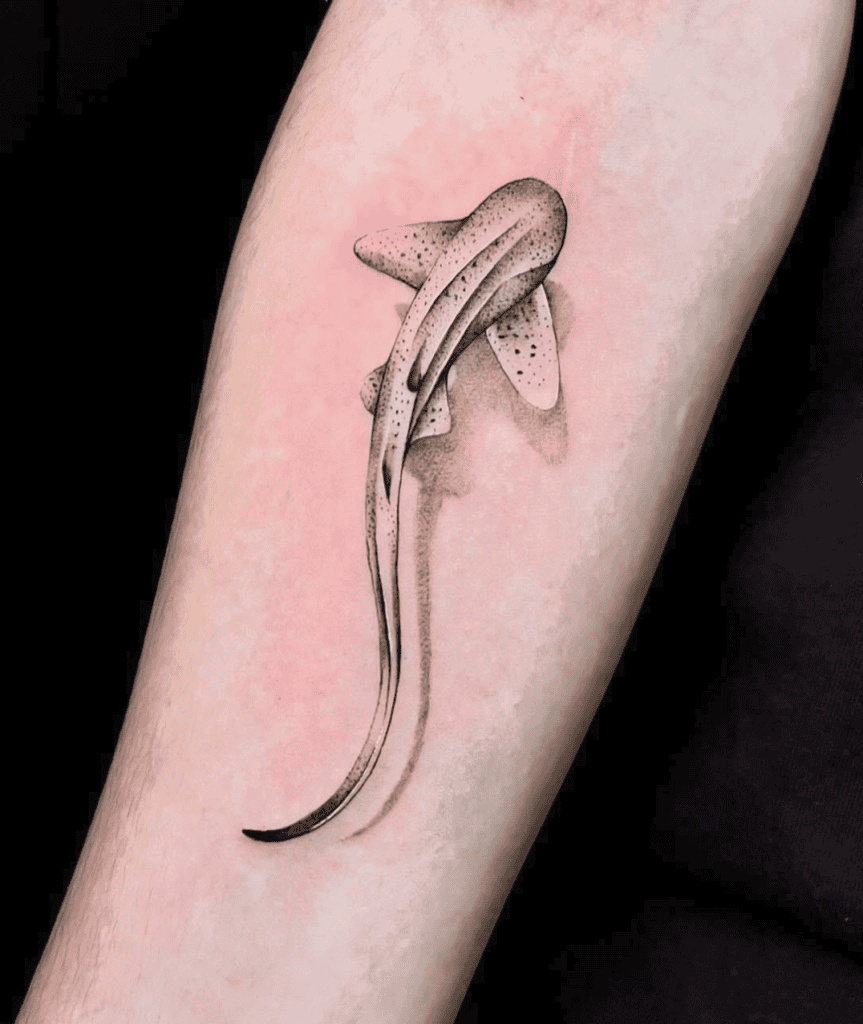
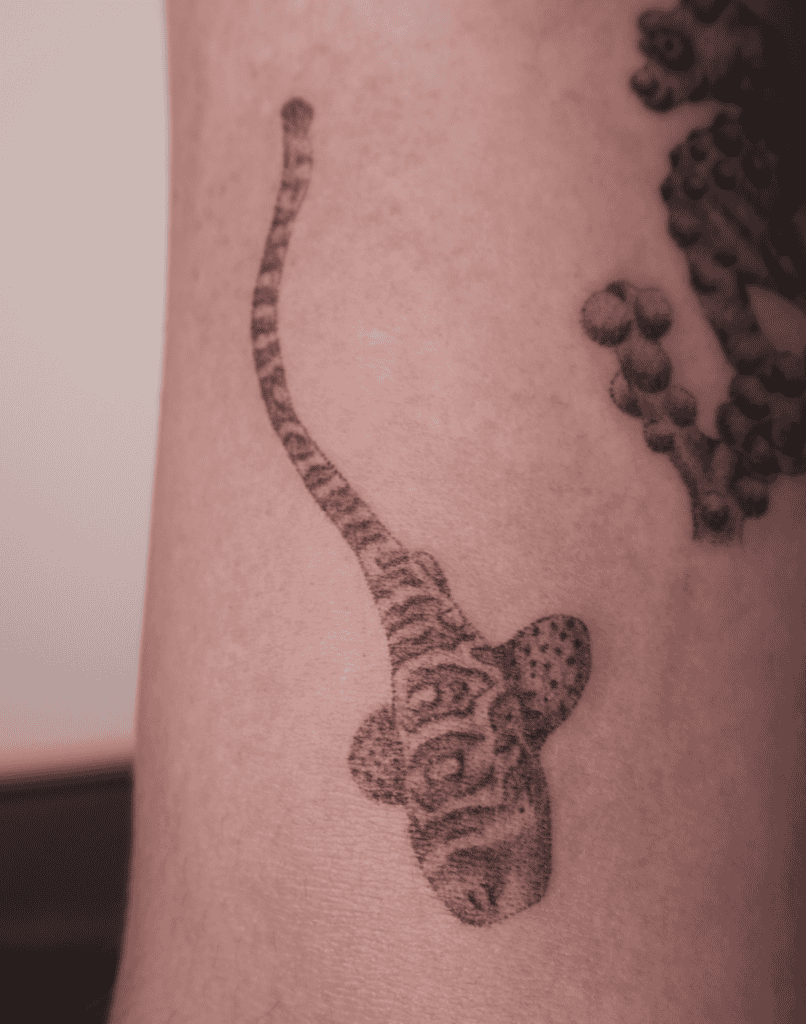
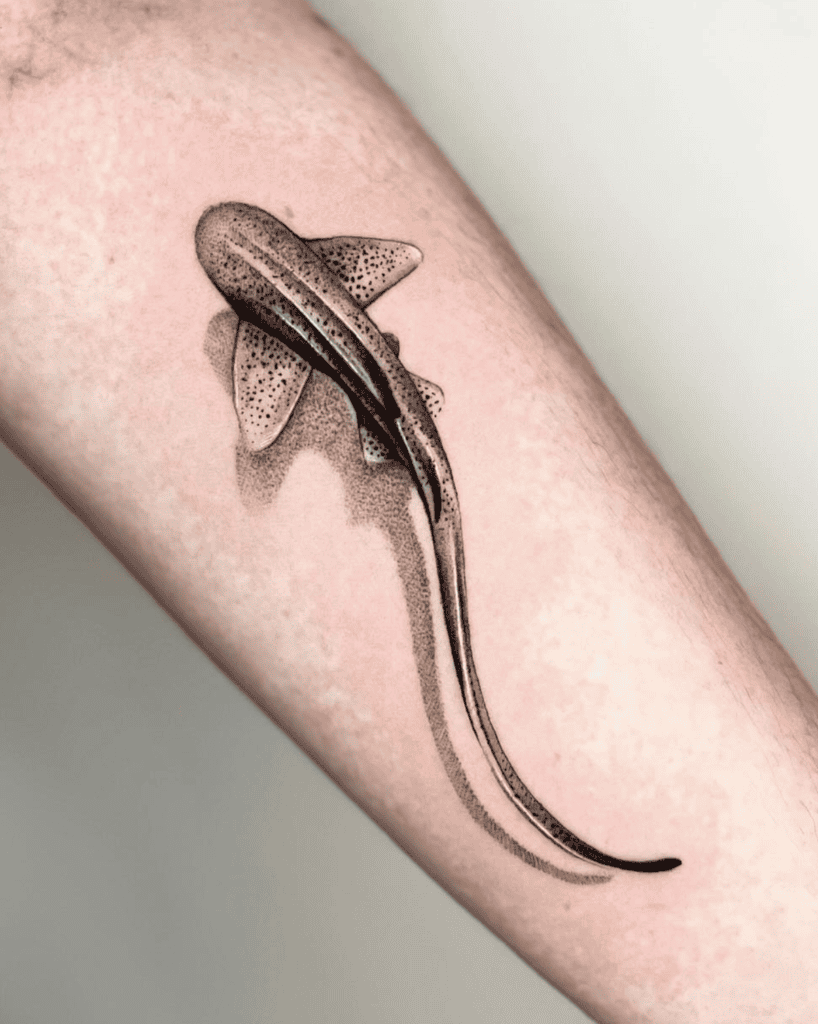
The Zebra Shark is a distinctive bottom-dwelling shark found mainly around the tropical Indo-Pacific. It spends much of its time resting on sandy bottoms, reefs and rocky areas, where its long, flexible body and broad fins make it look almost more like a giant carpet shark than the classic torpedo-shaped shark.
Young Zebra Sharks have striking dark-and-light stripes, which give them their name. As they mature, however, those stripes disappear and are replaced by a yellowish-brown body covered in dark spots.
Leopard Shark Tattoo
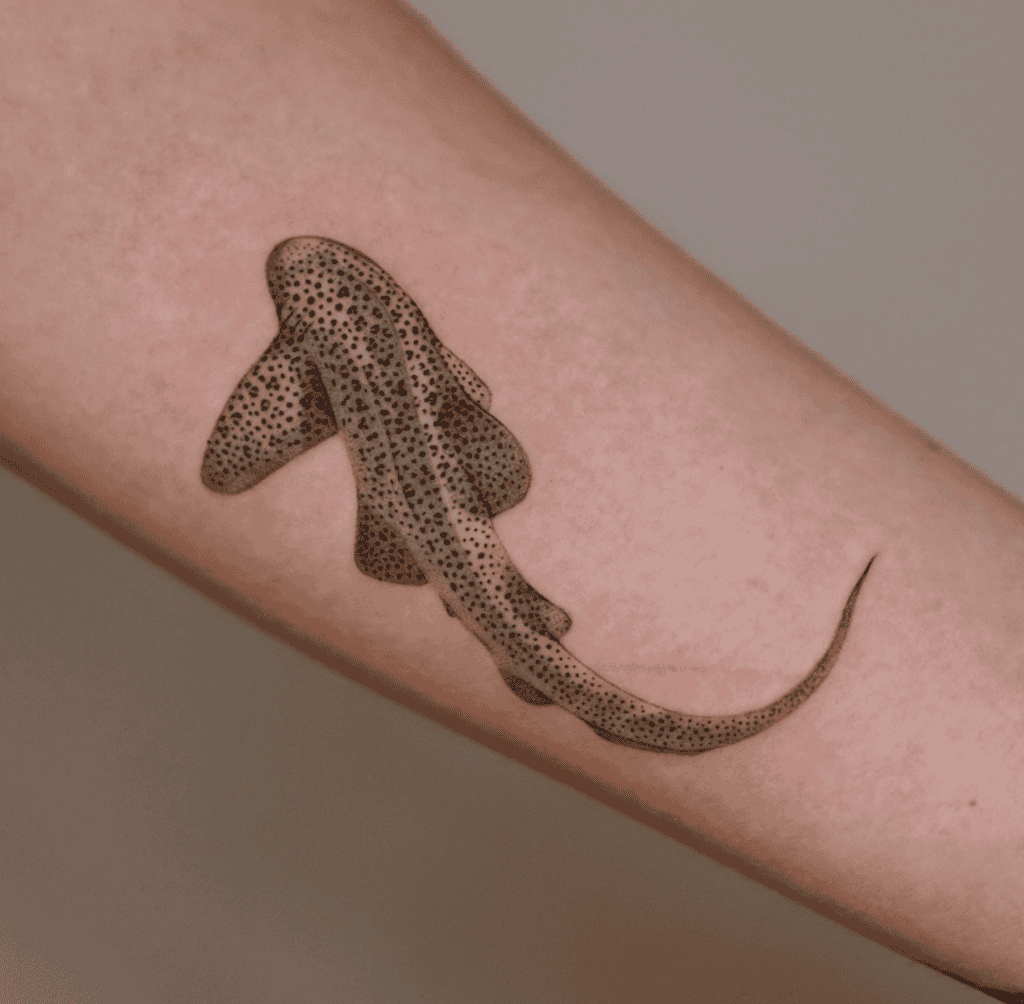
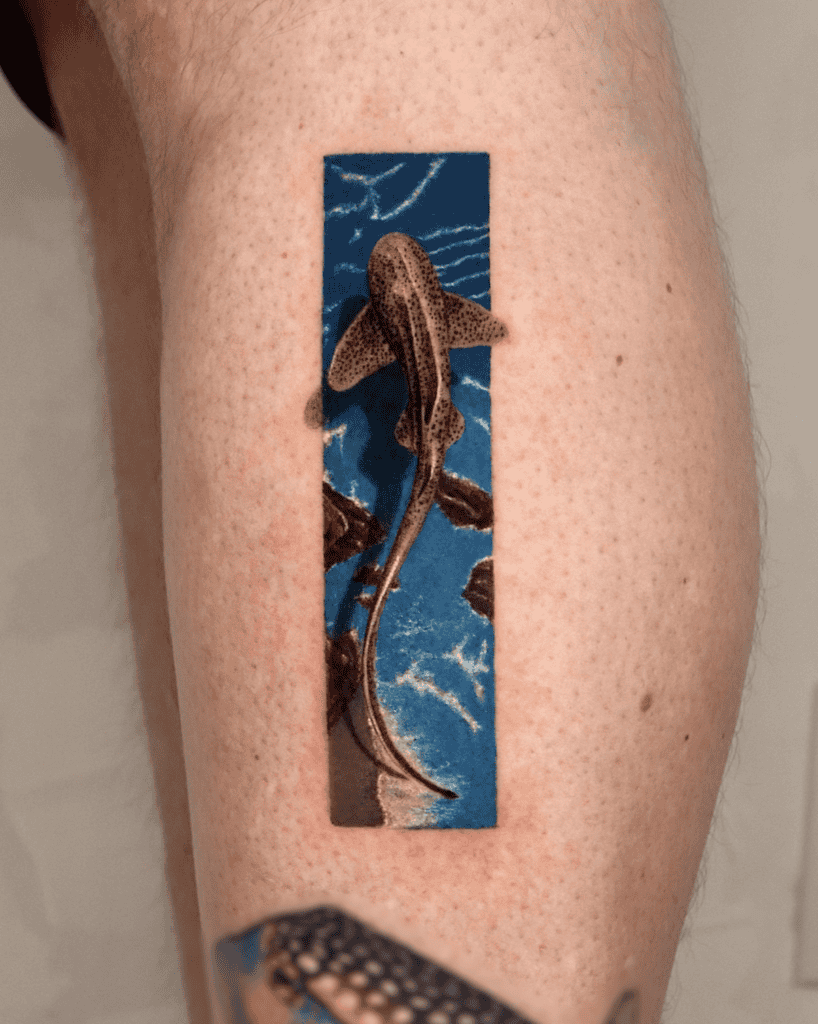
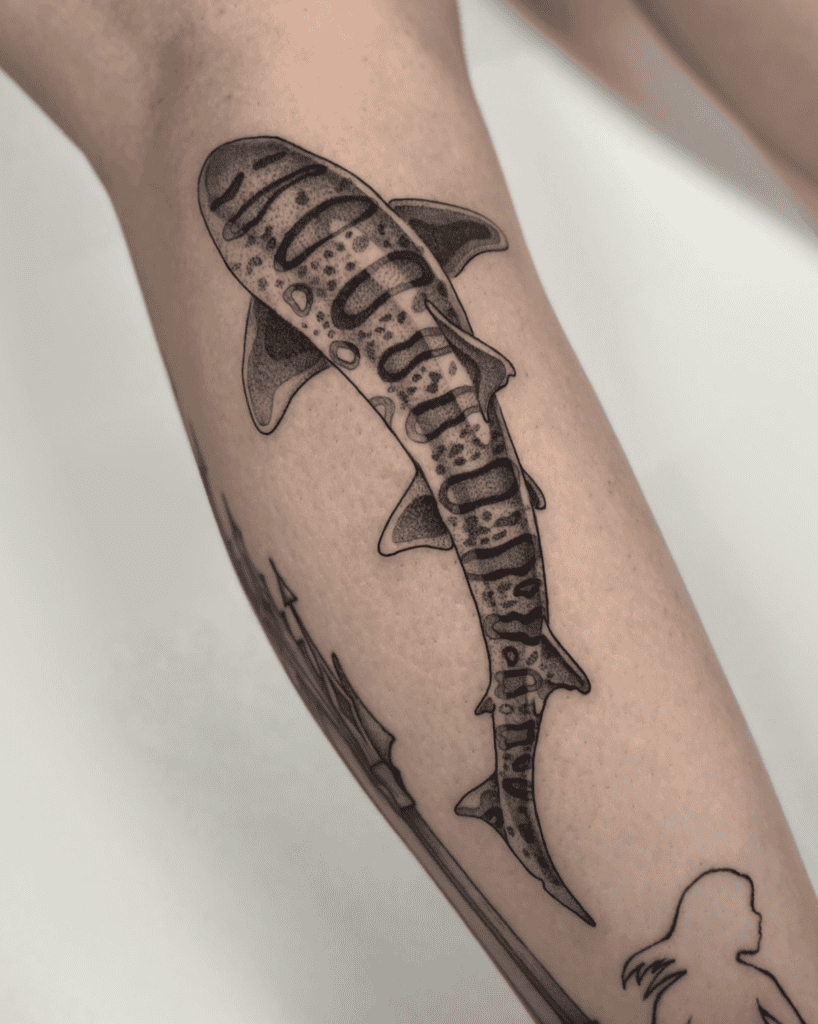
The Leopard Shark is a slender, beautifully patterned shark found primarily along the Pacific coast of North America, particularly from Oregon through California and into Baja California. Its name comes from the series of dark saddle-like markings and spots running along its back and sides, giving it a pattern somewhat reminiscent of a leopard.
Its body is covered with dark spots, bars, and saddle-shaped markings against a lighter grey or bronze background, creating a pattern that resembles a leopard’s coat. Interestingly, the markings aren’t just decorative, but provide camouflage against the complex patterns of the seafloor, rocks, kelp and vegetation where these sharks live.
Port Jackson Shark Tattoo
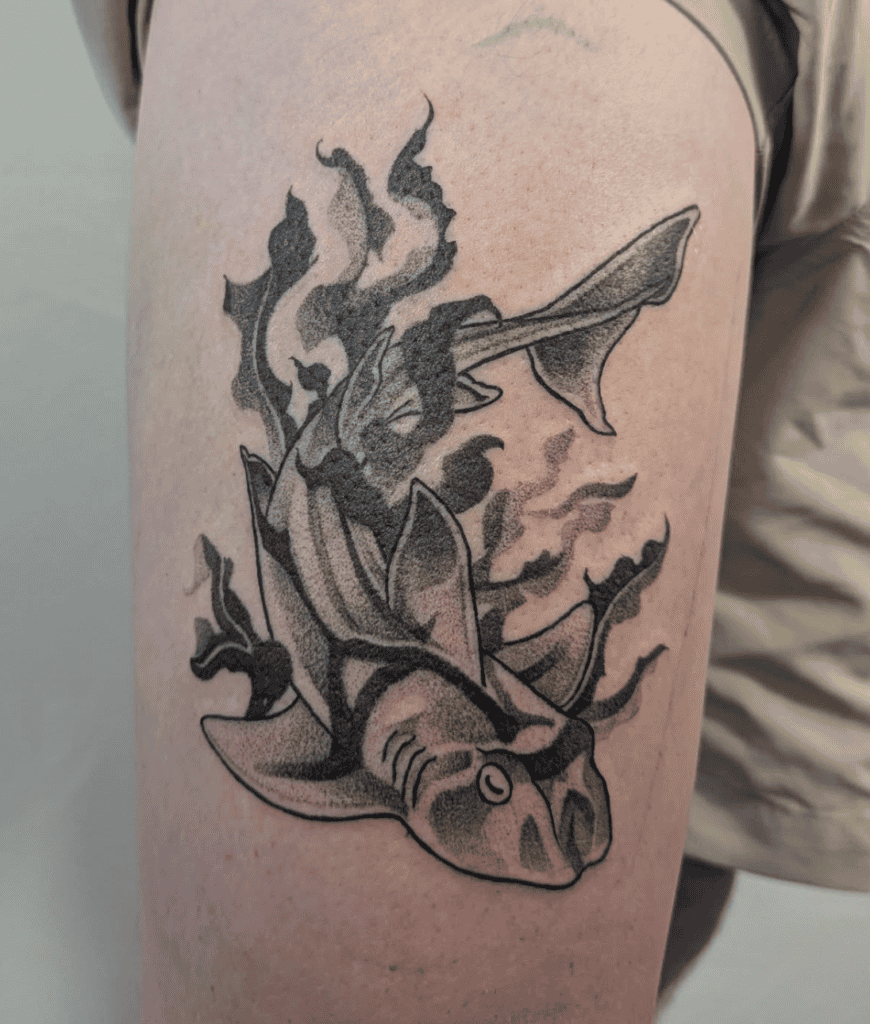
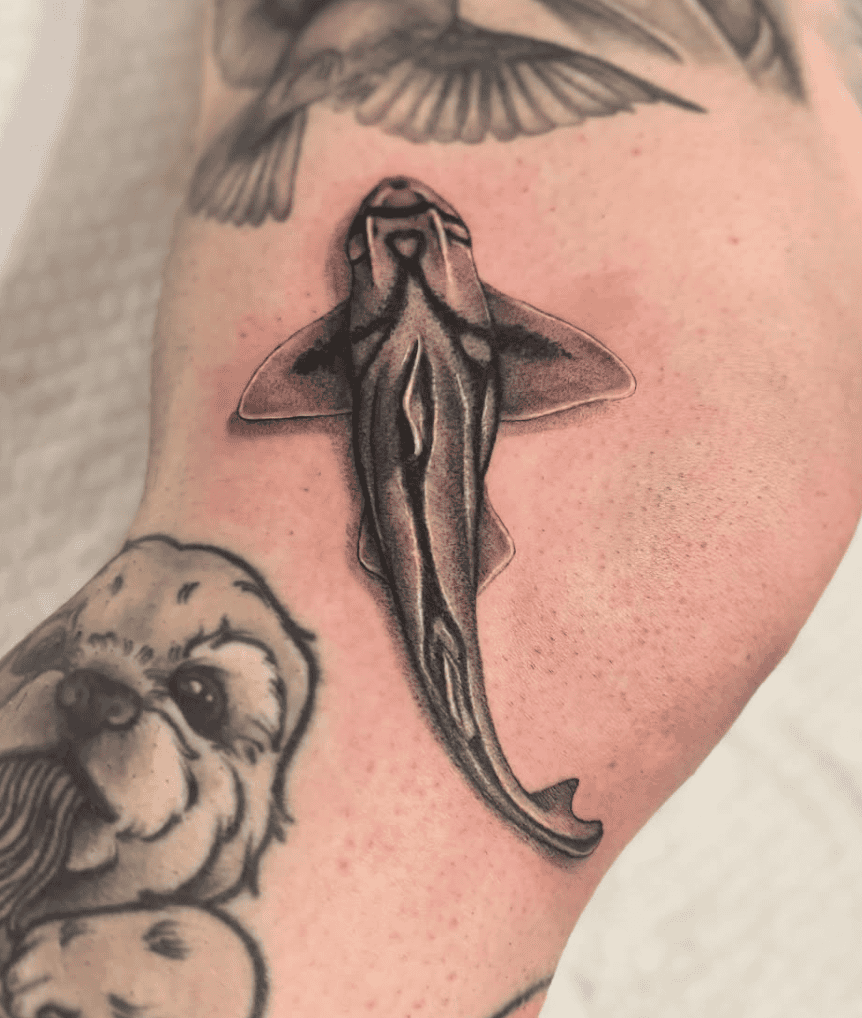
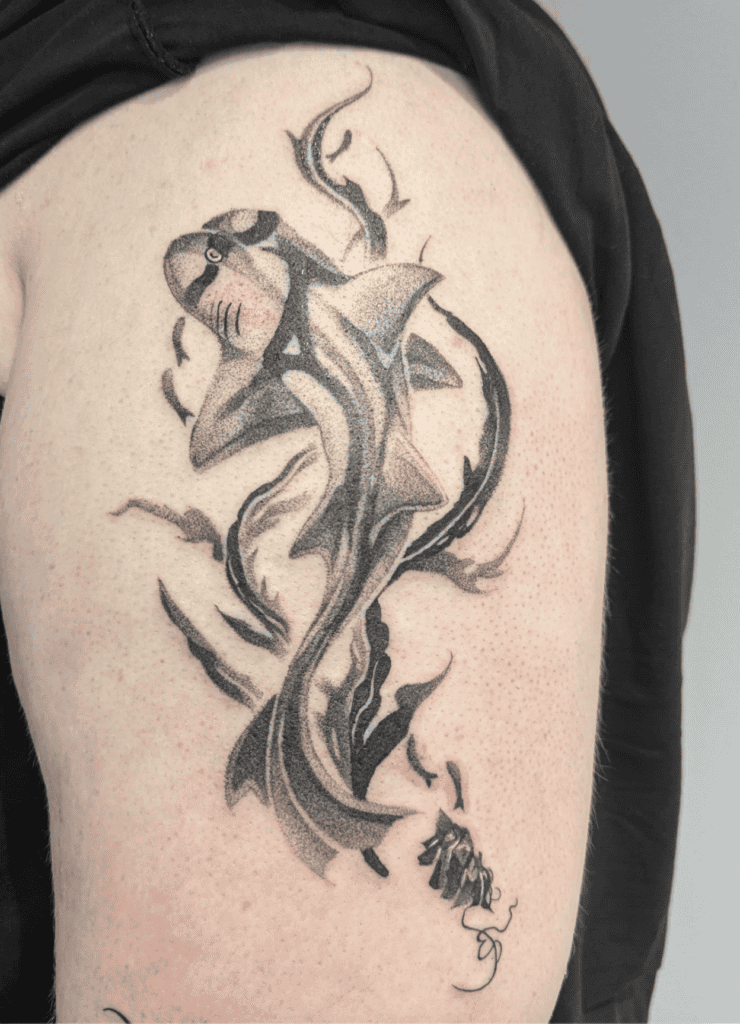
The Port Jackson Shark is a bottom-dwelling shark found around southern Australia, particularly along the country’s eastern and southern coasts. It’s one of the most recognisable members of the bullhead shark family thanks to its unusual combination of a blunt, pig-like snout, prominent brow ridges, dark saddle-shaped markings and a spine in front of each dorsal fin.
The name comes from Port Jackson, the natural harbour around Sydney, Australia. The species was named after the area where it was first scientifically described. The other common name, Bullhead Shark, comes from the unusual shape of its head.
Horn Shark Tattoo
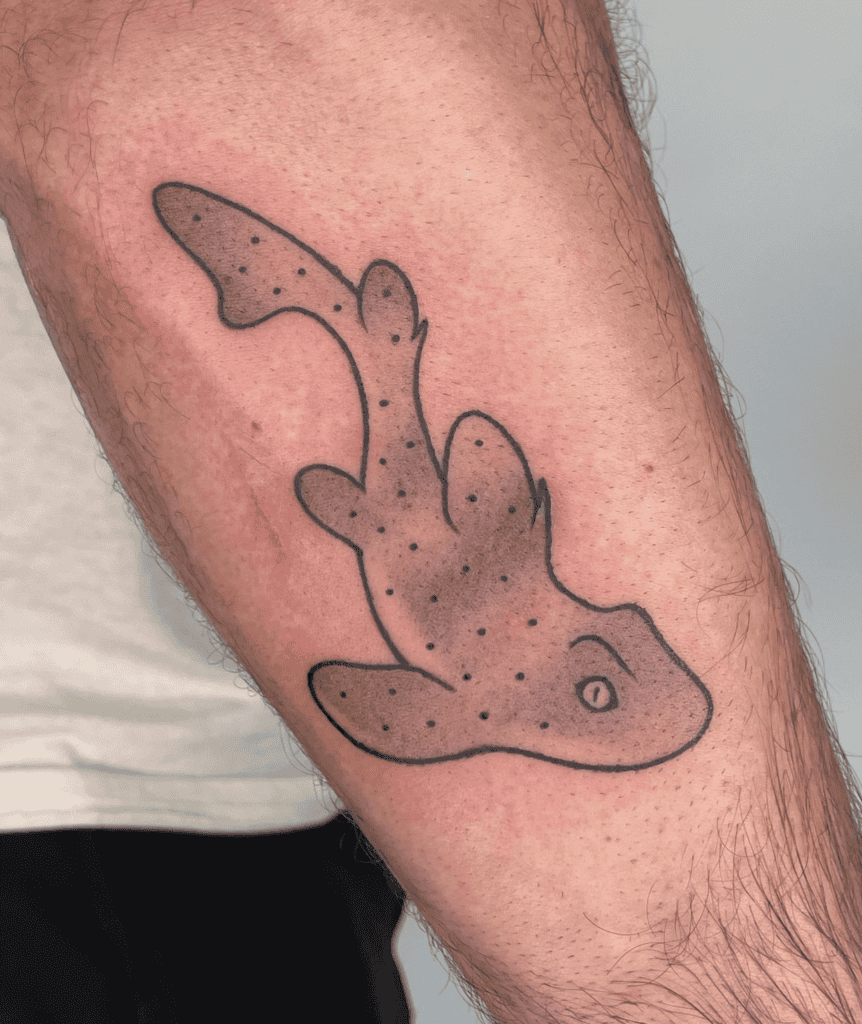
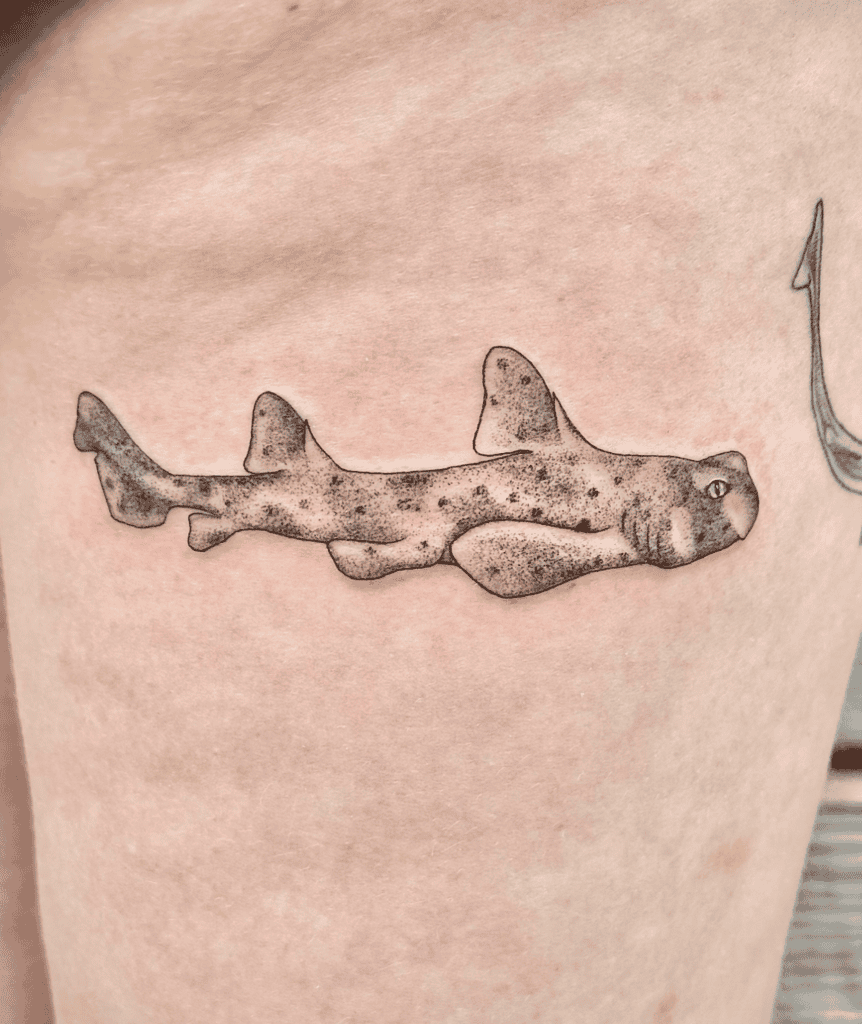
The Horn Shark is a small, bottom-dwelling shark found primarily along the Pacific coast of North America, particularly around California and Baja California. It’s a slow-moving nocturnal predator that spends much of its time around rocky reefs, kelp forests, caves and sandy seabeds.
The name comes from the large spines located in front of its two dorsal fins. When viewed from certain angles, these spines can look like little horns. The name is especially appropriate because the shark also has a somewhat unusual, chunky head and brow. Its scientific genus, Heterodontus, means roughly “different teeth”, referring to its two distinct types of teeth.
Cookiecutter Shark Tattoo
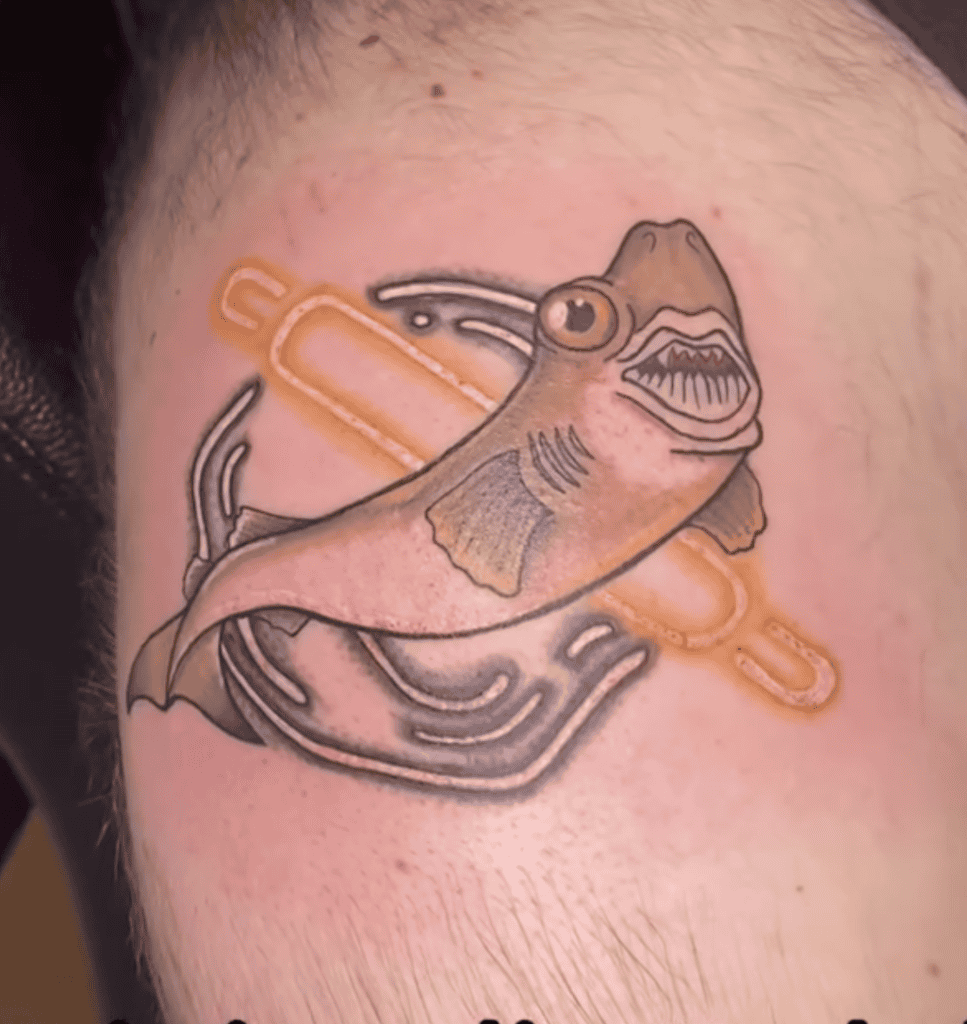
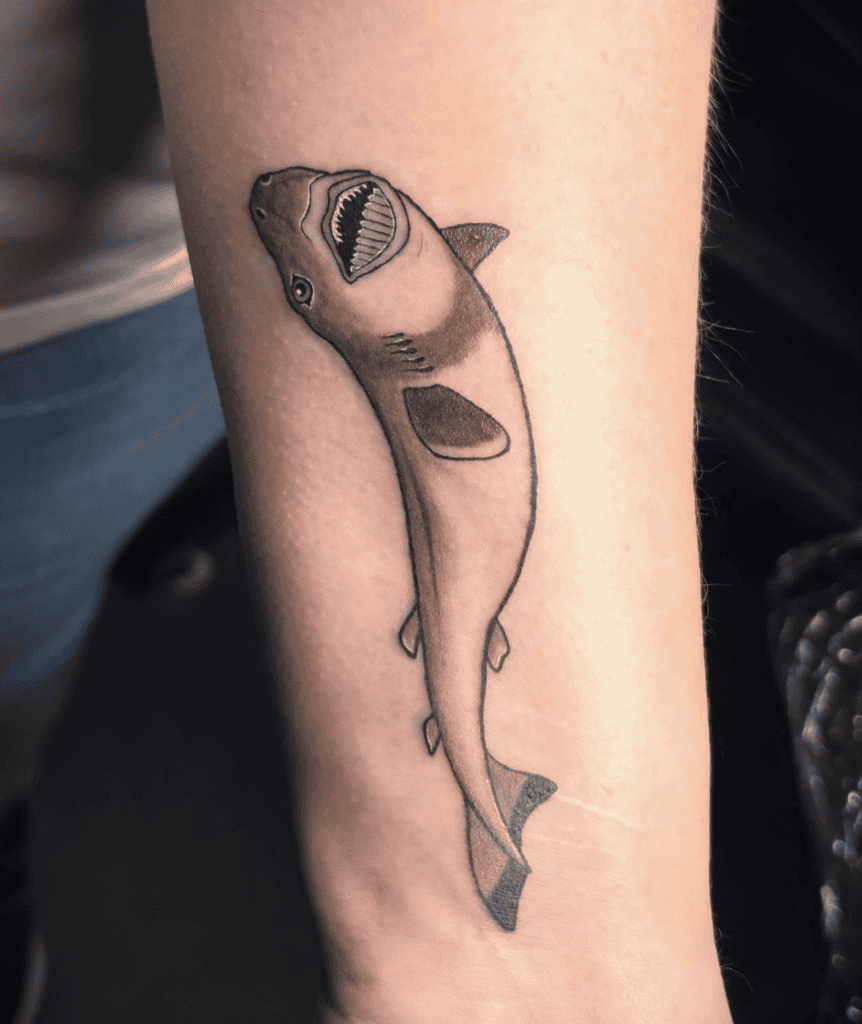
The Cookiecutter Shark is a small deep-water shark found throughout much of the world’s tropical and subtropical oceans. It is usually only around 40 to 50 cm (16 to 20 inches) long, but has one of the most unusual feeding methods of any shark. Rather than simply biting pieces off its prey, it uses its specialised teeth to remove almost perfectly round chunks of flesh, leaving behind a distinctive circular wound.
Cookiecutter Sharks are bioluminescent, meaning they can produce their own light. Photophores cover much of the underside of their body, producing a blue-green glow. This is thought to help them use counterillumination, making their silhouette harder to see from below against the faint sunlight filtering down from the surface.
Frilled Shark Tattoo
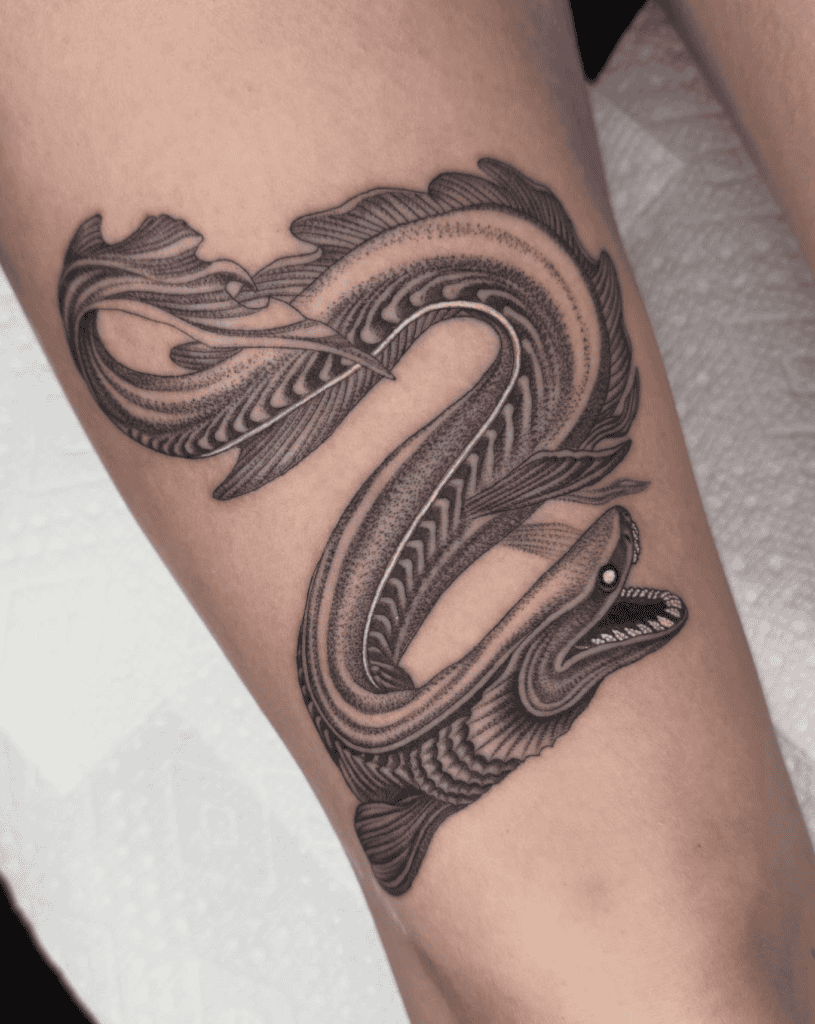
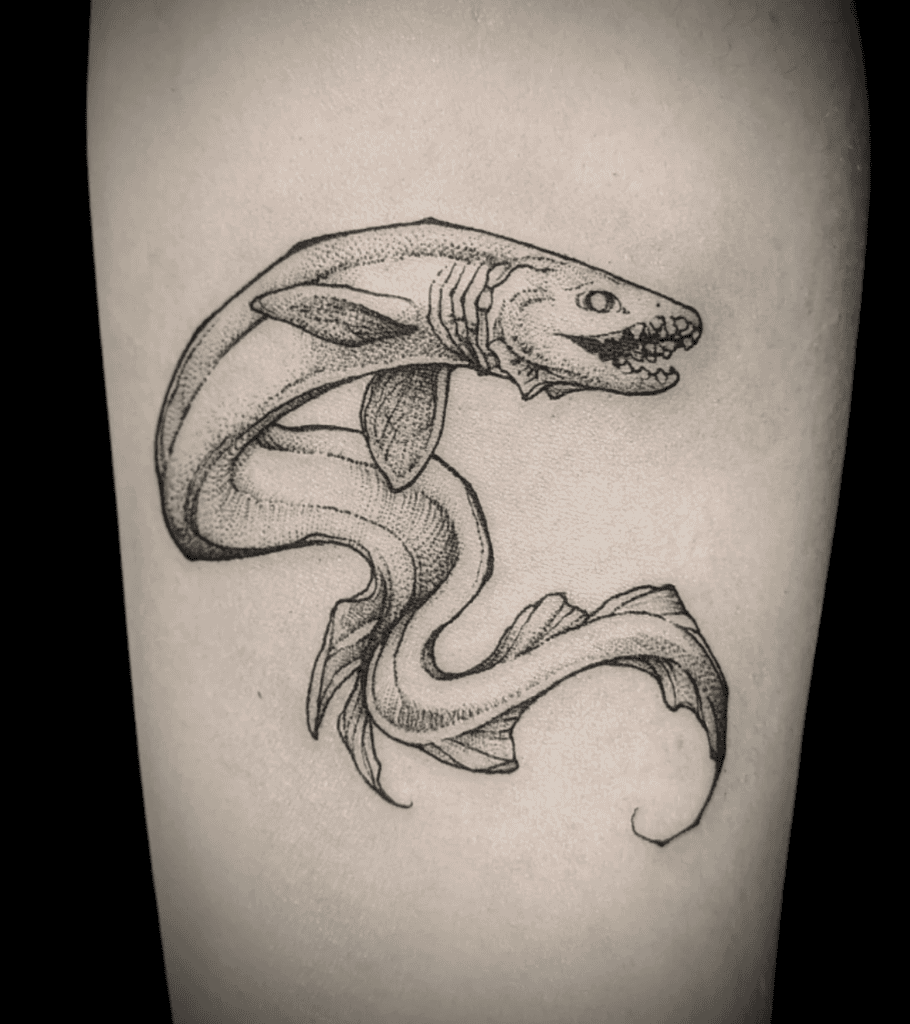
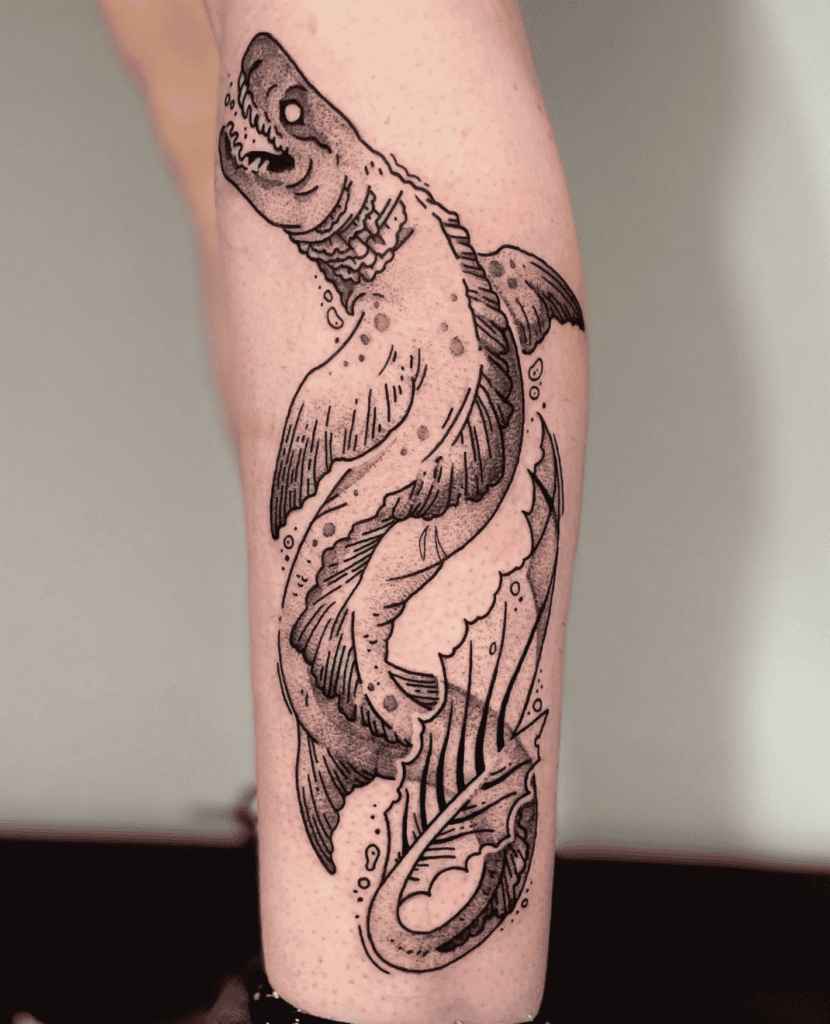
The Frilled Shark is one of the strangest-looking sharks alive today. It has a long, eel-like body, a broad, flattened head, huge eyes and a mouth filled with multiple rows of needle-like teeth. It’s found in deep waters across parts of the Atlantic and Pacific Oceans, where it spends much of its time far below the surface.
The name comes from the shark’s frilled gill slits. Unlike most sharks, whose gill openings are relatively separate and compact, the Frilled Shark has six pairs of gill slits extending around the throat area. The inner edges of these gill openings have a frilly appearance, giving the species its common name.
Its scientific name is equally interesting. Chlamydoselachus roughly refers to a cloak or frill around the neck, while anguineus means eel-like.
Broadnose Sevengill Shark Tattoo
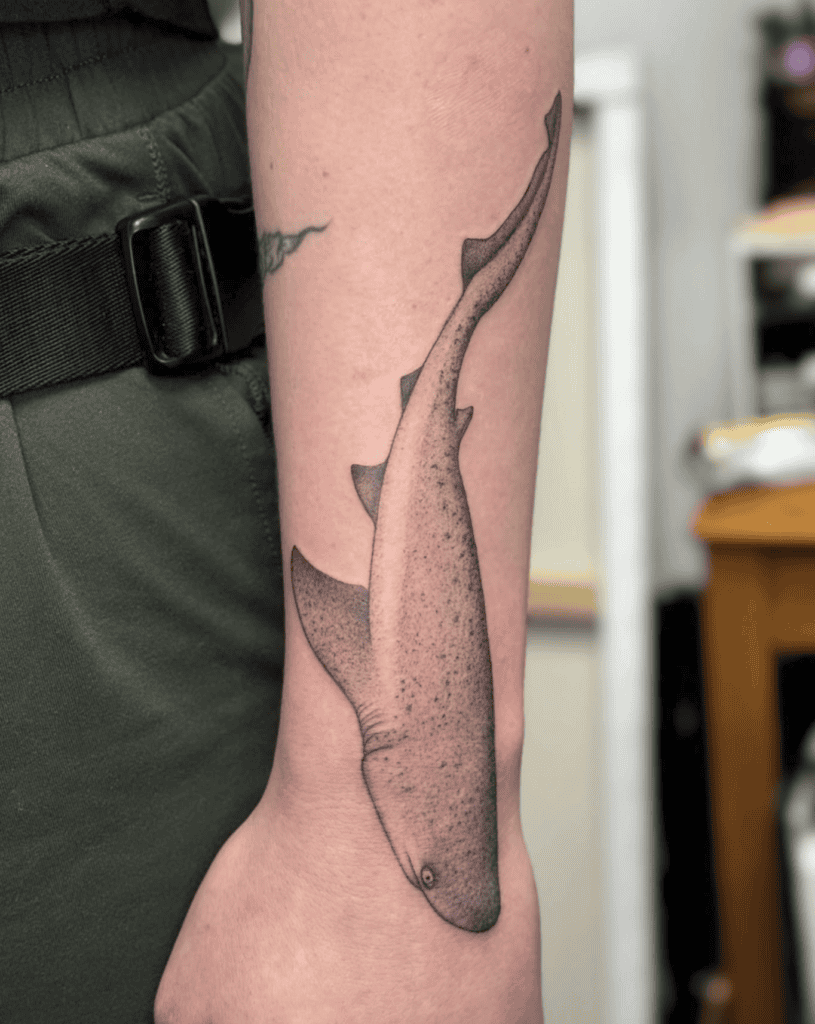
The Broadnose Sevengill Shark is one of the most distinctive living sharks. Unlike most modern sharks, which have five pairs of gill slits, this species has seven pairs on each side.
It belongs to the ancient cow shark family, Hexanchidae, a group whose lineage stretches back deep into shark evolutionary history. Its appearance can feel almost prehistoric, with a broad, blunt snout, large greenish eyes and a single dorsal fin positioned far back on its body.
Greenland Shark Tattoo
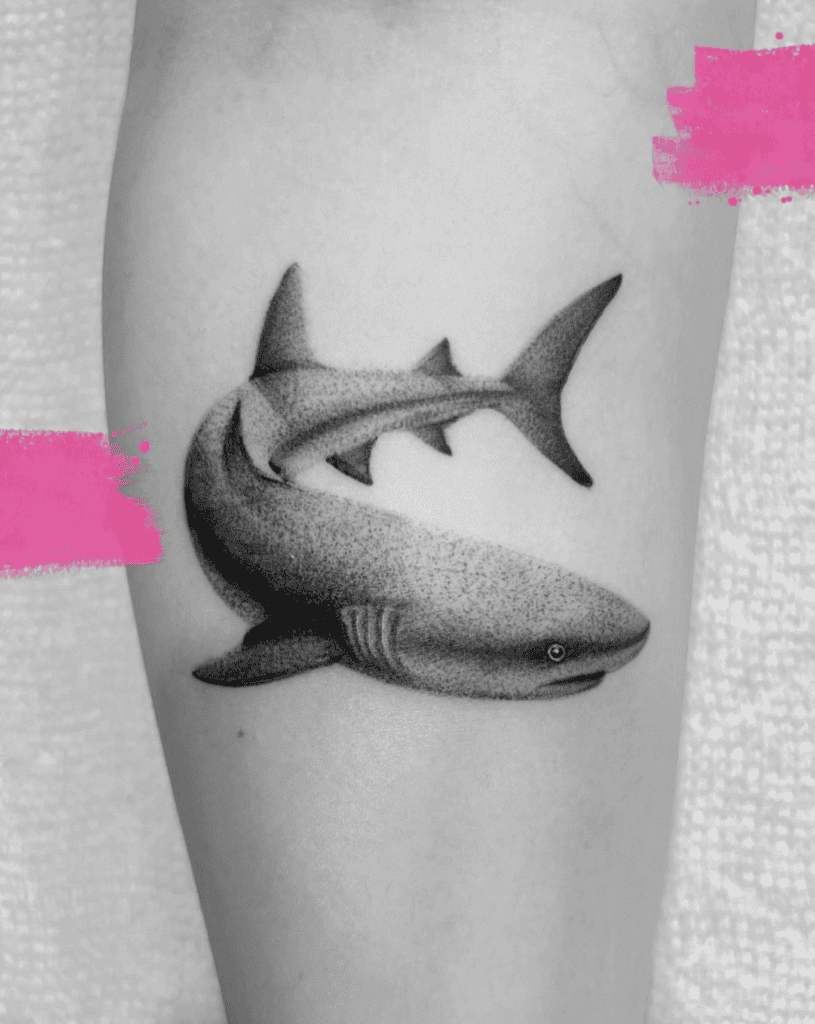
The Greenland Shark is a huge, slow-moving deep-water shark found primarily in the Arctic and North Atlantic. It is one of the most mysterious large sharks in the world because it spends much of its life in extremely cold, deep water.
Greenland Sharks are exceptionally long-lived. A landmark 2016 study used radiocarbon dating of proteins in the sharks’ eye lenses and estimated that some individuals were several centuries old. The study estimated a lifespan of at least 272 years, with the largest individual in the sample estimated at about 392 years old, though individual age estimates have some uncertainty. That means a Greenland Shark alive today could potentially have been born before many modern countries existed in their current form.
Silky Shark Tattoo
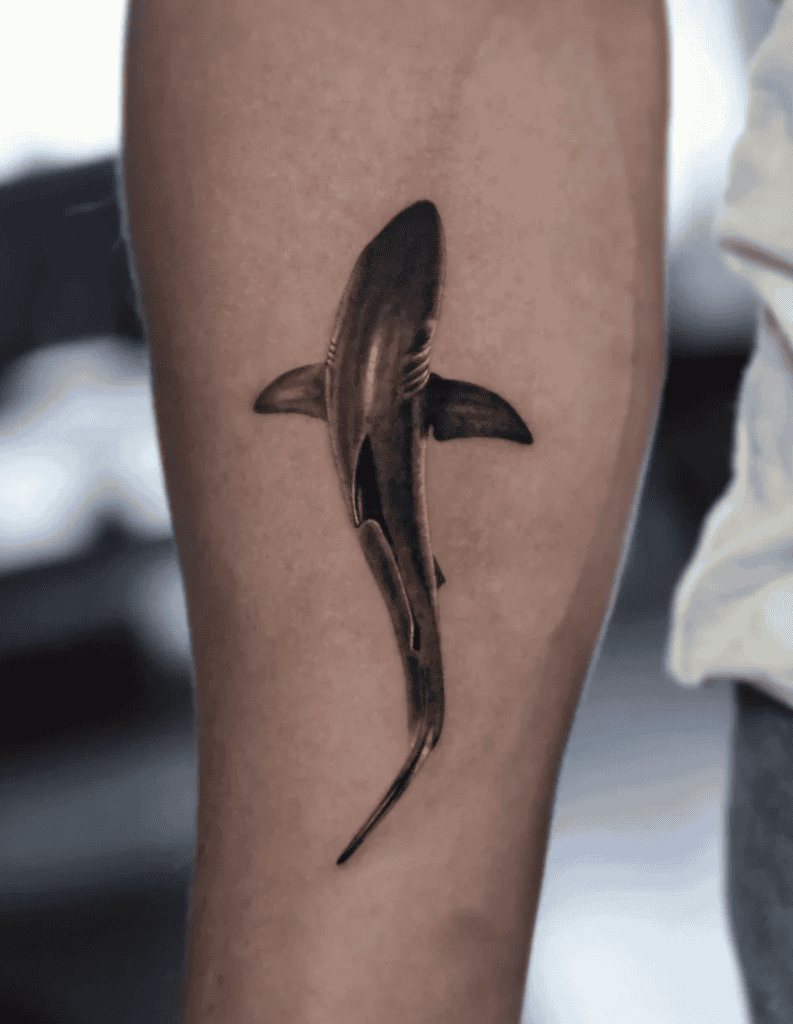
The Silky Shark is a sleek, streamlined shark found throughout tropical and warm-temperate oceans. Its name comes from its remarkably smooth, silky-looking skin, while its long, curved pectoral fins and relatively small, swept-back first dorsal fin give it an elegant silhouette.
Like other sharks, its skin is covered in tiny tooth-like structures called dermal denticles, but the texture gives the Silky Shark a particularly smooth appearance and feel compared with some other sharks. Its scientific name, Carcharhinus, refers to its genus of requiem sharks, while falciformis means roughly sickle-shaped, referring to its curved fins.
Angel Shark Tattoo
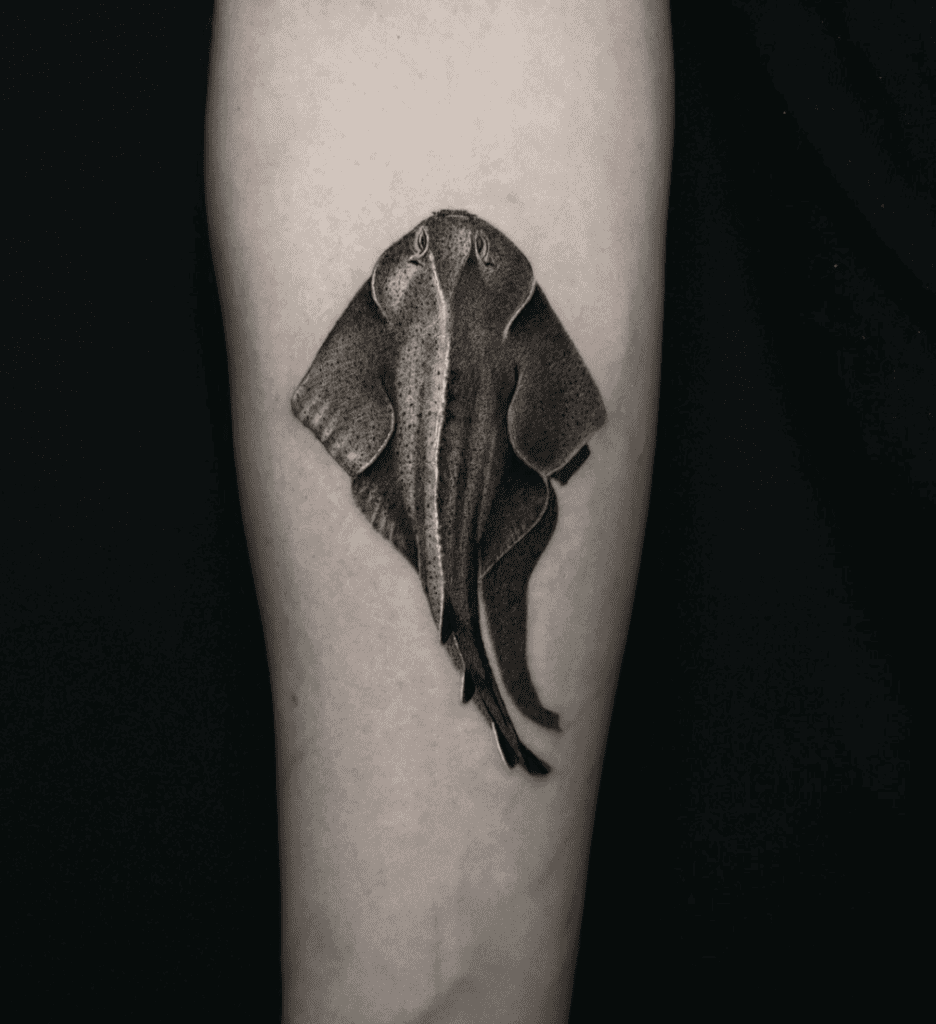
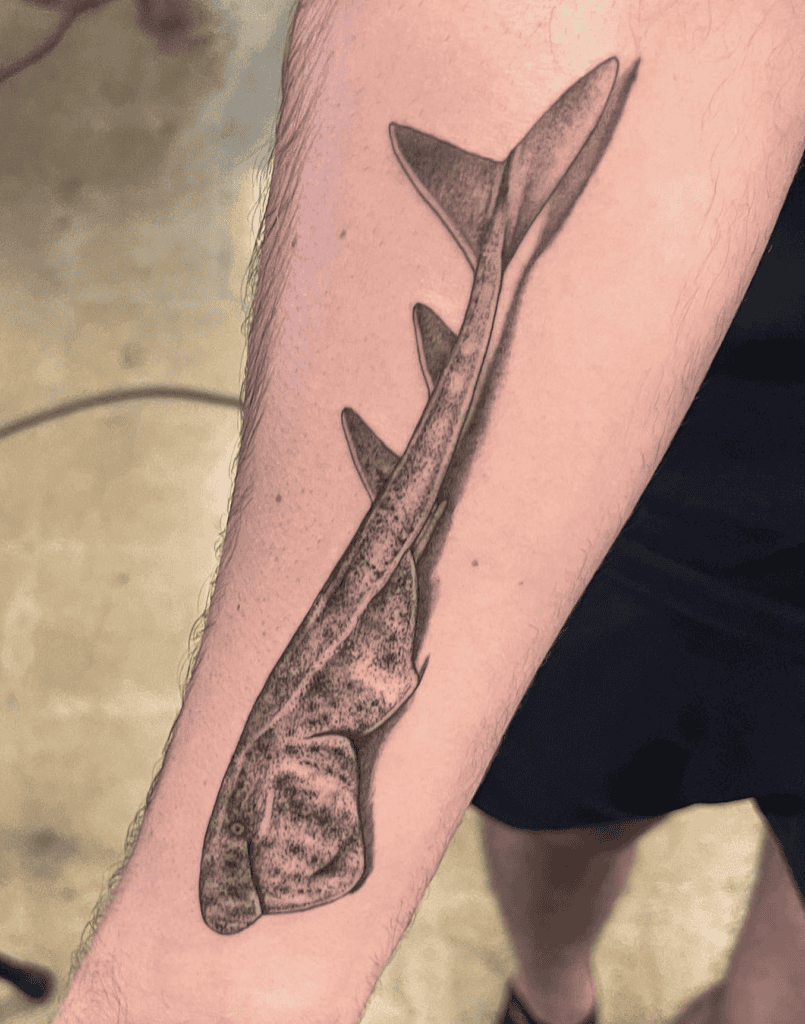
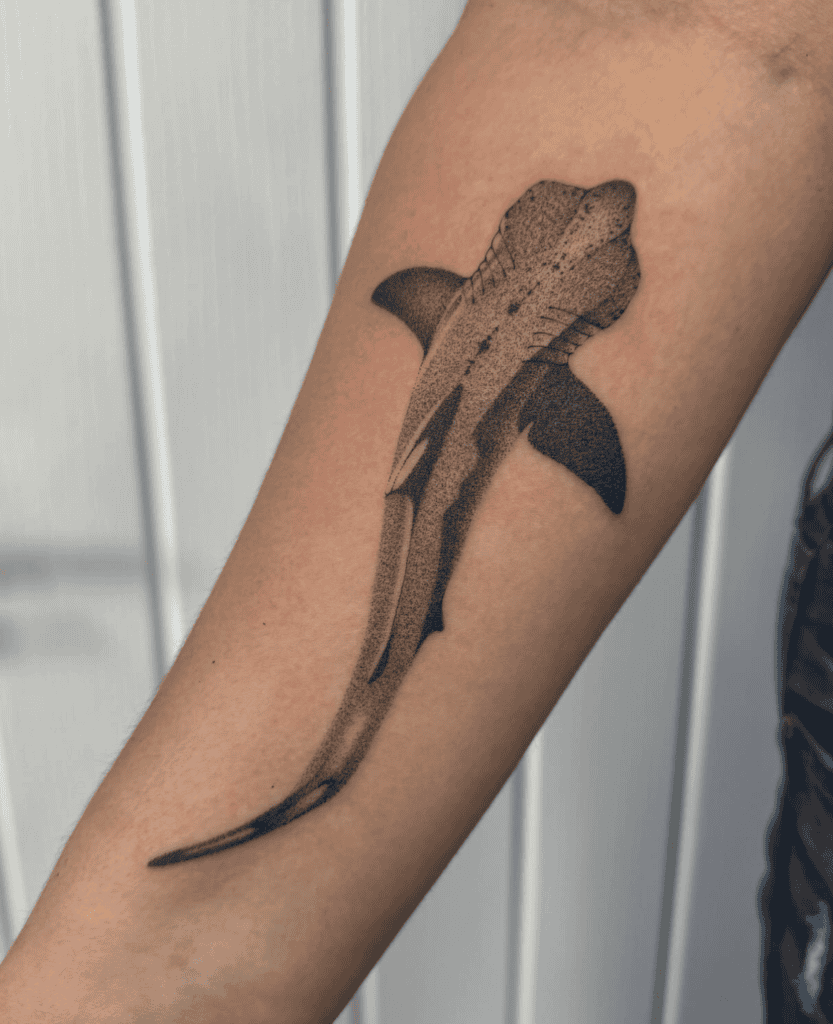
The Angel Shark is a highly unusual bottom-dwelling shark native to parts of the eastern Atlantic and Mediterranean. Its body is flattened like a ray, with enormous pectoral and pelvic fins spreading out from its sides.
But unlike a ray, its pectoral fins aren’t attached to its head, and its gill slits are positioned on the sides of its head. Those details help reveal that this strange-looking animal really is a shark. When viewed from above, its broad pectoral fins can give it an almost wing-like appearance, which inspired the “angel” name.
Megalodon Shark Tattoo
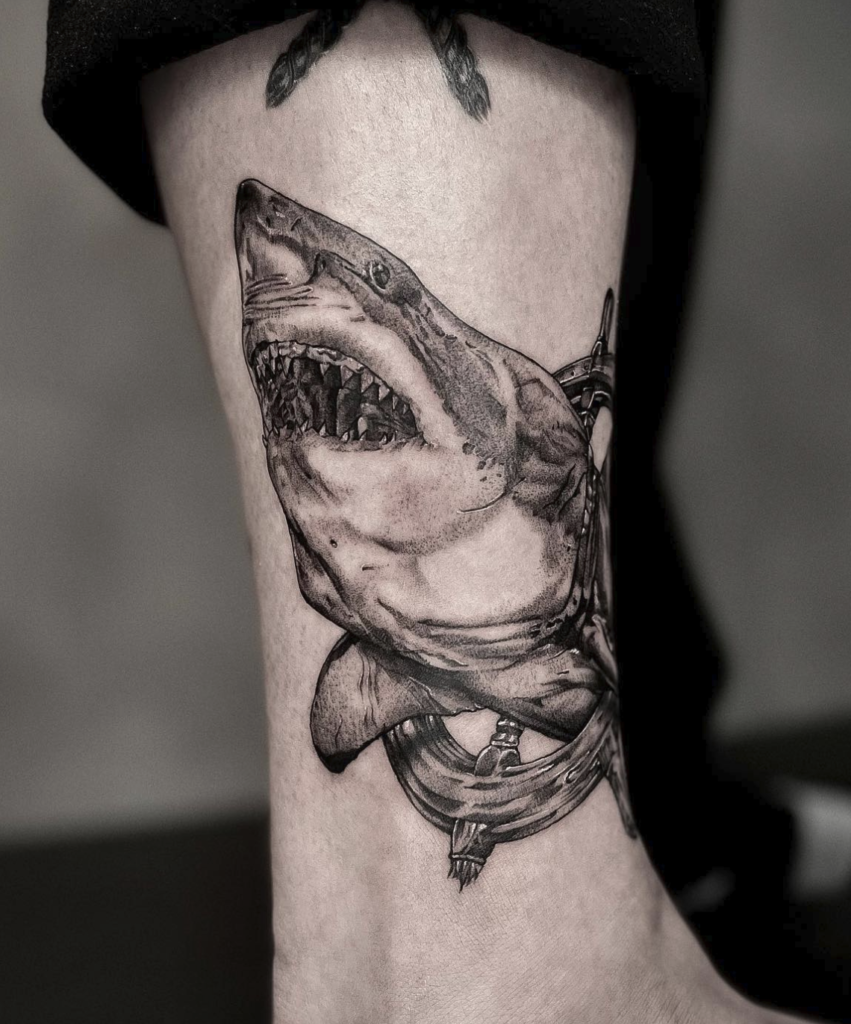
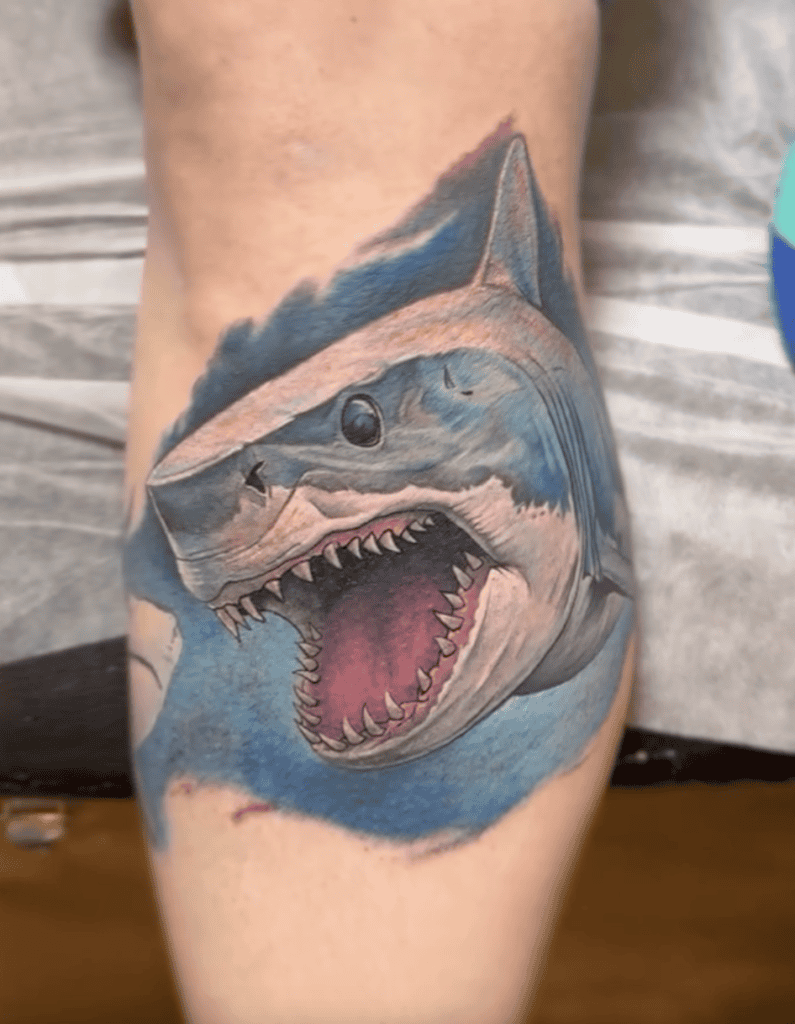
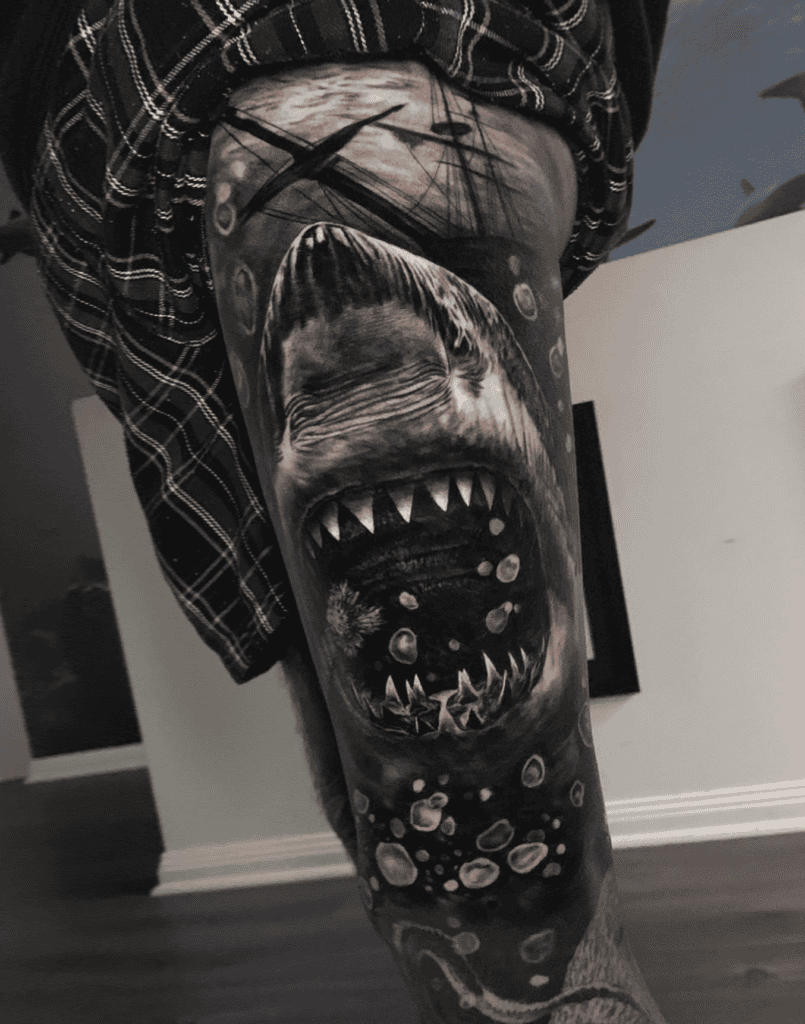
The Megalodon was the largest shark known to have ever lived and one of the most formidable predators in Earth’s history. It lived approximately 23 million to 3.6 million years ago, during the Miocene and Pliocene epochs. Fossil teeth show that it inhabited warm marine environments around much of the world.
Helicoprion Shark Tattoo
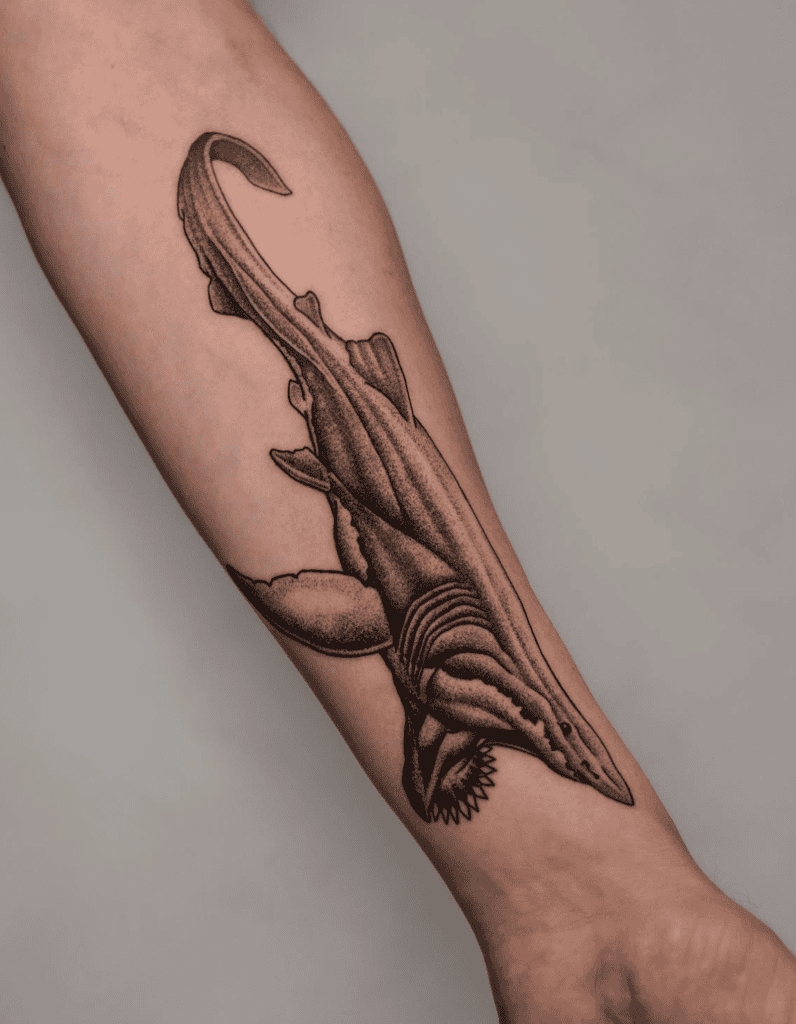
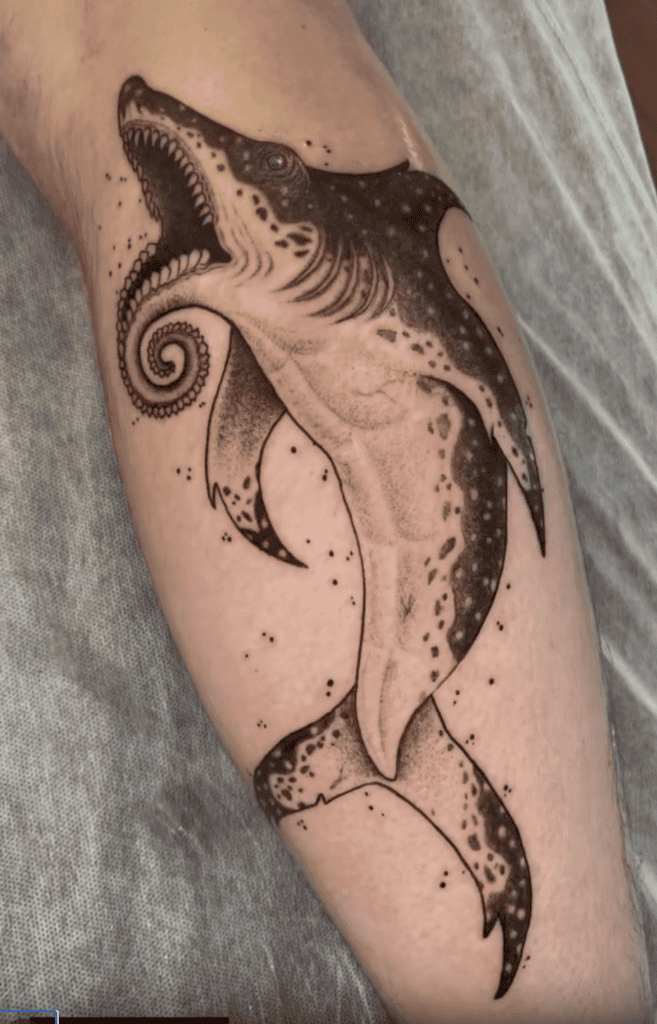
Helicoprion was an extraordinary extinct marine chondrichthyan that lived during the Permian Period, roughly 290 million years ago. Smithsonian fossil collections include specimens from the Permian of Idaho and Wyoming.
For decades, palaeontologists were puzzled by Helicoprion’s fossils: they had a strange spiral structure containing hundreds of teeth arranged in a tightly coiled pattern, but because the rest of the animal’s body was poorly preserved, scientists weren’t sure where the spiral belonged.
Older reconstructions famously placed the whorl in some very strange positions, including sticking out from the front of the animal. Then a beautifully preserved fossil was examined using CT scanning, and research published in 2013 finally provided a much better answer. The tooth whorl was embedded in the lower jaw and represented the animal’s entire tooth battery essentially.
The spiral wasn’t simply a circular saw spinning around inside its mouth. Instead, the whorl formed as new teeth developed and were added to the growing spiral. As the animal grew, newer teeth appeared toward the centre while older teeth remained incorporated into the whorl. The result was this incredible self-renewing spiral cutting apparatus. Scientists think the arrangement helped Helicoprion process prey, although exactly how it interacted with food is still an area of scientific discussion.
Kamohoaliʻi Shark Tattoo
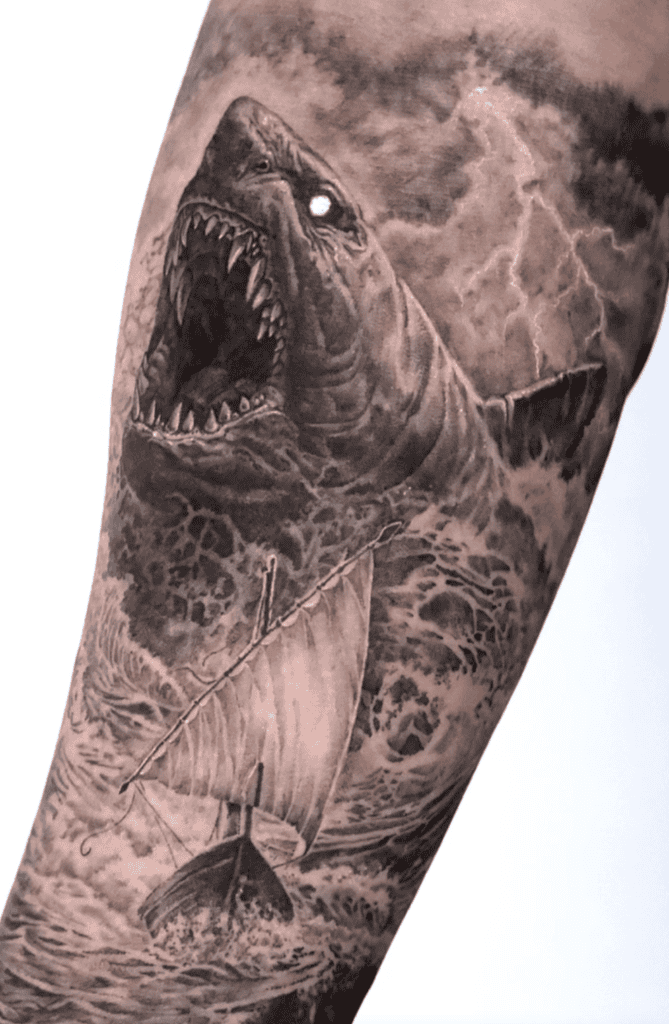
Kamohoaliʻi is one of the most renowned ʻaumākua manō, or ancestral shark gods, in Hawaiian tradition. According to Hawaiian sources, he is the eldest child of Haumea and the older brother of Pele, the famous goddess associated with volcanoes. Kamohoaliʻi is particularly associated with the sea and is said to be able to take both shark and human form.
One of his most important roles is as a navigator and guide. Hawaiian traditions describe Kamohoaliʻi as guiding Pele and her family from Kahiki to Hawaiʻi, making him strongly associated with ocean voyaging and safe passage across the sea.
Jaws Shark Tattoo
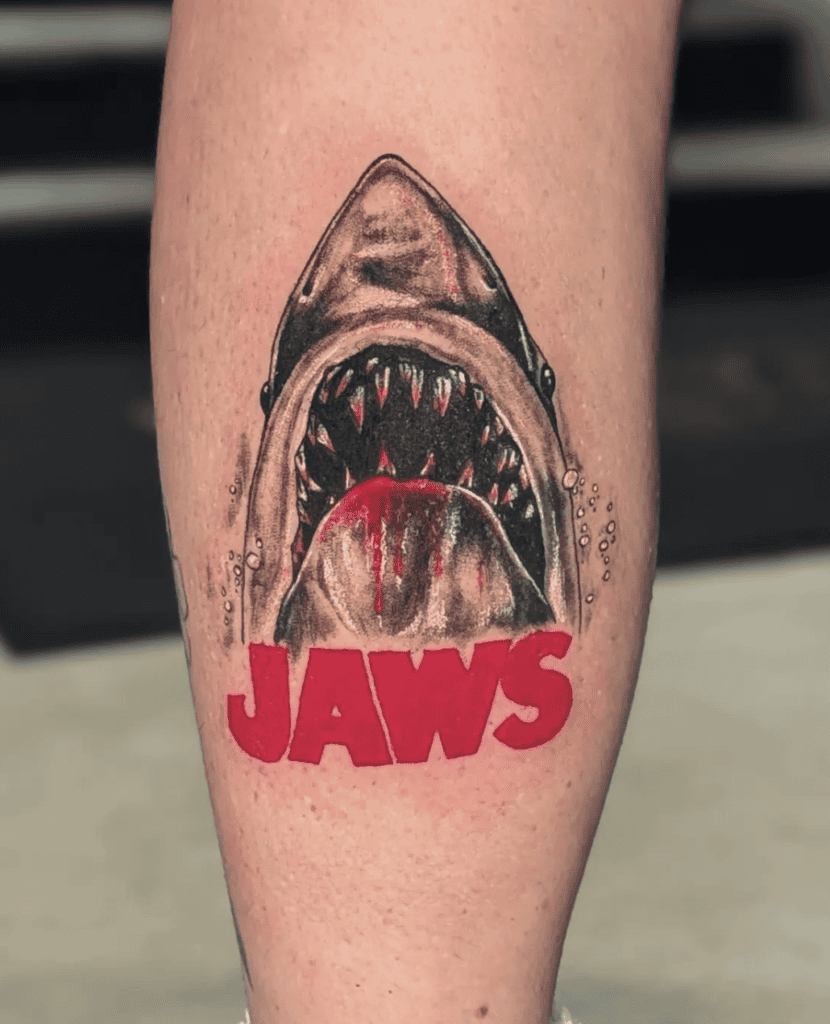
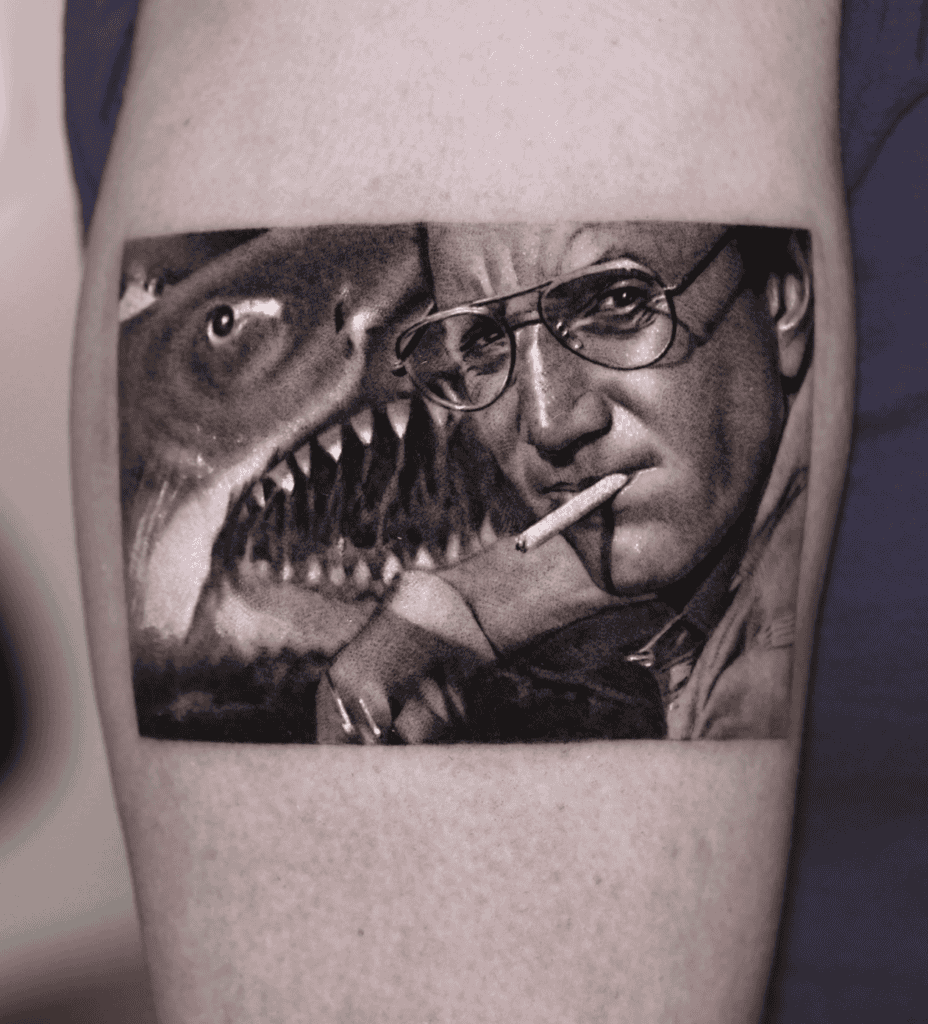
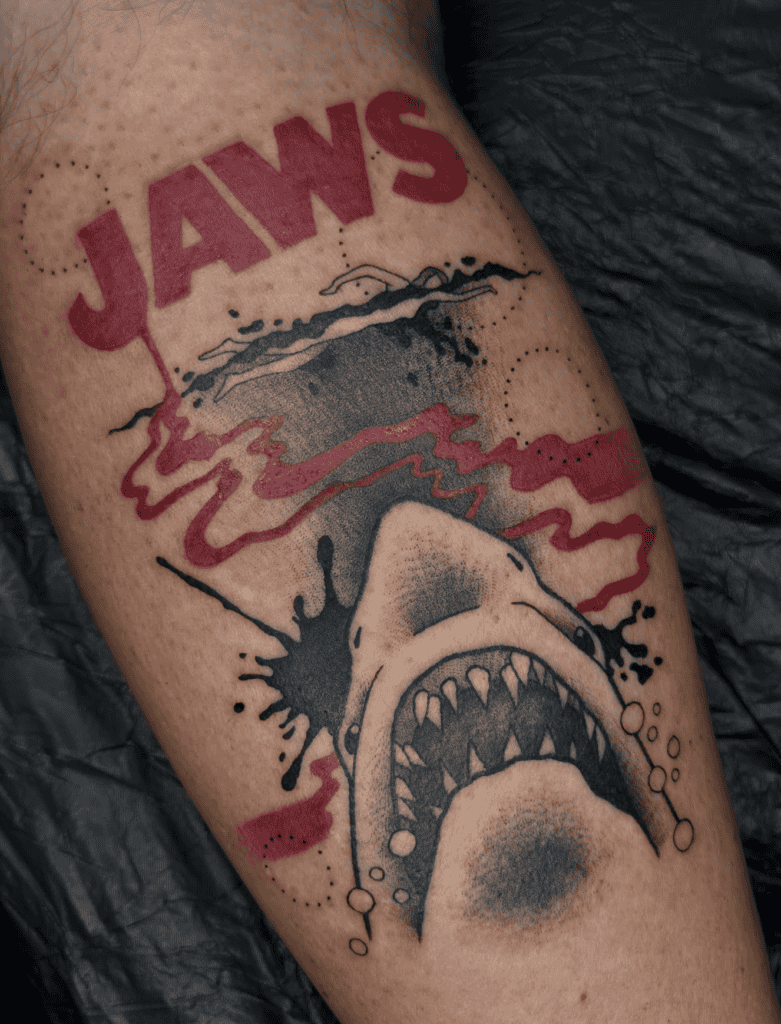
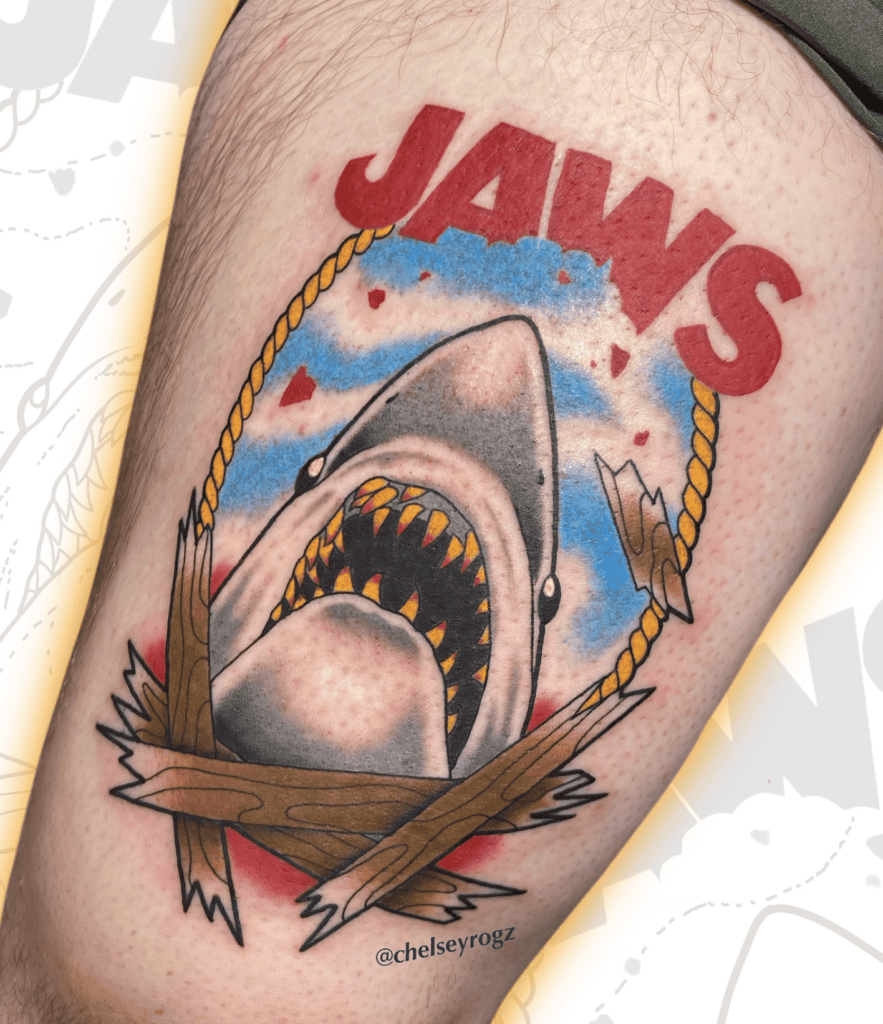
Jaws is the enormous Great White Shark and primary antagonist of the 1975 film Jaws, directed by Steven Spielberg and based on Peter Benchley’s 1974 novel. Jaws is the story of Roy Scheider, Richard Dreyfuss and Robert Shaw battling a Great White Shark off the fictional resort community of Amity.
Interestingly, the shark itself is never officially named “Jaws” in the film. “Jaws” refers to the movie and the shark’s enormous, terrifying bite. Behind the scenes, the mechanical sharks used during production were nicknamed Bruce, after Spielberg’s lawyer, Bruce Ramer.
Bruce Shark Tattoo
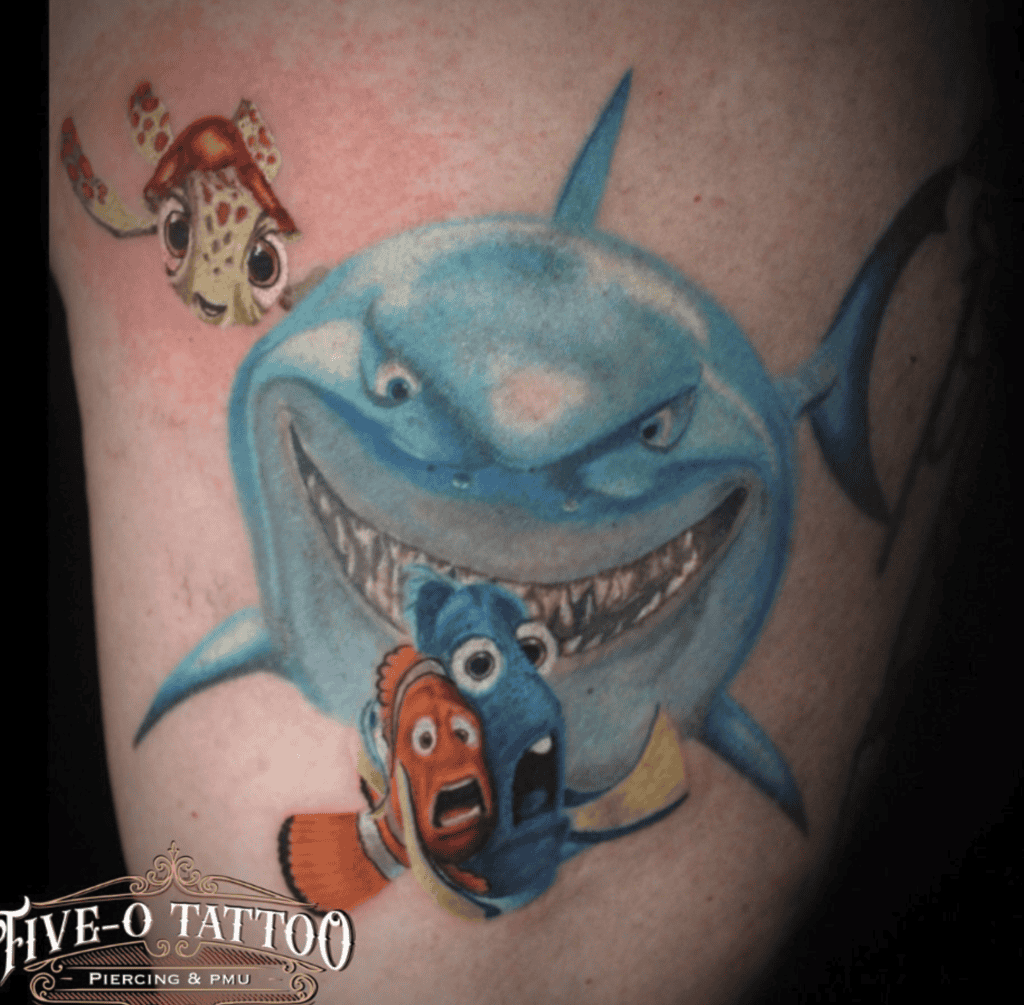
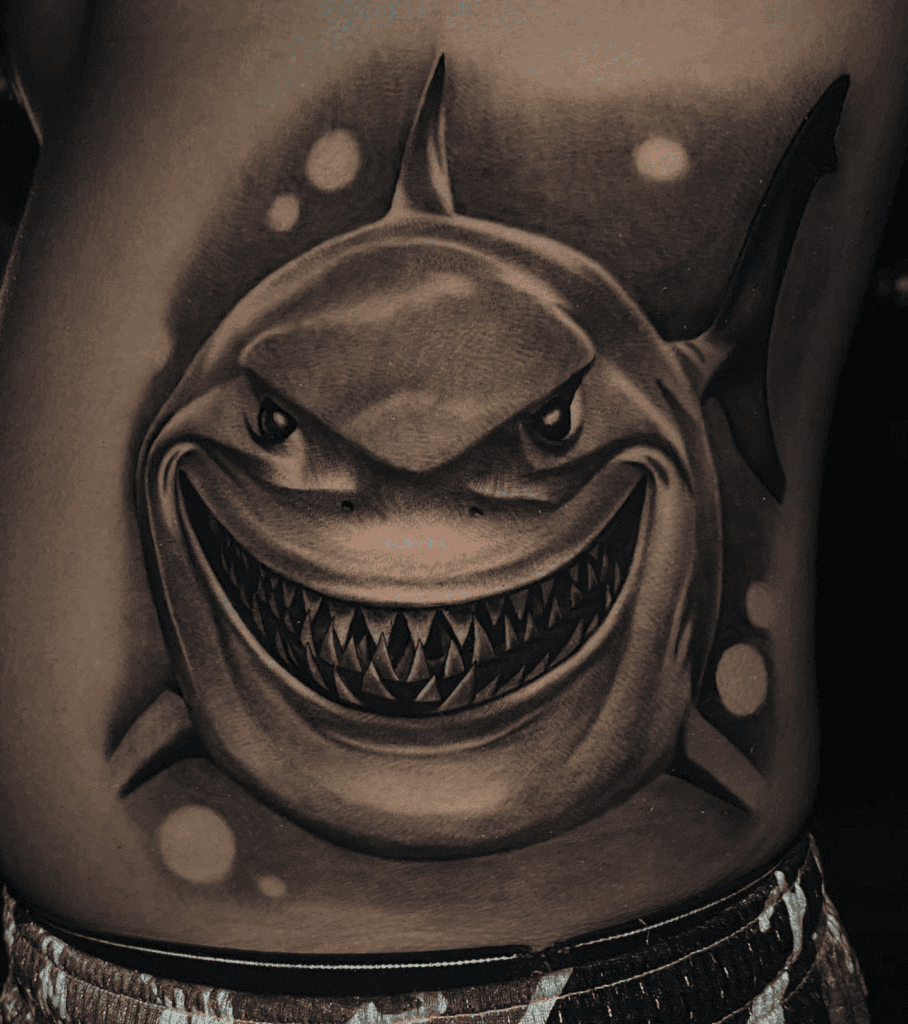
Bruce is a Great White Shark and one of the main supporting characters in Pixar’s Finding Nemo (2003). He leads a group of sharks who have formed Fish-Eaters Anonymous, trying to give up eating fish and embrace a vegetarian lifestyle instead. Pixar describes Bruce as the group’s jolly leader, while Disney describes him as struggling to adapt to his new vegetarian way of life.
Lenny Shark Tattoo
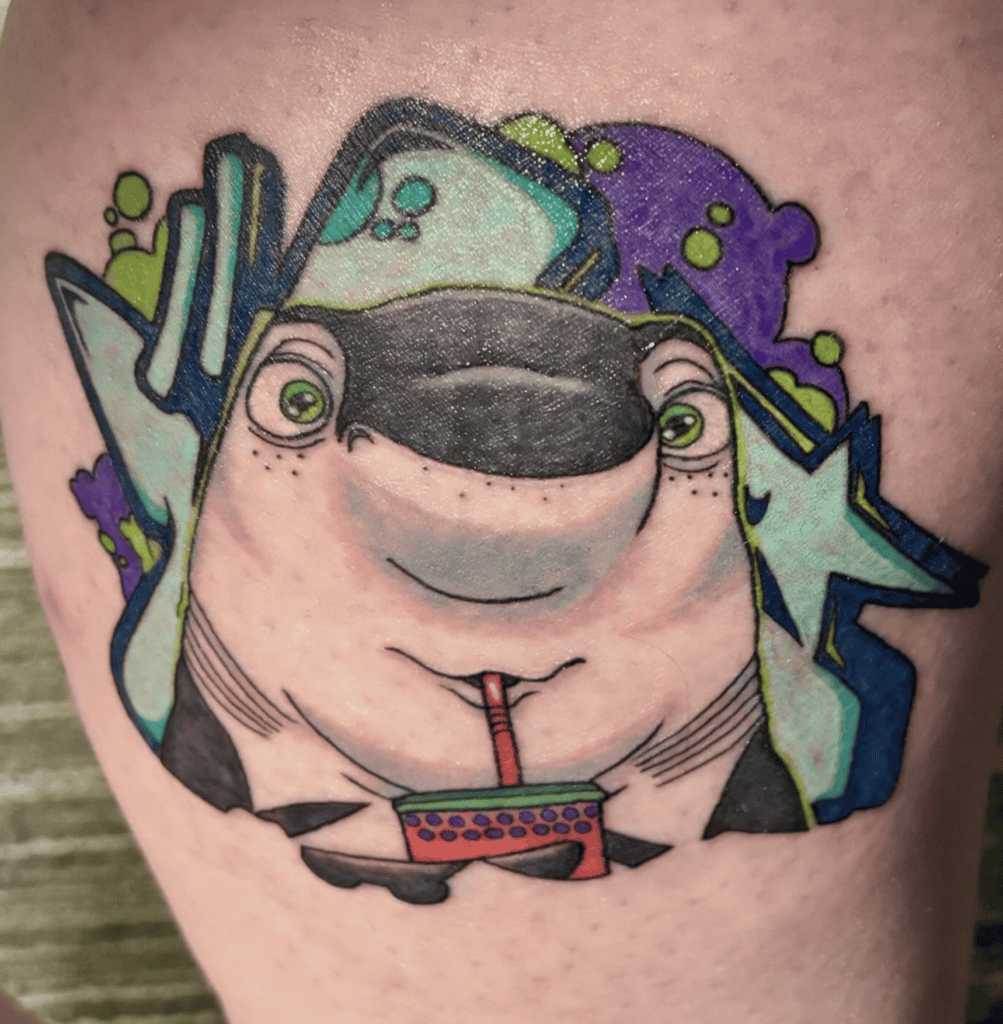
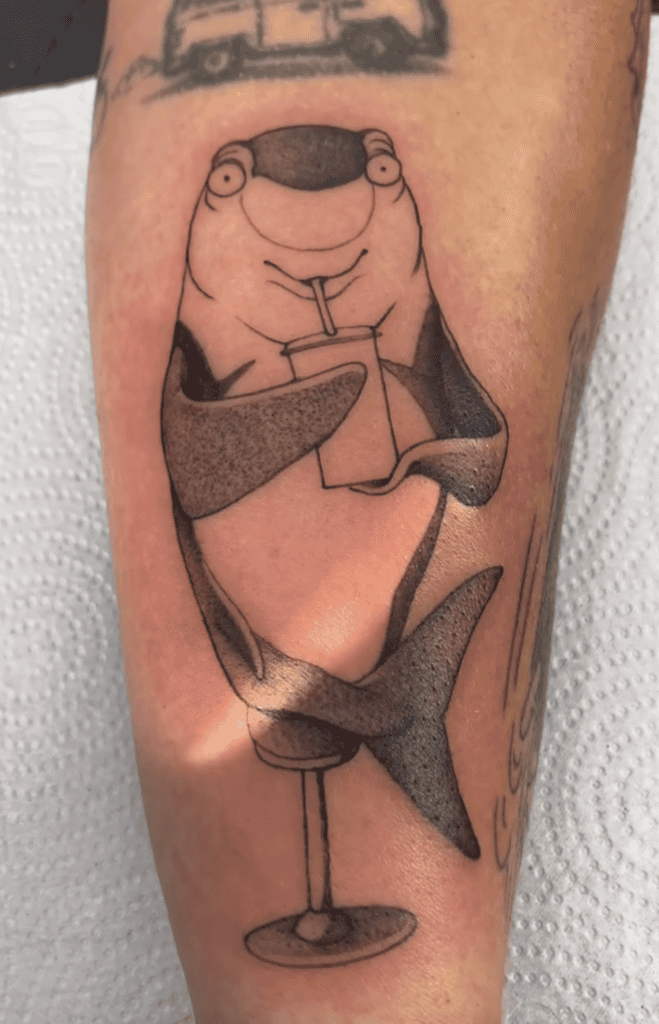
Lenny is one of the main characters in DreamWorks’ animated film Shark Tale (2004). He is the youngest son of Don Lino, the powerful leader of the shark crime family, and the younger brother of Frankie.
Lenny is a Great White Shark, but unlike the rest of his family, he is gentle, sensitive and uncomfortable with the idea of eating other fish. His father expects him to follow the family tradition and become a fearsome predator. Lenny, however, would much rather be a vegetarian.
Sharktopus Shark Tattoo
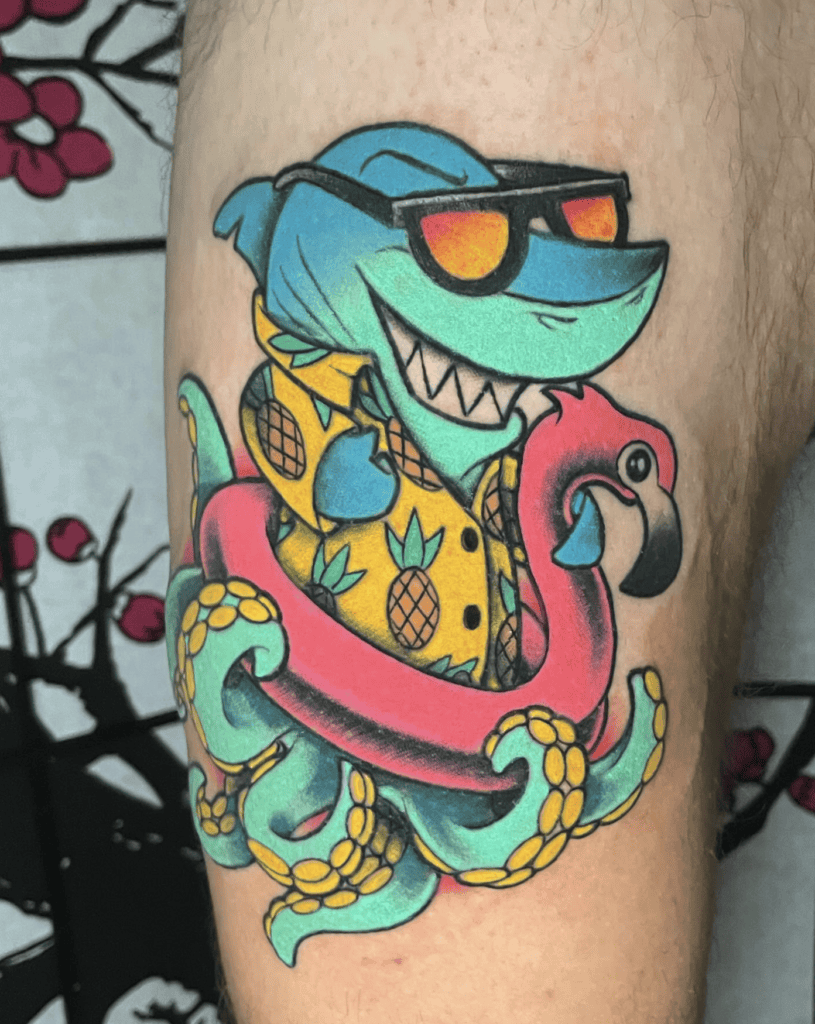
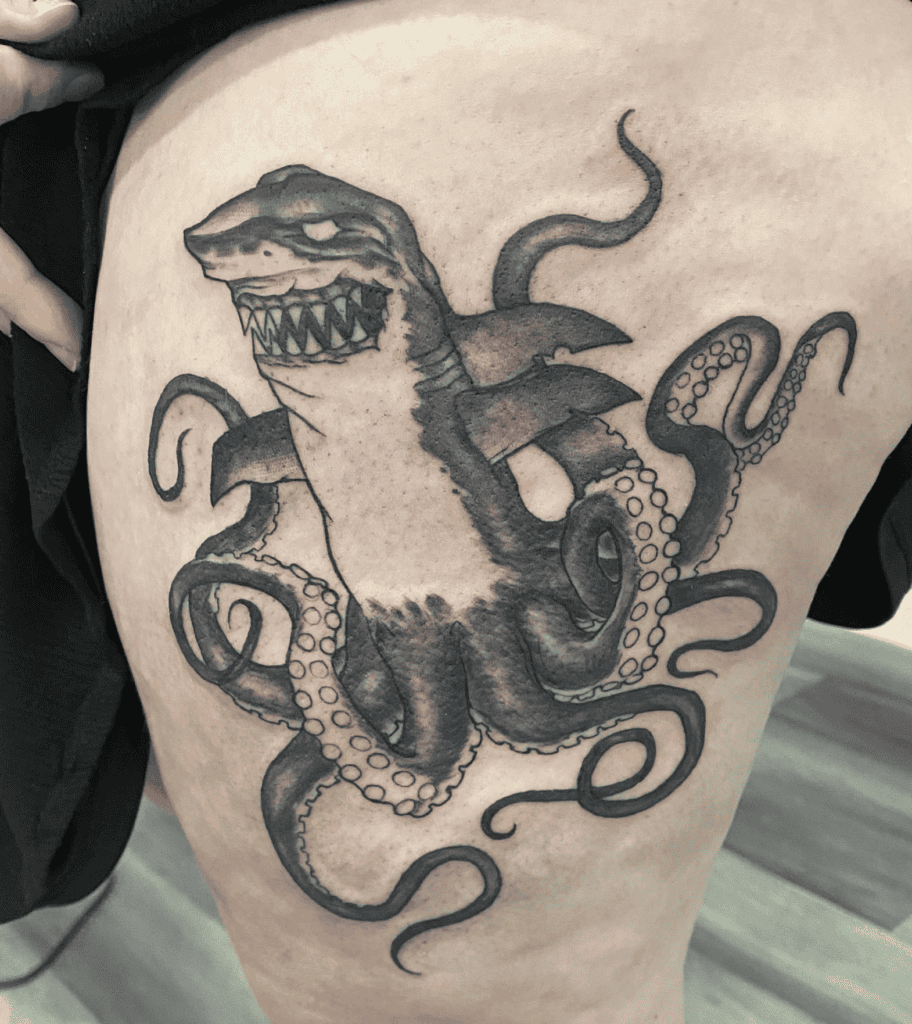
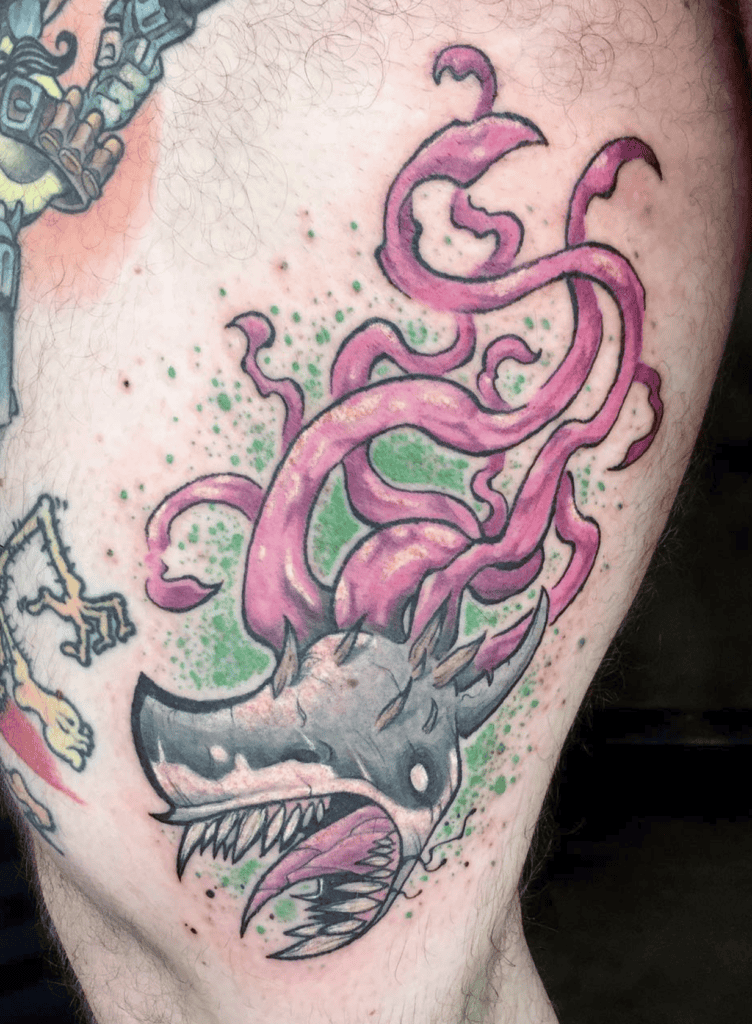
Lenny is one of the main characters in DreamWorks’ animated film Shark Tale (2004). He is the youngest son of Don Lino, the powerful leader of the shark crime family, and the younger brother of Frankie.
Lenny is a Great White Shark, but unlike the rest of his family, he is gentle, sensitive and uncomfortable with the idea of eating other fish. His father expects him to follow the family tradition and become a fearsome predator. Lenny, however, would much rather be a vegetarian.
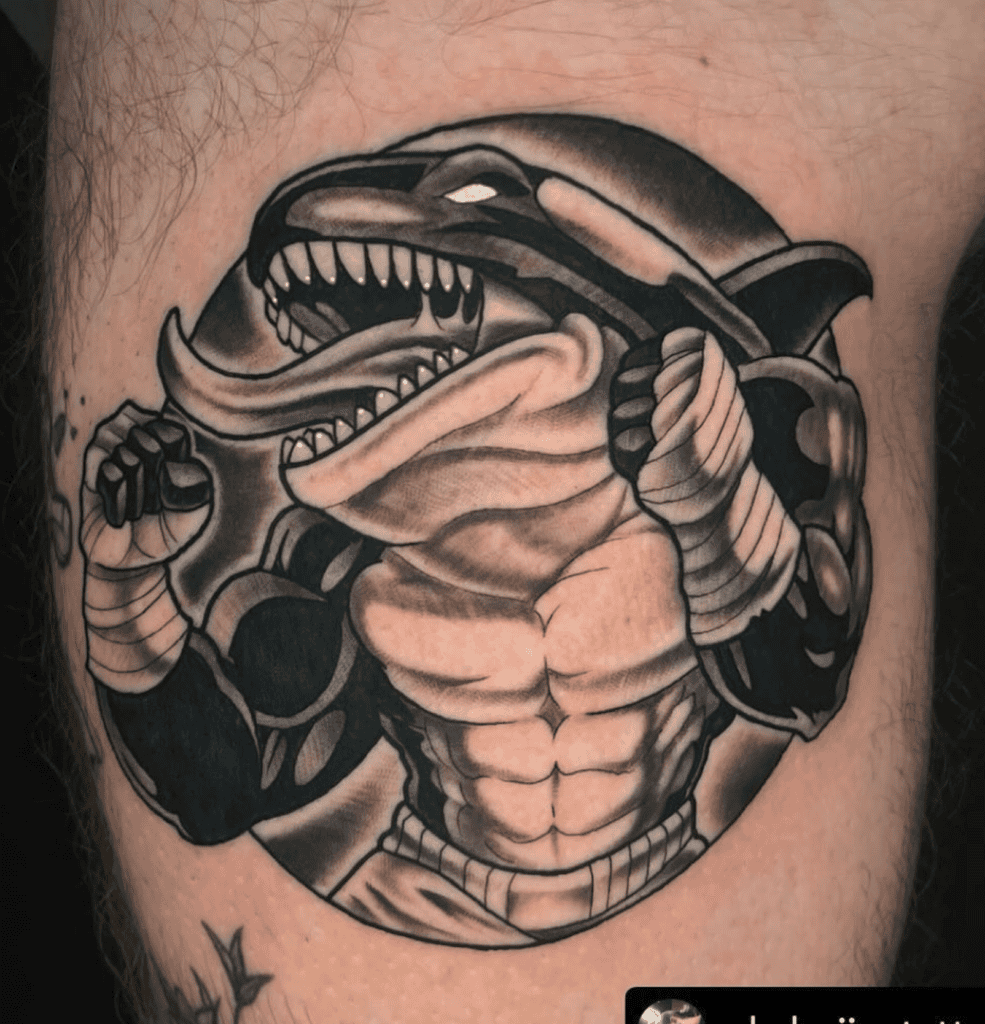
King Shark Tattoo
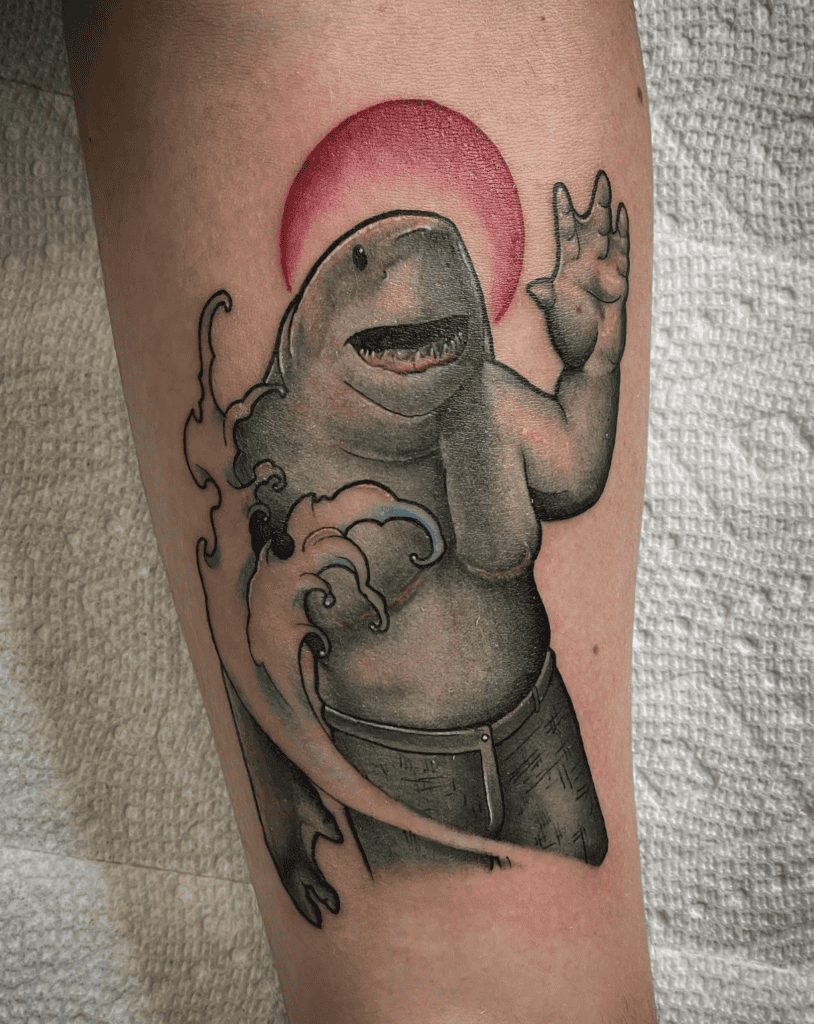
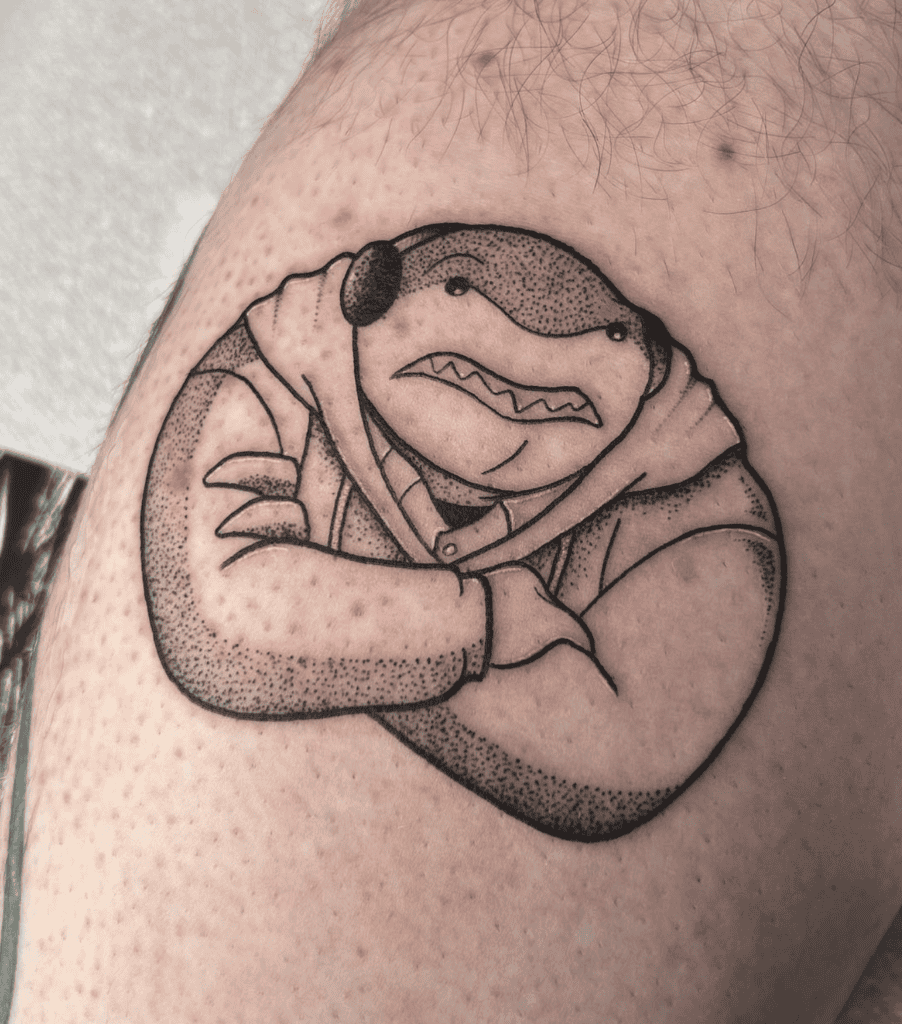
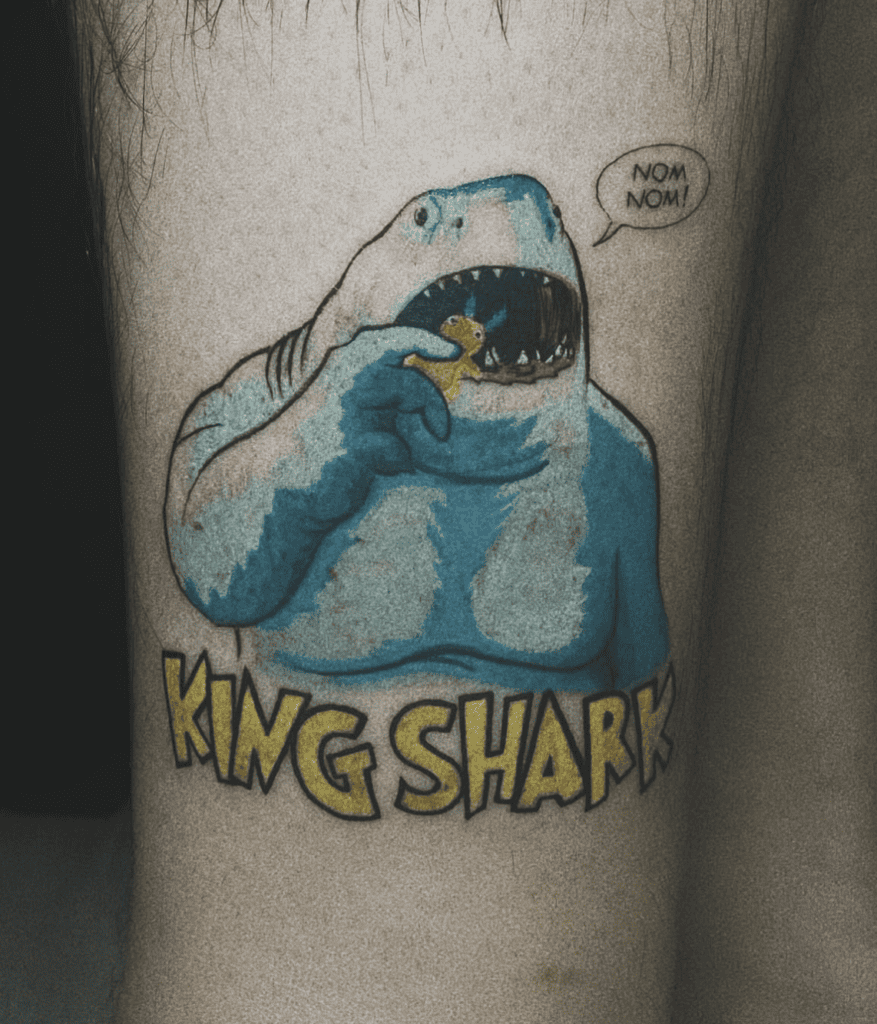
King Shark, whose real name is Nanaue, is a DC Comics character who is part shark and part humanoid. He first appeared in Superboy #0 in 1994 and was created by Karl Kesel and Tom Grummett. DC describes him as the son of an ancient shark god and a longtime enemy of Superboy, Aquaman and other DC heroes. His most famous modern incarnation is probably the version from James Gunn’s The Suicide Squad (2021), where he was voiced by Sylvester Stallone and physically portrayed through performance work by Steve Agee.
Street Sharks Tattoo
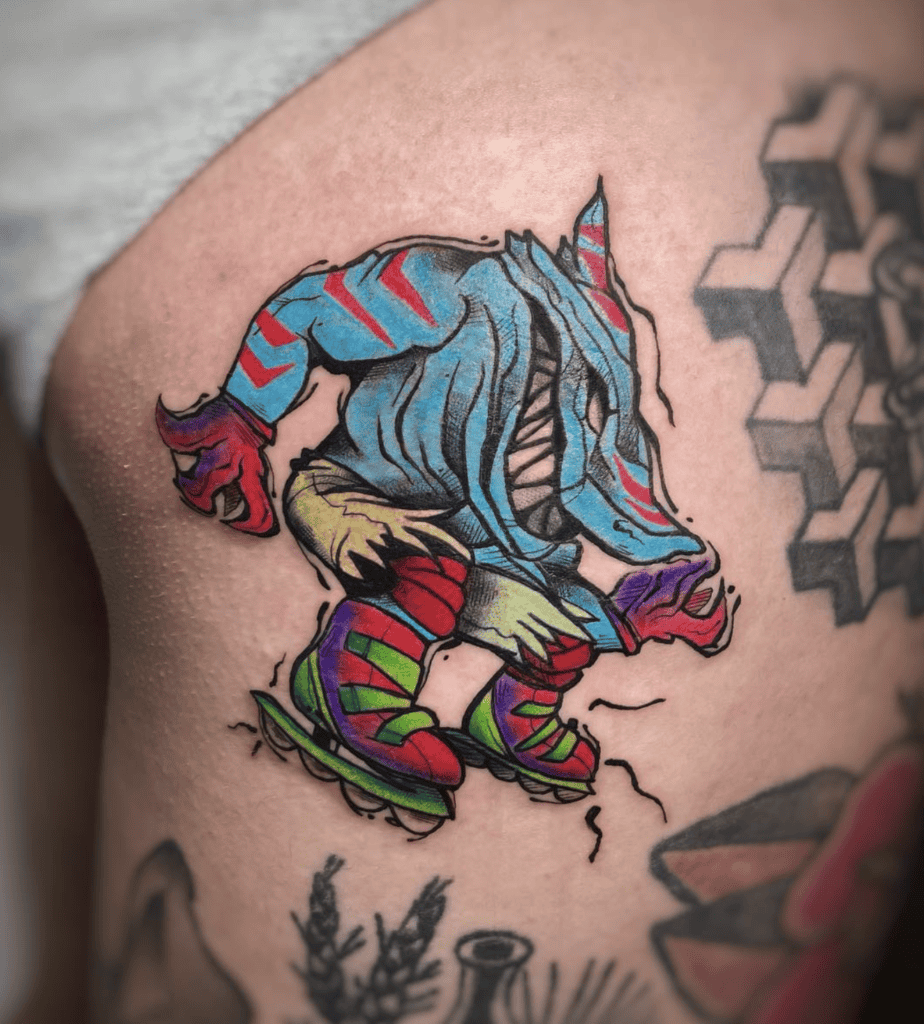
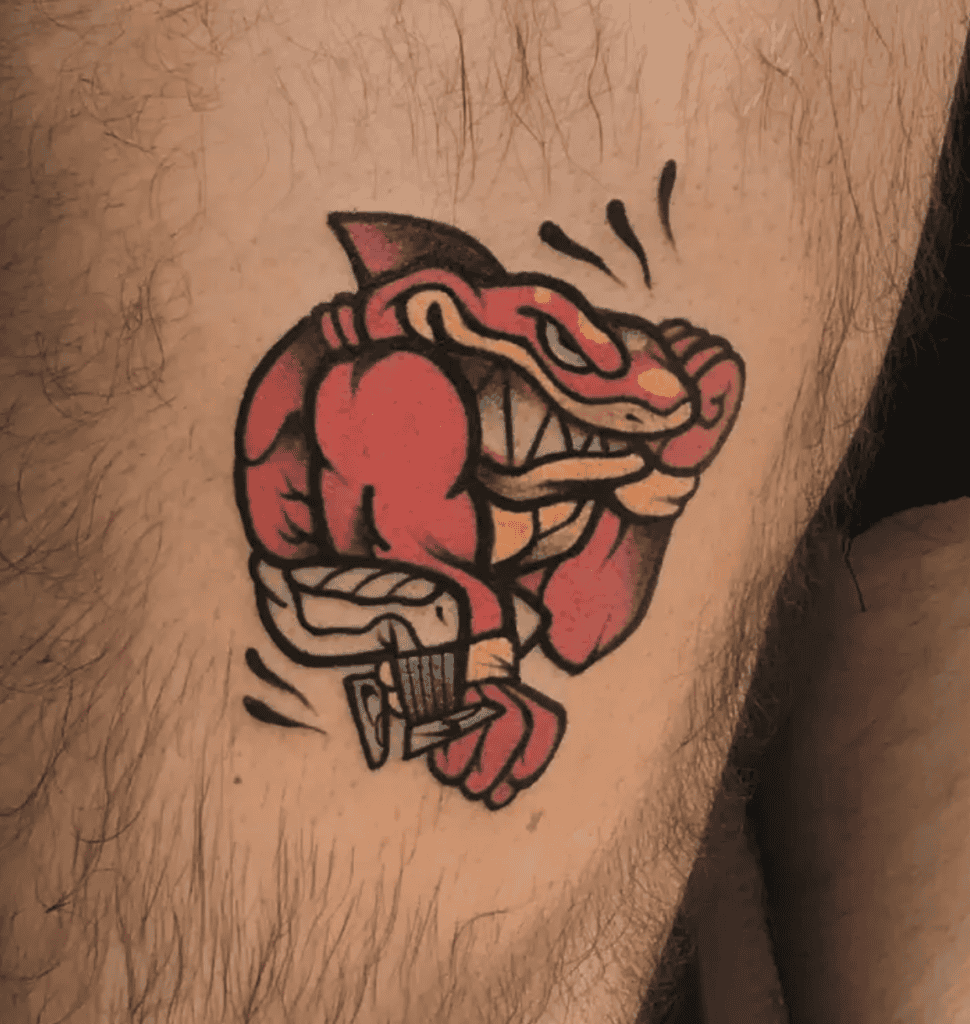
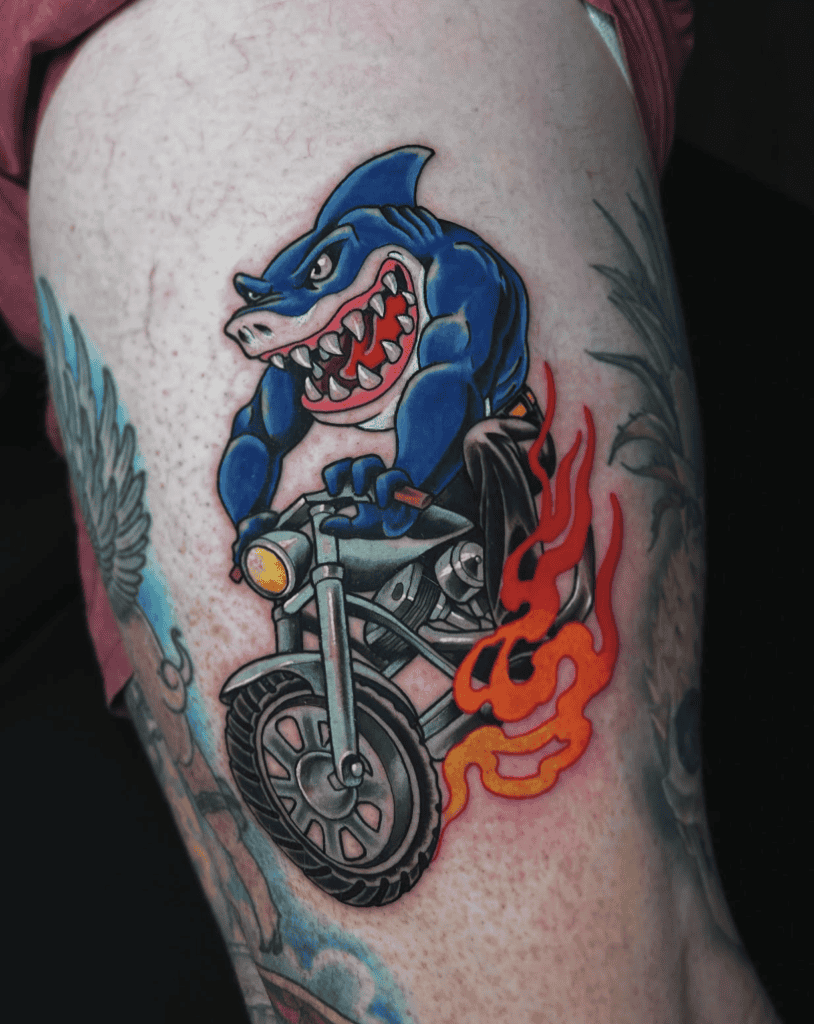
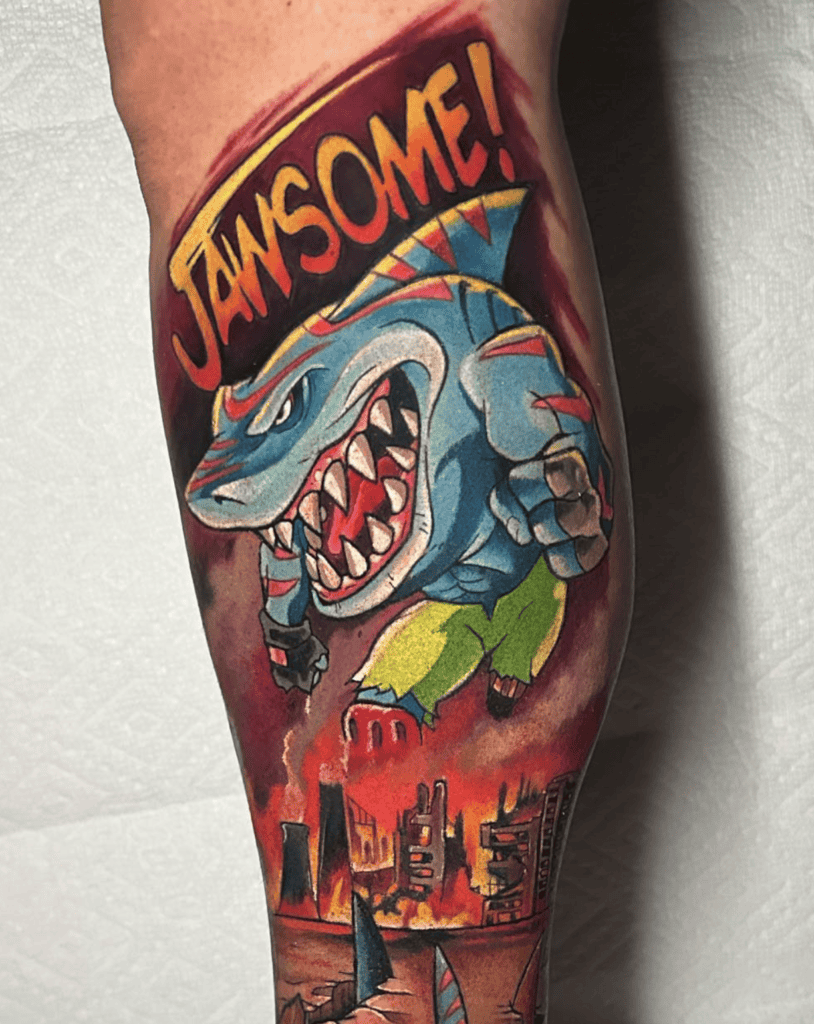
Street Sharks is an American animated series that premiered in 1994, following four brothers who are transformed into humanoid sharks after being experimented on by the evil scientist Dr Paradigm. The four brothers are Ripster, Jab, Streex, and Big Slammu. They become super-powered shark heroes who fight Paradigm and other villains while trying to protect their city.
Baby Shark Tattoo
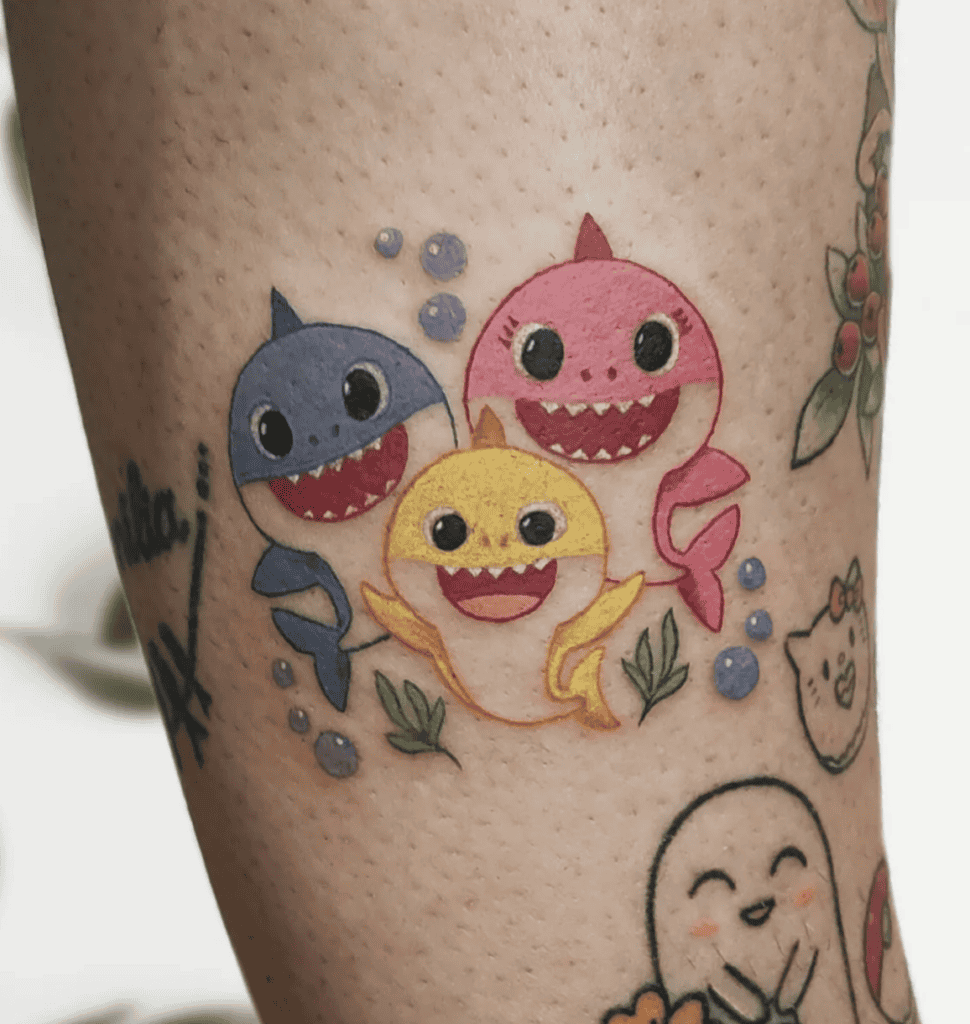
Baby Shark is the central character of the viral children’s song and dance phenomenon “Baby Shark”, popularised globally by Pinkfong. The song follows a shark family, beginning with Baby Shark and introducing Mommy Shark, Daddy Shark, Grandma Shark, and Grandpa Shark, before turning into a simple, repetitive adventure song.
The song became a massive internet and pop-culture phenomenon, particularly through its animated music video and catchy choreography. Its simple lyrics, bright visuals, and repetitive melody made it especially popular with young children, while its incredible staying power turned Baby Shark into one of the most recognisable shark characters in modern popular culture.
Jabberjaw Tattoo
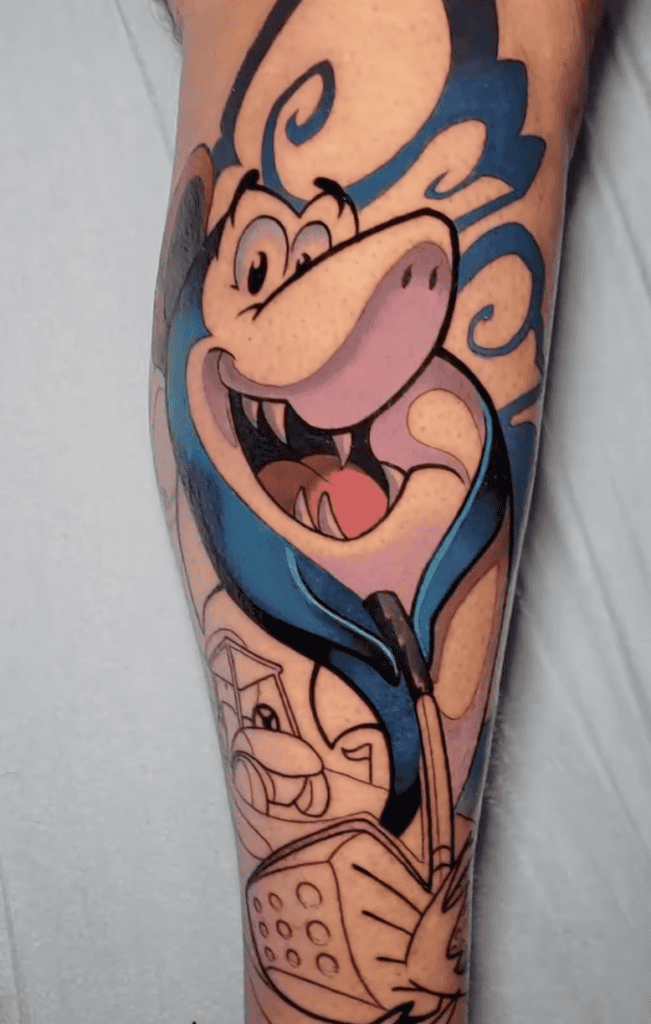
Jabberjaw is the titular character of Hanna-Barbera’s 1976 animated series Jabberjaw. He’s a large Great White Shark who lives underwater and works as the drummer for a teenage rock band called The Neptunes.
Despite his intimidating appearance, Jabberjaw is mostly a goofy, lovable and cowardly character. He has a distinctive speech pattern and catchphrase, frequently shouting “Blow me down!” when something surprises or frightens him.
Conclusion
As our hunt comes to an end, we hope you’ve caught your perfect prey. But if Shark Tattoos still aren’t fin-teresting enough for you, why not gallop your way into these Horse Tattoo ideas, slither your way through these Snake Tattoos, or ram your way through these Goat Tattoo designs.
- Lion Tattoo Ideas - October 19, 2026
- Persona Tattoo Ideas - October 15, 2026
- Spider Tattoo Ideas - October 8, 2026