

Mayan Mythology Tattoo Ideas
Do you feel like you’re lost in an Underworld on a desperate search for the perfect Tattoo Clues? Worry not, we’ve carved out some of the very best Mayan Mythology Tattoo designs that are written in the stars.
What is Mayan Mythology
Mayan mythology is the system of beliefs, stories, and gods that the Maya (people of Mayan culture) used to explain how the world was created, the movement of the sun, moon, and stars, life, death, the afterlife, and nature. The Maya were an ancient civilisation that lived across parts of modern-day Mexico, Guatemala, Belize, Honduras, and El Salvador. They weren’t a single empire like the Aztecs, and instead were made up of independent city-states such as Chichén Itzá and Tikal.
They developed one of the most advanced writing systems in the Americas, were incredible astronomers, created complex calendars, and built massive stone cities, pyramids, and temples, with their culture still existing today as millions of Maya people are still living across Central America.
Mayan mythology shaped daily life, rituals, kingship, and even architecture, with a lot of what we know coming from the sacred text Popol Vuh, a collection of myths and legends written down after the Spanish arrived.
The Maya believed time moved in cycles, rather than a straight line, which is why their calendars were so important, and that life, death, and rebirth were all part of repeating patterns.
Best Mayan Mythology Tattoo Artists

tattoos by goethe
L.A based Tattoo Artist, specializing in Mesoamérican culture tattoos.

spiral spirit tattoo
San Pedro La Laguna Tattoo artist specialising in Mayan Mythology Tattoos and more.

samuelolman
ancient tattoo
Palenque Tattoo Artist specialising in ancient tarditional TATTOOING.
Best Mayan Mythology Tattoo Ideas
Now that we know a little about Mayan Mythology, let’s take a look at some of the best Mayan Mythology Tattoos our repeating cycle has to offer.
Itzamná Mayan Mythology Tattoo
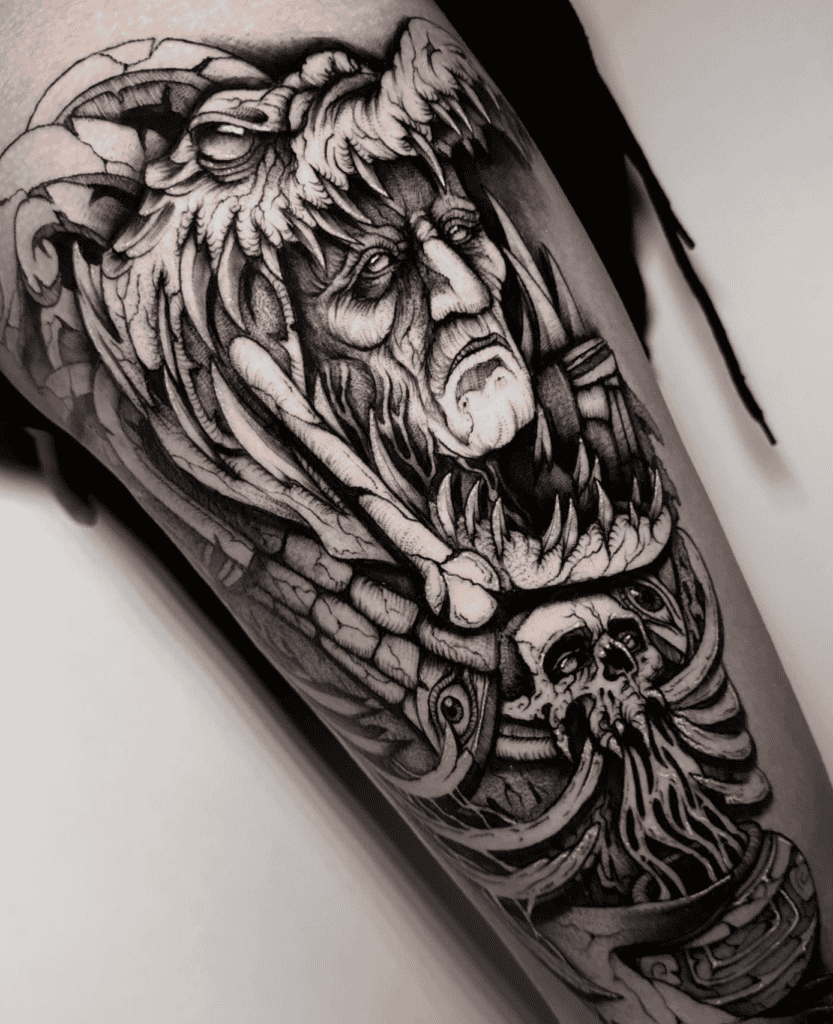
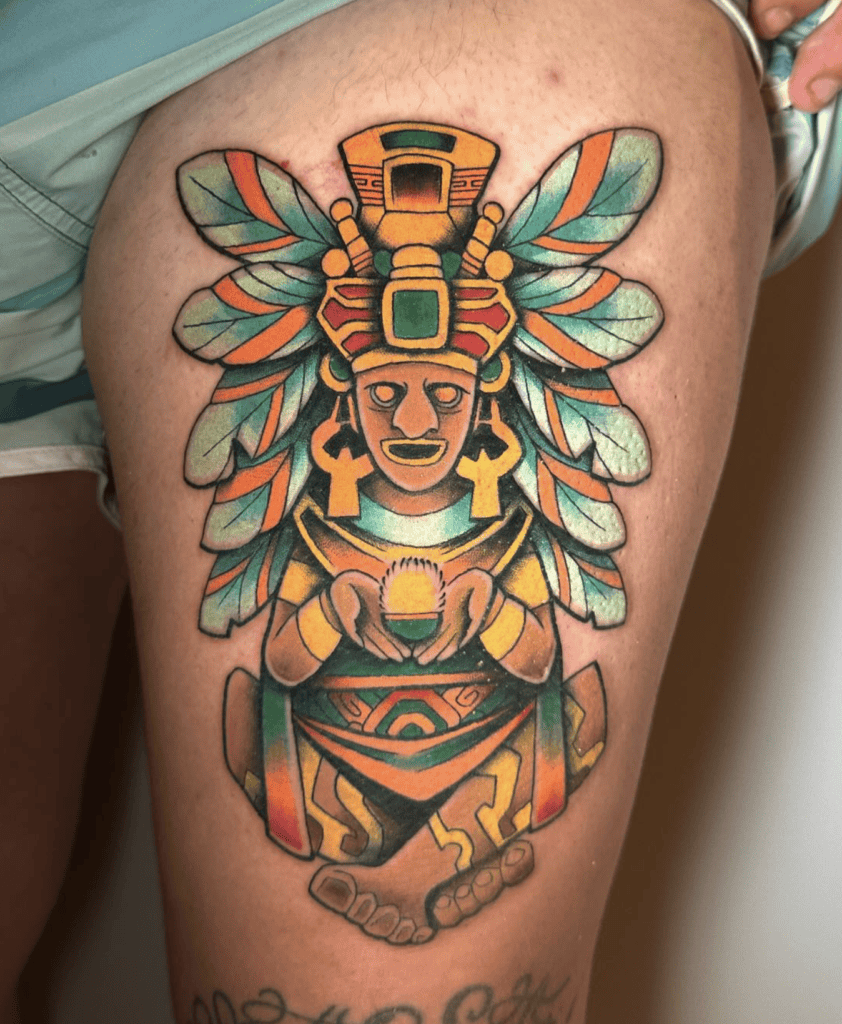
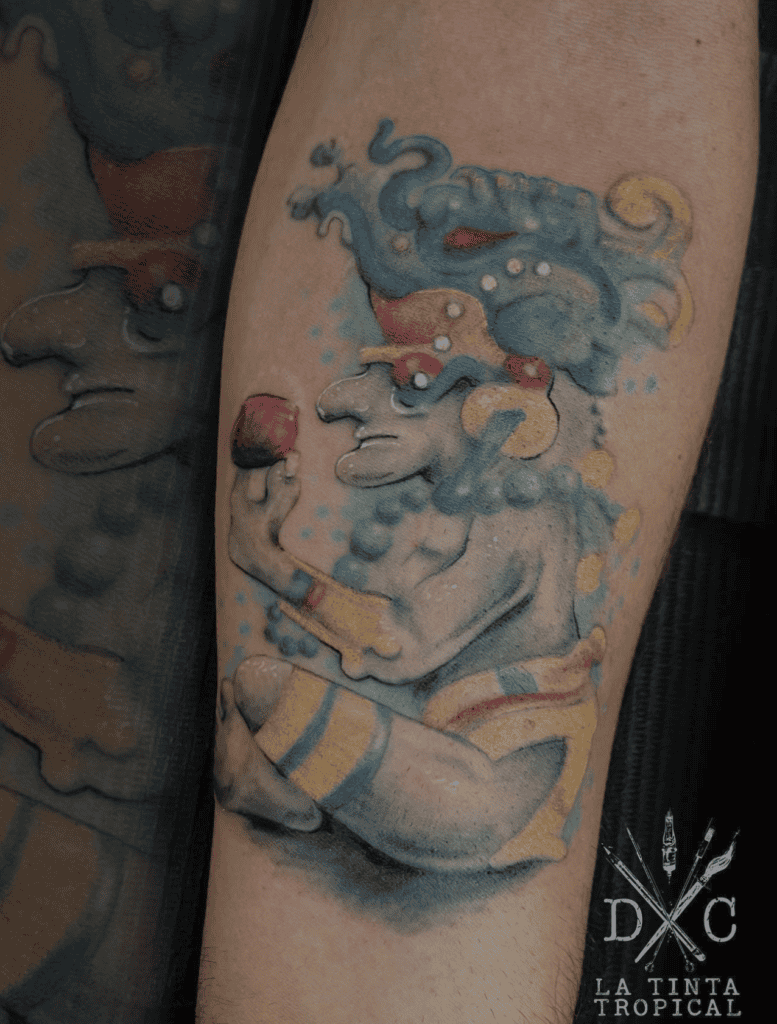
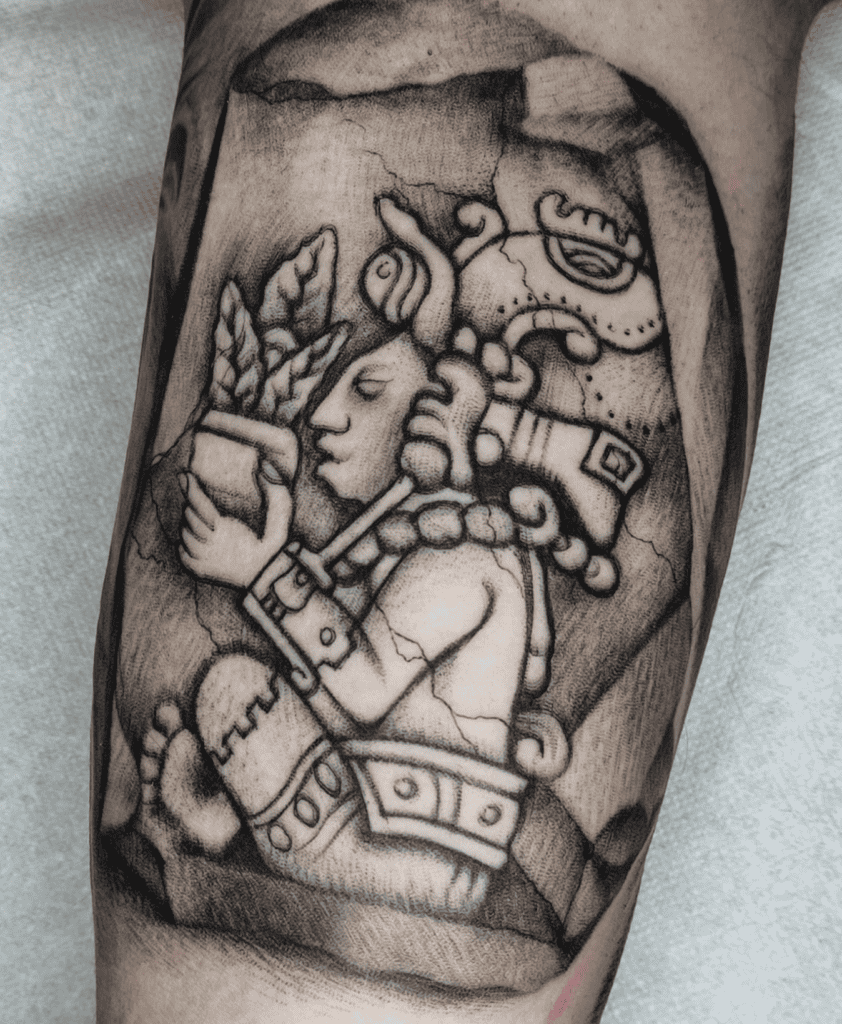
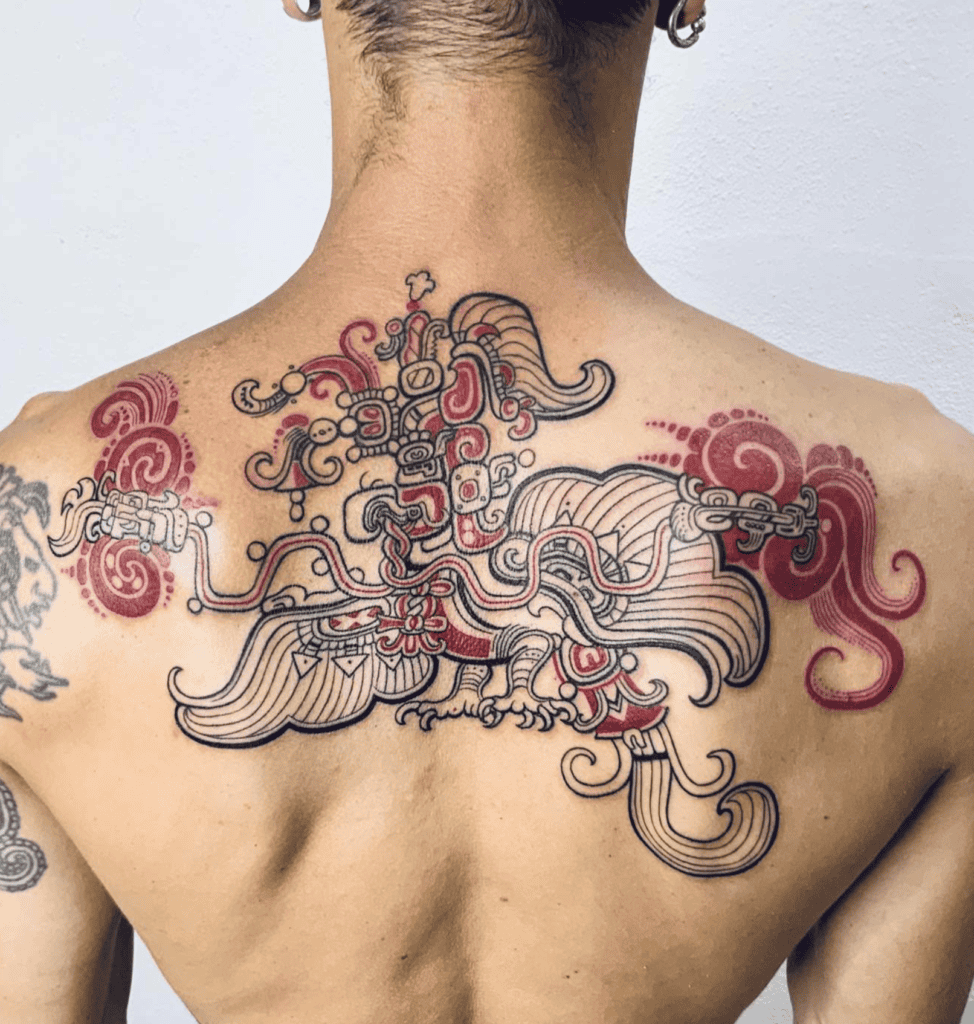
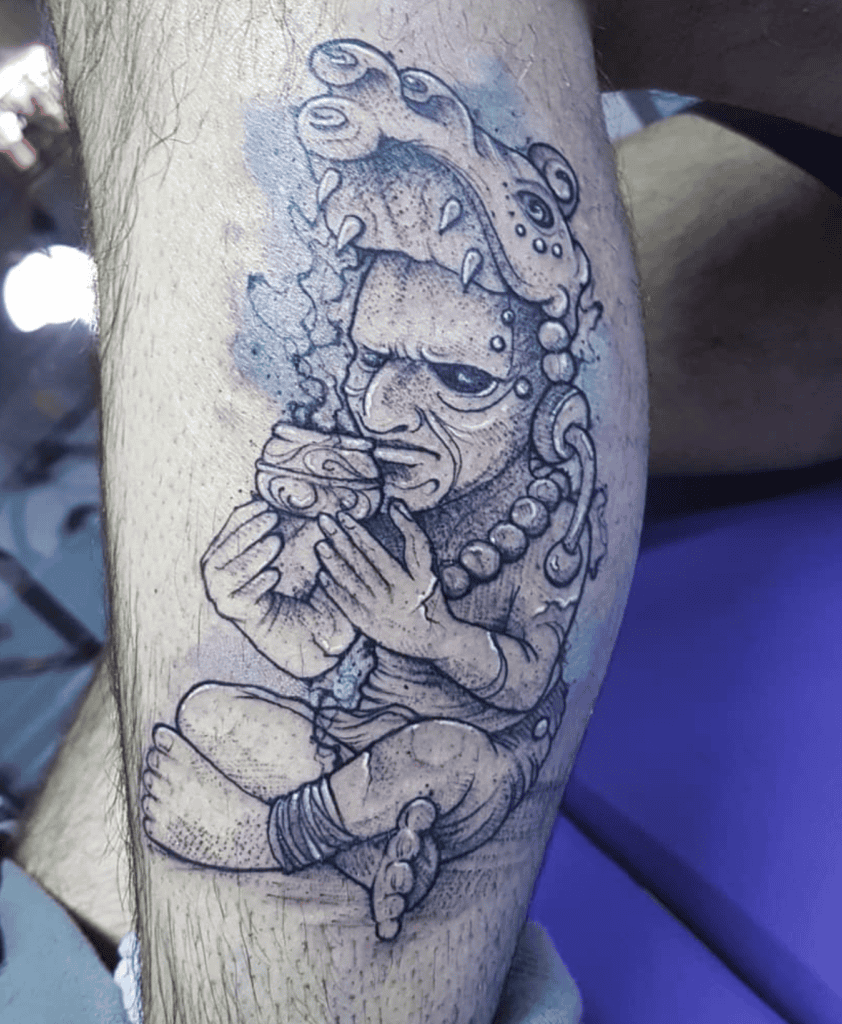
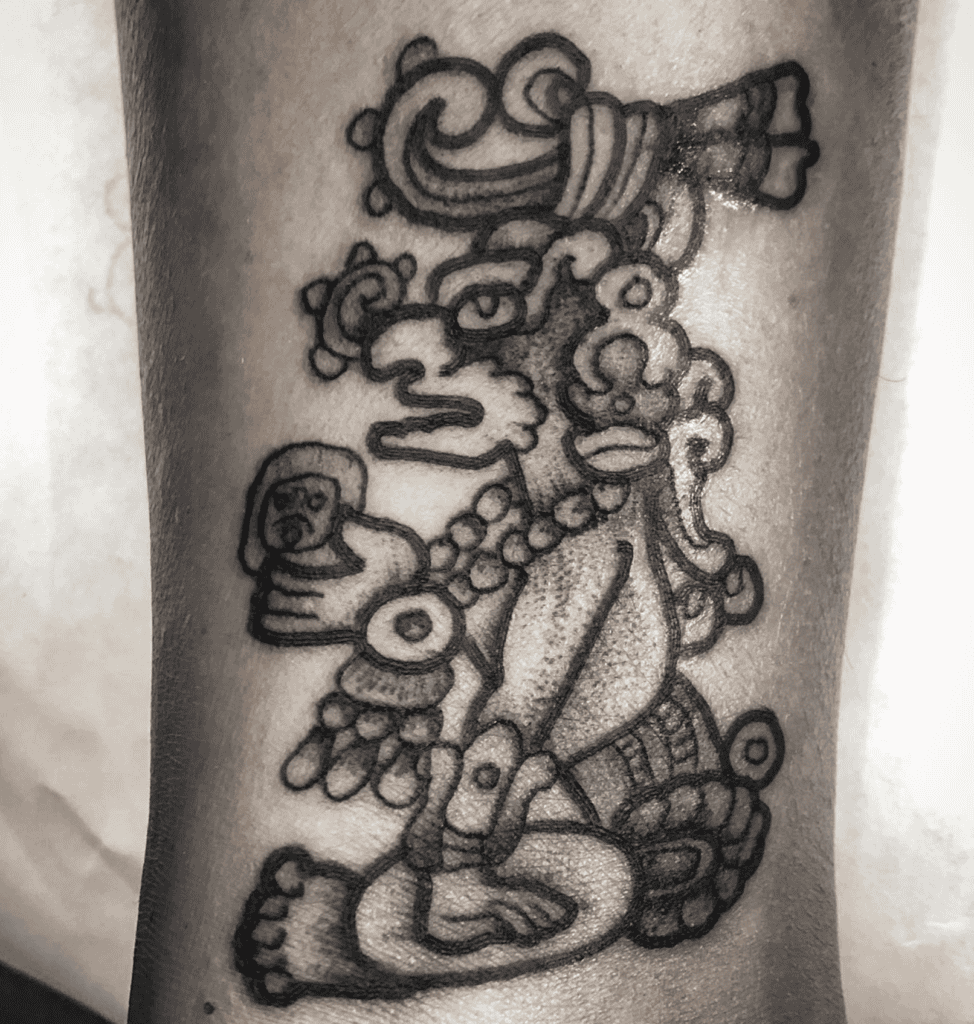
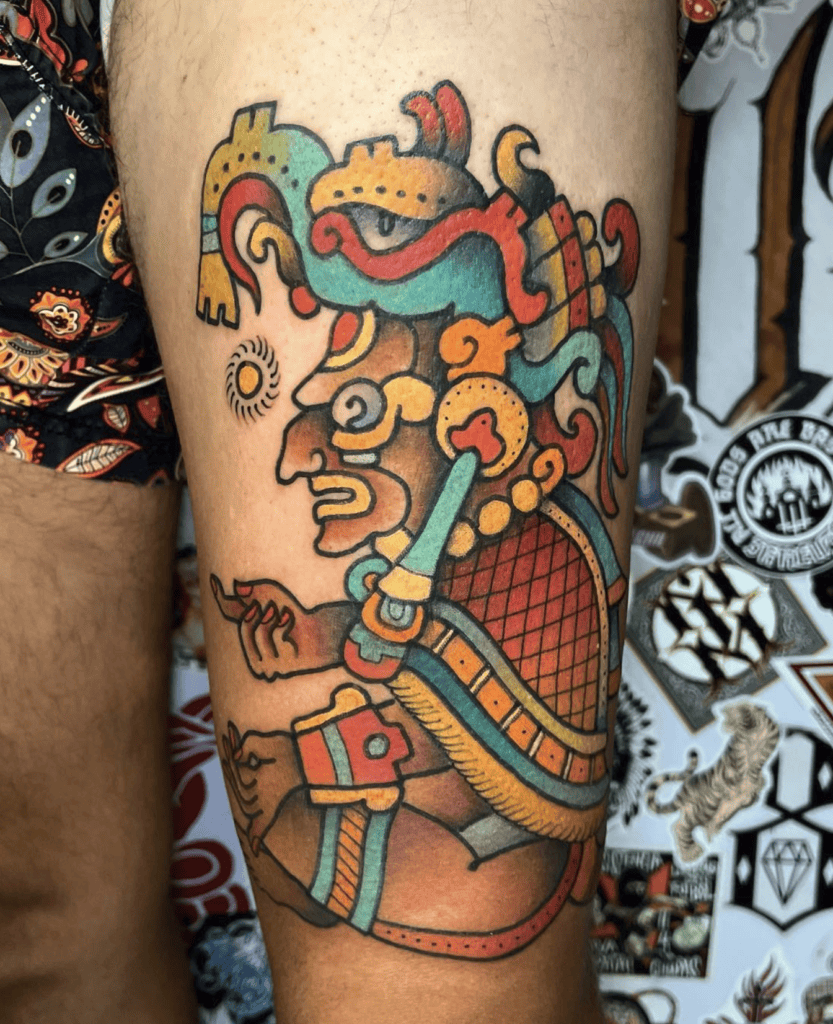
Itzamná is often described as a creator god, the god of the sky, wisdom, and knowledge, and a bringer of writing, calendars, and learning. He’s usually depicted as an aged man with a kind but powerful presence, symbolising wisdom and authority rather than brute strength.
Itzamná is believed to have helped create the earth and heavens, established order in the universe, and guided humanity in its early existence. He is credited with giving the Maya their writing system and also helped create their calendar system, which shaped how they understood time.
Itzamná is closely tied to the sky and celestial realm, cosmic balance and divine order, sometimes being linked to the sun or seen as a guiding force behind it. He is often paired with Ix Chel, the moon goddess, as together, they represent a balance of sky & moon, wisdom & fertility, and order & life.
Hunab Ku Mayan Mythology Tattoo
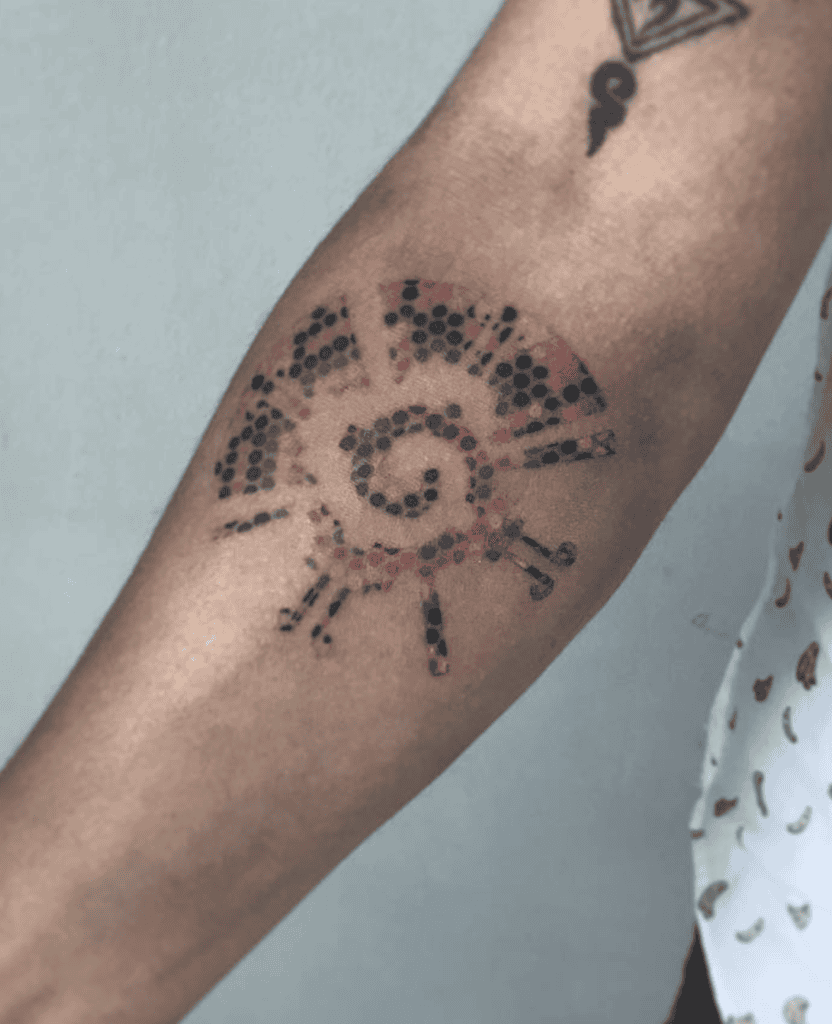
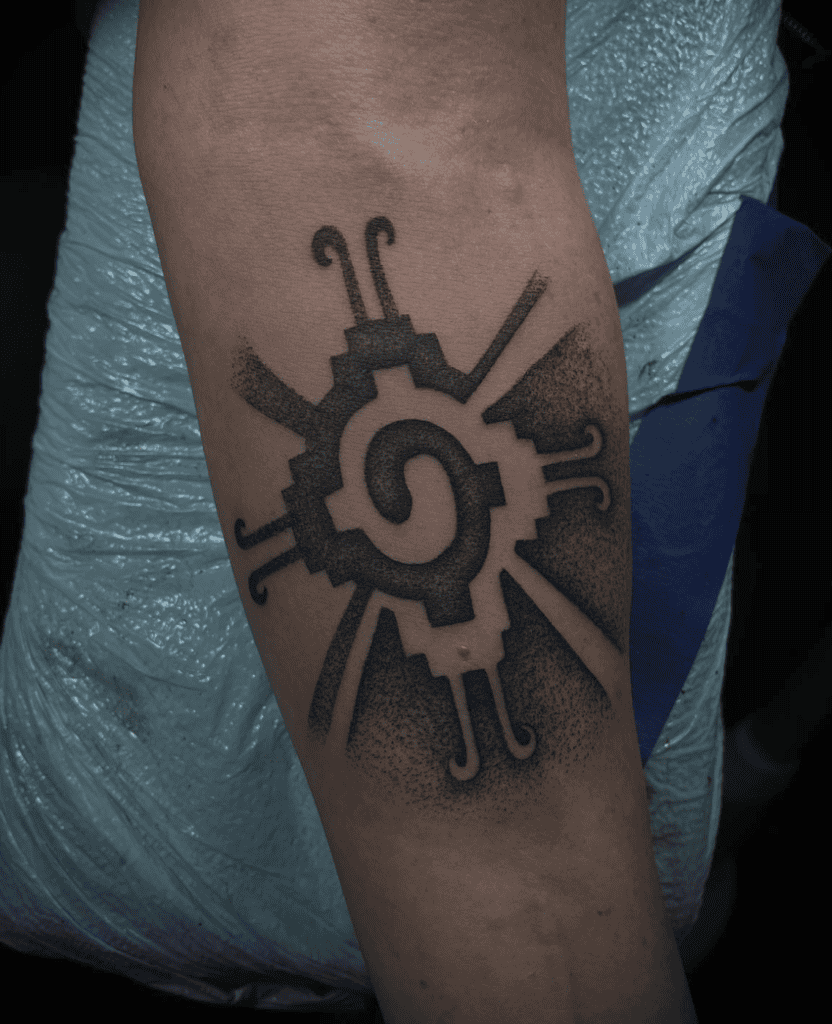
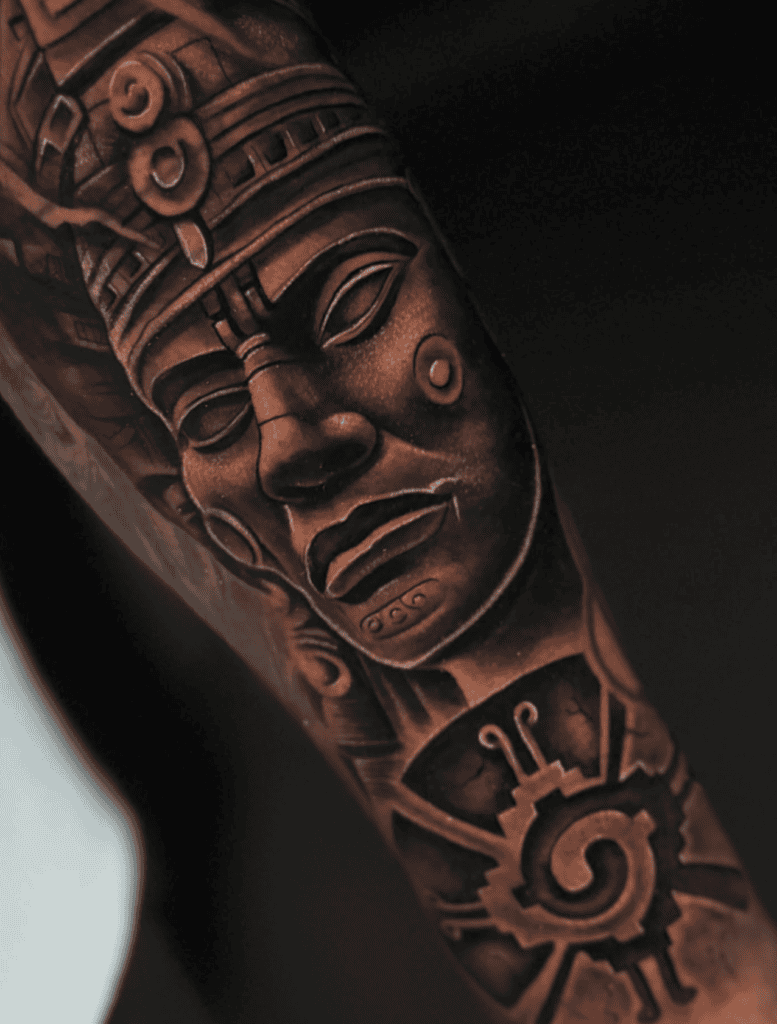
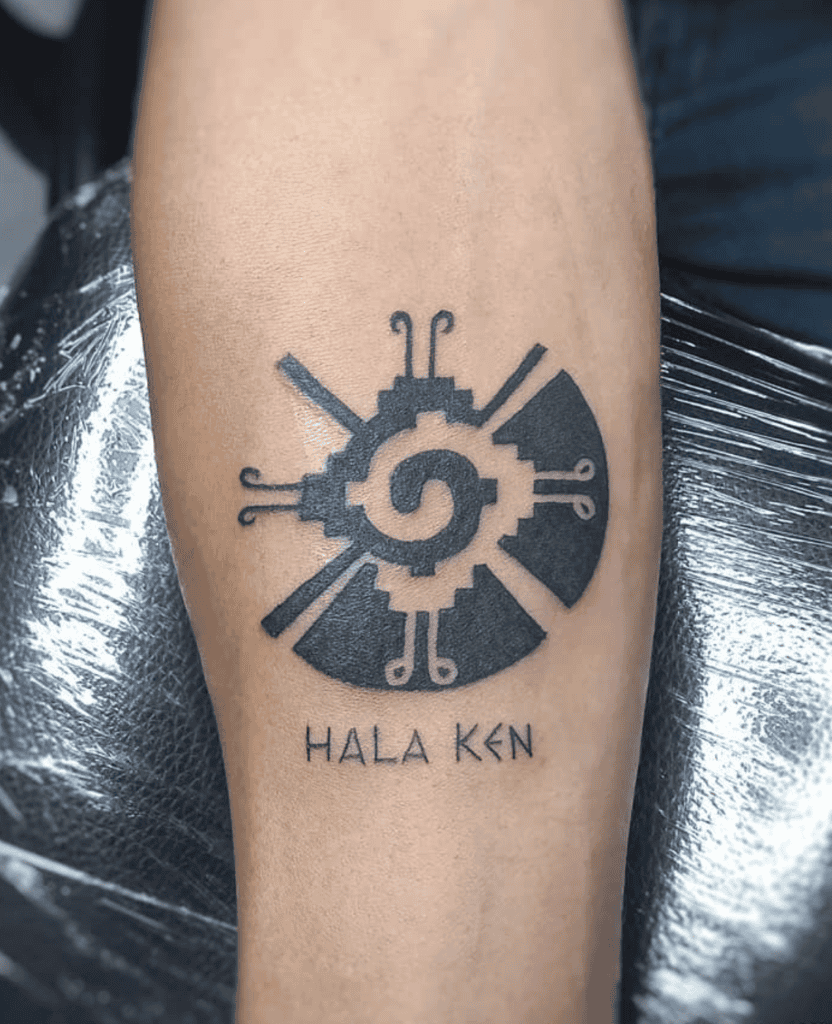
Hunab Ku is usually described as the supreme creator force, the “One God” above all others and a being that represents everything and nothing at once. It is not a traditional god with a personality or form, and is seen more as a cosmic principle, the source of all existence and the idea of unity behind everything.
Hunab Ku is historically controversial, as the name appears in post-Spanish colonial writings rather than in earlier Mayan texts, so some scholars believe the concept was influenced by European ideas of a single God.
Despite the uncertainty, Hunab Ku is believed to be everything in existence, often linked to the balance of light & dark, life & death, order & chaos, and creation. The Hunab Ku symbol is a black-and-white swirling design used today to represent balance, motion, and cosmic unity. The symbol is modern and not found in ancient Mayan carvings, but it is inspired by genuine Mayan themes of duality and cycles.
Buluc Chabtan Mayan Mythology Tattoo
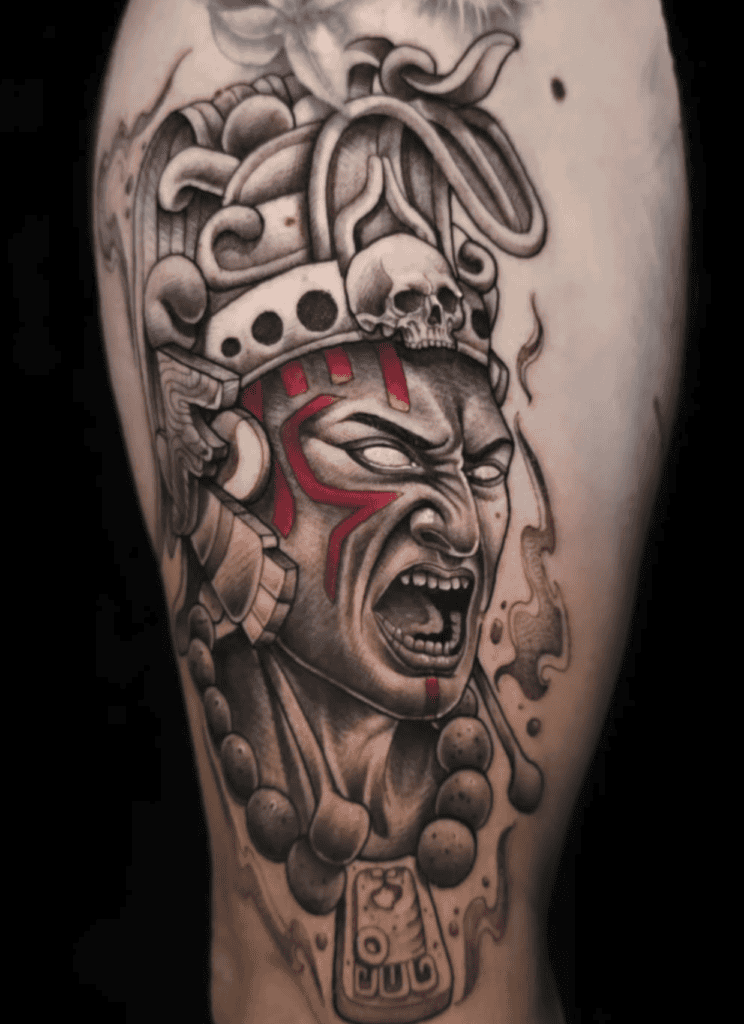
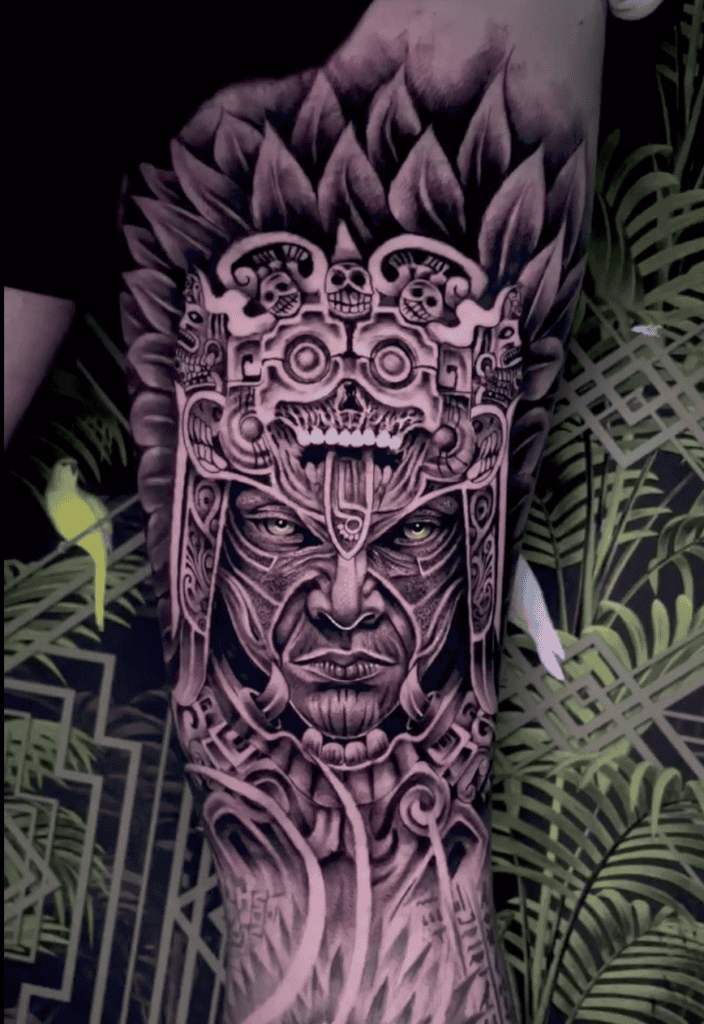
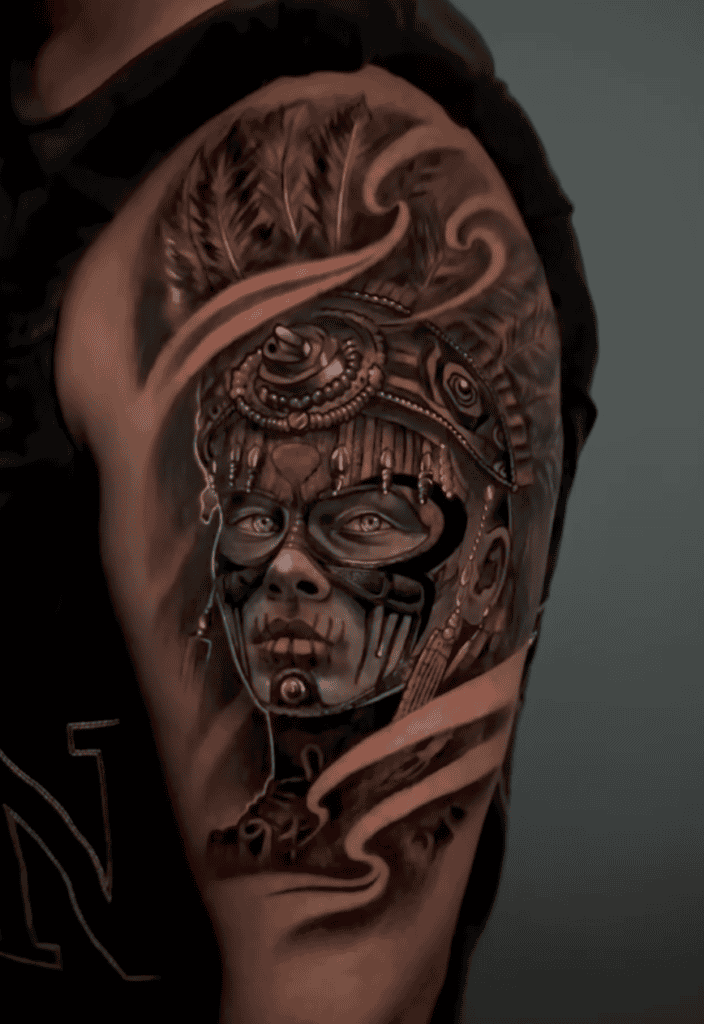
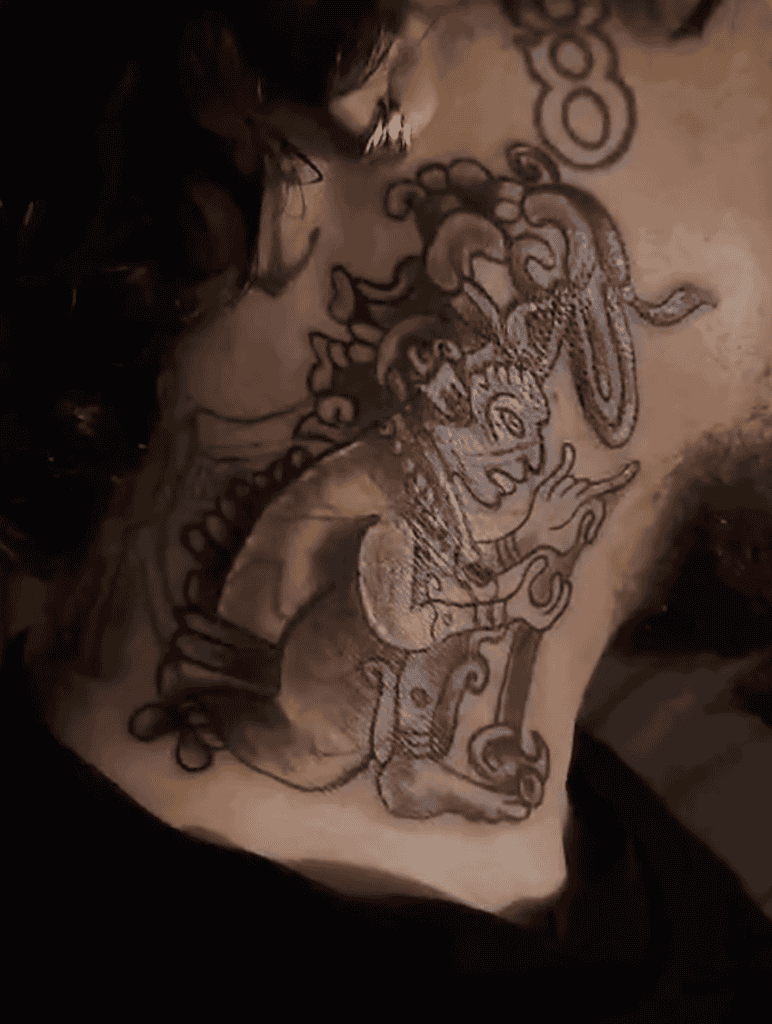
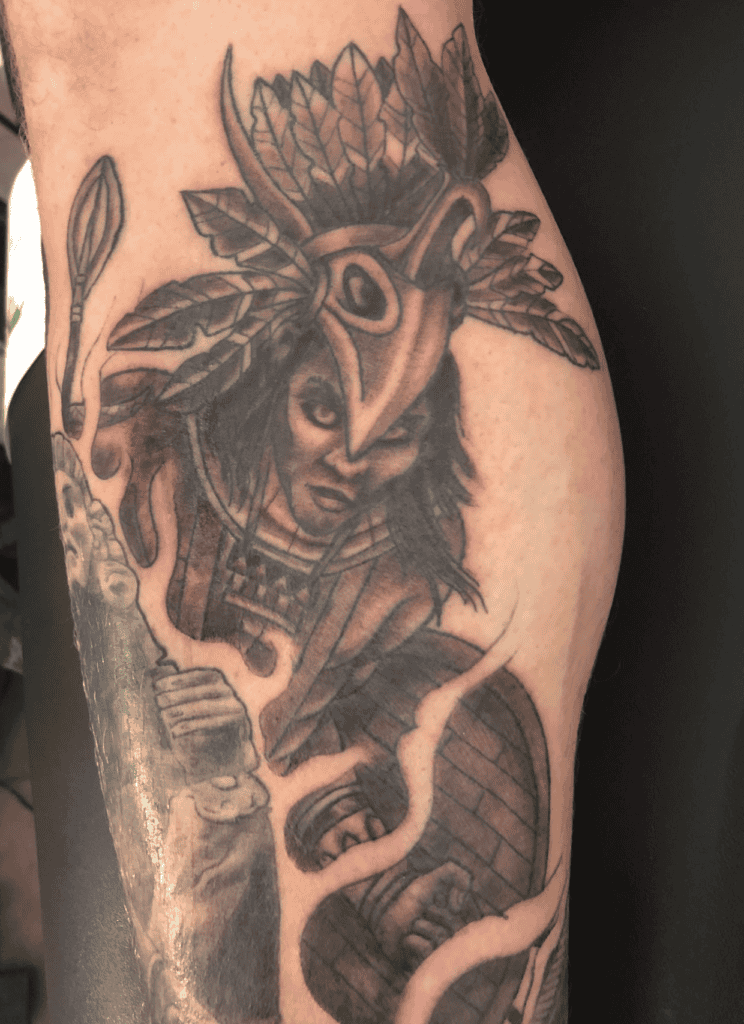
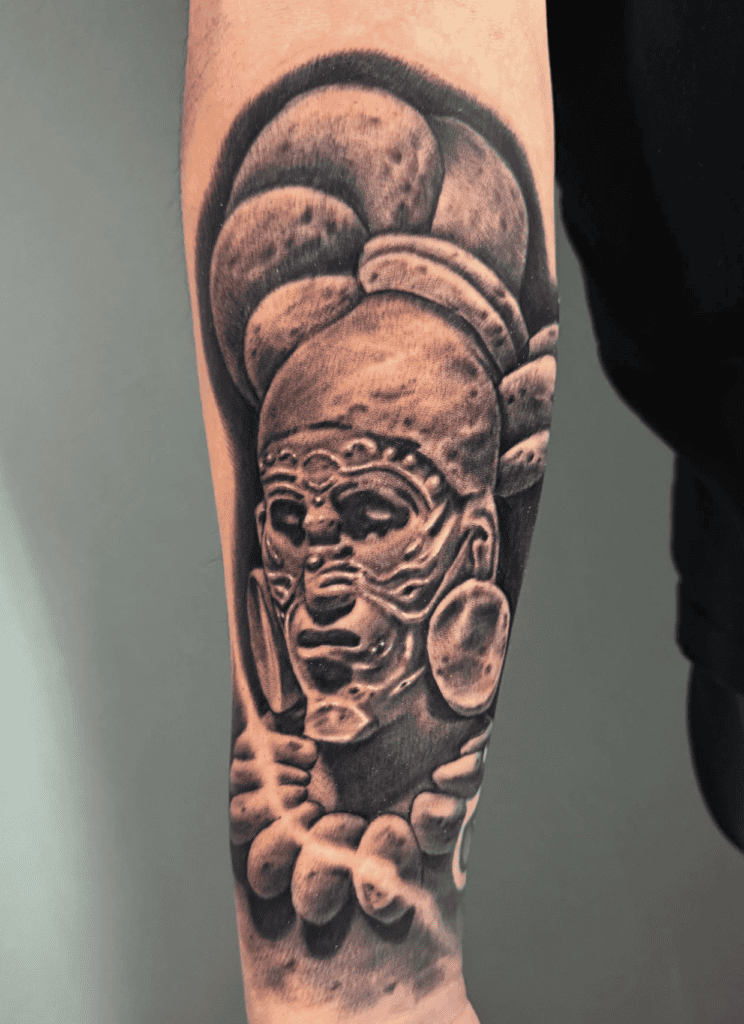
Buluc Chabtan is the god of war and conflict, a deity of violence, chaos, and bloodshed, often associated with sacrifice and devastation. He embodies the brutality of battle, the destructive forces of war, and the idea that conflict is part of the natural order. War wasn’t just physical for the Maya, and was often seen as spiritual and cosmic, tied to maintaining balance.
Huracán Mayan Mythology Tattoo

Huracán is known as a god of wind, storms, and fire, a creator deity involved in shaping the world, and a force of destruction and renewal. He plays a major role in the creation myths found in the Popol Vuh, as he helped form the earth and sky and brought order out of chaos.
However, creation didn’t go smoothly, as in the myths, early versions of humans were imperfect, incapable of thinking properly, and didn’t honour the gods. Huracán unleashed massive storms and floods, causing total destruction of these early beings to refine his creation.
Kinich Ahau Mayan Mythology Tattoo
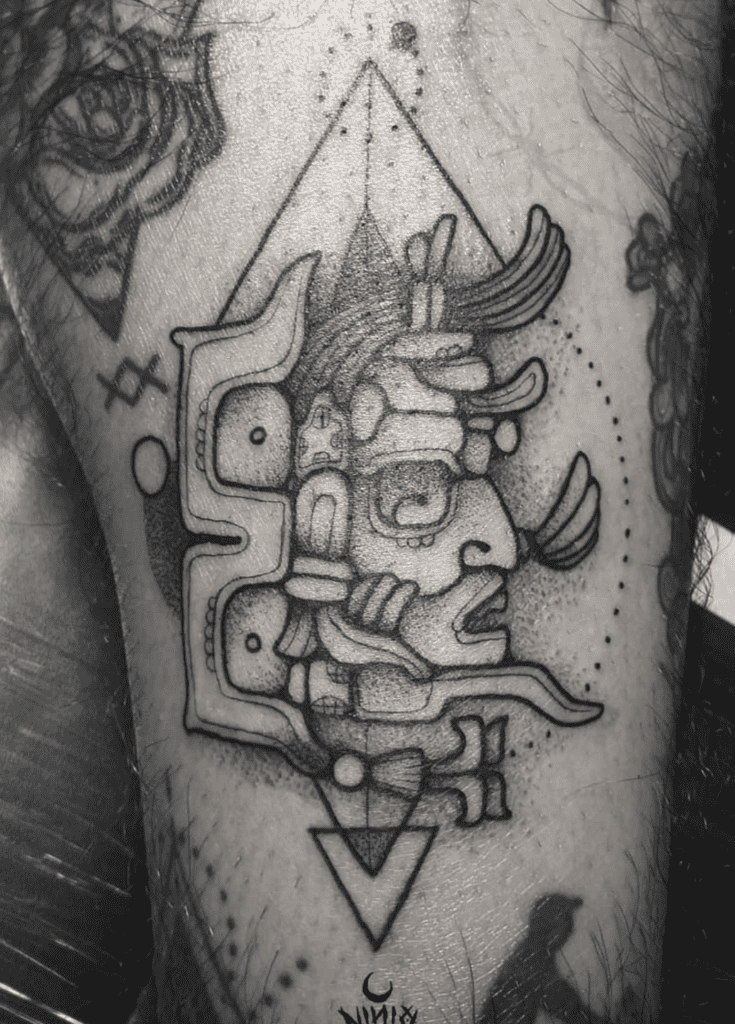
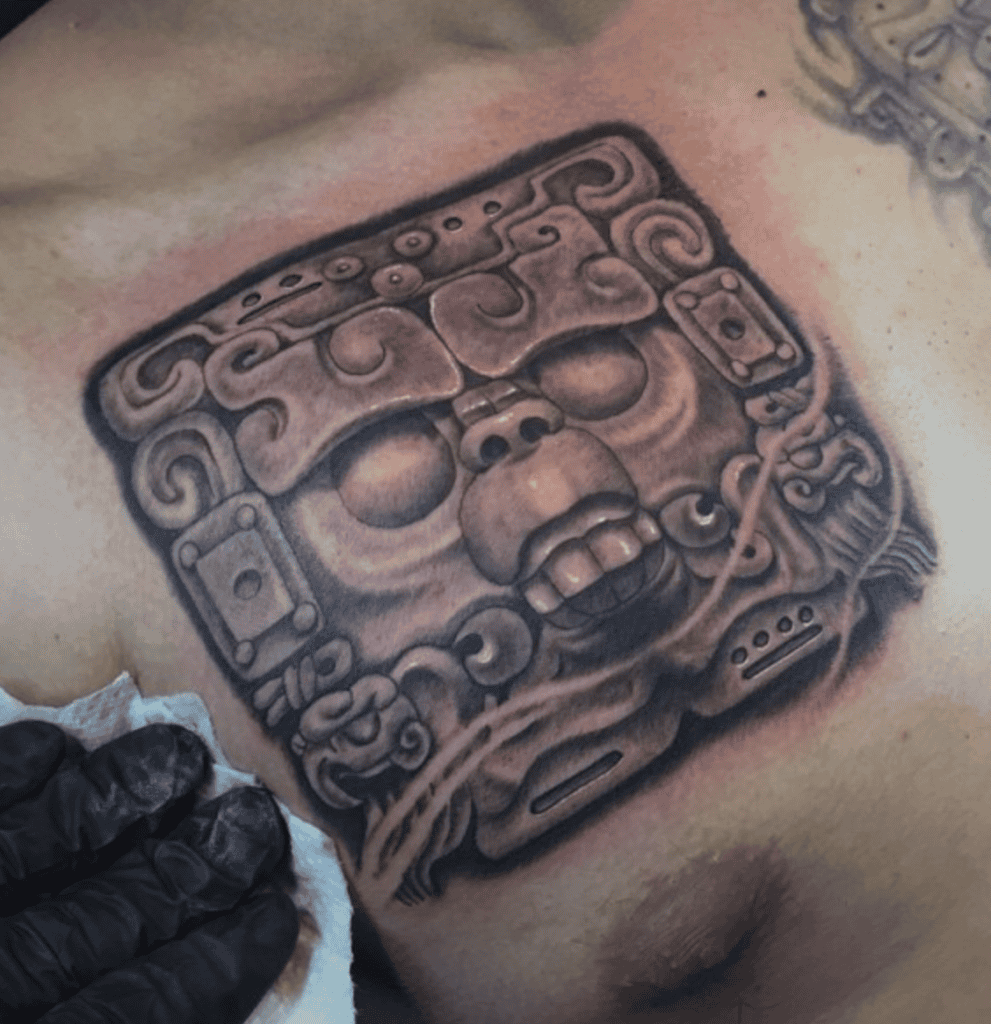
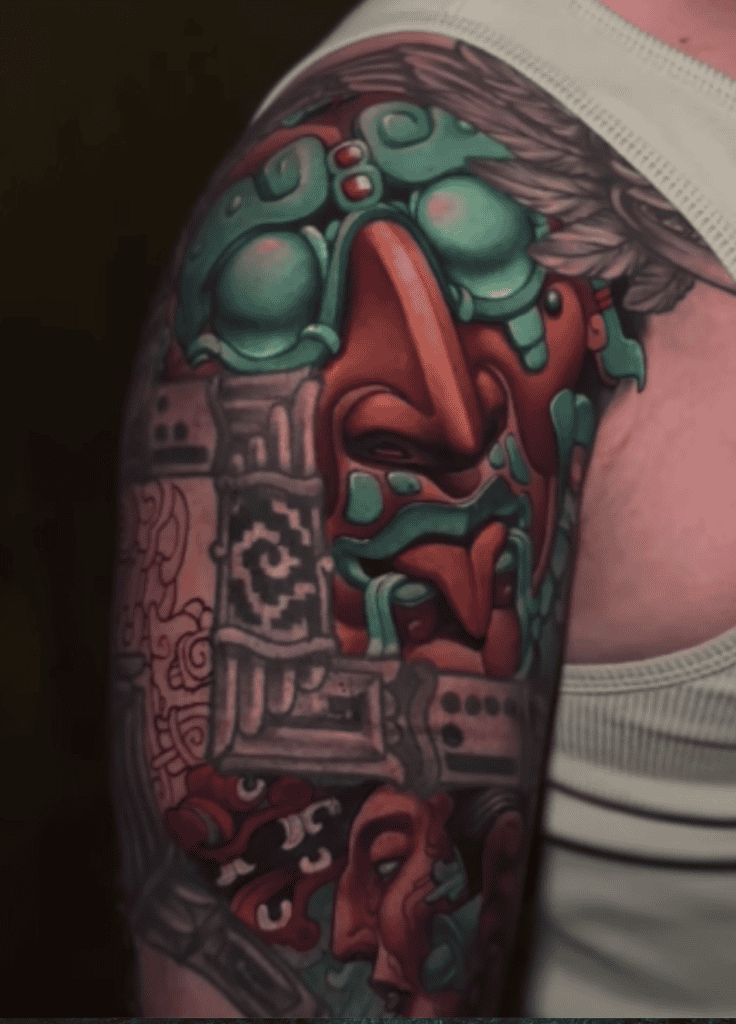
Kinich Ahau is known as the sun god in Maya myth, a symbol of power, kingship, and divine authority who represents the sun’s full journey from dawn to nightfall. During the day, Kinich Ahau travels across the sky, sustaining life, crops, and human existence.
At night, the sun was believed to travel through the underworld, where Kinich Ahau transforms into a jaguar, symbolically battling through Xibalba to rise again the next day.
Ix Chel Mayan Mythology Tattoo
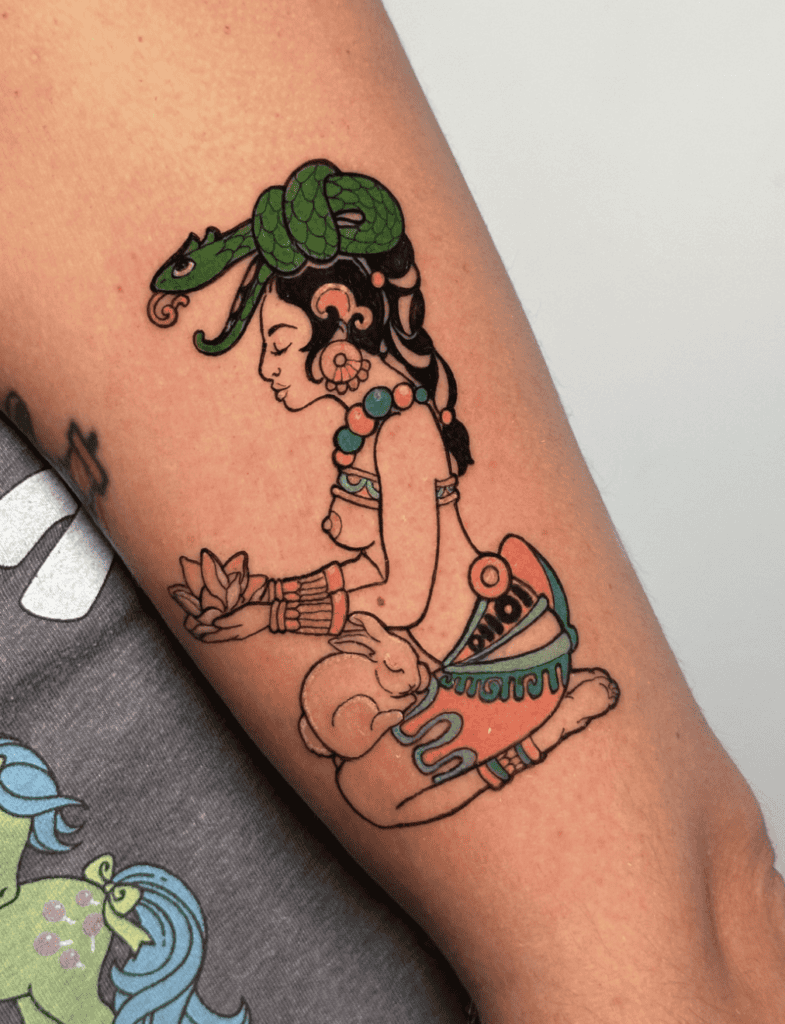
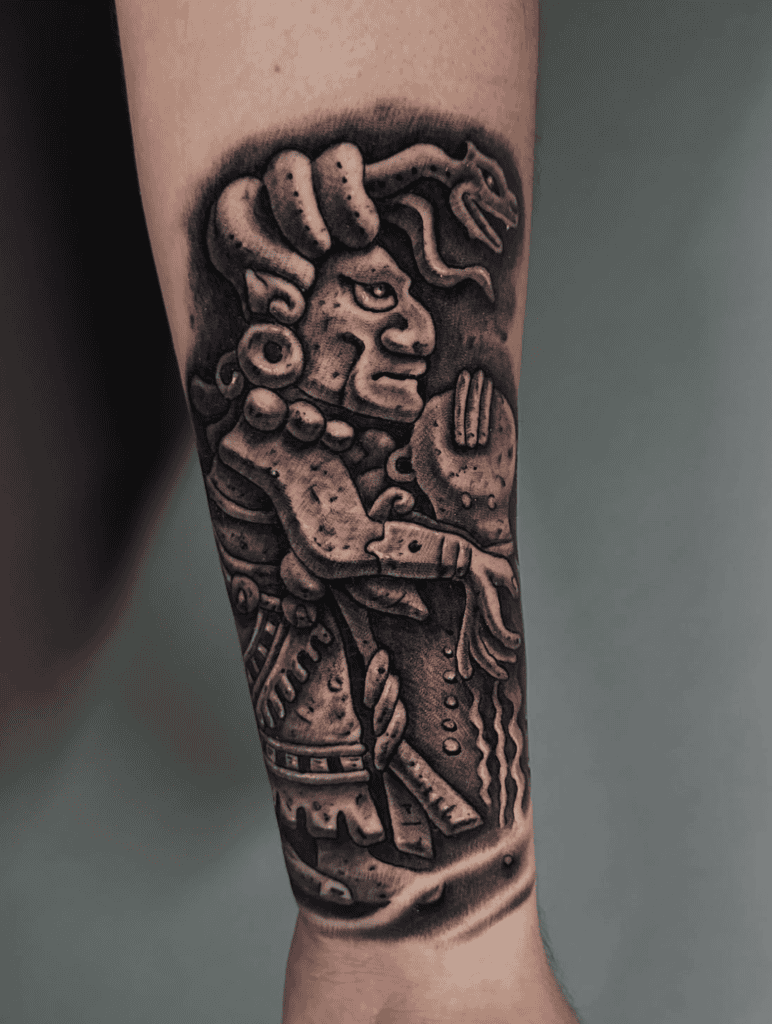
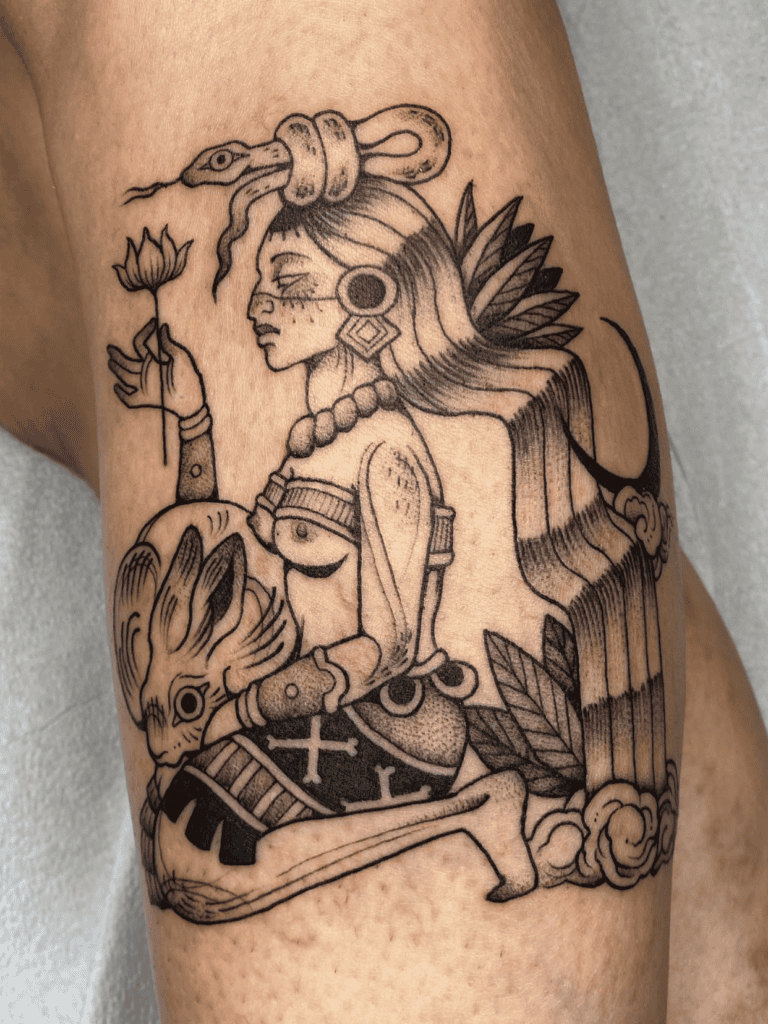
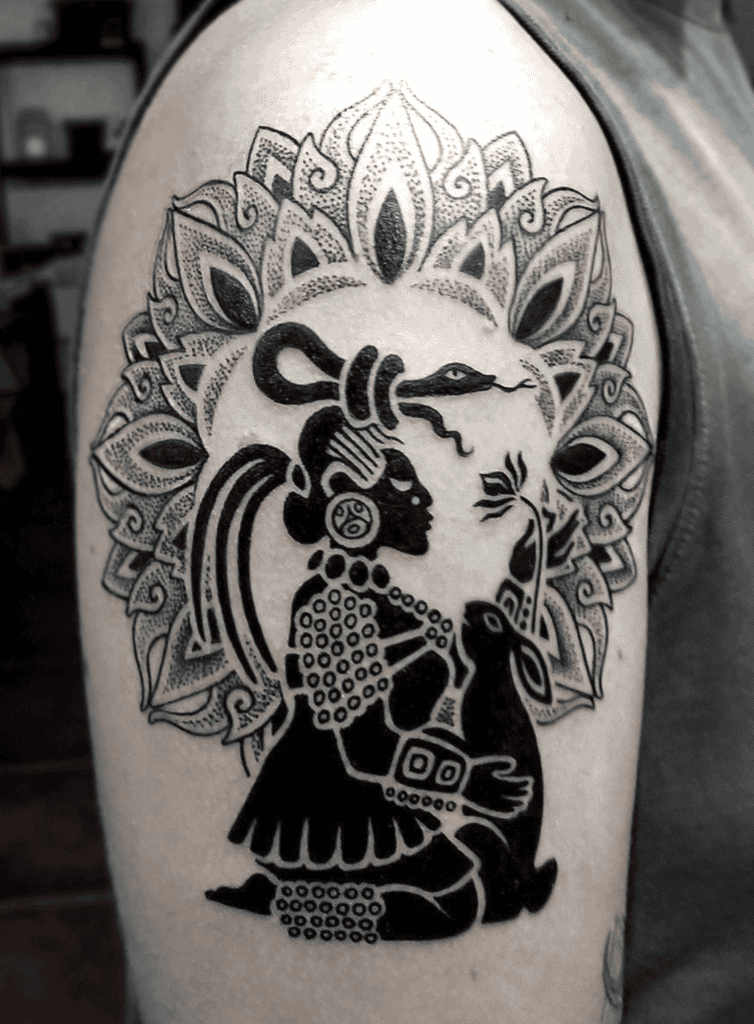
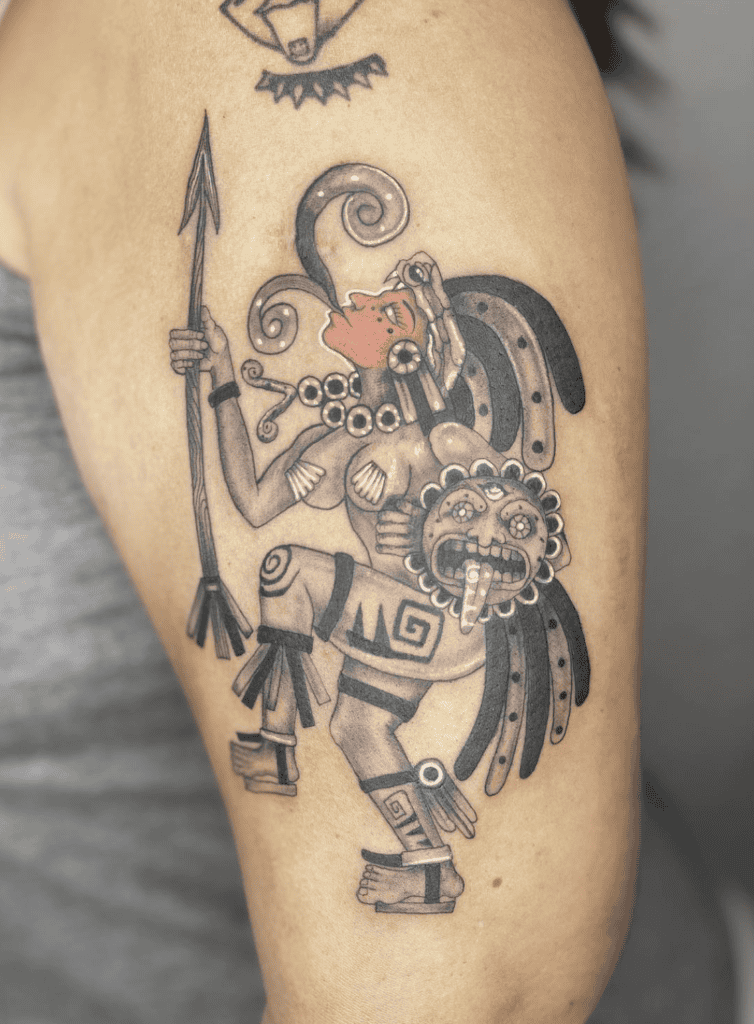
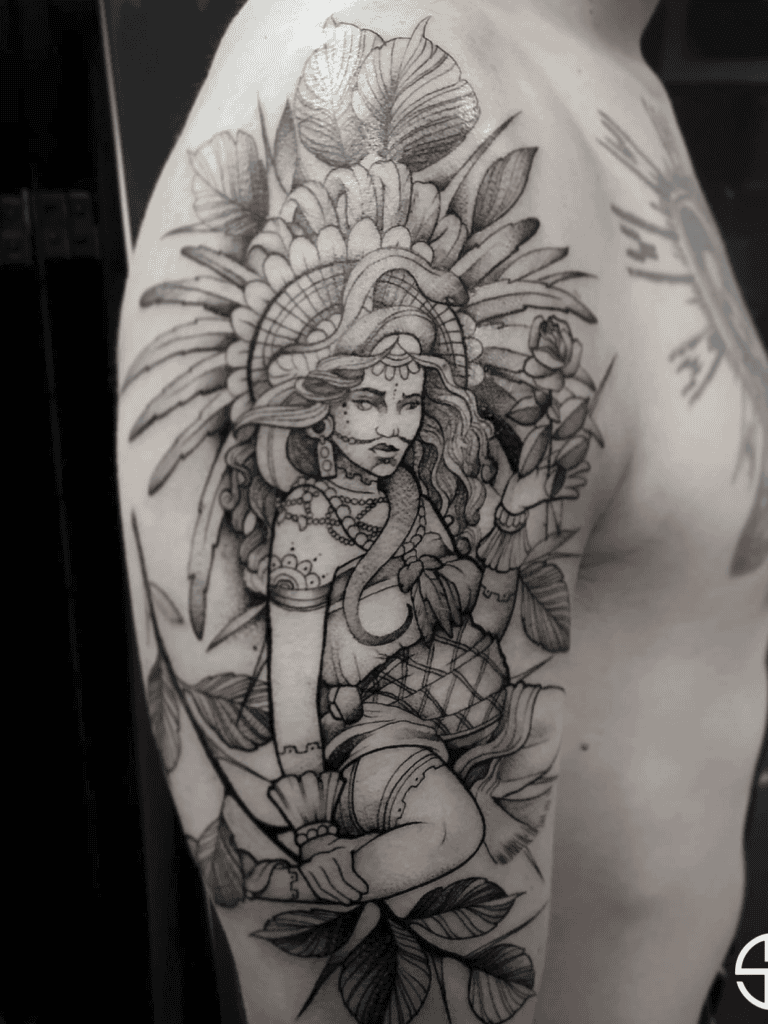
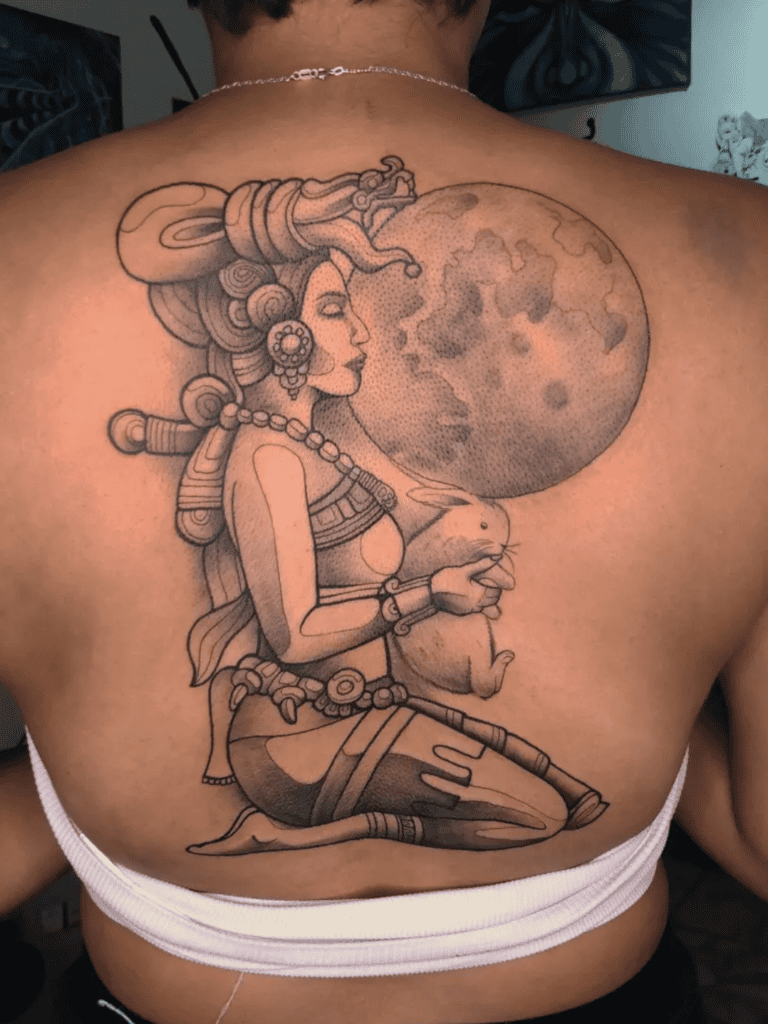
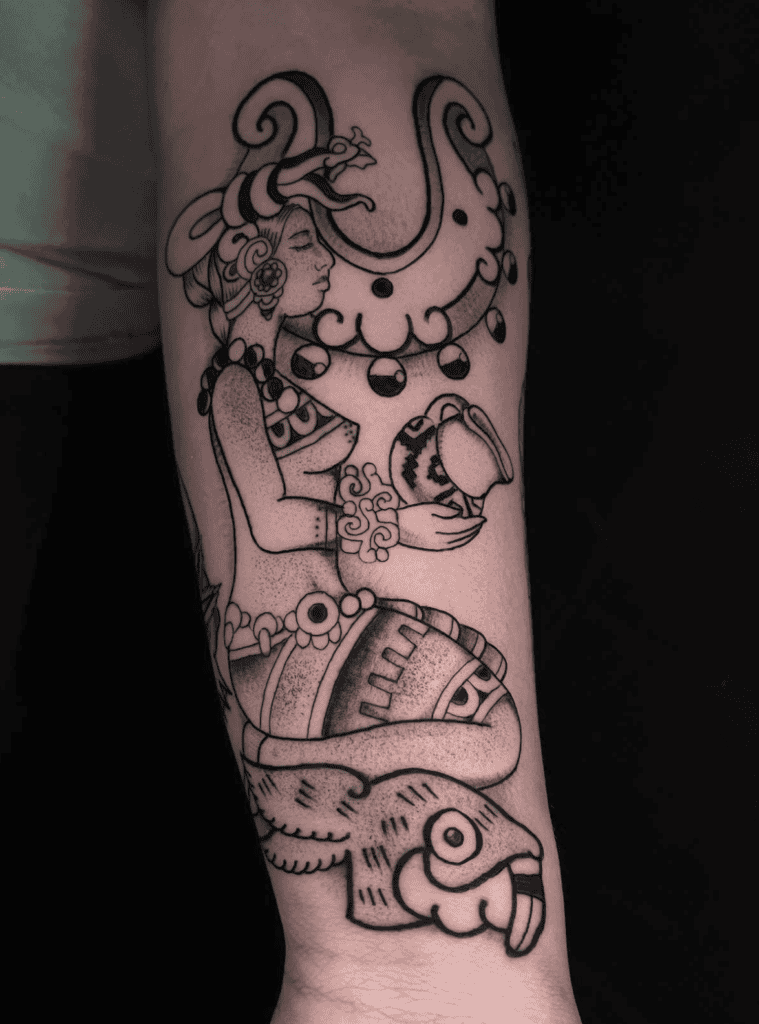
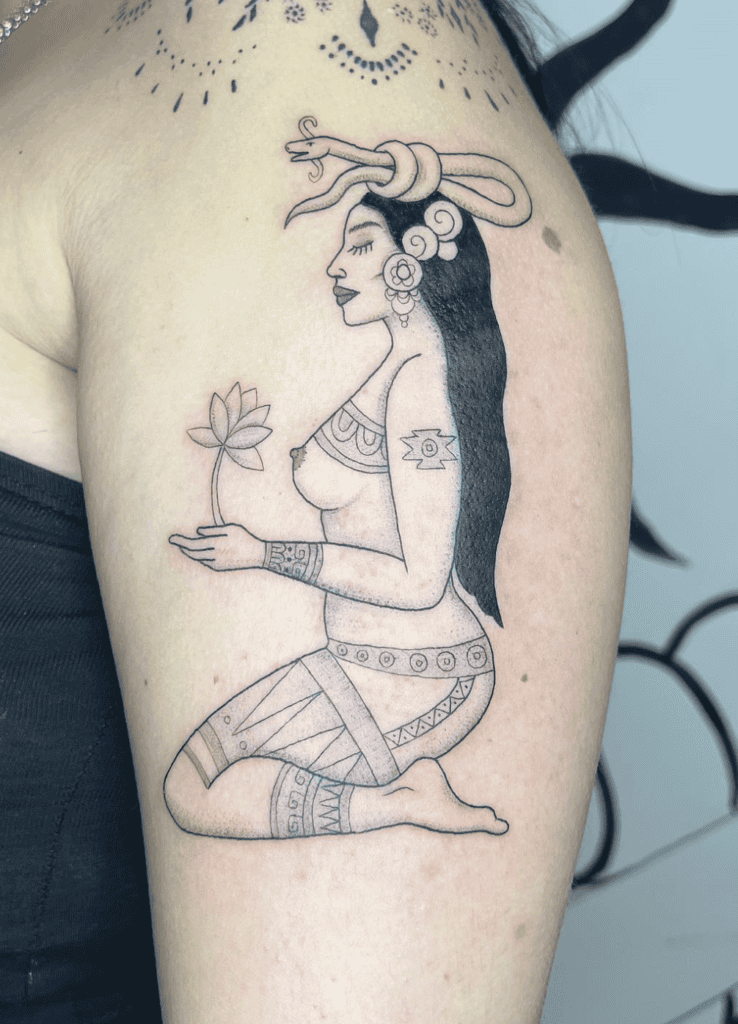
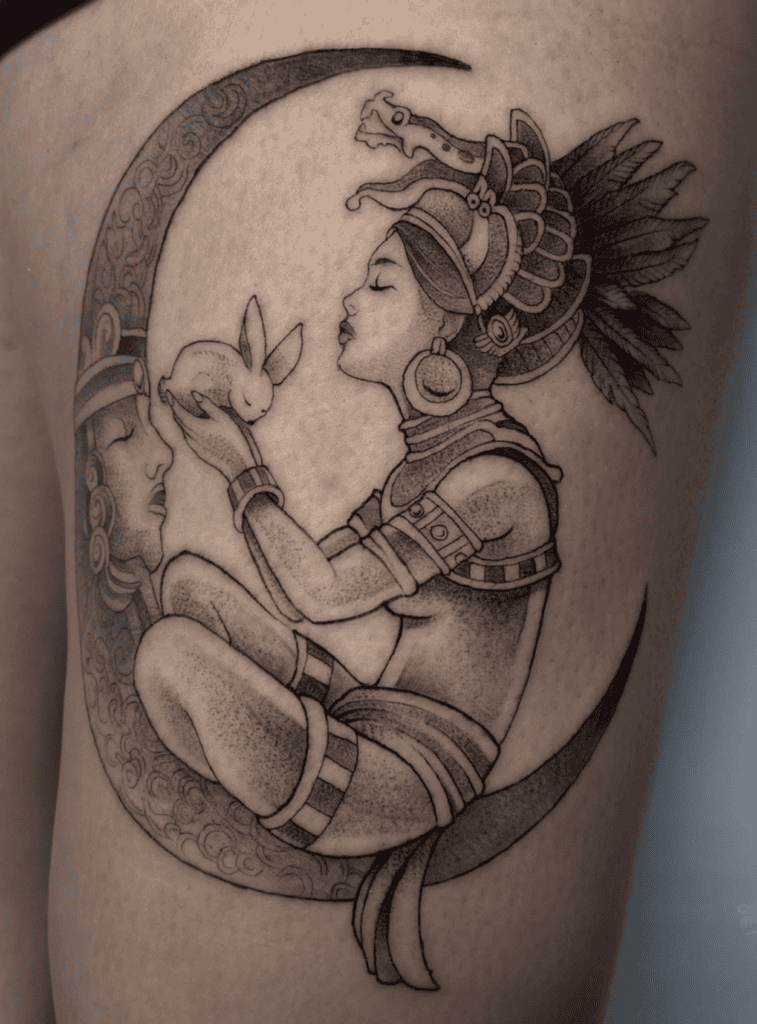
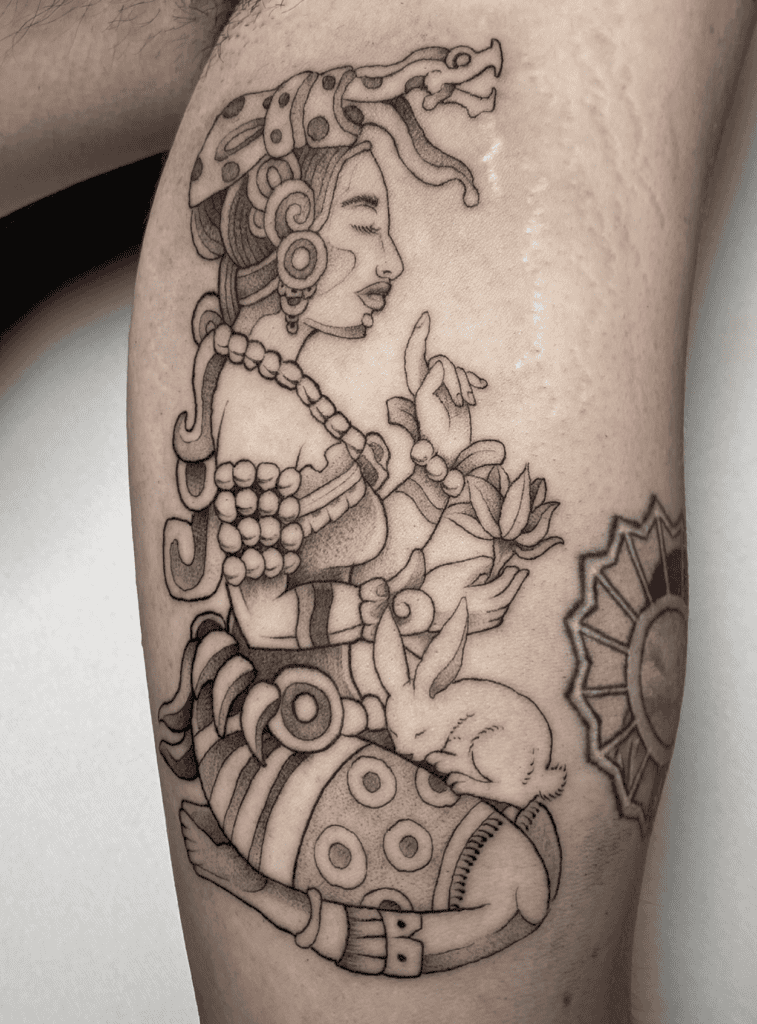
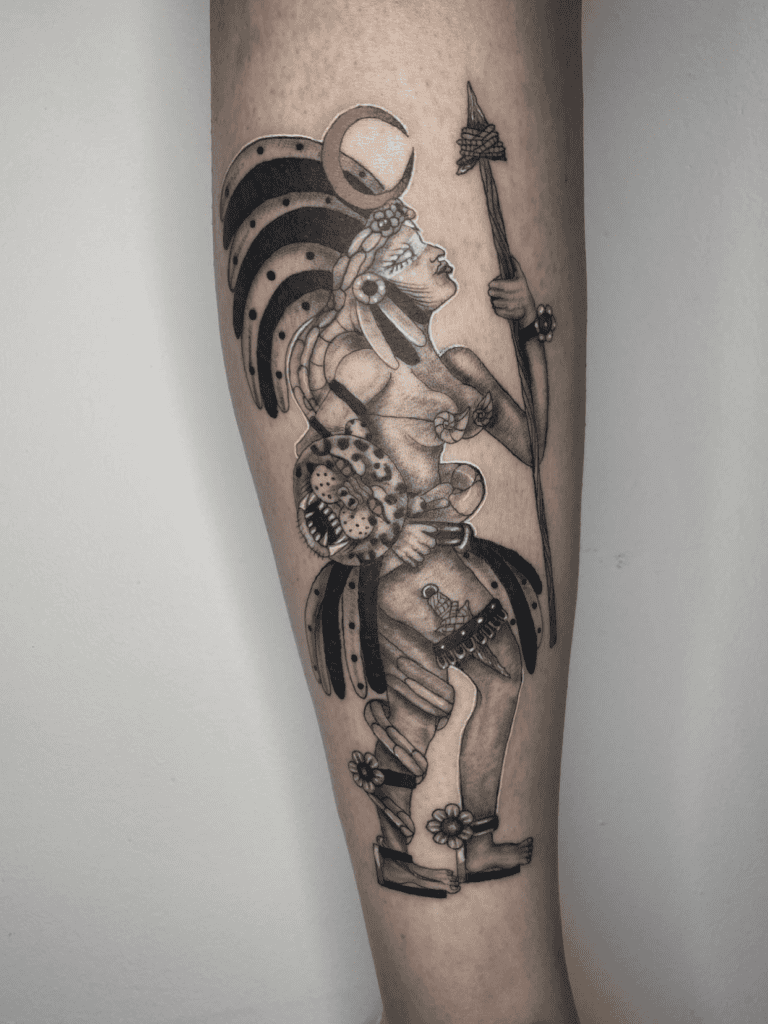
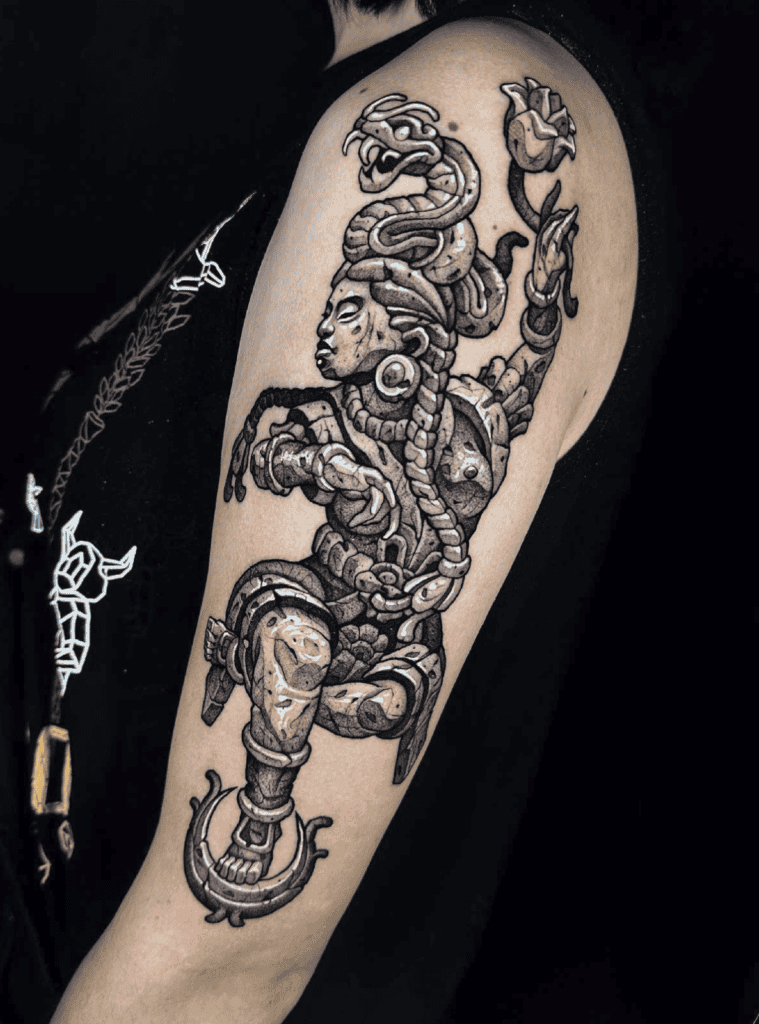
Ix Chel is the goddess of the moon, medicine, healing, and weaving, a deity of fertility, childbirth, and motherhood, connected to water, storms, and transformation. Her connection to the moon represents cycles (waxing, waning, renewal), time and change, and the rhythms of life and the human body.
Ix Chel was widely worshipped by women as she was seen as a protector of pregnancy and birth, associated with midwives and healers, and linked to the creation of life.
She is sometimes depicted as an aged goddess pouring water from a jar representing rain (life-giving), and floods (destruction), embodying both creation and destruction. Ix Chel has multiple forms, being either a young woman who is beautiful and fertile, or an elderly goddess who is wise, powerful, and sometimes fearsome.
Chaac Mayan Mythology Tattoo
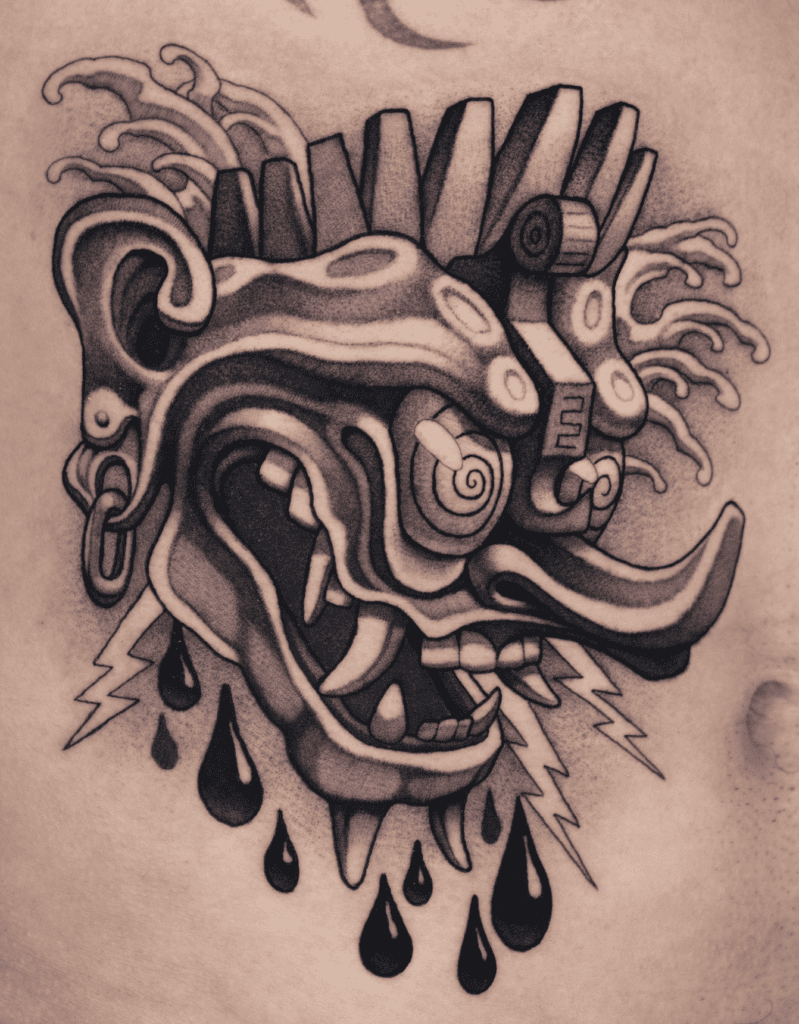
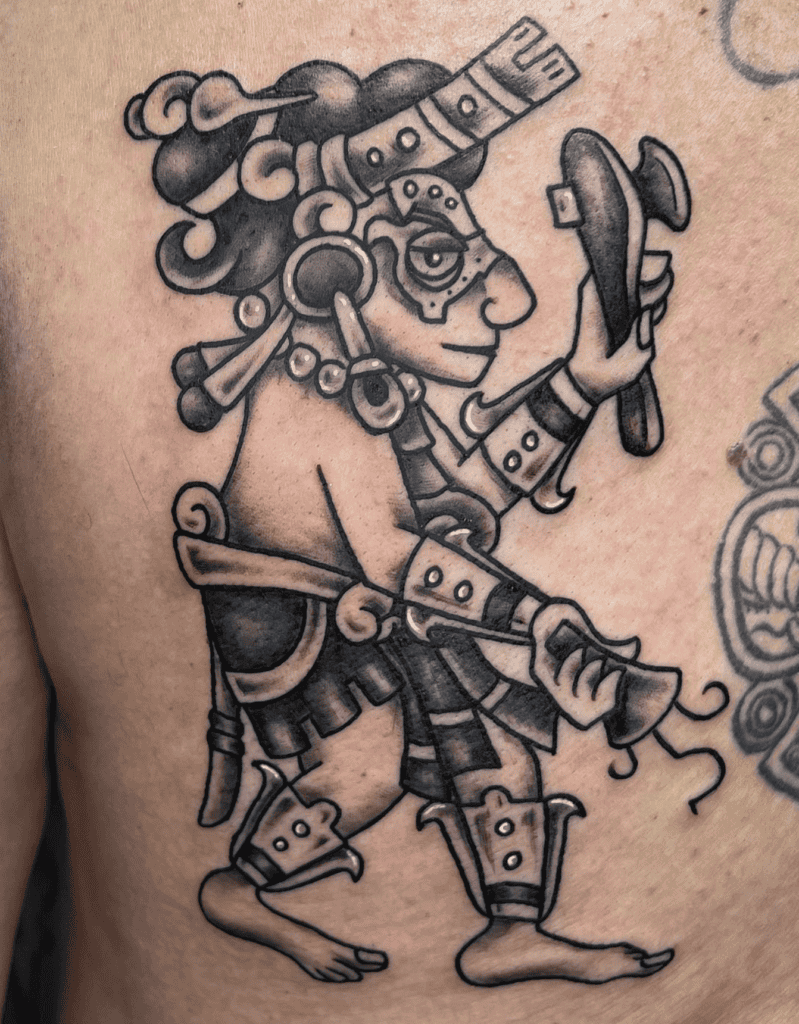
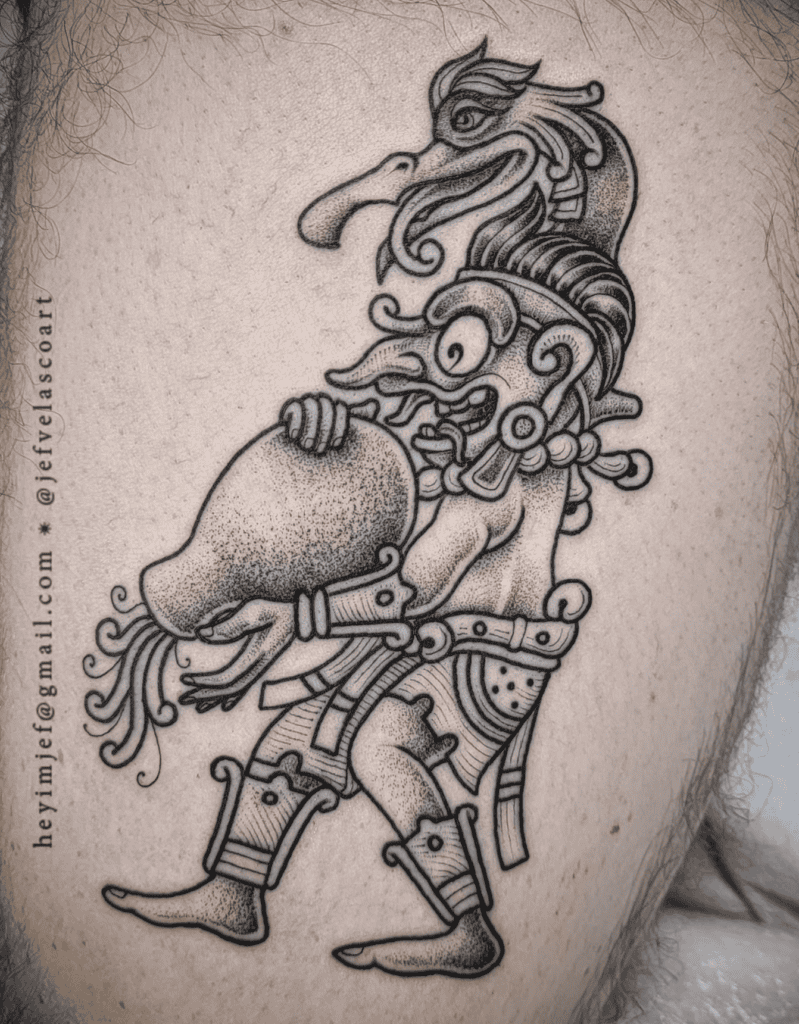
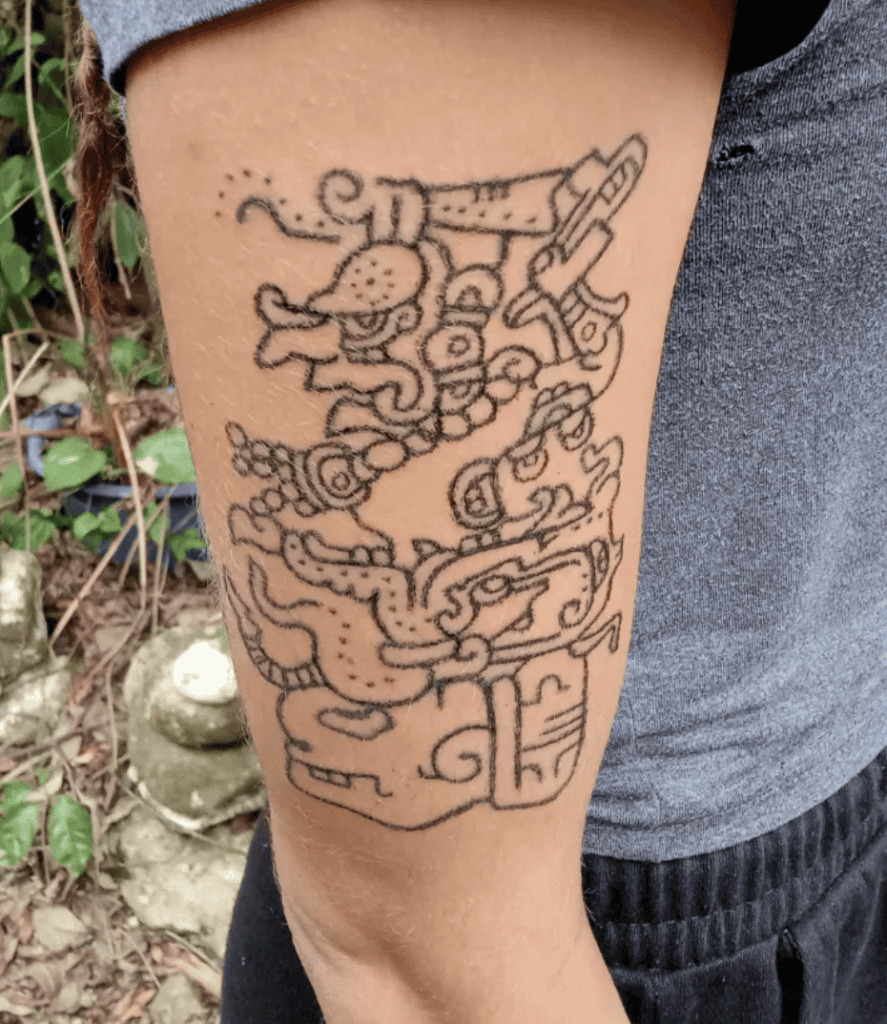
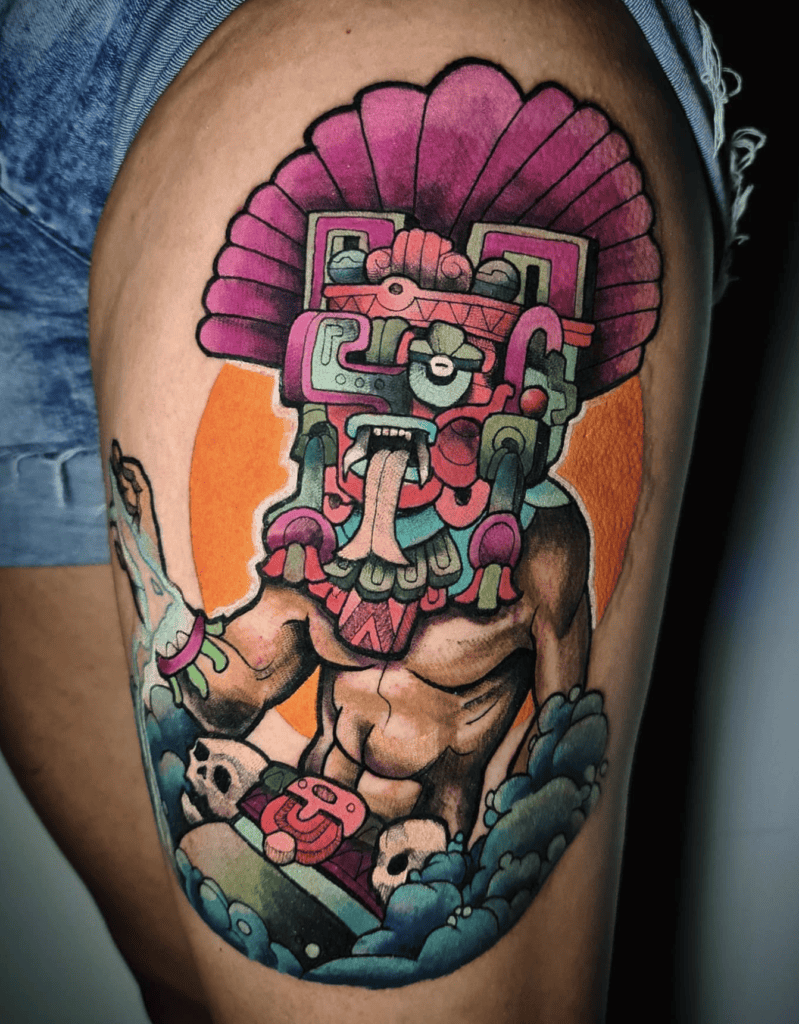
Chaac is known as the Mayan rain god, a deity of lightning and storms, and a bringer of fertility and agricultural life. Chaac’s main role was to bring rain to nourish crops and control when and how much rain fell, making him directly responsible for successful harvests, food supply and the survival of communities.
Chaac is often depicted with a lightning axe, which he would use to strike the clouds and release rain onto the earth. He has four aspects, each tied to a direction: East (red), North (white), West (black), and South (yellow). Together, they controlled the weather across the world, maintaining balance in nature.
Yum Kaax Mayan Mythology Tattoo
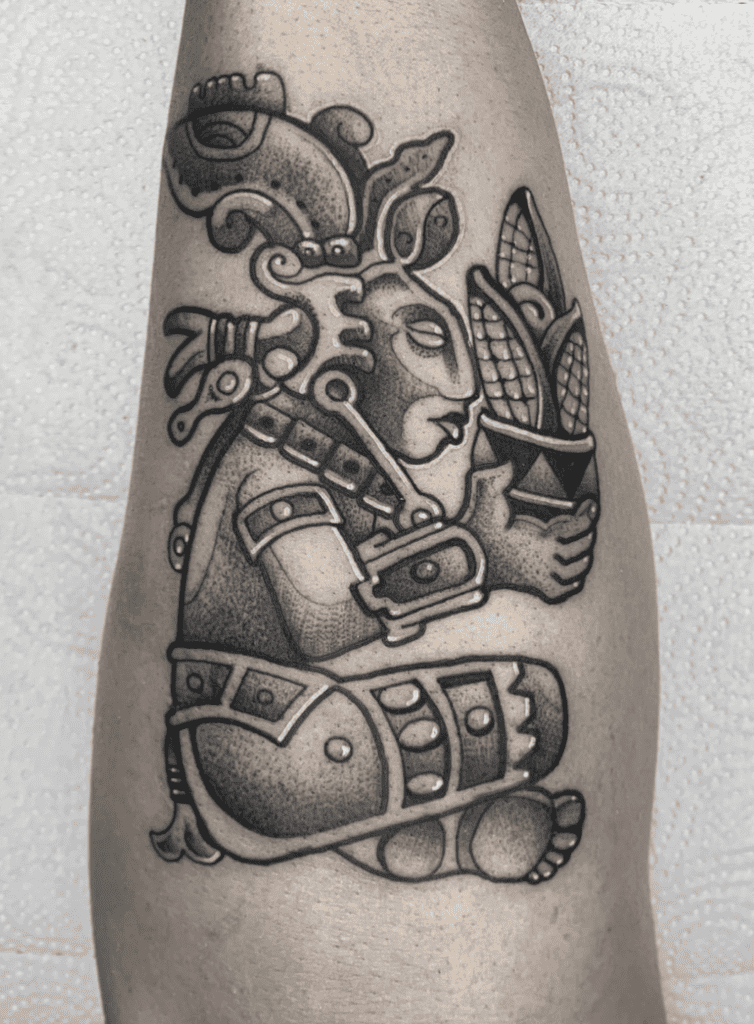
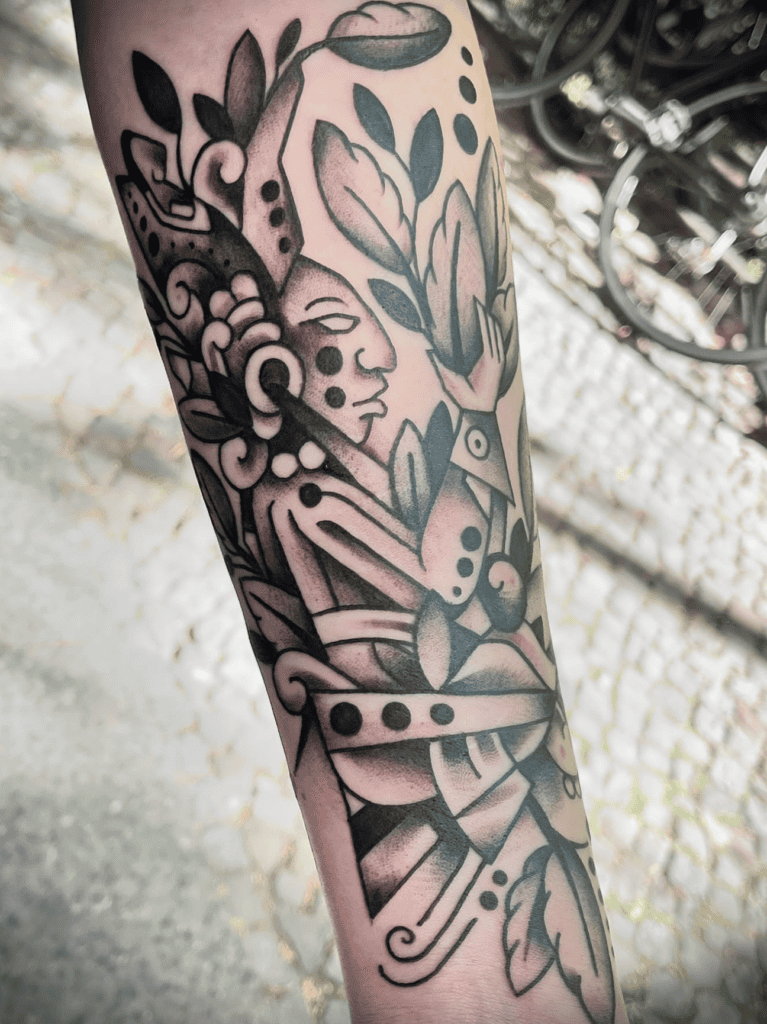
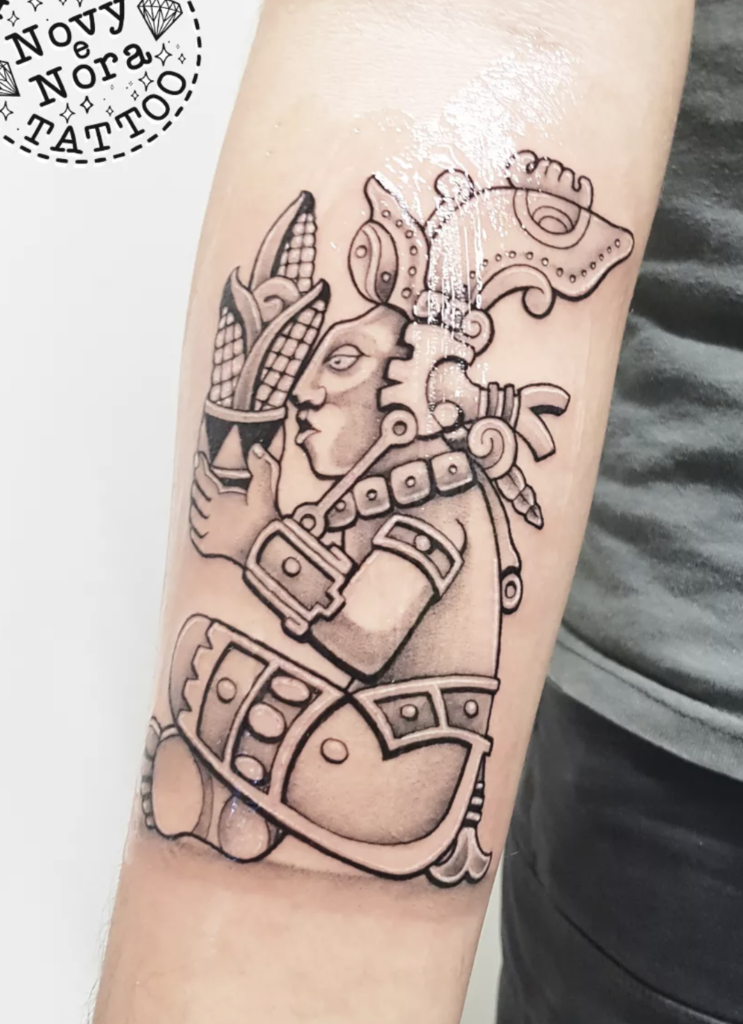
Yum Kaax is known as the god of maize and agriculture, a protector of forests, plants, and wildlife, and a deity of abundance and sustenance, with his name roughly translating to something like “Lord of the Forest” or “Lord of the Fields.”
For the Aztec and Maya, maize was life itself, as it was their main staple crop, and humans were believed in both cultures to be created from maize. Yum Kaax ensures crops grow strong and healthy, brings fertility to the land, and supports survival through abundance. He also protects forests, animals, and untouched nature.
Yum Kaax is often depicted as a young man (a symbol of vitality and growth) with maize features, such as a corn-shaped head or headdress, and surrounded by plants or greenery.
Ek Chuah Mayan Mythology Tattoo

Ek Chuah is known as the god of merchants and traders. He is a protector of travellers and long journeys, and the patron of cacao, one of the Maya’s most valuable resources. His name is sometimes translated as “Black War Chief”, hinting at both trade and danger.
Because trade routes were dangerous and full of dense jungles, wild animals, and rival groups, merchants would pray to Ek Chuah before journeys, offering rituals to ensure safe travel and success. As cacao was a luxury item, currency, and used in rituals and ceremonies, Ek Chuah’s link to cacao makes him a god of wealth, exchange, and prosperity.
Ah Puch Mayan Mythology Tattoo
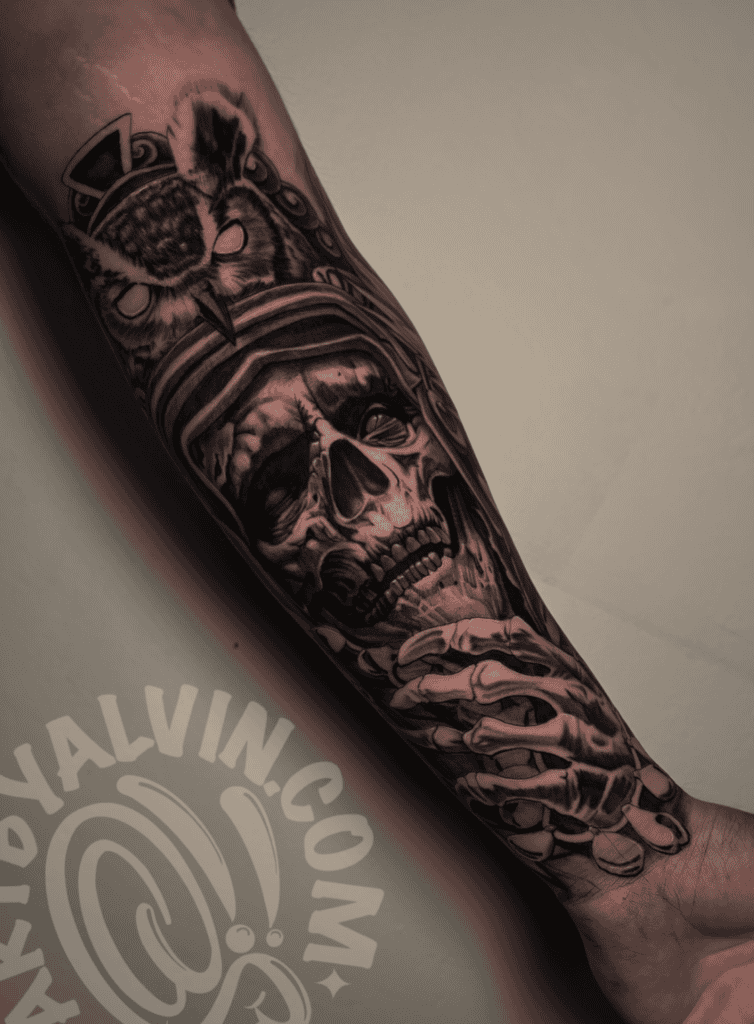
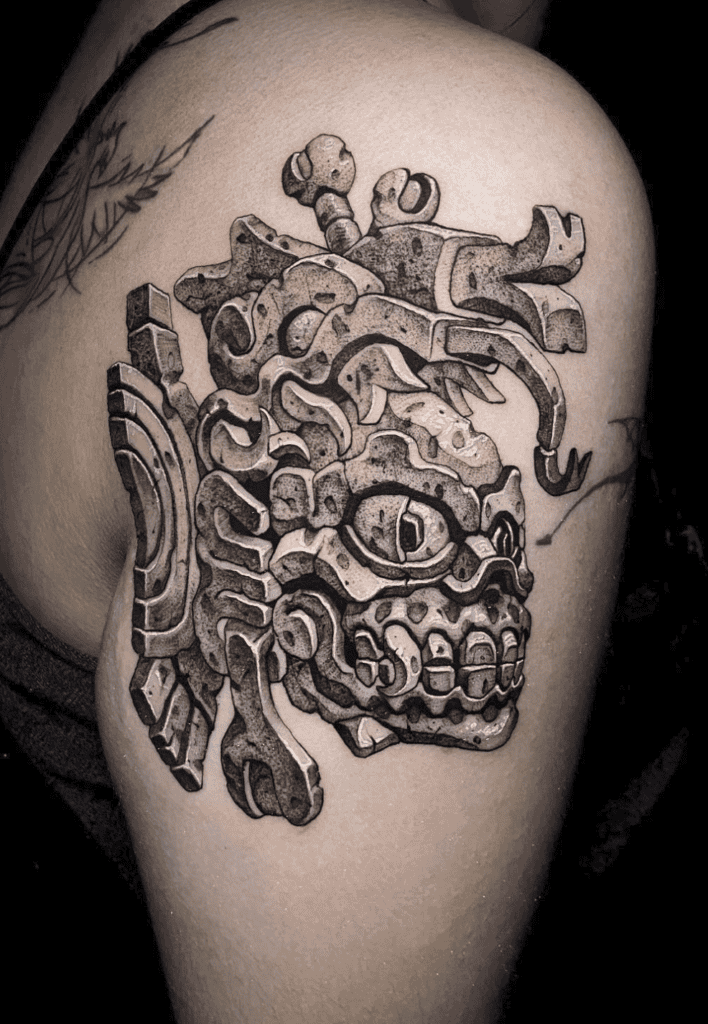
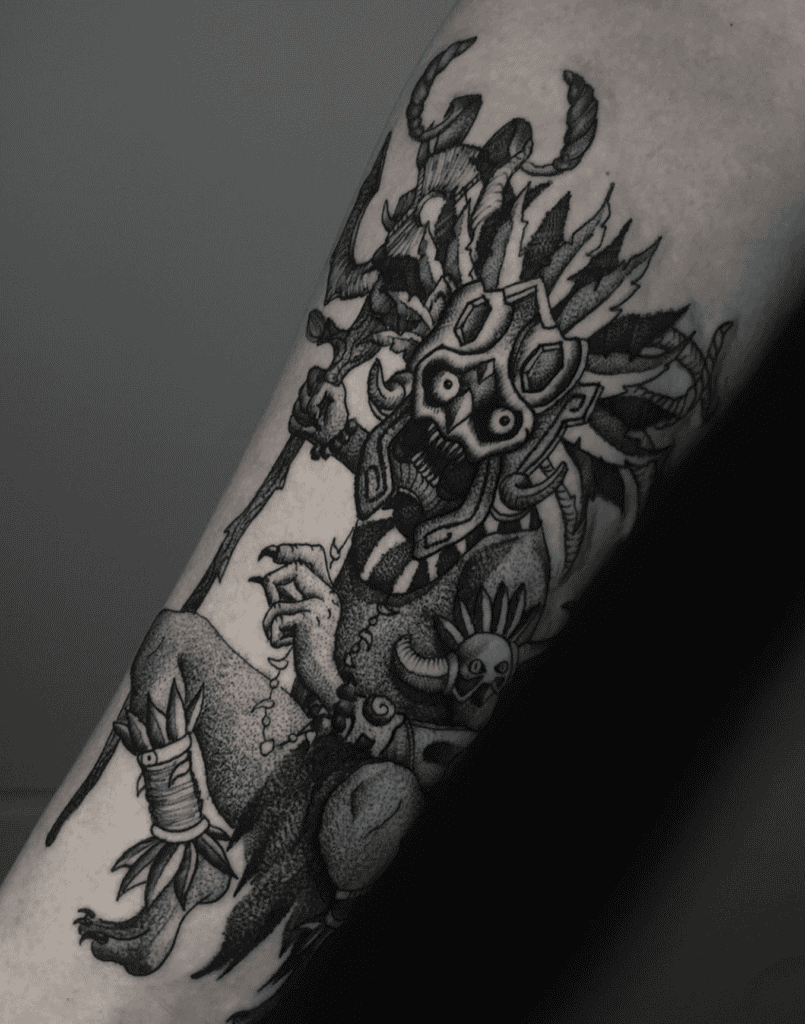
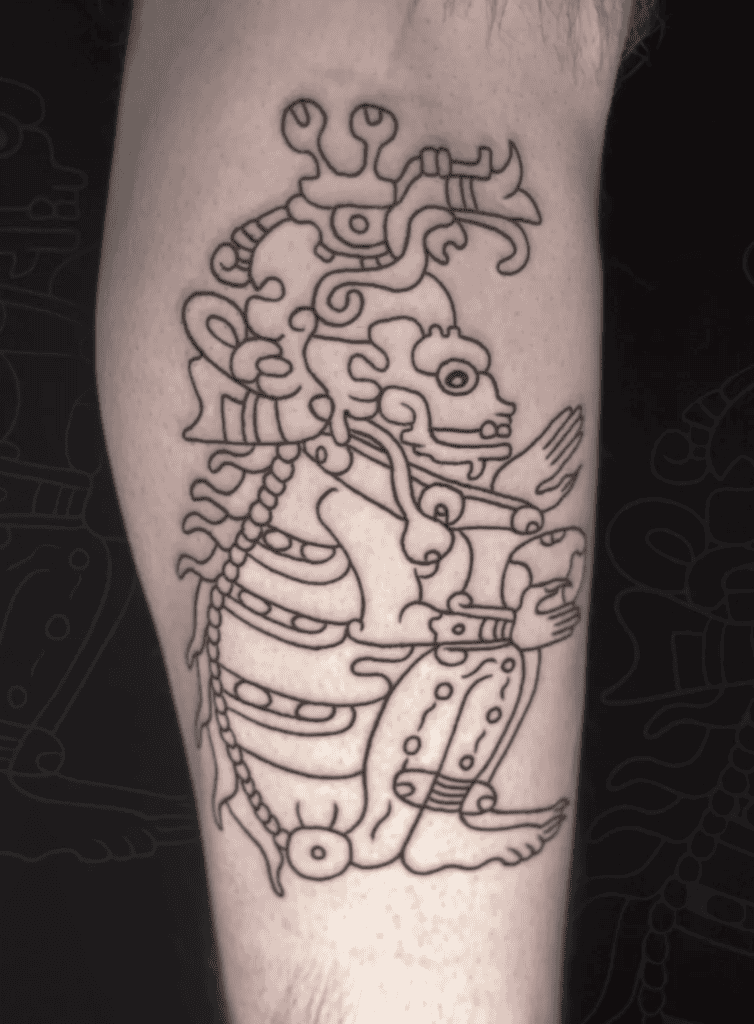
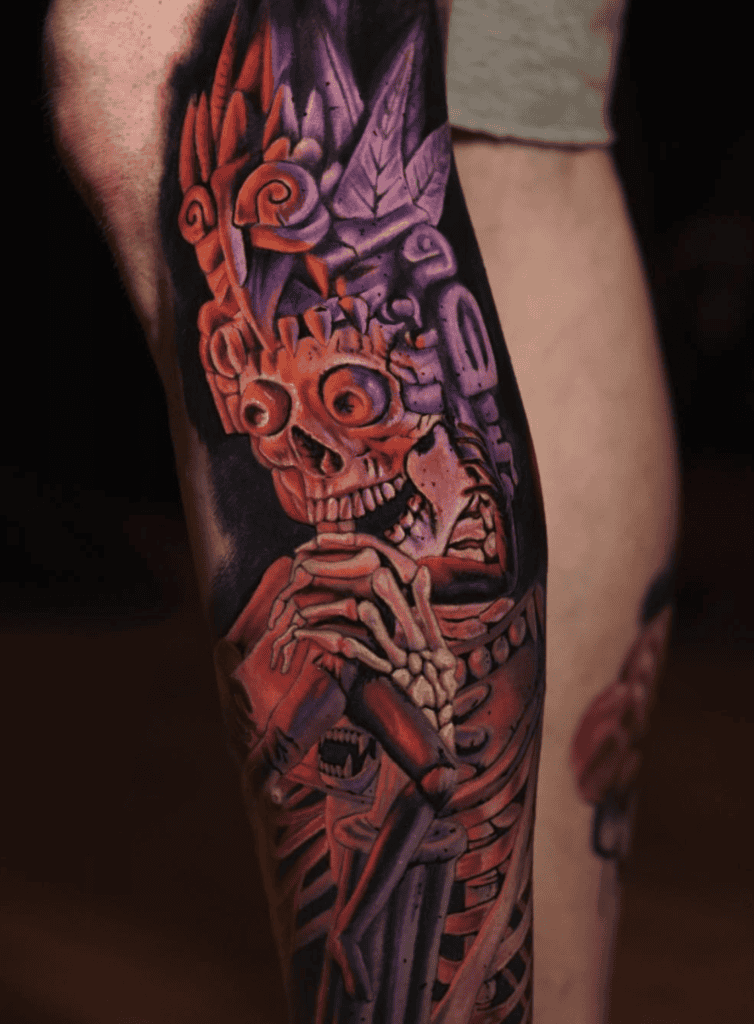
Ah Puch is the Mayan god of death, who is the ruler of the underworld, and a deity of decay, disease, and decomposition, representing what happens after life, not just death itself.
Ah Puch governed aspects of death and decay, overseeing the fate of the dead, and embodying the terrifying side of the afterlife. He is depicted as a skeletal or rotting body, covered in black spots (representing decay), and is seen wearing or is adorned with bells. He can also sometimes be seen with owls, the messengers of death, or dogs, the guides to the underworld. Ah Puch isn’t evil, but represents death as a Process, the Cycle of Life, and the fear of the Unknown.
Ixtab Mayan Mythology Tattoo
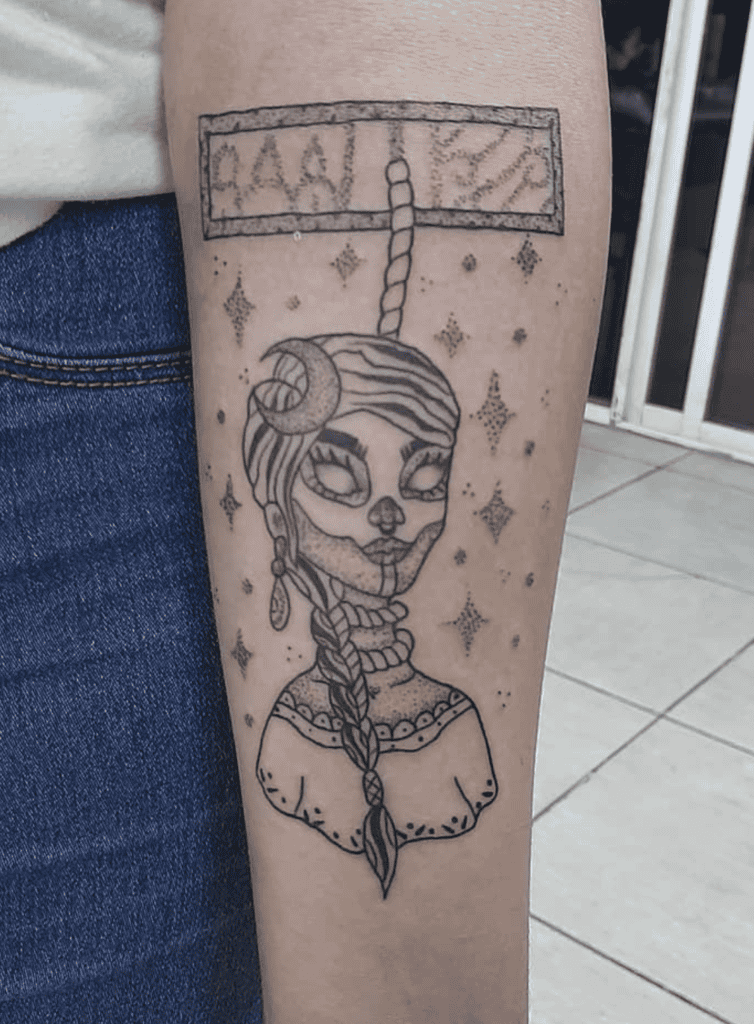
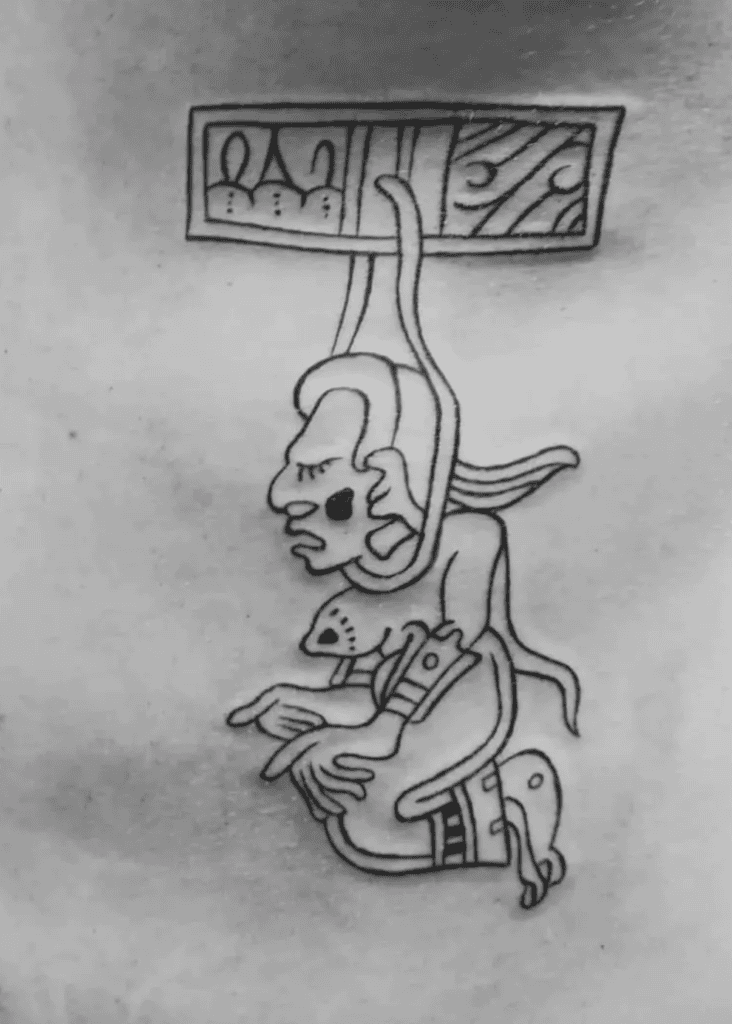
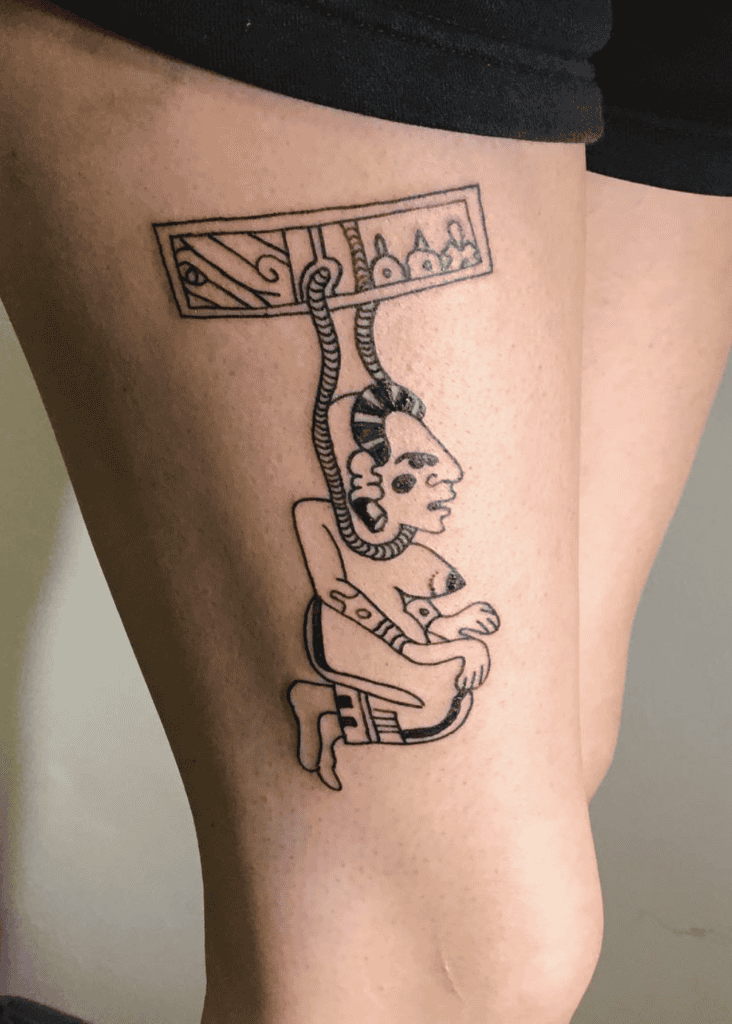
Ixtab is one of the most misunderstood figures in Maya mythology, known as a goddess connected to death by suicide. Ixtab is described as the goddess associated with suicide (especially by hanging), a guide for souls after death, and a figure connected to the afterlife and transition whose role is often seen as calm, guiding, and even compassionate.
In Mayan belief, not all deaths were treated the same, as some types of death were considered honourable or sacred, leading to a more direct or favourable afterlife. People who died in certain ways, including suicide, were believed to bypass many dangers of Xibalba and be guided more directly to a better afterlife.
Ixtab’s role was to escort these souls, help them transition safely, and guide them toward a more peaceful destination. She is most famously depicted as a female figure with a rope around her neck with a calm, peaceful, and serene expression.
Kukulkan Mayan Mythology Tattoo
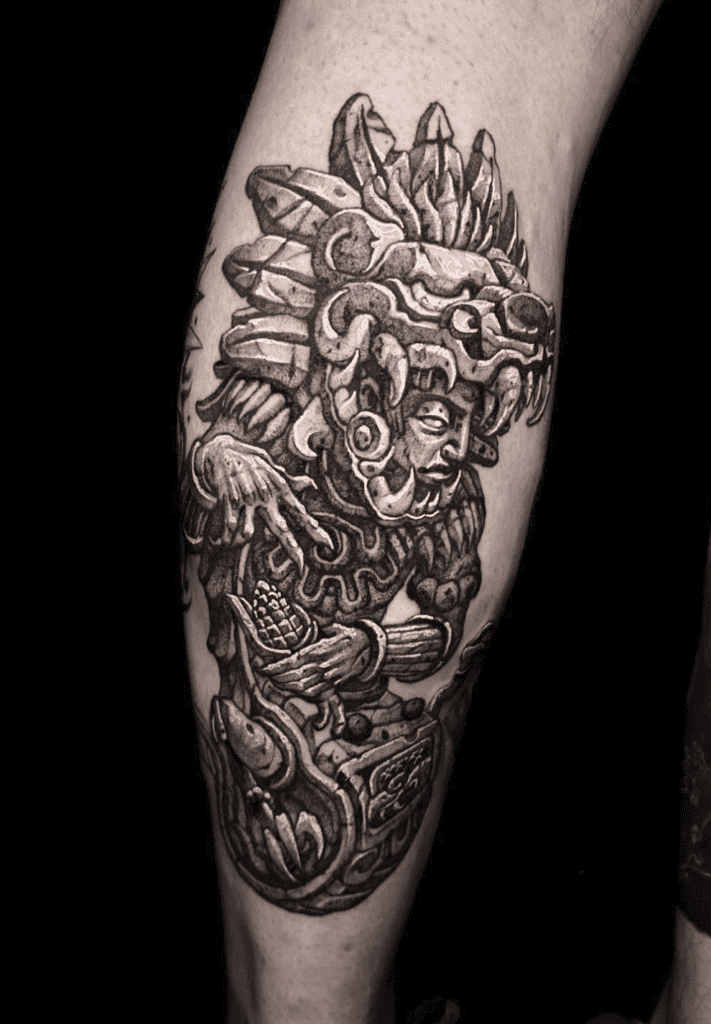
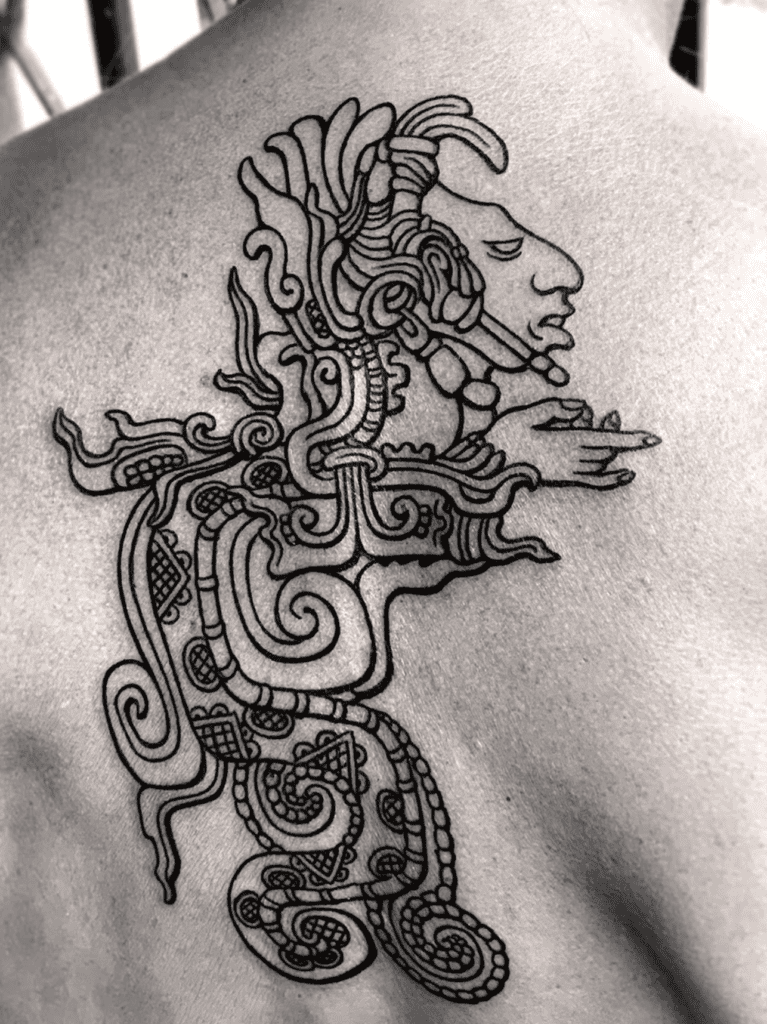
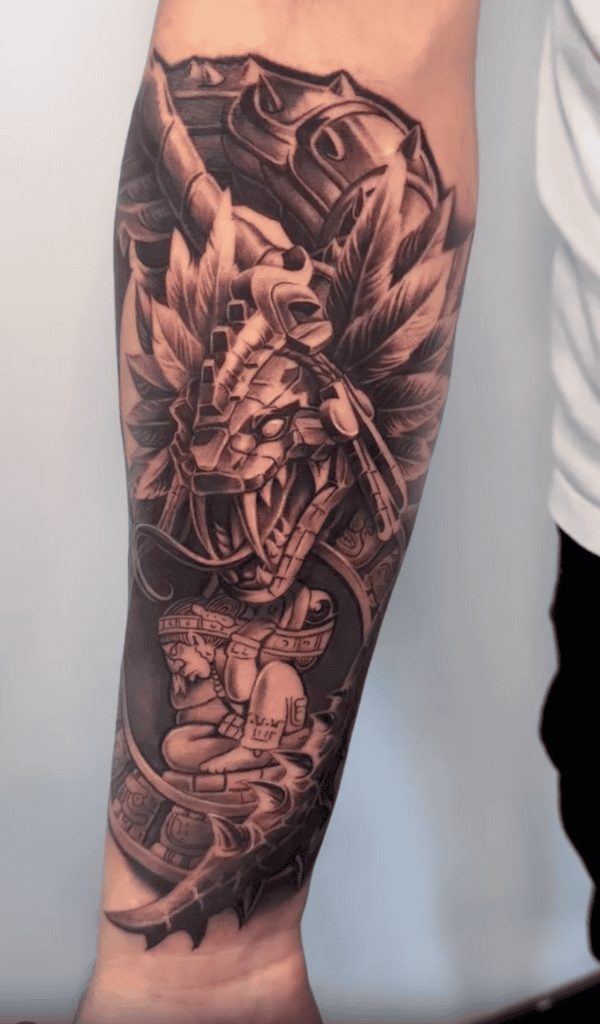
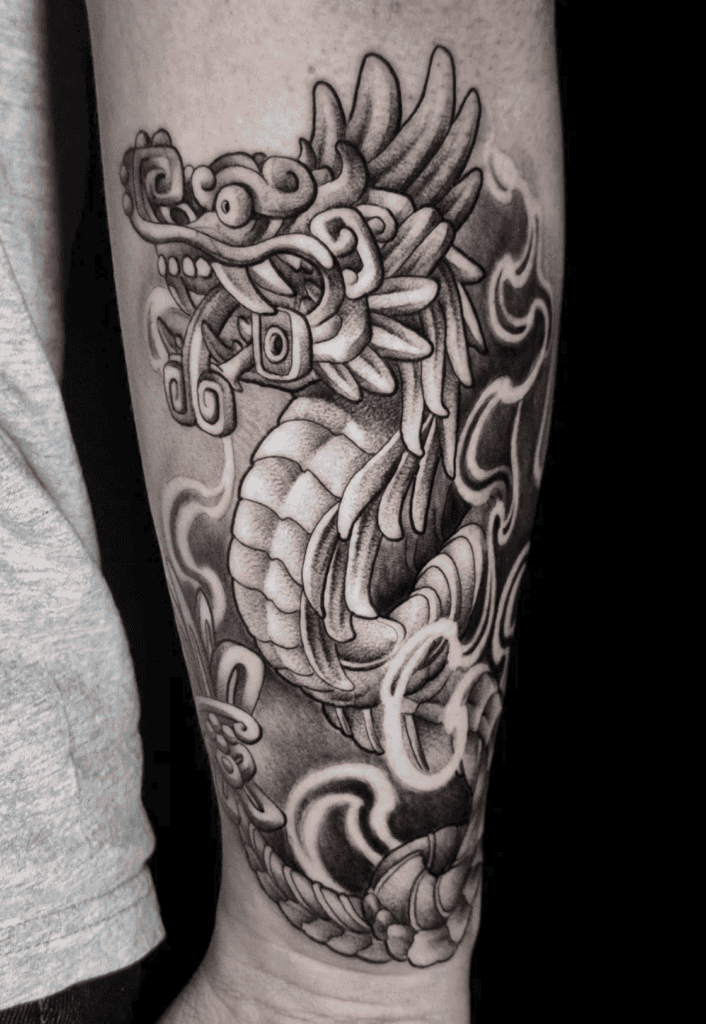
Kukulkan is known as the Feathered Serpent god of Maya myth, a deity of wind, sky, knowledge, and creation, and a cultural figure tied to civilisation and learning whose name literally means “Feathered Serpent.”
His serpent aspect represents the earth, instinct, and physical power, while the feathers represent sky, freedom, and divinity. Together, they represent the connection between heaven and earth, and the balance between the physical and spiritual worlds.
Kukulkan is associated with wind, air, movement and change, and is a force that shapes the world without being seen. He’s often linked to wisdom, learning, and civilisation, with some traditions seeing him as a teacher who helped humanity develop culture and knowledge.
Kukulkan is very similar to the Aztec god Quetzalcoatl, who also represents nature and advanced knowledge.
Hunahpu Mayan Mythology Tattoo
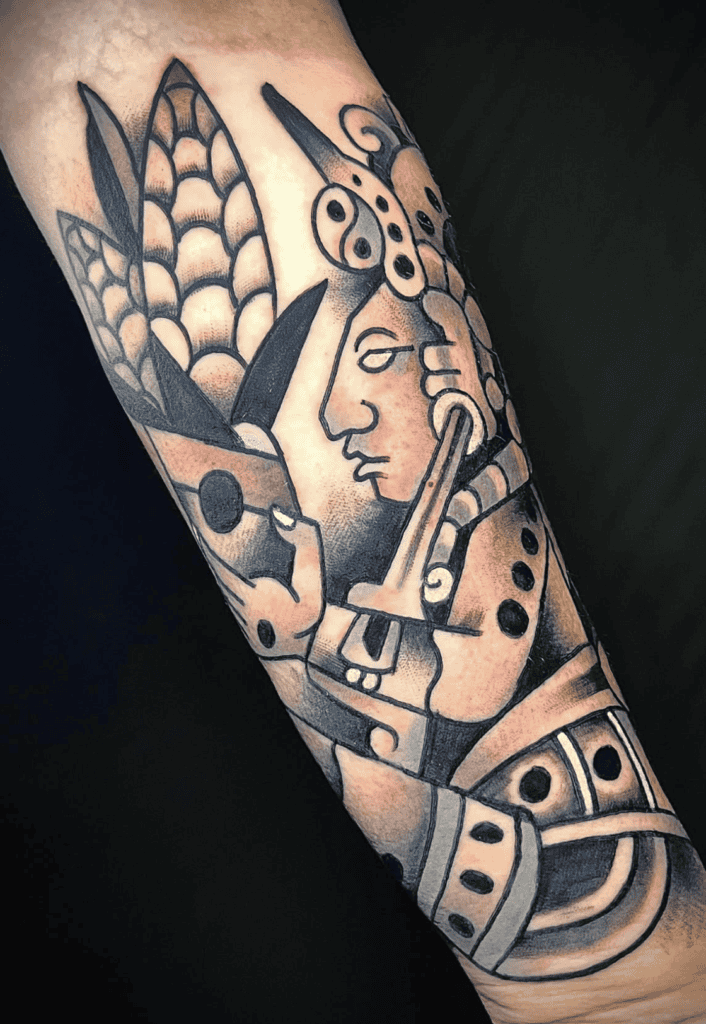
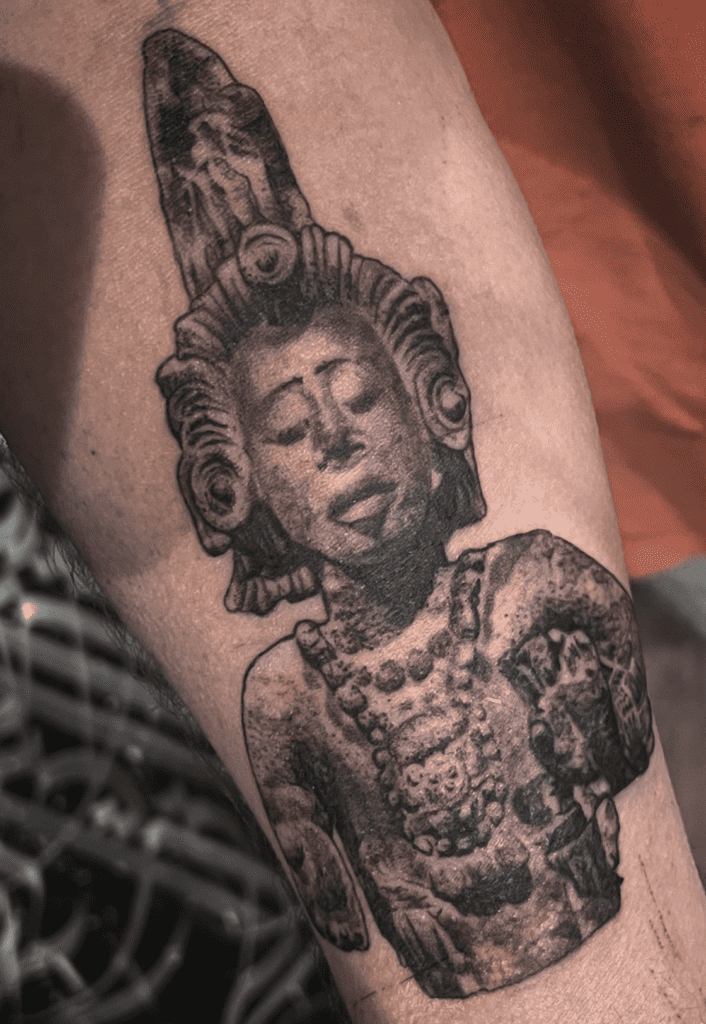
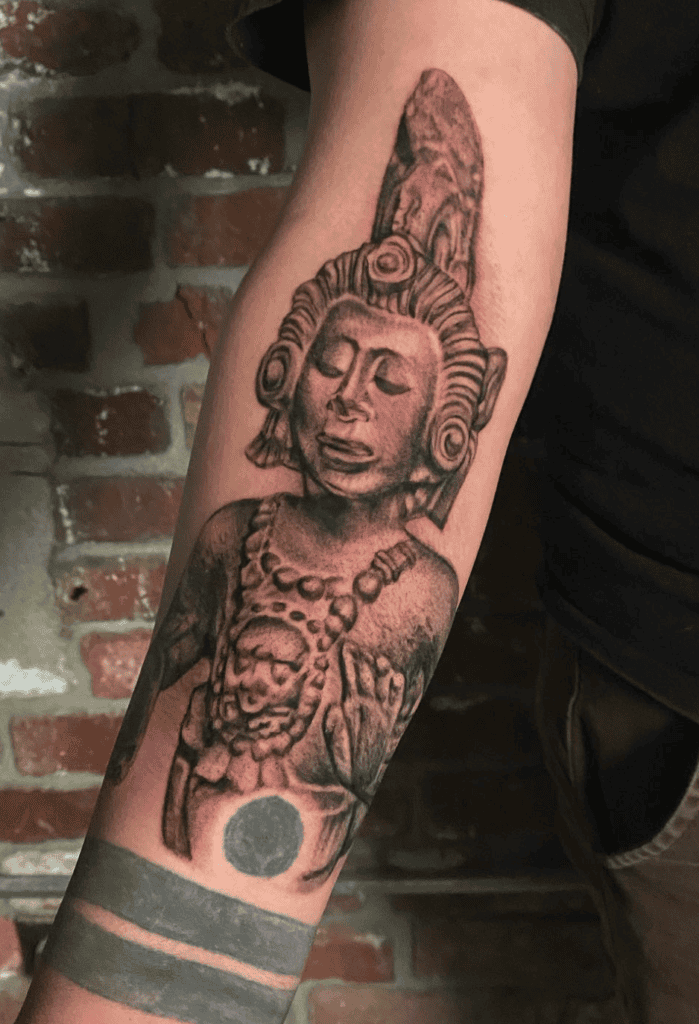
Hunahpu is one of the legendary Hero Twins from Maya mythology, whose story is told in the Popol Vuh. Alongside his brother Xbalanque, Hunahpu plays a central role in one of the most famous Maya myths.
Hunahpu is known as a skilled hunter and warrior, and a symbol of courage, resilience, and cleverness, often seen as the more direct and bold of the two brothers. His father, Hun Hunahpu, was defeated by the lords of Xibalba and his severed head was placed in a tree, which later magically caused a woman to become pregnant with Hunahpu and Xbalanque.
Hunahpu helps defeat Seven Macaw, a vain being pretending to be the sun, by shooting him with a blowgun. This represents truth defeating false power. The twins are eventually summoned to Xibalba, where they face deadly trials, trickster gods, and tests designed to kill them.
Despite showing bravery, determination, and willpower, Hunahpu is killed and decapitated. However, his head is replaced with a gourd, and he is later revived, symbolising how death is not the end, but a transformation.
Through clever tricks and teamwork, the twins outsmart and defeat the underworld rulers, breaking the power of death over them. After their victory, Hunahpu is often associated with becoming the sun, while Xbalanque is linked to the moon.
Xbalanque Mayan Mythology Tattoo
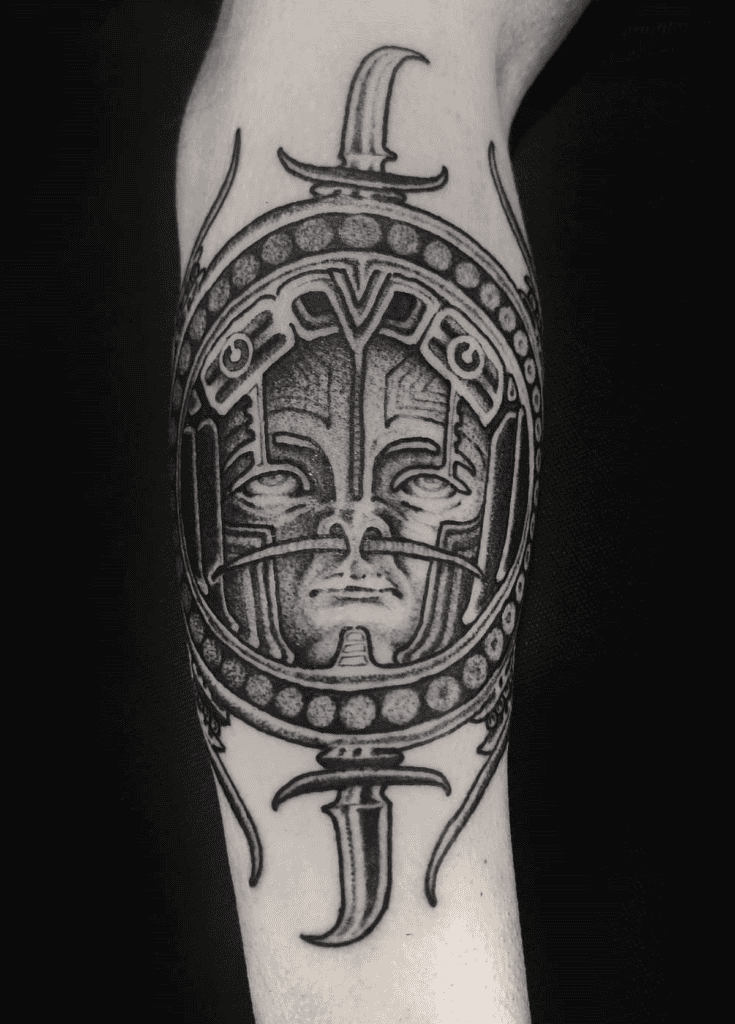
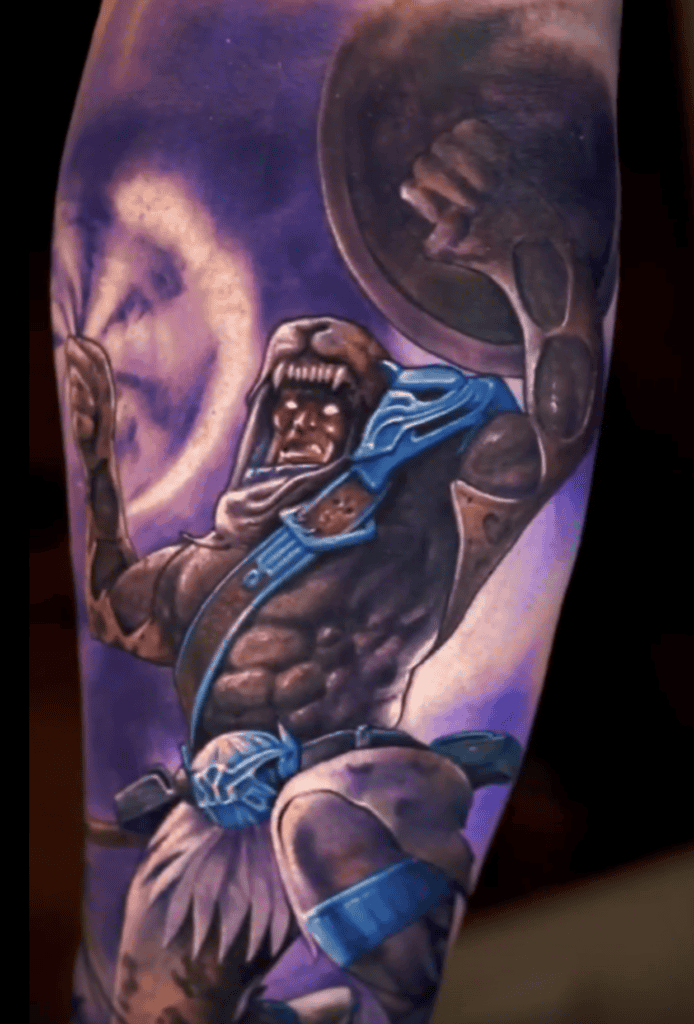
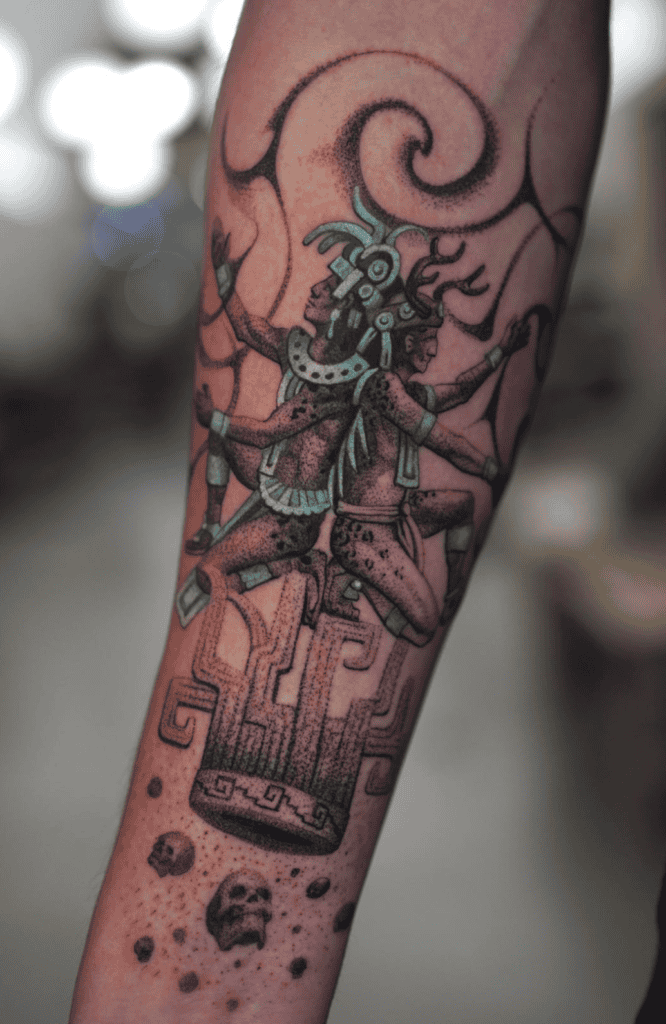
Brother of Hunahpu, sharing the same origin, Xbalanque aided his brother in defeating Seven Macaw through clever planning and deception. When in the Underworld, Xbalanque shines by outsmarting enemies and turning traps against their creators. He disguised himself, used illusion, and tricked the lords of Xibalba into their own downfall, representing intelligence over power.
Camazotz Mayan Mythology Tattoo
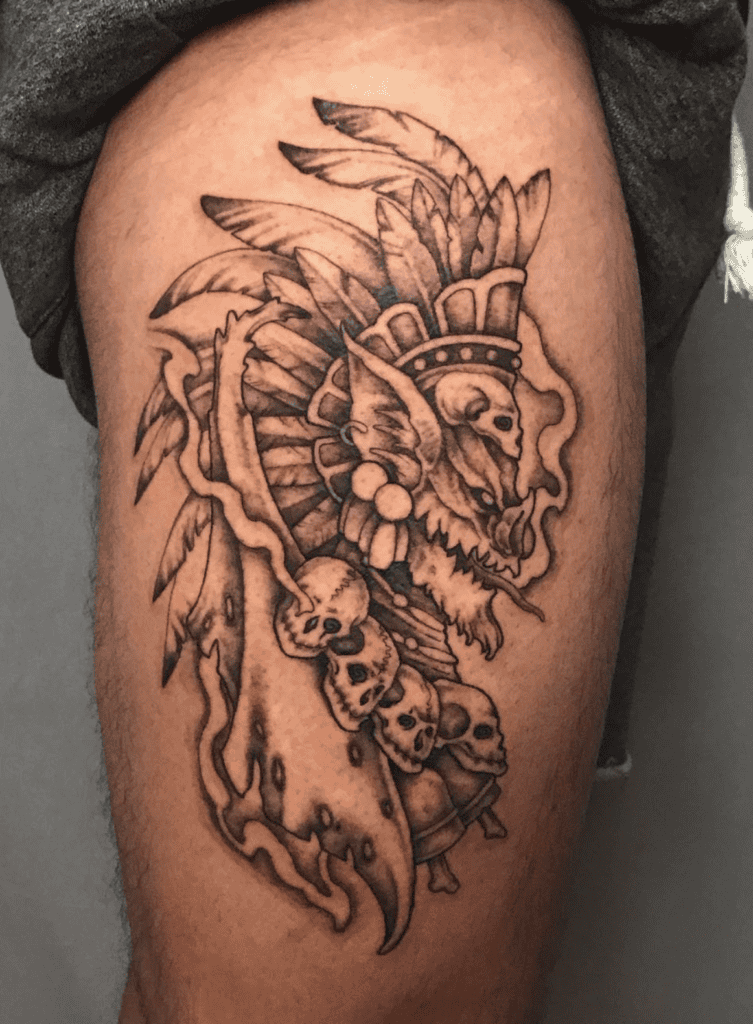
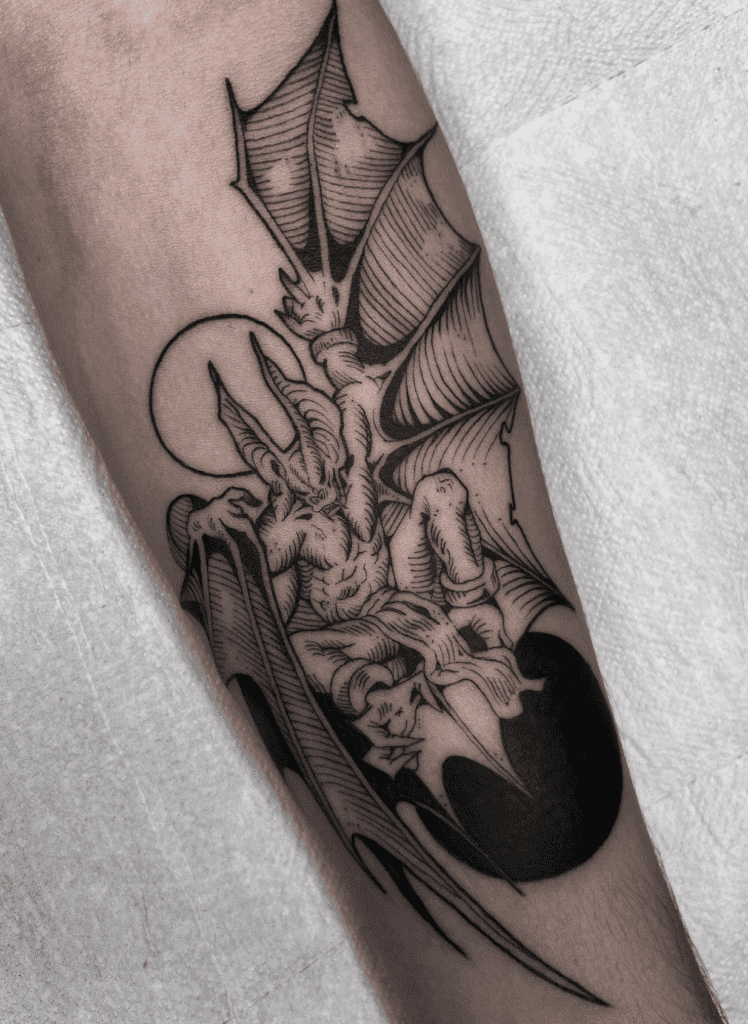
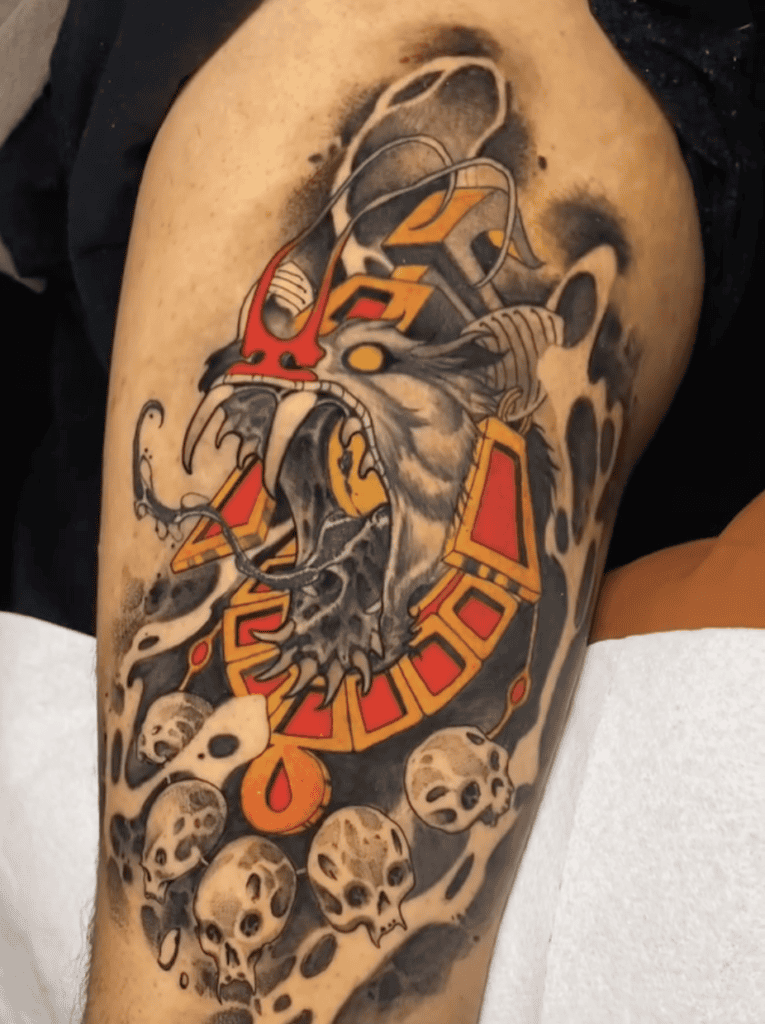
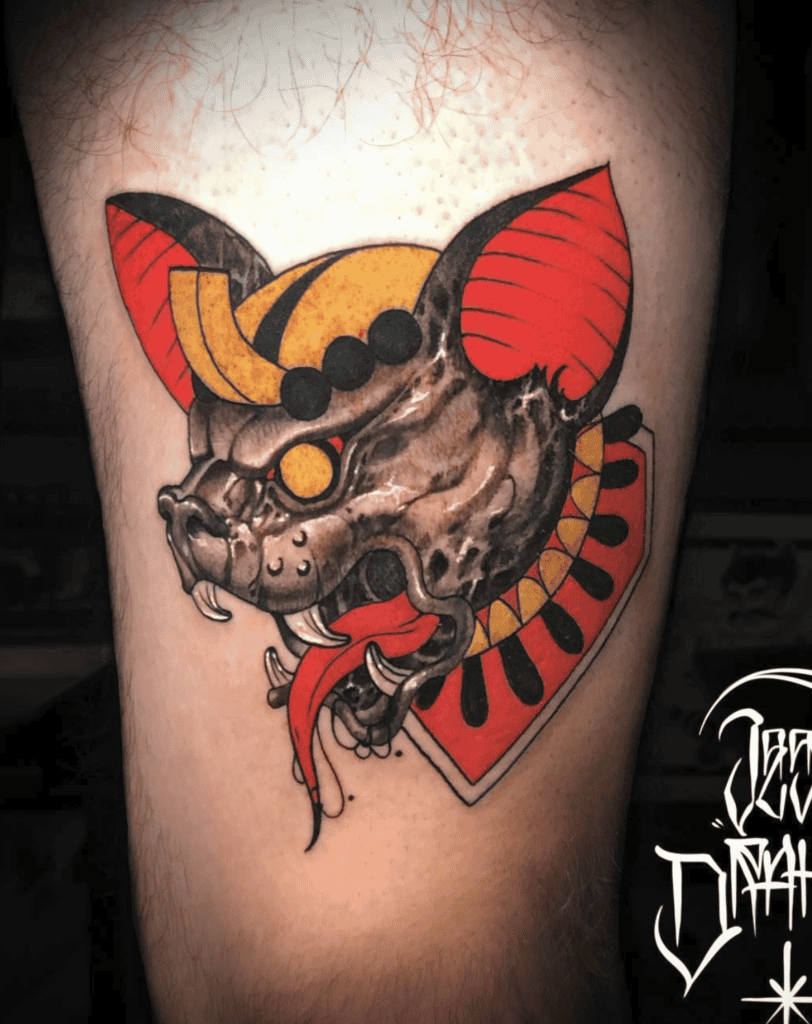
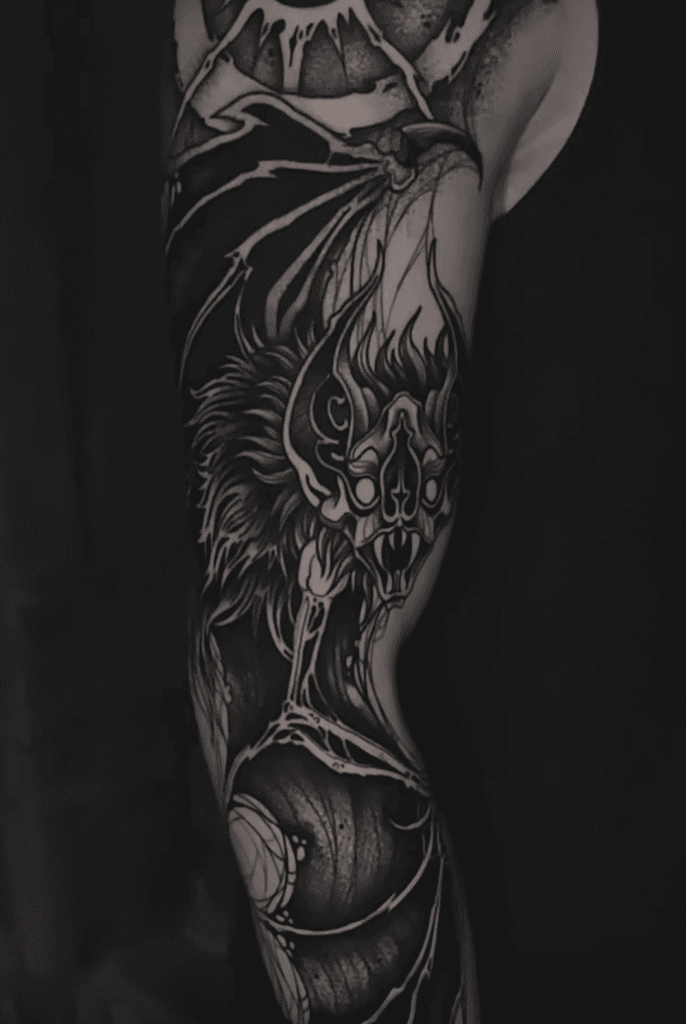
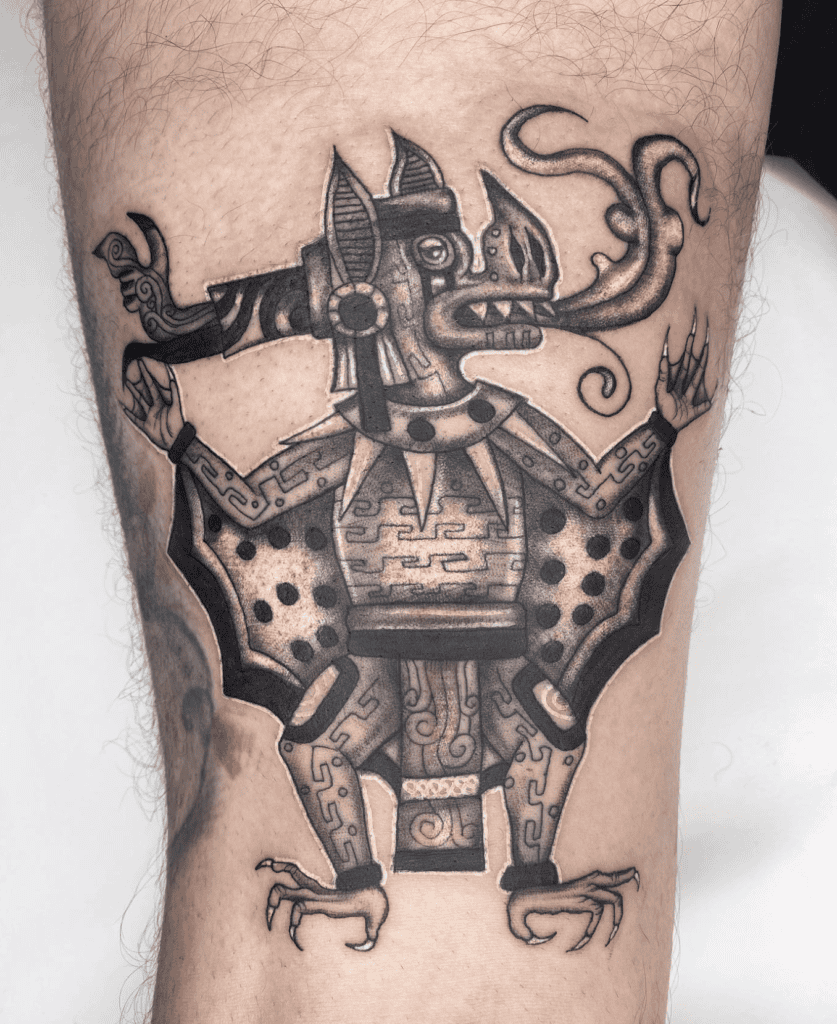
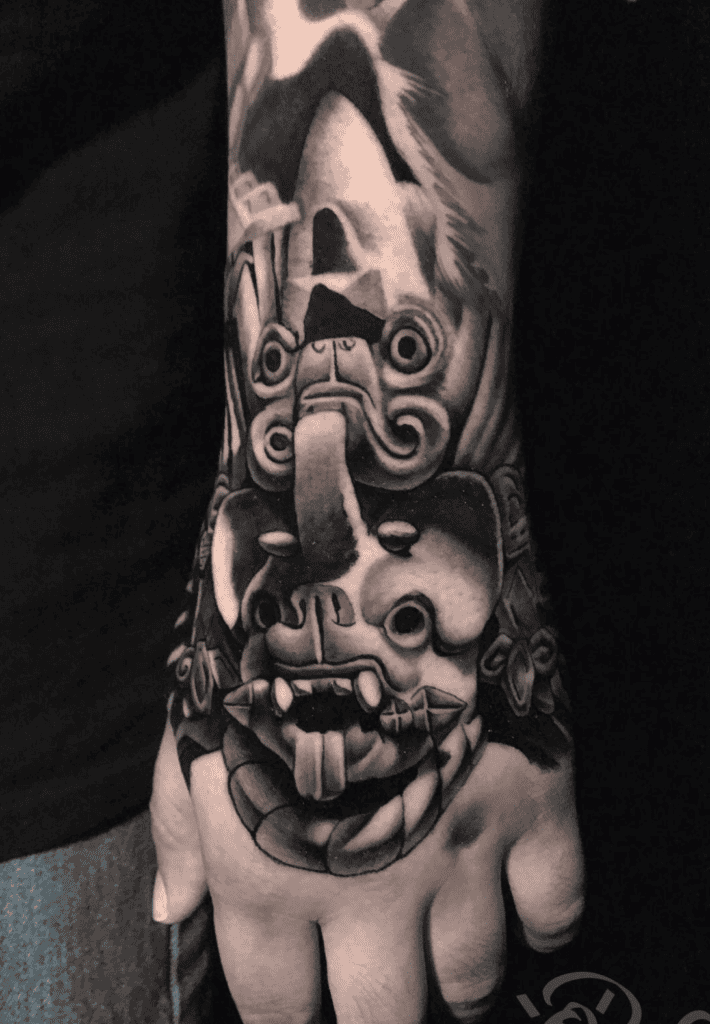
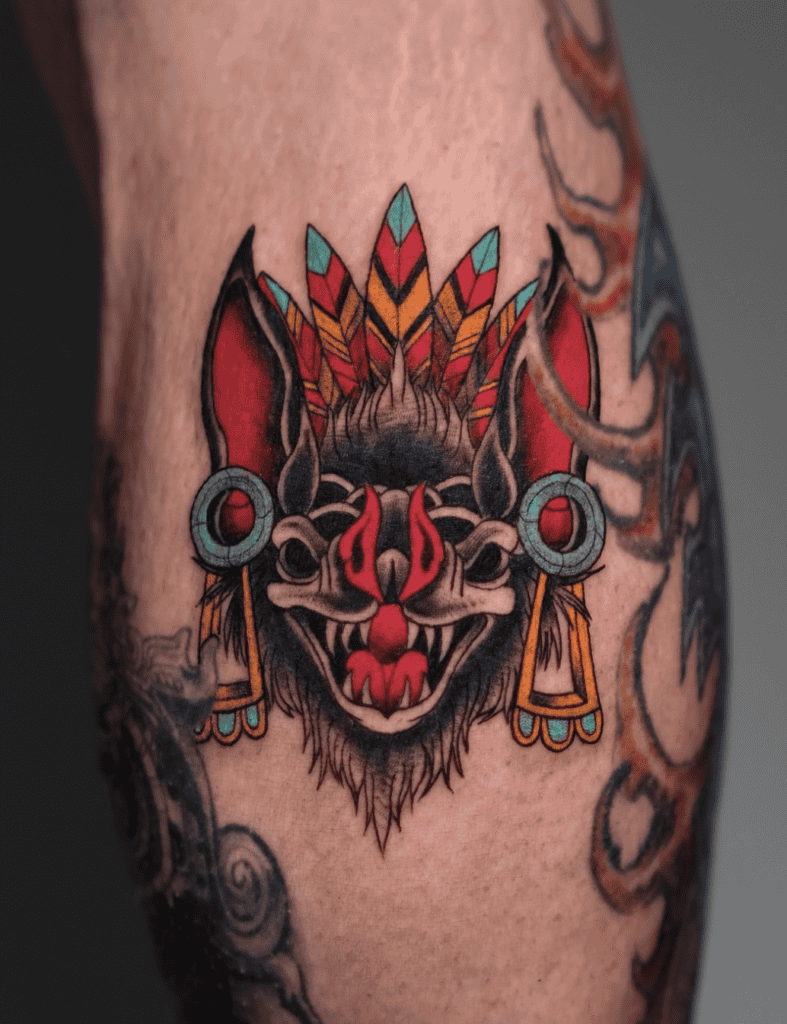
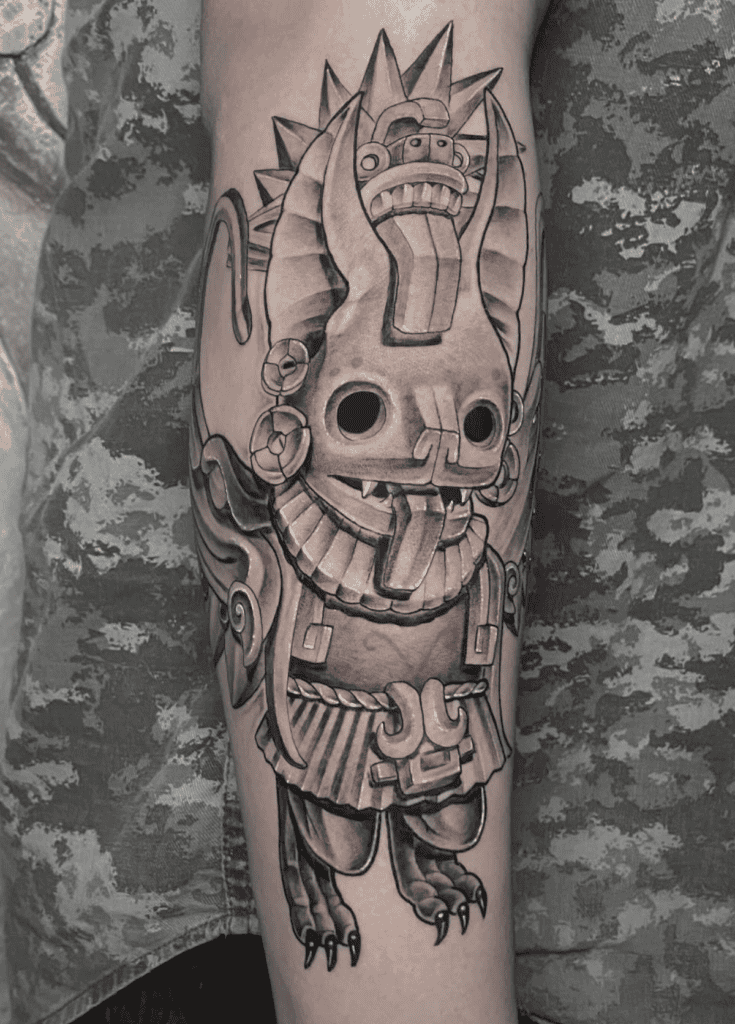
Camazotz is a bat deity/monster from the Underworld who is associated with death, darkness, and sacrifice. His name is often interpreted as “Death Bat” or “Snatch Bat” (a bat that suddenly seizes its victim).
Camazotz dwells in Xibalba’s “House of Bats,” one of the deadly trials faced by the Hero Twins. It is a chamber filled with razor-winged bats, which was silent, dark, and extremely dangerous.
When Hunahpu and Xbalanque enter the House of Bats, they hide inside their blowguns to survive. Hunahpu peeks out at dawn, and Camazotz strikes, decapitating Hunahpu instantly. Hunahpu’s head is replaced temporarily with a gourd by Xbalanque, who later recovers and restores him.
K’awiil Mayan Mythology Tattoo


Kʼawiil is a god tied to lightning, divine power, kingship, and a deity connected to wealth, maize, and fertility. He embodies lightning strikes, fire from the sky, and sudden bursts of energy.
Mayan rulers often held sceptres shaped like Kʼawiil that symbolised authority, connection to the gods, and the right to rule. He is sometimes referred to as “God K” by scholars, and his image appears frequently in royal art and carvings.
Ah Muzen Cab Mayan Mythology Tattoo

Ah Muzen Cab is the god of bees and beekeeping, who was a protector of honey and pollination, and a deity tied to agriculture and sustenance. His name roughly translates to something like “He of the Bees” or “Bee Keepe.”
For the Maya, bees were essential, as honey was one of the main sweeteners in food, medicine, and rituals, and beeswax was used for candles and offerings. Ah Muzen Cab represents life, nourishment, and natural abundance, and he was honoured by farmers through rituals to ensure healthy hives and good honey production.
Balam Mayan Mythology Tattoo
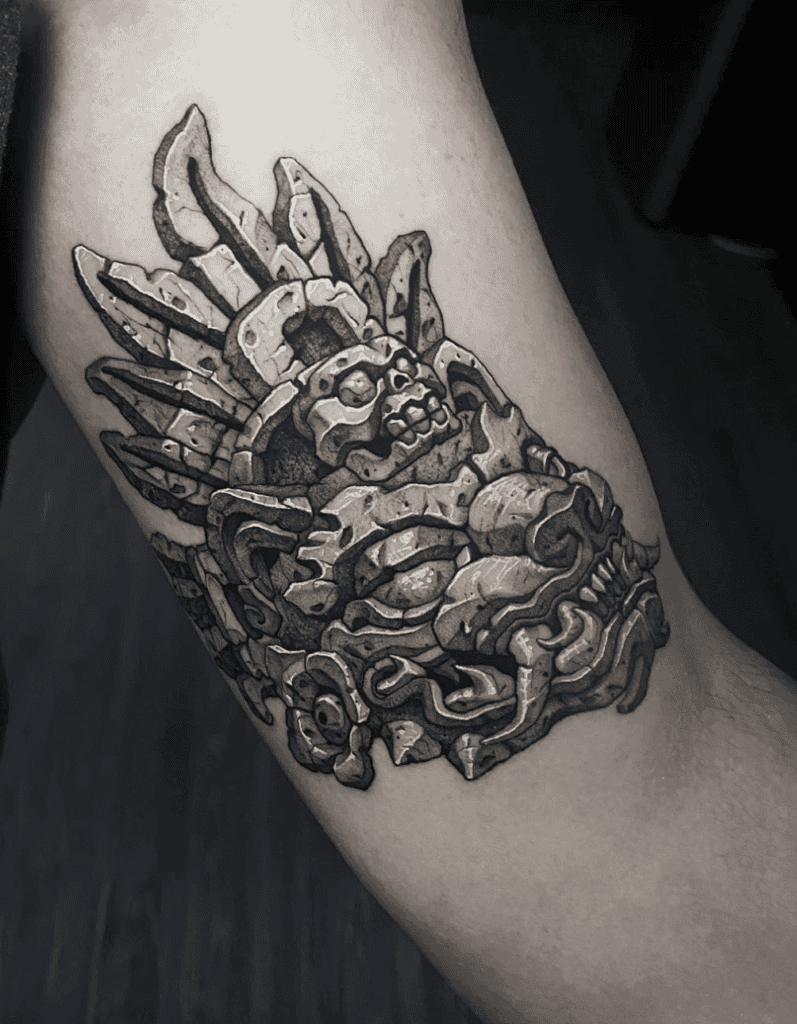
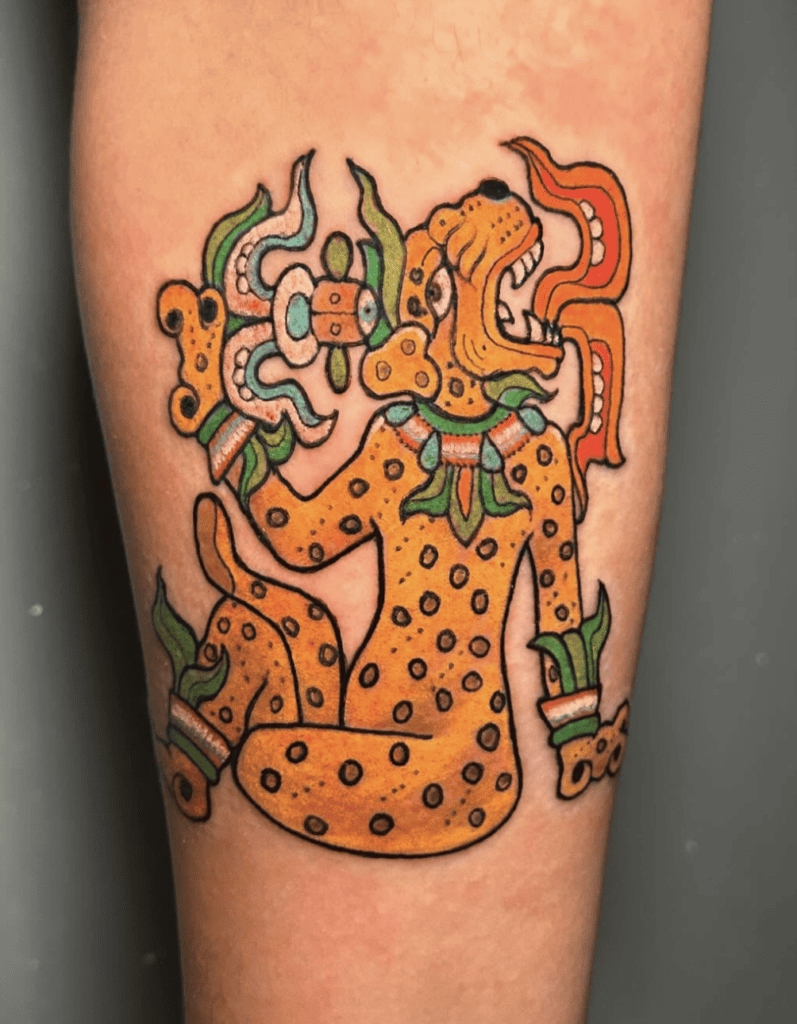
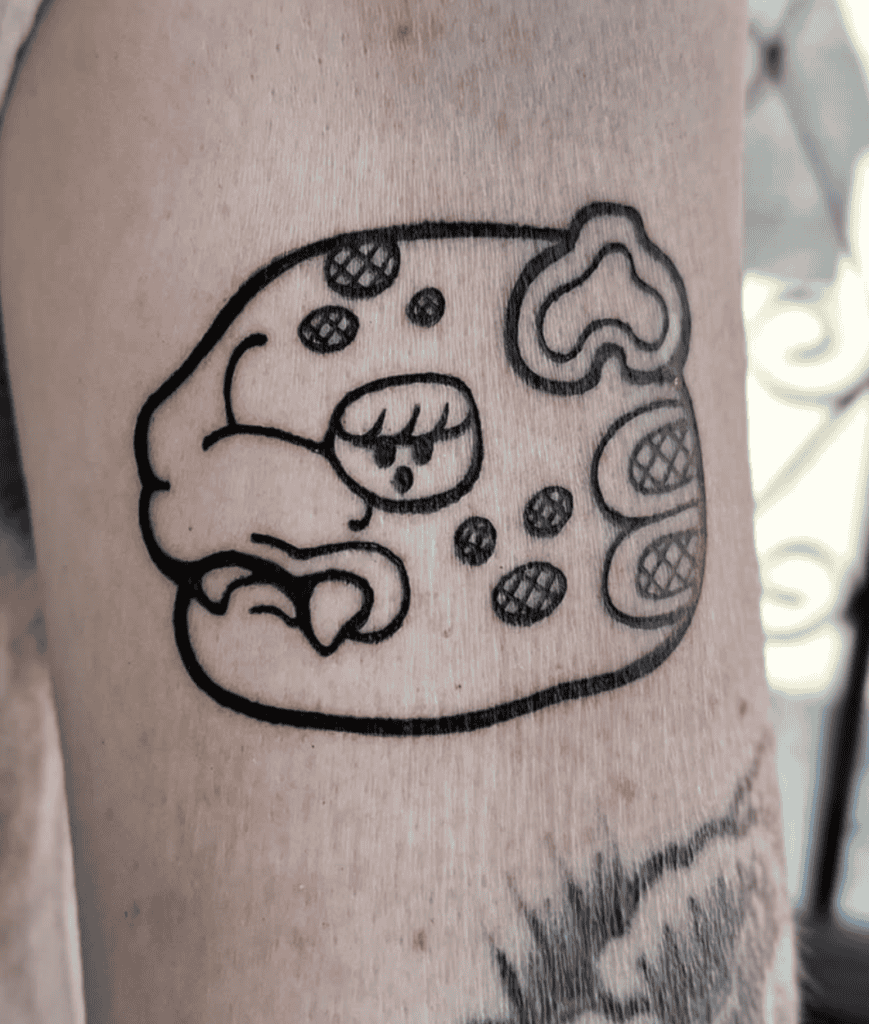
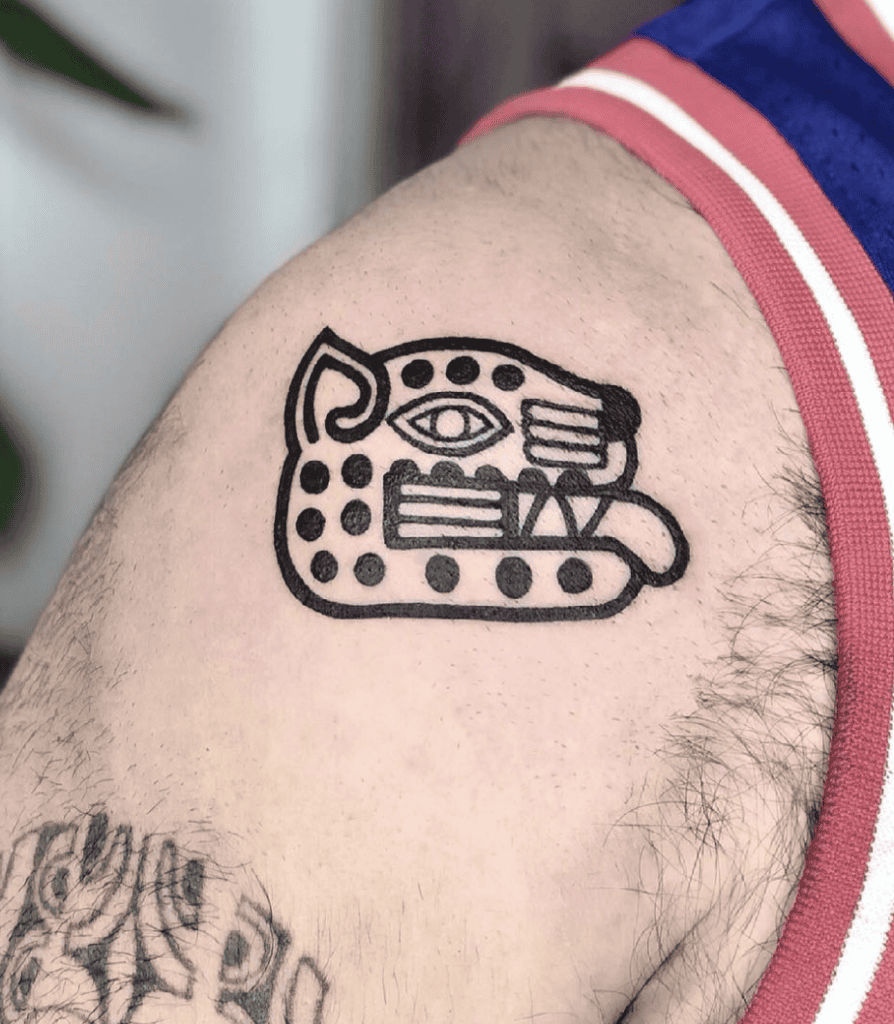
Balam is a powerful type of spirit in Maya mythology, meaning “jaguar”, which was among the most sacred and feared animals in Mayan culture. These were jaguar spirits or deities that were protective beings linked to nature, night, and the spirit world.
There are Four Balams, each guarding a direction, who together protect the land, maintain balance in the world, and watch over people and nature. Jaguars were believed to move between worlds when they travelled in darkness, so Balam spirits are linked to night, the Underworld, Xibalba and hidden knowledge.
Mayan Calendar Mayan Mythology Tattoo
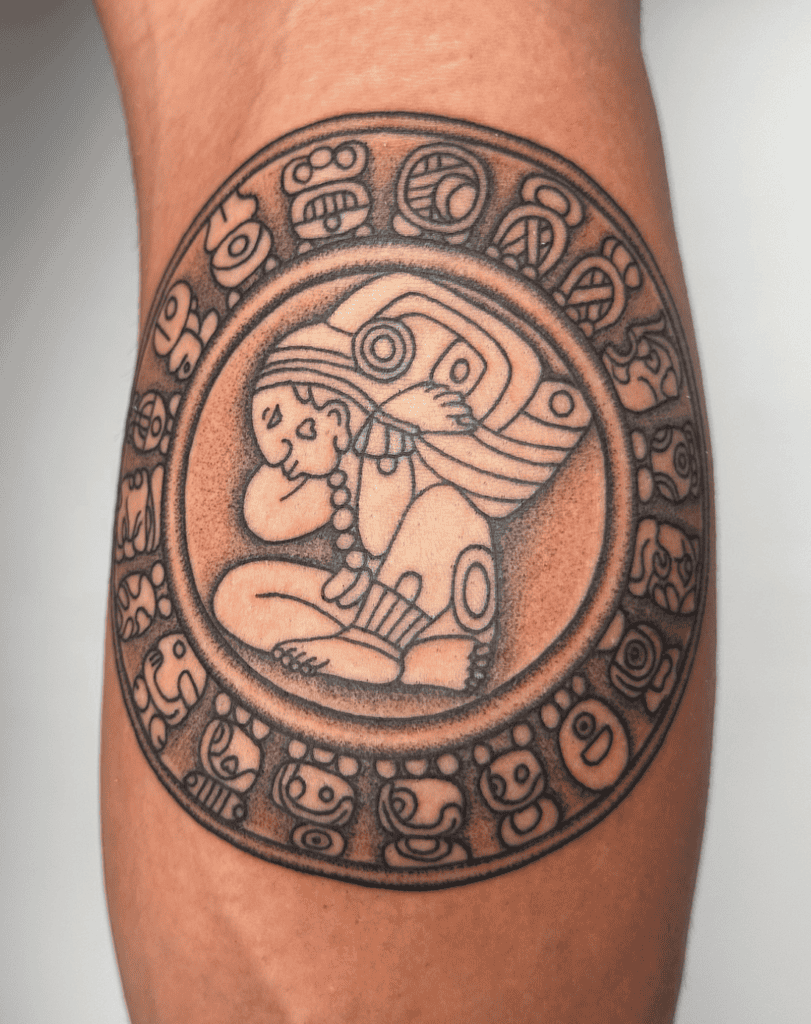
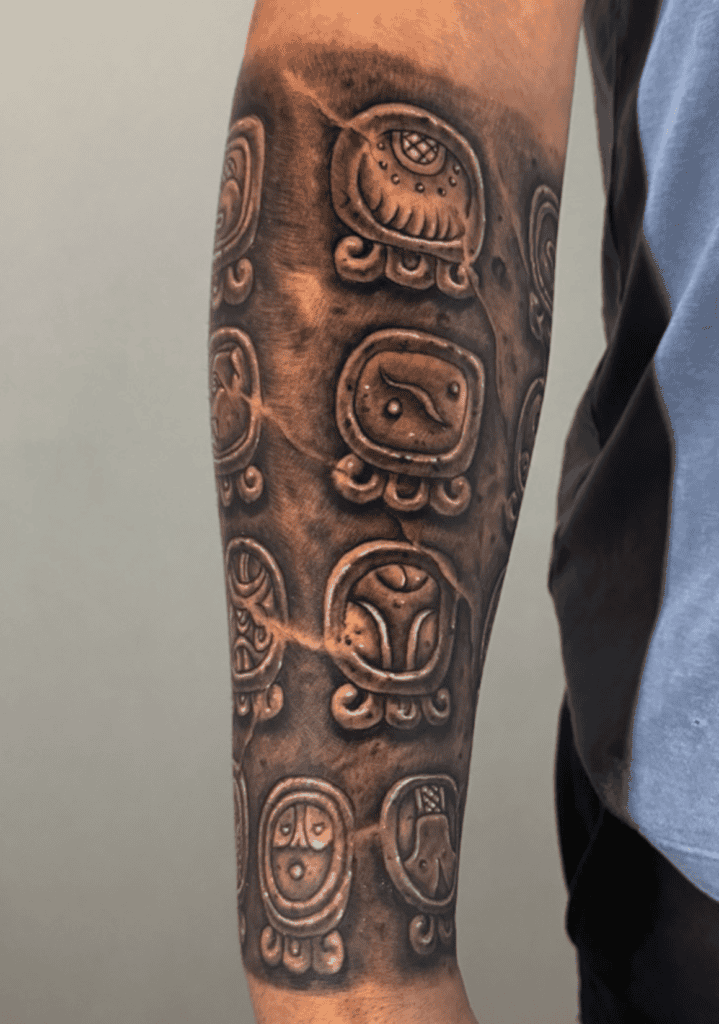
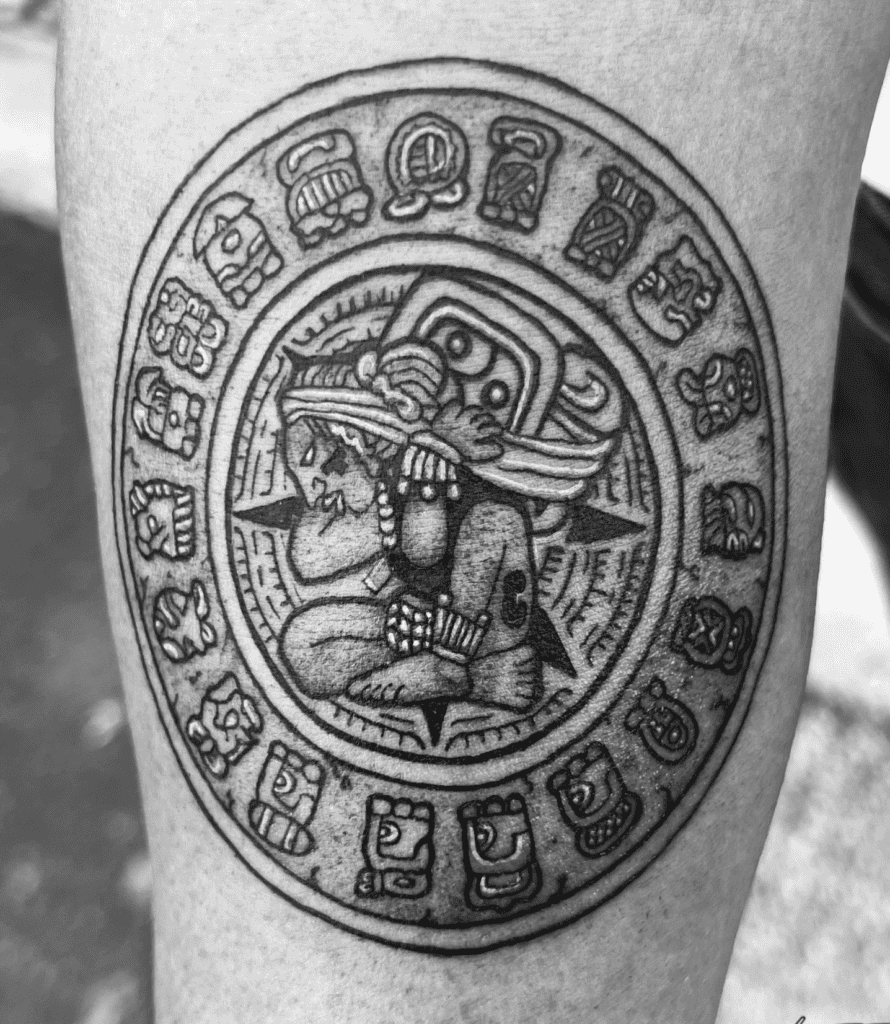
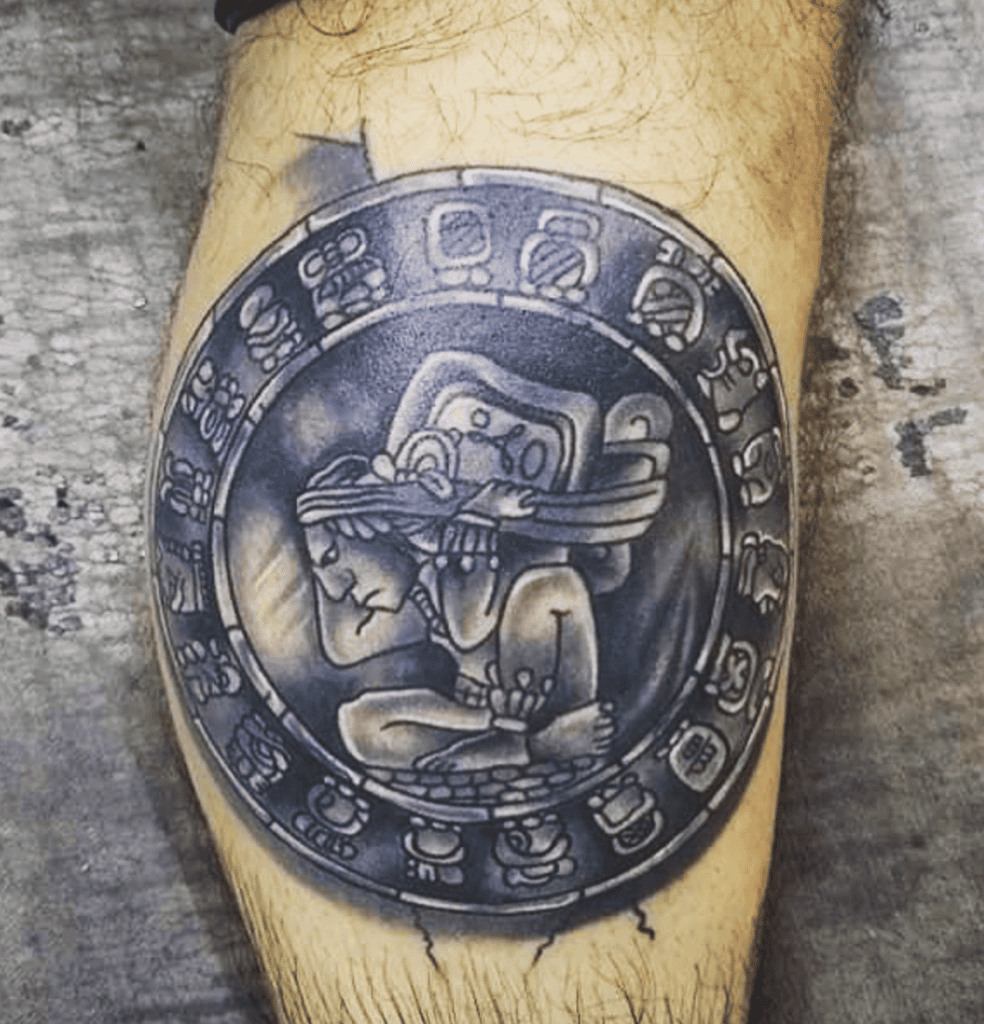
The Mayan Calendar is a system of multiple interlocking calendars that track time in cycles rather than a straight line. For the Maya, time wasn’t something that just passed; instead, it was something that repeated, reset, and carried meaning.
Rather than past, present and future, the Maya believed in cycles, renewal, and repetition. Every day had a number, spiritual meaning, and place in a larger cosmic pattern.
The Maya had three Main Calendars. The Tzolk’in (Sacred Calendar) had 260 days total, made from 20 day names and 13 numbers, which were combined to create unique days with spiritual meanings. It was used for rituals, divination, and choosing important dates.
The Haab’ (Solar Calendar) had 365 days total, made of 18 months each with 20 days, and 5 extra days (called Wayeb). Wayeb Days were considered unlucky or dangerous, being a time when the boundary between worlds was thin. This calendar was used for agriculture, seasons, and daily life.
The most famous, the Long Count Calendar, often mistaken for the Aztec Sun Stone, tracks long periods of time and was used for recording historical events, creation dates and is the one people talk about with the “2012” myth.
Kʼinich Janaabʼ Pakal Mayan Mythology Tattoo


Kʼinich Janaabʼ Pakal, often called Pakal the Great, was one of the most famous rulers of the ancient Maya civilisation, who ruled the city of Palenque in the 7th century and helped transform it into one of the most beautiful and powerful Mayan cities.
Pakal became king at just 12 years old and ruled for nearly 70 years. During his reign, Palenque flourished with impressive temples, art, and architecture, with one of his greatest achievements being the construction of the Temple of the Inscriptions, which later became his tomb.
He’s especially famous because archaeologists discovered his elaborate burial chamber beneath the temple, including a stunning jade death mask and a massive carved tomb lid. The artwork on the lid depicts Pakal descending into or rising from the underworld, surrounded by cosmic symbolism associated with Mayan beliefs about death and rebirth.
Interestingly, this tomb lid became the source of the famous “ancient astronaut” conspiracy theory, with some people wrongly claiming it showed Pakal riding a spaceship. In reality, it’s deeply symbolic Mayan religious imagery connected to the world tree, the underworld, and the cycle of life.
Aztec X Mayan Mythology Tattoo

The Maya and the Aztec civilisations are two separate cultures from Mesoamerican often mistaken for one another. The Maya are a much older civilisation whose existence stretches back as early as 2000 BCE and continues even after the arrival of the Spanish. Rather than forming one single empire, they lived in a network of independent city-states, such as Tikal, each with its own rulers, alliances, and rivalries.
The Aztecs arrived much later, rising to power in the 14th century. Unlike the Maya, they built a highly organised and centralised empire with their capital at Tenochtitlan. Their society was more focused on expansion, warfare, and control, and much of their power came from conquering other groups and demanding tribute. Religion played a huge role in this, especially their belief that the sun required nourishment to continue rising, which is why large-scale human sacrifice became a central and visible part of their culture, far more so than among the Maya.
While both civilisations had rich mythologies and shared similar ideas, such as feathered-serpent deities like Kukulkan and Quetzalcoatl, their interpretations and emphases differed. The Maya tended to focus more on natural cycles and cosmic balance, while the Aztecs placed greater weight on survival through sacrifice and on maintaining cosmic order through action, especially warfare.
Conclusion
Thanks for joining us on this incredible journey through the cyclical world of the Mayan Mythology Tattoo design. We hope we’ve shone some inspiration to aid you on your tattooing quest. But if Maya Mythology Tattoos still don’t inspire you, why not start your cycle again with these Celtic Mythology Tattoo Designs, these Christian Mythology Tattoo Ideas, or these Norse Mythology Tattoos.
- Bear Tattoo Ideas - October 22, 2026
- Lion Tattoo Ideas - October 19, 2026
- Persona Tattoo Ideas - October 15, 2026