
Inca Mythology Tattoo ideas
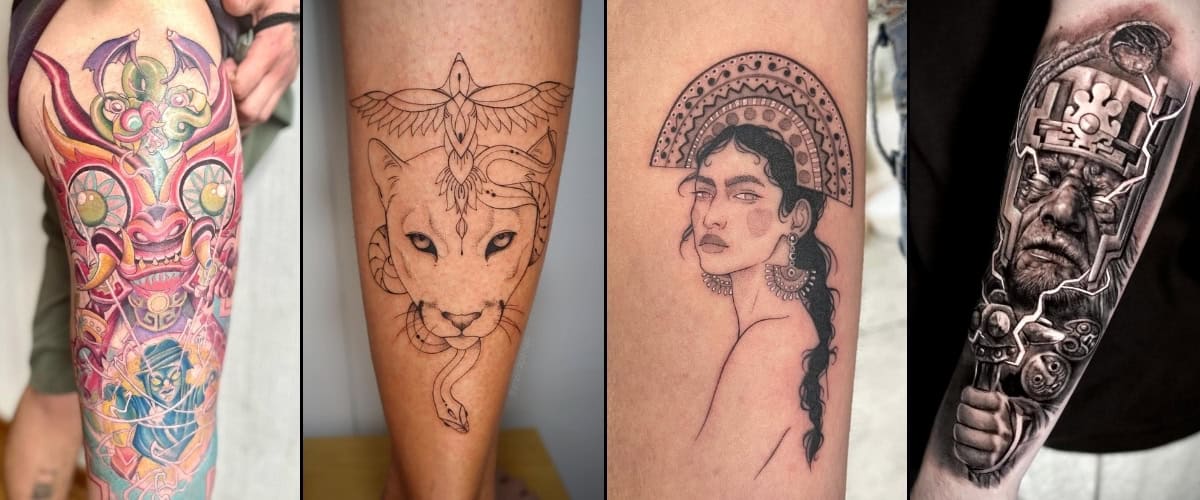
Do you feel like you’re climbing the Andes on your search for the perfect Tattoo Clues? Worry not, as we’ve travelled through the three realms to bring you some of the most Inca-redible Inca Mythology Tattoo designs, that will bring balance to your skin.
What is Inca Mythology
Inca mythology is the belief system of the ancient Inca Empire, which was a rich mix of gods, nature, spirits, and cosmic balance that shaped how the Incas understood the world around them. Rather than being just a collection of stories, it was a way of life that influenced everything from farming and leadership to architecture and daily rituals.
Inca mythology is deeply connected to nature. The Incas didn’t see mountains, rivers, or the sun as simple objects, and believed these were living, powerful beings. Even mountains were sacred, known as Apus, and were powerful spirits that protected nearby communities.
The Incas believed the universe was divided into three interconnected realms.
Hanan Pacha — the upper world, home of the gods and celestial beings
Kay Pacha — the human world, where everyday life happens
Ukhu Pacha — the inner world, associated with ancestors and the unknown
These weren’t separate places; they were deeply connected, with a balance between them being essential.
Inca mythology also uses powerful symbolic animals to represent these worlds. The condor represented the sky, the puma represented the earth, and the serpent, like Amaru, represented the underworld.
Best Inca Mythology Tattoo Artists

shilita tattoo
French/Columbian Tattoo Artist specialising in Precolombian, ornemental, and fine line tattoos.


Claim your spot
Are you an Inca Mythology Tattoo artist? Claim your spot here as a featured artist by contacting us on Instagram.
Best Inca Mythology Tattoo Designs
Now that we know a little about Inca Mythology, let’s take a look at some of the best Inca Mythology Tattoos the three realms have to offer.
Inti Inca Mythology Tattoo


Inti is the Sun God, source of life, and the divine ancestor of the Inca rulers themselves. He was believed to be the god who gave warmth, light, and life to the world, and without him, crops wouldn’t grow, seasons wouldn’t change properly, and life would struggle to exist.
To the Inca people, he was present every single day, rising in the sky and watching over the empire. Even more importantly, the Sapa Inca (the emperor) was considered “the son of Inti”, making Inti not just a god, but the father of their civilisation.
The Inca rulers used their connection to Inti to justify their power, so if the emperor was descended from the Sun God, his authority was divine. This belief helped unify the empire and gave a strong spiritual foundation to leadership.
One of the most famous origin stories tells how Inti sent Manco Cápac and Mama Ocllo to Earth to teach humanity how to live, farm, and build society. Inti was honoured through ceremonies, offerings, and massive festivals, with the most famous being Inti Raymi — the Festival of the Sun.
Held during the winter solstice (in the Southern Hemisphere), this celebration marked the return of the sun’s strength and ensured good harvests. Temples dedicated to Inti were some of the most important in the empire, especially the Coricancha in Cusco, which was covered in gold to reflect sunlight.
Viracocha Inca Mythology Tattoo
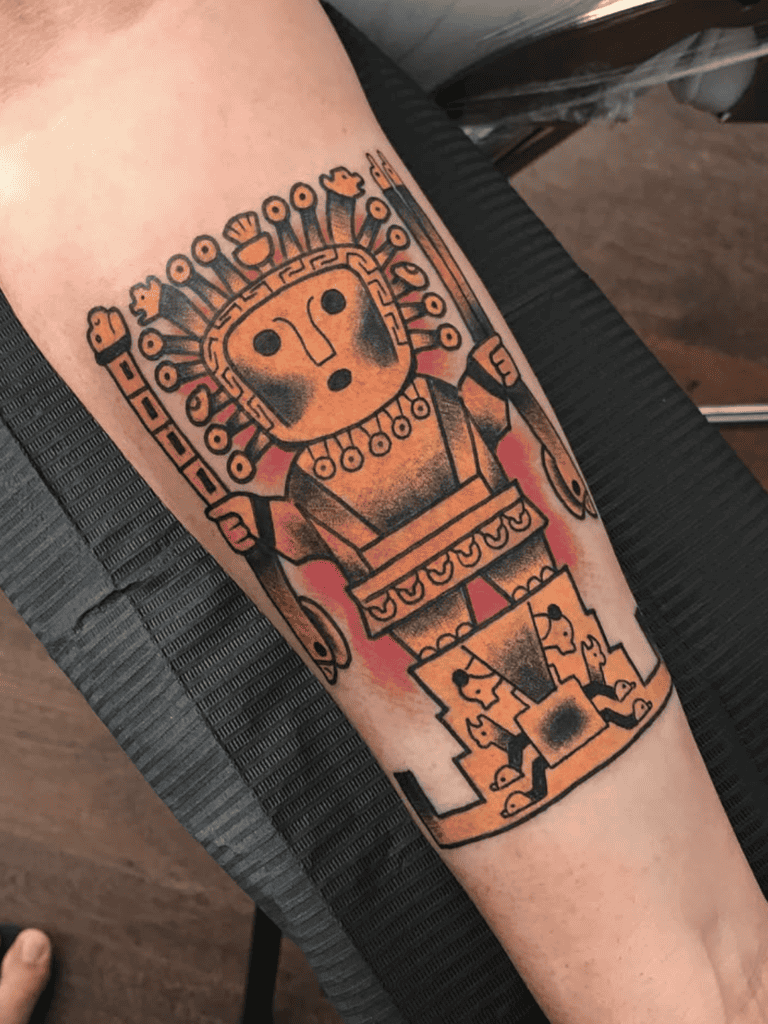
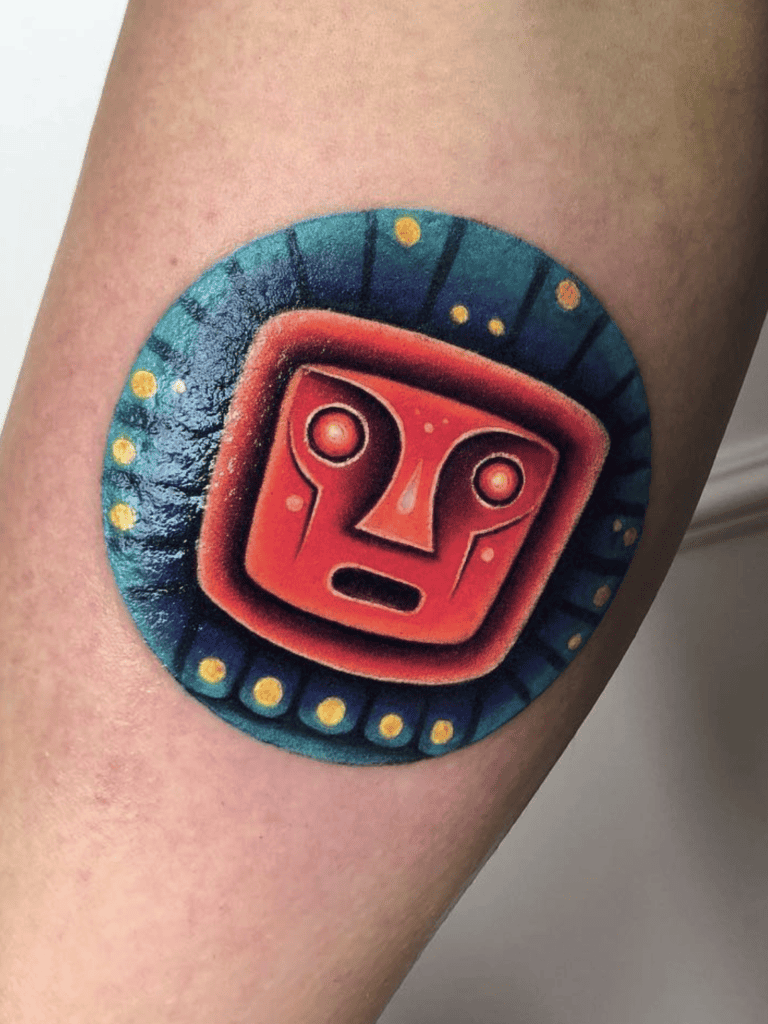
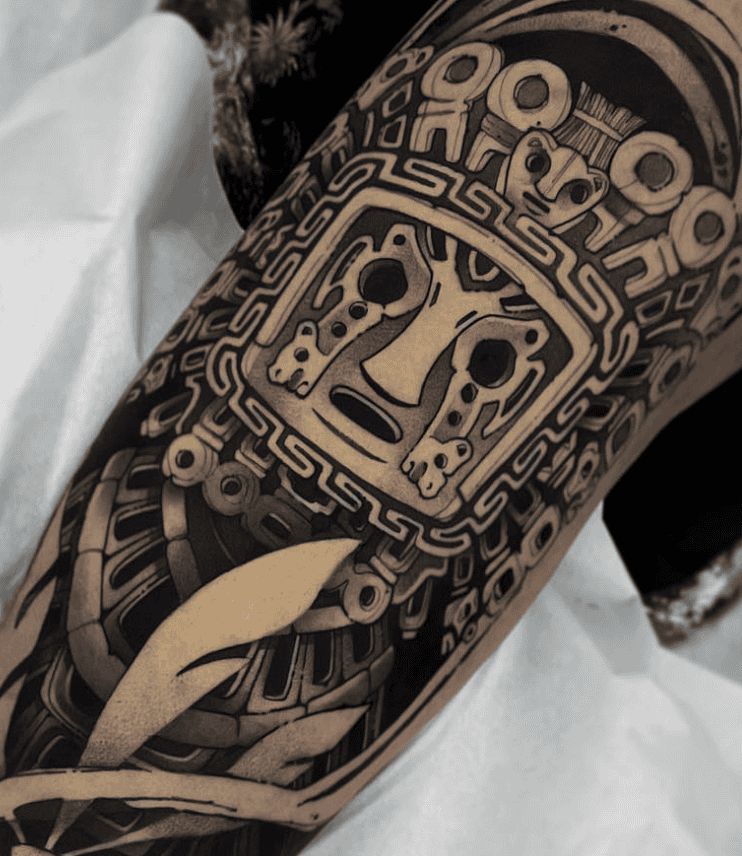
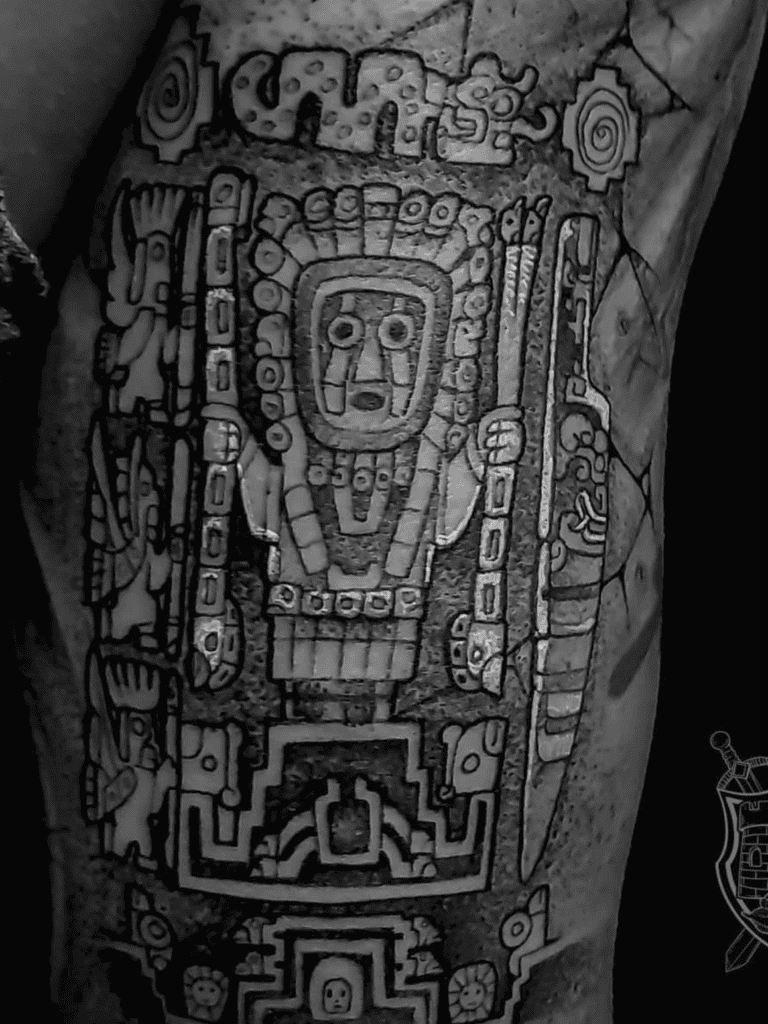
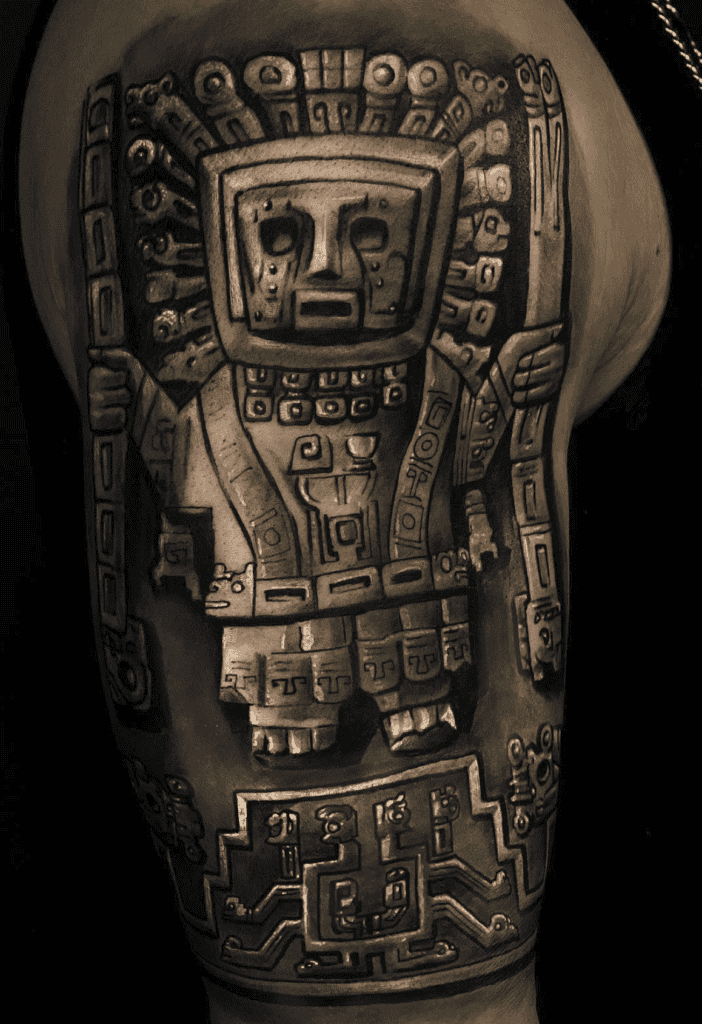
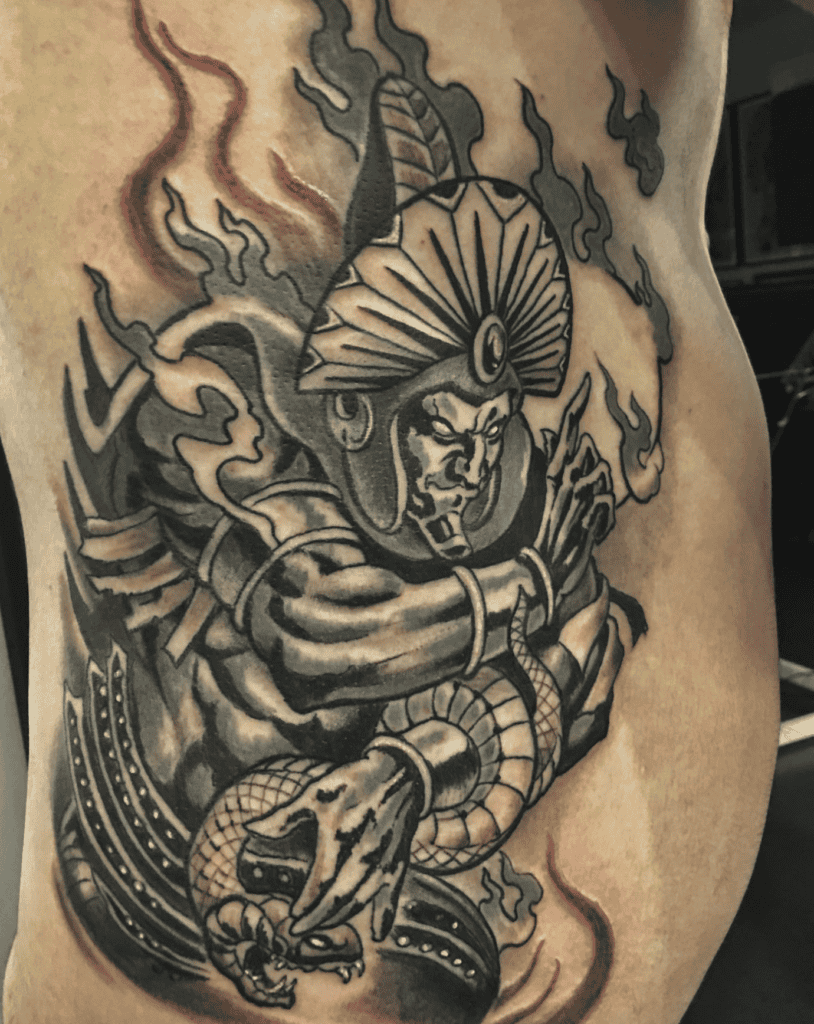
Viracocha is the creator god in Inca mythology. He is the one who formed the heavens, the earth, the sun, the moon, and humanity itself, existing before everything, and standing above all other gods.
Viracocha is often described as a mysterious, powerful figure who emerged from the waters and brought order to a world of darkness. Before his creation, the world was said to be empty and chaotic, so Virachoca created the sky, the sun, the moon, and the stars, formed the first humans, and brought structure to the universe.
However, the first humans displeased him, so he destroyed them in a great flood, a story that is present across many mythologies. After reshaping the world, Viracocha was said to have walked across the land, teaching people how to live, giving them knowledge, laws, and civilisation. In some stories, he travelled with companions, spreading wisdom across the Andes. Eventually, he walked west into the ocean and disappeared forever.
Mama Quilla Inca Mythology Tattoo
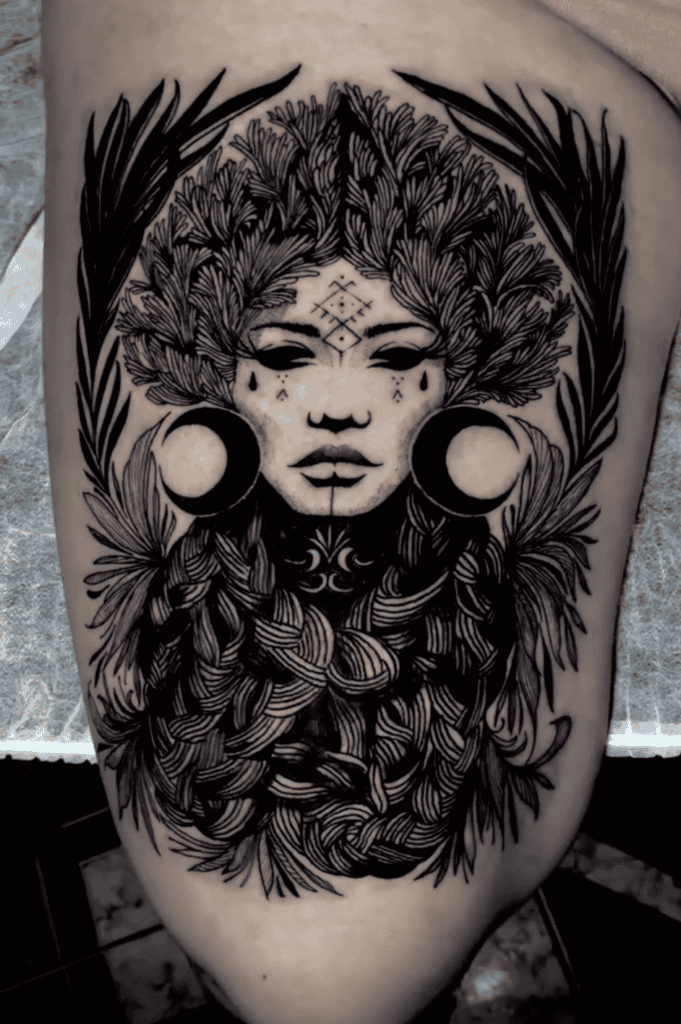
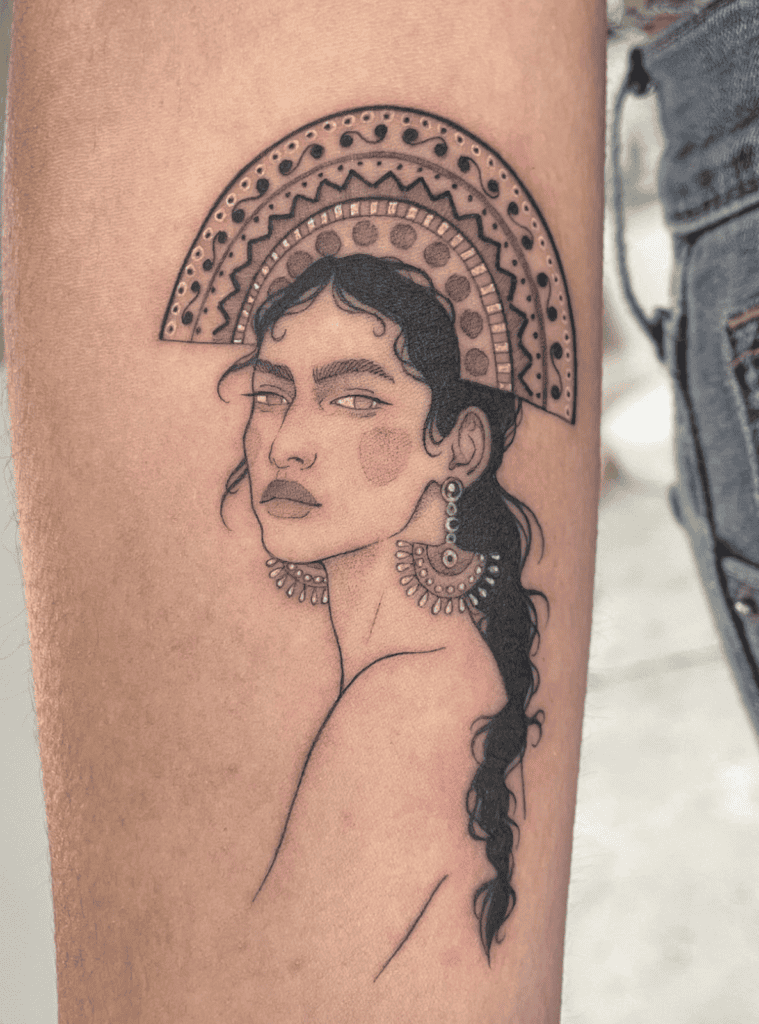
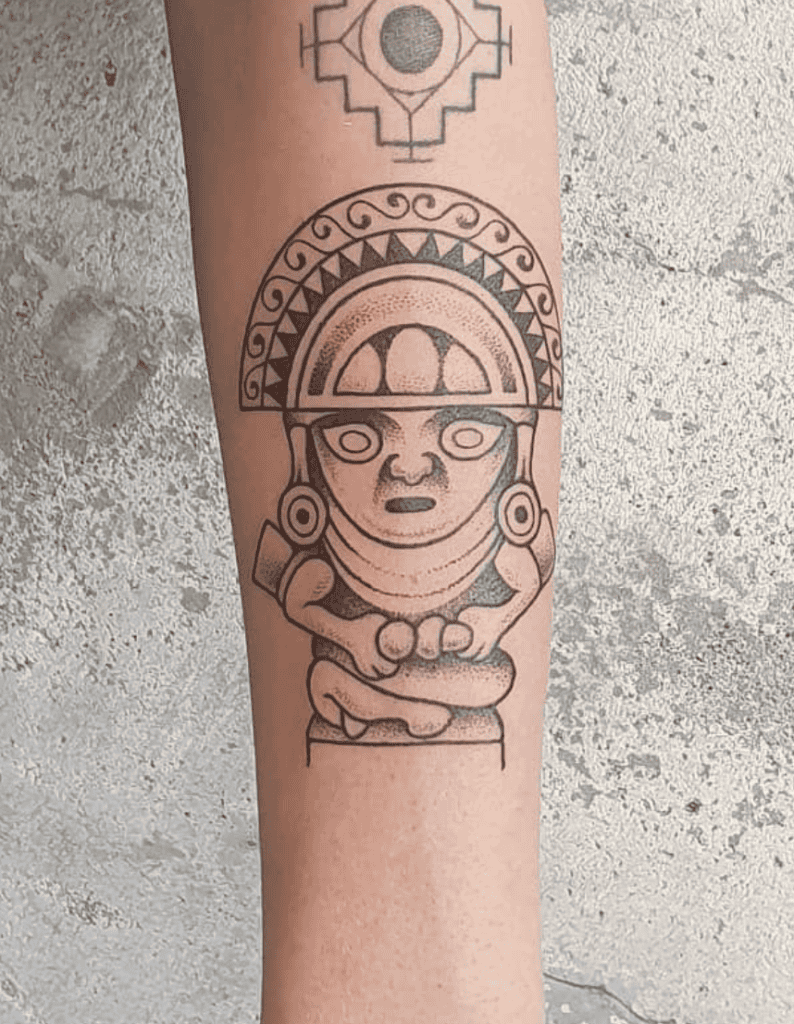
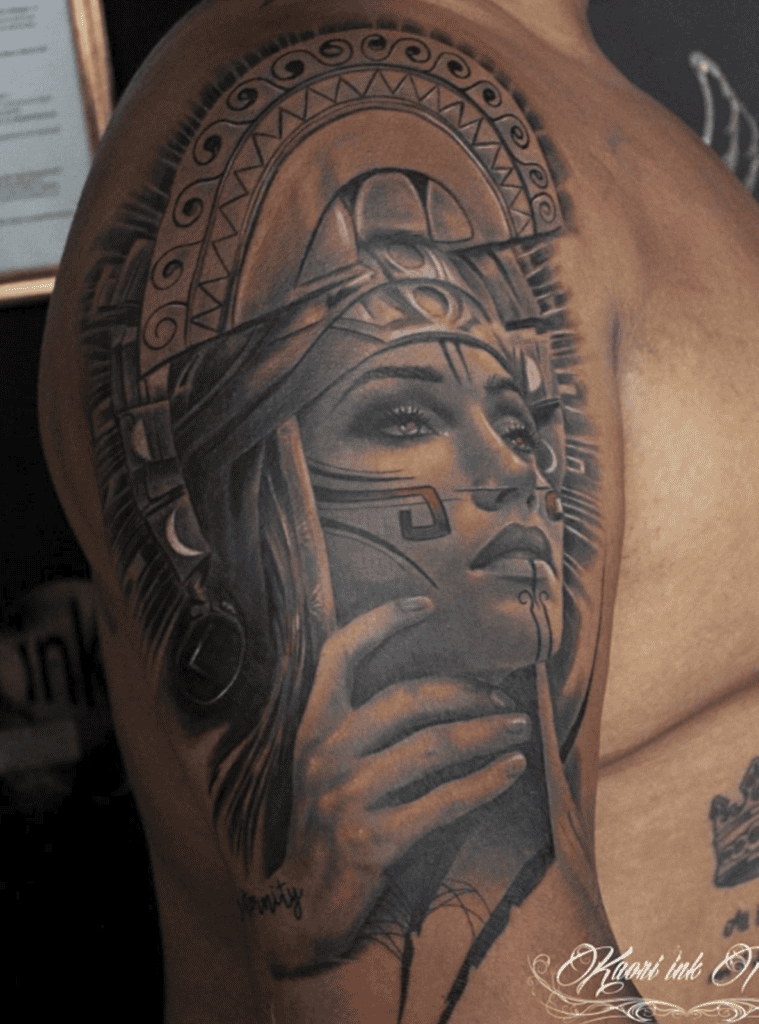
Mama Quilla (meaning “Mother Moon”) is the goddess of the moon, often seen as the wife (or sister-wife) of Inti. Mama Quilla ruled the night, bringing light to darkness and maintaining balance in the world.
She played a vital role in measuring time, guiding calendars and festivals, and protecting women and families. She was believed to watch over marriage and relationships, protect pregnant women, and guide menstrual cycles, which were linked to the phases of the moon.
The Incas used the moon to track time, and Mama Quilla’s phases helped determine months, religious ceremonies, and agricultural cycles. The Incas believed a lunar eclipse meant Mama Quilla was being attacked or eaten by a celestial creature (often imagined as a jaguar or serpent). To protect her, people would make loud noises and perform rituals to try to “scare away” whatever was threatening her.
Pachamama Inca Mythology Tattoo
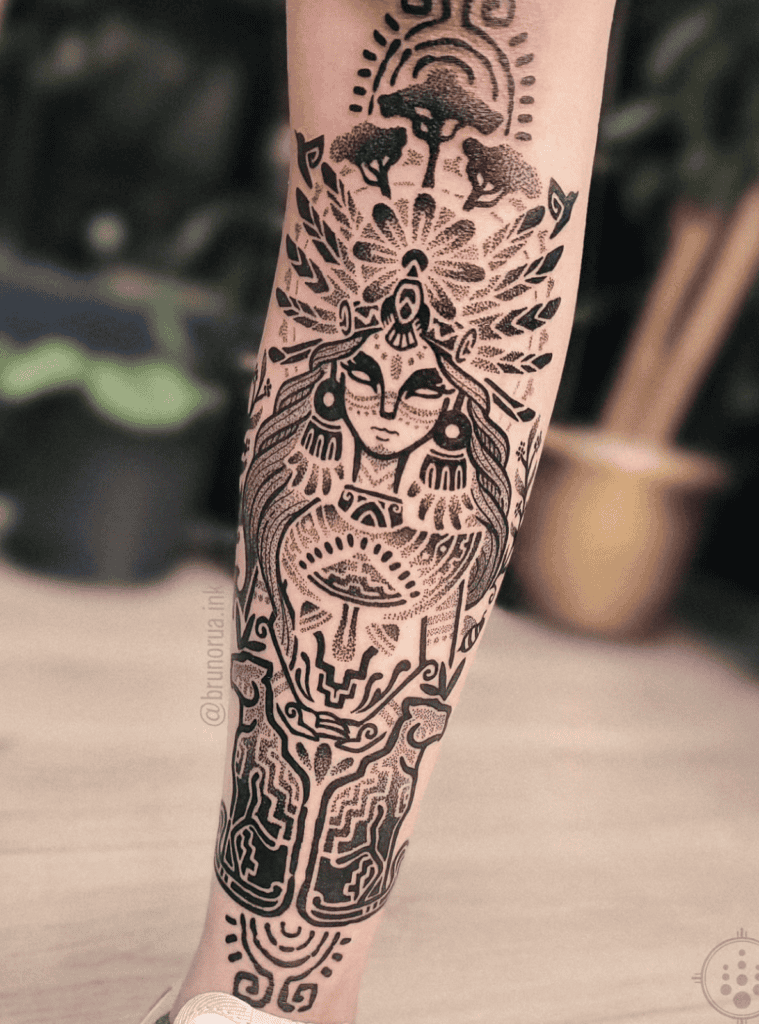
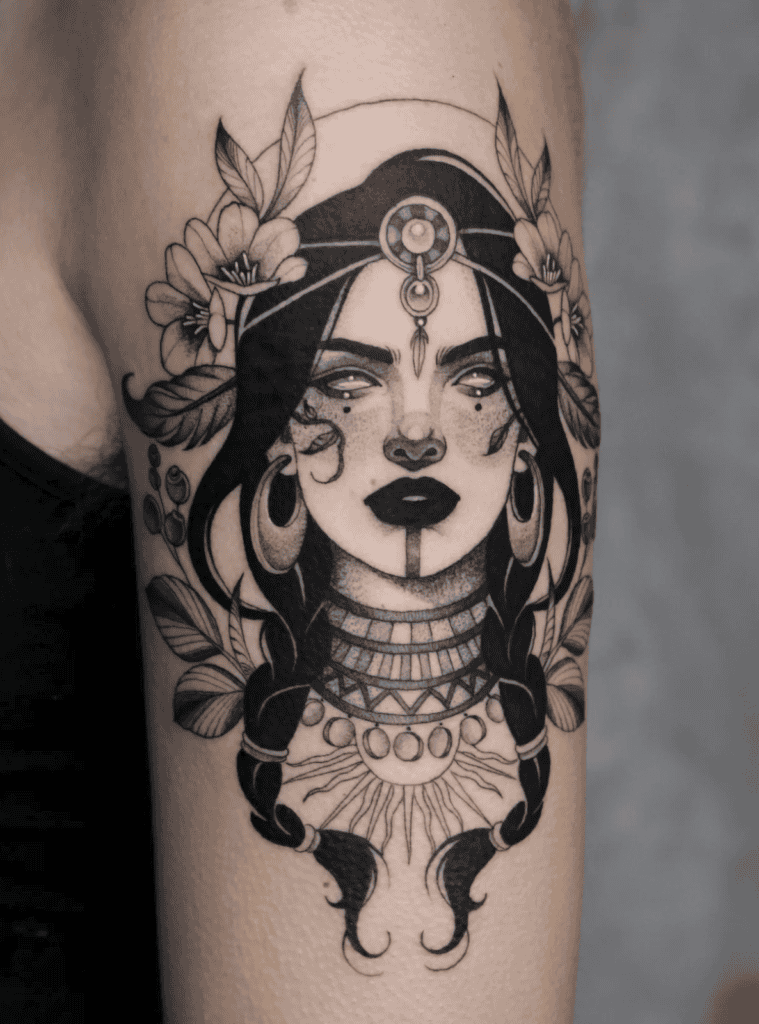
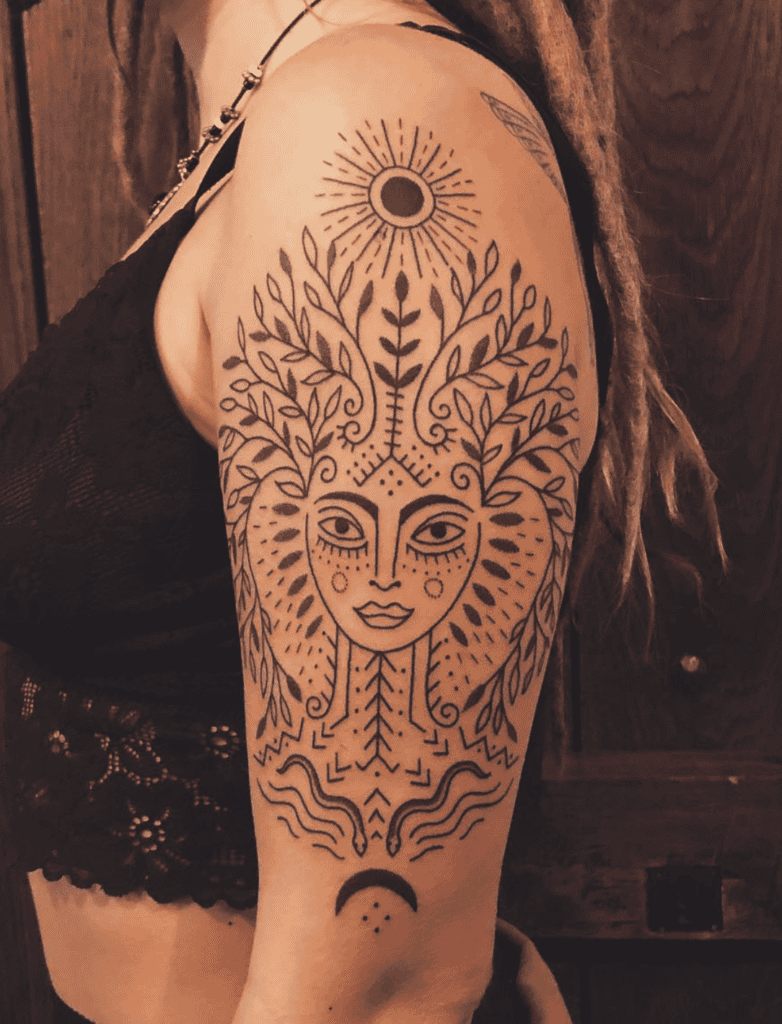
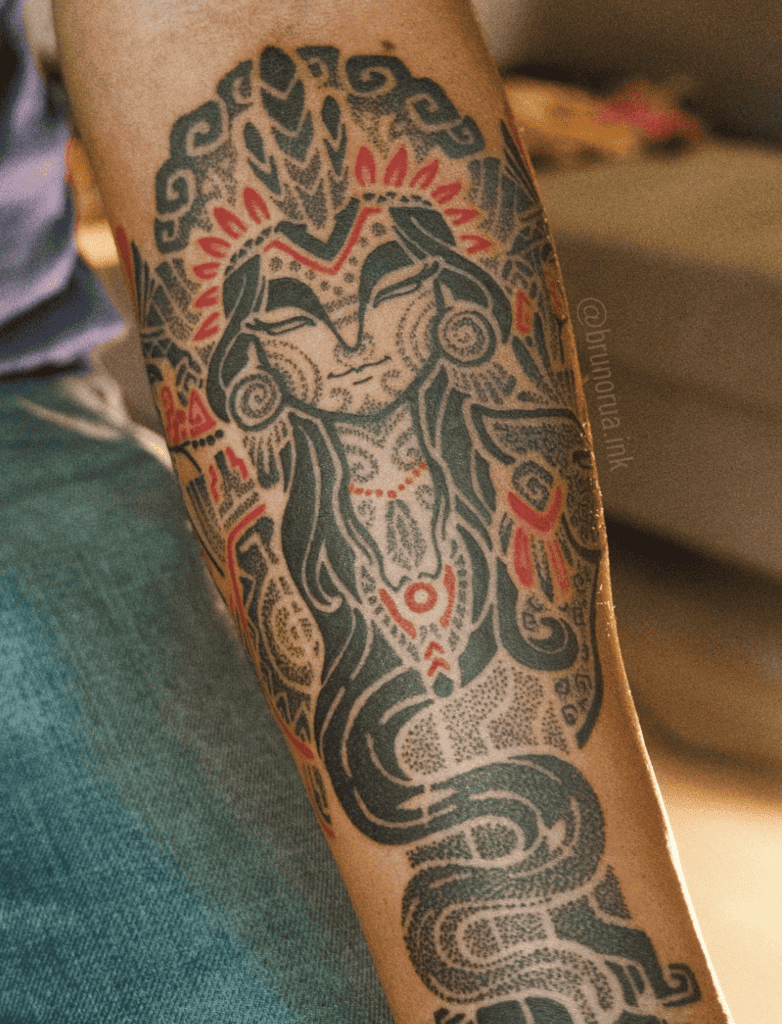
Pachamama is the Earth Mother, the goddess of nature, fertility, and life itself, with everything that grows, feeds, and sustains life believed to come from her. “Pachamama” roughly translates to “Mother Earth” or “World Mother.” To the Inca people, she wasn’t distant or abstract and was present in every mountain, field, and river.
Pachamama controlled agriculture & crops, fertility, and nature’s balance. Because survival depended on farming, she was one of the most important deities in everyday life. The Inca people honoured Pachamama constantly, not just in temples, but in daily life.
They would leave food, coca leaves, or drink as offerings, bury small gifts in the ground, and perform rituals before planting or harvesting. While Pachamama is nurturing, she isn’t passive. If disrespected, she could cause earthquakes, poor harvests, and natural disruptions.
Illapa Inca Mythology Tattoo
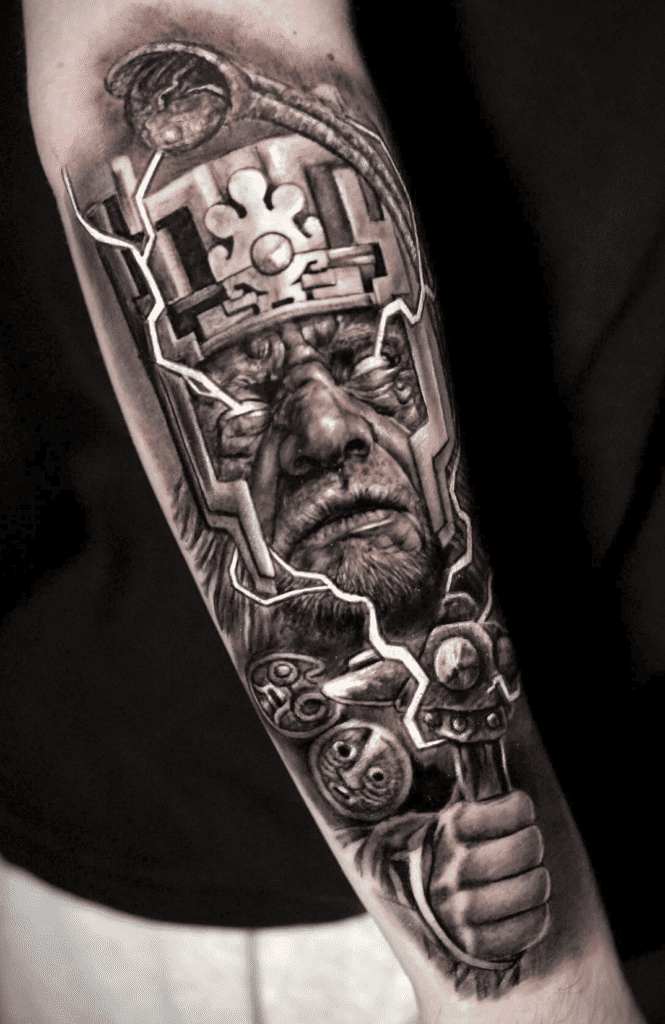
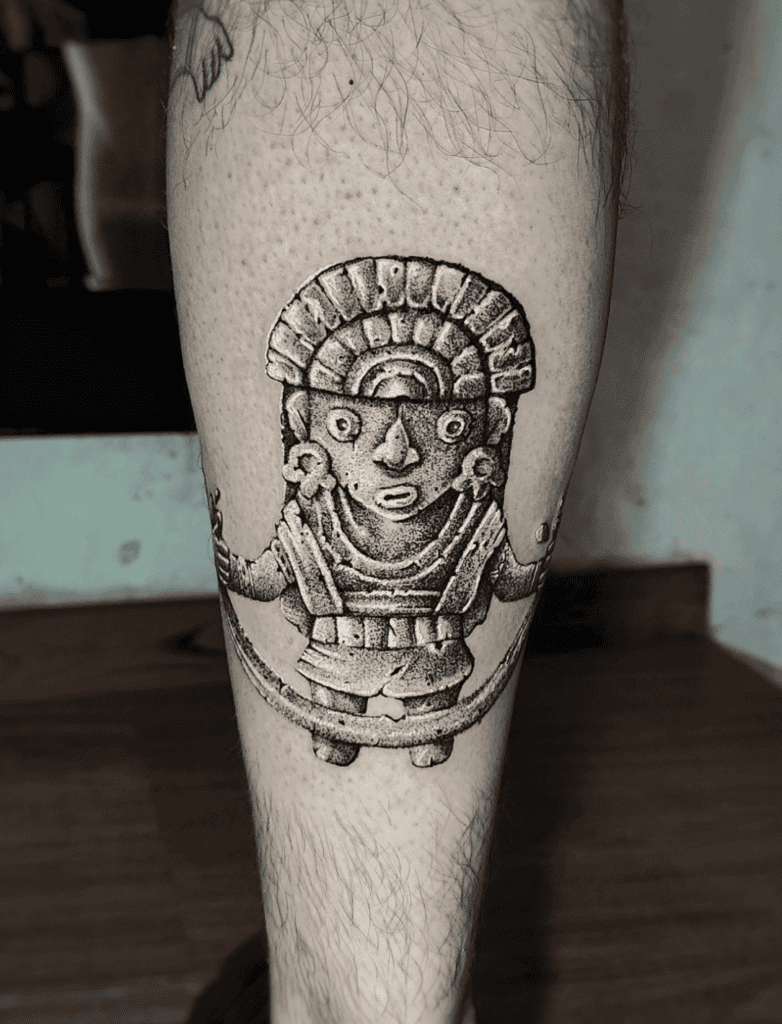
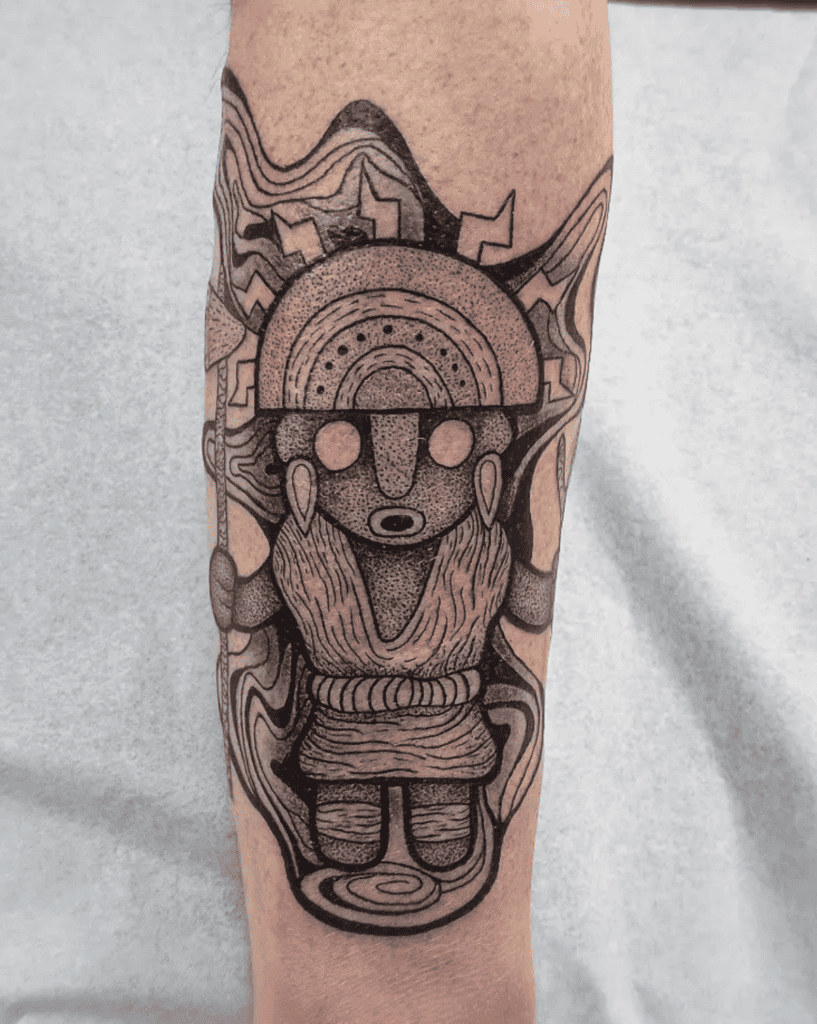
Illapa was an Inca god believed to command the storms that brought life-giving rain to the land. In the Andes, where farming depended heavily on rainfall, he was incredibly important. He was seen as an active force, shaping weather patterns and influencing the success or failure of crops.
In many depictions, Illapa appears as a warrior in the sky, armed with a sling. One of the most fascinating parts of Illapa’s myth is how storms were explained. The Incas believed Illapa carried a sling, and when he struck it, it created thunder. Lightning was the flash of his weapon, and rain came from a celestial water vessel he controlled.
Illapa was directly tied to agriculture, water supply, and the fertility of the land. Without him, there would be drought, and without rain, the empire couldn’t survive. Illapa was widely respected and sometimes feared, so the Inca would offer prayers and sacrifices for rain, honour him during times of drought, and treat lightning strikes as sacred events. In fact, if lightning struck a person or object, it was often seen as a sign of divine connection.
Mama Cocha Inca Mythology Tattoo


Mama Cocha is the goddess of the sea, lakes, rivers, and all water sources, whose name is often translated as “Mother Sea,” as she was believed to govern all bodies of water.
While the Inca Empire was largely based in the Andes mountains, water was still essential for drinking, farming, and survival, so Mama Cocha ensured that water flowed, nourished the land, and supported life.
For coastal communities, Mama Cocha was especially important, as she was believed to protect fishermen at sea, ensure safe travel across water, and provide abundant marine life. Before setting out, people would often make offerings to gain her favour and avoid danger.
Mama Cocha wasn’t just about oceans, but represented water in all forms, from seas, oceans, rivers, lakes, and even rain cycles. Like many Incan deities, Mama Cocha had a dual nature. She could be calm and nurturing, or wild and destructive, causing storms and floods.
Supay Inca Mythology Tattoo
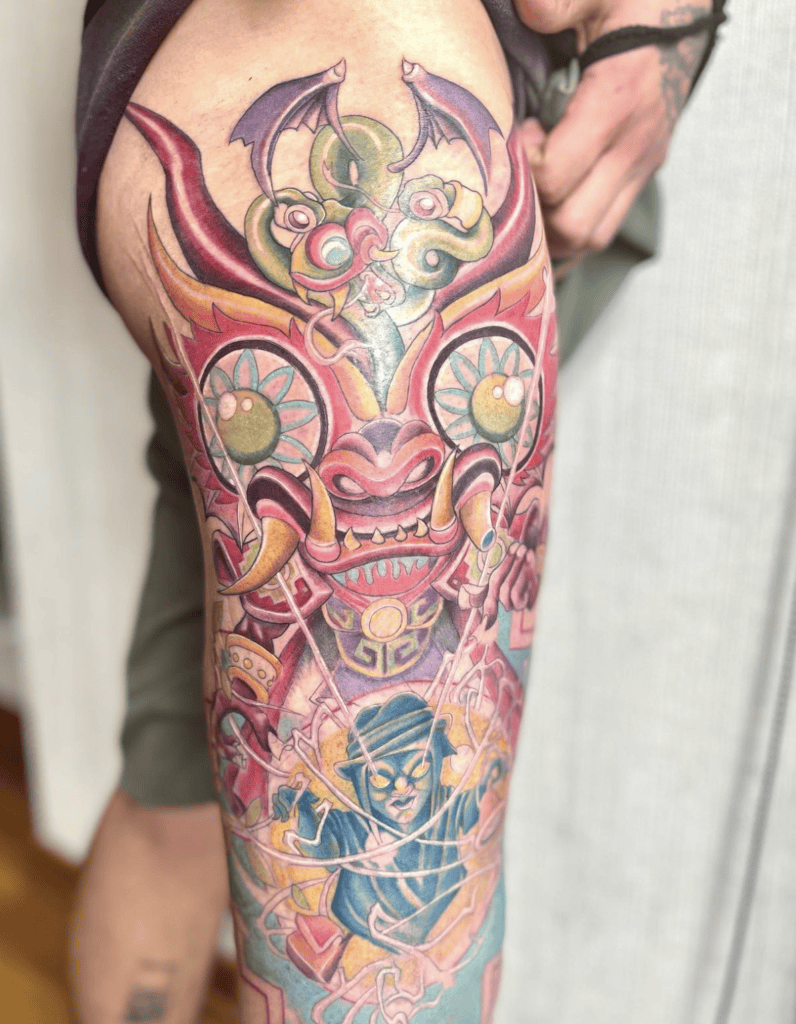
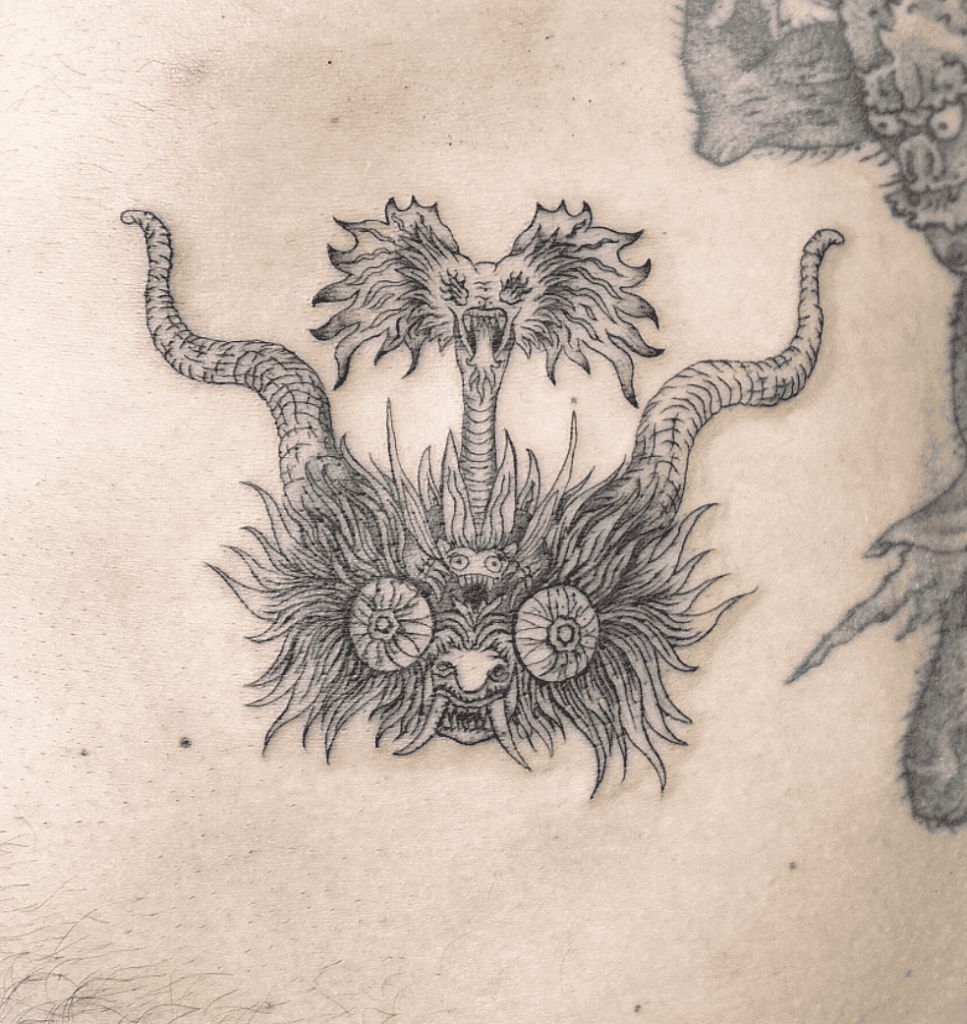
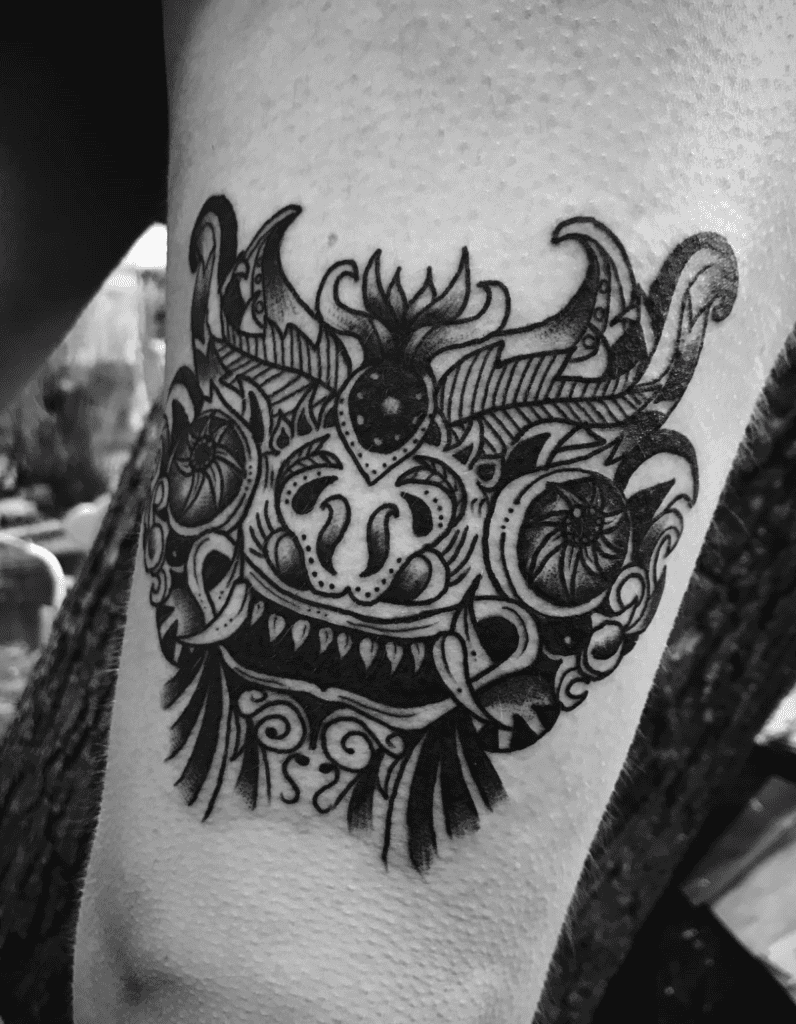
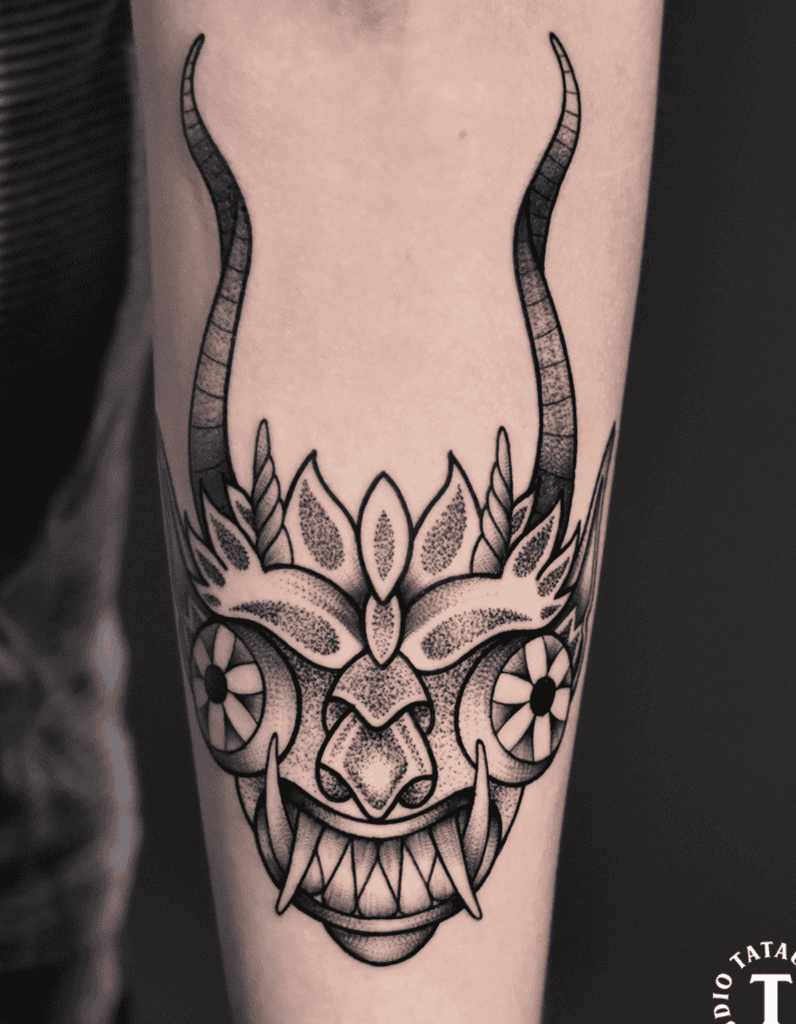
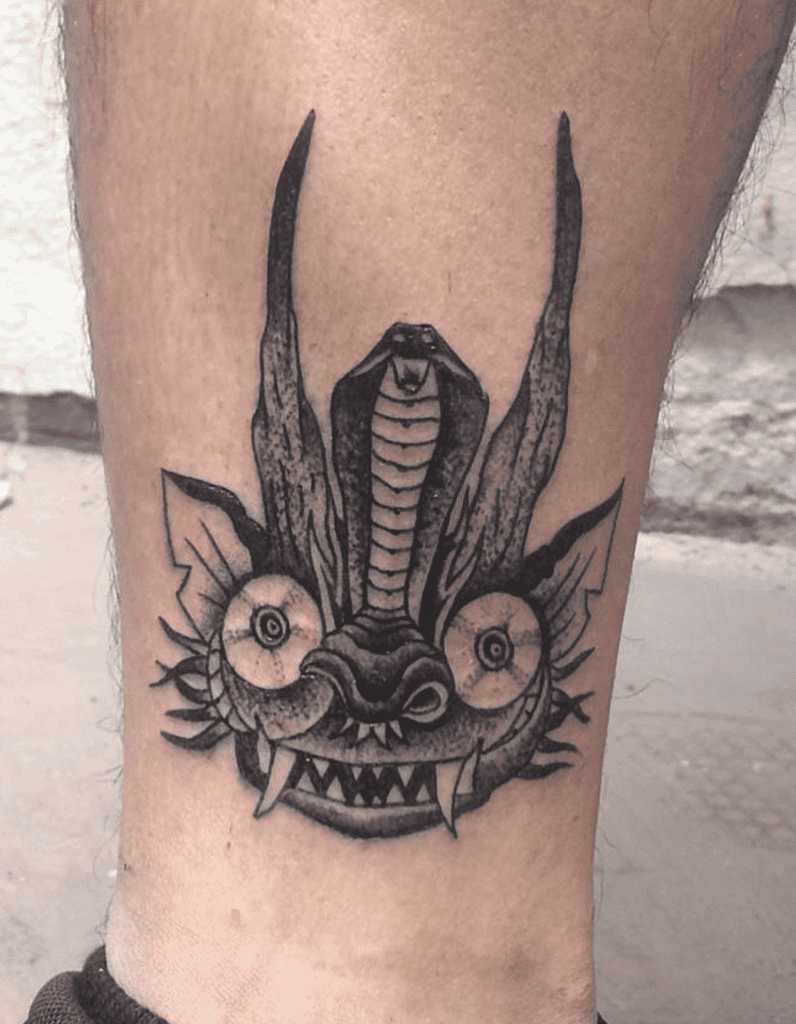
Supay is the god of the underworld known as Ukhu Pacha, which was believed to be the inner world beneath the earth. Supay wasn’t evil, and a guardian of the dead, a keeper of spirits, and a force of balance in the cycle of life and death. Death, to the Incas, wasn’t the end and was simply another part of existence.
Ukhu Pacha wasn’t just a place of darkness, but was rather a realm connected to ancestors and spirits, seeds and growth beneath the soil, and home to creatures like the serpent Amaru. His realm wasn’t just about endings; it was also about beginnings.
Supay was feared, but also respected. People believed he could bring misfortune or illness if angered by influencing spirits that crossed between worlds. Because of this, the Incas made offerings to keep him appeased and maintain harmony.
After Spanish colonisation, Supay’s image changed dramatically. He became associated with the devil in Christian interpretations, garnering a darker, more sinister imagery. However, in traditional Andean belief, Supay is more complex and a necessary part of the universe. Even today, festivals like Diablada (devil dances) still reflect this blend of old and new interpretations.
Amaru Inca Mythology Tattoo
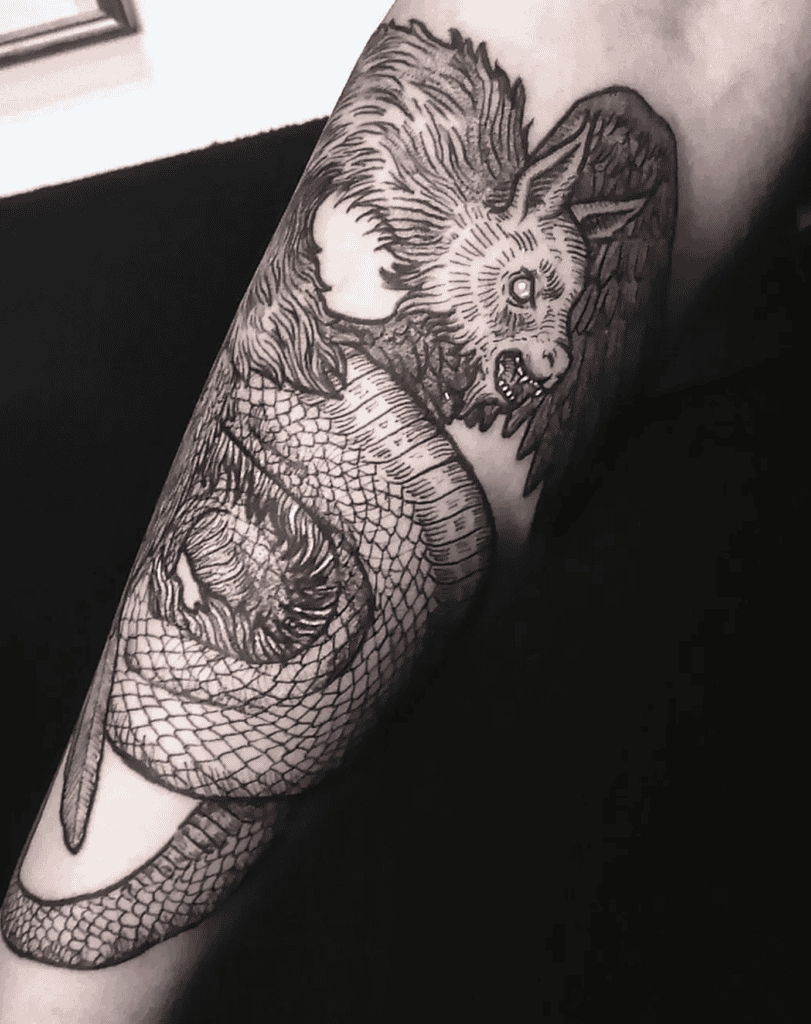
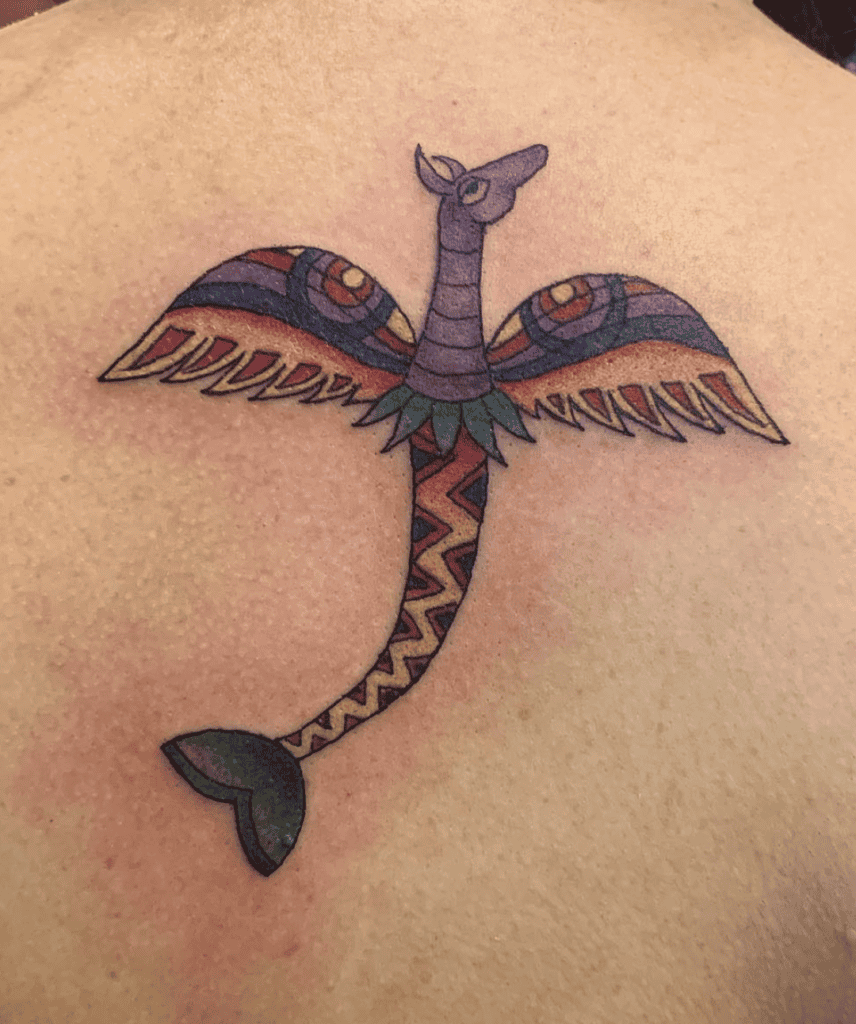
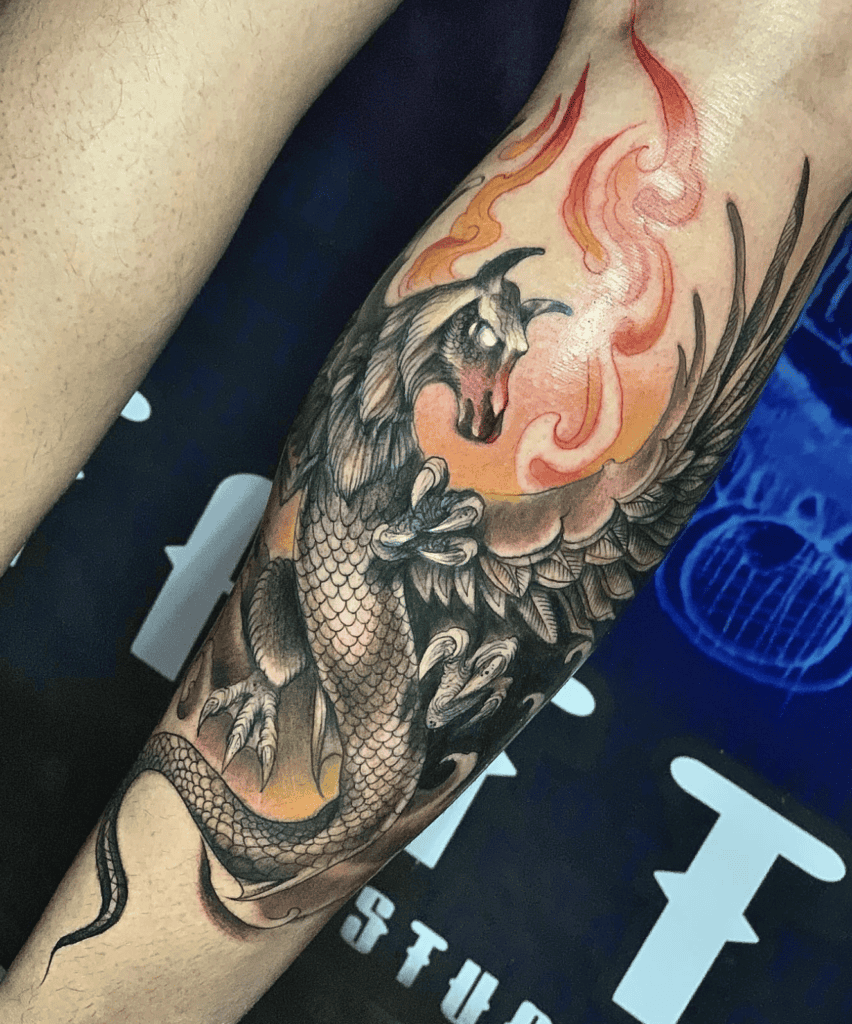
Amaru is a mythical serpent-like being that bridges worlds, symbolises transformation, and carries a powerful, almost dragon-like presence. It is typically described as a giant serpent or dragon, sometimes with multiple heads or features of different animals, such as a llama or puma.
Rather than being just a monster, Amaru is a symbol of power, movement, and change, being something ancient and deeply tied to the unseen parts of the world. It is believed to move between Ukhu Pacha, the earthly world, Kay Pacha, and sometimes, even touches the heavens.
Kuntur Inca Mythology Tattoo


Kuntur (the Andean condor) is one of the most powerful symbols in Inca mythology, representing the sky, freedom, and a connection to the divine. It’s a sacred animal believed to act as a messenger between worlds, especially between humans and the gods.
Because it flies higher than almost any other bird, the Incas saw it as a creature that could reach the heavens, called Hanan Pacha. Kuntur represents the upper world, known as Hanan Pacha and was believed to carry prayers to the gods, act as a spiritual guide, and watch over the land from above.
Puma Inca Mythology Tattoo
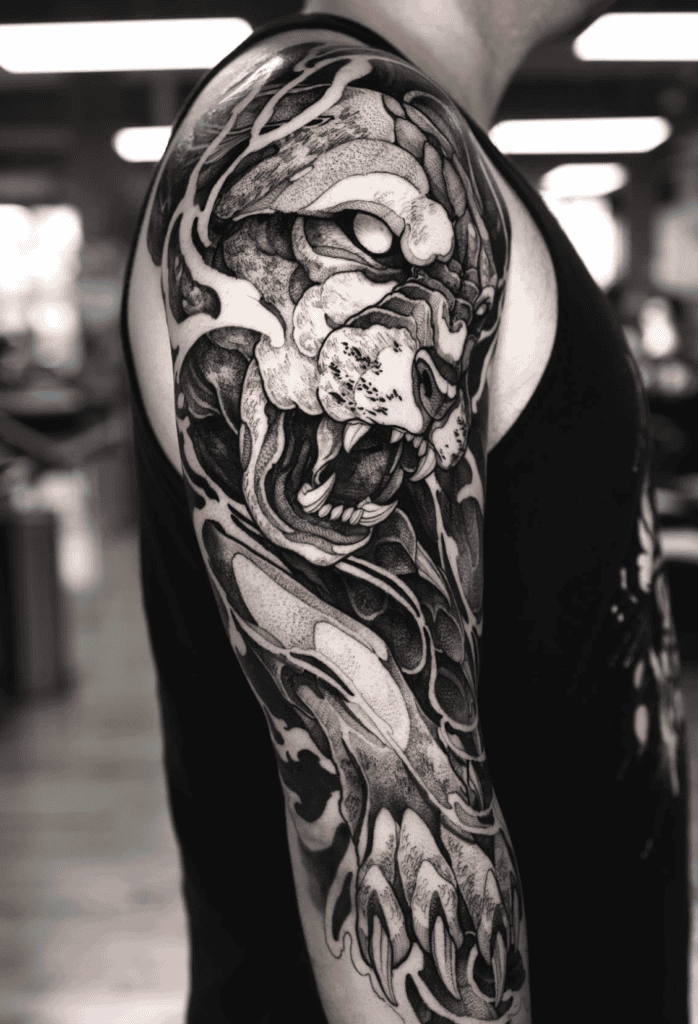
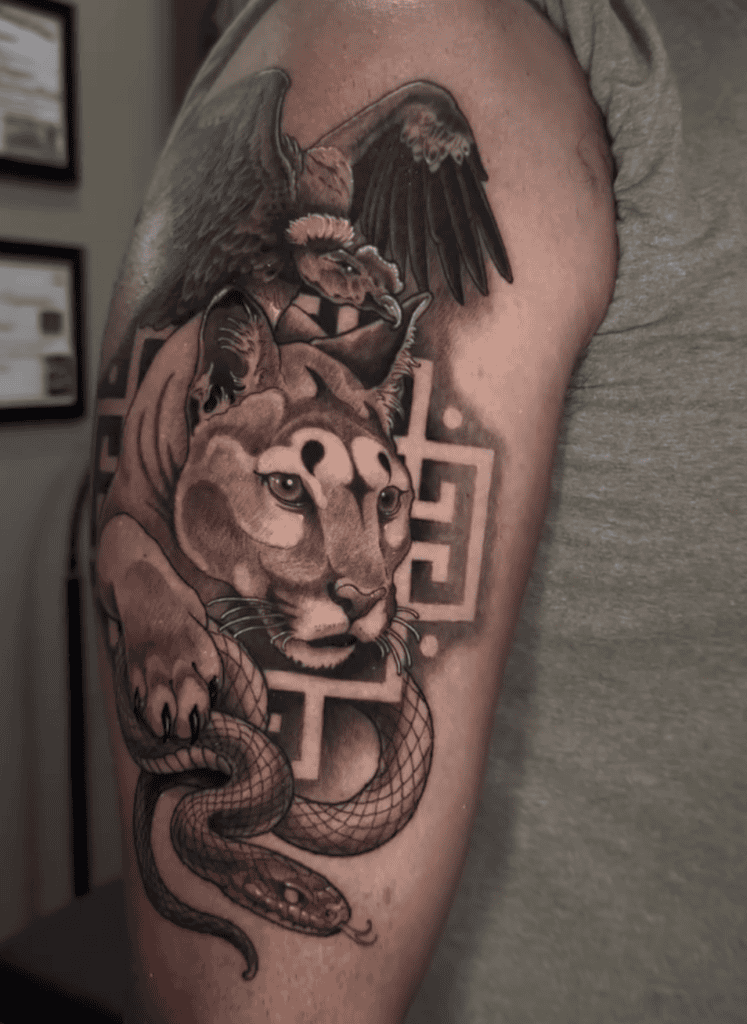
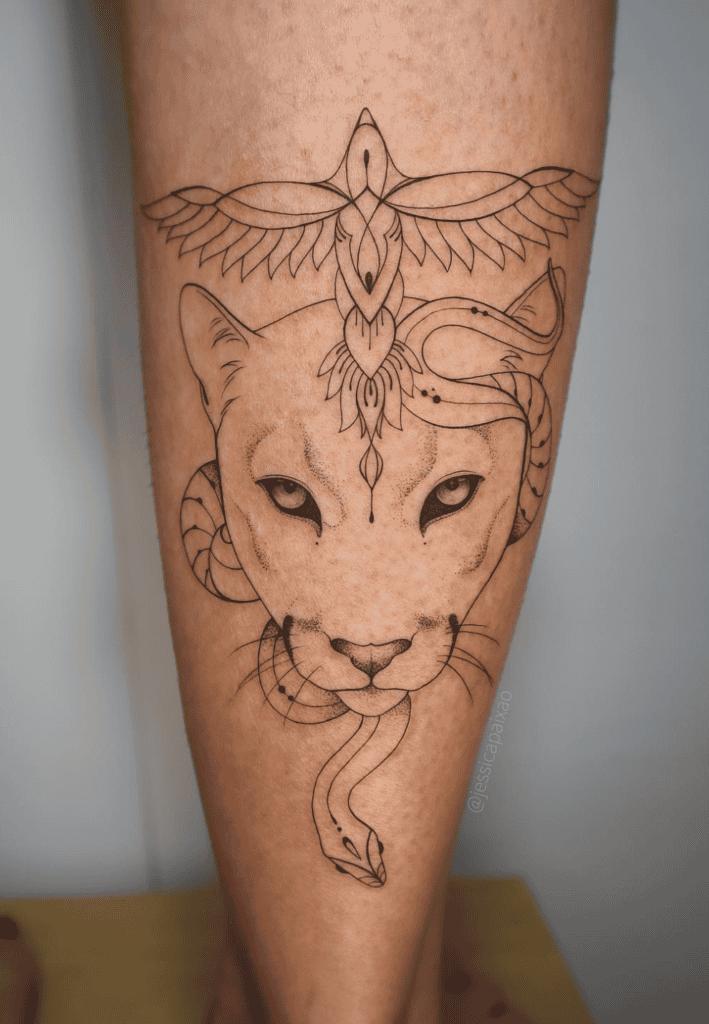
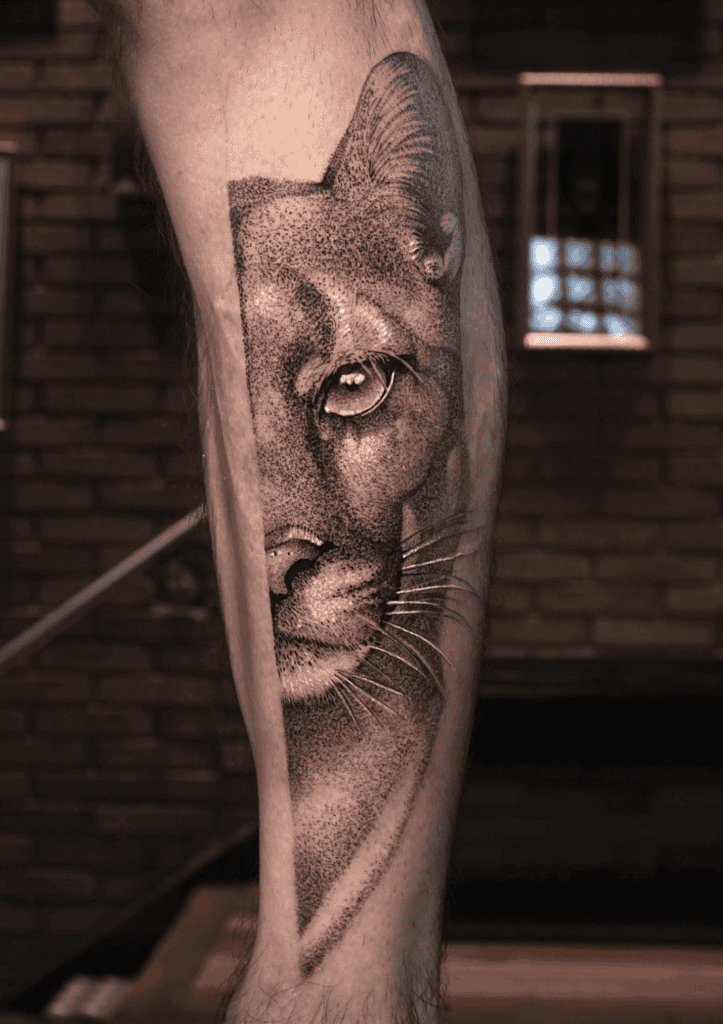
The puma is the last of the three sacred animals in Inca mythology, representing the earthly world, strength, and physical power. In Inca belief, the puma is the guardian of the human world, known as Kay Pacha. While other symbols connect to gods or spirits, the puma represents everyone living, moving, and acting in the world.
The city of Cusco itself was designed in the shape of a puma. The head is the fortress of Sacsayhuamán, the body is the main city, and the tail is the merging rivers. It was intentional, showing how deeply the puma symbolised power, protection, and identity.
Ukuku Inca Mythology Tattoo

Ukuku is a mysterious being that is part human, part bear, and deeply connected to mountains, spirits, and sacred traditions. It is often described as a half-man, half-bear (or spectacled bear) creature that was a guardian of sacred mountains, a protector of spiritual spaces, and a being who can move between the human world and the spirit world
Ukuku is especially tied to the high Andes, which were places seen as sacred and powerful. He is believed to watch over glaciers and mountain peaks, protect pilgrims and rituals, and keep balance between humans and nature. In some traditions, only those chosen or worthy can take on the role of Ukuku.
Ukuku is still alive in modern Andean culture as during the Qoyllur Rit’i festival in Peru, men dress as Ukukus in thick, bear-like costumes, act as guardians and spiritual protectors, and climb glaciers at night as part of sacred rituals.
Ñusta Inca Mythology Tattoo


Ñusta isn’t a single goddess or creature, but a title and a spiritual concept. In the Inca world, a Ñusta was a princess or noblewoman, believed to have a sacred connection to the gods and to nature itself.
“Ñusta” was used to refer to Incan princesses, especially those of royal blood. Because Inca rulers were considered descendants of Inti, this meant Ñustas were seen as divine or semi-divine figures who were closely connected to the spiritual world.
Over time, Ñusta also became associated with female spirits tied to nature. In Andean folklore, a Ñusta could represent a spirit of flowers or rivers, a guardian of natural beauty and fertility, and a symbol of grace, elegance, and harmony.
Manco Cápac and Mama Ocollo Inca Mythology Tattoo

Manco Cápac and Mama Ocllo were the Inca culture-bringers, sent to guide humanity out of chaos and into civilisation. According to Incan myth, both Manco Cápac and Mama Ocllo were children of the Sun God, Inti.
Seeing that humans were living without knowledge or structure, Inti sent them to Earth with a mission to teach people how to live properly. They were given a golden staff and told to travel until they found the perfect place where it would sink into the earth, which would become the centre of their new civilisation.
After a long journey through the Andes, the staff finally sank into the ground in a fertile valley. That place became Cusco, the heart of the Inca Empire, and from there, they began building what would become one of the most powerful civilisations in South America.
Manco Cápac taught men how to build homes, farm the land, and create laws and structure society, becoming the first Sapa Inca (emperor). Mama Ocllo taught women how to weave and create clothing, manage households, and support community life.
Andean Cross Inca Mythology Tattoo
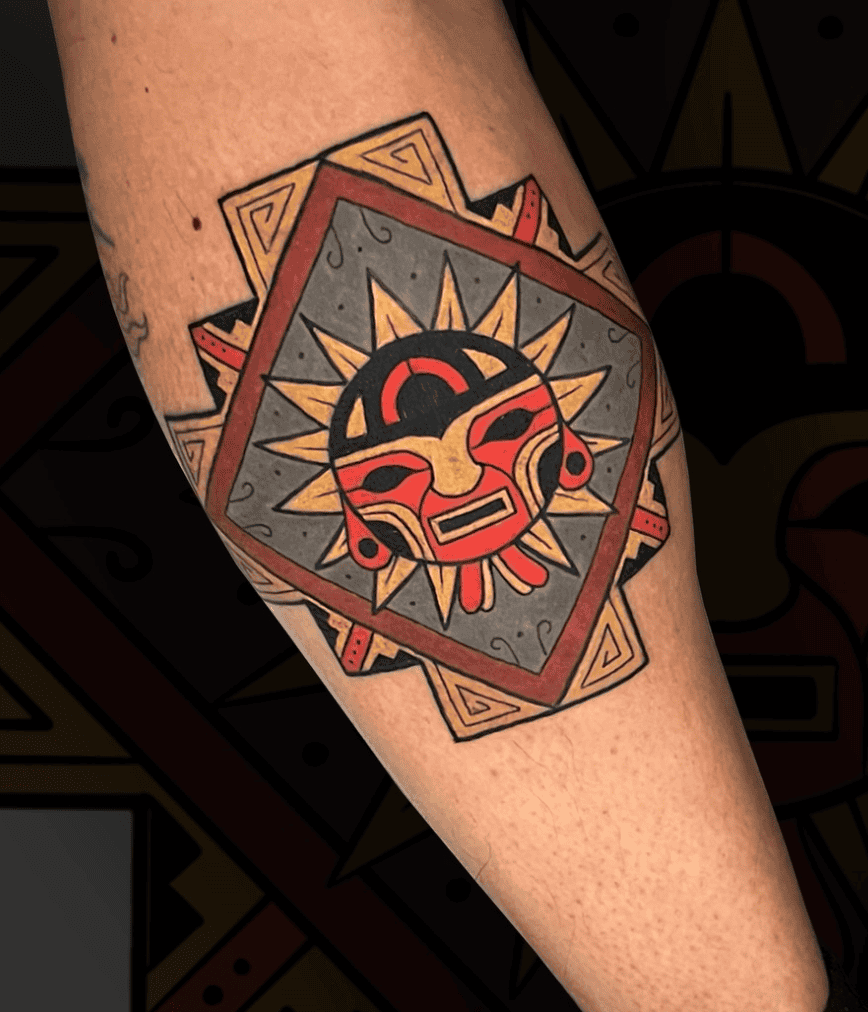
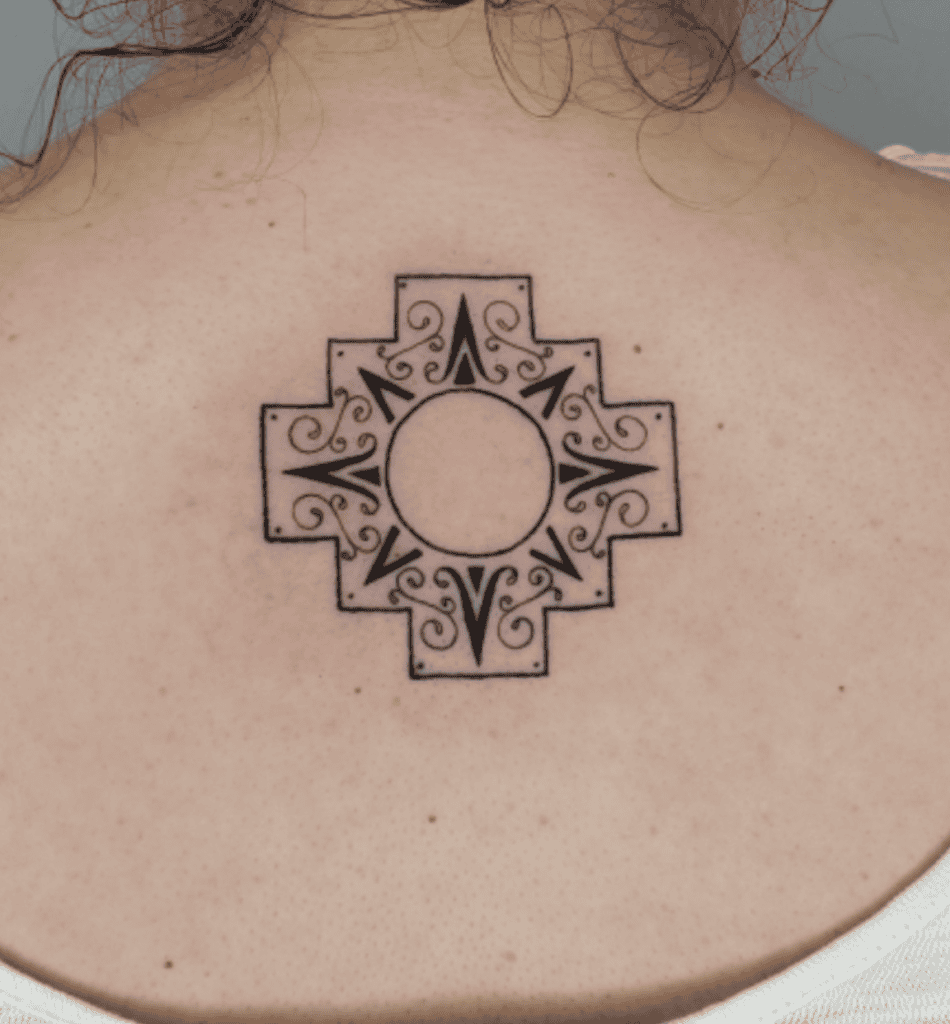
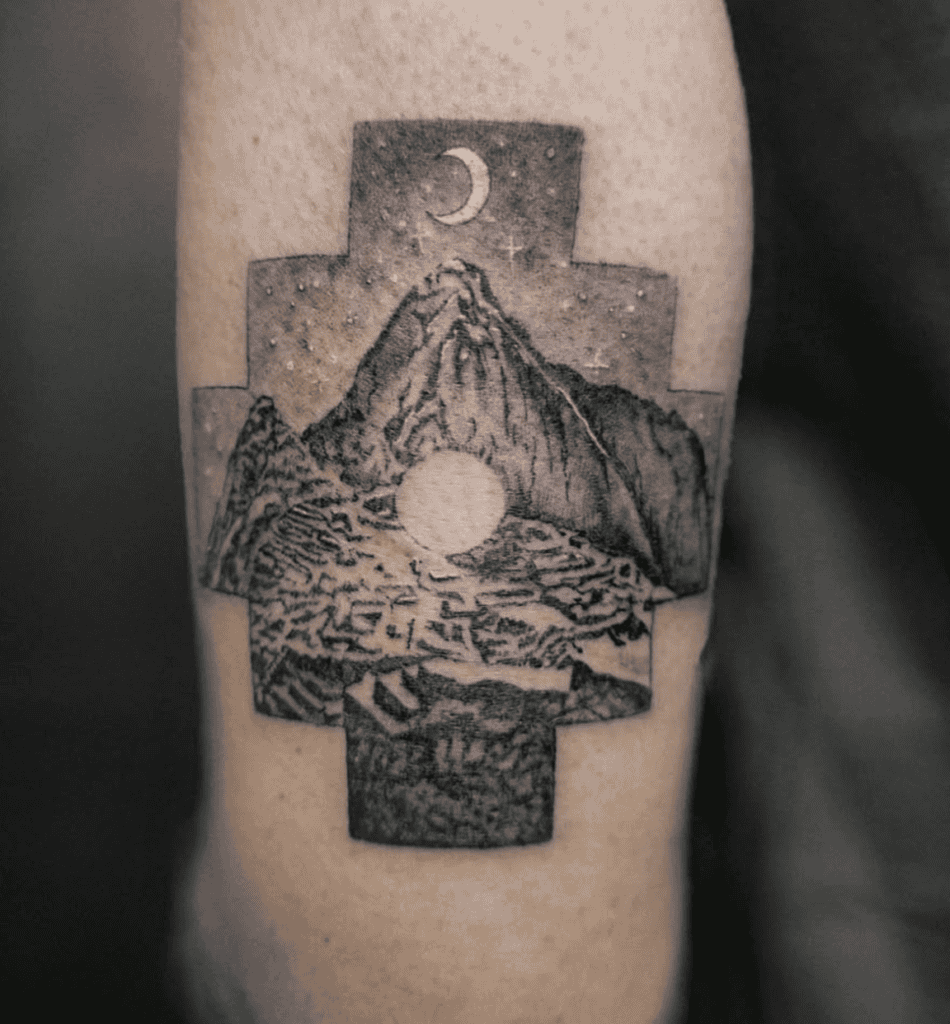
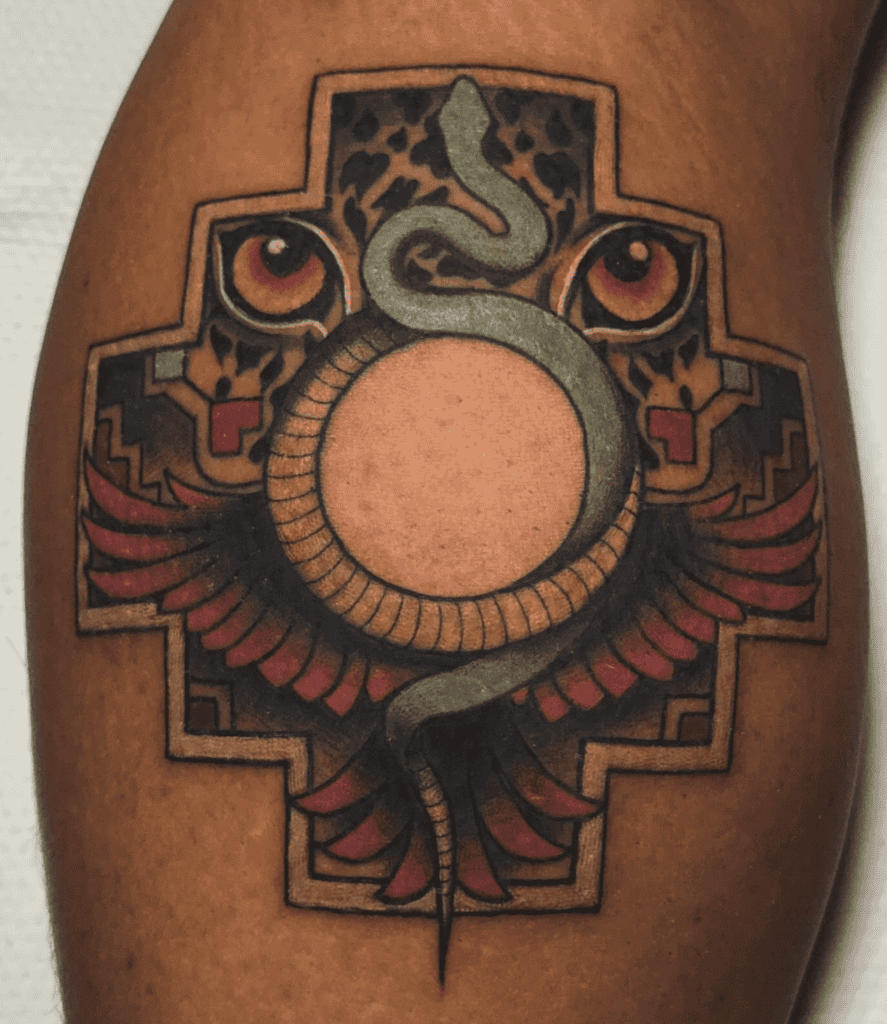
The Andean Cross, also known as the Chakana, is one of the most powerful and recognisable symbols in Inca culture. It is a stepped, symmetrical cross with a hole in the centre, which represents the structure of existence itself. Its design reflects how the Incas understood the world, combining cosmology, nature, and balance into one symbol.
The Chakana is most famous for representing the three levels of Incan reality, Hanan Pacha, Kay Pacha, and Ukhu Pacha, with its stepped shape showing how these worlds are connected, not separate.
The steps represent levels of existence and progression, the centre hole symbolises the origin, the unknown, or a gateway between worlds, and the cross shape reflects balance and harmony in all directions.
Some interpretations also link it to the four cardinal directions, seasons, and cycles of life. More than anything, the Chakana represents balance between heaven and earth, between life and death, and between humans and nature.
Conclusion
Thanks for joining us through Earth, the underworld and the heavenly realms of the Inca Mythology Tattoo Design. We hope you’ve found the inspiration you need to go on your own enlightening quest for the perfect tattoo. But if Inca Mythology Tattoos still don’t inspire you, check out these Christian Mythology Tattoo Ideas, these Aztec Mythology Tattoo Designs, or these Maya Mythology Tattoos.
- Cartoon Tattoo Ideas - September 7, 2026
- Courage the Cowardly Dog Tattoo Ideas - September 3, 2026
- JoJo’s Bizarre Adventure Tattoo Ideas - September 1, 2026