
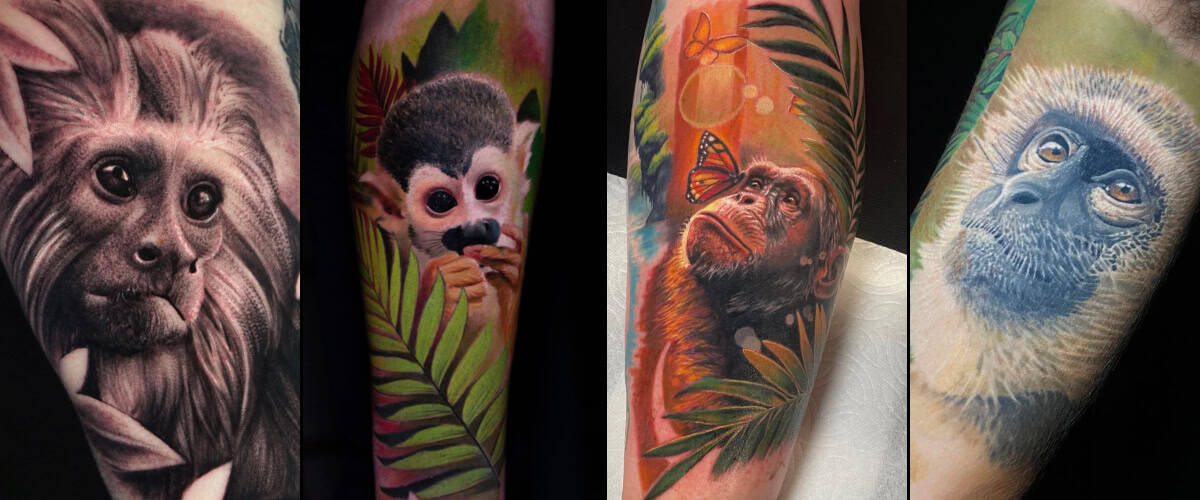
Ape and Monkey Tattoo Ideas

Do you feel like you’re swinging aimlessly through the internet on your search for the perfect Tattoo Clues? Worry not, we’ve got some of the most ape-tastic Monkey Tattoos that aren’t monkeying around.
What does a Monkey and Ape Tattoo mean?
Monkey and ape tattoos can carry a wide range of meanings, often blending playfulness, intelligence, strength, and deeper self-reflection. The exact meaning depends on the type of primate, the design, and the cultural influence behind it.
Monkey tattoos are often associated with curiosity, mischief, and adaptability. They represent a playful and energetic personality, someone who enjoys exploring the world and thinking creatively. Monkeys are also symbols of intelligence and quick thinking, often linked to problem-solving and cleverness.
In some cultures, monkeys carry deeper meaning. In China, they are connected to ambition and success, often influenced by the legend of Sun Wukong, who represents power, rebellion, and transformation. In Japan, monkeys can symbolise protection and wisdom, especially through the “see no evil, hear no evil, speak no evil” philosophy.
Ape tattoos, such as gorillas, chimpanzees, and orangutans, tend to carry stronger and more grounded meanings. They are often associated with strength, leadership, and protection, particularly in the case of gorillas. At the same time, apes represent intelligence, emotional depth, and a close connection to human nature.
Ape tattoos can also symbolise balance—the idea of combining power with calmness, or instinct with control. They often reflect maturity, responsibility, and self-awareness.
Best Primate, Ape, and Monkey Tattoo Designs
Now that we know a little about Monkey and Ape Tattoos, let’s take a look at some of the best Ape and Monkey Tattoos the internet has to offer.
Capuchin Monkey Tattoo
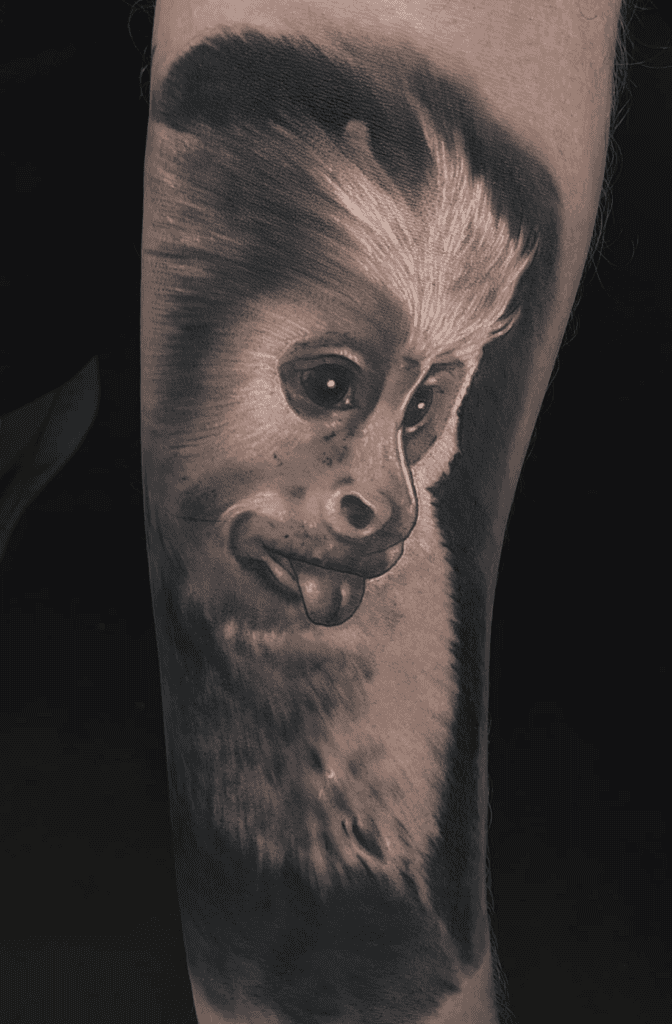
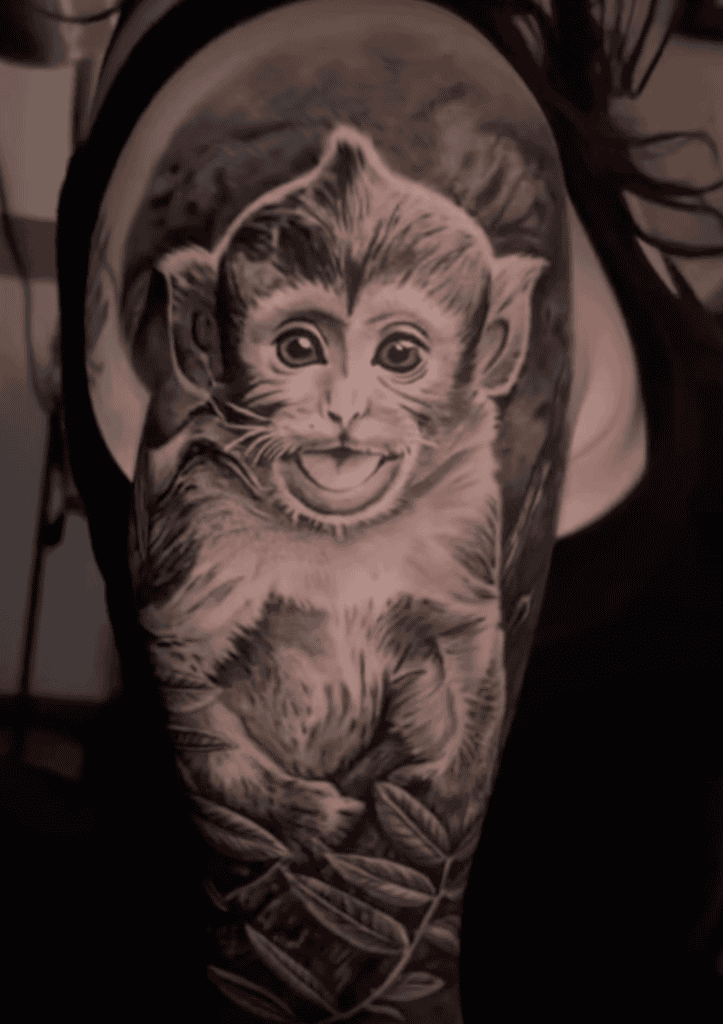
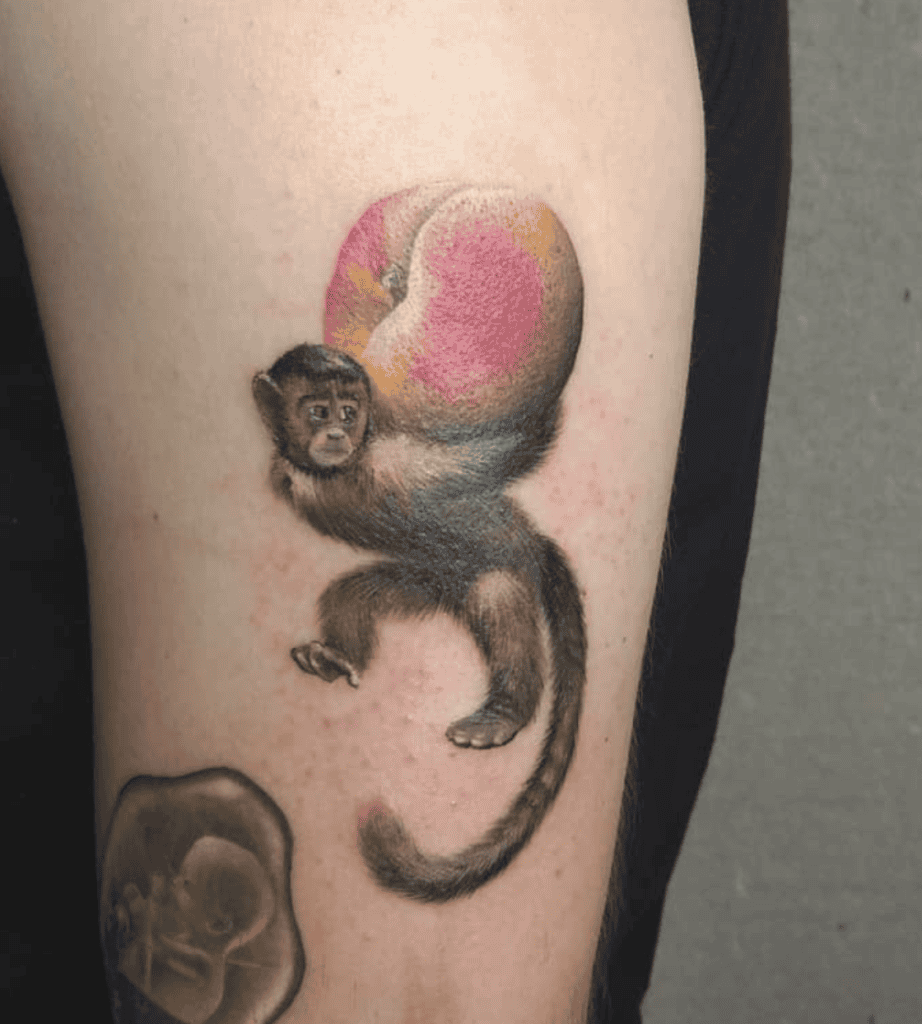
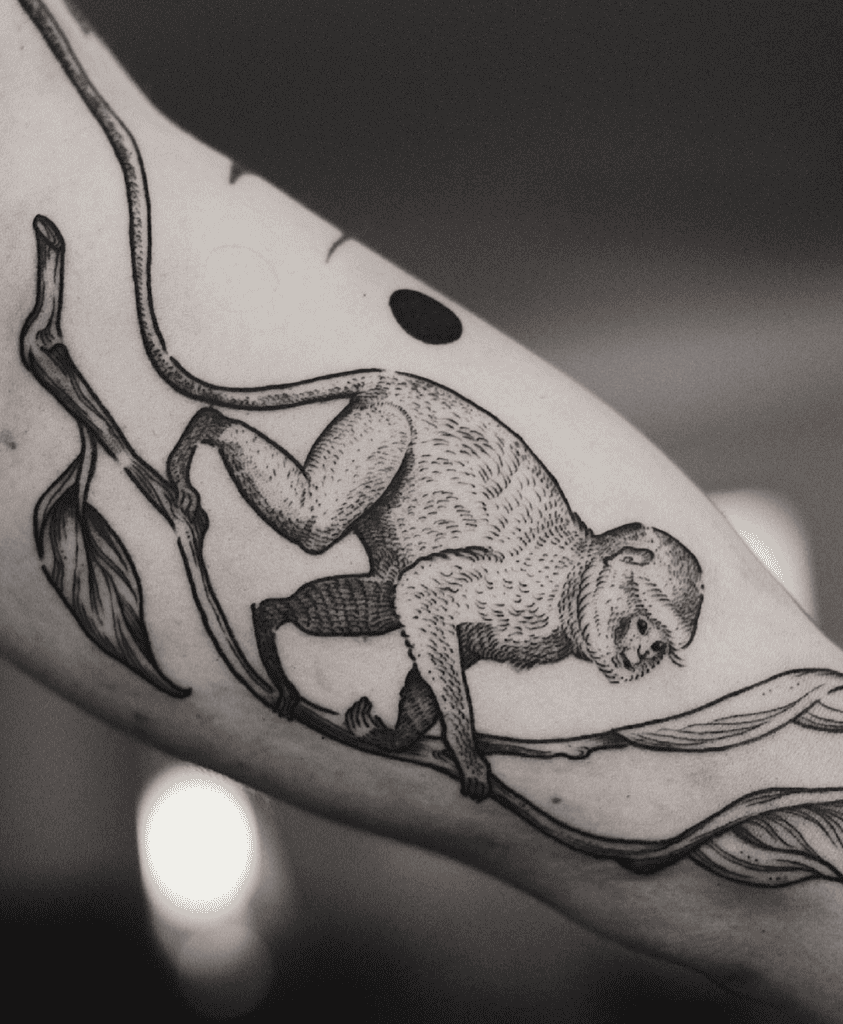
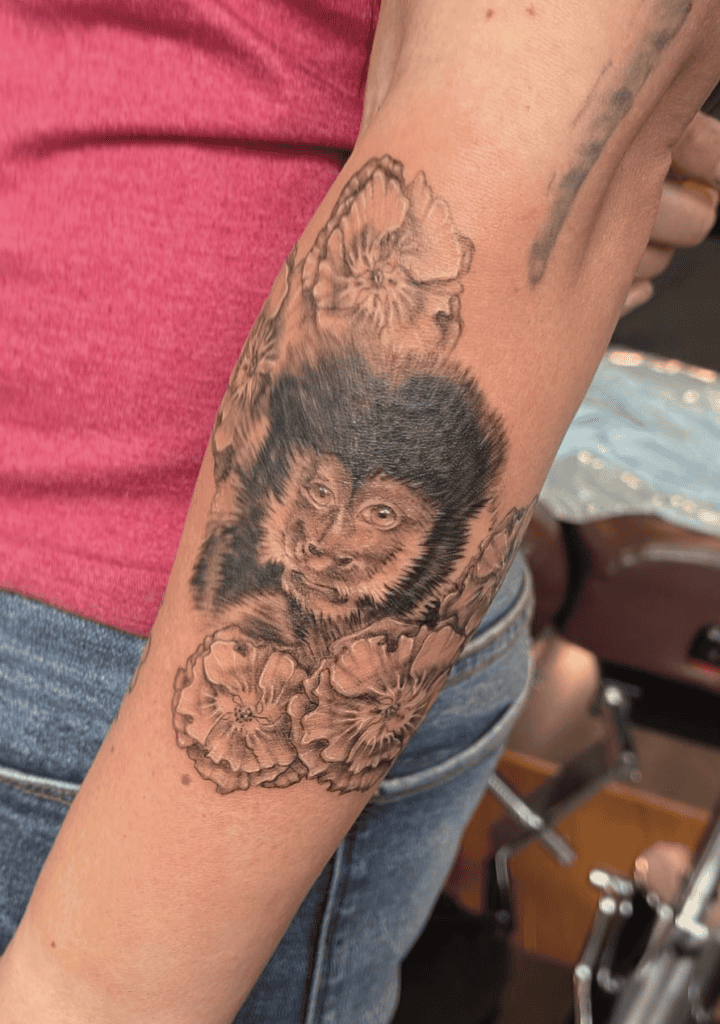
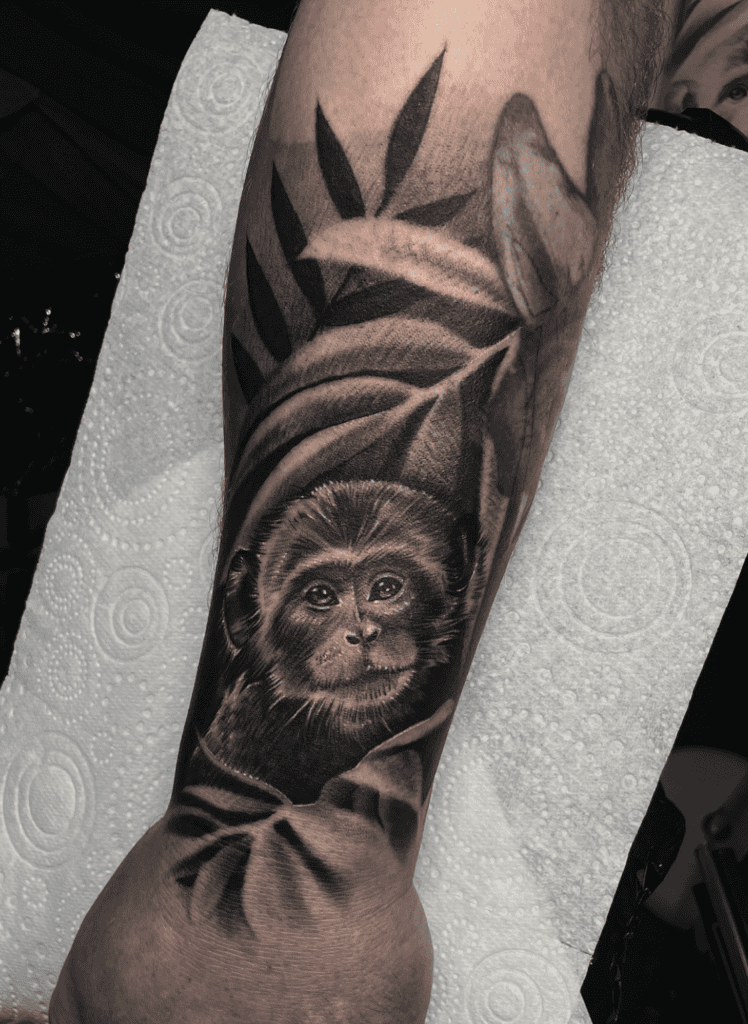
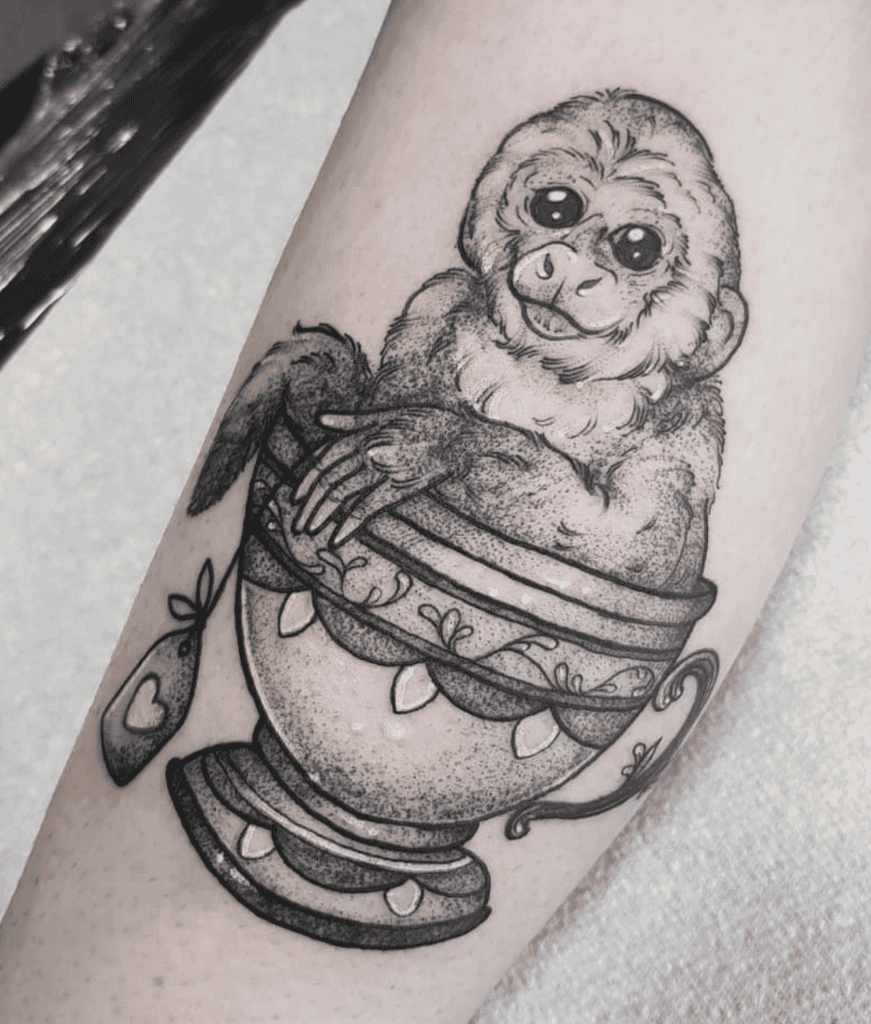
Capuchins are native to the rainforests and jungles across Brazil, Costa Rica, Colombia, and beyond, preferring dense forests but adapting surprisingly well to different environments. They spend most of their time in trees, rarely coming down to the ground.
Capuchins are often considered one of the smartest monkeys in the world. They use tools such as stones to crack nuts, solve problems and learn quickly, and can even be trained to assist humans.Capuchins are highly social, living in groups of 10–35. Curious, playful and mischievous, they have strong social bonds showing behaviours like grooming each other, forming friendships, and establishing group hierarchies.
Capuchins are highly social, living in groups of 10–35. Curious, playful and mischievous, they have strong social bonds showing behaviours like grooming each other, forming friendships, and establishing group hierarchies.
Spider Monkey Tattoo
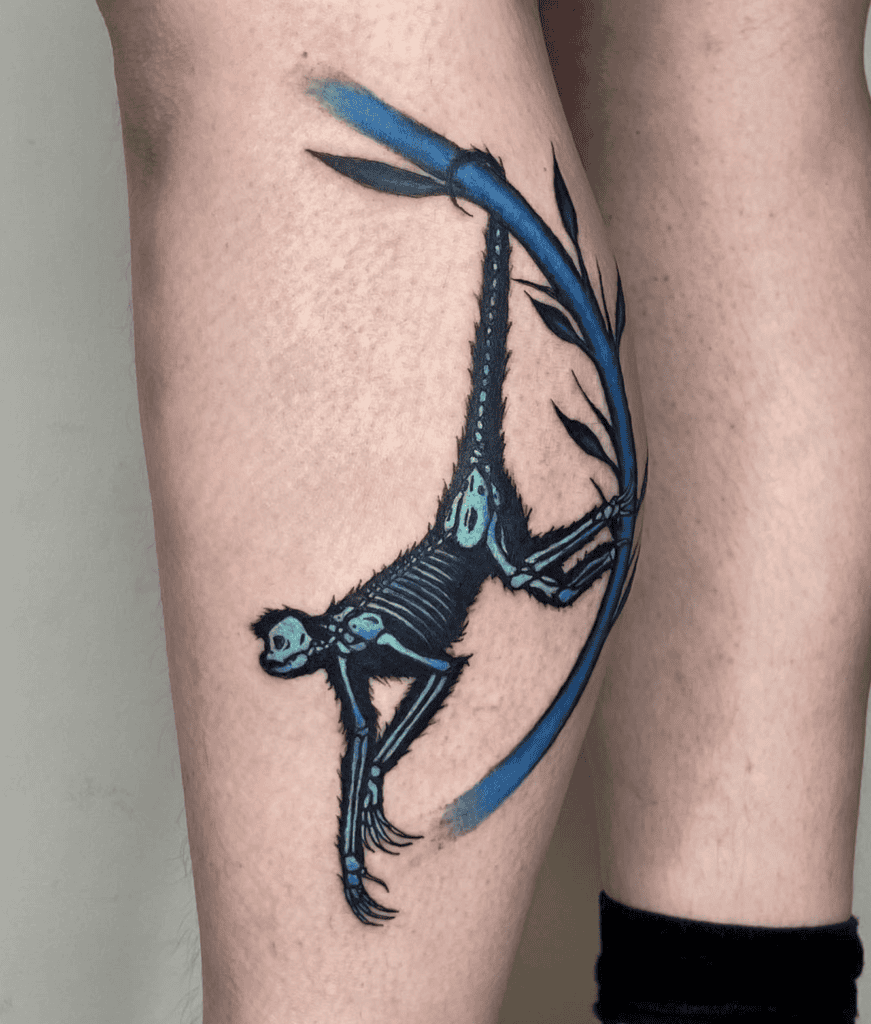
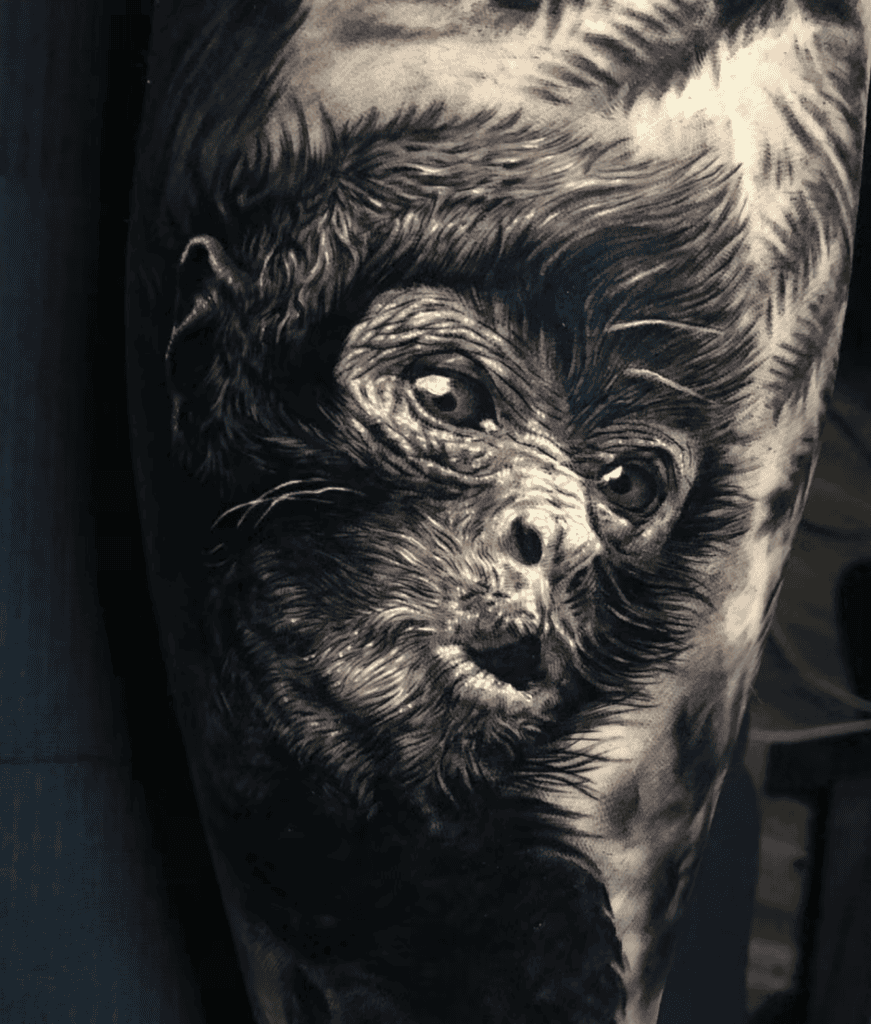
Spider monkeys are native to the tropical rainforests of Mexico, Brazil, Costa Rica, and much of Central and South America. They prefer dense, high-canopy forests where they can move freely through the treetops, rarely descending to the ground.
Spider monkeys are known for their long limbs and prehensile tails, which act almost like a fifth hand. They use their tails to grip branches, swing effortlessly between trees, and even hang while eating, making them one of the most agile primates in the forest.
Spider monkeys are highly intelligent and rely heavily on memory to navigate large forest areas in search of food. They primarily feed on fruit, often travelling long distances each day to find the best feeding spots, and play an important role in spreading seeds throughout their environment.
Spider monkeys are social animals, typically living in groups of 15–30, although these groups often split into smaller subgroups during the day. They communicate using a mix of vocal calls, body language, and movement, maintaining strong social connections even when spread out. Spider monkeys are sensitive and can become stressed if their environment changes. Deforestation and habitat loss have had a significant impact on their populations, making them more vulnerable in the wild.
Howler Monkey Tattoo
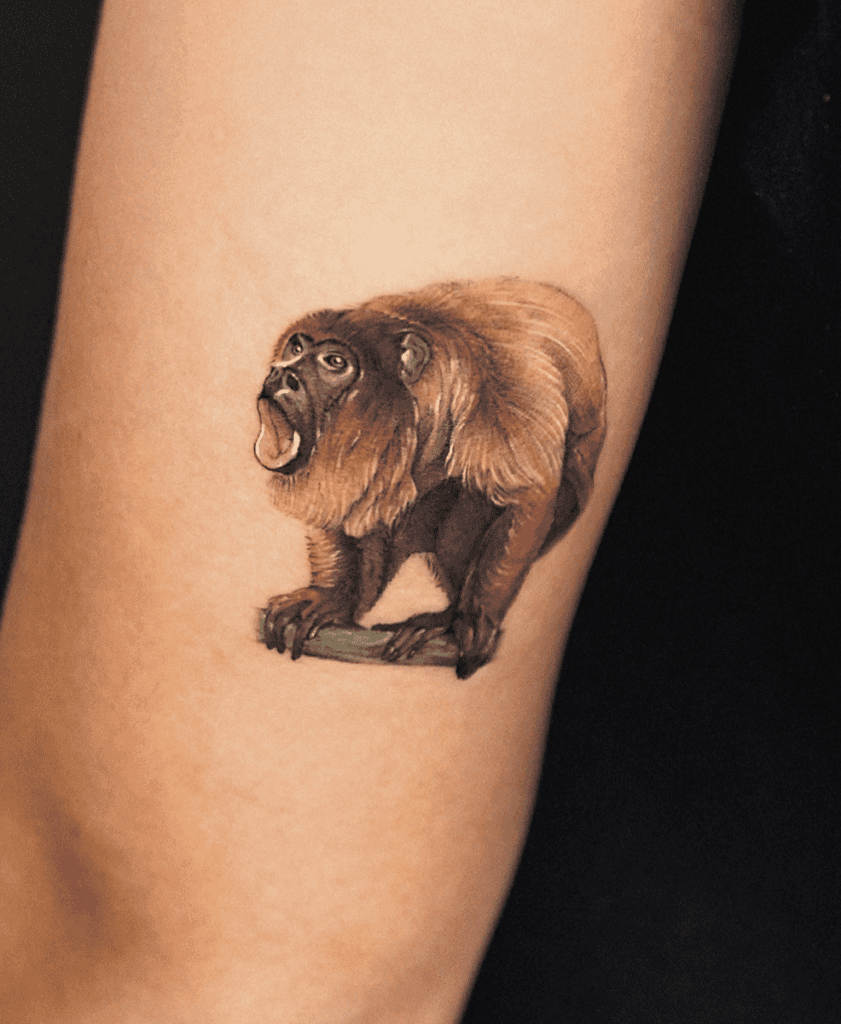
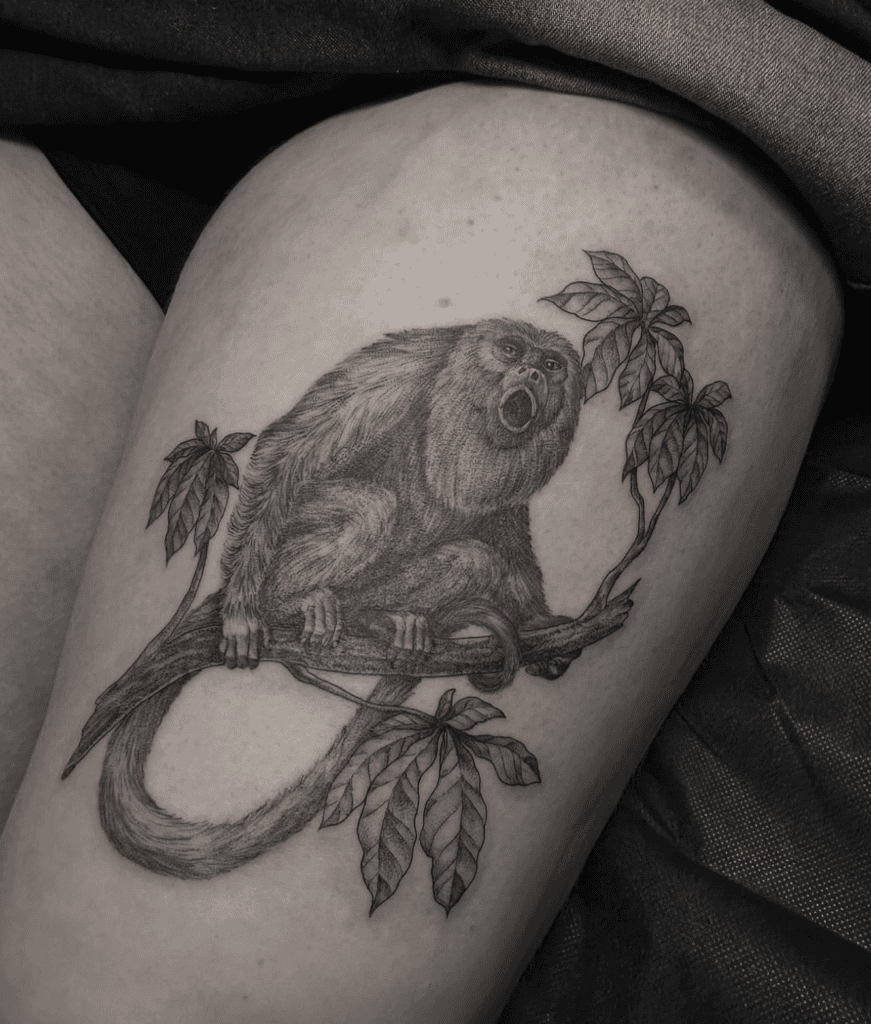
Howler monkeys are native to the rainforests of Brazil, Mexico, Costa Rica, and much of Central and South America. They prefer dense forest canopies near rivers and spend most of their lives high in the trees, rarely descending to the ground.
Howler monkeys are best known for their incredibly loud calls, which can be heard up to 5 kilometres away. These deep, echoing howls are used to communicate with other groups, mark territory, and avoid conflict without physical confrontation.
They have a specialised throat structure, including an enlarged hyoid bone, which acts like a built-in amplifier. This allows them to produce some of the loudest vocalisations of any land animal relative to their size. Howler monkeys are primarily leaf-eaters, with a diet made up of leaves, fruits, and flowers. Because leaves provide less energy than fruit, they tend to move slowly and conserve energy, often resting for long periods throughout the day.
They live in social groups of around 10–20 individuals, maintaining strong group bonds through vocal communication rather than constant physical interaction. Their howls help keep the group connected across the forest canopy. Howler monkeys are generally calm and non-aggressive, relying on sound rather than strength to assert dominance and maintain territory.
Squirrel Monkey Tattoo
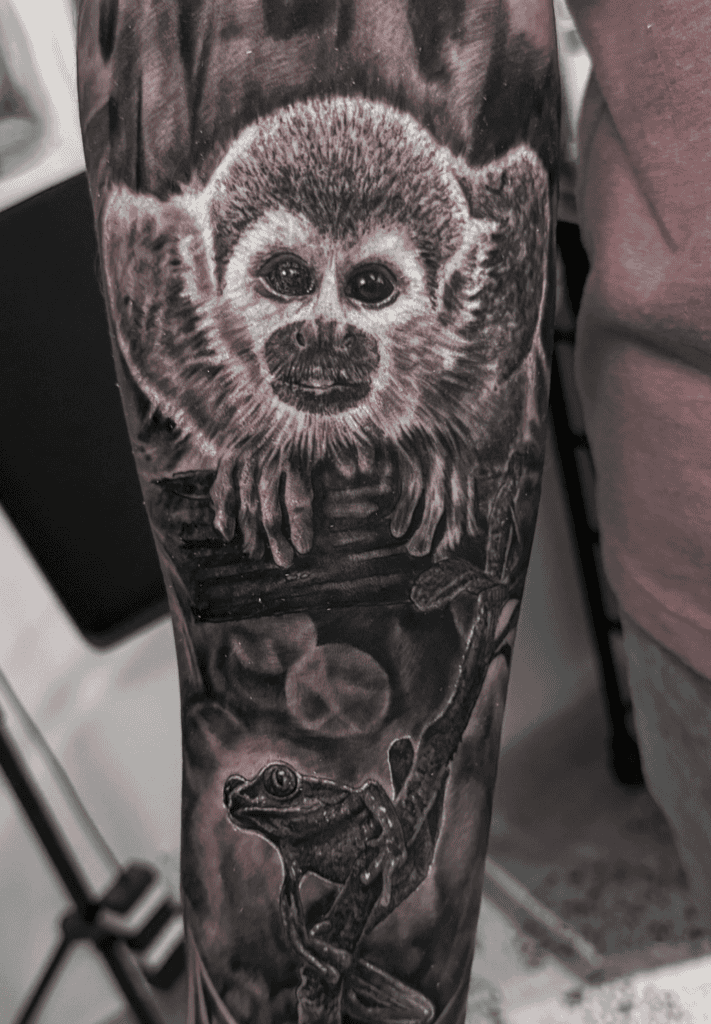
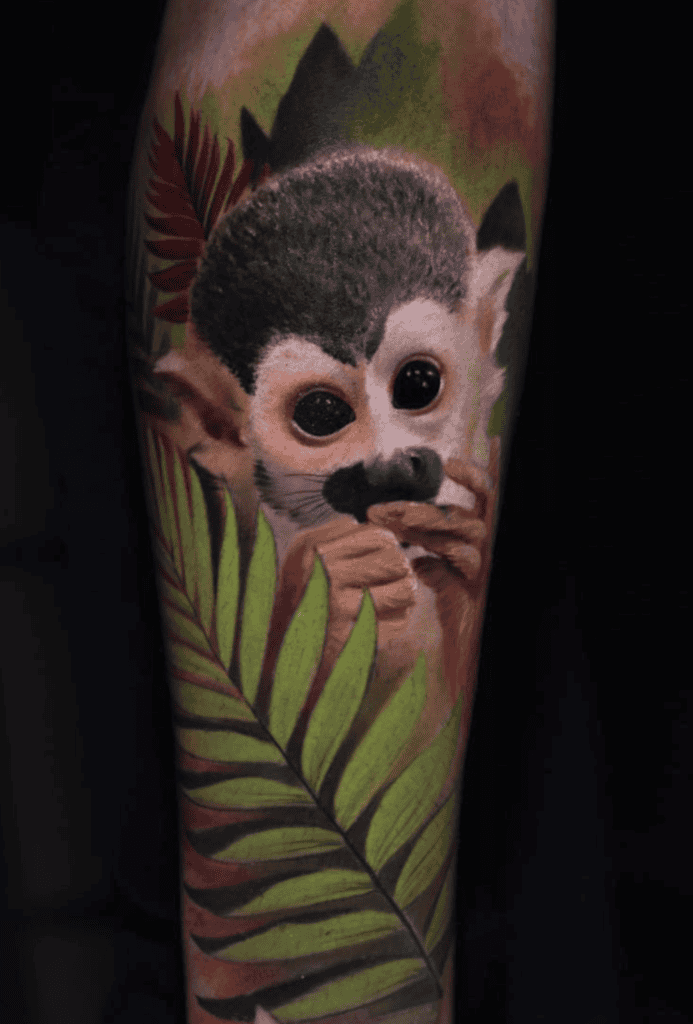
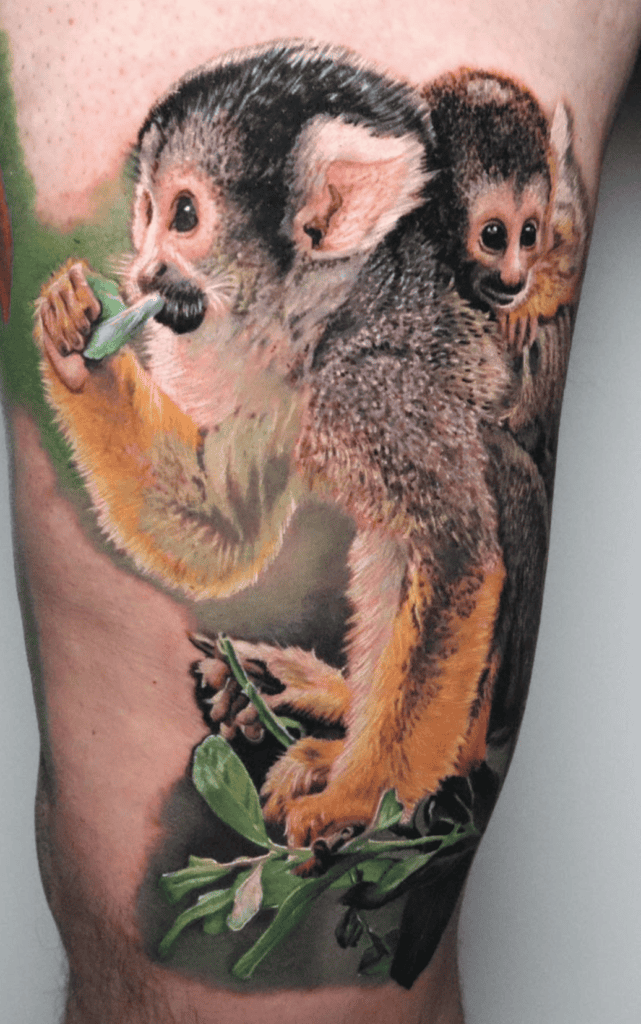
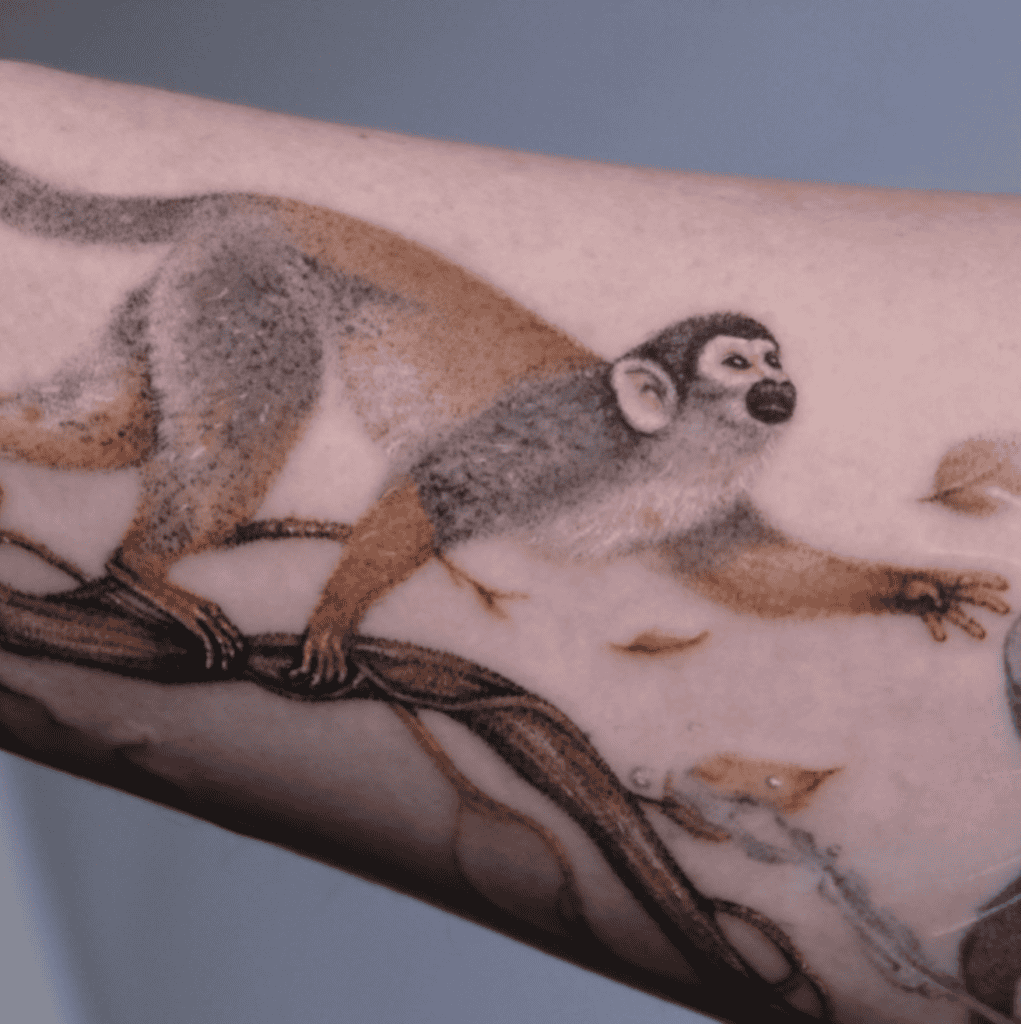
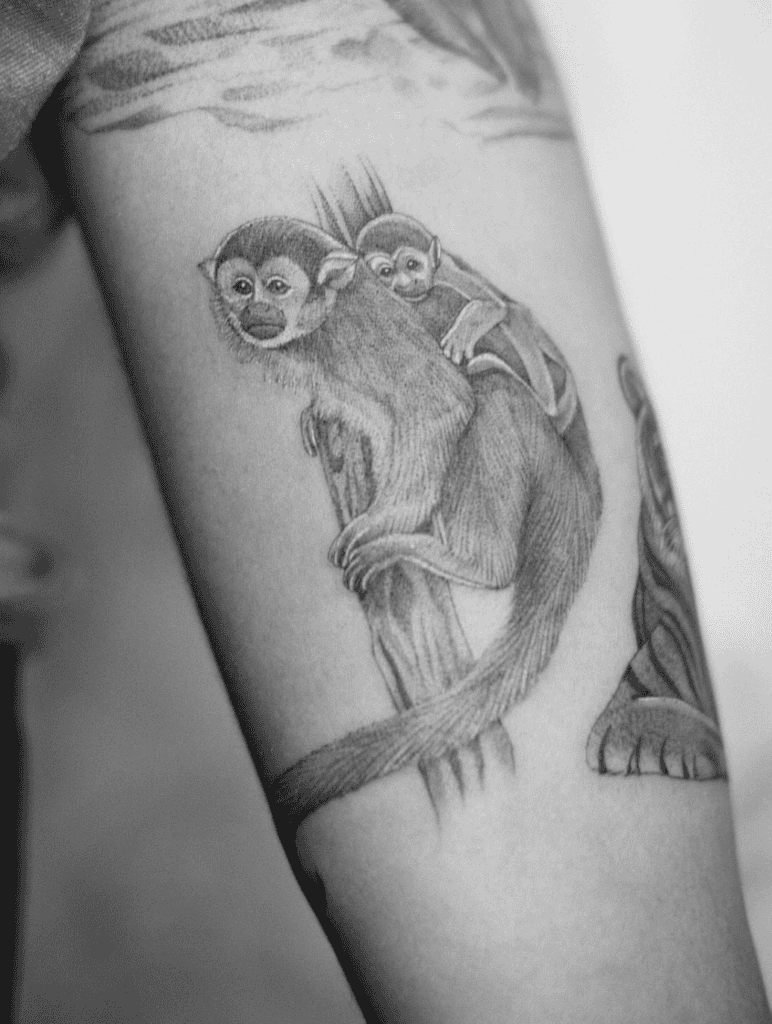
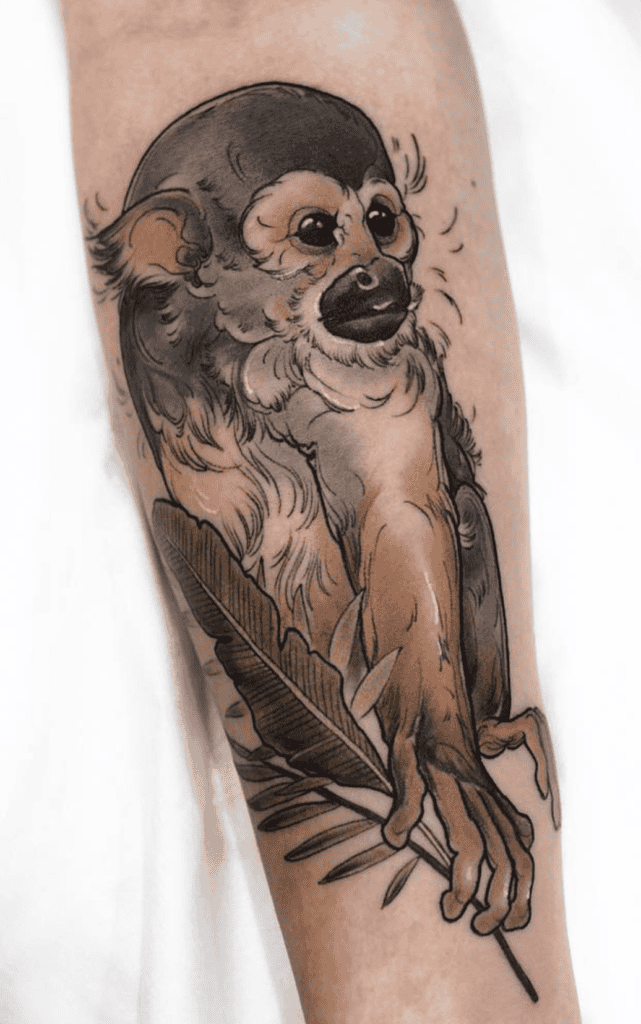
Squirrel monkeys are native to the tropical rainforests of Brazil, Peru, Colombia, and across much of Central and South America. They prefer dense, humid forests near rivers, spending most of their time in the mid to upper canopy and rarely coming down to the ground.
Squirrel monkeys are small, lightweight, and incredibly agile, with long tails that help them balance as they move quickly through the trees. Their large eyes and expressive faces give them excellent vision, helping them spot food and predators in the complex forest environment.
They are among the most social monkeys in the world, often living in large groups of 20–75 individuals. These groups are constantly active, moving, foraging, and communicating throughout the day, creating a lively and energetic presence in the forest canopy. Squirrel monkeys are omnivores, feeding on fruits, insects, seeds, and small animals. They are particularly skilled hunters of insects, using quick movements and sharp coordination to catch their prey.
They are highly intelligent and rely on teamwork and communication to stay safe. Their vocalisations, body language, and group behaviour help them avoid predators and navigate their environment effectively.
Tamarin Monkey Tattoo
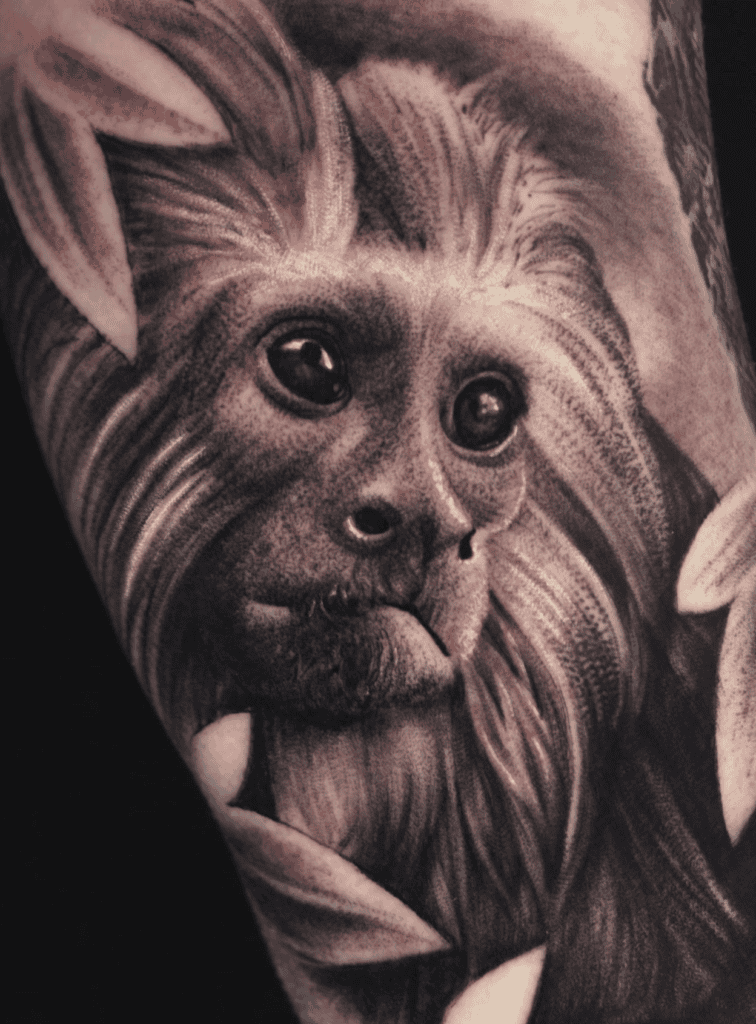
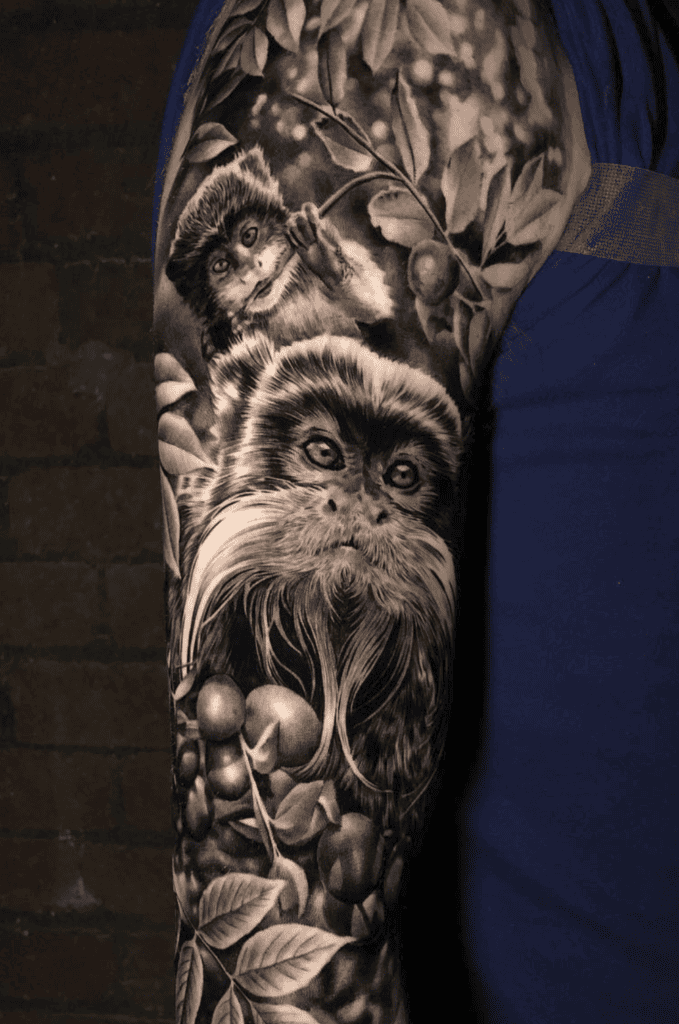
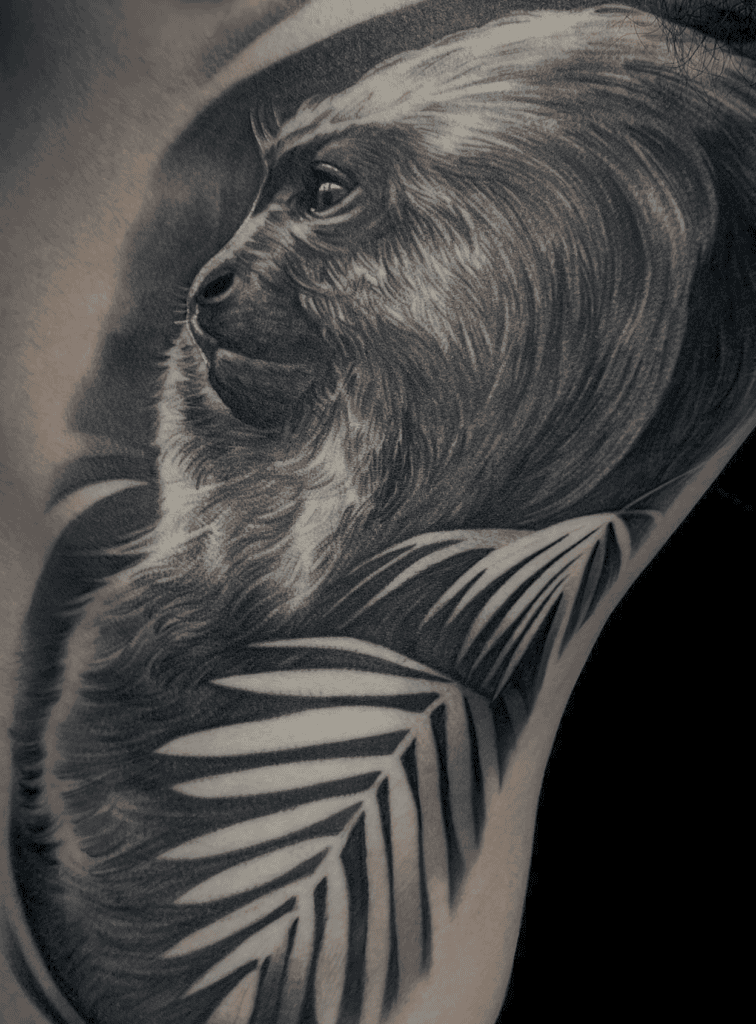
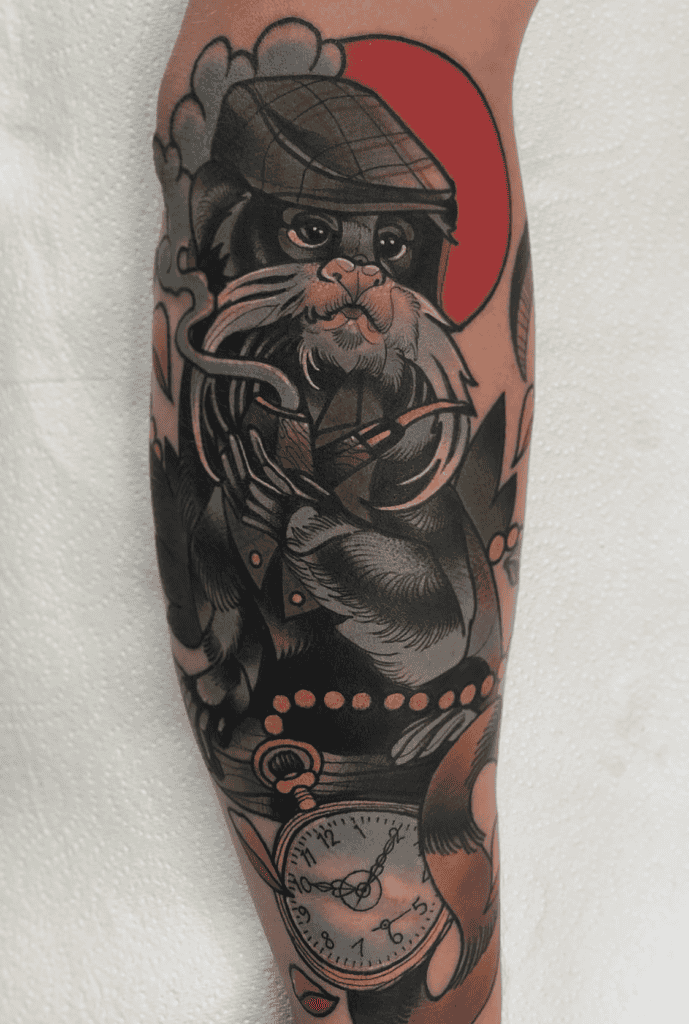
Tamarin monkeys are native to the tropical forests of Brazil, Peru, Colombia, and across parts of Central and South America. They prefer dense, humid forests where they can move easily through the lower and mid-level canopy, rarely coming down to the ground.
Tamarins are small, lightweight monkeys known for their distinctive appearances, often featuring long moustaches, flowing manes, or striking facial markings. Species like the golden lion tamarin stand out with bright orange fur, while the emperor tamarin is famous for its dramatic white moustache.
They are agile and quick, using their sharp claws rather than flat nails to grip onto tree bark and branches. This allows them to move easily through trees, leap between branches, and cling to surfaces as they search for food. Tamarins are highly social animals, typically living in small groups of 4–15 individuals. They rely on close cooperation within the group, often sharing responsibilities such as caring for young, foraging, and staying alert for predators.
Their diet is varied, consisting of fruits, insects, tree sap, and small animals. They are active foragers, constantly moving through the forest in search of food throughout the day. Tamarins are bold and energetic, using vocal calls and body language to communicate and maintain strong group bonds.
Cotton Top Tamarin Monkey Tattoo
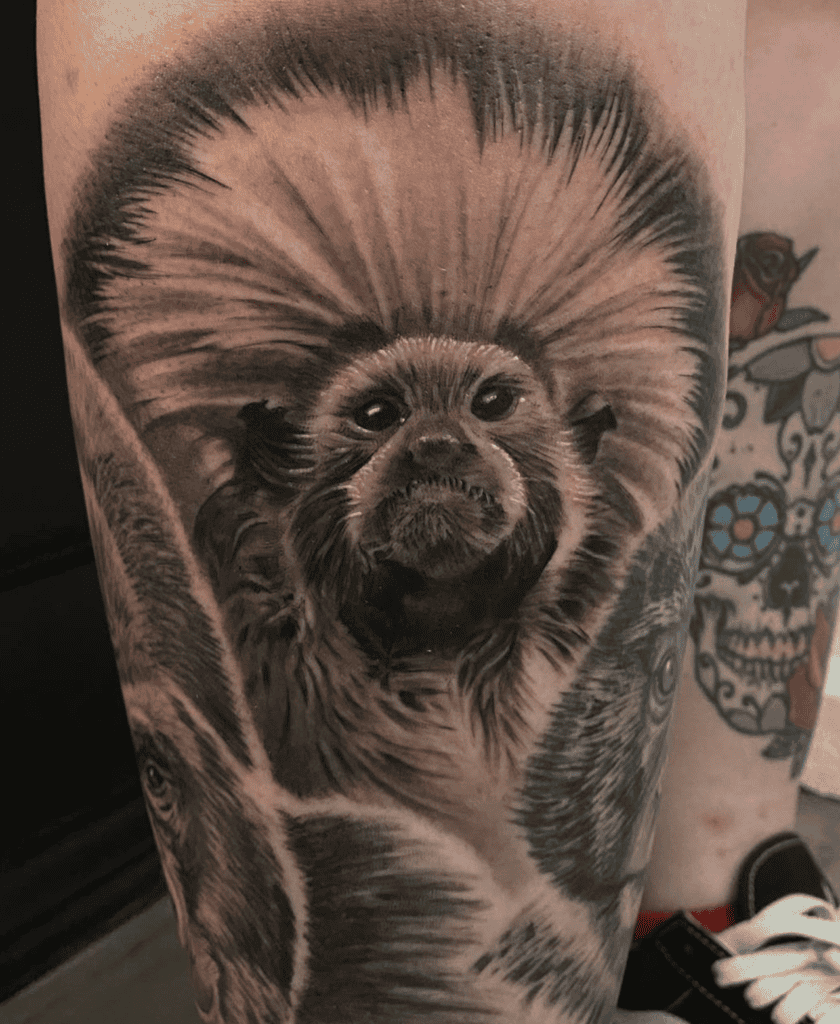
Cotton-top tamarins are native to the tropical forests of Colombia, where they live in dry forests, rainforests, and forest edges. They prefer dense vegetation that provides plenty of cover, spending most of their time in the lower levels of the canopy and rarely coming down to the ground.
Cotton-top tamarins are easily recognised by their striking white crest of hair, which stretches from their forehead down to their shoulders. This distinctive “cotton-like” hairstyle gives them their name and makes them one of the most recognisable small monkeys in the world.
They are small and agile, using their claw-like nails to grip onto tree trunks and branches as they move quickly through the forest. Their movements are fast and precise, allowing them to leap, climb, and navigate complex environments with ease.
Cotton-top tamarins are highly social, typically living in groups of 3–9 individuals. They rely on strong cooperation within the group, often sharing responsibilities such as caring for infants, foraging, and watching for predators. They are very vocal and communicate using a wide range of sounds, helping maintain group cohesion and warn of danger.
Marmoset Monkey Tattoo
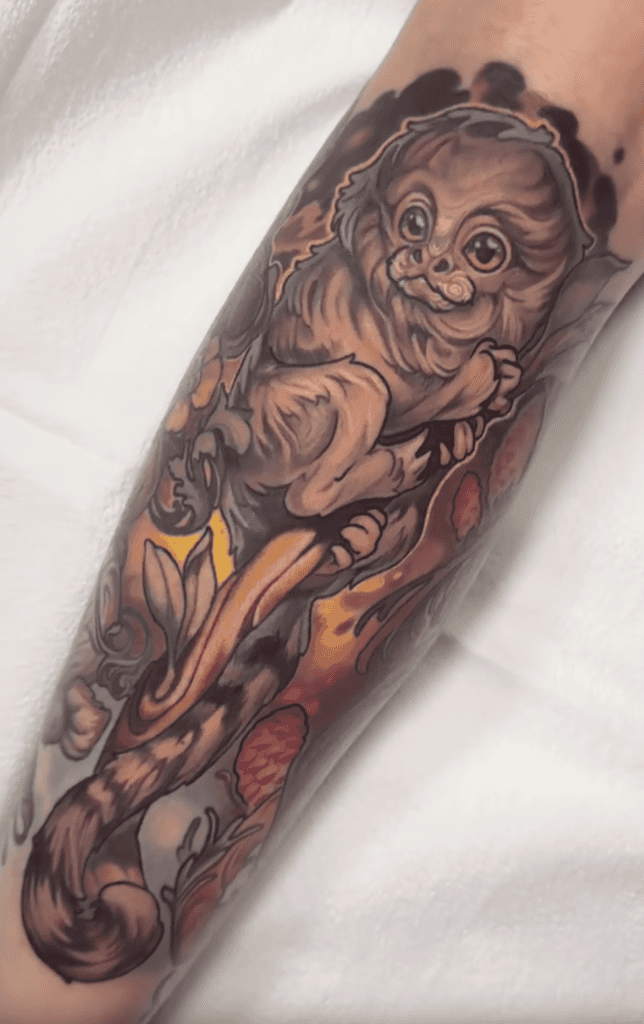
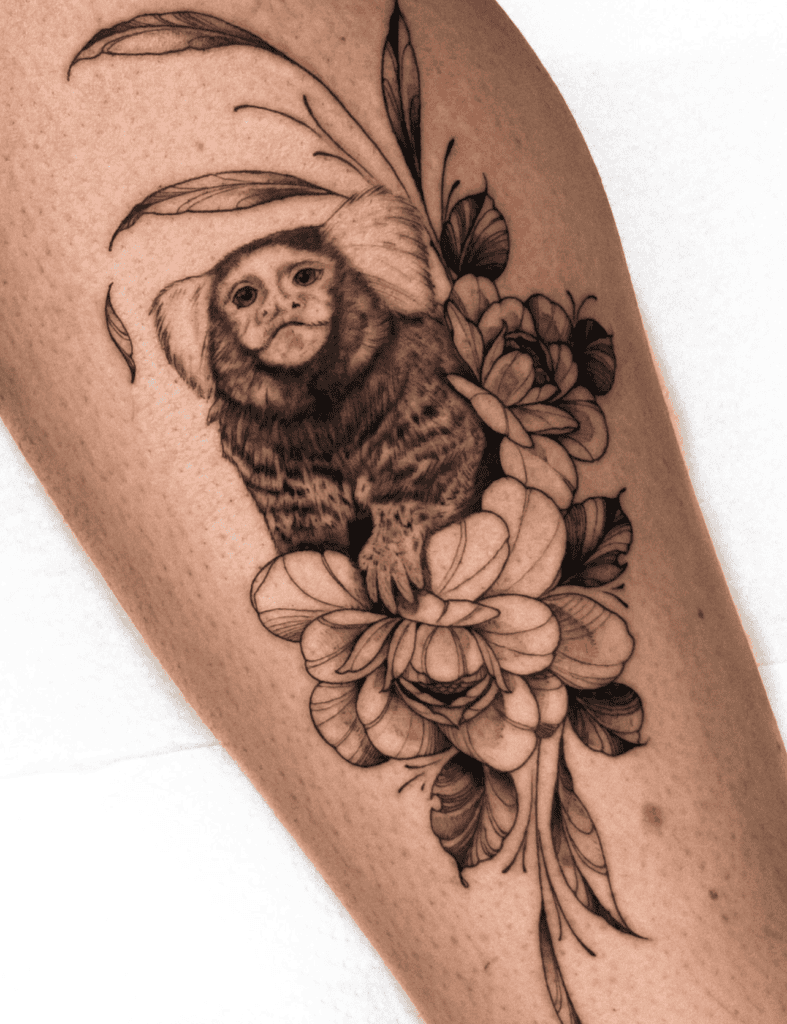
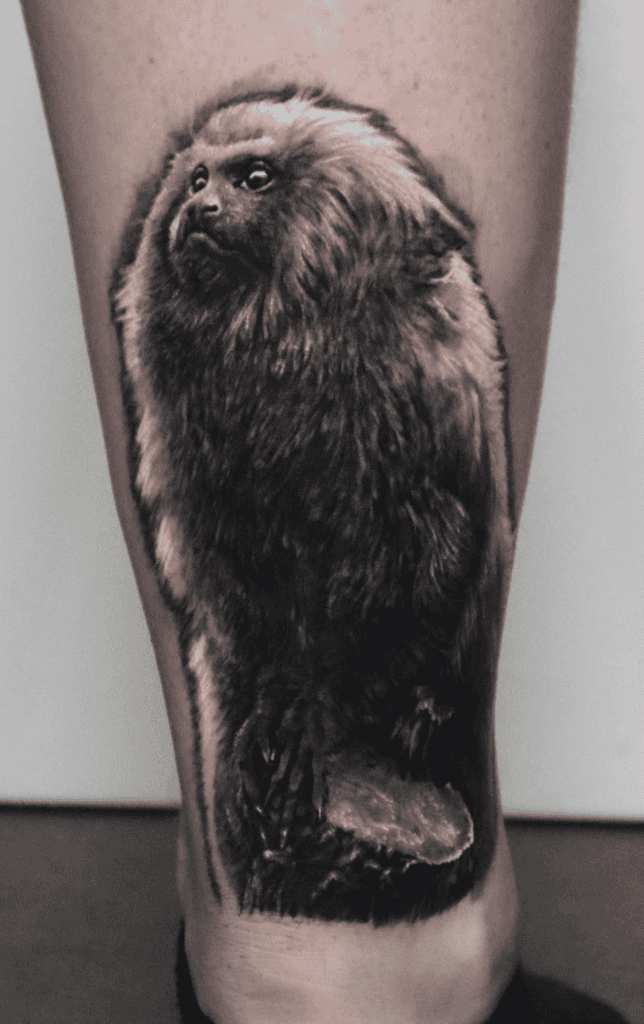
Marmosets are native to the tropical forests of Brazil and across parts of South America. They prefer dense forests and woodland areas, often staying in the lower and middle levels of the canopy where food is easier to access, rarely coming down to the ground.
Marmosets are among the smallest monkeys in the world, with some species like the pygmy marmoset small enough to fit in the palm of your hand. They are known for their soft fur and distinctive features, including ear tufts that give them a very expressive appearance.
They are highly agile, using claw-like nails to grip tree bark and move quickly along branches. Unlike many other monkeys, marmosets are specialised feeders, often eating tree sap and gum by gnawing holes into bark with their sharp teeth.
Marmosets are very social animals, typically living in small family groups of around 5–15 individuals. They rely on cooperation within the group, especially when raising young, with multiple members helping to care for infants.
Mandrill Monkey Tattoo
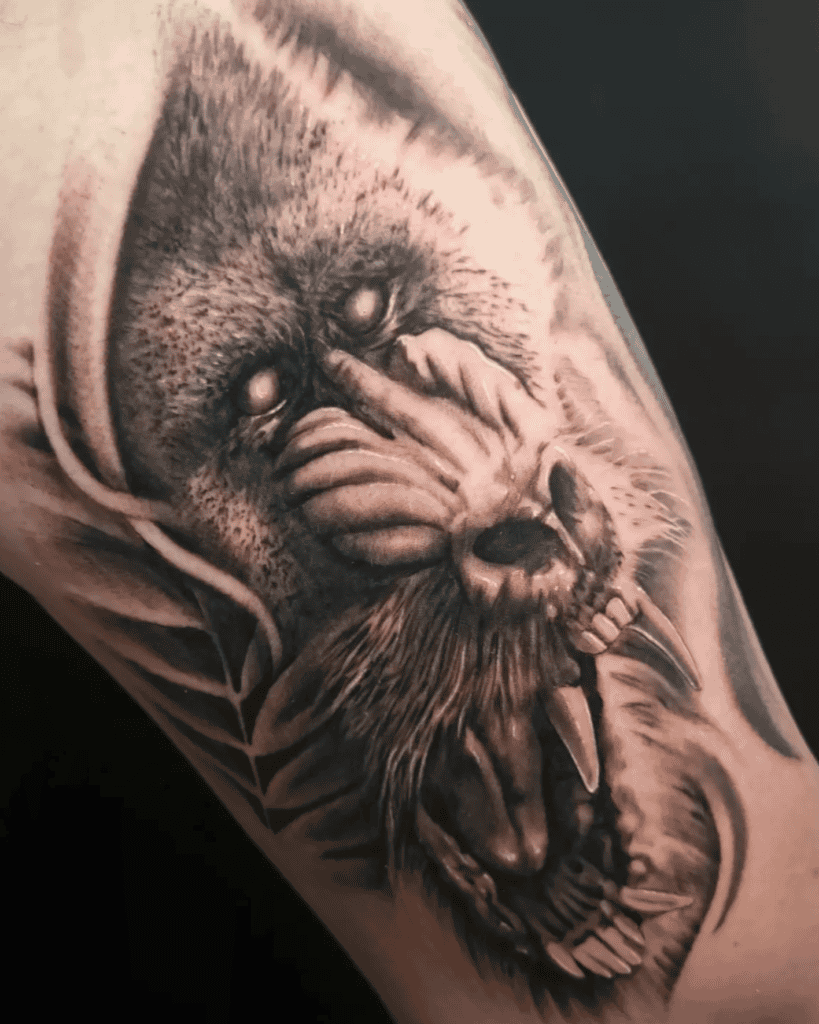
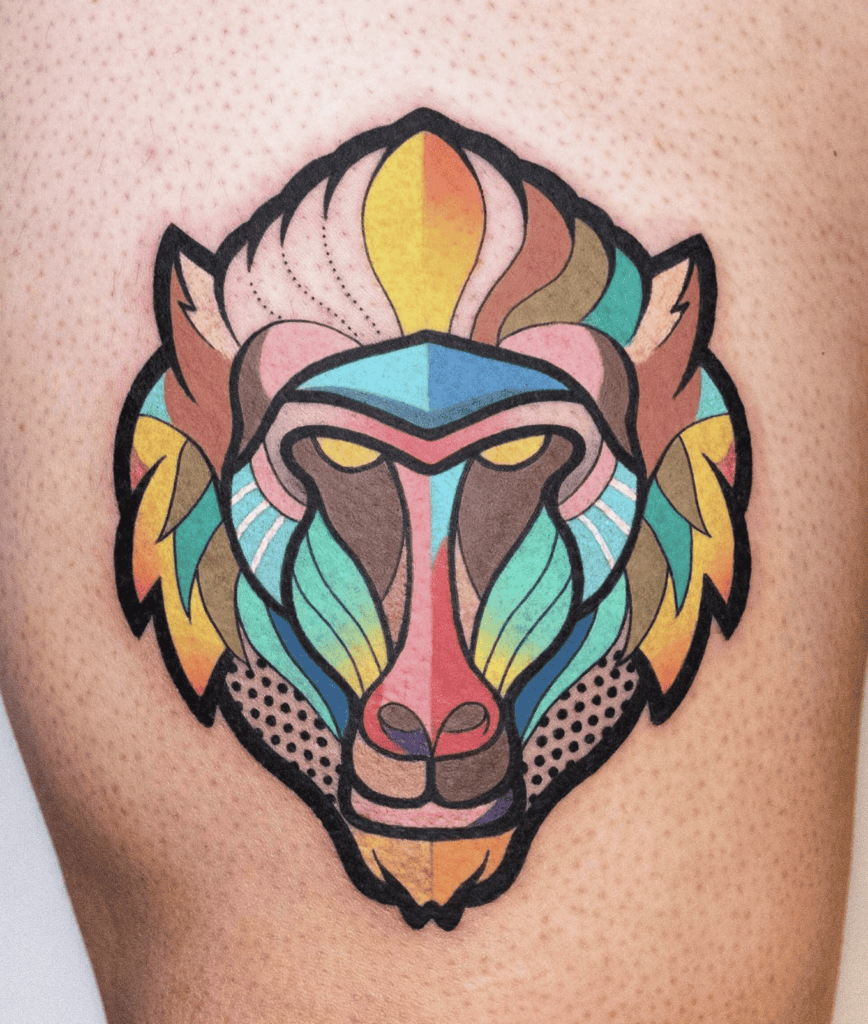
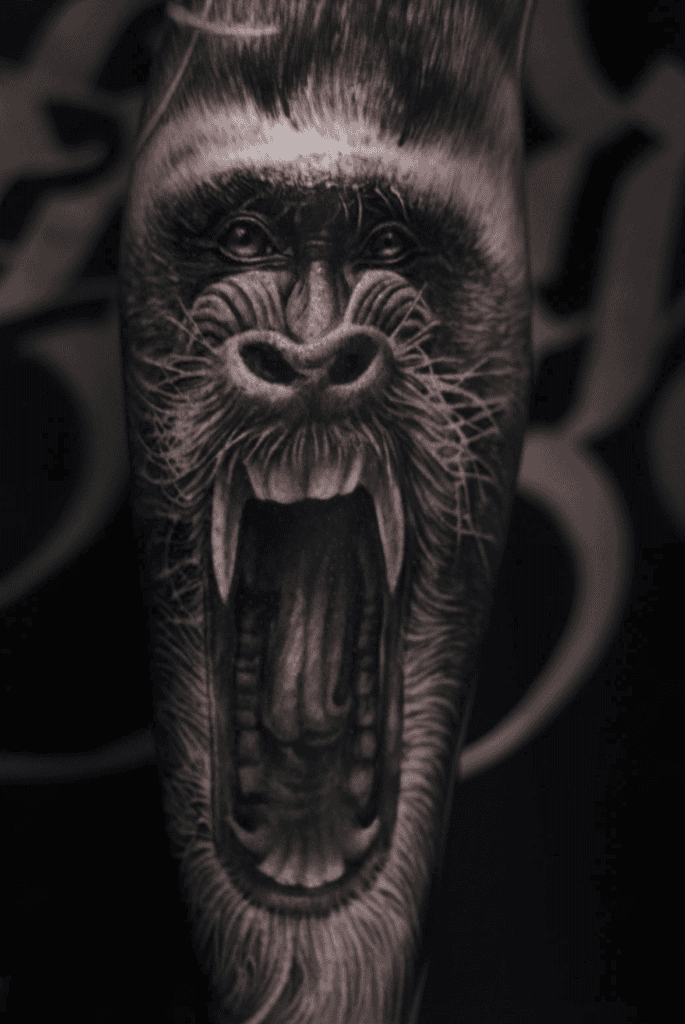
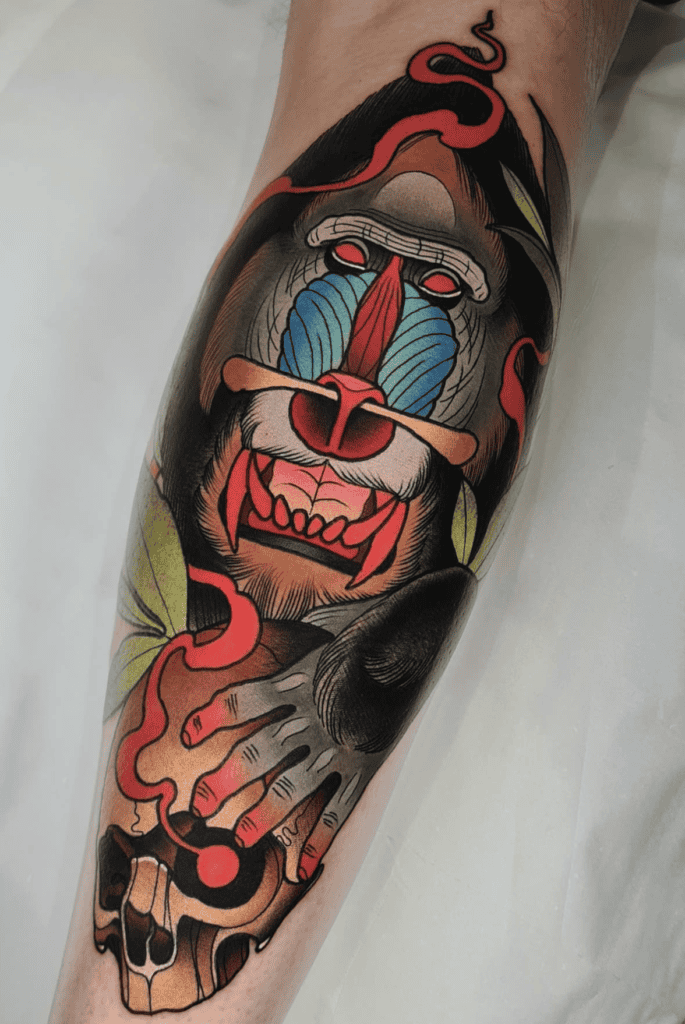
Mandrills are native to the dense rainforests of Central Africa, particularly in countries like Gabon, Cameroon, and Congo. They prefer thick forest environments but often travel along the ground as well as through the lower canopy.
Mandrills are the largest monkeys in the world and are instantly recognisable by their vivid colouring. Males display bright blue and red markings on their faces and rumps, with these colours becoming more intense as they mature and establish dominance.
They are powerful and muscular animals, with strong jaws and long canine teeth. Despite their intimidating appearance, mandrills are generally social and live in large groups known as troops, which can sometimes number in the hundreds. Mandrills are omnivores, feeding on fruits, roots, insects, and small animals. They spend much of their time foraging on the forest floor, using their strength and keen sense of smell to locate food.
They have a complex social structure, with dominant males leading groups and maintaining order. Communication includes vocal calls, facial expressions, and visual signals, with their bright colours playing a role in social interaction. Although they appear fierce, mandrills are typically calm within their groups, using displays and posture rather than constant aggression to assert dominance.
Baboon Monkey Tattoo
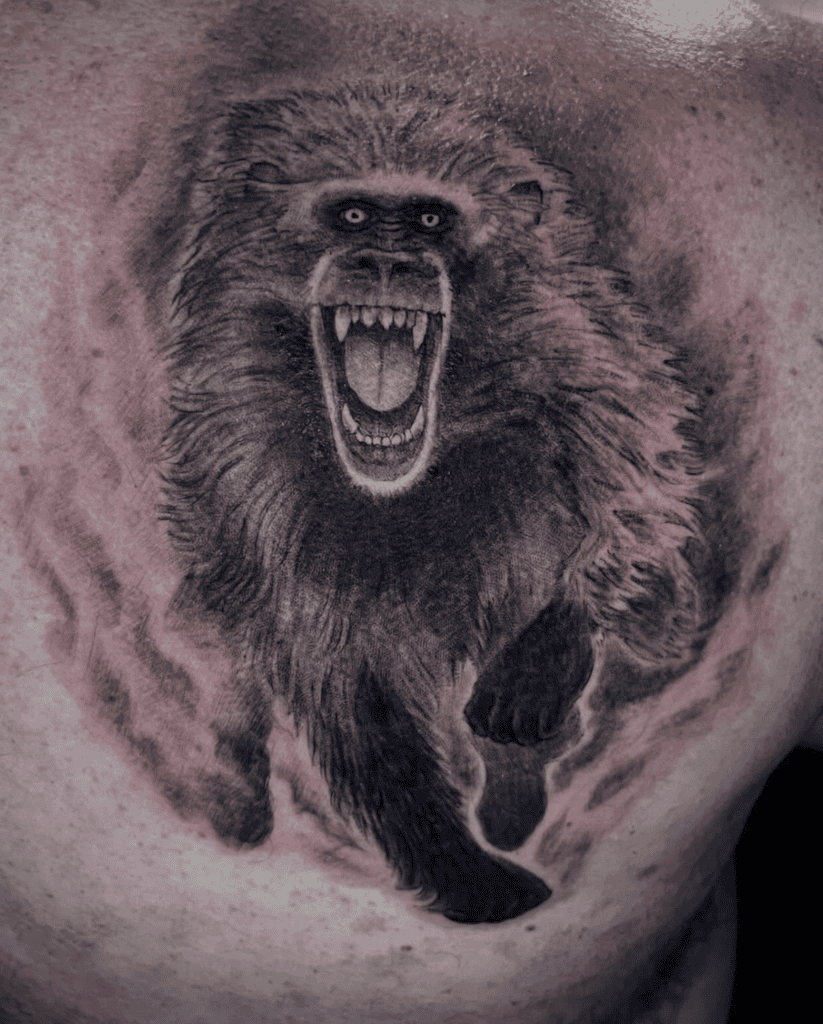
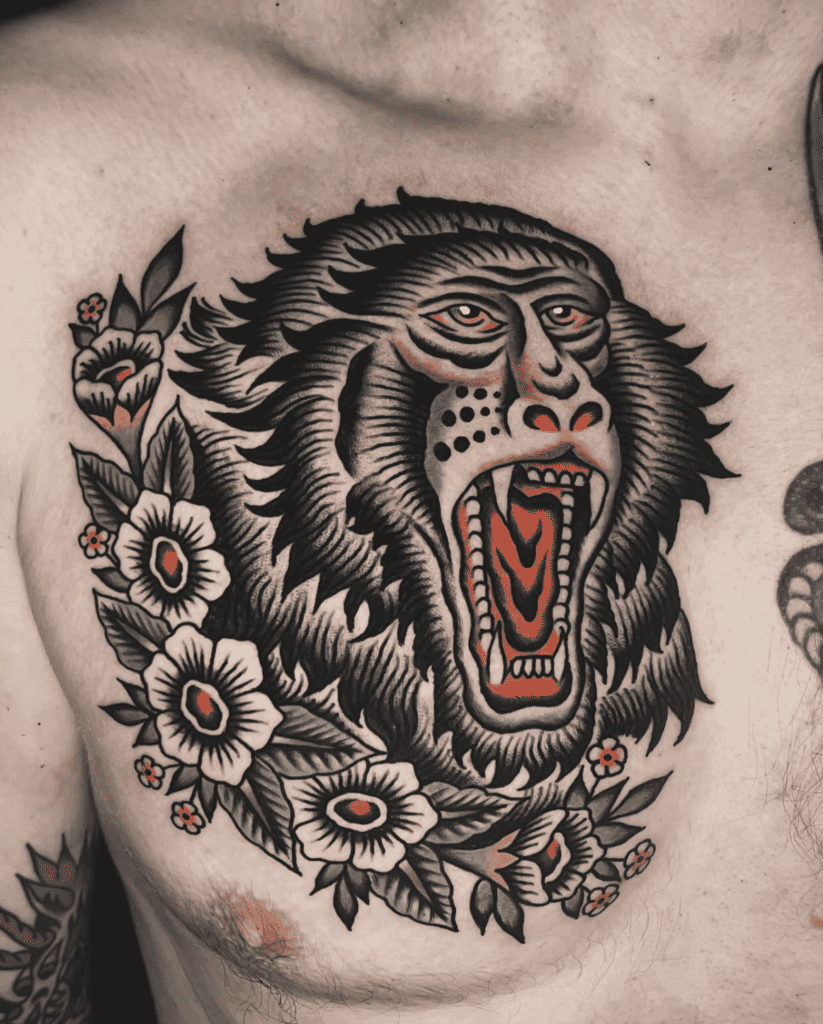
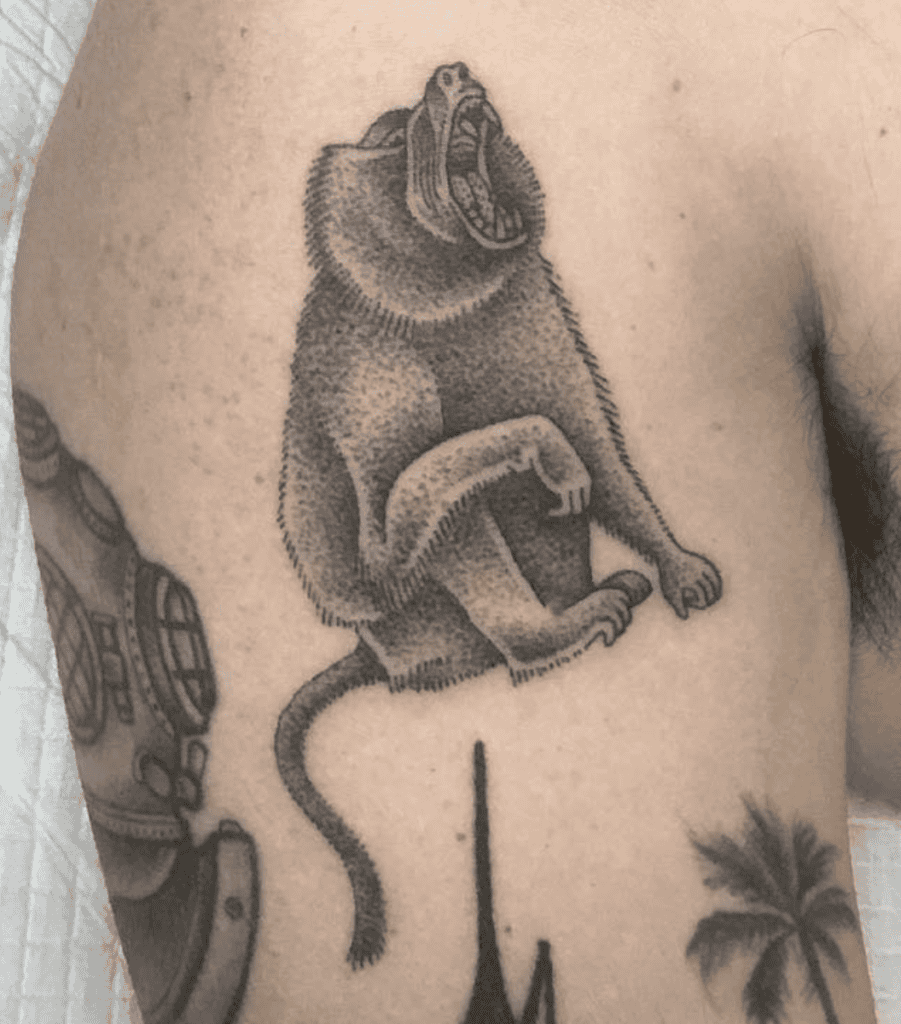
Baboons are native to a wide range of environments across Africa and parts of the Arabian Peninsula. They are highly adaptable, living in savannahs, woodlands, and even rocky deserts, spending much of their time on the ground rather than in trees.
Baboons are among the largest monkeys in the world, with strong, muscular bodies, long snouts, and powerful jaws. They are built for life on the ground, able to travel long distances in search of food while remaining alert to predators.
They are highly intelligent and opportunistic feeders, with a varied diet that includes fruits, seeds, insects, and small animals. Their adaptability allows them to survive in environments where many other primates would struggle. Baboons are extremely social animals, living in large troops that can range from 20 to over 100 individuals. These groups have complex social structures, with clear hierarchies and strong relationships between members.
They communicate through a mix of vocal calls, facial expressions, and body language, using these signals to maintain order within the group and respond to threats. Baboons rely heavily on cooperation, working together to protect the group, raise young, and navigate their environment.
Proboscis Monkey Tattoo
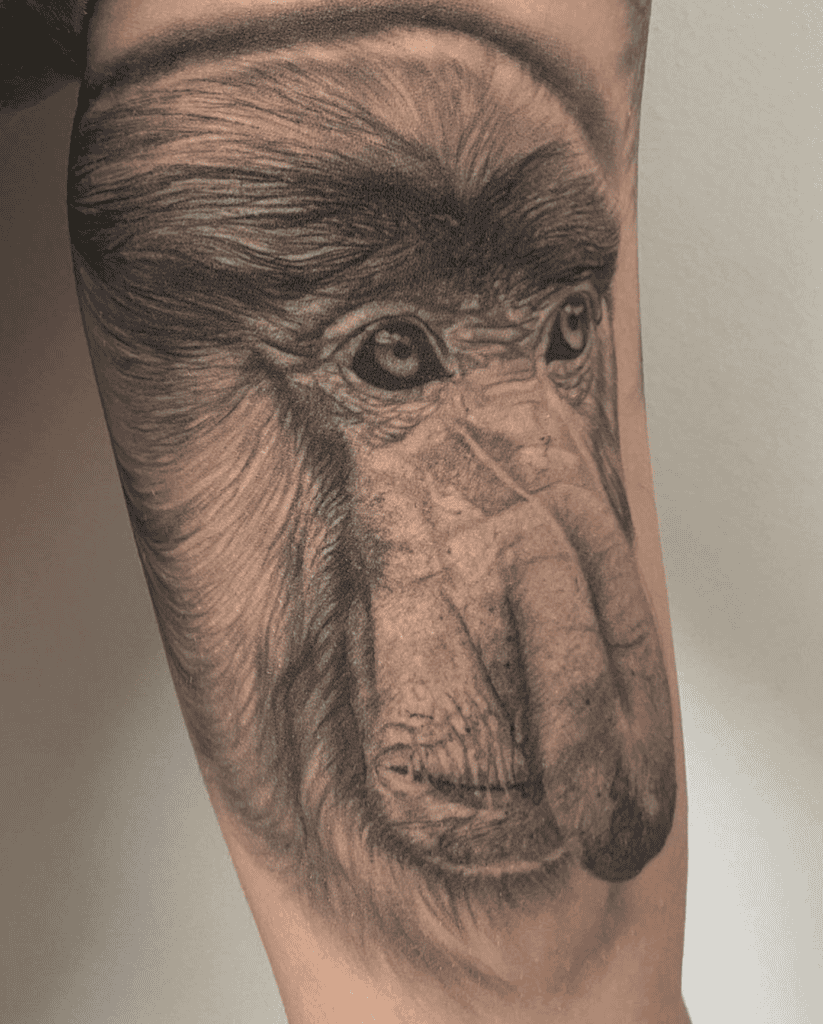
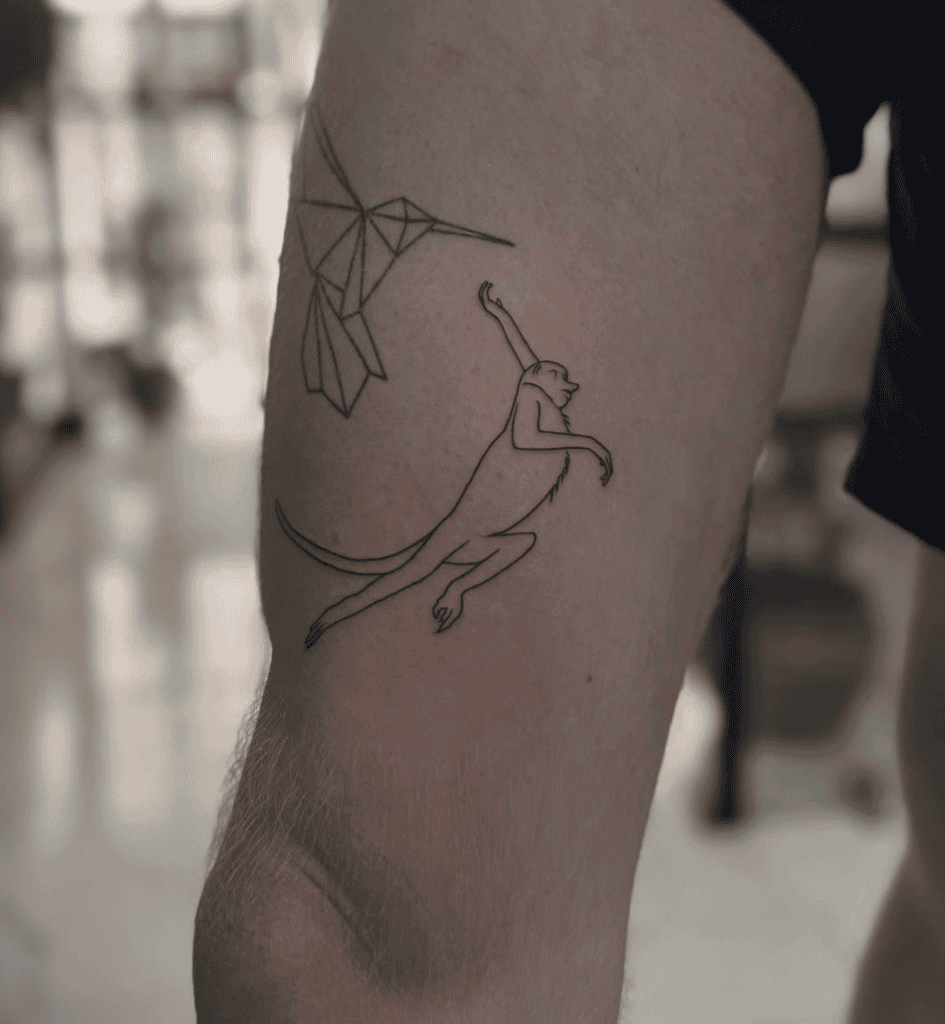
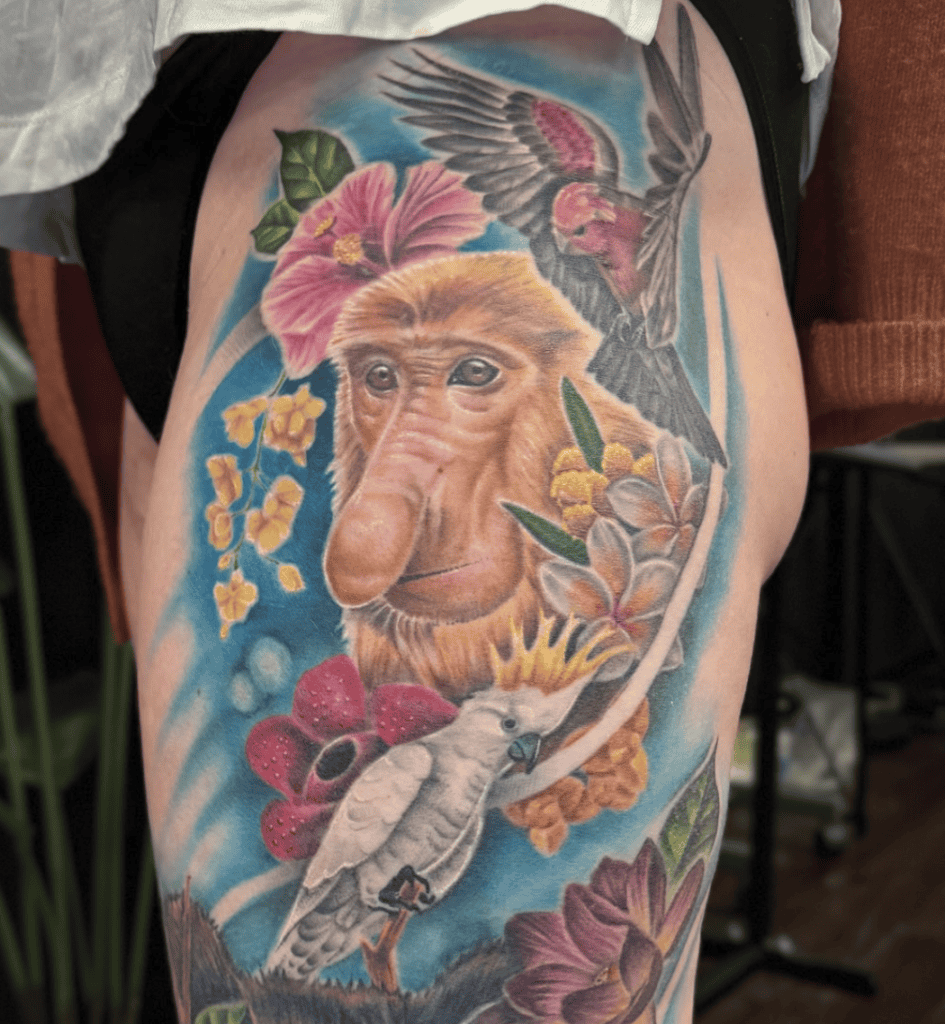
Proboscis monkeys are native to the island of Borneo, particularly in regions of Malaysia, Indonesia, and Brunei. They prefer coastal mangroves, riverine forests, and swampy areas, often staying close to water and spending most of their time in trees. Proboscis monkeys are instantly recognisable by their large, distinctive noses, especially in males. These noses can grow quite long and are believed to play a role in attracting mates and amplifying vocal calls.
They have long limbs and partially webbed feet, making them excellent swimmers. Unlike many monkeys, they are comfortable in water and often swim across rivers to escape predators or move between feeding areas. Their diet mainly consists of leaves, seeds, and unripe fruits. They have specialised stomachs that help them digest tough plant material, although this also gives them their characteristic rounded belly.
Proboscis monkeys are social animals, typically living in groups made up of one dominant male with several females and their young, or in larger bachelor groups. They communicate through honking calls, facial expressions, and body language. These monkeys are well adapted to their environment, moving gracefully through trees and along riverbanks while maintaining strong group bonds.
Colobus Monkey Tattoo
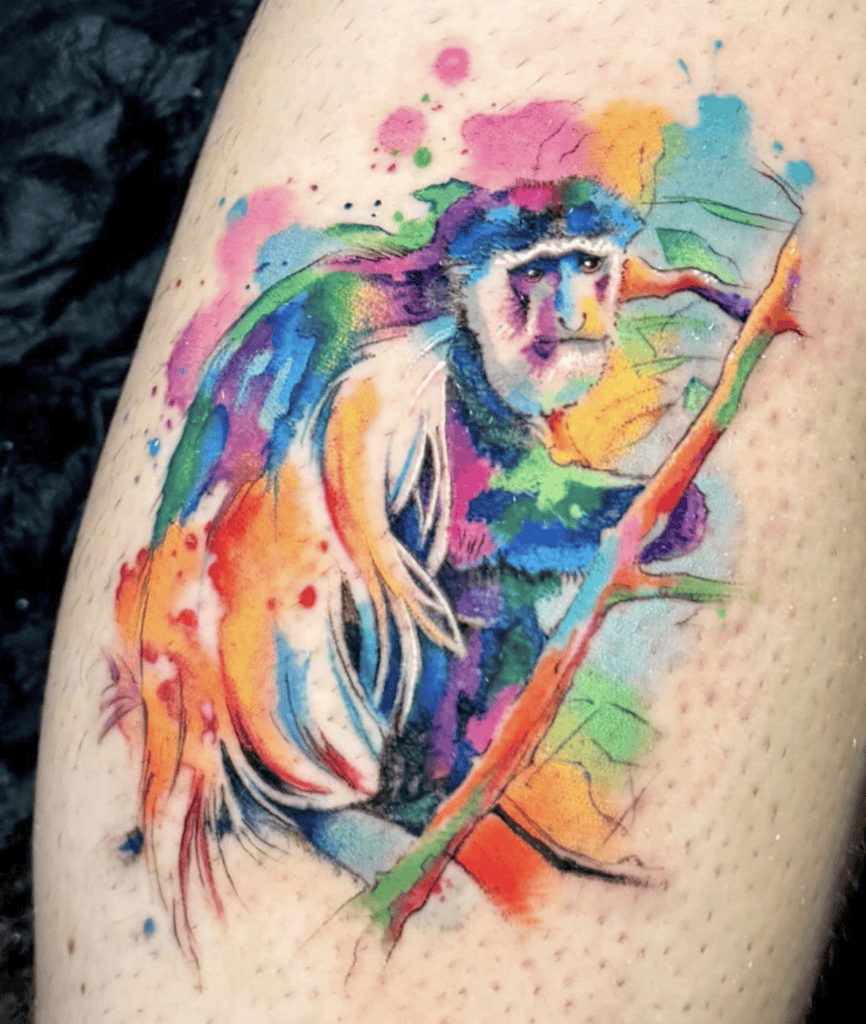
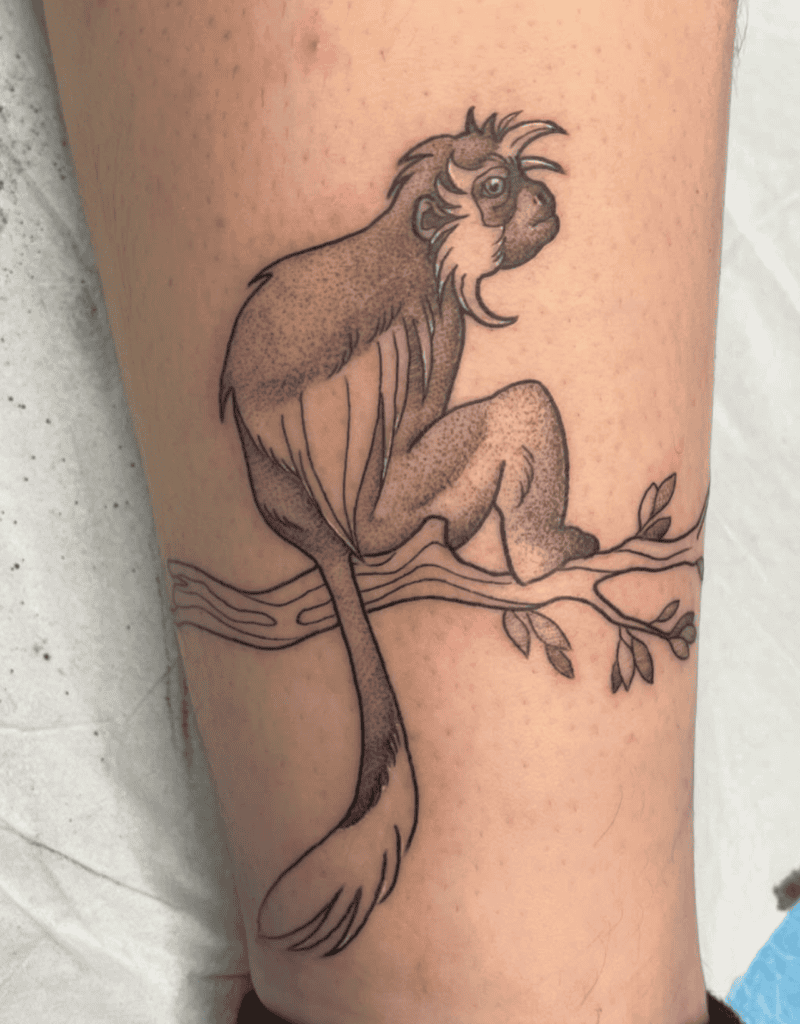
Colobus monkeys are native to the forests of Central and East Africa, particularly in countries like Kenya, Uganda, and Tanzania. They prefer dense forests and woodlands, spending most of their lives high in the canopy and rarely coming down to the ground.
Colobus monkeys are easily recognised by their striking black-and-white fur and long, flowing tails. Their elegant appearance and smooth movements through the trees give them a graceful, almost floating presence in the forest. They are highly specialised leaf-eaters, with a complex, multi-chambered stomach that allows them to digest tough leaves efficiently. Because of this diet, they tend to conserve energy, often resting between feeding periods.
Colobus monkeys have reduced or absent thumbs, which actually helps them move more easily through trees. This adaptation allows them to leap long distances between branches with speed and precision. They are social animals, typically living in groups of 5–15 individuals. These groups are close-knit, with strong social bonds maintained through grooming, vocal calls, and coordinated movement through the canopy.
Vervet Monkey Tattoo
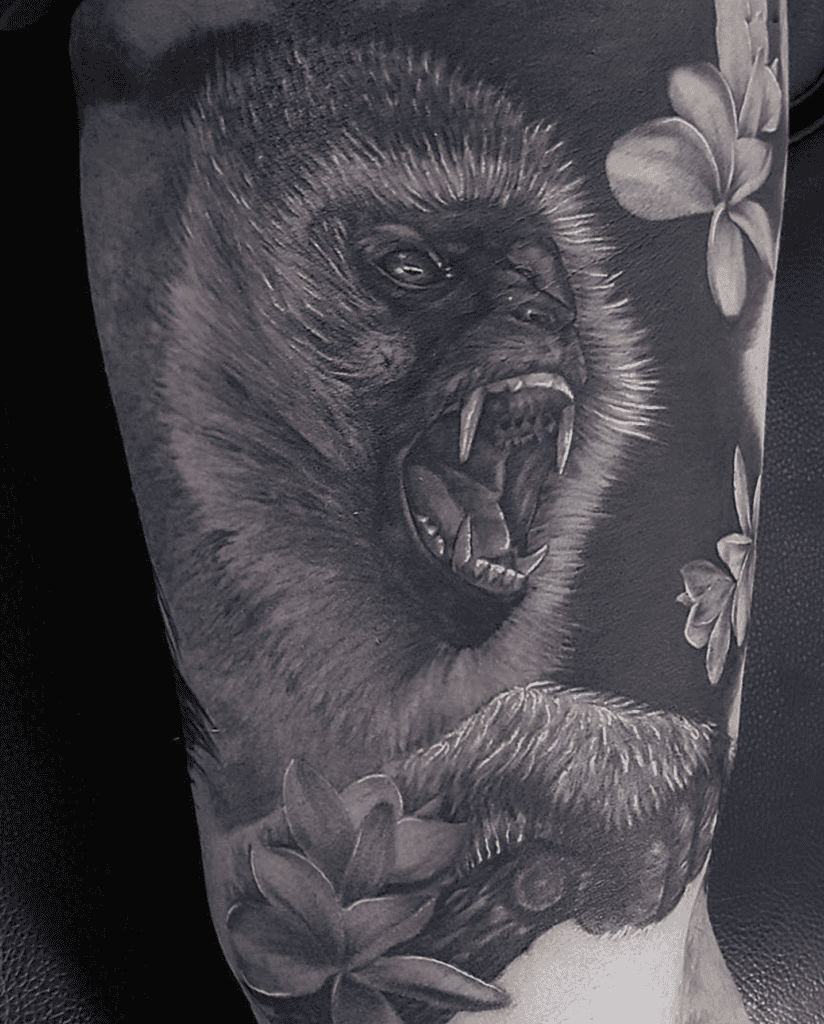
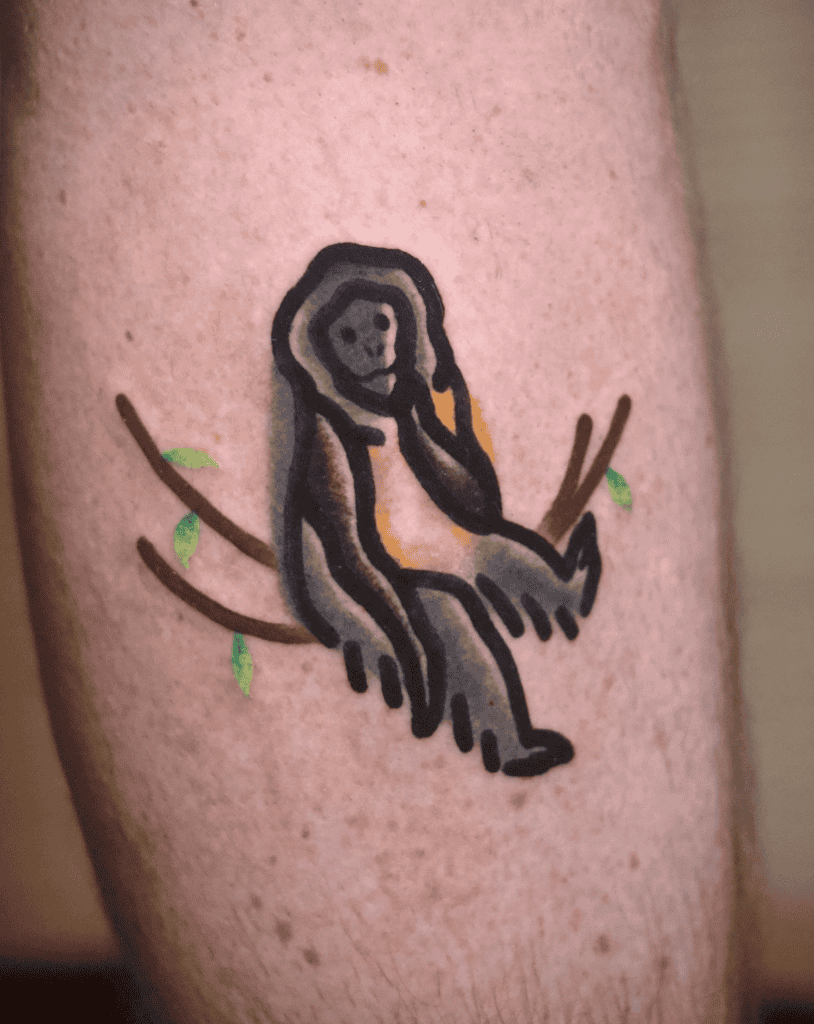
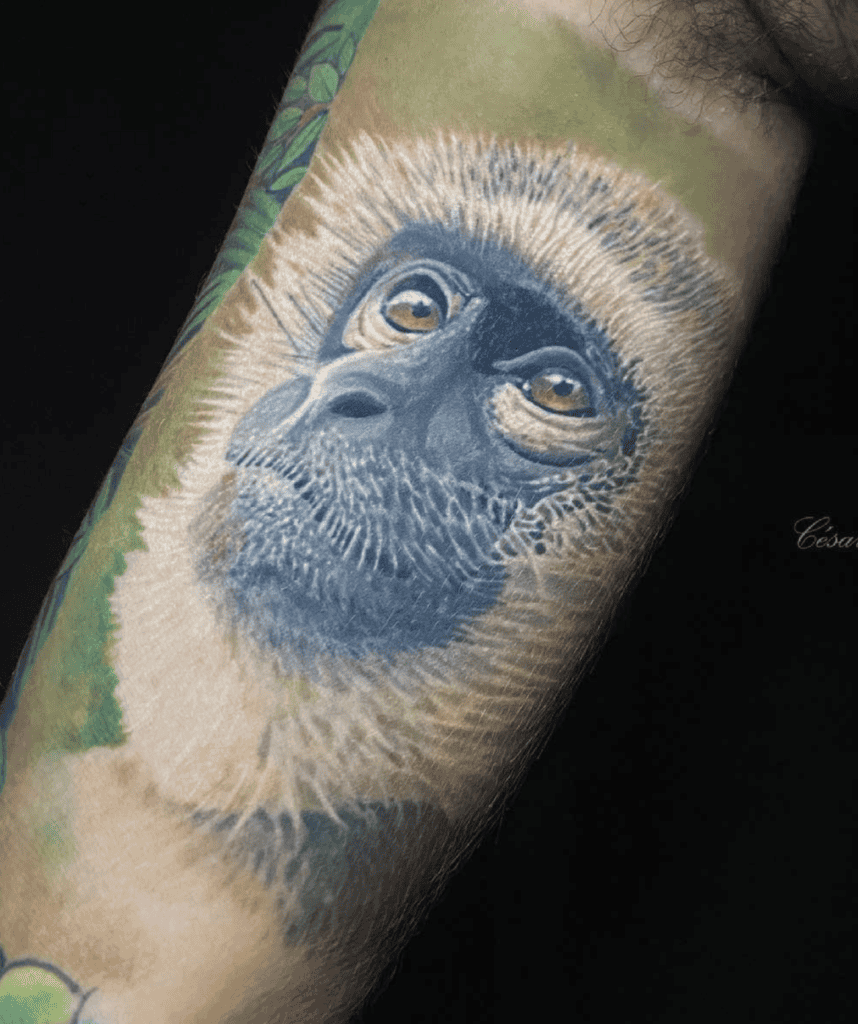
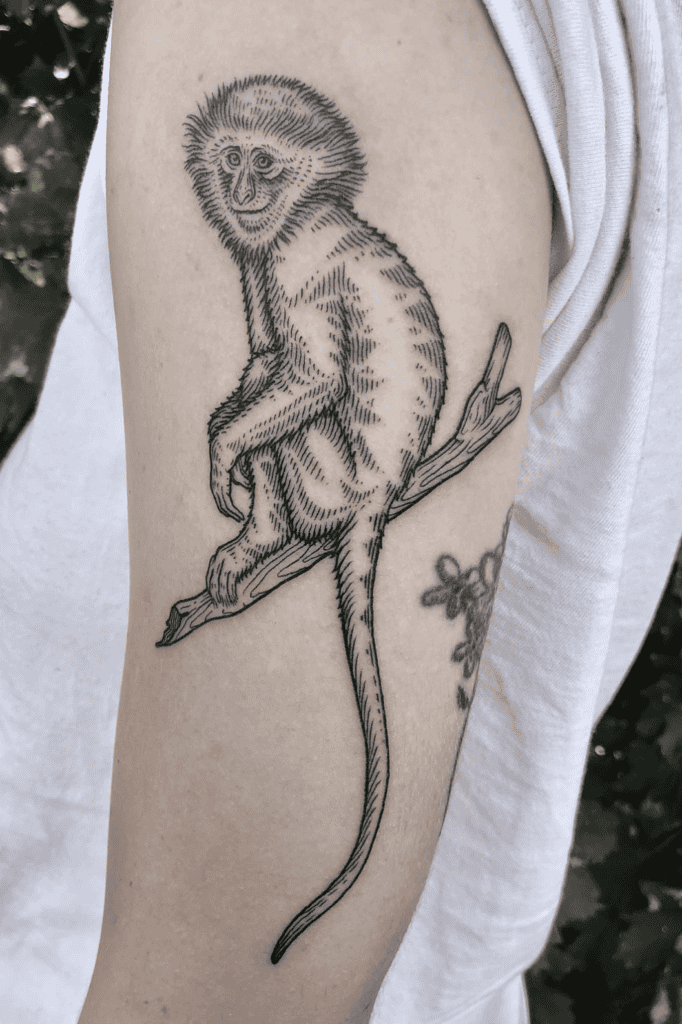
Vervet monkeys are native to a wide range of habitats across eastern and southern Africa, including Kenya, South Africa, and Ethiopia. They are highly adaptable, living in savannas, woodlands, and areas near rivers, often moving between trees and the ground throughout the day.
Vervet monkeys are medium-sized primates with grey fur, black faces, and expressive eyes. They are agile and alert, able to move quickly through trees while also spending a significant amount of time on the ground searching for food. They are omnivores, feeding on fruits, seeds, leaves, insects, and small animals. Their adaptability allows them to thrive in a variety of environments, including areas close to human settlements.
Vervet monkeys are highly social, typically living in groups of 10–50 individuals. These groups have complex social structures, with strong bonds formed through grooming, cooperation, and shared responsibilities. They are well known for their advanced communication system, using different alarm calls to warn of specific predators such as snakes, birds of prey, and large mammals. Each call triggers a different response within the group, showing a high level of intelligence and coordination.
Golden Snub-Nosed Monkey Tattoo
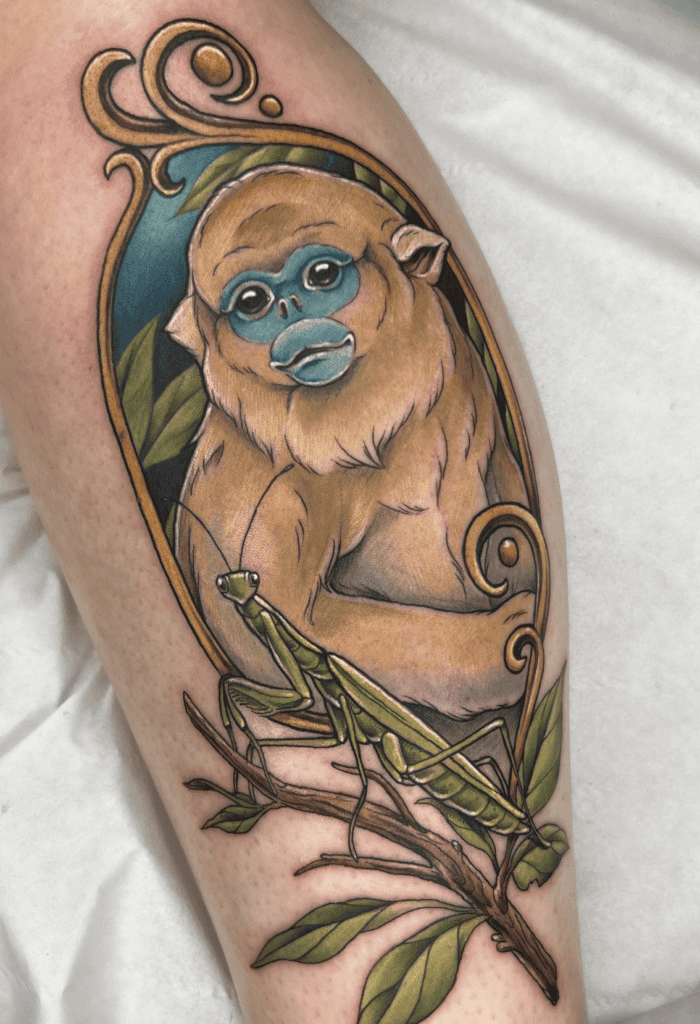
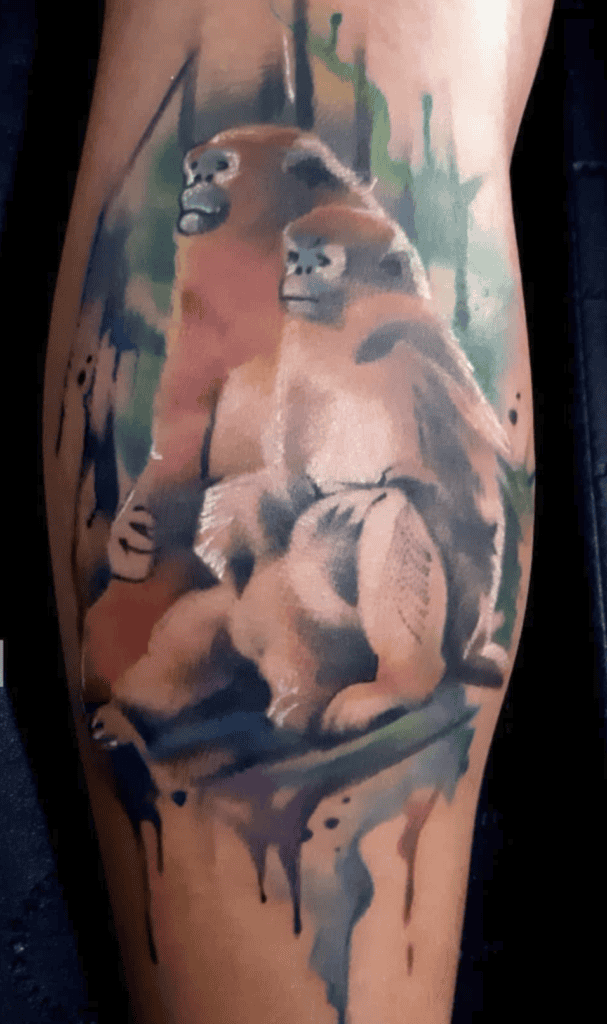
Golden snub-nosed monkeys are native to the mountainous forests of central and southwestern China. They live in high-altitude regions, often in cold, snowy environments, preferring dense forests where they can move through the canopy and shelter from harsh weather.
Golden snub-nosed monkeys are easily recognised by their striking golden-orange fur and unique blue faces with small, upturned noses. Their thick coats help them survive freezing temperatures, making them one of the few primates adapted to cold mountain climates.
They are primarily leaf-eaters, feeding on leaves, seeds, bark, and lichens, especially during winter when other food sources are scarce. Their specialised digestive system allows them to process tough plant material efficiently.
Golden snub-nosed monkeys are highly social, living in large, complex groups that can include hundreds of individuals. These groups are often divided into smaller family units that stay connected through vocal calls and coordinated movement. They are known for their calm and gentle behaviour, spending time grooming, resting, and foraging together. Their strong social bonds help them survive in challenging environments where cooperation is essential.
Japanese Macaque Monkey Tattoo
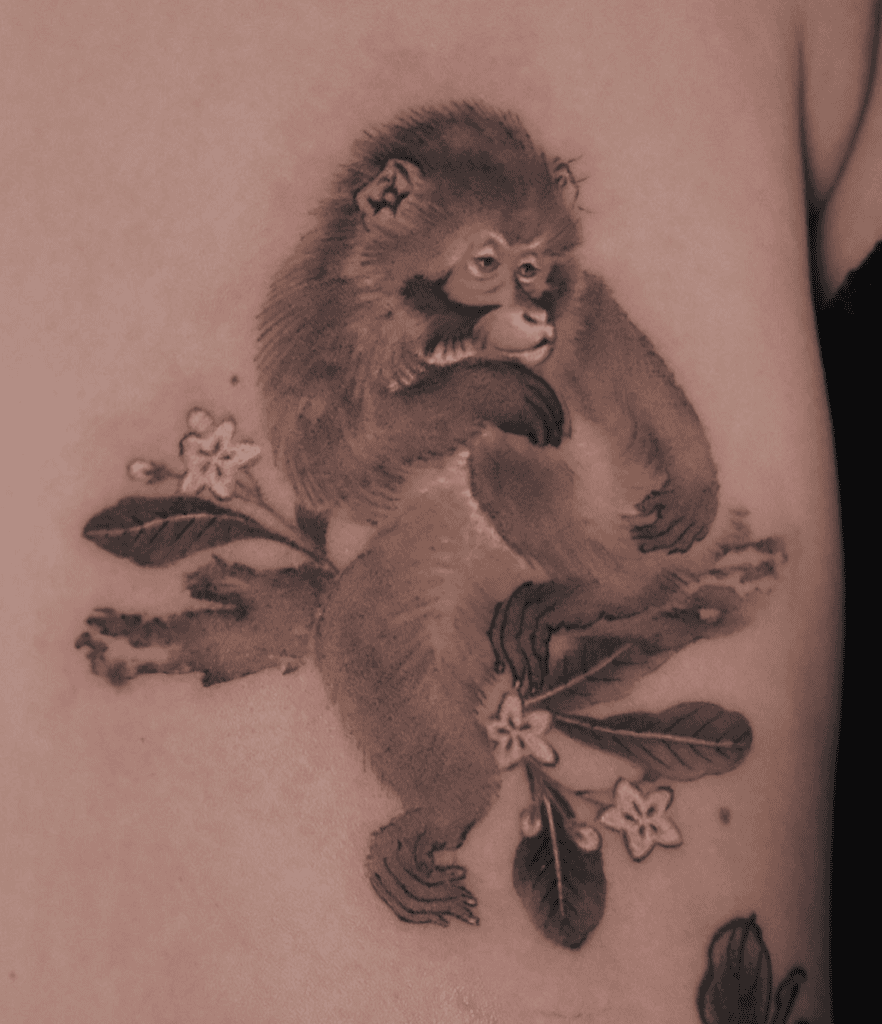
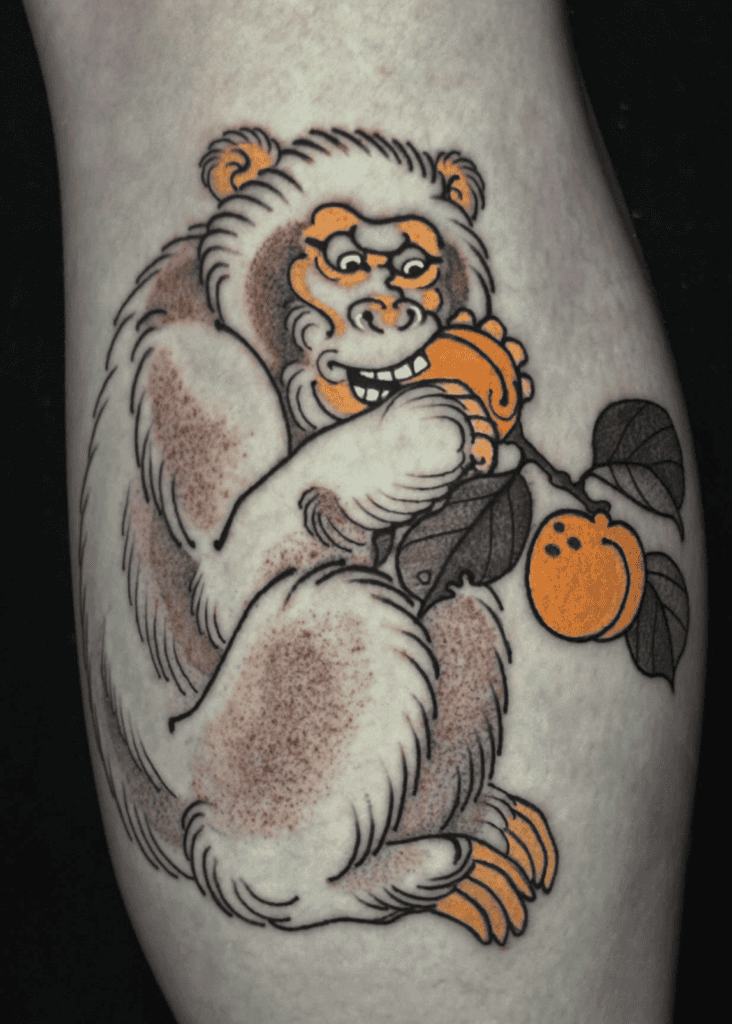
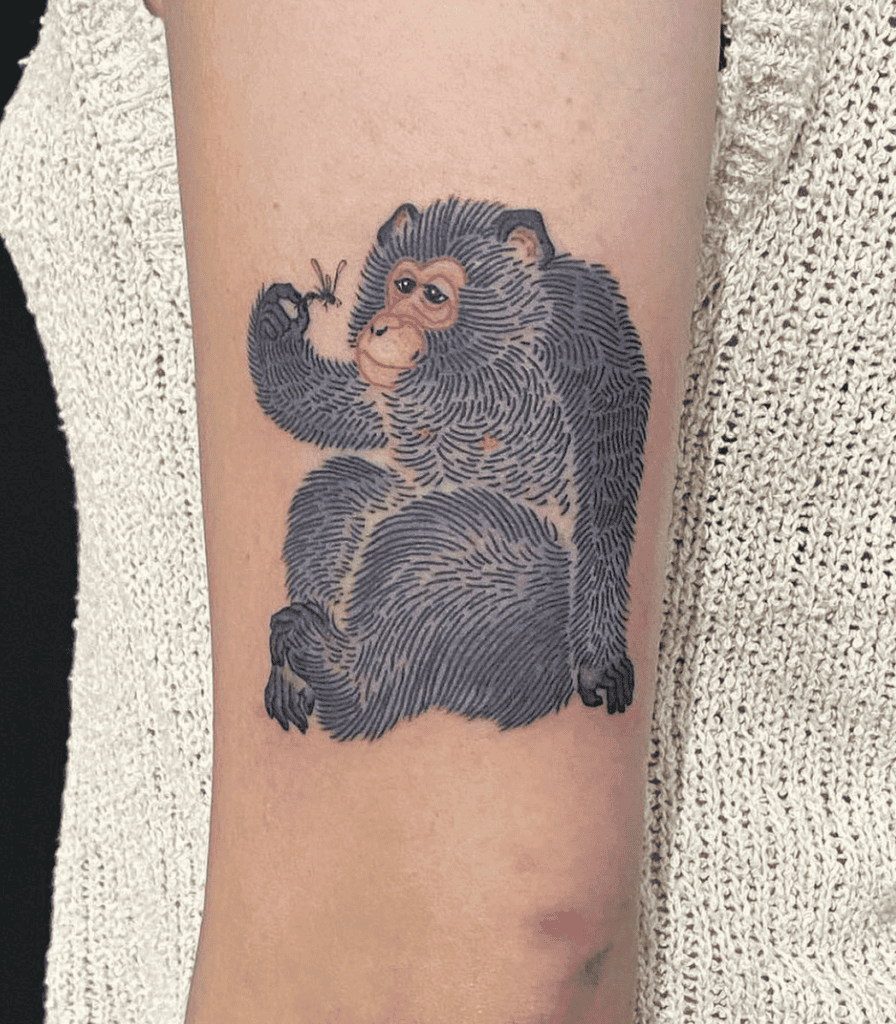
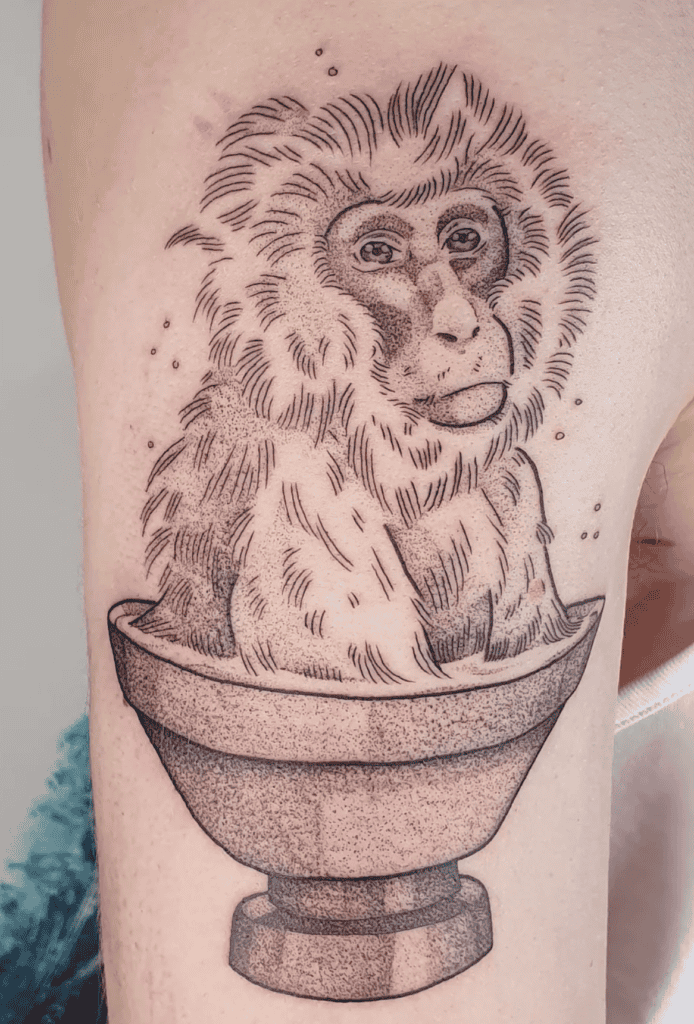
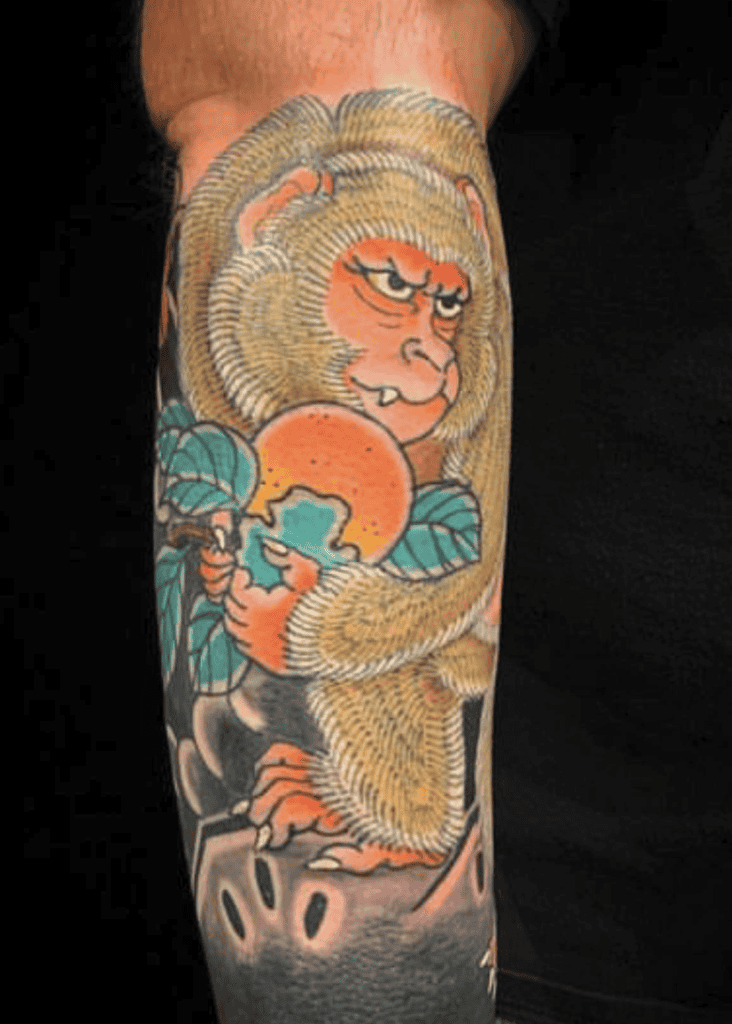
Japanese macaques are native to Japan, living in a wide range of environments from subtropical forests to cold, mountainous regions. They are the northernmost-living non-human primates, often found in areas that experience heavy snowfall during winter.
Japanese macaques are easily recognised by their thick grey-brown fur and distinctive red faces. Their dense coats help them survive cold temperatures, allowing them to remain active even in snowy conditions. They are highly adaptable and are known for their unique behaviour of bathing in natural hot springs, especially during winter. This behaviour helps them stay warm and has become one of the most iconic images associated with the species.
Japanese macaques are omnivores, feeding on fruits, leaves, seeds, insects, and small animals. Their diet changes with the seasons, allowing them to survive in environments where food availability varies throughout the year.
They are highly social animals, living in groups of 20–100 individuals with complex social structures. These groups maintain strong bonds through grooming, communication, and shared behaviours, with clear hierarchies within the group. Japanese macaques are also known for their intelligence and cultural behaviours, such as learning from one another. Some groups have been observed washing food or developing unique habits that are passed down through generations.
Chimpanzee Ape Tattoo
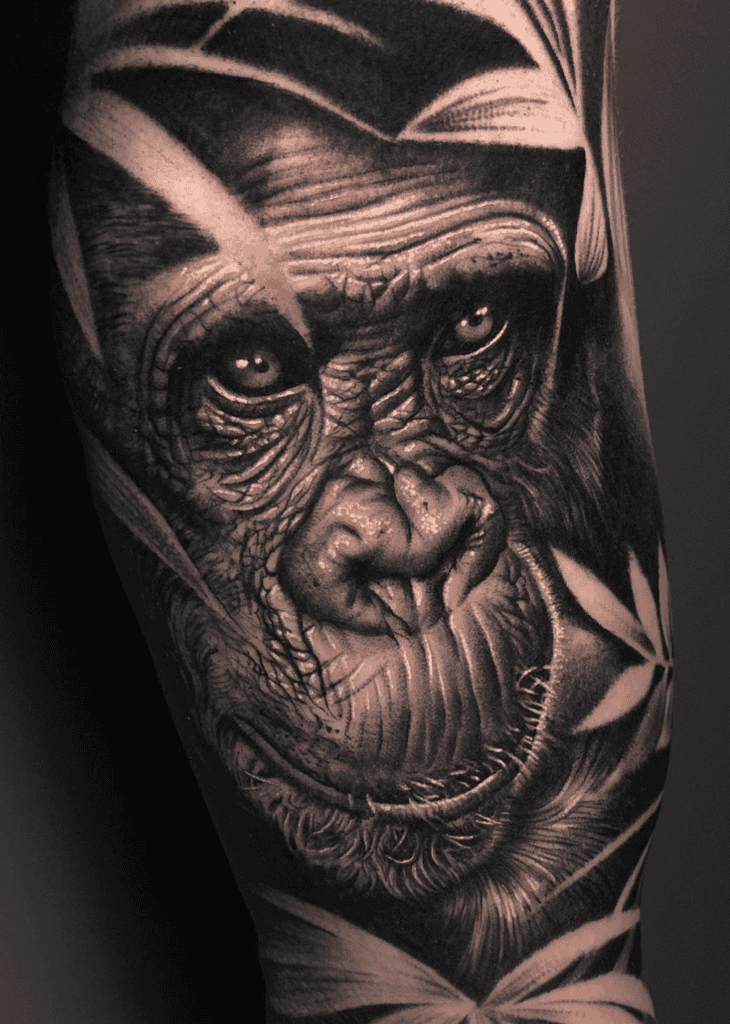
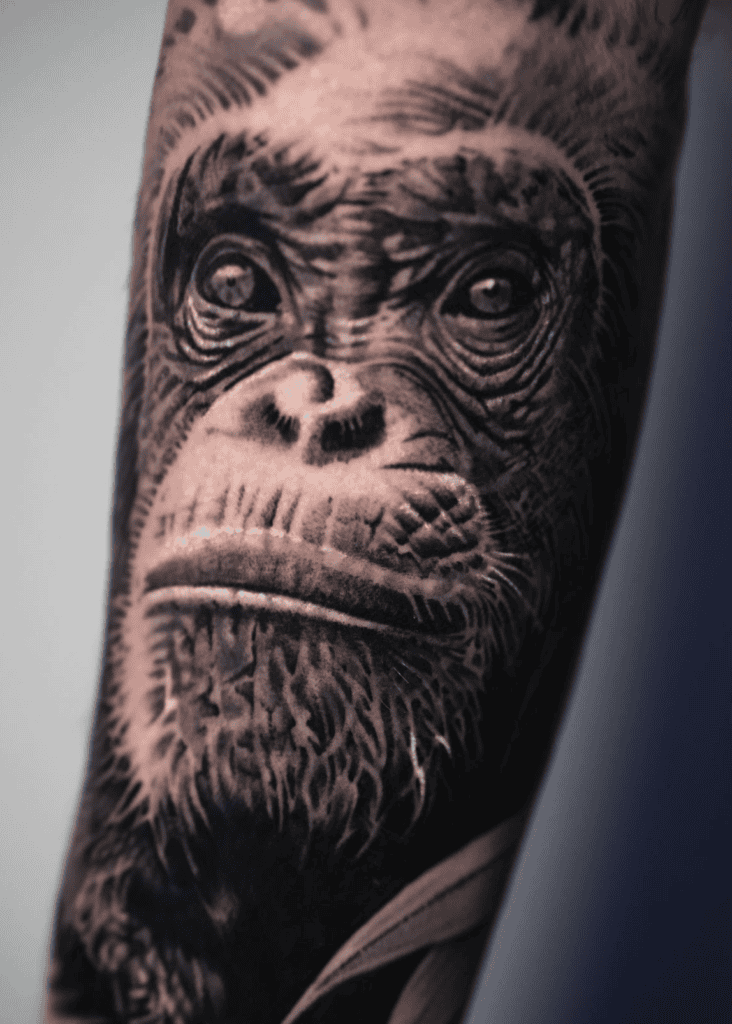
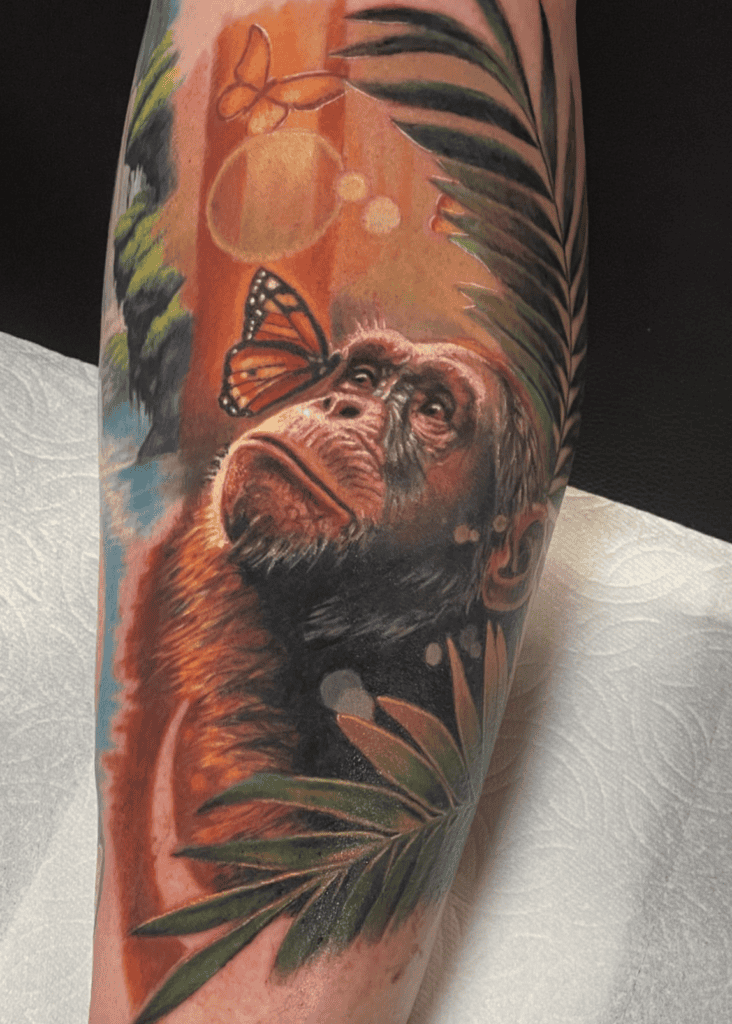
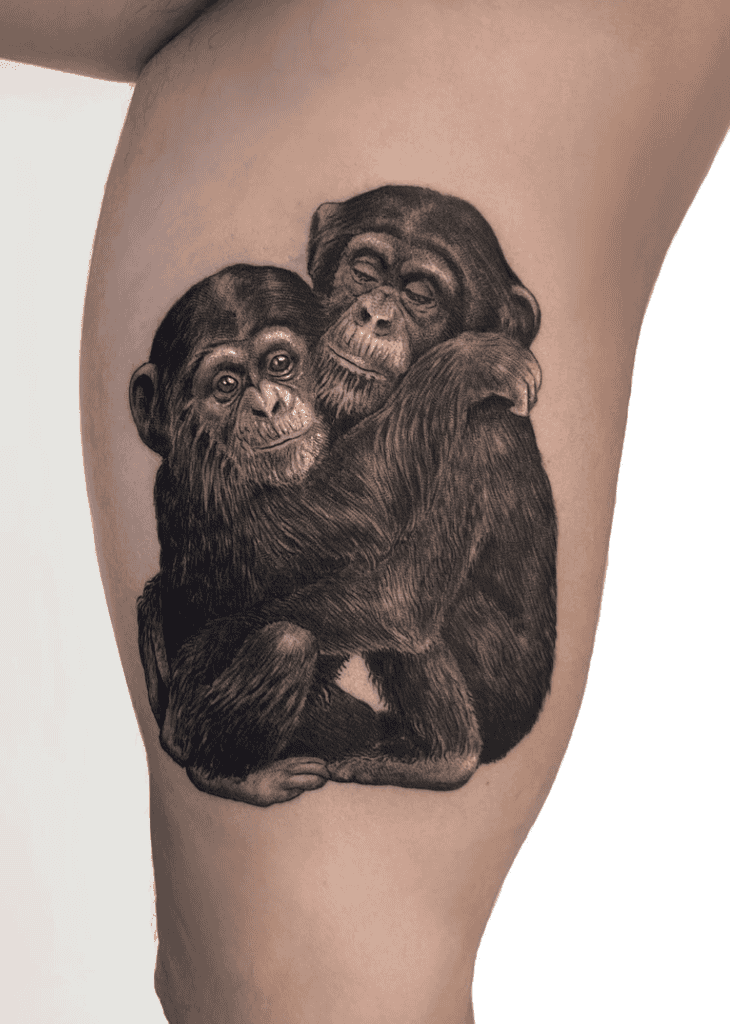
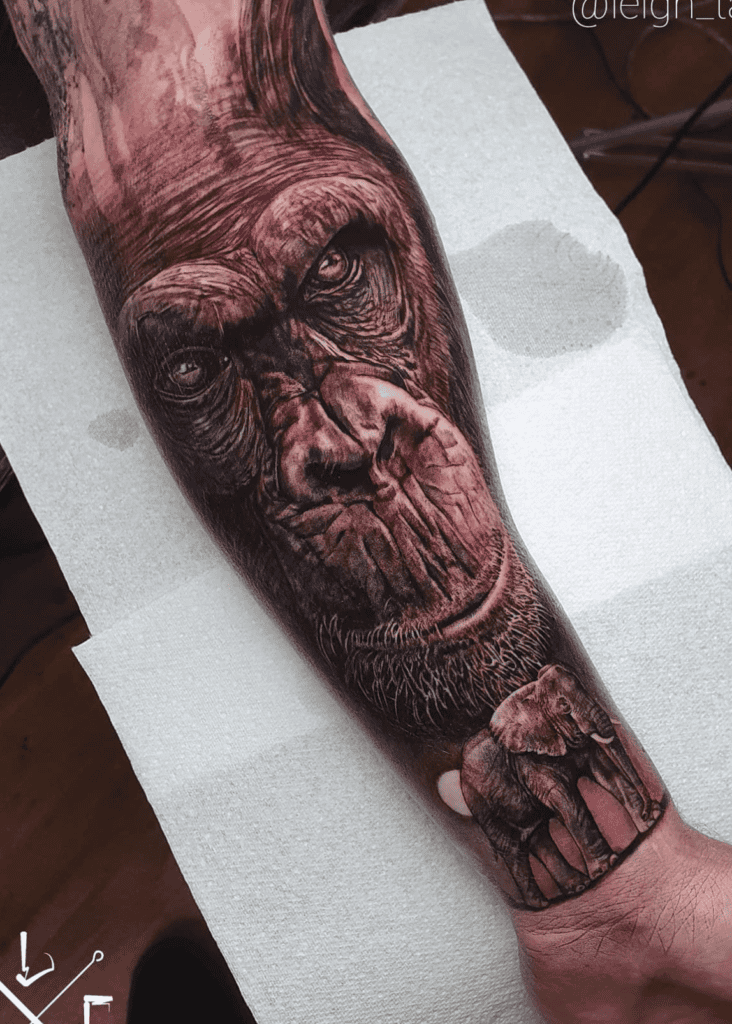
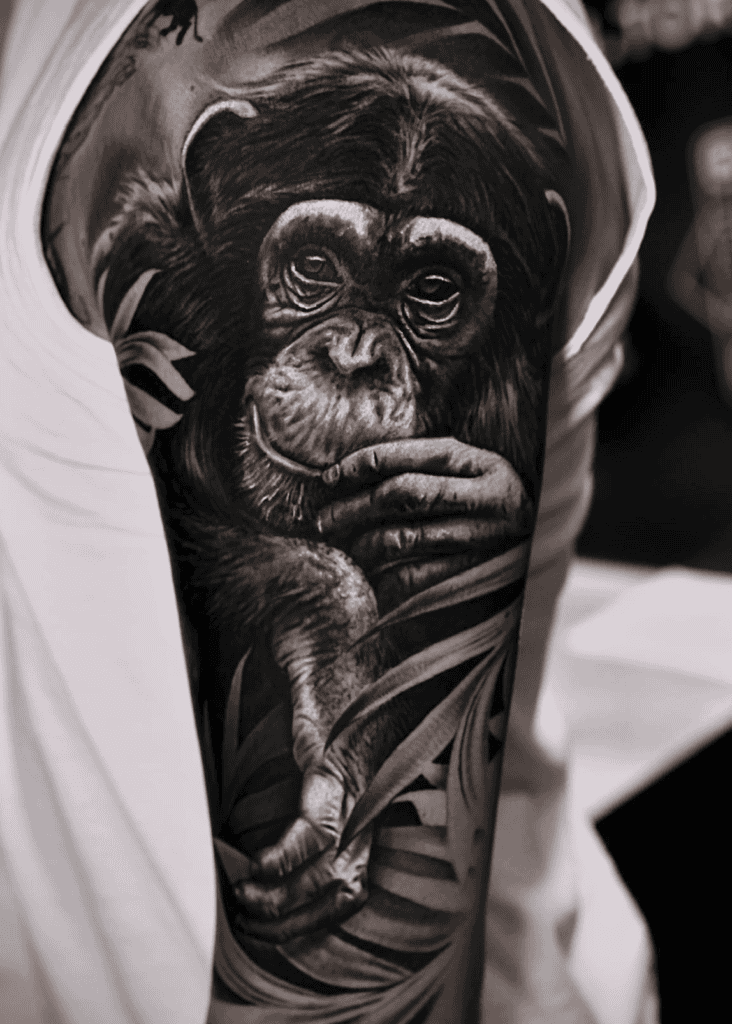
Chimpanzees are native to the forests and savannahs of Central and West Africa, living in countries such as Uganda, Tanzania, the Democratic Republic of the Congo, and beyond. They inhabit a mix of dense forests and open woodland areas, spending time both in trees and on the ground.
Chimpanzees are one of the closest relatives to humans, sharing a high percentage of DNA. They have strong, muscular bodies, expressive faces, and highly dexterous hands, allowing them to manipulate objects and use tools with precision.
They are known for their remarkable intelligence, using sticks to fish for termites, stones to crack nuts, and leaves as sponges to collect water. Their ability to solve problems and adapt to their environment places them among the most intelligent animals in the world. Chimpanzees are highly social, living in communities that can range from 20 to over 100 individuals. These groups have complex social structures, with alliances, hierarchies, and strong emotional bonds between members.
They communicate through a combination of vocalisations, facial expressions, gestures, and even touch. Their behaviour shows a wide range of emotions, including joy, grief, cooperation, and conflict. Chimpanzees are omnivores, feeding on fruits, leaves, insects, and occasionally small animals. They are active foragers, often working together to find and share food within the group.
Bonobo Ape Tattoo
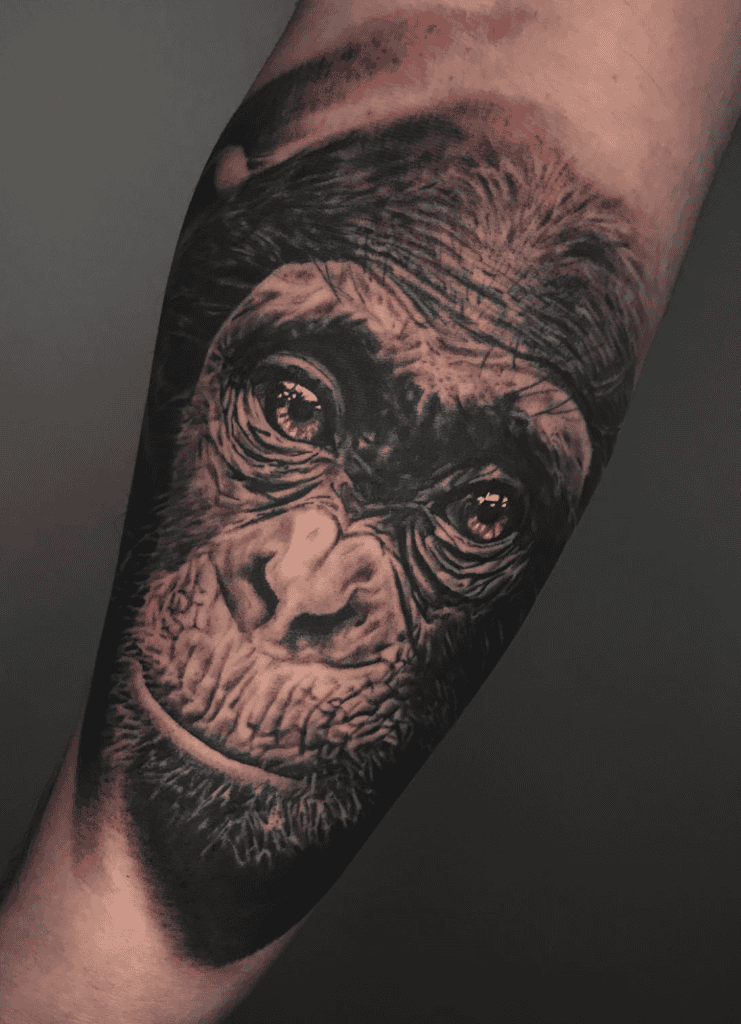
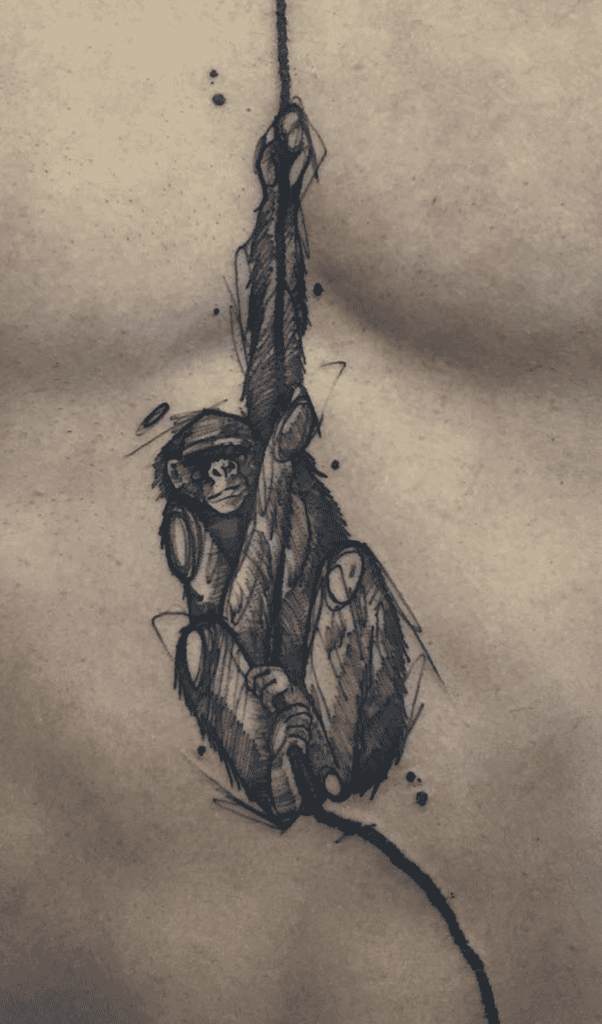
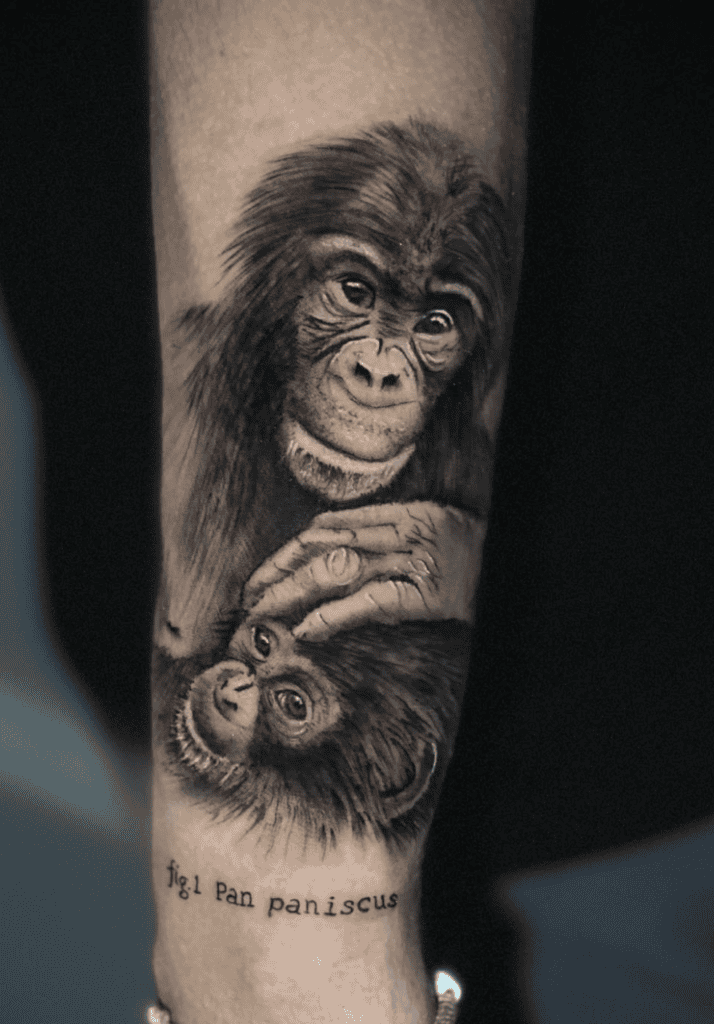
Bonobos are native to the dense rainforests of the Democratic Republic of the Congo, where they live south of the Congo River. They prefer humid, lowland forests and spend their time both in the trees and on the ground. Bonobos are closely related to chimpanzees and share a similar body structure, though they are generally more slender with longer legs and a more graceful appearance. Their faces are often darker with softer features, giving them a calmer expression.
They are known for their high intelligence and strong social behaviour, using tools, solving problems, and learning from one another. Like chimpanzees, they demonstrate advanced communication through vocalisations, gestures, and facial expressions. Bonobos are highly social and live in communities that can range from 30 to over 100 individuals. Their societies are often described as more peaceful and cooperative, with strong bonds between group members, particularly among females.
They are omnivores, feeding on fruits, leaves, seeds, and small animals. Fruit makes up a large part of their diet, and they often travel together in search of food, maintaining close social connections as they move. Bonobos are known for resolving conflict through social behaviours rather than aggression, helping maintain harmony within the group. This makes them unique among great apes for their relatively peaceful group dynamics.
Gorilla Ape Tattoo
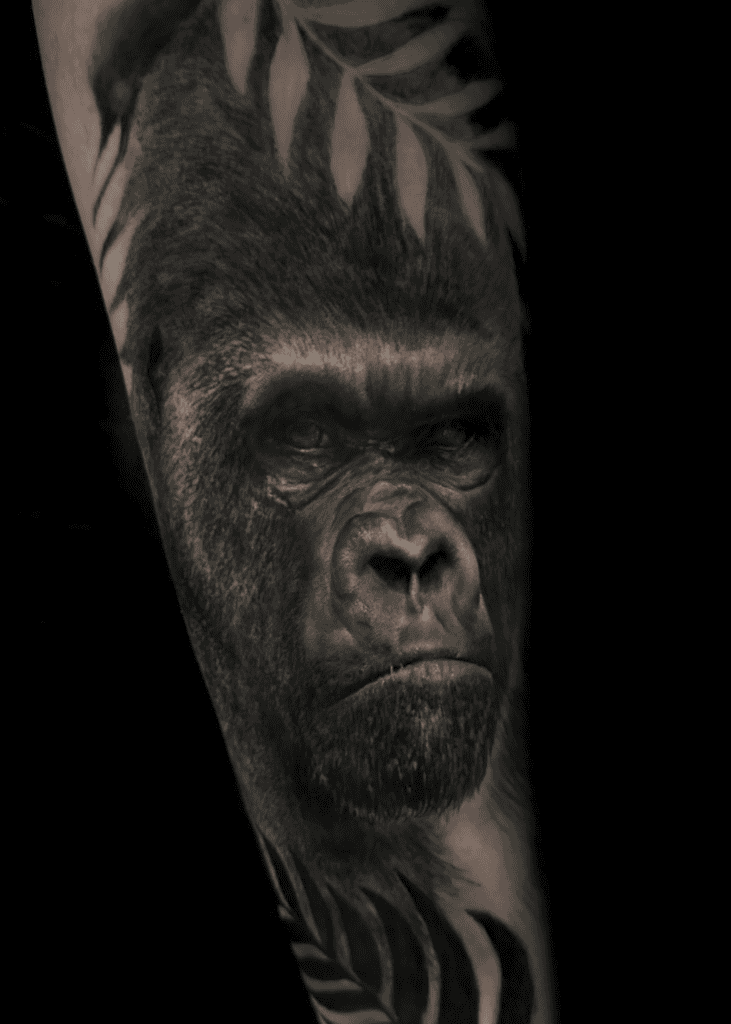
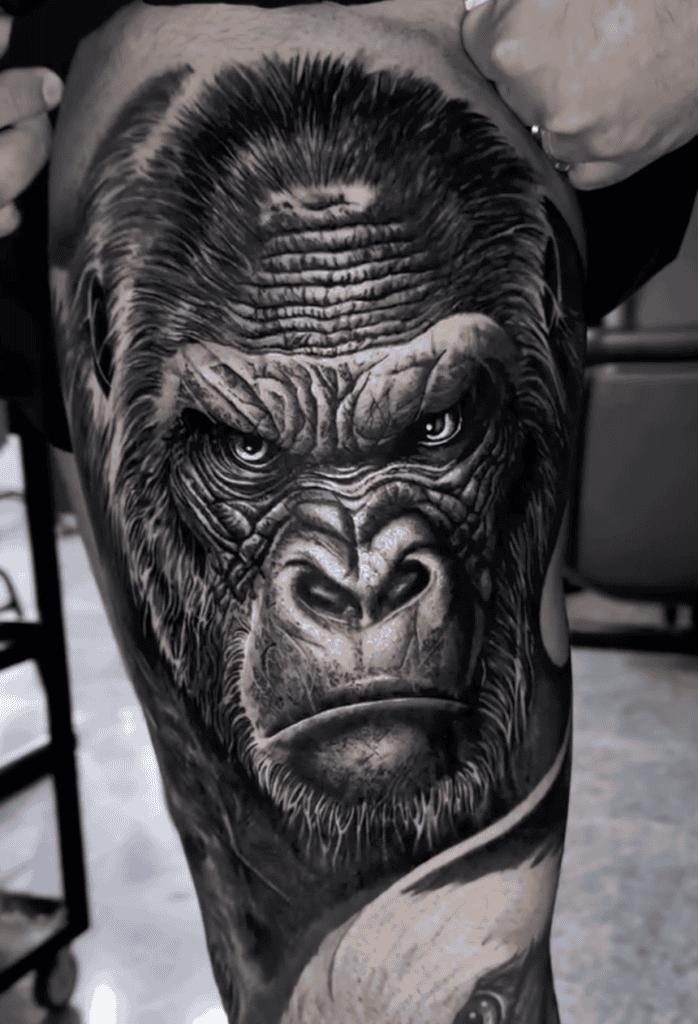
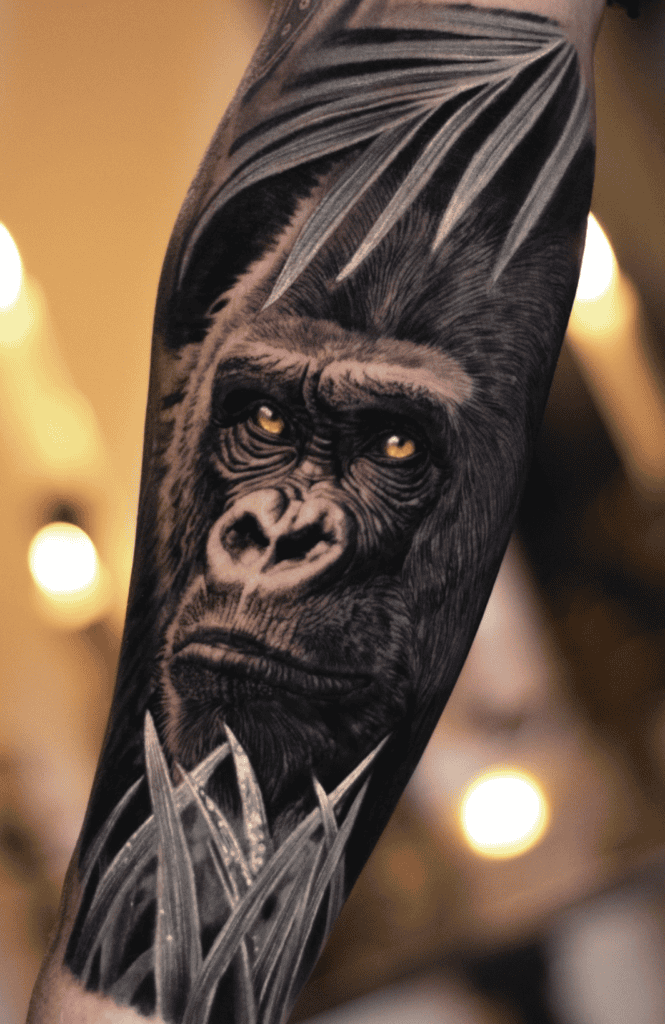
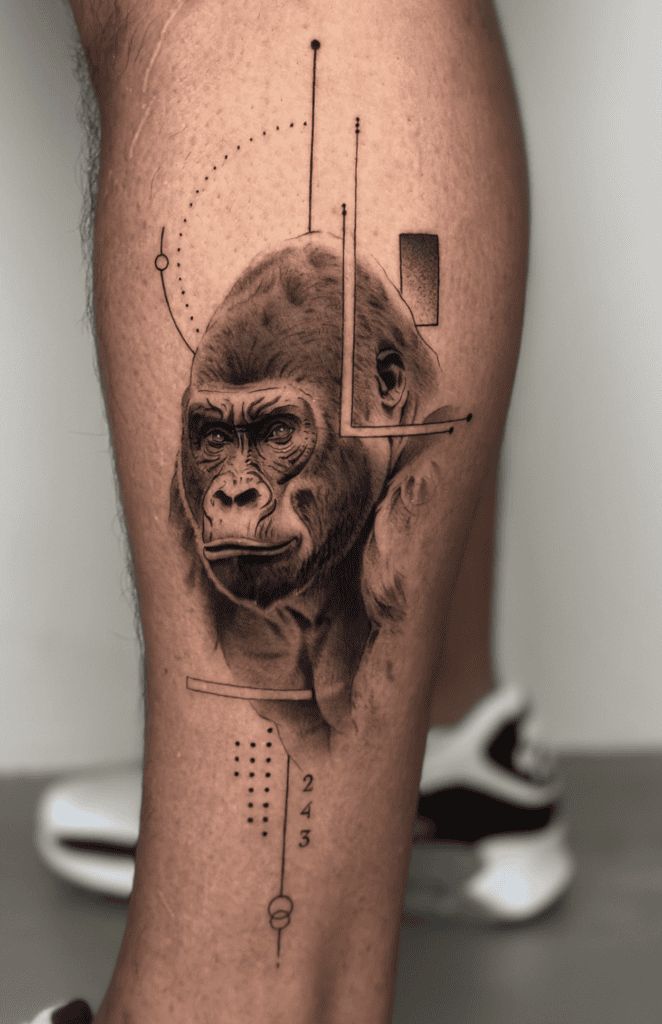
Gorillas are native to the forests of Central Africa, particularly in countries like Uganda, Rwanda, and the Democratic Republic of the Congo. They live in dense forests and mountainous regions, spending most of their time on the ground as they move through thick vegetation. Gorillas are the largest living primates, with powerful, muscular bodies and broad chests. Adult males, known as silverbacks, develop a patch of silver hair on their backs as they mature and take on leadership roles within the group.
Despite their immense strength, gorillas are primarily gentle and calm, known for their peaceful nature and strong family bonds. They move deliberately through their environment, conserving energy and avoiding unnecessary conflict. They are herbivores, feeding mainly on leaves, stems, fruit, and shoots. Their diet supports their large size, and they spend a significant part of the day foraging and eating.
Gorillas live in close-knit family groups led by a dominant silverback, who is responsible for protecting the group, making decisions, and guiding movement. These groups maintain strong social bonds through grooming, communication, and shared routines. They communicate using a mix of vocal sounds, gestures, and body language, including chest-beating displays that signal strength and establish dominance without direct conflict.
Orangutan Ape Tattoo
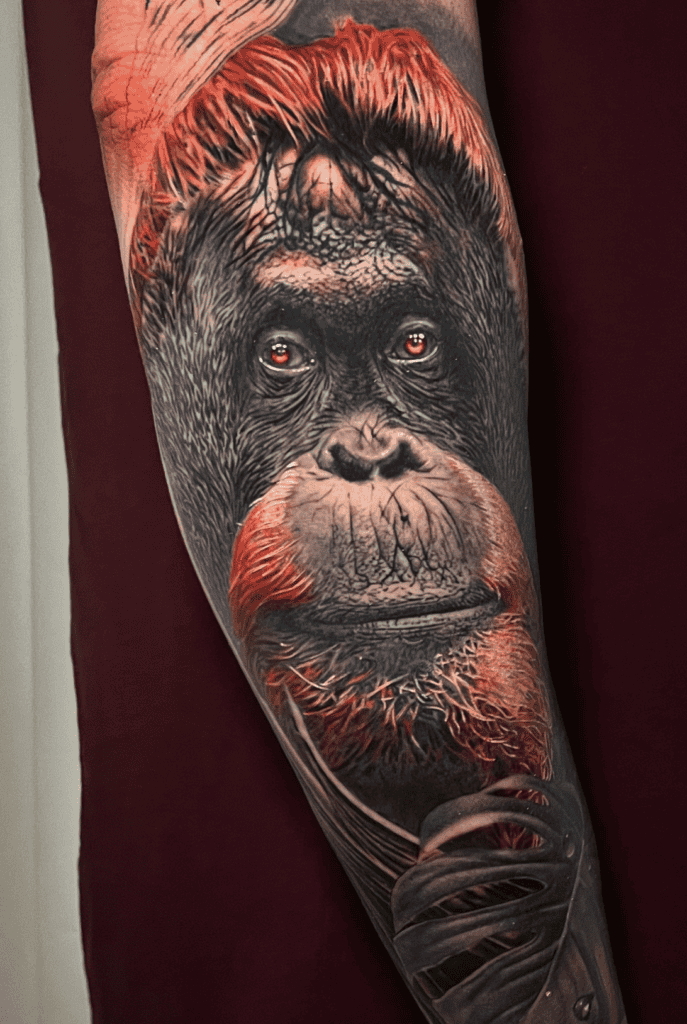
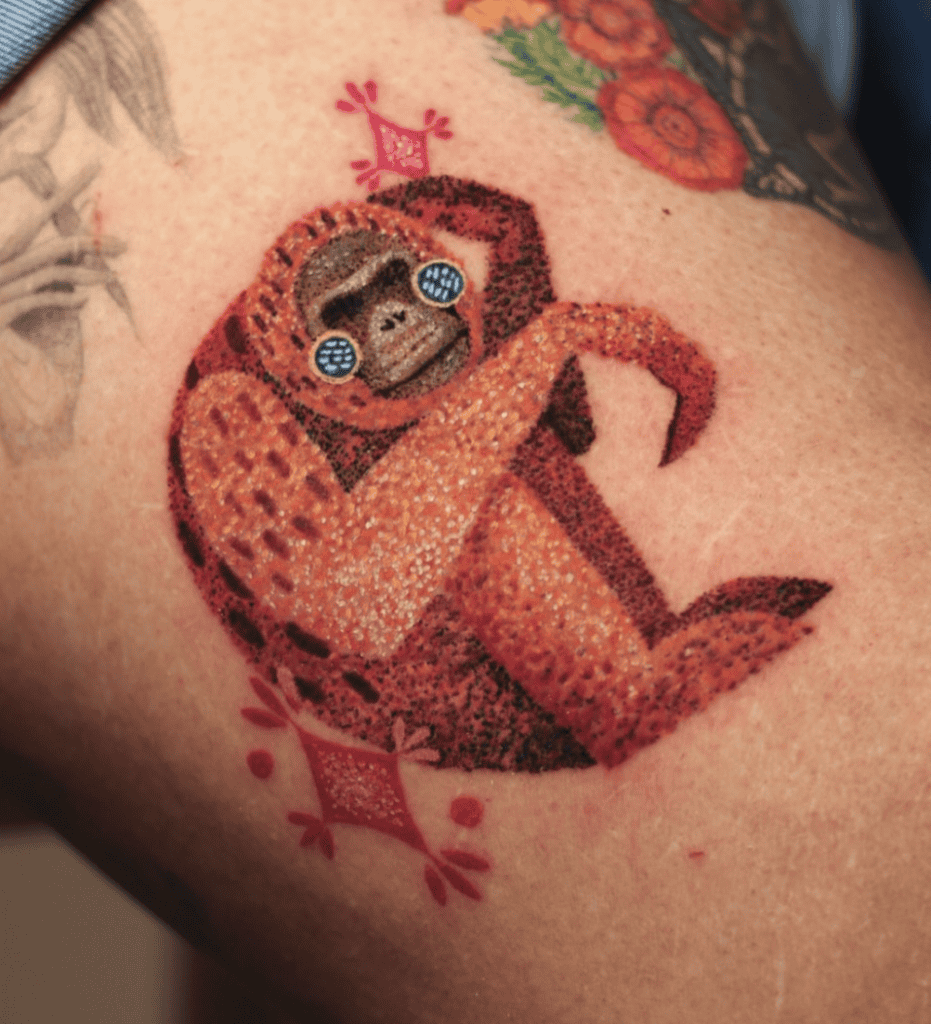
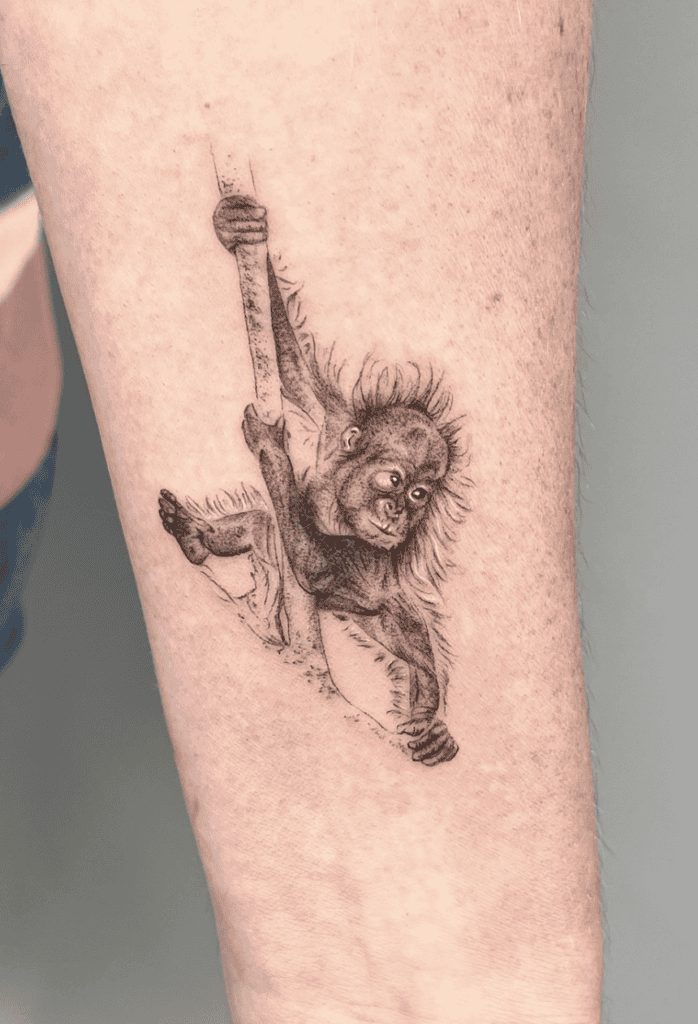
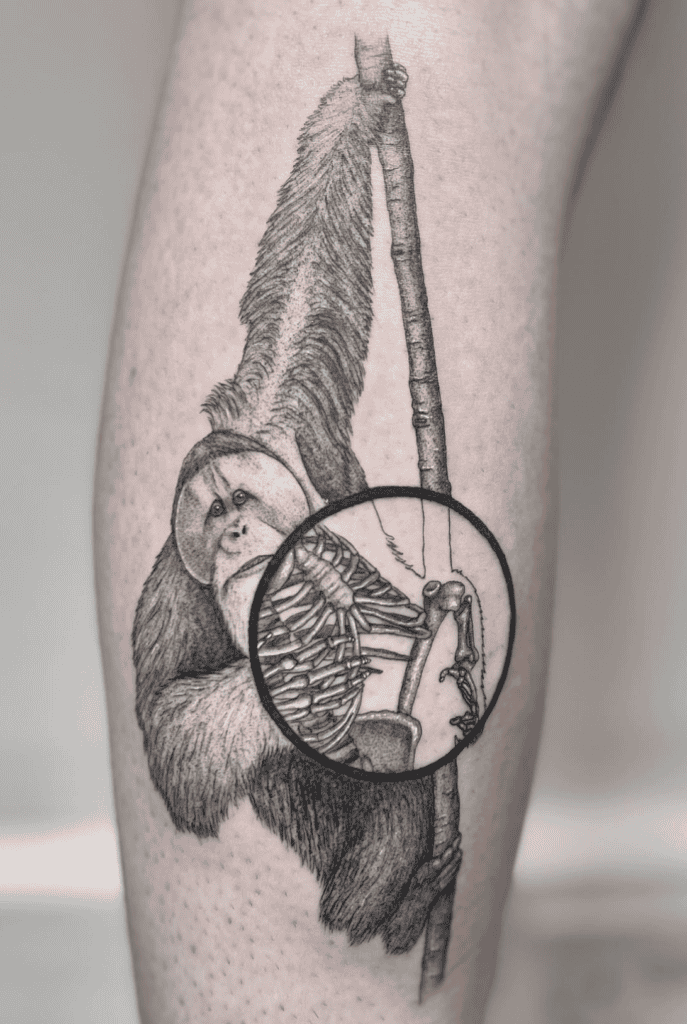
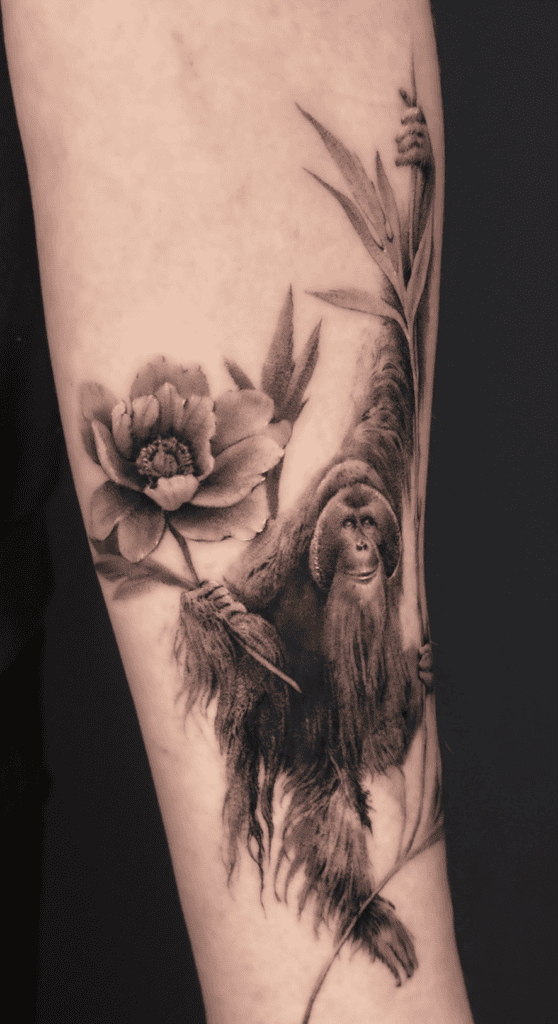
Orangutans are native to the rainforests of Borneo and Sumatra. They live in dense tropical forests and spend almost their entire lives in the trees, rarely coming down to the ground. Orangutans are easily recognised by their long reddish-orange fur and long, powerful arms, which can stretch over two metres. These adaptations allow them to move slowly and deliberately through the canopy, swinging and climbing with great control.
They are among the most intelligent primates, as their problem-solving ability and memory are highly developed, and are known for using tools such as sticks to extract insects or seeds and leaves as makeshift umbrellas during rain. Orangutans are mostly solitary, unlike many other primates, with adult males tending to live alone, while females stay with their young, forming strong maternal bonds that can last for many years.
They are primarily fruit-eaters, with fruit making up the majority of their diet, along with leaves, bark, and insects. Their movements are often guided by memory, as they travel between known feeding trees. Orangutans are known for their calm and thoughtful behaviour, often observing their surroundings quietly and moving patiently rather than quickly.
Gibbon Ape Tattoo
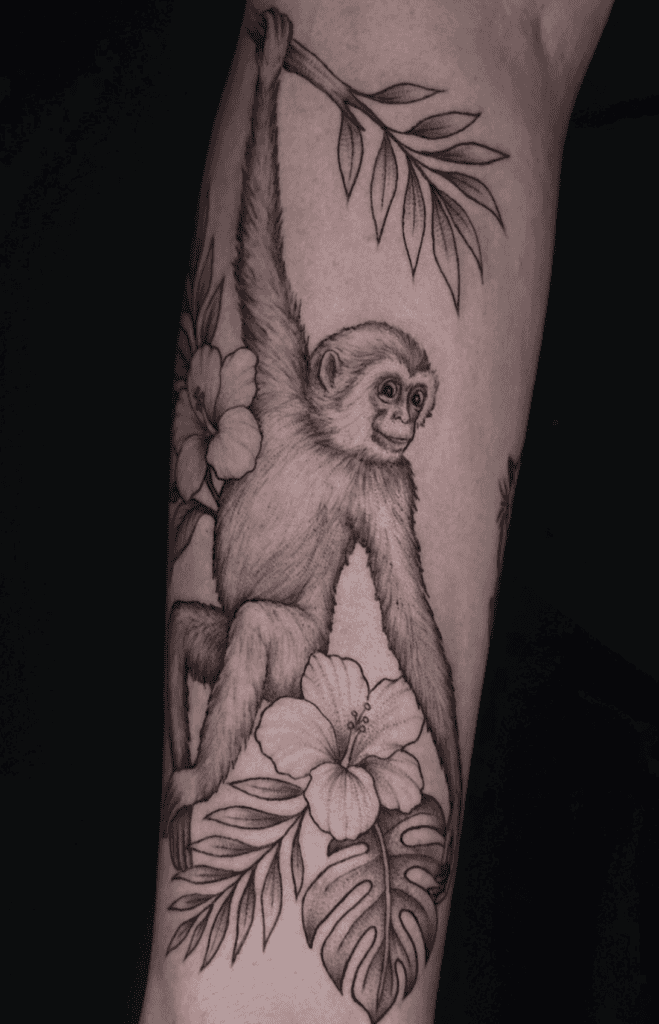
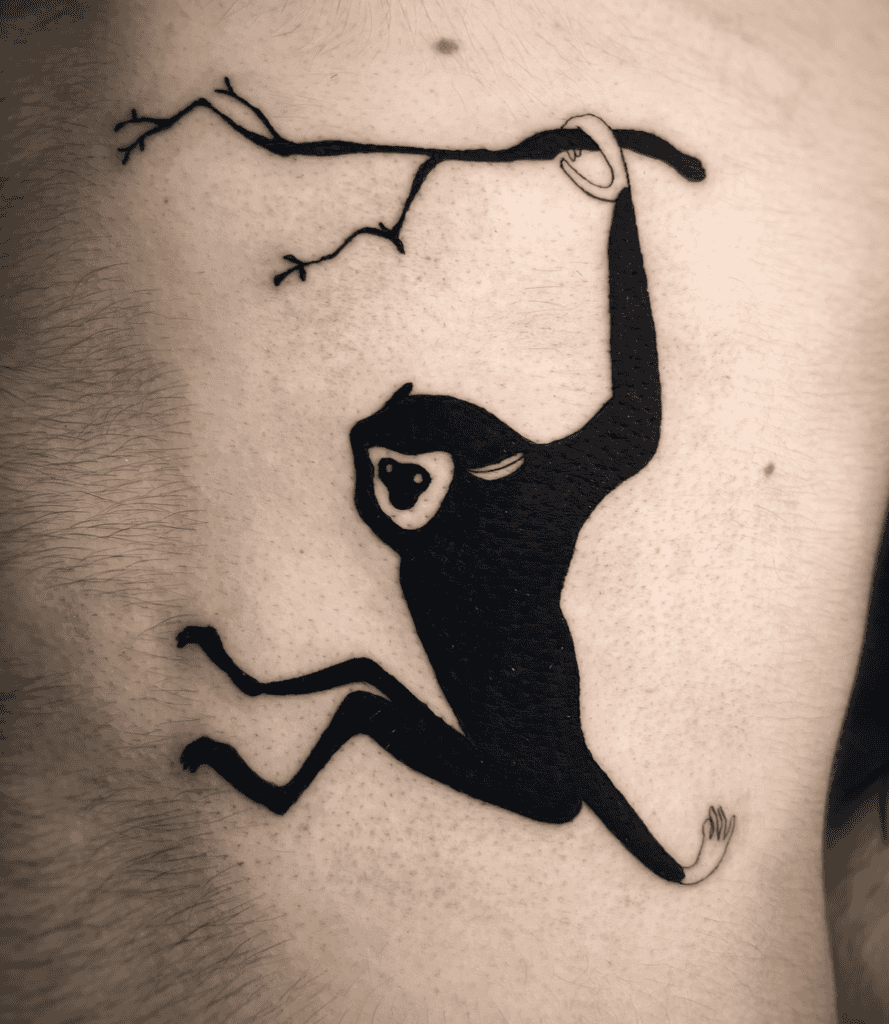
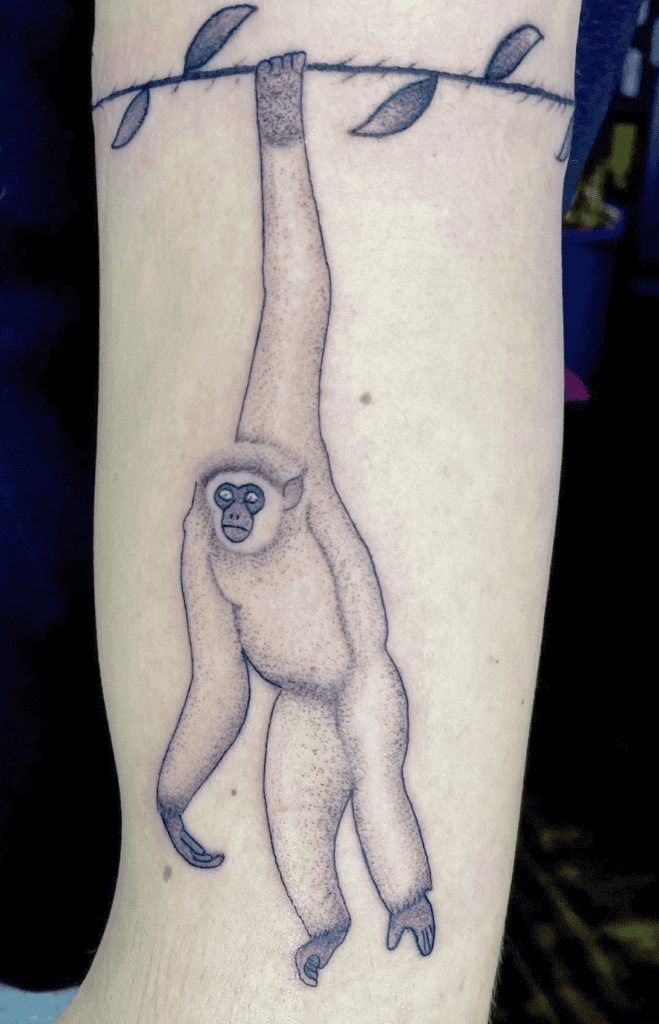
Gibbons are native to the tropical forests of Southeast Asia, including countries like Thailand, Indonesia, Vietnam, and Malaysia. They live in dense forests and spend almost their entire lives high in the canopy, rarely coming down to the ground.
Gibbons are known for their incredibly long arms and lightweight bodies, which make them the most agile tree-dwelling primates. They move through the forest using a method called brachiation, swinging from branch to branch with speed and precision. They are among the fastest primates in the trees, capable of travelling long distances by swinging and leaping through the canopy with remarkable control and balance.
Gibbons are highly social but typically live in small family groups, often consisting of a monogamous pair and their offspring. These groups maintain strong bonds and defend their territory together. They are well known for their loud, melodic calls, often performed as duets between mates. These songs help strengthen bonds and mark territory, echoing through the forest canopy. Gibbons are primarily fruit-eaters, supplemented by leaves, flowers, and insects. Their movements are often guided by memory as they travel between feeding areas.
Ring-tailed Lemur Primate Tattoo
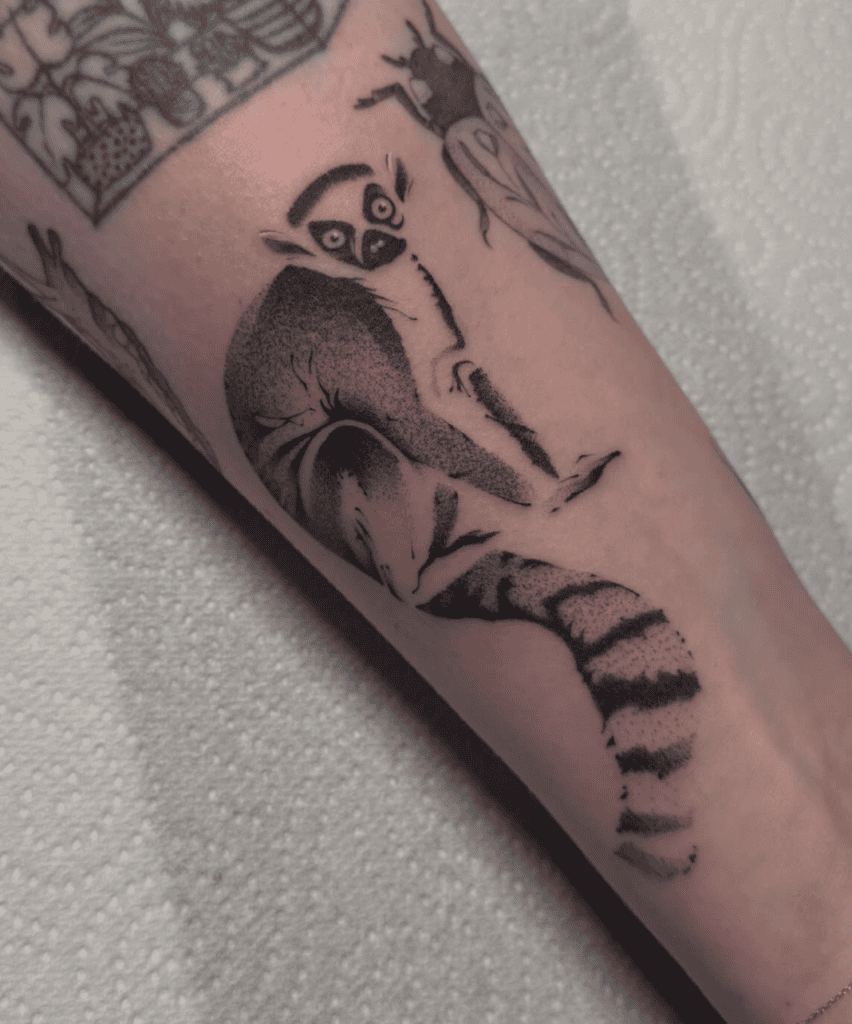
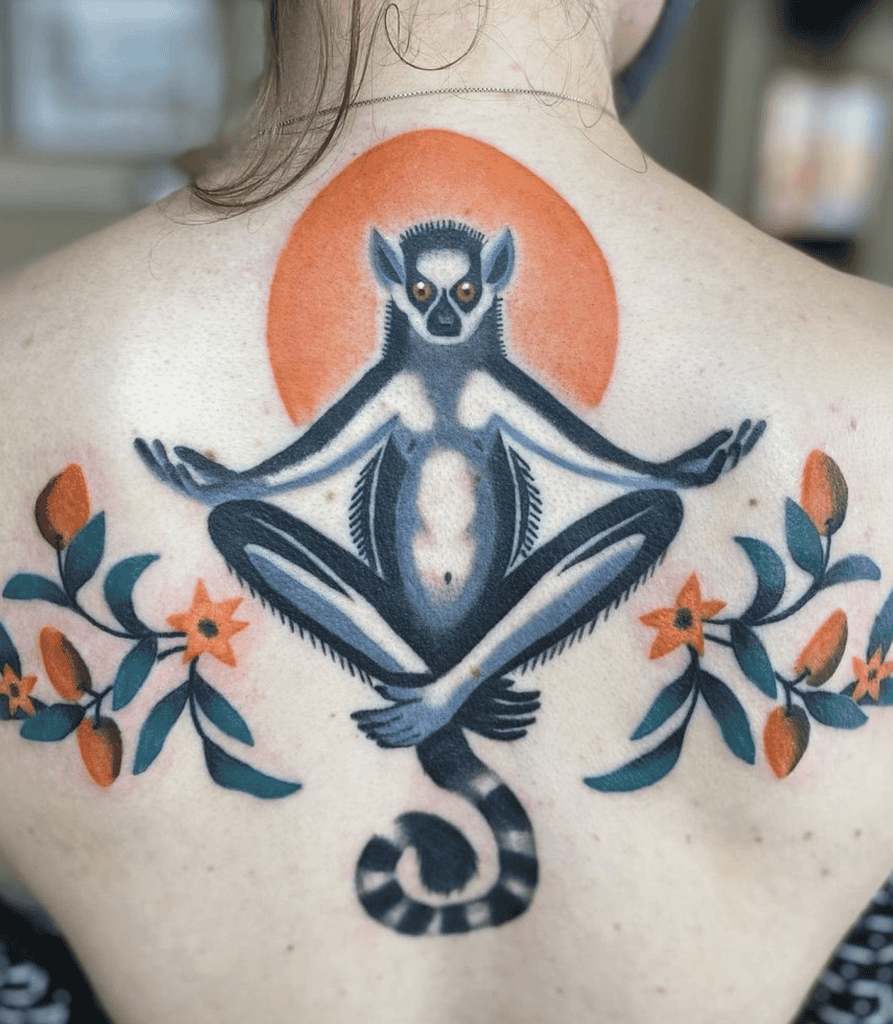
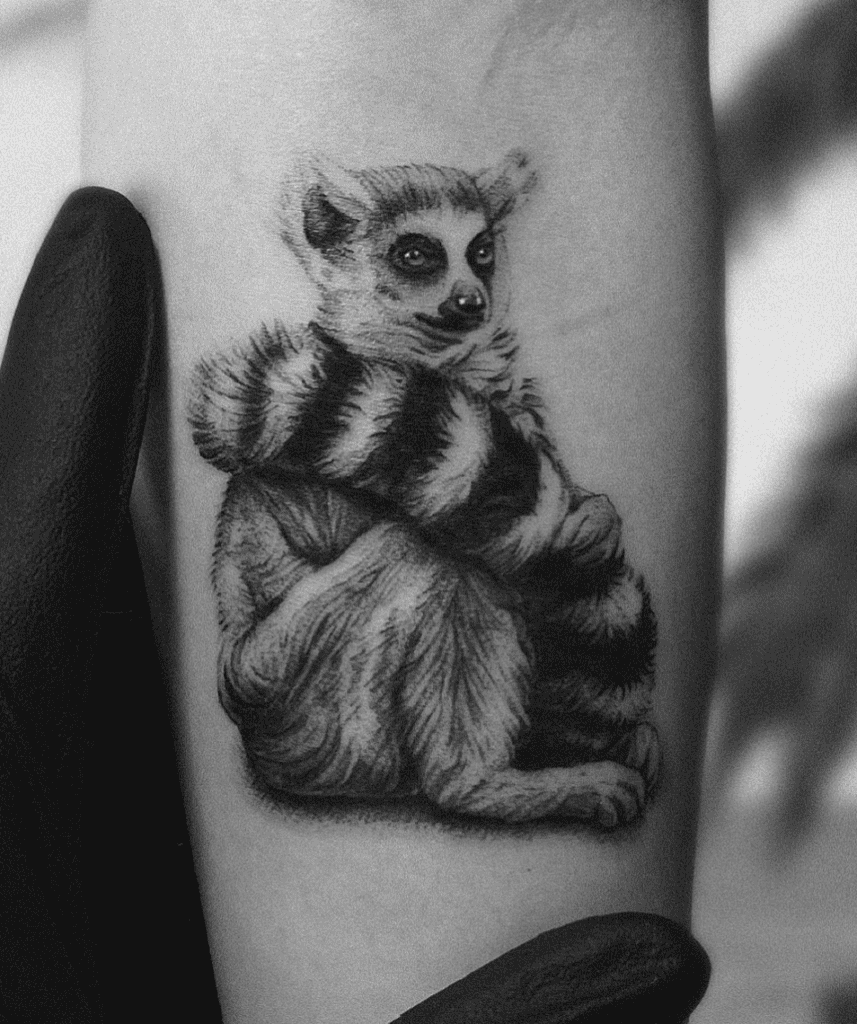
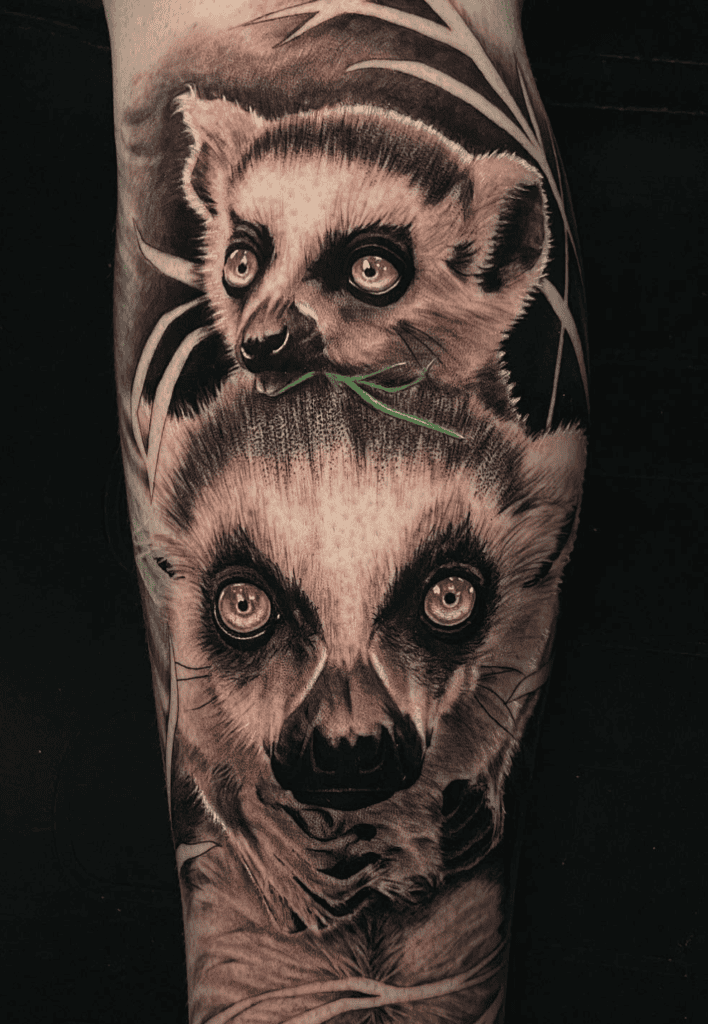
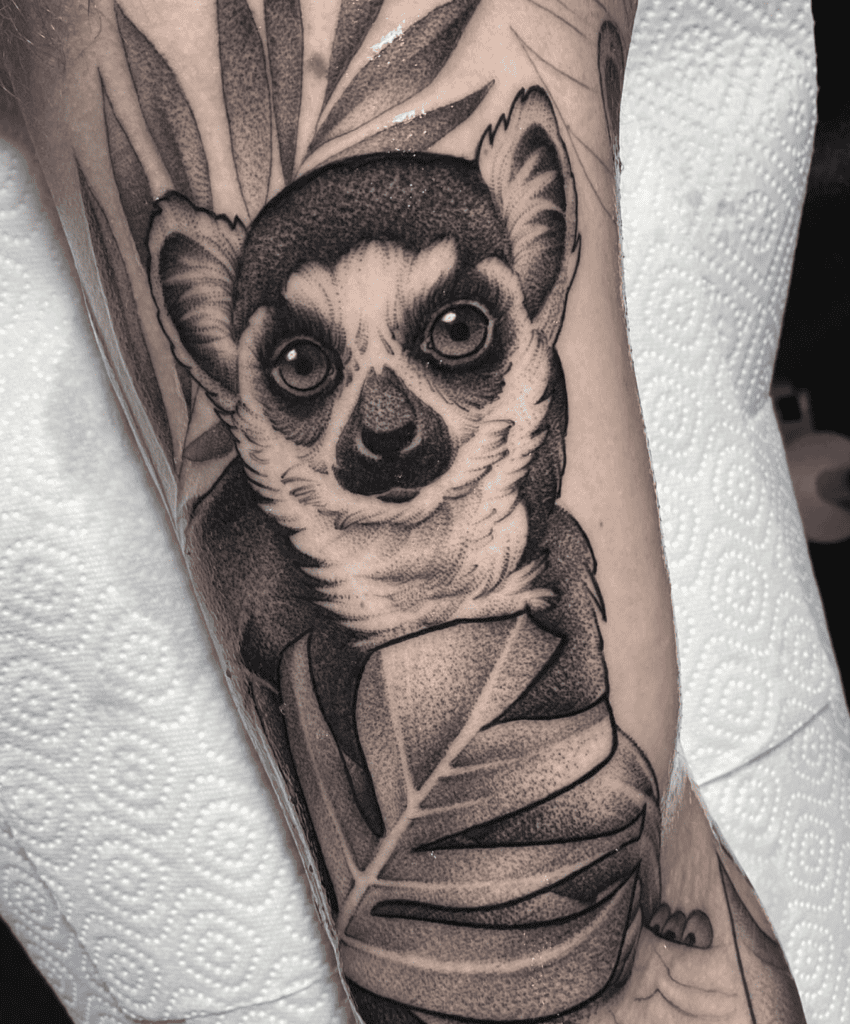
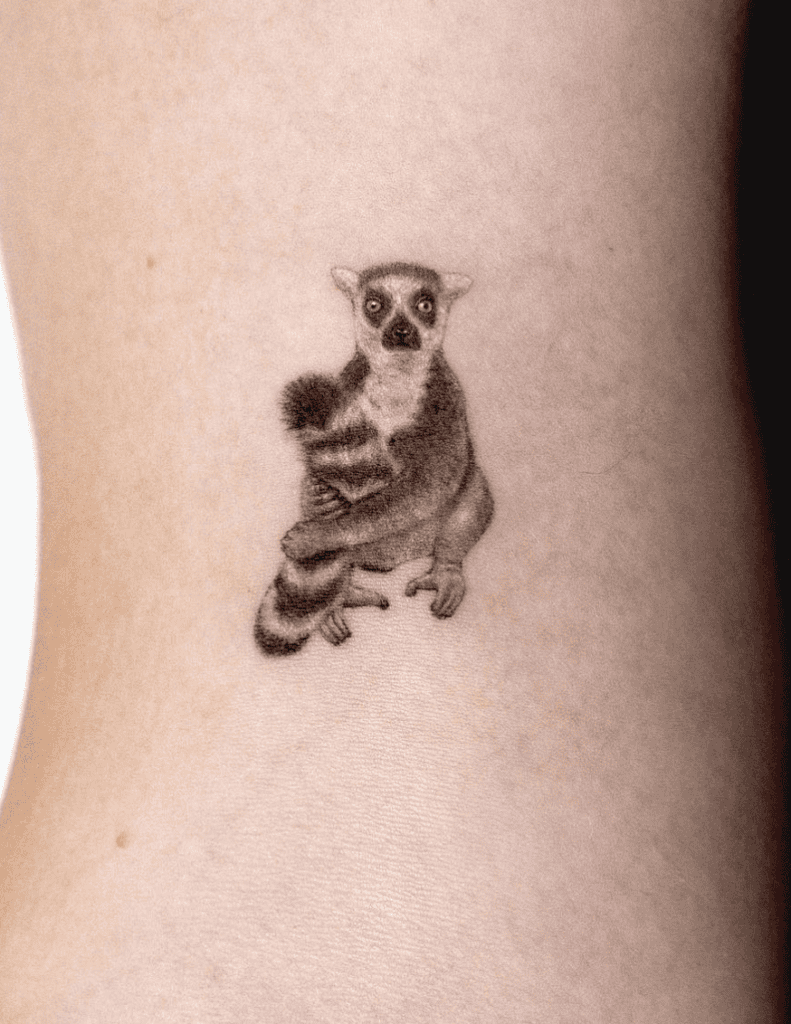
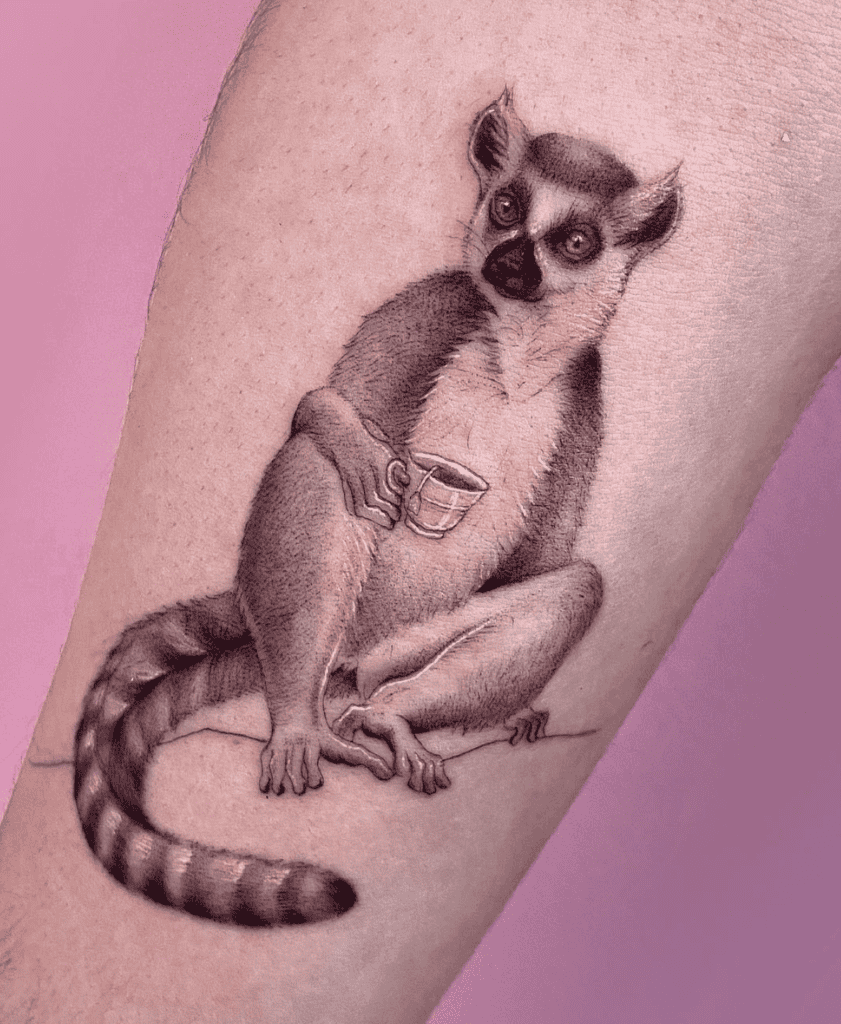
Ring-tailed lemurs are native to the island of Madagascar, where they live in dry forests, scrublands, and open areas. Unlike many other primates, they spend a significant amount of time on the ground as well as in trees, making them highly adaptable to their environment.
Ring-tailed lemurs are easily recognised by their long, black-and-white striped tails and bright, expressive eyes. Their tails are not used for gripping but instead help with balance and communication, often held upright as they move in groups.
They are known for their unique behaviour of “sunbathing,” where they sit upright with their arms spread wide to warm themselves in the morning sun. Ring-tailed lemurs are omnivores, feeding on fruits, leaves, flowers, and occasionally insects. They are active foragers, moving across the ground and through trees in search of food throughout the day.
They are highly social animals, living in groups called troops that can range from 10–30 individuals. These groups are led by dominant females, making them one of the few primate societies with female leadership. They communicate using a mix of vocal calls, scent marking, and body language. Their scent glands play an important role in marking territory and maintaining social structure within the group.
Black and White Lemur Primate Tattoo
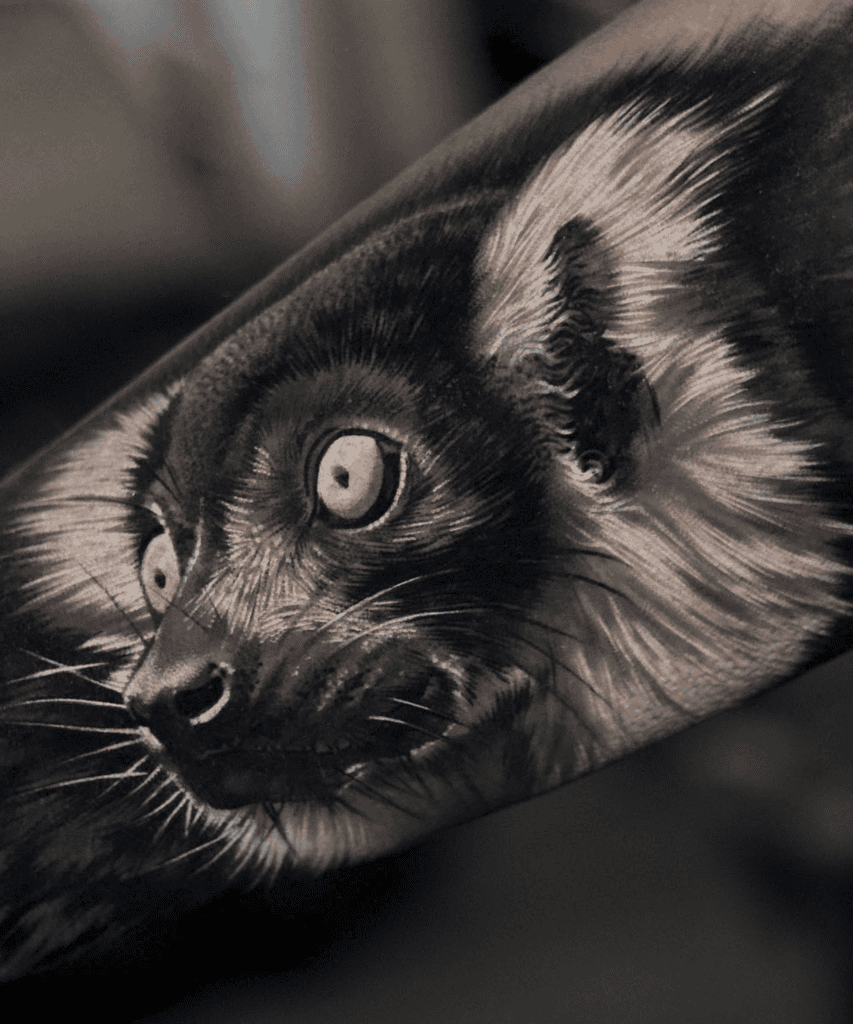
Black-and-white ruffed lemurs are native to the rainforests of Madagascar, where they live in dense, humid forest environments. They spend most of their time high in the canopy, rarely coming down to the ground. Black-and-white ruffed lemurs are easily recognised by their thick, fluffy fur, with striking black-and-white patterns and a distinctive “ruff” of fur around their neck. Their bright eyes and bold colouring make them one of the most visually striking lemur species.
They are primarily fruit-eaters, with fruit making up the majority of their diet, along with leaves, nectar, and seeds. As they move through the forest, they play an important role in pollination and seed dispersal, helping maintain the health of their ecosystem. They are highly vocal animals, using loud calls to communicate across the forest canopy. Their calls can travel long distances, helping them stay connected with others in their group.
Black-and-white ruffed lemurs are social but tend to form flexible group structures, sometimes coming together in larger groups and at other times splitting into smaller ones depending on food availability. Unlike many primates, they build nests in trees for their young, and females often give birth to multiple offspring at once, with the group helping to protect and care for them.
Red Ruffed Lemur Primate Tattoo
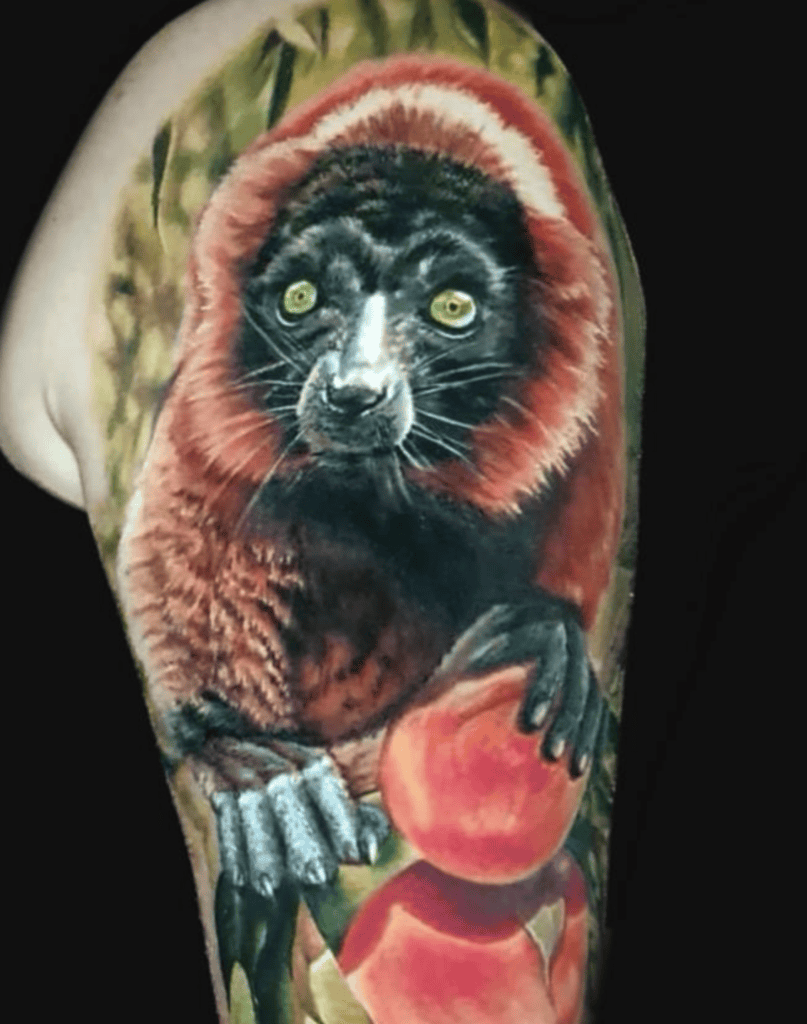
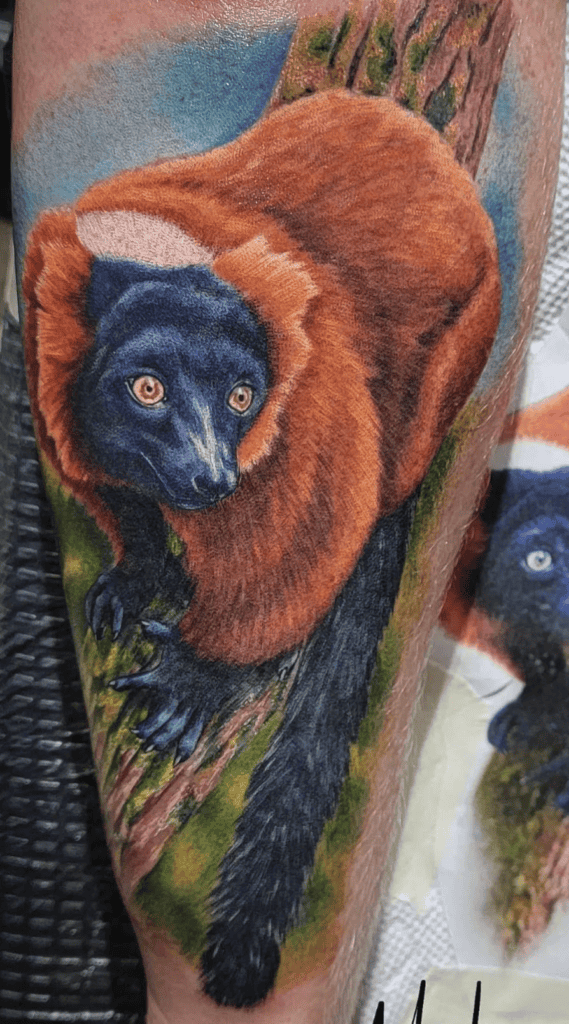
Red ruffed lemur are native to the rainforests of Madagascar, particularly in the northeastern regions of the island. They live in dense, humid forests and spend most of their time high in the canopy, rarely coming down to the ground. Red ruffed lemurs are easily recognised by their rich reddish-brown fur, contrasted with black markings on their faces and limbs, along with a fluffy “ruff” of fur around their neck. Their vibrant colouring makes them one of the most striking lemur species.
They are primarily fruit-eaters, with fruit making up the majority of their diet, along with nectar, leaves, and seeds. As they move through the forest, they play an important role in seed dispersal and pollination, helping maintain the balance of their ecosystem. Red ruffed lemurs are highly vocal, using loud calls to communicate across the forest canopy. These calls help them stay connected with their group and defend their territory.
They are social animals with flexible group structures, sometimes forming larger groups and at other times splitting into smaller subgroups depending on food availability and environmental conditions. Unlike many primates, they build nests in trees for their young, and females often give birth to multiple offspring at once. The group may assist in protecting and caring for the infants.
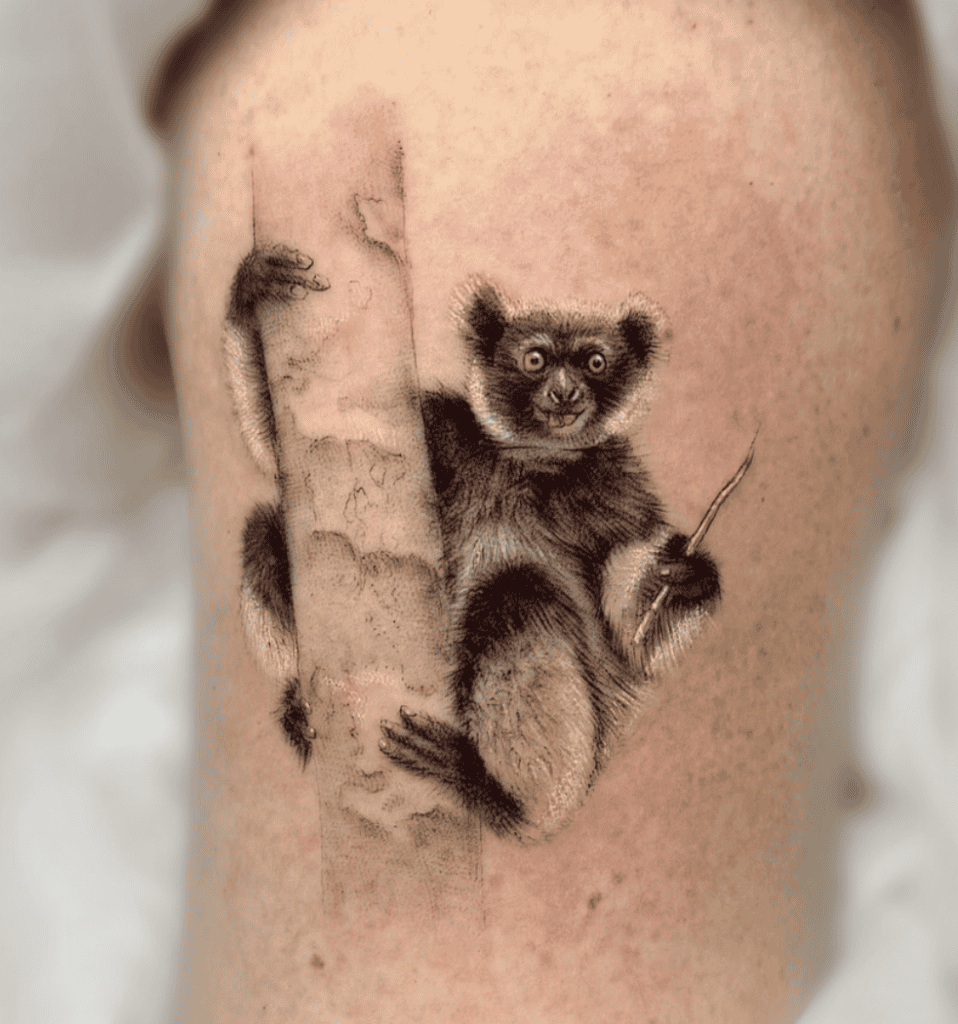
Indri Lemur Primate Tattoo
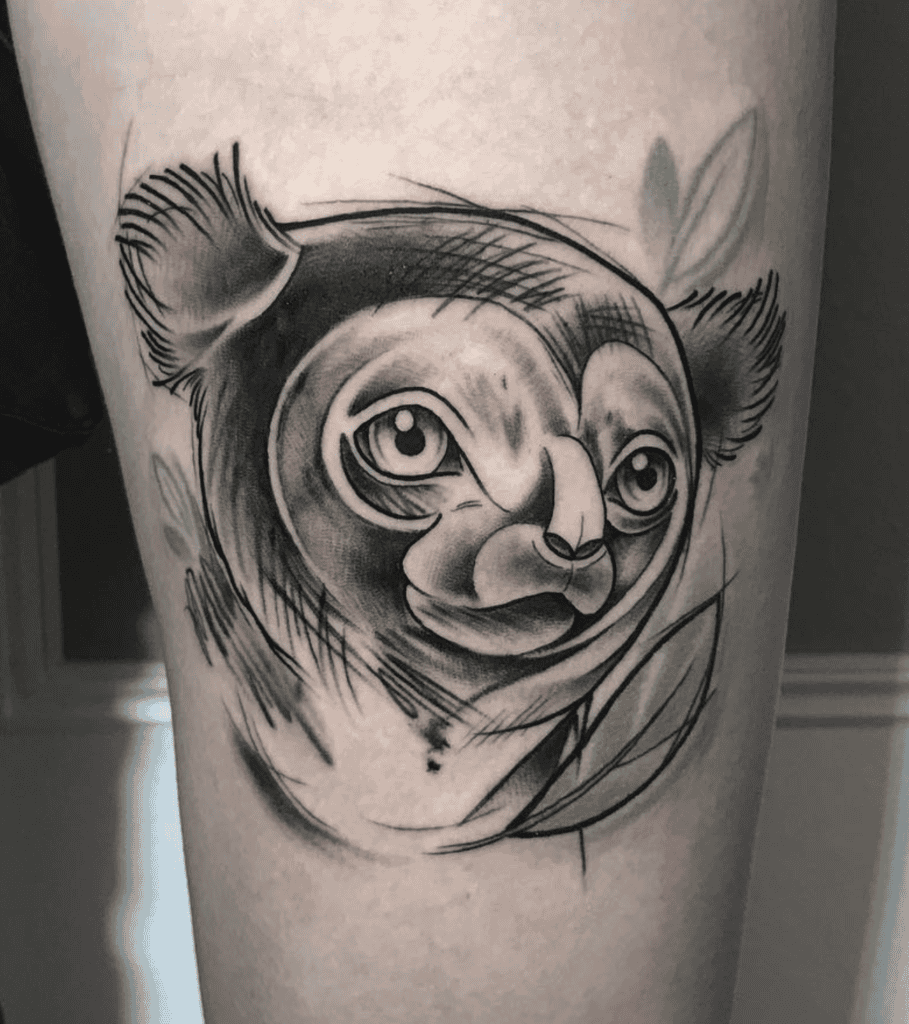
Indri Lemurs are native to the rainforests of eastern Madagascar, where they live in dense, humid forest environments. They spend most of their time in the trees, moving through the canopy and rarely coming down to the ground.
Indri are the largest living lemurs and are easily recognised by their black-and-white fur and short tail. Unlike many other lemurs, their tail is very small, giving them a more upright, almost human-like posture when sitting. They are powerful leapers, able to move between trees by making impressive vertical jumps, often covering large distances in a single bound. Their strong legs allow them to navigate the forest canopy with speed and precision.
Indri are primarily leaf-eaters, feeding on leaves, fruits, and flowers. Their diet requires them to spend time resting between feeding periods, helping conserve energy. They are highly social and typically live in small family groups, often consisting of a monogamous pair and their offspring. These groups maintain strong bonds and defend their territory together. Indri are well known for their haunting, melodic calls, which can carry over long distances through the forest. These vocalisations are often performed as group songs and help mark territory and strengthen social bonds.
Aye-aye Primate Tattoo
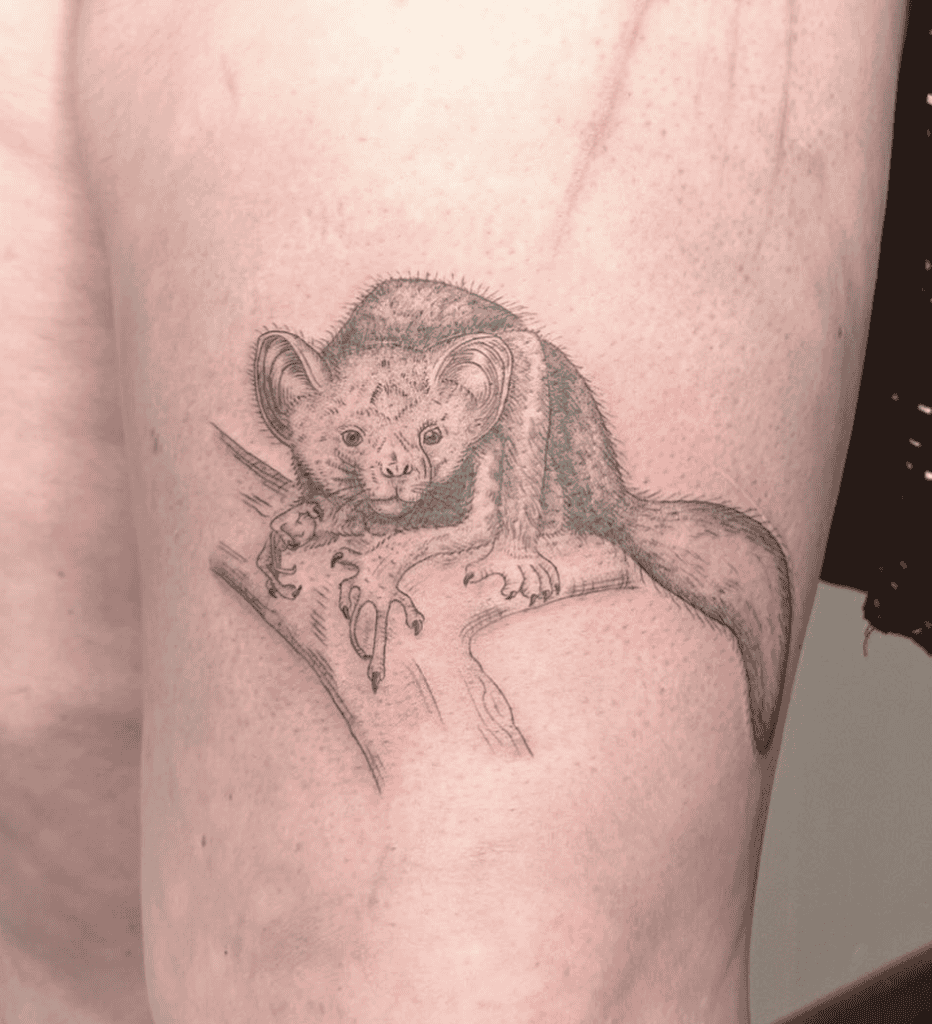
Aye-ayes are native to the forests of Madagascar, where they live in a range of environments from rainforests to coastal forests. They are primarily nocturnal, spending the night moving through the trees and resting during the day.
The aye-aye is one of the most unusual primates in the world, easily recognised by its dark fur, large eyes, bushy tail, and extremely long, thin middle finger. This specialised finger is used to tap on wood, helping them locate insects hidden inside trees.
They use a unique feeding method known as percussive foraging, tapping along branches to detect hollow spaces before gnawing into the wood and using their long finger to extract insects. This behaviour is similar to how a woodpecker hunts for food. Aye-ayes are mostly solitary, with individuals maintaining their own territories. They move quietly through the forest at night, relying on their sharp senses to find food and avoid predators.
Their diet consists of insects, larvae, fruits, seeds, and nectar. Their specialised teeth and feeding techniques allow them to access food sources that other animals cannot reach. Aye-ayes are often misunderstood and have been associated with superstition in some local cultures, which has contributed to threats alongside habitat loss.
Mouse Lemur Primate Tattoo
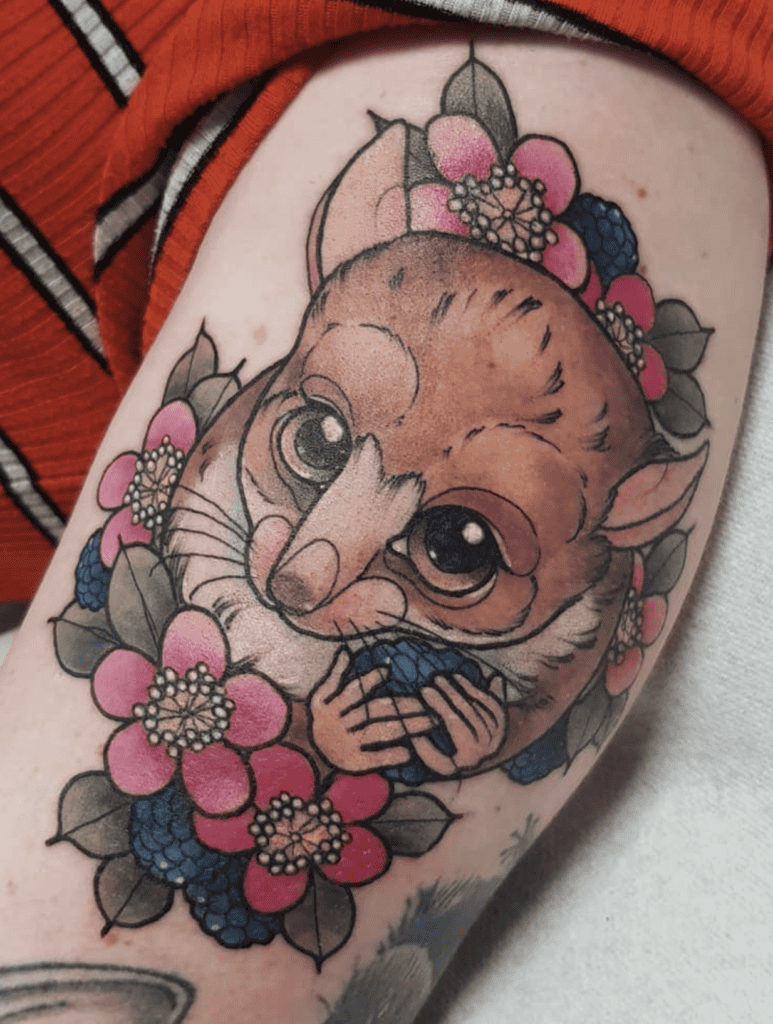
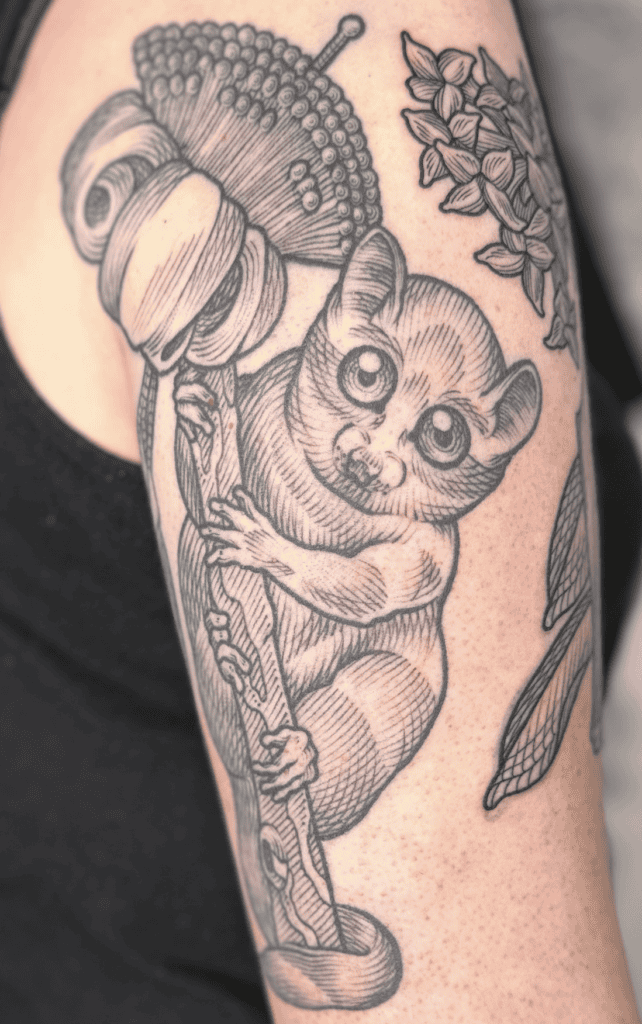
Mouse lemurs are native to the forests of Madagascar, where they live in a variety of environments, including dry forests, rainforests, and scrublands. They are highly adaptable and spend most of their time in trees, becoming active after sunset. Mouse lemurs are among the smallest primates in the world, with tiny bodies, large round eyes, and soft fur. Their large eyes help them see in the dark, as they are strictly nocturnal and rely on good night vision to move through the forest.
They are agile and quick, moving through branches with speed and precision as they search for food. Their small size allows them to navigate narrow branches and dense vegetation with ease. Mouse lemurs are omnivores, feeding on fruits, insects, nectar, and tree sap. They are active foragers, constantly moving and exploring during the night in search of food.
They are generally solitary or live in loose social structures, although they may share sleeping sites or nests during the day. Communication includes vocal calls, scent marking, and body language. Mouse lemurs are important to their ecosystem, helping with pollination and seed dispersal as they move between plants. Mouse lemurs face threats from habitat loss and environmental changes, although some species remain relatively adaptable compared to other lemurs.
Sifaka Primate Tattoo
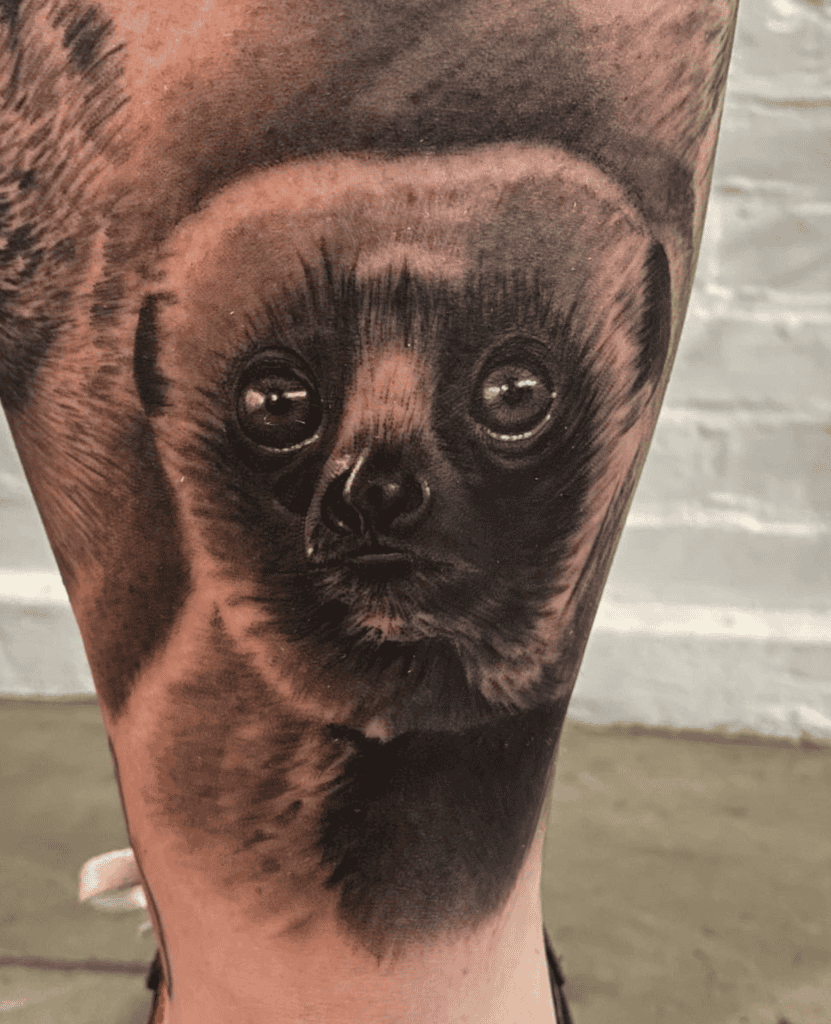
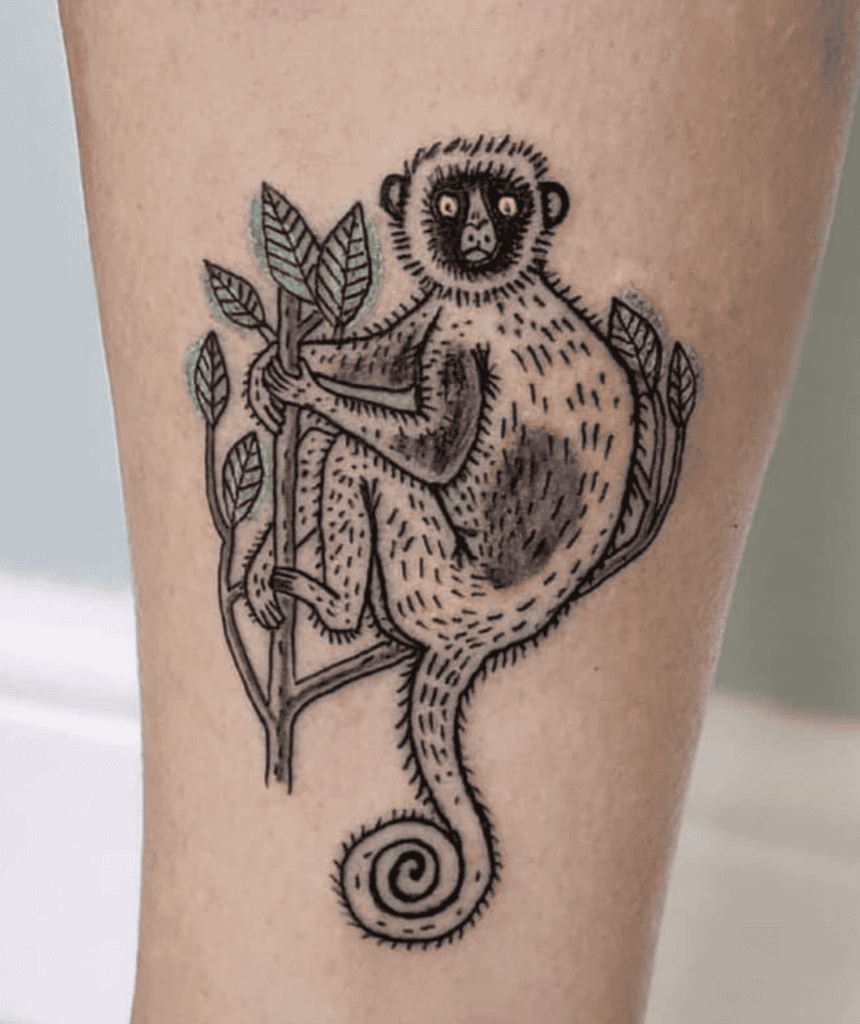
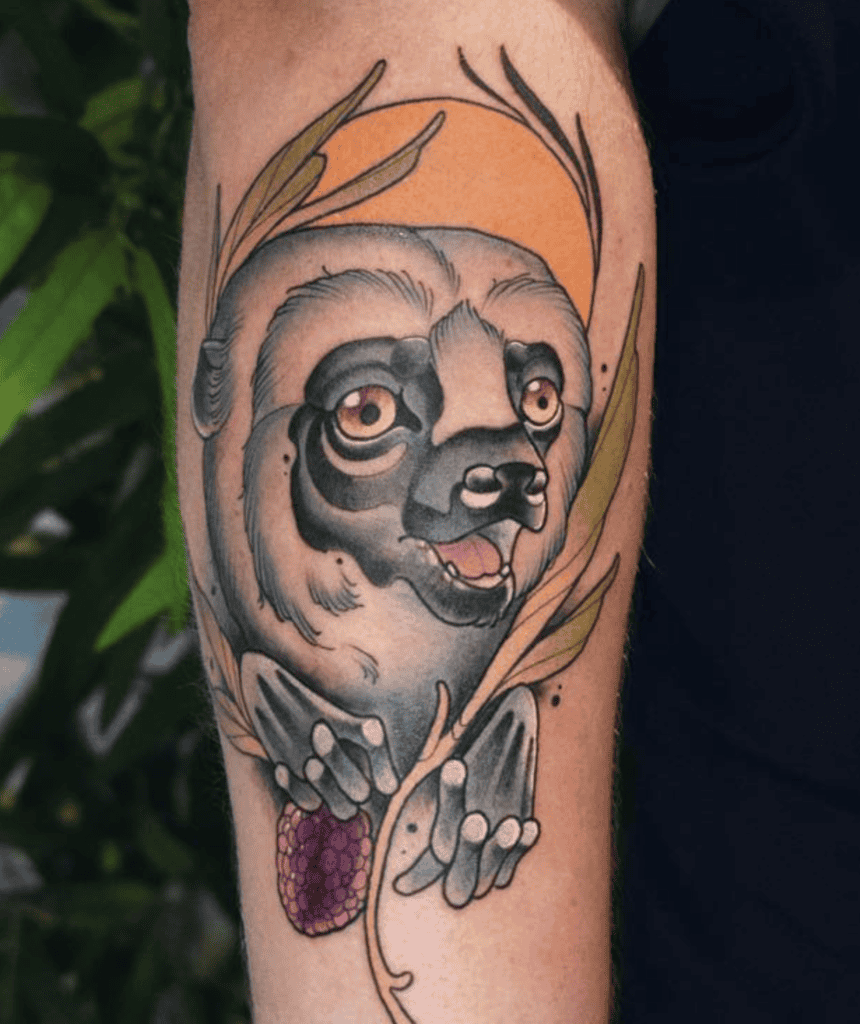
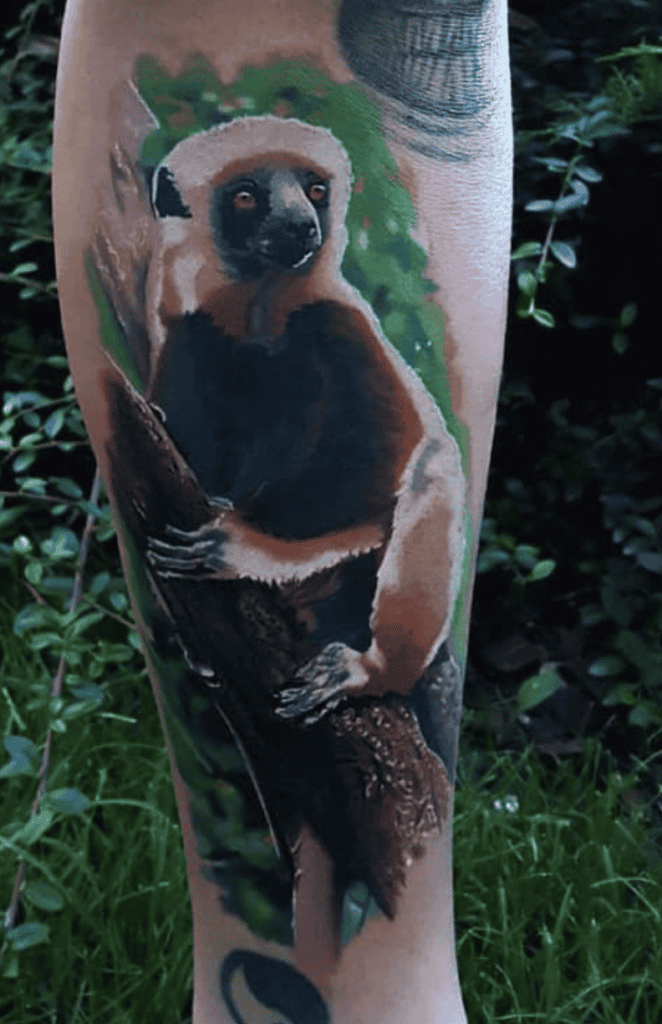
Sifakas are native to the forests of Madagascar, where they live in a range of environments from dry forests to rainforests. They spend most of their time in the trees but are also known for their unique way of moving across the ground.
Sifaka are easily recognised by their soft fur, often white or pale in colour with darker markings on the face and limbs. Their expressive faces and upright posture give them a distinctive and almost elegant appearance. They are powerful vertical climbers and leapers, moving between trees with strong, controlled jumps. When they come down to the ground, they move in a unique sideways hopping motion, which looks almost like a dance.
Sifaka are primarily leaf-eaters, feeding on leaves, flowers, and fruits. Their specialised digestive system allows them to process tough plant material, although they still spend time resting to conserve energy. They are social animals, typically living in small groups of around 3–10 individuals. These groups maintain strong bonds through grooming, vocal communication, and coordinated movement. Sifaka are active during the day and rely on their agility and awareness to navigate their environment and avoid predators.
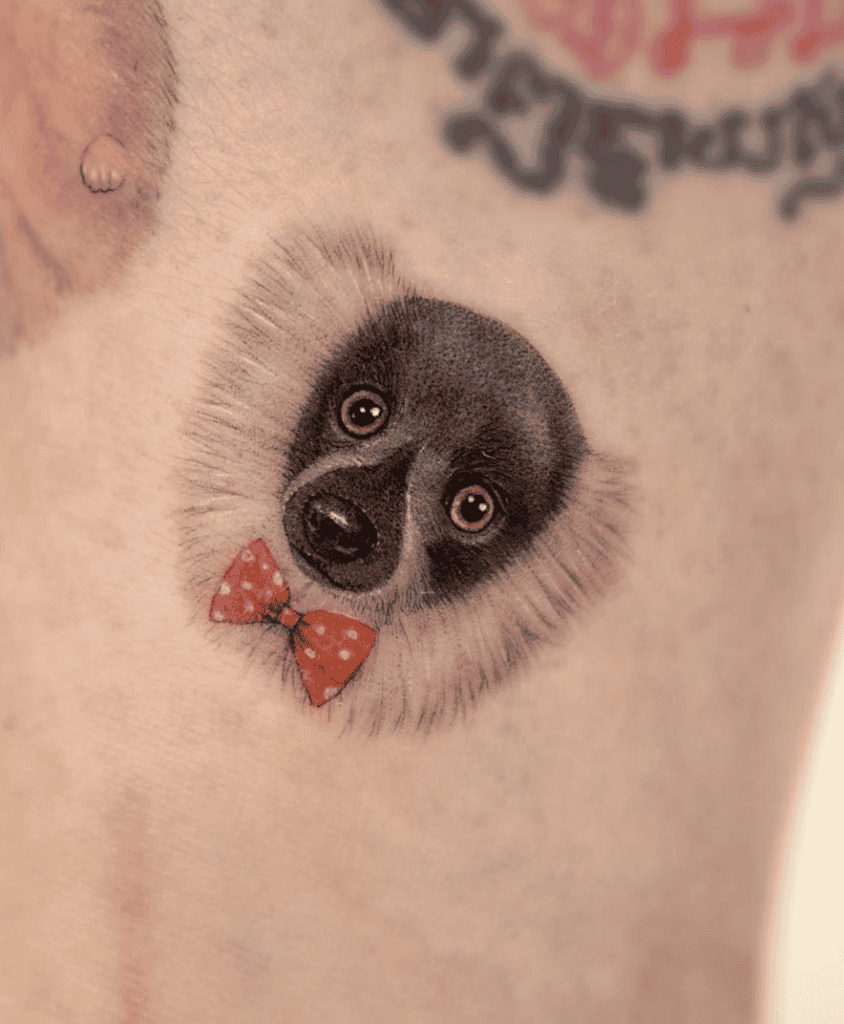
Slow Loris Primate Tattoo
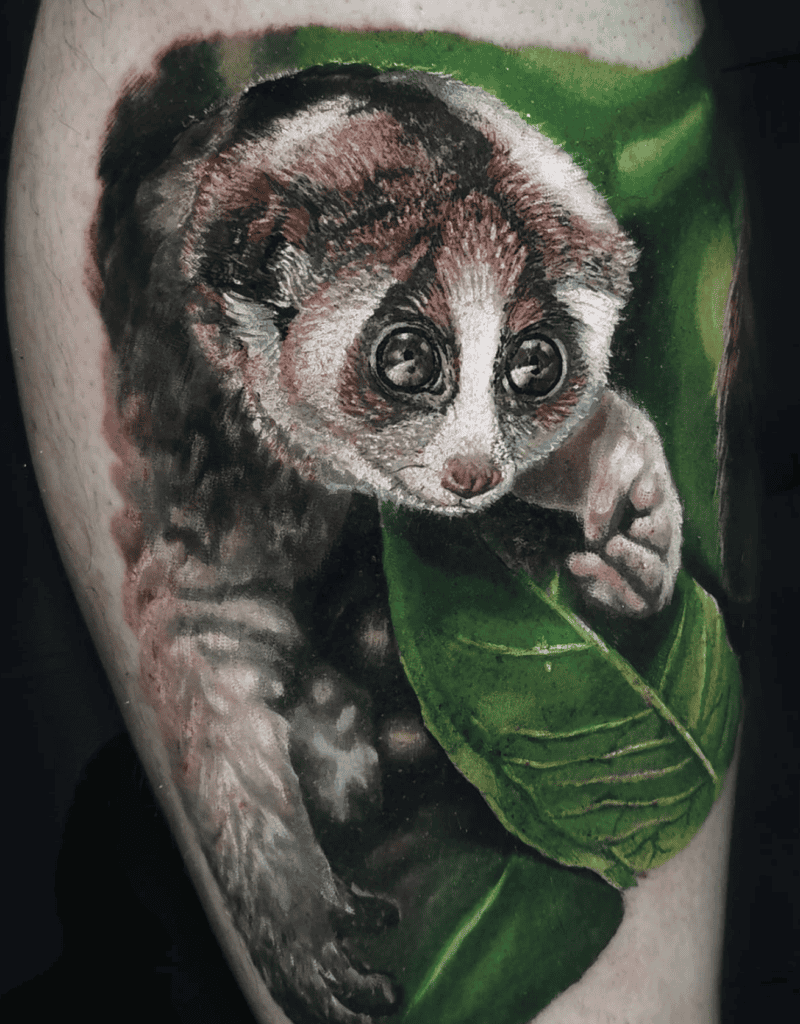
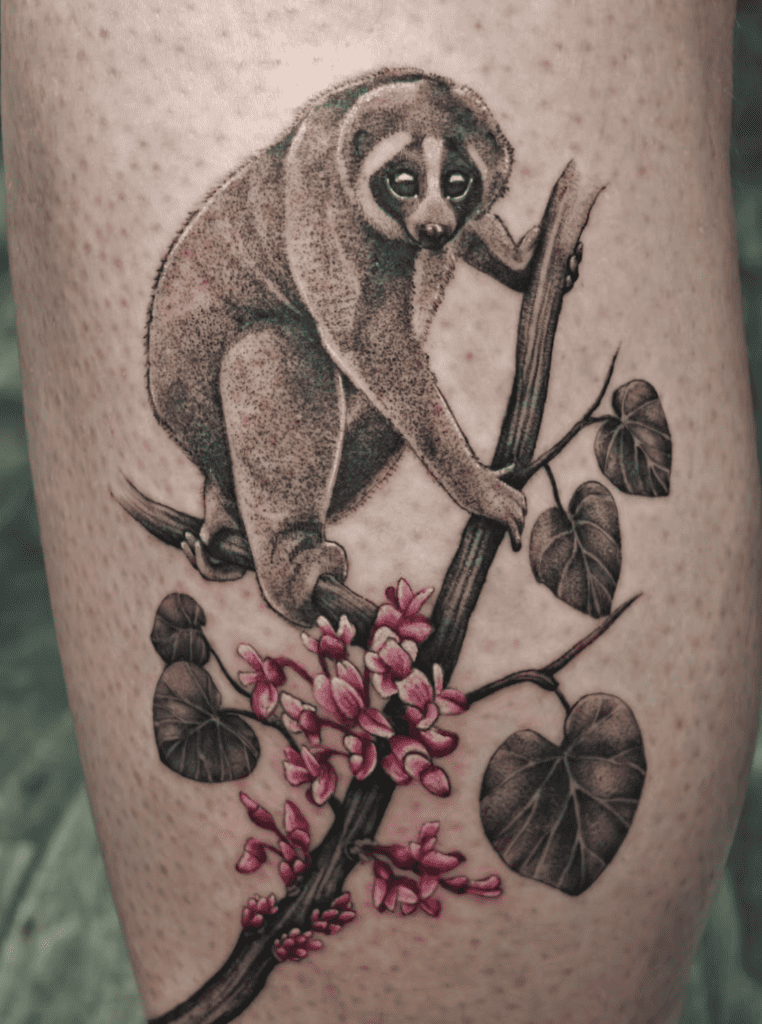
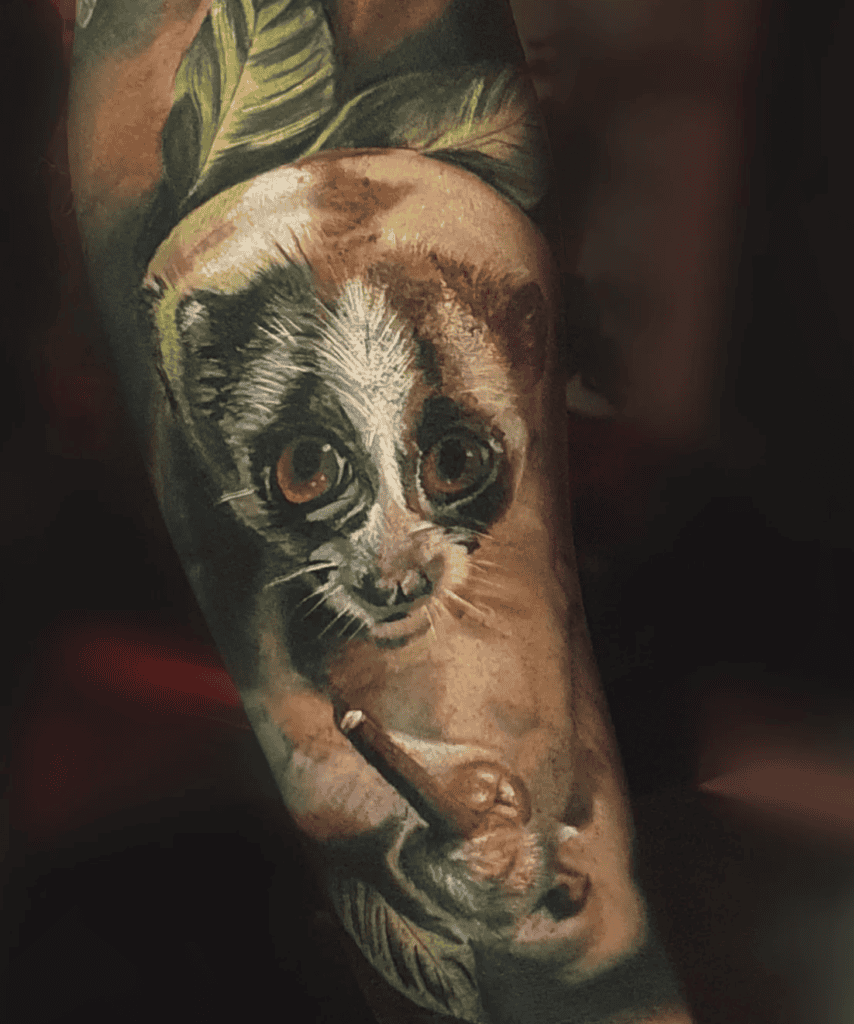
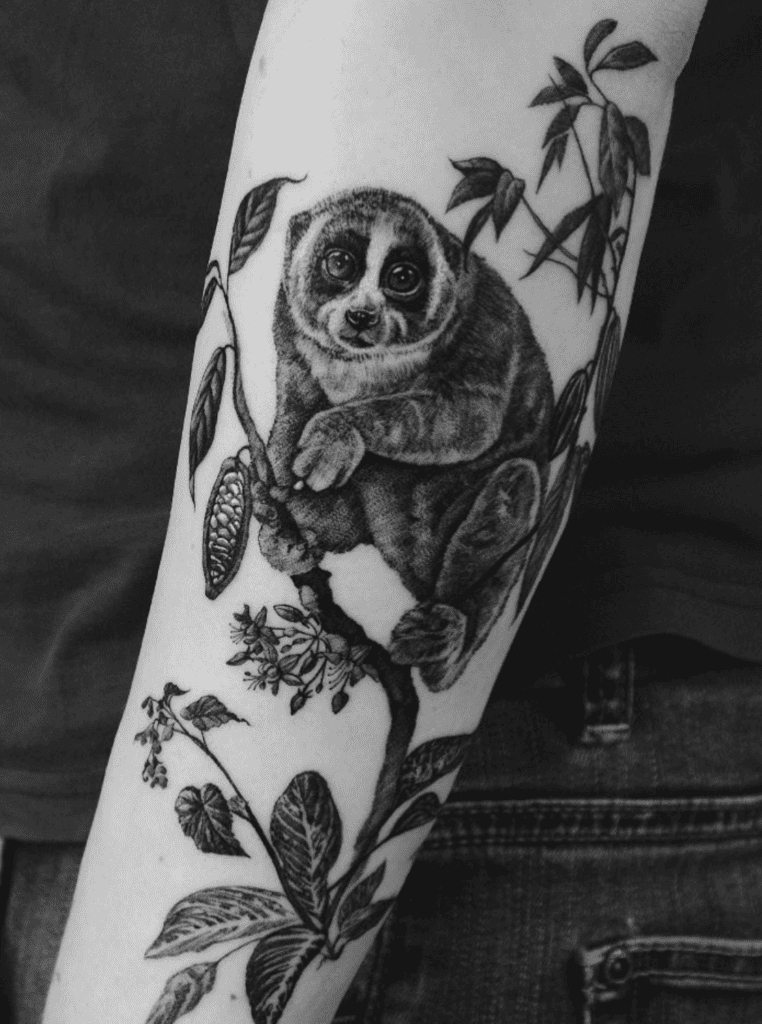
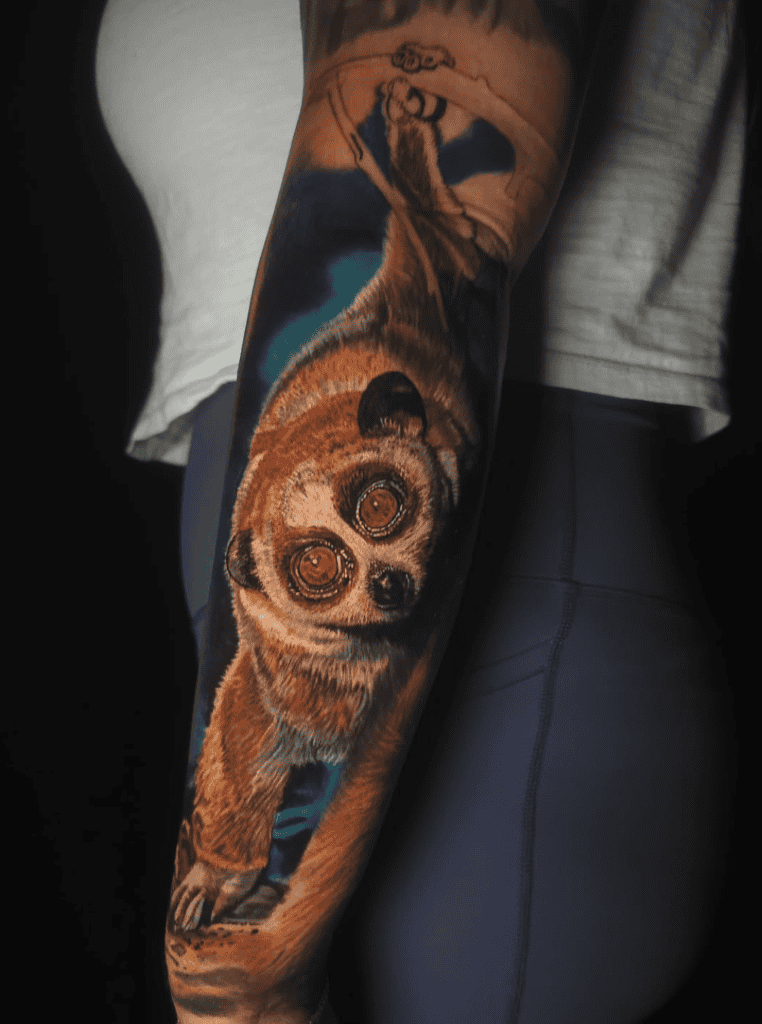
Slow lorises are native to the forests of Southeast Asia, including countries like Thailand, Indonesia, Vietnam, and Malaysia. They live in dense forests and spend most of their time in trees, becoming active at night. Slow lorises are easily recognised by their large, round eyes, soft fur, and slow, deliberate movements. Their strong grip allows them to cling to branches for long periods without falling, even while sleeping.
They are one of the few venomous mammals, producing toxins from glands in their elbows which they lick and then deliver through a bite when threatened. This unique defence helps protect them from predators despite their slow movement. Slow lorises move carefully and quietly through the trees, relying on stealth rather than speed. Their slow movements help them avoid detection while hunting and navigating their environment.
They are omnivores, feeding on insects, tree sap, fruits, and small animals. They often lick tree bark to access sap, similar to some other small primates. Slow lorises are generally solitary, although they may share overlapping territories. They communicate using scent marking, vocalisations, and subtle body language.
Slender Loris Primate Tattoo
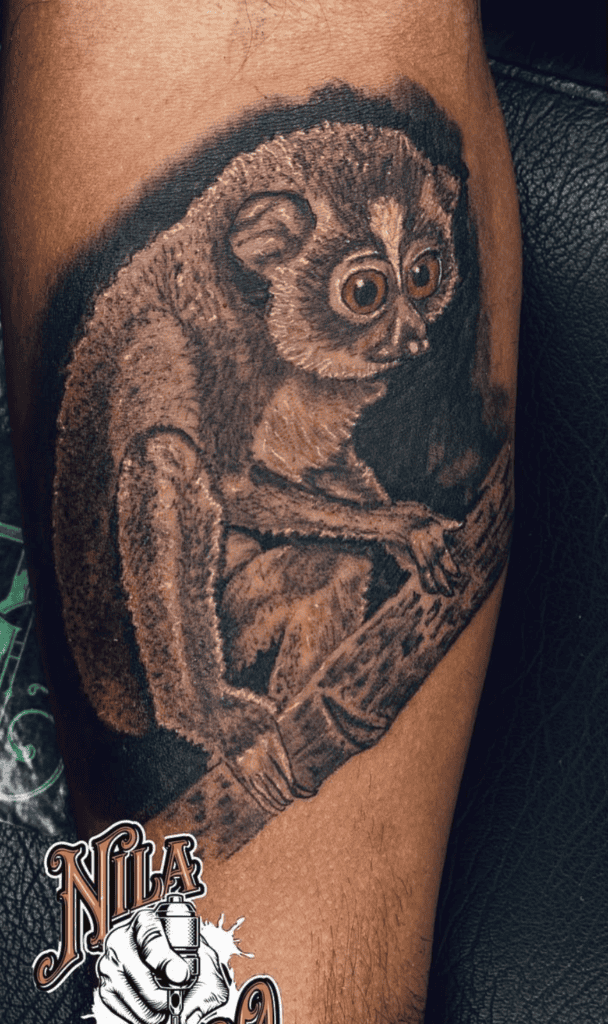
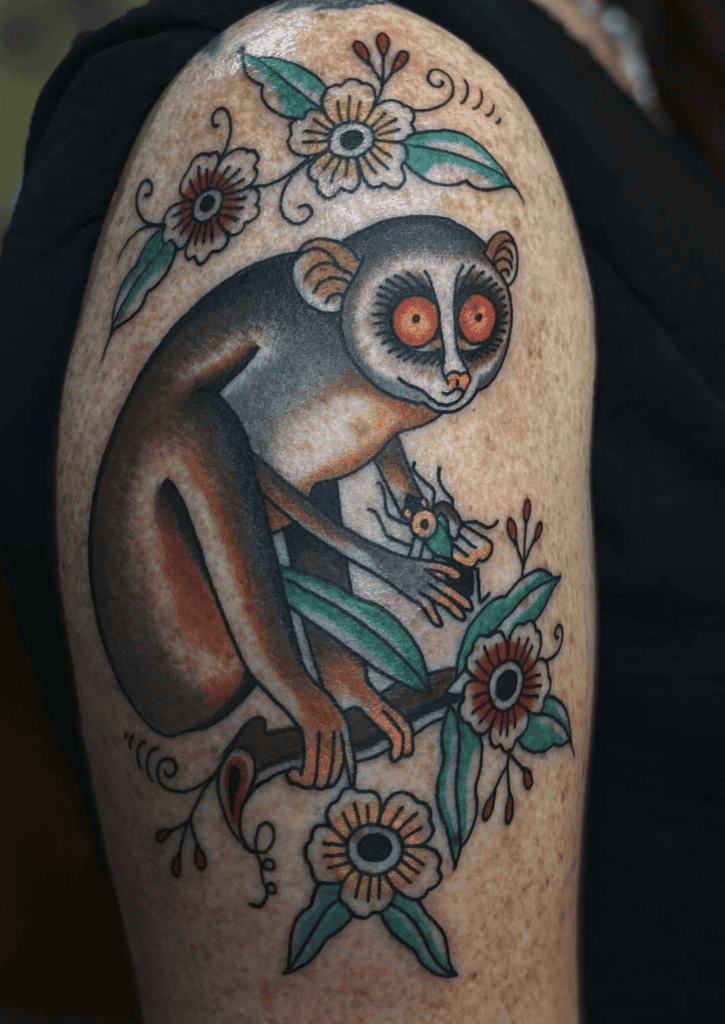
Slender lorises are native to the forests of India and Sri Lanka, where they live in tropical forests, scrublands, and woodland areas. They are nocturnal and spend most of their time moving quietly through the trees after sunset.
Slender lorises are easily recognised by their thin bodies, long limbs, and large, round eyes. Their lightweight build allows them to move carefully along branches, maintaining balance with slow, precise movements. They are highly adapted to life in the dark, with excellent night vision that helps them locate prey and navigate their environment. Their quiet, stealthy movement allows them to approach insects without being detected.
Slender lorises are primarily insectivores, feeding on insects, small animals, and occasionally fruits. They rely on patience and precision when hunting, often pausing before striking quickly. They are generally solitary, although they may have overlapping territories. Communication includes soft vocalisations, scent marking, and subtle body language. Unlike the slow loris, slender lorises are not venomous, but they rely on camouflage and stealth to avoid predators.
Tarsier Primate Tattoo
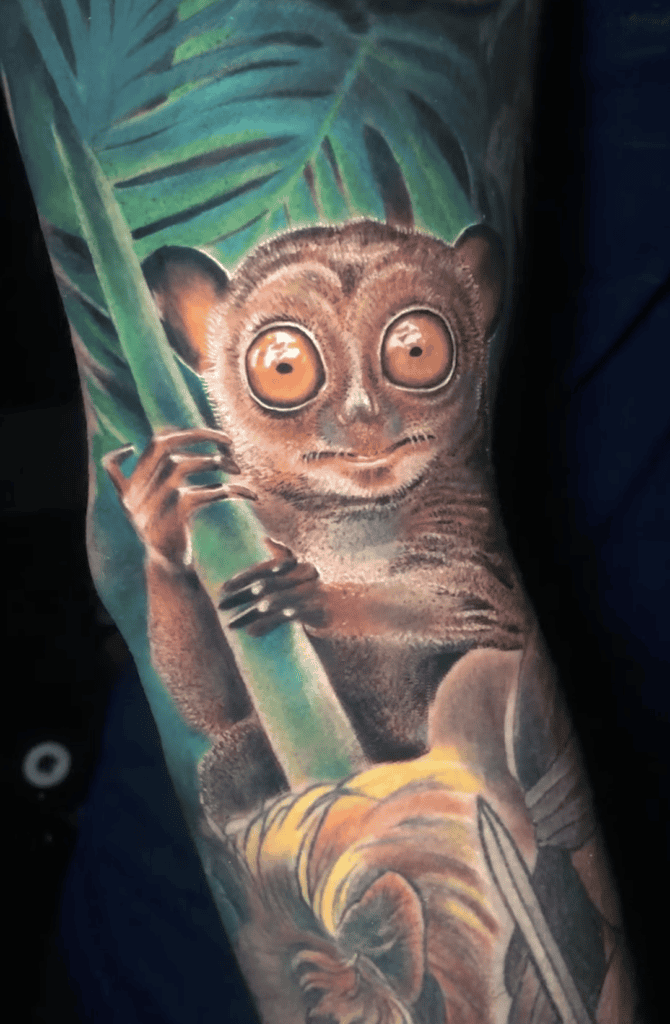
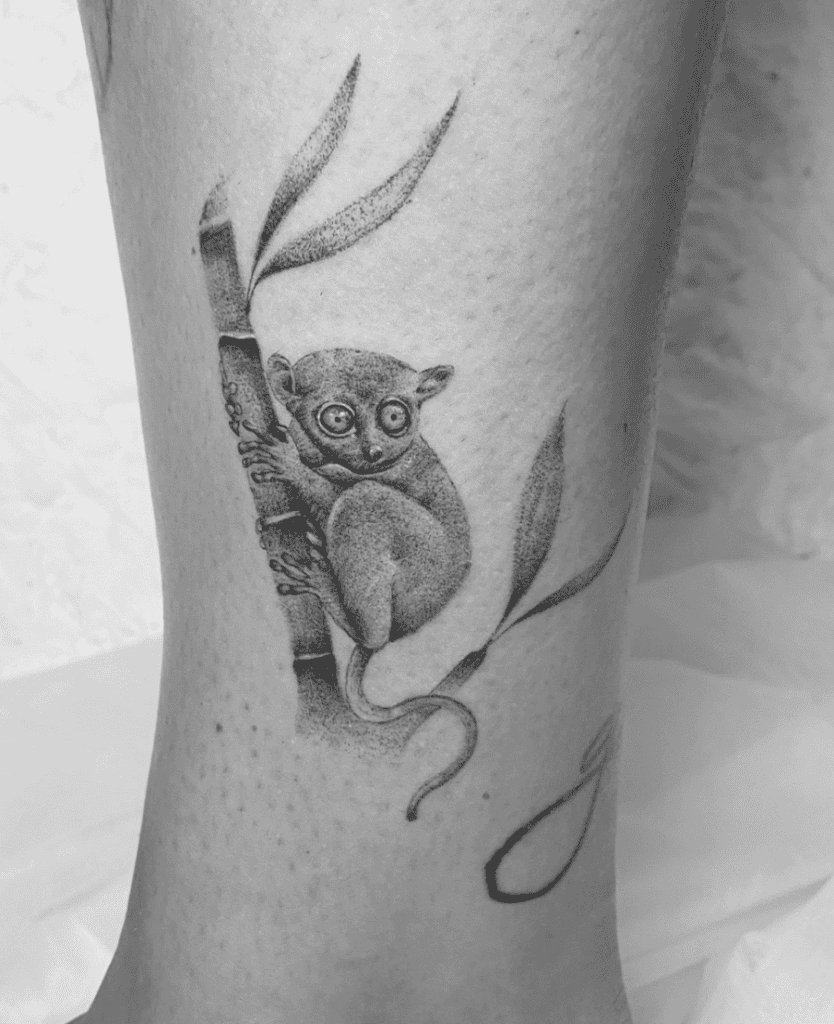
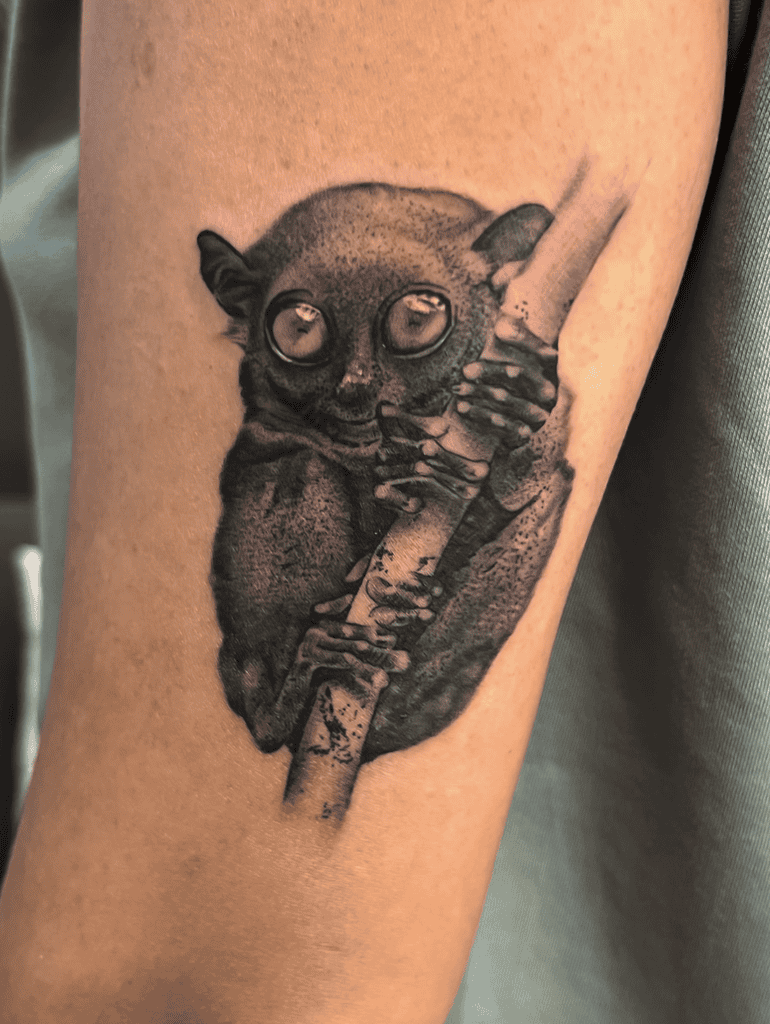
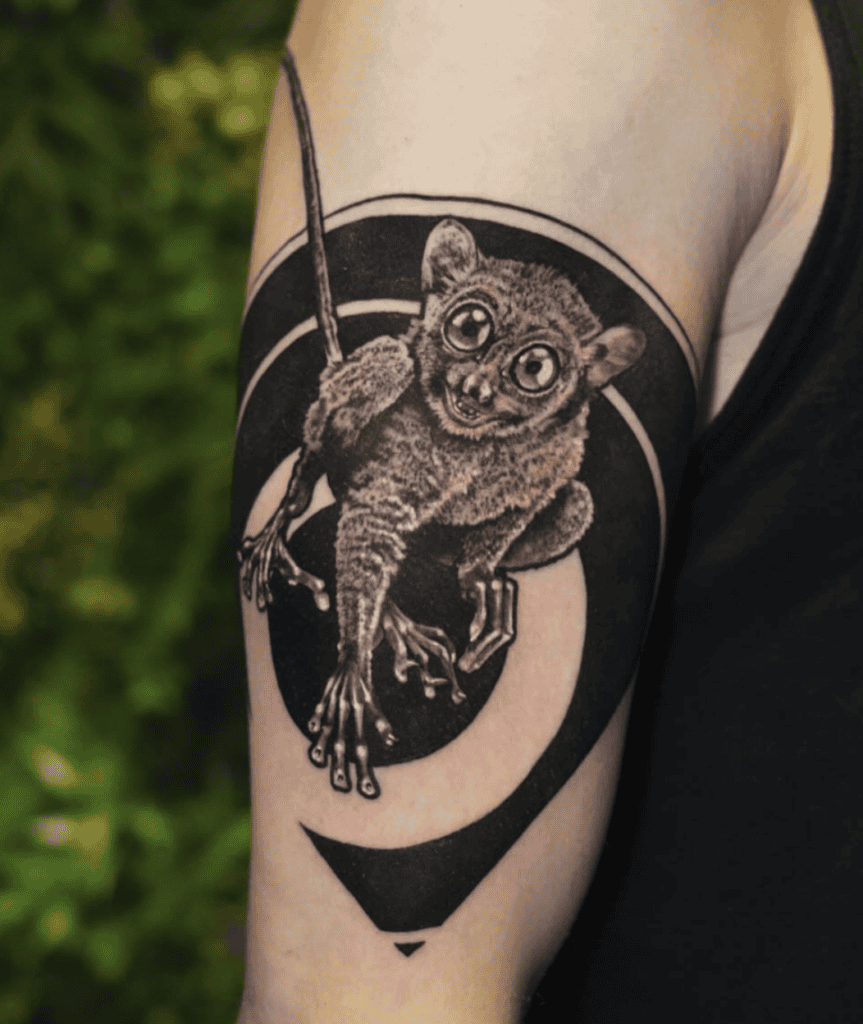
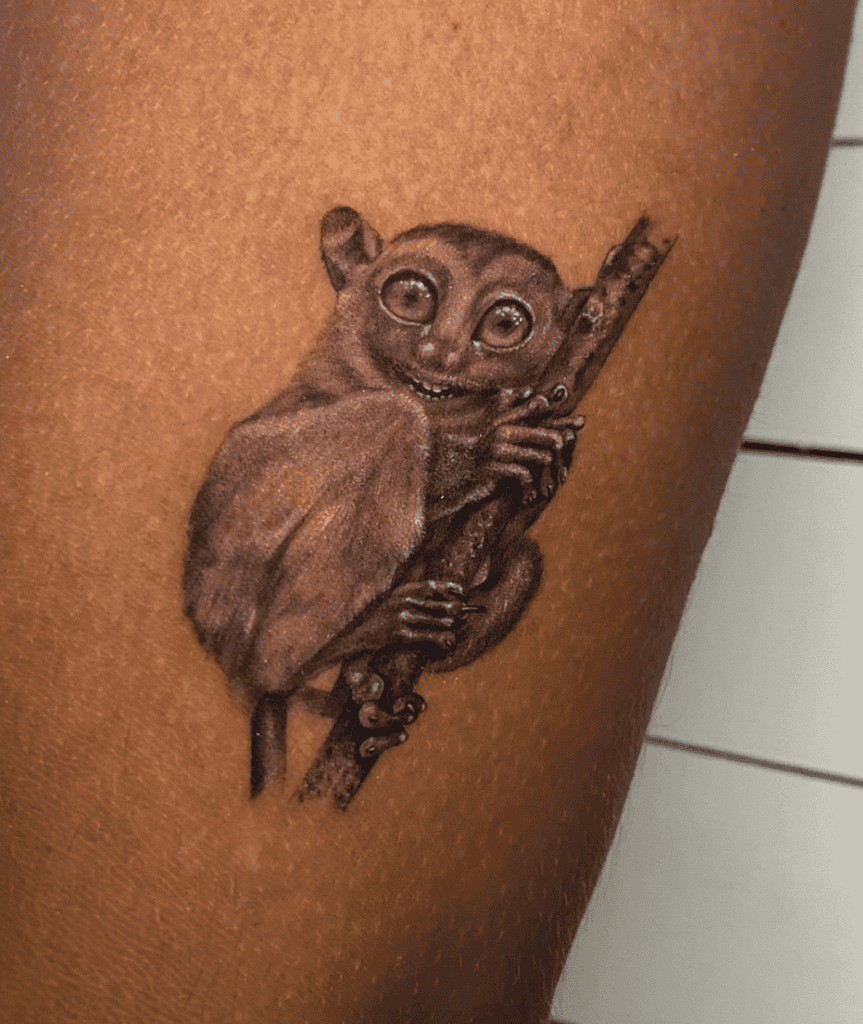
Tarsier are native to the forests of Southeast Asia, particularly in countries like Philippines, Indonesia, and Malaysia. They live in dense forests and spend most of their time in trees, becoming active at night. Tarsiers are extremely small primates, easily recognised by their enormous eyes, which are among the largest relative to body size of any mammal. These eyes allow them to see clearly in the dark, making them highly effective nocturnal hunters.
They have long hind legs and specialised ankle bones, which give them powerful jumping ability. Tarsiers can leap impressive distances between branches, moving quickly and precisely through the forest. Unlike many primates, tarsiers are strict carnivores. They feed mainly on insects, as well as small animals like lizards and birds, using their sharp hearing and quick reflexes to catch prey.
Tarsiers are mostly solitary or live in small family groups, communicating through vocal calls and scent marking. They are highly sensitive to their environment and rely on quiet, stable habitats to survive. They are known for their ability to rotate their heads almost 180 degrees, helping them scan their surroundings without moving their bodies.
Galago Primate Tattoo
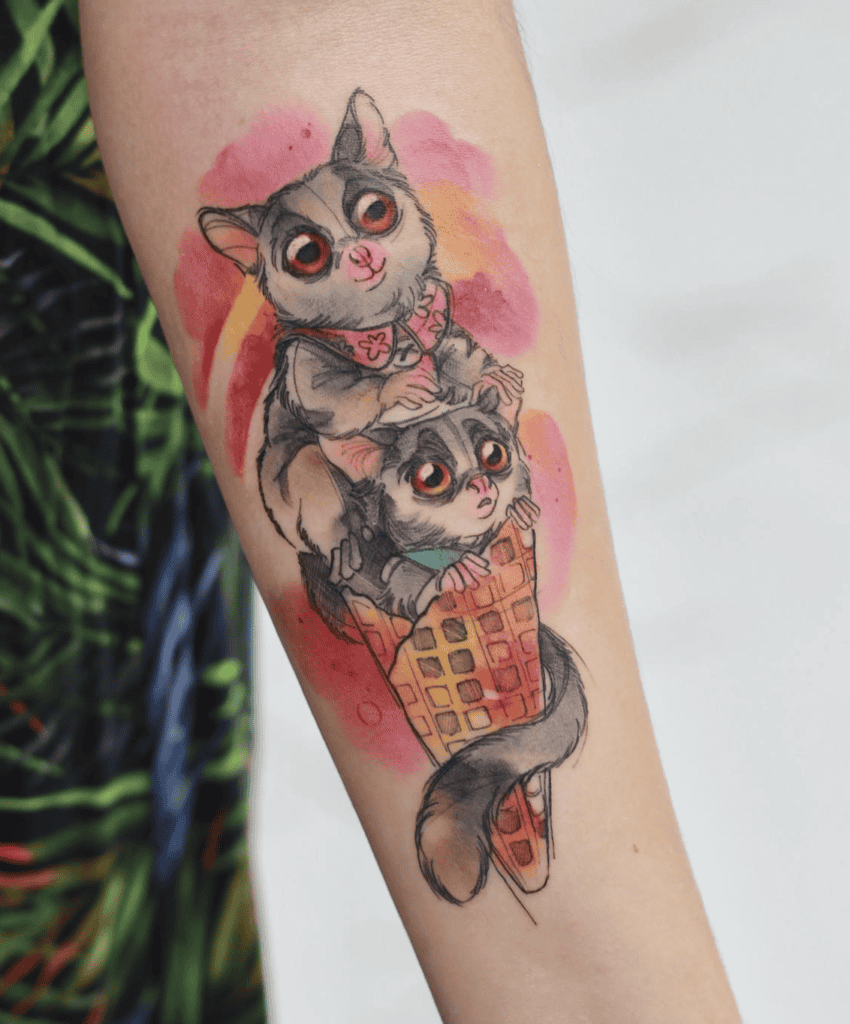
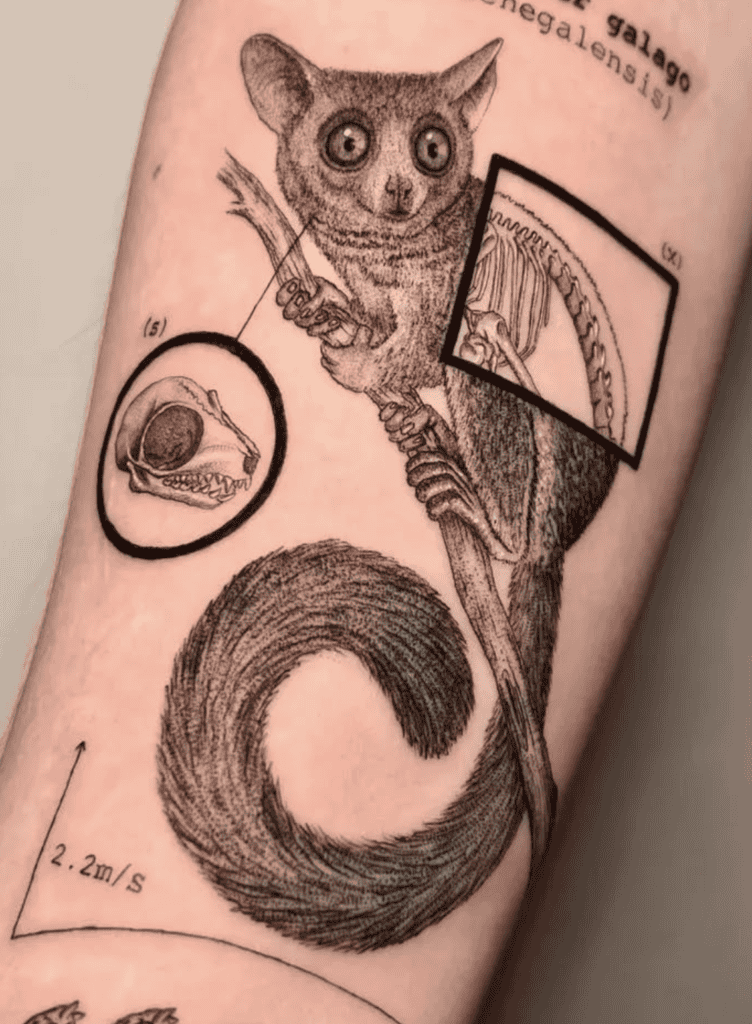
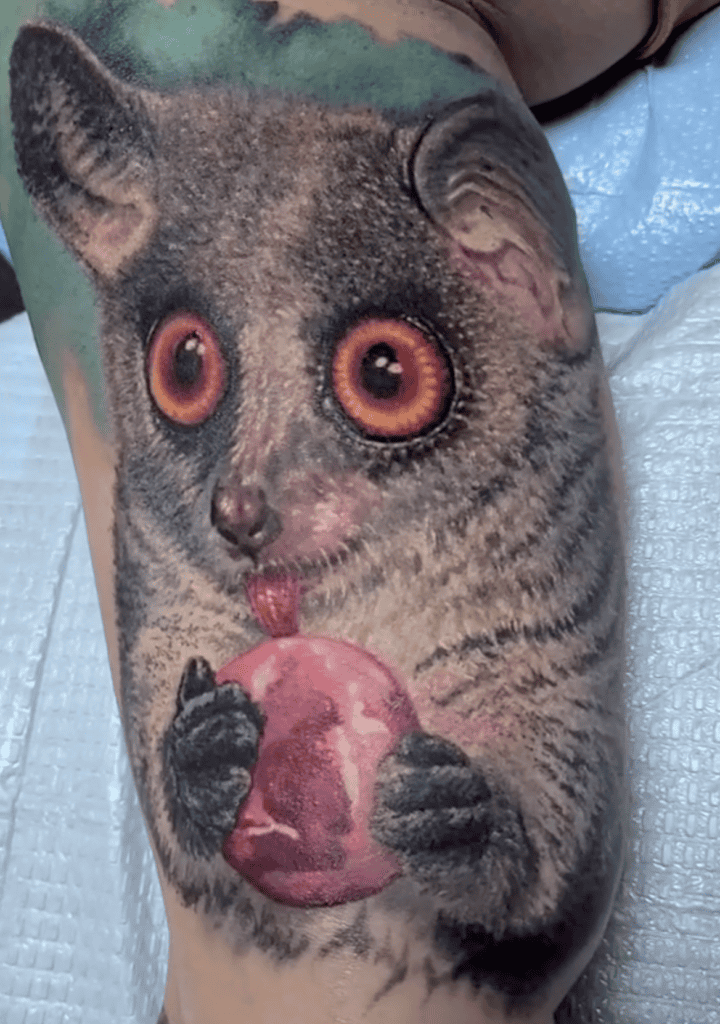
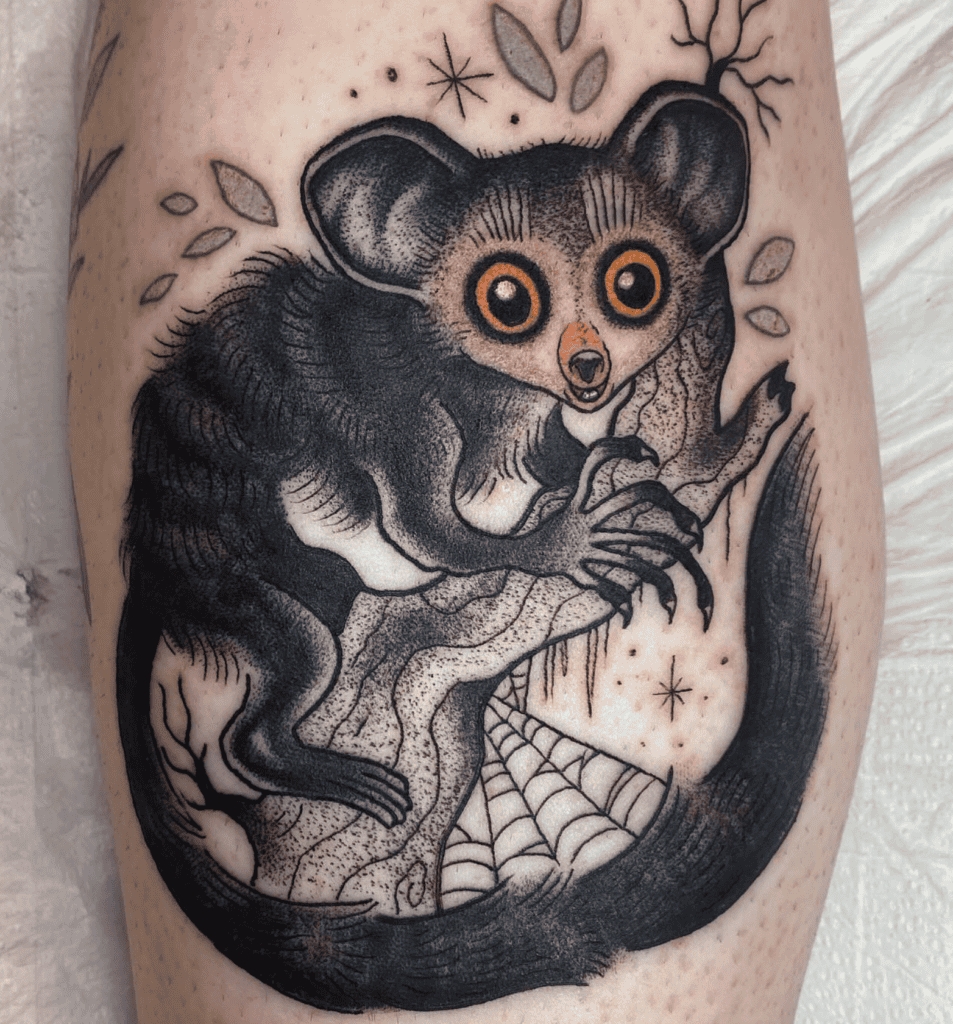
Galagos, often called bushbabies, are native to sub-Saharan Africa, living in countries such as Kenya, Tanzania, and South Africa. They inhabit a range of environments, including forests, woodlands, and savannahs, spending most of their time in trees and becoming active at night.
Galagos are small primates with large, forward-facing eyes, soft fur, and long tails that help with balance. Their excellent night vision allows them to move confidently through the darkness as they search for food.
They are known for their incredible jumping ability, using their powerful hind legs to leap between branches with speed and precision. Some species can jump several metres in a single bound. Galagos are omnivores, feeding on insects, fruits, and tree gum. They often use their sharp hearing and quick reflexes to locate and catch prey in the dark.
They are generally solitary or live in loose social groups, communicating through vocal calls, scent marking, and body language. Their calls can be loud and distinctive, which is how they earned the nickname “bushbaby.”
Chinese Zodiac Monkey Tattoo
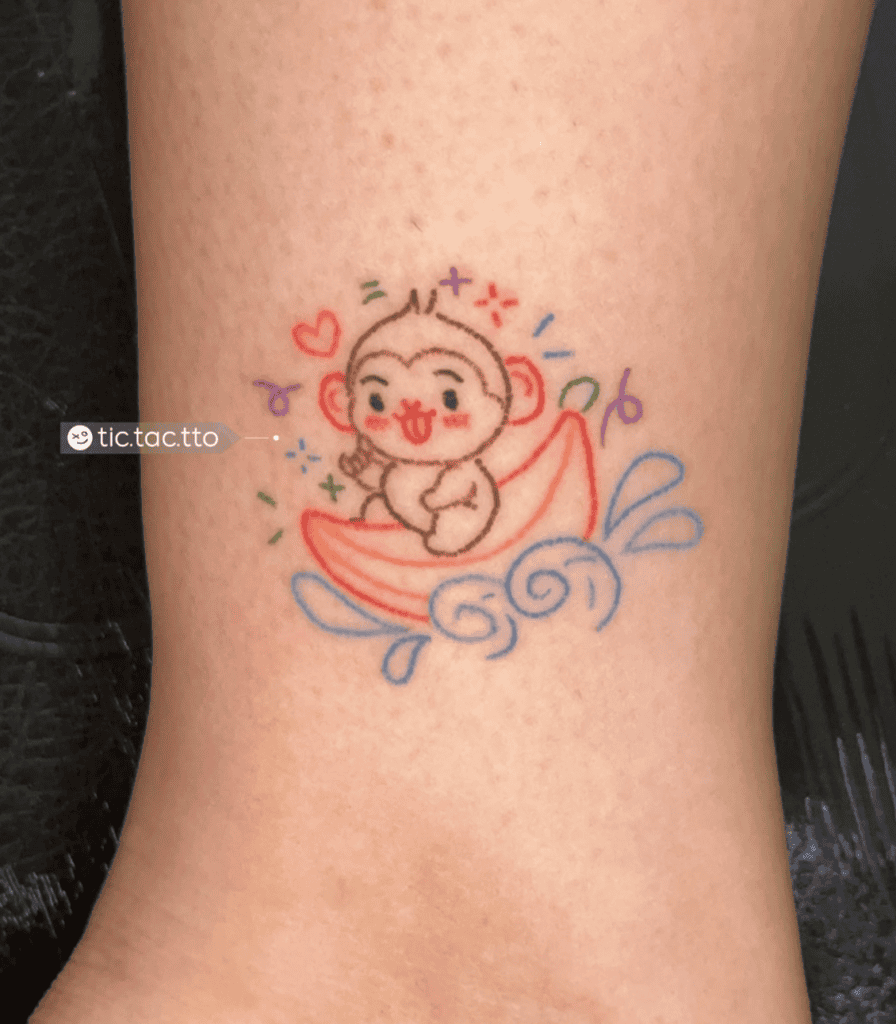
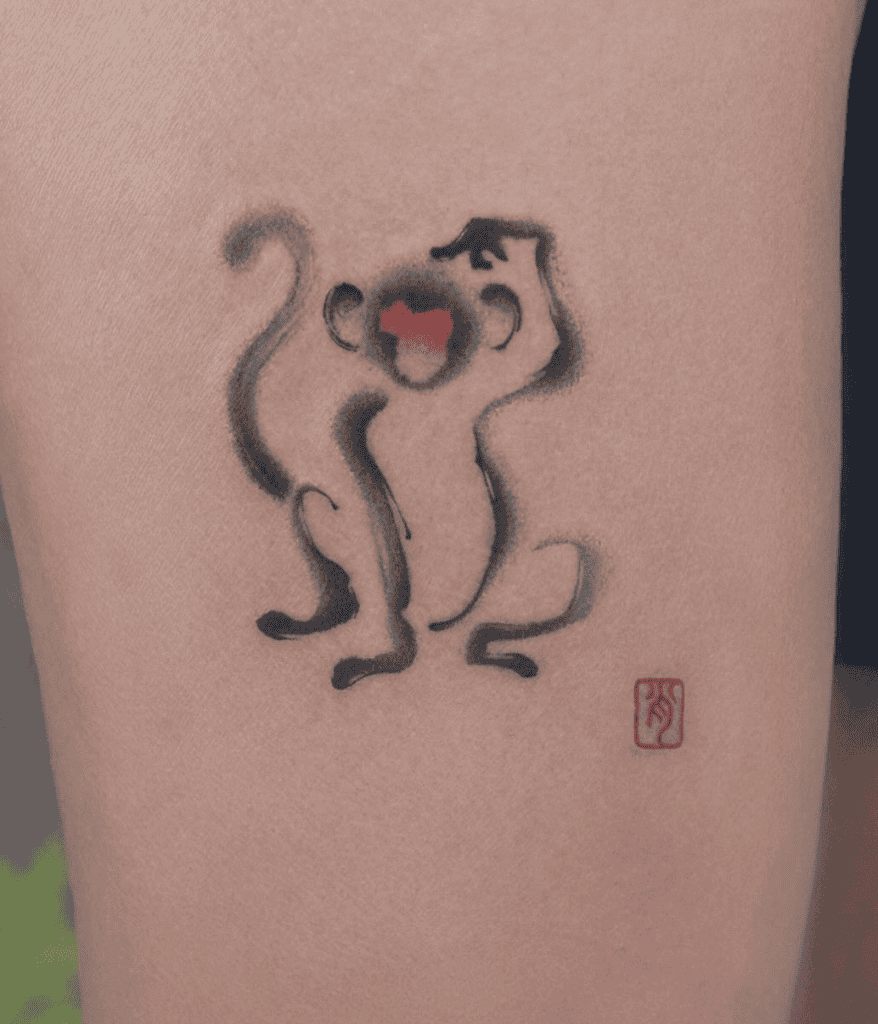
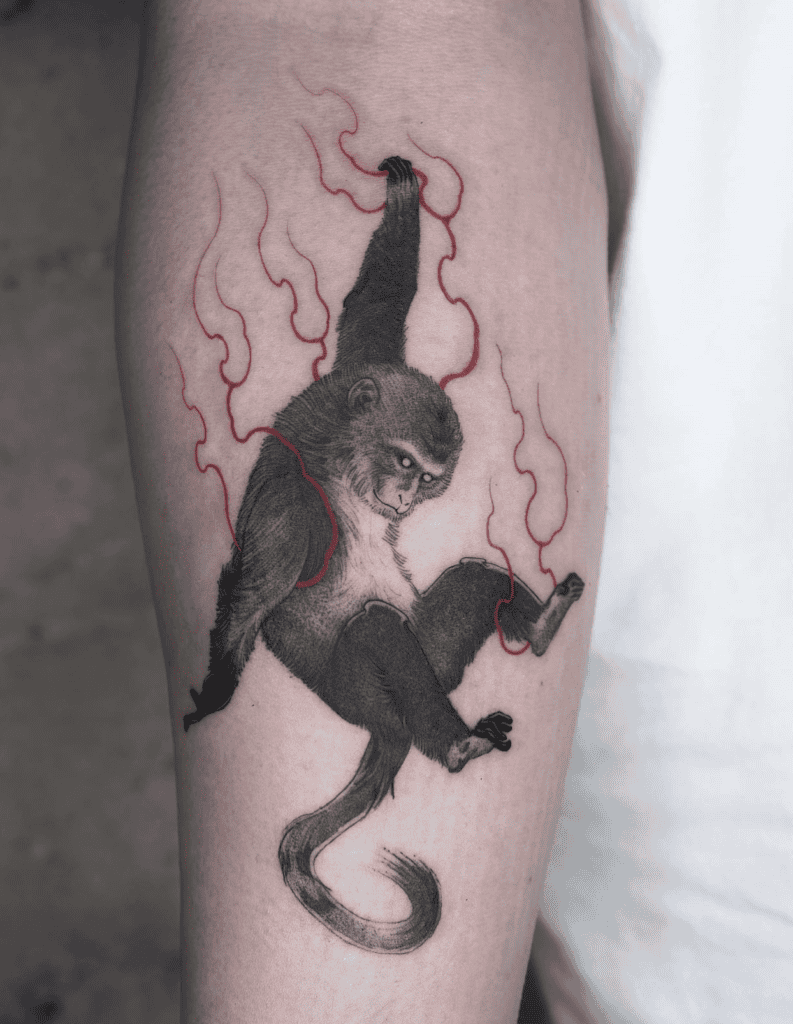
The Chinese Zodiac Monkey is one of the 12 animals in the traditional Chinese zodiac, which follows a 12-year cycle. People born in the Year of the Monkey are believed to inherit traits associated with this clever and energetic animal.
The Monkey is often linked with intelligence, creativity, and quick thinking. Those born under this sign are typically seen as curious, adaptable, and skilled at solving problems, often finding clever ways to overcome challenges. People associated with the Monkey sign are known for their playful and mischievous nature. They enjoy humour, social interaction, and thinking outside the box, often bringing energy and excitement into any situation.
At the same time, the Monkey can also represent ambition and confidence. In Chinese culture, it is often connected to success and the ability to achieve goals through wit and determination. The Monkey sign is also associated with versatility, as it can adapt quickly to new situations and environments, making it a symbol of flexibility and resilience.
Hanuman Monkey Tattoo
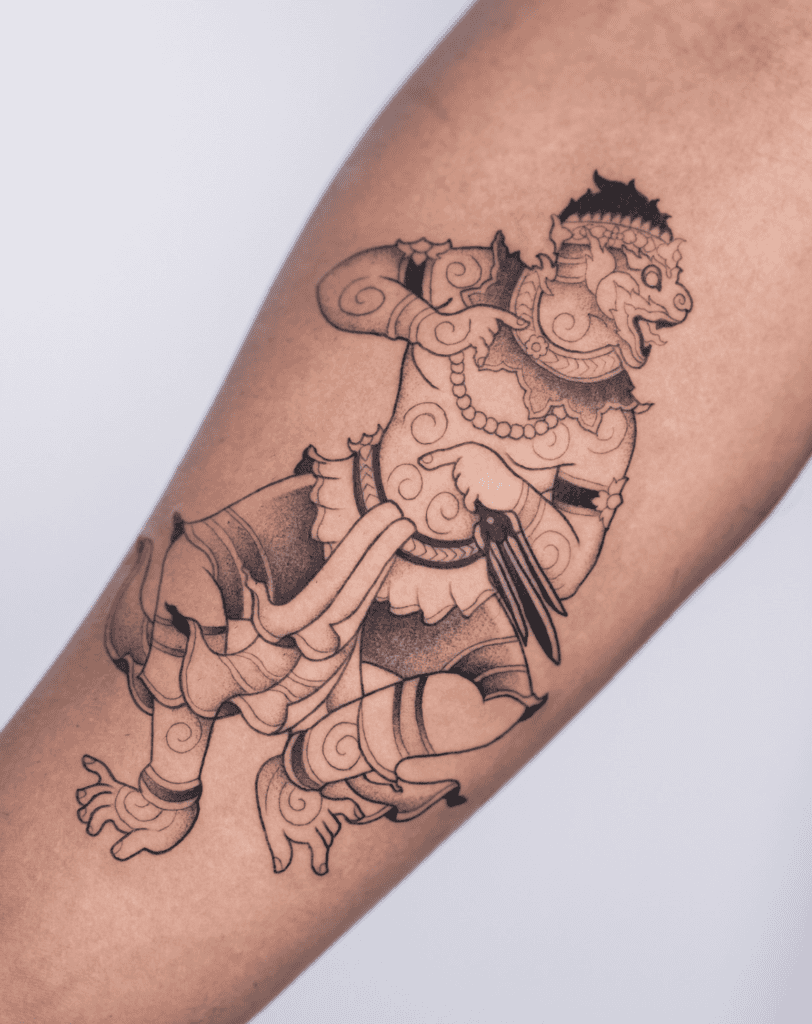
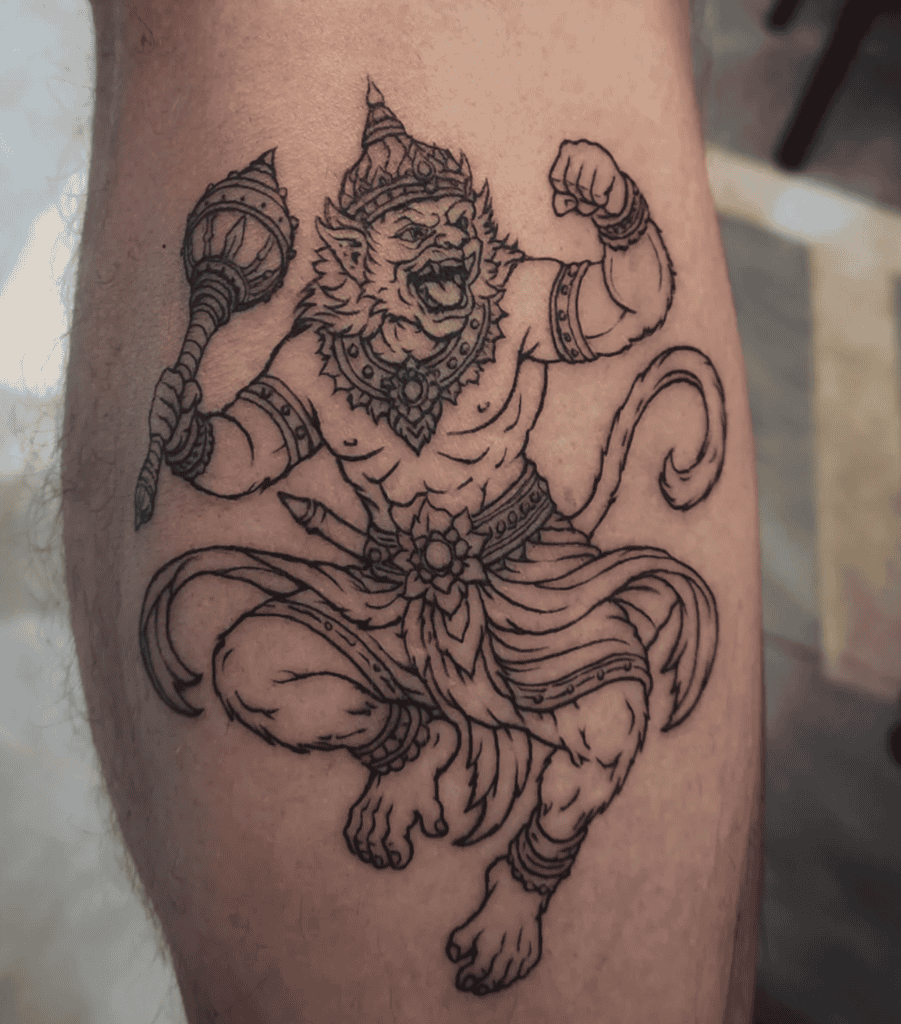
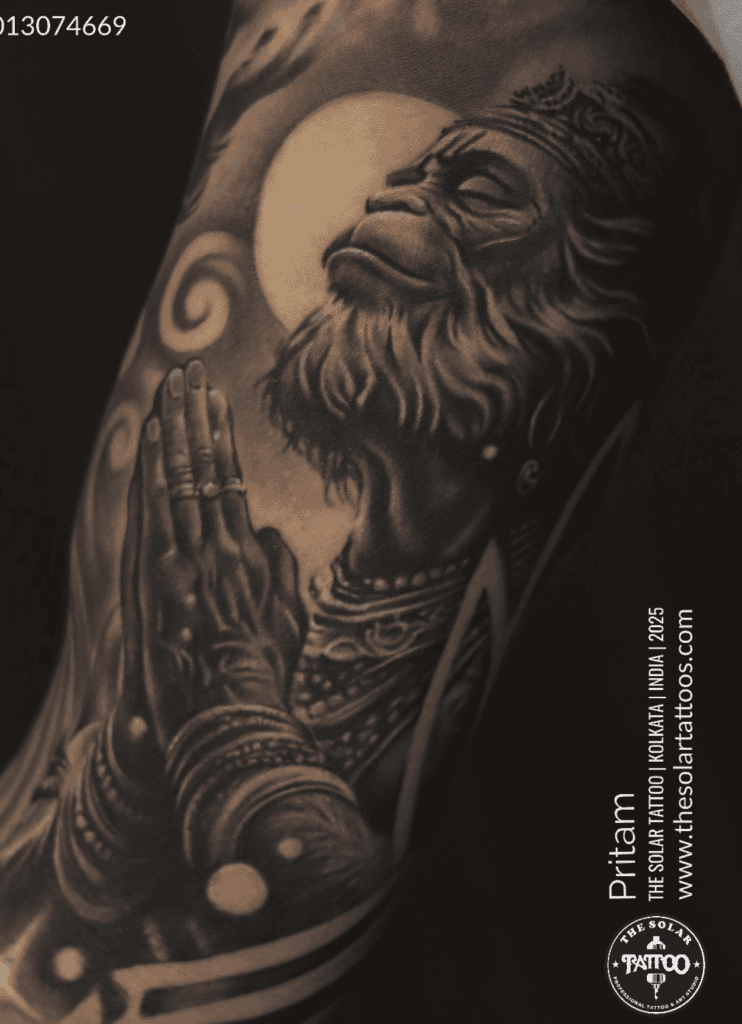
Hanuman is a revered figure in Hindu mythology, known as the monkey god and a symbol of strength, devotion, and loyalty. He is one of the central characters in the ancient epic Ramayana, where he plays a key role in helping Prince Rama rescue his wife Sita.
Hanuman is often depicted with a monkey face and a powerful human-like body, representing both physical strength and spiritual discipline. He is known for his incredible abilities, including immense strength, the power to leap great distances, and the ability to grow or shrink in size.
He is most celebrated for his unwavering devotion to Rama. His loyalty and selflessness are central to his character, often placing duty and faith above all else. This devotion has made him a symbol of humility and service despite his immense power. Hanuman is also associated with courage and protection. In many stories, he faces powerful enemies without fear, using both strength and intelligence to overcome obstacles and protect others.
One of his most famous feats is carrying an entire mountain to save Lakshmana, demonstrating not only strength but determination and quick thinking in moments of crisis. Hanuman is widely worshipped across India and beyond, often seen as a protector figure who brings strength, removes obstacles, and offers guidance in difficult times.
Son Wukong Monkey Tattoo
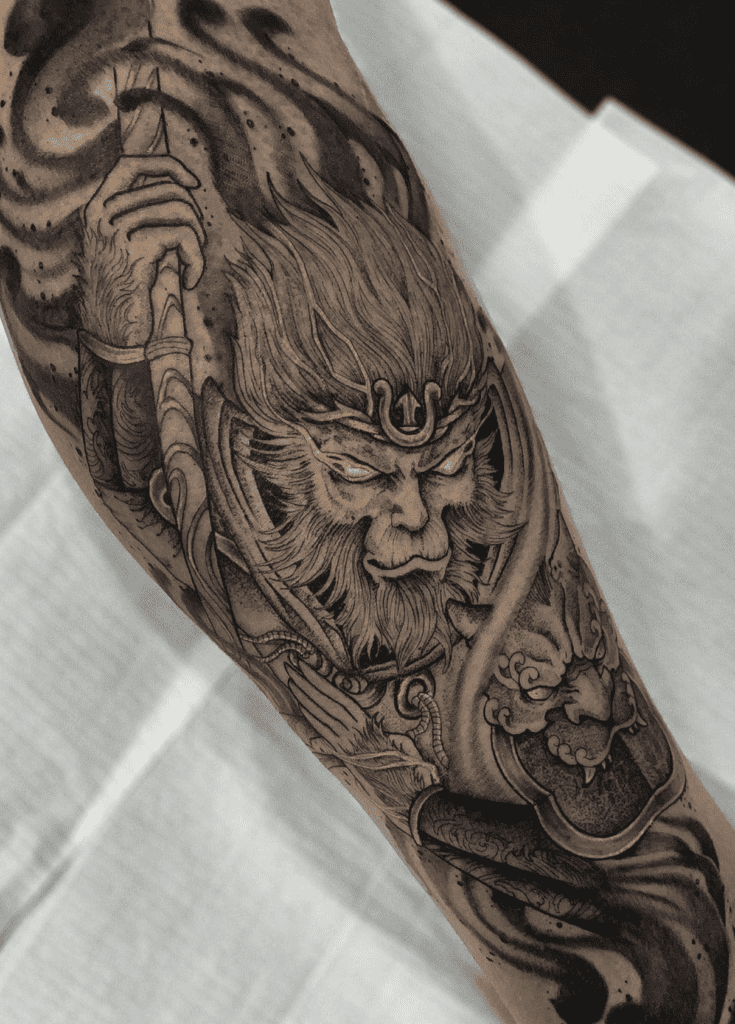
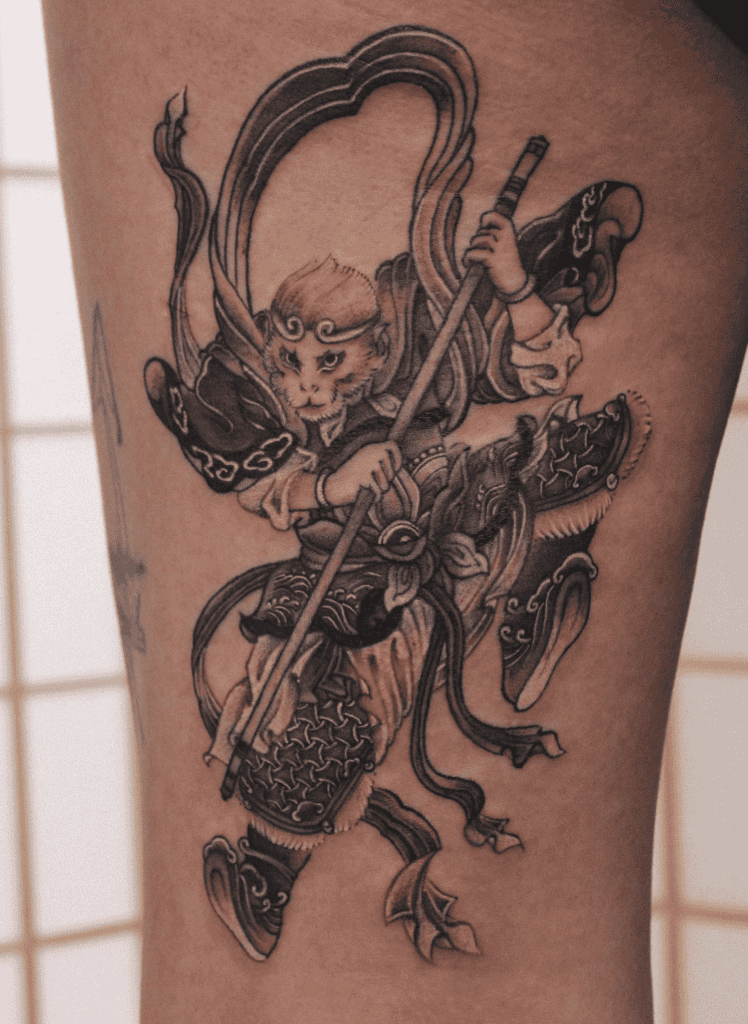
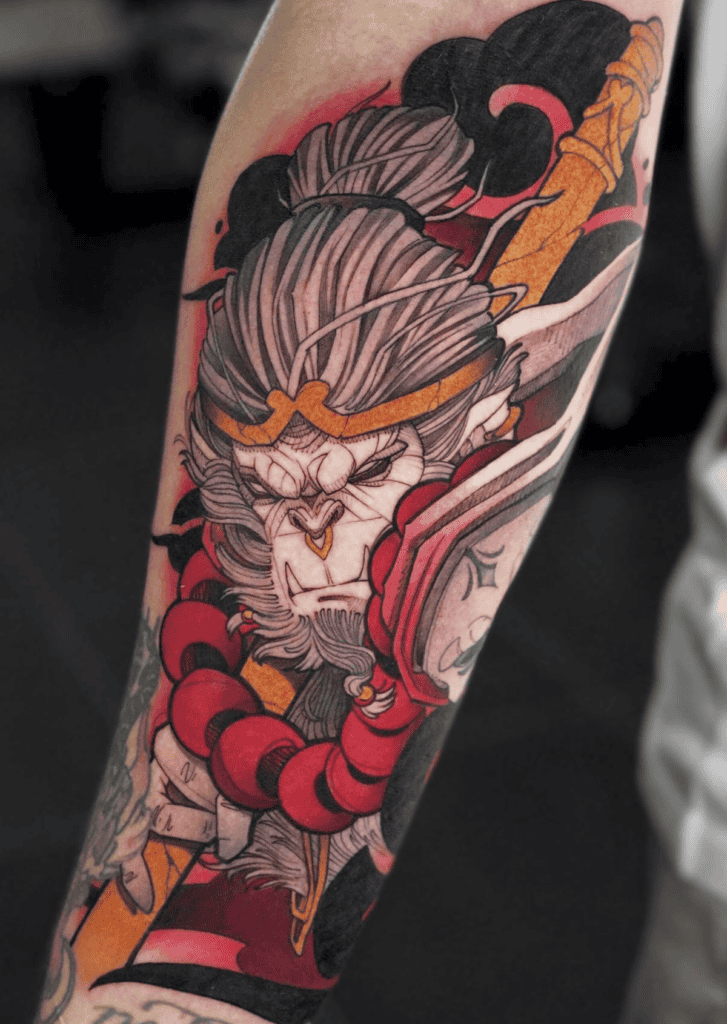
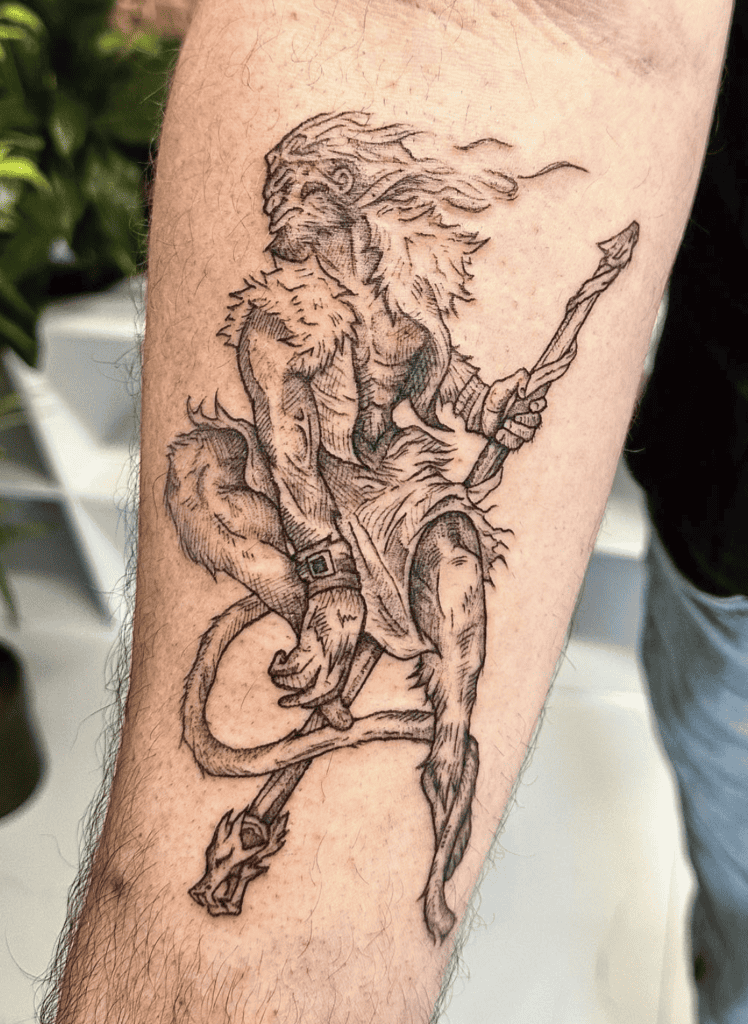
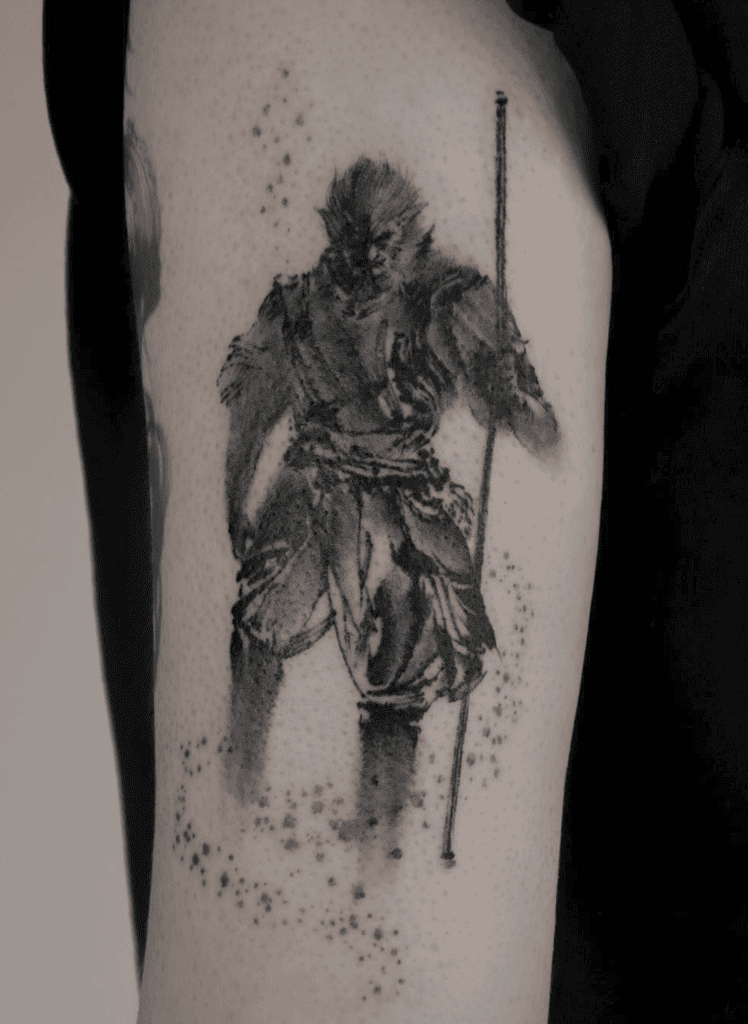
Sun Wukong, also known as the Monkey King, is one of the most famous figures in Chinese mythology. He is a central character in the classic novel Journey to the West, where he accompanies a monk on a sacred journey, protecting him from dangers along the way.
Sun Wukong is known for his incredible strength, speed, and magical abilities. He wields a powerful staff that can change size at will, allowing him to fight enemies and perform extraordinary feats. He is also a master of transformation, able to shapeshift into different forms and create clones of himself using strands of his hair. His intelligence and quick thinking make him a clever and unpredictable character.
Originally rebellious and mischievous, Sun Wukong once challenged the heavens themselves before eventually being humbled and finding purpose through discipline and loyalty. Throughout his journey, he becomes a protector figure, using his powers to defend others while learning control, patience, and responsibility. Sun Wukong represents a balance between chaos and control, combining playful energy with growing wisdom and strength.
Punch Monkey Tattoo
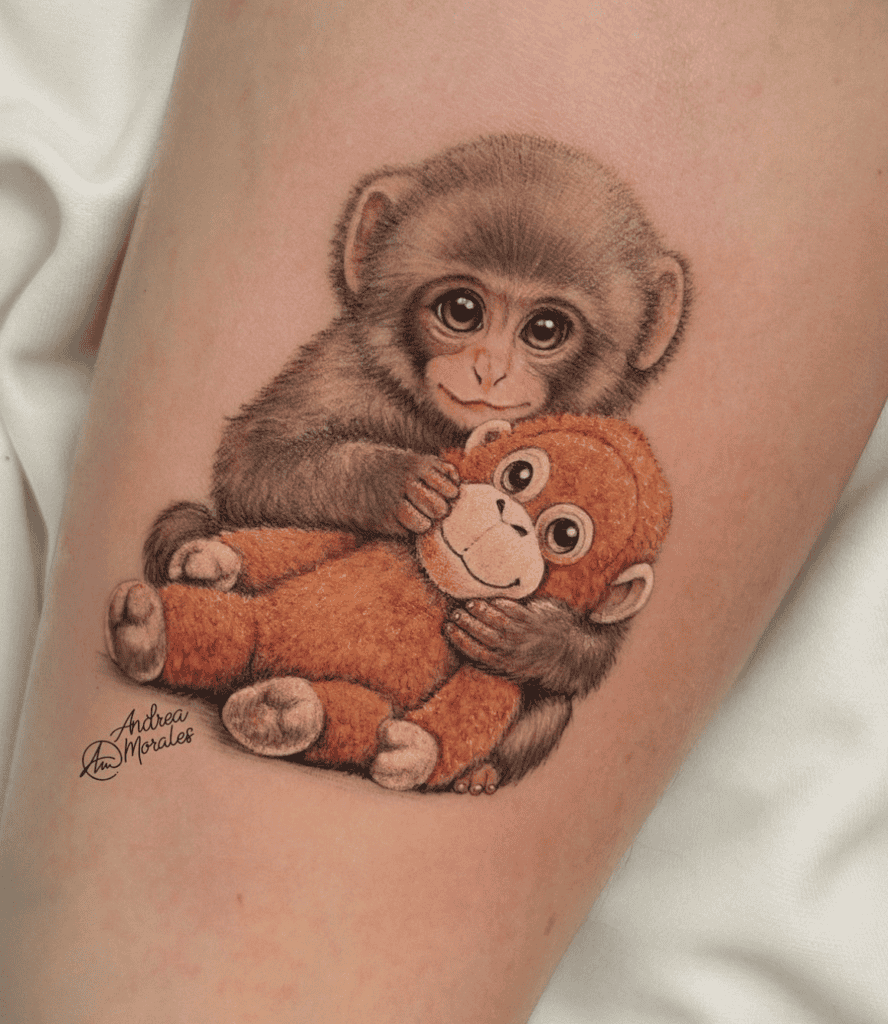
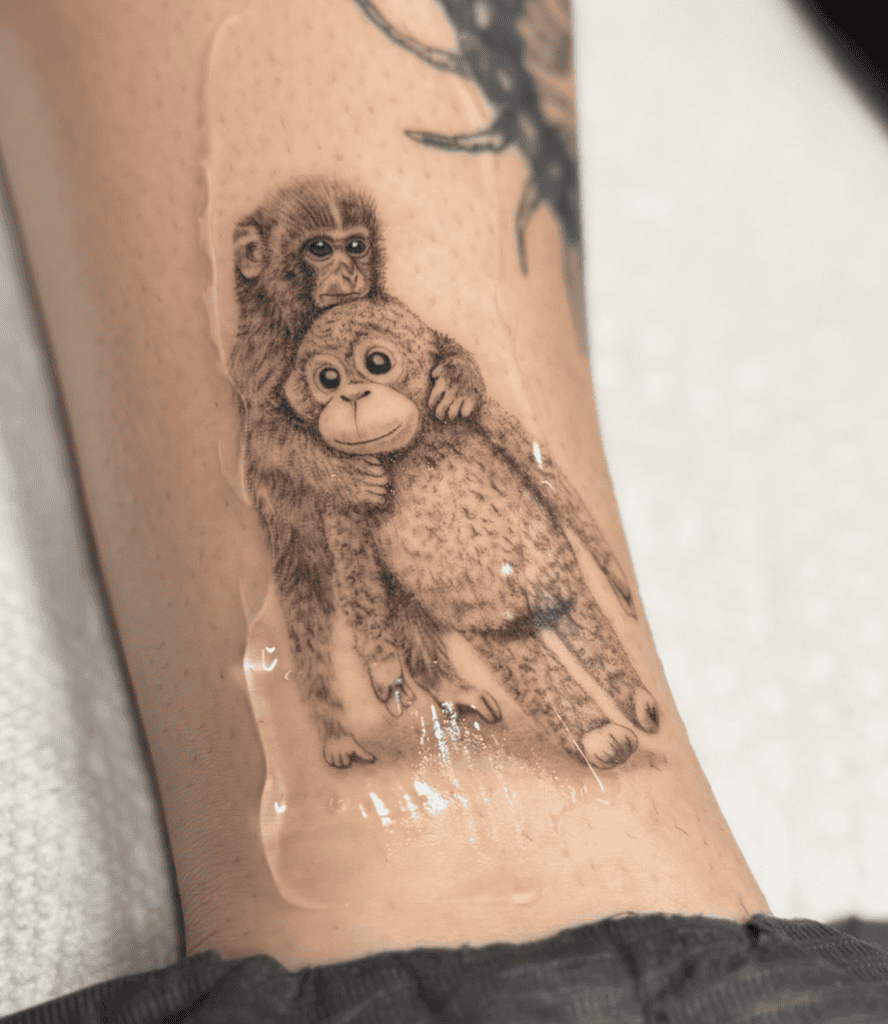
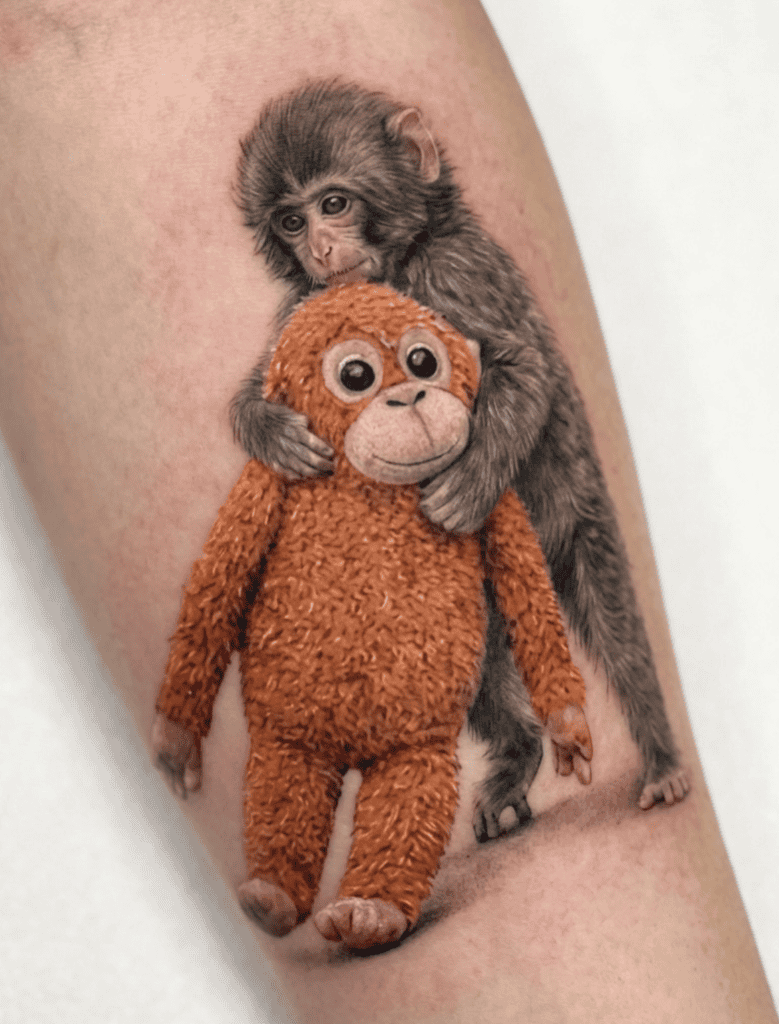
Punch is a baby Japanese macaque born in July 2025 at the Ichikawa City Zoo in Chiba Prefecture, who was sadly rejected by his mother shortly after birth. Because baby macaques normally spend all their time clinging to their mothers for security and muscle development, the zookeepers had to find a substitute.
After trying a few different things, the keepers gave him an IKEA Djungelskog (an orange stuffed orangutan). Punch bonded with the toy immediately, treating it like a surrogate mother, sleeping on it, grooming it, and famously dragging it around the enclosure like a security blanket. The toy became so famous because of Punch that it actually sold out in IKEA stores across Japan and other parts of the world!
His story touched people because he was initially struggling to fit in with the other monkeys at the zoo. Viral clips showed him being pushed away by the older macaques, only to run back and hug his “stuffed mom” for comfort. It sparked a massive wave of support with the hashtag #HangInTherePunch.
As of late March 2026, Punch has started making real monkey friends. A female macaque named Momo-chan has been seen grooming him, which is a huge sign of acceptance in monkey society. Now growing up, he spends more time playing on branches and less time clinging to his toy, though he still goes back to it when he needs a nap.
The Three Wise Monkeys Monkey Tattoo
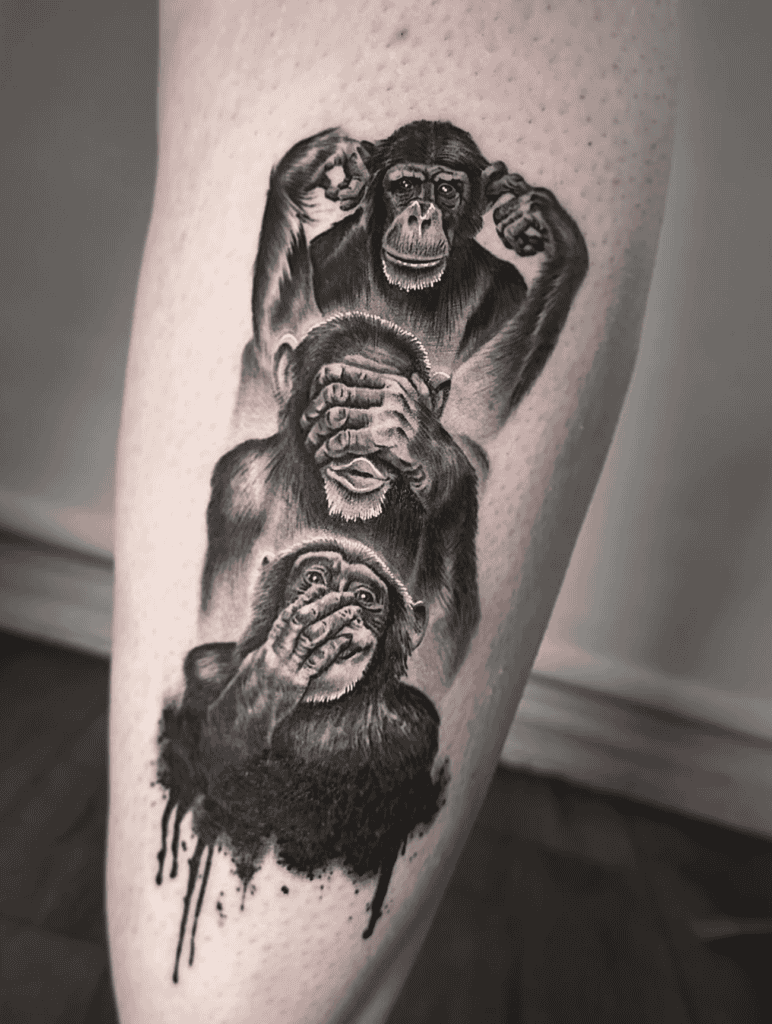
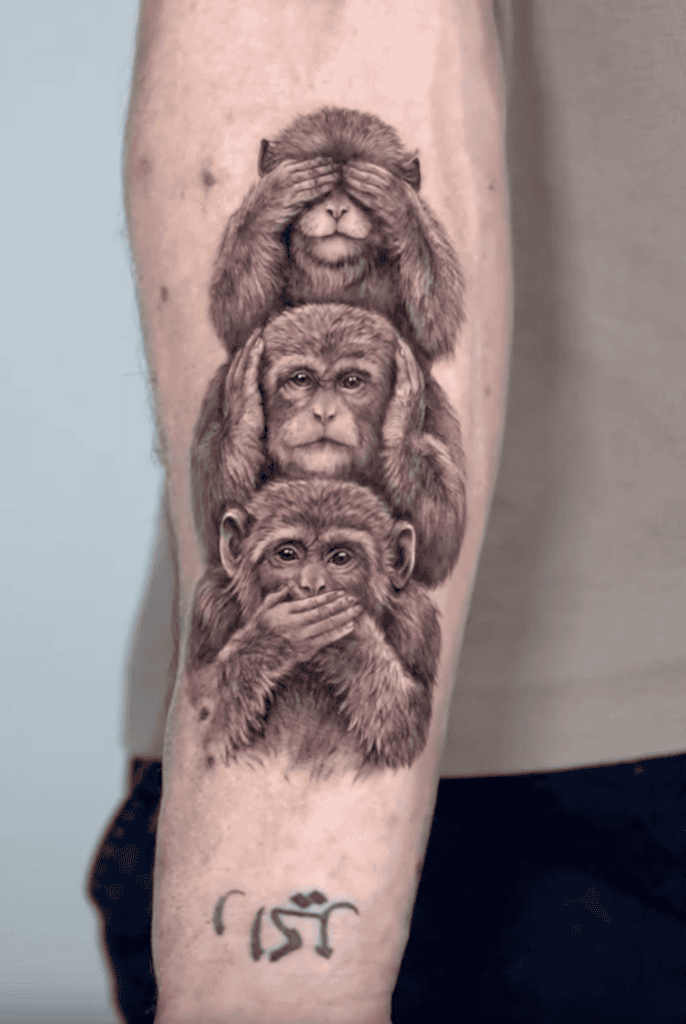
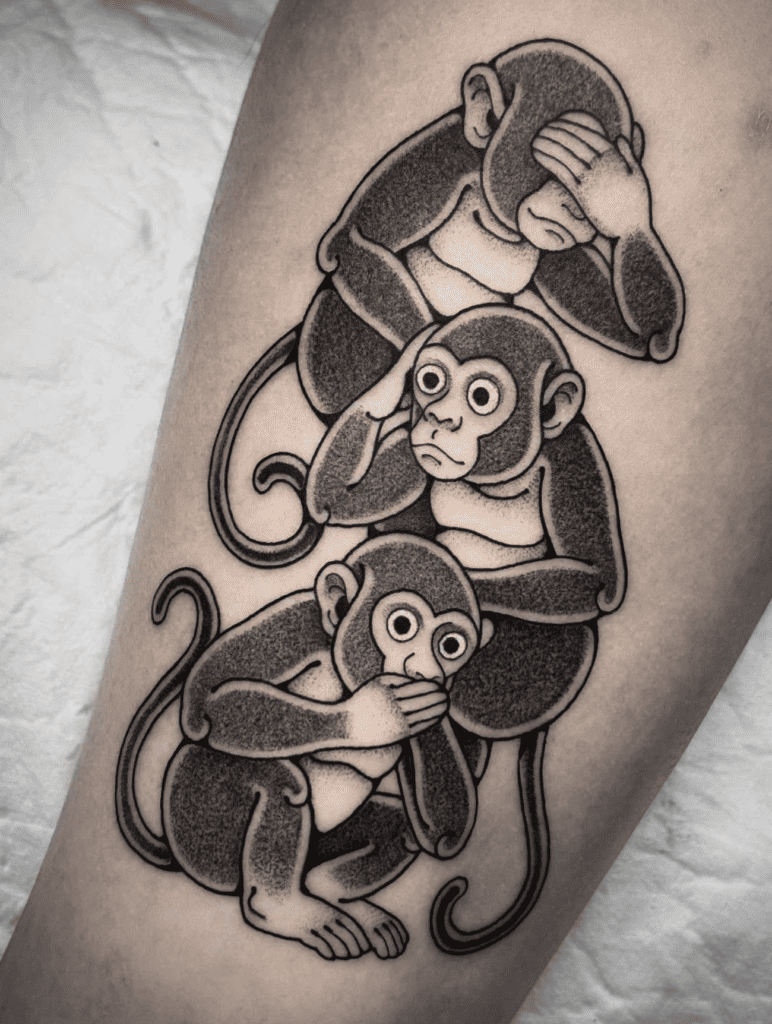
The Three Wise Monkeys represent a traditional concept of wisdom and moral discipline, often summarised as “see no evil, hear no evil, speak no evil.” The three monkeys are commonly known as Mizaru (covering the eyes), Kikazaru (covering the ears), and Iwazaru (covering the mouth).
This concept originates from Japan and is often associated with teachings about avoiding evil thoughts, words, and actions. Rather than ignoring wrongdoing, it symbolises living with integrity by choosing not to engage with negativity.
Each monkey represents a different principle. “See no evil” encourages avoiding harmful or immoral sights, “hear no evil” suggests not listening to negativity or harmful speech, and “speak no evil” promotes kindness and restraint in communication. Together, they form a balanced philosophy of self-control and awareness, reminding people to be mindful of their actions and the influence of their surroundings.
A fourth monkey often referred to as Shizaru (sometimes spelled Sezaru or Shizaru), is usually shown crossing its arms, or covering its private parts, symbolising “Do no evil,” and represents avoiding harmful actions, not just thoughts or words. The fourth monkey is not part of the original Japanese tradition—it was added later as a way to complete the moral idea and turn the philosophy into a full cycle.
King Kong Ape Tattoo
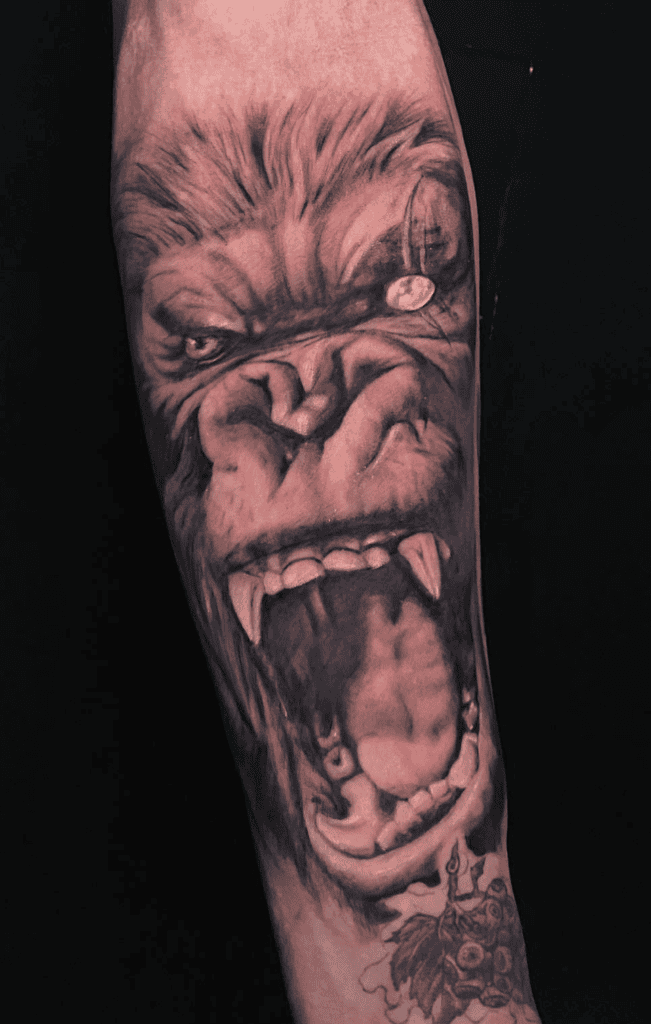
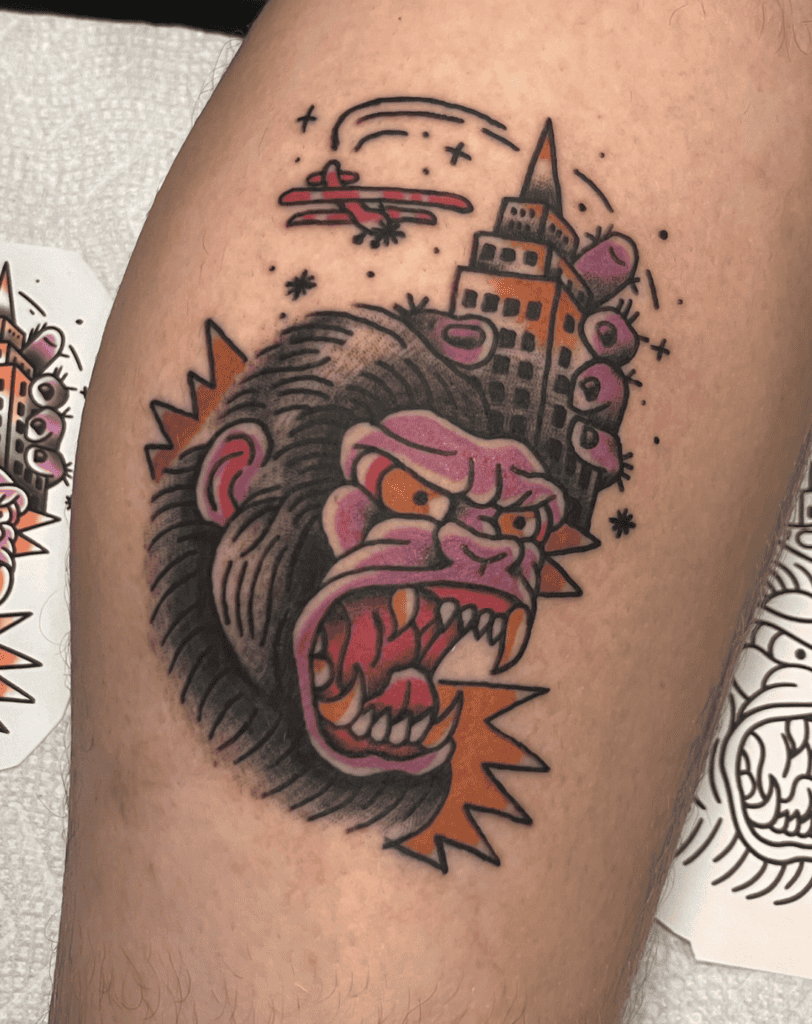
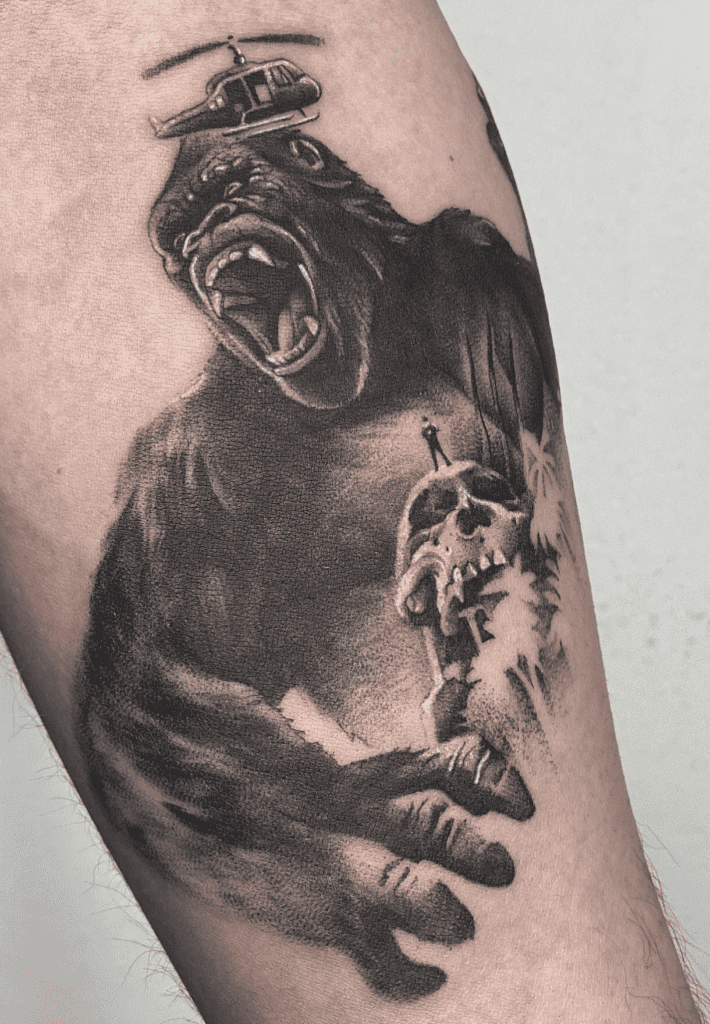
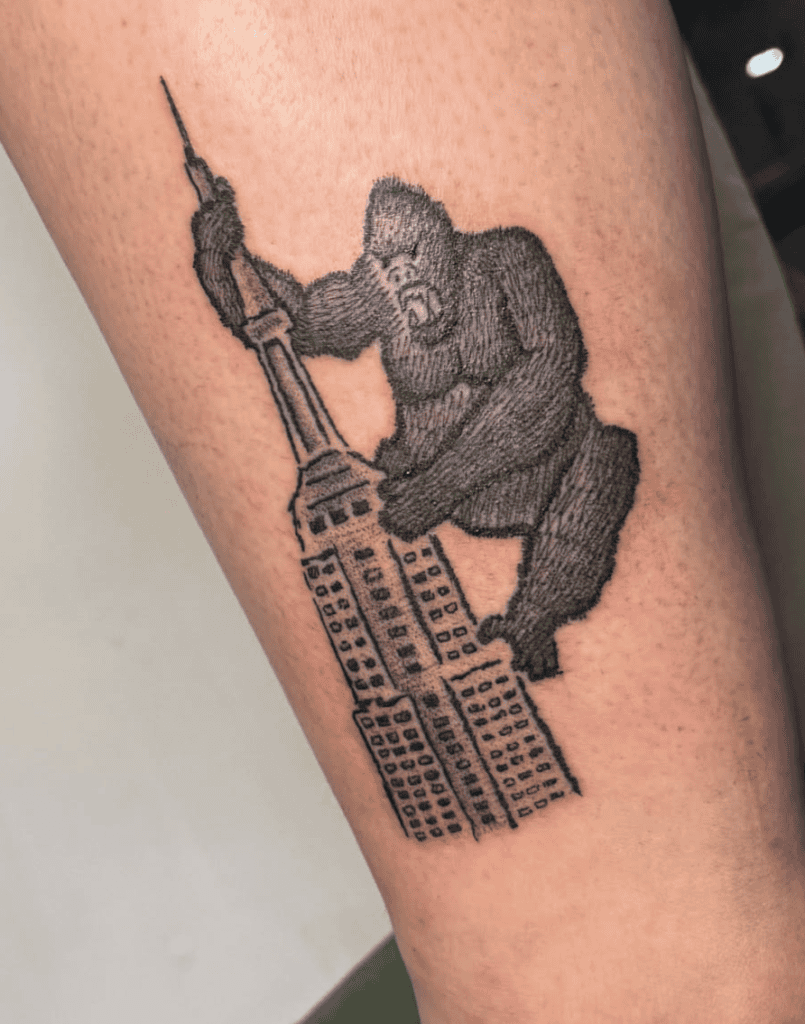
King Kong is one of the most iconic giant creatures in film history, first appearing in the classic movie King Kong. He is depicted as a colossal ape living on a remote island, often portrayed as both a fearsome force of nature and a deeply emotional character.
King Kong is known for his immense size and strength, towering over humans and capable of battling massive creatures. Despite his power, he is often shown with a gentle and protective side, especially in his relationship with Ann Darrow. He lives on a mysterious island, commonly referred to as Skull Island, where he rules as the dominant creature. His environment is wild and dangerous, filled with prehistoric creatures and dense jungle landscapes.
A key theme in King Kong’s story is the clash between nature and civilisation. When he is captured and brought into the human world, his strength becomes both a spectacle and a tragedy, highlighting humanity’s tendency to control and exploit what it does not understand. King Kong is often portrayed as a misunderstood figure, driven not by malice but by instinct, emotion, and a desire to protect. His story frequently explores themes of isolation, connection, and the consequences of human interference.
George Ape Tattoo
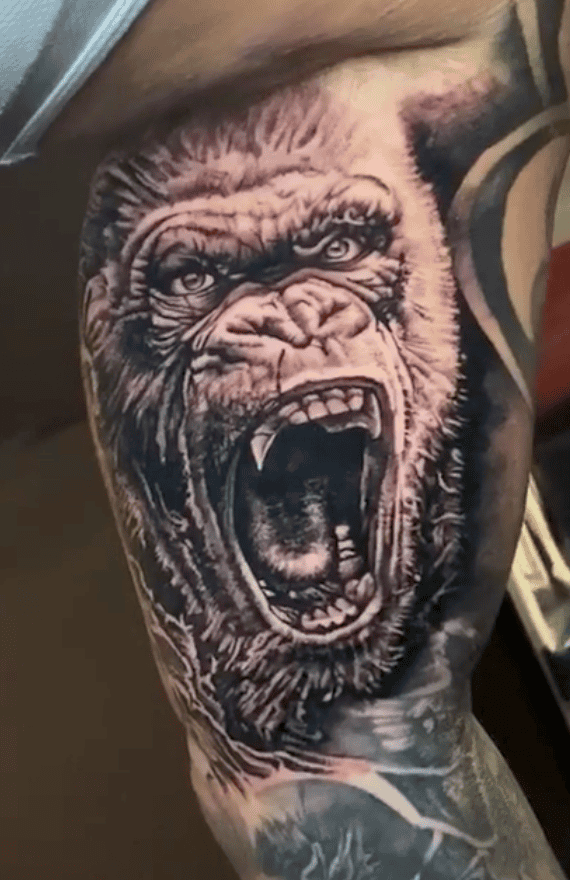
George is a central character in the film Rampage, inspired by the classic arcade game series. He begins as a rare albino gorilla living in a wildlife sanctuary, known for his intelligence, calm nature, and close bond with his human companion, Davis Okoye. George is highly intelligent and capable of understanding human communication, often using sign language to interact. His playful personality and strong emotional connection with Davis highlight his gentle and expressive nature.
After being exposed to a dangerous experimental substance, George undergoes a dramatic transformation, growing to an enormous size and developing enhanced strength and aggression. This mutation causes him to lose control temporarily, becoming a powerful and unpredictable force. Despite this transformation, George’s core personality remains intact. Throughout the story, his bond with Davis helps bring him back from his aggressive state, showing that his true nature is still compassionate and loyal.
George’s character represents a balance between power and humanity. While he becomes physically overwhelming, his emotional depth and connection to others remain central to who he is. His story explores themes of friendship, control, and the consequences of scientific experimentation, while also highlighting the idea that strength does not define identity.
Ceasar Ape Tattoo
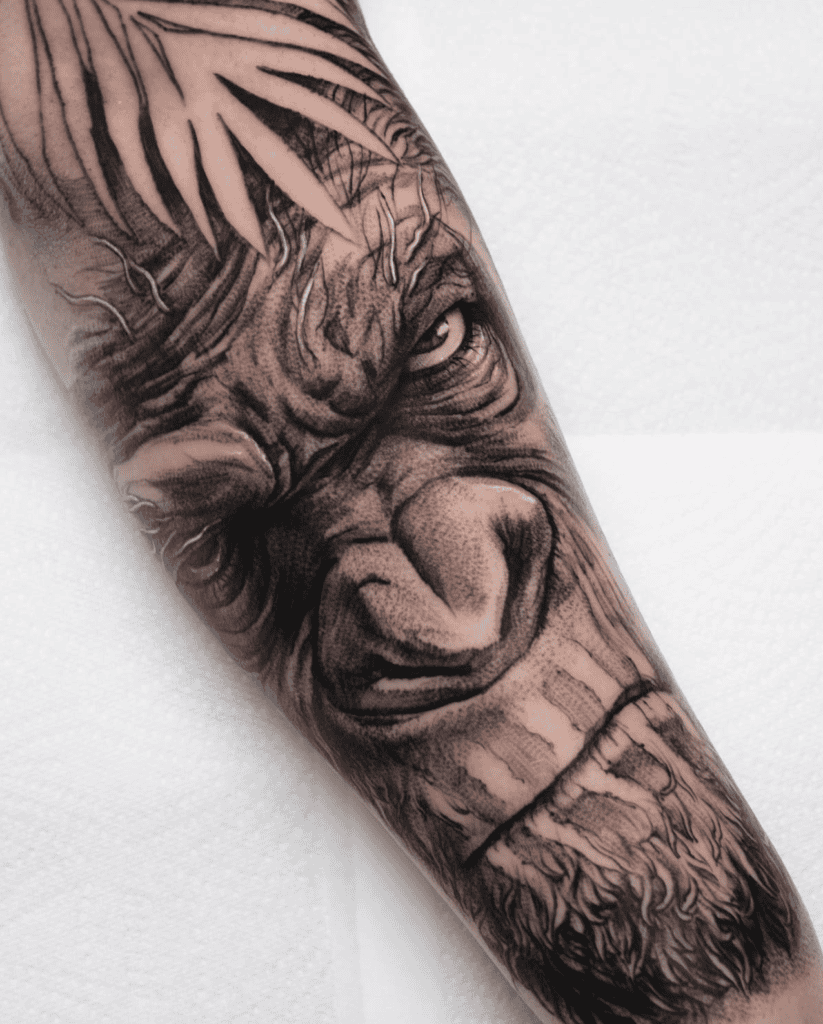
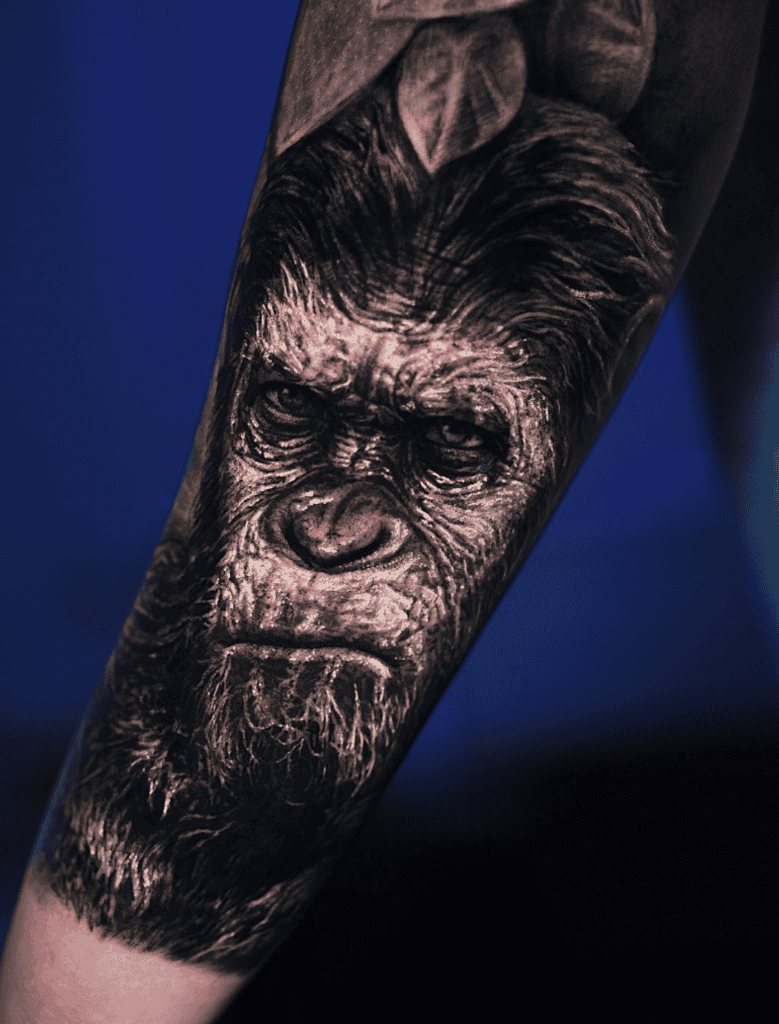
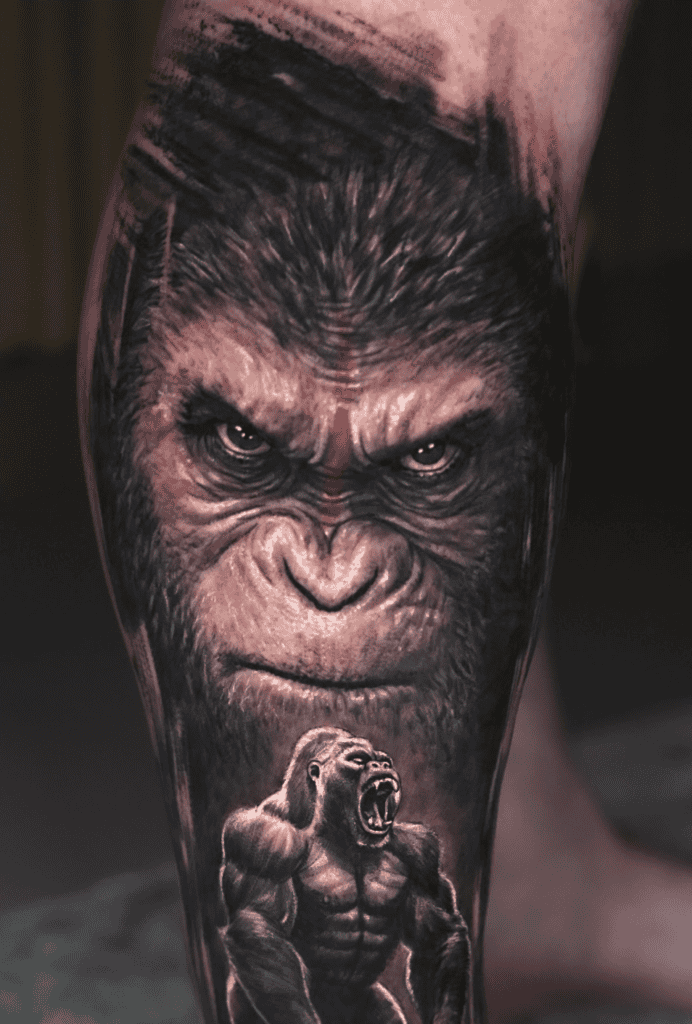
Caesar is the central character in the modern Planet of the Apes film series, beginning with Rise of the Planet of the Apes. He is a genetically enhanced chimpanzee who evolves from a curious and intelligent individual into a powerful and thoughtful leader.
Caesar is known for his exceptional intelligence, which develops rapidly due to a scientific experiment. As he becomes more aware of the world around him, he begins to question his place between humans and apes. He forms a deep bond with his human caretaker early in his life, but over time, he is forced to confront the reality of how apes are treated. This shapes his journey from innocence to leadership.
Caesar becomes the leader of a growing ape community, guiding them through conflict, survival, and the search for a place of their own. His leadership is defined not just by strength, but by wisdom, empathy, and a strong sense of justice. He constantly struggles between his compassion for humans and his responsibility to protect his own kind. This internal conflict is central to his character, making him both powerful and deeply human in his emotions.
Abu Monkey Tattoo
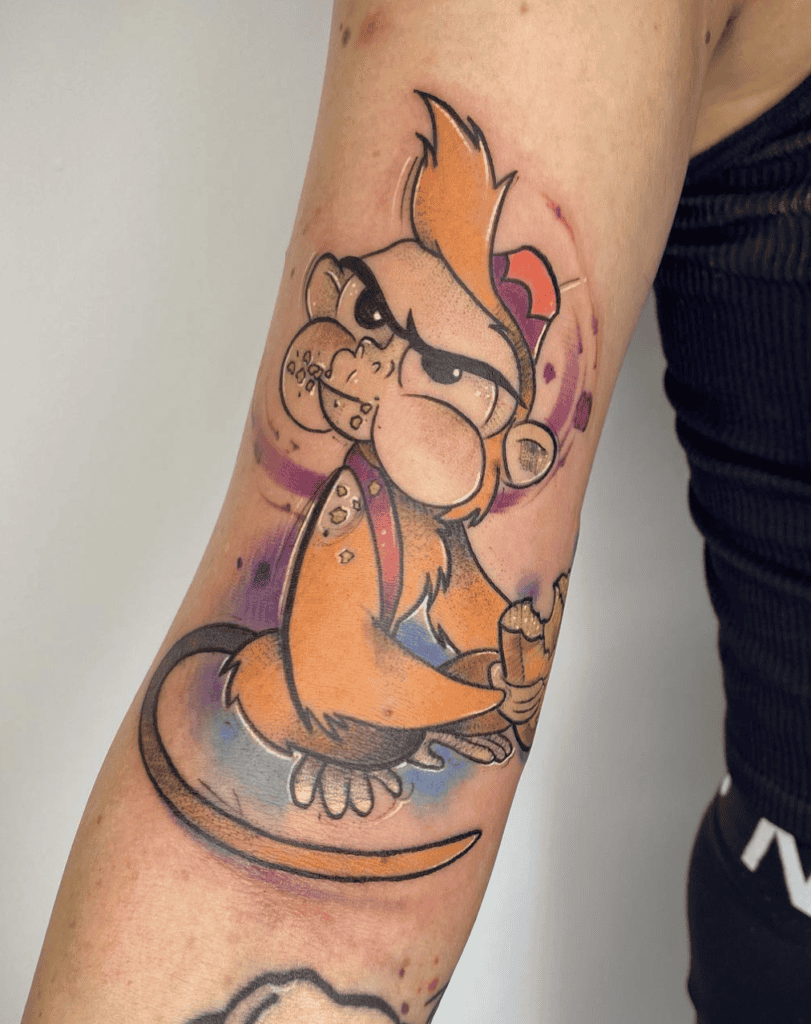
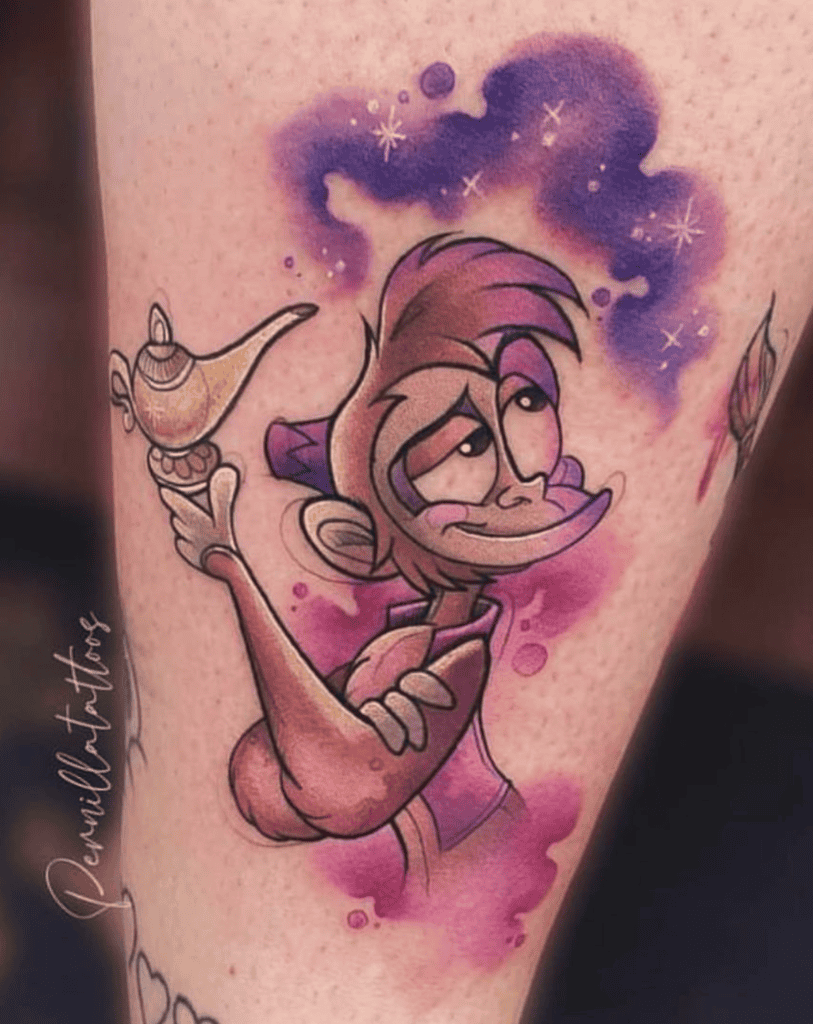
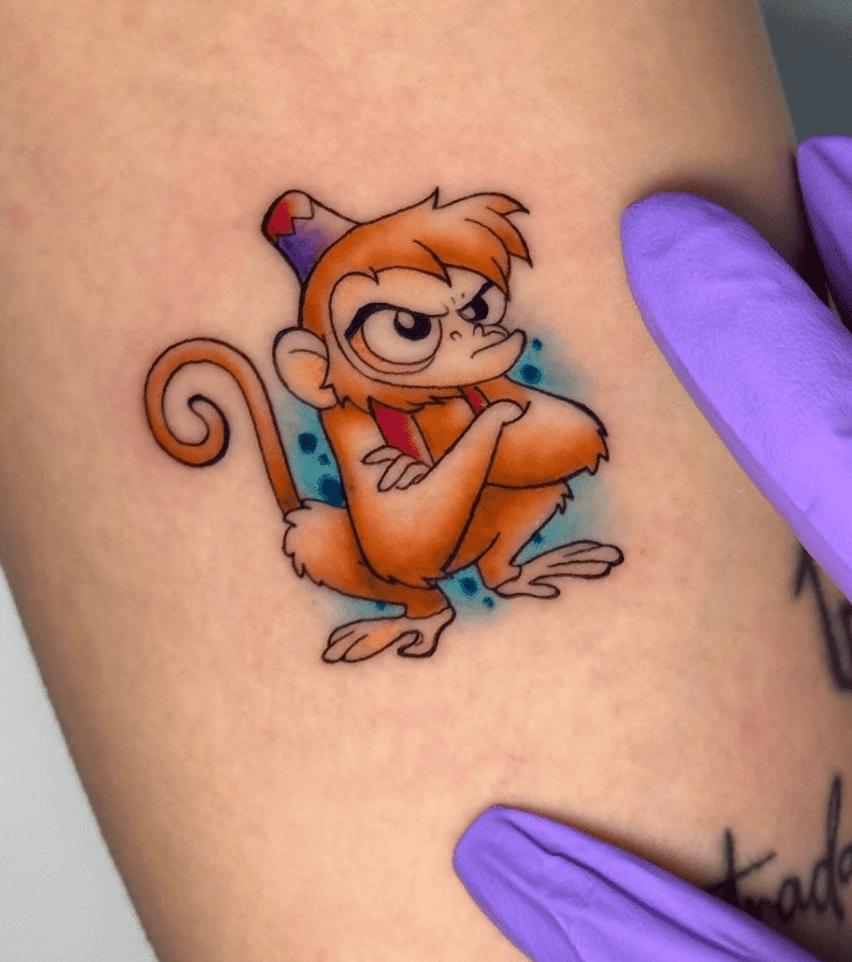
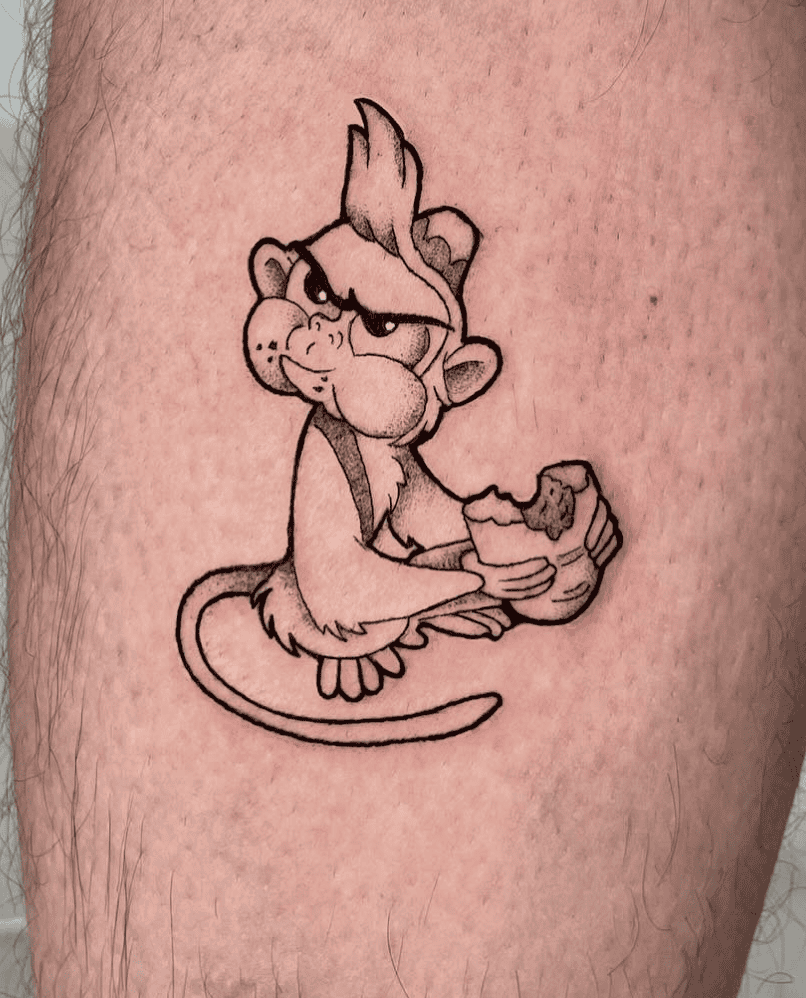
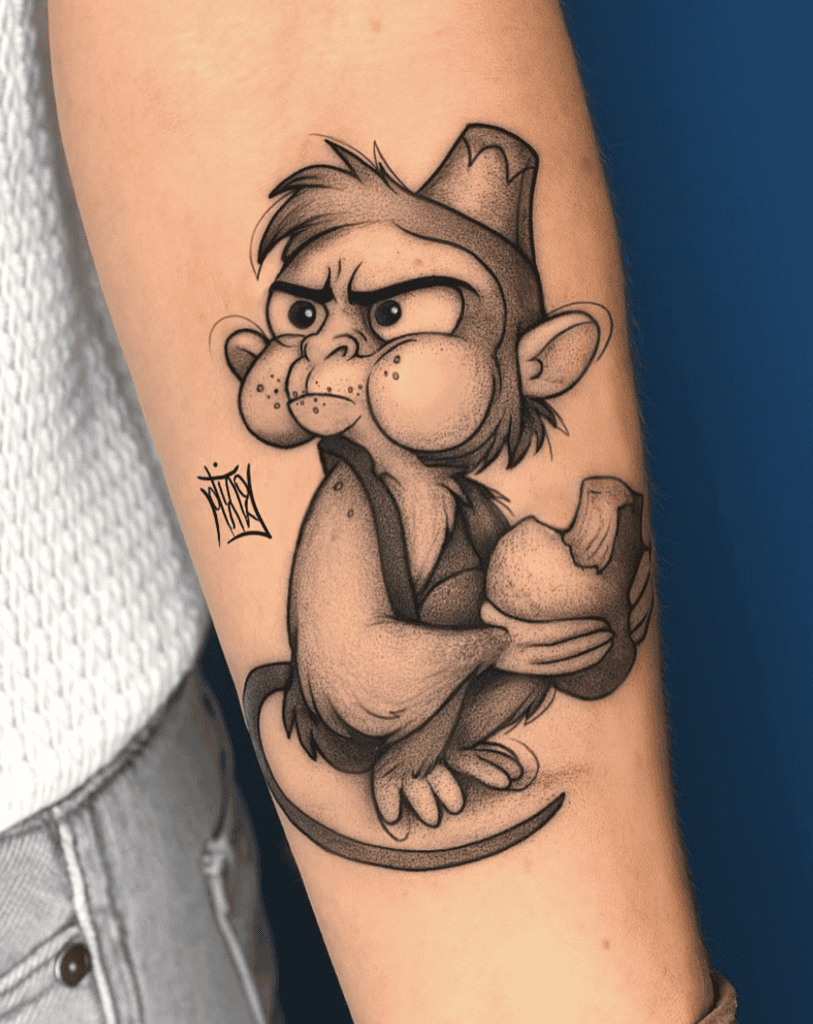
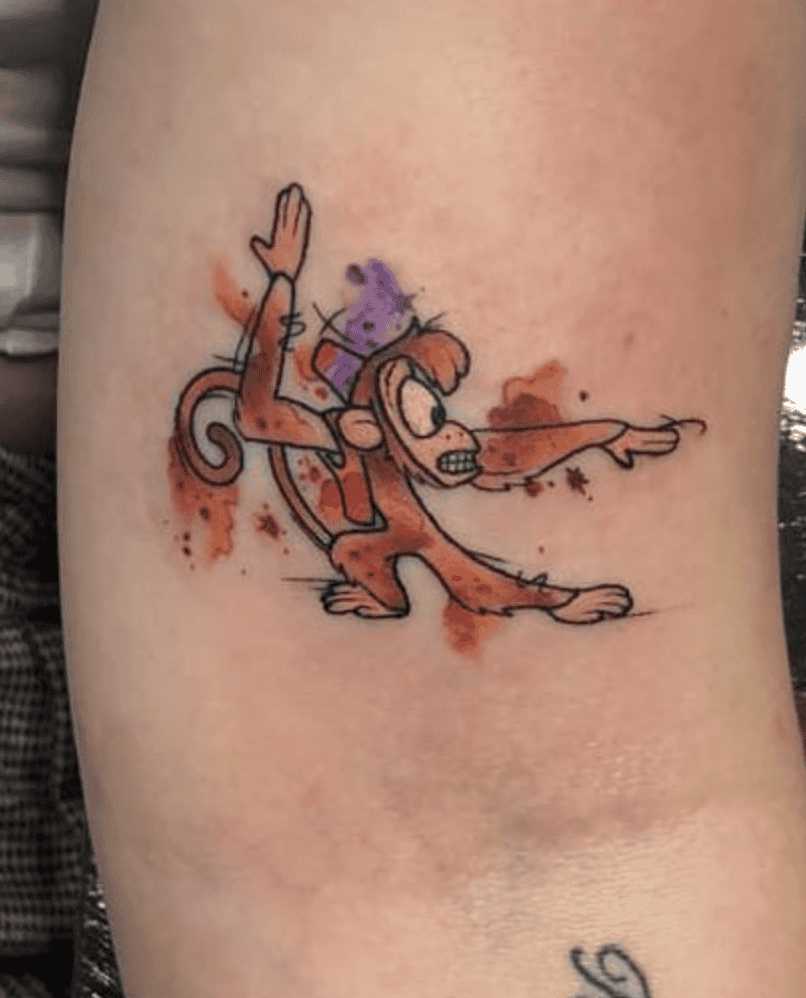
Abu is the loyal monkey companion of Aladdin in Disney’s Aladdin. He is a small capuchin-like monkey known for his expressive personality, quick movements, and strong emotional bond with Aladdin.
Abu is playful, curious, and often mischievous, with a particular weakness for shiny objects and treasure. His cheeky nature sometimes gets him into trouble, but it also adds humour and charm to his character. Despite his mischievous side, Abu is deeply loyal and protective. He stands by Aladdin through every challenge, showing bravery and devotion even in dangerous situations.
He communicates through gestures, expressions, and sounds rather than speech, yet his emotions and intentions are always clear. His expressive face makes him one of the most memorable animal companions in animated films. Abu represents friendship and loyalty, often acting as both a helper and a reminder of Aladdin’s humble beginnings.
Curious George Monkey Tattoo
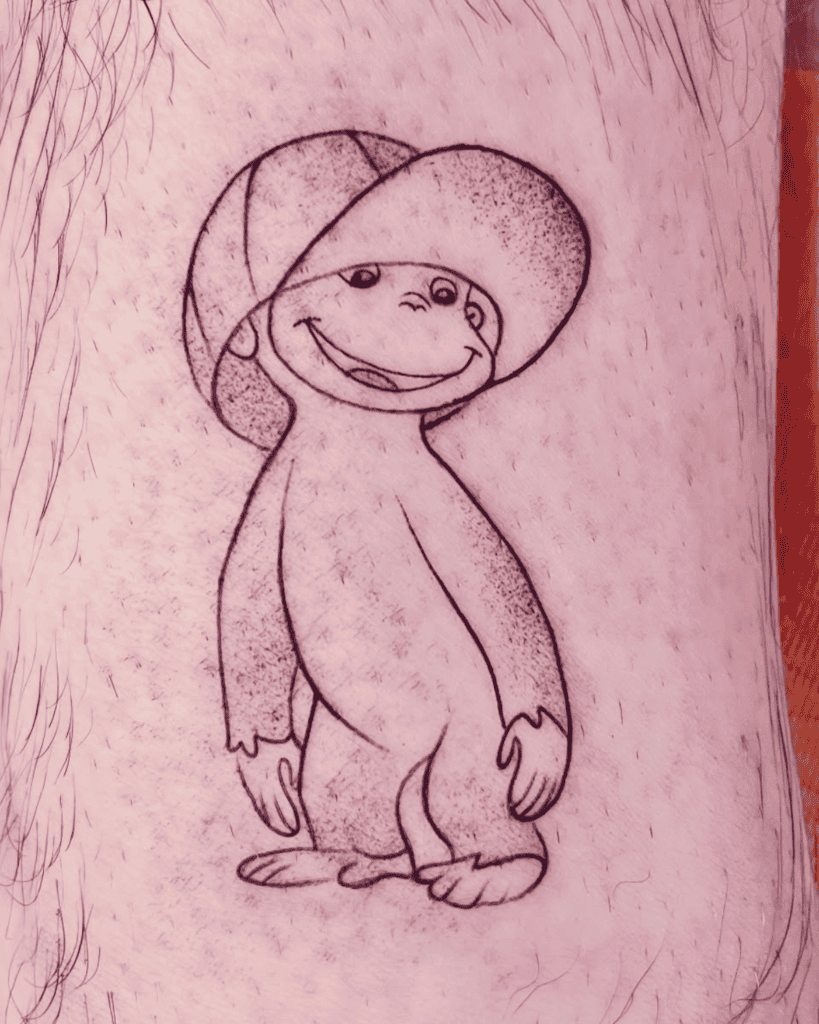
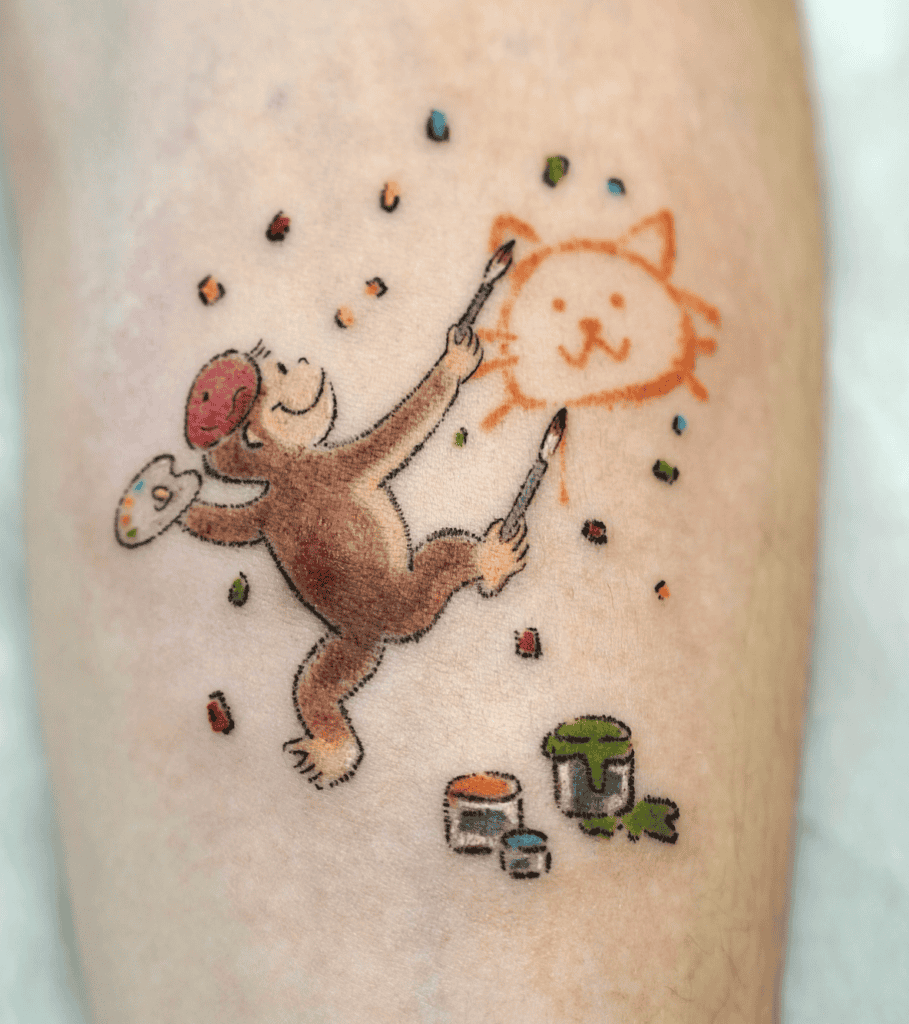
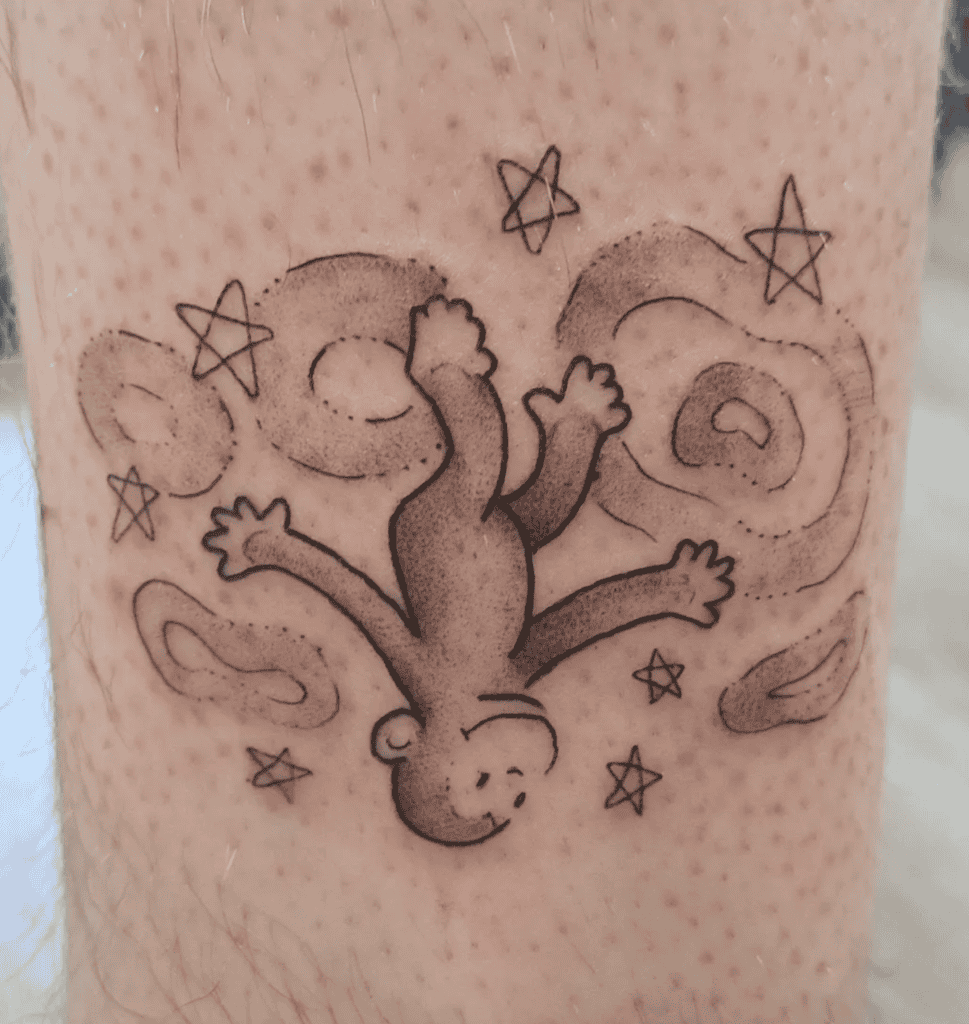
Curious George is a beloved character from the classic children’s book series created by H. A. Rey and Margret Rey. He is a small, tailless monkey known for his endless curiosity and adventurous spirit.
Curious George is defined by his inquisitive nature, always exploring the world around him and learning through experience. His curiosity often leads him into trouble, but it also drives discovery and growth. He lives with his friend and caretaker, the Man with the Yellow Hat, who guides him through new situations and helps him learn from his mistakes. Their relationship highlights themes of patience, learning, and trust.
George’s stories are simple but meaningful, often centred around everyday situations that turn into small adventures. Through these experiences, he learns about problem-solving, responsibility, and understanding the world.
Rafiki Monkey Tattoo
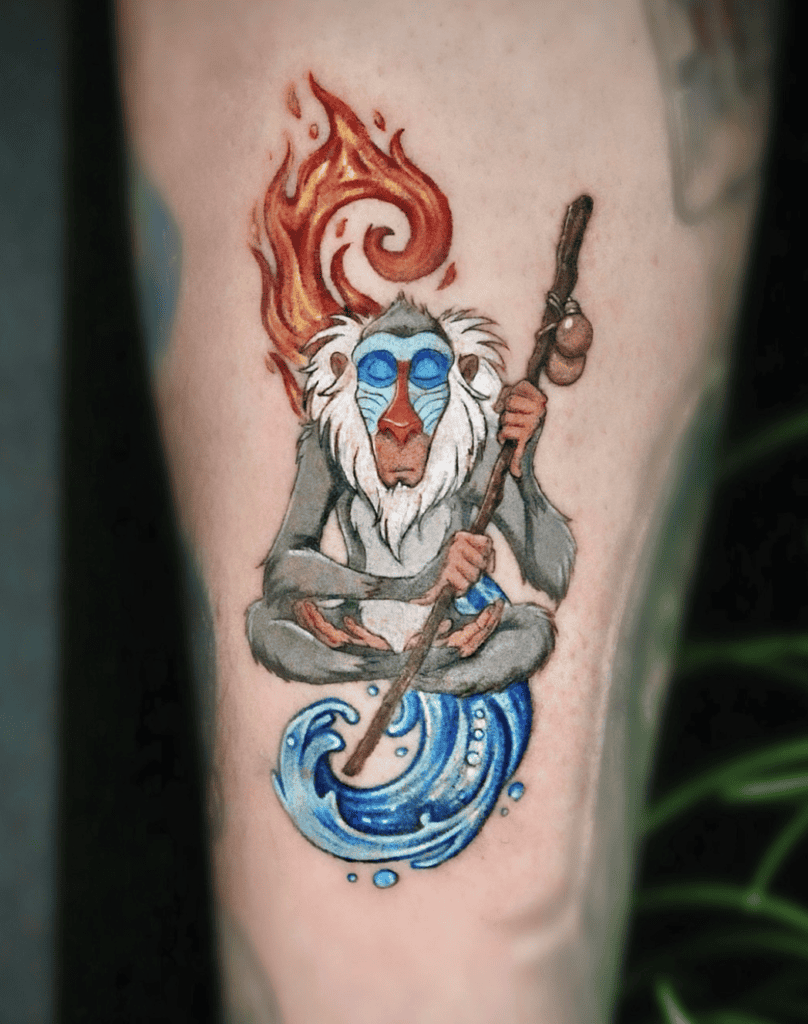
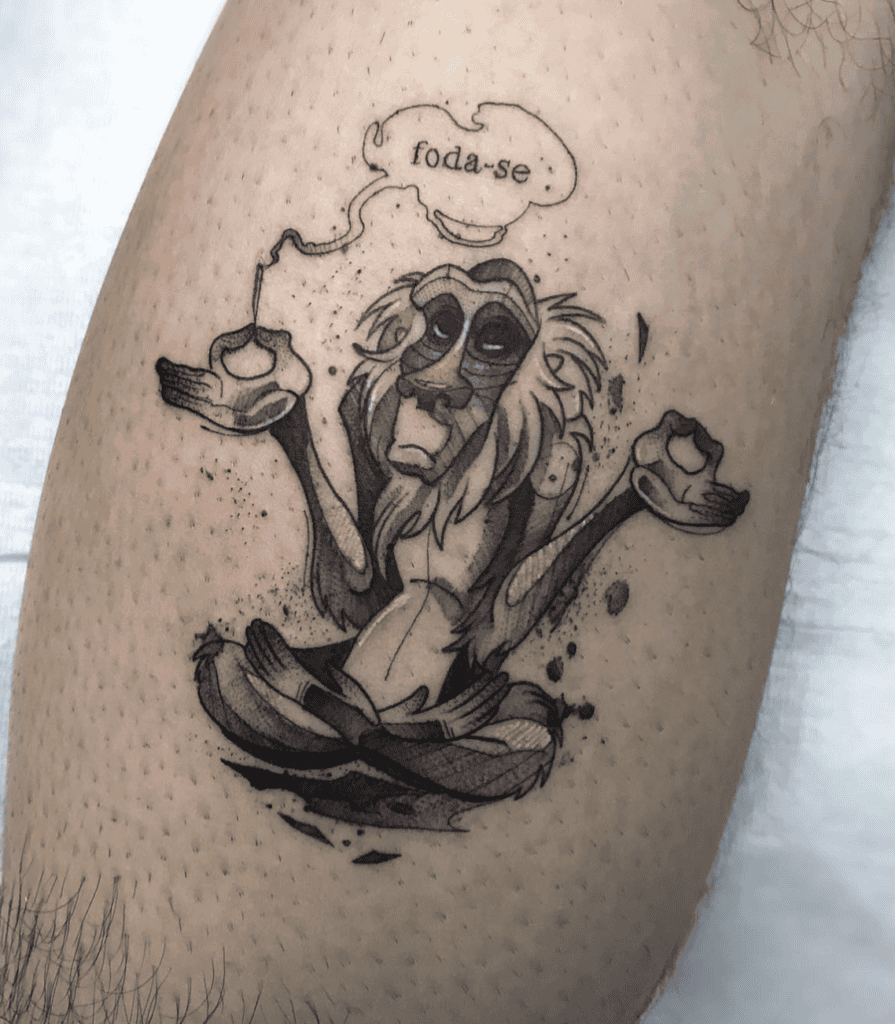
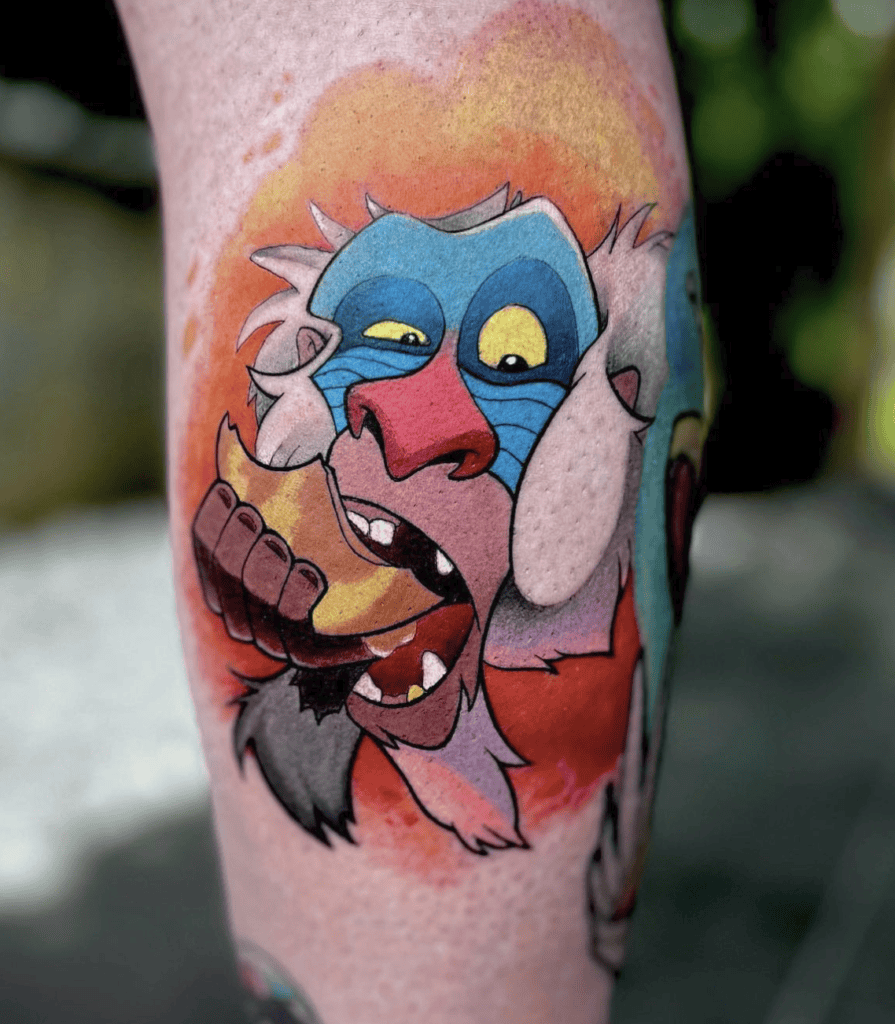
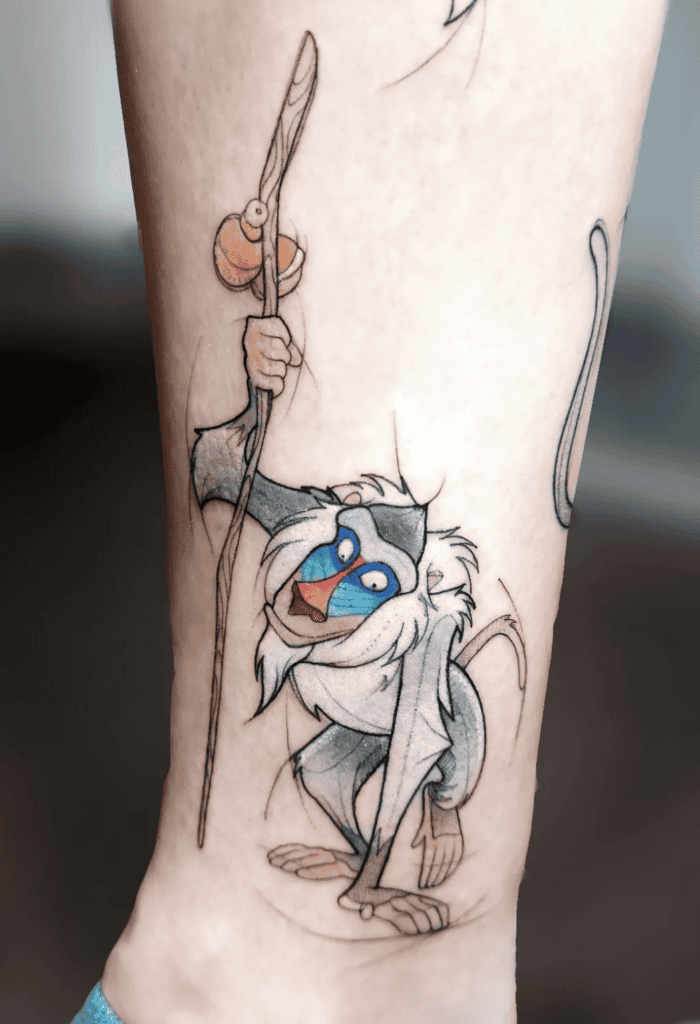
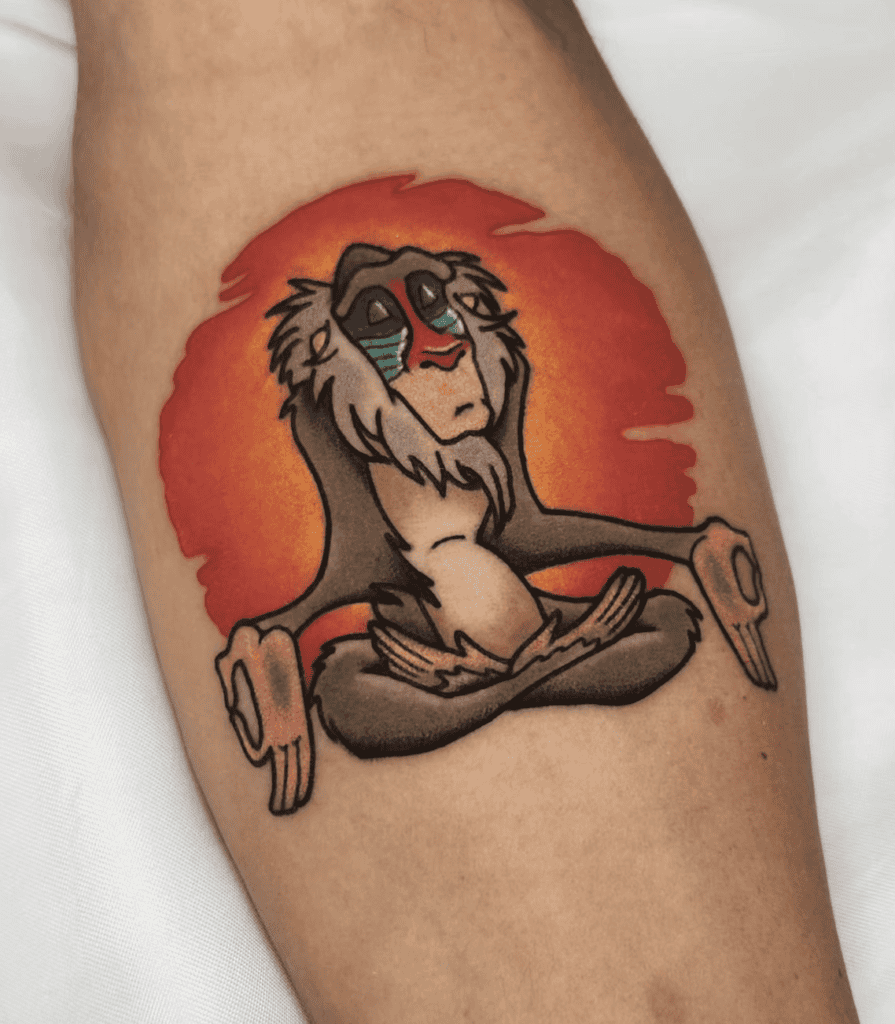
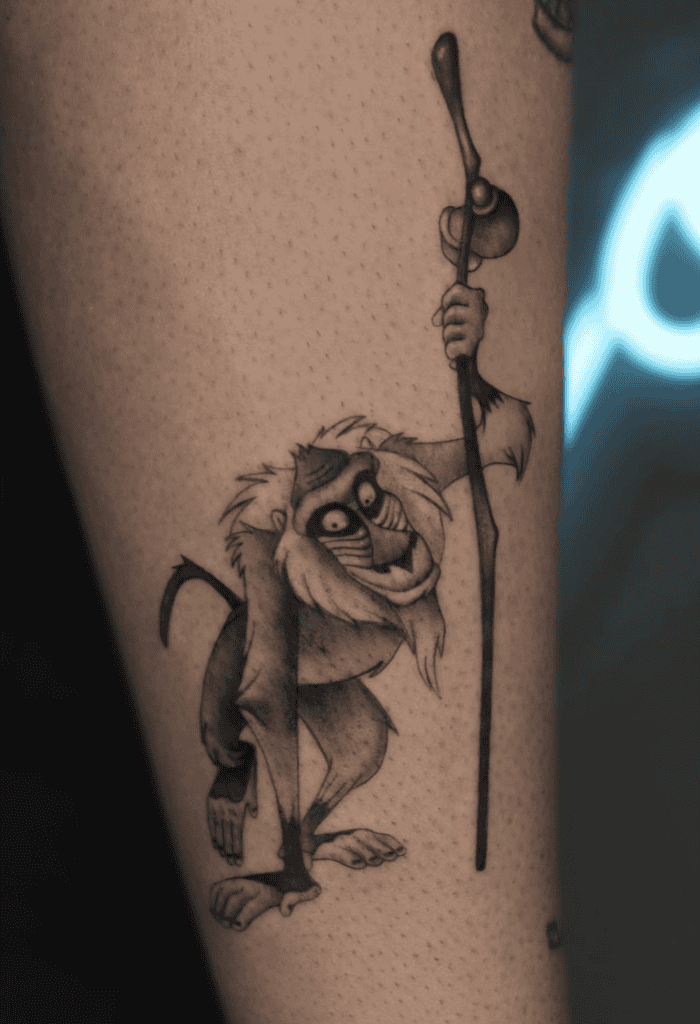
Rafiki is a wise and spiritual character from Disney’s The Lion King. He is portrayed as a mandrill and serves as the royal advisor and shaman of the Pride Lands. He is known for his deep wisdom, often speaking in riddles and symbolic messages rather than direct answers. His teachings encourage reflection, helping others find their own understanding rather than simply giving solutions.
He plays an important role in guiding key characters, particularly Simba, helping him confront his past and embrace his identity. His approach combines humour, unpredictability, and insight, making his lessons both memorable and meaningful.
Rafiki represents a connection between the physical and spiritual world. He performs rituals, uses symbols, and relies on intuition to guide his actions, reflecting a deeper sense of balance and harmony. Despite his calm and wise nature, Rafiki also has a playful side, often surprising others with sudden actions or humour, reinforcing that wisdom does not have to be serious or rigid.
I.R. Baboon Monkey Tattoo
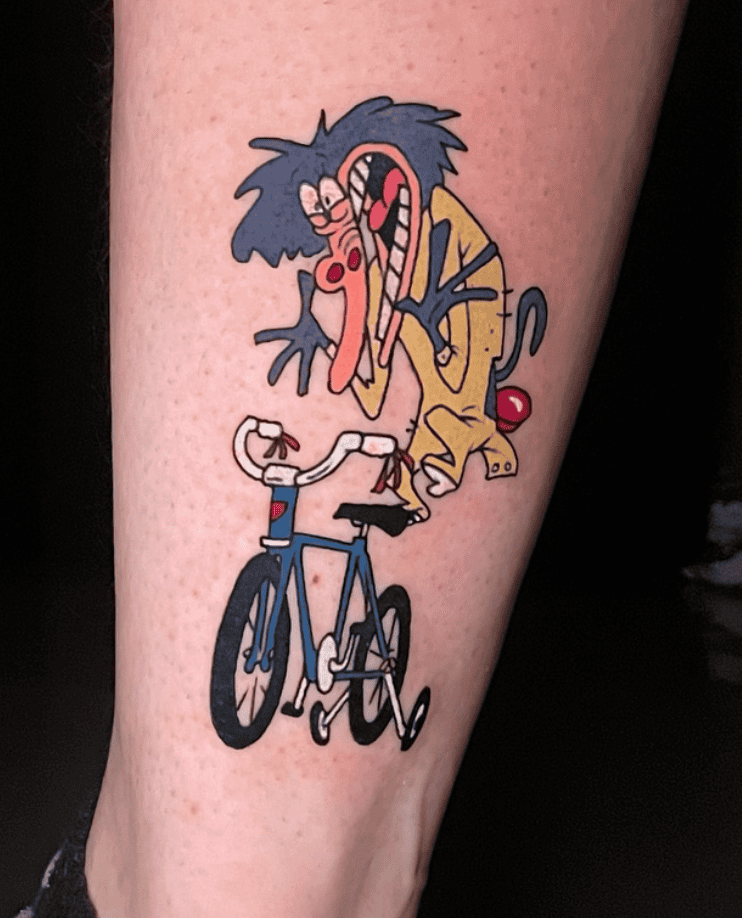
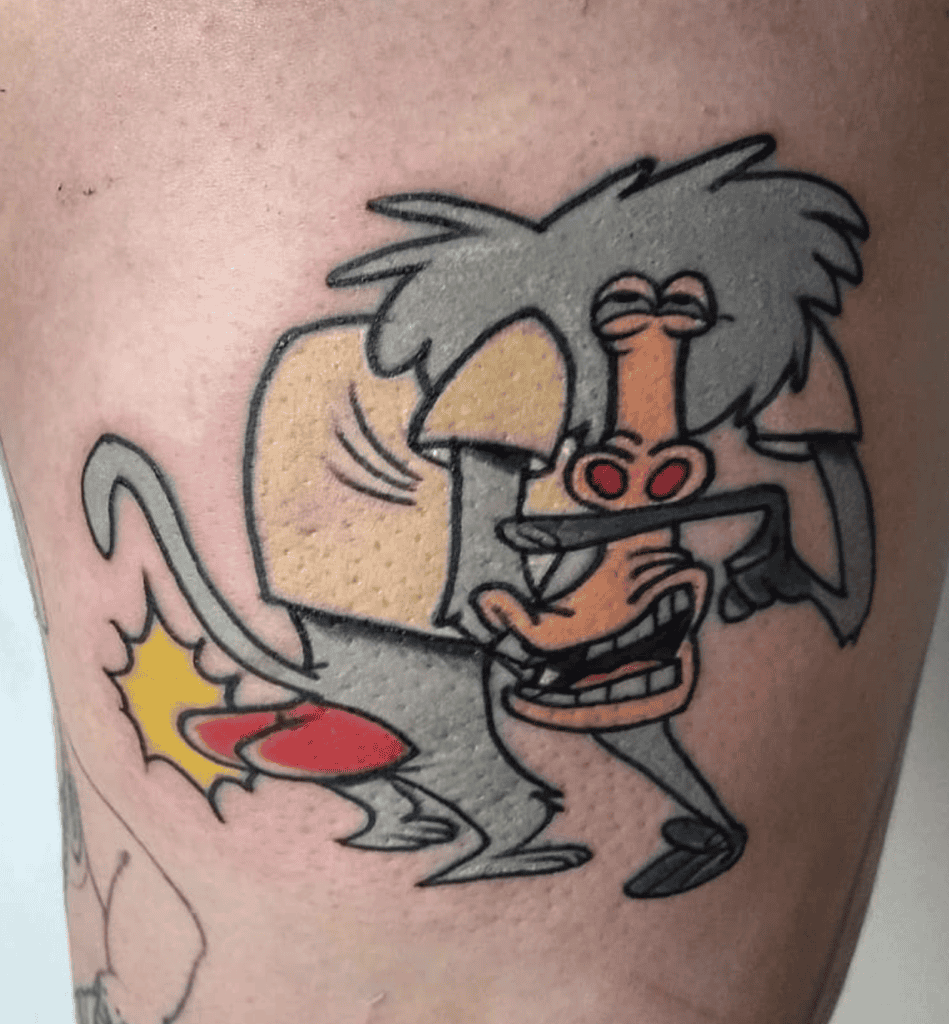
I.R. Baboon is a comedic character from the animated series I Am Weasel. He is portrayed as the loud, chaotic, and often clueless rival to the intelligent and successful I.M. Weasel.
I.R. Baboon is known for his over-the-top personality, often acting impulsively and without thinking things through. His attempts to compete with I.M. Weasel usually lead to humorous failures, creating much of the show’s comedy. Despite his lack of intelligence and constant mishaps, I.R. Baboon is persistent and full of confidence. He rarely gives up, even when things go wrong, which adds to both his charm and his chaos.
His character is built around contrast, highlighting the difference between raw energy and calm intelligence. While I.M. Weasel succeeds through logic and skill, I.R. Baboon relies on enthusiasm and stubborn determination. Although often portrayed as a troublemaker, I.R. Baboon is not malicious. His actions are usually driven by a desire to prove himself rather than harm others.
Mr Teeny Monkey Tattoo
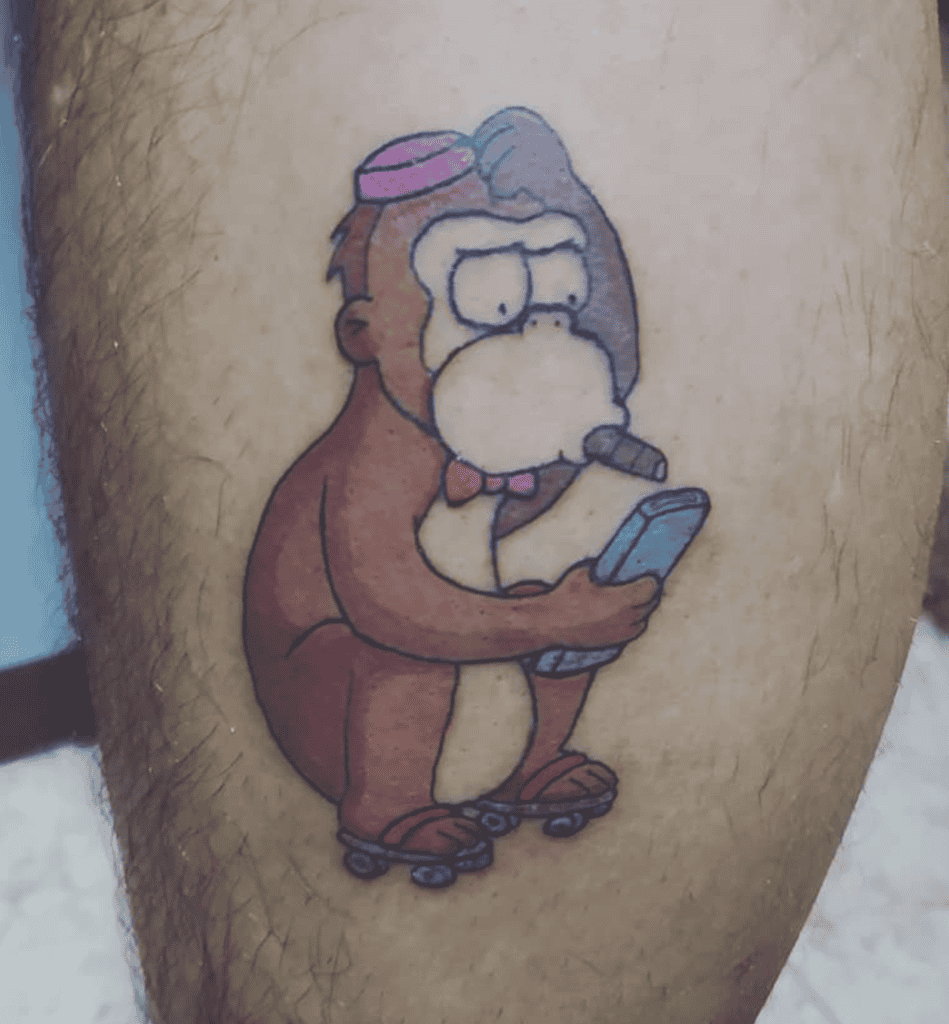
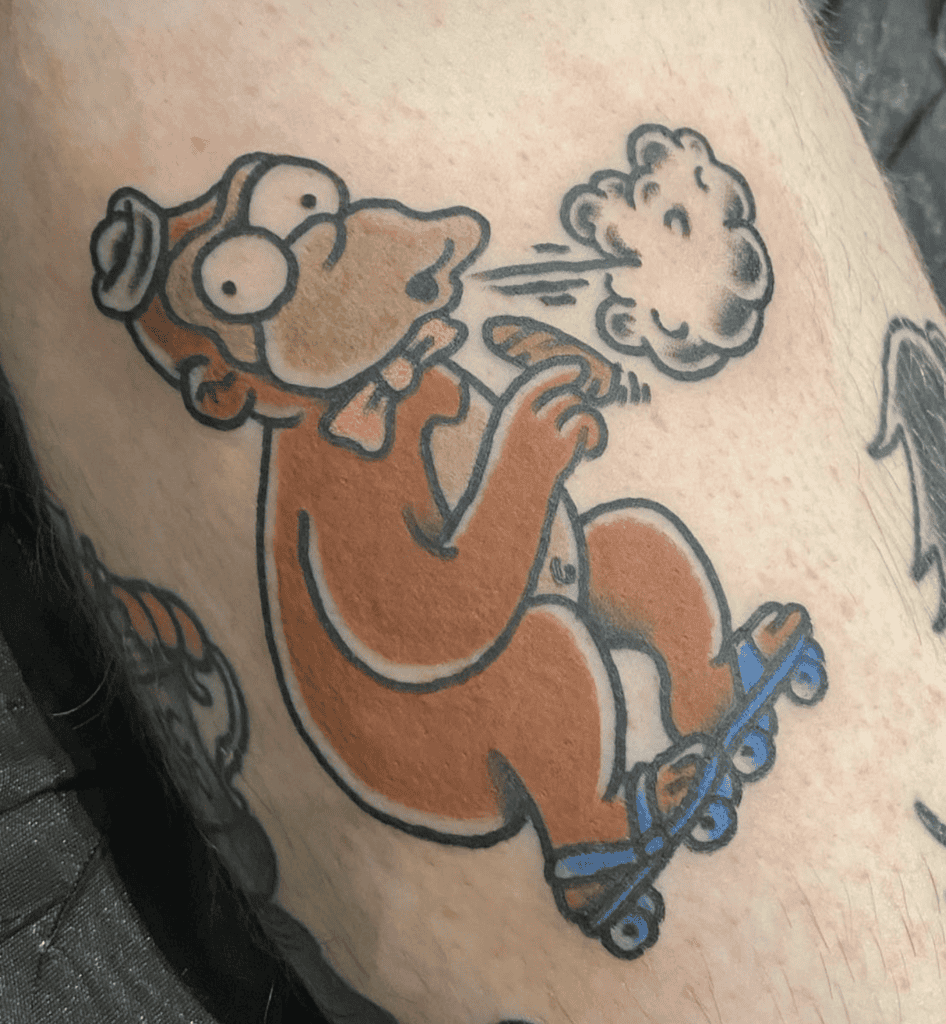
Mr. Teeny is a recurring character from The Simpsons. He is the pet monkey of Krusty the Clown and often appears as part of Krusty’s show or backstage life.
Mr. Teeny is typically portrayed as quiet and subdued, often reacting to the chaotic world around him with tired or unimpressed expressions. His character contrasts with Krusty’s loud and unpredictable personality.
He is known for his human-like habits, sometimes shown smoking or behaving in ways that reflect the darker, more satirical tone of the show. These traits are used to highlight the absurdity and humour within the series.
Mojo Jojo Ape Tattoo
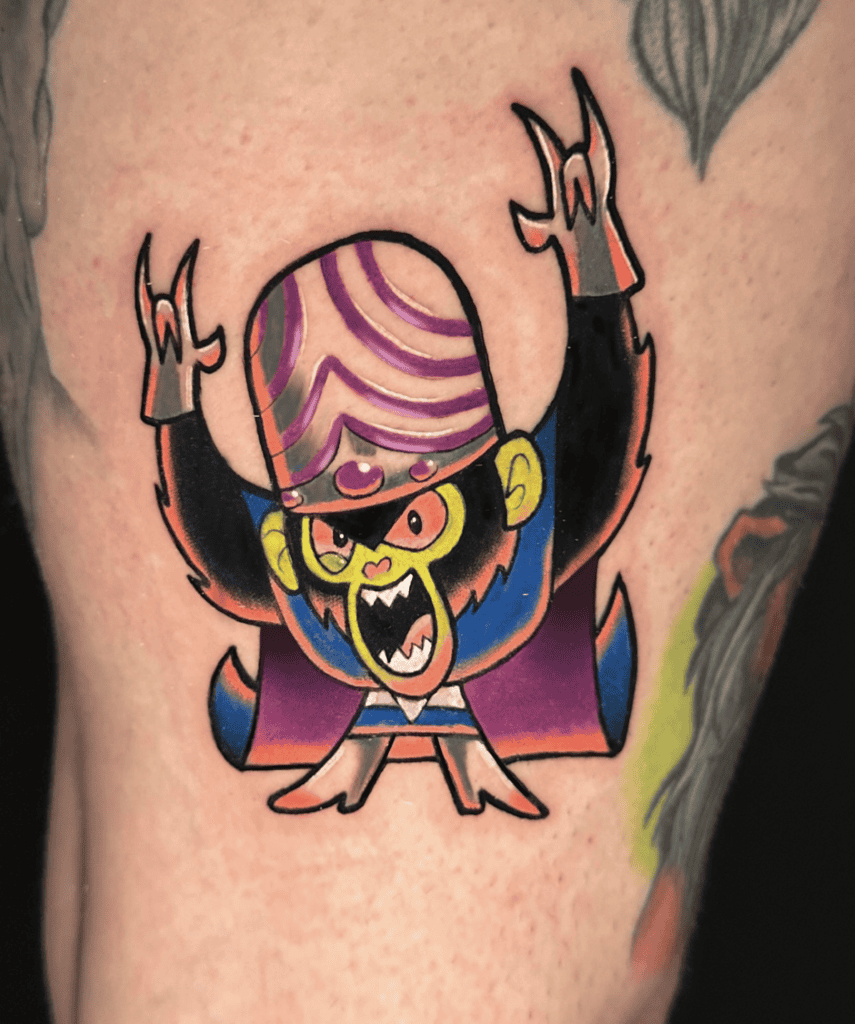
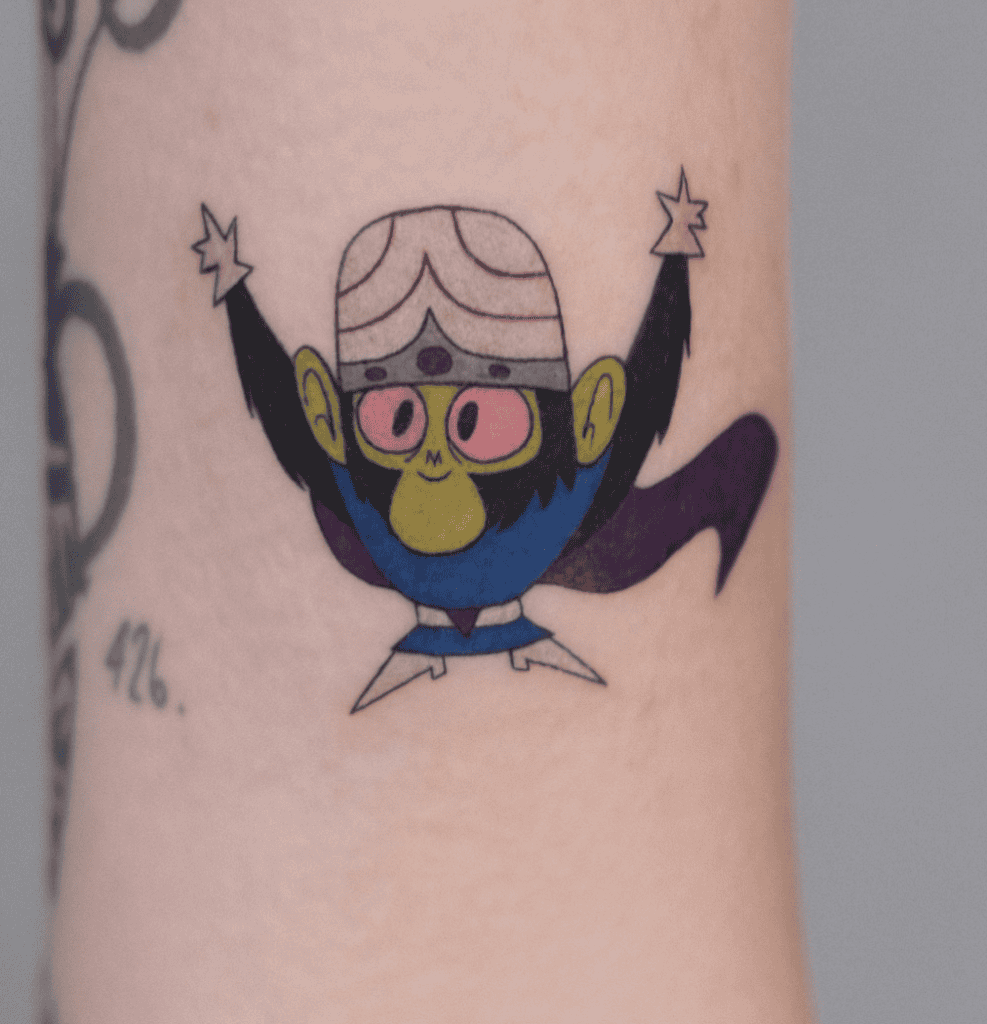
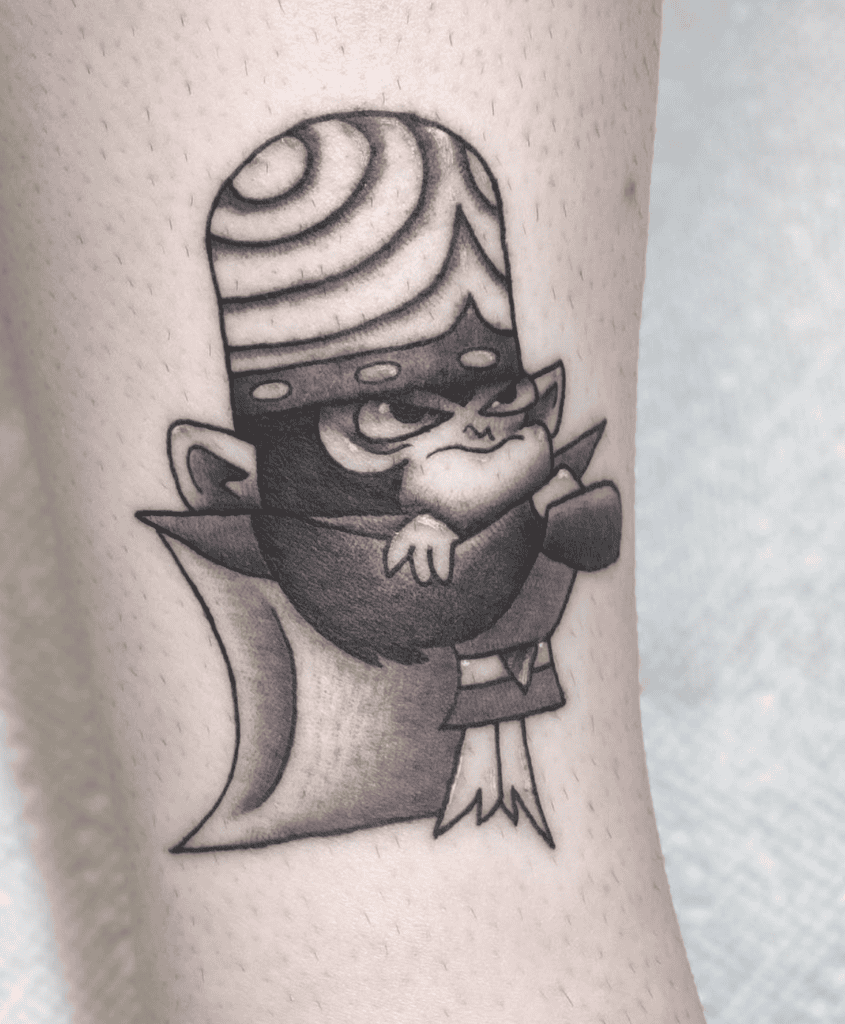
Mojo Jojo is the main antagonist from the animated series The Powerpuff Girls. He is a highly intelligent chimpanzee supervillain known for his oversized brain, dramatic speech, and constant attempts to take over the world. He gained his intelligence from a laboratory accident involving Chemical X, which also created the Powerpuff Girls. This origin ties him directly to the heroes, making their rivalry more personal.
He is known for his exaggerated way of speaking, often repeating phrases and overexplaining his plans. His dramatic monologues have become one of his most recognisable traits. Mojo Jojo is extremely intelligent and capable of creating advanced machines and complex schemes. However, his plans are often flawed due to his ego and tendency to overcomplicate things.
Lazlo Monkey Tattoo
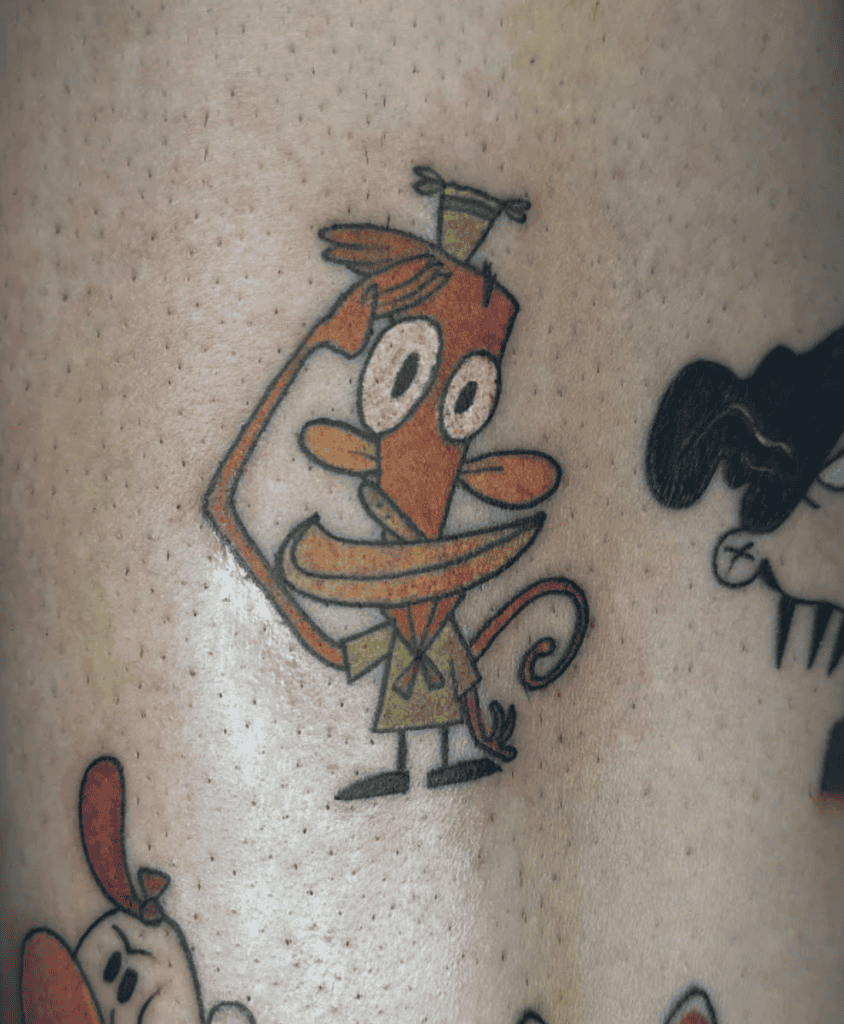
Lazlo is the main character of the animated series Camp Lazlo. He is a carefree and optimistic monkey who attends a scout camp, where he approaches every situation with enthusiasm and imagination. Lazlo is known for his cheerful personality and laid-back attitude. He tends to see the fun in everything, often bending the rules or ignoring strict structure in favour of creativity and enjoyment.
He is highly social and values friendship, especially with his close companions Raj and Clam. Together, they often find themselves in unusual or chaotic situations, usually sparked by Lazlo’s curiosity and playful mindset.
Magilla Gorilla Ape Tattoo
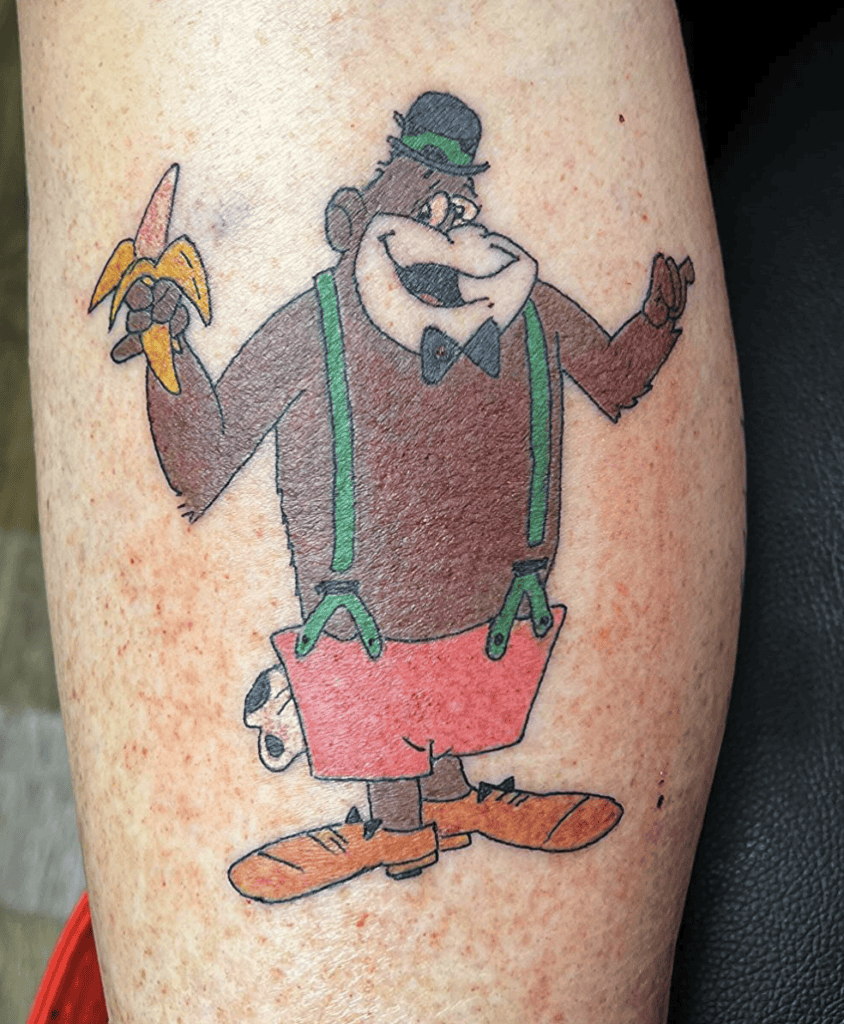
Magilla Gorilla is a classic cartoon character from The Magilla Gorilla Show, created by Hanna-Barbera. He is a friendly, gentle gorilla who lives in a pet shop, waiting to be sold and find a home. Magilla Gorilla is known for his kind-hearted nature and calm personality, being gentle and well-mannered, often behaving more politely than the humans around him.
He is usually seen wearing a small hat, bow tie, and suspenders, which adds to his charming and slightly comedic appearance. His character often finds himself in humorous situations, especially when potential buyers show interest in him. A recurring theme in his story is belonging. While he is repeatedly returned to the pet shop, he continues to hope for a place where he truly fits in, giving his character a slightly bittersweet undertone.
Boots Monkey Tattoo
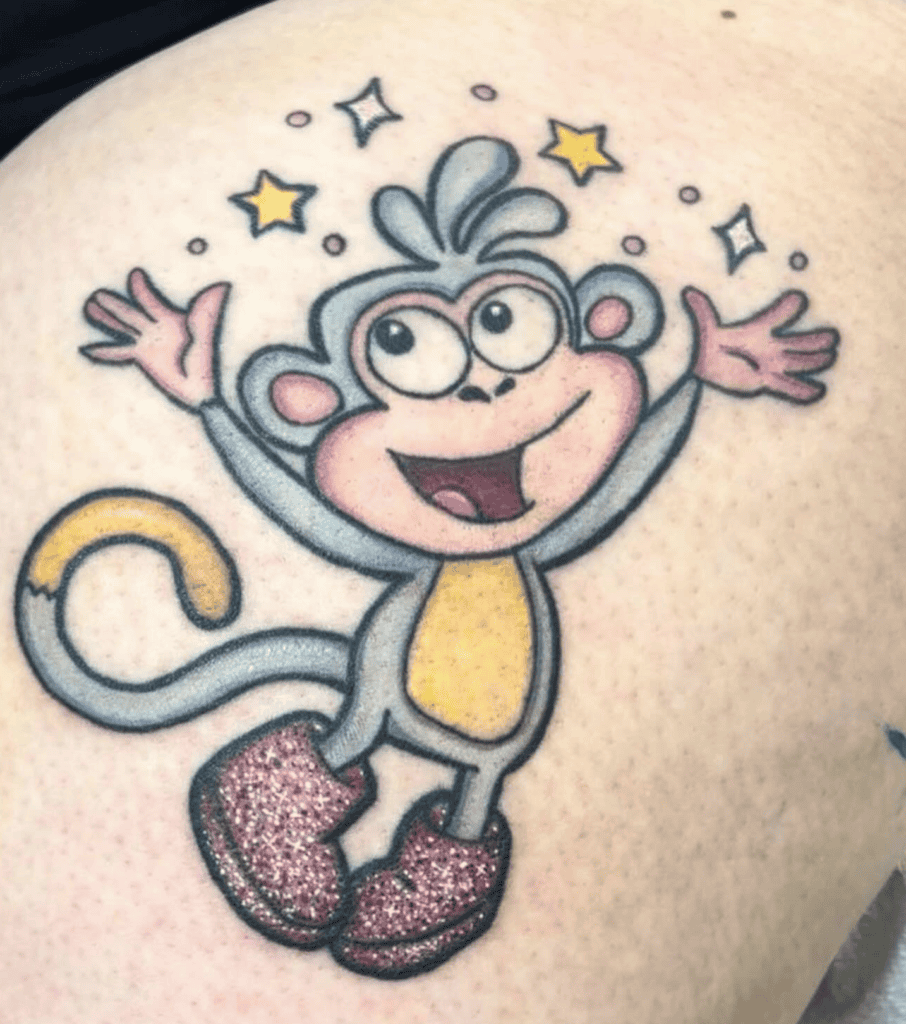
Boots is the cheerful monkey companion of Dora in the animated series Dora the Explorer. He is kind, optimistic, and supportive, often helping Dora on her adventures through forests, rivers, and mountains.
He is known for his playful and energetic nature, bringing humour and lightness to every situation. Despite his fun-loving personality, he is also brave and willing to face challenges alongside Dora. Boots values friendship deeply and often expresses care and concern for others. His loyalty and trust make him an important part of Dora’s journey, helping her solve problems and reach her goals.
Pokémon Monkey Tattoo
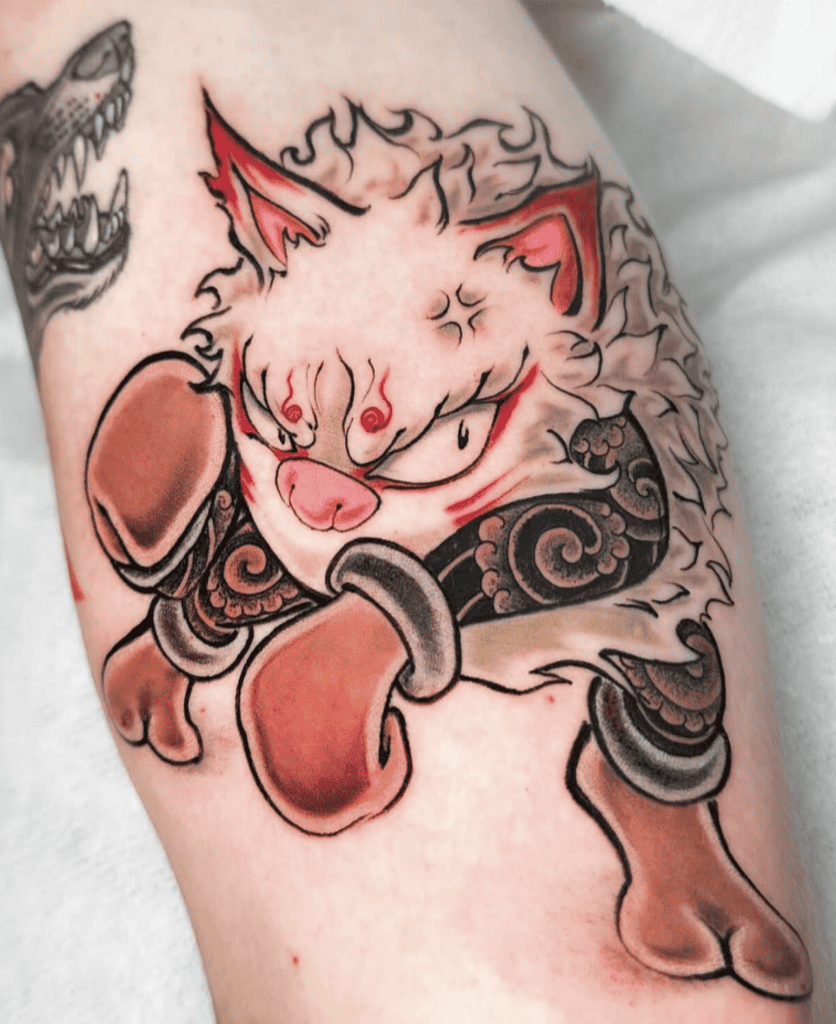
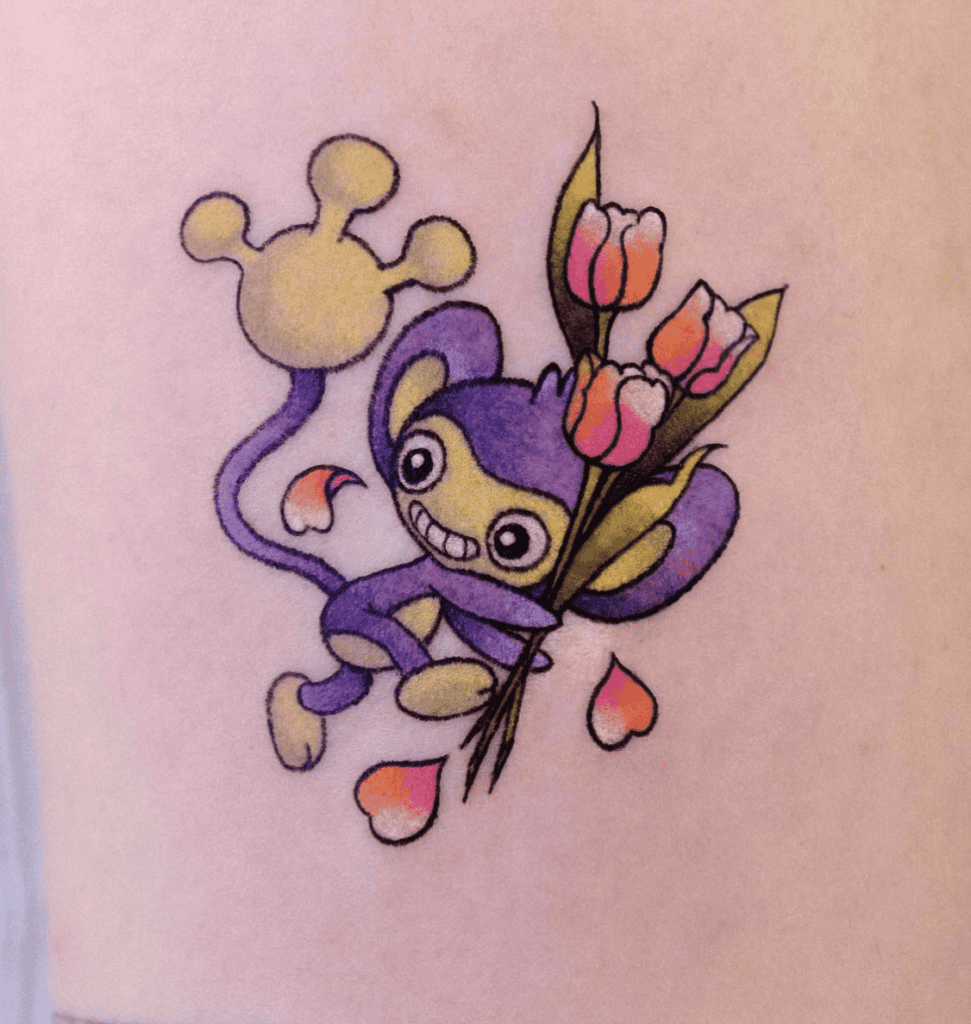
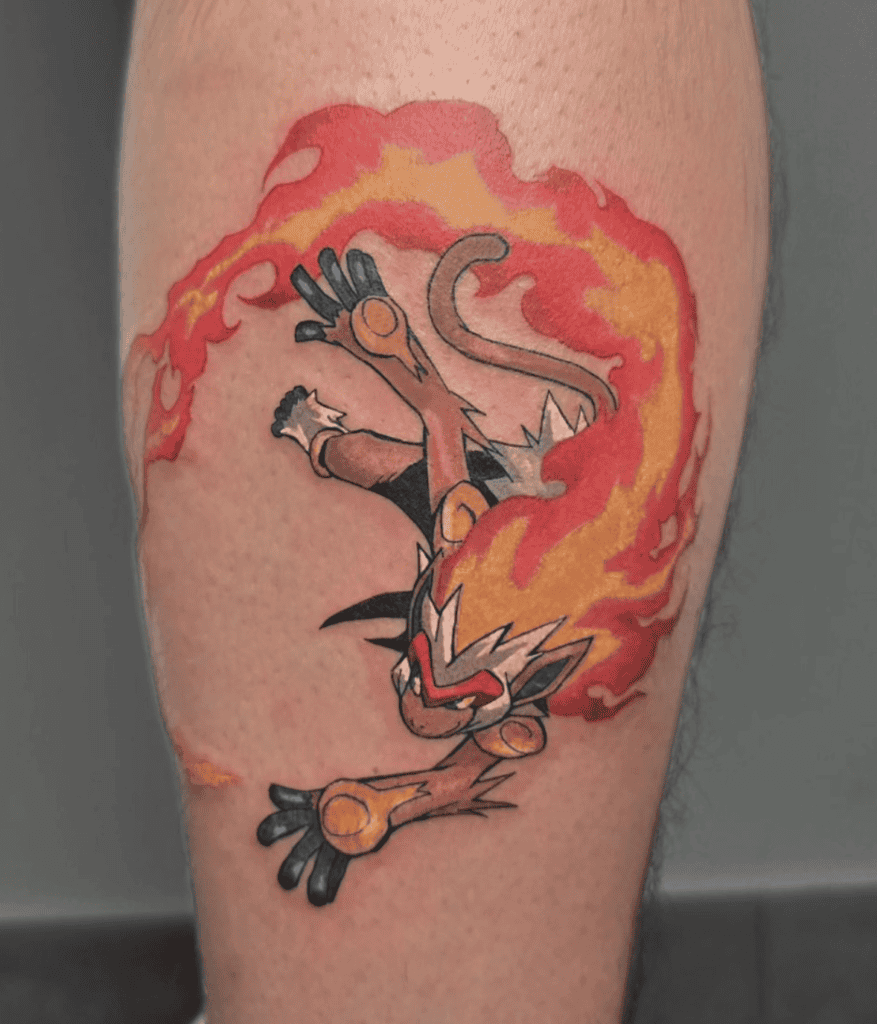
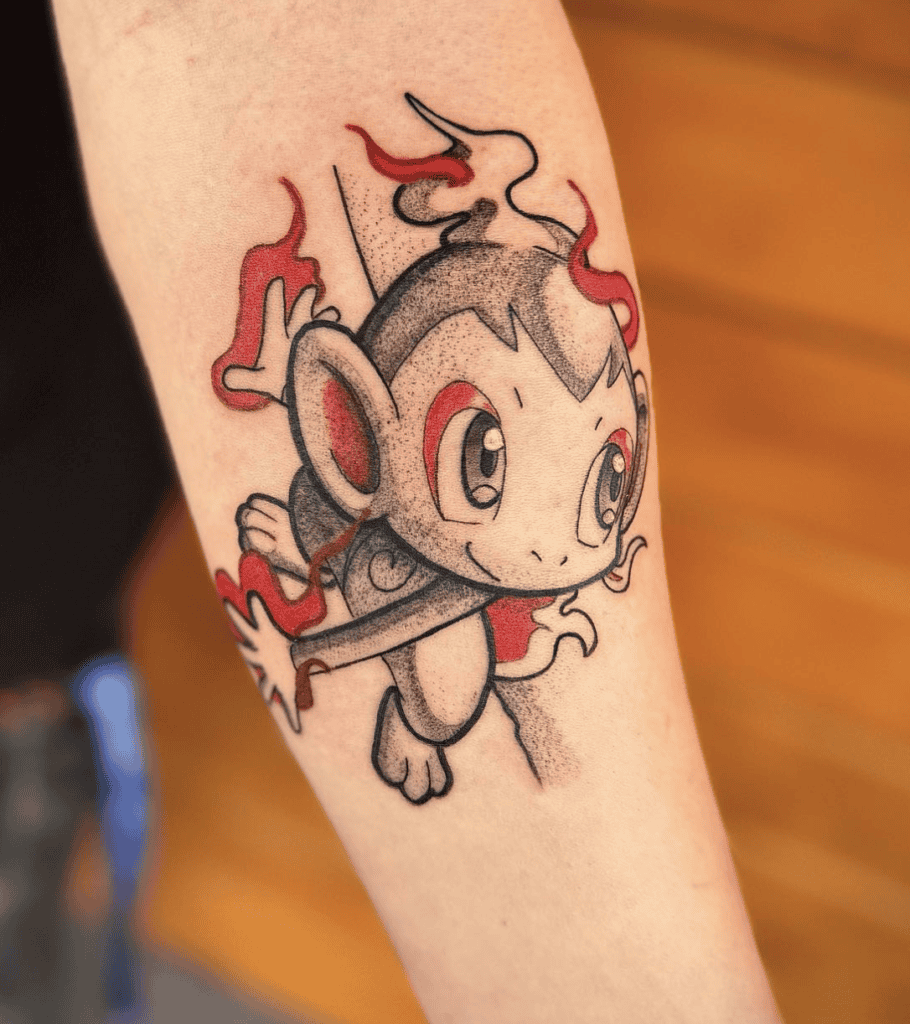
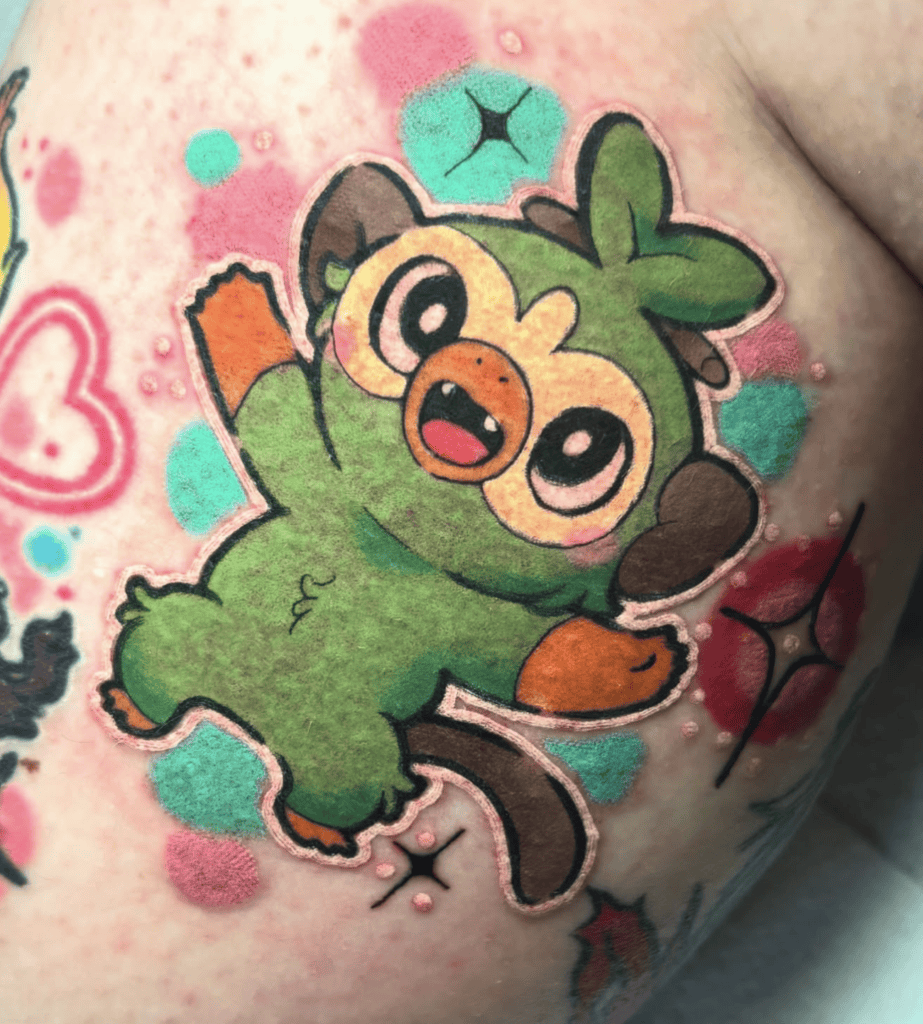
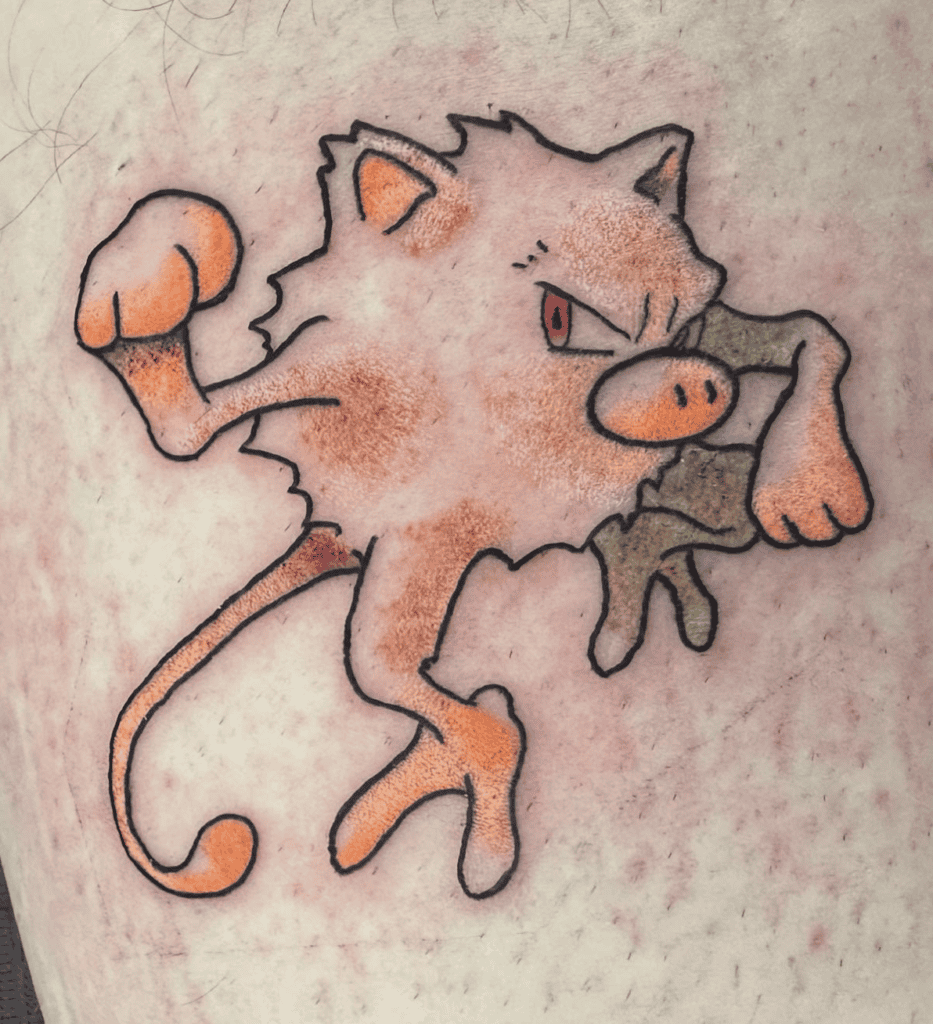
Monkey-inspired Pokémon appear across many generations of the Pokémon series, often representing agility, intelligence, playfulness, and elemental power. These characters take real monkey traits and exaggerate them into unique abilities, personalities, and battle styles.
Animal Crossing Monkey Tattoo
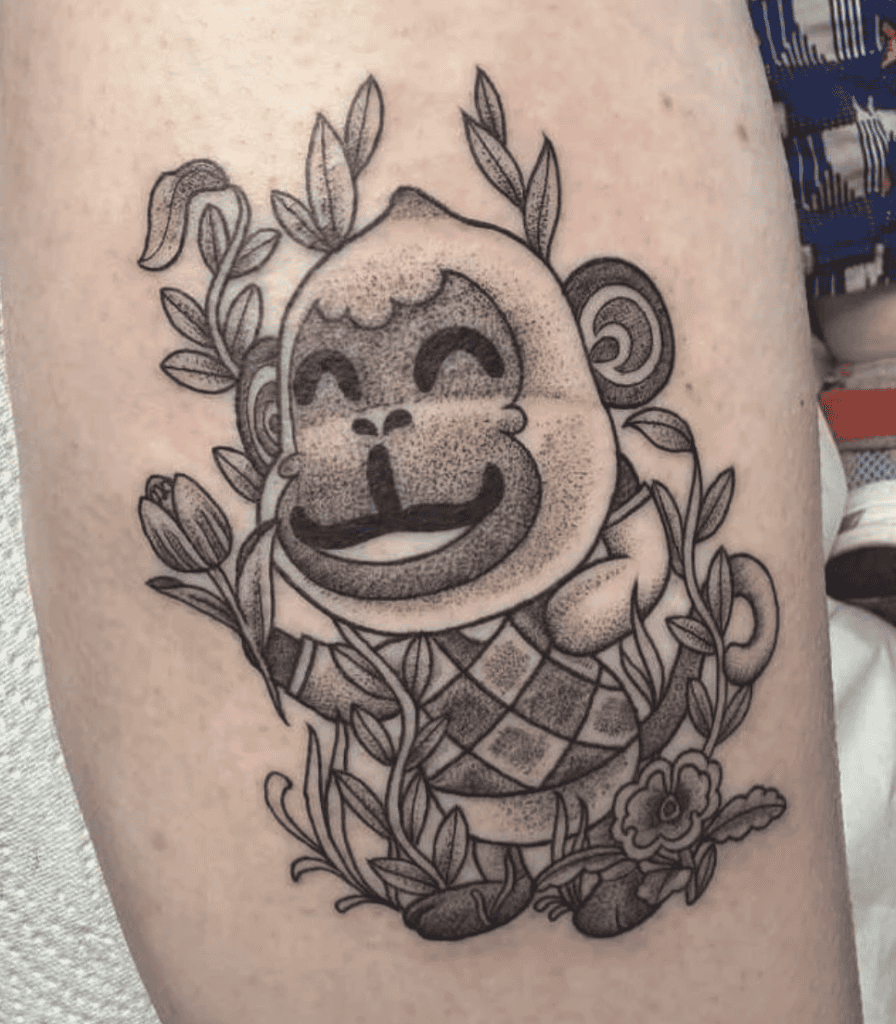
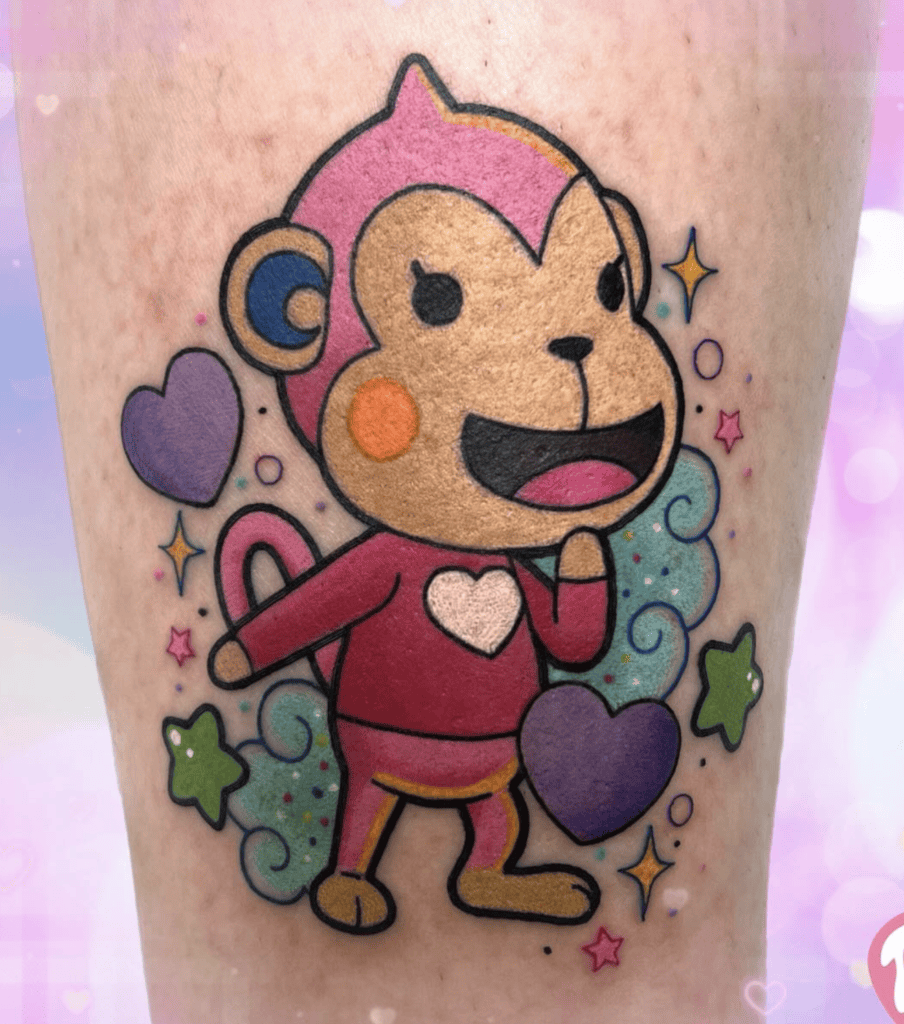
Monkey villagers are a small but memorable group in the Animal Crossing series. Each monkey has a distinct personality, design, and role on your island, bringing a mix of energy, humour, and charm.
Notable Monkey Villagers include Shari, one of the most recognisable monkeys, known for her bright yellow hands and feet. She has a big sister personality, meaning she is caring, protective, and gives advice to other villagers. Flip, a sporty monkey full of energy and enthusiasm. He loves fitness and often talks about working out, representing motivation and determination.
Nana, a sweet and gentle monkey with a normal personality. She is kind, friendly, and easy to get along with, bringing a calm and comforting presence. Deli, a lazy-type monkey who enjoys relaxing, eating, and taking life at a slower pace. He adds humour with his laid-back attitude.
Winston Ape Tattoo
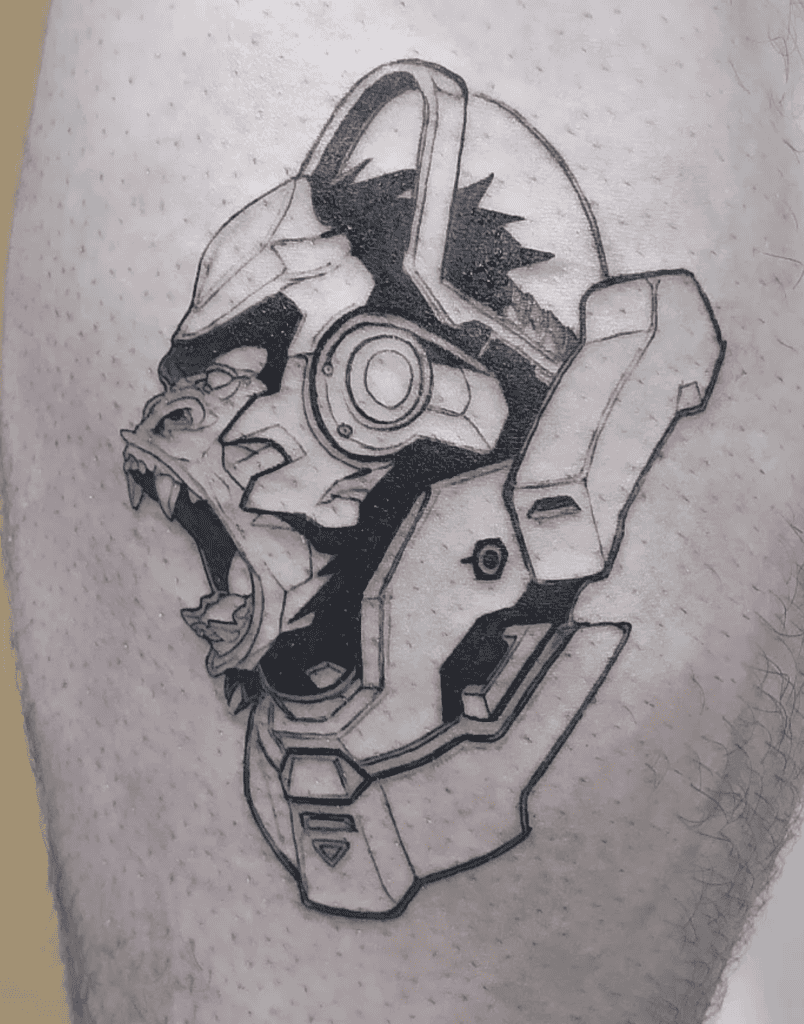
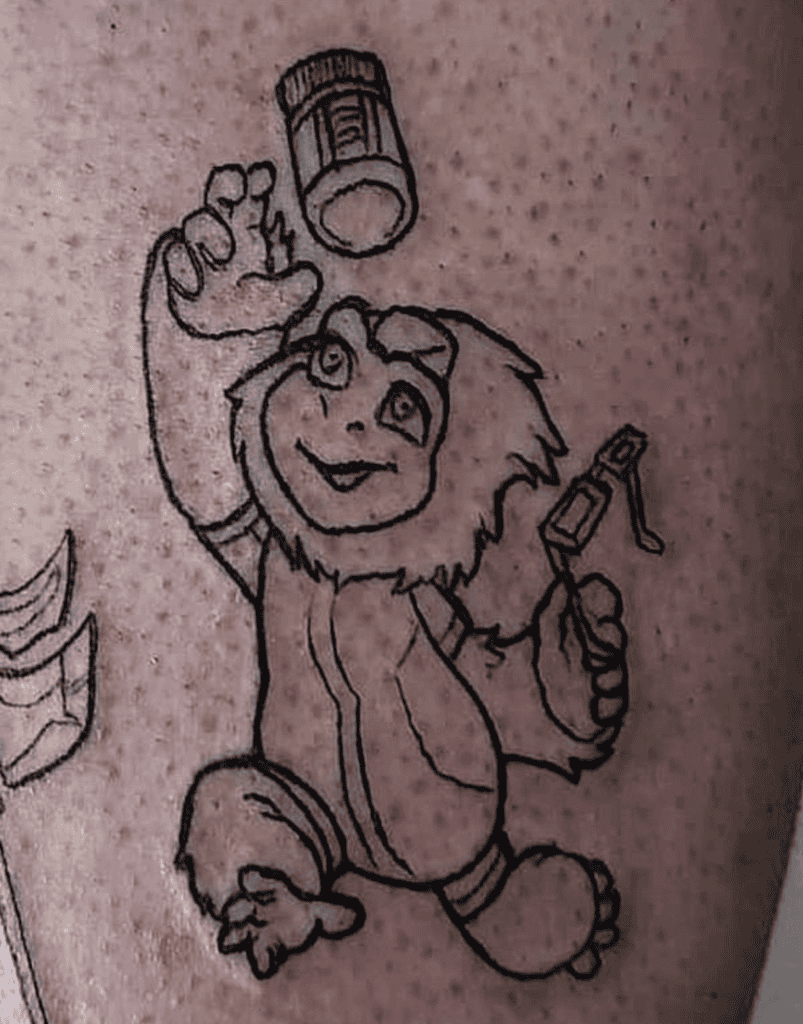
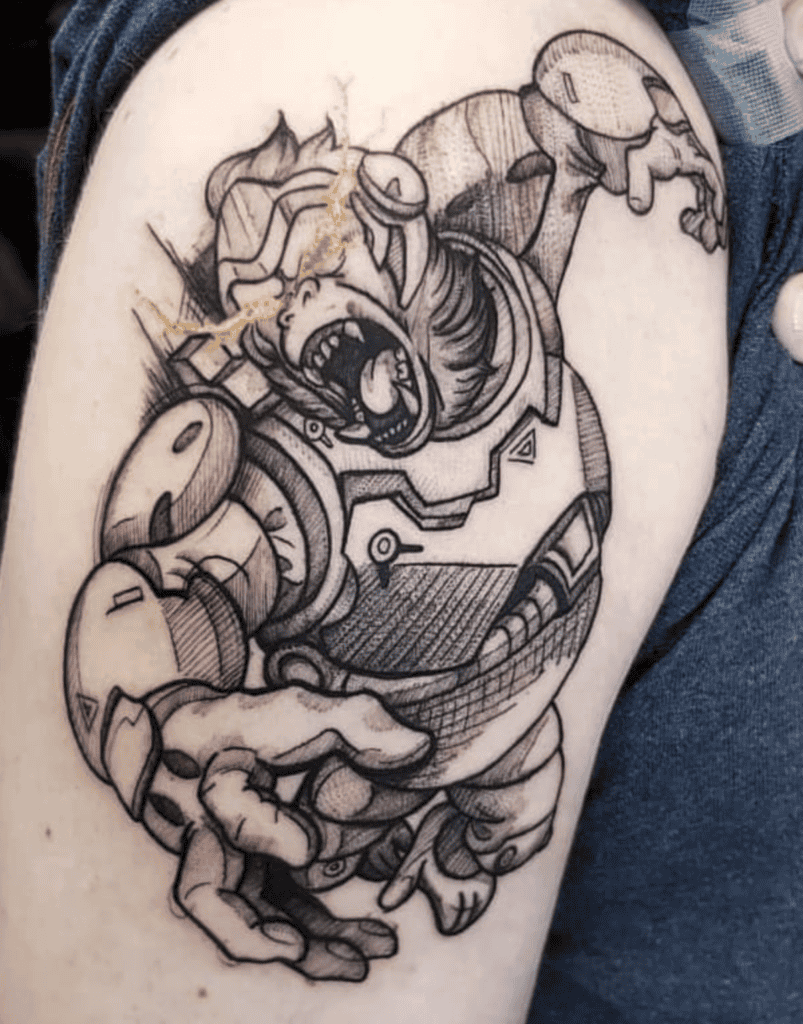
Winston is a playable hero in the game Overwatch. He is a genetically engineered gorilla scientist known for his intelligence, strength, and strong moral compass. Winston was raised on the Horizon Lunar Colony, where he was part of a scientific experiment designed to enhance intelligence. Under the guidance of a human scientist, he developed a love for science, learning, and exploration.
He is both a brilliant scientist and a capable fighter, using advanced technology such as his Tesla Cannon and jump pack to protect others. His equipment reflects his scientific background, blending intellect with combat ability.
Winston is driven by a desire to do good and uphold the ideals of Overwatch, believing in protecting humanity and working together for a better future. His character represents hope, progress, and responsibility.
Andross Monkey Tattoo
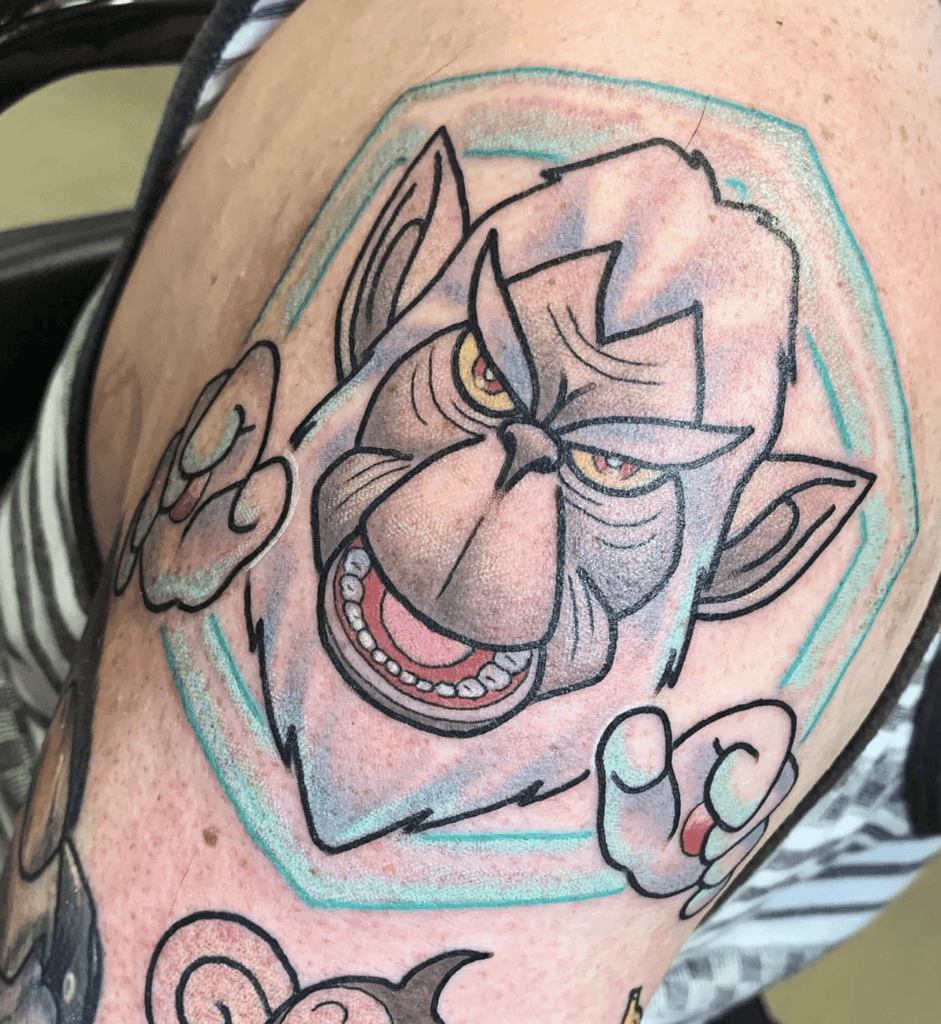
Andross is the primary villain of the Star Fox franchise. He is a brilliant but dangerous scientist whose ambition and experiments led him down a destructive path. Originally a respected researcher, Andross was exiled after his experiments became too hazardous. Driven by obsession and a desire for power, he transformed into a tyrannical figure seeking control over the Lylat System.
Andross is often depicted in a monstrous form, sometimes appearing as a giant floating head or a disembodied brain. He is highly intelligent and technologically advanced, using his scientific knowledge to create weapons, armies, and powerful defences. His plans are often grand in scale, aiming for domination and control.
Pipo Ape Tattoo
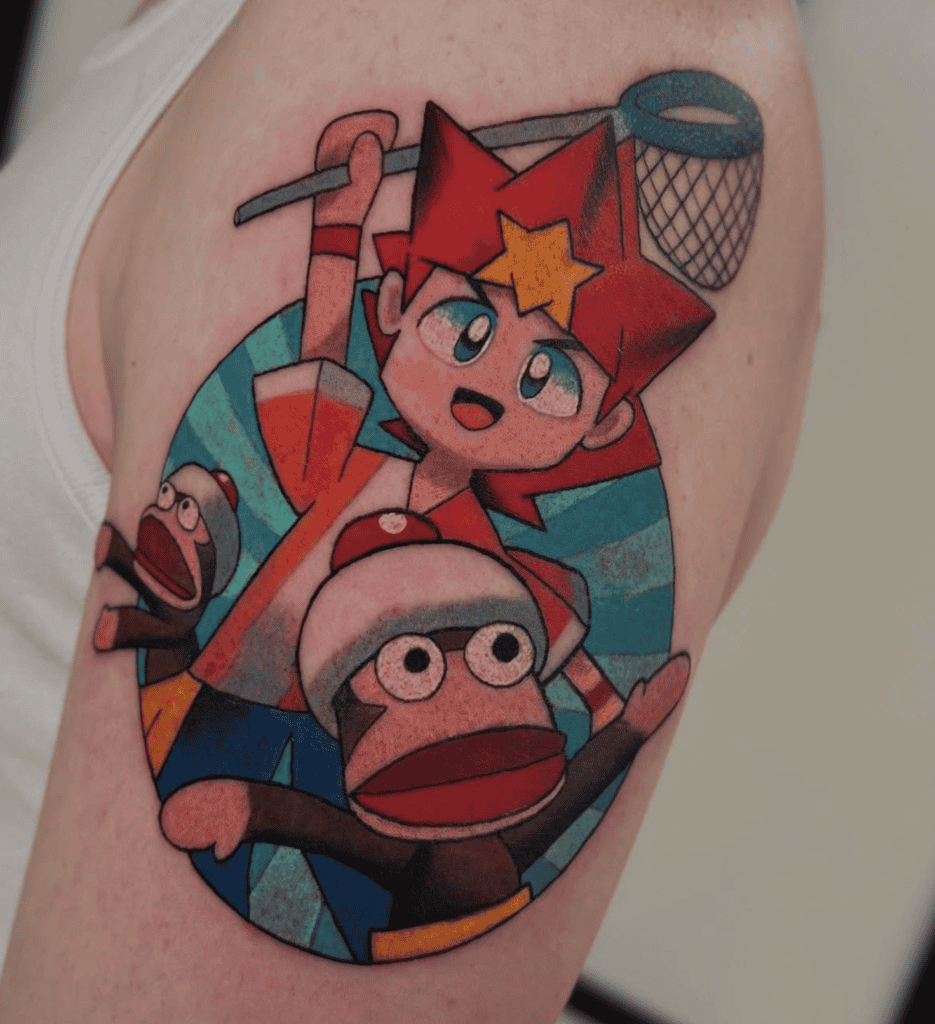
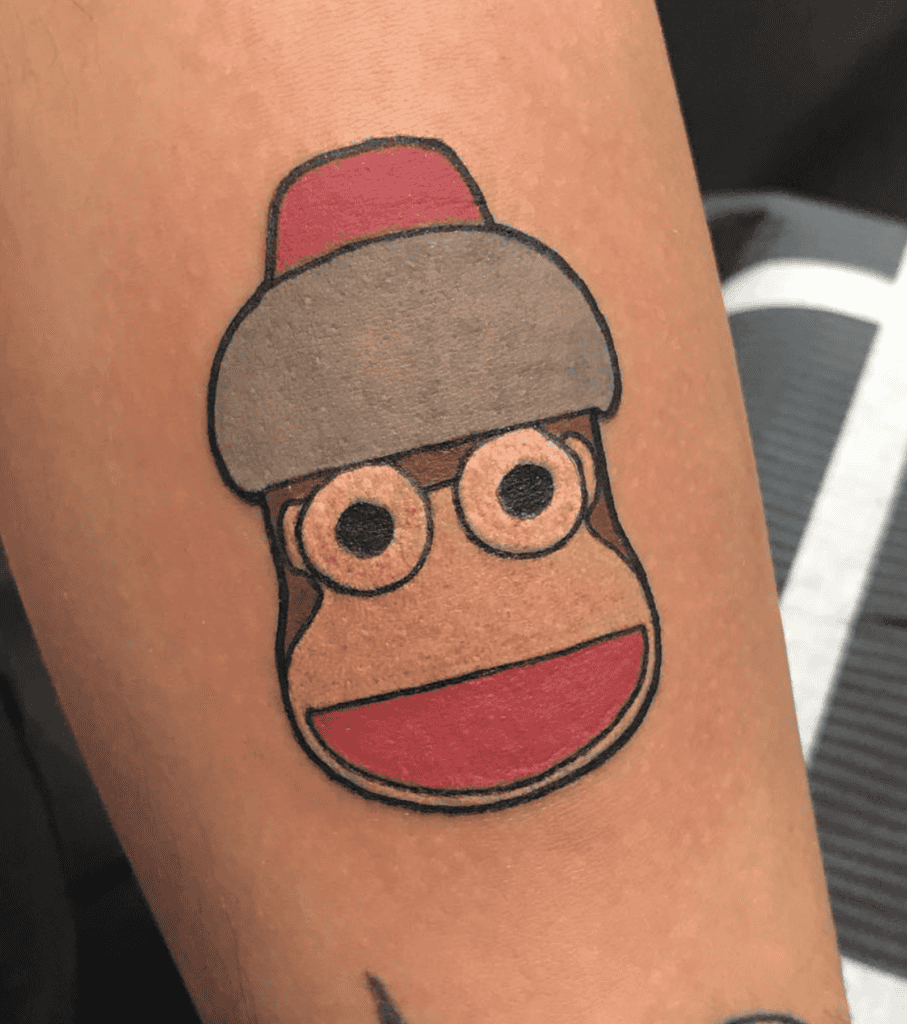
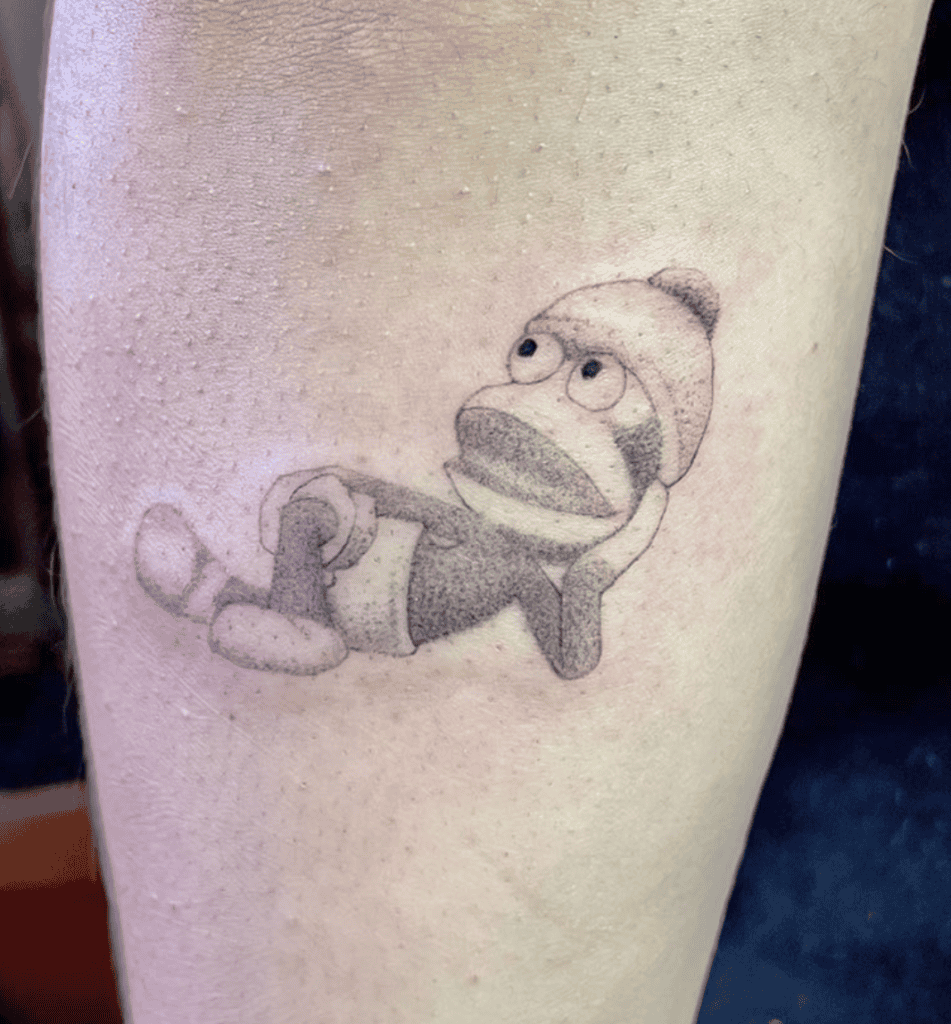
Pipo Monkeys are the mischievous primates from the Ape Escape franchise. These monkeys gain enhanced intelligence after wearing special helmets, leading them to rebel against humans and cause chaos across time and space.
Pipo Monkeys are known for their playful yet troublesome nature. Once given intelligence, they begin acting with purpose, using tools, gadgets, and teamwork to carry out their plans. Each monkey is unique, often wearing different outfits and possessing distinct personalities. Some are lazy, some are aggressive, and others are clever, adding variety and humour to the game.
Guardian Ape Tattoo
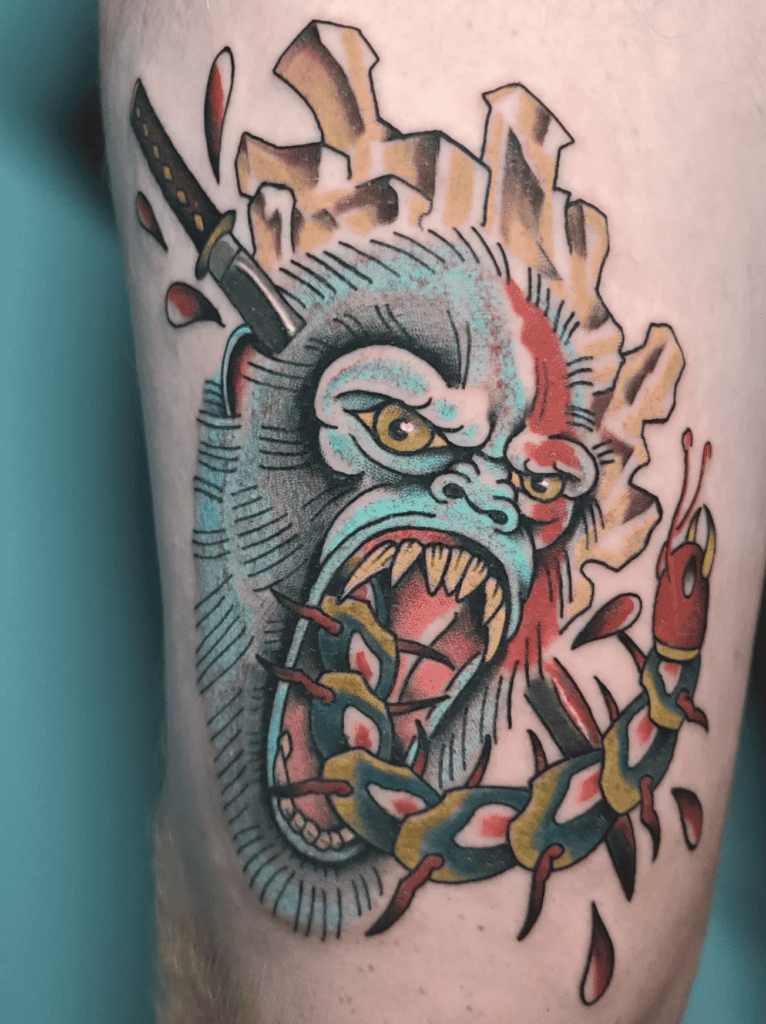
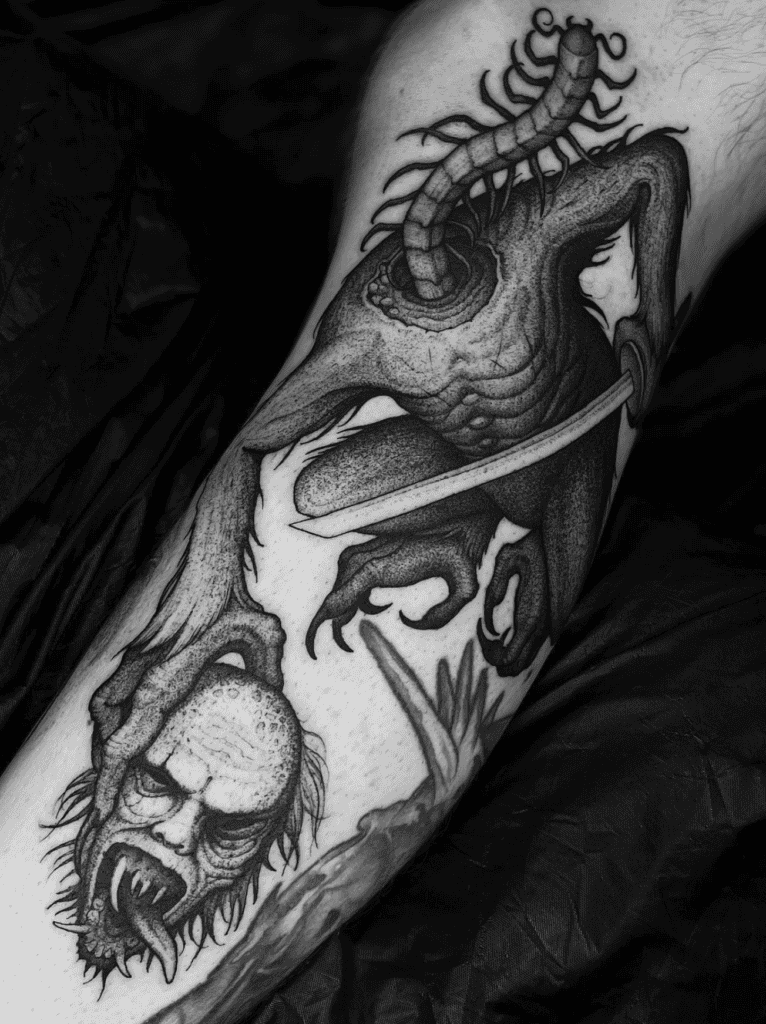
Guardian Ape is a major boss in Sekiro: Shadows Die Twice, known for its unpredictable combat style and shocking transformation. Initially appearing as a powerful but animalistic beast, relying on brute strength, speed, and erratic movements, its attacks are chaotic and difficult to predict, reflecting pure instinct and raw aggression.
What makes the Guardian Ape truly memorable is its second phase. After being defeated, it rises again as a headless creature, revealing a parasitic centipede controlling its body. In this form, it fights with unnatural movements and even wields a sword, creating a stark contrast to its earlier behaviour. This transformation shifts the fight from primal chaos to something more unsettling and unnatural. It represents the idea of corruption, where life continues beyond death through an external force.
Super Monkey Ball Monkey Tattoo
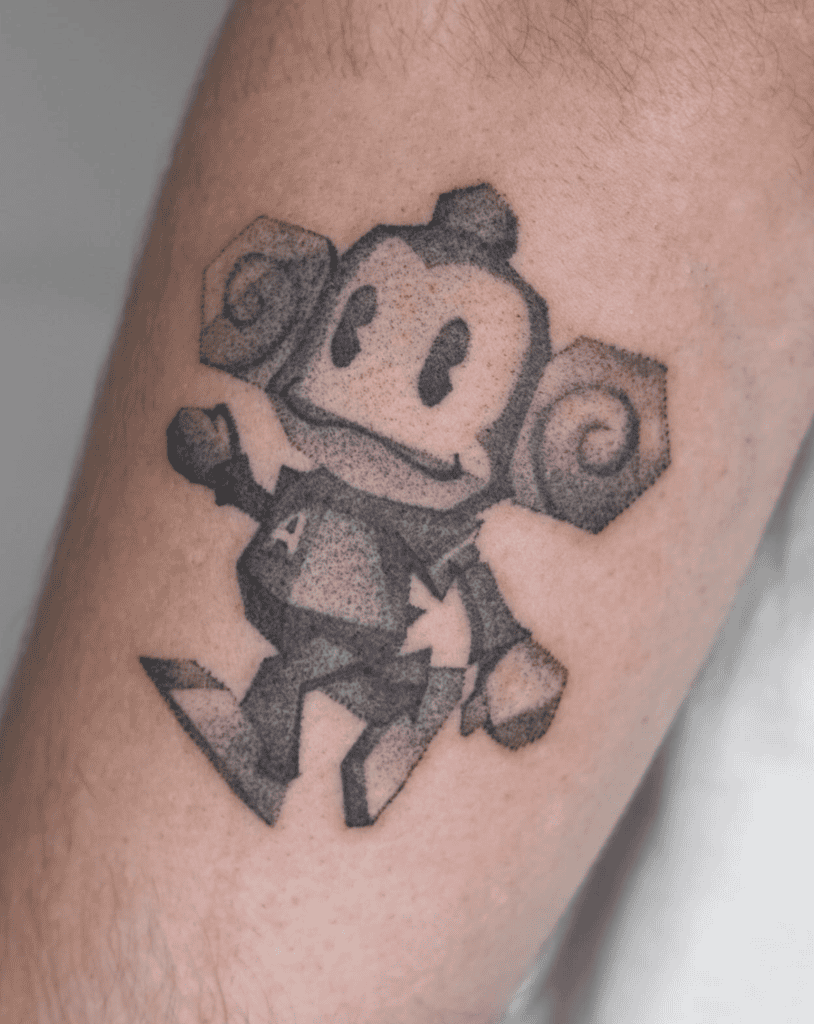
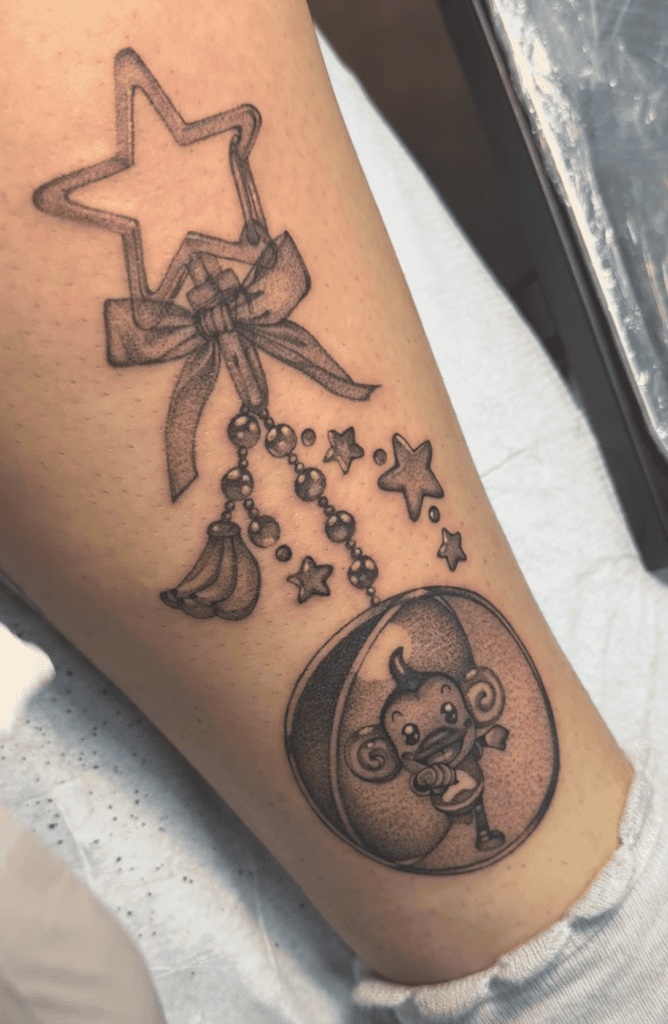
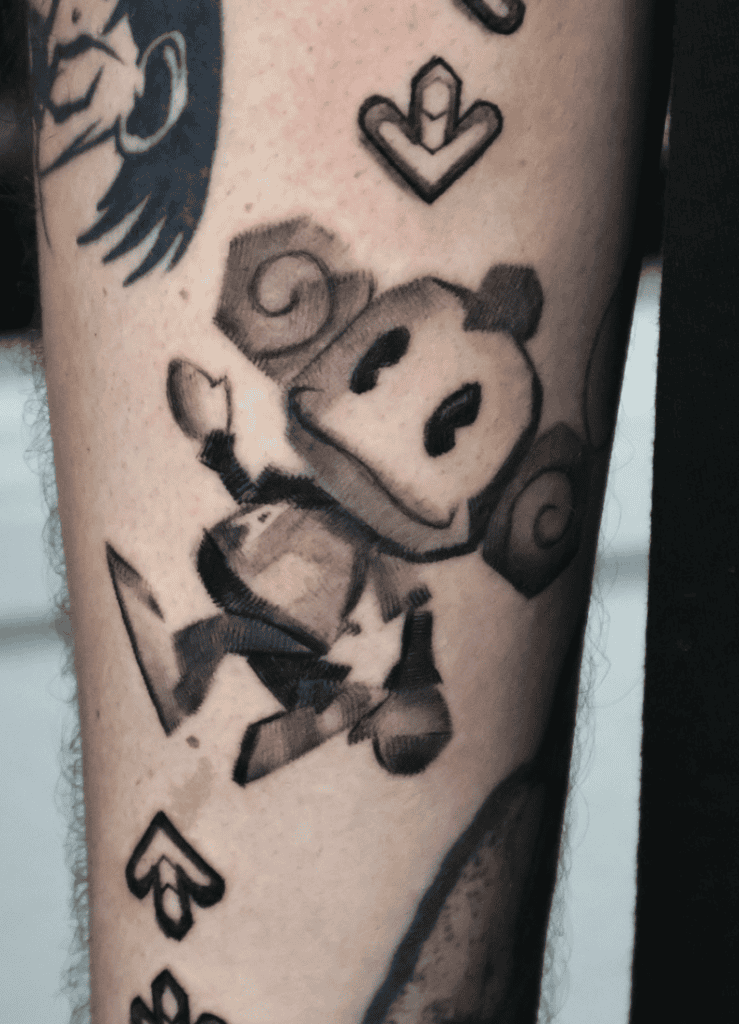
Super Monkey Ball is a fast-paced puzzle-platform game series developed by Sega. The games feature monkeys inside transparent balls, rolling through obstacle-filled stages to reach a goal while collecting bananas along the way.
The most recognisable character is AiAi**, a cheerful and energetic monkey who leads the group. Alongside him are friends like MeeMee, GonGon, and Baby, each with their own personality and style. The gameplay is simple but challenging. Players tilt the stage rather than directly controlling the monkey, requiring precision, balance, and timing to navigate narrow paths, slopes, and moving platforms.
Donkey Kong Ape Tattoo
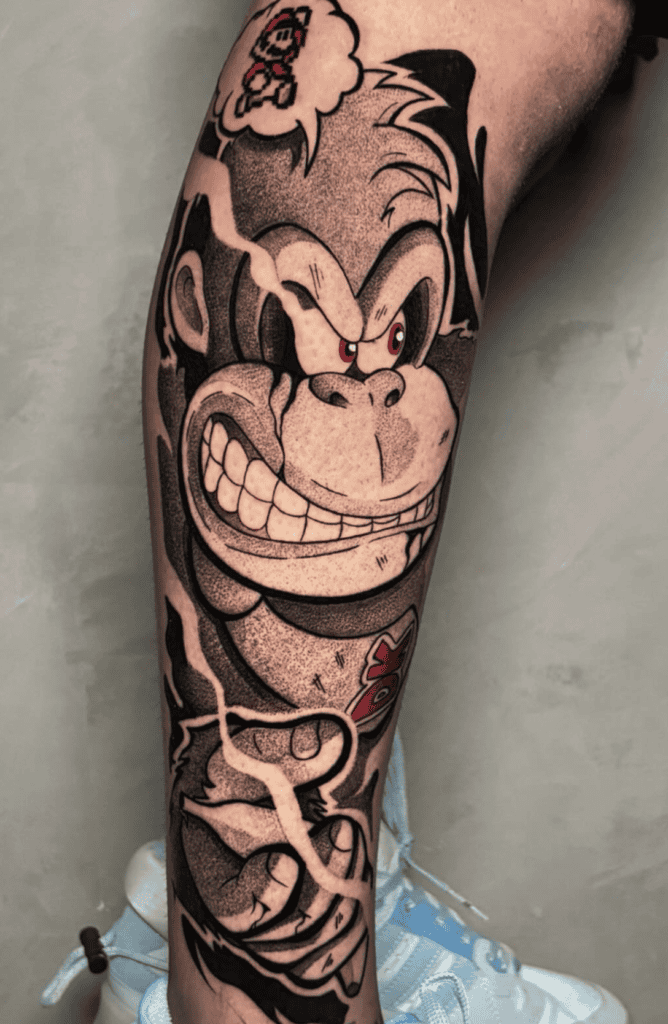
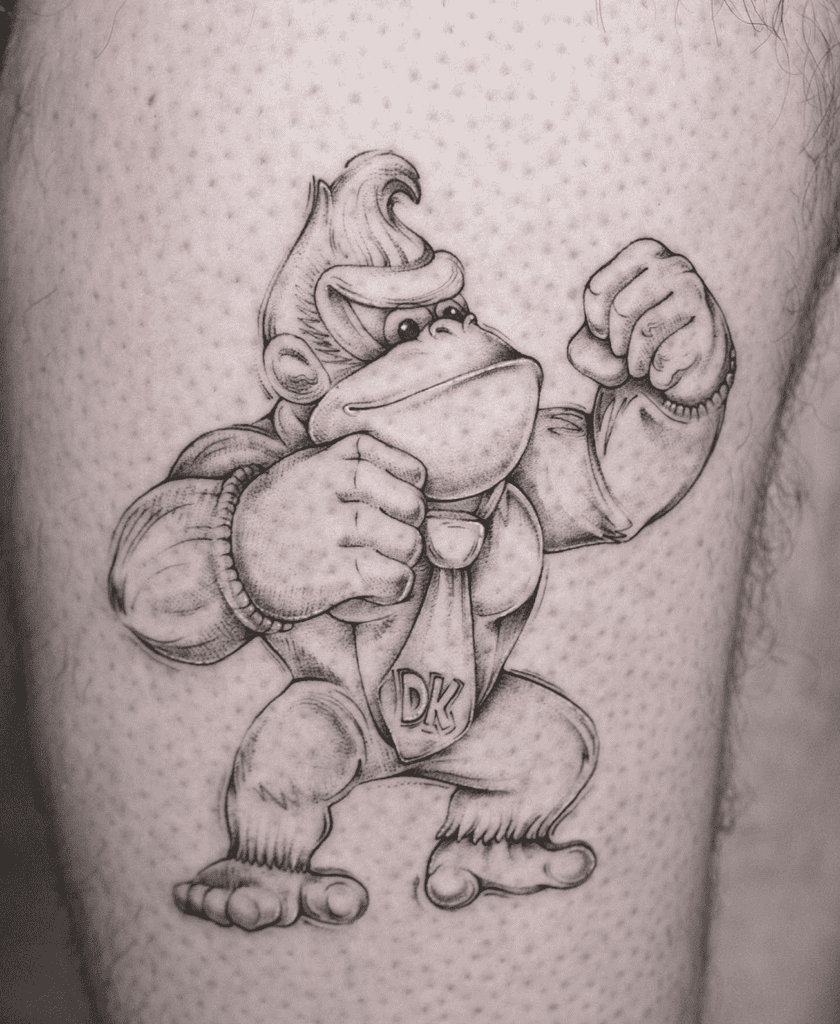
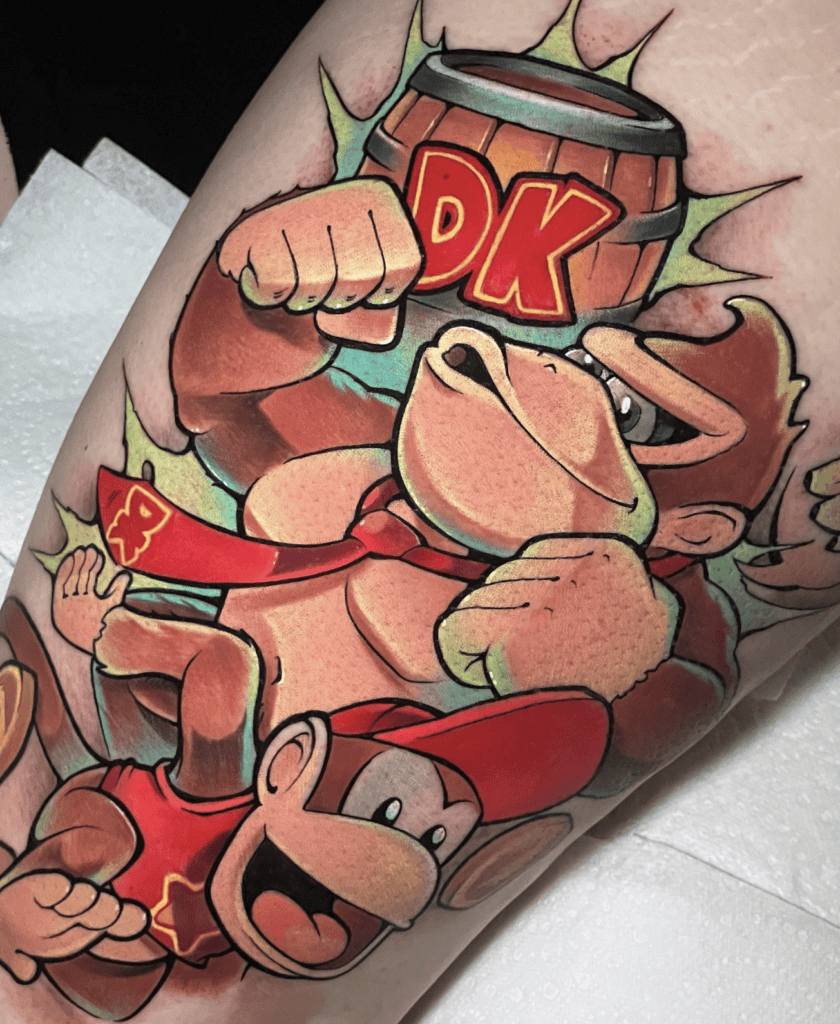
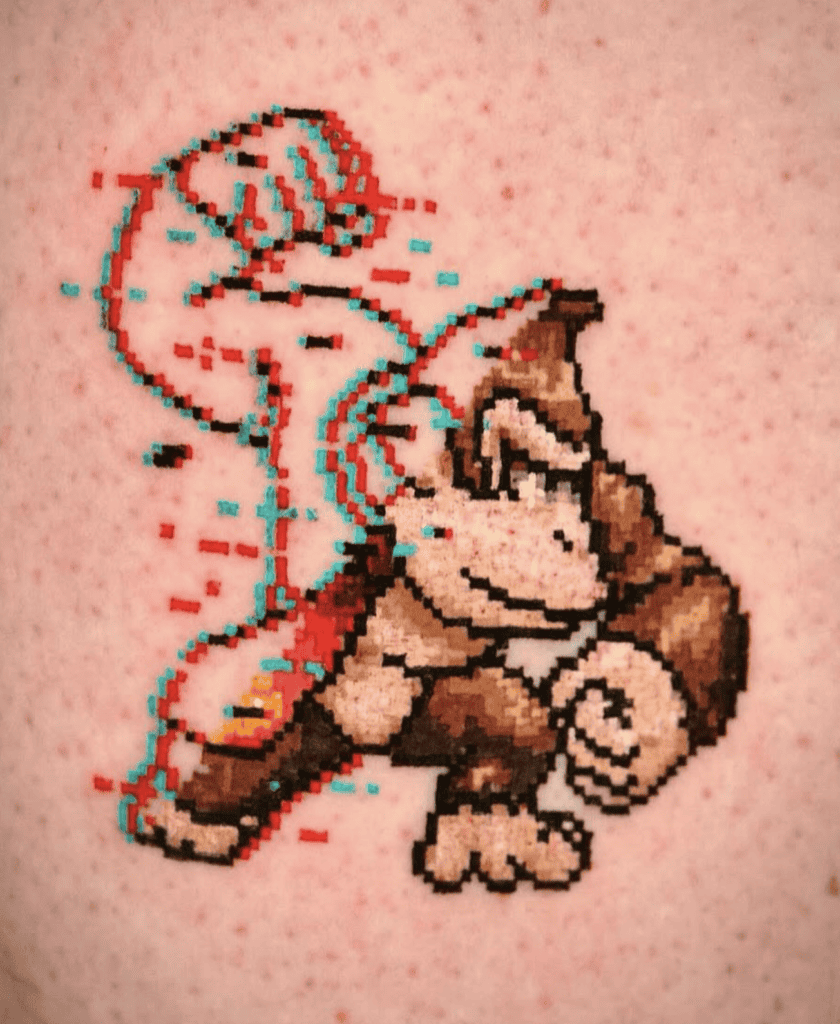
Donkey Kong is one of the most iconic characters in gaming, first appearing in the arcade game Donkey Kong. He is a powerful and energetic gorilla who has evolved from an early video game antagonist into a heroic and much-loved protagonist.
Donkey Kong is known for his immense strength, agility, and love of bananas. He lives in a jungle environment, often protecting his home and his banana hoard from various threats.cOriginally introduced as a villain who threw barrels at Mario, Donkey Kong’s character has changed over time. In later games, especially the Donkey Kong Country series, he becomes the hero, working alongside friends like Diddy Kong to defend his island.
He is strong but also playful and expressive, often showing humour and personality through his animations and interactions. His signature red tie with “DK” has become one of the most recognisable symbols in gaming.
Conclusion
Thanks for swinging by on this cheeky little journey through the wild world of Monkey Tattoo Designs. We hope you’ve found something worth hanging onto for your next piece of ink. But if you’re still not done monkeying around, why not check out these Mythology Tattoo Designs, these Star Wars Tattoo Ideas, or these Warhammer Tattoos.
- Ape and Monkey Tattoo Ideas - April 6, 2026
- Pokémon Tattoo Ideas - March 30, 2026
- Norse Mythology Tattoo Ideas - March 23, 2026


