

Mythological Tattoo Ideas

Do you feel like you’re lost in time on your search for the perfect Tattoo Clue? Well, worry not, let’s take a journey through some of the most influential times of human history to bring you the best Mythology Tattoos the world has ever seen.
Whay is mythology
Mythology is a collection of traditional stories that a culture uses to explain the world, human nature, and life’s biggest questions—such as where we come from, why nature behaves the way it does, what happens after death, and how people should live.
Mythologies often include gods, spirits, heroes, monsters, and ancestral beings, but they aren’t just fantasy. For the cultures that created them, these stories were truthful frameworks that shaped law, morality, rituals, identity, and daily life.
Mythology serves three main purposes:
- explain natural phenomena and the origins of the world
- teach values and behaviour through symbolic stories
- connect people to their ancestors, land, and community
Unlike modern science or history, mythology communicates meaning through symbol, metaphor, and narrative rather than facts. Some mythologies became organised religions, others survived as folklore, and many still live on today as active belief systems.
Best Mythology Tattoo Ideas
Now that we know a little about Mythology, let’s take a look at some of the best Mythology Tattoo Designs the internet has to offer.
Egyptian Mythology Tattoo
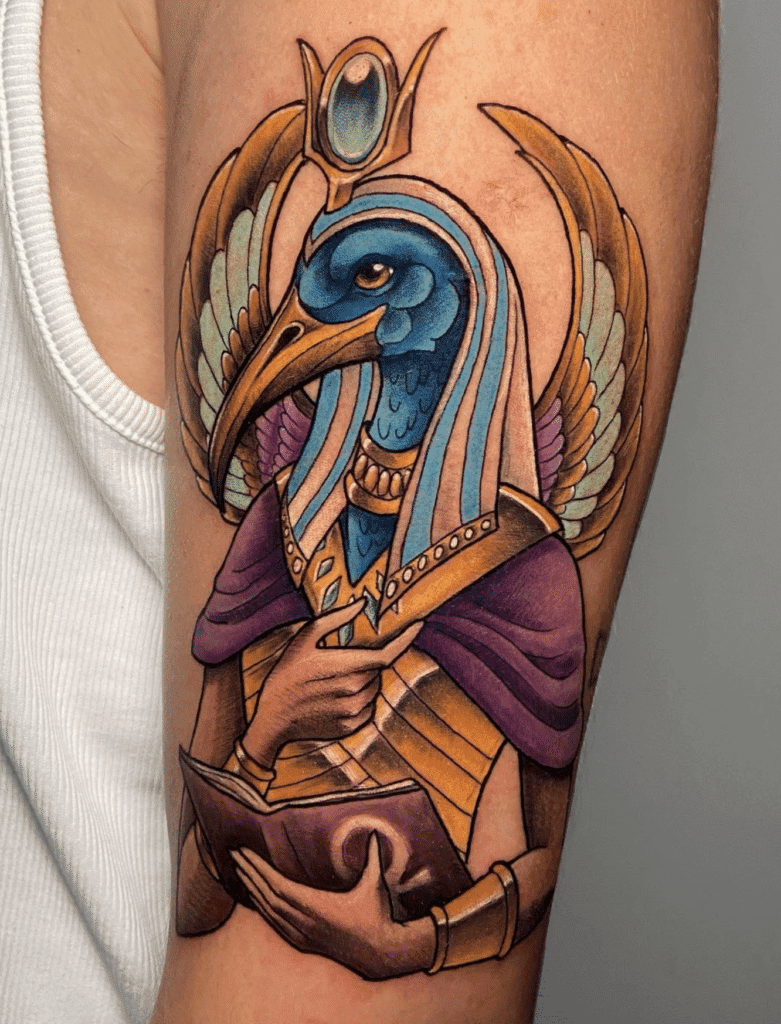
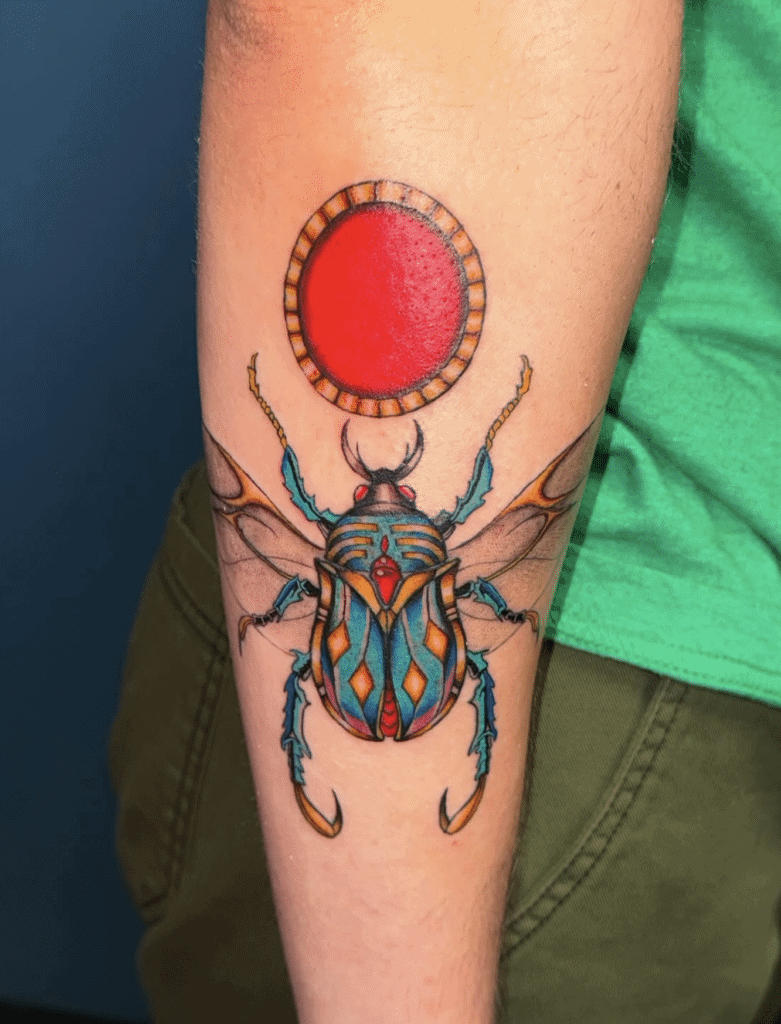
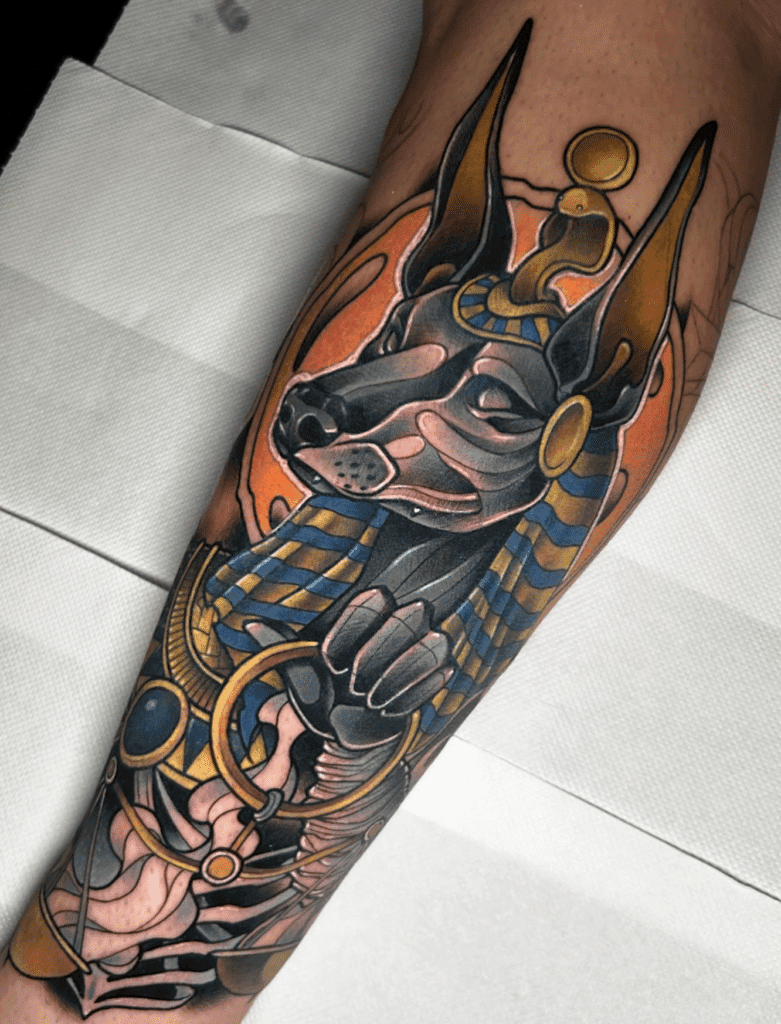
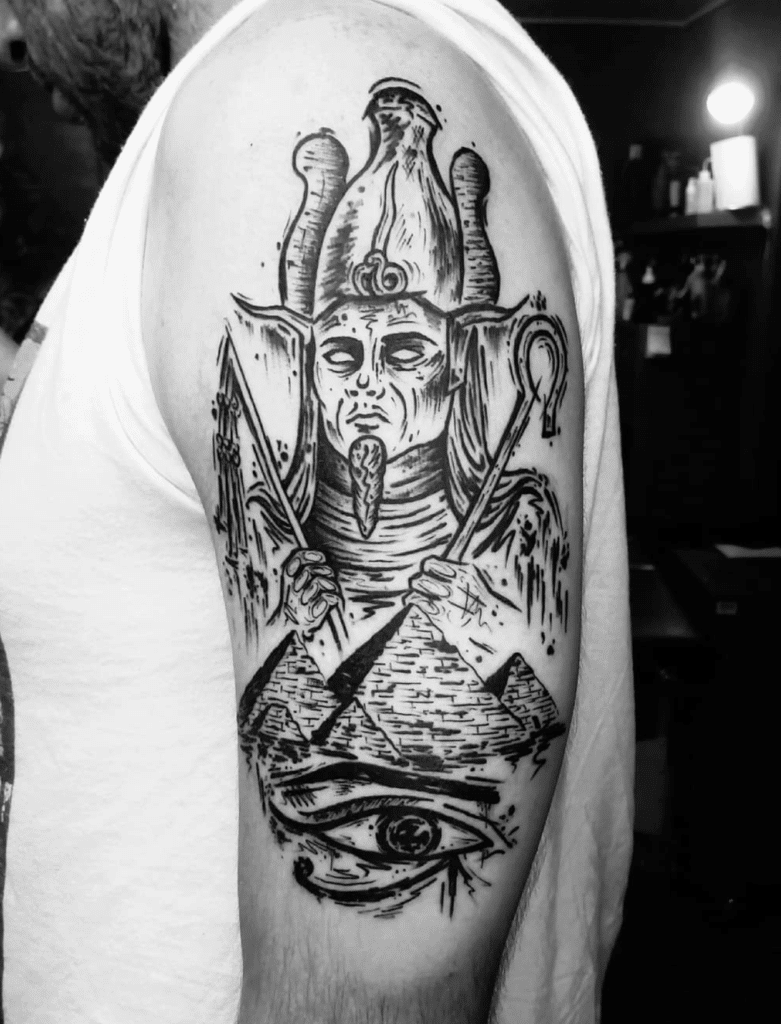
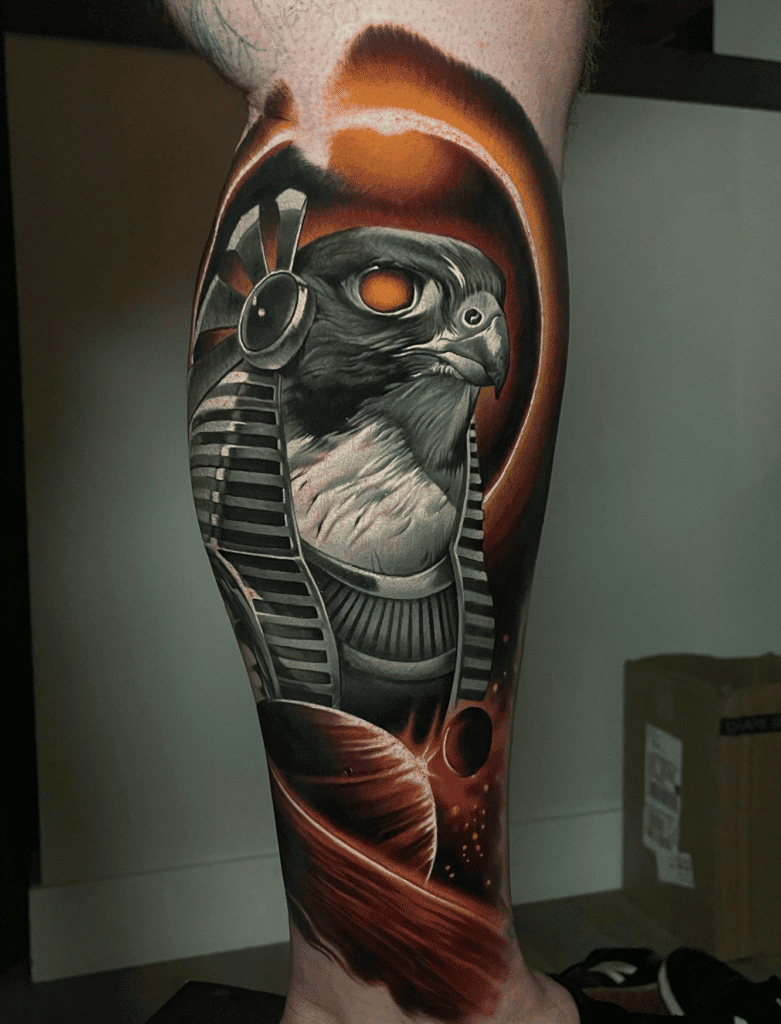
Egyptian mythology comes from Ancient Egypt, centred along the Nile River in North Africa. The river’s predictable flooding shaped both agriculture and religious belief. Egyptian mythology likely began around 3000 BCE, with roots likely earlier, emerging from prehistoric animist beliefs tied to the land and animals.
Egyptian Mythology gradually declined during 300–600 CE due to Greek and Roman rule blending Egyptian gods with their foreign ones, Christianity spreading through Egypt, replacing temple worship, and pagan temples closing under Roman Christian emperors. Rather than collapsing, Egyptian mythology was absorbed and suppressed.
At its core, Egyptian mythology was about order vs chaos, life after death, and cosmic balance.
Norse Mythology Tattoo
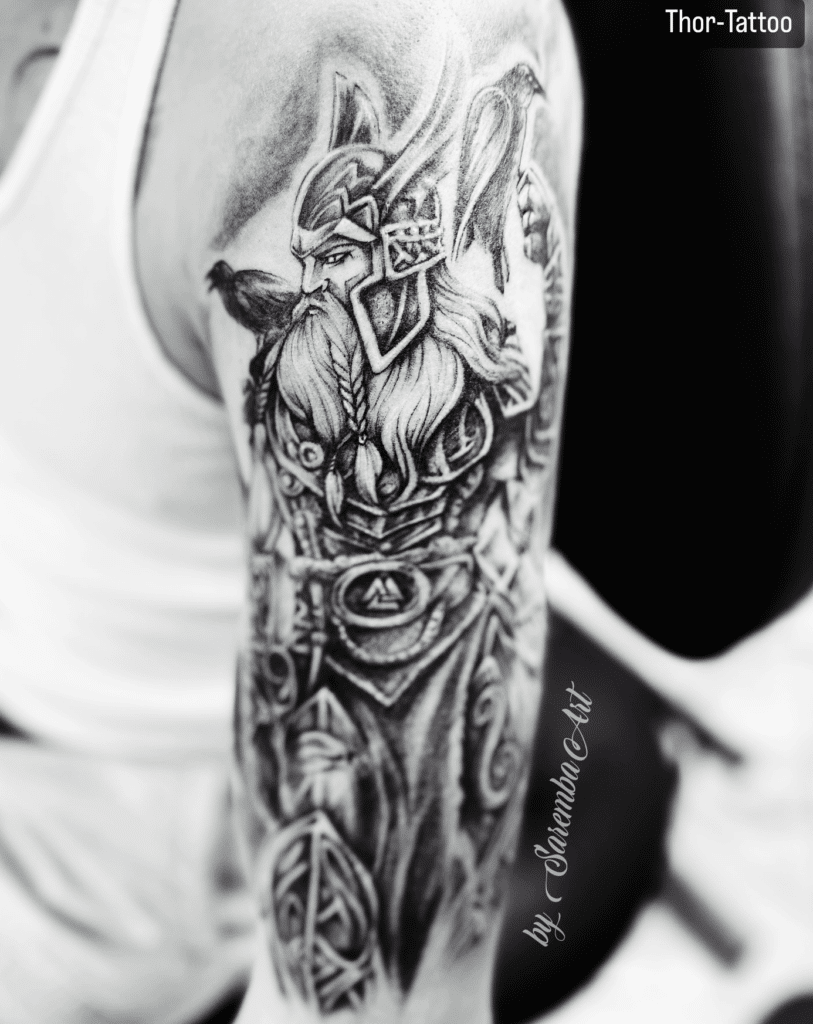
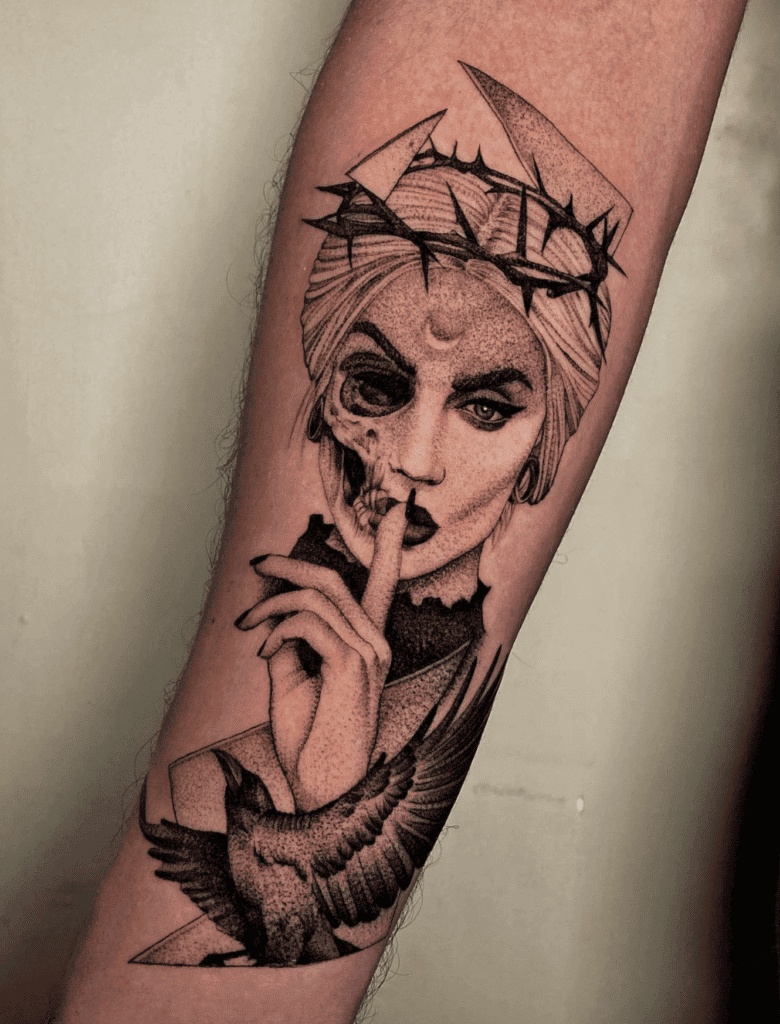
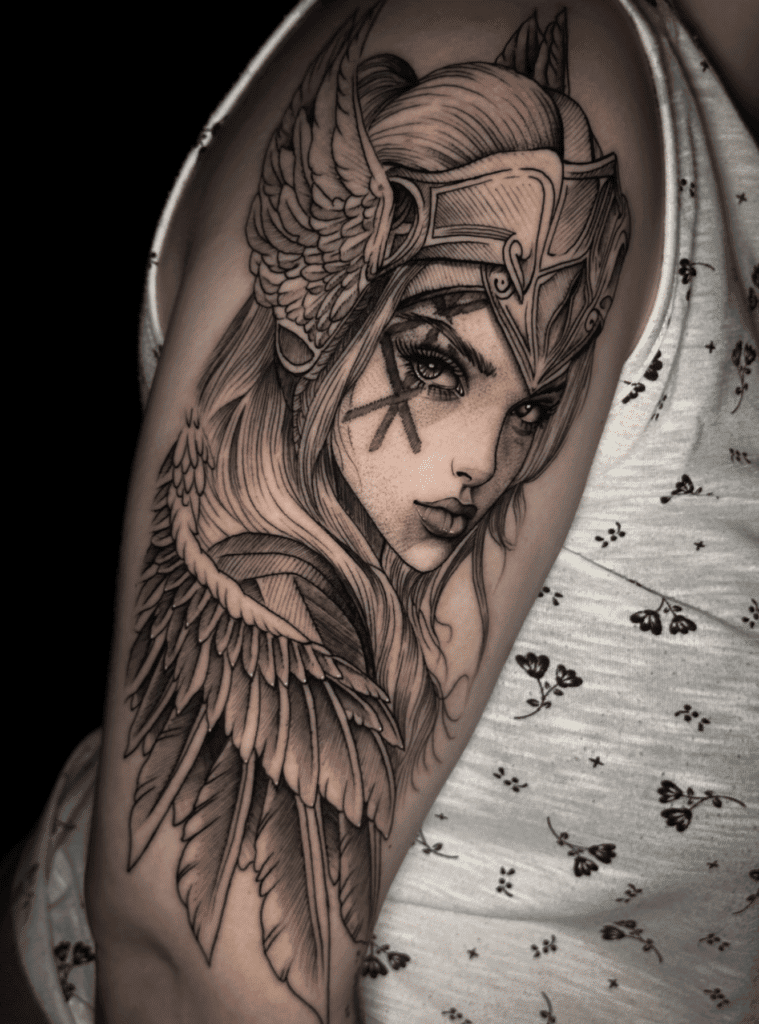
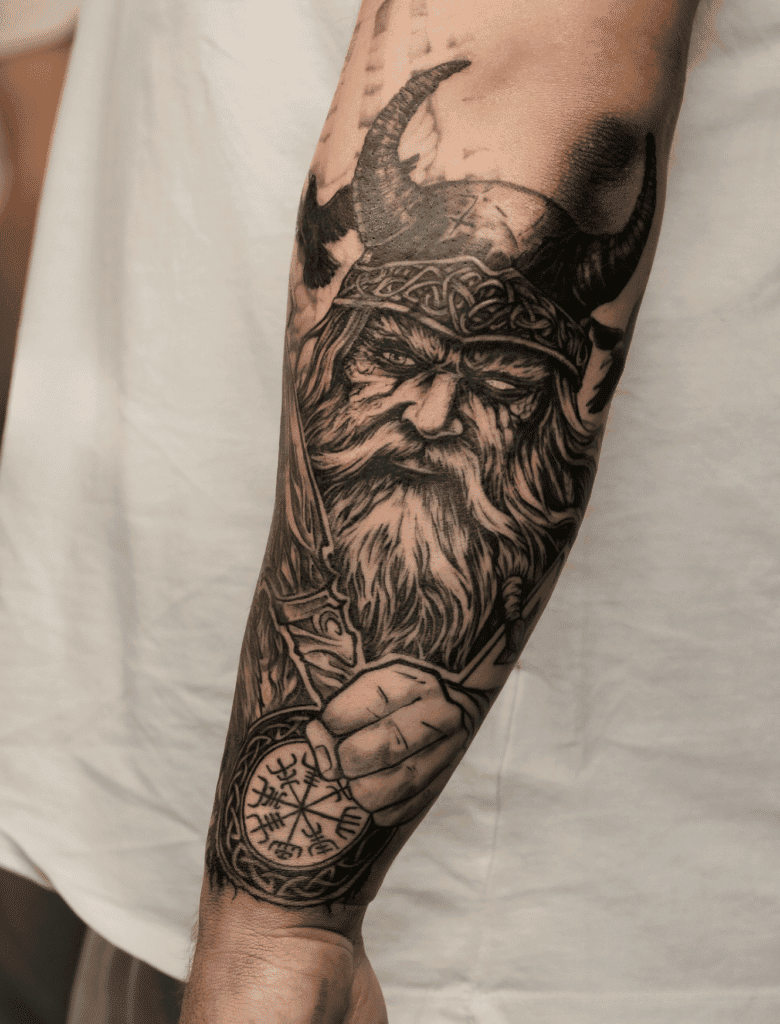
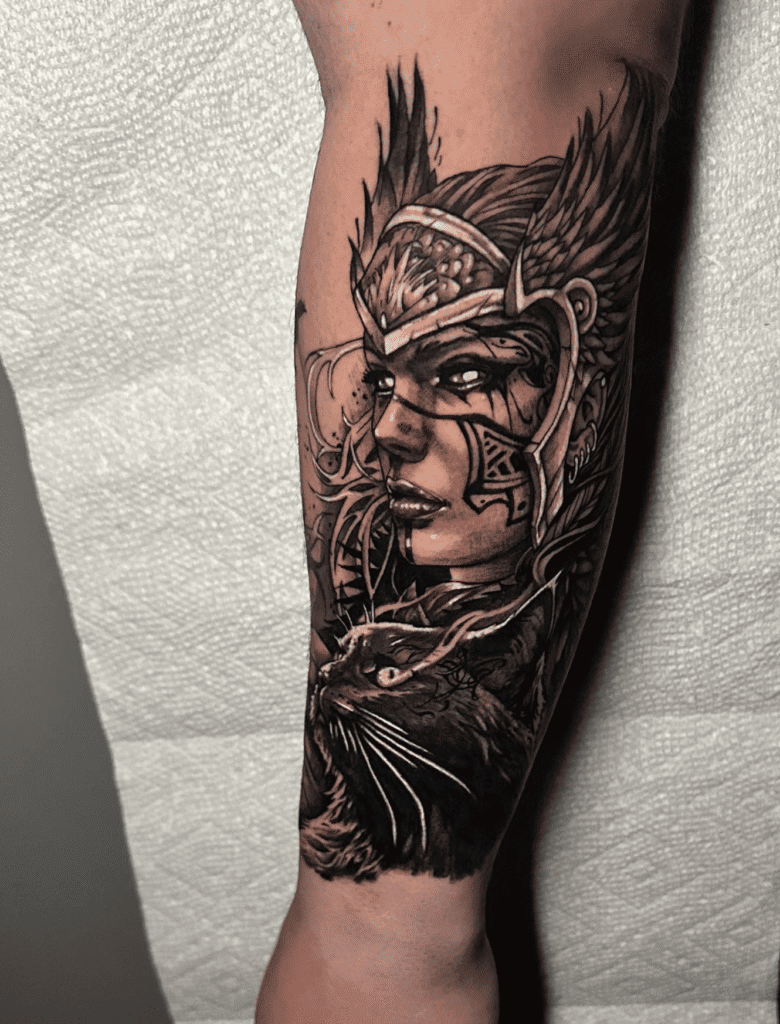
Norse mythology comes from Scandinavia—modern-day Norway, Sweden, Denmark, and Iceland, with influence across parts of Northern Europe. It developed in a harsh landscape of mountains, forests, long winters, and unpredictable seas, which strongly shaped its themes of survival, strength, and fate.
Norse mythology likely began forming around 1500–500 BCE, rooted in earlier Germanic and Indo-European beliefs, and was passed down orally through poems, songs, and sagas rather than written texts. Because it relied on oral tradition, the myths evolved constantly, changing from region to region.
Norse mythology gradually declined between 900–1200 CE, primarily due to the Christianisation of Scandinavia. As Viking societies converted to Christianity, pagan worship was discouraged or outlawed. Many myths survived only because Christian scribes later recorded them—often reshaping or softening the stories in the process. Rather than disappearing completely, Norse mythology was preserved in fragments, especially in Icelandic sagas and poems.
At its core, Norse mythology is about fate, impermanence, honour, and inevitable destruction. Unlike many myth systems, the gods are not immortal or all-powerful—they know the world will end at Ragnarök, yet continue to fight, love, and rule anyway. Life is harsh, death is certain, and meaning comes from how one faces destiny, not from escaping it.
Celtic Mythology Tattoo
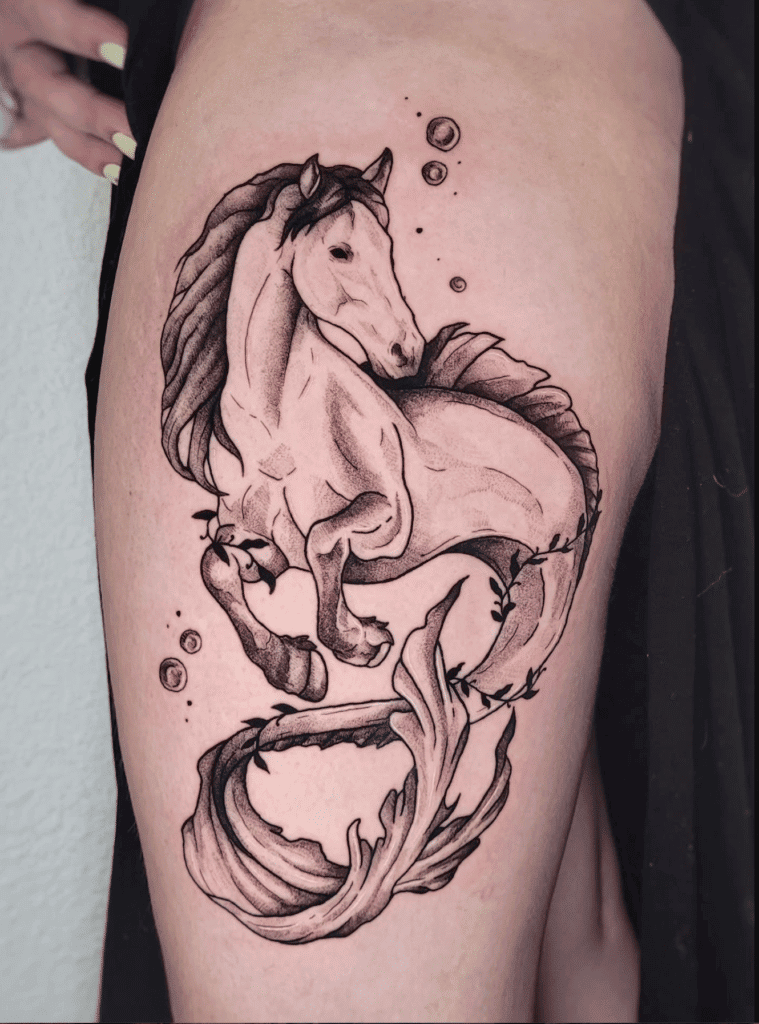
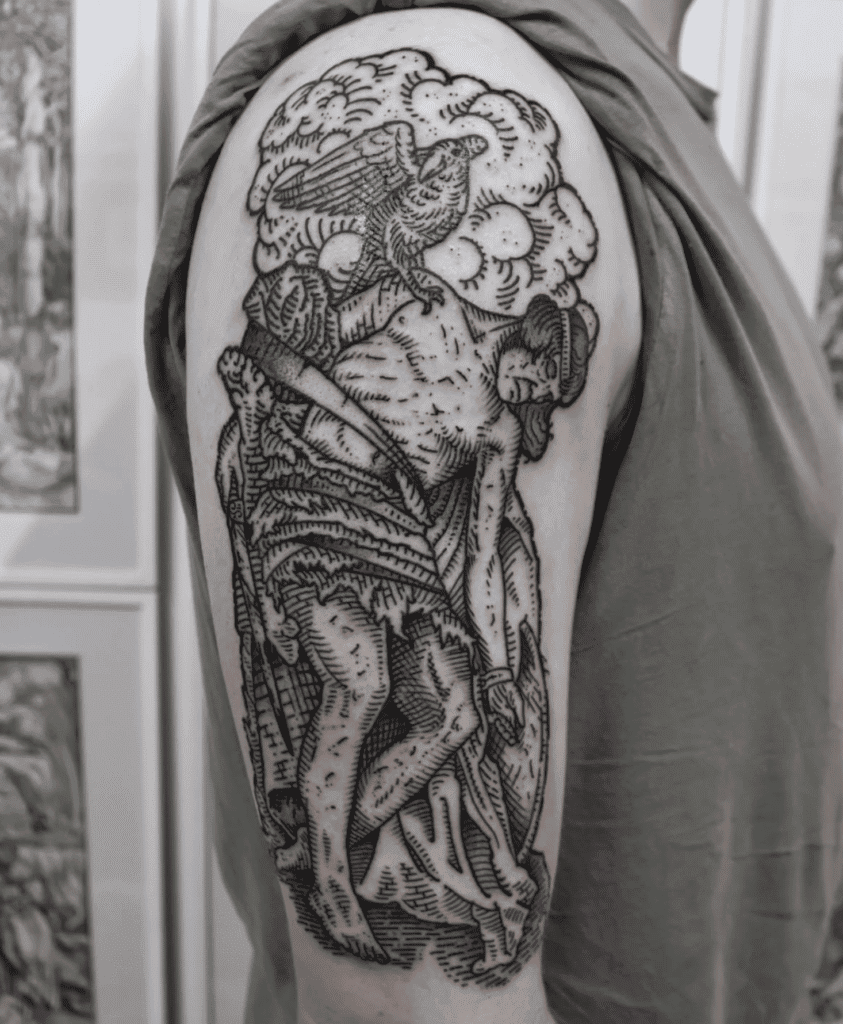
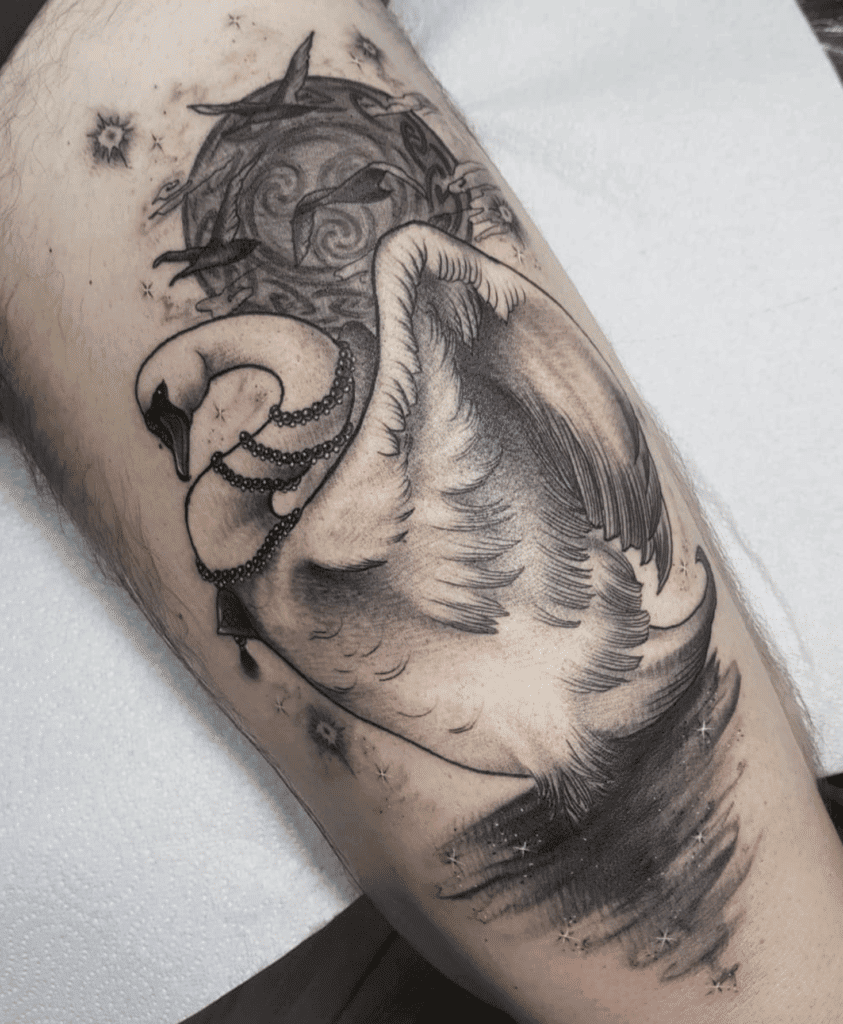
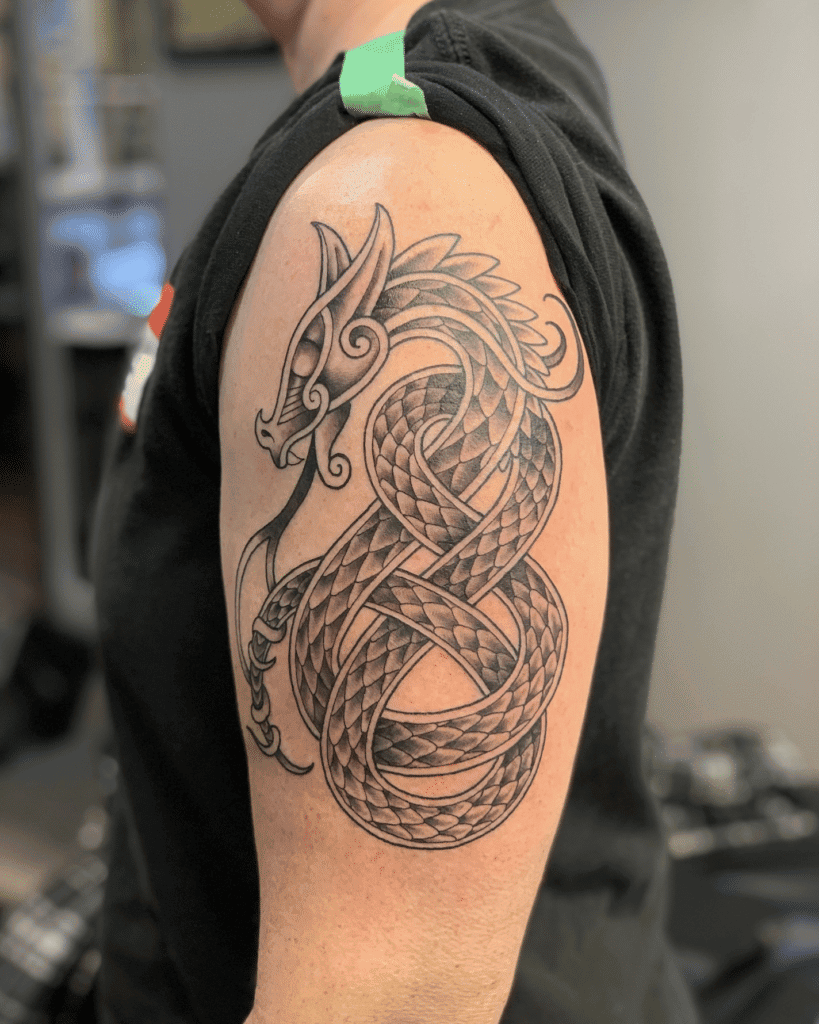
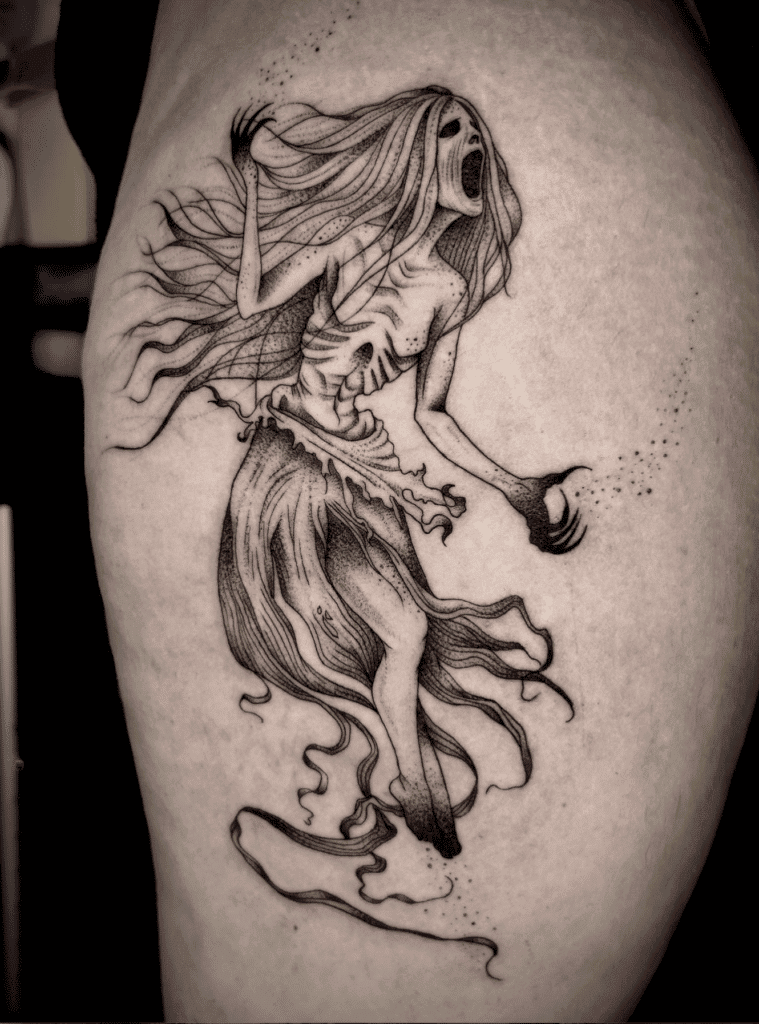
Celtic mythology comes from the ancient Celtic peoples of Europe, primarily across Ireland, Scotland, Wales, Brittany, and parts of Gaul and Iberia. It developed in a landscape of rolling hills, forests, rivers, and coastlines, where nature was alive with spirits and the boundary between worlds felt thin.
Celtic mythology likely began forming around 1200–500 BCE, evolving from earlier Indo-European traditions and local animist beliefs. Unlike mythologies centred on empires, Celtic belief systems were regional and tribal, meaning gods and stories often changed from place to place while sharing common themes.
Celtic mythology began to decline between 400–900 CE as Roman influence, and later Christianisation spread across Celtic lands. In Ireland and parts of Britain, Christian monks preserved many myths by writing them down, though often reframing pagan gods as heroes, kings, or supernatural beings rather than deities. Because of this, Celtic mythology was transformed rather than erased.
At its core, Celtic mythology is about cycles, transformation, and the closeness of the Otherworld. Life and death are not opposites but parts of a continuous flow. Heroes may return from death, gods walk among humans, and time behaves differently beyond the mortal world. Nature is sacred, fate is fluid, and magic exists in places, seasons, and spoken words rather than in rigid cosmic laws.
African Mythology Tattoo
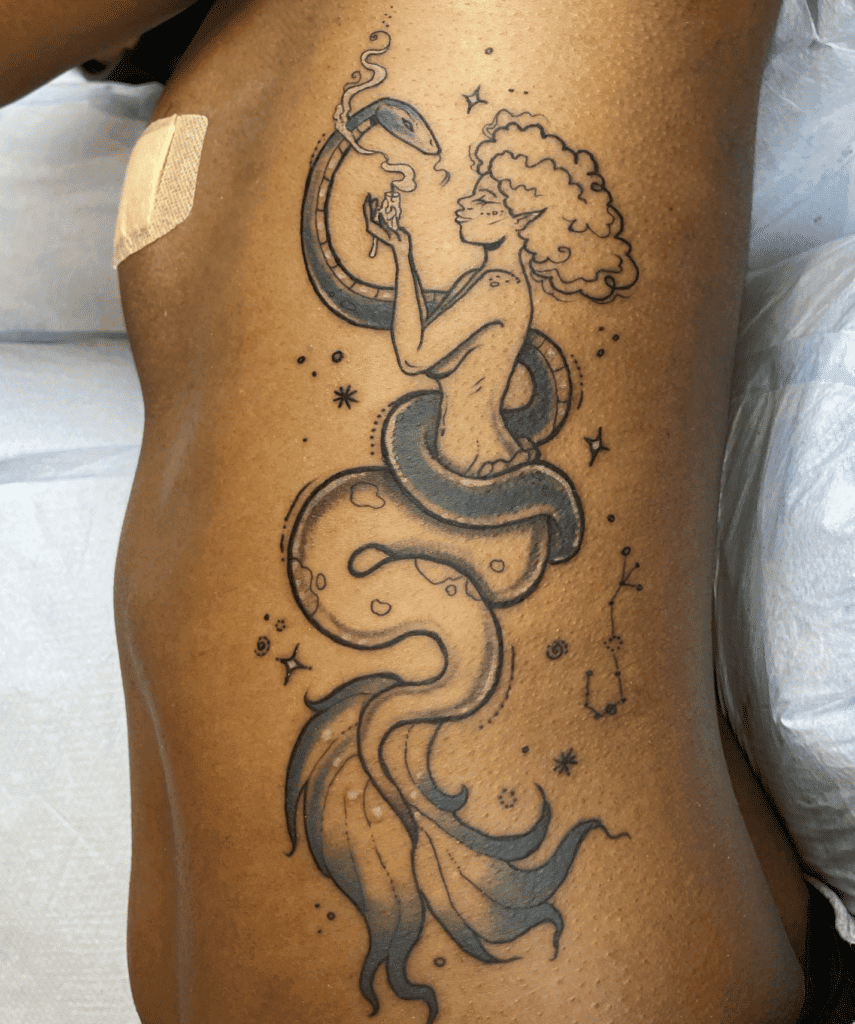
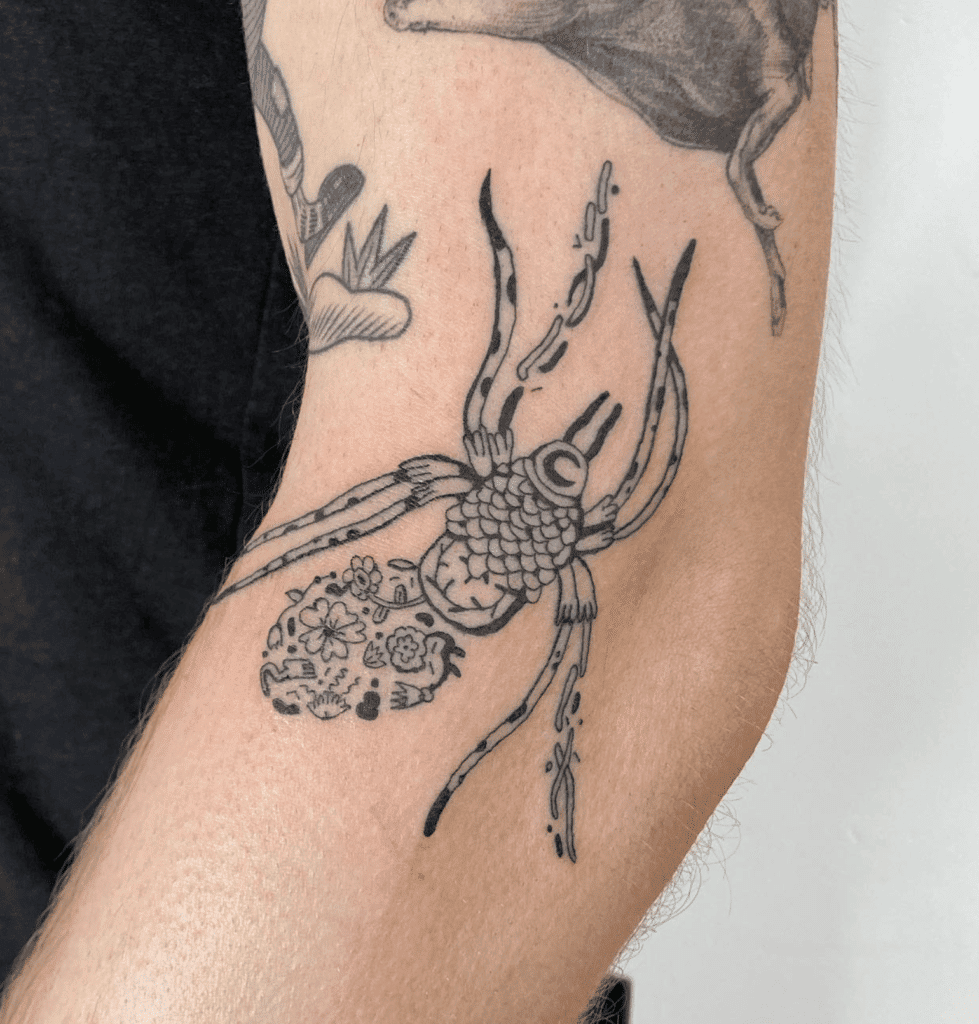
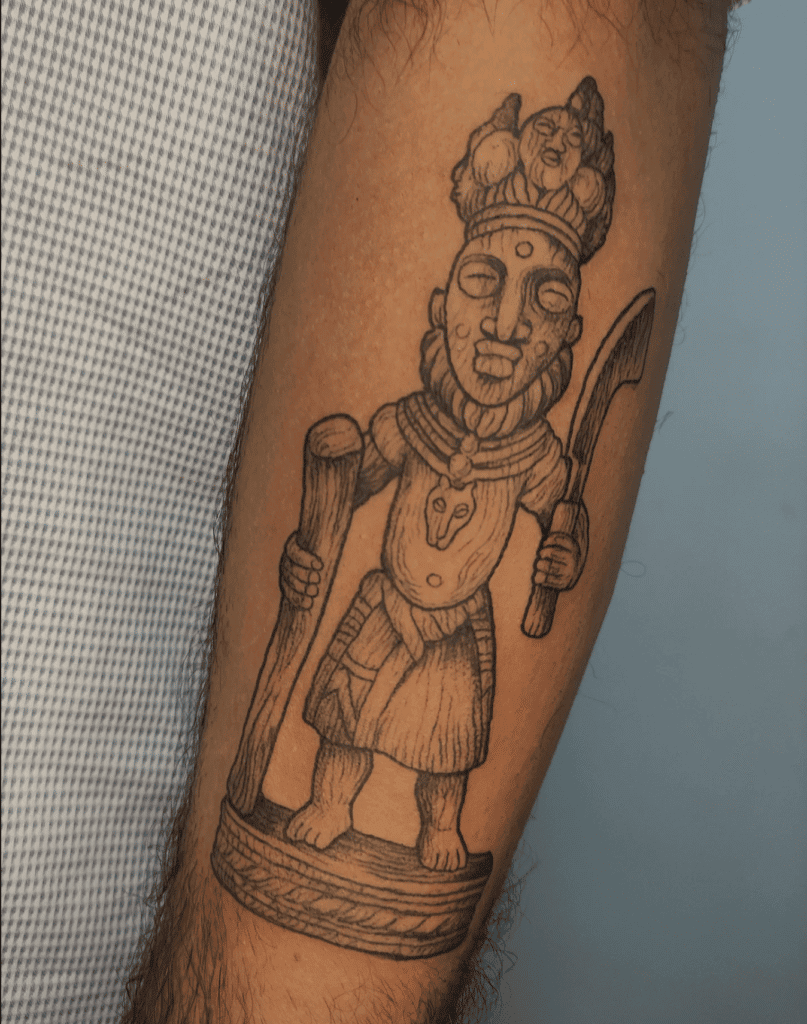
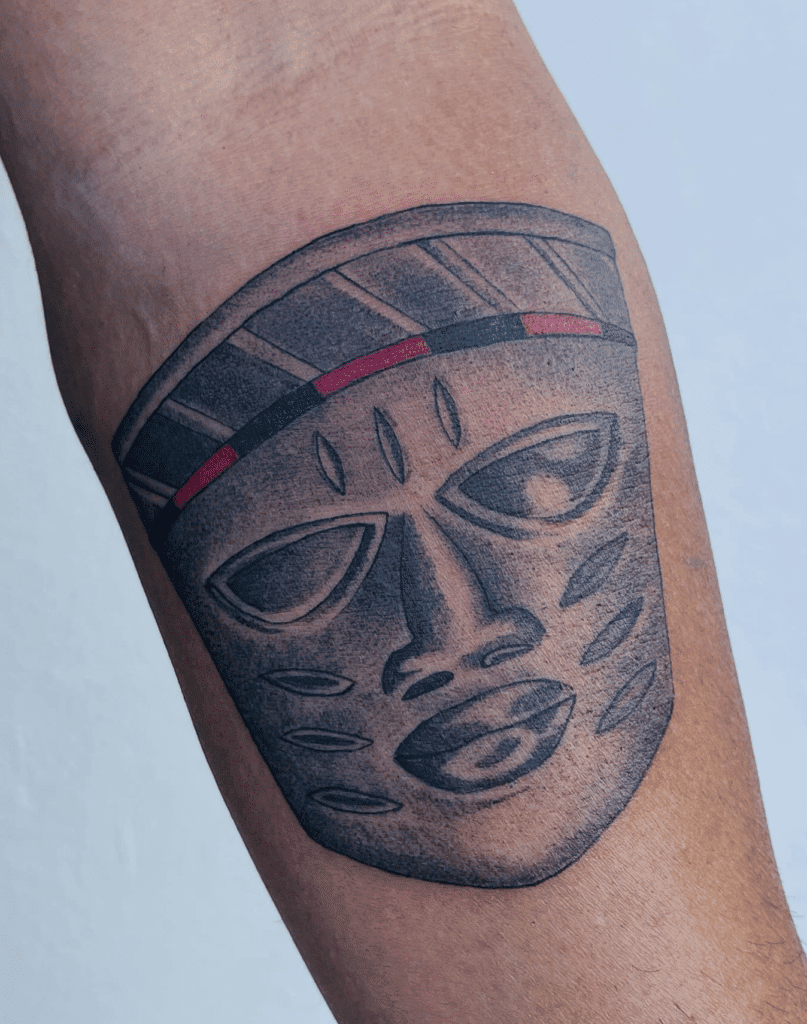
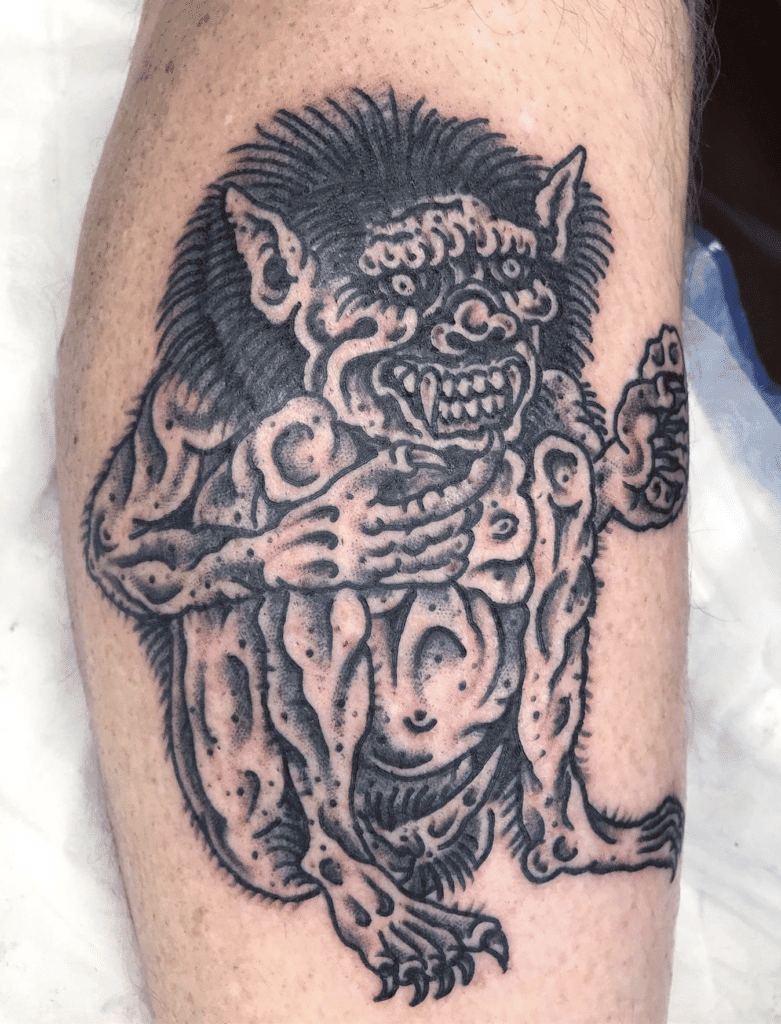
African mythology comes from the many cultures of sub-Saharan Africa, including West, Central, East, and Southern Africa. Unlike mythologies tied to a single civilisation, African mythology is highly diverse, shaped by thousands of ethnic groups, languages, and landscapes—savannahs, jungles, rivers, deserts, and coasts. Nature, ancestors, and community life are central to belief.
African mythologies began forming deep in prehistory, long before written records—likely over 10,000 years ago—emerging from animist traditions that viewed animals, land, and natural forces as living and spiritual. These beliefs evolved organically through oral storytelling, rituals, music, and ceremony rather than fixed texts.
Rather than having a clear “end,” African mythology changed and adapted between 1500–1900 CE due to Islamic expansion, European colonisation, and Christian missionary influence. Many traditional belief systems were suppressed or blended with new religions, but unlike many ancient mythologies, African mythology was never fully abandoned. It survived through folklore, spiritual practice, and syncretic religions such as Vodun, Santería, and Candomblé.
At its core, African mythology is about balance, community, ancestry, and the living spirit of the world. The universe is not ruled by distant gods alone—spirits inhabit everything, and ancestors actively guide the living. Good and evil are rarely absolute; instead, harmony is maintained through respect, ritual, and moral behaviour within the community.
Mayan Mythology Tattoo
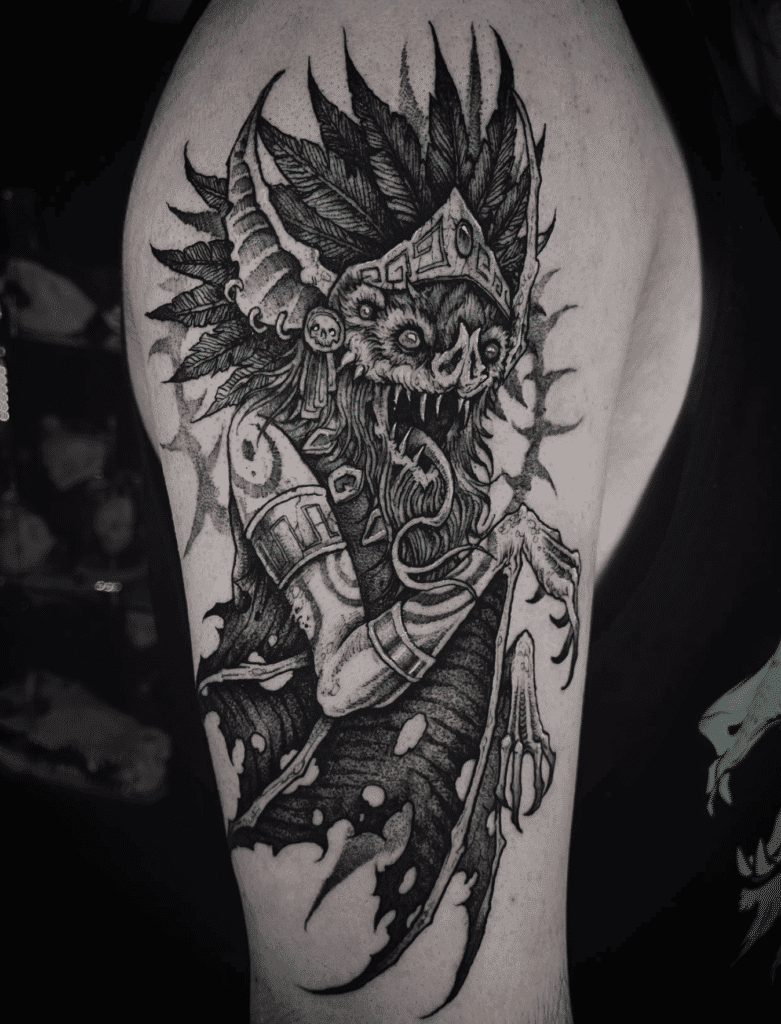
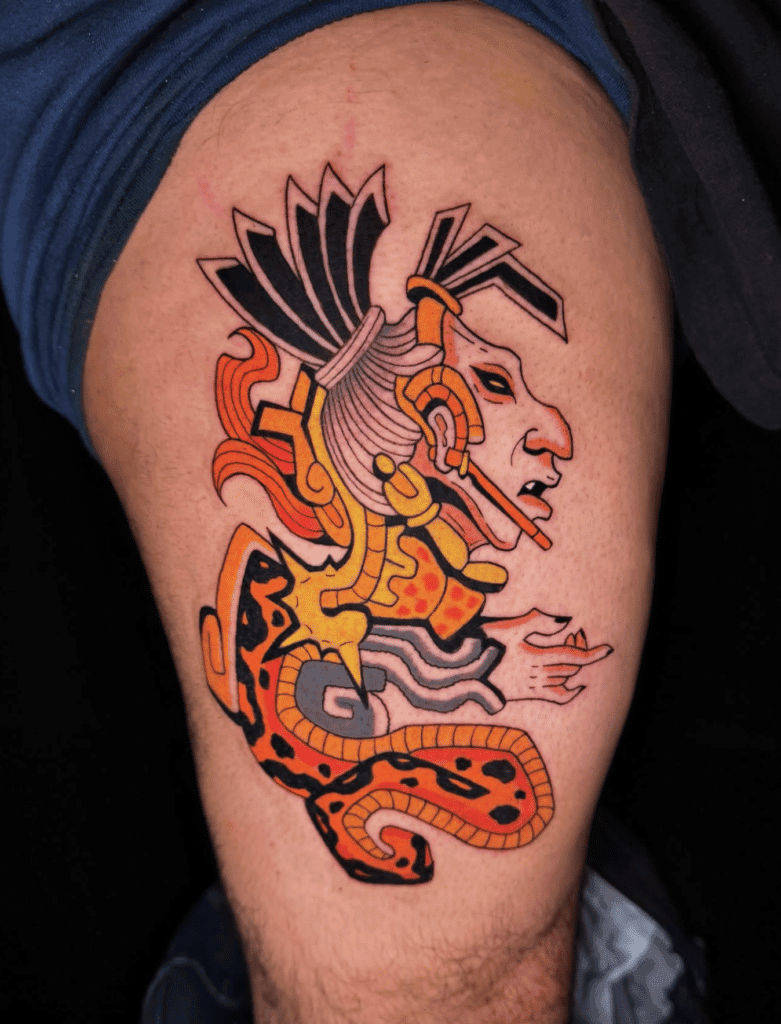
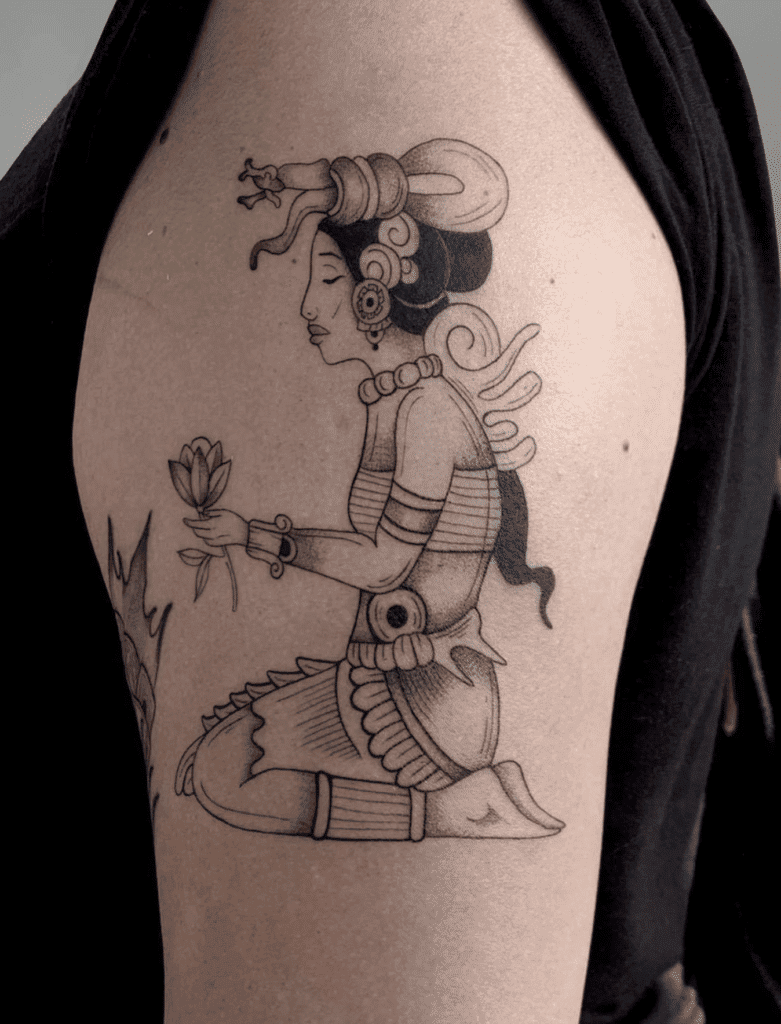
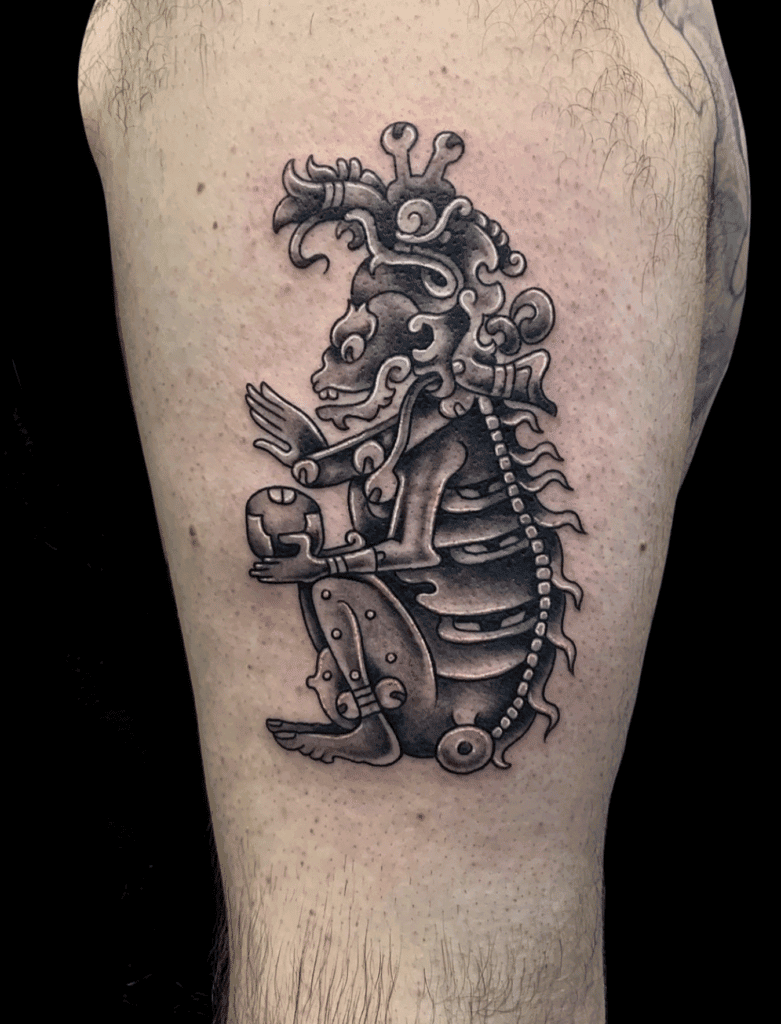
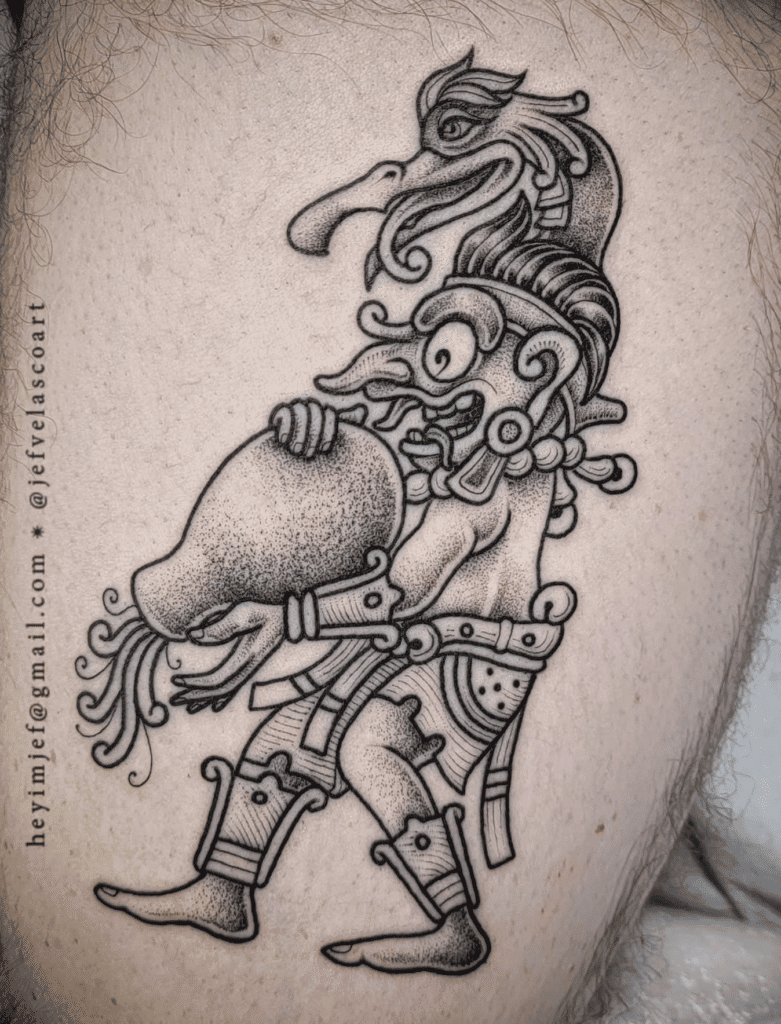
Mayan mythology comes from the ancient Maya civilisation of Mesoamerica, spanning modern-day southern Mexico, Guatemala, Belize, Honduras, and El Salvador. It developed in a landscape of dense jungles, limestone plains, mountains, and cenotes (sacred sinkholes), which deeply influenced Mayan religious thought and ritual.
Mayan mythology began forming at least by 2000 BCE, with roots likely stretching further back into early agricultural and animist traditions. Over time, these beliefs evolved alongside the rise of Mayan city-states such as Tikal, Palenque, and Copán. Unlike many myth systems, Mayan mythology was closely tied to astronomy, mathematics, and calendars, treating time itself as sacred.
Mayan mythology did not suddenly end, but began to decline between 900–1600 CE. The collapse of many Classic-period cities weakened traditional priesthoods, and later Spanish conquest and forced Christianisation suppressed indigenous religion. Sacred texts were destroyed, and rituals were banned. However, key myths survived—most famously in the Popol Vuh, preserved by the K’iche’ Maya after conquest. Like many Indigenous belief systems, Mayan mythology was transformed rather than erased.
At its core, Mayan mythology is about creation through trial, cyclical time, and the constant interaction between gods, humans, and the underworld. The universe moves in repeating cycles of birth, death, and renewal. Humans are not the first creation—earlier attempts failed—and survival depends on maintaining balance through ritual, sacrifice, and respect for cosmic order. Life, death, and the underworld are inseparable parts of existence, not moral opposites.
Aztec Mythology Tattoo
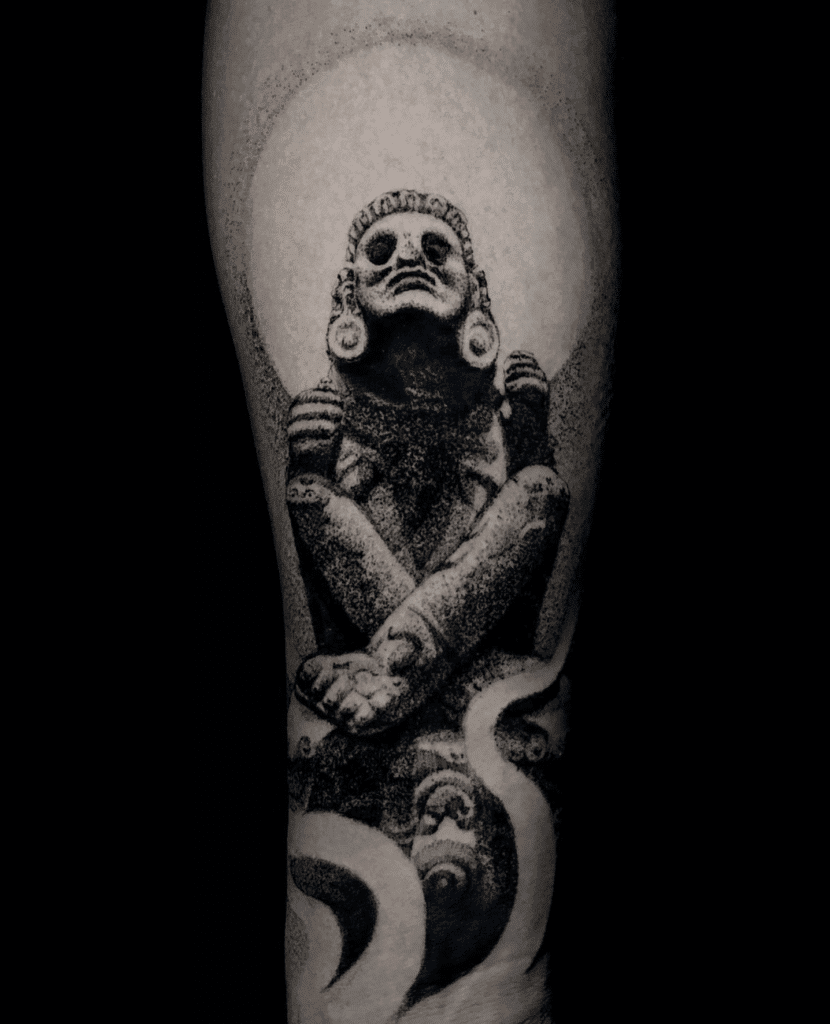
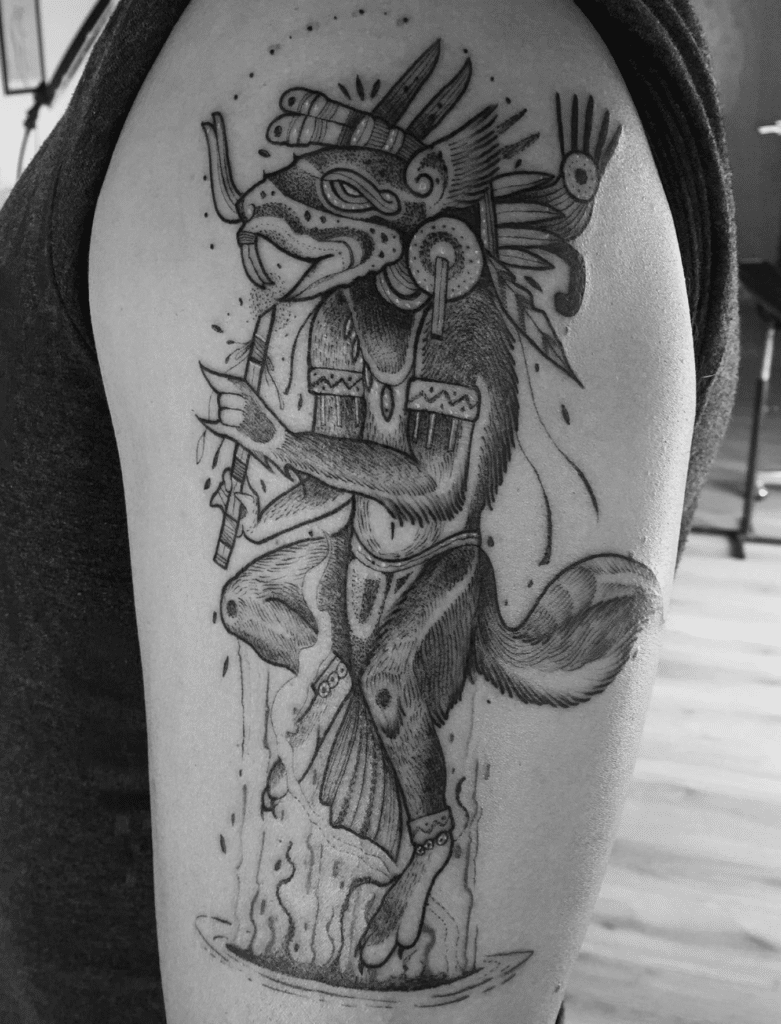
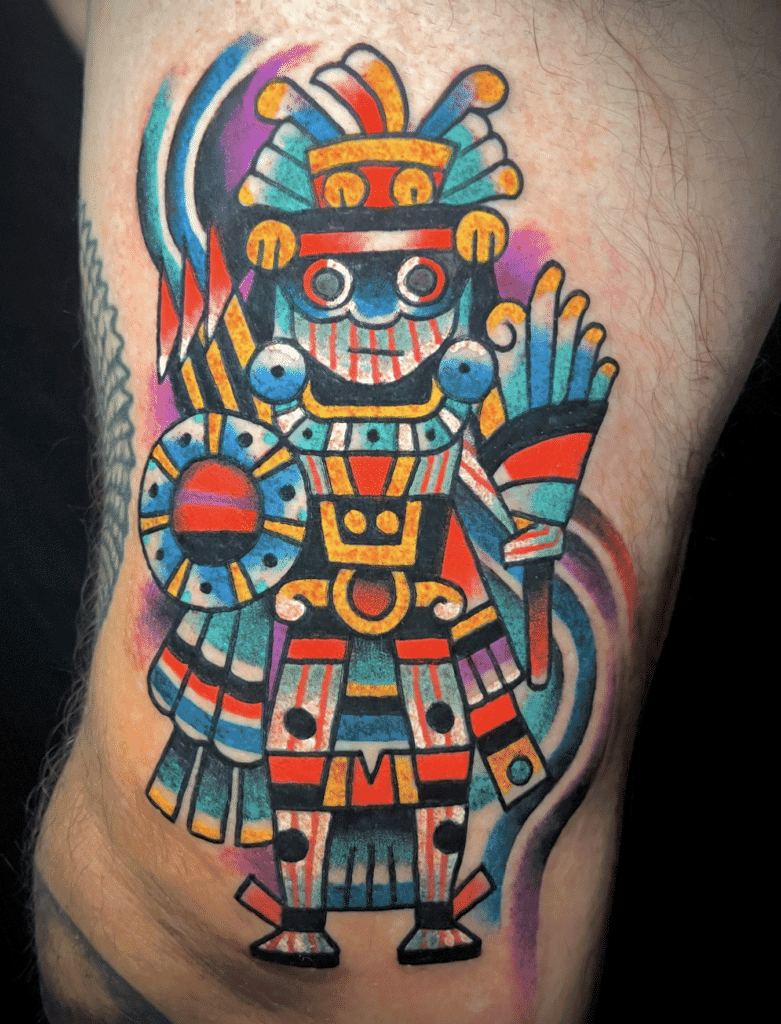
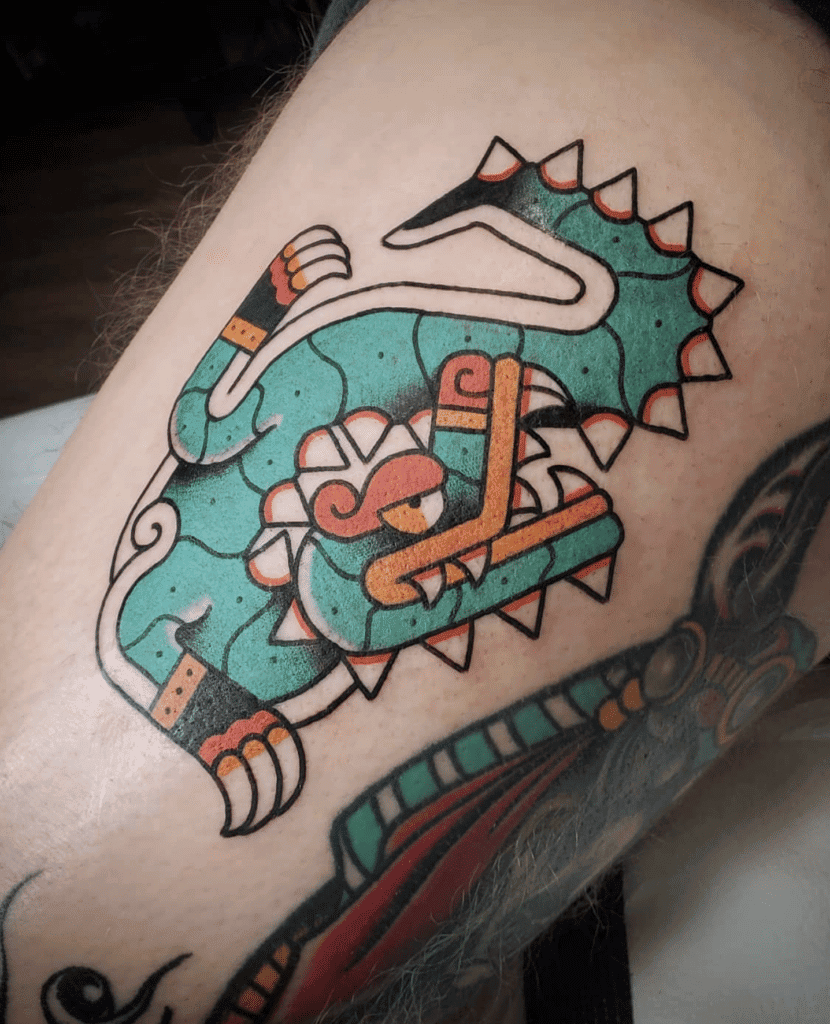
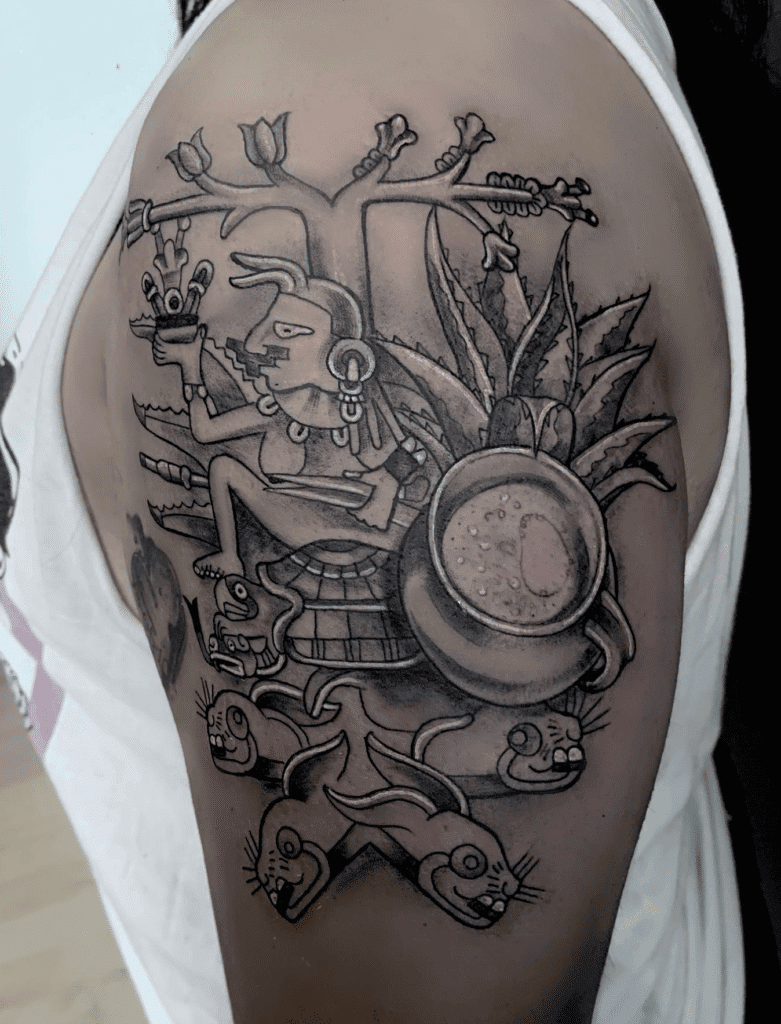
Aztec mythology comes from the Aztec (Mexica) civilisation of central Mexico, centred around Tenochtitlan, built on Lake Texcoco (modern-day Mexico City). It developed in a high-altitude basin surrounded by mountains and volcanoes, shaping a worldview focused on survival, warfare, and divine obligation.
Aztec mythology began forming relatively late compared to other ancient mythologies, around 1200–1300 CE, as the Mexica rose from a migrating warrior tribe into a dominant empire. Rather than inheriting a blank slate, the Aztecs absorbed and reinterpreted older Mesoamerican beliefs, including Toltec and earlier Mayan ideas, reshaping them to fit an aggressively militaristic society.
Aztec mythology effectively ended around 1521 CE, following the Spanish conquest of Tenochtitlan. The destruction of temples, execution of priests, and enforced conversion to Christianity caused a rapid collapse of public worship. Unlike Mayan mythology, which survived in rural communities and written texts, Aztec religion was violently dismantled at its political and religious centre, leaving fewer intact sources.
At its core, Aztec mythology is about cosmic debt, sacrifice, and the struggle to keep the universe alive. The world exists only because the gods sacrificed themselves first. Humanity must repay that debt through blood offerings, ritual warfare, and constant devotion. Without sacrifice, the sun would stop moving, the gods would weaken, and the universe would collapse.
Mesopotamian Mythology Tattoo
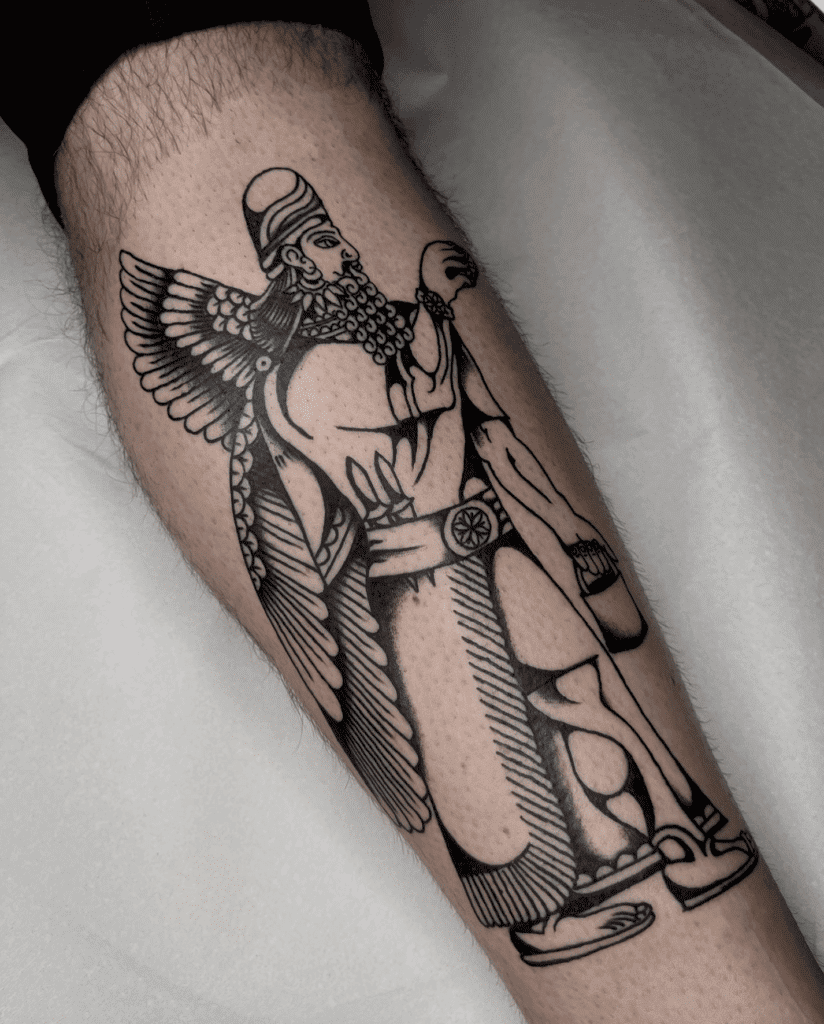
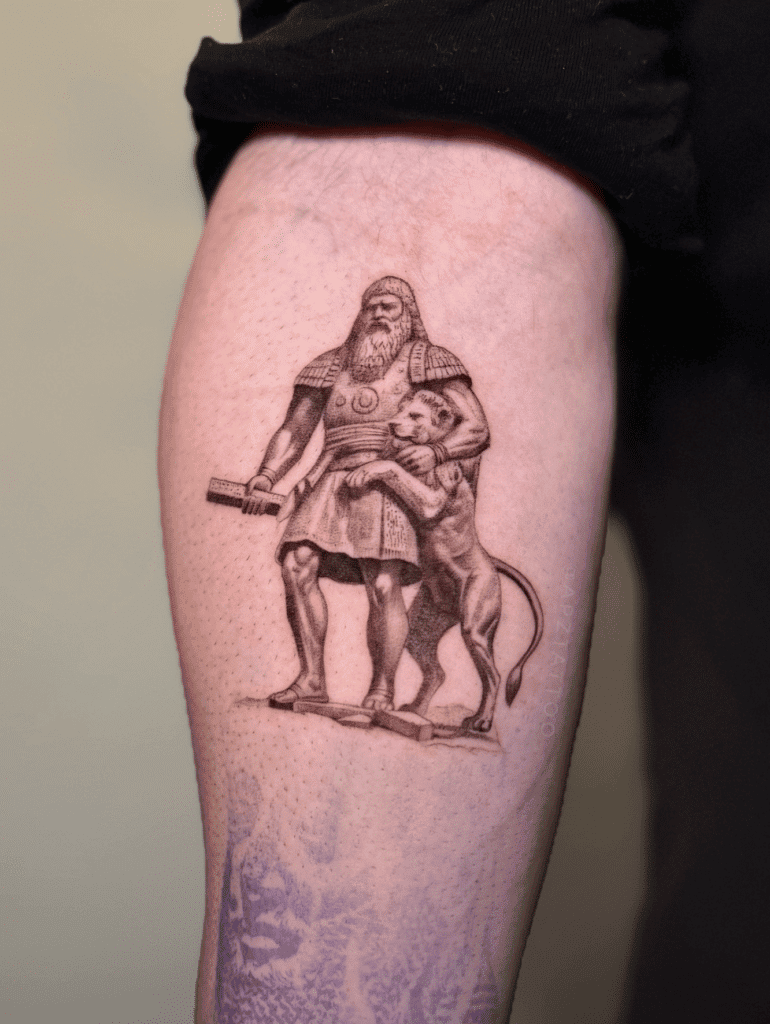
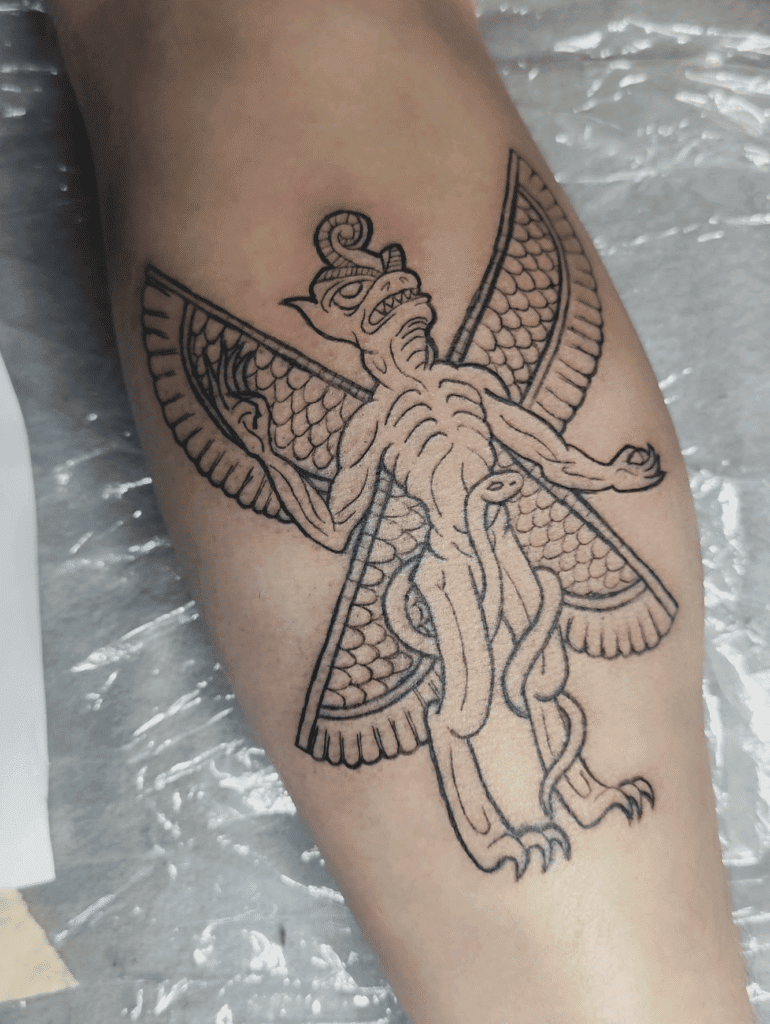
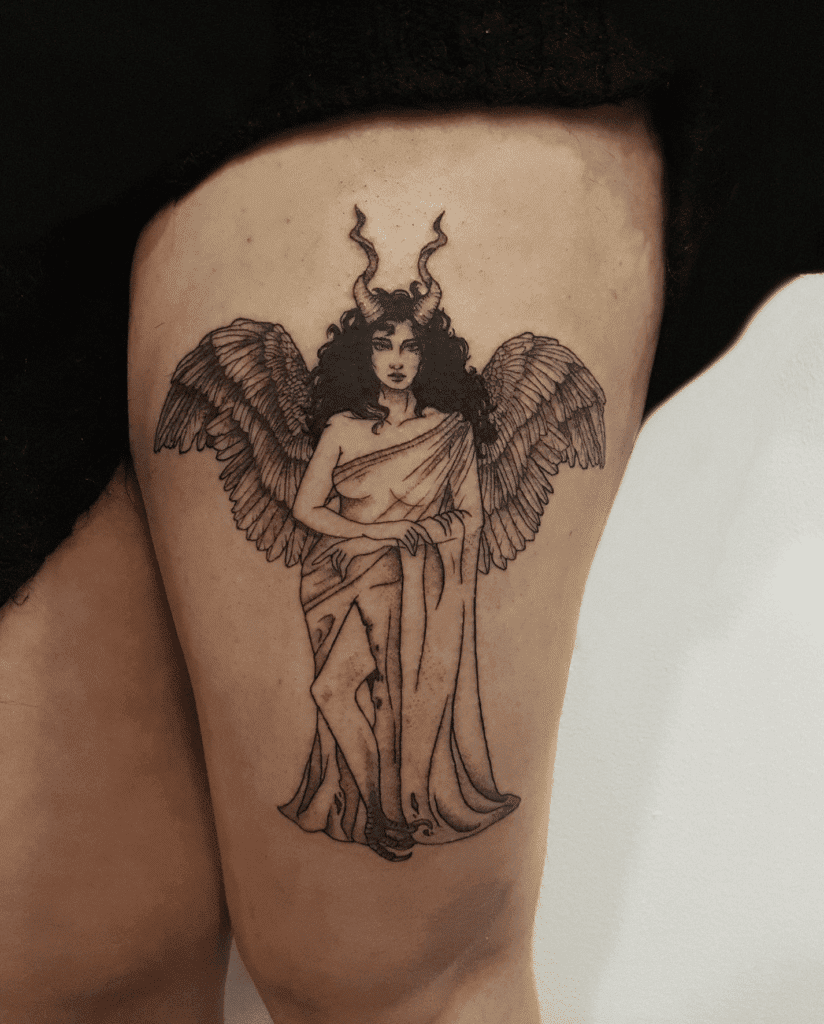
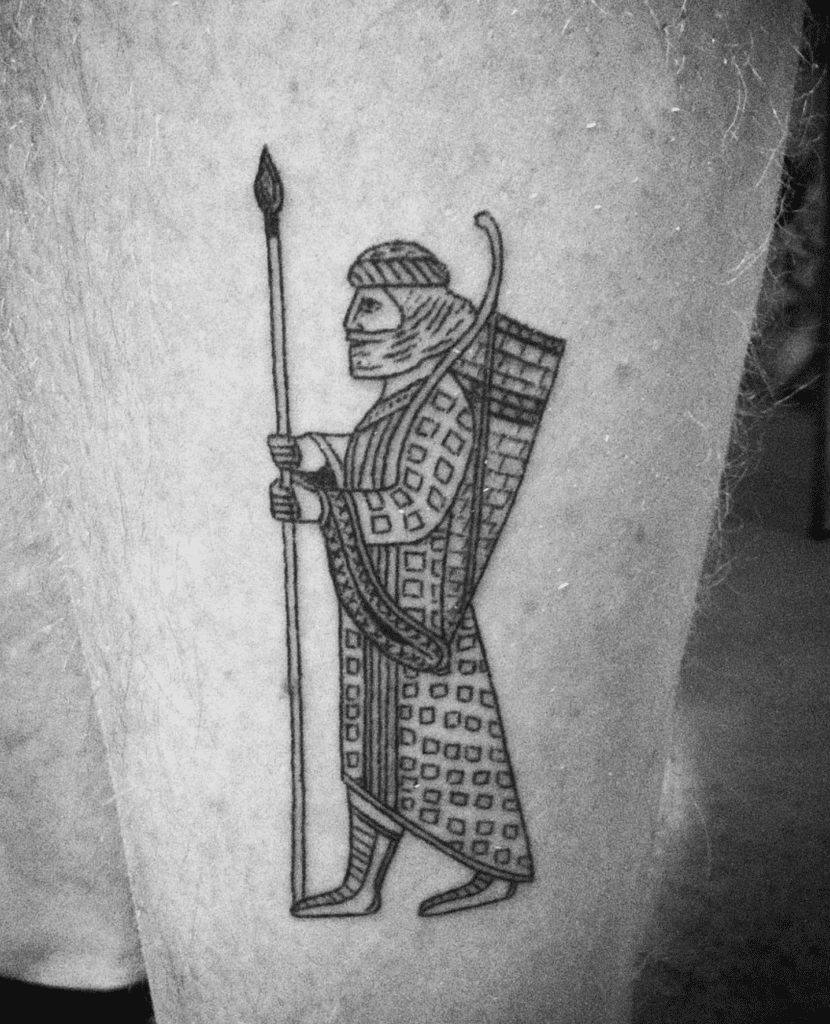
Mesopotamian mythology comes from ancient Mesopotamia, the region between the Tigris and Euphrates rivers in modern-day Iraq and parts of Syria and Turkey. Often called the “cradle of civilisation,” this land supported some of the earliest cities in human history, including Sumer, Akkad, Babylon, and Assyria. Unpredictable flooding, drought, and harsh conditions shaped a worldview filled with uncertainty and fear of divine forces.
Mesopotamian mythology began forming around 3500–3000 BCE, making it one of the oldest recorded mythological systems in the world. Unlike many mythologies passed down orally, these myths were written in cuneiform on clay tablets. As empires rose and fell, the gods and stories were adapted and renamed, but the core myths endured across thousands of years.
Mesopotamian mythology began to decline between 500 BCE – 200 CE, largely due to Persian conquest, Hellenistic influence, and later the spread of Christianity and Islam. As cities fell and temples closed, worship faded. However, many Mesopotamian myths survived indirectly by influencing later religions and biblical stories, rather than through continuous practice.
At its core, Mesopotamian mythology is about human fragility, divine unpredictability, and survival in a hostile world. The gods are powerful but often selfish, cruel, or indifferent. Humans exist to serve the gods, and suffering is seen as an unavoidable part of life. Order is fragile, chaos is always near, and fate is rarely kind.
Persian Mythology Tattoo
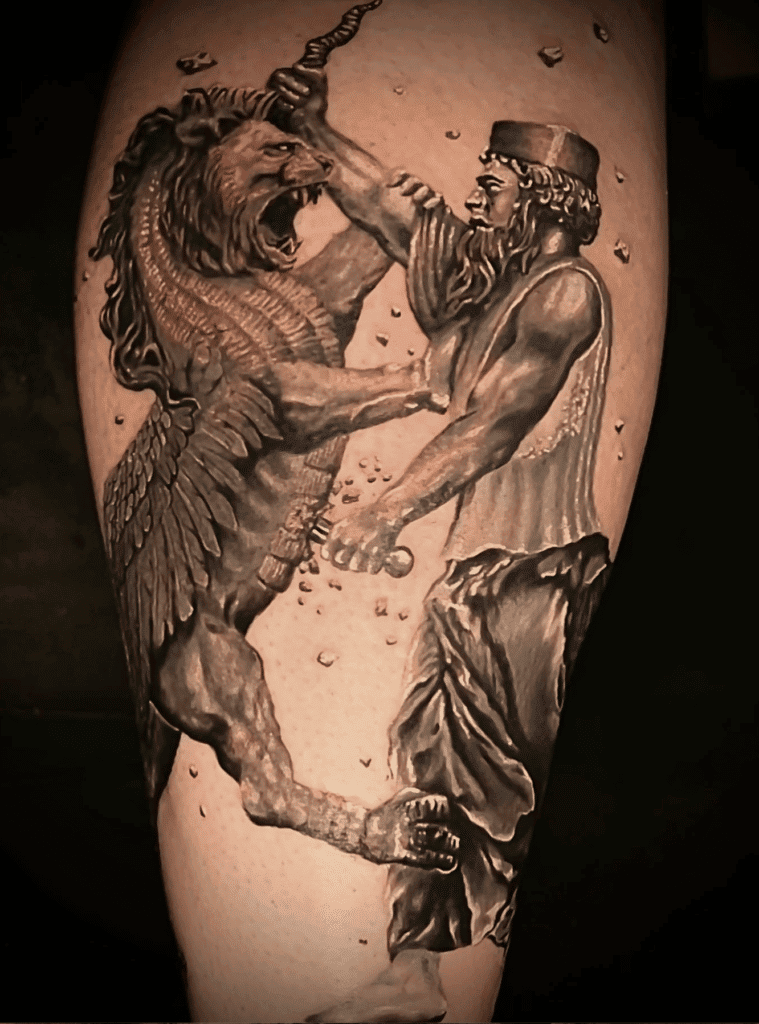
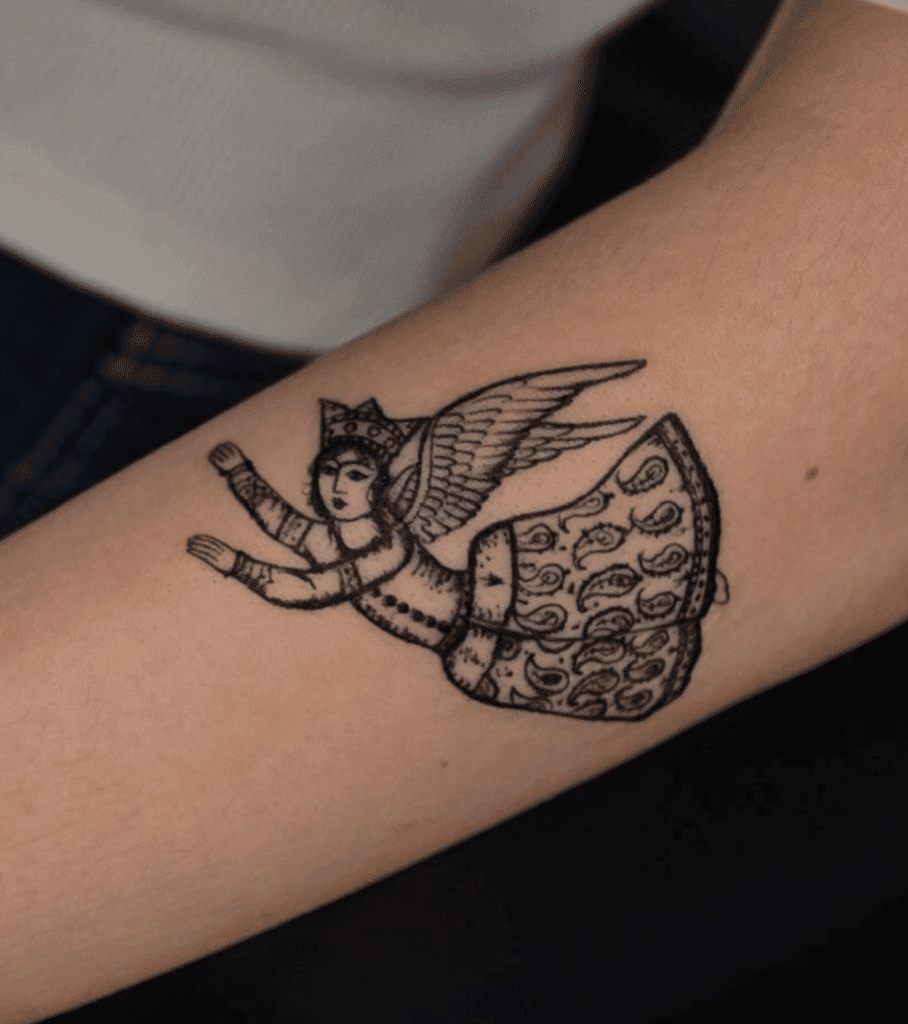
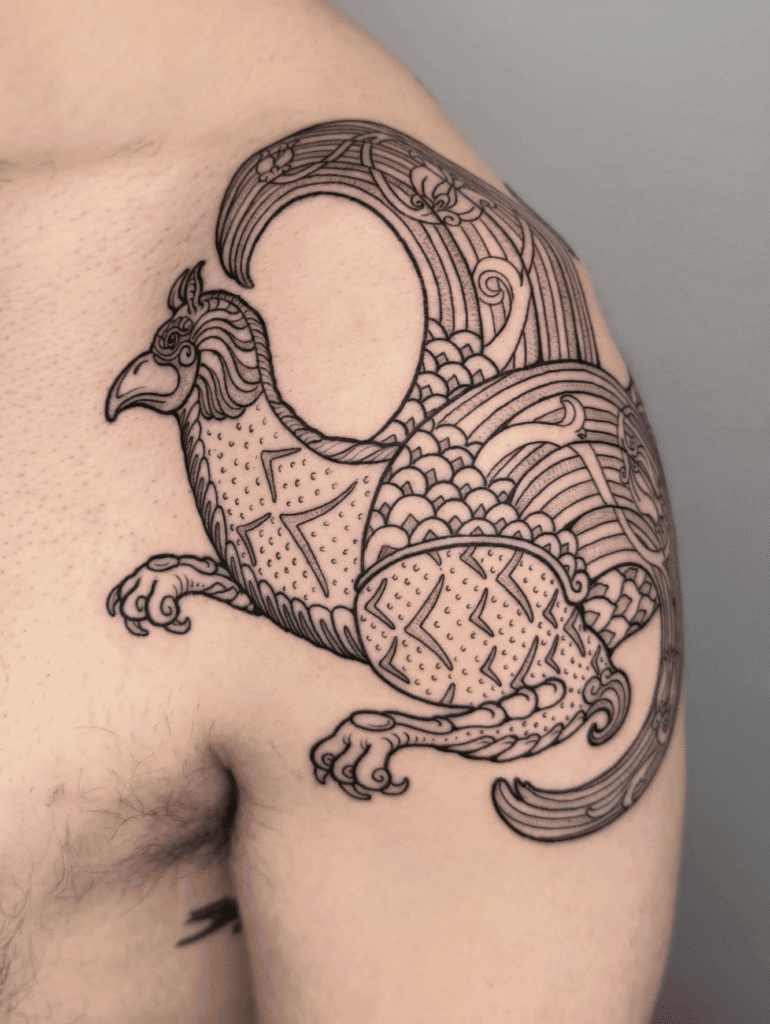
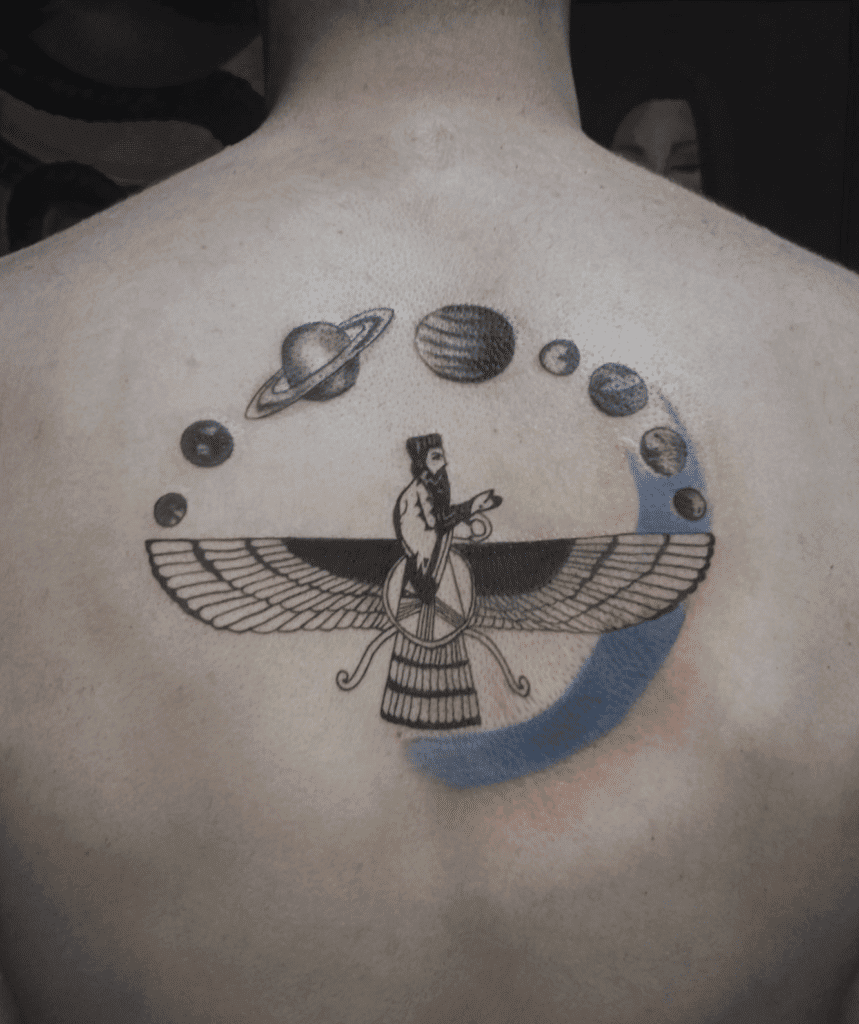
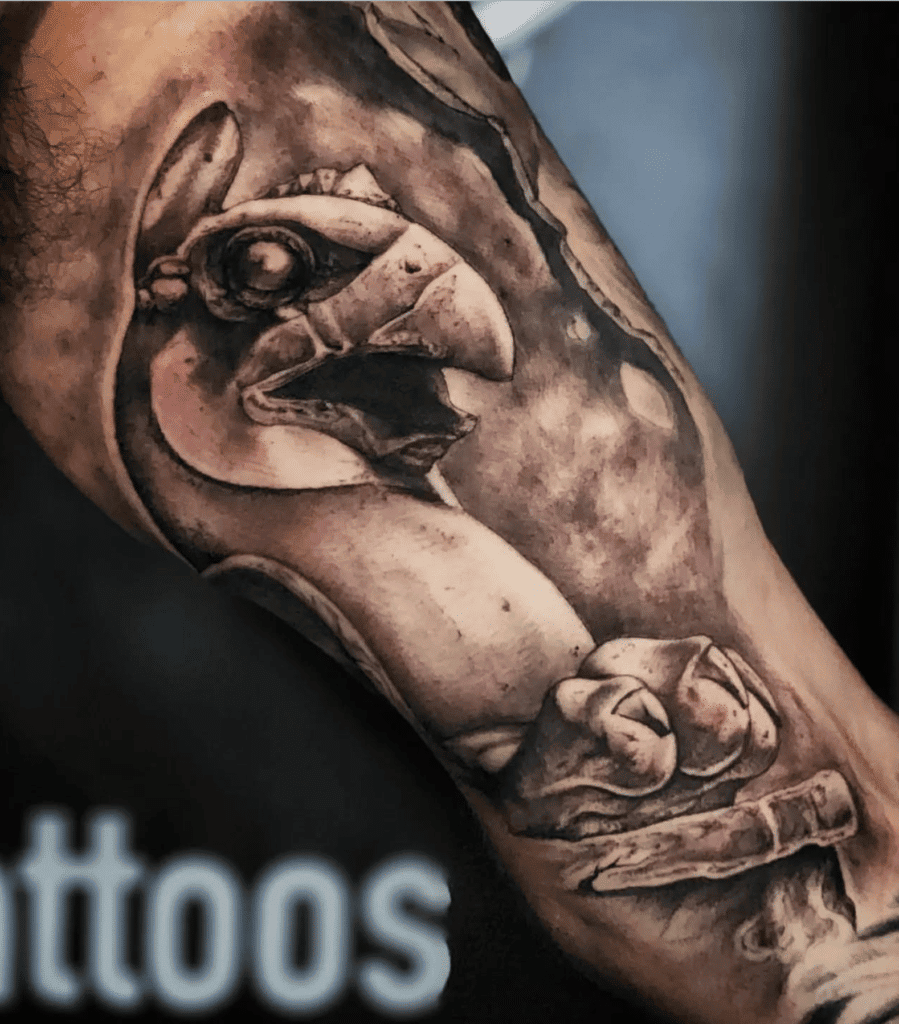
Persian mythology, more accurately known as Zoroastrian mythology, comes from ancient Persia (modern-day Iran) and surrounding regions of the Iranian Plateau. It developed in a land of deserts, mountains, and trade routes, where ideas of order, law, and moral responsibility became central to religious thought.
Zoroastrian belief likely began forming around 1500–1200 BCE, emerging from earlier Indo-Iranian religious traditions. It is traditionally associated with the prophet Zoroaster (Zarathustra), who reformed older beliefs into a revolutionary moral system. Unlike most mythologies, Zoroastrianism introduced a clear ethical structure rather than a loose collection of gods and stories.
Persian mythology began to decline as a dominant religion after 650 CE, following the Islamic conquest of Persia. Over time, Zoroastrianism lost state support and many followers converted, though the religion never disappeared entirely. Small Zoroastrian communities survived in Iran and India (the Parsis), preserving core beliefs and rituals. Rather than vanishing, Persian mythology became a living religion with reduced influence, not a forgotten myth system.
At its core, Persian mythology is about moral dualism, choice, and cosmic responsibility. The universe is a battleground between truth and falsehood, light and darkness. Humans are not passive servants of the gods — they are active participants, whose thoughts, words, and actions help determine the fate of the cosmos.
Hindu Mythology Tattoo
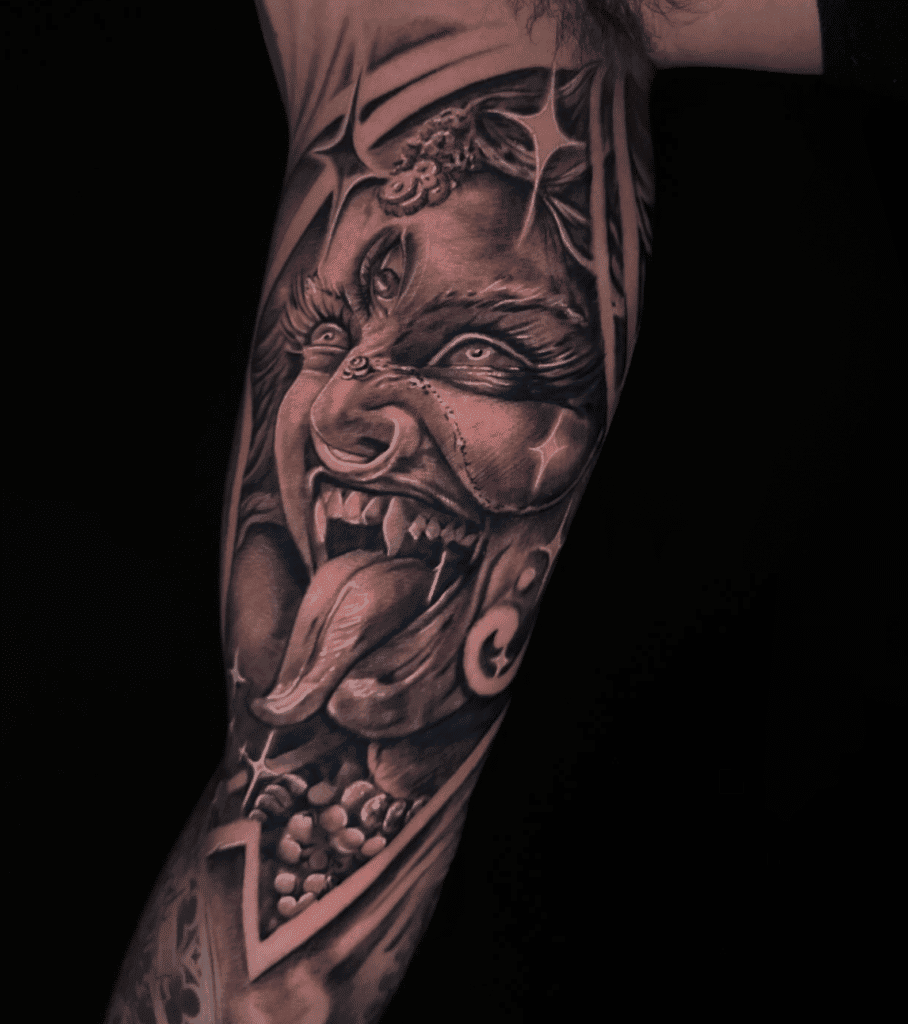
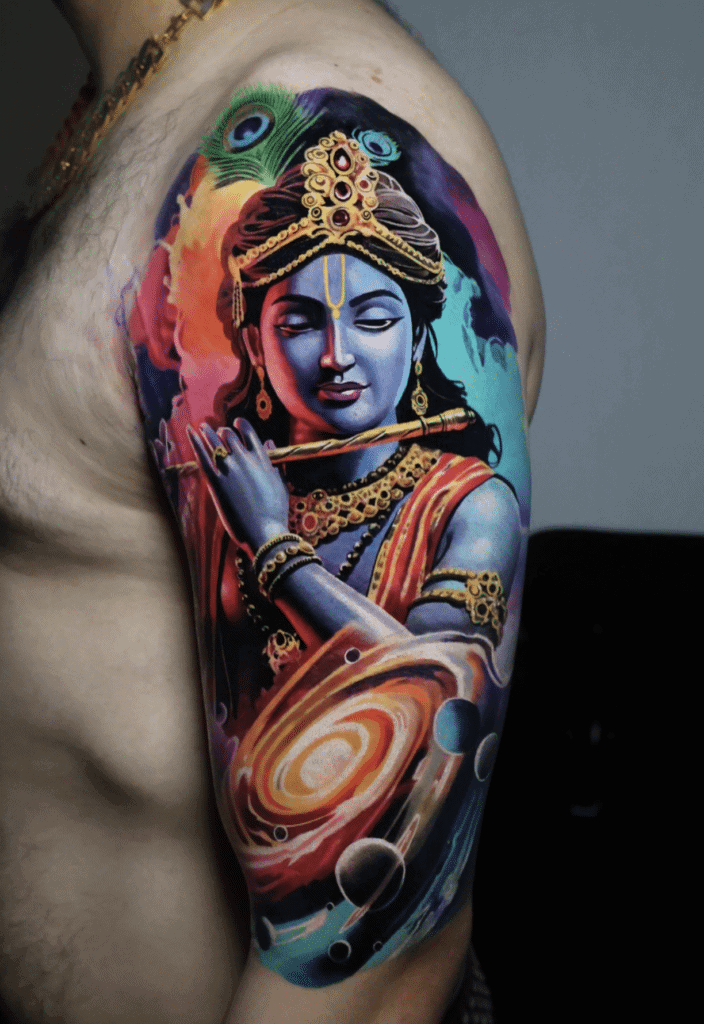
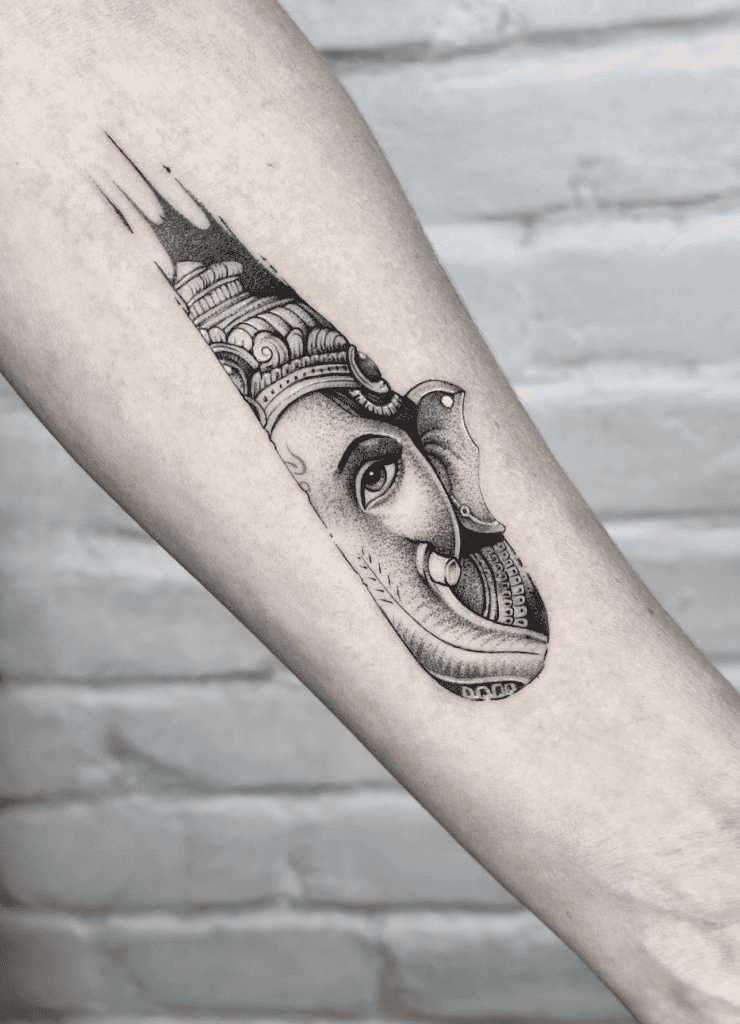
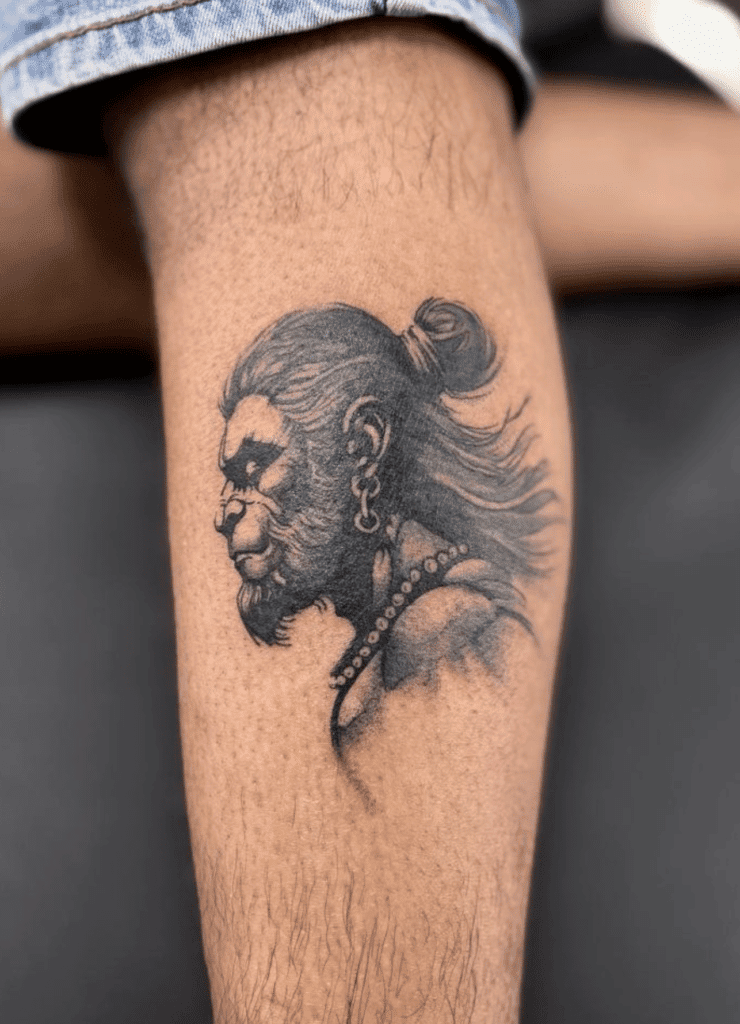
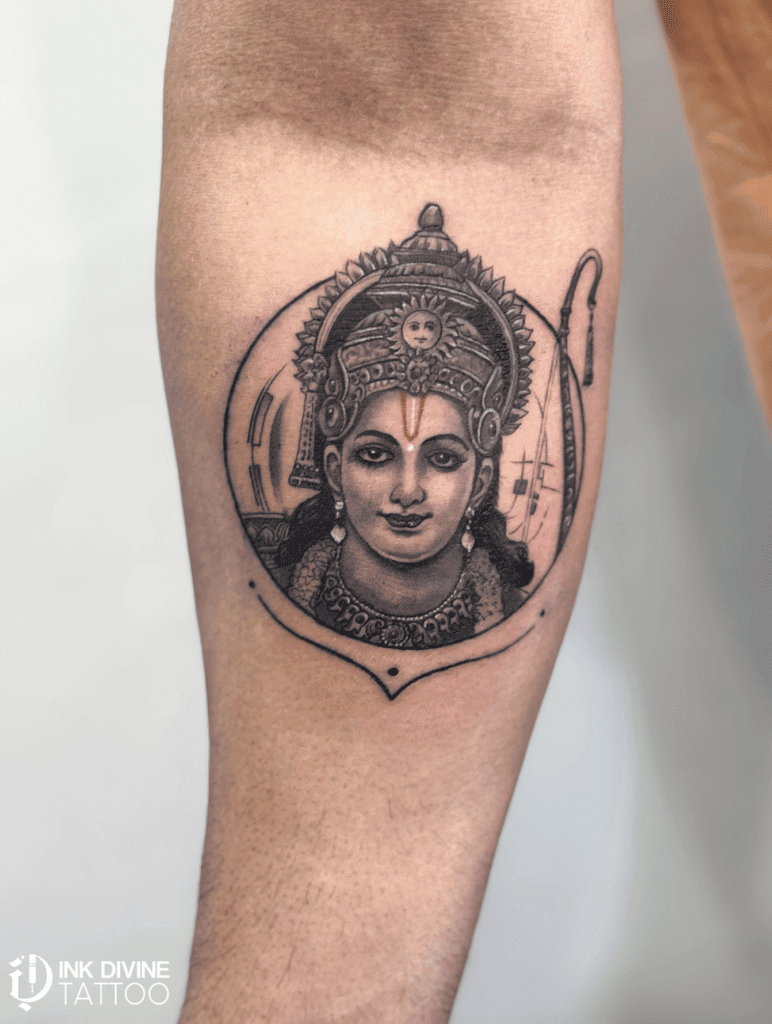
Hindu mythology comes from the Indian subcontinent, primarily modern-day India, Nepal, and parts of South Asia. It developed in a vast and diverse landscape of rivers, forests, mountains, and plains—most notably around the Indus and later the Ganges River, which became spiritually central to Hindu belief.
Hindu mythology began forming around 2000–1500 BCE, emerging from early Vedic traditions brought by Indo-Aryan cultures and blending with older indigenous beliefs. Over thousands of years, these ideas expanded into a rich body of myths, hymns, epics, and philosophies recorded in texts such as the Vedas, Upanishads, Puranas, and the great epics Ramayana and Mahabharata. Rather than replacing earlier ideas, Hindu mythology continuously evolved, absorbing new stories and interpretations.
Unlike many ancient mythologies, Hindu mythology never truly ended. While it changed significantly under Buddhist influence, Islamic rule (from c. 1200 CE), and later British colonialism, it remained a living tradition. Today, Hindu mythology continues as part of Hinduism, one of the world’s oldest continuously practised religions, still shaping daily life, festivals, art, and philosophy.
At its core, Hindu mythology is about cosmic cycles, duty (dharma), karma, and liberation. The universe is created, sustained, destroyed, and reborn endlessly. Souls are trapped in a cycle of rebirth (samsara) until they achieve liberation (moksha). Gods are powerful, but they are also expressions of deeper cosmic principles rather than absolute rulers.
Japanese Mythology Tattoo
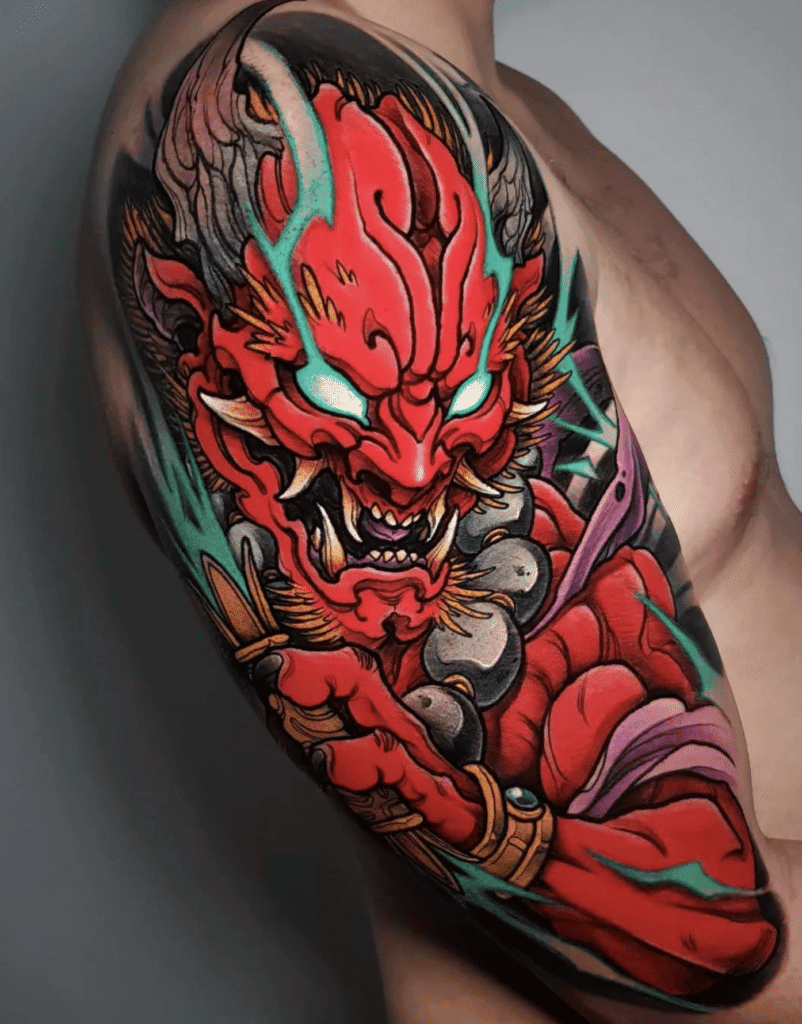
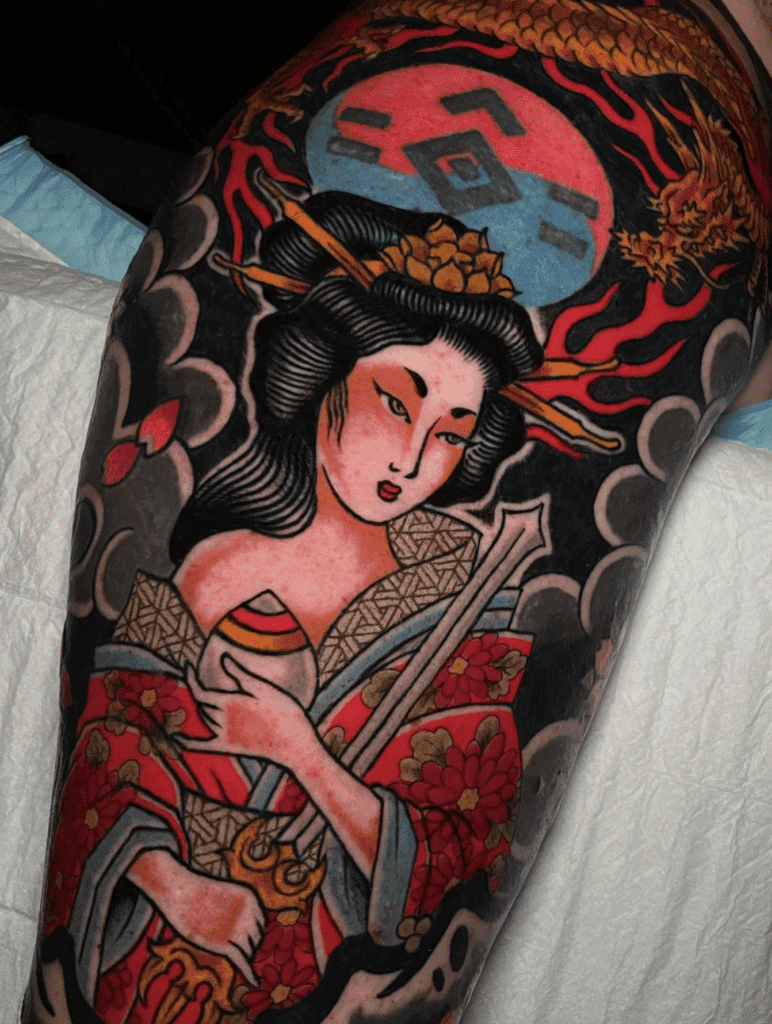
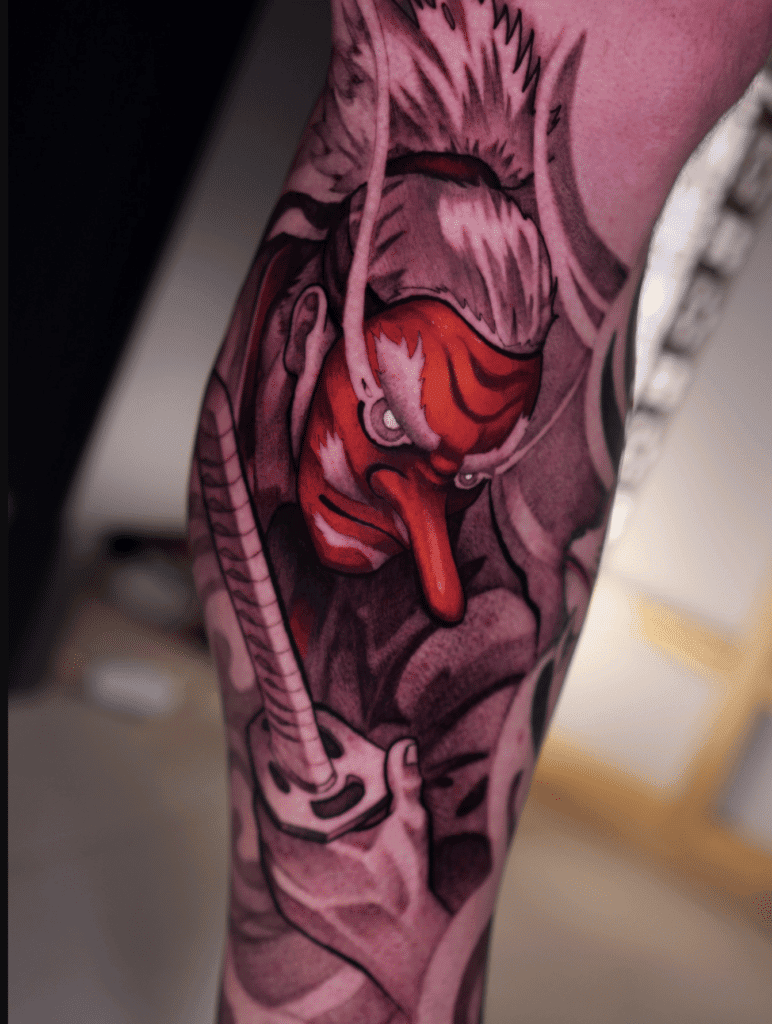
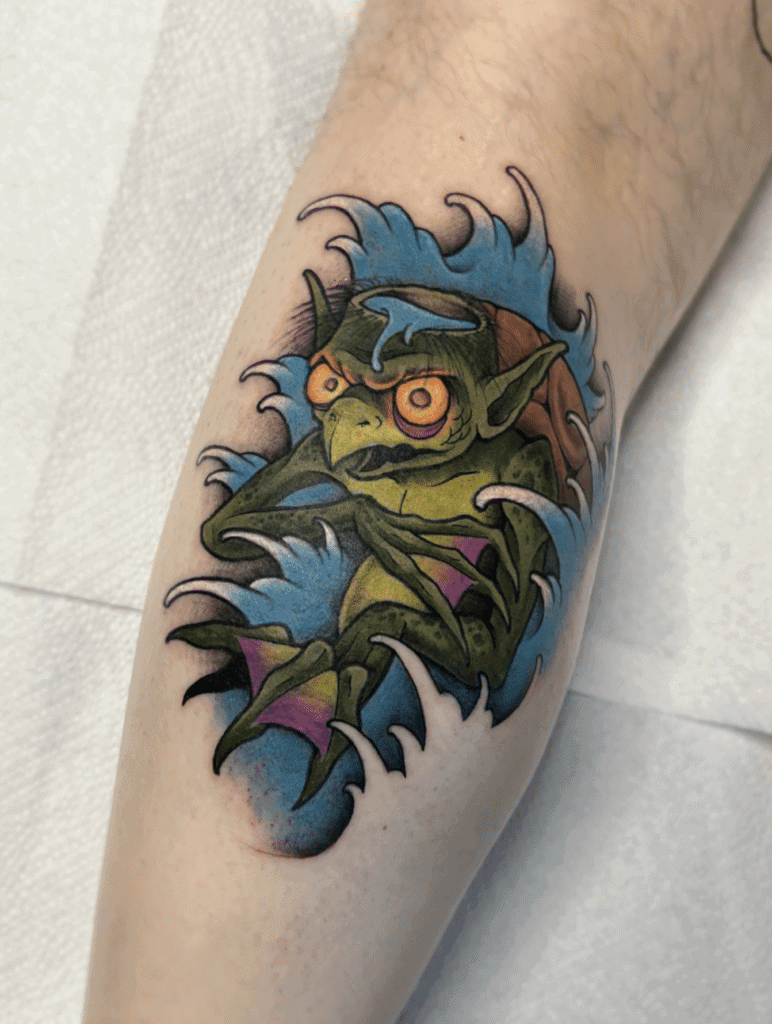
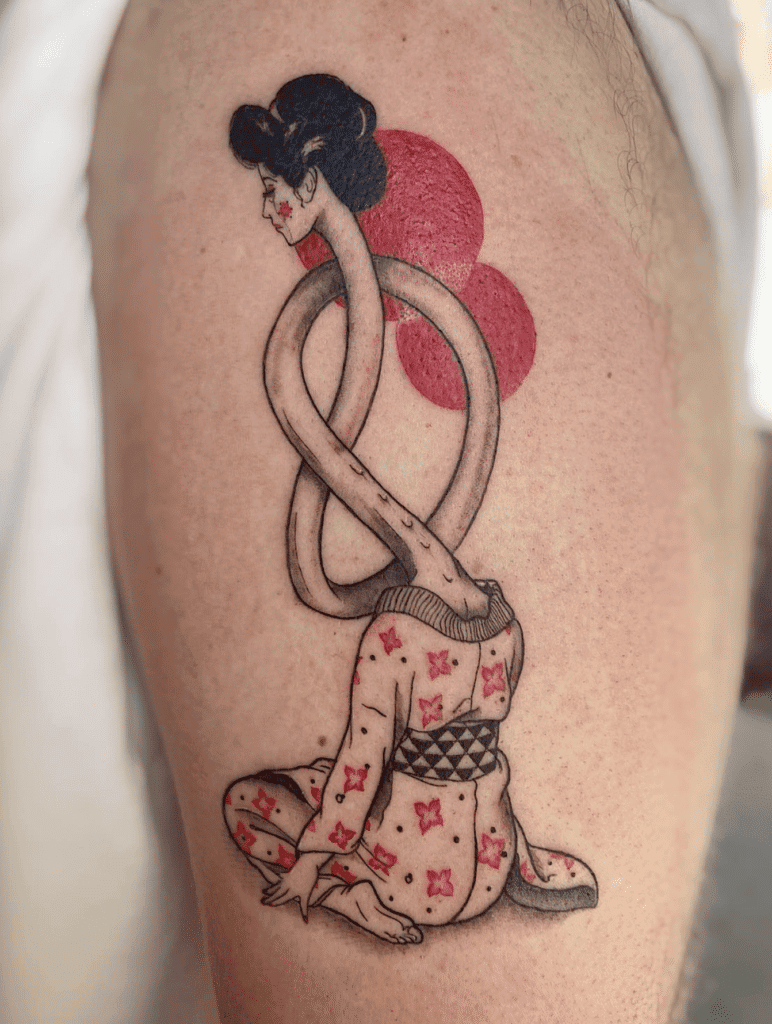
Japanese mythology comes from Japan, shaped by its mountainous islands, volcanic activity, forests, and surrounding seas. These natural features fostered a belief that spirits inhabit all things, from rivers and rocks to storms and ancestors. Mythology in Japan is closely tied to Shinto, the country’s indigenous belief system.
Japanese mythology began forming around 1000–500 BCE, emerging from early animist traditions that viewed nature as sacred. These beliefs were later organised and recorded in the Kojiki (712 CE) and Nihon Shoki (720 CE), which blended myth, history, and imperial lineage into a unified narrative.
Japanese mythology never truly ended. Instead, it evolved and adapted. From 600 CE onward, Buddhism entered Japan and merged with Shinto rather than replacing it. Gods became linked with Buddhas, and myths were reinterpreted rather than suppressed. Even today, Shinto rituals, festivals, and shrines remain part of everyday life, making Japanese mythology a living tradition rather than a lost one.
At its core, Japanese mythology is about harmony, purity, cycles of life, and coexistence with the unseen. The world is filled with kami—divine spirits that can be benevolent, dangerous, or indifferent. Rather than strict moral laws, the focus is on maintaining balance, respecting nature, and cleansing spiritual impurity.
Christian Mythology Tattoo
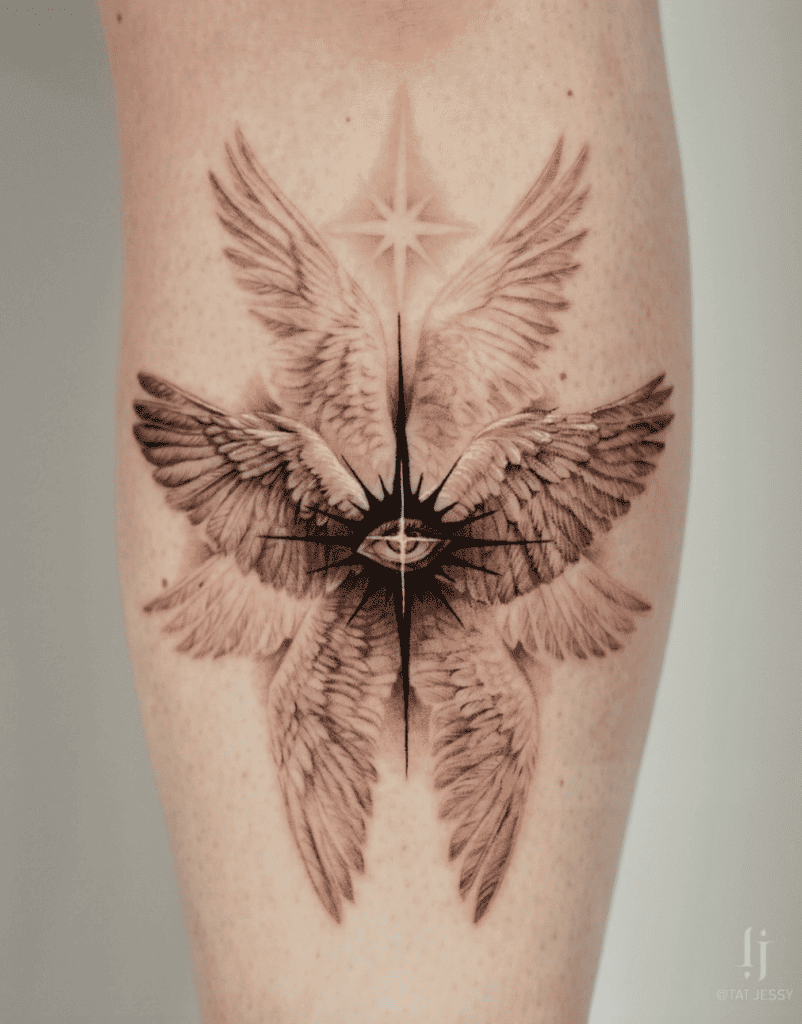
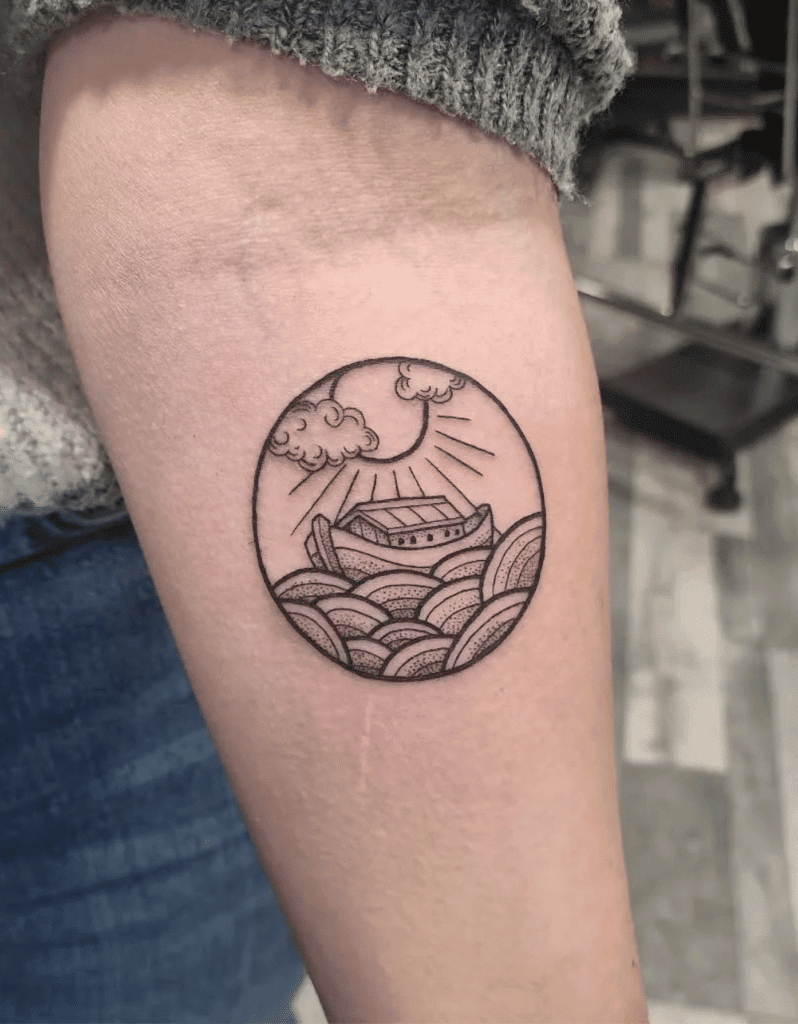
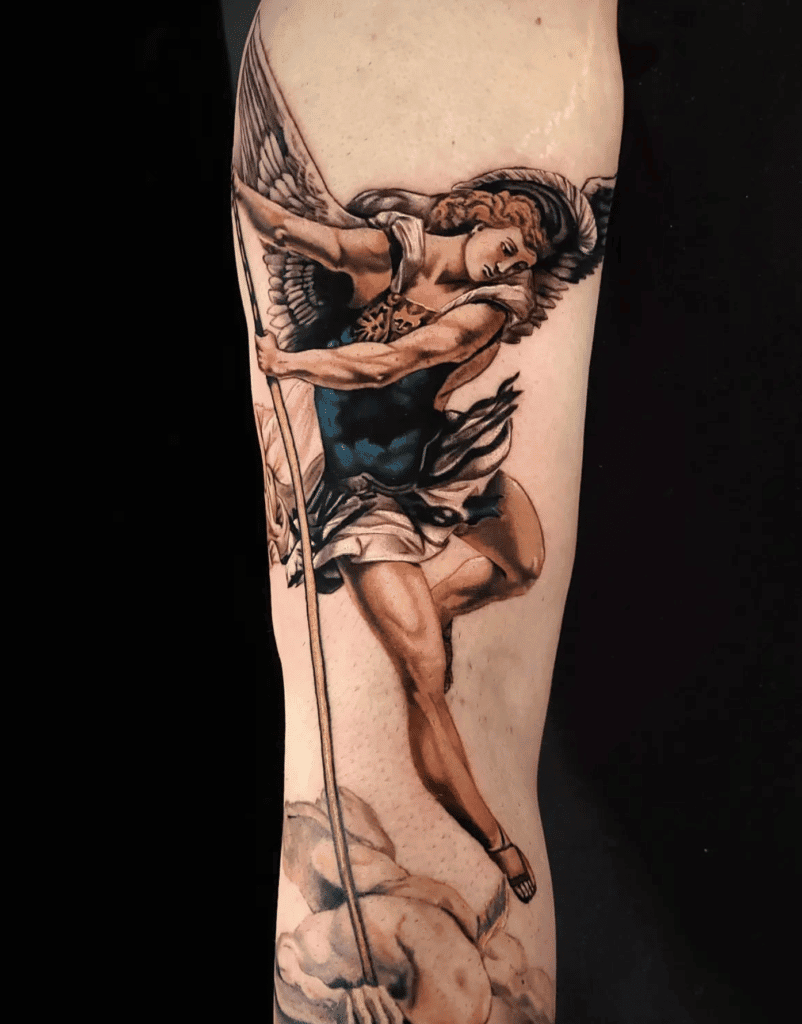
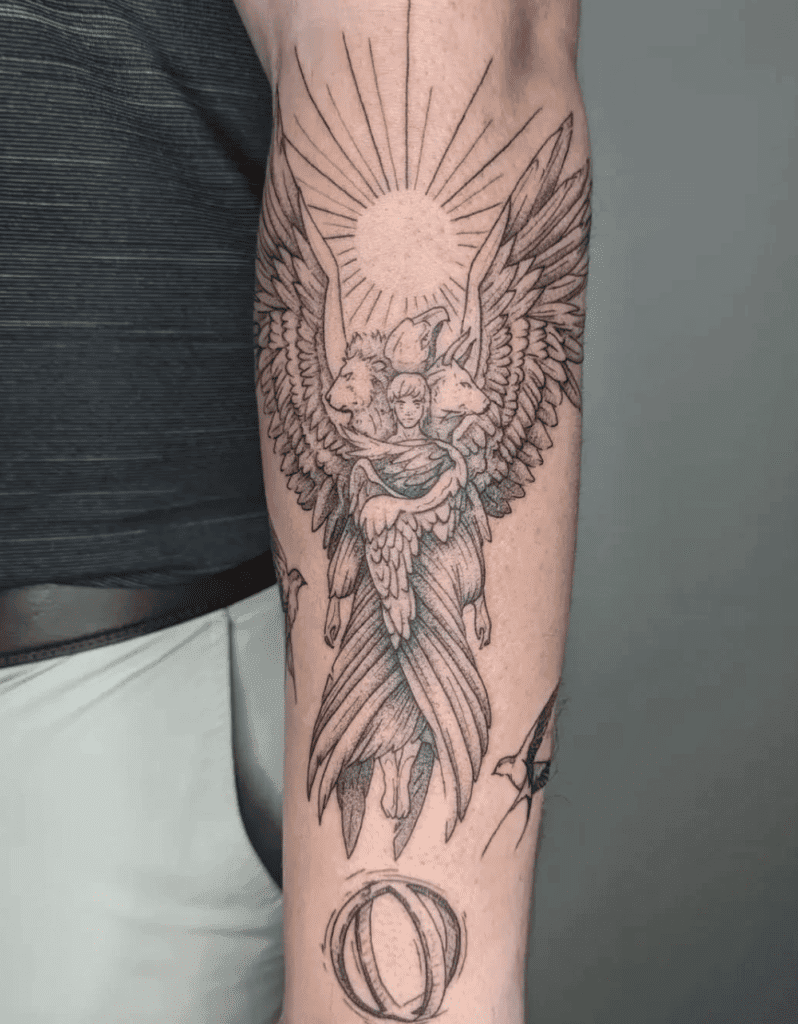
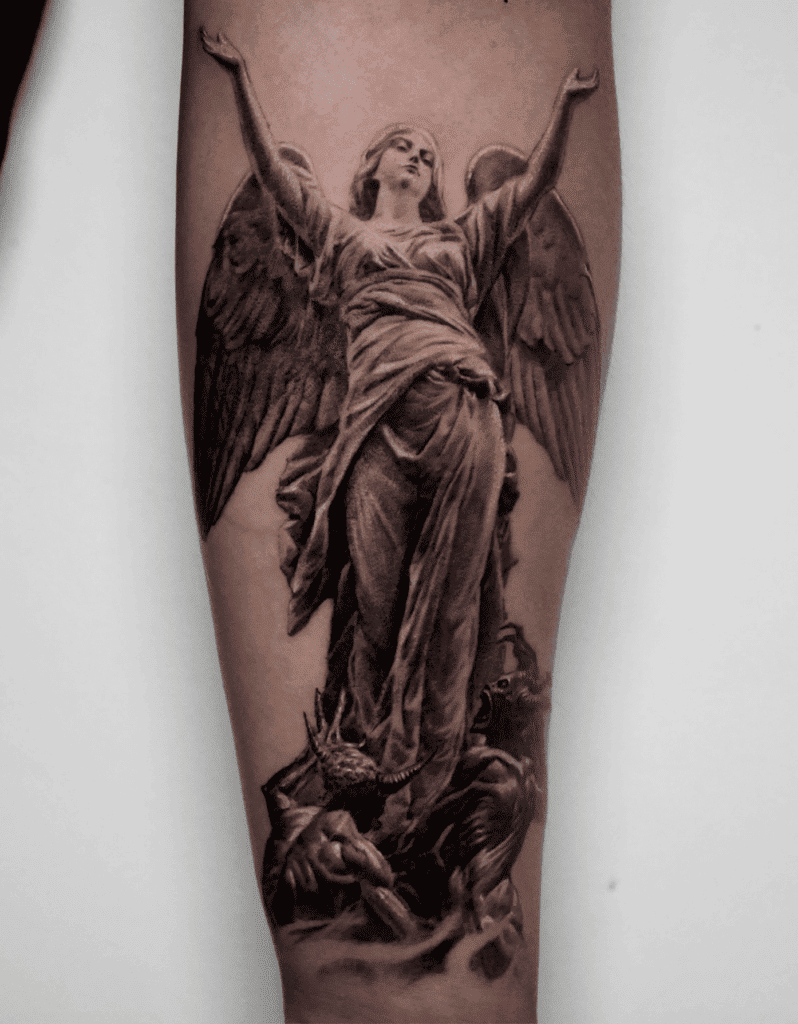
Christian mythology comes from the Near East, originating in Roman-era Judea (modern-day Israel/Palestine). It developed within a landscape shaped by desert, empire, and long-standing Jewish religious tradition. Christianity emerged from Second Temple Judaism, inheriting its scriptures, symbols, and moral worldview while reinterpreting them through the life and teachings of Jesus.
Christian belief began forming in the 1st century CE, following the life and execution of Jesus Christ. Early Christian communities spread rapidly across the Roman Empire, sharing stories orally before they were compiled into what became the Bible. Over time, councils and church authorities shaped doctrine, defining which texts and beliefs were considered orthodox.
From 300–400 CE, after Christianity was adopted by the Roman Empire, it replaced many local pagan traditions across Europe and the Mediterranean. While older mythologies declined, Christian stories became the new sacred framework. Christianity continues today as a living belief system, with mythology, theology, and history deeply intertwined.
At its core, Christian mythology is about creation, fall, redemption, and final judgment. Humanity is created good, falls into sin, and is offered salvation through divine sacrifice. History moves in a linear direction, from creation toward an ultimate end, where evil is defeated and the world is renewed.
Chinese Mythology Tattoo
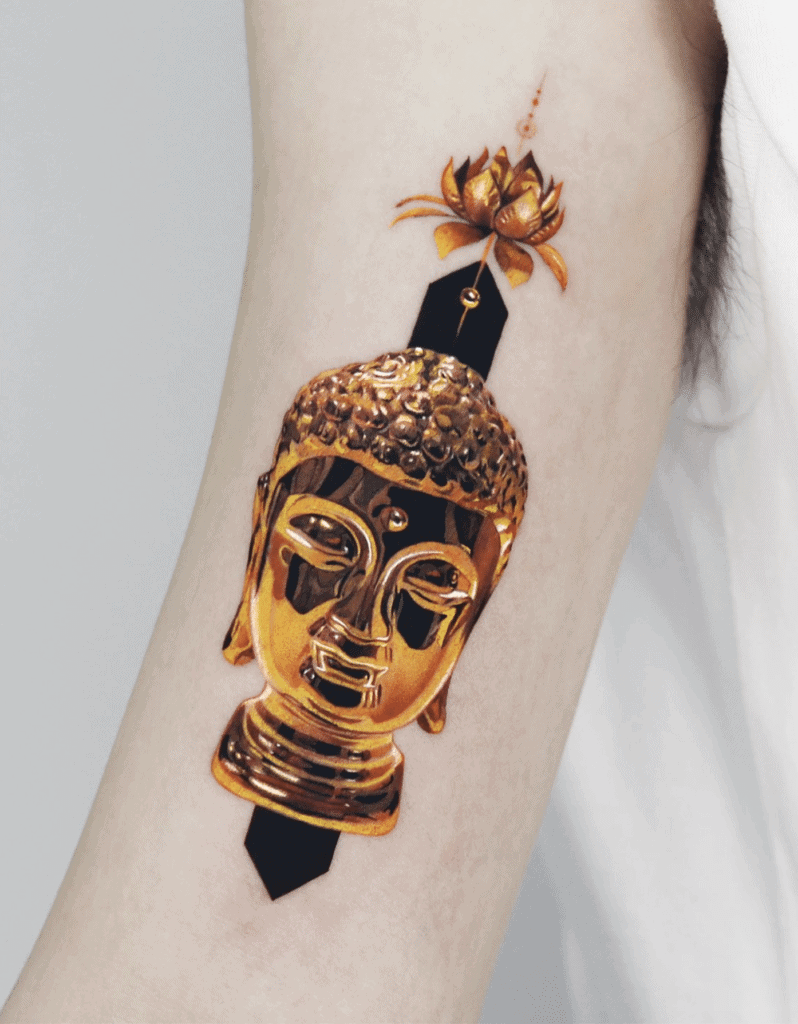
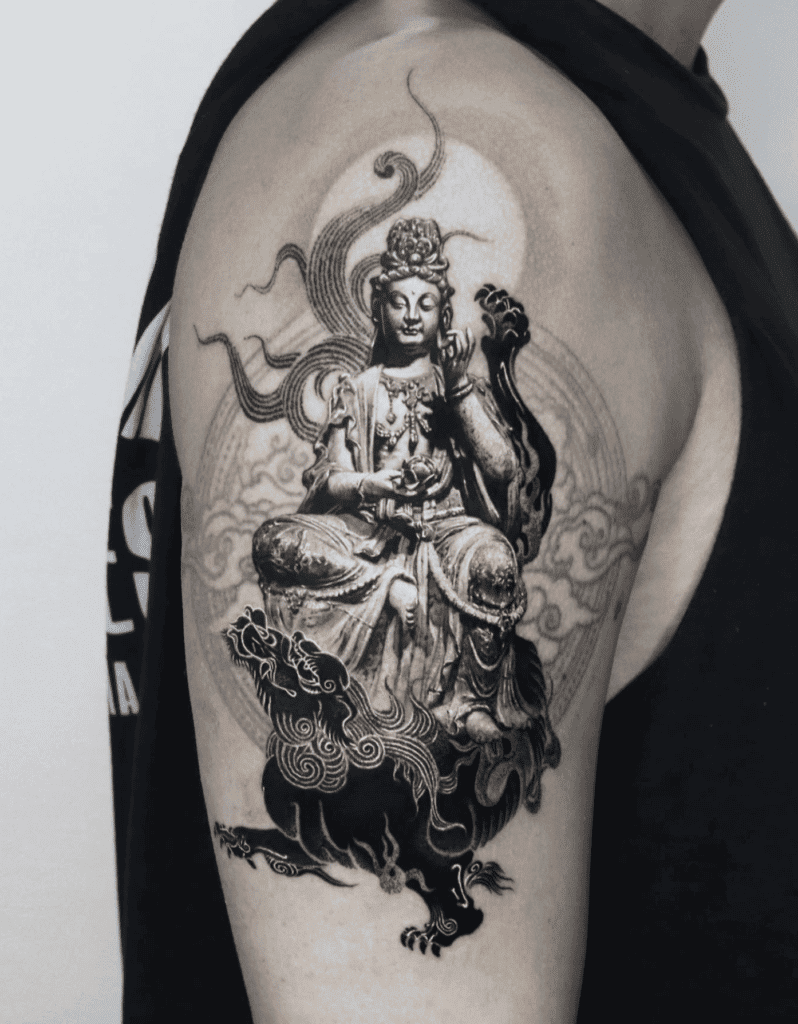
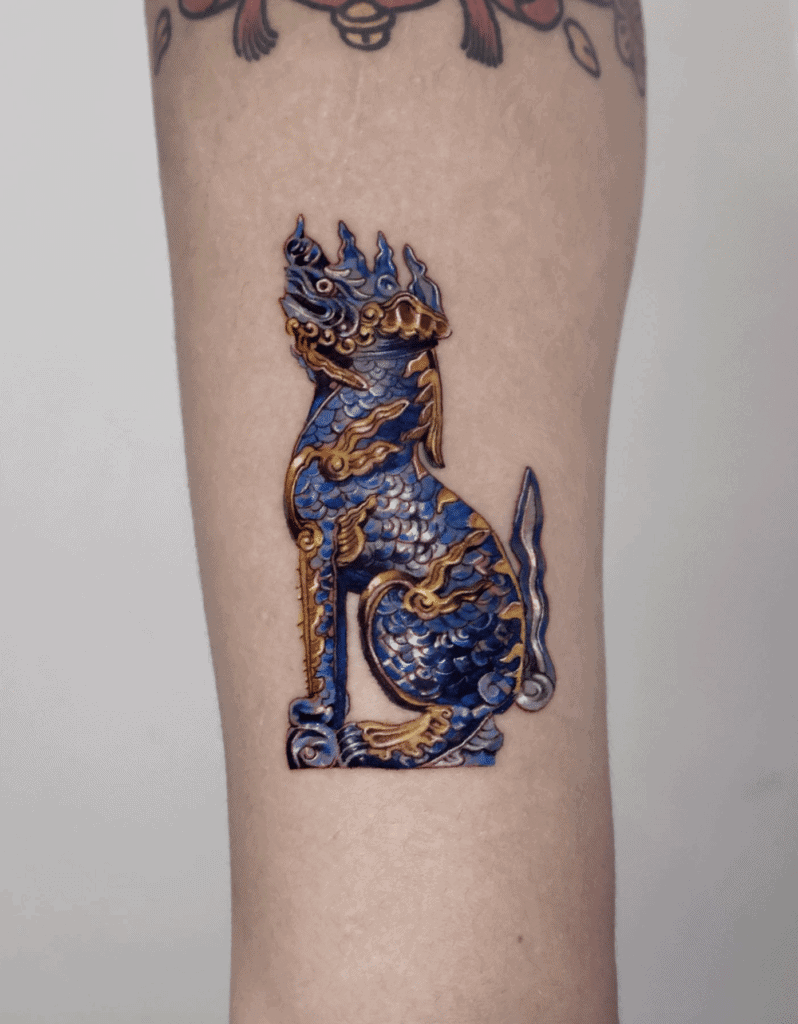
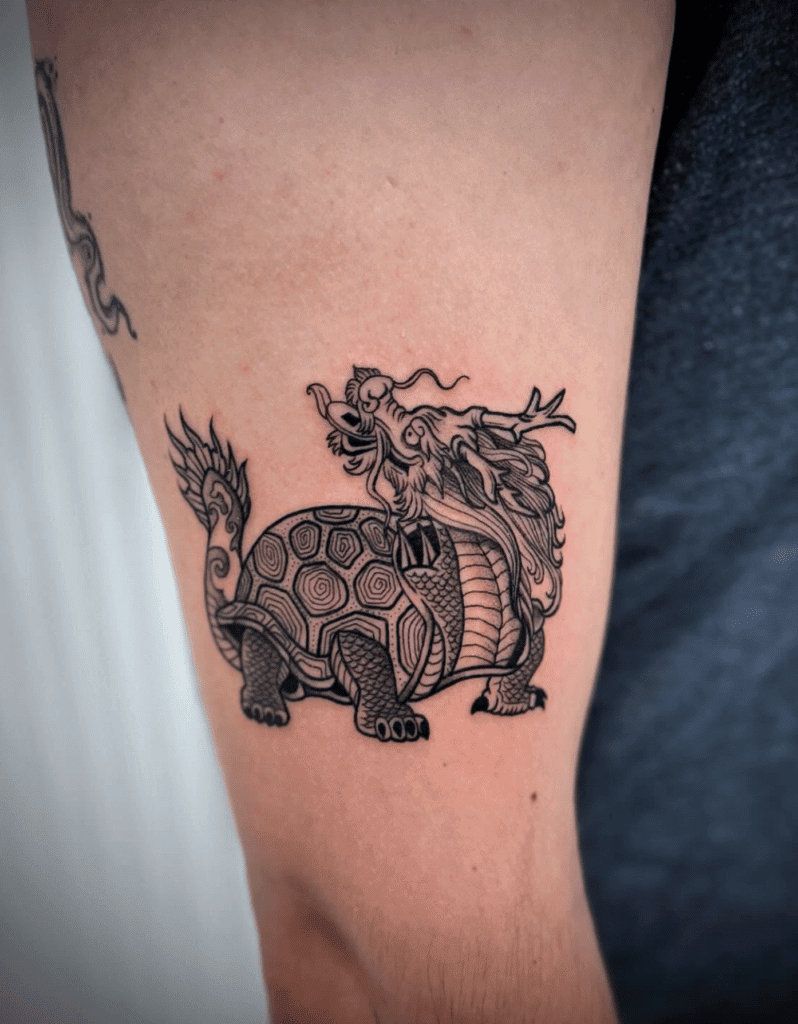
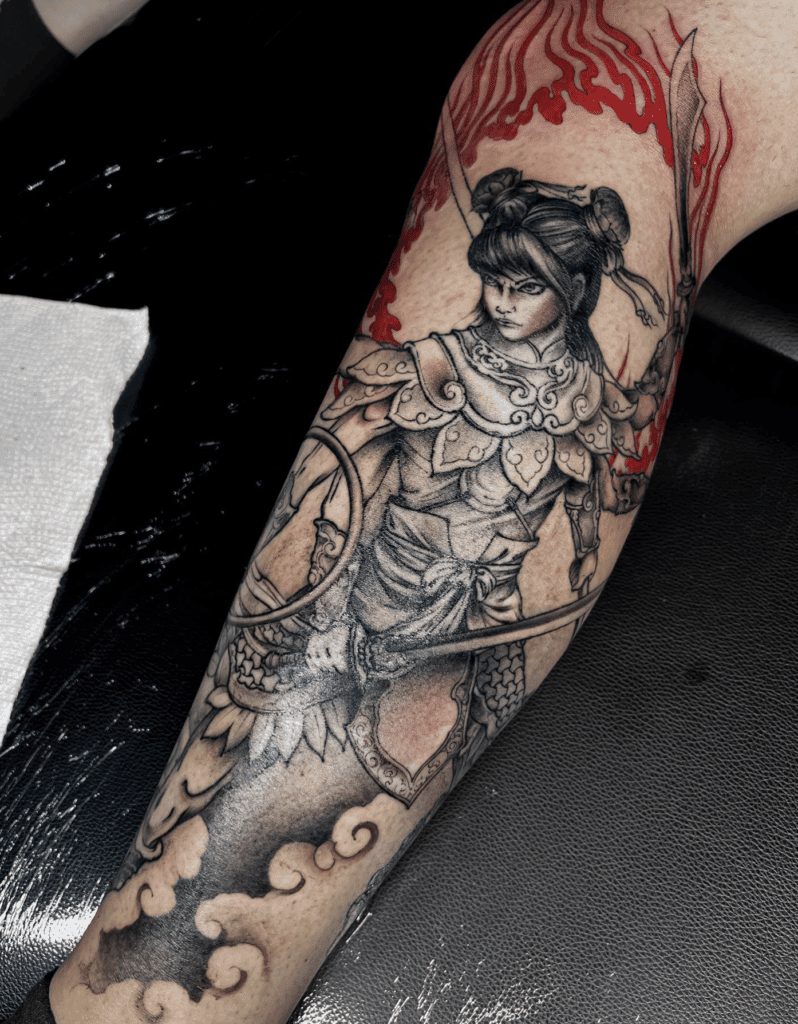
Chinese mythology comes from ancient China, developing across the Yellow and Yangtze River regions. It was shaped by fertile river valleys, floods, mountains, and a long continuity of civilisation, where maintaining harmony between heaven, earth, and humanity was essential for survival and order.
Chinese mythology began forming around 2000–1500 BCE, with roots in early animist and shamanic traditions of Neolithic China. Over time, these beliefs were woven together with philosophy, ritual, and history, eventually merging with Confucianism, Daoism, and Buddhism rather than being replaced by them. Unlike many myth systems, Chinese mythology was never fully separated from philosophy or state ideology.
Chinese mythology never truly ended. Instead, it evolved continuously. From the Han dynasty onward (c. 200 BCE), myths were organised into cosmological systems and moral frameworks. Buddhism added new figures and afterlife concepts, while Daoism reinterpreted gods as immortals and cosmic forces. Even today, Chinese mythology remains present in festivals, folklore, traditional medicine, and popular culture.
At its core, Chinese mythology is about harmony, balance, moral order, and the relationship between heaven and humanity. The universe operates according to natural principles rather than divine drama. Chaos arises when balance is broken, and restoration comes through alignment with cosmic order rather than violent conflict.
Greek Mythology Tattoo
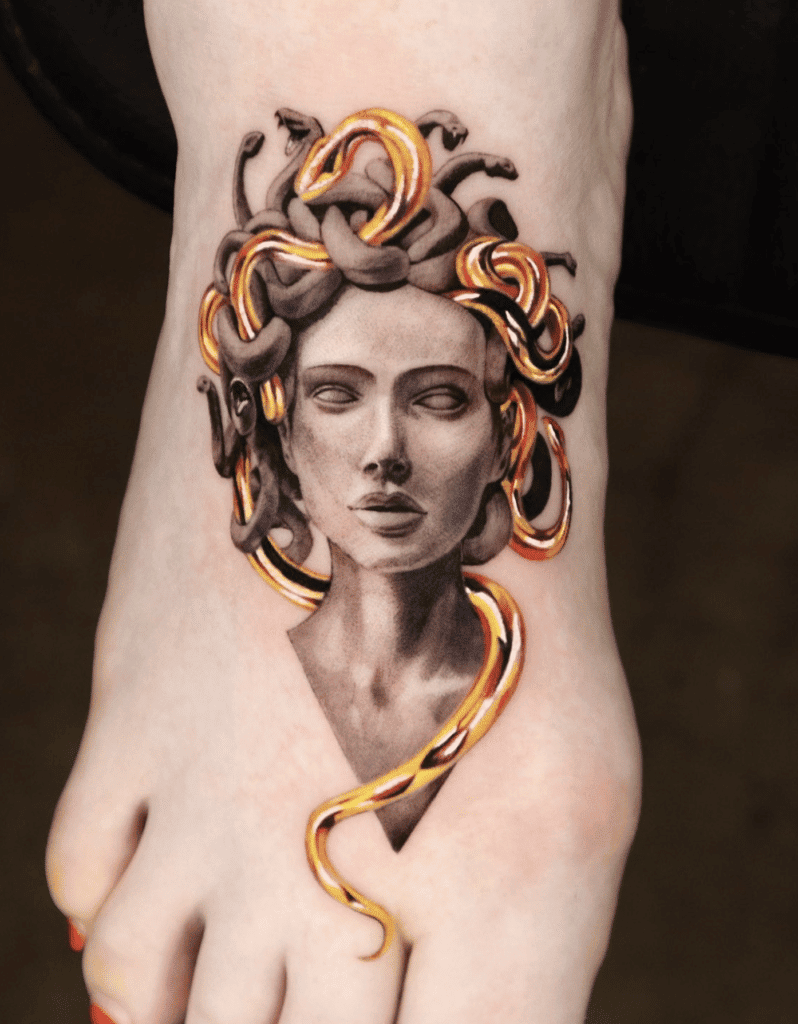
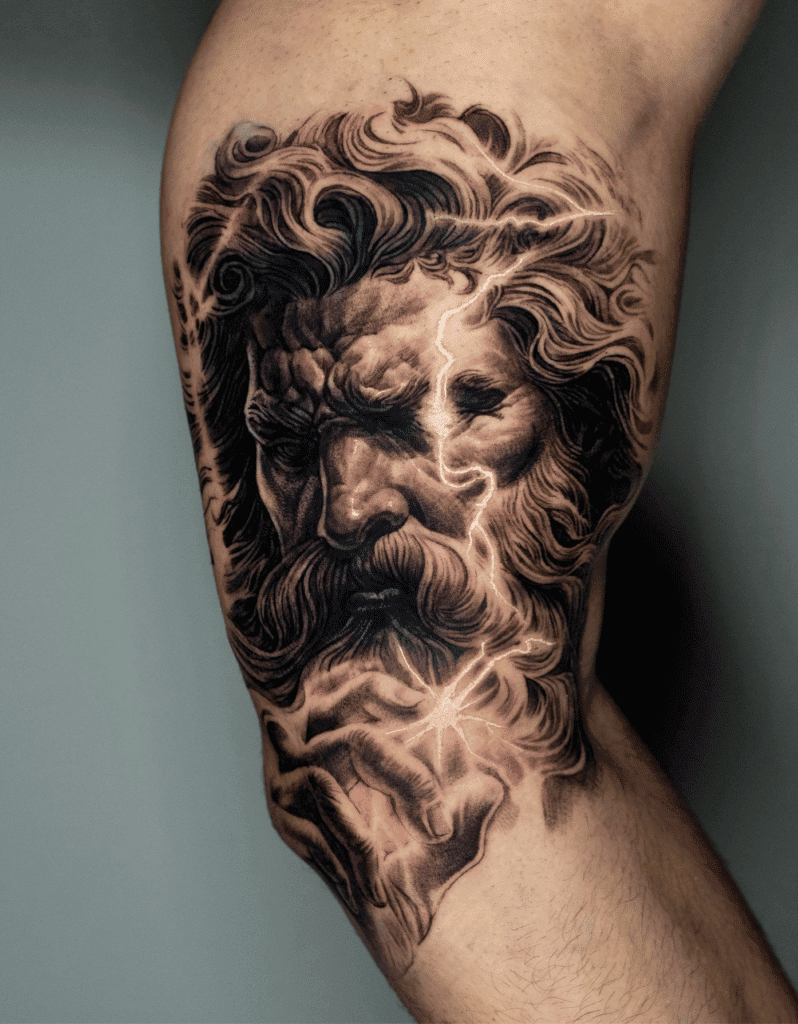
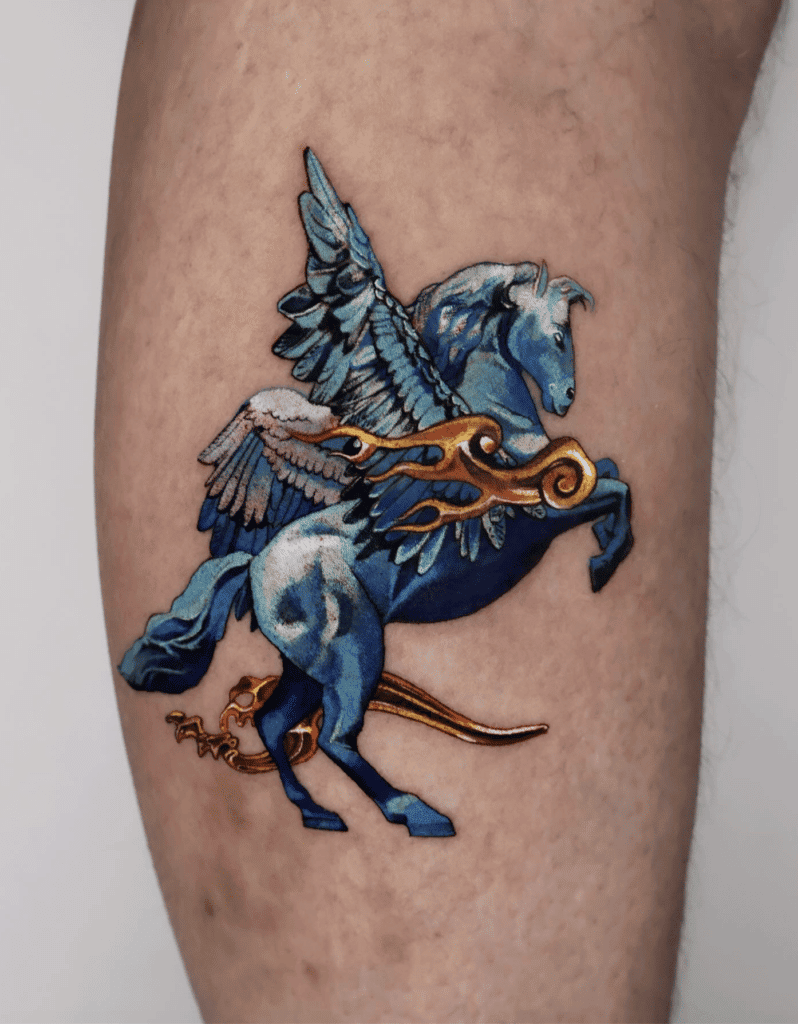
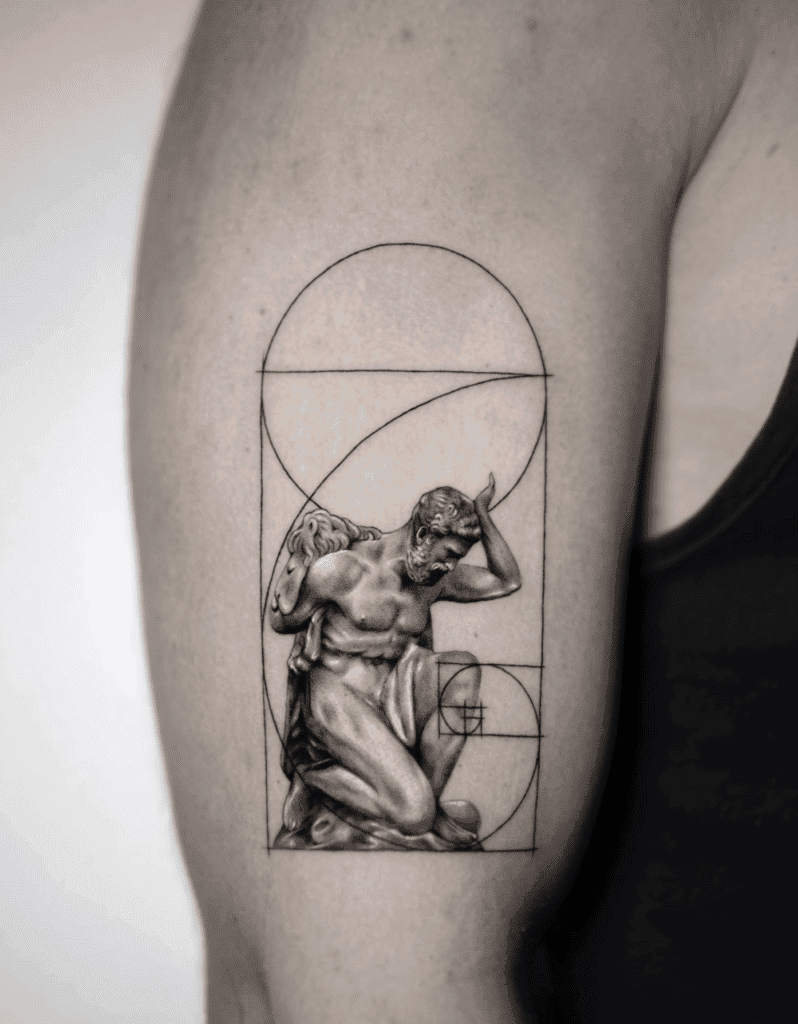
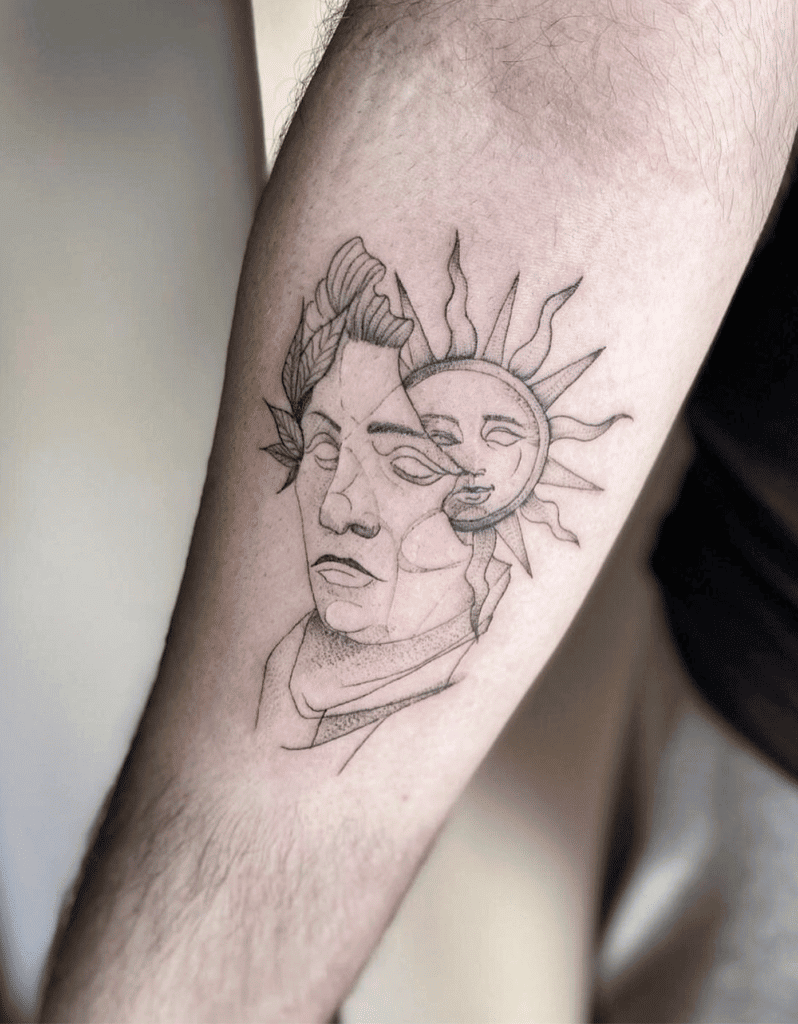
Greek mythology comes from ancient Greece, spread across the Aegean world—the Greek mainland, islands, and the western coast of Asia Minor. A rugged landscape of mountains, seas, and city-states shaped a worldview where gods were powerful yet deeply human, and fate loomed over both mortals and immortals.
Greek mythology began forming around 1600–1200 BCE, with roots in Mycenaean Greece and earlier Indo-European traditions. Over time, these beliefs were refined and expanded through oral poetry, later recorded in works attributed to poets like Homer and Hesiod. Unlike many myth systems, Greek myths were openly debated, reinterpreted, and philosophised even in antiquity.
Greek mythology gradually declined between 300–600 CE. Under Roman rule, the gods were absorbed and renamed, and later the spread of Christianity led to the closure of pagan temples and rituals. Rather than vanishing, Greek mythology survived as literature, art, and philosophy, becoming foundational to Western culture.
At its core, Greek mythology is about human nature, fate, and the tension between order and chaos. The gods are immortal but flawed—capable of love, jealousy, cruelty, and compassion. Humans are not created to serve the gods, but to struggle, suffer, and seek meaning within a universe governed by fate.
Roman Mythology Tattoo
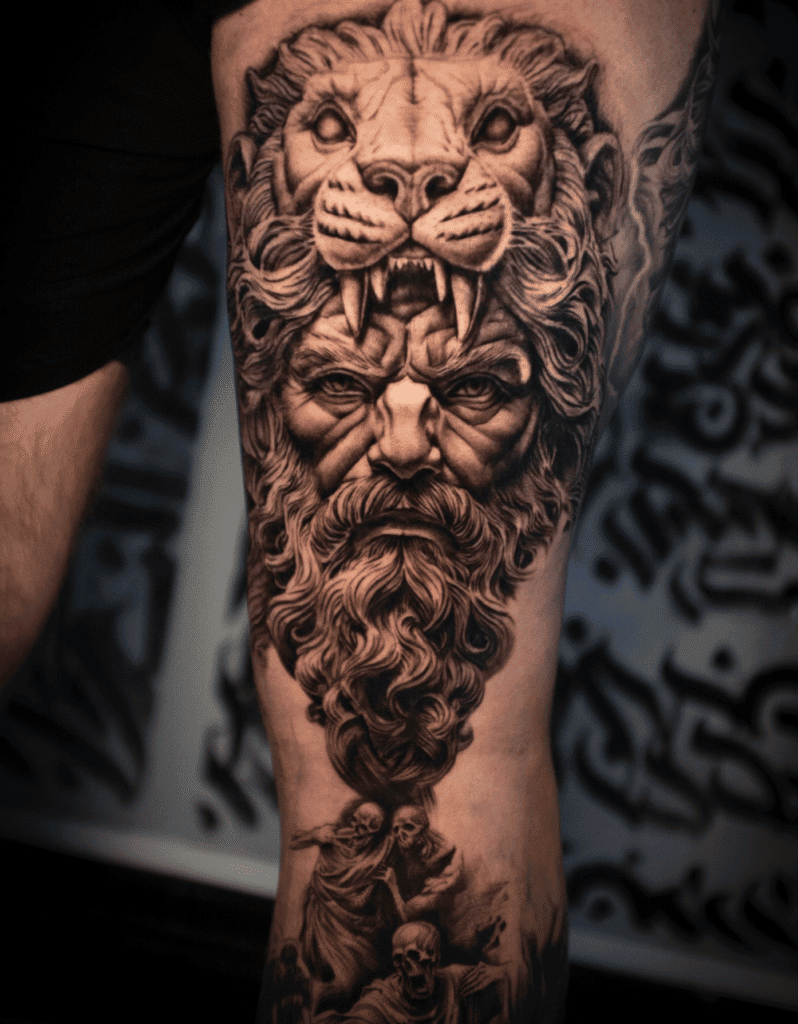
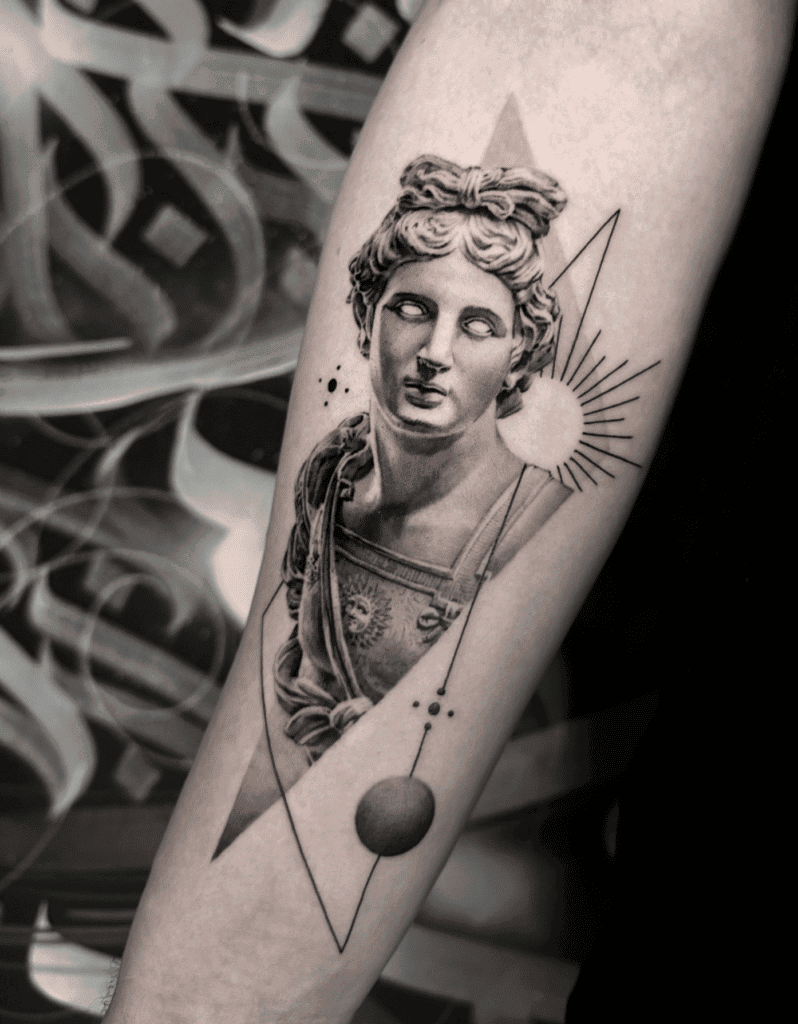
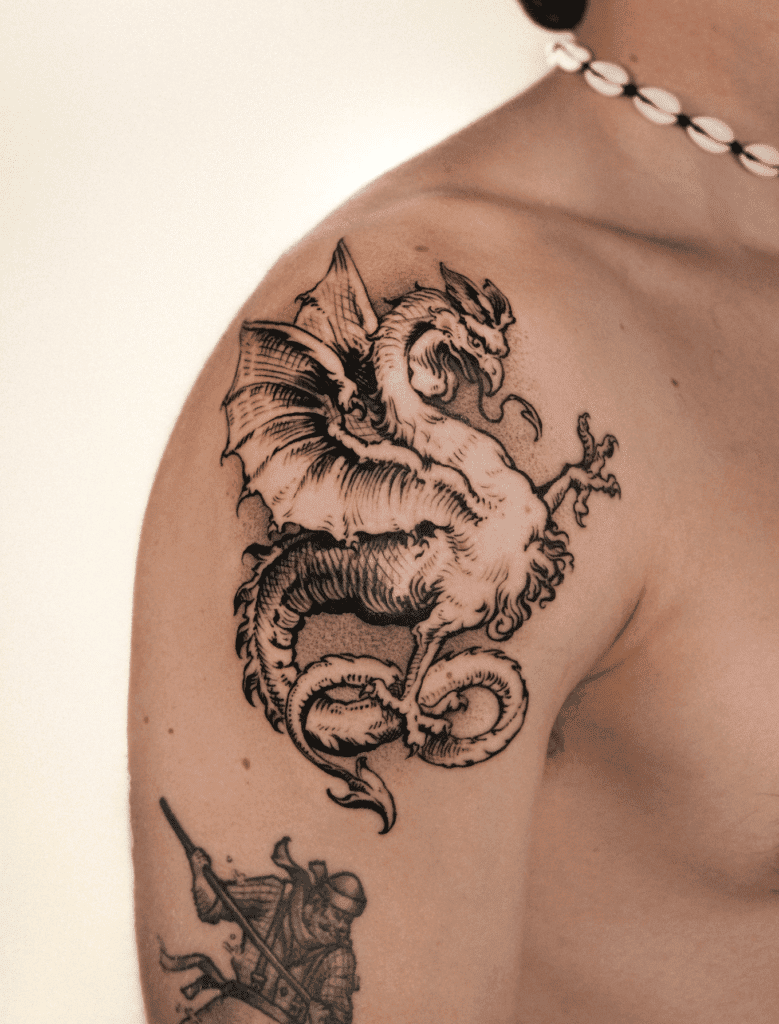
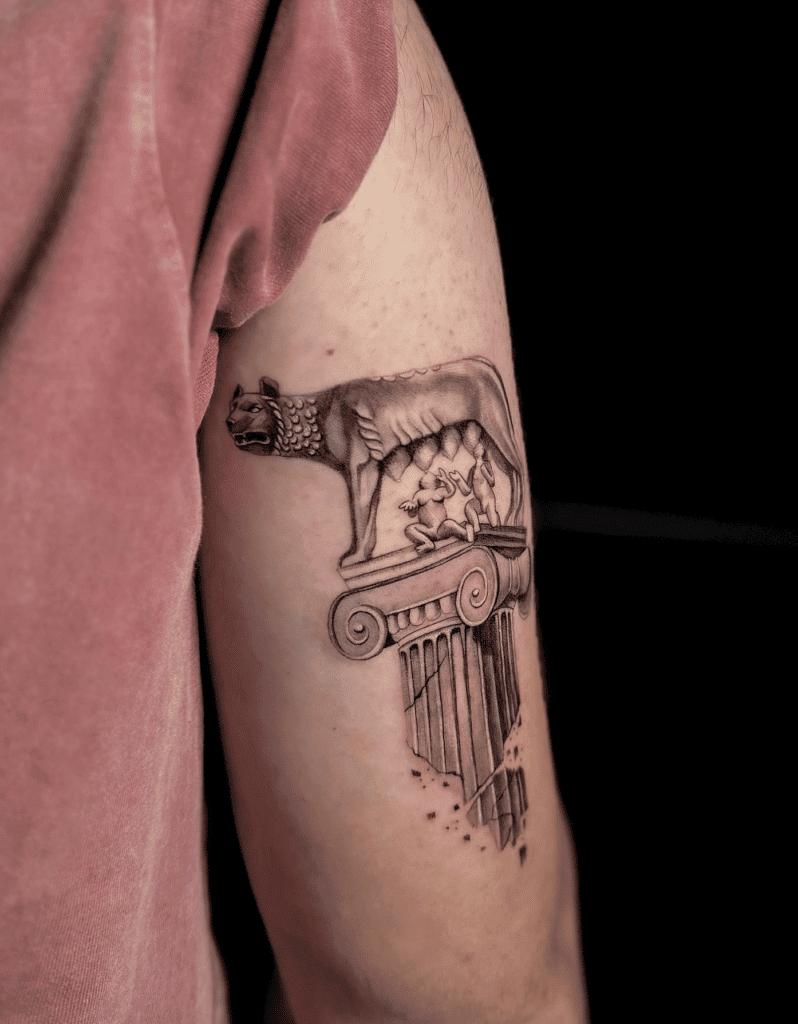
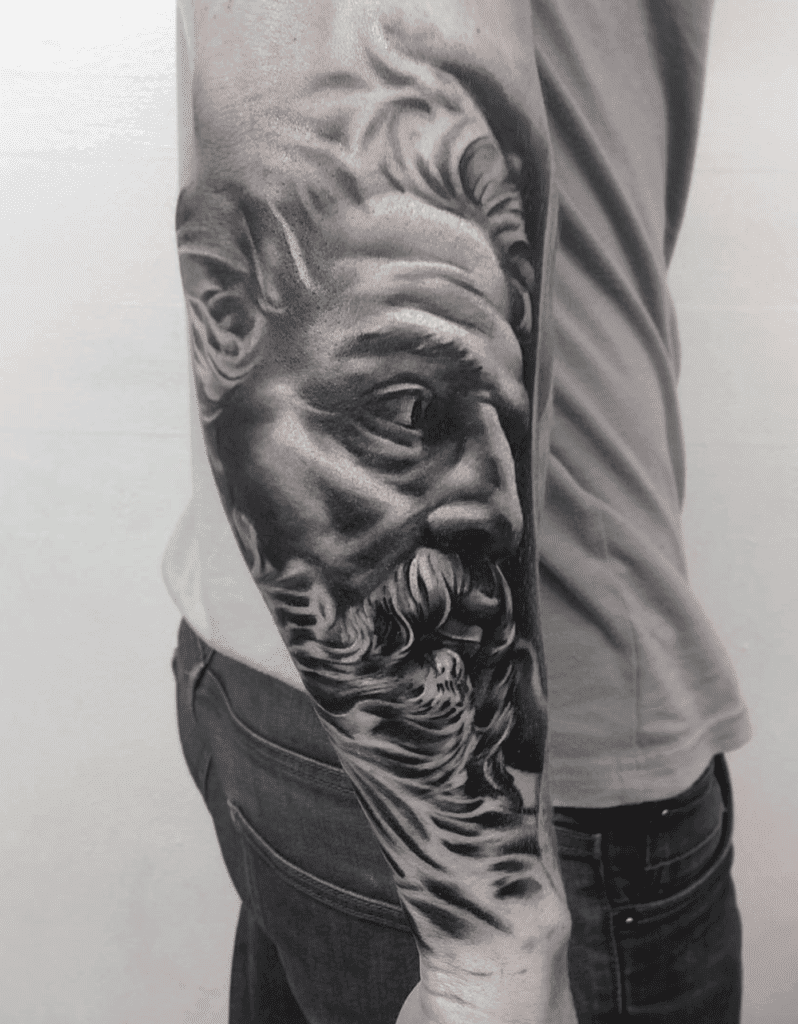
Roman mythology comes from ancient Rome, beginning in central Italy and expanding across the Mediterranean as Rome grew from a small city-state into a vast empire. Shaped by law, military discipline, and civic duty, Roman religious belief focused less on cosmic storytelling and more on order, obligation, and the success of the state.
Roman mythology began forming around 800–600 BCE, rooted in early Italic and Etruscan beliefs. As Rome came into contact with Greek culture (from around the 6th century BCE), it adopted Greek gods and myths, reinterpreting them through Roman values. Rather than inventing an entirely new myth system, Rome reshaped existing ones to reflect its identity as a civilisation of law and conquest.
Roman mythology declined between 300–500 CE, following the Christianisation of the Roman Empire. Emperor Constantine legalised Christianity in the early 4th century, and later emperors closed pagan temples and banned traditional rituals. Unlike Greek mythology, which survived primarily as literature, Roman mythology faded as a state religion, replaced by Christian doctrine tied to imperial authority.
At its core, Roman mythology is about duty, discipline, destiny, and the supremacy of Rome. The gods care less about personal drama and more about contracts, oaths, warfare, agriculture, and civic stability. Religion was practical—rituals ensured victory, prosperity, and social order rather than personal salvation.
Inca Mythology Tattoo
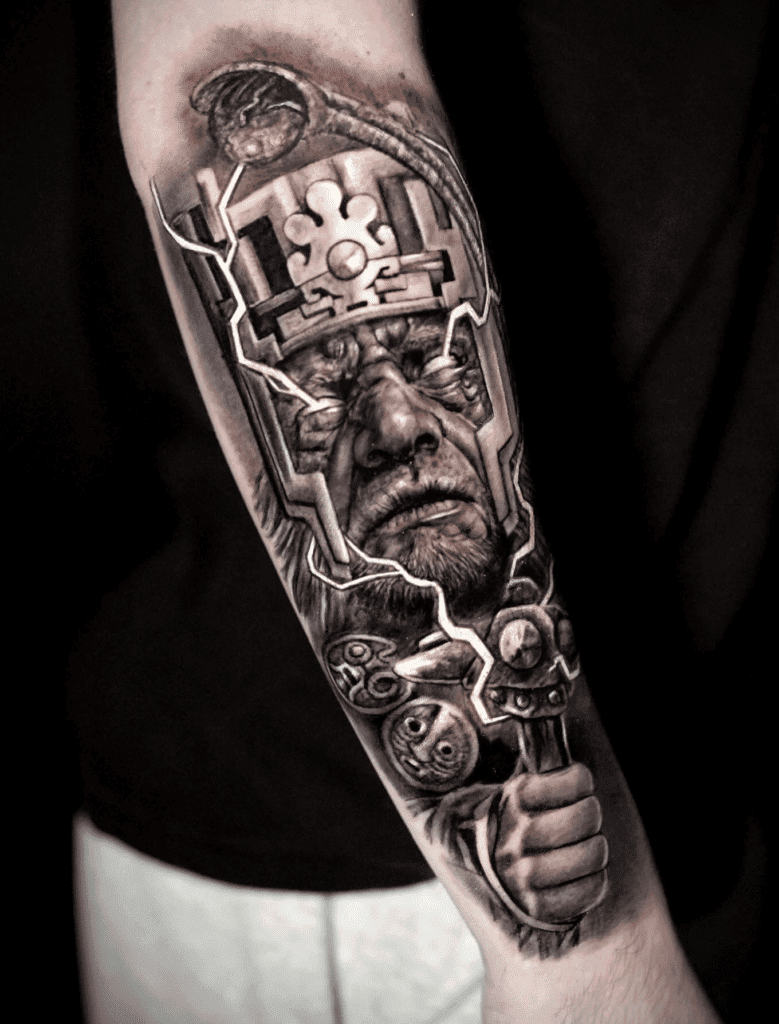
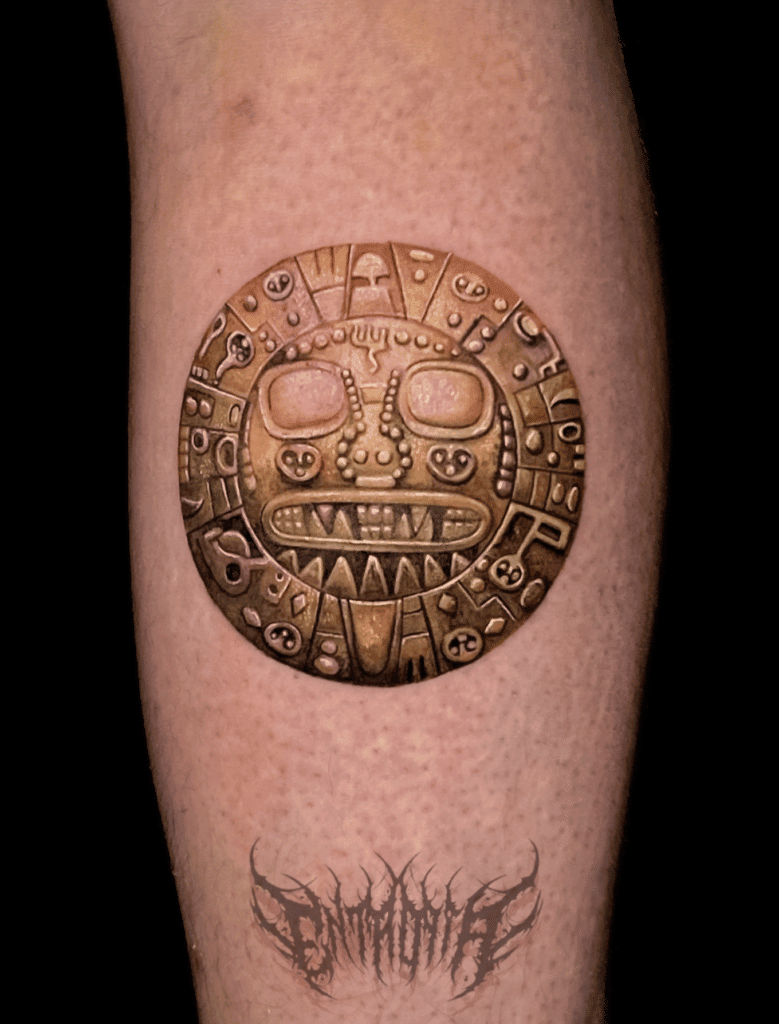
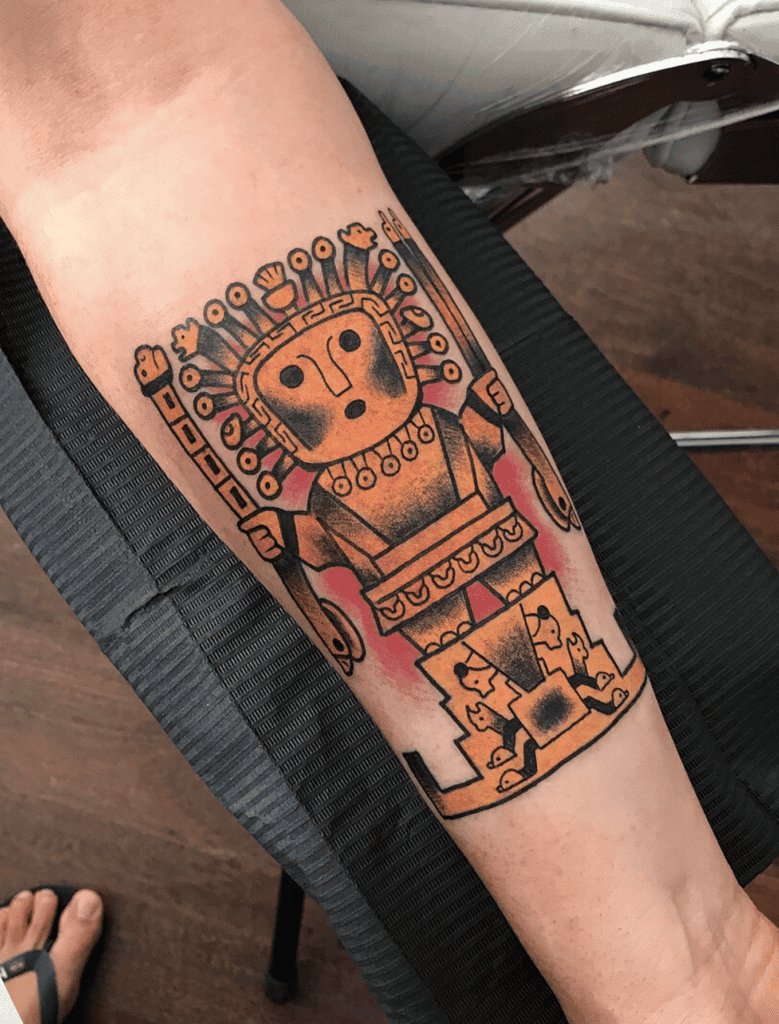
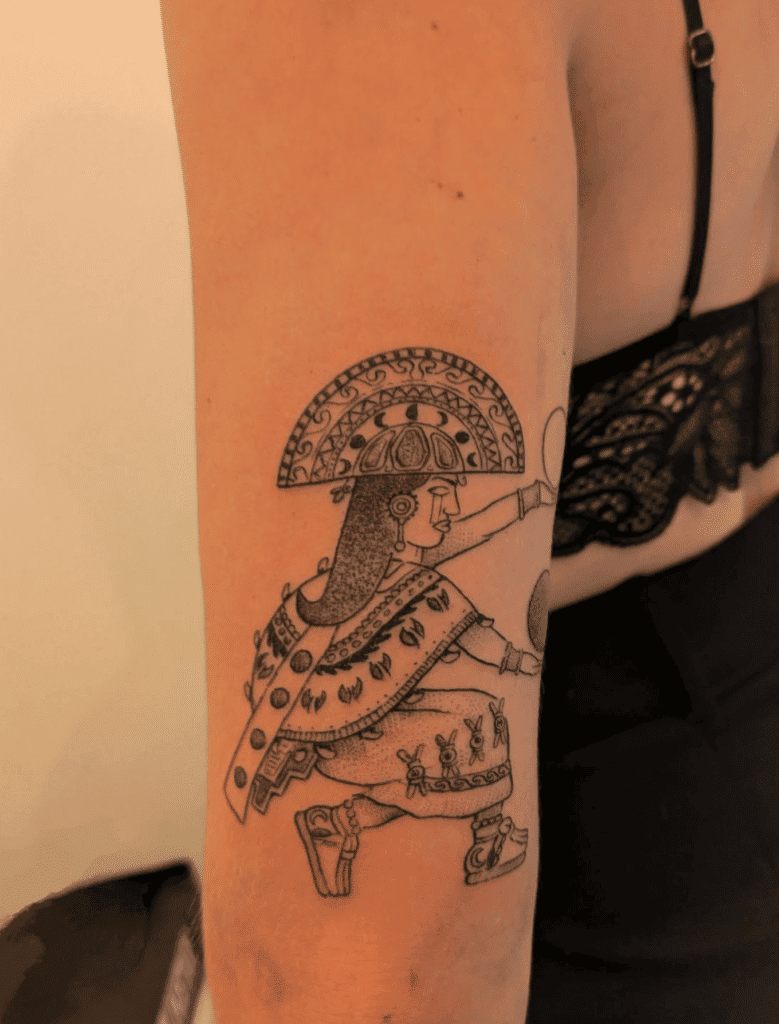
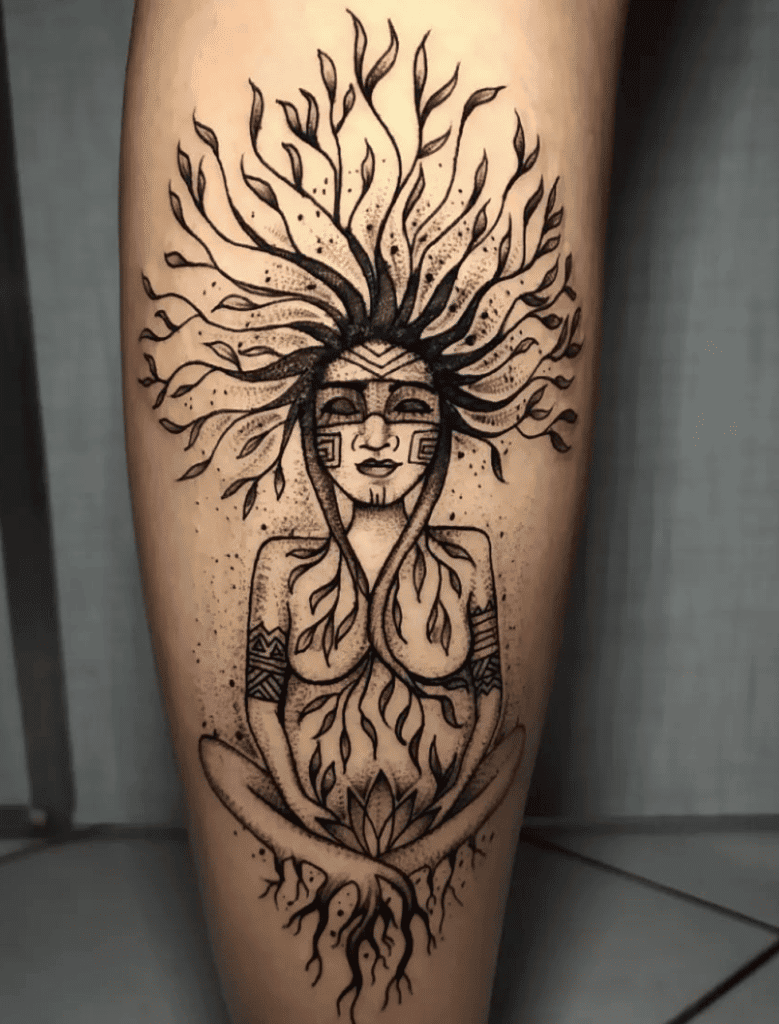
Inca mythology comes from the Inca civilisation of the Andes, centred in modern-day Peru, with influence across Ecuador, Bolivia, Chile, and Argentina. It developed in a dramatic high-altitude landscape of mountains, valleys, earthquakes, and changing climates, where survival depended on harmony with the land rather than control over it.
Inca mythology began forming long before the rise of the Inca Empire, drawing from older Andean belief systems that may stretch back over 2,000 years. When the Inca rose to power around 1200 CE, they absorbed and unified these regional myths into a state religion, tying divine authority directly to the emperor and the natural world.
Inca mythology declined rapidly after 1532 CE, following the Spanish conquest of the Inca Empire. Temples were destroyed, priests executed, and Christian conversion enforced. Unlike some myth systems, Inca mythology had no written scripture, relying entirely on oral tradition and ritual. As a result, much knowledge was lost, though many beliefs survived in folk practice and syncretic traditions that still exist today.
At its core, Inca mythology is about balance, reciprocity, and the sacredness of nature. Humans are not masters of the world, but caretakers within it. The universe is alive, and harmony must be maintained through respect, offerings, and correct behaviour. Disaster is not punishment—it is imbalance.
Finnish Mythology Tattoo
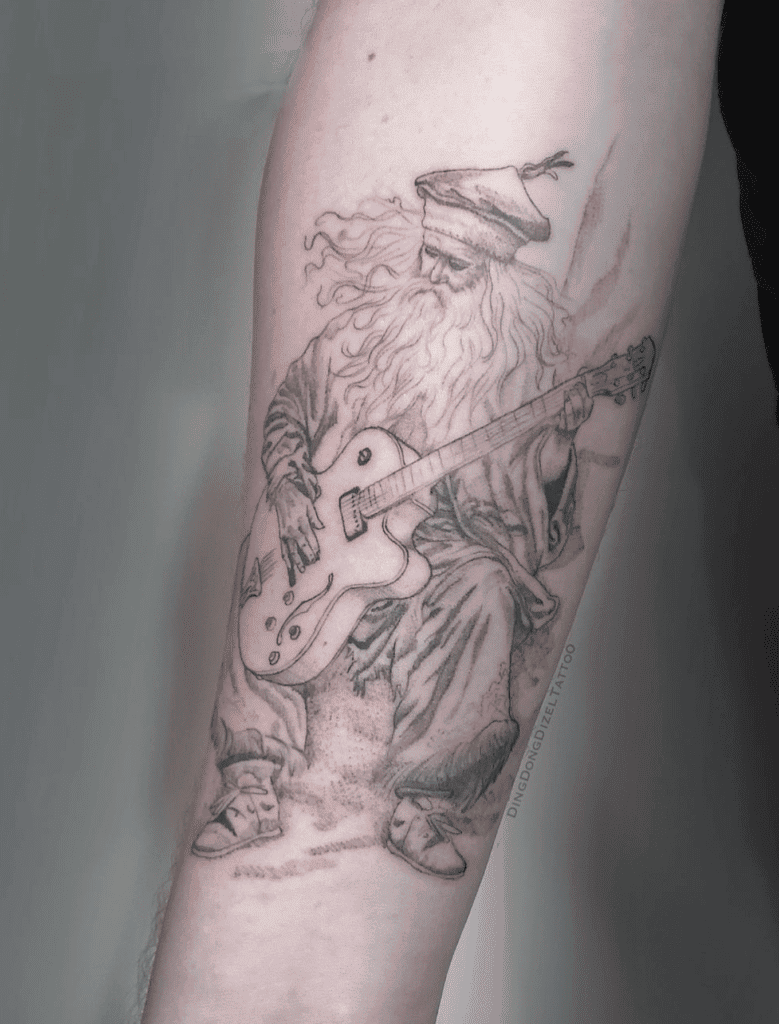
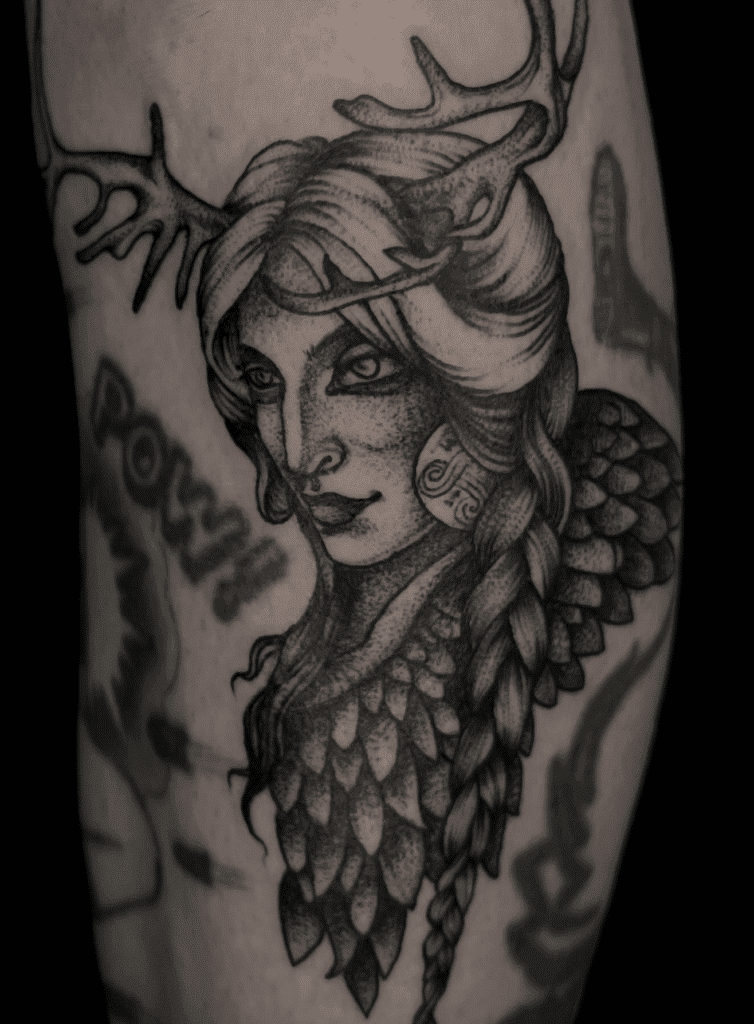
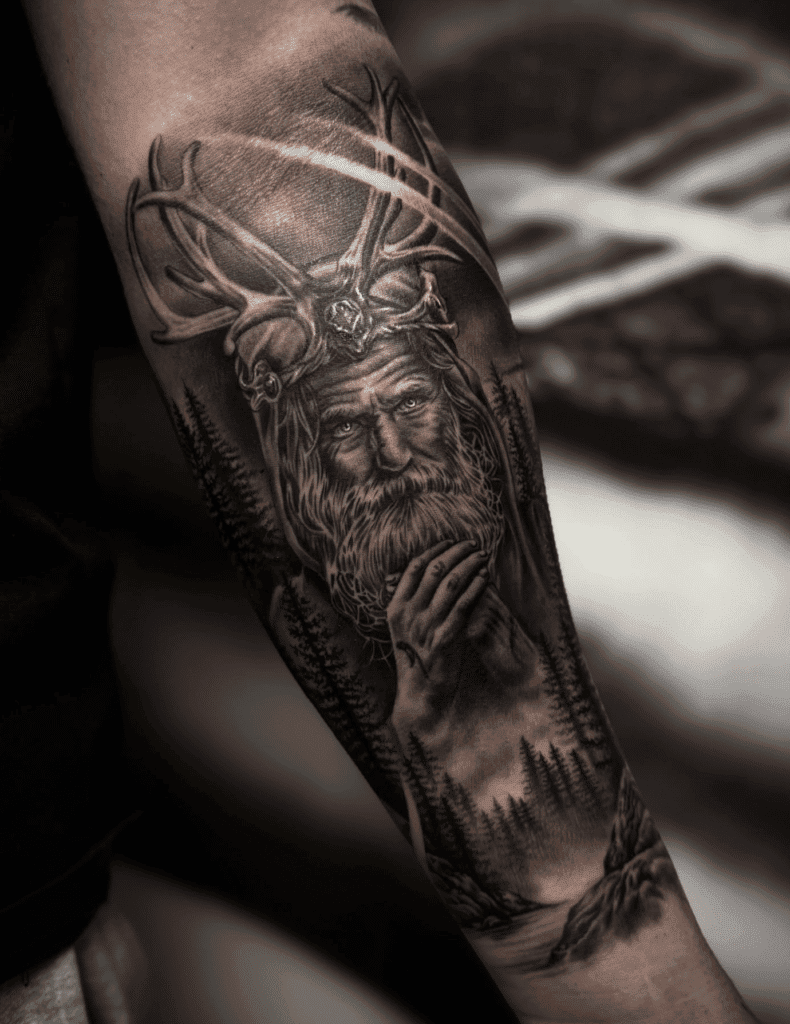
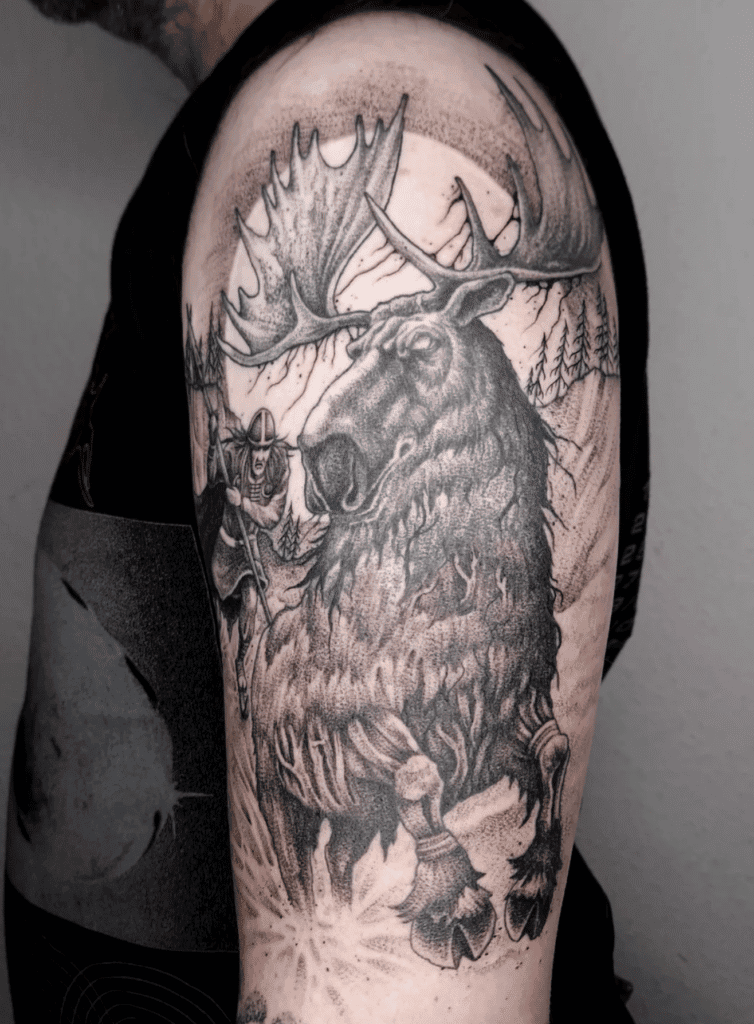
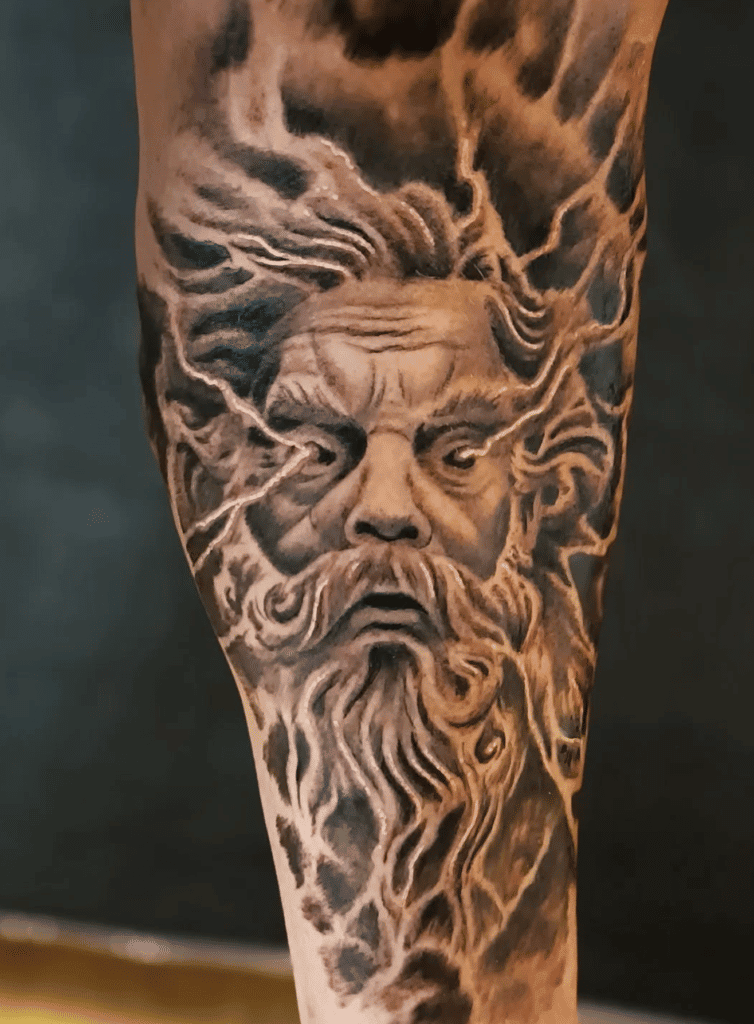
Finnish mythology comes from Finland and the wider Finno-Ugric cultural sphere, shaped by dense forests, thousands of lakes, long winters, and quiet, isolated landscapes. These environments fostered a worldview where nature is alive, silence is powerful, and words themselves carry magic.
Finnish mythology began forming well before 1000 BCE, emerging from ancient animist and shamanic traditions. For centuries, these beliefs were preserved entirely through oral poetry and song, passed down by rune singers. The mythology was finally recorded in the 19th century in the epic Kalevala, compiled by Elias Lönnrot from traditional folk songs.
Finnish mythology declined as an active belief system between 1100–1500 CE, following the Christianisation of Finland under Swedish rule. Pagan practices were discouraged or banned, but unlike many mythologies, Finnish myths were not absorbed into a new state religion. Instead, they survived quietly in folklore, songs, and rural tradition until they were later rediscovered and preserved as cultural heritage.
At its core, Finnish mythology is about creation through song, balance with nature, and the power of knowledge over strength. Magic is not flashy or violent — it is spoken, sung, and carefully controlled. The world is shaped by words, wisdom, and endurance rather than domination.
Slavic Mythology Tattoo
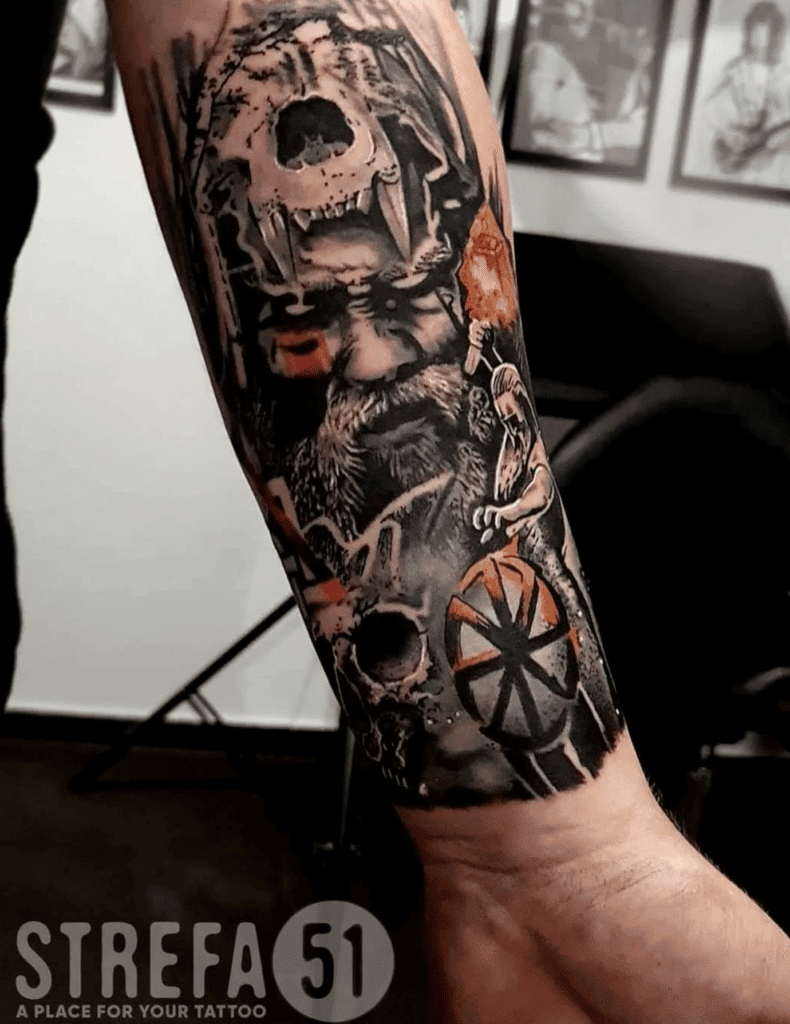
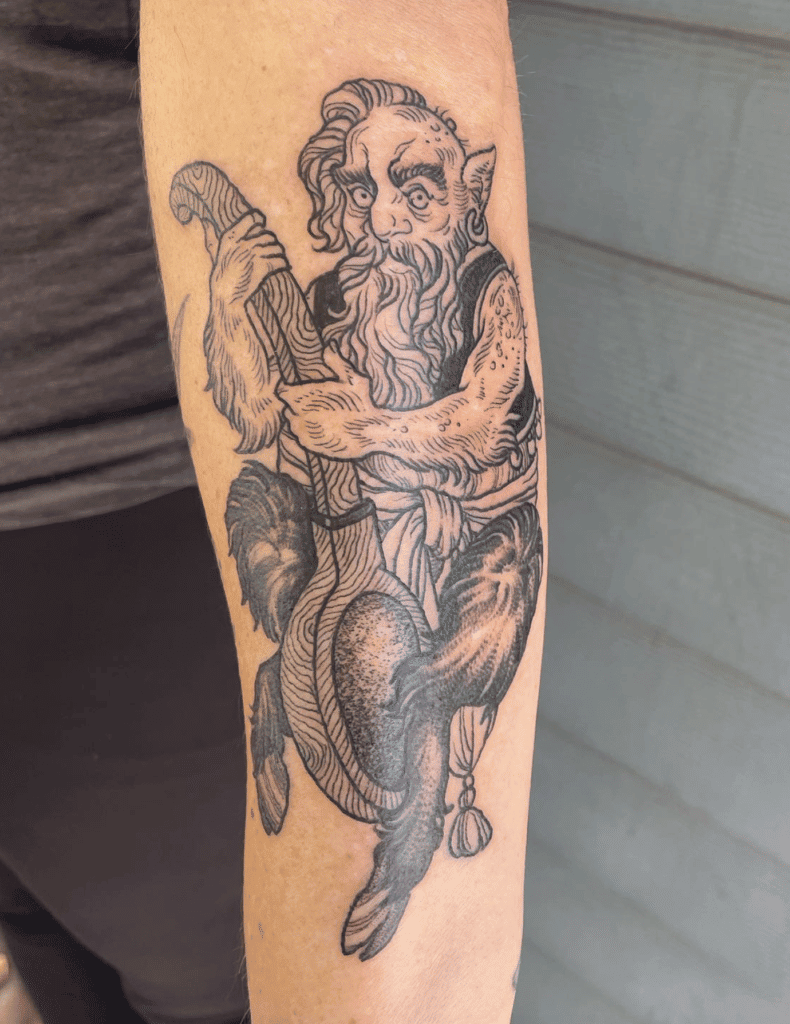
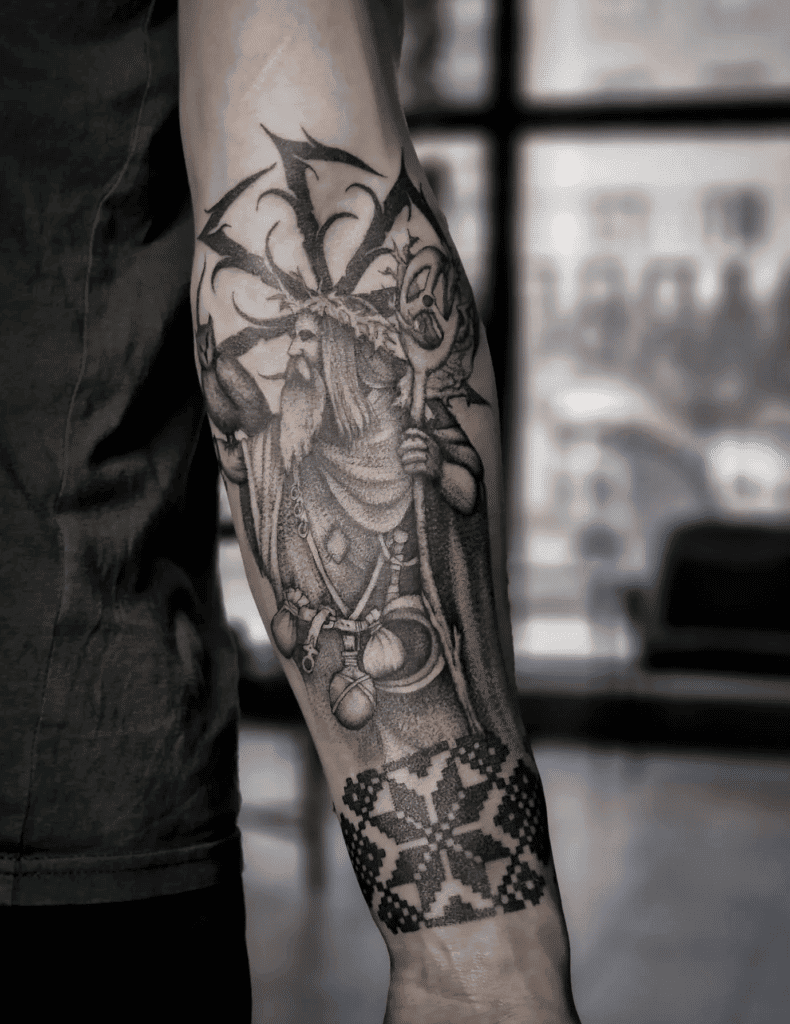
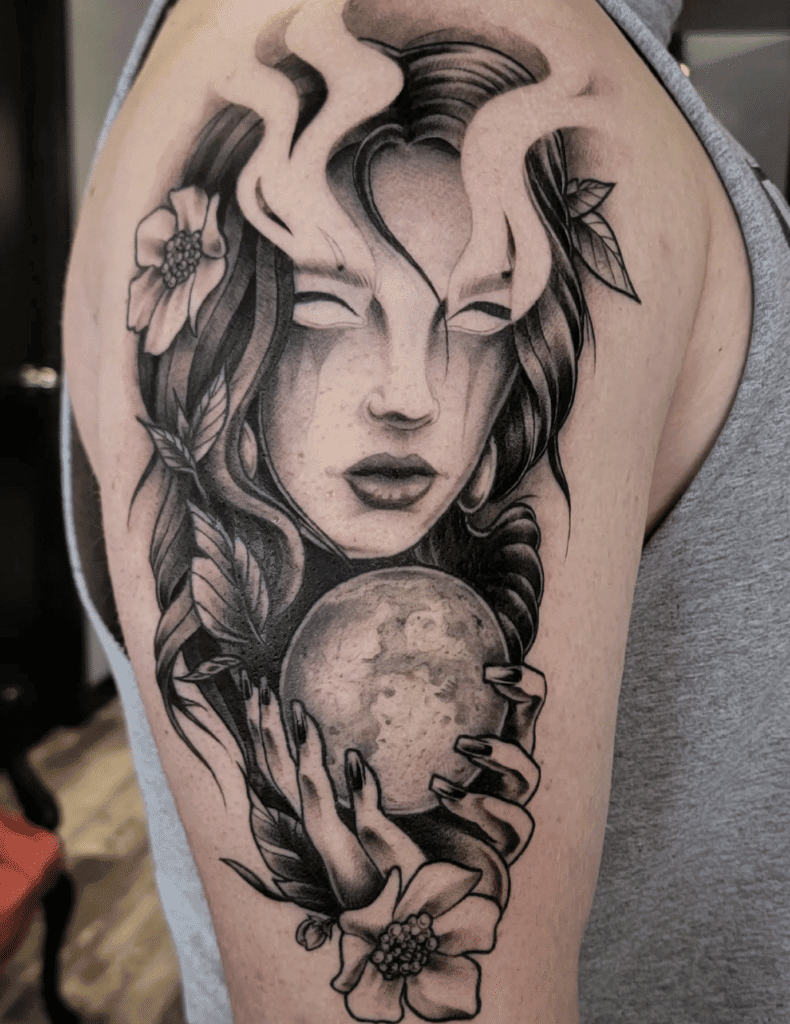
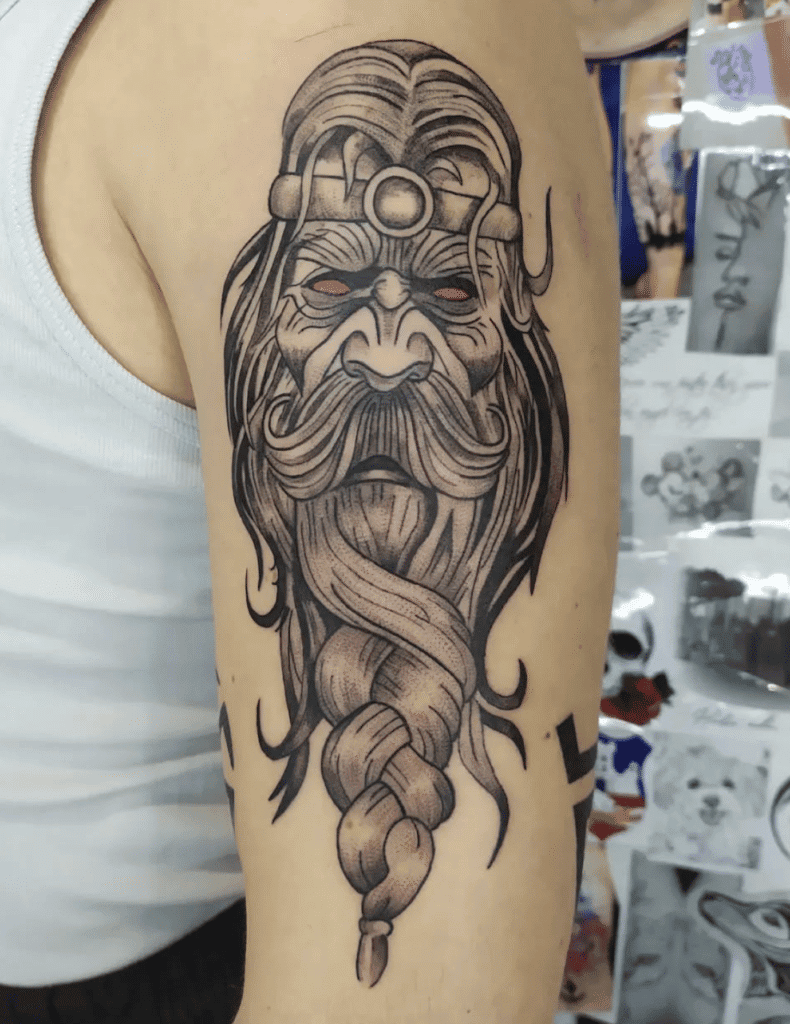
Slavic mythology comes from the ancient Slavic peoples of Eastern, Central, and Southern Europe, spanning modern-day Poland, Ukraine, Russia, the Balkans, the Czech lands, and beyond. It developed in a world of forests, rivers, marshes, and seasonal extremes, where communities lived close to nature and relied on agriculture, hunting, and the rhythms of the year.
Slavic mythology likely began forming around 1500–500 BCE, emerging from early Indo-European and animist traditions. These beliefs were transmitted orally and varied widely from region to region. There was no single unified pantheon; instead, shared gods and spirits appeared under different names and forms across Slavic lands.
Slavic mythology declined between 900–1200 CE, following the Christianisation of Slavic territories by Byzantine and Latin churches. Temples were destroyed or repurposed, and public pagan rituals were banned. However, unlike many ancient mythologies, Slavic beliefs survived strongly in folk traditions, seasonal festivals, and rural superstition. The old gods faded, but the spirits remained.
At its core, Slavic mythology is about nature, cycles, balance, and the thin line between the living world and the unseen. Life and death, growth and decay, summer and winter constantly replace one another. The universe is not ruled by distant gods alone, but by spirits that inhabit homes, forests, waters, and fields.
Balkan Mythology Tattoo
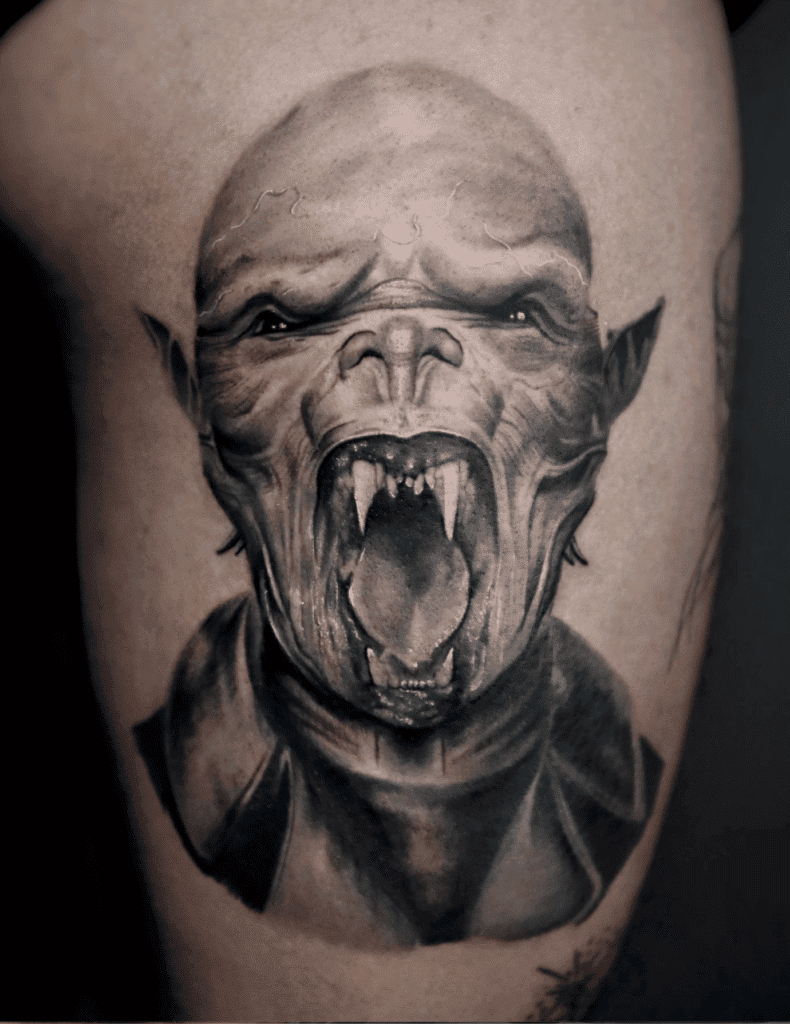
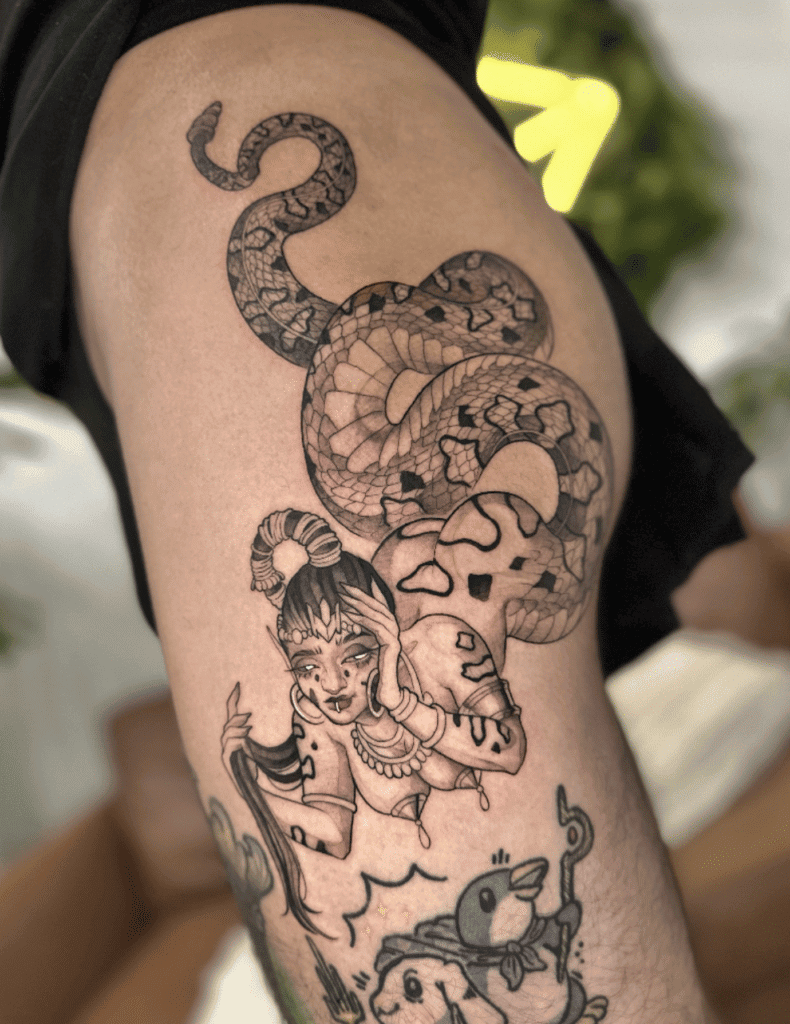
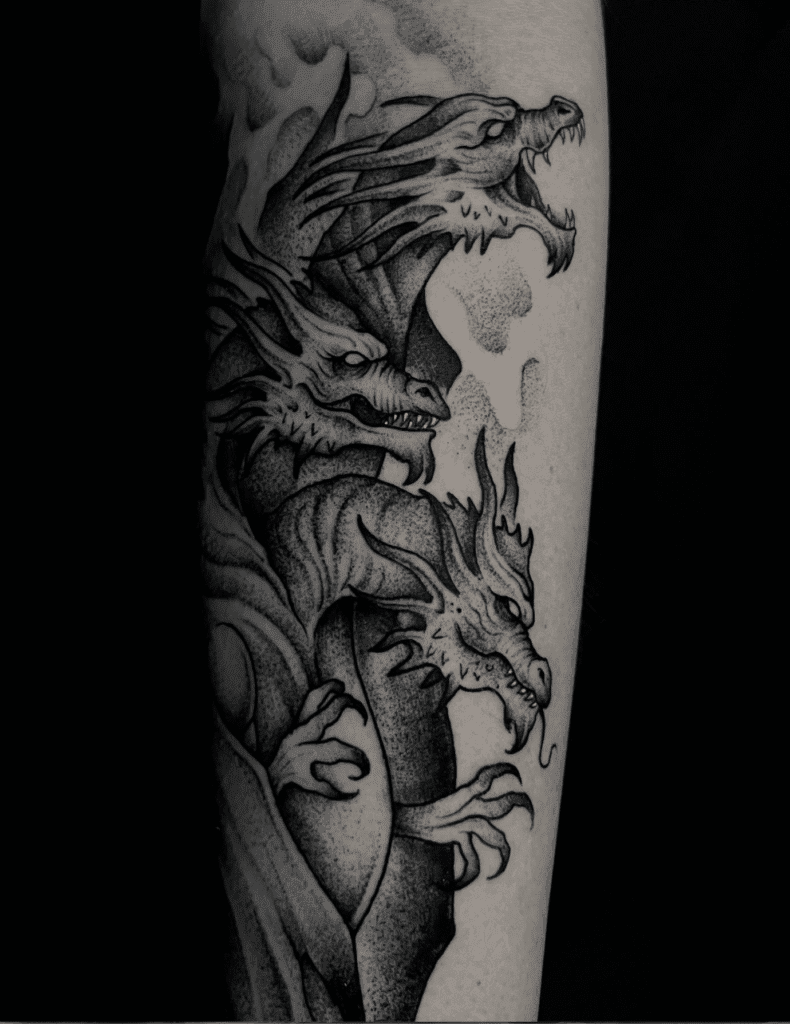
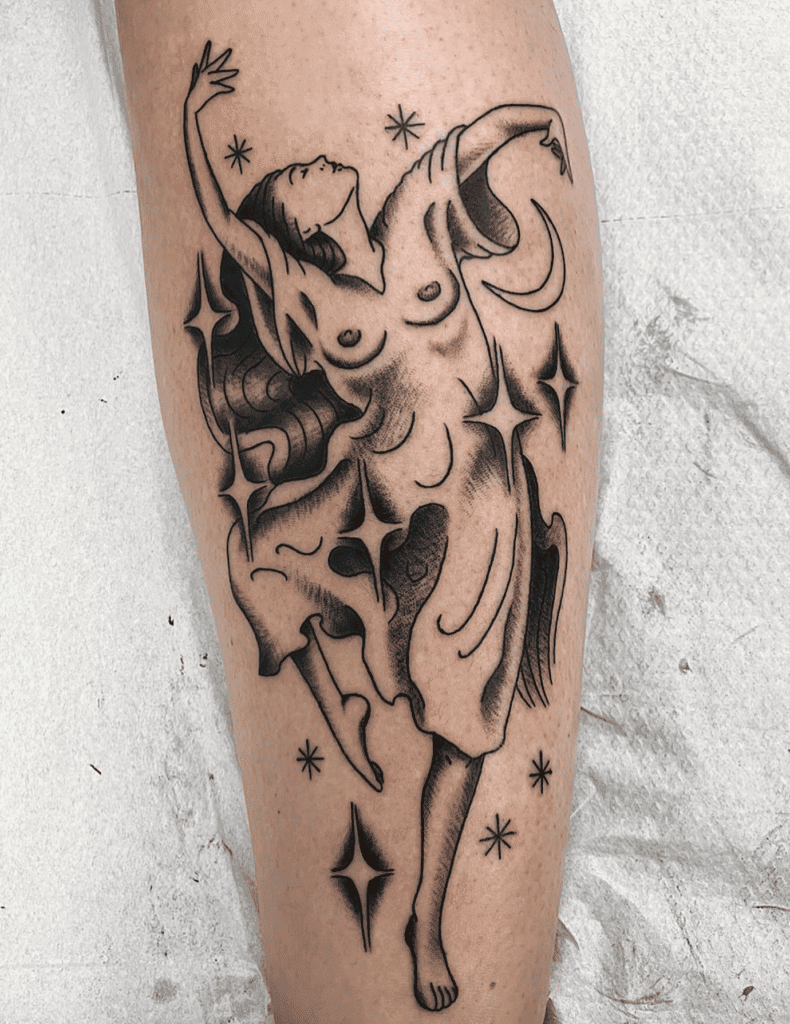
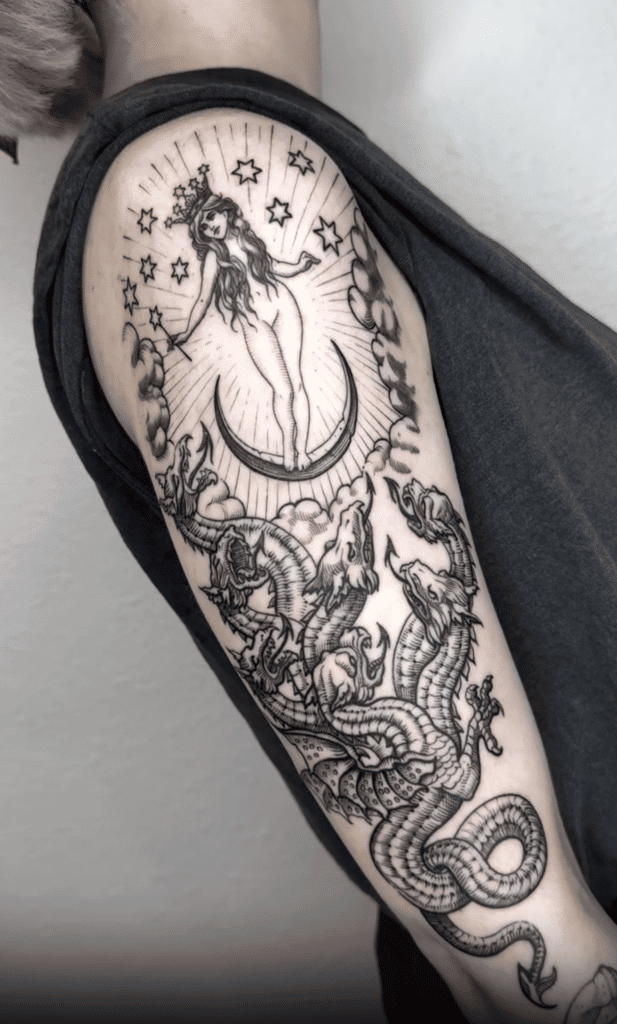
Balkan mythology comes from the Balkan Peninsula of Southeast Europe, including modern-day Romania, Bulgaria, Serbia, Croatia, Bosnia, Montenegro, North Macedonia, Albania, Greece (border regions), and parts of Turkey. It formed in a rugged landscape of mountains, forests, rivers, and storms, where isolated villages preserved local traditions for centuries.
Balkan mythology began forming around 1500–500 BCE, emerging from early Indo-European, Thracian, Illyrian, Dacian, and South Slavic beliefs, layered later with Greek, Roman, and Slavic influences. Rather than a single unified system, Balkan mythology developed as a dense patchwork of regional myths, often varying from valley to valley.
Balkan mythology declined as an organised belief system between 900–1400 CE, largely due to Christianisation (both Eastern Orthodox and Catholic) and later Ottoman influence in parts of the region. However, unlike many mythologies, Balkan beliefs never fully disappeared. They survived powerfully in folklore, superstition, seasonal rituals, and oral storytelling, especially in rural areas. Many traditions were quietly practised well into the modern era.
At its core, Balkan mythology is about survival, liminality, and the constant presence of unseen forces. The world is dangerous, unpredictable, and alive. Spirits roam forests, storms have intent, and the dead do not always rest. Protection comes not from moral purity, but from knowledge, ritual, and respect for boundaries.
Native American Mythology Tattoo
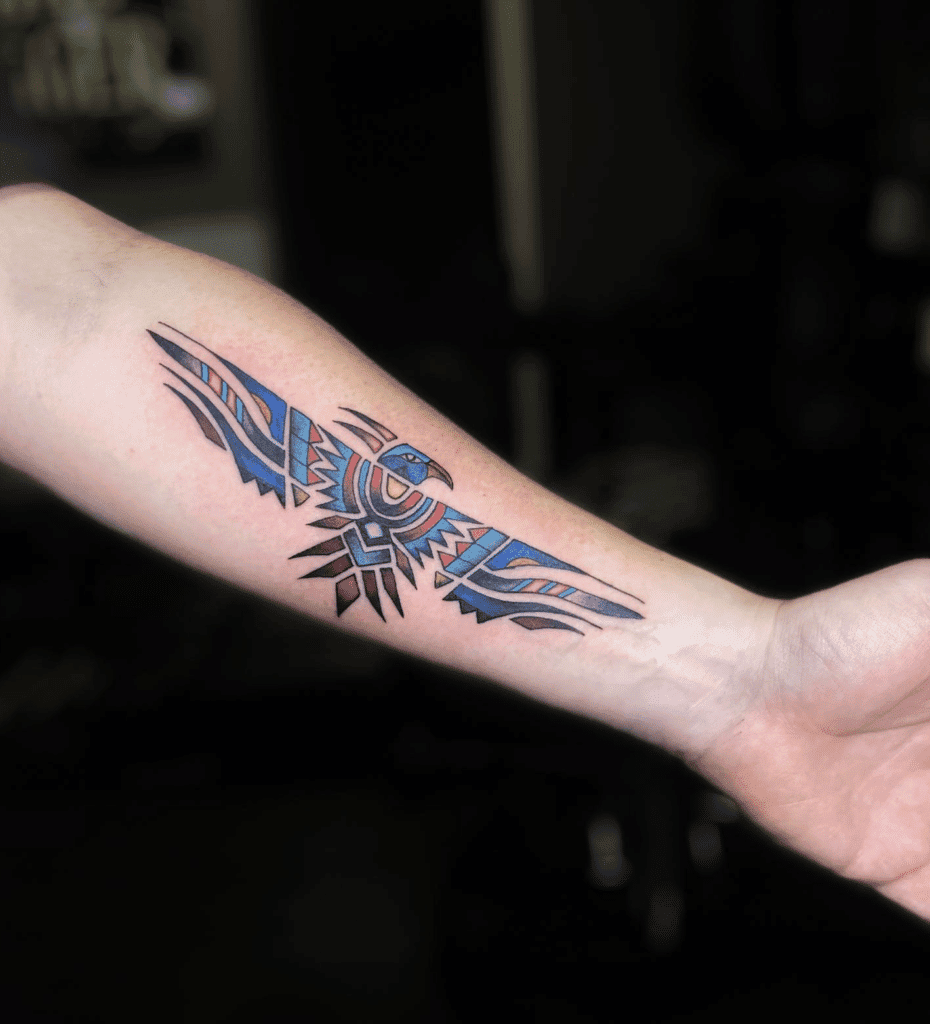
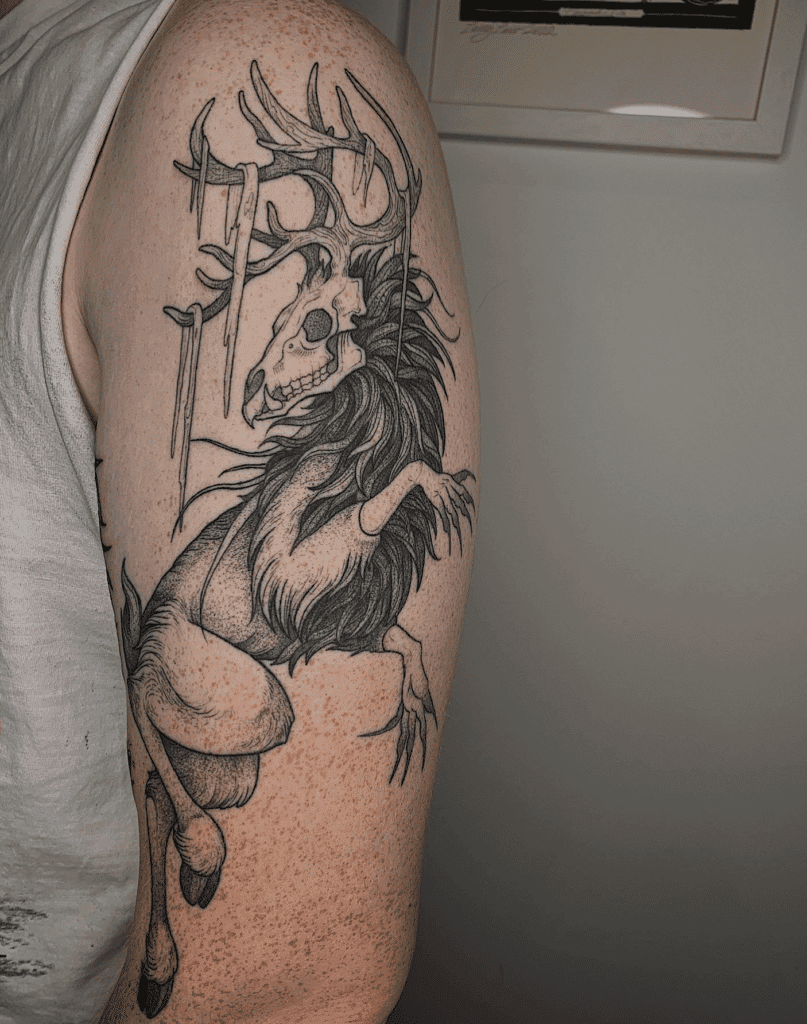
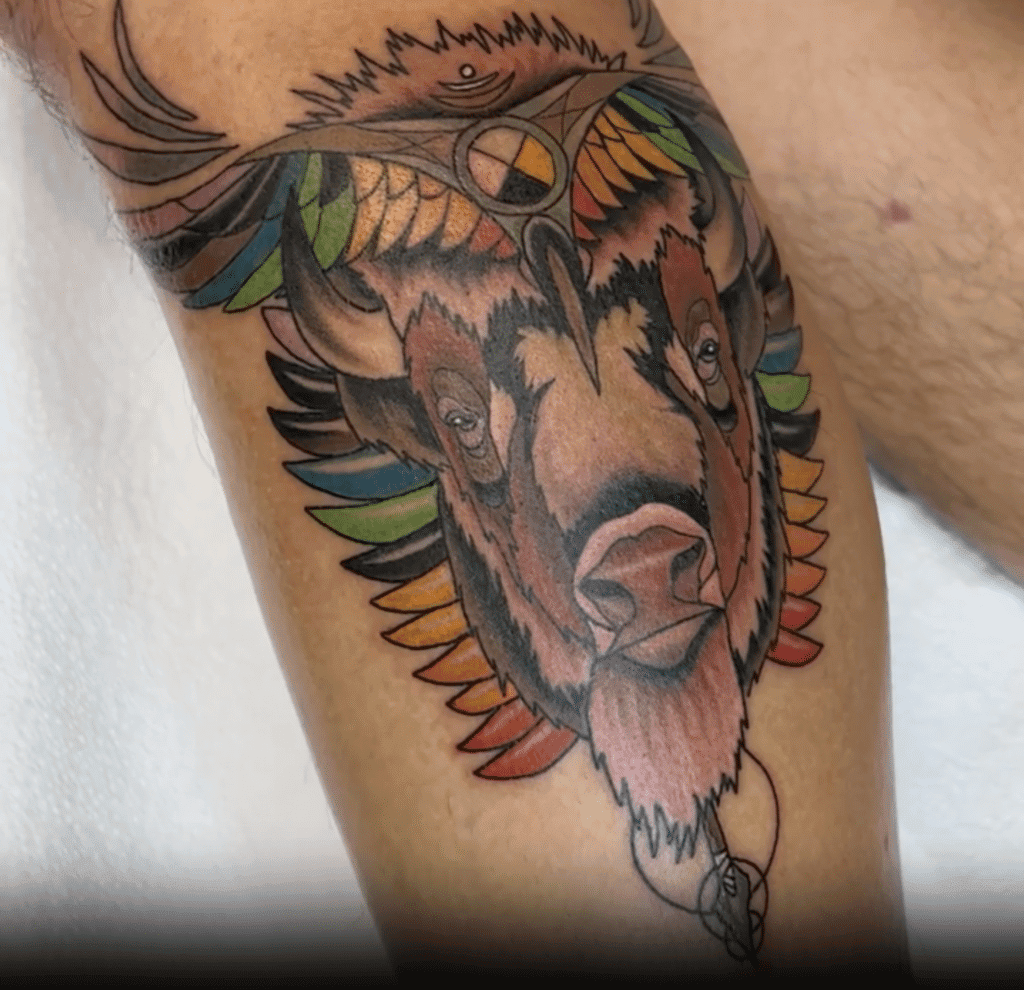
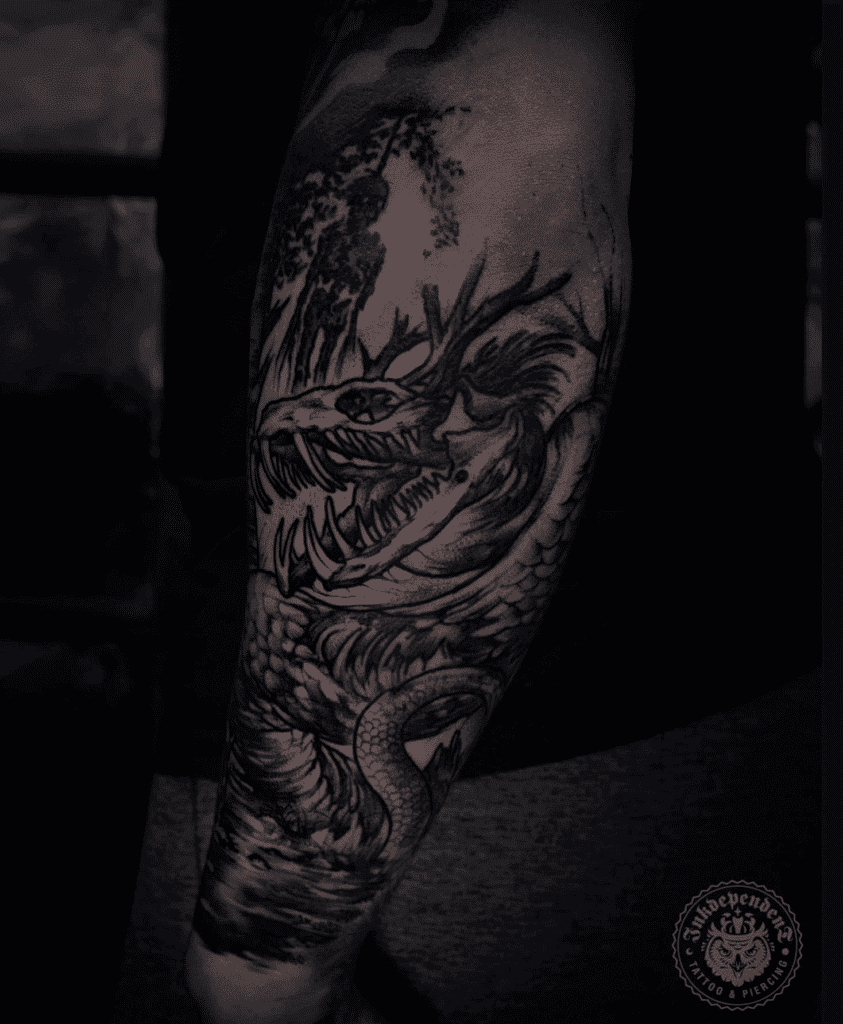
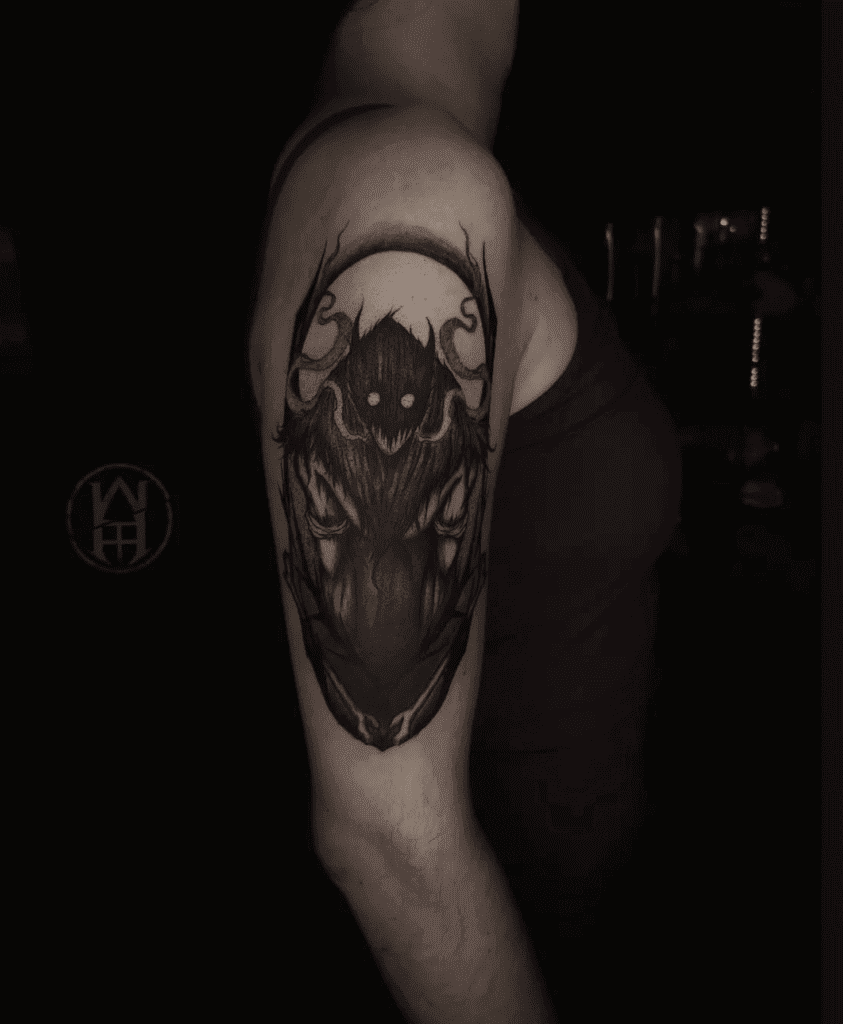
Native American mythology comes from the Indigenous peoples of North America, spanning what is now the United States, Canada, and parts of Mexico. It developed across an enormous range of landscapes—plains, forests, deserts, mountains, tundra, and coastlines—each shaping distinct mythologies. There is no single Native American myth system; instead, each nation and tribe has its own sacred stories, beliefs, and traditions.
Native American mythologies began forming thousands of years ago, long before written history—likely over 10,000 years BCE—emerging from animist worldviews in which animals, land, weather, and ancestors were all spiritually alive. These stories were preserved through oral tradition, ceremony, song, and art rather than scripture. Myths were not fixed texts, but living teachings that evolved with each generation.
Native American mythologies did not truly “end,” but they were severely disrupted between 1500–1900 CE due to European colonisation, forced conversion, disease, displacement, and cultural suppression. Many sacred practices were outlawed, and oral traditions were interrupted. Despite this, Native American mythologies survived, continuing today through revitalised traditions, storytelling, and spiritual practice. They remain living belief systems, not extinct mythologies.
At their core, Native American mythologies are about balance, respect, and relationship. Humans are not rulers of the world but participants within it. Animals, spirits, ancestors, and natural forces are kin rather than resources. Moral lessons are taught through story rather than commandment, and harmony is maintained through humility and reciprocity.
Polynesian Mythology Tattoo
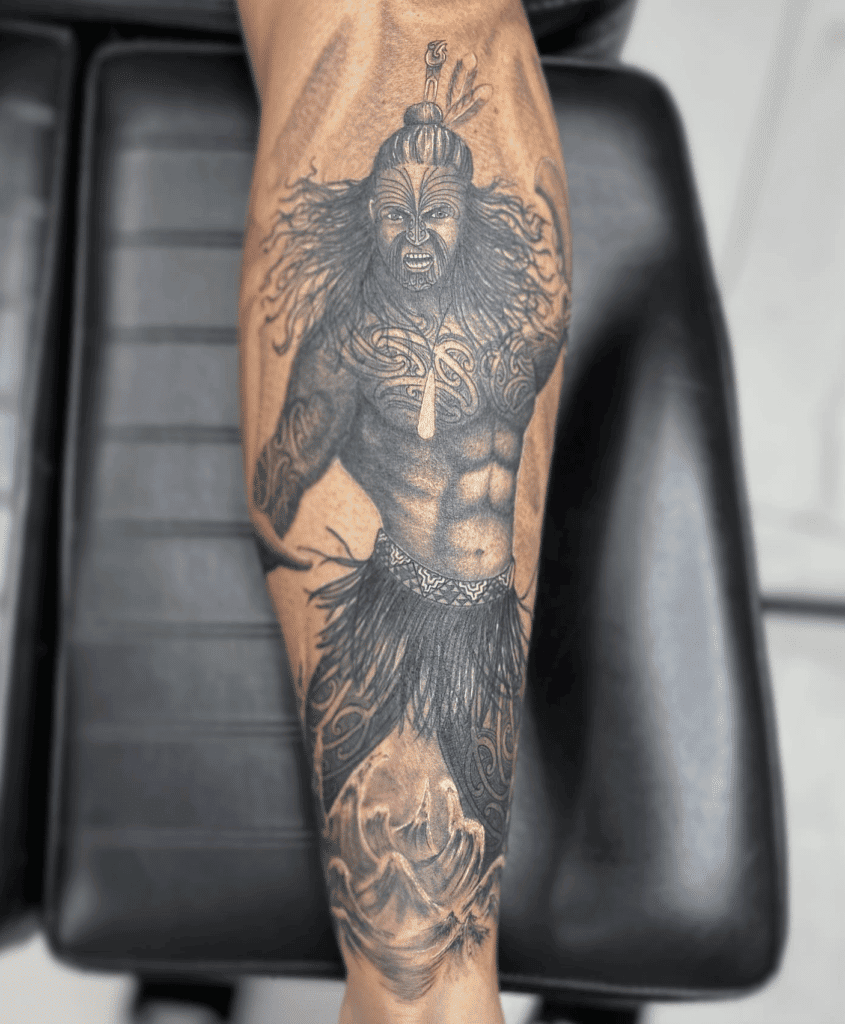
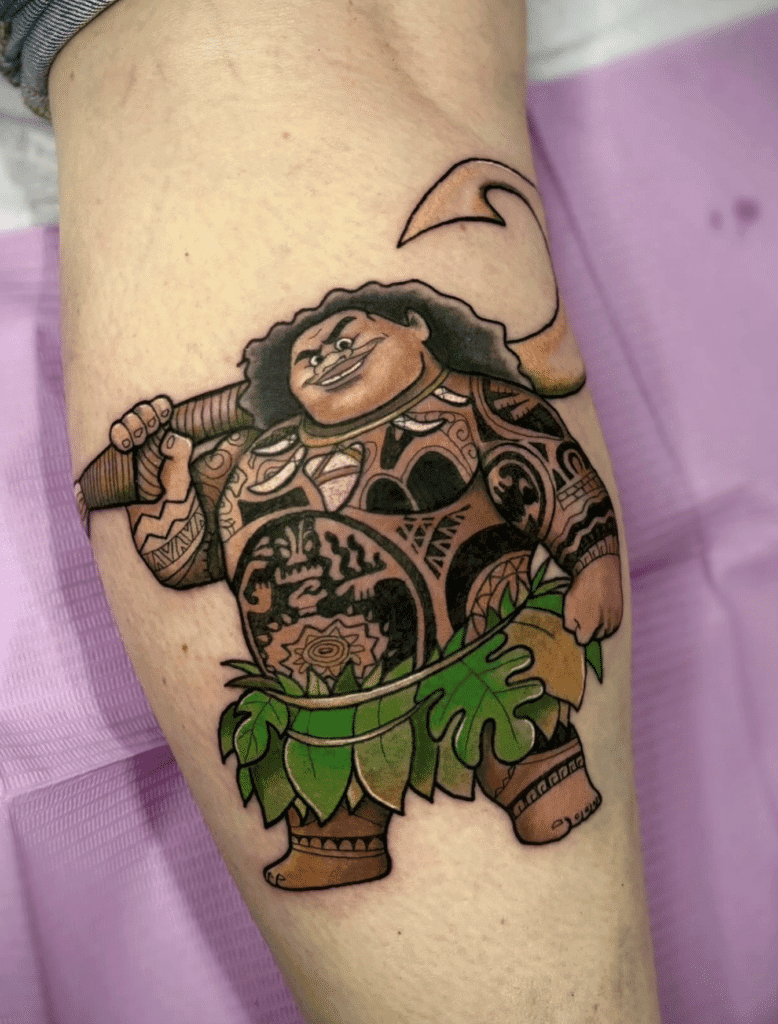
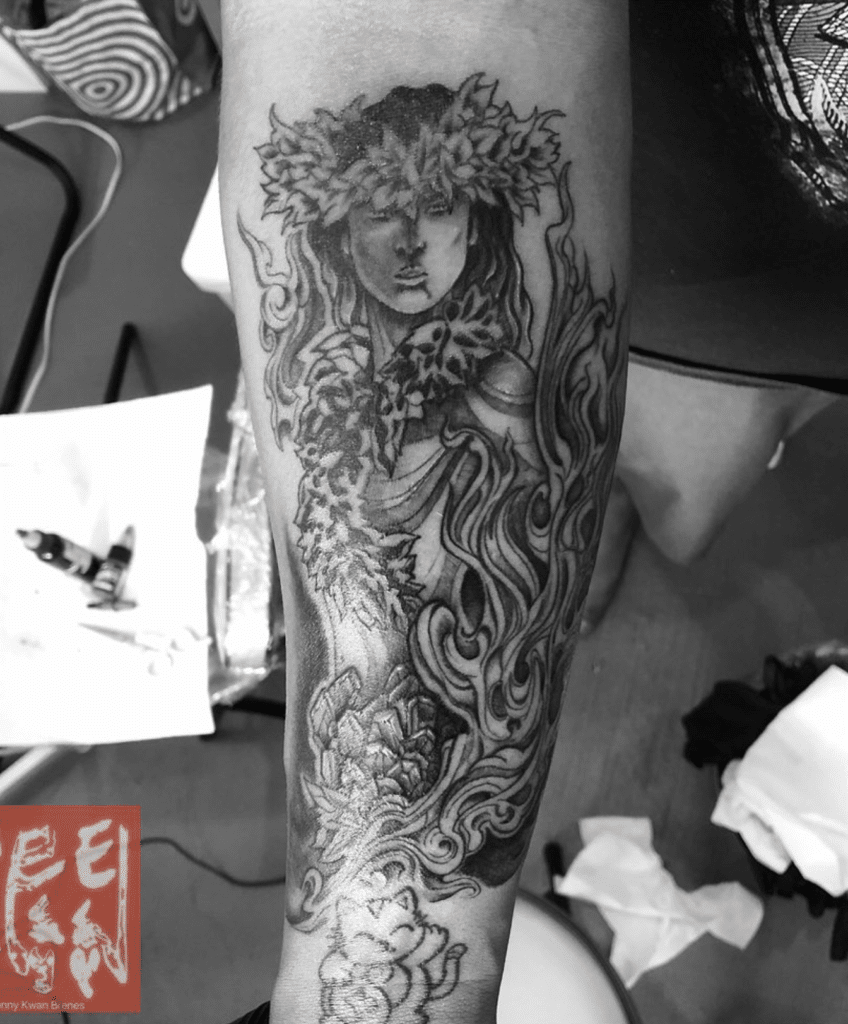
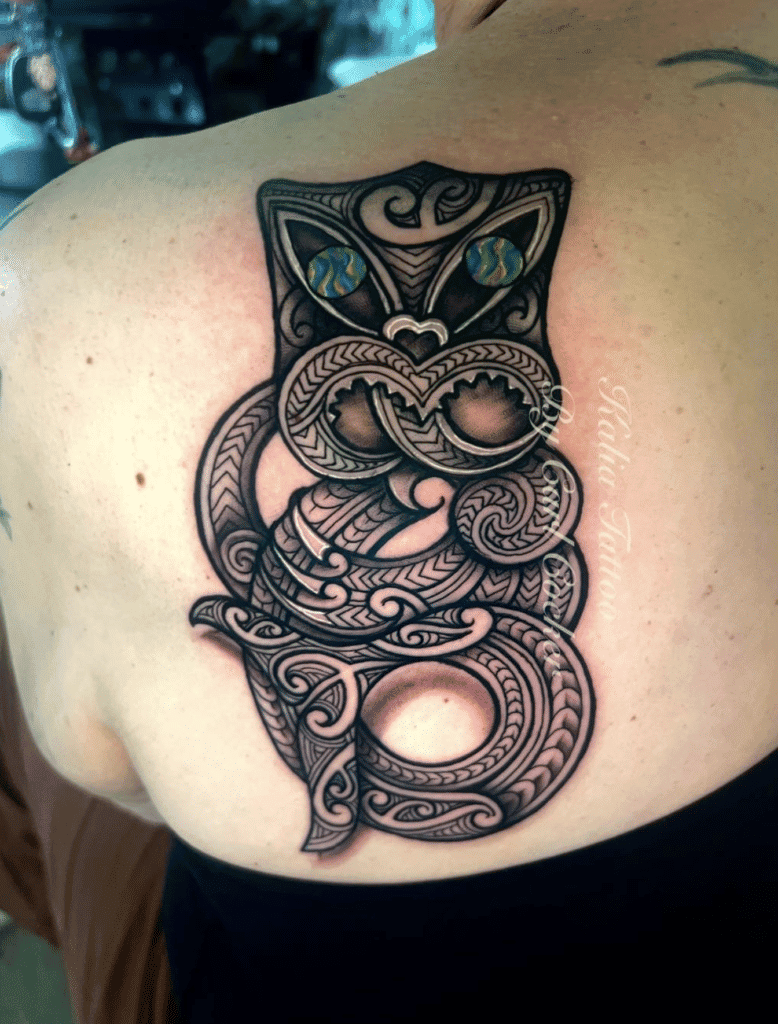
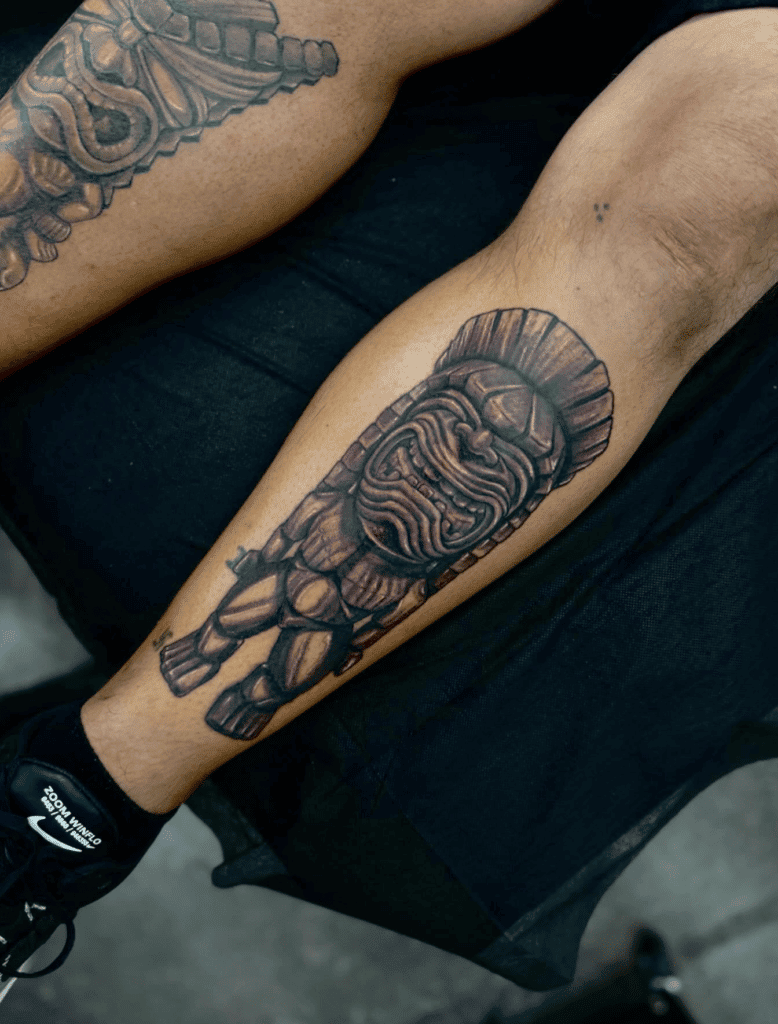
Polynesian mythology comes from the vast Polynesian Triangle, spanning Hawai‘i, Aotearoa (New Zealand), Easter Island (Rapa Nui), Samoa, Tonga, Tahiti, and many other Pacific islands. It developed in an ocean-dominated world of islands, volcanoes, reefs, and open sea, where navigation, ancestry, and respect for nature were essential to survival.
Polynesian mythology began forming over 3,000 years ago (c. 1500–1000 BCE), emerging as Austronesian peoples migrated eastward across the Pacific. As these voyagers settled new islands, shared ancestral myths adapted to local landscapes. Rather than fixed scriptures, knowledge was preserved through oral tradition, chant, genealogy, dance, and carving, allowing myths to evolve while retaining a common core.
Polynesian mythology never truly ended. From 1600–1800 CE, European contact and Christian missionary activity transformed religious practice, suppressing many traditional rituals. However, myths survived through genealogies, legends, art, and cultural memory, and today they are actively preserved and revitalised across Polynesia. Like Japanese and Hindu traditions, Polynesian mythology remains a living cultural system, not a lost one.
At its core, Polynesian mythology is about ancestry, balance, and the living relationship between people, land, and sea. Gods are often ancestors, and ancestors can become gods. Nature is not created for humanity — humans are born into a family that includes oceans, mountains, animals, and spirits.
Aboriginal Australian Mythology Tattoo
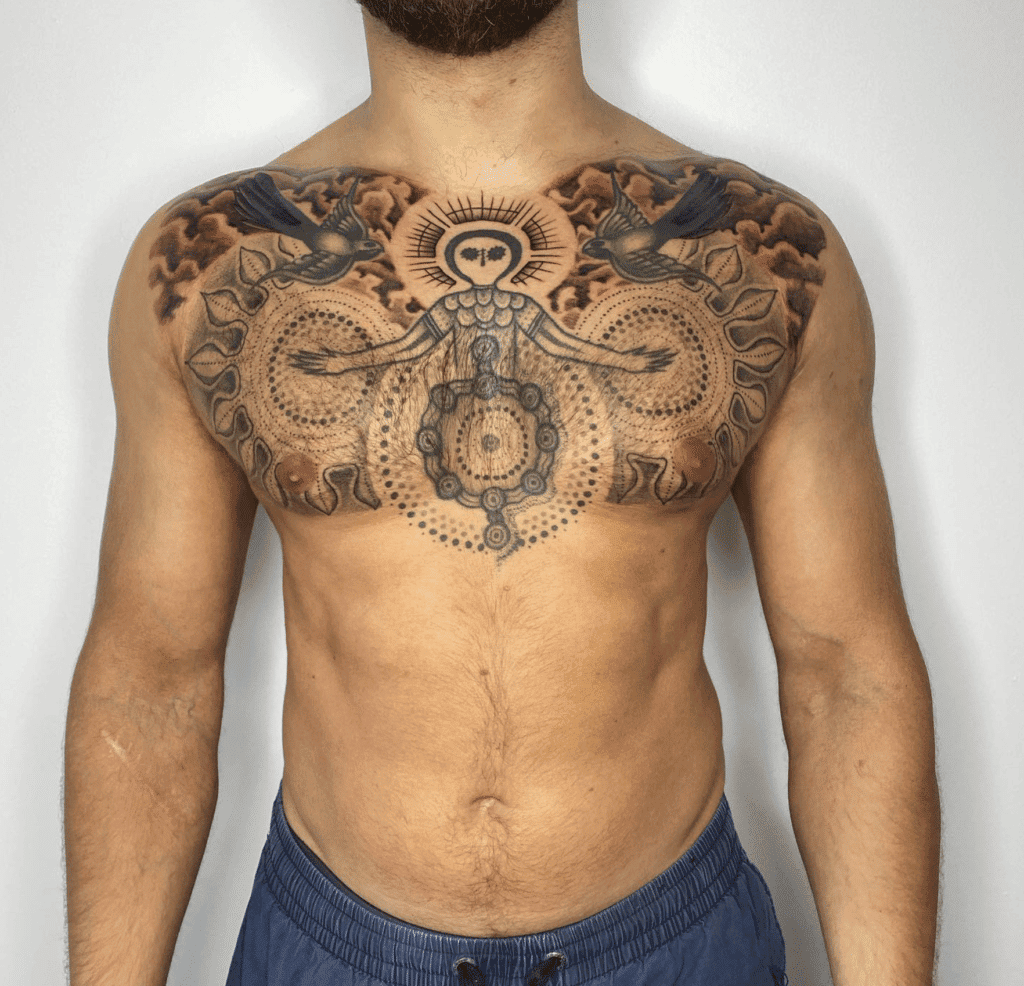
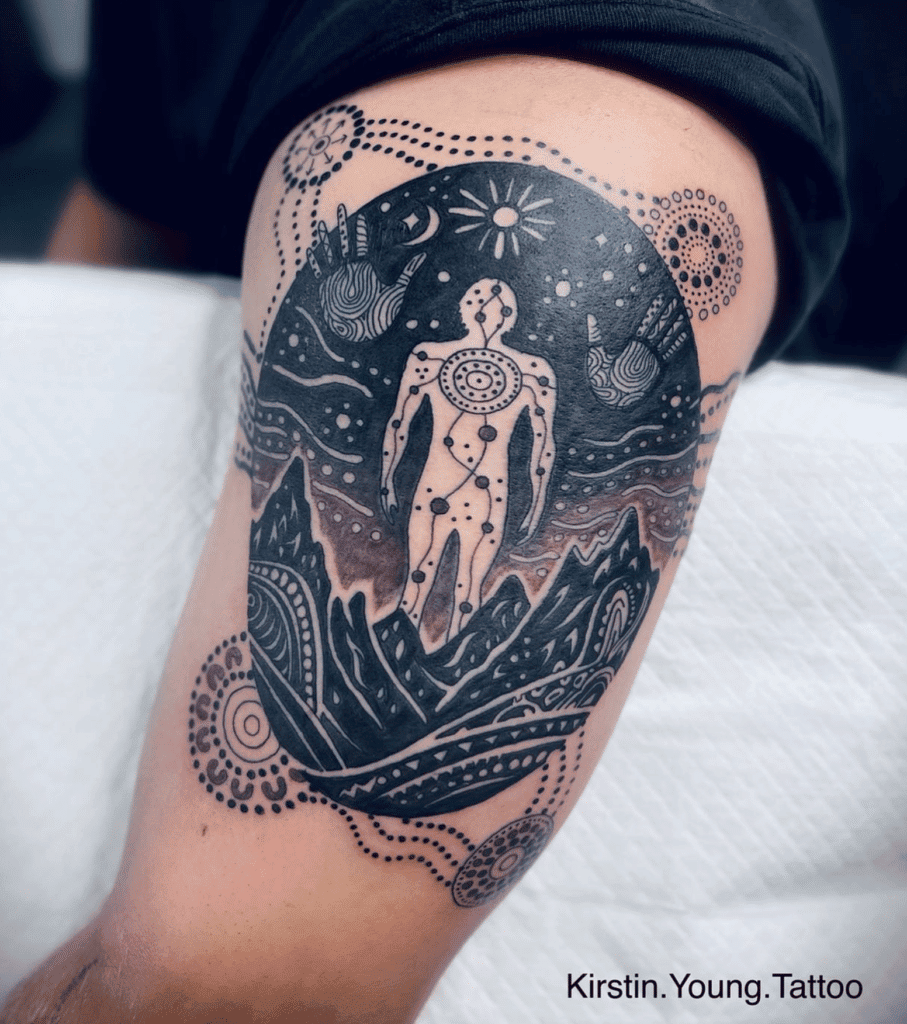
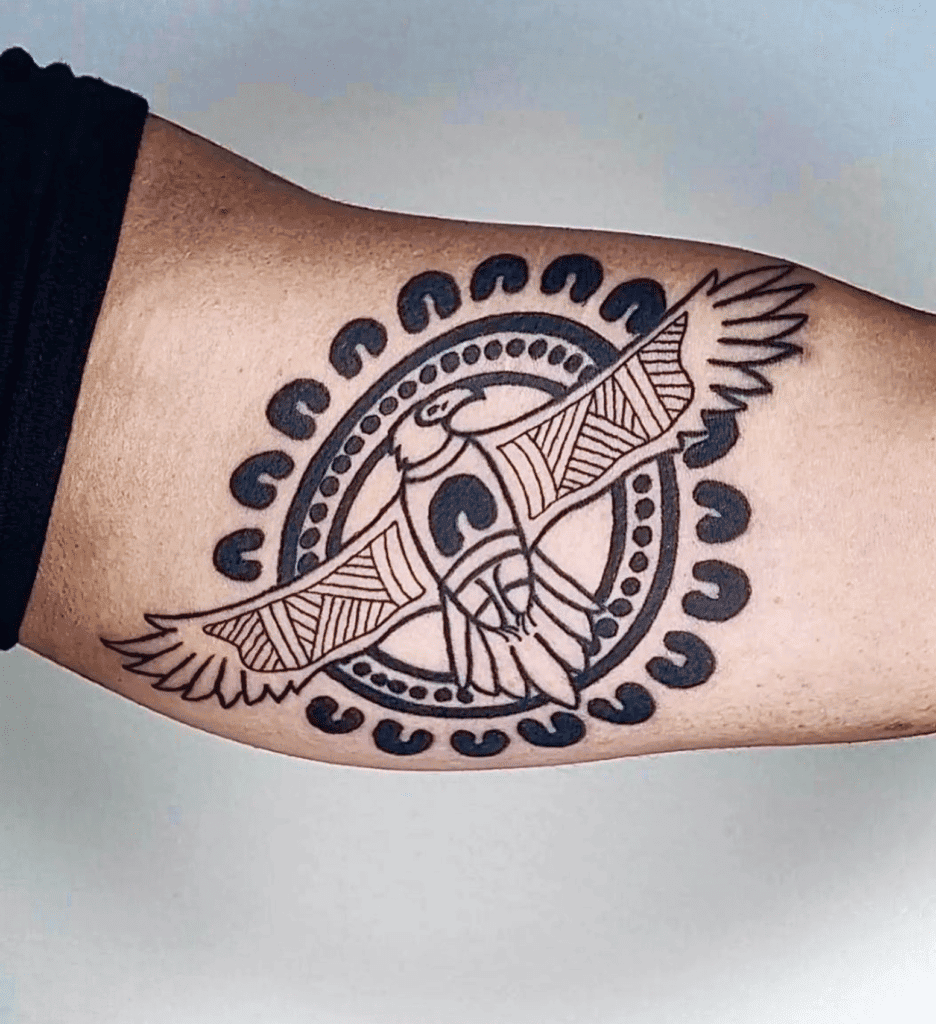
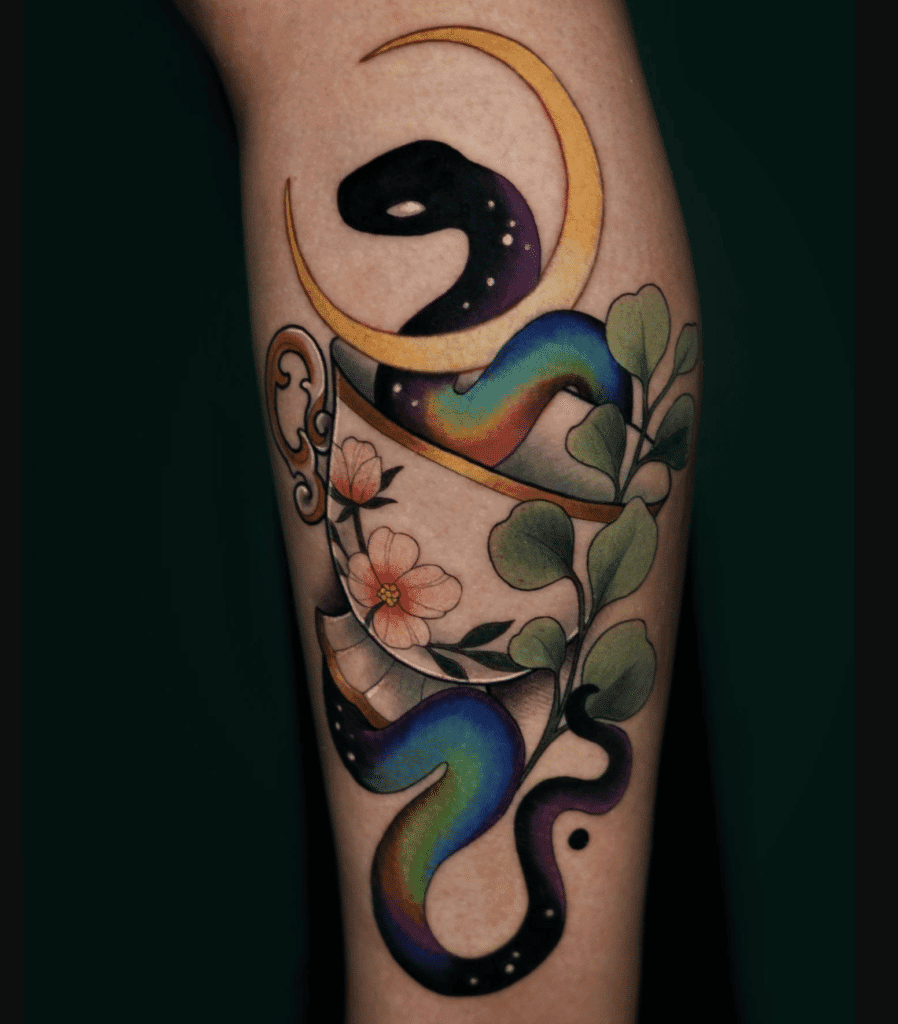
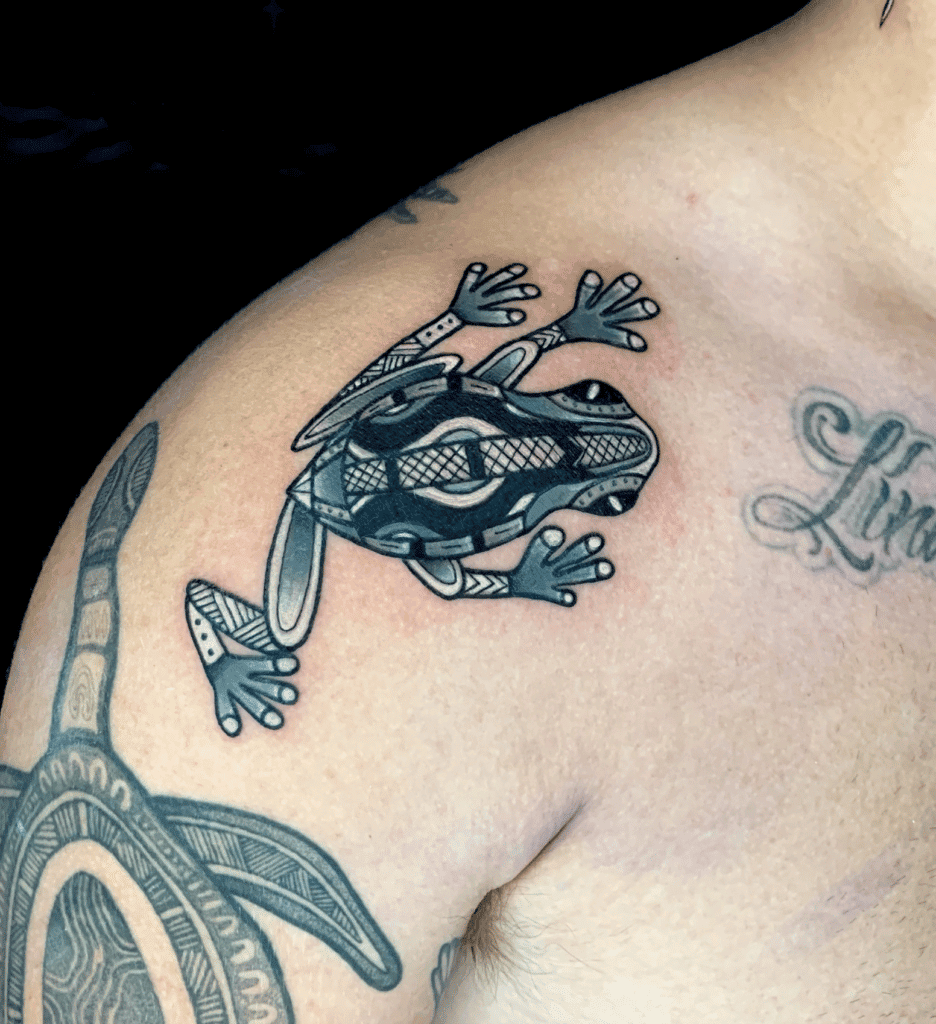
Aboriginal Australian mythology comes from the Indigenous peoples of Australia, representing hundreds of distinct Nations, each with its own stories, laws, and sacred places. It developed across deserts, rainforests, coastlines, mountains, and savannahs, where land itself is not just inhabited, but alive, ancestral, and conscious.
These mythologies began forming at least 60,000 years ago, making them among the oldest continuous spiritual traditions on Earth. Rather than beginning at a single moment, Aboriginal mythology emerged alongside human presence on the continent. Knowledge was preserved through oral storytelling, songlines, ceremony, dance, and art, not written texts. Stories were (and still are) tied directly to specific locations.
Aboriginal mythology never truly ended, but it was severely disrupted from 1788 CE onward due to British colonisation. Sacred lands were taken, languages suppressed, and ceremonies outlawed. Despite this, Aboriginal belief systems survived through resilience and cultural continuity. Today, they remain living traditions, actively practised and protected by Indigenous communities across Australia.
At its core, Aboriginal mythology is about the Dreaming (or Dreamtime)—a sacred, timeless reality where ancestral beings shaped the land, established laws, and created life. The Dreaming is not the distant past; it exists simultaneously with the present. Humans are custodians of the land, bound by responsibility rather than ownership.
Baltic Mythology Tattoo
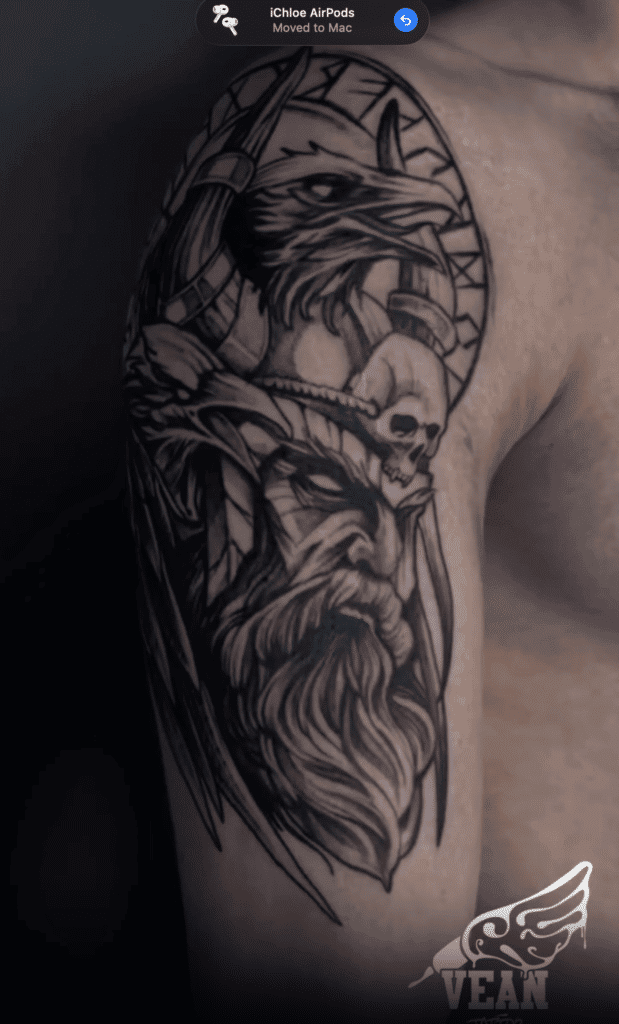
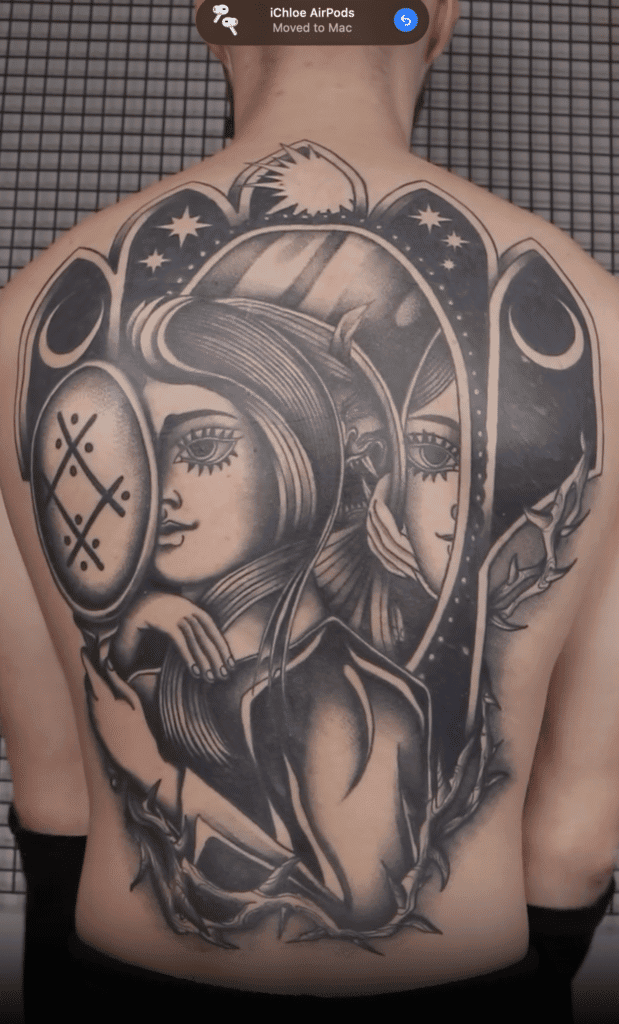
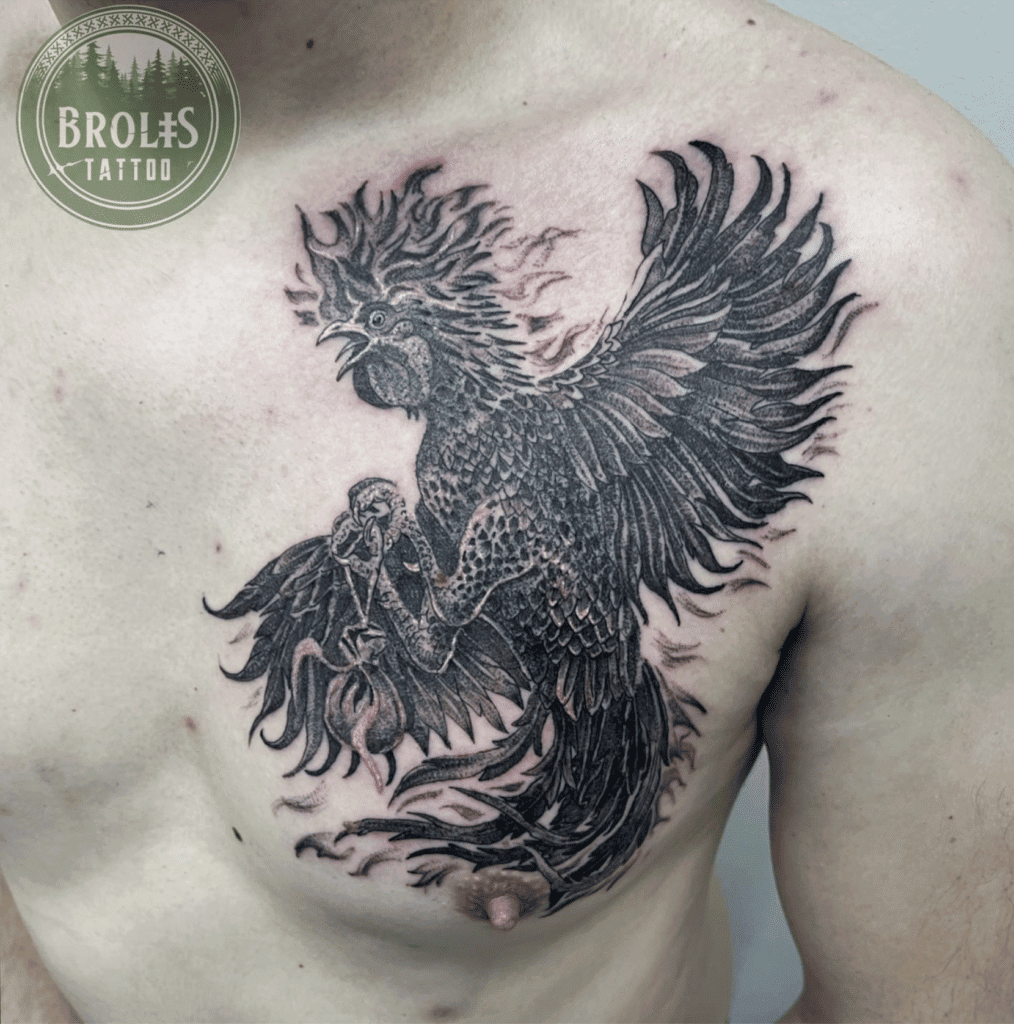
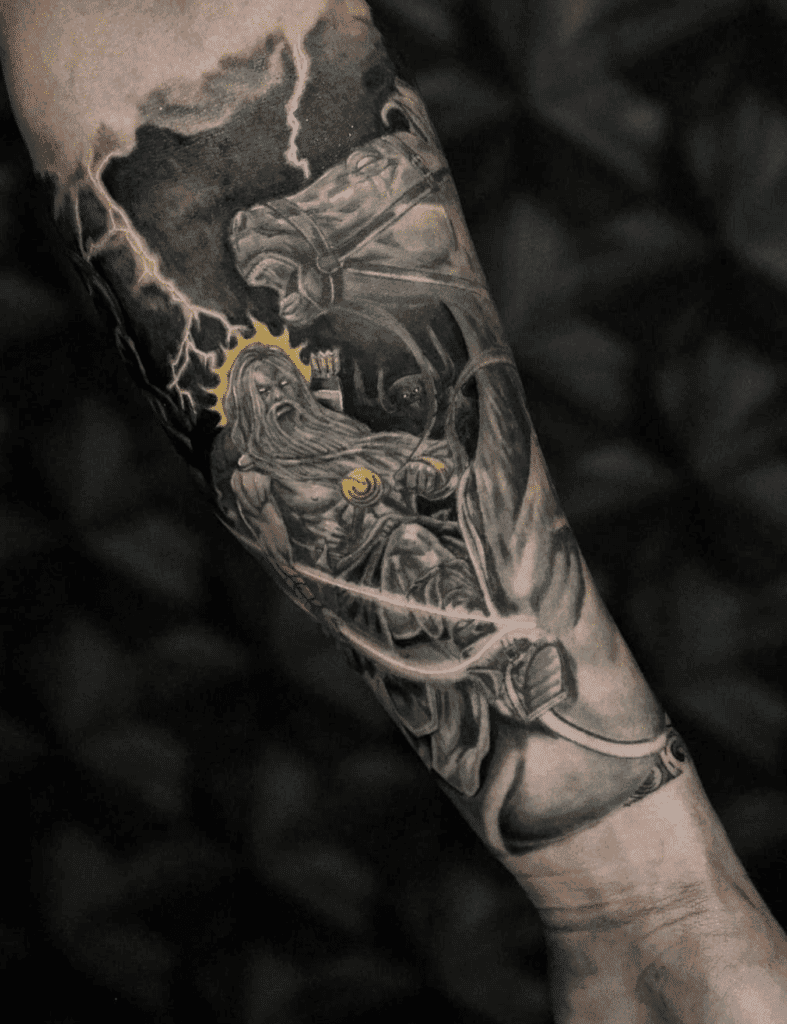
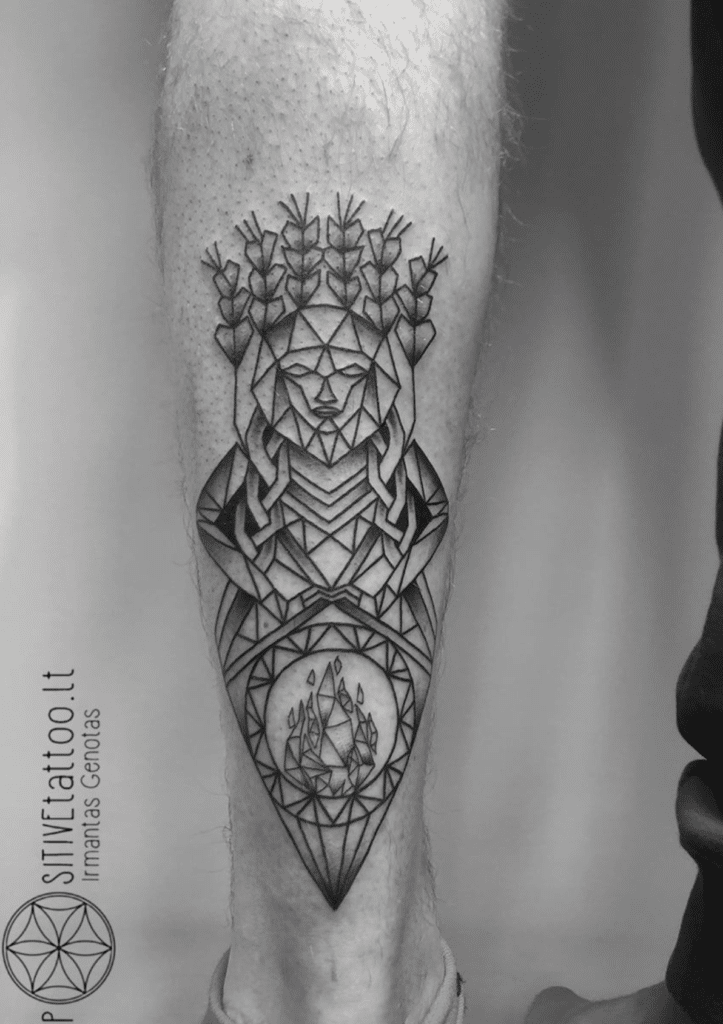
Baltic mythology comes from the ancient Baltic peoples of Northern Europe, primarily the ancestors of modern Lithuanians and Latvians. It developed in a landscape of deep forests, rivers, wetlands, and long seasonal cycles, where agriculture, weather, and ancestral land shaped spiritual life. Among European traditions, Baltic mythology is considered one of the most archaic and least altered Indo-European belief systems.
Baltic mythology likely began forming around 2000–1500 BCE, emerging from early Indo-European traditions blended with strong local animist beliefs. Because Baltic societies remained relatively isolated and rural, their mythology preserved very ancient elements long after similar traditions elsewhere had changed or disappeared. Beliefs were passed down through songs (dainas), rituals, and seasonal festivals, rather than written texts.
Baltic mythology declined as an organised religion between 1200–1400 CE, making it one of the last pagan traditions in Europe to be Christianised. Lithuania, in particular, officially converted only in 1387 CE. Pagan temples and sacred groves were destroyed or repurposed, and public worship ended. However, Baltic mythology was not fully erased—many gods, rituals, and symbols survived in folk songs, customs, and seasonal celebrations, especially in rural life.
At its core, Baltic mythology is about natural order, fate, and the sacred rhythm of the world. The universe is governed not by dramatic divine wars, but by balance, cycles, and moral consequence. Nature is alive, time is seasonal, and fate is woven quietly into every human life.
Basque Mythology Tattoo
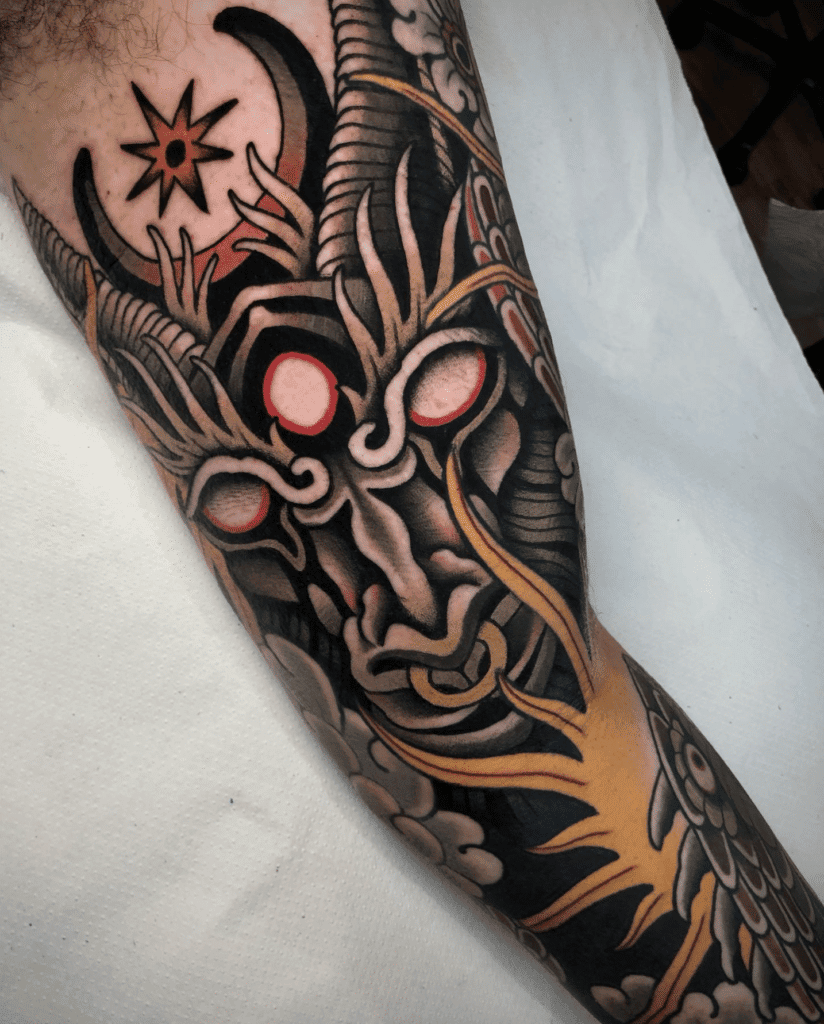
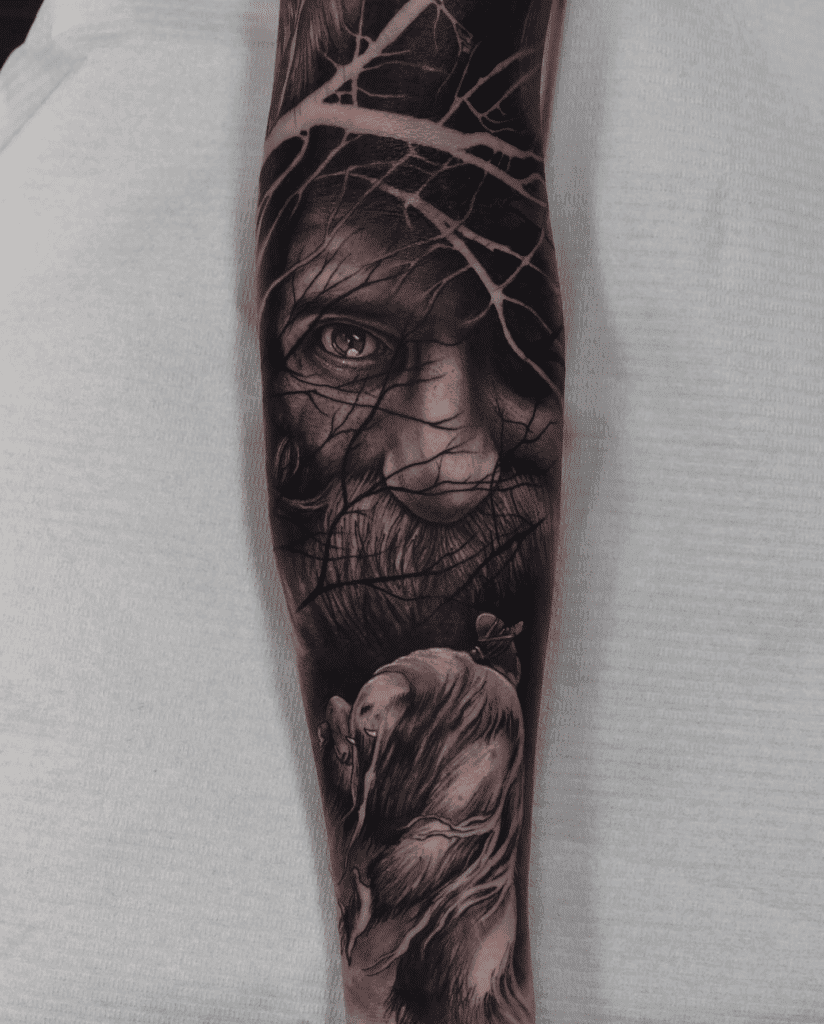
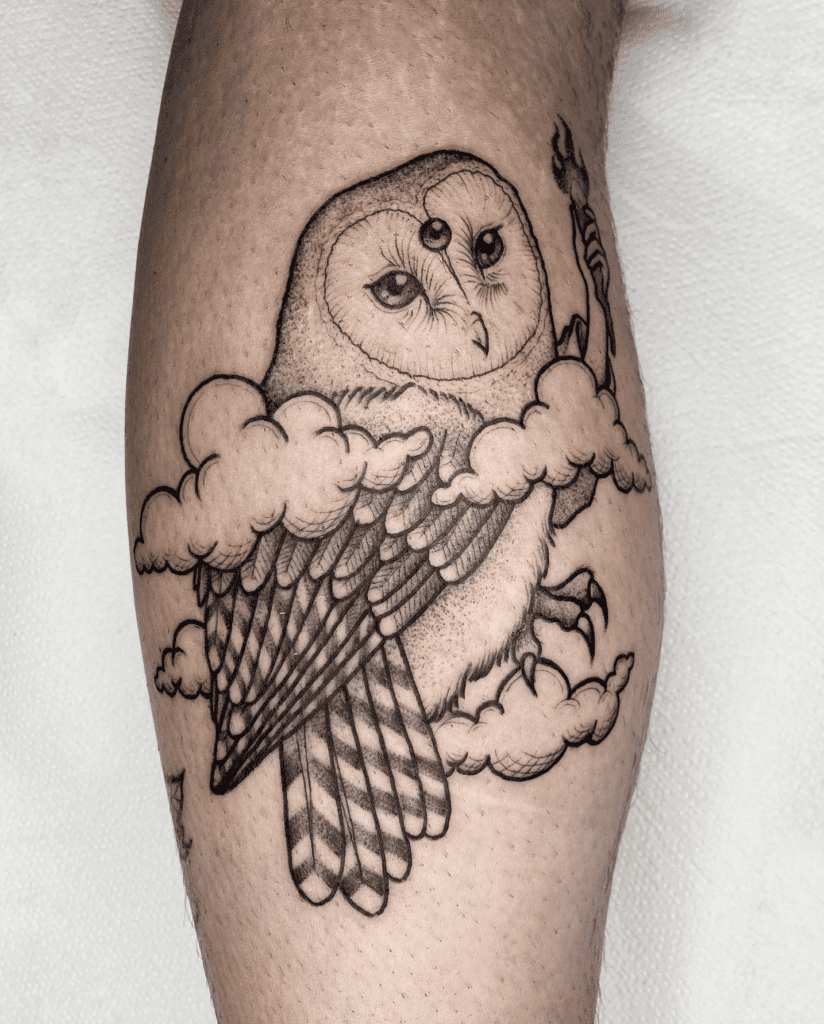
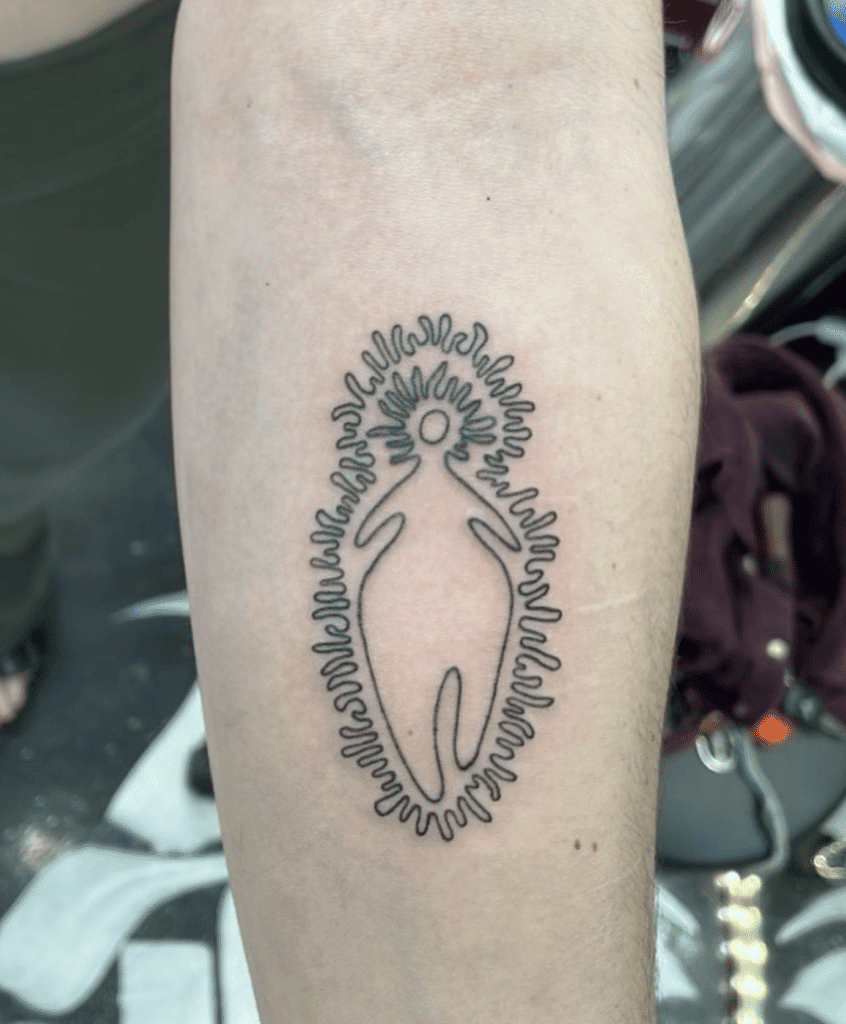
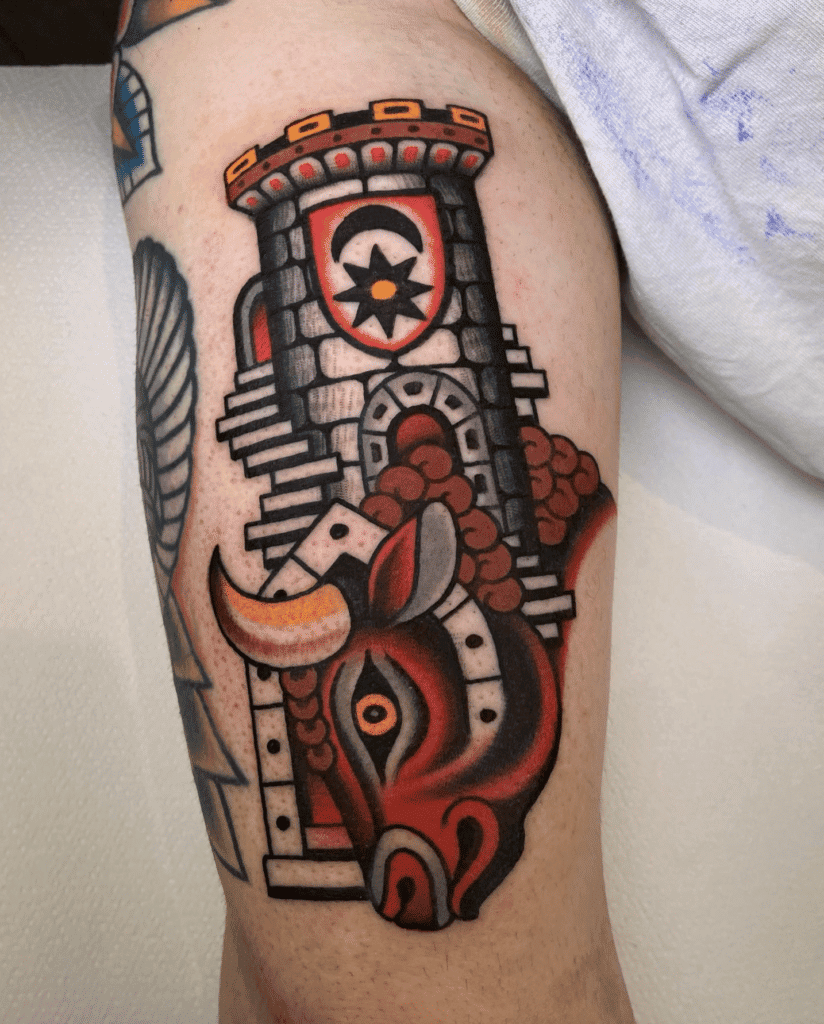
Basque mythology comes from the Basque Country, a mountainous region straddling northern Spain and southwestern France. Shaped by caves, storms, forests, and isolated valleys, it reflects a deep sense of place and continuity. The Basque people are culturally unique in Europe, and their mythology preserves elements that predate Indo-European traditions.
Basque mythology likely began forming well before 2000 BCE, emerging from prehistoric animist beliefs tied closely to the land. Because the Basque language (Euskara) is unrelated to other European languages, many scholars believe Basque myths preserve very ancient European spiritual ideas. These beliefs were transmitted orally through local legend and ritual rather than written scripture.
Basque mythology declined as an organised belief system between 800–1200 CE, following Christianisation of the region. Pagan practices were officially suppressed, but many myths survived by being absorbed into folklore, rural custom, and Christian symbolism. Even today, Basque mythic figures remain part of cultural identity rather than distant legend.
At its core, Basque mythology is about nature as moral authority, balance, and consequence. There is no grand cosmic war or empire-spanning pantheon. Instead, storms punish dishonesty, the land rewards respect, and supernatural beings enforce natural and ethical law rather than divine commandments.
Filipino Mythology Tattoo
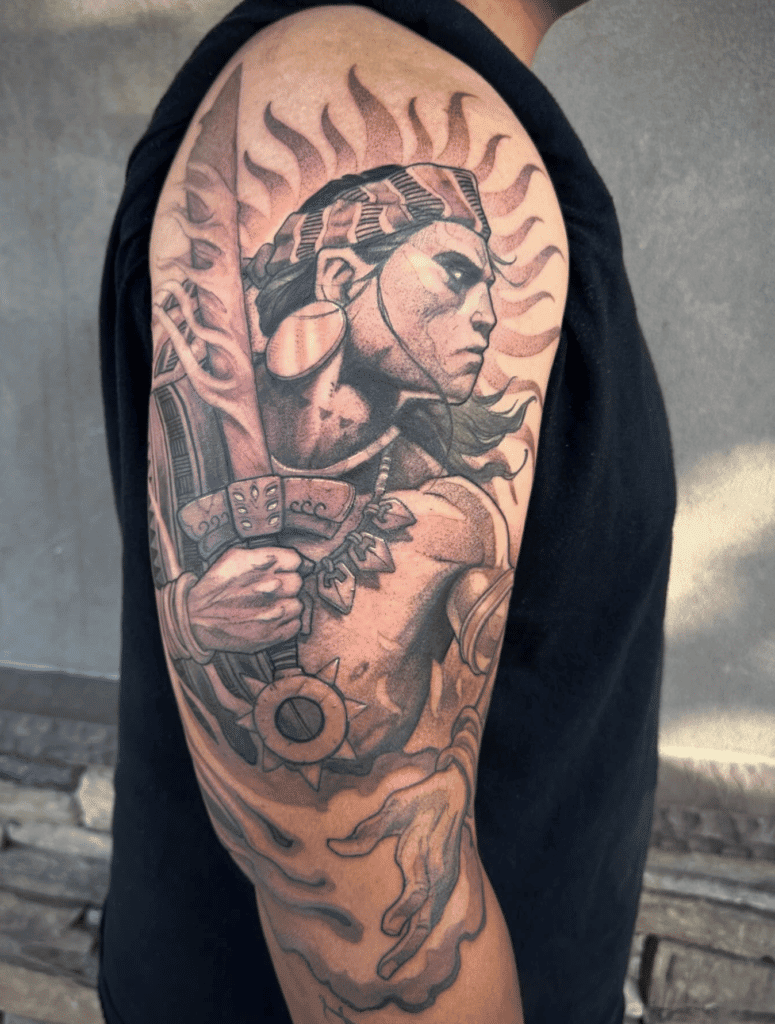
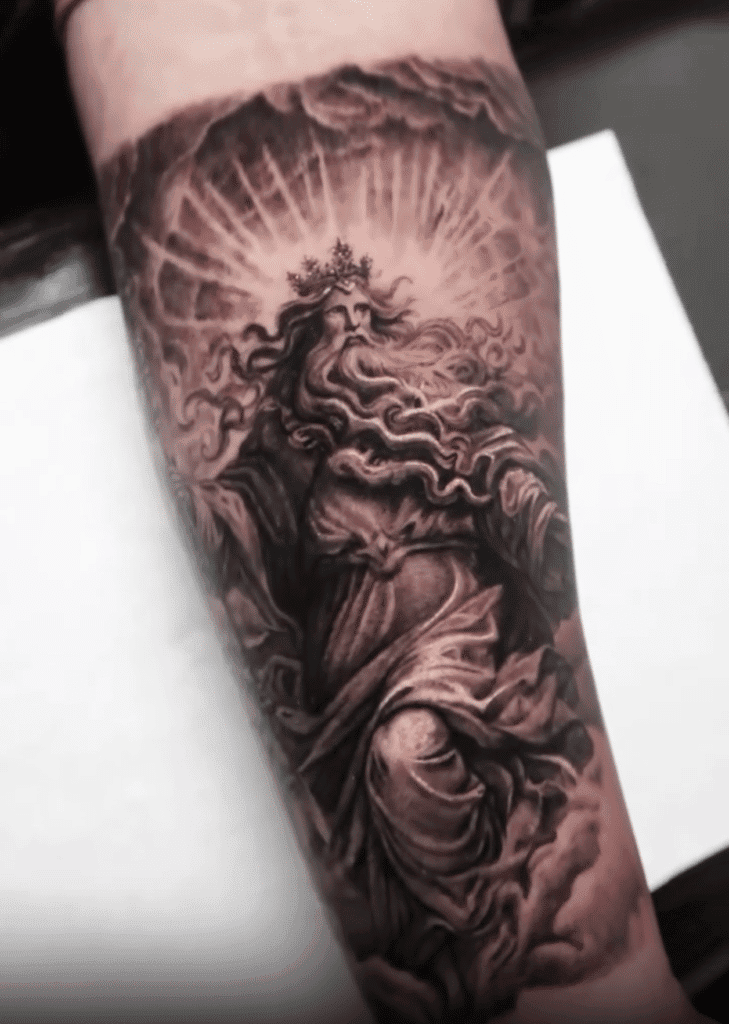
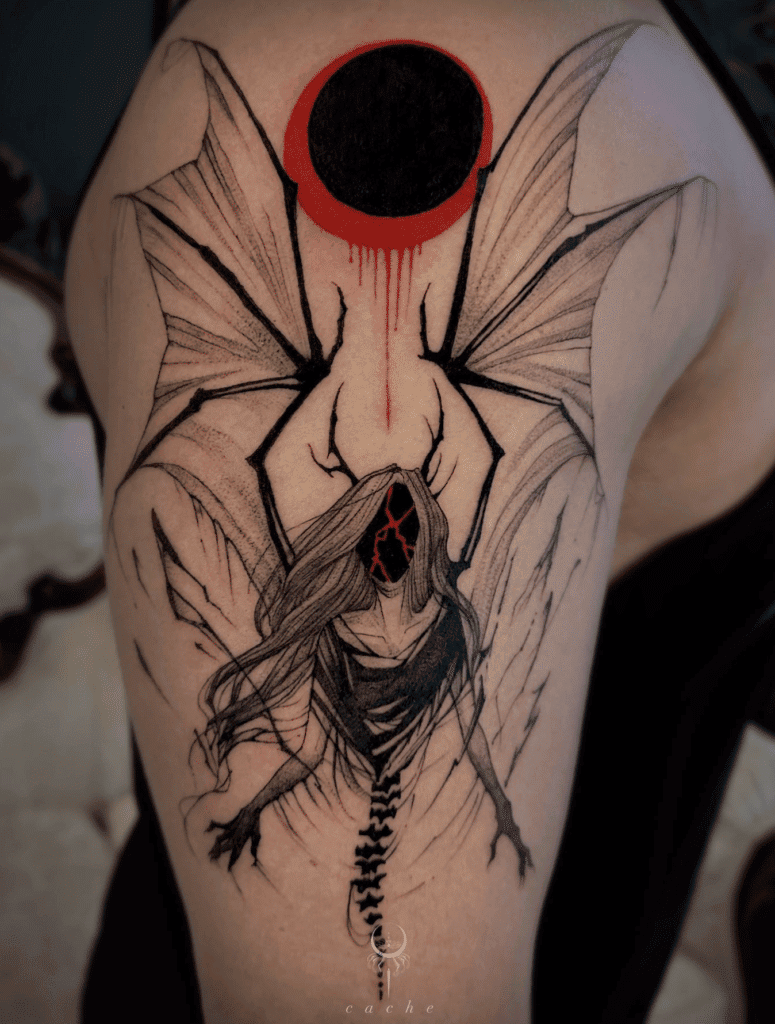
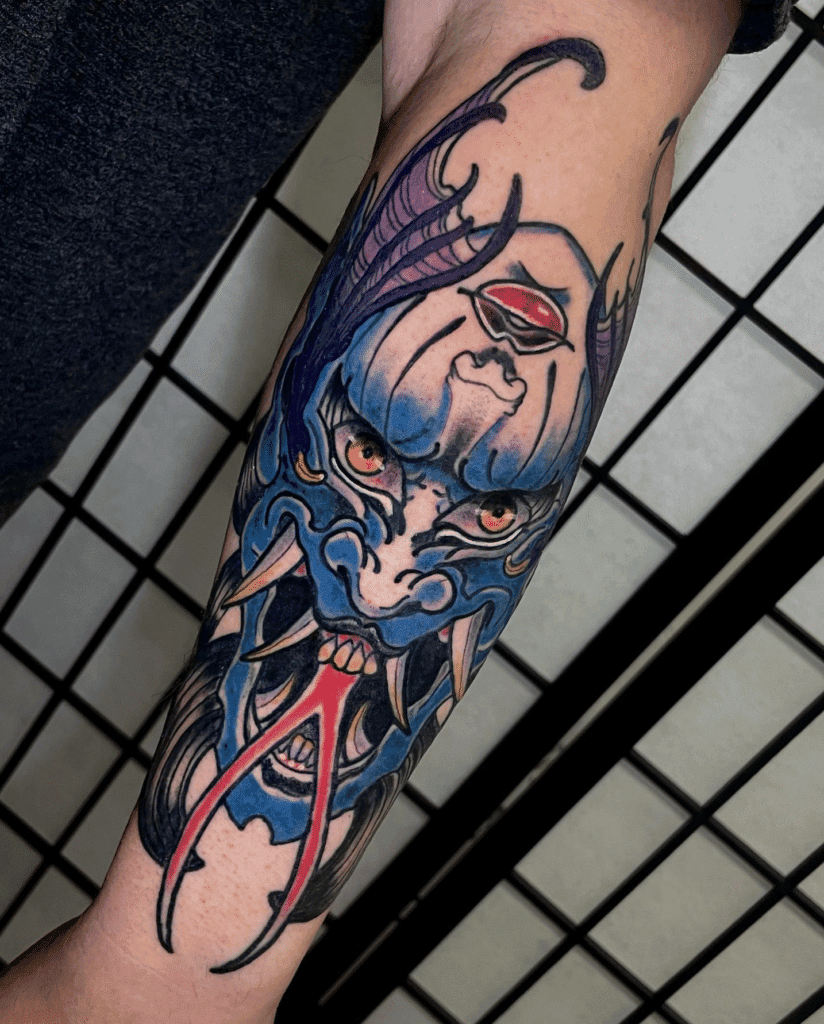
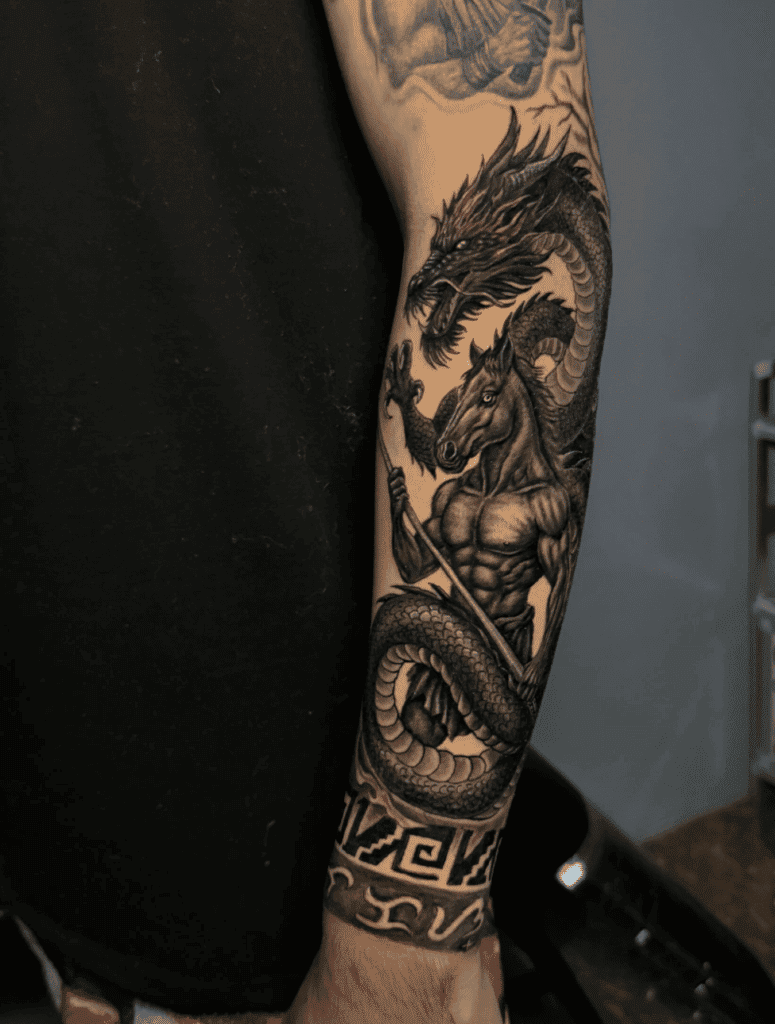
Filipino mythology comes from the Philippine archipelago in Southeast Asia, a chain of over 7,000 islands shaped by oceans, volcanoes, forests, and typhoons. Because the islands were home to many distinct ethnolinguistic groups, there is no single unified mythology—instead, Filipino mythology is a rich mosaic of regional belief systems that share common themes.
Filipino mythologies began forming thousands of years ago, long before foreign contact, emerging from animist and ancestor-based traditions. Early Filipinos believed the world was filled with spirits inhabiting land, sea, sky, and household spaces. These beliefs evolved independently across islands, later absorbing influences from Hindu–Buddhist trade (c. 900–1400 CE) while retaining indigenous roots.
Filipino mythology declined as an organised belief system after 1565 CE, following Spanish colonisation and forced Christianisation. Temples were destroyed, rituals suppressed, and indigenous gods were reframed as folklore or demons. However, Filipino mythology was never fully erased. It survived through oral storytelling, superstition, rural practice, and later cultural revival. Today, it remains a living folk tradition, especially in stories, festivals, and popular culture.
At its core, Filipino mythology is about balance, respect for spirits, and coexistence with an unseen world. Humans do not dominate nature—they must negotiate with it. Spirits reward respect and punish arrogance. Good and evil are fluid, shaped by behaviour rather than absolute morality.
Inuit Mythology Tattoo
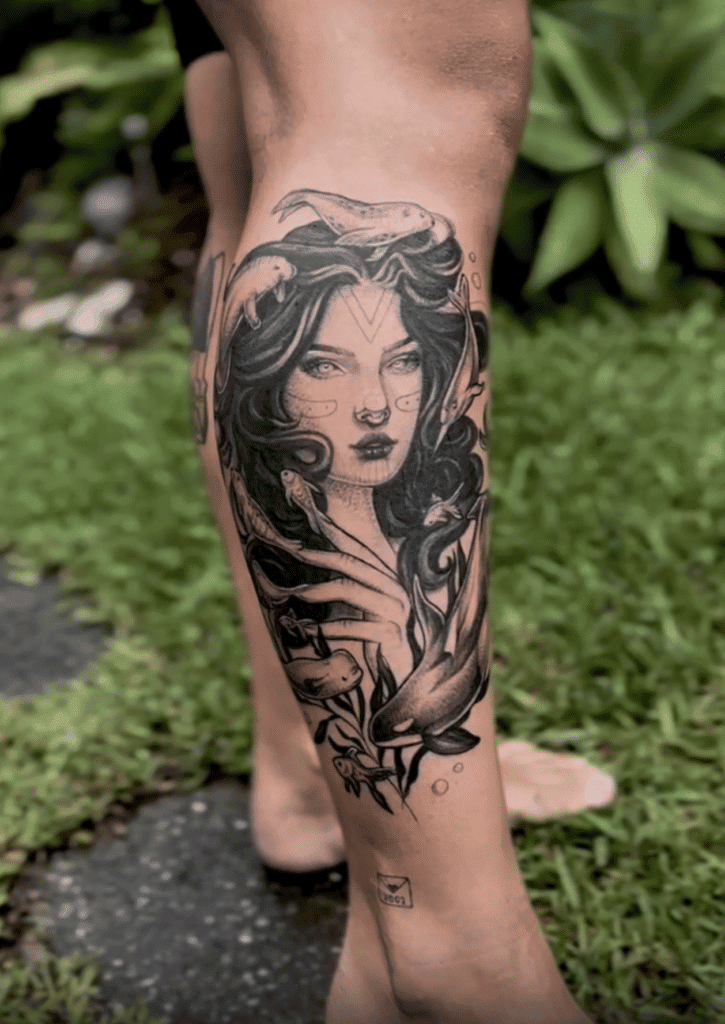
Inuit mythology comes from the Inuit peoples of the Arctic, spanning modern-day Greenland, northern Canada, and Alaska. It developed in one of the harshest environments on Earth—ice, sea, tundra, and long periods of darkness—where survival depended on cooperation, respect for animals, and deep knowledge of the natural world.
Inuit mythology began forming thousands of years ago, long before written history, emerging from animist and shamanic traditions tied closely to hunting, weather, and the sea. Stories were preserved through oral storytelling, ritual, and practice, passed down across generations as survival knowledge as much as spiritual belief.
Inuit mythology never truly ended, but it was disrupted from the 1700s onward due to European contact, Christian missionary activity, and colonial policies that suppressed traditional practices. Despite this, Inuit spiritual beliefs endured and continue today through cultural revitalisation, storytelling, and respect for traditional knowledge. Like many Indigenous systems, Inuit mythology remains a living worldview, not a relic.
At its core, Inuit mythology is about balance, respect, and reciprocity in a dangerous world. Humans are not above nature—they are dependent on it. Animals offer themselves to hunters only if treated with respect, and spiritual imbalance can bring starvation, storms, or death. Survival is spiritual as much as physical.
Armenian Mythology Tattoo
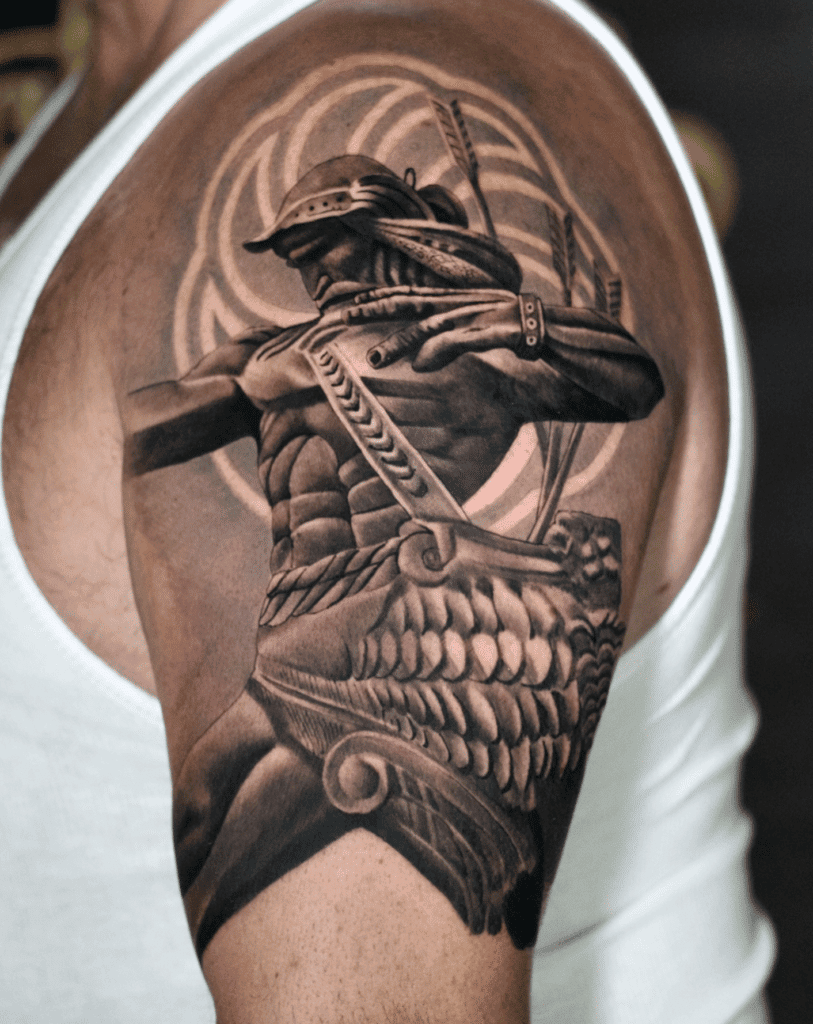
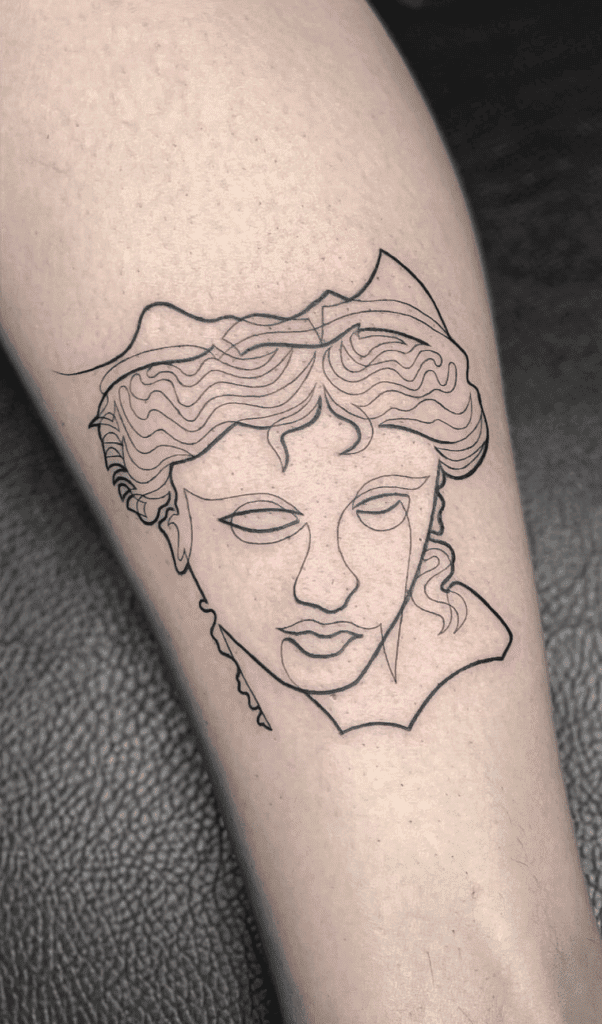
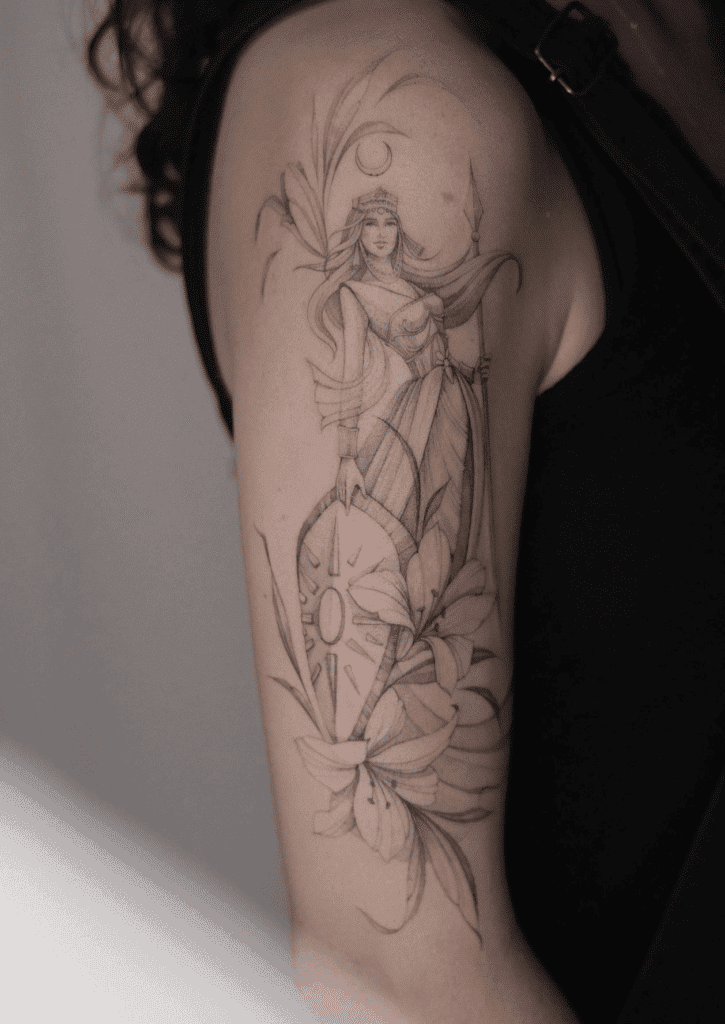
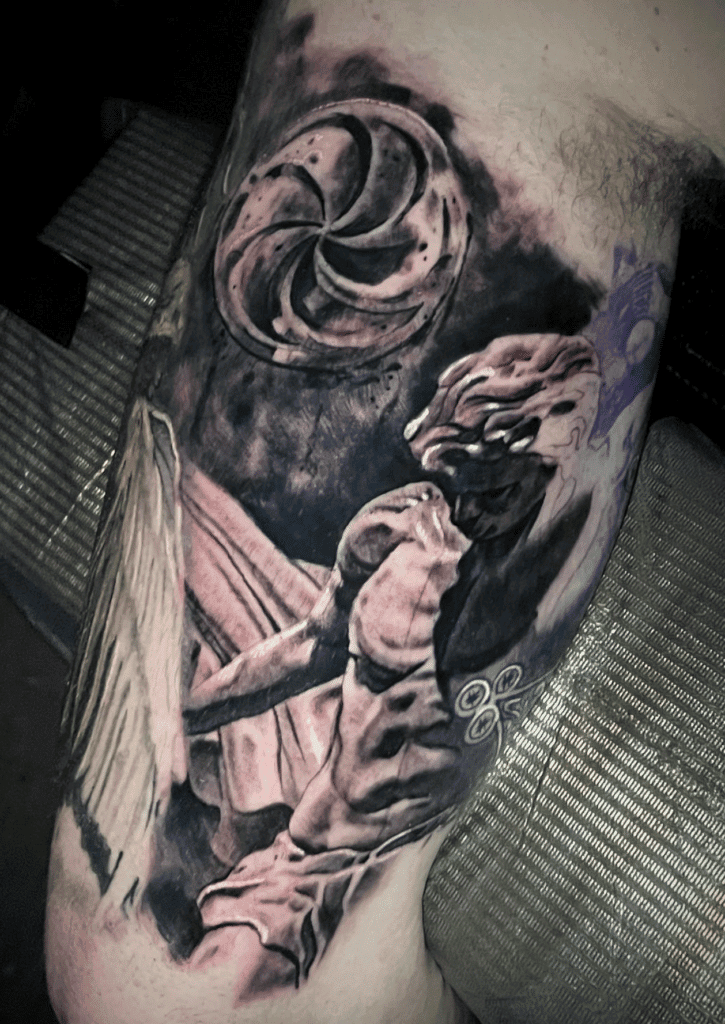
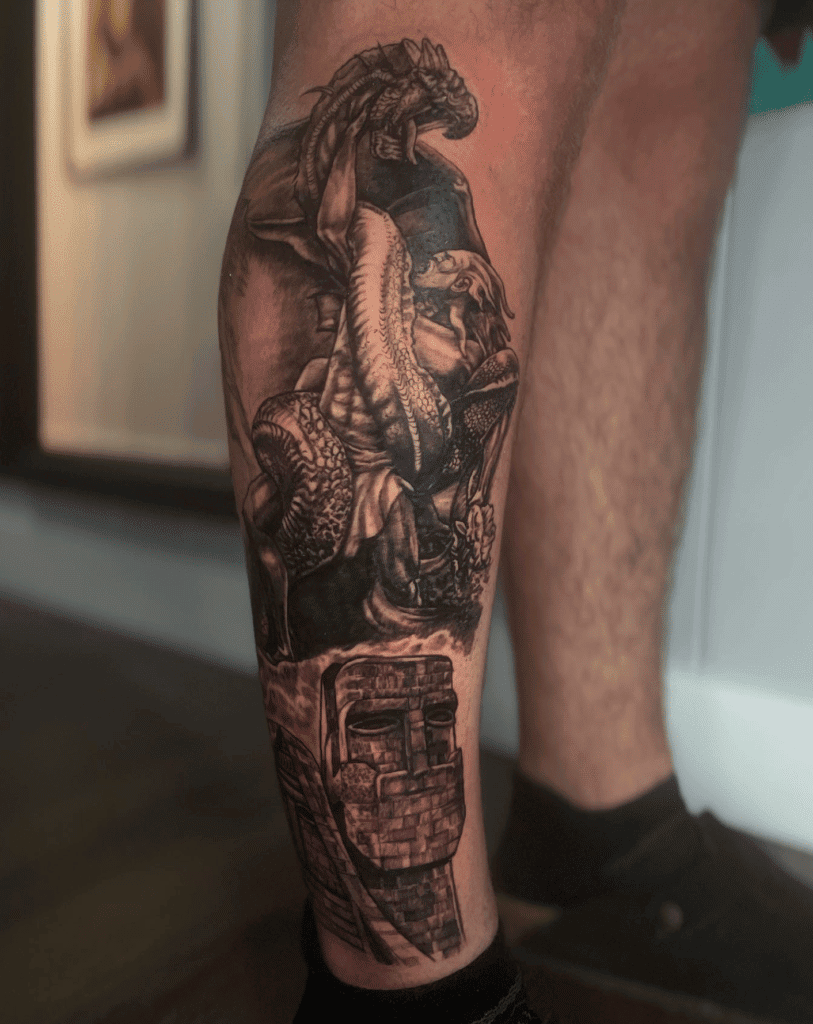
Armenian mythology comes from the Armenian Highlands, a mountainous region of the South Caucasus centred on modern-day Armenia and surrounding areas. Shaped by high peaks, volcanic plateaus, and seismic landscapes, Armenian belief developed around fire, fertility, heroism, and the endurance of a people in a contested land.
Armenian mythology began forming around 2000–1500 BCE, emerging from early Indo-European traditions blended with older local beliefs of the highlands. Over time, it absorbed influences from neighbouring cultures—Mesopotamian, Iranian, and Anatolian—while maintaining a distinct identity rooted in landscape and ancestry. Myths were preserved through oral tradition, temple worship, and royal cults.
Armenian mythology declined as an organised religion in the 4th century CE, when Armenia became the first state to officially adopt Christianity (c. 301 CE). Pagan temples were dismantled or repurposed, and public worship ended. However, many mythic figures survived as legends, heroic tales, and folkloric memories, woven into later Christian storytelling and national identity rather than erased.
At its core, Armenian mythology is about struggle, renewal, and the defence of life and fertility against destruction. The gods and heroes confront chaos not to dominate the world, but to protect it, reflecting a worldview shaped by survival at the crossroads of empires.
Thai Mythology Tattoo
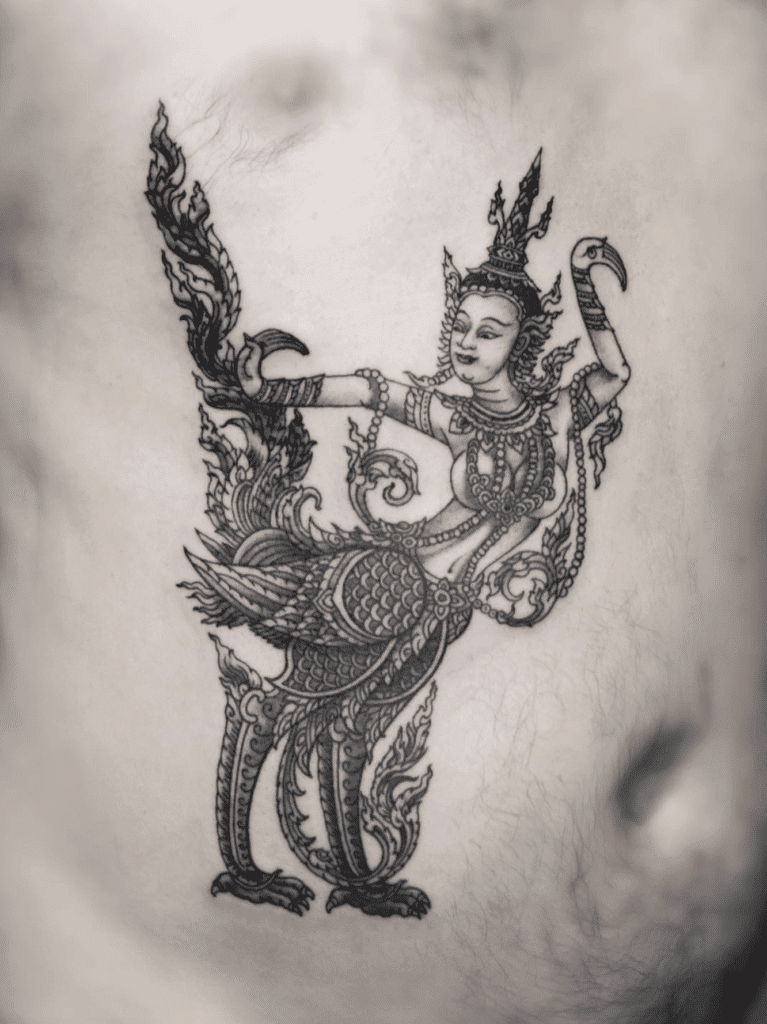
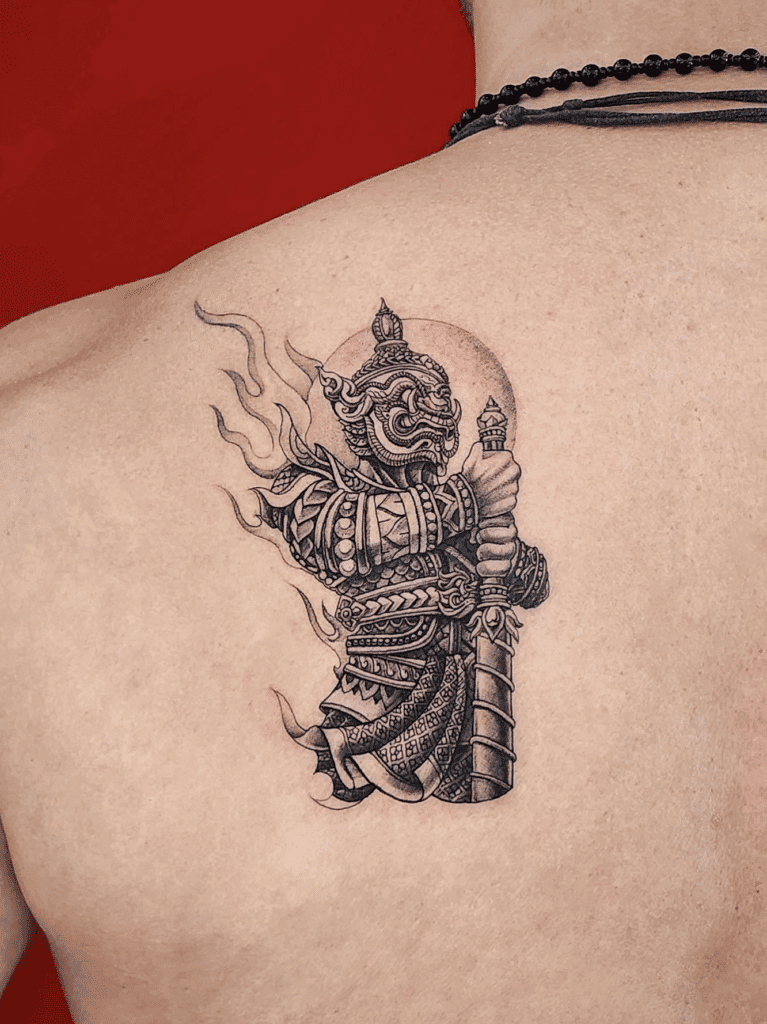
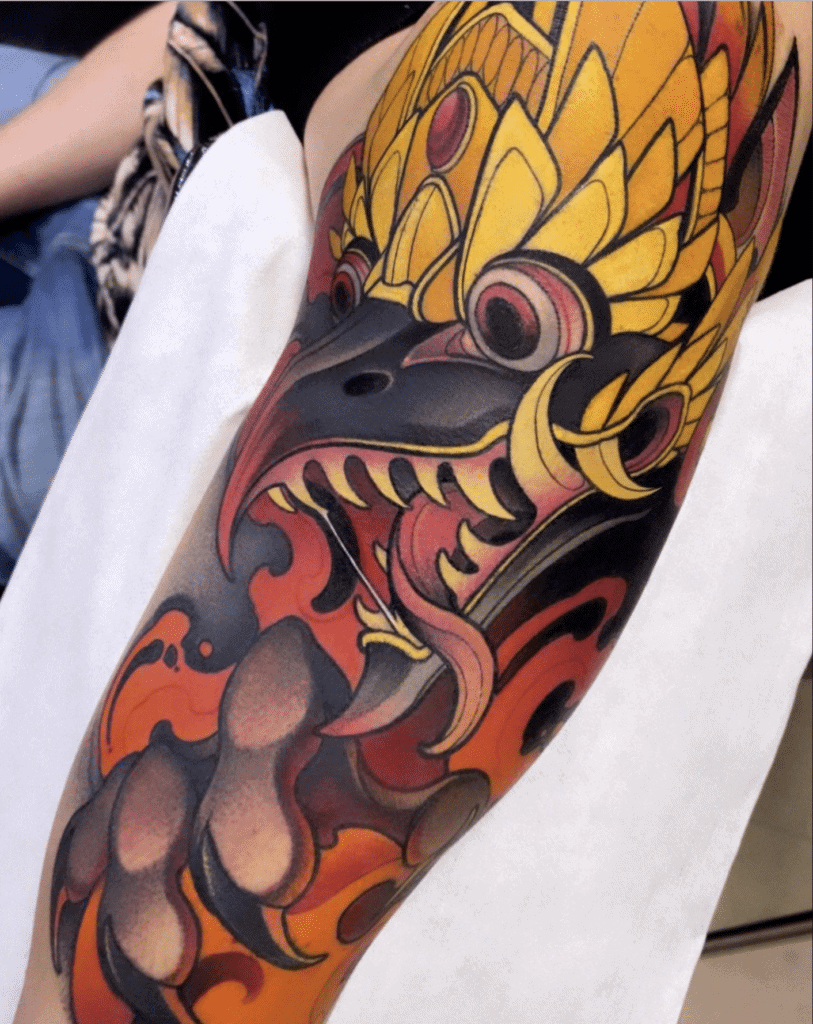
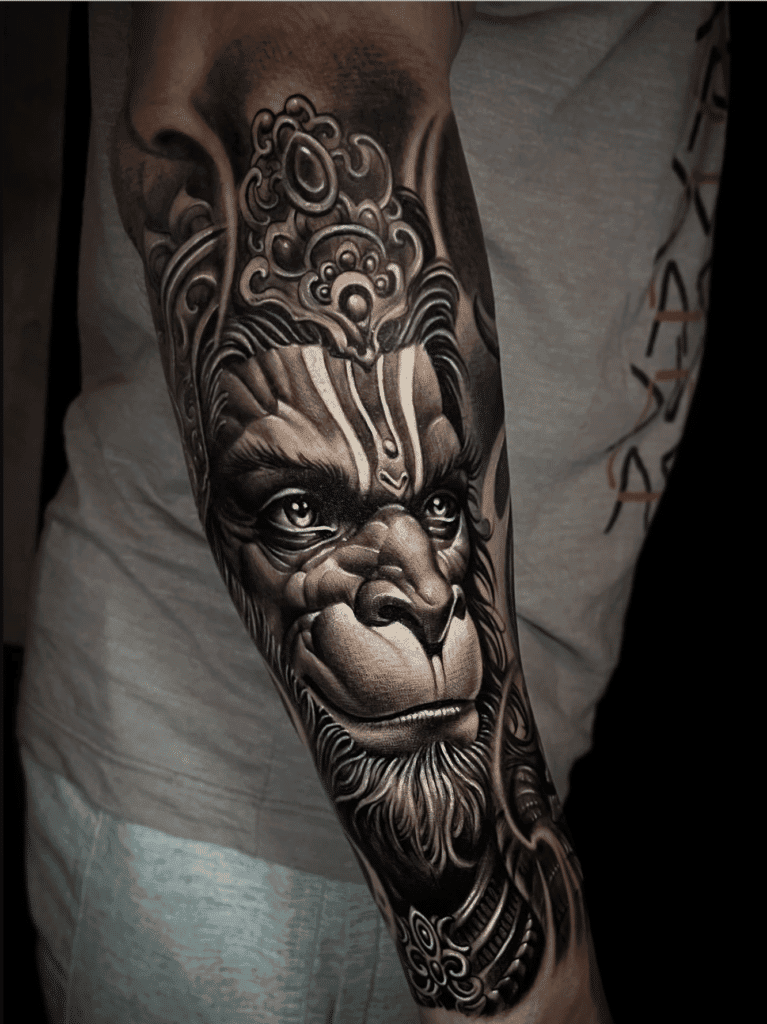
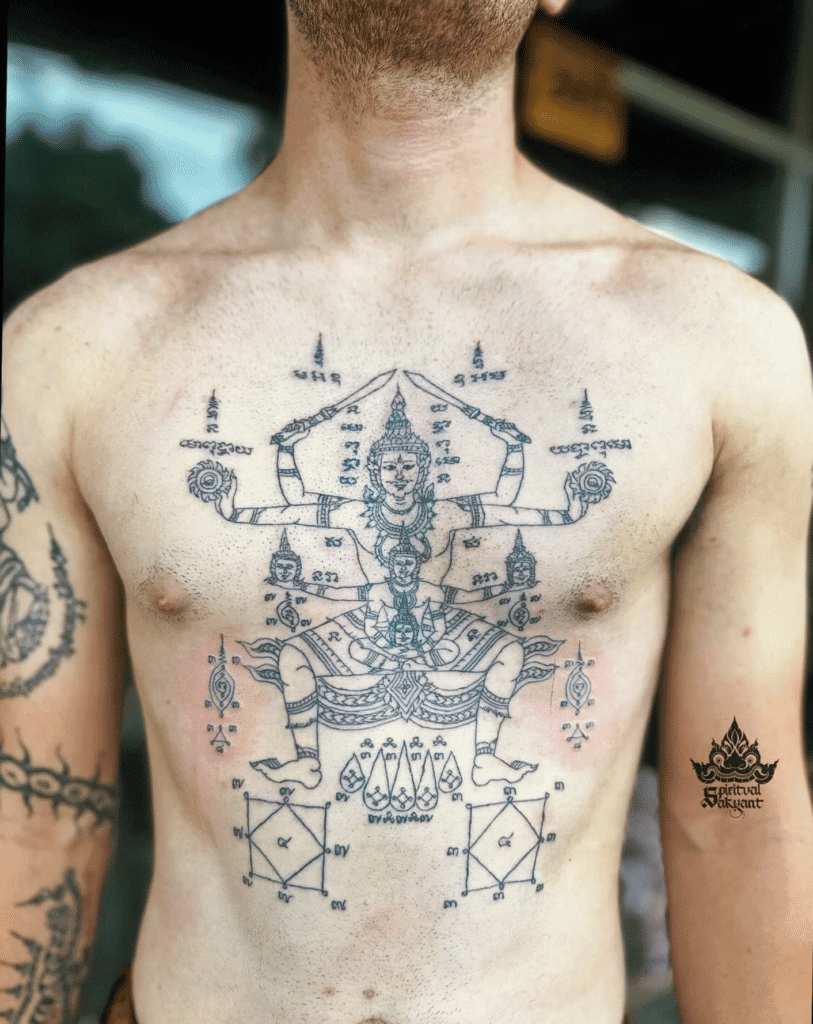
Thai mythology comes from Thailand (Southeast Asia) and is shaped by fertile river plains, monsoon seasons, forests, and mountains. Rather than a single ancient source, it developed as a layered tradition, blending indigenous animist beliefs, Indian Hindu epics, and Theravāda Buddhist cosmology. Myth, religion, and daily life are closely intertwined.
Thai mythology began forming around 500 BCE onward, as early Tai-speaking peoples mixed local spirit beliefs with ideas arriving via trade and cultural exchange from India and the Khmer world. Over centuries, stories were adapted into a distinctly Thai form—most famously the Ramakien, Thailand’s national epic, which reimagines the Indian Ramayana through Thai values and aesthetics.
Thai mythology never truly ended. From the 13th century CE onward, Buddhism became dominant, but instead of erasing older myths, it absorbed and reframed them. Gods became protectors, spirits became local guardians, and epic heroes became moral exemplars. Today, Thai mythology remains alive—visible in temples, festivals, spirit houses, royal symbolism, and popular folklore.
At its core, Thai mythology is about balance, karma, protection, and coexistence with unseen forces. The world is populated by spirits and beings who respond to respect and neglect. Suffering has causes, actions have consequences, and harmony is maintained through ritual, merit, and mindfulness rather than conquest.
Vietnamese Mythology Tattoo
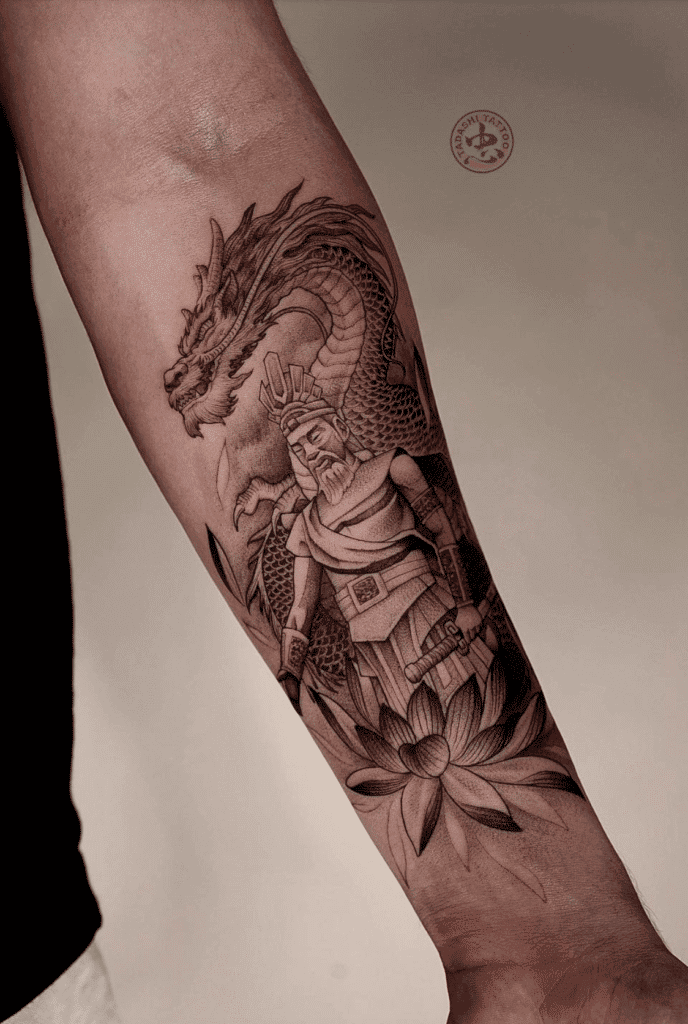
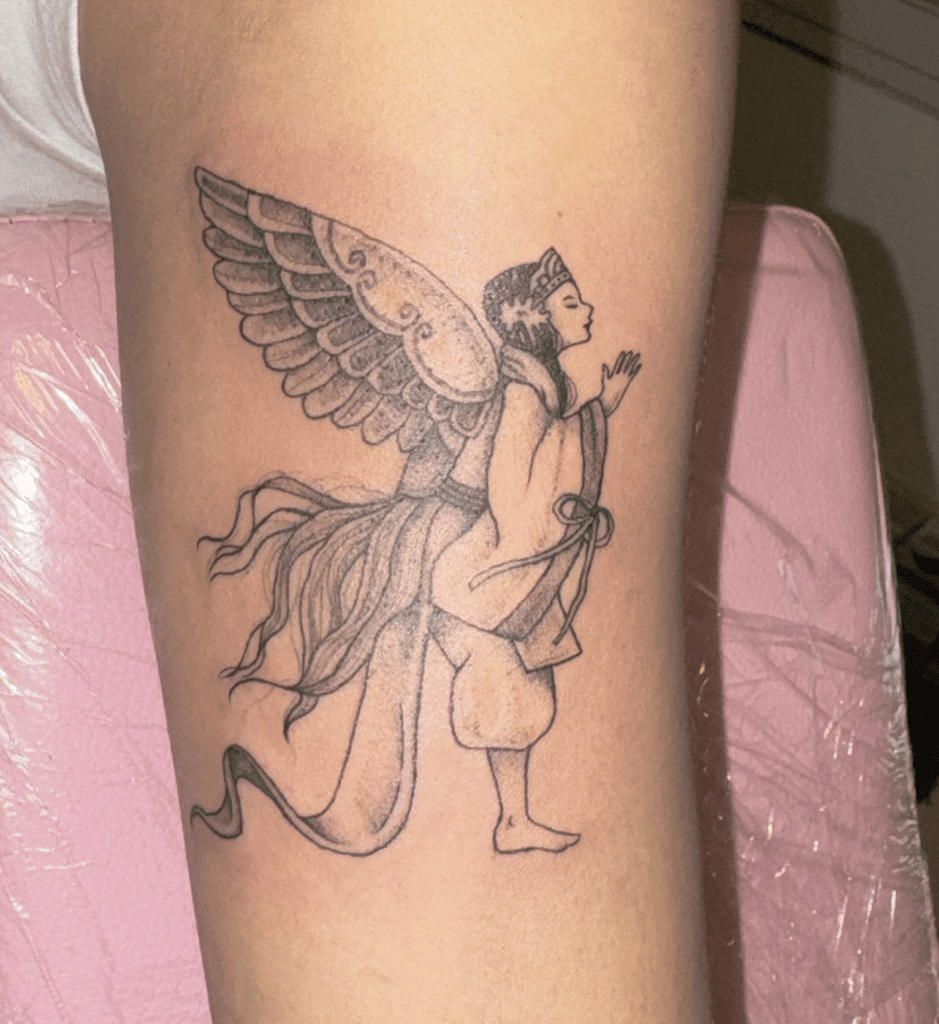
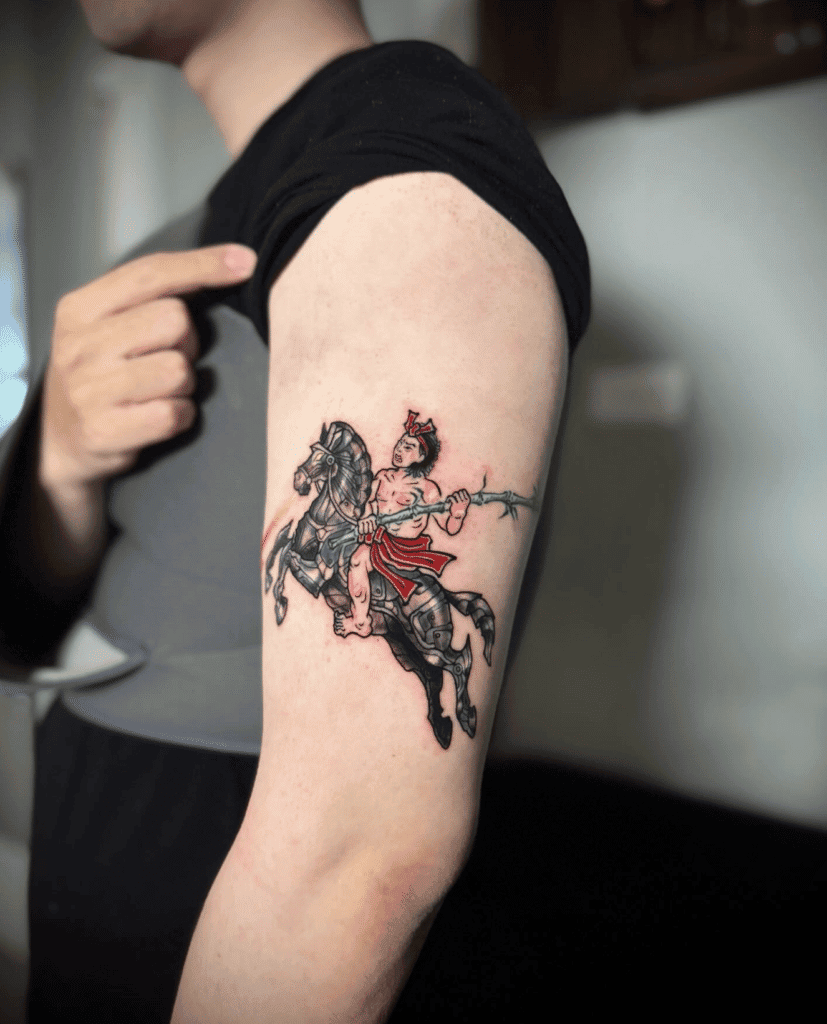
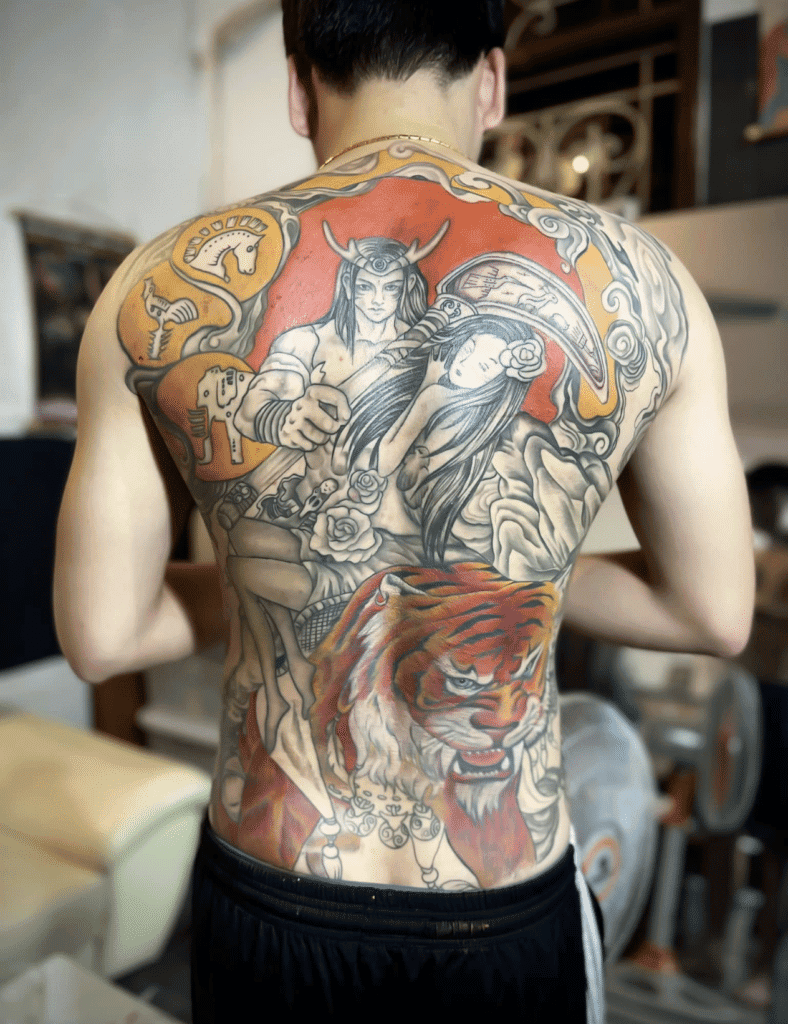
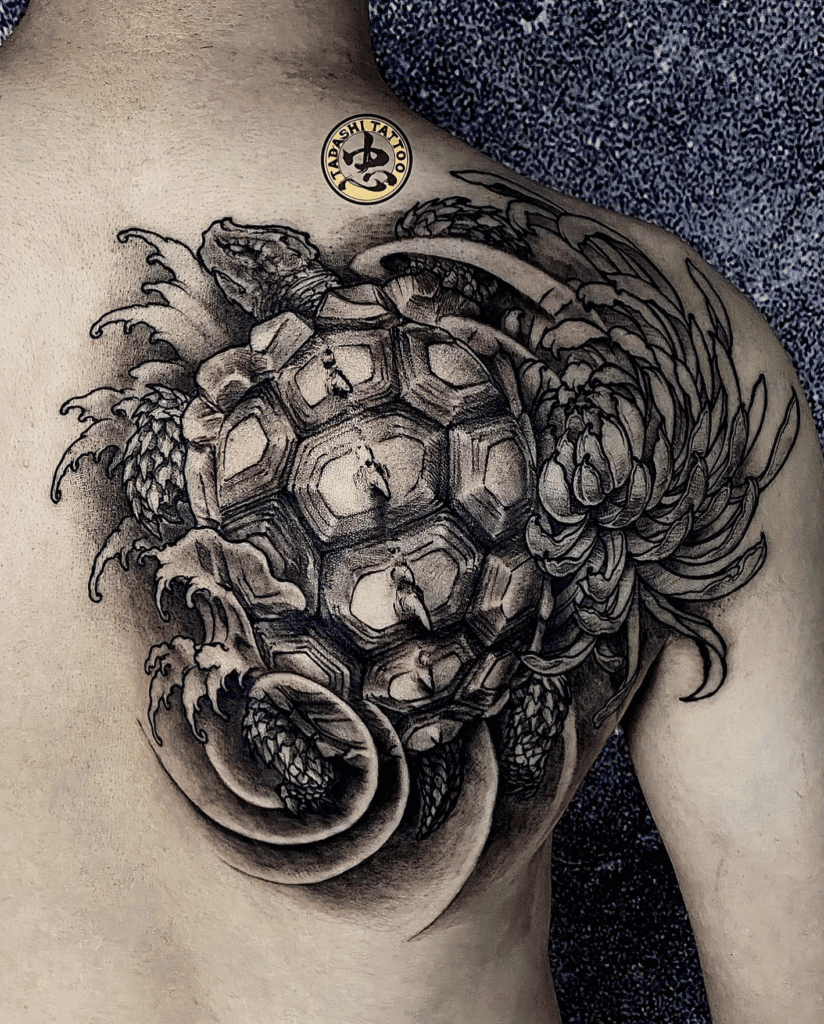
Vietnamese mythology comes from Vietnam, shaped by river deltas, mountains, forests, monsoon rains, and a long coastline. It developed in close relationship with agriculture and water, especially along the Red River and Mekong Delta, where floods, seasons, and ancestral land defined survival and identity.
Vietnamese mythology began forming over 2,000 years ago, with roots in ancient animist and ancestor-based beliefs. Over time, it absorbed influences from Chinese cosmology, Daoism, Buddhism, and Confucian thought, while retaining a distinctly Vietnamese focus on origins, heroes, and local spirits. Rather than being written as a single canon, myths were preserved through oral tradition, village rituals, and historical legend.
Vietnamese mythology never truly ended, but it transformed gradually from around 1000 CE onward as Confucian bureaucracy and Buddhism became dominant. Later, French colonialism and modernisation further reduced traditional practice. Despite this, Vietnamese mythological belief endures strongly through festivals, folk religion, ancestor worship, and the Mother Goddess tradition, making it a living cultural system rather than a lost mythology.
At its core, Vietnamese mythology is about ancestry, harmony with nature, and heroic resistance. Humans are defined by where they come from and who they descend from. Natural forces are personified, not to be conquered, but to be understood and balanced. Heroes protect the land rather than rule the world.
Conclusion
Thanks for joining us on our amazing journey through the wonderful world of the Mythology Tattoo. Check back in again as we will be taking deeper dives into each Mythology in the future. But before you go, why not check out these Video Game Tattoo Ideas or these Anime Tattoo Designs.
- Ape and Monkey Tattoo Ideas - April 6, 2026
- Pokémon Tattoo Ideas - March 30, 2026
- Norse Mythology Tattoo Ideas - March 23, 2026


