
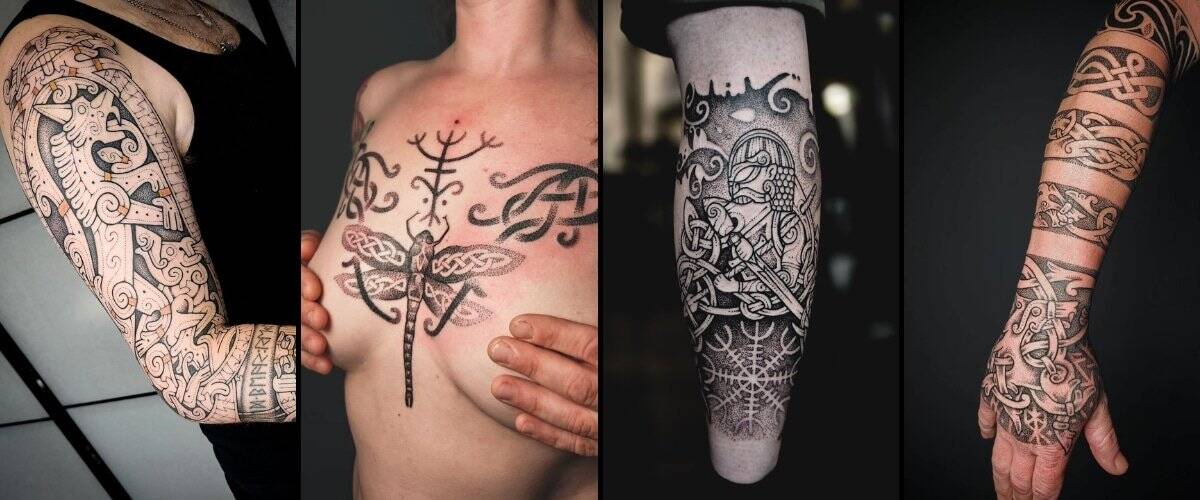
Celtic and Nordic Tattoo Style
Ready The Ancient Power of the Celtic and Nordic Tattoo: Symbols, Myths, and Meanings (tattoo clues)
The world of tattooing is full of artistic traditions, but few styles carry the same spiritual depth, mystery, and timeless strength as the Celtic and Nordic Tattoo. Rooted in ancient European culture, these designs tell stories of gods, warriors, and nature, with each line and knot carrying centuries of meaning.
From the swirling spirals of the Celts to the runic markings of Norse warriors, these tattoos connect modern wearers to ancestral legends of bravery, fate, and the natural world. In this article, we’ll explore the origins, symbols, meanings, and modern interpretations of the Celtic and Nordic Tattoo, two intertwined legacies inked in history and myth.
The Origins of the Celtic and Nordic Tattoo
Celtic Tattoo Origins
The Celtic Tattoo traces back thousands of years to the ancient Celtic tribes that roamed parts of Ireland, Scotland, Wales, and continental Europe. These tribes were known for their connection to nature, the spirit world, and a deep reverence for symbols.
Although historical evidence of tattooing among the Celts is limited, ancient accounts by Roman historians suggest that Celtic warriors may have marked their bodies with blue pigment, possibly derived from woad, a plant that produces an indigo-like dye. These markings were said to intimidate enemies and symbolise spiritual protection.
In Celtic art, patterns like spirals, knots, and interlacing designs were more than decoration. They represented life cycles, eternity, and the unity of all things. Over time, these motifs became foundational to Celtic-inspired tattoos.
Nordic Tattoo Origins
The Nordic Tattoo, often referred to as Norse or Viking tattooing, comes from the cultures of Scandinavia, modern-day Denmark, Norway, and Sweden, during the Viking Age (c. 793–1066 CE).
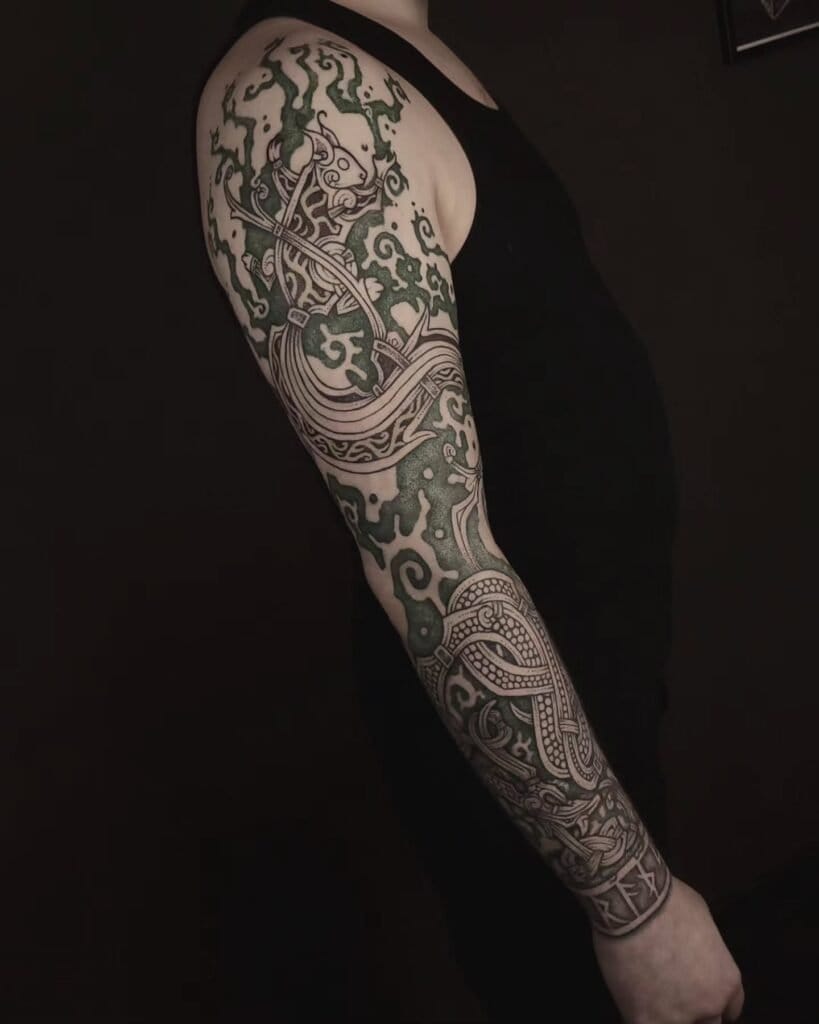
Unlike the Celts, we have written evidence of tattoos among the Vikings. The Arab explorer Ahmad ibn Fadlan described encountering Norsemen whose bodies were covered “from fingernails to necks with dark green patterns of trees and symbols.”
These designs were believed to embody strength, fate, courage, and devotion to the gods. Norse tattoos commonly featured runes, mythical beasts, and sacred symbols tied to deities like Odin and Thor.
While separated by geography, both Celtic and Nordic cultures shared a reverence for symbolism and a belief that art could bridge the human and the divine, making their tattoos among the most spiritually charged in history.
The Shared Spirit of Celtic and Nordic Tattoos
Though distinct, Celtic and Nordic tattoos share several underlying themes:
- Spirituality and connection to nature
- Respect for ancestry and fate
- Protection against evil or misfortune
- Symbols of strength, unity, and rebirth
Their intricate knots and runes tell timeless stories — of warriors, gods, and cosmic balance. Both traditions saw tattooing not as mere decoration, but as a reflection of one’s soul and destiny.
The Symbolism Behind Celtic Tattoos
Celtic tattoos are famous for their intricate patterns, often built around loops, circles, and symmetry. Each symbol holds layers of meaning — spiritual, natural, and personal.
1. Celtic Knot
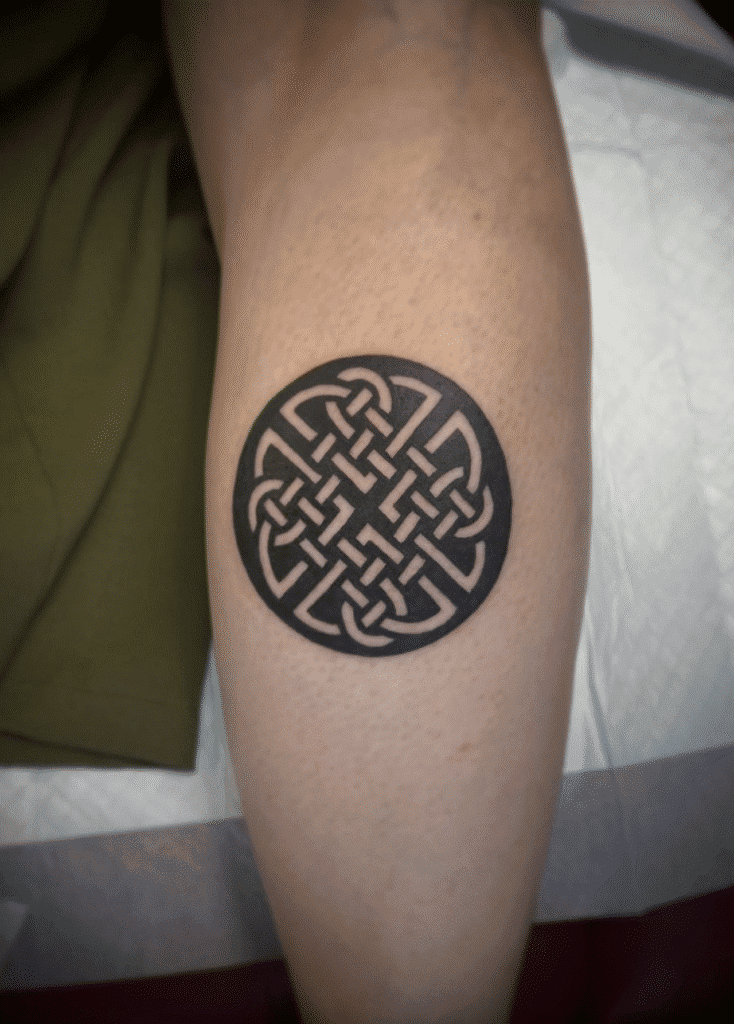
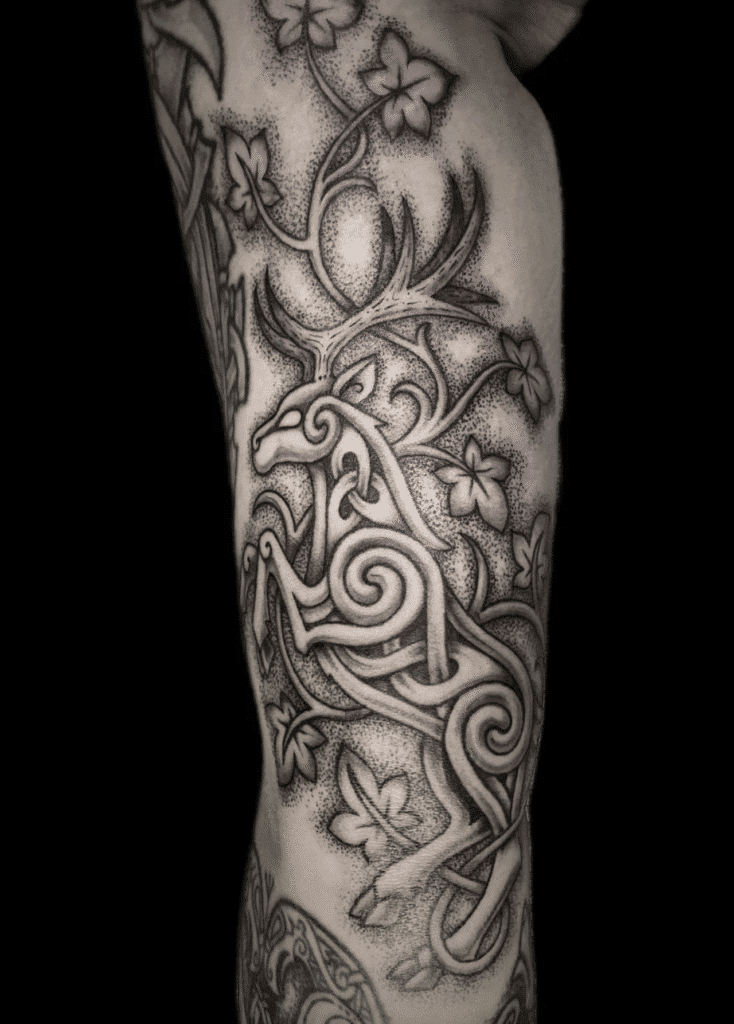
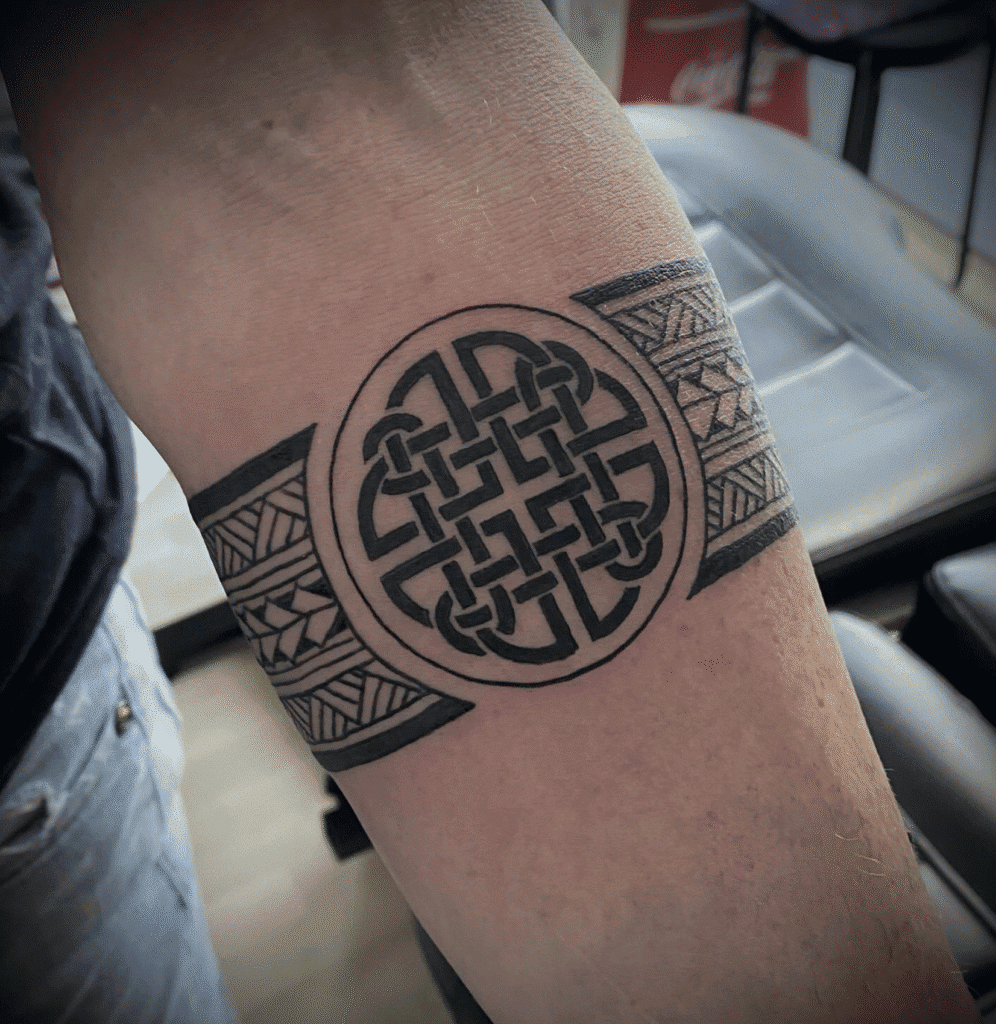
Perhaps the most recognisable motif, the Celtic Knot (or endless knot) symbolises eternity, unity, and interconnectedness. With no beginning or end, it reflects the continuous cycle of life and death — a reminder that everything is connected.
2. Triquetra (Trinity Knot)
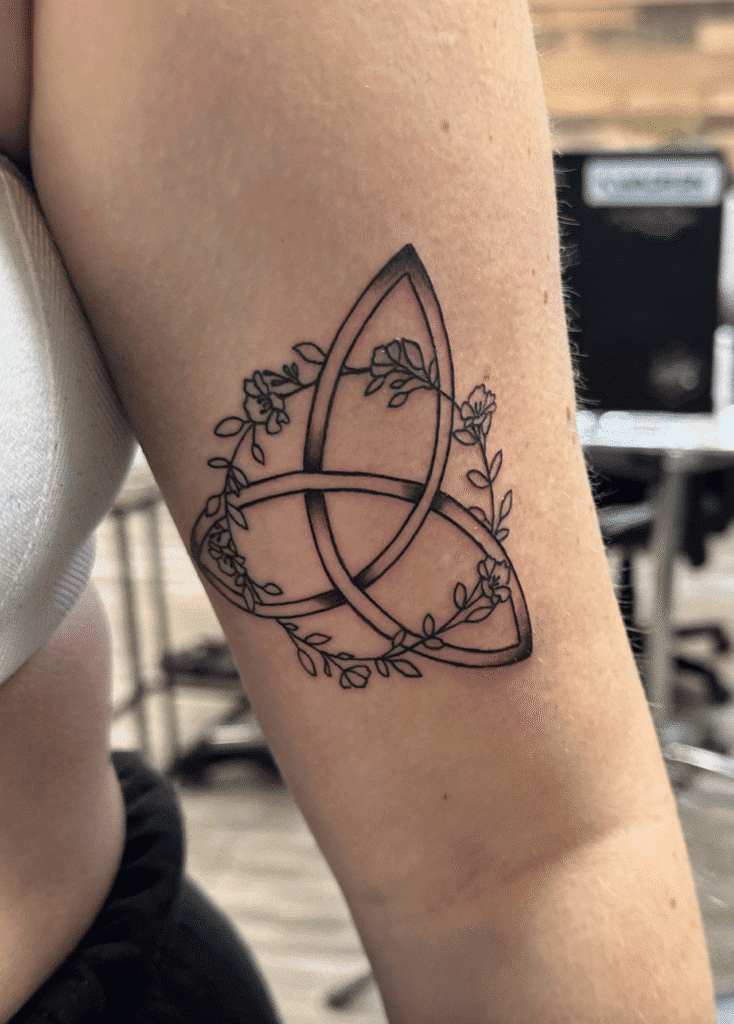
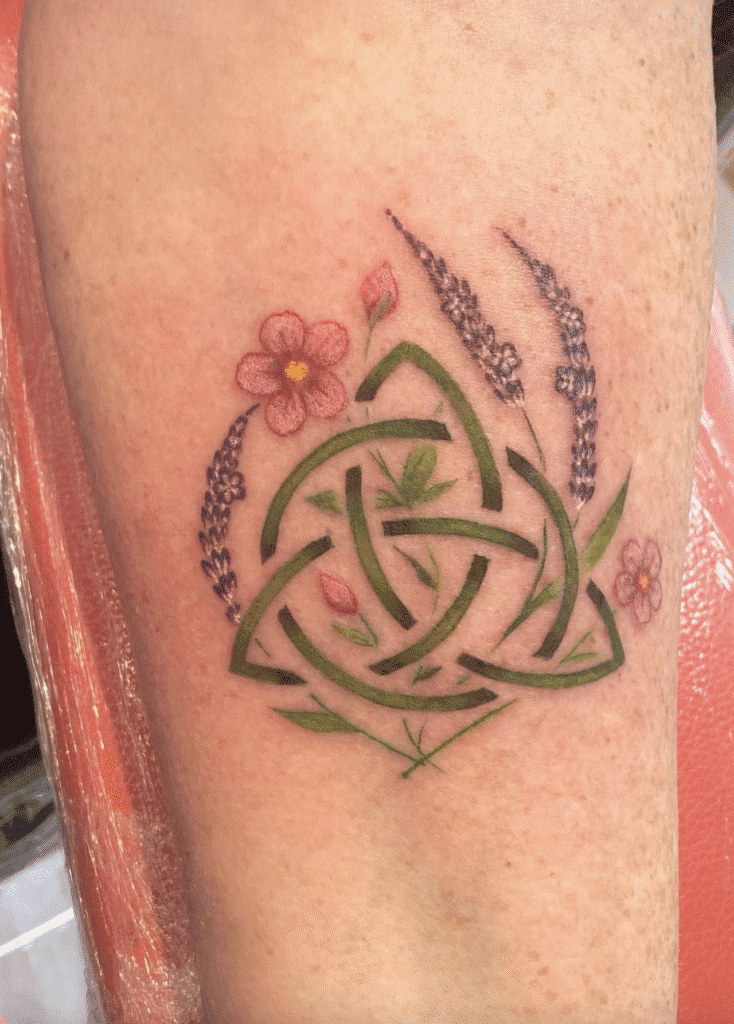
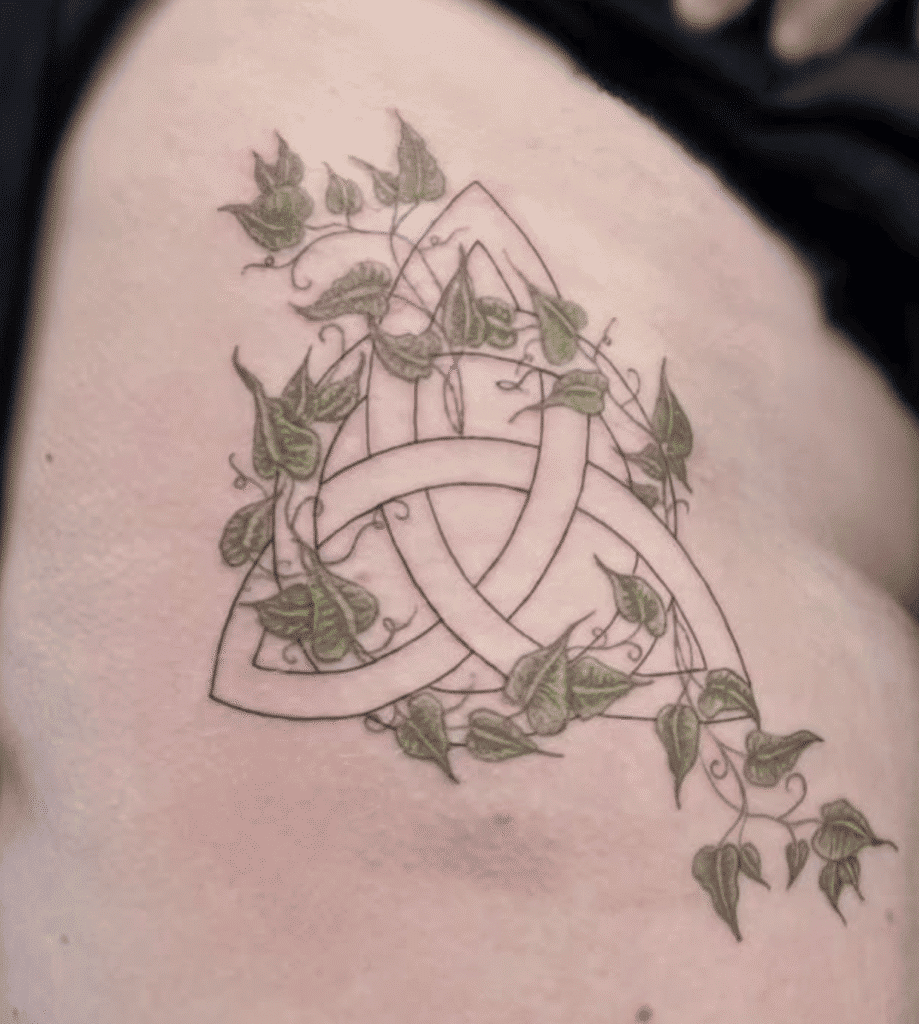
The Triquetra, also known as the Trinity Knot, represents threefold balance — such as mind, body, and spirit, or past, present, and future. In later Christian adaptation, it symbolised the Holy Trinity.
3. Triskelion (Triple Spiral)
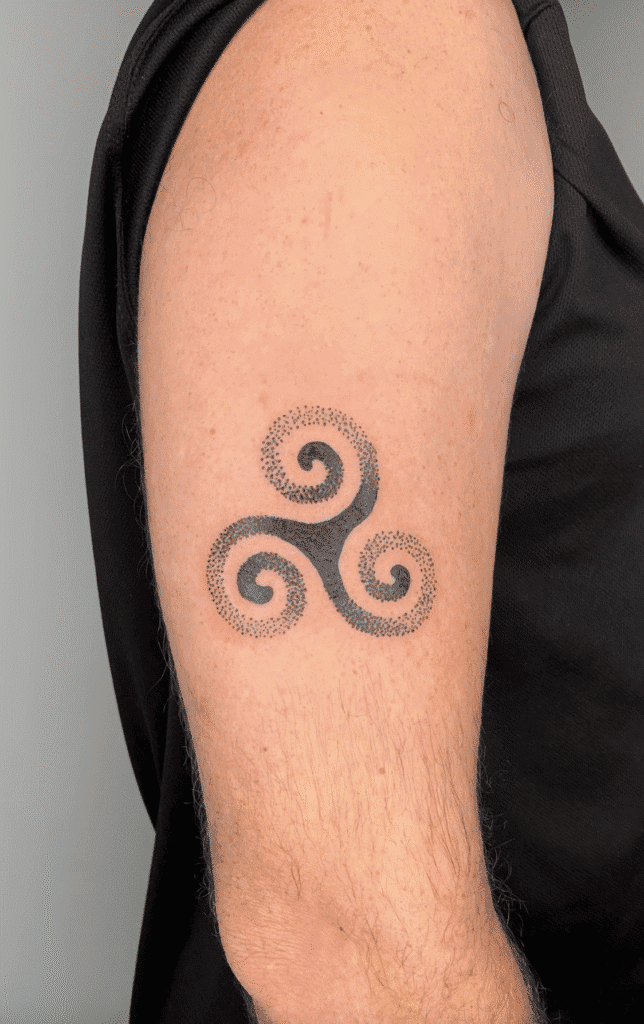
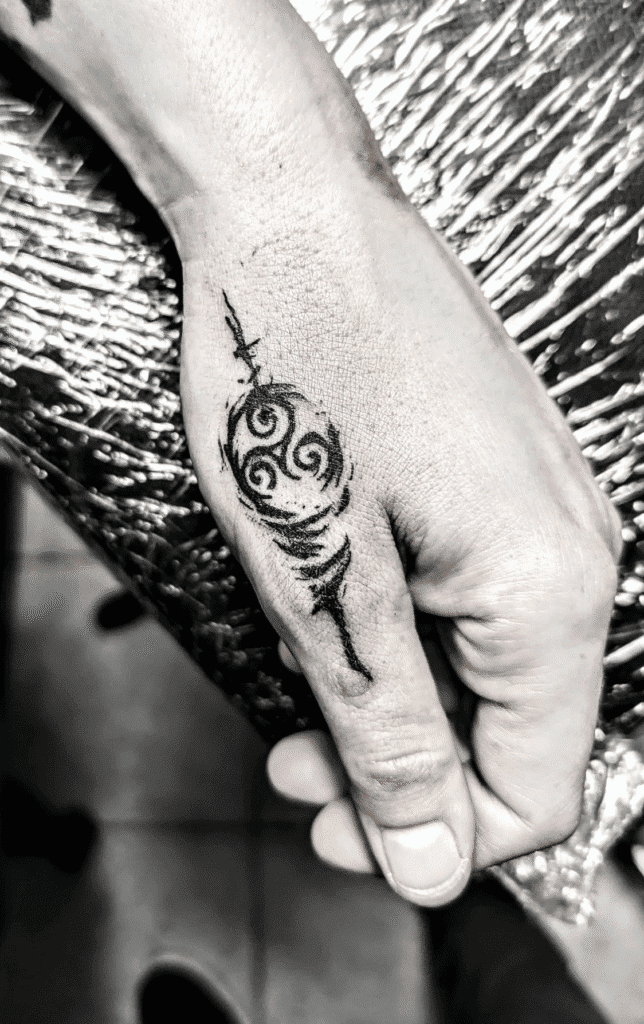
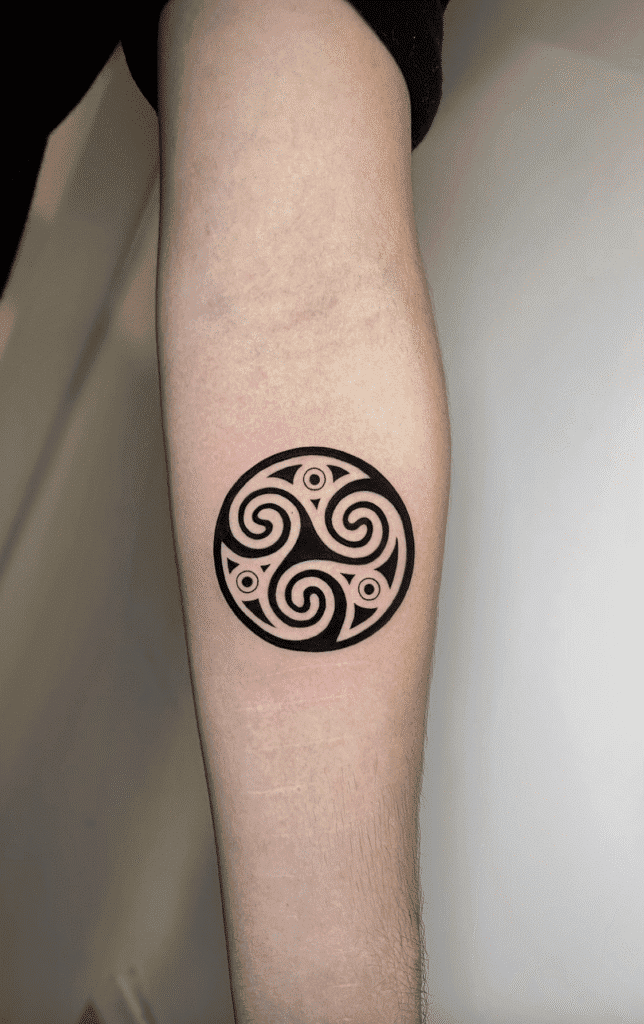
The Triskelion, or triple spiral, embodies motion, growth, and cycles. It’s one of the oldest Celtic symbols, representing progress through life’s phases — birth, death, and rebirth.
4. Celtic Cross
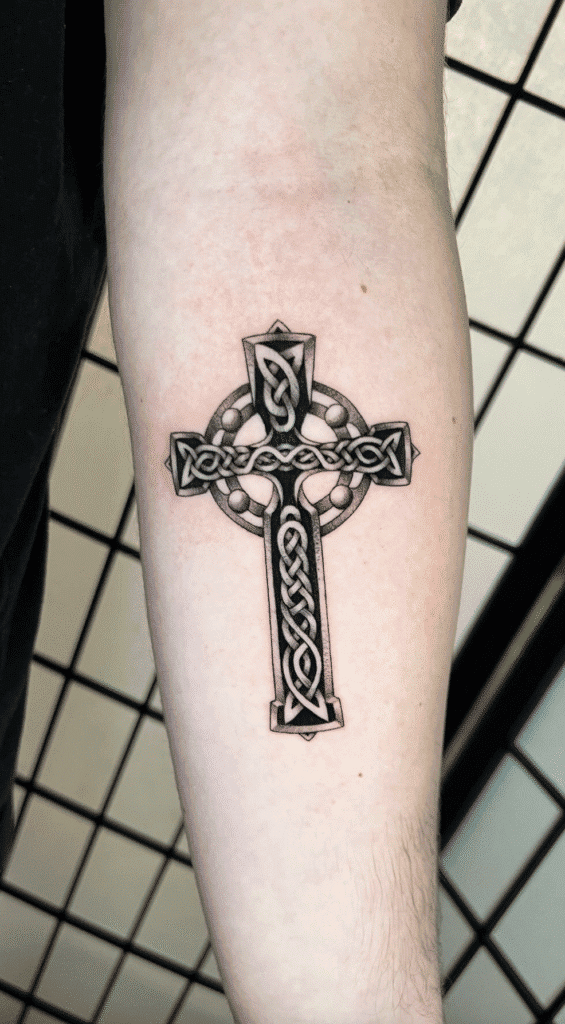
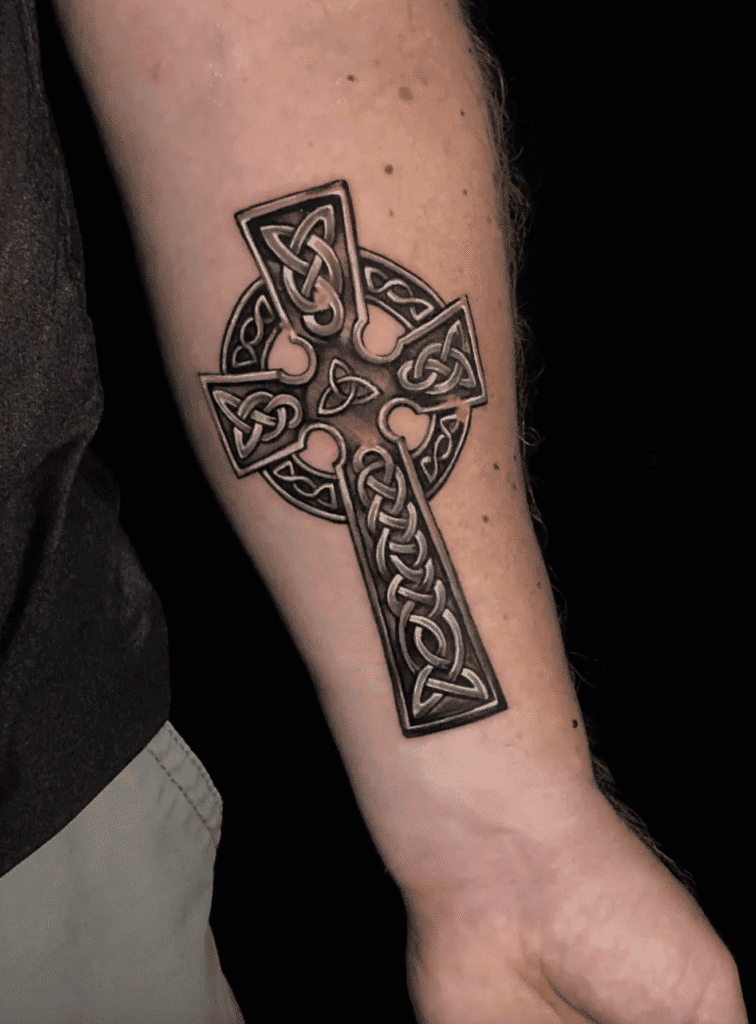
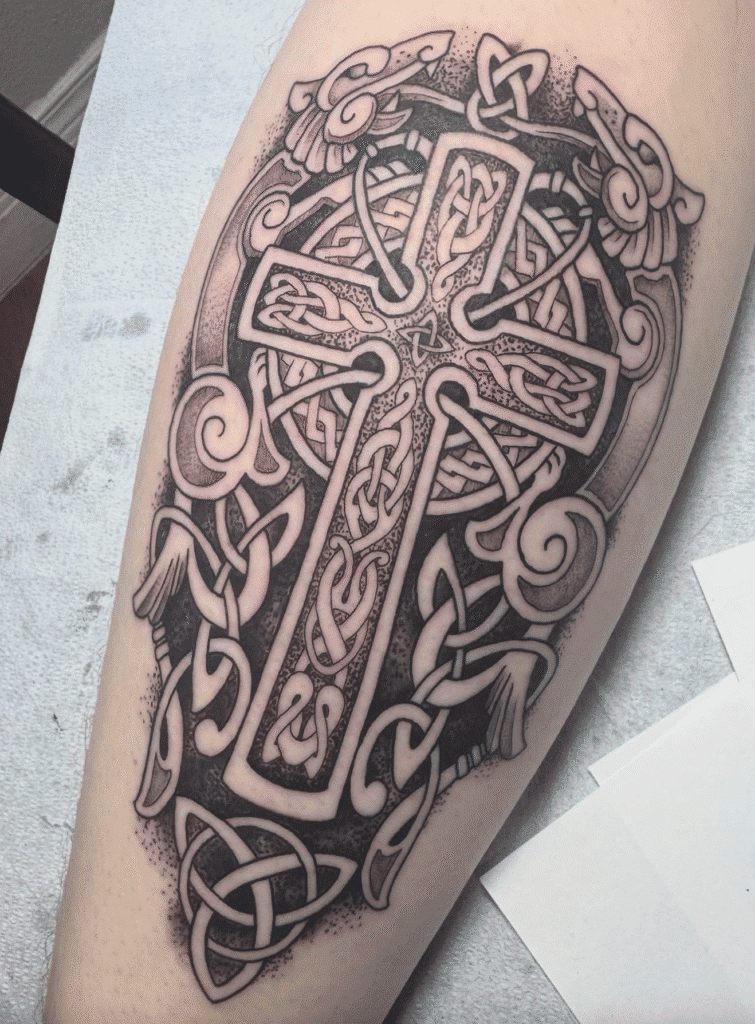
The Celtic Cross merges ancient pagan symbolism with Christian influence. The circle behind the cross represents the sun, eternity, or the cosmos, while the cross itself stands for faith and balance.
5. Tree of Life (Crann Bethadh)
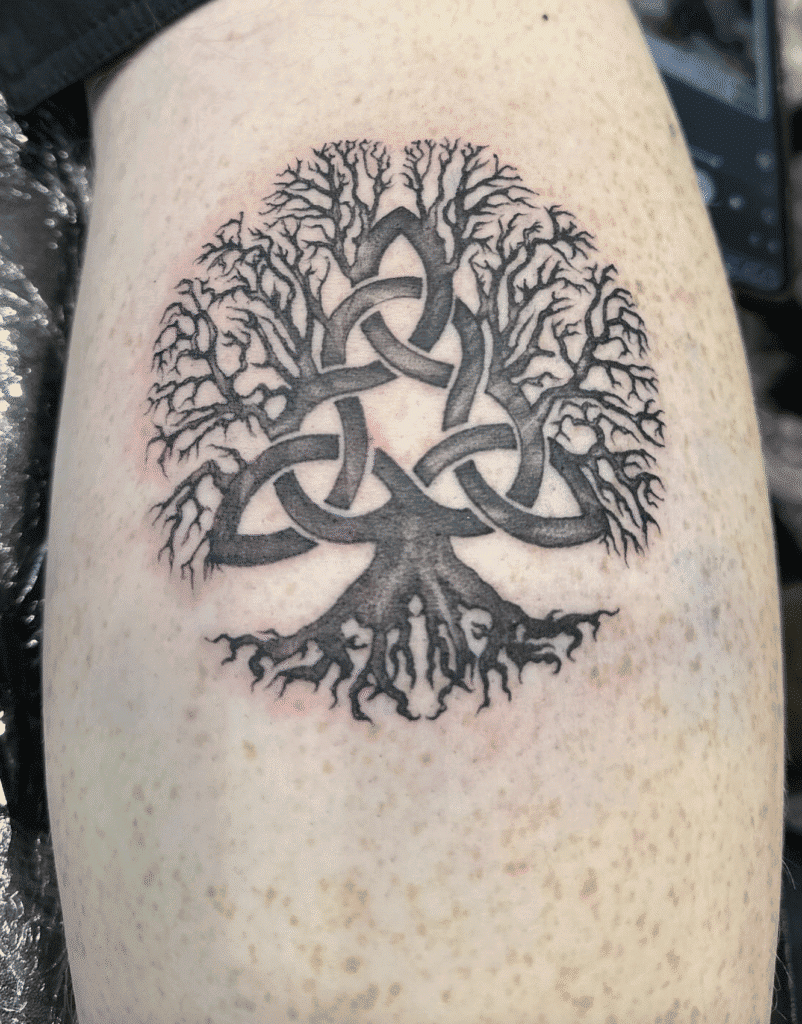
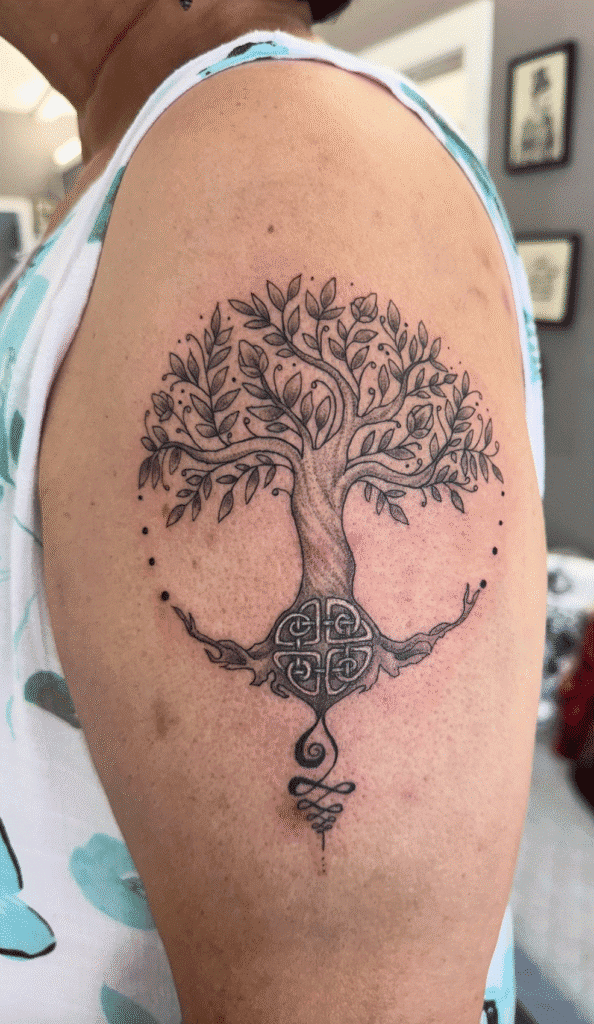
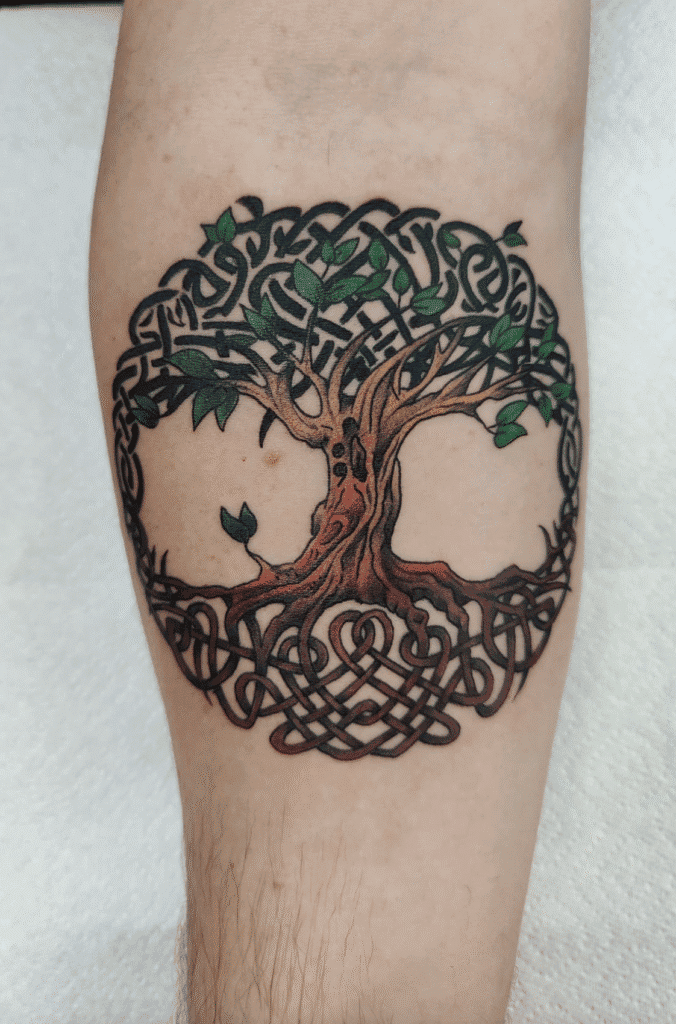
In Celtic mythology, the Tree of Life connected the heavens, earth, and underworld. Its roots reached deep into the ground, while its branches stretched toward the sky — symbolising harmony between nature and spirit.
These designs are as visually mesmerising as they are meaningful, making the Celtic Tattoo an expression of both personal identity and ancient wisdom.
The Symbolism Behind Nordic Tattoos
The Nordic Tattoo draws heavily from Norse mythology and runic magic, weaving together stories of gods, fate, and heroic courage.
1. Runes
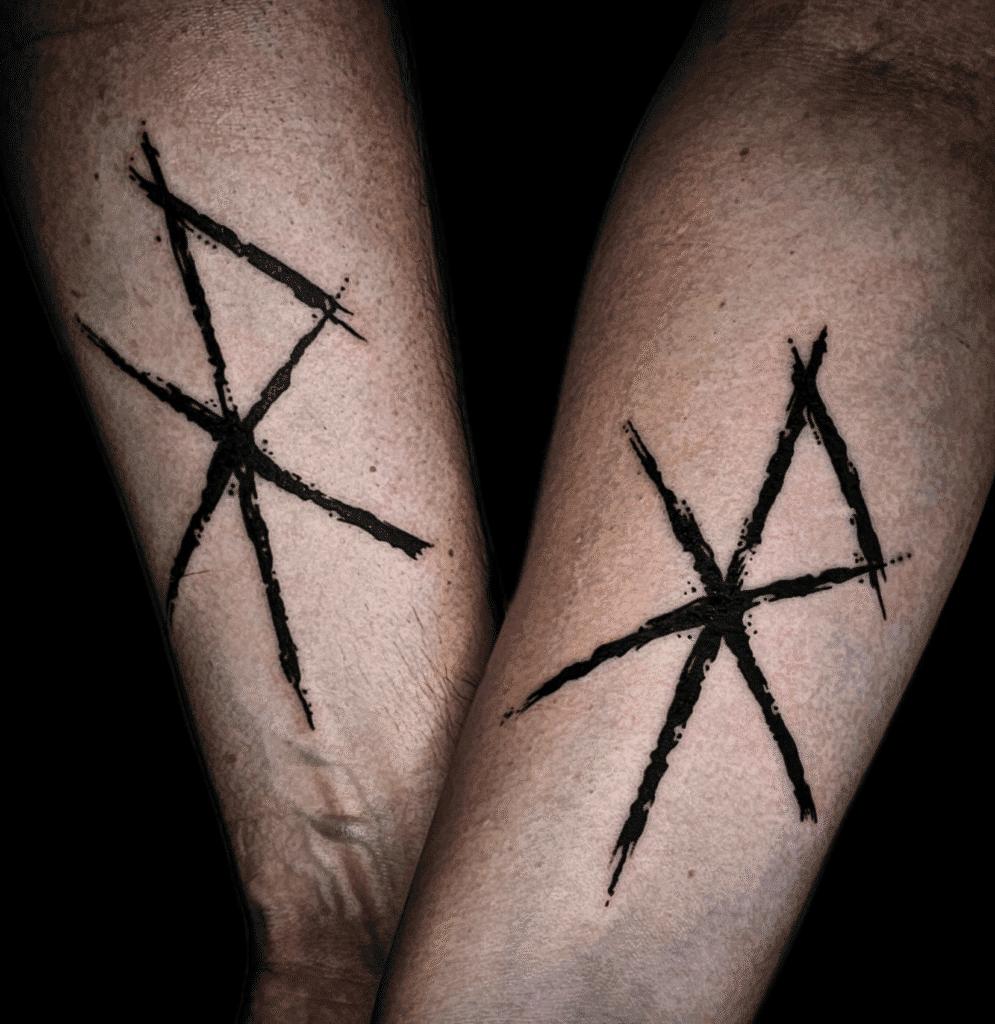
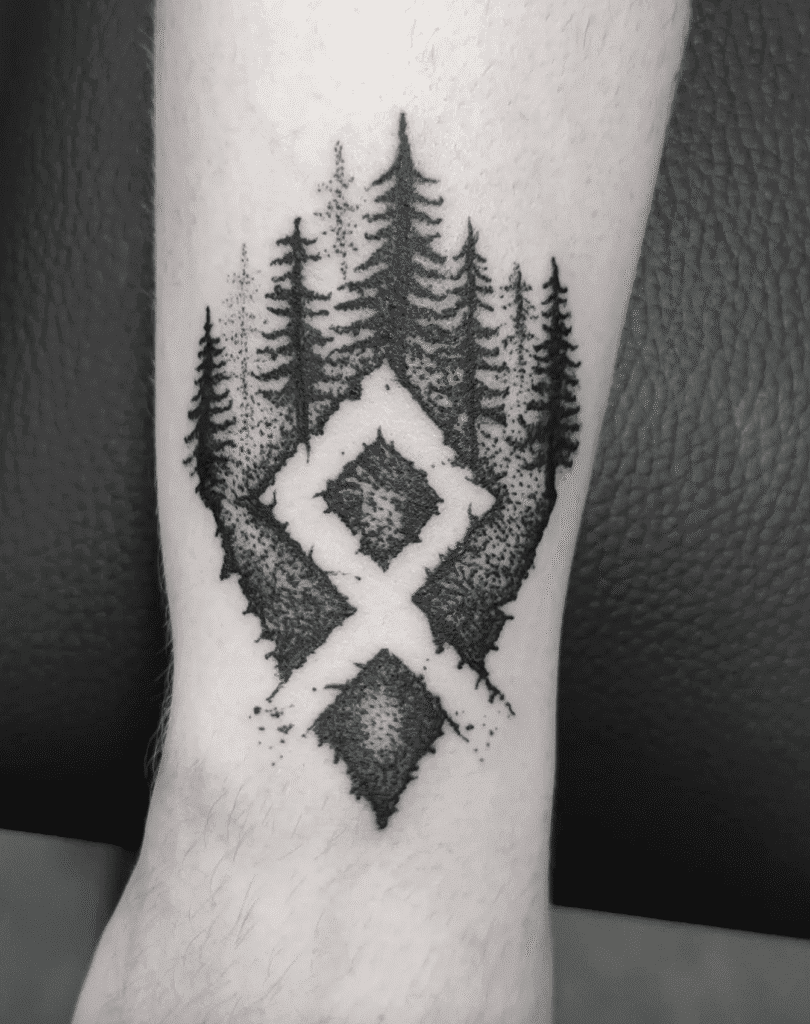
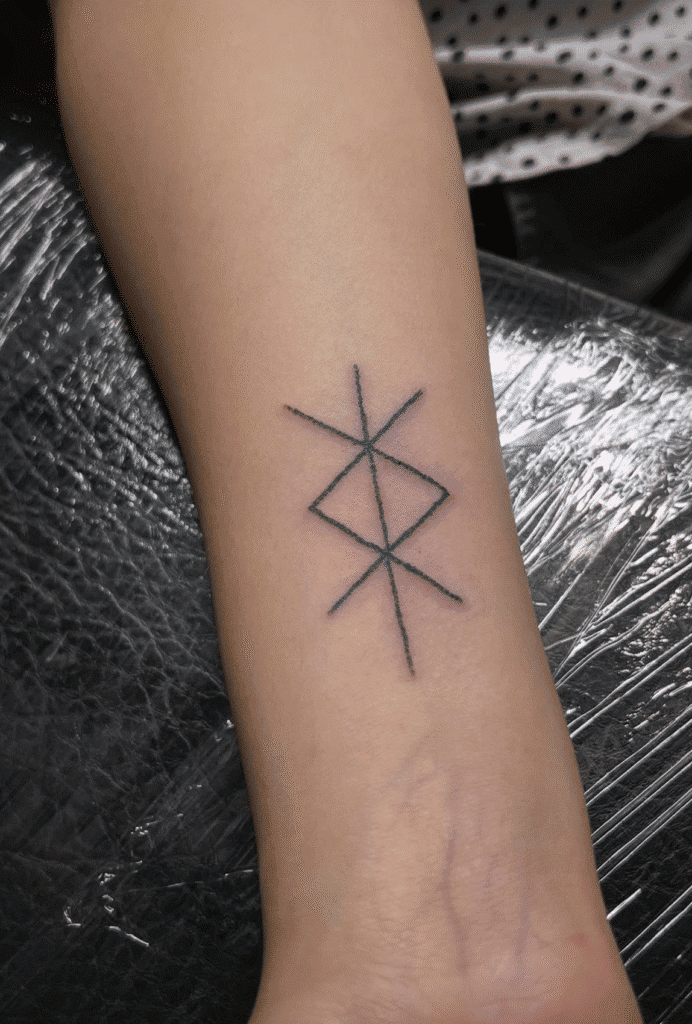
Runes were the letters of the Elder Futhark, the oldest known runic alphabet used by early Germanic peoples. Each rune carried a phonetic sound and a mystical meaning.
For example:
- Algiz (ᛉ) – Protection and defence.
- Fehu (ᚠ) – Wealth and prosperity.
- Tiwaz (ᛏ) – Honour, justice, and sacrifice.
- Othala (ᛟ) – Heritage and ancestral strength.
Tattooing runes was seen as invoking their power — almost like a protective spell etched into the skin.
2. Vegvísir (The Viking Compass)
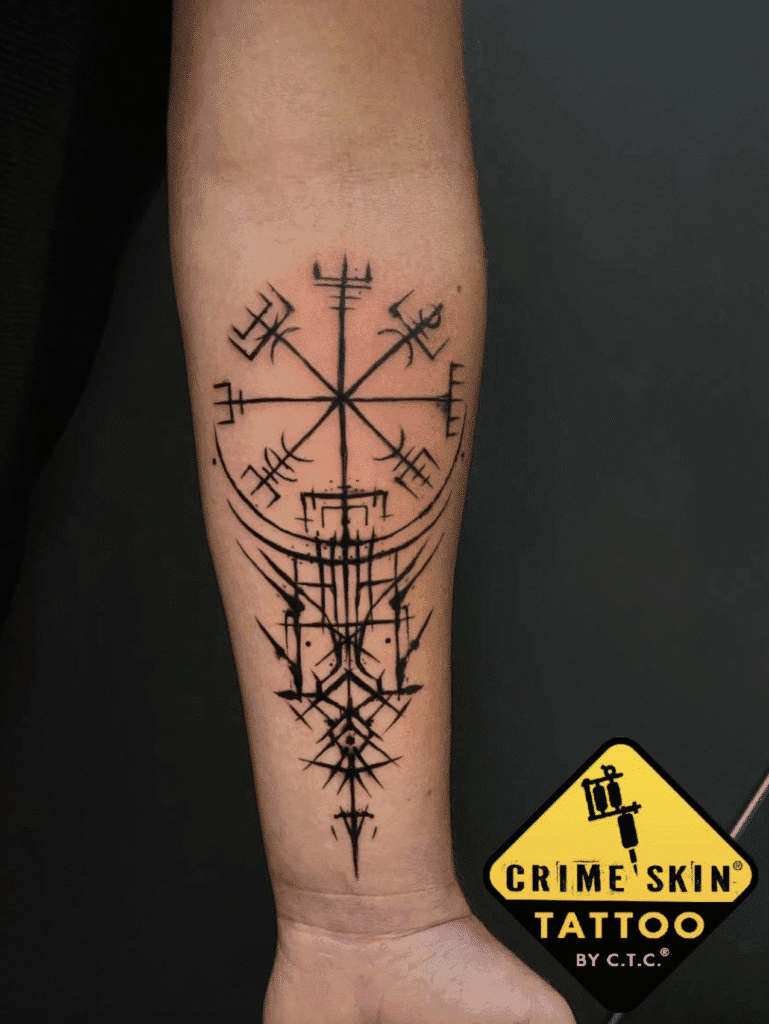
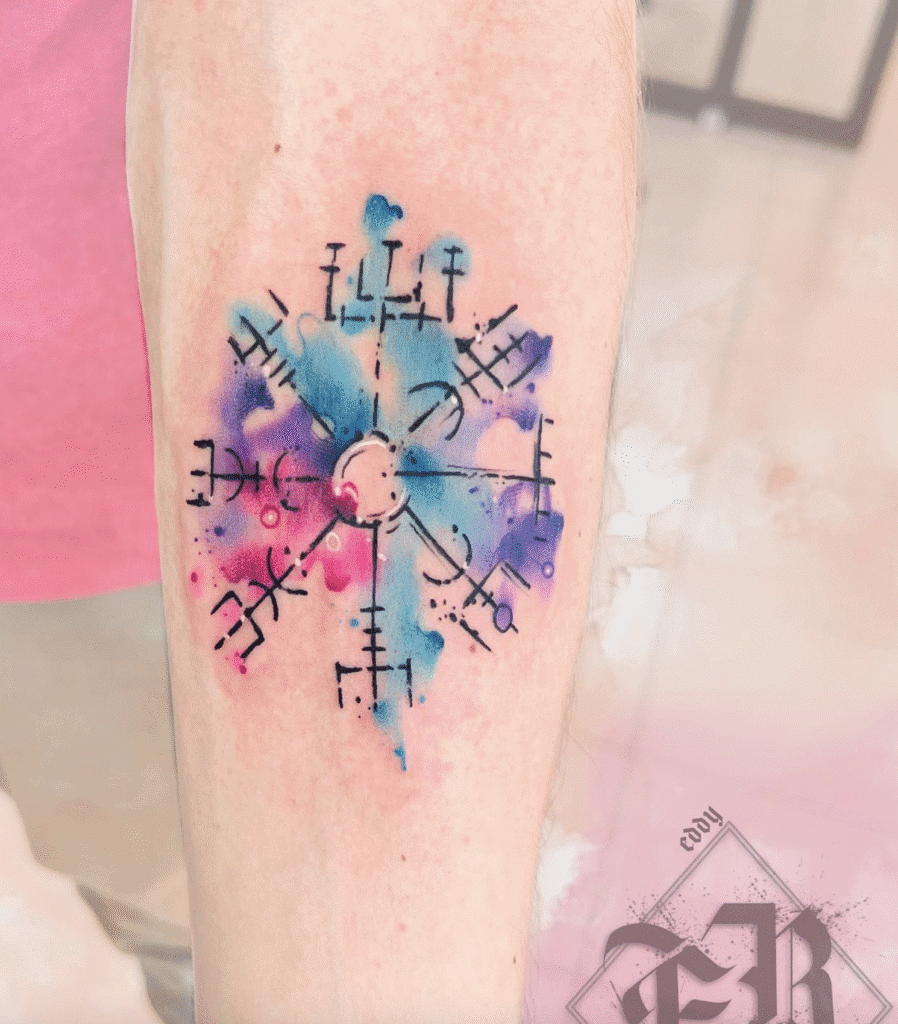
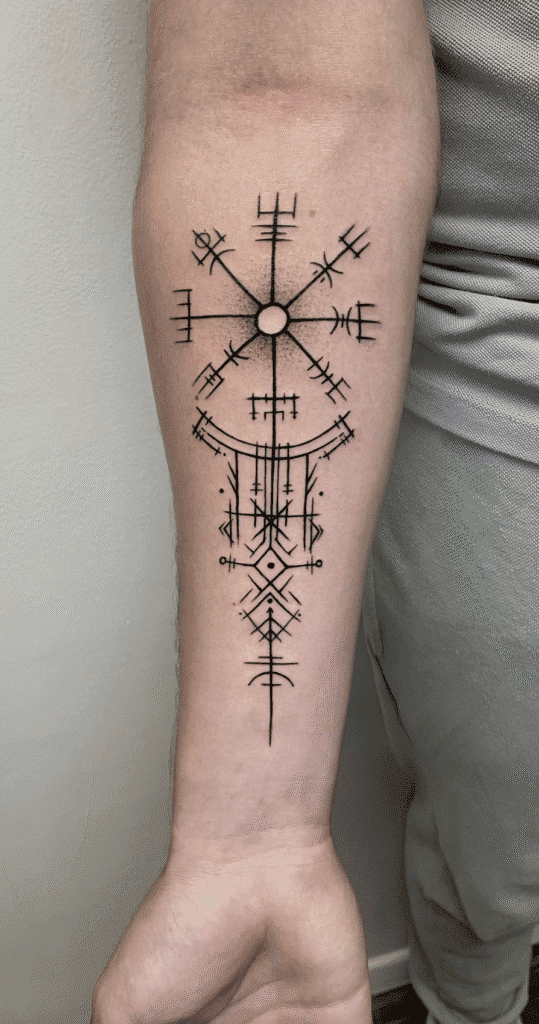
One of the most popular Norse tattoo symbols, the Vegvísir means “sign post” or “guide.” It’s said to help its bearer find their way through rough storms — both literal and spiritual.
3. Yggdrasil (The World Tree)
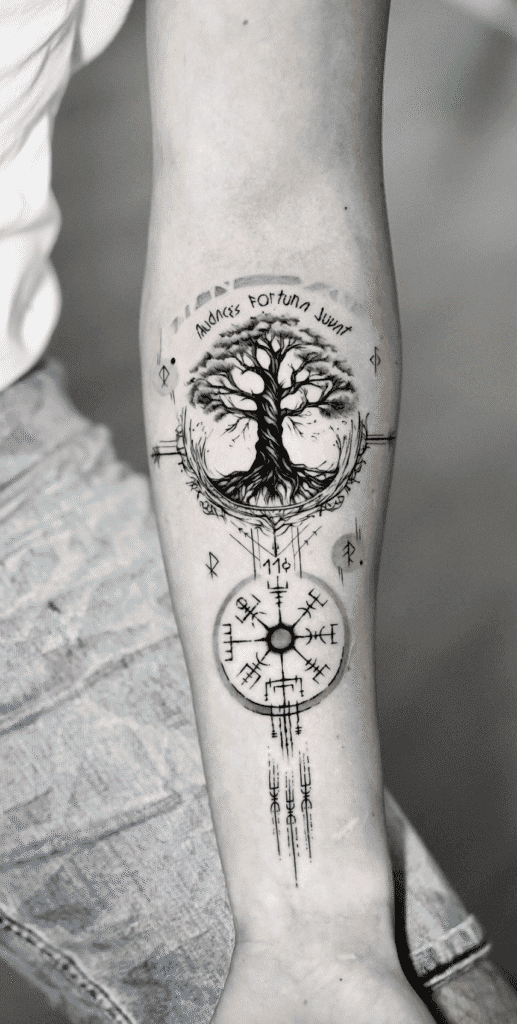
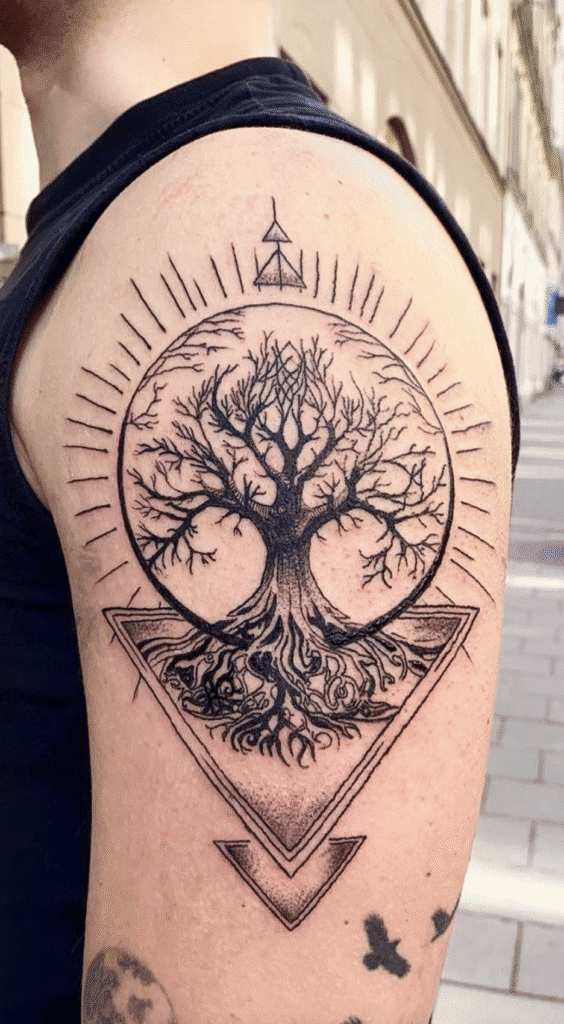
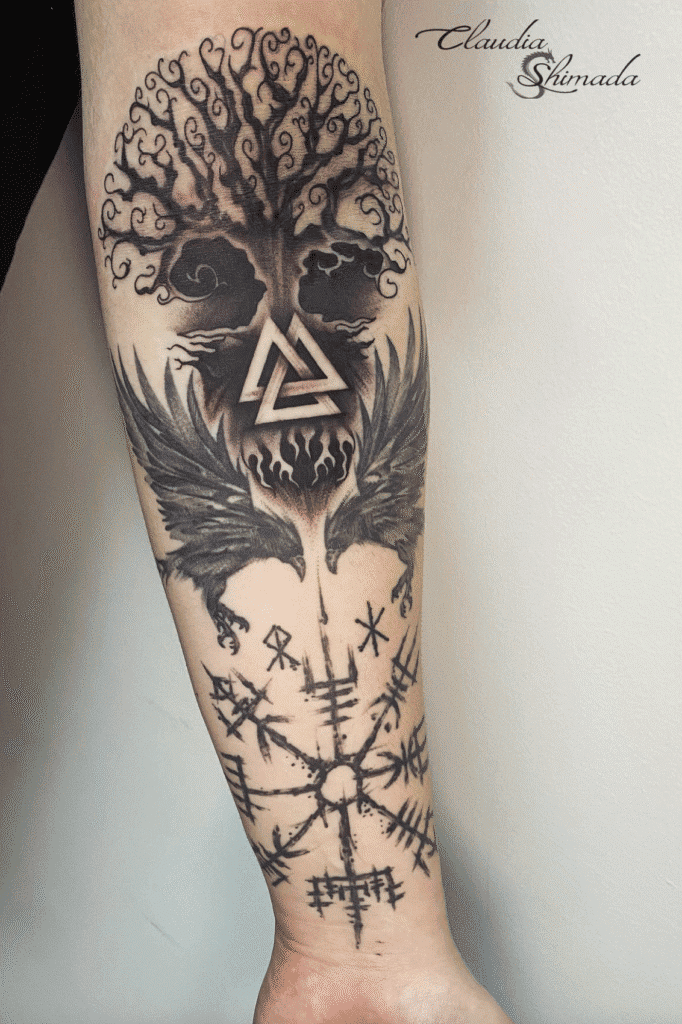
At the heart of Norse cosmology stands Yggdrasil, the great ash tree connecting all realms of existence. A tattoo of Yggdrasil symbolises life, interconnection, and destiny.
4. Valknut
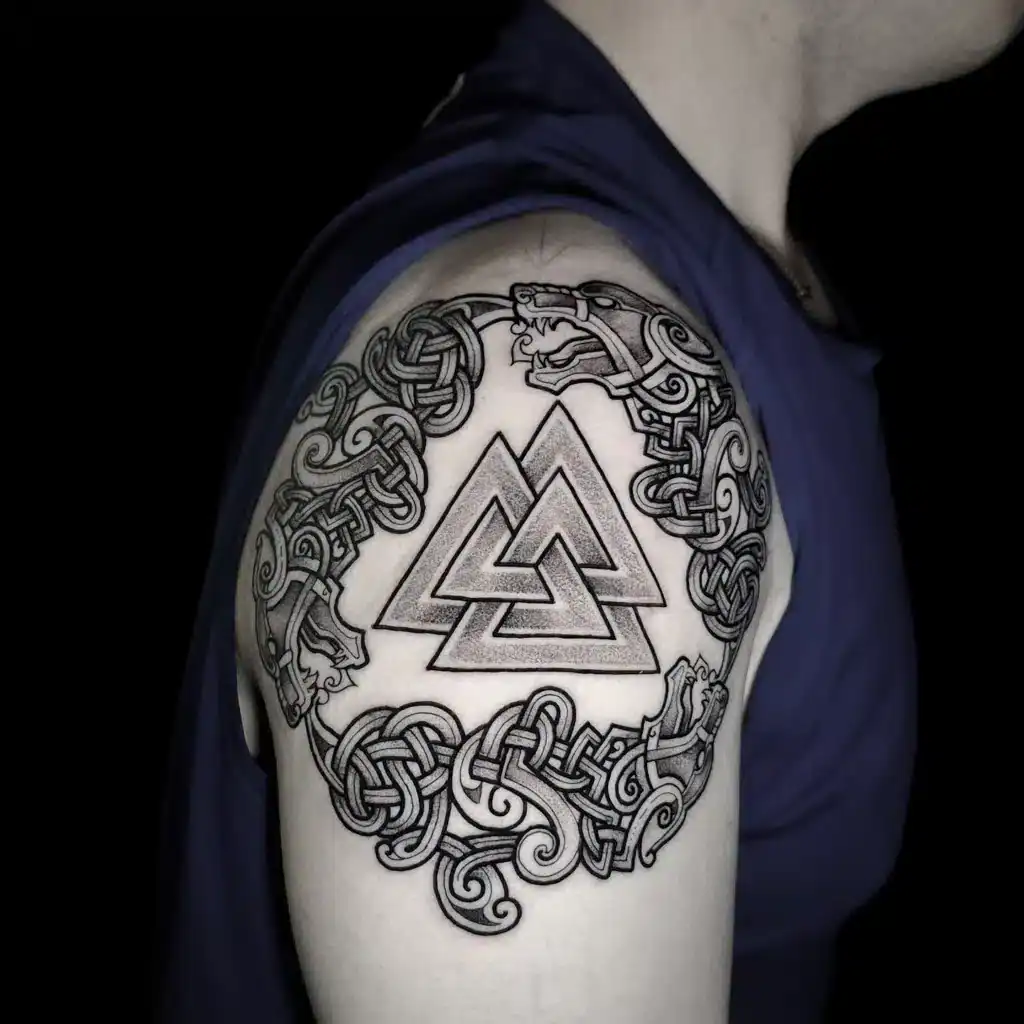
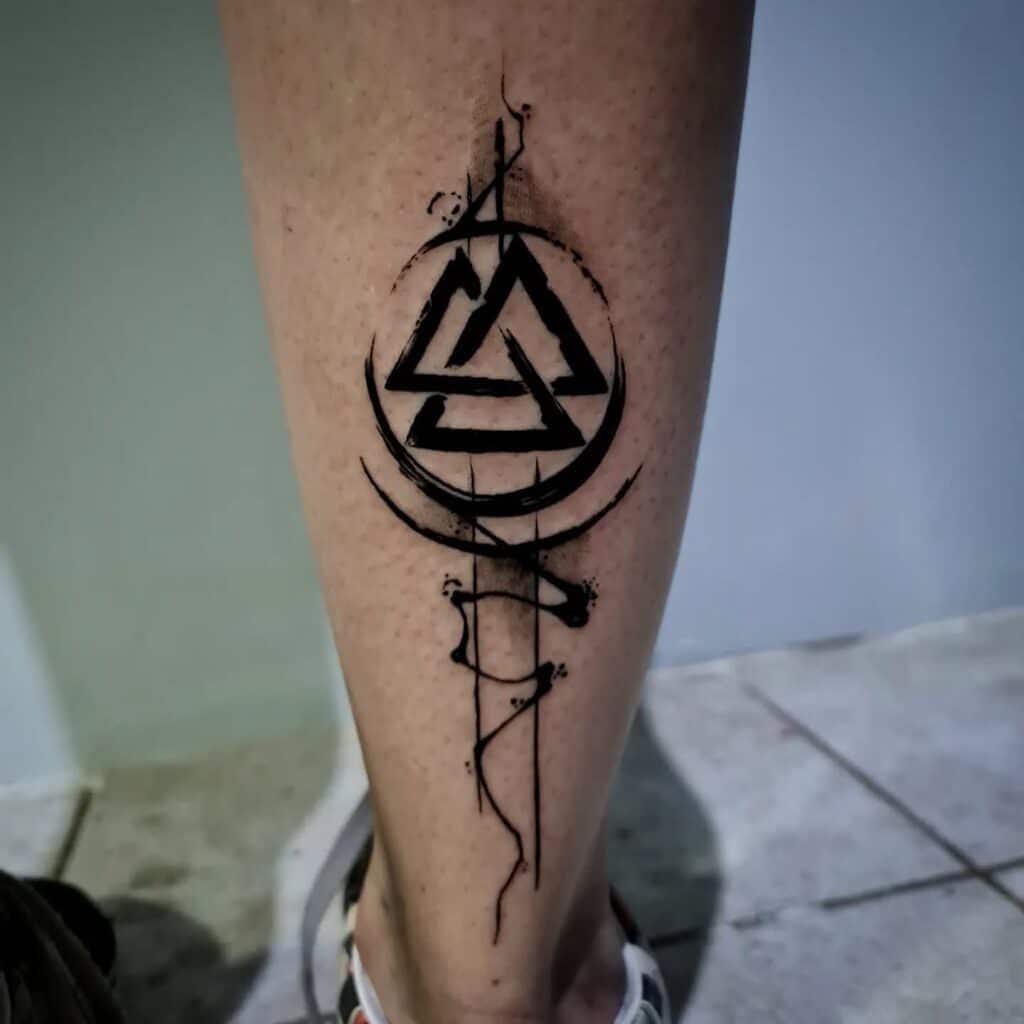
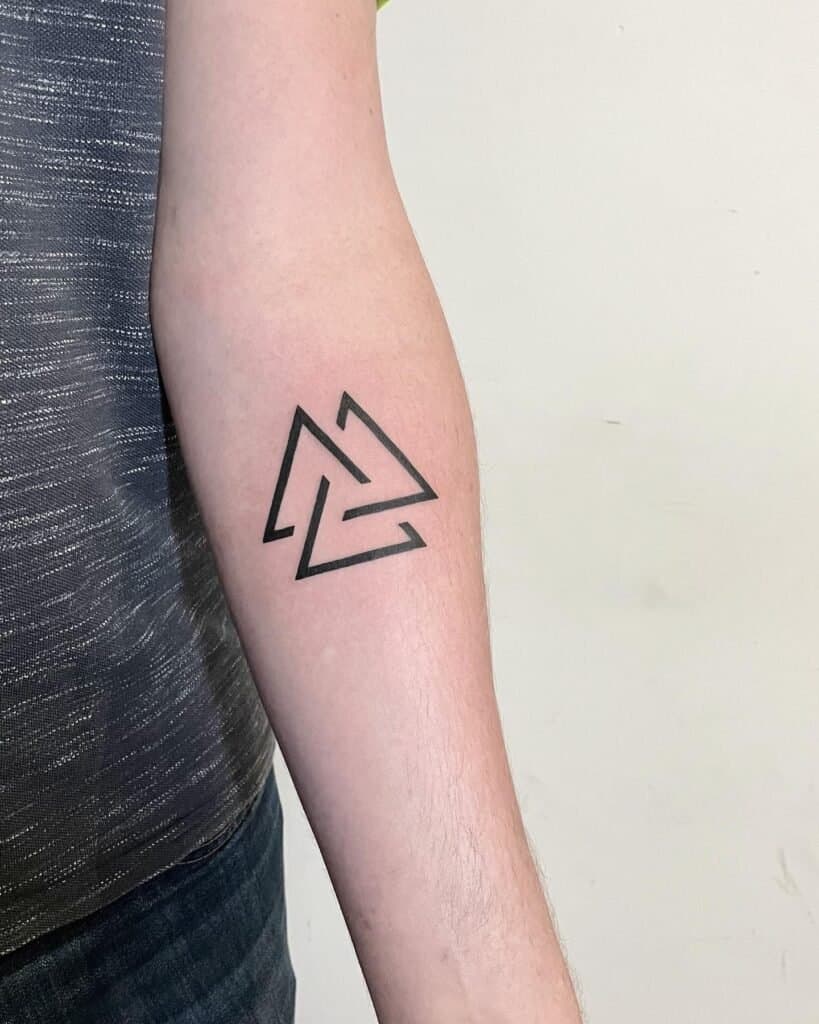
The Valknut (three interlocking triangles) is linked to Odin, the Allfather. It represents warriors who died in battle and their journey to Valhalla. It’s often a symbol of courage, honour, and acceptance of fate.
5. Mjölnir (Thor’s Hammer)
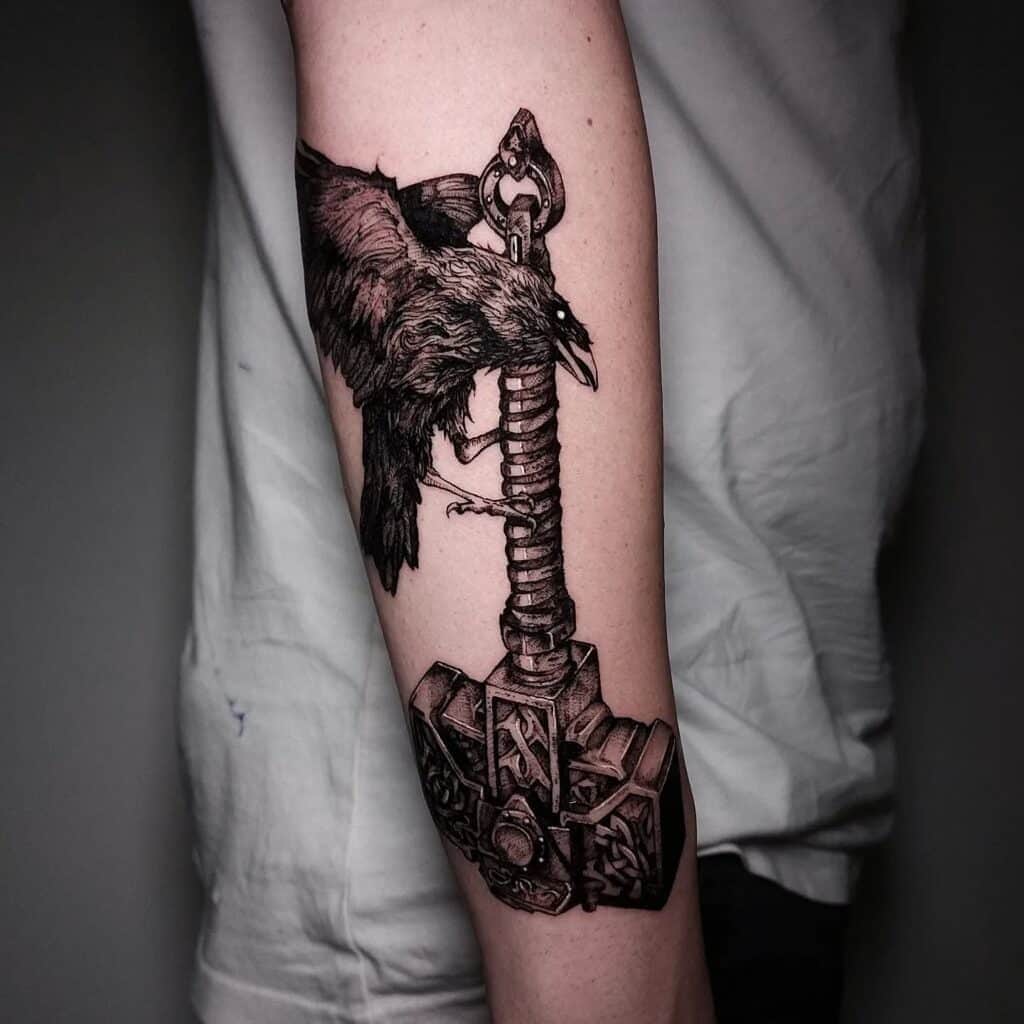
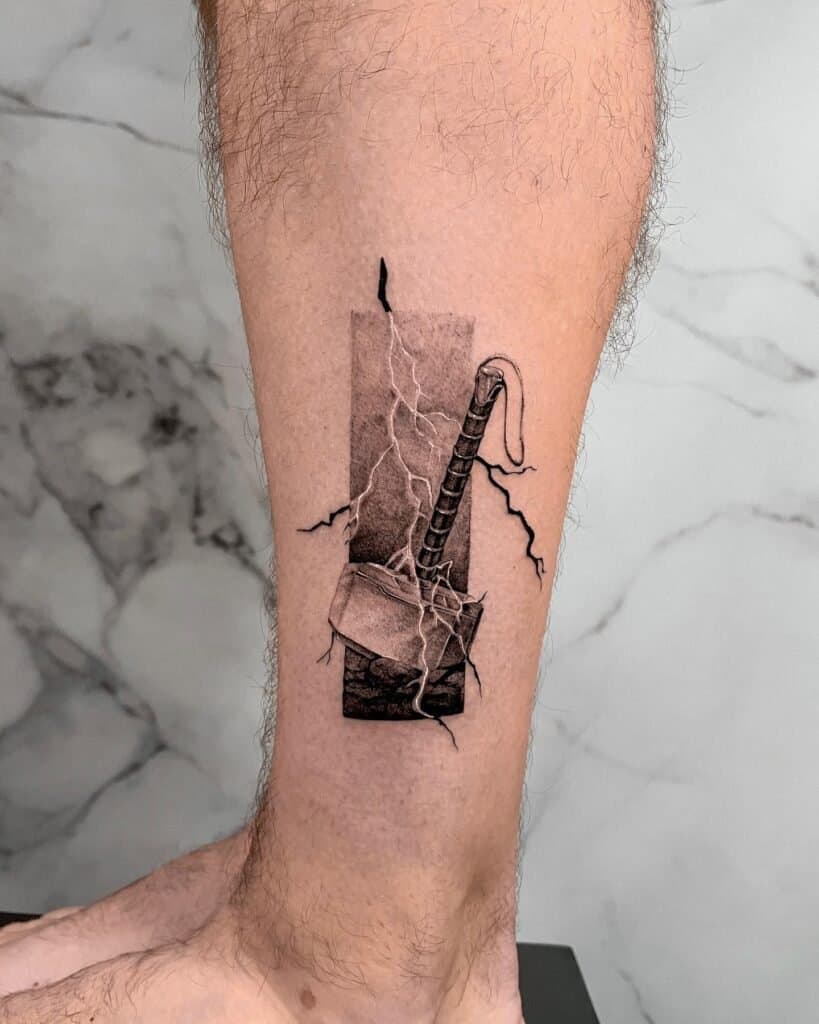
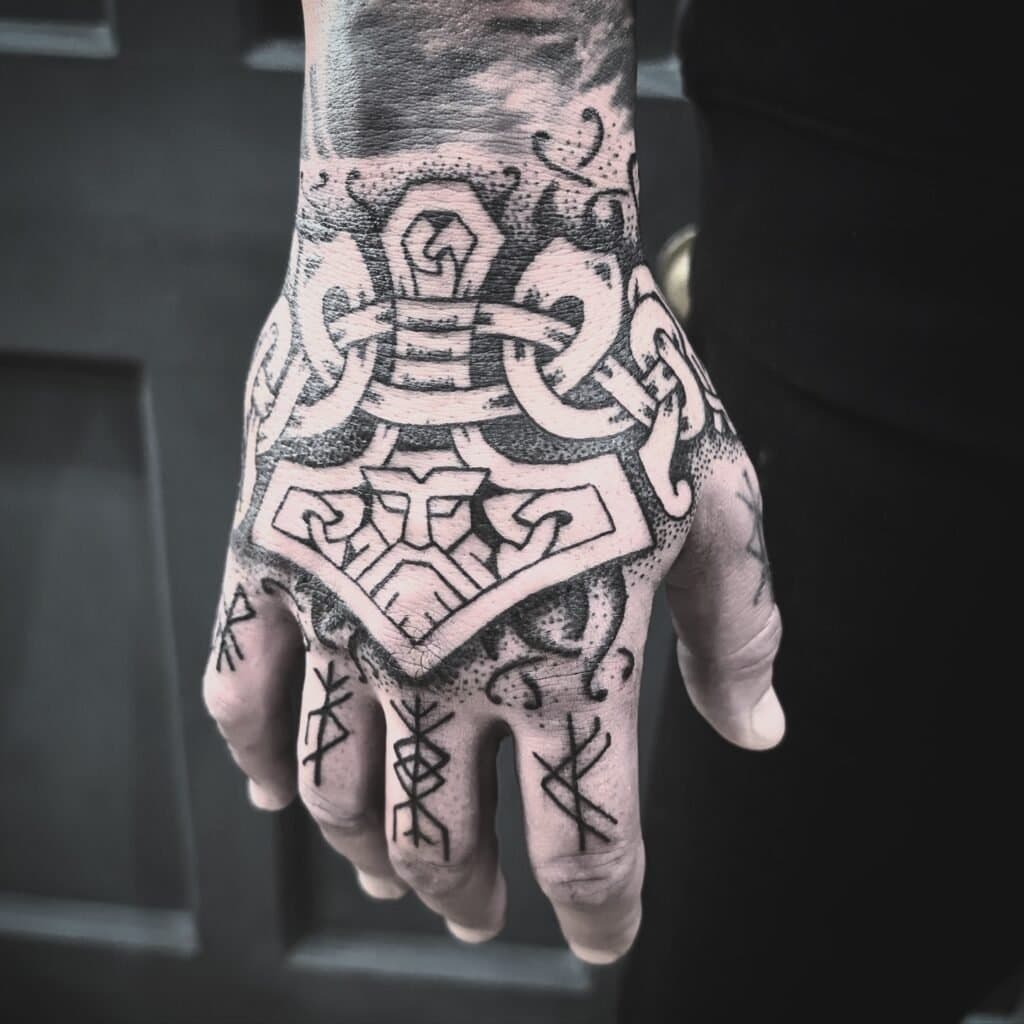
Thor’s hammer, Mjölnir, is a symbol of strength, protection, and resilience. In Viking culture, wearing or tattooing the hammer invoked divine safeguarding against evil and chaos.
6. Huginn and Muninn
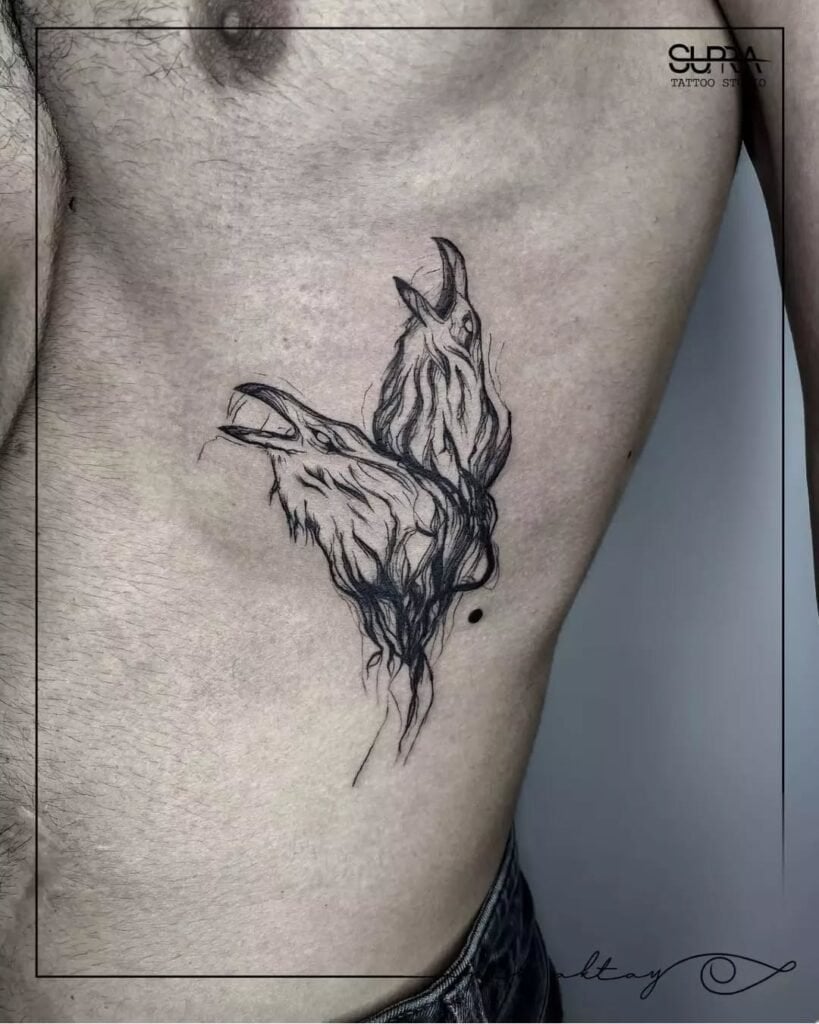
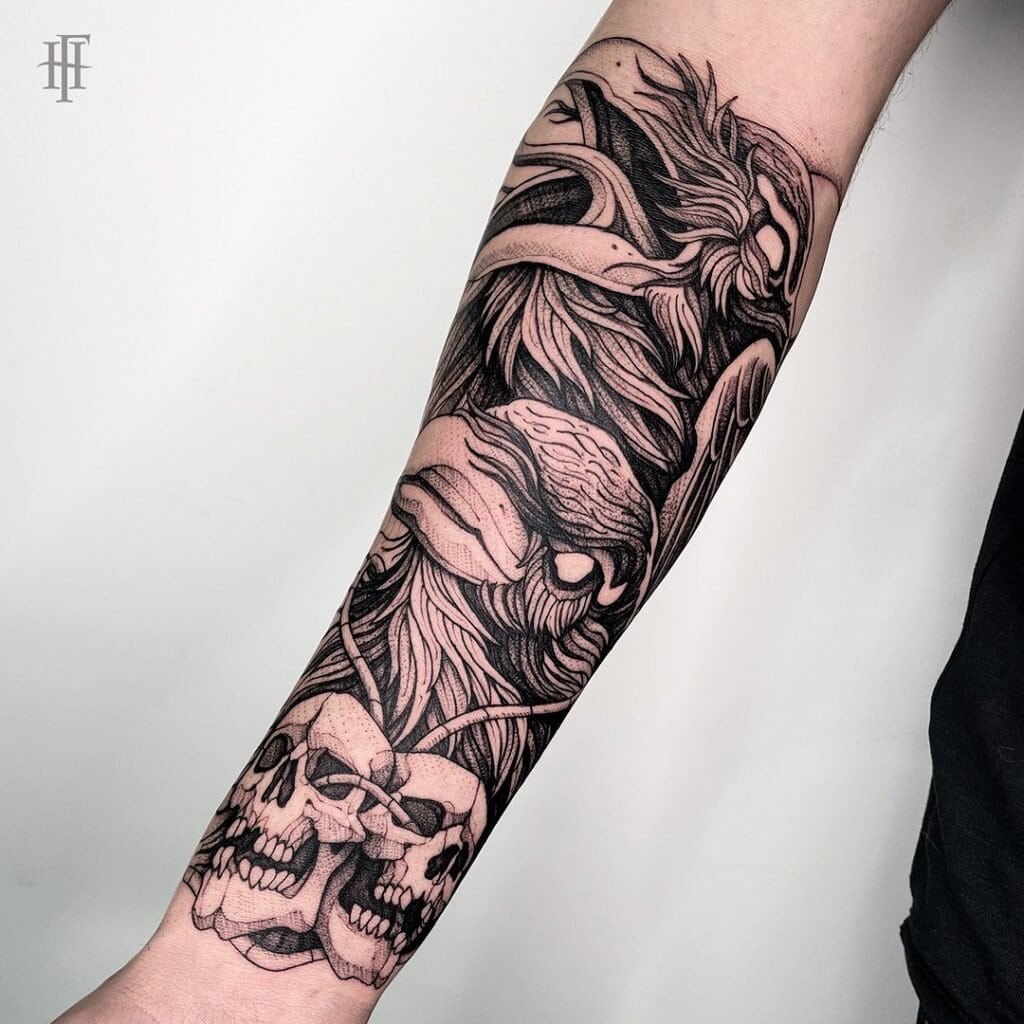
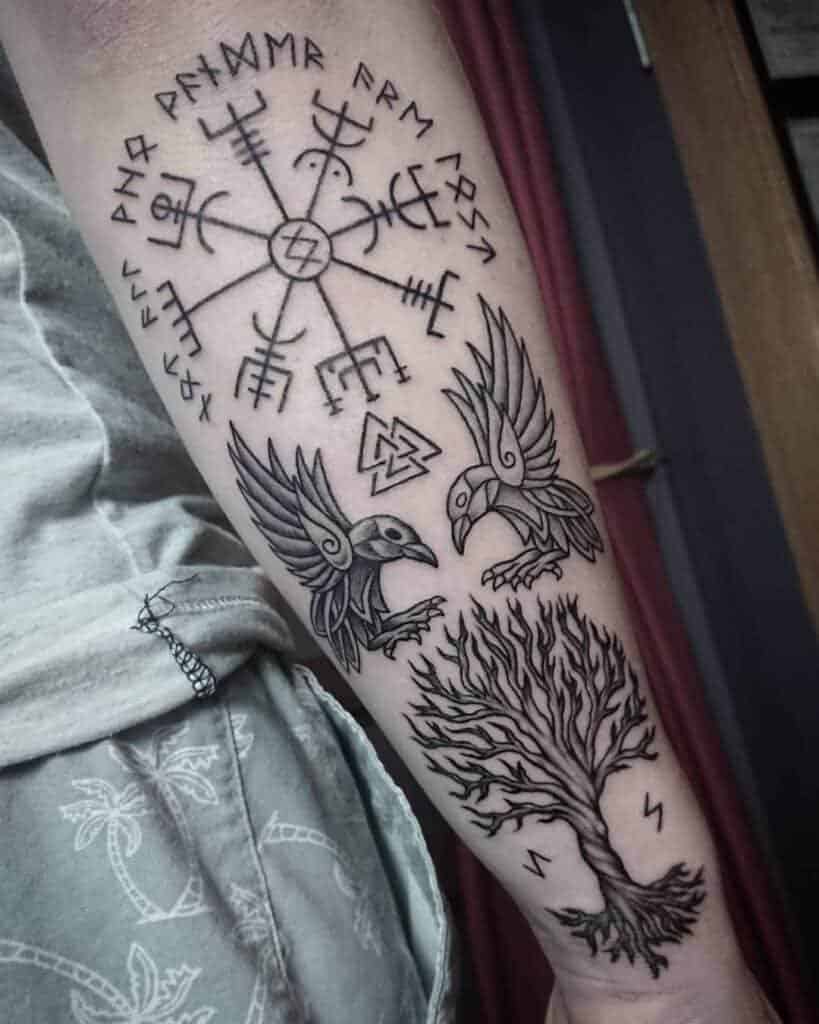
Odin’s ravens, Huginn (thought) and Muninn (memory), represent wisdom and consciousness. Tattoos of the twin ravens often symbolise insight, guidance, and the balance between intellect and intuition.
Each of these Nordic motifs carries an aura of power and faith — the kind that once guided seafarers through storms and warriors into battle.
How Celtic and Nordic Tattoos Are Done
Creating a Celtic and Nordic Tattoo requires precision, patience, and cultural understanding. These designs are intricate — a single knot or rune carries meaning, and a misplaced line can change the symbolism entirely.
1. Designing the Tattoo
The process begins with research and symbolism. A good artist studies traditional knotwork, runic shapes, and mythology to ensure authenticity. Many designs are custom-drawn to reflect the wearer’s personal story — for instance, combining a Celtic knot with Norse runes for balance between heritage and identity.
2. Outlining and Linework
Clean, steady lines are crucial. Celtic and Nordic tattoos rely heavily on geometry and symmetry. Artists use fine linework or bold black ink, depending on the chosen aesthetic — traditional or modern.
3. Shading and Detailing
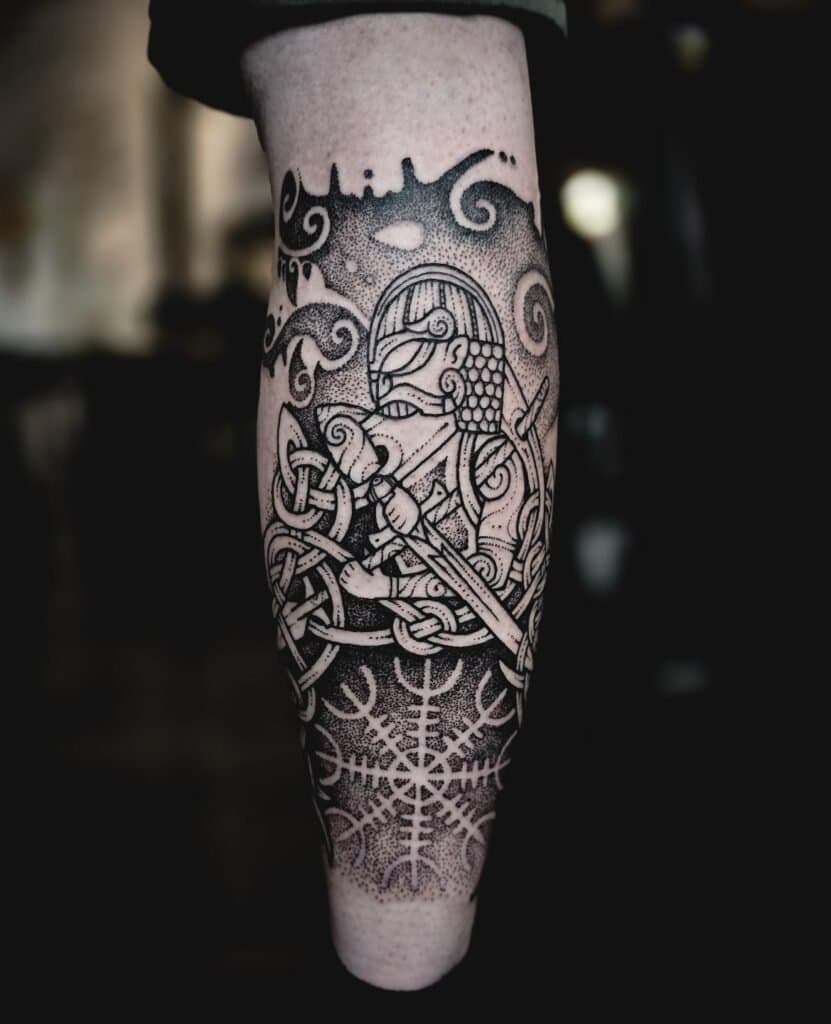
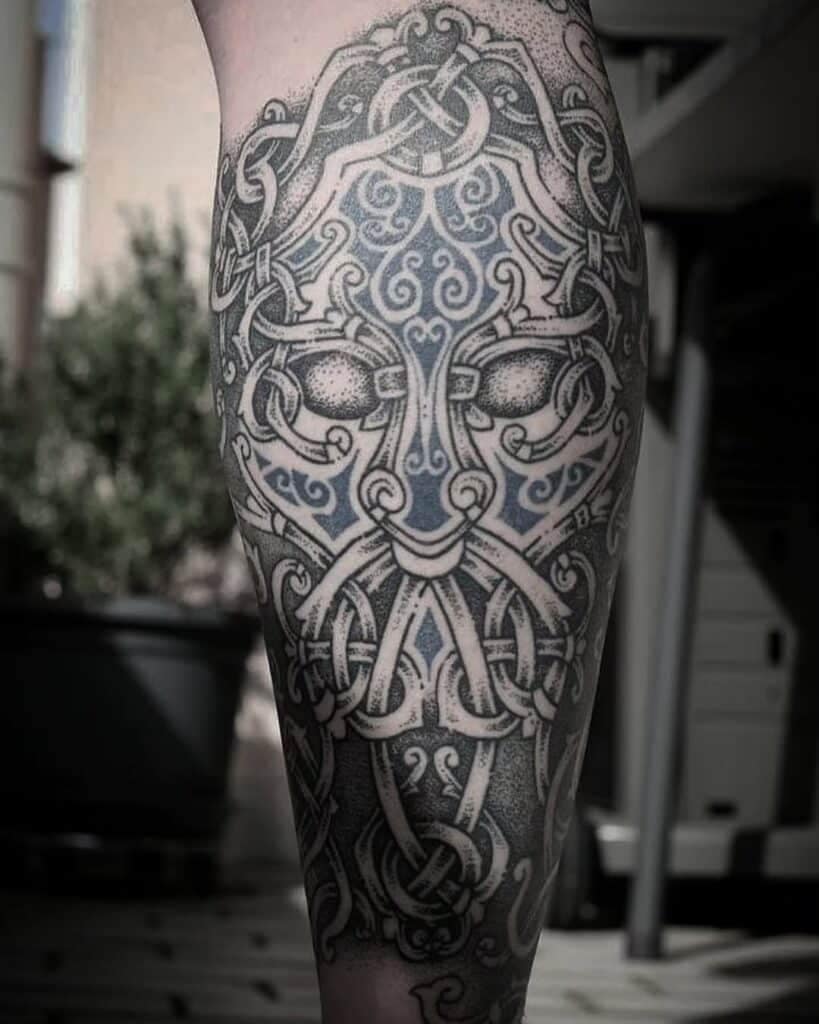
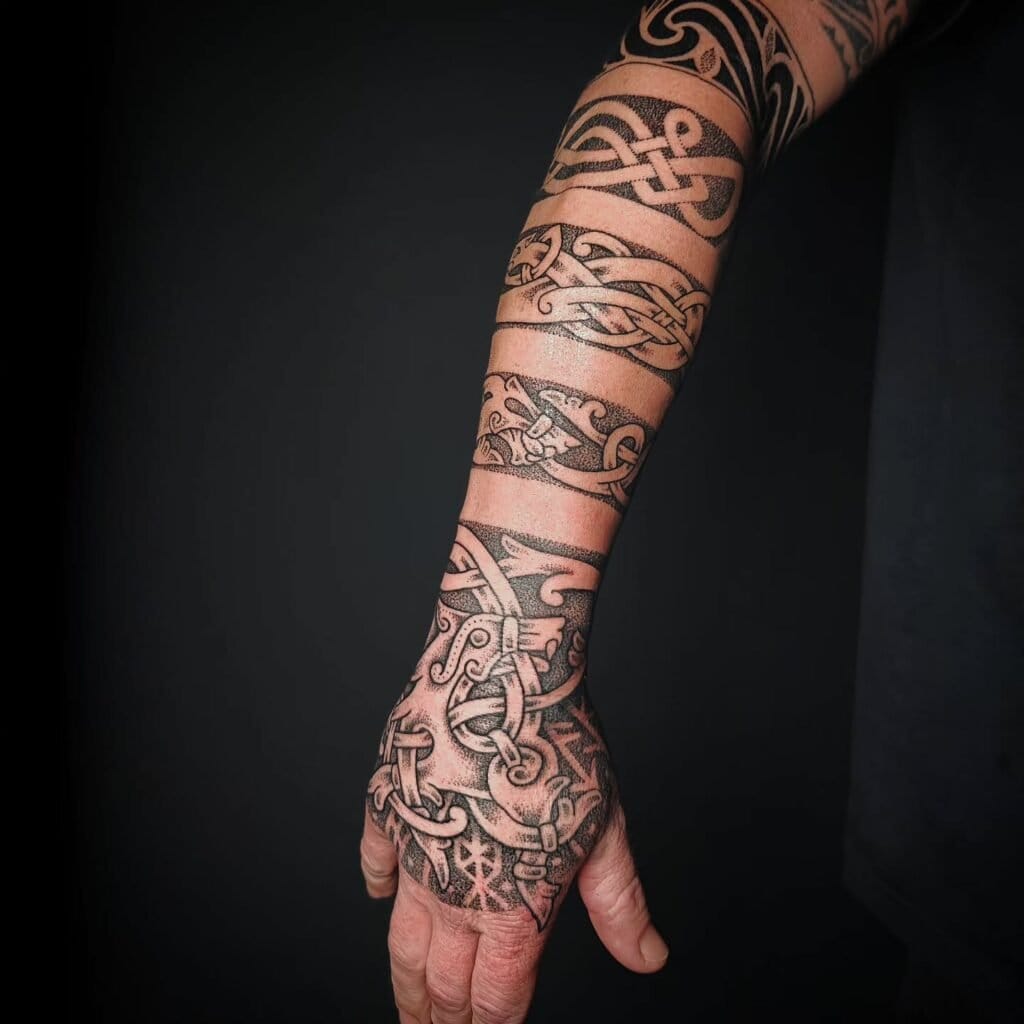
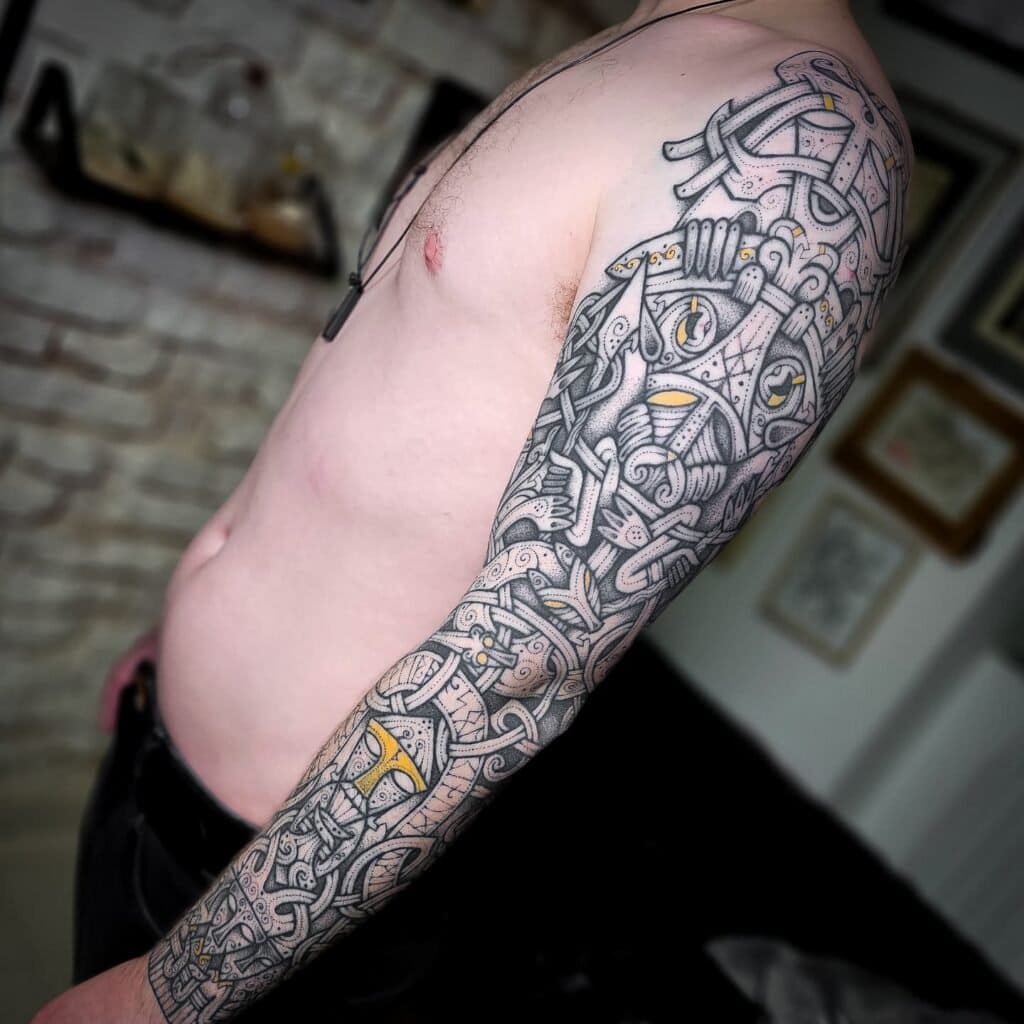
Modern renditions often use black and grey shading, or occasionally incorporate colour — earthy greens, metallic silvers, or deep blues. For Viking designs, dotwork and bold contrast create texture and depth, while Celtic pieces often feature interlacing and negative space.
4. Placement
Common placements include the shoulder, forearm, upper arm, back, or chest — areas large enough to showcase the detail. In ancient times, tattoos were often placed visibly as symbols of honour or affiliation.
Talented Celtic and Nordic Tattoo Artists
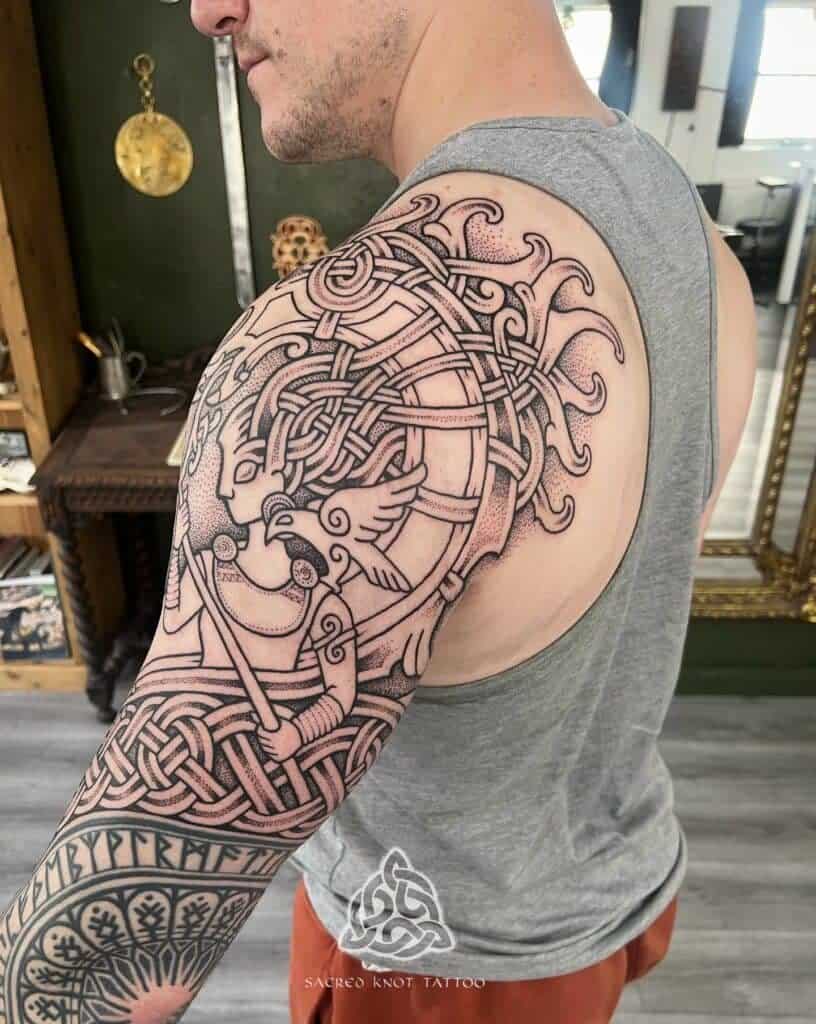
1. sacred_knot_tattoo
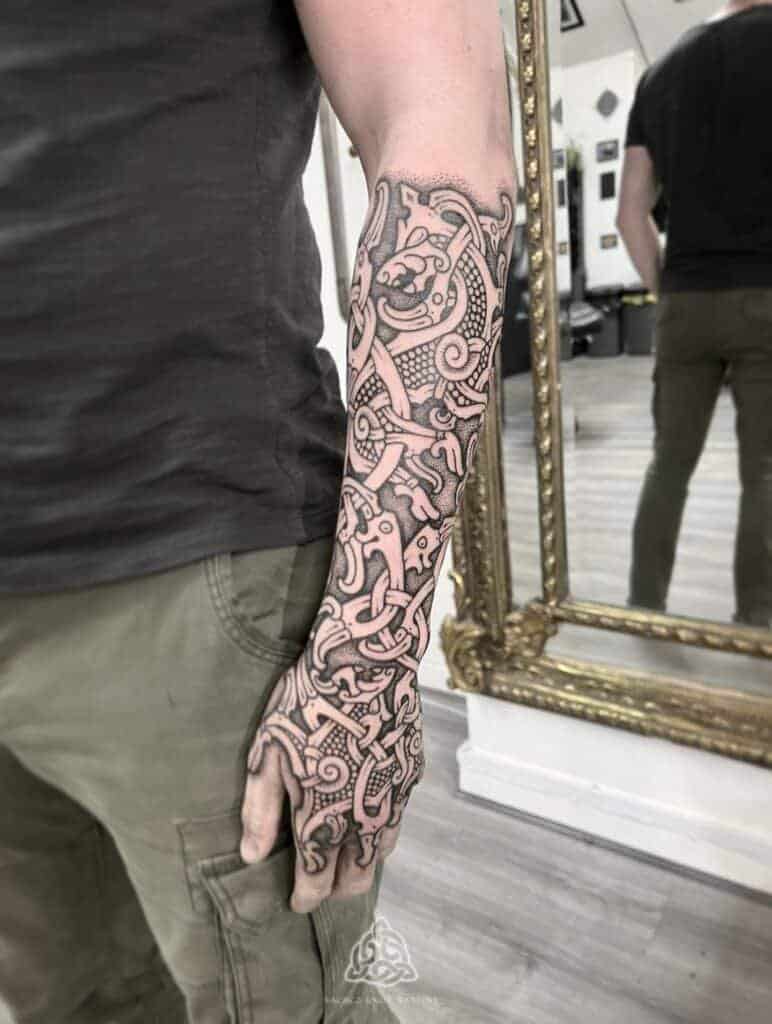
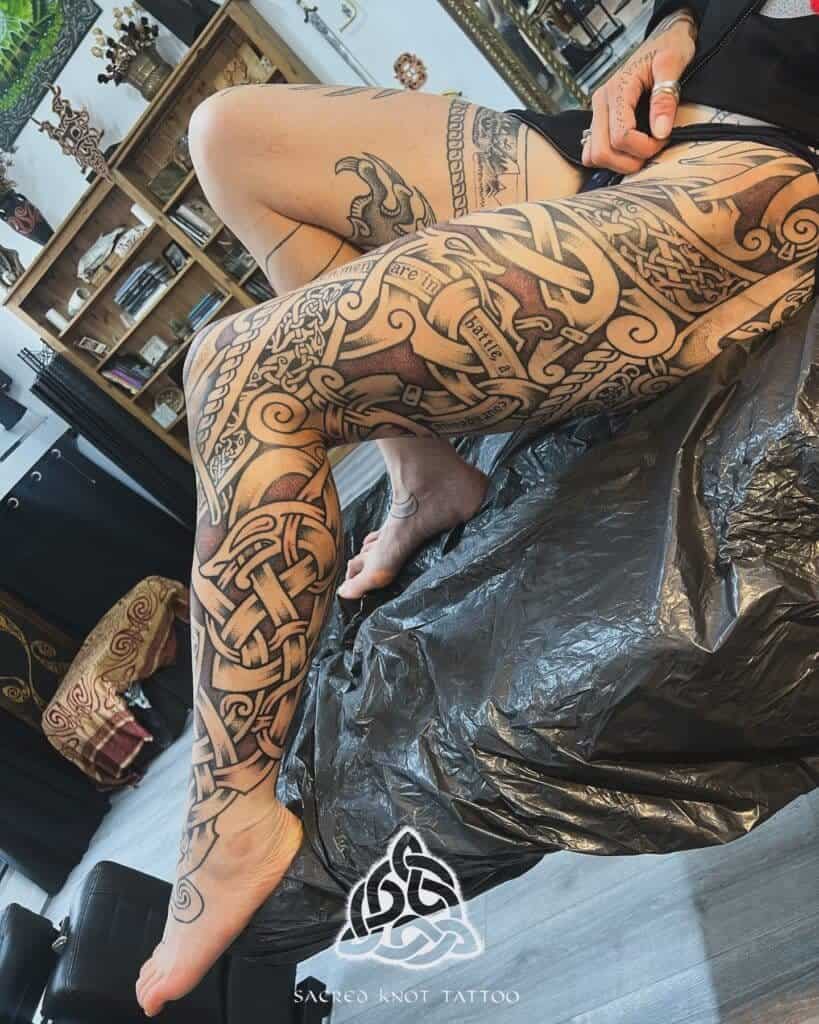
2. badgerkingtattoo
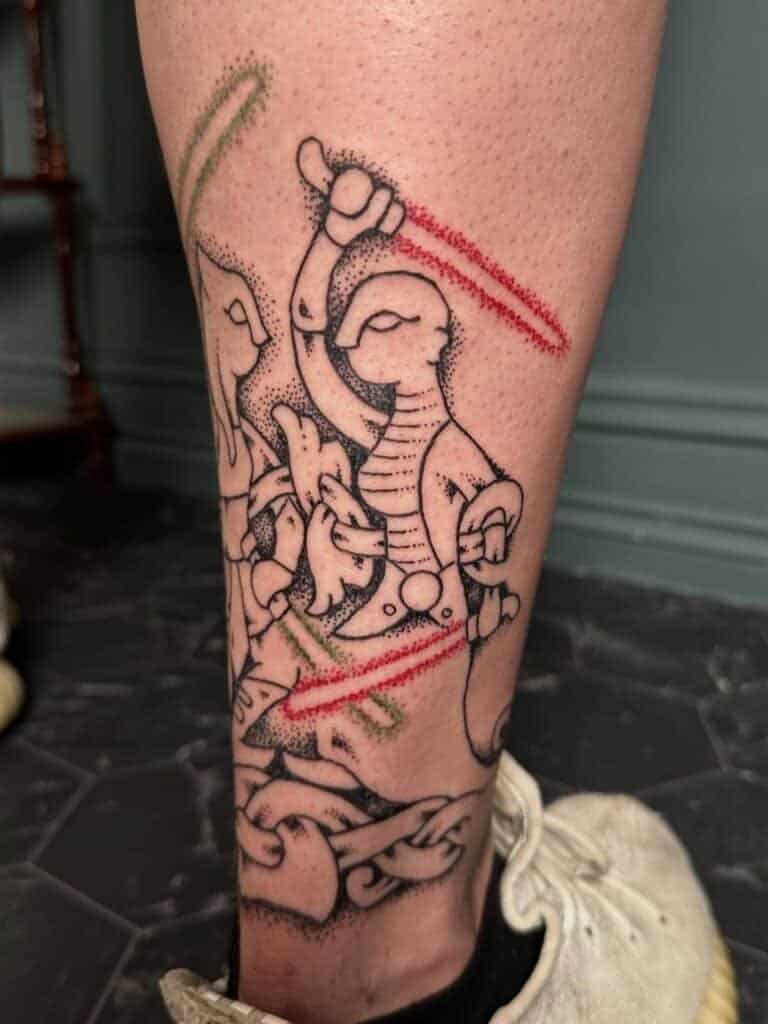
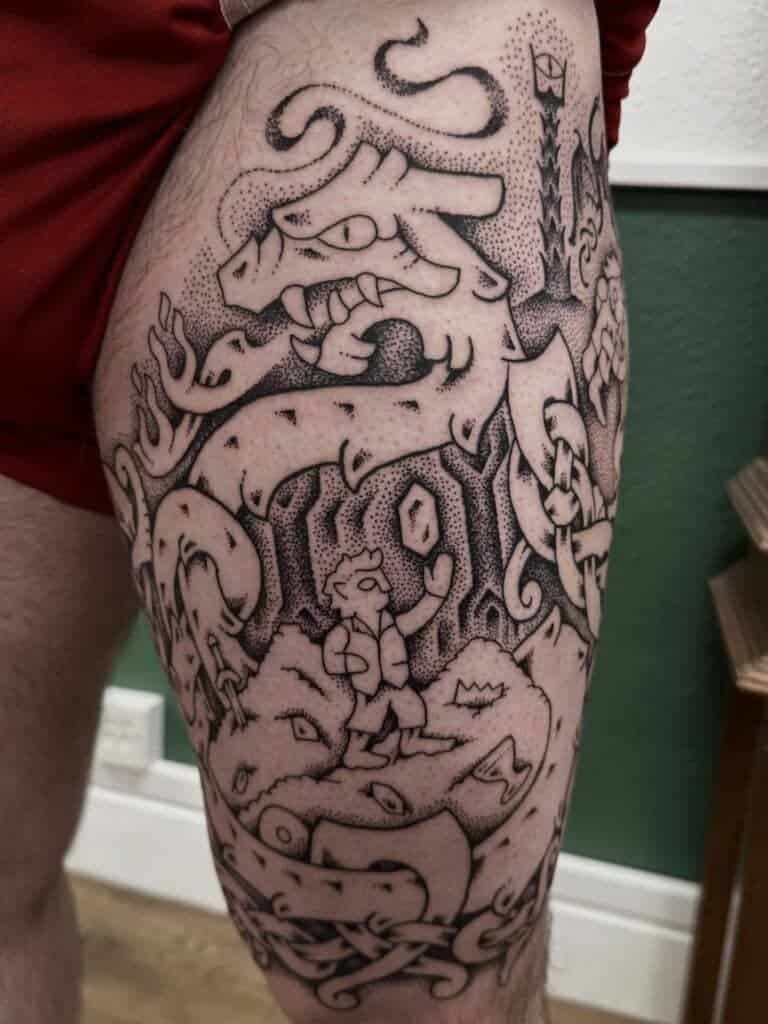
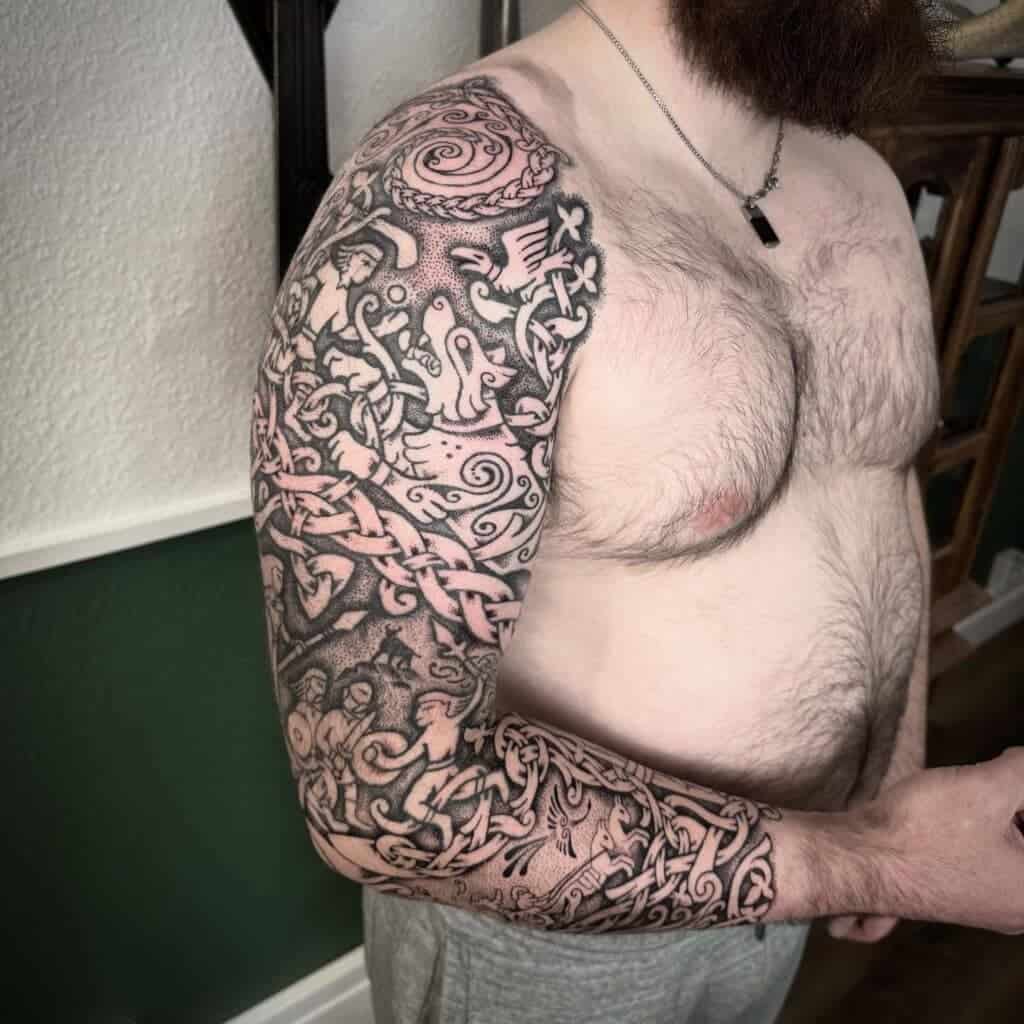
3. shogantattoo
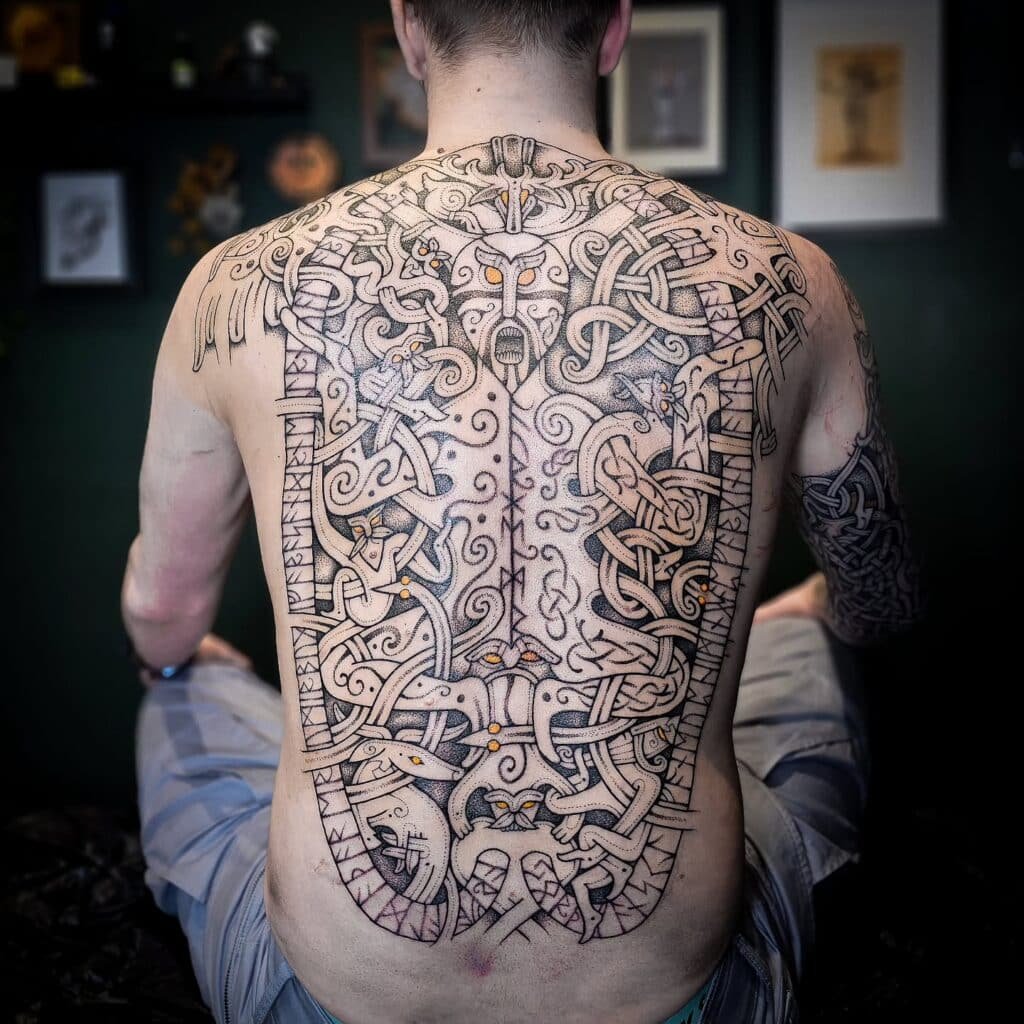
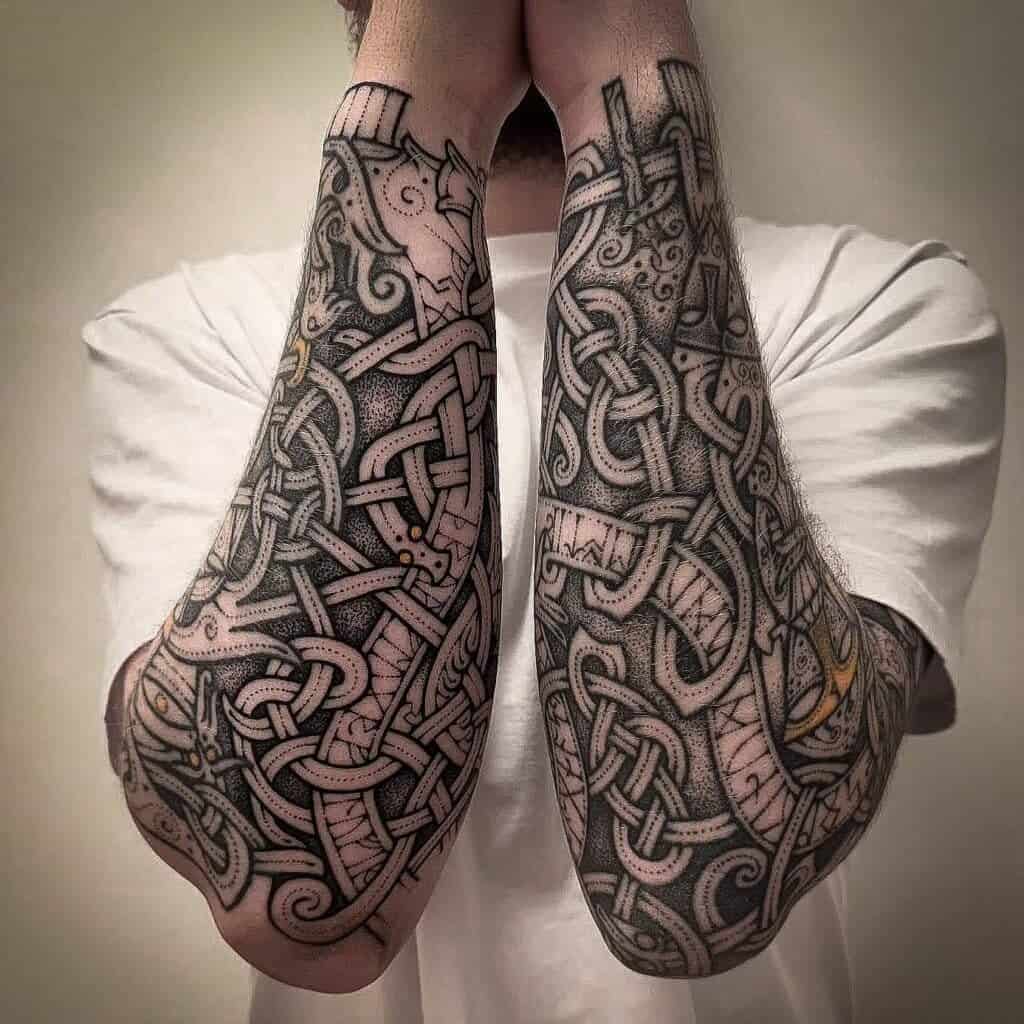
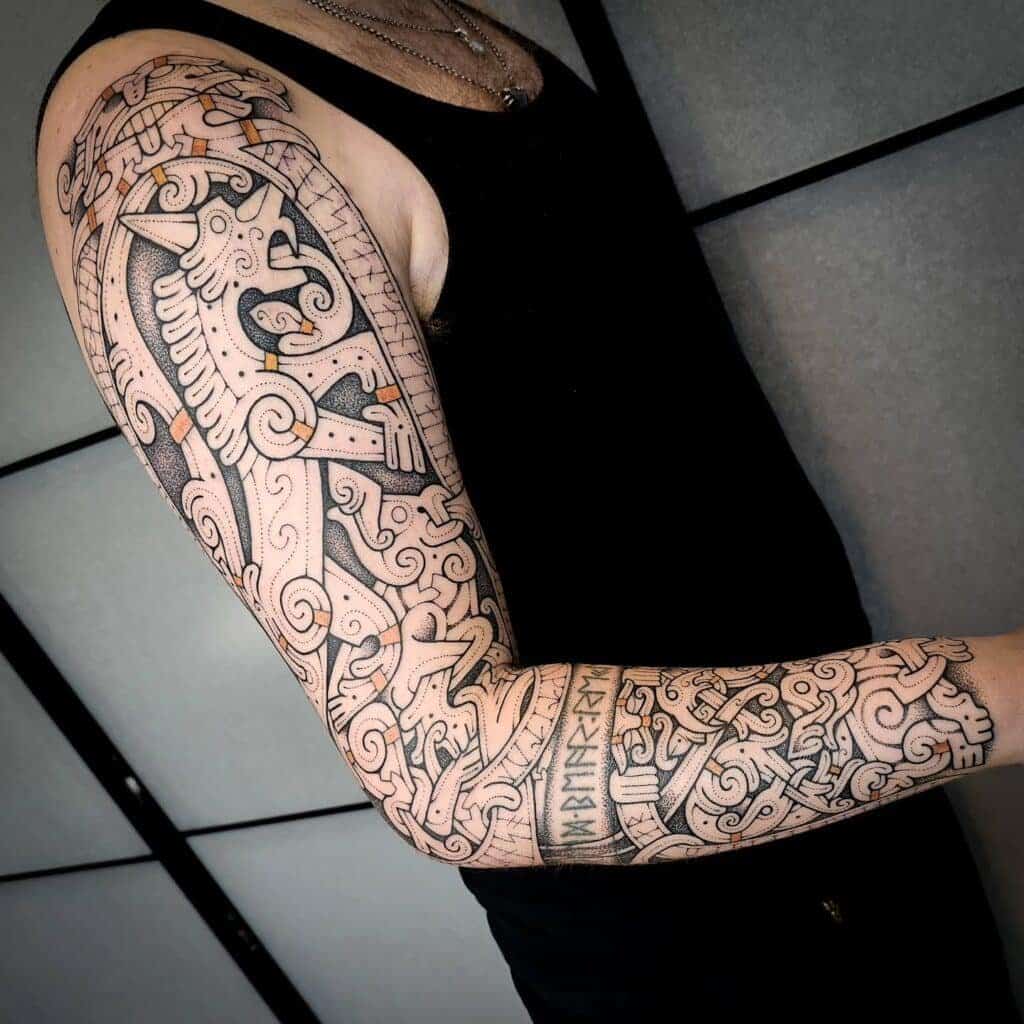
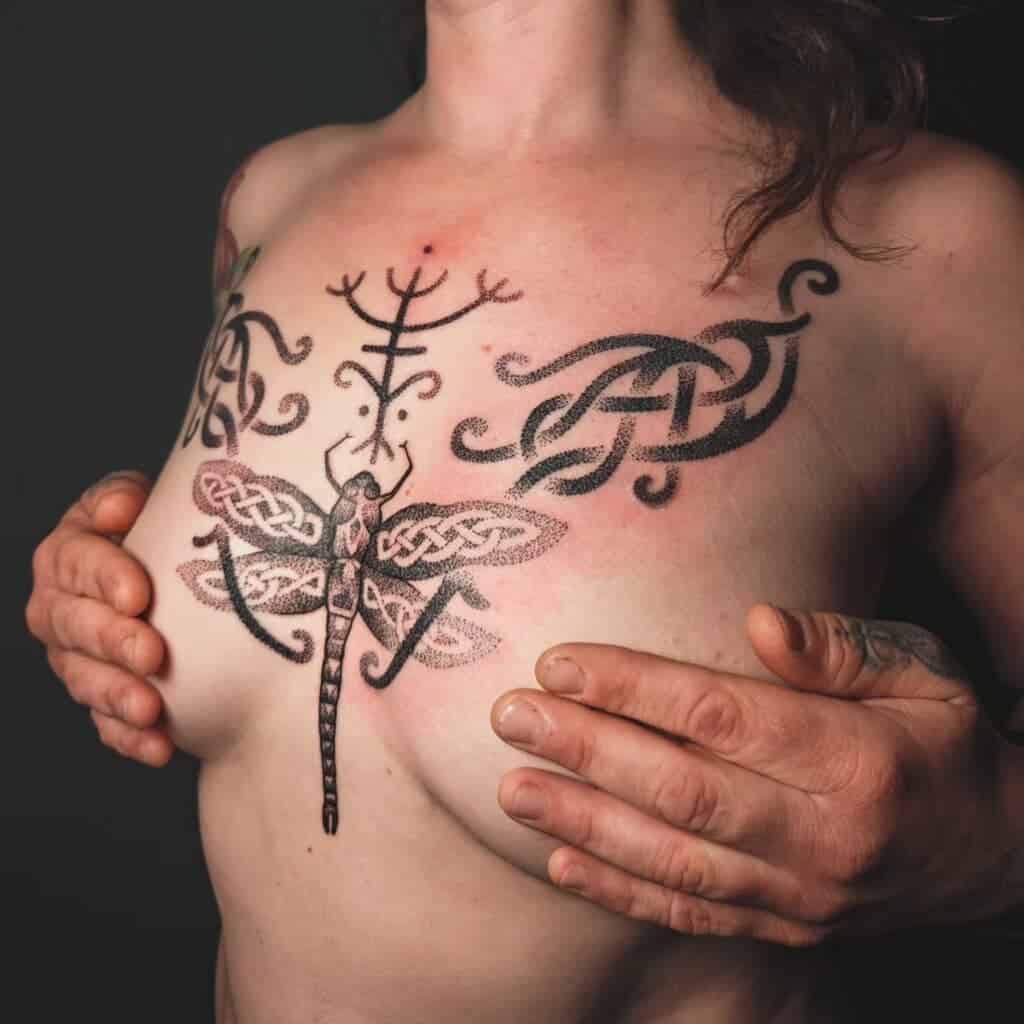
4. xelanah_tattoo
5. folkvangr_tattoo
Meanings and Personal Interpretations
A Celtic and Nordic Tattoo is rarely just ornamental — it’s deeply symbolic. Each design carries a personal or spiritual resonance.
- For Warriors: Protection, courage, and honour in battle.
- For Seekers: Guidance, knowledge, and connection to ancestral roots.
- For Spiritualists: Harmony, eternal life, and universal balance.
- For Artists and Dreamers: Expression of creativity, mythology, and personal belief.
Some people choose these tattoos to reconnect with their heritage, while others are simply drawn to the profound artistry and symbolism that transcend culture and time.
Modern Adaptations of Celtic and Nordic Tattoos
In contemporary tattooing, artists often blend old symbolism with modern aesthetics.
- Blackwork Celtic tattoos combine traditional knotwork with bold black fills and geometric precision.
- Watercolour Nordic tattoos pair runes and Yggdrasil with soft colour washes — merging modern art with ancient myth.
- Minimalist interpretations use single runes or simplified knot designs for subtle yet powerful body art.
- Realistic and illustrative renditions may depict Norse gods like Odin or Thor, surrounded by runes and mythic symbols.
This fusion of old and new ensures the legacy of Celtic and Nordic tattoos remains alive and evolving, like the cultures that inspired them.
The Connection Between Celtic and Nordic Cultures
Historically, the Celts and Norse shared more than one might think. Trade, migration, and even conquest brought their worlds into contact, especially during the Viking expansion across the British Isles.
As a result, art and symbolism began to intertwine. Some archaeological finds, such as crosses carved with both Celtic knots and Norse runes, show how these cultures influenced one another.
Modern tattoo enthusiasts often combine these two traditions to represent dual heritage, spiritual harmony, or simply admiration for the artistry of both worlds.
The Spiritual and Psychological Impact
Wearing a Celtic and Nordic Tattoo often carries a profound emotional weight. It’s more than body art — it’s a personal talisman, a visual affirmation of one’s beliefs or journey.
The knotwork can remind the wearer of endurance through life’s cycles, while runes can act as personal sigils of strength or protection. Many find that the process of getting such a tattoo feels ritualistic — a connection between past and present, self and ancestry.
Aftercare and Longevity
Like any tattoo, caring for your Celtic or Nordic piece ensures it remains sharp and vibrant for years.
- Keep the tattoo clean and lightly moisturised.
- Avoid direct sunlight during healing.
- Use high-SPF sunscreen long-term to prevent fading.
- For blackwork or intricate linework, touch-ups every few years maintain crispness.
Because of their dense lines and detail, these tattoos age gracefully when properly cared for, with knotwork maintaining clarity over time.
The Enduring Legacy of the Celtic and Nordic Tattoo
The Celtic and Nordic Tattoo continues to enchant modern tattoo enthusiasts because it’s more than art — it’s identity inked in history.
Each spiral, rune, or raven carries centuries of mythology, wisdom, and power. These tattoos remind us that even in a modern world, we are still guided by the same instincts as our ancestors — the desire to express who we are through symbols that endure.
Whether you choose a Celtic knot to celebrate eternal unity or a Valknut to honour courage in the face of fate, the design you wear becomes your own legend — a living story told through ink.
Final Thoughts
The Celtic and Nordic Tattoo is not merely a design; it’s a conversation between the ancient and the modern, between myth and meaning. It embodies heritage, resilience, spirituality, and artistry in one form.
To wear it is to carry a piece of history — a whisper of warriors, druids, gods, and spirits — forever alive on your skin.
- Tattoo Convention Essentials You Didn’t Know You Needed - September 9, 2026
- Best Gifts For Tattoo Artists 2026 - September 9, 2026
- Best Portable Tattoo Lights in 2026 - September 9, 2026