
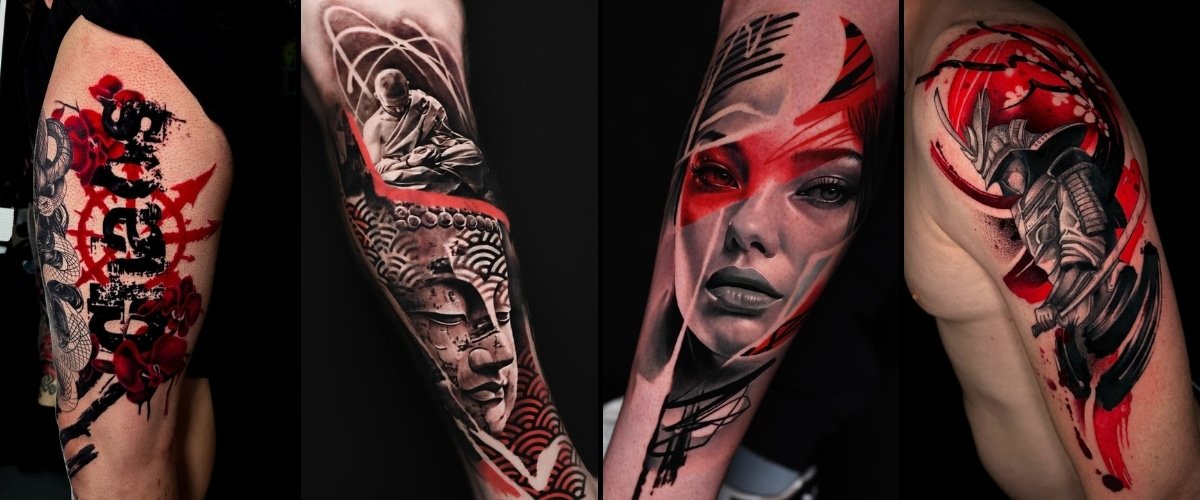
Trash Polka Tattoo Style
If you’ve ever seen a tattoo that looks like a poster torn from a dystopian art gallery that is half chaos, half beauty, you’ve likely witnessed the wild intensity of a Trash Polka Tattoo. With splashes of red and black, collaged realism, and anarchic energy, this style is loud, unapologetic, and impossible to ignore.
The Trash Polka Tattoo is more than just an aesthetic, it’s an attitude. It embodies rebellion, contrast, and the collision between order and disorder. In this article, we’ll explore everything about this striking tattoo genre, from its origins and artistic philosophy, to how it’s done, what it symbolises, and why it has become a bold statement in modern tattooing.
What Is a Trash Polka Tattoo?
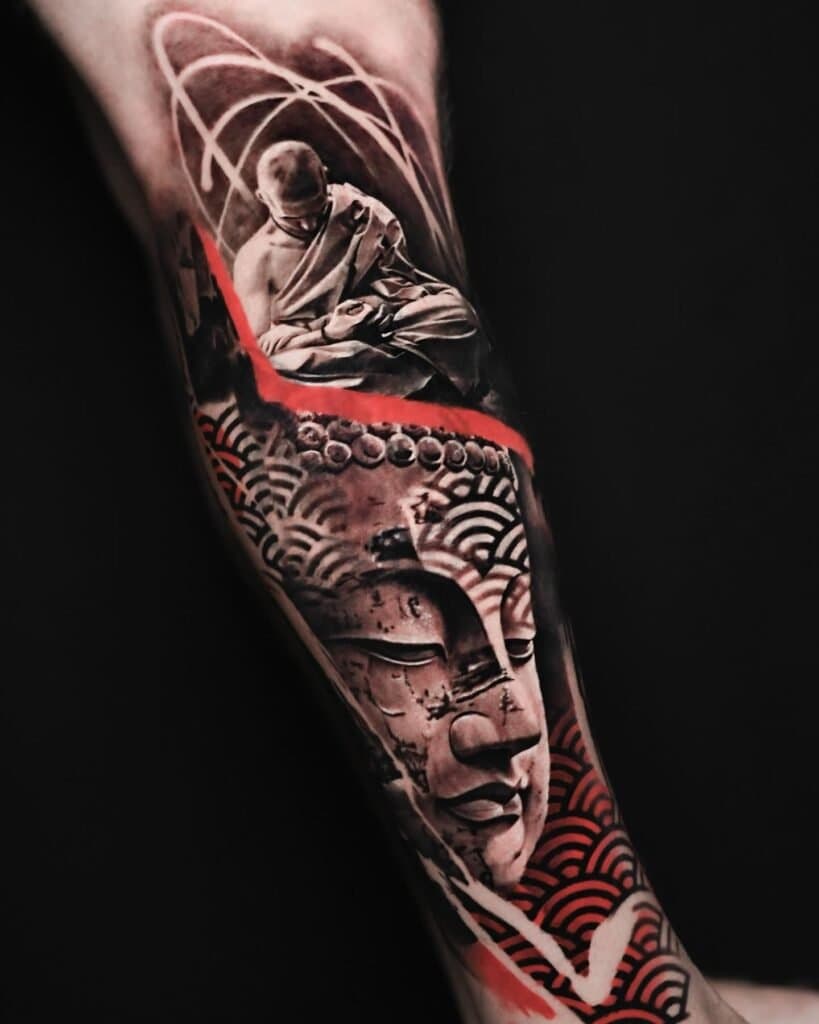
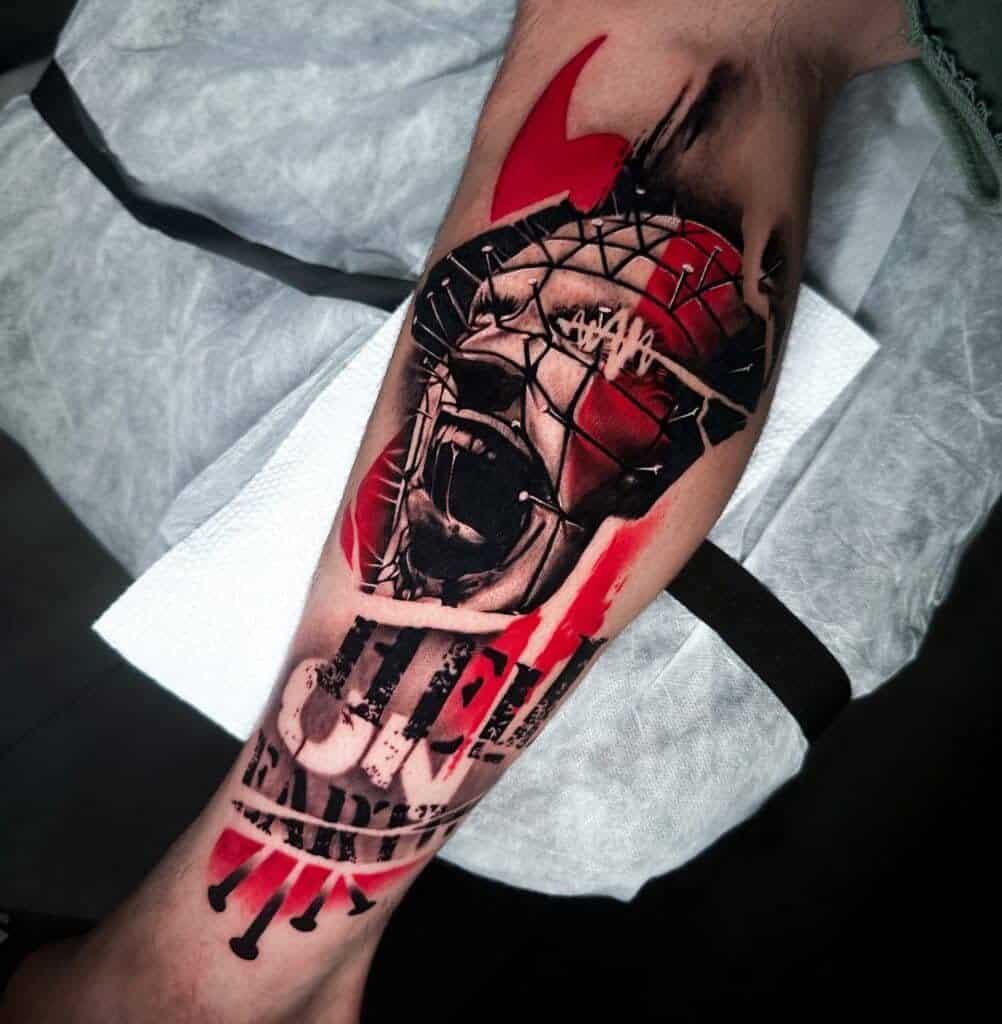
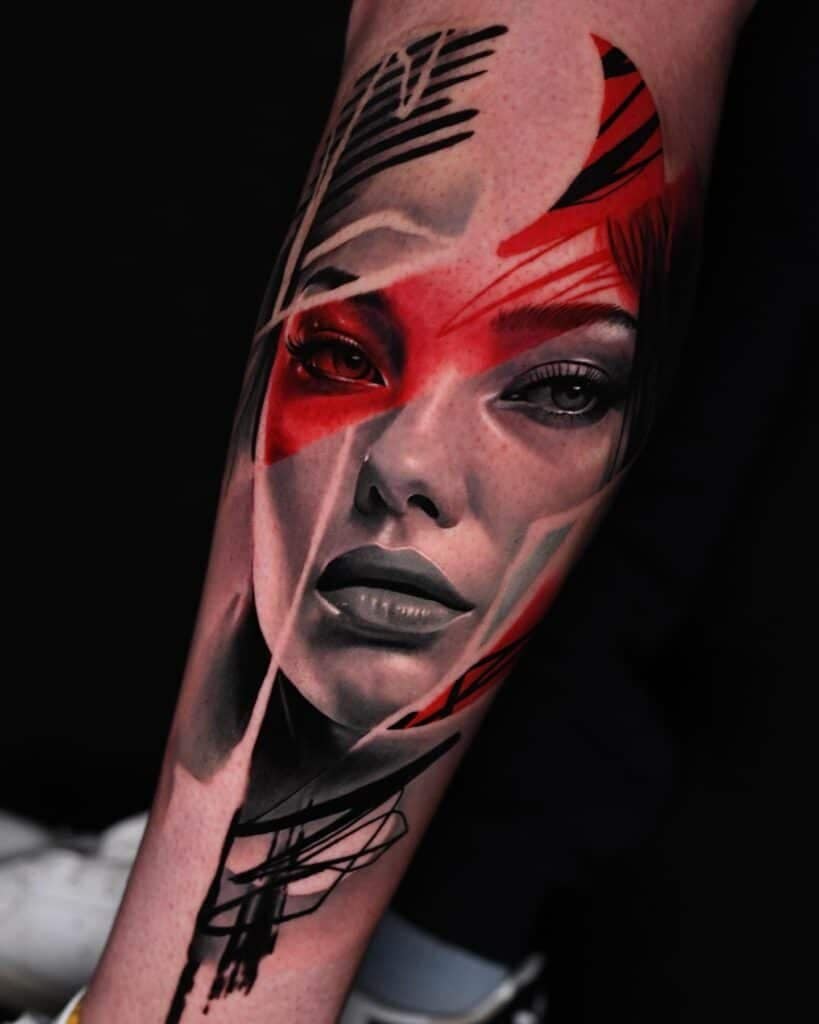
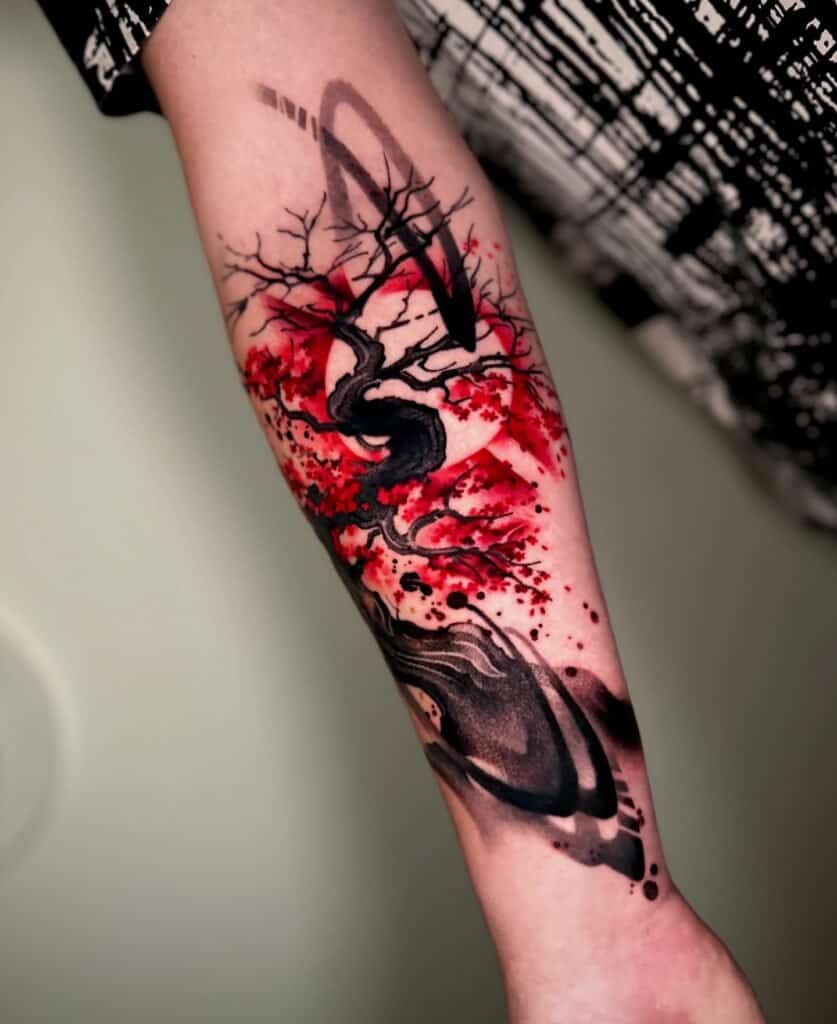
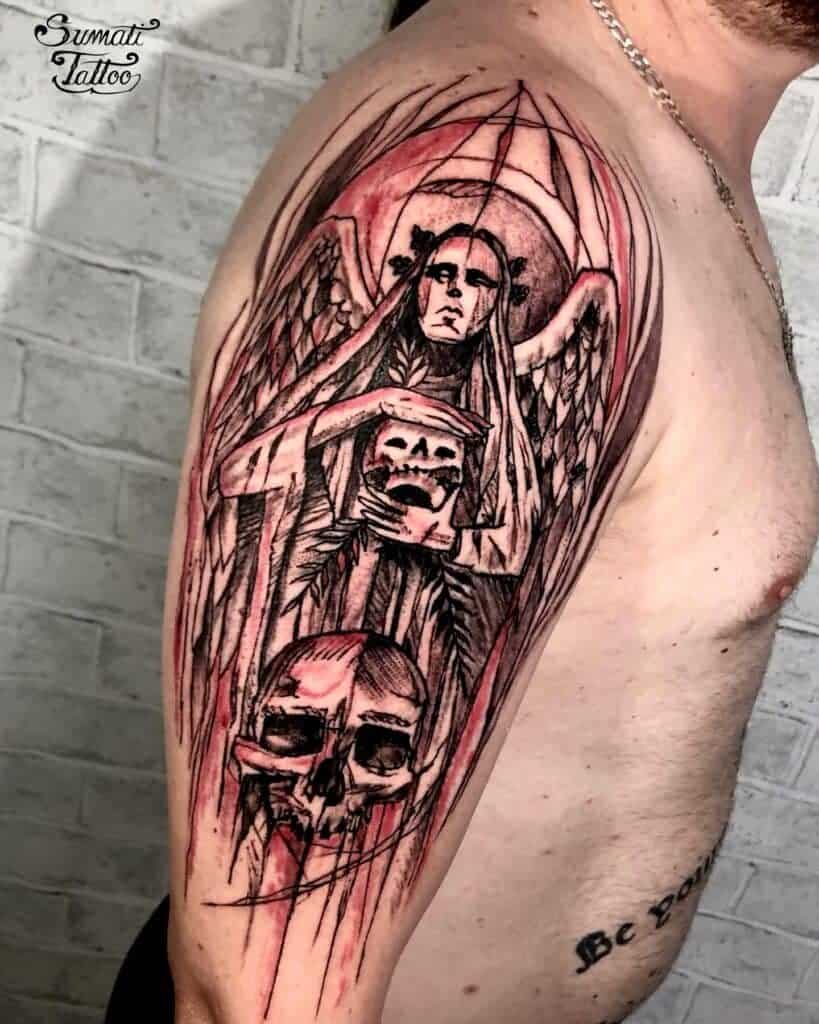
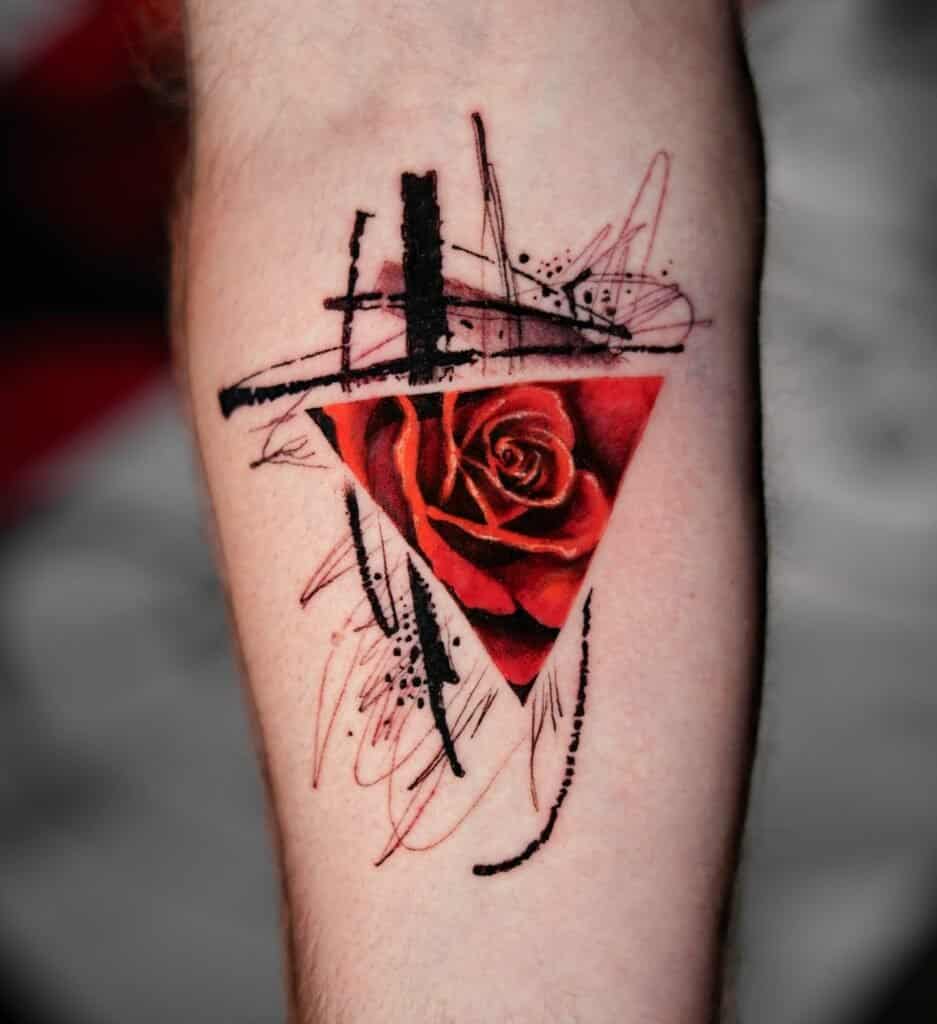
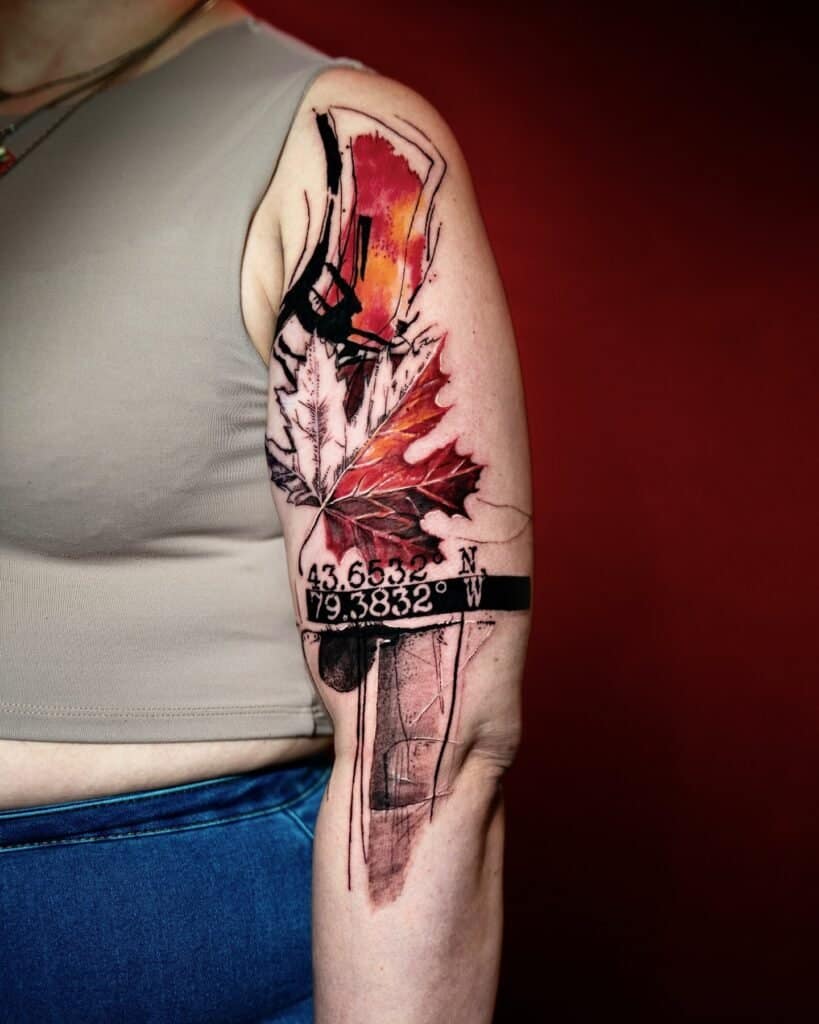
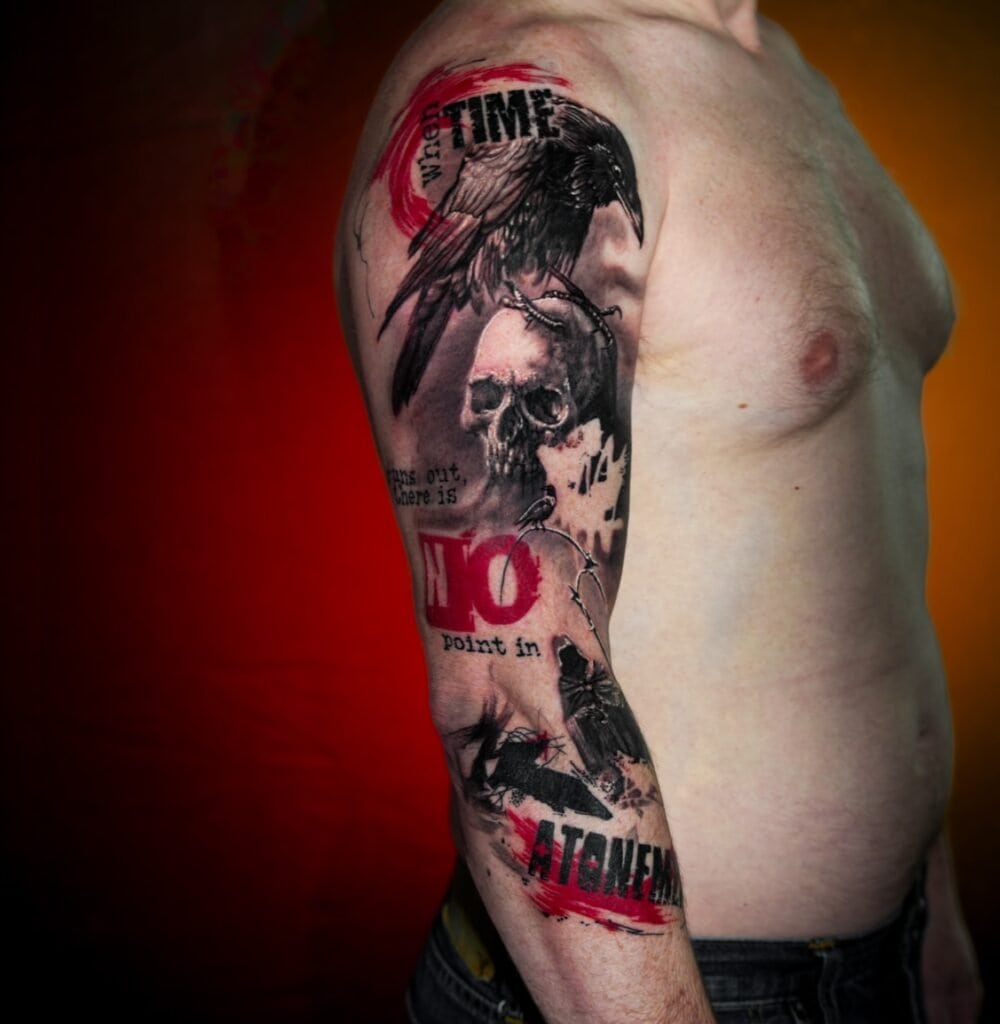
A Trash Polka Tattoo is a hybrid art style that combines realistic imagery, abstract elements, and graphic design techniques into a single, visually explosive piece. It’s instantly recognisable for its black and red colour palette, chaotic composition, and the way it blurs the line between fine art and rebellion.
The term “Trash Polka” may sound tongue-in-cheek, and it is. It reflects the style’s origin as a deliberate clash between beauty and ugliness, structure and chaos. Like a punk rock anthem translated into ink, Trash Polka thrives on contrast, both visually and emotionally.
This tattoo style often includes photo-realistic portraits, text overlays, paint splatters, brush strokes, and geometric fragments, creating the illusion of a living, moving collage.
The Origins of Trash Polka
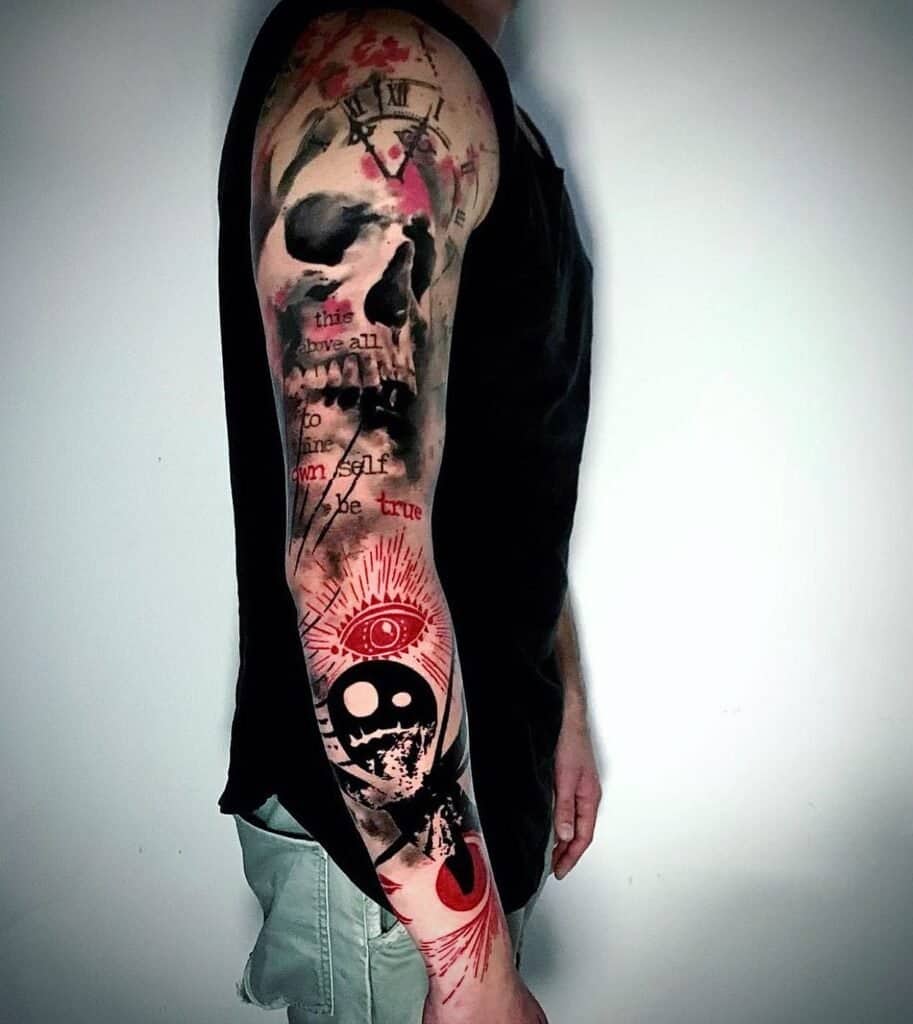
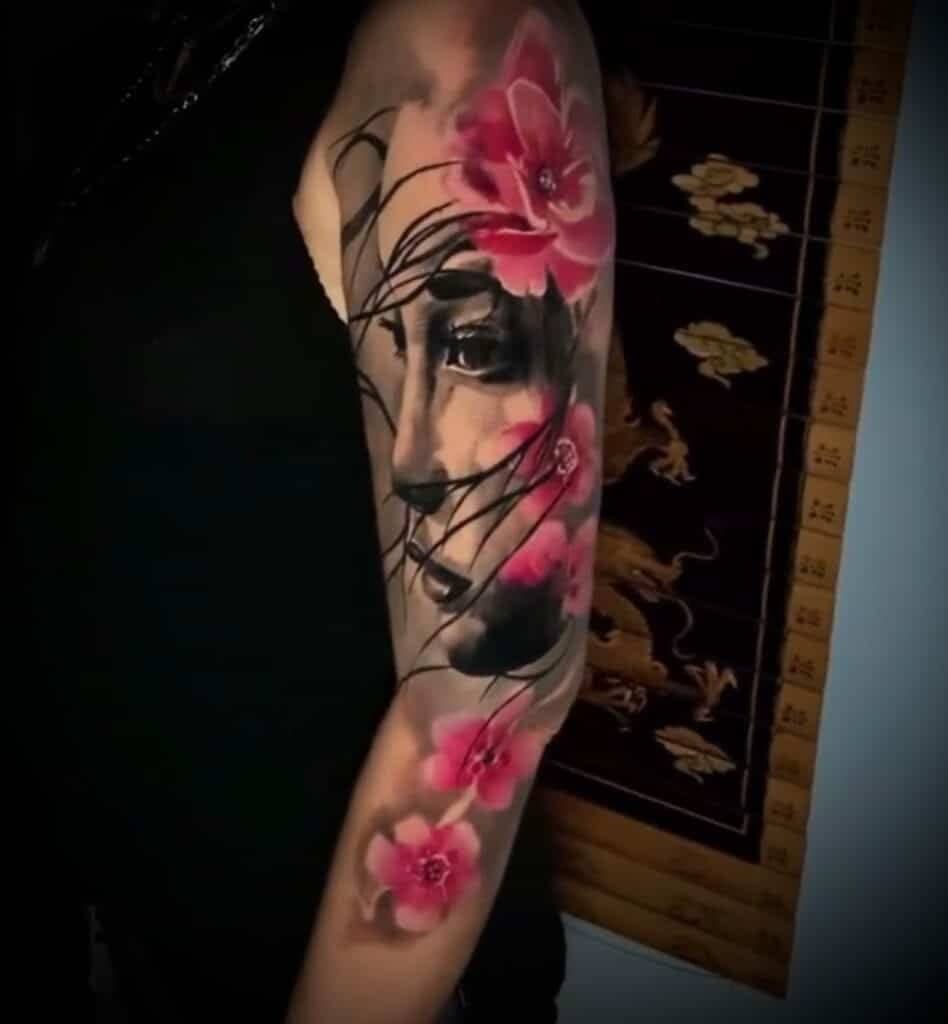
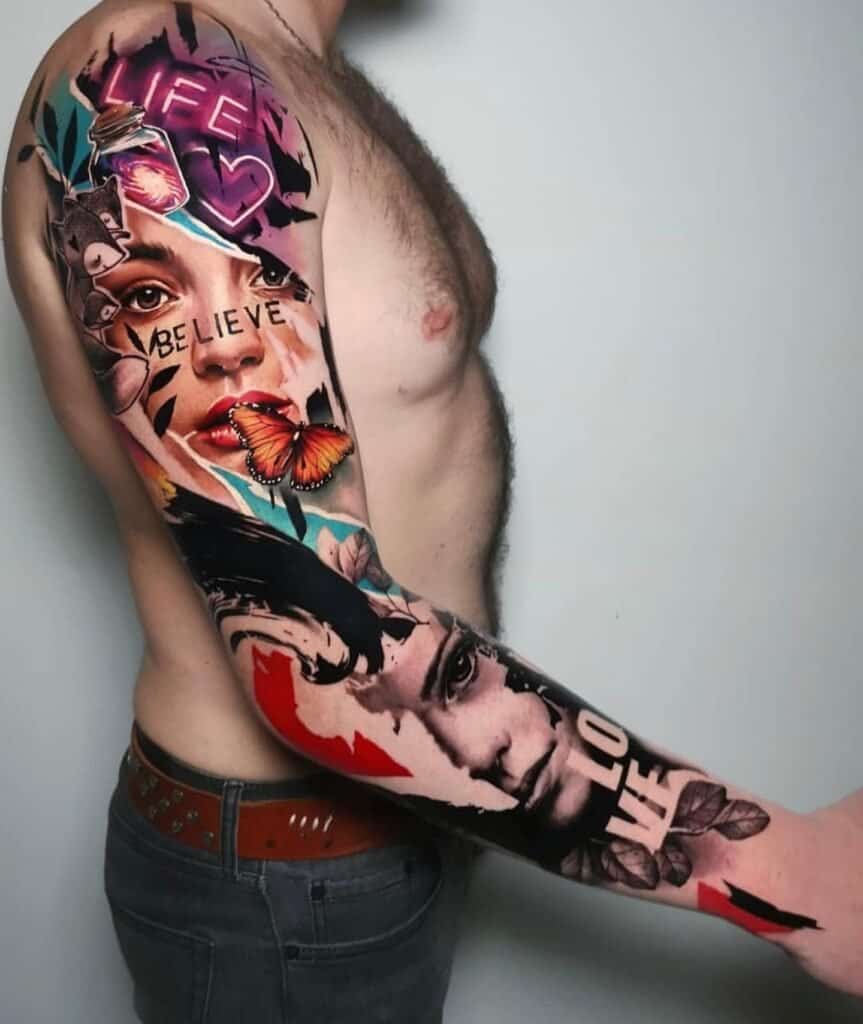
The Trash Polka Tattoo was born in Germany in the 1990s, created by tattoo artists Volko Merschky and Simone Pfaff of Buena Vista Tattoo Club in Würzburg. Both came from backgrounds in graphic design, fine art, and photography — influences that shaped the distinct, avant-garde aesthetic we now associate with the style.
They coined the term “Realistic Trash Polka”, describing it as a fusion of realism and abstract chaos. In their own words, it’s a “combination of the real and the unreal, nature and technology, past and future, harmony and disharmony.”
This philosophy made the style a form of visual music, being a dance between conflicting ideas. The “polka” part represents rhythm and composition, while “trash” stands for imperfection, rebellion, and decay.
By the early 2000s, Trash Polka exploded in popularity worldwide, with artists adopting and evolving the style into new interpretations, some darker, some more minimalist, but all maintaining that same raw emotional core.
The Artistic Philosophy Behind Trash Polka
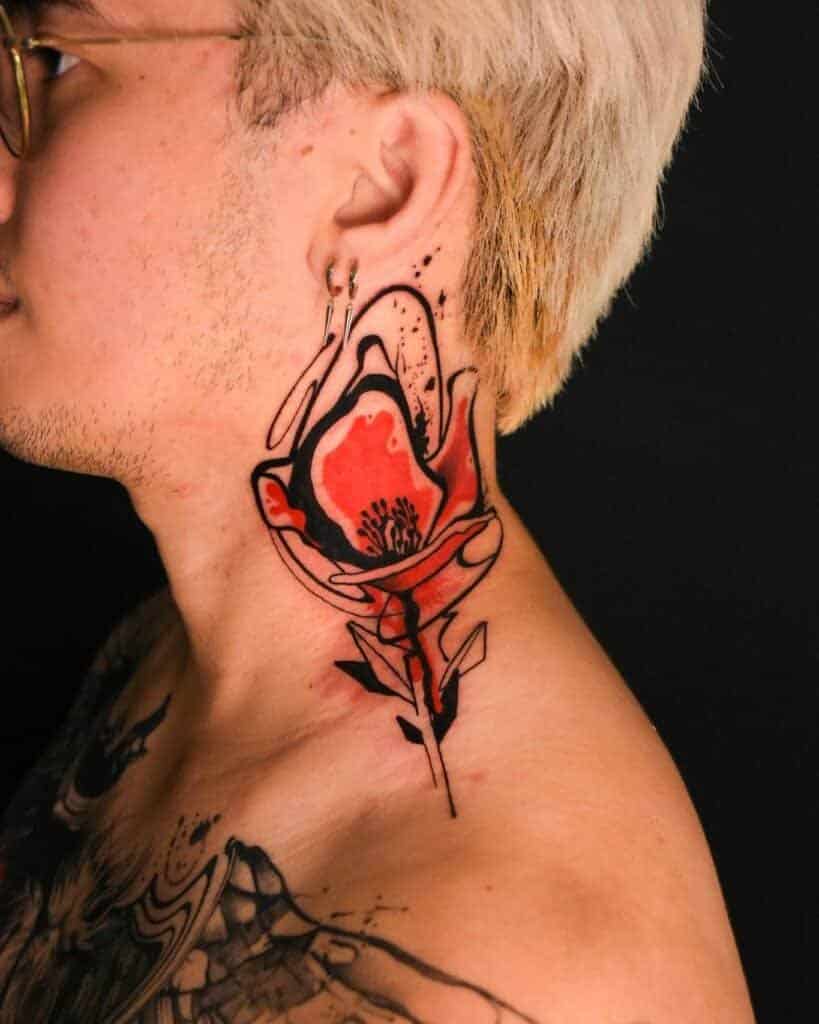
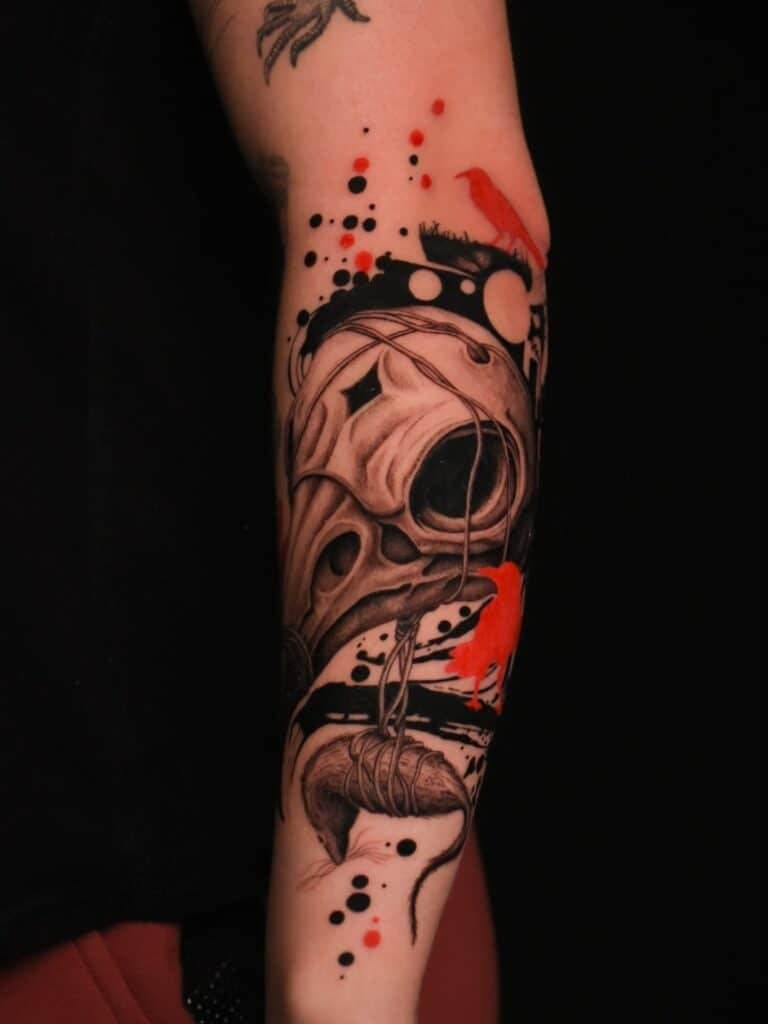
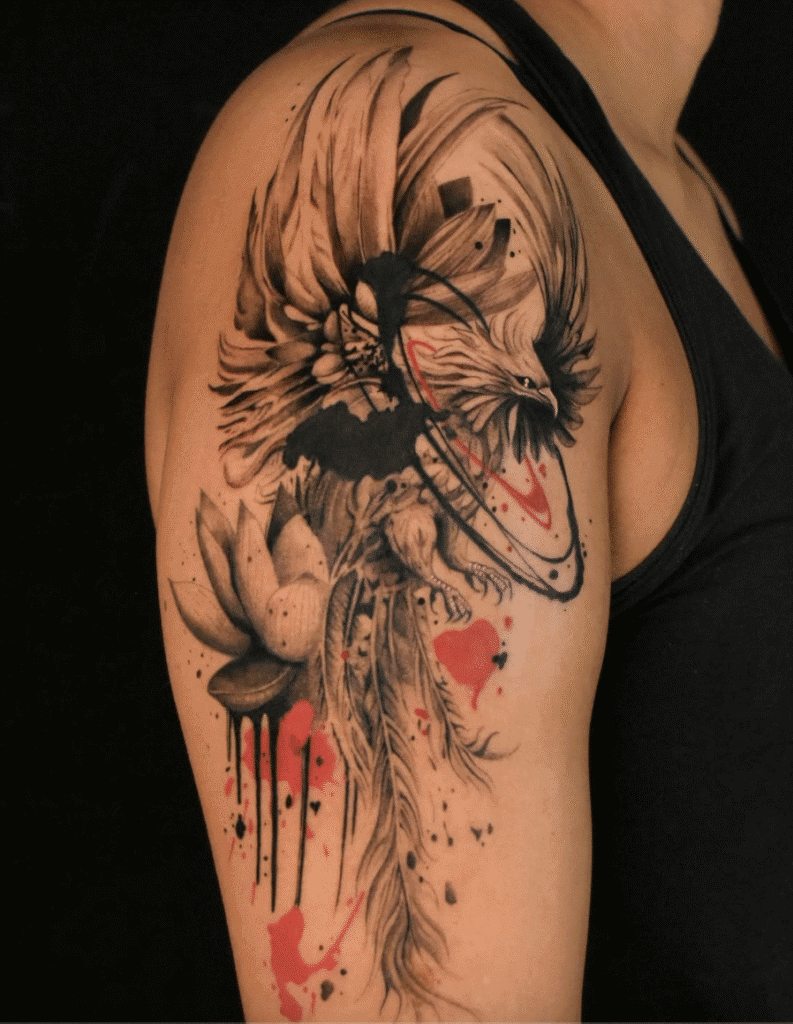
At its heart, the Trash Polka Tattoo is about contrast and chaos. It’s a deliberate attempt to mix beauty with brutality to express the tension between perfection and imperfection.
Where many tattoo styles seek balance or symmetry, Trash Polka celebrates imbalance. The asymmetry, overlapping textures, and aggressive use of red ink create a visual punch that demands attention.
Conceptually, it explores themes like:
- The duality of life and death
- The struggle between humanity and technology
- The passage of time and decay
- The inner conflict of beauty and destruction
It’s not just ink — it’s philosophy turned into visual poetry.
The Defining Elements of a Trash Polka Tattoo
Every Trash Polka Tattoo follows a loose formula that balances realism with chaos. Here are its key components:
1. Colour Palette
The signature combination of black and red defines the style. Black represents structure, shadow, and death, while red symbolises passion, blood, and life. The two colours clash yet complement each other, creating emotional depth and visual drama.
Some modern artists introduce white or grey tones, but purists often stick to the original dual palette for authenticity.
2. Realistic Imagery
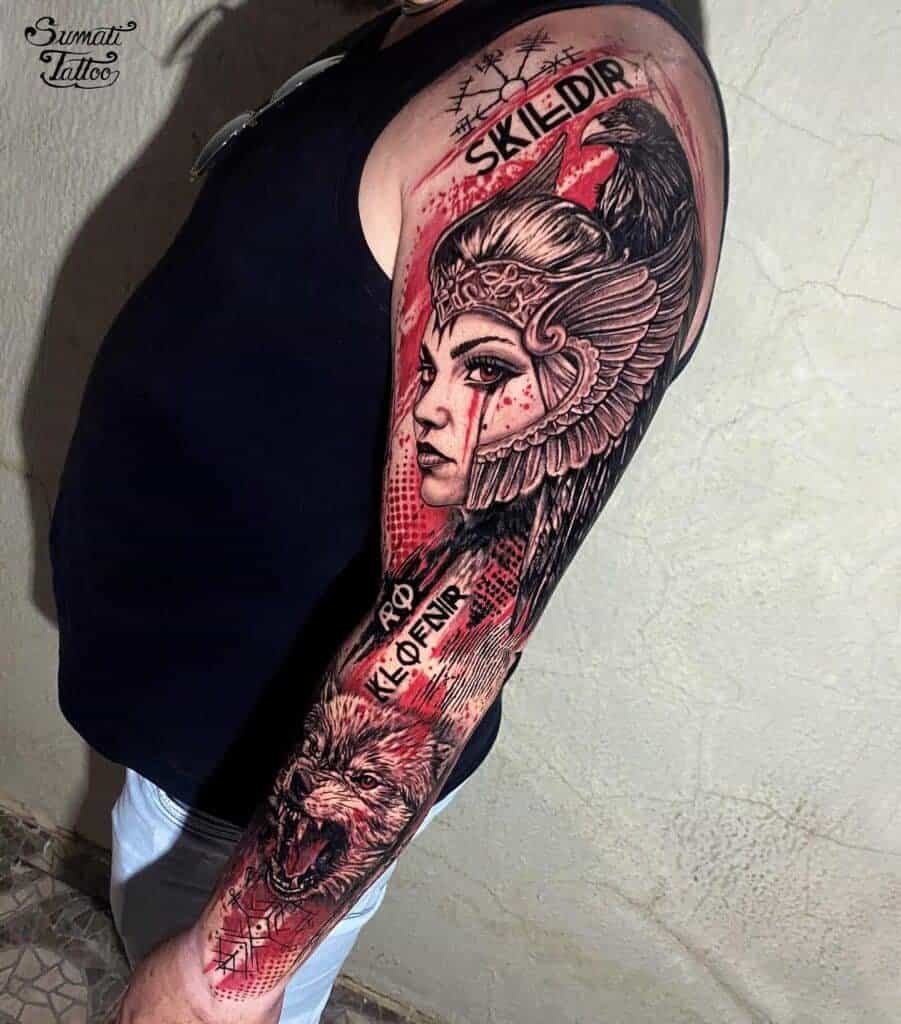
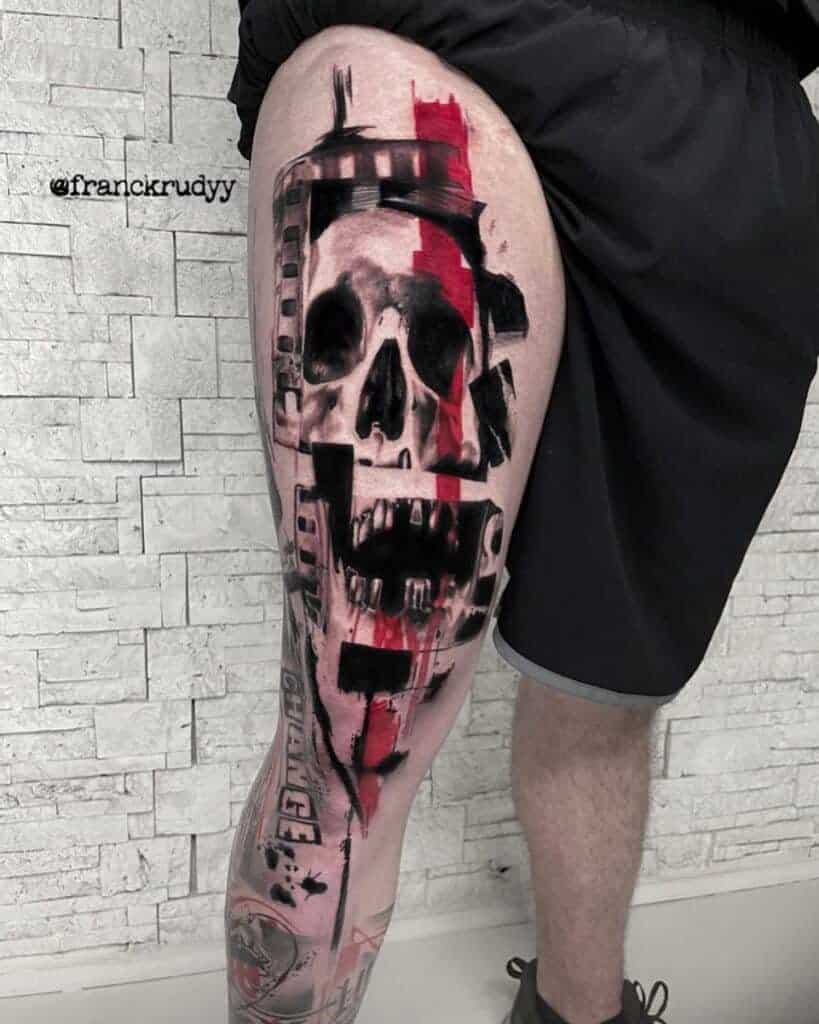
Realism is the backbone of Trash Polka. Artists often include lifelike portraits, human faces, skulls, clocks, eyes, or animals rendered in photorealistic detail.
These realistic elements anchor the piece amidst the surrounding chaos, grounding the abstraction in something familiar.
3. Abstract and Graphic Elements
Over and around the realism, artists layer abstract forms like brushstrokes, splatters, text, geometric patterns, and distorted typography. These elements represent noise, emotion, and movement, the “trash” in Trash Polka.
4. Typography and Words
Many Trash Polka tattoos include text fragments, often in bold sans-serif fonts. Words or phrases can be in English, Latin, or German, conveying poetic or philosophical messages such as “Time will tell,” “Chaos is beauty,” or “Art never dies.”
5. Composition and Flow
Despite the apparent randomness, the composition is carefully structured. The artist uses balance through tension, arranging elements to lead the viewer’s eye dynamically across the design.
How a Trash Polka Tattoo Is Done
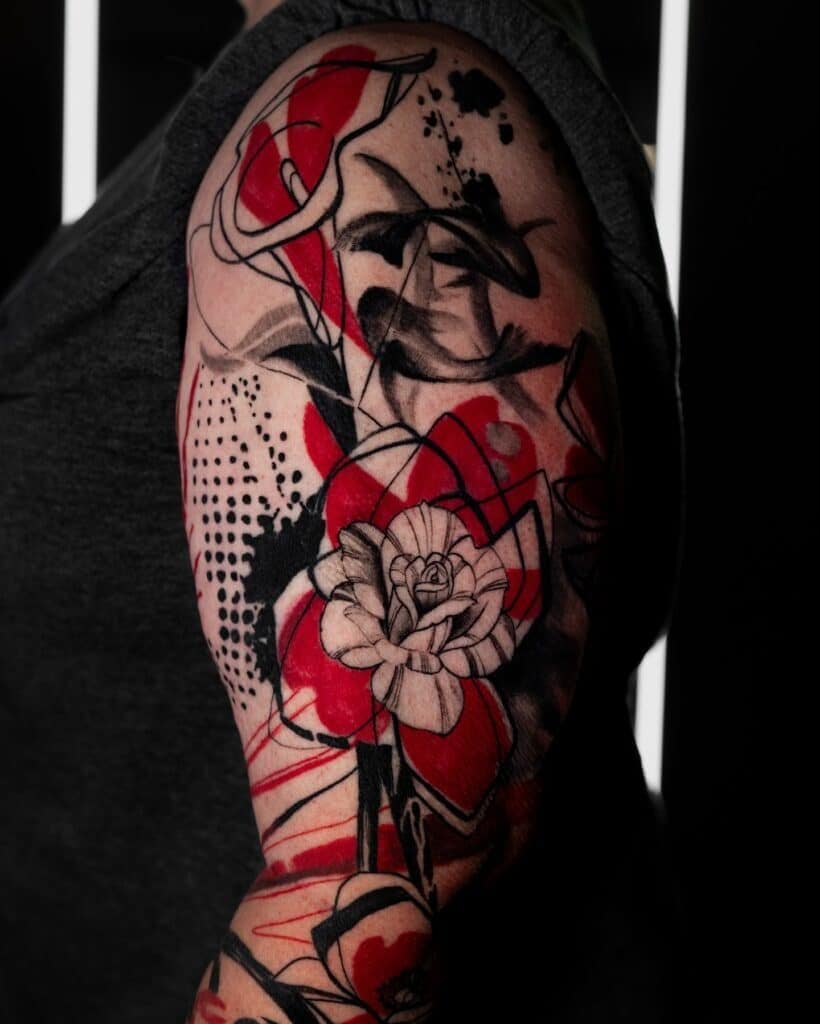
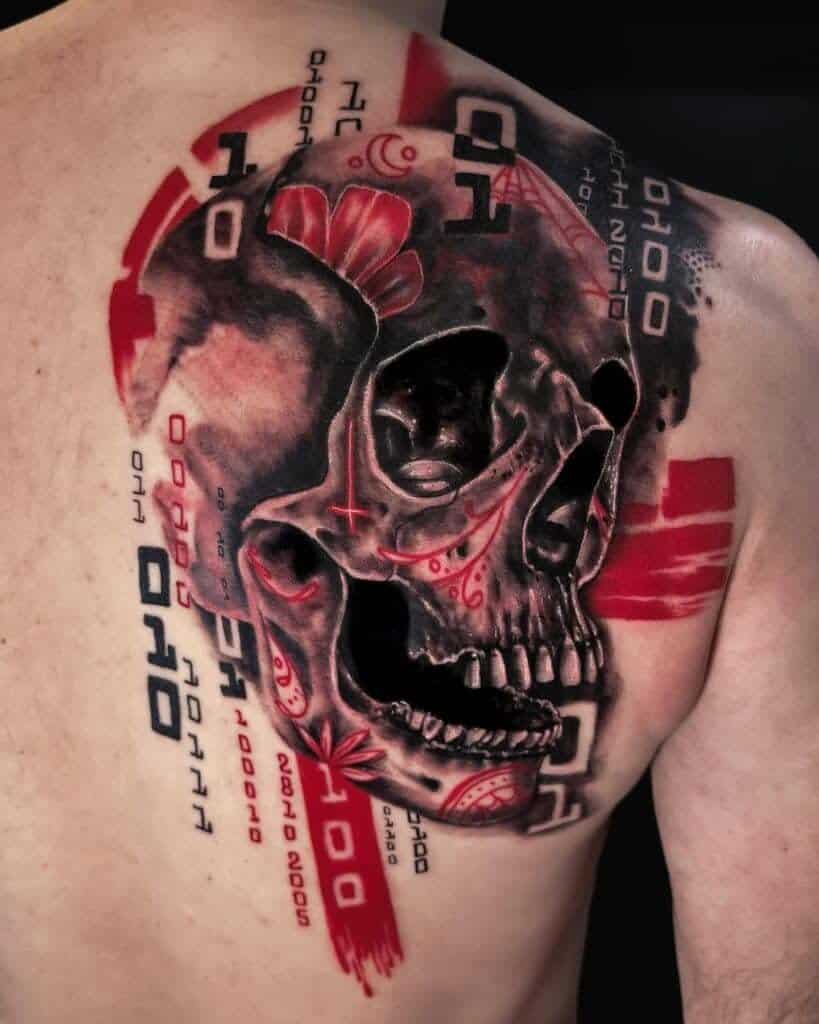
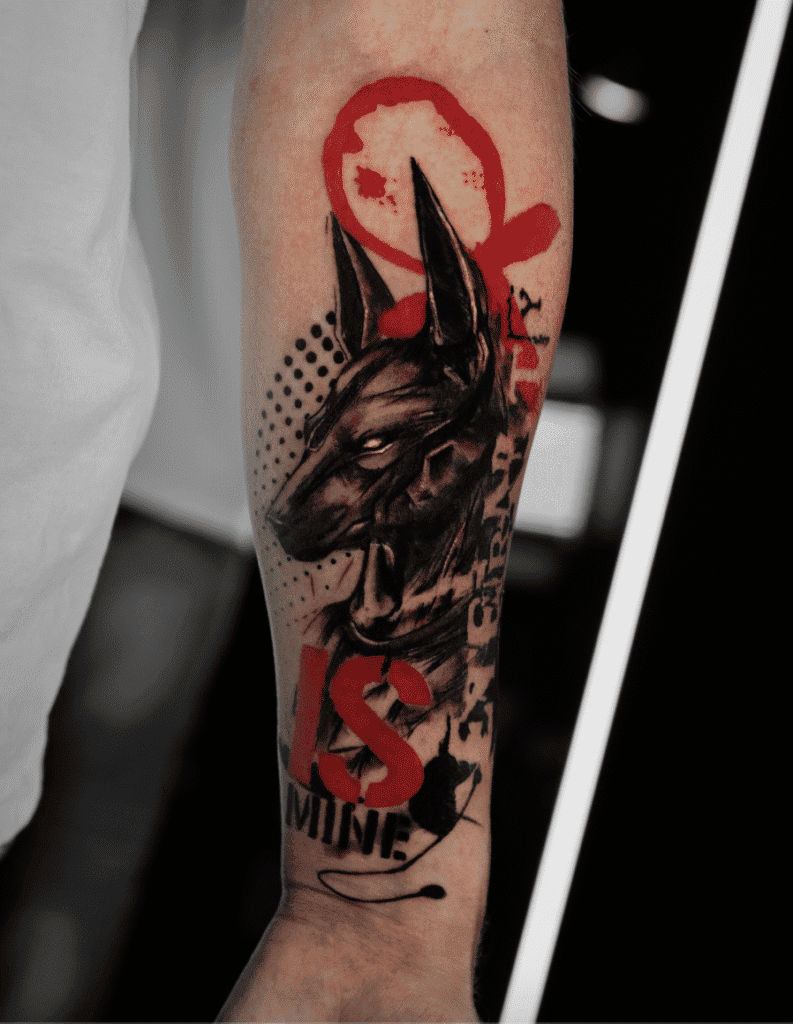
Because of its complexity, a Trash Polka Tattoo requires a high level of artistic expertise, not just in tattooing, but also in composition and design theory.
1. Concept and Design Phase
The process begins with a conceptual discussion. The client and artist choose a central theme, perhaps a portrait, an emotion, or a quote. The artist then builds a digital collage or sketch combining realism, abstract textures, and text.
2. Stencil and Layout
Once the design is finalised, the realistic parts are stencilled onto the skin for precision. The abstract elements, however, are often applied freehand, allowing spontaneity during the tattooing process.
3. Tattooing Process
The artist first works on the black ink areas outlining, shading, and rendering photorealistic details. Then the red accents are applied to create contrast and energy.
Red ink is used sparingly yet powerfully, highlighting certain sections or creating the illusion of splashes and movement.
4. Aftercare and Healing
Healing is similar to other tattoo styles, but the heavy black and red pigments require proper care to avoid fading. Moisturising and avoiding direct sunlight are essential to preserve vibrancy.
The Symbolism Behind Trash Polka Tattoos
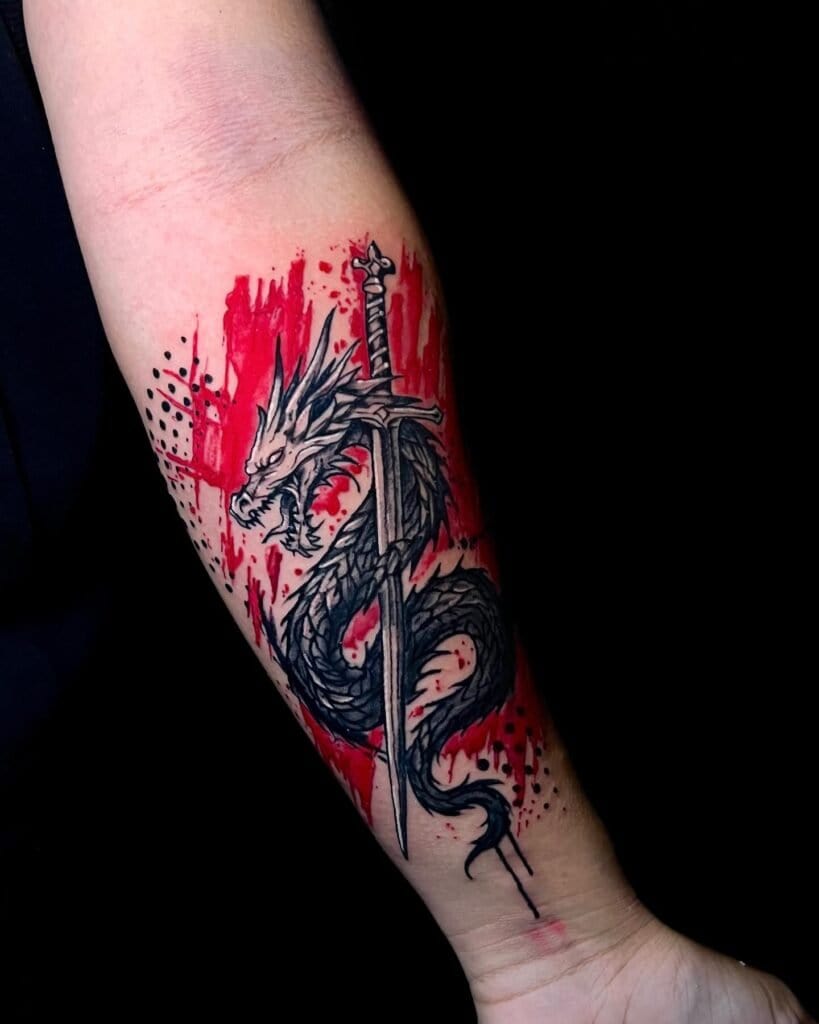
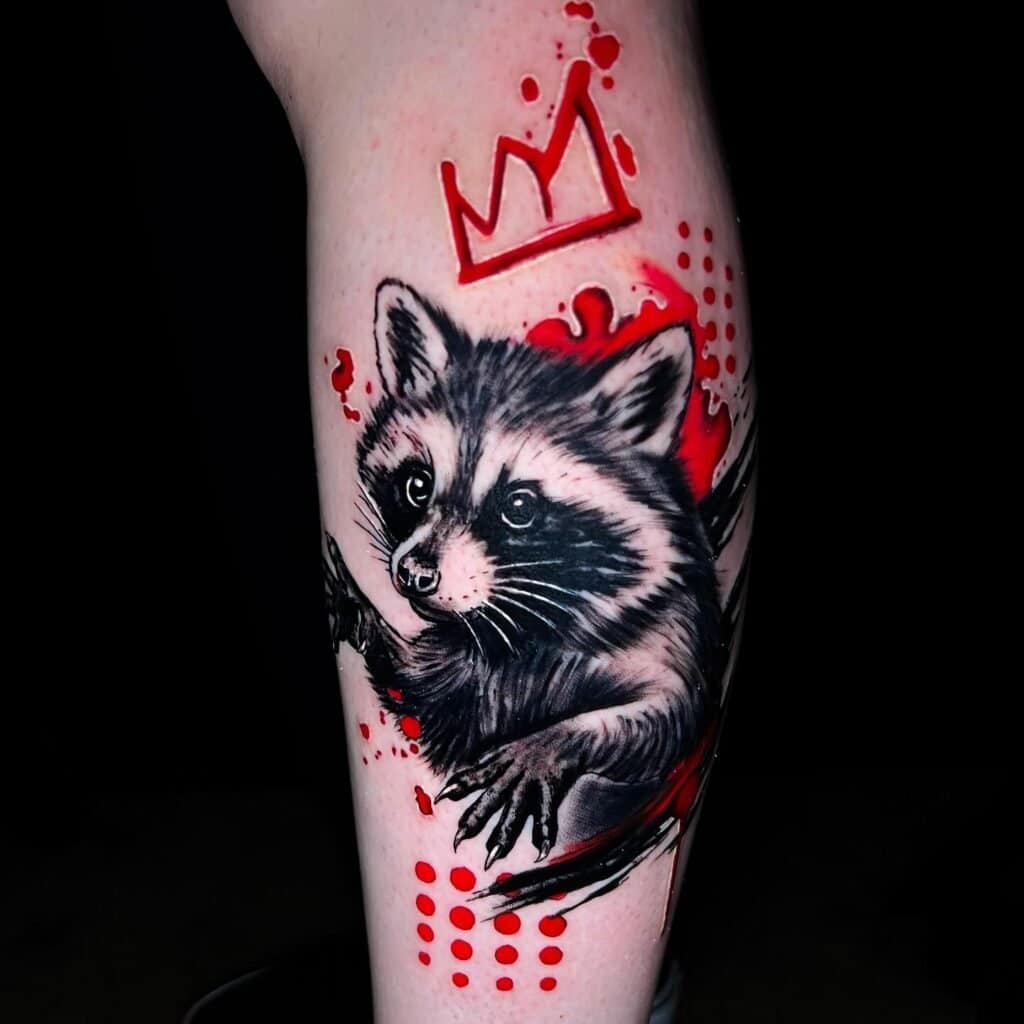
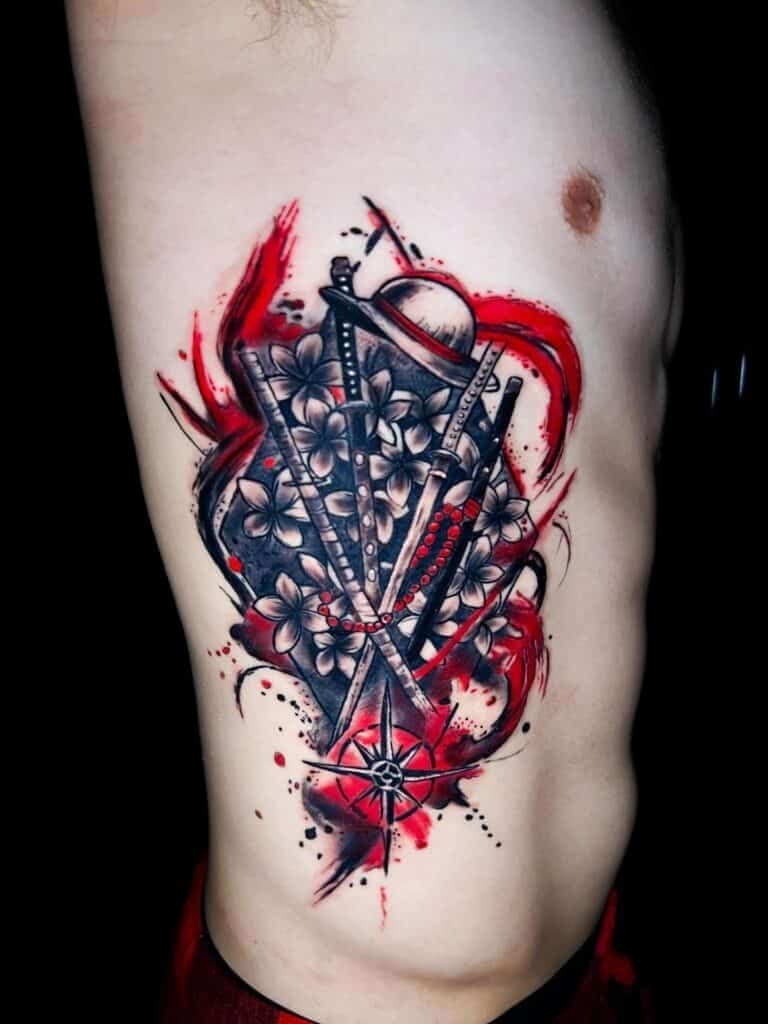
While the Trash Polka Tattoo is visually chaotic, its meaning is often deeply personal. The clash of red and black, realism and abstraction, mirrors life’s contradictions.
Some common symbolic interpretations include:
- Red vs. Black: Life vs. Death, Passion vs. Despair
- Text and Collage: The fragmented nature of memory and thought
- Splatters and Distortion: Emotional release, imperfection, rebellion
- Portraits or Clocks: The passage of time and mortality
- Eyes or Faces: Reflection, self-awareness, and the human condition
In essence, a Trash Polka Tattoo represents the beautiful mess of existence — chaos, imperfection, and truth intertwined.
Why People Choose Trash Polka Tattoos
People drawn to Trash Polka tattoos often share a similar mindset: they’re bold, expressive, and unafraid to stand out.
Here are some of the reasons this style resonates:
- Visual intensity: The mix of realism and abstraction grabs attention instantly.
- Individuality: No two Trash Polka tattoos are ever alike — each is a unique composition.
- Emotional depth: The style captures personal conflict, love, loss, or chaos in art form.
- Artistic collaboration: Clients often trust their artist to create something spontaneous and emotional rather than a rigid, pre-determined design.
Ultimately, Trash Polka appeals to those who see art not as perfection, but as raw expression.
Placement and Scale
Trash Polka tattoos are typically large-scale designs, as their dynamic compositions need room to breathe. The most common placements include:
- Upper arm or shoulder: Ideal for portrait-based designs.
- Back and chest: Allow maximum space for complex layouts.
- Thighs or calves: Perfect for vertical compositions or text-based pieces.
While smaller versions exist, the style truly shines when allowed to spread — capturing that signature sense of motion and chaos.
The Emotional and Psychological Impact
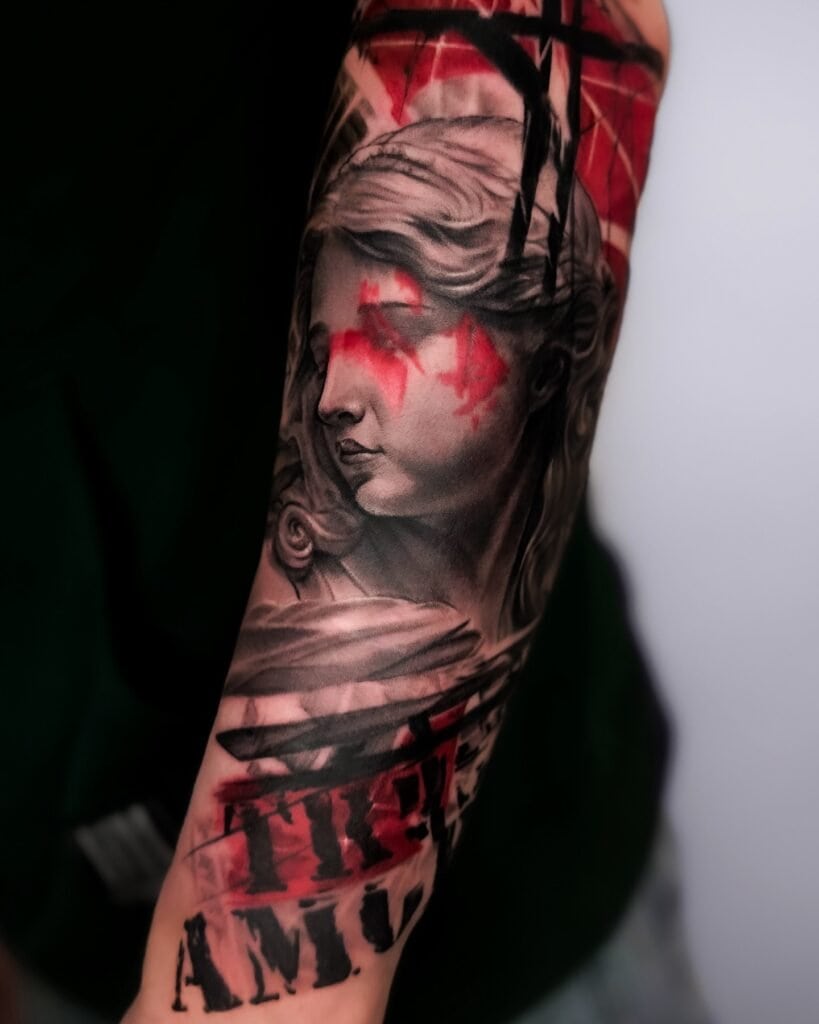
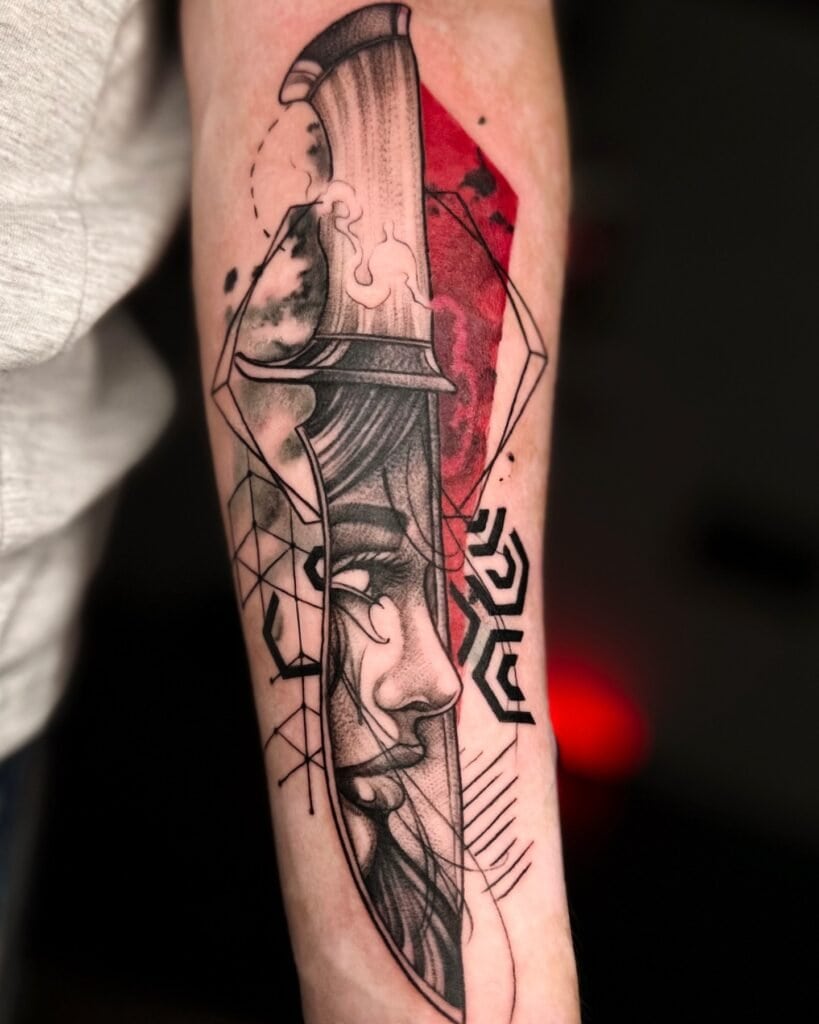
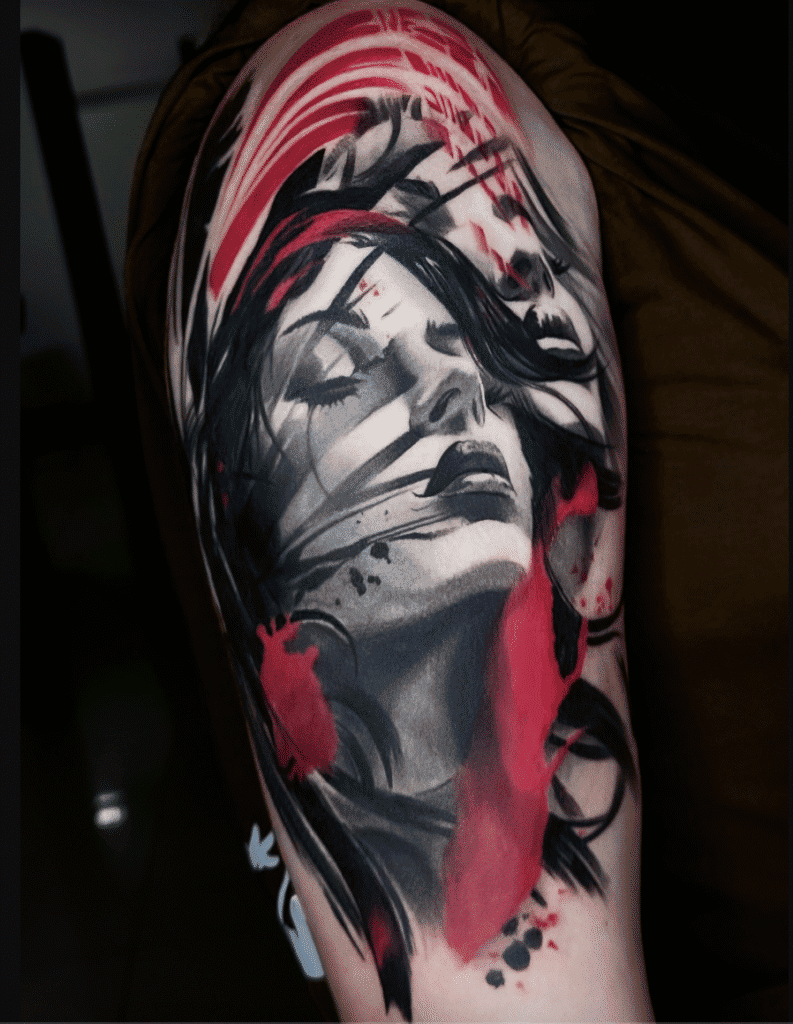
A Trash Polka Tattoo is not just a visual experience, it’s an emotional one. Many wearers describe the process as liberating, almost cathartic.
The act of merging beauty with destruction can symbolise healing, transformation, or defiance. It’s about embracing life’s imperfections and wearing them proudly.
This emotional depth is why the style has been compared to expressionist painting, as every stroke and splatter carries meaning beyond the surface.
The Evolution of Trash Polka
While the classic style remains iconic, modern artists have taken Trash Polka in new directions:
- Neo-Trash Polka: Incorporates additional colours like blue, yellow, or grey, softening the intensity while maintaining the collage aesthetic.
- Minimalist Trash Polka: Focuses on subtle brushstrokes, single-word typography, or small-scale chaos.
- Trash Polka Realism: Pushes hyperrealistic portraits even further, blending them with abstract backgrounds.
The style continues to evolve, proving that even within chaos, there’s room for reinvention.
Pros and Cons of Trash Polka Tattoos
Pros
Cons
Despite these, the Trash Polka Tattoo remains one of the most visually dynamic and conceptually rich styles in the tattoo world.
Finding the Right Artist
Because of its complexity, finding the right artist is crucial. The best Trash Polka artists are those with a solid background in both realism and abstract tattooing, since the style demands mastery of lifelike detail and free-form chaos at once.
They should also have a strong understanding of graphic composition and colour balance to ensure that every element, from the brushstrokes to the typography, works together harmoniously rather than clashing.
When choosing your artist, always ask to see a portfolio of authentic Trash Polka work. Be cautious of tattoos that simply use red and black ink without capturing the layered, collage-like depth that defines the true style.
A genuine Trash Polka artist is part tattooist, part painter, and part philosopher, someone who can blend chaos and precision seamlessly to create something that feels both spontaneous and deliberate.
Talented Trash Polka Tattoo Artist
1. Farkas Dóra_Tattoo


2. ewersumati

3. the_darkestpearl


4. franckrudyy


5. csabajoe
The Legacy and Future of Trash Polka
The Trash Polka Tattoo has cemented itself as one of the most revolutionary art movements in tattoo history. What began as an experimental style in Germany has become a global visual language of rebellion and emotion.
As tattooing continues to evolve, Trash Polka remains timeless because it speaks to something universal, our fascination with contrast. Life and death, beauty and decay, order and disorder all coexist in the human experience, and Trash Polka captures it vividly.
Future artists are likely to expand the style, integrating digital art, mixed media, and even 3D effects. But the core philosophy — the dance between chaos and control — will always remain at its heart.
Final Thoughts
A Trash Polka Tattoo is not for the faint-hearted. It’s a bold declaration of individuality, a living artwork that thrives on contrast, passion, and imperfection.
It challenges traditional beauty, tears apart convention, and reconstructs it into something raw and alive. Whether it’s a portrait smeared with red splashes or a chaotic collage of emotion and words, Trash Polka tells one truth: art doesn’t have to be clean to be beautiful.
So if you’re ready to wear your chaos proudly, the Trash Polka Tattoo might just be the perfect rebellion inked onto your skin.
- Tattoo Convention Essentials You Didn’t Know You Needed - September 9, 2026
- Best Gifts For Tattoo Artists 2026 - September 9, 2026
- Best Portable Tattoo Lights in 2026 - September 9, 2026